





The political and security landscape in the United States witnessed a dramatic development with the expiration of one of the most controversial surveillance tools, Section 702 of the Foreign Intelligence Surveillance Act. This sudden halt comes at a highly sensitive time, as the country has begun to receive millions of visitors and fans coinciding with the kickoff of the 2026 FIFA World Cup.\n\nThis legal provision grants US intelligence agencies broad powers to collect data and communications of foreign targets located outside the borders without the need for prior judicial authorization. This includes monitoring conversations between these targets and individuals within US territory, making it a cornerstone of preventive intelligence operations.\n\nDespite its security importance, the program faced fierce opposition from privacy advocates and lawmakers from both parties, who repeatedly warned of the potential for violating the privacy of American citizens. This division led to the failure of both houses of Congress to reach an agreement to extend the law before the deadline, which fell at midnight on Friday.\n\nThis legal gap coincides with the United States hosting the World Cup in partnership with Canada and Mexico, an event that brings together teams from forty-eight countries. Security concerns are escalating amid rising tensions with international parties, putting security agencies to a real test to ensure the safety of stadiums and vital facilities.\n\nPresident Donald Trump had earlier urged Congress to keep the program in effect, citing the utmost importance of securing the global tournament and Independence Day celebrations. However, observers believe that recent appointments to sensitive intelligence positions contributed to complicating the political scene and increasing the severity of legislative gridlock in Washington.\n\nFor his part, Kash Patel, Director of the Federal Bureau of Investigation, affirmed that protecting the World Cup is the Bureau's top priority at present. Patel noted that the tournament is one of the largest sporting events in history, with matches distributed across eleven host American cities, requiring unprecedented security vigilance.\n\nPatel warned in official statements that extremist groups have previously exploited major sporting gatherings to carry out attacks aimed at spreading their ideologies. He pledged that security personnel would work around the clock to compensate for any deficiencies in intelligence tools and ensure the security of players, the public, and international visitors alike.\n\nRegarding the immediate legal ramifications, uncertainty still surrounds the extent to which agencies can continue current surveillance operations. The secret Foreign Intelligence Surveillance Court had issued annual authorizations last March, which may provide temporary legal cover for some operations until spring 2027.\n\nHowever, international law experts warn that major technology and telecommunications companies may cease cooperation with the government in the absence of explicit legal text. Companies like 'Google' and others fear losing the legal immunity provided by the expired law, which may prompt them to refuse data disclosure requests.\n\nMark Warner, the senior Democrat on the Senate Intelligence Committee, explained that this legal dilemma has not been tested before the courts. He pointed out that the absence of immunity would make service providers very hesitant to disclose any sensitive information to security agencies, fearing future prosecutions.\n\nWarner strongly criticized the current crisis management, describing the situation as a "ticking time bomb" thrown into the path of political negotiations aimed at reaching a compromise. He held the administration fully responsible for any security breach that might occur during the World Cup due to the disruption of this pivotal intelligence tool.\n\nIn a related context, previous intelligence reports revealed that the US Department of Defense (Pentagon) had raised the warning level for foreign espionage activities to "critical." This assessment is based on reports prepared by the Defense Intelligence Agency, increasing pressure on decision-makers to quickly restore surveillance powers.\n\nWith the House of Representatives not in session until late June, the legislative path to restore Section 702 appears blocked in the foreseeable future. This legislative vacuum leaves security agencies facing difficult logistical and technical challenges to secure millions of fans in various states.\n\nThe question remains about Washington's ability to manage the security file in the coming weeks without relying on 'Section 702'. Amid the ongoing debate about the balance between national security and individual privacy, international circles are awaiting how the United States will deal with the biggest security challenge it faces in the new Trump era.\n\nWe do not want to enter the World Cup without having all our tools, and this article is a pivotal tool in combating terrorism.

الأحد 14 يونيو 2026 7:57 صباحًا - بتوقيت القدس
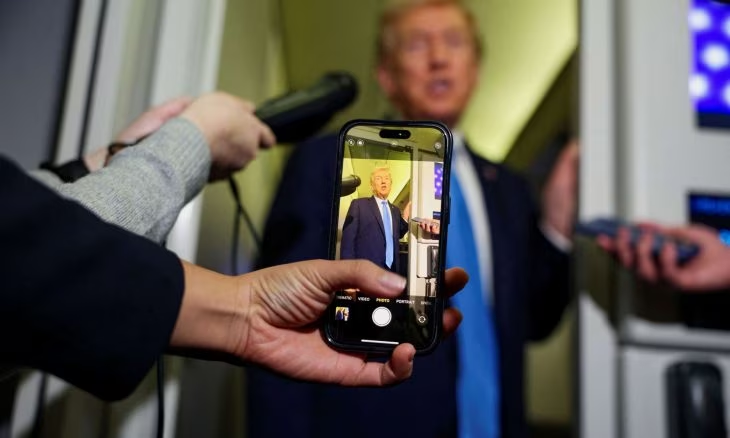
Security Crisis in Washington: Expiration of Espionage Law Disrupts 2026 World Cup Security
شارك برأيك
Security Crisis in Washington: Expiration of Espionage Law Disrupts 2026 World Cup Security