







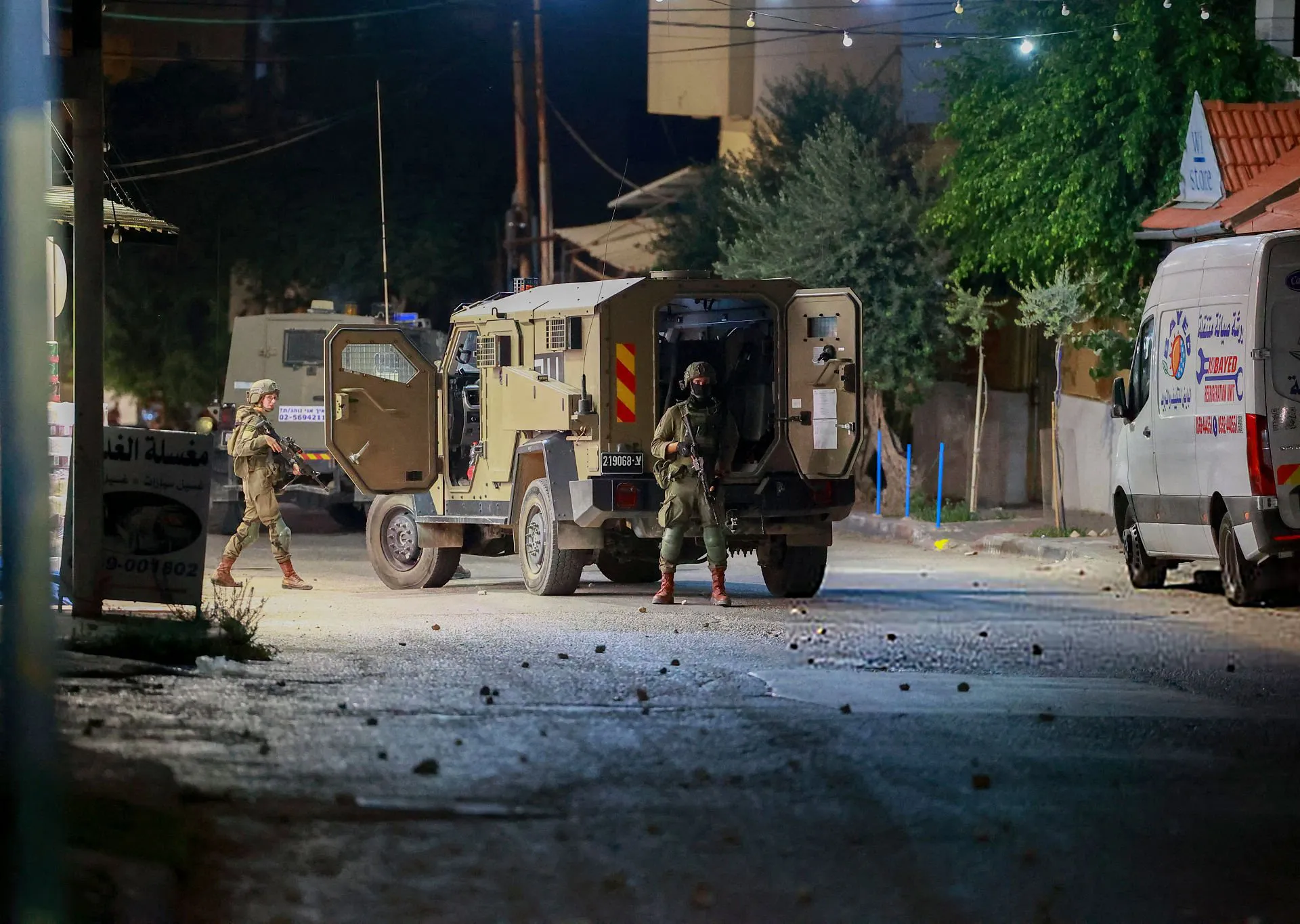
Israeli National Security Minister Itamar Ben Gvir sparked a wave of widespread controversy after appearing in a recent photo wearing a soldier's uniform during a secret tour he conducted inside a prison. This step aims to directly monitor how severe punishments are implemented against Palestinian prisoners, away from administrative channels and official reports submitted to his office.
Sources reported that Ben Gvir toured the prison corridors in disguise, deliberately checking the performance of the jailers and their adherence to the extremist instructions he issued in recent months. These moves come in the context of his personal desire to ensure that prisoners' lives are turned into an environment of continuous pressure and deprivation of basic rights.
Measures that the extremist minister sought to ensure were applied include reducing family visit periods to a minimum, in addition to reducing the space available to prisoners inside rooms and cells. The instructions also included imposing additional restrictions on all details of daily life, reflecting a clear trend towards tightening security control.
Observers considered this tour to be a field test of what Ben Gvir describes as the 'new doctrine' in the administration of Israeli prisons. This doctrine is based on abolishing all gains achieved by prisoners over decades, and replacing them with a system based on repression and permanent intimidation under security cover.
After his showy tour, Ben Gvir did not hesitate to explicitly declare his goals, describing what is happening within the prison service as a real 'revolution'. He indicated in his statements that prisons have reached a state of 'ideal organization' and high operational readiness to confront any protests that prisoners might undertake.
The far-right minister affirmed that a radical change has already occurred in the policies followed, stressing the continuation of this escalatory approach. These statements reflect his vision that does not recognize the human rights of prisoners, but rather seeks to exploit their suffering as a political tool to enhance his popularity in the Israeli street.
Among the most dangerous measures that Ben Gvir pushed to accelerate is the imposition of humiliating and degrading physical searches on every Palestinian prisoner who is transferred or admitted to prisons. This measure is considered one of the most sensitive issues due to its direct impact on human dignity, and it often acts as a trigger for escalating situations inside detention centers.
Human rights activists believe that the use of strict physical searches is not merely a security measure, but rather a tool for deliberate psychological and physical pressure. This behavior aims to break the will of prisoners and systematically humiliate them, which is consistent with Ben Gvir's previous statements in which he openly called for the liquidation of prisoners.
Ben Gvir had previously sparked international and Palestinian anger when he demanded the application of the death penalty against Palestinian prisoners through video clips. These accumulated positions confirm that the minister adopts a policy aimed at escalating repression and humiliation as an official approach adopted by the current government.
Regarding reactions, social media platforms were flooded with harsh criticism of Ben Gvir's behavior, with activists describing him as seeking a false heroic display. Tweeters indicated that his disguise as a soldier reflects an obsession with pursuing Palestinians and abusing them even when they are behind bars.
Others considered these moves to be an early election campaign aimed at the far-right public in Israel. Comments affirmed that what is happening in the secrecy of prisons under Ben Gvir's supervision represents a blatant violation of all international conventions, and turns prisons into centers of systematic torture away from world oversight.
I came to follow the revolution within the prison service and achieve radical change in the policies applied against prisoners.

شارك برأيك
Ben Gvir disguises himself in military uniform to monitor the abuse of Palestinian prisoners inside prisons