





In international politics, danger does not always lie in possessing power, but in how it is discussed. Some issues are managed in silence, not because the truth is absent, but because announcing it changes the rules of the game.From this perspective, the recent statement by US President (Donald Trump) regarding Israel's nuclear capabilities appears to be a pivotal moment in the trajectory of regional tension.The mere departure from the policy of “nuclear ambiguity,” which for decades constituted one of the pillars of balance in the Middle East, is not a fleeting detail, but a shift in the very logic of deterrence management.The sensitivity of this shift was further heightened by his assertion that Israel “will not use nuclear weapons against Iran,” in an attempt to offer public reassurance for an issue that was not originally acknowledged.However, this “reassurance” carries a deep paradox; implicit acknowledgment, even in the context of denial, does not calm fears as much as it reshapes them.It moves the issue from the realm of calculated ambiguity to the space of public discussion, thereby opening the door to divergent, and perhaps contradictory, interpretations among various parties.In this context, statements intertwine with an extremely fragile regional reality.Israeli Defense Minister (Yoav Gallant) affirmed that his country “will do everything necessary to protect its security,” a phrase that reflects an open ceiling of options. In contrast, former Iranian Supreme Leader (Ali Khamenei) stressed that Iran “will not submit to threats,” a stance that reflects adherence to principles it considers part of its sovereignty.Between these two positions, the space for tension widens, and the sensitivity of any miscalculation increases.However, the problem is not only related to the statements of the parties, but to the way this tension is managed.The American approach during the recent period seemed to fluctuate between escalation and de-escalation, and between threatening harsh measures and hinting at the possibility of ending the crisis quickly.Donald Trump was quoted as saying that “the war may end soon,” at a time when the language of pressure continued, reflecting the absence of a coherent strategic framework.This fluctuation did not go without criticism. American and European diplomats described the crisis management style as the “strangest” they had witnessed, an unusual expression within diplomatic circles, reflecting genuine concern about the lack of consistency in decision-making.Former US Secretary of State John Kerry also warned that “uncalculated escalation could lead to a confrontation no one wants,” emphasizing the importance of the diplomatic path.In the European context, former French Foreign Minister Jean-Yves Le Drian stressed that “tension in the Gulf could quickly turn into a serious crisis,” while former US Secretary of Defense James Mattis indicated that “miscalculation in dealing with Iran could have catastrophic consequences.”These warnings clearly reveal that the danger lies not in the existence of tension itself, but in the weak ability to control it.When a great power loses its consistency, its ability to impose clear rules of conduct diminishes, and deterrence transforms from an element of stability to a source of ambiguity.In this framework, the Middle East does not appear to be facing a fleeting crisis, but a stage where possibilities multiply.The possibility of sliding into a wider confrontation, the possibility of imposing new balances under pressure, and the possibility of continued instability as a long-term reality.Amidst these transformations, the Palestinian issue remains the most stable factor in a changing equation.Whenever regional crises escalate, Palestine recedes in the international priorities, allowing the occupation to expand the scope of its policies on the ground.However, this decline does not negate the essence of the issue, but rather postpones its explosion in more complex contexts.Any attempt to reshape the regional order without a just and comprehensive resolution to this issue, guaranteeing the rights of the Palestinian people, foremost among them the establishment of their independent state with Jerusalem as its capital, will not produce real stability, but will reproduce tension in new forms.In conclusion, what is happening today reflects a shift in the nature of power management:from calculated ambiguity to public declaration, from coherent strategy to fluctuation, and from stable deterrence to a reality open to multiple possibilities.The question remains urgent:Are we facing a conscious rearrangement of power balances in the region, or a gradual slide, due to inconsistent decisions, towards a moment that may redefine the Middle East for many years to come?

OPINIONS
Thu 19 Mar 2026 10:56 am - Jerusalem Time
Breaking the Nuclear Silence and the Confusion of Decision-Making: The Middle East Faces Open Possibilities

OPINIONS
Thu 19 Mar 2026 10:56 am - Jerusalem Time
Hormuz Card Changes the Game: Washington Seeks an Exit from a War Without Allies


The last thing US President Donald Trump expected was for the war he intended to be swift and decisive to turn into an open confrontation, draining both time and capabilities. Calculations in Washington were based on the premise of a decisive strike that would disrupt Iran and pave the way for the overthrow of the regime or force its surrender within days. However, what happened on the ground quickly dispelled this notion. The war of hours, heralded by the White House, turned into days, then weeks, gradually taking the form of a long war of attrition that was neither within Trump's calculations nor within his political capacity to bear its consequences.It became clear from the early days that Iran was not surprised by the confrontation; rather, it had prepared for it for a long time. Its leadership had been dealing with the possibility of war as almost inevitable, and therefore formulated its strategy on the basis of transforming any widespread attack into a geographically and temporally open war of attrition, draining the United States, Israel, and their allies. Over time, the balance of expectations began to shift; instead of a quick resolution, Trump found himself facing a battle that was becoming more complicated day by day.With the end of the first and second weeks of the war, the dream of a decisive victory gradually turned into a political and economic nightmare. The plan to overthrow the Iranian regime with the first strike failed, and the bet on controlling the keys to global energy also faltered. On the contrary, markets found themselves facing a new reality after the shipping lane, through which nearly a quarter of the world's oil passes, came under direct threat, pushing oil prices past the $100 per barrel mark as the war entered its third week, a development that portends heavy global economic repercussions.Meanwhile, the first statement from Iran's new Supreme Leader, Sayyed Mojtaba Khamenei, intensified this challenge with decisive words that carried clear messages to both domestic and international audiences, affirming Iran's will to continue effective and deterrent defense, adding that the use of the "card of closing the Strait of Hormuz" would remain a viable option. These were not mere political words, but a clear declaration that Tehran was prepared to go into a long war of attrition that could strike the arteries of the global economy, foremost among them the American economy.Faced with this escalating predicament, and with the rising cost of the war and increasing divergences within the American administration itself, in addition to the tensions that began to appear in the relationship with Israel, Trump found himself seeking a political and military exit simultaneously. Therefore, he resorted to calling on his allies to participate in protecting navigation in the Strait of Hormuz, announcing that several countries might send warships in cooperation with the United States to ensure the passage remains open.Trump directed a direct appeal to major countries such as China, France, Japan, South Korea, and the United Kingdom, demanding that they contribute to securing navigation in the Gulf on the pretext that these countries benefit from the region's oil. In an attempt to show that Washington still held the initiative, he announced an air attack on the Iranian Kharg Island, a move aimed at convincing the world that the United States was still capable of controlling the course of military operations.However, Trump's call did not receive the enthusiasm he had hoped for, even from his closest allies. It became clear that many countries did not wish to get involved in a widespread war that could get out of control, especially since they believed that Washington was the one who chose the path of confrontation and opened the doors to this war. Therefore, many capitals held the American administration responsible for igniting the conflict, considering that whoever starts a war must bear the responsibility for ending it, not seek to drag others into its inferno.Thus, instead of the war turning into a display of American power, it gradually began to transform into a harsh test of Washington's ability to manage a potentially long and complex conflict. The war of attrition that Tehran had bet on aims not only at military confrontation but also at striking the equations of power, economy, and politics simultaneously. In this intricate scenario, the question is no longer how the war begins, but how it can be ended without turning into an open global crisis.Thus, while Washington imagined a quick war that would redraw the maps of power in the Middle East, it found itself facing a more complex and dangerous equation. The war of attrition imposed by Iran targets not only the military field but also strikes deep into the global economy and puts the international system to an unprecedented test. With this crisis-ridden scenario continuing, it seems the question is no longer when the United States will win this war, but how it can exit it with the least possible losses, before the spark of the Gulf extends into a fire that spreads to the entire world.
ARAB AND WORLD
Thu 19 Mar 2026 10:55 am - Jerusalem Time
Trump Vows Total Destruction of 'Pars' Field if Qatari Gas Facilities Are Targeted
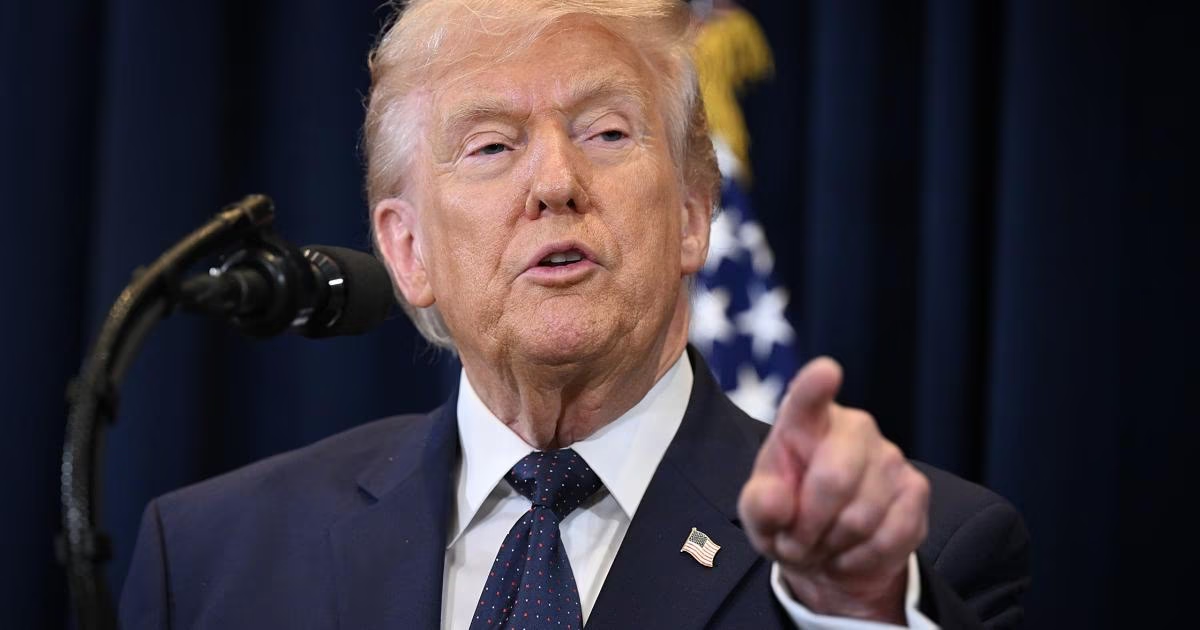
US President Donald Trump announced that Israel is responsible for carrying out the missile attacks that targeted Iran's South Pars gas field on Thursday morning. Trump clarified in his statements that the United States was not aware in advance of the timing or details of this military strike, while emphasizing that the State of Qatar was not involved in the planning or execution in any way.
Through his 'Truth Social' platform, the US President indicated that the Israeli attack came as an angry reaction to the rapidly escalating developments in the region, targeting a vital facility that is the economic lifeline of Iran. Despite the magnitude of the explosions that shook the Asaluyeh region, Trump described the damage to the field as still relatively limited so far.
In an unprecedented escalatory tone, Trump threatened Tehran with a devastating military response if it decided to target vital facilities in the State of Qatar. He affirmed that Washington would not stand idly by if Doha was subjected to 'reckless' Iranian attacks, threatening to wipe the South Pars field off the map with immense force that the Iranian state has never witnessed in its history, whether in coordination with Israel or unilaterally.
Trump described the Iranian attacks on Qatar's gas infrastructure as 'unjustified and unfair' acts targeting an innocent state. He added that he does not prefer resorting to this level of violence and destruction due to its catastrophic repercussions for Iran's future and its people, but he will not hesitate to protect global energy supplies and his country's allies in the Arabian Gulf.
On the ground, Iranian media sources confirmed a series of violent explosions in the Asaluyeh region in the south of the country as a result of direct missile shelling. The 'Fars' agency explained that the shelling primarily focused on tanks and refinery facilities in the Pars field, specifically in operational phases three through six, causing a state of alert in the region.
For its part, the state-owned 'Qatar Energy' company issued an official statement revealing that its main liquefied natural gas (LNG) facilities were subjected to new missile attacks on Thursday morning. The company confirmed that these strikes led to widespread fires and caused severe damage to vital equipment and facilities, further complicating the security landscape in the energy sector.
The Qatari company clarified that emergency response and firefighting teams immediately moved to control the fires and contain the damage resulting from the missile shelling. The statement confirmed that despite the severity of the material losses to the LNG sector, no human casualties among workers at those sites have been recorded so far.
These developments come one day after Qatar Energy announced severe damage in the industrial city of Ras Laffan, located in the north of the country. The city, a global center for gas production, was subjected to missile attacks on Wednesday, indicating a mutual military escalation that threatens navigation and energy security in the Gulf region in general.
Observers believe that Trump's direct threats place the region on the brink of a comprehensive confrontation, especially with his direct link between Qatari energy security and the future of Iranian facilities. International circles are awaiting Iran's reaction to these threats, amidst the continued exchange of missile strikes that have begun to move beyond the scope of a limited confrontation to affect the lifeline of the global economy.
If the Qatari LNG pipeline is attacked again, I will not hesitate to take the necessary measures and completely destroy the Pars field.
OPINIONS
Thu 19 Mar 2026 10:48 am - Jerusalem Time
A Resignation That Demands We Ask: Whose War Is It?


By: Said Arikat
March 19, 2026
News Analysis
Washington, D.C- When the Director of the National Counterterrorism Center resigns in protest, the country should pay attention. When that official, Joe Kent, steps down not over bureaucratic disagreement or personal grievance but over a war he believes is unjustified, the moment demands scrutiny.
On Tuesday, March 17, 2026, Kent submitted his resignation to President Donald Trump, and his message was anything but routine. It was a direct and deeply unsettling challenge to the rationale behind the U.S. war with Iran. “I cannot in good conscience support the ongoing war in Iran,” he wrote. “Iran posed no imminent threat to our nation.” That alone would represent a serious break with the administration’s stated justification. But Kent went further, making a claim that cuts to the core of American sovereignty in foreign policy: “It is clear that we started this war due to pressure from Israel and its powerful American lobby.”
This is not quiet dissent. It is an accusation—one that forces an uncomfortable but necessary question: whose war is this?
The administration has framed the conflict as a necessary response to danger. Yet even within its own ranks, the rationale appears less certain. Just days after the war began, Secretary of State Marco Rubio suggested that the United States acted in part because Israel was preparing to strike Iran anyway. The implication was clear: Washington did not simply respond to a direct threat, but moved in anticipation of an ally’s actions and the consequences that would follow.
That logic marks a profound shift. It suggests that the United States may have entered war not because it had to, but because it believed it soon would have no choice. In effect, American decision-making became entangled with Israeli timing and strategy.
Israeli leadership, for its part, has been remarkably open about its long-term position. Prime Minister Benjamin Netanyahu has spent decades advocating for major U.S confrontation with Iran. By his own account, this is a conflict he has pushed for over 40 years. That history underscores that this war aligns closely with long-standing Israeli priorities and desires.
Kent’s letter places that alignment at the center of his objection. He describes a “misinformation campaign” by “high-ranking Israeli officials and influential members of the American media” that “sowed pro-war sentiments” and “deceived” leadership into believing an immediate threat existed. Whether one accepts that characterization or not, it reflects a profound loss of confidence—not just in the policy itself, but in the process that produced it.
What makes Kent’s resignation especially powerful is who he is. As Director of the National Counterterrorism Center, he was not an outsider or a political commentator. He was at the heart of the intelligence and security apparatus, with access to the very information used to justify war. When someone in that position asserts that the central premise of the conflict is flawed, it cannot be easily dismissed.
His critique is not purely strategic. It is also deeply personal. “As a veteran who deployed to combat 11 times and as a Gold Star husband,” he wrote, “I cannot support sending the next generation off to fight and die in a war that serves no benefit to the American people.” This is not abstract analysis. It is the voice of someone who has lived the cost of decisions made in Washington and executed on distant battlefields.
At the same time, Kent’s resignation does not absolve the United States of responsibility by shifting blame entirely onto Israel. It would be too easy—and ultimately too convenient—to frame this as a story of a smaller ally driving a superpower into war. The United States retains agency. It makes its own decisions. If those decisions align more closely with another nation’s long-standing objectives than with clearly articulated American interests, that reflects a failure of judgment in Washington, not simply influence from abroad.
Still, the role of that influence cannot be ignored. Alliances are not passive arrangements; they carry expectations, pressures, and strategic convergence. When a senior U.S. official asserts that those pressures helped drive the country into war, it raises serious concerns about how decisions of this magnitude are made—and whose interests are prioritized in the process.
There is also a longer-term consequence that may prove just as significant as the war itself. Conflicts of this kind have a way of reshaping public opinion in ways that policymakers cannot easily control. Already, there are signs that this war could accelerate criticism of Israel beyond its traditional boundaries. What was once largely confined to segments of the political left or the fringe right may begin to find a more receptive audience in mainstream American discourse.
If that shift occurs, it could have profound implications for the U.S.-Israel relationship. For decades, that relationship has rested on a broad bipartisan consensus, rooted in shared strategic interests, democratic values, and deep cultural ties. But sustained perceptions that American policy is being influenced—or driven—by another country’s priorities could erode that foundation over time.
This does not mean the relationship will collapse. But it does suggest it may evolve, becoming more conditional, more openly debated, and less insulated from public scrutiny. In that sense, the consequences of this war may extend far beyond the battlefield, reshaping not only regional dynamics but the domestic political landscape in the United States.
History offers sobering parallels. From Vietnam to Iraq, wars have often been justified with confident claims that later proved incomplete, exaggerated, or wrong. In each case, internal dissent eventually surfaced, challenging the narratives that led to conflict. Kent’s resignation fits squarely within that tradition, a warning sign that the public rationale may not fully align with internal assessments.
The stakes could not be higher. Wars are not abstract policy choices; they are commitments measured in lives lost, families shattered, and resources consumed. When the justification for such a commitment is contested—especially from within the highest levels of government—the burden of explanation becomes even greater.
Kent’s letter ends not with anger, but with a challenge. “You can reverse course and chart a new path for our nation,” he wrote to the president, “or you can allow us to slip further toward decline and chaos. You hold the cards.”
That is ultimately the question his resignation leaves behind. Not just whether this war is justified, but whether it reflects a clear, independent assessment of American interests—or something far more complicated and less transparent.
In a democracy, that question cannot be ignored. It must be confronted openly, honestly, and without deflection. Because in the end, the issue is not only who is right about this war. It is who is responsible for it—and who will bear its cost.
OPINIONS
Thu 19 Mar 2026 4:22 am - Jerusalem Time
When Negotiation Fails: Ignorance and Misjudgment in the Collapse of Iran Nuclear Talks


Washington – Said Arikat – 19/3/2026
News Analysis
In an in-depth analytical reading published by Patrick Wintour, diplomatic editor at "The Guardian" newspaper, on March 18, 2026, the author concludes that the collapse of nuclear negotiations between the United States and Iran was not merely a product of technical or political disagreements, but a complex result of the interaction of three crucial elements: ignorance, misunderstanding, and deliberate obfuscation. These factors, as Wintour demonstrates, were not marginal, but formed the deep structure that governed the behavior of the parties, and ultimately led to undermining an opportunity that, according to the assessments of many participants, was closer to realization than it appeared publicly.
From the outset, the management of the negotiations was characterized by an unconventional pattern, closer to improvisation than to institutional diplomacy. Some proposals, such as the Iranian Foreign Minister's invitation to visit an American aircraft carrier in the midst of negotiations, reflected a deep flaw in understanding the nature of the negotiating process. These initiatives were not just strange protocol details, but indicators of a lack of precise political acumen, replaced by a showmanship tendency that undermined trust instead of building it. Here, it becomes clear how mistaken symbolism can turn into a tool of confusion, not a means of rapprochement.
At the heart of this scene, the controversial role played by Steve Witkoff and Jared Kushner stands out, as they led the American negotiating track in a manner that drew sharp criticism from within diplomatic circles themselves. The author quoted a Gulf diplomat familiar with the course of the talks describing them strikingly as "closer to Israeli assets that worked to push the United States towards a war that Donald Trump is now seeking to exit," an implicit reference to their alignment with the calculations of Benjamin Netanyahu's government. This accusation, whether entirely accurate or not, reflects the extent of the loss of confidence in the neutrality of the American mediator, and shows how the negotiations, in the view of some parties, transformed from a diplomatic path into a tool within a broader strategic conflict.
This approach reflects, in essence, the prioritization of a personal approach over organized institutional work. The facts showed that the management of the file lacked sufficient presence of specialized technical expertise, whether in nuclear physics or in international verification and monitoring mechanisms. In complex files such as the Iranian nuclear issue, political intuition or superficial knowledge is not enough; rather, it requires precise accumulated knowledge and a multidisciplinary team capable of translating technical data into well-considered political decisions. Without that, negotiations become susceptible to misjudgments and misinterpretations of the other party's positions.
In this context, misunderstanding emerged as a pivotal factor in the faltering of the negotiating process. The disagreement was not limited to objectives, but extended to the interpretation of the nature of the Iranian nuclear program itself. Some parties failed to grasp the functions of facilities such as the Tehran research reactor, or to assess Iran's future needs for nuclear fuel in the context of a declared civilian program. Iranian economic offers, which included broad cooperation potentials in energy and investment fields and could have formed a basis for converging interests instead of conflicting ones, were also misunderstood. This deficiency in understanding was not only technical but also affected the assessment of intentions, which is considered the most dangerous thing that can afflict any negotiation process.
In addition, the time factor played a clear negative role. The negotiation schedule was significantly compressed, limiting the ability to discuss fundamental issues in depth. In the context of relying on indirect negotiation channels, this time pressure was sufficient to empty the dialogue of its content, turning it into an exchange of brief messages that did not allow for building trust or testing hypotheses. As this pattern repeated, doubts increased, and each party began to view the other as evasive, not a negotiating partner.
However, the most dangerous element was deliberate obfuscation. According to Wintour, the conflicting narratives about the course of the negotiations raise serious questions about the accuracy of the information reaching decision-making circles. It appears that some actors, intentionally or due to shortcomings, did not convey the full picture, leading to a gap between the negotiating reality, which saw relative progress, and the political decision that leaned towards escalation. In this context, it is not excluded that the negotiations were used, in part, as a cover to buy time for military arrangements, which gives the entire process a deeply problematic character.
Nevertheless, the responsibility of the Iranian side cannot be overlooked. Tehran chose not to publish its full negotiating offer, despite internal calls for it, which opened the door to conflicting interpretations. Its refusal to provide a copy of the offer to the American side also deprived the process of an opportunity to subject it to a broader technical evaluation. However, this behavior can also be understood in light of the lack of trust, especially amid fears of document leaks or political exploitation, a concern that was not unfounded in a highly polarized environment.
Despite all these complexities, the available data reveal that the possibility of reaching an agreement was not far-fetched. The Iranian offer included very important elements, among them the acceptance of comprehensive oversight by the International Atomic Energy Agency and the disposal of highly enriched uranium stockpiles by diluting them, steps considered essential in the path of nuclear non-proliferation. Initial understandings were also reached regarding the lifting of a significant percentage of sanctions, which could have constituted a strong economic incentive supporting the sustainability of the agreement.
However, the main sticking point was the issue of uranium enrichment. Iran insisted on retaining its right to enrichment within its future program, while the United States demanded a long-term halt. Although this disagreement seems fundamental, indicators suggest that it was not intractable, as Iran offered a temporary halt extending for several years, which could have formed a basis for a gradual settlement. However, the hardening of positions, driven by internal political considerations and external pressures, prevented the exploitation of this opportunity.
In conclusion, Wintour's analysis presents a complex picture of a collapse that was not inevitable, but rather the result of a series of human and institutional failures. Ignorance weakened the ability to understand, misunderstanding distorted the perception of intentions, and obfuscation severed the connection between reality and decision. Amidst this negative interaction, the parties slid towards military confrontation, at a moment when diplomacy still had a real margin for success. The most important lesson remains that the management of international crises cannot tolerate improvisation, but rather requires precise knowledge, transparency in conveying facts, and a political will capable of prioritizing settlement over escalation.
PALESTINE
Thu 19 Mar 2026 4:22 am - Jerusalem Time
Tragedy in Hebron: 3 Women Killed, 13 Injured by Missile Shrapnel Falling on a Beauty Salon

The Hebron Governorate, south of the occupied West Bank, witnessed a tragic incident on Wednesday evening, where three Palestinian women were killed as a result of Iranian missile shrapnel falling on the area. Local sources clarified that the shrapnel fell directly on a women's beauty salon in the town of Beit Awwa, leading to casualties and injuries among those present inside.
The Palestinian Red Crescent Society confirmed that its ambulance crews, in cooperation with Dura Municipality crews, dealt with three fatalities at the scene of the incident. First aid was also provided to 13 other injured individuals, two of whom were described as being in critical condition, while the rest of the injuries ranged from moderate to minor. All were transferred to Dura Governmental Hospital and medical centers in Hebron city.
For its part, the Palestinian Civil Defense reported that the missile shrapnel hit a women's salon located inside a mobile home 'caravan' made of metal, situated next to a house. The direct impact of the heavy metal shrapnel caused extensive damage to large parts of the caravan, increasing the number of casualties and injuries among the women who were inside at the moment of the incident.
The damage was not limited to Beit Awwa town; field sources reported the fall of missile remnants and projectiles in various locations in Hebron Governorate, including neighborhoods within the city and the neighboring town of Deir Samet. These developments come amidst Tehran's announcement of launching batches of missiles towards targets inside Israel, which led to the activation of sirens in wide areas.
In a related context, Israeli medical sources stated that the missile attacks, which continued until after midnight, resulted in at least one death. Media reports also indicated significant damage in areas of Tel Aviv due to the fall of warheads and shrapnel resulting from aerial interceptions over residential areas.
It is worth noting that explosive ordnance disposal teams from the Palestinian police and civil defense have intensified their operations in West Bank cities since the outbreak of military confrontation in late February. These teams work to secure sites where missile remnants fall, which pose an increasing threat to the lives and property of civilians amidst ongoing regional escalation.
Our crews dealt with three fatalities of female citizens due to missile shrapnel falling on the town of Beit Awwa in Hebron.
ISRAELI AFFAIRS
Thu 19 Mar 2026 4:21 am - Jerusalem Time
Confessions of a Mossad Spy in Iran: Details of the Technical Jamming Operation and $100,000 Funding

The 'Mizan' agency, affiliated with the Iranian judiciary, revealed precise intelligence details concerning the activities of the spy 'Kourosh Keyvani,' who admitted to working for the Israeli Mossad agency. The confessions uncovered his management of a complex technical operation aimed at tracking Iranian missile systems or jamming their signals during the 12-day military confrontation in June 2025.
Keyvani relied on 'camping' as a cover to camouflage the presence of advanced technical devices in sensitive areas, while adhering to strict security protocols imposed by Israeli intelligence. These measures included a complete ban on using mobile phones during equipment operation, to ensure that frequencies were not detected by Iranian counter-espionage devices.
Regarding logistics and funding, the agent admitted to receiving a sum of $100,000 USD, which was professionally smuggled inside a special travel bag. This bag was designed with materials that prevent X-ray machines from detecting its contents, enabling him to successfully pass through Imam Khomeini International Airport without arousing suspicion.
For his part, the head of the Mossad agency, David Barnea, described the operations carried out within Iranian territory as a 'historic achievement' for the Israeli security establishment. Barnea appeared in a rare video clip among his soldiers, emphasizing that the agency's activity was not limited to the recent war period, but extended over years of continuous planning and field infiltration.
Barnea explained that the Mossad succeeded in recruiting hundreds of agents who contributed to smuggling disassembled drones inside trucks, shipping containers, and even personal luggage. This logistical breakthrough granted Israeli forces greater freedom of movement within Iranian airspace and the ability to carry out precise strikes against strategic targets during the days of fighting.
In contrast, Tehran did not deny security breaches, with official sources reporting the launch of a widespread campaign to dismantle Mossad-linked spy networks in several provinces. These investigations resulted in the apprehension of dozens of agents in secret headquarters equipped with underground tunnels, which were used as launching pads for sabotage operations and intelligence gathering.
Iranian authorities culminated their legal actions by executing two individuals convicted of direct involvement in espionage and threatening national security. These developments reveal the extent of the hidden conflict between the two parties, as each side seeks to prove its intelligence superiority amidst the ongoing tension plaguing the region.
The Mossad recruited hundreds of agents to smuggle hundreds of drones into Iran via trucks, shipping containers, and even travel bags.
ISRAELI AFFAIRS
Thu 19 Mar 2026 4:21 am - Jerusalem Time
The truth about 'Larijani's spy'.. Did the Mossad penetrate the inner circle of the Iranian official?
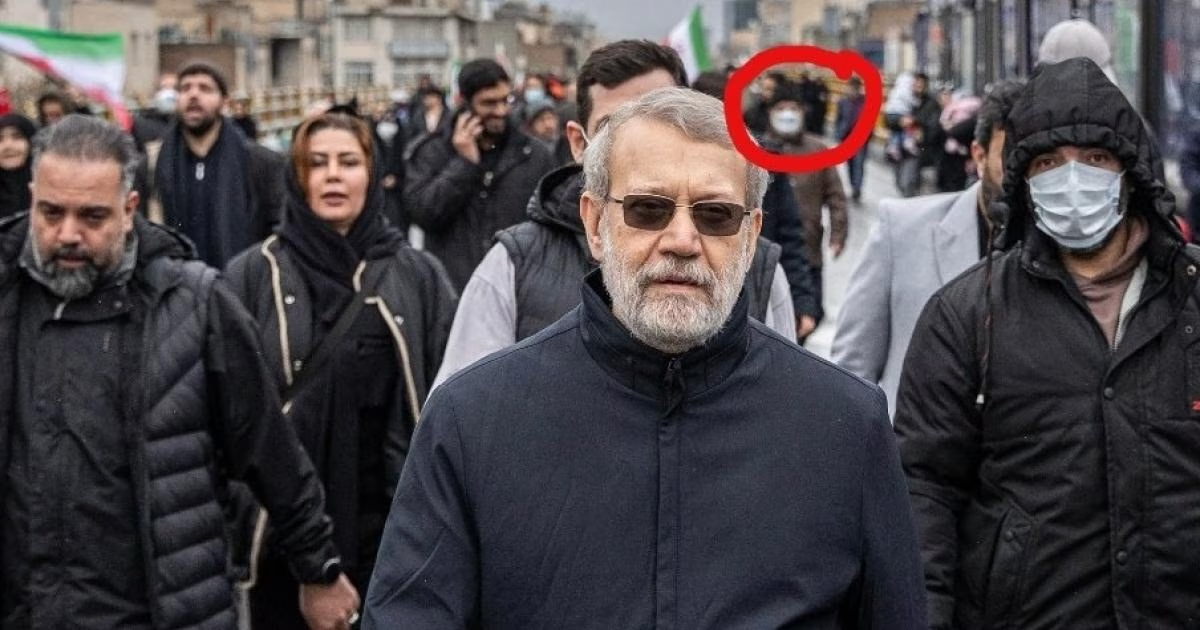
Social media platforms were abuzz with a wave of analyses following the circulation of tweets by David Keyes, former spokesman for Israeli Prime Minister Benjamin Netanyahu, in which he hinted at a close targeting of Ali Larijani, Secretary of Iran's Supreme National Security Council. Keyes claimed in his posts that Larijani had become an imminent target, based on information he alleged came from a secret agent who had recently returned from Tehran.
The posts included a photo of Larijani during his participation in International Quds Day events in the Iranian capital, with an unidentified man appearing behind him. Keyes circled the man in red, claiming he was an 'agent' working for Israeli intelligence agencies, which raised widespread questions about the accuracy of these claims in light of current security tensions.
With the announcement of Larijani's assassination, followers recalled those tweets as supposed evidence of prior knowledge of the operation. Keyes intensified the controversy by describing the mysterious man as a 'mole,' an intelligence term referring to agents planted deep within enemy apparatuses for many years, which opened the door to theories of deep security penetration.
In contrast, media sources refuted these claims, with field reporters explaining that Keyes uses a provocative and sarcastic style in his posts. This behavior aims to create confusion and promote a stereotypical image of the Mossad's extraordinary capabilities in reaching sensitive targets deep within Iran at any time.
Sources indicated that the name Keyes circulated, 'Haba Tour,' is not a real or common name in Israeli circles, but rather a linguistic play suggesting that the target is 'the next turn.' This approach reflects a desire to wage psychological warfare against Iranian leaders and their allies in the region via social media platforms.
The Arab public's reaction to this news was divided between skeptics and believers, with some considering that publishing such information openly contradicts the secrecy of real intelligence work. Observers believed that boasting about operations before or immediately after they occur reflects Israeli arrogance aimed at demoralizing the other side.
On the other hand, analysts believed that relying on modern technology in assassinations, such as hacking cameras and phones, reduces the need for field spies next to the target. They considered that focusing on 'a man in a photo' might be merely a distraction to divert attention from the real technical means used to track and target Larijani.
Observers stressed the need for Iranian security agencies to conduct a comprehensive review of protection protocols and scrutinize the circles surrounding officials. They considered that the recurrence of such incidents, whether resulting from human or technical breaches, represents a harsh lesson about the importance of intelligence superiority in modern wars that are no longer limited to missiles.
The criticism directed at Keyes was not limited to the security aspect but also included accusations of engaging in 'political bullying' against Arabs and Iranians. The use of sarcasm in the context of assassinations reflects the Israeli right's tendency to turn security operations into material for media consumption and internal political propaganda.
The question remains about the ability of these narratives to withstand field realities, especially since Larijani did not take additional precautionary measures despite the public threats. The incident remains an example of how intelligence information intertwines with digital rumors in shaping public opinion during major crises.
This content aims to bully and imply that the Mossad is capable of penetrating everything and conveying messages through the media.
ARAB AND WORLD
Thu 19 Mar 2026 4:21 am - Jerusalem Time
European Union warns of 'long conflict' in Lebanon, Israel plans to occupy border villages
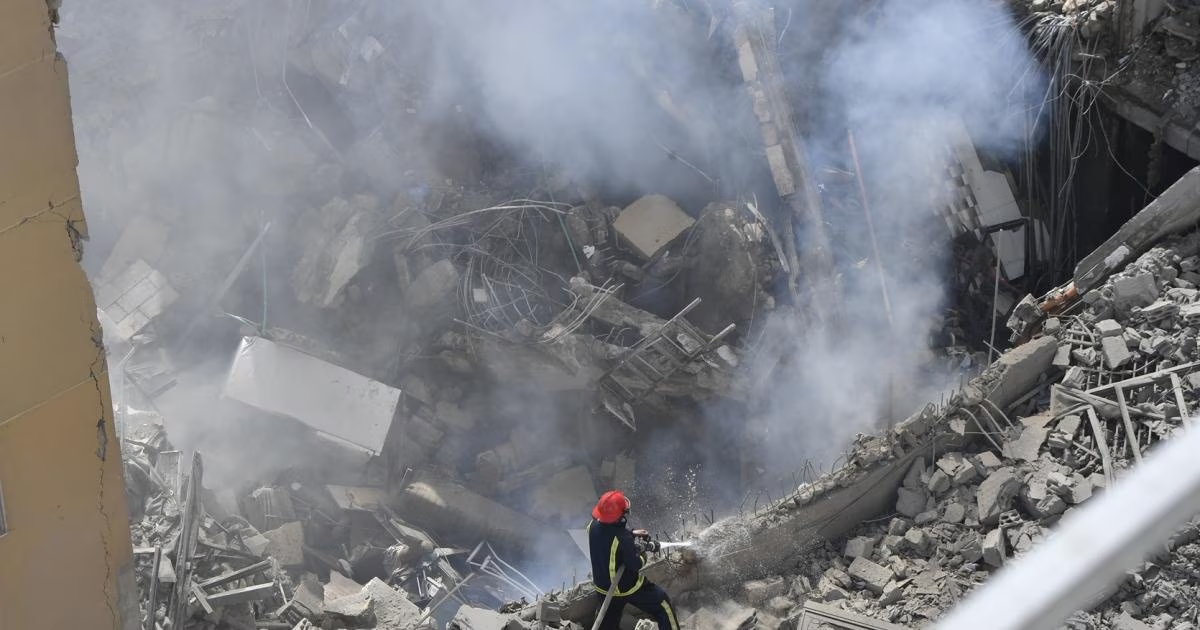
The European Union has issued strong warnings about the continued Israeli military operations in Lebanese territories, emphasizing that they are leading to unprecedented humanitarian disasters. The EU's External Relations Department clarified that the continuation of this military approach threatens to plunge the region into a long-term conflict whose regional repercussions will be difficult to control.
The European statement expressed deep concern over the escalating pace of shelling, calling on the occupation authorities to immediately cease all combat operations. The Union stressed that the humanitarian situation in Lebanon has reached dire stages, with more than one million citizens forced to leave their homes, representing about a quarter of the total population.
The European report highlighted the heavy human cost, pointing to the hundreds of civilian casualties who represent the weakest link in this conflict. The statement mentioned that initial statistics indicate the death of about 900 people, including more than one hundred children who died as a result of intensive raids.
In a related context, the European Union strongly condemned the operations carried out by Hezbollah, criticizing the party's refusal to surrender its weapons and its continued launching of what it described as indiscriminate attacks. The statement considered that these moves contributed to pushing Lebanon towards a comprehensive military confrontation that directly harmed innocent people.
European sources confirmed that targeting vital facilities, civilian infrastructure, and medical personnel constitutes a blatant violation of international laws. The statement also denounced the targeting of the United Nations Interim Force in Lebanon (UNIFIL), describing these attacks as unacceptable and requiring accountability.
On the ground, data indicates that Israel has significantly expanded the scope of its aggression since the beginning of March, following widespread regional tensions that included confrontations with multiple parties. These developments come despite previous ceasefire agreements that were concluded late last year.
According to the latest updates issued by the Lebanese authorities, the death toll has risen to 912 martyrs, including a large number of children and women. More than two thousand people were also injured to varying degrees, while the number of officially registered displaced persons exceeded 1 million and 49 thousand people.
On the Israeli military front, media sources revealed a tendency within the political leadership in Tel Aviv to issue instructions to the army to occupy the first line of villages in southern Lebanon. This plan, according to Israeli claims, aims to secure the northern areas from the threat of guided and anti-tank missiles.
Reports indicated that the Israeli army intends to control any geographical area used as a launching point for missile attacks, and to remain there until further notice. These moves are part of a strategy aimed at creating a new reality on the ground that imposes additional pressure on the Lebanese state.
Sources quoted an Israeli security official as saying that controlling the border villages represents a strong 'bargaining chip' in any future negotiations. The official claimed that there is currently no effective party that can be negotiated with on the Lebanese side, which makes the military option and ground control the most effective means from their point of view.
These rapid developments reflect the extent of the dilemma facing international diplomatic efforts aimed at containing the crisis. While the international community calls for de-escalation, movements on the ground indicate the occupation's intention to expand the scope of confrontation, putting Lebanon before scenarios open to further destruction and displacement.
Attacks on civilians, infrastructure, healthcare workers, and UNIFIL forces are unacceptable and must stop immediately.
PALESTINE
Thu 19 Mar 2026 4:21 am - Jerusalem Time
Unprecedented Iranian Cluster Missile Attack Strikes the Heart of Tel Aviv

The city of Tel Aviv and its surroundings witnessed a wave of missile attacks, the most intense and sophisticated since the beginning of the confrontation, as Tehran used cluster and fragmentation missiles targeting the heart of vital centers. Sources reported that this attack came as a direct response to the assassination of Ali Larijani, a high-ranking security official in Iran, pushing the region into a new phase of military escalation.
The successive strikes resulted in the death of at least two Israelis and the injury of dozens with varying degrees of wounds, while rescue teams are still searching for missing persons under the rubble of buildings that suffered direct hits. Local residents described the scene as the harshest, with sirens continuously blaring in wide areas extending from Holon and Ramat Gan to the city of Jerusalem.
Technical reports revealed that the attack was not limited to traditional barrages but relied on repeated waves approximately every hour using heavy 'Khorramshahr 4' missiles. This type of missile is characterized by a warhead weighing approximately two tons, in addition to immense destructive capabilities resulting from fragmentation technologies used for the first time in this conflict.
Damage extended to the main metro station and train stations in Tel Aviv, leading to a complete paralysis of public transportation and the outbreak of massive fires in vehicles and adjacent buildings. Firefighting teams are trying to control the rapidly spreading fires, amidst strict restrictions imposed by military censorship on the dissemination of the full extent of field losses.
In a related context, Israeli health authorities declared a state of maximum alert in hospitals in anticipation of chemical poisoning scenarios resulting from Iranian missile fuel. Medical sources explained that some missiles operate with liquid fuel containing toxic substances that directly affect the respiratory and nervous systems of the injured and those in the vicinity of the explosion.
Official data issued by the Ministry of Health indicates that more than 3,600 injured people have been transferred to hospitals since the start of operations, but secrecy still prevails regarding the actual number of fatalities. Observers believe that the gap between the announced figures and the observed extent of destruction raises serious questions about transparency in managing the human casualties file.
On the material front, compensation departments recorded more than 12,000 claims for the restoration of damages to private and public properties, thousands of which were concentrated in the greater Tel Aviv area alone. This huge number reflects the extent of the penetration achieved by Iranian missiles against air defense systems that had difficulty dealing with cluster warheads.
Field sources confirmed that the fragmentation missiles succeeded in dispersing air defenses, allowing a number of warheads to reach their targets with high accuracy. This qualitative development in the weapon used indicates an Iranian desire to impose a new deterrence equation that goes beyond symbolic missile barrages to the destruction of strategic infrastructure.
Social media platforms witnessed widespread interaction with the event, as analysts considered the arrival of missiles to major city centers a strategic shift in the course of the war. Activists pointed out that the paralysis that affected the defense system puts the Israeli military leadership in a real dilemma in protecting the home front from future attacks.
Amidst ongoing search and rescue operations, fears of a rising death toll are increasing as teams reach the lower floors of collapsed buildings. Israeli cities are experiencing a state of anticipation and extreme caution, awaiting what the coming hours will bring in terms of possibilities for mutual reactions that could ignite a comprehensive regional confrontation.
What happened tonight is not just an ordinary missile barrage; we are facing a radical shift in the course of the confrontation and a breaking of traditional rules of engagement.
ARAB AND WORLD
Thu 19 Mar 2026 4:21 am - Jerusalem Time
Qatar Expels Iranian Military and Security Attachés Following Missile Attack on Ras Laffan
The State of Qatar announced on Wednesday that it has taken strict diplomatic measures against the Islamic Republic of Iran, requesting the military and security attachés at the Iranian embassy to leave the country within a maximum period of 24 hours. This decision came after the aforementioned diplomats were declared persona non grata, a move that reflects the escalating tension between Doha and Tehran following recent field developments.
The Qatari Ministry of Foreign Affairs summoned the Iranian Ambassador to the State, Ali Saleh Abadi, to deliver an official memorandum containing the details of the sovereign decision. The memorandum clarified that this measure includes the military attaché, the security attaché, and all personnel working in the two attachés affiliated with the embassy, emphasizing the necessity of adhering to the specified departure deadline.
The Qatari Foreign Ministry affirmed in an official statement that this move comes in response to what it described as 'the brutal Iranian aggression' that targeted Qatari territories and repeatedly violated its national sovereignty. The ministry indicated that these actions constitute a clear breach of the principles of international law and the rules of good neighborliness, as well as a blatant violation of UN Security Council Resolution No. (2817).
Qatari authorities warned that the continuation of the hostile approach by the Iranian side would be met with additional and firm measures to ensure the protection of national interests and national security. The ministry stressed that Doha would not tolerate taking all necessary steps to defend its sovereignty and stability in light of the direct threats its vital facilities have been exposed to.
On the ground, the Qatari Ministry of Defense revealed details of the missile attack the country was subjected to, confirming that Iran launched five ballistic missiles towards Qatari targets. The Qatari Defense explained that air defense systems successfully intercepted and destroyed four of these missiles before they reached their targets, preventing a larger catastrophe.
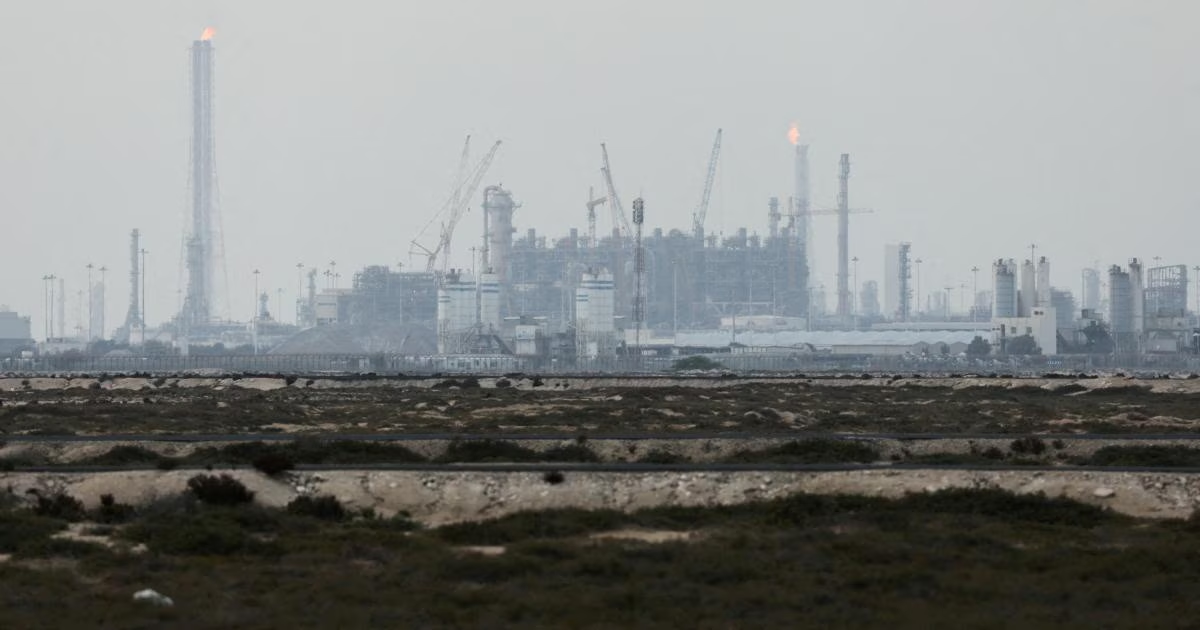
However, the fifth missile fell within the boundaries of Ras Laffan Industrial City, one of the world's most important energy centers, leading to a fire at the targeted site. According to official sources, firefighting and civil defense teams rushed to the scene to control the flames and prevent their spread to sensitive neighboring facilities in the industrial area.
For its part, Qatar Energy confirmed that the missile attacks indeed targeted Ras Laffan City, indicating the activation of maximum emergency plans immediately after the incident. The company stated in a communiqué that rapid response teams were able to deal with the fires resulting from the shelling, with a comprehensive survey being conducted to assess the damage to vital facilities.
The company reassured the public about the safety of human resources, confirming that no injuries or fatalities among workers at the site have been recorded so far. However, the company acknowledged 'significant' material damage to some facilities belonging to the industrial city, noting that work is underway to accurately quantify it.
In a related context, the Qatari Ministry of Interior announced raising the security threat level across the country to high degrees to confront any potential repercussions. The ministry affirmed that security agencies are closely monitoring the situation and taking all necessary precautionary measures to ensure the security and safety of citizens and residents on Qatari territory.
_The Qatari Foreign Ministry considered that targeting energy facilities represents a dangerous escalation and a direct threat not only to Qatar's security but also to the stability of the entire region and global energy security. Sources stated that Doha had repeatedly called for avoiding the targeting of civilian facilities, but Iran's insistence on this approach reflects an irresponsible policy.
This attack raises widespread international concerns about its implications for global oil and gas markets, given Ras Laffan's status as a strategic center for liquefied natural gas exports. Observers believe that this geopolitical development in the Gulf region may lead to further exacerbation of regional and international relations with Tehran in the coming days.
In conclusion, official bodies in Qatar emphasized their commitment to defending the capabilities of the Qatari people and the state's sovereignty by all legitimate means guaranteed by international law. Civil defense teams and relevant authorities continue to monitor the situation in Ras Laffan to ensure full control over the field repercussions of the recent missile attack.
The decision comes against the backdrop of repeated Iranian targeting and brutal aggression that has affected the State of Qatar and violated its sovereignty and security, in blatant contravention of the principles of international law.
ARAB AND WORLD
Thu 19 Mar 2026 4:21 am - Jerusalem Time
Israel Launches Raids on 200 Targets in Iran and Vows to Continue Assassinations
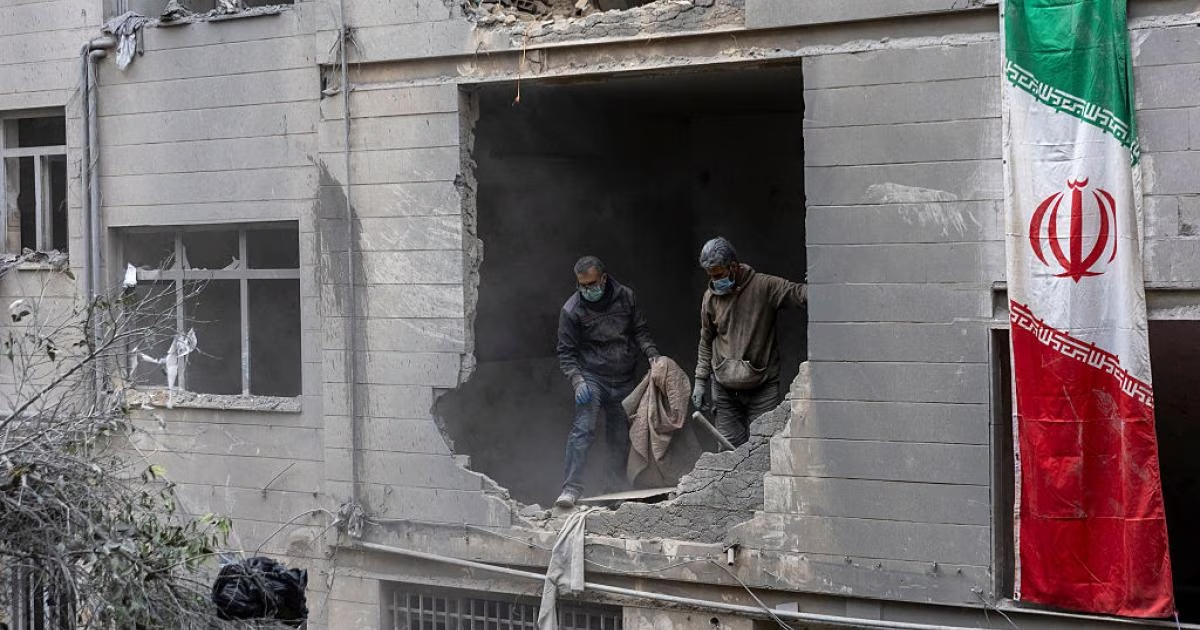
Israeli military sources confirmed today, Wednesday, that military operations targeting senior officials in the Iranian regime will not stop, noting their success in eliminating a number of influential leading figures in recent hours. Army spokesman, Evi Devrin, clarified that forces are pursuing those he described as responsible for hostile operations, emphasizing that this pursuit comes within a comprehensive strategy to undermine the pillars of the ruling power in Tehran.
In details of the field operations, an official statement published by the Israeli army revealed the execution of a wide wave of aerial attacks that targeted more than 200 strategic targets in various regions of western and central Iran. Dozens of fighter jets participated in these intensive raids, focusing their strikes on military infrastructure that poses a direct threat to Israeli security in the region.
The list of destroyed targets included vital sites used by Iranian forces to store and launch ballistic missiles and suicide drones. The raids also targeted air defense systems, missile launchers, and weapons manufacturing centers, in an attempt to reduce Tehran's ability to launch long-range missile attacks and enhance Israeli air superiority in Iranian airspace.
On the other hand, the Iranian Revolutionary Guard announced the execution of a military response targeting American army bases and troop gathering points in the Middle East. Iranian sources reported that the attack also included combat support centers belonging to the Israeli occupation, where heavy missiles equipped with multiple warheads were used in this operation, as part of what was called the '62nd wave' of 'Operation True Promise 4'.
These rapid field developments come amidst the open state of war that erupted on February 28th, which has left hundreds dead and wounded on both sides. Among the most prominent consequences of this confrontation was the killing of Iranian Supreme Leader Ali Khamenei and a number of senior commanders, which prompted Tehran to intensify its responses by launching barrages of missiles and drones towards the occupied territories.
In a related context, Tehran expanded its targeting circle to include what it describes as American interests in several Arab countries, which led to human and material losses in civilian areas. These attacks faced widespread condemnation from the affected countries, which considered targeting their territories a violation of sovereignty and endangering civilian lives as a result of the escalating regional conflict.
Observers believe that the continuation of the series of Israeli assassinations and the expansion of aerial raids indicate a new phase of direct confrontation that may not stop at the current borders. With both parties insisting on continuing military operations, international concerns are growing about the region sliding into a comprehensive war whose political, economic, and security repercussions are difficult to control.
We will continue to hunt down all senior officials in the regime, and the series of assassinations will not stop.
ARAB AND WORLD
Wed 18 Mar 2026 10:56 pm - Jerusalem Time
New York Times: Trump faces a strategic dilemma in his war against Iran, and the absence of vision threatens the global economy

International press reports stated that US President Donald Trump engaged in a wide-ranging military confrontation against Iran without presenting a clear strategy to the American people or the international community. Sources indicated that field developments after three weeks of fighting point to a lack of an integrated vision to achieve the stated goals, foremost among them ending the Iranian regime or controlling its nuclear program.
The editorial of the 'New York Times' considered that Trump can no longer manipulate facts to escape the dilemma of this war, which it described as chaotic. It noted that the US administration failed to predict the side effects of the conflict, especially regarding the disruption of global energy supplies, which led to a significant jump in prices.
Sources reported that the US President relied on a very narrow circle of advisors in making his military decisions, bypassing the usual institutional processes aimed at assessing risks. This approach led to contradictory statements, including claims of achieving war goals despite the ongoing crisis and its escalating intensity on the ground.
Reports revealed civilian casualties as a result of military operations, with dozens of Iranian children killed by an American missile that missed its target in one of the strikes. The newspaper accused the US administration of attempting to mislead global public opinion about this incident, which weakened confidence in Washington's official narrative about the course of the battles.
Despite the criticism, sources acknowledged limited tactical successes resulting from previous pressures, as successive sanctions and military strikes weakened Iran's defensive capabilities. The value of the Iranian currency sharply declined, and the regime lost a number of its leaders and nuclear scientists in operations targeting its infrastructure.
However, Trump's declared ambitions went beyond mere containment, as he called on the Iranian people for a 'hour of freedom' and demanded the unconditional surrender of the regime. Nevertheless, the White House has not yet begun to explain the realistic mechanisms for achieving these promises, amid accusations that the ambiguity surrounding the situation is not a tactic but evidence of a lack of vision.
The first strategic problem arises from Washington repeating historical mistakes made in Vietnam and Afghanistan, by assuming that regime change is an easy process. Sources confirm that air power alone is not enough to overthrow a controlling government, and that betting on the defection of security forces or the movement of minorities has not yielded tangible results so far.
The nuclear file poses the biggest challenge, as Iran's stockpile of highly enriched uranium remains intact within fortified facilities under the mountains in Isfahan. Reports warned that ending the war without controlling this stockpile would give Tehran a greater incentive to acquire nuclear weapons as a reaction to the military humiliations it suffered.
In the same context, Secretary of State Marco Rubio acknowledged that controlling nuclear materials might require ground troop intervention, an option that Trump seems to be avoiding focusing on currently. This divergence in positions within the administration reflects the extent of confusion in dealing with the most dangerous files of the ongoing conflict in the Middle East.
Economically, the war caused a global crisis after oil prices rose by more than 40% due to threats to shipping traffic. Iran succeeded in carrying out its threats to disrupt ships in the Strait of Hormuz, a scenario that senior military advisors had warned about before the start of military operations.
Sources indicated that Trump's reactions to the economic crisis were characterized by confusion, as he eased sanctions on Russia in a move described as a 'gift to an adversary.' He also resorted to seeking military assistance from countries he constantly criticized, such as China and his allies in Europe and East Asia, to secure waterways.
Despite the possibility of field surprises, such as a sudden collapse of the Iranian regime similar to what happened in Syria in late 2024, initial indicators are not reassuring. Behind-the-scenes planning in the White House is described as reckless, especially with the disregard for coordination with Congress or international allies.
The newspaper concludes its analysis by noting that Trump has tried throughout his career to create a virtual reality that serves his interests and ignores uncomfortable facts. But in the case of war, field realities impose themselves strongly, as political marketing cannot cover up the absence of an effective military strategy.
The question remains about how the United States will exit this confrontation without sliding into a long-term war of attrition. The current reality indicates that the grand promises made by the US President clash with the complexities of geography, politics, and economics that were not taken into account before the first shot was fired.
War is less susceptible to manipulation than politics or marketing, and the early reality of this confrontation does not align with Trump's exaggeration.
ANALYSIS
Wed 18 Mar 2026 10:26 pm - Jerusalem Time
US Director of National Intelligence Contradicts Trump: Iran Has Not Resumed Uranium Enrichment After 2025

Washington – Said Arikat - 3/18/2026
In a notable testimony before the US Senate on Wednesday, US Director of National Intelligence Tulsi Gabbard announced that Iran has not rebuilt its uranium enrichment capabilities since the war that broke out in June 2025, which Israel launched with US military support targeting Iranian nuclear facilities.
In her statement, Gabbard clarified that the military operation, dubbed "Midnight Hammer," "resulted in the destruction of the Iranian nuclear program," asserting that "no efforts have been made since then to try to rebuild enrichment capability." She added that the entrances to the underground nuclear facilities that were bombed "have been sealed with earth and concrete," hindering access to them or their reactivation in the foreseeable future.
These statements contradict previous positions held by US President Donald Trump, who justified the military operations by the necessity of preventing Tehran from developing a nuclear weapon, considering that war to be "the last and best opportunity" to achieve this goal.
For his part, Iranian Foreign Ministry spokesman Ismail Baqaei stated that the damage to the nuclear facilities makes it difficult to implement normal technical procedures, in the absence of clear mechanisms and consideration for safety and security requirements. Baqaei stressed that "Iran's right to the peaceful use of nuclear energy is an inherent and inalienable right," emphasizing that political pressures will not change this stance.
Gabbard's testimony reveals a clear gap between intelligence assessments and political rhetoric in Washington. While the Trump administration sought to justify the military strike as an urgent strategic necessity, intelligence data indicates that the threat may not have been as immediate as it was portrayed. This contradiction raises questions about how intelligence information is used in decision-making, and whether it was subject to preconceived political considerations rather than being an objective guide for security policies.
The issue of "burying" nuclear facilities under rubble and concrete points to a complex technical reality, as this does not necessarily mean the definitive elimination of Iranian nuclear capabilities, but rather a postponement of the possibility of their recovery. The history of nuclear programs shows that technical knowledge and human infrastructure remain even after facilities are destroyed. Therefore, talking about "destroying the program" may be tactically accurate, but it does not strategically resolve the issue, especially if Iran later has political and technical conditions to rebuild.
The Iranian position, as expressed by Baqaei, reflects a firm adherence to the international legal framework that guarantees states' right to the peaceful use of nuclear energy. However, this discourse intersects with ongoing international doubts about the nature of the Iranian program. In the absence of effective monitoring mechanisms after the strikes, the issue may become more complex, where legal considerations mix with security concerns, leaving the crisis open to possibilities of escalation or a return to a new negotiating path with different terms.
ISRAELI AFFAIRS
Wed 18 Mar 2026 10:26 pm - Jerusalem Time
Digital Shadow War: How the Mossad Uses Social Media Platforms to Recruit Agents Inside Iran?
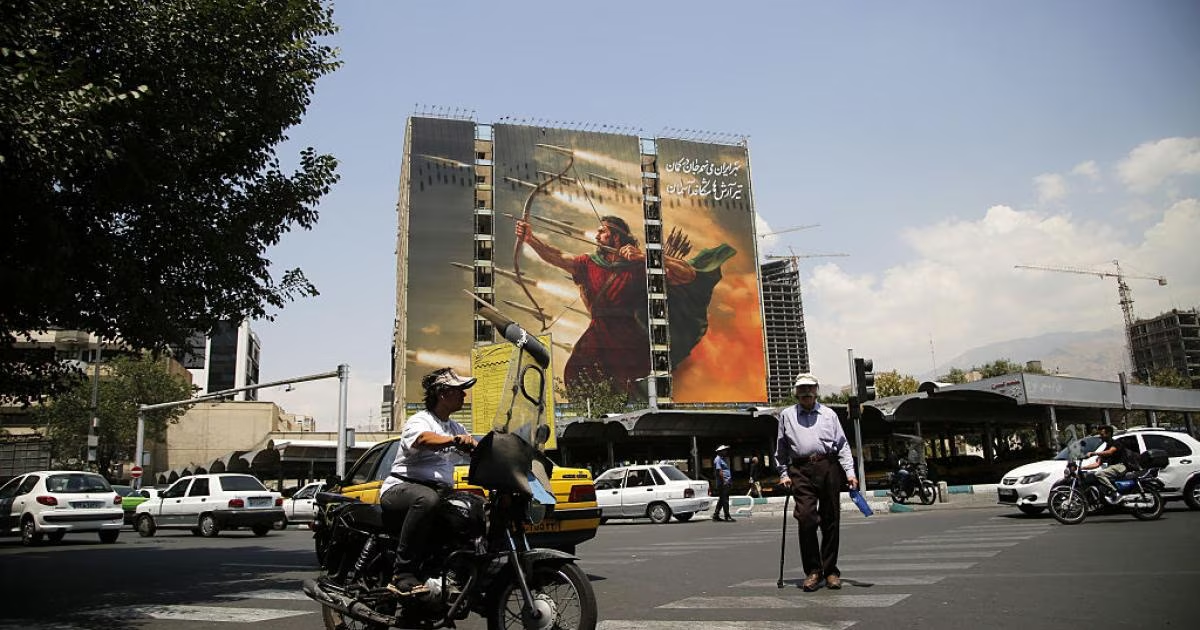
The Israeli foreign intelligence agency (Mossad) has escalated its digital operations targeting Iran, using social media platforms as a primary tool for recruiting agents. These moves come amid rising military tensions, as the agency broadcasts motivational messages urging Iranian citizens to rise up and change their political reality through intelligence cooperation.
Israel's new strategy relies on direct digital outreach, with an official Persian-language channel launched on the Telegram application late last year. This channel is directly linked to the official Mossad website, lending an official character to recruitment attempts that also include Instagram, LinkedIn, and Facebook platforms in various languages.
In response, Iranian authorities announced the dismantling of espionage networks linked to the Israeli occupation in various parts of the country, particularly in the northwest. Judicial sources confirmed the arrest of at least 20 individuals in West Azerbaijan province, who were accused of transmitting sensitive information about military and security sites to the enemy.
Local sources reported that the Iranian security campaign was not limited to border provinces but included widespread raids in major cities. These operations resulted in the detention of hundreds of suspects on charges of collaborating with foreign intelligence agencies, amid the state of alert the country is experiencing due to the open confrontation with Israel and the United States.
The Mossad's Telegram channel, which has tens of thousands of subscribers, uses advanced technical methods to secure communication with those wishing to cooperate. The channel provides precise instructions on how to use automated chat programs and encrypted links to ensure that callers are not tracked by Iranian security agencies.
The propaganda campaign did not stop at text messages but extended to include the production of visual content based on artificial intelligence technologies to spread fear among regular forces. Some clips show elements of the 'Basij' forces in a state of panic, with threatening messages indicating that Israeli monitoring devices are tracking them everywhere.
Security experts believe that these methods are not new but are a development of old tools used by global intelligence agencies for decades. Yossi Melman, a journalist specializing in defense affairs, pointed out that the Mossad follows an approach similar to what the US Central Intelligence Agency did by funding broadcasts and publications directed at hostile countries.
Among the active platforms, the 'Mossad Farsi' account on the X platform stood out, attracting a wide following since the outbreak of direct military confrontations between the two sides. The account publishes diverse content that mixes sarcasm towards the Iranian leadership with providing medical and social consulting services to attract the attention of the general public.
The intelligence agency exploited global political slogans to give a 'liberationist' character to its campaign, such as the slogan 'Let's make Iran great again.' These messages aim to create a sense of identification between the national aspirations of Iranians and the strategic goals that Israel seeks to achieve in the region.
With the outbreak of popular protests in Iran, the tone of Israeli accounts shifted to direct incitement to take to the streets and engage in field confrontation. These accounts claimed the existence of field coordination that goes beyond mere media support, in an attempt to destabilize the internal system and disrupt its security efforts.
The field developments increased the intensity of the conflict, especially after the assassinations of high-ranking figures in the Iranian security hierarchy. The assassination of Ali Larijani, Secretary of the Supreme National Security Council, and Basij commander Gholamreza Soleimani, was a turning point that led the Mossad to openly celebrate it through its digital platforms.
Reports indicate that the Mossad relies on media personalities known to the Iranian public, such as broadcaster Menashe Amir, to enhance the credibility of its messages. Videos featuring Amir have garnered millions of views, reflecting the extent of cultural and media penetration that Israel is trying to achieve.
Despite the tight security grip in Tehran, the continued flow of intelligence from within indicates vulnerabilities that the Mossad is trying to exploit. Digital channels continue to ask subscribers to send 'field reports' and photos of military sites, describing them as 'witnesses to the truth'.
The intelligence conflict between Tehran and Tel Aviv remains open to all possibilities, with the weight shifting from traditional operations to cyberspace. These campaigns prove that social media has become a real battlefield no less important than direct military confrontations in shaping the regional conflict.
It's time to act... a short conversation could open a new chapter for you, contact us via a secure line.
ARAB AND WORLD
Wed 18 Mar 2026 10:26 pm - Jerusalem Time
Bloody Escalation in Beirut: 968 Martyrs Since the Start of the Aggression and Widespread Destruction of Infrastructure
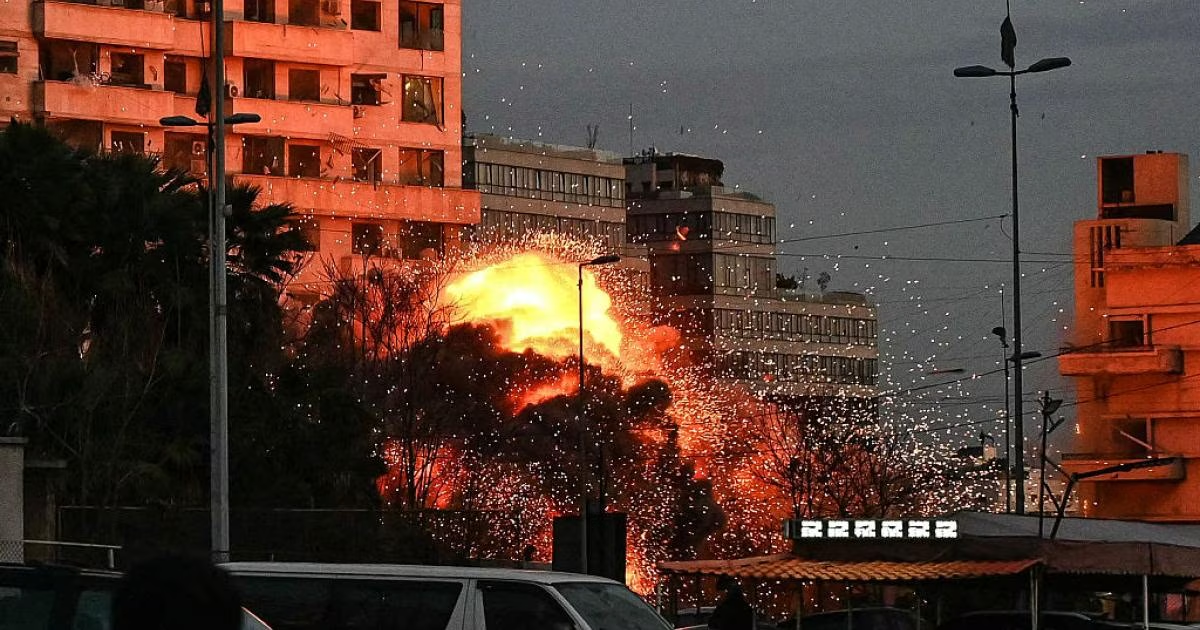
The Lebanese capital, Beirut, witnessed difficult hours described as the bloodiest since the escalation began, as occupation aircraft launched a series of intense raids targeting various residential neighborhoods. These attacks resulted in the martyrdom of at least 10 citizens and the complete destruction of a ten-story residential building, amid continuous shelling that hit four vital buildings in just eight hours.
Dr. Wael Marwa, director of Jabal Amel University Hospital, described the tragic condition of the wounded received by hospitals, noting that the injuries are highly complex. He explained that medical staff are dealing with cases of limb amputations and severe open wounds, in addition to head injuries requiring urgent surgical interventions in the skull.
In the context of direct targeting of media personnel, media sources mourned the martyrdom of journalist Mohammed Shari, political programs director at Al-Manar TV, who was killed along with his wife in a raid that targeted their home in the Zqaq al-Blat neighborhood. This incident is part of a series of attacks that have targeted civilian and media facilities in the heart of the Lebanese capital.
For its part, the Israeli occupation army claimed that these airstrikes are part of preemptive operations to weaken Hezbollah's military capabilities. The army spokesperson claimed that the raids targeted infrastructure belonging to the party, including branches of the Al-Qard Al-Hasan financial institution, which were subjected to intense shelling in several areas of Beirut.
Eyewitnesses reported that the occupation army issued warnings via social media before shelling the ten-story Bashoura building, allowing a small window for evacuation. However, citizens confirmed that the three other raids that targeted the Zqaq al-Blat and Basta neighborhoods occurred without prior warning, leading to direct casualties and widespread property damage.
The aggression was not limited to the capital but extended to include the destruction of strategic bridges over the Litani River in southern Lebanon, where Israel announced the destruction of two additional bridges. The occupation authorities justified this step by their desire to cut off supply routes and prevent the movement of fighters and weapons, which further isolates the southern regions and exacerbates the humanitarian crisis.
In a statement reflecting the intention to escalate, Israeli Security Minister Israel Katz said that the destruction of the bridges represents a clear and direct message to the Lebanese government. Katz affirmed that Tel Aviv will not allow the use of Lebanese state infrastructure for military purposes, threatening to repeat the scenarios of widespread destruction witnessed in the Gaza Strip in Lebanese cities.
According to the latest updates from the Lebanese Ministry of Public Health, the death toll from the ongoing aggression has risen to 968 martyrs, including 116 children and 40 healthcare workers. The ministry also recorded more than 2,432 people injured with varying degrees of severity, while the number of displaced people from their homes has exceeded one million.
On the ground, international peacekeeping forces (UNIFIL) observed intense exchanges of fire and a significant escalation in air and ground operations along the border. International reports indicated a tangible increase in the presence of Israeli forces inside Lebanese territory, which portends an expansion of direct ground confrontations.
In contrast, the occupation army admitted the killing of two Israeli soldiers during the ongoing battles in southern Lebanon, despite its claim that Hezbollah's rocket attacks did not result in deaths within Israeli cities. Violent confrontations continue on several fronts in the south, where the occupation is trying to establish new strongholds amid fierce resistance.
The Lebanese state is experiencing a state of complete paralysis amid continuous Israeli threats and the destruction of public facilities and vital bridges. International fears are growing of the region sliding into an uncontrollable comprehensive war, especially with the occupation's continued scorched-earth policy and targeting of densely populated residential neighborhoods in Beirut.
The injured arrive with amputated lower limbs and require precise skull surgeries as a result of the intense shelling.
PALESTINE
Wed 18 Mar 2026 10:26 pm - Jerusalem Time
Jerusalem's Economy in the Wind: Occupation Siege Imposes Complete Paralysis on the Old City

A state of severe stagnation casts a shadow over the markets of the Old City in occupied Jerusalem, where Jerusalemite merchants watch their shops forcibly closed by decisions from the occupation authorities. Jerusalemite merchants confirm that losses have reached their peak at 100% during the current season, which was supposed to be an opportunity to compensate for the year's losses. However, continuous closures for about three weeks have turned the city into an isolated military barracks.
The occupation authorities impose exorbitant financial restrictions that burden those who remain steadfast in the city's markets, most notably the 'Arnona' tax, which for an average shop amounts to about $13,000 annually. These financial obligations continue to flow despite the absence of income, which has led some shop owners to abandon their businesses and seek work as day laborers to secure a livelihood for their families, in the absence of adequate support.
On the tourism front, informed sources revealed a widespread cancellation of all hotel reservations that were scheduled during the last ten days of Ramadan and the holiday period. Indicators had shown a tourist influx from Britain, Asian countries, and Turkey, but the security escalation and strict restrictions on entry to Al-Aqsa Mosque and the Church of the Holy Sepulchre led to hotels being completely emptied of their visitors.
The hotel sector in Jerusalem is suffering from a historical decline, with the number of operating hotels halved since 2000, reaching only 24 hotels today struggling to survive. Tourism circles believe that every establishment in Jerusalem, from buses to small stalls, is part of the tourism system that is currently undergoing a systematic strangulation process aimed at changing the city's identity and weakening its Arab presence.
In a related context, official data from the Jerusalem Governorate indicate that the crisis was not limited to a specific sector but included a paralysis in commercial activity for both Christians and Muslims. Ramadan coincided with the forty-day fast, but the closure of the Church of the Holy Sepulchre and Al-Aqsa Mosque to visitors and worshippers led to the complete disruption of the religious season, which negatively impacted gift shops and historic restaurants.
Sources indicate that about 400 commercial shops within the walls of the Old City have completely closed their doors, while 30% of economic establishments are suffering from long-term closure. This bitter reality threatens to turn Jerusalem into a 'ghost city' similar to what happened in some neighborhoods of the Old City in Hebron and Acre, as a result of the marginalization and economic displacement policies practiced by the occupation.
Jerusalemites appeal to official Palestinian, Arab, and Islamic bodies for urgent intervention to support the steadfastness of merchants and protect the city's economic identity. Experts emphasize that breaking the economic siege requires intensifying visits from residents of the occupied interior and villages surrounding Jerusalem, to ensure the markets remain alive in the face of attempts at complete paralysis imposed by Israeli security measures.
If the merchant segment in the Old City collapses, the city will be in the wind and in a state of extreme danger.
ISRAELI AFFAIRS
Wed 18 Mar 2026 10:26 pm - Jerusalem Time
Israeli Military Censor Admits Ben Gurion Airport Hit, Planes Damaged by Iranian Shelling
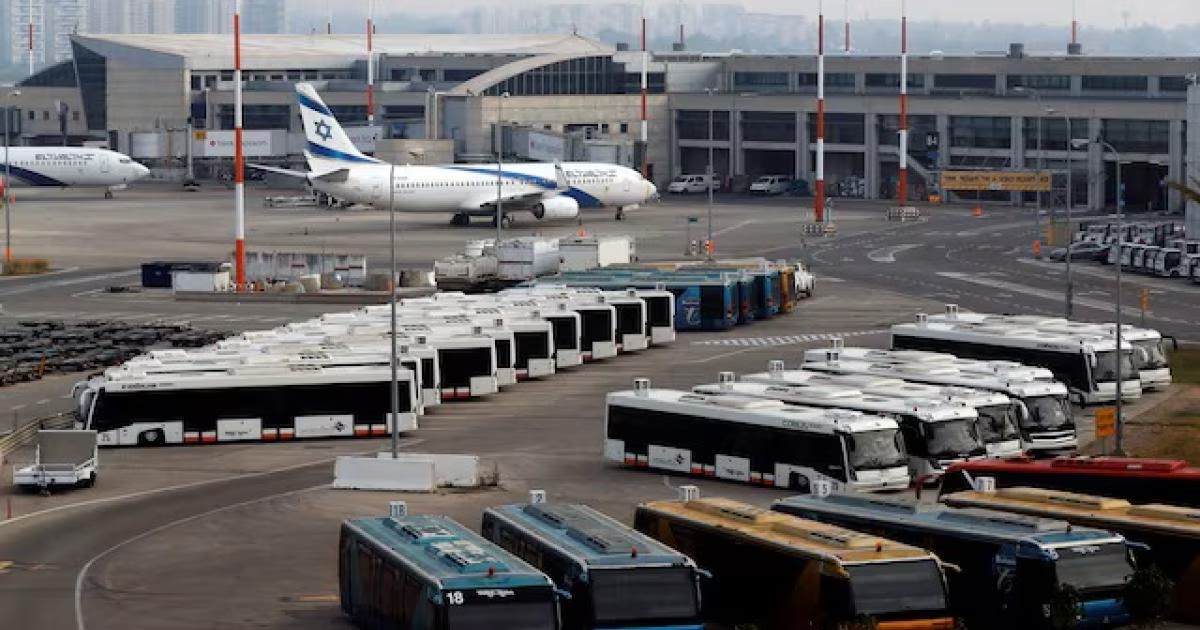
Iran's Supreme Leader, Mojtaba Khamenei, issued a strongly worded statement affirming that the blood of the martyrs would not be in vain, emphasizing that the killers would soon pay the price. Khamenei indicated that the assassination of Larijani clearly reflected the extent of his importance and the magnitude of the animosity that Islam's adversaries harbored towards him and his role.\n\nIn a related field context, Israeli media sources reported today, Wednesday, the detection of missiles launched from Iranian territory towards areas in Haifa and the north. The sources confirmed that air defense systems attempted to intercept the missile barrages, but some fell in open areas, activating sirens in wide areas.\n\nFor its part, the Israeli army officially admitted that Ben Gurion International Airport, located near Tel Aviv, suffered a direct hit from shrapnel resulting from an Iranian missile attack. Military reports clarified that the attack caused material damage to the airport's facilities, which is a significant development in the course of direct confrontation.\n\nHebrew media revealed damage to a number of private planes that were parked on the international airport's runways at the moment of the attack. Sources indicated that the Israeli military censor finally allowed the publication of details of the incident after a period of secrecy, without precisely specifying the actual date of this targeting.\n\n"Ynet" Hebrew website published photos documenting the extent of the damage to a small private plane, showing clear signs of fire and internal destruction. Press sources in Jerusalem confirmed that the leaked photos show three planes completely burned, reflecting the accuracy of the hit and the strength of the explosions that shook the airport premises.\n\nDespite attempts by military censorship to downplay the incident by describing it as resulting from 'intercepted missile shrapnel,' the extent of the damage indicates direct targeting. Observers believe that the activation of sirens and the falling debris over the airport confirm that the vital facility has become within the central targeting circle of Iranian missiles.\n\nThis military announcement is the first of its kind in which the Israeli army admits that the country's main airport has been hit since the confrontation erupted in late February. Tehran had previously announced precise strikes on the airport in response to attacks targeting its leaders and facilities.\n\nOn the navigation front, Israeli airline 'El Al' announced the suspension of its flights to about 30 important international destinations, including the cities of Barcelona, Berlin, and Budapest. The company justified this decision by the current operational restrictions and the strict security measures imposed on air traffic under the current circumstances.\n\nIsraeli airspace has been in a state of partial paralysis since the escalation began, with authorities imposing strict restrictions on air navigation. Despite attempts to resume some flights with security guarantees, the recent targeting of Ben Gurion Airport has reshuffled the cards and imposed a complex security reality on the home front.\n\nEvery drop of blood has a price, and the killers of the martyrs will soon pay that price, and Larijani's assassination shows the extent of the enemies of Islam's hatred for him.
ANALYSIS
Wed 18 Mar 2026 10:25 pm - Jerusalem Time
Luc Ferry and the Justification of Force: Has the Era of Universal International Law Ended?
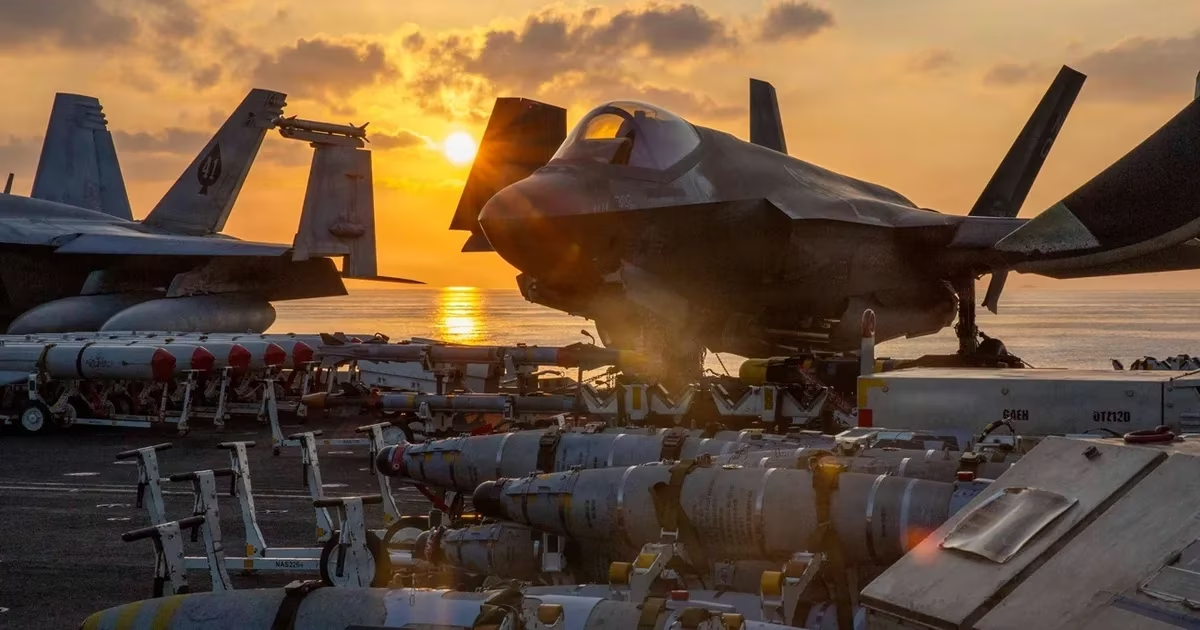
The recent intervention by French philosopher Luc Ferry on the 'LCI' channel raised fundamental questions about the future of the international system, especially concerning the legitimacy of military strikes against Iran. His discourse revealed a profound shift in the vision of Western intellectual elites, who have begun to move away from the concept of international legitimacy as a binding framework for all.
Observers believe that Ferry's logic reduces international law to a selective perception, distinguishing between what he described as 'respectable states' and 'outlaw states'. This approach necessarily leads to undermining the principle of legal universality upon which the modern global order has been founded for many decades.
The danger in this proposition lies in transforming law from a normative ethical and legal system into a functional and strategic tool. According to this perception, the activation or deactivation of law becomes dependent on the nature of the political actor and the interests of major powers, not on the principles of justice and sovereign equality.
This shift reflects what can be called 'the politicization of law', where adherence to international rules no longer stems from the principle of legal obligation. Instead, it has become linked to the balance of power on the ground, thus reproducing political concepts that were prevalent before the crystallization of the contemporary international system.
Ferry's thesis establishes a kind of 'legal relativism' that fatally undermines the idea of equality among member states in the international community. When legitimacy is tied to the political description of the actor instead of the legal rule, we return to the law of the jungle where power is the sole source of right.
This discourse evokes the concept of 'coercive legitimacy', which attempts to justify the use of military force outside established legal frameworks. This is usually done under the pretext of protecting the global order or confronting unconventional threats, a logic that carries deep structural contradictions.
These trends raise a problematic question: How can the legal system be defended by violating its fundamental rules? The attempt to protect rules by suspending them leads to a dangerous slide towards what is called in international relations 'the permanent state of exception'.
Looking at historical experiences, we find that justifying force outside international legitimacy is not a new approach, but a recurring pattern that has proven to fail. Perhaps the military intervention in Iraq in 2003 remains the most prominent witness that transcending law does not achieve stability but exacerbates chaos.
Lessons learned from previous conflicts have confirmed that weakening international institutions leads to an erosion of trust in the global system as a whole. Instead of enhancing security, this behavior opens the door to the generalization of the logic of force, where every state will find a justification for adopting aggressive behaviors under the pretext of defending its security.
From a geopolitical analysis perspective, Ferry's discourse represents a retreat from the model of 'international governance' to the model of 'hard sovereignty'. In this model, powerful states seek to impose their unilateral will away from any regulatory controls or binding international charters.
There is a clear confusion in these theses between the level of realistic description and the level of theoretical justification. While it may be true that some states violate laws, this should not become a pretext for abolishing the legal rule itself or legitimizing its transgression.
The difference between rigorous analysis and ideological justification lies in the ability to distinguish between 'what is' and 'what ought to be'. Defending international law requires reforming and strengthening it from within, not demolishing its pillars on the pretext of its ineffectiveness at a certain point in time.
Luc Ferry's stance represents a shift in the structure of Western political thought, moving from the logic of legitimacy to the logic of pure power. This path may return the world to a pre-contractual stage, where common legal horizons are absent and military clashes control destinies.
In conclusion, the current challenge is not limited to confronting legal violations, but also to addressing discourses that legitimize these violations. The real danger lies in attempting to provide an intellectual and philosophical cover for violating the law in the name of protecting the law itself, which threatens global peace.
The greatest danger comes not from violating the law, but from justifying its violation in the name of the law itself.
PALESTINE
Wed 18 Mar 2026 10:25 pm - Jerusalem Time
Martyr in bombing targeting displaced persons' tents in Gaza and arrest campaign targeting 16 women in the West Bank

Medical sources reported the martyrdom of a Palestinian citizen and the injury of another with varying degrees of wounds, today, Wednesday, following a drone strike by the Israeli occupation army. The bombing directly targeted a tent housing displaced families in the Al-Mawasi area, located west of Khan Yunis city in the southern Gaza Strip, an area crowded with thousands of forcibly displaced people.
In a related context, the occupation artillery continued its violent shelling of various areas east of Gaza City, coinciding with military vehicles stationed in the eastern axes randomly firing their heavy machine guns. Warships also participated in the attacks by firing their shells and bullets towards the city's coastline, causing panic among residents.
These bloody field developments come despite the ongoing ceasefire agreement that began last October. Documented statistics reveal a dangerous escalation in Israeli violations, with approximately 673 martyrs and 1799 injured since the agreement came into effect, putting the calm at risk.
Regarding the general humanitarian situation, the continuous aggression on the Gaza Strip since October 2023 has resulted in a catastrophic toll exceeding 72,000 martyrs and approximately 172,000 injured. Military operations have also caused widespread destruction to infrastructure and residential areas, rendering large areas of the Strip uninhabitable amid ongoing airstrikes and artillery shelling.
In the occupied West Bank, occupation forces launched a widespread raid campaign focused on the city of Qalqilya and its surrounding towns in the northern West Bank. This campaign resulted in the arrest of 16 Palestinian women after storming and searching their homes and tampering with their contents, a move described by local sources as part of the collective punishment policy pursued by the occupation.
Field sources clarified that the majority of the arrested women are wives of current or released prisoners, in addition to mothers of Palestinian martyrs. The raids included the towns of Azzun, Kafr Thulth, and Sanniriya, where the detainees were interrogated on the spot before most of them were transferred to interrogation centers, while two women were released later.
Human rights reports indicate that the pace of attacks in the West Bank has reached record numbers since October 2023, with 1132 martyrs falling to occupation and settler bullets. Arrests also reached approximately 22,000 cases, coinciding with an escalation in the policy of home demolitions and forced displacement for the benefit of settlement expansion in various governorates, including occupied Jerusalem.
The body of a martyr and an injured person arrived at Nasser Hospital as a result of a bombing by an Israeli drone targeting a tent housing displaced people in the Al-Mawasi area.
ARAB AND WORLD
Wed 18 Mar 2026 10:25 pm - Jerusalem Time
Threat of an all-out confrontation: Iran threatens to strike oil facilities in the Gulf, and oil jumps above $104
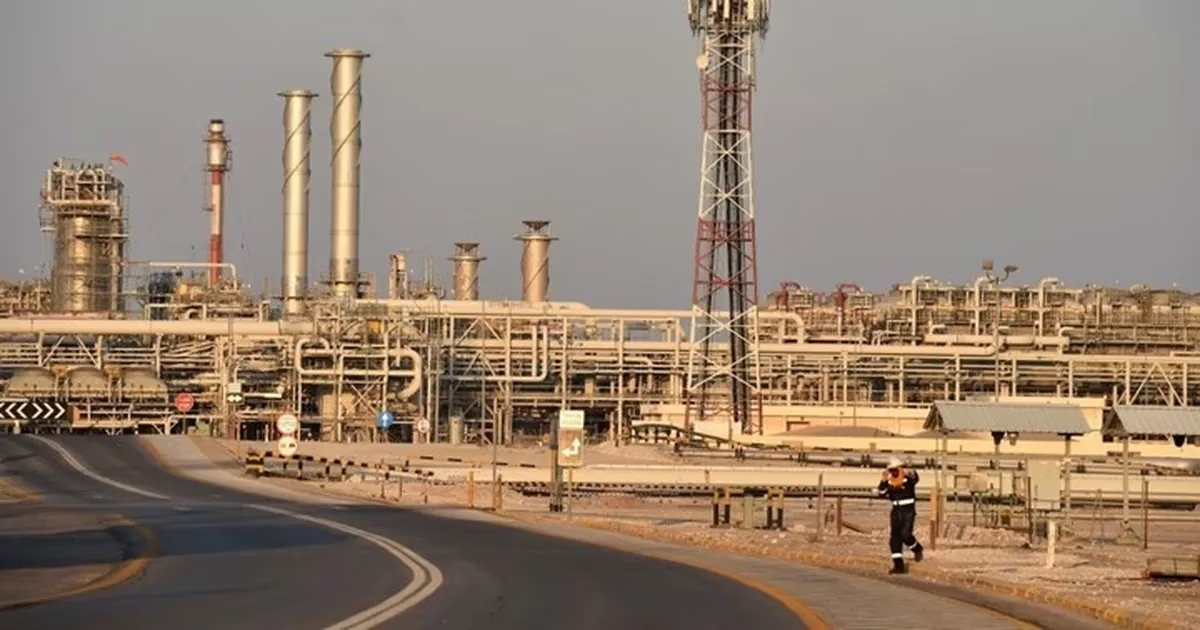
The region has witnessed an unprecedented military escalation, as Iranian authorities issued official warnings demanding the evacuation of a number of vital oil facilities in three Gulf countries. These warnings included workers and residents near those sites in Saudi Arabia, the United Arab Emirates, and Qatar, confirming that these facilities have become imminent military targets.
Iranian official media published a list of targeted sites, which included the 'Samref' refinery and the Jubail petrochemical complex in Saudi Arabia, in addition to the 'Al-Hosn' gas field in the UAE. The threats also included prominent Qatari facilities, including the Mesaieed petrochemical complex and the strategic 'Ras Laffan' refinery, which caused a state of widespread security alert in the region.
In a swift field response, the Saudi Ministry of Defense announced that air defense forces were able to intercept and destroy two ballistic missiles launched towards the Eastern Province. These developments come amid escalating tension after a series of mutual attacks targeting energy infrastructure in the region in the past few days.
Informed sources reported that evacuation operations have already begun at the liquefied natural gas facilities in the 'Ras Laffan' area in Qatar, in response to serious Iranian threats. This precautionary step aims to secure human resources and ensure the reduction of losses in the event of the attacks threatened by Tehran in response to the targeting of its national facilities.
Earlier, the occupation air force carried out a widespread attack targeting the 'Pars' natural gas processing facility in the Bushehr region of southern Iran. Media reports confirmed that the strike was carried out in full coordination with the United States of America, and resulted in the destruction of huge warehouses and severe damage to the civilian infrastructure of the Iranian economy.
This strike is the second of its kind within a week, as previous raids targeted major oil tanks in the capital, Tehran. These military operations, according to observers, aim to exert maximum pressure on the Iranian fuel sector and paralyze its ability to export and meet domestic consumption.
For its part, Iranian sources stated that huge explosions were heard in the vicinity of the 'South Pars' gas field in the Asaluyeh region, as a result of the shelling carried out by the occupation. The sources indicated that rescue and firefighting teams are working hard to control the fires raging in various stages of gas processing, while employees have been moved to safe shelters.
Tehran explicitly threatened that all energy infrastructure serving American and occupation interests in the region would be legitimate targets for its armed forces. News agencies quoted a military source as saying that targeting the Asaluyeh field represents a 'war crime' that will not go unanswered with a devastating response that will affect the energy lifeline in the region.
On the global markets, Brent crude prices jumped sharply to exceed the $104 per barrel barrier, driven by fears of disruption to global energy supplies. Markets were affected by direct threats to Gulf facilities, which overshadowed news of Iraq resuming oil exports via Turkish pipelines.
Brent crude futures recorded a 0.6 percent increase, reaching $104.02 per barrel, despite the volatility witnessed in the session at its beginning. In contrast, US West Texas Intermediate crude saw a slight decrease, reflecting the disparity between contracts focused on the American market and those linked to international maritime disturbances.
Economic analysts believe that the current tensions in the Strait of Hormuz have significantly reduced global oil supplies, as about one-fifth of global production passes through the strait. The deteriorating security situation has effectively closed the strait to tanker traffic, causing a suffocating supply crisis for importing countries.
In Iraq, sources in the North Oil Company revealed attempts to resume exports via the Ceyhan pipeline after an agreement between Baghdad and the Kurdistan Region. However, production from Iraq's southern fields continues to suffer a sharp decline, reaching 70 percent, with production not exceeding 1.3 million barrels per day due to navigation disruptions.
Energy experts confirmed that the easing of pressure on supplies remains very limited, given that current Iraqi production represents only one-third of pre-crisis levels. Tanker movement through the Strait of Hormuz remains the decisive factor in determining price trends in the coming days, in the absence of any signs of military de-escalation.
Global capitals are awaiting the coming hours with extreme caution, amid fears of an all-out energy war that could lead to a collapse in global supply chains. International diplomatic contacts continue in an attempt to contain the situation, although field indicators point to the approaching zero hour for the implementation of mutual threats.
These sites have become direct and legitimate targets, and will be targeted in the coming hours, so everyone is requested to leave these areas immediately.
PALESTINE
Wed 18 Mar 2026 10:25 pm - Jerusalem Time
Symbolic Protest at Fatih Mosque in Istanbul in Solidarity with the Closed Al-Aqsa Mosque

The Fatih Mosque in Istanbul, Turkey, witnessed a striking symbolic event coinciding with the observance of Laylat al-Qadr, where a group of women threw their hijabs and head coverings over the male worshippers in the lower courtyard of the mosque. This act was an expression of protest and popular anger against the continued closure of the blessed Al-Aqsa Mosque in occupied Jerusalem and the prevention of worshippers from accessing it.
The head coverings that were thrown carried written messages with sharp phrases emphasizing that 'Al-Aqsa Mosque is the honor of Muslims' and calling for its protection from the occupation's measures. This symbolic initiative is based on a historical legacy dating back to the time of Saladin al-Ayyubi, when a woman threw her head covering to rouse spirits and protest the Crusaders' control over the holy city at that time.
Meanwhile, the Israeli occupation authorities continue their siege of Al-Aqsa Mosque for the nineteenth consecutive day, announcing a ban on prayers there under the pretext of 'security conditions.' Sources in the Jerusalem Waqf reported that the occupation police officially informed them of the extension of the closure decision until the end of Eid al-Fitr, depriving thousands of Palestinians from performing I'tikaf and prayers in their holiest site.
This closure was accompanied by a widespread escalation on the ground in occupied Jerusalem, where occupation forces transformed the Old City and its surroundings into a heavily fortified military barracks. Occupation security sources intensified their restrictions in the Al-Rashidiya School courtyard, while the steadfast worshippers insist on performing their prayers at the mosque's thresholds and in nearby streets, rejecting the policy of forced closure.
The repressive measures were not limited to Al-Aqsa Mosque but also extended to preventing citizens from performing Tarawih prayers in various neighborhoods of Jerusalem, especially in the Bab al-Amoud and Bab al-Sahira areas. Occupation forces forced worshippers to leave public squares under threat, in a clear attempt to dismantle any religious or national gatherings during the last days of the blessed month of Ramadan.
Al-Aqsa Mosque is the honor of Muslims, protect it.
OPINIONS
Wed 18 Mar 2026 10:25 pm - Jerusalem Time
Open Letter to the Iranian Leader: Calls to Correct Political and Ideological Course
Ramallah - "Al-Quds" Dot Com
Opinion Writer
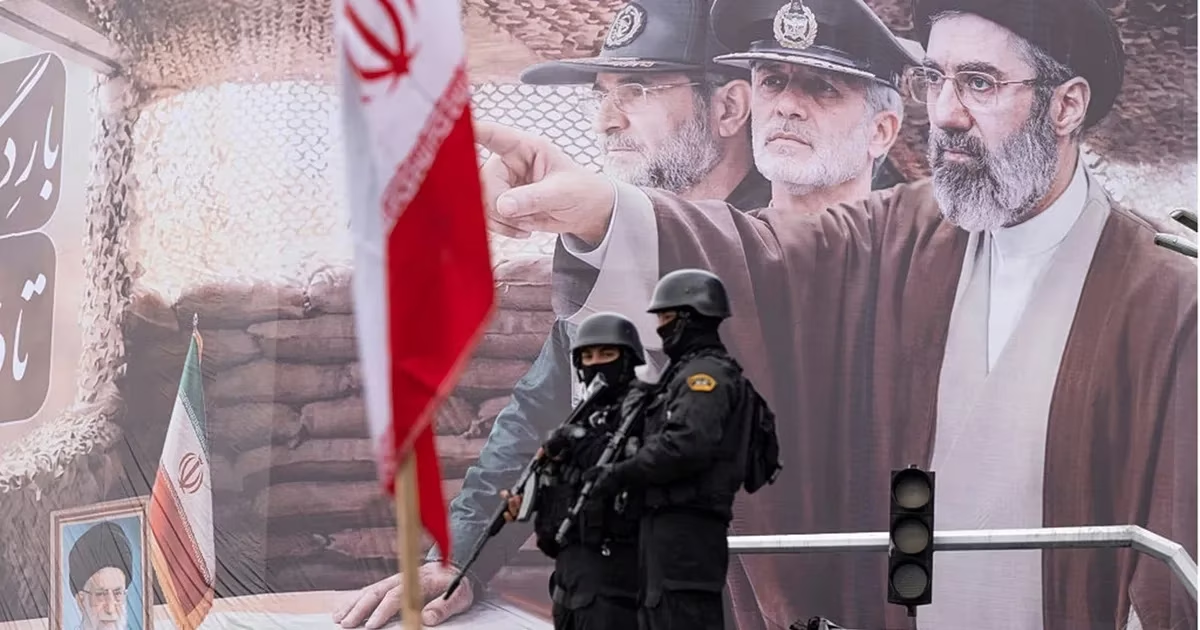
This open letter, addressed to His Eminence Sayyid Mojtaba Khamenei, the Supreme Leader of the Islamic Republic of Iran, comes at a highly complex regional juncture. The author begins by emphasizing the rejection of the aggression Iran is subjected to by Zionist powers, considering it a blatant violation of international law and an assault on a sovereign state and a neighbor in geography and history.
The letter points to the stark contradiction between the arduous diplomatic efforts made by the Kingdom of Saudi Arabia and the Gulf Cooperation Council countries to protect the region and Iran from the ravages of wars, and the Iranian response, which involved targeting vital civilian and economic facilities in Gulf countries with ballistic missiles and drones.
The author stresses that the scale of attacks launched by Iran against its Arab neighbors far exceeds what it directed towards the powers that actually attacked it. He believes that these policies have caused enormous human and material losses, affecting innocent citizens and residents in the region, necessitating a serious pause for review and accountability.
The new leadership in Iran inherits a heavy legacy accumulated over forty-seven years of political adventures described as 'reckless'. This legacy includes a long record of interventions in the affairs of neighboring countries and sowing discord in vast areas of the Islamic world, leading to unprecedented regional instability.
In a review of regional crises, the letter accuses Tehran of establishing parallel entities to states, as is the case with Hezbollah in Lebanon, which caused deep sectarian division. It also refers to the Iraqi arena, which witnessed the birth of dozens of Iranian-backed armed militias that committed crimes leading to the displacement of millions and the fall of hundreds of thousands of victims.
In Yemen, the Houthis, due to Iranian support, transformed from a peaceful social component into an armed group that contributed to destroying the country's capabilities and dividing its social fabric. This influence extends to Syria, where cross-border militias contributed to suppressing the aspirations of the Syrian people and committing grave violations over the past decade.
The letter touches upon the internal Gulf situation, accusing Iranian policy of sectarian incitement and planting subversive cells that targeted the security and stability of these countries. The author believes that these documented practices have brought Iran nothing but poverty and international isolation, despite the enormous wealth that should have been spent on the welfare of the Iranian people.
On the ideological front, the letter calls on the new leader for a corrective revolution within the Twelver Shia doctrine to purify it from extremism and superstitions that have been introduced into it. It strongly criticizes rituals that involve self-harm and distorting the image of Islam and the school of Ahl al-Bayt before the world, considering them a deviation from the correct legitimate objectives.
The article raises fundamental questions about the truth of the calls for Islamic unity launched by Tehran, considering that they clash with the reality of practices of excommunicating companions and impugning religious constants. It believes that unity cannot be achieved in the presence of inflammatory sectarian discourse that sows division in societies that were harmonious before external interventions.
Returning to the approach of the pure Imams, based on knowledge, reason, and moderation, is the only way out for Iran from its current crises. The author emphasizes that this initiative must emanate from the supreme leadership to be a sincere pioneering effort that history will preserve, and save future generations from futile sectarian conflicts.
The letter cites sayings attributed to Imam Ali ibn Abi Talib, may God be pleased with him, in which he declares his innocence from extremists, in reference to the necessity of disavowing extremist movements that use Shiism as a cover for political and subversive goals. This approach is what guarantees Iran's return as an active and respected member of the international and Islamic system.
The current historical moment requires courage in decision-making to stop the bleeding of Iranian wealth squandered on foreign militias. The Iranian people, who possess an ancient history and civilization, are more deserving of their country's resources to build a bright future away from policies of exporting revolutions and armed conflicts.
The letter concludes by calling for unity on truth and purifying souls from historical grudges that are exploited to perpetuate conflicts. It is hoped that Mojtaba Khamenei's leadership will be a turning point towards regional peace and peaceful coexistence among all components of the Islamic nation, despite their different doctrines and backgrounds.
The message at its core is a call for frankness and honesty in confronting bitter realities, away from traditional diplomacy. The supreme interest of the nation requires stopping interventions, respecting the sovereignty of states, and focusing on internal construction instead of external destruction, which is what the world expects from the Iranian leadership in its new phase.
The historical opportunity is available to you to save Iran, and to renew the school of Ahl al-Bayt and purify it from the heinous extremism and superstitions that have distorted Shiism over the past centuries.
ARAB AND WORLD
Wed 18 Mar 2026 10:25 pm - Jerusalem Time
Trump's Advisors: President Seeks to End Confrontation with Iran, His Aspirations Differ from Netanyahu's Calculations
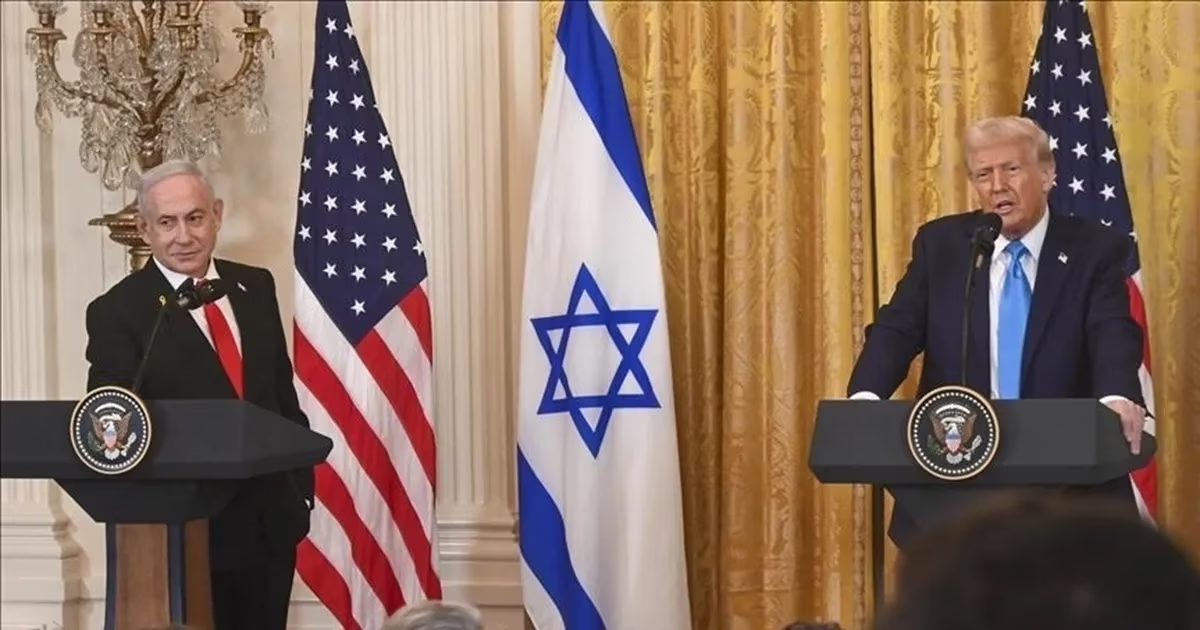
Informed sources from US President Donald Trump's advisors reported that the White House adopts a vision for ending the conflict with Iran that has a faster timeline than what Israeli Prime Minister Benjamin Netanyahu plans. The sources clarified that there is a gap in strategic calculations between the two parties, as Trump focuses on achieving specific military and technical goals to turn the page on the confrontation.
According to American officials, the US strategy revolves around undermining the pillars of Iranian power by destroying missile and nuclear programs, paralyzing naval forces, and drying up funding sources for factions loyal to Tehran in the region. While regime change in Tehran is seen as an 'added bonus,' Trump intends to halt military operations once the neutralization of the aforementioned main threats is guaranteed.
In contrast, the sources indicated that Israeli approaches lean towards more complex goals, including seeking to assassinate the new Iranian Supreme Leader, Mojtaba Khamenei, a matter that receives significant attention in Tel Aviv, far exceeding American interest. Officials also noted a sharp divergence in the view of the global economy, where Trump places the stability of oil markets as a top priority, while the Israeli side appears not to fear the repercussions that a state of 'chaos' resulting from escalation might leave.
Officials concluded their statements by pointing to the US administration's awareness of the prevailing impression that portrays Washington as a تابع (follower) of Israeli decisions, emphasizing that this perception is inaccurate and does not serve American national interests, stressing that Washington acts according to its own agenda aimed at regional and international stability.
Israel will try to assassinate Iran's new leader, and they are much more interested in that than we are.
ANALYSIS
Wed 18 Mar 2026 10:25 pm - Jerusalem Time
The Boomerang Plot: How Iran's Regime Change Project Became a Test of American Power?
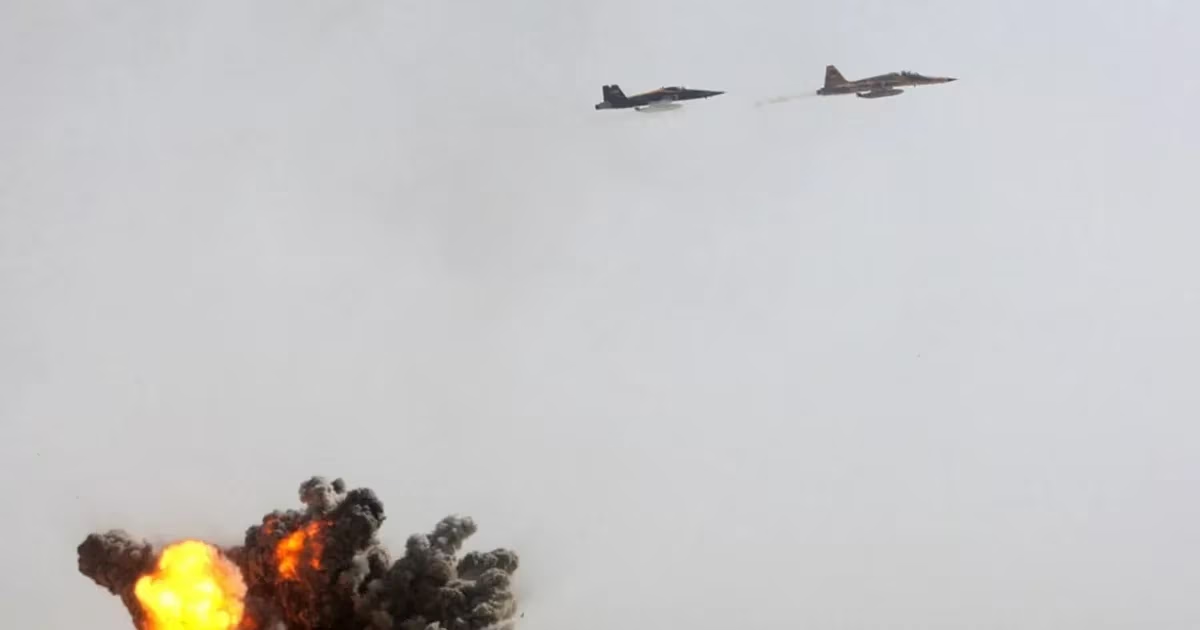
As the first quarter of 2026 drew to a close, the geopolitical landscape in the Middle East began to shift in ways few had anticipated. Questions about the fate of the Iranian regime transformed into doubts about the United States' ability to impose its will. The plan, which began with intense pressure aimed at delegitimizing the leadership in Tehran, ended by exposing deep flaws in Washington's 'regime change' strategy.
Field developments proved that wars do not always achieve their stated objectives; instead, they can become a mirror reflecting the weakness of the attacking party before the targeted party. In the Iranian case, external pressures seem to have given the regime an opportunity to appear more cohesive and cautious, with a superior ability to disrupt the calculations of regional and international adversaries through unconventional tactics.
Analysts believe that the recent confrontation did not succeed in breaking Tehran's political will, but rather highlighted its military capability to transfer the cost of the conflict beyond its geographical borders. This was clearly evident in the ongoing tensions in the Strait of Hormuz and the continuous pressure on international shipping, making the entire world a partner in paying the price of this tension.
Tehran adopted a clever strategy based on 'calculated disruption' of costs, using inexpensive drones to force adversaries to use costly interception systems. This financial disparity represents a strategic gain for Iran, whether the drone hits its target or is shot down, because the ultimate goal is to deplete the financial and military resources of the other party.
The battle is no longer about 'decisive victory' in its traditional sense, but has transformed into a war for the costly survival of the adversary, where gradual pressure is used to postpone any military resolution. These technically simple tools have managed to disrupt major political calculations, making the idea of a swift military resolution elusive in light of the depletion of valuable air defenses.
The Strait of Hormuz became a central metaphor in this confrontation, as Iran proved its ability to turn it into a permanent danger zone without needing to close it completely. This tactic shifted the war from the military field to global markets and shipping ports, leading to a crazy surge in insurance prices and shaking the nerves of an already exhausted global economy.
When major economic powers begin to pay the price of confrontation, the question of direct military superiority recedes in favor of a more pressing question about the ability to bear the political and psychological consequences. Here lies the paradox, as the project aimed at weakening Iran began to reveal the limits of American power and its fragility in the face of long-term wars of attrition.
Former White House energy advisors indicated that disruptions in international shipping lanes do not have easy and quick political or military solutions. Symbolic measures such as escorting ships or using strategic reserves do not address the core problem of losing confidence in the natural flow of global trade under the threat of arms.
It is noteworthy that the survival of the Iranian regime was not contingent on decisive salvation from major powers such as Russia or China, which provided support described as marginal or symbolic. This indicates that Iranian resilience stems from internal and structural factors, which places the assumptions of the regime change project under the microscope of criticism and deep review in Western circles.
Within the United States, consensus on foreign policies towards the region began to erode, with a noticeable decline in public support for Israel, especially among young people and independents. This internal division raised the political cost of the war, transforming it from a foreign policy issue into material for electoral and social conflict within American society itself.
On the diplomatic front, Muscat emerged as a center for efforts to contain a full-scale explosion, amidst a general feeling of failure of international diplomacy to prevent the confrontation. The continued calls for a ceasefire reflect growing legal and moral concerns, and confirm that the war is no longer seen as a 'clean victory' but as a catastrophic process.
Pakistan played a pivotal and quiet role in this crisis, successfully maintaining a delicate balance between its relations with Gulf states and Washington on the one hand, and its open channels with Tehran on the other. This diplomatic approach proved that deterrence and dialogue are not contradictory paths, but can be employed to prevent the region from sliding into a comprehensive and destructive confrontation.
Internally, targeting the Iranian leadership seems to have had completely counterproductive results, as the targeted symbols transformed into emblems of national identity and resilience in the eyes of the Iranian street. Concepts of history and ideology intertwined to form a state of popular mobilization, making society appear more united behind its leadership in the face of what they consider external aggression targeting their existence.
In conclusion, the cruelest irony of this war remains that projects of regime change through external force may end up making those regimes more resilient and enduring. Events have proven that true power lies not only in the ability to bomb and destroy, but in the ability to endure, manage nerves, and maintain diplomatic channels even at the height of conflict.
Iran did not need overall superiority; it was enough for it to prove that it could make others pay the price of war.
ARAB AND WORLD
Wed 18 Mar 2026 10:25 pm - Jerusalem Time
Trump attacks Starmer: 'Historic Alliance' between Washington and London fractured over war on Iran
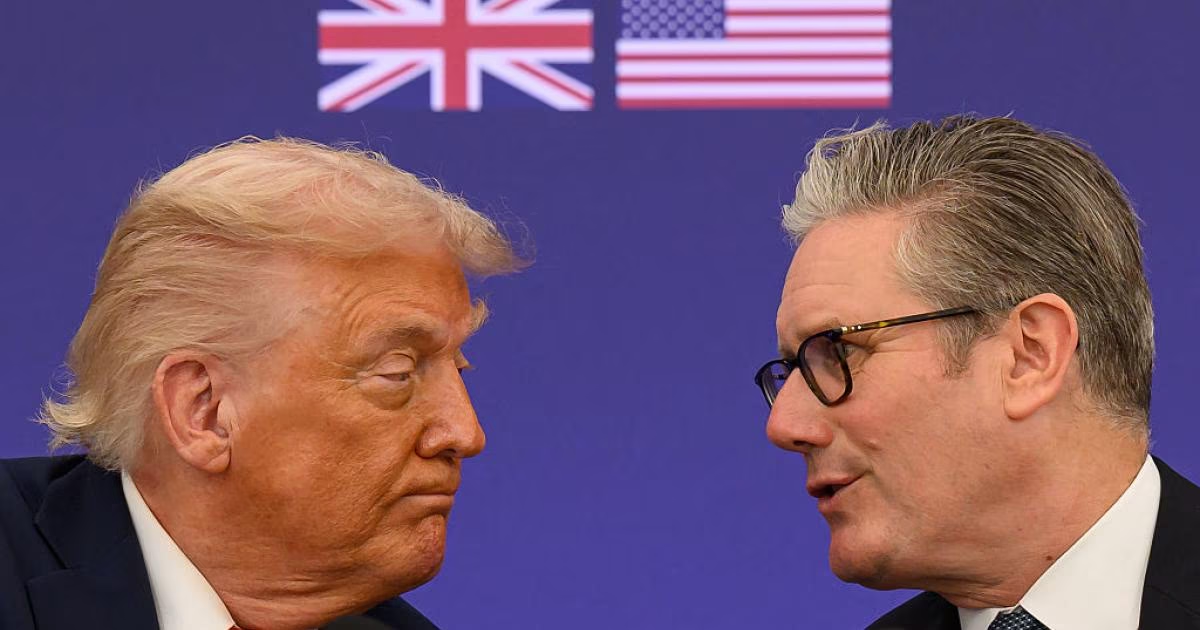
The historic relationship between the United States and the United Kingdom is facing its toughest test in decades, as Washington's war against Iran lacks the usual international cover. For the first time since the Vietnam War, London has chosen to distance itself from direct military involvement, angering US President Donald Trump, who has launched sharp and public criticism against his country's closest ally.
In striking remarks, Trump stated that British Prime Minister Keir Starmer is not like the historic leader Winston Churchill, indicating that today's Britain is no longer the country the world once knew. These statements reflect the extent of the rift between the White House and Downing Street, especially in the absence of the broad international alliances that characterized the wars in Iraq and Afghanistan.
For his part, Starmer justified his country's stance by emphasizing the need for a solid legal basis and a well-thought-out plan before embarking on any military intervention. The British Prime Minister affirmed that his country would not be drawn into a long-term conflict in the Middle East, recalling the 'Iraq phobia' that still casts a shadow over the political and public consciousness in Britain.
The crisis escalated with London's decision to prevent US forces from using British military bases in Cyprus to launch attacks against Iranian targets. This decision came after the Akrotiri base was targeted by a drone believed to be from Hezbollah, prompting Starmer to emphasize that British bases would not be a launching pad for offensive operations that would further inflame the region.
Despite this tension, the British government allowed the use of the 'Diego Garcia' base in the Indian Ocean and 'Fairford' in England for purposes Starmer described as 'specific defensive.' This step, according to official sources, aims to protect British lives and the joint defense of allies in the region without engaging in direct offensive operations.
In a later development, President Trump rejected a British offer to send two aircraft carriers to the Middle East, considering the move to be too late and now worthless. Trump wrote on his 'Truth Social' platform in a sarcastic tone that Washington no longer needed British naval support, describing allies as having become a burden on American capabilities.
Reports indicate that the disagreement extends beyond the Iranian file to other strategic issues such as the future of NATO and the war in Ukraine. The issue of Greenland and Trump's concept of European security also emerge as additional points of friction that have eroded mutual trust between the two Western poles that historically formed the axis of the global order.
Domestically, opinion polls showed that the majority of Britons, up to 56%, support Starmer's decision to stay out of the armed conflict. This popular support gives the Prime Minister room to maneuver against American pressure, despite the potential decline in the 'special relationship' that has characterized the two countries since World War II.
Trump did not stop at criticizing the military stance but also attacked London's new economic policies, especially after Starmer's recent visit to Beijing. The US President considered British commercial rapprochement with China to be a significant danger, at a time when Washington is seeking to tighten the economic noose on its major Asian rival.
In response, Starmer countered Trump's previous criticisms regarding the role of British soldiers in Afghanistan, describing his statements as 'insulting and shocking.' Starmer recalled the British sacrifices, which included the deaths of hundreds of soldiers, affirming that the dignity of the British armed forces is not a subject for political bidding from any party.
Analysts believe that the era of historic pairings like 'Churchill-Roosevelt' or 'Blair-Bush' has effectively ended with the rise of the 'America First' movement. It appears that Britain has begun to seek strategic alternatives by strengthening European defense integration and reducing excessive reliance on the unstable American security umbrella.
Sources reported that German Chancellor Friedrich Merz, despite Trump's praise, maintained a cautious stance calling for a swift end to the war. This illustrates the US administration's failure to rally European consensus, even among powers Trump praises, leaving Washington in relative isolation in its latest war against Tehran.
The targeting of the Akrotiri base in Cyprus served as a wake-up call for London about the risks of involvement in the conflict, as Starmer confirmed that the attack occurred before the official British position was announced. This incident reinforced the British government's conviction that any ill-considered participation could make British interests direct targets in a war in which London sees no national interest.
In conclusion, it appears that the geopolitical map is undergoing a major reshaping, with London gradually moving away from Washington's orbit towards more independent choices. As the American-Israeli war on Iran continues, the question remains whether this fracture in the Anglo-American alliance is merely a passing storm or a radical and permanent shift in international politics.
Starmer is not Winston Churchill... The United Kingdom is no longer the country we know.
LATEST NEWS
Wed 18 Mar 2026 10:24 pm - Jerusalem Time
Pezeshkian confirms the killing of the Iranian intelligence minister in an Israeli raid
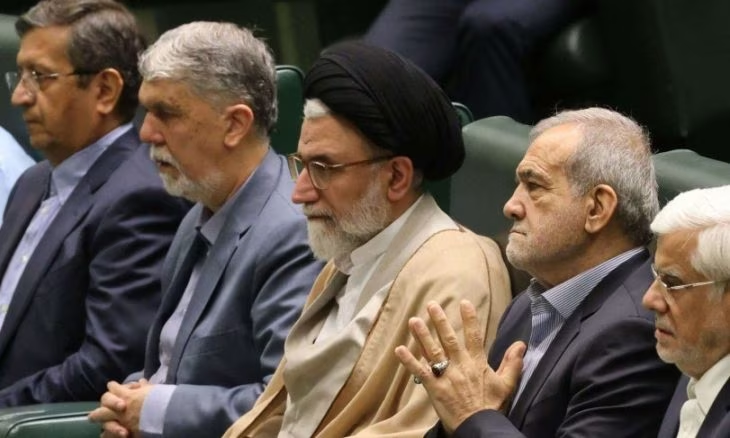
Iranian President Masoud Pezeshkian announced today, Wednesday, the killing of Intelligence Minister Ismail Khatib, following an airstrike carried out by Israeli forces. This official confirmation came just hours after Tel Aviv announced its success in eliminating the Iranian minister as part of a series of operations targeting senior leaders in Tehran.
Pezeshkian condemned in official statements what he described as a 'cowardly assassination,' noting that the attack not only targeted Khatib but also other prominent officials and their families. He clarified that the list of those killed included the Secretary of the Supreme National Security Council, Ali Larijani, and Defense Minister Aziz Nasserzadeh, reflecting the magnitude of the blow received by state agencies.
For his part, Israeli Defense Minister Yoav Gallant revealed details of the operation, confirming that the elimination of the intelligence minister took place during a precise night raid. Gallant indicated that these operations come within a broader strategy to undermine Iranian leadership capabilities and prevent the implementation of any hostile plans against Israeli interests.
Official sources in Tel Aviv confirmed that Prime Minister Benjamin Netanyahu and his defense minister gave the green light to the army to target any high-ranking Iranian official. These new powers include carrying out operations immediately upon identifying the intelligence circle and field targets, without the need to return to the political level for additional approvals.
Gallant stressed that the Israeli security establishment will continue to pursue all Iranian officials involved in planning attacks against it. He added that eliminating any high-ranking leadership cadre is part of Israel's commitment to thwarting threats in their infancy, noting that intelligence operations are ongoing around the clock.
In a related context, Hebrew media considered the assassination of Ismail Khatib to be a security blow no less significant than the elimination of Ali Larijani days earlier. These sources believe that reaching the intelligence minister reflects a significant security breach within the inner circles of the Iranian regime, putting the remaining leadership on high alert.
These developments come amid the widespread offensive launched by Israel since late February, which targeted vital facilities and leading figures within Iran. Field reports claim that military operations have succeeded in neutralizing a large number of military and political leaders, leading to a state of confusion within the security agencies.
These successive assassinations have raised questions about the extent of intelligence penetration within Tehran, especially with the Israeli air force's ability to reach fortified targets. Observers believe that the repetition of these operations indicates deep security vulnerabilities that enabled hostile agencies to accurately track the movements of leaders.
On the internal Iranian front, a state of sadness and anger prevailed following the confirmation of the ministers' deaths, amid calls to strengthen security measures and protect what remains of the regime's symbols. The Iranian government faces increasing pressure to respond to these attacks that have affected the state's prestige in its own backyard.
In contrast, military analysts believe that Israel's assassination policy aims to create a leadership vacuum within Iranian security and military institutions. Tel Aviv is betting that the absence of pivotal figures will lead to a decline in operational coordination between the regime's various arms in the region.
Despite the heavy human losses among the leadership, some readings indicate that Iranian institutions have a structure that allows them to quickly replace leaders. However, the biggest challenge remains restoring confidence in the security system, which appeared unable to protect its highest officials from direct airstrikes.
Field data indicates that the current confrontation has exceeded traditional rules of engagement, as the war has moved directly into the heart of the capital, Tehran. The targeting of the ministers of defense, intelligence, and national security represents a radical shift in the nature of the conflict between the two sides for decades.
In this atmosphere, international circles are awaiting the nature of the potential Iranian response, and whether Tehran will resort to direct military escalation or rely on its proxies. Major powers fear that this acceleration of assassinations could lead to a comprehensive regional war whose consequences cannot be controlled.
In conclusion, the Iranian scene remains open to all possibilities, amid continued Israeli threats to pursue anyone proven to be involved in threatening its security. Recent events confirm that the conflict has entered a phase of major reckoning, where political and military heads have become legitimate targets in the Israeli target bank.
The cowardly assassination of dear colleagues Ismail Khatib, Ali Larijani, and Aziz Nasserzadeh, along with a number of their family members and companions, has plunged us into a state of deep sorrow.
PALESTINE
Wed 18 Mar 2026 4:01 pm - Jerusalem Time
Israel gives its army a green light to assassinate Iranian leaders without political approval, and Tehran threatens new weapons

Israeli Security Minister, Israel Katz, announced a radical shift in security policy towards Tehran, confirming the issuance of a decision granting the Israeli army the authority to directly assassinate Iranian officials. Katz clarified that this authorization came in coordination with Prime Minister Benjamin Netanyahu, thereby canceling previous procedures that required prior political approval from the government or the cabinet before carrying out any liquidation operation.
The Israeli minister stressed that this new approach aims to raise the level of military confrontation that Israel is waging against both Iran and Hezbollah. Katz threatened that the coming hours would witness 'big surprises' that would escalate the pace of the ongoing war, indicating that all officials in the Iranian regime have become legitimate targets and none of them enjoy immunity.
In contrast, sources from the Iranian capital, Tehran, confirmed that the Israeli threats come in the wake of assassination operations that targeted high-ranking figures, including Ali Larijani, Secretary of the Supreme National Security Council. Recent targeting also included the commander of the Basij forces, which sparked a wave of anger and threats within the Iranian military and political establishment, which vowed harsh and continuous responses.
The commander of the 'Khatam al-Anbiya' headquarters in the Iranian armed forces stated that Tehran is the one that holds the initiative in determining the timing, place, and method of revenge for the spilled blood. He indicated that the Iranian response will not be limited to avenging Ali Larijani and the Basij commanders, but will also include a response to the killing of naval forces students who fell as a result of targeting the battleship 'Dina' in the open sea.
The spokesman for the Iranian army revealed details of the targeting of the battleship 'Dina', which was attacked by US forces near the coasts of India and Sri Lanka at the beginning of the current escalation. Tehran confirmed that the coming days will witness the entry of new weapons and military technologies into the battlefield, weapons that have not been used in previous confrontations with Israel and the United States.
On the ground, military reports indicated that Iran carried out intensive missile waves, reaching the 61st wave, using advanced 'Khorramshahr-4' missiles. These missiles are characterized by their ability to fragment into dozens of small projectiles when approaching the target, which leads to widespread destruction in extended geographical areas that are difficult to fully counter.
According to data issued by the Iranian Revolutionary Guard, the explosive warheads carried by 'Khorramshahr-4' missiles weigh about two tons, which doubles their destructive power against vital targets. Iranian sources confirm that this missile power is part of Tehran's deterrence strategy to confront what it describes as the joint Israeli-American aggression against its interests in the region.
For his part, the Speaker of the Iranian Parliament, Mohammad Bagher Ghalibaf, confirmed that his country has taken all necessary measures to secure missile launch platforms and ensure the continuity of offensive operations. Ghalibaf warned Iran's enemies against betting on the cessation of attacks, stressing that Iran's missile capabilities are designed to operate under the harshest conditions and sustainably until the set goals are achieved.
In his statements, Ghalibaf touched upon the strategic situation in the Strait of Hormuz, confirming that Iranian forces exercise full control over this important international shipping lane. He clarified that the situation in the strait will not return to its former state, in a clear indication of Tehran's intention to use its naval influence as a tool of pressure in the escalating regional conflict.
Sources indicate that Iran is moving forward with implementing the 'unity of arenas' strategy by targeting American bases spread in the region, in addition to the Israeli interior. Tehran stresses that Washington and Tel Aviv lack sufficient technical and defensive capabilities to stop the flow of missiles and suicide drones launched from Iranian territory and from its allies in the region.
In a related context, Iranian cities are witnessing today widespread funeral ceremonies for leaders and soldiers who fell in recent attacks, amid popular and official calls for the necessity of inflicting painful blows on the Israeli side. The Iranian leadership considers the assassination of figures of Ali Larijani's stature to be a transgression of all red lines, which necessitates a response commensurate with the magnitude of the political and military loss.
These developments come amid a state of maximum alert in the region, as the international community awaits the outcomes of the mutual threats between the two parties. While Israel seeks to impose a new security reality through direct assassinations, Iran is betting on its advanced missile arsenal and its ability to disrupt international navigation in the Strait of Hormuz to impose new balances in the conflict.
I decided with Netanyahu to grant the army permission to assassinate any Iranian official without the need for prior government approval, and no one in Iran enjoys immunity.
PALESTINE
Wed 18 Mar 2026 4:01 pm - Jerusalem Time
Foreign Policy: How the Israeli Lobby Pushed Washington Towards a Direct Confrontation with Iran?

Questions are escalating within political circles in Washington about the driving forces that pushed the United States towards engaging in a new military confrontation with Iran. In this context, 'Foreign Policy' magazine published an analysis by the prominent academic Stephen Walt, in which he indicated that this war is not proceeding as expected, which opens the door for accountability for the parties that promoted it.
Walt believes there are strong indications supporting the belief that this war is being waged primarily on behalf of Israeli interests. He cites statements by Secretary of State Marco Rubio, who confirmed that the American administration was fully aware of Israeli plans for the attack, and even chose to initiate the attack despite anticipating Iranian reactions against American forces.
The analysis indicates that Israeli Prime Minister Benjamin Netanyahu was the primary driver of this trend, having exerted intense pressure for many months to drag Washington into the conflict. This was accompanied by a media campaign from pro-Israel analysts, such as Bret Stephens, who consistently called for striking Iran and justifying the current military operations.
Walt clarifies the necessity of accurately defining the 'Israeli lobby,' emphasizing that it is not a religious or ethnic entity, but rather a political alliance comprising individuals and groups aiming to maintain a 'special relationship' with Israel. This relationship ensures unconditional military and diplomatic support for Tel Aviv, regardless of the repercussions of its policies on American interests.
The author stressed the danger of holding American Jews as a whole responsible for this war, describing it as an analytical and moral error. He explained that historical opinion polls have proven that American Jews are often less enthusiastic about wars in the Middle East compared to others, as happened in the 2003 Iraq War.
Walt strongly criticized some Israeli institutes that publish opinion polls claiming that the majority of American Jews support the current war, considering them 'fake' results derived from unrepresentative samples. He warned that such irresponsible reports contribute to fueling anti-Semitic sentiments that everyone seeks to avoid.
In contrast, American Jewish voices strongly opposing the war have emerged, such as the liberal organization 'J Street' and other progressive movements like 'Jewish Voice for Peace.' These groups issued official statements condemning the military escalation and calling for diplomatic solutions instead of being drawn into new bloody conflicts.
The analysis holds President Donald Trump directly responsible for the decision to go to war, just as George W. Bush did in Iraq. Walt believes that Trump is surrounded by a circle of advisors and loyalists who prioritize Israel's interests, which has critically influenced the formulation of current foreign policy.
Names such as Jared Kushner, Steve Witkoff, and Mike Huckabee stand out as key pillars in the current administration that absolutely support Israeli orientations. These officials, along with Marco Rubio, represent a current that views the protection of Israel as a fundamental pillar, and are often closely associated with major pro-Tel Aviv donors.
Political money played a pivotal role in this scene, with Walt pointing to the influence of Miriam Adelson, the largest donor in the last elections. Trump openly acknowledged his appreciation for the Adelson family's role, reflecting the extent to which the influence of major funders permeates the direction of war and peace decisions in the American administration.
The war was not born of the moment, but rather the result of years of work by lobbying groups such as 'AIPAC' and the Foundation for Defense of Democracies. These entities worked diligently to tarnish Iran's image and thwart any previous attempts to improve relations, including lobbying to cancel the nuclear agreement in 2018 despite Tehran's commitment to it.
Walt believes that enabling Netanyahu to exercise 'reckless leadership' in the region was a direct result of American presidents' inability to exert real pressure on Israel. This situation allowed Tel Aviv to expand the scope of its targets to include Gaza, Lebanon, Syria, and Yemen, leading to a direct confrontation with Iran.
Although the American administration engaged in this war 'voluntarily and enthusiastically,' the lobby's role in preparing the political environment and defending the 'special relationship' cannot be ignored. Without this political and institutional cover, it would have been difficult for Washington to justify its involvement in costly conflicts far from its borders.
Walt concludes his analysis by calling for accountability for those responsible for this 'catastrophe,' from the top of the hierarchy down to the smallest planners. He asserts that America will continue to appear as a 'savage bully' on the international stage unless the influence of lobbying groups is reduced and a normal, balanced relationship with Israel that serves true American interests is achieved.
The war in Iran is not going as planned, and as Americans face another catastrophe in the Middle East, they wonder who is truly responsible and who should be blamed.
ARAB AND WORLD
Wed 18 Mar 2026 4:01 pm - Jerusalem Time
Washington summons 'Force 911' units to raise combat readiness in the Middle East
The United States of America has begun taking practical steps to raise its military and operational readiness level in the Middle East, as part of preparations for a potential confrontation with Iran. Washington is moving towards adopting faster and more decisive options by summoning specialized rapid intervention units known in media circles as 'Force 911', which are rarely used forces aimed at immediate intervention in major crises.
Sources reported that this step comes amid escalating regional tensions and the widening scope of threats that require flexible military tools capable of rapid movement. Military experts believe that summoning these units reflects Washington's desire to move away from the pattern of traditional long-term confrontations, and instead rely on specialized units capable of resolving situations in critical moments.
The term 'Force 911' is a media description for Marine Expeditionary Units (MEU), and not an official designation within the organizational structure of the US military. It acquired this name due to its role as an emergency force summoned when sudden crises occur that require an immediate response, just as the emergency number is called in civilian situations.
Each expeditionary unit consists of about 2,500 soldiers, and is designed to be a specialized force capable of carrying out precise and complex missions away from massive military crowds. Its primary missions include conducting limited raids, temporary control of sensitive points such as ports, airports, and sea straits, in addition to evacuation operations and protecting vital state facilities.
These units possess high combat capabilities that enable them to carry out amphibious and airborne landings in complex coastal environments and under difficult weather conditions. They are also intensively trained to deal with unconventional threats, such as suicidal fast boats, naval mines, and small moving targets that may obstruct international navigation.
Marine Expeditionary Units are part of a broader system that includes 31 units within the US Marine Corps, and are usually stationed in advanced strategic locations around the world. Among their most prominent locations is Okinawa, Japan, where they remain on constant alert to move to any flashpoint that ignites in the Pacific or Indian Oceans, extending to the Middle East.
'Force 911' is distinguished by its superior ability to operate completely independently from floating bases at sea, which gives it operational flexibility not available to traditional ground forces. This mode of operation reduces the reliance of US forces on fixed land bases in allied countries, and allows them to remain close to the theater of operations for long periods.
Military observers suggest that the summoning of these forces is directly linked to securing the Strait of Hormuz, which is one of the most important shipping lanes for energy trade in the world. The current confrontation is no longer limited to air strikes, but has extended to include direct threats to maritime navigation that require the presence of field forces capable of direct engagement and securing ships.
The current challenges in the region require the presence of forces capable of rapid control of strategic points when absolutely necessary to prevent the closure of waterways. Although Washington has not officially disclosed the specific missions of these units at present, the timing of their deployment carries political and military implications that go beyond mere routine redeployment operations.
Force 911 is not just a numerical reinforcement, but a tool for immediate intervention in critical moments and control of strategic points.