





Vital facilities in the Kingdom of Bahrain and the State of Kuwait were subjected to a series of aerial attacks early this Friday morning, leading to fires and damage to economic infrastructure. The Bahraini Ministry of Interior clarified that a fire broke out in a warehouse belonging to a private company due to falling shrapnel resulting from air defenses intercepting an attack described as Iranian aggression, confirming that fire brigades brought the situation under control without human casualties.\n\nIn Kuwait, the National Petroleum Corporation announced several fires at the strategic Mina Al-Ahmadi refinery, following its direct targeting by suicide drones. Official sources indicated that the attacks caused material damage to some production units, prompting the administration to preemptively shut down several of them, while technical teams continue to assess the extent of the damage to ensure the continuity of oil operations.\n\nFor its part, the Kuwaiti army confirmed that air defense systems intercepted two successive waves of missile and drone attacks that began in the early hours of dawn. Military authorities emphasized the readiness of the armed forces to deal with any threats that penetrate national airspace, in light of the maximum state of alert in the region due to the ongoing military escalation.\n\nIn a related development, the Saudi Ministry of Defense announced the success of its forces in intercepting and destroying 20 drones launched towards the Kingdom's territory. The ministry explained that one of these aircraft was shot down in the airspace of the northern Al-Jawf region, while the rest of the hostile targets were dealt with and destroyed in the skies of the Eastern Province before reaching their presumed targets.\n\nIn the United Arab Emirates, the media office of the Dubai government reported that the loud noises heard in various parts of the emirate were the result of successful aerial interception operations. Sources confirmed that air defenses were able to neutralize hostile targets with high efficiency, noting the stability of security conditions and the normal course of life in all vital facilities.\n\nThese rapid field developments come within the context of an escalation that began on February 28, with Tehran launching widespread attacks under the pretext of targeting American interests in the region. Despite Iranian claims, field facts indicate damage to Gulf civilian and economic facilities, which has sparked a wave of international condemnations and demands for an immediate cessation of these hostile acts.\n\nOfficial documented statistics until last Wednesday evening indicate that the scale of attacks launched from the Iranian side reached unprecedented levels in just 18 days. At least 4192 rockets and drones were detected, in addition to the participation of fighter jets in some operations, which places the region before serious security challenges threatening the stability of global energy supplies.\n\n"The fire at the Al-Ahmadi refinery resulted from hostile attacks by several drones, and precautionary measures were taken to shut down some units to ensure safety."\n

ARAB AND WORLD
Fri 20 Mar 2026 3:38 pm - Jerusalem Time
Widespread Regional Escalation: Attacks Target Vital Facilities in Bahrain and Kuwait, Intensive Aerial Interceptions in Saudi Arabia and UAE

ANALYSIS
Fri 20 Mar 2026 5:17 am - Jerusalem Time
Ilhan Omar and Democrats Reject Funding for War on Iran


Washington - Said Arikat - 20/3/2026
News Analysis
In a move that could redraw the balance of power between Congress and the executive branch, Congresswoman Ilhan Omar (from Minnesota) announced that any American funding for a war on Iran would not pass easily. These statements come as President Donald Trump prepares to request an additional $200 billion to support military operations, but Omar and her Democratic allies in the House of Representatives, if not all of them, have collectively declared their refusal to provide a blank check for war, considering that continued conflict would multiply human and economic losses without achieving any strategic gains.
Omar believes that the funds intended for weapons and airstrikes could serve more pressing priorities within the United States, such as healthcare, education, and food aid for vulnerable communities. In her public statements, she emphasized that "bombs do not build peace," and that relying solely on force would only lead to more regional tensions. Her stance is not new; rather, it is part of a long trajectory to strengthen Congress's role in overseeing presidential military actions, based on the War Powers Act, which grants Parliament the right to determine foreign policy priorities and monitor the use of military force.
The rejection by Omar and Democratic members of Congress is not limited to the legal dimension but extends to the economic and social repercussions of war. Spending hundreds of billions on an ongoing conflict will increase the fiscal deficit and place a heavy burden on taxpayers, at a time when citizens need vital social programs that enhance internal stability. Omar's call to redirect funds towards health, education, and food aid reflects a long-term economic vision, prioritizing the interests of the American people, and raising serious questions about the priorities of American policy, especially in light of an endless war and escalating risks on the regional stage.
The war on Iran also carries serious humanitarian dimensions. Joint airstrikes between the United States and Israel have resulted in civilian casualties and infrastructure destruction, complicating future diplomatic solutions. Omar and her allies assert that resorting to military options instead of negotiation fosters hostility and reduces opportunities for long-term peaceful settlements, emphasizing that American foreign policy cannot be based on force alone, and that effective conflict management requires integrating diplomacy and adherence to humanitarian laws to avoid creating crises that extend for years, increasing regional instability, and placing the United States in the face of growing internal and international criticism.
American domestic politics also play a significant role in the opposition to funding. Democrats in the House of Representatives feel that continued war could lead to widespread public discontent and might affect the party's credibility, especially with increasing questions about the utility of the war and whether it serves national security or narrow partisan interests. Omar believes that Congress must put an end to ill-considered military policies and send a clear message to the administration that funding is not an absolute right, and that democratic oversight is not just a slogan but a constitutional duty that protects the nation and ensures the wise use of public resources.
The rejection of war funding by the majority of Democrats also reflects a growing conviction that "eternal wars" do not achieve security, and that diplomatic solutions and investment in economic and social development are more effective in the long run. Omar's stance is not merely a partisan position but a call to rethink American policy priorities at all levels, and an affirmation that Congress's role in overseeing military operations must be decisive, and that the American people have the right to know how their money is used, and to ensure that resources are not wasted on endless conflicts.
In conclusion, it appears that the confrontation between the executive branch and Congress will continue against the backdrop of military funding requests, and that Congresswoman Ilhan Omar and her Democratic allies are prepared to exert all means of pressure to prevent millions of dollars from being transferred from the American people's treasury to ongoing, endless wars. This legal, political, and humanitarian battle at the same time may be an indicator of a broader shift in American policy, where Congress seeks to reclaim its constitutional role in overseeing the executive branch, and to affirm that protecting civilian lives and citizens' interests must come before any military agenda.
ARAB AND WORLD
Fri 20 Mar 2026 5:16 am - Jerusalem Time
American Poll: Majority of Voters Oppose Attacks on Iran, See Them as Serving Israeli Interests
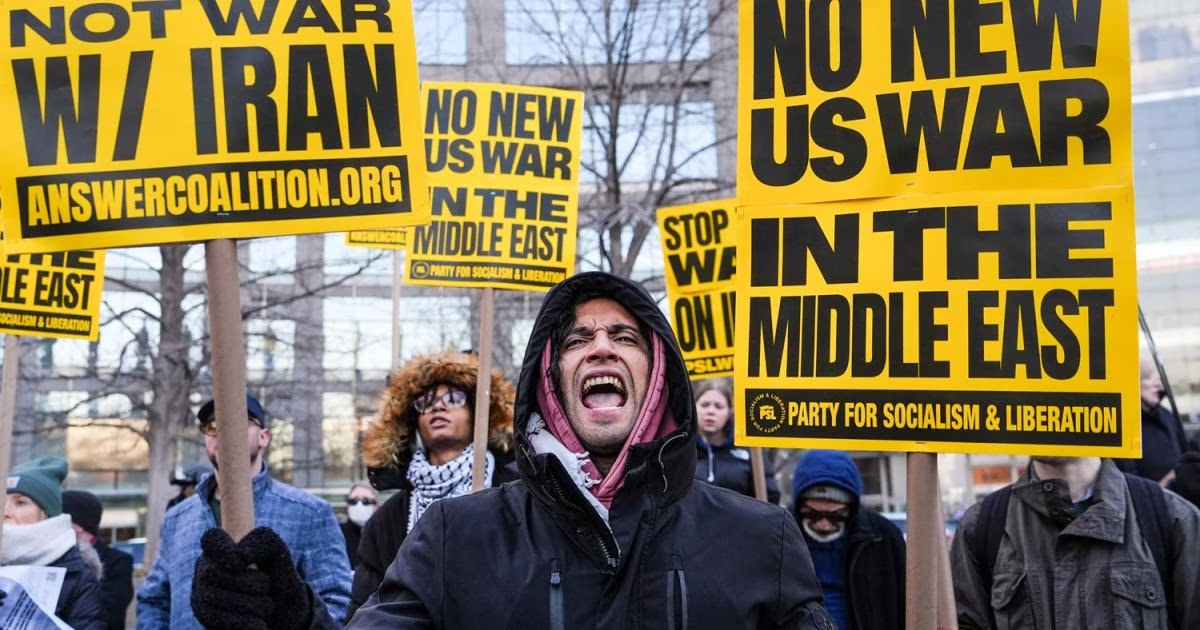
The results of a recent public opinion poll in the United States have revealed a significant shift in voters' attitudes towards the ongoing military escalation against Iran. Data published by the Policy Project of the Institute for Understanding the Middle East, in cooperation with the 'Demand Progress' organization, showed that a wide segment of Americans has become suspicious of the true objectives behind these joint attacks between Washington and Tel Aviv.
According to the released figures, approximately 56% of respondents believe that military operations against Iranian targets primarily serve Israeli interests. In contrast, the percentage of those who see these attacks as a direct American national interest did not exceed 29%, reflecting a significant gap between the official view of the American administration and public perceptions.
Regarding the general stance on the war, 53% of voters expressed their explicit opposition to American attacks on Iran, while 43% showed their support for these military actions. These results indicate a state of public division, but they clearly lean towards rejecting involvement in a direct military conflict that could have widespread regional and international consequences.
The poll also shed light on the political implications of this war domestically in the US, with 43% of participants stating that the likelihood of their support for the Republican Party decreased as a result of the recent attacks. In contrast, 31% of voters affirmed their continued loyalty to the party led by President Donald Trump, indicating that foreign policy towards the Middle East could become a crucial electoral pressure point.
Age emerged as one of the most important determinants of attitudes towards the conflict, as the poll showed a sharp generational divide within American society. 68% of voters under the age of 45 expressed their desire to see a political candidate who works to reduce support for Israel, while 56% of older age groups still prefer to give absolute priority to supporting Tel Aviv and strengthening its alliance with Washington.
Regarding the extent of allies' influence, 43% of participants believed that Israel has an influence that exceeds normal limits on the formulation of US foreign policy. Despite this, 41% of respondents believe that this level of influence is 'appropriate,' which reflects an intellectual struggle over the independence of American decision-making amidst successive crises in the region.
This poll comes at a time when the region is witnessing unprecedented escalation since the start of military operations on February 28, which resulted in the killing of hundreds of people, including high-ranking Iranian leaders. Tehran continues to respond by targeting what it describes as American interests and Israeli sites, amid international warnings of the situation spiraling into an uncontrolled, full-scale war.
56% of American voters believe that attacks on Iran primarily serve Israel's interests, compared to only 29% who believe they serve Washington.
PALESTINE
Fri 20 Mar 2026 5:16 am - Jerusalem Time
Widespread Field Escalation: Hezbollah Targets Occupation Gatherings with Rockets and Artillery in Southern Lebanon

Field sources announced at dawn today, Friday, that Hezbollah carried out a series of intensive rocket and artillery attacks, targeting positions and gatherings of the Israeli army in various areas of northern Israel and southern Lebanon. Military statements confirmed that the shelling targeted movements of occupation vehicles in the border area of the Taybeh project, where the resistance used heavy artillery shells to achieve direct hits.
In a simultaneous field development, rocket volleys targeted a gathering of occupation soldiers in the garden of Maroun al-Ras town, located in the central sector of southern Lebanon. The operations also included concentrated rocket shelling targeting vehicles and soldiers in the Khazan Hill area, located between the towns of Adaysseh and Mays al-Jabal, as part of attempts to confront Israeli ground movements.
On the northern front of the occupied territories, sirens sounded in the settlements of Manara and Margaliot after they were subjected to a rocket barrage launched from Lebanese territory. These strikes come as part of the party's strategy to expand the scope of retaliation for Israeli air raids that continuously target Lebanese villages and towns.
The party revealed in its field reports the use of explosive devices in qualitative operations carried out during the past 48 hours, where a device was detonated on an Israeli military bulldozer in the Taybeh project. Another device also targeted a gathering of infantry in the town of Ayta ash-Shab, indicating an escalation in the pace of defensive operations at direct contact points.
Thursday evening witnessed a peak in military operations, as the party announced the execution of 26 diverse attacks using rockets and kamikaze drones. These attacks targeted facilities belonging to Israeli military industries companies, in addition to settlement gatherings and strategic military sites in the border depth.
In a related context, the Lebanese Ministry of Health issued a tragic update on the toll of the ongoing Israeli aggression since the beginning of March. Official data reported the martyrdom of 1001 people and the injury of 2584 others, as a result of the violent raids that targeted the southern suburbs of Beirut and wide areas in the Beqaa and the South.
Analytical sources believe that the party's continued launching of rockets and expanding their geographical range aims to create a new balance of deterrence in light of increasing political pressures. The sources explained that these operations seek to prove the resistance's ability to continue the battle despite the severe blows suffered by its leadership and organizational structures.
For its part, Israel continues its military operations with international green light, as it seeks to impose a buffer zone in southern Lebanon and cross the Litani River. These military movements aim to turn the border areas into scorched earth to ensure that residents or fighters do not return to them in the foreseeable future.
Political estimates indicate that Israel does not find the time suitable now to sit at the negotiating table, but rather prefers to continue military pressure to weaken the Lebanese state. The occupation seeks to enter any future negotiations with Lebanon in a state of political and economic exhaustion, which strips it of its basic cards of strength.
The spark of the recent escalation began on March 2, when the occupation launched widespread raids followed by a ground incursion the next day. These moves came despite previous understandings for a ceasefire, which led to an unprecedented explosion of the military situation in the region.
On the regional level, the scope of the confrontation expanded to include multiple fronts, as sources linked the escalation in Lebanon to the ongoing aggression against Iran since the end of February. Military operations on that front resulted in thousands of casualties, both dead and wounded, threatening a comprehensive regional war.
In light of this complex scene, southern Lebanon remains an open arena for all possibilities, with Hezbollah's insistence on continuing its military operations. Sources confirm that the coming days will be decisive in determining the course of the confrontation, whether towards de-escalation or sliding into a wider ground confrontation that includes new areas.
These military operations come in defense of Lebanon and its people in the face of ongoing Israeli aggression.
PALESTINE
Fri 20 Mar 2026 5:16 am - Jerusalem Time
Gaza's Children on Eid.. Stolen Childhood and Toys from the Rubble of Displacement

On the eve of the third Eid al-Fitr that passes over the Gaza Strip amidst the ongoing war, Yazan Abu Shanab finds himself sitting on a rough mat on a cold pavement next to a temporary dwelling his family made from old wood and worn fabrics in the Al-Mawasi area of Khan Yunis. This place, lacking the most basic necessities of life, does not resemble real tents; rather, it is more like a small shack trying to shelter family members who have lost everything.
On that pavement, Yazan and his sister play with an empty plastic box they found among the debris, turning it over in their hands as if it were a precious treasure, in the absence of the real toys and bicycles they were accustomed to in previous Eids. The child watches passersby in the narrow streets crowded with displaced people, while repeatedly opening and closing his plastic box in a scene that encapsulates the loss of Eid rituals and their transformation into mere distant memories.
With a broken tone, Yazan says that he used to look forward to Eid to buy new toys, but this year his family bought nothing due to his father losing his livelihood as a result of the ongoing war of extermination. The money that is barely available is only enough to secure essential sustenance, making buying clothes or toys a distant dream amidst the comprehensive economic collapse.
This bitter reality is not limited to Yazan alone but extends to thousands of children who have replaced the passion for choosing toys from markets with searching for primitive alternatives on pavements. As Eid approaches, Gaza appears burdened by years of siege and starvation, where manifestations of joy have disappeared, replaced by deep sorrow and mental distraction that dominates the faces of young and old alike.
In the sandy alleys of the camps, children are content with simple physical games after balls, bead guns, and dolls have disappeared from their reality. No one talks about 'Eidiya' (Eid money) anymore, which used to represent the peak of their happiness, as the top priority for displaced families has become securing a sip of water or a loaf of bread to sustain the little ones.
Local sources reported that the idea of buying new clothes is now classified as an 'impossible luxury' for many families living below the extreme poverty line. Bilal Badriya, a displaced family head, explains that the insane rise in prices has made buying the simplest vegetables a heavy burden, asking bitterly how to provide for Eid necessities amidst this exorbitant cost.
Away from Yazan's tent, Lina Al-Dahdouh stands in a long queue in front of a water distribution point, holding a small bucket instead of the Eid dress she dreamed of. Lina watches her father patiently filling plastic containers, realizing that her daily tasks in displacement have stolen her childhood and the sparkle of the days leading up to Eid.
Lina remembers how she used to accompany her mother to crowded markets to choose her new clothes, but today her main concern is filling jars from distant points and carrying them to the tent. The war has imposed a reality where securing basic needs is a daily battle that takes precedence over any desire to celebrate or rejoice.
As for Adam Al-Salmi, he wanders among the tents with features covered in despair, asserting that 'Eid no longer exists' after the swings and playgrounds he used to frequent were destroyed. Adam bitterly points to Al-Yarmouk stadium and recreational areas that have turned into rubble, explaining that the absence of safe play areas has confined children to tents and destroyed areas.
In the few markets that are still operating, activity appears dull and lacks the usual Eid decorations, with sales focused only on essential food items. Traders confirmed to our sources that most citizens merely inquire about prices and then leave sadly, as purchasing power has completely vanished for the vast majority of the Strip's residents.
Even simple household traditions like preparing Eid cakes have disappeared from most homes and tents, due to the sharp rise in the prices of flour, sugar, and oil. The scent that used to characterize Gaza's alleys before Eid is absent this year, leaving room for the smells of firewood and destruction, which deepened children's sense of loss and deprivation.
For his part, Amjad Al-Shawa, director of the NGO Network, affirmed that this Eid is the most difficult ever, as children face unprecedented harsh humanitarian conditions. He pointed out that the widespread destruction of infrastructure and the economy has made families completely unable to bring smiles to their children's faces on this religious occasion.
Al-Shawa stressed that the suffering is not only material but also a loss of a healthy social environment, as schools have turned into overcrowded shelters and public parks have disappeared. This transformation has made Eid an additional reminder of the human and material losses suffered by Palestinians during the long months of war.
Children in Gaza remain stuck this Eid between beautiful memories of past Eids and a painful reality imposed by the siege and aggression, awaiting a time when their lives return to normal. Under these circumstances, the joy of Eid remains postponed in the Gaza Strip, awaiting a new dawn that ends the tragedy of displacement and restores children's right to play and safety.
This year's Eid will not be like previous ones; children in Gaza are learning early how to replace their toys with small things they find by chance on the pavements of displacement.
PALESTINE
Fri 20 Mar 2026 5:16 am - Jerusalem Time
Between Rubble and Sky.. A Palestinian Family Fights for Survival in a Stairless Building in Al-Shati Camp

In the heart of the ravaged Al-Shati refugee camp, northwest of Gaza City, the tragedy of housing manifests in its most horrific forms within a destroyed building lacking stairs, where the family of citizen Jihad Miqdad has made the fourth floor their shelter. This building, which appears as a structure groaning under the weight of war, now embraces the family's dreams, suspended between the silence of the ruins and the fear of sudden collapse at any moment.
Jihad Miqdad, known as Abu Muhammad, recounts harsh details of the displacement and return journey during the war of extermination, where he received a threat of forced eviction from the occupation army, forcing him and his family to leave without belongings or food. A short time after their displacement, he returned to find his neighbors' homes razed to the ground, while his own home remained a concrete skeleton, lost between life and death, lacking light and safety.
The family describes living in this place as a daily test of patience, where the simplest life tasks have turned into a real risk. The process of fetching water from the tanks in the street requires an arduous journey to carry it up to the fourth floor via the remnants of the shattered staircase, putting family members in constant confrontation with the danger of slipping and falling.
The Miqdad children, whose faces have lost the sparkle of play, have become more proficient in the language of silence than anything else, while existential questions about their unknown future haunt them. These little ones live in isolation imposed by the war, surrounded by cracked walls and hanging balconies without protection, making every movement inside the house an unsafe adventure with unpredictable consequences.
In his statement to media sources, Abu Muhammad explained that the family suffered unspeakable bitterness, ending up sleeping in the streets before returning to this wreckage. He pointed out that the house has become dilapidated and extremely worn out, with no stairs to ascend and no lighting to illuminate the darkness of the nights they spend in constant anticipation.
For her part, Fatima Miqdad recounts the moments of terror she experienced when her foot slipped while trying to hang laundry on the damaged balcony. Fatima felt at that moment that her life was fading into thin air, confirming that the fear of falling now haunts both adults and children alike in this crumbling building.
Fatima confirms that the family's demands are simple and do not exceed the desire to obtain a 'caravan' or a mobile room to protect them from the danger of collapse, but these dreams clash with the stubbornness of the occupation. She adds bitterly that the desire to stay is what keeps them steadfast in this place, despite the loss of safety and the transformation of living into a daily test of hunger and thirst.
The building housing the family is nothing more than a concrete structure consisting of four floors that suffered massive partial destruction, leading to the complete disappearance of the stairs. The cracked walls and open balconies lack the most basic necessities of life, while the wreckage of the neighbors' elevator stands out as an additional threat that could lead to the collapse of the roof at any moment.
The story of the missing stairs in this house encapsulates the story of a people who have climbed the ladder of suffering to its utmost, as the family is forced to use a primitive wooden ladder to transport their basic needs. Abu Muhammad says that carrying heavy water gallons and climbing with them represents a significant physical and psychological burden, especially with the building shaking and defying gravity.
Field data indicate that the house stands on resilient pillars despite all the destruction, with the family sleeping with their eyes fixed on the sky, not in search of stars but in fear of the roof falling. Abu Muhammad warns that the weight of the destroyed elevator motor resting on the roof of their apartment represents a ticking time bomb that could end their lives in a moment of inattention.
On a general level, UN estimates indicate that about 92% of housing units in the Gaza Strip will have been damaged or completely destroyed by early 2026. This bitter reality has left hundreds of thousands of families without real shelter, exacerbating the suffering of the population amid the harsh winter and the ongoing blockade that prevents reconstruction.
Despite the ceasefire agreement entering into force last October, which stipulated facilitating the entry of shelter aid, the reality on the ground proves otherwise. The occupation authorities impose strict restrictions on crossings and prevent the entry of caravans and temporary housing, which represent a lifeline for thousands of displaced families.
Relief sources report that dozens of trucks loaded with shelter materials remain stuck for long days under the pretext of security concerns, hindering the implementation of the truce provisions. This deliberate obstruction has turned international agreements into incomplete promises, leaving families like the Miqdad family hostage to rubble and bitter cold without a near horizon for a solution.
The caravan, prohibited from crossing, remains a postponed dream for the Miqdad family, who find themselves forced to choose between the open air and a roof that could collapse at any moment. It is a story of Palestinian steadfastness, manifested in clinging to life above the ruins, awaiting a near relief that will end the chapters of this ongoing tragedy.
This wreckage might be slightly better than the street... We pray to God to ease our burdens and those of the entire Muslim nation.
PALESTINE
Fri 20 Mar 2026 5:16 am - Jerusalem Time
Fortifications and Earth Berms.. How is the Occupation Redesigning the Gaza Strip Behind the 'Yellow Line'?

Palestinians living near the Yellow Line in the Gaza Strip are observing active Israeli military movements aimed at establishing massive sand berms to fortify newly established positions deep within the Strip. These activities coincide with the ongoing systematic demolition and destruction of remaining residential blocks in areas under the control of the occupation forces, amidst direct targeting of citizens residing on the rubble.
Field sources reported that the occupation army has deliberately destroyed and razed all existing buildings to remove visual obstacles for its military barracks, which are now clearly visible to residents in neighboring areas. The army is also equipping these sites with advanced lighting systems that operate around the clock, while reinforcing the military presence with vehicles and bulldozers that continuously work to level the ground.
In Jabalia camp, north of the Gaza Strip, citizens indicated that the occupation is keen on installing towering iron cranes topped with precise electronic surveillance devices, making it easier for soldiers to target any movement outside the Yellow Line. Residents complain of indiscriminate shooting and artillery shells repeatedly hitting their homes, turning their lives into a constant and ongoing danger.
The Yellow Line in the Jabalia area is the deepest point of penetration into the Strip, devouring vast areas and placing about 60% of the camp's area under direct Israeli military control. Despite understandings that stipulate the withdrawal of forces from within cities, the occupation continues to evade its commitments, linking its retreat to complex security conditions related to disarming the resistance.
A responsible security source in Gaza confirmed that the occupation army operates according to a multi-directional strategy, starting with transforming citizens' lands into permanent and temporary military barracks that prevent their owners from accessing them. This measure aims to entrench control by force and transform vital areas into staging points for military vehicles that cut off residential areas.
The occupation's operations include destroying basic infrastructure such as roads, water and electricity networks, and public facilities within the Yellow Line, to ensure that these areas remain uninhabitable for human life in the future. This policy comes within the framework of creating a permanent field change in the features of the area, serving the long-term security objectives of the occupation army.
The security source revealed a dangerous trend represented by creating a security environment that serves the military presence by facilitating the work of local gangs that exploit the state of chaos resulting from the aggression. These groups play roles that serve the occupation's agenda by damaging public property and stealing humanitarian aid, exacerbating the state of social instability within Gazan society.
For his part, security affairs researcher Rami Abu Zubaida believes that the Israeli movements fall within a strategic vision to re-engineer the Strip geographically and securely. He explains that the goal is to transform the eastern areas into buffer zones that prevent the return of residents, while at the same time ensuring the army's freedom of fire to carry out specific strikes without the need for extensive ground incursions.
Israel relies in these areas on what is called 'smart control', where technological systems based on artificial intelligence and facial recognition are tested at checkpoints. This technological engineering aims to fully control the movement of individuals, and link their basic needs for food and medicine to the equation of absolute security calm.
The occupation also seeks, by strengthening reconnaissance units and intelligence efforts behind the Yellow Line, to constantly update its target bank and prevent the resistance from recovering or reorganizing. Experts emphasize that what is happening is an actual division of Gaza into isolated cantons, making any talk of a future withdrawal merely a technical repositioning on the borders.
In a related context, Rami Khreis, director of the Palestinian Center for Political Studies, summarizes Israeli activities at four levels, starting with comprehensive bulldozing of the land to turn it into an 'open killing zone'. This is followed by the establishment of a semi-permanent military structure that includes high earth berms and internal military roads connecting the newly established sites to each other to ensure rapid movement.
Khreis concludes that the ultimate goal is to impose permanent fire control that prevents the return of residents even in the event of partial withdrawals, turning the Yellow Line into an early warning belt. He believes that this strategic dimension aims to effectively redraw the borders of the Gaza Strip by force of arms, away from any political agreements or international resolutions.
The occupation is redrawing the map of Gaza to divide it into isolated security cantons, making any future withdrawal merely a repositioning and not a real departure.
PALESTINE
Fri 20 Mar 2026 5:16 am - Jerusalem Time
Closure of the Church of the Holy Sepulchre in Occupied Jerusalem Amid Unprecedented Regional Escalation

The decision to close the Church of the Holy Sepulchre in the occupied city of Jerusalem during 'Holy Week' has sparked widespread international concern, given the immense spiritual and historical significance of the church as the holiest Christian site in the world. This measure comes at a highly sensitive time, as Christians commemorate the passion and resurrection of Christ, an occasion that typically sees thousands of pilgrims and visitors from all corners of the earth flocking to the heart of the Holy City.
Informed sources reported that the reasons for the closure are directly linked to the recent military escalation and the escalating regional tensions between Iran and the occupation authorities. Reports indicated that shrapnel resulting from the interception of ballistic missiles fell in various neighborhoods of Jerusalem, some of which landed very close to the church walls, prompting the authorities responsible for the site to take strict precautionary measures to protect visitors and the historic building, despite no direct structural damage occurring.
This closure is considered an unprecedented step in the church's long history, as religious institutions have consistently kept their doors open to worshippers even during the darkest security circumstances and wars that the region has witnessed. This timing carries deep religious implications, as it interrupts a series of inherited traditions that have not ceased for centuries, placing church institutions and pilgrims before a complex security reality that threatens the completion of customary religious rituals at this time of year.
Regarding the ceremonies, the decision cast a dark shadow over the rituals of 'Holy Saturday' or 'Holy Light,' a rite anticipated by millions of believers around the world, especially in Orthodox churches. The traditions of transporting the holy flame from Jerusalem to world capitals, such as Athens, face severe logistical and security challenges, which may deprive many Christian communities of performing their usual annual rituals amid the continued state of military alert in the region.
This measure is relatively unprecedented in the history of the church, which has maintained open doors for pilgrims even during the most difficult periods of previous wars.
PALESTINE
Fri 20 Mar 2026 5:15 am - Jerusalem Time
Iran launches massive missile attack on Jerusalem and Haifa, Israel admits sensitive facility hit

Iranian forces launched an intense missile attack on Thursday evening and Friday dawn, targeting deep inside Israel, firing five barrages of missiles in less than one hour. The missile volleys primarily focused on occupied Jerusalem and its surroundings, in addition to wide areas in the central and northern parts of the country.
Field sources reported that sirens blared non-stop in Jerusalem, Haifa, and the Galilee, amidst the sound of violent explosions shaking the targeted areas. These explosions resulted from attempts by Israeli air defense systems to intercept missiles coming from the east, while fireballs were seen in the sky.
For its part, the Israeli army confirmed in an official statement that it had detected five consecutive barrages of missiles launched from Iranian territory in record time. Hebrew reports indicated that shrapnel and missiles fell in multiple locations, while military censorship continues to impose a blackout on the exact number of human casualties.
In Jerusalem, the Israeli Fire Authority announced receiving initial reports of direct missile impacts, which led to a large mobilization of rescue teams. Israeli police began extensive search operations in the city's neighborhoods for combat remnants or interceptor shrapnel that could pose a danger to settlers.
In the coastal city of Haifa, Israeli media confirmed that parts of Iranian missiles fell in at least two residential areas. Despite initial claims of no casualties, a state of panic prevailed among residents who rushed to shelters immediately after the alarms were activated.
The Iranian Revolutionary Guard issued a brief statement confirming that these missile waves are part of an ongoing operation and will not stop here. The statement clarified that the attack represents the 66th wave of 'Operation True Promise 4', in response to recent American and Israeli military movements.
The Revolutionary Guard revealed the use of a diverse arsenal of solid and liquid-fueled missiles, described as 'super-heavy' and precision-guided. The barrages included 'Ghadr', 'Khorramshahr', and 'Kheibar Shekan' models, in addition to suicide drones targeting vital points.
Huge explosions were heard in the towns of Upper Galilee after sirens were activated, leading to a state of confusion among occupation forces. Sources reported that one of the missiles that fell in the northern region was of the 'cluster' type, causing multiple secondary explosions.
The sounds of explosions extended to include the Haifa Bay area and the coast, reaching Acre, Nahariya, and Ras Naqoura on the Lebanese border. Local sources confirmed that the intensity of the explosions was unprecedented, as homes in nearby Arab towns in the Galilee region shook due to the explosive pressure.
In a significant field development, Iranian missiles targeted the petrochemical plant in Haifa Bay, causing extensive material damage. This targeting resulted in a power outage for large parts of the area surrounding the vital facility for a period of time.
A clear confusion was observed in the official Israeli narrative regarding what happened at the petrochemical plant from the moment of the targeting. Initially, the occupation claimed that shrapnel resulted from an aerial interception, before the narrative changed to indicate the fall of an interceptor missile inside the facility.
Later, Israeli Channel 12 was forced to admit that an Iranian missile directly hit the plant, exposing the falsity of the initial claims. This shift in narratives reflects an Israeli attempt to downplay the extent of the defensive failure against Iranian ballistic missiles.
This major escalation comes at a time when Israeli Prime Minister Benjamin Netanyahu was claiming to have destroyed Tehran's missile capabilities. The recent barrages proved that Iranian offensive capabilities remain effective and capable of reaching strategic targets deep within the entity.
Field data indicates that Iran has significantly intensified its targeting of the Galilee and Haifa regions over the past few days. Observers believe that this attack represents a new phase of direct confrontation that has begun to take on a more violent and precise character in selecting economic and military targets.
Missile waves towards Israel will continue later, and we used super-heavy, multi-warhead missile systems in this wave.
ARAB AND WORLD
Fri 20 Mar 2026 5:15 am - Jerusalem Time
Washington approves massive arms deals for UAE and Kuwait worth $16.5 billion to counter threats
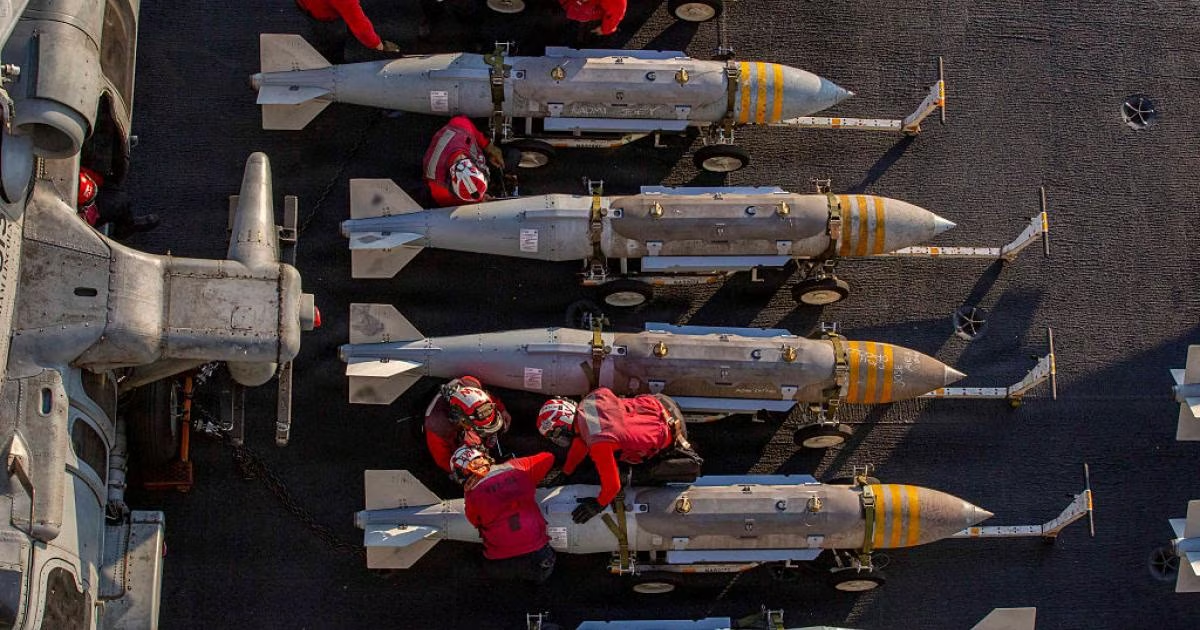
The US administration has officially announced its approval of a series of arms and military equipment sales deals to both the United Arab Emirates and the State of Kuwait, with a total value of $16.46 billion. This strategic move comes within Washington's efforts to enhance the defensive capabilities of its allies in the Gulf region, especially after the recent security tensions witnessed in the region, which affected the defensive infrastructure of both countries.
This American military move followed a wave of field escalation, as international reports monitored Iran launching barrages of ballistic missiles and drones towards regional targets. Sources explained that these attacks came as a reaction to previous air operations, which resulted in human and material losses in some Gulf countries, and necessitated a widespread military mobilization to secure airspace and vital facilities.
In a remarkable procedural development, US Secretary of State Marco Rubio revealed his use of exceptional powers to urgently pass these deals. Rubio affirmed that he provided legal justifications proving the existence of an emergency affecting national security, which allows the Department of Defense to proceed with immediate supply and implementation procedures without the need to wait for the traditional review by the US Congress, which could take a long time.
According to official data issued by the State Department, Kuwait acquired the largest share of these contracts through a single deal worth approximately $8 billion. This deal focused on providing the Kuwaiti army with advanced sensing radars specialized in air and missile defense. These systems are characterized by their high ability to detect and track targets moving at high speeds and provide accurate data to interception platforms.
As for the Emirati side, its deals included a diverse package of advanced military technologies, the most prominent of which was a long-range discrimination radar specialized in confronting ballistic missile threats, valued at $4.5 billion. The contracts also included the allocation of $2.1 billion for specialized systems to neutralize and shoot down small drones, which have become an increasing security challenge, in addition to advanced air-to-air missiles to enhance air superiority, valued at $1.22 billion.
The Emirati deals were not limited to defensive systems only, but also included the development of offensive and operational capabilities for the air force. The purchase of smart munitions and technical upgrades for 'F-16' fighters, valued at $644 million, was approved. These upgrades aim to ensure the readiness of the Emirati air fleet to deal with various modern combat scenarios and their integration with the new detection and tracking systems included in the major deal.
It provided a detailed justification confirming the existence of an emergency that necessitates the immediate implementation of the deal without waiting for congressional approval.
ISRAELI AFFAIRS
Fri 20 Mar 2026 5:15 am - Jerusalem Time
Israeli Minister Calls for Prolonging War on Iran, Describes it as a 'Blessing'
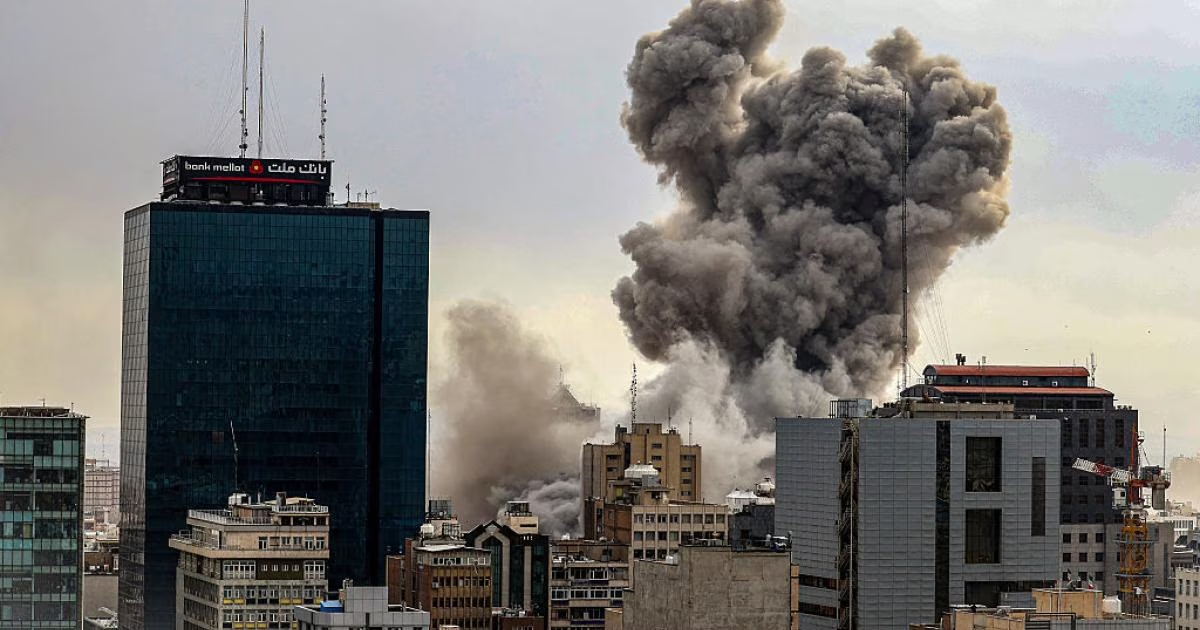
Israeli Minister Ze'ev Elkin, a member of the security cabinet, affirmed that the military attacks launched by Israel in cooperation with the United States against Iranian targets constitute a 'great blessing' for the Hebrew state. Elkin explained in statements to Hebrew media that this ongoing campaign strengthens Israel's strategic position in the region and significantly weakens the adversary's capabilities.
In a message addressed to Prime Minister Benjamin Netanyahu, Elkin, a member of the Likud party, stressed the need to change the political approach to the current conflict, considering that the priority should be focused on how to prolong military operations to ensure maximum destruction of Iranian infrastructure. He indicated that discussions about timelines for ending the fighting do not serve supreme security interests at present.
These statements come amidst Elkin's pivotal role within the 'Cabinet,' the council responsible for making fateful decisions and giving the green light for major military operations. Observers believe that this stance reflects a current within the Israeli government pushing for a comprehensive and continuous escalation to definitively undermine Iranian influence, away from international de-escalation pressures.
On the American side, sources reported that Secretary of Defense Pete Hegseth confirmed there is no specific time limit for the end of military operations against Iran. Hegseth clarified that the objectives set by Washington since the strikes began in late February are still in place, noting that the US administration has achieved significant field successes so far in crippling Tehran's military capabilities.
The US Secretary of Defense indicated that the final decision regarding a ceasefire or ending the military campaign rests exclusively with the President, who assesses the situation based on national interests and what has been achieved on the ground. He added that joint forces continue to carry out their missions with precision to ensure Iran cannot threaten international navigation or the security of allies in the Middle East.
In a related context, data released by the US Department of Defense 'Pentagon' revealed the extent of military operations carried out since February 28, with air and missile strikes hitting more than seven thousand vital targets within Iranian territory. These targets included military installations and command and control centers belonging to the Iranian Revolutionary Guard Corps.
The operations were not limited to land targets but also extended to the Iranian Navy, with military sources confirming the destruction of more than 40 vessels designated for laying naval mines, in addition to targeting 11 submarines. These moves are part of a strategy aimed at securing waterways and preventing any Iranian reactions that could target global trade in the Strait of Hormuz and the surrounding region.
The discussion should not be about when the war will end, but about how we can prolong it and exacerbate the damage.
PALESTINE
Fri 20 Mar 2026 5:15 am - Jerusalem Time
The occupation escalates its massacres in Gaza and announces the assassination of 'Al-Qassam' intelligence official in Khan Yunis

Israeli occupation forces have escalated their deadly attacks on the Gaza Strip, depriving residents of the atmosphere of preparation for the blessed Eid al-Fitr. The past hours witnessed a series of raids targeting civilian gatherings, resulting in martyrs and wounded in various areas of the Strip.
In Gaza City, four citizens were martyred as a result of shelling that targeted the Al-Tuffah and Al-Zaytoun neighborhoods; local sources reported the martyrdom of Dhaif Allah Al-Fayoumi and Ali Al-Mamlouk in Al-Tuffah neighborhood. A drone also targeted a group of citizens in Kashko Street in Al-Zaytoun neighborhood, leading to the martyrdom of Hamza Siam and Muhammad Farhat.
On the ground, the eastern areas of Gaza City were subjected to intense artillery shelling and machine-gun fire, affecting areas within what is known as the 'Yellow Line'. These attacks extended to include towns east of Khan Yunis and the central Strip, causing a state of panic among citizens outside the contact areas.
On the military front, the spokesman for the occupation army announced the implementation of a joint operation with the 'Shin Bet' agency that resulted in the assassination of Muhammad Abu Shahla. The occupation described Abu Shahla as the head of military intelligence in the Khan Yunis Brigade of the Al-Qassam Brigades, the military wing of the Hamas movement.
The occupation army claimed that the assassination was carried out by a precise air raid that targeted a location in Khan Yunis city based on intelligence information. The occupation claimed that Abu Shahla was an officer responsible for planning field operations and participated in planning the October 7 attack in his area.
This operation is the second of its kind within a week, after the occupation previously announced the assassination of Younis Aliyan, commander of the northern Gaza Brigade in the naval system. These assassinations come amid continuous Israeli threats to eliminate the military leaders of Palestinian factions in the Strip.
For his part, Hamas spokesman Hazem Qassem affirmed that this escalation represents a serious violation and a continuation of the genocide war against the Palestinian people. He pointed out that the occupation disregards the efforts of mediators aimed at stopping the continuous breaches and violations of ceasefire agreements.
In the context of the humanitarian situation, the occupation authorities partially reopened the Rafah land crossing after a strict closure that lasted for about 19 days. This limited opening allowed a small batch of wounded and sick people and their companions to pass, under the supervision of the World Health Organization and the Palestinian Red Crescent Society.
Despite this step, the number of people allowed to leave is still very small compared to the actual needs, as more than 20,000 patients are waiting for their turn to travel. Hospitals in Gaza suffer from massive destruction and a severe shortage of staff and equipment, threatening the lives of thousands of injured people who need complex surgical interventions.
Regarding supplies, human rights reports revealed a sharp decrease in the number of aid trucks entering the Strip through the Kerem Shalom crossing. According to Al-Dameer Foundation, what entered during the past period did not exceed 19% of the basic needs of the besieged population.
This shortage led to suffocating living crises, including the loss of meat and basic foodstuffs and their prices rising insanely beyond the purchasing power of citizens. The scarcity of cooking gas also caused long queues that could extend for a full month to fill one cylinder.
The energy and transportation sectors were not immune from this crisis, as the shortage of diesel led to a partial halt in waste collection operations and the operation of water wells. Medical institutions warned of the cessation of vital devices in hospitals as a result of restrictions imposed on the entry of spare parts and necessary medical supplies.
The occupation also continues to prevent the entry of tents, prefabricated housing 'caravans' and construction materials, exacerbating the suffering of thousands of families who lost their homes during the war. Human rights organizations consider these measures a blatant violation of the Fourth Geneva Convention, which obliges the occupying power to provide for the needs of civilians.
National and human rights organizations called on the international community and the United Nations to take immediate action to pressure Israel to lift the siege completely. They stressed the need to ensure the unimpeded flow of humanitarian and medical aid to save what can be saved from the catastrophic situation in the Gaza Strip.
The occupation is dangerously escalating its aggression, and the continued killing of civilians and tightening of the siege constitute a continuation of the genocide war against the residents of the Strip as we approach Eid al-Fitr.
PALESTINE
Fri 20 Mar 2026 5:15 am - Jerusalem Time
Death Toll in Lebanon Exceeds One Thousand, Hezbollah Escalates Rocket Operations

The Lebanese Ministry of Public Health revealed new official statistics for the victims of the ongoing Israeli aggression on the country, confirming that the number of martyrs has exceeded one thousand since the outbreak of the current confrontations. Official data clarified that the total death toll reached 1001 martyrs, while the number of injured rose to 2584, who are receiving treatment in various hospitals.
The detailed figures issued by the ministry indicate direct targeting of civilians, with 118 children and 79 women recorded among the total list of martyrs. Medical sources also noted that the injured include hundreds of women and children, reflecting the extent of destruction and the deep humanitarian impact of the air raids and artillery shelling targeting residential areas.
On the ground, Hezbollah announced the execution of a series of qualitative military operations in response to Israeli attacks targeting southern villages and towns. In official statements, the party confirmed targeting the 'Tiffin' base, located east of Acre, with a concentrated rocket barrage, indicating that these operations come within the framework of defending Lebanese territories and supporting the resistance.
In the context of the rocket escalation, the party's attacks targeted the settlement of 'Even Menachem' with a rocket barrage, in addition to targeting the Kiryat Shmona settlement with three consecutive barrages. Air raid sirens sounded in wide areas of the Upper Galilee, amid reports of material damage at the targeted sites due to the intensity of the fire used.
The operations were not limited to rockets but also included the use of unmanned aerial vehicles, as the party targeted a gathering of occupation soldiers on the Al-Ajal plateau north of the Kfaryuval settlement. The statement clarified that the attack was carried out by a swarm of kamikaze drones that accurately hit their targets, resulting in direct casualties among the Israeli forces stationed there.
The operations also included targeting the 'Adathir' site on Mount Adir with a rocket barrage, and a newly established site in the 'Nimr Al-Jamal' area opposite the border town of Alma Al-Shaab. In the latter attack, the party used a mix of rockets and kamikaze drones, as part of a strategy aimed at deepening the targeting of military and logistical sites belonging to the occupation army.
On the other hand, media sources reported that a journalist was injured in his hand as a result of an Israeli raid targeting the Qasimiya reserve bridge in the Tyre district. The injured journalist was transferred to Jabal Amel Hospital to receive treatment and undergo surgery to remove shrapnel, in an incident that reiterates the targeting of media crews working in the field.
The occupation air force continued its violent raids, targeting a house in the border town of Majdal Zoun, completely destroying it, while the town of Qleileh was subjected to artillery shelling with five shells. Israeli shelling in the Marjayoun district focused on populated areas, causing a new wave of displacement for residents towards safer areas deeper in Lebanon.
In the Nabatieh district, warplanes launched intense raids targeting the Al-Sawwan neighborhood in the town of Kfeir, in addition to the towns of Kafr Tibnit and Zawtar Al-Sharqiyeh. The shelling also extended to the area between the towns of Kafr Fila and Ain Qana in the Iqlim al-Tuffah region, areas that have witnessed unprecedented aerial escalation for days as part of the occupation's attempts to impose a new reality on the ground.
Field sources concluded by referring to raids that targeted a house in the town of Sultaniyeh and another on the town of Kafra in the Bint Jbeil district, causing extensive property damage. The state of extreme tension continues along the Lebanese-Palestinian border, with the continued intensive overflight of Israeli warplanes and reconnaissance aircraft in Lebanese airspace.
The total number of martyrs to date has reached 1001, while the number of injured has reached 2584 as a result of the ongoing Israeli raids.
ISRAELI AFFAIRS
Fri 20 Mar 2026 5:15 am - Jerusalem Time
Netanyahu: Our strikes have stripped Iran of its missile and nuclear capabilities, and we are considering a ground intervention option
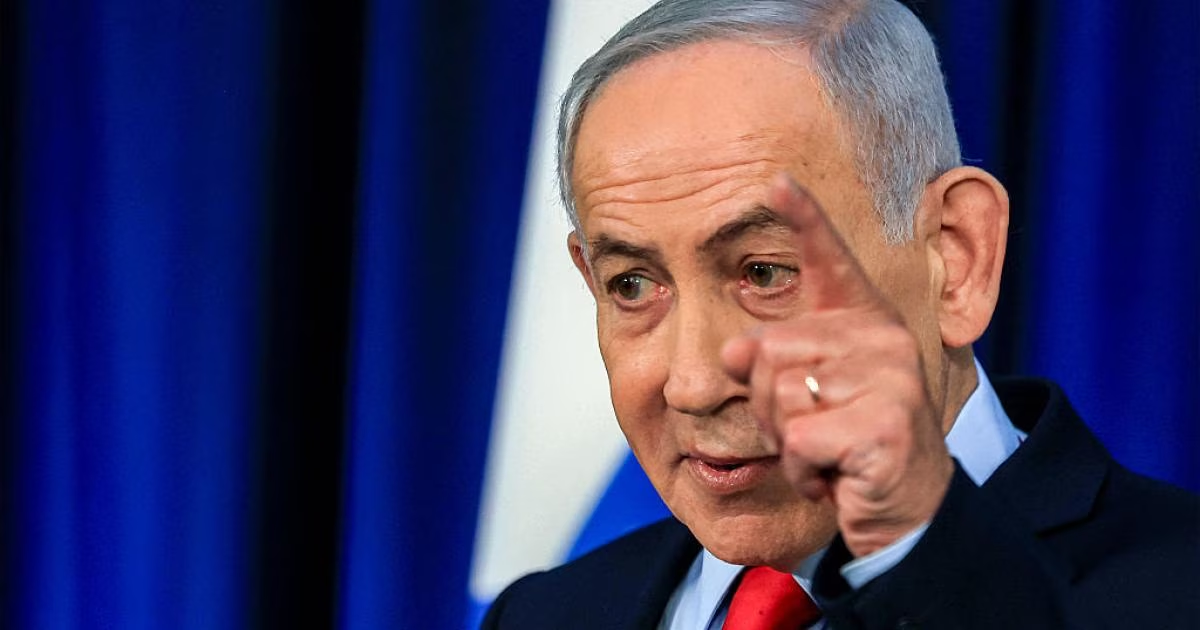
Israeli Prime Minister Benjamin Netanyahu affirmed that the Islamic Republic of Iran has largely lost its technical capabilities to enrich uranium and manufacture ballistic missiles. These statements came about three weeks after the launch of a large-scale aerial campaign by Israeli forces in cooperation with the United States of America.
During a press conference held on Thursday evening, Netanyahu explained that the ongoing military operations have achieved qualitative leaps in destroying Tehran's military infrastructure. He stressed that the attacking forces are imposing a new reality that weakens the Iranian arsenal unprecedentedly, describing the current phase as a clear field victory.
The Israeli Prime Minister indicated that the airstrikes precisely focused on industrial facilities that represent the backbone of Iran's military programs. He clarified that the targeting included factories producing precise components for missiles and essential materials related to the nuclear project that Tehran has been trying to develop for many years.
Despite the confident tone in Netanyahu's speech, he did not provide concrete documents or evidence proving the complete cessation of uranium enrichment operations within fortified Iranian facilities. He merely indicated that the destruction of the factories feeding these programs would inevitably lead to a complete paralysis of the Islamic Republic's military and nuclear production capabilities.
In a related context, Netanyahu touched upon the possibilities of political change within Iran, considering that it is still too early to judge the effectiveness of popular protests. He left it to the Iranian people to decide the appropriate moment to act against the ruling regime, emphasizing that external military pressure could be a contributing factor in this direction.
In a remarkable development, Netanyahu revealed the study of options beyond aerial bombardment, hinting at the possibility of introducing a 'ground element' into the ongoing military operations. He did not disclose specific details about the nature or location of this intervention but affirmed that military decisive action might require a presence on the ground to ensure the achievement of strategic objectives.
Netanyahu strongly denied reports that Israel is pressuring the American administration to engage in this regional conflict. He questioned with indignation the ability of any party to dictate political or military directions to President Donald Trump, emphasizing the independence of American decision-making in this matter.
The Israeli Prime Minister also revealed the execution of isolated attacks targeting Iranian energy facilities, away from direct coordination with Washington on that specific point. He explained that this step came at a time when President Trump preferred to avoid escalation in the energy sector, but Israeli security necessities necessitated the action.
Netanyahu stressed that the military confrontation with Iran would not be bound by a specific time limit or a short-term timeline. He affirmed that the war would continue as long as necessary until the threats posed by Iranian weapons to the security and stability of the region are definitively eliminated.
These statements come amid a complete collapse of negotiation and international mediation tracks aimed at containing the Iranian nuclear program. It appears that the military option has become the primary driver of events in the region, with Israeli insistence on continuing attacks until Tehran's strategic capabilities are dismantled.
Netanyahu concluded his speech by emphasizing that Israel is fighting an existential battle aimed at fundamentally changing the balance of power in the Middle East. He considered the decline of Iran's missile and drone arsenal as just the beginning of a series of measures that will ensure Tehran is completely stripped of its military claws.
What we are currently destroying are the factories that produce the components for these missiles and the nuclear weapons they are trying to produce.
ANALYSIS
Fri 20 Mar 2026 5:14 am - Jerusalem Time
Netanyahu's 'New Middle East' Plan: Will Attempts to Lure Arabs into War Succeed?
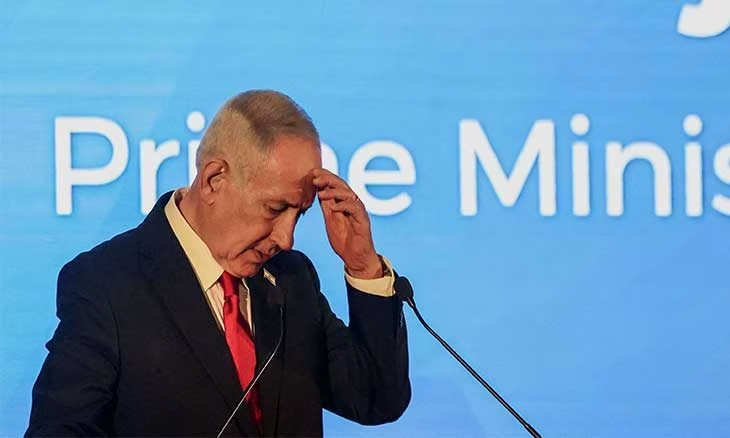
The ongoing military confrontation against Iran is considered the culmination of Israeli Prime Minister Benjamin Netanyahu's ambitions, as he seeks to solidify the concept of 'Greater Israel' as a global superpower. By leveraging his close relationship with the American president, Netanyahu has succeeded in linking the political fate of the American administration to his military decisions, with reports revealing daily communication between the two parties and high-level coordination to implement the Israeli right-wing agenda in the region.
Field and political data indicate that one of the main goals of the current escalation is to divert attention from the crimes committed in the Gaza Strip, and to replace peaceful normalization paths with a logic of military 'subjugation'. This influence within the United States was evident in the resignation of the Director of the National Counterterrorism Center, Joe Kent, who confirmed that Washington was dragged into the war by direct pressure from the Israeli lobby, at a time when Trump faces criticism from internal factions that reject involvement in proxy wars.
On the regional level, there are persistent attempts to drag Arab capitals into the conflict; sources have hinted at pressure being exerted on Damascus to participate in operations against Hezbollah, coinciding with an Emirati announcement about the possibility of joining efforts to protect navigation in the Strait of Hormuz. Observers believe that Israel's targeting of Iranian gas fields is primarily aimed at luring Tehran into a reaction that would affect Arab oil installations, thereby forcing the countries of the region into involuntary involvement in the Israeli plan to reshape the Middle East.
Netanyahu dreams and America executes; the ongoing war represents a personal triumph for his political line based on extermination, displacement, and shaping the region by force.
OPINIONS
Fri 20 Mar 2026 5:06 am - Jerusalem Time
A War Too Vast: Why Invading Iran Would Be Unlike Anything America Has Faced

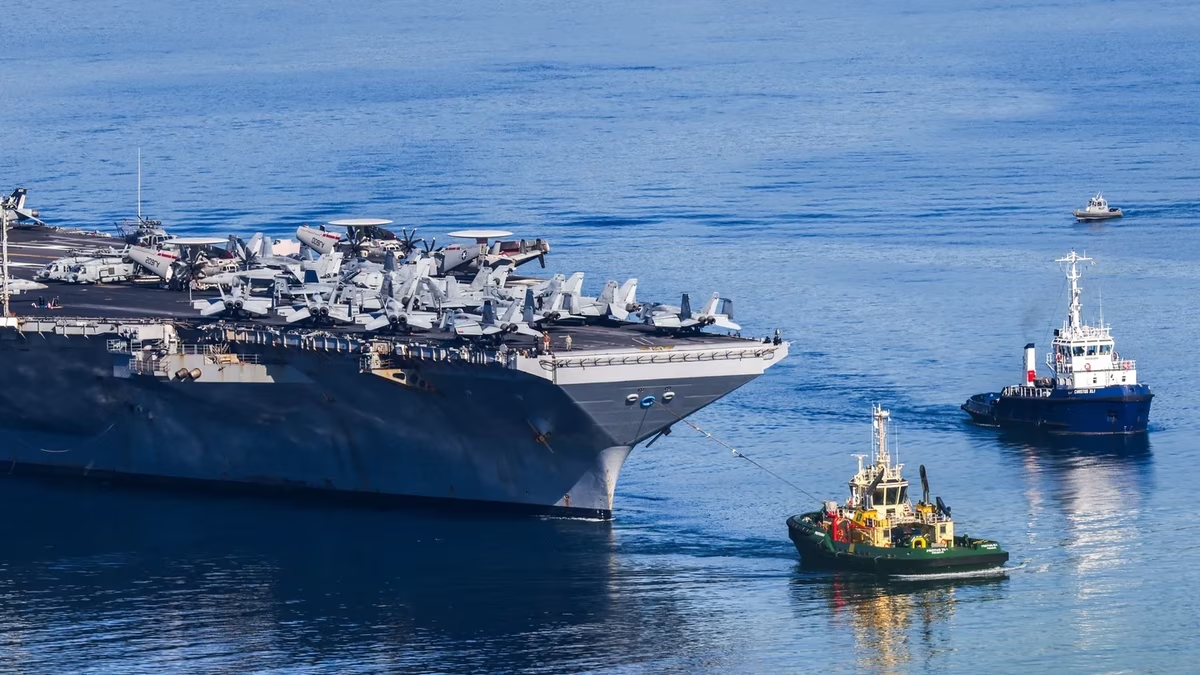
By Said Arikat
March 20, 2026
News Analysis
Washington, D.C- Washington often views future wars through the lens of past victories. The rapid fall of Baghdad in 2003 still lingers in institutional memory, reinforcing a belief that overwhelming force, technological superiority, and air dominance can compel even large states to surrender. But an invasion of Iran would not be Iraq redux. It would be larger in scale, slower in execution, and far more consequential. Even the Iraq comparison is misleading: by 2003, nearly a third of Iraq—the Kurdistan Region—had effectively been under Western protection for more than a decade, with Kurdish forces aligned with U.S. objectives. No comparable conditions exist in Iran.
Iran is not simply another regional adversary. It is a continental-scale country, roughly four times the size of Iraq, with more than 90 million people. Geography alone constrains military ambition. Any ground invasion from the west would confront the Zagros Mountains—a vast, rugged barrier favoring defenders. Modern armies can cross mountains, but not rapidly, discreetly, or without exposure. Narrow passes become chokepoints; supply lines stretch thin; operational momentum slows to a crawl.
Even if these defenses were breached, the challenge would deepen. Iran is not a capital-centric state that collapses if Tehran falls. Its population is dispersed, highly urbanized, and embedded in terrain favorable to resistance. Tehran alone—a metropolis of more than 15 million—would present a scale of urban warfare unprecedented in modern American experience. Fallujah or Mosul offer only faint previews; Tehran multiplies those challenges in density, complexity, and human cost.
Airpower—America’s supposed decisive advantage—would be essential but insufficient. Iran has prepared for decades: hardening infrastructure, dispersing military assets, and building redundancy into its governance. Bombing campaigns could degrade capabilities, but systemic collapse is unlikely. Without collapse, the burden falls to ground forces, where time, terrain, and population favor defenders.
The greatest challenge, however, would not be invasion but occupation.
Military doctrine offers a stark measure: stabilizing a country typically requires 20 to 25 security personnel per 1,000 inhabitants. For Iran, this implies 1.8 to 2.2 million personnel. This is not a deployment plan; it is a theoretical benchmark highlighting scale. No modern coalition could assemble, deploy, or sustain such numbers. Even at the height of Iraq, U.S. and allied troop levels fell far short—in a smaller, less populous country.
In practice, any occupation would rely on far fewer troops, supplemented by proxies, technology, and selective control. But the gap between theory and practice is the problem. Reduced forces might defeat organized resistance but struggle to impose lasting stability. Iran’s national identity, urban concentration, and terrain favorable to insurgency would magnify difficulties. A campaign against a regime could swiftly evolve into prolonged nationwide resistance.
History offers a warning. In Iraq and Afghanistan, the United States toppled governments but struggled to shape what followed. Insurgencies did not arise from military weakness; they arose from the difficulty of controlling large, complex societies externally. Iran amplifies all those challenges: larger population, defensible terrain, deep institutional capacity, and a strategic culture shaped by decades of anticipating conflict.
Logistics, often ignored in public debate, would further complicate any campaign. Sustaining a large force across extended supply lines—through Iraq or from the Persian Gulf—would expose troops to constant disruption. Every convoy is a target; every base requires layered defense; every mile of road must be secured repeatedly. Wars are not only fought at the front—they are sustained in the rear. In Iran, the rear would never be safe.
No one doubts the United States has overwhelming conventional capability. It could defeat Iranian forces in open battle, dominate the skies, and strike critical nodes. But battlefield victories would not equate to strategic control. Tactical success would not translate into governance or stability. It is in the control phase that human, financial, and strategic costs would accumulate—and likely escalate.
The geopolitical consequences would be profound. A war with Iran would not remain contained. It would ripple across the Middle East, threaten global energy flows, destabilize fragile states, and draw in non-state actors. Allies might hesitate, calculating risk; adversaries could exploit American distraction. The conflict could expand horizontally, evolving into a multi-front confrontation with unpredictable escalation. What begins as a war with Iran could quickly become a systemic shock.
Ultimately, the question is not whether the United States could invade Iran. It is whether it could control the country at a cost the public—and its allies—would bear over time. Geography, population, military doctrine, and history all point in one direction.
A war with Iran would not be impossible, but it would be strategically impractical. The distinction between what can be done and what should be done has rarely been more consequential in American strategic thinking.
OPINIONS
Thu 19 Mar 2026 7:35 pm - Jerusalem Time
Ambiguity of Objectives in the American War on Iran Reveals Lack of Clear Vision for its End
Washington — Said Arikat - 3/19/2026
Three weeks after the launch of the war against Iran on February 28, US President Donald Trump continues to suggest that the conflict may end "soon," without providing a clear vision for the objectives or the mechanism for ending the war. In contrast, War Secretary Pete Hegseth affirmed on Thursday that there is no specific timeline for halting operations, indicating that the final decision remains with the President.
It is worth noting that Hegseth requested $200 billion to cover the war on Iran, which some experts considered an indication of an intention to continue the war for a longer period.
Trump's recent statements reflected an approach based on personal judgment rather than specific strategic criteria, as he said the war would end "when I feel it inside." This approach raised questions in political and military circles about the absence of a clear definition of victory or even a realistic timeframe for ending operations.
Moving Targets and a Vague Definition of Victory
Since the beginning of the campaign, the stated objectives have varied between destroying Iran's nuclear capabilities, reducing its military power, deterring its regional influence, and sometimes even hinting at regime change. This multiplicity of objectives, without clear prioritization, has made it difficult to measure progress or determine an end point.
Despite the administration's assertion that the objectives "have not changed," this apparent consistency conceals practical ambiguity: what extent of destruction is sufficient? And when can Iran be considered to have lost its ability to threaten? These questions remain without decisive answers.
Field Escalation Met with Talk of a Near End
On the ground, data indicates continuous escalation, with the number of targets struck exceeding thousands of sites inside Iran, and the scope of operations expanding. The Department of Defense is also considering a request for massive additional funding, reflecting a readiness for the possibility of the war continuing for a longer period.
This contradiction between the rhetoric of a "near end" and preparations for an extended war reinforces doubts about the clarity of strategic vision within the US administration.
Persistent Ambiguity Since Day One
When Trump announced the start of operations on February 28, he indicated that the campaign might last "a few weeks." However, three weeks later, the ambiguity has not dissipated but deepened; fundamental questions remain without clear answers, including what the ultimate goal of the war is, what the precise conditions for its end are, and how success can be defined militarily and politically. This ambiguity reflects a recurring pattern in modern wars where objectives gradually expand without explicit declaration, making it difficult to retreat or re-evaluate and weakening the ability to build internal consensus. Moreover, linking the end of the war to the President's personal judgment reinforces uncertainty among allies and adversaries alike, and encourages behaviors that may increase the likelihood of escalation. At the same time, the discrepancy between political rhetoric suggesting the war's imminent end and military preparations indicating its potential continuation reveals a gap that could affect public trust, especially if the conflict drags on without clear results.
The lack of clarity in American objectives reflects a recurring pattern in modern wars, where objectives gradually expand without official announcement. This "strategic drift" makes it difficult for decision-makers to retreat or re-evaluate. It also weakens the ability to build internal consensus, whether in Congress or among the public. In Iran's case, the complexity is exacerbated by the regional nature of the conflict, making any miscalculation prone to rapid and unforeseen escalation.
Furthermore, Trump's statements linking the end of the war to a personal feeling reflect a striking shift in the style of international crisis management, where institutions recede in favor of individual decision-making. This pattern may provide tactical flexibility, but it creates a state of uncertainty among allies and adversaries alike. The absence of clear criteria makes it difficult to predict American behavior, which may prompt other parties to take preemptive steps, increasing the likelihood of escalation instead of containment.
The contradiction between political rhetoric and military preparations raises questions about the messages directed to the American public. While it is said that the war may end soon, figures and budgets indicate the opposite. This discrepancy may be an attempt to contain internal anxiety, but it carries the risk of eroding trust if the conflict prolongs. Historically, such a gap between rhetoric and reality has been a major factor in the decline of public support for foreign wars.
PALESTINE
Thu 19 Mar 2026 7:34 pm - Jerusalem Time
Hamas Condemns Ben Gvir's Calls for Execution of Prisoners, Calls it a 'Criminal Mentality'

The Hamas movement strongly denounced the recent statements made by Israeli National Security Minister Itamar Ben Gvir, in which he openly expressed his desire to implement the death penalty against Palestinian prisoners held in occupation prisons. The movement considered this discourse to represent the peak of extremism and overt incitement to systematic killing, revealing the true face of the criminal policies pursued by the current Israeli government.
The extremist minister had appeared in a recorded video alongside a 'noose,' where he explicitly expressed his aspiration to carry out execution sentences against Palestinian detainees. Hamas affirmed in an official statement that these threats come within a broader context aimed at transforming prisons into arenas for physical liquidation, in blatant defiance of all international laws and conventions that protect the rights of prisoners.
The movement stressed that Ben Gvir's calls reveal the extent of hatred and racism deeply rooted in the structure of the Israeli political establishment, noting that adopting a fascist discourse places the lives of thousands of prisoners in imminent and direct danger. The movement held the occupation authorities fully responsible for the safety of the detainees, emphasizing that any harm to their lives will not pass without a deterrent response from resistance forces.
In a related context, Hamas called on the international community and human rights organizations worldwide to act immediately to curb these terrorist tendencies and hold the leaders of the occupation accountable for their inflammatory statements. It also demanded an escalation of popular and international solidarity campaigns with prisoners to pressure the occupation and stop the slow killing policies practiced behind bars.
Recent statistics indicate a tragic reality for prisoners, with their number in occupation prisons rising to more than 9,500 detainees as of early March. These numbers are distributed between convicted and detained individuals, all suffering from harsh detention conditions that lack the minimum human requirements and international standards.
The issue of administrative detention stands out as one of the most blatant forms of injustice, with the number of detainees without charge or trial reaching 3,442 prisoners, the highest percentage historically. These detainees represent about 36% of the total prisoner movement, reflecting the occupation's expansion in using this arbitrary measure as a tool for collective punishment.
Furthermore, Israeli authorities are holding approximately 1,249 prisoners under the designation of 'unlawful combatants,' a classification aimed at circumventing the rights of prisoners of war. This number does not include hundreds of detainees from the Gaza Strip who are held in Israeli army camps away from legal or human rights oversight.
Human rights sources confirm that Palestinian prisoners, including detainees from Lebanon and Syria, are subjected to brutal torture, deliberate starvation, and deliberate medical neglect. These repressive policies have led to the martyrdom of dozens of prisoners inside cells, amid suspicious international silence regarding these grave violations.
The severity of abuse against prisoners has escalated unprecedentedly since October 2023, coinciding with the ongoing genocide war in the Gaza Strip. Reports indicate that the Prisons Service launched widespread repressive campaigns, including solitary confinement and deprivation of visits and basic needs, turning prisons into cemeteries for the living.
In the West Bank, the occupation army escalated the pace of daily raids and arrests, with approximately 22,000 Palestinians arrested since the start of the recent aggression. These arrests come as part of the occupation's attempts to break the will of the Palestinian people and undermine any resistance movement in Palestinian cities and camps.
Ben Gvir's statements represent open incitement to murder and reflect the extremist criminal mentality that governs the occupation's policies.
ARAB AND WORLD
Thu 19 Mar 2026 7:34 pm - Jerusalem Time
Tehran brandishes the Strait of Hormuz card and considers imposing transit fees on oil tankers
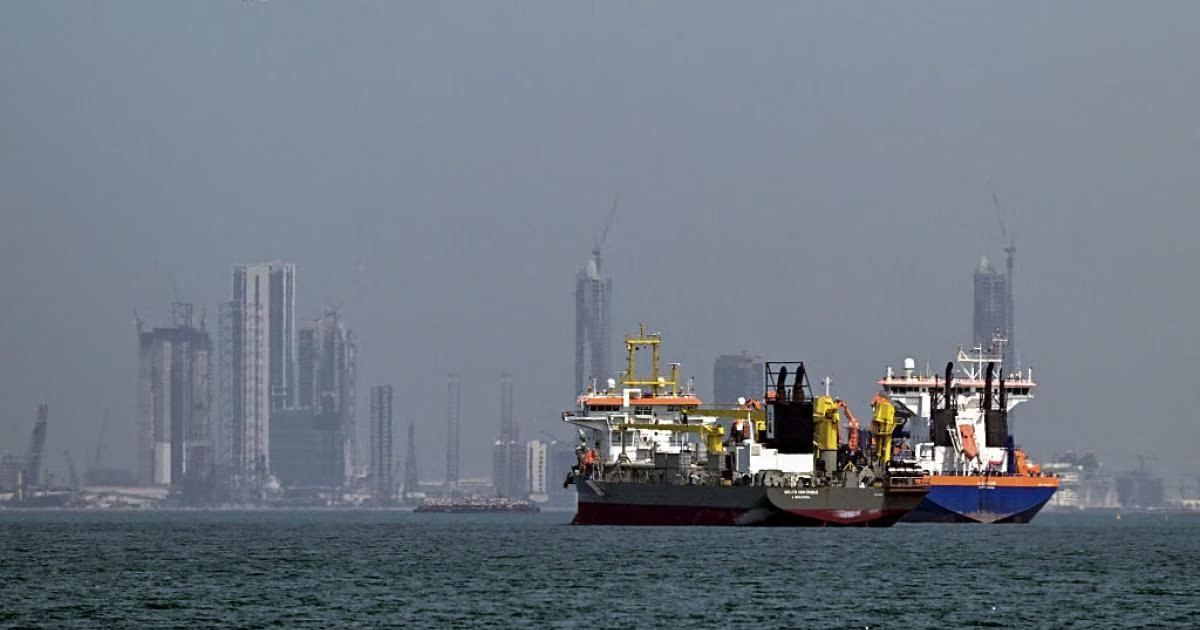
A cautious calm prevailed in the Iranian capital, Tehran, today, Thursday, as no new raids or targeting were observed after days of field tension. In parallel with this calm, intense political and military movements emerged, indicating an Iranian intention to use new strategic pressure cards in the face of continuous international pressure.
Informed sources in Tehran revealed a draft resolution being studied within the corridors of Parliament, with the support of the Iranian Supreme Leader's aide, Mohammad Mokhber, aimed at regulating navigation in the Strait of Hormuz. The proposal includes the possibility of imposing transit fees on ships and oil tankers crossing this vital waterway, as a sovereign and economic measure.
Iran's plan directly targets vessels belonging to countries that impose economic sanctions on the Islamic Republic, thus turning the strait into a political bargaining chip. Iranian officials believe that the field experience during the first days of the current confrontation proved the necessity of investing Iran's geographical location more effectively.
On the ground, military operations did not stop, as Iranian forces launched new batches of missiles and suicide drones towards targets inside Israel. These attacks come as part of the ongoing response to military operations led by the United States and Israel against Iranian interests in the region.
In the same context, Iranian air defenses announced their success in intercepting and shooting down a number of hostile drones from midnight yesterday until this morning. According to official data, the total number of Israeli and American drones that have been destroyed since the escalation began has risen to about 125 aircraft.
The spokesman for the 'Khatam al-Anbiya' military headquarters issued a strong warning against tampering with vital installations or Iranian infrastructure. The military leadership affirmed that any targeting of national facilities would be met with an immediate and similar response, which portends an expansion of the circle of mutual targets between the warring parties.
Diplomatically, the Iranian Foreign Minister led extensive efforts, including telephone calls with the European Union's foreign policy coordinator and a number of his counterparts in regional and international countries. Discussions included the foreign ministers of Egypt, Turkey, Pakistan, and Sweden, to discuss the repercussions of the current military escalation and the future of navigation in the region.
In a legal step, Tehran delivered an official letter to the UN Security Council and the United Nations, expressing its strong protest against the assassinations and targeting of Iranian officials. The letter considered these actions a blatant violation of international laws and state sovereignty, calling on the international community to assume its responsibilities towards this escalation.
The Iranian letter also included an official objection to the use of the territories of some neighboring countries by American forces as a launching pad for military attacks against Iran. These moves confirm that Tehran seeks to balance military pressure with legal and diplomatic moves, while keeping the option of escalation in waterways open.
Any escalation targeting Iranian infrastructure will be met with a similar response in depth, and the Strait of Hormuz remains a strategic option for regulating international navigation.
ARAB AND WORLD
Thu 19 Mar 2026 7:34 pm - Jerusalem Time
Iranian Missiles Strike Petrochemical Facility in Haifa Amidst Israeli Military Censorship
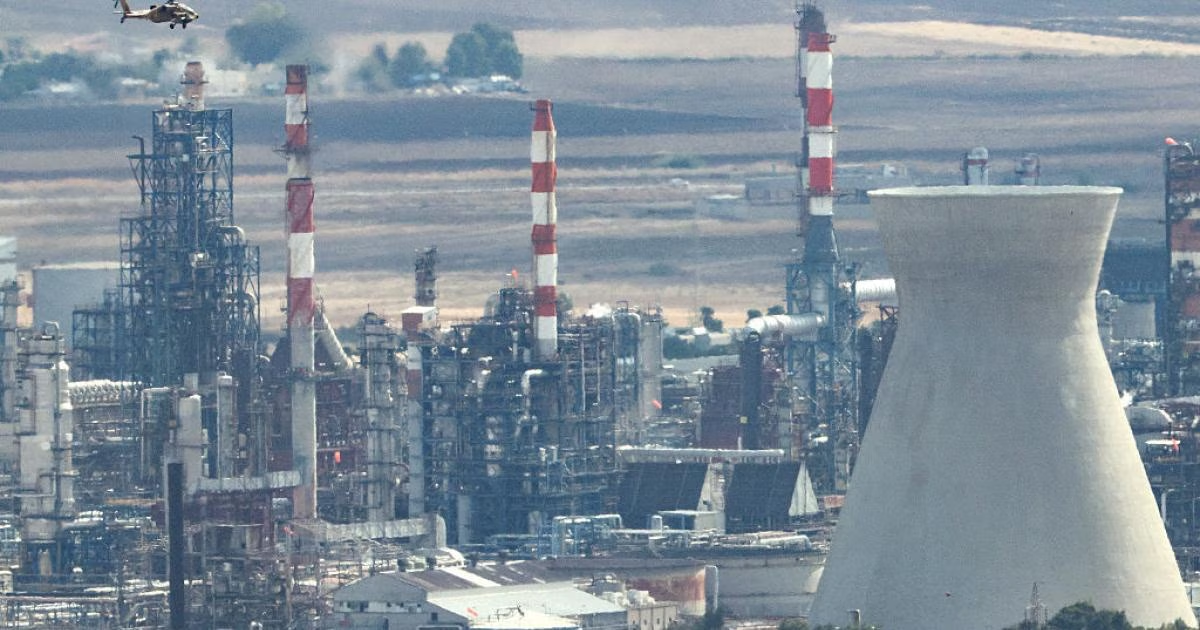
The occupied city of Haifa and its surroundings were subjected to an intense Iranian missile attack today, Thursday, directly targeting the strategic petrochemical plant in the Bay area. Field sources confirmed that the bombardment led to an immediate power outage in large parts of northern Israel, while columns of black smoke rose to cover the sky of the vital industrial zone.
Israeli military censorship imposed strict media blackout on the details of the attack, preventing the publication of any information related to the extent of the damage inside the petrochemical facility. This step comes amidst Israeli fears of the repercussions of revealing damage to energy infrastructure on the home front and the state of panic among settlers in the north.
For his part, the Israeli Minister of Energy tried to reassure the public with brief statements, claiming that the damage to the electricity grid in the northern areas remained limited. Despite these statements, circulating videos showed the scale of the massive explosions that rocked Haifa Bay, indicating direct hits on sensitive facilities.
Israel's home front witnessed a state of maximum alert, as sirens blared across wide geographical areas estimated at about 60% of Israel. The warnings included the Jerusalem and Greater Tel Aviv areas and coastal cities, extending to West Bank settlements, forcing millions to descend into shelters.
Media sources from within Tel Aviv reported a systematic policy of concealment followed by the authorities regarding human and material losses resulting from the recent missile barrages. A significant decline was observed in the military establishment's boasting about the interception rates of defensive systems, which was a prominent feature in previous attacks on the country.
Field data indicates a clear gap in the announced figures, as ambulance crews monitor injuries and panic attacks immediately after the explosions that do not subsequently appear in official data. The Israeli Ministry of Health only issues a delayed morning toll reporting dozens of injured, without directly linking them to the nature of the targeted sites.
The Iranian missile attack coincided with a parallel escalation launched by Hezbollah from southern Lebanon, targeting the Galilee and border areas with a barrage of shells and rockets. This field coordination placed Israeli air defenses under immense pressure, reducing the efficiency of interception operations in several strategic axes.
The targeting of the petrochemical plant in Haifa is considered a qualitative development in the course of the confrontation, especially since the area contains highly sensitive oil and chemical facilities. Iran had previously placed this area within its target bank, having previously targeted the Haifa oil refinery in June of last year.
Amidst this escalation, a state of anticipation prevails for what the coming hours will bring, especially with military censorship continuing to withhold information about the damaged sites. Observers believe that Israeli silence reflects the extent of military embarrassment in the face of the accuracy of the hits that affected facilities that were supposed to be fortified with advanced defensive systems.
Missile barrages continue to launch from Iranian territory towards the Israeli interior, amidst reports of new waves of bombardment that may target other economic and military centers. Haifa Bay remains the hottest spot in this conflict, given its industrial weight and the danger of the materials stored in its facilities, which are now at the mercy of the flames.
Damage to the electricity grid in the north is limited, but military censorship imposes strict restrictions on the details of targeting vital facilities.
ARAB AND WORLD
Thu 19 Mar 2026 7:34 pm - Jerusalem Time
Dangerous Escalation in the Gulf: Israel Strikes Bushehr Gas, Iran Retaliates by Targeting Qatar's 'Ras Laffan'
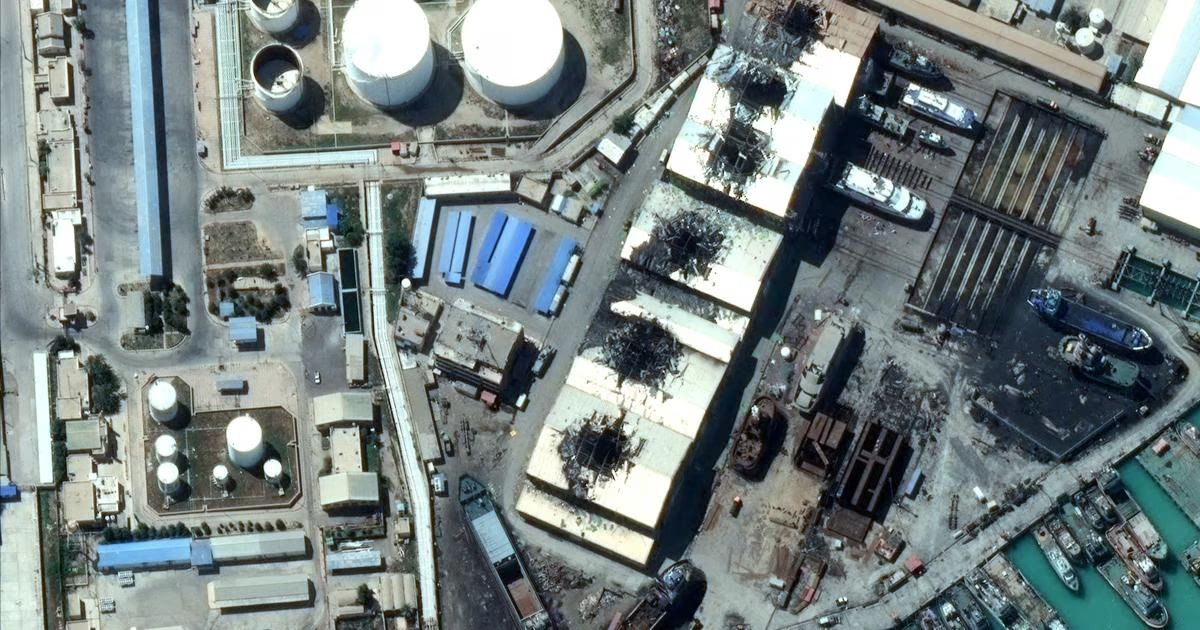
The region has entered a dangerous turn threatening the stability of global energy markets, following Israel's reckless military action targeting gas facilities in Iran's Bushehr province. This attack did not go unanswered, as Tehran swiftly retaliated by targeting gas facilities in the industrial city of Ras Laffan in Qatar, the world's largest center for natural gas liquefaction.
Iran's response caused shock in international circles, as it targeted infrastructure linked to the world's largest shared gas field, known on the Qatari side as the 'North Field' and on the Iranian side as 'South Pars'. This strike is considered a direct threat to energy supplies, which the global economy vitally depends on at this sensitive stage.
For his part, US President Donald Trump made belated statements attempting to disavow responsibility for the Israeli escalation, denying prior knowledge of the attack on Iranian facilities. Trump's justifications put him in an embarrassing position regarding the extent of his control over the military decisions of his close ally in the region, and whether the escalation was imposed on him.
American media sources confirmed that the White House narrative contradicts intelligence reports indicating high-level coordination between Tel Aviv and Washington before the strike. This discrepancy in news opens the door to the possibility that the US administration is trying to avoid the economic and political consequences of the attack that struck the nerve center of global gas.
In the context of diplomatic reactions, Doha strongly condemned the Iranian attack on its territory, describing it as a dangerous escalation and a blatant violation of national sovereignty and international law. The Qatari Foreign Ministry considered that targeting civilian and economic facilities disregards the principles of good neighborliness and threatens regional security.
Qatar did not stop at political condemnation but took firm measures by declaring the military attaché and security attaché at the Iranian embassy 'personae non gratae'. Qatari authorities gave the Iranian diplomats only 24 hours to leave the country, a step reflecting the extent of anger at recent Iranian behavior.
President Trump issued a stern warning to Tehran, hinting that any new targeting of Qatari facilities would be met with a devastating American response. Trump clarified that Washington is prepared, whether with Israel's help or unilaterally, to completely destroy Iran's 'South Pars' field if attacks on its neighbors are repeated.
Trump's statements sparked a wave of controversy on social media platforms, with observers criticizing the lack of direct blame directed at Israel, which initiated the escalation. Activists questioned whether the United States was truly leading its ally, or merely following Tel Aviv's decisions and paying its political and security bills.
Analysts believe that Trump's denial of knowledge of the strike puts him in an embarrassing position; either Israel carried out an attack threatening the heart of the global gas market without coordinating with him, or he is trying to disavow an escalation in which he was actually involved. In both cases, American credibility is at stake before regional and international allies.
International calls are currently escalating for intervention to put an end to what has been described as 'military madness' that threatens to drain the region's resources and ignite a comprehensive regional war. Economic experts warn that continued targeting of energy facilities will lead to unprecedented price jumps, which could plunge the world into a long-term economic recession.
The United States was not aware of the Israeli attack in advance, and Iran knows that very well.
ISRAELI AFFAIRS
Thu 19 Mar 2026 7:33 pm - Jerusalem Time
Gargash: Confrontation with Iran strengthens strategic alliance between Gulf states and Israel
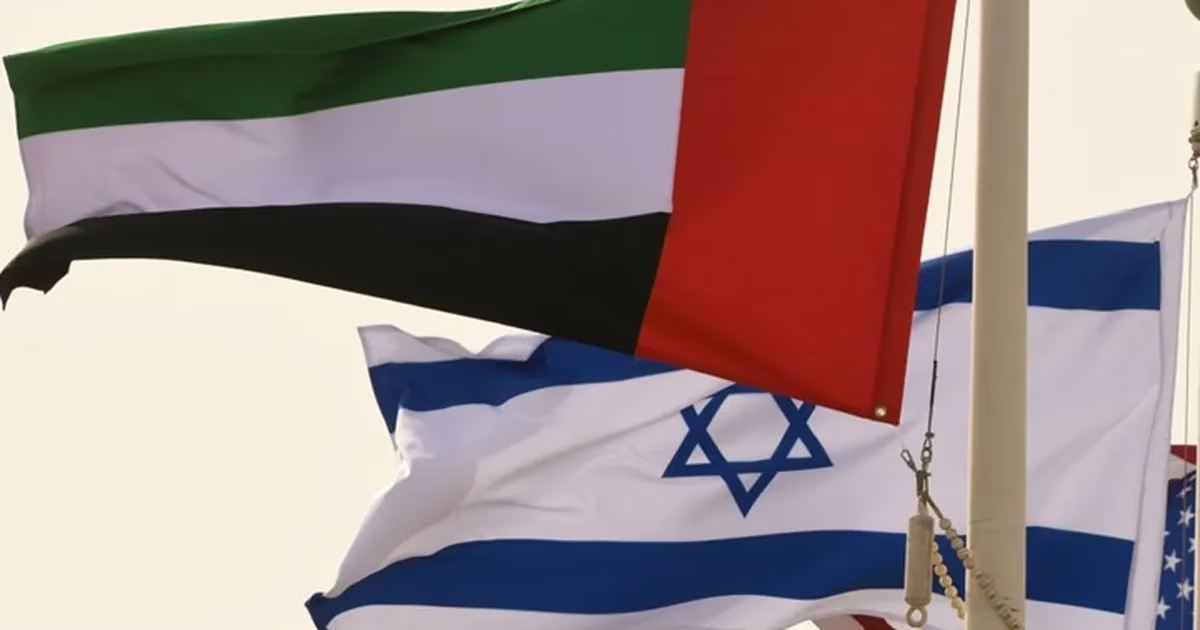
Dr. Anwar Gargash, Senior Political Advisor to the President of the UAE, revealed major strategic shifts in the structure of regional relations following recent military confrontations with Iran. Gargash explained that Israel's role in the Arabian Gulf region is poised to grow and strengthen, considering that repeated Iranian attacks have contributed to reshaping the balance of power and identifying the true sources of threat to Gulf states.
The high-ranking Emirati official, during an interview with an American research center, pointed out that the current ground reality necessitates overcoming the stereotypical ideological images that prevailed in past decades. He stressed that his country views Iran as the biggest and most direct threat to its national security, citing missile and drone attacks that targeted Emirati territory in the past.
In the context of maritime security, Gargash announced the UAE's readiness to actively participate in any international effort aimed at securing freedom of navigation in the strategic Strait of Hormuz. He affirmed that these efforts must be led by the United States of America, with the necessity for regional and European countries to bear their responsibilities in protecting vital waterways for the global economy.
The Emirati advisor expected the coming phase to witness a tangible improvement in relations between Israel and a group of Gulf states, including those that currently do not have official diplomatic representation with Tel Aviv. Gargash believes that the desire to develop defensive and technological capabilities will push additional countries towards building strategic partnerships with the Israeli side to confront common challenges.
For its part, media sources quoted Israeli Prime Minister Benjamin Netanyahu's continuous emphasis on building new regional alliances that go beyond currently existing agreements. These statements align with what Israeli Foreign Minister Gidon Sa'ar said, who expected the relationship with Abu Dhabi to transform into an official and comprehensive alliance very soon.
Regarding the American role, Gargash denied any decline in Washington's influence in the region as a result of recent wars, but rather considered that the need for the American security umbrella has been further strengthened. He explained that despite some technical criticisms of certain defense systems, the recent Iranian attack proved the centrality of the American role in maintaining regional stability.
In contrast, a gap emerges in Gulf positions regarding this shift, as reports indicated a contradiction between Gargash's vision and the official Qatari stance. While the UAE views Israel as a security partner, Doha still describes Israel as a regional threat and calls for greater security independence away from total reliance on external powers.
Gargash touched upon the Palestinian-Israeli conflict file, expressing hope that the two-state solution option will remain viable in the long term despite current complexities. He warned against the escalation of conditions in the West Bank, recalling the warnings previously issued by the UAE regarding any attempts to annex parts of the occupied Palestinian territories.
Regarding the future of the Gaza Strip, the Emirati official expected continued work on specific political tracks, including the twenty-point plan proposed by the previous US administration. He affirmed that regional stability requires a comprehensive vision that ends armed conflicts and opens the door for broad economic and security cooperation involving all active parties.
Observers believe that Gargash's statements reflect an Emirati desire to accelerate the pace of regional integration of Israel as part of an integrated air and naval defense system. This system aims to repel missile and drone attacks launched from Iranian territory or through its proxies in the region, thus transforming the alliance from its political nature to an operational military one.
Gargash also stressed that collective responsibility for Gulf security requires unprecedented coordination between Gulf capitals and international powers, considering that global energy security is organically linked to the stability of this region. He added that the UAE will continue its role as a key player in formulating these new security understandings that ensure the flow of global trade without threats.
Regarding the Levant, Gargash explained that Israel may still be classified there as a major threat due to the nature of the border and political conflict, but calculations in the Gulf differ fundamentally. This geographical and political distinction reflects Emirati pragmatism in dealing with regional issues, where conflict paths are separated based on the direct security interests of each region.
Gargash concluded his remarks by emphasizing that the UAE always seeks to reduce tensions, but at the same time will not hesitate to build the necessary alliances to protect its sovereignty. He pointed out that advanced Israeli defense technology is an attractive element for many countries seeking to fortify themselves against unconventional threats that have emerged in recent wars.
These developments come at a time when the region is witnessing intense diplomatic activity to redraw the map of alliances, amid international anticipation of the outcome of the new security understandings. The biggest challenge remains how these countries will balance their security ambitions with historical commitments towards the Palestinian issue, which still constitutes an obstacle to full popular normalization.
It is Iran, not Israel, that launches thousands of rockets and drones at the UAE.
PALESTINE
Thu 19 Mar 2026 7:33 pm - Jerusalem Time
Above the rubble of homes.. Gaza welcomes Eid with the scent of Ka'ak and defying the siege

The aromas of ka'ak and ma'amoul waft from among the destroyed homes in the northern Gaza Strip, where sixty-year-old Sameera Toman is busy putting the finishing touches on Eid trays. The mother of seven works diligently with her daughters and daughter-in-law, in an attempt to revive the rituals of joy despite the bitterness of loss and the destruction that befell their home.
These days are the first that the residents of the Strip are preparing to welcome Eid al-Fitr after a long period of aggression that began last October. Sameera kneads the dough with great care, while her daughter prepares date balls mixed with sesame, in a scene that embodies the determination to live amidst the rubble.
In front of a glowing oven burning with firewood, family members take turns in the arduous baking process that requires great patience. The family is forced to use firewood and remnants of wooden furniture collected from demolished homes as an alternative to cooking gas, which has been completely missing from local markets for months.
Sameera describes her situation as she wipes sweat from her forehead in front of the tabun, affirming that this season is a season of blessings, even though the celebrations are no longer as they were before the war. Previously, she used to bake huge quantities until dawn on Eid day, but today the effort is doubled and the resources are very limited.
The family's production is not limited to their personal consumption; it has become a simple source of income by fulfilling neighbors' and customers' orders. This work helps the family provide some money to meet the harsh demands of life before Eid, despite the significant economic challenges.
Sameera points out that the demand for ka'ak is still good despite the insane rise in the prices of basic ingredients. People in Gaza are looking for any way to restore the stolen taste of joy, and ka'ak is an integral part of the cultural and social identity of Palestinians.
The repeated closure of crossings has caused a severe shortage of flour, semolina, sugar, and ghee, leading to unprecedented price jumps. Sameera says that there is always something that spoils joy in Gaza, where happiness remains incomplete and besieged by restrictions and complex political circumstances.
Sameera sadly recalls her home-based project that she managed through social media platforms before the outbreak of the last war. She had two kitchens equipped with the latest electrical appliances, and she was able to support her family with dignity before all that was shattered under bombardment.
Now, the family is starting from scratch, as organized and clean work has turned into a daily struggle with soot, smoke, and primitive fire. Her son breaks up pieces of furniture he collected from under the rubble to provide the necessary fuel to keep the manual oven running amidst difficult health conditions.
The residents of the Strip face a real dilemma between preserving Eid traditions and allocating their limited budgets to provide essential daily food. The deterioration of purchasing power and the rise in poverty and unemployment rates have made the simplest forms of celebration a heavy financial burden on families.
Sameera's family suffered a bitter displacement journey, as they were forced to leave their home in the north and head to Mawasi Khan Younis last September. The family did not return to their home until just one month ago, only to find themselves living amidst rubble lacking the most basic necessities of life.
Sameera describes the return to the north as difficult, as living amidst the ruins and without infrastructure or potable water kills the joy of returning. Nevertheless, she succumbed to the desire of her children and family to return to their land instead of staying in dilapidated displacement tents.
The sixty-year-old woman expresses her constant fear of the instability of the security situation, especially with the continued violations and restrictions on the crossings. She affirms that the flow of goods is still unstable, making residents feel as if they are living in a void, awaiting the unknown.
Despite all these worries, Sameera's daughter tries to instill optimism in her mother's heart, asking her to stop talking about politics and focus on the joy of Eid. Sameera smiles sadly and hopes that Eid will bring better days, and that Gaza's suffering with the siege, destruction, and high prices will end.
We have forgotten the meaning of working in the kitchen with order, dignity, and cleanliness; cooking and working are now associated with soot and fire.
PALESTINE
Thu 19 Mar 2026 7:33 pm - Jerusalem Time
Trump Blames Israel for 'Pars' Field Attack, Threatens Iran with Decisive Response if Qatar is Targeted

US President Donald Trump confirmed that Israel unilaterally carried out a missile attack targeting Iran's 'South Pars' gas field, emphasizing that the United States was not a partner in this operation. Trump clarified in press statements that Washington was not aware in advance of the timing or details of the strike, while denying any role for Qatar in this military move.
In contrast, American journalist Barak Ravid revealed a different account, citing high-ranking sources in Tel Aviv and Washington, indicating that the American administration was aware of the attack and approved the step. According to these sources, American approval came as part of exercising maximum pressure on the Iranian regime to push it to retreat from its escalatory policies in the region.
Ravid pointed to a state of Qatari diplomatic alert following the attack, as officials in Doha contacted White House envoy Steve Witkoff and leaders of the US Central Command 'CENTCOM'. The Qatari side demanded official clarifications about the extent of Washington's prior knowledge of the Israeli strike, especially given the geographical and economic overlap of the shared field between the two countries.
President Trump issued a stern warning to Tehran, stressing that any future targeting of LNG facilities in Qatar would be met with an unprecedented American response. Trump said he would not hesitate to take decisive decisions to protect energy security, hinting at the possibility of completely destroying Iran's South Pars field if Iran dared to attack Qatari interests.
On the ground, Iranian media reports confirmed that vital facilities in the Assaluyeh energy region were subjected to intense missile bombardment, leading to massive explosions that rocked the area. Sources explained that the bombardment affected production phases from the third to the sixth in the field's refineries, causing material damage to tanks and the operational surroundings of the facilities.
The South Pars field is the main pillar of the Iranian economy, representing the largest natural gas accumulation in the world, shared by Iran with the State of Qatar, which calls its part 'North Field'. These attacks raise widespread international concerns about the disruption of global energy supplies and the occurrence of major environmental disasters in the Arabian Gulf region as a result of mutual bombardment.
Qatar Energy had previously announced that its facilities in the city of Ras Laffan Industrial City had been subjected to missile attacks that caused severe damage, which explains the shared American and Qatari concern. Observers believe that Trump's statements aim to draw new red lines to prevent the conflict from turning into an all-out energy war that burns everything in the region.
These developments come amid the open military confrontation that began on February 28, with US and Israeli forces launching extensive military operations against Iranian targets. These confrontations have so far resulted in the deaths of hundreds of people, including prominent leading figures, most notably Supreme Leader Ali Khamenei and a number of security commanders.
For its part, Tehran continues to respond to air strikes by launching barrages of ballistic missiles and drones towards targets inside Israel, in an attempt to prove its deterrent capability. The region is in a state of high anticipation for what the coming days will bring, especially with Washington hinting at using maximum destructive force against Iranian infrastructure.
It is worth noting that the South Pars field was subjected to a drone attack in June 2025, which led to a large explosion in refinery No. 14, during a previous escalation round that lasted 12 days. Current data confirm that the conflict has gone beyond traditional rules of engagement, making global energy security the most prominent hostage in this bloody confrontation between regional and international powers.
I will not hesitate to take strong action, and the United States may completely blow up the South Pars field if Iran decides to attack Qatar.
PALESTINE
Thu 19 Mar 2026 7:33 pm - Jerusalem Time
Death toll from missile shrapnel in Hebron rises to 4 martyrs, including a pregnant woman

The death toll from the tragic incident in Beit Awwa town, Hebron Governorate, has risen to four martyrs, following the Palestinian Ministry of Health's announcement of the death of citizen Aseel Samir Musallama, 32 years old. The deceased, who was six months pregnant, had sustained severe injuries last Thursday as a result of missile shrapnel falling directly on a beauty salon in the town, which later led to her death due to her injuries.
Large crowds in Beit Awwa town mourned the bodies of three Palestinian women who died in the same incident, amidst an atmosphere of deep sorrow and overwhelming popular anger. Medical and local sources reported that the women's salon contained a number of women at the moment of the incident during the night hours, which caused this number of casualties and injuries among unarmed civilians.
In a related context, the Ministry of Health confirmed the stable health condition of a child who had sustained serious injuries during the incident, and is currently receiving the necessary medical care. Field reports indicate that about ten injuries of varying severity were recorded due to the fall of these shrapnel, which turned a place designated for beauty into a scene of rubble and blood in a few moments.
For its part, field monitoring in Nablus Governorate and other areas in the West Bank revealed the fall of hundreds of metal shrapnel resulting from aerial interception operations in the region's sky. Technical data suggests that these shrapnel either belong to long-range Iranian missiles that reached the airspace, or to interceptor missiles launched by Israeli defense systems to confront them over Palestinian population centers.
There is a state of discontent among citizens in the West Bank due to their villages and cities turning into an indirect confrontation arena lacking the minimum elements of civil protection. Residents of the area criticized the absence of early warning systems that would warn residents before the fall of explosive objects, stressing that the absence of sirens doubles the human losses in light of the lack of preparedness to deal with such emergency conditions.
Infrastructure in most areas of the West Bank suffers from severe weakness and the inability of residential buildings to resist shrapnel or nearby explosions. Residents also complain about the complete lack of public shelters or fortified rooms, which leaves civilians exposed to direct risks when any military escalation erupts in the region, which was clearly embodied in the recent Beit Awwa disaster.
The Ministry of Health announced the death of citizen Aseel Samir Musallama (32 years old), who was six months pregnant, due to injuries she sustained in an incident of shrapnel falling on a beauty salon in Beit Awwa town.
ARAB AND WORLD
Thu 19 Mar 2026 7:33 pm - Jerusalem Time
Omani Foreign Minister: Washington Lost Its Foreign Policy Compass and Was Dragged into a War That Is Not Its Own

Omani Foreign Minister, Badr bin Hamad Al Busaidi, considered that the United States made a grave strategic error by engaging in a military confrontation with Iran, noting that this war does not serve direct American interests. Al Busaidi clarified in an analytical article that the stated goal of overthrowing the Iranian regime is merely rhetorical and not based on realistic ground data.
The Omani minister revealed shocking details regarding the negotiation process, confirming that Washington and Tehran were on the verge of an actual agreement on the nuclear program twice in the past nine months. However, this path suffered a major setback after Israel and the United States carried out a military strike on February 28th, which undermined temporary peace opportunities.
Diplomatic sources reported that the Iranian response, which targeted sites described by Tehran as American in neighboring countries, was an expected result of the escalation policy. Al Busaidi believes that the Iranian leadership considered this response the most rational option in light of what it sees as an existential war aimed at ending the Islamic Republic, which led to an unprecedented complication of the regional scene.
The article warned of serious economic and security repercussions for the countries on the southern shore of the Gulf, where security cooperation with Washington has become a source of fragility instead of a safety valve. It noted that the Gulf economic models based on tourism, technology, and global sports are now facing serious risks that threaten their future ambitions as a global data center.
Globally, Al Busaidi warned that the disruption of navigation in the Strait of Hormuz has begun to cast a shadow over global energy prices, increasing the likelihood of an international economic recession. He considered that ignoring these consequences by war planners represents a deficiency in strategic assessment, especially since populations do not support engagement in new combat fronts.
The minister pointed out that the Israeli leadership succeeded in convincing the American administration of Iran's weakness as a result of the sanctions and strikes that targeted its nuclear facilities last June. Israel based its perception on the idea that assassinating senior leaders would lead to immediate surrender, which field facts proved to be inaccurate, as it requires a long-term ground campaign.
Al Busaidi called on US allies to take responsibility for telling Washington the truth, which is that it has lost control of its foreign policy in favor of agendas that do not serve its national interests. He stressed that America's true interest lies in ending hostilities and securing supply chains, instead of sinking into the spiral of 'endless wars' that Trump previously pledged to end.
The article proposed a way out of the crisis by re-evaluating the American decision-maker's strategic position and building on the necessity of preventing nuclear proliferation through peaceful means. The minister believes that a stable regional environment is the only guarantee for achieving economic prosperity, which requires Iran to be in a state of permanent peace with its Arab neighbors.
Al Busaidi acknowledged the difficulty of returning to the negotiating table after it was disrupted twice due to military escalation and assassinations, noting that Tehran has lost confidence in an administration that oscillates between dialogue and bombing. Nevertheless, he stressed that the diplomatic path remains the most realistic option to avoid sliding into a comprehensive and destructive confrontation for all.
The Sultanate of Oman put forward a vision that includes providing incentives to the conflicting parties by linking the nuclear file to a broader regional path of cooperation in energy and innovation. This proposal aims to create an environment of nuclear transparency that serves the region's countries' orientation towards a post-carbon future, which could form a common ground for technical and political understanding.
The minister questioned whether this proposal is sufficient to push the parties towards bearing the cost of difficult political dialogue, affirming that Oman and its partners in the Gulf Cooperation Council are ready to put forward this initiative. He believes that initial talks can build lost trust and determine the position of nuclear technologies within regional energy transition plans.
In conclusion of his vision, Al Busaidi pointed to the possibility of drafting a regional non-aggression treaty that enhances transparency and ensures navigation security and energy supplies for all parties. Although the outcomes of the current war are still unclear, moving towards an effective regional agreement remains an urgent necessity to spare the region and the world an economic and security catastrophe.
The article stressed that Washington's regaining the initiative in its foreign policy requires courage in reviewing the alliances that drag it into uncalculated confrontations. He considered that the Omani and Gulf role can be crucial in providing a 'ladder' to descend from the escalation tree that the various parties have climbed in recent months.
The minister concluded that the continuation of the current approach will inevitably lead to the exhaustion of great powers and the undermining of Middle East stability, calling for prioritizing the language of common interests over the language of bombing and assassination. He affirmed that regional peace is not just an option, but an imperative necessity to protect the future of coming generations in the Gulf region and the world.
The biggest mistake in the United States' calculations was engaging in a war that was not its own, and responsibility dictates telling the truth that Washington has lost control of its foreign policy.
PALESTINE
Thu 19 Mar 2026 7:33 pm - Jerusalem Time
For the first time in decades.. The occupation prevents Eid al-Fitr prayers at Al-Aqsa Mosque

A heavy silence fell over the courtyards of the blessed Al-Aqsa Mosque on the morning of Eid al-Fitr, as the Eid takbeers were absent from its squares for the first time in 59 years. The occupation authorities prevented worshippers from reaching the mosque, leaving its courtyards completely empty in a scene that sparked a wide wave of sadness and anger among Palestinians.
This prevention comes after a series of repressive measures that included closing the mosque and the Old City in occupied Jerusalem since late February. The occupation authorities used the declaration of a state of emergency to justify this closure, which deprived thousands of worshippers from observing the last ten days of Ramadan and Laylat al-Qadr within the confines of the first Qibla.
Field sources reported that occupation forces imposed a tight security cordon around Al-Aqsa Mosque, preventing even residents of the Old City from approaching the main gates. This step is considered an unprecedented escalation targeting the Palestinian presence and the Islamic identity of the holy city during the holiest religious occasions.
Despite the strict restrictions, worshippers showed great determination to perform their rituals, as social media platforms circulated videos of hundreds of citizens performing prayers in the streets near Bab Al-Asbat. These scenes reflected the steadfastness of Jerusalemites in the face of the occupation's attempts to empty the mosque of its inhabitants and guardians.
In a religious and political response, the preacher of Al-Aqsa Mosque, Sheikh Ekrima Sabri, issued an urgent call to journey to the blessed mosque despite the closure. Sabri affirmed that prayer under these circumstances becomes obligatory at the closest point accessible from the walls of Al-Haram Al-Sharif.
Sheikh Sabri emphasized in his call to the people of Jerusalem, the occupied interior, and the West Bank the necessity of being present in large numbers at the gates and thresholds of the mosque. He considered performing prayers in the streets leading to Al-Aqsa a religious and national duty aimed at breaking the military siege imposed on it.
On the ground, occupation forces escalated their measures against the guards of Al-Aqsa Mosque, forcibly removing one of them from his workplace. The occupation's repression teams also attempted to disperse gatherings of worshippers who tried to perform Isha and Taraweeh prayers in the alleys surrounding the mosque.
Social media platforms erupted with expressions of anger and condemnation from Arab and Palestinian activists who considered the decision a serious infringement on religious rights. Guardians described this year as the harshest ever, considering that the emptiness of Al-Aqsa from worshippers leaves a deep wound in the Islamic conscience.
Bloggers and analysts criticized the suspicious international silence regarding the continued closure of the mosque for more than twenty consecutive days without an official reaction commensurate with the gravity of the event. They pointed out that merely issuing written condemnations gives the occupation a green light to continue its systematic violations against holy sites.
Observers warned that the occupation seeks through these measures to test popular and official reactions in preparation for more dangerous steps. They expressed concerns that the closure might be part of a Talmudic plan aimed at imposing a new reality in the administration of Al-Aqsa Mosque and dividing it temporally and spatially.
In conclusion, specialists in Jerusalem affairs believe that what is happening is part of a comprehensive strategic war aimed at changing the status quo in the city. Questions remain about the role of the international community and human rights organizations in protecting freedom of worship and preserving the historical and legal status of Islamic holy sites.
Prayer is obligatory at the closest possible point to Al-Haram Al-Sharif to break the siege imposed on the first of the two Qiblas.
ARAB AND WORLD
Thu 19 Mar 2026 7:33 pm - Jerusalem Time
Iran attacks Israeli Ministry of Security with drones and missile barrages shake Tel Aviv
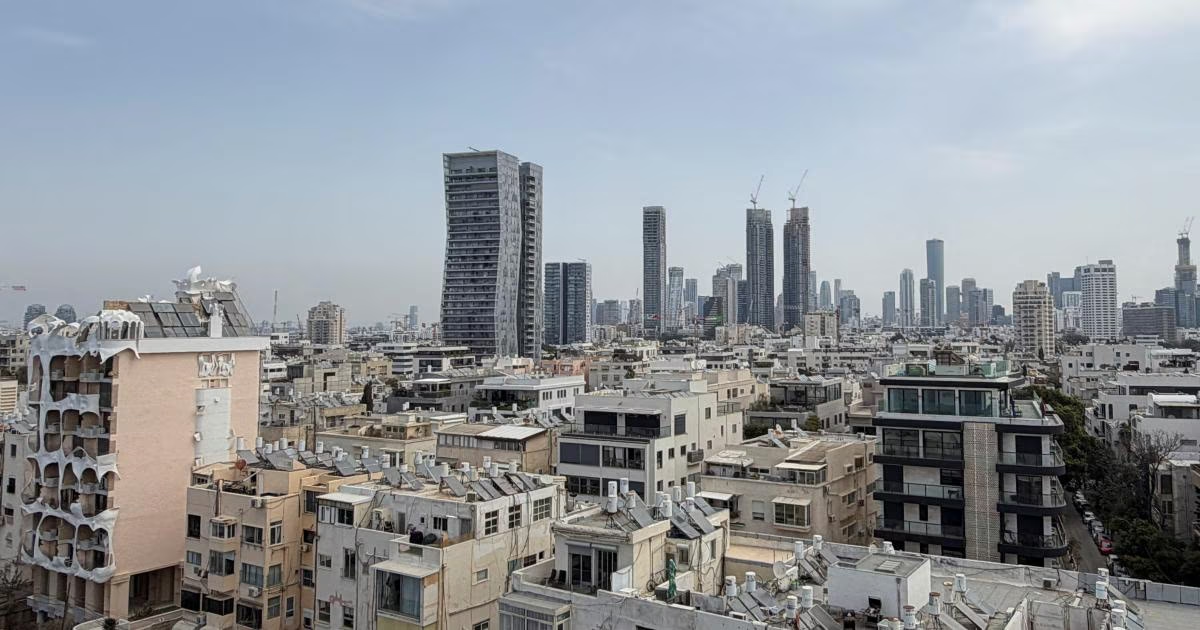
The Iranian army announced today, Thursday, the execution of a large-scale military operation targeting sovereign and military installations belonging to the Israeli occupation. The military statement clarified that the attack was carried out by suicide drones that targeted the headquarters of the Ministry of Internal Security in occupied Jerusalem, in addition to targeting the ground forces command building at the Arar military base.
In a related context, violent explosions shook the greater Tel Aviv area and its surroundings, after Israeli monitoring systems detected missiles launched from Iranian territory. Field sources confirmed that the 'Iron Dome' and 'David's Sling' air defense systems attempted to intercept these barrages amidst a state of comprehensive security alert.
Sources reported that the area was subjected to two intense missile salvos in less than an hour, which activated sirens in dozens of locations and towns. The sound of explosions was clearly heard deep in the center, while ambulance and rescue teams rushed to inspect sites where shrapnel or missiles were suspected to have fallen.
Initial technical data indicates a shift in the type of weapon used, as it is believed that Iran employed cluster or fission missiles in this attack. These missiles are characterized by their ability to divide into dozens of small explosive warheads, each weighing a few kilograms, which complicates the mission of traditional air interception systems.
Despite attempts at media blackout imposed by Israeli military censorship, reports confirmed the success of a number of missiles in penetrating the atmosphere and reaching their targets. This caused a state of confusion within security circles, especially with the repetition of barrages, which amounted to about nine attacks since the early hours of Thursday morning.
For its part, Israeli media tried to downplay the extent of the damage, indicating that only two missiles were intercepted and a third fell in an uninhabited area. However, eyewitnesses observed large shrapnel falling from interception operations in the city of Holon, specifically near a museum, which caused some material damage to the site.
These rapid developments place the region on the brink of an unprecedented escalation, amid continued mutual threats between Tehran and Tel Aviv. International circles are cautiously monitoring the repercussions of this direct attack that targeted Israeli security decision-making centers, and what military reactions may follow in the coming hours.
We targeted the Israeli Ministry of Internal Security in occupied Jerusalem and the ground forces building at the Arar base with drones.
PALESTINE
Thu 19 Mar 2026 7:32 pm - Jerusalem Time
Widespread Israeli Escalation: Evacuation Warnings Up to the Zahrani River and Martyrs in Raids on Lebanon and Gaza

Israeli occupation forces escalated their aggression on Lebanese territories today, Thursday, launching a series of airstrikes and intense artillery shelling that targeted various areas in the south. Field sources reported the martyrdom of two individuals in the town of Adloun, part of the Sidon district, in addition to the martyrdom of two others and the injury of eight with varying degrees of wounds following attacks on Hosh Sour, Burj Al-Shamali, and Bazourieh.
In a significant field development, the occupation army renewed its threats to the residents of southern villages, demanding them to evacuate their homes and immediately head north of the Zahrani River. These orders come amidst the expansion of Israeli military operations and an attempt to impose a new geographical reality through the systematic destruction and leveling of border villages.
The targeting was not limited to civilians but also extended to journalistic crews, with two journalists sustaining minor injuries due to a raid that targeted the Qasmiyeh bridge. Warplanes also completely destroyed a house in the city of Tyre after targeting surrounding agricultural lands, reflecting the scorched-earth policy pursued by the occupation in the region.
On the military front, Hezbollah announced that it confronted Israeli ground advance attempts in the border village of Taybeh, confirming that the attacking forces fell into a well-laid ambush. Hezbollah stated in a communiqué that its fighters managed to destroy six Merkava tanks using guided missiles, which hindered the Israeli advance in that sector.
Military analysts believe that what is currently happening represents a fundamental shift in Israeli combat doctrine, as the occupation has moved from the stage of airstrikes to attempting ground entrenchment. Through deploying armored military divisions such as the 36th and 98th Divisions, the occupation aims to establish a buffer zone and secure new occupation sites, which have exceeded twenty locations.
In a long-range missile message, Hebrew sources confirmed the arrival of a missile launched from the Baalbek area in eastern Lebanon to the Gaza envelope area, covering a distance estimated at 315 kilometers. This development indicates the resistance's ability to target the Israeli depth in response to the ground incursion, following the 'depth for depth' rule to deter the occupation.
Concurrently with the events in Lebanon, the Gaza Strip witnessed a dangerous breach of the ceasefire agreement in effect since last October, with four Palestinians martyred in separate raids. Occupation aircraft targeted a group of citizens in Al-Shawa Square in the Al-Tuffah neighborhood, while a drone carried out another attack in the Al-Zaytoun neighborhood of Gaza City on Thursday morning.
These breaches come at a time when the residents of the Strip are suffering from catastrophic humanitarian conditions, with a sharp decline in the number of aid trucks entering. The average entry of trucks decreased from 1000 trucks per day to only about 200, exacerbating hunger crises and the shortage of essential medical supplies in all governorates.
On the humanitarian level, the Rafah border crossing was partially reopened for the first time since its closure last month, to allow a limited number of injured people to travel. This step comes amidst poverty rates in Gaza reaching 90% and unemployment exceeding 80%, as a result of the ongoing siege and aggression.
The past few days had witnessed a similar escalation, with nine Palestinian police officers martyred in a raid that targeted the town of Al-Zawaida in the central Strip. These repeated targetings confirm the fragility of the existing calm and the occupation's insistence on striking the service and security system in the Gaza Strip despite international agreements.
On the Lebanese side, UN reports indicate that the occupation is pursuing a destructive strategy in the eastern sector due to the nature of the terrain that allows for vehicle movement. Meanwhile, the occupation faces severe difficulties in the central and western sectors due to geographical complexities and the fierce resistance shown by units defending the villages.
The scene remains open to all possibilities amidst the occupation's insistence on ground incursions in Lebanon and breaching the calm in Gaza, amid international warnings of a comprehensive explosion. Political circles are monitoring the extent to which international pressure can curb this escalation and prevent the region from sliding into a widespread regional war.
Depth will be met with depth; the arrival of missiles in the Negev and the Gaza envelope is a clear message to the occupation that the field still holds the initiative.
PALESTINE
Thu 19 Mar 2026 7:32 pm - Jerusalem Time
Martyrs in Gaza due to occupation violations and a severe water crisis strikes Moldova

Gaza City witnessed a new field escalation today, Thursday, resulting in the martyrdom of four Palestinians and the injury of others, due to a series of raids and shelling carried out by the Israeli occupation forces. These aggressions come within the framework of continuous violations of the ceasefire agreement, exacerbating the already deteriorating humanitarian situation in the besieged strip.
Local sources reported that Israeli shelling targeted a group of citizens near Al-Shawwa Square in the Al-Tuffah neighborhood, northeast of Gaza City, leading to the martyrdom of one citizen and the serious injury of another. The injured were transferred to nearby hospitals amidst severe difficulties in movement due to the continuous intensive drone flights.
In the Al-Zaytoun neighborhood, east of the city, an occupation drone targeted another group of citizens on Kashko Street, leading to the martyrdom of the two young men, Hamza Siam and Muhammad Farahat. Eyewitnesses confirmed that the targeting was direct and resulted in the immediate death of the two young men at the scene of the attack.
Official statistics indicate that the occupation's violations of the ceasefire agreement with resistance factions since last October have resulted in the martyrdom of 677 citizens and the injury of 1813 others. These figures reflect the extent of the systematic violations practiced by the occupation against civilians in various areas of the Gaza Strip.
On the international level, the Republic of Moldova is facing a severe environmental and humanitarian crisis following a Russian attack targeting the Novodnistrovsk Ukrainian hydroelectric power plant. The attack caused a large oil spill that polluted the waters of the Dniester River, which is the main lifeline in the country.
Moldovan President Maia Sandu said that this pollution threatens the supply of potable water for about 80% of the country's population, numbering about 2.5 million people. Sandu held the Russian side fully responsible for this disaster that affected Moldova's northern border with Ukraine.
In the context of regional crises, the Chadian-Sudanese border witnessed a dangerous development with the killing of at least 15 people in a drone attack targeting a funeral in the town of Al-Tina. This area is a hot spot between the Sudanese army and the Rapid Support Forces, which have been engaged in an armed conflict since April 2023.
The Rapid Support Forces denied any connection to the attack on the Chadian town of Al-Tina, describing what happened as a dangerous escalation and a blatant violation of sovereignty by the Sudanese army. The 'Tasees' alliance warned that international silence towards these attacks would lead to a wider spread of the conflict to neighboring countries.
For its part, Doctors Without Borders confirmed that the recent clashes on the border resulted in the killing of 17 people and the injury of dozens in an initial toll. Sudanese forces continue to impose their control over the city of Al-Tina, while large areas of the Darfur region remain under the influence of the Rapid Support Forces.
Inside Sudan, the army announced on Wednesday evening that it had managed to control the strategic 'Jarta West Station' in Blue Nile State. This control came after fierce battles with the SPLM/North, allied with the Rapid Support Forces, where military vehicles belonging to the rebels were destroyed.
A statement by the army clarified that the forces of the 16th Brigade of the Fourth Infantry Division succeeded in expelling the armed elements from the area and securing it completely. The confrontations resulted in the killing of dozens of elements from the SPLM, which has been demanding self-rule in the Kordofan and Blue Nile regions for years.
Sudan is suffering from one of the largest humanitarian crises in the world, as the conflict, which has been ongoing for almost two years, has killed more than 40,000 people. The war has also led to the displacement of about 13 million Sudanese internally and externally, amidst international warnings of an imminent famine threatening millions.
Field reports indicate that the conflict in the Kordofan and Blue Nile regions has taken a more violent turn since the outbreak of confrontation between the army and the Rapid Support Forces. Political demands for self-rule intertwine with the military conflict for power, making political solutions elusive at present.
In conclusion, these successive developments in Palestine, Moldova, Sudan, and Chad highlight the magnitude of the security and humanitarian challenges facing the region. While the occupation continues its violations in Gaza, armed conflicts and environmental disasters are destabilizing other countries, necessitating urgent international intervention to stop the bloodshed.
The Russian attack on the power plant threatens water supplies for about 80% of Moldova's population, numbering about 2.5 million people.