






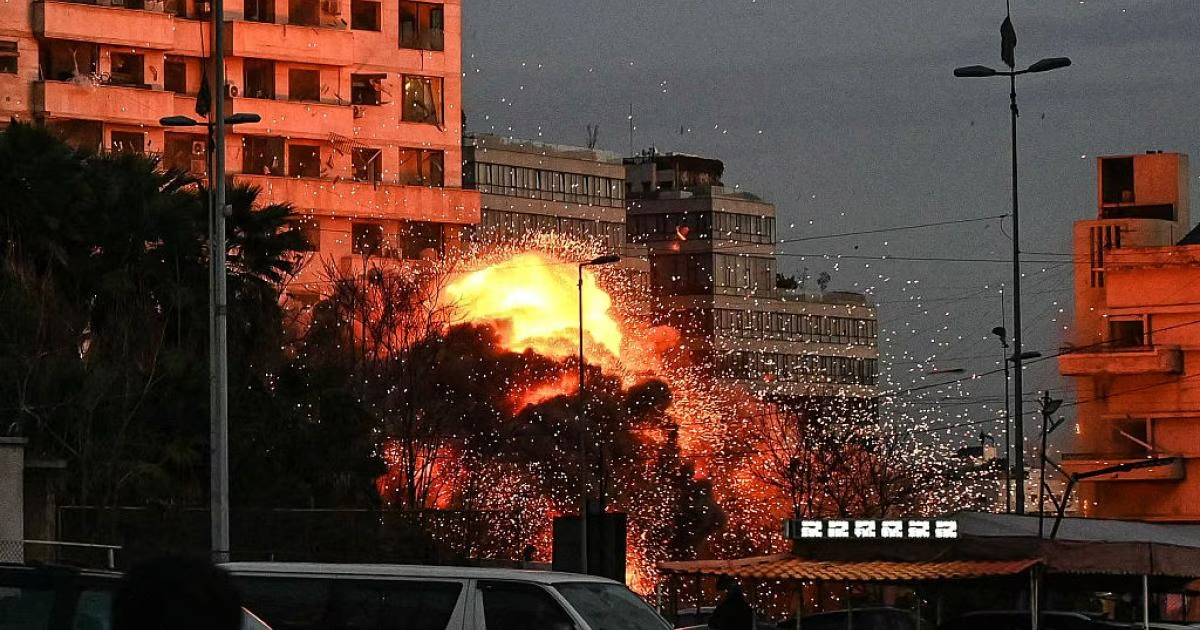
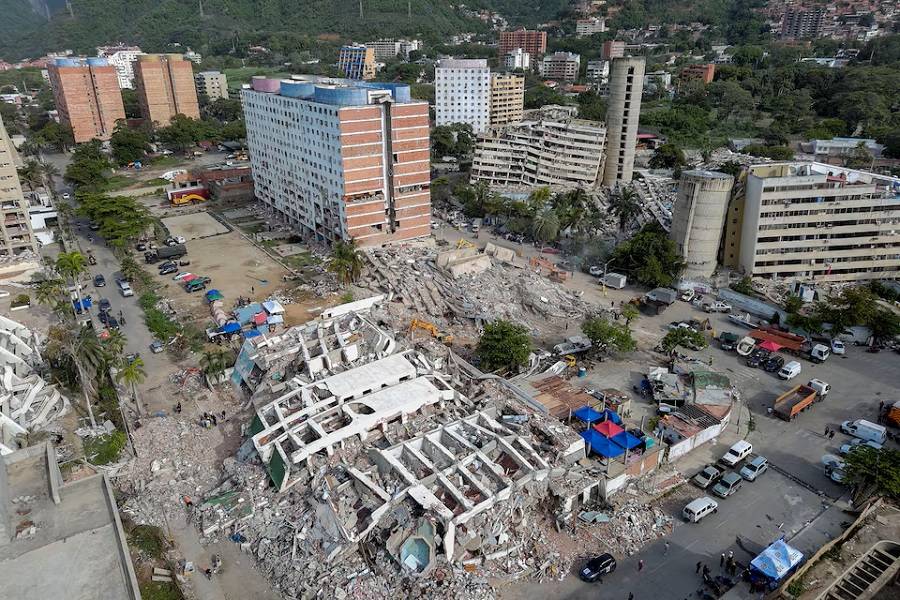
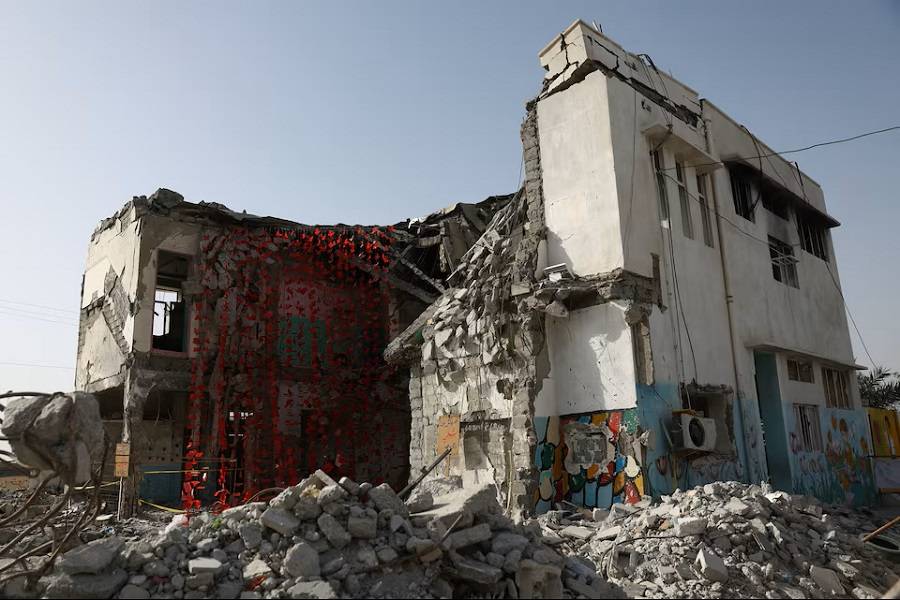
The Lebanese capital, Beirut, witnessed difficult hours described as the bloodiest since the escalation began, as occupation aircraft launched a series of intense raids targeting various residential neighborhoods. These attacks resulted in the martyrdom of at least 10 citizens and the complete destruction of a ten-story residential building, amid continuous shelling that hit four vital buildings in just eight hours.
Dr. Wael Marwa, director of Jabal Amel University Hospital, described the tragic condition of the wounded received by hospitals, noting that the injuries are highly complex. He explained that medical staff are dealing with cases of limb amputations and severe open wounds, in addition to head injuries requiring urgent surgical interventions in the skull.
In the context of direct targeting of media personnel, media sources mourned the martyrdom of journalist Mohammed Shari, political programs director at Al-Manar TV, who was killed along with his wife in a raid that targeted their home in the Zqaq al-Blat neighborhood. This incident is part of a series of attacks that have targeted civilian and media facilities in the heart of the Lebanese capital.
For its part, the Israeli occupation army claimed that these airstrikes are part of preemptive operations to weaken Hezbollah's military capabilities. The army spokesperson claimed that the raids targeted infrastructure belonging to the party, including branches of the Al-Qard Al-Hasan financial institution, which were subjected to intense shelling in several areas of Beirut.
Eyewitnesses reported that the occupation army issued warnings via social media before shelling the ten-story Bashoura building, allowing a small window for evacuation. However, citizens confirmed that the three other raids that targeted the Zqaq al-Blat and Basta neighborhoods occurred without prior warning, leading to direct casualties and widespread property damage.
The aggression was not limited to the capital but extended to include the destruction of strategic bridges over the Litani River in southern Lebanon, where Israel announced the destruction of two additional bridges. The occupation authorities justified this step by their desire to cut off supply routes and prevent the movement of fighters and weapons, which further isolates the southern regions and exacerbates the humanitarian crisis.
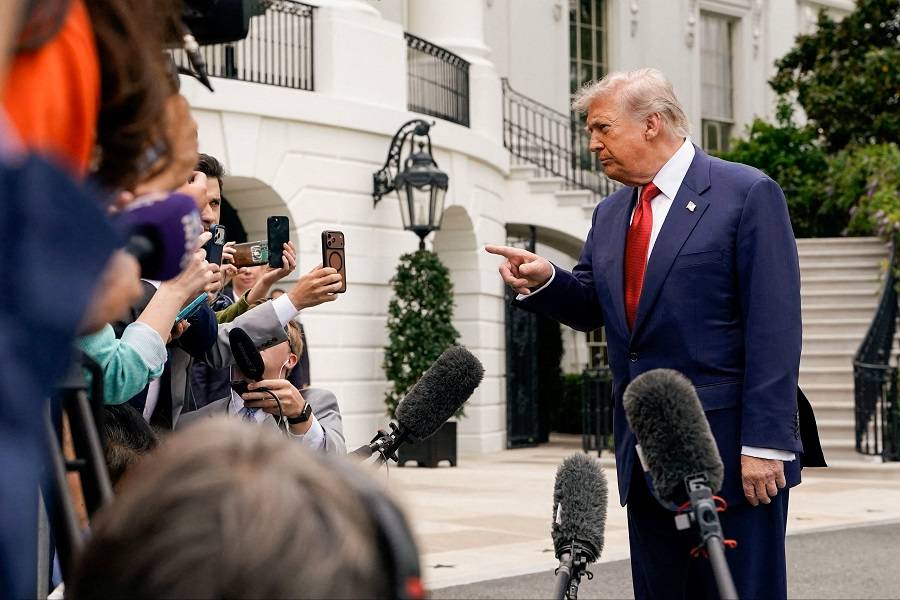
In a statement reflecting the intention to escalate, Israeli Security Minister Israel Katz said that the destruction of the bridges represents a clear and direct message to the Lebanese government. Katz affirmed that Tel Aviv will not allow the use of Lebanese state infrastructure for military purposes, threatening to repeat the scenarios of widespread destruction witnessed in the Gaza Strip in Lebanese cities.
According to the latest updates from the Lebanese Ministry of Public Health, the death toll from the ongoing aggression has risen to 968 martyrs, including 116 children and 40 healthcare workers. The ministry also recorded more than 2,432 people injured with varying degrees of severity, while the number of displaced people from their homes has exceeded one million.
On the ground, international peacekeeping forces (UNIFIL) observed intense exchanges of fire and a significant escalation in air and ground operations along the border. International reports indicated a tangible increase in the presence of Israeli forces inside Lebanese territory, which portends an expansion of direct ground confrontations.
In contrast, the occupation army admitted the killing of two Israeli soldiers during the ongoing battles in southern Lebanon, despite its claim that Hezbollah's rocket attacks did not result in deaths within Israeli cities. Violent confrontations continue on several fronts in the south, where the occupation is trying to establish new strongholds amid fierce resistance.
The Lebanese state is experiencing a state of complete paralysis amid continuous Israeli threats and the destruction of public facilities and vital bridges. International fears are growing of the region sliding into an uncontrollable comprehensive war, especially with the occupation's continued scorched-earth policy and targeting of densely populated residential neighborhoods in Beirut.
The injured arrive with amputated lower limbs and require precise skull surgeries as a result of the intense shelling.
Share your opinion
Bloody Escalation in Beirut: 968 Martyrs Since the Start of the Aggression and Widespread Destruction of Infrastructure