PALESTINE

Tue 19 Dec 2023 5:38 pm - Jerusalem Time

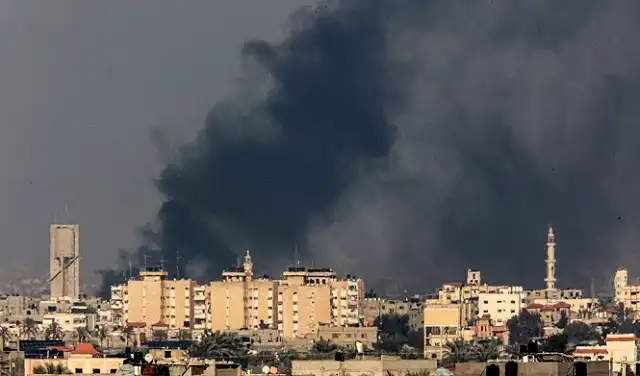
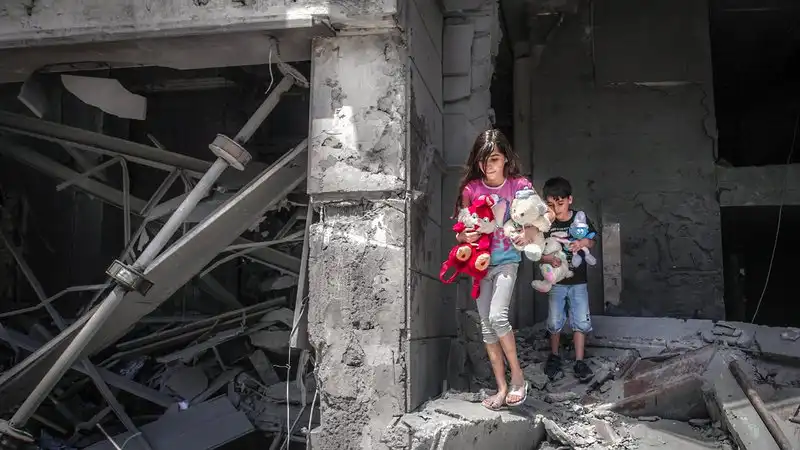
Gaza war: Israeli army puts the last hospital in Gaza City out of service

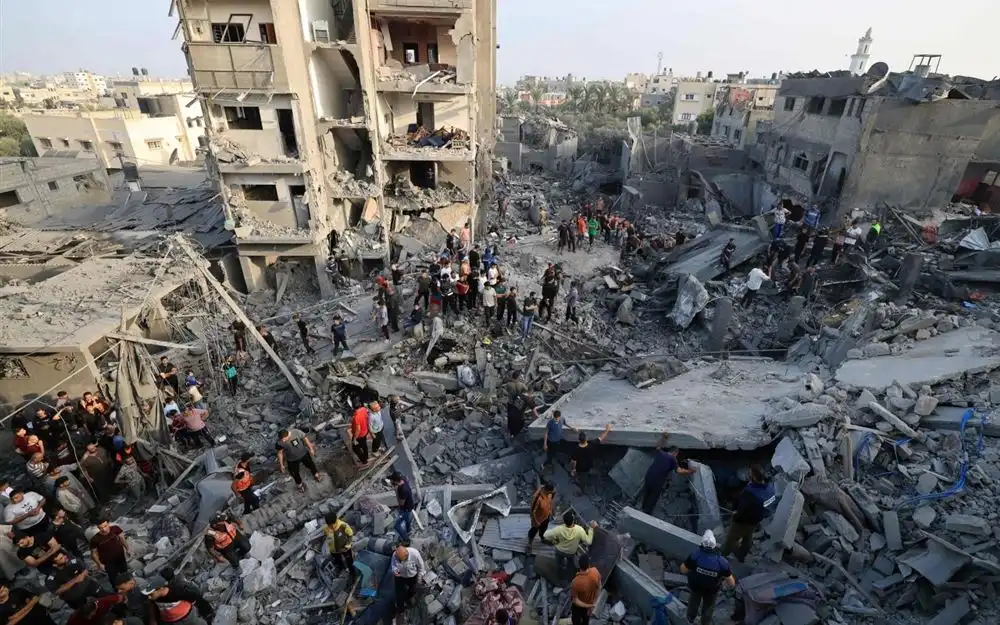
The director of Al-Ahli Hospital, Fadel Naeem, announced that the hospital had stopped working, today, Tuesday, after the Israeli army stormed it. The Ministry of Health in the Gaza Strip also announced, Tuesday evening, that the Ahli Baptist Hospital in Gaza City was out of service, which was the last hospital operating in the city in light of the devastating Israeli war.


Ministry spokesman Dr. Ashraf Al-Qudra, in a brief statement: “The National Arab (Baptist) Hospital in Gaza has been out of service, as a result of the targeting, siege, and arrest of a number of medical personnel, the wounded, and the displaced.”


The Arab National Hospital (Baptist) was the only one still operating in Gaza City following the Israeli army's siege of the Shifa Medical Complex.


The Israeli army surrounded the hospital and arrested a number of doctors, nurses, and the wounded, according to what he told Agence France-Presse.


Naeem explained, "The hospital was out of service due to the occupation forces storming the hospital, and we cannot receive patients or injured people. We have reports of dozens of wounded people in the streets."


Naeem added: “Four citizens died as a result of the wounds they sustained yesterday,” on Monday.


On October 17, a bombing occurred in the courtyard of the Arab National Hospital, killing dozens. The Israeli army and Palestinian factions exchanged accusations of responsibility for the bombing, which sparked international condemnation and protests.


All health facilities in the Gaza Strip were severely damaged as a result of the bombing and ground operations carried out by the Israeli army since the unprecedented attack launched by Hamas on October 7.


On the other hand, the spokesman for the Ministry of Health in the Gaza Strip, Ashraf Al-Qudra, confirmed that the Israeli army had converted Al-Awda Hospital in the northern Gaza Strip into a “military barracks,” noting that “240 people were detained, including 80 medical staff and 40 patients.”


Al-Qudra confirmed the arrest of six hospital officials, including its director, Dr. Ahmed Muhanna.


The Ministry of Health in Gaza confirmed in a statement today: “We are surprised by the international silence when it sees the massacres committed by the Israeli occupation forces in northern Gaza in light of the lack of health services as a result of the destruction of hospitals and putting them out of service, which means the occupation’s insistence on genocide.”


The World Health Organization said on Sunday that the National Arab Hospital is the only hospital that is “partially operating” at the present time in the entire northern Gaza Strip, with only three hospitals operating on a limited basis: Al-Shifa, Al-Awda, and Al-Sahaba.


Before the war, there were 24 hospitals in this area.


ARAB AND WORLD

Tue 19 Dec 2023 5:23 pm - Jerusalem Time

Hebrew Newspaper: Increasing pressure in Washington and Europe on Israel to end the current phase of the war

In recent days, the American administration and pro-Israel governments in Europe have increased their pressure on Israel in order to end the widespread fighting in the Gaza Strip within weeks, and replace it with concentrated raids and the assassination of Hamas leaders. US Defense Secretary Lloyd Austin, who is currently visiting Israel, and White House National Security Advisor Jake Sullivan, who visited the country last week, conveyed a clear message on this issue to members of the war cabinet.


Publicly, the administration in Washington continues to express full support for Israel's goals. National Security Council spokesman John Kirby said over the weekend that his administration believes the war "could last several months." However, Kirby explained that the United States and Israel considered “moving from a very aggressive military operation to less intense and more precise military operations.”


After his meeting with Defense Secretary Gallant, Austin issued a short statement, stating that they discussed the goals of the war, the stages, and the preservation of civilians. According to an Israeli source familiar with the details of the meeting, Austin made it clear that the current phase of the war, in which large army forces are moving deep into Gaza and causing widespread damage to civilian infrastructure, must stop at the beginning of 2024. The source added in an interview with: Haaretz said: “Ostin did not give an exact date, but the message was very clear.”


In a briefing with the media, before Austin's arrival, an American security source said that the minister's experience, which he accumulated in Afghanistan and Iraq when he was an army commander, is related to the dilemma in which Israel is floundering today. The source explained that "Austin can provide an important point of view on these issues, and this is what he wants to do," and continued, "He wants to talk with the Israelis about the means of transition between the various stages of the fighting."


The Biden administration is not alone in conveying messages to Israel in recent days. The governments of Britain and Germany, two pro-Israel countries in the West, called at the beginning of the week for action towards a “stable ceasefire” between Israel and Gaza. As for France, it called for this before them, and was subjected to criticism from Israel, but Jerusalem did not officially respond to the joint British-German invitation. The Biden administration remains alone in opposing the call for a ceasefire, as expressed by the vote in the Security Council a week and a half ago.


In the assessment of the Israeli source with whom Haaretz spoke, calls for a ceasefire by governments in Europe, and criticisms of Netanyahu in the Senate and Congress in the United States, are being coordinated with the American administration. In his opinion, “Biden is thinking about the same things, but he does not mention them directly, but he is talking to other people, and they are keen to convey his message.”


For the first time since the beginning of the war, voices emerged in the Republican Party calling on Israel to think about the repercussions of the operation in Gaza. Senator Lindsey Graham, considered a major supporter of Israel, said on Monday, in an interview with NBC, that Israel must take into account the repercussions of the war in Gaza on efforts to normalize relations with Saudi Arabia. He continued: “Anyone who wants to weaken Iran in the long term must not allow it to sabotage relations between Israel and Saudi Arabia. Saudi Arabia and other countries cannot advance normalization with Israel, because it will appear to be abandoning the Palestinians.” Graham added, “After the events of October 7, there are two options: to continue the cycle of death, or to use the disaster as an incentive for change. I believe that the Arabs will demand something similar to a two-state solution, and that Israel will demand a buffer zone. I do not know how this will end, but it is clear "If we don't succeed this time, it will take generations before an agreement is reached."

PALESTINE

Tue 19 Dec 2023 5:19 pm - Jerusalem Time

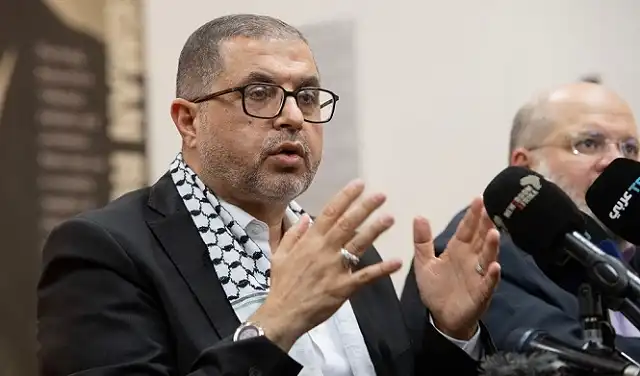
Hamas: We refuse to negotiate during the war and are open to moves to end it

A senior Hamas leader confirmed that the movement refuses to hold negotiations regarding the exchange of prisoners and hostages with the occupation authorities during the Israeli war on the besieged Gaza Strip, while clarifying that Hamas is “open to any initiative to end the war.”


The head of the Hamas political department in Gaza, Bassem Naim, said in statements reported by Reuters on Tuesday, “There will be no negotiation about the prisoners before the aggression stops, and we are open to any initiative that reduces the burden on our people.”


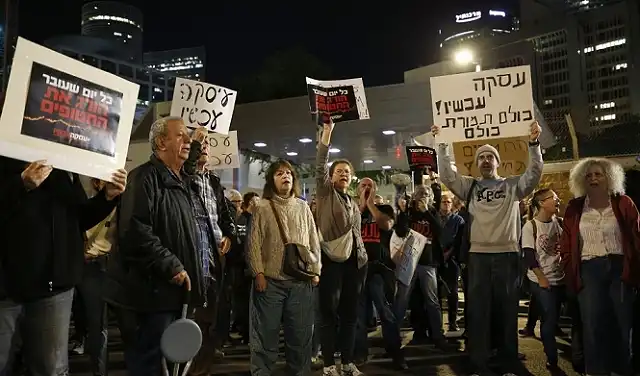
This comes as Israel seeks to move on the path of negotiations, in an attempt to alleviate the internal pressures facing Benjamin Netanyahu's government as a result of the escalating calls for more diplomatic efforts to "bring them back alive."


In this context, during a session he held with foreign ambassadors working in Israel and diplomatic staff representing more than 80 countries, Israeli President Historic Herzog claimed that Israel is “ready for a truce in Gaza, in exchange for the release of detainees.”


Herzog said, "Israel is ready to hold another humanitarian truce (he did not specify whether it is temporary or permanent), and to provide additional humanitarian aid, in order to allow the release of the kidnapped people (he did not specify the number)."


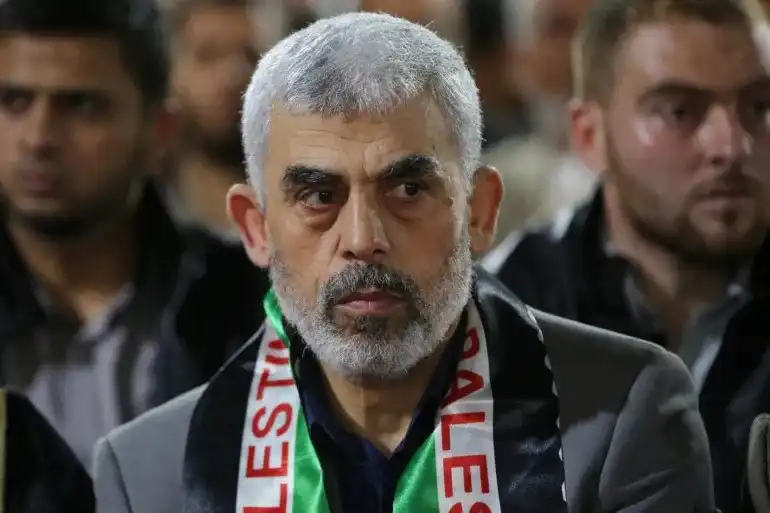
He added, "The full responsibility for the matter (approving a prisoner exchange deal) lies with the head of the Hamas movement in the Gaza Strip (Yahya Al-Sinwar) and the movement's leadership." He claimed, "We are not fighting the people of Gaza, and they are not our enemies. Rather, we are fighting Hamas, and they are the enemy."


He pointed out that "there are dozens of humanitarian cases among the group of hostages held in Gaza."


No official statement was issued by Hamas commenting on Herzog’s statements, but the movement’s deputy head in Gaza, Khalil al-Hayya, along with a number of leaders, the most recent of whom was Naim, who spoke to Reuters, said, “There is no talk of exchanging prisoners with the Israeli occupation before stopping the aggression.” On the Gaza Strip, and a complete withdrawal of the Israeli army from the areas it penetrated.”


In recent days, they have been talking in Israel about negotiations taking place with the Egyptian and Qatari mediators in an attempt to reach a new exchange deal with the Hamas movement in an attempt to release a family from among about 129 Israeli detainees in the besieged Gaza Strip, after Israel had exchanged dozens of them, during A humanitarian truce lasted for 7 days and ended on the first of December.

ARAB AND WORLD

Tue 19 Dec 2023 4:59 pm - Jerusalem Time

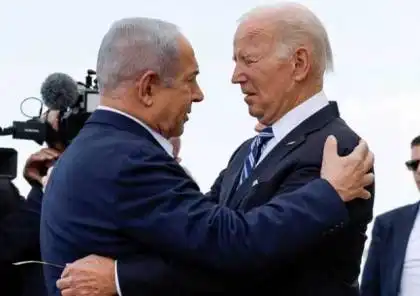
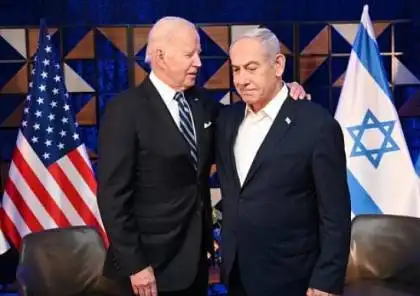
National Interest: Netanyahu is the greatest threat to Biden's continued presidency of America

The Israeli war in Gaza became one of the biggest blows to Joe Biden’s presidency, and some of these political repercussions were inevitable, once the Palestinian resistance movement “Hamas” carried out its attack on Israeli settlements and military bases in the enclave of the Gaza Strip on October 7. / Last October.


This attack, like most untoward events in the world, was seen as a major black mark for the occupant of the White House at this time, regardless of whether any US president was able to do anything to prevent it. Moreover, this attack struck the foreign policy strategy of the Biden administration, which assumed that the file of the Palestinian-Israeli conflict could be ignored, in order to focus on other regions and files in the world.


But American strategic analyst Paul Pillar, who spent 28 years working in the American intelligence services, said in an analysis published by the American magazine “National Interest” that most of the negative repercussions of the Gaza war for President Biden were of his own making, due to his immediate and unconditional support for the Israeli Prime Minister’s government. Benjamin Netanyahu, a support that he was unable to withdraw, when Israel began to practice killing and destruction against the civilian population of the Gaza Strip in an indescribable manner.


Now Biden has become a partner in creating the largest human disaster the world has witnessed in more than half a century. All his moves to rein in Netanyahu's government also failed. He lost the support of the majority of his base in the Democratic Party, whose active support he needs in order to win a second presidential term in the upcoming elections.


One of the most important repercussions of these events was the blow to American interests, which became painfully clear as anger and resentment against the United States increased. Washington has become increasingly isolated in international diplomacy.


At the same time, Netanyahu himself faces many internal political problems. The Hamas attack shattered the image he had tried to paint for years as “Israel’s security man.” This destruction of the image was reflected in the opinion polls conducted after the Hamas attack, which showed a sharp deterioration in the popularity of the Israeli Prime Minister and his Likud party.


In order to stop this deterioration and save his political position, Netanyahu insists on continuing his disastrous war against the Gaza Strip, ignoring American appeals whether to curb its military operations, or the need for a political solution that allows the Palestinians to self-determination. Even if Netanyahu cannot restore his previous image as a “security man,” he can present himself as a “solid opponent” of any attempt to establish a Palestinian state.


As for the effects of Netanyahu’s policies on domestic American politics and their weakening of Biden’s political position, it is considered an additional bonus for Netanyahu. The Israeli Prime Minister will be happy to see Donald Trump defeat Biden in the US presidential elections scheduled for November 2024.


Pillar, who worked as an official in charge of the Near East and South Asia file at the US National Intelligence Council, says that although Biden bowed before Netanyahu to show support for an Israeli, this bow does not compare to the gifts that former President Trump gave to Israel, including moving the US embassy in Israel to occupied Jerusalem, recognizing Israel's sovereignty over the occupied Syrian Golan Heights, and presenting a peace plan that makes the Palestinians permanently subject to Israel instead of granting them their independent state.


Although the Democratic president embodies the commitment of the Democratic and Republican parties to defending Israel, the Republican Party has become, as former American peace negotiator Aaron David Miller described it, the party of “Israel, whether it is right or wrong.” The largest alliance now is not between the United States and Israel, but rather an alliance between the Republican Party and the Israeli right currently participating in Netanyahu’s government.


Under these circumstances, Biden appears vulnerable to political punishment. Netanyahu has a long record of embarrassing and destroying Biden. Hours after US Vice President Joe Biden's visit to Israel in 2010, and his declaration of unconditional American support for Israel's security, the Israeli government led by Netanyahu at the time announced the construction of more settlements in occupied East Jerusalem.


After Biden became president of the United States in 2021, Netanyahu falsely claimed, based on a misleading video, that Biden fell asleep during a meeting with then-Israeli Prime Minister Naftali Bennett.

In many ways, Biden embodies an old American political model. In this context, it was instinctive for him to resort to the traditional default position of American politicians for staying out of trouble, which is to declare that he loves Israel more than a political rival.


In light of the atrocities committed by Israel in the Gaza Strip, this hypothetical position does not serve Biden well. If Biden loses the upcoming elections, there will be many reasons for this, but one of these reasons was his embrace of Netanyahu, who does not like American interests, nor Biden’s political perceptions.

Source: Sama News +DPA


ARAB AND WORLD

Tue 19 Dec 2023 4:47 pm - Jerusalem Time

An Israeli document reveals Israeli intentions regarding the day after the Gaza war

Yesterday evening, Monday, the Israeli Channel 12 revealed a document that it said the Israeli Ministry of Foreign Affairs had worked on discreetly over the past weeks, regarding the future of Gaza or the so-called “day after” the war on the Gaza Strip, While the office of the occupation Prime Minister, Benjamin Netanyahu, denied the validity of what was stated therein.


The channel explained that after Netanyahu's statements regarding the Palestinian Authority not ruling Gaza the day after the war, a secret team in the Ministry of Foreign Affairs drafted a paper regarding that.


According to the document submitted to the Israeli National Security Council, “Israel is working towards a future in which the Palestinians can govern themselves without the possibility of being threatened.”

The channel pointed out that the crew worked discreetly during recent weeks with the aim of arriving at a professional opinion that would be presented to decision makers and include various aspects.

This came at the request of Israeli Foreign Minister Eli Cohen, whose basic instructions stipulated that the vision should not include the Palestinian Authority in its current composition, but that the vision should not be far from what the United States requires at the same time.


Channel 12 reported that the Ministerial Council for Political and Security Affairs (the Cabinet) did not hold serious discussions about the details formulated by the Ministry of Foreign Affairs, but this moment is approaching, and this paper will form a basis from which to start.


"Security" aspects

The document allocates some aspects to the arrangements for security measures, as the Israeli vision, according to the document, includes complete freedom for the Israeli occupation army to operate on the ground, as well as disarming all weapons from the Palestinians and preventing the resistance from strengthening, in addition to establishing a buffer zone, and working on a mechanism to prevent smuggling operations and impose control on the Philadelphia Axis and the Rafah Crossing (a readiness to examine the presence of international bodies with enforcement powers in this context), and the construction of a safe space at sea, in addition to more in-depth details for the long term, including a radical change in education programs and the role of UNRWA in the Gaza Strip.


At the civil and authoritarian levels

On the other hand, the Israeli vision included several aspects related to the civil and service level, most of which focused on an international mechanism for providing humanitarian services and managing daily life in a way that brings together major countries and international bodies operating in the Gaza Strip at the present time, accompanied by local parties that are not supportive of Hamas.


Although the document refers to Palestinian self-rule in the Gaza Strip, its provisions practically confirm the occupation’s control over everything in the Gaza Strip and the continuation of the siege and the imposition of censorship on it, and on everything that enters or takes place in the Gaza Strip, in addition to freedom of military action and other aspects and occupation part of land and sea areas with the aim of establishing buffer zones.


Netanyahu denies

The office of Israeli Prime Minister Benjamin Netanyahu denied the news and what the document contained about the future of Gaza, saying in a statement that “the information is incorrect.”


The statement said: “The Prime Minister is the one who leads the policy that confirms that after the elimination of Hamas, Gaza will not be ruled by any entity that breeds terrorism or supports terrorism and pays the families of terrorists. All other information is baseless.”

Source: Sama News


PALESTINE

Tue 19 Dec 2023 2:41 pm - Jerusalem Time

West Bank: Israeli settlers are paving a settlement road to seize lands west of Ramallah

Today, Tuesday, settlers began building a settlement road on citizens’ lands in Jabal Al-Risan, west of Ramallah.


According to local sources, settler vehicles began building a settlement road on citizens’ lands in the middle of the villages of Ras Karkar, Kharbatha Bani Harith, and Kafr Ni’ma.


It added: The settlement road is located in lands classified as “C” and is part of more than 600 dunams that Israel seized by military decision more than 4 years ago.


The head of the Kafr Nima village council, Raafat Khalifa, warned against armed settlers exploiting the political situation to establish and impose a fait accompli on the ground.


It is noteworthy that the occupation government decided in 2019 to transform the summit of Mount Al-Raysan into a settlement outpost, and witnessed continuous confrontations between residents of the villages there and the occupation soldiers, while the settlers not only seized it, but also cut down trees, changed the features of the area, and deprived residents of access to it.

ARAB AND WORLD

Tue 19 Dec 2023 1:54 pm - Jerusalem Time

How can Saudi Arabia use its influence in Gaza?

Foreign Policy magazine said in an analysis on Monday that Saudi Arabia has tools in its diplomatic arsenal that, if it uses them correctly, will have a say in shaping the future of the Palestinian issue.

The magazine believes that oil is no longer an effective tool in pressuring the United States and Israel.


The magazine explained that Riyadh is leading a diplomatic effort aimed at generating an international discourse that questions the legitimacy of the Israeli military aggression and the diplomatic cover that the United States provides to Israel.


According to the magazine, “The ruling elites in Saudi Arabia not only reject the Israeli self-defense argument, but they are also turning to a diplomatic attack, as the Saudi Foreign Minister, Faisal bin Farhan, heads a diplomatic committee authorized by the League of Arab States and the Organization of Islamic Cooperation to tour international different capitals and calling for an immediate ceasefire."


The magazine notes that the committee's first stop was in Beijing and then Moscow, explaining that this was a clear signal to Washington that Saudi Arabia has other options in this constantly evolving multipolar world.


In addition, the magazine believes that the presence of the committee in the United Nations and the ongoing proposals from the Arab Islamic Group aim to maintain diplomatic pressure on the United States, by highlighting it as an obstacle standing in the way of a ceasefire.


The magazine states, “It was not long ago that most of the world was focused on a big deal in the Middle East between the United States, Saudi Arabia, and Israel, but the current situation of death, destruction, and catastrophe (in Gaza) unfolding before our eyes makes that something very distant. It has dissipated.” "The enthusiasm surrounding the issue of (potential) Saudi-Israeli normalization in the few weeks and months preceding the war."


It says, "While some observers were surprised by the ferocious attacks launched by Hamas on October 7 and the outbreak of a major war, others have long feared the outbreak of such violence, and because of the desperate desire of both Israel and the United States to see a normalization agreement with Saudi Arabia, The unresolved and volatile Palestinian issue has been largely ignored.


According to the report, both Israel and the United States had their own reasons for pressing for normalization. “For Washington, and especially President Joe Biden, being the mediator in such a major deal would cement his legacy in history and provide a necessary diplomatic talking point for the 2024 election campaign.”


As for Israeli Prime Minister Benjamin Netanyahu, “Recognition of Israel by the Kingdom of Saudi Arabia - the guardian of the Two Holy Mosques - would be a strategic victory. If Saudi Arabia agrees to normalize relations with Israel, there will not be much pressure on the Netanyahu government, or any future Israeli government.” To ensure significant concessions and facilitate a political settlement that promises security for both Palestinians and Israelis.


“Once the war broke out, there was an ominous feeling that a humanitarian catastrophe was about to happen, and there was no doubt that the Arab countries would condemn Israel. What is less clear is how the Arab countries would use their influence. The energy landscape has changed dramatically since 1973, and thus the “oil card” would not have had much impact today, according to the analysis.


The Saudis are also using a neglected diplomatic tool, which is silence, as the magazine explained, noting that their explicit rejection of any political discussion before the ceasefire also generates pressure by not allowing Israel a clear political horizon after the election campaign. As the Saudi foreign minister said last month: “What future can we talk about when Gaza is destroyed?”


The magazine believes that the ruling elites in Saudi Arabia have another reason to avoid any discussion about the future of Gaza, which is that they believe that presenting this idea will not help in reaching a permanent ceasefire, and could be considered complicity or participation in giving the current Israeli campaign legitimacy.


The magazine points out that while Riyadh has real influence when it comes to financing, Israel will never be able to match the financial capacity of Saudi Arabia and other Gulf Cooperation Council countries. The Israeli economy is suffering, and according to a recent report by the Bank of Israel, it has been losing $600 million weekly since the beginning of this war. The Israeli Central Bank also predicted that the costs of the war from 2023 to 2025 will reach about $53 billion.


This is precisely what gives the Saudis, the GCC and Arab states leverage, as any reconstruction efforts can be used to push Israel towards a real peace process. Otherwise, it will only be a matter of time until the region finds itself in the same situation again - if not worse.


The magazine says, “The Saudis have never been opposed to providing financial support to the Palestinians, and they have provided a great deal of it over the past decades, and it does not seem that this support will abate soon. What the Saudis hate is rebuilding destroyed Gaza for the sake of Israeli security - especially since Israel has been the party who carried out the destruction?


The report notes, “There is currently unrealistic wishful thinking, in Israel and Washington, that Saudi Arabia and other Gulf Cooperation Council countries will foot the bill for the Israeli military campaign in Gaza. According to a leak to the Israeli press, Netanyahu reportedly told a parliamentary committee on 11 December: “The first step in Gaza will be the defeat of Hamas. After that, I think the United Arab Emirates and Saudi Arabia will support the rehabilitation of the Strip.”


The assumption that Saudi Arabia and the Gulf Cooperation Council countries will easily agree to pay for the reconstruction of an inherited disaster, and then bear responsibility for their security, exposes the naive illusions promoted by many in Israel and the West. Western and Israeli discourses often portray the GCC states as irrational actors who spend first and think later, as if the only function of the GCC states in the global system is to throw money at other countries’ problems. This is far from reality. At the time Presently, nothing is spent in Saudi Arabia unless it serves the interest of the Kingdom; “Saudi Arabia first” is the principle on which Saudi foreign policy is based.


One of the difficulties facing raising Saudi funds for reconstruction efforts is that Saudi Arabia itself is going through its own rebuilding process.


The magazine says: “Currently, the country (Saudi Arabia) has set upon itself the huge task of restructuring the state, and building mega projects that are critical to the Vision 2030 initiative, with the hope of eventually diversifying the Saudi economy away from oil to ensure the state’s survival.” "For future generations...the Saudis have the money, but it is earmarked for investing in the future of Saudi Arabia. However, this does not mean that the Saudi ruling elites are not prepared to invest in the future Palestinian state and contribute significantly to rebuilding its infrastructure."


“It is possible to increase the incentives provided to the Kingdom of Saudi Arabia and other Arab countries to contribute to the reconstruction of Gaza if it is implemented in the right way, within the right framework, on the right horizon, and with the right goals. Among these common goals is regional security. This war has shown that The Palestinian issue can no longer be swept under the rug.”


This war has also shown that the risk of proliferation – from the Lebanese-Israeli border to Houthi attacks on international shipping in the Red Sea off the coast of Yemen – has the potential to destabilize the entire region. This regional threat could serve as leverage for the Saudis against Israel and as an incentive to seek lasting peace.


“Regional prosperity” is a term commonly used by Crown Prince Mohammed bin Salman. It is precisely from this angle that one can see Saudi investment in restructuring Gaza, but only as part of a political process with clear political horizons that seeks to resolve the fundamental issues of this conflict. Saudi Arabia already has leverage over Israel by not offering normalization, but Riyadh's leadership of the reconstruction effort only amplifies Saudi political influence over Israel, because without effective infrastructure in Gaza, Israel's security concerns will increase.

ARAB AND WORLD

Tue 19 Dec 2023 12:07 pm - Jerusalem Time

The New York Times: With gestures and nudges...this is how Washington is pressuring Tel Aviv to curb the war

US President Joe Biden and his top aides have engaged in an increasingly bizarre dance in recent days, as described by The New York Times, urging Israel to change its tactics in the war in the Gaza Strip while still offering it strong public support.


Joe Biden said last week that Israel was losing international support because of its “indiscriminate bombing” of Gaza, a far more critical assessment than his previous public statements. The previous Monday, US Defense Secretary Lloyd Austin, on his second visit to Israel since the attacks, sought October 7th, to what the newspaper described as “a drop in temperature by a few degrees.”


In his meeting with Israeli Prime Minister Benjamin Netanyahu, Army Minister Yoav Gallant, and other senior Israeli officials, Lloyd Austin discussed in detail how the occupation forces will move to the next phase of the war, a shift that American officials believe will “reduce risks to civilians.”


Speaking to reporters after daylong meetings, Austin described US support for the occupation as “unwavering” and endorsed its campaign to “destroy the ability of Hamas,” which controls Gaza, to launch military operations in difficult urban areas. But he also increasingly repeated a message he had recently made, saying: “Israel will become less secure if its combat operations turn more Palestinians into Hamas supporters.”


Austin's visit was part of a sweeping pressure campaign by the Biden administration to urge Israeli officials to end the "high-intensity" phase of the war and begin carrying out more targeted, intelligence-driven missions to "find and kill Hamas leaders."


While US officials have not publicly discussed a timeline, they privately say Joe Biden wants Israel to shift to more precise tactics within about three weeks.


When asked about the timetable for the Israeli war, the subject of intense discussions among American officials in recent days, Lloyd Austin demurred. He said: "This is an Israeli process, and I am not here to dictate timetables or conditions."


Yoav Galant claims that Israeli officials take American concerns “seriously,” and that as the occupation army achieves its goals in various parts of Gaza, “it may be able to allow Gazans to begin returning to their homes.”


Lloyd Austin seems to be leaning towards this response, as if he is trying to bridge the gap, according to the New York Times, noting that every “major military campaign has phases.”


But at the same time, Lloyd Austin constantly hinted to Israeli leaders in closed meetings that they must be as precise and disciplined as possible as they “dismantle Hamas and its infrastructure,” a senior Pentagon official, who spoke on the condition of anonymity, told the New York Times.


The newspaper said that Lloyd Austin is fully aware of “the painful lessons that the American armed forces learned in the past two decades when they moved from major ground wars in Iraq and Afghanistan to more targeted operations,” and he said that he shared those lessons with Israeli officials, adding: “We also have some Great ideas on how to move from high-intensity surgeries to less-intensive surgeries and more surgeries.”


American officials admitted that although they were encouraged by Yoav Gallant's suggestion that Israel was close to the point of transitioning to a less dense phase in northern Gaza, "the road ahead is still very difficult."


The newspaper revealed that Lloyd Austin shook Gallant's hand at the end of his visit, and told him: "Keep your head down, Mr. Secretary."

OPINIONS

Tue 19 Dec 2023 10:16 am - Jerusalem Time

Interview with Bertrand Badie: “in Gaza, we are facing a de facto annexation”

Translation for "Al-Quds" dot com

Translation for "Al-Quds" dot com

Opinion Writer

AN INTERVIEW WITH BERTRAND BADIE IN “HUMANITÉ”


Caught in the grip of the bombings, it is difficult for Gazans not to think that they are about to experience a second Nakba. For Bertrand Badie, specialist in international issues, the dogma of omnipotent power is not only disastrous, but also counterproductive.


Luis Reygada

Israel says it wants to eradicate Hamas. But is the objective simply military, when certain voices at the UN speak of the risk of ethnic cleansing in Gaza 1?

BB: This is the big question. It is indisputable that the operation carried out by Israel is a repressive operation, which also aims to dismantle an opposing organization, to which is added a punitive dimension, consisting of avenging the 1,200 victims of the October 7 attack. But many elements raise fears that, explicitly or not, a work of “ethnic cleansing” will begin, as has been said.

When we force a population to leave their homes to go south, where the bombings nevertheless continue and there is no other imaginable outlet than to eventually cross the border, we can only be disturbed. This impression is confirmed, unfortunately, when these refugees are prohibited from returning to their homes, with no other possible form of salvation than to confine themselves to a small area of barely more than 8 km², where more than 2 million people!

When we see that in the West Bank methodical work continues consisting of driving out Palestinian Bedouins to establish new settlements there, we understand that this work of purification goes beyond the simple framework of Gaza, and can even concern all of the Palestinian territories. occupied, as far as East Jerusalem. It is therefore difficult for Palestinians not to think that they are about to experience a second Nakba.

Is the term “war” appropriate to describe this conflict which pits a power against a non-state adversary?

BB: It is true that we are closer here to new forms of intra-state conflict in which companies are strongly involved. From this point of view, the Israeli-Palestinian conflict is in line with decolonization and the transformations it has brought about in the organization of conflicts.

On the one hand, because it derives from a desire – more than seventy years old – for the emancipation of a people seeking to free themselves from domination and humiliation; on the other hand, because the methods used by some of the organizations leading this struggle are exposed to the accusation of terrorism, well-founded and recurring in such an asymmetrical context.

The international community has never known how to deal with this type of conflict in which States tend to only use military force, even though this is no longer operational. The wars of decolonization have all shown the impotence of power, as have the wars of intervention that followed. We saw this clearly through the horrors of October 7, when everyone in Israel woke up painfully to discover that a state, even heavily armed, is not invincible. We can draw a parallel with September 11, 2001. Power reaches its limits as soon as it has to face extreme forms of social energy which border on rage, however unacceptable it may be on an ethical level.

We are talking about a conflict that we seem to be rediscovering today, even though it was still relevant...

BB: A sort of bad conscience emerges almost everywhere. Since the agony of the Oslo Accords, many thought that the Palestinian issue could remain under the table, or even under the carpet, with the certainty that it no longer belonged on the international agenda. This is true, first of all, of Israel, which considered that the balance of power allowed it to perpetuate a status quo which was not really one, since its successive governments were able to take advantage of it to nibble away at the occupied territories. and lead to a de facto annexation.

But this is also the case for almost all Arab governments who seemed satisfied with this false status quo and who did not want to return to a costly confrontation with Israel. For their part, the Northern States were delighted to see that this embarrassing conflict had come to an end. Furthermore, non-compliance with the resolutions adopted by the Security Council has never given rise to sanctions against Israel, which can only reinforce such a posture.


However, the social resistance of the Palestinian people has never ceased and, despite the abandonment of this cause by governments, many societies across the globe have never renounced their solidarity. Identification with the Palestinian cause has remained very strong: it has taken over from state policies as the new parameter of the international game.

Is it the fact of never having really been slowed down that contributes today to Israel feeling free to act without restraint?


BB: Israel is making a triple bet. The first is to think that the power relationship will in one way or another put an end to this conflict. However, we have already seen that power does not solve anything. The second bet is that of unwavering support from the United States, on the one hand in the Security Council, on the other hand on the ground, by contributing decisively to the war effort.

Here too, the bet is dangerous because we can clearly see that opinions are evolving within American society and that the leaders themselves are aware of the new limits of their power. Finally, the third bet is to believe that Israeli public opinion will always accept this policy which leads to nothing. Certainly, we see that there is for the moment a very strong consensus at this level, under the legitimate emotion of the horrors of October 7. But it is not certain that this consensus can stand the test of time, especially if this war becomes complicated, or even spreads into a regional conflagration.

“This is what I call the escalation of the unimaginable, and this is what must be avoided at all costs. »

This triple bet therefore seems risky to me, and above all terribly belligerent because banking on force inevitably leads to sowing the seeds of new horrors, perhaps even worse than those we experienced on October 7. This is what I call escalating the unimaginable, and this is what must be avoided at all costs.

Are the events of October 7 perhaps already the consequence of this escalation of the unimaginable?


BB: Yes, because, behind October 7, there was a rage which we do not know if it was controlled, ordered or spontaneous, but which was real. And rage is the mechanical and cruel result of the accumulation of resentment, despair and humiliation. However, in the daily banality of international relations, rage becomes the equivalent of weapons of mass destruction in the classic strategic game.

Everyone agrees that there is only one political solution that can overcome this situation, but it is difficult to see which path to follow...

BB: We are far from it. As long as Israel is convinced that only power can solve problems, we cannot even begin to sketch out a method of achieving peace. A real milestone will be reached the day its leaders abandon this dogma of omnipotent power which is not only disastrous, but also counterproductive. We will still have to repair the damage caused by the de facto disappearance of any credible Palestinian representation!

Is the United States still the only power capable of influencing Israel?


BB: Yes, because American aid is the only one that is absolutely essential to the Israeli state. If one day the leaders of the United States were to interrupt it, the Israeli government, whatever it may be, will have to change its attitude. As a result, the American administration plays a role of responsibility that is not shared by any other state in the world. However, things are a little more complicated than yesterday. The United States is in fact increasingly isolated on this issue, whether in the Arab world or at the UN, its diplomatic capacity is less, and its public opinion is evolving...

Francesca Albanese, the United Nations special rapporteur on the human rights situation in the Palestinian territories occupied since 1967, warned on October 14 that Palestinians were in “grave danger of massive ethnic cleansing.” 

Bertrand Badie has just published For a subjective approach to international relations (Odile Jacob).

Source: L'Humanité 


ARAB AND WORLD

Tue 19 Dec 2023 10:01 am - Jerusalem Time

British newspaper: The Israeli army has made plans to invade southern Lebanon

The British newspaper The Times revealed on Monday that the Israeli occupation army has drawn up plans to invade southern Lebanon, which threatens a further escalation of the war in the region, amid calls from its Western allies for restraint.


The occupation army says that it wants to push Hezbollah forces in southern Lebanon northward, towards the Litani River.


The newspaper quotes a senior Israeli official as saying that what happened in southern Israel is not compared to what they can do here (in the north), pointing out that the Israeli doctrine is to transfer the war to the other side.


This comes at a time when Israeli occupation army spokesman Jonathan Concres confirmed that it is not possible to return to the situation that prevailed before October 7, pointing out that the occupation army is ready and preparing, and that the army chief of staff approved the plans and set specific timetables for preparation.


The ongoing war on the Lebanese border with the occupied Palestinian territories has forced the displacement of thousands of settlers from settlements near the border, in something that the occupation army says Hezbollah actually considers a victory.


According to the newspaper, Israeli Prime Minister Benjamin Netanyahu is the most nervous among the members of the war cabinet about starting a conflict on a new front, even as the army continues to face fierce resistance in Gaza, and global opposition due to the heavy loss of civilian lives. On the other hand, Israeli Security Minister Yoav Galant expresses the need to deter Hezbollah, and he demanded this month that Hezbollah withdraw its forces towards the north of the Litani, or that Israel will force it to do so.


During the previous days, talk emerged about a buffer zone in the southern Litani area, allowing settlers to return to the settlements that were evacuated as a result of the violent confrontations taking place since last October 8, in the wake of the “Al-Aqsa Flood” operation carried out by the “Al-Qassam Brigades” in the “Gaza envelope.” And the start of the Israeli war on the Gaza Strip.


With the escalation of Israeli statements about the existence of discussions to reach a diplomatic solution regarding Lebanon and the ongoing war on the southern Lebanese border, a parliamentary source in Hezbollah confirmed to Al-Araby Al-Jadeed that “there will be no agreement between the party and the Israeli occupation.”


A parliamentary source in Hezbollah told Al-Araby Al-Jadeed that there will be no agreement between the party and the Israeli occupation, and the southern front in Lebanon is linked to the Gaza front, stressing that “the occupation and its American and Western supporters will not impose any plan linked to the south of the Litani, no matter how loud their threats are.” The enemy must stop its violations in Lebanon and withdraw from the occupied territories.”


In recent days, beliefs have increased among the ranks of the Israeli occupation army that there is no escape from a military operation in Lebanon "to get rid of the threat posed by Hezbollah." They believe that "the threat that has arisen in Lebanon since 2006 may be unbearable, but it will intensify further in the future."

Source: Al-Araby Al-Jadeed


Hizb allah

Gaza strip

PALESTINE

Tue 19 Dec 2023 9:58 am - Jerusalem Time

Gaza War on Day 74: Intense raids south of the Gaza Strip and attacks on hospitals continue

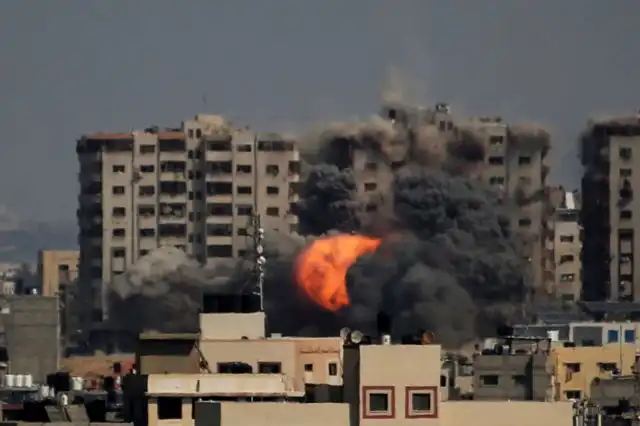
The Israeli war on the Gaza Strip continued on the 74th day with violent raids concentrated in the south and center of the Gaza Strip.


The Ministry of Health announced the death of 151 citizens and 313 wounded during the past hours, especially in Jabalia, and that the death toll from the aggression rose to 19,453 dead and more than 52 thousand injured.


29 citizens were killed in the recent raids that targeted 3 homes in Rafah, south of the Gaza Strip.


The occupation army targeted a house for the Zorob family, west of Rafah, which led to the death of 13 citizens, including journalist Adel Zorob, who mourned 16 members of his family a month ago.


Five dead and a number of injuries arrived at Abu Youssef Al-Najjar Hospital in the targeting of the Abdel-Al family home, east of Rafah.


The occupation aircraft bombed a house for the Attiya family in central Rafah, leading to the death of nine Palestinians.


Khan Yunis Governorate is witnessing concentrated bombing on its various neighborhoods, leaving numbers of martyrs and wounded.


The vicinity of Nasser Hospital was bombed again after occupation aircraft bombed agricultural land adjacent to it.


The occupation artillery targeted Sheikh Jabr School in Khan Yunis camp.


Three citizens were killed and many others were injured when the occupation bombed a house for the Shaheen family in the Bureij camp in the central Gaza Strip.


Nine citizens were also killed in Israeli bombing on the Nuseirat and Deir al-Balah camps in the central Gaza Strip, in addition to two martyrs in the village of Al-Mughraqa, north of Nuseirat.


The occupation artillery fired dozens of shells towards the eastern neighborhoods of Gaza City.


The Jabalia camp and Jabalia Al-Balad witnessed several massacres that left dozens of killed and wounded.


Hospitals in the Gaza Strip are being subjected to concentrated attacks by the occupation army, including Al-Shifa, in which 28 Palestinians were killed, and Al-Awda, whose medical staff were arrested by the occupation army, most of whom were released hours later. Its director, Dr. Ahmed Muhanna, was left with four workers, and the Baptist Hospital in Gaza was besieged, shortly after part of Kamal Hospital was destroyed. aggression.

OPINIONS

Tue 19 Dec 2023 9:44 am - Jerusalem Time

Three widespread Israeli diseases

Translation for "Al-Quds" dot com

Translation for "Al-Quds" dot com

Opinion Writer

By Issa Al-Shuaibi

When David Ben-Gurion announced the establishment of the occupying state on May 15, 1948, and at his side was his chief aide Moshe Dayan, who would later become Minister of War, he asked him a question full of apprehension and anxiety: How long will this state last? The leader of the Zionist Haganah gang and head of the first government responded: When we are defeated in the first battle with the Arabs, as it will be the first defeat and the last battle.

This answer was not improvised; it was a brief diagnosis of the nature of the formative dilemma, or say the house of the disease from which there is no cure, the source of all the contagious epidemics that spread later. Moreover, this early prophecy constitutes the golden key to understanding the essence of the subsequent preemptive wars, and realizing the significance of each. These expansionist policies were deeply rooted in the mentality of an entity that kept its sights set on preventing the first defeat at all costs, and preventing any potential danger that might destroy the life of the just emerging colonial project.

The demonic plant stick intensified with amazing speed, and strengthened due to many factors, and at a later stage it became a fortified fortress, and it continued to accumulate elements of its own capabilities, the basis of which was the advanced air force, until the plant became a poisonous tree, a large regional state, but it remained, despite all that it gained from a borrowed power, fearing for itself from the attack, and anticipating its tomorrow and its possible changes, so it began doing everything in its power to increase, including possessing the nuclear bomb, to secure its day, and to intimidate the rest of its neighbors.

In the midst of all of this, the state of occupation and expansion was afflicted with a long series of chronic diseases, the symptoms of which remained hidden from view by a series of military, scientific and economic successes, which reinforced the impressionistic image formed about it, especially of the invincible army and superior intelligence services, until all its ills were revealed at once. One day, on the glorious 7th of October, all the manifestations of its weakness became evident more clearly than before, especially during the ongoing round-the-clock war in the Gaza Strip.

In this article, the introduction of which is too long, we will focus the light only on three self-generated diseases, which are not among them the disease of extremism and fascism, or the disease of insanity and criminality or anything else. The first of which is the disease of fatal arrogance and excessive self-confidence, not to mention the belief that power alone... and even more brute force, if necessary, is capable of solving problems and imposing abstract facts, according to the law of force and not the force of law, as well as intimidating the entire surrounding environment, and thus dictating humiliating peace treaties, as happened, for example, in the Abrahamic Accords.

This incurable disease has settled in the recesses of the collective mentality of the settler community, generation after generation, and its malicious symptoms have become evident to everyone with insight, as the long occupation diaries continued to tell us, morning and evening, until the Al-Aqsa flood occurred and made the turning point in the course of the long conflict. Then came the epic of steadfastness and valiant resistance, transmitted in audio and video from the Gaza Strip, in a way that exceeded all prior expectations, which will awaken the arrogant from their sluggish belief in power, and confirm to them the fact that Palestinian times have changed irrevocably.

The second disease, derived from the previous one, is underestimating the enemy in front of it, and completely belittling him, if not disdainful of him, as these arrogant people often viewed the Arabs and Palestinians as a people of ignorant shepherds, or terrorists who shoot and run, helpless in the face of an advanced modern state which blinded their eyes and deafened their ears, until the earth was shaken on October 7, and the earth brought forth its burdens in the Gazan battles that established what came after them, and here they are today, drinking the cup of humiliation, dose by dose, and discovering the sin of underestimation.

The scourge of the third disease, chronic in turn, and perhaps historical at its root, remains distrust of everything, and fatal doubt regarding the intentions of everyone around them, and sometimes even of themselves. In order not to spend much time diagnosing the symptoms of this inherited Jewish illness, it is sufficient for us to review what happened recently in Al-Shuja’iya neighborhood, when the occupation army killed three settler prisoners who were in the possession of the resistance, and killed them, even though they were raising the white flag and speaking in Hebrew for help, simply because of suspicion that the matter was an ambush and a plot, or as a result of the disease of suspicion itself, which became more and more severe after two and a half months have passed since the deadly confusion in the Gaza Strip.

Source: Alaraby Aljadeed


ARAB AND WORLD

Tue 19 Dec 2023 9:30 am - Jerusalem Time

Euro-Med: 71% of Gaza’s population suffers from severe levels of hunger

The Euro-Mediterranean Human Rights Monitor revealed today, Tuesday, that 71% of the population of the Gaza Strip suffers from severe levels of hunger.


The Observatory reported in a study that 98% of the population of the Gaza Strip suffer from insufficient food consumption, and 64% eat grass, fruits, immature food and expired materials to satisfy their hunger.


It stated that the average access to water, including drinking water, bathing and cleaning water, is 1.5 liters per person per day in the Gaza Strip.


It called for "an impartial and urgent international investigation into the liquidation of Palestinian civilians by the Israeli army after their arrest from various areas of the Gaza Strip," noting that "the testimonies he collected were consistent with what was revealed by the Haaretz newspaper regarding field execution crimes carried out against detainees, while others died as a result of severe torture." And ill-treatment during their detention in an army camp known as “Sde Teman,” located between the cities of Beersheba and Gaza in the south.


It stated that the aforementioned camp has been transformed into a new Guantánamo prison, where detainees are held in very harsh conditions, inside places resembling chicken cages in the open and without food or drink for a long period of time.

PALESTINE

Tue 19 Dec 2023 9:08 am - Jerusalem Time

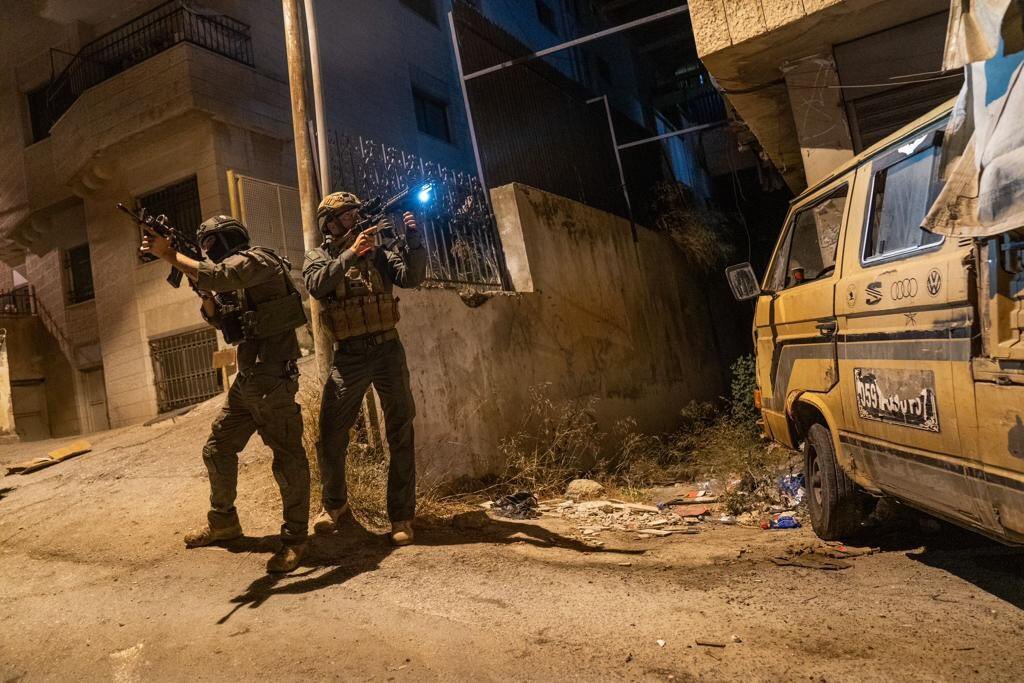
West Bank: Israeli army continues massive arrest campaigns

The Israeli occupation forces launched a massive campaign of raids and arrests - at dawn on Tuesday - in various parts of the West Bank, and besieged a mosque, as part of their continuing crimes against Palestinian people wherever they are.


Since last October 7, the occupation forces have arrested more than 4,400 Palestinians in the West Bank as part of a campaign of retaliation and mass arrests in an attempt to prevent the revolutionary tide.


ARAB AND WORLD

Tue 19 Dec 2023 9:07 am - Jerusalem Time

American writer: Peace requires confrontation with Israel

American journalist David Ignatius wrote an article in the Washington Post newspaper in which he tells what he saw during his visit to the West Bank last week, during which he witnessed the suffering of Palestinians from the harassment they are exposed to, whether from the government or Israeli citizens.


He said that he traveled throughout the West Bank - its cities and villages - for three days, from the barren hills below Hebron in the south, to the chalk highlands of Nablus in the north.


He added that what he saw was a pattern of Israeli domination and routine abuse that makes daily life a humiliation for many Palestinians, and could hinder the peaceful future that Israelis and Palestinians say they want.


Blatant racial discrimination

Ignatius spoke sarcastically about driving cars on the roads of the West Bank, saying that it is a “two-class” situation, as Israelis drive in their cars with yellow plates on a heavily guarded highway, while Palestinians move in cars with white plates on rugged roads.


He added that he saw the accumulation of cars at the Israeli checkpoints near Bethlehem and Nablus, which were lined up for more than half a mile, and the wait to cross to the other side could last for more than two hours.


Ignatius describes the delays, insults, and outright attacks on the Palestinians as having become a “gloomy routine,” and adds that his tour of the West Bank was a “reality test” indicating what might happen the day after the end of the war in Gaza.


He said that US President Joe Biden and other world leaders express their hope for the establishment of a Palestinian state once the Islamic Resistance Movement (Hamas) is defeated, commenting that he hopes to see that come true, adding, “But people must be realistic about what (this hope) hinders.” Obstacles appear before our eyes.


Fairy tale

Ignatius does not hide his pessimism about this, as he points out that the common hope for establishing a Palestinian state is like a “fictional” story in the midst of the crushing daily pressures imposed by the Israeli occupation.


He explained that the obstacles standing in the way of a Palestinian state lie in the Israeli settlements and settlement outposts scattered on the hilltops in the West Bank, whose high walls and concrete walls symbolize their stability and the inability to move them from their place.


He said that Daniel Seidman, an Israeli lawyer - perhaps the main critic of the settlement movement in Israel - told him that the settlements were established to prevent the establishment of a Palestinian state.


According to Seidman himself, ending the occupation will be necessary for the establishment of a viable Palestinian state, adding that approximately more than 700,000 Israelis live in West Bank settlements, and that at least 200,000 will be forced to leave, according to his estimates.


Civil war

But he believes that some settlers will resist, warning at the same time that “there is a high possibility of a civil war erupting between the State of Israel and the ‘settler state of Judea and Samaria,’” using the settlers’ biblical terminology for areas of the West Bank.


For the settlers, obstructing the establishment of a Palestinian state is part of the task on their shoulders, says Yehuda Shaul, a leading Israeli expert on settlement affairs.


Shaul pointed out that in 1980, Matityahu Drobles, who was then head of the Settlements Department of the World Zionist Organization, explicitly stated his goal in a comprehensive plan. He wrote at the time that “the Arab minority, isolated by Jewish settlements, will find difficulty in its territorial integrity and political communication.”


Drobles added, "The best and most effective way to remove any ambiguity about our intention to cling to the "Judea and Samaria region" West Bank forever is to accelerate the settlement momentum in these lands."


According to Ignatius, Biden is the latest president to confront the reality that addressing the Palestinian issue means confronting Israel, especially regarding settlements.


The largest increase in settlements

The number of official settlements and "unrecognized" outposts is increasing, with the Israeli "Peace Now Movement" confirming that this year witnessed the largest increase since it began tracking settlement growth in 2012.


The acts of violence committed by settlers against Palestinians have also worsened in recent years in a “frightening” manner, at a time when human rights defenders say that they are deliberate efforts “to intimidate them in order to keep them away from the lands that the settlers believe that God gave to Israel.”


Since the Hamas attack on Israel on October 7, settlers have launched 343 attacks against Palestinians, according to the United Nations Office for the Coordination of Humanitarian Affairs. At least 143 Palestinian families, including 1,026 individuals - including 396 children - were displaced due to the violence. The settlers killed 8 Palestinians and wounded 85 others, according to the same UN office.


Violent settlers always go unpunished, as Ignatius pointed out that 93% of the 1,597 investigations opened by the Israeli police between 2005 and 2022, in cases in which Israelis were said to have harmed Palestinians, were closed without an indictment being brought, according to the Israeli Human Rights Organization. Yes religion"; She said that only about 3% of them resulted in convictions.


Ignatius goes on to narrate his observations, saying that the threat to the Palestinians is becoming more severe in Area C, where the number of Israelis outnumbers the Palestinians by more than 400,000 to 300,000.


The Israeli army imposes severe restrictions on Palestinian travel there, and settlers regularly attack villages and Bedouin camps.


One of the indicators

One of the indicators that the Biden administration may be taking the settlement issue seriously - in the opinion of the American writer - was the announcement this December that settlers who are believed to have participated in violent attacks against Palestinians may be denied entry visas to the United States. With their family members. However, Ignatius does not consider this a solution to this great problem, but rather “the beginning.”


He describes the city of Jerusalem as a jewel in the middle of this land, and it is also the “most turbulent” battleground between Israeli settlers, and the place where the United States will face the greatest challenge in formulating a settlement.


One of the big goals of ultra-Orthodox Israelis is to increase their presence throughout the Jerusalem area. To the south - according to Seidman - the settlers plan to install a cable car over the Silwan neighborhood, which has a Palestinian majority. To the north - where the Christian sites are - there is talk of establishing a biblical amusement park supervised by the Israeli Parks Authority.


Ignatius says that Seidman told him that the political conflict over Jerusalem "continued to be driven by the madness of religious people obsessed with arson."


Source: Washington Post +Aljazeera

ARAB AND WORLD

Tue 19 Dec 2023 9:06 am - Jerusalem Time

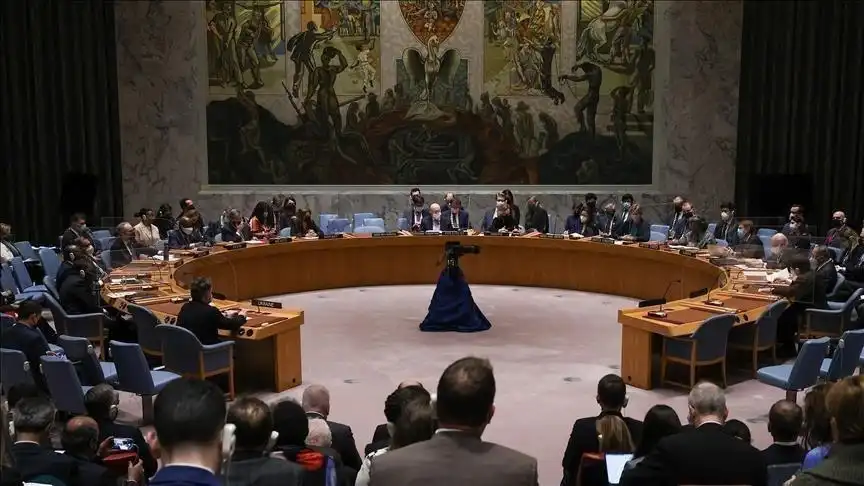
Postponing the Security Council vote on a draft resolution on Gaza

It was decided on Monday to postpone the UN Security Council session dedicated to voting on a draft resolution to end the conflict in the Gaza Strip and increase humanitarian aid, due to the failure of member states to reach an agreement on it.


UN sources reported to Anadolu that member states did not reach an agreement on the draft resolution on Gaza proposed by the UAE, as it is scheduled to be voted on tomorrow, Tuesday.


The draft resolution calls on all parties to fulfill their obligations to protect civilians in accordance with international law and international humanitarian law, and requests the United Nations Secretariat to establish a mechanism to monitor aid.


The draft resolution also calls on the United Nations to confirm that the aid is “humanitarian” and to provide information to “the Palestinian Authority and Israel” about its types, and calls for providing the necessary fuel to distribute the aid.


The draft resolution also demands the release of all hostages, and condemns any violation of international humanitarian law.


The sources stated that the United States of America is calling for an amendment to the phrase “ending the clashes” contained in the text of the draft resolution.

ARAB AND WORLD

Tue 19 Dec 2023 9:01 am - Jerusalem Time

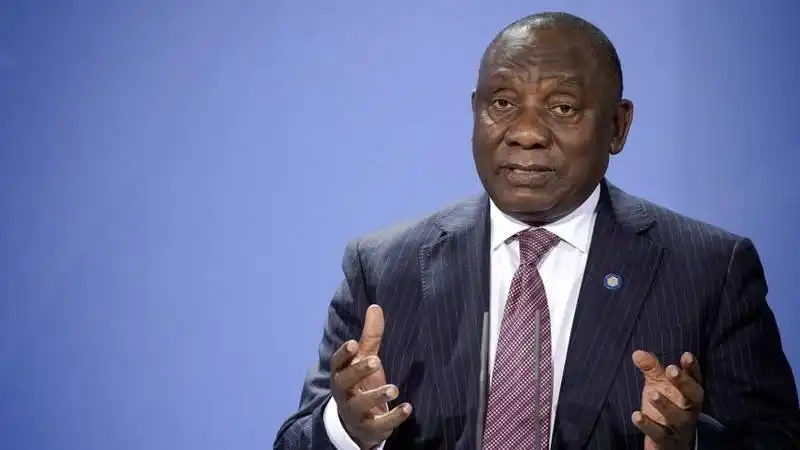
South Africa calls on the International Criminal Court to investigate Israeli “war crimes.”

South African President Cyril Ramaphosa called on the International Criminal Court to "conduct an immediate investigation into war crimes" committed by Israel in the Gaza Strip.


Ramaphosa explained in a statement to reporters, on Monday, that they had submitted the necessary documents to the International Criminal Court regarding Israeli “war crimes,” and that they were waiting for the court to take action regarding the investigation.


He pointed out that the International Criminal Court has the authority to indict those responsible for “war crimes” committed in Palestine.


He added, "We want the International Criminal Court to act in accordance with its laws, rules and regulations."


He described Israeli attacks against civilians in the Gaza Strip as a "violation of international humanitarian law."


It is noteworthy that South Africa submitted a request to the International Criminal Court last month to investigate “war crimes” committed by Israel.


Since last October 7, the Israeli army has been waging a devastating war on Gaza that, as of Monday, has left 19,453 Palestinians dead, in addition to 52,286 wounded, most of them children and women, massive destruction of infrastructure and an “unprecedented humanitarian catastrophe,” according to sources. Palestinian and international.

OPINIONS

Tue 19 Dec 2023 8:51 am - Jerusalem Time

PEACEMAKING 2.0

Gershon Baskin

Gershon Baskin

Opinion Writer

Even before the final death blow to the Oslo peace process with the outbreak of the second intifada in September 2000, most Israelis and most Palestinians believed that while they genuinely wanted peace, the majority of people on the other side did not want peace. The Government of Israel and the Palestine Liberation Organization representing the Palestinian people signed six agreements within the Oslo peace process and both sides substantively breached all six of those agreements. Both sides were responsible for failing to implement the obligations that they took upon themselves. Oslo was essentially a naïve process which embodied the belief and hope that cooperation between the former enemies across a broad range of issues would lead to an upward spiraling development of trust between them which would enable them at a later stage to negotiate the sensitive key issues in conflict, mainly: Palestinian statehood, borders, settlements, refugees and Jerusalem. But the reverse happened, early on in the process, rather than trust and confidence spiraling upwards, trust and confidence rapidly sped downwards, almost out of control. It reached the point whereby Israeli and Palestinian negotiators entered the room with each side assuming that the other side had no real intention of implementing whatever they would agree to. 


Every good contract or agreement ends with a breach clause – what do you do if one or both sides fail to implement the agreement? The six failed agreements signed all lacked implementable breach clauses to determine what to do when one side or the other claimed breaches by the other side. There were no real-time on-the-ground means to address conflicts when they arose so that many minor issues which should have been solved on the ground ended up reaching the desk of the President of the United States. There was no mechanism devised to have responsible and trusted third-party monitoring, verification and compliance ofthe implementation of obligations of the parties to the agreements. They did not address in a satisfactory way the necessary fundamental means to build peace between the two peoples, to address incitement against peace, or to deal with educating for peace. That is why over the past decades it has been so dismaying to hear so many Israelis and so many Palestinians say “We want peace, but they do not!”. Both sides have had ample evidence to point to the lack of desire of genuine peace by the other side. 


After this horrible war, we will all be confronted once again with the prospect of the two states solution. As a proponent of that solution for most of my life, I was having to deal with its seemingly lack of viability over the past years. Netanyahu’s strategy of removing the Palestinian issue and with it the two-states solution from the regional, global and even local agenda had succeeded until it blew up in our faces on October 7. It should now be quite apparent to all that the most fundamental issue of consequence, the primary existential issue facing Israelis and Palestinians, is the conflict between them. This conflict cannot be managed. It also cannot be strategized away unilaterally by the stronger side of the conflict. 


Both peoples have to understand that empowering political parties that are devoted to destruction of the other side must be removed from their ability to destroy us all. Hamas cannot be a partner for peace with Israel, that is their clear choice and Israel and the Palestinian people must do everything in its power to remove Hamas’ ability to ever rule the territory next to Israel. Israeli political parties like OtzmaYehudit and the Religious Zionist Party which are both dedicated to the ethnic cleansing of Palestinians from the land and the settlement of Jews in their place, should not be allowed to be in positions whereby they will continue to bring death and destruction to this land and the peoples on it. 


When we return to the efforts of trying to make peace again, it is essential that we learn the lessons of the failed peace process and that we not make the same mistakes over again.  I will attempt to describe some of the failures and the prescriptions which can assist in avoiding those mistakes. This is not a comprehensive list.   I have written many articles over the years on what went wrong in the peace process as well as many articles about “lessons learned”.  They can all be found easily with a search on the internet. Each one of the issues presented here is worthy of a full article and perhaps I will go into more depth in the future.  


Negotiations and Agreements based on no trust or negative trust – let’s not be naïve!

New agreements between the parties must be based on a complete lack of trust between them. The agreements can contain no naiveté whatsoever. We must base what we agree to on the assumption that the other side will not fulfill the obligations it takes upon itself in good faith. The other side will be carefully watching how the opposing side relates to its own obligations and will move ahead slowly and with caution, step-by-step based on the progress of the other side. These kinds of agreements in conflict situations enable the parties to take minimal risks and concessions while enabling the end game to remain in focus, but in the distance. This is an intelligent agreement and while negotiating in this way is cumbersome and difficult, it will lead to having better agreements. 


End-Game Up Front

The Palestinians believed that the end-game of the Oslo peace process would be the establishment of an independent Palestinian state next to Israel on the basis of the June 4, 1967 borders. From the Palestinian point of view, their leader, Yasser Arafat made the ultimate concession by recognizing Israel on 78% of the land of historic Palestine. They expected and agreed to establish their state on only 22% of historic Palestine. The Palestinians could have demanded that new borders be based on the map of the Partition plan of 1947, but they came to recognize that their failure to accept the 1947 UN Resolution on partition costs them valuable parts of the homeland. In November 1988 when Arafat declared the State of Palestine it was understood that he accepted Israel on the June 4, 1967 and expected to establish the State of Palestine in the territories conquered by Israel after June 4, 1967 – the West Bank, Gaza, and East Jerusalem. The Oslo agreements never spelled out the end-game and Israel never explicitly agreed to the two states solution. No government of Israel, nor any Knesset ever voted to support the two-states solution. The Oslo process continued for 30 years without any and game specificized even though it was intended to be a five-year interim agreement. This is just another of many reasons why most people lost faith in the Oslo peace process. In any new peace process that will no longer be possible. If there is going to be a genuine peace process, one that has the power to challenge and confront the idea of Hamas, it must include explicitly and from the outset that the process will lead to the formal establishment and recognition of the State of Palestine by Israel within a period of time specified in the agreement. The time frame should be around five years but it should also be specified that the time line is based on the complete fulfilling of the obligations taken by the two sides on themselves. There can never again be an opened ended peace process that allows for negotiations to continue indefinitely without a known and accepted end-game from the outset. The OECD states, led by the United States should recognize the State of Palestine as soon as possible and enable the State of Palestine to become a full member state of the United Nations.  We have had 30 years of talk about a two state solution while almost all of the OECD countries have only recognized one of the states – that needs to change. 


Measurable Benchmarks and Third-Party Monitoring and Verification

Because we have experience with both sides failing to implement their obligations that they took upon themselves and because we have no confidence in new agreements being more adhered to than in the past, we need to have in place a robust mechanism that will monitor implementation and verify the completion of measurable benchmarks that must be completed before taking on additional risks. The benchmarks need to be identifiable and agreed on as part of the negotiated agreements. Effective and efficient monitoring, verification and compliance arrangements are increasingly seen as indispensable to the proper functioning of international agreements in a wide variety of fields. This includes traditional arms control and disarmament agreements, but also peace accords, or aspects of them, such as ceasefire, demilitarisation or decommissioning arrangements. Monitoring and verification are also increasingly spreading beyond military-related agreements to environmental, human rights and electoral issues. Indeed, monitoring and verification can be applied to virtually any agreement between two parties. Monitoring and verification may be done unilaterally by the parties, cooperatively between them or by a neutral third party, or by a combination of all three methods. In the Israeli-Palestinian case, I believe that the monitoring and verification mechanism must be done a third-party group of countries led by the United States. Learning from the failed “Road Map Process” which included a “Road Map Monitor” who did his job but his reports were not public, it is essential that the reports of the Monitoring and Verification mechanism be public so that the parties are accountable to their own public for their successes and failures at implementing the obligations they took upon themselves. Monitoring and verification is particularly useful in cases where, despite agreements being reached, deep distrust and suspicion remain between the parties, as in the Israeli-Palestinian case.


Public Support of Peace - Starting with Education and Incitement

What we teach our children is the best reflection on our values and on what we believe in. If the next peace process will be genuine, it will have to begin with the understanding that we must make educational reform from day one. This will be the very barometer on the seriousness of our intentions regarding our willingness to live in peace with our neighbors. No one agrees to be told what they should teach their own society. Both sides of the conflict have their own narrative of their own history and their own need to build their national identity. It is more than legitimate for Israelis and Palestinians to teach their own narrative of the conflict in which the other side is responsible for horrific acts of violence against the other side. Each side can legitimately describe itself as a victim in this conflict. The key issue is what is going to be taught regarding the future and the basic right of the other side to exist and to achieve self-determination. Because both sides reject the criticism of their curricula and text books done by the other side, the best workable solution is for the parties to agree on criteria of the evaluation and assessment of educational curricula and text books. Such work of developing internationally acceptable criteria has been done extensively by UNESCO and other organizations. The parties need to agree on criteria and then each side should undergo a process of conducting an assessment and evaluation of its own educational curricula and text books based on those criteria.  A time line should be set for the work including the issuing of an interim report and a final report. Following the issuing of the final report a time line for educational reform should also be established. This work should be monitored and verified by the International Monitoring and Verification Mechanism. The reform of curricula and text books by both sides will be a true measure of the extent to which both sides are entering and progressing in a peace process which will be genuine and perceived across the conflict line as a determined decision to actualize peace between them. 


No Constructive Ambiguity

The Oslo agreements were packed with Constructive Ambiguity (a termed coined by Henry Kissinger to enable both sides to an agreement to understand what they want from it). The best example is that nowhere in the six agreements signed is there an explicit statement that Israel would not build new settlements in the occupied territories. The Palestinians implicitly understood that if Israel is going to withdraw from territories to transfer them to the Palestinian Authority, then they would not be building more settlements. Israel claimed that building settlements was not in violation of the agreements and that settlements could also be removed. Both sides were able to interpret the agreements as they wished.    Another case in point is that the agreements did not specify from what territories Israel would withdraw. The agreements led the Palestinians to believe that they would be in control of more than 90% of the West Bank even before they began negotiations on permanent status. The Israelis interpreted concepts like “specified military locations” into security zones so that the entire Jordan Valley was a security zone from which Israel did not withdraw. The Palestinians interpreted specific military locations as army bases. In any new agreements, there is no room for constructive ambiguity.  Everything must be explicit and interpreted by both sides in the same way and if differences arrive, they should be brought to the third-party monitoring and verification mechanism. 


There are many other lessons learned and insights on how to negotiate better agreements and raise the chances that genuine peace could be attainable.  I will continue to write on this subject as we move forward towards the end of the war and beyond.


PALESTINE

Tue 19 Dec 2023 8:20 am - Jerusalem Time

Der Spiegel: Al-Sinwar is charismatic, full of intelligence, and the Hamas attack brought Palestine back to the forefront

The German magazine "Der Spiegel" published a lengthy report prepared by 7 writers in which they talked about the possible consequences of the raging war between Israel and the Islamic Resistance Movement (Hamas) in the Gaza Strip.


The magazine devoted a large portion of the report to the biography of the head of the Hamas movement in Gaza, Yahya Sinwar, whom it considers the mastermind of the October 7 attacks on Israel.


However, the report's authors concluded that the attack and subsequent developments brought the Palestinian issue back to the center of world attention, and was a "turning point" in the Israeli-Palestinian conflict, as "the situation is no longer what it was before," and Israel was forced to abandon the illusion With its ability to "manage" the conflict with the Palestinians.


From the results of the attack

As a result of the Hamas attack and Israel’s subsequent war on Gaza, the normalization talks between Israel and Saudi Arabia were “suspend,” and both Russia and China now see the current situation as an “opportunity” to impose their influence in the region, while the European Union struggles to determine its future role in this conflict. The US government faces challenges because of its pro-Israel stance and feels isolated, according to a Der Spiegel report.


The German magazine quoted the Israeli expert in the field of opinion polls, Dalia Scheindlin, as saying that the Hamas movement has now become, for many Palestinians, “number one” in the fight against Israel, at a time when the “secular” Fatah movement - which controls the Palestinian Authority in the West Bank - has become No importance.


The report says that this was one of Hamas' goals, in addition to another goal, which was to detain the largest number of prisoners to pressure the release of Palestinians detained in Israeli prisons.


Undermining Israelis' sense of security

There is a third goal that may have been on Sinwar's imagination - according to the magazine - which is to undermine the Israelis' sense of security, their confidence in the state and the army, and to hit them at their weak point: the deep fear of annihilating their people, who have been oppressed for thousands of years.


The report's authors wondered: How did matters reach the point where Hamas became able to launch this violent attack? Why would Hamas risk its rule over the Gaza Strip, or rather its very existence? Can Israel destroy it with this war? Or might Hamas eventually emerge stronger in the long run?


Questions that Der Spiegel advises anyone looking for answers not to ignore Yahya Sinwar.


Who is Hamas and who is Yahya Sinwar?

The report says that the story of Hamas began in December 1987 as a branch of the Muslim Brotherhood in Egypt, and was founded by Sheikh Ahmed Yassin, and Yahya Al-Sinwar was in his mid-twenties, and he was his most “diligent” student.


Before that, Yassin and his companions did not participate in the armed resistance, which was dominated by “secular nationalists.” Rather, their goal was to “Islamize” society.


In the 1970s, Yassin obtained a license from the Israeli military administration to establish an Islamic association, and his followers ran schools, clinics, and religious centers. At that time, Israel feared armed nationalists, saw religious Muslims as a “counterweight” to them, and supported them.


When Yasser Arafat, head of the Palestine Liberation Organization at the time, while he was in exile in Tunisia, was thinking about negotiating with Israel and a two-state solution, Hamas took a different path - according to the report’s authors - as it saw the moment as appropriate for armed struggle.


Establishment of a Palestinian state

Unlike the Islamic State and Al-Qaeda, Hamas has been seeking the establishment of a Palestinian state, not “global jihad” or the establishment of a caliphate.


After Hamas began attacking Israelis in 1989, Michael Kobe - who was leading investigations for the Israeli internal security service "Shin Bet" in the Gaza Strip in the late 1980s - decided to take a radical step on May 9 of that year. He ordered the arrest of all Hamas members including Yassin and Yahya Al-Sanwar.


The report stated that Kobe met Sinwar personally when the latter was 27 years old. Kobe says that Sinwar “did not say a word at first,” explaining that he was Yassin’s most important aide, and the founder and leader of “Majd,” the internal intelligence service of Hamas, and only under pressure from Yassin did Sinwar speak to him.


“It has been clear to me since then that Hamas is our greatest enemy,” Kobe added, adding, “What we are doing now in Gaza came too late.”


Hamas is everything to him

When Kobe asked him why he did not start a family when he was in his late twenties, Sinwar replied, "Hamas is my wife, my son, my daughter, and my father. Hamas is everything to me," and stressed that the day will come when Hamas men will come out of prison to destroy Israel.


In 1989, an Israeli court sentenced Sinwar to life imprisonment 4 times, and he went on hunger strike 3 times, and fought for better treatment for his fellow prisoners, before he was released in 2011 as part of a deal under which Israel released 1,027 Palestinian detainees in exchange for soldier Gilad Shalit. .


This deal may have been the model for the attack of last October 7. The report's authors ask, "If Israel released 1,027 prisoners in exchange for one soldier, what if Hamas kidnapped dozens of Israelis?"


Charisma full of intelligence

Kobe describes the Hamas leader in Gaza as “full of charisma and intelligence.” He learned Hebrew within a few months, showed interest in Israeli history and politics, and learned a little about the Jewish holy book, the Torah.


While Yahya Al-Sanwar was in prison, the world around him was changing. In the Rose Garden of the White House in Washington in 1993, Arafat and Israeli Prime Minister Yitzhak Rabin signed an agreement stipulating the exchange of “land for peace.”


The "Der Spiegel" report touched on the killing of Rabin in 1995 at the hands of an extremist Jew, as "current Prime Minister Benjamin Netanyahu and his Minister for Security Affairs Itamar Ben Gvir were among the main figures who incited the assassination."


The report indicated that Muhammad Dhia Ibrahim Al-Masry - nicknamed Muhammad Al-Deif - assumed leadership of the Al-Qassam Brigades, the military wing of the Hamas movement, succeeding engineer Yahya Ayyash, who was assassinated by Israel.


The report's authors claimed that Al-Deif and Al-Sanwar were the ones who planned the attack on October 7th.


The Palestinian Authority rejected

According to the German magazine, Hamas' victory in the 2006 legislative elections represented a rejection of the Palestinian Authority due to "incompetence and corruption" and an expression of "frustration" with the faltering peace process. Some Christians even voted for the Islamists.


The magazine claims that weakening the Palestinian Authority is the common goal that unites the right in Israel with Hamas in Gaza, and both sides initially benefit from this; As Hamas continues to build its small state, Netanyahu buys calm, continues to expand settlements in the West Bank, and makes the two-state solution seem even more unrealistic.


It is said that Sinwar proposed from inside the prison the idea of digging tunnels to kidnap Israeli soldiers in order to exchange them for Palestinian detainees.


After Sinwar was elected - a few months later - as head of Hamas in the Gaza Strip in February 2017, the former leader of Hamas, Khaled Meshaal, presented a new program that included an amendment to the 1988 Hamas Charter in some of its provisions.


Although the new document does not recognize Israel's right to exist, it is the first time that Hamas has spoken about a Palestinian state within the 1967 borders.


Gaza is a hungry tiger trapped in a cage

“In a surprise to many,” the report adds, Al-Sinwar spoke with foreign journalists, saying, “If we have the opportunity to resolve the conflict without destruction, we agree to that. We want to invest in peace and love.”


But Der Spiegel's report believes that Sinwar's speech was only one part of his message to journalists. As for the other part, it was “gloomy and foreboding,” as it says that Gaza resembles “a very hungry tiger trapped in a cage,” and that the animal that “the Israelis tried to humiliate has been freed, and no one knows where it will move and what it will do,” adding that Hamas cannot continue as before: “The conditions here are unbearable and the explosion is inevitable.”


According to the report, it is not easy to weaken Hamas economically, because its main sources of income are abroad. The magazine estimates Hamas's annual income at about $500 million.


The German magazine confirms - quoting analyst Michael Milstein from Tel Aviv University - that even if Israel succeeds in defeating Hamas militarily, it will continue to exist underground and abroad, "and it cannot be destroyed."


Source: Der Spiegel + Aljazeera

OPINIONS

Tue 19 Dec 2023 7:57 am - Jerusalem Time

Hamas and "putting the house in order": Joining the "Organization"?

Translation for "Al-Quds" dot com

Translation for "Al-Quds" dot com

Opinion Writer

By Muhammad Qawwas

While there is widespread talk about the “day after” the war in Gaza in Washington and European capitals, the Palestinian side seems absent from this discussion, unable to come up with creative ideas that match the dramatic historical event that has occurred since last October 7. If political leaders in the Hamas movement were surprised by the “Al-Qassam Brigades” launching the “Al-Aqsa Flood” operation, the leadership of the Palestinian Authority and the rest of the factions seemed confused and improvising to deal with an imminent historical juncture that was difficult to anticipate.


Whoever observed the performance of the Authority in Ramallah, especially in the first days of the event and the subsequent Israeli launch of its devastating attack against the Gaza Strip, noticed that the “Almuqataa,” meaning the headquarters of the Palestinian president and leadership, is dealing with a matter that it has no compunction about, and is issuing principled positions regarding a situation far removed from the context of its usual daily life. On the other hand, the spokesmen for the Fatah movement (or some of them, so as not to generalize) addressed the event as political analysts or as defenders of the “faction” to which they belong without any consideration of the Fatah movement’s history of charting the course of the entire Palestinian national movement and taking the lead in defending any Palestinian “situation” whatever the Palestinian political and factional movement causing it.

Times changed, and it seemed that the dispute between Hamas and Fatah, which exploded bloodily in 2007 and expelled Fatah and the Authority from the Gaza Strip, had accumulated a reality that could not be overcome by feelings and emotions.


Despite the distance and disagreement between the Hamas movement and the Palestinian leadership during the era of President Yasser Arafat, the late man continued to act as a leader of all the Palestinian people, and Israel has always accused him of being behind the support that reached the movement led by Sheikh Ahmed Yassin at the time. When Israel deported more than 400 leaders of the Hamas and Jihad movements towards the Marj al-Zuhur area in southern Lebanon in December 1992, “Abu Ammar” denounced the Israeli behavior, defending the cause of the deportees and he was keen, through the influence he had in Lebanon, to communicate with the deportees and convey aid for them.


The time of Abu Ammar... and the time of Kouchner

Times changed, and it seemed that the dispute between Hamas and Fatah, which exploded bloodily in 2007 and expelled Fatah and the Authority from the Gaza Strip, had accumulated a reality that could not be overcome by feelings and emotions. The accumulated and repeated failure to reconcile the relationship between the two parties and the failure of all regional mediations in this regard made the division an almost final state, or it was intended to be so, so that the world began to deal with the West Bank and the Gaza Strip as two separate, independent cases.


It is not a coincidence, in this context, that Palestinian President Mahmoud Abbas’s speech, every time he receives a Western official these days, focuses on the fact that “Gaza is an indivisible part of the Palestinian state” and on the refusal to deal internationally with a Gazan situation that differs from the rest of the Palestinian situation. This speech is based on real data that Abu Mazen possesses regarding what was being simulated by Israel, America, and internationally in this regard. Even Jared Kushner, advisor and son-in-law to former US President Donald Trump, chaired a conference for the Gaza Strip in March 2018 and promoted a project in June 2019 to transform Gaza into a “city of dreams,” hinting at including Sinai in the “Deal of the Century.”


According to this reality and this division, it seemed that the Hamas movement was positioned based on the “finality” of this situation. It was clear that the movement was not ready to abandon its Gaza “achievement” by ruling the Gaza Strip in the interest of “national reconciliation” that would restore the partnership within its sphere of influence. It was also clear that the regional extensions of the movement were reconciled with the status quo and perhaps encouraged it, without being interested in making any efforts to restore cohesion to the fractured Palestinian body.


The situation changed after the "Flood". The nihilistic war against Gaza tempted the Israelis to float dreams of “transfer” towards Sinai and Jordan. It seemed that the position of Egypt and Jordan was firm and decisive in rejecting this possibility, which called for a deterrent American position in this regard without the positions dispelling this possibility. It also seemed that the Palestinian "house in order" had become an urgent Palestinian demand, but it had also become an urgent regional and international demand, especially since the United States, with its president and its delegates to the region, had rediscovered the "two-state solution."


There is no new and serious Palestinian workshop to put the Palestinian house in order. If Ismail Haniyeh, head of the Hamas political bureau, said that his movement is open “to discussing any ideas or initiatives that lead to stopping the aggression and open the door to putting the Palestinian house in order at the level of the West Bank and Gaza Strip,” then he neglected Hamas’ responsibility for tampering with this house. Turning away from its arrangement is met by the authorities with a ready-made prescription that has its own authority and is based on the fact that the PLO is the political umbrella representing Palestine and that the house is arranged within its framework and according to its program that is recognized by the world.


While there is widespread talk about the “day after” the war in Gaza in Washington and European capitals, the Palestinian side seems absent from this discussion, unable to come up with creative ideas that match the dramatic historical event that has occurred since last October 7.


Starting the path of “reconciliation”?


The rounds of dialogue between Fatah and Hamas since 2008 have not been able to convince the latter to join the ranks of the organization. The Hamas documents accepted a long-term truce with Israel without going as far as the PLO documents did, regarding recognition of the State of Israel and the establishment of a state on part of Palestine. Since 2017, Haniyeh had announced that his movement does not oppose “interim” the establishment of a state on the 1967 borders, but is committed to not recognizing the Israeli occupation of Palestinian lands. A few days ago, in an interview with the American Al-Monitor website, Hamas leader Musa Abu Marzouk expressed the movement’s readiness to become part of the Palestine Liberation Organization, as a step towards ending the divisions between the Palestinian factions, adding that “we will respect the organization’s commitments.”

The man later retracted his statement, saying it had been "misunderstood." In other words, Hamas has retreated from abandoning a taboo that is still firmly established in its texts. Commitment to the organization’s obligations, according to Abu Marzouk’s position, includes the Palestine Liberation Organization’s recognition of Israel since 1993. If the man, Haniyeh, and others express and will express the transformations of necessity, the movement whose military wing is fighting the Gaza battle does not want to throw away its cards at a time when the major capitals are hesitating. There is no place for Hamas in any future political settlements.


It may be true that "no voice is louder than the sound of battle." It may be understood that Hamas will not fall in politics unless Israel has so far been able to resolve it militarily. It may be logical for the movement not to open a political bazaar in the absence of any major credible international regional Palestinian workshop, but courage requires that the movement draw on the examples of war that Fatah and other Palestinian factions have previously drawn, and that it invests in the possible, abandons the impossible, and does not go outside the two squads. Palestinian and Arab, and to be part of the post-war dynamic.


If Hamas launches “experimental” positions, Fatah and the Palestinian Authority must seize the historical moment to encourage Hamas and all Palestinian factions to join in entitlements that require unity to confront an international scene that appears to be looking at the “Palestinian solution” with a more serious eye. If previous experiences do not encourage trust and faith in the international community, then it is worth crossing over to Palestinian unity as an inevitable option, even if it involves coercion, not heroism.


The Palestinian Authority is enjoying a rare historical moment in which the international community returns to recognizing it as a solution to governing Gaza and unifying it with the West Bank. Washington therefore requires “reform and revitalization” of power. Although the two expressions are new in the texts of American diplomacy, they are a necessity that the Palestinians have been demanding for years through elections.


Does the world allow these elections? Does Israel and this world accept the results of these elections? If voting is impossible, how can this reform and revitalization be achieved?


That's another question.

Source: Assas Media


ARAB AND WORLD

Tue 19 Dec 2023 7:46 am - Jerusalem Time

French Magazine reveals a plan for a huge settlement...on the “ruins of Gaza”

It seems that there is an Israeli plan to build a huge settlement after leveling the Gaza Strip to the ground, with daily bombing and the systematic and barbaric destruction of all aspects of life, from vital institutions to the joints of identity, history and civilization.


A private Instagram account titled “Harey Zahav” (Golden Mountains), an Israeli real estate company that until now specializes in constructing homes in settlements built in the West Bank, published pictures of construction projects in the devastated Gaza Strip, according to Liberation magazine. ".


The French magazine published a drawing showing the names of the future colonies: “Ma’ale Atzmona”, “Oren”, “Neve Katif”... in addition to other names mentioned in a second post on Instagram dating back to December 11, showing a map in Hebrew of these settlements in Gaza strip. Their names are similar to the names of settlements located on the perimeter of the Strip. In an in-depth look at the drawing of the Neve Qatif area, we find drawings of new buildings, warehouses, and a hospital.


It seems that there is an Israeli plan to build a huge settlement after leveling the Gaza Strip to the ground, with daily bombing and the systematic and barbaric destruction of all aspects of life, from vital institutions to the joints of identity, history and civilization.


“Liberation” quoted the Israeli news site “Davar Hayom” as news about a conference held on “practical preparation for installation in Gaza” on December 11 in “Givat Washington,” a religious youth village in central Israel.


The conference was organized by 15 organizations, with the participation of 150 interested parties who consider the ongoing war “a historic opportunity for the Israelis to return to stability in the Gaza Strip.” According to journalist David Tversky, who attended the meeting, “many of the participants are evacuees from Gush Katif and their families,” and they “hope to garner broad support among Israeli public opinion and put pressure on political leaders, but Benjamin Netanyahu’s government and international public opinion are officially opposed resettlement in Gaza territory".


The French magazine described the projects as “provocative” and reflect the aspirations of some Israelis to occupy Gaza. It quoted a tweet from “X” written by Israeli lawyer Itay Epstein, former director of the Israeli branch of “Amnesty International,” and former co-director of the “Israeli Committee Against House Demolitions - ICAD,” a humanitarian organization that criticizes the development of Israeli settlements, in which he said that these photos is a "media trick," and this provocation "reflects a deep feeling that wants to seize lands and colonize at the expense of the Palestinians."


Half of Israelis support the project

Since the October 7 attack and the barbaric Israeli military response to the Gaza Strip, several Israeli newspapers have echoed activists' demands for the return of Israelis to Gaza. According to the “Liberation” report, several English-language Israeli media outlets, such as “Time of Israel” and others, published an opinion poll conducted by Channel 12 stating that 44% of Israelis support Jewish settlement in Gaza and 39% oppose it.


In addition to this poll, the Time of Israel newspaper noted in an article published in early December that there is “other evidence indicating that the idea of re-establishing Jewish communities in Gaza enjoys widespread support, especially among Israeli youth.” 


As examples of this evidence, it cited several social media posts by young Israeli soldiers in Gaza carrying posters demanding the return of Israelis, or a video clip of an Israeli singer motivating the troops by singing: “We will return to Gush Katif, we will establish Nova Beach on the Bay of Gaza,” referring to the Nova Festival, During which hundreds of Israeli youth were killed at the beginning of the Hamas attack. On the other hand, a new poll conducted by the Hebrew University among 1,800 people, the results of which were presented at the end of last week, confirms the opposite, as it indicates that 56% of Israelis oppose the Jewish settlement policy in Gaza, only 33% support, and 11% are not sure.


"Gush Katif" is a group of Israeli settlements established in the Gaza Strip in the early 1970s, from which Israel withdrew in 2005, during the era of former Prime Minister Ariel Sharon, as part of a unilateral plan known as "disengagement" from the Gaza Strip.


What is this company?


This real estate company (Harey Zahav - Golden Mountains), which was established in 2007, claims on its website that it is “one of the main companies in the real estate market” in these areas, and that it is involved in about 25 residential projects, and has delivered more than 1,000 housing units to customers, while there are about 1,000 under construction. Since October 7, she has been posting photos and videos on her Instagram account highlighting the military commitment of her reserve employees.


Among these soldiers, we find the chief engineer and his deputy filming themselves from Gaza, sometimes behind the wheel of an excavator, promising their subscribers to build the homes of the future. Another post dated December 8 (deleted last Sunday) shows a group of soldiers carrying a banner with the name of the company announcing, “Here the new Ma’ale Atzmona settlement will be built.”


The origin of forced displacement to Egypt

The French report asked whether attention should be paid to these publications while the question of Gaza's future remains unresolved and Israeli resettlement is not officially planned. According to the report, the Israeli government reiterates that its goal is to destroy Hamas, not to expel the Palestinians, despite the fact that the massive devastation inflicted on Gaza limits the return of Palestinians to their destroyed homes. The Israeli military presence in Gaza will continue until a Palestinian authority is formed that guarantees the security of the Jewish state.


The report referred to a memorandum issued by the Israeli Ministry of Intelligence, revealed at the end of October by the Israeli-Palestinian news site Mekumet, with support from WikiLeaks, talking about a plan to forcibly displace civilians from Gaza to Egypt, but Prime Minister Benjamin Netanyahu’s office downplayed of the importance of its scope, describing it as a “virtual practice.”

According to the report, “many Internet users condemned the publication of these images while the Israeli army continues its ground attack on the Gaza Strip.” It pointed to a photo in particular that was widely shared online, posted on December 13, showing drawings of house models lined up and superimposed on the rubble of Gaza, accompanied by a message written in Hebrew: “A house on the beach is not a dream,” with the caption below: “We, Golden Mountains (Golden Mountains) Golden Mountains), we are working to pave the way for the return to Gush Katif. A number of our employees have begun work on reclamation work, removing rubble, and evacuating the illegal residents there. We hope that all the kidnapped people will return to their homes safely in the near future, and that our soldiers will return to their homes, and we can start construction throughout the Gush Katif area.”


"Gush Katif" is a group of Israeli settlements established in the Gaza Strip in the early 1970s, from which Israel withdrew in 2005, during the era of former Prime Minister Ariel Sharon, as part of a unilateral plan known as "disengagement" from the Gaza Strip.


ARAB AND WORLD

Tue 19 Dec 2023 7:43 am - Jerusalem Time

The Emir of Qatar donates 100 million Qatari riyals to the “Palestine Duty” campaign

On Monday, December 18, 2023, Sheikh Tamim bin Hamad Al Thani, Emir of the State of Qatar, decided to donate an amount of 100 million Qatari riyals to the “Palestine Duty” campaign launched by Qatar, in order to collect donations to help the people of the Gaza Strip, against the backdrop of the Israeli aggression against The sector, according to what was reported by Al Jazeera satellite channel.


“Palestine Duty” is a campaign launched by the Regulatory Authority for Charitable Activities, in order to help those affected by the aggression on the Gaza Strip, in partnership with the Qatar Red Crescent Society and “Qatar Charity”, and in cooperation with the Qatar Media Corporation (Qatar TV).


Country aid package

The Emir of Qatar’s contribution comes in addition to a package of initiatives and contributions made by Qatar for the residents of the Gaza Strip.


Wednesday, December 13, 2023, Qatar pledged to provide $50 million in humanitarian aid to the residents of the Gaza Strip, in addition to 100 scholarships for Palestinian youth.


Doha's pledge is added to its list of commitments towards the Strip, such as providing health care for 1,500 wounded Palestinian civilians, and supporting 3,000 children who lost their parents in this war, in addition to providing nearly 1,500 tons of medical aid, food supplies, and urgent basic needs, including a field hospital.


The Qatari Foreign Ministry statement, in conjunction with Doha’s participation in the Second World Refugee Forum held in Geneva, stated that Qatar pledges to “provide $50 million as an initial humanitarian aid package, targeting refugees, displaced persons, the wounded, orphans, and those affected by the Israeli aggression on the Gaza Strip.”


He also pointed out that the Qatari announcement also includes "providing 100 scholarships to Palestinian youth, through the Al-Fakhoora program of the Education Above All Foundation."

ARAB AND WORLD

Tue 19 Dec 2023 7:01 am - Jerusalem Time

United Nations: There is a need to establish a special court for accountability in the Gaza war
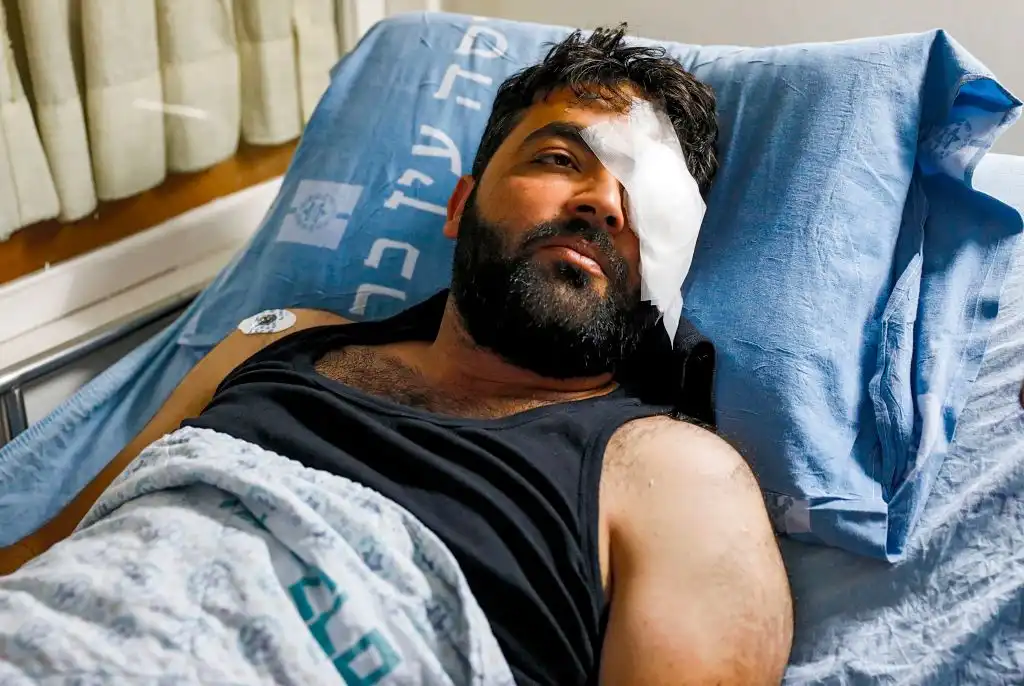
UN Under-Secretary-General for Humanitarian Affairs Martin Griffiths said on Monday that "impunity is strongly prevalent in the Gaza Strip war, and there may be a need to establish a special accountability court."


Griffiths added, in an interview with the British newspaper "Financial Times": "There are no indications that the Israeli attack in the south of the Gaza Strip is more precise than in the north, and this is disappointing."


He continued, saying: "They (the Israeli side) promised us this (avoiding the bombing of civilians), and the truth of the matter is that we have never seen that in the south. On the contrary, we have witnessed the increase in bombing."


Griffiths stressed that "impunity is strongly prevalent in the Gaza war, and there may be a need to establish a special court for accountability," stressing that "the number of deaths from diseases in Gaza is many times the number resulting from the bombing."


Since last October 7, the Israeli occupation army has been waging a devastating war and aggression against Gaza, leaving about 19 thousands dead and 51,000 wounded, most of them children and women, massive destruction of infrastructure and an unprecedented humanitarian catastrophe.

ARAB AND WORLD

Tue 19 Dec 2023 6:55 am - Jerusalem Time

Financial Times: “Netanyahu’s leadership is a failure”

The Financial Times newspaper published an editorial in which it said that Israeli Prime Minister Benjamin Netanyahu failed in leadership, amid signs of American dissatisfaction with the way he managed the war and the absence of plans for the future of Gaza.


While Netanyahu, as he waged the war against Hamas in Gaza, relied on unwavering American support, Israel's strong ally has doubts as the bombing continues and the death toll in the Strip increases.


Last week, President Joe Biden described Netanyahu's government as far-right, criticized the "indiscriminate bombing" of Gaza, and said that the Israeli prime minister must "change."


Biden's comments reflect growing unease in Washington over Israel's management of the war, the massive destruction and rising death toll that Palestinians say has reached 19.500. The comments also reflect broader concerns about the prime minister and the power extremists exercise over the coalition he leads.


The newspaper comments that the West has generally been united in its support for Israel since the Hamas attacks on October 7, but an increasing number of countries want the bombing campaign to stop. The United States expects Israel to shift to a more targeted phase, which means fewer bombing rounds and fewer civilian casualties.


The more Netanyahu resists American advice, the greater the risk of Israel's isolation. The United States is pushing for a post-war plan, and hopes to use the unfolding catastrophe to divert attention to a political vision and resolution of the Israeli-Palestinian conflict. It is what will help appease Arab allies and help them ease their people's anger over the humanitarian catastrophe in Gaza. But Netanyahu does not go along with the plan, and refuses to work to achieve the idea of establishing a Palestinian state, even though it remains the only long-term solution to settle the conflict.


The United States and Arab countries want to strengthen the Palestinian National Authority as a reliable alternative to the hard-line leadership of Hamas. Netanyahu is working to undermine the National Authority, which administers limited areas in the West Bank, and has not presented any plan for Gaza other than his pledge to eliminate Hamas. Before the Hamas attacks, Netanyahu became a force of destruction in Israel, and to secure his rise to power, in December he joined extremist nationalist and supranational forces and formed the most extremist government in Israel's history. He then continued to attempt to undermine the independence of the judiciary and democratic values, sparking a massive campaign of demonstrations.


Critics accuse Netanyahu of not addressing the Hamas threat during his dominance of Israeli politics in the past 14 years. He tried to contain the militant threat behind the security fence, while at the same time using Hamas's rule to divide the Palestinians and resisting calls to revive the peace process. However, under his watch, Hamas launched a deadly attack on Israel. The leaders of the security services apologized for the mistake, but Netanyahu did not express remorse.


As long as the war continues, Netanyahu will remain secure in his position, despite the decline in his popularity, and if it stops, elections will be held or demonstrations will return against his leadership. Nothing will move as long as he remains in office and sits with the extremists at the head of the table. A new government will likely not directly change the dynamics in a traumatized country. The October 7 attacks reduced the Israelis' faith in peace, but it is the safe option that guarantees peace with the Palestinians, even though it is not possible at the present time. At a time of panic and dismay, people look for leaders who acknowledge this reality and are prepared to defend the two-state solution, and Netanyahu was never that leader.


Anshel Beaver saw in The Times newspaper that Netanyahu is entrenched in the government with calls for a ceasefire. He said that since the October 7 attacks, Israel has failed to reconcile its primary goal of destroying Hamas with its ability to rule in Gaza, with the aim of freeing 240 Hamas hostages. As the killing of three hostages on Friday showed, this is very difficult to achieve. The war government decided to follow a strategy of excessive force and negotiate with Hamas through Qatar. The talks succeeded last month and led to the liberation of 110 hostages, including 86 Israelis and 24 foreigners who were released during the temporary truce. Since the end of the truce, with 130 hostages remaining, Hamas has imposed more difficult conditions than those it had previously requested regarding how to stop the war.


Anshel Peifer: Since the October 7 attacks, Israel has failed to reconcile its primary goal of destroying Hamas with its ability to rule in Gaza with the aim of freeing 240 Hamas hostages.


Netanyahu is under pressure from Western allies to achieve a sustainable ceasefire, as stated in statements by the British and German Foreign Ministers. But Netanyahu did not change his position and stressed that continuing military action would lead to the liberation of the hostages, and “we will continue to fight until victory.” Perhaps the talk of fighting was directed at his base, which polls show has abandoned him.


Israeli defense officials are talking about a change in strategy in the coming weeks, with mobile methods and fewer soldiers on the ground, in the hope of alleviating the fears of the allies and opening the way for negotiations with Hamas to free the hostages or carry out effective rescue operations. Until then, the hostages will have been at war for more than a hundred days, and attempts to rescue them may have been delayed.


ARAB AND WORLD

Tue 19 Dec 2023 6:50 am - Jerusalem Time

Israeli Poll: Gantz is in the lead... and religious Zionism falls below the electoral threshold

Respondents were asked whether they supported or opposed transferring control of Gaza to the Palestinian Authority on the “day after” the war; 19% supported this, while 54% opposed it.


An Israeli public opinion poll, published on Monday evening, showed that the “National Camp” bloc, headed by “War Cabinet” member Benny Gantz, would obtain 37 seats, while the number of seats for the Likud Party led by Prime Minister Benjamin Netanyahu would decrease to 18 seats if it were conducted. Today's elections, while the far-right Religious Zionism Party, headed by Finance Minister Bezalel Smotrich, does not exceed the electoral threshold.


According to the poll published by the Israeli Channel 12, the number of seats in the “Yesh Atid” party led by Yair Lapid reaches 15 seats, and “Shas” led by Aryeh Deri gets 11 seats, while “Yisrael Beytenu” led by Avigdor Lieberman gets 9 seats.


The "Otzma Yehudit" party, headed by extremist Itamar Ben Gvir, won 8 seats, while the "United Torah Judaism" bloc won 7 seats.


According to the poll, the Arab Front for Change coalition, the United List, and Meretz each get 5 seats.


The Religious Zionism, National Democratic Rally and Labor parties do not exceed the electoral threshold. The assembly receives a percentage of 1.9; Note that the poll includes a small sample of Arabs.


If elections were held for the Knesset now, the opposition parties, including the “National Camp,” along with the Arab parties, would obtain 76 seats, compared to 44 seats for the current coalition parties.


Who is most suitable to head the government?

Regarding the question of who is more suitable to head the government between Netanyahu and Gantz, 45% of respondents believed that Gantz is more suitable for that, while 27% saw that Netanyahu is more suitable for the position.


22% of the total sample answered that neither of them is fit to head the government, while 6% answered, “I don’t know.”


The poll showed that former Prime Minister Naftali Bennett also outperforms Netanyahu, as he received 33%, compared to 29% for Netanyahu, while 32% believed that neither of them is fit to head the government, and 6% answered, “I don’t know.”


Should the date of the Knesset elections be brought forward?

The respondents were asked whether the date of the next Knesset elections should be brought forward or not, and a majority of the public (57%) believes that the date of the elections should be brought forward, and they answered “yes.”


Among Netanyahu camp voters, 32% believe that the date of the Knesset elections should be brought forward, compared to 59% who believe that the date of the Knesset elections should not be brought forward.


Among the voters of the camp opposing Netanyahu, 82% believe that the date of the Knesset elections should be brought forward, compared to 13% who believe that it should not be brought forward.


Palestinian Authority control of Gaza?

Respondents were also asked whether they supported or opposed transferring control of Gaza to the Palestinian Authority on the “day after” the war; 19% supported this, while 54% opposed it, while 27% answered, “I don’t know.”


According to the poll, among those who identify themselves as right-wing, 9% support transferring power in Gaza to the Palestinian Authority, compared to 73% who oppose that.


When people who consider themselves to be in the so-called “center-left” were asked the same question, 34% supported the Palestinian Authority assuming power in Gaza, while 27% opposed it.

The survey was conducted on a sample of 504 people, with a maximum error rate of +4.4%. The survey was also conducted online and by telephone by Mano Geva.

Source: Arab48


PALESTINE

Mon 18 Dec 2023 9:18 pm - Jerusalem Time

Gaza war: A new Israeli air strike on Al-Shifa Hospital. The death toll rose to 19,453

The Palestinian News Agency reported on Monday that Israeli aircraft bombed the specialized surgical building at Al-Shifa Hospital in Gaza, explaining that the bombing caused a number of casualties and injuries.


The agency also said that dozens were killed and others were injured in bombing carried out by Israeli aircraft on the eastern and northern areas of Khan Yunis.


In addition, violent explosions rocked the central region of the Gaza Strip.


Israel has continued its attack on Gaza by air, land and sea for 73 days, claiming the lives of about 19,000 Palestinians and wounding more than 52,000 others, 70% of whom are women and children, with an infinite toll.


The Ministry of Health in Gaza announced that the number of killed of the Israeli aggression on the Strip since October 7 had risen to 19,453.


The Ministry added in a new census that the number of injured people reached 52,286.


The Ministry indicated that hospitals received during the past hours 151 victims and 313 injured as a result of attacks, the most prominent of which was in Jabalia, where a large number of victims are still under the rubble and on the roads.


The ministry said: “Within 6 hours, the occupation forces committed a massacre in Al-Shifa Medical Complex, which led to the death of 26 displaced people and dozens of wounded. Then they targeted a civilian car in front of the gate of the complex that was transporting one of the wounded, which led to the martyrdom of two.”


The ministry accused the Israeli forces of deliberately "liquidating the health presence in northern Gaza by destroying hospitals and arresting their staff. This constitutes the execution of about 800,000 people there."


PALESTINE

Mon 18 Dec 2023 9:17 pm - Jerusalem Time

West Bank: Injuries after Israeli settlers sprayed pepper gas on worshipers in Ibrahimi Mosque in Hebron

A number of worshipers suffered from suffocation and internal burns on Monday evening, as a result of being sprayed with pepper gas by settlers, coinciding with evening prayers in the Ibrahimi Mosque in central Hebron.


According to local sources, settlers, protected by occupation soldiers, sprayed pepper gas on worshipers in the Ibrahimi Mosque, causing a number of them to suffer from suffocation and burns.

PALESTINE

Mon 18 Dec 2023 8:59 pm - Jerusalem Time

Palestinian Prisoners Club: Detained journalist Moaz Amarneh is being tortured

The Palestinian Prisoners' Club said on Monday that Palestinian journalist Moaz Amarneh, who has been detained by Israel since last October 16, "suffers difficult detention conditions and is subjected to torture and abuse."


The club added in a statement, “Amarna (36 years old), from Bethlehem, faces difficult health conditions in the Israeli Megiddo prison, as a result of the systematic retaliatory measures and torture imposed by the occupation on prisoners and detainees in an unprecedented and double manner after October 7.”


It continued: "Journalist Amarneh, who has been administratively detained since October 16, was subjected to abuse and torture, as were all detainees. Today he suffers from difficulty seeing and a blurriness in his right eye."


It pointed out that "in the context of the medical crimes carried out by the occupation against prisoners and detainees, he refuses to this day to allow the insertion of his glass eye and glasses, after he lost one of his eyes in 2019 to the bullets of the occupation soldiers, while practicing his journalistic work, as the bullet settled on the wall of the brain."


It explained that "Amarna suffers from chronic diabetes, which has worsened in light of the prison administration's implementation of the starvation policy against prisoners. He also suffers from severe bouts of pain and headaches due to the extreme cold."


According to the Prisoners' Club, "Amarna has not been able to change his clothes since his arrest after they confiscated his clothes. What remains of him is a light jacket that does not protect him from the extreme cold. This is in addition to the prison administration taking off his shoes for a long time."


It added, "Amarna is one of 46 male and female journalists who were arrested after October 7, as the occupation escalated its policy of arresting journalists and targeting them with all repressive means and tools."


It pointed out the continued detention of 32 journalists, including 19 who were transferred to administrative detention under the pretext of having a secret file, including journalist Amarneh. “Also, the occupation brought charges against some of them related to what it claims is incitement on social media sites.”


Administrative detention is a detention decision by Israeli military order on the grounds of a security threat, without an indictment, and it extends to 6 months, which can be extended.


The Prisoner Club also indicated that “among the cases of arrest among journalists are two journalists from Gaza, namely Moamen Al-Halabi and Diaa Al-Kahlot, while the fate of journalist Nidal Al-Wahidi is unknown.”


On Sunday, the government media office in Gaza announced that the number of journalists killed by the Israeli army during its war on the Strip had risen to 92 since last October 7.


Earlier today, Monday, the Ministry of Health in the Gaza Strip announced that the death toll from the Israeli “aggression” on the Gaza Strip had risen to 19,453, in addition to 52,286 wounded, since last October 7.

PALESTINE

Mon 18 Dec 2023 8:57 pm - Jerusalem Time

West Bank: Israeli army storms towns and villages in Jenin Governorate

On Monday evening, Israeli occupation forces stormed towns and villages in Jenin Governorate.


According to local sources, the occupation forces stormed the village of Deir Abu Daif, east of Jenin, leading to the outbreak of confrontations that resulted in a number of citizens suffering from suffocation.


The occupation soldiers also stormed the town of Ya'bad, west of Jenin, and the villages of Beit Qad and Jalaboun, east of them. They set up a military checkpoint at their entrance, stopped citizens' vehicles, searched them, and checked their occupants' IDs. They also stormed the village of Al-Arqa, west of the city, and launched a massive inspection campaign, without any arrests being reported.


In this context, the Israeli police arrested the young man Yazan Abu Salah from the town of Ya’bad while he was inside the 1948 territories.

ARAB AND WORLD

Mon 18 Dec 2023 7:00 pm - Jerusalem Time

Negotiations in Warsaw for the exchange of prisoners

Reuters said, on Monday, that two American officials told the agency, on the condition that we do not reveal their identities, that CIA Director William Burns is scheduled to meet with Qatari Prime Minister Mohammed bin Abdul Rahman Al Thani and the head of the Israeli intelligence service (Mossad) in Warsaw on Monday to discuss an agreement. A possible new release of Israeli hostages, held by the Palestinian Islamic Resistance Movement (Hamas) in the Gaza Strip, and the two officials spoke on condition of anonymity.


The Axios news website had previously quoted two officials from the United States and Israel that a meeting would be held today.


Israeli Prime Minister Benjamin Netanyahu said on Saturday that new negotiations are underway to recover the hostages held by Hamas after a source said that the head of Israeli intelligence met with the Prime Minister of Qatar, which is mediating in this conflict, while an informed source said that Mossad chief David Barnea met with Al Thani in Europe, late Friday.


On Sunday, two Egyptian sources told Reuters that Hamas insists that it, not Israel, decides the identities of the hostages who will be released in the event of another agreement being implemented, and that it wants Israeli forces to withdraw to pre-determined lines.


According to the sources, Israel rejects the last condition, but it has accepted the first, regarding setting a list of hostages to be released, and has demanded a timetable for reviewing the list before determining the time and duration of the ceasefire.


On the other hand, the Times of Israel quoted Kan News on Saturday evening that Egyptian and Qatari officials had offered a new deal to Hamas in recent days, stipulating the release of the elderly, the sick, and the remaining women and children in exchange for the release of prominent Palestinian prisoners.


It was not clear whether the offer was made after consultations with Israel. While Kan News said that Hamas has not yet responded to the proposal.


Under the previous temporary truce brokered by Qatar, Egypt and the United States in late November, Hamas released, over the course of about a week, 105 civilians out of about 240 hostages, in exchange for a halt to the fighting, an increase in humanitarian aid to Gaza, and the release of Palestinian prisoners.


Most of the hostages who were released were Israeli women and children, in groups ranging between 10 and 12 individuals per day.


Israel accused Hamas of violating the deal, by "refusing to release at least 10 other women and two children still in the hands of the movement's militants," which led to the collapse of that temporary truce, according to the "Times of Israel."