ARAB AND WORLD

Wed 20 Dec 2023 5:02 pm - Jerusalem Time

Opinion poll: Broad American rejection of Biden's policy towards the aggression against Gaza

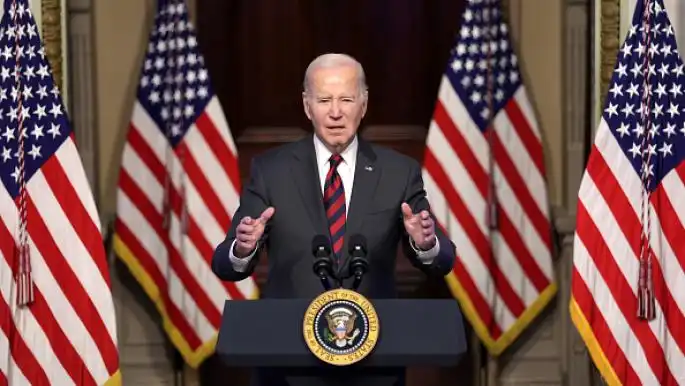
American voters widely disapprove of the way President Joe Biden is handling Israel's aggression in the Gaza Strip, and a New York Times/Siena College poll found that younger Americans are far more critical than older voters of both "Israel's behavior and the administration's response." for the war in Gaza.


American voters are also sending mixed signals about the direction American policy-making should take as the war in Gaza enters its third month, and the Joe Biden administration attempts to pressure the occupation to “reduce the military campaign.”


The poll stated that almost as many Americans want Israel to continue its military campaign as much as they want it to stop now to avoid more civilian casualties.


This division appears to leave the US president, according to the New York Times, “few politically acceptable options.”


The results of the Times/Siena poll carry signals not only for Joe Biden as he enters re-election in 2024, but also for the long-term relations between the occupation and its most powerful benefactor, the United States.


The divided American views among traditional Democratic voter groups demonstrate Biden's continuing difficulty in holding together the coalition he built in 2020, a challenge that is likely to continue even as positive economic indicators increase and legal problems swirl around his expected nominee, former President Donald Trump.


Voters between the ages of 18 and 29, traditionally a predominantly Democratic demographic, are jumping in, and nearly three-quarters of them disapprove of the way Joe Biden is handling the war in Gaza.


"I don't want to vote for someone who is not in line with my personal values, as Biden has shown he is not when it comes to Gaza," one voter told the New York Times. But he wondered: Should I vote for Biden or not vote at all? "This is really hard, because if I don't vote for Biden, I'm opening up the possibility of Trump winning, and I really don't want that."


Most young voters answered one question after another, according to the New York Times, with answers that show that they see the worst in “Israel.” Few of them believe that the Israelis are serious about peace with the Palestinians. Nearly half say that Israel intentionally kills civilians, while nearly three-quarters of respondents say that Israel does not take sufficient precautions to avoid civilian casualties, and a majority opposes providing additional economic and military aid to the occupation.


In contrast, the broader electorate holds a more pro-Israel view, suggesting that Israel's image and reputation problems in the eyes of American voters are more acute on the political horizon than they are at present.


However, 48% of all voters surveyed said they believe Israel is not taking adequate precautions to avoid civilian casualties in Gaza.

PALESTINE

Wed 20 Dec 2023 2:28 pm - Jerusalem Time

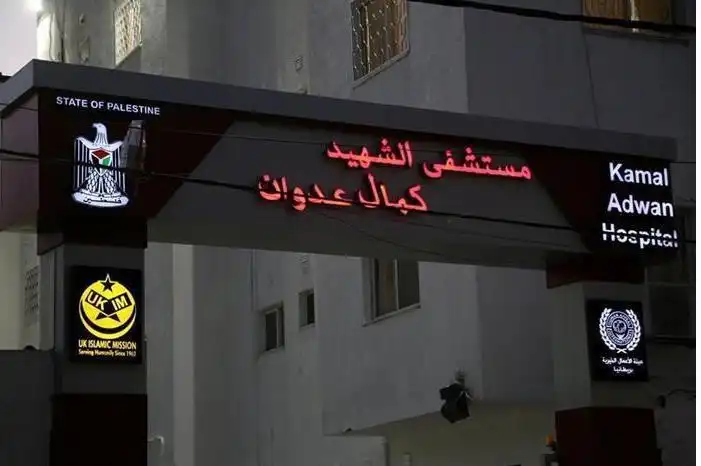
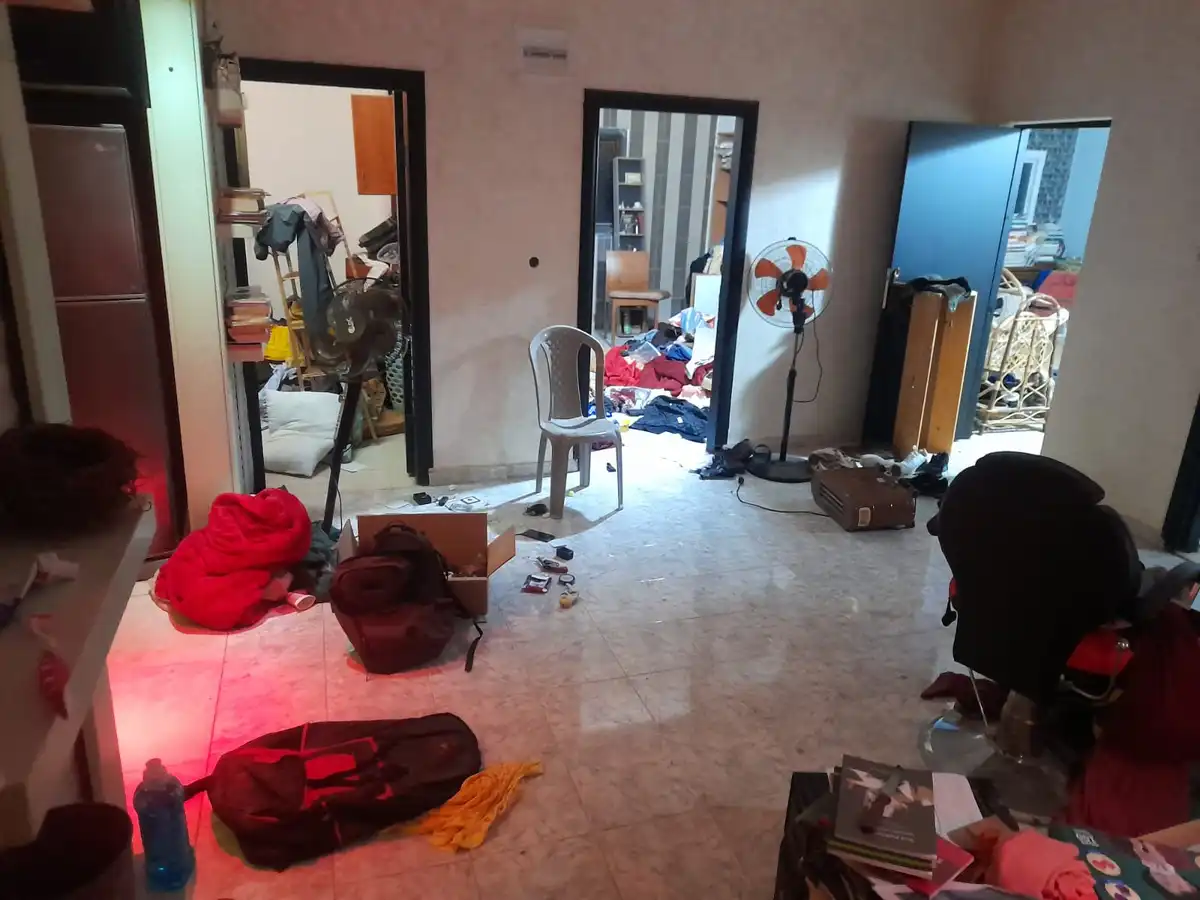
Gaza Health demands an investigation into the Kamal Adwan Hospital massacre

The Ministry of Health in the Gaza Strip called on human rights organizations to open an urgent investigation into the massacre committed by occupation soldiers at Kamal Adwan Hospital in the northern Gaza Strip.


The Ministry stressed that the Israeli army took a statement consistent with its account from the hospital director, Ahmed Al-Kahlot, under intimidation and torture.


It confirmed that the children in Kamal Adwan Hospital were trapped without water, food, or electricity for several days, which ended with the bombing of the hospital.


The occupation forces withdrew from Kamal Adwan Hospital last Saturday after a siege that lasted for 5 days, during which they arrested displaced people, ran over their tents with tanks while they were in them, and buried them alive.


PALESTINE

Wed 20 Dec 2023 1:58 pm - Jerusalem Time

West Bank: Israeli army seizes 10 vehicles and storms 15 homes in Al-Lubban Al-Sharqiya

Today, Wednesday, Israeli occupation forces seized 10 vehicles and stormed 15 homes in the Al-Laban Al-Sharqiya village, south of Nablus.


Local sources said that 15 military vehicles, accompanied by 5 soldier buses and two military bulldozers, stormed the village for more than seven hours, stormed 15 houses, wreaked havoc in them, broke their doors, and destroyed property with various types of iron tools that the soldiers had in their possession, and also seized 10 vehicles. .


It added that more than 300 soldiers stormed the village from one in the morning until eight in the morning, and set up four checkpoints inside the village in all directions, completely preventing movement.


ARAB AND WORLD

Wed 20 Dec 2023 1:31 pm - Jerusalem Time

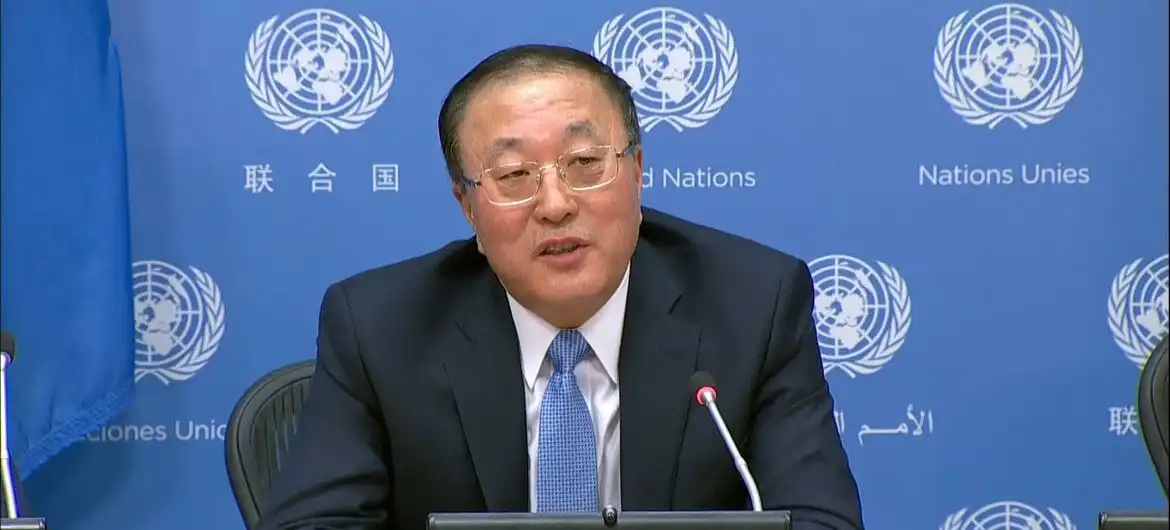
A Chinese envoy stresses the ceasefire as a top priority in Gaza

A Chinese envoy to the United Nations said that achieving a ceasefire in the Gaza Strip is the most important priority at the present time.


China's Permanent Representative to the United Nations, Zhang Jun, said at a Security Council meeting on the situation in the Middle East, especially the Palestinian issue, “First, achieving a ceasefire remains an absolute necessity. It will not prevent further human casualties among civilians, from "Including the hostages, except for achieving a ceasefire. Only achieving a ceasefire is what will prevent the regional conflict from spiraling out of control. Only achieving a ceasefire is what will prevent any possibility of completely eliminating the political settlement."


He said that the international community has often and strongly called for an immediate ceasefire in Gaza, continuing by saying, "However, Israel continues to bomb and bomb, repeatedly targeting schools, hospitals, mosques, churches, and refugee camps in military operations."


He continued, "We urge Israel to immediately reverse its actions and stop its indiscriminate military attacks and policy of collective punishment against the residents of the Gaza Strip."


Regarding the West Bank, Zhang stressed the need to make every effort to prevent the situation in the West Bank from getting out of control.


"While the eyes of the international community are focused on Gaza, violence by the Israeli army and settlers has increased in the West Bank. Searches, arrests and attacks against Palestinians are taking place on a daily basis with an appalling pace and intensity, resulting in a huge number of Palestinian deaths and injuries," the envoy said.


Regarding the two-state solution, Zhang said this approach must be revived with the utmost political determination.


He added, "The two-state solution is the only way to resolve the Israeli-Palestinian issue. It is also widely agreed upon in the international community."


"China calls for an international peace conference that is larger in size, scope and impact, and to formulate a timetable and roadmap so that the two-state solution can actually be achieved," Zhang said.


Zhang touched on the new Security Council draft resolution aimed at removing obstacles to humanitarian access and alleviating the humanitarian catastrophe in Gaza, saying, “We believe that no country should fail, for any reason, with regard to this draft resolution. We urge the relevant Council members to do so.” We call on members to adopt a constructive approach and support the Council in taking meaningful, life-saving and immediate action.”


“In the face of the protracted conflict in Gaza and the escalation in the West Bank, the Council must continue to play its due role and take measures to achieve a ceasefire and end the fighting early, restore regional peace, and uphold integrity and justice,” the envoy said.

PALESTINE

Wed 20 Dec 2023 1:02 pm - Jerusalem Time

For the sixth time: Communications and the Internet were cut off from the Gaza Strip due to the aggression

The Palestinian Telecommunications Company announced today, Wednesday, the complete cessation of all communications and Internet services with the Gaza Strip, due to the ongoing Israeli aggression.


Executive Director of the Telecommunications Regulatory Authority at the Ministry of Communications and Information Technology, Laith Daraghmeh, explained that the occupation mechanisms bulldozed the generators feeding the main division in Khan Yunis, south of the Gaza Strip.


Daraghmeh explained that the occupation aircraft bombed the fiber network, the main Internet feeder in the Gaza Strip, after it was bombed two days ago, and it took 10 continuous hours to repair it, due to the difficulty of accessing it, due to the occupation’s bulldozing of the roads leading to it.


Ooredoo also announced, in a brief statement, the cessation of its services in the center and south of the Strip, and its partial continuation in the north.


Ooredoo said in a brief statement: “With the continuation of the aggression on the Gaza Strip, the main lines feeding telecommunications and Internet companies were repeatedly interrupted, which led to the cessation of our services in the center and south of the Strip, and their continuation in a partial and limited manner in the north of the Gaza Strip.”


This is the sixth time that the occupation forces have cut off communications and the Internet from the Gaza Strip since the beginning of the aggression on October 7, by severing international lines.


The most recent was on December 14, when the occupation cut off communications and the Internet from the Gaza Strip. The interruption lasted four days, the longest, before the Internet was partially restored, with a limited return of communications in some cities in the Strip.


The interruption of communications and the Internet is accompanied by an escalation in the massacres committed by the occupation forces against our people in the Gaza Strip, in addition to the disruption of efforts to rescue and treat citizens, as the number of martyrs since the beginning of the aggression has risen to more than 19,650 martyrs, in addition to about 52,600 wounded, and thousands of missing persons, in the toll. Not final.


PALESTINE

Wed 20 Dec 2023 12:34 pm - Jerusalem Time

Veteran Israeli negotiator: The solution is through elections... and unifying Palestinian political spectrum

By Iman Shams

“A ceasefire and holding Palestinian elections that grant legitimacy to the establishment of a Palestinian entity to administer the Gaza Strip... is the framework within which the extreme Israeli right can be confronted, which wants, from Gaza, to establish a new Nakba regime like the Nakba of 1948.” This is the opinion of the Israeli researcher and university professor Menachem Klein, who was an advisor to the Israeli delegation in the negotiations with the Palestine Liberation Organization in 2000, and one of the sponsors of the Geneva Initiative in 2003.


Klein, a professor of political science at Bar-Ilan University, believes that “the agreement between Fatah and Hamas in 2021 to hold elections for the presidency of the Palestinian Authority and its Legislative Council, and Hamas’ accession to the Palestine Liberation Organization, provided and continues to provide an acceptable political horizon towards resolving the conflict. The elections were scheduled to be held in accordance with the Oslo Accords, which included a commitment to respect international law, establish a state on the 1967 borders with East Jerusalem as its capital, recognize the Palestine Liberation Organization as the legitimate and exclusive framework, conduct a peaceful popular struggle, and transfer the separate government in the Gaza Strip to the Palestinian Authority.

It was not Netanyahu alone who formulated Israeli policy, Klein notes. Rather, the leaders of the political and security institutions in Israel participated in formulating and implementing the approach that has now collapsed.


However, the cancellation of the elections, after intense pressure from Israel and the United States and the surrender of Palestinian President Mahmoud Abbas to them, led, as Klein believes, to the “Unity Intifada,” and with it the “Saif al-Quds” operation carried out by Hamas, and the Israeli “Wall Guard” operation, and at the same time almost to the conception and planning of the deadly attack on October 7. He believes that if the elections had not been cancelled, a popular, democratic leader would have emerged, but we would likely have witnessed a completely different political reality. But Israel was blinded by success, just as it had happened before the 1973 war.


Israeli arrogance

In Klein’s opinion, “there are many similarities between the October 7 attack and the surprise attack on Israel in the Yom Kippur War. Operationally, in both 1973 and 2023, Israeli intelligence leaders did not pay sufficient attention to the military movements of their enemies on the ground. Strategically, a neighboring Arab country sent a warning to Israel that was not taken seriously:

- In 1973, King Hussein was the king of Jordan.

- And in 2023, Egyptian Intelligence.


In both cases, the Israeli establishment has arrogantly relied on the mistaken belief that its military victories have succeeded in deterring its enemies.

He continues: “As happened in 1973, the main failure of October 7 was political. Two years before that war, Egyptian President Anwar Sadat proposed a partial arrangement with Israel, and he almost agreed with the ideas of Israeli Defense Minister Moshe Dayan at the time. But the Prime Minister Golda Meir did not trust Sadat, and for her there was no difference between him and his predecessor, the Arab nationalist Gamal Abdel Nasser, as both of them simply wanted to destroy Israel. So she stuck to her position. It was a terrible war, in which more than 2,600 Israelis were killed and 300 soldiers were captured, after which Israel signed an armistice agreement with Egypt in 1974, and its conditions intersected to a large extent with Sadat’s proposal in 1971.”


In the writer’s opinion, “When Meir rejected Sadat’s initiatives in 1971, she believed, as did a large section of the Israeli establishment after the Six-Day War, that the country’s situation was better than ever before.” This was the slogan of the ruling party ahead of the elections that were supposed to be held in late 1973. 


This same arrogance was evident in 2021, when Israel opposed the Palestinian elections and pressured Abbas to abandon his relationship with Hamas. Netanyahu, like Meir, believed that the government's policies were working, and that allowing elections and reorganizing the Palestinian political leadership would destroy everything Israel had built.

The cancellation of the elections, after intense pressure from Israel and the United States and the surrender of Palestinian President Mahmoud Abbas to it, led, as Klein believes, to the “Unity Intifada,” along with the “Saif al-Quds” operation carried out by Hamas, and the Israeli “Wall Guard” operation.


The collapse of the Israeli approach in Gaza

Klein points out that Israel's policy towards the Palestinians since 2006 revolves around three main axes, supported by the United States and European countries:

First, complete control over the Gaza Strip from the outside, the physical, legal and political separation of Gaza from the West Bank, maintaining the rivalry between Fatah and Hamas and trying to tame the latter.

Secondly, managing the conflict with the Palestinians instead of resolving it. In addition to the expansion of West Bank settlements, Israel created a unique system that gives it sovereignty between the Jordan River and the Mediterranean Sea, and turned the Palestinian Authority into its contractor that controls the Palestinians on its behalf.


Third, reducing the broader Israeli-Arab conflict by concluding normalization agreements with Arab countries and leaving the Palestinians isolated and weak at the mercy of Israel.


But Netanyahu was not the only one who formulated Israeli policy, Klein notes. Rather, the leaders of the political and security institutions in Israel participated in formulating and implementing the approach that has now collapsed. Many of them still do not realize the extent to which Hamas's bloody attack requires a radical change in course. Instead, they are seeking to return to previous principles and find a contractor from within to manage the Gaza Strip on behalf of Israel, whether it is a local entity, Abbas’s authority, or an international body.


Back to the 2021 planner

But no such entity can operate without the legitimacy granted to it by the Palestinian elections. Otherwise, he will be viewed as an illegitimate collaborator with the occupier, asserts Klein, who believes that “it is necessary to return to the political plan that was rejected in 2021 in order to create a new reality, and work, in addition to the ceasefire, to hold Palestinian elections as a means to change... The rules of the game and the ability to establish an independent Palestine on all the territories occupied in 1967, instead of reproducing the failed regime imposed by Israel in the West Bank.”


He concludes, “This is the framework that must be put in place to confront the extreme Israeli right that wants to establish a new, harsh regime consistent with the Nakba regime in 1948, starting with the Gaza Strip: exiling the largest possible number of Palestinians from Gaza, and building settlement cities, including rebuilding cities which were evacuated in 2005, and then the same plan was implemented in the West Bank with the same ferocity.” 


He says: “This terrible path was avoided in the past when Henry Kissinger, the US Secretary of State, prevented Israel in 1973 and 1974 from resuming fighting with Egypt once there was a ceasefire, and supervised the signing of the two temporary agreements between Israel and Egypt that paved the way for Sadat’s visit to Jerusalem in 1977, and reaching a peace settlement mediated by President Jimmy Carter in 1978-1979. 


But is there now anyone in America who has the same weight and willpower to do the same thing between Israel and the Palestinians?


* +972 Magazine: It is an independent electronic magazine that, according to its location, does not represent any external organization, political party or agenda, and is managed by a group of Palestinian and Israeli journalists. It was established in 2010. Its name recalls the international telephone code for calling throughout Israel and Palestine.

* The Geneva Document: An unofficial document, signed on December 1, 2003, between some Palestinian politicians and some Israelis from the left, stipulating Israel’s withdrawal from most of the lands occupied in the 1967 war, demarcating the borders between the two parties, and ending the conflict. Palestinian-Israeli, but it was opposed by the Israeli right and some Palestinian national and Islamic parties.

Source: 972mag + Assas Media

OPINIONS

Wed 20 Dec 2023 12:24 pm - Jerusalem Time

Palestinian resistance capabilities from Israeli perspectives

Antoine Shalhat

Antoine Shalhat

Opinion Writer

When following what analysts in Israel are commenting on the results of the war on the Gaza Strip, with its 74th day ending yesterday, Tuesday, it is possible to extrapolate conclusions that would reflect what happened, regardless of the intentions of those analysts who were mostly mobilized on the side of the war, and through a commitment Strict with what the text reveals. 


I am not interested in focusing on exposing most of these Israeli lies that are agreed upon that the time factor is not important, as it has become an open secret, but rather on what Israel faced in the midst of its war, which reflects, albeit implicitly, the capabilities of the resistance. To the extent space permits here, I will focus on two issues:

The first relates to the so-called ground maneuver plan, which has been the subject of internal disputes for more than two decades. Perhaps the most important thing that was confirmed about it was what came from the former head of the Military Intelligence Division (AMAN) and the current director of the Israeli National Security Research Institute, Major General (res.) Tamir Hayman, who acknowledged, a few days ago, that in battles that take place face-to-face, the relative superiority of the Israeli army in confronting Hamas diminishes. This is also acknowledged by the military analyst for Haaretz newspaper, Amos Harel, who wrote that during a long presence in the field, the Israeli military force becomes exposed and vulnerable to attack, is deprived of the relative superiority resulting from movements at a high pace, and ambiguity dominates the picture of the fighting. Both of them, as well as the military analyst for the newspaper Maariv Tal Lev Ram, and the political analyst for the newspaper Yedioth Ahronoth, Nadav Eyal, confirm that the issue of strategic tunnels was one of the most prominent surprises. The latter is quoted by a member of the Israeli “War Cabinet” as saying that there is not yet a definitive answer or combat theory for dealing with these tunnels, and that “as long as there is no solution yet, we are in a dilemma.” Lev Ram chose to point out that there is no truth to the Israeli claim that military pressure is affecting the Hamas movement, especially with regard to the issue of prisoners and hostages. This pressure is not tangible at all, neither in the behavior of the movement’s leaders, nor in everything related to the progress of the issue of releasing the kidnapped persons. He thought to add that the main centers of gravity of the resistance are in Khan Yunis and the southern Gaza Strip in general. Despite this, the majority of Israeli army units are still fighting in the northern Gaza Strip.

The second issue is the duration of the war, and the frequency of controversy over it, despite the announcement by senior political and security officials of the US administration that they have no intention of dictating a timetable to Israel. 


On the other hand, more than one Israeli official or former military commander is pointing out to the United States that it took three years to confront ISIS in Raqqa. According to what is being reported by Israeli sources who can be considered informed, the intensive ground military operation that Israel says it is currently carrying out in the northern Gaza Strip and Khan Yunis, and will gradually move further south, still requires no less than three months at a minimum, to be followed by another phase, less intense in terms of the number of forces and shooting operations, according to what Reserve Major General Yaakov Amidror, former head of the National Security Council and one of Prime Minister Netanyahu’s military advisors, confirms. This stage will continue, in his opinion, until the end of next year 2024, “the hour of the end of the war.”

What is certain is that the capabilities of the resistance in the Gaza Strip will remain a primary concern for more Israeli analysts, as it “made it challenge the most powerful country in the Middle East without showing signs of surrender,” as the aforementioned Amidror said. 

The truth is that the resistance was like this in the past as well, and it made a number of those analysts repeat that since the first confrontation between the two sides, the same problem has continued to arise: we know how to start, but we do not know how to get out!

ARAB AND WORLD

Wed 20 Dec 2023 12:04 pm - Jerusalem Time

Netanyahu's calculations may hinder changing the nature of the war in Gaza

By Nayef Zidani

The political level and the security establishment in the Israeli occupation state are increasingly aware that the war in the Gaza Strip may move into its third phase (after the air phase and the ground operation phase) during the next month, but Prime Minister Benjamin Netanyahu’s political calculations and plans may change that.


The Hebrew newspaper "Haaretz" reported on Wednesday that, according to the United States' recommendation, the change in the form of fighting includes moving to establishing a buffer zone on the borders of the Gaza Strip (and perhaps also between the north and south of the Strip), and reducing part of the reserve forces in the Israeli occupation army and switching to the method of raids through army brigades, instead of the four military divisions that currently continue to carry out a large-scale, slow and fierce ground operation in a large part of the territory of the Gaza Strip.


The debate in the Israeli occupation state is focused on the issue of when it is best to begin implementing this change, in mid-January or shortly before its end, but there is a major obstacle to the transitional process, which is the political situation of Prime Minister Benjamin Netanyahu, who fears the collapse of his coalition under the pressure and resentment from the right.


The newspaper pointed out that the US administration, the Pentagon and representatives of the US Army’s Central Command had long recommended that Israel change the form of the operation, but the Americans did not put much pressure in this context, “and they show an unusual understanding to justify the Israeli war in the face of the massacre committed by Hamas around the Gaza Strip.” They give it enormous military and political support and maintain surprising patience given the repeated provocations by Netanyahu and some members of the right wing of his government.


Haaretz added: "But on the other hand, they are disturbed by the mass killing of Palestinian civilians in the Gaza Strip, and as President Joe Biden commented last week, they expect Israel to curb air strikes in order to reduce the number of civilian casualties in the Gaza Strip."


The newspaper's military commentator, Amos Harel, pointed out that there are other factors that may play a role in the next direction of the war, including "the unprecedented pressure on the reserve forces (in the occupation army) and its long-term effects on the economy."


The writer praised the fighting spirit of the soldiers, “but hundreds of thousands of them have been in service for about two and a half months in a row, and therefore the resulting projections for families, businesses, and education are increasing. It seems that it will be necessary to take this into account and make changes in January.” 


The United States is not complaining about Israel's desire to deepen the operation in Khan Yunis, which Israeli Security Minister Yoav Galant said yesterday was its main goal to target the leadership of Hamas.


The United States is not complaining about Israel's desire to deepen the operation in Khan Yunis


Harel pointed out that the operation there is progressing slowly and cautiously, due to the fear of more deaths among the ranks of the occupation army, and to avoid harming more Israeli detainees in the Gaza Strip, while Israel assumes that Hamas prefers to keep them near its leaders, as a guarantee.


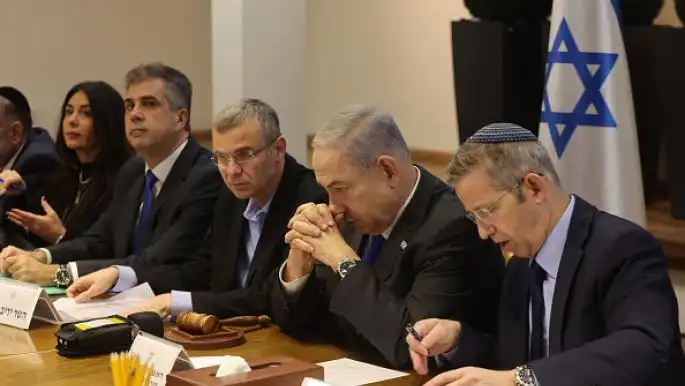
The Chief of Staff of the Israeli occupation army, Herzi Halevy, said in the Cabinet sessions last Monday that it took ten years for the United States to assassinate Al-Qaeda leader Osama bin Laden, adding in his speech to the ministers that Israel would need less than that to kill Yahya Sinwar, the leader of Hamas in the Gaza Strip.


Halevy thus hinted that the Israeli military operation in the Gaza Strip might take another, less severe form before achieving its goals, a statement that did not please many members of the cabinet.


The Cabinet's concerns are increasing about reducing the war in the Gaza Strip before achieving its declared goals, which are eliminating Hamas, restoring Israeli detainees, and creating a new security situation that allows the residents of the Gaza Strip to return to their homes.


Despite the warnings he heard, Netanyahu insisted on pledging these “ambitious” goals from the beginning of the war, which began to clash with reality.


The military analyst reviewed what he considered to be the achievements of the Israeli occupation army in the Gaza Strip, but at the same time pointed out that they did not lead to the collapse of Hamas’ systems, nor did they extinguish the fighting spirit of the resistance fighters. He pointed to the heavy loss of life suffered by the Israeli army.


Netanyahu's most important concern: staying in power

Harel says that Netanyahu is well aware of what is happening, “but what seems to matter to him and what is going on in his head is to remain in power, and therefore, he may choose to manage an artificial confrontation with the Americans in order to keep the right-wing parties with him.”


In this case, the ball will move to the ministers of “Hamaneh Hamalakhti (the official camp), so that its leader, Benny Gantz, and Minister Gadi Eisenkot, will have to decide on the timing and controversial points that will push them to dismantle the coalition that they agreed to join in the wake of the events of last October 7, in the first week of the war. 

Source: Alaraby Aljadeed

PALESTINE

Wed 20 Dec 2023 11:55 am - Jerusalem Time

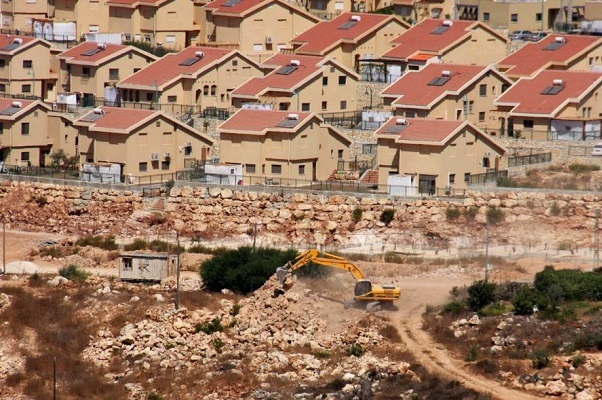
Settlement expert to Al-Quds: Approval of building 326 settlement units in Jabal Abu Ghneim

The Planning and Building Committee in the occupation municipality approved a plan considered the largest in East Jerusalem on the lands of Jabal Abu Ghneim, to build 326 settlement units, including schools, kindergartens, and a synagogue, in preparation for transforming this settlement into a settlement city and raising the construction rate in it to rates that exceed all settlements inside and outside the occupied city.


Land and settlement expert Khalil Al-Tafakji told Al-Quds that this is the second project approved by the Israeli municipality within a week in southeastern occupied Jerusalem. Last Friday, it approved a large settlement project on the lands of Sur Baher and Umm Tuba, and a few days before that it approved a similar settlement project, “The Lower Canal.” ", in Beit Safafa in an unprecedented settlement fever.


He added that the municipality and the Ministry of Settlement Affairs are working to advance settlement projects with a clear vision aimed at striking the two-state solution and preventing any possibility of withdrawal or division of Jerusalem according to the borders of June 4, 1967, by linking, surrounding and merging the neighborhoods of East Jerusalem with West Jerusalem and linking the city to its two parts with a wide and complex network of Overlapping roads that prevent its re-separation to become the capital of the Palestinian state.


Al-Tufakji explained that the plans approved in the last two years depend on building a wall of settlement units and forming settlement cities on the Green Line in an attempt to obliterate it. This is represented by expanding the “Gilo” settlement with its branches, expanding the Jabal Abu Ghneim settlement, and building settlement neighborhoods in a straight line from west to east in the south. East Jerusalem to separate occupied East Jerusalem from the cities of Bethlehem, Beit Jala, and Beit Sahour.


Al-Tufakji pointed out that the so-called (lower canal) project was approved last week on the Green Line of Shatba, on the lands of Sur Baher, with 1,800 settlement units, and this is also related to what was approved in the “Gilo” settlement to expand it and build 282 settlement units by building 3 towers with 17 floors on top, lands confiscated since 1970 from Beit Jala lands.


The land and settlement expert said that the occupation established a settlement wall from the southeast of the city of Jerusalem to the southwest of the city, separating the villages of Sur Baher, Umm Tuba, and Sharafat from the Palestinian cities in the south, Beit Sahour, Beit Jala, and Bethlehem, and controlling the roads connecting these cities and villages, in addition to the settlement road. Known as (American Street), a part of which was cut and opened, linking these settlements to the colonies located outside the city limits, for which a budget of "500" million dollars was allocated after the formation of the current right-wing government, pointing to the approval of the construction of the "Kadmat Sion" settlement outpost on the lands of Abu Dis to connect these outposts to existing settlements, part of which is located within the municipal boundaries and the second part outside them.


He added that these projects complement each other and are interconnected in the final stage, through the construction of the highest and longest bridge deep into the Palestinian territories on Wadi al-Nar, with the opening of two tunnels in the Mount of Olives and Abu Dis areas, within the vision of the extreme right for what is called the “Fabric of Life Street,” which establishes a network of racist roads for Palestinians to separate them from the network of settlement bypass roads that connect the East Jerusalem settlements to the neighborhoods in West Jerusalem and the Valley settlements. Note that this project includes opening a series of tunnels, part of which was opened, and next year they will be completed and the rest will be opened to connect the settlements in East Jerusalem to West Jerusalem and connect the city tightly in order to connect and integrate the neighborhoods of the two parts of the city.


He said, "The occupation municipality revealed that the project in Jabal Abu Ghneim is an investment to achieve economic profits for the developers."


According to the municipality, the plan, which covers an area of 12.7 dunums, includes areas for huge settlement construction, commercial and labor buildings, and an open public space, with the construction of 3 residential towers with a height of 31 floors (and 37 floors), where 326 settlement units will be built.
The municipality said that the plan includes a large area of about 3.5 dunums to build a new school, sports and youth uses, parks and other facilities, and 3 kindergartens, each with a building area of 130 square meters, a yard of 175 square meters for the kindergarten, and a synagogue with an area of 175 square meters.


The occupation municipality said, "The new buildings are for the benefit of families and young couples in the settlement and those who would like to move to live in Jerusalem."


Al-Tafakji pointed out that the area targeted by the new settlement neighborhood is located in the middle of the town of Sur Baher, on an area of 12 dunums, and is bordered to the south by the Jabal Abu Ghneim settlement, to the north by the Talpiot neighborhood, to the west by West Jerusalem, and to the east by the American Street. He said that with this project, the encirclement of this town with settlement streets and colonies will be completed, and its separation from the neighboring Jerusalem towns, such as Jabal Mukaber and Beit Safafa, to become isolated from them.


He said, "The town of Shuafat was cordoned off from the eastern side by the Pisgat Ze'ev settlement and from the western side by the Ramat Shlomo settlement, and it was surrounded by Bypass Road 21, and today there is a project to build settlement outposts for Deputy Mayor Aryeh King in its west," referring to the religious settlement concentration in the town of Silwan, where the number of outposts, ranging from a room to a building, in Silwan is 34, a large number of which are concentrated in the Wadi Hilweh neighborhood, close to the holy Al-Aqsa Mosque.


He concluded by saying: “The reports of the occupation municipality and the Ministry of Settlement Affairs have shown that settlement construction in Jerusalem and the occupied West Bank has doubled and set new records since the formation of the current Israeli government headed by Benjamin Netanyahu. 


Since the beginning of the year 2023, the government has approved the establishment of more than 13 thousand units, compared to 10 Thousands of units approved in 2020.

PALESTINE

Wed 20 Dec 2023 11:29 am - Jerusalem Time

West Bank: Israeli forces arrest 25 Palestinians. Arrests since October rose to (4,630)

The Israeli occupation forces arrested at least 25 citizens from yesterday evening until Wednesday dawn in the West Bank, including a woman and children.


The Commission and the Club said that the arrest operations were distributed among the governorates of Nablus, Ramallah, Jerusalem, Tulkarm, Bethlehem, Hebron, Salfit, and Tubas, accompanied by widespread acts of abuse, severe beatings, and threats against detainees and their families, in addition to widespread acts of sabotage and destruction of homes. Citizens, and holding citizens hostage.


Thus, the total number of arrests after the seventh of last October rose to (4,630), and this total includes those who were arrested from homes, through military checkpoints, those who were forced to surrender themselves under pressure, and those who were held hostage.


The continuing arrest campaigns come within the framework of the comprehensive aggression against our people and the ongoing genocide in Gaza, after October 7th.


OPINIONS

Wed 20 Dec 2023 11:24 am - Jerusalem Time

The message of Christmas...A message of love and peace

op-ed Al Quds dot com

op-ed Al Quds dot com

Opinion Writer

Christmas is just a few days away, and the country is draped in black to mourn the souls of the victims and martyrs.
The signs of decoration and joy were absent from the markets of Bethlehem Governorate, the cradle of the celebrations and the meeting place for Christian pilgrims from various parts of the world, and the atmosphere turned to a sad one filled with grief, despair and grief due to the brutal aggression on the Gaza Strip. 


The lights disappeared, and the churches announced the cancellation of celebrations for the first time since the year 1994 and that the important occasion was limited to commemorations and Religious rituals. 
This wise decision taken by the churches and institutions, in addition to the decision of the municipalities of Bethlehem, Beit Jala and Beit Sahour, not to light the Christmas tree this year, but rather not to have it at all, is a true and elegant embodiment of the meanings of unity, mutual support and solidarity among the Palestinian people, Muslims and Christians, and it is a wonderful expression of the message of Jesus Christ. The message of love and peace that the world must appreciate and intervene to end the aggression, bring affection and peace to the land of peace, and bring security and harmony to Gaza and its people.


The Christian brothers were right in their statements when they repeatedly said that the people of Gaza are our blood and flesh, and whatever happens to them happens to us, and Gaza’s bleeding is our bleeding and its wound is our wound, so we read in these statements the authenticity and depth of belonging to one history, struggle, and destiny.
The city of Bethlehem sent invitations to 104 sister cities to attend the religious Christmas event as an opportunity to learn about the situation in Palestine. Some insisted on disguising themselves and not showing solidarity with the Palestinian people. Therefore, reconsidering the relationship with these cities that supported the aggression against the Gaza Strip is considered an important step by the municipality. Bethlehem must withdraw from all other institutions to determine the position of the countries, entities, parties and institutions that stood in solidarity with Israel in its brutal war on the Gaza Strip while it watched the killing and destruction without doing anything.

ARAB AND WORLD

Wed 20 Dec 2023 11:24 am - Jerusalem Time

A retired French colonel predicts the "end of Israel" is approaching

A former colonel in the French army predicted the imminent demise of the State of Israel in light of the events that Gaza has been experiencing since the outbreak of the “Al-Aqsa Flood” on October 7, 2023.


Retired French Army Colonel Alain Corvez said in a video clip on social media, “The tragic events taking place now in Palestine are the beginning of the end of Israel. The inhumane massacre to uproot the population of Gaza and even in the West Bank “It indicates that this state, which has been outlawed since its founding, has no future.”


He added, "Not only that, but its end is now very near, because it is clear that after world public opinion shifted from supporting Israel to supporting Palestine, the demand for establishing a Palestinian state has become unbearable for postponement, and that this Palestinian state cannot exist adjacent to the State of Israel." "Coexistence between two states on these lands is now completely impossible."


During his participation in a talk show, a clip of which was published on the TikTok platform early last November, Corvez said, “Israeli propaganda tried from the beginning to present Hamas as a terrorist movement.”


He added: "I do not want to return to the details, but I say that this is a reversal of the facts because the terrorists are the Israelis, and this has been their practice since 1947. We know the details of their behavior and treatment since they settled in the lands that the United Nations gave them. They have not stopped imposing their control, oppressing and killing the Palestinians."


He continued: "As a specialist in geopolitical thinking, I say that the heroic resistance of the Palestinians against the fascist Israeli Nazi regime is a catalyst that will allow the cards to be shuffled across the world. With this new conflict, we will enter into a multipolar world that will end the world that was controlled by the United States and the Zionists in Tel Aviv."


Corvez denounced the dominance of the Israeli and American narrative in the current conflict in all European media, saying: “If the Western world today is pathetic, it is because it has been occupied and controlled by the Zionist and American powers for some time.”


He added: “I am convinced today that the Palestinians’ fight to lift the injustice they have been subjected to for 75 years is a fundamental factor that will push other oppressed peoples, albeit to a much lesser extent than the Palestinians, from governments installed by a technocratic elite rich with billions of dollars and controlling all media, to the degree to which French and other European channels began repeating one refrain, which is that Israel has the right to self-defense.”


He stressed, "We must therefore confront this injustice practiced by the European media and governments, which distort the truth in favor of America and Israel. Not only am I afraid, but I know that Israel, with its behavior since 1948, can reach the point of complete annihilation, and they will not stop, regardless of the international reactions."


The general concluded his speech by saying: “The United States is losing its control over the world, and they know this, and they will go to great lengths to maintain their control, and so will the Israelis in Palestine.”

Source: Al Jazeera + social networking sites

PALESTINE

Wed 20 Dec 2023 10:43 am - Jerusalem Time

West Bank: Israeli new colonial plan to seize 104 dunums of Qalqilya lands

Today, Wednesday, the Settlement and Wall File Department in Qalqilya Governorate revealed a new colonial plan to seize 104 dunams of land located behind the separation and apartheid wall south of Qalqilya.


The department reported that the occupation aims through this plan to seize lands planted with olives from the villages of Seniriya and Masha, south of Qalqilya, in order to build about 250 colonial units for the “Etzafraim” colony, which is located on the lands of Qalqilya and Salfit.

PALESTINE

Wed 20 Dec 2023 10:21 am - Jerusalem Time

Foreign Policy: How Did Hamas Succeed in Achieving its War Goals While Israel Failed?

The Al-Aqsa Flood operation on October 7 was an impressive tactical success for Hamas, as described by the American magazine The Foreign Policy, but with Israel’s military operation in Gaza exceeding two months, and after the brutal destruction it inflicted, who was able to achieve its goals, Hamas or Israel, and will Hamas’ successes continue? In the end, who will win?


Now the Israeli occupation forces are trying to increase their control over Gaza, leaving a large part of it in ruins, and about 19,000 Palestinians dead. The American magazine wonders: What can Hamas say it has achieved?


The magazine says, "It is useful to think about what Hamas has accomplished, and where it has failed? Through a study from three different dimensions: Hamas' struggle against Israel, the internal Palestinian arena, and the movement's international position."


Hamas' successes against Israel as seen by the American magazine

The Hamas attack brought pain to Israel and shattered its sense of security – both goals of Hamas. The attack exposed the Israeli government's long-standing belief that Hamas lacks the intent and capabilities necessary to launch a large-scale attack on Israeli territory. This assumption, despite evidence to the contrary, left Israel unprepared for Hamas' devastating invasion. The resulting intelligence failure, and the scale of the attack, which was said to have been more successful than even Hamas planners expected, will leave deep psychological scars on Israeli citizens, and force Israel to reevaluate its approach to security.


From the settlements to Al-Aqsa... Israel was slowly killing the Palestinian cause

Until October 7, Israelis could largely ignore Hamas and the Palestinians in general, except for sporadic rockets fired at Israel from Gaza, most of which were handled by Israeli missile defenses. When occasional crises erupted, as they did every few years, the two sides eventually agreed to resort to some version of the status quo ante. But from Hamas's perspective, this situation was slowly stifling the Palestinian cause, with Israel winning on the ground. As year after year passed, settlements were expanding in the West Bank, while Gaza was at best suffering from stagnation, with diminishing hope for its people, (and violations against Al-Aqsa Mosque reached an unprecedented level, threatening to divide it or even seize it, or even destroy it).


But now Israelis must look at the unending conflict with the Palestinians rather than ignore it.


Israel's response could strengthen the Palestinian movement


Israel's response could also strengthen Hamas. Hamas has succeeded in bringing the Palestinian issue back to the forefront of international news, and the Israeli war on Gaza - with the heavy costs incurred by civilians in Gaza - will work to keep Hamas there, according to the American magazine.

The Israeli ground attack serves Hamas' narrative of Israeli aggression, isolates Israel from the Arab countries with which it was looking to normalize, and exacerbates regional tensions. In the long term, the conflict will foster a new generation of Gazans with grievances against Israel, which could bolster support for Hamas in the future.


Hamas returned to leading the Palestinian resistance after it almost turned into Israel's special policeman

Hamas has regained what can be said to be its credentials as a resistance movement among the Palestinian people. After Hamas took control of Gaza in 2007, it found itself facing the daily demands of the Gaza administration. This often required avoiding conflict with Israel to ensure that the already significant economic pressures on Gaza were not increased and that Israel did not launch devastating military strikes.


This in turn prompted Hamas to limit its attacks, and at times to stay away from the fighting while Israel bombed the Palestinian Islamic Jihad movement. As a result, Hamas found itself in the position of an Israeli police officer rather than its sworn enemy, which angered its military wing and led to criticism from what the magazine describes as extremist circles, that the movement was slowly abandoning the armed struggle.


Hamas successes

Effective Hamas attacks increased support for the resistance in general and restored the credentials of Hamas specifically. Although robust polling for the post-October period is not yet available, limited opinion polls of Palestinians in Gaza and the West Bank, as well as anecdotal reports covering October 7, indicate strong support for Operation Al-Aqsa Flood, and indicate the Israeli response in both Gaza and the West Bank angered many Palestinians who are not Hamas supporters. In addition, the West Bank welcomed Palestinian prisoners released by Israel in a prisoner exchange deal with Hamas as heroes – a clear victory for Hamas, which could argue that its attacks, not the negotiations conducted by the rival Palestinian Authority; what led to the release of prisoners.


All of this comes at the expense of the Palestinian Authority, which by not fighting and even suppressing anti-Israel demonstrations has appeared cowardly compared to Hamas. In addition, the Israeli response provoked by Hamas also distorts the credibility of those who claim that Israel can be a partner for peace.


The Al-Aqsa flood brought the Palestinian issue back to the forefront of the world’s concerns

For many years, the Palestinian-Israeli conflict seemed to be at the back of the world's attention. The United States has focused on containing China and the Russia-Ukraine war, while Arab governments have been content to largely ignore the issue despite some occasional rhetoric. Now the Palestinian issue has become at the forefront and at the heart of the global agenda.

Israel's response strengthens its voice as an occupying power that brutally oppresses Palestinians, and the continued conflict and subsequent humanitarian crisis in Gaza undermine Israel's image in the region and strengthen support for those who oppose it.


Although Iran denies its direct involvement in the attack, the success of the operation may encourage Tehran to enhance its investment in the “Axis of Resistance,” a regional network of armed groups that aims to destabilize Israel and its allies.


In addition, the Israeli war on Gaza temporarily halted US-backed normalization talks between Israel and Saudi Arabia. If Riyadh recognizes Israel, it will lay the foundations for other Arab countries to do the same. This would leave Hamas increasingly isolated and with few partners to defend the Palestinian cause. But after the attack, Saudi leaders distanced themselves from Israel and issued statements supporting the Palestinians. These measures were largely aimed at placating the country's overwhelmingly pro-Palestinian population, and this indicates that Riyadh's wariness of normalization, which existed before the crisis, is now much higher.


Beyond the Middle East, the war generated a great deal of support for the Palestinian cause. Pro-Palestinian demonstrations took place across Europe. With few exceptions, the Global South sees the war as that of a powerful state attacking a defenseless population and deplores what many see as the hypocrisy of the West, which defends Ukraine while ignoring the rights of Palestinians.


Even in the United States, it has become a topic of discussion

Hamas can declare some victories in the United States. Although most Republicans and US President Joe Biden embrace Israel, the broader Democratic Party is divided.


Young Democrats in particular are critical of Israel. Although none of them support Hamas, some Democratic lawmakers have called for a ceasefire, restrictions on US military aid, and other steps inconsistent with Israeli policies.

It is widely believed that a large segment of American youth has become supportive of the Palestinian cause.

Data from a new study conducted on 2,035 people indicated that the longer the fighting in Gaza lasted, the more public opinion among American youth moved in favor of Hamas and the Palestinians.

The study, published by Harris Insights and Analytics and the Center for American Policy Studies at Harvard University, showed surprising results, namely that two-thirds of young Americans (67%) between the ages of 18 and 24 believe that Jews are an oppressor class (that oppresses Palestinians) and that they (the Jews) should be treated as such, according to the “Euroneur” website in Arabic.

According to the opinion poll, 51% of this age group in the United States believe that the just solution to the Israeli-Palestinian conflict is “the end of Israel and the handing over of the country to Hamas and the Palestinians.”

The same percentage also supported Hamas in the current war in the Gaza Strip.


Professor Yossi Shin of Tel Aviv University and Georgetown University considered that, “In all American universities, there has been for decades a very strong activity of pro-Palestinian and leftist organizations that confirm that Israel is an occupying state that commits crimes against the Palestinians,” pointing out that “these numbers are disturbing”, as he put it.


“For young Americans, it has become cool to be against the brutal Israeli occupier,” Sheen noted.

One of the statistics in the new poll showed that 60% of young people believe that the killing of 1,200 Israelis and the kidnapping of 250 others on October 7 during Operation Al-Aqsa Flood can be justified in light of the injustice befalling the Palestinians.


The success tax paid by Hamas is similar to that paid by resistance movements throughout history

Whatever gains Hamas has achieved, they come at a high cost, according to a report by the American magazine The Foreign Policy.

The report said that Hamas's leadership and military apparatus are likely to deteriorate due to the Israeli war. Israel claims to have killed dozens of leaders and more than 7,000 Hamas fighters. Moreover, Israel will likely continue its assassination campaign against Hamas leaders for years or even decades to come.


But there are great doubts about the accuracy of the numbers announced by Israel, even by Western analysts, and it has not provided evidence for its claims.

Of course, ordinary people in Gaza will pay the highest price. Many of the dead, who have so far reached about 20,000, are children, and the devastation inflicted on the Gaza Strip and the displacement of a large portion of its population will create a permanent crisis even if the shooting stops soon. Gazans will need to rebuild the Strip, with international assistance that will be limited, if any.

However, despite the magnitude of the losses that are unprecedented in the history of the Palestinian people, it must be noted that most of the national liberation movements always achieved their greatest successes after carrying out a military escalation followed by large human losses inflicted mainly on civilians, as happened to the Vietnamese with the Americans (especially after the Tet Offensive), where the human losses of the Vietnamese reached about 3 million according to some estimates, and the same thing was repeated with the Algerian people’s revolution against France, which gave the country the title of the country of a million and a half martyrs.


What has Israel achieved as the war enters its third month? The goal of dismantling Hamas seems unattainable

On the other hand, the magazine did not address the outcome of Israel’s gains and losses from the war, and whether it has achieved its goals or not so far.

But it can be noted that since the launch of the Israeli military operation in response to the Al-Aqsa flood, Israel has set two goals: the first is the elimination of Hamas, and the second is the recovery of its prisoners.

As the war on Gaza enters its third month, Israel seems far from the goal of dismantling Hamas. Here it is, more than two months after the ground invasion, revealing the first huge tunnel from the long network of tunnels that is believed to be 500 km long, a tunnel that appears to be no longer in use, and the discovery did not include displaying any prisoners or bodies, as if it was more propaganda for Hamas than an attack on it.


The Izz al-Din al-Qassam Brigades and other resistance groups continue to target Israeli soldiers and armored vehicles at a rate exceeding the beginning of the war, and Israel’s losses are worsening amid indications that the occupation army is not fully announcing them, as Israeli reports have shown.

Hamas continues to show live videos, showing realistic targeting of occupation soldiers and vehicles, unlike Israeli army videos, which only show Israeli soldiers shooting without showing counter targets.

Israel did not arrest any senior Hamas leader, such as Yahya Al-Sinwar, whose assassination it made a central goal, or Muhammad Al-Deif, commander of the Al-Qassam Brigades, nor did it announce the assassination of a number of prominent leaders, knowing that historically senior Hamas leaders were subjected to widespread assassination campaigns, such as the movement’s founder, Sheikh Ahmed Yassin and prominent leaders such as Abdel Aziz Al-Rantisi, Salah Shehadeh, and Yahya Ayyash, and the movement was not affected, but rather grew stronger.


Although Hamas forces are fighting in a decentralized manner, there are no signs of a crisis in the leadership structure, and they continue to bombard Israel with missiles, even if at a lesser rate.


On the other hand, life in Israel is almost paralyzed; the settlers of the surrounding areas near Gaza Strip refuse to return to their homes, for fear of Hamas attacks, and the settlers of the north left their homes for fear of Hezbollah attacks, while most of the residents of southern Lebanon did not leave their homes.


Most international airlines boycotted Israeli airports, and the Israel Airports Authority even furloughed 600 workers. It reduced its expenses by 75% regarding another thousand workers.


In addition, the Israeli tourism sector is paralyzed, while the call-up of about 360,000 reserve soldiers is putting pressure on the country’s economy, especially the technology companies sector, which depends on young people, and agriculture is suffering as a result of stopping the flow of Palestinian labor and the flight of Asian workers.

The port of Eilat has become almost halted after the Houthis targeted ships heading to Israel, and insurance prices for Israel have risen due to the attacks. It is believed that shipping prices in the entire region are likely to rise with the rise in insurance prices and many shipping lines diverting their ships away from the Red Sea.

It did not release a single prisoner, but killed dozens

Regarding the goal of releasing Israeli prisoners held by the Palestinian resistance, all the prisoners who were released were done through a deal with Hamas.

While Israel was not able to liberate even one of the prisoners, it killed dozens of them, the last of whom were the three who were killed in an occupation army shooting, which sparked an internal crisis that is likely to worsen and has become a factor of division within Israeli society, and a factor of mounting pressure on the government to stop the war.


Netanyahu and his extremist allies are the biggest losers, and Gantz is the biggest winner

Netanyahu and his extremist allies are also considered the biggest losers from the Al-Aqsa flood, as his popularity has fallen to rock bottom, and his rival, Benny Gantz, former Defense Minister and member of the War Council, is expected to win any election over him by a large margin, and his party may outperform the mighty Likud.

A poll, broadcast by Channel 12, showed that the parties in Netanyahu’s coalition will win only 44 seats in the Knesset, compared to the 64 seats they won in the November 2022 elections, while the supposed future coalition bloc consisting of the parties that were defeated in 2022 will win 71 seats. In the elections for the 120-member Knesset, which means the possibility of forming a government without the participation of Likud, the party that has dominated Israeli politics for decades.


The biggest loser is the Religious Zionism Party, led by extremist Israeli Finance Minister Bezalel Smotrich, who is expected, according to the poll, to fail in obtaining any seats in the Israeli Knesset.


This is a great gain for the Palestinian cause. Because weakening Smotrich and his partner, the extremist National Security Minister Itamar Ben Gvir, would ease settlements  plans and seizing Al-Aqsa mosque that they are leading.


Netanyahu's dreams of ruling Gaza and undermining the two-state solution are met with international opposition

On the other hand, the subsidiary goals that Netanyahu pledged to implement after the war, including direct Israeli rule of Gaza and the elimination of the two-state solution, were met with significant Western opposition, especially American opposition. On the contrary, calls escalated in the West, especially by Spain and Belgium, to hold an international peace conference. Rather, Belgium announced its intention to prevent extremist settlers from entering its territory, which means besieging Netanyahu's strongest allies, at a time when many Israelis have begun to insinuate that these extremists are responsible for the crisis.


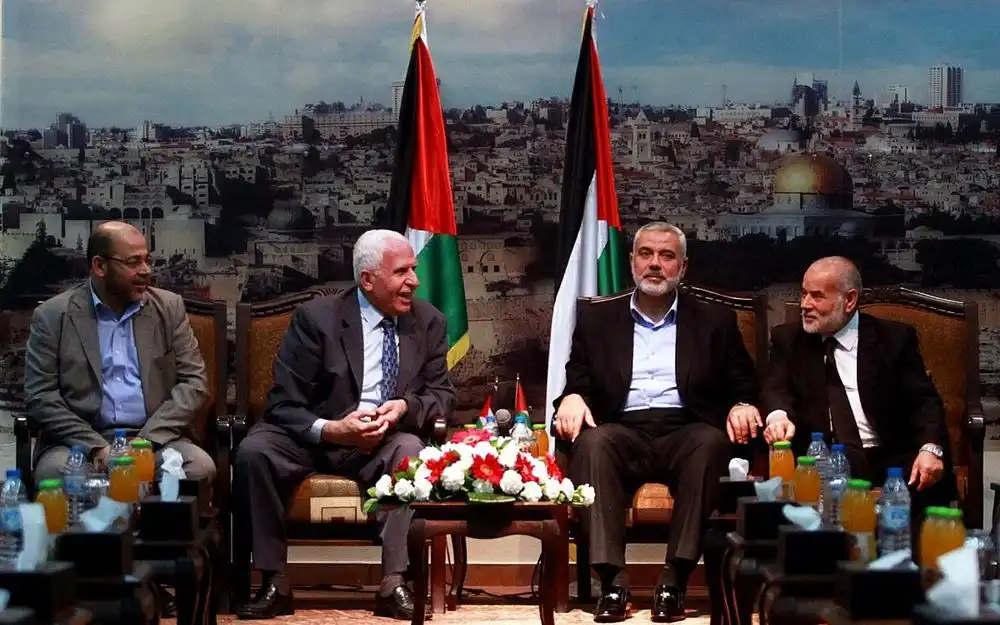
His talk about the situation in Gaza after Hamas seems like a fantasy in light of the continuing resistance and the clarity of the difficulty of achieving the goal of dismantling Hamas. On the other hand, the President of the Palestinian Authority asked the Fatah leader Azzam Al-Ahmad to communicate with the Hamas movement, indicating the need for all factions to be within the framework of Palestinian Liberation Organization. 

Source: Arabic Post



ARAB AND WORLD

Wed 20 Dec 2023 10:14 am - Jerusalem Time

Release of 40 detainees in exchange for a truce for a week.. Axios reveals an Israeli offer to Hamas, and how the resistance responded

The American website "Axios" revealed, on Wednesday, December 20, 2023, that the Israeli occupation is offering to stop the fighting in Gaza for at least one week, in exchange for the release of more than thirty hostages, as part of a new deal, while the Israeli Walla website said that Tel Aviv The Qatari mediation informed that it was prepared to grant calm for a week, in exchange for the release of 40 prisoners from Gaza.


The American website, citing Israeli officials and “another informed source,” said that this proposal is the first presented by Israel since the collapse of the agreement last month, which led to a seven-day ceasefire and the release of more than 100 hostages.


Resistance condition for resuming negotiations

The newspaper, citing Israeli officials, indicates that the proposal shows that Israel is determined to relaunch serious negotiations in order to release more hostages, while the Islamic Resistance Movement Hamas has stipulated a complete cessation of the war in order to resume negotiations with the occupation.


The Israeli occupation proposes that the new deal include the remaining group of women held by Hamas, men over the age of 60, and other sick or seriously injured hostages who need urgent medical care.


In return, Israel also suggested that it might release Palestinian prisoners convicted of more serious attacks on Israel than those released in the previous deal.


Occupation crimes in Gaza

This comes at a time when the Israeli occupation forces continue to launch intense raids on various areas of the Gaza Strip for the 75th day in a row, causing the death and injury of dozens of Palestinians in the early hours of the morning of Wednesday, December 20, 2023, while the occupation announced the killing of an officer in clashes with the resistance in the south of the sector.


The Israeli occupation aircraft continued to target the Jabalia area in the northern Gaza Strip with fire belts, and targeted various areas in Deir al-Balah in the central Strip. The occupation aircraft also carried out violent raids targeting the center and west of the city of Khan Yunis, where a child was killed and others were wounded.


While Palestinian reports stated that the resistance is engaged in violent clashes with the occupation forces in the Al-Mughraqa area, north of Al-Nuseirat in the central Gaza Strip, they also revealed fierce clashes between members of the Palestinian resistance and the occupation army in the center of Khan Yunis.


While the Israeli occupation army announced, on Wednesday, the killing of an officer with the rank of captain in clashes in the southern Gaza Strip, bringing the announced number of soldiers and officers killed to 465, since last October 7, and 133 since the start of the occupation’s ground operation in the Gaza Strip. Since October 27, Last October, the Israeli occupation army launched a ground incursion into the Gaza Strip, which began in the northern region before expanding to the center and south of the Strip, amid fierce resistance from Hamas and the Palestinian factions, and an admission by Israeli officials that their army is paying a “heavy price” in Gaza.

Source: Arabic Post

OPINIONS

Wed 20 Dec 2023 9:58 am - Jerusalem Time

Enough America...enough

Bakr Aweida

Bakr Aweida

Opinion Writer

Just as Israel has gone much further than many imagined in the madness of the war it is waging against the civilians of the people of the Gaza Strip, defenseless from all weapons, America, President Joe Biden, has also gone far in turning a blind eye to the follies of Benjamin Netanyahu, and the unjust government of aggression, which he heads with extremist politicians, none of whom hesitated to suggest completely wiping the Strip off the surface of the Earth with an atomic bomb similar to the one America dropped on Hiroshima. 

For the master of the White House, whether Republican or Democrat, to stand by the Israeli ally is not new, but rather expected, and should not raise any surprise. Records of all the major crises in the Middle East region prove that Israel is not just an ally of the United States, as much as it constitutes its basic base, which alone enjoys trust that is not subject to conditions or restrictions, and which no American administration will grant to any of its allies anywhere in the world.


The above is an existing, documented reality, since the establishment of Israel in 1948, and America’s haste, by decision of Harry Truman, its thirty-third Democratic president at the time, to precede all countries of the world in recognizing it as a state on the land of the people of Palestine. However, history also documents that there were moments of exception during which more than one American administration decided that there was a need to say to a trusted ally that “enough is enough,” even if it was in the spirit of pulling the ear of a troublesome child inside the house out of concern for the interests of the family itself. This happened twice in a blatant manner, in front of the people of the entire world. The first time was when Republican President Dwight Eisenhower rushed to issue an order that was not without a veiled rebuke to the rulers of Tel Aviv demanding that they immediately withdraw from Egyptian territory and from the Gaza Strip, which was then part of Egypt, after the Suez War in 1956.


The second time, a kind of challenge occurred between the administration of President George H. W. Bush, also a Republican, and Israel’s Yitzhak Shamir, the extremist Likud leader, regarding two matters that directly affected America’s interests in the Middle East region. The first was facilitating the convening of the peace conference in Madrid in 1991, and the second was related to the first, which was freezing the construction of new settlements in the occupied West Bank during the June 1967 war. The second time was in June 1990, when the world saw James Baker, the US Secretary of State at that time, who placed the White House phone number public in front of international television cameras, suggesting that Israeli politicians contact him after reaching a decision to stop the expansion of settlements on the West Bank. That day, he addressed them, saying: “When you are serious about peace, call us,” otherwise stubbornness will result in facing action. My punishment is to freeze any new loans.


It can be concluded from the above that the master of the White House can, when he wants, exert pressure on the rulers of Israel with the aim of putting an end to any persistence in stubbornness that harms the interests of the United States and affects the credibility of its relations with the rest of its allies in the region, and without intending to abandon the approach of steadfast American support for the survival of Israel. The most powerful weapons arsenal among the countries of the region as a whole. So, as long as this is the case, the following question may be asked: What prevents the Joe Biden administration, and even the president personally, from taking a more firm stance against Netanyahu’s foolishness, which has exceeded every reasonable limit? Isn’t it enough for the Democratic President to have an explicit electoral instrument when he declares that he is a “Zionist” in public, so that he can stare the Israeli war machine in the face with a red eye and say that “enough is enough”? Yes, he can, if he wants, even if he has the human motive to take precedence over everything else.
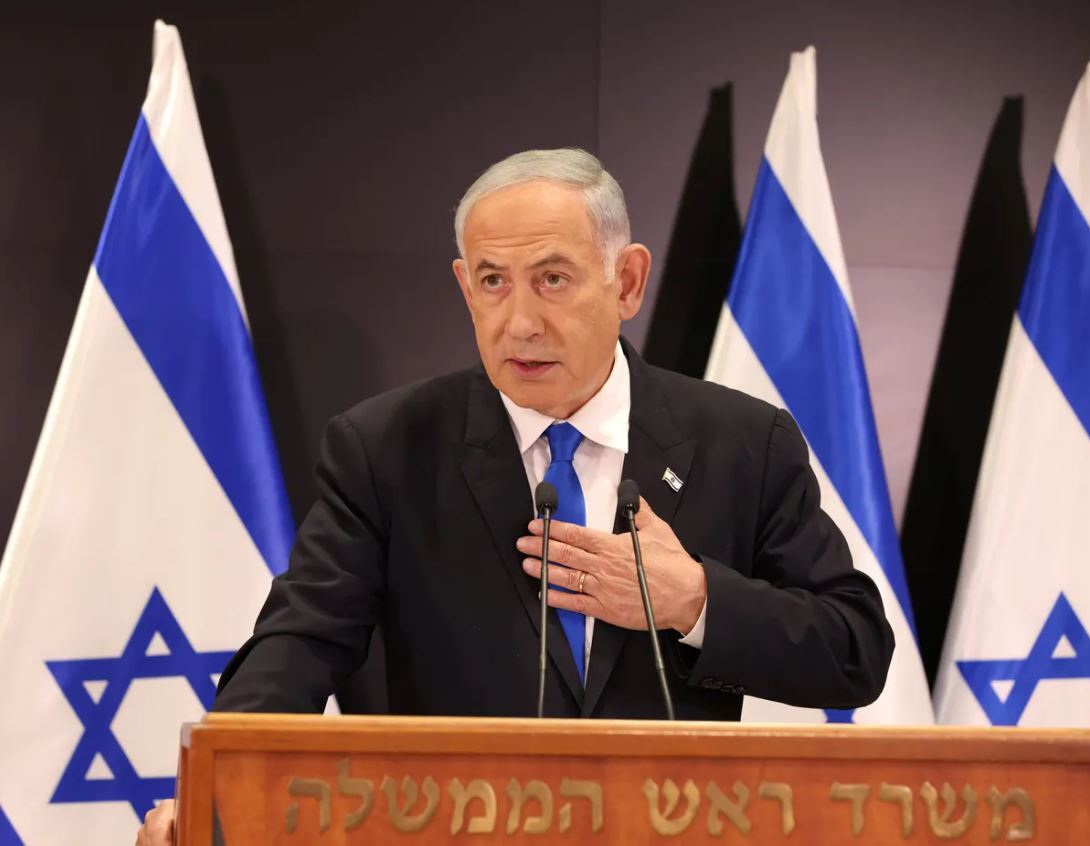
ٍSource: Alsharq Alawsat

ARAB AND WORLD

Wed 20 Dec 2023 9:53 am - Jerusalem Time

UN Agencies Voice Anger at Attacks on Gaza Hospitals

UN officials voiced anger and disbelief on Tuesday about the situation in Gaza hospitals, where injured people do not have basic supplies and children recovering from amputations are being killed in the ongoing conflict. Most of Gaza's hospitals are no longer operating due to damage in attacks, Israeli raids and lack of fuel and staff. 


Those still open are under growing pressure due to both strikes and growing numbers of sick and injured patients arriving. "I'm furious that children who are recovering from amputations in hospitals are then killed in those hospitals," said James Elder, spokesperson for the UN children's agency. He added that the Nasser Hospital, the largest operational hospital left in the enclave where he spent time earlier this month, had been shelled twice in the past 48 hours. 


He said one of the victims was a 13-year-old amputee named Dina who survived a strike on her home that killed her family. "So where do children and families go? They're not safe in hospitals, they're not safe in shelters, and they're certainly not safe in so-called safe zones," he said. Margaret Harris, World Health Organization spokesperson, described the situation in Gaza hospitals as "unconscionable". "The very basics, they do not have them. One of my colleagues described people lying on the floor in severe pain, in agony, but they weren't asking for pain relief. They were asking for water," she said. "It's beyond belief that the world is allowing this to continue." 

PALESTINE

Wed 20 Dec 2023 9:40 am - Jerusalem Time

Gaza war: Violent raids targeting Jabalia and dozens killed and wounded

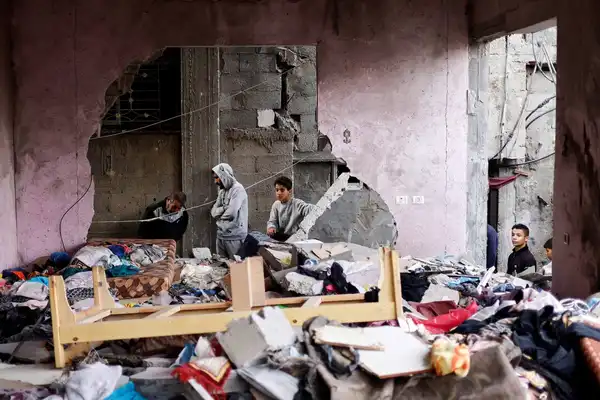
On the 75th day of the aggression against Gaza, Israeli occupation aircraft and artillery continued to bomb various areas in the Gaza Strip, focusing at dawn on Wednesday on Jabalia and Khan Yunis in the north and center of the Strip.


Local and journalistic sources in the Gaza Strip said that heavy Israeli bombardment targeted Jabaliya, north of the Gaza Strip, resulting in the death and injury of dozens of citizens, most of them children and women.


The bombing on Jabalia comes after 16 citizens were killed and more than 70 others were injured yesterday evening, Tuesday, in a bombing that targeted the town and Jabalia camp.


Protection and health sources in the Gaza Strip confirmed that the occupation forces executed more than 13 people in the Anan family home, in front of the eyes of children and women in northern Gaza.


The occupation warplanes launched a series of raids on the city of Khan Yunis, south of the Gaza Strip, in conjunction with violent Israeli artillery shelling.


Press sources reported that a child was killed and a number of others were wounded in a bombing that targeted a house in the Japanese neighborhood, west of Khan Yunis, in the southern Gaza Strip, and that injuries occurred as a result of an Israeli raid on the city’s Al-Amal neighborhood.


The occupation aircraft bombed a house in the middle of the Shaboura camp in the center of the city of Rafah, resulting in the death and injury of many citizens.


Yesterday evening, Tuesday, 13 citizens were killed and others were injured when the Israeli occupation aircraft bombed a house in Deir al-Balah in the central Gaza Strip.


Also, 15 citizens were martyred and others were injured when the occupation aircraft bombed a house for the Hamdan family, west of Khan Yunis, south of the Gaza Strip.


The occupation artillery bombed the neighborhoods of Al-Tuffah, Al-Daraj and Al-Shuja'iya, east of Gaza City. The occupation aircraft also bombed a house near Sheikh Radwan Pool in the city.


Medical sources reported that about 100 killed and hundreds of wounded arrived at hospitals during the last hours of yesterday evening, as a result of the massacres committed by the occupation forces throughout the Gaza Strip.


The number of dead since the start of the Israeli aggression on the Gaza Strip on the seventh of last October has risen to more than 19,650 Palestinian, in addition to about 52,600 wounded, and thousands of missing people, in an infinite toll.


OPINIONS

Wed 20 Dec 2023 8:47 am - Jerusalem Time

Is the Israel-Gaza war killing the two-state solution?

The National News

The National News

Opinion Writer

The war in Gaza has emboldened Israeli hardliners to reject outright the two-state solution, long seen as the only way to end the decades-long conflict, but it has also shown that there were no concrete steps to move towards that objective even before October 7.Now that the war has claimed the lives of thousands, the international community is refocusing its attention on the broader Palestinian-Israeli conflict, hoping to revive the goal of having two states that exist side by side in peace – a goal seemingly already defeated by Israel's continuous annexation and occupation of land.


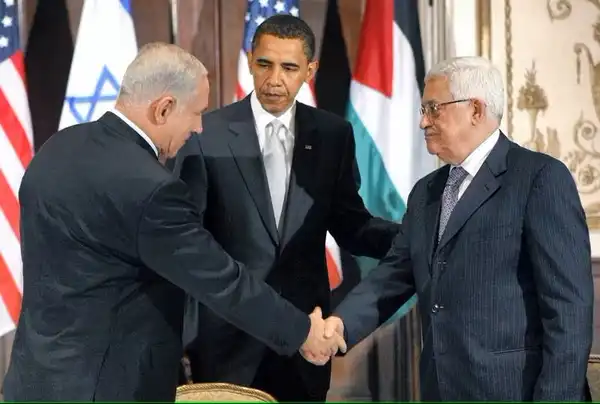
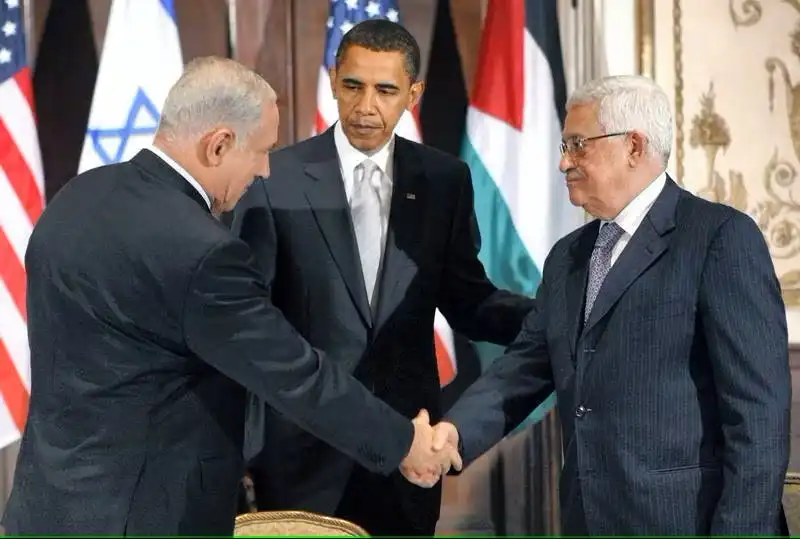
Under the principle of two states – an unrealized goal of the Oslo Accords, which were signed in the White House in 1993 – the Palestinians would be able to establish their own country on land occupied by Israel since the 1967 Arab-Israeli War. The last major push towards this goal was under US President Barack Obama. But Israel's hardline Prime Minister Benjamin Netanyahu, who was also head of the country then, refused to negotiate with President Mahmoud Abbas's Palestinian Authority, citing the existence of the militant group Hamas.

On Saturday, Mr. Netanyahu boasted about what he described as his role in undercutting Oslo. He told reporters in Tel Aviv that the accords were a “fatal mistake” and that they had allowed Hamas to develop the ability to attack Israel from Gaza.

His government has continued to reject the two-state solution since the outbreak of the war. “Israel's government is doubling down on the rejection of the two-state solution,” said Muriel Asseburg, a scholar on the Palestinian-Israeli conflict and a senior fellow at the German Institute for International and Security Affairs in Berlin. “For Israelis, it would be more rational after the October 7 massacres to say, let us finally separate from the Palestinians.” Last month, a survey commissioned by Israel's Mitvim Institute found that 52 per cent of Israelis support “political measures at the end of the military campaign that entails a degree of recognition of independent Palestinian sovereignty”. A quarter of Israelis favour “unilateral separation” from the Palestinians, while 27 per cent back a two-state deal if the normalisation process with Arab countries continues. In the West Bank and Gaza, a survey conducted at the beginning of December by the Palestinian Centre for Policy and Survey Research found that post-October 7, support for Hamas had more than tripled in the West Bank, while rising slightly in the Gaza Strip. Despite “the lack of confidence in the seriousness” of western powers in reviving the two-state solution, support for it remained steady at 34 per cent. Although the Mitvim Institute survey indicates sizeable support for Palestinian independence, more Israeli politicians are arguing that a deal, even a unilateral normalization occupied territory similar to Gaza in 2005, could make Israel more vulnerable to large-scale militant attacks from the West Bank. A Palestinian draped in the Palestinian flag walks on top of the Israeli separation wall between the West Bank city of Abu Dis and East Jerusalem, during clashes with Israeli security forces in 2021. 


A western official who was on a fact-finding mission in the Middle East told The National that his Israeli counterparts kept telling him that Israel could no longer retreat from the West Bank and East Jerusalem, the essential step to achieving the two-state goal. “They kept saying that Israel would come under attack, although their belief in their security apparatus and their technology has been shattered,” the official said during a stop in Amman. “They don't want to admit the contradiction.” 


But in Ramallah, the Palestinian Authority under Mr. Abbas remains keen on a two-state solution because it wants to re-amass political capital and be seen as being able to deliver for its people, the western official said. “They want to play an interlocutor role between Hamas and the international community and regain their footing as a relevant player.” Meanwhile, the international push for a two-state solution is not backed by concrete steps.


Despite more vocal calls by US President Joe Biden and European countries for a two-state solution, they “are not preparing concrete steps to move toward that objective”, said Ms. Asseburg. Another problem has been Israel's “step-by-step, de facto annexing more of land”, she added. In Cairo, one of the few Arab countries with leverage over Hamas, an Egyptian official said that even if Israel agrees to work in good faith with the Palestinians and mediators to reach the two-state goal, the negotiating process is likely to take many years. “That’s if it ever comes to fruition,” explained the official, who has direct knowledge of regional negotiations between Israel and Arab countries regarding Gaza. The source said it would take years to rebuild the coastal enclave, especially if Israel goes ahead with its reported plan to pump seawater into Hamas’s underground tunnels, which could render farmlands in Gaza unfit for cultivation.

OPINIONS

Wed 20 Dec 2023 8:39 am - Jerusalem Time

Foreign Affairs: Israel’s Unfinished Democracy

Foreign Affairs

Foreign Affairs

Opinion Writer

By Yohanan Plesner


In the months before Hamas’s heinous October 7 attacks, Israeli society was more polarized than ever before. Efforts by Prime Minister Benjamin Netanyahu’s far-right government to ram through antidemocratic reforms had provoked the largest and most sustained protests the country had ever seen. By this past summer, polls indicated that 45 percent of the public thought that the country was on the brink of a violent civil war. 

Since then, the attacks and the subsequent government decision to launch an all-out campaign against Hamas have united Israelis behind the war. Thus, they have shown overwhelming support for the twin goals of returning the hostages and toppling the terrorist regime in the Gaza Strip. Yet the polarization has hardly disappeared: even now, at the height of the fighting, the trust that Israelis place in the government is at an all-time low, and the rally-round-the-flag effect has been limited to support for the Israel Defense Forces and their mission to defeat Hamas. What does this mean for the country and its ability to shape a stable postwar order? 

In the wake of October 7, it has become a truism that nothing in Israel will ever be the same. Although it is impossible to predict the outcome and the long-term effects of the war, many have noted that Israel’s political makeup and security doctrines will almost certainly undergo profound changes. The catastrophic intelligence failures that preceded the attacks are bound to have far-reaching repercussions on Israel’s security and defense establishment. Israel will need to reframe its whole approach to the Palestinian conflict. Many have also speculated that the current leadership, led by Netanyahu, will have to step down at the end of the war.


But given the social and political turmoil in Israel in the months preceding the war, the changes could well go beyond that. The possible removal of Netanyahu will have huge consequences, including for many of the issues that dominated his alliance with the religious parties on the far right. It also could provide a rare opportunity to reshape Israel’s social contract. The vast majority of Israelis now realize that surrounded as they are by threats on all sides, they must come together in their sense of purpose and the shared recognition of the sacrifices they need to make to defend the country. After a dangerous brush with illiberal, authoritarian rule, Israelis will not be content to return to the status quo. They will demand firm guarantees that a temporary majority cannot overturn democracy and constitutional safeguards that will enshrine its citizens’ individual rights. 


FROM DIVISION TO DISASTER

Two different developments contributed to Israel’s unreadiness for the catastrophe of October 7. One, of course, was the government’s terrible misreading of the country’s security. At the start of 2023, Netanyahu and his right-wing coalition partners were confident that Israel had contained Hamas. They assumed that the task of governing the more than two million residents of Gaza had moderated the radical Islamist movement and steered its focus toward filling potholes and away from cross-border attacks. More important, Israel’s military establishment was convinced that even if Hamas did try to attack, it would be thwarted by the billion-dollar high-tech security barrier that had been constructed at the end of 2021 along the 1949 armistice line. That, as a consequence, provided a false sense of security among the IDF brass regarding the situation along Israel’s border with Gaza. These assumptions helped produce the devastating security lapses that made the Hamas attacks so deadly. 

No less significant, however, was the judicial overhaul that Netanyahu tried to plow through. Often understood merely as a power grab aimed at helping the prime minister avoid jail time for corruption, Netanyahu’s proposed changes would have seriously degraded Israel’s democratic foundations. By giving the governing coalition a veto over the Supreme Court, the reform would effectively end the country’s independent judiciary—and to many Israelis, it looked like a way to ensure that the country’s extreme right settler and ultra-Orthodox sectors retain extraordinary privileges and influence. Although they constitute only about 13 percent of Israel’s overall population, the ultra-Orthodox are prominently represented in the governing coalition. And to the consternation of a majority of Israelis, the ultra-Orthodox have long refused to serve in the IDF or to enter the workforce at anything close to the same rate as the rest of the country. The judicial reforms would have allowed them to continue to receive special subsidies and economic incentives, even as their contribution to national security and the Israeli economy is negligible.

Given the widespread concerns about their antidemocratic implications, the judicial reforms met with enormous public opposition almost from the outset. In February, just weeks after the plans were introduced, a full two-thirds, or 66 percent, of the Israeli public opposed the idea of an override clause that would allow the majority in Parliament to overturn Supreme Court rulings. A similar proportion, or 63 percent, were against politicizing the judicial selection process, the other main component of the government’s plan. By June, after Defense Minister Yoav Gallant was fired by Netanyahu for warning that the overhaul was dangerously weaking the IDF’s readiness—a firing that the prime minister was subsequently forced to reverse amid massive public protest—even supporters of Likud, Netanyahu’s own party, turned against the plan. In polling at the time, more than 60 percent of Likud voters said that they were interested only in reforms that the opposition would sign on to, or that the overhaul should be halted completely.  By summer, the judicial overhaul had caused widespread disaffection in the military. Large numbers of reservists threatened to refuse to show up for voluntary service if the government went through with the plan. In July, a protest letter signed by more than a thousand air force reservists stated that “legislation that allows the government to act in an extremely unreasonable manner will harm the security of the State of Israel, will cause a loss of trust and violate [our] consent to continue risking [our lives].” Yet Israel’s leaders seemed to think that they could afford to promote divisive and dangerous policies, even if it polarized the electorate and weakened national security in the process. As with its assumptions about Hamas, the government’s determination to flout overwhelming public opposition to its judicial overhaul plans proved to be fatally misguided.


COMING HOME TO ROOST

The many political and security failures that contributed to October 7 are sure to have far-reaching repercussions. Already, the IDF Chief of Staff, the head of Military Intelligence Directorate, and the director of the Shin Bet, Israel’s internal security agency, have taken responsibility for the security lapses that took place on their watch, and all seem likely to resign as soon as the war in Gaza ends. Yet so far, the prime minister himself has been conspicuously silent. He has refused to accept responsibility for the lapses on October 7, and when he does speak about the government’s response, he weighs his words cautiously, evidently preparing for a likely official commission of inquiry into what went wrong and trying to find a way to hang on to power. Yet it is inconceivable that the heads of Israel’s security agencies will all be held accountable in the aftermath of the war while Netanyahu himself avoids any consequences.

Nonetheless, it is hard to envision a man who has clung onto power after multiple criminal indictments resigning on his own volition. This means that opposition parties in the Knesset will need to be joined by at least five members of the current coalition either to vote in an alternative prime minister or cabinet or to pass legislation to dissolve the Parliament and set early elections. Although for now, either scenario may seem unlikely, the end of the war, depending on its outcome and the perceptions about it, could well hasten Netanyahu’s political end.

The precariousness of Netanyahu’s support has become increasingly clear in opinion polling. In the days after October 7, both Netanyahu and the IDF leadership had low approval as people reacted to the security failures. But after acknowledging responsibility and then taking decisive action on the battlefield, the military brass began to receive higher marks. By contrast, Netanyahu’s ratings have continued to decline—including among those who voted for his coalition in the elections a year ago. For instance, in a survey published on October 31, just ten percent of self-identified right-wing voters—Netanyahu’s core supporters—said that they trusted the prime minister to manage the war, whereas 41 percent trusted the IDF leadership. (Another 29 percent said that they trusted “both to the same degree” and 20 percent said they trusted neither.)In other words, although Israelis have broadly endorsed the war effort, the prime minister has never been more unpopular, with only 22 percent of Jewish Israelis giving him high grades for his performance during the war. In fact, just one in five Jewish Israelis say that they trust his government—the lowest measurement our institute has seen since we began measuring trust in institutions 20 years ago. These stark findings suggest that the end of the war could produce extraordinary momentum for change—not only in who leads the country but in how the country is governed and what issues are focused on.


PROTECTING RIGHTS, NOT THE FAR RIGHT

What might the removal of Netanyahu from the equation bring? For one thing, the prime minister’s party, Likud, already hurting in the polls, is likely to suffer a collapse in support. Some of his coalition partners on the extreme right are likely to enjoy a similar fate. More to the point, many of the issues that dominated Netanyahu’s quest for power—his judicial overhaul, the veto power enjoyed by the ultra-Orthodox parties—will be among the first that are targeted for change by a new leadership.

Take the effort to formalize military exemption for the ultra-Orthodox. The flagship initiative of the religious parties in Netanyahu’s coalition, this was a sweeping bill that would legalize the existing reality according to which all yeshiva students are exempt from military service. The bill is now, for all practical purposes, dead on arrival. After the enormous losses incurred by the IDF in the war in Gaza—and given that almost no ultra-Orthodox are represented in the country’s rapidly filling military cemeteries—it is highly unlikely that the Knesset would consider such a bill. Similarly, a disproportionate amount of the state budget is currently funneled to ultra-Orthodox schools that refuse to teach a core curriculum and which therefore leave their graduates unable to enter the modern workforce. Such largesse will be politically unjustifiable in what promises to be a tough postwar economy. And then there is the deeply unpopular judicial overhaul. The plan was already taken off the table as a condition of forming the emergency war cabinet with Benny Gantz’s National Unity Party, and it is difficult to imagine a future government succeeding in reviving it. But the country has the opportunity to do more than simply reject policies that benefit a narrow segment of the far right. Since 2018, Israel has gone through unprecedented political and societal turmoil: first, an electoral crisis that led to five elections in less than four years and resulted, in late 2022, in the most right-wing government in Israeli history; then, an institutional crisis, with the Netanyahu government’s unprecedented challenge to judicial independence during the first half of 2023; and finally, the worst attack on Israeli soil in the country’s history, followed by the war that is unfolding now. Emerging from these traumatic events, Israel will urgently need to bring together its population and rebuild the country’s democratic foundations. One way it can do this is to establish a new social contract based on broadly supported government policies that can both find areas of common ground among Israel’s diverse Jewish constituencies and also safeguard the rights of the country’s minorities.

For example, a successor government could end the practice of putting the burden of defending—and dying for—the country only on certain Israelis. This would mean a much smaller number of exemptions to military service, allowing more women in combat positions (a trend that has already begun), economic incentives for those serving in key military positions, and a broader commitment by all members of society to serve in a meaningful form of national service. On the economic front, those who refuse to contribute productively to the economy should no longer be given unlimited social benefits supported by the taxes of working and serving Israelis. Just as important, the country will need to work toward a new constitutional framework. At the time of Israel’s founding, its 1948 Declaration of Independence called for a written constitution, but fundamental disagreements on the defining characteristics of the country has for decades prevented its realization. As a result, 75 years later, Israel not only lacks a formal constitution but also has few checks and balances on its government: there is no bill of rights, no presidential veto, no second chamber of Parliament, no federal distribution of power. For decades, only the Israeli Supreme Court has served as a reliable check on the unlimited power of whoever happens to hold a temporary majority in Parliament. Over the years, a series of Basic Laws were passed by the Knesset that established a number of rights that have been recognized by the Supreme Court as a constitution in the making. But the events of the past year have proved them woefully insufficient in the face of a government determined to ram through measures that benefit only its own supporters. 

In fact, Israelis broadly agree that the country should redefine the rules of the game and expand its constitutional framework. Even before the war, nearly 70 percent of the population supported a constitution in the spirit of the Israeli Declaration of Independence that secures a democracy “based on freedom, justice and peace as envisaged by the prophets of Israel” while also ensuring “complete equality of social and political rights to all its inhabitants irrespective of religion, race or gender.” Such a constitutional framework is important in any democracy, but it is particularly vital in a country that seeks to maintain its Jewish identify and defend itself against multiple enemies without sacrificing bedrock democratic principles.

Israelis across the political spectrum have made clear that the country’s governments should no longer move forward with narrow partisan policies that could threaten the basic fiber of the country. Almost every public opinion poll since the outset of the war shows Israelis gravitating toward the parties of the center and leaders who stress national unity, and away from politicians on both extremes. What happened in the months before the war was a reckless distraction for a country that was already facing more external threats than any other democracy in the world, as well as a demographic shift that has led to a shrinking portion of society shouldering ever larger economic and security burdens.


DEMOCRACY REDEFINED

Amid one of their greatest tests in the country’s history, Israelis have a series of important opportunities. Rebuilding and strengthening Israeli democracy will be a long and difficult process. But if new leadership emerges after the war that can begin to repair the country’s frayed unity, the catastrophe that began on October 7 could also become the moment when Israelis are pushed to finally rectify the mistake made by Israel’s founders in 1948 when they chose to avoid the most fundamental questions relating to Israel’s character. 

New leadership could bring Israelis together in a grand project of national renewal that would include a new social contract that all sectors of society would respect. This would allow Israel to rebuild its defenses that were so badly compromised in this war and also to set the stage for more enduring and broad-based economic prosperity. By codifying this new social contract into a long-overdue constitutional document, Israelis can also protect the country from future threats to Israeli democracy. Of course, such steps will face significant hurdles, starting with gaining the people’s trust by going back to them for a vote of confidence in new leadership. Getting Netanyahu to agree to this will be hard. Although he is under indictment and deeply unpopular, the prime minister is also the shrewdest political operator in the Western world and has led Israel for 13 of the past 14 years. He will not leave the stage willingly. Moreover, there are other powerful political actors in his coalition who would have much to lose if such changes were implemented and who would fiercely resist them. Success will require the various factions in Israel’s broad array of parties to rise above sometimes stark differences and come together for the greater good of the country at a time of national crisis.

But given the multiplying threats against Israel—both from enemies without and from antidemocratic forces within—the risk of inaction is acute. In ushering in a new constitutional order, Israel has the rare opportunity to complete one of the great unrealized goals of its founders. If Israelis can achieve this lofty goal in the wake of the worst national catastrophe since the Holocaust, then they will have successfully turned the terrible tragedy of October 7 into a historic opportunity to not only defend the Jewish state but also to secure its democratic future for generations to come.

OPINIONS

Wed 20 Dec 2023 8:28 am - Jerusalem Time

A Palestinian Revival: How to Build a New Political Order After Israel’s Assault on Gaza

Foreign Affairs

Foreign Affairs

Opinion Writer

By Khaled Elgindy


After ten weeks of waging a brutal war in Gaza, Israeli leaders continue to insist that their military campaign will press ahead until Hamas has been eliminated. They have yet to articulate what that would mean in practice or who or what they expect to fill the governance void such an outcome would leave. Given the absence of a clear endgame, there has been no shortage of speculation about what will happen after the bombs stop falling. Mooted “day after” scenarios run the gamut from fanciful notions of an Arab-run trusteeship over Gaza to downright disturbing calls, mostly from Israelis, for the transfer of most or all of Gaza’s population to Egypt. The Biden administration has laid out its own “day after” parameters, which, among other things, rule out the forced displacement of Palestinians from Gaza or the territory’s reoccupation by Israel. In addition, the administration has said it wants to see a return of a “revitalized” Palestinian Authority (PA)—the Palestinian body nominally in control of parts of the West Bank—to Gaza and, in contrast with the last three years, now says it is serious about a political process that culminates in the two-state solution, with a sovereign Palestinian state alongside Israel.


The administration’s hopeful vision, however, is likely to run up against some hard realities. For one, no one knows when or how this war will end or how much of Gaza and how many Gazans will be left when the fighting stops. Moreover, Israeli Prime Minister Benjamin Netanyahu has said Israel will not allow the PA to return to Gaza, promising to keep Israeli forces in Gaza indefinitely, including laying out plans for a permanent “buffer zone” inside Gaza that would further constrict the land available to Palestinians. He has assured his partners in his governing coalition that he is the only leader who can prevent the creation of a sovereign Palestinian state.

Events on the ground are already moving in dangerous directions. The sheer magnitude of death and destruction in Gaza is difficult to fathom. According to Gaza’s health ministry, the Israeli assault has so far killed at least 18,800 people, mostly civilians (including 8,200 children). The operation has uprooted more than 80 percent of Gaza’s 2.3 million inhabitants and rendered much of northern Gaza uninhabitable. Israel’s severe restrictions on supplies of food, water, and fuel to Gaza’s population have led to widespread outbreaks of disease and hunger and what the United Nations has described as an “epic humanitarian catastrophe” and have even prompted warnings from UN officials and other observers of the possibility of genocide. Moreover, the weaponization of mass starvation and disease, combined with the near-total collapse of Gaza’s health care system and the incessant bombardment of a population crammed into ever-shrinking spaces, make it more likely by the day that some or all of Gaza’s vulnerable residents will be forced over the border into Egypt. Such an outcome aligns with Netanyahu’s desire to see a “thinning out” of Gaza’s population.


Alongside Israeli-imposed realities on the ground, the future of Gaza will also depend on developments within internal Palestinian politics. U.S. Secretary of State Antony Blinken has said that Palestinians need to be “at the center” of conversations about Gaza’s future. But for this to happen, Palestinians will need to revive not just institutions of governance and security but also, more fundamentally, of politics: the lack of effective political leadership owing to the decay of Palestinian political institutions, notably the Palestinian Authority and the Palestine Liberation Organization (PLO), the umbrella organization that ostensibly represents the various factions involved in the Palestinian national movement. 

As is now clear, the division and stagnation that have plagued Palestinian political institutions for the last 16 years have been disastrous not only for Palestinians but for Israelis and the region as well. Indeed, as many analysts (including myself) have long warned, the debilitating split between Hamas and Fatah—the two biggest Palestinian political factions, which warred over Gaza in 2007—had become a perpetual source of violence and instability. Although much of this Palestinian political dysfunction was self-inflicted, Israel has actively worked to promote weakness and division among Palestinians to maintain its indefinite rule over the occupied territories. This divide-and-rule approach to the Palestinians was epitomized by Netanyahu’s cynical hope that propping up Hamas in Gaza would prevent an eventual two-state solution. The events of October 7 brought that policy to an end.

Any discussion of the “day after” should therefore be predicated on encouraging the emergence of a unitary and cohesive Palestinian political leadership. Palestinian leaders will have to set aside their factional commitments, and Israel and the United States will have to relinquish the wholly unrealistic idea that Hamas can be permanently excluded from Palestinian politics. Convincing either Palestinians or Israel and its U.S. allies to do so will not be easy. But if they fail to make these accommodations, humanitarian and security conditions in Gaza are unlikely to improve and a diplomatic settlement will remain far out of reach.


ANOTHER CATACLYSM

The events unfolding in Gaza since October 7 are of a historic nature, on par with other cataclysmic moments in Palestinian history, such as the 1948 nakba or “calamity,” during which some 800,000 Palestinians, around two-thirds of the British Mandatory Palestine’s Arab population, were forced out of their homes or fled and barred from returning, and the Six-Day War of 1967, when Israel captured the remaining parts of historic Palestine, the West Bank and Gaza Strip, and another 300,000 Palestinians were expelled from their homes or fled. Like 1948 and 1967, the current Gaza war is likely to alter the trajectory of Palestinian politics in ways that are impossible to predict. 

The ongoing assault on Gaza is already the deadliest single event and the largest forced displacement of Palestinians in history. Just as the horrific attack of October 7 by Hamas will be felt by Israelis for many years, the sheer magnitude of human and physical destruction inflicted on Gaza by Israel will leave an indelible imprint on Palestinian national consciousness for generations to come. Like the nakba, the collective trauma of Gaza today is being experienced well beyond its borders among Palestinians in the West Bank, East Jerusalem, Israel, and the diaspora, and even more broadly across the Arab world, and it will shape the political consciousness of the next generation of Palestinian leaders.

In the meantime, the difficult but unavoidable reality is that Israel’s stated goal of eliminating Hamas as a political and military force cannot be achieved and is, quite frankly, a recipe for endless death and destruction. The sooner Israeli and U.S. officials come to terms with this fact, the better off everyone will be. Two months of ferocious bombing and the destruction of large portions of Gaza’s civilian infrastructure have failed to dislodge Hamas from power or significantly degrade its military capabilities, including its ability to launch rockets, and has done little to disrupt its systems of command and control. The hostages-for-prisoners deal, although short-lived, demonstrated Hamas’s continued relevance; Israel has no choice but to deal with the group. A recent study by +972 Magazine suggests that Israel may be deliberately inflicting mass civilian casualties and suffering in the hope of inducing Gazans to turn on Hamas, but there is little evidence that such a turn is happening. Indeed, it is more likely that the Israeli bombardment and invasion of Gaza have achieved the opposite effect, driving many Palestinians toward Hamas, as recent polls conducted by the Palestinian Center for Policy and Survey Research have shown.


Hamas is an integral component of Palestinian politics with deep roots in society and a significant following both inside and outside the occupied territories. However abhorrent some of its actions or ideas may be, Hamas will likely remain part of the Palestinian political landscape for the foreseeable future. Moreover, as long as the conditions of occupation, blockade, and other forms of Israeli structural violence persist in Gaza, some form of violent resistance from Hamas, or another group like it, will continue.


A RETURN TO GAZA?

Because of Hamas’s durability and other reasons, it is unrealistic to expect that the group’s rivals in the PA can simply swoop into Gaza and take control of the territory. Despite the preferences of the United States and other Western powers, the PA is unlikely to return to Gaza anytime soon—at least not as it is currently constituted. Netanyahu’s ruling coalition has also expressly rejected that possibility. But even if Israeli leaders could be convinced to change their minds, the PA sees the possibility of regaining control over the devastated territory as a poisoned chalice. No Palestinian leader wants to be seen taking over Gaza on the back of Israeli tanks, particularly someone as intensely weak and unpopular as PA President Mahmoud Abbas. He has said the PA will not return to Gaza unless a clear pathway to Palestinian statehood has been established.

That remains highly improbable given Israel’s far-right government, parts of which favor the outright annexation of the Palestinian territories, and the Biden administration’s track record in the Middle East, including its reluctance to put pressure on Israel. Moreover, the PA can barely control the limited areas under its jurisdiction and is in a state of slow-motion collapse, and Abbas has no desire to inherit the monumental humanitarian and security problems resulting from Israel’s destruction of Gaza. The feeling is most likely mutual, as Palestinians in Gaza are unlikely to be enthusiastic about embracing Abbas’s corrupt and feckless bureaucracy. In the end, given Abbas’s intense unpopularity and Hamas’s intractable presence on the ground, any return of the PA would still require Hamas’s consent.

In light of the flagging legitimacy of the current Palestinian leadership, many both inside and outside Palestine see new elections, which have not been held since 2006, as a necessary component of the postwar order and the eventual reconstruction of Gaza. But the chances of holding a vote are extremely low. The Israeli onslaught in Gaza has caused massive dislocation, destruction, and suffering, conditions likely to persist for some time. These conditions simply would not allow for elections to take place. Then there is the perennial and unavoidable question of whether Hamas would be allowed to participate. It is virtually impossible to imagine any circumstance under which Israel or the United States would allow even a reformed Hamas to contest future elections. And yet an electoral process that expressly excluded Hamas would rob it of legitimacy and could even lead to another civil war. In short, it is extremely difficult to see a way forward for Palestinian politics with Hamas, but equally, there is no way forward without it.


THE REVIVAL OF THE PLO

There are ways to overcome that basic conundrum, but they would require sober thinking and humility on the part of all parties. First and foremost, Israeli and U.S. officials will need to reconcile themselves to the fact that Hamas will, in one form or another, remain a force in Palestinian politics. In addition, they must abandon the idea that they can reengineer Palestinian politics to suit Israeli (or U.S.) political needs, a conceit that has helped erode the domestic legitimacy of Palestinian leaders since the Oslo process began in 1993. No less crucial, Palestinian leaders from across the political spectrum must set aside their parochial differences to address the truly existential challenges that they now face.

Many Palestinians already recognize what must be done to revive their politics: the disentangling of the PA from the Palestine Liberation Organization. Whereas the PLO is supposed to be the official address of the Palestinian national movement that represents Palestinians everywhere, the PA was originally set up by the Oslo accords as a temporary governing body overseeing the affairs of Palestinians in the occupied West Bank and Gaza. In the process, the PLO was gutted and its institutional and human resources were effectively folded into the PA in anticipation of an eventual Palestinian state. That state never came to fruition; moreover, as the PA became the de facto locus for Palestinian politics, the PLO was sidelined and allowed to atrophy. The goal, then, should be to reverse this process by downgrading the PA and upgrading the PLO while more clearly delineating the lines between them. This delineation can be achieved through the creation of a technocratic government that is agreed to by all factions, including Hamas, but does not include members of any of them. Such a government should be transitional until the creation of an actual Palestinian state or at least until conditions allow for elections to be held. Because this government would not include Hamas, it could receive international donor aid and function as a service provider rather than a political body.  


Hamas’s exclusion from Palestinian politics enabled years of violence and instability. 

Unlike most other political systems, where the functions of governance and political leadership are generally held by the same people, the realities of Israeli occupation and the arrangements produced by the Oslo accords have meant that those who govern Palestinians are not necessarily the same as those who lead them. In that distinction lies an opportunity. At the same time as a technocratic Palestinian administration stabilizes and rebuilds Gaza, the PLO must evolve so that it can provide credible Palestinian political leadership and enjoy the legitimacy and support of the Palestinian people. It must expand to include Hamas and other factions currently outside the PLO umbrella as well as representatives of Palestinian civil society both inside the occupied territories and in the diaspora. This basic formula has been outlined in successive Palestinian reconciliation agreements since 2011, but thanks both to Abbas’s reluctance to share power as well as to U.S. and Israeli inability to accept a political role for Hamas, it has never been implemented.

The idea of normalizing Hamas’s presence within the PLO will no doubt spark outrage in Israel, the U.S. Congress, and elsewhere. This is understandable, but it is not reasonable. It was precisely Hamas’s exclusion from Palestinian politics that allowed the group to serve as a free agent and spoiler, that enabled years of violence and instability culminating in October 7. Conversely, the inclusion of Hamas in the PLO’s governing bodies such as the Executive Committee and its long-dormant parliament, the Palestine National Council, would help to moderate the group and limit its ability to act on its own. Decisions of war and peace, including the disposition of Hamas’s weapons, would not be in the hands of any one party but matters of collective Palestinian decision-making and consensus. Although this will make a diplomatic settlement between Israel and the PLO more difficult to achieve, such an agreement is far more likely to stick. In any case, the question of who may or may not participate in Palestinian politics should not be subject to Israeli veto any more than Palestinians should be allowed to choose which parties may run in Knesset elections. Indeed, an effective Palestinian leadership must be able to act in accordance with Palestinian national needs and priorities independently of Israel and the United States, whose coercive influence over the past three decades has helped erode the legitimacy of Palestinian leaders in the eyes of their people.

As Palestinians know all too well from their painful history, it is precisely in those moments when they do not have a credible political leadership that bad things tend to happen to them. This is certainly one of those moments—as the current Israeli leadership no doubt understands. But even though a pliable and ineffective Palestinian leadership may serve Israel’s short-term interests, it has been highly destabilizing to the region and detrimental to prospects for a diplomatic settlement. The challenges ahead for Palestinians require strong leadership of the sort that Abbas has not offered and cannot provide. Although Abbas is unlikely to embrace such reforms on his own, key Arab states that have a stake in regional stability and the fulfillment of Palestinian political aspirations, such as Egypt, Jordan, and Saudi Arabia, can help bring him along until such time as more credible leadership can emerge.

It is impossible to imagine a process of rebuilding or stabilizing Gaza without a credible, legitimate, and united Palestinian leadership, which in turn requires a revival of Palestinian institutional politics and, more specifically, the PLO. For this to happen, the United States and especially Israel will need to abandon the dangerous notions that they can control or engineer Palestinian politics to suit their own political or ideological needs or that they can make peace with one set of Palestinians while simultaneously waging war on another. It is hard to take seriously U.S. rhetorical support for an independent Palestinian state if the United States is not even willing to allow Palestinians to control their own domestic politics. Normalizing Hamas within the context of revivified Palestinian politics will be a bitter pill to swallow, but the alternatives—such as continuing to insist on Hamas’s destruction, attempting to drag an illegitimate and ineffective PA to Gaza, or forcing elections in a volatile and crisis-ridden environment—will likely backfire as they have in the past.

ARAB AND WORLD

Wed 20 Dec 2023 8:23 am - Jerusalem Time

Israeli analyst: We should have killed 100,000 Palestinians since the beginning of the war

Israeli analyst on Hebrew Channel 13, Zvi Yehezkelly, said that the Israeli army should have killed 100,000 Palestinians since the beginning of the war in Gaza.


Zvi Yehezkeli added, "Then we will go to a ceasefire and a prisoner exchange process."


Media outlets and activists circulated a video clip of the Israeli analyst’s statements on the Hebrew Channel 13.


Some commented, "This is what they think and this is what they want in Gaza!"


Others said, "It seems that some Israeli media professionals have reached advanced stages of Nazism and fascism."


Since October 7, the Israeli army has been waging a devastating war on Gaza, leaving thousands of killed and wounded, massive destruction of the infrastructure in the Strip, and an unprecedented humanitarian catastrophe, according to Palestinian and UN sources.


The Ministry of Health in Gaza announced that the number of casualties had risen to 19,667 dead and about 52.6 thousand injuries since the seventh of last October.


The Israeli army also announced that 464 soldiers were killed in the battles in the Gaza Strip.

ARAB AND WORLD

Wed 20 Dec 2023 8:18 am - Jerusalem Time

Hebrew media: Israel informed Qatar of its readiness to enter into a humanitarian truce for a week

Israeli media reported on Tuesday that Israel informed Qatar of its readiness to enter into a humanitarian truce for a week in exchange for the release of 40 Hamas hostages from the Gaza Strip.


On Tuesday evening, the Walla website quoted Israeli officials and a foreign source as saying that Israel informed the Qatari mediation of its readiness to enter into a humanitarian truce for a week.


According to the website, the Qatari mediation informed Israel that Hamas requires stopping the war in order to renew negotiations.


He explained that the head of the Mossad, David Barnea, met with the Qatari Prime Minister and Foreign Minister, Mohammed bin Abdulrahman Al Thani, in Warsaw, and stressed Israel's demand for Hamas to lay down its arms and for the movement itself to surrender.


Earlier, Minister Member of the Israeli Mini-Ministerial Council for Political and Security Affairs (Cabinet), Heli Troper, told the Ynet website today, Tuesday, that the Cabinet discussed a prisoner exchange deal with Hamas, but “there is nothing specific currently.”


Trooper, from the "National Camp" bloc, added, "Deliberation took place in the cabinet yesterday on the issue, and there is currently nothing on the table. I can say that we are close to a plan like this. There are statements that I hope will mature, but it is still too early for us to know that." .


Regarding the possibility of Israel releasing Palestinian prisoners with long sentences in exchange for Hamas releasing Israelis detained in the Gaza Strip, Trooper said that “it is clear that there were deliberations about that,” considering that “it is not right for us to conduct these deliberations outside the cabinet because Hamas is listening to these matters.” The conversation and anything I say now may affect the negotiations and become the starting point, so I am only speaking internally.”


He added, "Our commitment is real and deep, and we bear the responsibility of returning all kidnapped men and women to their homes. How we will implement that depends on us, but not only on us. We must know that we have done everything we can in order to exhaust any opportunity to return them."


Trooper repeated the talk about the two central Israeli goals of the war on Gaza, which are the return of detainees and the elimination of Hamas rule, but he added that “the return of the kidnapped is more urgent. Both are important, but it is possible to target Hamas the day after tomorrow as well as the next month, and by the way it should be said in the first place that this war is expected to "It lasts for months and years. Therefore, I can target them tomorrow, the day after tomorrow, after a month, after a year, and I am not sure that I will be able to return the kidnapped people after a day or two."


According to Trooper, "We see what is happening there and we hear from the returnees what the conditions are. Therefore, if there is a possibility of returning them today or tomorrow, we must exhaust this possibility." He added, "There is one thing that I will definitely not agree to, which is stopping the war, that is, ending the war."

He said, "We realize that the next stage (of the prisoner exchange) will be complicated, but we believe it is possible, and we certainly believe that we must do everything in our power to bring them home. There will be costs, and this will be complicated, but this is our commitment to them, and after all this." I say that the war must continue in different forms and with certain truces.”

Source: Sama News


ARAB AND WORLD

Tue 19 Dec 2023 10:19 pm - Jerusalem Time

Washington shows openness to passing a UN humanitarian resolution on Gaza

The US State Department said on Tuesday that the United States is working with member states of the Security Council to resolve outstanding issues related to a draft resolution calling on Israel and Hamas to allow aid to reach the Gaza Strip, and to establish a UN monitoring mechanism for the humanitarian aid provided.


Speaking at a press conference, State Department spokesman Matthew Miller said Washington would welcome a resolution that fully supports meeting the humanitarian needs of the people in Gaza but that the details of the text are important.


Meanwhile, members of the UN Security Council are conducting intense negotiations on an Arab-sponsored resolution to stimulate the entry of much-needed humanitarian aid into Gaza during a period of cessation of fighting, in an attempt to avoid the use of its veto power again by the United States.


The Council was scheduled to vote late Monday afternoon, but the date was postponed in an attempt to persuade the United States to support the resolution or abstain from voting.


The United States had opposed a Security Council resolution supported by almost all members of the Council, and dozens of other countries demanding an immediate ceasefire in Gaza.


The 193-member United Nations General Assembly overwhelmingly supported a similar resolution on December 12, with 153 countries voting in favor of the resolution, 10 countries opposed, while 23 countries abstained from voting.


The draft resolution, which was studied by the Council's 15 members on Monday morning, recognizes that civilians in Gaza do not have sufficient access to food, water, sanitation, electricity, communications and medical services "necessary for their survival."


It also expressed the Council's "grave concern about the disproportionate impact that the conflict is having on the lives and well-being of children, women and other civilians living in difficult situations."


About 20,000 Palestinians have been killed, according to the Gaza Ministry of Health, since Israel declared war on Hamas following its surprise attacks in southern Israel on October 7.


Source: Sky News Arabia

PALESTINE

Tue 19 Dec 2023 10:13 pm - Jerusalem Time

West Bank: Israeli army storms the towns of Ya`bad and Araba and the village of Faqoua in Jenin

On Tuesday evening, Israeli occupation forces stormed the towns of Ya`bad and Araba, south of Jenin, and the village of Faqoua, northeast of the city.


Local sources said that the occupation forces stormed several neighborhoods in the towns of Ya'bad and Araba, and launched a campaign of raids and searches. They also stormed the village of Faqoua, raided several neighborhoods, and launched a combing and search campaign after deploying an infantry squad in the neighborhoods of the village, without any arrests being reported.

ARAB AND WORLD

Tue 19 Dec 2023 9:59 pm - Jerusalem Time

Under the pretext of his preoccupation with the war: Netanyahu asks to postpone his trial

Israeli Prime Minister Benjamin Netanyahu is seeking to postpone his trial sessions in corruption cases, claiming that he is busy managing the Israeli war on the besieged Gaza Strip, according to what Israeli Channel 13 reported in its evening bulletin on Tuesday.


The report stated that Netanyahu approached the Israeli Public Prosecution with a request to postpone some of the hearings of key witnesses in his trial sessions on corruption charges, in a letter sent by Netanyahu’s lawyer, Amit Haddad.


The letter stated that Netanyahu demands “postponing the hearing of some witnesses (in the corruption cases in which he is being tried), because, as he claims, the prime minister “will not be able to prepare to interrogate these witnesses before the end of the war.”

ARAB AND WORLD

Tue 19 Dec 2023 8:21 pm - Jerusalem Time

George Weah intervenes to cancel Liberia's vote against stopping the fighting in Gaza

Liberia's Ministry of Information said on Tuesday that President George Weah intervened to cancel his country's vote against a UN resolution calling for a ceasefire in the Gaza Strip.


Liberia was the only African country and one of only ten countries in the 193-nation UN General Assembly to reject the UN's December 12 call for an immediate humanitarian ceasefire between Israel and Hamas, a call that was supported by 153 countries. The ministry said the Liberian diplomats did so without the support of Weah, who as head of state has the final say on Liberia's foreign policy.


Reuters quoted the ministry as saying that George Weah "has always stood for peace throughout the world."


The Liberian Ministry of Foreign Affairs asked the UN General Assembly to cancel its “no” vote and record a new vote in favor of a ceasefire in Gaza.


The Ministry of Information said that before the vote at the United Nations, Weah wrote to Israeli Prime Minister Benjamin Netanyahu in November asking him to “exercise (...) restraint and be considerate of civilians who are the real victims of the ongoing crisis.”


Former international football star George Weah is set to step down from his presidential position after losing the election in November.

PALESTINE

Tue 19 Dec 2023 7:39 pm - Jerusalem Time

Gaza war: Dozens of dead and wounded in the ongoing Israeli bombing

50 citizens were killed and others were injured, Tuesday, in an Israeli occupation air strike on two residential towers in the Al-Rimal neighborhood in Gaza City.


Local sources reported that ambulance and rescue crews and citizens recovered the bodies of at least 50 dead and 12 injured from under the rubble of the two residential towers, and attempts are still continuing to recover 50 missing people from under the rubble.


The occupation aircraft launched a series of raids on large areas east of the Al-Shuja'iya neighborhood, east of Gaza City. A number of citizens were also killed and others were injured in the occupation aircraft's bombing of a building on Al-Mughrabi Street in central Gaza.


The occupation aircraft bombed the headquarters of the United Nations Relief and Works Agency for Refugees (UNRWA) in the Al-Sinaa area, north of Gaza.


In the town of Jabalia and its camp in the northern Gaza Strip, the bodies of 27 dead and 10 wounded were recovered, after the occupation aircraft and artillery bombed several homes and gatherings of citizens.


The occupation continues to intensively bomb the eastern areas of the town, at a time when the Palestinian Red Crescent Society announced that the occupation aircraft targeted a building near its ambulance headquarters in Jabalia, which led to material damage to the headquarters.


In Khan Yunis, south of the Gaza Strip, a number of bodies of martyrs and dozens of wounded arrived at Nasser Hospital, as a result of Israeli raids and live bullets from drones, on a house in Khan Yunis camp, and on Al-Hinnawi School, which houses displaced people.


The occupation aircraft and artillery also bombed areas east of Khan Yunis, especially the town of Bani Suhaila.

Also, a female citizen was killed and 4 others were injured, when the occupation bombed a residential apartment in the Nuseirat camp in the central Gaza Strip.


Ambulance and rescue crews recovered a number of bodies of the dead and wounded from under the rubble of the Al-Salhi Tower in the camp, after it was subjected to an Israeli raid.


The number of dead since the start of the Israeli aggression on the Gaza Strip on the seventh of last October has risen to more than 19,650 Palestinian, in addition to about 52,600 wounded, and thousands of missing people, in an infinite toll.

ARAB AND WORLD

Tue 19 Dec 2023 6:12 pm - Jerusalem Time

Analysis| Biden begs the Security Council and the hostage issue to change the course of the war on Gaza

What is clear in Washington is that US President Joe Biden ultimately failed to get his partner Benjamin Netanyahu to brake the military operation in the Gaza Strip, the increasing political and foreign costs of which began to confuse him and exacerbate his troubles and isolation in a decisive election year.


His calculations after he gave Israel absolute authorization to retaliate were that he could change course if a military solution was not possible after a limited period, but Netanyahu always had other calculations, which made him “the most difficult partner like no other,” as Democratic Senator Chris Coons, a very close friend of Biden, said. , which represents their state of Delaware. He knows Biden's "weakness" towards Israel, and therefore he will not use the stick of support and aid to force it to submit and reduce the temperature of the war on Gaza. He also realizes that the president has no intention of backing down from his opposition to a ceasefire, at least in the short term, and therefore persistence has occurred which embarrassed the White House and pushed it to return again to the hostage issue, perhaps ending in another truce open to extension, and the developments and breakthroughs it could lead to that could be developed toward some solution.


Reassigning CIA Director William Burns to take over the negotiations on this issue has increased expectations of reaching a new batch of prisoner exchanges, especially since Netanyahu needs a deal of this kind to relieve the pressures of the detainees’ families, which increased in intensity after the killing of three prisoners by Israeli forces’ bullets two days ago. 


In addition, there is a development in this direction that the United Nations may witness, today, Tuesday, after an expected change in the administration’s position on Netanyahu and his ignoring of the White House’s desire to stop the massacre, which began to show him as a contributing partner to it. The Security Council was scheduled to vote yesterday, Monday, on a draft Arab-Islamic ceasefire resolution, but the vote was postponed until today, after Washington apparently requested it. The information stated that this came in the wake of discussions and discrepancies within the administration, which most likely led to either a yes vote or an abstention from voting, and thus not using the “veto,” allowing the decision to be passed, provided that it comes in the form of “suspension” of the fighting, or perhaps “reducing its intensity” “And not stopping it, and thus the administration has begged the Security Council to “force” Israel to act according to it, but this output remains more symbolic than mandatory in the absence of its issuance under Chapter Seven of the United Nations Charter. However, its importance remains that it leads to the complete isolation of Israel.


But this possibility remains in the realm of possibility and not confirmation. In this context, it was reported that the US Ambassador to the United Nations, Linda Thomas-Greenfield, played an important role in this transformation, based on the background of the administration’s attempts that failed to move Israel from its position. It was reported that she was deliberately absent last week due to travel so as not to participate in the Security Council session in which Washington used its veto, which was delivered by Greenfield’s deputy, the diplomat Robert Wood. 


However, there were those who were quick to remind that the US President “does not favor entering into a direct confrontation with Prime Minister of Israel, but not necessarily. The administration of President Barack Obama, in its final days, voted in the Security Council against the legitimacy of Israeli settlements, and this may be repeated with the Biden administration, which Netanyahu ignored, after he received unconditional support from it, and employed it to fight the war of his political destiny by continuing to harvest civilians, starving Gazans, and working to displace them, in addition to threatening to expand the Gaza war.


In this scene, the Biden administration appears to be in a dilemma, as it does not want to back down from supporting the Gaza war, and at the same time it is unable to stand up to it, and thus it seems that it has ended up a victim of its ignorance that Israel does not listen to anyone in a war, because it does not feel safe in such a war. 

The situation even exists for the closest ally, and the Liberty ship incident in the 1967 war attests to this, as do Golda Meir’s quarrels with the administration during the disengagement negotiations in 1974.

Source: Alaraby Aljadeed

ARAB AND WORLD

Tue 19 Dec 2023 5:40 pm - Jerusalem Time

“The worst Israeli prime minister ever.” An American writer criticizes Netanyahu’s behavior in marginalizing Biden, a friend of Tel Aviv

An opinion article in The Washington Post, written by American writer Max Boot, on Monday, December 18, criticized the behavior of Israeli Prime Minister Benjamin Netanyahu with US President Joe Biden, “a friend of Tel Aviv,” noting that in his last year he had strengthened his reputation. As "the worst Israeli prime minister ever."


The American writer accused Netanyahu of waging a “useless and unnecessary” conflict with Biden, stressing that “Netanyahu should embrace his ally, not kick him.”


He believed that Netanyahu may soon pay the price of marginalizing Israel's loyal friend, stressing that "he must maintain the support of the United States in his war on Hamas, which may take several more months," he said.


The author of the article quoted Robert Satloff, Executive Director of the Washington Institute for Near East Policy, as saying: “During World War II, British leader Winston Churchill often criticized political differences with former US President Franklin Roosevelt personally, but he did not do so is in public,” stressing that “Netanyahu is not Churchill.”


Netanyahu advances his personal interests

He added that Biden can also express his dissatisfaction by not making a major effort to normalize relations between Tel Aviv and Riyadh, given the American security guarantee, which is the price that Saudi Arabia wants to complete the agreement.


He continued that it is unfortunate that Netanyahu continues to put his political interests above Israel's security interests, noting that "his last year in office destroyed the reputation that he tried to build in his previous decades in politics as a strong leader who preserved Israel's security."


Tensions are increasing between Washington and Tel Aviv, due to disagreements regarding the ongoing Israeli aggression against the Gaza Strip since October 7, 2023, despite American support for it from the beginning.


On December 12, 2023, US President Joe Biden said that “Israel” had begun to lose the support of the international community with its indiscriminate bombing of the Gaza Strip, which claimed the lives of thousands of Palestinian civilians, most of them children and women.


Since last October 7, the Israeli occupation army has been waging a devastating war on Gaza, resulting in the martyrdom of 19,453 Palestinians, in addition to 52,286 wounded, most of them children and women, massive destruction of infrastructure and an “unprecedented humanitarian catastrophe,” according to Palestinian and international sources.

Source: Arabic Post