ARAB AND WORLD

Mon 18 Dec 2023 6:19 pm - Jerusalem Time

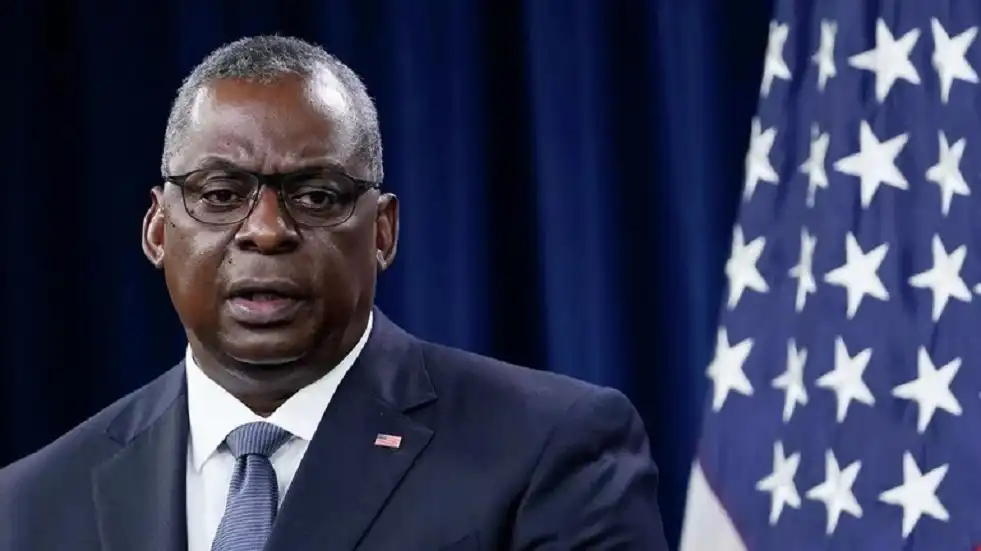
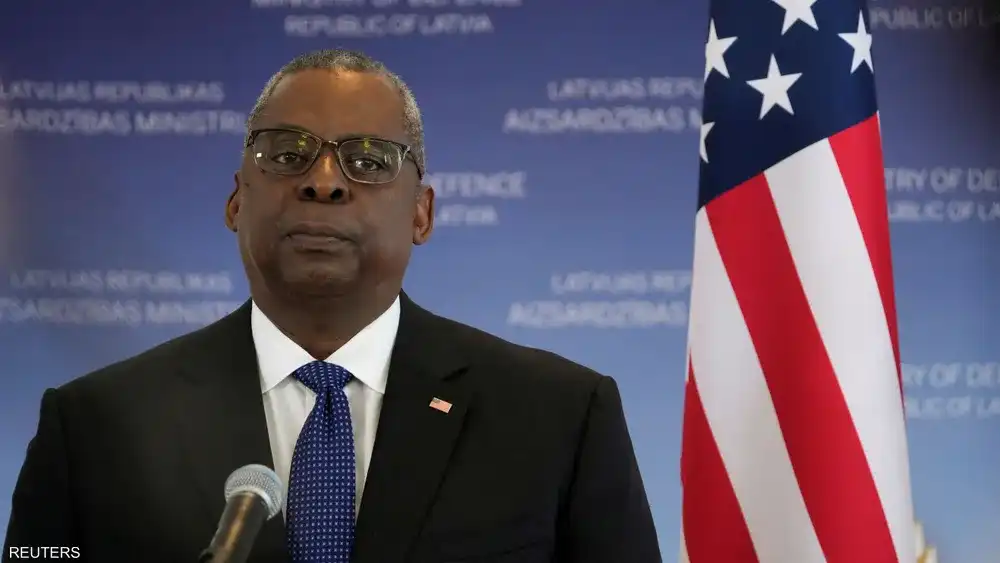
Austin from Tel Aviv: I am not here to dictate timetables or conditions regarding the conduct of the war in Gaza

US Defense Secretary Lloyd Austin said from Israel on Monday that the United States supports efforts to free all prisoners in Gaza.


He also added in a joint press conference with Israeli Prime Minister Benjamin Netanyahu, “We affirm America’s position of supporting Israel and defending its security.”


He continued, "The needs of two million displaced people in Gaza must be taken into account."


In addition, he said that Iran supports Houthi attacks on commercial ships, and added, "This must be stopped."


He continued, "We are leading a multinational task force to support freedom of navigation in the Red Sea."


Washington will continue to supply Israel with weapons and ammunition, adding that “Hamas should never again be able to export terrorism from Gaza to Israel,” he said.


Austin, who is currently visiting Israel, added, “We continue to provide Israel with the equipment it needs for defense (...) including vital munitions, tactical vehicles and air defense systems.”


At the same time, he noted that Washington "continues to urge Israel to protect civilians and bring humanitarian aid into Gaza."


He stressed the need for extremist settler attacks on Palestinians in the West Bank to stop.


Regarding the war in Gaza, he said that this is an Israeli operation, and “I am not here to dictate timetables or conditions.”


ARAB AND WORLD

Mon 18 Dec 2023 6:07 pm - Jerusalem Time

Israeli Report: Netanyahu brags about preventing the establishment of a Palestinian state

Israeli Prime Minister Benjamin Netanyahu said that he is proud to have prevented the establishment of a Palestinian state, and gave himself all the credit for curbing the Oslo peace process.


These statements by Netanyahu came in the context of a press conference held at the headquarters of the Israeli Ministry of Defense [“Kirya”] in Tel Aviv, yesterday evening (Saturday), with the participation of both Defense Minister Yoav Galant and Minister in the Israeli “War Cabinet” Benny Gantz, in which the Prime Minister confirmed the government also opposes the Palestinian Authority’s control of the Gaza Strip, after the end of the war with Hamas, and that it is important not to foster illusions among friends in this regard, in reference to the United States’ desire for the Strip to be governed by a renewed Palestinian authority, after the end of the war.


Netanyahu described the Oslo Accords as a fateful mistake, and said that the results of the small Palestinian state in Gaza, which resulted from the Israeli withdrawal from the Strip in 2005, demonstrated the danger of allowing Palestinian sovereignty in the West Bank.


Netanyahu said: “I am very proud that I prevented the establishment of a Palestinian state, because everyone realizes today what that Palestinian state could have been, after we saw the small Palestinian state in Gaza. Everyone realizes what would have happened if we had surrendered to international pressure and allowed the establishment of a state like this in Judea and Samaria [the West Bank] surrounding Jerusalem, and on the outskirts of Tel Aviv.”


Netanyahu insisted that he inherited the Oslo Accords, and that the decision to bring the Palestine Liberation Organization from Tunisia and plant it in the heart of Judea and Samaria [the West Bank] and in Gaza, was a decision that was taken and implemented, before he became prime minister, and it is a wrong decision.


Netanyahu reiterated that he would not allow the Palestinian Authority to control the Gaza Strip after the war, and said: “I will not allow Hamastan to be replaced by Fatahestan, or Khan Yunis to be replaced by Jenin. I will not allow the State of Israel to return to the disastrous Oslo mistake. The Hamas and Fatah movements do not differ on the desire to destroy Israel, but only on how to do it.” He claimed that there is broad support for his vision of long-term Israeli security control over a demilitarized Gaza. He added that he did not rule out the possibility of reaching an agreement with the United States in this regard.


The Prime Minister touched on the incident of the killing of 3 kidnapped Israelis by Israeli fire the day before yesterday (Friday), and said that lessons will be drawn from this incident, which reinforced calls in Israel to stop the fighting and reach an agreement to release the kidnapped people.


Netanyahu insisted that the war would continue, and said: “The only solace that the families of the dead soldiers may feel is that the death of their loved ones will not be in vain, by making sure that we will continue fighting until we achieve complete victory.” Hamas demands an end to the fighting and the withdrawal of forces.  The moment we agree, 'Hamas' will triumph, and we are obligated to eliminate this movement and return all the kidnapped."


Netanyahu indicated that he informed US National Security Advisor Jack Sullivan of his intention to continue fighting until Hamas is eliminated, despite the pressure exerted by the administration of US President Joe Biden to end the high-intensity fighting and significantly narrow the scope of the attack.


He said: “I say again to our friends: We are more determined than ever to continue until the end, until we eliminate Hamas, until we return all our hostages, and until we ensure that there will be no party in Gaza that breeds terrorism and finances terrorism. And by practicing terrorism.”


Defense Minister Gallant also rejected calls to stop the fighting, in light of the killing of the kidnapped people. He said: "The price of war is high, and we pay it every day, but when you know your goals, and when you know that you are fighting for a noble cause, you know that you have to pay the price, and we are ready to continue until we achieve our goals: destroying the Hamas movement, “And eliminate its military and governmental capabilities, and return the kidnapped people to their families.”

ARAB AND WORLD

Mon 18 Dec 2023 6:01 pm - Jerusalem Time

Hebrew Newspaper: Killing and transfer in the West Bank

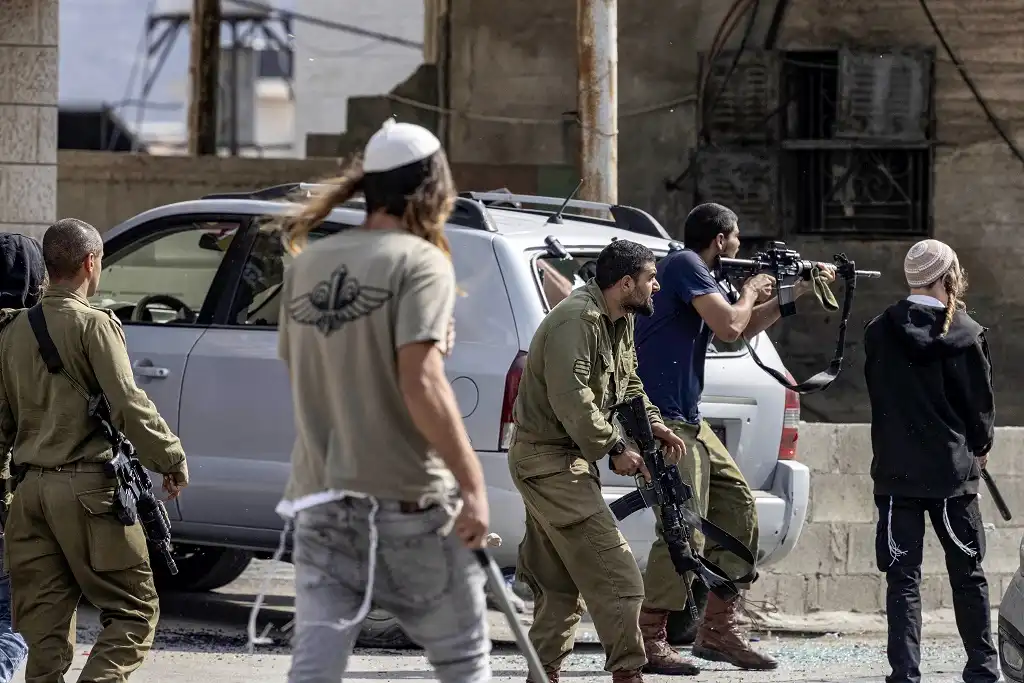
While all eyes are directed to Gaza, the West Bank is witnessing dangerous events that will irreversibly change the facts there. The settlers saw the war on Gaza as an opportunity to change the reality of life in the West Bank and do everything that they would not dare do at other times. They mistreat their Palestinian neighbors, attacking them and assaulting their property with greater violence than on normal days, while the Israeli army does not deter them, and in many cases even protects them, acts aggressively, and uses lethal tools against the Palestinians.

These two steps are linked to each other, and have a common result: the evacuation of Palestinians from their villages and lands, especially in two distant points in the West Bank: south of Mount Hebron and north of the Jordan Valley. There, facing the most vulnerable populations, groups of shepherds who have no one to protect them, a real transfer is taking place that no one in Israel is talking about.

Since the beginning of the war, residents of 16 shepherd groups in the south of Mount Hebron have been forced to leave their villages, for fear of settlers. In northern Ghor "Valley", 20 families left their villages for the same reason.

Meanwhile, more Palestinians are being killed, almost daily, throughout the West Bank, some of them innocent. In the Tulkarm area alone, about 50 people have been killed since the beginning of the war, and in the Ramallah area, 30 people have been killed. Some of them were killed by settlers whose hands became lighter on the trigger, given their knowledge that no harm would come to them in light of the war and under the extreme right-wing government.

Soldiers also easily shoot at Palestinians, in addition to suicide drone attacks on crowded residential areas in the refugee camps in Jenin and Tulkarm.

Simultaneously with the killing, the demolition is taking place: Last week, Gideon Levy and Alex Levack reported that the destruction turned the Jenin camp into a miniature of Gaza (“Haaretz,” 8/12), and this is how the Washington Post described the camp’s situation in a special investigation on Jenin. .

In addition, confrontations occurred between the Israeli army and residents in the northern Jordan Valley. For example, residents of villages in the northern Jordan Valley were prevented from being supplied with water for two consecutive days (“Haaretz,” 12/15). In addition to the difficult economic crisis, as well as the absolute prohibition of Palestinian workers from entering Israel to work, there are dozens of strict checkpoints that increase the suffering of the Palestinians.

The Prime Minister failed miserably on October 7. Now, through the support he has provided to the settlers and the army, and through his toxic rhetoric against the Palestinian Authority, he is causing the deterioration of an additional front that could explode in the face of all citizens of Israel.

ARAB AND WORLD

Mon 18 Dec 2023 4:33 pm - Jerusalem Time

Hezbollah and the Israeli army continue to exchange bombardments

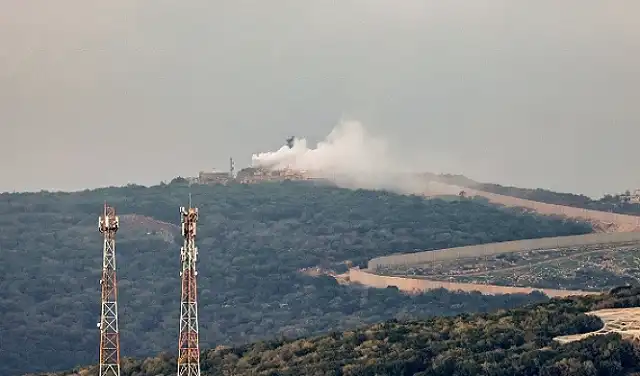
Today, Monday, Lebanese Hezbollah continued to fire rockets towards the Upper Galilee regions and bombard Israeli military sites adjacent to the border, while the Israeli army responded by bombing many villages in southern Lebanon.


Alarm sirens sounded in the Upper Galilee region, warning of possible missile attacks from Lebanon, at a time when the exchange of bombing continues in the border areas, between the Israeli army and the Lebanese Hezbollah, in parallel with the Israeli war on Gaza.


Israeli media reported that a number of rockets fell in open areas in the Western Galilee, without reporting any injuries or damage, while Hezbollah announced that it had targeted "a gathering of enemy soldiers and vehicles in the vicinity of the 'Hamra' site with appropriate weapons."


Subsequently, the Israeli army carried out bombardment on the town of Aitaroun and the vicinity of the town of Naqoura in southern Lebanon, and Israeli artillery also targeted the outskirts of the towns of Alma al-Shaab and Dhahira.

ARAB AND WORLD

Mon 18 Dec 2023 2:43 pm - Jerusalem Time

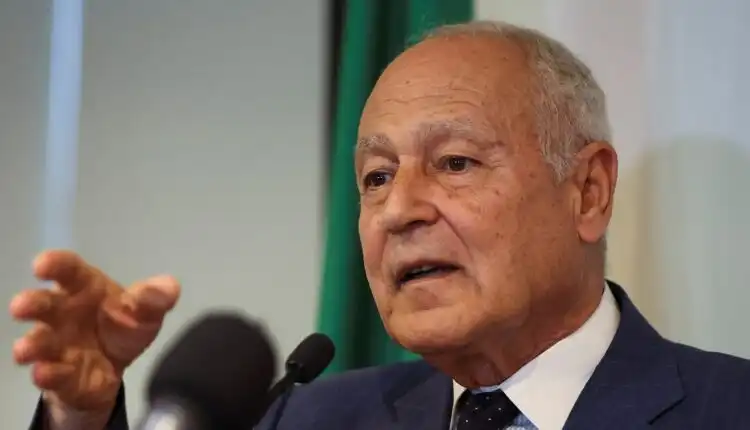
Arab League Chief: Israel's war on Palestinian civilians is brutal and devilish

Secretary-General of the League of Arab States, Ahmed Aboul Gheit, affirmed that “the brutal war waged by the Israeli occupation against civilians in Gaza reflects a clear, satanic plan, in its goals and objectives.”


He added in his speech before the meetings of the thirty-first session of the United Nations Economic and Social Commission for Western Asia - ESCWA, at the headquarters of the Arab League, that the Israeli occupation does not aim to eliminate a movement as it claims, but rather to eliminate an entire society, tear apart its fabric, and destroy the possibility of life in the Gaza Strip for a long time. Coming, stressing that these are the goals of the Israeli operation that are no longer hidden from anyone.


He added: "This diabolical plan has only one goal, which is to liquidate the Palestinian cause by separating the people from their land, either by eliminating the possibility of life on this land... or by forcibly displacing them and deporting them by force of arms... which will never happen."


He said that the leaders of the Israeli army do not hesitate to announce these goals, noting that “they say without ambiguity that there will be no Palestinian state in the future, and they declare their disavowal, time after time, of the Oslo Accords and what resulted from the establishment of the Palestinian Authority, and they declare no "It is a shame that the Palestinians will not have sovereignty over their land."


Aboul Gheit stressed, "This is an occupation that does not hide its face or outline its goals, but rather announces them with unprecedented impudence and bravado. It is also an underestimation of the peoples and nations that expressed their position unequivocally in a recent vote in the United Nations General Assembly, in which the countries overwhelmingly took sides." What is correct from history is to demand an immediate ceasefire, an immediate end to the bloody massacre and collective punishment that no longer has a place in our world.”


Aboul Gheit added: “Every new day of this war moves us further away from the two-state solution that the Palestinians, Arabs, and the entire world have accepted, with the exception of Israel, which mistakenly believes that it can inflict a second catastrophe on the Palestinians. However, even if it kills thousands of innocent civilians without guilt or crime, it will not kill Their dream will not force them to give up their right to land and life.”


Aboul Gheit once again called for an urgent cessation of the war, saying: “Hence, we reiterate our urgent call for a ceasefire in order to preserve the security and stability of the region, especially since we are following with concern the irresponsible actions that have become a source of threats in the Red Sea, with their expected negative impact.” on the economic conditions of the countries of the Arab region.”


ARAB AND WORLD

Mon 18 Dec 2023 1:32 pm - Jerusalem Time

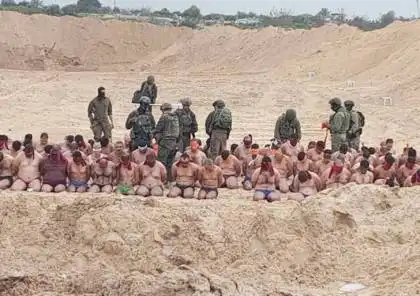
Hebrew newspaper reveals: Many Gaza detainees were dead inside Israeli army camps

The Israeli newspaper Haaretz revealed the death of many prisoners who were recently arrested by the Israeli occupation army from the Gaza Strip and held in difficult conditions in the "Sde Teman" camp near Beersheba.


According to the newspaper, many Palestinians who were arrested from the Gaza Strip since the beginning of the war died in a detention center in the Negev, and the Israeli army claimed that “these are terrorists,” and the circumstances of their deaths are under investigation.


It is noteworthy that the age group of detainees held in the facility ranges from minors to the elderly, and they are investigated immediately.

Detainees are held there with their eyes covered and hands shackled for most of the day, and in their prison compounds the lights are on all night. They are referred for investigation, and according to the Israeli army, detainees who are found not to have participated in terrorist activity are returned to the Gaza Strip. The other detainees are transferred to the Prison Service.

Source: Sama News

ARAB AND WORLD

Mon 18 Dec 2023 12:49 pm - Jerusalem Time

An American intelligence officer: The Hamas attack is the most successful military raid this century, and Hezbollah will absolutely defeat Israel in the north.

The Hamas movement surprised the world with its “Al-Aqsa Flood” operation last October, and the surprise was not only in the size of the huge Israeli losses, but also extended to how it was planned and implemented in complete secrecy without revealing it, despite the various technological and human Israeli spy networks surrounding the Gaza Strip. The surprise extended Also, the extent to which Hamas succeeded in achieving its goals, and the return of hundreds of its fighters to Gaza, along with more than two hundred hostages and prisoners from the Israeli side.

  Former US military intelligence officer Scott Reiter, (62 years old), who has a long history of practical, research and analytical experience in Middle East affairs, said, “The Hamas movement has already won with its complex and advanced operation in October, and that it cannot be eliminated, as the government announced.” “This is because Hamas has become a practical and moral symbol of resistance to the Israeli occupation,” he said.


  He continued: “What really surprised me was the poor condition and deterioration of the Israeli army’s performance. As I am very familiar with the Israeli army and have been studying it for many years, I have noticed a decline in the combat level of its soldiers, especially among members of the ground forces, amid an exaggerated reliance on technology and the capabilities of the air force.”

  He added: “On the other hand, I had confidence in the Israeli intelligence services. Over the decades, they showed great ability to penetrate the Palestinian resistance movements in the West Bank and Gaza Strip by planting a wide network of spies, and they had a tight network that monitored much of what was happening in the Gaza Strip.” There was certainty among intelligence experts that it was unlikely that Hamas would plan an operation of this size without detecting and thwarting it.”

  He stressed that “the Israeli intelligence failure was shocking to me, but what was more shocking was the Israeli army’s reaction immediately after the Hamas attacks on October 7, and what happened confirms that the Israeli army has several distinguished teams with exceptional combat experience, but the rest of the army forces are not at the needed level especially members of the reserve forces who have been called up to fight,” he said.

  Ritter, the United Nations inspector in charge of searching for weapons of mass destruction in Iraq during the years 1991 to 1998, said that the Hamas attack on Israel last October was considered the most successful military raid in this century, according to his statements.

  Ritter added, in an article published on his own website, that Israel’s likening of the October 7 attack to the events of September 11, 2001 and the “atrocities” that it claims were committed by Hamas, including “mass rape, beheading of children, and killing of defenseless Israeli civilians,” are all inaccurate accusations.

  He continued, “The Israeli claims are clearly false or misleading,” adding that about a third of the Israeli deaths were army, security, and police officers, stressing that the first killer of the Israelis in October was not Hamas or the other Palestinian factions, but rather the Israeli army itself.

  Ritter cited a recently published video showing Israeli Apache helicopters randomly shooting Israeli civilians trying to flee, explaining that the pilots were unable to distinguish between civilians and Hamas fighters.

  He added that the accounts of civilian and military eyewitnesses regarding what Israel calls the “Re’im massacre” confirmed that the vast majority of the victims were killed by Israeli soldiers and tanks.

  He explained that the Israeli government retracted its claim that Hamas beheaded 40 children, without providing any reliable evidence of its involvement in the rape or sexual assault of a single Israeli woman.

  He said that eyewitness accounts confirmed that Hamas fighters were disciplined and resolute in the attack, but they were polite and kind in dealing with civilian prisoners.

  Ritter also commented on Israeli youths in Jerusalem chanting anti-Palestinian statements, stressing that Israel is rapidly losing its moral right to exist as a nation.

  Ritter wrote on his account on the (X) platform: “Israel is rapidly losing its moral right to exist as a nation, if it has not already done so,” adding: “I used to support Israel’s right to exist, even when I disagreed with its government’s policies, but when... The Jewish homeland has become a modern embodiment of the forces of hatred that created the conditions that led to the formation of Israel in the first place, so one must question the feasibility and legitimacy of the project.”

  Ritter added: “The establishment of a separate Jewish state, organized and implemented under the current policies and practices of the modern Israeli state, is no longer acceptable.”

  Ritter showed how Hezbollah has become an increasing threat in the north, pointing to its ability to control strategic areas such as the Galilee, pointing out that Hezbollah has become a player that cannot be ignored, as he put it.

  He added: “If Hezbollah intervenes in the north, it will achieve seven times more victories over Israel than Hamas, and it will defeat the Israeli army absolutely along its northern border, which will blow everyone’s minds,” pointing out that “Hezbollah was preparing for this battle.” “For many decades, they know the Israelis well, and the region as well.”

He concluded: “Israel has put many of its resources in Gaza, and there are not many of them left. Hezbollah has about one hundred thousand fighters, and many of them have become more solid due to their participation in the war in Syria. I believe that the biggest surprise for Israel will come from Hezbollah, and this defeat for Israel will not only be military but also economically, but more importantly than that, Hezbollah will defeat the Zionist mentality. In practice, it will be the absolute delegitimization of political Zionism, and when this defeat occurs, and it happens or has already happened, this will be the end of Israel,” according to his statements.

Source: Sama News


ARAB AND WORLD

Mon 18 Dec 2023 12:28 pm - Jerusalem Time

Human Rights Watch: Israel uses starvation as a “weapon of war” in Gaza

Human Rights Watch said that the Israeli government is using starvation of civilians as a method of war in the occupied Gaza Strip, which constitutes a “war crime.”


The organization indicated in a statement issued today, Monday, that the Israeli army is deliberately preventing the delivery of water, food, and fuel, while deliberately obstructing humanitarian aid, and appears to be bulldozing agricultural areas, depriving the civilian population of materials that are indispensable for their survival.


Omar Shaker, director of Israel and Palestine affairs at Human Rights Watch, said: “For more than two months, Israel has been depriving the people of Gaza of food and water, a policy that was urged or supported by senior Israeli officials, and reflects an intention to starve civilians as a method of war,” calling on world leaders to raise their voices against this abhorrent war crime, which has devastating effects on the people of Gaza.


Shaker added: “The Israeli government is doubling its collective punishment of Palestinian civilians and preventing humanitarian aid by using the cruel use of starvation as a weapon of war,” stressing that the worsening humanitarian catastrophe in Gaza requires an urgent and effective response from the international community.


In its statement, the organization believed that the Israeli government must immediately stop using starvation of civilians as a method of war, demanding that the occupation government restore the provision of water and electricity, and allow the entry of urgently needed food, medical aid, and fuel into Gaza through the crossings, including Kerem Shalom.


The United States, Britain, Canada, Germany, and others called for the suspension of military aid and arms sales to Israel, as long as its army continues to commit serious and widespread violations that amount to war crimes against civilians with impunity.


Human Rights Watch interviewed 11 displaced citizens in Gaza between November 24 and December 4, who described the severe difficulties they face in securing basic necessities. One man who left northern Gaza said: “We had no food, no electricity, no… Internet, nothing at all, we don't know how we survived."


In southern Gaza, interviewees described scarcity of potable water, food shortages that led to empty stores and long queues, and exorbitant prices.


“You are constantly looking for things to survive,” the father of two said.

According to the United Nations World Food Program, on December 6, 9 out of 10 families in northern Gaza, and two out of three families in southern Gaza, spent at least a full day and a full night without food.


International humanitarian law, or the laws of war, prohibits starvation of civilians as a method of warfare. The Rome Statute of the International Criminal Court states that intentionally starving civilians “by depriving them of items indispensable to their survival, including intentionally impeding relief supplies” is a war crime.

The occupation government continued to prevent the entry of fuel until November 15, despite warnings of dire consequences, causing the closure of bakeries, hospitals, sewage pumping stations, water desalination plants, and wells. These facilities are no longer fit for use, despite allowing limited quantities to enter. Of fuel later, but the United Nations Humanitarian Coordinator for the Occupied Palestinian Territories, Lynn Hastings, described it on December 4 as “not enough at all.”


UN experts said on November 16 that the severe damage “threatens the impossibility of continuing life for the Palestinian people in Gaza.” The occupation army bombed the last operating wheat mill in Gaza on November 15.


The United Nations Office for Project Service said that the destruction of road networks has made it difficult for humanitarian organizations to deliver aid to those who need it.


Israeli military operations in Gaza also had a devastating impact on its agricultural sector, and according to Oxfam: “Due to the continuous bombing, along with the shortage of fuel and water, and the displacement of more than 1.6 million people to southern Gaza, agriculture has become almost impossible.”


PALESTINE

Mon 18 Dec 2023 11:31 am - Jerusalem Time

West Bank: Israli forces arrest 34 Palestinians including 3 women and a freed prisoner

The occupation forces arrested, at dawn and Monday morning, 34 citizens from the West Bank governorates, including 3 women and a freed prisoner.


It is noteworthy that the total number of arrests after October 7 reached more than (4,575), and this total includes those who were arrested from homes, through military checkpoints, those who were forced to surrender themselves under pressure, and those who were held hostage.


Note that, in recent times, the occupation forces have focused on field investigation operations, where they arrest many citizens, with the aim of investigating them on the ground, and then release them later, after carrying out acts of abuse and torture against them.


It is noteworthy that the data related to arrest cases includes those who were kept in detention by the occupation and then released later.

PALESTINE

Mon 18 Dec 2023 11:31 am - Jerusalem Time

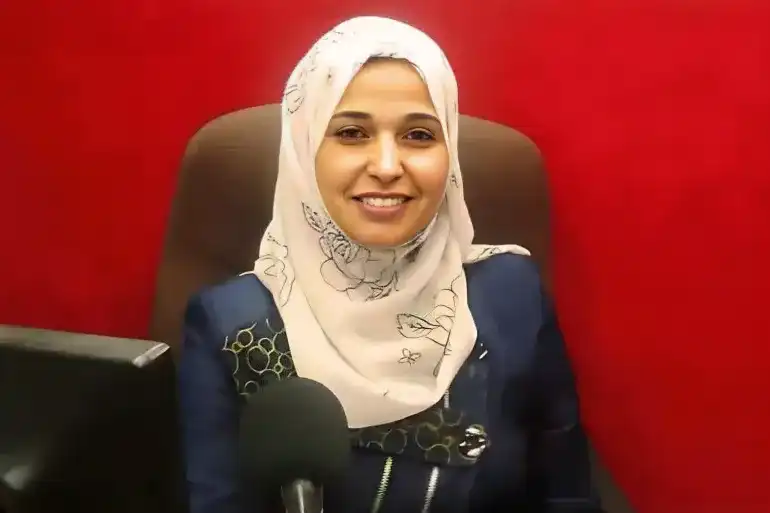
Gaza war: A Palestinian female journalist killed in Israeli bombing on the Nuseirat camp

Journalist Haneen Ali Al-Qashtan was killed, along with members of her family, in a bombing that targeted the Nuseirat camp in the central Gaza Strip, according to what local and health sources in the Strip reported.


With the ascension of journalist Haneen Al-Qashtan, the number of journalist killed has risen to 93 since the beginning of the occupation’s aggression against the Gaza Strip.


Haneen Al-Qashtan is a Palestinian journalist who was born in Gaza City on September 23, 1990. She previously worked as a programmer on Al-Kufiya Channel, as well as a program presenter on Baladna Channel. She also held the position of editor on the “Affairs of the Country” website in the past.


Before her death, Al-Qashtan struggled with the disease and was able to overcome it, but she passed away from our world as a result of the devastating war on the Gaza Strip.


ARAB AND WORLD

Mon 18 Dec 2023 11:26 am - Jerusalem Time

Supporting the Gaza War.. How does it affect Biden’s gaining support from American Muslims?

In her statement on NBC: News Democratic Representative Debbie Dingell (from Michigan) hinted that US President Joe Biden’s path to regaining the confidence of Arab and Muslim American voters is full of obstacles and that: “There is a lot that he (Biden) must do” in order to restore Biden to Muslim voters, in the upcoming presidential elections. .


Activist committees representing large segments of Arab and Muslim voters from the Democratic Party raised slogans to abandon Biden, and began organized campaigns across the United States, calling on voters to choose a third candidate from the independents, and not to elect either Biden, or his potential Republican rival, former President Donald Trump, due to Biden's dedicated support of the barbaric Israeli war on the Gaza Strip.


Asked on NBC News' "Meet the Press" if Biden could do anything to win back those voters, Dingell said: "So there's a lot to be done, and this is a very serious issue."


Dingell said she knows the Muslim voter community, having lived for 40 years in Dearborn, Michigan, the city with the largest Arab-American population in the United States.


Dingle added: “They (voters of Arab origin) are hurt. We all in this country need to understand what is happening in Gaza now. You can disagree about the number of thousands of people killed, but between 6,000 and 8,000 children were killed, and 85% of "The people of Gaza have to leave their homes and are living in shelters," this is difficult to understand.


Dingell reiterated her call for an immediate ceasefire and a strong push for a two-state solution after the end of the Israeli war on Gaza. Thus, Dingell joins a growing group of political figures calling for a ceasefire in Gaza amid the rising death toll and worsening humanitarian crisis.


The war on Gaza has been going on for more than 71 days, when the Hamas movement launched a surprise attack on Israel on October 7, which left about 1,200 people dead, including hundreds of civilians. Israel's retaliatory campaign against Gaza led to the deaths of more than 18,700 people, most of them women and children, according to the Gaza Ministry of Health.


The Biden administration has remained committed to its dedicated military, political, financial, and diplomatic support for Israel, refusing to pressure the Netanyahu government to accept a ceasefire, although it has recently increased its calls for Israel to try to reduce the number of civilian deaths to a minimum.


According to "The Hill" newspaper, which specializes in American political affairs, and which conducted multiple interviews with American Arab and Muslim voters (in different parts of the United States last month), they said that they feel betrayed and disappointed about Biden's handling of the conflict and his continued support for Israel. Earlier this month, leaders from Michigan and other swing states pledged to abandon their support for Biden over his refusal to call a ceasefire in Gaza.

OPINIONS

Mon 18 Dec 2023 10:22 am - Jerusalem Time

On American-Israeli differences

Nihad Abu Ghosh

Nihad Abu Ghosh

Opinion Writer

In official statements, the US administration blames Israel for its use of stupid bombs, that is, bombs that are not precisely guided, and indiscriminate bombing that targets civilians indiscriminately. 


These statements made by President Joe Biden and conveyed by National Security Advisor Jake Sullivan, and whose details are scheduled to be discussed by Secretary of Defense Lloyd Austin, come a full ten weeks late, and they certainly will not do justice to the victims, who number more than twenty-five thousand (if we take into account the official figures and a large percentage of those trapped under the rubble), and it will not change the Israeli methods of war in any way, as it comes in the form of advice and observations and not in decisive and strict language, because whoever finances the war with many billions of dollars, opens an air bridge to transport all types of weapons, equipment, ammunition and equipment, and moves plane carriers are to deter any regional party thinking of intervening in the interest of the Palestinians, and to protect Israel from any binding international resolution that can stop the brutal war with a signal or a call.

The United States expressed its opposition to Israel reoccupying the Gaza Strip, or cutting off part of its area and displacing Palestinians to Sinai or elsewhere, with mounting calls for the return of settlement and control of the marine gas fields off the coast of Gaza. There are those who insist on reviving the idea of the “Ben Gurion Canal” between the Gulf of Aqaba and the Mediterranean Sea as an alternative channel to the Suez Canal, and believe that getting rid of the Gaza Strip and its residents will reduce the costs of constructing that canal. These calls have reached the point of demanding the erasure of the Gaza Strip and turning it into an Israeli national park. As for the least extreme of them, they demand the establishment of a security strip with a width ranging between 2-3 kilometers, which means cutting off about a third of the area of the Strip, so that any agricultural or urban activities are prohibited.

The American verbal statements were accompanied by positions in support of Israel without reservation, such as in the votes in the Security Council and the United Nations General Assembly, and the adoption of war goals, and even in issuing some statements and conditions that the Israelis themselves did not say, such as “this war will not end except with the surrender of Hamas.” And "Sinwar's days are numbered"! For all of this, the apparent American-Israeli differences can be understood as merely minor, minor differences, no more than those existing between the poles of the Israeli war council.

So the apparent change in the American tone, does not represent a late awakening, nor a fundamental change in the positions supporting the war, despite the presence of factors that require a change in that, especially the decline in the popularity of President Biden, and the protest of broad circles in the ranks of the Democratic Party, especially from the younger generation. 


Influential circles dissociated from this party, including the Arab, Muslim and African-American communities, and threatened not to vote for Biden, but the latter and his administration chose to appease these circles with sweet words and claims of neutrality in exchange for absolute support for Israel and the war of extermination with all its war crimes and crimes against humanity.

The United States is fighting this war as if it were its own war, and not because it concerns a friendly or allied country. The relationship between the United States and Israel is described as an organic relationship that differs from any distinct relations between two countries. Israel has been and continues to play the functional roles assigned to it in serving American strategic interests on both levels regional and global. Among these roles is confronting any regime that derives an independent national policy for itself that conflicts with American policies. And against liberation movements, and supporting corrupt and tyrannical regimes around the world that the US Congress places restrictions on dealing with. Israel is also considered the largest applied laboratory for testing types of American weapons, as the military, security and technological industries represent an extension of the arms industry complexes in the United States.
Some analysts describe Israel as the largest aircraft carrier in the world in terms of its low cost compared to the great benefits it provides to the United States. Therefore, it was not strange for the American president, who described himself as a Zionist, to say, “If Israel did not exist, we would work to create it.” As for the talk that is repeated like a record, Old statements about “common democratic values” and the Jewish state are nothing but blatant lies, and perhaps the main thing they have in common is the willingness to commit genocide, wage wars, and fabricate slander to justify them.

Perhaps what explains these apparent contradictions and differences is what was stated by US Secretary of Defense Lloyd Austin, who said that Israel may achieve tactical victories but will suffer a strategic loss, and this applies to many historical events and wars in which great powers superior in weapons and capabilities faced local powers. It is lower in capabilities but stronger morally, as happened in the confrontations between the United States and Vietnam and Afghanistan, and between France and Vietnam and then Algeria, where there is no room for comparison between the military capabilities of the United States and its opponents. In the war on Gaza, there is a gross imbalance in the balance of power between the Israeli military arsenal armed with the latest aircraft, tanks and battleships, and based on a strong economy and unlimited support from the most powerful country in the world, and a resistance that developed in a besieged and suffocated environment and deprived of the most basic capabilities, but strengthened by faith in its cause. Its people adhere to freedom, and thus the equation becomes an expression of the human will in the face of the tyranny of the machine, and it is based on a historical equation in our Arab-Islamic heritage that states the possibility of the victory of blood over the sword, and the palm over the awl. Thus, Israel's continuation of its war and the crimes of genocide it commits contribute to its isolation and affect its status, image, and ambitions to integrate into the region, continue breaking isolation, and establish normalized relations with Arab and Islamic countries.

For all of the above, the American administration seems to be more concerned than Israel and its leaders, who see no further than their own noses and public opinion polls, and are chasing imaginary victories over a people who have nothing to lose except the restrictions of occupation, siege, and policies of humiliation.

PALESTINE

Mon 18 Dec 2023 10:13 am - Jerusalem Time

New York Times| What is the path to peace in Gaza?.. 10 ideas for a path forward

After Hamas’s depraved attack and the unfathomable destruction of Palestinian life, infrastructure and society in Gaza by the Israeli military offensive, any hope for the territory feels far away. But once the guns fall silent and Gazans are allowed to contemplate the reconstruction of their shattered home, the time will come when Israelis, Palestinians and the rest of the world must wrestle with the future of Gaza and its people.

Times Opinion reached out to thinkers, political leaders and experts for their vision of what might meet the moment. Because in the end, two neighboring groups of millions of people must find a way to live their lives. Here are 10 ideas for a path forward.


Empower Palestinians

By Peter Beinart 

Today, most Jewish Israelis support the invasion of Gaza. They think it is crucial to restoring their country’s reputation for military competence and strength. But while Israel can depose Hamas, its leaders have not explained how it can rule Gaza — either directly or by proxy — without inviting a future insurgency. That insurgency will be powered by Palestinians seeking revenge, since, as Israeli experts have noted, Hamas recruits fighters from the families of people Israel kills. As that quagmire deepens, Israel would look about as strong and competent as the United States did when it could not quash insurgencies in Afghanistan and Iraq.

Militarily, Israel should instead conduct the kind of narrowly targeted response the United States eschewed after Sept. 11. It should pursue the people who masterminded the Oct. 7 slaughter to the ends of the earth and the end of their days. But it should halt its invasion of Gaza and negotiate a long-term cease-fire that leads to freedom for all the remaining Israeli hostages. At the same time, Israel should allow Palestinians to create a legitimate political leadership — which can take charge in the West Bank and Gaza — and empower Palestinians who pursue their freedom in ethical ways. To negotiate seriously with Israel, Palestinians need legitimate leaders — not the discredited Palestinian Authority president, Mahmoud Abbas, who hasn’t stood for election since 2005. As the Israeli newspaper Haaretz has advised in the past, Israel should release the imprisoned Palestinian nationalist Marwan Barghouti, who is more popular than the leaders of Hamas. Mr. Barghouti was convicted of murder and membership in a terrorist organization during a trial at which he declined to offer a defense and refused to recognize the Israeli court’s jurisdiction. But despite defending Palestinians’ right to violently resist Israeli oppression, he has also lauded Nelson Mandela’s willingness to “defy hatred and to choose justice over vengeance.” Israel should then empower Mr. Barghouti and other credible, non-Hamas Palestinian leaders by showing that they can improve Palestinian lives and give Palestinians hope that they will gain their freedom. It should begin dismantling the West Bank settlements whose inhabitants terrorize their Palestinian neighbors and help Palestinians forced from their villages by settler violence to return. It should prevent Jewish ultranationalists from undermining the status quo on the Temple Mount, known to Muslims as the Noble Sanctuary, and promise not to establish diplomatic relations with Saudi Arabia until Palestinians are free. According to Israeli media, influential Palestinians have proposed allowing Hamas to join the Palestine Liberation Organization, the umbrella group that includes different Palestinian parties, if it disarms. Mr. Barghouti could oversee such a process, which would pave the way for a revived, internally democratic P.L.O., which could set a new political direction for the Palestinian people. 

Will Benjamin Netanyahu’s government do any of this? Not a chance. But polls suggest that his Likud party may suffer a historic collapse when Israelis next vote. The Biden administration should make it clear that America’s relationship with Israel will depend on its next government pursuing a different path. Israel’s current one will succeed only in devastating Gaza. It won’t give Palestinians hope, and it won’t keep Israelis safe.

Peter Beinart (@PeterBeinart) is a professor of journalism and political science at the Newmark School of Journalism at the City University of New York. He is also editor at large of Jewish Currents and writes The Beinart Notebook, a weekly newsletter.


Let NATO Nations Send Troops

By Ehud Olmert 

ISRAEL’S MILITARY CAMPAIGN will continue until Hamas’s military capabilities are eliminated and it is removed from power. It’s hard to guess how long it will take, but if we are to be honest, it will take longer than Western societies are prepared to accept and longer than what their leaders — above all, President Joe Biden, a close friend of Israel — are willing to tolerate. It is imperative for this reason that Israel provide the world with a clear picture of what it intends to do next, after the army has completed its work. The current Israeli government has no answer. It hasn’t had time to prepare a long-term strategy. But even if Prime Minister Benjamin Netanyahu and his coalition partners are unwilling and unable to propose the necessary next steps, the rest of Israel — and anyone who cares about its stability and security — can no longer avoid the question. Here’s what I think should be part of that plan: After the military campaign to remove Hamas from power and destroy its ability to fight, Israeli forces must withdraw all the way to the border of Gaza. As that campaign now continues, Israel, the United States and other allies in parallel must agree on the deployment of an international force drawn from NATO countries, with their deployment agreed on by Israel and the United States and operating under the auspices of the U.N. Security Council. The international force would take the place of the Israel Defense Forces in Gaza. Arab nations will probably not be willing to send in troops. While Egypt, Jordan, the United Arab Emirates, Bahrain and Saudi Arabia desire nothing more than the destruction of Hamas, which is a destabilizing force for their own governments, none will want to be seen as lending a hand to Israel’s military campaign. The international force would help create a different governmental administration and would start to rebuild the civilian authorities and governing systems in the Gaza Strip for approximately 18 months. Israel must announce that with the cessation of its military campaign, talks will immediately begin with the Palestinian Authority based on a two-state solution — which is the only political horizon that can offer stability and cooperation between Israelis and Palestinians and diplomatic, military and economic cooperation between Israel and the moderate Arab states. There is no doubt that the Netanyahu government is unwilling, unable and unprepared to make such moves. Before any of these steps may be taken, therefore, there is no choice but to get rid of this government. Once it is gone and as soon as the military campaign in Gaza is over, the first steps toward what comes next may be taken.


Create an Economic Future

By Raja Khalidi  

As Israel’s war on Gaza enters its third month, the warring parties and their allies are eyeing the endgame. Palestinians remain focused on solidarity in the face of what the chief U.N. relief official and the top E.U. diplomat have termed an apocalyptic scenario and what the Israeli agriculture minister has promised will be a second Nakba. Regardless of who is left standing in Gaza after the war, governance of the Gaza Strip and the West Bank is best left to Palestinians to arrange through elections. The Palestine Liberation Organization and most of the international community remain committed to a peaceful resolution of the conflict within a two-state configuration. In preparing for such a renewed possibility, Palestinians will have to reckon with their economic future. Since 1947, policymakers and academics have generated various visions of Palestinians’ economy after a two-state partition. But for now, the demands of relief, shelter, economic recovery and reconstruction in Gaza are so overwhelming that there is little point in pondering a future whose shape is unknown. Israeli bombardment has destroyed about half of Gaza’s building stock, in what some experts call a domicide. Just as much of the economic infrastructure and public service utilities needed to sustain the population has also been crushed. An economy that before the war had an annual per capita G.D.P. of less than $1,500 — already among the lowest in the world — will almost certainly register $0 next year for some two million Palestinians. Barring the unthinkable but not yet to be discounted risk of mass spontaneous exodus or deportation of the Gazan population to Sinai, there are three essential tasks to get the Gaza Strip back on its feet ahead of any larger solution.

First, Gaza’s people, most of whom have been displaced, need to be sheltered, clothed, fed, given medical care and protected — an effort budgeted by the United Nations at $1.1 billion through this month, assuming a humanitarian management structure can be put in place in Gaza.

Second, before meaningful reconstruction can be planned, huge challenges must be met, whatever the governance arrangement: the removal of rubble and the bodies beneath it, reconnection of utility networks, the provision of temporary spaces for public services and a restarting of the engine of the private economy.

Finally, the people: more than two million traumatized and impoverished refugees, many of them maimed, malnourished and dehumanized. Israel and other economically developed countries have the social protection systems to help cope with such demands. But denied a state of their own, Palestinians in Gaza will need sustained support to simply recover and be productive citizens rather than destitute refugees.Therefore, Gazans should be granted a universal basic emergency income, a new concept among policymakers working on economic empowerment and social protection. Trials have been successful in nonemergency applications in India, Kenya and Spain, and the Covid pandemic spurred short-term programs worldwide. Providing a basic monthly income of $200 to all Palestinians in Gaza for a year, until they can successfully reintegrate productively, would require almost $5 billion. That financial need calls for a recognition by Israel’s allies and Arab states that their failure to halt the military campaign that caused such a disaster comes with a price. The Palestinian people are already paying the human cost of this war, while Israel’s war budget could be underwritten with $14 billion courtesy of U.S. taxpayers. The U.S. administration and regional partners have been exploring postwar governance in Gaza. Evenhandedness requires that the U.S. administration concern itself less with regime change in Gaza and more with alleviating suffering.


Raja Khalidi is the director general of the Palestine Economic Policy Research Institute in Ramallah in the West Bank and a development economist.


The Answer Lies With Biden

By Bernard Avishai and Ezzedine Fishere 

PRESIDENT BIDEN HAS CALLED for a two-state solution. But this vision has foundered for decades. What makes this goal remotely plausible today? In the background of the horrible deaths of Israeli and Gazan civilians are moderate majorities in both Israel and the Palestinian territories, increasingly polarized by zealots. If Mr. Biden can provide a credible diplomatic track to a just peace, moderates on each side will have something to trust in. Mr. Biden enjoys great moral prestige in an Israel deeply skeptical of Prime Minister Benjamin Netanyahu. He also has credibility with Arab leaders and can make a good-faith overture to the Palestinian street because, in spite of anti-American sentiment, all understand that the United States is the only power Israel depends on and that America has more leverage than ever to induce productive negotiations. A strong U.S. commitment to two states — one that entails a demand for a settlement freeze — would almost certainly force the dissolution of Mr. Netanyahu’s government, since it rests on the support of religious parties that represent the settler movement. Rejecting American diplomatic leadership in favor of continued settlements would probably lead to the withdrawal of centrists from his unity cabinet. On the Palestinian side, polls have shown that any peace process that looks serious enough to end the occupation turns people away from Hamas. Palestinians also feel the force of Arab states pressuring from the outside and time running out for a political solution. Israelis need to feel that their security partners are the neighboring Arab states — Egypt and Jordan — and not only the Palestinian Authority, in which they have little trust. 

What, then, should Mr. Biden specifically propose, beyond the broad outline he has given? Solutions to the once-thorny core issues of a two-state solution are well understood from previous negotiations. As a first step, he can just check these off: American-mediated negotiations for two independent — and, in some jurisdictions, interdependent — states based on the 1967 lines, with land swaps; Palestinian refugees returning to a Palestinian state, not Israel, compensated by an international commission or in some cases accepting resettlement in other countries; Jerusalem remaining united administratively but home to two capitals, with a dotted-line border; and the Holy Basin, including the entire Old City and Temple Mount, or Noble Sanctuary, as it is known to Muslims, subject to an international custodian, acting by consensus, and composed of Israel, a Palestinian state, the United States, Jordan and perhaps Saudi Arabia.

Next, the United States should invite Egypt, Jordan, the United Arab Emirates and, crucially, Saudi Arabia to form a security alliance — a sort of Arab NATO — that would deploy Egyptian and Jordanian missions to the West Bank and eventually Gaza. These missions, in liaison with U.S. and Israeli counterparts, would move to establish a collective security environment: police Palestinian territories and its border crossings, reconstitute the Palestinian security forces, build out a Palestinian state apparatus and preside over eventual elections, in which armed organizations would not be allowed to participate.

The third step would be drafting a road map that would couple moves toward Palestinian statehood and investments in it with regional integration. Israel and its neighbors have already undertaken or proposed projects dealing with desalination, electrification and a high-speed train from the United Arab Emirates to Haifa. The road map should realize such projects and facilitate the entry of diaspora Palestinian entrepreneurs to the West Bank, therefore ensuring that peace building is associated with economic growth, not decline. Mr. Biden should revive the idea of a rail corridor linking the West Bank and Gaza, as proposed by the RAND Corporation. Crucially, he should also make clear that new aid to Israel must be used to strengthen regional peace, not obstruct it with settlement expansion.

Only the United States can lead the players into these three steps — and only for a brief window. A Gaza war that breaks hearts without hope will ignite the region. That is what Hamas intended. That is what the settlers expected. Mr. Biden is the only player with a chance of denying them victory.

Bernard Avishai is the author of “The Tragedy of Zionism” and other books. Ezzedine Fishere is a former diplomat for Egypt and the United Nations. He is the author of “Embrace on Brooklyn Bridge.” They teach at Dartmouth College.


Establish an International Trusteeship

By Limor Yehuda, Omar M. Dajani and John McGarry 

THE MOST PROMISING COURSE of action, and one that has not been widely discussed, is a temporary international trusteeship under a U.N. Security Council mandate encompassing Gaza and the West Bank, not just for Gaza. Such a trusteeship would offer a viable immediate alternative to Israeli rule, which is unacceptable to Palestinians and counterproductive for Israel; to Hamas, which cannot serve as an acceptable interlocutor; and to the Palestinian Authority, which needs reform and revitalization to regain public trust. The sort of trusteeship we have in mind has been called a neo-trusteeship, to distinguish it from the old, self-interested and discredited trusteeships associated with colonialism and the League of Nations system, such as the post-World War I mandate of South Africa over Namibia. A neo-trusteeship seeks to make domestic political decisions through consensus among the trustees — possibly some combination of the United States, Egypt, Jordan and a European country — as well as Israelis and Palestinians. It should also allow a U.N. representative backed by the Security Council to make decisions in the event of a deadlock among the trusteeship’s parties. 

Such trusteeships were established in all but name in Bosnia and Herzegovina in 1995, Kosovo in 1999 and East Timor in 1999. Clear U.N. leadership, accountable to the Security Council and exercised with the goal of maximizing local support, would allow the trusteeship to avoid the problems associated with the fractured coalition model employed in Kosovo and to realize the benefits of the model used in East Timor.

The trusteeship’s main tasks would be to maintain security, facilitate reconstruction and support the development of institutions that can provide public services, including health, education, welfare and transportation across the West Bank and Gaza. It should also be mandated with helping Palestinians establish a united government that includes representation from as broad a swath of public opinion as possible and with incentivizing a peace agreement based on the Arab peace initiative.

And critically, unlike their colonial counterparts that overstayed for decades, the trustees must try to exit the territories as soon as possible.

Limor Yehuda is a lecturer in law at Hebrew University. Omar M. Dajani is a law professor at the University of the Pacific and served as a legal adviser to Palestinian negotiators. John McGarry is a professor at Queen’s University in Canada and a U.N. consultant.


Grant Gaza Statehood

By Jerome M. Segal 

THE FIRST STEP TOWARD RESOLVING the Israeli-Palestinian conflict should be an immediate move to Palestinian statehood, with a twist: That state would exist first in Gaza, on a three-year trial basis. The advantage of this approach would be twofold. It would resolve the post-conflict issue for the territory, and it would open the door to broader, long-term Palestinian sovereignty. A Palestinian state based in Gaza, with a newly elected government, would have unique legitimacy in demanding that Hamas and other nonstate actors give up their weapons. States, after all, by definition must hold a monopoly on the possession of weapons of war and armed forces within their borders. Israel went through this process in 1948, but only after statehood was declared. This approach would also address the widespread perception that the Palestinian Authority lacks legitimacy in governing Palestinians in view of its continuing security cooperation with Israel and its failure to deliver Palestinian statehood. After elections, the new leadership of a budding state could take over the governance of Gaza without being viewed as the police of the Israeli occupation. 

Firm American leadership would be required to move in this direction. In particular, it may be necessary, without obtaining prior Israeli agreement, for the United States to recognize a state of Palestine and support its full admission to the United Nations, where it is presently recognized as a nonmember observer. After the three-year trial, negotiations would begin over extending statehood to the West Bank and East Jerusalem. If such negotiations arrive at a deadlock, the United States should support a new international process like the 1947 establishment by the United Nations of the Special Committee on Palestine to develop a comprehensive end-of-conflict plan. The idea of Palestinian statehood before full resolution of the conflict has been proposed before. The 2003 road map for peace, proposed by George W. Bush’s administration and accepted by the other members of the Quartet (the United States, the European Union, the United Nations and Russia), proposed the creation of a Palestinian state “with provisional borders” before negotiations finalized the core issues of the conflict, including the state’s borders, the status of Jerusalem and the fate of Palestinian refugees. The road map called for international recognition of the Palestinian state and its possible admission to the United Nations. Under that 2003 plan, final negotiations to resolve the conflict would have immediately begun after the state was formed. Under the current proposal, statehood would be subject to a three-year testing period, and only if the state were stable and demonstrably committed to peace would final status negotiations begin. 

A Gaza-first test of Palestinian statehood would require a new, less ideological Israeli government — one that, while it may remain skeptical of Palestinian statehood, could also be pragmatic. There is much wishful thinking about how various international forces could take over Gaza. When it becomes clear that only the Palestinians themselves are prepared to do this over the long term, Israel may be willing to test statehood in Gaza. It is the only way it can get out and stay out of Gaza.

Jerome M. Segal is the director of the International Peace Consultancy and the author of “The Olive Branch From Palestine: The Palestinian Declaration of Independence and the Path Out of the Current Impasse.”


Consider a Leading Role for the U.N.

By Emma Bapt and Adam Day 

THE PROSPECTS FOR GOVERNANCE in Gaza after Israel ends its assault are bleak. The Palestinian Authority would not want to be seen as doing Israel’s security work and would, in any case, almost certainly be rejected by Gazans. The Palestinian leadership, along with the United States and Europe, will not accept an Israeli reoccupation of the enclave.

But there is another option: a U.N.-led transitional presence in Gaza. Germany recently floated the idea in an unofficial document, suggesting that the United Nations should take control of Gaza after Israel’s operations end. Though the U.N. secretary general, António Guterres, has said a U.N. protectorate is not the answer in Gaza, he also said the international community “needs to move into a transition period.” The notion of a U.N. administrative presence in Gaza is not new. In 2014 the Palestinian Authority’s Mahmoud Abbas requested that the United Nations place Gaza and the West Bank under international protection; the U.N. conducted a review but took no action. It may be time to again think seriously about a special U.N. mission in Gaza. It seems unlikely that the United Nations will be asked to deploy a new peacekeeping force, but it could support a coalition of the willing Arab neighbors in a transitional security role. The key would be involving actors that both Israelis and Palestinians see as guarantors of their safety. Having the United Nations at the helm of a coalition could work, though Israel might dislike it. Another option would be to repurpose or expand U.N. resources on the ground, potentially as a complement to forces that would be provided by neighboring countries. Before the war, the United Nations Relief and Works Agency, which serves Palestinian refugees, employed 13,000 people in Gaza, who helped provide direct relief, education, health care and social services to Gaza residents. Israel and its defenders are already critical of the agency, potentially complicating any future role. But given the scale of recovery efforts needed and the agency’s proximity, these functions could be expanded and strengthened on an interim basis after the war. Alternatively, the main office of the U.N. special coordinator for Middle East peace in Jerusalem could oversee or support a transitional period. A long shot might be a role for the United Nations Truce Supervision Organization, which has maintained military observers in the region since 1948 to prevent escalation between Israel and its neighbors. The upside of working within existing missions is they are there; the downside is they were not set up for this task. A critical lesson from past U.N. operations is that there will need to be a clear exit strategy. In Gaza this will be challenging, most likely requiring a Palestinian reconciliation process and elections that avoid laying the groundwork for Hamas 2.0. Even if a viable new government is elected, what might happen to the technocrats who worked in the Gazan government but are not Hamas loyalists? Something like Iraq’s de-Baathification process — which stripped Iraq of nearly all its administrative capacities in the name of eliminating Saddam Hussein’s influence — should not be repeated. A U.N.-led transitional mission in Gaza may seem far-fetched. But amid the lack of likely solutions, the ever-rising loss of life in Gaza and the absence of clarity on what victory would look like for Israel, it might be the best hope we have.


Create a Confederation of Two States

By May Pundak and Dahlia Scheindlin 

ISRAELI AND PALESTINIAN LIVES, as well as our economies and needs for security and health care, are intertwined. Both nations have powerful emotional, religious and cultural attachments to their land, but neither side can own all of it. As a result, there must be two sovereign states, but they cannot be founded on Israeli-Palestinian or Jewish-Arab segregation or on hard partition. The arrangement must be grounded in the principle of individual and collective equality. We envision a political framework of two states in a confederated association. The core concepts can be outlined as follows: two sovereign states, each with its own government but with joint mechanisms and institutions for critical shared concerns. 

Palestinians and Jewish Israelis could live as permanent residents in the other state, in a mechanism phased in over time, if they accept the sovereignty of that state and respect its laws. They would enjoy equality and protections under the law, and neither side would establish the superiority of one group over another. Each person would vote only in the country of his or her citizenship. We envision freedom of movement, like in the Schengen zone in the European Union, with security restrictions imposed individually instead of collectively and unequally, as they are today. Instead of being divided by walls, each side would be able to cross these borders for tourism, study or work. The demarcation should be close to the Green Line, instead of cutting deeply into the West Bank, which chops up Palestinian areas into enclaves. Jerusalem would remain a shared, open city, the capital of the two nations. Its municipal government should guarantee representation for Israelis and Palestinians, providing new incentive for Palestinian participation in elections. 

The two sides would establish a joint court of human rights to adjudicate claims of Jewish or Palestinian residents living in the other state. They would establish shared institutions to manage climate change issues and natural resources, as well as a common economic zone to reduce the large economic gap between Israelis and Palestinians.

To manage the states’ joint security, there is a precedent: For nearly 30 years, Israel and the Palestinian Authority have conducted security cooperation in the West Bank, which has largely worked, though it enabled Israel’s ongoing occupation and fed Palestinian resentment. But in a framework establishing Palestinian independence, coordinating security policy could serve the security needs of both sides and would support the new political arrangement. It’s time to recognize that complete separation has failed, both as an aim of the peace process and wherever it has been carried out on the ground. The two sides have never agreed on a peace deal based on separation, because they don’t want one. It’s time to replace separation with partnership. The road to realizing this vision would be a long one. Gaza would first need to be reintegrated with the West Bank to correct the failed policy of isolation, with international help. Palestinians would need a unified, representative, accountable government. Both sides would need to reject political extremists and commit to political rather than military solutions to the conflict. As far off as it might be, the day after the war’s end must be grounded in the real needs and interests of people to ensure that this war is the last war.

May Pundak is the Israeli executive director of A Land for All, a grass-roots Israeli-Palestinian movement. Dr. Scheindlin is a board member of the group and the author of “The Crooked Timber of Democracy in Israel.”


Build a Culture of Peace

By Sulaiman Khatib and Avner Wishnitzer 

PEACEMAKING MUST BE ENVELOPED in a comprehensive project of re-humanization: a widespread process to reverse the effects of oppression, violence and dehumanization of the other, which have been fueling one another for decades. Our awareness of the importance of re-humanization was shaped through our involvement in Combatants for Peace, established by Palestinians and Israelis who had taken part in the conflict and later laid down their arms. On the basis of almost two decades of a joint nonviolent struggle against the Israeli occupation and ideologies of hate, we realize the importance of shared values and concepts. This common ground must be premised on the mutual affirmation that both peoples have a past and a future in this land and that none of them should be subject to the violence or oppression of the other. Re-humanization is, in other words, a project of liberation. Our experiences teach us that violence dwells in all of us, as do compassion and care. We need to build a culture that recognizes the presence of that violence and that fosters care and compassion. We can draw on ancient traditions, such as sulha, a time-tested tribal mechanism for conflict resolution, that are part of the heritage of this region. But we must develop new models as well. For example, Combatants for Peace has been holding joint memorial ceremonies for the casualties of wars for 18 years. In these ceremonies we recognize pain and loss together, turning them into constructive energy for driving change. In mourning together, we also take responsibility for the violence and pledge to prevent other casualties. 

In order to nourish and spread these values, we must form a network of peace centers in Israeli and Palestinian cities. These would serve to educate both publics about the history and culture of the other side, equip local leaders with skills such as nonviolent communication and arrange joint activities.

We need joint professional frameworks that would bring together Palestinian and Israeli teachers, civil servants, businesspeople, physicians and community leaders to discuss issues of mutual interest. The idea is not merely to promote solutions to problems that concern both societies but also to create interlocking networks of expertise, cemented by personal bonds. These networks would form the infrastructure of a community that would be able to withstand pressures from extremists on both sides who would try to sabotage any political agreement. We need the support of like-minded groups around the world that support the creation of this culture of peace.

Sulaiman Khatib is a co-founder of Combatants for Peace. Avner Wishnitzer, also a co-founder of the group, is an associate professor of Middle Eastern and African history at Tel Aviv University.


Let Palestinians Decide

By Diana Buttu 

IN 2005, I WAS A LEGAL ADVISER to the Palestinian negotiating team when Israel’s disengagement from Gaza was taking place. At the time, we were asked: What is necessary to make Gaza viable?Our answer: Make sure that the Gaza Strip is not turned into an open-air cage. Ensure that Palestinians living there have access to the world through an airport, a seaport and a connection to the West Bank.That idea was scoffed at because it did not conveniently fit into the formula of perpetual Israeli control over Palestinian lives that the West, even then, has always supported. I will never forget when someone from the Israeli negotiating team said to me, straight-faced, that the level of security scanner that Israel was demanding to screen goods entering and exiting the Gaza Strip was so high that no such device even existed.This should never happen again. The future of Gaza — like that of the West Bank — is for Palestinians to decide. That is the essence of self-determination. The international community must not continue to place Israel first, as has been done for decades. It cannot try to seek convenient leaders as partners or try to enter yet another long-term arrangement.Palestinians must live freely, without the faintest sense of an Israeli noose around our necks. Whatever immediate arrangements are put in place after Israel’s assault on Gaza ends must be coupled with an end to Israel’s regime of oppression and be accompanied by measures to hold Israel to account for any war crimes it has committed. Any solution that does not include this will fail.

In a word, Palestinians demand one thing: freedom.


PALESTINE

Mon 18 Dec 2023 9:42 am - Jerusalem Time

West Bank: 4 Palestinians shot dead by Israeli armed forces in Al-Faraa camp, south of Tubas

The Ministry of Health announced the death of 4 young men by occupation bullets in Al-Far'a camp, south of Tubas.


Sources in the Red Crescent reported that four young men were injured by live bullets in the chest and head during confrontations with the occupation forces, which led to their subsequent death.


It is noteworthy that the occupation forces, with military reinforcements, stormed the camp, from the direction of the Hamra military checkpoint.


ARAB AND WORLD

Mon 18 Dec 2023 9:01 am - Jerusalem Time

Sullivan in the region: Who will take over Gaza the “next day”?

By Ibrahim Rayhan

When US President Joe Biden was shooting “political arrows” at the government of Israeli Prime Minister Benjamin Netanyahu, his national security advisor, Jake Sullivan, had boarded his plane heading toward Tel Aviv, Riyadh, and Abu Dhabi.

Biden was "bombing" his political outbursts to pave the way for his advisor to storm the Israeli war cabinet, in an attempt to impose a new scene in the context of the ongoing war in the Gaza Strip.

Biden wants the Palestinian Authority, in cooperation with neighboring Arab countries, to take over the administration of the sector in the post-war period. At the same time, the Israelis, led by the right-wing government, insist on rejecting any presence of the Palestinian Authority there.

What was striking was that Biden this time assigned Sullivan, the “Jewish-American,” instead of his Secretary of State, Anthony Blinken, who was keen to visit Israel in his religious-national Jewish capacity, according to what he said during his first visit to Tel Aviv after the Al-Aqsa Flood operation on October 7 last.

The choice of the National Security Advisor to visit Israel in conjunction with Biden’s fiery statements against Netanyahu and his government means that American national security interests have been greatly damaged due to the “mandatory” association of the American President, who does not stop reminding and bragging about his “Zionism” on an almost daily basis, with an extreme right-wing government that does not It concerns American interests, not even his political future, which will be scheduled for an election 10 months from today.


Sullivan was clear with the Israeli Prime Minister about the “post-war” phase, and linked this to American military assistance.


Riyadh is the beginning..

Before arriving in Tel Aviv, Sullivan was keen to visit the Saudi capital to meet with Saudi Crown Prince Mohammed bin Salman before heading to Tel Aviv.

Sullivan’s visit to Riyadh had three main points:

1- Working and coordinating with the Kingdom to prevent the expansion of the war in the region.

2- Discussing efforts and working to curb Houthi attacks targeting commercial ships, most of which are heading to Israel through the waters of the Red Sea.

3- Research into the “strategic agreement” that was being discussed between Riyadh and Washington before the outbreak of the war in Gaza. This agreement included:

- Expanding and developing the defense alliance between Riyadh and Washington and providing American security and military commitments to defend Saudi Arabia and its interests.

- American assistance in establishing a Saudi nuclear program.

- America mediates to normalize relations between the Kingdom of Saudi Arabia and Israel.

Washington was demanding a reduction in the level of economic, military, and political cooperation between the Kingdom, China, and Russia.

- Riyadh was demanding “major Israeli concessions to the Palestinians,” represented by practical steps on the ground, not just promises from Netanyahu, according to what the New York Times quoted an Israeli official earlier.

The US President confirmed, before Sullivan arrived in Riyadh, that his country wants to continue working to complete the “strategic agreement” with Saudi Arabia, and this requires returning to the “vision of the two-state solution.” He said that Netanyahu must understand that he must work to strengthen the Palestinian Authority: “You cannot say that there is no Palestinian state at all in the future.”

After the Biden envoy arrived in the Saudi capital, National Security Office spokesman John Kirby stated, “Before October 7, our team was working seriously on normalization between Israel and the Kingdom of Saudi Arabia, which was, and we still believe, a starting point for getting closer to a two states solution.” He added: "Everyone is rightly focused on what is happening in Gaza, but that does not mean that we have given up on that."

According to an American source in the National Security Office, Sullivan heard from Mohammed bin Salman that the Kingdom is keen to complete the frameworks of the partnership with Washington, and that the visit of Defense Minister Prince Khalid bin Salman to the American capital weeks ago was within the framework of confirming this.

The Saudi Crown Prince also stressed to the American envoy that the future of the agreement depends on Israeli concessions, and that after the war on Gaza, Riyadh has become more keen on the Palestinians gaining their rights in an independent state, and that the actions taken by the Netanyahu government do not go in this direction, but rather the opposite.

In turn, the American envoy assured the Saudi Crown Prince that his administration will confirm its commitment to the two-state solution in word and deed, and that the American President may take practical steps in coordination with “Washington’s partners in Tel Aviv” to prevent any occupation of the Gaza Strip, undermine the Palestinian Authority, and increase the flow of aid to the Strip.


According to an American source in the National Security Office, Sullivan heard from Mohammed bin Salman that the Kingdom is keen to complete the frameworks of the partnership with Washington.


In Tel Aviv: tension and the post-war period

After visiting Riyadh, Sullivan moved to the occupied territories. There he met with Israeli President Isaac Herzog, Prime Minister Benjamin Netanyahu, Defense Minister Yoav Gallant, and Mossad head David Barnea, and met with the War Cabinet.

Sullivan was clear with the Israeli Prime Minister about the “post-war” phase, and linked that to American military assistance, and told him the following: “I am not here to stop the war, but rather to say that we support you in the mission of eliminating Hamas. But we have to start seriously researching this, and this will convince us of the necessity of continuing to support the military operation.”

He added: “You must focus your operations on pursuing Hamas leaders, and we believe that you must reduce the intensity of operations within a maximum of 6 weeks, otherwise the entire region will be exposed to a comprehensive explosion, and this is what we do not want to see.”

Sullivan said that Washington believes that the Palestinian Authority, after its restructuring in cooperation with forces from neighboring Arab countries, will take over the reins in the Gaza Strip.

Sullivan also reviewed, the results of the Central Intelligence Agency’s investigations, which showed that more than half of the bombs dropped by Israel on Gaza were “undirected,” and this is considered intentional targeting of civilians. He also reviewed American conclusions confirming that the Netanyahu government had received “serious” indications before October 7 of Hamas’ intention to attack the settlements around the Gaza Strip.


Sullivan's words did not make Netanyahu more flexible, as the latter replied to him, "The army will complete the operation against Hamas with or without American support, and we will decide who rules Gaza. We will not accept the presence of the Palestinian Authority. Either there will be Arab forces without the participation of the Palestinians, or we stay there."

What Netanyahu did not say explicitly, Heritage Minister Amichai Eliyahu said while Sullivan was in Israel on Kan Reshet Bet radio: “After the end of the war, Israel must completely occupy the Gaza Strip.”

He added, "Two states for two peoples is an illusion. I do not see that the current Palestinian apparatuses are capable of managing the Gaza Strip without the establishment of new terrorist cells there."

Sullivan repeated what he told Netanyahu in his meeting with the Israeli war council. Biden and Sullivan are betting on the prime minister-generals, Benny Gantz, Gadi Eisenkot, and Gabi Ashkenazi, and opposition leader Yair Lapid, to overturn the political equation in Tel Aviv when the time comes.

This is confirmed by opinion polls in the Hebrew entity, the most recent of which was conducted by the Israeli Channel 13 and shows Gantz’s lead over Netanyahu.

A poll conducted by the Jewish People's Policy Institute last month found that 55% of participants have strong confidence in Benny Gantz, compared to only 32% in Netanyahu.

This American bet was expressed by Jonathan Freeland, a writer for the British newspaper The Guardian, in his article titled “There is only one way out of the Gaza war, and Netanyahu is obstructing it... Biden must force him to step down from power.”


The meeting with the Mossad: Cooperate with the Qataris

For two hours, Sullivan met with Mossad chief David Barnea. The meeting focused on the need for Tel Aviv to respond to the Egyptian-Qatari mediation to release the prisoners. It is likely that the results of these communications will appear before the middle of this week.


In Ramallah: You are the ones who will take over Gaza

From Tel Aviv, the American envoy moved to Ramallah, where he met with Palestinian Authority President Mahmoud Abbas.

According to a statement issued by the White House, Sullivan discussed with President Abbas American efforts to increase the flow of humanitarian aid provided to Palestinian civilians in Gaza, and stressed the importance of strengthening the protection of civilians.

According to the Wall Street Journal, Sullivan assured the Palestinian President that Washington is looking forward to forming a Palestinian-led force to assume responsibility in Gaza, with neighboring countries contributing to this force once Israel withdraws from the Strip.

The newspaper quoted American and Palestinian officials as saying that Sullivan asked Abu Mazen to provide security personnel who could form a nucleus to patrol Gaza.


The two sides also discussed a plan to retrain 1,000 former officers from the Authority's security forces in Gaza, and another 3,000 to 5,000 in the West Bank who will work in Gaza after the war.

The report indicated that the “flurry of security talks” reveals the extent of the urgent need felt by Washington and the Arab capitals to begin planning for the so-called “day after Hamas,” noting the lack of a unified position among the Arab countries regarding who will contribute forces at this stage, while everyone joins in demanding a ceasefire and the possibility of establishing a Palestinian state.

Source: Assas Media


OPINIONS

Mon 18 Dec 2023 8:44 am - Jerusalem Time

Betting on changing Washington's policy is a losing bet

Muwaffaq Harb

Muwaffaq Harb

Opinion Writer

The history of US-Israeli relations is full of Washington's criticism of Tel Aviv for its use of excessive force during its military operations and its continued expansion of settlements within the occupied Palestinian territories, but these criticisms have never been translated into punitive steps or serious pressures that force Israel to amend its policies.

On the contrary, Washington's "steadfast and unwavering" military and political support continued and developed throughout the previous decades, up to the Gaza War, when Washington declared its absolute support for Israel.


Eisenhower the first and the last

The opposition of the late US President Eisenhower to the tripartite aggression on the Suez Canal in 1956 was the last time that American opposition to a military operation in which Israel participated led to stopping the aggression and changing the reality on the ground. This was due to considerations related to the United States’ competition with Britain and France after World War II. Since then, the American-Israeli rapprochement began to strengthen until it reached the maximum limits of security and military coordination.

Every time it faced US opposition to its actions, Israel succeeded in containing the results of the dispute and moving forward in improving and strengthening relations.


Every time it encountered US opposition to its actions, Israel succeeded in containing the results of the dispute and moving forward in improving and strengthening relations. The continued expansion of settlements, the excessive use of force that sometimes led to the killing of American citizens and journalists, and the insistence on building the security wall, are all steps that Washington has publicly criticized, but it has not coupled them with punitive steps or serious pressure to dissuade Israel from stopping them. Linking American aid to Israel is considered taboo in Washington. The last person to try to do this by freezing loans to Israel was former Secretary of State James Baker during the era of the late President George H.W. Bush, who later lost the extension elections despite his success in the war to liberate Kuwait.


Bilateral relations between Israel and the United States are exceptional. There is a domestic political cost to the clash with Israel in Washington as a result of the support by political elites and the House and Senate that Israel enjoys in Washington. But the situation in Israel is somewhat different: the Israeli Prime Minister is keen on a good and close relationship with the White House, but the ability to confront the US President and Washington’s pressures has become subject to electoral consumption, as Netanyahu did when he tried to undermine the Iranian-American nuclear agreement during the era of former President Barack Obama.


Biden is advising Netanyahu, not opposing him

Today, Netanyahu repeats the same position in his response to American criticism of how he managed the Gaza war and what he is preparing for the aftermath of the war with regard to managing the Strip. Biden's criticism of the Israeli government as a result of the high number of civilian casualties has not yet gone beyond the framework of "correct," "concerned," and "sorry" for the civilian casualties, and it is not likely to turn into a serious clash between the White House and Netanyahu in the presidential election season.

The Gaza war and the amount of civilian casualties moved the American people and led to a rise in the number of critics of American policy at home and from individuals in government institutions. However, this did not lead to any change in policy. Rather, the change was limited to tone only, as official spokesmen began to express their regret over the fall of innocent victims, while Washington was known for sending weapons and using its veto power in the Security Council against any project calling for a ceasefire in Gaza.


On the other hand, the anger of the Arab street and the timid criticism by Arab governments of Washington’s policy did not have any serious impact on the positions of the American administration in support of Israel, at least in support of a ceasefire and the introduction of humanitarian aid.

The pro-Palestinian movements that the United States witnessed recently were unprecedented, but it is too early to know the extent of their impact on policy makers in the United States. We are waiting for the results of the upcoming presidential and local elections to find out whether support for the Gaza war and absolute support for Israel have a political cost compared to the political cost for those who criticize Israel. 

Source: Assas Media

ARAB AND WORLD

Mon 18 Dec 2023 8:31 am - Jerusalem Time

American website: The United States and Israel are on their way to clashing over Gaza

In a report by The Jerusalem Post published on December 8, 2023, which appears to have received little attention in Western coverage of the Israeli war on Gaza, the following is stated: “The Israeli army expects combat operations to continue until the end of January,” followed by minor armed insurgency for three to nine months.” It appears that this prediction may have set off alarm bells in the Biden administration.


The White House realizes that Israeli Prime Minister Benjamin Netanyahu wants to continue the war with the intention of “destroying” Hamas. But far from achieving this major goal, American officials have likely concluded that Israel is unable to continue its war in Gaza without killing more Palestinian civilians, or that it is not prepared to stop civilian casualties, as a report by the American Responsible Statecraft website says.


As the threat of disease and famine increases after the displacement of Gazans to the south in a hopeless search for so-called safety, the possibilities of a major crisis in relations between the United States and Israel are increasing, according to the American website.


Are the United States and Israel about to collide?

On December 12, President Joe Biden showed clear dissatisfaction with the Israeli government and Netanyahu. In his remarks to donors, Biden said that Israel is losing support around the world because of the way it is managing the Gaza war.


According to reports, he also said that Netanyahu “must change,” and pointed to the Israeli Prime Minister’s rejection of the two-state solution on which President Biden himself relied in his approach to the Palestinian-Israeli conflict. This gap between the positions of the United States and Israel on the Gaza crisis is due in part to the contradictory signals the White House sent to Israel in the first weeks following the Hamas attack on October 7.


Beyond Biden's "strong hug" to Netanyahu - a leader he dislikes very much - US officials, including the president, have signaled a kind of confusing inconsistency when it comes to pressuring Israel to limit the ferocity of the bombing campaign.


However, Secretary of State Antony Blinken’s statement on December 7, in which he said: “There remains a gap between the intent to protect civilians and the actual results we are seeing on the ground,” underscored the US administration’s dissatisfaction with the Israeli attacks on southern Gaza. He pointed to a much larger problem: the White House's failure so far to secure Israeli approval for a post-war plan in Gaza that includes the Palestinian Authority. For Washington, Netanyahu's continued and stubborn focus on military tactics represents a strategic nightmare, says the American Responsible Statecraft website.


National anger and political evasion

In light of the reluctance of Netanyahu's war government to address the issue of "the day after the end of the war," as well as the fact that some 1.8 million Gazans have been displaced from their homes under bombardment, Arab officials have expressed growing fears that Israel is seeking a new Nakba. Vice President Kamala Harris's warning that the United States will "under no circumstances" tolerate the forced transfer of Palestinians from Gaza suggests that the Biden administration shares these concerns.


Indeed, against the backdrop of expanding Israeli operations in northern and southern Gaza, the administration is trying to garner regional support for a plan aimed at placing post-war Gaza under the control of the “revived” Palestinian Authority, so that, in Blinken’s words, “the path to peace can be taken.” Just, lasting and safe for Israelis and Palestinians.”


Viewing such an effort as a step toward some kind of Palestinian state, Netanyahu has flatly rejected any idea of placing Gaza under the supervision of the Palestinian Authority. However, his failure to clarify the ultimate goal of the Israeli military campaign fuels fears in Israel that despite explicit reassurances of strong American support for the military campaign, the United States and Israel are on a collision course.


“Netanyahu must stop serving his political influence.”

Concerns about such a clash have sparked calls from Israeli opinion leaders for Netanyahu's government to clarify its agenda "the day after the war ends." Although some of these calls are, as might be expected, “center- left” more conservative figures have participated. One of these commentators, Yaakov Katz, wrote in The Jerusalem Post on December 8, reminding his readers that in addition to the warnings of US Vice President Kamala Harris and Secretary of State Anthony Blinken, Defense Secretary Lloyd Austin warned Israel that continuing military operations that kill thousands of civilians, may push the population of Gaza into the arms of Hamas, and then suffer a "strategic defeat."


According to Katz, such American statements show that “while the United States has so far refrained from calling for a comprehensive ceasefire, there is no doubt in Israel that such a call is getting closer and closer.” And with it will arise a potential conflict over a vital question: Where will Gaza fit into the revived peace efforts?


Katz apparently does not feel that Netanyahu can be trusted to prevent such a clash; Because the Prime Minister only acts according to what “serves his political influence.” But given the still huge gap between the American and Israeli positions on the future of the Palestinians in both Gaza and the West Bank, it is difficult to imagine how Katz’s call for Israel to “coordinate with the United States” on developing a joint plan could amount to more than an attempt to postpone the clash. In addition, it is not at all clear whether the Biden administration will ultimately be ready to put a bandage on the deep diplomatic wound between the United States and Israel.


Despite these conflicting visions, or perhaps because of them, the Israeli War Council appears to have concluded that the time has come to begin formulating some sort of political diplomatic strategy. Commenting on this issue, one Israeli analyst noted that while Netanyahu recently formed a committee to decide on post-war strategies for Gaza, “developing a practical plan that can be accepted by this current government will be a major challenge.”


For Israel, the United States, and the region, there is another important “day after”: the morning after new elections and the formation of a new Israeli government. Regardless of when “the next day” happens, it is clear that the United States and Israel are at odds.


Will an "armed rebellion" break out without an end?

As many analysts have argued, continued Israeli aggression may motivate more young people in Gaza to join Hamas, creating a guerrilla war that could see Israeli soldiers fighting and dying in an endless battle. Such an outcome would represent a victory for Hamas or any group that succeeds it, especially if this outcome develops in the midst of a broader regional war.


For the United States and its Arab allies, the possibility of this unforgivable scenario is as real as it is unacceptable. To avoid this, the Biden administration may try to forge a diplomatic breakthrough, perhaps by brokering a breakthrough in Israeli-Saudi relations. The prospect of normalizing relations with Saudi Arabia may shake the traumatized Israeli political system in ways that open the door to the kind of solutions it is not currently contemplating.


But if there is to be a second round of normalization agreements — one that is about making a real peace that guarantees Palestinian rights rather than just cheering on Hanukkah celebrations in Dubai — President Biden will have to support an Israeli-Palestinian strategy of action, which could cause unprecedented tensions in the US-Israeli strategic partnership. The American website says.

source: Arabic Post


ARAB AND WORLD

Mon 18 Dec 2023 8:18 am - Jerusalem Time

Israeli concerns about investigating war crimes.. How does the ICC view the activity of Israeli army?

On October 29, November 7, and from November 30 to December 2, the ICC Prosecutor, Karim Khan, made further statements and provided observers with a deeper understanding of his handling of the Israeli-Palestinian conflict than before. He has been in office for approximately the past two and a half years.


What follows is an analysis of where his statements are likely to take, followed by a review of some of the relevant evolving issues of concern to senior Israeli officials, and which could also reflect the broader picture of relations between the ICC and Israel.


How does the International Criminal Court view the Israeli army?

The Israeli newspaper Jerusalem Post conducted extensive contact with Khan's office, former ICC officials, and senior Israeli officials on a variety of issues. Perhaps the two most important issues are whether Khan regards Israel's targeting system as legitimate and its legal system for self-prosecution of its soldiers as legitimate.


In analyzing this case, it will be important to know whether Khan rules that the IDF attacks on hospitals, mosques and schools were:


1) Justified

2) Unjustified, because the Israeli army failed to prove military necessity and proportionality.

3) Sometimes justified and sometimes not.


Israel has claimed that Hamas uses the hospitals to carry out its nefarious activities, such as storing weapons, treating Israeli prisoners there after October 7, and as command and control bases to coordinate attacks, but this requires sufficient proof.


So, if the ICC's standard for recognizing a change in the status of a civilian site to a legitimate military target is based on providing evidence that Hamas used these sites for military purposes, then Israel must present the evidence it allegedly has.


But what if the criminal court rejects this alleged evidence?

Khan's public statements and communications with the Jerusalem Post indicate that Khan's office will continue to place the burden of proof on Israel.


When Khan says things like that he will not allow the laws to be circumvented to the point where exceptions are used to justify widespread collateral damage to Palestinian civilians, he seems to indicate that he is skeptical of Israeli claims that “Hamas is systematically abusing civilian sites and using them as human shields.” "He will ask for precisely specific evidence every time."


What if the ICC went so far as to require that Hamas had participated in an imminent attack on IDF forces or Israeli civilians in order for the IDF to be permitted to launch an attack on it in a civilian location? The same can apply to homes and other civilian sites.


Israeli sources explained to the newspaper that some other countries also say that if a fighter launches a missile or intends to launch it, he may be attacked before or after launching the missile at a civilian site.


But some interpretations of the laws of war are narrower. These laws permit attacking that fighter only if it is proven that he was about to prepare to fire the missile, not the previous firing or firing in the following hours or days.


But what if the ICC accepts the evidence presented by Israel for allegedly hiding its fighters in civilian sites as sufficient to prove that the site could theoretically become a military target, but rules that the attacks were disproportionate due to potential collateral damage to civilians? There have been significant hints from Khan and ICC officials over the years that they might draw the line of proportionality differently from Israel.


Among those scenarios - where the Israeli army often had to choose to attack or allow Hamas fighters to escape and continue to either ambush IDF forces or fire rockets at Israeli civilians - many of them unfold in Gaza, according to the Israeli newspaper.


Will the International Criminal Court charge Israel with war crimes for withholding aid to the Gaza Strip?

Khan has been adamant in his public statements on this point, and even considers it a war crime to simply delay humanitarian aid for security purposes - checking the aid and knowing where it is going.


This can be somewhat confusing. Will Khan seek to reconcile these contradictions and stand in favor of Israel, or will he condemn it and perhaps condemn other parties such as Egypt?


What about Israel's crimes in the West Bank?

In this context, Israel stands on the weakest ground with regard to the violence and terrorism practiced by settlers in the West Bank against the Palestinians. First of all, the International Criminal Court will accuse the Israelis of involvement in the settlement project itself in the West Bank.


The Israeli military and other security services have admitted that they have weak control over the issue, at least since February of this year, when a mass attack on Palestinians occurred in the town of Huwwara.


The court will charge Jews who target Palestinians with deadly attacks with war crimes. Khan will have the support of the United States, which has said it will begin depriving any Jewish Israeli of travel rights on suspicion of involvement in such attacks.


To accomplish this, the ICC must identify the individuals or even indict the Israeli security officials who did not arrest these individuals.


"Artificial Intelligence" and the Israeli army's target bank

The Jerusalem Post published an extensive report on the IDF's AI-driven target bank. On the one hand, an AI-led operation means that legal principles automatically play a more prominent role in the target selection and intelligence gathering process than ever before.

Israeli sources said that the Israeli army’s information and target bank using artificial intelligence - including aspects of legal principles - there are still certain things that artificial intelligence lacks the ability and vision to understand. In this sense, they say there is no goal for AI to approve attacks without involving the human factor to balance “legality and ethics.” Israeli sources say that the new target bank process ensures that each target receives individual legal approval, more carefully than in the past.


But the International Criminal Court may look at this issue differently. It might try to combine various statements by Israeli officials about the speed of attacks and approvals, along with outside criticism, to try to conclude that the IDF is allowing lethal AI-led attacks without sufficient legal approvals.


Or the ICC may attempt to place the burden of proof in this case on the Israeli military, forcing it either to disclose secret intelligence operations or fail to prove that it has a defense. Such an approach of pressuring the Israeli military to disclose intelligence, which some ICC sources have indicated over the years, would be unprecedented.

Source: Arabic Post

PALESTINE

Mon 18 Dec 2023 8:15 am - Jerusalem Time

Hunger is devastating Gaza... Deaths due to lack of water and food

The Palestinians in the Gaza Strip, who are experiencing an ongoing Israeli war for the third month in a row, are facing a real crisis as a result of the starvation policy that the Israeli occupation has pursued with them since the beginning of the war that began on the seventh of last October with the Palestinian resistance factions.

The Israeli occupation authorities and its army impose restrictions on the entry of humanitarian and food aid arriving in the Gaza Strip through the Rafah land crossing with Egypt by controlling the number of trucks and inspecting them in advance at the Al-Auja crossing, which connects the occupied territories with Egypt.


In addition to all of this, the occupation deprives the areas of Gaza City and the north of food and water, with the exception of limited trucks that were allowed to pass during the humanitarian truce period, which lasted 7 days, and witnessed a prisoner exchange between Hamas and the occupation, before the occupation reinforced its siege of the Strip.

At the same time, Gaza's markets are devoid of basic goods and commodities, while many of them rely on aid distributed in shelter centers in small and limited quantities that are not sufficient to meet the needs of medium- and large-sized families, while other areas are deprived of this aid.


During the past few days, human rights organizations have monitored complaints that some residents have died as a result of the food and water crisis, while the United Nations and other international institutions have warned of the threat of famine facing approximately 2.4 million people living in the sector, whose area does not exceed 365 square kilometers.


With the beginning of the Israeli war on Gaza, the occupation took a decision to cut off electricity and prevent the entry of trucks into the Strip, before allowing it to pass through the Rafah crossing in a limited manner and later taking a decision to open the Kerem Shalom commercial crossing, by opening it to increase the number of incoming trucks, but this did not lead to resolve the crisis.


The food of many displaced Palestinian families was transferred to schools affiliated with the United Nations Relief and Works Agency for Palestine Refugees (UNRWA) or other shelter centers, relying on “canned food” and very small amounts of bread, while many families cannot find these particular meals in the northern regions.


Real famine

In addition, Jamil Sarhan, Deputy Director General of the Independent Commission for Human Rights in the Gaza Strip, confirms that human rights authorities documented cases of displaced people who did not taste food for days ranging from two to four days, especially in the areas of the northern Strip and Gaza City during the recent period.


Sarhan told Al-Araby Al-Jadeed that the occupation forces are taking clear measures by shooting the displaced people when they try to reach any place to get food and leaving them to bleed to death, which leads to a clear state of deprivation of these people from eating and drinking.


He stresses that the Independent Commission for Human Rights and the rest of the human rights institutions do not have complete statistics on the number of deaths that occurred as a result of thirst and hunger, but there are documented reports indicating the existence of a state of “famine” that leads to death, which requires rapid international intervention to bring in food, water and medicine.


Scarce materials

Palestinian citizen Abdul Rahman Labad was displaced from the north of the Gaza Strip to the south. He complains about the absence of food commodities and their scarcity in the markets, in addition to the lack of food aid distributed in shelter centers by UNRWA or government agencies in the Gaza Strip, which reflects negatively on his family.


Labad told Al-Araby Al-Jadeed that he relies mainly on canned goods distributed through international institutions, which are distributed once every 48 or 72 hours, and they are not sufficient to meet the needs of Palestinian families, in light of the crowding of displaced people inside schools.

He points out that the scarce canned goods and food commodities available in the markets do not match the financial reality of the Palestinians in Gaza, as the prices of some of them have risen by more than 100%, while everyone is almost unemployed as a result of the war, and they do not have any source of income that enables them to provide for their needs.


Dangerous stage

Meanwhile, the Director General of the Government Information Office, Ismail Al-Thawabta, says that the Gaza Strip is going through a dangerous stage at all levels, especially the food and water levels, which threatens the occurrence of a real disaster that will lead to a complete and unprecedented deterioration of the situation, in a way that cannot be saved.


Al-Thawabta added to Al-Arabi Al-Jadeed that some of the few trucks carrying aid include convoys such as cloth, coronavirus tests, and some water bottles. This is a method that aims to put pressure on the Palestinian people and deprives women and children of food, medicine, and important and basic life necessities.


The world after the Gaza war... pariah Israel

According to the Director General of the Government Information Office in Gaza, “UNRWA is deliberately slowing down as if it does not want to end the flour distribution crisis. Despite the large scope of work it has in terms of bringing flour into the Gaza Strip, its management of the crisis is confused and slow.” It is as if she is deliberately insulting and humiliating people by distributing flour rations to Palestinian families and families.”


He points out that the “aid” entering the Gaza Strip does not meet 1% of the Palestinians’ needs, which requires opening the Rafah crossing completely and around the clock, and allowing the entry of 1,000 trucks per day of real aid and supplies, in addition to the entry of one million liters of fuel per day.

Source: Alaraby Aljadeed


ARAB AND WORLD

Mon 18 Dec 2023 8:02 am - Jerusalem Time

Israel acknowledges the killing of 4 soldiers in last night's battles in Gaza

The occupation army acknowledged on Monday that 4 of its soldiers were killed last night in battles in the southern Gaza Strip, bringing the number of its deaths since the start of the ground operation in Gaza to 132, according to Israeli confessions.


The Israeli Broadcasting Corporation quoted an army spokesman as announcing that 4 additional soldiers were killed during battles in the southern Gaza Strip, noting that a fifth soldier was wounded in those battles, without further details.


Thus, the total number of losses of the occupation army since the “Al-Aqsa Flood” operation last October 7 rose to 458 dead, including soldiers and officers, according to the latest official toll announced.


The Israeli army's losses have increased over the past few days with the intensification of battles with the Palestinian resistance in the southern Gaza Strip, especially in Khan Yunis.


PALESTINE

Mon 18 Dec 2023 8:02 am - Jerusalem Time

PLO: The Palestinian Authority is ready to manage Gaza after the war

Secretary of the Executive Committee of the Palestine Liberation Organization, Hussein Al-Sheikh, said that the Palestinian Authority is the legitimate representative of the Palestinian people, and will be ready to take over the administration of Gaza after the end of the Israeli war on the Strip.


The 63-year-old Sheikh, who is considered one of the most prominent names proposed to succeed Palestinian President Mahmoud Abbas, stressed that his job is to work with Israel to alleviate the suffering of the Palestinians, noting that the Oslo Accords were partially successful.


The Sheikh confirmed - during an interview with Reuters on Saturday - that the political path under these agreements is faltering and “has not achieved its goal until this moment” and will not achieve in its current form the ambition of the Palestinian people to establish a Palestinian state within the borders that preceded the 1967 war.


Referring to the Islamic Resistance Movement (Hamas), Al-Sheikh said that it was unacceptable for some to believe that its method and approach in managing the conflict with Israel was the highest and best ideal.


He added that after this number of deaths and after everything that happened, “doesn’t all of this and everything that is going on deserve for us to make a serious, honest and responsible assessment to protect our people and our cause?”


He noted that all Palestinian factions, including Hamas, must conduct a "comprehensive national assessment of everything that happened" immediately after the end of the war.


He added, "No one believes that he is above accountability and responsibility," and "There must be a comprehensive, responsible Palestinian national dialogue. We must be responsible and bold, and confront ourselves with all frankness, with all responsibility, and without hesitation. No one is above criticism," indicating the necessity of there being "one government." administers the Palestinian homeland.


Al-Sheikh said that despite providing welcome verbal support for a Palestinian state in the meetings, Washington did not propose concrete mechanisms or political initiatives, reiterating Abbas's call to hold an international peace conference to chart a new path.


Source: Al Jazeera + Reuters


ARAB AND WORLD

Mon 18 Dec 2023 8:02 am - Jerusalem Time

Polish party opposes Jewish celebrations due to "genocide in Gaza"

The spokeswoman for the Confederation Party in Poland stressed the necessity of extinguishing the “Hanukkah menorah” in the House of Representatives, in light of the genocide that the Gaza Strip is being subjected to.


She indicated that her party was subjected to blackmail after the recent developments, and imposing sanctions on members of her party in Parliament was included on the agenda.


"While the Israeli army is committing genocide against Palestinian civilians, we should not support Jewish celebrations," she added.


It is noteworthy that a representative of the Confederate Party extinguished the candles of the Jewish Festival of Lights (Hanukkah) in the House of Representatives using a fire extinguisher, and the Office of the Presidency of Parliament punished him by deducting his salary for 3 months, and a memorandum will be sent to the Public Prosecutor’s Office for obstructing a religious celebration.


PALESTINE

Mon 18 Dec 2023 8:02 am - Jerusalem Time

Israeli media: Mossad chief gets a green light to complete a new deal

Israeli Channel 12 said that Mossad chief David Barnea received a green light - from the political level - to proceed with negotiations with mediators for a new deal with the Palestinian resistance.


Axios reported - from informed sources - that the Mossad chief will leave later this week to hold another meeting in Europe with the Qatari Prime Minister and Foreign Minister, with the aim of continuing the discussion regarding attempts to reach a new plan to release the hostages in Gaza.


The source stated that the last meeting had been planned before the Israeli army mistakenly killed 3 of its captured soldiers in Gaza on Friday.


The Israeli Broadcasting Authority revealed that Benjamin Netanyahu's government is considering "releasing specific prisoners" with high sentences in the upcoming exchange deal with the Palestinian resistance.


PALESTINE

Mon 18 Dec 2023 8:02 am - Jerusalem Time

War on the Gaza Strip: More than 100 killed in the ongoing violent Israeli bombing of Gaza

At dawn on Monday, the Israeli occupation forces continued their raids on several areas in the Gaza Strip, resulting in the death and injury of dozens of citizens, most of them children and women.


Health sources said this morning that more than 100 persons died in the occupation massacres in Jabalia, and the same number remained under the rubble, along with at least 20 wounded.


The occupation aircraft launched violent raids on the northern areas of the city of Khan Yunis, south of the Gaza Strip, while heavy artillery shelling targeted all areas of the city, resulting in the death and injury of dozens of citizens.


In addition, violent explosions shook the atmosphere in the central region of the Gaza Strip.


More than 30 citizens were killed and dozens were injured, on Sunday evening, in a new massacre committed by the Israeli occupation forces in Jabalia al-Balad, north of the Gaza Strip, where a residential square belonging to the Al-Bursh and Alwan families was targeted.


A female citizen was also killed, and others were injured, in an Israeli occupation bombing that targeted the Nasser Medical Complex in the city of Khan Yunis, south of the Gaza Strip.


At least 8 citizens were killed, including two children and a woman, and dozens were injured, after occupation aircraft bombed a house belonging to the Al-Qatshan family in the vicinity of Al-Nour Mosque in the Nuseirat refugee camp in the central Gaza Strip, where journalist Haneen Ali Al-Qashtane was martyred, along with members of her family, in this bombing.


A number of citizens were also killed and dozens were injured after warplanes bombed a house belonging to the Abu Gharqud family, west of the camp.


The Israeli occupation has continued its aggression against the Gaza Strip, by air, land and sea, for 73 days, resulting in the death of about 19 thousand citizens and the injury of more than 52 thousand others, 70% of whom are women and children, an infinite toll.

ARAB AND WORLD

Mon 18 Dec 2023 7:47 am - Jerusalem Time

UN Security Council to Vote on Draft Resolution to Establish Aid Monitoring Mechanism in Gaza

The UN Security Council is preparing to vote on a draft resolution on Monday afternoon calling for “establishing a UN mechanism” to monitor humanitarian relief shipments to Gaza via land, sea, and air routes.The draft demands the “immediate” release of all captives, rejecting the “forced displacement” of the Palestinian people.The UAE, the only Arab member of the Council, and in coordination with Egypt and Palestine, prepared a draft resolution demanding all parties comply with their obligations under international law, including international humanitarian law, notably regarding the protection of civilians.


The text calls for protecting civilians and civilian facilities, delivering aid, and protecting humanitarian workers, recalling the duty to respect and protect civilian facilities, including hospitals, medical facilities, schools, places of worship, and UN facilities.It calls on the parties to the conflict to allow, facilitate, and enable the immediate, safe, and widespread delivery of humanitarian assistance directly to the Palestinian civilian population throughout the Strip, which requires an urgent and sustained cessation of hostilities to allow delivery of aid.


Delivery of aid

The Security Council failed several times to pass various draft resolutions, either because of the veto of the five permanent members of the Council, namely the US, the UK, France, Russia, and China, or because they did not obtain sufficient votes to approve them.Any decision requires at least nine votes without the use of the veto.

The new draft resolution calls for allowing and facilitating the use of all land, sea, and air routes leading to the entire Gaza Strip, including border crossings, including the Kerem Shalom crossing.


It also asserted the need to ensure the access of humanitarian workers and aid, including fuel, food, medical supplies, and emergency shelter assistance to people in need throughout Gaza.


Monitoring mechanism

The draft resolution welcomed the role of states not party to the conflict in allowing the free passage of humanitarian relief shipments, especially coordinating with Egypt to use the Rafah border crossing.

It called upon the UN Sec-Gen Antonio Guterres to establish a monitoring mechanism in the Gaza Strip with the necessary personnel and equipment under his authority.

It requested the urgent deployment of the UN monitoring mechanism for one year, which will be automatically extended for periods of one year.

The resolution also demands the immediate and unconditional release of all hostages and ensuring humanitarian access, adding that fuel should be provided at levels that meet the required humanitarian needs.

It strongly condemned all violations of international humanitarian law, including all indiscriminate attacks and acts of violence against civilians and civil targets.

The text asserted that civilian targets, places of refuge, UN facilities, and surrounding areas are protected under international humanitarian law.

It rejected the forced displacement of civilian populations, including children, in violation of international law, including international humanitarian law and international human rights law.

The two-state solution

Under this draft, the Security Council reiterated its commitment to the two-state solution of living side by side and in peace and security, per international law and relevant UN resolutions. 


It stressed the unification of the Gaza Strip with the West Bank under the unified administration of the Palestinian Authority (PA).According to the resolution, all parties to the conflict should take all appropriate steps to ensure the safety and security of UN workers, personnel of its specialized agencies, and all other staff participating in humanitarian activities under international humanitarian law.

It called for the implementation of Resolution 2712 in full, calling upon the Sec-Gen to submit a written report to the Security Council within five working days of adopting this resolution on implementing Resolution 2712 and every 30 days after that. 

PALESTINE

Mon 18 Dec 2023 7:42 am - Jerusalem Time

Dr. Azmi Bishara on the war on Gaza and the Israeli-American debate about its aftermath

Bishara said, “There is an American disagreement with (Israeli Prime Minister Benjamin) Netanyahu regarding Washington’s strategies in the region,” adding that Israel “failed militarily in Gaza, despite the massive destruction in the Strip.” He pointed out that "the resistance has no interest in temporary truces."


He stated, "The Israelis are astonished by the size of the resistance's underground military infrastructure." Bishara pointed out that "the resistance in Gaza has no interest in temporary truces with Israel," and pointed out that Hamas is "right that there is no meaning to exchange deals unless there is a permanent ceasefire."


He stressed that "Israel is subjecting the issue of prisoners in Gaza to its military strategy, and not the other way around." He stressed that the Israelis "want to implement an apartheid system par excellence after the end of the war on Gaza."


Bishara said, in the previous interview conducted with him on “Arab TV”, regarding the war on Gaza, that “Israel wants to turn the Gaza Strip into a place unfit for life,” explaining that “the resistance’s behavior clearly indicates that it has prepared for a ground invasion scenario.” 


He stated in the interview that “the structure of the UN Security Council cannot continue in its current state.” He also stressed that "the Palestine issue is a revealing issue and the war on Gaza revealed the Council's shortcomings." He stressed that "the Arab peoples taking to the streets is necessary, because it will confirm that the aggression against Gaza represents a real threat to the stability of the region."


Bishara pointed out that the resistance’s behavior and Israel’s surprise at it suggest that the Palestinian factions were well prepared for the occupation’s intention to invade Gaza, as evidenced by the number of wounded and dead that Israel recognizes among the ranks of its army, recalling that the official announcement speaks of two thousand wounded, while the Yedioth Ahronoth newspaper revealed that they are five thousand. .


At the time, Bishara preferred to use the term “thwarting the aggression” to describe what is currently happening, rather than the term “victory.” In this context, he wondered: If Israel was surprised by Hamas’ offensive capabilities, why does it claim to know its defensive capabilities? He pointed out that just as Israel was confused in responding to the operation of last October 7, it was not prepared in the ground attack as well, because it failed to crystallize what the general goal of the ground invasion meant, i.e. “eliminating Hamas.”


ARAB AND WORLD

Sun 17 Dec 2023 10:58 pm - Jerusalem Time

UNRWA: The number of Palestinian children and women killed in Gaza exceeds civilian deaths in the Ukraine war

The Commissioner-General of the United Nations Relief and Works Agency for Palestine Refugees (UNRWA), Philippe Lazzarini, said on Sunday that the number of children and women killed in the Gaza Strip exceeds the number of civilians killed during the war in Ukraine that broke out about 22 months ago.


Lazzarini added, in a press interview, "By all standards, the situation in Gaza is unprecedented and shocking," noting that "the number of civilians and United Nations employees killed in Gaza is unprecedented."


The UN official confirmed that the level of destruction in Gaza is also unprecedented, as 60% of the infrastructure is destroyed, and 90% of Gaza's population has become displaced.


On Friday, the Gaza Ministry of Health revealed that the Israeli aggression on the Gaza Strip resulted in the deaths of 8,000 children and 6,200 women since October 7th.


Earlier, UNRWA announced that the death toll of its employees in the Gaza Strip had risen to 135 since October 7.


On November 21, the United Nations Human Rights Monitoring Mission in Ukraine said in a statement that at least 10,000 civilians, including more than 560 children, had been killed since Russia launched its large-scale armed attack on Ukraine on February 24. February 2022.


Source: Anadolu Agency

PALESTINE

Sun 17 Dec 2023 10:25 pm - Jerusalem Time

West Bank: A Palestinian and his daughter were injured after Israeli soldiers opened fire on their vehicle in Dura

A citizen and his daughter were injured, Sunday evening, after Israeli occupation soldiers targeted their vehicle with live bullets and sound bombs, in the town of Dura, south of Hebron.


Local sources reported that the occupation forces fired live bullets and stun grenades at the vehicle of citizen Saqr al-Darwish in the Hanina area, south of the town of Dura, wounding him and his daughter, after which they were transferred to Dura Governmental Hospital.

PALESTINE

Sun 17 Dec 2023 10:08 pm - Jerusalem Time

Gaza war: Israeli army detain and strip medical staff at Al Awda Hospital in Gaza and arrest its director

The Israeli army forces proceeded to detain and strip the medical staff at Al Awda Hospital in Gaza, before transferring the hospital director to an unknown destination, in fear that a new massacre would be committed there, similar to what happened in other hospitals in the Gaza Strip.


The spokesman for the Ministry of Health in Gaza, Ashraf Al-Qudra, said, “This evening, the Israeli occupation forces stormed Al-Awda Hospital, after several days of siege and bombing, and detained and stripped its medical staff, led by the hospital director, Dr. Ahmed Muhanna.”


He stated that "the occupation forces released the medical personnel after four hours of interrogation in inhumane conditions."


He confirmed that "the occupation forces kept the director of Al Awda Hospital, Dr. Ahmed Muhanna, in detention," noting that they had "taken him to an unknown destination."


Al-Qudra added: "We fear that the occupation forces will repeat the scenario of what happened at Kamal Adwan Hospital."


He said, "We call on international institutions to intervene urgently to protect the hospital, its staff, and those present there."

ARAB AND WORLD

Sun 17 Dec 2023 9:31 pm - Jerusalem Time

CNN: Austin will pressure the Israelis to determine the features of the Gaza war

CNN quoted an American official at the Pentagon on Sunday as saying that Secretary Lloyd Austin will pressure Israeli officials to determine the features of their war against Hamas in the Gaza Strip, during his visit to Israel on Monday.


The senior official stated that Austin “will receive specific updates on how Israeli Defense Minister Yoav Gallant and the IDF will assess the progress they have made in the current phase of the campaign in Gaza to dismantle Hamas’ infrastructure.”


He added that the US Secretary of Defense "will put pressure on Israeli officials about the criteria they are looking for in order to move to the next phase of their campaign in Gaza."


He indicated that he would work to "deepen" the efforts made to increase humanitarian aid in Gaza and mitigate the harm to civilians.


The same official explained that he believes that "the Israeli security establishment is evaluating the conditions and the progress they are making around the clock, if not daily, and that Secretary Austin will want to hear a very clear expression of their self-evaluation."


He highlighted that the United States is there to "consult and ensure that there is planning" to move to a stage in which major ground operations stop.


Austin's trip comes days after US National Security Advisor Jake Sullivan told reporters in Tel Aviv that Israel intends to move to a new phase of the war in which it will focus on "more precise methods" to target Hamas' leadership.


Monday's visit marks Austin's second trip to Israel since October 7, and he has held multiple consultations with his Israeli counterpart, Gallant. The two have spoken 27 times since the Hamas attack, according to CNN.