PALESTINE

Fri 17 Jan 2025 2:37 pm - Jerusalem Time

Risks mount for cancer-stricken detainee after he contracts scabies

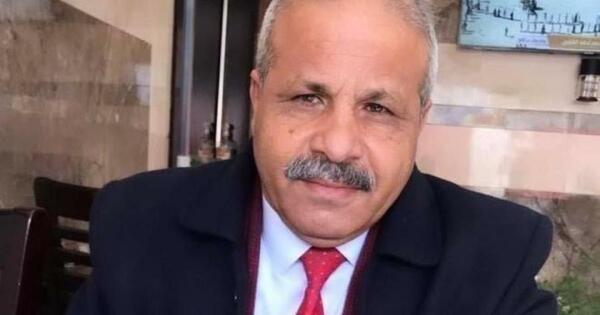
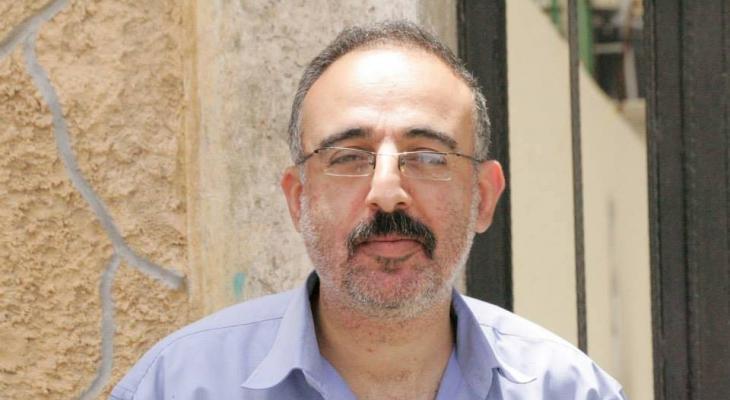
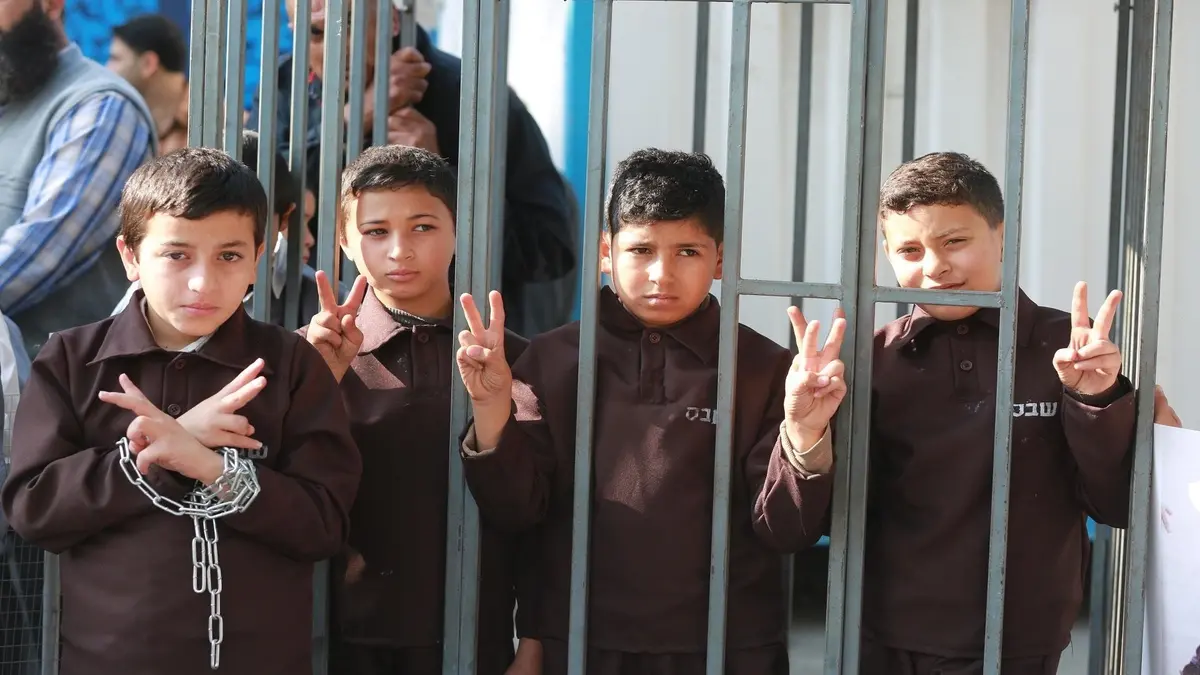
The Palestinian Prisoners Club said that the risks to the fate of administrative detainee Muhammad Zayed Khudairat (21 years old) from Hebron, who has cancer and has been detained since June 1, 2024, are escalating, after he was recently infected with scabies in Ofer Prison.


Based on a visit conducted by the Prisoners Club’s lawyer to him, along with a group of detainees and prisoners in Ofer prison, who once again described the level of difficult and harsh conditions that continue against them to this day, they confirmed that the occupation prison system is continuing its retaliatory measures, which fall within the systematic torture policies, including starvation crimes, medical crimes, and operations of repression and assault.


According to the statement of the detainee, Khadirat, to the lawyer, he said: “My health condition is deteriorating, especially after I contracted scabies, which the prison system has turned into a tool for torturing us, and it has become a nightmare that haunts the cell in which we are held, and I and a group of prisoners, we all suffer from severe itching and blood is coming out of our bodies as a result of the itching, in addition to our inability to sleep.”


“It is no longer just a matter of not providing treatment for scabies, but even my cancer treatment. Since October, I have only had an MRI scan after many requests, and to this day I do not know the result, despite my many requests to explain the developments in my health condition, or even to see a doctor, but to no avail, as my condition is being treated with indifference. In addition to all of this, malnutrition is also looming over the cells. The prisoners are literally dying of hunger, and we are not allowed to store the remaining food from the slices of bread. If anyone finds any slices of bread left, the cell is stormed and the prisoners are assaulted. It has affected my health, as well as the severe cold, as there are not enough clothes, in addition to the overcrowding that is increasing day after day,” Khadirat added.


The Prisoners Club held the occupation prison administration fully responsible for the fate of the detainee Khdeirat, considering that what is happening to him is a medical crime that directly targets his life, noting that the detainee Khdeirat had undergone a bone marrow transplant shortly before his arrest.


The Prisoners Club also held the occupation prison administration responsible for the fate of the wounded Yazid Al-Najjar, who has been detained since September 26, 2024. He was shot three times before his arrest in the left thigh, a bullet between the knee and the bone, and a bullet hit the main artery at the time. He was actually in a critical health condition, and today he is still suffering from the effects of the injuries he sustained, with the lack of necessary health care. This is in addition to being subjected to two repeated attacks during his transfer to Ramla prison. According to the lawyer who visited him, the effects of bruises were visible on his nose.


The Prisoners Club follows up, through monthly visits to detainees inside the occupation prisons, the continuation of the level of crimes committed against detainees and prisoners. However, the data confirms that the time factor is the main determinant of their fate, with the systematic crimes against them continuing at the same pace. It points out that a number of prisoners and detainees who were martyred had scabies as a central cause, the last of whom was the martyr Moataz Abu Zneid from Hebron.

ARAB AND WORLD

Fri 17 Jan 2025 2:34 pm - Jerusalem Time

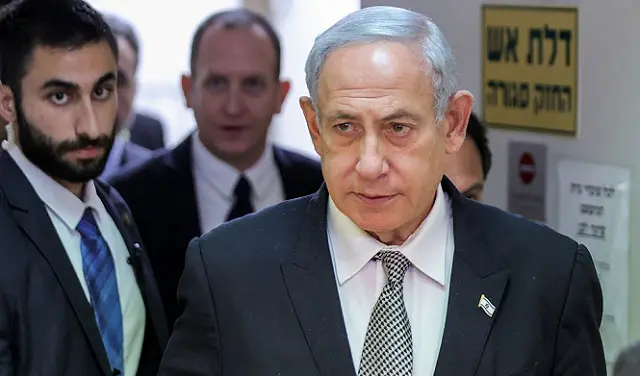
Netanyahu: US guarantees to resume war if Hamas does not agree to our demands

Israeli Prime Minister Benjamin Netanyahu told ministers during a meeting of the political-security cabinet on Friday that "we received absolute guarantees from Biden and Trump that if negotiations on the second phase fail and Hamas does not agree to our security demands, we will return to fighting with great force with the support of the United States," according to what Israeli media reported.


The incoming US President, Donald Trump, and the outgoing President, Joe Biden, pledged to Israel that they would agree to resume the war on Gaza if Hamas “violated” the ceasefire agreement, rearmed again, or resumed armed operations in Gaza, according to the newspaper “Israel Hayom.”


The newspaper quoted a senior Israeli official as saying that those close to Israeli Prime Minister Benjamin Netanyahu are not providing this information to the public for fear that publishing it will push Hamas to withdraw from the ceasefire and prisoner exchange agreement.


The newspaper added, quoting an official in Washington, who considered that "the pledges are clear and decisive, and without them Netanyahu would not have adopted the deal, and professional officials would not have recommended approving the agreement."


According to the newspaper, last night there was a major development regarding the conditions of Finance Minister Bezalel Smotrich, who opposes the agreement, and that Netanyahu agreed to a large part of these conditions, and that there are still details that must be agreed upon.


The newspaper added that Smotrich "also demanded that what was said to him behind closed doors be expressed by Netanyahu in the cabinet meeting," and that the indications so far are that Smotrich will remain in the government until the end of the first stage of the agreement.


Smotrich announced yesterday that if his condition to resume the war after the end of the first stage of the agreement is not met, he will resign and the Religious Zionism Party will withdraw from the government.


A government minister told the newspaper that after the understandings, National Security Minister Itamar Ben-Gvir will resign and Smotrich will remain, and that he believes Ben-Gvir will resign now, but there is a possibility that he will return to the government later. "Under the understandings with Trump, Israel can return to war."


PALESTINE

Fri 17 Jan 2025 2:07 pm - Jerusalem Time

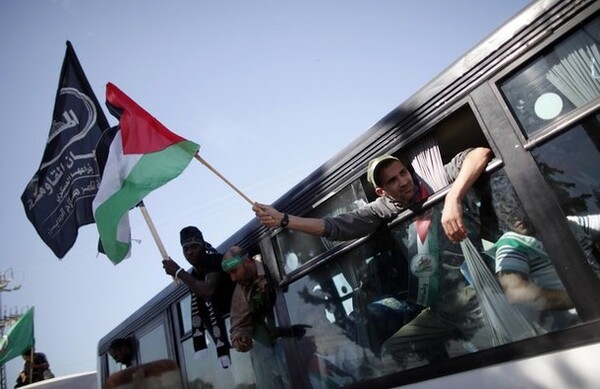
Haaretz reveals details about Palestinian prisoners released in the deal

Today, Friday, the Hebrew newspaper Haaretz revealed new details about the Palestinian prisoners who will be released in the first phase of the prisoner exchange deal between Israel and Hamas.


The Gaza ceasefire agreement will go into effect next Sunday at 12:15 p.m., while the first batch of three Israeli prisoners will be released at 4 p.m., according to Hebrew media.


According to the Hebrew newspaper, 290 Palestinian prisoners sentenced to life imprisonment will be released out of 563 in Israeli prisons.


She added that the names of the Palestinian prisoners who will be released will be published on Saturday evening.


She added, "600 Palestinian prisoners whose sentences exceed 15 years will be released as part of the exchange deal."


As part of the exchange deal, a thousand prisoners from Gaza will be released during the Israeli ground operation in the Strip.


In turn, Channel 14 quoted sources as saying that a number of life sentence prisoners will be released to Jerusalem and the West Bank.


The Israeli Prison Service has begun preparations to release the Palestinian prisoners who will be included in the exchange deal.


Channel 12 reported that estimates indicate that Ofer Prison will once again be the "assembly and distribution point" for prisoners.


Hamas said in a statement today that the lists of Palestinian prisoners released in the first phase of the exchange deal within the ceasefire agreement will be published through the Prisoners' Office according to the stages and procedures of the exchange.

PALESTINE

Fri 17 Jan 2025 1:09 pm - Jerusalem Time

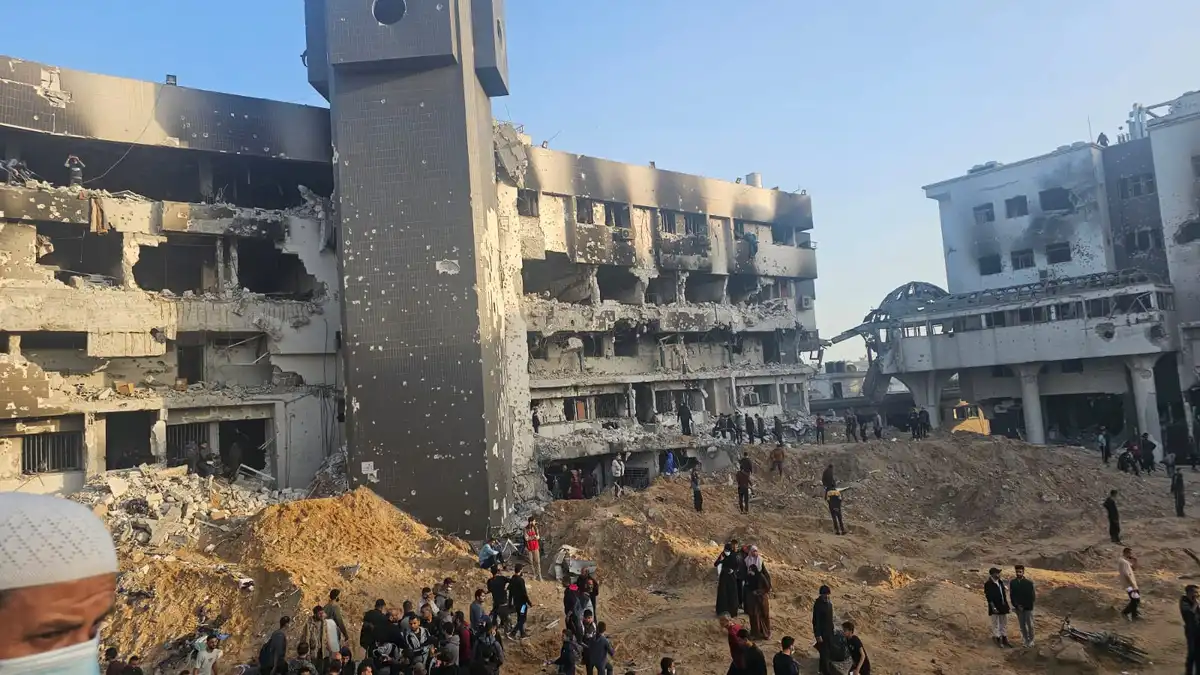
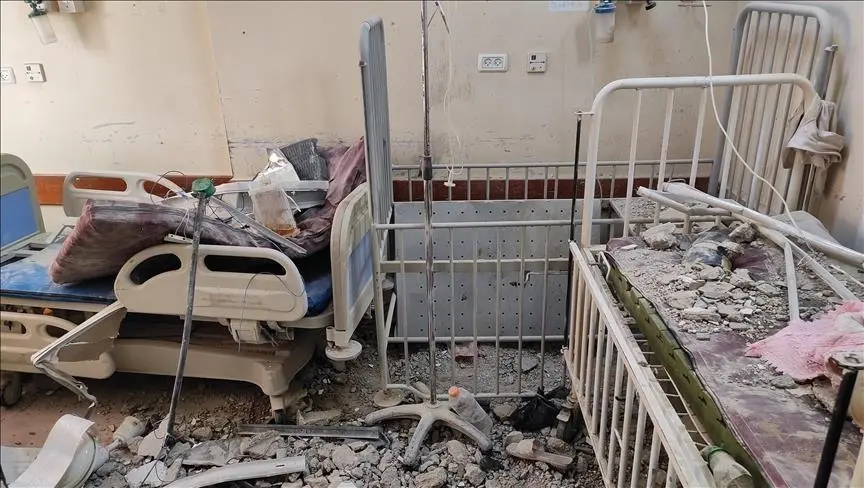
WHO: Rebuilding Gaza hospitals will cost $10 billion

The World Health Organization said that rebuilding hospitals and medical facilities in the Gaza Strip will cost several billion dollars.


Initial estimates indicate that about $3 billion is needed for the health sector alone over the next 18 months.


The WHO representative in charge of the Palestinian territories, Rick Peeperkorn, said that within a time frame of 5 to 7 years, the demand is expected to reach $10 billion.


Pepperkorn revealed these figures during a press conference held by the World Health Organization.


"The destruction is so massive, I've never seen it anywhere in my life," added Peeperkorn, who has been at the site frequently since the start of the Israeli assault on the Gaza Strip.


He pointed out that almost all hospitals and medical facilities were either destroyed or damaged.


Cost analyses of reconstruction are currently being rapidly compiled by the United Nations, the World Bank, the European Union and other organizations.


Reconstruction is a shared responsibility, Peeperkorn said, adding that funding should be provided by WHO members around the world, including Israel.

PALESTINE

Fri 17 Jan 2025 1:05 pm - Jerusalem Time

Netanyahu's office: Prisoner swap deal to begin Sunday

The office of Israeli Prime Minister Benjamin Netanyahu announced today, Friday, that the implementation of the prisoner exchange agreement between Israel and Hamas can begin the day after tomorrow, Sunday, subject to the approval of the political-security cabinet and the government of the ceasefire and prisoner exchange agreement.


Netanyahu's office said in a statement that "the release of the kidnapped soldiers can be carried out according to the aforementioned plan, in which the kidnapped soldiers are expected to be released on Sunday, subject to the approval of the cabinet and the government and the entry into force of the agreement."


After the agreement was signed last night, the Israeli army informed the families of the prisoners held in the Gaza Strip of the list of names that Israel had requested to be released and that Hamas had agreed to.


Israel is seeking to start releasing Israeli prisoners at 4 p.m. Sunday, if the Supreme Court rejects all petitions against the agreement.


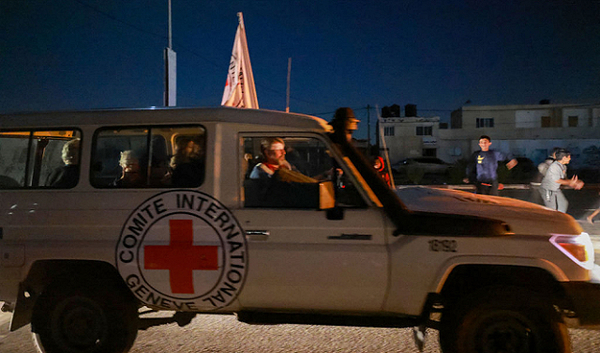
The first stage of the agreement stipulates that Hamas will release 33 Israeli prisoners within 42 days. In exchange for five female civilian prisoners and two Israeli children, 210 Palestinian minors and female prisoners will be released; and in exchange for Hamas releasing five female Israeli soldiers, Israel will release 250 Palestinian prisoners, including 150 Palestinian prisoners serving life sentences.


Israel will release 110 Palestinian prisoners serving life sentences in exchange for Hamas releasing 9 “sick and wounded” Israeli prisoners; Israel will release 30 prisoners serving life sentences and 270 other prisoners in exchange for Hamas releasing 10 elderly prisoners; and Israel will release 60 Palestinian prisoners and 47 prisoners who were re-arrested after being freed in the Shalit deal, in exchange for Hamas releasing Avra Mengistu and Hisham al-Sayed, who have been held in Gaza since 2014 and 2015.


Israel will also release 1,000 Palestinians it arrested in the wake of the October 7 attack, even though they did not participate in the attack.


Meanwhile, Israeli National Security Minister Itamar Ben-Gvir reiterated today that after the agreement is signed and if the government ratifies it, “we will withdraw from the government,” adding, “I love Prime Minister Benjamin Netanyahu, and I will work to ensure that he continues to be prime minister, but I will withdraw because the deal that was signed is absolutely disastrous.”


The Jerusalem District Court today approved Netanyahu's request to cancel Netanyahu's trial sessions next week, due to the prostate surgery Netanyahu underwent late last month. The Public Prosecution agreed to Netanyahu's request, and the court will resume hearing Netanyahu's testimony before it on January 27.


OPINIONS

Fri 17 Jan 2025 11:46 am - Jerusalem Time

The biggest challenge during the truce: restoring the status of the Palestinian cause as a political issue, and preventing the occupation from returning to implement its plans of genocide and displacement

Walid Al-Awad

Walid Al-Awad

Opinion Writer

As soon as the three-stage exchange deal was in people’s hands since Wednesday evening, young and old held their breath waiting for zero hour, the moment when the hell of death they have lived through for more than fifteen months, during which they lost their loved ones and their children, would stop. In these difficult moments, which seem like an eternity, they are waiting impatiently for the ceasefire to start, so that it can come into effect as soon as they are saved by searching for what remains of the remains of their loved ones under the rubble of houses and on the edges of the streets, and perhaps from those whose tender flesh was mixed in the cars that the occupation bombed on the roads. This agreement that people rejoiced over because it represents for them an opportunity to escape the death that they have been struggling with for fifteen long months, and the occupation state continues to practice its fascism with brutality to spoil this joy and turn it into funerals and hours of crying and sadness for the loved ones who are losing their lives in these hours before the start of implementing the deal to escape death, as the operations of blowing up houses in the northern Gaza Strip continue throughout the night and during the day, and the bombing increases in intensity and violence from the occupation aircraft that do not leave the skies of the entire Strip. It is raining hundreds of missiles and tons of explosives on various neighborhoods and leveling them to the ground in Gaza City, targeting homes and shelters, leaving hundreds of victims among women, children and the elderly. At the same time, the bombing continues to target areas in the southern Gaza Strip, targeting the tents of the displaced who have begun to pack their belongings and worn-out tents, awaiting the long-awaited return to the semi-destroyed houses and buildings in northern Gaza.


Before the expected zero hour, the bombing intensifies and the martyrs are torn apart by the occupation’s missiles and shells, turning them into pieces in horrific scenes that bring to mind the first days and months of the most violent and brutal war of extermination during the current century. Not only that, the continued manipulation of people’s nerves by postponing the announced date for implementation has begun to worry people and make them apprehensive for fear that their hopes will be dashed and go down the drain, although all the data indicates that this deal, being a gift to US President Trump as he prepares to enter the White House, is proceeding on the path to implementation, especially in its first and second stages, which makes the entire agreement merely an agreement to exchange prisoners of a security nature, in addition to the flood of trucks carrying tons of humanitarian aid, which makes it an agreement devoid of any political content related to the goals and rights of our Palestinian people, for which they have long struggled and made sacrifices, foremost of which is their right to self-determination and the establishment of their independent Palestinian state in the West Bank and Gaza Strip with Jerusalem as its capital. It is clear that the occupation, which insists on limiting the matter to the security aspects and humanitarian needs, will work on the threshold of the end of These two stages are based on creating obstacles and impediments and searching for opportunities and pretexts to evade implementing the subsequent stages of the agreement, which would enable him to return again to implement his plans for destruction and displacement and to keep the issue of our people confined to the security and humanitarian dimensions at best. Such a great possibility is what worries people the most and raises their fears after a year of death, famine and displacement during which they drank cups of humiliation and degradation in all its meanings.

This reality that we face without embellishment poses great challenges and responsibilities to all Palestinian political forces and parties, firstly in missing the opportunity for the occupation’s intentions to return again to resume the war of extermination or limit the matter to the two dimensions mentioned above. It is necessary to seize what the first and second stages can provide in terms of opportunities to catch one’s breath and evaluate what is happening without stubbornness and exaggeration, but rather with an objective and realistic reading of the stage that we and the entire region are living in, and to go without procrastination and delay and to stay away from providing any pretext or opportunity that the occupation is waiting for to return to the series of fire and destruction that we can no longer tolerate.


National responsibility requires concerted sincere efforts to restore the status of the Palestinian cause as a political issue and not merely a security and humanitarian issue as it is intended to be. Once again, I say that such an urgent task can only be undertaken by the Palestine Liberation Organization, the sole legitimate representative of our people, based on the sacrifices of our people over a century of national struggle and on the experience and political and diplomatic relations it has gained at the regional and international levels, and on the international recognitions and resolutions it has also achieved regarding the status of the Palestinian cause and the right of our people to self-determination and the establishment of their independent state with Jerusalem as its capital.


Returning to the days and hours preceding the zero hour for implementing the agreement, long experiences confirm that the bombing will intensify and its circle will expand towards committing more massacres until the last minutes before the start of implementation, which requires everyone to be careful and attentive and limit movement and activity except for the utmost necessity so that our people avoid more losses in the last and decisive moments.


He who has faced famine and death and endured the fire of the Holocaust while it was at its peak must be careful not to be caught in the flames in his last moments.


PALESTINE

Fri 17 Jan 2025 10:11 am - Jerusalem Time

Katz cancels administrative detentions against terrorist settlers

Israeli Defense Minister Yisrael Katz on Friday cancelled administrative detention orders against terrorist settlers due to the expected release of Palestinian prisoners as part of a ceasefire agreement in Gaza and a prisoner exchange.


This came according to a statement issued by Katz today, after he had begun implementing his announced policy of not pursuing terrorist settlers by not issuing administrative detention orders against them, despite their danger. Before today’s step, the last time he issued an order to cancel an administrative detention order was on the thirteenth of last month, when he decided to release a settler three months before the end of his detention period.


Katz thus cancelled the decision of his predecessor in office, Yoav Galant, regarding settler Itiel Ben Tzruya, who was issued an administrative detention order for six months, according to Israeli media.


The statement issued by Katz today stated that the Israeli Minister of Security "decided to cancel the administrative detention orders against settlers in Judea and Samaria (the occupied West Bank) who are currently in administrative detention."


He stressed that the decision includes "their immediate release to their homes, and not even thinking about extending the detention period."


"It is better for the families of the settlers; to be happier than the families of the released (Palestinian prisoners)," Katz said in a direct embrace of the settlement mentality.


Katz stated that "in light of the expected release of (Palestinian prisoners) in Judea and Samaria as part of the hostage release deal, I have decided to release the settlers held in administrative detention, and to send a clear message of strengthening and encouraging settlement, which is witnessing rapid growth in the West Bank," considering that this comes "in the face of the increasing security challenges."


The administrative detention order against Ben Tzruya was issued following his participation with other terrorist settlers in burning Palestinian property in the village of Yatma and attacks in the village of Jit.


Until that time, there were seven terrorist settlers in administrative detention, while there were 3,443 Palestinian administrative detainees in the occupation prisons.


In November, Katz announced that he had decided to stop issuing administrative detention orders against terrorist settlers and to continue the policy of administrative detention against Palestinians. It is worth noting that administrative detention orders against settlers are issued based on the recommendation of the Israeli General Security Service (Shabak) based on information about their terrorist attacks, while these orders, which are issued against thousands of Palestinians, are not based on information that can be presented as evidence in court.


Israeli legal experts have criticized Katz's decision to stop issuing administrative detention orders against settlers in the West Bank while continuing to apply them to Palestinians on both sides of the Green Line.


Experts stressed that Katz's decision is illegal and violates basic principles of international and administrative law, making it subject to cancellation by the Israeli Supreme Court, and may open the door to more international arrest warrants against political and security officials in Israel, including Katz himself.


Israeli media quoted judicial officials as saying that "Katz's decision gives a 'license to kill' to the hilltop youth, and ties the hands of the Shin Bet in dealing with conspiratorial Jewish groups in the (occupied) territories. The decision is likely to push secret organizations to attack Arabs and ignite the region."


PALESTINE

Fri 17 Jan 2025 9:49 am - Jerusalem Time

UN rapporteur: Israel implicitly admits its soldiers committed war crimes in Gaza

The UN Special Rapporteur on the situation of human rights in the Palestinian territories, Francesca Albanese, said that Israel implicitly admitted that its soldiers committed war crimes in Gaza, by advising soldiers to avoid publishing photos and scenes that would constitute evidence against them in foreign prosecutions.


In a press interview published on Friday, Albanese indicated that Israel's continued attacks on Gaza are unacceptable.


She described the Israeli army's position regarding urging its personnel not to publish photos and scenes as "shocking", adding: "Instead of Israel advising its soldiers not to commit crimes, it tells them to cover or blur their faces when sharing videos."


Albanese stressed that this is an admission by Israel that "Israeli soldiers may commit crimes, and this is unacceptable."


“Universal justice is a powerful tool for achieving justice when all other means fail,” she said.


Universal jurisdiction allows states or international organizations to prosecute a person accused of crimes against humanity regardless of where the crimes were committed.

PALESTINE

Fri 17 Jan 2025 9:47 am - Jerusalem Time

Nablus: Settlers begin establishing a colonial outpost on Naqoura lands

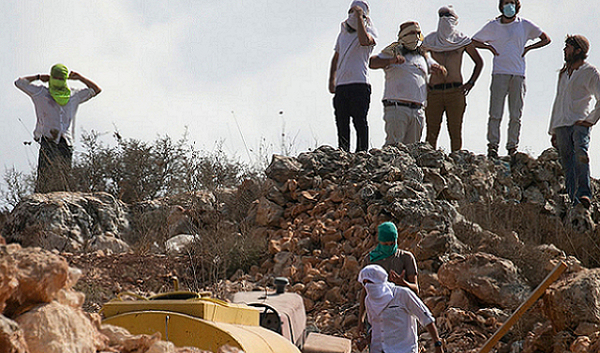
This Friday morning, a group of settlers placed a layer of "bascorus" on lands in the village of Naqoura, northwest of Nablus, which they had bulldozed a week ago in preparation for establishing a settlement outpost.


According to local sources, a group of settlers laid a layer of "biscores" in preparation for placing caravans and establishing a settlement outpost on the village lands.


She added that a bulldozer belonging to the settlers had bulldozed a week ago agricultural land in the Ein Qibla area, belonging to citizens Mahmoud and Ahmed Abu Aida, and Mahmoud and Mohammed Hassan Al-Sarsour, stressing that the settlers informed the citizens that they would establish a private park for themselves in the place, and would put "caravans" there, and threatened that if they approached the land, they would destroy all the nearby greenhouses belonging to the farmers.


She pointed out that the land on which the park is to be built is only 50 metres away from some houses.

OPINIONS

Fri 17 Jan 2025 8:44 am - Jerusalem Time

Israeli treachery

op-ed - Al-Quds dot com

op-ed - Al-Quds dot com

Opinion Writer

Despite the agreement to stop the war and move towards a swap deal, the insane massacres of genocide have escalated in a noisy manner, with more than 81 martyrs killed yesterday alone, which prompted the government media office in the Gaza Strip to issue a statement warning of the treachery of the occupation, calling on our people to take the utmost caution and care in the face of this treachery, and to be aware of the crimes of bombing, massacres and continuous targeting.


As the Israeli army continues its war of genocide, committing war crimes and horrific massacres against the displaced, these attempts aim to displace the residents of the northern Gaza Strip by bombing residential areas and blowing up homes, as the sounds of explosions reached some areas in the central West Bank, due to Israel’s use of bunker-busting bombs. This will increase the number of martyrs and wounded, for whom hospitals no longer have the capacity to accommodate and treat them.


Treachery, deceit and fraud also made Netanyahu try to circumvent the exchange deal, as he claimed yesterday morning that Hamas was manipulating the agreements, and it turned out that Netanyahu himself was the one seeking to undermine the deal by proposing a new condition calling for the release of nine Israeli soldiers in the first stage, which would create a dispute over the number of important prisoners that Israel would release in exchange for the sick and wounded Israelis.


Netanyahu exploited this part to pass the hours in the procrastination war with the extremist parties, especially the Jewish Power and Religious Zionism parties, where Ben Gvir appeared in a press conference warning Netanyahu of the consequences of reaching an agreement, otherwise the result would be his resignation from the Israeli government, along with members of his party, on the grounds that the agreement is a disaster for Israeli national security, while Smotrich exploited this and continued his threats of the necessity of resuming the war after the first stage, until Hamas is eliminated.


Although Netanyahu has an overwhelming majority to vote on the deal and approve the agreement, he resorted to the option of manipulation, so he postponed the Israeli government session and the cabinet session, to be held today, which may postpone the start of implementing the terms of the agreement to Monday instead of Sunday, and he held Hamas responsible, as he was exposed to a scandal through the Israeli media, and the families of the detainees who clearly mentioned that Netanyahu, Ben Gvir and Smotrich are the ones who do not want a deal, not Hamas.


Concern remains over the citizens of Gaza who are being subjected to the harshest and most heinous massacres committed by Israel. The urgent question here is: Who will stop the bloodshed in Gaza, and who will deter Netanyahu and his extremist entourage?

OPINIONS

Fri 17 Jan 2025 8:43 am - Jerusalem Time

This war that is approaching its end.. What did it say and what did it reveal?

Rassem Obaidat

Rassem Obaidat

Opinion Writer

The aggressive war on the Gaza Strip is in its final stages, and if it is not circumvented by Netanyahu and his army, as is happening now in southern Lebanon, where the truce there is due to repeated Israeli violations, which have exceeded 530 violations, it is considered that the ceasefire agreement is on its way to collapse, and that Netanyahu wants to renounce this agreement, relying on the geostrategic changes in Syria, and what is happening inside Lebanon, as Syria is now under Turkish-Qatari influence, and Lebanon is under Saudi-Egyptian-Emirati influence.


This war clearly stated that it was not only Israel's war, but America's war and the entire West's, as they were directly involved in it, supported militarily and financially, mobilized their fleets, aircraft carriers, and all their intelligence and security agencies, and employed all their diplomacy, economy, and money, in order to defend and protect Israel, without which it would have been, as some Israelis said, since Israel had been fighting with stones and sticks since the third day of the war. The war, as the American "Musaylimah" Blinken said, did not succeed in eliminating the resistance militarily, and he said that defeating the resistance forces requires other means that America has tried, such as imposing comprehensive economic, financial, and political sanctions on the targeted countries and resistance movements, as happened in Syria, and the "Caesar Act" to starve the Syrian people, and the five-year plan of Pompeo and Barbara Leaf in Lebanon, a financial and economic siege and a political and security vacuum leading to civil wars.


The important thing is that these wars and this Third World War, she said, are poor countries and resistance movements, foiled major projects and plans, such as what Netanyahu talked about, changing the face of the Middle East, and what the American administration calls the new Middle East, and with them fell Israel’s projects and plans, the plan of the generals in the northern Gaza Strip, not withdrawing from the “Netzarim” and “Philadelphi” axes, eliminating the Hamas movement and the resistance, achieving what is known as the overwhelming victory, and the dream of returning to settlement in the Strip.


This war, which was fought by forces, movements and peoples who were poor in military and armament capabilities and capacities, and great in courage, will and determination, imposed equations and balances of power that can be built upon in the future. The ceasefire, neither in Lebanon nor in the Gaza Strip, speaks of disarming the resistance, but rather a return to coexistence with this weapon on the borders of Lebanon and on the borders of the Strip. This means that the conflict is ongoing and continuous, and there are existential risks that Israel may be exposed to, which sought in its destructive wars on Gaza and Lebanon to prevent a return to coexistence with resistance forces on the borders of its settlements. What is shameful is the state of joy and gloating among some Lebanese and Palestinian forces and parties, by saying that a major defeat had befallen Hezbollah and Hamas. This war also revealed that there is an unprecedented state of official Arab and Islamic betrayal and collusion, and it said that the real Arabs are those who stood with the brave by Gaza, and were partners in blood, part of Lebanon, part of Iraq and part of Yemen, and Iran was also a supporter and partner, and beyond that we found Arabic speakers, not Arabs. This situation extended to the Arab and Islamic masses, who seemed to be “hypnotized” and appeared as a shadow of their regimes, to which Marx’s saying about reactionary peoples applies, while we found that this war brought surprises, including the surprise of Yemen, Yemen, which was able to impose equations in the Red Sea, and an unprecedented challenge to America and its arrogance, and Yemen succeeded in imposing an economic naval blockade on Israeli ports, throughout the war period, especially the port of Eilat “Umm al-Rashrash”, and also forced American destroyers and aircraft carriers to flee more than once from the Red Sea, after targeting them with its hypersonic missiles and suicide drones, as well as Hezbollah in Lebanon, despite what it was exposed to from a deadly triple package in the period from September 17-27, 2023, and the assassination of most of its military and security leaders and its Secretary-General Hassan Nasrallah and his deputy Hashem Safi al-Din, it succeeded in preventing the Israeli army from achieving any ground victory, despite all the Israeli military mobilization that reached five divisions and several brigades, they were unable to They crossed the border and the border edge by hundreds of meters, while in 1982 they reached the heart of the capital Beirut.


We must not forget that the war revealed the resistance’s allies on the global level, such as popular and mass movements, especially the student “intifada” that swept American and Western European universities, which demanded an end to the crimes of genocide and ethnic cleansing against the Palestinian people, and called for holding Israel accountable for those crimes, and for an economic boycott and divestment from it, as well as boycott movements and many friendly countries such as South Africa, which filed a case against Israel before the International Court of Justice, on charges of committing crimes of genocide and crimes against humanity, and Bolivia and Colombia, which severed diplomatic relations with Israel.


The war, as the deputy head of the political bureau of Hamas, Khalil al-Hayya, said in his speech the day before yesterday, “the battle of October 7 constituted an important turning point in the history of the Palestinian cause,” and its “effects” will not stop with its end. Al-Hayya also stressed that our people “thwarted the declared and hidden goals of the occupation, and today we prove that the occupation will never defeat our people and their resistance.”


It is important here for the resistance forces to remain vigilant and wary of the cunning and tricks of Netanyahu and his partners. What happened and is happening in Lebanon must remain before the eyes of the resistance leaders. Neither the Israelis nor the Americans and the colonial Western powers behind them, nor the official Arabs, can be trusted. Perhaps Netanyahu, under the great internal pressures he was exposed to and the external pressures, especially from US President Trump, agreed to this agreement, and his eyes were set on transferring what happened on the southern Lebanese front to the Gaza front, where he is implementing the first phase of the agreement, to please Trump and also to relieve the pressure on him from the families of the prisoners, the Israeli public, and the military and security establishments, and then he will turn against this agreement.


It is clear that after the completion and implementation of the agreement in its three stages, there will be major divisions among the forces of the Israeli right. The differences in the Smotrich Front, “Religious Zionism,” and the Ben Gvir Front, “Jewish Power,” are escalating, and the Likud is no longer cohesive behind Netanyahu. From here, the Israeli political arena appears to be heading towards profound and major transformations, and it will face a choice: either continuing the wars in exchange for the accumulated strategic loss regionally and internationally, or facing the option of a Palestinian state, to save itself from the brink of the abyss in which it has found itself.

OPINIONS

Fri 17 Jan 2025 8:41 am - Jerusalem Time

Stop repeating mistakes and tampering with the fate of the Palestinian people

Iyad Abu Hajar

Iyad Abu Hajar

Opinion Writer

One of the greatest disappointments that leaders follow and drag their people with them to an unknown fate is repeating mistakes in the same manner without learning the lessons of the past. Gaza, which is a living example of calamity, destruction, division, siege and war of extermination, has witnessed years of suffering due to hasty decisions and the lack of careful study of the enemy’s methods. However, excessive confidence in countries that claimed to be support and aid in times of hardship and crises, as well as countries that claimed to defend human rights, was one of the most dangerous failures, as these countries proved their inability to confront Israeli brutality, leaving the Palestinians alone to face the ordeal.


As the brutality of the war on Gaza escalated and reached unprecedented levels of Zionist violence, the world stood silent. This silence was a deep psychological shock to the Palestinian people and also to the free people of the world who supported our cause. Today, the voice of the people of Gaza is crying out: Stop the war at any cost. For them, anyone who wants the war to continue is considered a traitor and a beneficiary in the eyes of a people exhausted by the siege and destruction.


Gaza is not just a land full of stones, but it is home to people with dreams, hopes and a life they want to hold on to. While many analysts on some satellite channels and politicians who benefit from foreign agendas speak, we find that they have not lived in a tent or understood the reality of the Gazan street and what it suffers. They express their opinions and points of view without being in direct contact with the reality of death and destruction. Gaza is full of people who refuse death and want life. The real test between life and death is only understood by those who live the tragic experience, not by those who stand outside it and film it in an inflated documentary film entitled What is Hidden is Greater, philosophizing and looking from high towers far from the real suffering.


The role played by the resistance in defending Palestinian rights and existence cannot be denied. However, the responsibility for managing this resistance must impose itself as a priority and with a new and different way of thinking. Hamas has repeatedly called for escalating demonstrations and sit-ins and demanding that the masses take action to reject Israeli violence and stop the war on Gaza, but with the intensification of suffering and the Zionist entity’s refusal to submit to international demands to stop the war and disregard all international laws, what has Hamas done but find itself in a predicament due to the lack of response from its allies, to the point of floundering in not making decisions that do not conform to the aspirations of the people in the Gaza Strip.


It seems that insisting on this approach without planning and awareness makes us fall into the same mistakes over and over again. The current leadership mentality that is leading the stage does not have sufficient awareness of the seriousness of the Palestinian situation. We are facing a real genocide that opens the door to more disasters. Hamas must realize that the Palestinian people need to heal their wounds, not open new ones.


Today, the city of Jenin is witnessing what looks like a repetition of the Gaza scenario, as some Hamas leaders seek to turn it into a new theater for conflict without taking into account the situation of the Palestinian people in the West Bank, wasting resources and taking lives, and returning to square one. This terrifying absurdity prompts us to reflect and ask: Where are we going? How can we continue on this path that brings nothing but destruction and wastes our energies and the blood of our children? Isn’t it enough to see history repeat itself without learning a lesson or moral from it? This bloody amusement makes it necessary to think seriously and rationally about how to change this painful reality.


The continuation of this approach raises serious questions: Who benefits from turning the Palestinian-Israeli conflict into an internal conflict? If Hamas’s experience in Gaza has failed on several levels, why is there insistence on repeating it in the West Bank?


Insisting on using an old way of thinking and the plan’s lack of a strategic vision puts the Palestinian people at risk of genocide. Israel, which has always exploited the ill-considered mistakes of some Hamas leaders, aims to deepen Palestinian suffering and drain energies. Therefore, everyone must realize that each stage has its own requirements and that resistance is not just a weapon, but rather a vision and conscious preparation that goes beyond emotional reactions.


Stop dragging Jenin into ill-considered battles and making decisions that lead to more suffering. It is time for the Hamas leadership to reconsider the way it manages the conflict, respect the great sacrifices made by the Palestinian people, and work to make decisions based on wisdom and deep planning, far from any considerations that may lead to aggravating the tragic humanitarian situation.


We, as Palestinians, whether in the diaspora or at home, must be aware of the reality of the situation and speak from a position of moral and national responsibility towards our people who have experienced indescribable suffering. The life of every Palestinian, young or old, is priceless, and their blood is precious to us all. Preserving the lives of innocents is not a concession of rights or surrender, but rather the essence of the national struggle that seeks to build the future on the foundations of justice and dignity.


However, this does not mean in any way that we should let the Israeli occupation wreak havoc on our land and plunder our resources. Resisting the occupation is a legitimate right of the Palestinian people, but it requires a conscious strategy and a long-term vision that balances between protecting the Palestinian people and continuing the struggle for freedom. True resistance is that which builds and does not destroy, and is keen on the lives of the people who are the pillar and foundation of the cause.


Hasty decisions and ill-considered conflicts only serve the enemies of the Palestinian people, while we are in dire need of unity and solidarity at this critical stage. Our cause is just, our people are licking their wounds, and the occupation will not be able to break our will if we are united and aware of the magnitude of the challenges facing us.


This moment calls on all of us to reflect and re-evaluate the path we are on. The Palestinian people deserve a leadership that works wisely, protects their blood and respects their dignity. Palestine is not just a land, but a homeland that pulsates with the lives of our children, youth, elders, women, dreams and memories, and we must live up to the responsibility of protecting the Palestinian people and ensuring their bright future.

OPINIONS

Fri 17 Jan 2025 8:39 am - Jerusalem Time

Victory speech

Hossam Abu Al-Nasr

Hossam Abu Al-Nasr

Opinion Writer

No one calls me. I am now preparing my victory speech, it is full of broken letters, and many drawn disappointments, there is not a single damma in it, no one included this people, as for the openings, they were in the seventh sin, and they were in the worn tents, but in it are raised letters like the heads of martyrs, and the fluttering flags, but it is also full of erection, and erected letters, as the merchants of international politics erected on us, and the thieves of the city erected on us when we thought they were guarding us in the war, and the merchants of the market erected on us, and the merchants of blood erected on us, and the emperors of the ATM percentage erected on us, and other swindlers. In this speech, I am not an agent, I am an object, in war I am an object and in peace I am an object, in shooting I am an object, and in a truce I am an object, I am only an agent when they ask me to rebuild myself, and restore the words anew, and search for the sentences and scattered corpses, to bury them in their right place. The victory speech is no longer news to me, because I do not know the subject. The news is the announcement of the truce, and the subject is 50,000 martyrs, and a 400-day war, in which there is no silence, except in the letter “ra” of war, but I am still victorious. I do not know how, but I am victorious, despite the many words that contain intensity. They are the size of the intensity of displacement, bombing, cold, and burning. It is true that I do not have a tent, nor a street leading to the hospital, nor a hospital leading to the cemetery, nor a cemetery leading to eternal life, but I am victorious. I do not think that after my speech there are any raised letters, as nothing raises them except the cranes of rubble. After this speech, we all came out more different, from the rhyme and the alliteration, and we only agreed on a ceasefire, not a cessation of war, like an agreement launched by a class, but we are victorious, for in the present victory no longer needs to be recorded, as in history, victory is breaking news on the island, like the death of 1,000 in one day, even the image of victory has intensity, for nothing was easily fleeting, even the graves we find are only grouped and arranged, we are victorious, and we do not need reviews or feedback, or weighty words, this has been our speech since the catastrophe, victory is our ally in everything, it does not matter how we got out of the battle, but we were victorious, over everyone around us, but we did not triumph over ourselves.

PALESTINE

Fri 17 Jan 2025 8:33 am - Jerusalem Time

Netanyahu's office: Negotiating team reached prisoner swap agreement

The Israeli Prime Minister's Office announced, early Friday morning, that an agreement had been reached regarding a prisoner exchange deal and a ceasefire in Gaza, as the agreement was officially signed in Doha in the presence of representatives from Israel, Hamas, the United States and Qatar.


The Security Cabinet is scheduled to convene this morning, Friday, at 10:15, followed by a government meeting to approve the deal.


The office of Israeli Prime Minister Benjamin Netanyahu said in a statement issued early Friday that Netanyahu received an update from the negotiating team that understandings had been reached regarding the deal. He called for a cabinet meeting on Friday, followed by a government meeting to approve the agreement.


According to a statement from Netanyahu's office, the families of the Israeli prisoners were informed of the understandings reached, and the coordinator responsible for prisoners and missing persons issued instructions to prepare to receive the returning prisoners.


Earlier Thursday evening, a US source reported that the latest disagreements over the prisoner swap had been resolved. Sources also reported that the final amendments to the deal had been agreed upon and signed by all parties.


An Israeli security delegation will leave for Cairo on Friday to coordinate the implementation of the prisoner swap deal and the ceasefire in Gaza. Israeli officials said the delegation will include senior officials from the Shin Bet security service and the Israeli army.


Under the previous agreement, the prisoners would be taken out through the Rafah crossing into Egypt, and from there they would be transferred to Israel. An Israeli official said the security delegation in Cairo would also discuss other issues, including reopening the Rafah crossing to evacuate wounded Palestinians from Gaza and bring in humanitarian aid as stipulated in the agreement.

PALESTINE

Fri 17 Jan 2025 8:28 am - Jerusalem Time

Israeli occupation forces arrest three Palestinians in Nablus

The occupation forces arrested three citizens from the city of Nablus at dawn today, Friday.


Local and security sources reported that a number of military jeeps and vehicles stormed several neighborhoods of the city, raided a number of homes in the popular housing area, Old Al-Najah Street, Rafidia, and Al-Mureij Street, searched them, wreaked havoc on them, conducted field investigations with some residents, and arrested three citizens: Ameed Khalil Ardis, Abdul Rahman Abu Hijleh, and Barik Abu Hijleh.

PALESTINE

Fri 17 Jan 2025 8:22 am - Jerusalem Time

Since the announcement of the ceasefire agreement.. 103 dead and 264 wounded in the Gaza Strip

Medical sources said that the death toll in the Gaza Strip since the announcement of the ceasefire agreement until 9:00 a.m. on Friday has reached 103 dead, in addition to 264 wounded.


The sources explained that 82 martyrs were killed in the northern Gaza Strip, 16 dead in the southern Gaza Strip, and 5 dead in the central region. Among the dead were 27 children and 31 women, confirming that 264 citizens were injured with varying degrees of severity as a result of the ongoing aggression on the Strip.


Local sources reported that 9 citizens were killed when the occupation forces bombed a house near the Sultan station in Jabalia al-Balad, north of the Gaza Strip, noting that the martyrs were the mother, sons and grandchildren of the family of journalist Amer al-Sultan.


It confirmed the martyrdom of 5 citizens in an Israeli bombardment that targeted the home of the Baraka family in the town of Abasan al-Jadida, east of Khan Yunis, south of the Gaza Strip, noting that two young men were martyred as a result of an Israeli bombardment that targeted a tent for displaced people in the vicinity of the Dhahra market, west of Khan Yunis.


In the middle of the Gaza Strip, the Israeli occupation forces targeted a tent belonging to the Ali family on Al-Mahkama Street in Al-Nusraat camp, which led to the death of a citizen, while a citizen died of his injuries a few days ago after being targeted by a bomb from a drone near Salah Al-Din Street.


Local sources confirmed that the occupation forces continue to bomb several areas in the Gaza Strip, the latest of which was launching three raids on Jabalia al-Balad in the northern Gaza Strip.


The occupation forces have continued their aggression on the Gaza Strip, by land, sea and air, since October 7, 2023, which has resulted in the death of 46,788 citizens and the injury of 110,453 others, while thousands of victims are still under the rubble and on the roads, and ambulance and rescue crews are unable to reach them.

PALESTINE

Fri 17 Jan 2025 8:15 am - Jerusalem Time

During 15 months of genocide... profit and loss calculations

Amir Makhoul: Israel was forced into this deal, which showed signs of the collapse of the right-wing dream of “Greater Israel”

Johnny Mansour: The agreement is a failure for Washington and Tel Aviv because it was based on Biden's proposal, which Hamas agreed to but Israel did not.

Dr. Muhammad Halsa: It is too early to talk about final results because we are still in the negotiations phase, which is an important part of the war rounds.

Thaer Abu Ras: This war represents a turning point in the history of the conflict and Israel failed to achieve strategic gains

Abdul Marouf: Victory in this conflict is not achieved in one round, but through the accumulation of points and victories over the long term.

Dr. Riad Al-Aila: The concept of victory in this war remains confined to the framework of Palestinian steadfastness despite the heavy losses in the Strip

Wadih Abu Nassar: We cannot talk about victories in this war, and all parties have suffered heavy losses, with varying degrees.


With the appearance of white smoke, and the announcement by the Prime Minister and Minister of Foreign Affairs of Qatar last Wednesday night of reaching a ceasefire agreement in the Gaza Strip, after more than fifteen months of war of extermination and ethnic cleansing by Israel, and unprecedented steadfastness by the people of the Gaza Strip and their resistance, the media and television stations are competing to analyze the gains and losses of this war, and a question appears that seems simple, but the answer to it does not seem as simple, but rather is open to interpretation and complex calculations: Who is the victor and who is the loser?


The calculations of profit and loss, victory and defeat are neither easy nor final in a war that has not yet ended, even if the sounds of cannons, planes and bullets have stopped. A war fought by resistance factions with limited armament and equipment in the Gaza Strip, and behind them other support fronts, on the one hand, and Israel, which has the strongest army in the Middle East, and with it the United States and the colonial Western countries with what they have lavished on it in missiles, ammunition and political, diplomatic and economic support.


If victory is measured by the goals achieved by each party, then Israel has not achieved its declared goals since the beginning of the war, but it has managed to make the Gaza Strip a place unfit for human habitation, by committing massacres and holocausts that have left more than one hundred and fifty thousand martyrs and wounded, in addition to the missing, in addition to the massive destruction it has caused to homes, buildings, schools, universities, mosques, churches, infrastructure and fields. If the resistance was unable to defeat Israel, it has succeeded in inflicting heavy losses on its ranks and equipment, and has often transferred the confrontation to the "enemy's" rear and internal front.


Writers and analysts who spoke to “Y” considered that Israel was forced into this deal, which showed signs of the collapse of the right-wing dream of “Greater Israel.” However, “it is too early to talk about final results, because we are still in the negotiations phase, which is an important part of the rounds of war.”


The deal does not bring any real victories for either party.


The writer specializing in Israeli affairs, Amir Makhoul, said that the recent deal does not carry real victories for any party, whether Palestinian or Israeli, but it reflects profound changes in the Israeli political scene, especially in the ruling right-wing camp.


He explained that Israel was forced into this deal, which showed signs of the collapse of the right-wing dream of a "Greater Land of Israel," in light of the accumulated failures since October 7.


"I don't think there are any real victories in this deal, despite its importance. It seems to be an end to the war in the end. We cannot talk about a Palestinian victory, and we certainly cannot talk about an Israeli victory. Rather, it is an addition or accumulation to the failure that began on October 7," he said.


Makhoul added: “The biggest loser in this deal, which Israel was forced into and was compelled to, is the ruling Israeli far right, from Netanyahu to Smotrich and Ben Gvir, as the signs of the collapse of the right-wing dream of “Greater Israel” have begun, whether in settling Gaza or annexing it, or in settling Lebanon and annexing the West Bank. All of that is no longer taken for granted.”


"Sharpening Knives" in Israeli Politics


He stressed that the current Israeli situation can be described as "sharpening knives" in Israeli politics, meaning settling scores within one camp, especially in the right-wing camp, whether within Smotrich's party, Ben-Gvir's party, or towards Netanyahu himself.


Makhoul pointed out that Netanyahu is the biggest loser in this battle, but he had no alternative, as his ruling coalition has become an obstacle to American policies and any Israeli horizon. This may lead to an Israeli awakening now by demanding accountability and questioning about what happened, and investigating the events after October 7.


He saw that Israeli society seems generally satisfied with this deal, although the cracking of the Israeli right represents a new and unfamiliar situation, and it is not known where things will go. It may lead to a decline of the right, which is a weak possibility, or the right may reorganize itself as happened in the past, and may resort to major terrorist acts to prevent any progress that is believed to be against the “Greater Land of Israel” project.


Makhoul said: "This bloody right may commit major crimes in the West Bank against Palestinian leaders or Palestinians in general, with the aim of inflaming matters and maintaining the occupation.


Palestinians cry and rejoice at the same time


He added: "In Palestine, we cannot talk about victory in light of the torrent of blood and total destruction in Gaza. We cannot talk about real joy, despite the joy of the families of the liberated prisoners, because people are crying and rejoicing at the same time," explaining that this situation reflects a new approach to the painful reality.


He added: "The huge price paid was not by the will of the Palestinian people, and this highlights the need for Palestinian achievement and consensus to address the next stage."


Makhoul warned that the deal could be exploited by Israel to inflame internal tensions in Gaza, with the possibility of internal fighting if Palestinian consensus is not achieved.


He said: "The presence of Arab or international forces may be a facilitating factor, but it may ultimately lead to the return of the Palestinian Authority to manage the affairs of Gaza, which is not currently agreed upon, which poses a great risk that may lead to internal conflict."


At the end of his speech, Makhoul stressed, "The biggest winner is the remaining Palestinian people, who are seeking to pick up their wounds and pieces after the disaster. The priority now must be to stop the war and rebuild Gaza, with a focus on holding Israel accountable and holding it responsible for this destruction."


Israel has not been able to disarm Hamas of all its weapons.


For his part, historian and Middle East researcher Johnny Mansour said that the war, with its results, produced a situation that cannot be said to be similar, but each party claims to have achieved its goals.


He added: "On the ground, if we examine the Israeli goals of the war that began after October 7, it becomes clear that the war was not finally decided, contrary to what Netanyahu called 'the absolute victory over Hamas.'"


He stressed that Israel was unable to strip Hamas of all its weapons and military stockpiles, and was only able to recover the hostages through negotiations that took place in November 2023 and recently, when a ceasefire agreement was reached.


Mansour saw that Israel had dealt particularly painful blows to Palestinian civilians. This war led to the genocide of tens of thousands of Palestinians, the almost complete destruction of the Gaza Strip, and the displacement of its population.


However, he pointed out that the Palestinians maintained their presence within the Strip, and did not become refugees outside its borders, but rather became internally displaced persons.


On the other hand, Mansour stressed that this war showed, after 467 days, the failure of the US administration in its policy towards stopping the war.


He explained that the current agreement, which was based on a proposal submitted by US President Biden on May 27 and approved by the Hamas leadership, was not approved by Israel at the time, which is a failure for the US administration and Netanyahu's government.


The agreement includes a complete Israeli withdrawal from the Strip.


He said: "The war lasted for more than 8 months, despite the recommendations of the Israeli military to the political level that the war had accomplished what had to be accomplished, and all that remained was destruction, which affected the lives of civilians more than the military.


He added: "By reading the terms of the ceasefire agreement, it can be said that it includes a complete Israeli withdrawal from the Strip, allowing the return of Palestinians to the northern Strip without inspection, with the start of providing humanitarian aid and reconstruction plans."


“Despite the destruction of Palestinian lives, there is steadfastness and high morale,” he continued, noting that there are still some signs of hope, indicating that prolonging the war was not in Israel’s or the Palestinians’ interest. But the final result shows that Hamas is still leading the Strip, and this may play a major role in the next stage.


Mansour stressed that the return of the displaced to their homes, even if they were destroyed, is an affirmation of the adherence to the right to life, the right to survival, and the right to continue.


The occupation was unable to impose a defeat on the resistance forces


In turn, academic and researcher in Israeli affairs Dr. Muhammad Halsa stressed that talk of a Palestinian victory, no matter how large, cannot match the size of the sacrifices made by the Palestinian people in the Gaza Strip in the context of the ongoing destructive war. However, it cannot be denied that the occupation, despite all this devastating war, has not been able to impose a defeat on the resistance forces that ultimately forced it to negotiate with them and make concessions to them.


Halsa pointed out that it is still too early to talk about the final results of this war, as we are still in the negotiations phase, which is an important part of the rounds of war.


He said: "We can extrapolate some results now, but they are not final, as we have to wait for the outcome of the upcoming rounds of negotiations, which may return us to square one, that is, to the atmosphere of war again."


He added: "From the Israeli perspective, Netanyahu was unable to recover the prisoners through military force, and was ultimately forced to negotiate with Hamas, even though he had previously stated that it would not be part of the Strip in the future. Today, he was forced to negotiate with it to release the prisoners."


In the political framework, Halsa explained that Hamas is still the main force imposing its presence in the Gaza Strip, albeit weakly, and no other party has been able to impose a rule to administer the Strip in isolation from Hamas’s partnership.


The resistance inflicted heavy losses on Israel and plunged it into a war of attrition.


He stressed that the resistance was able to impose a clear position, telling the Israelis and mediators in the first rounds of negotiations that they would not be able to recover the prisoners by force. The resistance was also able to stand firm, inflict heavy losses on Israel and drag it into a long-term war of attrition.


He pointed out that Israel, despite the extent of the destruction that befell the Strip, was unable to resolve the war militarily, and stressed that the resolution of the conflict for one party or another depends on the extent of one party's ability to impose its political will and push the other party to make concessions in its principled positions.


He added: "Despite the international support and American backing, Israel finds itself forced to make concessions and return to the formula of the deal that was proposed last May, with the difference of the very large losses it has incurred in the lives of its prisoners and soldiers, in addition to the material and economic losses, and this is an issue that will cast a heavy shadow on Netanyahu and his government internally."


He pointed out that Israeli concessions have already been made, stressing that Netanyahu is experiencing a dilemma not only with his coalition, which is trying to obstruct the deal, but also with Israeli society, which has seen the image of absolute victory that Netanyahu tried to promote to continue his open war crack.


He added: "While it is important to stop the war and the massacre that is taking place against our people in the Gaza Strip, what is more important is that the resistance ensures that Netanyahu does not return to it again after he is freed from the pressure of the Israeli interior and the desires of the American ally at the end of the first stage of the deal, and that the resistance is able to translate its steadfastness and the great sacrifices of our people in Gaza into political positions that reflect positively on the Gaza Strip and its afflicted people."


The greatest catastrophe to befall the Palestinian people since 1948


Political analyst Thaer Abu Ras from the University of Maryland considered that talking about any victory under the current circumstances is exaggerated and unrealistic.


He said: What Gaza witnessed, and the losses and destruction that followed, represents the greatest catastrophe that has befallen the Palestinian people since 1948, and will have long-term repercussions on future generations, just as we remember today the effects of the 1967 war.


Abu Ras explained that the results of this war will not show a clear victory for any party, as each party will work to heal its wounds.


However, he pointed out that the Palestinian national movement was able to achieve relative success in thwarting some major Israeli policies, most notably the "Generals' Plan" that aimed to displace the residents of northern Gaza and take full control of it.


Abu Ras added: "Israel has failed to achieve strategic gains, whether by eliminating the Hamas government or creating an alternative to it, noting that the Israeli gains were limited to symbolic successes, such as the assassination of prominent leaders such as Yahya Sinwar, Mohammed Deif and Ismail Haniyeh.


But he made clear that such symbolic achievements have no substantive impact on the conflict.


America and European countries align with Israel


Regarding international support, Abu Ras pointed out that the global system, led by the United States and European countries, sided with Israel and supported it politically and economically.


He explained that this support was crucial to Israel's continuation of the war, especially since its economy cannot withstand a long-term conflict without external support.


On the other hand, the Arab world, including Hamas's allies or other Arab countries, did not provide sufficient support, which weakened the movement's position.


Abu Ras stressed that Hamas has not yet succeeded in achieving a major breakthrough in terms of lifting the siege, which is the most important point.


He pointed out that this siege is likely to continue and may even become more severe in the near future, despite the possibility of achieving partial gains, such as the release of prisoners.


At the end of his interview with Al-Quds, Abu Ras stressed that this war represents a turning point in the history of the Palestinian-Israeli conflict.


He added: "Just as there was a different reality before this war, there will be a new reality after it, but we cannot yet fully define its features."


October 7 was a qualitative blow to the occupation and its army


In turn, the Palestinian writer Abdul Marouf, who resides in Lebanon, said that the interpretation of the concepts of victory and defeat differs greatly as a result of political, intellectual and ideological differences.


He pointed out that real victory is not measured by the number of blows received by one party, but by the extent of the impact of these blows on achieving the strategic goals of the conflict.


He added: “Victory is achieved by achieving the goals for which the military, political or intellectual movement of any political movement was launched. Victory also means preventing the enemy from achieving its goals. Victory is not measured by the number of painful blows inflicted on one of the parties, but by the extent of the impact of these blows on achieving or preventing the achievement of the basic general goal, because victory is the final outcome of the entire process of conflict when the final agreement is signed.”


Marouf stressed that victory or defeat is achieved to the extent that it serves the overall context of the conflict, positively or negatively, and within the framework of moving towards achieving the final goal.


He said: "For the Palestinians, this goal is to liberate Palestine and restore rights, and for the Israelis it is to achieve security and stability and liquidate the Palestinian issue."


Marouf explained that Operation "Noah's Flood", which was carried out by Hamas and the Palestinian factions on October 7, 2023, constituted a qualitative blow to the Israeli occupation and its army, which had always claimed that it was invincible.


He added: The operation achieved great accomplishments, most notably the capture of a large number of Israelis, and the setting of strategic goals, including: liberating Palestinian prisoners from Israeli prisons, ensuring the cessation of attacks on Al-Aqsa Mosque, lifting the complete siege on the Gaza Strip, and opening the border crossings.


The occupation failed to achieve its goals completely.


Marouf pointed out that the response of the Israeli occupation, led by Benjamin Netanyahu, was a comprehensive war of extermination against the Gaza Strip, which aimed to crush Hamas, eliminate its existence, and release the Israeli prisoners.


He said: "Despite the great destruction that befell the Strip, and the assassination of a number of resistance leaders, in addition to more than one hundred and fifty thousand martyrs, wounded and missing, the occupation failed to achieve its goals completely, as Hamas is still present in the Strip, and not all Israeli prisoners have been released.


Marouf stressed that victory in this conflict is not achieved in one round, but through the accumulation of points and victories over the long term.


Marouf concluded by saying, “The current stage calls for a deep reading of the recent Gaza war from a cumulative perspective, while emphasizing that the Palestinian people will not stop their struggle to regain their rights, regardless of the challenges and immediate results.”


The conditions of victory are measured by the imposition of a surrender agreement.


Dr. Riyad Al-Aila, Professor of Political Science at Al-Azhar University in Gaza, stressed that military experiences prove that the conditions of victory are measured by imposing a surrender agreement or military control over the enemy’s territory.


He pointed out that Operation "Noah's Flood" was the beginning of this process, which led to the following results:


Steadfastness: The steadfastness of our people in the Gaza Strip, despite the flood of killing and destruction, led to the failure of the Zionist plan to displace our people outside the Strip.


Changing priorities: One of the achievements of the “Al-Aqsa Flood” is that the people of Gaza, after 15 months of working with the Al-Aqsa Flood, moved away from thinking about the goal of liberating Al-Aqsa, and rather about returning to their destroyed homes in the north and south of the Strip, which were removed from the population map.


UNRWA's exit: The operation resulted in UNRWA being removed from its work in the refugee camps in Jerusalem, the capital of the State of Palestine, and being considered a "terrorist organization" according to the Zionist term.


Steadfastness despite destruction: Despite the destruction of infrastructure and superstructure, the division persists, with some trying to maintain control over the sector, even if it has become a desert of rubble and buried bodies that will take years to recover.


All the reconstruction promises remained ink on paper, especially after the repeated Israeli aggression from 2008 until 2023.


Mixed pain and joy: The tears that streamed from the eyes of the bereaved, children and elderly combined joy and tears together, after the announcement of the cessation of the massacre, despite the continued bombing by aircraft and artillery until the implementation of the agreement next Sunday. The hope was to find the remains of the families that were removed from the civil registry, perhaps their bodies would be discovered before they were devoured by dogs and cats.


About a quarter of a million people were killed, wounded and missing.


Total destruction: The operation destroyed all infrastructure, including schools, universities, hospitals, and institutions, and left the ground to preserve the occupation’s prisoners, while the massacre on the surface of the earth affected trees, stones, and people.


Human losses: The Strip lost nearly a quarter of a million people between martyrs, wounded and missing, and the number of prisoners increased threefold to more than twenty thousand, with the total destruction of the camps, cities and villages of the Strip, especially the camps that constitute a symbol of the right of return according to the decision to establish UNRWA.


Destroying the future: What was built over 76 years in the Strip was completely destroyed, forcing its residents to start over after returning to their homes in cities and camps.


Spread of corruption: The situation has led to an increase in the number of greedy traders and murder gangs, adding further suffering to the people of the sector.


Dr. Al-Aila concluded by saying: The concept of victory in this war remains confined to the framework of Palestinian steadfastness, despite the heavy losses inflicted on the Strip, considering that Gaza paid a heavy price in confronting the Israeli war machine, which places new burdens on the Palestinians in their path towards regaining their national rights.


The people of the Gaza Strip are the biggest losers


In turn, Wadih Abu Nassar, an expert in Israeli affairs, confirmed that it is not possible to talk about victories in the recent war between Israel and the Palestinian factions, pointing out that the vast majority of parties have suffered heavy losses, although the degrees of loss vary from one party to another.


He believed that the biggest loser was the Palestinian people, especially those whose lives were lost by the thousands, if not the tens of thousands.


Abu Nassar added: Our people in the Gaza Strip are the biggest losers, as their lives, homes and properties have been destroyed.


He pointed to the suffering of the Israeli detainees, who lived in harsh conditions, and many of whom were killed during their detention.


Abu Nassar stressed that Israel is also a loser; despite its military strength, it was unable to impose its will. It is also a loser because it was forced to negotiate with Hamas.


The biggest winner here is Donald Trump.


He added: Hamas is also a loser, as it has lost many of its capabilities, and instead of releasing all the prisoners, only hundreds of them will be released, and they have paid a heavy price for that.


Abu Nassar pointed out that the biggest winner here is Donald Trump, and the biggest loser is Joe Biden. It is clear to everyone that without Trump's efforts, there would have been no deal.


He stressed that the vast majority of players are losers, although some promote the matter as if it were a victory or an achievement.


Abu Nassar concluded his statement to Al-Quds by saying: “There is no doubt that neither Egypt nor Qatar nor any of the mediators or the American administration have succeeded in reaching a serious deal so far. And if there is a deal, it is full of holes and loopholes that indicate that the situation will remain tense on the Palestinian-Israeli front in the near future.”


PALESTINE

Fri 17 Jan 2025 8:13 am - Jerusalem Time

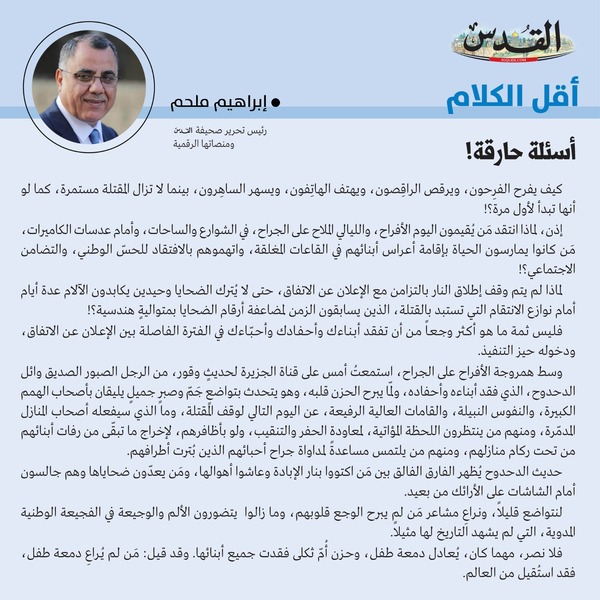
Burning questions!

How can the happy rejoice, the dancers dance, the cheerers cheer, and the night watchmen stay up all night, while the massacre continues, as if it is beginning for the first time?!


So, why did those who today hold weddings and fun nights on the wounded, in the streets and squares, and in front of the cameras, criticize those who used to practice life by holding their children’s weddings in closed halls, and accuse them of lacking a sense of nationalism and social solidarity?!


Why was the ceasefire not announced simultaneously with the announcement of the agreement, so that the victims would not be left alone to suffer pain for several days in the face of the desires of revenge that dominate the killers, who are racing against time to multiply the number of victims in a geometric progression?!


There is nothing more painful than losing your children, grandchildren and loved ones in the period between the announcement of the agreement and its entry into force.


Amidst the commotion of joy over the wounds, I listened yesterday on Al Jazeera to a dignified talk by the patient and friendly man Wael Al Dahdouh, who lost his sons and grandchildren, and whose heart was still filled with sadness. He spoke with great humility and beautiful patience, befitting those with great ambitions, noble souls, and lofty stature, about the day after the massacre stops, and what the owners of the destroyed homes will do. Some of them are waiting for the right moment to resume digging and excavating, even with their fingernails, to extract what remains of the remains of their sons from under the rubble of their homes. Some of them are seeking help to heal the wounds of their loved ones whose limbs were amputated.


Al-Dahdouh's talk shows the stark difference between those who were burned by the fire of genocide and lived through its horrors, and those who are considered its victims while sitting in front of screens on couches from afar.


Let us be a little humble, and consider the feelings of those whose hearts are still in pain, and who are still suffering from the pain and anguish of the resounding national tragedy, the likes of which history has never witnessed.


No victory, no matter what it is, is equal to a child's tear, or the grief of a bereaved mother who has lost all her children. It has been said: He who does not respect a child's tear has resigned from the world.

PALESTINE

Fri 17 Jan 2025 7:58 am - Jerusalem Time

Ceasefire Agreement in Gaza: Borrowing from Oslo in the Gradual Progression

Nour Odeh: The Gaza agreement clearly borrows from the “phased approach” that characterized the Oslo Accords, as they depend on stages and the continuation of negotiations.

Dr. Hussein Al-Deek: The Gaza agreement represented a shift in the Israeli government’s positions after a decisive intervention by Trump, which prompted Netanyahu to make concessions

Dr. Abdul Majeed Suwailem: The Palestinian people, despite the horrors of war and destruction they have been subjected to, have not shown any willingness to surrender or accept defeat.

Noman Abed: The agreement is an important achievement to stop the massacre, but it did not achieve a complete victory or a comprehensive political settlement that would restore the existence of the Palestinian cause

Dr. Aql Salah: The agreement places the international community before its responsibilities towards the failure of previous peace agreements to grant the Palestinian people their rights

Suleiman Basharat: The agreement is a positive shift in terms of stopping the humanitarian tragedy and genocide, and Israel has not been able to achieve its strategic goals


Amid the escalation of the crisis in the Gaza Strip, which has lasted for more than 15 months and left behind massive destruction and thousands of victims, a ceasefire agreement was reached on Wednesday evening under Egyptian-Qatari-American sponsorship. However, the agreement may be hindered by the possibility of Israeli Prime Minister Benjamin Netanyahu violating it and continuing the killing once again.


Despite the apparent importance of the agreement in ending the ongoing Israeli aggression on Gaza, writers, political analysts and specialists believe in separate interviews with “I” that it does not constitute a comprehensive political settlement of the Palestinian issue, as the provisions focus mainly on the repercussions of the war and the return of the situation to what it was before the aggression, while the agreement reflects a state of strategic retreat for Israel after its failure to achieve its military and political goals from the war.


On the other hand, some writers see the agreement as a temporary achievement for the Palestinian resistance, which was able to impose new conditions in the conflict, while maintaining its cohesion and steadfastness despite the brutality of the aggression, while some do not see the agreement as a “victory” for the Palestinian people, but rather as a cessation of genocide and killing only.


The current agreement represents a "framework agreement."


Nour Odeh, a writer and political analyst specializing in diplomatic affairs and international relations, stresses that the main importance of the current ceasefire agreement lies in the fact that it puts an end to the ongoing killing in the Gaza Strip, giving the people of the Strip an opportunity to heal their wounds and absorb the human and material losses they have suffered over the past fifteen months.


Awda points out that what happened represents a humanitarian catastrophe that will take months and perhaps years to absorb and understand its dimensions for the Palestinian people and the national cause as a whole.


Awda explains that any step that stops the aggression should be welcomed, noting that the current agreement represents a “framework agreement,” where the first phase focuses on stopping the aggression and dealing with its repercussions. However, she stresses that the clear details so far are limited to this phase, while the second and third phases are still subject to negotiations that require international political intervention to ensure implementation.


Awda asserts that the absence of international intervention threatens to resume the aggression on the Gaza Strip if Israeli Prime Minister Benjamin Netanyahu's calculations shift towards completing the "massacre," noting that these risks are not far from reality.


Awda points out that Netanyahu's political calculations and the expected decisions of US President-elect Donald Trump may be major factors in determining the fate of the agreement and its continuation.


Awda asserts that American political priorities and how Trump behaves may play a pivotal role in convincing Netanyahu not to return to aggression.


Awda warns that there is a strategic danger threatening the Palestinian existence, especially in the West Bank, where the Israeli right, led by Netanyahu, seeks to achieve strategic goals related to annexing the West Bank, and killing any chance of establishing an independent Palestinian state that includes Jerusalem, the rest of the West Bank, and the Gaza Strip.


Awda stresses the importance of internal Palestinian dialogue to confront the challenges imposed by this agreement, especially with regard to the second and third stages, as these stages will include major issues related to the management of the Gaza Strip after the war.


Awda stressed that the responsibility lies with the Palestinian parties to ensure political unity between the West Bank and the Gaza Strip, calling for the establishment of a common Palestinian vision that moves away from narrow factional calculations and champions the Palestinian dream of freedom and independence.


Awda believes that the Gaza agreement contains a clear borrowing from the “phased pattern” that characterized the Oslo agreement, as both agreements share the reliance on stages and the continuation of negotiations, noting that this borrowing raises concern and pessimism among many.


Awda explains that the fundamental difference lies in the fact that the Oslo Accords dealt with one political entity for the Palestinians, while this agreement deals with Gaza alone without addressing major political issues such as the future of Jerusalem and the rest of the West Bank, independence, and return.


Awda asserts that the Palestine Liberation Organization, which led the Oslo negotiations, had the popular and political mandate as the sole legitimate representative of the Palestinians despite the disagreements that the agreement raised. However, in the current case, the ceasefire agreement was negotiated with a specific Palestinian faction, which highlights the absence of political and popular consensus and reinforces fears of its impact on the future of Palestinian unity.


Awda warns of the strategic risks that may result from the absence of a unified Palestinian vision, stressing that the agreement requires comprehensive Palestinian cooperation to ensure the continuation of unity between the West Bank and the Gaza Strip.


Awda stresses the importance of internal Palestinian dialogue to establish participatory governance and a common national vision capable of confronting political and regional challenges and standing up to Israeli plans aimed at liquidating Palestinian national rights.


Awda confirms that the Palestinian future faces a strategic danger that requires awareness and a reformulation of the political reality, and that without that talk of reconstruction, liberation and independence becomes futile.


A message from Trump to Netanyahu forced him to change his positions


The writer, political analyst and specialist in American affairs, Dr. Hussein Al-Deek, describes the truce agreement in the Gaza Strip as historic, and came under Egyptian-Qatari-American sponsorship, to end the pain after a devastating war that lasted for more than 15 months on the Strip. The agreement, which represented a shift in the positions of the Israeli government led by Benjamin Netanyahu, came after decisive intervention by US President-elect Donald Trump.


According to Dr. Hussein Al-Deek, Trump sent his special envoy to Tel Aviv to deliver a clear message to Netanyahu: “The president wants to sign the agreement within days.” This message prompted Netanyahu to change his position, not only by agreeing to the agreement, but also by making tangible concessions. These concessions achieved substantial gains for Hamas, especially on issues that Israel had previously rejected, such as a complete withdrawal from the Gaza Strip and a final ceasefire after the three implementation stages of the agreement.


Al-Deek explains that the agreement is an important development as it ends one of the longest wars that destroyed Gaza extensively and resulted in tens of thousands of martyrs and wounded.


Al-Deek touches on the most important provisions of the agreement, which include: a final ceasefire after a third phase that will be implemented gradually, Israel’s complete withdrawal from Gaza, a demand that the Israeli governments categorically rejected, and reconstruction and compensation. The agreement stipulated the start of the reconstruction process, but it did not specify the implementation mechanisms or the party responsible for managing the process in Gaza, which leaves this provision in a state of ambiguity.


Another issue in the agreement, which Al-Deek describes as pivotal, is the release of Palestinian prisoners. The first phase includes the release of 250 prisoners with long sentences and life sentences, which represents an unprecedented achievement, especially if the second phase is implemented, which could lead to Israeli prisons being completely empty of prisoners with life sentences.


Despite the apparent gains, Al-Deek stresses that this agreement cannot be considered a peace agreement between a liberation movement and an occupying state. It does not address the fundamental political issues related to the Palestinian cause, such as: the future of borders and sovereignty, the fate of refugees, the administration of the Gaza Strip and international crossings.


Al-Deek points out that the agreement only deals with the direct repercussions of the Israeli aggression on the Gaza Strip, and stipulates restoring the situation to what it was before October 7, 2023.


In this context, Al-Deek stresses that the agreement in Gaza does not carry any future political dimension, and does not guarantee a permanent solution to the Palestinian-Israeli conflict.


Al-Deek believes that the comparison between this agreement and the Oslo Agreement is illogical. While Oslo came in the context of political negotiations between the Palestine Liberation Organization and Israel, this agreement aimed to end military operations and stop the destruction in Gaza. Oslo also included political promises such as the establishment of a Palestinian state, while this dimension is completely absent in the current agreement.


Al-Deek points out that the agreement came under pressing international and regional circumstances, as the new US administration played a major role in pushing the parties to the agreement, while Egypt and Qatar provided diplomatic cover for its implementation. However, the agreement remains subject to several challenges, the most important of which is the mechanism for implementing the provisions related to reconstruction and ensuring the cessation of future aggression.


Al-Deek asserts that this agreement represents a temporary achievement for Hamas and the Palestinian people, but it leaves many fundamental questions unanswered. It is an agreement to end a severe crisis and not to settle the long conflict, which means that the Palestinian issue will remain in a state of political instability in the absence of comprehensive and just solutions.


The will of the Palestinians will establish a new phase in the conflict


Writer and political analyst Dr. Abdul Majeed Suwailem believes that the ceasefire agreement in Gaza constitutes a great event, based on several basic angles, the most important of which is stopping the killing and destruction machine, even if it is temporary and for only 42 days. Despite the possibility of Israel breaching the agreement or seeking to thwart it in the future, stopping the genocide and aggression in itself is a great achievement, especially with the noticeable deterioration in the internal Israeli situation, and the political and social explosions that have begun to appear in it.


Suwailem stresses that any potential Israeli failures or violations of the agreement do not diminish its importance, but rather prove that this achievement represents a turning point in the conflict, explaining that the temporary truce has stopped the bloodbath and given the Palestinians a chance to catch their breath and celebrate their national dignity, which withstood the war machine.


Suwailem believes that the agreement was not limited to stopping the killing only, but also achieved moral gains for the Palestinian people, and this is clearly evident in the citizens’ joy and pride in what was achieved. The agreement also cast a shadow over the internal Israeli scene, as it provoked angry reactions among the extreme right-wing Israelis, while the Arab peoples and free people around the world welcomed it as a clear frustration for the Israeli plans that failed to achieve their declared goals.


Suwailem points out that through this agreement, the resistance was able to preserve its dignity and steadfastness, which strengthens its position as a fighting force on the ground.


Suwailem asserts that the agreement proved that the Palestinian people, despite all the horrors of war and destruction they were exposed to, did not show any willingness to surrender or accept defeat. On the contrary, events showed that the will of the Palestinians would establish a new phase in the conflict.


Suwailem praises the distinctive integration between the field performance of the resistance, political negotiations, and media work, describing this harmony as being decisive in achieving this agreement.


Suwailem believes that Hamas and the resistance factions in Gaza have demonstrated steadfastness and mastery in managing the negotiation battle, alongside managing the military and media battle.


Suwailem believes that the struggle's performance since October 7 until today has been characterised by careful planning and the ability to impose new equations in the conflict. These achievements would not have been possible without the strong will of the resistance, which will continue to play a pivotal role in shaping the future of the Palestinian cause.


Suwailem praises the distinctive integration between the field performance of the resistance, political negotiations, and media work, describing this harmony as being decisive in achieving this agreement.


Suwailem believes that Hamas and the resistance factions were ultimately forced to sign an agreement with those they were seeking to eliminate.


Suwailem believes that the Israeli goals, whether declared or hidden, have completely fallen, pointing out that Israel is no longer able to impose its vision for the so-called “day after” after the war. He also believes that the regional balances and the Palestinian resistance have become the main factor in shaping the next stage, which weakens Israeli hegemony.


Suwailem stresses that there is a big difference between this agreement and the Oslo Agreement. While Oslo was an attempt to establish a self-governing authority within the framework of Israeli hegemony, the current agreement shows Israel’s failure and strategic decline.


Suwailem explains that regional and international parties have come to realize that Israel is no longer able to impose its conditions, which opens the door to presenting the issue of the Palestinian state from new angles based on Israel’s weakness rather than its strength.

Suwailem believes that the agreement gives the Palestinian people an opportunity to reflect and plan to develop a coherent national strategy to deal with the consequences of the war. Although the agreement does not represent a comprehensive peace, it constitutes a long-term calm that can be built upon to change the political equation in the future.


Suwailem stresses that the Palestinian people have proven that their sacrifices were not without a price, and that the next stage requires investing in this legendary steadfastness to build a comprehensive national vision based on the facts that emerged from this war.


Israel failed to implement the mass displacement plan


The writer and political analyst specializing in international relations, Noman Abed, explains that the ceasefire agreement in Gaza came after 15 months of procrastination by the Israeli occupation government and its Prime Minister, Benjamin Netanyahu. These procrastinations were aimed at prolonging the aggression in order to achieve strategic goals, most notably putting pressure on the residents of the Gaza Strip and turning it into an uninhabitable area, in an attempt to force them to emigrate, in addition to taking revenge on the Palestinian people by inflicting the largest possible number of casualties on them.


Abed points out that Israel has failed to achieve its military and political goals. Despite Netanyahu’s reliance on military operations to recover detainees held by the Palestinian resistance, these operations have not achieved any tangible success, and Israel has not been able to force the resistance to surrender or implement the plan for the mass displacement of the Palestinians.


Abed explains that the administration of US President-elect Donald Trump is playing an indirect role in this change towards concluding the Gaza agreement. Trump, who is primarily focused on US domestic affairs and does not want to see Middle East wars erupt at the beginning of his potential presidency, is leaning towards a strategy based on normalization and economic interests in the region, which increases his pressure on Israel to stop the war.


In contrast, Abed points out that President Joe Biden's administration has been supportive of Netanyahu's aggressive policies and has provided him with unlimited political and military support.


Despite the importance of the agreement in stopping the genocide against the Palestinians in the Gaza Strip, Abed believes that the agreement did not meet all aspirations.


Abed points out that four main issues should have been addressed in the agreement: cancelling the buffer zones, including the West Bank, including East Jerusalem and Al-Aqsa Mosque, to stop the violations being practiced, in order to achieve geographical and political unity between the West Bank and Gaza, especially since the operation that began on October 7 came under the slogan “Al-Aqsa Flood.”


According to Abed, the agreement should have included the release of Lebanese prisoners held since October 2023 as part of the agreement, in loyalty to the Lebanese resistance and its sacrifices, as well as a clear political vision, as the Palestinian blood that was shed and the great sacrifices must be invested in achieving comprehensive political achievements, not just humanitarian ones, to ensure that the results of the agreement are a starting point for a better future for the Palestinian cause.


Abed stresses that the agreement is an important achievement to stop the massacre in Gaza, but it did not achieve a complete victory or a comprehensive political settlement that would guarantee the existence of the Palestinian cause.


Abed stresses that the agreement in Gaza does not rise to the level of the Oslo Agreement, whether we agree with it or not, in terms of it being an international and political agreement that discussed the major issues of the Palestinian people.


Abed stresses the need to be cautious in dealing with the next stage, as it is likely that the Netanyahu government will try to resume the aggression, calling for focusing on formulating a future political agreement that ensures that there will be no return to the circle of conflict again, and establishes a new stage that strengthens Palestinian rights.


Netanyahu's failure to achieve his goals and his decline in popularity


Writer and political researcher Dr. Aql Salah describes that over the course of fifteen months of the Israeli aggression on the Gaza Strip, the Palestinians have suffered from unprecedented levels of destruction and starvation, as what happened is a “historical miracle” recorded in the steadfastness of the Palestinian people, despite the ugliness of the Israeli crimes that amount to genocide, and the Palestinians have shown an exceptional ability to resist, in the midst of a catastrophic and unprecedented reality.


Salah believes that the Israeli scene clearly indicates the failure of Prime Minister Benjamin Netanyahu to achieve any of the goals he announced at the beginning of the aggression. He promised to eliminate Hamas and the resistance, and to recover the Israeli prisoners by military force, but he faced a disastrous failure that led to a decline in his popularity and his description as a “cartoon hero” by the Israeli media.


Salah believes that the agreement, which was reached under international sponsorship and mediators Egypt and Qatar, is an implicit admission by Netanyahu of his inability to continue the war or achieve its declared goals. Despite his continued attempts to justify the agreement to the extreme right in his government, voices within Israel describe the agreement as “catastrophic,” especially with the continued fall of Palestinian rockets and the Israeli army suffering heavy losses in the final days of the fighting.


On the Palestinian side, Salah asserts that the Palestinian people, despite the ongoing bombardment and gross violations of human rights and international laws, refused to surrender or raise the white flag, pointing out that the Palestinian resistance escalated its combat operations, inflicting heavy losses on the Israeli army, which forced the occupation to accept an agreement that included the release of Palestinian prisoners, including those sentenced to life imprisonment, an achievement he described as a “miracle” in the history of the Palestinian struggle.


Salah points out that international pressure, specifically from the US administration headed by Donald Trump, played a decisive role in forcing Netanyahu to sign.


Salah explains that the agreement does not represent an end to the Palestinian-Israeli conflict, but rather is merely an agreement to achieve limited goals for both parties.


Salah points out that the occupation, which aimed to liquidate Palestinian prisoners sentenced to life imprisonment, found itself forced to release them under the conditions of the resistance, which reflects the failure and arrogance of Israeli policy.

Salah compares the recent agreement in Gaza with the Oslo Agreement, noting that each has its own different circumstances and contexts. While Oslo was a political agreement under international sponsorship and direct negotiations between the PLO and Israel, the Gaza Agreement is a ceasefire that came as a result of regional mediation and without direct negotiations.


Salah explains that Oslo aimed to build a Palestinian political entity, but failed because Israel did not abide by its terms, while the Gaza agreement focuses on ending the war and exchanging prisoners, without political ambition.


Salah believes that the recent agreement in the Gaza Strip reflects the need for calm between the two parties, but it places the international community before its responsibilities towards the failure of previous peace agreements, especially Oslo, to grant the Palestinian people their rights.

Salah points out that the world has begun to realize the need to formulate a new agreement that addresses the roots of the conflict and grants the Palestinians their rights.


Salah stresses that the continuation of the occupation means the continuation of the resistance, stressing that any agreement without achieving justice for the Palestinians will remain just an agreement and a warrior's rest that may be long-term in a long-term conflict.


The judgment on the agreement depends on the results of implementing its provisions.


Writer and political analyst Suleiman Basharat believes that the agreement on the Gaza Strip represents an important pivotal point in the path of a ceasefire and ending the ongoing war waged by Israel against the Palestinians in the Strip.


Basharat considers this agreement to be a positive shift in terms of stopping the humanitarian tragedy and genocide facing the people of Gaza. Despite the enormous human losses, the agreement confirms that the Palestinian resistance was able to thwart Israel’s strategic goals, such as displacing the people of the Strip and ending the resistance militarily.


Basharat explains that one of the most prominent achievements of the resistance was the failure of the Israeli efforts to recover the Israeli prisoners through the military operation, and that the terms related to the release of the Palestinian prisoners are a clear gain, as the resistance was able to transform its strengths into tangible results.


Basharat confirms that the agreement includes protocols related to the humanitarian relief file, such as the entry of aid and the reconstruction and restoration of the health sector, which is a positive and important step to alleviate the suffering of the population.


The most important thing in the agreement, according to Basharat, is what is being said about a complete Israeli withdrawal from the Gaza Strip after implementing its final stages, which represents a turning point in confronting Israel’s attempts to reoccupy Gaza militarily.


Despite the positives, Basharat believes that the final judgment on the agreement cannot be issued now, but rather depends on the results of the practical application of its provisions throughout the implementation stages.


Basharat points out that there are many concerns and caveats, including reconstruction mechanisms, which will remain subject to political and regional conditions.


Basharat stresses that the agreement does not represent a peace agreement as much as it is an agreement to stop a bloody war, while Basharat expresses his hope that this agreement will open a horizon for political and diplomatic paths that lead to the achievement of Palestinian national rights, including sovereignty and political rights.


Basharat points out that this will depend on the Palestinians’ ability to unify their position and formulate a unified national project, as well as on the positions of regional and international parties.


In comparison with the Oslo Accords, Basharat explains that there is a big difference between the two agreements. The Oslo Accords were comprehensive in their nature and national reference, as they provided a comprehensive framework for the Palestine Liberation Organization. As for the current agreement, it is only related to the war on Gaza, and includes the resistance factions in Gaza and not all Palestinians or the PLO, which makes it a temporary agreement in its geographical and political dimensions.


Basharat points out that the Oslo Accords were based on the principle of "land for peace," while the current agreement can be called "peace for peace," meaning stopping the confrontations and stopping the Israeli attacks on the Strip.


Basharat stresses that the agreement may carry a more comprehensive future political horizon if subsequent developments bring about a shift in American, Israeli and international positions.


Basharat believes that it is still too early to judge this, and that the developments that will follow the war will be the decisive factor in determining the extent to which sustainable political gains can be achieved for the Palestinians.

PALESTINE

Thu 16 Jan 2025 10:13 pm - Jerusalem Time

Ben Gvir: We will resign from the government as soon as the ceasefire begins

"The proposed exchange deal is outrageous and it is clear which party in the government gave in," said powerful Israeli Security Minister Itamar Ben-Gvir.


He added: "We will resign from the government as soon as the ceasefire begins, and if the war resumes, we will return to it."


He continued: "We will not bring down (Israeli Prime Minister Benjamin) Netanyahu in the Knesset, and we will not cooperate with the left."

ARAB AND WORLD

Thu 16 Jan 2025 10:12 pm - Jerusalem Time

Blinken stresses that the ceasefire will be implemented and hold despite the latest Israeli position

US Secretary of State Antony Blinken said in his final news conference as secretary of state on Thursday that he was confident that a ceasefire in Gaza agreed upon by Israel and Hamas would begin on Sunday as expected despite a last-minute problem.


Blinken said in his final State Department press conference that he spoke to US negotiator Brett McGurk and Qatari officials on Thursday morning to resolve the issue.


"It is not surprising that we are facing an unresolved issue in what has been a difficult and risky process and negotiation... We are working to resolve this unresolved issue as we speak," he added.


Blinken said in response to reporters' questions that a ceasefire in Gaza could have been reached earlier.


Asked if the deal, had it been reached earlier, could have saved many lives, he replied: "Should this have happened months ago? Yes. Could it have happened months ago? Yes."


He added that Israel and Hamas had made decisions that complicated the situation, but stressed that "Hamas was in the first place," which he described as refusing to participate in recent months.


Despite the challenges, Blinken stressed that the United States was able to move the process forward and is now "on the verge" of reaching an agreement.


The Qatari Prime Minister announced that the mediation efforts made by Doha, Cairo and Washington resulted in an agreement between Israel and Hamas.


Hamas on Wednesday agreed to the deal, which is expected to be implemented in three stages starting on Sunday.


A number of protesters interrupted the US Secretary of State inside the State Department press conference room during his press briefing, which led to his confusion and stopping him from proceeding with his presentation and answer.


As he spoke, a journalist interrupted him and accused him of genocide and working for the "Zionist lobby," while another journalist shouted, "You are a criminal, a criminal! Your place is in The Hague," referring to the headquarters of the International Criminal Court in the Netherlands.

PALESTINE

Thu 16 Jan 2025 9:27 pm - Jerusalem Time

WHO: Rebuilding Gaza's health system requires $10 billion

The World Health Organization representative in Palestine, Rick Peeperkorn, announced today, Thursday, that rebuilding the health system in the Gaza Strip requires at least $10 billion over the coming years.

He said at a press conference that an initial assessment showed that it would require "more than three billion dollars in the first year and a half, and ten billion dollars in five to seven years."

"I was not surprised" by that, he added, because "the needs are huge."

"We all know that the destruction in Gaza is enormous, and I have never seen anything like it anywhere else in my life," he continued, noting that reconstruction is "a collective responsibility of the member states" of the World Health Organization, "including Israel" and "partners."

For his part, the Director-General of the organization, Tedros Adhanom Ghebreyesus, said during the same press conference that "less than half of Gaza's hospitals are operating."

He said that the agreement announced on Wednesday to cease fire in the Gaza Strip "is almost the best news we could have hoped for at the beginning of the new year."

PALESTINE

Thu 16 Jan 2025 9:26 pm - Jerusalem Time

Israel approves ceasefire agreement on Friday

The Israeli Security and Political Affairs Council (the cabinet) and the government will hold two meetings on Friday and Saturday to give final approval to a ceasefire, which Israeli reports confirmed on Thursday evening had been completed after “resolving the points of contention.”


In contrast, an Israeli official stated that the government and the cabinet will not hold the meetings before "the matters are fully completed," while Channels 12 and 13 indicated that the government meeting will be held on Saturday evening.


An Israeli official confirmed on Thursday evening that "all recent disputes with Hamas have been resolved," and the cabinet is expected to meet tomorrow to ratify an agreement, after which the government will meet to ratify it, according to Israeli reports.


The Israeli Public Broadcasting Corporation ("Kan 11") reported, quoting an Israeli source, that the cabinet meeting will be held on Friday morning.

It also quoted two sources, who confirmed their participation in the negotiations, as saying that "the differences have been resolved, and the agreement will be implemented."


She also indicated that "the Israeli delegation in Doha is preparing to leave Qatar for Israel soon."

ARAB AND WORLD

Thu 16 Jan 2025 7:10 pm - Jerusalem Time

Sharaa: We are committed to the 1974 agreement with Israel

The leader of the new Syrian administration, Ahmed al-Sharaa, said on Thursday that Syria is committed to the 1974 agreement with Israel, calling for the situation to be restored to what it was before the recent Israeli advance in the buffer zone.


Al-Sharaa added in a press conference with Qatari Prime Minister Mohammed bin Abdulrahman Al Thani in Damascus that Syria is ready to receive and protect the UN forces in accordance with the 1974 agreement. He pointed out that "Israel advanced into the buffer zone under the pretext of the presence of Iranian militias and members of Hezbollah, and these militias are not present at the present time." He stressed that Qatar will work with Western countries and countries in the region to pressure Israel to return it to the status quo before the recent advance.

For his part, the Qatari Prime Minister said that his country considers "the Israeli occupation's seizure of the buffer zones a reckless and condemnable act, and they must withdraw immediately."

He also pointed out that the humanitarian situation in Syria requires the concerted efforts of the international community, stressing that Doha will cooperate with the new Syrian administration to lift the sanctions imposed on Damascus, calling for the need to consider lifting these sanctions as quickly as possible due to their negative effects.

He praised "the positive steps taken by the new Syrian leadership to preserve the safety of civilians, the stability of state institutions, and ensure the continuity of public services."

He pledged to provide Qatar with the necessary technical support to restore infrastructure in Syria, provide support to the electricity sector, and supply 200 megawatts of energy, gradually increasing it to ten Syrian regions.

It is noteworthy that the 1974 agreement was signed between Syria and Israel following the October 6, 1973 war with the aim of separating the forces of both sides and disengaging by establishing two main lines called "Alpha" and "Bravo", in addition to establishing a buffer zone between the two lines, with the buffer zone subject to the supervision of a United Nations force called "UNDOF".

PALESTINE

Thu 16 Jan 2025 7:05 pm - Jerusalem Time

Gaza Agreement: News about resolving all outstanding differences

A leading source from the Palestinian factions in Doha told Al-Quds that work is currently underway to draft a statement that specifies the zero point regarding the entry into force of the ceasefire agreement after resolving the differences related to the names of senior Palestinian prisoners.


Media reports revealed on Thursday evening that the final differences regarding the Gaza agreement had been resolved, paving the way for the agreement to be implemented on the expected date.


Axios quoted an American source as saying: "The last points of contention regarding the prisoner exchange have been resolved within the Gaza agreement."


The Israeli Broadcasting Authority also reported, quoting Israeli officials, that "the differences regarding the Gaza agreement have been resolved and will enter into force."


Shas party leader Aryeh Deri also stated: "We have received final information that all obstacles have been removed."


PALESTINE

Thu 16 Jan 2025 5:54 pm - Jerusalem Time

Al-Qassam: Israel targeted a place where one of the first-stage female prisoners was located


The Al-Qassam Brigades announced that "after announcing the agreement, the enemy targeted a place where one of the first-stage female prisoners was located."


She stressed that "any aggression and bombing at this stage by the enemy could turn the freedom of a prisoner into a tragedy."

PALESTINE

Thu 16 Jan 2025 5:51 pm - Jerusalem Time

US official: Two US envoys working to resolve Gaza deal dispute

A US official said that a dispute broke out on Thursday over the details of the ceasefire agreement in Gaza, adding that two US envoys are working to resolve it, according to Reuters.


The official said that the dispute arose over the identities of a number of prisoners whose release Hamas is demanding, and said that this point is expected to be resolved soon.


President Joe Biden’s Middle East envoy Brett McGurk and President-elect Donald Trump’s envoy Steve Witkoff are working on the issue, and the official said they are in Doha with Qatari and Egyptian negotiators.


White House National Security Council spokesman John Kirby said separately: “We are aware of this issue and are working on it with the Israeli government, as well as other partners in the region. We are confident that these implementation details can be resolved and that the agreement will move forward this week.”

The agreement reached yesterday, Wednesday, is scheduled to be implemented starting Sunday.

PALESTINE

Thu 16 Jan 2025 5:49 pm - Jerusalem Time

5 dead, including two children, after Israeli occupation bombed a house in the northern Gaza Strip

Five citizens, including two children and two women, were killed when Israeli occupation aircraft bombed a house in the northern Gaza Strip.


Local sources said that the occupation bombed a house in the vicinity of Al-Nazla roundabout, west of Jabalia, north of the Gaza Strip, which resulted in the death of 5 citizens, including two children and two women. Its artillery also targeted the town of Abasan Al-Kabira, east of Khan Yunis, south of the Gaza Strip.


Medical sources announced that the death toll in the Gaza Strip had risen to 46,788, the majority of whom were children and women, since the start of the aggression on October 7, 2023.


It added that the number of injuries has risen to 110,453 since the start of the aggression, while thousands of victims are still under the rubble.


It pointed out that the occupation forces committed 8 massacres against families in the Gaza Strip, resulting in the martyrdom of 81 citizens and the injury of 188 others, during the past 24 hours.

ARAB AND WORLD

Thu 16 Jan 2025 3:05 pm - Jerusalem Time

Biden's support for genocide in Gaza is the main reason voters won't support Harris

A new poll shows that Israel's war of annihilation on Gaza was the main reason why Americans who voted for Joe Biden in 2020 would not vote for Democratic candidate Kamala Harris in 2024.


“What few in the Democratic Party were willing to admit was this: Vice President Harris lost votes because of the Biden administration’s support for Israel’s genocide of Palestinians in Gaza,” the YouGov-Understanding Middle East Policy Project poll found.


“29% of national voters who voted for Biden in 2020 and did not vote for Kamala Harris in 2024 say ‘ending Israeli violence in Gaza’ was the top issue that influenced their vote choice,” an IMEU press release explains. The economy ranked second at 24%.


After Hamas attacked Israel on October 7, the Biden administration flooded Israel with weapons and other military aid that Tel Aviv has used to wreak mass death and destruction in Gaza. A recent study by the Lancet found that at least 64,000 Palestinians have been killed by Israel in the past 15 months. Tens of thousands of children were among the dead, many of them killed when Israel dropped American-made bombs from American-made aircraft. The Lancet study did not count deaths from disease and deprivation caused by the Israeli blockade of Gaza. In recent wars, the number of indirect deaths from conflict is often many times higher than the number of deaths from direct violence.


Before he dropped out of the presidential race last summer, President Biden regularly faced protesters on the campaign trail who called him “Genocide Joe.” Several major international aid agencies have determined that Israel’s military operations and blockade of Gaza constitute genocide.
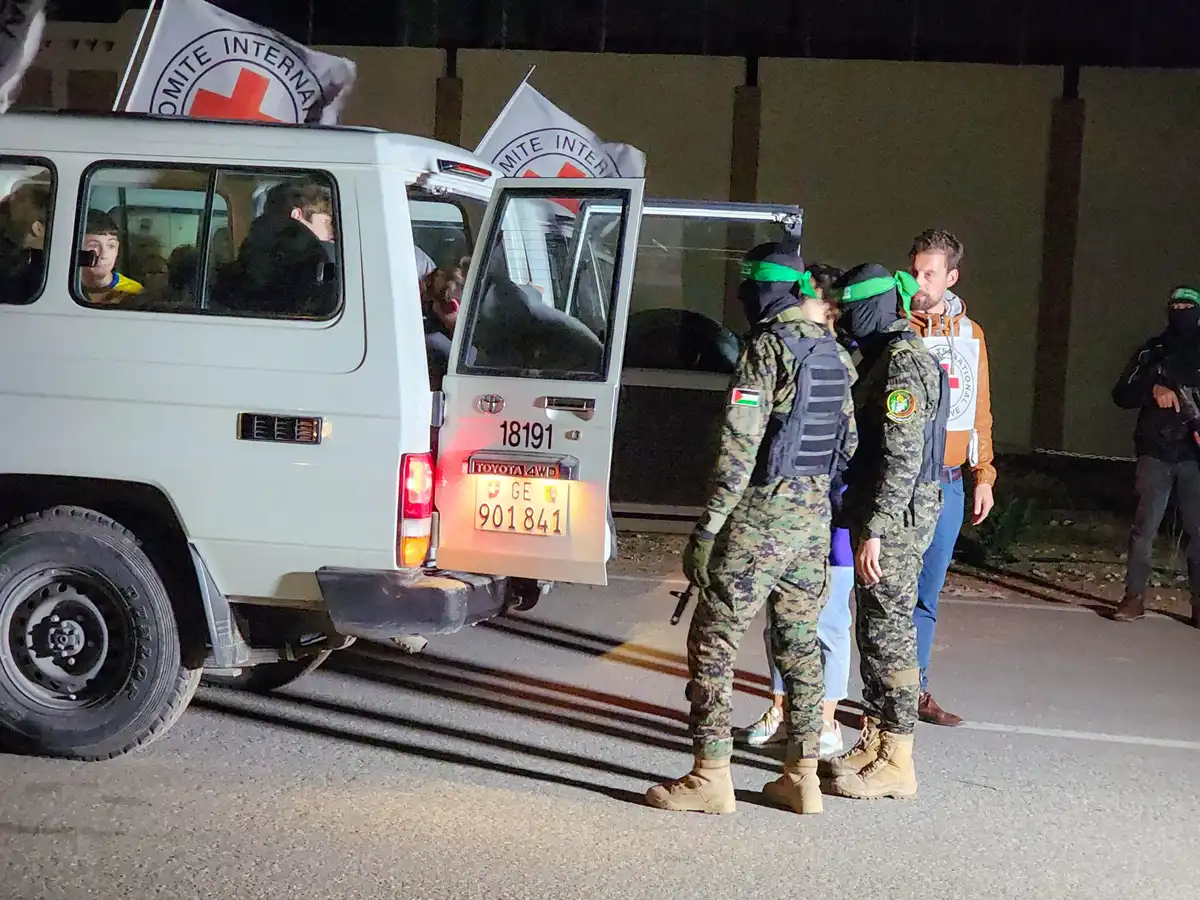

According to the poll, support for Israel, which included at least $22 billion in military aid during the first year of the attack, may have cost Kamala the election. YouGov found that the war was the top reason voters did not vote for Harris in Arizona (38%), Michigan (32%), Wisconsin (32%) and Pennsylvania (19%). Biden won all four states in 2020.


It came as no surprise to the Harris campaign that Democrats have called the war in Gaza genocide. In May 2024, a poll found that more than half of Democratic voters believed Israel was committing genocide.


Yet in the final days of the 2024 election season, Harris’s team refused to say she would cut off arms transfers to Israel after taking office. Instead, the campaign infamously embraced GOP hawks like Dick and Liz Cheney.

PALESTINE

Thu 16 Jan 2025 2:00 pm - Jerusalem Time

Amnesty and Human Rights Watch: Ceasefire in Gaza is not enough

In separate statements, Amnesty International and Human Rights Watch welcomed the announcement of a ceasefire in the Gaza Strip, but stressed that the nightmare will not end until the 18-year blockade on the Strip is lifted.


“A belated ceasefire will not be enough to repair the lives of Palestinians shattered by Israel’s genocide in Gaza,” said Amnesty International’s Secretary General Agnes Callamard.


She added that reaching a ceasefire agreement between Israel and Hamas, which was announced last night from the State of Qatar, would provide "some relief to the victims of the genocide committed by Israel against the Palestinians," but this step came "late," according to the organization.


She stressed that "the nightmare will not end with the cessation of the bombing for the Palestinians who have been subjected to more than 15 months of continuous and devastating bombing, who have been repeatedly displaced from their homes and are struggling to survive in temporary tents without food or water."


She stated that this suffering will continue unless Israel quickly lifts the illegal blockade it imposes on the Gaza Strip.


According to the organization, Israel's continued and deliberate denial and obstruction of humanitarian aid to Gaza "has left civilians facing unprecedented levels of hunger and children dying of starvation."


The organization accused the international community of failing so far "shamefully" to persuade Israel to comply with its legal obligations. It called for ensuring that "Israel immediately allows life-saving supplies to reach all parts of the occupied Gaza Strip to ensure the survival of the Palestinian population."


This includes, according to the organization, ensuring the entry of vital medical supplies to treat the wounded and sick, and facilitating urgent repairs to medical facilities and other vital infrastructure.


The organization also called on the Israeli authorities to urgently grant independent human rights monitors access to the Gaza Strip to uncover evidence and the extent of violations.


For its part, Human Rights Watch said that "over the past 15 months, civilians have been targeted, attacked and killed on a scale unprecedented in modern history."


To end these atrocities, Israel needs to lift its blockade, allow in humanitarian aid on the scale necessary to meet urgent needs, and ensure the restoration of basic services such as electricity and water, she added, “otherwise people will continue to die, whether there is a ceasefire or not.”
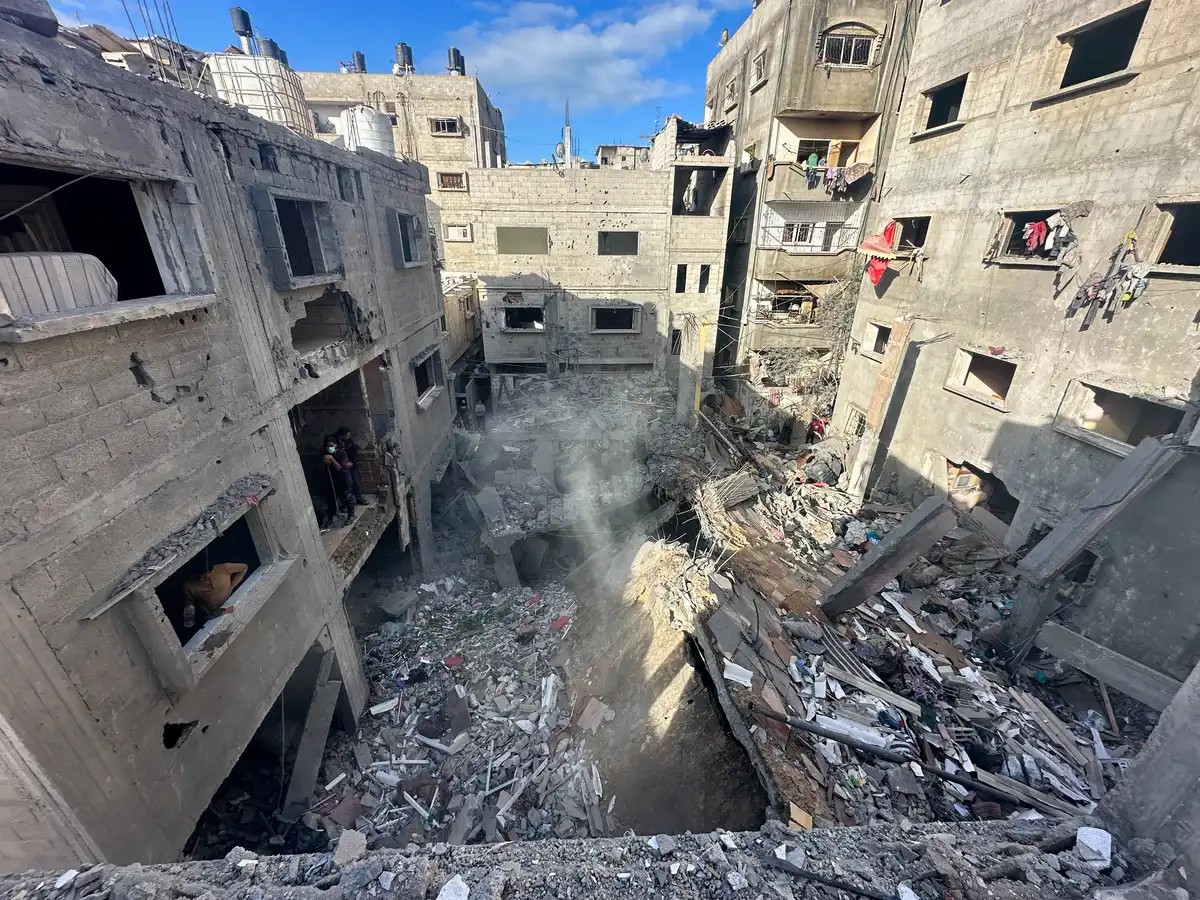

Israel has been besieging the Gaza Strip for 18 years, and the war of extermination in the Strip has forced about two million of its population, numbering about 2.2 million, to flee in catastrophic conditions.


On Wednesday evening, the Prime Minister and Minister of Foreign Affairs of Qatar, Sheikh Mohammed bin Abdulrahman Al Thani, announced in a press conference in Doha that the mediators had succeeded in reaching an agreement to exchange prisoners and return to sustainable calm, leading to a permanent ceasefire in Gaza and an Israeli withdrawal from the Gaza Strip, noting that the agreement would begin to be implemented next Sunday.


The agreement was announced on the 467th day of the Israeli war of extermination on the Gaza Strip, which, with American support, left more than 156,000 Palestinian martyrs and wounded, most of them children and women, and more than 11,000 missing, amidst massive destruction and famine that killed dozens of children and elderly people, in one of the worst humanitarian disasters in the world.