PALESTINE

Sat 18 Jan 2025 9:11 pm - Jerusalem Time

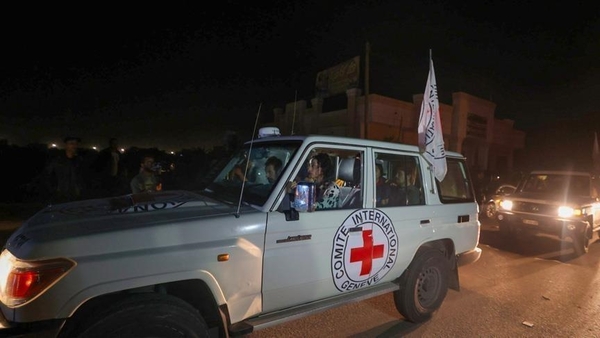
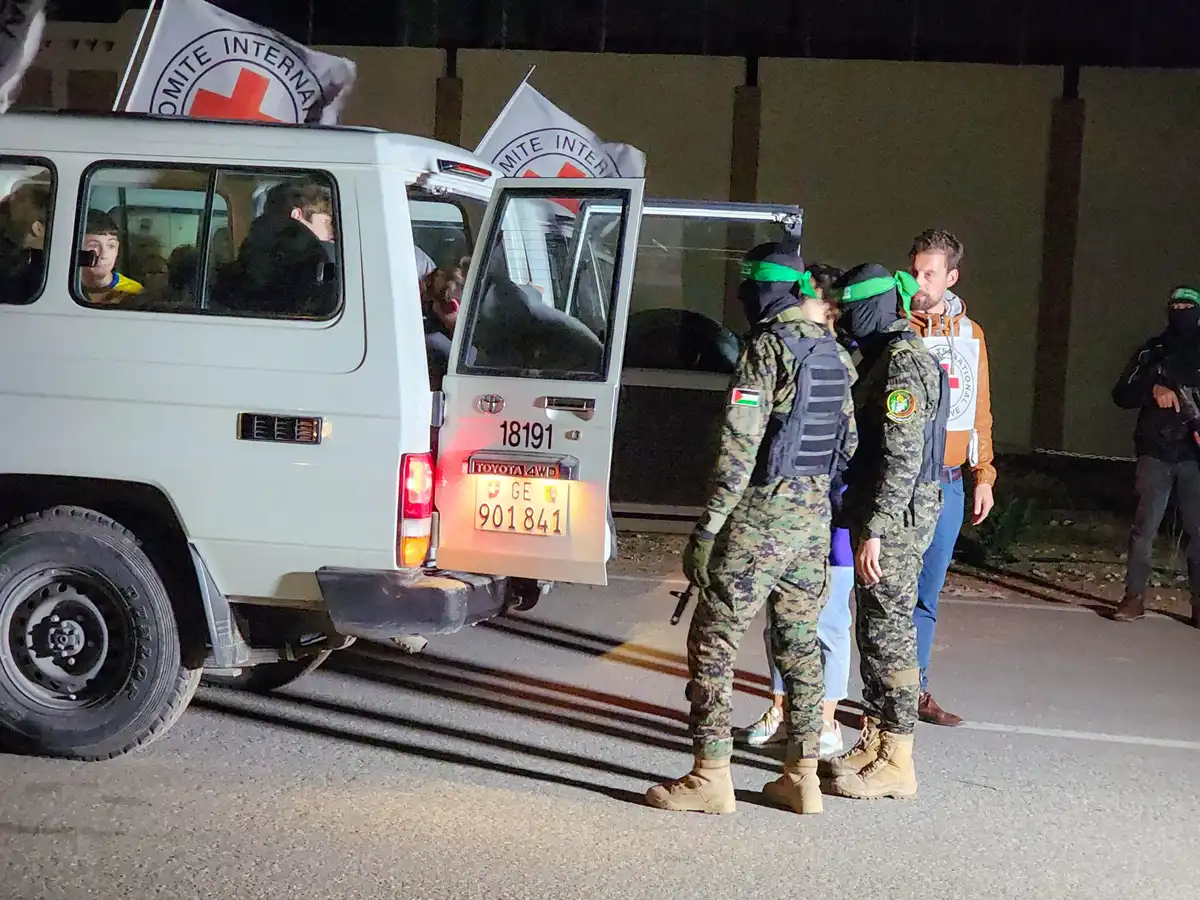
Red Cross prepares for 'delicate operation' including prisoner exchange, Gaza relief

The International Committee of the Red Cross announced on Saturday that it is preparing to implement a "precise operation" that includes facilitating the exchange of prisoners and detainees between Palestinian factions and Israel, in addition to intensifying humanitarian relief efforts in the Gaza Strip.


This comes on the eve of the first phase of implementing the ceasefire agreement in Gaza and the prisoner exchange, on Sunday morning, which the mediators (Qatar, Egypt and the United States) announced had been reached last Wednesday.


In its statement, the committee said that it "is making preparations based on what was agreed upon by the parties (Hamas and Israel) to begin implementing a precise operation that includes releasing hostages (Israeli prisoners in Gaza) and detainees (Palestinians in Israel) and facilitating their transfer, and intensifying the humanitarian response in the Strip."


She added that these preparations are taking place "in an atmosphere charged with emotions for many."


The committee stressed that its primary focus is "on completing the implementation of the first phase of the agreement as safely and efficiently as possible, so that we can see families reunited and critical humanitarian support reaching civilians in Gaza."

PALESTINE

Sat 18 Jan 2025 8:47 pm - Jerusalem Time

4 children injured by live bullets during the occupation's raid north of Hebron

Four children were injured by live bullets, Saturday evening, during the Israeli occupation forces' storming of the town of Beit Ummar, north of Hebron.


According to local sources, the occupation forces stormed the town, which led to the outbreak of clashes during which soldiers fired live and rubber-coated metal bullets, sound bombs, and toxic gas at the citizens, which resulted in three children being injured by live bullets in the lower limbs, and a fourth being injured by live bullet shrapnel in his hand, in addition to dozens of citizens being suffocated.


The sources added that the four children were transferred by Red Crescent ambulances to hospitals in Hebron.

PALESTINE

Sat 18 Jan 2025 8:34 pm - Jerusalem Time

A young man was injured by Israeli forces’ bullets in the city of Al-Bireh

A young man was shot by Israeli occupation forces, Saturday evening, in the city of Al-Bireh.


According to local sources, the occupation forces stationed at the entrance to the "Psagot" settlement, built on citizens' lands in Al-Bireh, fired live bullets at a young man while he was in the Jabal al-Tawil neighborhood, which resulted in his injury in the foot, and he was transferred to the hospital as a result.

PALESTINE

Sat 18 Jan 2025 8:04 pm - Jerusalem Time

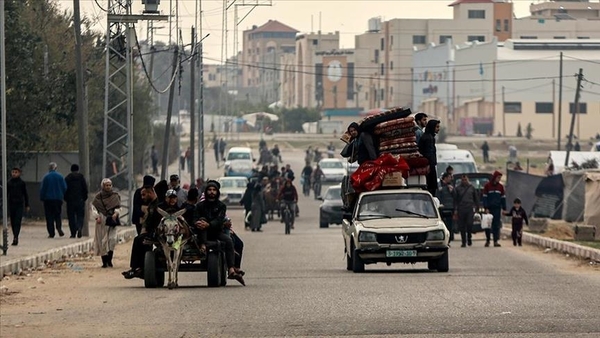
The Israeli occupation army warns the residents of Gaza against moving between the north and south of the Strip

The Israeli occupation army warned the residents of Gaza on Saturday against moving between the north and south of the Strip or approaching areas of its military presence, on the eve of the prisoner exchange deal and ceasefire with the Palestinian factions entering into force on Sunday morning.


The army said in a statement that its forces "will remain deployed in specific areas within the Gaza Strip."


He added, "Based on the agreement, IDF forces remain deployed in specific areas in the Gaza Strip. IDF forces in the area must not be approached until further notice."


The statement continued: "Approaching the forces exposes you to danger."


He also stressed what he described as "the danger of moving between the north and south of the Strip, or approaching the Rafah crossing, the Philadelphi Corridor (south), and the Netzarim Corridor (center)."


The Israeli army warned the residents of the Strip against "fishing, swimming or entering the marine area."


The army claimed that it "will issue a statement when residents are allowed to move between the north and south of the Gaza Strip."


Earlier on Saturday, the "Palestinian government in Gaza" announced the completion of preparing a "comprehensive plan" to deal with the ceasefire decision between the Palestinian factions and Israel, which will go into effect on Sunday morning, through international and regional mediation.


It stressed, according to a statement issued by the government media office, "the readiness of its institutions to implement these measures, as specialized field teams from various ministries will follow up on the implementation of the plan to ensure that life returns to normal as soon as possible."


On Wednesday evening, Qatar announced the success of the mediators (Doha, Cairo and Washington) in reaching an agreement to exchange prisoners and return to sustainable calm, leading to a permanent ceasefire in Gaza and an Israeli withdrawal from the Strip, noting that the agreement will begin to be implemented on Sunday.


ARAB AND WORLD

Sat 18 Jan 2025 7:46 pm - Jerusalem Time

Israeli media: Ben Gvir announces his resignation from Netanyahu's government

Israeli newspaper Haaretz reported on Saturday that National Security Minister Itamar Ben-Gvir announced his resignation from Prime Minister Benjamin Netanyahu's government, in protest against the ceasefire agreement in Gaza.


At the same time, the newspaper said that Israeli Finance Minister Bezalel Smotrich confirmed Netanyahu's commitment to gradually controlling the Gaza Strip, while keeping it "uninhabitable," as he put it.


Ben-Gvir, who is also the leader of the far-right Otzma Yehudit party, said yesterday that he and his party would resign from the Knesset if the agreement was ratified, noting that this agreement would eliminate the achievements made in the war on the Strip.


Ben-Gvir called for a "complete halt" to the entry of humanitarian aid into Gaza in order to pressure for the "release of the hostages" held in the Strip.


Egypt, Qatar and the United States announced in a joint statement last Wednesday that they had reached an agreement to cease fire in Gaza and exchange prisoners between Israel and Hamas, which is scheduled to go into effect at 8:30 a.m. (6:30 GMT) on Sunday.


The agreement ends more than 15 months of fighting between the two warring parties. The agreement includes 3 stages, where in the first stage, which lasts for 42 days, 33 Israeli hostages will be released in exchange for the release of hundreds of Palestinian prisoners.


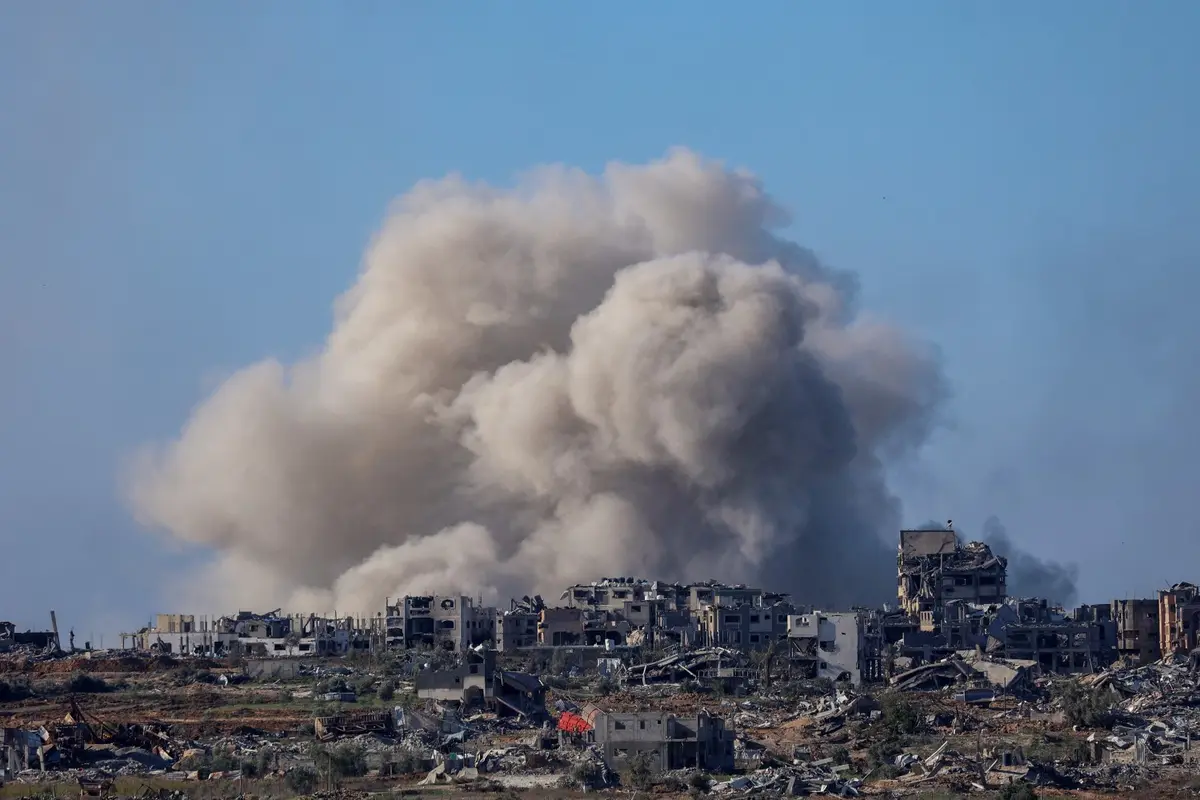
Since October 7, 2023, Israel has been waging a large-scale war against Hamas, which has killed more than 46,000 Palestinians in Gaza and destroyed the infrastructure on an unprecedented scale.


This war came in response to a surprise attack launched by Hamas on towns and military sites in southern Israel, which led to the killing of 1,200 Israelis and the taking of hostages.

PALESTINE

Sat 18 Jan 2025 7:22 pm - Jerusalem Time

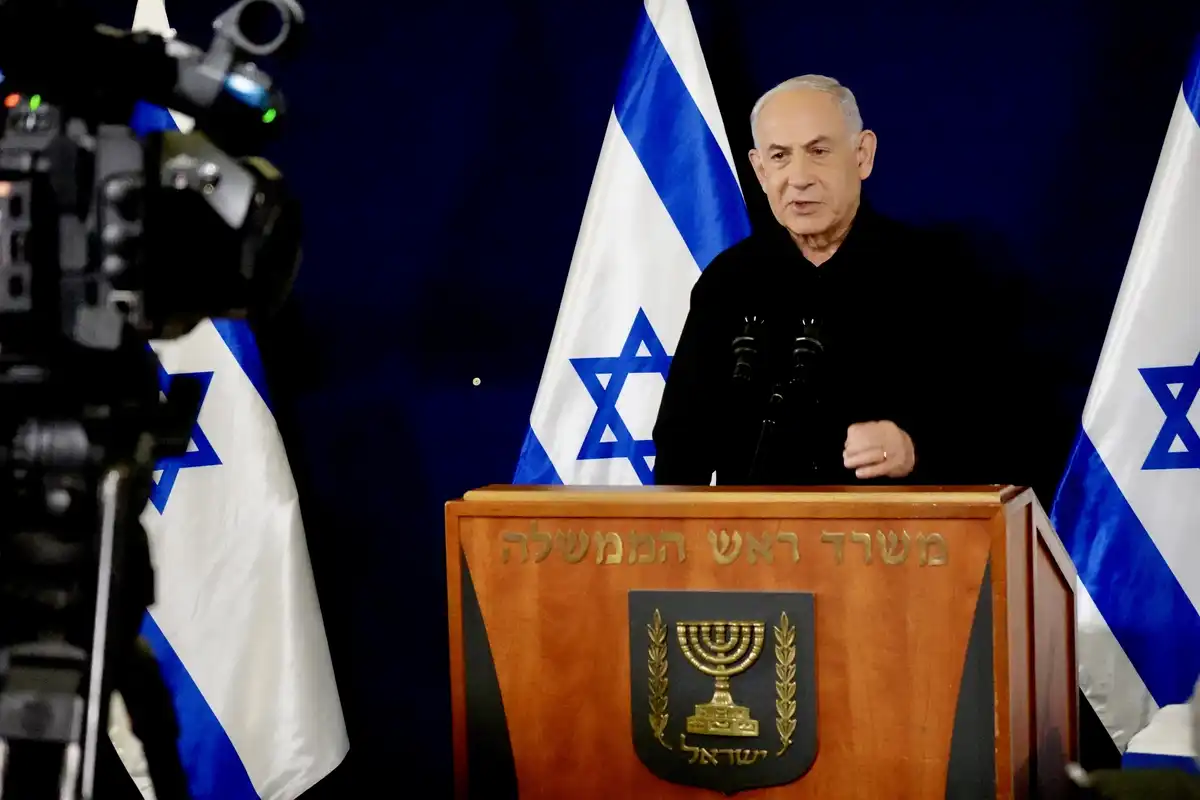
Netanyahu: We will not tolerate any violations of the agreement in the Gaza Strip

Israeli Prime Minister Benjamin Netanyahu said on Saturday evening that the Gaza agreement will not be implemented unless Israel receives a list of hostages released in the first stage.


A statement from Netanyahu's office said: "We will not move forward in implementing the plan until we receive a list of the hostages who will be released. Israel will not tolerate any violation of the agreement. The full responsibility lies with Hamas."


The ceasefire is scheduled to begin tomorrow at 8:30 am, with the hostage release process set to begin at 4:00 pm. However, the delay in receiving the names is increasing tensions over the implementation of the deal.


Egypt, which is mediating the truce between Israel and Hamas, announced on Saturday that Israel will release more than 1,890 Palestinian prisoners in exchange for the release of 33 Israeli hostages in the first phase of the Gaza truce.


The Egyptian Foreign Ministry said the detainees would be released during the first phase of the 42-day ceasefire, which is set to go into effect on Sunday at 8:30 local time (6:30 GMT).

PALESTINE

Sat 18 Jan 2025 5:36 pm - Jerusalem Time

How October 7th Changed the Middle East

As a ceasefire between Hamas and Israel began, The New York Times on Saturday published an assessment of the dramatic changes brought about by the “Al-Aqsa Flood” attack on October 7, 2023, the shock waves of which have reshaped the region in unexpected ways.


When Hamas fighters launched their unprecedented assault on the Gaza envelope, Israel launched a devastating war on the Gaza Strip that is still ongoing, destroying Gaza, killing tens of thousands of civilians, most of them women and children, and sending shock waves that have reshaped the Middle East in unexpected ways.


The newspaper believes that powerful alliances have been overturned. Established “red lines” have been crossed, and “a decades-old dictatorship in the heart of the region has collapsed.”


The newspaper assesses that after fifteen months since the flood attacks, and with the start of the ceasefire agreement between Israel and Hamas on Sunday, the flood resulted in the following:


Israel: The newspaper claims that Israel has reasserted its military dominance but now faces high diplomatic and domestic costs.


Israel’s leaders treated Hamas-led attacks as an existential threat and were determined to defeat Hamas and weaken its main backer, Iran. But was that the case? Not only did Israel succeed in weakening Hamas in Gaza, it also defeated the Lebanese Shiite group Hezbollah and dealt a major blow to Iran’s network of allies in the Middle East.


In the region, and in the world of international public opinion, Israel’s successes have been more ambiguous. While its war on Gaza has weakened Hamas, it has not destroyed it, as the government has vowed. On the contrary, the movement has recruited as many as it has lost, US Secretary of State Antony Blinken said at the Atlantic Council on Wednesday.


Israel’s economy has also been hit hard by the war, and Israel’s polarized politics, briefly overlooked when the war began, appear to be back in full swing. Indeed, the country’s international standing is in tatters, threatening its diplomatic goals, such as normalizing relations with Saudi Arabia.


Those dynamics could change again with the inauguration on Monday of President-elect Donald Trump, who in his first term pushed for normalization of relations between Arab states and Israel and may seek to revive those efforts.


In the longer term, it is difficult to predict the threats Israel might face from a generation of young Lebanese and Palestinians traumatized by the death and destruction that Israeli bombing has wrought on their families and homes.


Hamas: The newspaper claims that Hamas and its leader Yahya Sinwar at the time, aimed through the flood attacks to ignite a wider regional war between Israel and Hamas’s allies. But Hamas failed to bring its allies to its side with momentum and effectiveness, and failed to assess how the war might end.


For Palestinian civilians, the future looks bleaker than ever. Israeli bombing and invasion have forced nearly all of Gaza’s population from their homes and killed more than 45,000 people, according to Gaza health authorities, most of them women and children, while Israel has reduced vast swaths of the territory to rubble.


Yahya Sinwar was killed in battle with Israeli soldiers, Israel assassinated Hamas’s top military and political leaders, and “the group’s popularity among Gazans has evaporated,” though U.S. officials estimate that Hamas has recruited nearly as many fighters as it has lost over more than 15 months of fighting.


However, its remaining leaders may claim that its survival is a victory.


Israel insists that Hamas cannot rule the Strip after the war, but has resisted calls for a post-war plan for Gaza. Gulf states such as Saudi Arabia now say they will not normalize relations with Israel unless it commits to a path toward Palestinian statehood.


Lebanon: Once the crown jewel of Iran’s axis of resistance, the shattered Hezbollah has loosened its grip on Lebanon. But Israel’s invasion and bombardment have left Lebanon facing billions of dollars in reconstruction costs amid an economic crisis that preceded the war.


Hezbollah, once Lebanon’s dominant political and military force, has suffered a dramatic decline in its fortunes since the 2023 attacks. Israel has killed most of its top leaders, including Hassan Nasrallah. Its patron, Iran, has been weakened. Its supply lines through Syria are at risk. And more broadly, the group’s core promise to Lebanon—that it alone can protect the country from Israel—has been undermined.


Years of political deadlock, largely blamed on the militant group, eased enough this month for Lebanon’s parliament to elect a new president and appoint a prime minister backed by the United States and Saudi Arabia. Despite the strikes, Hezbollah still has thousands of fighters and enjoys support from Lebanon’s large Shiite community. It may find a way to rebuild within Lebanon’s fractured political system.


Syria: The overthrow of Bashar al-Assad last month—one of the most dramatic and unexpected consequences of the events of October 7—has dismantled an authoritarian regime. But the inevitable turmoil that has followed has created the conditions for new power struggles.


For nearly 13 years, Assad has largely contained a rebellion against his family's five-decade grip on power — with help from Russia, Hezbollah and Iran.


But with Moscow focused on its war in Ukraine, and Iran and Hezbollah reeling from Israeli attacks, rebels led by Turkey-backed Islamists from Hayat Tahrir al-Sham sensed an opportunity. They surged across Syria, toppling the government in a matter of days.


With Iran and Russia on the back foot, Turkey is now in an excellent position to play a pivotal role in Syria. Moscow hopes to retain some of its naval and air bases, but the fate of its negotiations with HTS is uncertain.


Meanwhile, the United States has maintained a small military presence in Syria to fight the Islamic State terrorist group, and has allied itself with Kurdish-led forces that Turkey considers an enemy. Israel has also seized Syrian territory near the Golan Heights as a buffer zone, and has carried out extensive airstrikes on what it says are Syrian military targets and weapons.


Syria's neighbors and European countries - which host millions of Syrian refugees - are watching closely to see whether the country can achieve stability or descend back into violent chaos.


Iran: According to the newspaper, Iran's powerful network of regional alliances has collapsed, leaving the country vulnerable - and perhaps spurring it to build a nuclear weapon.


Long seen as one of the most influential powers in the Middle East, Iran has emerged from the realignment of the past 15 months greatly weakened. It has effectively lost much of its powerful “axis of resistance,” the network of allies it used to counter the influence of the United States and Israel.


Its closest partner, Hezbollah, is now too weak to pose a serious threat to Israel, and with Assad’s ouster from Syria, Iran has lost its influence over the country that provided a vital supply line for weapons and militants.


Previous red lines that kept the region from all-out war have been erased: Ever since Israel assassinated Hamas political leader Ismail Haniyeh while he was a guest in Tehran, Iran and Israel have carried out direct airstrikes against each other.


It’s unclear exactly where that leaves Tehran. An increasingly vulnerable Iranian government may be forced to weaponize its decades-old nuclear program. U.S. officials have warned that Iran could need just a few weeks to enrich uranium to levels suitable for a bomb.

PALESTINE

Sat 18 Jan 2025 5:16 pm - Jerusalem Time

A dead and others were injured by the occupation forces' bullets east of Khan Yunis

A young man was killed and several others were injured this evening, Saturday, by Israeli occupation forces’ bullets, in the Abu Taima area, east of Al-Fakhari town, east of Khan Yunis, south of the Gaza Strip.


A number of citizens were also injured by the occupation forces' bullets in the Al-Shakoush area, northwest of Rafah, in the southern Gaza Strip.


The death toll from the Israeli occupation's aggression on the Gaza Strip has risen to 46,899 dead and 110,725 wounded, since October 7, 2023.


Since the announcement of the ceasefire agreement last Wednesday, more than 120 citizens have been killed and dozens injured in the occupation's bombing of various areas of the Gaza Strip.

ARAB AND WORLD

Sat 18 Jan 2025 4:40 pm - Jerusalem Time

Qatar, Britain discuss ensuring full implementation of Gaza ceasefire agreement

Qatar and Britain discussed, on Saturday, ensuring the full implementation of the ceasefire agreement in the Gaza Strip and the prisoner exchange agreement, which will come into effect tomorrow morning, Sunday.


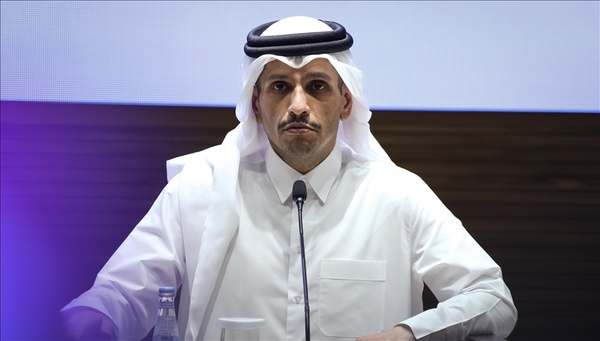
This came during a phone call made by Qatari Prime Minister and Minister of Foreign Affairs Sheikh Mohammed bin Abdulrahman Al Thani with British Foreign Secretary David Lammy, according to the Qatar News Agency (QNA).


According to the agency, the two sides discussed "ways to ensure the full implementation of the ceasefire agreement in the Gaza Strip and the exchange of detainees and prisoners."


The Qatari Foreign Minister expressed his country's hope that "both parties would commit to implementing the ceasefire agreement and exchanging detainees and prisoners."


In addition, the agency said that the two sides discussed the latest developments in Syria, and reviewed cooperation relations between the two countries and ways to develop them.


The ceasefire agreement in the Gaza Strip is scheduled to go into effect at 8:30 local Palestinian time on Sunday morning, according to what was announced by the Qatari Foreign Ministry spokesman, Majed Al-Ansari, on the X platform.


The Israeli government approved the ceasefire agreement in Gaza and the prisoner exchange, at dawn on Saturday, according to the official Israeli Broadcasting Corporation, hours after the Security Cabinet approved it.


On Friday evening, the private Cairo News Channel reported, quoting an informed source whose identity was not revealed, that an international meeting hosted by Cairo had ended with an agreement to form an operations room that includes Egypt, Palestine, Qatar, the United States, and Israel to follow up on the implementation of the ceasefire agreement in Gaza.


Last Wednesday, Qatari Prime Minister and Foreign Minister Mohammed bin Abdulrahman announced the success of the efforts of mediators (Doha, Cairo and Washington) in reaching an agreement to cease fire in Gaza and exchange prisoners, with implementation to begin tomorrow, Sunday.


PALESTINE

Sat 18 Jan 2025 4:27 pm - Jerusalem Time

A citizen was injured after settlers attacked him south of Nablus

A citizen was injured, Saturday evening, after settlers attacked him in the village of Yatma, south of Nablus.


According to local sources, settlers from the "Rahalim" settlement attacked citizens' homes with stones and pepper gas, which resulted in a citizen being injured and being taken to the hospital for treatment.

ARAB AND WORLD

Sat 18 Jan 2025 4:06 pm - Jerusalem Time

UN: Israel must withdraw immediately from Lebanon

The United Nations called on Israel, on Friday, to immediately withdraw from Lebanese territory, stressing that the Israeli presence inside Lebanese territory violates UN resolutions.


The UN Security Council held a hearing on the United Nations Interim Force in Lebanon (UNIFIL) and the United Nations Disengagement Observer Force in the Golan Heights (UNDOF).


The ceasefire between Lebanon and Israel is holding despite its "fragile" structure, Jean-Pierre Lacroix, the UN Under-Secretary-General for Peacekeeping Operations, said in a briefing to the UN Security Council.


Lacroix stressed that the Lebanese authorities renewed their commitment to maintaining the ceasefire and complying with UN Security Council Resolution 1701 of 2006.


In 2006, Resolution 1701 was unanimously adopted by the United Nations, with the aim of stopping hostilities between Hezbollah and Israel, as the Council calls for a permanent ceasefire based on the establishment of a buffer zone.


Lacroix pointed out that a gradual plan was presented, including the withdrawal of the Israeli army and the deployment of Lebanese army forces in the area, during the ceasefire mechanism meeting held on January 6.


He stressed the necessity of Israel's withdrawal from Lebanon before the end of the 60-day period under the ceasefire agreement, explaining that the Israeli army continues its movements in Lebanese territory 10 days before the end of that period.


Lacroix said that Israel destroyed some tunnels, buildings and agricultural lands, carried out air strikes, and violated Lebanese airspace.


The UN official defended Israel's actions as "an action against Hezbollah," but noted that the Israeli presence in Lebanon violates Resolution 1701.


He added: "We demand Israel's immediate withdrawal from Lebanese territory before the end of the declared period."


Since November 27, 2024, a fragile ceasefire has prevailed, ending the mutual shelling between Israel and Hezbollah that began on October 8, 2023, and then turned into a full-scale war on September 23.


The most prominent provisions of the ceasefire agreement include Israel's gradual withdrawal to the south of the Blue Line (the line marking Israel's withdrawal from Lebanon in 2000) within 60 days, and the deployment of Lebanese army and security forces along the border, crossing points, and the southern region.


The Israeli aggression on Lebanon resulted in 4,068 deaths and 16,670 wounded, including a large number of children and women, in addition to the displacement of about 1,400,000 people. Most of the victims and displaced persons were recorded after the escalation of the aggression on September 23.


- Israeli violation of the buffer zone with Syria

For his part, Patrick Gauchat, Deputy Chief of Mission of the United Nations Truce Supervision Organization, said that the "Separation of Forces Agreement" signed between Israel and Syria in 1974 is still in effect, calling on both parties to fully adhere to the agreement.


In his briefing to the UN Security Council, he explained that the United Nations Disengagement Observer Force is working to establish stable channels of communication with the Syrian administration.


He stressed that the statements issued by the new Syrian administration regarding its commitment to the agreement constitute a positive step.


On Friday, the leader of the new Syrian administration, Ahmed al-Sharaa, said during a press conference that Syria is committed to the 1974 agreement, and is ready to receive UN forces and bring them into the region, and work to protect them and return things to what they were before the Israeli advance.


During his press conference with the Prime Minister and Minister of Foreign Affairs of Qatar, Mohammed bin Abdulrahman, from the capital Damascus, he stressed that "Israel's advance in the region was due to the presence of Iranian militias and Hezbollah (Lebanese)."


He added, "After the liberation of Damascus, I believe that Hezbollah and Iran no longer have any presence there at all."


Patrick Gauchat reported in his briefing to the UN Security Council that the Israeli army maintained its presence in the separation zone, carried out construction work with heavy equipment and installed communications equipment.


He said that the United Nations Disengagement Observer Force informed the Israeli side that its presence and activities in the buffer zone constitute a violation of the 1974 Separation of Forces Agreement.


Immediately after the overthrow of Bashar al-Assad’s regime on December 8, Israel announced the collapse of the 1974 disengagement agreement with Syria, and the deployment of its army in the demilitarized buffer zone in the Syrian Golan Heights, most of which it has occupied since 1967, and in Mount Hermon, and then penetrated the Daraa countryside, in a move condemned by the United Nations and Arab countries.


Complaints of the area's residents about the Israeli presence

Ghoshat said that local residents in the area are asking the United Nations for help to ensure the Israeli army withdraws from village centers and removes military barriers that affect agricultural activities.


He noted that complaints had been received from the area about damage to roads, water pumps and solar panels, and that there were reports that the Israeli army had conducted searches in some villages and arrested some local citizens.


He stressed that it was essential that UN peacekeeping personnel be able to perform their duties without hindrance.


He renewed his call on the parties to maintain the ceasefire, refrain from any action that would conflict with the 1974 Agreement on the Disengagement of Forces, and respect the authority of the UN peacekeeping force UNDOF.

PALESTINE

Sat 18 Jan 2025 1:40 pm - Jerusalem Time

"Final preparations" in Egypt's Arish to bring aid into Gaza

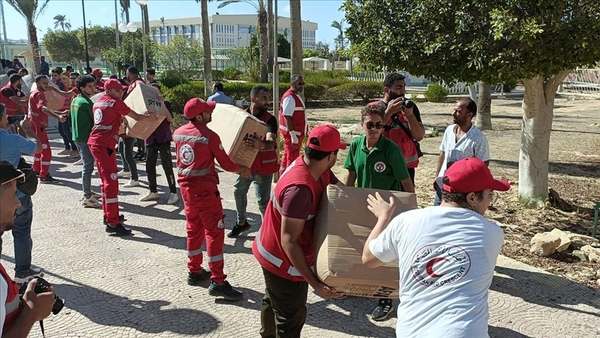
The Egyptian city of Arish is witnessing, on Saturday, "final preparations" to bring humanitarian aid into the Gaza Strip through the Rafah border crossing, in the presence of two Egyptian ministers.


The official Egyptian News Agency reported that the Minister of Health, Khaled Abdel Ghaffar, and the Minister of Social Solidarity, Maya Morsi, arrived at El-Arish Airport on Saturday morning on a visit to North Sinai Governorate (east).


The visit aims to "ensure the readiness of hospitals to receive the injured from the Gaza Strip, and to follow up on the progress of the final preparations for the entry of humanitarian aid into the Strip."


On Friday evening, Cairo News Channel reported that "a large number of aid trucks were lined up in front of the Rafah land crossing in preparation for their entry into the Gaza Strip."


She explained that "the aid trucks carry tens of thousands of basic food supplies to the Gaza Strip."


The city of Arish and its airport in North Sinai Governorate are a point of reception and management for relief aid to Gaza coming from all over the world.


The entry of aid was disrupted after Israel occupied the Palestinian side of the Rafah border crossing with the Gaza Strip in May 2024.


Earlier on Saturday, the Qatari Foreign Ministry and the Israeli army announced that the ceasefire agreement in the Gaza Strip would go into effect at 8:30 (06:30 GMT) on Sunday morning.


On Friday evening, the private Cairo News Channel reported, quoting an informed source whose identity was not revealed, that an international meeting hosted by Cairo had ended with an agreement to form an operations room that includes Egypt, Palestine, Qatar, the United States, and Israel to follow up on the implementation of the ceasefire agreement in Gaza.


Last Wednesday, Qatar announced the success of the mediators’ efforts (Doha, Cairo and Washington) in reaching an agreement to cease fire in Gaza and exchange prisoners, to be implemented tomorrow, Sunday. It explained that the first phase of it will last for 42 days and includes the release of 33 Israeli detainees in exchange for an undisclosed number of Palestinian prisoners, but it is estimated in the hundreds.


With American support, Israel has been committing genocide in Gaza since October 7, 2023, leaving more than 157,000 Palestinians dead and wounded, most of them children and women, and more than 11,000 missing, amid massive destruction and famine that killed dozens of children and the elderly, in one of the worst humanitarian disasters in the world.


On November 21, the International Criminal Court issued two arrest warrants against Israeli Prime Minister Benjamin Netanyahu and former Defense Minister Yoav Galant for committing war crimes and crimes against humanity against Palestinians in Gaza.

PALESTINE

Sat 18 Jan 2025 12:29 pm - Jerusalem Time

23 dead in 24 hours, and the death toll from the aggression rises to more than 46 thousand

The Israeli occupation committed 3 massacres against families in the Gaza Strip, resulting in 23 dead and 83 injuries arriving at hospitals during the past 24 hours.


The Ministry of Health in Gaza reported that the death toll from the Israeli aggression has risen to 46,899 dead and 110,725 injuries since October 7, 2023.


It pointed out that there are still a number of victims under the rubble and on the roads, and ambulance and civil defense crews cannot reach them.


PALESTINE

Sat 18 Jan 2025 12:10 pm - Jerusalem Time

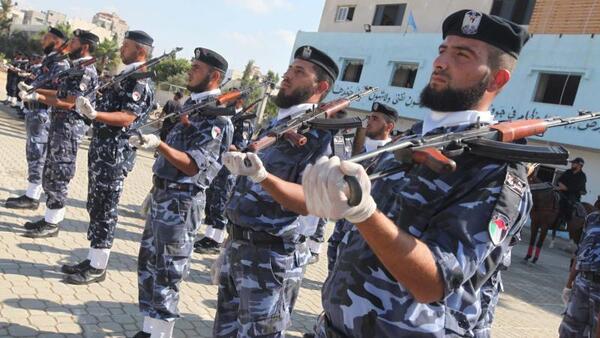
Gaza Interior Ministry announces deployment of its forces in the Strip on Sunday with the start of the ceasefire

The Ministry of Interior in Gaza announced, on Saturday, the start of the deployment of its devices in the governorates of the Strip with the entry into force of the ceasefire agreement tomorrow, Sunday.


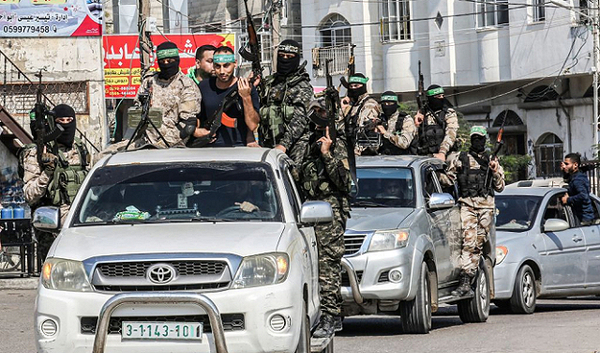
"The Interior Ministry and National Security apparatuses (run by Hamas) will begin to deploy in all governorates of the Gaza Strip, and carry out the sacred duty of serving our people as soon as the ceasefire agreement enters into force," it said in a statement.


She explained that the Israeli army focused during the genocidal war that lasted for more than 15 months on "targeting the ministry, thereby attempting to strike one of the factors of the people's steadfastness in the face of aggression."


She continued: "Despite the heavy price paid by the Ministry of its best leaders and sons, it continued to work with all available capabilities under extremely complex circumstances, and confronted with all its might the occupation's plans to spread chaos and anarchy within Palestinian society in the Gaza Strip."


The ministry called on citizens to "preserve public and private property, avoid any actions that may pose a threat to their lives, and cooperate with officers and members of the police, security and service agencies, in order to ensure their security and safety."


It also called on citizens to adhere to all "directives and instructions that will be issued by the competent authorities in the ministry's departments in the coming days," without providing details.

OPINIONS

Sat 18 Jan 2025 12:07 pm - Jerusalem Time

Lessons of the "Flood" and its Repercussions (3) The Exposure of the Arab "State"

Dr. Iyad Al-Barghouthi

Dr. Iyad Al-Barghouthi

Opinion Writer

The results of the "flood" revealed the fragility and emptiness of the Arab "state" (this was not the case for the resistance movements). Therefore, the question of the "state" was one of the most important questions highlighted by that major event, as it was no longer possible to ignore the "alienation" and total absence from the scene that the state practiced in relation to what happened and is happening in this context. In the rare cases in which the state interacted with the event and its alienation was not total, this was strange and perhaps even suspicious, whether it stood by Palestine, played the role of mediator, or clearly sided with Israel, roles played by an Arab state that "decided" to be "active" in this field.

The contemporary Arab state, thanks to the “flood,” appeared to be in a state of maximum exposure, and its question became more urgent, as it appears to be the cornerstone of the entire scene. The mind must be more daring and more expansive in going to contemplate the essence and nature of that, from the birth of that state, through its colonization, then its “independence,” and the form of its subsequent development.

What is in the interest of the researcher today on the subject of the contemporary Arab state is that his sources are not limited to those historical references, whether written or oral, only. He is a living witness to the birth of states or the like, which constitute a model for studying the case that may be generalized, perhaps with the most precise details.

Contrary to the logic of things, the contemporary Arab state was not created and then colonized, but rather it was colonized and then created. This may seem strange, but it is what happened. We are talking here about that Arab state that emerged after the First World War as a result of the defeat of the Ottoman Empire, where the victorious imperialists were establishing a "state" with every "scrap" they tore from the "page" of that empire.

This is not a position on the Ottomans, but rather a description of what happened. However, the most important thing here is to realize that the Western countries that were victorious in that war, while establishing the Arab state, were not only dismantling the Ottoman Empire, but also dismantling the “nation,” whether Islamic or Arab, it does not matter. The dismantling was taking place on everything that connected this “group of people” existing between the Arabian Gulf and the Atlantic Ocean... I say this in order to “disengage” from those who are “waiting” to delve into the accuracy of our use of the term “nation,” for the essence of the matter lies in the dismantling, not in the identity of those who were dismantled.

So the establishment of the contemporary Arab state in that period was not within a healthy context, nor was it the result of self-initiated interactions, such that the state emerged from the nation. Rather, that state was “created” within the framework of tearing apart and dismantling the nation, with the aim of ensuring that it would not be reconstituted and dominated. In the same context and for the same goals, work was done to establish the State of Israel.

The picture here is clear and does not require much contemplation, as the context in which the contemporary Arab state emerged is the same as the one in which the State of Israel emerged. Perhaps it is “academic” injustice to refer the relationship between the Arab state and Israel to the context of the emergence of each one only, but ignoring that context is no less unjust.

The emerging Arab state was not “natural” like other states, in terms of the existence of a specific people living in a specific geography for a period of time sufficient to crystallize relations between them and their elites that would produce a social contract between an “authority” and a people in the form of a state. Rather, that state was the result of a security-service contract between some elites and the colonizer, to which the people were not a party in any way.

On this basis, the relationship between the state and the colonizer in the Arab world arose, and on this basis also arose the relationship between it and its “people.” This state does not feel embarrassed, nor does it see itself forced to do so, regarding its relationship with the colonizer, for it is its “daughter” in a sense. The people are not a party to the equation, and therefore they are only seen to the extent required by the context of the relationship with that colonizer.

Certainly there are those who do not like these relations between the state and the colonizer and between it and its people, and there are also many who call for changing this relationship and even work to do so, but the presence of those who “disapprove” of this relationship and are surprised by it only indicates a lack of knowledge of recent history and its complications, and it is the problem of those who see this and not the problem of the state in any way.

In this context, we can understand the "independence" of the state in a way that is closer to reality than to wishes. The state that was established by the colonizer and his sponsorship by separating it (stripping it) from the nation, its independence is through the success of that separation and the disengagement from the nation, not through its departure from the colonizer and the disengagement from him, as the "public" understood. Therefore, the state's "real" pride in its independence is practically what keeps it separate from the nation, and keeps the nation divided and subordinate. Consequently, what threatens the independence of the state and is considered its real enemy in reality is not colonialism, but rather the nation that poses the only danger to the state. Perhaps this explains this extremism that seems illogical at first glance in the issue of entry visas for Arab citizens to another Arab country, but when you "understand" the fears of that state and the sources of its threat, you come back to realize how "logical" that extremism is.

This also explains the special meaning of sovereignty for the Arab state, as its sovereignty is not related to the interference of the colonizer in its decisions, but rather to the interference of its “brothers,” because it understands that the “only” threat to its existence comes from those who call for rapprochement with its brothers, as this constitutes an introduction to the call to return to the nation (to unity).

This understanding of the Arab state’s situation is what answers the questions of its political alignments, its developmental choices, and its position on “things.” It is what determines its own concept of sovereignty and independence, its relationship with the “foreigner” and the brotherly, and its position on Israel, a position that does not come only from its compliance with the will of the colonizer who created it, but from the fact that Israel constitutes the greatest “guarantor” of its existence as a state by confronting any attempt to unify it with the nation.

This explains why in a country like Djibouti, for example, there are eight foreign military bases, not only American and French as usual, but also Chinese and even Japanese, and they have nothing to do with its security or sovereignty at all. This also explains why Trump threatened Saudi Arabia to remove the American base from it instead of that being its demand. We used to think that independence would be complete with the departure of the last foreign base from the country, but instead our countries practice the "hobby" of collecting military bases without that affecting their independence or threatening their sovereignty. The only enemy of the state in the case we are talking about is its nation, and anyone who reminds it that it is part of a nation, or was part of a nation at one time.

This understanding also shows the extent of our naivety when we attributed the division between the Arab countries during the Cold War to their different political alignments, but the matter continued even after the collapse of the Soviet Union and the unified alignment behind America because the division of these countries and their hostility to the nation is the secret of their existence.

This "state" is against everything that unites it or reminds it of what unites it with its sisters, as we said. It is not against America or Russia, it is with what maintains its division and diversity. Therefore, internally, it demonizes any thought, party or action that transcends the Qatari state, and stands against nationalist parties as well as Islamic ones because they call for a form of unity. As for Islam, this state is not against it as a religion or as a teaching, nor because it is a source of "extremism" or "backwardness", nor for any of the reasons that are being talked about, but rather it is against it because it, or Arabism, or any thought that could carry within it a unifying orientation, could constitute the basis for calling for unity and reminding of the nation.

This also explains the enthusiasm for normalization with Israel and distancing from Palestine. Israel “protects” the state from its nation, and Palestine is the “nation’s” issue that the state wants to erase and forget. Palestine is a constant source of concern for the state, not because it is “costly” if adopted, nor because it is an issue that does not deserve attention, but because it pushes the state toward the nation, which poses a threat to the state, so it went to “disavow” it and distance itself from it, and some even went so far as to stand openly with Israel and normalize with it publicly or “customarily.”

The role of the state

The state remained loyal to the goal for which it was established, which was to “confront” and dismantle the nation. It worked hard to eliminate the spirit of the nation in its people, and focused on the entity state and preserving it as an ultimate goal. It worked to reduce and eliminate collective consciousness and create an alternative consciousness that was “defective” in itself. The state sought ideological domination over its people to create that distorted consciousness of identity by focusing on “national” consciousness, not as an extension of a larger identity, but as an alternative to it. One of its concerns was to play with identity to transform it from an understanding of the self through belonging to the state as a homeland, to an understanding closer to the subjects who follow the ruler. Instead of the question of identity being who “we” so that people know their state (upon success in separating them from the extension of the nation in them), it became who we are, or who do we follow, so that they are known for their allegiance to the ruler of that state and not to the state itself, let alone belonging to the nation.

The basic function of the state has been reflected in its form and structure. Although it was established as a state mortgaged to the colonial West, its internal structure was such that it would be difficult for it to break away from that even if it wanted to. This type of state always ensures that a huge bureaucratic apparatus lives “parasitically” on a state that is not productive and is not allowed to be so. It is required to exert itself with the colonizer and with international political and economic institutions in order to provide the salaries of that huge apparatus, as the state, through its apparatus, is the primary employer of the workforce.

The people of this state are a burden on it, and their duties are limited to their loyalty to the state represented by the regime represented by its head, because that regime is the one who is credited with providing the “privileges” (not rights) that it provides to the people, and whoever does not appreciate the government’s efforts in this area will be a reason for forcing the state to stop those privileges from him.

Through this apparatus, most of the people are mortgaged to the state, and through the state’s constant and (embarrassing) attempts to provide for its financial requirements, it is mortgaged to the colonizer, and the army usually constitutes the largest part of the state’s bureaucratic apparatus, and thus it is the largest and most effective mortgagee that the colonizer can rely on.

We are facing a "state" that is mortgaged from head to toe, to a large part of the people, elites, parties and intellectuals. This situation is integrated with the context of the emergence of the state, making what is in its past and present a guarantee for the continuation of its mortgage, its "voluntary" alignment with the West and Israel, its insistence on delving into entityism, evading national issues, and persisting in killing the nation.

The solution is what the enemies brought

But this profound contradiction between the state and the nation is not completely intractable, so what has been said does not necessarily require a continuous confrontation between the state and the nation, nor is it a call to get rid of one for the sake of the other’s survival. The Qatari state, after all that has happened since its founding, has become part of reality on the one hand, and is no longer the “worst” scenario on the other.

If there are those among the peoples of the region who see that a “state” with these “specifications” is a burden on them, then Israel, Zionism, and influential circles in America and the West, through their efforts to achieve the “new Middle East,” see the state in this form as a burden as well and seek to divide it further or even eliminate it.

The colonizer's unlimited greed sometimes provides prospects for a solution. The state is no longer threatened only by its traditional enemies (some of its elites) but also by its traditional supporters (colonialism and Zionism). Here it is necessary to think about a new relationship between the state and the nation, one that does not assume an inevitable contradiction between the two sides, so that the state is reassured and awareness is created of the necessity and importance of the relationship with the nation through an inevitable realization of the common and existential interests of all parties. Perhaps in this talk there is a "selfish" call to reread my book "Liberating the East... Towards an Eastern Cultural Empire."

PALESTINE

Sat 18 Jan 2025 11:15 am - Jerusalem Time

Israeli source: PA employees in uniform will "take over" crossings

Israel's Channel 12 reported on Saturday morning, quoting an Egyptian source it described as "high-ranking," confirming in a statement to the channel that "Israel changed its position during the talks that took place in Cairo over the past two days," and that it "agreed that the Palestinian Authority employees who will be stationed at the crossings to the Gaza Strip will wear the official uniform" of the Palestinian Authority.


In addition, the Israeli source continues, “Signs representing the Palestinian Authority will be placed, to highlight the responsibility they will assume regarding traffic at the crossings, alongside the European monitoring team that will return to the crossings in accordance with the 2005 agreement between Israel and the Palestinian Authority - two years before Hamas seized power in the Gaza Strip,” according to the Israeli source.


It is noteworthy that the Palestinian presidency renewed, yesterday, Friday, its demand that "the State of Palestine assume its full responsibilities in the Strip, considering it an integral part of the occupied Palestinian territory."


It said in a statement that "the State of Palestine has legal and political jurisdiction over the Strip, like the rest of the occupied Palestinian territories in the West Bank and Jerusalem, and rejects the severing of any part of it."


She said that the Palestinian government "has completed all preparations to assume its full responsibilities in the Gaza Strip, and that its administrative and security teams are fully prepared to carry out their duties, to alleviate the suffering of our people, return the displaced to their homes and places of residence, restore basic services such as water, electricity, take over the crossings, and rebuild."


It will take effect at 8:30 a.m. Sunday.


Earlier on Saturday, the Ministry of Interior and National Security in Gaza announced "the start of the deployment of its devices in the governorates of the Strip with the entry into force of the ceasefire agreement" tomorrow, Sunday.


The ministry recommended "the necessity of taking precautions, exercising the utmost caution, and waiting for instructions from official sources."


The Qatari Ministry of Foreign Affairs announced on Saturday that the ceasefire agreement in the Gaza Strip will go into effect at 8:30 Palestine time, on Sunday morning.

PALESTINE

Sat 18 Jan 2025 11:02 am - Jerusalem Time

Israeli government approves deal to release 1,904 Palestinian prisoners in first phase

This morning, Saturday, the Israeli Army Radio published details approved by the Israeli government last night (between Friday and Saturday) regarding the agreement to release Palestinian prisoners in exchange for Israeli prisoners in the Gaza Strip.


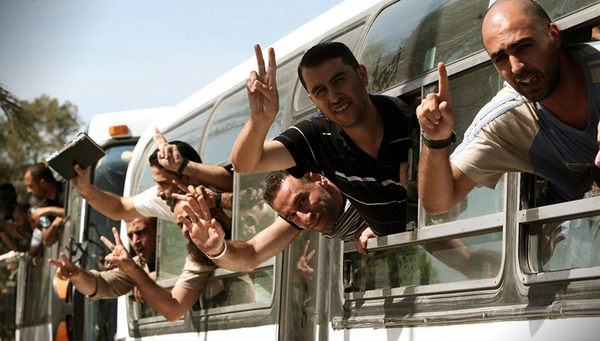
The radio reported that "1,904 Palestinian prisoners will be released in total, including 737 prisoners held in Israeli prisons, in addition to 1,167 Palestinians from the Gaza Strip who were arrested during the ground operations, are being held by the Israeli occupation army, and did not participate in the events of October 7."


The army radio added that "the ceasefire will go into effect on Sunday at 16:00. A number of prisoners will be released daily based on a specific timetable, in proportion to the number of people who will be released on the same day."


The army radio noted that the key to releasing Palestinian prisoners includes initially releasing living women, followed by other categories of living prisoners. In the sixth week of the agreement, those who lost their lives while in custody will be released.


Israeli estimates, according to media reports, indicate that of the 33 Israeli prisoners to be released, at least 25 are still alive.

PALESTINE

Sat 18 Jan 2025 10:59 am - Jerusalem Time

Qatari Foreign Ministry: Ceasefire in Gaza begins tomorrow at 8:30 am

The Qatari Ministry of Foreign Affairs announced on Saturday that the ceasefire agreement in the Gaza Strip will go into effect at 8:30 Palestine time, tomorrow morning, Sunday.


"Based on the agreement between the parties to the agreement and the mediators, the ceasefire in the Gaza Strip will begin at 8:30 a.m. on Sunday, local time in Gaza," ministry spokesman Majed Al-Ansari said on the X platform.


The ministry recommended the necessity of "taking precautions, exercising the utmost caution, and waiting for instructions from official sources."


Earlier on Saturday, the Ministry of Interior and National Security in Gaza announced the start of the deployment of its devices in the governorates of the Strip with the entry into force of the ceasefire agreement tomorrow, Sunday.


On Friday evening, the private Cairo News Channel reported, quoting an informed source whose identity was not revealed, that an international meeting hosted by Cairo had ended with an agreement to form an operations room that includes Egypt, Palestine, Qatar, the United States, and Israel to follow up on the implementation of the ceasefire agreement in Gaza.


Last Wednesday, the Prime Minister and Minister of Foreign Affairs of Qatar, Mohammed bin Abdulrahman, announced the success of the efforts of the mediators (Doha, Cairo and Washington) in reaching an agreement to cease fire in Gaza and exchange prisoners, with implementation to begin tomorrow, Sunday.


The Gaza ceasefire and prisoner exchange agreement consists of 3 stages, each lasting 42 days.


The first stage includes a temporary cessation of mutual military operations, and the withdrawal of Israeli occupation forces from populated areas in Gaza, including the Netzarim axis, to areas adjacent to the border.


The agreement also stipulates, during the first phase, the opening of the Rafah crossing (south of the Gaza Strip) after 7 days from the start of its implementation, the entry of 600 trucks of humanitarian aid daily, and the gradual release of 33 Israeli prisoners in Gaza, whether alive or dead, in exchange for 1,904 Palestinian prisoners, according to what the Israeli Army Radio reported, and 1,737 prisoners, according to press statements by the head of the Palestinian Prisoners and Freed Prisoners Affairs Authority, Qadura Fares.


The Israeli occupation is also gradually reducing its forces in the Rafah crossing area on the Philadelphi axis in the first phase.


The second phase of the agreement relates to the return of complete and sustainable calm, the exchange of additional numbers of prisoners and detainees, and the complete withdrawal of the occupation forces from Gaza.


The third phase focuses on starting a plan to rebuild Gaza over a period of 3 to 5 years, exchanging the bodies and remains of the dead held by both parties, opening all crossings, and allowing the free movement of people and goods.


All the measures of the first phase will continue to be implemented in the second phase of the agreement, as long as negotiations on the terms continue, with the guarantors of the agreement (Egypt, Qatar and the United States) exerting their utmost efforts to ensure the continuation of indirect negotiations until the two parties can reach an agreement on the terms of implementing the second phase.


With American support, the Israeli occupation has been committing genocide in Gaza since October 7, 2023, leaving more than 157,000 Palestinian martyrs and wounded, most of them children and women, and more than 11,000 missing, amid massive destruction and famine that killed dozens of children and the elderly, in one of the worst humanitarian disasters in the world.

PALESTINE

Sat 18 Jan 2025 8:24 am - Jerusalem Time

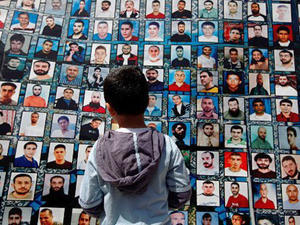
Prisoners Authority: 1,737 detainees will be released in the first phase of the agreement

The head of the Palestinian Prisoners and Freed Prisoners Affairs Authority, Qadura Fares, said that 1,737 Palestinian prisoners will be released as part of the first phase of the prisoner exchange agreement and ceasefire in the Gaza Strip.


Fares said that the Israeli occupation is "determined to deport a number of prisoners who will be released," noting that "Israeli intransigence led to the postponement of the release of the leaders in the first phase."


He explained, in statements to Al-Arabiya channel on Friday evening, that "the prisoners who will be released in the first phase are 1,737 prisoners, including 296 with high sentences."


He pointed out that "the number of Palestinian prisoners who will be released is linked to verifying the conditions of the Israeli prisoners in Gaza, and knowing the number of those alive and dead," which Hamas did not disclose, due to the conditions of genocide and massive destruction in the Strip.


Earlier on Friday, Hamas reported that its leader in the occupied West Bank, Zaher Jabarin, discussed with Fares the prisoner deal and arrangements for their release and receiving them in a manner befitting them.


The movement said in a statement that Jabarin, who also heads the Hamas Martyrs and Prisoners Office, received Fares, in the presence of the lawyer for the Prisoners Affairs Authority, Khader Shakirat, a member of the Hamas Political Bureau, Hussam Badran, and the movement’s leaders, Mahmoud Mardawi and Jasser Barghouti, and that the meeting discussed “the latest developments in the deal and the prisoner exchange, and the arrangements for their release and reception, in a manner befitting their sacrifices and the sacrifices of our Palestinian people.”


Hamas did not specify the location of the meeting, but Fares had previously traveled to Doha last Monday.


"A glitch in the Israeli list"


It is noteworthy that earlier on Friday, the Israeli Ministry of Justice announced a list of 95 Palestinian detainees scheduled to be released tomorrow, Sunday, as a batch of prisoners who will be released in the first phase of the agreement.


However, the spokesman for the Palestinian Prisoners Affairs Authority, Thaer Shreiteh, confirmed in a statement later that “this list contains a clear defect in that it includes the names of released female prisoners, in addition to including the dates of birth of 10 prisoners without mentioning any additional information about them.”


Shriteh called on the deal's mediators in Qatar and Egypt to "put an end to these Israeli violations, and not give the occupation authorities any space to practice any violations that create confusion in the Palestinian street and among the prisoners' families."


It is noteworthy, in this context, that the second phase of the prisoner exchange agreement and ceasefire in Gaza relates to the return of complete and sustainable calm, the exchange of additional numbers of prisoners and detainees, and the complete withdrawal of Israeli forces from the Strip.


The third phase focuses on starting a plan to rebuild Gaza over a period of 3 to 5 years, exchanging the bodies and remains of the dead held by both parties, opening all crossings, and allowing the free movement of people and goods.


All the measures of the first phase will continue to be implemented in the second phase of the agreement, as long as negotiations on the terms continue, with the guarantors of the agreement (Egypt, Qatar and the United States) exerting their utmost efforts to ensure the continuation of indirect negotiations until the two parties can reach an agreement on the terms of implementing the second phase.

PALESTINE

Sat 18 Jan 2025 8:22 am - Jerusalem Time

Dead and wounded in Israeli raids on the Gaza Strip

Last night, five citizens from one family were killed in an Israeli occupation forces' bombardment in the southern Gaza Strip.


According to local sources, a citizen from the Al-Qudra family, his wife and their three children were killed in an occupation bombing that targeted a tent housing displaced people in the Mawasi area of Al-Qarara town, near Al-Hedaya Mosque, north of Khan Yunis city, in the southern Gaza Strip.


In the same context, a female citizen was injured by gunfire from the occupation boats west of Khan Yunis.


The death toll from the Israeli occupation's aggression on the Gaza Strip has risen to 46,876 dead and 110,642 wounded, since October 7, 2023.


Since the announcement of the ceasefire agreement last Wednesday, more than 120 citizens have been killed and dozens injured in the occupation's bombing of various areas of the Gaza Strip.

PALESTINE

Sat 18 Jan 2025 8:09 am - Jerusalem Time

The settlers' army in the West Bank... vows to commit a massacre to thwart the Gaza deal

Dr. Bilal Al-Shoubaki: Efforts to bring a million settlers to the West Bank aim to create a Jewish majority, which directly threatens the national project

Abdullah Abu Rahma: The success of the settlers’ escalation means implementing the decisive plan, and if we surrender, the future of the West Bank will be dark

Nabhan Khreisha: Settler attacks are increasing in intensity as part of a systematic Israeli policy aimed at ethnic cleansing and expanding settlements

Professor Jamal Harfoush: Settler attacks are part of a strategy aimed at changing the demographic and geographical realities of the West Bank

Muhammad Abu Allan Daraghmeh: The Israeli position is clear that no settlement will be evacuated.. and there is no future for the West Bank in the presence of settlers


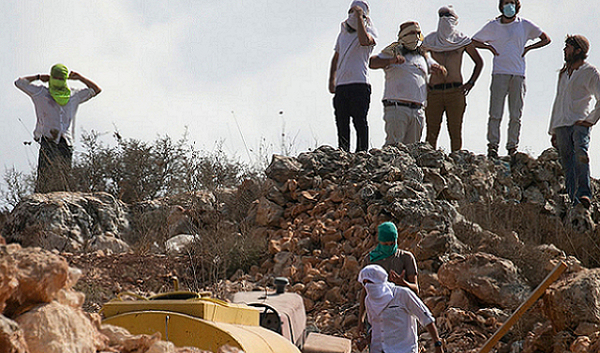
The aggression of settlers in the West Bank is escalating in an unprecedented manner, supported by official government and military support, which is evident in the formation of armed militias and the provision of weapons to settlers, aiming to reshape the geographical and demographic reality of the West Bank, which threatens the future of the Palestinians and their national project. In separate interviews with “I”, writers, political analysts, specialists and academics fear that settlers will commit massacres in the West Bank, to confuse the cards and disrupt the completion of the deal in Gaza.


They believe that the attacks are not limited to Area C, but extend to Area B and even A, which reflects a comprehensive targeting of the Palestinian presence and threatens the entity of the Palestinians. They believe that the current Israeli plans, led by an extremist right-wing government, which seeks to bring a million new settlers to the West Bank by 2030, aim to impose new facts that make it impossible to achieve the two-state solution or establish an independent Palestinian state.


In light of this escalation, they stress the need to confront these plans through comprehensive strategies that include strengthening national unity, forming popular protection committees, and exposing Israeli violations at the international level, while Palestinian steadfastness on the ground, along with the international community’s move to impose sanctions on the occupation, are the only way to thwart these plans and protect the Palestinian identity and the future of the West Bank.


An existential threat that goes beyond security or physical threats.


Dr. Bilal Al-Shoubaki, a professor of political science at Hebron University, believes that the settler army in the West Bank poses an existential threat to the Palestinians, which goes beyond security or material threats to affect the entire Palestinian political project.


Al-Shoubaki believes that this challenge must be faced with a clear and systematic political vision, far from the state of division that the Palestinian arena is suffering from, especially in light of the escalation of Israeli plans supported by the current government led by the far-right movement headed by Bezalel Smotrich.


Al-Shoubaki points out that the plans adopted by the current Israeli government are not a recent development, but rather their roots go back to old visions aimed at controlling the West Bank, including East Jerusalem. These plans are currently finding unprecedented political support, as evidenced by policies aimed at reducing the Palestinian presence and confining it to the narrowest possible geographical area, which limits the possibility of establishing a sovereign Palestinian state on the borders of June 4, 1967.


He points out that the Israeli occupation is not satisfied with controlling Area C, but is gradually seeking to extend its influence over Area B and even Area A, which are supposed to be under full Palestinian control.


Al-Shoubaki explains that one of the most prominent indicators of this is the Israeli police issuing traffic tickets to Palestinians a few days ago inside Area A, a step that is not only a violation of Palestinian sovereignty, but represents the establishment of a new phase of complete Israeli control over the West Bank.


Al-Shoubaki believes that the Israeli occupation is exploiting the state of Palestinian division and internal fragmentation to advance its plans, pointing out that the absence of national unity weakens the Palestinians’ ability to confront this great challenge, stressing the necessity of achieving a national consensus that is consistent with the capabilities of Palestinian society and puts an end to the divisive options that hinder the Palestinian national project.


Regarding the occupation's efforts to bring a million new settlers to the West Bank, Al-Shoubaki explains that this step aims to create a Jewish majority in the region, which directly threatens the Palestinian cause, as imposing new facts on the ground makes the establishment of an independent Palestinian state impossible.


Al-Shoubaki stresses that these policies do not only target the physical existence of Palestinians, but also seek to withdraw legitimacy from official Palestinian institutions and transform the Authority into an administrative entity with limited powers, which undermines any political role it has.


He explains that the current Israeli government believes in accelerating the conflict with the Palestinians in order to resolve it in favor of right-wing Zionist theses.


Al-Shoubaki points out that the settler army that is being formed now is not just random groups, but rather an organized force that receives political and military training and support with the aim of tearing apart the West Bank.


Al-Shoubaki believes that the current Israeli escalation is not just a reaction, but rather a strategic choice adopted by the occupation leaders, headed by Smotrich, who believe that the current time is the most appropriate to resolve the conflict completely.


Al-Shoubaki stresses that this escalation represents a dangerous stage in the Zionist project, especially in light of the absence of the necessary Palestinian readiness to confront these plans.


Al-Shoubaki stresses the importance of international action to confront this challenge, as friendly countries that support stability in the region must move to impose sanctions on the occupation and hold it accountable for its repeated violations.


Al-Shoubaki warns that the continuation of these plans without effective confrontation will lead to the end of the Palestinian national project that the PLO has adopted for decades.


Escalation based on several basic factors


Abdullah Abu Rahma, Director General of the Popular Action Department in the Palestinian Wall and Settlement Resistance Commission, confirms that the settler army in the West Bank is witnessing an increase in its strength and aggression, thanks to the unlimited Israeli government support.


Abu Rahma explains that this escalation is based on several basic factors, including legal support through Knesset legislation that provides full legal cover for the aggressive practices of the settlers, in addition to the huge financial support allocated to expanding settlement activity and establishing settlement outposts.


Abu Rahma points to the dropping of administrative detention orders against settlers accused of criminal acts, which allows them to maintain the right to remain silent during investigation, and forces the police to release them even when there is evidence against them. This policy encourages settlers to continue their violations, in the absence of any legal or security deterrent.


Abu Rahma believes that this government support also includes the establishment of religious institutes and military training centers for settlers, which makes them organized groups trained to carry out systematic attacks against Palestinians.


Abu Rahma confirms that these groups move according to well-thought-out plans that include advance planning and precise preparation before carrying out any attack on Palestinian villages.


Abu Rahma says: “When any Palestinian defends himself against a settler’s attack, we find an immediate response from other settlers to support him, in a scene that reflects precise organization and an effort to impose control over Palestinian land by force.”


He stresses that confronting this escalation requires unifying Palestinian efforts and leaving differences aside, as the Palestinian farmer or local community cannot confront these plans supported by international powers alone, as the United States and other countries provide financial and political support that contributes to strengthening settlements.


Abu Rahma stresses the need to form popular committees for guarding and protection in the targeted villages and areas, with the participation of all Palestinian factions and local institutions, provided that these committees are supported by clear plans and strategies to confront the settlers effectively.


Abu Rahma stresses that the international community bears a great responsibility in confronting these settlement plans, pointing out that the crimes committed by the settlement militias violate international laws, which requires international organizations and human rights institutions to pressure governments that support Israel to stop this escalation, in addition to imposing international sanctions and withdrawing investments from companies that support settlements, and holding the Israeli government that directly sponsors these activities accountable.


Abu Rahma explains that Israeli calls to bring a million new settlers to the West Bank represent a serious threat to the Palestinian existence.


Abu Rahma stresses that these calls are not just statements, but rather come within long-term Israeli plans aimed at strengthening the Jewish population majority in the West Bank and controlling the land, including Areas C and B.

Abu Rahma says: “These plans threaten the possibility of establishing a future Palestinian state and establish an occupation reality that aims to displace Palestinians or turn them into a minority living under the control of settlers.”


Regarding the future of the West Bank in light of these settlement plans and the escalation of settlers, Abu Rahma warns that their success means implementing the “decisive plan” proposed by Israeli Finance Minister Bezalel Smotrich in 2017.


Abu Rahma points out that this plan aims to impose harsh choices on the Palestinians: either accept living as servants under the rule of the settlers, or face forced displacement, or face genocide.


He says: “If we surrender to these plans, the future in the West Bank will be very dark. We must work 24 hours a day, and move at all levels, local, regional and international, to stop and confront these plans.


This is a collective responsibility that requires everyone, whether individuals, institutions or factions, to rise to the challenge, which requires greater organization of Palestinian efforts. The current stage is one of protecting the land and thwarting settlement plans.


Abu Rahma added: “We must direct all our capabilities to support the steadfastness of the citizens in the targeted areas, and coordinate with international institutions to impose real sanctions on the Israeli occupation. This is the only way to confront this uncertain future that threatens our existence.”


Creating an impossible living environment to push Palestinians to leave


Journalist Nabhan Khreisha points out that the aggression of settlers in the West Bank is increasing in an unprecedented manner, with direct support from the occupation army and various Israeli institutions.


Khreisha explains that the occupation army has recruited about 5,500 settlers, many of whom participate in attacks on Palestinians, in addition to distributing more than 10,000 weapons to the so-called civilian security teams or regional defense battalions that were established in the settlements. The Ministry of National Security, led by Itamar Ben-Gvir, has also contributed to distributing thousands of weapons, which strengthens the formation of armed settler militias that operate in coordination and with the full support of the Israeli military establishment.


According to Khreisha, the settler militias operate according to an Israeli vision aimed at re-engineering Palestinian society, as they seek to create an impossible living environment that pushes Palestinians towards surrender or departure.

Khreisha asserts that this is done by escalating settler attacks on Palestinians in areas classified as “C” and “B,” while the occupation army is destroying Palestinian camps in the West Bank through intensive military operations to create a repellent environment.


The ultimate goal of this policy is believed to be the annexation of the West Bank or large parts of it to Israel, which has been explicitly declared by Israeli ministers such as Bezalel Smotrich.


Khreisha believes that the Palestinians are capable of thwarting the settlers’ goals, or at least limiting their impact, by adopting multi-level strategies, the most important of which is strengthening steadfastness on the land and adhering to it at any cost.


Khreisha stresses the need for the Palestinian Authority to provide material and moral support to those affected by these attacks, as well as to continue exposing Israeli settlement policies at the international level.


Khreisha stresses the importance of submitting periodic reports to international organizations on the violations committed by settlers and the occupation, to gain more international support against these practices.


Khreisha refers to a report issued by the United Nations Office for the Coordination of Humanitarian Affairs (OCHA), which indicates that settlers launched 1,084 attacks in various parts of the West Bank last year, resulting in deaths and injuries in 107 of them, in addition to 859 attacks that caused damage to Palestinian property.


Khreisha stresses that the settlers’ attacks are not individual acts, but rather come within the context of a systematic Israeli policy aimed at ethnic cleansing and expanding settlements, which makes them part of a larger plan to consolidate the occupation.


Khreisha explains that the occupation seized 40,000 dunams of West Bank land in 2024, with the aim of linking settlements together, expanding their borders, or legitimizing existing settlement outposts. These activities come within Smotrich’s vision, which aims to raise the number of settlers in the West Bank to one million by 2030, which is what the coalition agreements of the current Israeli government stipulated, considering settlement an inalienable right of the Jews.


Khreisha believes that settlements represent the greatest challenge facing the Palestinian people, as settlers control about 40% of the West Bank lands, and the percentage rises to 68% in Area C, which includes most of the Palestinian natural resources such as water, forests and agricultural lands.


Khreisha points out that the number of settlers has now exceeded 700,000, compared to about 3.5 million Palestinians, which means that there is one Israeli settler for every five Palestinians, and Israel is seeking to adjust this ratio so that there is one settler for every three Palestinians, through its project to bring in a million new settlers.


Khreisha asserts that the future of the West Bank does not bode well in light of the current settlement escalation, but any surrender to this reality will lead to the elimination of the chances of establishing a Palestinian state, and will turn the West Bank into small, isolated pockets subject to the control of the occupation.


Khreisha calls for escalating Palestinian efforts at all levels to confront this existential challenge that threatens the Palestinian people and their national entity.


An existential threat...and a flagrant violation of international law


Professor Jamal Harfoush, Professor of Scientific Research Methods and Political Studies at the University of the Academic Research Center in Brazil, asserts that the escalation of settler aggression in the West Bank represents an existential threat to the Palestinians, and a flagrant violation of international law, which considers settlements illegal.


Harfoush explains that this aggression is not just individual attacks, but part of an Israeli strategy aimed at changing the demographic and geographical reality of the West Bank, which undermines any chance of establishing a future Palestinian state.

Harfoush explains that the occupation's calls to bring a million new settlers to the West Bank come as part of a strategic plan aimed at imposing new facts on the ground.


According to Harfoush, this plan carries dangerous dimensions that include ending the possibility of establishing a Palestinian state, as increasing the number of settlers means confiscating more land and connecting the settlements to infrastructure networks that make Palestinian control over their lands impossible.


Harfoush asserts that this plan seeks to obliterate the Palestinian identity, as the occupation seeks to change the historical and geographical character of the West Bank, which threatens the Palestinian cultural heritage.


Harfoush points out that the plan reinforces the idea of creating a complex security reality through the presence of a large number of armed settlers, which reinforces a hostile environment full of violence, as the settlers become a military force that imposes its control over the land.


Harfoush points out that the complicity of major countries, especially the United States, through political, economic and military support, enhances the implementation of this plan and further complicates the situation.


Harfoush believes that confronting this challenge requires adopting multi-level steps that include documenting all settler attacks and referring them to international courts, such as the International Criminal Court, as war crimes, and holding the occupation leaders legally accountable to deter them from violating the rights of the Palestinians.


Harfoush stresses the importance of strengthening diplomatic efforts in international forums to impose sanctions on the occupation due to its support and arming of settlers, and building alliances with countries that support Palestinian rights to create a balance in international positions.

Harfoush calls for the formation of popular protection committees in rural areas threatened by settlement, trained to protect residents and property, as well as the need to seek to support the steadfastness of the Palestinians by providing economic and social assistance to enhance their survival on their lands.


Harfoush stresses the need to work on exposing the crimes of the settlers through the media before world public opinion to shed light on their violations and create a wave of international pressure.


Harfoush calls for working to enhance the defensive capabilities of the Palestinian security services in accordance with international law to ensure the protection of citizens and property.


He points to three main scenarios for the future of the West Bank: either complete annexation, as if Israel continues with its plans without firm Palestinian or international responses, the reality in the West Bank may turn into a complete apartheid system, where the West Bank is divided into small pockets subject to the control of the occupation.


The second scenario, according to Harfoush, is resistance and steadfastness, as the Palestinians have proven their ability to endure throughout history, and popular and field resistance can impose a new equation that stops settlement expansion.


The third scenario is international intervention, as if the international community moves seriously and imposes sanctions on the occupation, the size of the settlements can be reduced and the identity of the West Bank can be preserved as part of the desired Palestinian state.

Harfoush stresses that the solution lies in strengthening national unity and ending the division, stressing the need to launch a comprehensive popular campaign to preserve the land and resist settlement.


Harfoush stresses that peaceful popular resistance, along with international movements, can put an end to settlement expansion and re-impose the Palestinian issue on the international community’s agenda.


Thoughtful and integrated policies to protect villages and enhance resilience


Writer and expert on Israeli affairs, Muhammad Abu Allan Daraghmeh, asserts that the presence of settlers on Palestinian lands in itself is considered aggression, even before they carry out physical attacks and systematic sabotage.


Draghmeh points out that the settlers do not move alone, but rather enjoy direct protection from the Israeli occupation army, which supports them and provides them with support during their storming of villages and committing attacks.


Draghmeh stresses that confronting this security and military challenge requires well-thought-out and integrated Palestinian policies that aim to protect Palestinian villages and enhance the steadfastness of their residents, especially in Area C, which is a central target for settlement plans.


Draghmeh points out that the ongoing attacks are no longer limited to Area C, but have also extended to Area B, as part of broader plans to control the West Bank and impose new facts on the ground, which aim to prevent any future political solutions.


Draghmeh explains that talking about confronting the settlers separately is not enough, but rather it must be part of a comprehensive national plan, the essence of which is to strengthen the steadfastness of the population in the targeted areas, especially in the Jordan Valley and Area C, calling for providing the necessary support to expand construction and development in these areas, despite the obstacles placed by the occupation.


Draghmeh stresses the importance of shedding media light on these issues, whether locally or internationally, with the aim of exposing Israeli practices to the world.


He stressed that settlement attacks increased significantly after October 7, which requires urgent action to confront them on all levels.


Draghmeh points out that the occupation's plans to bring a million new settlers to the West Bank aim to impose new facts that make it impossible to establish an independent Palestinian state.


Draghmeh explains that this policy is also based on dismembering the West Bank and preventing the separation of settlements from villages, which leads to the elimination of the idea of a two-state solution that some international parties such as the United States and some European countries are talking about.


Draghmeh believes that the lands classified as “C” are a primary target for these plans, as they represent the least densely populated and geographically largest areas in the West Bank, and with the increase and expansion of settlements, the two-state solution becomes practically inapplicable on the ground.


Draghmeh highlights the seriousness of Smotrich’s statements, in which he explained that his central mission is to prevent the establishment of a Palestinian state west of the Jordan River, and to work to build a greater state of Israel, stressing that these statements reflect the essence of current Israeli policy, which aims to end any political horizon for the Palestinians, and strip them of their right to establish an independent state.


Draghmeh stresses that the presence of settlers in the West Bank constitutes a major obstacle to any Palestinian future, saying: “The settlers do not want any Palestinians in these areas, and the Israeli position is clear that no settlement or settler will be evacuated from the West Bank, which means that it is not possible to talk about a future for the West Bank in the presence of settlers.”


OPINIONS

Sat 18 Jan 2025 7:31 am - Jerusalem Time

There is nothing after the night but the dawn of glory that rises!

Ibrahim Melhem

Ibrahim Melhem

Opinion Writer


The night of Gaza became long and drawn out, and lowered its curtains with all kinds of worries to test him, and stretched out until it became distant with all its burdens, as came in the description of the pre-Islamic poet Imru’ al-Qais, when he said to his friend who cried when he saw the path before him: “We seek a kingdom or die and are excused.”

The night of Gaza passes with heavy steps between the announcement of the ceasefire agreement and its entry into force. It freezes like children in displacement tents, and the hands of the clock stop in it, and we rush to embrace it with the appointed time at 12:15 minutes on Sunday.

The night of Gaza reaps our souls, devours our hearts, tortures us with its length, and subdues us with the weight of its movement. It is a night unlike any other night that passes, to be followed by another after a bloody day.

It is the night of the tortured, the night of those crucified on the stakes, the night of those waiting impatiently for the end of the raging genocide.

Despite the bleeding wounds and the pain of suffering, we cling to hope and certainty in the inevitability of the victory of truth over falsehood, the homeland over occupation, and the prisoner over the jailer.

As we await the cessation of the massacre tomorrow, and the embrace of our children emerging from behind the curtains of darkness in the cemeteries of the neighborhoods, no matter how far the distances between us, and how different the opinions, and how varied the assessments and descriptions, and how diverse the destinations and orientations, let us repeat together: “After the night there is nothing but the dawn of glory that rises!”

PALESTINE

Fri 17 Jan 2025 10:33 pm - Jerusalem Time

3 dead in Israeli occupation's bombing of a group of citizens east of Gaza City

Three citizens were killed, Friday evening, when the Israeli occupation forces targeted a group of citizens in the Al-Tuffah neighborhood, east of Gaza City.


The official news agency "Wafa" said that the occupation forces bombed a group of citizens in the Al-Tuffah neighborhood with drones, which led to the death of 3 citizens and the injury of others.


Medical sources announced today, Friday, that the death toll from the Israeli occupation's aggression on the Gaza Strip has risen to 46,876 dead and 110,642 wounded, since October 7, 2023.

PALESTINE

Fri 17 Jan 2025 7:32 pm - Jerusalem Time

UNICEF: 35 children killed daily in Gaza

The United Nations Children's Fund (UNICEF) said that 35 Palestinian children were killed daily in the Gaza Strip as a result of the Israeli occupation's aggression.

UNICEF spokesman James Elder said today, Friday, during the weekly press conference held at the United Nations office in the Swiss city of Geneva, that according to medical data, 15,000 children have been killed since October 7, 2023.

He explained: "This means killing 35 children per day for 14 months."

PALESTINE

Fri 17 Jan 2025 7:29 pm - Jerusalem Time

The government has determined a map of main streets, and work will begin to open them immediately after the aggression stops.

The Council of Ministers and the Arab International Reconstruction Authority in Palestine have determined a map of the main streets in the Gaza Strip, which will begin to be opened immediately after the aggression stops.


The government said in a statement, "Based on our humanitarian duty and based on the directives of Prime Minister Mohammed Mustafa, and in cooperation with the Arab and Islamic Funds Authority and the Ministry of State for Relief Affairs, the Arab International Reconstruction Authority in Palestine (AIOCP) will begin, immediately after the ceasefire comes into effect, to provide appropriate mechanisms to open, level and remove rubble from the main roads of Gaza City and Jabalia as a first stage to facilitate the return of citizens to northern Gaza, in coordination with the municipalities of Gaza and Jabalia."


The streets and intersections that will be opened in the first phase in Gaza City include: Nabulsi Intersection, 17th Roundabout, Chalets Intersection, Mina Intersection, Abu Hasira Intersection, Ansar Roundabout, Al-Sinaa Intersection, Al-Tayaran Intersection, Al-Dahdouh Intersection, Dawla Intersection, and Palestine Intersection.


In Jabalia, the map includes: Zamou Junction, Hamouda Junction, Zayed Junction, Trans Junction, Halabi Junction, Abu Sharkh Junction, Communications Junction, Beit Lahia General Junction, Al-Saroukh Junction, Public Security Junction, Al-Mashtel Junction, Al-Bahr Junction and Al-Tawam Junction.

PALESTINE

Fri 17 Jan 2025 6:05 pm - Jerusalem Time

Sources: 1,740 prisoners would be released during first phase of deal

Sources told Al Arabiya TV that about 1,740 Palestinian prisoners, including 296 life-sentenced prisoners, will be released during the first phase of the ceasefire deal.


It revealed that "no Palestinian faction leaders will be released during the first phase of the exchange deal."


The sources explained that the 48 prisoners who were re-arrested in the Shalit deal will be deported.


It stressed that Israel refused to improve the prisoners' living conditions.


The Israeli Ministry of Justice published the names of 95 Palestinian prisoners who will be released next Sunday as part of the first phase of the ceasefire agreement.


The list includes the name of the leader of the Popular Front for the Liberation of Palestine, Khalida Jarrar.

PALESTINE

Fri 17 Jan 2025 6:03 pm - Jerusalem Time

Palestinian father and son killed in Israeli bombing of their home in northern Gaza Strip

A citizen and his son were killed on Friday evening, when Israeli warplanes bombed their home in the northern Gaza Strip.


Local sources reported that the occupation targeted a house near Al-Jurn roundabout in the center of Jabalia city, north of the Gaza Strip, which led to the death of citizen Ahmed Saeed Nabhan and his son, Dr. Saeed.


In the same context, civil defense crews were able to retrieve the bodies of 3 dead from the Alloush family from the Sheikh Radwan area in Gaza City, who were targeted in the first hour of the announcement of the ceasefire agreement.

PALESTINE

Fri 17 Jan 2025 3:26 pm - Jerusalem Time

Israeli occupation forces arrested 3 young men after assaulting them in Hebron

Today, Friday, the Israeli occupation forces arrested 3 young men after severely beating them in Al-Fawar camp, south of Hebron.


The media spokesman for the Prisoners Club, Amjad Al-Najjar, confirmed that the occupation forces arrested the three young men on Al-Qasr Road, which is a dirt road used by the camp residents when its entrance is closed with an iron gate, and they severely beat them. Their identities are not yet known.

PALESTINE

Fri 17 Jan 2025 3:24 pm - Jerusalem Time

Blinken: Israel will not be allowed to reoccupy Gaza

Outgoing US Secretary of State Antony Blinken said on Friday in response to a question about the intentions of the extremist Israeli right-wing, whom the United States has punished in the past by expanding settlements, annexing more land in the occupied West Bank, and settling Gaza, that this would not be acceptable to the United States.


“What I can say is that our policy is very clear, including the principles that I laid out months ago at the beginning of the conflict in Tokyo, which is that there can be no permanent occupation of Gaza, that Israel must withdraw, that the territory of Gaza should not be altered. And of course, it is clear that Hamas cannot run Gaza, which it uses as a base for terrorism,” Blinken said in his interview with CNN.


“The ceasefire itself requires Israeli forces to withdraw and then fully withdraw, assuming a permanent ceasefire is reached,” Blinken explained. “But that’s what’s so important about this post-conflict plan, the need to reach an agreement on the arrangements for it, because there has to be something in place that gives the Israelis confidence that they can withdraw permanently and not allow Hamas to come back and not really repeat the last decade.”


In response to a question about President-elect Donald Trump’s tweet about former official and current Columbia University professor Jeffrey Sachs saying that Netanyahu is basically a vile, rude, dark person and all that, and then alluding to the fact that he was the one who got the ceasefire deal done, not you, Blinken said: “First of all, I focus less on personalities and more on policies. What does a country actually do? It doesn’t matter who the individual is. What they actually do matters. Secondly, I think what has been misunderstood around the world is the attribution of policies that Israel is pursuing that many people don’t like to one individual or maybe a small group of individuals. I think that’s a reflection of 70, 80, 90 percent of Israelis after the shock of October 7th, and I think attributing that to any one individual is a mistake and actually leads to the wrong conclusions.”


“This is the state of the country (Israel), and the policies of the government actually reflect the state of the country, even for many people who do not like the prime minister. This is one thing, and it is important to understand. We are dealing with a society that is traumatized, just as Palestinian society is traumatized by the horrors that children, women and men have had to endure in Gaza, after they were caught in the crossfire of Hamas, which was not Hamas’s doing, and which it was unable to stop.”


“I can’t speak to individual cases,” Blinken said of State Department staff protests over U.S.-enabled genocide. “But I can say, obviously, that we were concerned — more than just concerned — about the way that Israel conducted itself, and we recognize first and foremost that this is a unique environment, one that we’ve never really seen before, where people are trapped inside Gaza. In almost every other situation in the world, people are able to flee harm. They become refugees in a neighboring country. That’s not a good thing, but it’s better than being caught in that kind of spiral.”

PALESTINE

Fri 17 Jan 2025 3:18 pm - Jerusalem Time

WHO plans to bring ready-made hospitals into Gaza Strip

The World Health Organization's representative in the occupied Palestinian territories, Rick Peeperkorn, said on Friday that the organization plans to bring in an unspecified number of ready hospitals to support the devastated health sector in Gaza.


In a press statement in Geneva, Peeperkorn explained that it is possible to significantly increase the entry of aid into Gaza to about 600 trucks per day under the terms of the ceasefire agreement.


He expressed his belief that the possibility is very much there, especially when other crossings are opened.