PALESTINE

Tue 05 May 2026 5:46 am - Jerusalem Time

Widespread Field Escalation: Hezbollah Carries Out 11 Operations in Southern Lebanon, Occupation Continues Violations in Gaza

Lebanese Hezbollah announced the execution of 11 qualitative military operations targeting gatherings of vehicles and soldiers of the Israeli occupation army in several border towns in southern Lebanon. Hezbollah affirmed in its statements that these movements come in the context of a legitimate response to repeated Israeli violations of the ceasefire agreement, which have resulted in civilian casualties and widespread destruction of property.

The targets included intense rocket salvos and artillery shells that hit occupation strongholds in the towns of Al-Bayada, Al-Qantara, and Ainata, in addition to direct targeting of soldiers in Deir Mimas and Adsheet Al-Qasir. Field sources indicated that the attacks were precise, with various weapons used to ensure direct hits among the infiltrating forces.

In a prominent field development, the party's drone unit carried out an attack with a swarm of kamikaze drones on a newly established artillery position in the town of Rab Tlathin. A command post belonging to the occupation army in the town of Al-Bayada was also targeted by another drone, reflecting the resistance's ability to monitor and target sensitive Israeli army points behind the front lines.

A direct clash occurred at point-blank range in the Khallet Al-Raj area north of Deir Sirian between Hezbollah fighters and an Israeli force that attempted to advance towards the town of Zawtar Al-Sharqiya. The fighters used light and medium weapons in the confrontation, which resulted in confirmed casualties, with injured individuals seen being evacuated by land towards the Misgav Am settlement before being transported by helicopters to hospitals inside the occupied territories.

For its part, the Israeli occupation army acknowledged the moderate injury of two of its soldiers during the fierce clashes that erupted in the border area. Israeli medical sources reported that the injured were transferred to Rambam Hospital in Haifa for treatment, while the occupation continues its policy of obscuring the true extent of its field losses.

Regarding civilian casualties, the Lebanese Ministry of Health announced the martyrdom of 17 people in the past twenty-four hours due to ongoing Israeli raids and shelling. This brings the total death toll from the aggression since early March to 2,696 martyrs and over eight thousand injured, amid continued demolition of homes and facilities in southern villages.

In the Gaza Strip, Israeli violations of the ceasefire agreement, in effect since last October, continued, with citizen Musa Al-Abyad martyred by occupation bullets in the Beit Lahia area. Local sources reported that the targeting occurred in the Al-Atatra area, which is outside the control of the occupation army, representing a blatant violation of the field understandings reached.

The aggressions did not stop there, as Israeli artillery targeted the eastern neighborhoods of Gaza City on Monday morning, coinciding with gunfire and shells from warships towards the coasts of Rafah and Khan Yunis. These developments come amid anticipation of an Israeli cabinet meeting to discuss the field situation, with occupation leaders threatening to return to the option of an all-out war.

These operations come in defense of Lebanon and its people, and in response to the Israeli enemy's violation of the ceasefire and the aggressions that have affected the southern villages.

ARAB AND WORLD

Tue 05 May 2026 5:46 am - Jerusalem Time

Tehran denies targeting UAE, accuses US Army of being behind Fujairah incidents

Iranian authorities denied their involvement in the recent attacks targeting the territory of the United Arab Emirates, as a high-ranking official confirmed in statements reported by official sources that Tehran had not included any targeting of the UAE in its plans, in the first reaction to Abu Dhabi's announcement of intercepting missiles and drones.

In a related context, Iranian military sources pointed the finger at American movements in the region, considering that the explosions and fires recently witnessed in Fujairah Port are the result of a military 'adventure' by the US Army. These sources clarified that the goal of these movements is to create illegal passage corridors for ships in the sensitive region.

For its part, the UAE expressed its strong condemnation of these attacks, describing them as a 'dangerous escalation' that threatens the security of the region. These field developments come as the first breach of the undeclared ceasefire agreement between Washington and Tehran, and coincide with declared American efforts to secure international navigation in the Strait of Hormuz.

What happened in Fujairah Port was the result of a US Army adventure to create a passage for illegal ship transit.

PALESTINE

Tue 05 May 2026 5:46 am - Jerusalem Time

Occupation forces intercept Freedom Flotilla ships off the coast of Greece

Informed sources from the Freedom Flotilla Coalition reported today, Monday, that boats belonging to the occupation forces began intercepting the path of ships participating in the 'Global Resilience Flotilla' campaign while they were sailing in international waters off the Greek coast. This military action comes within the framework of efforts to obstruct the arrival of aid convoys, which primarily aim to break the suffocating siege imposed on the Gaza Strip for many years.

The organizers of the flotilla condemned this move, describing it as a 'desperate attempt' by the occupation authorities to impose a policy of starvation and prevent the arrival of vital supplies to the residents of the Strip. The coalition also stressed in a statement that targeting civilian ships in international waters constitutes a grave violation of international treaties and maritime laws that guarantee freedom of movement for humanitarian missions, holding the occupation fully responsible for the safety of volunteers on board the ships.

Observers believe that this naval escalation places the occupation government in a new diplomatic predicament with the international community, especially with European countries, foremost among them Greece, near whose coasts the incident occurred. These developments coincide with increasing global popular and human rights pressures demanding the opening of safe and sustainable corridors for the entry of medical and food aid into Gaza amid the worsening humanitarian crisis there.

In a related context, this interception comes at a time when the Eastern Mediterranean is witnessing increasing tensions, which complicates the maritime and political landscape in the region in general. The organizers of the Resilience Flotilla affirm that these threats will not deter them from continuing their humanitarian mission, noting that international solidarity with the Palestinian cause is growing despite all attempts at intimidation and prevention practiced by the occupation in the open sea.

Targeting aid convoys in international waters represents a blatant violation of maritime laws and a desperate attempt to maintain the siege on Gaza.

PALESTINE

Tue 05 May 2026 5:46 am - Jerusalem Time

Warnings of a naval military clash between Israel and Turkey over the Gaza blockade-breaking fleet

Hebrew media reports, citing well-informed security sources, have revealed serious concerns about the outbreak of a direct military confrontation between the Israeli and Turkish navies. These warnings come against the backdrop of ongoing preparations in Turkish ports to launch a new naval fleet aimed at breaking the blockade imposed on the Gaza Strip, which puts the already tense relationship between the two sides to an unprecedented field test.

Sources reported that the security establishment in Tel Aviv is closely monitoring the movements of a fleet comprising about 20 ships and boats in the Turkish city of Marmaris on the Mediterranean Sea. This initiative is led by the Turkish organization 'Humanitarian Relief Foundation', the same entity that was responsible for the journey of the famous 'Mavi Marmara' ship in 2010, which ended in a massacre committed by Israeli commandos and led to a diplomatic rupture that lasted for years.

Estimates indicate that the Israeli Navy has raised its alert level and begun developing operational plans to intercept the ships before they reach the territorial waters of the Strip, although the place and time of intervention have not yet been decided. The biggest Israeli concern lies in the possibility of Turkish naval intervention to provide military protection for the fleet, which could lead to a direct confrontation between the naval vessels of the two parties in the Eastern Mediterranean region.

These developments come just days after the Israeli Navy successfully intercepted another solidarity fleet that set sail from the Italian island of Sicily, where 20 ships were stopped and 175 international activists on board were arrested. These activists were later deported to Greece after their attempt to reach the shores of Gaza was thwarted, which Israel considers a model for dealing with attempts to break the naval blockade.

On the political front, Israel is making intensive diplomatic efforts through back channels with Ankara in an attempt to persuade the Turkish government to prevent the fleet from departing from its ports. These moves aim to avoid a scenario of military escalation that could get out of control, especially in light of the sharp political rhetoric exchanged between the Turkish and Israeli leaderships regarding the ongoing war in the Palestinian territories.

Observers believe that the current situation is extremely sensitive, as any miscalculation in the field could ignite a major regional crisis in the Mediterranean waters. Security circles are awaiting what the coming days will bring, amid the insistence of relief organizations to proceed with their journey, against Israeli insistence on preventing any breach of the naval blockade imposed on the Gaza Strip.

This is the first time that the possibility of a direct confrontation between the Israeli and Turkish armies at sea has been seriously raised.

PALESTINE

Tue 05 May 2026 5:45 am - Jerusalem Time

Human Rights Center Reveals 'Endurance Fleet' Activists Face Death Threats in Occupation Prisons

The Adalah Legal Center revealed shocking details regarding the detention conditions of global Endurance Fleet activists, Brazilian Thiago de Avila and Spanish Seif Abu Kashk, inside Israeli occupation prisons. The center confirmed that the activists are subjected to direct death threats and severe mistreatment aimed at undermining their resolve and criminalizing their humanitarian activities.\n\nThese details emerged following a legal visit by lawyers Hadeel Abu Saleh and Lubna Touma to Shikma Prison, where the two activists are held in tragic detention conditions. Legal sources reported that the detainees entered their sixth day of an open hunger strike, consuming only water, to express their rejection of the illegal abduction they experienced in international waters.\n\nThe lawyers quoted Brazilian activist de Avila as saying that he underwent marathon interrogation sessions, each lasting about eight continuous hours. During these interrogations, occupation officers explicitly threatened him with physical liquidation or a century-long prison sentence, in an attempt to intimidate him and force him to retract his solidarity stances.\n\nThe two activists face a policy of complete isolation in cells lacking the most basic human necessities, where strong, continuous lighting is directed at them around the clock to prevent them from sleeping. This practice is considered a form of systematic psychological torture used by the Israeli Prison Service to cause sensory disturbances and severe physical and psychological exhaustion for detainees.\n\nIn addition to sleep deprivation, the activists are held in a facility characterized by extreme cold, which exacerbates the suffering of the hunger strike and physical weakness. Occupation authorities also permanently blindfold them when they are moved outside their cells, a procedure applied even during routine medical examinations inside the detention center.\n\nAdalah Center stressed that blindfolding detainees during medical examinations constitutes a blatant violation of medical ethics and international conventions. The center clarified that the nature of the investigations, which focused on the Endurance Fleet, proves that the purpose of the arrest is to intimidate international solidarity activists and prevent humanitarian aid from reaching the besieged Gaza Strip.\n\nIn its statement, the human rights center demanded the immediate and unconditional release of de Avila and Abu Kashk, holding the occupation authorities fully responsible for their lives. The statement indicated that the continuation of these repressive measures reflects the occupation's insistence on persecuting anyone who tries to shed light on the humanitarian suffering in the Palestinian territories.\n\nIn a related context, the Israeli Ashkelon court decided to extend the detention period of the activists for two additional days under the pretext of completing investigations. This extension comes despite reports of Spanish activist Seif Abu Kashk being subjected to systematic torture since his arrest, according to statements issued by the global Endurance Fleet administration.\n\nThe occupation army carried out a piracy operation in international waters off the coast of Crete last Wednesday evening, targeting the fleet's boats heading to Gaza. The operation resulted in the detention of a large number of activists who were carrying a message of solidarity and humanity to break the siege imposed on the Strip for many years.\n\nStatistics issued by the fleet organizers indicate that the mission included 345 participants from 39 different countries, including public figures and Turkish citizens. Occupation forces managed to seize 21 boats and detain about 175 activists, while the remaining ships were forced to return to Greek territorial waters.\n\nThis journey is the second attempt by the "Global Endurance Fleet" to break the siege, after a previous attempt in September 2025 also ended with an Israeli military attack. These repeated initiatives confirm the international civil society's insistence on challenging Israeli policies that impose collective punishment on the residents of the Gaza Strip.\n\nThe Gaza Strip has been suffering from a suffocating siege imposed by the occupation authorities since 2007, leading to a catastrophic deterioration in all aspects of basic life. This suffering has doubled with the ongoing war of extermination that has destroyed infrastructure and homes, leaving hundreds of thousands of displaced people without shelter or medical services.\n\nThe targeting of international solidarity activists with torture and death threats places the international community before its legal and moral responsibilities to protect activists. Human rights sources confirm that the silence of international institutions regarding these violations encourages the occupation to continue violating international humanitarian law with impunity.\n\nFinally, the fate of the Endurance Fleet activists remains dependent on the extent of international pressure that can be exerted on the occupation government to ensure their safety and release. Solidarity activities continue in several world capitals to demand an end to the abuse of activists and the opening of crossings for urgent humanitarian aid to the residents of the Strip.\n\nInterrogators issued explicit threats to activist de Avila, stating that he would either be killed or spend 100 years in prison.

PALESTINE

Tue 05 May 2026 5:45 am - Jerusalem Time

Environmental Massacre in Turmus Ayya: Uprooting of 1000 Ancient Olive Trees for Settlement Expansion

Residents of Turmus Ayya, a town located northeast of Ramallah, woke up to a tragic scene embodying the policy of uprooting memory and land together; groups of settlers destroyed and uprooted approximately 1000 ancient olive trees in the town's plain. This operation, described as systematic 'agricultural cleansing,' raises the total number of trees lost in the area recently to about 20,000, between uprooting and deliberate drying.

Farmers from the town reported that the trees that fell in one night had roots stretching back decades, representing the backbone of the place's identity and a primary source of livelihood for their families. They pointed out that the barren land left by the destruction is being silently reshaped to plant alternative crops such as grapes, in a clear attempt to change the geographical and historical features of the plain in favor of the surrounding settlement expansions.

For his part, farmer Abdullah Abu Awad confirmed that the targeted lands are private Palestinian property, documented with official papers, and the occupation authorities have not issued any legal decisions to confiscate them. Nevertheless, the reality on the ground imposes a forced ban on landowners from accessing their land, while paths and areas are opened for settlers to move freely and use heavy machinery to clear the soil.

Since October 7, 2023, the suffering of Turmus Ayya residents has entered a more dangerous phase, as access to the agricultural plain has become fraught with danger and almost impossible under threat of arms. Residents' testimonies monitor settlers entering at night with bulldozers and agricultural machinery to plow the land and redraw its boundaries, amid real fears of the entire plain being transformed into a closed settlement outpost, depriving future generations.

The loss in Turmus Ayya is not limited to the material aspect or the number of uprooted trees but extends to the symbolic moral significance of the olive tree as a living witness to historical Palestinian existence. In light of this continuous targeting, residents live in a state of existential anxiety due to the continued international silence that leaves their lands exposed to radical changes carried out under the cover of darkness, threatening to end the human-land relationship forever.

What is happening is the uprooting of life itself before it is the uprooting of trees.

PALESTINE

Tue 05 May 2026 5:45 am - Jerusalem Time

Martyrs and wounded in Gaza as Israeli violations of ceasefire agreement continue

Israeli occupation forces escalated their field attacks in the Gaza Strip since the morning hours of this Monday, with medical sources reporting the martyrdom of three citizens and the injury of others in a series of aerial and artillery attacks. The targeting focused on the northern part of the Strip, where citizen Musa Salem Al-Abyad (44 years old) was martyred by occupation bullets in the Al-Atatra area west of Beit Lahia, an area located outside the direct military control according to recent understandings.

In the central part of the Strip, an Israeli occupation army drone targeted a group of citizens in Al-Bureij refugee camp, resulting in the martyrdom of young Anas Hamad and several of his companions, in a serious field violation of the ceasefire agreement in effect since October 10th. These raids coincided with intense artillery shelling that targeted the eastern neighborhoods of Gaza City and Khan Yunis, while warships opened fire with their machine guns and shells towards the coasts of Rafah and Khan Yunis in the southern part of the Strip.

Field reports indicate that these attacks are part of a series of continuous violations for the 207th consecutive day of what is known as the 'Sharm El Sheikh Agreement'. The toll of victims from these violations since the signing of the agreement has reached approximately 830 martyrs and more than 2300 wounded, as the occupation continues its operations of demolishing residential blocks and civilian facilities and indiscriminate firing towards civilians in border and coastal areas.

On the political front, Palestinian circles are awaiting an imminent meeting of the Israeli cabinet to discuss the field situation in Gaza, amidst repeated Israeli threats to return to the option of an all-out war. These developments come in light of a catastrophic humanitarian reality left by the genocide war since October 2023, which has led to the martyrdom of 72,000 Palestinians and the injury of 172,000 others, in addition to the destruction of about 90% of the Strip's infrastructure.

The occupation forces continue their operations of demolishing civilian facilities and indiscriminate firing, exacerbating the humanitarian tragedy in the affected areas despite the existence of a declared agreement.

ARAB AND WORLD

Tue 05 May 2026 5:45 am - Jerusalem Time

UAE announces interception of Iranian missiles in first violation of ceasefire agreement

The UAE Ministry of Defense announced today, Monday, that the country was subjected to a missile attack launched from Iranian territory, in a field development that is the first of its kind since the ceasefire agreement came into effect. The ministry clarified in an official statement that it detected four 'Jawal' type missiles that were heading towards the country's airspace, which necessitated the immediate activation of air defense systems.

Military sources confirmed that air defenses successfully intercepted and destroyed three missiles over territorial waters, while the fourth missile fell into the sea without causing any damage. The ministry reassured the public that the explosions heard in various parts of the country were a result of successful aerial interception operations of hostile threats.

This sudden escalation puts the ceasefire agreement to a real test, amidst regional and international anticipation of the repercussions of this attack. The Emirati authorities called on citizens and residents to obtain information from official sources, affirming the readiness of the armed forces to deal with any threats to the security and safety of the state's territory.

Three missiles were successfully dealt with over the state's territorial waters, and another fell into the sea.

PALESTINE

Tue 05 May 2026 5:45 am - Jerusalem Time

Official Report: Occupation and Settlers Carried Out Over 1600 Attacks in West Bank During April

An official report issued by the Wall and Settlement Resistance Commission showed a dangerous escalation in the pace of Israeli violations in the occupied West Bank during last April. According to documented data, the occupation army and settlers carried out a total of 1637 attacks targeting citizens and their properties, ranging from direct demolition and sabotage to land confiscation.

The sources clarified that the occupation army was responsible for carrying out 1097 attacks, while settlers launched another 540 attacks under the protection of regular forces. These violations were primarily concentrated in Nablus Governorate, which recorded 402 attacks, followed by Hebron Governorate with 340 attacks, and then Ramallah and Al-Bireh Governorates with 312 violations, reflecting a systematic targeting of Palestinian centers of gravity.

Regarding the destruction of infrastructure and housing, the occupation authorities carried out 37 demolition operations affecting 78 different Palestinian structures. These operations included the demolition of 37 inhabited homes, leading to the displacement of dozens of families, in addition to the destruction of 34 agricultural structures and 5 commercial establishments, in a step aimed at undermining the economic and livelihood resilience of Palestinians.

The Palestinian environment and agriculture were not spared from this assault, as the report documented the uprooting, destruction, and poisoning of approximately 4414 olive trees in the governorates of Hebron, Bethlehem, Ramallah, Jerusalem, and Nablus. These attacks are part of a policy to destroy the agricultural sector and prevent farmers from accessing their lands, especially in areas near existing settlements or new outposts.

Regarding settlement expansion, the Commission revealed the establishment of 21 new settlement outposts in just one month, most of which took on an agricultural and pastoral character to control the largest possible area of land. The occupation authorities also issued 6 military orders to seize 42 dunams of citizens' land under the pretext of paving security roads or establishing buffer zones around settlements.

The report indicated that settlers carried out 124 acts of property sabotage and 20 acts of direct confiscation and theft, with full protection provided to them by the occupation army. These practices coincide with the closure of vast areas of Palestinian land under flimsy security pretexts, while settlers are allowed to expand and move freely within these closed areas.

The Wall and Settlement Resistance Commission warned that these policies aim to impose a coercive environment that expels the indigenous population, paving the way for widespread forced displacement. These practices specifically target Bedouin communities and areas classified as (C), seeking to empty the land of its owners and undermine the historical Palestinian presence in those areas.

At the planning level, the relevant Israeli authorities studied 10 structural plans for settlement expansion, including 6 plans deep in the West Bank and 4 within the boundaries of the occupation municipality in Jerusalem. These moves confirm the occupation's transition from random expansion to imposing comprehensive and legalized geographical facts aimed at resolving the conflict over the land and definitively changing the features of Palestinian geography.

Occupational policies have shifted from managing settlement expansion to imposing comprehensive and legalized geographical facts through official decisions aimed at tampering with Palestinian geography.

PALESTINE

Tue 05 May 2026 5:45 am - Jerusalem Time

Israeli Military Confessions: West Bank a Scene of 'Open Killing' and Systemic Discrimination in Favor of Settlers

Hebrew press reports, based on internal statements by military officials, revealed that the occupied West Bank has moved beyond traditional security tension to become a stage for implementing a new model of absolute control. Three dangerous trends intersect in this reality: lenient rules of engagement towards Palestinians, judicial leniency with settler terrorism, alongside a systematic economic strangulation policy aimed at undermining the Palestinian Authority.

In a rare confession reflecting the depth of racial discrimination, Major General Avi Balot, commander of the Central Command in the occupation army, admitted to double standards in dealing with stone-throwers based on their national identity. Balot explained that his army hesitates to open fire on settlers due to what he described as 'serious social repercussions,' while Palestinians are treated as immediate military targets.

Leaked data indicates that the criterion for danger in the West Bank is no longer linked to the act committed, but to the identity of the perpetrator; a Palestinian who throws a stone may face death by soldiers' bullets. In contrast, settler attacks are dealt with within complex political and social calculations that often ensure their protection and impunity.

The military commander revealed strict instructions implemented near friction zones, where soldiers are allowed to shoot and injure suspected Palestinians in their lower extremities. Balot boasted about the existence of what he described as 'memorials' for Palestinian workers who tried to infiltrate to work inside the Green Line and were shot by soldiers, considering it a field deterrent.

The confessions culminated in Balot's statement, in which he confirmed that killing rates in the West Bank have reached levels not seen in the region since 1967. He indicated that the army killed about 1500 Palestinians during the last three years, claiming that a very small percentage of them were 'innocent,' in an attempt to justify the expanded use of lethal force.

In a related context, reports showed that in 2025 alone, 42 Palestinians were killed by occupation forces on the pretext of throwing stones at settlement roads. Stone-throwing has transformed from a popular protest act into a legal and military justification for preemptive killing, making the West Bank an open arena for constant targeting without the need for political or legal cover.

Regarding settler terrorism, media sources quoted Balot describing their attacks as 'Jewish terrorism,' especially after three Palestinian villages were burned for three consecutive nights. Despite the gravity of these crimes, which included burning homes and vehicles, the occupation authorities arrested only a very limited number of participants and released them on flimsy guarantees.

This security and judicial impasse is exacerbated by political decisions taken by Defense Minister Yisrael Katz, who halted the use of administrative detention against settlers involved in acts of violence. This decision significantly restricted the security agencies' tools in dealing with extremist settler groups, giving them a green light to continue their systematic attacks against Palestinian villages.

Military complicity was not limited to turning a blind eye to violence but extended to supporting field settlement expansion through the establishment of 150 settlement farms in coordination with the army. Military commanders considered these farms a strategic tool to prevent what they described as 'illegal Palestinian construction' in Area C, thus entrenching the reality of creeping annexation.

Economically, the occupation authorities continue their financial strangulation policy by withholding huge sums of Palestinian clearance funds, estimated at about 14 billion shekels. These confiscated amounts are increasing at a rate of 400 million shekels per month, placing the Palestinian Authority in a suffocating liquidity crisis that threatens its ability to meet its basic obligations towards citizens.

These financial policies, in addition to preventing thousands of workers from reaching their workplaces, have led to a sharp deterioration in living conditions in the West Bank. Since October 2023, the number of Palestinian workers in the occupied interior has sharply decreased, depriving the Palestinian economy of cash flows that exceeded one billion shekels per month.

International data indicates that economic pressures have pushed workers to risk their lives through rugged smuggling routes, leading to dozens of deaths and injuries by occupation forces. Here, financial policy converges with military orders to create a hostile and deadly environment for Palestinians, where the search for a livelihood becomes an adventure that may end in death.

For their part, Israeli analysts believe that what is happening in the West Bank is a 'decisive project' that seeks to radically and permanently change the face of the region away from the spotlight. This project, led by the religious nationalist right, aims to impose full Israeli sovereignty and transform political shocks into opportunities to displace Palestinians or subjugate them to a new reality.

The reports conclude that Israel no longer manages the West Bank with a temporary security logic, but according to a comprehensive vision that reshapes the relationship with the land and its inhabitants. In this context, the Palestinian is treated as a constant threat that must be neutralized, while the violent settler is seen as part of the social fabric that must be contained, placing the entire region on the verge of an imminent explosion.

We are killing as we have not killed since 1967; the West Bank is no longer just a scene of tension but has become a laboratory for a deeper transformation in the structure of Israeli control.

ISRAELI AFFAIRS

Tue 05 May 2026 5:45 am - Jerusalem Time

Economic Earthquake in Israel: War with Iran Raises Unemployment to Record Levels and Paralyzes the Labor Market

Official data issued by the Employment Service Center in Israel showed a sharp and unprecedented deterioration in the labor market, due to the direct military confrontation with Iran and Hezbollah. The 'Labor Market Pulse' report for March 2026 indicated that the number of job seekers jumped by more than two and a half times in just one month, reaching a total of about 396,000 people, a record number not seen in the country since the peak of the Corona crisis.

This profound disruption was manifested in a sharp contraction of available job opportunities, as the market shifted from a state of balance to a noticeable shortage of jobs. While there was one vacant position for every job seeker last February, the intensity of competition increased in March, with ten people competing for only three jobs, amid an overall 17% decrease in vacant positions.

Israeli sources explained that the military operation, dubbed 'Lion's Roar,' caused a deeper and wider economic shock than any previous rounds of fighting. This is mainly due to the comprehensiveness of the fighting, which affected all geographical areas of the country for an entire month, leading to a near-total paralysis in vital sectors and a decline in commercial activity.

Major Israeli cities witnessed a sharp rise in the number of unemployed, with the number in Jerusalem jumping from 11.5 thousand to 31 thousand, and in Tel Aviv from 8.6 thousand to about 22 thousand. These figures reflect an average increase of 182% in economic centers, which represents a dangerous shift from previous operations whose impact was concentrated in peripheral areas.

Even cities with strong economic standing were not immune to this crisis, with areas such as Ra'anana, Ramat HaSharon, and Kfar Saba recording unemployment rates approaching 5%. Although this percentage is lower than the general average, it represents a significant increase compared to pre-war levels, indicating that the repercussions of the conflict have reached the middle and upper classes.

According to the data, women were the most affected group by this wave, accounting for about 60% of new registrants at employment offices. This increase is attributed to the concentration of female labor in sales and service sectors that completely ceased operations, in addition to mothers being forced to stay home to care for children after educational institutions closed.

The youth sector up to 34 years old also witnessed an explosion in the number of job seekers, with a 246% increase, a percentage reminiscent of the comprehensive lockdown periods during the Corona pandemic. This deterioration is linked to the nature of youth employment in service and entertainment sectors, as well as the impact on their educational and professional paths due to the forced transition to remote work and learning systems.

In terms of professional sectors, the auxiliary education sector recorded a massive jump in unemployment by 420%, especially among caregivers and teacher assistants. The agriculture and sports sectors were also affected by rates ranging between 348% and 500%, due to strict restrictions imposed by the Home Front on working in open areas and public gatherings.

For the first time in many years, cities inhabited by Orthodox Jews (Haredim) topped the list of highest unemployment rates, reaching 13% in 'Modi'in Illit' and 10% in 'Bnei Brak.' These cities surpassed Arab cities such as Rahat and Umm al-Fahm in their rates, where the increase in the latter was more moderate given their already high unemployment rates before the outbreak of the war.

For his part, the head of the occupation government, Benjamin Netanyahu, tried to downplay these figures by focusing on military strength, claiming that Israel is 'stronger than ever.' He affirmed in televised statements that his policy relies on strengthening defensive independence and reducing reliance on external sources through massive investment in local manufacturing of weapons and drones.

Netanyahu revealed plans to purchase two new squadrons of F-35 and F-15 aircraft to ensure air superiority in the region's skies, noting that Israeli pilots are capable of reaching any point in Iran. He considered these air capabilities to be what decided the situation in the ongoing 'Lion's Roar' operation, despite the exorbitant economic costs shown in the reports.

As part of long-term preparations, Netanyahu announced a plan to add 350 billion shekels to the defense budget over the next decade, with the aim of localizing the arms industry. This massive investment aims to develop advanced defensive and offensive systems, including a special project to counter the threat of explosive drones launched by Hezbollah.

Despite government attempts to send reassuring messages about the economy's ability to recover and return to routine, economic experts warn that a prolonged war could lead to a deep recession. The dual cost of increased military spending on the one hand, and loss of productivity and rising unemployment rates on the other, poses unprecedented challenges to the public budget.

The military operation caused a deeper and wider shock than previous combat events, as the fighting affected all areas of the country for an entire month.

PALESTINE

Tue 05 May 2026 5:44 am - Jerusalem Time

Occupation Government Allocates $270 Million to Pave New Settlement Roads in the West Bank

The Israeli government has approved a massive funding plan aimed at expanding the network of settlement roads deep within the occupied West Bank, with a total budget exceeding one billion shekels, equivalent to approximately 270 million US dollars. Media reports indicated that this project comes within the framework of the occupation's efforts to connect new settlement outposts and develop infrastructure that primarily serves settlers, thereby entrenching the policy of apartheid in the region.

According to sources, the first implementation phase has begun with the allocation of approximately one million dollars for engineering design purposes and the development of preliminary plans for the targeted routes. These detailed plans are scheduled to be presented to the government for final approval within a period not exceeding 45 days, with the required funds to be provided through additional appropriations from the Israeli Ministry of Finance's budget.

This step comes amidst an unprecedented settlement boom led by Benjamin Netanyahu's government since it took power in late 2022, as it races against time to impose a new geographical reality that is difficult to reverse. International organizations and the United Nations consider these moves a blatant violation of international law, especially since they target lands currently inhabited by approximately 750,000 settlers in the West Bank and occupied Jerusalem.

Observers believe that the paving of these roads is not only intended to serve settlers but primarily aims to dismember Palestinian population centers and prevent any future geographical connection between cities and villages in the West Bank. These plans coincide with a continuous escalation on the ground since the aggression on the Gaza Strip erupted in October 2023, where the occupation exploited global preoccupation to pass major settlement projects.

On the ground, these political decisions were accompanied by an escalation in the pace of attacks by the occupation army and settlers, which, according to official data, resulted in the martyrdom of more than 1,100 Palestinians in the West Bank during recent months. Medical teams also recorded injuries to approximately 12,000 citizens with varying degrees of severity, due to repeated incursions and clashes erupting in various governorates.

Palestinian statistics indicate that systematic arrest campaigns have targeted thousands of citizens, in an attempt to intimidate the population and prevent them from confronting confiscation and Judaization projects. These data confirm that the new settlement project represents an additional link in the chain of policies aimed at asserting full control over the occupied territories and eliminating the Palestinian presence there.

These roads aim to connect new settlements and enhance the infrastructure of Israeli settlements in the region.

ECONOMY

Mon 04 May 2026 12:41 pm - Jerusalem Time

The General Assembly of Arab Palestinian Investment Company (APIC) approves dividend distribution of USD 13 million, and elects a new board of directors

The general assembly of Arab Palestinian Investment Company (APIC) convened its extraordinary and ordinary meetings on Monday, May 4, 2026, in Ramallah, Palestine. The meetings were chaired by APIC Chairman and CEO  Tarek Aggad,  and attended by members of APIC's Board of Directors, representatives of the Ministry of National Economy (companies' registrar), the Palestine Capital Market Authority, the Palestine Exchange, the company’s external auditors, legal counsel, and many of its shareholders.


During the extraordinary meeting, the general assembly ratified increasing APIC’s authorized capital from USD 160 million to reach USD 180 million.


At the ordinary general assembly meeting, the general assembly approved the distribution of dividends to shareholders of record as of the date of the meeting, totaling 8% of APIC’s paid-in capital of USD 160 million. The distribution includes 5% in cash dividends amounting to USD 8 million, and around 3.1% in stock dividends equivalent to five million shares. Following the distribution of stock dividends, APIC's paid-in capital will increase to USD 165 million.


The general assembly also elected a new board of directors for a four-year term. The board comprises eleven distinguished business leaders, bringing together a diverse range of expertise across investment, corporate governance, manufacturing, trade, services, finance, and entrepreneurship.  The newly elected board members are Tarek Omar Aggad, Tarek Shakaa, Hashim Shawa, Maysa Baransi, Mohammad Abukhaizaran, Riham Hussein (representing National Insurance Company), Raya Sbitany (independent member), Dr. Mazen Hassounah, Nashat Masri, Lana Ghanem, and Ahmad Atwan.


About APIC

APIC is a public shareholding investment company listed on the Palestine Exchange (PEX: APIC). It holds diversified investments across the manufacturing, trade, distribution and service sectors in Palestine, Jordan, Saudi Arabia, the United Arab Emirates, Iraq and Turkey through its group of subsidiaries: Siniora Food Industries Company; Unipal General Trading Company; Palestine Automobile Company; Medical Supplies and Services Company; National Aluminum and Profiles Company (NAPCO); Reema Hygienic Paper Company; Sky Advertising and Promotion Company; Arab Leasing Company and Arab Palestinian Storage and Cooling Company. The company also peruses investment and geographic diversification beyond Palestine and across regional and global markets through its investment arm APIC Capital, which manages a portfolio combining direct stakes in private and publicly listed companies alongside investments in a select group of leading private equity and venture capital funds. APIC employs over 3,400 staff through its group of subsidiaries. For more information, visit https://apic.ps/


OPINIONS

Mon 04 May 2026 7:30 am - Jerusalem Time

Trump Says US Will Begin Directing Ships Through Strait of Hormuz

WASHINGTON – Said Arikat - 5/4/2026

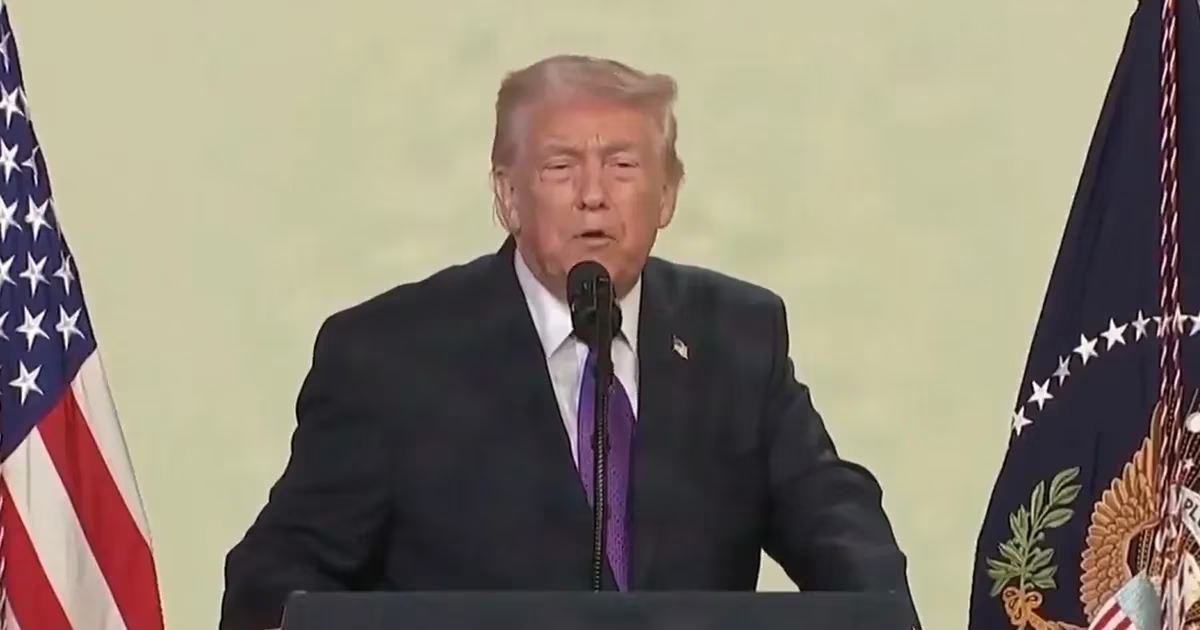
US President Donald Trump announced on Sunday that the United States would begin directing commercial ships to cross the Strait of Hormuz starting Monday morning, a move he described as a "humanitarian initiative" aimed at ending the crisis of thousands of sailors and ships being held captive and stranded for weeks in the Arabian Gulf, amid continued tension between Washington and Tehran despite the ceasefire agreement announced last month.

Trump said, in a post on the "Truth Social" platform, that the ship movement aims to "free people, companies, and countries that have done nothing wrong," considering the stranded ships "victims of circumstances." He also indicated that his representatives are holding "very positive discussions" with Iranian leaders, as part of efforts to formally end the confrontation between the United States and Iran.

Despite the announcement, the White House did not disclose the nature of the anticipated American measures, the extent of military involvement, or how the ship crossing operation would be managed. It also remained unclear whether Washington would merely provide navigational guidance to ships, or would practically secure sea lanes with military force.

The Strait of Hormuz is one of the most important maritime passages in the world, with a large percentage of global oil and gas exports passing through it. Its closure by Iran to ships without prior permission, coinciding with the American blockade on ships heading to or coming from Iranian ports, has led to widespread paralysis in global trade and energy movement.

Estimates indicate that about two thousand ships are still stranded in the Gulf, while the International Maritime Organization, affiliated with the United Nations, announced that more than twenty thousand sailors are trapped on board ships unable to leave the region.

On February 28, the United States and Israel launched a war on Iran, which Trump then described as aiming to "liberate the Iranian people" and end the Iranian nuclear program. Despite reaching a ceasefire on April 7, subsequent negotiations stalled during the last two weeks, amid mutual accusations regarding responsibility for the political stalemate.

In a sign of continued disagreements, Trump said on Saturday evening that he was reviewing a "14-point Iranian plan" conveyed via Pakistan, but added that he "cannot imagine accepting it." In an interview with the Israeli Broadcasting Corporation "Kan," he stressed that the Iranian offer was "unacceptable," adding: "The Iranians want a deal, but I am not satisfied with what they have offered."

Just hours later, the Iranian Foreign Ministry announced that Tehran had indeed received the American response to the Iranian proposal and was currently studying it. The ministry's spokesman, Ismail Baqaei, said the response arrived via the Pakistani side.

Following Trump's post, the US Central Command announced that the US military would support what it described as "Project Freedom" to restore freedom of commercial navigation in the Strait of Hormuz, without clarifying the nature of the operational support. However, American reports spoke of the deployment of destroyers equipped with guided missiles, more than one hundred aircraft, and about fifteen thousand soldiers to participate in the plan, with a US official confirming that the operation "is not a direct escort mission for ships."

In contrast, Tehran warned that the American move could constitute a violation of the ceasefire agreement. Iranian officials said that any additional military presence in the Strait would be seen as a new escalation.

This coincided with a mysterious incident in the Strait, after the UK Maritime Trade Operations reported that a tanker was hit by unknown projectiles, while confirming that all crew members were safe.

The US Central Command also revealed a new initiative called "Building Maritime Freedom," a joint project between the US Departments of State and Defense, aimed at coordinating diplomatic and military efforts to reopen commercial navigation, with calls for other countries to participate in bridging "existing gaps."

Britain and France had announced their readiness to contribute to "defensive and peaceful" efforts to reopen navigation after the war ended, while Trump strongly criticized NATO countries, including Spain, Italy, and Germany, for refusing to engage in the operation.

Economically, the ongoing crisis has led to a sharp rise in energy prices, with the average price of a gallon of gasoline in the United States reaching $4.45, an increase of nearly 50 percent since the start of the war, which increased pressure on American consumers and renewed fears of a new wave of inflation.

Trump's announcement regarding "directing ships" reflects a clear attempt to reframe the image of the United States from a party involved in military escalation to a humanitarian mediator seeking to ensure freedom of navigation. However, this rhetorical shift does not hide the fact that Washington itself contributed to complicating the crisis through the naval blockade it imposed on Iran, which led to the paralysis of regional trade. Therefore, observers believe that the US administration is trying to contain the repercussions of a maximum pressure policy that has gradually turned into a global economic burden that is difficult to defend even among Western allies.

The ambiguity surrounding the American plan reveals the extent of hesitation within Washington regarding sliding into a direct naval confrontation with Iran. The White House speaks of "freedom of navigation," while Central Command speaks of a massive military buildup including destroyers, aircraft, and thousands of soldiers. This contradiction reflects a chronic American dilemma: the desire to project power without bearing the cost of an all-out war. Moreover, any limited security incident in the Strait could push the region into a wide escalation, especially given the fragility of the current ceasefire.

The current crisis reaffirms that the Strait of Hormuz is not just a waterway, but a geopolitical pressure card capable of shaking the global economy within days. The significant rise in fuel prices within the United States since the outbreak of the war has begun to directly affect Trump's domestic popularity, which explains his haste to show diplomatic progress, however limited. In contrast, Iran realizes that continued tension gives it significant negotiating leverage, especially with growing international concern about disruptions in energy markets and global supply chains.

ARAB AND WORLD

Mon 04 May 2026 7:29 am - Jerusalem Time

Trump's Dilemma in Facing Tehran: Between Difficult Negotiation Options and the Specter of Military Confrontation

US President Donald Trump is in a state of anticipation and deep study of the latest Iranian response, which carried within it the red lines that Tehran adheres to for any future agreement. These developments come at a time when the Iranian leadership is showing increasing confidence, with the Revolutionary Guard considering the options available to the White House to be very limited and confined to paths where the best is bitter.

On the domestic political front, Trump took a preemptive step by informing Congress of the end of what he described as 'hostilities' towards Iran, in an attempt to free himself from the legislative restrictions imposed by the legislative body on decisions of war and peace. However, ambiguity still surrounds the true intentions of the US President and whether he has actually been convinced of the futility of the military option, which Tehran is betting on being excluded from his current calculations.

Trump's strategy has primarily relied on 'game theory' and the concept of 'brinkmanship' developed by the scholar Harold Schelling, with the aim of replacing deterrence with coercion and forcing the adversary to submit under the weight of a serious threat. However, field and political realities have revealed clear frustration within the American administration, after the Iranians countered these tactics with rhetoric characterized by mutual defiance and non-compliance with psychological pressures.

The levels of failure in American bets are numerous, starting with the steadfastness of the political system in Tehran and the failure of internal defection scenarios that Washington had hoped to repeat. Security data also proved the inaccuracy of American estimates regarding Iranian missile capabilities and the extent of Tehran's ability to cause widespread regional damage in the event of a direct confrontation, which confused calculations of a quick victory.

Faced with this deadlock, the American administration is left with only two difficult scenarios; the first is to tighten the economic blockade to unprecedented levels to financially strangle the state. Despite the harshness of this option, Iran's long experience in circumventing sanctions makes it a short-term weapon that does not fundamentally threaten the regime's existence as direct war does.

The second scenario is a return to the military option, a path Trump does not favor given its exorbitant economic and human costs and its objectives that may remain 'nihilistic' if Iranian steadfastness continues. Any military confrontation could lead to severe strikes affecting vital interests in the Arabian Gulf region and threatening navigation security in the Strait of Hormuz, which the international community fears.

Ultimately, the US President is torn between two contradictory factors; the first is his desire to achieve 'peace through strength' without getting involved in costly ground wars that he previously criticized. The second is his personal ego and his eagerness not to appear weak before Iran, which might at some point push him to favor confrontation if diplomatic channels fail to secure a 'decisive victory' that can be marketed domestically.

Trump's room for choice narrows between an impossible operation and a bad deal.

ARAB AND WORLD

Mon 04 May 2026 7:29 am - Jerusalem Time

Oil tanker targeted by projectiles off Fujairah coast, Washington launches 'Project Freedom'

International maritime sources reported today, Monday, that an oil tanker was directly targeted by projectiles of an as-yet-undetermined nature while sailing off the UAE coast. According to initial reports, the attack occurred in a strategic area approximately 78 nautical miles north of Fujairah city, raising a state of alert in the region's shipping lanes.

The UK Maritime Trade Operations (UKMTO) confirmed receiving a report from the ship's captain about the incident, noting at the same time that all crew members of the tanker were unharmed and in good condition. The authority urged all commercial vessels transiting the area to exercise extreme caution, while the competent authorities have launched extensive investigations to determine the circumstances of the attack and its origin.

This field escalation comes at a sensitive time when the region is experiencing increasing political tension, with peace negotiations between the United States and Iran still stalled. Since the ceasefire agreement came into effect on April 8, no tangible progress has been made on outstanding issues, increasing the pace of maritime friction in international waterways.

In a swift reaction to the deteriorating maritime security, former US President Donald Trump unveiled a new military strategy under the name 'Project Freedom'. This plan aims to provide direct military protection and security escort for commercial vessels transiting the Strait of Hormuz, in light of the naval blockade imposed by Washington on Iranian ports in response to Tehran's control of the strait.

For its part, the US Central Command (CENTCOM) announced the immediate implementation of the new security plan's requirements starting today. The command stated in an official statement that it has mobilized massive reinforcements, including advanced destroyers equipped with guided missiles, in addition to deploying more than 100 fighter jets to secure the airspace and regional and international waters in the region.

Military reports indicate that the operation will involve the participation of approximately 15,000 US troops, in a move aimed at deterring any future attacks against oil tankers. These movements reflect Washington's desire to restore control over global energy security and ensure the flow of supplies through the Strait of Hormuz, which is considered the main lifeline for the global economy.

Regarding shipping traffic, data from the vessel tracking company 'AXS Marine' showed a significant decrease in the number of vessels present in the Gulf. After exceeding 1,100 vessels at the beginning of the conflict, the number dropped to only about 900 commercial vessels by the end of last April, reflecting shipping companies' concerns about escalating security risks.

An oil tanker reported being attacked by unknown projectiles, and all crew members are safe.

PALESTINE

Mon 04 May 2026 7:29 am - Jerusalem Time

Nablus Bids Farewell to Nayef Samaro: Occupation Bullets Assassinate a Father's Joy at the Birth of His Firstborn

The city of Nablus in the occupied West Bank witnessed a new chapter in the Palestinian tragedy, where life and death converged simultaneously. Nayef Samaro, a 26-year-old young man, was martyred by Israeli occupation forces' bullets at the very moment his wife was giving birth to their first child inside Rafidia Governmental Hospital.

The story began when Samaro took his wife to the delivery ward during her first labor. Filled with eagerness and joy, he left the hospital heading to the city center. He planned to buy sweets and some essential items to celebrate the arrival of his firstborn, whom he had long awaited to see.

However, the Israeli killing machine was lurking in the city, as occupation forces suddenly stormed Nablus and began firing live ammunition at citizens. One of the bullets directly hit the young Samaro, turning the atmosphere of joy in his family into a solemn national funeral.

Local sources reported that the young man was rushed to Rafidia Hospital, the same medical facility where his wife and new child were. Samaro arrived suffering from extremely critical head injuries, and medical teams were unable to save his life, leading to his martyrdom due to his wounds.

In a scene that brought tears to those present, the child was born an orphan before his father could embrace him or hear his first cry in this world. Activists considered this crime to reveal the brutal face of the occupation, which does not differentiate between a civilian or a crowded commercial area, and targets Palestinian joy in its cradle.

At Martyrs' Roundabout in central Nablus, the martyr's father performed the funeral prayer over his son's body amidst large crowds of angry citizens. The funeral procession paraded through the streets of the ancient city, where mourners chanted slogans condemning the ongoing occupation crimes and demanding accountability for targeting unarmed civilians.

For his part, the head of Palestinian Medical Relief, Dr. Ghassan Hamdan, stated that the incursion targeted a vital commercial area bustling with passersby. Hamdan explained that the shooting was random and intense, noting that the martyr's head injury confirms a premeditated intention to kill and physically liquidate.

Hamdan stressed the necessity of providing urgent international protection for the Palestinian people in the face of what he described as 'organized criminality' practiced by the occupation army. He added that the international community merely observes while fundamental human rights are violated daily and flagrantly in the occupied territories.

Hamas mourned the martyr Nayef Samaro, affirming in a statement that the blood of the martyrs will remain fuel for the path of liberation and the expulsion of the occupier from Palestinian land. The movement called on the masses to escalate all forms of confrontation with the occupation in response to this heinous crime that targeted a father on his day of joy.

The memory of the child's birth will forever be linked to the date of his father's departure, in a painful paradox that reflects the reality of living under occupation. Nayef Samaro left life behind, leaving a child who will carry his name and story, to be a new witness to an unprecedented oppression in modern history.

What oppression is this... he takes his wife to give birth to their first child, and goes to buy items for the celebration, only to be struck by a treacherous bullet, returning as a martyr to the same hospital.

ANALYSIS

Mon 04 May 2026 7:29 am - Jerusalem Time

The Illusion of a 'Power Vacuum': Why Iran's Defeat Poses a Strategic Threat to its Neighbors?

Iran has surpassed the stage of immediate existential danger after withstanding American and Israeli attempts to overthrow its regime or divide its geography. This resilience has made talk of a 'post-Iran vacuum' seem like a relic of the past, yet the renewed drumbeat of war has reignited the discussion about who would truly benefit from any potential collapse in Tehran.

Some promote the hypothesis that Iran's defeat would open the door for regional countries to fill the vacuum and strengthen their regional influence. However, realistic data indicates that this proposition is misleading, as the only beneficiary ready to inherit this influence is the Israeli occupation, while Arab and Islamic countries would find themselves in the circle of harm.

Economically, figures show the fragility of the regional situation towards any widespread war, with reports recording a sharp decline in the Turkish Central Bank's reserves by about $26 billion. Ankara was also forced to sell massive quantities of gold to try and curb the lira's deterioration, amid expectations of total losses reaching $49 billion.

Economic damages were not limited to Turkey but extended to include a 3.1% decline in exports in the first quarter of the current year. The Turkish economy faces increasing challenges related to inflation and attracting investments, factors that entirely depend on regional stability, which is threatened by open war scenarios.

As for the Arabian Gulf countries, the repercussions of any comprehensive conflict would be more severe given their status as global financial and energy centers. The closure of the Strait of Hormuz or the threat to oil installations would lead to an economic paralysis that cannot be ignored, placing these countries at the heart of the storm instead of reaping the benefits of the supposed vacuum.

Security-wise, Turkey emerges as one of the biggest losers from scenarios of chaos in Iran, especially with the expectation of unprecedented waves of refugees. These waves will bring with them economic and social burdens, in addition to reviving the ambitions of separatist organizations that Ankara is striving to definitively close their file.

Militarily, the balance clearly favors the Israeli occupation, which enjoys unlimited American support and absolute air superiority. While regional countries like Turkey are deprived of advanced fighter jets like the F-35, the entity receives the latest military arsenals to ensure its dominance.

Dividing or weakening Iran strategically means removing a significant regional power from the equation of conflict with the Zionist project. This collapse would lead to the installation of regimes subservient to international powers, disrupting the region's balances and giving Israel a golden opportunity to expand unchecked.

The arguments about a 'quadrilateral alliance' comprising Turkey, Pakistan, Egypt, and Saudi Arabia to fill the vacuum seem hasty and unrealistic. This coordination framework still lacks the basic components of an alliance, foremost among them unified visions on fundamental issues and foreign policy principles.

Syria serves as a living example of what could happen in the absence of Iranian influence, where the occupation was the only party that expanded into the vacuum. Israel canceled disengagement agreements and deepened its occupation of the Golan, turning Syrian territories into a routine arena for its continuous aggressions.

The narrative that attempts to portray Iran as a greater danger than Israel is the product of long-term political and media work. This view ignores the fact that 'Greater Israel' is the project that seeks to redraw the entire region's maps, as openly stated by occupation leaders on several occasions.

Officials in the region confirm these concerns beyond academic analyses, with Turkish Foreign Minister Hakan Fidan warning of the Israeli leadership's madness. Fidan clearly indicated that Turkey would be the next target of the occupation once the Iranian front is concluded.

In the same context, sources report the Syrian leadership's conviction that Iran's defeat would be the direct precursor to the occupation of Damascus. These statements reflect a deep understanding that the current war is not directed against a specific faction or country, but rather a war to reshape the geopolitical landscape of the region.

In conclusion, Iran's resilience represents a strategic protective wall that prevents the collapse of what remains of regional balances against expansionist ambitions. Awareness of the nature of the conflict requires overcoming ideological and political differences with Tehran and viewing the scene from the perspective of the region's higher national interests.

In this war, Iran represents a defensive wall against the ambitions of Israel and its allies, and its resilience is a real interest for the entire region, regardless of one's stance on its regime.

ARAB AND WORLD

Mon 04 May 2026 7:29 am - Jerusalem Time

American Betting Site Sparks Controversy with Predictions on Sharjah's Secession

The popular American prediction and betting site 'Polymarket' has caused a wide wave of controversy across social media platforms, after opening betting on an unprecedented political scenario related to the future of the Emirati federation. The site posed a question to traders about the possibility of the Emirate of Sharjah declaring its secession from the United Arab Emirates, setting a betting deadline extending until the end of May 2026.

According to data observed in the site's digital market, financial transactions on this prediction have recorded tens of thousands of dollars, although current indicators reflect very low confidence in this scenario occurring. The probabilities of secession did not exceed 3 percent for short-term options, indicating that the majority of bettors completely rule out the disintegration of the Gulf state's federal compact in the foreseeable future.

This controversial move comes at a time when some media reports have circulated rumors about political vision discrepancies between the emirates of Sharjah and Dubai on one hand, and the capital Abu Dhabi on the other. Despite the absence of official statements supporting these claims, the betting site exploited this atmosphere to open a financial market based on political speculations that lack concrete evidence on the ground.

On the other hand, press reports drew attention to the identity of the owners and shareholders of 'Polymarket', noting that one of former US President Donald Trump's sons owns a share of the stocks in this platform. Observers believe that involving Arab sovereign issues in American betting markets may carry dimensions beyond mere financial profit, especially given the political sensitivity of the Arabian Gulf region.

The site created a market titled: Will Sharjah declare independence from the UAE by May 2026?

ARAB AND WORLD

Mon 04 May 2026 7:28 am - Jerusalem Time

Widespread destruction befalls villages in southern Lebanon, occupation turns them into scorched earth

The border villages and towns in southern Lebanon, stretching 130 kilometers, are experiencing widespread destruction after Israeli occupation raids and military operations turned them into scorched earth. Field sources reported that the occupation army, which declared the area a forward defense zone, is employing a scorched-earth policy through intense artillery shelling and systematic demolition of residential buildings.

Scenes from the towns of Siddiqin and Rmeish, extending to Al-Tair and Hanin, reveal the scale of the humanitarian and urban catastrophe left by the Israeli military machine. The town of Hanin, in particular, was subjected to massive explosions carried out by occupation forces, leading to the leveling of entire neighborhoods and a radical alteration of the geographical features of the area.

Israeli targeting was not limited to residential homes, hundreds of which were destroyed, but also extended to places of worship, ambulances, civil defense vehicles, and even cemeteries were not spared from shelling. Sources confirmed that the occupation imposes fire control over large parts of these villages, although its actual presence is concentrated in a narrow border strip, with ongoing airstrikes affecting areas close to the sea coast.

On the political front, a significant gap emerges in Lebanese visions for dealing with the aggression, as official authorities in Beirut believe that the diplomatic path and direct negotiation are the mandatory route for Israeli withdrawal. The Lebanese government pledged to begin reconstruction plans and ensure the return of displaced persons as soon as a breakthrough is achieved in the wall of political and field crisis.

In contrast, Hezbollah adopts a completely different stance, categorically rejecting any form of direct negotiation with the Israeli occupation as long as the aggression continues. Through its political positions and field operations, the party emphasizes that the option of resistance is the only way to liberate the land, refusing to make any security or political concessions that affect the sovereignty of the South.

The situation in southern Lebanon remains suspended between the hammer of material destruction that has affected infrastructure and basic services, and the anvil of political complexity resulting from conflicting strategies. Field estimates indicate that military decisive action may be prolonged, given the insistence of each party on its vision, making the future of the border region dependent on the developments of field battles and international pressures.

The scene in southern Lebanon has become an arena for two intertwined complexities: massive destruction of infrastructure, and two conflicting political visions for the future of the region.

PALESTINE

Mon 04 May 2026 7:28 am - Jerusalem Time

Ben Gvir Provokes Palestinians with Birthday Cake Symbolizing 'Execution of Prisoners'

The extremist Itamar Ben Gvir, Minister of National Security in the occupation government, sparked a new wave of anger and criticism following the circulation of photos from his 50th birthday celebration. Ben Gvir appeared in the photos published on Saturday night with his wife, and in front of them was a birthday cake decorated with symbols and slogans explicitly referring to the 'Prisoner Execution Law' that he champions.

This legislation is considered one of the most prominent racist laws pushed by Ben Gvir since he took office, as he recently succeeded in passing it through the Israeli Knesset. The law aims to legalize the execution of Palestinian prisoners accused by the occupation of carrying out operations, which faces widespread human rights and international condemnation.

Observers and analysts considered this behavior to reflect an arrogant mentality that deliberately turns oppressive legislation and thorny humanitarian and legal issues into material for political propaganda and personal celebration. This step comes at a time when prisons are witnessing escalating tensions due to the punitive policies led by Ben Gvir against the prisoner movement.

The celebration embodies the transformation of controversial and bloody legal issues into occasions for personal and political celebration.

ARAB AND WORLD

Mon 04 May 2026 7:28 am - Jerusalem Time

From 'Annihilation' Threats to Port Blockades: A Timeline of the US-Iran Confrontation

The region is experiencing a state of political stalemate, tinged with military tension between the United States and Iran, as a series of rapid developments emerged following the ceasefire announcement. This phase began with sharp statements from US President Donald Trump on April 7, in which he threatened total destruction if military operations did not cease, before agreeing to a temporary two-week truce.

On April 11, the Pakistani capital, Islamabad, hosted a direct negotiating marathon between Washington and Tehran delegations that lasted for approximately 21 continuous hours. Despite the hopes placed on this round, the following day saw an official announcement of the failure to reach a final agreement due to deep differences over the nuclear issue, while maintaining the ceasefire.

On April 13, the confrontation shifted to the economic and field levels, when the US administration announced a comprehensive naval blockade on Iranian ports. This step came in parallel with the continuation of diplomatic channels in an attempt to contain the situation, but field pressures began to escalate, affecting international navigation.

The Strait of Hormuz witnessed the peak of mutual escalation on April 17, as both sides threatened to re-close the strategic waterway and impose a reciprocal blockade. The next day, Tehran carried out its threat to effectively close the strait, and exchanged sharp accusations with Washington over responsibility for undermining maritime security in the region.

The tension intensified with Iran denying the existence of a new round of negotiations in Islamabad, at a time when Trump ruled out extending the existing truce. Threats of resuming aerial bombardment and military operations dominated the general scene, despite continuous Pakistani mediation efforts to bridge the views between the warring parties.

Tehran set clear conditions for continued de-escalation, demanding the lifting of the blockade imposed on its ports as a primary condition for continuing the ceasefire. In contrast, the US President showed steadfastness in his position, affirming on May 3 that his administration had sufficient time and political maneuverability to reach an agreement that served American interests.

Diplomatic movements returned to the forefront on May 5 with meetings in Islamabad, but the absence of the Iranian delegation led to the cancellation of the scheduled visit of the American delegation. Two days later, Tehran presented a document that included its 'red lines' and a new proposal regarding the security of the Strait of Hormuz, but it did not offer any tangible concessions on the thorny nuclear issue.

The US President announced yesterday that US forces would begin escorting commercial vessels in the Strait of Hormuz starting today, Monday. Trump indicated that this decision came in response to requests from several countries around the world to ensure freedom of navigation, a step that strengthens the US military presence in vital waterways.

The roots of this military explosion date back to February 28, when the United States and Israel launched a wide-ranging attack that resulted in the assassination of the Iranian Supreme Leader. Tehran responded at the time with missile strikes targeting US military bases and Israeli targets, plunging the region into a spiral of direct violence.

Despite the ceasefire coming into effect on April 8, the rounds of talks in Pakistan have so far failed to formulate a lasting peace agreement. The positive statements made by some US officials about 'positive discussions' remain pending practical steps to end the state of war that has been raging for months.

We will begin escorting ships in the Strait of Hormuz starting Monday, and countries from around the world have asked us to do so.

PALESTINE

Mon 04 May 2026 7:28 am - Jerusalem Time

Tebboune: Algeria Rejects Foreign Bases and Adheres to the Two-State Solution to End the Conflict

Algerian President Abdelmadjid Tebboune reiterated his country's sovereign constants, emphasizing that Algeria will never allow the presence of any foreign military base on its territory, regardless of the benefiting party. Tebboune clarified that this stance stems from the independence of Algeria's national decision, noting that his country manages its international relations based on the supreme interests of its people, away from military dependence on any external party.

In the context of discussing relations with Washington, the Algerian President indicated that bilateral ties with the United States are witnessing positive and continuous development, with these relations strengthening with every reciprocal official visit. Tebboune recalled the historical role Washington played in internationalizing the Algerian cause during the liberation revolution, affirming that the American side fully recognizes Algeria's strategic weight in the African continent.

Regarding economic investments, Tebboune revealed that American companies have already begun implementing investment projects within Algeria, reflecting increasing confidence in the local business climate. He affirmed that the Algerian state has overcome all obstacles and old ideological frameworks in order to achieve economic development, focusing on attracting investments that serve the interests of the Algerian citizen and support the national economy.

Despite the rapprochement with Western powers, President Tebboune stressed that Algeria remains loyal to its traditional alliances and will not abandon its historical friends, foremost among them Russia and China. He also praised relations with Islamic countries, describing Indonesia as a sister country, which reflects the balance of Algerian foreign policy and its ability to build bridges with various international poles without compromising its principles.

Regarding the Palestinian issue, Tebboune affirmed that global and regional stability will only be achieved through a just and comprehensive solution that guarantees the establishment of an independent Palestinian state on the June 4, 1967 borders. He considered this path to be the only way to end the state of tension in the Middle East, emphasizing that Palestinian rights are inalienable and cannot be bypassed in any future political settlement.

The Algerian President warned against attempts to liquidate the Palestinian issue through military force, describing what is happening as a 'peace of graves' which is nothing more than a war of genocide. He indicated that these practices will inevitably lead their perpetrators to the International Criminal Court, affirming that the Palestinian people exist and will not perish, and that Algeria will remain supportive of them in all circumstances and times.

Tebboune concluded his speech by indicating that the Algerian position supporting Palestine is clear and declared before the international community, including the United States, which fully understands the steadfastness of this position. He clarified that Algeria will continue to exercise its diplomatic role to push for justice for the Palestinian people, based on its belief that true peace is not built on the ruins of victims but on the restoration of legitimate rights.

The Palestinian problem will not find its way to a solution unless there is a Palestinian state on the 1967 borders, after which the world will be in a state of complete calm.

PALESTINE

Mon 04 May 2026 7:28 am - Jerusalem Time

On Press Freedom Day.. Palestinian Journalists Between the Guillotine of Killing and the Absence of Prisons

While the world celebrates World Press Freedom Day, Palestinian journalists find themselves in a direct confrontation with the Israeli killing and persecution machine. The news carriers have turned into tragic stories to be told, after the occupation has inflicted upon them killing, imprisonment, and disappearance behind bars, in a clear attempt to obscure the truth and prevent the documentation of crimes committed against the Palestinian people.

The story of the imprisoned journalist Mohammed Abu Thabet stands out as a living witness to this suffering, as he languishes in occupation prisons, far from his family and five children. His family in the town of Beit Dajan, near Nablus, lives in a state of constant anxiety, amidst the occupation's prevention of visits and the قطع of communication with prisoners, making their news limited to what newly released prisoners convey.

Abu Thabet's mother describes her son's absence as a heavy burden and an irreplaceable void, especially with his children's continuous questions about him. She says that the occupation accused Mohammed of incitement and his journalistic work, asserting that the real goal is to silence anyone who documents violations in the field, a price paid by those who speak freely in Palestine.

For his part, Radwan Abu Thabet, Mohammed's father, believes that the arrest of journalists represents a blatant assault on freedom of expression and international laws that protect media work. He points out that his son was the 'dynamo' of the family and its support, and that his arrest comes within a bitter occupation reality that seeks to muzzle mouths and prevent the Palestinian narrative from reaching the world.

The situation of journalist Hazem Nasser, detained since the end of last July, is no different from his colleague Abu Thabet, as his two children and wife live the bitterness of loss and waiting. Despite the family's accustomedness to repeated arrests, this time seems the cruelest in light of reports of systematic torture and repression that prisoners are subjected to inside prisons.

Hazem Nasser's father speaks bitterly about his child who refuses to celebrate his birthday except in the presence of his father, wondering how to convince a small child of a bitter reality that kidnaps his father behind bars. He confirms that Hazem is still suffering from the effects of a serious injury from occupation bullets he sustained three years ago in Jenin, which increases the seriousness of his health condition.

The Nasser family directs sharp criticism at international and local journalistic institutions, accusing them of not caring enough about the issue of imprisoned journalists. Hazem's father believes that the global system that established a day for press freedom fails to protect Palestinian journalists, and does not even respect the most basic human rights in dealing with their issues.

In a moving symbolic scene, 'Imad', Hazem's son, released a bird he had kept in a cage and named it 'Baba', expressing his hope for his father's freedom. This childish cry encapsulates the tragedy of dozens of families waiting for their loved ones to return from the depths of prisons, where they face detention conditions lacking the most basic human necessities.

According to official data issued by the Palestinian Prisoners' Society and the Commission of Detainees' Affairs, the occupation has killed more than 260 male and female journalists since the start of the aggression on Gaza. Human rights organizations describe these targeting as a 'systematic mass killing crime' aimed at eliminating media personnel who convey the reality of what is happening on the ground.

Statistics indicate that the occupation authorities have detained more than 240 journalists since last October, 40 of whom remain in detention until now. Among the detainees, 20 journalists are under administrative detention, a system that allows the occupation to detain individuals without clear charges or a fair trial based on secret files.

In the Gaza Strip, journalistic work faces existential challenges, as 14 journalists from the Strip are still detained under mysterious circumstances. Reports also confirm the presence of two journalists in a state of enforced disappearance, as the occupation authorities refuse to disclose their whereabouts or fate, raising serious concerns for their lives.

Violations did not stop at arrest but extended to killing inside prisons, as happened with journalist Marwan Herzallah last March in Megiddo prison. Human rights sources confirm that Herzallah was martyred as a result of the slow killing policy and deprivation of necessary treatment, reflecting the extent of the dangers faced by imprisoned media professionals.

The occupation authorities impose 'house arrest' and prevention from working or moving on a number of other journalists, in an attempt to restrict their media activity. These measures aim to create an environment hostile to journalistic work in the Palestinian territories, and to impose strict military censorship on everything published from the field.

In conclusion, World Press Freedom Day remains for Palestinians a day to remind the world of its responsibilities to protect the word and the image. While international slogans calling for media freedom are raised, the Palestinian journalist continues to pay heavy prices with his blood and freedom to ensure that the truth reaches all corners of the earth.

If the world is silent today, tomorrow there will be no one to convey the truth.

ISRAELI AFFAIRS

Mon 04 May 2026 7:28 am - Jerusalem Time

Hebrew Analyses: Field Restrictions Shackle the Israeli Army and Strategic Gains for Hezbollah After the Escalation Round

Hebrew security assessments and journalistic analyses concluded that the latest round of military confrontations in South Lebanon ended with the imposition of fundamental restrictions on the movements of the Israeli occupation army. Sources clarified that the activity of Israeli forces has become confined to specific geographical areas, in contrast to the continued attacks carried out by Hezbollah within direct engagement zones.

The Hebrew newspaper "Israel Hayom" reported that the field results were contrary to official expectations in Tel Aviv, as the confrontation granted Israel's adversary three strategic gains described as "dangerous." These assessments come at a time when Israeli concern is growing about the approach of a new round of comprehensive escalation on the northern front.

The first gain, according to Hebrew analysis, was Tehran's success in imposing a ceasefire by exerting intense political pressure on the American administration. This intervention led to the termination of Israeli military operations before achieving their final goals, solidifying Iran's role as a decisive party in determining the fate of war and peace in the Lebanese arena.

The second gain relates to the strict field restrictions imposed by the agreement on the movements of the Israeli army deep within Lebanon. Israeli forces have lost the freedom of action they previously enjoyed, and their access to strategic areas such as the southern suburb of Beirut has become impossible and prohibited by political and military decision.

Sources indicated that the third and most impactful gain is Israel's forced acceptance of the reality of "limited conflict" within the buffer zone in South Lebanon. This reality allowed Hezbollah fighters to adopt guerrilla warfare tactics and carry out qualitative attacks using booby-trapped drones against gatherings of Israeli forces stationed in border areas.

In contrast, the Israeli army finds itself bound by rules of engagement that prevent it from targeting the party's leadership structures in the capital, Beirut. Although operational orders are issued from command centers there, current understandings have made these centers fortified areas, safe from Israeli air force fire.

Reports warned that this situation has led to a state of permanent attrition in which Israeli forces incur human and material losses on an almost daily basis. Hezbollah exploits this pattern of fighting to strengthen its defensive positions and reorganize its combat ranks, benefiting from the time provided by international pressure for a ceasefire.

On the political level, Hebrew sources described American and Israeli perceptions regarding the Lebanese state's ability to disarm Hezbollah as "illusions" with no basis. They affirmed that the absence of political will and military capability among Lebanese parties makes the idea of disarming the party impossible under current circumstances.

The analysis considered that media statements opposing the party within Lebanon give a misleading impression to the international community and decision-makers in Tel Aviv. The facts on the ground prove that the party remains committed to its military option and its missile arsenal, with no real indications of its retreat or acceptance of withdrawal from the scene.

The newspaper stressed the need for the Israeli military establishment to conduct a comprehensive reassessment of its performance during the previous round to draw lessons. Estimates indicate that the next confrontation with Hezbollah is only a matter of time, and entering it with the same current tools could lead to catastrophic results.

Israeli analysts proposed a radical change in the nature of future military operations, so that they are not limited to striking direct military targets only. Rather, they must extend to include the party's organizational, political, and economic structure, to ensure the undermining of its ability to withstand and continue to manage the battle.

The analysis also called for expanding the targeting circle to include the infrastructure of the Lebanese state that provides a supportive environment for the party's military activities. Proponents of this view believe that pressure on the Lebanese host environment is the only way to raise the cost of war for the party and force it to make real field concessions.

Hebrew sources criticized the mere establishment of a limited security strip in the south, considering that this step did not provide full protection for northern settlements. They affirmed that the experience of pushing party elements northward was partially effective, but it was not completed in a way that ensures the security of northern residents sustainably.

In conclusion, the report warned that the continuation of the current situation will make Israel enter any future confrontation from a position of strategic weakness. While Hezbollah exploits the relative calm to rebuild its capabilities and develop its weapons, the Israeli home front remains exposed to increasing threats that make resolving the conflict more complex and costly.

The current reality has created a state of continuous war of attrition, during which Israeli forces incur almost daily losses, while Hezbollah benefits from this fighting pattern to reorganize its ranks.

PALESTINE

Mon 04 May 2026 7:27 am - Jerusalem Time

Gaza Facing Scenarios of Return to War: Israeli 'Securitization' Strategy and the Trump Administration's Stance

The Gaza Strip is entering a critical phase of political and field ambiguity after more than two hundred days have passed since the ceasefire agreement came into effect, with Israeli threats of returning to a comprehensive military option escalating. These developments come at a time when parties are exchanging accusations about obstructing the terms of the truce, amidst an escalation in air raids and systematic assassinations carried out by the occupation army.

Observers believe that the Israeli threat to resume war is not merely a political maneuver, but reflects a strategy aimed at transforming the temporary military presence into a permanent reality through what is known as the 'securitization' of the Strip. This plan includes building permanent military bases in areas where the army has advanced, and transforming defensive lines into new borders that cut off large areas of Palestinian land.

Field data indicates that the occupation authorities have shifted the so-called 'Yellow Line' by up to 9% deep inside the Strip, leading to the army effectively controlling more than 60% of Gaza's total area. This geographical expansion aims to create a buffer zone that ensures the occupation's freedom of military movement and prevents any future threats from resistance factions.

In the context of internal political calculations, Benjamin Netanyahu's pursuit of fulfilling his electoral promises related to the complete disarmament of Hamas stands out, which he sees as an essential condition for remaining in power. Experts believe that obstructing the arrival of the national committee to administer Gaza aims to maintain the administrative vacuum, thereby justifying the continuation of military operations under the pretext of the absence of a reliable security partner.

For its part, Washington places the 'disarmament knot' as a major obstacle to any progress in the political track, with sources indicating that Hamas's refusal to comply with UN Resolution 2803 hinders international stability plans. These sources confirm that regional and international countries refuse to send peacekeeping forces before ensuring the disarmament of factions and securing the free movement of forces.

On the humanitarian front, Palestinian sources confirm that the occupation has not adhered to any of the commitments related to the entry of aid, as the volume of relief flow remains far below agreed-upon levels. While the agreement stipulated the entry of 600 trucks daily, what actually arrives does not exceed a thousand trucks weekly, exacerbating the suffocating living crisis experienced by the residents.

Palestinian national forces accuse the Israeli side of directly targeting police and civilian cadres to thwart any attempt to achieve internal stability. Despite the factions submitting written pledges to mediators to hand over governance tasks to an independent national committee, the Israeli veto still prevents this committee from carrying out its duties in administering the affairs of the Strip.

With Donald Trump's return to the White House, analyses vary regarding the nature of the green light he might give to Netanyahu, with some believing that Trump might prefer regional diplomatic paths. However, his recent statements calling for focusing on 'war' rather than marginal issues were considered by some as implicit support for completing Israeli military objectives in Gaza.

Political assessments indicate that the Gaza file has receded to second place in American and Israeli priorities in favor of focusing on the Iranian file and the Lebanese front. This decline in priority may give Israel a wider margin to use military force as a continuous pressure tool without facing real international pressure to stop the escalation.

The option of resuming war remains strongly present unless the international community intervenes to impose a real transition from the security logic imposed by the occupation to a civilian political logic. The absence of international will to compel Israel to abide by the terms of the first phase of the agreement opens the door wide to a new round of conflict that may be more bloody than its predecessors.

It is worth noting that the war that erupted on October 7, 2023, left massive destruction affecting about 90% of the infrastructure and civilian facilities in the Gaza Strip. Continuous military operations have resulted in the martyrdom of more than 72,000 Palestinians and the injury of more than 172,000 others, in one of the largest humanitarian disasters in modern history.

In light of these facts, the Palestinian street cautiously awaits the outcome of diplomatic moves in the coming weeks, especially with the expiration of the deadlines set by the occupation for handing over weapons. Gaza remains a 'forgotten arena' amidst major regional conflicts, awaiting a political decision that will end the suffering of millions besieged under the weight of fire and hunger.

Israel needs a prime minister who focuses on war, not trivial matters.

PALESTINE

Mon 04 May 2026 7:27 am - Jerusalem Time

Organizers of pro-Palestine marches in Britain warn of Starmer's threats to undermine freedoms

The British government is facing a wave of sharp criticism from organizers of pro-Palestinian marches, following statements by Prime Minister Keir Starmer in which he hinted at the possibility of banning some demonstrations. The organizers considered these tendencies a direct threat to freedom of expression and assembly guaranteed by British law, warning of the consequences of sliding towards suppressing voices opposing Israeli policies in the Middle East.

Starmer had stated in a radio interview that he might, in certain cases, support a complete halt to some protests, expressing his desire to tighten legal measures against the rhetoric used in the marches. The Prime Minister focused particularly on chants such as 'globalize the intifada,' which some see as an expression of solidarity with the resistance, while others classify it as an incitement to violence.

For his part, John Rees, the national officer of the 'Stop the War' coalition, described the Prime Minister's statements as a 'blatant threat' to democratic rights. Rees emphasized in press statements that British citizens will not stop demonstrating as long as wars and killings continue, stressing that the British government is considered complicit in these events.

Rees pointed out that the message the demonstrators seek to convey is clear: demanding the British government stop supporting policies that ignite strife in the Middle East. He clarified that these protests do not only affect the lives of Palestinians but have become a global public opinion issue affecting the livelihoods of people across different continents.

Regarding the accusations leveled against some participants, Rees downplayed individual violations, stressing that the number of arrests is very small compared to millions of participants. He added that organizers intervene immediately when any inappropriate slogans are detected and ask their owners to stop, which is widely responded to in most cases.

In contrast, the leader of the Conservative Party, Kemi Badenoch, escalated her rhetoric, demanding a comprehensive ban on pro-Palestine marches, claiming they are used as a cover for intimidation. Badenoch alleged that these events promote violence against the Jewish community, which the organizers denied outright, emphasizing the peaceful nature of the movement and its humanitarian goals.

Rees responded to these claims by affirming that there is no threat to the Jewish community from these marches, citing the participation of thousands of British Jews in these events. He clarified that these participants categorically reject the actions of the Israeli government, which refutes the 'antisemitic' characterization of the popular movement.

'Defend Our Juries' organization entered the crisis, demanding a halt to what it described as 'genocide' instead of targeting public freedoms. The organization affirmed in a brief statement that attempts to restrict peaceful opposition will only increase the protesters' determination in their moral stance towards what is happening in the Gaza Strip.

Starmer, for his part, defended his proposals, stressing that the discussion about banning marches is not new or merely a response to recent security incidents. He clarified that the government has been holding continuous consultations with the police for a long time to discuss the 'cumulative impact' of these protests on social peace and communities' sense of security.

On the security institution level, Mark Rowley, the Police Commissioner, expressed reservations about the idea of a temporary ban on marches, describing it as an 'impractical' step. However, Rowley called for granting the police broader and more precise powers to deal with what he described as the 'chaotic and complex laws' currently governing protests.

Rowley revealed previous attempts by some organizers to include Jewish places of worship within the march routes, which the police prevented by imposing strict conditions. The Police Commissioner considered that such proposals send negative messages that could be understood in the context of antisemitism, regardless of the organizers' true intentions.

The Police Commissioner warned of a dangerous mix he described as combining hate crimes and the influence of hostile foreign states, creating an atmosphere of anxiety for the Jewish community. Despite these warnings, organizers insist that their movement is independent and stems from purely humanitarian motives aimed at stopping the aggression.

In conclusion, John Rees rejected any attempt to link individual attacks that may occur in London to pro-Palestine marches, describing this link as 'pure slander.' He affirmed that individuals involved in assault incidents do not represent the Palestinian movement and have not been proven to have participated in any of the marches organized by the coalition.

A ban would strike at the heart of freedom of assembly and freedom of expression in this country, and as long as the killing continues, people will want to make their voices heard by the government.

PALESTINE

Mon 04 May 2026 7:27 am - Jerusalem Time

Areej Al-Saafin.. an artist from Gaza turns the ashes of war into eyes watching the truth

From the heart of the destruction left by the aggression in Al-Bureij refugee camp in the central Gaza Strip, a story of artistic resilience emerges, starring the young Areej Al-Saafin. The plastic artist, who is not yet twenty-six years old, found herself facing a new reality after an occupation airstrike cost her one of her eyes, transforming her life's path from the brush of colors to a struggle for survival and creativity amidst the rubble.

Areej did not surrender to her partial loss of sight or the absence of her artistic tools. Instead, she innovated a means of expression from the harshness of circumstances, turning burnt wood pieces into primitive 'charcoal pencils'. These simple tools became her only weapon to draw her messages on what remained of her dilapidated home's walls, transforming silence and ashes into paintings that tell the details of contemporary Palestinian pain.

The young artist recounts with bitterness how, at the height of the siege and cold, she was forced to sacrifice her previous artworks, burning her old paintings to provide warmth and cook for her family. This cruel act was a turning point, as she later decided to revive art from the very ashes that were used for survival, proving that creativity cannot perish under the weight of fire.

Areej's works took on an intense expressive direction after her injury, with the 'eye' becoming the dominant and central element in all her mural drawings. Al-Saafin explains that focusing on drawing eyes represents a way to release deep psychological trauma and document the moment she lost her full vision of the world, making those drawn eyes a watchful witness to the crimes committed against civilians.

Areej stands today before her wounded walls, holding a piece of black charcoal to tell the world that the truth cannot be blinded, no matter how severe the targeting. It is an artistic battle she fights with one eye, but with a penetrating vision that transcends the boundaries of place, to confirm that art born from the womb of suffering is most capable of burning the world's oblivion and immortalizing the tragedy of Gaza in the memory of history.

This tragedy buried me alive, but I created from the ashes art that looks at the world with one eye that sees more than all.

ISRAELI AFFAIRS

Mon 04 May 2026 7:27 am - Jerusalem Time

Harsh Criticism of Netanyahu: Containment Policy in the North Leads the Occupation Towards a Security Catastrophe

A state of frustration is escalating in Israeli circles due to the growing conviction that the northern front has returned to square one, where it was before the October 7 attack. Observers believe that the intense firepower exercised by the occupation army in southern Lebanon has not succeeded in changing the strategic reality, amidst clear governmental disregard for the suffering of displaced persons from northern settlements.

Sources indicate that Prime Minister Benjamin Netanyahu found in Donald Trump's return and the Iranian nuclear file the ideal pretext to continue the policy of containment and restrained response. Despite Hezbollah's daily rocket launches and targeting of the front line, the government refuses comprehensive escalation, citing the excuse of awaiting international moves that might weaken the party in the future.

Netanyahu's logic relies on the premise that Trump's victory over Iran, whether through war or agreement, will necessarily lead to a radical weakening of Hezbollah. However, his critics believe that this approach reflects an unwillingness to take decisive diplomatic or military steps to end the direct threat on the border.

Analyses confirm that the residents of the North and their problems are not among Netanyahu's current priorities, a conclusion derived from the reality of recent years which have witnessed accumulated neglect. Instead of taking courageous decisions, the political leadership seems to prefer returning to weak response policies that have proven to fail in providing sustainable security for settlers.

On the internal front, the absence of leadership capable of making fateful decisions, away from excuses related to international pressures or regional files, stands out. Netanyahu, who is skilled at promoting what he deems important, has not shown the same enthusiasm when it comes to protecting northern settlements facing daily existential threats.

Reports reveal that the northern protection plan, approved in 2018, remains stagnant without actual implementation on the ground. This long neglect raises major questions about the government's seriousness in protecting its citizens, especially since residents of those areas have spent long periods in shelters with no clear horizon for return.

Netanyahu has consistently ignored the demands of northern residents, especially in the settlement of Kiryat Shmona, where thousands of residents were forced to evacuate. Despite being a vital regional center for services and industry, the government has not put in place a real emergency plan to save it or restore life to it until now.

Front-line settlers feel they have been left to their unknown fate despite repeated promises to disarm Hezbollah and remove the threat from behind the fence. These promises, made by Netanyahu, his defense minister, and the chief of staff, have evaporated in the face of the field reality that imposes new engagement equations that do not serve the occupation's interests.

Information indicates that Israel has once again fallen into the trap of equations that Hezbollah previously imposed, where shelling is met with similar shelling without achieving real deterrence. This field retreat strengthens Hezbollah's power and gives it more room to maneuver and impose its conditions on the ground.

In a related context, sources reported that the Israeli army possessed intelligence information that would allow the elimination of prominent Hezbollah leaders prior to the recent ceasefire announcement. However, the political leadership refused to give the green light for the operation, in adherence to undeclared understandings with international parties, which made Beirut a safe haven for these leaders.

Netanyahu's containment policy, pursued for two decades, always relies on finding justifications for not taking widespread military action. At every stage, a different explanation emerges to justify refraining from confronting threats coming from the North, ultimately leading to an unprecedented erosion of Israeli deterrence.

Netanyahu was supposed to clarify to the American administration that the direct threat on the border cannot be compared to distant threats thousands of kilometers away. The presence of armed individuals and offensive tunnels at zero distance from settlements requires immediate action that cannot tolerate delay or political trade-offs.

The continuation of this approach will ultimately lead the occupation to a major security catastrophe, as the capabilities of adversaries are strengthened in the absence of a clear Israeli strategy. Retreating from declared goals, such as disarming Hezbollah, sends messages of weakness that encourage other parties to escalate their operations.

In conclusion, the residents of the North remain the biggest victims of these hesitant policies, facing an uncertain future in the absence of security. If government priorities do not change radically, returning to abandoned settlements will remain a distant dream amidst the existing threats.

The North and its residents do not interest Netanyahu, and they are not among his top priorities; he has more important matters than them.

OPINIONS

Mon 04 May 2026 7:22 am - Jerusalem Time

Tucker Carlson’s Reckoning: How Israel Hijacked Trump’s Presidency

By: Said Arikat


May 4, 2026


News analysis


Washington, D.C- In a sweeping and exhaustingly lengthy New York Times interview with Tucker Carlson, the former Fox News host presented what may be his most forceful break yet from President Donald Trump, while advancing a broader argument that American foreign policy has become captive to Israeli interests at the expense of ordinary Americans struggling with economic decline, debt, and social instability.


The interview, published Sunday, May 3rd, centered on Carlson’s opposition to Trump’s decision to attack Iran alongside Israel. Carlson described the war as catastrophic, unnecessary, and contrary to the promises that originally drew him to Trump’s political movement. He repeatedly insisted that the United States had been pressured into conflict not by national interest, but by what he characterized as intense lobbying and influence from Israeli Prime Minister Benjamin Netanyahu and pro-Israel figures inside the United States.


Carlson said he spent years supporting Trump largely because Trump had opposed the Iraq War and criticized regime-change policies in the Middle East. According to Carlson, Trump’s decision to strike Iran represented a betrayal of those principles. He described numerous private conversations with Trump in the lead-up to the conflict, claiming the president appeared reluctant and resigned rather than enthusiastic.


In Carlson’s telling, Trump repeatedly justified the war by focusing on Iran’s nuclear ambitions, asking him whether he wanted Iran to possess nuclear weapons. Carlson replied that while he opposed nuclear proliferation, the more important question was whether another Middle Eastern war would help the United States. He argued it would not, warning that conflict with Iran threatened global energy supplies, destabilized the economy, and risked drawing the United States into another prolonged regional disaster.


The interview’s most inflammatory sections focused on Israel’s role in shaping American policy. Carlson argued that no major figure within Trump’s administration seemed eager for war, and that the real pressure came from outside actors — wealthy donors, media personalities, and pro-Israel advocates. He named media mogul Rupert Murdoch, billionaire donor Miriam Adelson, and conservative commentators including Mark Levin and Sean Hannity as people he believed pushed Trump toward military confrontation.


Carlson went even further, claiming Trump had become a “slave” to Israeli interests because he could not restrain Netanyahu despite publicly calling for cease-fire negotiations. He argued that Israel repeatedly escalated tensions to derail diplomatic efforts and prolong regional conflict. Carlson maintained that Israeli goals and American goals were fundamentally different, insisting that Washington had subordinated its own interests to those of a foreign government.


Throughout the discussion, Carlson returned obsessively to what he sees as the disconnect between elite foreign-policy priorities and the daily concerns of ordinary Americans. One of the interview’s central themes was his rejection of the idea that organizations like Hamas or Hezbollah represent the primary threat facing the United States.


Carlson dismissed what he called the “brainwashing” that places Middle Eastern militant groups at the center of American political discourse. In one of the interview’s most striking lines, he declared that “credit card debt is a much bigger problem than Hezbollah will ever be.” He argued that average Americans are far more threatened by predatory banks, rising living costs, stagnant wages, and economic inequality than by conflicts thousands of miles away.


This economic populism increasingly appears to define Carlson’s worldview. He repeatedly contrasted Washington’s obsession with war and geopolitical struggles against what he described as collapsing economic opportunity at home. Carlson pointed to soaring household debt, housing unaffordability, and shrinking prospects for younger Americans as the real crises facing the country.


He argued that both major political parties have failed ordinary citizens. According to Carlson, Democrats focus excessively on cultural and identity politics, while Republicans have become consumed by foreign wars and ideological loyalty to Israel. He repeatedly accused both parties of ignoring economic inequality and serving wealthy donors rather than voters.


Carlson also expressed sympathy for populist critiques of modern capitalism. Referencing movements such as Occupy Wall Street, he suggested that financial elites and large banks escaped accountability after the 2008 financial crisis while ordinary Americans paid the price. He warned that economic frustration among younger generations could eventually produce political radicalization and social unrest.


The interview also delved into Carlson’s criticism of what he called “Christian Zionism.” He questioned why evangelical Christians in the United States support Israeli policies so fervently and argued that religious belief should not obligate Americans to back military actions they believe are immoral or harmful to their own country.


Carlson rejected accusations of antisemitism throughout the interview, insisting that criticism of the Israeli government is not hatred toward Jewish people. He argued that conflating opposition to Israeli policy with antisemitism suppresses legitimate debate and discourages scrutiny of American foreign policy decisions.


The conversation became even more surreal when Carlson discussed religion and morality. He condemned Trump’s rhetoric toward Iran and Muslims during the conflict, particularly statements made on Easter Sunday. Carlson said mocking religion and threatening civilians crossed a moral line. He also acknowledged discussing whether Trump represented a “false prophet,” though he denied explicitly labeling him the Antichrist.


Despite his sharp criticism, Carlson said his objections to Trump were political and moral rather than personal. He repeatedly stated that he still liked Trump as an individual but believed the Iran war had irreparably damaged his presidency and betrayed the movement that originally elected him.


Perhaps most revealingly, Carlson portrayed himself as someone disillusioned not only with Trump but with the entire American political establishment. He described both Republicans and Democrats as “rotten,” accused Washington of prioritizing foreign interests over domestic needs, and argued that economic inequality and endless war are eroding the foundations of American society.


By the end of the interview, Carlson presented himself less as a conservative partisan than as a populist dissenter — one who believes the greatest threats to Americans are not Hamas, Hezbollah, or Iran, but debt, inequality, financial elites, and a political system he says no longer serves its own citizens.