PALESTINE

Thu 06 Mar 2025 1:20 pm - Jerusalem Time

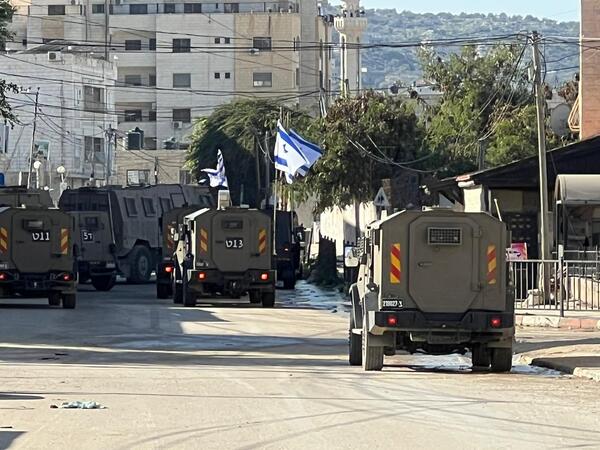
Israeli occupation's aggression on the city of Jenin and its camp enters its 45th day

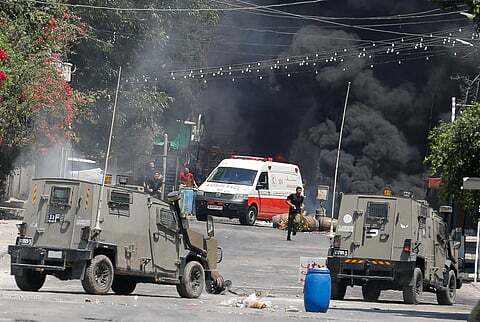
For the 45th consecutive day, the Israeli occupation forces continue their aggression on the city of Jenin and its camp, amid military reinforcements accompanied by a stifling siege, raids on homes, and forcing citizens to evacuate them.


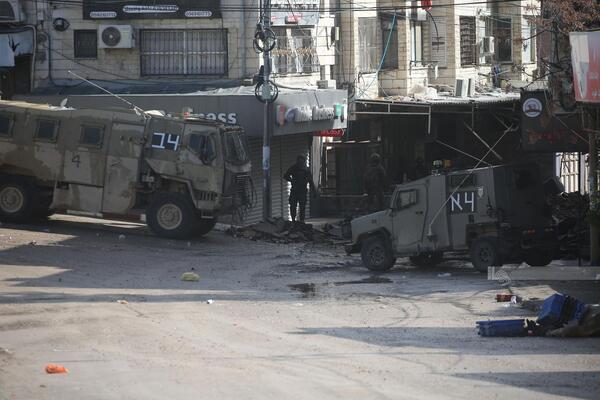
The occupation continues to send its military reinforcements to the vicinity of Jenin camp, and its military vehicles continue to be stationed in front of Jenin Governmental Hospital, and tanks are positioned in areas near the camp. Columns of smoke were seen rising from one of the houses inside the camp.


The occupation prevents local and international press crews from entering the camp to monitor the destruction and devastation inside it and cover the occupation’s practices against the citizens.


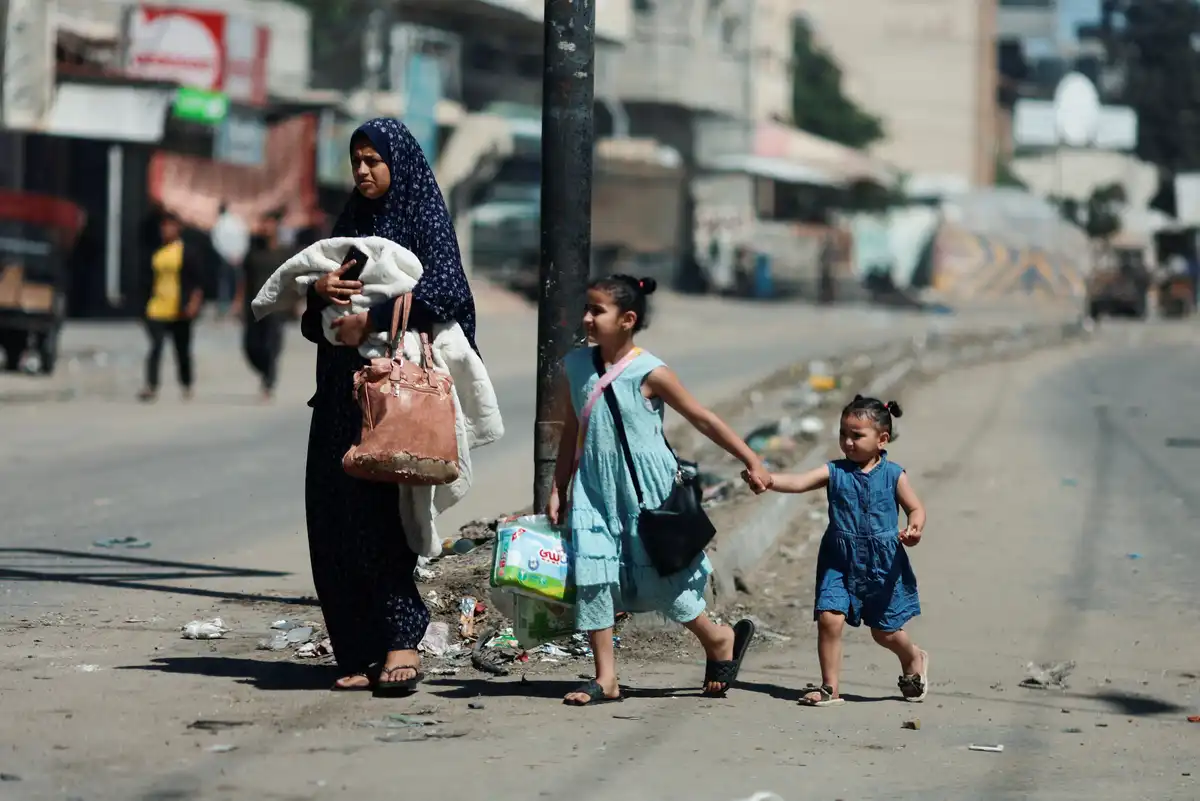
So far, the occupation has displaced nearly 20,000 residents of Jenin camp, who are distributed across nearly 39 towns and local authorities. The occupation is working to change the features of the camp through systematic destruction that has affected 120 homes completely and dozens of homes partially.


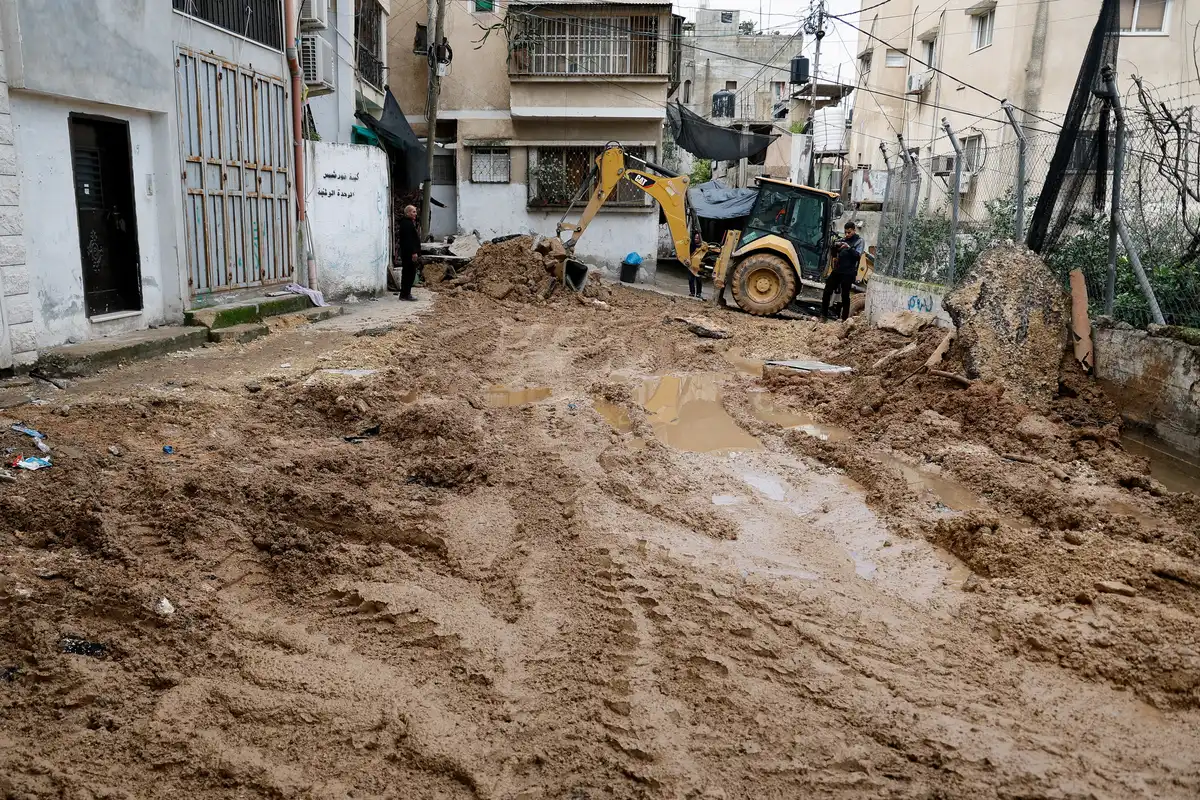
The occupation forces carried out 336 raids, searches and field investigations, and drones launched nearly 15 bombing operations. The occupation forces closed all entrances to Jenin camp with earth mounds.


So far, the unprecedented aggression on the city of Jenin and its camp has left 30 martyrs in the Jenin governorate, in addition to dozens of injuries, and the displacement of thousands of citizens from their homes in the camp and a number of neighborhoods in the city.

PALESTINE

Thu 06 Mar 2025 1:16 pm - Jerusalem Time

Gaza Ceasefire: US Threats and Stalemate in Negotiations

The Gaza Strip is witnessing a dangerous political and field escalation, as Israeli war remnants continue to threaten the lives of Palestinians, amid appeals to bring in equipment to protect explosive ordnance disposal teams, in light of the ongoing siege and destruction caused by the Israeli aggression.


The Ministry of Interior in Gaza warned, on Thursday, of a humanitarian disaster due to unexploded ordnance, noting that there were injuries among civilians and explosives engineering personnel during the dismantling operations.


Meanwhile, US President Donald Trump has sparked controversy by directly threatening Gazans with death if Israeli prisoners are not released immediately, affirming his unlimited support for Israel in continuing the war. This came after the revelation of secret US contacts with Hamas, in an unprecedented development.


For its part, Hamas warned that the US president's statements are obstructing the implementation of the truce agreement, accusing Washington of encouraging Israel to evade its obligations, at a time when negotiations on the second phase of the agreement are faltering. Hamas called on the US administration to exert real pressure on the occupation instead of issuing threats that encourage the occupation to persist in its crimes.


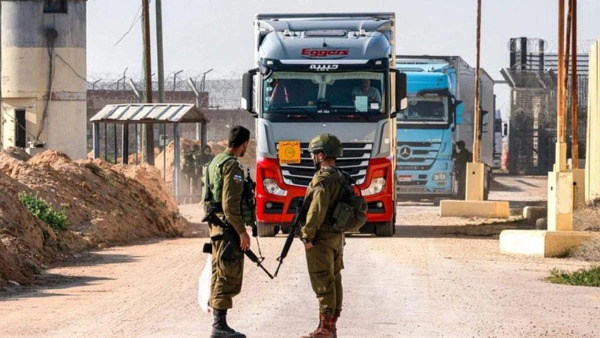
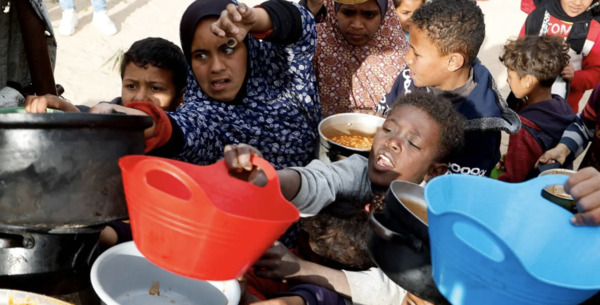
This comes as the occupation authorities continue to prevent the entry of aid into the Gaza Strip and completely close the crossings, while negotiations are witnessing a state of stagnation in light of Israel’s denial of the requirements of the second phase of the ceasefire agreement, while Trump’s envoy to the Middle East, Steve Witkoff, asked Israel to postpone its resumption of the war on Gaza, in an attempt to achieve a breakthrough in the talks.

ARAB AND WORLD

Thu 06 Mar 2025 12:59 pm - Jerusalem Time

UN allocates $110 million to compensate for cuts in humanitarian aid

The United Nations announced, in a statement today, Thursday, that it has allocated $110 million from its emergency fund to compensate for the "hasty cuts" in the amounts allocated for humanitarian aid around the world, especially by the United States.


The statement explained that these funds will "strengthen vital assistance in 10 of the least funded and most neglected global crises, in Africa, Asia and Latin America."


A third of the total will go to Sudan, which is currently suffering the world's worst humanitarian crisis, as well as to neighbouring Chad, which is hosting countless refugees fleeing fighting in neighbouring Sudan.


“For countries already strained by conflict, climate change and economic turmoil, severe budget cuts do not mean humanitarian needs disappear,” said Tom Fletcher, UN Humanitarian Coordinator.


The statement said that the funds allocated on Thursday "will also enhance the humanitarian response in Afghanistan, the Central African Republic, Honduras, Mauritania, Niger, Somalia, Venezuela and Zambia," without providing further details.


The funds are also supposed to be used to protect populations most vulnerable to climate shocks.

In 2025, there will be more than 300 million people dependent on humanitarian aid, “but funding is declining every year,” and “is expected to reach a historic low this year.”


In general, the budgets of major UN humanitarian agencies and NGOs have been significantly reduced.


But the decision by the United States, which had been the largest provider of humanitarian aid, to freeze foreign aid almost completely and then cancel much of it, has caused an unprecedented crisis for relief organizations in many sectors and countries.


The United Nations stated in its statement that it estimated humanitarian needs at $45 billion to help 185 million people who are considered the most vulnerable in the face of crises across the world.


"So far, only 5% of this funding has been collected, leaving a shortfall of more than $42 billion," the statement said, as the first quarter of the year ends soon.

PALESTINE

Thu 06 Mar 2025 10:52 am - Jerusalem Time

A prisoner from Gaza died in Israeli occupation prisons

This morning, Thursday, the General Authority of Civil Affairs informed the Authority of Prisoners and Freed Prisoners Affairs and the Prisoners Club of the death of a prisoner from the Gaza Strip in the occupation prisons.


According to the Authority, prisoner Ali Ashour Ali al-Batsh (62 years old), a resident of Jabalia, north of the Gaza Strip, died inside the Negev Desert Prison.

PALESTINE

Thu 06 Mar 2025 10:42 am - Jerusalem Time

Demolition of homes and destruction of infrastructure during Israeli ongoing aggression on Tulkarm

The occupation forces continue their aggression on the city of Tulkarm for the 39th consecutive day, and for the 26th day on the Nour Shams camp, amid military reinforcements, the demolition of homes, and the destruction of infrastructure.


This morning, Thursday, the occupation began demolishing a number of homes and residential buildings in the Al-Manshiya neighborhood in Nour Shams camp, after being notified yesterday to demolish 17 homes, under the pretext of paving a new road that aims to change the geographical features of the camp. The targeted homes are owned by the families: Hamad, Alian, Aamer, Shihab, Shalabi, Younis, Ghanem, Masharqa, Alajma, Abu Shala, and Sa’ayda.


The occupation forces had given the owners of these homes two hours to enter the camp and evacuate their belongings and supplies from their homes, while obstructing them and firing live ammunition at them to terrorize them.


Nour Shams camp has been witnessing a continuous escalation since the beginning of the occupation's aggression, which continues to carry out repeated demolitions and raids on homes after blowing up their doors, forcing citizens to forcibly leave them, and turning them into military barracks, in addition to the widespread and complete destruction of the infrastructure and property, including homes and shops that were demolished, blown up, and burned.


In the past few days, the occupation bulldozers have demolished more than 11 houses, as part of a plan to pave a road extending from the camp square to the Manshiyya neighborhood.


In Tulkarm camp, the occupation continues its tight siege on it, preventing entry or exit from it, and deploying its foot patrols in its surroundings and alleys, while raiding empty homes of their residents, vandalizing them and destroying their contents, while at night it forced citizens to leave their homes in the airport neighborhood after raiding it.


Eyewitnesses reported that the occupation bulldozers continue to level streets and properties, and close the entrances and alleys of the neighborhoods with earthen barriers, and this has affected the main northern entrance to the camp, which is witnessing unprecedented destruction in all aspects of life there.


In this context, the occupation forces sent military reinforcements accompanied by a fuel tanker to the city and its two camps, and positioned themselves in front of the residential buildings they seized on Nablus Street linking the Tulkarm and Nour Shams camps, and obstructed the movement of vehicles and citizens.


The occupation forces also continue to seize a number of homes in the suburbs of Dhnaba and Ezbet al-Jarad, east of Tulkarm, after raiding them, forcing their residents to leave, and turning them into military barracks and sniper locations.


The occupation forces had brought in a number of armored vehicles from their military checkpoints set up at the southern and eastern entrances to Tulkarm, and stormed the town of Anabta and the southern entrance to the city, and patrolled the streets, before returning to the checkpoints.


The ongoing aggression on the city and its two camps has so far resulted in the martyrdom of 13 citizens, including a child and two women, one of whom is eight months pregnant, in addition to the injury and arrest of dozens, and the forced displacement of more than 9,000 displaced persons from Nour Shams camp, and 12,000 displaced persons from Tulkarm camp.

PALESTINE

Thu 06 Mar 2025 10:08 am - Jerusalem Time

Updated: Israeli occupation begins demolition operations in Nablus and the Jordan Valley

Today, Thursday, Israeli occupation bulldozers began demolition operations in Nablus and the northern Jordan Valley.


In Nablus, the occupation forces stormed Khirbet al-Tawil accompanied by three bulldozers, and began demolishing residential and agricultural facilities in the area.


In the northern Jordan Valley, the occupation forces stormed the Al-Burj area in the northern Jordan Valley and began demolishing facilities belonging to citizen Radi Khalil Zawahra.


Months ago, the occupation demolished residential tents and livestock pens belonging to the same citizen, under the pretext of lacking a permit.


During last February, the occupation authorities carried out 79 demolitions that affected 156 facilities, including 109 inhabited homes, 5 uninhabited ones, and 34 agricultural and other facilities. The demolition was concentrated in the Hebron governorate, with 55 facilities demolished, followed by the Jenin governorate, with 26 facilities demolished, Jerusalem with 19 facilities, and Salfit with 15 facilities.

PALESTINE

Thu 06 Mar 2025 9:48 am - Jerusalem Time

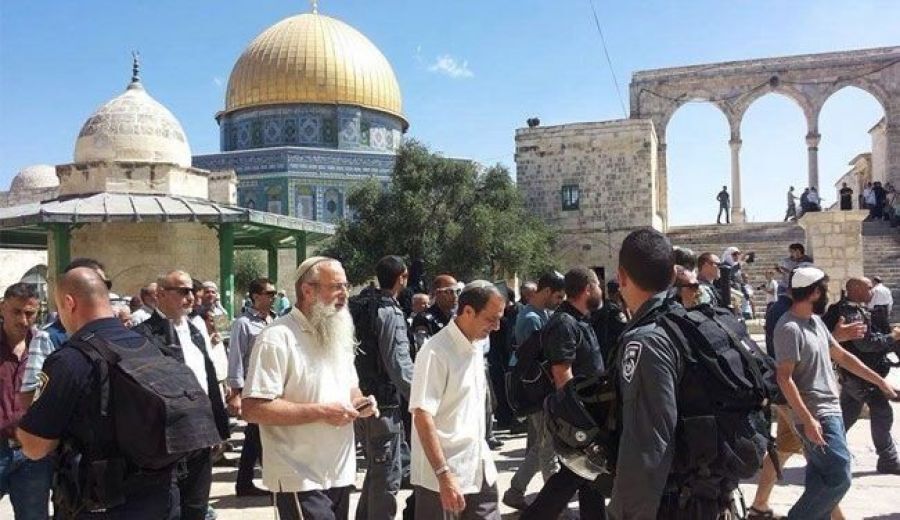
Israeli Settlers storm Al-Aqsa led by Yehuda Glick

Today, Thursday, settlers, led by extremist Yehuda Glick, stormed the blessed Al-Aqsa Mosque, under heavy guard from the Israeli occupation police.


The Jerusalem Governorate reported in a statement that dozens of settlers led by extremist Glick stormed Al-Aqsa in separate groups, carried out provocative tours in its courtyards, and performed Talmudic rituals.

OPINIONS

Thu 06 Mar 2025 9:39 am - Jerusalem Time

Palestine Summit

Hamada Faraana

Hamada Faraana

Opinion Writer


It is truly the Palestine Summit, as His Majesty King Abdullah called it, described it and named it: the Palestine Summit.

The Palestine Summit, in response to the request of the occupied State of Palestine, and in confirmation of the manifestations of Arab solidarity and interaction, especially by the State of Bahrain as the President of the thirty-third regular session of the successive Arab Summit, and at the initiative of Egypt, which called for it and hosted its meeting.

The Palestine Summit would not have been held in an emergency session, between the last session held in Manama on May 16, 2024, and before the convening of the next regular session. It would not have been held had it not been for the developments witnessed by Palestine, which imposed its presence and the world’s interest in it, due to the results it achieved on the Palestinian-Israeli confrontation front in favor of Palestine, and for contributing to exposing the colony and revealing its truth as a racist, expansionist, occupying, and substitutionary colonial project:

First: A militant initiative on October 7, 2023, which created an impact and shock among various Israeli decision-making institutions, following which an assessment report was issued by the colony’s army, and another report by the Shin Bet intelligence service, indicating the extent of the unprecedented surprise and shock to the colony since the October 1973 war, and Netanyahu’s deliberate evasion in forming a similar official civilian investigation committee.

Second: Despite the Israeli invasion of the Gaza Strip and its complete occupation, after concentrated bombing operations on all the various official institutions and facilities that caused the Strip to lose its infrastructure services, destroyed civilian homes and residential neighborhoods, and made the Gaza Strip unfit for habitation and normal life, the Palestinian people astonished the world and all observers with their steadfastness, their refusal to leave, and their return to the destroyed neighborhoods and their refusal to leave, emigrate, and be displaced from their homeland, which has no other homeland.

Third: The inability of the colony forces and their failure to discover the locations of the Israeli prisoners and their inability to release them without an exchange operation.

Fourth: The steadfastness of the Palestinian resistance, its high-level, organized performance, and its ability to negotiate from an equal position, adhering to national and security constants, and facilitating all measures that help to stop the fire and reach a ceasefire deal in its three stages.

Fifth: The Arab sense of solidarity with the Palestinian people, responding to the requirements of their basic needs, and imposing their respect and status before the Arab peoples and their various systems.

Sixth: Arab cooperation and coordination between Saudi Arabia, Egypt, Jordan, Qatar and the Emirates.

Seventh: The results of the Riyadh Five-Party Summit on 21-2-2025 formed the introduction and groundwork for holding the emergency summit in Cairo on 4 March 2025.

By examining the speeches of Arab leaders, and the results of the detailed statement they produced, the observer arrives at the conclusion that there is a tangible, positive transformation in the Arab system, responding to the requirements of Palestinian needs, and the necessity of Arab solidarity, cohesion and coordination, after a series of destructive inter-Arab wars that have ravaged the stability of many Arab countries: Iraq, Syria, Yemen, Sudan, while taking into account the positive transformations in Europe, against the backdrop of aggressive Israeli extremism, and the violation of all international decisions and values, which led to the emergence of the international coalition to implement the two-state solution headed by Saudi Arabia with the European Union and Norway, and the project to hold an international conference to settle the Palestinian issue, and implement the two-state solution headed by Saudi Arabia and France, scheduled to be held at the United Nations headquarters in New York during the month of June 2025.

The Cairo Summit is truly the summit of Palestine and for Palestine.

PALESTINE

Thu 06 Mar 2025 9:29 am - Jerusalem Time

Raids and arrests in the West Bank

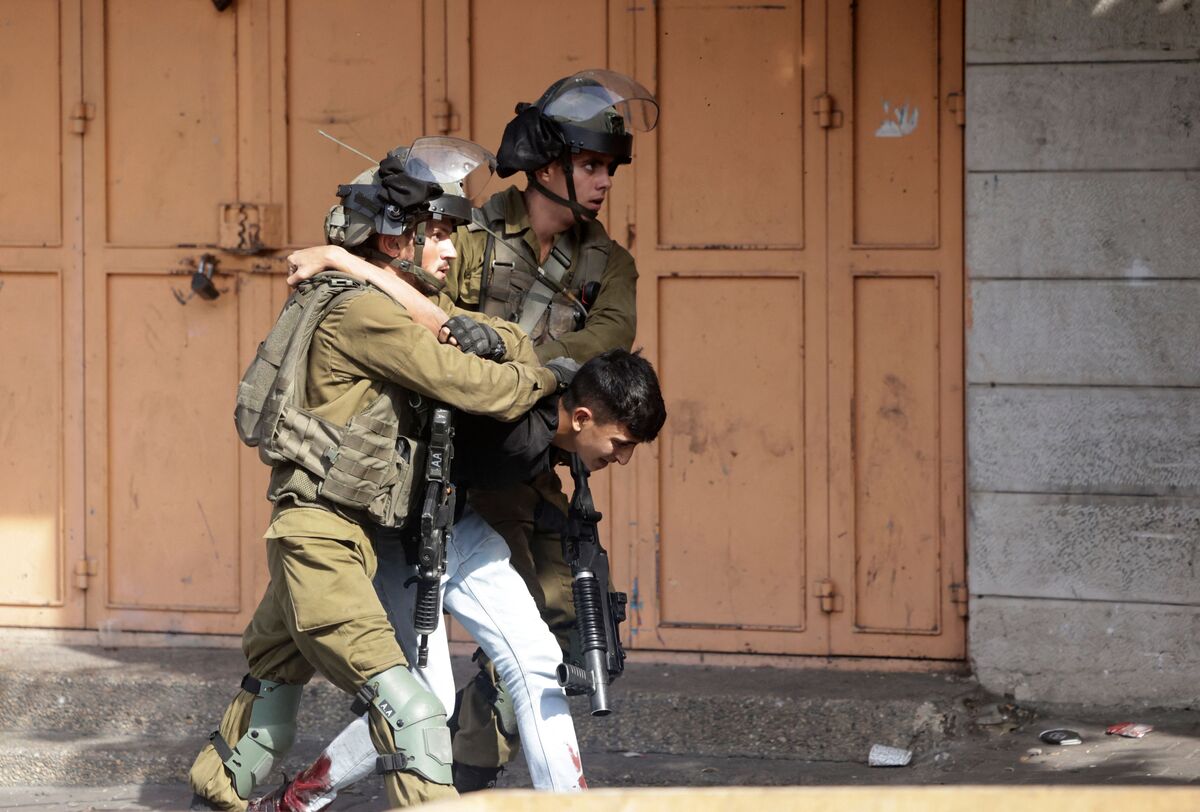
This morning, Thursday, the Israeli occupation forces launched an arrest campaign in the West Bank.


In Nablus, occupation jeeps stormed several neighborhoods of the city, raided a house in the Al-Nour neighborhood on Tal Street, searched it, wreaked havoc on it, and arrested citizen Nasser Qarqash.


Several Israeli military vehicles also stormed the village of Salem, east of Nablus, raided a number of homes north of the village, searched them and ransacked their contents. No arrests were reported.


In Qalqilya, the occupation forces stormed several neighborhoods in the city of Qalqilya, and arrested the two freed prisoners, Musa Suwai and Muhammad Salmi, and the citizen Fakhri Salmi and his son "Yazan" from the Kafr Saba neighborhood in the center of the city.


The occupation forces also stormed the town of Azzun, east of Qalqilya, from its northern entrance, and arrested: Rashid Radwan, Osama Kayed, Imran Al-Hussein, Karim Al-Hussein, Abdullah Al-Hussein, and Muhammad Hanoun, while the raids were concentrated in the neighborhoods of: Al-Maqbara, Al-Ras, and Al-Safaha in the eastern area of the town.


In Bethlehem, the occupation forces stormed Beit Fajjar, raided a number of homes, detained about 30 citizens, subjected them to harsh interrogation, and arrested: Jaber Mustafa Taqatqa (51 years old) and his son Muhammad, Yousef Hatem Diriya (23 years old), Muhammad Nasser Diriya (22 years old), Yousef Samih Al-Kar, Ahmad Anwar Thawabtah, Asid Ahmad Al-Kar, Muhammad Ahmad Al-Kar, and Daoud Muhammad Thawabtah.


In Hebron, the occupation forces stormed several neighborhoods in the city of Hebron, and arrested: Muhammad Abu Hasna, Munjed Al-Husseini, and Adi Sub Laban, after raiding and searching their homes.


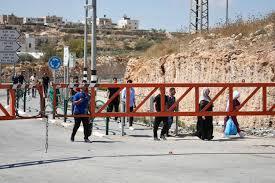
In this context, the occupation forces continue to close the entrances to the towns and camps of the city of Hebron with iron gates, and have tightened their military measures in the neighborhoods of the Old City and the vicinity of the Ibrahimi Mosque.


In Tulkarm, the occupation forces arrested: Ahmed Wael Ammar, Baraa Ashraf Harsha, and Muhammad Majdi Harsha from the town of Qaffin, and Muhammad Ayman Khandaqji from the town of Allar, after raiding and searching their homes.


In Ramallah, the occupation army raided homes during its storming of the city of Al-Bireh, the villages of Beit Sira and Ein Qiniya west of Ramallah, and Umm Safa northwest, while an occupation army force raided the towns of Deir Jarir and Beitin east of the city.


In the same context, the occupation forces set up a military checkpoint at the entrance to the village of Ein Siniya, north of Ramallah, causing a severe traffic jam for vehicles leaving the city.


PALESTINE

Thu 06 Mar 2025 9:27 am - Jerusalem Time

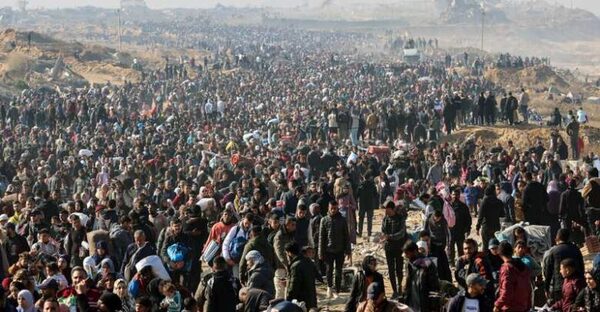
Israel completes preparations to displace Gaza residents

The Israeli newspaper "Israel Hayom" reported today, Thursday, that the Israeli government has completed its preparations to facilitate the displacement of the residents of the Gaza Strip "if countries are available to receive them," in a new escalation step within the war of extermination and ethnic cleansing that Israel is waging against the Gaza Strip.


According to the Israeli plan, the evacuation will take place via the Ashdod port and Ramon Airport, where 2,500 Palestinians will be able to leave Gaza daily. According to Israeli security sources, a special mechanism has been established under the direction of Israeli Defense Minister Yisrael Katz.


Israel aims to activate the displacement process "on a daily basis," and the newspaper quoted security sources as saying that "one of the countries (which it did not name) expressed interest in receiving construction workers from Gaza, but international pressures prompted it to suspend this process for the time being," in reference to the international rejection of the displacement of Gazans.


According to the Israeli plan, the evacuation will take place by sea from the port of Ashdod, while Ramon Airport will be used as an additional air route. Israeli sources indicate that this air route has been used for several months to evacuate wounded Palestinians from Gaza.


The newspaper reported that the Rafah crossing will represent an "additional exit route," based on the Israeli plan.


According to an Israeli security source, "Israel seeks to enable as many Gaza residents as possible to leave the Strip," noting that Israeli policy includes allowing family members of the sick and wounded to accompany them to other countries without return.


The same source added that "the Israeli interest lies in allowing the largest possible number of residents to leave," noting that this approach is in line with what he described as "the vision included in the plan of US President Donald Trump, which Israel has expressed its support for and seeks to implement."


In a related context, an Israeli organization known as “Reservists – Victory Generation” published a proposed plan for the “voluntary migration” of the residents of the Gaza Strip, based, according to its claims, on “the principles of international law.” It calls for the displacement of 1.7 million Palestinians from Gaza.


  1. This comes amid growing concern over ongoing Israeli violations in Gaza, following the halting of humanitarian aid to the Strip, and the forced displacement plans that threaten to empty the Strip of its population as part of ongoing ethnic cleansing policies.

PALESTINE

Thu 06 Mar 2025 9:24 am - Jerusalem Time

Only happens in Gaza!


People search among piles of rubble, under mounds of dirt and sand dunes, for their sons who perished in the massacre, and they do not yet know where they are buried, in order to extinguish the fire that still burns in their hearts, and makes sleep elude their eyes.


Every day, with the availability of some bulldozers, it is announced that new numbers of martyrs have been recovered, and they are reburied in a manner befitting them, while their families suffer the pain of their loss and taste the bitterness of their absence from the Iftar tables during Ramadan.


On her shoulder is her son's coffin, and she is quickening her steps to bury him. Her feelings are mixed between happiness at finding her beloved son three months after his martyrdom, and regret at not fulfilling her wish to bury him next to his brother, who preceded him to the ground a few days ago.

Burying siblings next to each other has become the ultimate wish of mothers grieving the loss of their beloved husbands, sons and daughters.

Just.. this is happening in Gaza!

PALESTINE

Thu 06 Mar 2025 9:18 am - Jerusalem Time

Presidential decisions.. Analysts monitor meanings, implications and consequences

Dr. Ahmed Rafiq Awad: The decisions come within the framework of preparing for a new political phase that requires radical changes to keep pace with regional and international transformations

Muhammad Joda: The President’s decisions place us before transformations in the political scene that may redraw the map of Fatah’s leadership and the organization

Dr. Raed Al-Dabai: Unifying Fatah is a necessity to enhance its role and restore its cohesion in light of the challenges it has faced over the past two decades

Khalil Shaheen: Real reform must include restructuring the organization and the authority and holding elections for the Palestinians to choose their leaders

Dr. Qusay Hamed: The real test of the president’s decisions lies in their implementation through actual movement towards structural reforms and internal reconciliation

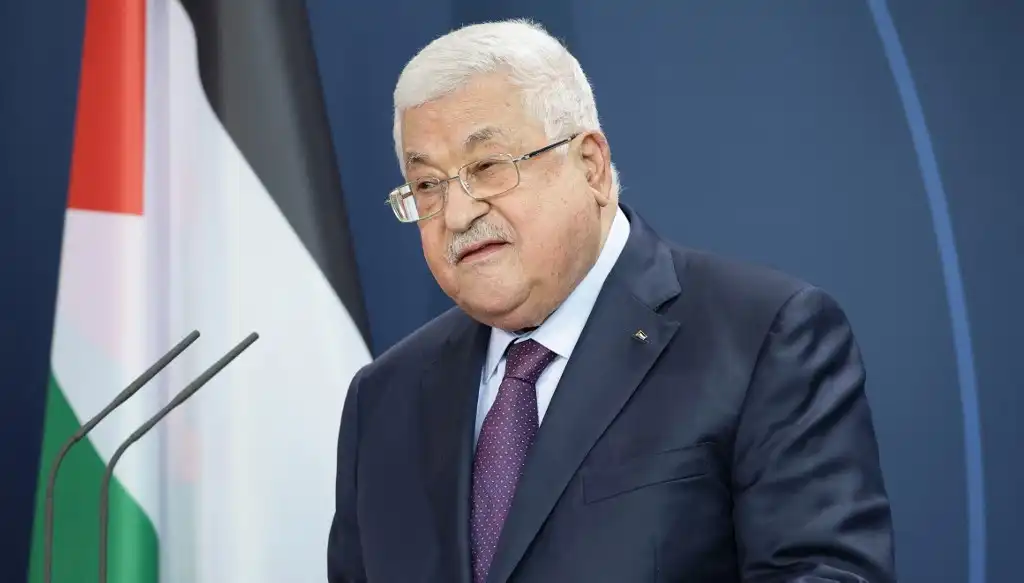
The new decisions announced by President Mahmoud Abbas during the Arab Summit in Cairo, to create the position of Deputy Chairman of the PLO and President of the State of Palestine, in addition to a general amnesty for those dismissed from the Fatah movement, come in light of the Israeli war in the Palestinian territories, and in light of rapid regional changes, which raises questions about whether the decisions will shape the features of the next stage or not?


In separate interviews with “I”, writers, political analysts and university professors believe that these steps come at a time when the Palestinian Authority is facing major challenges, both internally and externally. These decisions also have political dimensions that go beyond the internal Palestinian affair, as they came after international and Arab pressures demanding reforms in the institutions of the Palestinian Authority and the PLO.

They believe that these changes lack national consensus and may cause internal disputes, especially in light of the absence of clear mechanisms for their implementation.


They point out that with the appointment of a vice president and the reinstatement of some of those dismissed from the Fatah movement, questions are raised about the extent to which these decisions will affect the Palestinian political scene, and whether they will contribute to achieving internal reconciliation, or will they increase the intensity of the conflicts within the Fatah movement and the PLO, stressing that the answer to these questions will become clear with the developments of the next stage and the extent of the Palestinian leadership’s ability to implement actual reforms that keep pace with regional and international changes.

In response to Palestinian, Arab and international demands

Writer and political analyst Dr. Ahmed Rafiq Awad confirms that President Mahmoud Abbas’s decisions regarding the appointment of a deputy chairman of the Palestine Liberation Organization and president of the State of Palestine and the reinstatement of those dismissed from the Fatah movement come in response to Palestinian, Arab and international demands aimed at reforming and developing the Palestinian political structure.


Awad explains that these steps come after 30 years of the Palestinian Authority’s experience, which witnessed profound political transformations, multiple efforts, and external influences, which led to the emergence of political and organizational phenomena that require a comprehensive review.


Awad points out that the lack of political life, the Palestinian division, and foreign interventions, in addition to the transition from the stage of revolution to the management of a civil society, are all factors that imposed major challenges on the structure of the authority and the PLO, which made reform an urgent demand in all Palestinian meetings, whether within the National Council, the Central Council, or the Revolutionary Council of the Fatah movement.


Awad asserts that President Abbas’s announcement of these reforms during the extraordinary Arab summit reflects the leadership’s awareness of the magnitude of regional and international challenges, and the necessity of renewing blood within the Authority’s institutions, including changing faces, developing political and administrative performance, and creating a major shift in the structure of Palestinian governance, in order to enhance response to the requirements of the current reality.


Awad points out that the Authority finds itself today facing extremely dangerous transformations, in light of the escalation of political, security and economic challenges, which requires it to confront these changes with bold decisions that achieve Palestinian, Arab and international demands.


Awad explains that there are clear demands from the international community and the Arab world for the necessity of reforming the Palestinian Authority and the PLO, ensuring that governance is managed in a transparent and fair manner, and restructuring its institutions to ensure good governance, in addition to meeting new political and security requirements.


Awad points out that President Abbas decided to appoint a deputy for him, and to reinstate those dismissed from the Fatah movement, in addition to administrative, financial and judicial reforms, as part of preparations for a new political phase that requires radical changes to keep pace with regional and international transformations.


Awad points out that the timing of this decision is extremely important, as these steps come at a critical moment when the Palestinian Authority finds itself at a crossroads: either to continue and survive by adapting to the changes, or to face the risk of marginalization and encroachment.


Awad explains that there are Israeli voices calling for bypassing the Palestinian Authority and removing it from the political scene, which makes the need to enhance its credibility and reliability more urgent than ever to confront any dangers.


Regarding the return of those dismissed from the Fatah movement, Awad explains that this step may benefit the movement, considering that these dismissed individuals are part of the Fatah fabric, and have organizational capabilities and political relationships that can enhance Fatah’s position in the Palestinian scene.


Awad believes that President Abbas's decisions reflect a serious attempt to restructure the Palestinian political system and keep pace with the rapid changes, in a way that ensures the continuity of the authority and strengthens its position in the regional and international scenes.

The decisions came within a complex political and economic context.

Writer and political analyst Muhammad Joda asserts that President Mahmoud Abbas’ announcement of the creation of the position of Vice President of the PLO and President of the State of Palestine, in addition to issuing an amnesty for those dismissed from the Fatah movement, represents an important step despite its delay, pointing out that these decisions came within a complex political and economic context.


Joudeh explains that creating the position of Deputy Chairman of the PLO must be part of a comprehensive reform of the organization, through holding elections for the National and Central Councils, and selecting members of the Executive Committee on the basis of proportional representation of all Palestinian factions, including the inclusion of Hamas and Islamic Jihad.


Joda believes that the importance of this step lies in the fact that it may pave the way for the return of leader Mohammed Dahlan to the official Palestinian political scene, to play an important role, a development that may have major repercussions in the coming stage.


Joudeh points out that the decision to create the position of Deputy Chairman of the PLO and President of the State of Palestine came after pressures and consultations conducted by the leadership of the Authority with the World Bank, which demanded the implementation of financial and administrative reforms to confront the economic crisis that the Palestinian Authority is suffering from, in order to continue the flow of international aid, especially in light of the growing warnings of a possible financial collapse for the Authority.


Joda believes that the importance of President Abbas' decision comes in light of the sensitive circumstances that the Palestinian cause is going through, especially the Israeli war on the Gaza Strip, and the threat of displacing its residents, in addition to the ongoing aggression on the West Bank, in light of the fact that the Palestinian Authority is facing increasing political isolation, especially after the escalation of Arab and international criticism of its performance, describing it as weak and flabby.


He points out that the Palestinian Authority has lost its security and military capabilities in the West Bank, without having real tools to protect Palestinians from attacks by settlers and the Israeli army.


Joda points out that President Abbas is well aware that the popular base of the Fatah movement in the Gaza Strip largely follows the leader Mohammed Dahlan, and therefore any role for the authority in Gaza after the end of the war cannot be achieved without understandings and real reconciliation with Dahlan and his faction.


Joudah did not rule out the existence of Arab pressure from Egypt, the Emirates and Saudi Arabia on President Abbas and the leadership of the Fatah movement, to push them towards reconciliation with the Dahlan faction, with the aim of reuniting the movement to confront the Hamas movement, whose power was strengthened by the recent Israeli war, in addition to supporting the Palestinian Authority to manage the Gaza Strip in the future.


Jodeh believes that this decision was not taken in accordance with the organizational protocol followed within the Fatah movement, as it was not put up for discussion within the movement’s central committee, which indicates that the decision to dismiss a number of Fatah leaders in the past was not an organizational decision unanimously adopted by the movement.


Joda points out that this step may lead to sharp criticism within the ranks and leadership of Fatah, especially since the decision was not presented to the movement's frameworks to be taken by consensus.


Joda stressed that the return of the dismissed requires a radical reform within the movement, and the reorganization of the elections for its ninth conference, to choose a new leadership, especially after the exclusion of leaders from Dahlan’s faction.


He wondered whether the dismissed individuals would accept to return in this manner, without respecting the movement’s internal regulations and without reviewing the measures taken against them over more than 14 years. He also wondered about the real charges against them, which were the basis for the decisions to dismiss them from the movement.


Joda believes that these decisions, despite their importance, open the door to major transformations in the Palestinian political scene, amid internal complications and external pressures that may redraw the map of the leadership of the Palestinian Authority and the Fatah movement during the next stage.

Unsurprising decisions...and various complications

The Head of the Political Science Department at An-Najah National University, Dr. Raed Al-Dabai, explains that the Fatah movement, since assuming leadership of the PLO in 1969, has constituted a strategic turning point in the Palestinian political and social scene, as its influence extended beyond its internal framework, to become a symbol of the contemporary national struggle and a fundamental component in formulating foreign policies and regional and international relations for the Palestinian cause.


Al-Dabai points out that the Fatah movement played a pivotal role in determining the future of the Palestinian people and the stability of the entire region, through its struggle in several arenas, as a result of the necessities of the stage and the requirements of the struggle, whether during the stage of presence in the arenas of Jordan, Lebanon, Tunisia and Syria, or through the presence of military bases for the Palestinian revolutionary forces in several countries such as Iraq, Yemen, Egypt and Libya.


Al-Dabai stresses that President Mahmoud Abbas's decision to unify the Fatah house comes as a national and regional necessity to strengthen the movement's steadfastness and restore the cohesion of its ranks in light of a noticeable decline over the past two decades.


Al-Dabai points out that recent years have witnessed cases of internal division and chaos, manifested in the inability to form a unified electoral list during the postponed legislative elections in 2021 and the local elections in 2022, which led to the decision to dismiss a number of leaders and cadres - some of whom are members of the movement's Revolutionary and Advisory Councils, and some of whom spent long years in the occupation's prisons - which increased the state of chaos instead of strengthening internal ties.


Al-Dabai believes that the decision to unify the movement is not a surprise to its cadres, as the Revolutionary Council had approved the formation of committees to recommend the return of those against whom previous decisions had been taken, although the mechanisms and procedures for this return still carry a lot of ambiguity.


According to Al-Dabai, questions are being raised about the conditions for return that were previously raised, which created a state of internal controversy and exacerbated matters instead of resolving them, especially those related to the absence of criminal cases against those dismissed, or the necessity for those against whom a decision was made to submit individual written petitions to the movement’s leadership about their desire to return and their commitment to its leadership’s decisions in the future, and whether those conditions will further complicate the actual implementation of the decision.


Al-Dabai points out that the administrative and political complexities increase with the issue of appointing a deputy to the PLO and the PNA, which raises questions about the nature of this appointment: Will it be for one person or two? What are the legal procedures and internal mechanisms (whether through consensus or voting within the Central Committee or the Revolutionary Council) or through amending the PLO’s internal regulations, and the legal procedures that this entails, that will determine the fate of this appointment?


Al-Dabai explains that the actual choice will be within the Fatah movement, while the Executive Committee of the PLO will adopt what the movement agrees upon. However, this agreement may face various complications related to the multiplicity of aspirants, internal balance equations, and internal tensions within the Fatah movement, especially in light of internal, regional, and international pressures.


Al-Dabai stresses that the role of regional and international will cannot be ignored, as the president’s announcement of these decisions during the Arab Summit is a clear indication that these decisions come as part of the interaction with Arab and Western demands to reform the Palestinian political system and democratize its institutions.

Decisions lack national consensus and required reform

Writer and political analyst Khalil Shaheen asserts that the creation of the position of Vice President of the PLO and Vice President of the State of Palestine could have had significant significance if it had come from a pure Palestinian will and national consensus on a series of reforms, and a review of the structure of the PLO and the Palestinian Authority, and the mechanism of political, economic and social decision-making in general. However, this step, which came in response to external pressures, appears fragmented and does not meet the organization’s need for fundamental reform that goes beyond merely appointing a Vice President.


Shaheen explains that the Palestine Liberation Organization suffers from a major defect in its representation of the Palestinian people, as its structures and departments have eroded over time, and its representative status has declined.


It indicates a lack of representation of effective and essential forces in the Palestinian political map, such as Hamas and Islamic Jihad, in addition to the absence of other components of civil society, independents and youth.


Shaheen stresses that the required reform goes beyond a small issue such as appointing a vice president, especially since this position is largely formal.


Shaheen explains that the appointment of a deputy chairman of the PLO can be done through different procedures than the appointment of a deputy chairman of the Authority. In the second case, amendments must be made to the Palestinian Basic Law, especially with regard to the powers of both the president and his deputy.


Shaheen points out that President Mahmoud Abbas had previously taken a decision to assign the head of the Palestinian National Council, Rawhi Fattouh, to fill the vacuum created by the president’s absence from the political scene, for a transitional period of ninety days, until elections are held.


Shaheen points out that appointing a vice president nullifies this decision, as the vice president will assume the duties of the president in his absence.


Shaheen believes that one possible scenario is that the president will amend the decision regarding the National Council Speaker, to expand his powers and make him vice president during his lifetime, and assume the duties of the president during the transitional period in the event of his absence from the political scene, whether due to death, disability, or otherwise.


Shaheen points out that Rawhi Fattouh has the advantage of being from the Gaza Strip, which makes him a suitable candidate for the position of vice president.


Shaheen stresses that the appointment of a vice president, although an important step, is not of great importance in bringing about radical reforms, as long as there is no electoral process that enables the Palestinians to exercise their right to choose their leaders, whether the president, the vice president, or the members of the absent legislative council.


Shaheen points out that the essence of the issue remains related to the decision-making mechanism, which is concentrated in the hands of the president, even if there is a vice president, especially in light of the absence of the legislative council and the lack of accountability or oversight of presidential decisions.


Shaheen stresses that the steps to create positions at the level of vice president require national consensus, and not just consensus within the Fatah movement, especially if it concerns the Palestine Liberation Organization.


Shaheen points out that there is talk about the possibility of calling the Central Council to meet during this month, where the president may seek through this meeting to legitimize the step of creating the position of vice president.


Regarding the issue of pardoning those dismissed from the Fatah movement, Shaheen points out that there is surprise at the use of the word “pardon,” which suggests that those dismissed committed crimes that require pardon.


Shaheen explains that President Abbas announced this issue at the Arab Summit, without clarifying what amnesty for the dismissed employees means, especially since they are members of a political party and not government employees.


Shaheen asserts that the measures taken against some of the dismissed individuals, such as Mohammed Dahlan and Nasser al-Qudwa, were decisions taken by Fatah’s leadership bodies, such as the Revolutionary Council and the Central Committee, and that excluding these bodies from reviewing or reversing these decisions gives a negative indication of the continuation of the state of monopoly in decision-making and marginalization of institutions.


Shaheen points out that the return of the dismissed to the Fatah movement raises questions about how to deal with this matter, especially with regard to the return of some leaders, such as Mohammed Dahlan and Nasser al-Qudwa, to their previous positions.


Shaheen explains that Dahlan may not think about returning to the movement, while Nasser al-Qudwa may refuse to return in the form of a pardon, especially since there are no criminal cases against him.


Shaheen points out that some cadres of the Reform Movement, affiliated with Dahlan, may try to benefit from the decision and return to the movement, especially if they return to their previous movement or government positions.


Shaheen confirms that the Fatah movement is heading towards important changes in the coming period, not only because of the possibility of the return of those dismissed, but also because of the release of dozens of movement cadres from Israeli occupation prisons, including well-known leaders such as Marwan Barghouti.


Shaheen points out that the Fatah movement's move to hold internal elections may bring about changes in the movement's leadership structure, especially with the presence of large numbers of liberated leaders and cadres, even if they are outside the country.


Shaheen points out that President Abbas's recent decisions, although aimed at meeting external pressures, lack national consensus and the required fundamental reform.


Shaheen stresses that real reform must include restructuring the PLO and the Palestinian Authority, and holding legislative and presidential elections, to enable Palestinians to choose their leaders democratically.

An important and necessary step...but it is late

Professor of Political Science at Al-Quds Open University, Dr. Qusay Hamed, confirms that President Mahmoud Abbas’s decision to create the position of Vice President of the PLO and President of the State of Palestine, in addition to pardoning those dismissed from the Fatah movement, is an important but overdue step, noting that the need for these decisions has existed for years, but their timing now carries political dimensions that go beyond the internal dimension.


Hamed explains that the real test of President Mahmoud Abbas's decisions lies in the "day after" and their practical implementation on the ground, and whether the Fatah leadership will actually move towards structural reforms, uniting the movement, and ending the state of fragmentation it suffers from.


Hamed considers the appointment of a deputy president of the organization and president of the State of Palestine to be an important development, despite the need for legal amendments regarding the creation of the position in the organization’s structure and clarifying the mechanism for selecting or electing him. However, it is a necessary step towards resolving the controversy over the future of the organization’s leadership in the event that the position of president becomes vacant, which was a matter that was strongly raised in light of the absence of a clear mechanism for the transfer of power within the organization.


Hamed believes that this step comes in response to international and Arab pressures being exerted on the leadership to carry out internal reforms that would enable it to restore its role and strengthen its position before the international community.


Hamed points out that there is great Arab pressure on the Palestinian leadership, especially from Jordan, Egypt, Saudi Arabia and the Emirates, with the aim of pushing the Palestinian Authority towards implementing reforms, as well as within the PLO and the Fatah movement, considering that the international community and Arab countries currently view the Palestinian Authority as weak and flabby, and suffering from corruption and favoritism, which makes it unqualified to play a major role in the future of the Gaza Strip after the end of the current Israeli war.

Hamed explains that these reforms are a basic condition for restoring financial and political support from Arab countries, which have frozen their financial aid to the Palestinian Authority in recent months, stipulating the implementation of fundamental internal reforms.


Hamed confirms that this Arab pressure comes within the framework of confronting an Israeli-American plan that aims to displace Palestinians from the Gaza Strip, as the Arab countries see that reviving the role of the Palestinian Authority is necessary to confront these plans.


Regarding the pardon for those dismissed from the Fatah movement, Hamed explains that the decision opens the door to reviving the Fatah movement by injecting new blood into its ranks and reconsidering the decision-making mechanisms within it, which allows for the consolidation of a unified vision that unites its cadres on the basis of Palestinian national unity.


But Hamed warns that these decisions may remain ink on paper if they are not translated into real practical steps, pointing out that the Palestinian leadership has previously been accustomed to making similar decisions without actually implementing them.


Hamed asserts that the Palestinian situation today is threatened in an unprecedented way, perhaps since the 1948 Nakba or the 1967 setback, as the Palestinian cause is being subjected to systematic attempts to dismantle it by the Israeli occupation, which seeks to empty the authority of its content and weaken its role.


Hamed stresses that this stage requires the Palestinian leadership and the leadership of the Fatah movement to overcome their internal differences and work to unify the national ranks to confront the escalating challenges, whether in terms of Arab and international pressures or the occupation’s ongoing plans to impose new facts on the ground.


PALESTINE

Thu 06 Mar 2025 12:08 am - Jerusalem Time

Threatening Gazans with Death... Trump Sends Warning Message to Hamas

US President Donald Trump sent a warning message to Hamas on Thursday, threatening the residents of the Gaza Strip with death.


Trump said in a tweet addressing Hamas: "Release the hostages now, or you will pay a heavy price."


He added: "Return the bodies of the Israeli dead, this is the last warning."


Trump confirmed that he is sending Israel everything it needs to eliminate Hamas.


Trump threatened Hamas, saying: "None of your members will be safe unless you do what I say."


He also warned the residents of the Gaza Strip, saying: "A beautiful future awaits you, but with the hostage-taking you will die."

ARAB AND WORLD

Wed 05 Mar 2025 10:41 pm - Jerusalem Time

Closed consultations of UN Security Council on aid to Gaza

  1. The UN Security Council held a closed consultation session on Wednesday on the Middle East, and listened to a briefing by the Coordinator for Humanitarian Affairs and Reconstruction in Gaza, Sigrid Kaag, via video technology.

Kaag referred to Israel's announcement to suspend humanitarian aid to Gaza.


She added that the Secretary-General urged adherence to the ceasefire agreement, and urged Member States to use their influence to support this.


UN spokesman Stephane Dujarric said Kaag's briefing was her last to the council as humanitarian coordinator, as she would now serve only as UN special coordinator for the Middle East peace process.

PALESTINE

Wed 05 Mar 2025 10:19 pm - Jerusalem Time

Three Palestinians injured by Israeli occupation bullets in Nablus and Hebron

Three citizens were injured, on Wednesday evening, by Israeli occupation bullets in Nablus and Hebron.


In Nablus, the Director of the Red Crescent Emergency and Ambulance Center in Nablus, Amid Ahmed, reported that ambulance crews transported a girl (9 years old) who was shot in the head by the occupation forces during the storming of the town of Qusra, south of Nablus, while a young woman (20 years old) was shot in the head.


The occupation forces stormed the town of Qasra, amid heavy gunfire and tear gas bombs, which led to the outbreak of clashes in the area.


In Hebron, the Israeli occupation forces stormed the village of Al-Rihiya, south of Hebron, with a number of their military vehicles, and fired live bullets and tear gas canisters at citizens’ homes, which resulted in a 14-year-old child being injured by live bullets in the foot.

PALESTINE

Wed 05 Mar 2025 9:25 pm - Jerusalem Time

Israeli occupation evicts families from their homes in Al-Jabariyat in Jenin camp

The Israeli occupation forces evacuated a number of families from their homes in the Al-Jabariyat neighborhood near Jenin camp, and turned them into military barracks.


Local sources said that Israeli occupation drones demanded that families in the Jaberbat neighborhood evacuate their homes in preparation for converting them into military barracks. Later, the occupation forces evacuated 6 families from their homes in the Jaberbat neighborhood, seized them, and converted them into military barracks.


Since the beginning of the aggression on the city of Jenin and its camp 44 days ago, the occupation army has been using some of the citizens’ homes and buildings overlooking the camp as military “points,” and preventing the residents from returning to them. Among these are the Al-Rayyan building and the Al-Rabi’ building, which the occupation evacuated after 41 days, leaving behind great destruction and devastation in the residential apartments.


The occupation's aggression on the city and camp of Jenin continues for the 44th consecutive day, leaving 30 martyrs, dozens of injuries and detainees, and great destruction to citizens' homes and infrastructure.

PALESTINE

Wed 05 Mar 2025 9:23 pm - Jerusalem Time

Britain calls on Israel to lift restrictions on humanitarian aid to Gaza

British Minister of State for the Indo-Pacific, Catherine West, stressed the need to commit to implementing the ceasefire in the Gaza Strip, emphasizing the United Kingdom's concern over the Israeli occupation authorities preventing the entry of humanitarian aid into Gaza.


She explained in a briefing session in the British Parliament on Gaza that humanitarian aid should not be conditional on a ceasefire or used as a political tool, calling for the restrictions to be lifted immediately and without conditions.


West noted that the humanitarian situation in Gaza is extremely deteriorating, warning that "stopping the entry of supplies could constitute a violation of international humanitarian law."

PALESTINE

Wed 05 Mar 2025 9:04 pm - Jerusalem Time

Suffocation injuries during Israeli occupation's storming of Al-Khader town

A number of citizens suffered from suffocation when the Israeli occupation forces stormed the town of Al-Khader, south of Bethlehem, on Wednesday evening.


Local sources reported that the occupation forces stormed Al-Khader and took up positions in the gate area and on the main street, Jerusalem-Hebron, while firing live bullets, tear gas and sound bombs at citizens' homes and shops, which led to citizens suffocating.

PALESTINE

Wed 05 Mar 2025 8:57 pm - Jerusalem Time

Washington engaged in talks with Hamas

The Trump administration has engaged in direct talks with Hamas over the release of American hostages held in Gaza and the possibility of a broader peace deal, Axios reported on Wednesday.


The talks, led by US Presidential Envoy for Hostage Affairs Adam Boehler, are the first known direct contact between the United States and Hamas since the United States designated the group as a terrorist organization in 1997.

The meetings, held in Doha in recent weeks, have focused primarily on the release of the American hostages, with discussions of a long-term truce and the release of additional hostages. No agreement has yet been reached. White House envoy Steve Witkoff was scheduled to visit Doha for further talks but canceled the trip after seeing no progress from Hamas, according to a U.S. official.

According to Axios, the Israeli consul general in New York, Ofir Akunis, responded to the report by saying, “They can talk to Hamas, that’s fine.” In an interview with Fox Business, Akunis expressed support for the White House’s efforts, adding, “If the White House wants to talk directly to Hamas and put pressure on them to release more hostages, we’d be happy to see more hostages with their families.”

The Trump administration’s approach has departed from President Biden’s, which included threats of dire consequences for Hamas and a focus on military action. Direct talks with Hamas, especially without coordination with Israel, represent a shift in American diplomatic strategy.

US President Trump pledged in his speech to Congress on Tuesday to bring home the American detainees in Gaza.

PALESTINE

Wed 05 Mar 2025 8:52 pm - Jerusalem Time

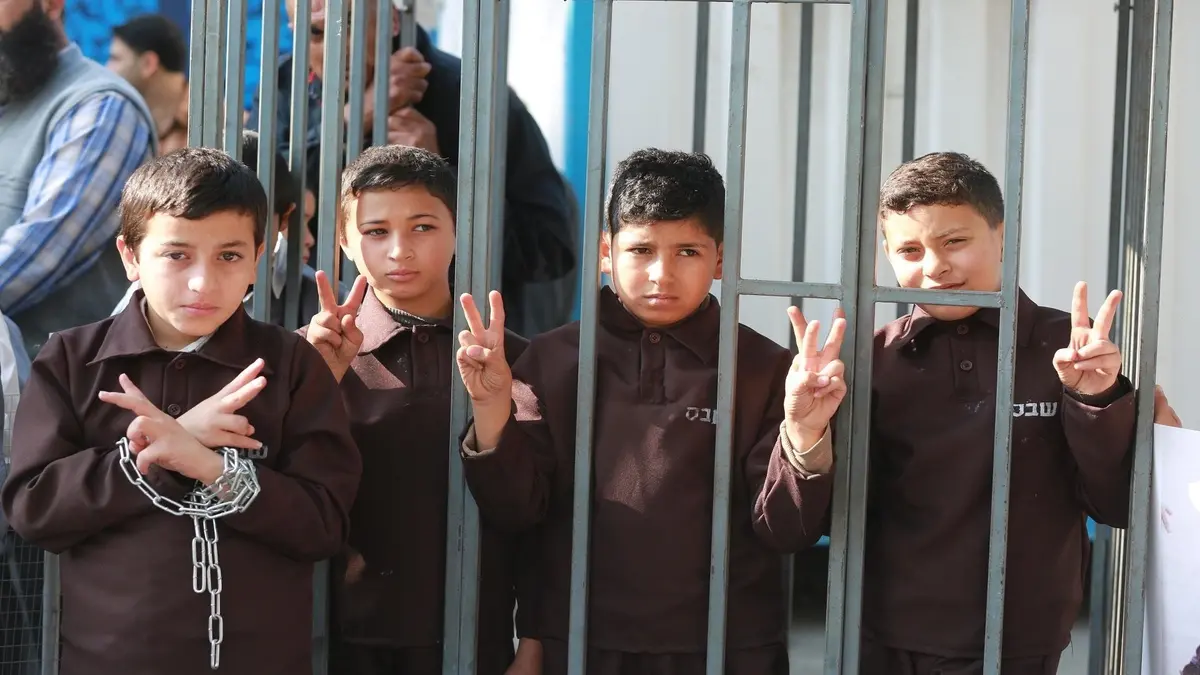
Moein Salahat is the youngest child to be administratively detained since 2008

The Defense for Children International movement said that the Israeli occupation authorities issued an administrative detention order against the child Moein Ghassan Salahat (14 years old) from the town of Beit Fajjar, south of Bethlehem, making him the youngest administrative detainee in the occupation prisons.


The occupation forces arrested Salahat at dawn on February 19 after raiding his family’s home in Beit Fajjar, and issued an administrative detention order against him for four months on March 2, according to what was documented by the Defense for Children International movement.


According to the global movement, Salahat is the youngest Palestinian child to be placed under an administrative detention order since the global movement for children began documenting cases of administrative detention of children in 2008.


The Global Movement stressed that “administrative detention violates basic fair trial rights, but the occupation forces are now expanding this arbitrary policy to detain Palestinian children under administrative detention without charge or trial,” indicating that “the case of the child Moeen Salahat sets a dangerous precedent, as it shows that no Palestinian child, regardless of his age, is immune from arbitrary detention.”


Mu'in, a ninth-grader and the only child in his family, was placed under administrative detention, a practice in which Palestinians, including children, are held without charge or trial, based on "secret evidence" that the detainee and his lawyer cannot see.


Regarding his arrest, the Global Movement stated that the occupation soldiers raided the home of the child Salahat’s family at around 4:30 a.m. on the nineteenth of last month, and immediately detained his father after blindfolding him and tying his hands behind his back. When Moein woke up to look for his father, the soldiers took him and began searching the house.


The Global Movement indicated that the occupation soldiers did not hand the family members an arrest warrant, and asked them not to move, while the soldiers vandalized their property and seized their phones and computers.


Moein's detention is scheduled to continue until June 18, 2025.


Arbitrarily depriving Palestinian children of their right to liberty through the use of administrative detention, which involves imprisoning individuals for long periods without charge or trial and often based on secret evidence, amounts to arbitrary detention.


Since October 7, 2023, the occupation authorities have imposed severe restrictions on lawyers who attempt to provide consultations or visit Palestinian detainees, including children, in occupation prisons.


Lawyers often face access barriers, arbitrary delays, and bureaucratic procedures, making it nearly impossible to provide an adequate defense. Moreover, Israeli military courts routinely rely on “secret evidence” that is not accessible to the detainee or his or her lawyer, denying Palestinian prisoners their right to a fair trial. In many cases, Palestinian children held in administrative detention go without seeing a lawyer for weeks, perpetuating the cycle of arbitrary imprisonment and impunity.

PALESTINE

Wed 05 Mar 2025 8:30 pm - Jerusalem Time

Israeli occupation brings military armored vehicles to Tulkarm amid its ongoing aggression

This evening, Wednesday, the Israeli occupation forces brought in armored vehicles from their military checkpoints at the entrances to the city of Tulkarm.


Local sources reported that two Eitan armored vehicles stormed the town of Anabta before the time for breaking the fast, from the Anab military checkpoint east of the governorate, and roamed along its main street, obstructing the movement of vehicles and citizens and endangering their lives.


It added that two other armored vehicles stormed the city from the Jabara military checkpoint to the south, and headed towards the Shobaki junction at the southern entrance to the city, and headed towards the village of Shofa.


This came in conjunction with the occupation sending military reinforcements of vehicles and infantry units towards the city of Tulkarm and its two camps, Tulkarm and Nour Shams, in light of the ongoing aggression for the 38th consecutive day, amidst the comprehensive destruction of the infrastructure and public and private property, including homes, facilities and shops.


Eyewitnesses reported that the occupation forces' foot patrols were deployed in the neighborhoods of Tulkarm camp and were stationed in the airport neighborhood, where they raided a number of homes and informed three families to evacuate their homes under the pretext that they were located opposite the military barracks that they had set up in the aforementioned neighborhood, and they were given until 10 pm to leave.


Today, the occupation bulldozers also demolished houses in the Al-Hamam neighborhood in the camp, razing them to the ground.

Today, the occupation forces notified the demolition of 17 additional houses in the Al-Manshiya neighborhood in Nour Shams camp, under the pretext of paving a new road, in continuation of the plan to demolish 11 houses that it implemented a few days ago in the camp, extending from the camp square neighborhood to the Al-Manshiya neighborhood.


The national action factions and the popular committees in the camps held the international community, human rights institutions and the international relief agency legally, morally and humanitarianly responsible for the Israeli occupation forces committing massacres, crimes, demolishing, bombing and burning homes, destroying the infrastructure, systematic displacement, continuing the state of forced displacement and emptying the camps, expelling and uprooting our people from their land, continuing the Israeli aggression and implementing its plans to work on changing the features of the camp and restructuring its engineering, geographic and demographic structure.

The United Nations, human rights organizations, and the International Relief Agency, as the legal and humanitarian umbrella for refugees, were called upon to begin providing international protection for our people and to work immediately to stop the repeated and ongoing aggression and invasions of the refugee camps and to move immediately to return the camp residents to their homes, along with reconstruction, shelter, and urgent relief, leading to the implementation of UN Resolution 194 and the return of refugees to their homes from which they were displaced during the Nakba, and the establishment of the state with Jerusalem as its capital.

ARAB AND WORLD

Wed 05 Mar 2025 8:21 pm - Jerusalem Time

Saudi Cabinet affirms full support for decisions of "Palestine Summit" in Cairo

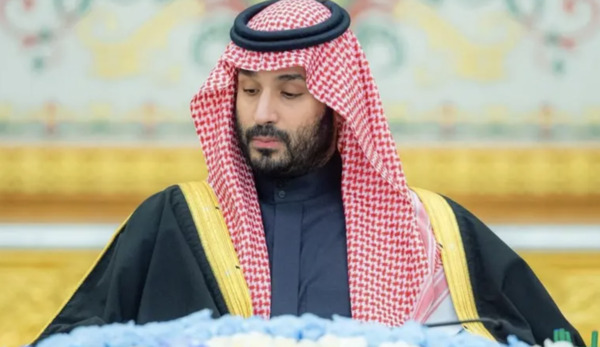
The Saudi Cabinet, headed by Crown Prince Mohammed bin Salman, affirmed its full support for the decisions of the extraordinary Arab Summit, the “Palestine Summit,” held in Egypt, as it aims to affirm the rejection of the displacement of the Palestinian people from their land and to end the disastrous repercussions resulting from the war. The Council also stressed the right of the Palestinian people to self-determination and to obtain their legitimate rights, including their right to establish their independent state on the 1967 borders with East Jerusalem as its capital.


In the same context, the Council of Ministers condemned the decision of the Israeli occupation government to stop the entry of humanitarian aid into the Gaza Strip, and called on the international community to assume its responsibilities towards these serious violations, activate international accountability mechanisms, and ensure sustainable access to aid.


The situation in Lebanon

In addition, the Crown Prince briefed the Cabinet on the results of his discussions with Lebanese President Joseph Aoun during his official visit to Saudi Arabia, which included a review of aspects of relations between the two countries and ways to support and enhance them in various fields, in addition to discussing developments in the situation in Lebanon and the region and the efforts made in this regard.


Implementation of the Taif Agreement

The Saudi Council of Ministers noted what was included in the joint statement between Saudi Arabia and Lebanon regarding the importance of fully implementing the Taif Agreement and relevant international resolutions, extending the Lebanese state’s sovereignty, restricting its possession of weapons, emphasizing the national role of the Lebanese army, and the necessity of the withdrawal of the Israeli occupation army from all Lebanese territories.


Social services support

The Saudi Cabinet affirmed the state’s continued support for the social services system and national initiatives that aim to provide adequate housing for deserving families, and in this context commends the cooperation and integration of roles between government, private and non-profit entities, in addition to community members, to achieve the goals of the Good Regions Campaign.


Saudi-Iraqi security understanding

Within the framework of memoranda of understanding, the Saudi Council of Ministers, headed by Saudi Crown Prince Mohammed bin Salman, Chairman of the Council of Ministers, approved a memorandum of understanding between the Presidency of State Security in Saudi Arabia and the National Intelligence Service in the Republic of Iraq in the field of combating terrorism crimes and its financing.


Protection of Saudi-Egyptian investments

At the same time, the Saudi Cabinet approved an agreement to encourage and protect mutual investments between Saudi Arabia and Egypt, according to a statement by the Saudi Press Agency, "SPA."


Development projects

The Saudi Council of Ministers reviewed the progress of major development and service projects being implemented to enhance the comprehensive renaissance process in Saudi Arabia, while blessing the opening of the first phase of the sports track project, which consolidates Riyadh’s position among the best global cities.


Investment Marketing

Within the framework of local approvals, the Saudi Council of Ministers, headed by Crown Prince Mohammed bin Salman, approved the organization of the Saudi Investment Marketing Authority.


Saudi Building Code Center

The Saudi Council of Ministers decided to transform the National Committee for the Saudi Building Code into a center called the Saudi Building Code Center, approve its organizational arrangements, amend the Saudi Building Code Implementation System, and approve - in principle - the establishment of the Saudi Building Code Academy.


Arab Cyber Security

The Cabinet also approved a headquarters agreement between Saudi Arabia and the Council of Arab Cybersecurity Ministers, the Saudi Press Agency announced in a statement.


PALESTINE

Wed 05 Mar 2025 8:04 pm - Jerusalem Time

For the fifth day: Citizens break their fast at the occupation checkpoints around Nablus

Hundreds of citizens had their Iftar today, Wednesday, at the Beit Furik checkpoint, east of Nablus.


Local sources reported that hundreds of citizens stuck at the occupation checkpoints surrounding Nablus had their Iftar there, due to the occupation forces closing them and tightening their measures.


It is noteworthy that the occupation forces are tightening their measures at the checkpoints surrounding Nablus, which leads to the detention of hundreds of citizens at them and delaying them from reaching their homes, as part of the policy of collective punishment practiced by the occupation forces against citizens.

PALESTINE

Wed 05 Mar 2025 7:03 pm - Jerusalem Time

Israeli Occupation police arrest journalist in occupied Jerusalem

The Israeli occupation police arrested a journalist from occupied Jerusalem this evening, Wednesday.


According to local sources, police forces raided the house of journalist Ahmed Jalajel in the Al-Thawri neighborhood in the town of Silwan and arrested him.

OPINIONS

Wed 05 Mar 2025 7:00 pm - Jerusalem Time

The Arab Summit and the Question of Palestine

Jamal Zaqout

Jamal Zaqout

Opinion Writer


It is clear that the fascist Tel Aviv government, due to the absolute immunity provided by successive US administrations and now by Trump's bullying, is not intending to stop the war, or what has become known as a permanent ceasefire in the Gaza Strip. That government, with full cover from the White House and its envoy Steve Wojcoff, has announced the suspension of the implementation of the agreement. Even if this is negotiating blackmail, it means that Netanyahu is proceeding with the plan of genocide, annexation and displacement, as he sees in the international transformations led by Trump to invalidate the rules of international law and the references of the Palestinian-Israeli conflict, his golden opportunity to move towards liquidating the Palestinian cause.


There is no doubt that the essence of what is known as the second phase of the ceasefire agreement is primarily political, as it included the complete withdrawal of the Israeli army from the Gaza Strip, including from the Salah al-Din Corridor (Philadelphi), and from the Rafah crossing, and its re-operation in accordance with the 2005 crossings agreement, in addition to the commitment to implement the humanitarian protocol, in preparation for the reconstruction phase. Netanyahu is certainly standing on a fine line between his strategy to isolate the Gaza Strip from the national entity, and the return of Hamas to rule the Strip, in the event that the unity of the Palestinian position continues to falter. For him, that would mean the shameful defeat of the slogan of eliminating Hamas, which would completely expose him to his opponents in the Israeli political system.


Since December 2023, Hamas has presented Cairo with an approach that removes Netanyahu’s pretexts regarding the so-called day after, as it has adopted a firm position up until now, according to which it will give up control of Gaza, which is in fact a strategic step to end the division, in favor of Palestinian consensus on a transitional, non-factional unity government. This was formalized, including major national issues, in the Beijing Declaration with the consensus of all Palestinian factions within the framework of the PLO, and those not yet within it.


The murky waters represented by the Palestinian division, which unfortunately did not spare tens of thousands of victims to turn the page, are being fished in by Netanyahu to continue the war of comprehensive liquidation, as its scope is being expanded in the occupied Palestinian West Bank. In other words, the failure to submit to the will of unity, which has become an existential need, feeds into the mill of Netanyahu’s plans to achieve his racist and fascist goals, leading to large-scale ethnic cleansing, especially since all of Israel’s wars have failed and will fail to break the will of the Palestinian people to remain and stand firm on their homeland, at a time when the political system in Israel, instead of recognizing the truth of the Palestinian people and their right to self-determination on their homeland, continues its aggression and even escalates its crimes.


The entire world, including the Arab countries, is preoccupied with the so-called “day after.” However, while it should be focused on the responsibility of the international community to address what the war has destroyed, Israel and its allies, especially Washington, consider it the day after Hamas, or even after Hamas has been eradicated. While they realize the impossibility of achieving this, it means the continuation of the war of liquidation under various pretexts, if the world, led by the Palestinians, does not stand united in the face of this bloody racism. We are the owners of the cause that Netanyahu wants to eliminate, in preparation for opening the door to comprehensive Israeli hegemony over the entire region.


In this context, the hollow talk continues about who will run Gaza? Who will undertake its reconstruction? And dealing with it as an orphan stripped of its comprehensive national entities. Here, we must say the bitter truth, which is that the division caused by Hamas in 2007 has harmed the national cause, but the failure of the influential leadership to contain it, in a way that enhances the legitimacy of national representation, and closes the deadly loopholes that Netanyahu seeks to exploit, has harmed the national cause in a deep and far-reaching way, especially since there is an equation that has enjoyed national and popular consensus alike, represented by the Beijing Declaration, which is intended to enhance Palestinian immunity. Unfortunately, the continuation of such a policy has not stopped at the fragility of the national situation, but rather, it is taking it to the most dangerous paths, one of the symptoms of which is certainly that some people come out to present credentials to gain confidence in the agency that Israel seeks to establish on those who go too far in appeasing it, in a way that strikes at any legitimacy of the comprehensive national entity. We need to restore all legitimacy, and there is no way to do that except through elections, but the wound and pain of Gaza cannot bear waiting, and Gaza, which has always been a lever for Palestinian nationalism, will not accept the exchange of its return to normal life on the corpse of the cause and the national destiny, especially since we have an agreement that achieves both matters: saving Gaza, and preserving the national destiny, and certainly not by submitting to the plans to engineer the Palestinian political system, according to the Israeli goals and vision.


Here our responsibilities are defined, and the need to continue to raise the legitimate question continues, which is why the stubbornness and disengagement from implementing the requirements of the Beijing Declaration and all the previous Palestinian ideas and Arab and non-Arab efforts to end the catastrophic tragedy of division continues. This question has become urgent to be directed to our Arab brothers, which is: Is the way to save Gaza by ignoring its representation?! Or, in light of the current circumstances, especially the clarity of the plans targeting Arab national security itself, we look forward to intensifying their efforts to strengthen this representation with a solid national unity, according to realistic foundations based on international law and UN resolutions, and to be the locomotive of Arab and international efforts to save and rebuild Gaza, and even save the national destiny as a whole. This is what we expect from our Arab brothers, and this is what we believe the Arab summit must address, in a way that protects Palestinian rights, national security, and Arab interests at this most dangerous historical juncture since the 1948 Nakba.


.....

Netanyahu is fishing in the murky waters represented by the Palestinian division, which unfortunately did not allow tens of thousands of victims to turn the page, to continue the war of comprehensive liquidation, as its scope is being expanded in the occupied Palestinian West Bank.

ARAB AND WORLD

Wed 05 Mar 2025 4:56 pm - Jerusalem Time

Cairo: One party withdraws from the Gaza agreement and we count on Washington to complete its implementation

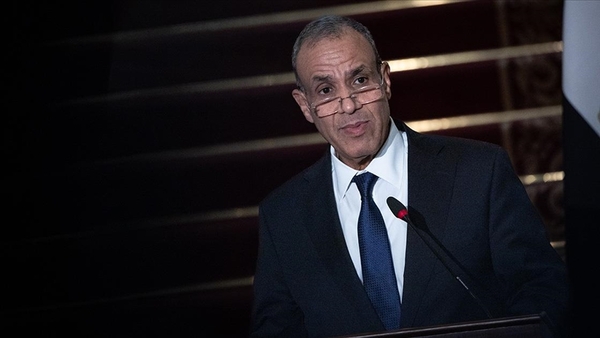
Egyptian Foreign Minister Badr Abdel Aati said on Wednesday that there is a party (Israel) "trying to evade its obligations" related to the ceasefire agreement in the Gaza Strip, and that his country and Qatar are counting on Washington to complete its implementation.


At midnight last Saturday/Sunday, the first phase of the agreement that went into effect between Hamas and Israel on January 19 ended, and Tel Aviv evaded starting negotiations for the second phase.


Abdel-Ati added, in statements to the official Qatar News Agency, that "Egypt and Qatar have a joint responsibility, in addition to the United States, to continue pressure to enter into negotiations on the second phase."


The Gaza agreement was reached with the mediation of Egypt and Qatar and the support of the United States, after a genocidal Israeli war with American support that lasted for about 16 months on Gaza.


The Israeli genocide since October 7, 2023 has left more than 160,000 Palestinians dead and wounded, most of them children and women, and more than 14,000 missing.


Abdel-Ati continued, "The sincere joint efforts made by Egypt and Qatar succeeded last January in reaching a ceasefire agreement in the Gaza Strip, which includes three stages," each lasting 42 days.


He added, "The first phase has been implemented so far, while there is now a party (meaning Israel) trying to evade its obligations."


On Sunday, Israeli Prime Minister Benjamin Netanyahu claimed that Hamas was refusing to respond to a new American proposal for a temporary ceasefire during the month of Ramadan and the Jewish holiday of Passover, and decided to stop the entry of humanitarian aid into Gaza.


Netanyahu wants to release more Israeli prisoners from Gaza, without implementing the second phase commitments, especially ending the war of extermination and the complete withdrawal of the Israeli army from the Strip.


While Hamas affirms its commitment to the agreement and demands that Israel be bound by it, and calls on the mediators to immediately begin negotiations for the second phase, it considered the decision to prevent aid "cheap blackmail, a war crime, and a blatant coup against the agreement."


Abdel-Ati added, "There are obligations on both parties to the ceasefire agreement, and each party must implement its obligations, especially the Israeli party, to complete this agreement in its three stages."


He added, "Egypt and Qatar are counting on the American role to work on implementing what was agreed upon, and to immediately begin, without any delay, the negotiation process for the second phase."


He added: "We succeeded in releasing a number of hostages, and now the effort must continue and the second and third stages must be implemented, until the release of all hostages and remains inside Gaza is completed."


He added: "In return, Israel will naturally implement its commitments, especially with regard to the full implementation of humanitarian, medical and shelter aid, and working to release the agreed number of Palestinian prisoners."


The emergency Arab summit on Palestine in Cairo on Tuesday evening, through its final statement, stressed the top priority of completing the implementation of the agreement, leading to a permanent cessation of aggression on Gaza and a complete Israeli withdrawal from the Strip.


The summit adopted a plan to rebuild Gaza without displacing Palestinians from it, which would last for 5 years and cost 53 billion dollars, but Israel and the United States announced their rejection of the plan and their adherence to the plan of US President Donald Trump.


Since January 25, Trump has been promoting a plan to displace the Palestinians of Gaza to neighboring countries such as Egypt and Jordan, which was rejected by both countries, and was joined by other Arab countries and regional and international organizations.


Israel has turned Gaza into the world's largest prison, besieging it for the 18th year, and the war of extermination has forced about two million of its citizens, numbering about 2.4 million Palestinians, to flee in tragic conditions with a deliberate severe shortage of food, water and medicine.

PALESTINE

Wed 05 Mar 2025 4:42 pm - Jerusalem Time

Gaza: 48,440 dead and 111,845 wounded since the beginning of the aggression

The number of dead in the Gaza Strip has risen to 48,440, and the number of injuries to 111,845 since the start of the Israeli aggression on October 7.


Medical sources said that 35 dead arrived at hospitals in the Gaza Strip during the past 24 hours, 30 of whom were pulled out from under the rubble, and one dead succumbed to his wounds he sustained earlier, in addition to 4 dead who were recently killed, along with 10 injuries.


A number of victims and dead are still under the rubble of destroyed buildings and on the streets, amid attempts to rescue them, but the ambulance and civil defense crews cannot yet reach them.


The Israeli occupation forces launched an aggression on the Gaza Strip, which resulted in the death and injury of tens of thousands of citizens, including about 17,581 children and about 12,048 women, while about 11,000 are still missing under the rubble and on the roads, which led to a 6% decrease in the population of the Gaza Strip by the end of 2024.


The aggression also caused the displacement of more than 85% of the Gaza Strip’s citizens, i.e. more than 1.93 million citizens out of 2.2 million, from their homes after they were destroyed. About 100,000 citizens have left the Gaza Strip since the beginning of the aggression.


Half of the Gaza Strip currently lives in shelters and tents that lack the minimum requirements for human life, amidst massive and unprecedented destruction of infrastructure and citizens’ property, with estimates indicating that more than 80% of the Gaza Strip is destroyed.


About 96% of the Gaza Strip’s population (2.2 million people) face high levels of acute food insecurity until September 2024, and more than 495,000 citizens (22% of the population) face catastrophic levels of acute food insecurity (Phase 5), some of whom are at risk of death due to malnutrition and food shortages.

PALESTINE

Wed 05 Mar 2025 4:30 pm - Jerusalem Time

Israeli Settlers graze their livestock and steal a horse in the Jordan Valley

Today, Wednesday, settlers released their cows into the rainfed crops of citizens in several areas in the northern Jordan Valley.


The head of the Al-Maleh village council, Mahdi Daraghmeh, said that settlers released their cows into the rain-fed crops of citizens in Al-Farisiya, Wadi Al-Faw, and Khirbet Samra in the northern Jordan Valley.


In a related context, settlers stole a horse belonging to citizen Fawzi Anbousi in Khirbet Yarza, east of Tubas, according to what Draghmeh confirmed.

PALESTINE

Wed 05 Mar 2025 4:28 pm - Jerusalem Time

Injuries during clashes with the occupation in Al-Arroub camp

A young man was shot with live ammunition, and dozens of citizens suffocated, today, Wednesday, following clashes that erupted with the Israeli occupation forces in Al-Arroub camp, north of Hebron.


Local sources reported that the occupation army fired live bullets and tear gas canisters at citizens during the clashes that erupted in the camp, which led to a young man being injured by bullets in his lower limbs and hand, and dozens suffocating from the toxic gas and were treated in the field.

ARAB AND WORLD

Wed 05 Mar 2025 4:26 pm - Jerusalem Time

South African government: Israel using starvation as a weapon of war in Gaza

South Africa said on Wednesday in a statement issued by its Ministry of Foreign Affairs that "Israel is using starvation as a weapon of war" in Gaza, by preventing humanitarian aid from reaching the Strip since Sunday.


According to Agence France-Presse, the Foreign Ministry explained in its statement that “by preventing food from entering Gaza, Israel continues to use starvation as a weapon of war as part of an ongoing campaign that the International Court of Justice has ruled to be a potential genocide against the Palestinian people,” referring to the case brought by South Africa against Israel before the court.