OPINIONS

Tue 17 Jun 2025 9:14 am - Jerusalem Time

Israel and Iran... When Netanyahu Fans the Fire of Doomsday

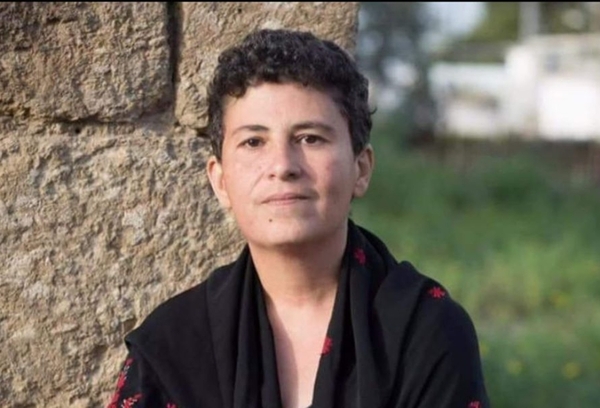
Rania Marjiya

Rania Marjiya

Opinion Writer

We are not living in a moment of ordinary regional conflict. We are now writing from within a chasm opening onto a new hell, whose gates were flung wide open after the occupation's prime minister, Benjamin Netanyahu, decided to play the role of "Israfil," not to breathe life, but to breathe death.

Everything changed on the night of June 13. The ground beneath us became flammable at any moment, not because Tehran had decided to respond, but because Tel Aviv, under Netanyahu's leadership, had come to believe that wars were electoral opportunities, not human catastrophes.

*********

Netanyahu... Sentenced to Death


The man who lost his moral legitimacy and whose political authority collapsed in the face of protests within Israel is back doing what he has been doing for more than twenty years: provoking war.

From southern Lebanon to Gaza to Damascus to Tehran, Netanyahu sees his people only in the shadow of battle, and sees his future only through bombing others.

He doesn't want Israel's security... he wants the security of his throne.

"Operation Desert Lion," launched by Tel Aviv this week, was not a response, but rather an early announcement of a conflict in which Netanyahu seeks to set the region on fire, to save himself from the sword of trial and the specter of charges that haunt him in every corner of the Israeli judicial system.

****

Results of the strikes: a strategic loss despite military superiority


It is true that Israel targeted more than 100 sites in Iran and killed senior military leaders, but the Iranian response was different this time.

Iran launched hundreds of precision-guided missiles and drones in Operation "True Promise III," targeting Tel Aviv, Ben Gurion Airport, and military installations.

More than 30 Israelis were killed, dozens were injured, and there was real terror in the streets, despite the effectiveness of the Iron Dome system.

For the first time since 1973, Israelis feel that their homes are no longer secure, and that their heavily armed state may no longer provide shelter for them and their children.

Is this the result of a "victory"?

Or is it the result of the madness of a leader who decided to negotiate with the world over the corpses of civilians?

****

Who will pay the price?


As usual, Arabs.

Lebanon is on the edge of a full-scale war, and Gaza is experiencing warning strikes every night.

Syria bleeds under fire from "side messages," and Yemen prepares for a new role in the axis of resistance.

As for the Gulf, it is reconsidering its calculations, fearing that the fire will spread to the Strait of Hormuz.

Despite all this, Netanyahu appears smiling, telling the world about "Israel's right to defend itself," while deliberately ignoring the right of peoples to life.

*****

real nuclear threat


What Netanyahu doesn't understand is that the "Iranian enemy" he talks about every day isn't just nuclear facilities.

Rather, it is a complete state, with an army, security, and strategic depth, that is adept at long-term warfare and is not afraid of losses.

Iran's threat to withdraw from the Nuclear Non-Proliferation Treaty was not an exaggeration, but rather a dangerous message: We are on the cusp of a new nuclear arms race in the Middle East.

In light of clear American weakness, the absence of an effective European role, and opportunistic Russian-Chinese silence, the next war may not be limited, but existential.

****

For life... For the people


I am not writing this article in defense of a country, nor in support of an axis, but in defense of a human being.

A person in Tel Aviv fears for his children, a person in Tehran has no electricity, and a person in Gaza has not slept a single night since the beginning of the year.


What Netanyahu is committing today is a political and moral crime that will haunt the region for generations.

The man who despised peace, legitimized the occupation, insulted the judiciary, and destroyed confidence in the state from within, now wants to rule through a major war.

Should we allow him to do that?

Should we give him a pass just because he's good at manipulating the media?

no.

It is time to speak the truth:

Netanyahu is a danger to his people before he is a danger to his enemies.

If it is not curbed now, the whole East will explode.

Israfil will indeed come, but not to blow the trumpet... but to announce the end of our dream of life.


OPINIONS

Tue 17 Jun 2025 9:14 am - Jerusalem Time

Changing the Middle East is about division, genocide and destruction.

Fawzi Ali Al-Samhouri

Fawzi Ali Al-Samhouri

Opinion Writer

Transforming the Middle East is a long-standing American goal that the Israeli entity has begun implementing practically as an agent of America, according to statements made by the leadership of the colonial Israeli entity and the United States after October 7, 2023.

What does it mean to change the Middle East?

First: Integrating Israel into the Arab world and its dominance over the Arab region.

Second: Liquidating the Palestinian cause by undermining the Palestinian people's right to freedom, independence, self-determination, and the establishment of their independent state, and by forcibly displacing the Palestinian people by repeating the scenario of 1948 and 1967, and in implementation of the American goal of expanding the territory of Israel, which was established on the basis of a colonial occupation of Palestine, to enable it to perform its functions as a launching pad for aggressive expansionist colonial powers.

Third: Re-dividing Arab and Islamic countries into small states, or at best, into regions based on sectarian, denominational, and ethnic foundations, with the aim of destroying their internal fronts, ensuring their subordination, plundering their wealth, and continuing the threat of destabilizing the security and stability of those countries, in anticipation of the birth of a multipolar world order.


Mechanisms for implementing the Israeli-American plan

First: Supporting the terrorist Israeli entity with all means of military, political, economic, and technological power, and granting it immunity from the possibility of being held accountable and punished before international courts, institutions, and bodies.

Second: Unleashing its aggressive hand, with American protection, throughout the Arab and Islamic region. The American position on continuing to support the commission of war crimes of genocide and ethnic cleansing against the Palestinian people in the Gaza Strip and, to a lesser extent, in the West Bank, and its use of the veto to refuse to stop the aggression and lift the comprehensive siege on Palestinian civilians in the Gaza Strip, and the theft of the Palestinian people’s money are only indicative examples.

Third: Neutralizing and excluding the United Nations from carrying out its responsibilities to achieve its goals by implementing its charter and resolutions by obligating the Israeli entity to implement all international resolutions under the threat of sanctions, leading to comprehensive isolation, with clear duplicity in a clear policy that expresses the adoption of a policy of imposing a fait accompli resulting from the use of brutal military force and the exercise of political influence by using the stick and the carrot to pressure countries at critical junctures to change their positions by excluding the principles of right, equality, justice, sovereignty, and the territorial integrity of their countries.

Israel's refusal, due to its bias and absolute American support, to respect its obligations and fulfill the requirements and conditions of its acceptance as a member state of the United Nations, by implementing hundreds of resolutions issued by the Security Council and automatically by the General Assembly and the International Court of Justice regarding the Palestinian issue in general, foremost among which is the cessation of its crimes of "genocide, ethnic cleansing, war, and crimes against humanity" and the end of its occupation of the territories of the occupied and internationally recognized Palestinian state, is nothing but an indication of the American coup against the principles of the United Nations and international covenants, charters, and agreements.

Fourth: Using financial aid and employing the International Monetary Fund and the World Bank as pressure tools to subjugate countries that refuse to accept its policies, and President Trump's threat to do so, to pressure Egypt and Jordan to accept the forced displacement of the Palestinian people from the Gaza Strip and receive hundreds of thousands of forcibly displaced persons, the greatest crime of the age, by uprooting a people from their homeland, in fundamental contradiction with international law and the right of peoples to self-determination in their authentic historical homeland.

We have always warned, as writers, analysts, politicians and parties, that the practical abandonment of support for Palestine and the struggle of its people, the vanguard of the Arab people, until they achieve freedom and independence, and the collective confrontation of the plans of the American-backed Israeli enemy by adopting a unified strategy that finds its way to implementation by all available means, capabilities and tools in confronting the plans of the Israeli colonial occupation authorities, the agent of the American axis, which aim to perpetuate its occupation of the occupied Palestinian and Arab territories, means enabling the Israeli colonial entity to move to the second stage of its aggressive expansionist policy represented by the geographical expansion of the artificial entity in the surrounding countries, leading to the establishment of “Greater Israel.”

Post-aggression against Iran

Since the beginning of the war of genocide and ethnic cleansing against the Palestinian people in the Gaza Strip, the war criminal Netanyahu and his gang have been talking about this as the beginning of a change in the Middle East "according to the Israeli-American vision." They brazenly and arrogantly declare that they are going to change the Middle East, i.e. subject all the countries of the Middle East "the Arab countries, Iran, Turkey, and others" to American influence and hegemony through the Israeli agent and tool to be the policeman of the region.

Netanyahu, with his criminal mentality, believes that the liquidation of the Palestinian cause and the forced displacement of its people have become guaranteed after the statements of US President Trump and his ambassador to the Israeli entity, expressing his policies that there is absolutely no place for a Palestinian state on the land of Palestine, "Judea and Samaria" on the land of the occupied Palestinian state, which is internationally recognized. This prompted him to escalate, expand, and occupy new lands, coupled with the systematic destruction "in Syria and Lebanon" of infrastructure and natural resources. He followed this with a barbaric, destructive aggression against Iran, which, if he achieves his aggressive goals of subjecting it to American influence and hegemony on the path to dividing it, will ensure its continued existence as an advanced military base that will contribute in the future to forming a cordon aimed at besieging China and limiting its influence on the global economic arena. This necessarily requires, for the colonial plan to succeed, a move to the next target of the Israeli-American plan, which is Pakistan, due to its military, demographic, geographical, and strategic power, and its position in the Islamic world.

This is how Palestine began, since the creation of the artificial Israeli colonial entity on the land of historic Palestine, the heart of the Arab homeland and the Islamic world, due to its religious status, which constitutes the challenge to the unified practical confrontation of the colonial plans that aimed to divide the Arab and Islamic world into countries subject in one way or another to the colonial hegemony and control, with its symbols being Britain, France and America. This enabled the Israeli enemy, America’s tool, to encroach on the Arab and Islamic world and threaten to undermine any country, near or far, that thinks of liberating itself from the American umbrella.

Aborting the Israeli-American plan to liquidate the Palestinian cause and the forced displacement of the Palestinian people outside their homeland, and confronting the Israeli-American plan to change the Middle East (dividing its countries) requires a serious and effective political will on the part of the leaders of the Arab, Islamic and friendly countries to embody solidarity and joint action and translate it into practical action by taking punitive and pressure-filled measures against the terrorist Israeli entity, its sponsor and guide, as a message to America that its bias and support for the Israeli entity with its aggression and steps towards changing the Middle East will not achieve its political and economic interests in the medium term, but will rather increase hatred and hostility towards American policy.

Palestine is the first line of defense. Its collapse, God forbid, would mean a gradual collapse for all Arab and Islamic countries. Let us unite our efforts before it is too late.

ARAB AND WORLD

Tue 17 Jun 2025 9:07 am - Jerusalem Time

Iranian missiles fired at Israel, warnings to the home front to stay in shelters

The Israeli war on Iran entered its fifth day amid ongoing escalation. The Israeli Air Force launched airstrikes on the Iranian capital, Tehran. Meanwhile, an Israeli General Staff official confirmed that Iranian airspace is now completely exposed to Israeli aircraft, indicating that a ceasefire will only be achieved under Israeli conditions that "have not yet matured."

Iran launched missiles toward Israel on Tuesday, prompting the Israeli Home Front Command to issue urgent warnings to citizens to stay in shelters and fortified areas for their safety amid the ongoing military escalation, the Home Front Command reported.

Air raid sirens sounded across large areas of the country, while loud explosions were heard in a number of towns, particularly in coastal areas and towns in the central triangle. This indicates a significant escalation in the pace of Iranian attacks.

Air raid sirens also sounded in Haifa and Nahariya, explosions were heard in the north of the country and in Tel Aviv, and a direct hit was recorded in Herzliya.

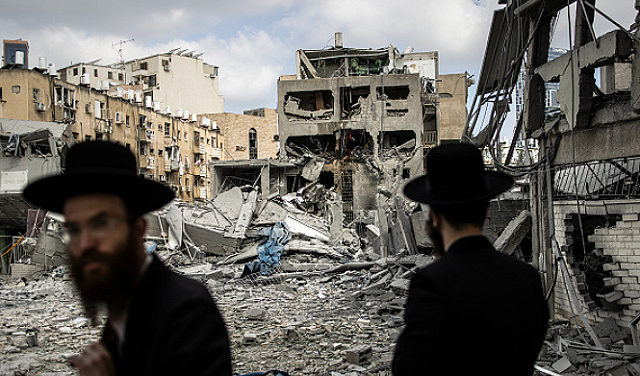
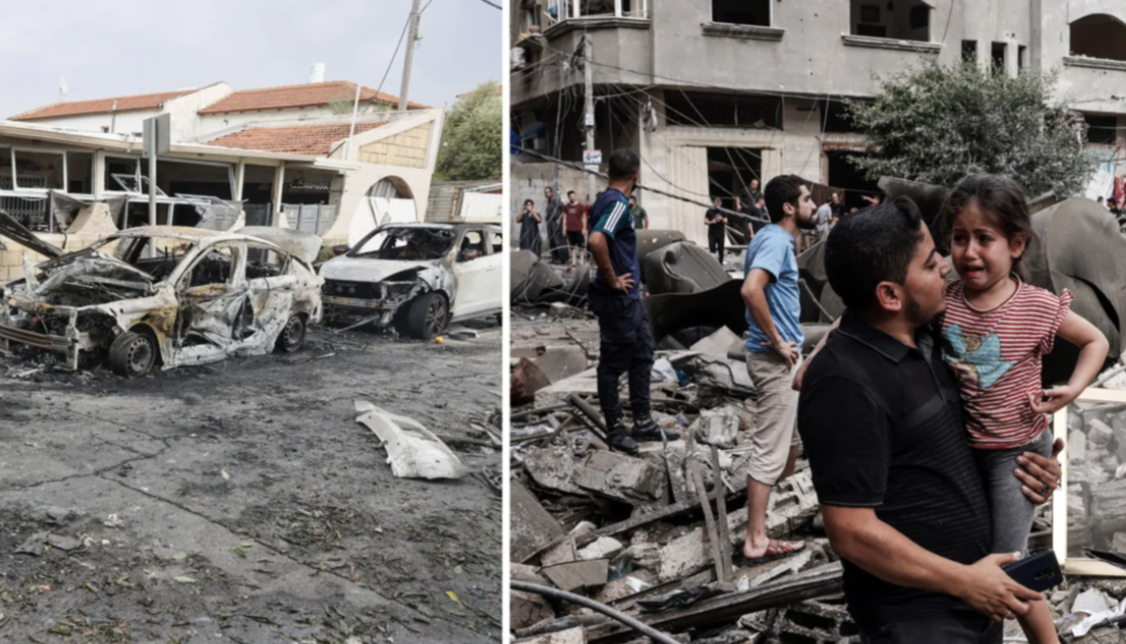
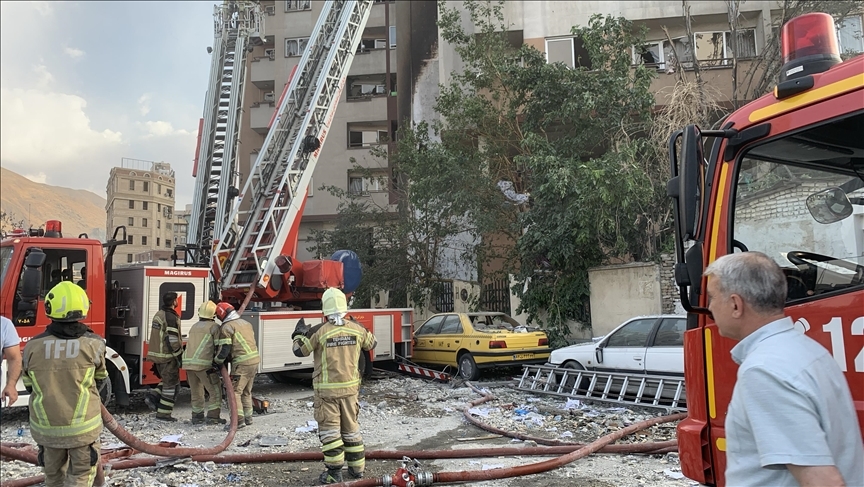
Israeli media reported that the Herzliya area came under intense missile attack, with a barrage of between 20 and 30 rockets launched from Iran, one of which directly hit an eight-story residential building, causing extensive damage and thick smoke rising from the area.

In a notable development, US President Donald Trump called early this morning for the "immediate evacuation of Tehran," without explaining the reasons for this warning. CNN quoted a White House official as saying that this call reflects Trump's urgent desire to push Iran back to the negotiating table.

On the US military side, the Pentagon announced the deployment of the aircraft carrier Nimitz and its battle group to the region to protect US interests, while stressing that US forces did not participate in the Israeli attacks on Iran.


ARAB AND WORLD

Tue 17 Jun 2025 9:05 am - Jerusalem Time

Trump threatens: "Everyone must evacuate Tehran immediately"

US President Donald Trump appeared to threaten Iran on Monday evening, writing on his Truth Social account that Iran should have made a "deal" and calling for the immediate evacuation of the Iranian capital, Tehran, with a population of about 10 million.

Trump wrote: "Iran should have signed the 'deal' I asked them to sign. What a disgrace. What a waste of human life. Simply put, Iran cannot have a nuclear weapon. I have said it again and again! Everyone should evacuate Tehran immediately!"

The US president made this threat while attending the G7 summit in Canada. White House press secretary Caroline Leavitt stated after Trump's post that the president would be leaving the summit "because of what's happening in the Middle East." According to media reports, the president ordered his National Security Council to convene in the White House Situation Room for an emergency meeting. US officials denied rumors that the United States had begun striking Iran, stressing that the United States remains in a "defensive posture" in the Middle East.

Israeli media reported on Monday evening that the United States had begun bombing Iran to create panic and chaos, and to deliver psychological blows to Iranian morale.

Trump's remarks came after US Defense Secretary Pete Hegseth announced that he had ordered the deployment of additional US capabilities to the Middle East. US officials confirmed that the massive deployment of refueling aircraft was linked to the Israel-Iran war, and the United States also redirected a second aircraft carrier to the region.

According to many experts in Washington, the Trump administration is prepared to directly engage Israel in its war of aggression against Iran by launching airstrikes, which would almost certainly trigger attacks on US bases in the region.

Israel launched an offensive against Iran on Friday, two days before the sixth round of nuclear negotiations between the United States and Iran was scheduled to begin. Trump had been demanding that Iran abandon its nuclear program, but not the right to retain the enriched uranium permitted under the Non-Proliferation Treaty, to which Iran belongs. Tehran refused to comply. Despite the apparent stalemate, Iran was poised to present a counterproposal to the United States, but the talks were canceled after Israel launched its war.

Israeli Prime Minister Benjamin Netanyahu launched the war under the pretext of preventing Iran from developing a nuclear bomb, but US intelligence agencies have unanimously concluded that there is no evidence that Tehran is seeking to acquire a nuclear weapon. This apparent threat comes amid indications that the United States may begin bombing Iran directly.

Earlier, during his meeting with Canadian Prime Minister Mark Carney on the sidelines of the first day of the G7 leaders' summit in Alberta, Canada, Trump said that Iran must return to the negotiating table.

He added that Iran wants to negotiate, but that it has been too late, and that what is happening is painful for both sides. He emphasized that "Iran will not win this war and must return to the negotiating table before it is too late."

He noted that he had given Iran a 60-day deadline to return to negotiations on its nuclear program, but Tehran had shown no desire to reach an agreement.

These statements come as Israel continues to carry out airstrikes on the Iranian capital since Thursday evening, while Washington has so far refused to join the military operation.

PALESTINE

Tue 17 Jun 2025 8:51 am - Jerusalem Time

A new massacre: More than 20 dead among those waiting for aid in the southern Gaza Strip.

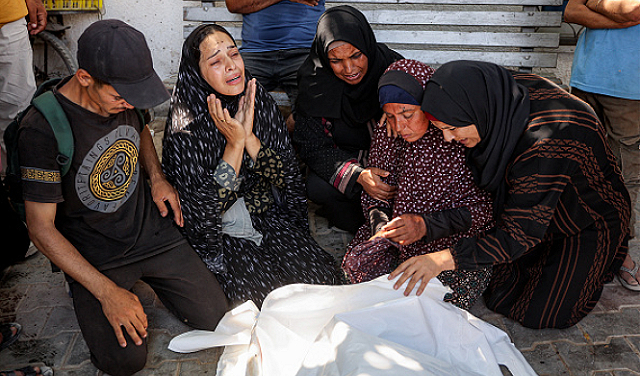
More than 20 civilians waiting for aid in the Tahlia area east of Khan Yunis in the southern Gaza Strip were killed this Tuesday morning.

Meanwhile, seven civilians, including a mother and her three children, were killed as a result of the ongoing Israeli occupation forces' bombardment of various areas in the Gaza Strip.

Local sources reported that five people, including a mother and her three children, were killed when the occupation forces bombed a tent housing displaced people in the Shafa'i camp in the Al-Mawasi area, west of Khan Yunis.

She added that a female citizen was killed as a result of the occupation's bombing of the vicinity of the Faisal Tower in Deir al-Balah in the central Gaza Strip at dawn. A citizen was also killed and others were injured as a result of the occupation's aircraft bombing people waiting for aid on Salah al-Din Street in the central Gaza Strip.

The Gaza Strip has been suffering a catastrophic humanitarian crisis since the occupation closed all crossings on March 2, preventing the entry of food, medicine, aid, and fuel, while the occupation forces escalate their genocide against our people in the Strip.

Since October 7, 2023, Israel has been committing genocide in Gaza, including killing, starvation, destruction, and displacement, ignoring international calls and orders from the International Court of Justice to halt it.

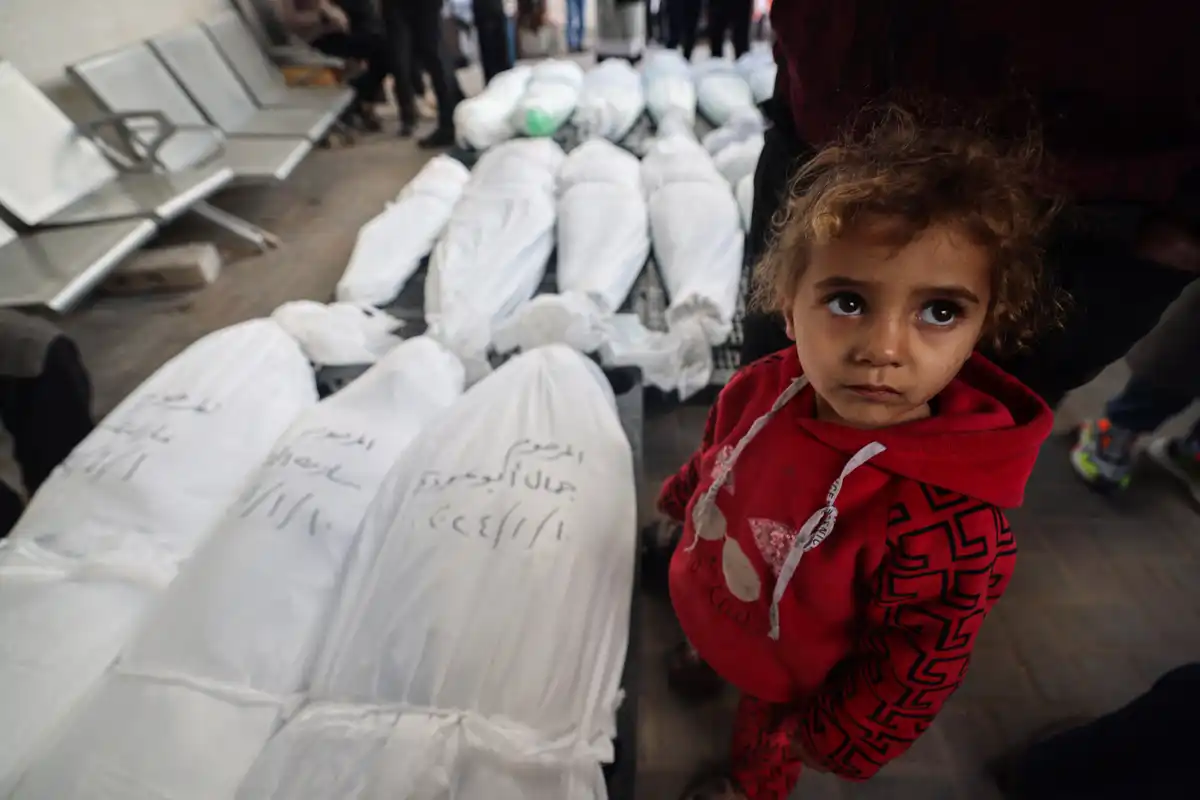
The genocide left approximately 184,000 dead and wounded, most of them women and children, and more than 11,000 missing. Hundreds of thousands were displaced, and famine claimed the lives of many, including children, as well as widespread destruction.

PALESTINE

Mon 16 Jun 2025 9:24 pm - Jerusalem Time

Two children were injured by Israeli occupation forces' bullets in Yamoun, west of Jenin.

Two children were injured by Israeli occupation forces' bullets on Monday evening in the town of Yamoun, west of Jenin.

The Red Crescent Society reported that its crews in Yamoun transported two 15-year-old boys to hospital, one of whom was shot in the neck by live bullet shrapnel and the other in the thigh.

Local sources said that occupation forces stormed the town and deployed around Al-Arqam Mosque and several streets, firing live ammunition and tear gas canisters. They also raided and searched the home of citizen Ghalban Freihat, and closed a commercial store in the town center. No arrests were reported.

PALESTINE

Mon 16 Jun 2025 9:06 pm - Jerusalem Time

56 dead since dawn: 5 citizens killed by Israeli occupation fire in northern Gaza

Five citizens were killed and others wounded by Israeli occupation fire on Monday evening while waiting for aid in northwest Gaza City.

Local sources reported that five citizens were killed and dozens more injured after the occupation forces targeted them with gunfire while they were waiting for aid in the northwest of Gaza City. This brings the death toll in the Gaza Strip since dawn today to 56, including 38 aid-seekers.

Medical sources reported that the death toll among those waiting for aid has risen to 338 martyrs and 2,831 wounded since May 27.

Earlier, two citizens were killed and others injured when Israeli air forces bombed a warehouse in the town of Az-Zawayda in the central Gaza Strip.

Since October 7, 2023, the Israeli occupation has been committing genocide in the Gaza Strip, including killing, starvation, destruction, and displacement, ignoring international appeals and orders from the International Court of Justice to halt it. The genocide has left more than 184,000 dead and wounded, most of them children and women, and more than 11,000 missing. Hundreds of thousands have been displaced, and famine has claimed the lives of many, including children, as well as widespread destruction.

PALESTINE

Mon 16 Jun 2025 7:26 pm - Jerusalem Time

A man and his wife were injured when an Israeli military vehicle collided with their vehicle west of Jenin.

A man and his wife were injured Monday evening when an Israeli military vehicle collided with their car in the town of Burqin, west of Jenin.

The Palestinian Red Crescent Society said its crews transported the injured to the hospital. The man and his wife were injured after a military vehicle collided with their vehicle as Israeli forces passed by at the entrance to the town.

In a related development, Israeli occupation forces stormed the town of Burqin and deployed their vehicles throughout its streets, as the aggression against the area continued.

In Jenin camp, occupation bulldozers continued to demolish homes in the Mahyoub Street area, as part of a demolition plan announced by the occupation forces last week, which includes the demolition of 95 homes in the camp.

The occupation's aggression on the city and camp of Jenin continues for the 146th consecutive day, leaving 40 martyrs, more than 200 injured, and dozens of detainees.

ARAB AND WORLD

Mon 16 Jun 2025 6:09 pm - Jerusalem Time

Speculation that Trump and Tehran are looking to reach a nuclear agreement to end the war

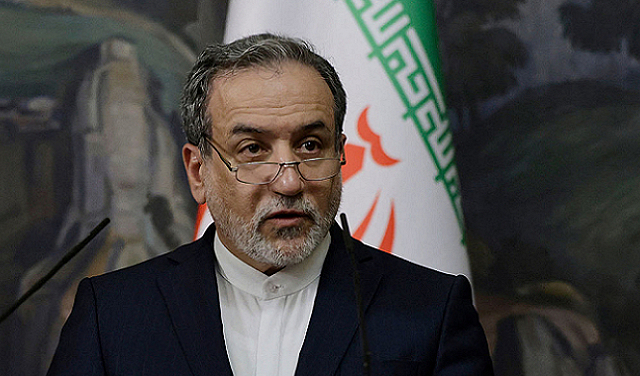
Iranian Foreign Minister Abbas Araqchi said Monday that Tehran is prepared to accept any agreement that prevents it from possessing nuclear weapons if it leads to an end to the war, but it will reject any agreement that restricts its "legitimate rights" to nuclear capabilities. This Iranian position has not changed over the past months of US-Iranian negotiations.

According to experts, senior Iranian military leaders, some of whom assumed their positions hastily after Israel killed several of their predecessors, worked quickly to adapt their plans to developments in the war, while maintaining diplomatic channels to end the war.

Foreign Minister Abbas Araqchi is leading Iran's diplomatic front, acting on the orders of Supreme Leader Ali Khamenei. They say the goal is to stop the war, in part by building an international coalition to pressure Israel, which launched its aggression on Friday without any Iranian provocation.

According to Iranian media, the war has begun to be described as a "war of the cities" – a phrase reminiscent of the mutual missile attacks during the Iran-Iraq War in the 1980s. According to Araghchi, who spoke on Sunday during a meeting with foreign diplomats, Iran does not want its conflict with Israel to spread to neighboring countries "unless it is imposed on us." He added that Iran's response was a "completely legitimate" act of self-defense, and that the Islamic Republic's attacks on Israel would end once Israel halted its military campaign.

The Iranian political and military leadership has repeatedly stated that any Israeli attack would lead to a devastating response against Israel, in line with Araghchi's diplomatic statements.

Current Iranian rhetoric emphasizes that Iran is a country willing to cooperate in finding a diplomatic solution and, more importantly, that it was attacked without provocation. At the same time, Araghchi makes no effort to conceal the potential threat Iran poses to other countries in the region, particularly the Gulf states, a threat that could have far-reaching consequences for Europe and the global economy.

According to Araghchi, Iran, seeking a diplomatic solution to end the war, is prepared to accept "any agreement aimed at preventing us from possessing nuclear weapons." However, he added that if the purpose of such an agreement is to deprive Iran of its "legitimate rights" to develop its nuclear capabilities, they will reject it.

It's worth noting that the "legitimate rights" Araghchi is referring to are Iran's right to enrich uranium on its own territory, as a fundamental part of its legal rights as a signatory to the Nuclear Non-Proliferation Treaty (NPT) and the original 2015 nuclear agreement, as well as its sovereign right to develop a nuclear industry "for civilian purposes." When Iran and the United States began their nuclear talks, the US administration spoke of Iran's right to enrich at low levels, but later, the US president backed down from this point under pressure from Netanyahu and his allies in the US Congress. Trump began insisting that Iran would not be allowed to enrich uranium on its own territory.

There is speculation about what Araghchi meant on Sunday, and whether it was a signal that Iran was willing to make a concession on this issue. He stated that Iran was ready to present its response to the US delegation during the sixth round of talks, which were supposed to be held in Oman on Sunday, but were postponed, though not canceled, due to the war.

There was widespread speculation in Washington that Trump's statements offered a real chance for a quick nuclear agreement. After warning Iran against attacking US forces, he said, "We could easily reach an agreement between Iran and Israel and end this bloody conflict," referring to an agreement "between Iran and Israel," rather than one between the United States and Iran.

Implicitly, the United States, Iran, and the other countries (who sponsored the 2015 agreement) are believed to share the understanding that the nuclear agreement means stopping the war. This means that if Iran signs an agreement, Trump will ensure that Israel adheres to his agreement, even if Prime Minister Benjamin Netanyahu previously declared that Israel will not abide by it and that it will fight with all its might to defend itself if necessary.

Araghchi's statements, following the Israeli strikes on his country, indicate at least that Ayatollah Khamenei's basic position, which agreed to negotiate the nuclear agreement, has not changed.

Despite Iran's assessment that the United States was aware of and coordinated with Israel's plans—"and we have compelling evidence that American forces and bases in the region support the attacks of the Zionist regime's military forces," Araghchi said—it does not want to avoid the diplomatic track. It is reasonable to assume that Iran also sees a stark contradiction between the war goals defined by Israel and those expressed by Trump. While Israel brazenly declares that the overthrow of the Iranian regime is the only way to ensure the end of Tehran's nuclear program, Trump remains committed to the possibility of reaching a workable agreement with the current regime.

According to experts, Iran feels some comfort that Trump's position appears to be in line with those of its Arab neighbors, including Saudi Arabia, the United Arab Emirates, and, in particular, Qatar, its partner in the world's largest gas field, which was attacked by Israel.

These countries were joined by three European signatories to the original nuclear agreement—Germany, France, and the United Kingdom—which began intensive talks with Iran on Sunday aimed at reaching an understanding on a possible agreed-upon formulation for a new agreement.

According to estimates, Israel does not see the European position as having any particular impact—especially regarding the Iranian nuclear program—however, a coalition of European, Arab, and American actors may impose a shortened timetable that is inconsistent with Israeli military and strategic plans. These developments may force Israel to reconsider its next steps in light of the possibility that Iran and Washington may soon reach understandings that oblige Israel to adhere to a ceasefire.

PALESTINE

Mon 16 Jun 2025 5:35 pm - Jerusalem Time

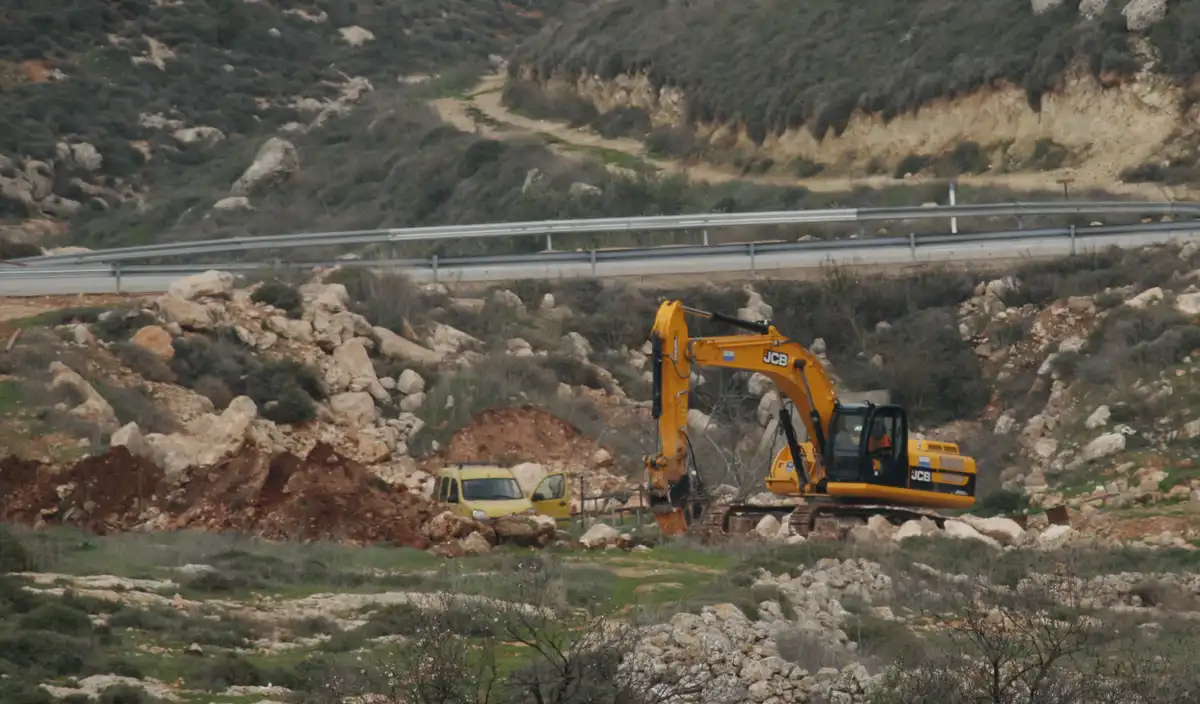
The occupation forces bulldoze agricultural lands in Al-Lubban Al-Sharqiya, south of Nablus.

Today, Monday, the Israeli occupation forces bulldozed a number of agricultural dunams in the village of Al-Lubban Al-Sharqiya, south of Nablus.

According to local sources, occupation bulldozers razed agricultural land and uprooted barbed wire fences near the main street east of the village.

PALESTINE

Mon 16 Jun 2025 4:37 pm - Jerusalem Time

ICRC: The humanitarian situation in Gaza and the West Bank continues to deteriorate.

The Red Cross field hospital in Gaza received more than 370 patients in a short period of time today and yesterday, many of whom were shot while trying to reach a food distribution center, a worrying indicator of the continued dangers facing civilians and the deteriorating humanitarian situation.

Medical sources at the hospital stated that it received more than 200 cases today, the highest number recorded since its establishment, due to a single mass casualty incident.

The International Committee of the Red Cross (ICRC) expressed its deep concern over the rapidly deteriorating capacity of the Gaza Strip's healthcare system, particularly in light of the evacuation orders threatening the Nasser Medical Complex, which further complicates the provision of healthcare to the injured and sick.

The committee noted that "the humanitarian situation in the Gaza Strip continues to deteriorate sharply, with civilians being killed and injured daily as a result of intensified hostilities, while their suffering is exacerbated by ongoing restrictions on the flow of humanitarian aid, leading to significant difficulties in obtaining basic needs, such as fuel, water, and food."

The International Committee of the Red Cross said in a statement that "protecting civilians during armed conflict is, under international humanitarian law, a legal and moral obligation, and parties to a conflict must exercise the utmost care to avoid harming civilians and civilian objects. However, the reality in Gaza, which has been ongoing for more than twenty months, shows that civilians continue to pay the heaviest price for this ongoing conflict."

The ICRC stressed the need for immediate and rapid access for unimpeded humanitarian aid, including food, water, medicines, and medical supplies, while ensuring that the wounded and sick receive the urgent care they need.

The committee also renewed its call for respecting and protecting medical, relief, and civil defense workers, given the many deaths and injuries that have occurred in the Gaza Strip over the past few months.

The committee added that the situation in the West Bank is no less dire, where civilians continue to suffer as a result of the destruction of homes and farms, and violence against villages and their residents, amid ongoing restrictions affecting the availability of fuel, restricting the movement of emergency services, and impeding access to healthcare. Thousands of people remain forcibly displaced, amid worsening economic and social challenges.

The International Committee of the Red Cross stressed that even under occupation, the right of civilians to live as normal a life as possible must be respected, with their dignity preserved, their basic needs met, and their human rights respected.

ARAB AND WORLD

Mon 16 Jun 2025 4:07 pm - Jerusalem Time

The Israeli army announces the destruction of "missile trucks" en route to Tehran.

The Israeli military said Monday it destroyed trucks carrying missiles and weapons on their way from western Iran to Tehran.


Israeli military spokesman Avichay Adraee said in a statement that the Israeli Air Force "identified trucks carrying weapons, including surface-to-air missile launchers, heading from western Iran to Tehran, and attacked them, destroying the weapons and launchers the trucks were carrying."

Earlier today, the Israeli military said it had destroyed more than 120 missile launchers, or a third of Iran's missile launchers, since the war began last Friday.

The Israeli military added in a statement that the air force carried out several waves of strikes on approximately 100 military targets in Isfahan, central Iran, last night, saying that approximately 50 fighter jets targeted missile launch pads and headquarters where missile launch cells were located.

The army said it destroyed more than 20 rockets simultaneously in one of its attacks last night.

PALESTINE

Mon 16 Jun 2025 3:19 pm - Jerusalem Time

UN warning: Nearly two million Palestinians are at risk of famine due to the war.

  1. The Food and Agriculture Organization (FAO) and the World Food Programme (WFP) of the United Nations have warned that approximately 2.1 million Palestinians in Gaza are at risk of famine due to Israel's continued genocide in the Strip.

This came in a warning report issued by the FAO and the World Food Programme on Monday, highlighting hunger hotspots around the world.

The report confirmed that the level of famine has reached critical levels due to the difficulty of humanitarian aid reaching Gaza, which has been classified as a "hotspot of grave concern."

He stressed that approximately 2.1 million Palestinians in Gaza are at grave risk of famine due to the ongoing Israeli war, mass displacement, and severe restrictions on humanitarian aid.

He explained that the severe food shortage in Gaza could reach its highest levels next September.

FAO Director-General Qu Dongyu, whose views are included in the report, noted that hunger represents an emergency for millions of people around the world.

Dongyu called for "immediate and collective action to save lives and protect livelihoods."

The Gaza Strip is suffering a catastrophic humanitarian and relief crisis due to the Israeli occupation authorities' closure of the crossings since March 2, preventing the entry of food, medicine, aid, and fuel, while the Israeli army escalates its genocide in the besieged Strip.

The genocidal war waged by the occupation since October 7, 2023, has left more than 184,000 dead and wounded, most of them children and women, and more than 11,000 missing, in addition to hundreds of thousands of displaced persons.

ARAB AND WORLD

Mon 16 Jun 2025 2:58 pm - Jerusalem Time

Pakistan closes border with Iran amid escalation with Israel

Pakistan has closed all its border crossings with Iran for an indefinite period, regional officials said Monday, as Israel and Iran trade heavy fire and threaten more.


"Border facilities in all five districts—Jaggi, Washak, Panjgur, Kich, and Gwadar—have been suspended," Qadir Bakhsh Birkani, an official in Balochistan province bordering Iran, told AFP.

Israel launched Operation Rising Lion, which began with a surprise attack in the early hours of Friday morning, killing several senior Iranian military leaders and damaging nuclear sites.

Israel said the campaign would continue to escalate in the coming days. For its part, Iran vowed to "open the gates of hell" on Israel in response.

The Israeli military said the current goal of the campaign is not regime change in Iran, but rather dismantling Tehran's nuclear and ballistic missile programs.

PALESTINE

Mon 16 Jun 2025 2:35 pm - Jerusalem Time

The catastrophic conditions in the Gaza Strip top the agenda of the 59th session of the UN Security Council.

The 59th session of the United Nations Human Rights Council began in Geneva on Monday, focusing on the catastrophic conditions in the Gaza Strip due to the ongoing Israeli aggression for 20 months.

The session, which will run until the ninth of next month, will discuss the situation in the occupied Palestinian territories, as well as several countries experiencing conflict, and the impact of climate change on humanity.

"Israeli war tactics are inflicting horrific and unacceptable suffering on Palestinians in Gaza, where more than 55,000 people, including children, have been killed, and attacks continue," UN High Commissioner for Human Rights Volker Türk said at the opening of the session.

He called for immediate and independent investigations into the deadly attacks on civilians trying to reach food distribution centers.

PALESTINE

Mon 16 Jun 2025 2:18 pm - Jerusalem Time

The death toll in the Gaza Strip rises to 55,432.

The Ministry of Health in Gaza announced on Monday that the death toll in the Gaza Strip has risen to 55,432, the majority of whom are children and women, since the start of the Israeli occupation's aggression on October 7, 2023.

It added that the death toll has risen to 128,923 since the start of the aggression, while a number of victims remain under the rubble, unable to be reached by ambulances and civil defense teams.

It pointed out that the number of dead who arrived at hospitals in the Gaza Strip during the past 24 hours reached 68 (including two martyrs whose bodies were recovered), and 182 were injured, while the death toll and injuries since March 18, after the occupation violated the ceasefire agreement, reached 5,139 dead and 16,882 injuries.

It noted that the total number of aid victims who arrived at hospitals from areas designated for aid distribution reached 338, with more than 2,831 injured, including 38 who died in the past 24 hours.

PALESTINE

Mon 16 Jun 2025 11:47 am - Jerusalem Time

On the 141st day of the aggression, the occupation continues to demolish homes in Tulkarm.

Israeli occupation forces continued their aggression on the city of Tulkarm and its camp on Monday for the 141st day, and on the Nour Shams camp for the 128th day, carrying out widespread arrests and ongoing demolitions of residential buildings, amidst a military tightening at surrounding checkpoints.

At dawn, occupation forces launched an arrest campaign in the city and its suburbs, raiding citizens' homes, vandalizing their contents, and assaulting and interrogating residents.

The occupation forces raided a building belonging to citizen Hakam Nassif in the southern neighborhood of the city, searched the residential apartments and destroyed their contents. Among the residents were identified as: Ahmed Abu Shanab, Abu al-Majd al-Masry, and Ahmed al-Jayousi. They also arrested Tamer Obeid, the brothers Mustafa and Nafeh Muhammad al-Salman (Awda), Marwan Othman Abu Jarad from the city, and Yazan Sabarini from the Dhnaba suburb, after raiding their homes.

In the Dhnaba suburb east of the city, occupation forces arrested Yousef Zaqout, Yousef Abu Iskandar, and Islam Al-Banna after searching and deliberately vandalizing their homes.

This escalation was accompanied by a military tightening of controls at checkpoints. Israeli occupation forces continued to close the Anab checkpoint east of the city, preventing vehicles from passing. They also set up a surprise checkpoint near the Jabara Bridge gate to the south, stopping vehicles and searching passengers on the spot, disrupting traffic.

In a related development, Israeli bulldozers continued to demolish residential buildings in Tulkarm refugee camp for the eleventh consecutive day, particularly in the Balawneh, Akasha, and Nadi neighborhoods and their surroundings. This is part of a plan targeting the demolition of 106 buildings in the two camps, including 58 in Tulkarm refugee camp alone, comprising more than 250 housing units and dozens of commercial establishments.

The occupation forces are imposing a tight siege on the Tulkarm and Nur Shams refugee camps, with infantry forces and military vehicles deployed in the alleys and entrances, preventing residents from reaching their homes and shooting at anyone who attempts to approach.

Over the past few weeks, Nour Shams camp has witnessed demolition operations that have resulted in the destruction of more than 20 buildings, as part of a plan to demolish 48 buildings under the pretext of clearing roads and changing the features of the camps.

The city is witnessing intense activity by occupation forces, particularly in the central market, along the street of the Martyr Thabet Thabet Governmental Hospital, and Nablus Street, where they are obstructing the movement of citizens, sounding their horns provocatively, and driving in the opposite direction.

The occupation continues to transform Nablus Street into a closed military zone, seizing residential buildings and parts of the northern neighborhood opposite the camp after forcibly evicting residents. Meanwhile, bulldozers and military vehicles are present.

The earth mounds erected by the occupation forces have also caused extensive damage to the road, a major artery connecting the Tulkarm and Nur Shams refugee camps. Flying checkpoints are also being deployed, further exacerbating the suffering of the residents.

The ongoing aggression has resulted in the deaths of 13 civilians, including a child and two women, one of whom was eight months pregnant. Dozens of people have been injured and arrested, and significant destruction has been caused to infrastructure, homes, commercial establishments, and vehicles.

According to the latest data, the military operations have displaced more than 5,000 families (over 25,000 citizens) from the two camps, completely destroyed 400 homes, and partially damaged 2,573 others. The entrances remain closed, transforming the area into a ghost town.

ARAB AND WORLD

Mon 16 Jun 2025 11:41 am - Jerusalem Time

Katz threatens Tehran residents: You will pay the price

Israeli Defense Minister Yisrael Katz threatened the residents of the Iranian capital, Tehran, on Monday with a "price tag," saying that "the arrogant dictator from Tehran has become a cowardly murderer, firing on Israel's civilian home front to deter the Israeli army from continuing its offensive, which is weakening its capabilities." He added, "The people of Tehran will pay the price, and soon."

Katz's statements came two days after he issued an initial threat in a brief blog post on his X platform page, in which he wrote: "Tehran will burn." The cities of Tel Aviv, Petah Tikva, Bnei Barak, and Haifa woke up Monday morning to widespread destruction of buildings, including the US embassy building in Tel Aviv. The petrochemical refinery in Haifa was also targeted, with video footage documenting two missiles hitting the facility located in the city's bay. In Petah Tikva, the Hebrew website Ynet reported that the Iranian missile, which killed a number of Israelis in the city, completely destroyed the fortified shelter in the targeted building where the dead had taken refuge.

In this context, the Red Star of David (Israeli ambulance service) stated that eight Israelis were killed on Sunday evening in the Iranian missile attack, including four in Petah Tikva, while ambulance crews transported 130 wounded with various injuries, including serious and moderate ones. Meanwhile, Israel's Channel 13 reported that contact was still lost with missing persons trapped under the rubble in Haifa.

OPINIONS

Mon 16 Jun 2025 11:15 am - Jerusalem Time

Israel between the euphoria of the first strike and the shock of the Iranian response

Mustafa Ibrahim

Mustafa Ibrahim

Opinion Writer

Five days after the Israeli occupation authorities shut down phone lines and the internet in Gaza, people have tasted digital silence. An isolation that may seem comfortable for a moment, but is extremely dangerous, as people's voices are silenced and the ability to report crimes of genocide and starvation to the world is disrupted.

In this media vacuum, Israel launched a massive airstrike on Iran, with all its political and media institutions at all levels filled with euphoria over what it called Operation "People Like Lions." It was portrayed as a miraculous achievement proving the prowess of Benjamin Netanyahu and the Israeli Air Force in surprising Iran. Commentators touted its ability to disable nuclear facilities and kill prominent leaders and scientists, but other analysts doubted that the strike would actually delay Iran's acquisition of a nuclear bomb.

On Saturday evening, the scene changed. Three air raid sirens sent millions of Israelis into shelters amid a barrage of Iranian missiles and drones. The euphoria of victory quickly dissipated, replaced by the horror of destruction and deaths. A torrent of criticism began against Netanyahu and his government, accused of pushing the occupying state into a war that would fulfill his 18-year-old dream of destroying Iran's nuclear program—a dream whose cost could have been avoided had he not persuaded the Donald Trump administration to cancel the nuclear agreement.

Following this, some Israeli commentators asked, "Was the war necessary?" They noted that the Iranians had demonstrated legendary resilience during their war with Iraq. Some commentators advised cutting losses and returning to the negotiating table under US administration auspices, before Israel found itself begging for a ceasefire and Iran rejecting it.

The central dilemma in Israeli strategy is that inflicting deep and lasting damage to the enrichment system is impossible without significant American involvement. Even expanding the target bank to include civilian facilities will not bring down the regime; rather, it will plunge both sides into a prolonged war of attrition.

Israeli military experts acknowledge that Israel alone is incapable of destroying nuclear facilities. Therefore, the political echelon has adopted a "complex" plan: striking nuclear sites, dismantling air defenses, reducing the missile threat, and targeting the security, military, and political elite, while threatening to strike the oil infrastructure. All this is done to draw Iran into negotiations from a position of weakness, or at least postpone its project for several years.

Destroying the nuclear program militarily is contingent on two conditions: the United States joining with its bunker-busting bombs, or waging a prolonged air campaign that would exhaust everyone. The second option would mean a war of attrition that could last for months; intermittent missile and drone attacks; a partial paralysis of Ben Gurion Airport; and economic and educational crises.

Amid the euphoria of the "opening strike," military experts warn that the operation lacks a clear "final exit mechanism." Iran's long-standing patience, or what I call its inertia, makes prolonging the attrition a victory in itself, and it has yet to use its heavier-warheaded Khorramshahr missiles or low-radar-signature cruise missiles.

No matter how superior the Israeli Air Force and Mossad are, they still face between five and ten thousand targets across Iran's vast territory—a number that reduces superiority to a mere theoretical calculation. The expected costs far exceed what Israel has incurred in its wars with Gaza, and there is no escape from a political solution that precedes, rather than follows, the coming losses.

PALESTINE

Mon 16 Jun 2025 10:35 am - Jerusalem Time

Converting homes and residential buildings into military barracks in Hebron...a recurring policy of violations aimed at imposing a reality by force.

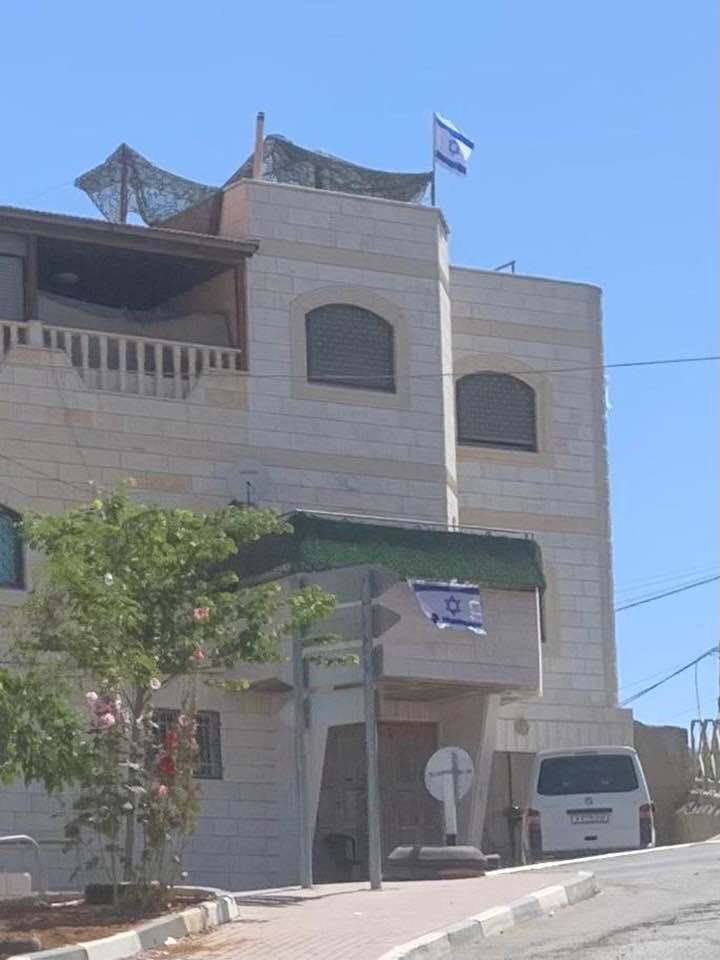
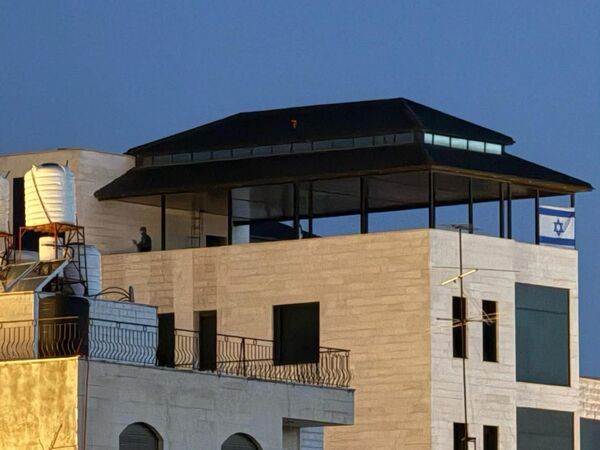
The Israeli occupation expelled families from their homes, forcing them to evacuate and converting them into military barracks and observation points. This is a dangerous escalation in its repeated policy of violations aimed at imposing a fait accompli by force, violating their lives and dignity, and using them as human shields.

Not the only one
Israeli occupation forces stormed the five-story, inhabited building of Abdul Fattah Shabana in the Karantina area, south of the city. They violated the sanctity of the home by smashing its doors, imposing strict security measures around it, and raising Israeli flags from its roof.
The Shabana building is not the only one, as there is control and seizure of more than one house in various areas in Hebron. These houses that were seized are high and overlooking, and the occupation informed their owners that it would stay in them for days. The occupation soldiers seized the house of the Al-Jamal family, near the Fahs Dam, and the house of the Zahdeh family in the Zahdeh neighborhood, and converted a house in the Old City after expelling its residents from it. They also stormed the house of Khaled Al-Batran, which overlooks the bypass road No. (35) and the military tower, and the Al-Liya neighborhood in the town of Idhna, west of Hebron, and raised the occupation flags on it. At the same time, they stormed the house of Jamil Tamimi in the town and converted it into a military barrack, after asking the residents to evacuate it for a week.
In the town of Beit Awa, west of Dura, the occupation forces stormed several homes and forced the owners of one of them to leave their home, which is located on a high ground overlooking the settlement. They told the owners to carry whatever they could within 10 minutes for four days. The occupation forces also seized an abandoned house on the road between Yatta and Samou, raised the occupation flag over it, and told the owner not to enter the house until further notice.

provocative behavior
In a statement, the Shabana family considered the raid on their building and the occupation's raising of its flags on the roof a provocative and aggressive act, noting that this was not the first raid of its kind, but rather part of a recurring series of violations aimed at imposing a fait accompli by force of arms, as part of a systematic policy to Judaize Hebron and terrorize its residents.
The family clearly and explicitly affirmed that there would be no sale, no leakage, and no concession. What happened was a violent assault and armed robbery, and it will not change our position or our right to this land.
The Hebron Municipality described the conversion of homes into military barracks as a dangerous escalation that affects the lives and dignity of residents, and constitutes a flagrant violation of international humanitarian law. It is part of a series of occupation measures that reflect the occupation's insistence on undermining life in the city and imposing a coercive military reality on its residential neighborhoods. It called on the international community and human rights and humanitarian organizations to urgently intervene to stop these dangerous practices, which affect basic human rights in the city of Hebron and increase the state of tension in the region.

human shields
Human rights activist Hisham Al-Sharbaty said, "It is true that international law allows the occupying forces to temporarily evacuate civilians from their homes for urgent military necessity." He questioned the urgent military necessity that requires the occupying forces to expel Palestinian citizens from their homes and seize control of them, while the wars that the occupation is waging are far from it. He explained that this may be part of the redistribution of the occupation forces and the evacuation of military bases, thus stationing them in citizens' homes and using them as human shields, which is prohibited and forbidden under international law.
Imad Abu Hawash, a researcher at the Palestinian Center for Human Rights, explained that the occupation forces evacuated military towers on bypass roads and redeployed their forces in Palestinian homes at the contact points, converting them into military barracks and turning civilians into human shields to protect these forces, which they had intensified in the Palestinian territories after declaring war in October 2023.
He added that what is happening increases the suffering of Palestinian citizens, especially in light of the conditions of the closure imposed on them, especially in the area known as (H2) in the Old City of Hebron, which is subject to a curfew and citizens are deprived of movement, while settlers are allowed to move freely and under the protection of the occupation army, stressing that the occupation considers what it is doing in terms of security measures to be in violation of international law, and citizens cannot resort to the judiciary to evict them from their homes, which costs them losses while searching for alternatives while the occupation seizes their residential homes.


OPINIONS

Mon 16 Jun 2025 10:33 am - Jerusalem Time

The West Bank: An Economy in the Wind

Dr. Saeed Sabry / Economic Advisor - Board Member of the International Digital Transformation Authority - Dubai

At this critical stage in its history, the West Bank is facing an unprecedented economic crisis, with political, financial, and social factors intersecting to create a complex reality that threatens the stability of Palestinian society and its developmental future. Amid escalating security tensions and declining international support, the Palestinian economy in the West Bank is suffering from a severe constriction that threatens long-term repercussions.
First: A crisis resulting from accumulations
The roots of the economic crisis: The current crisis is not the result of recent events alone, but rather the product of decades of accumulation. The Palestinian economy's predicament is manifested in a deadly trilogy: financial dependency that shackles it, a fragile production structure that paralyzes it, and a lack of control over resources and crossings that keeps it hostage to the will of the occupation. These structural determinants render any economic plan merely a temporary measure unless the structural constraints that impede financial and productive independence are dismantled.
The crisis was exacerbated by the Israeli Finance Minister's decision to halt financial agreements with Palestinian banks, complicating the transfer of surplus shekels and threatening the stability of the entire banking system.
Second: Worrying indicators on the ground
Official data indicates that the West Bank's GDP contracted by 19% over the course of a year, while the unemployment rate exceeded 31%, with the number of job seekers continuing to rise. This economic contraction is being accompanied by a sharp rise in the prices of goods and services, which has deprived salaries of their real value.
Israeli restrictions on movement across more than 900 checkpoints and crossings have brought internal and external trade to a near-paralysis and weakened the operational capacity of productive sectors, particularly agriculture and industry.
Third: The financial system is under threat.
The decision to halt banking agreements with Israel puts the Palestinian financial system at risk. The inability to transfer surplus shekels and the restrictions on cross-border banking operations threaten a stifling liquidity crisis. If this issue is not addressed seriously, the local market could experience a banking crisis that threatens the stability of individuals and businesses alike.
Fourth: Weak international response
Despite the European Union's announcement of a financial aid package exceeding €1.6 billion, its slow implementation, and the fact that a large portion of it is directed to the Gaza Strip, limits its impact on the West Bank. Furthermore, international support remains dependent on major political shifts and falls short of the urgent requirements for rescuing the Palestinian economy.
Fifth: The suffering of the private sector
The private sector, which accounts for more than two-thirds of jobs in the West Bank, is facing an existential crisis. Declining demand, tightening import restrictions, and rising operating costs threaten the viability of businesses, especially small and medium-sized enterprises, increasing bankruptcy and unemployment rates.
Sixth: Accumulated loans and eroded salaries
Reports from the Monetary Authority indicate that the volume of loans granted to individuals has exceeded 11 billion shekels, with a significant increase in defaults. With wages continuing to erode and salaries being delayed, citizens find themselves facing unprecedented living pressures. This reality negatively impacts consumption and social stability, increasing the likelihood of a popular uprising.
Seventh: A roadmap to get out of the crisis
1. Reactivate financial understandings with the Israeli side to avoid the collapse of the banking system.
2. Lifting restrictions on movement and trade to support economic activity.
3. Launching an urgent government rescue plan to support affected families and small businesses.
4. Promote transparency and administrative reforms to restore the confidence of the community and international supporters.
5. Encouraging investment in technology and the digital economy as a practical alternative during the lockdown.
The West Bank is at a critical crossroads. It can either continue its path of deterioration and contraction, or embark on a new path based on political and economic reform and genuine partnership with the international community. Saving the Palestinian economy is not merely an urgent task; it is a national necessity to protect the social fabric and achieve economic dignity for Palestinians.

.....

The Palestinian economy's dilemma is manifested in a deadly trilogy: financial dependency that shackles it, a fragile production structure that paralyzes it, and a lack of control over resources and crossings that keeps it hostage to the will of the occupation.

PALESTINE

Mon 16 Jun 2025 10:08 am - Jerusalem Time

The occupation forces have turned dozens of homes into military barracks in towns in Jenin Governorate.

About a week ago, Israeli occupation forces transformed the homes of dozens of citizens in towns and villages in the Jenin Governorate into military barracks. This followed repeated raids on the towns of Anin, Rummana, and Nazlat Sheikh Zeid. This forced displacement of residents, restricted movement, and disrupted daily life.

In the town of Anin, west of Jenin, Israeli occupation forces raided two homes belonging to the Yassin family last Friday, forcing five families, comprising approximately 50 individuals, to leave and turning them into military outposts, according to what village council head Mohammed Issa told local sources.

Issa explained that the occupation forces continue to raid the town daily, patrolling the streets with their military vehicles, setting up checkpoints, obstructing the movement of vehicles and citizens, and interrogating them.

He added, "The occupation forces stormed the town and turned the houses into barracks, which led to tension and a feeling of insecurity among the residents, and affected commercial activity in the village."

In the town of Rummana, west of Jenin, occupation forces have converted eleven homes into military sites over the past four days, according to Mayor Hassan Subaihat.

Subaihat explained that the affected families were forced to move to the homes of relatives, and it is not known when they will return to their homes.

He said: "For four days now, the occupation army's infantry units have been deployed in the town's streets, firing live ammunition and tear gas canisters, closing shops, and continuing to provoke and harass residents."

He confirmed that all the seized homes are located in the western part of the town, a high area overlooking the entire town.

For his part, the head of the Nazlat Sheikh Zaid village council, Aziz Zaid, said that the occupation forces had turned the homes of Wajdi Fadl Saeed Zaid and Omar Hassan Al-Bari into military posts after expelling their residents.

Zaid stated that occupation forces continue to raid and search homes and assault citizens. He noted that yesterday, occupation forces assaulted a high school student, blindfolding him and detaining him for two hours after taking him to an unknown location before releasing him. They also assaulted another citizen as he was walking through one of the village streets.

He added that the occupation forces closed the western entrance to the village and its main street, in addition to a pharmacy and a grocery store located in the same area.

PALESTINE

Mon 16 Jun 2025 9:46 am - Jerusalem Time

Gaza: Continuous massacres, residents of the Strip experiencing crippling famine amidst collapsing infrastructure.

Israeli forces continue to launch airstrikes and land and sea bombardments on various areas of the Gaza Strip, resulting in dozens of deaths and injuries, the majority of whom are women and children. Meanwhile, relief efforts continue under extremely difficult circumstances amid a severe shortage of essential supplies, including food and medicine.

Gaza's Civil Defense reported that Israeli forces fired from cranes and military vehicles at a number of displaced persons waiting for humanitarian aid in the Al-Alam and Al-Shakoush areas west of Rafah, causing panic among civilians gathered in the area.

In the northern Gaza Strip, the occupation army carried out bombing operations targeting residential homes east of Jabalia.

Meanwhile, an Israeli airstrike targeted the eastern areas of Jabalia, north of the Gaza Strip.

The people of the Gaza Strip are living under the yoke of famine, a near-total collapse of infrastructure, power and water outages, and deteriorating health services. The recent Israeli aggression exacerbated the situation by causing a complete internet and communications blackout that lasted for three days, before service was partially restored today.

ARAB AND WORLD

Mon 16 Jun 2025 9:42 am - Jerusalem Time

Iranian Health Ministry: 224 dead and more than 1,000 wounded since the start of the Israeli aggression.

The Iranian Ministry of Health announced early Monday that the death toll from Israeli attacks on Iran has risen to 224, with more than 1,000 injured, since the start of the military escalation last Friday.

The head of the Ministry of Health's Public Relations and Media Center, Hossein Kermanpour, said in a social media post that the total number of dead and injured has reached 1,481, including 1,277 who have been transferred to university hospitals for treatment, according to Mehran News Agency.

Kermanpour explained that more than 90% of the injuries were recorded among civilians.

He pointed out that 522 of the wounded had left the hospital after receiving treatment, indicating that women and children were among the victims.

At dawn on Friday, Israel, with tacit US support, launched a massive attack on Iran with dozens of fighter jets, bombing nuclear facilities and missile bases in various areas and assassinating prominent military leaders and nuclear scientists.

The Israeli military said the attack was "preemptive" and came under directives from the political echelon, while Prime Minister Benjamin Netanyahu declared that the "unprecedented" operation aimed to "strike Iran's nuclear infrastructure, ballistic missile factories, and numerous other military capabilities."

ARAB AND WORLD

Mon 16 Jun 2025 9:40 am - Jerusalem Time

Trump threatens Iran with an "unprecedented" response

US President Donald Trump said Sunday that the United States would respond "at unprecedented levels" if attacked by Iran.

With American approval, Israel attacked Iranian nuclear facilities, senior Iranian officials, military leaders, and prominent nuclear scientists on Friday. Iran responded late Friday (Saturday morning) with missile attacks targeting dozens of sites and targets in Israel, causing significant damage in Tel Aviv, but it does not appear to have targeted American targets so far.

Iranian Defense Minister Aziz Nasirzadeh threatened last week that if Israel attacks Iran, Iran will strike US military bases in the region.

Further missile attacks caused significant damage to the Defense Ministry, killing at least 11 people and wounding more than 200 in Israel on Saturday night as the conflict escalated. The Israeli military on Sunday called on Iranian civilians living near weapons production facilities to evacuate.

Trump said in the early hours of Sunday morning: "The United States had nothing to do with the attack on Iran, and if we are attacked by Iran in any way, the United States Armed Forces will respond with the full force of our military at unprecedented levels."

He added: "However, we can easily conclude an agreement between Iran and Israel, and end this bloody conflict!!!"

Experts believe that while Israel and Iran are engaged in a war that could spread to other regions, the possibility of resuming talks that were underway prior to the Israeli aggression to address Iran's nuclear program should not be ruled out.

Negotiations will likely remain frozen while the war continues, and the future of diplomacy remains uncertain. Iran feels compelled to respond to Israel, which it is now doing, while Washington appears to be doing nothing to pressure both sides to halt the violence and resume talks.

But the Iranians say they still want an agreement, and so does President Trump. The shape of future talks will inevitably depend on when and how the fighting stops.

Washington is holding talks with Tehran to reach an agreement on Iran's nuclear program in exchange for lifting sanctions. In late May, the UN watchdog stated that Iran had increased its stockpile of weapons-grade uranium.

The sharp Israeli escalation has raised fears of renewed instability in the Middle East, prompting leaders to urge restraint and a return to negotiations.

Shortly after the IDF issued the evacuation call on Sunday, Defense Minister Israel Katz stated that Israel "will strike at sites and continue to weaken Iran everywhere, stripping it of its nuclear capabilities and weapons systems."

The Associated Press reported that Israel's Magen David Adom rescue service reported 13 deaths on Sunday. Iran's ambassador to the United Nations, Amir Saeed Iravani, said on Saturday that 78 people had been killed and more than 320 wounded in the country, according to the Wall Street Journal. Foreign Ministry spokesman Esmail Baghaei criticized the Israeli strikes on residential areas, according to the official Islamic Republic News Agency.

According to reports, hundreds of Hellfire missiles were secretly delivered to Israel ahead of its unprecedented attack on Iran on Friday. The United States sent approximately 300 Hellfire missiles to Israel on Tuesday as part of a large stockpile of supplies ahead of its attack. At a time when the Trump administration was saying it was prepared to continue engaging Iran in nuclear talks, the transfer of such a large quantity of Hellfire missiles indicates that the Trump administration was well aware of Israel's plans to attack the Islamic Republic of Iran.

There were no previous reports of the US delivering Hellfire missiles or other large quantities of weapons in the period leading up to Friday's attack.

Two US officials told Reuters on Friday that the US military helped shoot down Iranian missiles heading towards Israel.

Hellfire missiles are laser-guided air-to-ground missiles. While they wouldn't be useful for Israel to bomb Iranian nuclear facilities, they are useful for precision strikes.

It is now beginning to emerge that the Trump administration had been aware of Israel's attack plans for months.

A report in the Middle East Eye website earlier this month revealed that the CIA was briefed in April and May on Israeli plans to unilaterally attack Iranian nuclear sites. The US administration was "impressed" with the analysis of Israeli target systems and the battle plan for cyber attacks, along with precision strikes, without any direct US involvement. But Trump's behavior in recent months has given observers, and perhaps the Iranians as well, the impression that he will continue to resist Netanyahu's public pressure to endorse the strikes.

Axios also reported on Friday, citing Israeli officials, that the Trump administration only "pretended" to resist the Israeli attack plans, but did not resist them in secret.

It is noteworthy that, since then, Trump has formulated his approach by stating that he gave Iran a 60-day deadline to agree to a new nuclear agreement with his administration, beginning on April 12 and ending on June 12, before launching the strikes.

PALESTINE

Mon 16 Jun 2025 9:39 am - Jerusalem Time

Occupation forces launch arrest campaign in the West Bank and Jerusalem

Israeli occupation forces launched an arrest campaign in various areas of the West Bank and occupied Jerusalem at dawn on Monday morning.

In Bethlehem, an occupation army force stormed the village of Al-Walaja and arrested Muhammad Baha Al-Daraas (17 years old) and Muhammad Shadi Hadna (17 years old) after raiding their families’ homes.

In Nablus, the Nablus Red Crescent Society reported that its crews treated two people injured by severe beatings by Israeli occupation forces. They were then transferred to the hospital for treatment.

Local sources reported that occupation forces stormed the Askar al-Jadeed camp, deployed snipers on the rooftops of several homes, and raided citizens' homes, searching them and ransacking their contents.

She added that the occupation forces stormed the northern mountain area of the city and arrested the two brothers, Ragheb and Rami Al-Badawi, after raiding and searching their home.

In occupied Jerusalem, occupation soldiers detained the young men for more than an hour before serving four of them summonses for investigation.

In the same context, occupation forces stormed the town of Anata, northeast of Jerusalem, and raided several homes, while another force stormed the town of Abu Dis to the east, without any arrests being reported.

In Qalqilya, large forces of the occupation army stormed the town of Azzun from its main northern entrance, raiding several neighborhoods, including the Al-Safa and Al-Muntar neighborhoods. They arrested two young men, Hussam Majd and Nidal Hussein, after searching their homes.

They also raided several other homes, vandalized their contents, and caused extensive damage, including the homes of Ibrahim Dahbour, Khaled Omar, and Nihad Salama.

In Ramallah, occupation forces arrested Birzeit University student Asid Bayatneh after raiding his home in the village of Abu Qash, searching it, and ransacking its contents.

PALESTINE

Mon 16 Jun 2025 9:36 am - Jerusalem Time

Iran's sequential response: Will it curb Israel or spiral into a regional war?

Sawsan Sarour: Iran, which did not start the war, will not submit or surrender and will return to negotiations on its own terms, but America cannot be an acceptable mediator.
Dr. Muhannad Hafizoglu: Iran, America, and Israel are participating, albeit unannounced, in a plan targeting Arab countries and Turkey by keeping them in a state of permanent instability.
Osama Al-Sharif: Netanyahu opened the gates of hell and thought the path to expanding Israel's influence in the region passed through Tehran.
Imad Abu Awad: If the war continues, we are facing a scenario of open war, into which many parties may be drawn, and which may have repercussions for the entire world.
Adel Shehadeh: The United States wants to pressure Iran by using Israel as a striking force in the region to force it to accept a settlement on American terms.
Dr. Munther Hawarat: The United States' entry into the war could expand its scope and push Iran to take escalatory steps, such as closing the Strait of Hormuz.

Israelis woke up yesterday morning to scenes of unprecedented destruction, whether in Haifa, Tel Aviv, or its suburbs, especially Rishon LeZion and Bat Yam, which looked as if an earthquake had struck. Did Benjamin Netanyahu's government, which has left no stone unturned in the Gaza Strip and has perpetrated killing and brutality on a scale unprecedented in history, expect that some of what its war machine has inflicted on others would befall it, or did it only imagine seeing destruction and killing in other people's arenas?
The frequency with which Iran is launching attacks on Israel is causing panic and confusion among the Israeli public, especially given the devastation the attacks have caused. This prompted Israeli Prime Minister Benjamin Netanyahu, Defense Minister Yisrael Katz, and the racist minister Itamar Ben-Gvir to conduct an inspection tour of the Bat Yam area south of Tel Aviv in an attempt to boost morale.
Writers, analysts, and experts who spoke to Al-Quds said that Netanyahu has opened the gates of hell and believes that the path to expanding Israeli influence in the region passes through Tehran. They explained, "If the war drags on, we are facing a scenario of open warfare that could draw in multiple parties and have repercussions for the entire world."
They pointed out that the United States seeks to pressure Iran by using Israel as a regional power to force it to accept a settlement on American terms. They emphasized that Iran, which did not start the war, will not submit or surrender and will return to negotiations on its own terms, but that the United States cannot be an acceptable mediator.


Scenes of destruction in the heart of Israel, not in the Gaza Strip

Journalist Susan Sarour, an observer and critic of the Israeli political scene, said that with the rising of the sun, some scenes that are permitted to be revealed become clear. The Israeli public sees the extent of the total destruction and begins to count its dead and wounded, with scenes of the search for missing persons under the rubble of buildings destroyed by Iranian missiles in the violent and hot hours of the night.
She pointed out that these scenes are not taking place in the towns surrounding the Gaza Strip or in the distant northern towns, but rather in the heart of the State of Israel, its political and economic pulse and its societal diversity, primarily in the Tel Aviv area.
Sarour emphasized that these difficult days and major, suspicious events prove that the war imposed by Israel on Iran has not succeeded in halting the emergence of Iranian missiles from their platforms, which possess tremendous destructive capabilities.
She said that the state of alert, the identification centers for bodies and remains, the multiple-casualty incidents, the centers for receiving the dead, and the centers for searching for the missing are all scenes that Israelis cannot tolerate or get used to. The longer this war continues, with the scenes of destruction continuing and the number of dead, wounded, and missing rising, the more Prime Minister Netanyahu will lose consensus around him and public support for this war, and the burden on society will increase, which will negatively impact the days of the war, and thus the end of Netanyahu's government.

Netanyahu did not take into account the Iranian reaction.

She continued: Although Netanyahu seized the historic moment he had dreamed of for decades by striking Iran, he failed to anticipate the Iranian response. This is a disastrous failure as long as Iranian ballistic missiles and drones continue to breach Israel's sophisticated defense systems and fall on Israelis daily. He will inevitably lose consensus around him the longer the war continues.
Sarour believes that while Netanyahu is dragging Israel and the region into dangerous situations, driven by ideological and personal agendas, driven by expansionist tendencies and dreams of dominance, Iran, which possesses missiles capable of evading Israeli defenses, could curb Netanyahu's impulsiveness and rationalize his megalomania, which has surpassed all bounds.
Despite the ongoing conflict between Tel Aviv and Tehran, the situation in the region does not appear likely to deteriorate, and no countries or cities in the region will be affected. Despite Israeli Prime Minister Benjamin Netanyahu's efforts to push US President Trump to actively participate in this war against Iran, Iran, known for its strategic patience, is raising the slogan of not expanding and not getting the war out of control. The best evidence of this is Iran's treatment of the British destroyer that entered the northern Indian Ocean to guide Israeli missiles that were advancing towards the waters of the Arabian Gulf, and Iran forced it to change course.

The war will be confined to Israel and Iran.

She stressed that the US president would not officially join the war with Israel as long as Iran did not bomb American targets and interests in the region, which she strongly believed was likely.
Sarour added: "The war will be confined to Israel and Iran and will not affect any country or city in the region. The heavy military stick that US President Trump gave Israeli Prime Minister Benjamin Netanyahu will not succeed in forcing Iran to comply with their terms in the nuclear negotiations, and the Iranian leadership will not submit to it."
She explained that the time factor plays against both sides, Israel and Iran, and the extent to which each side can withstand the attrition. The question remains: who will raise the white flag first?
She said: While the Israeli army succeeded in eliminating the Iraqi nuclear project with a single strike in 1981, and in Syria with a single strike on the Deir ez-Zor reactor in 2007, striking the Iranian reactor would not be that easy, given Iran's vast area, which is more than 1,648,000 square kilometers, and the distribution of its nuclear facilities over vast areas, which makes the idea of eliminating the Iranian nuclear reactor a near impossibility.


Iran will intensify its strikes deep inside Israel.

She wondered, "What's next?" adding that Iran would intensify its strikes deep inside Israel, which would place increasing pressure on the Israeli government and demand an end to the war. Perhaps the clearest evidence of this is Trump's demand, an ally of Israel, to halt the war in less than 48 hours.
She emphasized that Netanyahu failed in Gaza and will fail in Iran. She believed that the war would end within days, not weeks, and that Iran, which did not start the war because it did not want it, would not submit or surrender and would return to negotiations on its own terms. However, America could not be an acceptable mediator because it was a party to this war, and perhaps a solution to the Iranian crisis would be accompanied by an end to the war on Gaza as well.
In contrast, Surur pointed out that Israel, which started the war, will not withdraw from it unless it feels it is in a predicament, and Iran will not make any concessions unless it feels it will fall. It is an existential war for both of them.
Netanyahu believes that while he doesn't want to miss this historic moment, the internal burden will undermine him and he will be unable to control the bloodshed. The Iranian problem will not be resolved militarily, but rather by sitting down at the negotiating table.

Today's IAEA Governors' Meeting is Crucial

She said: Despite the lack of consensus in Iran on the idea of nuclear negotiations, and despite calls to boycott them, especially after the Israeli attack on Iran, Iranian rationality will bring it back to negotiations as a strategic option and on its own terms, based on the fact that its upper hand at the end of this confrontation will be based on the lifting of all sanctions imposed on it and the preservation of nuclear and enrichment facilities on its territory.
Sarour concluded by saying: The emergency meeting of the International Atomic Energy Agency (IAEA) governors today, Monday, regarding Israel's attacks on Iran's nuclear facilities, will serve as Iran's starting point in the nuclear file negotiations, as Iran is asking the attendees to condemn the Israeli attack on the nuclear reactor facilities and to submit a resolution to the Security Council to impose sanctions on Israel. Otherwise, Iran will announce its withdrawal from the IAEA agreement banning the proliferation of nuclear weapons, dismantle the cameras installed inside Iran, and may announce its possession of a nuclear bomb if the United States declares war on it. Perhaps Iran's voice is saying, "You start the war, and we write its end."


The region has entered a dangerous turning point.

For his part, international relations researcher Dr. Muhannad Hafizoglu stated that the region has entered a dangerous juncture, and that the situation is heading either toward Iran submitting to the will of the new international order, by sacrificing some leaders and scholars in exchange for preserving the mullahs' regime and the "Khamenei throne," or toward its continuation of the "axis of resistance" approach, which would mean further escalation.
He added: "The issue is not limited to Israel and Iran alone, but rather the entire region is targeted. The current scene, which appears to be a mutual conflict between Tehran and Tel Aviv, conceals, at its core, a state of comprehensive regional instability. This idea—that the region remains in a state of permanent tension—is where both Netanyahu and Khamenei intersect, even if the tools and methods they employ differ."
Accordingly, Davutoglu explained, the situation is likely to escalate in a long-term manner, but will ultimately lead to some kind of agreement, either to end the mullahs' regime or to keep it in place after clipping its nails and removing its "claws and fangs," referring to its proxies in the region and the Iranian nuclear file.


The region is heading towards further escalation.

He predicted that an agreement would be reached in which Iran would take a step back, hoping to retain some of its leverage over the nuclear issue over the next five years.
He continued, "Let's agree that Iran, the United States, and Israel are all participating, albeit undeclared, in a plan targeting Arab countries, Turkey, and their peoples by keeping them in a state of permanent instability, which will have a negative impact on their political systems and open the way for chronic internal crises."
Cavusoglu explained that the long-term goal, as he sees it, is Israel's pursuit of the dream of "Greater Israel," a goal that the countries of the region naturally reject. Therefore, we witness conflicts whose intensity increases or decreases depending on the data and issues being negotiated or bartered.


America will intervene if its interests are targeted

Cavusoglu pointed out that the region is heading towards further escalation, and that the lives of ordinary people are not currently in imminent danger. However, regimes and countries face increasing security, military, and political threats, something both Tehran and Tel Aviv are seeking to address.
According to Davutoglu, US participation would be crucial, especially if its interests were directly targeted by Iran, or if Iran were content to target Israel from a distance.
Cavusoglu concluded by saying, "I believe the United States will intervene militarily, even with a single strike, to force Iran to reverse its policies that have overstepped its bounds. Washington, despite its use of Iran in a number of issues, believes Tehran has crossed red lines, and therefore ordered Netanyahu to take military action against it."


Israel started the war intentionally and without justification.

For his part, political writer Osama Al-Sharif believes that Israel started the war intentionally and without justification. It is a war Netanyahu has wanted and promoted for decades. But it is a war with complex calculations; Iran is not Hezbollah, Hamas, or the Houthis.
He said that Iran is a vast and complex country, overlooking the Arabian Gulf and oil and gas fields, controlling the Strait of Hormuz, and located only hundreds of miles from US bases in the Gulf.
He added: "Netanyahu dragged President Donald Trump into this war, hoping that America and the West would join him. We are talking here about the many military options that Iran possesses, even if it has lost many of its military capabilities. Netanyahu started the war, but he has no clear vision of its consequences."
Al-Sharif pointed out the importance of considering the position of the right-wing political bloc in the United States, which supports Trump and rejects involving America in other people's wars, particularly Israel's.
He said that this critical mass could exert significant pressure on Trump to distance himself from this conflict. What does this mean for Israel, which does not have the capacity to wage a long war against Iran?

Geopolitical repercussions for the region and the world

He continued: There are also potential geopolitical repercussions for the region and the world. How will Pakistan interpret an Israeli attack on its neighbor? Netanyahu's position on nuclear Pakistan is no secret.
Al-Sharif asked: What does this war mean for the Gulf states? Can they withstand the risks of a conflict that could escalate into an international war? If Iran is defeated, what would that mean for the balance of power in the region? Will Israel emerge as a superpower dominating the region from its Gulf to its ocean? Would that serve the interests of the countries in the region? And what about Türkiye and its regional ambitions?
Al-Sharif concluded by saying, "Netanyahu has opened the gates of hell, thinking that the path to expanding Israel's influence in the region passes through Tehran. Let us wait and see whether his calculations are correct this time, or whether he has pushed Israel down a path of no return."

The impact of war on people's lives in the region

Israeli affairs expert Imad Abu Awad believes that the repercussions of the Israeli-Iranian war on the region are actually linked to the extent of its continuation or cessation.
He said: "If it continues for a longer period, it will begin to impact people's lives across the region, primarily by disrupting many economic activities, such as imports, exports, production, freight transportation, and more."
Abu Awad pointed out that these effects have already begun to appear, for example, in the West Bank, where people's fears have begun to grow. In the first two days of the war, it was noted that some gas stations no longer had enough fuel.
He added that prolonging the war, which is likely to expand, could lead to its spread to other cities, capitals, and countries. If the United States enters the war, Iran may begin attacking American air bases deployed in some Arab countries, which could lead to skirmishes and possibly retaliation from those countries.
Abu Awad pointed out that this could require the involvement of other countries besides Iran, of course, and other countries besides Israel and the United States, which would threaten to widen the scope of the confrontation.

Each side will present itself as the victor.

He emphasized that the issue truly hinges on the ability to control this war. If it is brought under control in the next few days, the effects will be limited, and a specific agreement may be reached. In that case, each side will promote itself as the victor.
Israel, in his view, considers its first strike a "successful and distinctive security achievement," and if an agreement acceptable to it is reached, it will present it as an achievement and victory. In contrast, the Iranian response, which was much stronger than expected, gave the Iranian public the impression that their country is strong and capable of responding.
Abu Awad concluded by saying that if the war continues, we are facing a scenario of open warfare that could draw in numerous parties, impact everyone in the region, and even have repercussions for the entire world.


The decision to wage war on Iran is American

For his part, Israeli affairs expert Adel Shehadeh said that the decision to wage war on Iran is purely an American one, and the United States cannot allow Israel to decide on this matter.
He added that without the green light, approval, coordination, and American knowledge of all the details, Israel cannot embark on this war against the Islamic Republic of Iran, explaining that the responsibility for protecting it from an Iranian response falls on the United States.
Shadid asked, "What does the United States want?" He pointed out that the US seeks to pressure Iran by using Israel and Netanyahu as a striking force in the region to force Iran to accept a settlement based on American conditions related to the nuclear project, the missile project, the space program, Iran's role in the region, and its relationship with all the resistance forces resisting and confronting Israel in Yemen, Gaza, Iraq, Syria, and Lebanon.
Shadid believes that America wants Iranian surrender, but he stressed that Iran will not accept this, as evidenced by Iran's refusal to negotiate on American terms, which has led to the current state of war and Iran's response with this large number of missiles.

Submission is not on Iran's agenda


He said that Iran's continued escalating rhetoric against the US and Israel confirms that submission, surrender, and raising the white flag are not on Iran's agenda.
He pointed out that Israel wants to bring down the Iranian state, not just destroy the nuclear project, in order to send a message to every official, every leader, and every Arab leader that anyone who thinks about resisting Israel or confronting Israeli arrogance will be brought down, crushed, and destroyed, and will pay a heavy price. Israel believes that this approach will enable it to control the entire Middle East, impose Israeli influence on all Arab countries, and turn all Arab regimes and countries into slaves and servants of Israel.
Shadid believes that the current war, specifically the Iranian response over the past two days and the responses we will witness in the coming days, are capable of changing the equation Benjamin Netanyahu believed he had successfully imposed on Friday morning after assassinating top-tier Iranian military and security leaders and launching powerful military strikes against numerous Iranian nuclear, military, and missile facilities.


Remote confrontation between Israel and Iran

In turn, writer and political analyst Dr. Munther Hawarat said that the war between Israel and Iran has, so far, been limited to a remote confrontation, meaning it has not reached direct contact between the two sides, making it difficult for it to transform into a ground war at this stage.
He added: This "remote" nature may keep it within certain limits, as long as the United States does not directly intervene on the side of either party.
However, he noted that the United States' entry into the war could expand its scope and push Iran to take escalatory steps, such as closing the Strait of Hormuz or impacting global trade.
"Iran, so far, has been reluctant to use the Strait of Hormuz card, lest it provoke the United States into direct intervention, especially if Washington believes the war threatens global trade and international supply chains," Hawarat added. "Therefore, Iran is keen, for now, to limit the confrontation between itself and Israel to itself, without expanding it regionally or internationally."

Air traffic and trade disruptions

He explained that Israel targets Iran with aircraft, missiles, and drones, while Iran responds with conventional or ballistic missiles and drones.
Regarding the popular impact, he noted that the tension created by this war is having a significant impact on the region's people. He noted that the past few days have witnessed disruptions to air traffic and trade, which could lead to higher commodity prices and a decline in trade between different countries.
He continued: "However, the landscape could change completely if Iran decides to expand the war by directly responding to the United States, due to its support for Israel. Tehran may target American bases in the region, most of which are located in Arab countries, with the exception of those located at sea."
The Gulf states, Jordan, and Iraq would, in his estimation, be vulnerable to the consequences of such Iranian strikes, if Iran were able to carry them out.

Israel is in control so far

He said: "Then we will be talking about a comprehensive war that will affect energy, trade, and regional stability. It will not be limited to the military aspect alone, but will also affect the economy, logistics, air and sea navigation, and will have very serious repercussions for the people."
He emphasized that the strategic impact of the war at this stage is clear: Israel, so far, dominates the situation through effective strikes deep within Iran, which could enhance its chances of dominating the region in the coming period.
Concluding his remarks, the writer said, "We heard an Israeli official say that the road to Tehran is now paved. This is a dangerous statement, as it indicates the absence of a real deterrent force within Iran that would prevent or hinder Israeli aircraft from carrying out operations against nuclear facilities."
He added: "This shift reflects a major strategic shift in the balance of power and gives Israel a leadership position in the region, which could lead us into dangerous pitfalls and countless regional complications in the near future."






PALESTINE

Mon 16 Jun 2025 9:29 am - Jerusalem Time

Iranian missile strike on Tel Aviv and Haifa: 8 dead, dozens injured, and widespread destruction

Iran launched a massive missile attack early Monday morning against multiple sites inside Israel, using dozens of missiles that caused extensive material damage, including the destruction of residential and commercial buildings in the Haifa and Tel Aviv areas.

According to initial estimates by Israeli ambulance services, eight people were killed and approximately 94 injured in the attack, most of them with minor injuries, while two were described as moderately injured and one as critical.

This escalation comes amid Israeli airstrikes targeting Iranian sites in several areas, amid ongoing attempts to target sensitive military sites, including nuclear facilities.

The region witnessed an unprecedented escalation on Sunday, with Iran launching new batches of missiles at targets inside Israel, resulting in the deaths of 13 people, including nine in Bat Yam, adjacent to Tel Aviv, and more than 200 others injured, in addition to a number of missing persons, and four women killed in the city of Tamra in the Galilee, bringing the death toll since Friday to 18.


ARAB AND WORLD

Sun 15 Jun 2025 10:43 pm - Jerusalem Time

Netanyahu: Regime change in Iran 'could be the result of war'

Israeli Prime Minister Benjamin Netanyahu said on Sunday that regime change in Iran "could be the result of war because it is a weak regime."
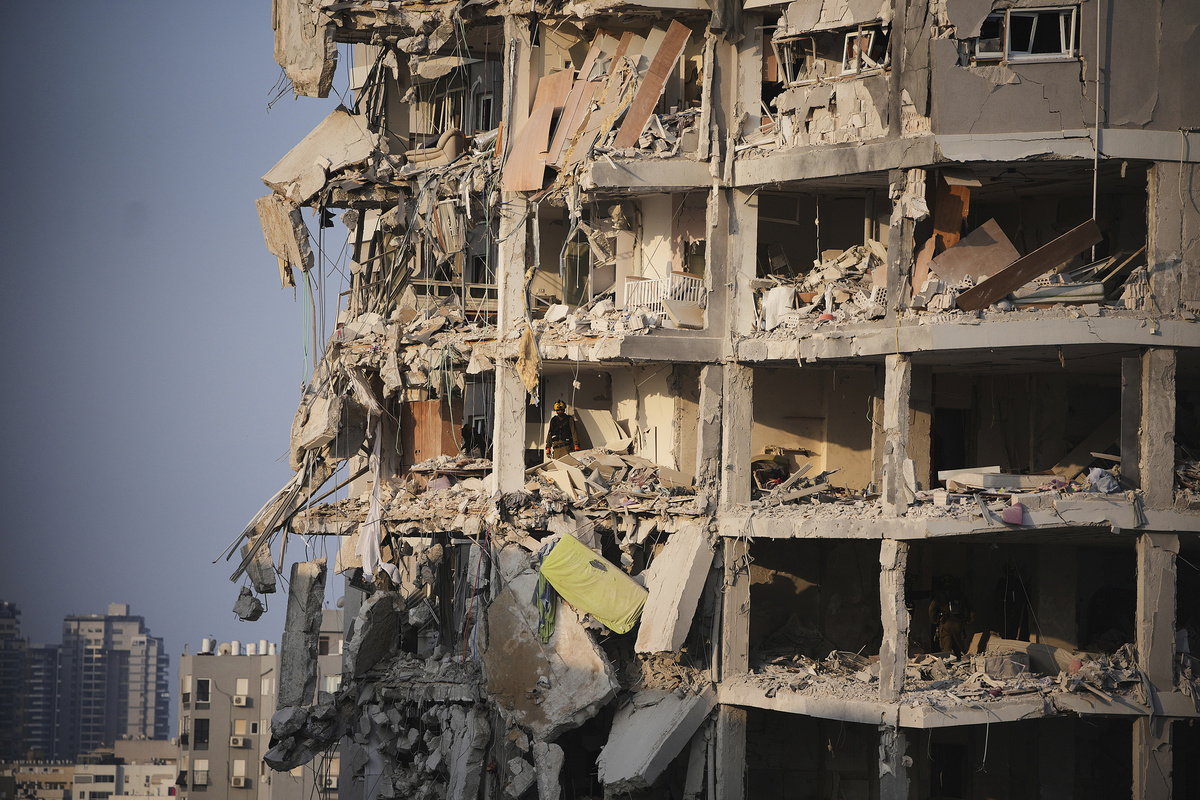
Netanyahu's remarks came in an interview with Fox News, from an undisclosed location in Israel.

Netanyahu added, "Our attack on Iran will end when we eliminate its nuclear capabilities, and we will do that."
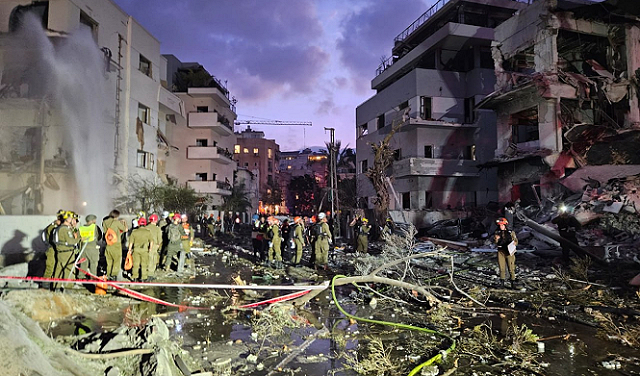
He suggested that Tehran was completely surprised by the Israeli attack, and surprise is a major factor in success.

He explained that Israel is prepared to do whatever is necessary to eliminate "two existential threats" in Iran, referring to its nuclear program and ballistic missiles.
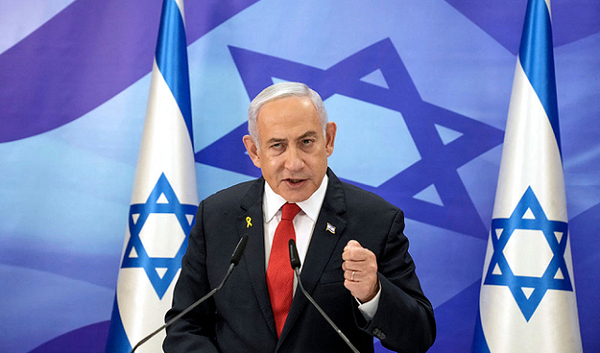
He also stressed that Israel "will not witness a second nuclear holocaust. We witnessed one in the last century," and that we must "act now" regarding Iran.

He claimed that "Israeli intelligence indicated that Iran wanted to transfer nuclear weapons to the Houthi group," as he put it.

Asked about the goal of the ongoing Israeli strikes on Iran, and whether regime change was among them, Netanyahu said that regime change in Iran "may be an inevitable consequence of war because it is a weak regime."

The Israeli Prime Minister also claimed that "the Isfahan reactor was destroyed, and without it, Iran cannot develop a nuclear weapon," he said.

He pointed out that "American pilots are shooting down Iranian drones heading towards Israel."

He pointed out that "US President Donald Trump poses a major threat to Iran's plans to arm itself with and use nuclear weapons."

At dawn on Friday, Israel, with tacit US support, launched a massive attack on Iran with dozens of fighter jets, codenamed "Rising Lion." The attack targeted nuclear facilities and missile bases in various areas, and assassinated prominent military leaders and nuclear scientists.

That evening, Iran began responding to the attack with a series of ballistic missile and drone strikes, launched in eight waves. As of Sunday, these strikes had left 14 dead and approximately 345 injured, as well as significant material damage to buildings and vehicles.

ARAB AND WORLD

Sun 15 Jun 2025 10:32 pm - Jerusalem Time

Tens of thousands demonstrate in The Hague to demand an end to the war of extermination in Gaza.

The Hague, Netherlands, witnessed a massive demonstration on Sunday evening, demanding that the Dutch government take further action to stop the ongoing genocide in the Gaza Strip.

Human rights groups, such as Amnesty International and Oxfam, organized the march in the city, which headed to the International Court of Justice, declaring what was happening a "red line."

The protesters, who numbered around 150,000, dressed in red, according to organizers, waved Palestinian flags and chanted, "Stop the genocide." Some held signs reading, "Don't turn a blind eye, act," and "Be silent when children sleep, not when they are killed."

"The people of Gaza cannot wait," they said in their call to action. "It is the Netherlands' duty to do everything possible to stop the Israeli genocide."