ARAB AND WORLD

Mon 16 Jun 2025 9:40 am - Jerusalem Time

Trump threatens Iran with an "unprecedented" response

US President Donald Trump said Sunday that the United States would respond "at unprecedented levels" if attacked by Iran.

With American approval, Israel attacked Iranian nuclear facilities, senior Iranian officials, military leaders, and prominent nuclear scientists on Friday. Iran responded late Friday (Saturday morning) with missile attacks targeting dozens of sites and targets in Israel, causing significant damage in Tel Aviv, but it does not appear to have targeted American targets so far.

Iranian Defense Minister Aziz Nasirzadeh threatened last week that if Israel attacks Iran, Iran will strike US military bases in the region.

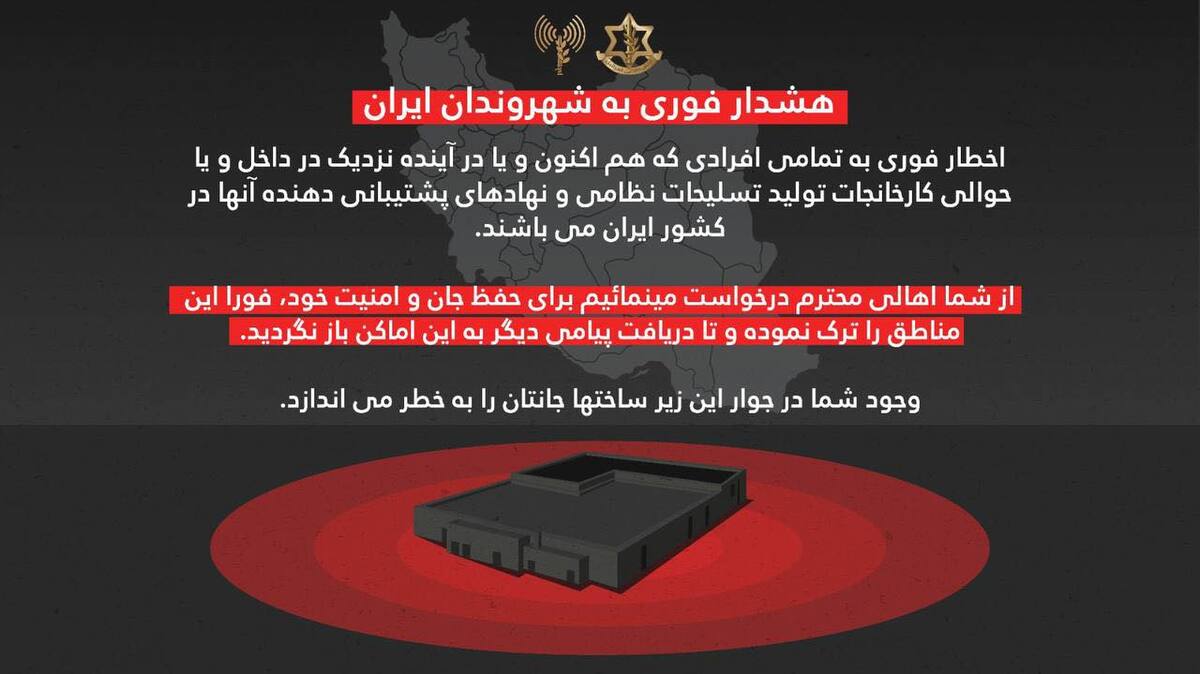
Further missile attacks caused significant damage to the Defense Ministry, killing at least 11 people and wounding more than 200 in Israel on Saturday night as the conflict escalated. The Israeli military on Sunday called on Iranian civilians living near weapons production facilities to evacuate.

Trump said in the early hours of Sunday morning: "The United States had nothing to do with the attack on Iran, and if we are attacked by Iran in any way, the United States Armed Forces will respond with the full force of our military at unprecedented levels."

He added: "However, we can easily conclude an agreement between Iran and Israel, and end this bloody conflict!!!"

Experts believe that while Israel and Iran are engaged in a war that could spread to other regions, the possibility of resuming talks that were underway prior to the Israeli aggression to address Iran's nuclear program should not be ruled out.

Negotiations will likely remain frozen while the war continues, and the future of diplomacy remains uncertain. Iran feels compelled to respond to Israel, which it is now doing, while Washington appears to be doing nothing to pressure both sides to halt the violence and resume talks.

But the Iranians say they still want an agreement, and so does President Trump. The shape of future talks will inevitably depend on when and how the fighting stops.

Washington is holding talks with Tehran to reach an agreement on Iran's nuclear program in exchange for lifting sanctions. In late May, the UN watchdog stated that Iran had increased its stockpile of weapons-grade uranium.

The sharp Israeli escalation has raised fears of renewed instability in the Middle East, prompting leaders to urge restraint and a return to negotiations.

Shortly after the IDF issued the evacuation call on Sunday, Defense Minister Israel Katz stated that Israel "will strike at sites and continue to weaken Iran everywhere, stripping it of its nuclear capabilities and weapons systems."

The Associated Press reported that Israel's Magen David Adom rescue service reported 13 deaths on Sunday. Iran's ambassador to the United Nations, Amir Saeed Iravani, said on Saturday that 78 people had been killed and more than 320 wounded in the country, according to the Wall Street Journal. Foreign Ministry spokesman Esmail Baghaei criticized the Israeli strikes on residential areas, according to the official Islamic Republic News Agency.

According to reports, hundreds of Hellfire missiles were secretly delivered to Israel ahead of its unprecedented attack on Iran on Friday. The United States sent approximately 300 Hellfire missiles to Israel on Tuesday as part of a large stockpile of supplies ahead of its attack. At a time when the Trump administration was saying it was prepared to continue engaging Iran in nuclear talks, the transfer of such a large quantity of Hellfire missiles indicates that the Trump administration was well aware of Israel's plans to attack the Islamic Republic of Iran.

There were no previous reports of the US delivering Hellfire missiles or other large quantities of weapons in the period leading up to Friday's attack.

Two US officials told Reuters on Friday that the US military helped shoot down Iranian missiles heading towards Israel.

Hellfire missiles are laser-guided air-to-ground missiles. While they wouldn't be useful for Israel to bomb Iranian nuclear facilities, they are useful for precision strikes.

It is now beginning to emerge that the Trump administration had been aware of Israel's attack plans for months.

A report in the Middle East Eye website earlier this month revealed that the CIA was briefed in April and May on Israeli plans to unilaterally attack Iranian nuclear sites. The US administration was "impressed" with the analysis of Israeli target systems and the battle plan for cyber attacks, along with precision strikes, without any direct US involvement. But Trump's behavior in recent months has given observers, and perhaps the Iranians as well, the impression that he will continue to resist Netanyahu's public pressure to endorse the strikes.

Axios also reported on Friday, citing Israeli officials, that the Trump administration only "pretended" to resist the Israeli attack plans, but did not resist them in secret.

It is noteworthy that, since then, Trump has formulated his approach by stating that he gave Iran a 60-day deadline to agree to a new nuclear agreement with his administration, beginning on April 12 and ending on June 12, before launching the strikes.

PALESTINE

Mon 16 Jun 2025 9:39 am - Jerusalem Time

Occupation forces launch arrest campaign in the West Bank and Jerusalem

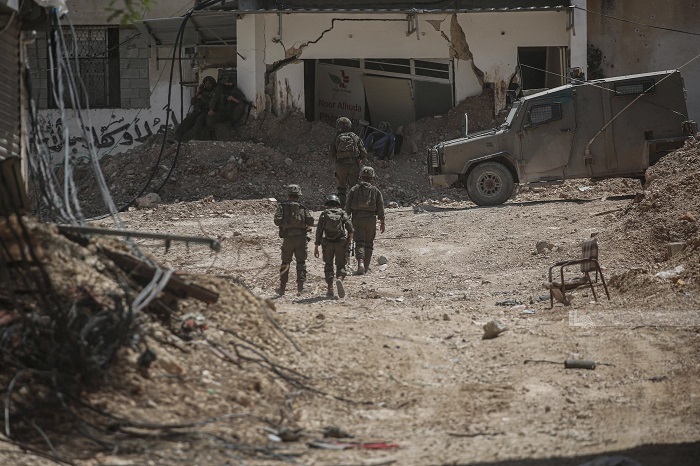
Israeli occupation forces launched an arrest campaign in various areas of the West Bank and occupied Jerusalem at dawn on Monday morning.

In Bethlehem, an occupation army force stormed the village of Al-Walaja and arrested Muhammad Baha Al-Daraas (17 years old) and Muhammad Shadi Hadna (17 years old) after raiding their families’ homes.

In Nablus, the Nablus Red Crescent Society reported that its crews treated two people injured by severe beatings by Israeli occupation forces. They were then transferred to the hospital for treatment.

Local sources reported that occupation forces stormed the Askar al-Jadeed camp, deployed snipers on the rooftops of several homes, and raided citizens' homes, searching them and ransacking their contents.

She added that the occupation forces stormed the northern mountain area of the city and arrested the two brothers, Ragheb and Rami Al-Badawi, after raiding and searching their home.

In occupied Jerusalem, occupation soldiers detained the young men for more than an hour before serving four of them summonses for investigation.

In the same context, occupation forces stormed the town of Anata, northeast of Jerusalem, and raided several homes, while another force stormed the town of Abu Dis to the east, without any arrests being reported.

In Qalqilya, large forces of the occupation army stormed the town of Azzun from its main northern entrance, raiding several neighborhoods, including the Al-Safa and Al-Muntar neighborhoods. They arrested two young men, Hussam Majd and Nidal Hussein, after searching their homes.

They also raided several other homes, vandalized their contents, and caused extensive damage, including the homes of Ibrahim Dahbour, Khaled Omar, and Nihad Salama.

In Ramallah, occupation forces arrested Birzeit University student Asid Bayatneh after raiding his home in the village of Abu Qash, searching it, and ransacking its contents.

PALESTINE

Mon 16 Jun 2025 9:36 am - Jerusalem Time

Iran's sequential response: Will it curb Israel or spiral into a regional war?

Sawsan Sarour: Iran, which did not start the war, will not submit or surrender and will return to negotiations on its own terms, but America cannot be an acceptable mediator.
Dr. Muhannad Hafizoglu: Iran, America, and Israel are participating, albeit unannounced, in a plan targeting Arab countries and Turkey by keeping them in a state of permanent instability.
Osama Al-Sharif: Netanyahu opened the gates of hell and thought the path to expanding Israel's influence in the region passed through Tehran.
Imad Abu Awad: If the war continues, we are facing a scenario of open war, into which many parties may be drawn, and which may have repercussions for the entire world.
Adel Shehadeh: The United States wants to pressure Iran by using Israel as a striking force in the region to force it to accept a settlement on American terms.
Dr. Munther Hawarat: The United States' entry into the war could expand its scope and push Iran to take escalatory steps, such as closing the Strait of Hormuz.

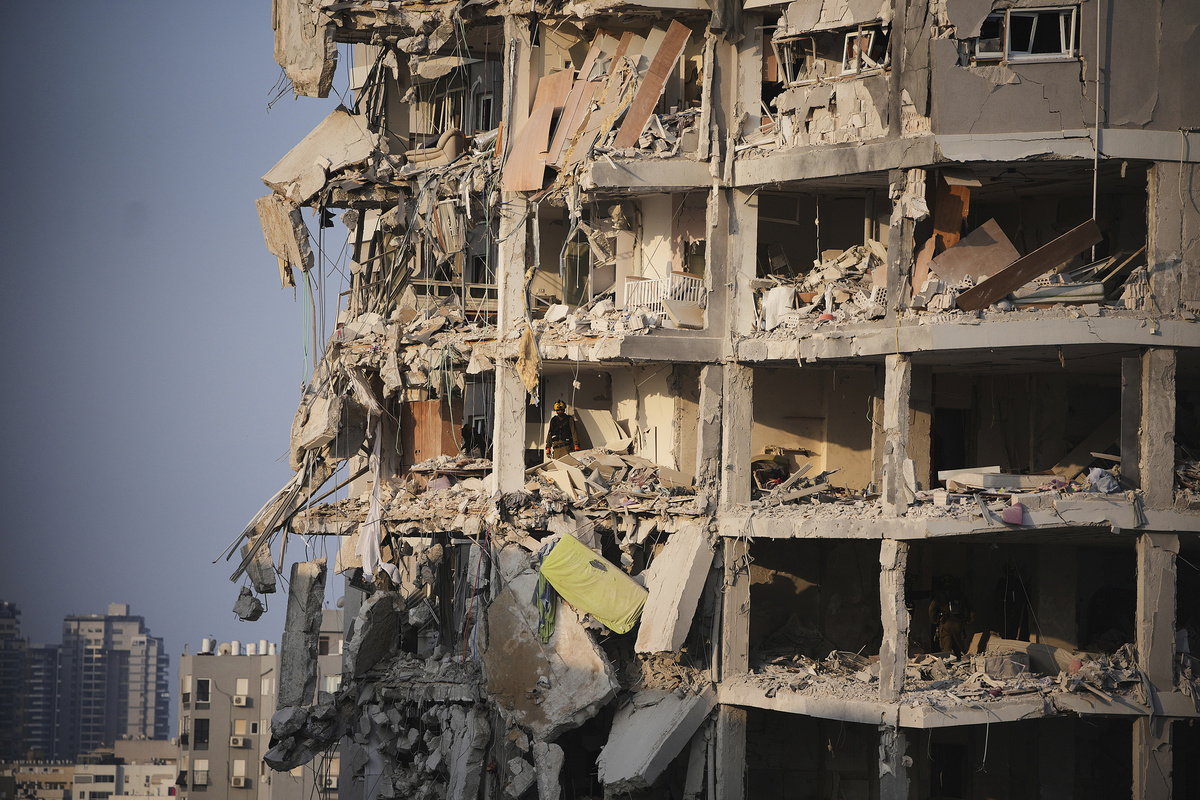
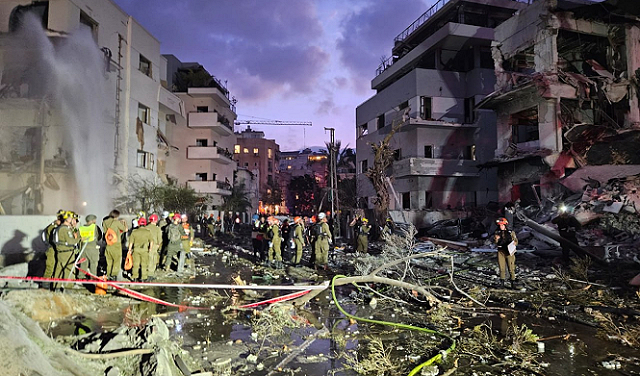
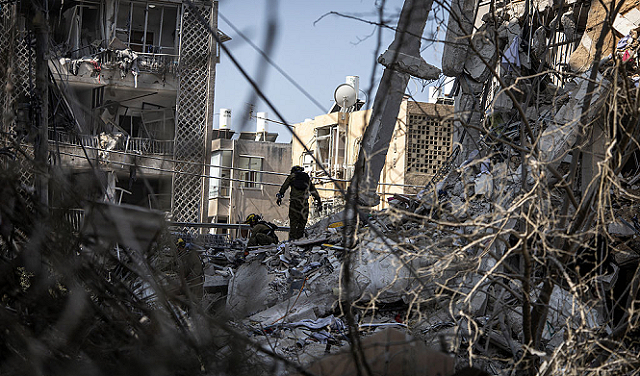
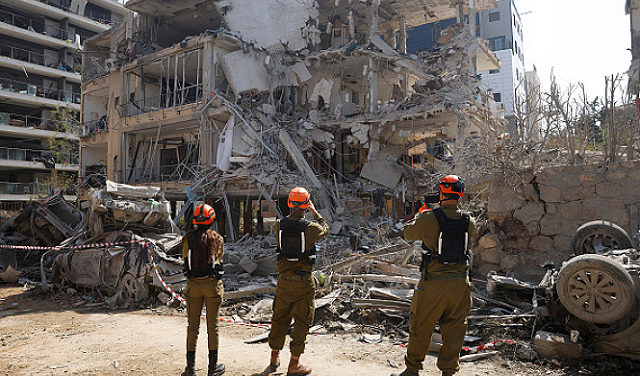
Israelis woke up yesterday morning to scenes of unprecedented destruction, whether in Haifa, Tel Aviv, or its suburbs, especially Rishon LeZion and Bat Yam, which looked as if an earthquake had struck. Did Benjamin Netanyahu's government, which has left no stone unturned in the Gaza Strip and has perpetrated killing and brutality on a scale unprecedented in history, expect that some of what its war machine has inflicted on others would befall it, or did it only imagine seeing destruction and killing in other people's arenas?
The frequency with which Iran is launching attacks on Israel is causing panic and confusion among the Israeli public, especially given the devastation the attacks have caused. This prompted Israeli Prime Minister Benjamin Netanyahu, Defense Minister Yisrael Katz, and the racist minister Itamar Ben-Gvir to conduct an inspection tour of the Bat Yam area south of Tel Aviv in an attempt to boost morale.
Writers, analysts, and experts who spoke to Al-Quds said that Netanyahu has opened the gates of hell and believes that the path to expanding Israeli influence in the region passes through Tehran. They explained, "If the war drags on, we are facing a scenario of open warfare that could draw in multiple parties and have repercussions for the entire world."
They pointed out that the United States seeks to pressure Iran by using Israel as a regional power to force it to accept a settlement on American terms. They emphasized that Iran, which did not start the war, will not submit or surrender and will return to negotiations on its own terms, but that the United States cannot be an acceptable mediator.


Scenes of destruction in the heart of Israel, not in the Gaza Strip

Journalist Susan Sarour, an observer and critic of the Israeli political scene, said that with the rising of the sun, some scenes that are permitted to be revealed become clear. The Israeli public sees the extent of the total destruction and begins to count its dead and wounded, with scenes of the search for missing persons under the rubble of buildings destroyed by Iranian missiles in the violent and hot hours of the night.
She pointed out that these scenes are not taking place in the towns surrounding the Gaza Strip or in the distant northern towns, but rather in the heart of the State of Israel, its political and economic pulse and its societal diversity, primarily in the Tel Aviv area.
Sarour emphasized that these difficult days and major, suspicious events prove that the war imposed by Israel on Iran has not succeeded in halting the emergence of Iranian missiles from their platforms, which possess tremendous destructive capabilities.
She said that the state of alert, the identification centers for bodies and remains, the multiple-casualty incidents, the centers for receiving the dead, and the centers for searching for the missing are all scenes that Israelis cannot tolerate or get used to. The longer this war continues, with the scenes of destruction continuing and the number of dead, wounded, and missing rising, the more Prime Minister Netanyahu will lose consensus around him and public support for this war, and the burden on society will increase, which will negatively impact the days of the war, and thus the end of Netanyahu's government.

Netanyahu did not take into account the Iranian reaction.

She continued: Although Netanyahu seized the historic moment he had dreamed of for decades by striking Iran, he failed to anticipate the Iranian response. This is a disastrous failure as long as Iranian ballistic missiles and drones continue to breach Israel's sophisticated defense systems and fall on Israelis daily. He will inevitably lose consensus around him the longer the war continues.
Sarour believes that while Netanyahu is dragging Israel and the region into dangerous situations, driven by ideological and personal agendas, driven by expansionist tendencies and dreams of dominance, Iran, which possesses missiles capable of evading Israeli defenses, could curb Netanyahu's impulsiveness and rationalize his megalomania, which has surpassed all bounds.
Despite the ongoing conflict between Tel Aviv and Tehran, the situation in the region does not appear likely to deteriorate, and no countries or cities in the region will be affected. Despite Israeli Prime Minister Benjamin Netanyahu's efforts to push US President Trump to actively participate in this war against Iran, Iran, known for its strategic patience, is raising the slogan of not expanding and not getting the war out of control. The best evidence of this is Iran's treatment of the British destroyer that entered the northern Indian Ocean to guide Israeli missiles that were advancing towards the waters of the Arabian Gulf, and Iran forced it to change course.

The war will be confined to Israel and Iran.

She stressed that the US president would not officially join the war with Israel as long as Iran did not bomb American targets and interests in the region, which she strongly believed was likely.
Sarour added: "The war will be confined to Israel and Iran and will not affect any country or city in the region. The heavy military stick that US President Trump gave Israeli Prime Minister Benjamin Netanyahu will not succeed in forcing Iran to comply with their terms in the nuclear negotiations, and the Iranian leadership will not submit to it."
She explained that the time factor plays against both sides, Israel and Iran, and the extent to which each side can withstand the attrition. The question remains: who will raise the white flag first?
She said: While the Israeli army succeeded in eliminating the Iraqi nuclear project with a single strike in 1981, and in Syria with a single strike on the Deir ez-Zor reactor in 2007, striking the Iranian reactor would not be that easy, given Iran's vast area, which is more than 1,648,000 square kilometers, and the distribution of its nuclear facilities over vast areas, which makes the idea of eliminating the Iranian nuclear reactor a near impossibility.


Iran will intensify its strikes deep inside Israel.

She wondered, "What's next?" adding that Iran would intensify its strikes deep inside Israel, which would place increasing pressure on the Israeli government and demand an end to the war. Perhaps the clearest evidence of this is Trump's demand, an ally of Israel, to halt the war in less than 48 hours.
She emphasized that Netanyahu failed in Gaza and will fail in Iran. She believed that the war would end within days, not weeks, and that Iran, which did not start the war because it did not want it, would not submit or surrender and would return to negotiations on its own terms. However, America could not be an acceptable mediator because it was a party to this war, and perhaps a solution to the Iranian crisis would be accompanied by an end to the war on Gaza as well.
In contrast, Surur pointed out that Israel, which started the war, will not withdraw from it unless it feels it is in a predicament, and Iran will not make any concessions unless it feels it will fall. It is an existential war for both of them.
Netanyahu believes that while he doesn't want to miss this historic moment, the internal burden will undermine him and he will be unable to control the bloodshed. The Iranian problem will not be resolved militarily, but rather by sitting down at the negotiating table.

Today's IAEA Governors' Meeting is Crucial

She said: Despite the lack of consensus in Iran on the idea of nuclear negotiations, and despite calls to boycott them, especially after the Israeli attack on Iran, Iranian rationality will bring it back to negotiations as a strategic option and on its own terms, based on the fact that its upper hand at the end of this confrontation will be based on the lifting of all sanctions imposed on it and the preservation of nuclear and enrichment facilities on its territory.
Sarour concluded by saying: The emergency meeting of the International Atomic Energy Agency (IAEA) governors today, Monday, regarding Israel's attacks on Iran's nuclear facilities, will serve as Iran's starting point in the nuclear file negotiations, as Iran is asking the attendees to condemn the Israeli attack on the nuclear reactor facilities and to submit a resolution to the Security Council to impose sanctions on Israel. Otherwise, Iran will announce its withdrawal from the IAEA agreement banning the proliferation of nuclear weapons, dismantle the cameras installed inside Iran, and may announce its possession of a nuclear bomb if the United States declares war on it. Perhaps Iran's voice is saying, "You start the war, and we write its end."


The region has entered a dangerous turning point.

For his part, international relations researcher Dr. Muhannad Hafizoglu stated that the region has entered a dangerous juncture, and that the situation is heading either toward Iran submitting to the will of the new international order, by sacrificing some leaders and scholars in exchange for preserving the mullahs' regime and the "Khamenei throne," or toward its continuation of the "axis of resistance" approach, which would mean further escalation.
He added: "The issue is not limited to Israel and Iran alone, but rather the entire region is targeted. The current scene, which appears to be a mutual conflict between Tehran and Tel Aviv, conceals, at its core, a state of comprehensive regional instability. This idea—that the region remains in a state of permanent tension—is where both Netanyahu and Khamenei intersect, even if the tools and methods they employ differ."
Accordingly, Davutoglu explained, the situation is likely to escalate in a long-term manner, but will ultimately lead to some kind of agreement, either to end the mullahs' regime or to keep it in place after clipping its nails and removing its "claws and fangs," referring to its proxies in the region and the Iranian nuclear file.


The region is heading towards further escalation.

He predicted that an agreement would be reached in which Iran would take a step back, hoping to retain some of its leverage over the nuclear issue over the next five years.
He continued, "Let's agree that Iran, the United States, and Israel are all participating, albeit undeclared, in a plan targeting Arab countries, Turkey, and their peoples by keeping them in a state of permanent instability, which will have a negative impact on their political systems and open the way for chronic internal crises."
Cavusoglu explained that the long-term goal, as he sees it, is Israel's pursuit of the dream of "Greater Israel," a goal that the countries of the region naturally reject. Therefore, we witness conflicts whose intensity increases or decreases depending on the data and issues being negotiated or bartered.


America will intervene if its interests are targeted

Cavusoglu pointed out that the region is heading towards further escalation, and that the lives of ordinary people are not currently in imminent danger. However, regimes and countries face increasing security, military, and political threats, something both Tehran and Tel Aviv are seeking to address.
According to Davutoglu, US participation would be crucial, especially if its interests were directly targeted by Iran, or if Iran were content to target Israel from a distance.
Cavusoglu concluded by saying, "I believe the United States will intervene militarily, even with a single strike, to force Iran to reverse its policies that have overstepped its bounds. Washington, despite its use of Iran in a number of issues, believes Tehran has crossed red lines, and therefore ordered Netanyahu to take military action against it."


Israel started the war intentionally and without justification.

For his part, political writer Osama Al-Sharif believes that Israel started the war intentionally and without justification. It is a war Netanyahu has wanted and promoted for decades. But it is a war with complex calculations; Iran is not Hezbollah, Hamas, or the Houthis.
He said that Iran is a vast and complex country, overlooking the Arabian Gulf and oil and gas fields, controlling the Strait of Hormuz, and located only hundreds of miles from US bases in the Gulf.
He added: "Netanyahu dragged President Donald Trump into this war, hoping that America and the West would join him. We are talking here about the many military options that Iran possesses, even if it has lost many of its military capabilities. Netanyahu started the war, but he has no clear vision of its consequences."
Al-Sharif pointed out the importance of considering the position of the right-wing political bloc in the United States, which supports Trump and rejects involving America in other people's wars, particularly Israel's.
He said that this critical mass could exert significant pressure on Trump to distance himself from this conflict. What does this mean for Israel, which does not have the capacity to wage a long war against Iran?

Geopolitical repercussions for the region and the world

He continued: There are also potential geopolitical repercussions for the region and the world. How will Pakistan interpret an Israeli attack on its neighbor? Netanyahu's position on nuclear Pakistan is no secret.
Al-Sharif asked: What does this war mean for the Gulf states? Can they withstand the risks of a conflict that could escalate into an international war? If Iran is defeated, what would that mean for the balance of power in the region? Will Israel emerge as a superpower dominating the region from its Gulf to its ocean? Would that serve the interests of the countries in the region? And what about Türkiye and its regional ambitions?
Al-Sharif concluded by saying, "Netanyahu has opened the gates of hell, thinking that the path to expanding Israel's influence in the region passes through Tehran. Let us wait and see whether his calculations are correct this time, or whether he has pushed Israel down a path of no return."

The impact of war on people's lives in the region

Israeli affairs expert Imad Abu Awad believes that the repercussions of the Israeli-Iranian war on the region are actually linked to the extent of its continuation or cessation.
He said: "If it continues for a longer period, it will begin to impact people's lives across the region, primarily by disrupting many economic activities, such as imports, exports, production, freight transportation, and more."
Abu Awad pointed out that these effects have already begun to appear, for example, in the West Bank, where people's fears have begun to grow. In the first two days of the war, it was noted that some gas stations no longer had enough fuel.
He added that prolonging the war, which is likely to expand, could lead to its spread to other cities, capitals, and countries. If the United States enters the war, Iran may begin attacking American air bases deployed in some Arab countries, which could lead to skirmishes and possibly retaliation from those countries.
Abu Awad pointed out that this could require the involvement of other countries besides Iran, of course, and other countries besides Israel and the United States, which would threaten to widen the scope of the confrontation.

Each side will present itself as the victor.

He emphasized that the issue truly hinges on the ability to control this war. If it is brought under control in the next few days, the effects will be limited, and a specific agreement may be reached. In that case, each side will promote itself as the victor.
Israel, in his view, considers its first strike a "successful and distinctive security achievement," and if an agreement acceptable to it is reached, it will present it as an achievement and victory. In contrast, the Iranian response, which was much stronger than expected, gave the Iranian public the impression that their country is strong and capable of responding.
Abu Awad concluded by saying that if the war continues, we are facing a scenario of open warfare that could draw in numerous parties, impact everyone in the region, and even have repercussions for the entire world.


The decision to wage war on Iran is American

For his part, Israeli affairs expert Adel Shehadeh said that the decision to wage war on Iran is purely an American one, and the United States cannot allow Israel to decide on this matter.
He added that without the green light, approval, coordination, and American knowledge of all the details, Israel cannot embark on this war against the Islamic Republic of Iran, explaining that the responsibility for protecting it from an Iranian response falls on the United States.
Shadid asked, "What does the United States want?" He pointed out that the US seeks to pressure Iran by using Israel and Netanyahu as a striking force in the region to force Iran to accept a settlement based on American conditions related to the nuclear project, the missile project, the space program, Iran's role in the region, and its relationship with all the resistance forces resisting and confronting Israel in Yemen, Gaza, Iraq, Syria, and Lebanon.
Shadid believes that America wants Iranian surrender, but he stressed that Iran will not accept this, as evidenced by Iran's refusal to negotiate on American terms, which has led to the current state of war and Iran's response with this large number of missiles.

Submission is not on Iran's agenda


He said that Iran's continued escalating rhetoric against the US and Israel confirms that submission, surrender, and raising the white flag are not on Iran's agenda.
He pointed out that Israel wants to bring down the Iranian state, not just destroy the nuclear project, in order to send a message to every official, every leader, and every Arab leader that anyone who thinks about resisting Israel or confronting Israeli arrogance will be brought down, crushed, and destroyed, and will pay a heavy price. Israel believes that this approach will enable it to control the entire Middle East, impose Israeli influence on all Arab countries, and turn all Arab regimes and countries into slaves and servants of Israel.
Shadid believes that the current war, specifically the Iranian response over the past two days and the responses we will witness in the coming days, are capable of changing the equation Benjamin Netanyahu believed he had successfully imposed on Friday morning after assassinating top-tier Iranian military and security leaders and launching powerful military strikes against numerous Iranian nuclear, military, and missile facilities.


Remote confrontation between Israel and Iran

In turn, writer and political analyst Dr. Munther Hawarat said that the war between Israel and Iran has, so far, been limited to a remote confrontation, meaning it has not reached direct contact between the two sides, making it difficult for it to transform into a ground war at this stage.
He added: This "remote" nature may keep it within certain limits, as long as the United States does not directly intervene on the side of either party.
However, he noted that the United States' entry into the war could expand its scope and push Iran to take escalatory steps, such as closing the Strait of Hormuz or impacting global trade.
"Iran, so far, has been reluctant to use the Strait of Hormuz card, lest it provoke the United States into direct intervention, especially if Washington believes the war threatens global trade and international supply chains," Hawarat added. "Therefore, Iran is keen, for now, to limit the confrontation between itself and Israel to itself, without expanding it regionally or internationally."

Air traffic and trade disruptions

He explained that Israel targets Iran with aircraft, missiles, and drones, while Iran responds with conventional or ballistic missiles and drones.
Regarding the popular impact, he noted that the tension created by this war is having a significant impact on the region's people. He noted that the past few days have witnessed disruptions to air traffic and trade, which could lead to higher commodity prices and a decline in trade between different countries.
He continued: "However, the landscape could change completely if Iran decides to expand the war by directly responding to the United States, due to its support for Israel. Tehran may target American bases in the region, most of which are located in Arab countries, with the exception of those located at sea."
The Gulf states, Jordan, and Iraq would, in his estimation, be vulnerable to the consequences of such Iranian strikes, if Iran were able to carry them out.

Israel is in control so far

He said: "Then we will be talking about a comprehensive war that will affect energy, trade, and regional stability. It will not be limited to the military aspect alone, but will also affect the economy, logistics, air and sea navigation, and will have very serious repercussions for the people."
He emphasized that the strategic impact of the war at this stage is clear: Israel, so far, dominates the situation through effective strikes deep within Iran, which could enhance its chances of dominating the region in the coming period.
Concluding his remarks, the writer said, "We heard an Israeli official say that the road to Tehran is now paved. This is a dangerous statement, as it indicates the absence of a real deterrent force within Iran that would prevent or hinder Israeli aircraft from carrying out operations against nuclear facilities."
He added: "This shift reflects a major strategic shift in the balance of power and gives Israel a leadership position in the region, which could lead us into dangerous pitfalls and countless regional complications in the near future."






PALESTINE

Mon 16 Jun 2025 9:29 am - Jerusalem Time

Iranian missile strike on Tel Aviv and Haifa: 8 dead, dozens injured, and widespread destruction

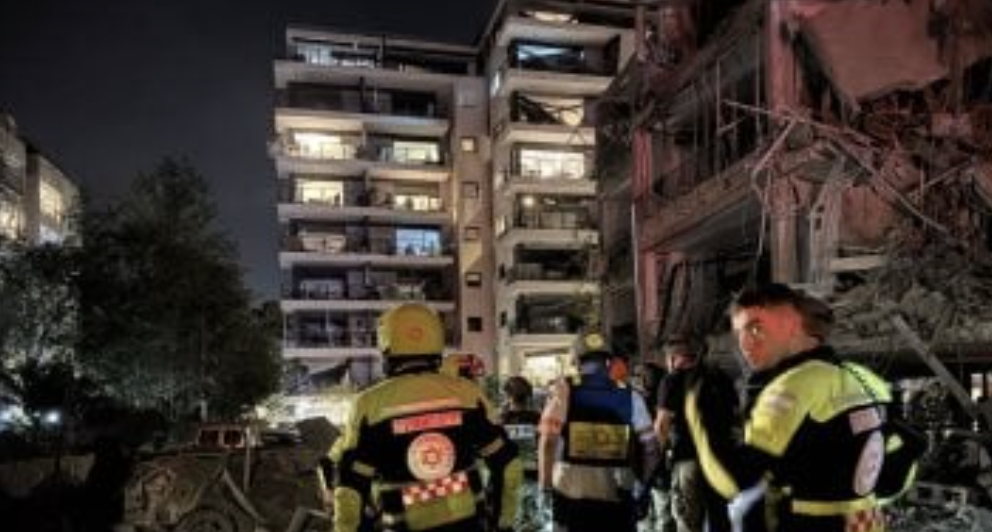
Iran launched a massive missile attack early Monday morning against multiple sites inside Israel, using dozens of missiles that caused extensive material damage, including the destruction of residential and commercial buildings in the Haifa and Tel Aviv areas.

According to initial estimates by Israeli ambulance services, eight people were killed and approximately 94 injured in the attack, most of them with minor injuries, while two were described as moderately injured and one as critical.

This escalation comes amid Israeli airstrikes targeting Iranian sites in several areas, amid ongoing attempts to target sensitive military sites, including nuclear facilities.

The region witnessed an unprecedented escalation on Sunday, with Iran launching new batches of missiles at targets inside Israel, resulting in the deaths of 13 people, including nine in Bat Yam, adjacent to Tel Aviv, and more than 200 others injured, in addition to a number of missing persons, and four women killed in the city of Tamra in the Galilee, bringing the death toll since Friday to 18.


ARAB AND WORLD

Sun 15 Jun 2025 10:43 pm - Jerusalem Time

Netanyahu: Regime change in Iran 'could be the result of war'

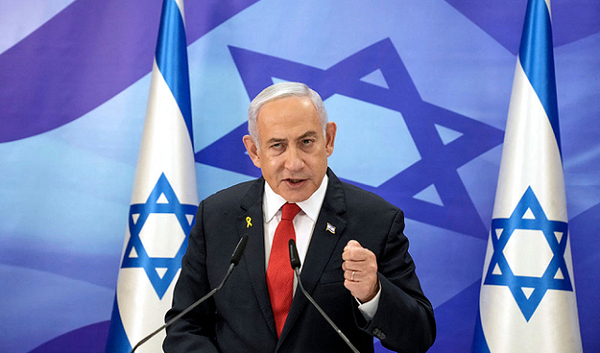
Israeli Prime Minister Benjamin Netanyahu said on Sunday that regime change in Iran "could be the result of war because it is a weak regime."

Netanyahu's remarks came in an interview with Fox News, from an undisclosed location in Israel.

Netanyahu added, "Our attack on Iran will end when we eliminate its nuclear capabilities, and we will do that."

He suggested that Tehran was completely surprised by the Israeli attack, and surprise is a major factor in success.

He explained that Israel is prepared to do whatever is necessary to eliminate "two existential threats" in Iran, referring to its nuclear program and ballistic missiles.

He also stressed that Israel "will not witness a second nuclear holocaust. We witnessed one in the last century," and that we must "act now" regarding Iran.

He claimed that "Israeli intelligence indicated that Iran wanted to transfer nuclear weapons to the Houthi group," as he put it.

Asked about the goal of the ongoing Israeli strikes on Iran, and whether regime change was among them, Netanyahu said that regime change in Iran "may be an inevitable consequence of war because it is a weak regime."

The Israeli Prime Minister also claimed that "the Isfahan reactor was destroyed, and without it, Iran cannot develop a nuclear weapon," he said.

He pointed out that "American pilots are shooting down Iranian drones heading towards Israel."

He pointed out that "US President Donald Trump poses a major threat to Iran's plans to arm itself with and use nuclear weapons."

At dawn on Friday, Israel, with tacit US support, launched a massive attack on Iran with dozens of fighter jets, codenamed "Rising Lion." The attack targeted nuclear facilities and missile bases in various areas, and assassinated prominent military leaders and nuclear scientists.

That evening, Iran began responding to the attack with a series of ballistic missile and drone strikes, launched in eight waves. As of Sunday, these strikes had left 14 dead and approximately 345 injured, as well as significant material damage to buildings and vehicles.

ARAB AND WORLD

Sun 15 Jun 2025 10:32 pm - Jerusalem Time

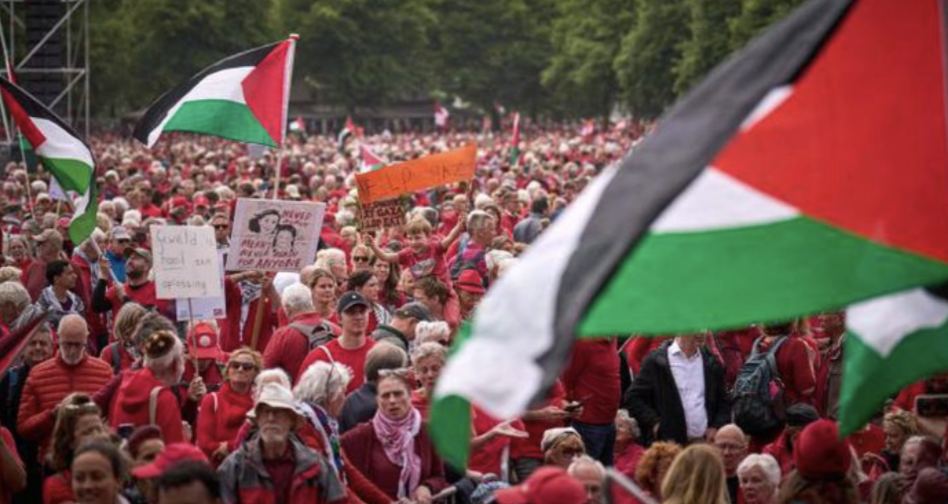
Tens of thousands demonstrate in The Hague to demand an end to the war of extermination in Gaza.

The Hague, Netherlands, witnessed a massive demonstration on Sunday evening, demanding that the Dutch government take further action to stop the ongoing genocide in the Gaza Strip.

Human rights groups, such as Amnesty International and Oxfam, organized the march in the city, which headed to the International Court of Justice, declaring what was happening a "red line."

The protesters, who numbered around 150,000, dressed in red, according to organizers, waved Palestinian flags and chanted, "Stop the genocide." Some held signs reading, "Don't turn a blind eye, act," and "Be silent when children sleep, not when they are killed."

"The people of Gaza cannot wait," they said in their call to action. "It is the Netherlands' duty to do everything possible to stop the Israeli genocide."

PALESTINE

Sun 15 Jun 2025 8:54 pm - Jerusalem Time

Buildings in Israel were damaged and several people were injured in Tel Aviv and Haifa due to Iranian missiles.

Magen David Adom announced that buildings and several people were hit in an Iranian missile attack targeting occupied Tel Aviv and Haifa.

Hebrew media reported that several Iranian missiles fell in various parts of the country.

In turn, Iranian television called on the Israelis to avoid vital areas.

Iranian forces launched a new batch of missiles towards Israel, the Israeli occupation army announced a short while ago.

The occupation said in a statement: "The Israel Defense Forces has determined that missiles were recently launched from Iran towards the territory of the State of Israel. Defense systems are operating to intercept the threat." It added: "You must enter protected areas upon receiving the alert and remain there until further notice. You will not be permitted to leave the protected area except after receiving explicit instructions. You must continue to operate in accordance with the instructions of the Home Front Command."

PALESTINE

Sun 15 Jun 2025 8:33 pm - Jerusalem Time

Dead and wounded in the occupation's bombing of Gaza City

Three citizens were killed Sunday evening in an Israeli airstrike on Gaza City.

According to local sources, the occupation forces targeted a group of citizens near Dar Al-Arqam School in the Al-Tuffah neighborhood of Gaza City, killing three people and wounding others.

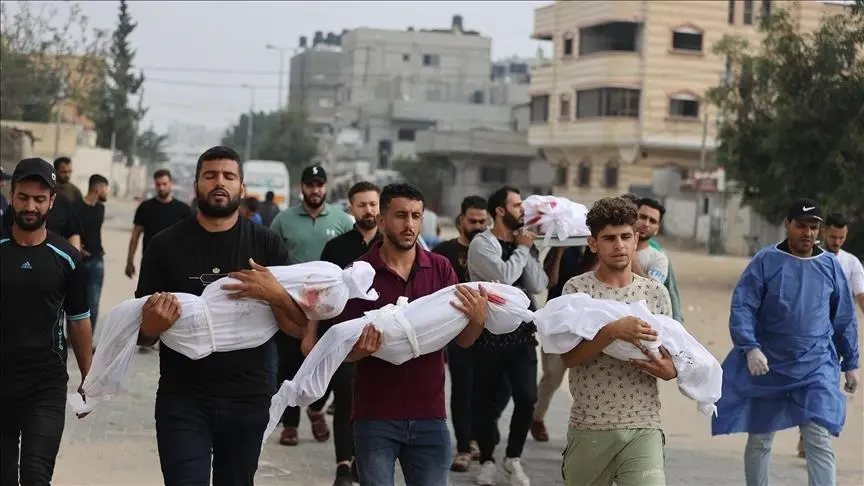
Since October 7, 2023, the Israeli occupation forces have launched an aggression against the Gaza Strip, resulting in the deaths of 55,362 citizens, the majority of whom were children and women, and the injury of 128,741 others. This is a preliminary toll, with a number of victims still under the rubble and on the streets, unable to be reached by ambulance and rescue crews.

ARAB AND WORLD

Sun 15 Jun 2025 8:13 pm - Jerusalem Time

The Israeli army announces new airstrikes in western Iran.

The Israeli military announced on Sunday that its aircraft had launched a new wave of attacks on dozens of missile targets in western Iran.

"The Air Force has launched a wave of attacks on dozens of surface-to-surface missile targets in western Iran," he said in a post on the X platform.

ARAB AND WORLD

Sun 15 Jun 2025 6:22 pm - Jerusalem Time

Trump threatens Iran with an "unprecedented" response

US President Donald Trump said on Sunday that the United States would respond "at unprecedented levels" if attacked by Iran.

With American approval, Israel attacked Iranian nuclear facilities, senior Iranian officials, military leaders, and prominent nuclear scientists on Friday. Iran responded late Friday (Saturday morning) with missile attacks targeting dozens of sites and targets in Israel, causing significant damage in Tel Aviv, but it does not appear to have targeted American targets so far.

Iranian Defense Minister Aziz Nasirzadeh threatened last week that if Israel attacks Iran, Iran will strike US military bases in the region.

Further missile attacks caused significant damage to the Defense Ministry, killed at least 11 people, and wounded more than 200 in Israel on Saturday night as the conflict escalated. The Israeli military on Sunday called on Iranian civilians living near weapons production facilities to evacuate.

Trump said in the early hours of Sunday morning: "The United States had nothing to do with the attack on Iran, and if we are attacked by Iran in any way, the United States Armed Forces will respond with the full force of our military at unprecedented levels."

He added: "However, we can easily conclude an agreement between Iran and Israel, and end this bloody conflict!!!"

Experts believe that while Israel and Iran are engaged in a war that could spread to other regions, the possibility of resuming talks that were underway prior to the Israeli aggression to address Iran's nuclear program should not be ruled out.

Negotiations will likely remain frozen while the war continues, and the future of diplomacy remains uncertain. Iran feels compelled to respond to Israel, which it is now doing, while Washington appears to be doing nothing to pressure both sides to halt the violence and restart talks.

But the Iranians say they still want a deal, and so does President Trump. The shape of future talks will inevitably depend on when and how the fighting stops.

Washington is holding talks with Tehran to reach an agreement on Iran's nuclear program in exchange for lifting sanctions. In late May, the UN watchdog stated that Iran had increased its stockpile of weapons-grade uranium.

The sharp Israeli escalation has raised fears of renewed instability in the Middle East, prompting leaders to urge restraint and a return to negotiations.

Shortly after the IDF issued the evacuation call on Sunday, Defense Minister Israel Katz stated that Israel "will strike the sites and continue to weaken Iran everywhere, stripping it of its nuclear capabilities and weapons systems."

The Associated Press reported that Israel's Magen David Adom rescue service reported 13 deaths on Sunday. Iran's ambassador to the United Nations, Amir Saeed Iravani, said on Saturday that 78 people had been killed and more than 320 wounded in the country, according to the Wall Street Journal. Foreign Ministry spokesman Esmail Baghaei criticized the Israeli strikes on residential areas, according to the official Islamic Republic News Agency.

According to reports, it secretly delivered hundreds of Hellfire missiles to Israel ahead of its unprecedented attack on Iran on Friday. The United States sent approximately 300 Hellfire missiles to Israel on Tuesday as part of a large stockpile of supplies ahead of its attack. At a time when the Trump administration was saying it was prepared to continue engaging Iran in nuclear talks, the transfer of such a large quantity of Hellfire missiles indicates that the Trump administration was well aware of Israel's plans to attack the Islamic Republic of Iran.

There were no previous reports of the US delivering Hellfire missiles or other large quantities of weapons in the period leading up to Friday's attack.

Two US officials told Reuters on Friday that the US military helped shoot down Iranian missiles heading towards Israel.

Hellfire missiles are laser-guided air-to-ground missiles. While they would not be useful for Israel to bomb Iranian nuclear facilities, they are useful for precision strikes.

It is now beginning to emerge that the Trump administration had been aware of Israel's attack plans for months.

A report in the Middle East Eye website earlier this month revealed that the CIA was briefed in April and May on Israeli plans to unilaterally attack Iranian nuclear sites. The US administration was "impressed" with the analysis of Israeli target systems and the battle plan for cyberattacks, along with precision strikes without any direct US involvement. But Trump's behavior in recent months has given observers, and perhaps even Iranians, the impression that he will continue to resist Netanyahu's public pressure to endorse the strikes.

Axios also reported on Friday, citing Israeli officials, that the Trump administration only "pretended" to resist the Israeli attack plans, but did not resist them in secret.

It's worth noting that Trump has since reframed his approach, stating that he gave Iran a 60-day deadline to agree to a new nuclear agreement with his administration, beginning on April 12 and ending on June 12, before launching the strikes.

ARAB AND WORLD

Sun 15 Jun 2025 5:06 pm - Jerusalem Time

Trump: I will make a peace agreement between Iran and Tel Aviv, just as I did with India and Pakistan.

US President Donald Trump said that Iran and Israel must reach a peace agreement, noting that numerous contacts and meetings are currently underway in this regard.

Trump added in a statement, "I am confident that we will soon reach an agreement between Iran and Tel Aviv, as we did previously with India and Pakistan."

Trump stressed that he seeks to play a role in ending the escalating tensions between the two sides, calling for giving peace a chance, adding: "Make the Middle East great again."

Trump tweeted on Truth Social, "Several contacts and meetings are currently being held to discuss ways to achieve peace between Iran and Israel," saying, "I'm doing a lot, and I don't get the credit, but that's okay, people understand. Let's make the Middle East great again!"

Trump criticized his successor, President Joe Biden, for his decisions, saying they "harmed long-term prospects for peace," but he promised to fix things again upon his return to the White House.

These statements come amid escalating tensions in the region, amid international calls to de-escalate the situation and avoid a full-scale conflict.

PALESTINE

Sun 15 Jun 2025 4:40 pm - Jerusalem Time

The occupation's aggression on the city of Tulkarm and its two camps enters its 140th day amid ongoing field escalation.

The Israeli occupation continues its aggression against the city of Tulkarm and its two camps for the 140th consecutive day, and against the Nur Shams camp for the 127th day, amid widespread field escalation, a tight siege, and raids, vandalism, and arrests, targeting various neighborhoods and suburbs of the city.

According to local sources, the occupation forces deployed their military vehicles to the city's streets since the morning hours, and were stationed in the central market and the streets of the Martyr Thabet Thabet Governmental Hospital and Nablus. They obstructed the movement of citizens and vehicles, and drove their vehicles against traffic, honking their horns in a provocative manner, endangering the lives of citizens.

Meanwhile, occupation forces continued to close the eastern entrance to the city via the Anab military gate, preventing vehicles from approaching it. They also reinforced their presence at the southern entrance, particularly around the Jabara Bridge, obstructing traffic through it, leading to a severe traffic crisis in the area.

During the early hours of the morning, occupation forces raided several homes in the city and its suburbs, including a building belonging to the family of Issam Odeh, Secretary of the National Gathering of Martyrs' Families. His home and the homes of his brothers were raided, their contents vandalized, family members were interrogated, and their phones and mobile devices were seized. They also arrested citizens Mufleh Balawneh from the Al-Aqsa neighborhood in the Shuweika suburb, and Amer Shehadeh from the Ezbet al-Jarad suburb.

The tight siege on the Tulkarm and Nur Shams refugee camps and their surroundings continues, with infantry units and military vehicles deployed throughout neighborhoods and alleyways, preventing residents from reaching their homes, and firing at anyone who attempts to approach.

For the tenth consecutive day, Tulkarm camp witnessed extensive demolitions in the Balawneh, Akasha, and Nadi neighborhoods and their surroundings. Heavy Israeli bulldozers destroyed numerous residential buildings, as part of a plan to demolish 106 buildings in the two camps, including 58 in Tulkarm camp alone, comprising more than 250 housing units and dozens of shops.

In Nour Shams camp, the occupation forces have destroyed more than 20 residential buildings, out of 48 targeted for demolition, over the past few weeks, under the pretext of clearing roads and changing the landscape.

The occupation continues to transform Nablus Street into a military barracks, seizing control of several residential buildings and parts of the city's northern neighborhood. Some of these sites have remained under occupation for more than four months, including the Al-Fara'tawi family home, which was recently set on fire. The occupation authorities prevented its owners from accessing it at gunpoint.

The same road, which connects the Tulkarm and Nur Shams camps, has suffered extensive damage due to earth mounds and flying checkpoints erected by the occupation forces, obstructing residents' movement and exacerbating their daily suffering.

This ongoing aggression has so far resulted in the deaths of 13 civilians, including a child and two women, one of whom was eight months pregnant. Dozens have been injured and detained, and widespread destruction has affected homes, infrastructure, shops, and vehicles.

According to the latest data, the Israeli escalation has displaced more than 5,000 families from the two camps, representing over 25,000 citizens. It has also completely destroyed approximately 400 homes and partially damaged 2,573 others. Meanwhile, the entrances to the two camps remain blocked by earth mounds, rendering them almost lifeless.

ARAB AND WORLD

Sun 15 Jun 2025 4:16 pm - Jerusalem Time

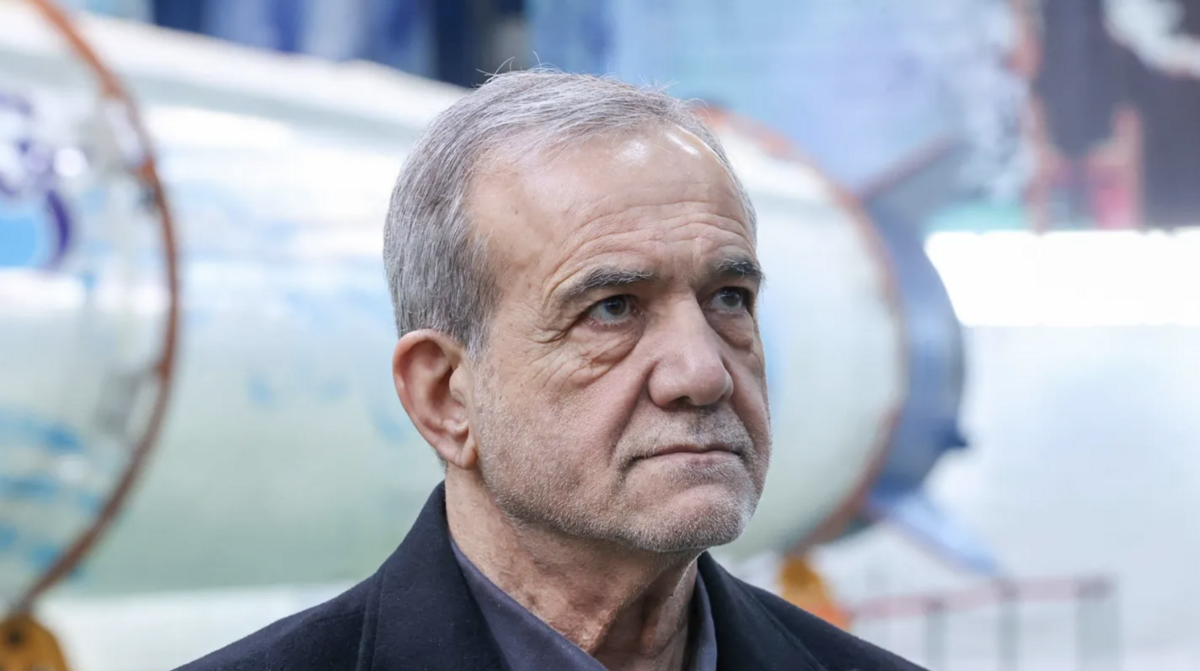
Iranian President: Washington is directly involved in Israel's attacks

Iranian President Masoud Pezeshkian said on Sunday that Israeli attacks that killed military and civilian leaders confirm Tel Aviv's disregard for international law.

In remarks to government ministers, Pezeshkian added that Iran would respond "more decisively and harshly" if Israeli attacks continued.

The Iranian president emphasized that the United States is directly involved in these attacks. He said, "The United States plays a direct role in the Israeli attacks on Iran," noting that an American official told Iranian Foreign Minister Abbas Araqchi that "Israel does not act without American permission."

"What we are witnessing today is taking place with direct support from Washington, despite its attempts to conceal this in the media," Pezeshkian added.

He concluded by saying, "Iran did not seek war, but it will respond with greater force if the aggression continues, as its armed forces have done so far."

PALESTINE

Sun 15 Jun 2025 3:34 pm - Jerusalem Time

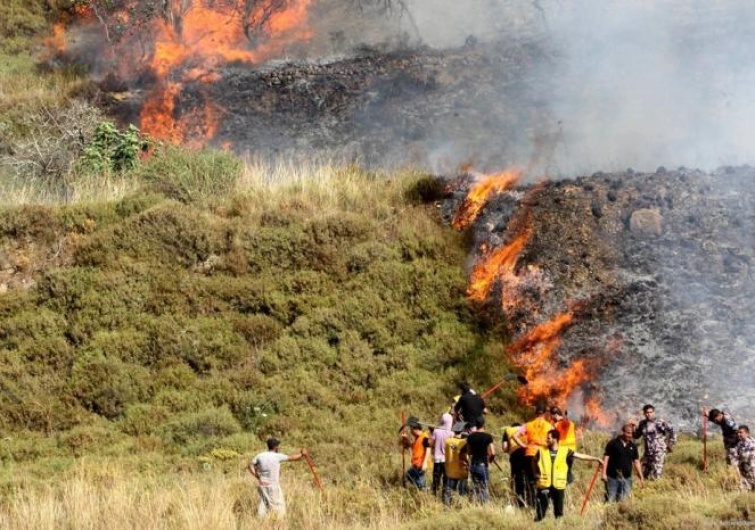
Settlers set fire to Hawara lands, south of Nablus.

Today, Sunday, settlers set fire to lands in the town of Hawara, south of Nablus.

Local sources reported that settlers attacked the town, set fire to its lands, and fired live ammunition at Civil Defense personnel when they attempted to approach to extinguish the fire.

It is noteworthy that settler attacks have escalated recently, with settlers setting fire to citizens' lands.

PALESTINE

Sun 15 Jun 2025 3:32 pm - Jerusalem Time

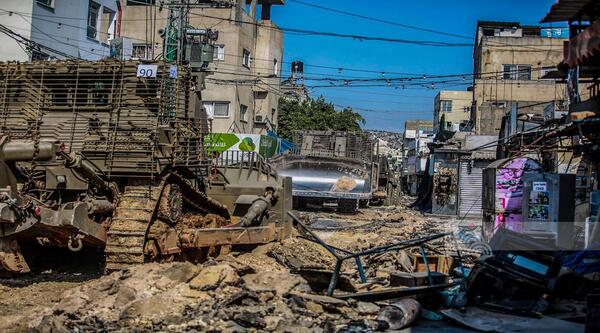
The occupation forces are carrying out bulldozing and demolition work in the southern part of Jenin camp.

Israeli occupation bulldozers began, on Sunday evening, bulldozing and demolition work in the southern area of Jenin camp.

Local sources reported that Israeli bulldozers destroyed and razed areas near Mahyoub Street in the southern part of the camp. These actions are believed to be part of a plan to expand and pave new roads.

Over the past two days, the occupation forces have deployed additional military bulldozers to Jenin camp in preparation for the demolition of 95 homes, for which demolition orders were issued last Monday, in several neighborhoods and districts within the camp.

The occupation continues to impose a complete siege on Jenin camp, transforming it into an isolated area, prohibiting entry and placing three iron gates at its main entrances, for nearly 146 days.

ARAB AND WORLD

Sun 15 Jun 2025 2:55 pm - Jerusalem Time

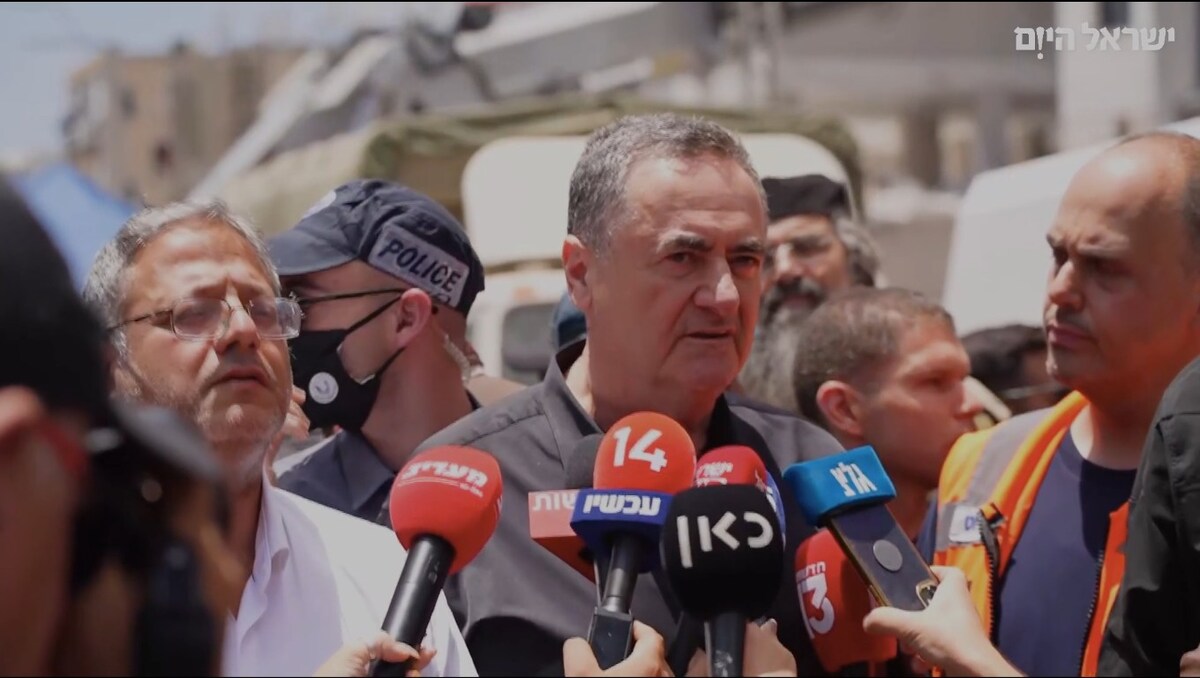
Katz and Ben-Gvir inspect the sites where Iranian missiles fell in Beit Yam.

Israeli Defense Minister Yisrael Katz and National Security Minister Itamar Ben-Gvir inspected the sites where Iranian missiles fell in Beit Yam.

Katz said: The plan is going as planned and even more so.

He continued: Our strikes on Tehran and its nuclear program, weapons production, air defense, and missile systems were powerful.

ARAB AND WORLD

Sun 15 Jun 2025 2:26 pm - Jerusalem Time

13 killed in Iranian attacks, Israel warns Iranians: Leave weapons manufacturing sites immediately.

The region witnessed an unprecedented escalation early Sunday morning, with Iran launching new rounds of missiles at targets inside Israel. The attacks killed 10 people, including six in Bat Yam, near Tel Aviv, and wounded more than 200 others, in addition to a number of missing persons. Four women were also killed in the city of Tamra in the Galilee, bringing the death toll since Friday to 13.

The dead in Tamra are Manar Qassem Abu Al-Haija Khatib (40 years old), her two daughters Shaza and Hala Khatib (20 and 13 years old), and their relative Manar Fakhri Diab Khatib (40 years old), while other people were injured as a result of a rocket falling on the night of Saturday - Sunday.

The Israeli military issued a warning to the Iranians, urging them to immediately evacuate weapons manufacturing facilities and surrounding areas until further notice, in preparation for targeting them. An Israeli security source said that this move is part of a pre-planned plan to pressure the Iranian regime by forcing residents to leave these sites, allegedly in response to the targeting of "Israel's home front."

The Tel Aviv area was among the hardest hit, with the mayor of Bat Yam confirming that the bombing damaged 61 buildings, including six that were rendered uninhabitable and will be completely demolished. Meanwhile, rescue teams continue their search under complex conditions for three missing persons, amid the threat of additional collapses in a building, a large portion of which has completely collapsed. Other parts remain suspended in the air, posing a danger to crews.

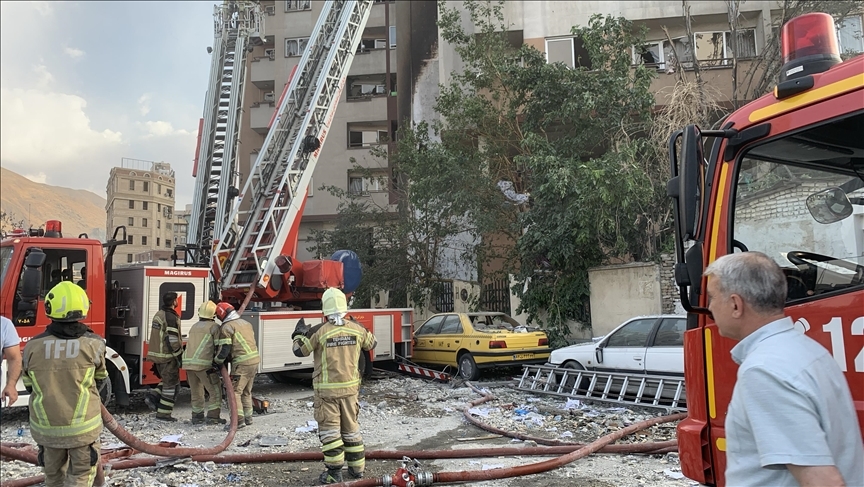
Meanwhile, Israel launched large-scale attacks on Tehran and other areas. The Iranian Ministry of Defense announced that one of its administrative buildings and a research center had been bombed, along with a major fuel depot in the capital. The Israeli military confirmed that it targeted the headquarters of the Iranian Ministry of Defense and sites linked to the "nuclear weapons project" infrastructure, as part of the ongoing exchange of attacks between the two sides for the third consecutive day.

PALESTINE

Sun 15 Jun 2025 2:22 pm - Jerusalem Time

55,362 dead, the toll of the genocide in the Gaza Strip

The Ministry of Health in Gaza reported on Sunday that the death toll from the Israeli aggression has risen to 55,362 dead and 128,741 wounded since October 7, 2023.

In its daily statement, the ministry confirmed that 65 martyrs (including 8 recovered martyrs) and 315 injuries had arrived at Gaza Strip hospitals in the past 24 hours.

It pointed out that a number of victims are still under the rubble and on the streets, and that ambulance and civil defense crews are unable to reach them.

The death toll and injuries since March 18, 2025 has reached (5,071 martyrs, 16,700 injuries).

Regarding the martyrs awaiting aid, the Ministry of Health stated that the number of aid victims arriving at hospitals over the past 24 hours has reached 26, along with more than 117 injuries. This brings the total number of livelihood victims arriving at hospitals from areas designated for aid distribution to 300, with more than 2,649 injuries.


PALESTINE

Sun 15 Jun 2025 1:58 pm - Jerusalem Time

The occupation forces close Al-Aqsa Mosque to worshippers for the third consecutive day.

For the third consecutive day, the Israeli occupation authorities continue to close the blessed Al-Aqsa Mosque in occupied Jerusalem to worshippers, citing the tense security situation.

Since dawn on Friday, Israeli occupation forces have completely closed the gates of Al-Aqsa Mosque and the Ibrahimi Mosque in Hebron, preventing worshippers from entering them, coinciding with the start of the Israeli aggression against Iran.

The occupation also imposed a comprehensive closure on transportation in Jerusalem and erected extensive military checkpoints around the Old City, closing roads and preventing Palestinians from reaching Al-Aqsa Mosque, leading to the closure of all its gates to worshippers.

This closure is the first of its kind since the COVID-19 pandemic, and Jerusalemite sources view it as a dangerous transgression and a move aimed at altering the religious landscape of the city amid the most dangerous phase of Judaization it is currently undergoing.

Meanwhile, and within the state of emergency declared by the Home Front Command following the aggression against Iran, the occupation forces continued to impose severe restrictions and restrictions on the residents of Jerusalem and its suburbs.

On Friday, the occupation forces completely closed off the Old City, concentrating their forces heavily there, allowing entry only to the town's residents.

Israeli occupation police also stormed the Al-Aqsa Mosque compound after Friday dawn prayers, evacuated worshippers from the prayer halls, and completely closed the mosque's gates, preventing thousands of worshippers from reaching it.

Meanwhile, the mosque's preacher, Sheikh Muhammad Sarandah, delivered the Friday sermon inside the mosque, while employees of the Endowments and Prayer Department, the mosque's guards, led the prayers amid a tense atmosphere following the closure and restrictions.

PALESTINE

Sun 15 Jun 2025 1:50 pm - Jerusalem Time

Bethlehem: A young man was injured after being attacked by Israeli occupation forces in Al-Khader.

A 23-year-old young man was injured on Sunday after being beaten by the occupation forces in the town of Al-Khader, south of Bethlehem.

Citizen Ibrahim Musa reported that the occupation forces stormed his home in a brutal manner, ransacking its contents completely, before taking his son Omar outside and severely beating him, causing bruises all over his body.

He added that the occupation forces asked him to pay 50,000 shekels, claiming that he was receiving a prisoner's salary.

PALESTINE

Sun 15 Jun 2025 1:48 pm - Jerusalem Time

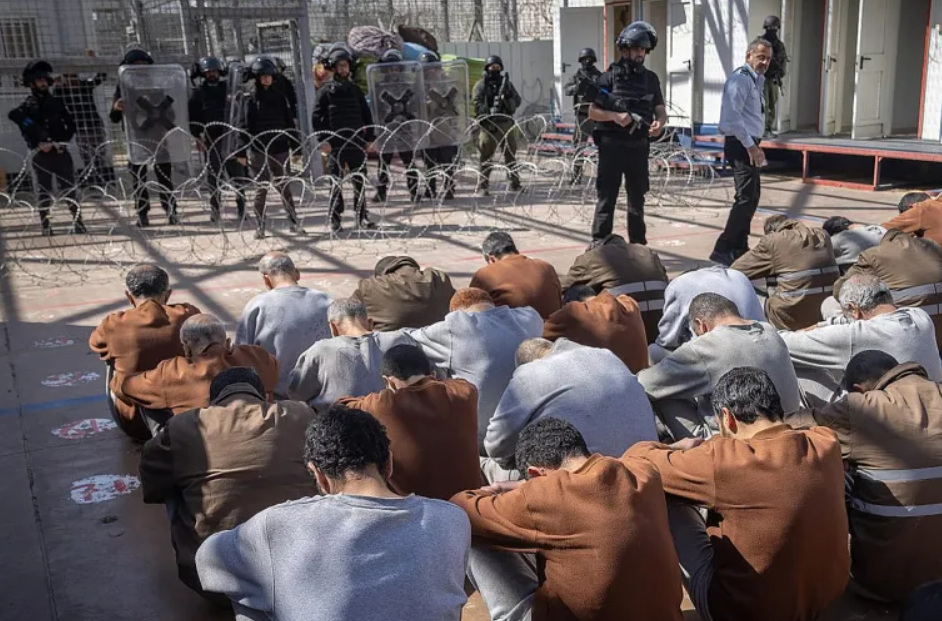
New responses regarding the detention of 203 detainees from Gaza in Israeli prisons.

The Palestinian Authority for Prisoners' Affairs and the Palestinian Prisoners' Club published the names of 203 detainees from the Gaza Strip, who received responses from the Israeli occupation army regarding their detention locations in Israeli prisons and camps.

The Commission and the Club pointed out, in a joint statement issued today, Sunday, that many detainees in Gaza are still subject to the crime of enforced disappearance, and that the only available information about their numbers is what was issued by the occupation prison administration, who classify them as illegal combatants, and their number is (2214).

It is worth noting that over the past months, dozens of horrific and shocking testimonies have been recorded about the torture carried out against Gaza detainees, in addition to a series of crimes that reflect the level of brutality that the occupation system has reached. The (Sde Teiman) camp was the most prominent example of torture crimes against Gaza detainees, and the level of crimes against them remains the same according to many recent visits to detainees from Gaza in various prisons and camps.

ARAB AND WORLD

Sun 15 Jun 2025 12:37 pm - Jerusalem Time

Israel still detains 3 Madeleine volunteers

The Freedom Flotilla Coalition announced that three members of its ship, the Madeleine, which was hijacked by Israel on its way to break the blockade of Gaza, are still being illegally detained.
The coalition said in a tweet on the X platform the day before yesterday that the Madeleine crew members, Pascal Moreiras, Yanis Mohammadi, and Marco van Rijn, remain unlawfully detained by Israel and may be held for another month.
The coalition, which organized the campaign to break the siege on Gaza, noted that after the team members were unlawfully arrested in international waters and deprived of their basic rights, they are being held in inhumane conditions, with only one hour of light per day, and are suffering from severe skin infections.
The Freedom Flotilla Coalition described the incident as "not a detention, but a hostage-taking," and urged the French and Dutch governments to take immediate action to secure their release and safe return home, especially with airports in Israel closed due to its ongoing confrontation with Iran.
The coalition also called for humane treatment of the three detainees, their unification in a single detention facility, and respect for international law. It stressed that its struggle "will continue until Palestine is liberated."

Madeleine's kidnapping
Last Monday morning, the Freedom Flotilla Coalition said that members of the Israeli military boarded its ship, the Madeleine, heading to Gaza, and that contact with it was lost. Israeli Army Radio reported that naval commandos had taken control of the ship.
The Freedom Flotilla Coalition accused the Israeli occupation forces of kidnapping the volunteers aboard the Madeleine, before Israel deported some of the team members after their detention.
The Madeleine set sail in early June from the Italian port of Catania towards the Gaza Strip, on a voyage aimed at breaking the Israeli blockade.
The ship carried 12 activists of various nationalities, including Al Jazeera Mubasher correspondent Omar Fayyad, in addition to humanitarian aid including food, medicine, and medical equipment.
The Madeleine is the 36th ship in the Freedom Flotilla coalition, which aims to break the Israeli blockade imposed on the Palestinian Strip since 2007.
The ship is named after Madeleine Kullab, the first Palestinian female fisherman in the Gaza Strip. She lost her father and her livelihood after the outbreak of the Israeli war in October 2023.

Source: Al Jazeera + Agencies

ARAB AND WORLD

Sun 15 Jun 2025 11:59 am - Jerusalem Time

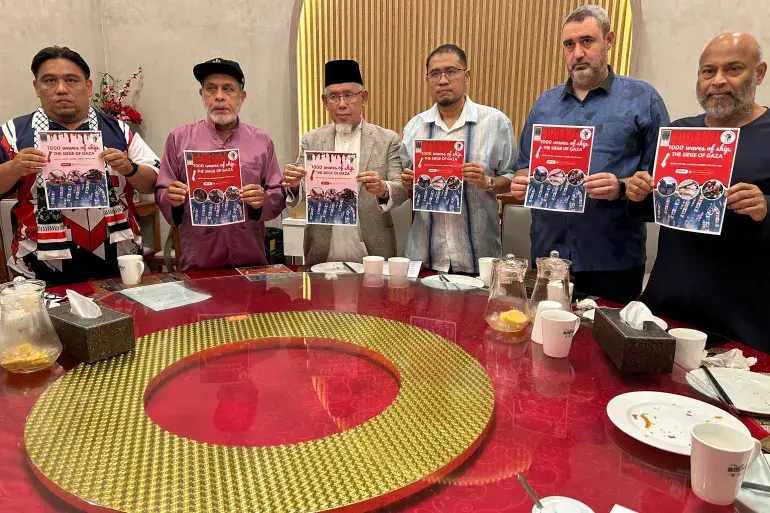
After "Madeleine," Malaysia seeks to equip 1,000 ships to break the Gaza blockade.

Malaysian civil society organizations have announced their intention to launch the largest naval fleet to break the siege on Gaza. Azmi Abdul Hamid, chairman of the Coordinating Council of Islamic Organizations of Malaysia, said the results of his contacts with bodies and organizations from around the world are very encouraging for the potential deployment of a 1,000-ship fleet.
Abdul Hamid added, at a press conference in Kuala Lumpur, that the Madeleine, a ship hijacked by Israeli occupation forces, successfully conveyed its message by highlighting the crimes of genocide and the need for increased action to stop the crimes committed by the occupation authorities.
He emphasized that "Madeleine" has encouraged humanitarian organizations around the world to replicate the Freedom Flotilla experience, but with greater international mobilization, given the enormity of the crime committed by Israel in Gaza.
Speaking to Al Jazeera Net, Abdul Hamid said that preparations are underway to deploy 1,000 ships from around the world, and that the countries to which these ships belong are being asked to protect them. He confirmed that international figures have affirmed their support for the idea of a 1,000-ship fleet.
The organizations sponsoring the second Freedom Flotilla set the movement's objectives as delivering humanitarian aid to the besieged Gaza Strip, challenging Israel's violations of international law, and encouraging civil society organizations around the world to take action to "save humanity" and exert peaceful and moral pressure on the illegal occupation authorities to halt their crimes.
The head of the Malaysian Islamic Organisations Coordination Council (MABIM) did not specify the date or location for the second Freedom Flotilla's departure to break the siege on Gaza. He said it would not be merely an aid flotilla, but rather an uprising of human conscience, after political regimes failed to stop the crimes of genocide.

Strengthening the momentum of the movement
Representatives of Malaysian organizations supporting the Palestinian cause praised the "Sumoud" humanitarian land convoy that set sail from Tunisia toward the Gaza Strip. During their first preparatory meeting for the Freedom Flotilla II, they expressed hope that these marches would contribute to maintaining the momentum of the global movement to lift the siege on the Gaza Strip, after countries and international bodies failed to halt Israel's crimes of genocide and starvation against the Palestinian people.
A statement signed by dozens of Malaysian organizations said the 1,000-ship flotilla concept aims to mobilize dozens of ships from every country around the world. These ships will convene in a country near Palestine and then set off together toward the besieged Gaza Strip.
The statement added that the initiative was inspired by the 2010 Mavi Marmara flotilla, but it is now on a global scale. It will prompt governments to act to protect their citizens participating in the flotilla, which will in turn spur a global movement against the occupying authorities and their supporters.

This statement specified the fleet's demands as follows:
Immediate lifting of the blockade imposed on Gaza.
Allowing the delivery of humanitarian aid to the Palestinians.
Providing international protection for the Palestinian people.
Holding the occupation leaders accountable for the crimes of genocide and starvation.
The Coordinating Council of Malaysian Islamic Organisations has prepared to establish a secretariat to coordinate efforts to ensure the success of the 1,000-ship fleet mission and to establish a fund to finance it when needed.
He also called on companies, institutions, and individuals to provide necessary supplies, such as ships and safety and security equipment, organize marches in support of the campaign, and pressure governments to ensure the protection of flotilla participants.

Boycott Israel
On the other hand, Malaysian organizations have called on the government to halt all ties with companies accused of supporting the Israeli occupation of Palestine and of dealing with settlements.
Dozens of activists gathered in front of the Malaysian Investment Corporation building in Kuala Lumpur, demanding that it end its business relationship with Caterpillar, the American company that manufactures the D9 bulldozer used by Israeli forces to destroy Palestinian homes and infrastructure in the Gaza Strip and the West Bank.
Dr. Muhammad Nazri, head of the Boycott, Divestment, and Sanctions (BDS) movement in Malaysia, said that they classify Malaysian companies that deal with those who support the occupation as complicit in Israeli genocide and crimes of genocide. Speaking to Al Jazeera Net, he confirmed that Sime Darby, a subsidiary of the Malaysian Investment Authority, is Caterpillar's largest partner in ASEAN.


Source: Al Jazeera

PALESTINE

Sun 15 Jun 2025 11:50 am - Jerusalem Time

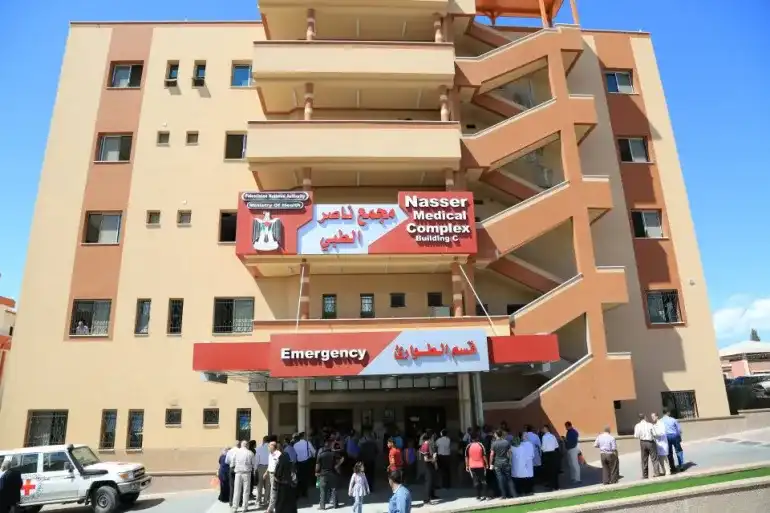
Gaza Health: Nasser Hospital's shutdown is a catastrophe with unpredictable consequences.

The Ministry of Health in the Gaza Strip stated that "the closure of Nasser Medical Complex in Khan Yunis is a catastrophe with unpredictable consequences," noting that it is the sole healthcare facility for hundreds of patients and wounded in the southern governorate.

The ministry's statement came Sunday morning as a result of the Israeli military issuing an evacuation order for the area housing Nasser Hospital.

She stressed that repeated threats of eviction and shelling of areas surrounding hospitals are disrupting the work of medical staff and threatening to put the remaining hospitals out of service.

She added, "Medical staff, patients, and the wounded lack safe routes to reach hospitals amid ongoing evacuations and shelling."

The Ministry of Health in Gaza indicated that specialized health services provided to patients and the wounded in the remaining operating hospitals are besieged by a shortage of medical supplies and are at risk of being rendered inoperable.

She noted that it is impossible to wait any longer to implement temporary interventions that do not meet the minimum requirements for providing emergency and routine healthcare.

The Ministry of Health warned of the Israeli occupation's failure to respond to international organizations' efforts to increase medical supplies, protect hospitals, and ensure safe access for patients, the wounded, and healthcare workers to service delivery sites.

PALESTINE

Sun 15 Jun 2025 11:41 am - Jerusalem Time

UNICEF: Gaza families struggle to secure a meal for their children

UNICEF spokesman James Elder said that Palestinian families in the Gaza Strip are struggling to provide a single meal for their children daily, as "far more bombs and rockets are entering Gaza than food."

He added that the situation is worsening day by day, in light of the ongoing blockade and Israeli attacks, describing the humanitarian situation in the Strip as "bleak, horrific, and hopeless."

Elder, who has been in Khan Yunis, south of the Gaza Strip, for some time on an official mission, spoke in an interview with Anadolu Agency.

The UNICEF spokesperson noted that hopes raised by talk of a ceasefire in Gaza have improved slightly, with the region experiencing a partial flow of aid and limited improvements in water and food supplies.

He added, "However, this optimism soon faded after the Gaza Strip faced a catastrophic aid blockade."

"The people of Gaza are living through harsh nights under bombardment, and they spend their days fleeing hunger and explosions," he added, stressing that "everything we knew about people's resilience has been completely shattered."

He continued: "The world seems preoccupied only with seeing the wounded and talking about aid, ignoring the enormous psychological burden the population is experiencing, and the harsh reality for families forced to flee repeatedly after losing everything.

He pointed out that many families have been living in tents for six months, under tank fire, and are now being forced to move again, emphasizing that Gaza has been experiencing this tragic situation for more than 600 days.

He stressed that Gazan families have not celebrated Eid al-Adha for two years, and that instead they gather in silence to remember those they have lost, "amid a heavy sense of sadness and disappointment."

He pointed out that mothers go two days without food just to be able to provide a single meal for their children.

"No Eid celebrations, no homes to shelter them, nothing. People spent their lives building homes and gardens, but all of that suddenly disappeared," the speaker continues.

He noted that estimating the number of children dying of hunger daily or weekly is extremely difficult under such circumstances, but he emphasized that children suffering from malnutrition die "from simple causes that could have been easily treated."

He explained that "acute malnutrition increases a child's likelihood of dying from simple things by 10 times. This is the deadly cycle that kills children: malnutrition, water contamination, and lack of basic healthcare."
He also warned that access to hospitals is no longer safe for sick or malnourished children, stressing that the hospitals themselves lack basic medical supplies.

There are 19 partially functioning hospitals in Gaza, including 8 government hospitals and 11 private hospitals, out of a total of 38. There are also 9 field hospitals operating in the Strip.

"Humanitarian aid may only amount to 10% of what people actually need," Eldar continued. "Many more bombs and rockets are entering Gaza than food."

He explained that during the ceasefire period, the United Nations and its Palestinian partners were able to establish 400 distribution points to provide humanitarian aid, stressing that through this system, they were able to effectively reach those in need.

However, the spokesman criticized the new aid distribution system currently being imposed in southern Gaza by the US- and Israeli-backed Gaza Humanitarian Fund.

He described it as "military in nature" and involving only limited distribution sites, saying: "This system leads to daily casualties, with children being killed simply for trying to get a box of food."
He continued, warning: "Now a system has been deliberately designed (by Israel) to push the population from the north of the Strip to the south, and it threatens to undermine the effective aid distribution system we have established."

Beyond the supervision of the United Nations and international relief organizations, Israel began implementing a plan to distribute humanitarian aid on May 27 through the so-called "Gaza Humanitarian Relief Foundation," an organization supported by Israel and the United States but rejected by the United Nations.

Aid was distributed in the so-called "buffer zones" in southern and central Gaza, amid growing signs that this plan is failing. Distribution operations were repeatedly interrupted by the influx of starving people, and Israeli forces opened fire on those waiting for aid, leaving civilians dead and wounded.

ARAB AND WORLD

Sun 15 Jun 2025 10:21 am - Jerusalem Time

Israeli army: We call for the evacuation of all nuclear facilities in Iran.

The Israeli military called for the evacuation of all nuclear facilities in Iran.

He continued: "Urgent warning to the people of Iran. We urge all those present at all weapons reactors to evacuate the facilities immediately."

His spokesman said that the evacuation notice includes all weapons factories and their supporting facilities in Iran.

OPINIONS

Sun 15 Jun 2025 9:52 am - Jerusalem Time

Between Tehran and Tel Aviv... Gaza is being wiped out off camera

Baha Rahal

Baha Rahal

Opinion Writer

While satellite news channels focused on covering the raging war between Tel Aviv and Tehran, images of Gaza were absent from their screens and satellite channels. During those hours, more than 100 martyrs were killed, and hundreds more were injured in massacres whose images were not present in the scene, which was quickly replaced by images from Tehran and Tel Aviv, while the war of extermination continued off-camera.

Gaza seemed absent and obscured, while the killing machine continued to bombard the tents of the displaced and the shelters. Voices of fear and terror varied among those who could not bear a single night of bombing, less bloody than all the nights that the people of Gaza had lived and are living. Some complained of fear, and some were reluctant to stay in the shelters. The American ambassador in Tel Aviv claimed that it was a difficult night, while the nights of the people of Gaza were even more difficult and terrifying, with no safe places or necessities of life. Would you, Ambassador, hurry up and push your country and government to stop the genocide? Stand neutral for a moment and put yourself or your children in the place of the children of Gaza as they are crushed and dying, living in fear, loss, hunger, and suffering.

One of them said: We spent hours in shelters, feeling intense fear. What a strange and strange paradox! The people of Gaza have been living under direct bombardment, without shelter, food, or medicine, in shabby tents for more than 610 days, while they cry out to the conscience of the world to awaken from its slumber and silence.

What is the point of these wars? A child from Gaza says: Bring back my father, my brothers, my mother's embrace, my home, and my pillow.

The reporter's voice was gone from Gaza, and other images were present. Death became more horrific in the absence of a camera, the bombing more intense in the absence of sound and image, and starving people were crushed in front of fake food distribution centers.

Dear reader, wait a minute. “Nima Hassan,” a survivor in the displacement camps, says in her post: “We are the haystack that they accused of hiding the needle, so they built the holocaust.”


OPINIONS

Sun 15 Jun 2025 9:51 am - Jerusalem Time

Preliminaries of the Iranian response: Will Operation True Promise 3 succeed?

Hamza Al-Bashtawi

Hamza Al-Bashtawi

Opinion Writer

Scenes of Iranian bombing and precision missiles falling on Israeli security and military centers in downtown Tel Aviv, in addition to the Iranian air defenses shooting down two highly advanced F-35 fighter jets that were undetectable by radar, are clear indications of the rise of Iran's powerful and fortified military capabilities, capable of tipping the balance of power, defeating aggression, and breaking American influence in the region.

The facts of the early Iranian response to the surprise attack, which targeted prominent military leaders and nuclear scientists and resulted in the martyrdom and injury of a number of civilians, confirm that the Israelis committed a major strategic mistake with this attack. Iranian missiles were subsequently launched with far greater force than in Operation True Promise 1 and Operation True Promise 2, and struck a number of sensitive sites, including the Israeli Ministry of Defense, the Nuclear Research Center, and military air bases. This was despite the presence of the Israeli Iron Dome and other systems, which did not prevent the Iranian missiles from reaching their targets.

If Netanyahu, backed by the Trump administration, seeks to expand the scope of the war and drag the region into a comprehensive confrontation that threatens the security of the region's peoples and the stability of the world, then the success of Operation True Promise 3 will constitute a decisive deterrent against the aggression against Iran, Gaza, Yemen, and Lebanon. It will also be a victory for Iran's principled position of support and solidarity with Gaza and the Palestinian people, and will expand the solidarity of the world's free peoples in confronting the war of extermination and aggression against Gaza, the West Bank, and Jerusalem, and against the projects of American hegemony and authority in the region.

PALESTINE

Sun 15 Jun 2025 8:54 am - Jerusalem Time

Occupation forces launch arrest campaign in the West Bank

Israeli occupation forces launched a large-scale arrest campaign in the West Bank at dawn and early Sunday morning.

In Hebron, the occupation forces, which were deployed in the neighborhoods and streets of Beit Idhna in a provocative manner, stormed homes and shops, and arrested: Muhammad Abdul Aziz Al-Batran, Raafat Rashid Al-Batran, Khattab Ismail Al-Nattah, the brothers Muhammad and Akram Yousef Al-Fasisi, and Omar Al-Nattah.

They also raided a number of neighborhoods in Hebron, preventing citizens and their vehicles from reaching the iron gates at the northern and southern entrances to the city, and arrested citizens Zakari al-Duwaik, Salah Issa al-Muhtaseb, Hani al-Rajabi, Hamdi Abdo, and Muhammad al-Rajabi.

These forces also stormed the town of Adh Dhahiriya, south of Hebron, and arrested Ismail Al-Tal, Mahran Al-Sharif, Ani Melhem Hawarin, Moaz Ashnior, Ibrahim Al-Batat, and Majdi Issa Al-Batat.

From the town of Sa'ir, north of Hebron, these forces arrested citizens Alaa Jaradat and Rayan Jaradat, and prevented citizens from reaching the gate that closes the entrance to the town along the bypass road, while tightening the closure of the Al-Fawar and Al-Arroub camps.

In Nablus, Israeli jeeps stormed several neighborhoods of the city, raided a building in the Rafidia neighborhood, and arrested Mohammed Khair Sama'neh, after detaining his father from his home east of the city.

Meanwhile, the occupation forces stormed the Al-Masakin Al-Sha'biya area and Askar Al-Jadeed camp to the east, and searched a number of homes and a commercial store, wreaking havoc on them, and arrested both: Ahmed Suleiman Marshood from Al-Masakin Al-Sha'biya, and Abdul Rahim Kamal Adnan Malah from Askar Al-Jadeed camp.

Israeli jeeps raided the village of Qusra, south of Nablus, and arrested at least three citizens: Awad Fawzi, Shadi Asem, and Qassam Ibrahim.

In Tulkarm, occupation forces arrested Muhammad Ta'ma, Tariq Jawad Ghanem, Abdullah Al-Abouda, and Khaled Mahmoud Amarneh after raiding and searching their homes in the town of Qaffin.

In Bethlehem, the occupation forces arrested Muhammad Naji Asakreh, Mahmoud Fadi Asakreh, Ahmad Muhammad Asakreh, and Hazem Attiya Asakreh, after raiding and searching their families' homes in the village of Asakreh.

Meanwhile, occupation forces stormed the town of Al-Khader in the south, raided and searched a number of citizens' homes, and assaulted a number of them.

The occupation forces also stormed the village of Marah Rabah and raided the homes of citizens Murad Mahmoud Al-Sheikh, Ahmed Qasim Al-Sheikh, Musa Al-Sheikh, and Khaled Mohammed Al-Sheikh, without any arrests being reported.

In Qalqilya, occupation forces stormed the town of Azzun, east of its main northern entrance, and raided neighborhoods in the town, including: Al-Harah Al-Shamiya, Al-Safaha, and Khallet Al-Darbeh.

Meanwhile, these forces raided a number of homes, some of which belonged to prisoners and martyrs.

The occupation forces also detained young men and conducted field investigations with them during the raid.

ARAB AND WORLD

Sun 15 Jun 2025 8:51 am - Jerusalem Time

13 killed in Israeli attacks since Friday

The region witnessed an unprecedented escalation early Sunday morning, with Iran launching new rounds of missiles at targets inside Israel. The attacks killed 10 people, including six men in Bat Yam, adjacent to Tel Aviv, and wounded more than 200 others. Four women were also killed in the city of Tamra in the Galilee.

The dead in Tamra were Manar Qassem Abu Al-Haija Khatib (40 years old), her two daughters Shaza and Hala Khatib (20 and 13 years old), and their relative Manar Fakhri Diab Khatib (40 years old), while other people were injured as a result of a rocket falling on the night of Saturday - Sunday.

The Tel Aviv area was among the hardest hit, with the mayor of Bat Yam confirming that more than 20 people are still missing under the rubble of a building that sustained a direct hit. He added that the bombing damaged 61 buildings, including six that were rendered uninhabitable and will be completely demolished. Meanwhile, rescue teams continue their searches under complex conditions.

Meanwhile, Israel launched large-scale attacks on Tehran and other areas. The Iranian Ministry of Defense announced that one of its administrative buildings and a research center had been bombed, in addition to targeting a major fuel depot in the capital.

The Israeli military confirmed that it targeted the Iranian Defense Ministry headquarters and sites linked to the "nuclear weapons project" infrastructure, as part of the ongoing exchange of attacks between the two sides for the third consecutive day.

In the latest developments, Israeli police Ayalon District Commander Daniel Haddad said the death toll from the attack on Bat Yam has reached 6 dead, 180 injured, and 7 missing. He noted that "entire streets were destroyed, and we combed every apartment and flat."

On Sunday morning, the Israeli government submitted a request to approve a temporary settlement aimed at facilitating the identification of missing persons. The settlement will be effective until July 13.

The Israeli army also announced on Sunday morning that "seven Iranian drones were intercepted within the last hour."

In this context, Yahya Saree, spokesman for the Ansar Allah group (Houthis), announced on Sunday that the group had carried out a military operation targeting "sensitive enemy targets" in the Jaffa area.

He added that this operation came within the framework of joint coordination with attacks carried out by the Iranian army against what he described as the "enemy," stressing that the operation has a strategic nature in the context of the escalating regional response.