PALESTINE

Sun 22 Jun 2025 1:48 pm - Jerusalem Time

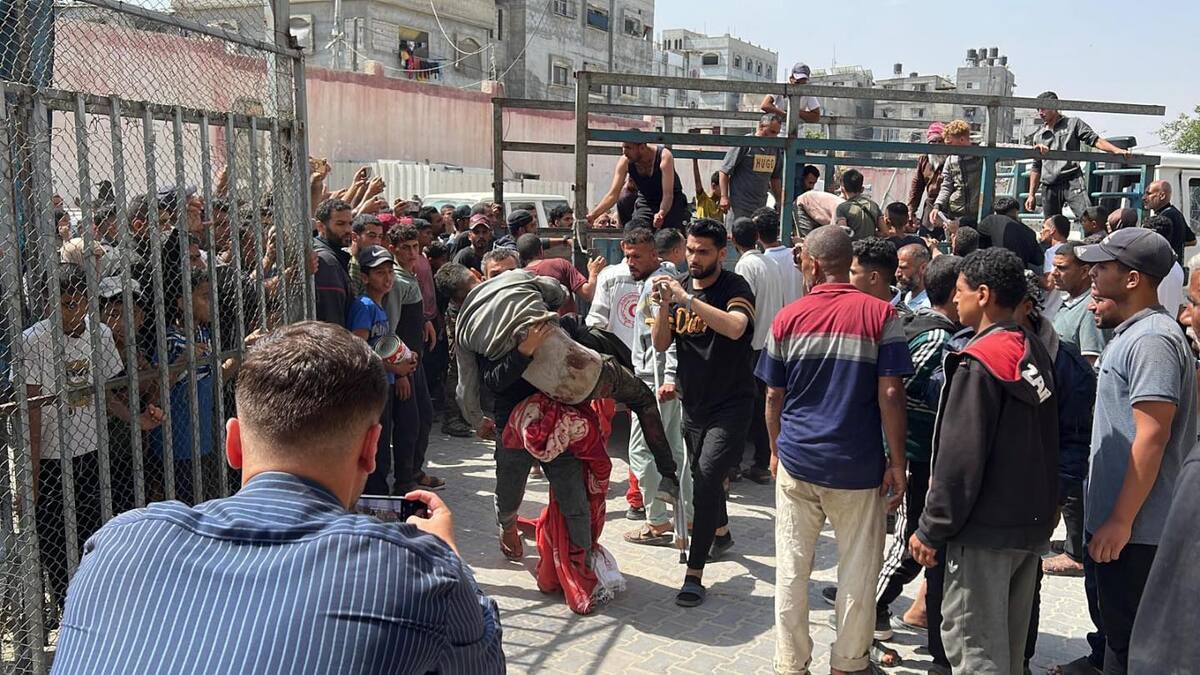
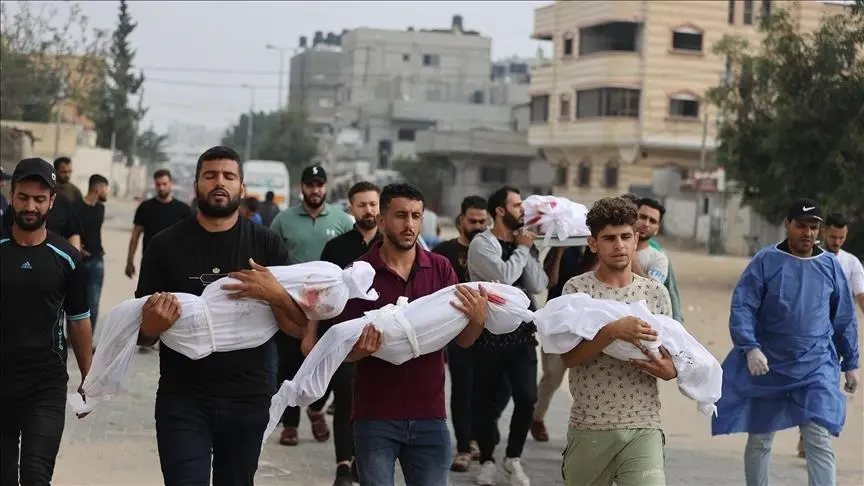
Since dawn today: 29 dead, including 6 aid recipients in the Gaza Strip.

Medical sources in the Gaza Strip reported on Sunday that 29 citizens were killed by Israeli occupation forces since the early hours of Sunday morning, including six people waiting to receive humanitarian aid.

Al-Awda Hospital in Nuseirat reported the arrival of the body of a martyred child, in addition to the injury of a woman, as a result of Israeli drones targeting a house in the "Camp 2" area in central Nuseirat.

Meanwhile, a number of displaced persons were killed and others injured in an Israeli bombardment targeting a home belonging to the Abu Batihan family near the Ain Jalut Towers, south of the Nuseirat refugee camp in the central Gaza Strip.

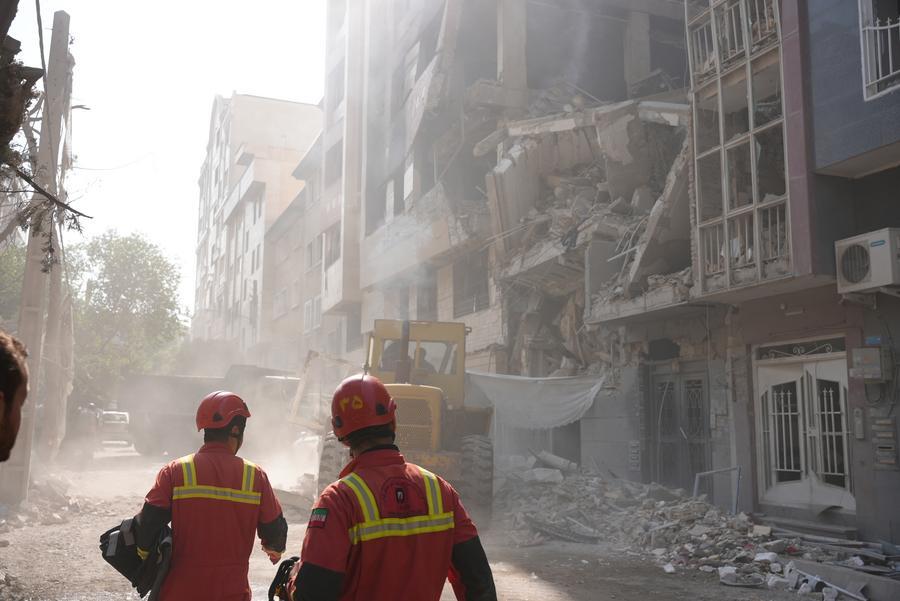
Medical sources reported that crews are working to extract victims from under the rubble, despite the difficulty of reaching the site due to the intensity of the shelling in the area.

Two civilians, including a child, were also killed in an Israeli airstrike that targeted two homes belonging to the Shabat family in the Tuffah neighborhood east of Gaza City.

Medical sources reported that the martyrs were: Mansour Mohammed Talal Al-Shawa and the child Omar Alaa Al-Din Shabat.

ARAB AND WORLD

Sun 22 Jun 2025 1:34 pm - Jerusalem Time

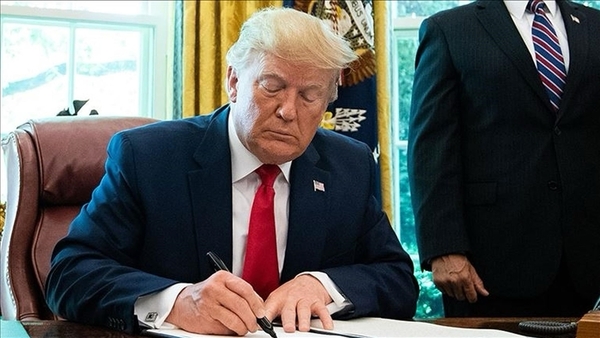
US lawmakers criticize Trump for striking Iran without congressional approval

Several US lawmakers have criticized US President Donald Trump for launching a military strike against Iran without congressional approval. Republican Representative Thomas Massie said, "This is unconstitutional," while Democratic Representative Jim Himes, a member of the Intelligence Committee, commented on the president's announcement of the military strike, saying, "In accordance with the Constitution we defended, my concern for this matter is before the bombs fall."

CNN revealed that the Trump administration briefed senior Republicans before carrying out strikes on Iran, but did not notify Democrats. NBC reported that US House Speaker Mike Johnson and Senate Republican Leader John Thune were briefed on the US attack on Iran's nuclear facilities. In a statement, Johnson described the US strike as an example of an "America First" policy of strength.

For his part, US Senator Chris Murphy, a member of the Senate Foreign Relations Committee, revealed that he had reviewed the intelligence and found that there was no evidence that Iran posed an imminent threat to the United States, making the attack "illegal." He said, "Donald Trump is a dangerously weak and reckless president who has put the United States on the path to a war in the Middle East that the country does not want, that is not permitted by law, and that our security does not require."

Murphy considered that Trump was lured "by warmongers and those who profit politically and financially from them." He said in a statement on Sunday: "Our president knows nothing about history. History tells us that US arrogance about the effectiveness of military action is, in all circumstances, wrong." He added: "Trump was lured into these strikes by the perennial warmongers in the Middle East—those who know how to start conflicts but absolutely do not know how to end them, and those who profit politically and financially from endless wars." He emphasized that Congress has the right to declare war, and said: "We must vote as soon as possible on legislation that clearly prevents Trump from dragging us into a conflict in the Middle East that could cost countless American lives and waste trillions of dollars."

Independent Senator Bernie Sanders also criticized Trump's decision at a rally in Oklahoma, asserting that it was unconstitutional and that only Congress has the authority to declare war. The crowd at the event chanted, "No more wars." Democratic Senator Jeanne Shaheen, a member of the Senate Foreign Relations Committee, pointed out that Trump had not notified Congress. Senator Jack Reed, the top Democrat on the Senate Armed Services Committee, described the US strike on Iran as "Trump's gamble" in a statement. He said, "This was a big gamble by President Trump, and no one knows if it will pay off." He added, "It is easier to start wars than to end them, and we are at a dangerous juncture that could lead to significant instability in the region and beyond."

Meanwhile, Republicans, led by the Senate Majority Leader and the Speaker of the House of Representatives, defended Trump's decision. Senator John Thune, Republican of South Dakota and the majority leader, said in a statement that military action against Iran was justified. He added, "The regime in Iran, which has pledged 'Death to America' and wiping Israel off the map, has rejected all diplomatic avenues for peace." House Speaker Mike Johnson also supported the airstrikes, saying, "Military operations in Iran should serve as a clear reminder to our adversaries and allies that President Trump means what he says, and that they are the implementation of America First through strength." Senator Lindsey Graham, whom the Associated Press reported last week was leading the push for Trump to enter the war, said, "The decision was right, and Iran deserved it."

The Washington Post reported that the Trump administration informed Senate Minority Leader Chuck Schumer of the US strike on Iran before announcing it, but "the notification was superficial and lacked any details."

PALESTINE

Sun 22 Jun 2025 12:37 pm - Jerusalem Time

The Gaza Ministry of Health warns of an imminent crisis in medical laboratories and blood banks.

The Ministry of Health in Gaza warned on Sunday of an imminent crisis in medical laboratory services and blood banks. This crisis is a result of a severe shortage of laboratory supplies and essential testing materials, in addition to a severe shortage of supplies at blood banks and a shortage of blood units.

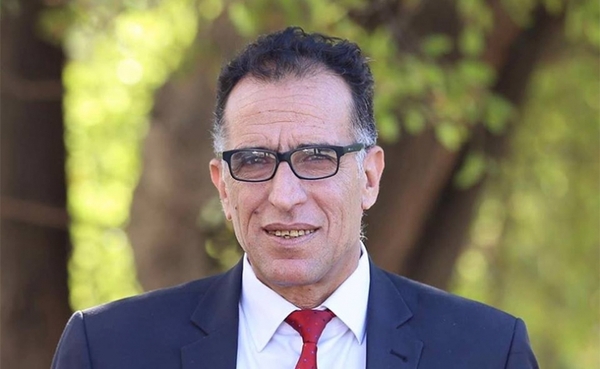
The Director of the Ministry's Laboratories Department, Ms. Sahar Ghanem, indicated that the percentage of laboratory testing materials with a balance of less than a month reached 48.7%, while the percentage of laboratory consumables and supplies with a balance of less than a month reached 48.2%.

She pointed out that this sharp decline directly threatens the continuity of laboratory diagnostic and blood transfusion services, at a time when the sector is facing a health catastrophe with the rising number of wounded and the deteriorating humanitarian situation.

The Director of the Laboratories Department also pointed out that the occupation forces deliberately destroyed laboratory equipment within health facilities, crippling the health system and medical personnel's ability to diagnose patients and the wounded. The destruction rate of hospital laboratories reached approximately 50%, while the destruction rate of primary care laboratories reached approximately 60%. She noted that 514 laboratory devices were out of service.

Ghanem called on international and humanitarian agencies to take urgent action to provide the necessary support and ensure the continued operation of laboratories and blood banks, thus helping to preserve the minimum basic medical services for patients and the wounded in the Gaza Strip.

OPINIONS

Sun 22 Jun 2025 12:31 pm - Jerusalem Time

The truth, the whole truth and nothing but the truth!

The war with Iran has sidetracked our attention from the 53 remaining hostages in Gaza for 622 days. According to one of the mediators I spoke with, the negotiations with Hamas are ongoing and there is no reason to lose hope. When he said that I thought to myself: What a ridiculous statement! From what I understand, Hamas has not changed its most fundamental demand that the war come to an end and that all Israeli forces leave Gaza permanently. From what we all know, Netanyahu and his government refuse to accept this demand. While the missiles are falling on Israel from Iran, Israel is busy demonstrating its ability to bring massive death and destruction to Iran. Israel tries to assure the Iranian people that its bombs are not against them, but only against the regime of the Ayatollahs. But all eyes are on Gaza - Israel’s war in Gaza was supposed to be against Hamas, but Gaza is decimated, destroyed and two million Gazans are homeless. In Gaza, there is no infrastructure left – no schools, universities, hospitals, public buildings, roads, electricity, sewage facilities, basic governance – a civilization has been destroyed in Gaza while Netanyahu waits for complete surrender. Hamas will not surrender to Israel. Now, Trump is echoing this call for the Iranian regime to surrender completely. That will not happen. The insane and dangerous leaders in Iran, Hamas, Israel and the White House treat us civilians under their control as pawns on the chess board, caring much too little if we fall or stand. 


No, we don’t want Iran to have a nuclear bomb.  Iran is a very sophisticated, scientific and technological giant. Iran has had a nuclear program for more than 30 years. Does anyone really believe that if Iran genuinely wanted a bomb, that they wouldn’t already have it? Pakistan and North Korea are far less sophisticated than Iran and they got it with very little trouble. The assessment by Iran and nuclear military experts that I believe is that if Iran wanted a bomb, they would already have it. Instead, these experts say that Iran wants to be at “nuclear breakout capability” referring to the small amount of time it would take to produce enough fissile material for a nuclear weapon, violating international treaties and norms. Nonetheless, preventing Iran from getting a bomb could be achieved through international negotiations led by the United States. Let’s not forget that there was an agreement which would have prevented Iran from increased nuclear enrichment. It was Netanyahu who convinced Trump 1.0 to leave the agreement, which led Iran to getting closer to nuclear breakout than ever before. Netanyahu, how perceives himself as the great protector of Israel, actually brought Iran to being closer to breakout than ever before. This war may lead to an agreement which will prevent Iran from enriching fissile materials on its own territory, but that could have been achieved through diplomacy backed by serious military threats.


Netanyahu has successfully diverted our attention away from the failures of October 7, from the remaining 53 hostages, from the continued war in Gaza with Israeli soldiers getting killed every week, from the hundreds and thousands of Gazans getting killed every week, from the starvation and humanitarian disaster facing millions of Gazans, and from the death and destruction that Israel is causing every day in the West Bank.  While Israelis seem to be celebrating the so-called Israeli military victories in Iran, demonstrating its clear military superiority over the entire region, I personally do not feel safer in this region and in the world where Israel is feared and hated more than ever. We Israelis have gotten too used to the idea that we can only solve our problems by using massive amounts of military forces, supplied to us by some countries which have serious issues on how we use that force. 


Over the weekend, several leading Israeli and Palestinian civil society organizations brought 300 Israelis and Palestinians, including Gazans, to a public meeting in Paris with a clear and resounding call for peace. The Paris meeting was held just as Israel launched its attack against Iran. The French authorities did not grant visas to 33 Gazans who escaped Gaza and are in Cairo now. Three Gazans were granted visas. The 33 who were denied visas met together and called on their Palestinians brothers and sisters to attend to meeting and to send a clear message that they want the conference to be a big success and that they want to send a message to the 150 Israelis there that they want to live in peace. This was a public meeting and no one hid behind closed doors. The message from Paris is now is the time to end this conflict, to end these conflicts. Now is the time to move us forward to the two states solution. No more wars, no more bloodshed. Now is the time for regime change – not only in Iran which will set the Iranian people free. Now is the time for regime change in Palestine and in Israel as well, that will set us free as well. 


So, reverting back to the message of the mediator that I heard just yesterday – yes there is reason for hope. Wars come to an end. Good endings are agreements that are monitored and verifiable. That is what we want now for the wars in Iran and in Gaza. We Israelis will not forget the damage that Netanyahu has done to or country. The Palestinians will not forget the damage that Hamas has done to them. The Iranian people will not forget the damage that their regime has done to them. Now it the time for all of us to reach across the borders and send a clear message that we want these wars to end now. Iran must be given back to the Iranian people, who have no real conflict with Israel. Palestine and Israel must fully recognize each other’s national existence and right to self-determination.  Sanity requires us to all demand ceasefire now!  I signed a call together with several other Israelis and several Iranians calling for a ceasefire now between Israel and Iran. The call ends with these words: “We refuse to accept the inevitability of violent conflict as the only way forward between our nations, Israel and Iran, or their positioning as eternal arch-enemies. The endless and senseless wars of this region won’t benefit or people, all of whom has the right to live in peace and security”. 


From the River to the Sea, on two states we agree! 

That is the only path to peace and security for us all. 


PALESTINE

Sun 22 Jun 2025 12:01 pm - Jerusalem Time

The Israeli army announces the recovery of the remains of three prisoners from Gaza.

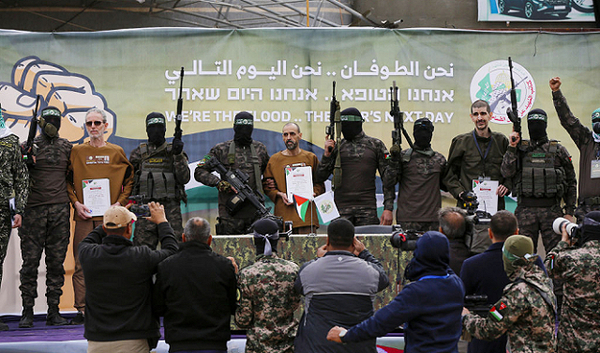
The Israeli military announced Sunday morning that, in cooperation with the General Security Service (Shin Bet), it had recovered the bodies of three kidnapped Israelis from the Gaza Strip, in a special operation carried out last night inside the Strip.

The statement explained that the operation resulted in the recovery of the bodies of Ofra Kedar, Yonatan Samrano, and Sergeant First Class Shai Levinson, who were kidnapped from Kibbutz Be'eri during the attacks of October 7, 2023.

According to information released by the army, Ofra Kedar, 71, was killed during a surprise attack carried out by Hamas on Kibbutz Be'eri. She was kidnapped after her husband, Shmuel, was killed in their home the same day.

The statement also indicated that Yonatan Samrano (21 years old) was also killed during the "Al-Aqsa Flood" battle at the hands of Hamas members, after he was kidnapped from the same kibbutz.

Sergeant First Class Shai Levinson, 19, fought as part of a tank crew in the Oz Battalion that morning before being killed in action and his body also being smuggled into the Gaza Strip.

The operation was carried out based on accurate intelligence gathered by the Shin Bet and the IDF's Intelligence Branch, with the participation of forces from the Southern Command and the Gaza Division.

After the bodies were recovered, the identities of the deceased were confirmed through examinations conducted by the Israeli police and the Military Rabbinate, before their families and the residents of Kibbutz Be'eri were informed.

The army concluded its statement by affirming that it will continue to use all possible means to return all abductees to their families, whether alive or dead.

Netanyahu: We will continue working to return all the abductees... alive or dead.

Israeli Prime Minister Benjamin Netanyahu said that a special operation carried out by the Shin Bet security service, in cooperation with the Israeli army, in the Gaza Strip resulted in the recovery of the bodies of three abductees who had been held by Hamas.

In his statement, Netanyahu thanked the commanders and fighters of the IDF and Shin Bet, praising their "determination and courage in carrying out this complex and successful mission."

He stressed that "efforts to return the kidnapped individuals are continuing without interruption, and are running parallel to the military and political campaign against Iran," adding, "We will not rest until we return all our kidnapped individuals to their homes, alive or dead."

OPINIONS

Sun 22 Jun 2025 11:47 am - Jerusalem Time

Israeli TV channels... mouthpieces of propaganda and incitement

Mustafa Ibrahim

Mustafa Ibrahim

Opinion Writer

Since the outbreak of the war of extermination in Gaza, Israeli media, particularly television channels, have become platforms for incitement and full-fledged military propaganda, broadcasting the army's narrative without accountability and deliberately omitting to mention the number of martyrs and wounded or the ongoing violations of international humanitarian law.

In Israel, every home seems like an extension of the barracks: the father and mother are reserve soldiers, the son and daughter are conscripts, weapons hang by the door, and army and security service posts are scattered throughout the cities. Indeed, the Kirya, the headquarters of the Ministry of Defense, is located in the heart of Tel Aviv. The majority of journalists have actually served in the army or are fighting with its units, and the army organizes carefully orchestrated "field tours" of the Gaza Strip for them to burnish its image and promote its narrative and achievements.

During the war on Gaza, the Israeli military deliberately targeted Palestinian journalists, killing more than 230 journalists and destroying the offices of numerous media outlets.
Israel has disrespected freedom of the press and freedom of expression, and has sought to silence the truth and stifle the voices of the women, men, and children killed in the ongoing genocide. Israel continues to kill dozens of Palestinians daily without reprisal.

With the Palestinian narrative obscured, Israel's official and private satellite channels have become platforms for incitement. During the ongoing war of extermination, Israel has treated every Palestinian as a sworn enemy, with anything permissible in the pursuit of "absolute victory," in complete denial of the existence of international law or adherence to it.

Israel also carried out satanic propaganda against the Palestinians through Israeli media, both official and private, to the point that Israeli news stations became propaganda channels par excellence, promoting murder, inciting genocide, and disseminating lies and rumors. These media outlets were treated as tools of a totalitarian regime that concealed the reality of the catastrophic humanitarian situation in Gaza.

As is typical of Israeli discourse, the definition of "strategic threats" and "Israel's right to defend itself" has been enshrined, and this war has been presented as a "war of no choice." Through statements from the Israeli military spokesperson, the familiar refrain has been repeated that journalists' headquarters are bombed because they are used for military activities or to spread "anti-Israel" propaganda and calls for its "annihilation." These are the same pretexts used to justify the bombing of universities, hospitals, children, women, and the elderly in Gaza. The bombing of television stations, under these pretexts, is no longer an exception. If it weren't so sad, it would be laughable.

For more than twenty months, Israeli media, particularly television and radio stations, have become a blatant stage for excessive incitement to genocide. Screens are filled with slogans such as: "Turn Gaza into a parking lot," "Drop a nuclear bomb," "There are no innocents in Gaza," and "They will suffer a second Nakba." News and even advertisements are presented by presenters who promote genocidal rhetoric, dismissively presenting it as a commodity, while declaring without hesitation: "Gaza must be emptied of its population. There are two and a half million terrorists."

The question remains: Are the Israeli state broadcaster, Channel 14 (the mouthpiece of the Israeli regime, Netanyahu, and the right-wing propaganda), or Channel 12, which often covers the war from Netanyahu's perspective, considered explicit propaganda and incitement tools? Can they be considered outside the circle of "legitimate targets" in any war? Will these channels remain immune from accountability even if they regularly broadcast videos threatening Palestinians with genocide and inciting continued killing?

In Gaza, in addition to achieving its declared war goals, Israel has made no secret of its desire for revenge, and the euphoria of war is driving it to fire in all directions.
Today, amid the escalating confrontation between Israel and Iran, is bombing television stations like the Islamic Republic of Iran Broadcasting (IRIB) a crime or a justifiable move? It is impossible to seriously argue that bombing the IRIB was a "great idea," while launching a missile at Channel 12 or 14 is considered a war crime committed by a "terrorist state on the loose."

In Israel, even those who call themselves "journalists" are in reality mere mouthpieces for incitement and propaganda, promoting war, murder, and destruction, and contributing to the project of annihilating an entire people, denying their rights and the justice of their cause.

PALESTINE

Sun 22 Jun 2025 11:38 am - Jerusalem Time

Hamas agrees to a deal with Israel and discusses its implementation in Cairo.

The Islamic Resistance Movement (Hamas) has agreed to a truce deal with Israel, and a delegation from the movement arrived in Cairo yesterday (Saturday) to discuss setting a timetable for its implementation, according to two informed Egyptian sources.

The two sources told Xinhua News Agency that a Hamas delegation arrived in Cairo today and met with Egyptian officials.

They explained that Hamas had agreed to a two-month truce deal with Israel, which includes the release of 10 living Israeli prisoners held in Gaza, in addition to the bodies of between 10 and 16 detainees, as a first stage, followed by the release of the remaining bodies.

The two sources indicated that during the truce period, discussions will be held regarding the transition to the second phase, which includes a comprehensive cessation of hostilities.

Once an agreement is reached to move to the second phase, the remaining Israeli detainees will be released, according to the two sources.

The two sources added that an Israeli security delegation will come to Egypt tomorrow (Sunday) or the day after.

A ceasefire and prisoner exchange agreement between Hamas and Israel, which went into effect in its first phase on January 19, provided for the release of 33 Israeli detainees, including 25 living ones, in exchange for approximately 1,900 Palestinian prisoners. This came before Israel resumed its military operations in the Gaza Strip on March 18, after the understandings on implementing the second phase failed.

Since then, Egypt, Qatar, and the United States have been holding consultations with Hamas and Israel to resume the ceasefire between Hamas and Israel.

Israel launched a large-scale war in the Gaza Strip on October 7, 2023, after Hamas launched an unprecedented attack on southern Israel, which, according to Israeli authorities, resulted in the deaths of more than 1,200 Israelis and the capture of hostages.

PALESTINE

Sun 22 Jun 2025 10:59 am - Jerusalem Time

9 documented attacks on Palestinian farmers in one week: Settlers expand the circle of vandalism and intimidation.

The Government Communication Center, in cooperation with the Ministry of Agriculture and the Wall and Settlement Resistance Commission, issued a report documenting violations and attacks carried out by the Israeli occupation and settlers against Palestinian farmers and their property during the period from June 12 to 19, 2025.

The Government Communication Center report indicates that the violations varied between physical assaults and property damage, and were concentrated in the governorates of Bethlehem, Ramallah, Salfit, and Qalqilya, where nine assaults were recorded in just one week.


Bethlehem: A farmer's vehicle was vandalized while he was working.

In Bethlehem Governorate, a number of settlers punctured the tires of a farmer's vehicle and smashed its windows while he was on his agricultural land in the Wadi al-Ghuwait area, south of the town of al-Khader.

Ramallah: A farm was burned, property was vandalized, and systematic intimidation occurred.

Ramallah Governorate witnessed four separate attacks:
• Settlers stormed a farm near the town of Beitunia in the Jaryut area and set it on fire.
• They also stormed a sheep farm in the Marj Sa’i plain, between the villages of Al-Mughayyir and Abu Falah, vandalized the fence and farm property, and wrote racist slogans on the walls.
• In another attack on the same farm, settlers set fire to its contents.
• Settlers also destroyed agricultural crops in the town of Sinjil, uprooting 300 tomato and zucchini crops, and half a dunum of cucumbers.

Salfit: Irrigation network destroyed and crops damaged

In the Salfit Governorate, agricultural lands in the Matwi area were deliberately destroyed. Settlers destroyed an irrigation network serving more than one dunam of land. They also damaged a similar area of land planted with mallow.

Qalqilya: Threatening with a weapon and robbery

In the town of Kafr Thulth in the Qalqilya Governorate, settlers forced a farmer to leave his home, surrounded by 500 trees, at gunpoint. They also stole a five-cubic-meter water tank from land planted with olive trees in the same area.

PALESTINE

Sun 22 Jun 2025 10:51 am - Jerusalem Time

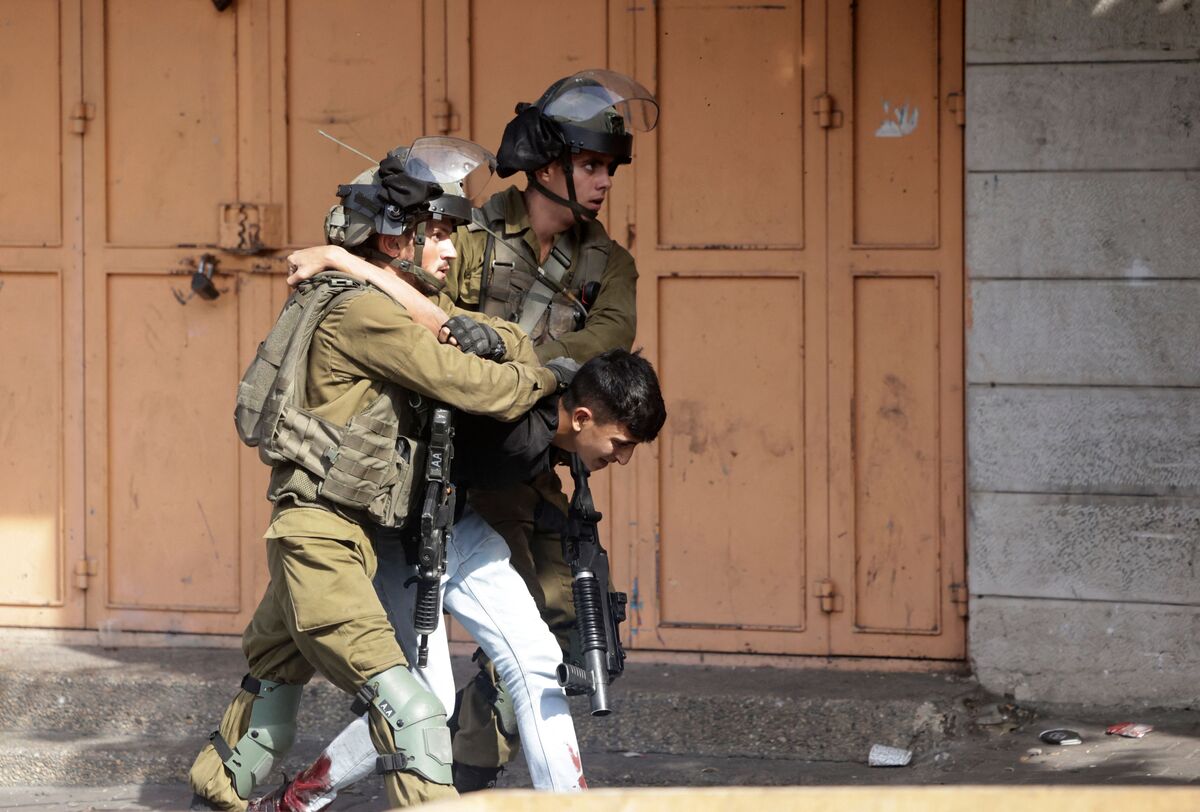
The occupation forces raided a house in Jerusalem and assaulted its residents.

Today, Sunday, Israeli occupation forces raided a house in the Shuafat camp, north of occupied Jerusalem, and assaulted its residents.

The Jerusalem Governorate said that occupation forces stormed the home of Jerusalemite Karam Marar in the Shuafat refugee camp, assaulting him and several members of his family, vandalizing the house's contents and causing extensive damage to his property.

PALESTINE

Sun 22 Jun 2025 10:40 am - Jerusalem Time

The Israeli-Iranian confrontation is escalating. Is "Doomsday" approaching?

Dr. Ahmed Rafiq Awad: Israel has begun to realize the difficulty of fully achieving its declared goals, which is driving it to try to "drag the United States by the nose" into this confrontation.

Major General Wassef Erekat: The Trump administration found itself in an internal embarrassment with the escalation of demands not to be directly involved in the war, coupled with Russian warnings not to be drawn into the confrontation.

Dr. Amjad Bashkar: Expanding the war could push these major powers into deeper intervention to defend their strategic interests in the region.

Nizar Nazzal: Washington itself doubts the ability of B-2 bombers to strike the Fordow facility, which opens the possibility of the dangerous option of using tactical nuclear weapons.

Dr. Aql Salah: The two-week deadline is merely a maneuver to give Israel and the United States sufficient time to complete military, logistical, and intelligence preparations for a comprehensive attack.

Firas Yaghi: Trump remains convinced of the possibility of intervening to save Israel by striking Fordow, but he is unaware of the profound geopolitical implications of such an intervention.

The confrontation between Israel and Iran is witnessing an unprecedented escalation, entering a complex phase that threatens to spark a regional conflict that could escalate into a third world war.

In separate interviews with "I", writers, political analysts, specialists, security experts, and university professors believe that Israel is seeking to drag the United States into a war against Iran, in light of the increasing internal and external pressure on Washington. However, the option of direct American military intervention remains subject to careful calculations, at a time when Moscow and Beijing are warning of catastrophic consequences that could destabilize the entire Middle East and even expand into a third world war.


Israel sees Iranian influence as a strategic threat surrounding it.


Writer and political analyst Dr. Ahmed Rafiq Awad argues that Israel, backed by the United States and the colonial West, is determined to strip Iran of its nuclear and missile capabilities and end its regional influence in the Middle East.

Awad explains that the joint Israeli-Western project is based on a strategic vision that views Iran as a comprehensive threat not only to Israel, but also to Western interests in the region, including oil resources, US bases spread throughout the region, and waterways vital to global trade.

Awad points out that Israel views Iran's growing influence as a strategic threat encircling it from all sides, like a "ring of fire" formed by Iran's proxies in the region. This is what drives Tel Aviv to work to remove this ring and destroy the capabilities that pose a future threat to it.

Awad points out that Israel is currently continuing to strike at Iran's nuclear program and ballistic missile infrastructure, which Tehran relies on to maintain a balance of deterrence against the major powers.

Awad asserts that Tel Aviv is also attempting to overthrow the Iranian regime itself, taking advantage of extensive American and Western support, both through arms supplies and the political and diplomatic cover these countries provide in international forums.

Awad believes that the failure of the nuclear talks in Geneva between Tehran and the European Troika constitutes further evidence that the West is not seeking a political settlement as much as it is seeking to escalate pressure on Iran in order to completely weaken it.


America's entry into the war is governed by complex internal and external considerations.


But despite this extensive Western support, Awad points out that Israel has recently begun to realize the difficulty of fully achieving its stated objectives, whether by destroying Iran's nuclear program, missile capabilities, or toppling the regime. This is what is driving it today to attempt to "drag the United States by the nose" into the depths of the military confrontation, especially if it is subjected to powerful Iranian attacks that directly threaten its existence.

Awad warns that the United States' direct involvement in the confrontation is still governed by complex internal and external considerations in Washington. However, he does not rule out the possibility that Washington could fall into this trap if it feels that Israel's security is seriously threatened.

Awad asserts that the escalation on the ground will determine the shape of the next phase: if Israel succeeds in significantly weakening Iran, it may accept a ceasefire and return to the negotiating table. However, if Tehran holds firm and continues to withstand the strikes, the scenario of a continued war will open dangerous doors.

Awad points out that this escalation could lead either to a broader regional war encompassing most Middle Eastern countries, or even to a comprehensive third world war if major powers like China and Russia intervene directly, especially since the collapse of the Iranian regime would profoundly harm the interests of Beijing and Moscow.

According to Awad, the demise of the Iranian regime would disrupt China's Silk Road project and deprive China of vital energy imports from Iran. It would also represent a major loss for Russia, which relies on its alliance with Tehran to counterbalance US hegemony.

Awad asserts that the possible scenarios are open to very dangerous possibilities: either a devastating regional war, a wider world war, or perhaps a humiliating settlement imposed on Iran if it is subjected to crushing strikes, forcing it to sacrifice its nuclear and missile projects in exchange for preserving the existing political regime in Tehran.


Israel is living in a dangerous dilemma


For his part, retired military, security, and strategic expert Major General Wassef Erekat says that Israel is facing a dangerous dilemma as the aggression against Iran enters its second week. The declared objectives of the military operation have shifted from eliminating the Iranian nuclear and missile threat to less ambitious goals, amid Iran's resilience and swift response, which has confused decision-makers in Tel Aviv and Washington alike.

Erekat explains that Israel, driven by a close alliance with the Trump administration, launched its attack on Iran through a deceptive plan based on surprise, shock, and awe. It began its operations with the assassinations of Iranian scientists and military leaders and the partial destruction of several nuclear facilities, giving Israel the impression that it was close to achieving its goals in record time.

This apparent success, according to Erekat, later prompted Netanyahu to add a more audacious goal: toppling the Iranian regime through a vast network of Mossad agents inside Iranian territory.

According to Erekat, however, the equation quickly changed, less than 18 hours after the initial strike, when Iran responded with an intense missile barrage targeting Israeli territory in more than 18 rounds, inflicting direct losses on Israel. This violent response transformed Israeli enthusiasm into a state of anxiety and terror, as Israelis witnessed, for the first time, a war that reached deep into their cities and paralyzed their economic and social lives.

According to Major General Erekat, the Israeli War Council was forced to reframe the objectives of the aggression. Instead of the initial goal of completely eliminating the nuclear and missile programs, the goals were now limited to "inflicting serious damage" to these programs and "weakening the Shiite axis" in the region, with preparations to address outstanding issues through political and diplomatic means.


The Israeli bet on a coup in Tehran failed.


Erekat believes this change in plans reflects Israeli decision-makers' renewed conviction of Iran's unexpected deterrent power and the failure of their bet on an internal coup in Tehran.

Erekat points out that the Trump administration found itself in an internal dilemma, with mounting demands from both the Democratic and Republican parties to avoid direct involvement in a new war. This was coupled with clear Russian advice to the US president, warning him against being drawn into a confrontation that could escalate into a regional nuclear conflict.

According to Erekat, this pressure prompted Trump to back down from his threat to give Iran a two-week deadline to resolve the situation. He later declared that the complete elimination of Iran's nuclear program "may not be necessary," a clear indication that the US administration is aware of the difficulty of achieving a direct military solution.

According to Erekat, Iran has moved from the "shock recovery" phase to the "effective confrontation" phase, and now to the "exhaustion" phase, which is considered the most dangerous for Israel and which it greatly fears due to its inability to endure it for long periods, given its limited human and economic capabilities. He compares 92 million Iranians to 9 million Israelis, and Iran's area is 75 times larger than Israel's.


6 possible scenarios for the course of the escalating crisis


Major General Erekat presents six possible scenarios for the course of the escalating crisis: First, the Israeli aggression will continue in its current form, with intensified raids and bombing until the maximum level of tolerance is reached, in the hope of drawing the United States into the war directly.

The second scenario, according to Erekat, is to intensify the soft war through assassinations, cyber attacks, and targeting major political and military leaders, while attempting to push Iran toward a coup.

Erekat points to a third scenario: expanding US support through Washington's intervention with greater support, while mobilizing Iran's support fronts, such as Hezbollah in Lebanon, the Iraqi resistance, and the Houthis in Yemen.

The fourth scenario, according to Erekat, is an expansion of the aggression with American and European support, which could draw regional countries into military participation, further escalating the conflict.

Erekat addresses the fifth scenario, which is the crisis spiraling into a loss of control and sliding into an open global confrontation whose course is difficult to control.

The sixth scenario, according to Erekat, involves broader international intervention. If the parties become convinced that neither side is capable of resolving the conflict, they will be prompted to accept a ceasefire and open negotiations to consolidate a truce that could later lead to comprehensive peace agreements.

Erekat asserts that Israel is currently facing the most dangerous strategic test in its history. It may find itself facing unplanned scenarios, particularly given the complexities of the international landscape and the growing international sympathy for the Iranian position following Israel's preemptive strike. This places the entire region on the brink of a volcano that could erupt at any moment.


American maneuvering and deception in dealing with Tehran


For his part, political science professor Dr. Amjad Bashkar asserts that since the beginning of the recent military escalation between Israel and Iran, the United States has relied on evasion and deception in its dealings with Tehran. Washington authorized a preemptive Israeli strike, and Washington continues to employ this approach, albeit with different tactics and procedures at the current stage.

Regarding the possibility of targeting Iran's Fordow nuclear facility, Bashkar points out that Israel does not possess the military capability to destroy these nuclear facilities unilaterally, as Tel Aviv has been betting since the beginning of the war that the United States would join its side if the confrontation escalated.

Bashkar explains that Israel encountered a completely different reality on the ground, with Tehran quickly filling the military leadership vacuum left by the assassinations and regaining the initiative less than 24 hours after the initial strike.

Bashkar points out that Pentagon assessments have confirmed that destroying the Fordow facility may require the use of a limited nuclear tactic, an option that raises many questions about its dangerous repercussions.


Iran has broad strategic options.


Bashkar points out that Iran has very broad strategic options, of which it has only used 20% so far. He stresses that targeting US military bases spread across the region would be easier for Iran than directly targeting Israel, with the possibility of expanding the scope of operations to include the Strait of Hormuz and Bab al-Mandab. Furthermore, Iran's proxies in the region have not yet directly entered the battle, but it is likely that these proxies would be ready for violent intervention in the event that the United States becomes directly involved in the war, which would lead to an expansion of the scope of the confrontation.

On the other hand, Bashkar points to Russian President Vladimir Putin's warnings of a third world war, noting a clear shift in the tone of China, Pakistan, Russia, and North Korea, which has shifted from calls for de-escalation to increasing military and logistical support for Iran.

Bashkar believes that expanding the war could push these major powers into deeper intervention to defend their strategic interests in the region.

Bashkar asserts that Israel's success in this confrontation will grant it a position of leadership and dominance in the entire Middle East, in addition to opening the door to dangerous plans aimed at displacing Palestinians from both Gaza and the West Bank.


US ground intervention in Iran will fail


Bashkar warns that any direct US ground intervention in Iran would be doomed to failure, citing Washington's previous experiences with ground wars that ended in heavy losses. He explains that Iran possesses multiple strengths, most notably its vast geographic area, equivalent to the combined area of the Levant, Turkey, and Iraq (approximately 1.65 million square kilometers), along with the Iranian people's rigid ideology and the lack of an organized opposition capable of being exploited by the West.

Bashkar asserts that US military pressure may open the door to a return to the diplomatic track, but it will not impose any substantive concessions on the Iranian side.

Bashkar points out that Israel is now under severe pressure at both the military and economic levels, with a financial deficit exceeding 35 billion shekels to date. The Iron Dome system is also suffering, with its missiles running out as the escalation continues, making the continuation of the war more costly and more protracted.


The Fordow nuclear facility is extremely complex and deeply fortified.


For his part, Nizar Nazzal, a researcher specializing in Israeli affairs and conflict issues, explains that Iran's Fordow nuclear facility is so complex and deeply fortified that it cannot be destroyed by any conventional air attack.

Nazzal points out that this massive fortification makes it virtually impossible for Israel to target or damage the facility with air power alone, as destroying it would require direct ground intervention, something that is not possible under the current military and political circumstances.

Nazzal points out that the United States itself doubts the ability of its B-2 strategic bombers to successfully carry out the mission, raising questions about the possibility of Washington resorting to the more dangerous option of using tactical nuclear weapons to penetrate and destroy the heavily fortified facility. This explains the recent Russian warnings.

According to Nazzal, Russian President Vladimir Putin's warnings do not come out of nowhere, but rather reflect Moscow's concern that any US-Israeli attempt to destroy the Fordo facility using a tactical nuclear weapon could lead to a large-scale war.

Although Nazzal does not believe the world is on the brink of a third world war in the traditional sense, he believes this escalation could turn into a raging regional war involving multiple international powers.

In his reading of the likely course of events, Nazzal believes the United States is heading toward direct intervention in the conflict, which will in turn push other parties to enter the arena. He also expects Iran to raise the escalation level by closing the vital Strait of Hormuz and mobilizing its regional allies, most notably Iraqi factions and Lebanese Hezbollah.


Pakistan's entry into the confrontation line


Nazzal points to the possibility of Pakistan entering the confrontation, which would also directly involve China, given its deep economic and strategic interests with Iran, particularly within the framework of the Silk Road project.

Nazzal asserts that Israel currently finds itself in a dilemma of constant exhaustion between action and reaction, accompanied by internal economic paralysis and increasing pressures on Israeli society, which can no longer tolerate this state of affairs.

According to Nazzal, Israel is now faced with two bitter choices: either escalate to overthrow the Iranian regime through a large-scale military operation that could drag the entire region into a full-scale war without achieving its goal, or seek to cool the conflict, which he considers a highly unlikely prospect at the current stage.

Nazzal believes the next phase will be extremely complex, filled with smoke and fire, given the absence of any real indications that this crisis is imminently contained. This portends an expansion of the regional conflict, which will have profound repercussions for the future of the entire Middle East.


Israel is unable to attack the Fordow reactor.


Writer and political researcher Dr. Aqel Salah says that Israel is incapable of launching a direct military attack targeting Iran's Fordow nuclear reactor because it lacks special bombs capable of penetrating deep underground layers, as well as aircraft capable of carrying such bombs—weapons available exclusively to the United States.

Accordingly, Salah points out that Washington itself will launch this strike, and the decision has already been made to launch the strike in the near future.

Salah explains that the expected scenario is for the United States to use bunker-buster bombs to destroy the upper layers of the facility, then use tactical nuclear bombs to completely destroy the reactor.

Salah asserts that this action constitutes a blatant attack on the sovereignty of an independent state and constitutes a joint war crime between the United States and Israel.

Analyzing the dimensions of the scene, Salah points out that the administration of US President Donald Trump was a key partner in preparing for this war by manipulating negotiations with Iran for two months, before turning against Tehran and giving Israel the green light to launch a surprise attack. This was part of a comprehensive plan aimed at igniting internal unrest in Iran, through the deployment of secret agents, the use of drones, and the assassination of Iranian scientists, in an attempt to bring down the regime from within, similar to what happened in Syria. However, this attempt failed to penetrate the solid structure of the Iranian regime.


Coordinating work with some regional parties


Salah believes that Trump's two-week deadline for Iran is merely an additional maneuver, allowing Israel and the United States sufficient time to complete military, logistical, and intelligence preparations for a comprehensive attack, as well as to coordinate with a number of regional actors and prepare for simultaneous strikes in Iran, Lebanon, Yemen, and Iraq to ensure the crippling of Iran's response capabilities and the achievement of complete surprise.

Despite Russian President Vladimir Putin's warnings of a third world war, Salah downplays Moscow's ability to deter the United States, noting that Russia is currently militarily and economically exhausted by the war of attrition in Ukraine and its loss of influence in Syria. Therefore, Putin's statements do not go beyond seeking political and diplomatic solutions that avoid the logic of escalating into a world war.

Regarding the possible scenarios, Salah believes that a return to negotiations is unlikely after Washington's deception of Tehran. Meanwhile, the option of a temporary ceasefire is unacceptable to the Iranians, who realize that any truce would be exploited to prepare for a new round of war.

Salah rules out the possibility of a successful internal coup in Iran, given Tehran's early detection and thwarting of such attempts.


direct US military strike


According to Salah, the most likely scenario is a direct US military strike targeting the Fordow reactor specifically, with full Israeli support.

According to Salah's assessment, this strike aims not only to eliminate Iran's nuclear program, but also to end the Iranian missile threat, which has reached deep into Israel in an unprecedented manner. For the first time in its history, the battle has moved into Israel's interior, and its cities and military sites have been directly destroyed.

Salah emphasizes that this war led to an unprecedented decline in Israel's deterrent power, demonstrated to the world that Israel was now vulnerable to Iranian missiles, and demonstrated that striking and defeating Israel was now possible, after decades of waging wars on the territory of its adversaries, far from its home front.

Salah points out that this war profoundly undermined Israeli national security and demonstrated that the complete elimination of the Iranian nuclear project is impossible, even with the use of massive military force. It also exposed Israel's vulnerability to Iran's regional allies and confirmed that Iranian support for its allies in Palestine, Lebanon, Yemen, and Iraq will remain a key element in the region's future power equations.


Israel faces extremely complex scenarios


For his part, writer and political analyst Firas Yaghi believes that Israel faces extremely complex scenarios regarding its military options for destroying Iran's Fordow nuclear facility, which is fortified deep within the Iranian mountains and constitutes an operational complex difficult to penetrate by conventional means.

Yaghi points out that Israel is considering several possible scenarios for carrying out its attack. The first scenario relies on the possibility of using American GBU-57 bunker-buster bombs, which can only be carried by American B-2 strategic stealth bombers, which are not available to the Israeli Air Force. Indeed, delivering these aircraft and bombs to Israel would require months of training and qualification for Israeli pilots, making this scenario practically impossible in the near term.

The second, more dangerous scenario, according to Yaghi, is that Israel would resort to a tactical nuclear strike against Fordo, which would open the door wide to a nuclear conflict in the Middle East. Iran could respond to Israel in a similar manner and declare itself an official nuclear power, threatening to escalate the conflict to a catastrophic level.

Yaghi asserts that the Americans are also considering a scenario of launching successive strikes using B-2 aircraft to gradually penetrate the rock layers protecting Fordow. However, this tactic carries enormous radioactive risks due to the possibility of 60% enriched nuclear material leaking into the air and water, threatening to contaminate the entire Arabian Gulf and Indian Ocean. This explains Washington's reluctance to pursue this option.


Internal conflicts in the United States


In addition, Yaghi points out that internal conflicts within the United States over direct support for Israel are a hindering factor, as the White House is embroiled in a political struggle between advocates of full support and those who warn of the repercussions of intervention on American interests globally.

Yaghi points out that Russian President Vladimir Putin has explicitly warned that such zero-sum nuclear options could open the door to a third world war. Putin has also categorically rejected the possibility of assassinating Iranian leaders like Khamenei, believing that slipping into such scenarios would push everyone toward the abyss.

As for US President Trump, Yaghi believes he remains convinced of the possibility of intervening to save Israel by striking Fordow. However, he is unaware of the profound geopolitical implications of such an intervention, which could lead to a shift in regional and international alliances and cause some of Washington's allies to withdraw their support as a result of the damage to their strategic interests caused by the policy of military adventurism.

If Israel remains alone in the battle, Yaghi expects the war to be protracted and exhausting for Tel Aviv, given the vast disparities in human and geographical capabilities between the two sides. Iran's population is 92 million compared to Israel's 9 million, and its area is 75 times larger. In this case, Israel will attempt to seek a unilateral ceasefire after exhausting its forces. However, the question remains: who will fire the "last bullet" in this scenario? Here, Yaghi believes that Iran will hold this card, which raises great concern in Israel.


The most dangerous scenario


The most dangerous scenario, which would detonate the region, according to Yaghi, is a direct American military intervention alongside Israel. This would lead to Iran targeting American bases in the Indian Ocean, the Arabian Sea, Iraq, and Syria, while trying to avoid targeting American bases inside the Gulf states to avoid expanding the front prematurely. If the confrontation escalates further, Iran will resort to closing the Straits of Hormuz and Bab al-Mandab, and threaten to destroy the region's oil infrastructure, which would pose an unprecedented strategic threat. Indeed, it seems that Iran and its allies have decided that if the Fordow reactor is targeted, the Dimona reactor will be targeted, and the export of oil from the region will be prevented for three days, to begin with.

Yaghi asserts that the United States is working to form an expanded international coalition that includes countries such as Canada, Australia, Britain, Germany, and Italy, with attempts to include France, which is reluctant and reluctant. In contrast, Russia and China will find themselves forced to support Iran in an undeclared manner, considering Tehran a strategic ally against Western hegemony. Putin clearly indicated this when he said, "We and Iran are fighting the same enemies."


Possibility of reaching an international agreement


In contrast, Yaghi explains that there is another scenario, which involves the possibility of reaching an international agreement. However, this has so far been hindered by Israeli-American intransigence, which insists on the terms of Iranian surrender. Meanwhile, Tehran asserts that it will not relinquish its right to enrich uranium on its territory to 3.67%, and completely refuses to discuss its missile and strategic capabilities.

According to Yaghi, a possible and realistic scenario is for the US and Israel to declare a unilateral cessation of hostilities after the attacks have been exhausted. However, Yaghi asserts that Iran would reject such a situation, which would enshrine the principle of "permanent freedom of movement" on the part of Israel and the US to launch strikes whenever they wish, thus maintaining the state of intermittent war.

Yaghi believes the situation is sliding toward further escalation, given the absence of any compromise between the two sides. He points out that Israel, with full American support, views this escalation as a golden opportunity to achieve comprehensive regional control, a sentiment expressed by the Israeli Chief of Staff, who said, "We are not waiting for danger; we are going to eliminate it."


OPINIONS

Sun 22 Jun 2025 10:05 am - Jerusalem Time

Gaza Now

Baha Rahal

Baha Rahal

Opinion Writer

Now a baby girl is born in the open, inside a shabby tent on the border in Rafah or Khan Younis. Fate brought her during a time of genocide and death, and brought her into life by the midwife who extended her a hand of salvation, pushing her from the womb of her mother who died at the moment of the bombing. She was an orphan from the first moment, without luck, without a lap to shelter her in, without a father to guard her days, or a family to train her how to crawl in her first days, so that she could then stand on her feet and breathe the air of life.

Now another old man is dying nearby, inside a shelter, after being bombed by aircraft with a guided missile. He was eighty years old, with a worn-out body and a strong memory that had managed to banish the disease of forgetfulness. However, his memory was shattered into pieces by the missile that struck the old man's body while he was performing the dawn prayer on Bloody Sunday.

Now hunger and thirst are gnawing at the bodies of the children, and a woman weeps over the cries of her hungry children, complaining of her helplessness, her weak condition, and her uncertain fate, after food distribution centers were transformed into death traps and killings, as a result of the raids carried out by the occupation with premeditation and deliberation.

Now, a grandmother is breathing her last in grief, having lived her life through a succession of catastrophes, living between two tents. In the first, she witnessed her birth in 1948, and in the second, she would witness her death in 2025. Between these two tents, she spent a lifetime gathering hopes in her chest and keeping the key to the house from which she was displaced in Ashkelon.

Now, for a second year, Gaza's students are being denied the right to sit for their high school exams, due to the ongoing war of extermination and the destruction of schools and universities. While students in the West Bank and Jerusalem are taking their first exams today, their hearts aching for the pain of their classmates in Gaza, Gaza's students are watching the scene unfold as they endure pain, hunger, and the reality of devastation.

Now, the war between Iran and Israel is capturing the attention of satellite channels, analysts, observers, and followers, while the voices of the starving and dying under the weight of the genocide are being silenced, with the killings intensifying by the moment.

Now, behind the noise of major wars and the flurry of political analyses, the stories of the people of Gaza are being buried in painful silence, where life is born on the brink of death, hope is buried under the rubble of destroyed tents and homes, and childhood dreams are erased from the notebooks of tomorrow.


OPINIONS

Sun 22 Jun 2025 9:59 am - Jerusalem Time

Reading to investigate the possibilities of the critical area reached by the war

Dr. Jamal Al-Salqan

Dr. Jamal Al-Salqan

Opinion Writer

It is not easy to comprehend what is currently happening, especially in light of the ambiguity surrounding military operations, and in light of the strong and intensive intelligence dimension they entail. It may be naive to rush to form an assessment of the situation if we are satisfied with field data and what is published through the media. However, it is possible to create a probability tree similar to a decision tree that deals with several scenarios, and based on it, the analysis takes the form of branching tree branches. If such and such is the case, then such and such might happen, but if such and such is another, then such and such might result.

I have tried as much as possible to avoid the decision tree approach. This is possible if many scenarios are excluded from the analysis. This is, of course, not without risk. Refining the inputs and the number of data and information, and shortening them to a certain extent, could be the very mistake that the individual or researcher commits, unless this process is carried out with extreme caution and in a scientific manner.

I may be wrong in this approach, but I decided to start my research with a question I didn't know the answer to due to my lack of knowledge of nuclear physics. So, I decided to direct the following question to ChatGPT using artificial intelligence. The question was as follows:

"Can the Iranian nuclear program be destroyed in light of the known facts about it, the level of enrichment it has reached, what the International Atomic Energy Agency knows about it, and of course what America and Israel know?"

I thought this question was the most important to know first the real reasons for the war and second how I could predict its outcomes. This will become clear later anyway.

The AI program didn't provide a conclusive answer, but among the sources it provided was an interview with a person named Yusri Abu Shadi, the chief inspector at the International Atomic Energy Agency, and I actually listened to it with great interest. He was amazing in his definitiveness and confidence that the Iranian nuclear program cannot be destroyed even if it is bombed with all kinds of bombs, that there is a parallel nuclear project that countries embarking on building a nuclear project resort to, and that Iran possesses the know-how to proceed with its project if it considers weaponizing the program (it has turned it into a military project). Most importantly, he said that what Iran currently possesses is approximately 75 kilograms of 60% enriched uranium, which is enough to make two nuclear bombs!!! And that no one can know where this stockpile is stored!

This is an amazing revelation, and provides one with a solid basis for further analysis.

So, the United States and Israel know that striking reactors and enrichment plants won't stop the project, and might at most hinder it. But what about the sufficiency of the available stockpile to manufacture two nuclear bombs? Israel knows this, and with this realization, it becomes logical to conclude that the only guarantee to end the Iranian nuclear project is to overthrow the Iranian state and its political system and replace it either with a failed state like Iraq's or with a regime that guarantees the elimination of all components of the nuclear project: scientists, technicians, physicists, engineers, and tangible scientific assets such as enrichment plants, centrifuge manufacturing, and research and development centers. Not to mention the stockpile of enriched uranium and plutonium that has been accumulated to date, as well as intangible assets such as knowledge, relationships, information, and more.

As long as this is the case, this indicates the primary and central objective of the war, which is to overthrow the state and the political system. The nuclear issue is merely a cover for this plan. This explains the massive investment in intelligence and the advance work related to preparing cells within the Iranian state to attack it as soon as the hard core of the Revolutionary Leader, Imam Khamenei, the commanders of the Revolutionary Guards, and senior officers and commanders of the army, general staff, and intelligence are killed. This also explains the disabling of radar and air defense systems, making the state appear paralyzed and unable to mount any response for an extended period. This period is then exploited by attacks by Mossad and CIA cells, supporters of the Mujahedin-e Khalq (MEK), supporters of the return of the monarchy, and anyone else Western intelligence agencies and neighboring Arab agencies have managed to attract to the opposition to the revolution. This is achieved through an internal attack to suggest that the regime and its institutions are on the verge of collapse. This is achieved using all modern technological means, from disrupting the communications equipment of the army and the Revolutionary Guards, dismantling their assets, and penetrating these devices by issuing orders to individuals and field commanders to withdraw and flee, as happened in Syria. If the first strike succeeds, the situation will be favorable for the United States to enter the arena, perhaps through massive destructive operations against power, energy and communications stations, and to disrupt the country’s lifeline, thus preparing the ground for deliberate ground landings to complete the plot (and here it is not unlikely that the armies of “Saudi Arabia” and the Emirates will enter the war after it becomes clear to them that the Iranian revolutionary state is no longer in a position to retaliate, which these countries fear).

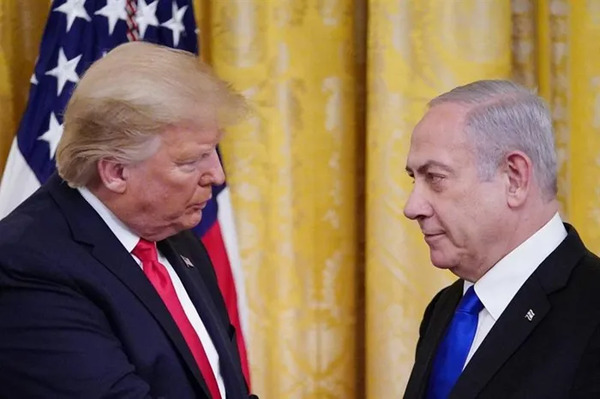
The US provided the entity with everything it needed for a first strike, including strategic deception. Trump claimed to be optimistic about reaching an agreement with Iran and to have asked Netanyahu not to take any action that would disrupt the Oman-sponsored negotiations, while secretly agreeing with Netanyahu on the timing and nature of the surprise attack. Thus, Trump tasked the entity with whatever assassinations, disruptions, and disruptions the US could undertake in a first strike, while awaiting the results without being deemed to have waged war. Some may ask, why would Trump be so interested in such a scenario and wait for the US to pounce on the remaining elements and eliminate the revolutionary regime? The answer is simple: if the first strike fails, the entire operation will fail, and America will be a party to the war and will have to pay the price for that. Of course, it goes without saying that the price will be costly for the United States in the event of the Strait of Hormuz being closed and mined, and costly in terms of American interests and bases in the region. This is all understandable, but the biggest price, in my opinion, is that Iran will become a nuclear state and will find its golden opportunity to withdraw from the Nuclear Non-Proliferation Treaty. We return to what Yusri Abu Shadi, the chief inspector of the International Atomic Energy Agency, said: A few weeks are enough to convert uranium enriched at 60% to 93% only by switching from parallel enrichment to sequential enrichment, which is similar to a water tap. All you have to do is double its power, especially in light of Iran’s possession of IR-8 centrifuges and perhaps more. This means the ability to accelerate and double enrichment ten times that of regular centrifuges such as the IR-1. Of course, according to Yusri Abu Shadi, Iran, even at the available level of enrichment, can manufacture two bombs. When the enrichment level is 60%, it is necessary to have 35 kilograms of this uranium is enough to produce one bomb, while if it is enriched to the highest level, 15 kilograms will be enough to produce one bomb.

Returning to the US entry into the war, it would be foolish to do so before the results are guaranteed. The other side of this conclusion is the question: What does America's failure to enter the war directly indicate? Logic dictates that it cannot guarantee results as long as Iran has not collapsed after the first strike, despite the fact that all intelligence agencies on earth have deployed all their energy in preparation for this strike and despite the use of the latest weapons technology, jamming, cyber warfare, espionage, and deception. Indeed, the signals emerging from Iran hours after this strike indicate the failure of all expectations. Most of what was jammed and bombed was quickly replaced, and radars and air defense systems mobilized to bring down the most important warplane known to humanity, the F-35. All ballistic and hypersonic missile systems also operated with high efficiency, although this was less than what was possible, but certainly much greater than what the Americans and the leaders of the entity had anticipated and worked for. Another very important indication is that the target bank for the first strike was more than Israel was able to access, whether at the level of leaders or experts. It would be foolish to assume that Khamenei himself was not at the top of the list of those wanted for elimination (if they had been able to reach him, they would not have missed it). It is even more foolish to believe that Trump and Netanyahu know where he lives and may reach him when they decide to. This is nothing more than a description of failure and an implication that the initiative is still in their hands and that the man only lives by their decision. There are two other indications issued from Iran that are contrary to what was expected: The unity of the Iranian people and their support for their leadership, and the ability of Iranian intelligence agencies to take the initiative and track down and uncover Mossad cells and those the entity relied on to carry out internal sabotage operations. It is true that the number of those discovered is large and shocking, but from another perspective, this reflects a great awareness of this danger at the level of Iranian security agencies. This was followed by major successes in uncovering the hideouts of these cells and the drone factories they operated, and in uncovering and pursuing their members, who appear to operate according to a system of cells linked together in a cluster manner, enabling them to coordinate their actions among themselves and in a threaded manner that links them to their command centers. This makes it easier for the security agencies to uncover their members, methods, and plans as soon as one of the cells is uncovered.

What is the position now in light of the above?

If the above is true, then America will only enter the war if the results are guaranteed. Netanyahu is telling Trump that things are ready, so come and reap the results and strike your decisive blow, as I have prepared everything for you. Meanwhile, Trump is recalculating time and again whether Netanyahu's description is correct or not. Of course, he will base this on an assessment of the American intelligence situation. However, the most important result that he does not want to reach is for Iran to be in a position to announce its withdrawal from the Nuclear Non-Proliferation Treaty, which means, in the language of the field, that Iran has moved towards producing the bomb. With this, everything he planned will have failed. Instead of preventing Iran from possessing a nuclear weapon, the outcome of the war will be that American involvement is what enabled Iran to transform its peaceful nuclear project into a military one. This is the situation now, and this is what worries Trump, while Netanyahu is embellishing the situation in front of him to hasten America's involvement, betting that America's mere direct involvement will force it to complete the mission to the end.

The question remains: could Trump undo all that he has achieved through the entity? Logically, he could take this path if engaging in a direct war would be more costly. He could also take this path because the lack of direct engagement is what would keep Iran a member of the Nuclear Non-Proliferation Treaty and keep its facilities subject to 24-hour inspection and monitoring. Diplomatic signals from mediators could play a role in giving Trump what he could later claim as having reached an agreement preventing the possession of nuclear weapons. This is happening on one track, while on the other track, America is doing everything in its power to bring down the Islamic Revolutionary regime, but without risking losing what the other, diplomatic, track dictates. If it reaches the conviction that it can bring down the regime, it will do so without hesitation and will pay no attention to the other track. This explains all this waiting.

ARAB AND WORLD

Sun 22 Jun 2025 9:25 am - Jerusalem Time

Trump announces America's joining the Israeli war on Iran and reviews the bombing of three nuclear sites.

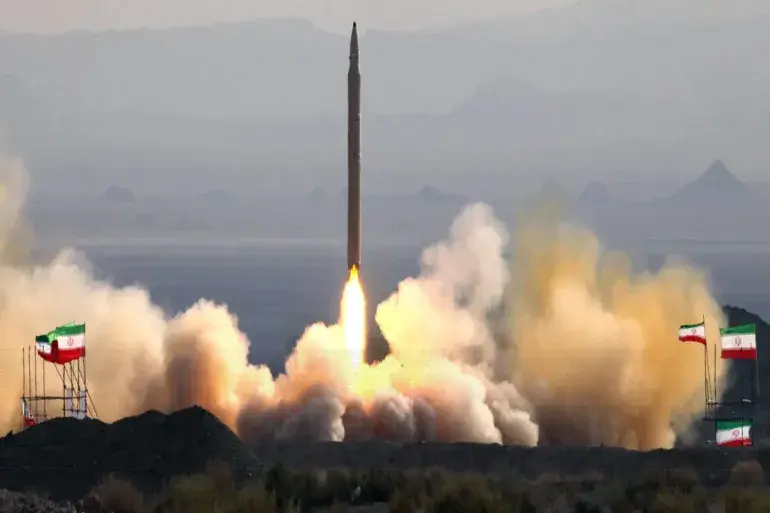
US President Donald Trump confirmed on Saturday evening that the United States had struck three Iranian nuclear facilities—at Natanz, Fordow, and Isfahan—and that these US airstrikes "totally and completely destroyed" the targeted Iranian nuclear facilities. He threatened to launch further attacks if Tehran did not make peace.

"Either there will be peace, or there will be a tragedy for Iran far greater than what we have seen over the past eight days," Trump said in a televised address to the American people. "Remember, there are many goals left."
He added, "If peace is not achieved quickly, we will pursue these other goals with precision, speed, and efficiency."
The US strikes on Iran's nuclear sites represent an extraordinary turning point for an army that was supposed to survive two decades of endless wars in the Middle East, and have returned the United States to a state of high alert.

Throughout the region, where more than 40,000 U.S. troops are stationed at bases and on warships, the strikes heralded a period of heightened alert, as the Pentagon prepared for an almost certain retaliation from Iran.

President Trump announced on social media that three Iranian sites had been bombed, including the Fordow mountain facility. The bombs used in the strikes are believed to have included "bunker buster" bombs, which are designed to destroy deep underground bunkers or weapons well-buried in heavily protected facilities.
A U.S. official, speaking on condition of anonymity to discuss classified intelligence, told The New York Times that multiple 30,000-pound bunker-buster bombs were dropped on Fordow, and that initial damage assessments indicated the facility had been "removed from operational use."

The strikes, whether successful or not, are likely to provoke a violent response. Tehran has vowed to attack US bases in the Middle East, and US intelligence agencies confirmed before the strikes that Iran would take steps to expand the war and strike US forces in the region.

US officials, speaking on condition of anonymity to discuss intelligence information, said the strikes against the three nuclear sites were complete. The official added that no subsequent attacks were expected, although commanders were prepared to respond to any Iranian retaliation.

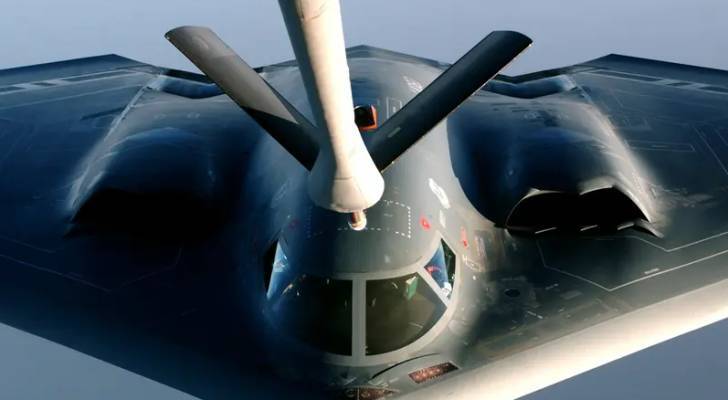
A US official stated that six B-2 bombers dropped 12 bunker-buster bombs on Fordow, and Navy submarines fired 30 cruise missiles at Natanz and Isfahan. The official added that one of the B-2 bombers also dropped two bunker-buster bombs on Natanz. These strikes are the culmination of years of planning by US Central Command, which is responsible for operations in the region. But few expected these plans to be carried out so suddenly. They came more than a week after Israel launched attacks on Iran. Iran responded with a barrage of missiles, as well as offers to resume negotiations over its nuclear program. Iran built the Fordow centrifuge facility to prevent it from being attacked. In 1981, after Israel, using F-15 and F-16 fighter jets, bombed the Al-Tuwaitha nuclear facility near the Iraqi capital, Baghdad, as part of its efforts to prevent Iraq from acquiring nuclear weapons—a strike that effectively halted Iraq’s weapons program. The Iraqi facility was above ground.

Israel claimed that its strikes on Iran hit above-ground nuclear sites, but not Fordo. Only the United States possesses the GBU-57 Massive Ordnance Penetrator (MOP)—the official name for the bomb needed to penetrate the deep core. Previous US administrations have refused to deliver this bomb to Israel. The Israeli Air Force also lacks the heavy bombers needed to deliver it.

According to official descriptions, these bombs feature thick steel casings and contain less explosives than similarly sized general-purpose bombs. The heavy casings allow the munitions to remain intact as they penetrate soil, rock, or concrete before exploding.

According to experts, Iran has several ways to respond, including the naval assets and other capabilities it would need to close the Strait of Hormuz, a move that could impede any US Navy ships in the Persian Gulf, according to US military officials. Iranian officials have threatened to plant mines in the strait if the United States joins an Israeli attack on the country.

Earlier this week, US minesweepers and other Navy ships began dispersing to avoid attack.

It's worth noting that during his first term, Trump authorized a drone strike that killed powerful Iranian General Qassem Soleimani at Baghdad airport in 2020. Iran responded with a barrage of missiles launched at US forces in Iraq, leaving approximately 110 soldiers with traumatic brain injuries.

Experts also believe that Iran does not need to prepare extensively to attack US air and naval bases in the region. The Iranian military already has missile bases within easy striking range in Bahrain, Qatar, and the United Arab Emirates.

US officials stated last week that Iran had prepared missiles and other military equipment to launch strikes on US bases in the region. In anticipation of such an attack, US forces have strengthened their air defenses in recent days. On Saturday, US officials stated that additional US Air Force F-22, F-16, and F-35 fighter jets had transited bases in Europe and were stationed in the Middle East, with more arriving.

The United States has already sent about thirty refueling aircraft to Europe that could be used to help those fighters protect American bases.

In addition, the aircraft carrier USS Carl Vinson, carrying 60 aircraft, including F-35 fighter jets, is currently sailing in the Arabian Sea. US officials said that a second aircraft carrier, the Nimitz, canceled a port visit in Vietnam earlier this week to head to the region and is expected to arrive in the next few days.

OPINIONS

Sun 22 Jun 2025 9:25 am - Jerusalem Time

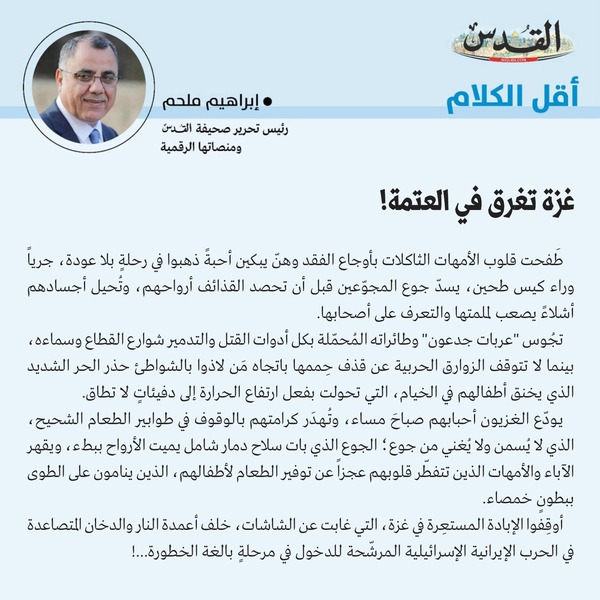
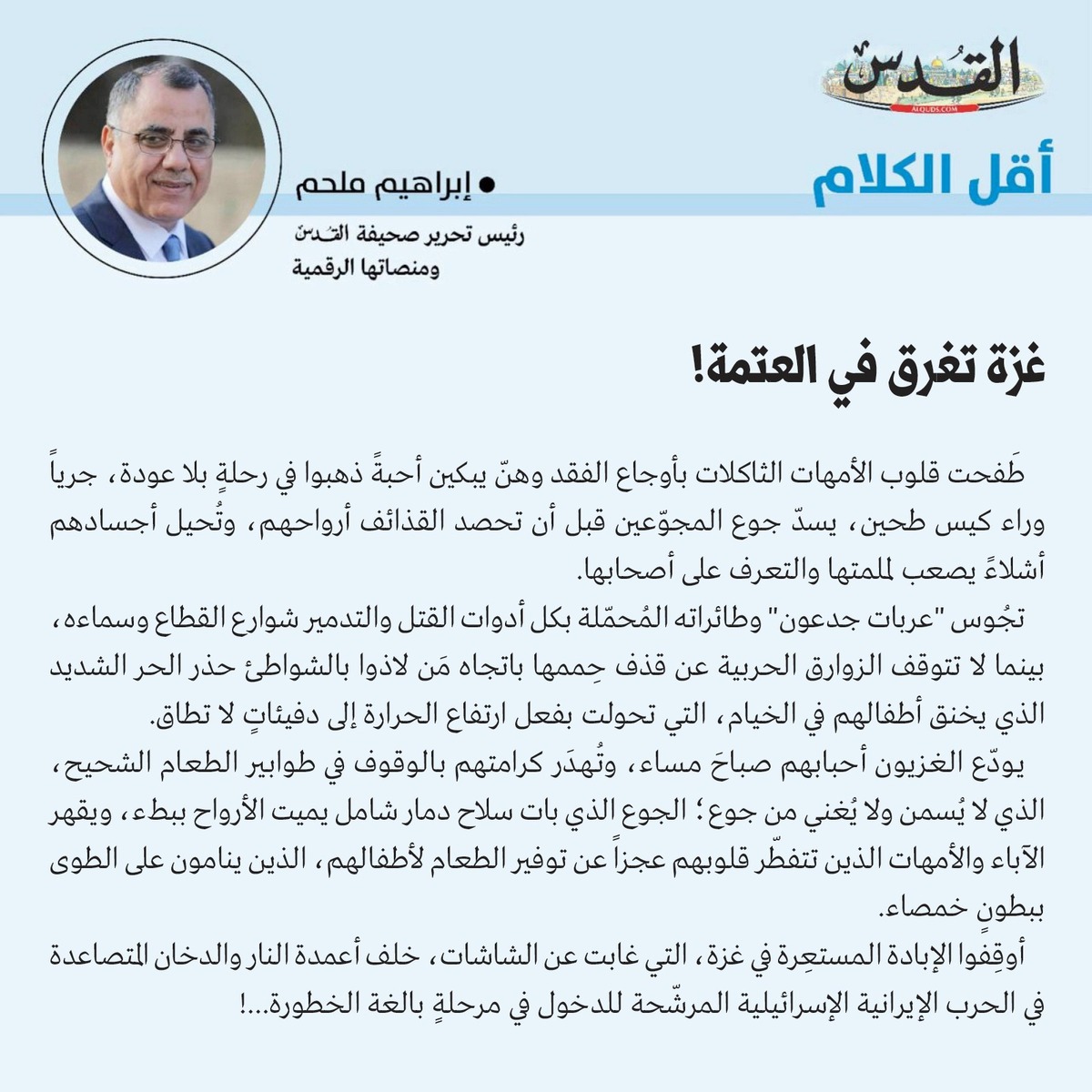
Gaza is drowning in darkness!

Ibrahim Melhem

Ibrahim Melhem

Opinion Writer

The hearts of bereaved mothers overflowed with the pain of loss as they mourned their loved ones who had gone on a one-way journey, running after a bag of flour to quench the hunger of the starving before the shells claimed their lives and turned their bodies into fragments that were difficult to reunite and identify their owners.

Gideon's chariots and aircraft, loaded with every means of killing and destruction, roam the streets and skies of the Gaza Strip, while gunboats continue to rain down their lava on those who have taken refuge on the beaches, fearing the sweltering heat that is suffocating their children in tents that have been transformed by the rising temperatures into unbearable greenhouses.

Gazans bid farewell to their loved ones morning and night, their dignity squandered as they stand in line for scarce food that neither nourishes nor satiates hunger. Hunger has become a weapon of mass destruction, slowly killing lives and overwhelming parents whose hearts are broken by their inability to provide food for their children, who go to bed hungry.

Stop the raging genocide in Gaza, which has been hidden from the screens, behind the rising columns of fire and smoke in the Iranian-Israeli war, which is likely to enter an extremely dangerous phase..!

PALESTINE

Sun 22 Jun 2025 9:15 am - Jerusalem Time

The Central Kitchen resumes operations in Gaza: The effects of chronic hunger do not go away quickly.

The World Central Kitchen announced the resumption of its operations in the Gaza Strip after a 12-week hiatus, describing the move as a "significant achievement" amid the ongoing US-backed Israeli genocide in the Strip.

The organization said in a post on its X account on Saturday that "the effects of chronic hunger in Gaza are not going away quickly."

She stressed the need for reliable access to feed communities safely and sustainably.

"For the first time in more than 12 weeks, trucks of WHO kitchen aid reached our teams in Gaza, and today we resumed cooking in selected kitchens, a crucial step toward scaling up meal production to meet the urgent needs of displaced Palestinians," she continued.

Commenting on the resumption of operations in Gaza, the organization described the move as a "significant achievement," following a weeks-long hiatus due to the Israeli blockade and the closure of crossings.

She noted that thanks to the ingredients that arrived, approximately 10,000 meals were cooked on the first day of resuming operations.

Beyond the supervision of the United Nations and international relief organizations, Tel Aviv began implementing a plan on May 27 to distribute limited aid through the so-called "Gaza Humanitarian Foundation," which is supported by Israel and the United States but rejected by the United Nations.

Those seeking aid through this mechanism have become a daily target of Israeli fire, resulting in large numbers of Palestinian deaths and injuries.

Earlier on Saturday, the government media office in the Gaza Strip announced that Israel had killed 450 Palestinians and injured 3,466 others, while 39 remain missing since May 27 while attempting to reach food distribution centers known as the "American-Israeli mechanism."

PALESTINE

Sun 22 Jun 2025 9:12 am - Jerusalem Time

The occupation forces stormed Al-Aqsa Mosque and arrested four of its guards amid a dangerous escalation.

Last night, Israeli occupation forces stormed the old prayer hall in Al-Aqsa Mosque, ransacking its contents after breaking into safes and brutally searching the area.

The Jerusalem Governorate reported that the occupation forces re-closed the gates of Al-Aqsa Mosque this morning, allowing only Waqf employees to enter.

She explained that the occupation forces arrested four guards of Al-Aqsa Mosque: Muhammad Arbash, Ramzi Al-Za'anin, Basem Abu Jumaa, and Iyad Odeh. They also conducted field investigations with a number of other guards and a firefighter inside the compound.

This attack comes amid a escalating pattern of repeated violations against Al-Aqsa Mosque and its employees. Israeli occupation forces continue their policy of daily summonses, arrests, and raids, in an attempt to assert control over the mosque's administration and undermine the role of the Islamic Waqf in Jerusalem.

In the same context, the occupation authorities continue to impose strict restrictions on the entry of worshippers for the ninth consecutive day, under the pretext of an "emergency" due to the military escalation with Iran. This comes amid warnings of the danger this approach poses to the historical and legal status quo at Al-Aqsa Mosque.

PALESTINE

Sun 22 Jun 2025 9:08 am - Jerusalem Time

Occupation forces launch a large-scale arrest campaign in the West Bank.

Israeli occupation forces launched a large-scale arrest campaign in the West Bank at dawn and early Sunday morning.

In Ramallah, occupation forces arrested two children, Ibrahim Al-Abour (15 years old) and Muhammad Jabr Shriteh (13 years old), after raiding their parents' homes in the town of Al-Mazra'a Al-Gharbiya.

Birzeit University student Salam Rizkallah was arrested after raiding her home in the Umm al-Sharait neighborhood of al-Bireh.

The occupation forces also raided the home of released prisoner Hamada Ibrash and threatened him not to show any signs of joy during his upcoming wedding.

In Bethlehem, the occupation forces stormed the Deheishe refugee camp, searched, vandalized and destroyed citizens’ homes, detained about 100 citizens, and arrested: Akram Shafut, Muhammad Mahmoud Salhab, Maher Muhammad Abd Rabbo, Ahmad Sami Fararjah, Rami Maali, Mahmoud Al-Maghribi, Hamza Abu Ajamiya, Muhammad Ashraf Raqban, Hassan Mujahid Abu Jodeh, Abdul Nasser Atallah, Qusay Muhammad Misbah Fararjah, Adam Musa Abu Nassar, Karim Ayyad, Mahmoud Hamash, Ramez Abdul Razzaq, and Riyad Muhammad Ahmad Saleh.

In Nablus, occupation forces stormed the village of Burqa, raided and searched a number of homes, wreaked havoc, and arrested six citizens: Omar Salim Hajjah, Walid Ashraf Qassem, Basem Fathallah Saif, and the freed prisoners Mustafa Muhammad Saeed Hajjah, Reyas Zaher Abu Omar, and Shadi Zahi Abu Omar.

Meanwhile, the occupation soldiers vandalized the village's Martyrs' Monument, cutting down a model of "Hanthala" and writing racist slogans over the names of the martyrs there.

Occupation jeeps also stormed the town of Hawara and the village of Qaryut, south of Nablus, raided and searched homes there, and arrested two women: Hiam Hikmat Shahada (56 years old) from Hawara, and Salam Rizq Allah Suleiman Kassab (20 years old) from Qaryut.

In Jenin, occupation forces arrested citizens Jandal Salah from the town of Kafr Dan and Muhammad Ahmad Saleh Jarar from the village of Kafr Kud, after raiding and searching their homes.

PALESTINE

Sun 22 Jun 2025 9:03 am - Jerusalem Time

Dead and wounded in Israeli raids on the Gaza Strip

A number of citizens were killed and injured early Sunday morning as a result of Israeli shelling in the central and southern Gaza Strip.

Local sources reported that an Israeli drone targeted an apartment in the Nuseirat refugee camp in the central Gaza Strip, killing a man and his wife.

She added that the aircraft targeted a tent for displaced people in the Al-Hasayneh area, west of Al-Nuseirat camp, killing and wounding a number of civilians.

She noted that the occupation forces bombed a tent housing displaced persons in the Al-Rayyan camp in Khan Yunis, south of the Gaza Strip, killing two civilians and wounding others.

A number of citizens were injured by Israeli occupation forces' fire in the Asdaa area, north of Khan Yunis.

ARAB AND WORLD

Sun 22 Jun 2025 7:26 am - Jerusalem Time

Trump: We bombed 3 Iranian nuclear facilities and the Fordow site is finished.

US President Donald Trump announced early Sunday morning that US forces had successfully carried out airstrikes on three nuclear facilities in Iran, noting that the sites bombed included Fordow, Natanz, and Isfahan. This came hours after several US Air Force B-2 bombers took off from a base in the United States, bound for the Pacific Ocean.

Trump said that a full load of bombs was dropped on the main nuclear site at Fordow, confirming that the Fordow site was finished.

The US President indicated that all US aircraft are now outside Iranian airspace.

He stressed that no other army in the world other than the US Army could do this, emphasizing that "now is the time for peace."

Trump called on Iran to agree now to end this war, describing this moment as historic for the United States, Israel, and the world.

Trump said that Iran must stop immediately or they will be hit again, stressing that any retaliation by Iran against the United States will be met with far greater force than what we witnessed tonight.

In another White House speech, Trump said that US forces launched major attacks on the Fordow, Natanz, and Isfahan facilities, and emphasized that the goal of the attacks was to destroy Iran's enrichment capabilities.

Trump added that the strikes achieved a remarkable military success, completely destroying all three Iranian nuclear facilities, and reiterated Iran's call to make peace now.

The US president stressed that "there are still many targets, and it's either peace or tragedy for Iran," and said that other targets will be precisely struck if peace is not achieved.

He pointed out that the US Department of Defense (the Pentagon) will hold a press conference regarding the attacks.

Details of the US strike

Fox News quoted a source as saying that the entrances to the Fordow facility were targeted with two bombs, indicating that the United States used six bunker-buster bombs in the attack on the site.


The source added that Israel destroyed 75% of the Natanz and Isfahan facilities, and that the US strikes with Tomahawk missiles completed the mission. He noted that assessments indicate that the Isfahan facility was the most difficult target among the facilities targeted by the strikes.

A US official told Reuters that US B-2 bombers were used in the attacks on Iran's nuclear sites.

The New York Times also quoted a Pentagon official as saying that several B-2 bombers were used to bomb the Iranian Fordow facility.

The same newspaper quoted a US official as saying that several 30,000-pound bunker-buster bombs were dropped on the Fordow facility, noting that initial damage assessments indicate that the Fordow facility has been taken out of service.

The newspaper also quoted the US official as saying that the B-2 bombers that struck the Iranian sites flew non-stop for 37 hours from Missouri.

The newspaper said that one of the reasons for launching the attack was the US intelligence assessment that Israel's attack set back Iran's nuclear program by six months.

The New York Times reported that NASA's fire detection system detected a thermal event near Iran's Fordow nuclear facility half an hour before the strikes were announced.

Israeli media quoted sources as saying that approximately 30 tons of explosives were dropped by US aircraft on the Fordo nuclear facility.

Israel's Channel 12 reported that Israeli estimates indicate that the US strikes caused significant damage to Iran's nuclear facilities.

For its part, ABC News quoted an Israeli source as saying that the United States and Israel had trained for this attack in a military exercise about a year ago.

ABC News quoted a US official as saying that B-2 bombers dropped several bunker-buster bombs during the US strikes on Iran, noting that a US Navy submarine launched Tomahawk missiles at targets inside Iran.


Informing Israel of the strike

Axios quoted an Israeli official as saying that the Trump administration informed Israel in advance of the US strike on Iran.

NBC reported that the heads of both houses of Congress were briefed on the US attacks on Iranian nuclear sites.

CNN quoted sources as saying that senior Democrats on the intelligence committees were not informed of the strikes before they occurred.

Trump had previously said that only time would tell regarding the two-week deadline he had given Iran.

Trump's remarks came after a meeting with the National Security Council in the White House Situation Room to discuss possible US action against Iran.

The New York Times quoted the White House as saying that Trump is expected to address the Americans tonight.

CNN, citing an informed source, reported that Trump hopes the US attacks will bring Iran back to the negotiating table.

CBS News quoted sources as saying that the United States had diplomatic contact with Iran to inform it that the strikes were the sole American plan and that it was not seeking regime change.

Iranian data

Meanwhile, the strategic advisor to the Iranian parliament speaker confirmed that the three nuclear facilities in Natanz, Fordow, and Isfahan had been evacuated long ago.


Isfahan province said that "the Isfahan and Natanz nuclear facilities were attacked by the enemy," adding that "air defenses in Isfahan and Kashan confronted hostile targets and explosions were heard at the same time." Iran's IRNA news agency said that the nuclear sites bombed by the United States did not contain materials that could cause radiation. The Iranian news agency said that "residents near the Fordow facility did not feel any severe explosions and the situation in the area is normal." An Iranian state television commentator said that every American citizen or service member in the area is now a legitimate target. In this context, the British newspaper The Times confirmed that the United States needs permission from London to launch strikes from the Diego Garcia base, because the area is under British sovereignty.

Source: Al Jazeera + American press

ARAB AND WORLD

Sat 21 Jun 2025 10:34 pm - Jerusalem Time

Demonstrations in European cities demand an end to the genocide in Gaza.

Several demonstrations took place on Saturday in several European capitals, including Rome, Berlin, London, and Stockholm, in solidarity with the Palestinians and to demand an end to the ongoing Israeli war of extermination in the Gaza Strip.

Tens of thousands of demonstrators in London raised Palestinian flags and banners demanding an end to the genocide in Gaza. They also held up banners demanding an end to the Israeli war on Iran.

Protesters also called on the British government to "stop arming Israel," citing their fears of escalation in the Middle East resulting from the war between Israel and Iran.

Protesters at the London march lamented that "the situation in Gaza is getting more dangerous... under the eyes of the entire world," saying that "it is important to avoid another war in the Middle East," referring to the war between Israel and Iran, which entered its ninth day on Saturday.

A large demonstration also took place in central Berlin, while Reuters reported that demonstrators raised the Iranian flag, calling for sanctions on Israel and a ban on arms shipments during a protest against the situation in Gaza outside the German parliament (Bundestag) in Berlin.

The Italian capital, Rome, witnessed a massive march in support of Palestine and Gaza, during which demonstrators demanded an end to the genocide in Gaza and the West Bank.

The European Palestinian Information Center posted photos on social media of a demonstration in the German city of Stuttgart and another in the Danish city of Aarhus, both held in support of Gaza and calling for an end to the massacres in the Strip.

In the Swedish capital, Stockholm, hundreds demonstrated on Saturday to protest the Israeli massacres against the Palestinian people in the Gaza Strip.

Protesters gathered in response to a call from civil society organizations to demand an immediate end to Israeli war crimes in the Gaza Strip.

Protesters carried Palestinian flags, pictures of children killed in Israeli attacks, and banners reading "Stop the genocide committed by the Zionist entity" in Palestine.

Speaking to Anadolu Agency during the demonstration, Swedish activist Janine O'Keefe stressed their demand to halt the genocide being committed by Israel in Palestine.

This comes as part of a series of demonstrations taking place in several European cities around the world, denouncing the ongoing Israeli war on Gaza since October 7.

This war of extermination left more than 187,000 Palestinians dead or wounded, most of them children and women, and more than 11,000 missing. Hundreds of thousands were displaced, and famine claimed the lives of many, including children, as well as widespread destruction.

PALESTINE

Sat 21 Jun 2025 10:17 pm - Jerusalem Time

A young man was injured after being assaulted by occupation soldiers in Jenin.

A young man was injured on Saturday evening after being attacked by Israeli occupation soldiers in Jenin.

Local sources reported that occupation soldiers severely beat a young man in the city of Jenin, and he was subsequently transferred to Jenin Governmental Hospital.

Earlier this evening, an Israeli occupation force stormed the Cinema Roundabout area in Jenin, firing live ammunition and preventing civilian vehicles from reaching the city center.

PALESTINE

Sat 21 Jun 2025 10:01 pm - Jerusalem Time

Gradual return of internet and fixed-line communications services in the Gaza Strip

The Telecommunications Regulatory Authority announced the gradual restoration of internet and fixed-line telephone services in Gaza City and the north of the Strip following a recent outage. Services have also resumed in the central and southern Gaza Strip following a disruption that lasted for more than three consecutive days due to extensive damage to infrastructure caused by repeated attacks.

In a statement issued Saturday evening, the Authority commended the tremendous efforts made by the technical teams of telecommunications companies, who, despite security and logistical challenges, were able to repair the faults and restore service to citizens.

She stressed that the ongoing outages have brought telecommunications services in the Gaza Strip to a critical level, directly impacting all vital sectors, most notably health, relief, and education.

She expressed her hope that services would continue without interruption, calling for the provision of protection to technical crews and the creation of the necessary environment for the continuity of service provision, especially in light of the critical humanitarian conditions in the Gaza Strip.

ARAB AND WORLD

Sat 21 Jun 2025 8:36 pm - Jerusalem Time

CIA Director Repeats Mossad's Iran Nuclear Story

The Trump administration appears to prefer the verbal assessment of Israeli Prime Minister Benjamin Netanyahu and Israeli intelligence that Iran could acquire a nuclear weapon within as little as 15 days over the credible information gathered by the combined US intelligence community. These sources within the US intelligence community say that Tehran has not yet decided to build a nuclear weapon and would be at least a year away from producing a working weapon if it did. US intelligence also assesses that any US attack on Iran would encourage Tehran to develop a strategic weapon.

The New York Times reported on Thursday that US officials said these new assessments echo information provided by Mossad, which believes Iran could acquire a nuclear weapon within 15 days.

The report explained: "While a number of American officials view the Israeli assessment as credible, others have asserted that the American intelligence assessment has not changed. American spy agencies believe it could take several months, or even up to a year, for Iran to develop a nuclear weapon."

It's worth noting that last March, Director of National Intelligence Tulsi Gabbard told Congress that Iran was not developing a nuclear weapon. Officials speaking to CNN earlier this week said that Tehran could take up to three years to build a strategic weapon and a delivery system.

However, sources in the Trump administration say Gabbard has been sidelined on the Iran issue. NBC News reported Wednesday that "Director of National Intelligence Tulsi Gabbard, an outspoken critic of past U.S. military interventions abroad, appears to have fallen out of favor with President Donald Trump as he considers military action against Iran."

The report added that "several senior administration officials said that Gabbard had been marginalized in internal administration discussions about the conflict between Israel and Iran."

Publicly, Trump has disparaged his top intelligence official. "I don't care what Gabbard said," the president said on Air Force One earlier this week. "I believe Iran was very close to having a nuclear weapon."

According to reliable sources, CIA Director John Ratcliffe is considered one of the defenders of Netanyahu and Mossad's claims within the White House. Sagar Injeti, host of the program "Critical Points," reported that "a senior US intelligence official told me that there is no independent US intelligence to support CIA Director John Ratcliffe's statement that Iran is 'meters away from a nuclear weapon.'" He continued, "All the intelligence comes from Israel."

A former intelligence official told Al-Quds correspondent on Wednesday, "There is nothing strange about distorting intelligence to serve important goals of foreign and security policy."

“Falsifying intelligence for the sake of politics is a long-standing American tradition,” said the official, who asked not to be named. “Thomas Jefferson gave Congress false intelligence to attack Tripoli between 1801 and 1805. President McKinley engineered intelligence to invade Cuba in 1898. President Johnson engineered intelligence to attack Vietnam in 1964 based on a fabricated incident that never happened.”

The former official added: "Perhaps the most important example is President George W. Bush, who falsified intelligence in order to invade Iraq in 2003. Therefore, people must understand that America is the greatest power in history, and if it wants to fabricate something related to its strategic interests, that is its right."

It's worth noting that the New York Times (along with other sources) said that the Israeli assessment may have been fabricated to satisfy Israeli Prime Minister Benjamin Netanyahu's desire to drag the United States into war. The newspaper reported: "Some officials believe that the Israeli assessments were influenced by Prime Minister Benjamin Netanyahu's desire to gain American support for his military campaign against Iran."

According to all experts, Tel Aviv needs Washington to bomb some of Iran's most fortified nuclear targets, such as the Fordow facility. Some assessments indicate that the United States alone, with its heavy bombers and 30,000-pound bunker-buster bombs, is capable of disabling Fordow. However, the Pentagon believes Washington would have to use a nuclear weapon to destroy the site.

If President Trump authorizes a direct strike on Iranian nuclear sites, US intelligence agencies believe it could finally push Tehran to attempt to build a strategic weapon. The Times explained: "Senior US intelligence officials said Iranian leaders are likely to move toward producing a bomb if the US military attacks Iran's Fordow uranium enrichment site or if Israel kills Iran's supreme leader."

ARAB AND WORLD

Sat 21 Jun 2025 6:25 pm - Jerusalem Time

Al-Houthi threatens Washington with targeting its ships if Iran is attacked.

Yemen's Houthi group threatened on Saturday to target US ships and warships in the Red Sea if Washington launches an attack on Iran in support of Israel.

This came in a televised statement read by the group's military spokesman, Yahya Saree, and monitored by an Anadolu Agency correspondent.

Saree said: "If the US is involved in an attack and aggression against Iran with the Israeli enemy, the Houthi armed forces will target its ships and warships in the Red Sea."

He added, "Our forces are monitoring and observing all movements in the region, including hostile movements against our country, and will take all necessary legitimate measures to defend our beloved country and its proud people."

ARAB AND WORLD

Sat 21 Jun 2025 6:09 pm - Jerusalem Time

UN: The war between Israel and Iran must not lead to a new refugee crisis.

The United Nations warned on Saturday that the escalating war between Iran and the Israeli occupation must not lead to a new refugee crisis in the Middle East, noting that "when people are forced to flee, they do not return quickly."

The United Nations High Commissioner for Refugees, Filippo Grandi, said that the region has "suffered more wars, losses, and displacement than it can bear," stressing that the international community cannot allow "a new refugee crisis to take root in the region."

"De-escalation is essential now," Grandi said, adding, "Once people are forced to flee, there is no quick return, and often the repercussions last for generations."

The United Nations High Commissioner for Refugees (UNHCR) reported that the intensity of the exchange of attacks has caused displacement in both Iran and Israel, with population movements observed within Tehran and other areas toward the borders of neighboring countries.

Residents of Tel Aviv also took refuge in shelters far from their places of residence, and in some cases, outside the country.

The UNHCR added that the ongoing conflict threatens to renew the uncertainty facing the approximately 3.5 million refugees in Iran, most of whom are Afghans, warning that their situation will worsen if the escalation continues.

The Commission called on countries in the region to respect the human right to seek safety, stressing the need to contain the conflict and prevent civilians from being exposed to further danger.

In a related development, the Israeli occupation announced on Saturday that it had launched airstrikes on missile storage and launch sites in central Iran. This is part of a military campaign that began on June 13, claiming that there was "intelligence" indicating that the Iranian nuclear program was approaching the "point of no return."

Iran denies seeking to develop nuclear weapons, asserting that its program is for civilian purposes. Meanwhile, Israel maintains an ambiguous position regarding its possession of nuclear weapons, although the Stockholm International Peace Research Institute estimates that the entity possesses approximately 90 nuclear warheads.

Iranian counterattacks using missiles and drones killed 25 people in various areas of Tel Aviv.

ARAB AND WORLD

Sat 21 Jun 2025 5:12 pm - Jerusalem Time

Aboul Gheit: Israel is "the root of tension in the region"

Arab League Secretary-General Ahmed Aboul Gheit considered Israel "the root of tension and instability in the region."

This came in his speech, delivered today, Saturday, during the 51st session of the Foreign Ministers of the Member States of the Organization of Islamic Cooperation, according to a statement issued by the League.

Aboul Gheit said, "The region is going through an extremely critical phase. Recent developments mean I will continue to reiterate this stark truth, which Israel's supporters and backers are evading and covering up: the occupation is the root of tension and instability in the region, and the price of its continued occupation is these atrocities and atrocities."

He stressed that "war criminals are still prepared to drag the region and the world into more violence, bloodshed, and hatred, in order to implement their plans for ethnic cleansing and the liquidation of the Palestinian cause, as they imagine."

Aboul Gheit pointed out that "the gravity and seriousness of the events will never divert our attention from the main issue, the issue of the Palestinian people, who, to this very moment, are still facing the daily crimes of the occupation."

He added, "In a single day last week, 140 Palestinians were killed outside food distribution centers that have become deadly traps, compounding the tragedy of deliberate starvation using a weapon that violates all laws of war, or even humanitarian norms and ethical codes."

He continued, "All this is happening, and unfortunately, there are still those who are using the veto (on Washington's part to block a recent Security Council resolution to halt the genocide in Gaza) to protect the occupation and pave the way for it to commit more crimes."

The Secretary-General of the Arab League stressed that "saving the Palestinian people from this daily crime has become a humanitarian, moral, and even religious duty, even before it is a practical political necessity. Leaving the reins to extremists and those obsessed with violence and show of force will only drag the region into a certain catastrophe, the price of which will be paid by future generations."


PALESTINE

Sat 21 Jun 2025 4:49 pm - Jerusalem Time

The occupation continues its aggression on the city of Tulkarm and its two camps for the 146th day.

Israeli occupation forces continued their escalating aggression on the city of Tulkarm and its camp on Saturday for the 146th consecutive day, and for the 133rd day on the Nur Shams camp, and for the second consecutive day on a number of towns located north and east of the governorate, amid ongoing demolition operations and tightening of the military siege.

According to local sources, three Israeli military bulldozers continued to demolish more residential buildings in Nour Shams camp, specifically in the Manshiyya and Shuhada neighborhoods, bringing the number of buildings demolished in the camp over the past few weeks to more than 20.

Over the past fourteen days, Tulkarm camp has witnessed the demolition of more than 50 buildings, leaving widespread destruction and creating large holes and holes in the streets and surrounding neighborhoods of Balawneh, Akasha, Al-Nadi, Al-Sawalmeh, Al-Hammam, and Al-Madaris.

This escalation comes as part of the implementation of the occupation's plan, announced last May, to demolish 106 buildings in the Tulkarm and Nur Shams camps. These include 58 buildings in Tulkarm camp alone, comprising more than 250 housing units and dozens of commercial establishments, and 48 buildings in Nur Shams, under the pretext of "opening roads and changing the geographical features of the two camps."

The occupation forces continue to impose a tight siege on the two camps and their surrounding areas, with infantry units and military vehicles deployed in alleys and entrances, preventing residents from reaching their homes, and firing at anyone who attempts to approach.

In the same context, the occupation forces sent additional military reinforcements to the city, amid intensive movements of their military vehicles on Market Street, Martyr Thabet Thabet Hospital Street, Nablus Street, and the northern neighborhood, where they deliberately obstructed the movement of citizens and vehicles, blaring provocative horns and driving against traffic.

The occupation continues to transform Nablus Street into a military barracks, seizing residential buildings and homes in the northern neighborhood opposite Tulkarm refugee camp, some of which have been under its control for more than four months, and deploying bulldozers and heavy machinery in the vicinity.

This street, which connects the Tulkarm and Nur Shams refugee camps, has also been severely damaged by earth mounds erected by the occupation forces months ago. This is compounded by the heavy presence of military patrols, which set up flying and surprise checkpoints, hampering movement and exacerbating the suffering of civilians.

Meanwhile, the occupation forces are continuing their aggression against the towns of Bal'a, Attil, Deir al-Ghusun, and Zeita, while the town of Anabta is witnessing intense military operations in and around its neighborhoods. Forces have seized several homes, turning them into military outposts after forcibly expelling their residents. The entrances and streets of these towns have been sealed off with barriers, isolating them and exacerbating the suffering of the residents.

According to local sources, occupation forces raided and searched homes, vandalized their contents, and interrogated residents. Meanwhile, infantry forces were deployed extensively in the streets, preventing citizens from moving freely.

The sources added that the occupation forces deliberately played songs over loudspeakers from inside a house seized in the town of Attil, in a provocative act that angered residents.

The ongoing aggression has so far resulted in the deaths of 13 civilians, including a child and two women, one of whom was eight months pregnant. Dozens of people have been injured and arrested, and widespread destruction has affected infrastructure, homes, shops, and vehicles.

According to the latest data, this escalation has displaced more than 5,000 families from the two camps, representing over 25,000 citizens. It has also completely destroyed at least 400 homes and partially damaged 2,573 others. Meanwhile, entrances remain closed, transforming the two camps into almost lifeless areas.


ARAB AND WORLD

Sat 21 Jun 2025 4:08 pm - Jerusalem Time

America mobilizes B-2 bombers armed with the most powerful "Mother of All Bombs" against Iranian facilities.

As tensions escalate in the Middle East due to the escalation between Israel and Iran, and the world awaits US President Donald Trump's decision on a possible strike on Iranian nuclear facilities, flight tracking data and voice communications have revealed the movements of B-2 stealth bombers, the only ones capable of carrying the GBU-57 E/B Massive Ordnance Air Blast (MOAB), known as the "Mother of All Bombs."

Six bombers took off from Whiteman Air Force Base in Missouri, USA, heading to a US air base in Guam in the Pacific Ocean, according to Fox News.

The B-2 stealth bombers are known for their ability to evade radar and carry deep bunker-buster bombs, such as the 30,000-pound (13,607-kilogram) bomb, which is the most powerful non-nuclear bomb in the world.

The power and features of the GBU-57 E/B bomb: This highly accurate bomb, related to the GBU-43, known as the "Mother of All Bombs," has tremendous destructive power. It is the only weapon capable of penetrating underground bunkers up to 200 feet (61 meters) deep, such as the Iranian nuclear facilities at Fordow, before detonating, making it more effective than conventional missiles and bombs that explode at or near the point of impact.

This move comes as Trump awaits Tehran's response to the previous US proposal regarding Iran's nuclear program, giving him a two-week deadline before making a final decision.

ARAB AND WORLD

Sat 21 Jun 2025 3:08 pm - Jerusalem Time

Iranian official: Our missile stockpile was not affected by our targeting of Israel.

CNN quoted an Iranian official as saying that the country's missile stockpile was not affected by its attacks on Israel.

He said: We are using more advanced precision missiles against sensitive Israeli military and security centers.

He added: "One missile easily penetrated the THAAD, Patriot, and Iron Dome systems."

He stressed that Israel must remain silent and merely observe the Iranian balance of power.

ARAB AND WORLD

Sat 21 Jun 2025 3:02 pm - Jerusalem Time

430 dead and 3,500 wounded in the ongoing Israeli attack on Iran

The Iranian Ministry of Health reported that the death toll from the ongoing Israeli attacks on Iran has risen to 430, with more than 3,500 civilians injured.

Iranian media reported on Saturday that a child was killed and two people were injured in an Israeli attack on a civilian building in the Iranian city of Qom.

She stated that Israel carried out an attack on the Salariya neighborhood in the city of Qom, which led to the death of a 16-year-old child and the injury of two other people, while five Iranians were killed, following an attack launched by Israeli aircraft on the city of Khorramabad.

She confirmed that Iran activated air defenses simultaneously in eastern and western Tehran as a result of the ongoing Israeli attack, while three explosions were heard in the northeast of the capital. She added that Israel targeted the Isfahan nuclear facility, one of Iran's largest, adding that there was no leakage of dangerous materials as a result.

In this context, Israeli media reported that air raid sirens sounded in various areas of Israel following Iran's launch of five ballistic missiles.

Since June 13, Israel has launched extensive attacks on Iran, targeting nuclear, military, and oil facilities, as well as military leaders and nuclear scientists in the capital, Tehran, the Tabriz region in western East Azerbaijan Province, Isfahan, and several other Iranian provinces. Iran has responded by launching ballistic missiles and a drone into Israeli territory, in the largest direct confrontation between the two sides.