PALESTINE

Mon 23 Jun 2025 4:26 pm - Jerusalem Time

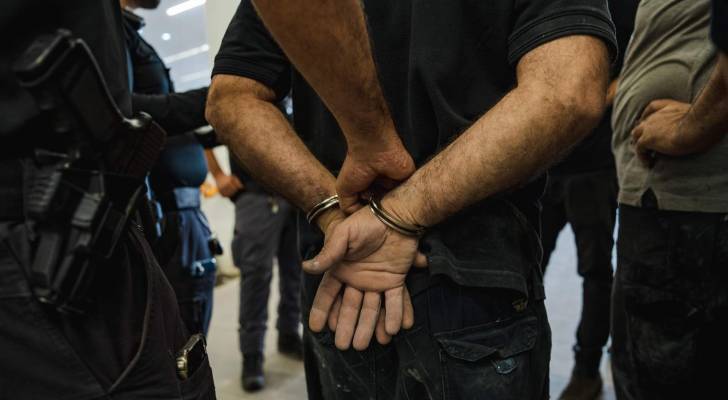
Israeli police and Shin Bet: A young man was arrested in Tel Aviv on charges of spying for Iran.

Israeli police and the Shin Bet security service announced Monday evening the arrest of a young man in Tel Aviv suspected of carrying out security missions on behalf of an Iranian entity.

The Israeli police explained that the suspect had documented the homes of several officials, as well as sensitive military bases. He also wrote slogans with specific connotations, believed to be linked to the organization he worked for.

Initial investigations in the Israeli occupation entity indicated that the suspect received thousands of dollars in exchange for these activities, and that the funds were transferred to him via digital currencies, strengthening the suspicion that he was involved in working for Iranian intelligence agencies.

The Israeli police and Shin Bet security service confirmed that investigations are still ongoing and that the suspect will be brought before a court to request an extension of his detention. They emphasized the seriousness of the incident, which threatens national security.

PALESTINE

Mon 23 Jun 2025 4:14 pm - Jerusalem Time

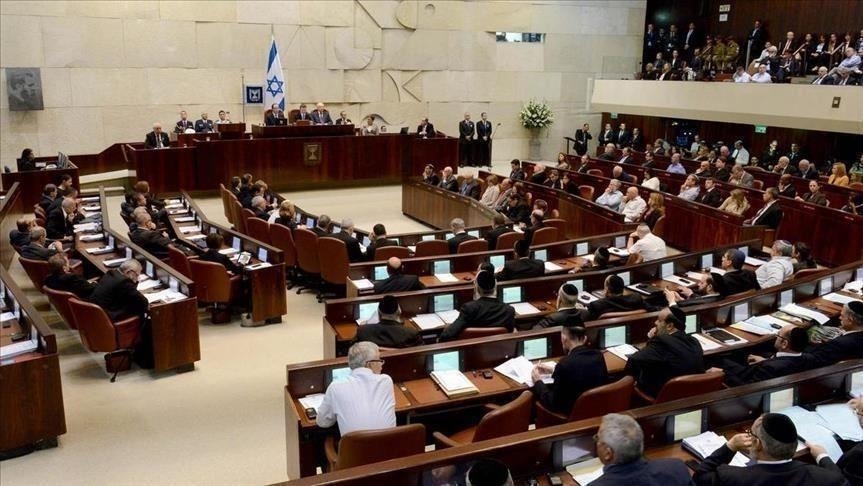
The Israeli Knesset is considering measures to remove MK Ayman Odeh.

Proceedings to expel MK Ayman Odeh from the Israeli Knesset will begin tomorrow, Tuesday, over his pro-Gaza statements.

Proceedings to oust MK Odeh, who heads the Arab Front for Change bloc, began at the initiative of Likud MK Avichai Booron, who issued a statement announcing that he had collected the signatures of 68 MKs on a petition calling for Odeh's expulsion from the Knesset following his statements in support of Gaza and prisoners in Israeli detention centers.

The bill to oust MK Odeh requires the support of 90 of the 120 Knesset members to pass. If the bill is approved, the MK can appeal to the Israeli Supreme Court, which will rule on the matter.

Commenting on the exclusion proceedings being held despite the procedures and restrictions imposed during wartime, Odeh said, "The irony is that Knesset Speaker Amir Ohana issued strict instructions that the only topic discussed by all Knesset bodies is the war and its consequences. Yet the Knesset is also determined to discuss an exclusionary topic."

Awda continued: "Of course, I will stand with my head held high, defending our humanitarian positions and attacking their fascist positions."

He added, "I have been expressing the positions of my people and those of conscience for decades. This position has not and will not change. What has changed, however, is the extent of the fascist right-wing shift in the State of Israel."

Awda said, "Just as Arab citizens have been removed from their jobs, Arab students have been dismissed from universities, and Arabs are barred from entering shelters... this is what they are doing to me, as one of the sons of this people, clinging to the flames of survival and the flames of a national, humanitarian stance."

He concluded: "I accuse them of killing tens of thousands in Gaza, and of destroying hospitals, universities, and all aspects of life. They are the ones accused! We insist on our positions, which represent the real alternative for both peoples to live without occupation and war, while achieving rights and peace."

PALESTINE

Mon 23 Jun 2025 3:46 pm - Jerusalem Time

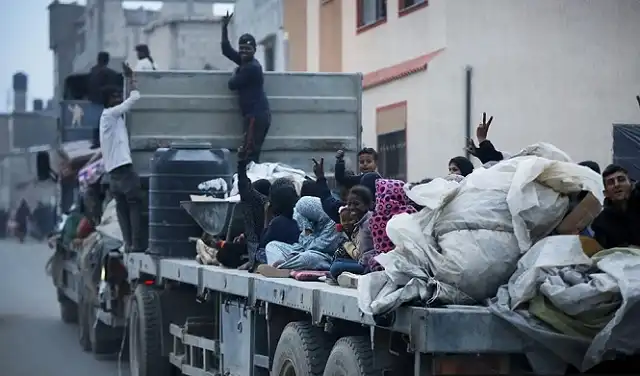
The occupation issues evacuation orders for areas in central Khan Yunis.

The occupation army issued immediate evacuation orders for Blocks 107, 108, and 109 in the center of Khan Yunis, in preparation for an attack.

"The orders do not include Al Amal and Nasser hospitals," he said in a statement.

PALESTINE

Mon 23 Jun 2025 3:28 pm - Jerusalem Time

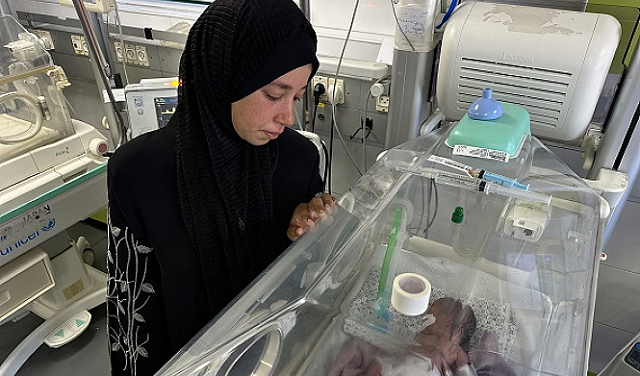
Gaza's baby milk crisis threatens the lives of newborns

Newborn babies in the Gaza Strip are suffering from critical health conditions due to the ongoing Israeli war and the tight blockade that prevents the entry of essential medical supplies and baby formula.

Many of these children are receiving medical care at Nasser Medical Hospital in Khan Younis, where medical staff are facing a severe shortage of incubators and medical supplies, threatening the infants' lives and exacerbating the humanitarian crisis.

Pediatrician and obstetrician Dr. Asaad Al-Nawajaa pointed out that the occupation's ban on food and medical supplies, particularly No. 1 infant formula for newborns, has a profoundly negative impact on the health of children under six months old, as newborns are entirely dependent on this type of milk.

Al-Nawaja'a added that the shortage of milk is causing infants to contract numerous illnesses, such as gastroenteritis and respiratory diseases. He called for the need to allow milk into hospitals and nurseries to save the lives of hundreds of children facing real danger due to the severe shortage.

Hospitals in the Gaza Strip have repeatedly warned of an imminent health disaster threatening thousands of newborns due to the depletion of all types of milk. Meanwhile, Al-Rantisi Hospital issued an urgent appeal after its milk supply ran out, despite receiving dozens of children daily suffering from malnutrition and poor absorption.

The risks are heightened as mothers suffer from malnutrition and are unable to breastfeed, with official data indicating that 60 deaths have been recorded so far due to hunger and malnutrition among children of various ages.

PALESTINE

Mon 23 Jun 2025 2:38 pm - Jerusalem Time

International organizations call on the European Union to suspend its partnership with Israel.

114 international civil society organizations, including Human Rights Watch and Amnesty International, called on the European Union to suspend its partnership agreement with Israel, citing its genocide against Palestinians and other violations.

This came in a joint statement issued by the 114 organizations on Monday, ahead of a meeting of European Union foreign ministers to review the suspension of the partnership agreement with Israel.

The organizations stressed that a fair review of the Association Agreement must conclude that Israel has "seriously violated" the human rights clause.

Claudio Francavilla, deputy director of Human Rights Watch's European Union Institutions office, explained in a press statement that all attempts at dialogue with Israel have largely failed.

He pointed out that pro-Palestinian protests have been ongoing for months across Europe, and that people cannot ignore the horror, crimes, and brutality they see daily on social media.

Francavilla said that reviewing the partnership agreement would be meaningless if it was not followed by actual measures, including suspending the commercial aspect of the agreement.

He emphasized that Israeli human rights organizations have observed that the rate of punishment for perpetrators of crimes in the West Bank does not exceed 3%, indicating that the Israeli judicial system does not seriously pursue these violations.

The European Union-Israel Association Agreement, which entered into force in 2000, provides the legal framework for political dialogue and economic cooperation between the two parties.

Article 2 of the agreement stipulates that the partnership is conditional on “commitment to human rights and international law.”

OPINIONS

Mon 23 Jun 2025 1:38 pm - Jerusalem Time

Where is Iran going?

Mustafa Ibrahim

Mustafa Ibrahim

Opinion Writer

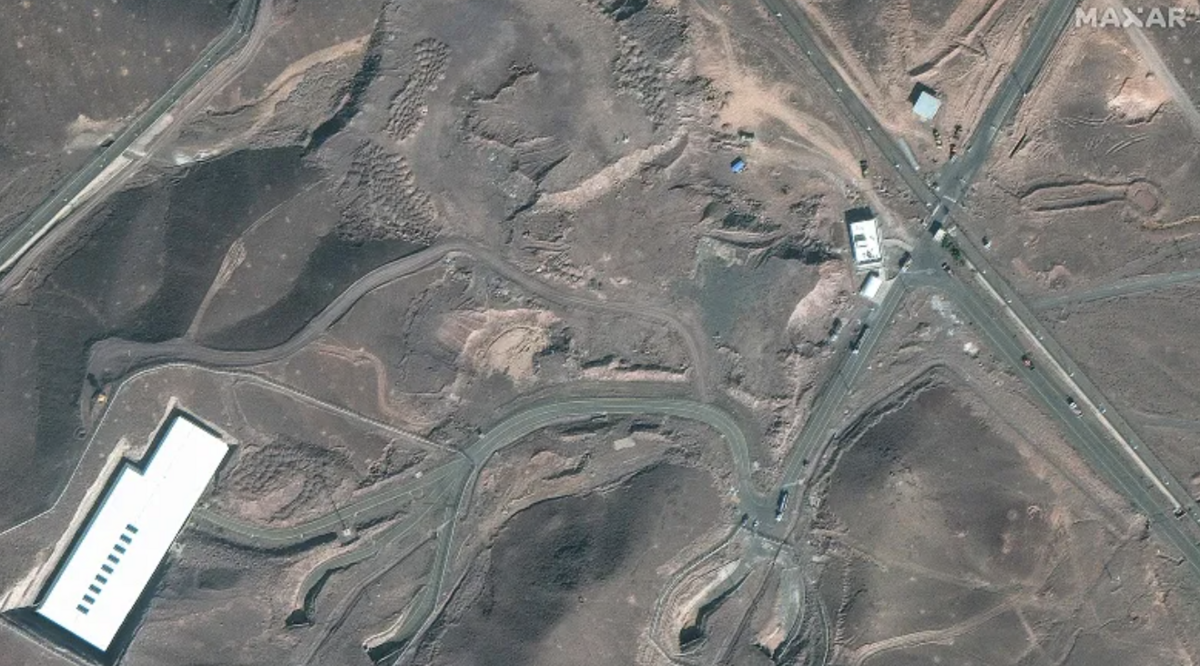
In an impassioned speech, US President Donald Trump declared that "the goal was to cripple Iran's ability to enrich uranium and to eliminate the nuclear threat," and that the strike was carried out in full coordination with Israeli Prime Minister Benjamin Netanyahu, who was quick to boast that "the primary objective of the operation was achieved by destroying the Fordow, Natanz, and Isfahan facilities," as if three airstrikes were enough to close a nuclear file that had been built over two decades.

After Trump fulfilled his promise, and amid a wave of euphoria that swept across Israel and some Middle Eastern countries, crucial questions began to emerge: What about the half-ton of enriched uranium that was apparently transferred from the Fordow facility to another location? And how can this war be ended after the United States, for the first time in its history, effectively joined the Israeli military attack against Iran?

At this time, Iran finds itself in stifling isolation following the US strike. Despite condemnation from both Russia and China, they are unable to offer a military response or a real diplomatic umbrella. Meanwhile, the positions of Tehran's allies are hesitant. Hezbollah in Lebanon and Shiite factions in Iraq have limited themselves to statements of condemnation, emphasizing the ability of the "strong Iranian state" to confront the threat. Only the Houthis have announced the suspension of the ceasefire agreement with the United States, without carrying out any attacks so far.

Over the past years, Iran has invested in its nuclear program, a network of allies, the so-called axis of resistance, and a unified front, from Syria, Lebanon, and Palestine to Iraq and Yemen. Despite its participation in negotiations with major powers, Iran has held on to its "strategic asset," its nuclear program, and refused to abandon it, especially after Trump withdrew from the nuclear agreement in 2018.

Since 2021, Iran has resumed enriching uranium at high levels, and the escalation intensified after a series of Israeli strikes targeting the Natanz facility and prominent leaders of the Axis of Resistance, most notably Hassan Nasrallah. In the second half of 2024, with the fall of the Assad regime in Damascus, Iranian concerns rose, and Tehran responded by enriching uranium to 60%—a step closer to the threshold for a nuclear weapon, though it has not yet reached it.

Operation "People Like a Lioness," which was launched ten days ago, quickly transformed from a preemptive strike into an open war. According to Israeli media, four main objectives were identified for the operation: destroying Iran's nuclear program, crippling its ballistic missile capabilities, striking the axis of resistance, and imposing long-term political deterrence. Some Israeli officials have even spoken openly about the possibility of "overthrowing the Iranian regime" or even assassinating Supreme Leader Ali Khamenei, whom Defense Minister Israel Katz has described as "the Hitler of our time."

The fundamental question today is: Will a major American strike push the Iranians to make concessions? Or, on the contrary, will it push them toward further hardline stances? The Iranians view their nuclear program as a "protective umbrella" preventing hostile forces from overthrowing the regime. From their perspective, abandoning it would be tantamount to political suicide.

Haaretz quotes security sources as saying that "the American bet on destroying nuclear facilities as a means of bringing Iran to the negotiating table may be a mistake." The Iranians have long experience with patience and are adept at long-term competitions. Despite their relatively diminished military capabilities, they still retain real threat tools: from missiles and drones to the possibility of striking US bases or closing the Strait of Hormuz, a scenario that would shake the global economy and harm China and Washington's allies in the Gulf.

Since the Iranian revolution in 1979, the Iranian regime's primary goal has been survival. It has successfully weathered a devastating war with Iraq, repeated waves of protests, and stifling international sanctions, remaining resilient. Today, it seeks to wage a calculated battle to ensure its survival, in a volatile regional landscape that has become a "ring of fire" that is difficult to break.

Betting that Tehran's clerics will place their future in the hands of an American president, whether Trump or Obama, seems naive. Unless Iran is completely stripped of its nuclear option, it will remain both a threatened and a threatened actor. To this moment, no one knows how this short American campaign will end, nor whether the Middle East will truly breathe freely from the conflicts over the Arab region, its people neglected, American-Israeli arrogance, and excess power, or whether it will witness a postponed nuclear explosion.

PALESTINE

Mon 23 Jun 2025 1:35 pm - Jerusalem Time

Prisoners' Authority: 500 female prisoners have been denied lawyer visits, and we hold the occupation responsible.

The Prisoners' Affairs Commission warned of the continued ban on lawyers visiting prisoners.

In a statement issued Monday, the Commission held the occupation fully responsible for covering up violations inside prisons and called on the international community to take urgent action.

She noted that over the past ten days, nearly 500 prisoners, both male and female, have been denied legal visits from the Commission's staff, a dangerous escalation in the policy of isolation and repression.

PALESTINE

Mon 23 Jun 2025 12:36 pm - Jerusalem Time

The death toll in the Gaza Strip rises to 55,998.

The Ministry of Health in Gaza announced on Monday that the death toll in the Gaza Strip has risen to 55,998, the majority of whom are children and women, since the start of the Israeli occupation's aggression on October 7, 2023.

She added that the death toll has risen to 131,559 since the start of the aggression, while a number of victims remain under the rubble, unable to be reached by ambulances and civil defense teams.

It noted that 3 dead including one whose body was recovered, and 317 injuries arrived at Gaza Strip hospitals over the past 24 hours. The total number of dead and injuries since March 18, after the occupation violated the ceasefire agreement, has reached 5,685 dead and 19,518 injuries.

It indicated that the number of aid victims arriving at hospitals over the past 24 hours reached 17, with more than 136 injured, bringing the total number of livelihood victims arriving at hospitals to 467, and the number of injuries to more than 3,602.

It pointed out that a number of victims are still under the rubble and on the streets, and that ambulance and civil defense crews are unable to reach them.

PALESTINE

Mon 23 Jun 2025 12:28 pm - Jerusalem Time

Prisoners' Club: The number of female prisoners in occupation prisons has risen to 47.

The Palestinian Prisoners' Club said that the Israeli occupation forces arrested seven women over the past two days, including a university student, bringing the number of female prisoners in Israeli jails to 47.

The club added in a statement issued on Monday that the majority of those arrested over the past two days were arrested, according to the occupation's initial allegations, on the basis of what the occupation calls "incitement" on social media, which today constitutes the most prominent systematic policy used by the occupation to arrest hundreds of citizens, and which constitutes another aspect of the crime of administrative detention, as this type of persecution has become a central tool for imposing further censorship and restrictions on freedom of opinion and expression.

The club explained that the majority of female prisoners are being held in Al-Damon prison, including two female prisoners from Gaza, two girls, two pregnant women in their sixth month, and 10 administrative detainees. It is worth noting that there are two female prisoners who have been detained since before October 7, which the occupation still refuses to release.

It is worth noting that the number of women arrested since the beginning of the war of extermination has exceeded 560 cases. This figure includes women arrested in the West Bank, including Jerusalem, as well as women from the 1948 territories. There is no clear estimate of the number of women arrested in Gaza.

It's worth noting that this systematic escalation has affected all women across the Palestinian territories, including minors. It has also included the detention of women as hostages, with dozens of them being held in detention, with the aim of pressuring a family member targeted by the occupation to surrender. This policy has constituted one of the most prominent crimes that has escalated dramatically since October 7.

ARAB AND WORLD

Mon 23 Jun 2025 11:51 am - Jerusalem Time

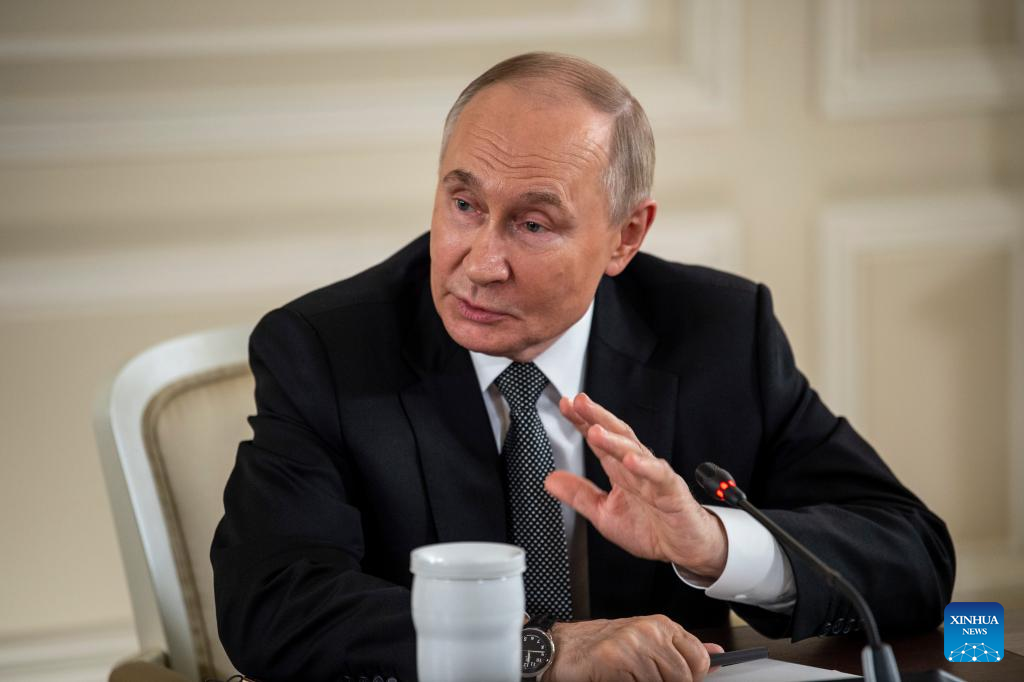
Putin: Russia is ready to strengthen comprehensive cooperation with China

Russian President Vladimir Putin said late Wednesday that Russia and China share a wide range of areas of cooperation, and that Russia is committed to strengthening comprehensive cooperation and exchanges with China.

Putin made the remarks in response to a question from Fu Hua, president of Xinhua News Agency, during a meeting in St. Petersburg with heads of major international news agencies.

Putin emphasized that Russia has established itself as a major economic partner of China, with bilateral trade reaching $240 billion in 2024. He noted that the two countries have launched a series of practical investment projects, and that investment volume is expected to grow further.

"This achievement stems not only from the growth of the Chinese economy in size and quality, but also from the enduring friendship between our two countries," he added.

Putin stated that financial cooperation is now a top priority in relations between the two countries, with a focus on ensuring smooth capital flows to maintain economic momentum and stimulate new trade breakthroughs.

He also stressed the huge potential for cooperation in high technology, aerospace and aircraft manufacturing.

Putin emphasized that China has achieved remarkable success in the field of artificial intelligence, achieving 10 times the efficiency but at a cost that is one-tenth that of competitors, which is "astonishing."

Putin noted that, as economic and cultural relations between the two countries deepen, interest in the Chinese language is growing throughout Russia. Currently, some 25,000 young Russians are enrolled in educational institutions that teach the Chinese language.

Putin stated that the years of cultural and people-to-people exchanges held periodically between the two sides contribute to deepening cooperation and cultural and people-to-people exchanges, and also enhance mutual understanding between the two peoples.

He also shared a personal story, saying that his daughter began studying Chinese with the help of a teacher in the early 2000s, adding that his granddaughter now speaks Chinese fluently with her teacher from Beijing.

The media event was held on the sidelines of the 28th St. Petersburg International Economic Forum.


PALESTINE

Mon 23 Jun 2025 11:33 am - Jerusalem Time

Settlers hold a provocative party near a school in Al-Ma'rajat, west of Jericho.

Today, Monday, settlers held a provocative party near the Arab al-Ka'abneh Elementary School in the al-Ma'rajat area, northwest of Jericho, under the protection of the occupation army.

Local sources reported that dozens of settlers stormed the area before dawn, playing tape recorders and loudspeakers, and chanting colonialist religious slogans, in a direct provocation to the residents.

PALESTINE

Mon 23 Jun 2025 11:01 am - Jerusalem Time

The occupation continues to close Al-Aqsa Mosque and arrests four of its guards.

For the second day in a row, the Israeli occupation forces continue to close the blessed Al-Aqsa Mosque.

The Jerusalem Governorate indicated that, through this measure, the occupation is attempting to impose its control over Al-Aqsa Mosque and obliterate its Islamic identity by preventing worshippers from entering and performing prayers in its courtyards.

It is noteworthy that the occupation forces stormed the old prayer hall in Al-Aqsa Mosque yesterday evening, ransacking its contents after breaking into the safes and brutally searching the area.

During the raid, the occupation forces arrested four Al-Aqsa Mosque guards: Muhammad Arbash, Ramzi Al-Za'anin, Basem Abu Jumaa, and Iyad Odeh.

ARAB AND WORLD

Mon 23 Jun 2025 10:58 am - Jerusalem Time

Araqchi: Russia and Iran are coordinating positions on the current escalation.

Iranian Foreign Minister Abbas Araqchi, who is visiting Moscow, said that Iran and Russia are coordinating their positions on the current escalation in the Middle East, according to the Russian news agency TASS on Monday.


Interfax reported that Russian President Vladimir Putin will meet with the Iranian foreign minister in Moscow today.

The world is awaiting Iran's response after the United States attacked key Iranian nuclear sites, joining Israel in the largest Western military action targeting Iran since 1979. A day after the United States dropped 30,000-pound bunker-buster bombs on the mountain above Iran's Fordow nuclear site, Tehran vowed to defend itself, whatever the cost. The United States urged Tehran not to retaliate, and small anti-war protests began taking to the streets in American cities.

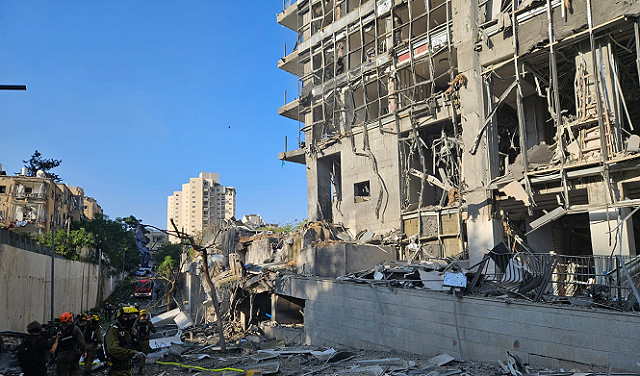
Iran and Israel continued to exchange missile fire, with Iranian media reporting that an explosion in the west of the country killed six soldiers. Earlier on Sunday, Iran fired missiles at Israel, injuring dozens and leveling buildings in Tel Aviv.

ARAB AND WORLD

Mon 23 Jun 2025 10:53 am - Jerusalem Time

Missiles fired from Iran towards parts of Israel, power outages reported in several towns.

Five consecutive missile salvos were launched from Iran toward all parts of Israel on Monday, with debris and rocket fragments landing in several areas. One of the rockets struck a site near a strategic electricity company facility in the south of the country, causing power outages in several towns.

Israeli reports indicated that seven rockets were fired in the four rocket salvos, including two toward the north, a third toward the Tel Aviv and Jerusalem areas, and a fourth toward the south of the country.

Iran threatened Washington this morning, Monday, with a "decisive response to its crimes" targeting nuclear facilities in Fordow, Isfahan, and Natanz, while indicating that it would not stop uranium enrichment.

The Israeli war on Iran continues for the 11th day, with the United States directly entering the confrontation line after launching airstrikes targeting Iranian nuclear facilities in Fordow, Natanz, and Isfahan.

The Atomic Energy Organization of Iran considered these attacks a "flagrant violation of the Nuclear Non-Proliferation Treaty," but Tehran downplayed the impact of the strikes on its nuclear capabilities, asserting that its program remains active.

In contrast, Israeli Prime Minister Benjamin Netanyahu said that the military operation against Iran was "close to achieving its objectives," referring to the elimination of what he described as "the threat of the nuclear program and ballistic missiles." He added that military operations would continue until "all of the specified objectives" were achieved.

US President Donald Trump declared that the US strikes "deprived Tehran of the atomic bomb," but at the same time expressed a willingness to enter into negotiations with Iran.

For his part, Iranian President Masoud Pezeshkian stressed that "a response is inevitable" to the US attack, while a member of the Iranian parliament's National Security Committee announced that the Revolutionary Guards are prepared to close the Strait of Hormuz if necessary.

This threat prompted US Vice President J.D. Vance to warn that any disruption of shipping in the strait "would be tantamount to suicide for Iran."

Despite the damage to the nuclear facilities, American and Israeli officials confirmed that the Fordow facility was not completely destroyed, but it sustained extensive damage.

On the diplomatic front, regional and international efforts are accelerating in an attempt to contain the escalation and prevent a slide into all-out war.

Several countries in the region, including Saudi Arabia, have engaged in intensive contacts with international and regional powers to urge all parties to exercise restraint. Western powers have also been mobilized to pressure Tehran not to launch a broad response to the US strikes.

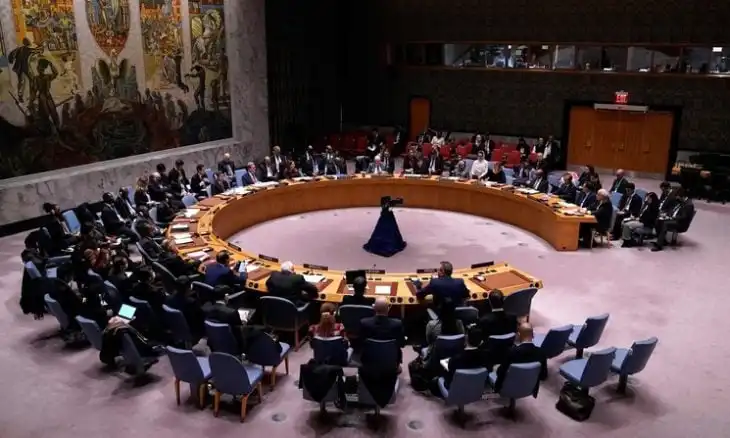
In this context, the UN Security Council held an emergency session on Sunday to discuss the latest developments, amid sharp divisions among its members. Russia, China, and Pakistan proposed adopting a resolution calling for an immediate and unconditional ceasefire in the Middle East.

With international warnings escalating of a spiral of mutual retaliation that could ignite the region, a state of cautious anticipation prevails regarding the dramatic developments that the coming hours and days may bring.

OPINIONS

Mon 23 Jun 2025 9:19 am - Jerusalem Time

We, the region and the world are in a new phase

Dr. Ahmed Rafiq Awad

Dr. Ahmed Rafiq Awad

Opinion Writer

As for us – the Palestinians – what awaits us is neglect, denial, and dismantling, in addition to the threat of expulsion, annexation, or enslavement, or all of that combined. Now, Israel sees itself as victorious, and that it is not at all compelled to settle the minimum Palestinian demands. No one is pressuring it or even possesses the tools or desire to pressure it. All the hopes and illusory promises that were built thirty years ago have been demolished in the face of an extremist and violent reality. This is not because we are terrorists, racists, corrupt, and immature, but because our enemy is changing at lightning speed, from the desire to integrate to the desire to control, carried by illusions of power and more of it. The enemy’s rapid social, political, and intellectual transformations have been met with slowness, slackness, and lack of preparation on our part. It is clear that the colonial Western world does not think about or intend to reward or even console us. All it does is anesthetize, distract, and manage the conflict so that it does not bear its burdens. The two-state solution is no longer a valid vision for resolving the conflict. Rather, control, subjugation, and various tools of power are the best means to obtain calm. Although this situation will explode one day, However, the occupier and those who stand with and support it are prepared to confront it, as they claim. In short, the new phase carries risks, the beginnings of which we can already see. The first of these features is that our social unity and our future state are completely at risk. Scenarios and solutions are being hastily and vulgarly concocted to circumvent our ambitions, our tears, and our blood.

The Arab and Islamic region has been in a state of fragility, even fluidity, for almost a decade. The region has witnessed division, disintegration, civil wars, repositioning, changes in direction, the demise of regimes, and the rise of tribal, sectarian, and ethnic groups. For almost a decade, we have seen the Arab nation-state collapse in the face of challenges and questions, and crumble in the face of external and internal attacks, revealing a corrupt structure, unconvincing content, and a limited development vision. I believe that this weakness will increase, and that dependency will deepen, as most of these countries will increase their reliance on external powers in search of protection, funding, or legitimacy, a situation that will enable Israel to lead, protect, and control.

Our Arab region will be unable to offer solutions or initiatives due to weakness, fear, and inability. It will leave action—if it even allows it—to groups and organizations that will be accused, besieged, and persecuted. In my opinion, this political and cultural absence will deepen the region's crisis even further, not because of political and intellectual tension, but because of the economic and social crises arising from the state's weakness, the absence of its institutions, and the scarcity of its resources.

The world around us has left the global order that was formed after World War II for another order without laws, a fluid order that transcends and challenges international bodies, diplomatic norms and traditions, an order that does not recognize geography, borders, sovereignty, dignity or cultural privacy, an order in which companies compete with banks to reap profits, colonize the market, monopolize knowledge and reshape societies, countries and borders whenever that is beneficial, an order that creates its laws according to its interests and adopts new standards based on opportunism, piracy and oppression, cloaking them in glittering slogans and formulations that reduce reality and details for the sake of an incomplete, unjust and blind narrative. In this world, wars and military, commercial and scientific confrontations will increase due to competition over everything: knowledge and its tools, the market and its capabilities, geography and the advantages it provides.

The picture is bleak, yes, unfortunately bleak. Is there a way out of this frightening tunnel? What can be done? We have a few scenarios before us: either surrender and surrender to this brutal force and wait for another historical cycle, or confrontation and engagement despite the narrow margins and high risks. I am not in the position to offer advice or preach, as I believe that time - despite us - gives birth to its choices and options. What is happening today with such speed and intensity will inevitably lead to a conflict of interests between the powerful, and will certainly lead to conflict over everything. This is what drives us to hope for rapid change, meaning that the strong will not remain strong and the weak will not remain weak. What we need is patience and faith that we are a people who deserve dignity, sovereignty and a state, and that we are one people no matter how much others try to distort us, divide us and prevent us from achieving our ambitions.

What is happening now is just one more cycle of history. It was and will be the same. What is happening will not deceive us, nor will it dazzle us, nor will it overwhelm us, nor will it blind our eyes to the correct vision. What is happening is injustice and tyranny itself, and it will not last forever. All we need is patience and faith, and for the thousandth time, patience and faith are the most deadly, powerful and enduring engines of history.


OPINIONS

Mon 23 Jun 2025 9:13 am - Jerusalem Time

The decisive blow

Baha Rahal

Baha Rahal

Opinion Writer

The decisive American strike on Iran came after a wait that Trump had intended to unfold. He chose the timing that paved the way for it through the Israeli strikes, which carried out their duties during the war between them and Iran. They began the day after the expiration of the sixty-day deadline that President Trump had granted. The strikes, especially the first one, revealed the extent of the breach and the accuracy and strength of the information in Israel's possession. As with Hezbollah, the first strike was the decisive blow, the most painful and decisive, and it demonstrated the tremendous intelligence power that Israel possesses regarding all the joints of the state in Iran.

Over the past few days, Netanyahu and his government have been betting on the necessity of the United States entering the war. Not content with the unconditional support, backing, protection, and funding provided by America, the Israeli government has also pushed Trump to take a step toward entering the war and striking the Iranian nuclear reactor.

For his part, Trump was trying to distance himself and his country from entering into a confrontation, until the moment came when he decided to strike the nuclear reactor with bombs and precision-guided missiles with specific targets, based on extremely accurate intelligence information. He actually wanted it to be a decisive and decisive strike, quick and swift, which makes a scenario likely in the coming days towards a return of strikes between Iran and Israel as in the past days without US intervention again, unless necessary. This is unlikely in light of military capabilities and balances. It is likely that the next phase will not witness a military escalation between America and Iran, but rather the battle will continue to rage in the air between Israel and Iran, until the latter returns to the negotiating table on the conditions set by America.

Netanyahu now feels he is the strong, victorious force, after his failure on October 7, 2023, became clear. However, today he sees himself as the savior who succeeded in destroying the Iranian nuclear program, the threat he has repeatedly spoken about over the past two decades, in addition to dismantling Hezbollah's capabilities. This will make him more popular within the entity.

PALESTINE

Mon 23 Jun 2025 8:58 am - Jerusalem Time

Dead and wounded as the occupation targets "starving" people in the central Gaza Strip

At least four civilians were killed and others injured on Monday in Israeli shelling of the central and southern Gaza Strip.

Medical sources at Al-Awda Hospital in Nuseirat, central Gaza, reported receiving two martyrs and 35 injuries as a result of Israeli occupation forces targeting gatherings of civilians waiting for aid on Salah al-Din Street, south of the Wadi Gaza area.

She added that 16 people were seriously injured by gunfire and were transferred to hospitals in the central governorate.

A citizen was killed when an Israeli helicopter bombed a house in Deir al-Balah camp.

Local sources reported that Israeli drones targeted the tents of displaced people in the Al-Mawasi area, west of Khan Yunis, in the southern Gaza Strip, killing and wounding a number of civilians.

Citizens were also killed and injured when Israeli forces opened fire on people waiting for aid near the distribution center in the Al-Shakoush area, northwest of Rafah.

The two brothers, Mahmoud and Yazan Faris Al-Turkmani, and the child Hazem Mohammed Al-Sindawi, were killed as a result of the occupation's bombing of Gaza City.

PALESTINE

Mon 23 Jun 2025 8:53 am - Jerusalem Time

Occupation forces launch an arrest campaign in the West Bank

Israeli occupation forces arrested citizens in various areas of the West Bank at dawn and this morning, Monday.

In Hebron, the occupation forces arrested: Muhammad Murshid Salhab, Imam Ghaleb Rifaiah, Abdullah Mashhour Al-Rajabi, and Muhammad Mahmoud Niroukh from the city of Hebron, Fayez Fawaz Al-Khudour, Ahmad Ishaq Al-Khudour, and Muhammad Munir Al-Hajouj from the town of Bani Naim in the east, and the brothers Rashad and Ihab Ahmad Khamayseh from the town of Taffuh in the west, and Adham Bassam Shalash and Muhammad Fadi Rabhi Shalash from the town of Beit Awa, southwest of Hebron.

Meanwhile, the occupation forces severely beat and abused a number of detainees during raids on their homes and arrests.

In Bethlehem, the occupation forces arrested the young man, Moaz Khader Al-Harimi (28 years old), after raiding and searching his father's house, on Al-Saff Street in the center of Bethlehem.

In Ramallah, the occupation forces arrested citizens after raiding their homes and vandalizing their contents. During the raid on the village of Budrus, they arrested citizens Baha Awad, Jamil Ali Abdul Karim, and his son Suhaib.

In the town of Birzeit in the north, the occupation forces arrested the freed prisoner Salama Muhammad Qatawi and his brothers Iyas, Uday, and Rias and his son Muhammad, and from the village of Abu Qash: Ahmad Jamal Ahmad al-Masri, and the child Eid Naim Qad (16 years old), and from the town of Beitunia in the west, Abdul Karim Muhammad Hamid Amoush.

In Qalqilya, occupation forces raided several neighborhoods in the city and arrested the young men: Hamza Shraim, Mahmoud Radwan, and Sajid Jibril, after raiding their homes and ransacking their contents.

In the same context, occupation forces stormed the village of Farata, east of Qalqilya, and detained a number of young men, interrogating them on the spot before later releasing them.

PALESTINE

Mon 23 Jun 2025 8:48 am - Jerusalem Time

Jewish journalist: The "Greater Israel" project aims to wipe out the Middle East

Germany-based Jewish journalist Martin Jacques said that attacks carried out by Israel in the region are often illegitimate, and warned that the Greater Israel project aims to wipe out the entire Middle East.
This came in an interview with Anadolu Agency with Jack, in which he discussed the policies of Israeli Prime Minister Benjamin Netanyahu's government and its method of creating chaos, in addition to the expanding scope of Israeli threats in the region.

Expansion plan..
Commenting on the Israeli attacks on several countries in the region, Jack said that what is happening cannot be described as legitimate defense, nor can it even be called a preemptive attack. It is "simply preemptive destruction and eradication, aimed at wiping out the entire region (the Middle East) and preventing any possibility of response or defense," he said.
Israel has been committing genocide in the Gaza Strip since October 7, 2023, launched a large-scale war in Lebanon between September and November 2024, bombed a number of sites in Syria after the fall of the Assad regime late last year, continues to carry out attacks in Yemen, and recently launched an aggression against Iran.
Jack emphasized that Israel's practices foster feelings of hostility toward Israel, even if they are not hostile toward Jews themselves.
He expressed his belief that Netanyahu, his coalition, and the extreme right in Israel are seeking to expand Israeli territory.
"To be frank, this plan goes beyond even the traditional religious conceptions of so-called Greater Israel," he added.

impunity
Jack likened what Israel is doing in the Middle East to the approach Russia has taken in a number of countries, saying: “When you look at what happened in Gaza and southern Lebanon, the scenes are reminiscent of what happened in Grozny during the Second Chechen War, or what the Russians committed in Aleppo after intervening on the side of the Assad regime, (…) What we are witnessing now is a strategy of comprehensive destruction in the Russian style.”
He said that the Israelis' ability to roam freely in various locations in broad daylight, and to demonstrate their power while committing massacres against thousands of children, women, and the elderly without being challenged, demonstrates their absolute and unchecked power.
He stressed that this case represents a blatant display of the reality of impunity.

Powerhouse..
Jack explained that Israel no longer seeks to merely achieve the Greater Israel mentioned in the Torah, but has gone beyond that.
He said that the goal today is to build Israel as a power center similar to the United States, in terms of operational capabilities and political influence, noting that what we are witnessing today (Israeli aggression in the region) is what we have seen for decades in Afghanistan, Iraq, and Latin America.
He stressed that this force operates without any respect for international law or the legal foundations established after World War II.

extreme expansionist nationalism
Jack addressed the role played by right-wing extremists in the Israeli government, such as National Security Minister Itamar Ben-Gvir and Finance Minister Bezalel Smotrich, saying, "They don't hide their intentions regarding the Greater Israel project, but rather declare them openly."
He said that Netanyahu is putting his personal interests above all else, and that he needs to save himself, and that his current coalition includes people who have long advocated for the establishment of Greater Israel.
He pointed out that they are not only talking about southern Lebanon, but also about parts of Syria and Egypt, and that they are in fact part of the Israeli government and hold decision-making positions.

A form of madness..
Jack warned of the danger posed by a group of politicians in Israel who see it as legitimate to attack anything they consider a threat, noting that there is increasing talk in Israel these days that the semi-final will be with Iran, while the final will be with Türkiye.
He said that this group is prepared to provoke wars even in places it considers merely a potential threat or a security breach, and that it is extremely extremist and reckless, emphasizing that what is being practiced in the name of Israeli expansion has nothing to do with Judaism.

Source: Anadolu Agency


PALESTINE

Mon 23 Jun 2025 8:47 am - Jerusalem Time

Fleeing Haifa and Tel Aviv: Reverse Migration Confuses the Hebrew State

Israelis have a close relationship with the sea. They crossed it on ships, some of which were dilapidated, and some sank before reaching the "Promised Land," which brought together the scattered Jews of the world after convincing them that they were children of "one homeland" and one ethnicity.
Today, the Israelis' relationship with the sea takes on a new dimension. Through it, they are escaping the Promised Land, with Tel Aviv, Haifa, and other cities now a daily target for Iranian missiles.
Iranian missiles, and before them, the missiles of Palestinian factions and the missiles of the Lebanese Hezbollah, even those that were intercepted or did not cause harm to Israel in vital areas or cause deaths, have spread terror in Israeli society, which once came to Palestine after promises that the time of feeling fear or danger was gone forever.


Go ahead... run away
“The wicked flees even when no one pursues him, but the righteous is like a young lion and is confident.” Hebrew proverb
After Donald Trump threatened Iran, urging Tehran residents to evacuate their city without specifying the nature of the threat, media outlets broadcast images of Iranians fleeing what they believed was a US threat to strike the capital.
But some 1,500 kilometers away, neither Israeli nor Western media reported a similar, and perhaps even more bizarre, scene. In the Mediterranean port of Herzliya, a number of Israelis stood begging boats, yachts, and the waves to carry them—not to leave the major cities for "less dangerous" ones, but to escape outside Israel.
The Israeli newspaper Haaretz noted that the Herzliya port has become a kind of temporary stopover. Starting at seven in the morning, Israelis begin arriving, laden with their luggage, searching for a yacht that will transport them to Cyprus and then on to a European city.
At the port, the travelers meet people who have started a profitable small business selling provisions to passengers. The expression on their faces is suspicious, and the travelers rarely say they are residents of the occupying state, simply stating that they were on vacation and returning "home." Few admit that they are, in fact, fleeing Iranian missiles, and even fewer are willing to talk to the media that has come to cover the waves of flight by sea.
The cost of escaping Israel by sea varies according to supply and demand, as well as the type of yacht, its speed, and the amenities available. Some yachts, for example, have private rooms, while others run on diesel and reach Cyprus in as little as eight hours. Some passengers have paid 2,500 shekels (about $700), while others have paid 6,500 shekels (about $1,700) for the same trip.

Bleeding..
The worst threat to Israel is the brain drain: scientists, engineers, and doctors looking elsewhere. This is not just an exodus of individuals, but a loss of the talents who build the state.
In Tel Aviv, a city Israel prides itself on being unaffected by war, there are plenty of cafes, restaurants, and residential areas. At the same time, there are plenty of red dots on electronic maps indicating the locations where Israelis flee when the alarm bells ring.
On television screens, military analysts compete to read maps of Gaza, talking about achieving military objectives that might cause collateral damage in the form of Palestinian blood.
Everyone, observers and analysts alike, knows that Netanyahu, who cares little about anything more than remaining in office, is true to his promise that Israel will forever bear its sword. But this sword comes at a price: the price of resistance and the missiles that are constantly pounding Israel's heart.
Last summer, Israeli Professor Aaron Ciechanover, a Nobel laureate in chemistry, joined a group of Israeli figures calling for an immediate ceasefire and a deal to release Israeli prisoners held by Hamas.
The professor's position stems from the conviction that failure to recover the hostages will lead to the collapse of the social contract upon which Israel is based, which will have disastrous consequences for the country. This is because Israel is experiencing increasing waves of brain drain, with many young people no longer seeing a future in Israel. Some have already left, while others are waiting to join their colleagues, a situation that undoubtedly threatens Israel's future.
While the flood was a shock to Israeli society and eroded Israelis' confidence in their security services and the supposedly invincible army, signs of a desire by skilled individuals to flee the occupying state actually appeared before the flood, due to demographic and political shifts that led many secularists to question the possibility of finding a place for themselves in Israel, which was rapidly moving toward religious fundamentalism.
The British newspaper, The Guardian, reported the story of Noam, the director of a public relations agency and medical cannabis pharmacy, and a father of three. He had wanted to live in Israel after the age of 40, but everything changed. He and his wife now spend their nights searching for a place to live and schools for their children.
Noam says that the reason he wants to leave Israel is not the absence of "peace," because even if peace is achieved, it will not change the fact that he no longer sees current Israeli society as a suitable place to raise his children.
Noam adds, "I fear that Israel's economy will be harmed by the increase in the number of Haredi youth who are unqualified for professional work because they do not study math or science and do not master English."
Socially, the rise of religious conservatives makes life difficult for secularists. If you want to understand where we're headed, look at the Iranian model, where religion plays a central role in daily life.
The numbers confirm Noam's fears. By 2015, the percentage of secular Jews had reached 45%, and by 2023, the percentage of children enrolled in secular schools had reached 40%. All of these percentages are in steady decline.
In addition to Noam's family, the Guardian report says that five or six families from his children's school left last year. October 7 precipitated this move, but it wasn't the real reason these families chose to leave. No secular family wants to throw their children into the army machine, which feeds on soldiers, while the Haredim refuse to serve, and the government has so far accepted their refusal out of courtesy of their significant influence in Israeli politics.
Some leftists find more moral reasons to leave the occupying state, such as the young Israeli woman Dror Sado, who said her decision to leave Israel stemmed from her shock at the popular support for the war, which led to the deaths of tens of thousands of Palestinians, most of them civilians. The desire to shed Palestinian blood is no longer limited to those described as "extremists," but has recently spread within the ranks of the Israeli left itself, which now speaks of a "just war."
Besides those who talk, plan, and express their desire to leave, there is a more dangerous group who leave silently, saying nothing until they have boarded the plane, like a well-known pediatrician who went on vacation, only to announce that she would extend her stay abroad for three years.

Where do they flee?
"Don't leave the country. This must not happen. Israel needs you. We cannot live without you."
The French newspaper Le Monde reported that the family of Aran Angioni, who lives in a kibbutz (settlement) in the north of the country, just 7 kilometers from the border with Lebanon, was affected by the flood due to rockets fired by the resistance and the Lebanese Hezbollah. They subsequently found themselves forced to move to another settlement in the center of occupied Palestine.
Within a year, this Israeli family had moved to more than five different locations before the obvious idea occurred to them: to move to the Greek island of Crete, not for vacation this time, but to settle down.
This is not the only family to have chosen to go to Greece, a European country with a climate similar to that experienced by the residents of the occupying state, and one that hosts many Israeli investments that increased after Operation Protective Edge.
These days, well-off Israelis are looking for a second home in a safe country that they can quickly escape to, says Kimon Zaks, a Greek lawyer who works with Israeli citizens.
The number of visas requested by Israelis to Greece has doubled, with some requesting work visas. Greece grants two-year residency to those with a monthly income of €3,500 or more, but the vast majority of those fleeing are forced to renew their visas every three months.
As the number of Israelis choosing Greece increases, Facebook groups have emerged to share information and facilitate daily life by posting rental advertisements and providing information on schools, safe areas, and Israeli nannies.
A study by the Institute for Jewish Studies and Policy, a UK-based research institution that studies Jewish communities in Europe and around the world, reveals the significant change that Jewish communities in European countries have begun to experience. The study states that Israelis who moved to Europe have significantly contributed to the revival of the continent's declining Jewish communities, both demographically and culturally, in a new version of a voluntary Jewish diaspora.
After the founding of Israel, early Zionists relied on Jewish communities to revive it. However, Dr. Daniel Staitsky, author of this study, says that Israel's founders did not anticipate that the opposite would one day happen, and that Jewish communities in Western societies would be the ones to thrive from immigration from Israel.
As Israeli immigrants bring their religious and social heritage and everyday culture to the countries they emigrate to or return to, the use of Hebrew and Jewish names for children has become more widespread in many European communities, and restaurants have begun serving dishes from what is known as "Israeli cuisine."
In the Netherlands, for example, Asher Waterman, strategic advisor to the National Social Welfare Authority for the Dutch Jewish Community, says that low-cost land has recently received many Israelis, which is changing the internal composition of the Jewish community, as Jews coming from Israel have a somewhat different identity and history than Dutch Jews.
In the same vein, Itay Garmi, a city councillor in Amsterdam born to an Israeli father, stated that the Israeli community in the capital is often more secular than the traditional Jewish community from Israel. He said, "Our relationship with Israel is based more on culture than religion. It's more about music, food, and the love of Israel as a second homeland for Jews than it is about religion."
Some Israeli immigrants experience a religious awakening upon leaving the occupying state. Some say they once felt Israeli, but immigration to another land has created a growing sense of Judaism as a religion and identity. This, of course, doesn't benefit Israel, as many of those leaving are highly educated, young, and have children.

A dream closer to a nightmare..
“There may be more outbound flights than inbound flights, and this is unique in Israel’s history.”
Immigration, Israel, Netanyahu, Ben-Gvir, Smotrich. With these keywords, we can try to access statements by the leaders of the current government through search engines to learn their views on reverse immigration and on Israelis fleeing occupied Palestine.
However, there have been no official statements from this trio addressing the phenomenon, and information about it is scarce, except for the announcement by Israeli Minister of Transportation Miri Regev that she is barring Israeli citizens from leaving the country via airports.
All statements about the word "migration" come in a completely different context: the displacement of the people of Gaza. However, the numbers of Gazans who were displaced despite the killing and starvation are striking when compared to the Israelis fleeing on luxury yachts less than a week after the missile strikes.
According to available data, in October 2023, the month the flood erupted, approximately 12,300 Israelis left the country and did not return until the end of June 2024. This is compared to 3,200 people who left the country during the same period the previous year. This means that emigration during this period increased significantly.
In the summer of 2023, that is, before October 7, and coinciding with the "judicial coup," emigration increased by 51% compared to the summer of 2022. Overall estimates for 2024 indicate that the number of emigrants reached approximately 76,000 Israelis, compared to 70,000 in 2023. Israel's Channel 12 also reported that approximately 30,000 Israelis left the country permanently between November 2023 and March 2024.
As for returnees, figures indicate that between October 2023 and May 2024, 19,000 Israelis returned, compared to 23,000 in the same period the previous year. This represents a 20% decrease and a continuous monthly decline since the outbreak of the war. This means that an increasing number of Israelis living abroad are postponing or canceling their return.
During our research, we found some other telling figures, including that Greece, a favorite destination for many settlers, is experiencing significant pressure on its visa department due to the extension of tourist visas for Israelis from 90 to 180 days, while the number of Greek Golden Visas, granted exclusively to investors, has increased by 70%.
On the other hand, Israel has witnessed a decline in immigration. Between October 2023 and the end of June 2024, the number of immigrants to Israel reached only 21,000, compared to 52,000 during the same period in 2022. However, Israeli analyses indicate that immigration may increase in the future due to the growing security concerns among Jews in other countries, and due to the alienation of some communities from Israelis due to events in Gaza.
As the war drags on, even if Israel ultimately achieves victory, its tight control over a region where all peoples are hostile to it despite the normalization of governments, and its conflicts with states and armed movements capable of targeting it escalate more than ever, means that there is no longer any safety for Israelis within the borders of occupied Palestine.

Source: Al Jazeera + websites


ARAB AND WORLD

Mon 23 Jun 2025 8:35 am - Jerusalem Time

Trump promotes regime change in Iran, contradicting his administration's message

Top national security officials in the Trump administration appeared on major US television networks on Sunday to discuss President Trump's remarkable achievement in destroying Iran's nuclear facilities and to insist that his administration does not seek to topple the Iranian regime, but rather its nuclear program.

But Trump, as usual, contradicted his administration officials and left the door open for regime change. The president wrote on his Truth Social platform: "It's not politically correct to use the term 'regime change,' but if the current Iranian regime can't make Iran great again, why not have a regime change? To make Iran great again!!!"

While Trump did not call for the overthrow of the regime, nor did he say the United States would play any role in overthrowing the Iranian government, his words undermined what appeared to be a coordinated message from his senior advisors. Vice President J.D. Vance, Secretary of State Marco Rubio, and Defense Secretary Pete Hegseth all insisted on Sunday that the United States was only interested in dismantling Iran's nuclear capabilities. "We don't want regime change," Vance told ABC. "We want to end the Iranian nuclear program. That's what the president has told us."

Others also focused their statements on the idea that the strikes were limited and focused only on Iran's nuclear program.

This conflicting tone highlights the difficulty the Trump administration faces in trying to deal with the repercussions of its massive strike on Iran—both domestically and internationally. Officials are seeking to persuade Tehran to keep its response limited and to appease its electoral base, which did not want the United States to launch these strikes.

But Trump's post illustrates the prevailing feeling within the administration that all this could end with the downfall of the Iranian government.

Rubio was the first to hint at this possibility on Sunday. While reiterating that toppling the Islamic Republic was not the goal of the strikes, he said that if Iran remained committed to becoming a nuclear power, it could jeopardize the regime's survival. Speaking on Fox News' "Sunday Morning Futures," Rubio said, "I think it would mean the end of the regime if they tried to do that."

Trump's willingness to consider regime change is likely to inflame divisions within his party.

So far, many of Trump's supporters, many of whom opposed attacking Iran, have rallied around him, praising the strike as a limited measure, but there were already signs of dissent before his social media post.

In a lengthy post on X, Rep. Marjorie Taylor Greene (R-GA) said she is "sick" of American involvement in foreign wars and fears the repercussions.

“American troops have been killed and forever torn apart physically and psychologically for regime change, foreign wars, and the profits of the military-industrial complex,” she said.

Vice President Vance was seen as a leader of the anti-war faction in the Republican Party before endorsing Trump's approach this week. In a separate interview on Sunday, Vance said the United States sees a path to talking to the current Iranian government and integrating it into the international community if it pledges to end its pursuit of nuclear weapons.

"We want to end their nuclear program, and then we want to talk to the Iranians about a long-term settlement here," he said on NBC's "Meet the Press."

Although it will take days to assess the full impact of the US strikes, Iran has already pledged to respond.

Iranian Foreign Minister Abbas Araqchi said on Sunday that the United States had "crossed a very big red line" and that now was not the time for diplomacy.

Israeli Prime Minister Benjamin Netanyahu has long publicly promoted the idea of regime change in Iran, stating that changing the Iranian government is not the goal of Israeli operations, but rather a goal of weakening the country.

Within the administration, Trump and his team still feel confident in their ability to prevent the response from spiraling out of control.

It's worth noting that few Republicans have publicly endorsed the overthrow of the Iranian government or supported Israel in doing so. However, last week, Trump publicly considered assassinating Supreme Leader Ayatollah Ali Khamenei. Republican hawks are eager to seize the opportunity to topple the government in Tehran.

Senator Lindsey Graham (R-SC), a hawkish voice in the party, said on “Meet the Press” on Sunday that Israel should have tried to overthrow the Iranian government “a long time ago.” Graham said he spoke Sunday with Netanyahu, who told Graham that “this regime will not be tolerated by Israel.” Following Trump’s post, Graham said on Channel 10, “President Trump is absolutely right to want to make Iran great again through regime change, either through his behavior or through new leadership.”

Defense Secretary Hegseth said Sunday that the United States had conveyed both public and private messages to Iran, adding that the regime "fully" understood the administration's position. Hailing the operation as a success at a Pentagon press conference, Hegseth emphasized that the attack's goal "was not regime change" and vowed that US efforts in Iran would not be "open-ended," rejecting any comparisons to the long US wars in Iraq and Afghanistan, which Trump opposed during his campaign.

PALESTINE

Mon 23 Jun 2025 8:28 am - Jerusalem Time

War in its originality: Iran vows an unplanned response

Dr. Saad Nimr: Iran's assertion that its allies will engage in any large-scale military confrontation with the United States increases the likelihood of an unprecedented escalation.
Khalil Shaheen: The rapid developments following the US airstrike on Iranian nuclear facilities open the door to a series of complex scenarios.
Nabhan Khreisha: The Houthis have the will to carry out retaliatory responses, including launching missiles and drones toward US bases in the Gulf.
Dr. Mohammed Al-Tamawi: The Houthis' targeting of American interests or those of its naval allies could push Washington toward a broad military intervention in Yemen.
Noman Abed: Direct US intervention represents a dangerous escalation that could lead to a comprehensive regional war, with the Houthis declaring their readiness to engage in a confrontation.
Imad Musa: Washington is making a grave mistake in its assessment of the Yemeni and Iranian realities, as both countries enjoy deep internal social solidity that is difficult to penetrate.

Following the US airstrike early Sunday morning against Iranian nuclear facilities, the region has entered a critical phase that threatens a wider conflagration in the Middle East. The Houthis, Tehran's most prominent allies in Yemen, have announced their withdrawal from the verbal agreement with Washington, threatening to target US ships and bases and threaten navigation through the vital Bab al-Mandab Strait.
In separate interviews with "I", writers, political analysts, specialists, and university professors confirm that the escalation against Iran and the targeting of its nuclear facilities by Washington puts US bases deployed in the Gulf within range of missiles from Iran and its allies. Meanwhile, Tehran asserts that the confrontation will not be limited to it alone, but will include multiple fronts, amid warnings of the crisis slipping not only into a regional conflict but into an unprecedented international conflict, especially with hints from China and Russia and the possibility of other countries intervening on the front line. Meanwhile, there may be scenarios for de-escalation that are not absent from the scene.


Attacking Iranian nuclear facilities is a dangerous turning point

Dr. Saad Nimr, a professor of political science at Birzeit University, believes that the US airstrike on Iranian nuclear facilities represents a dangerous turning point that could push the entire region into a broader regional confrontation and possibly a potential world war.
Nimr explains that statements by forces allied with Iran, most notably the Houthi Ansar Allah group, were clear and explicit in their threat to respond to any US attack on Iran, which is what actually happened. The Houthi armed forces spokesman announced that his group considered itself free of the verbal agreement with the United States and would engage in the confrontation alongside Tehran.
In the same context, Nimr points to the advanced positions of both the Lebanese Hezbollah and other armed factions in Iraq and Yemen, which have affirmed that they will not stand idly by if Iran is subjected to a large-scale attack.
Nimr points out that Iran, for its part, has confirmed that its allies in the region will be part of any large-scale military confrontation with the United States, increasing the likelihood of an unprecedented escalation.
Nimr emphasizes that the danger of escalation does not stop at Iran's borders, but extends to the entire regional geography, as US military bases deployed in the Gulf region are likely to be subjected to direct attacks by Iran and its allies. He notes that these bases are within the range of Iranian medium-range missiles, making them potential targets in any future military escalation. He also notes that the Bab al-Mandab Strait could be closed, which would threaten global shipping and trade.


The repercussions of the escalation may extend beyond the region.

Nimr points out that the repercussions of this escalation could extend beyond the region, as Iran's collapse or widespread attacks would impact international balances. He points out that neither China nor Russia would stand idly by if their Iranian ally collapsed, which could open the door to a larger international conflict involving major powers such as Pakistan and perhaps other countries.
Comparing the Iranian situation to the US invasion of Iraq in 2003, Nimr emphasizes the radical difference in the equation, explaining that Iran is a larger country in terms of area and population, and possesses superior military capabilities and combat equipment, in addition to its difficult geographical terrain, which would make any US ground invasion a risky venture.
Nimr expects the United States at this stage to rely on remote airstrikes without engaging in a ground invasion similar to what occurred in Iraq. All scenarios remain open, while anticipating the nature of Iran's response to this American aggression.


The nature of the Iranian and regional response cannot be predicted.

For his part, writer and political analyst Khalil Shaheen asserts that the rapid developments following the US airstrike targeting Iranian nuclear facilities open the door to a series of complex scenarios. At this early stage, it is impossible to accurately predict the nature of the Iranian and regional response to this escalation, most notably the Houthis' stance on targeting US interests in the region.
Shaheen points out that the Houthis, in principle, have previously declared that they will not stand idly by if any Arab or Islamic country is targeted. This places them in a position likely to engage in retaliatory responses against American interests, especially given their declared position on preventing Israeli ships from passing through the Red Sea.
However, Shaheen questions whether the Houthis' response will be limited to targeting American ships alone, or whether it will expand to include other vessels belonging to countries allied with the United States that may later engage in escalation, particularly in light of recent British positions, whose Prime Minister has hinted that his country is prepared to join the United States in any confrontation with Iran.

Targeting US bases or aircraft carriers

According to Shaheen, the expected scenarios depend primarily on Iran's response, as Tehran may consider a failure to respond an affront to its sovereignty, potentially prompting it to target US bases or aircraft carriers in the region. This could ignite a snowball of mutual escalation that would be difficult to contain.
In contrast, Shaheen notes that it is not unlikely that Iran will adopt a measured and limited response, as it did previously when it targeted the Ain al-Asad base in Iraq, in a manner that did not result in direct human casualties. This opens the door to the possibility of later reaching a bilateral agreement with Washington that would prevent the two sides from sliding into a full-scale war.
Shaheen points to an approach similar to the undeclared agreement the United States reached with the Houthis previously, whereby US airstrikes on the Houthis ceased in exchange for their halting attacks on US ships, though they continued to target Israeli vessels on occasion. Shaheen suggests that if Iran follows this path, the Houthis may follow suit, adjusting their response to the pace of Iranian escalation with Washington.

Closure of the Straits of Hormuz and Bab al-Mandab

If the confrontation between the United States, Iran, and Israel escalates, Shaheen believes that it will not be limited to targeting American bases or Israeli interests alone, but could extend to more dangerous actions, such as Iran threatening to close the Strait of Hormuz. This could prompt the Houthis to launch parallel actions in the Bab al-Mandab Strait in the Red Sea, threatening international shipping traffic passing through these two strategic straits. This could prompt Washington to form a new international coalition to confront this escalating threat.
Despite all these scenarios, Shaheen believes that the Houthi role will remain relatively secondary in the larger escalation equation, as the greatest risks for Israel and the United States are concentrated on more sensitive fronts, such as the northern front with Hezbollah in Lebanon and the forces allied with Iran in Iraq.
According to Shaheen, the Israelis believe the Houthi threat remains limited, given Yemen's geographic distance from Israel and their ability to absorb the size of missiles that could be launched from Yemen. The greater danger posed by the possibility of Israel being exposed to a barrage of Iranian ballistic missiles and drones should a full-scale confrontation erupt.
Shaheen asserts that, should the escalation continue, Israel's priority will remain focused on destabilizing the Iranian regime, with subsequent priority given to the northern front in the event of an escalation by Hezbollah, followed by the US forces in Iraq. Meanwhile, the Houthi issue will remain linked to broader developments that could become more significant if the movements in Bab al-Mandab escalate into a dangerous phase that threatens international navigation and calls for more intense US strikes on Yemen. This is despite the difficulty of achieving decisive results against the Houthis due to the rugged terrain and their widespread presence in the country.


Attention is particularly focused on Yemen.


Journalist Nabhan Khreisha asserts that the US airstrikes targeting Iranian nuclear sites early yesterday morning represent a dangerous turning point in the escalating war between Israel and Iran. The US has entered the conflict directly and violently, a move that threatens to expand the confrontation to multiple regional fronts and could spiral out of control.
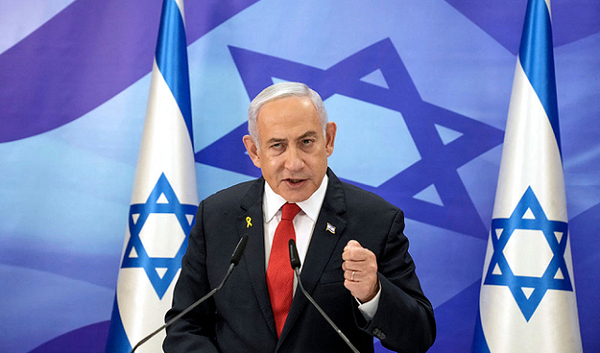
According to Khreisha, this US military intervention reflects a clear political and security message that Washington will not hesitate to defend Israel, which views Iran's nuclear program as a direct existential threat.
However, Khreisha points out that the potential Iranian response may not be in the same place or manner, as Tehran possesses its own tools to manage the confrontation through its network of allies spread across multiple arenas in the region.
Khreisha explains that attention is particularly focused on Yemen, where the Houthis possess not only the military capability but also the political will to carry out retaliatory strikes on behalf of Iran. These could include launching ballistic missiles and drones at US bases in the Gulf, including Saudi Arabia, the UAE, and possibly Bahrain and Qatar. This is a message aimed at raising the cost of confrontation for Washington and its Gulf allies. Further escalating the situation is the Houthis' announcement that they are no longer bound by the agreement with the Americans.


Catastrophic consequences for financial markets and supply chains

Khreisha points out that oil facilities and fuel tanks in these countries could, in turn, become potential targets in this indirect escalation.
On the maritime front, Khreisha believes the Houthi group will likely act on its longstanding threats to close the Bab al-Mandab Strait, either by targeting US warships or attacking oil tankers passing off the Yemeni coast.
Khreisha asserts that any disruption to this critical waterway, through which approximately 12% of global maritime trade passes, would have disastrous consequences for financial markets and international supply chains, making this scenario one of the most dangerous potential developments in the current crisis.
Khreisha explains that Iran, for its part, holds the most dangerous card in this conflict: its threat to close the Strait of Hormuz, the main artery for transporting oil and gas from the Gulf to global markets.
Khreisha believes that merely threatening such a measure would shake energy markets and send oil prices to unprecedented levels, while its actual implementation could trigger a severe global energy crisis that would prompt major powers to engage in direct military intervention to prevent a catastrophe.

The situation is not like the invasion of Iraq.

Despite the scale of the escalation and the seriousness of the situation, Khreisha believes the scenario is not similar to the 2003 invasion of Iraq. Despite Washington's willingness to use air power to protect its allies and deter what it considers an existential threat to Israel, the option of a full-scale ground invasion of Iran faces significant obstacles.
Khreisha points out that Tehran possesses a more complex security and military structure than Saddam Hussein's regime. Its intelligence agencies are spread throughout the region and it maintains a network of military alliances with armed factions in Lebanon, Iraq, and Yemen, making any ground invasion a costly and protracted adventure.
Khreisha points to international dynamics. Russia and China, as strategic allies of Iran, will not remain neutral in the event of a large-scale US ground attack, threatening to transform the conflict into a proxy war between the world's major powers, amid the difficult domestic situation facing the United States.
Domestically, Khreisha explains that American public opinion does not support foreign military adventures and prefers to focus efforts on addressing inflation and the energy crisis, at a time when Congress is deeply divided over authorizations for the use of force.
Khreisha asserts that Washington will continue its policy of concentrated airstrikes and intelligence and military support to its allies, while avoiding involvement in a ground invasion. Meanwhile, the option of toppling the Iranian regime remains contingent on sudden developments on the ground or diplomatic settlements that could redraw the map of regional and international calculations.


Repercussions affecting the global economic and political systems

For his part, Dr. Mohammed Al-Tamawi, a researcher in political economy and international relations, warns that if the Houthis carry out their threats to close the Bab al-Mandab Strait and target US ships or forces, they will drag the region into a dangerous juncture, the repercussions of which will extend beyond Yemen's borders to affect the entire global economic and political system.
Al-Tamawi points out that the Bab al-Mandab Strait, through which more than 12% of global trade passes, constitutes a vital artery that global markets cannot afford to disrupt, especially given the rise in oil prices, primarily due to escalating tensions in the Gulf region.
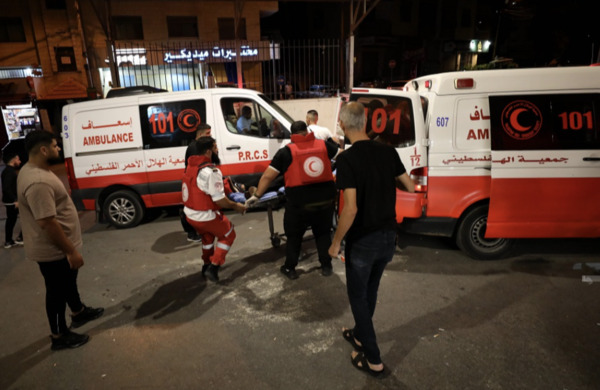
Al-Tamawi believes that any actual or ongoing threat to close the strait could lead to an unprecedented spike in oil prices, possibly exceeding $120 per barrel, with a simultaneous increase in shipping and insurance costs and disruption to food and energy supply chains. This would have a direct impact on European and Asian markets that rely on these vital sea lanes.

Ground operations against Houthi-controlled areas

Al-Tamawi warns that targeting US interests or those of its naval allies by the Houthis could push Washington toward a broad military intervention in Yemen.
Al-Tamawi explains that such an intervention could bring military operations in Yemen back to the forefront of the conflict with greater violence, possibly extending to ground operations against Houthi-controlled areas or launching joint attacks in coordination with regional US allies.
Al-Tamawi believes that this scenario would open the door to broader interventions by factions aligned with Iran in Iraq and Lebanon, exacerbating tensions and further complicating the entire regional landscape.
Al-Tamawi discusses the risks of state collapse in several fragile Arab arenas, pointing to Yemen as a clear example of a fractured state, where control is divided between the internationally recognized government and the Houthis, who control vast areas without cohesive official institutions.


Fear of the disintegration of Yemen and Lebanon

Al-Tamawi points out that the outbreak of a comprehensive war or the collapse of humanitarian and economic support could push Yemen toward complete disintegration, with the emergence of jihadist or regional forces that could fill the void created by the absence of a central state.
In a similar reading of the Lebanese situation, Al-Tamawi points out that Lebanon is already facing a profound financial and institutional collapse, while Hezbollah remains the most prominent and influential military force.
Al-Tamawi asserts that any escalation between Hezbollah and Israel could lead to further disintegration of the Lebanese state, given its inability to control the situation or provide basic services.
In Iran, Al-Tamawi believes the situation is more complex. The central state remains resilient, but it faces mounting challenges due to the ongoing targeting of its economic and sovereign facilities, along with internal security breaches and growing popular discontent. These challenges could gradually weaken the regime if the simultaneous military and economic pressure continues.
Al-Tamawi warns that the absence of political solutions, coupled with escalating military confrontations, is pushing the region to the brink of an abyss that could see a cascading political and economic collapse.


Netanyahu is leading the region to the brink of regional explosion.

Writer, political researcher, and international relations expert Noman Abed says that Benjamin Netanyahu's government's insistence on a military solution in all conflicts involving Israel, whether in the Palestinian conflict or with Iran, is pushing the region to the brink of a regional and perhaps global explosion.
Abed believes that the Israeli occupation mentality, based on continued settlement expansion and the denial of Palestinian rights, coupled with its aggressive policies in the region, makes regional peace impossible in the absence of any real political horizon.
Abed explains that since before October 7, 2023, Israel has been actively seeking to drag the United States into a military confrontation with Tehran, exploiting the Iranian nuclear program as a pretext. Although Israel itself is the only country in the Middle East with a nuclear arsenal and refuses international inspection or signing nuclear non-proliferation agreements, it has been exerting constant pressure to halt the Iranian nuclear project. Instead of curbing Israeli escalation, Washington has given the green light and provided Tel Aviv with all the military and logistical support it needs.

The fragility of the Israeli home front

Abed points out that Washington is well aware that Israel is incapable of waging a long war alone, both due to Iran's advanced military capabilities and the fragility of the Israeli home front in the face of Iranian missile and drone strikes.
Therefore, according to Abed, direct US intervention constitutes a dangerous escalation that could open the region to a full-scale regional war, especially with the Houthi group in Yemen declaring their readiness to engage in the battle, whether by targeting US interests or threatening navigation in the Bab al-Mandab Strait.
Abed believes that continued aggression may push major powers like China and Russia to refrain from standing idly by if the Iranian regime is threatened with collapse. This could lead to the confrontation escalating into a multi-sided global conflict, given the worsening economic and political fragility in Tehran and the increasing intelligence breaches by Israel and other Western agencies, which should have been addressed before escalation.
Abed asserts that the continued military escalation against Iran, coupled with the absence of a political solution, poses a catastrophic threat to the region, whose repercussions could extend beyond the Middle East to threaten the entire international system.
Regarding Yemen, Abed explains that the Houthis do not represent a cohesive state in the traditional sense. Rather, they control parts of Yemeni territory, in contrast to an internationally recognized government that is unable to fully assert its sovereignty.
Abed points out that any collapse of the Houthis would not necessarily mean the legitimate government regaining control over the entire country, but would rather push Yemen toward further chaos and a multiplicity of forces controlling the ground.


The scene is heading towards further sharp escalation.

For his part, writer and political analyst Imad Moussa asserts that the US airstrike targeting Iranian nuclear facilities early Sunday morning marks the beginning of a US plan to impose a nuclear agreement on Iran similar to the Libyan agreement, which includes the complete dismantling of nuclear facilities, ultimately leading to the overthrow of the ruling regime and plunging the country into internal chaos.
Musa explains that this US aggression against Tehran has unleashed dangerous developments in the region, most notably that the Houthis are no longer bound by the undeclared verbal agreement they concluded with the administration of US President Donald Trump.
Musa believes the situation is heading toward further escalation, amid a complex geopolitical equation that could present China and Russia with two bitter choices: either negotiate and bargain with Washington, led by the Iranian regime, or face the reality of American tanks arriving on their immediate borders should the situation explode.
According to Musa's assessment, the Houthis will continue targeting warships and commercial vessels in the Red Sea and Bab al-Mandab Strait, with the aim of expanding the battlefield and imposing operational restrictions on US military intervention in the region.
Musa asserts that the Houthis are well aware of the possibility of US military responses that could affect civilians, but they are unconcerned by this, given the nature of their combat doctrine.
Musa emphasizes that Washington is making a grave mistake in its assessment of the Yemeni and Iranian realities, as both countries possess deep internal social solidity that is difficult to penetrate with missiles or military pressure.
Musa explains that there is a strong social and religious cohesion within Yemen and Iran that makes their people psychologically and ideologically prepared to endure great sacrifices, something that American strategy finds difficult to dismantle easily through military force.


ARAB AND WORLD

Sun 22 Jun 2025 10:34 pm - Jerusalem Time

The Security Council holds an emergency session, and Guterres warns of a "spiral of retaliation" in the Middle East.

The UN Security Council will hold an emergency session on Sunday evening to discuss the serious repercussions of the US military strikes on nuclear facilities in Iran, amid international calls for an immediate end to the escalation.

In his opening remarks to the Council, UN Secretary-General António Guterres made an urgent appeal, warning that the region was on the brink of catastrophe. "We risk slipping into a spiral of retaliation, and the people of the region cannot afford another cycle of destruction," Guterres said.

The Secretary-General stressed the need for immediate and decisive action by the international community to contain the crisis. He added, "We must act immediately and decisively to stop the fighting and return to serious negotiations on Iran's nuclear program."

Guterres reiterated the fundamental principles that must govern the current phase, saying: "Diplomacy must prevail, civilians must be protected, and the safety of maritime navigation must be ensured."

The session is expected to witness divergent positions from member states, particularly between the United States and its allies on the one hand, and Russia and China on the other, as the region and the world await the outcome of this emergency meeting to determine the course of the crisis.

Guterres said: "I call on Tehran to allow IAEA inspectors to assess the damage at the sites."

ARAB AND WORLD

Sun 22 Jun 2025 9:43 pm - Jerusalem Time

Netanyahu prays, thanking Trump after US attack on Iran

Israeli Prime Minister Benjamin Netanyahu thanked US President Donald Trump on Sunday for his military intervention in Iran during a prayer at the Western Wall in Jerusalem.

Netanyahu visited the Western Wall, known to Jews as the Western Wall, in Jerusalem's Old City in the afternoon to recite this prayer, accompanied by a rabbi.

During the prayer, a video of which was released by the Western Wall Office, Netanyahu asked God to "bless, protect, and assist US President Donald Trump, who has taken it upon himself to expel evil and darkness from the world."

After the short prayer, the Israeli prime minister placed a note in the cracks of the wall, a Jewish tradition at the holy site, that read: “The people of Israel have risen, the people of Israel live!” according to a statement from the Western Wall Office.

Earlier, Netanyahu thanked the US president for the "bold" attack on strategic Iranian nuclear sites, describing it as a "historic turning point" that would establish peace in the Middle East.

The US President announced this morning that the US military had carried out a "very successful attack" on three Iranian nuclear sites, including the underground Fordow uranium enrichment facility.

"We have completed our very successful attack on all three of Iran's nuclear sites, including Fordow, Natanz, and Isfahan," Trump said in a post on his Truth Social platform.

"A full load of bombs was dropped on the main Fordow site," he added, noting that the aircraft that carried out the attack safely left Iranian airspace and are on their way home.

ARAB AND WORLD

Sun 22 Jun 2025 8:47 pm - Jerusalem Time

The Organization of Islamic Cooperation condemns Israel's aggression against Iran.

The Organization of Islamic Cooperation (OIC) issued the Istanbul Joint Declaration condemning the Israeli aggression against Iran, following the 51st session of the Council of Foreign Ministers of the organization, which was held in Istanbul on Saturday and Sunday.

The declaration condemned Israel's destabilizing policies in the region, including its recent attacks on Iran, Syria, and Lebanon, and its actions that violate international law, considering them a clear violation of the sovereignty and security of the states concerned.

He called on the international community to take "deterrent measures" to stop Israel's aggression and hold it accountable for the crimes it has committed.

He noted that it was decided to establish a "ministerial contact group" tasked with conducting regular contacts with relevant regional and international parties to support efforts to de-escalate tensions in the region, halt the aggression against Iran, and reach a peaceful solution.

The Istanbul announcement comes as the world awaits Tehran's response to the US attack launched early Sunday morning against the country's most important nuclear facilities, Fordow, Natanz, and Isfahan.


It joined the ongoing Israeli aggression against Iran since June 13, targeting nuclear facilities, missile bases, military leaders, and nuclear scientists. The Iranians responded by striking deep inside Israel with missiles and drones, resulting in deaths and injuries on both sides.

PALESTINE

Sun 22 Jun 2025 8:12 pm - Jerusalem Time

A child was injured by Israeli occupation forces' bullets in Beit Furik, east of Nablus.

A child was injured by Israeli occupation forces' bullets on Sunday evening during clashes in the town of Beit Furik, east of Nablus.

Medical sources reported that a 15-year-old child was shot with live ammunition in the foot during the occupation forces' raid on the town, and was taken to the hospital for treatment.

PALESTINE

Sun 22 Jun 2025 7:28 pm - Jerusalem Time

Gaza Health: 51 dead arrived at Gaza hospitals in the past 24 hours.

The Ministry of Health in the Gaza Strip announced on Sunday the latest statistics regarding the number of dead and wounded as a result of the ongoing Israeli aggression on the Strip.

The Gaza Health Ministry stated that hospitals in the Strip received 51 dead over the past 24 hours, including three recently recovered bodies, in addition to 104 other injuries.

She pointed out that many victims are still under the rubble and in the streets, making it difficult for ambulance and civil defense crews to reach and rescue them.

The ministry added that the death toll from the Israeli aggression has risen to 55,959 martyrs and 131,242 wounded since the beginning of the aggression on October 7, 2023.

The ministry also recorded that the death toll and injuries since March 18, 2025, has reached 5,647 martyrs and 19,201 injuries, amid the ongoing attacks and destruction witnessed across the Gaza Strip.

ARAB AND WORLD

Sun 22 Jun 2025 6:57 pm - Jerusalem Time

Force will not bring peace

On June 22, the United States announced attacks on three Iranian nuclear facilities, threatening Iran that "either there will be peace or there will be a tragedy for Iran far greater than what it has witnessed in recent days." This fueled the tension in the Middle East, which had been escalating for several days and raised international concern about the escalation of the conflict, its spread, and the massive human losses it would cause in the Middle East. UN Secretary-General António Guterres issued a statement through his spokesman stressing that "any new military intervention could have dire consequences, affecting not only the stakeholders but also posing a threat to peace and security in the entire region and the world."

The situation has undergone significant changes, once again demonstrating the insightful judgment that "the world has entered a new era of turmoil and change." Peace will not be achieved through war. A few days ago, President Xi Jinping emphasized in a phone call with Russian President Vladimir Putin that promoting a ceasefire and preventing fighting is the top priority at present, ensuring the safety of civilians is the overriding concern, initiating dialogue and negotiation is the fundamental way out, and the international community's peacemaking efforts are indispensable. This four-point vision takes current and long-term interests into account, clearly affirms China's position, reflects China's commitment to shouldering its responsibility and striving to achieve human progress and the common good of the world. It sets the right direction and provides an effective prescription for easing tensions in the Middle East. Wang Yi, a member of the Political Bureau of the Communist Party of China Central Committee and Minister of Foreign Affairs, has held phone calls with numerous counterparts in recent days, expounding on China's position, concerns, and practical initiatives.

There is no room for delay in advancing a ceasefire and preventing fighting. Force has never been the right way to resolve conflicts. With the current situation sharply escalating due to US interventions, the top priority is to advance a ceasefire and prevent fighting. Force will only exacerbate the vicious cycle of hatred and violence. The Middle East will slide into an uncharted abyss of prolonged turmoil if the conflict's fallout intensifies.

The red line for protecting civilians must not be crossed. The painful lessons of the 2003 Iraq War, which claimed the lives of hundreds of thousands of Iraqi civilians, are not far behind. In the other conflict that has yet to subside in the Gaza Strip, ongoing military operations have resulted in the deaths of more than 50,000 civilians, adding to the widespread humanitarian catastrophe in Gaza. In this round of conflict between Israel and Iran, brutal missiles have caused massive damage to civilian homes, hospitals, schools, and infrastructure, causing a large number of civilian casualties. The sight of devastation and devastation shocks the conscience of humanity. Under no circumstances should the red line for protecting civilians in military conflict be crossed, and the indiscriminate use of force is unacceptable. Parties to the conflict must scrupulously adhere to international law and absolutely prevent harm to innocent civilians.

Dialogue and peace negotiations are the primary path to finding a solution. As a depositary state of the Treaty on the Non-Proliferation of Nuclear Weapons (NPT), the United States launched military strikes for the first time against the nuclear facilities of a non-nuclear-weapon state party to the Treaty, which are subject to International Atomic Energy Agency (IAEA) safeguards. This will have a profound and devastating impact on international and regional peace and security, as well as on the mechanisms for the peaceful use of nuclear energy. The more complex the disputes and the more urgent the challenges, the more necessary it is to adhere to political dialogue and peace negotiations as the correct path. All countries hope to prevent the world from returning to the law of the jungle. Major countries should act in a manner befitting their status, and relevant countries, especially those with significant influence on Middle Eastern affairs, should play a leading role in adhering to international law and the basic norms of international relations, abandoning the law of the jungle and double standards, and stopping war and chaos with practical steps, rather than applying "maximum pressure" and following the principle of "the one with the most muscle has the last word." Security will be fundamentally solid and fundamentally sustainable only if it is built on the foundation of sound morality and concepts.

The international community must inject positive energy into supporting peace negotiations. The ongoing tensions in the Middle East pose a serious threat to global security and development, with the countries of the region at the forefront of those affected. Twenty-one Arab and Islamic countries recently issued a joint statement on this matter, and the League of Arab States and the Organization of Islamic Cooperation (OIC) held successive emergency meetings at the foreign ministers' level, calling for calming the situation and maintaining lasting peace in the region. Peace initiatives and collective actions by the Arab and Islamic world must receive full attention and support. The international community must enhance coordination and work together to leverage the role of the UN Security Council and other international mechanisms, make effective use of all the tools provided by the UN Charter, and take effective and practical measures to build mutual trust, resolve conflicts, and strengthen security through dialogue. This, in turn, must play a necessary role in maintaining peace and security in the region and the world.

The history and reality of the Middle East confirm that war brings only endless disasters, and that force will never achieve peace. Those who walk the straight path will find their companions. We believe that most countries in the world love peace and justice, that the voice of justice will be heard, that legitimate rights and interests will be protected, and that the light of peace will surely shine once again on the land of the Middle East, which has suffered enough hardship!

PALESTINE

Sun 22 Jun 2025 4:36 pm - Jerusalem Time

The West Bank records falling rocket fragments and debris, without injuries.

The Palestinian Civil Defense announced on Sunday that its crews dealt with 17 incidents of rocket shrapnel and debris over the past 24 hours in various areas of the West Bank, as a result of the "military confrontation between Israel and Iran."

Regarding the details of these cases, Nael Al-Azzeh, Director of Public Relations and Media at the Civil Defense, stated in a statement that seven cases were recorded in the Salfit Governorate, six in Ramallah and Al-Bireh, two in Jerusalem, and one in each of Jenin and Nablus "due to the military confrontation between Israel and Iran."

Al-Azza pointed out that "the shrapnel was dealt with by civil defense teams and relevant police agencies," without mentioning any injuries.

He called on citizens to "adhere to the instructions issued by the competent authorities."

Several areas in the West Bank are witnessing almost daily debris falling from Israeli air defenses intercepting missiles and drones launched by Iran.

On June 13, Israel launched an attack on Iran, targeting nuclear facilities, missile bases, military leaders, and nuclear scientists.

Tehran responded by launching ballistic missiles and drones into Israeli territory, marking the largest direct confrontation between the two sides since negotiations between the United States and Iran over its nuclear program stalled.

Following the first Iranian response, the Palestinian Red Crescent Society announced that its crews had transported "five people injured by a rocket" to the hospital in the town of Sa'ir, north of Hebron, in the southern West Bank.

PALESTINE

Sun 22 Jun 2025 4:02 pm - Jerusalem Time

Five dead and a number of wounded in the occupation's targeting of areas in the central and northern Gaza Strip.

Five civilians were killed and several others, including a boy and a girl, were injured when Israeli warplanes targeted a house in the town of Az-Zawayda in central Gaza. The bodies of the martyrs were brought to Al-Awda Hospital in Nuseirat, where they were dismembered. Another attack targeted the Al-Saftawi area north of Gaza City.

In a dangerous escalation, Israeli warplanes bombed a "tekiya" (hospital) where hundreds of civilians were gathered in the Al-Mawasi area west of Khan Yunis, in the southern Gaza Strip, resulting in civilian casualties.

Medical sources reported that the death toll in the Gaza Strip since dawn today has risen to 29, including six citizens waiting to receive humanitarian aid.

Earlier on Sunday, medical sources announced that the death toll in the Gaza Strip had risen to 55,959, the majority of whom are children and women, since the start of the Israeli aggression on October 7, 2023. The number of wounded also rose to 131,242, while the bodies of a number of victims remain under the rubble of destroyed buildings, as ambulance and civil defense crews are unable to reach them due to the ongoing bombardment.