ARAB AND WORLD

Tue 24 Jun 2025 7:36 pm - Jerusalem Time

Iran's deputy intelligence chief killed in Israeli attack

Alireza Lotfi, deputy head of the intelligence department of Iran's General Directorate of Security, was killed in an Israeli attack on Iran on Monday.

The Fars News Agency, close to Iran's Revolutionary Guard, reported on Tuesday that the deputy head of Iran's intelligence department was killed in an Israeli military attack on Monday.

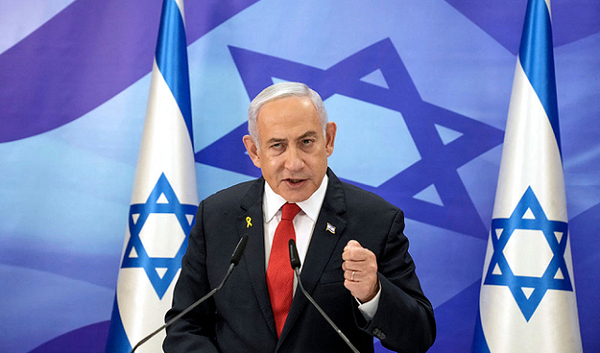
Earlier on Tuesday, US President Donald Trump announced a ceasefire agreement between Israel and Iran, and hours later, a statement from Israeli Prime Minister Benjamin Netanyahu's office announced the agreement's approval.

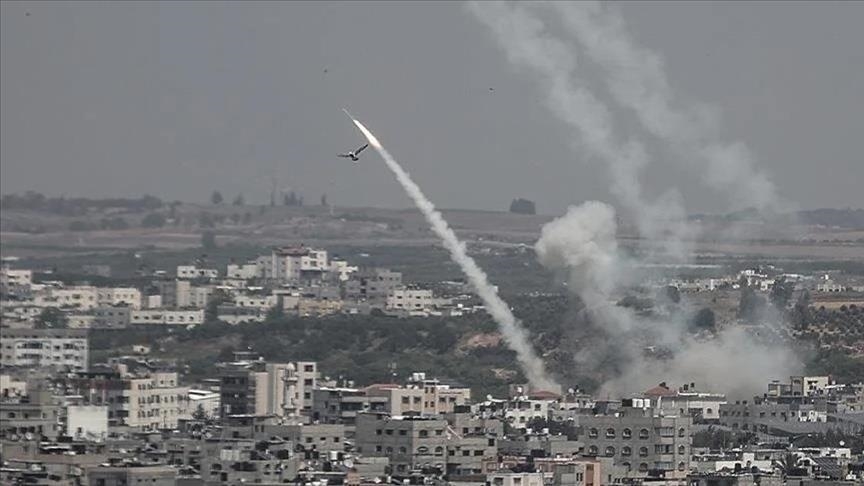
Since June 13, Israel, with US support, has targeted nuclear facilities, missile bases, military leaders, and nuclear scientists in Iran. Iran has responded by striking Israeli military and intelligence headquarters with ballistic missiles and drones, resulting in deaths and injuries on both sides.

As a result of this aggression, the Chief of Staff, the Commander-in-Chief of the Revolutionary Guards, several senior army commanders, and nine nuclear scientists were killed.

The Iranian Ministry of Health announced in a statement issued Tuesday that the total civilian casualties resulting from the Israeli aggression amounted to 606 dead and 5,332 wounded.

In contrast, the Israeli Prime Minister's Office reported that 28 people were killed and 1,272 others were injured in Iranian military attacks on Israel.

ARAB AND WORLD

Tue 24 Jun 2025 7:28 pm - Jerusalem Time

Gulf foreign ministers arrive in Qatar to discuss Iran's bombing of Al Udeid Air Base.

On Tuesday evening, the foreign ministers of the Gulf Cooperation Council (GCC) began arriving in Doha to participate in an emergency Gulf meeting today to discuss Iran's bombing of the US military base in Qatar.

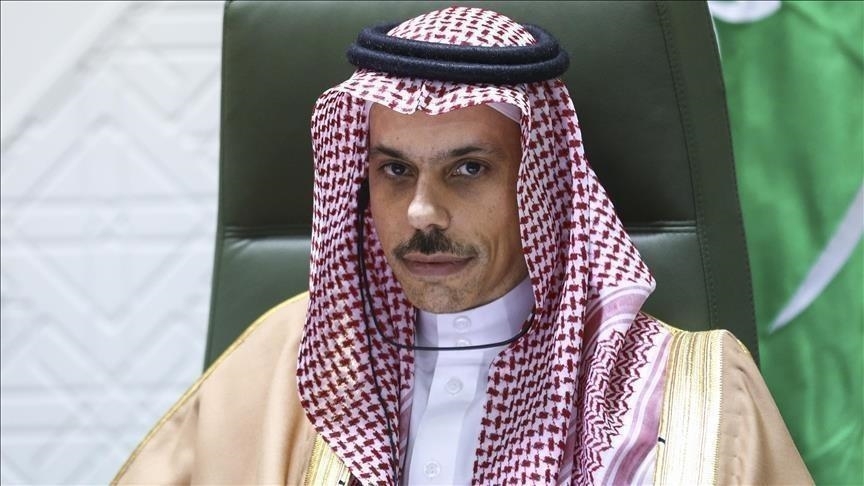
The Saudi Press Agency reported the arrival of Saudi Foreign Minister Faisal bin Farhan in Qatar to attend the 49th emergency ministerial meeting.

She noted that the meeting will discuss "the Iranian aggression against the sisterly State of Qatar, its security repercussions, and the efforts made to ensure the return of security and stability to the region."

Kuwaiti Foreign Minister Abdullah Al-Yahya, who is also the current chairman of the Gulf Ministerial Council, also traveled to the Qatari capital, according to the Kuwait News Agency.

The Gulf Cooperation Council comprises six countries: Qatar, Kuwait, Saudi Arabia, the United Arab Emirates, the Sultanate of Oman, and Bahrain. It was established on May 25, 1981, and is headquartered in Riyadh.

On June 13, Israel, with US support, launched a 12-day aggression against Iran, targeting military and nuclear sites, as well as civilian facilities. The attack targeted military leaders and nuclear scientists, killing 606 people and wounding 5,332, according to the Iranian Ministry of Health.

Iran responded by targeting Israeli military and intelligence headquarters with ballistic missiles and drones, a large number of which penetrated defense systems, causing unprecedented destruction and panic, as well as 28 deaths and 3,238 injuries, according to the Ministry of Health and Hebrew media.

With Iran's resilience and Israel's losses, the United States attacked Iranian nuclear facilities, claiming the "end" of its nuclear program. Tehran then bombed the US Al Udeid military base in Qatar. Then, on June 24, Washington declared a ceasefire between Tel Aviv and Tehran.

On Tuesday, Iranian President Masoud Pezeshkian, during a phone call with Qatari Emir Tamim bin Hamad Al Thani, expressed his regret over the damage caused by Tehran's attack on Al Udeid Air Base.

He stressed that "Qatar and its people were not the targets of this operation," and that "Qatar will remain a neighboring, Muslim, and sisterly country," according to a statement from the Qatari Emiri Diwan.

Emir Tamim reiterated Qatar's "strong condemnation of the attack on Al Udeid Air Base by the Iranian Revolutionary Guard, considering it a flagrant violation of its sovereignty and airspace, as well as of international law and the United Nations Charter."

He expressed that "this violation is completely inconsistent with the principle of good neighborliness and the close relations between the two countries, especially since Qatar has always been an advocate of dialogue with Iran and has made strenuous diplomatic efforts in this regard."

ARAB AND WORLD

Tue 24 Jun 2025 6:49 pm - Jerusalem Time

Lavrov accuses Israel of committing "political assassination" in Iran

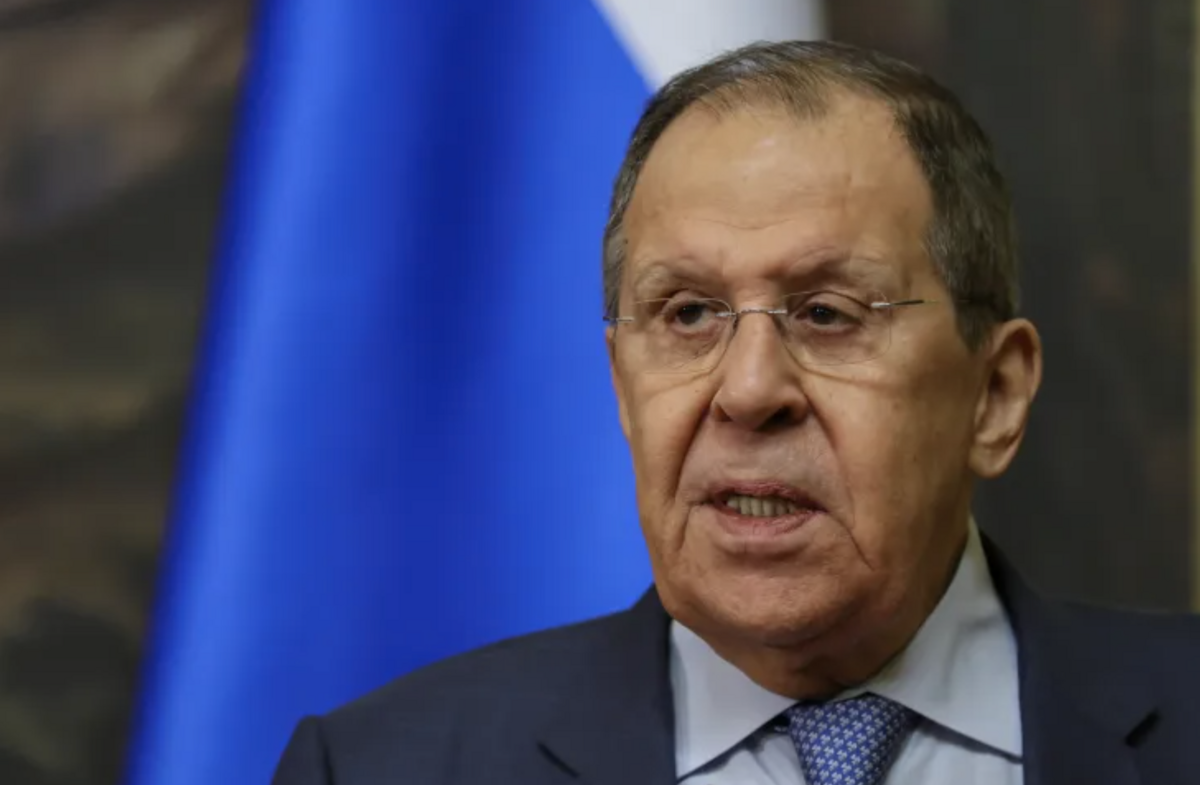
Russian Foreign Minister Sergei Lavrov accused Israel of committing "political assassination" by targeting senior Iranian military leaders and nuclear scientists.

Lavrov said, according to a report by the Russian news agency TASS on Tuesday, that the Israeli actions threaten global security and the economy, adding that the non-proliferation regime has also been damaged.

Lavrov said that the airstrikes launched by Israel and the United States on Iranian nuclear facilities constitute a violation of the UN Charter and other provisions of international law, as there is no evidence that Iran attacked Israel or intended to attack it.

Lavrov noted that Russia had presented proposals to Iran, the United States, and Israel to resolve the conflict, noting that the responses to these proposals had been positive, but that none of them had been implemented to date.

The Russian Foreign Minister expressed skepticism about the ceasefire agreement between Iran and Israel announced by US President Donald Trump, saying, "We should not draw premature conclusions based on incomplete information, but we support peace."

In the early stages of its attack on Iran, Israel targeted senior military officers and nuclear scientists, many of whom were at home.

Israel announced the assassination of nine prominent scientists and experts involved in the Iranian nuclear project. Iranian media later confirmed the deaths of three more nuclear scientists during the first days of the Israeli military's attacks on Iran.


PALESTINE

Tue 24 Jun 2025 6:01 pm - Jerusalem Time

Meretz: It's time to sign a ceasefire agreement in Gaza

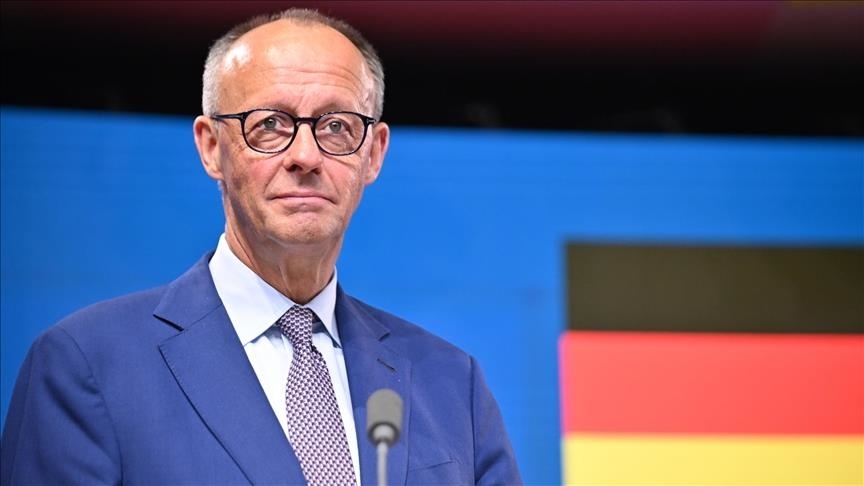
German Chancellor Friedrich Merz stressed that the time has come to sign a ceasefire agreement in the Gaza Strip, which has been witnessing a war of extermination waged by Israel since October 2023.

In a speech to the German parliament, he called for humane treatment of Palestinians in Gaza, especially women, children, and the elderly.

"Now, today, it is time to achieve a ceasefire in Gaza," Meretz said.

With full American support, Israel has been committing genocide in the Gaza Strip since October 7, 2023, leaving approximately 188,000 Palestinians dead or wounded, most of them children and women, more than 11,000 missing, and hundreds of thousands displaced.

Regarding the conflict between Tehran and Tel Aviv, the German Chancellor stressed the latter's right to exist and to defend the security of Israelis.

He added that for years, the Iranian regime's goal has been to "eliminate the State of Israel," considering that "our national cause is to defend the existence of the State of Israel."

He pointed out that Tehran "funded and armed Hamas, Hezbollah, and the Houthis," noting that the Iranian regime has been "destabilizing" the entire Middle East for decades.

On June 13, Israel, with US support, launched a 12-day military aggression against Iran, targeting military and nuclear sites, as well as civilian facilities. The attack also targeted military leaders and nuclear scientists, leaving a total of 606 dead and 5,332 injured, according to the Iranian Ministry of Health.

Iran responded by targeting Israeli military and intelligence headquarters with ballistic missiles and drones, a large number of which penetrated defense systems, causing unprecedented destruction and panic, as well as 28 deaths and 3,238 injuries, according to the Ministry of Health and Hebrew media.

With Iran "steadfast" and Israel suffering losses, the United States launched airstrikes on the strategic nuclear facilities of Fordow, Natanz, and Isfahan, claiming that Iran's nuclear program was "over." On June 24, the United States declared a ceasefire between Tel Aviv and Tehran.

PALESTINE

Tue 24 Jun 2025 5:25 pm - Jerusalem Time

The United Nations condemns Israel's killing of starving people in Gaza, describing it as a massacre.

A UN official condemned Israel's killing of starving civilians in the Gaza Strip, describing what is happening there as a "massacre" that constitutes an "erasure of Palestinian life."

This came in a media briefing on Gaza delivered by Jonathan Whittall, head of the United Nations Office for the Coordination of Humanitarian Affairs (OCHA) in the occupied Palestinian territory, and republished by the United Nations Relief and Works Agency for Palestine Refugees in the Near East (UNRWA) on Tuesday.

"What we are witnessing is a massacre. It is hunger being used as a weapon. It is forced displacement. It is a death sentence for people simply trying to survive," Whittall said.

The UN official continued: "These factors appear to constitute a process of erasing Palestinian lives from the Gaza Strip."

PALESTINE

Tue 24 Jun 2025 4:37 pm - Jerusalem Time

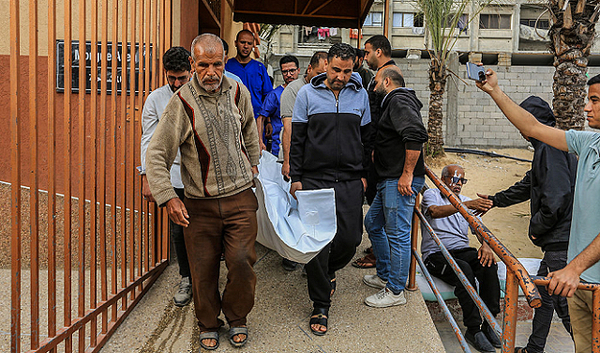
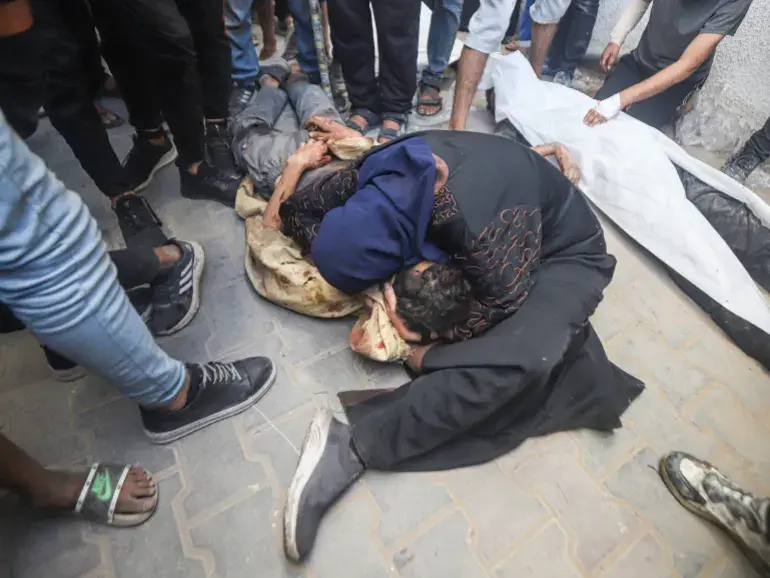
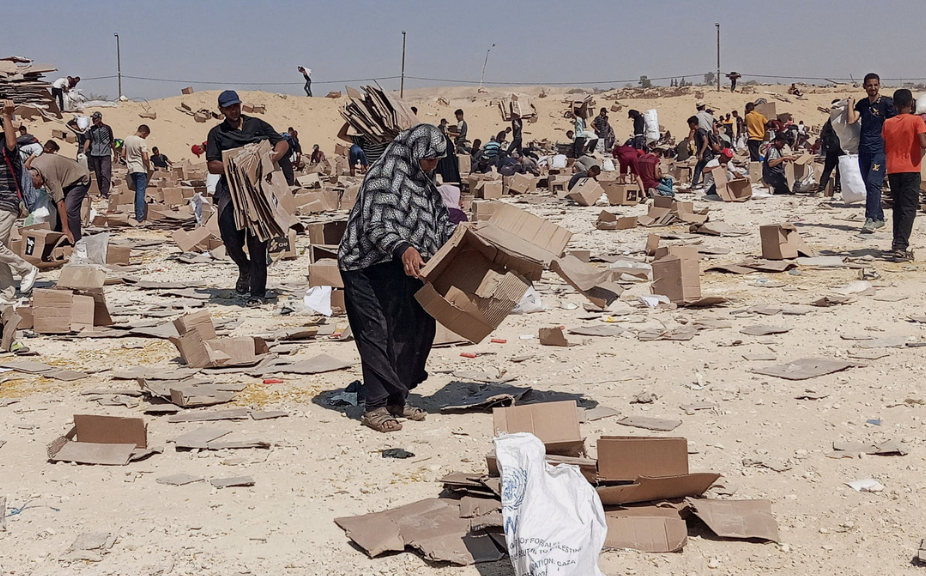
Gaza Civil Defense: At least 25 dead by Israeli fire while waiting for humanitarian aid.

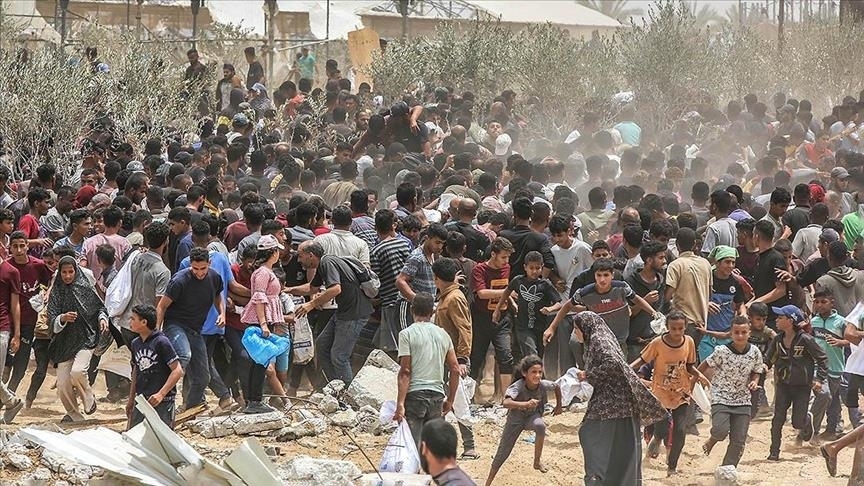
Civil Defense spokesman in the Gaza Strip, Mahmoud Basal, announced on Tuesday that at least 25 Palestinians were killed and dozens more injured as a result of Israeli shelling since Tuesday morning, targeting civilian gatherings in the Al-Alam and Al-Shakoush areas near the aid center northwest of Rafah, in the southern Gaza Strip.

"At least 25 martyrs and dozens of wounded were transferred to Nasser Hospital in Khan Yunis as a result of Israeli occupation forces' fire, which targeted civilians with bullets and tank shells as they were trying to reach the aid center," Basal said in a statement.

Earlier on Tuesday, the Ministry of Interior in Gaza announced that 21 people were killed in an attack targeting the vicinity of the Netzarim crossing, where humanitarian aid distribution centers are located.

PALESTINE

Tue 24 Jun 2025 4:03 pm - Jerusalem Time

The occupation continues to demolish homes in Jenin camp.

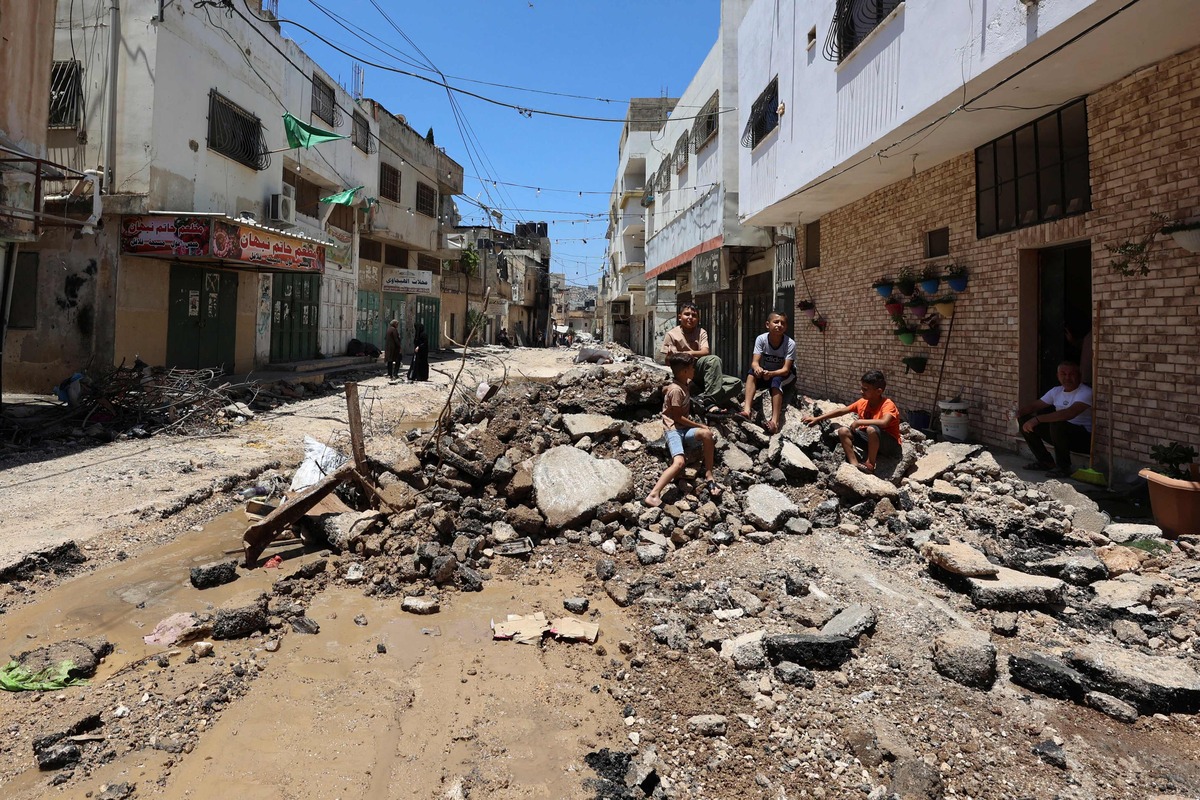
Israeli bulldozers continued to demolish homes in Jenin camp on Tuesday.

Local sources reported that Israeli bulldozers demolished homes in Jenin camp as part of an approved demolition plan, which includes the demolition of 95 homes in several neighborhoods in the camp, in addition to the homes it had previously demolished.

The occupation forces demolished homes in the Al-Samran and Al-Damj neighborhoods, Al-Sikka Street, and Abdullah Azzam Street, while demolitions continue almost daily inside these neighborhoods.

On June 9, 2025, the occupation army announced its intention to demolish 95 homes in the camp, while three months earlier it had announced the demolition of 66 buildings inside the camp.

According to the Jenin Municipality, with the occupation's demolition of the declared homes completed, a third of the homes in Jenin camp will have been demolished. The municipality estimates that 600 homes have been completely demolished since the start of the aggression on Jenin city and camp on January 21, in addition to the buildings recently declared.

ARAB AND WORLD

Tue 24 Jun 2025 2:58 pm - Jerusalem Time

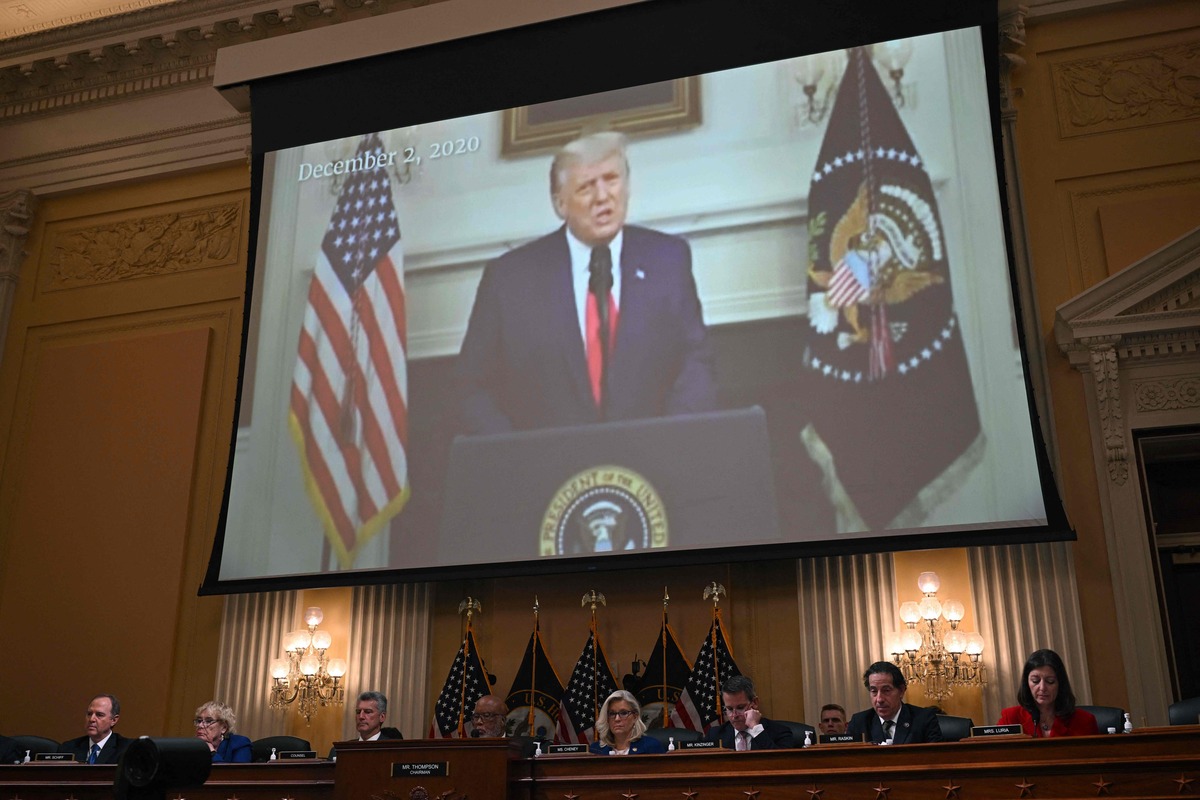
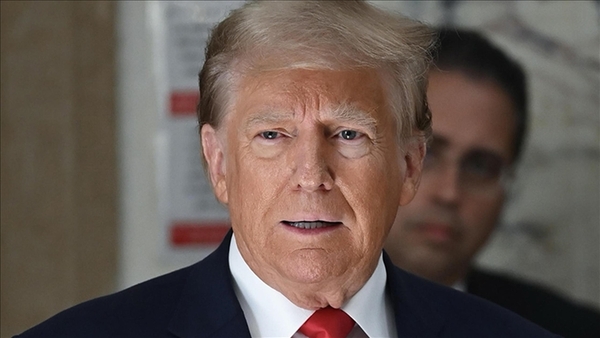
Trump: I'm not satisfied with Israel or Iran

US President Donald Trump said that both Israel and Iran violated the ceasefire he announced hours earlier, stressing that he is not satisfied with either country, especially Israel.

Speaking to reporters Tuesday before leaving for a NATO summit in The Hague, Trump said Israel and Iran have been fighting so long and so hard that they don't know "what to do."

He considered that Iran's nuclear capabilities have been exhausted and that it will never rebuild its nuclear program.

Later, Trump addressed Israeli leaders in a post on Truth Social, saying, "Israel... do not drop those bombs. If you do, it will be a major violation. Bring your pilots back immediately."

He added, "Israel carried out a mission today and must remain calm. Israel should not have done what it did. I will see if I can stop it."

He continued, "Israel will not attack Iran, and all aircraft will return after offering a friendly salute to Iran. No one will be harmed, and the ceasefire is in effect."

The US president criticized some "fake" media outlets for claiming that the US strikes did not completely destroy Iran's nuclear sites, adding, "I say to CNN: You are failures and your news is fake."

symbolic goal

Axios quoted an Israeli official as saying that Trump called Netanyahu and asked him not to attack Iran at all. The official explained that Netanyahu informed Trump that he could not call off the attack on Iran because some response was needed to Iran's violation of the ceasefire. Instead, "it was decided to significantly scale back the attack and cancel attacks on a large number of targets."

The Israeli Broadcasting Corporation reported that after the Trump-Netanyahu conversation, a "symbolic target" in Iran was attacked, and Israeli Army Radio said the Air Force attacked a radar near Tehran.

Israeli media outlets confirmed, citing security sources, that "the matter is over and the ceasefire between Israel and Iran has entered into force."

Trump previously announced a full agreement between Israel and Iran for a complete and comprehensive ceasefire, which went into effect at 7:00 a.m. Mecca time today. He added that the ceasefire would initially last for 12 hours, after which the war would be officially over.

Israel announced that it intercepted two missiles fired from Iran hours after the ceasefire took effect. Iranian television confirmed that reports of missiles being fired from Iran after the ceasefire were "baseless."

Source: Al Jazeera

PALESTINE

Tue 24 Jun 2025 2:57 pm - Jerusalem Time

Gaza Health Ministry: 79 dead and 289 injuries in the past 24 hours

Medical sources announced on Tuesday that the death toll in the Gaza Strip has risen to 56,077, the majority of whom are children and women, since the start of the Israeli occupation's aggression on October 7, 2023.

The same sources added that the death toll has risen to 131,848 since the start of the aggression, while a number of victims remain under the rubble, unable to be reached by ambulances and civil defense teams.

She pointed out that 79 martyrs, including 5 martyrs whose bodies were recovered, and 289 injuries arrived at Gaza Strip hospitals during the past 24 hours, while the death toll and injuries since March 18, after the occupation violated the ceasefire agreement, reached 5,759 martyrs and 19,807 injuries.

She indicated that the number of aid victims arriving at hospitals over the past 24 hours reached 49, with more than 197 injuries, bringing the total number of livelihood victims arriving at hospitals to 516, and the number of injuries to more than 3,799.

She pointed out that a number of victims are still under the rubble and on the streets, and that ambulance and civil defense crews are unable to reach them.

PALESTINE

Tue 24 Jun 2025 2:55 pm - Jerusalem Time

The Jerusalem Governorate calls for urgent international intervention to halt the eviction orders issued by the occupation in Silwan.

The Jerusalem Governorate called for urgent international intervention to halt eviction orders issued by the Israeli occupation authorities in the town of Silwan, south of Al-Aqsa Mosque.

In a statement issued Tuesday, it called for holding accountable those involved in implementing displacement policies, providing legal and field support to Palestinian families, and rejecting discriminatory Israeli laws used as a tool for colonialism.

The governorate emphasized that the evictions of Palestinian families in the Batn al-Hawa neighborhood are a blatant example of the policy of Judaizing Jerusalem and require urgent international action to protect Palestinian citizens from forced displacement and preserve the city's national and historical identity.

It also called on all local, Arab, and international media outlets to shed light on this issue with high professionalism and national responsibility, through live field coverage, amplifying the voices of the affected population, and hosting experts on Jerusalem affairs and international law to clarify the dimensions of these violations to the public.

The governorate noted that eviction orders have been implemented against 16 families so far, while nine families are still awaiting a decision on their appeals. The Ateret Cohanim colonial association has also opened centers inside seized homes, in flagrant violation of international law.

Yesterday, the Israeli Supreme Court rejected the al-Rahbi family's appeal and ordered their eviction from their three-apartment building in the Batn al-Hawa neighborhood of Silwan, south of Al-Aqsa Mosque. The building houses 16 people and is being used by a settler association.

This decision was preceded by a decision on June 16, 2025, rejecting the petition of the Odeh and Shuwaiki families, ordering their eviction from their homes in the Batn al-Hawa neighborhood of Silwan, in favor of the settlement association. The decision threatens 19 individuals with forced eviction.

PALESTINE

Tue 24 Jun 2025 12:41 pm - Jerusalem Time

The Presidency welcomes the ceasefire announcement and demands that it include the Gaza Strip.

The Palestinian presidency welcomed US President Donald Trump's announcement of a ceasefire agreement between the two sides of the escalating conflict in the region, appreciating efforts to de-escalate the situation.

The presidency said that reaching a ceasefire is an important step towards achieving security and stability in the region through diplomacy and ending conflicts in accordance with international legitimacy and international law.

She added, "We demand the completion of this step by achieving a ceasefire that includes the Gaza Strip, to alleviate the suffering of our people and halt the killing and starvation, thus achieving comprehensive security and stability in the region, given that resolving the Palestinian issue in accordance with international legitimacy is what leads to a lasting, genuine, and stable peace."

For his part, Hussein al-Sheikh, Vice President of the State of Palestine and Deputy Chairman of the Executive Committee of the Palestine Liberation Organization, welcomed the announcement of a ceasefire between Iran and Israel.

In a press statement issued Tuesday, the sheikh called for an end to the ongoing aggression against the Palestinian people in general, and our people in the Gaza Strip in particular. He called for the launch of a political process leading to an end to the Israeli occupation, in addition to the necessity of implementing international law and international legitimacy.

PALESTINE

Tue 24 Jun 2025 12:40 pm - Jerusalem Time

Government: Next Thursday is an official holiday on the occasion of the Islamic New Year.

The Government Communication Center announced that the Council of Ministers has decided to declare next Thursday an official holiday on the occasion of the Islamic New Year 1447 AH. However, high school exams will continue according to the schedule announced by the Ministry of Education and Higher Education.

PALESTINE

Tue 24 Jun 2025 12:39 pm - Jerusalem Time

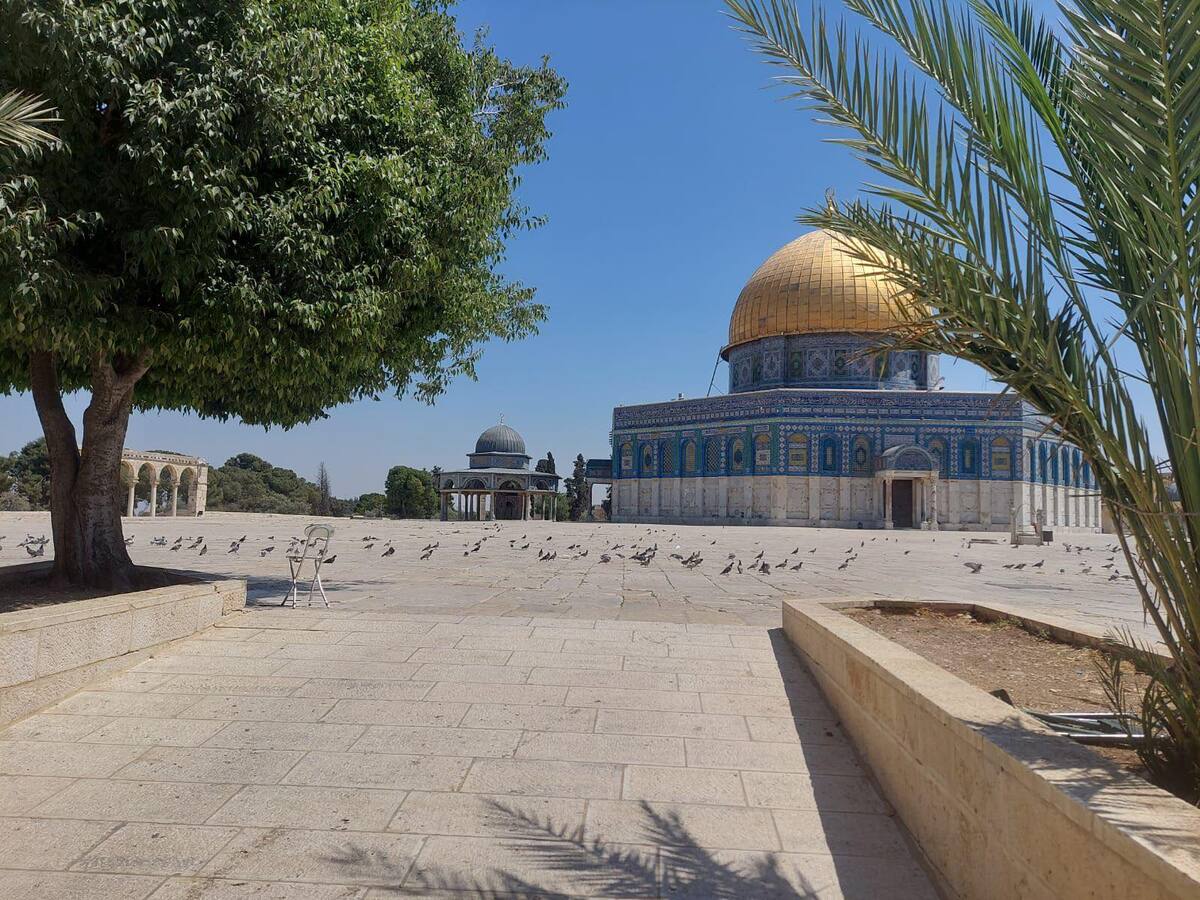
For the 12th day: The occupation continues to close Al-Aqsa Mosque and the Church of the Holy Sepulchre, preventing access to them.

For the 12th consecutive day, the Israeli occupation authorities continue to close the Al-Aqsa Mosque and the Church of the Holy Sepulchre, preventing access to them.

Local sources reported that the occupation forces have completely closed Al-Aqsa Mosque to worshippers, with only its guards and employees of the Jerusalem Islamic Waqf Department permitted to enter. The same strict Israeli restrictions apply to the Church of the Holy Sepulchre, which is completely closed to Christians, while entry to the Old City is restricted to its residents.

Since the 13th of this month, the occupation army has intensified its aggression against the West Bank, including Jerusalem, closing major and minor roads in various governorates. Its aggression against the Jenin, Tulkarm, and Nur Shams refugee camps has continued since January 21, displacing more than 40,000 people, demolishing hundreds of homes, destroying infrastructure, killing dozens, and wounding others.

The sources indicated that the occupation's strict measures prevented hundreds of thousands of worshippers from reaching the blessed Al-Aqsa Mosque and performing prayers there.

The occupation police also imposed restrictions on Palestinian entry into the Old City, allowing only residents to enter through military checkpoints set up at its entrances. These restrictions resulted in the closure of shops.

The occupation's restrictions in Jerusalem included closing the entrances to neighborhoods, such as the town of At-Tur, with concrete blocks, and setting up police checkpoints at the entrances to other neighborhoods. The occupation also closed roads linking Jerusalem and Ramallah, including the Jaba' checkpoint to the north.

The sources noted that the occupation's measures in Jerusalem also included night raids in Jabal al-Mukaber, Issawiya, At-Tur, Wadi al-Joz, and Kafr Aqab, as well as the use of tear gas and sound bombs inside residential buildings.

She continued: The percentage of shelters in East Jerusalem neighborhoods does not exceed 10%, while the city's population is 400,000.

She added, "All the new shelters opened by the occupation municipality during the current escalation are located in West Jerusalem, and the 400,000 residents of East Jerusalem remain largely unprotected."

OPINIONS

Tue 24 Jun 2025 12:01 pm - Jerusalem Time

The repercussions of the Israeli-American-Iranian war: scenarios for escalating geopolitical tension in the region

Christine Hanna Nasr


Following the US attacks on Iran's most important nuclear facilities (Fordow, Natanz, and Isfahan), the question that arises here is: What is the future of the Iranian nuclear program, and specifically its enriched uranium? This legitimate question arises within the framework of conflicting statements issued by the two parties to the conflict. Iran declared, after the US airstrikes on the three sites, that Iran would continue its uranium enrichment activity, and that it had also worked, before the strike, to transfer large quantities of enriched uranium to secret, undisclosed locations. For its part, Israel also stated that the US strikes were successful and resulted in the destruction of large quantities estimated at hundreds of kilograms of enriched uranium in Iran. If the transfer had occurred, as Iran claims, then it would have been limited to small quantities.
Here I want to say that there are several expected scenarios regarding the Iranian response related to the nuclear file and the new-old conflicts and tensions with the United States and Israel, as Iran is considering a response through several options, the most important of which is withdrawing from the Nuclear Non-Proliferation Treaty (the NPT was opened for signature in 1968 and entered into force on March 5, 1970, and on May 11, 1995, the treaty was extended indefinitely), which will further complicate this issue, as Iran will be able to get rid of the restrictions of the treaty and will then be able to develop its nuclear program. It is expected that it will then be able to enter the stage of obtaining nuclear weapons and arming itself with nuclear warheads from several countries, as stated by Dmitry Medvedev, who holds the position of Chairman of the Russian Security Council.
Another expected scenario, and perhaps the most damaging and repercussive for the Arab region and the Gulf, is that Iran and its proxies in the Middle East, such as Yemen and Iraq, will strike American bases in the Arabian Gulf region. Yesterday, Iran attacked the American Al-Udeid base in Qatar. There is also the possibility of targeting other American bases in Syria, specifically the eastern Euphrates region, and bases in Jordan, Iraq, Bahrain and Saudi Arabia. There is also the possibility of striking American bases in Turkey. Therefore, we will move here to the most complex and dangerous scenario if things escalate and take a turn for the worse, with the possibility of some countries becoming militarily involved in this conflict, which would lead the region and the world to find themselves in a state of regional conflict in the Arabian Gulf region and the Arab Levant as a whole.
Especially since we are actually facing a reality in which Iran may implement its decision, which was ratified by the Iranian Parliament, to close the Strait of Hormuz, located between Iran and Oman, which connects the waters of the Gulf of Oman and the Arabian Sea, through which the majority of global oil and gas exports pass to various parts of the world. These geopolitical risks that threaten these strategic waterways, in addition to the possibility of the expansion of confrontations and Iran’s exploitation of its regional allies in the region, such as the Ansar Allah Houthi movement in Yemen, which can close other important strategic seaports, such as the Bab al-Mandab Strait. The world may witness in the future a crisis preventing the movement of some international commercial ships from passing through it, and thus the flames of the raging battles may escalate and move towards other arenas that may affect some oil fields located in the Arabian Gulf and the countries of the Arab Levant as well, which would lead to an increase in the cost of protecting these fields as strategic global energy sources. These developments may potentially hinder the process of oil exports and navigation in the Red Sea, noting that there is another outlet for the Gulf countries that they can use, which is the Sharjah outlet, to avoid the risks threatening the Strait. Hormuz. All these developments and possibilities will increase the cost of maritime transport, as well as the cost of marine insurance, due to the connection to the increase in the proportion of geopolitical risks coinciding with the erupting conflicts, which would affect the sea lanes and ports in the region. This will inevitably affect international investment markets if the confrontations continue and intensify, as it is not unlikely that they will push foreign investors towards making a decision to limit or freeze their investments in the region, especially since the increase and continuation of confrontations and military developments will cast a shadow over all other economic sectors, such as trade. This will be reflected in the rise in commodity prices and a negative impact on the tourism sector, and will be a factor in reducing revenues, thus making the region an unsafe destination for tourism in the Arab East, including the countries of the Arabian Gulf. Another possibility is a decrease in demand for travel via local airlines, and perhaps adjusting the flight path of international airlines towards other, safer airspace, with the aim of avoiding tense and inflamed areas. This will ultimately affect the economic and financial returns of the countries primarily affected in their economic balance from these. Unfortunately, the military crises are raging.
Naturally, this war between Israel and Iran will have a significant impact on energy resources, especially natural gas. If Israel shuts down two of its three gas fields in the Mediterranean, it will reduce natural gas supplies to international markets and may shift toward relying on coal and fuel oil as an emergency alternative to operate its power plants. The Karish field supplies European countries with natural gas instead of Russian gas and energy supplies, which have been halted due to the Russian-Ukrainian war.
It is worth noting that Jordan has been affected by the lack of Israeli gas supplies due to the Israeli war with Iran. It is well known that Jordan imports natural gas from Israel, as a result of the 2016 gas agreement signed between Jordan and Israel through the American company "Noble Energy", which was the main operator of the Israeli "Tamar" and "Leviathan" fields before Chevron managed them. The Jordanian Electricity Company relies on importing approximately 300 million cubic meters of gas daily, and this agreement is valid for fifteen years.
All these geopolitical developments related to the existing conflicts in the region, along with the possibility of their dramatic escalation, especially after the attack on the American base in Qatar yesterday, increase the possibility of Iran’s allies in Iraq and Yemen exploiting this to attack other American bases and interests in the Arabian Gulf and the Arab East, including those in Syria and Jordan. The conflict between America and Israel with Iran will inevitably escalate, negatively impacting the entire Middle East, which has imposed on its countries the option of crisis and war without any other option available to them. This could ultimately lead to a regional war with dire consequences if there is no immediate strategy to control matters and prevent them from spiraling out of control in a more dangerous direction. I do not believe that from now on there is any comprehensive window for negotiations leading to complete peace between Iran and America, especially in the field of the nuclear file. Matters may develop again towards military options, and then there will be no return to negotiations, in a way that could have a direct impact on the fragile internal security situation in Iran, which has been demonstrated primarily by many demonstrations and marches. The opposition that the Iranian regime had previously suppressed, and here the internal opposition may seek to exploit the situation if the crisis worsens and expands to carry out something resembling a revolution or widespread demonstrations. There may also be exploitation of the external Iranian opposition represented by the heir to the Shah's throne abroad (Reza Pahlavi), who a few days ago addressed the Iranian people to overthrow the rule of Supreme Leader Khamenei, as Pahlavi stated to the Iranian people that they must seize the opportunity now and he will support them in that. There is a possibility of a future scenario in which the Iranian opposition succeeds in its quest to overthrow the mullahs' regime in Iran. A few days ago, US President Trump stated that the Iranian regime has not offered peace to the Iranian people and that for 40 years it has been "bullying" the Arab peoples, especially through Qassem Soleimani in Iraq.
There is no doubt that the coming days will be full of many developments, and I hope that matters will be resolved so that the region does not enter into a regional war. I hope that actual control will be achieved over the tense reality and that the military escalation will be stopped, especially what we witnessed yesterday of mutual missile strikes and shelling between Tehran and Israel, as Trump stated that a ceasefire has been agreed upon and will come into effect this morning, Tuesday, hoping for peace between Iran and Israel. Will this agreement be a practical stage for achieving peace? Will the failure of this agreement, which followed the (12) day war, be a gateway to the scenarios I have proposed, especially in the context of Iran’s determination to maintain its nuclear program, which was the cause of the ignition and development of the conflict?? In the end, I hope and look forward to our region in the Gulf and the Arab East as a whole entering a state of peace and prosperity instead of potential war scenarios.

PALESTINE

Tue 24 Jun 2025 10:40 am - Jerusalem Time

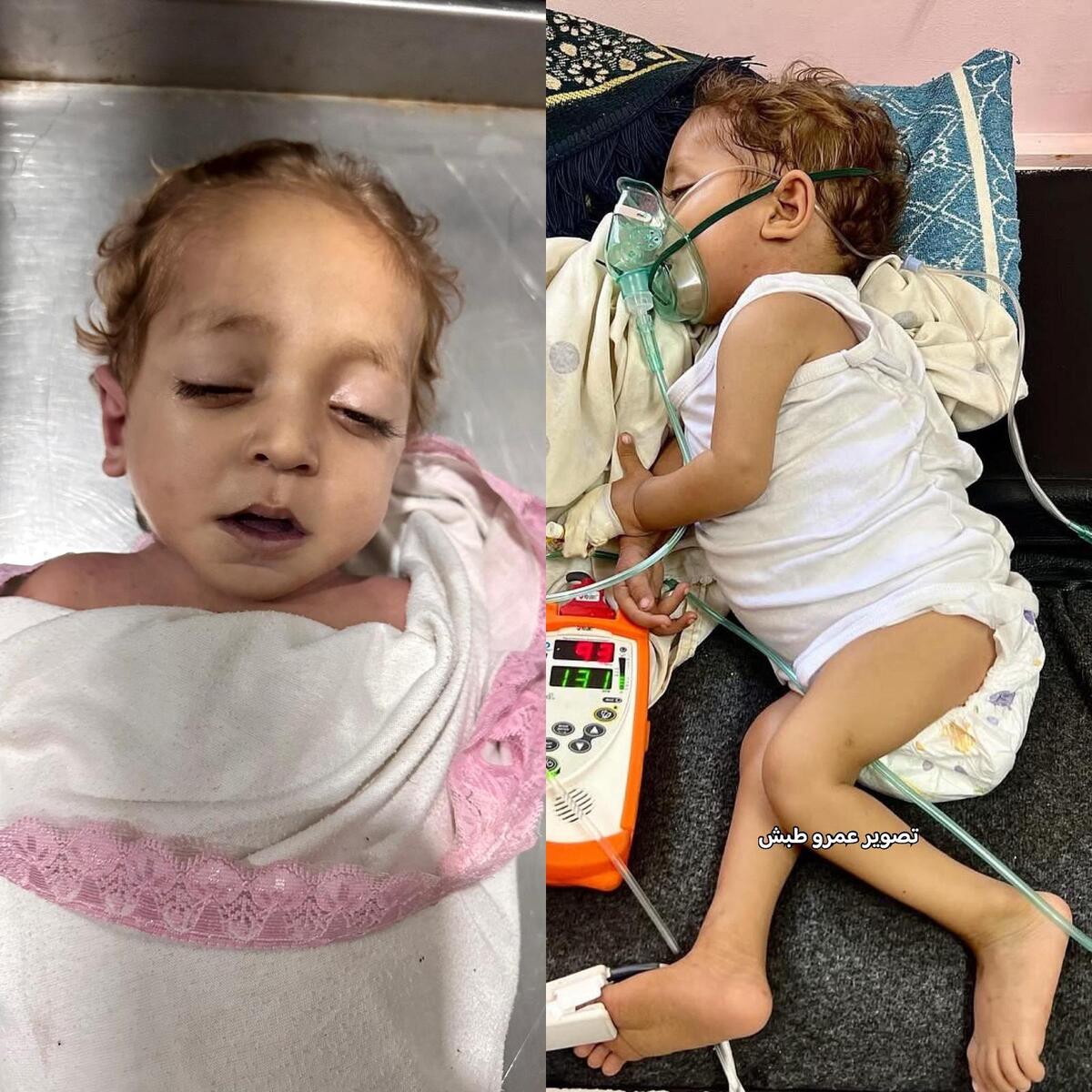
A child from the Gaza Strip died due to being denied treatment.

Child Hassan Barbakh died on Tuesday due to the inability of the healthcare system in the Gaza Strip to provide him with the necessary treatment.

The official news agency (Wafa) reported that the child, Barbakh, died after suffering from an enlarged liver, kidney leakage, and a sharp increase in blood acidity, accompanied by severe malnutrition.

She noted that his family had launched several urgent appeals to save their child's life and transfer him abroad for treatment, but their efforts were unsuccessful. He joined his brother, who died of similar health conditions.

Barbakh's story reflects one example of the suffering endured by thousands of children in the Gaza Strip, where many face a similar fate due to the collapse of the healthcare system, shortages of medicines and equipment, and the ban on travel outside the Strip for medical treatment.

Gazan families and humanitarian organizations continue to demand that children be rescued and provided with medical care before more innocent lives are lost as a result of the Israeli occupation's blockade and the prevention of the entry of medical equipment and medicines.

OPINIONS

Tue 24 Jun 2025 9:40 am - Jerusalem Time

Three boxers and an unprecedented abyss

Ghassan Charbel

Unprecedented scenes in the horrific Middle East. On the hot stage are three great boxers, bloodstains, and lakes of rubble. The people of the region woke up to discover that American bombers had swooped down at dawn on three Iranian nuclear facilities. The Israelis woke up to find their cities devastated by the likes of which they had not witnessed since the establishment of the state in 1948. The Iranians woke up to find their skies in the grip of Israeli fighter jets raining missiles on military bases, radars, and platforms, hunting down generals and nuclear scientists.
Three boxers whose decisions will affect the security and stability of the region and the integrity of the arteries connecting it to the world. The story extends beyond Hormuz and is more dangerous. Three have the ability to land blows but lack the ability to retreat once they have gone too far. Three boxers, each of whom wants to expand their country's role or restore it to greatness.
The boxing great was born on June 14, 1946. Coincidentally, he was born in the month that produced a record number of wars in the Middle East. Coincidentally, he celebrated his birthday the day after the Israeli airstrikes on Iran. He had just begun spending the final years of his seventies, and the eighties would follow him during his stay in the White House.
He didn't fight in Vietnam or anywhere else. He pursued business and learned the "art of the deal." His obsession was profit and he didn't like to admit losses. He grasped the magic of the screen and appeared on it before Americans, who memorized his famous phrase, "You're fired."
Success in real estate whetted his appetite for the White House. He flipped between parties, then joined the Republican Party, later succeeding in capturing it and the White House. An outsider held the reins of power in the "sole superpower."
During his first term, Donald Trump made two critical decisions relevant to the current situation: the first, withdrawing from the nuclear agreement with Iran, and the second, assassinating General Qassem Soleimani near Baghdad International Airport. However, when he entered his second term, he presented himself as someone eager to end wars and enter history through peacemaking and the Nobel Prize. Regarding the Iranian nuclear issue, he negotiated, set deadlines, and threatened with horrors. What happened, happened, culminating in the US airstrikes on nuclear facilities.
The second boxer was born on April 19, 1939. He is now in his second half of the 1980s. On June 4, 1989, he was appointed "Supreme Leader of the Islamic Revolution." It is not at all simple for a person to be entrusted with Khomeini's legacy and to enjoy unlimited powers in a country like Iran. Ali Khamenei continued the policy of exporting the revolution, a clause in the country's constitution. He sponsored Qassem Soleimani's program, which called for encircling Israel and the region with missiles and "parallel armies."
Under Khamenei, Iran achieved major breakthroughs in post-Saddam Hussein Iraq, post-Ali Abdullah Saleh Yemen, Syria, and Lebanon. However, these successes were met with a hurricane-like blow after the "flood" unleashed by Yahya Sinwar. The Syrian episode collapsed, and Bashar al-Assad now watches the fires from his Russian exile, while Ahmed al-Sharaa managed to keep Syria away from the flames.
A scene no less painful for the Supreme Leader was seeing Lebanese Hezbollah without Hassan Nasrallah and unable to wage a new war with Israel, even in support of Iran itself. It was difficult for Khamenei, who was living in the second half of the 1980s, to offer Soleimani's killer a large gift to ward off the blows of Nasrallah's killer.
Unprecedented scenes have been circulating for the Supreme Leader recently. Ismail Haniyeh, the leader of Hamas, was killed in Tehran itself. Nasrallah was killed in Beirut along with a number of his pillars. Sinwar and Hamas leaders were killed in Gaza. Sharaa won with handshakes and promises of aid, while washing Syria's hands of the Iranian era. Then came Trump, offering Iran a life without Syria and its "arms," and without an increasingly needed "insurance policy"—a nuclear bomb or living on the verge of manufacturing one. Khamenei was unable to prevent the other boxers from allying with his country.
The third boxer was born in Tel Aviv on October 21, 1949. He is now in his second half of the seventies. He has set a number of records that have exhausted the region. He has now spent 17 years in the Prime Minister's Office, surpassing all his predecessors. He also holds the record for killing Palestinians and their leaders, as well as leaders of the Lebanese Hezbollah.
For years, he has dreamed of taking the battle to its "real theater," a direct confrontation with Iran. He considered its nuclear program an "existential threat" and repeatedly knocked on the White House's doors, seeking American participation in unleashing a hurricane against it. It's clear that Benjamin Netanyahu has succeeded in infiltrating Trump's mind, his calculations, and his twists and turns.
The future of the region now hinges on the decisions of three boxers concerned with their future image in history. The game is critical and dangerous. If the Iranian boxer responds directly to the American boxer, a war of this magnitude could shake the foundations of the regime itself. It is difficult to believe that he can prolong the exchange of blows with the Israeli boxer without facing American intervention.
One day, Qassem Soleimani told a small group that the American thread is what maintains the "unjust balances" in the Middle East, and that "this thread must be cut, and this is possible." He also said that if Israel were an American aircraft carrier, then carriers would sink if they were hit by deep holes and their populations lost confidence in their army and government.
Have the Israeli and American boxers agreed to destroy the Iranian nuclear program and sever the thread linking Tehran to the theaters of war? Three top boxers and unprecedented scenes. Who can bring the horrific Middle East back from the abyss?

About the Middle East

The future of the region now hinges on the decisions of three boxers concerned about their future image in history. The game is critical and dangerous. If the Iranian boxer responds directly to the American boxer, a war of this magnitude could shake the foundations of the regime itself.


OPINIONS

Tue 24 Jun 2025 9:39 am - Jerusalem Time

The New Middle East... When illusions are built on the crater of a volcano!

Amin Al-Hajj

When Benjamin Netanyahu declared with overconfidence, "I said we would change the face of the Middle East, and that is what we are doing today," he did not mean change in the positive or reformist sense, but rather the creation of a "new" regional reality built at the expense of peoples and their rights. In other words, the "re-engineering" of the region according to Israeli and Western standards; a subjugated, domesticated Middle East, devoid of will, governed by the logic of force and hegemony, upon which a forced peace is imposed, while its central issues are assassinated, foremost among them the Palestinian issue.
But the question that imposes itself today is: Which Middle East is being shaped? And who benefits?
Netanyahu may not have exaggerated when he said the Middle East is changing, but he overlooked the fact that change, like history, cannot be monopolized or managed by a single will. Indeed, the Middle East is undergoing dramatic and accelerating transformations: the collapse of alliances and the emergence of others, a reshuffling of priorities, and major battles that are reshaping the landscape. The most prominent of these are the ongoing war of extermination in Gaza, the war on Iran, Yemen, and Lebanon, and the "involvement" of the United States in them. Thus, we find that the security of the region has become more fragile, while the "dream of peace" is shattered on the walls of Gaza and Bab al-Amud, or by the action of pent-up Arab popular resentment that has not yet been granted the right to express itself.
Although regimes have rushed towards normalization, and regional development projects have been stalled, or almost, these changes - despite their drama - have no indication, or even guarantee - their "sustainability," and nothing suggests long-term stability. Rather, many of them are superficial, temporary, and fragile.
The most obvious equation today is that the Middle East is being managed like a chessboard. Tel Aviv seeks to expand its influence and settle scores, while Washington intervenes when the fire approaches its interests and withdraws when the horizon becomes vague. Or so it seems. Meanwhile, Iran responds with unconventional methods, while Turkey, Egypt, and other Arab states are redrawing their roles in a rapidly, if hesitantly, changing geopolitical environment.
However, the most dangerous - and perhaps the most important - actor quietly reasserting itself are the people. The Arab peoples, who have long been portrayed as "silent blocs", have become more aware of their separation from their rulers and have come to realize that the "new Middle East" is being built on the ruins of their will. The gap between the ruler and the ruled has reached its peak, and silence no longer equates to acceptance. Rather, what was being plotted behind closed doors has come to light and may explode in the streets at any moment.
Tel Aviv, which thought it was on the verge of a "lasting peace," will discover that it has dug up hornets' nests, not only in Palestine, but in every Arab home. The anger is no longer Palestinian alone, but rather cumulative, widespread, and deeply rooted, because it has awakened in the hearts of Arabs questions of identity, dignity, and justice.
The radical shift is not just in redrawing borders or breaking alliances, but in the quiet and dangerous shift in the consciousness of the Arab street. At the moment when Tel Aviv thought it had achieved its dream, it will have in fact opened countless fronts for itself. Normalization no longer silences voices, but rather portends a shift into political and social movement in more than one place, even if it is still under the ashes.

Then the crowd will realize that the calculations of the threshing floor were completely different from the calculations of the field, and that what is happening today is not the end of history, but its true beginning.
Will we witness a Middle East as Netanyahu intended, with new chapters of dependency being written in the name of "political realism"? Or as research and study centers envision it? Or will it be written by its own people this time, with change coming from within, from the streets, from the depths of the oppressed, from the consciousness of the people—a change the West cannot control as it did in the past? These are open questions... and the answers are subject to the spark of an explosion!

OPINIONS

Tue 24 Jun 2025 9:38 am - Jerusalem Time

Under the smoke of war, Israel escalates its repression in the West Bank.

Nabhan Khreisha

While the world's attention is focused on the major escalation between Israel and Iran, with its potential regional threats, Israel is using this conflict as cover to deepen its repressive policies against Palestinians in the West Bank. Taking advantage of the international and Arab media's preoccupation with the war, Israel is implementing a systematic campaign of collective punishment, arbitrary measures, and ethnic cleansing. Since the first days of the attack on Iran, the occupation authorities have escalated their actions on the ground in the West Bank, deploying massive military checkpoints and cutting off main and secondary roads connecting cities and villages, making movement between one area and another almost impossible.
The West Bank has been transformed into isolated islands, with every city or village under siege. This has disrupted trade, prevented the arrival of essential goods, and paralyzed medical and educational services, echoing the numerous closures Israel has repeatedly used throughout its occupation of the Palestinian territories. For example, the agricultural sector in the West Bank is facing a stifling crisis, with farmers finding it difficult to market their crops due to the blockade imposed by the occupation forces on villages and towns, turning agricultural roads into traps. A report by the Israeli human rights organization B'Tselem stated that trucks carrying agricultural produce have spoiled because they were not allowed to pass, incurring heavy losses for farmers, particularly during the summer vegetable season, which is considered the most important of the year.
Palestinian merchants are also facing a parallel crisis. The Israeli closure imposed since the outbreak of the Israel-Iran war prevents imported goods from entering the Gaza Strip, whether through Israeli ports or from Jordan via the Karameh Bridge, due to complex security procedures. The Ramallah Chamber of Commerce announced in a statement that more than 60% of merchants were unable to bring their goods to market on time, leading to a severe shortage of basic goods and, in turn, to rising prices.
As part of its collective punishment policies, Israel halted fuel supplies to Palestinians under the pretext that the Haifa oil refinery had been bombed by Iran. This led to a partial paralysis of traffic, disruption of public transportation, and the inability of many workers to reach their workplaces. This threatens the collapse of essential fuel-dependent services, such as hospitals and electricity generators in the West Bank. The goal is to use fuel as a weapon to break the will of the people.
The economic crisis currently ravaging the Palestinian territories is not solely the result of the war between Tel Aviv and Tehran. Rather, it represents the culmination of a series of Israeli policies that seek to undermine the Palestinian economic structure by controlling every aspect of it. According to an UNCTAD report, the Palestinian economy is one of the most fragile in the world, due to its near-total dependence on the Israeli economy for imports, exports, and money transfers. Thus, any minor disruption to this system, such as the current one, leads to a near-total paralysis of economic life.
The economic crisis in the Palestinian territories is exacerbated by Israel's near-total halt to the transfer of clearance revenues to the Palestinian government. Days before the exchange of bombings between Israel and Iran, Israeli Finance Minister Smotrich deducted huge portions of Palestinian tax revenues, under the pretext of compensating what his government calls "victims of terrorism." According to a statement by the Palestinian Ministry of Finance in June 2025, more than 400 million shekels were deducted from clearance revenues in just three months, forcing the Palestinian Authority to pay only 60% of its employees' salaries, further deteriorating purchasing power in the markets.
Israel's repressive practices against Palestinians, under the smokescreen of war with Iran, take other forms. While the international media is preoccupied with the exchange of fire between Tehran and Tel Aviv, the occupation army continues its campaign against the camps in the northern West Bank, particularly in Tulkarm, under the pretext of eliminating resistance there, despite the absence of any resistance or resistance fighters. In its efforts to re-engineer the camps geographically and demographically, the remaining residents are being expelled, more homes are being demolished, the remaining infrastructure is being destroyed, and more military units, vehicles, and bulldozers are being deployed to various areas in the northern West Bank, in a scene that resembles a war zone.
The Israeli occupation forces are not the only ones suppressing the population. They have also unleashed settler militias in the West Bank to carry out some of their missions on their behalf. They attack villages, burn cars, uproot trees, and assault residents, under the full protection of occupation soldiers. Remarkably, these attacks are not described in the Israeli or Western media as "terrorism," but are justified under the pretext of "responding to Palestinian incitement" or eliminating "Palestinian terrorism." The escalation of settler violence is not random; rather, it comes within the framework of a clear policy to create permanent terror among Palestinians and force them to voluntarily emigrate from their lands, especially in areas targeted for annexation, such as the Jordan Valley.
The war with Iran, with its dramatic implications and strategic importance, has given Israel cover to divert attention from its daily crimes in Palestine. While screens are filled with images of ballistic missiles and air defenses, no one talks about the body of the young Palestinian man who lay bleeding for hours on a Tulkarm street, or about the checkpoint that was opened five hours later for an ambulance transporting a woman about to give birth. Thus, the international media, with its almost exclusive focus on Iran, has become an implicit partner in the systematic concealment of Israeli repression in the occupied territories.
The round of war between Israel and Iran may end, a ceasefire may be declared, or new political deals may be concluded. But the repression in the West Bank is neither waiting for nor linked to war; rather, it finds in it an ideal environment for expansion. What is happening today in the West Bank is not merely a "temporary security tightening." Rather, it is another chapter in a long-term project to empty the land of its indigenous population and establish an apartheid regime, under the clouds of missiles and the devastation they cause. Palestine, as it has always been, remains the silent victim of every noisy war. Unless the spotlight is shone on what is happening in the shadows, the occupation will continue to use the noise of war as a permanent cover for its crimes.


OPINIONS

Tue 24 Jun 2025 9:37 am - Jerusalem Time

Trump is a deceiver...the US strike and its aftermath

Abdullah Al-Sanawi

The war is not over, and Iran has not raised the white flag.
The US strike on three nuclear facilities—Natanz, Isfahan, and Fordow—deep in the mountains seemed to be the final word in the Iran-Israel war. With euphoria, US President Donald Trump described the strike as "magnificent." He said, "Israel is now safe." At the same time, he called for what he called "peace through strength," borrowing the same expression from Israeli Prime Minister Benjamin Netanyahu's lexicon. It is unconditional surrender.
The Israelis believed that American military intervention would pave the way for a "good deal," or that they would reap through negotiations what they had failed to achieve through war. Iran responded with waves of ballistic missiles targeting strategic Israeli sites. These strikes were the most powerful and violent since the start of the confrontations.
The specter of chaos looms over the Middle East, a region Netanyahu wants to redraw, without the ability to win any war alone or possess any political vision for the day after in Gaza or Iran.


Every scenario is possible and every danger is present in the entire region.
Wars are measured by their political outcomes and the resulting new equations in the raging conflict over the fate of the Middle East. If we do not stand with Iran, support it, and back it, the consequences will be dire. The Iranian nuclear project was not the only reason for American military intervention.
It is intended as a political way out of the entrenched Israeli impasse, or to intimidate the Iranians with more violent strikes and greater tragedies if they do not accept a peace agreement that meets Israeli demands. If the repeated Iranian leaks that enriched uranium has been transferred to other locations are true, the implication is that what was supposed to be a peaceful solution could turn into an overt effort to produce a nuclear bomb.

The American intervention was not surprising.
It is actually involved in planning, strategic deception, and supplying all the intelligence, weapons, and ammunition required for the war, without being directly involved in its operations. However, the course of the confrontations did not meet expectations and prior calculations.
In the opening strike, Israel bombed a large number of nuclear facilities, assassinating heavyweight military leaders and scientists at once, and the entire country appeared infiltrated and exposed.
Despite the violent shake-up of command and control centers, Iran surprised the entire world with its ability to restore leadership and swiftly respond in the evening of the same day.
Then, it surprised him with new and diverse generations of hypersonic missiles, capable of bypassing air defense systems and reaching sensitive strategic, security, military, and economic targets.
This prompted public Israeli pressure on Trump to enter the war directly, as if there were no agreed-upon arrangements in the most minute detail.
Trump gave the strong impression that his inclinations led him to support Israel to the greatest extent possible, but that deterrence prevented him from issuing a decision to intervene.
Direct involvement in the war contradicts his pledges, on the basis of which he was elected, and contradicts the will of the majority of American public opinion, which rejects involvement in any wars.

According to recent public opinion polls conducted by YouGov, only 16% support intervention, while 60% oppose it. Opposition within his own Republican Party stands at 51% compared to 23%.
Intelligence reports warned him of the consequences and repercussions that could harm American interests in the Middle East, as well as the enormous economic cost of any intervention, especially if Iran closed the Strait of Hormuz, a vital route for oil and gas transportation.
Despite all of this, he continued his political and military gamble to the end, ignoring all fears and calculations.
Before the US strike, Trump informed his senior aides of his approval of the intervention plan, but postponed the final decision for two weeks to assess the likelihood of Tehran abandoning its nuclear program.
Opening the door wide for diplomatic communications and messages to Iran through semi-public channels: "A political solution is still possible."
Iran has expressed its readiness for this option, with one condition: that the Israeli attack stops.
He fooled everyone, without exception, and his party may pay the price for this gamble in the upcoming midterm elections.
Upon his return from the G7 summit, he said, "Our patience has run out," threatening to assassinate Iranian Supreme Leader Ali Khamenei. That statement meant nothing other than that military intervention was imminent.
A short time later, he made counter-statements denying any willingness to engage directly in war. He is a man of peace who came to office to end all wars, as he literally said.
He made no secret of his aspiration to win the Nobel Peace Prize, or to become the fifth American president in history to receive it, after Theodore Roosevelt, Woodrow Wilson, Jimmy Carter, and Barack Obama.
He's a confusing, unpredictable man who can say one thing and the opposite in a single speech. At the White House, Netanyahu surprised the cameras by announcing that he had opened a dialogue with Iran to reach an agreement on the nuclear project.
This was a grave insult to a close strategic ally, but he continued to coordinate with him in the smallest details: “We speak on the phone every day.”
He then went to unimaginable lengths in his praise of Netanyahu, claiming he was a man of peace. He described him in terms that would be hard to believe in the world, not even within his own family: "He is a good and charitable man who does not receive justice from his country."


In legal and political terms, it speaks of a man accused by international courts of war crimes and genocide.
Calling for justice for him is an endorsement of his policies and crimes. It is a complete violation of every human value and yet another violation of our very qualities and meanings.
Who would believe a deceitful president now?!

About "Al-Shorouk"
.............

Iran surprised the entire world with its ability to seize command and react quickly on the evening of the same day. It then surprised the world with new and diverse generations of hypersonic missiles capable of bypassing air defense systems and reaching sensitive strategic, security, military, and economic targets.


OPINIONS

Tue 24 Jun 2025 9:25 am - Jerusalem Time

The Palestinian National Movement and Waiting for Relief

Written by: Raed Mohammed Al-Dabai: Head of the Political Science Department, An-Najah National University


The results of the First World War contributed to the temporary advancement of social democratic forces and the reformist left in Europe, and to the demise of major monarchies such as the Hohenzollerns in Germany, the Habsburgs in Austria-Hungary, and the collapse of the Ottoman Empire. However, economic failures and the absence of programs capable of offering convincing alternatives to the people after about a decade contributed to the return of ships to the right-wing nationalist side, and the emergence of extremist radical forces that led the world to World War II. Meanwhile, the results of the Second World War led to the emergence of the social democratic movement again, and the emergence of what is known as the “Glorious Era” in which the social democratic parties led their countries for more than thirty years, by presenting clear programs and tangible alternatives, based first on ideological reviews that led to the transition from doctrinal socialism to reformist socialism, through what is known as the “Bad Godesberg” program, and through social, political, and economic programs based on the welfare state, curbing unemployment, and adopting a mixed economy that maintains public oversight. On strategic sectors without eliminating economic competition, progressive taxes and solidarity financing, programs based on gender equality, social justice, expanding the base of workers and unions, investing Marshall Plan funds for tangible reconstruction, and building grassroots alliances with civil society, which led to the advancement of social democratic forces in Europe, after their success in translating these programs into tangible policies, which succeeded in attracting the poor, workers, and the middle class in general, which led to the decline of various far-right forces. There are other examples of the advancement of the right and the decline of the left, as happened in the United States in 1980, with the arrival of Reagan, and Trump’s return to power in 2025, and Bolsonaro’s victory in the Brazilian presidency in 2018, and the Bharatiya Janata Party in India in 2014, and the Five Star Movement in Italy, and the growth of the populist right in Germany to become the second force in the last elections 2025, by adopting a market economy, raising the slogan of fighting corruption, achieving security, and preserving religious and family values, with promises that the citizen would reap tangible results, and building Alliances with businessmen and owners of large companies affected by taxes.


What the previous lines are trying to say is that gaining the trust of citizens and the legitimacy of their representation is not achieved through the failure of the opponent alone, nor through raising slogans with all their diversity, beauty and purity, nor through singing the praises of the glories of the past, or clinging to the fringes of possessing legitimacy, which, like other values, erode with the passage of time. Rather, it is achieved through offering convincing solutions to the people, and advancing tangible and simplified programs that address the roots of crises and build bridges of alliances with influential societal forces.


The major changes and strategic transformations that the Middle East region in general, and the Palestinian cause in particular, are undergoing, as well as the catastrophic consequences of the October 7 operation – even as stated by a number of Hamas leaders – on the Palestinian cause in general, and on the foundations of our people’s steadfastness, and the mechanisms of Israeli dealing with the Palestinian cause, are very similar to those circumstances that contributed to the advancement of some forces and the decline of others at various points during crucial historical junctures, as well as the consequences of the Israeli-Iranian war and its repercussions on the map of forces in the region, and require the Palestinian national movement to adopt policies that rise to these challenges. However, what is striking about the matter is that the Palestine Liberation Organization and the Fatah movement, which practically constitute the backbone of the Palestinian national movement, as well as the various national and Islamist forces and factions on the Palestinian arena, are dealing with these changes with the logic of fate and destiny, and postponed waiting until God decrees a matter that was done, without taking the initiative, presenting programs, or even attempting to take steps that would contribute to reducing the losses, as the current conditions are from the age of the Palestinian cause, and they may be the most dangerous. Since the Nakba of 1948, the insistence of the religious right-wing government in Israel to resolve the conflict by exploiting the favorable historical opportunity requires taking realistic steps and presenting convincing programs with a tangible impact on the citizen and various social classes, including the poor and the middle class. The simplest issues that emerged during the past period, including the fuel and cooking gas crises, demonstrated the extent of the societal imbalance and the absence of societal and official forces whose duty is to protect citizens and organize their lives during times of crisis. They also revealed the extent of the gap between the citizen and decision-makers, and revealed the absence of a national plan to manage national crises.


The Palestine Liberation Organization and the Fatah movement have a favorable opportunity to transform this tragedy into a unifying national opportunity, by investing in the historic moment, through a programmatic transformation, based on realistic, applicable policies, capable of restoring citizen confidence, investing social capital, and investing the energies of our Palestinian people in the homeland and in the diaspora, adopting modern, influential, and tangible communication tools with the masses, and rebuilding social alliances with various sectors, especially workers and farmers, for whom it is time to elect unions that truly represent them, and launch from among their ranks, and calling on all Palestinians to participate in shaping future national directions, by involving our people in the diaspora, and investing their human energies in all places of their presence. At the level of the Palestine Liberation Organization, it is necessary to leave the stagnation in place, and this does not mean adopting populist policies, or policies that are not well thought out, but rather it means doing what is possible, influential, and effective, and perhaps among them is building the Palestinian National Council in a way that makes it a true representative of the sectors of our Palestinian people, with all its components, factions, sectors, and elites of women and men, and it is This is possible through organizing real and transparent elections for its representative components, including unions, syndicates, and sectoral institutions, and building it on an institutional basis, not clientelism, on the basis of ability, not loyalty, and on the basis of openness and enlightenment, not isolation, individual relationships, and cunning. The PLO, which possesses the legitimacy and ability to open up to all its people, remains their sole legitimate representative. In every lecture about the PLO, I ask my students in the Palestine Studies course about the names of the members of the PLO’s Executive Committee. They can barely name one or two at best. The problem is not with the generation, but with the absent institution, the individual approach, the lack of influence, and the absence of the most important institutions of the nation from their leadership role. The PLO must present tangible social, political, and economic programs that are felt by the people of the camp, the countryside, and the city. The people of the Jenin, Tulkarm, and Nur Shams camps, against whom a geographic genocide is being practiced, based on eliminating the camp as a topography, a memory, and a spatial space that incites the occupation and renews the right of return. It must present a practical program for the people of the Gaza Strip. Gaza is based on unity of representation, unity of arms, unity of decision-making, and a vision for reconstruction, just as the social democratic parties did in Europe after World War II, and gained the trust of the masses for thirty years after that. The PLO is not required to do the impossible, and it is fully aware of the magnitude of the changes and challenges facing the region and the Palestinian issue. What is required is to leave the spectator seats and take the initiative and leadership and touch the needs of the citizens, and assume its natural role as the sole legitimate representative of our people, because the citizen who cannot find a morsel of bread, cannot return to his home, and cannot provide a cooking gas cylinder, cannot be convinced of any legitimacy that does not provide him with his dignity and clean morsel of bread.


Fatah also has a historic responsibility in light of the exceptional circumstances and the expected transformations in the region. Fatah, which grew like a flower in a barren desert, is the backbone of the Palestinian national movement. It bears the responsibility of strengthening performance and enhancing the steadfastness of the citizen, which requires the movement to adopt social, political and economic programs and to lead the Palestinian popular resistance in the field. Fatah is also in dire need of rebuilding its internal house and uniting its members with the law of love, dialogue, tolerance and open doors, and of rallying its ranks according to its internal regulations and through its movement institutions, because Fatah, with its influence and the consequences of what is happening inside it, is a public Palestinian affair that transcends the boundaries of the internal Fatah house.


In conclusion, whoever says that the justice of our cause alone is capable of bringing our people to safety should review history, and whoever believes that silence, anticipation and waiting will lead to the passing of this dark cloud should open their eyes to see what is happening in Jerusalem, and the geographical changes taking place in the West Bank, what the leaders of the extreme right declare and practice daily, for history has been in many cases a graveyard for truth, justice, silence and hesitation, and what the occupation wants is clear and obvious to anyone who sees the light and the sun: “More land for the Jews, and fewer Arabs on it.”





PALESTINE

Tue 24 Jun 2025 9:18 am - Jerusalem Time

Gaza: 22 dead and dozens injured in Israeli shelling of aid-seeking communities

Medical sources at Al-Awda and Al-Aqsa Martyrs hospitals reported that 22 Palestinians were killed and dozens injured when Israeli forces targeted a group of civilians waiting for humanitarian aid in the central Gaza Strip.

This comes amidst the catastrophic conditions resulting from the genocide committed by Israel against Palestinians in the Gaza Strip since October 7, 2023.

The Israeli aggression targeted homes, tents housing displaced persons, and civilian gatherings, resulting in deaths and injuries in cities in the north, center, and south of the Gaza Strip.

ARAB AND WORLD

Tue 24 Jun 2025 8:55 am - Jerusalem Time

Trump announces a ceasefire between Israel and Iran

US President Donald Trump announced a ceasefire between Israel and Iran on Monday evening after a 12-day war between the two countries. In a post on Truth Social, Trump said the ceasefire would take effect shortly after midnight on the US East Coast, and the war was set to officially end 12 hours later.

Trump wrote in the post: "This was a war that could have lasted for years and devastated the entire Middle East. It didn't, and it never will!" Neither Israel nor Iran immediately confirmed Trump's announcement that they had agreed to a ceasefire.

"During the ceasefire period, each side pledges to remain in a state of complete peace and respect," Trump said in his statement. He added that the agreement embodies the ability of both sides to "have the patience, courage, and intelligence to end the war," stressing that what could have been a prolonged and devastating conflict for the region "did not happen, and never will happen."

The US President concluded his message with celebratory words, saying: “God bless Israel, God bless Iran, God bless the Middle East, God bless the United States, and God bless the entire world!”

The two countries have been engaged in indirect skirmishes since the October 7, 2023, attacks on Israel by the Tehran-backed Palestinian Hamas movement, and have exchanged direct fire intermittently since 2024. But after Israel attacked Iran at dawn on June 13, the two arch-rivals in the Middle East exchanged barrages of drones and missiles against each other. Earlier on Monday, Israel launched another round of airstrikes on Iran, targeting the north of the country and areas surrounding the capital, Tehran. An hour before the ceasefire was announced, Iranian Supreme Leader Ayatollah Ali Khamenei wrote on Twitter that "those who know the Iranian people and their history know that the Iranian nation is not a nation of surrender."

A senior White House official, speaking on condition of anonymity to share sensitive details of the negotiations, said in a press briefing that Israel had agreed to a ceasefire—as long as it was not subjected to further attacks from Iran—and so had Iran. The official added that Trump had communicated directly with Israeli Prime Minister Benjamin Netanyahu, while Vice President J.D. Vance, Secretary of State Marco Rubio, and Special Envoy Steve Witkoff had spoken with the Iranians through direct and indirect channels, and that the Qataris played a key role in brokering the agreement. Additionally, the official said that the US strike on Iran on Saturday made the agreement “possible and acceptable, particularly to the Israelis.”

The United States initially sought to stay out of the conflict, but entered the war on Israel's side on Saturday by bombing key Iranian nuclear sites, including Fordow and Natanz. In response, Iran warned the United States in advance that it would strike a major US airbase in Qatar, which it did on Monday.

Trump's enthusiastic announcement marked the latest abrupt shift by the president toward Iran. After months of signaling the nearness of a US-Tehran agreement to significantly curb Iran's nuclear program, Trump declared his full support for the June 13 Israeli aggression that sparked the current conflict. Eight days later, he opted to directly engage the United States, authorizing the bombing of three Iranian nuclear facilities on Saturday.

After Iran's measured and relatively limited response on Monday, Trump once again favored diplomacy. He struck a conciliatory tone, portraying Iran's attack not as an escalation of the conflict, but rather as a means to completely remove the country from its "system."

This view was echoed by Vice President Jay DeVance, who described the ceasefire as a victory for both Israel and Iran. In an interview on Fox News on Monday evening, Vance embraced Trump's description of the nearly two-week conflict as a "12-day war," calling it "an important moment to reset the entire region."

For his part, Iranian Foreign Minister Abbas Araqchi announced early Tuesday that Iran does not intend to continue the war if Israel halts its illegal attacks on the Iranian people before 4:00 a.m. (Tehran time).

In a post on social media, Araghchi emphasized that Israel had initiated the war on Iran, not the other way around. He denied the existence of any agreement yet regarding a ceasefire or suspension of military operations, asserting that a final decision would be made later.

ARAB AND WORLD

Mon 23 Jun 2025 10:10 pm - Jerusalem Time

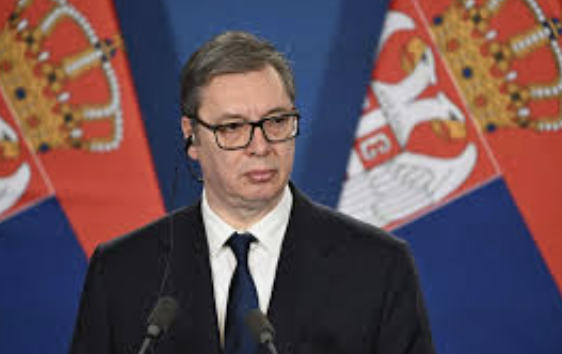
Serbian President Announces Halt to Arms Exports to Israel

Serbian President Aleksandar Vucic announced Monday evening a halt to arms exports to Israel.

This decision came after a meeting of the expanded body of the Chief of the General Staff of the Serbian Armed Forces, according to the Serbian news agency Tanjug.

It's worth noting that this decision came just one day after a demonstration in the capital, Belgrade, against arms exports. The demonstration was organized by the "Support for the Palestinian People - Serbia" group and supported by student protesters.

PALESTINE

Mon 23 Jun 2025 9:59 pm - Jerusalem Time

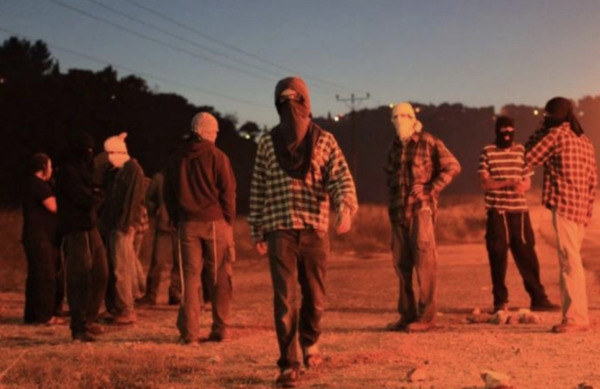
Settlers attack citizens' vehicles near Turmus Ayya, north of Ramallah.

Settlers attacked citizens' vehicles on Monday evening at the entrance to the Shilo settlement, near the town of Turmus Ayya, north of Ramallah.

According to local sources, a number of settlers attacked citizens' vehicles, throwing stones at them, and assaulted their passengers with pepper spray while they were stopped at a traffic light at the entrance to the Shilo settlement, north of Turmus Ayya.

ARAB AND WORLD

Mon 23 Jun 2025 9:16 pm - Jerusalem Time

Trump meets with his national security team to respond to Iran's retaliatory strikes on several

US President Donald Trump summoned senior officials, including Defense Secretary Pete Hegseth and Chairman of the Joint Chiefs of Staff General Dan Keane, to the White House Situation Room on Monday afternoon after Iran launched attacks on US forces at the Al Udeid Air Base in Qatar. According to officials, the White House and the Department of Defense are monitoring the situation in Qatar, Iraq, and other locations in the Middle East where US military bases are located, possibly in Kuwait, the United Arab Emirates, and Kuwait.

Iran claimed responsibility for an attack on the US Al Udeid Air Base in Qatar, in a statement issued by the country's armed forces.

According to official sources in Washington, the US administration anticipated an attack on Al Udeid Air Base and evacuated it in recent days.

CNN quoted a US official as saying that President Trump does not want to renew the military campaign, and that he wants the operation to end, especially now that, according to him, the country's nuclear capabilities have been completely destroyed.

Israel and Iran have been exchanging fire since Israel struck Iranian nuclear facilities about two weeks ago. The United States entered the conflict this weekend by bombing key Iranian nuclear sites. Monday's strikes indicate that Iran is preparing to expand the fighting, targeting American forces and allied countries elsewhere in the Middle East—a situation Trump has sought to avoid by urging Iran to return to the negotiating table.

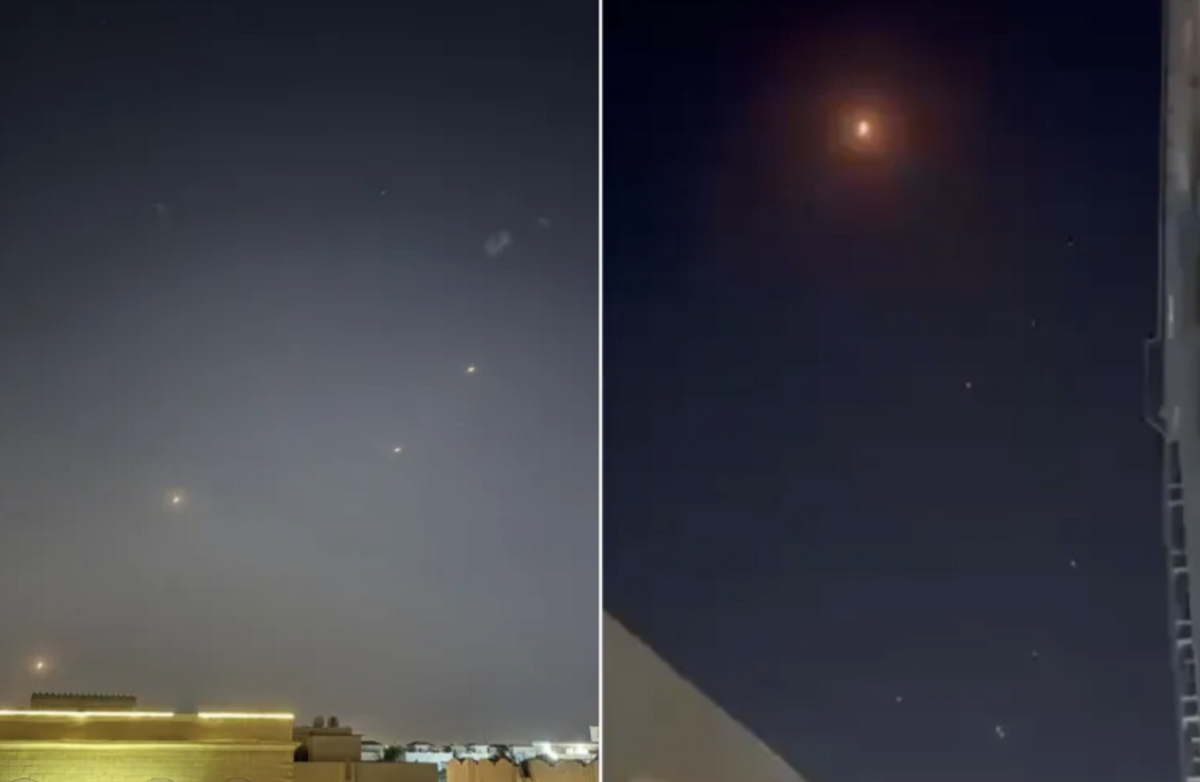
For his part, Majed Al-Ansari, spokesperson for the Qatari Ministry of Foreign Affairs, confirmed and condemned the attack in a statement, describing it as a "flagrant violation" of Qatari sovereignty. Al-Ansari added that Qatari air defenses "successfully thwarted the attack and intercepted the Iranian missiles."

Al-Ansari said, "Qatar reserves the right to respond directly in a manner proportionate to the nature and magnitude of this blatant aggression, in accordance with international law." Qatar has long sought to maintain its relations—often quietly—with virtually all parties to the conflict.

According to experts, Iran's leaders find themselves in a dilemma of responding forcefully while trying to avoid a large-scale retaliation from the United States.

ARAB AND WORLD

Mon 23 Jun 2025 8:11 pm - Jerusalem Time

Iran bombs the US Al Udeid base in Qatar, and defenses intercept the missiles.

Iran bombed the US Al Udeid airbase in Qatar on Monday evening in an operation dubbed "Bashaer Al Fath," in response to the US attack on Iranian nuclear facilities. Doha announced that its air defenses successfully intercepted the Iranian missiles.

The Iranian Revolutionary Guard said in a statement, "Following the US aggression against our nuclear facilities, we launched a devastating strike against the US Al Udeid base in Qatar."

Iranian television reported that Operation Bashair al-Fatah targeted Al Udeid Air Base and other US bases in Iraq.

Axios quoted US sources as saying that Iran launched six missiles towards Al Udeid base.

Meanwhile, Iran's National Security Council said, "Our operations are free of any threat or danger to the friendly and sisterly state of Qatar and its people."

Defenses counter the attack

For its part, the Qatari Ministry of Defense announced that "Qatari air defenses intercepted a missile attack targeting Al Udeid Air Base."

"Thanks to God, the vigilance of the armed forces, and the precautionary measures, the accident did not result in any deaths or injuries," she said.

The Ministry affirmed that the airspace and territory of the State of Qatar are safe and that the Qatari Armed Forces are always on alert.

Meanwhile, a US official told Al Jazeera that no US forces in Qatar were injured in the Iranian missile attack.

Qatar condemns the attack

The State of Qatar expressed its strong condemnation of the attack, describing it as a flagrant violation of Qatar's sovereignty, airspace, and international law, according to a statement from the Ministry of Foreign Affairs.

The Ministry of Foreign Affairs said, "Qatar reserves the right to respond directly in a manner proportional to the nature and extent of the blatant attack and in accordance with international law."

The statement explained that Qatari air defenses "thwarted the attack and successfully intercepted the Iranian missiles," and that a statement would be issued regarding the circumstances of the attack.

The Qatari Foreign Ministry called for an immediate cessation of all military operations and a serious return to the negotiating table and dialogue.

She pointed out that Al Udeid base had been evacuated earlier in accordance with security and precautionary measures.

Israel has been waging a war against Iran since June 13, targeting nuclear facilities, military and civilian sites, and assassinating senior military leaders—including the commander of the Revolutionary Guard and the Chief of Staff—and prominent nuclear scientists.

After days of uncertainty regarding the possibility of direct US intervention in the war alongside Israel, the United States launched strikes on Iran's main uranium enrichment facilities—Fordow, Natanz, and Isfahan—early Sunday morning.

Iranian Chief of Staff Abdolrahim Mousavi announced in a televised address on Monday that his country would respond "decisively and decisively" to the US strikes.


ARAB AND WORLD

Mon 23 Jun 2025 7:53 pm - Jerusalem Time

Occupation forces raid several areas in southern Lebanon.

Israeli occupation aircraft raided several areas in southern Lebanon on Monday evening.

Occupation aircraft targeted the outskirts of the towns of Ansar, Al-Zarariyeh, Tabna, Al-Bissariyeh, Azza, Basaliya, Kafr Malki, Al-Aishiyeh, Al-Mahmoudiya, and Wadi Houmin Al-Fawqa in southern Lebanon.

PALESTINE

Mon 23 Jun 2025 6:53 pm - Jerusalem Time

Updated: A child succumbed to his wounds from Israeli occupation forces' bullets northeast of Ramallah.

The Ministry of Health announced, on Monday evening, the death of 13-year-old Ammar Moataz Hamayel, who succumbed to his wounds after being shot by Israeli occupation forces near the town of Kafr Malik, northeast of Ramallah.

Earlier this evening, Israeli occupation forces fired live ammunition at Hamayel, detaining him for a period of time before handing him over to a Palestinian ambulance. He was then transported to the Palestine Medical Complex in Ramallah, where he later succumbed to his injuries.

PALESTINE

Mon 23 Jun 2025 6:15 pm - Jerusalem Time

The occupation targets those waiting for aid in Gaza.

Five citizens were killed and several others were injured on Monday when Israeli occupation forces opened fire on groups of citizens waiting to receive humanitarian aid near the Bianco Resort, west of Beit Lahia, north of the Gaza Strip. Meanwhile, Palestinian Red Crescent paramedics reported that three martyrs and six wounded were transferred to Al-Shifa Hospital, west of Gaza City, as a result of direct targeting by the occupation forces of groups of citizens while they were waiting for aid on the Rashid coastal road, near the Al-Waha area, northwest of Gaza.

Medical sources reported that a number of other aid-seekers were also injured by direct fire from the Israeli occupation forces in the same area, with numerous such cases documented.

In a later development, Palestinian Red Crescent paramedics reported that three civilians were killed and others injured in an Israeli bombardment targeting a group of civilians near Al-Hashemia School in the Al-Tuffah neighborhood east of Gaza City. The wounded were transferred to the city's Baptist Hospital.

According to updated data, the number of martyrs among those waiting for aid has risen to 17, with more than 136 injured today alone at aid distribution centers across the Gaza Strip. This brings the death toll of those "living victims" to 467, with more than 3,602 injured since the beginning of the occupation's war of extermination.

In this context, sources in Gaza hospitals confirmed that 35 martyrs have fallen since dawn today in various parts of the Strip, including 17 martyrs waiting for humanitarian aid.

This brings the total death toll from the ongoing Israeli aggression on the Gaza Strip since October 7 to 55,998 martyrs and 131,559 injured, amid warnings that a number of victims remain under the rubble and on the streets, as ambulance and civil defense crews are unable to reach them due to the ongoing bombardment and the dangerous situation on the ground.

Meanwhile, Israeli occupation forces bombed residential buildings east of Jabalia al-Balad, north of the Gaza Strip, causing widespread destruction as part of a policy of systematic destruction of residential areas.

In another development on the ground, the Israeli occupation army issued immediate evacuation orders for Blocks 107, 108, and 109 in the center of Khan Yunis, in preparation for an attack. The army noted that the orders do not include Al-Amal and Nasser hospitals, which are located nearby.

PALESTINE

Mon 23 Jun 2025 5:00 pm - Jerusalem Time

Netanyahu: Returning prisoners from Gaza will take additional time

Israeli Prime Minister Benjamin Netanyahu asserted on Sunday that the gains made in the conflict with Iran would help Israel in its war in Gaza and in returning the captured prisoners, but he said this would take additional time.

Netanyahu, who is wanted by the International Criminal Court on charges of war crimes in Gaza, added, "Step by step, we are moving closer to our goals: defeating Hamas and returning our hostages. I am convinced that the operation in Iran is helping us achieve our goal in Gaza."

He continued, "Our successes in Iran contribute to our successes in Gaza, but it will take additional time."

The Israeli occupation army announced yesterday, Sunday, the recovery of the bodies of three detainees in the Gaza Strip, through a joint operation carried out with the internal security service (Shin Bet).

The Islamic Resistance Movement (Hamas) has repeatedly affirmed its willingness to release Israeli prisoners in one batch in exchange for an end to the war of extermination, the withdrawal of the Israeli army from the Gaza Strip, and the release of Palestinian prisoners.

But Netanyahu insists on partial deals and evades by proposing new conditions, including the disarmament of Palestinian factions. He is currently insisting on reoccupying Gaza.

The Israeli opposition and prisoners' families assert that Netanyahu is continuing the war in deference to the more extreme right-wing faction within his government, in order to advance his personal political interests, particularly his continued rule.