ARAB AND WORLD

Wed 16 Jul 2025 9:13 pm - Jerusalem Time

Syria calls for a Security Council meeting on Israeli attacks

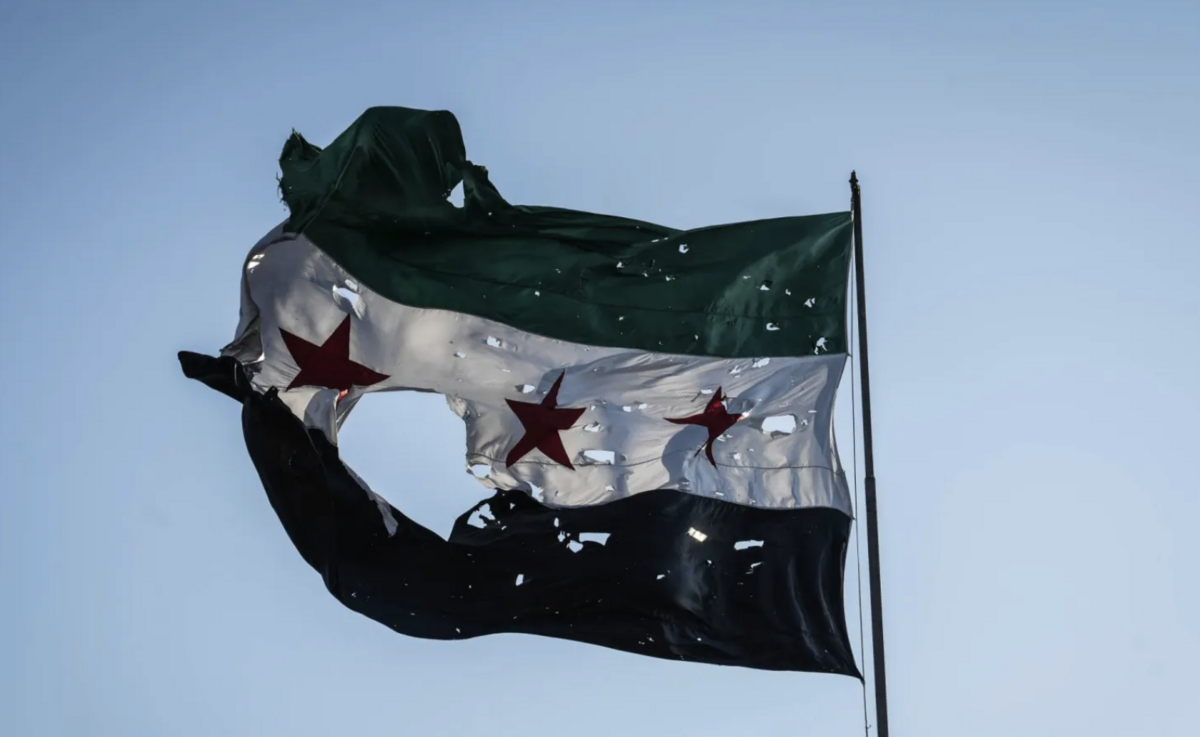
Syria called on the UN Security Council on Wednesday to convene as soon as possible "to discuss the repercussions of the Israeli aggression on Syrian territory," according to a letter seen by Reuters.


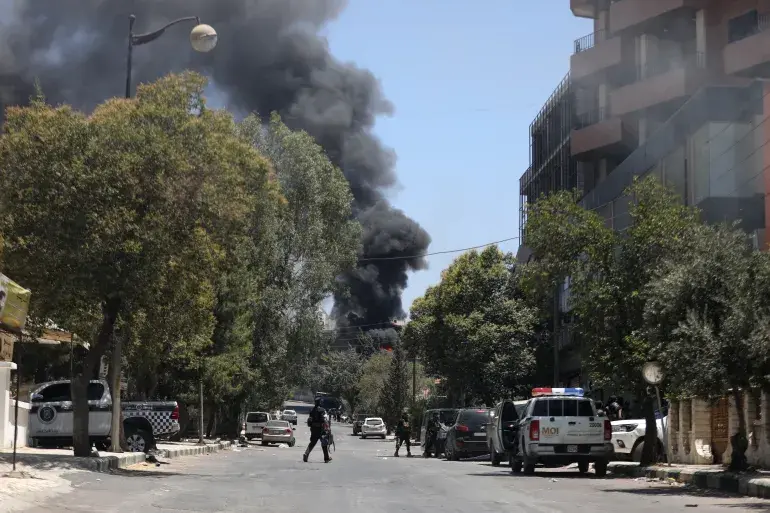
On Wednesday, Israel bombed the Syrian army's general headquarters in Damascus, after threatening to intensify its strikes against government forces if they did not withdraw from the Druze-majority city of Sweida, following three days of violence that left more than 300 dead.

ARAB AND WORLD

Wed 16 Jul 2025 8:20 pm - Jerusalem Time

ICC rejects a request to cancel Netanyahu's arrest warrant.

Judges at the International Criminal Court on Wednesday rejected Israel's request to cancel arrest warrants issued against Prime Minister Benjamin Netanyahu and former Defense Minister Yoav Gallant while the court considers Israeli challenges to its jurisdiction over the war on Gaza.

In a decision published on the court's website, the judges also rejected an Israeli request to suspend the ICC's broader investigation into suspected atrocities committed in the Palestinian territories, according to Reuters.

The International Criminal Court issued arrest warrants on November 21 for Netanyahu, Galant, and Hamas leader Mohammed Diab Ibrahim al-Masri, known as Mohammed Deif, on charges of war crimes and crimes against humanity during the war in the Gaza Strip.

The court said in February that judges withdrew the arrest warrant against Al-Dhaif after receiving credible reports of his death.

Israel rejects the jurisdiction of the Hague-based court and denies committing war crimes in Gaza, where it launched a military campaign it says aims to eliminate Hamas after the movement's deadly attack on Israel on October 7, 2023. Israel is contesting the arrest warrants issued against Netanyahu and Galant.

Israel believes that the Appeals Chamber's April decision ordering the Pre-Trial Chamber to review Israel's objections to the court's jurisdiction means there is no valid judicial basis for the arrest warrants.

The judges rejected the reasoning as invalid, saying Wednesday that Israel's legal appeal against the two arrest warrants remains pending and will remain in effect until the court issues its ruling on this specific issue.

There is no timetable for a ruling on jurisdiction in this case.

In June, the United States imposed sanctions on four female judges at the International Criminal Court, in an unprecedented response to the court's issuance of an arrest warrant for Netanyahu. Two of the four judges subject to US sanctions were part of the panel that rejected Israel's request.

OPINIONS

Wed 16 Jul 2025 6:30 pm - Jerusalem Time

Israeli Public Opinion on the Genocide in Gaza: Myths and Realities

Translation for "Al-Quds" dot com

Translation for "Al-Quds" dot com

Opinion Writer

By Gregory Mauzé 

Is the growing internal protest against Prime Minister Benjamin Netanyahu and his conduct of the war signaling the emergence of a real opposition within Israeli society to the eradication of Gaza? Not even close.

Poster calling for the re-colonization of Gaza, Jerusalem, June 2025

In recent months, the Israeli government has shown, if any proof were still needed, its determination to complete the ongoing genocidal process in Gaza. The unilateral breaking of the truce with Hamas on March 18 particularly exposed its disregard for the fate of the hostages taken on October 7—whose release, paradoxically, is a top priority for public opinion. Protests against a war seen as having "lost its meaning" grew significantly, evidenced by a record 20% desertion rate in the army.

Notably, on January 5, several hundred demonstrators protested in front of the Defense Ministry, holding not hostage photos, but images of children killed in Gaza—unimaginable at the start of the war.

In Western media, these developments have fostered the belief in a "collective awakening" among Israelis, as described by the France Télévisions Middle East correspondent—suggesting a growing awareness of the suffering inflicted on Gazans. Supporting this narrative were statements from so-called moderate figures who had previously helped legitimize the assault on the coastal enclave, such as Elie Barnavi. "I am ashamed of my country," Barnavi said on the TV show C Ce Soir on May 26—this from someone who had called, early in the conflict, to "carpet-bomb Gaza without asking questions."

But a closer look reveals that the idea of a progressive rebirth of the "peace camp" is a fantasy. While the ruling coalition is indeed unpopular, consensus remains strong on the need for brute force against Palestinians, and those challenging it face a harsh public backlash. Take, for example, the outrage sparked by comments from Yair Golan, leader of the "Zionist left," on May 20: "A healthy country does not wage war on civilians, does not enjoy killing babies, and does not aim to expel populations." Like Barnavi, Golan had initially backed a unified war effort—calling as early as October 13 to starve Gaza. Netanyahu immediately dismissed his comments as "antisemitic slander," while opposition figure Benny Gantz accused Golan of "endangering the freedom of our heroic fighters."

A Genocidal Atmosphere

Such outcries make sense within a broader context of extreme dehumanization of Palestinians in public discourse—paving the way for atrocities. Genocidal statements from government officials are numerous, not limited to the far-right, and provide mounting evidence for international courts.

For example, during a May 8 hearing in the Knesset, Sharon Shaul, head of humanitarian operations at the NGO Natan, spoke on the plight of civilians in Gaza. Furious, members of the majority fired back. Likud MP Amit Halevi declared, “I’m not sure you speak for us when you say we want to care for every woman and child… When fighting a group like this, the normal-world distinctions no longer apply.”

According to a May poll by Pennsylvania State University, 82% of Israeli Jews support expelling Gaza’s residents, and 56% support expelling Palestinian citizens of Israel.

Even the opposition joins in. In September 2024, Meirav Cohen from Yair Lapid’s Yesh Atid party criticized the government for allowing humanitarian aid trucks into Gaza: “The only threat they face is obesity,” she said, at a time when nearly a quarter of the population was facing the most extreme stage of famine, according to IPC data.

This hateful climate dominates Israeli media too—especially the far-right Channel 14, now the second most-watched station, known for its racism and genocidal incitement. Public opinion reflects this climate more than it contradicts it, challenging the narrative that blames a radical minority. The same Penn State poll found that nearly half (47%) of Israeli Jews support exterminating civilians in enemy cities captured by Israeli forces.

Colonial Society and Dehumanization

This terrifying radicalization can't be explained solely by the trauma of October 7. “In truth, it reveals long-standing trends in Israeli society, nurtured by education, media, and institutions,” writes researcher Tamir Sorek in an article co-authored with Shay Hazkani in Haaretz. “Zionism, like other colonial projects, faces resistance from indigenous populations and may veer toward extermination to ensure absolute security.”

So how should we interpret the sudden concern for Gaza’s civilians among a small, Western-favored segment of Israeli society? Without dismissing the sincerity of some, their outrage must also be viewed pragmatically. “Israel’s most globally connected, startup-savvy segment knows how crucial Western perception is,” explains researcher Thomas Vescovi. “That’s why they opposed Netanyahu’s anti-democratic reforms and now oppose the Gaza war—not necessarily because they see it as illegitimate, but because traditional Western support is slipping. They aim to keep alive the illusion that a different Israel exists—one separate from the extremists in power.”

"False portrayals of a 'peace camp' paradoxically hinder any real vision for a shared future between the Mediterranean and the Jordan River. They prolong belief in a natural democratic evolution of a colonial state, delaying the necessary steps to end its criminal policies."

A June 2025 poll from the Israel Democracy Institute (IDI) reveals the strategic logic behind this so-called "humanitarian awakening," especially in light of global backlash to the complete humanitarian blockade imposed on Gaza since March 2. While only 20% of respondents believed Palestinian suffering should influence military operations, 30.5% said more aid should be allowed into Gaza—“due to international pressure.”

Facing the Truth

This grim reality does not diminish the bravery of those who defied the genocidal consensus from the outset. Activists from the anti-occupation bloc, the radical left's Peace Partnership coalition, and the Standing Together organization recently protected humanitarian convoys to Gaza from right-wing attackers.

Still, even radicalized public opinion isn’t permanent. “In the 1980s and early 1990s, two-thirds of Israelis supported encouraging Arab emigration. But within a few years—after the Oslo Accords in 1993 and the creation of the Palestinian Authority—support for annexing the West Bank and Gaza and expelling their populations dropped to just 11%,” remind several academics in a Haaretz op-ed.

Nevertheless, overemphasizing these rare acts of compassion risks minimizing the broader societal complicity in Gaza’s annihilation. This misunderstanding perpetuates the myth that a democratic colonial state will naturally reform—and deflects attention from the international pressure required to stop its criminal policies.

Moreover, such portrayals of a “peace camp” paradoxically obstruct any vision of a shared future between the Mediterranean and the Jordan. As legal expert Johann Soufi noted on X (formerly Twitter) on May 24, this narrative de-responsibilizes Israeli society, making self-critique and collective recognition of wrongdoing more difficult. “One day, for peace and reconciliation, there must be a transitional justice process—with truth, justice, reparations, and deep reforms on both sides. But it starts with truth!” In other words, with a clear-eyed examination of the relationship between oppressors and oppressed—however painful that may be for the former.

Support for War on Iran Reveals Militarist Unity

The 12-day conflict between Iran and Israel (June 13–24) suddenly silenced internal Israeli divisions over the Gaza strategy. A flash poll by the IDI on June 19 showed 82% of Israeli Jews supported Netanyahu’s decision to open another deadly front against Tehran.

The country’s main media outlets, in sync with the government’s messaging, echoed this unanimity—as did the entire Israeli Zionist political spectrum. Even the “last-minute resisters” to the Gaza massacre now fell in line. On the day the truce took effect, Elie Barnavi praised the Israeli government’s “brilliantly successful gamble,” parroting false claims about the Iranian threat—claims refuted by both the IAEA and U.S. intelligence.

Can this war fever be compared to Israel’s genocidal policies toward Palestinians? The comparison has limits: the genocidal climate in Gaza and the West Bank is rooted in decades of apartheid-driven dehumanization. Still, similar logic applies to Iran: the belief that Israel is a "villa in the jungle" whose survival justifies ignoring all legal and moral restraints.

According to the IDI, only 22% of Israeli Jews believed operations against Iran should consider civilian suffering—even as Israeli authorities called on Iranian civilians to rise up against their rulers. That’s just two points higher than the share who said similar concern should be extended to the “human animals” of Gaza.

This widespread tolerance of devastation reflects the real goal behind these military campaigns: to block any peaceful resolution to Iran’s nuclear issue and prevent the Islamic Republic’s reintegration into the global community. In other words: to enforce the Pax Israelia—a regional order in which Tel Aviv dictates terms to all others. In this light, Israeli support for attacking Iran and for erasing Palestinians stems from the same colonial mindset.

Let me know if you’d like a summary or a version formatted for publication.

OPINIONS

Wed 16 Jul 2025 6:25 pm - Jerusalem Time

The Promise and Peril of Recognizing Palestine

Foreign Affairs

Foreign Affairs

Opinion Writer

Marc Lynch and Shibley Telhami-led 

Arab Peace Initiative, which proposed full peace between the Arab states and Israel after the creation of a Palestinian state.

Israel repeatedly condemned the conference, and the United States was less than enthusiastic. “We are urging governments not to participate in the conference,” read a cable sent in June by the State Department in Washington to U.S. embassies around the world, according to Reuters. “The United States opposes any steps that would unilaterally recognize a conjectural Palestinian state, which adds significant legal and political obstacles to the eventual resolution of the conflict and could coerce Israel during a war, thereby supporting its enemies,” the cable stated.

The Trump administration had a more fundamental objection to the conference: it opposes not merely the recognition of a Palestinian state but also the establishment of such a state. “Unless there are some significant things that happen that change the culture, there’s no room for it,” said Mike Huckabee, the U.S. ambassador to Israel, in an interview with Bloomberg News, adding that he did not expect to see such an outcome “in our lifetime.” And if such a state ever emerges, he suggested, it should not be located in the Palestinian territories that Israel occupies but should instead be carved out of “a Muslim country.”

Just days before the conference was supposed to begin, Israel carried out a series of airstrikes on Iran. The resulting 12-day war, which the United States eventually joined, overshadowed the Israeli-Palestinian issue and made it logistically impossible to move forward with the conference, which was postponed. “This postponement cannot undermine our determination to move forward with the implementation of the two-state solution,” French President Emmanuel Macron told a news conference. “Whatever the circumstances,” he added, “I have stated my determination to recognize the state of Palestine.”

Top of Form

Bottom of Form

Macron is not alone, and the momentum in favor of broader recognition is likely to keep building in the coming weeks and months. Whether or not the UN conference ever takes place as planned, the issue of international recognition is not going away.

The reality on the ground may appear less conducive to a revival of the two-state solution than to the consolidation of a one-state reality. The Israeli war in Gaza is paving the way for the return of direct Israeli control, settlement of the territory, and the possible expulsion of Palestinians. In the West Bank, Israeli settlers backed by Israeli security forces have stepped up a campaign of violence and intimidation, emptying Palestinian communities in an effort to lay the groundwork for Israeli annexation. Israeli officials make clear that they have no interest in a two-state solution, a position publicly expressed by Prime Minister Benjamin Netanyahu, most recently when President Donald Trump hosted him in the White House in early July. And according to numerous media reports, the details of Trump’s proposals for a “grand bargain” linking the end of the Gaza war to further normalization between Israel and Arab countries do not include Palestinian statehood in the mix.

But recognition of a Palestinian state may not be fully off the table. The costs of the ongoing conflict are high, and Trump seems to incline toward a perspective on regional issues similar to those of the leaders of Gulf states, who prioritize stability and need to show their people some progress on the Palestinian issue to justify further cooperation. Seen through the prism of Trump’s transactional worldview, the United States gives, Israel takes, and the Gulf pays—and pays well. Israel is an expensive dependent: the war in Gaza has cost Washington more than $22 billion while taxing the American military and bringing the United States into the fight with Iran. The confrontation with Yemen’s Houthi rebels—who imposed a blockade on ships headed to Israel, in solidarity with the Palestinians—has tied down the U.S. Navy and required the use of munitions costing over $1 billion, leading Trump to reach a cease-fire of sorts with the Houthis without even consulting Israel.

Trump is clearly frustrated with the status quo, and as for his predecessors, the most easily available policy gambit he could choose would be a symbolic move that reaffirms a two-state solution but does not truly produce one. The Gulf states, the Europeans, and many other players will tell him that a Gaza cease-fire, while desperately needed, is not enough. Even if a cease-fire takes hold, it’s unlikely to lead to a permanent end to the war. As even many hawkish Israelis have come to accept, the Israeli military will not be able to destroy Hamas. Thus, the only way to terminate the war, short of a sea change in Israeli public opinion or leadership, is for the United States to check an expansionist Israeli government that is armed with ruinous American weapons.

With all this in mind, the push for recognition of a Palestinian state should not be dismissed. If a large new wave of countries jointly recognize a state of Palestine, it would serve as a powerful symbol of growing international frustration with Israel’s obliteration of Gaza and apartheid-like domination of the West Bank. Much of the world would welcome an alternative to the seemingly inexorable drive toward annihilation and annexation. Recognition would also help anchor the debate about the Israeli-Palestinian conflict in international law and could save Gaza from the full-scale destruction and depopulation threatened by some Israeli government ministers. And it would give the Trump administration leverage that it can use to push for the kind of grand bargain he hopes to broker.

But recognition of de jure Palestinian sovereignty in the absence of real change on the ground would be a trap. Recognition cannot be an end unto itself. If many countries choose to recognize Palestine but fail to confront the reality of escalating Israeli domination of the occupied territories, recognition could prove seriously counterproductive. If formal recognition becomes a substitute for defending the primacy of international law and addressing the core realities of Palestinian suffering, it would be at best a hollow gesture—and at worst an epic misallocation of scarce international political capital.

RECOGNITION, IF YOU CAN KEEP IT

The push for recognition of the state of Palestine has a long history. The UN General Assembly admitted Palestine as a nonvoting member in 2012. Although this did not meaningfully advance Palestinian independence or sovereignty, it allowed Palestine to become a state party to the International Criminal Court (ICC) and to expand its diplomatic efforts within UN institutions. Recognition also inherently bolsters the flagging ideal of a two-state solution and reinforces the principle that Israeli control of the West Bank, Gaza, and East Jerusalem is illegal and that “Israel is under an obligation to bring to an end its unlawful presence in the Occupied Palestinian Territory as rapidly as possible,” as the International Court of Justice put it in a sweeping ruling last year.

Recognition has become an attractive option as anger at the horrors of Gaza has built pressure for some form of meaningful international action. Recognition of Palestine by European countries, in particular, would represent a major setback for Israeli diplomacy, given Israel’s ferocious lobbying to shore up Western support for its policies and to hold off critics around the world. If wealthy and influential European countries joined the roster of states recognizing Palestine, it would signal a crumbling of Israel’s firewall against meaningful international pressure and leave it even more dependent on an unpredictable United States.

Recognition would also be an accomplishment for Saudi Crown Prince Mohammed bin Salman. Before Hamas attacked Israel on October 7, 2023, and Israel launched its retaliatory war in Gaza, the Saudi leader had hoped to normalize relations with Israel. He has since stepped back from that goal in the midst of popular outrage in Arab countries over Israel’s campaign. Linking recognition of a Palestinian state (and presumably, Saudi Arabia’s own normalization with Israel) to the 2002 Arab Peace Initiative would give MBS a strong claim to regional leadership. It would also be an opportunity for the Saudis to one-up their rivals in the United Arab Emirates, which agreed to decouple the issue of a Palestinian state from its strategic relations with Israel by signing the Abraham Accords during the previous Trump administration.

Recognition of Palestine would help anchor the debate about the conflict in international law.

Many countries already recognize Palestine as a state, but a new wave of recognitions could well trigger a cascade of global support. Proponents believe widespread recognition could put new pressure on Israel to commit to a two-state outcome by strengthening the voices of Israeli supporters of an independent Palestinian state, who have been silenced in recent years, and give Palestinians a way out of their current impasse. In this view, recognition could also represent a focal point for the enormous groundswell of outrage over Gaza to do something tangible. It might cause Netanyahu’s coalition to collapse and galvanize desperately needed political change in Israel. And given the enormous resources that would have to be mustered to rebuild Gaza and devastated parts of the West Bank, donors would likely be more willing to put up the funds as part of a path to an endgame.

Belief in such an outcome, however, requires what might be charitably described as a leap of faith. It has been many years since a two-state solution seemed viable, and the prospects have further diminished in the past 19 months. The situation on the ground in Gaza and the West Bank make territorial division and peaceful coexistence ever more difficult to imagine. Few Israelis today disagree with the Israeli ambassador to the United Kingdom, Tzipi Hotovely, who bluntly asserted last month that “the two-state solution is over.”

That was arguably true long before Hamas’s attack on Israel in 2023 and the war that followed. “All the territory west of the Jordan River has long constituted a single state under Israeli rule, where the land and the people are subject to radically different legal regimes, and Palestinians are permanently treated as a lower caste,” we and two co-authors argued in Foreign Affairs months before October 7. Israel’s assault on Gaza has further entrenched this apartheid-like one-state reality as Israeli officials push toward permanent occupation and even annexation of Palestinian territory. As Gaza has become uninhabitable, more destruction and homelessness have been visited on the West Bank and the construction of Israeli settlements there has accelerated.

Given these conditions, recognition of Palestine could be seen as little more than a dodge: a way to make a statement without doing anything to make a change. It is far easier to call for a two-state solution than it is to confront the reality of Israeli domination of a de facto single state. It is easier to affirm the existence of a Palestinian state than to do the extraordinarily difficult things it would take to truly create one. To be more than an empty gesture, the conference must attach demands for concrete changes on the ground to match Palestine’s new legal status. The affirmation of Palestinian sovereignty must also spell out the costs for continued Israeli violations of international law, offer protections for Palestinians from further depredations, and lay out steps for building governing institutions and a viable economy from the rubble Israel leaves behind.

NEVER SAY NEVER

It is no surprise that the Trump administration has opposed the UN conference. Trump himself is highly unlikely to be moved by appeals to international law; he recently issued an executive order sanctioning four judges of the ICC for their investigation of alleged Israeli war crimes in the Palestinian territories. And when it comes to Israel, Trump is hardly an outlier among American presidents: for decades, under successive presidential administrations, U.S. policy has been to offer lip service to a two-state solution while doing everything possible to prevent the application of international law to the Israeli-Palestinian conflict.

But this is not a normal moment in American or global politics. Trump’s willingness to break with tradition and override experts, his affinity for the wealthy Gulf states, and his personal distaste for Netanyahu push Washington in surprising directions. Trump’s attack on the ICC, his musings about depopulating and seizing Gaza, and his exploitation of concerns (both genuine and disingenuous) about anti-Semitism to attack American universities all suggest a conventional right-wing, pro-Israeli orientation. But when it comes to the Middle East, Trump can be unpredictable: he surprised observers and even his own supporters by lifting sanctions on Syria’s new government and by pursuing a nuclear deal with Iran.

Israel’s reliance on American support for its war, and its growing international isolation, has left the country more dependent than ever on Washington. At the same time, Israel finds itself out of step with American policy toward Iran and Syria, and falling out of favor with ordinary Americans, including Republicans under the age of 50. In its relationship with Washington, Israel is perhaps more vulnerable than at any time since the end of the Cold War, when President George H. W. Bush launched an ambitious effort to bring about a comprehensive peace in the Middle East.

Trump is thus presented with an unusual opportunity to shake things up. He has already signaled that he believes it is time for Israel’s war on Gaza to end and that he views action on the Palestinian issue as connected to his diplomacy with Iran and partnership with the Gulf states. He shows little sign of viewing the American relationship with Israel as somehow more special than Washington’s relations with any other country. He has centralized decision-making in the White House and banished the bureaucratic expertise that ordinarily keeps policy locked onto a single track. And his controversial domestic policies show that he cares little about political pushback at home.

Taking ownership of a renewed global push to recognize the state of Palestine and make it a reality on the ground would be the kind of dramatic reversal that perhaps only a leader as unconstrained by traditional political considerations and as personally mercurial as Trump could pull off. It’s unlikely to happen. And it would not alone be enough. But recognizing Palestine and forcing an end to the war in Gaza represents Trump’s best path to forging a new nuclear agreement with Iran, consolidating U.S. partnerships in the Gulf, and proving that he really can do better on foreign policy than his predecessors did.


ARAB AND WORLD

Wed 16 Jul 2025 6:19 pm - Jerusalem Time

US threatens ICC: Drop Israel war crimes probe or 'all options on the table'


State Department legal adviser calls on court to terminate all investigations and arrest warrants against Israel or face unspecified consequences


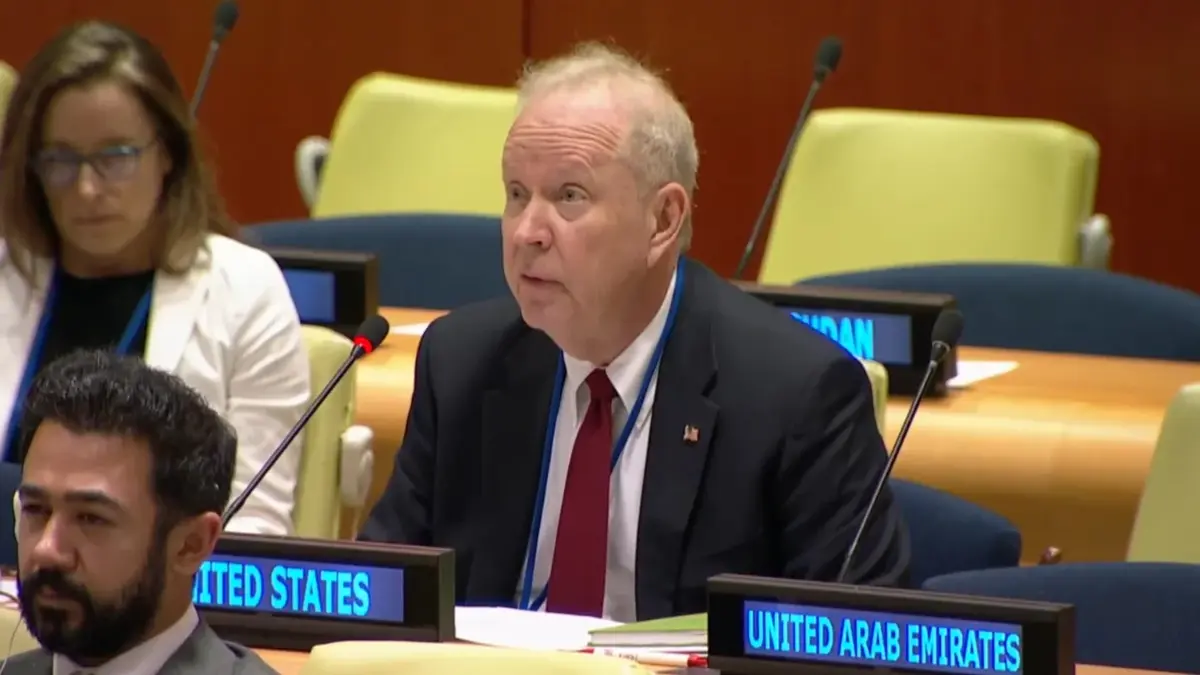
A senior legal adviser to the US State Department has issued a dramatic threat to the International Criminal Court's oversight body, warning that "all options are on the table" if the court does not drop investigations and arrest warrants against the US and Israel.

Reed Rubinstein made the threat on Tuesday during a meeting of the Assembly of State Parties (ASP), the ICC's oversight body, in New York.

"We will use all appropriate and effective diplomatic, political and legal instruments to block ICC overreach," the US representative warned.

"Our additional sanctions of June 5 should underscore our resolve," he added, referencing the US's recent move to sanction four ICC judges who issued arrest warrants for Israeli Prime Minister Benjamin Netanyahu and former Israeli Defence Minister Yoav Gallant last November.

Rubinstein went on to threaten the ICC: "To be clear, we expect all ICC actions against the United States and our ally Israel - that is, all investigations and all arrest warrants - to be terminated," he said.

Top of Form

Bottom of Form

"If not, all options remain on the table."

The ASP was meeting to discuss a potential amendment to the Rome Statute, the ICC's founding treaty, to expand the court's jurisdiction over the "crime of aggression".

The court has jurisdiction in the 125 countries that recognise its authority.

But the amendment would empower it to prosecute the crime of aggression if it was commited on the territory of an ICC member state, as is already the case with crimes against humanity, war crimes and genocide.

Neither the US nor Israel are parties to the Rome Statute and have long rejected the authority of the court. Rubinstein was permitted to attend and speak at the meeting as an observer.

The court has previously investigated alleged war crimes committed by American forces based in Afghanistan, which is a signatory to the Rome Statute.

Rubinstein claimed that "the ICC has engaged in illegitimate and baseless actions targeting America and our close ally Israel".

He added that the ICC "has wrongfully abused its power and that its malign conduct threatens to infringe US sovereignty and undermine our critical national security and foreign policy work".

And he reminded the ASP of the financial and visa sanctions the US imposed on ICC Chief Prosecutor Karim Khan in February.

Khan, a British citizen, has had his American visa revoked and his wife and children have been banned from travelling to the US. His bank accounts have been frozen in the UK.

Rubinstein, the State Department adviser, has been widely criticised in the US for claiming on social media in February 2024 that the Biden administration had a "massive program to overthrow the Israeli government".

'[The ICC's] malign conduct threatens to infringe US sovereignty and undermine our critical national security and foreign policy work'

 - Reed Rubinstein, State Department legal adviser

Challenged on the post during a Senate foreign relations hearing in March, Rubinstein said: "During the Obama administration, the State Department was running money to fund an anti-government operation inside of Israel.

"Many of the same people, who were involved in the Obama administration State Department, came back under President Biden, and it appears to me, based on emails that I obtained through the Freedom of Information Act and that we read, that the same playbook was being run."

Senator Jeanne Shaheen, the committee ranking member, said his statements constituted "conspiracy theories".

Escalating US sanctions

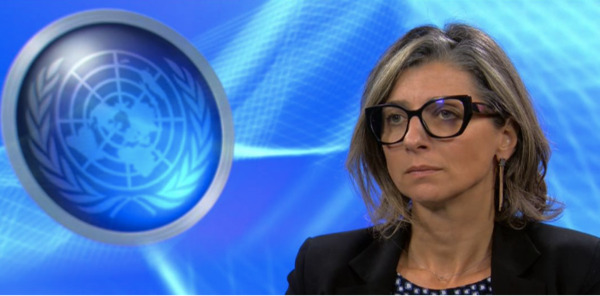
Rubinstein's message to the ASP came a day before the Trump administration announced on Wednesday that it was imposing sanctions on Francesca Albanese, the UN's special rapporteur for Palestine.

The sanctions follow Albanese's scathing report on 30 June, in which she named over 60 companies, including major US technology firms like Google, Amazon and Microsoft, which she said were involved in "the transformation of Israel's economy of occupation to an economy of genocide".

US Secretary of State Marco Rubio said on Wednesday evening that "Albanese’s campaign of political and economic warfare against the United States and Israel will no longer be tolerated."

The sanctions will freeze any assets Albanese, an Italian citizen, has in the US and would likely restrict her ability to travel to the US. 

On Thursday, UN Human Rights Chief Volker Türk urged the "prompt reversal" of the sanctions on Albanese. He said that "attacks and threats against Special Procedures mandate holders, as well as key institutions like the International Criminal Court, must stop".

The ICC is increasingly beleaguered and many experts believe the court itself could soon be targeted by US sanctions if the arrest warrants for Netanyahu and Gallant are not dropped.

Khan, its British chief prosecutor, is currently on leave after attempts failed to suspend him, and pending a United Nations investigation into sexual assault allegations against him, which he denies.

He went on leave in May as he was reportedly preparing new arrest warrants for far-right Israeli ministers Itamar Ben Gvir and Bezalel Smotrich over their promotion of illegal Israeli settlements in the occupied West Bank.

The warrants are now in the hands of two deputy prosecutors, and the court recently ordered that any further warrants cannot be publicised. 

'Warning shot over the bows'

A prominent ICC defence counsel, Nicholas Kaufman, told Israel's Kan public radio in a podcast on 8 June that recent US sanctions on four ICC judges were “meant to be designed to encourage the dropping of the arrest warrants for Prime Minister Netanyahu and former Defence Minister Gallant”.

Kaufman added: “Accordingly, most commentators believe that [the imposition of sanctions] is a further warning shot over the bows, if I can put it that way, before the sanctioning of the deputy prosecutors who've now taken over from Karim Khan, who has gone out on self-imposed leave because of the allegations of sexual misconduct.”

MEE revealed on 16 June that the British government was lobbying the US against sanctioning the court itself.

Diplomatic sources said the US informed its allies that to avoid facing further sanctions, the court has to permanently close all actions against the US and Israel.

The US also said the ICC must commit to not targeting US nationals and US allies who have not consented to the court's jurisdiction.

If the US sanctions the court as an institution, this would prevent banks and software companies from dealing with it, which could prove an existential threat to the ICC, as it could destroy its ability to function. 


PALESTINE

Wed 16 Jul 2025 6:18 pm - Jerusalem Time

10 dead and wounded in the occupation's bombing of Deir al-Balah and al-Sudaniya in the Gaza Strip

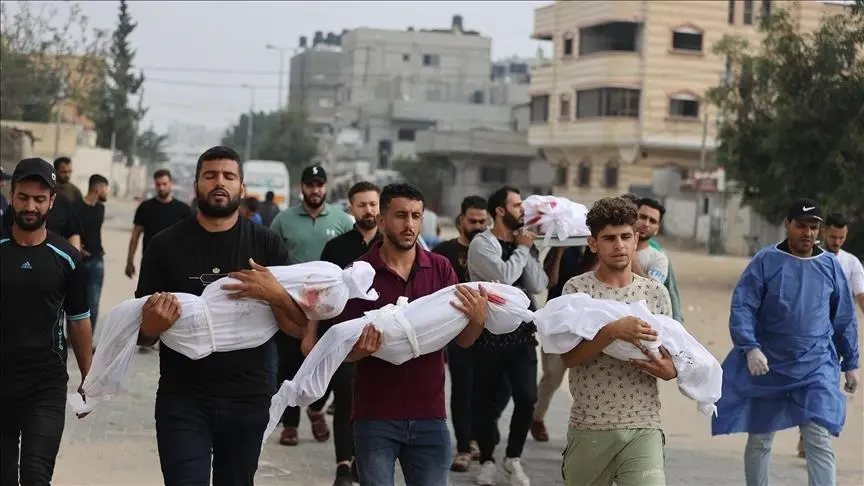
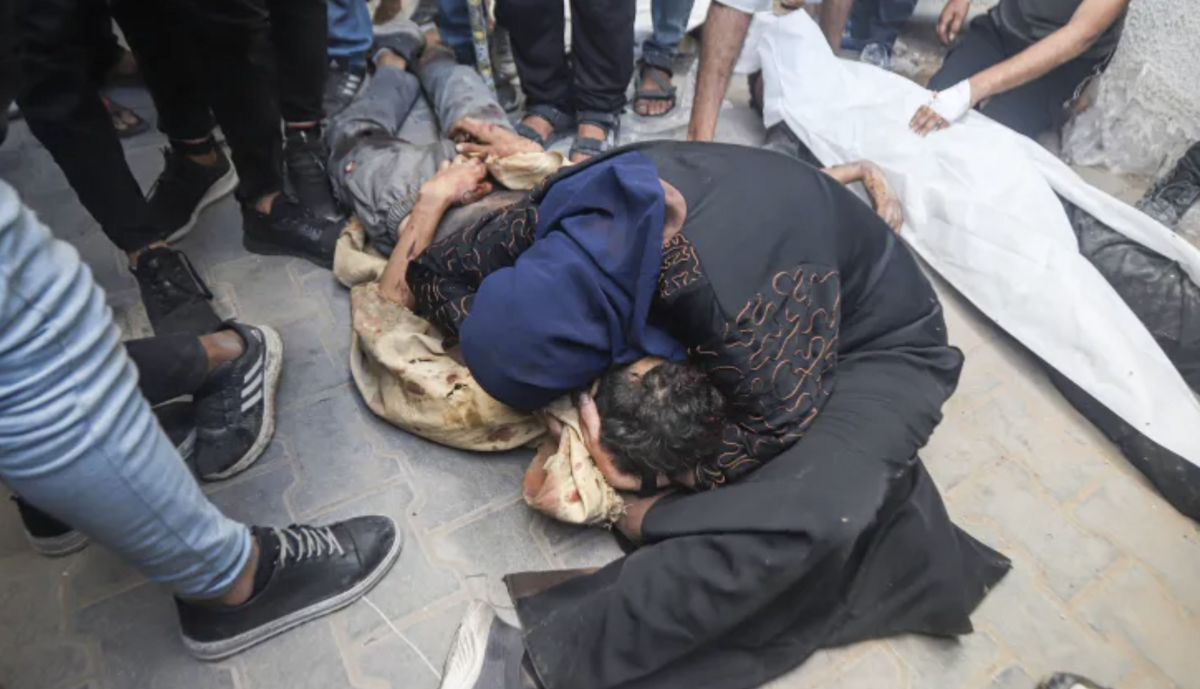
Ten civilians were killed and others were injured, most of them moderately to seriously, as a result of the ongoing Israeli aggression on the Gaza Strip.

According to local sources, five civilians were killed and 17 others, including children, were injured when the occupation forces bombed the Abu Areef and Al-Mazra'a areas in Deir al-Balah, in the central Gaza Strip.

Among the dead were identified as: Shadi Al-Shalabi, Abdel Shafi Abu Gharqoud, Ibrahim Al-Zamar, the wife of Muhammad Al-Dayeh, and Jabry Mahmoud Adnan Issa.

He also confirmed the death of three citizens and the injury of others in an Israeli bombardment targeting them in the Al-Bureij camp in the central Gaza Strip.

Two citizens also died of their wounds in the Sudanese area, northwest of the Gaza Strip.

PALESTINE

Wed 16 Jul 2025 4:57 pm - Jerusalem Time

The occupation continues its aggression against Tulkarm and its two camps and escalates home demolitions.

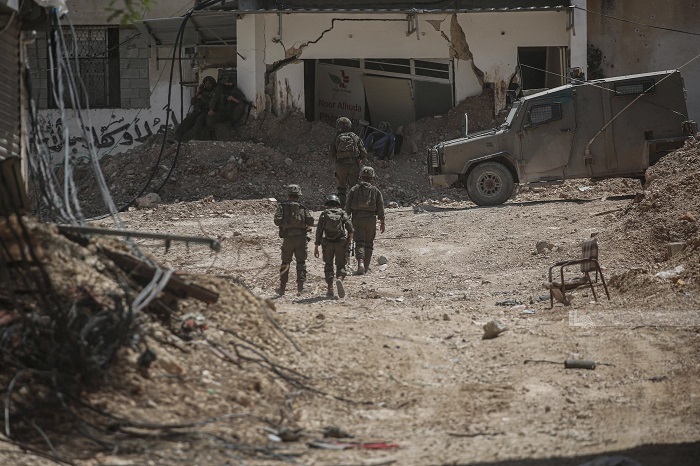
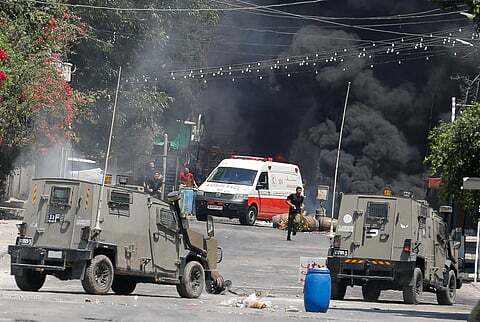
The Israeli occupation forces continue their aggression against the city of Tulkarm and its camp for the 171st consecutive day, and for the 158th day against the Nur Shams camp, amid an unprecedented escalation in demolitions and bulldozing operations that have affected dozens of homes and residential facilities.

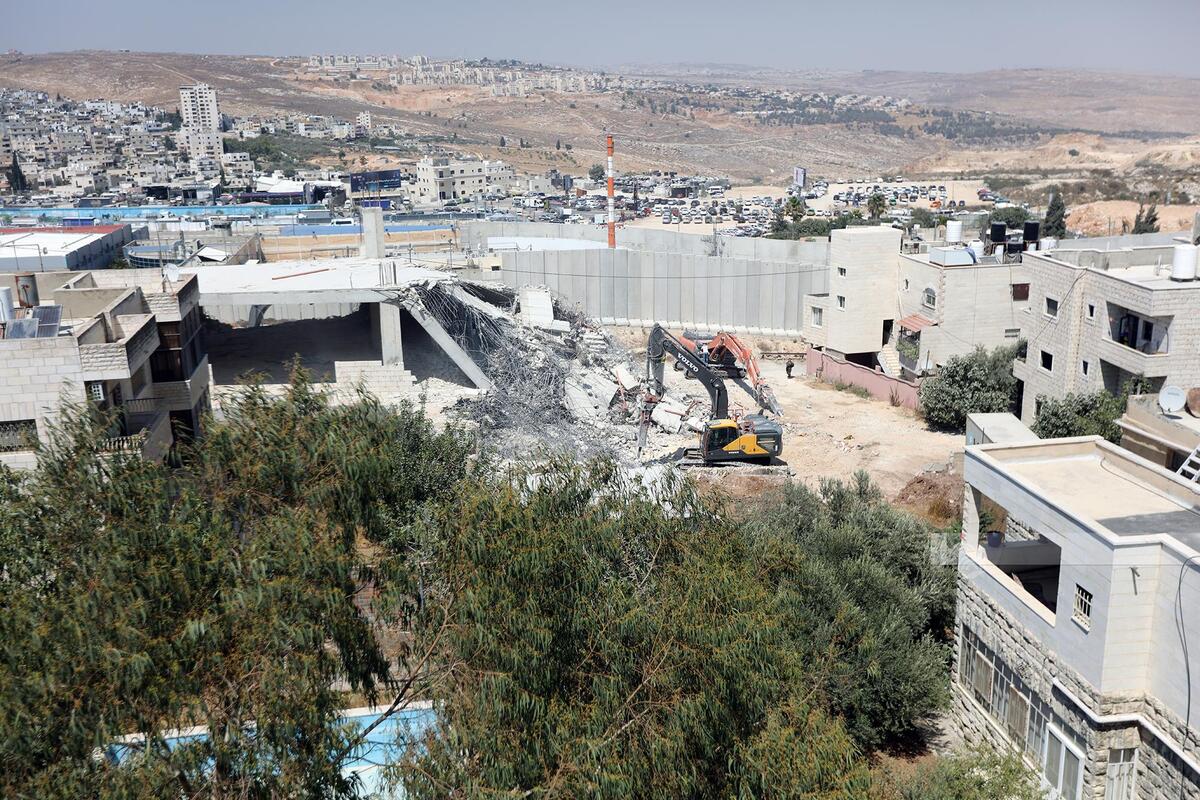
According to local sources, heavy Israeli bulldozers continued their demolition work in Tulkarm camp this morning at a rapid pace, targeting more residential buildings and leaving behind rubble amid clouds of dust and smoke that covered the area.

This escalation comes as part of the occupation's new plan to demolish 104 buildings, comprising approximately 400 homes. This is the latest in a series of demolitions that have affected several neighborhoods in the camp over the past few days, specifically Al-Murabba'a, Abu Al-Foul, Al-Shuhada, and Al-Hamam, resulting in thousands of families losing their homes.

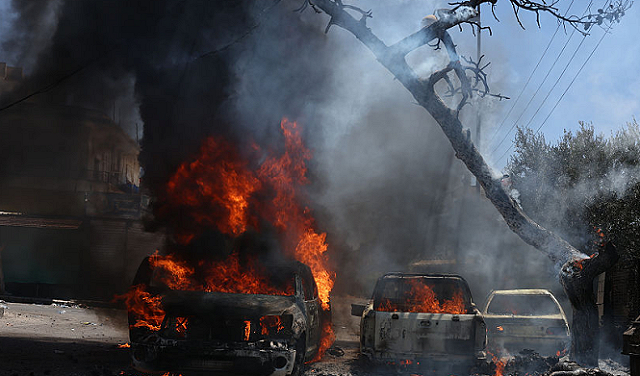
Meanwhile, Nour Shams camp is witnessing a military escalation amidst the aggression and tight siege imposed by the occupation forces, accompanied by the deliberate burning of homes and the setting of fires inside them, particularly in Jabal al-Nasr.

In recent weeks, Nur Shams camp has been subjected to extensive demolition operations, including dozens of residential buildings, as part of an Israeli plan to demolish 106 buildings in Tulkarm and Nur Shams camps. 48 of these buildings were demolished in Nur Shams alone, causing widespread destruction and creating wide streets that separated neighborhoods from each other.

The ongoing escalation has led to the forced displacement of more than 5,000 families from the Tulkarm and Nur Shams camps, representing over 25,000 residents. The total destruction of more than 600 buildings and partial damage to 2,573 homes have also occurred. The entrances to the camps remain blocked with barriers, transforming them into lifeless areas. Residents are prevented from reaching their homes or checking on their property, amid direct gunfire targeting anyone who approaches the area.

In a related context, the occupation forces sent more military reinforcements to the city, which is witnessing intensive movements of occupation vehicles around the clock, specifically in the neighborhoods, the market center, the street of the Martyr Thabet Thabet Governmental Hospital, Gamal Abdel Nasser Square, and Nablus Street, where they deliberately obstruct the movement of citizens and vehicles, while sounding their horns in a provocative manner, and driving against the traffic, endangering the lives of citizens.

The occupation forces continue to transform Nablus Street into a military barracks, continuing their seizure of a number of residential buildings there, along with parts of the city's northern neighborhood, specifically those facing Tulkarm refugee camp. The forces forcibly evacuated residents of these neighborhoods, some of which have been under occupation control for more than four months, and have deployed heavy machinery and bulldozers in the vicinity.

This street, which serves as a link between the Tulkarm and Nur Shams refugee camps, has also suffered significant damage due to earth mounds placed by the occupation forces several months ago. The occupation forces are also heavily present, setting up flying and surprise checkpoints, obstructing vehicle movement and exacerbating the suffering of civilians.

The ongoing aggression has so far resulted in the deaths of 14 civilians, including a child and two women, one of whom was eight months pregnant. Dozens of people have been injured and arrested, and widespread destruction has affected infrastructure, homes, shops, and vehicles.


PALESTINE

Wed 16 Jul 2025 4:31 pm - Jerusalem Time

Director of Al-Shifa Medical Complex in Gaza: We call for the urgent closure of death traps.

Director of Al-Shifa Medical Complex, Mohammed Abu Salima, called for the closure of aid distribution centers, saying they have become death traps in the Gaza Strip. This came after the first deaths due to suffocation and the intense stampede of Palestinian citizens at aid distribution centers.

Twenty-one Palestinians, 15 of them children and the elderly, were killed by tear gas fired at starving people at an aid distribution center south of Khan Yunis in the southern Gaza Strip.

Abu Salmiya said the massive surge was a result of the hunger people in the Gaza Strip are suffering from. He noted that people are flocking by the hundreds of thousands to receive aid, but the Israeli occupation and the organization distributing the aid are treating them in an inhumane and inappropriate manner, with no organization or clear mechanisms for distributing aid.

Abu Salmiya did not confirm reports that the victims were exposed to tear gas, which led to their suffocation. However, he noted that the Israeli occupation and American Foundation employees had previously fired toxic gases and sprayed pepper spray on starving people who had gone to aid distribution centers in search of food to quell their hunger.

He described what happened today as a major crime committed by the Israeli occupation against the Palestinians, noting that they had previously warned UN and international organizations about the conditions currently facing Gazans. Abu Salmiya emphasized that they are no longer able to provide services and supplies to patients in the Strip, which, he said, is another form of death.

He called for the immediate and urgent closure of what he called death traps, a call echoed by organizations operating in the Gaza Strip, including the United Nations, the United Nations Relief and Works Agency for Palestine Refugees in the Near East (UNRWA), and Doctors Without Borders.

The director of Al-Shifa Medical Complex concluded in his remarks that those who hadn't died from Israeli airstrikes and drones were now dying of suffocation as a result of the stampede for food.

The Government Media Office in Gaza confirmed that the occupation and the American Foundation are carrying out a horrific massacre against the starving, noting that the so-called "Gaza Humanitarian Foundation" is not a humanitarian organization and does not adhere to any standards for relief work. Rather, it is a dangerous security and intelligence tool designed to serve the occupation's agenda.

Since the start of operations in the Gaza Strip at the end of last May, American aid distribution centers have witnessed almost daily killings and targeting of starving people, with Israeli forces using artillery shells, reconnaissance missiles, and, in some cases, quadcopter drones to fire explosive bullets.


ARAB AND WORLD

Wed 16 Jul 2025 4:01 pm - Jerusalem Time

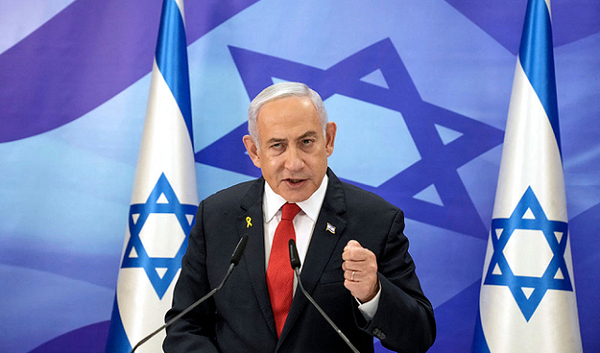
Netanyahu: The situation in Sweida and southwestern Syria is very dangerous.

Israeli Prime Minister Benjamin Netanyahu claimed that the situation in the Sweida region and southwestern Syria is very dangerous.

Netanyahu claimed that his army and aircraft were working to provide support to the Druze in the area, in addition to the movement of other forces to combat the Syrian regime's gangs, according to his allegations.

Netanyahu called on the Druze in occupied Palestine not to cross the border into Syria.

"You are putting your lives in danger; you could be killed or kidnapped, and this harms the efforts of the Israeli army," he said.

He also called on them to return to their homes and leave his army to carry out its mission in the region.

ARAB AND WORLD

Wed 16 Jul 2025 3:14 pm - Jerusalem Time

Israeli bombing of Syrian military bases, Katz threatens escalation

Two civilians were injured in an Israeli airstrike targeting central Damascus on Wednesday afternoon, according to the Syrian Al-Ikhbariya channel. Meanwhile, an Israeli security source announced that the army raided the entrance to the General Staff headquarters, in a message to President Ahmed al-Sharaa regarding the events in Sweida, in the south of the country, according to the Israeli Broadcasting Authority.

Israeli Defense Minister Yisrael Katz said in a statement that the bombing targeted "a target close to the general command in Damascus, and the strikes will continue to escalate unless the message is understood." He added, "We have been carrying out escalating strikes for the past 24 hours, targeting regime sites in Sweida."

Katz continued that the pace of strikes in Syria will increase if Damascus does not get the message, adding that southern Syria will be a demilitarized zone.

In previous statements, Katz called on the Syrian government to withdraw its forces from Sweida, saying, "The Syrian regime must leave the Druze in Sweida and withdraw its forces."

Forces from the Syrian Ministries of Defense and Interior entered the city of Sweida last Monday in an attempt to assert control over the volatile neighborhoods, maintain security, and restore stability.

The Israeli Air Force bombed Syrian government targets in As-Suwayda Governorate today, coinciding with renewed clashes in the city between Syrian security forces and armed groups.

Events erupted in Sweida following armed clashes between Druze and Bedouin groups in the city's neighborhoods a few days ago, resulting in deaths and injuries. Following the clashes, Syrian army and Interior Ministry forces entered the city in an effort to restore security.

Source: Al Jazeera + Al Jazeera + Agencies

ARAB AND WORLD

Wed 16 Jul 2025 2:03 pm - Jerusalem Time

Washington asks Israel to investigate the killing of an American citizen by settlers as an act of terrorism.

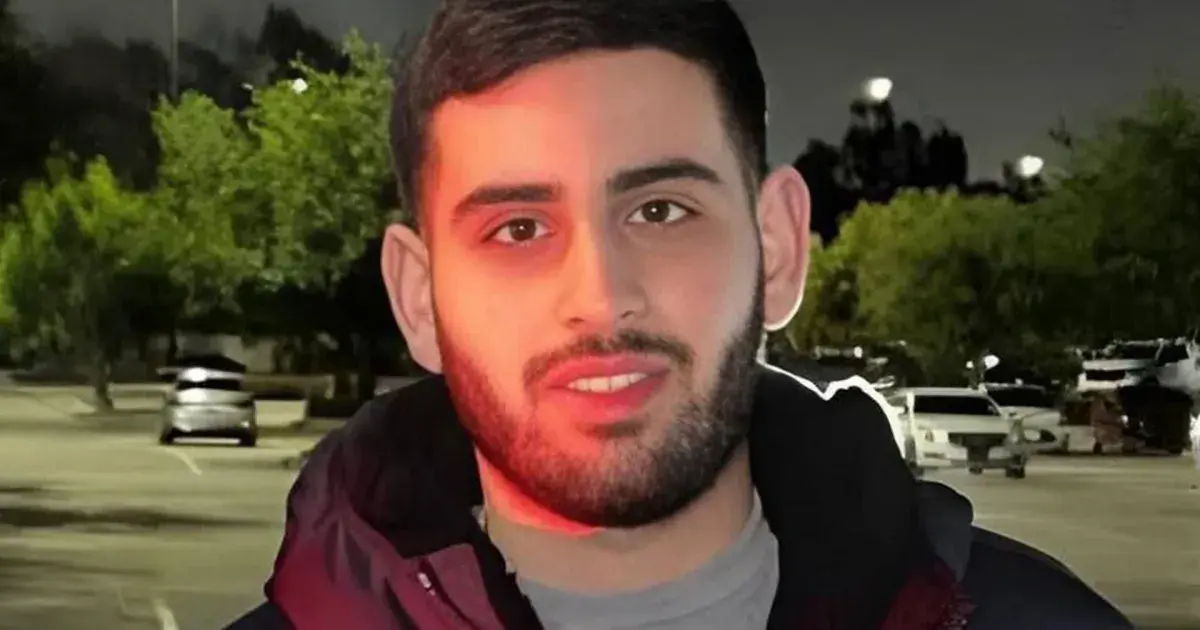
The administration of US President Donald Trump called on Israel to investigate the killing of 20-year-old American citizen Saifallah Muslat, who was beaten to death by settlers in the occupied West Bank, describing the incident as an "act of terrorism."

US Ambassador to Israel Mike Huckabee said Tuesday he had asked Israel to "seriously investigate" the killing of Maslat, a Florida native who was visiting family when he was attacked in the Palestinian town of Sinjil.

"The perpetrators of this criminal and terrorist act must be held accountable. Saif was only 20 years old," Huckabee wrote in a social media post.

Huckabee's strongly worded post represents a rare critical stance toward Israel by the US envoy, a staunch supporter of Israel who has previously said, "There really is no such thing as a Palestinian."

However, the US ambassador's statement did not respond to the Maslat family's demand that Washington open its own investigation into the murder.

Records show that Israel rarely holds its settlers or soldiers accountable for violations against Palestinians. Notably, Muslat is the ninth American citizen killed by Israel since 2022. None of the previous cases resulted in criminal charges.

The Institute for Middle East Understanding (IMEU) Policy Project said that Israel should not be trusted to "investigate the extremist settlers it enables at every step," renewing calls for an independent US investigation, according to the institute's website.

Another Palestinian, identified by Palestinian health officials as Mohammed Shalabi, was shot dead by settlers during the same attack that killed Muslat on Friday. Attacks on Palestinians have escalated during Israel's war on Gaza. Israeli settlers have intensified their attacks on Palestinian towns and villages in the occupied West Bank since Israel launched its war on Gaza in 2023. Settlers, often protected by the Israeli military, regularly descend from their illegal settlements into Palestinian towns, where they loot homes, cars, and farms and attack anyone who stands in their way.

Several Western countries, including major allies of Israel, have imposed sanctions on Israeli officials and far-right groups over settler violence. Trump lifted sanctions related to settler attacks imposed by his predecessor, Joe Biden, upon taking office on January 20, 2025.

The United States provides Israel with billions of dollars in military aid annually.

It's worth noting that in recent days, several members of Congress have called for Muslat to be held accountable. Representative Hakeem Jeffries, the Democratic minority leader in the House of Representatives, described Muslat's killing as "horrific and horrific."

"The Israeli government must thoroughly investigate this killing and hold all settlers responsible for Mr. Muslat's brutal death accountable to the fullest extent of the law," he said in a statement.

Congressman Maxwell Frost, a Florida district representative, also condemned the "cold-blooded murder."

“As our country’s so-called peacemaker, Donald Trump has a moral and constitutional obligation to direct the State Department to conduct a thorough investigation and, more importantly, demand justice and full accountability for those responsible for this heinous act,” Frost said in a statement.

"Our country must ensure the protection and safety of Americans abroad."

Israel announced on Friday that it was "investigating" what happened in the town of Sinjil, claiming that the violence began when Palestinians threw stones at an Israeli vehicle.

"Shortly afterward, violent clashes erupted in the area between Palestinians and Israeli civilians, including the destruction of Palestinian property, fires, physical confrontations, and stone-throwing," the Israeli military said in a statement. However, Muslat's family denied any account of "clashes," saying that a mob of settlers surrounded the Palestinian-American youth for three hours during the attack and prevented paramedics from reaching him.

In turn, the Council on American-Islamic Relations (CAIR) called on Florida Senators Rick Scott and Ashley Moody, Florida Governor Ron DeSantis, and Congresswoman Laurel Lee, who represents Muslat's constituency, to condemn the killing of the American citizen.

The rights group described the officials' silence as "complicity" rather than neutrality.

“When American citizens like Saif are killed abroad, especially by Israeli settlers supported by the Israeli government, turning a blind eye sends a dangerous message that some American lives are worthless,” CAIR wrote in a social media post. “We demand that they be improved.”

PALESTINE

Wed 16 Jul 2025 1:39 pm - Jerusalem Time

Human rights organizations: The forced gathering of Gazans amounts to a crime against humanity.

On Tuesday, July 15, 2025, Adalah, the Legal Center for Arab Minority Rights in Israel, on its own behalf, along with Gisha, the Association for Civil Rights in Israel, and Physicians for Human Rights in Israel, sent an urgent letter to Israeli Defense Minister Yisrael Katz, Attorney General Gali Baharav-Meira, and Military Advocate General Yifat Tomer-Yerushalmi, demanding the cancellation of the announced plan to establish a so-called “humanitarian tent city” on the ruins of Rafah in the southern Gaza Strip. The plan aims to gather the residents of the Strip into a single area under Israeli military control.

This appeal was made on behalf of the four organizations by Attorney Suhad Bishara, Director of the Legal Unit at Adalah, who explained that the plan represents a clear and declared intention, following media statements by the Minister of Defense, and constitutes a serious violation of international humanitarian law.

She added that implementing such a plan constitutes a war crime and a crime against humanity, and may even amount to genocide according to internationally recognized definitions.

The letter explained that the Minister of Defense's statements, dated July 7, 2025, in which he announced that he had instructed the army to begin establishing a "humanitarian city" in Rafah to accommodate Gaza's residents, reveal a detailed plan to completely control the lives of Palestinian civilians, confining them within a closed area under Israeli military control.

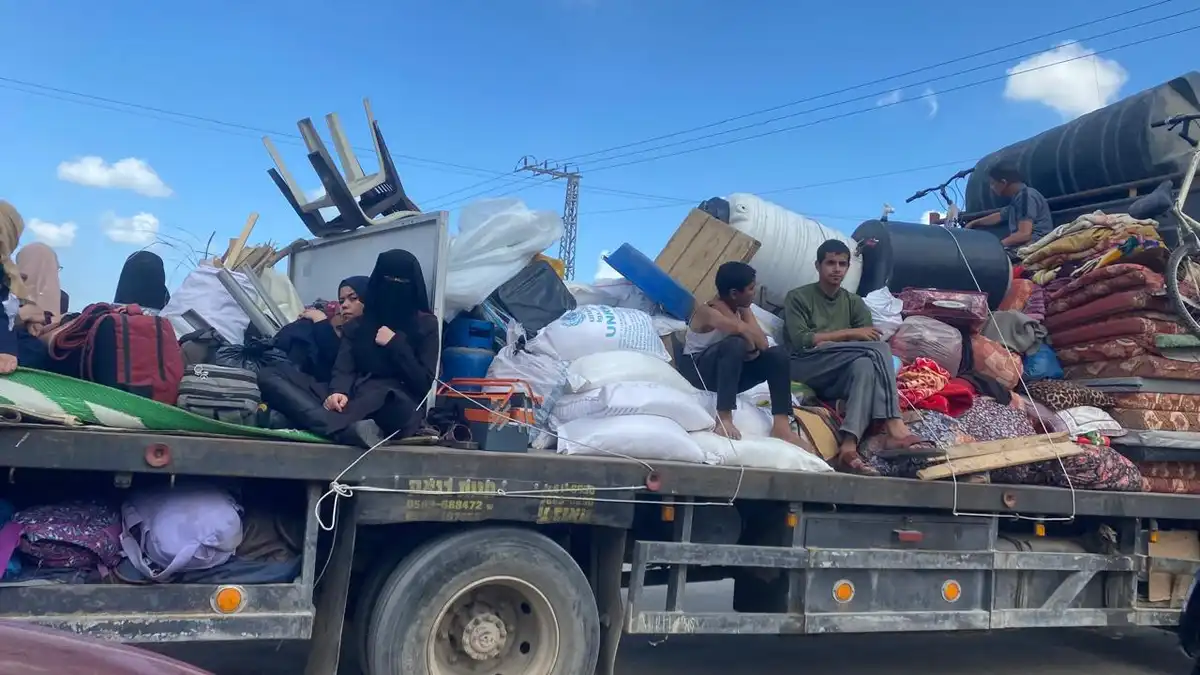
According to reports, the first phase of the plan calls for the gathering of approximately 600,000 residents of the Al-Mawasi area, in preparation for the transfer of the remaining residents of the Strip to the same site. This will require them to undergo security screening before entering and subsequently be prohibited from leaving the area without permission. It was also announced that humanitarian aid will be directed exclusively to this "city," with the aim of forcibly transferring residents to it. This reflects the use of starvation as a tool of pressure and a flagrant violation of a fundamental principle of international humanitarian law.

The organizations emphasized in the letter that this plan comes amid a deteriorating humanitarian situation created by the Israeli military through its ongoing blockade, starvation, widespread destruction of homes and infrastructure, the collapse of the health system, the devastation of local food production mechanisms, the transformation of the entire Gaza Strip into a danger zone, and the waging of a war of extermination against the population as a whole.

In this context, the claim that residents will move voluntarily is nothing more than rhetorical manipulation aimed at concealing a reality of collective coercion, the goal of which is to empty the Strip of its inhabitants and impose a new demographic reality by force.

The letter warned that concentrating the Palestinian population in a single, small area under military control, preventing them from returning to their homes, and denying them their right to move and live in freedom and dignity constitutes forced transfer, prohibited under the Geneva Conventions and international law. It amounts to a war crime and a crime against humanity under the Rome Statute of the International Criminal Court, and constitutes a policy of ethnic cleansing.

At the end of the letter, the four organizations called on Israeli officials to immediately cancel the plan and refrain from any action to implement it on the ground.

In a comment, Dr. Suhad Bishara, Director of the Legal Unit at the Adalah Legal Center, said: "The repeated statements and systematic planning for a plan of this kind constitute an explicit declaration and detailed planning for the commission of additional war crimes and crimes against humanity in the Gaza Strip. The international community must take action to prevent these crimes from being carried out."

ARAB AND WORLD

Wed 16 Jul 2025 1:27 pm - Jerusalem Time

Albanese calls for global action to stop the "genocide" in Gaza.

The UN Special Rapporteur on Gaza and the occupied West Bank, Francesca Albanese, said on Tuesday that it is time for countries around the world to take concrete action to stop what she described as "genocide" in Gaza.

Albanese spoke to delegates from 30 countries gathered in the Colombian capital to discuss Israel's war on the devastated and besieged Gaza Strip and ways countries can try to stop it. Many participating countries have described this violence as genocide against Palestinians.

"Every country must immediately review and suspend all relations with the State of Israel... and ensure that its private sector does the same," said Albanese, who was sanctioned by the United States last week, coinciding with Israeli Prime Minister Benjamin Netanyahu's visit to Washington. "The Israeli economy is designed to prop up an occupation that has now devolved into genocide."

Most developing countries are participating in the two-day conference, co-organized by Colombia and South Africa, although the governments of Spain, Ireland, and China also sent delegates.

Israel strongly rejects the accusations of genocide against it. Analysts say it is not clear whether the countries participating in the conference have enough influence over Israel to force it to change its policies in Gaza, where more than 58,000 people, most of them women and children, have been killed in the brutal war on the Strip, which has been ongoing for nearly two years.

Omer Bartov, a genocide scholar at Brown University, said in a lengthy opinion piece published in the New York Times on Tuesday that Israel is committing genocide in Gaza, explaining: “Israel’s actions can only be understood as carrying out the stated intention to make the Gaza Strip uninhabitable for its Palestinian population. I believe the goal was—and remains today—to force the population to leave the Strip entirely, or, given that there is nowhere else for them to go, to weaken the Strip through bombing and severe deprivation of food, clean water, sanitation, and medical assistance to the point that it is impossible for the Palestinians in Gaza to maintain their existence or rebuild as a group. My conclusion has become unavoidable: Israel is committing genocide against the Palestinian people.”

The United Nations and other international organizations consider the Gaza Health Ministry's figures the most reliable statistics on war casualties. "The United States has so far failed to influence Israel's behavior... so it is naive to think that this group of countries can have any influence on the behavior of (Israeli Prime Minister Benjamin) Netanyahu or on the Israeli government," Sandra Borda, a professor of international relations at the University of Los Andes in Bogota, told The Associated Press. However, she said the conference will enable some countries in the Global South to clarify their position on the conflict and make their voices heard.

The conference is co-chaired by the governments of South Africa and Colombia, which last year suspended coal exports to Israeli power plants, and includes members of the Hague Group, an eight-nation alliance that pledged earlier this year to sever military ties with Israel and comply with the International Criminal Court's arrest warrant against Netanyahu.

The participating countries affirmed their efforts to comply with the International Court of Justice's opinion issued last year, which declared Israel's occupation of Palestinian territories illegal. There is also a UN General Assembly resolution issued last September demanding that Israel withdraw its army from Palestinian territories and calling on member states to halt arms sales to Israel.

"It is important that we defend the rule of law in a meaningful way," said Crispin Phiri, spokesperson for South Africa's Department of International Relations, who is attending the conference in Bogota. "The notion that international law only applies to countries in the Global South is no longer tenable."

For decades, South Africa's ruling African National Congress has compared Israel's policies in Gaza and the West Bank to its history of oppression under the brutal apartheid system of white minority rule, which confined most Black people to their "homelands," or Bantustans, before ending in 1994.

Albanese also raised this comparison while speaking to delegates at the conference, urging them to impose sanctions on Israel until it withdraws from Gaza and the West Bank.

"I ask you to look at this moment as if we were sitting here in the 1990s, discussing apartheid in South Africa," Albanese said. "Would you propose selective sanctions on South Africa for its conduct in individual Bantustans? Or would you recognize the criminal system of the state as a whole?"

This meeting comes as the European Union is considering various measures against Israel, including a ban on imports from Israeli settlements, an arms embargo, and individual sanctions against Israeli officials found to be obstructing a peaceful solution to the conflict.

Colombian Deputy Foreign Minister Mauricio Jaramillo said on Monday that the countries participating in the Bogota meeting, which also includes Qatar and Turkey, will discuss diplomatic and legal measures that can be taken to increase pressure on Israel to stop its attacks. The Colombian official described Israel's behavior in the Gaza Strip and the West Bank as an affront to the international order. "This is not just about Palestine, it's about defending international law... and the right to self-determination," Jaramillo said at a press conference.

PALESTINE

Wed 16 Jul 2025 1:19 pm - Jerusalem Time

94 Dead in 24 hours, bringing the death toll since October 7 to 58,573.

The Ministry of Health in the Gaza Strip announced today, Wednesday, that 94 dead (including 7 recovered dead) and 252 injuries arrived at Gaza Strip hospitals over the past 24 hours.

"A number of victims are still under the rubble and on the streets, and ambulance and civil defense crews are unable to reach them at this time," she said in her daily statement.

It pointed out that the death toll from the Israeli aggression has risen to 58,573 dead and 139,607 injuries since October 7, 2023.

It pointed out that the death toll and injuries since March 18, 2025, until today has reached: 7,750 dead and 27,566 injuries.

Regarding the livelihood martyrs, the Ministry of Health in Gaza confirmed that the number of aid victims who arrived at hospitals over the past 24 hours was 7, along with more than 30 injuries. This brings the total number of livelihood victims who arrived at hospitals to 851, with more than 5,634 injuries.

PALESTINE

Wed 16 Jul 2025 1:17 pm - Jerusalem Time

The occupation rejects the Basha family's appeal to overturn the decision to evict them from their home in Jerusalem.

The Israeli Central Court has rejected an appeal filed by the Pasha family of Jerusalem, which had sought to overturn the decision to evict them from their historic home in the Old City of Jerusalem.

The house, built before 1930, consists of three floors and directly overlooks Al-Aqsa Mosque. It occupies a strategic location connecting the streets of the Old City and is located close to the blessed mosque.

On March 4, the occupation court issued a decision ordering the family's eviction from the property located on Wadi Road, as part of a plan to transform it into part of a colonial project aimed at Judaizing the area.

PALESTINE

Wed 16 Jul 2025 1:00 pm - Jerusalem Time

Settlers expand a colonial outpost south of Hebron

Today, Wednesday, settlers began expanding and implementing construction work in a colonial outpost south of Hebron.

Local sources reported that a group of settlers have begun expanding and carrying out construction work at an old Jordanian army camp in the Khashm al-Daraj area in the Badia region east of Yatta. The camp was seized more than two years ago and transformed into a colonial outpost.

In the same context, a group of armed settlers conducted a provocative tour around the homes of citizens in the "Saddat al-Tha'la" neighborhood in the Masafer Yatta area, erecting occupation flags in the middle of the neighborhood and threatening residents with imminent displacement from their homes and properties.

PALESTINE

Wed 16 Jul 2025 12:36 pm - Jerusalem Time

US Ambassador to Israel Meets Netanyahu During His Trial

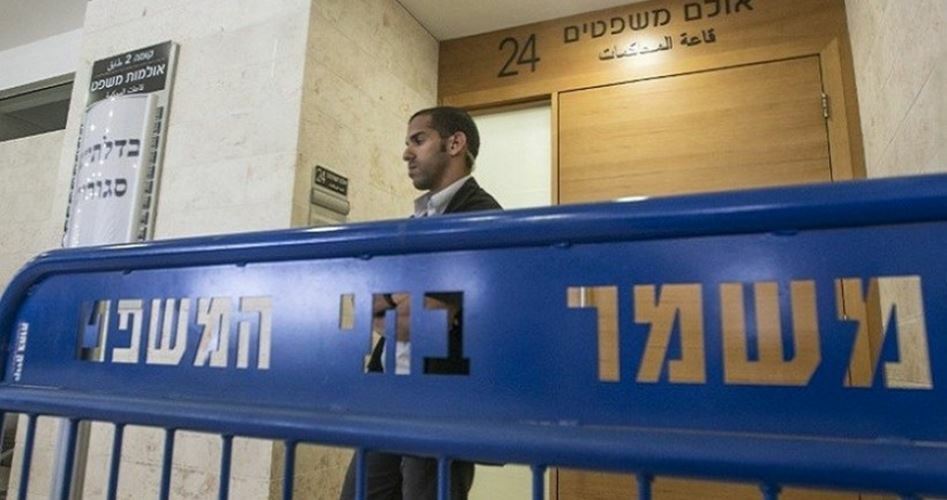
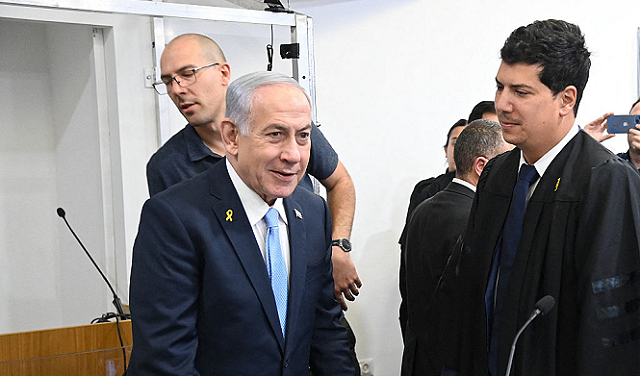
US Ambassador to Israel Mike Huckabee arrived at the Tel Aviv District Court as Israeli Prime Minister Benjamin Netanyahu's corruption trial resumed.

Netanyahu's military advisor also arrived at the courtroom, and the session was adjourned for about half an hour for a security update.

"The president spoke about what we saw as a witch hunt in the United States, and it's very difficult to do the job that the people elected you to do when you're tied up in legal matters that distract from your job," Huckabee told Netanyahu.

He added that Trump "understands how difficult it is when you're in the middle of a very tense state, to spend so much time in a courtroom before unfair judges. I think the president isn't trying to take sides in what's happening in Israel, but he understands from personal experience how difficult it is to do the job the people elected you to do."

Today's court session focused on Case 1000 and Netanyahu's relationship with American-Israeli film producer Arnon Milchan. The prosecutor stated that part of the hearing would be held behind closed doors.

Unlike previous court sessions, the judges barred journalists from photographing Netanyahu after they entered the courtroom before him.

The State Prosecution began questioning Netanyahu in Case 1000 on June 3, departing from the order it had followed in presenting the prosecution's case. It began with Case 4000, in which Netanyahu is accused of granting favors to Shaul Elovitch, the owner of the Bezeq telecommunications company, in exchange for favorable media coverage on the Walla! website, which Elovitch also owns. The prosecution considered the first case to be the strongest in terms of evidence against Netanyahu, unlike the last case (Case 4000), in which the judges recommended the prosecution drop the bribery charge, the most serious of the three charges in the case.

Netanyahu faces charges of corruption, bribery, and treason in three corruption cases, known as Cases 1000, 2000, and 4000. An indictment was filed against him in late November 2023. In Case 2000, he is accused of negotiating with Yedioth Ahronoth publisher Arnon Mozes to obtain positive media coverage.

PALESTINE

Wed 16 Jul 2025 12:17 pm - Jerusalem Time

Jerusalem: A number of citizens suffered suffocation near the town of Al-Ram.

A number of citizens suffered from suffocation on Wednesday near the town of al-Ram, northeast of Jerusalem, as Israeli forces pursued them near the racist separation wall.

Local sources reported that occupation forces pursued a group of young men in the vicinity of the apartheid wall and fired a barrage of tear gas canisters, causing a number of citizens to suffer from suffocation.

This area witnesses occasional attacks by the occupation forces, as part of the policy of restricting access to citizens in towns adjacent to the apartheid wall.

PALESTINE

Wed 16 Jul 2025 10:32 am - Jerusalem Time

UNRWA: One in 10 children in Gaza who undergo screening suffers from malnutrition.

The United Nations Relief and Works Agency for Palestine Refugees (UNRWA) said that one in 10 children examined in clinics it operates in Gaza suffers from malnutrition.

"Our health teams confirm that malnutrition rates in Gaza have increased, especially since the blockade was tightened more than four months ago on March 2," UNRWA Director of Communications Juliette Touma said in Geneva via video link from the Jordanian capital, Amman.

It noted that UNRWA has examined more than 240,000 children under the age of five in its clinics since January 2024, adding that malnutrition was rarely detected in the Gaza Strip before the war.

"A nurse we spoke to told us that in the past he only knew about malnutrition cases through books and documentaries," Toma added.

It stressed that medicines, food supplies, hygiene materials and fuel are all running out rapidly.

The United Nations Children's Fund (UNICEF) said on Monday that more than 5,800 children were diagnosed with malnutrition in Gaza last month, including more than 1,000 children suffering from severe acute malnutrition. This marks the fourth consecutive month of increase.

It's worth noting that medical sources in the Gaza Strip reported a few days ago that the number of children killed due to malnutrition so far has reached 67, while more than 650,000 children under the age of five face a real and immediate risk of severe malnutrition in the coming weeks, out of a total of 1.1 million children in the Strip.

ARAB AND WORLD

Wed 16 Jul 2025 9:36 am - Jerusalem Time

Observer: Why did the BBC withdraw a film about the bombing of medical personnel in Gaza?

Producers of a BBC documentary about the Israeli military's targeting of medical personnel and hospitals in the Gaza Strip revealed that the channel's management withdrew the film shortly before its scheduled broadcast following a series of postponements for reasons they described as political, not editorial.
The film, "Gaza: Doctors Under Fire," directed by Karim Shah and produced by award-winning investigative journalist Ramita Navai and her colleague Ben de Beer, was the result of a year-long investigation, documenting the heartbreaking testimonies of doctors and paramedics who lost colleagues and family members in Israeli bombing.
The film's producers explained in an article in the British newspaper The Observer that the film had received approval from lawyers and editors at the BBC and had received praise from senior editors. However, its release was postponed several times before it was finally withdrawn last May, just days before its broadcast.
According to the producers, BBC management considered downgrading Ramita Navai's role from "correspondent" to "external contributor," on the grounds that her tweets on X (formerly Twitter) were deemed "biased" toward Palestinians, despite being retweets of human rights sources documenting violations.
The producers argued that the prestigious British media outlet had caved to pressure and feared a repeat of what happened with a previous documentary about Gaza, "How to Survive in a War Zone," which was removed from its platforms following controversy over the narrator, "a 14-year-old son of a Hamas minister."
In their article, they noted that BBC management justified the postponement by stating that the new film required a review by senior officials within the corporation. They also argued that there was significant political sensitivity surrounding the coverage of the war on Gaza, particularly given the criticism directed at the channel's coverage, which was accused of creating a "false equivalence" between what happened on October 7 and the Israeli response, which left tens of thousands of Palestinians dead.
They also revealed that some editorial meetings were conducted in a spirit of self-censorship, with the names of pro-Israel activists being brought up, and it was suggested that some information in the film might be rejected if deemed unacceptable by pro-Israel media lobby groups.
They continued that in one meeting, a senior BBC journalist said that some information should be deleted because it would not satisfy CAMERA, a pro-Israel media watchdog.
Although the channel later attempted to broadcast short excerpts from the film, a legal clause included in the contract prohibiting the film's producers or any party purchasing it from "disparaging the BBC" or implying that it was a BBC-approved film led to the refusal to sign the contract.

Eventually, the film was broadcast in full on Channel 4, where it received widespread acclaim from critics and viewers. Reactions continued both within and outside the BBC, with many journalists expressing sympathy for the cast and crew, asserting that they were "on the right side of history."
But Ramita Navai and De Beer concluded their testimony by saying, “We do not want to be on the right side of history, but on the right side of the present.”


ARAB AND WORLD

Wed 16 Jul 2025 9:06 am - Jerusalem Time

More than 200 killed in Sweida: renewed Israeli raids and martyrs among Syrian security forces.

More than 200 people have been killed in armed clashes in the southern Syrian province of Sweida since Sunday morning, including members of the security forces killed in Israeli airstrikes. The Israeli military announced that it had attacked Syrian security forces' military vehicles in Sweida, including tanks and armored personnel carriers, "under the direction of the political echelon."

Syrian media reported after midnight Tuesday-Wednesday that Israeli aircraft targeted the 52nd Brigade east of Daraa, the vicinity of Tha'la Airport in the Sweida countryside, and other sites in the governorate. The media also reported that Syrian security forces were killed as a result of the Israeli raids.

According to the Syrian Observatory for Human Rights, Israeli warplanes launched airstrikes on the Tha'la and Shaqrawiya roads in the Suwayda countryside, and the 52nd Brigade base in the Harak district in the Daraa countryside. The airstrikes directly targeted positions housing Syrian Ministry of Defense forces, resulting in casualties.

According to the latest figures announced by the Syrian Observatory for Human Rights, the death toll from clashes in Sweida has risen to 203, including 71 from the province itself, including four children and two women, 93 from the Ministry of Defense and Public Security, and 18 from Bedouin tribes.

Dozens of residents of the occupied Syrian Golan Heights crossed into Syrian territory, while the Israeli army announced it was working to return them.

Clashes continue in some neighborhoods of the city of Sweida, amid intensive efforts by the government, in coordination with local notables and dignitaries, to regain full control and impose lasting security and stability, according to the Syrian Ministry of Interior on Tuesday evening.

The Syrian Interior Ministry stated that "armed groups outside the law violated the understandings and launched treacherous attacks on police and security personnel. The Israeli occupation forces launched airstrikes in support of these groups and targeted the deployment sites of our forces."

Netanyahu: "We are committed to maintaining southwestern Syria as a demilitarized zone and will not allow the establishment of a second Lebanon."

Israeli Prime Minister Benjamin Netanyahu addressed the Israeli attacks on southern Syria, saying, "We are committed to maintaining southwestern Syria as a demilitarized zone in Israel. We will not allow a return to a situation in which Lebanon is established again. We are also committed to protecting the Druze."

"We are working on this through strong and intensive operations, and I hope we won't have to work any further. This depends largely on what those in Damascus understand or don't do," he added.

Against the backdrop of escalating Israeli aggression against Syria, the Israeli government appointed Minister Avi Dichter as Deputy Minister of Defense. Dichter is visiting the United States today.

Syrian Foreign Ministry: "The aggression came in a suspicious context aimed at destabilizing and undermining territorial integrity." The Syrian Presidency urges all parties to abide by the prohibition of violations.

The Syrian Foreign Ministry condemned the Israeli aggression on its territory, stating that "the attacks resulted in the martyrdom of members of the army, security forces, and civilians. This act is a flagrant violation of Syrian sovereignty and a breach of the principles of international law and the United Nations."

She stated that "the aggression came within a suspicious context aimed at destabilizing and undermining the territorial integrity of Syria. We call on the United Nations, the Security Council, and the international community to fulfill their responsibilities and condemn this aggression."

The Syrian Foreign Ministry stated, "We affirm our commitment to our inalienable right to defend our lands by all means guaranteed by international law. We are committed to protecting all Syrians without exception, especially the Druze community. We call on our people in Sweida to stand united behind the state and the army and to refuse to be drawn into any suspicious schemes."

The Syrian presidency issued a statement saying, "Based on the state's commitment to preserving rights, stopping bloodshed, upholding the rule of law, and ensuring the regular functioning of its institutions, the presidency of the Syrian Arab Republic affirms the necessity of all public and private entities, both civil and military, committing to preventing any form of transgression or violation under any pretext."

It also announced that the competent regulatory and executive authorities have been instructed to take immediate legal action against anyone proven to have transgressed or abused, regardless of their rank or position, according to its statement.

US envoy to Syria: We seek a peaceful solution that takes into account the Druze, the tribes, the Syrian government, and Israel.

US Special Envoy to Syria, Tom Barrack, said, "The recent clashes in Sweida are of concern to all parties. We are engaging in direct and constructive discussions with all parties to move toward calm and integration."

"We seek to reach a peaceful and comprehensive solution for the Druze, the Bedouin tribes, the Syrian government, and Israel," he added.

The Israeli army announces the start of targeting Syrian security forces.

The Israeli occupation army announced in a statement that it "began, under the direction of the political leadership, a short time ago, to attack military vehicles belonging to the Syrian regime forces in Sweida, southern Syria."

He added that this "came after convoys of armored personnel carriers and Syrian regime tanks were spotted, beginning Monday evening, heading toward Sweida, in southern Syria."

He stated that "following this, the Israeli army attacked a number of armored vehicles, including tanks, armored personnel carriers, and radio-guided vehicles, as well as access roads, with the aim of obstructing their access to the area."

He stressed that he "continues to monitor developments, with 'defensive' readiness, and with preparedness for various scenarios."

Netanyahu and Katz: We ordered an attack on Syrian regime forces.

Netanyahu and Katz issued a joint statement saying they had "instructed the Israeli military to immediately attack regime forces and weapons brought into the Sweida region... in Syria, in response to their activities against the Druze. This is contrary to the demilitarization policy they had decided to follow, which is to refrain from bringing forces and weapons into southern Syria that would endanger Israel."

The statement added that Israel "is committed to preventing any harm to the Druze in Syria, based on the deep alliance with our Druze citizens in Israel and their family and historical ties with them. We are working to prevent the Syrian regime from harming them and to ensure the demilitarization of the area adjacent to our border with Syria," they claimed.

Syrian Defense Minister announces complete ceasefire

Syrian Defense Minister Marhaf Abu Qasra announced a ceasefire in Sweida, southern Syria, following an agreement with the city's notables and dignitaries. The ceasefire came just hours after Sweida's Internal Security Chief, Ahmed al-Dalati, announced a curfew in the province, effective Tuesday morning "until further notice." Meanwhile, the Israeli occupation army shelled a tank in the area.

This came in statements carried by the Syrian Arab News Agency (SANA) following clashes between armed groups in Sweida, which resulted in more than 90 deaths and dozens of injuries. This prompted the intervention of security forces and the army, who used force to enforce the law.

Israeli Army Radio quoted a security source as saying: The attacks in Sweida are "particularly large-scale against Syrian regime forces."

SANA reported that "the Syrian army has begun withdrawing heavy machinery from Sweida, in preparation for handing over the city's neighborhoods to the Internal Security Forces."

The Syrian Defense Minister said, "We are announcing a complete ceasefire in Sweida, following an agreement with the city's notables and dignitaries." He added, "We have issued strict instructions to the forces in Sweida to protect residents and property and maintain community peace."

He continued, "We will hand over the neighborhoods of Sweida to the Internal Security Forces after a sweep to control the chaos and restore stability to the residents."

The Syrian Defense Minister stated, "We have ordered the deployment of military police in Sweida to control behavior and hold violators accountable."

"We announce a curfew on the city's streets, starting at 8:00 a.m. until further notice, to ensure the safety of our people" in Sweida, Al-Dalati said.

He added that forces from the Ministries of Interior and Defense will begin entering the Sweida Center to protect civilians and restore security following the bloody events that took place in the city.

He continued, "We hold the religious authorities and the leaders of the armed factions responsible for their national and humanitarian efforts, and we call on them to fully cooperate with us to secure the city center and ensure the stability of the entire province."

In this context, SANA quoted the Defense Ministry's Media and Communications Department as saying that "army forces are continuing to pursue outlaw groups around Sweida."

The ministry urged residents of Sweida to stay indoors and "report any movements by outlaw groups that may resort to using civilian neighborhoods as a launching pad for their operations."


Syrian Defense: The army has begun entering the center of Sweida.

The Syrian Ministry of Defense announced on Tuesday that the army had begun entering the center of the southern province of Sweida to establish control and pursue "outlaws."

The ministry's media and communications department told Anadolu Agency that "the army will work to extend control, end the chaos in Sweida, and pursue those who break the law."

She continued: "The army has begun entering the center of Sweida."

The Syrian Arab News Agency (SANA) quoted the Defense Ministry's Media and Communications Department on Tuesday morning as saying that "army forces are continuing to pursue outlaw groups around Sweida."

The ministry urged residents of Sweida to stay indoors and "report any movements by outlaw groups that may resort to using civilian neighborhoods as a launching pad for their operations."

"Druze in Syria" calls for cooperation with government forces... Al-Hajri: Welcoming imposed on us

The spiritual leadership of the Druze community in Syria welcomed the entry of Interior and Defense Ministry forces into the southern province of Sweida on Tuesday to secure it and establish security. The leadership called on all factions in the province to cooperate with government forces and surrender their weapons.

This came in a statement coinciding with the entry of government forces into the city of Sweida, the provincial capital, to restore security following bloody clashes that erupted on Sunday between armed Druze and Bedouin groups.

The spiritual leadership of the Druze community said, "We welcome the entry of Interior and Defense Ministry forces into Sweida to establish control over security and military centers and secure the province."

She added, "We call on all armed factions in Sweida province to cooperate with government forces, not resist their entry, and surrender their weapons."

The spiritual leadership of the community called for "opening a dialogue with the government to address the repercussions of the events in Sweida."

She also called for "activating state institutions in Sweida in cooperation with the governorate's cadres and talents in various fields."

The "spiritual leadership" represents the highest religious authority for the Druze community in Syria. However, there are three Druze sheikhs (religious leaders) whose positions may sometimes differ. They are Hikmat al-Hijri, Hamoud al-Hanawi, and Youssef al-Jarbou'.

Hikmat al-Hijri, a Druze religious authority, said, "The statement welcoming the army's entry into Sweida was imposed on us by Damascus and under external pressure."

He added, "We are facing a comprehensive war of extermination, and everyone who said, 'Oh, jealousy of religion,' must stand up with dignity, a stance that will be recorded in history and will not be repeated. We have betrayed you, people of chivalry, from everywhere and from all countries."


PALESTINE

Wed 16 Jul 2025 8:56 am - Jerusalem Time

The Ministry of Foreign Affairs warns of the repercussions of imposing Israeli control over the Ibrahimi Mosque.

The Ministry of Foreign Affairs and Expatriates warned of the repercussions of Israel imposing control over the Ibrahimi Mosque.

In a statement issued Wednesday, the Ministry of Foreign Affairs considered what the Hebrew media reported about the transfer of the authority to manage and supervise the Ibrahimi Mosque from the Hebron Municipality to a colonial council an unprecedented step aimed at imposing control over the mosque, Judaizing it, and completely changing its identity and features. It is also a flagrant violation of international law and relevant UN resolutions.

The Ministry of Foreign Affairs called on UNESCO and the international community to urgently intervene to halt the implementation of this decision immediately, warning of its repercussions for all holy sites.

PALESTINE

Wed 16 Jul 2025 8:47 am - Jerusalem Time

The occupation forces injure a young man and arrest others in the West Bank.

Israeli occupation forces injured a young man and arrested others in the West Bank on Wednesday morning.

In Ramallah, occupation forces arrested three citizens from the village of Barqa: Ayman Abdel Nasser Muhammad Matan, 20 years old; Muhammad Ahmad Shaher Matan, 17 years old; and Ibrahim Abdel Rahman Taha Matan, 20 years old, after raiding and searching their homes.

Also arrested were Mohammed Saher Dabour from Jalazone camp, Basil Abdullah Yaqoub Ladadwa from Mazra'a al-Gharbiya, 27, Tawfiq al-Barghouthi from Beit Rima, and Anan Abu al-Hajj from Kobar.

In Bethlehem, occupation forces stationed at the Mazmuria checkpoint near the villages of An-Nu'man and Al-Khas fired live bullets at a 23-year-old man, wounding him in the right leg. He was then taken to a hospital.

In the same context, the occupation forces closed the iron gate in the "Al-Shurafa" area at the entrance to the town of Battir, on the main road leading to the towns of Nahalin, Battir, and the villages of Husan and Wadi Fukin. This will prevent approximately 30,000 citizens from moving and reaching the city center of Bethlehem.

The occupation soldiers tried to force the owners of the shops located on the main street to close their doors.

In Qalqilya, occupation forces arrested Majd Majida, Abdul Rahman Dahoud, and Muhammad Ali Issa after raiding and searching their homes in the town of Azzun.

The occupation forces stormed the town from its main northern entrance, and deployed in the Shamiya neighborhood, Al-Safaha, and the mosque area.

In Nablus, occupation forces stormed the Jasmine neighborhood and the Atout neighborhood in the Old City, raiding several homes and shops.

Sources reported that occupation forces stormed Balata refugee camp and raided homes amid widespread deployment on the market street, in addition to raiding the villages of Aqraba, Jalud, and Qaryut, south of Nablus.


PALESTINE

Wed 16 Jul 2025 8:46 am - Jerusalem Time

The occupation authorities demolished a house in Kafr Qasim, inside the occupied territories.

This morning, Wednesday, the Israeli occupation authorities demolished a three-story house in the city of Kafr Qasim, inside the occupied territories.

Local sources reported that the house belongs to the family of doctors Amin and Adham Hekmat Issa, located in the western area of Jabal Awni in the city of Kafr Qasim, in the southern triangle region.

Sources indicated that Israeli bulldozers demolished the house under the protection of large forces of Israeli police and affiliated units.

Last Wednesday, Israeli bulldozers demolished a home belonging to the Abu Sa'alouk family in the al-Sha'b area south of Kafr Qasim.

On July 2, 2025, the Israeli authorities demolished the homes of the unrecognized village of Al-Araqib, which is threatened with uprooting and displacement in the Negev region, for the 242nd consecutive time.

The Israeli authorities continue to demolish homes, shops and industrial workshops in Arab towns under the pretext of lacking permits, as happened today in Kafr Qasim, and before that in Rahat, Tuba al-Zanghariya, Jadeidet al-Makr, Yarka, al-Zarazir, Acre, Nazareth, Umm al-Fahm, Shefa-Amr, Sakhnin, Ein Mahel, Jaffa, Kafr Qasim, Qalansawe, Kafr Yasif, Arara, Lod, Hurfeish, Kafr Qara and Arab towns in the Negev region and elsewhere.

PALESTINE

Wed 16 Jul 2025 8:43 am - Jerusalem Time

Dead and wounded in Israeli raids on the Gaza Strip

A number of civilians were killed and injured early Wednesday morning as a result of the Israeli occupation's bombing of several areas in the Gaza Strip.

Local sources reported that four citizens, including three children, were killed when the occupation forces bombed a tent for displaced people near the Al-Rabi' Hall in Camp 2 in Nuseirat, central Gaza. One citizen was also killed and others were injured in a bombing that targeted Al-Safa Tower in the camp.

She added that two citizens were killed and others were injured in an Israeli airstrike that targeted the home of the al-Hattab family in the al-Sabra neighborhood, south of Gaza City.

In Khan Yunis, two citizens were killed and others were injured as a result of the occupation forces’ bombing of the tents of the displaced behind the Attar station in the Al-Mawasi area west of the city. In addition, a child (6 years old) was killed and others were injured as a result of the bombing of the tents of the displaced near the Tiberias station in Al-Mawasi.

Violent explosions rocked the Zeitoun neighborhood, southeast of Gaza City, as the Israeli occupation army bombed residential homes in the neighborhood, with smoke rising from the area.

Since October 7, 2023, Israel, the occupying power, has been waging a war of genocide in Gaza, including killing, starvation, destruction, and forced displacement, ignoring all international calls and orders from the International Court of Justice to halt it.

The genocide left more than 197,000 martyrs and wounded, most of them children and women, and more than 11,000 missing. Hundreds of thousands were displaced, and a famine claimed the lives of many, including dozens of children.

PALESTINE

Wed 16 Jul 2025 8:40 am - Jerusalem Time

The head of the German mission to the Palestinian Authority, in an interview with Al-Quds before the end of his mission: The Palestinians have the right to self-determination.

It is of paramount importance to use the growing soft power and employ it constructively.
Humanitarian aid must pass through UN institutions and reach people directly.
- The German position: End the war as soon as possible and reach a ceasefire agreement.
Israel's withholding of "clearance" funds and its failure to transfer them to the Authority is completely unjustified.


The head of the German mission to the Palestinian Authority, Ambassador Oliver Owcza, made a series of candid statements during an exclusive interview with "I" at the conclusion of his official mission to the Palestinian territories. During the interview, he expressed his views on the current political and humanitarian situation and highlighted his profound impressions of the Palestinian people.
In a clear and diplomatic conversation, Ovcha reflected on his observations from Nablus to Bethlehem to Gaza, believing that the collective awareness of the Palestinian cause and the goal of self-determination represents a solid foundation of consensus that constitutes a real possibility for progress.
During the meeting, Ovcha addressed highly sensitive issues, most notably Germany's position on the international conference on the two-state solution, scheduled to be held at the United Nations headquarters in New York at the end of this month under Saudi-French sponsorship. He also addressed Berlin's position on suspending funding for UNRWA and the lawsuit filed by Nicaragua against Germany before the International Court of Justice.
The German representative affirmed his country's strict adherence to international law, noting that Germany has now become the largest financial supporter of UNRWA, despite the current challenges. He also expressed his deep concern over the deteriorating humanitarian situation in Gaza, the escalation of settler violence in the West Bank, and the continued freeze on the transfer of clearance revenues, stressing that Germany attaches special priority to these issues. He reiterated his categorical rejection of the militarization of aid or any move toward establishing detention camps in Rafah.

inspiring collective consciousness

Q. Your Excellency Ambassador Owcza, as your official mission in the Palestinian territories comes to an end, what are your most salient impressions of this experience? What has most caught your attention during your tenure, especially in light of the transformations the region has witnessed? What message and advice would you like to convey to both the Palestinian people and German diplomacy at this critical juncture?
A: I think I should be careful about offering advice, but what I would like to say here is that the Palestinians, as a people and as individuals, have impressed me greatly; whether the people in the Casbah neighborhood of Nablus, or in Bethlehem, or in Gaza when I visited Gaza and met with people. The shared and collective understanding of the national cause, the right to self-determination, and the pursuit of freedom is shared by everyone I met, and this consensus is impressive and I have the utmost appreciation and respect for it. I believe that in this understanding lies real possibilities for moving forward.

Two-state solution conference
Q. How do you view the two-state solution conference scheduled to be held at the end of the month at the United Nations headquarters in New York under Saudi-French sponsorship? Does Germany intend to recognize the State of Palestine and join France in this process?
A: I believe this initiative is extremely important, and we have been following it continuously since its inception. As for the German position on the issue of recognizing the State of Palestine, it is based on the premise that such recognition should be the result of a negotiated process between the Palestinians and the Israelis, and we are continuing our efforts to resume these negotiations.


UNRWA and Germany
Q. Germany's suspension of funding for UNRWA has sparked widespread criticism. What are the justifications for this decision? Is there any intention to review it in light of the escalating humanitarian crisis in Gaza?

C- Germany acted quickly and directly after accusations were leveled against the UN agency regarding the infiltration of "terrorist" elements into its territory. Germany then demanded an immediate internal investigation. Following the results of this investigation, published under the title "The Colonna Report," which concluded that it was positive and fair to the agency, Germany fully resumed its support for UNRWA at the same level as before. This resumption occurred about a year ago, and thus support has continued for a year. Furthermore, after the United States halted its funding to the agency, Germany has now become the largest and most important supporter of UNRWA.

consistent German policy

Q. Given the changes taking place in Germany's political landscape and the rise of new parties, do you anticipate a shift in Berlin's policy toward the Palestinian issue? How do you assess the current official German discourse: is it merely a temporary reaction, or does it represent a long-term trend?
A: I believe that the major determinants and broad outlines of German policy toward the Middle East will remain constant and will not undergo major changes. This includes the special relationship between Germany and Israel, as well as the German position that recognition of a Palestinian state should come as a result of a negotiated process and comprehensive peace.
Currently, two issues are of the utmost priority in German policy regarding events in the region:
First: The catastrophic humanitarian situation in the Gaza Strip.
Second: Settler violence and the increasing horrific settler attacks in the West Bank.
I do not believe that the new German government will change its position on these two issues, as the official position on them is clear and decisive.

A shift in media coverage
Q: Germany has been criticized for its media's bias toward the Israeli narrative and marginalization of Palestinian voices. How do you assess the German media's coverage of the Palestinian issue? Is there official awareness of the impact of this bias on public opinion?

A: My impression is that since October 7, 2023, when the German press was initially deeply affected by the shock of that day, it has since begun an internal review of its performance and coverage. Today, we see a different discourse than at the beginning; one that includes an increased focus on issues of international law, human rights, and the violations committed in this context. This is a positive development we are now observing in the German media landscape.

Nicaragua and German weapons
Q. In light of Nicaragua's lawsuit against Germany for complicity in the genocide in Gaza through its military and political support for Israel, is it time to review these policies? And to what extent does Berlin actually adhere to international law and human rights in Palestine?
A: This is an important question, but at the same time it must be noted that the International Court of Justice rejected the lawsuit filed by Nicaragua against Germany.
One of the most prominent reasons for the refusal was that Germany, in its defense, asserted that it considers every arms export decision to be consistent with the required standards related to respect for international law and human rights.
However, it is clear that the ongoing war in Gaza raises numerous questions and criticisms regarding violations of international law and human rights. Therefore, the current position of the German government is to call for and strive to end this war as soon as possible and reach a ceasefire agreement.

Settler violence under the microscope

Q. In light of the recent escalation in settler attacks and crimes, how do you assess the situation? What steps can be taken to curb them?
A- These are horrific and completely unacceptable attacks, and constitute clear, blatant and flagrant violations.
As for settlements, we generally consider them a violation of international law and a breach of international norms.
Regarding the increasing violence perpetrated by settlers in the West Bank, we condemn this violence in the strongest terms.
I think the question today is: What concrete steps can we and our European partners take to put an end to these violations?

mass concentration camps
Q. What is your position on the Israeli occupation's plans to establish mass detention camps for Palestinians in Rafah under the name "Humanitarian City"?
A- We do not know the full details of these plans, because they have not been officially presented to us, but what we hear about what is being planned raises a great deal of concern for us.
When it comes to the mass gathering of large numbers of people in a specific area, this is deeply disturbing. The militarization of humanitarian aid is also unacceptable.
From our perspective, humanitarian aid should flow through UN institutions and reach people directly, rather than forcing them to go and seek it or move to certain locations for it.
Q: How does Germany view the stifling financial crisis facing the Palestinian Authority? And what are you doing to address the causes?
A: We are fully aware of the financial crisis facing the Palestinian Authority, and we understand that the primary cause is the failure of the Israeli government to transfer tax (clearance) funds. This action, in our view, is completely unjustified.
We are working with the Israeli side to overcome this obstacle, and we hope that the upcoming meeting today and tomorrow between the Israeli Foreign Minister and the European Union Foreign Ministers will achieve tangible progress on this issue.
Q: Any last words?
C- The Palestinians enjoy growing soft power, evident in the increasingly prominent flag symbolizing the Palestinian people, which is being waved at international forums, during football matches in global stadiums and on the streets of world capitals. This is a significant presence that did not exist in the past. We also observe this rising soft power through the Palestinian diplomatic presence in international forums. It is crucial to utilize this growing soft power constructively to enable the Palestinians to play roles and tasks within the international system, which will also lead to the realization of the Palestinian people's legitimate right to freedom, self-determination, and the establishment of an independent Palestinian state within the framework of the two-state solution supported by Germany.


PALESTINE

Tue 15 Jul 2025 10:21 pm - Jerusalem Time

The occupation forces throw a worker injured in his feet at the Qalandia checkpoint.

This evening, Tuesday, the Israeli occupation forces threw a worker with an injury to his feet at the Qalandia military checkpoint, north of occupied Jerusalem.

The Jerusalem Governorate reported that the occupation forces threw a worker at the Qalandia military checkpoint, who had sustained injuries to his feet after falling from the racist separation and expansion wall.

The circumstances and nature of the worker's injury remain unclear. Israeli occupation forces persecute workers daily along the separation wall and apartheid expansion in the villages and towns of the West Bank, preventing thousands from reaching their workplaces within the 1948 territories, arresting many of them, and injuring dozens with live fire or suffocation from toxic gas.

PALESTINE

Tue 15 Jul 2025 8:47 pm - Jerusalem Time

Settlers, under the protection of the occupation army, attack a house north of Nablus.

Settlers attacked a house in the village of Al-Nasaria, north of Nablus, on Tuesday evening.

According to local sources, settlers from a nearby settlement, under the protection of the occupation army, attacked the home of Mohammed Saleh.

PALESTINE

Tue 15 Jul 2025 8:39 pm - Jerusalem Time

European meeting discusses measures against Israel over its violations in Gaza

European Union foreign ministers are scheduled to meet in Brussels on Tuesday to discuss proposed measures against Israel to punish it for human rights violations in the Gaza Strip, but diplomats say none of them are likely to be adopted.

In remarks ahead of the meeting, EU foreign policy chief Kaya Kallas called on Israel to take concrete steps to improve the humanitarian situation in Gaza.

Callas said the focus now must be on implementing commitments, not just agreeing on paper.

She added that the European Union is prepared to use political options if Israel does not abide by its commitments.

The Brussels meeting comes as Gaza is witnessing a major escalation of Israeli bombardment and catastrophic conditions for the besieged population.

The European Union is divided over the position to take regarding Israel's violations in Gaza. Some member states, including Germany, support what they describe as Israel's right to self-defense, while others, such as Spain, condemn what they describe as genocide against Palestinians in the Strip.

Implementation of the agreement

However, EU foreign ministers are expected to reach a consensus in Brussels today on the need for full implementation of the agreement to increase aid to Gaza, according to European diplomats.

Last Thursday, Kallas announced that the Europeans had reached an agreement with Israel to improve aid access to Gaza.

Ahead of the European foreign ministers' meeting in Brussels, Israeli Foreign Minister Gideon Sa'ar said on his Twitter account that Tel Aviv had achieved what he called a significant diplomatic accomplishment by successfully repelling what he described as the obsessive attempts by a number of countries to impose sanctions against Israel in the European Union.

A report prepared by the European Commission and submitted to the 27 EU member states in late June confirmed that Israel had violated Article 2 of the Association Agreement binding it with the European Union regarding respect for human rights.

Based on the report, Callas prepared a list of possible options, such as suspending the agreement completely, banning exports from the occupied Palestinian territories, reviewing the visa policy, or even suspending the trade portion of the partnership agreement.

ARAB AND WORLD

Tue 15 Jul 2025 8:08 pm - Jerusalem Time

Brown University Researcher Omer Bartov: I'm a genocide researcher, I know it when I see it.

Israeli government and military officials have said they are fighting "human animals" and called for "total annihilation."
Gaza now has the highest number of amputee children and an entire generation will suffer dire consequences.
- In the wake of the Gaza genocide, it will no longer be possible to continue teaching and researching the Holocaust in the same way as before.

Yesterday, The New York Times published a lengthy opinion piece by Omer Bartov, a genocide scholar at Brown University, titled "I'm a Genocide Scholar and I Know It When I See It."
Bartov said that a month after Hamas's attack on Israel on October 7, 2023, he believed there was evidence that the Israeli military had committed war crimes, and possibly crimes against humanity, in its counteroffensive on Gaza. However, contrary to the cries of Israel's harshest critics, the evidence did not appear to him to amount to genocide.
By May 2024, the researcher notes, the Israeli occupation army ordered approximately one million Palestinians sheltering in Rafah, the southernmost city in the Strip and its last relatively undamaged city, to move to the Mawasi area near the sea, where there was little or no shelter. The army then proceeded to destroy much of Rafah, a process largely completed by August.
“At that point,” says Bertov, “it seemed impossible to deny that the IDF’s pattern of operations was consistent with the statements indicating genocidal intent made by Israeli leaders in the days following the Hamas attack. Prime Minister Benjamin Netanyahu had promised that the enemy would pay a ‘heavy price’ for the attack, that the IDF would reduce parts of Gaza, where Hamas operated, to ‘rubble,’ and called on the ‘residents of Gaza’ to ‘leave now because we will act forcefully everywhere.’ Netanyahu urged his citizens to remember ‘what Amalek did to you,’ a quote that many interpreted as a reference to the biblical command to the Israelites to ‘kill the men, women, and infants alike of their ancient enemy.’”

Israel's mission is to "erase the Gaza Strip"

It reveals that Israeli government and military officials have said they are fighting "human animals," and later called for "total annihilation." On the X program, Nissim Vaturi, deputy speaker of parliament, said Israel's mission should be to "wipe the Gaza Strip off the face of the earth."
Accordingly, “Israel’s actions can only be understood as the implementation of the stated intention to make the Gaza Strip uninhabitable for its Palestinian population. I believe the goal was—and remains today—to force the population to leave the Strip entirely, or, given that there is nowhere else for them to go, to weaken the Strip through bombardment and severe deprivation of food, clean water, sanitation, and medical assistance to the point that it is impossible for the Palestinians in Gaza to maintain their existence or rebuild as a group. My inescapable conclusion has become that Israel is committing genocide against the Palestinian people. Having grown up in a Zionist home, lived the first half of my life in Israel, served in the Israeli military as a soldier and officer, and spent most of my career researching and writing about war crimes and the Holocaust, this was a painful conclusion, and one I resisted as much as I could. But I had been studying lessons about genocide for a quarter of a century.”
Bertov emphasizes that this is not just his conclusion. A growing number of experts in genocide studies and international law have concluded that Israel's actions in Gaza can only be defined as genocide. "Francesca Albanese, the UN Special Rapporteur on the West Bank and Gaza, and Amnesty International have done the same. South Africa has filed a genocide case against Israel before the International Court of Justice. The continued denial by states, international organizations, and legal and scientific experts of this designation will do great damage not only to the people of Gaza and Israel, but also to the international legal system established in the wake of the horrors of the Holocaust, which was designed to prevent such atrocities from recurring."

A threat to the foundations of the moral order on which we all depend.

The researcher says this threatens the foundations of the moral order on which we all depend. The crime of genocide was defined by the United Nations in 1948 as “the intent to destroy, in whole or in part, a national, ethnical, racial or religious group, as such.” Therefore, to determine what constitutes genocide, we must demonstrate both intent and its implementation. In Israel’s case, many officials and leaders have publicly expressed this intent. But intent can also be inferred from the pattern of field operations, a pattern that became clear by May 2024—and has become increasingly clear since—with the Israeli military’s systematic destruction of the Gaza Strip.
The researcher points out that most genocide scholars are cautious in applying the term to contemporary events, precisely because of its tendency, since its coinage by Polish-Jewish lawyer Raphael Lemkin in 1944, to attribute it to any instance of massacre or atrocity. In fact, some argue that the label should be abandoned altogether, as it is often used to express outrage rather than to identify a specific crime. However, as Lemkin recognized, and as the United Nations later endorsed, it is crucial to distinguish between the attempt to destroy a specific group of people and other crimes under international law, such as war crimes and crimes against humanity. This is because the latter crimes involve the indiscriminate or deliberate killing of individual civilians, whereas genocide refers to the killing of individual civilians.
According to the researcher, health authorities said more than 2,000 families were wiped out. Additionally, 5,600 families now have only one survivor. At least 10,000 people are believed to be still buried under the rubble of their homes. More than 138,000 people have been injured and maimed.
"Gaza now has the grim distinction of having the highest per capita number of child amputees in the world. An entire generation of children exposed to ongoing military attacks, parental loss, and long-term malnutrition will suffer severe physical and psychological consequences for the rest of their lives. Countless thousands of people with chronic illnesses have not received adequate hospital care," Bertov said.
The author says: "Most observers still describe the horror of what is happening in Gaza as a war. But this is a misnomer. Over the past year, the Israeli army has not fought any organized military entity. The Hamas version that planned and carried out the attacks was destroyed on October 7, 2023, although the weakened group continues to fight Israeli forces and maintains control over the population in areas not controlled by the Israeli army."

Demolition and ethnic cleansing

"Today, the Israeli army is essentially engaged in a process of demolition and ethnic cleansing. This is how Netanyahu's former chief of staff and hardline defense minister, Moshe Ya'alon, described the attempt to cleanse northern Gaza of its population in November on Israel's Democratic TV and in subsequent articles and interviews."
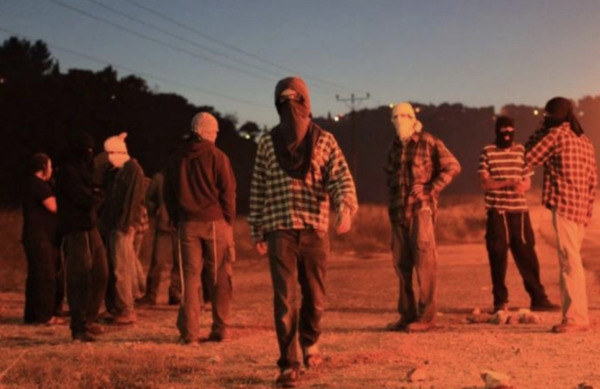
Bartov notes that on January 19, 2025, under pressure from Donald Trump, who was just one day away from resuming his presidency, a ceasefire went into effect, facilitating the exchange of Gaza hostages for Palestinian prisoners in Israel. However, after Israel violated the ceasefire on March 18, it implemented a declared plan to concentrate the entire population of Gaza within a quarter of the Strip's area into three areas: Gaza City, the central refugee camps, and the Mawasi coast at the southwestern tip of the Strip.
Using large numbers of bulldozers and massive aerial bombs supplied by the United States, the army appears to be trying to demolish every remaining building and impose its control over the remaining three-quarters of the Strip.
This is also facilitated by a plan that intermittently delivers limited supplies of aid at a handful of distribution points guarded by the Israeli military, drawing people south. Many Gazans are being killed in a desperate attempt to obtain food, and the famine crisis is worsening. On July 7, Defense Minister Israel Katz announced that the Israeli military would build a "humanitarian city" in the ruins of Rafah to initially house 600,000 Palestinians from the Mawasi area, who would be supplied by international agencies and not allowed to leave. Some might describe this campaign as ethnic cleansing, not genocide. But there is a connection between these crimes. When an ethnic group cannot find safe haven, is constantly displaced from one so-called safe zone to another, and is relentlessly bombed and starved, ethnic cleansing can turn into genocide. This was the case in many of the well-known genocides of the 20th century, such as the Herero and Nama exterminations in German South-West Africa, now Namibia, which began in 1904; the Armenians in World War I; and even the Holocaust, which began with Germany's attempt to expel the Jews and ended with their murder.
To date, only a handful of Holocaust scholars, and no institution dedicated to Holocaust research and commemoration, have issued a warning that Israel could be accused of war crimes, crimes against humanity, ethnic cleansing, or genocide. This silence has turned the slogan "Never Again" into a mockery, transforming its meaning from an affirmation of resistance to inhumanity wherever it is committed into an excuse, an apology, or even a carte blanche to destroy others by invoking the victim's past.

Moral and historical credibility is running out.

This is another of the countless costs of the current catastrophe. As Israel literally attempts to erase Palestinian presence in Gaza and engages in increasing violence against Palestinians in the West Bank, the moral and historical credibility upon which the Jewish state has relied until now is eroding, according to the author, who says: “Israel, which was created in the aftermath of the Holocaust in response to the Nazi genocide of the Jews, has always insisted that any threat to its security must be viewed as potentially leading to another Auschwitz. This allows Israel to portray those it considers its enemies as Nazis—a term the Israeli media repeatedly uses to describe Hamas, and by extension all of Gaza’s residents, based on the pervasive claim that none of them are “uninvolved,” not even infants, who will grow up to become fighters.”
"This is not a new phenomenon. Ever since Israel invaded Lebanon in 1982, Prime Minister Menachem Begin likened Yasser Arafat, then holed up in Beirut, to Adolf Hitler in his Berlin bunker. This time, the comparison is being used in the context of a policy aimed at uprooting the entire population of Gaza."

The daily scenes of horror in Gaza, protected by the Israeli public's self-censorship in its media, expose the lies of Israeli propaganda that this is a defensive war against a Nazi-like enemy. One shudder when Israeli spokesmen shamelessly repeat the empty slogan that the IDF is "the most moral army in the world." Some European countries, such as France, Britain, and Germany, as well as Canada, have weakly protested Israeli actions, particularly since its violation of the ceasefire in March, "but they have neither suspended arms shipments nor taken concrete and meaningful economic or political steps that might deter the Netanyahu government."
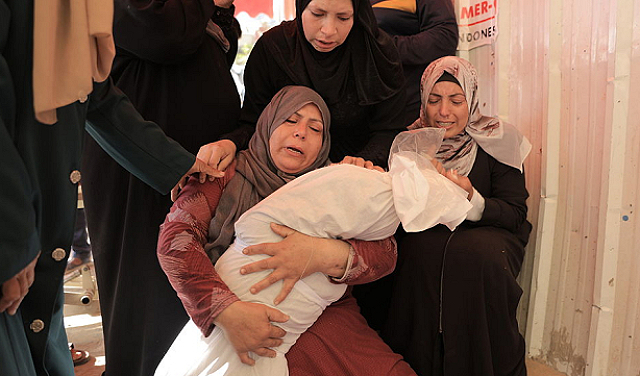
For a while, the US government seemed to have lost interest in Gaza. President Trump initially announced in February that the US would take over Gaza, promising to turn it into a “Riviera of the Middle East.” He then let Israel finish destroying the territory, turning his attention to Iran. For now, one can only hope that Trump will put renewed pressure on a reluctant Mr. Netanyahu to at least reach a new ceasefire and end the ongoing killing.
The author asks: How will Israel's future be affected by the inevitable demolition of its deeply rooted morals, derived from its birth in the ruins of the Holocaust?
The Israeli political leadership and its citizens will have to make the decision. There appears to be little domestic pressure for the urgently needed paradigm shift: the recognition that the only solution to this conflict is an Israeli-Palestinian agreement to divide the land according to whatever parameters the two sides agree upon, be it two states, one state, or a confederation. Israel's allies also seem unlikely to exert strong external pressure. I am deeply concerned that Israel will continue on its disastrous path, transforming itself, perhaps irreversibly, into a full-fledged totalitarian apartheid state. Such states, as history has taught us, do not last.
Another question arises: What are the consequences of Israel's moral decline for Holocaust remembrance culture, memory policies, education, and scholarship, when many of its intellectual and administrative leaders have so far refused to shoulder their responsibility to condemn inhumanity and genocide wherever they occur? Those involved in the global Holocaust remembrance culture will be forced to face a moral reckoning. The broader community of genocide scholars—those who study comparative genocides or any of the other numerous genocides that have scarred human history—is now increasingly approaching a consensus on labeling the events in Gaza as genocide.


Genocide in every sense of the word

The researcher notes that in November, just over a year after the war, Israeli genocide scholar Shmuel Lederman joined the growing view that Israel was engaging in genocide. Canadian international lawyer William Schabas reached the same conclusion last year, and recently described the Israeli military campaign in Gaza as "genocide in every sense of the word." Other genocide experts, such as Melanie O'Brien, president of the International Association of Genocide Scholars, and British expert Martin Shaw (who also declared the Hamas attack genocide), have reached the same conclusion. Meanwhile, Australian scholar A. Dirk Mussa of the City University of New York described the events in the Dutch newspaper NRC as "a mixture of genocidal logic and military logic." In the same article, Ugur Ümit Üngör, a professor at the NIOD Institute for War, Holocaust and Genocide Studies in Amsterdam, said that there may still be scholars who don't believe it was genocide, but "I don't know of any."
In December, according to the author, Holocaust scholar Norman J.W. Goda argued that “such genocide charges have long been used as cover for broader challenges to Israel’s legitimacy,” expressing concern that they “devalue the very word genocide.” This “genocide shaming,” as Dr. Goda noted in an article, “uses a range of anti-Semitic tropes,” including “linking the genocide charge to the deliberate killing of children, whose images are widely circulated on NGOs, social media, and other platforms accusing Israel of genocide.”

Deep springs of fear and hatred

In other words, displaying images of Palestinian children torn to pieces by American-made bombs dropped by Israeli pilots, from this perspective, constitutes an act of anti-Semitism. Dr. Judah and Jeffrey Herf, a respected European historian, recently wrote in the Washington Post that “the accusation of genocide against Israel stems from deep wells of fear and hatred embedded in ‘extremist interpretations of both Christianity and Islam.’ This accusation has shifted the denunciation of Jews as a religious/ethnic group to the State of Israel, which it portrays as inherently evil,” according to Bertov.
What are the implications of this disagreement between genocide researchers and Holocaust historians? This is not just a dispute within academic circles. The culture of memory that has emerged in recent decades around the Holocaust encompasses much more than the extermination of Jews. It has come to play a crucial role in politics, education, and identity.
Holocaust museums have served as models for representing other genocides around the world. The insistence that the lessons of the Holocaust require promoting tolerance and diversity, combating racism, and supporting migrants and refugees, not to mention human rights and international humanitarian law, stems from an understanding of the global implications of this crime at the heart of Western civilization at the height of modernity.
Discrediting genocide scholars who characterize Israel's genocide in Gaza as anti-Semitic threatens to undermine the foundations of genocide studies: the ongoing need to define, prevent, punish, and reconstruct the history of genocide. To suggest that this endeavor is motivated by malign interests and passions—that it is driven by the hatred and prejudice that underpinned the Holocaust—is not only a moral outrage, but also provides an opportunity for denial and impunity.
Likewise, when those who have dedicated their professional lives to teaching and commemorating the Holocaust insist on ignoring or denying Israel's genocidal actions in Gaza, they threaten to undermine everything that Holocaust scholars and commemorators have stood for over the past few decades: the dignity of every human being, respect for the rule of law, and the urgent need not to allow brutality to control people's hearts and guide the actions of states in the name of security, national interest, and absolute vengeance.
“My fear is that in the wake of the Gaza genocide, it will no longer be possible to continue teaching and researching the Holocaust in the same way we did before,” the author says. “Because the State of Israel and its apologists have relentlessly invoked the Holocaust as a cover for the crimes of the Israeli military, Holocaust study and commemoration may lose their claim to being concerned with global justice and retreat into the same racial ghetto in which they began their life at the end of World War II—as a marginalized obsession for the remnants of a marginalized people, a specific racial event, before succeeding, decades later, in finding its rightful place as a lesson and warning to all humanity. Equally disturbing is the possibility that the study of genocide as a whole may fail to withstand accusations of antisemitism, leaving us deprived of the essential community of international scholars and jurists who defend our rights at a time when rising intolerance, racial hatred, populism, and authoritarianism threaten the values that formed the core of these twentieth-century scholarly, cultural, and political endeavors.”
“Perhaps the only glimmer of hope at the end of this dark tunnel is the possibility that a new generation of Israelis will face their future without resorting to the specter of the Holocaust, even if they must bear the stigma of the genocide in Gaza perpetrated in their name. Israel will have to learn to live without resorting to the Holocaust as a justification for brutality. This, despite all the horrific suffering we are currently witnessing, is valuable and may, in the long run, help Israel face the future in a healthier, more rational way, less fearful and less violent. This will not compensate for the massive death and suffering inflicted on the Palestinians. But Israel, freed from the burden of the Holocaust, may finally recognize the imperative need for its seven million Jewish citizens to share the land with the seven million Palestinians living in Israel, Gaza, and the West Bank in peace, equality, and dignity. This is the only just reckoning.”


Perhaps the only glimmer of hope at the end of this dark tunnel is the possibility that a new generation of Israelis can face their future without resorting to the specter of the Holocaust, even if they must bear the stigma of the genocide in Gaza committed in their name. Israel will have to learn to live without resorting to the Holocaust as a justification for brutality.