ARAB AND WORLD

Tue 15 Jul 2025 7:58 pm - Jerusalem Time

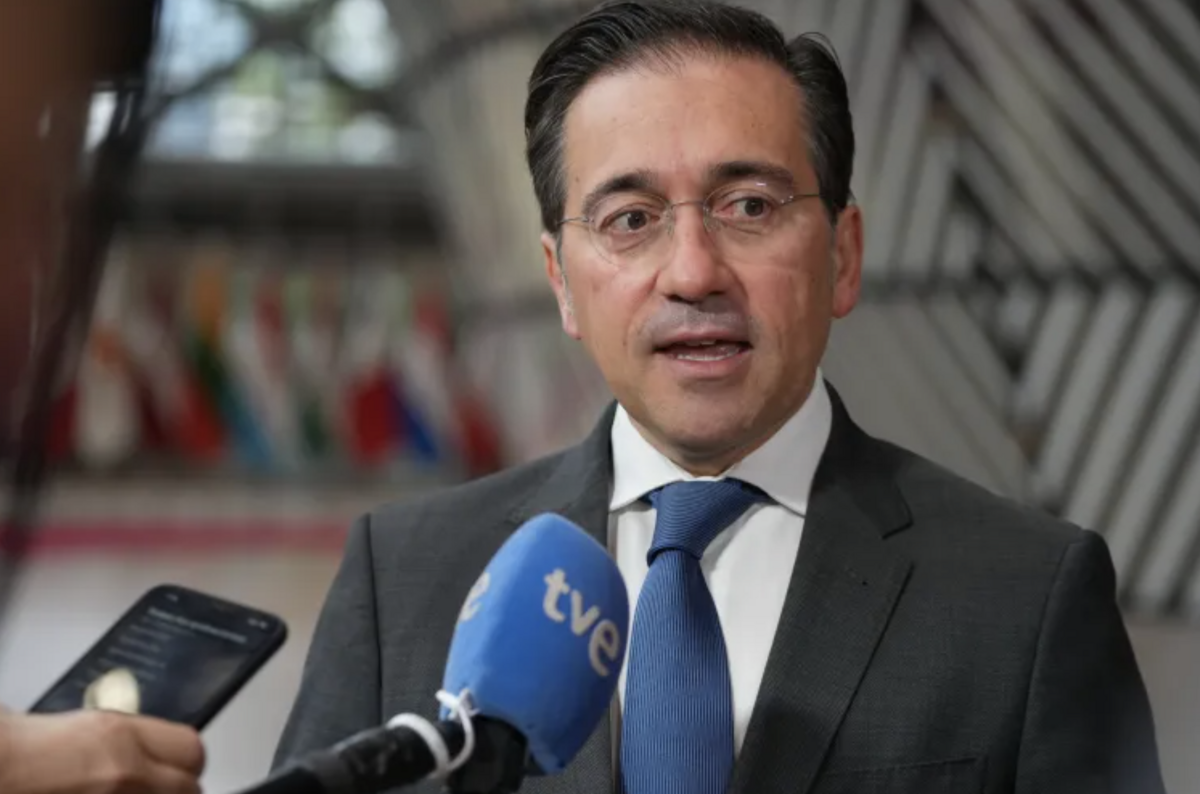
Spain calls for halting arms sales to Israel

Spanish Foreign Minister José Manuel Albares called for an end to arms sales to Israel due to its violations in the Gaza Strip, as European foreign ministers discussed possible measures against Israel for human rights violations in the Gaza Strip.

In an interview with Al Jazeera on Tuesday, Albares stressed that Israel's human rights violations in Gaza cannot continue to be ignored, noting that the European Union believes in a two-state solution.

He stressed that his country would not allow ships carrying weapons to Israel to dock in its ports, and proposed suspending any arms sales to Tel Aviv.

He also called for an end to the war on the Gaza Strip, affirming Spain's commitment to the rulings of the International Court of Justice in The Hague and the International Criminal Court, saying, "We will respect international law," referring to the International Criminal Court's issuance of arrest warrants for Israeli Prime Minister Benjamin Netanyahu and former Defense Minister Yoav Galant for committing war crimes and crimes against humanity in Gaza.

The Spanish Foreign Minister expressed his country's support for European Union legislation regarding products from illegal Israeli settlements.

Last May, Ireland became the first European Union country to take legislative steps to ban trade with Israeli companies operating in the occupied Palestinian territories. The Irish Cabinet approved a bill aimed at preventing the import of goods and services from Israeli settlements in the West Bank and East Jerusalem, which are illegal under international law.

Possible European measures

In this context, European Union foreign ministers are discussing 10 potential measures against Israel to punish it after it was found to have violated the cooperation agreement between the two sides on human rights grounds in Gaza.

These measures include suspending the agreement entirely, limiting trade relations, imposing sanctions on Israeli ministers, imposing an arms embargo, and halting visa-free travel to the European Union.

Discussions will largely depend on how Israel fulfills its promise to the European Union to improve humanitarian access to Gaza, after EU foreign policy chief Kaya Kallas announced Thursday that an agreement had been reached with her Israeli counterpart, Gideon Sa'ar, to open more crossings and allow more food into Gaza.

The European Union did not agree to review the cooperation agreement until Israel resumed its war on Gaza following the collapse of a truce last March.


PALESTINE

Tue 15 Jul 2025 6:32 pm - Jerusalem Time

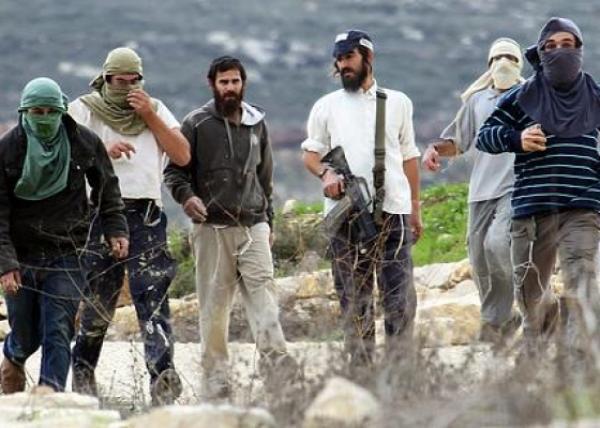
CNN crew attacked by settlers in the occupied West Bank

CNN's Israel correspondent, Jeremy Diamond, said Tuesday that his crew was attacked by "violent settlers" while in the West Bank this week to cover the killing of 20-year-old Palestinian-American Saif Muslet, who was brutally beaten to death by Israelis near Ramallah last Friday, as reports of unchecked Jewish extremist attacks in the region continue to mount.

Israeli settlers also attacked a 65-year-old Palestinian man at his home in the southern West Bank on Monday morning, and set cars on fire in the village of Burqa, near Ramallah, overnight.

"Saif Maslat was only 20 years old. He owned an ice cream shop with his father in Tampa. On Friday, Israeli settlers beat him to death, according to his family," journalist Diamond tweeted, referring to "our (CNN) interview with his grieving father and his quest for justice."

"While covering this story, my team and I were attacked by Israeli settlers. The rear window of our car was shattered, but we were able to escape unharmed. This is just a small part of the reality facing many Palestinians in the West Bank amid escalating settler violence," Diamond added.

According to CNN, the coverage team was attacked on Sunday while traveling to the town of Sinjil, where 20-year-old Saif al-Din Kamil Abd al-Karim Maslat was killed during a violent settler raid on Friday.

According to the report, the crew was on its way to the site of Maslat's killing when a white car carrying at least four masked settlers began following them.

The report added that the settlers initially tried to "throw stones" at the reporters' vehicle as it approached an intersection, but fled after the crew approached a Border Police vehicle.

After police went to search for the attackers, settlers, who had been hiding, ambushed the team, according to CNN. One of the settlers used "some kind of club or hammer" to hit the car, breaking its windows as the crew fled the scene. Israeli police told CNN that they are investigating the attack and taking it "very seriously."

The Foreign Press Association condemned the incident in a statement, accusing the authorities of turning a blind eye to the violence, noting that journalists from the German daily Deutsche Welle were injured in an attack by settlers in the same area earlier this month.

"In each of these incidents, settlers attacked in broad daylight. However, we are not aware of any arrests yet. This comes at a time when our Palestinian colleagues routinely face threats, intimidation, and violence at the hands of settlers and security forces, while the foreign press is routinely defamed by some Israeli public figures," the association said.

The statement also accused the authorities of preventing journalists from entering refugee camps in the northern West Bank, where "tens of thousands of Palestinians have been expelled in recent months" amid Israeli operations.

It is noteworthy that the Israeli occupation army has killed more than 230 Palestinian journalists in the war of extermination it has been waging on the Gaza Strip since October 7, 2025, until now.

The family of the Palestinian-American man said in a statement issued by attorney Diana Halloum following the deadly attack that Saif Muslet, who was born and lives in Florida, had traveled to the West Bank last month to spend time with relatives. The Palestinian Ministry of Health said he was killed on Friday in the village of Sinjil, north of Ramallah, after being severely beaten. Another man, Mohammed Rizq Hussein al-Shalabi, 23, died after being shot during the attack and "left to bleed for hours," according to the Palestinian Authority.

Israeli occupation authorities claimed that the violence erupted after Palestinians threw stones at a group of Israelis, slightly injuring two civilians. However, according to Palestinian accounts, settlers instigated the clash when Palestinians attempted to protest the establishment of a new illegal settlement outpost adjacent to the village of Sinjil, one of dozens of settlement outposts that have rapidly spread throughout the West Bank with little enforcement from Israeli authorities.

On Saturday, police announced the arrest of six people in connection with the incident, including two settlers and an Israeli army reserve soldier. Reports indicated that settlers set fire to vehicles and assaulted a man in a home's courtyard, but so far, Israeli authorities have not confirmed the arrest of any of the killers.

Settlers were also accused of setting fire to Palestinian property in Burqa, a Palestinian town east of Ramallah, where settlers have carried out increasing attacks on Palestinians and launched what appears to be an organized campaign to expel Bedouin shepherds from their lands.

Human rights groups have denounced the escalation in settler violence in the West Bank, which Israel has controlled and occupied since 1967. The United Nations said such attacks against Palestinians occur amid a climate of "impunity."

"Israeli settlers and security forces have intensified killings, attacks and harassment of Palestinians in the occupied West Bank, including East Jerusalem, in recent weeks," a spokesperson for the Office of the UN High Commissioner for Human Rights told reporters on Tuesday.

Last June, the United Nations announced the highest monthly number of Palestinian casualties in the West Bank in more than two decades.

According to the Palestinian Authority's Ministry of Health, Israeli occupation authorities killed more than 950 Palestinians in the West Bank during that period. The Israeli military claims that "the vast majority of them were militants killed in exchanges of fire, rioters clashing with troops, or terrorists carrying out attacks," without providing any evidence.

At least three Palestinian Americans have been killed by Israeli occupation forces since February, without any accountability.

PALESTINE

Tue 15 Jul 2025 6:00 pm - Jerusalem Time

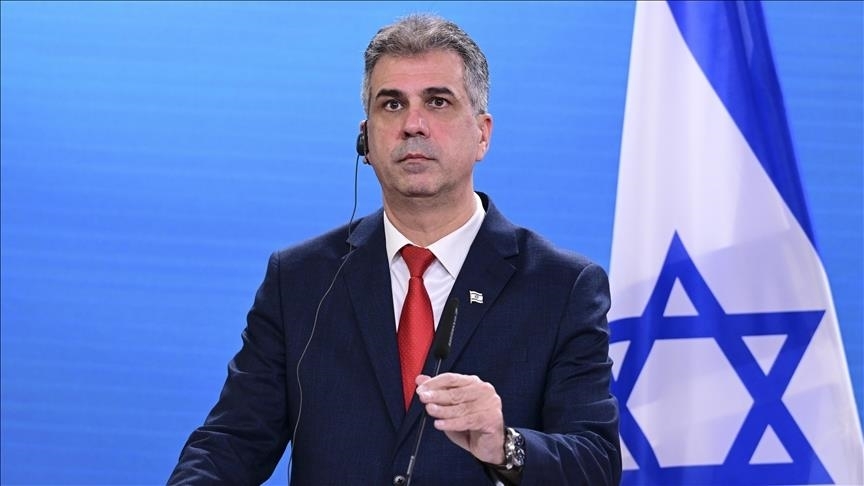
Israeli Energy Minister announces cutting off electricity and water to UNRWA offices

Israeli Energy Minister Eli Cohen announced on Tuesday that electricity and water would be cut off to the offices of the United Nations Relief and Works Agency for Palestine Refugees (UNRWA) in Israel.

Under the title "Turn off the lights at UNRWA," Cohen posted on the X platform: "A law has been issued to cut off electricity and water to UNRWA offices, which will lead to the cessation of the agency's activities in Israel."

Cohen claimed that UNRWA "served as an executive arm of Hamas," and said, "An organization that serves as an incubator for incitement and murder has no right to exist."

At the end of last January, Israel's decision to ban UNRWA came into effect.

The agency was forced to evacuate its main headquarters in the Sheikh Jarrah neighborhood of East Jerusalem, while Israel decided to close six of its schools in East Jerusalem.

On October 28, 2024, the Knesset finally approved, by a large majority, two laws prohibiting UNRWA from carrying out any activities inside Israel, revoking its privileges and facilities, and prohibiting any official contact with it.

Israel claims that UNRWA employees participated in the Hamas attack on October 7, 2023, a claim the agency denies. The United Nations affirms UNRWA's commitment to neutrality, insists on continuing its work, and rejects the Israeli ban.

The Palestinians' need for UNRWA, the world's largest international humanitarian organization, has grown exponentially under the weight of Israel's genocidal war waged against the Gaza Strip, with US support.

Since October 7, 2023, Israel, with US support, has been committing genocide in Gaza, including killing, starvation, destruction, and forced displacement, ignoring all international appeals and orders from the International Court of Justice to halt it.

The genocide, backed by the United States, left more than 197,000 Palestinians dead and wounded, most of them children and women, and more than 11,000 missing. Hundreds of thousands were displaced, and a famine claimed the lives of many, including dozens of children.

PALESTINE

Tue 15 Jul 2025 5:17 pm - Jerusalem Time

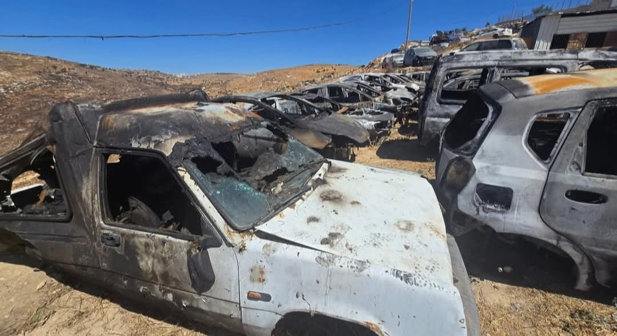
Settlers set fire to a car park east of Ramallah.

Last night, settlers set fire to a car park in the village of Burqa, east of Ramallah, following an attack on the village.

It is noteworthy that this is the sixth time that settlers have burned and attacked the same site.

The owner of the shop, Mohammed Asaliya, told Quds.com: "Settlers attacked our shop six times, resulting in losses worth more than 900,000 shekels."

It is noteworthy that this attack came after settlers attempted to steal a herd of sheep from the villagers two days earlier, but failed.

PALESTINE

Tue 15 Jul 2025 4:57 pm - Jerusalem Time

The death toll in the Gaza Strip.

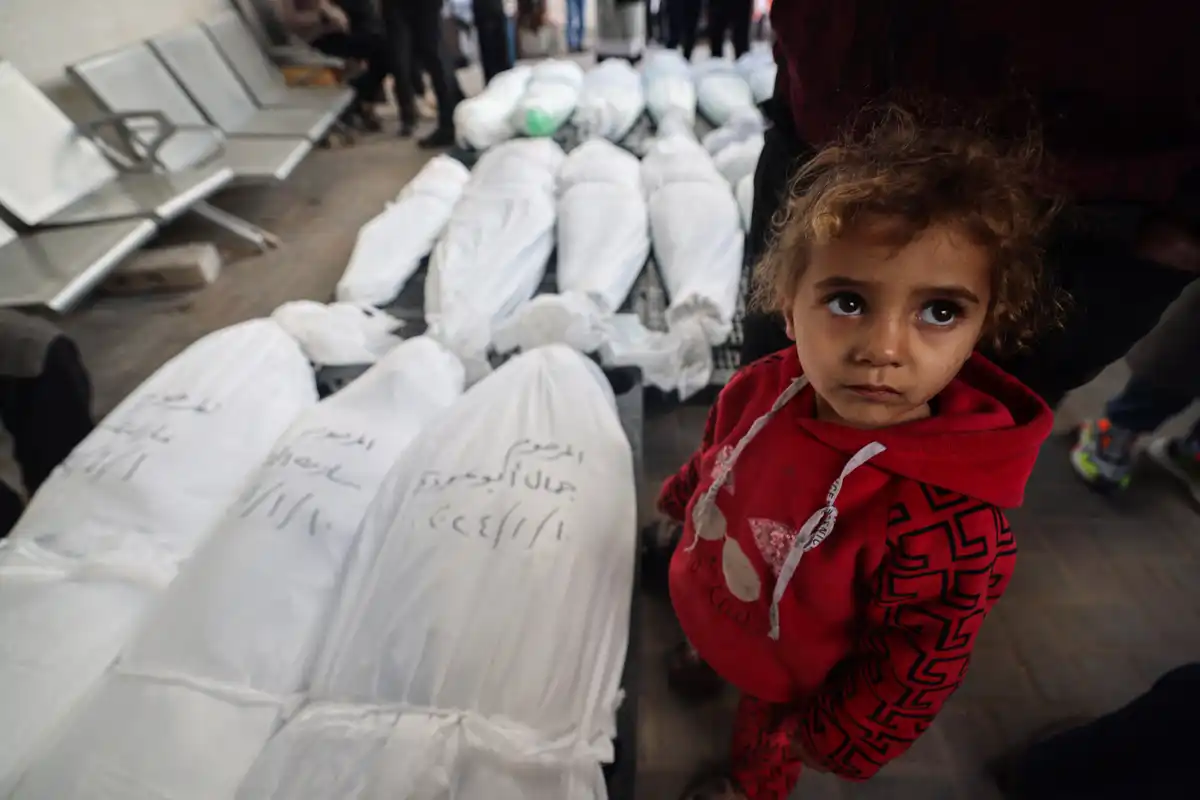
The death toll from the Israeli occupation's aggression on the Gaza Strip has risen to 58,479 martyrs and 139,355 wounded, since October 7, 2023.

Medical sources reported Tuesday evening that the death toll includes 7,656 martyrs and 27,314 wounded since March 18, when the occupation resumed its aggression on the Gaza Strip following the ceasefire agreement.

She noted that the death toll of "aid" martyrs who arrived at hospitals over the past 24 hours reached 6 martyrs, along with more than 29 injured, bringing the total number of "livelihood" martyrs who arrived at hospitals to 844 martyrs, and more than 5,604 injured.

She indicated that 93 martyrs, including 5 recovered martyrs, and 278 injured people arrived at Gaza Strip hospitals during the past 24 hours, noting that a number of victims are still under the rubble and in the streets, and ambulance and rescue crews are unable to reach them.

PALESTINE

Tue 15 Jul 2025 4:24 pm - Jerusalem Time

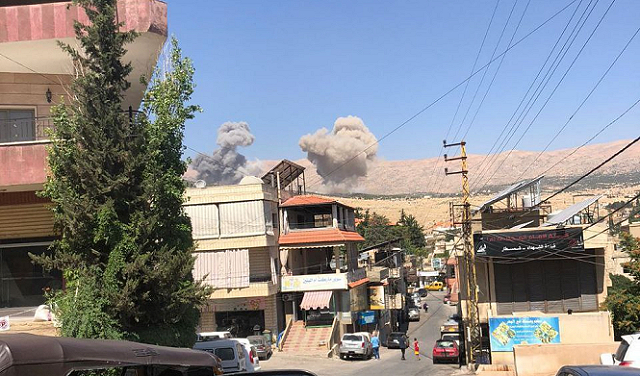
12 dead in Israeli raids on the Bekaa Valley in Lebanon

Twelve people were killed in Israeli airstrikes on eastern Lebanon on Tuesday, hours after the Israeli military announced it had launched strikes on Hezbollah positions.

For its part, the Lebanese National News Agency reported that Israeli warplanes launched raids on the Wadi Fara area in the northern Bekaa Valley, one of which targeted a camp for displaced Syrians, resulting in the deaths of 12 people, including 7 Syrians, and the injury of 8 others.

A Lebanese security source reported that one of the raids targeted a well drilling rig in Wadi Fara, eastern Lebanon.


PALESTINE

Tue 15 Jul 2025 4:17 pm - Jerusalem Time

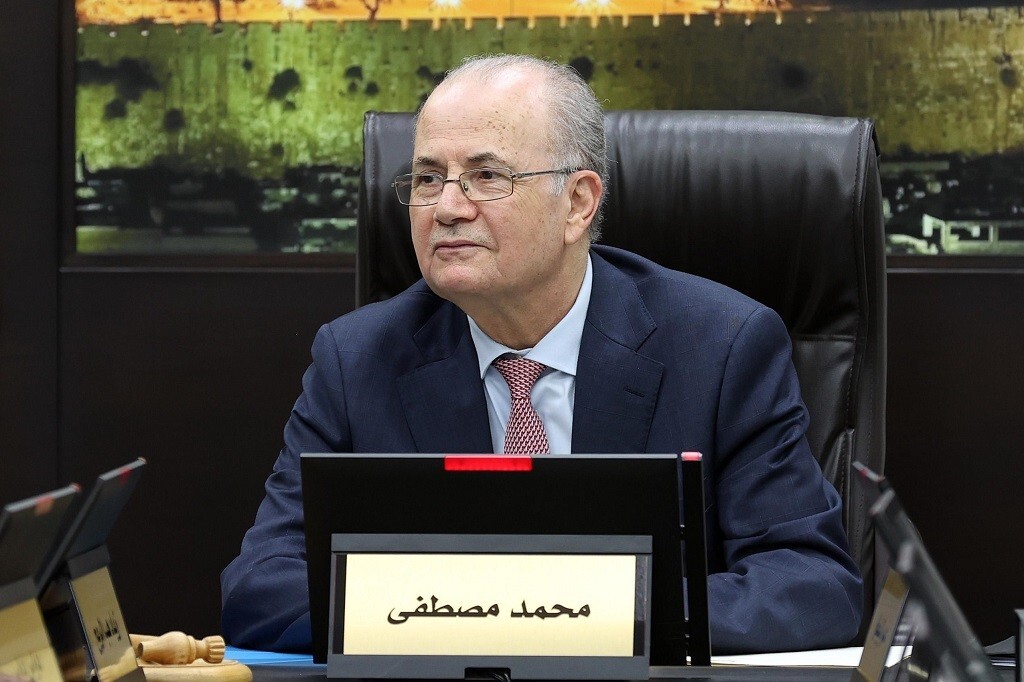
Mustafa: Intensive contacts and efforts are underway to recover our funds and ensure the continued operation of state institutions.

Prime Minister Mohamed Mustafa stressed the need to intensify international pressure to halt the ongoing aggression against our people in the Gaza Strip and end the suffering of hundreds of thousands of starving people by ensuring the urgent and adequate delivery of humanitarian aid to curb the spread of famine in the Strip.

Mustafa affirmed that preparations are underway at full speed for the success of the "Two-State Solution" conference scheduled to be held in New York at the end of this month. This is being done in coordination with Saudi Arabia, France, and various sister and friendly countries, ensuring unified efforts to revive a binding political process based on ending the occupation and establishing an independent Palestinian state.

At the start of the weekly session on Tuesday, the Prime Minister explained that Palestinian political contacts and efforts are continuing with various parties to push for an end to the attacks by terrorist settler gangs and the recovery of our withheld funds. This is vitally important in enabling state institutions to continue fulfilling their duties toward citizens.

In addition, and in continuation of the series of measures taken by the government to ease the burden on public sector employees in light of the difficult field and financial conditions, the Council directed heads of government departments to follow up on arranging employee work schedules in a manner that takes into account the prevailing circumstances, taking into account the specificities of each department, and in a manner that does not affect productivity, workflow, or the provision of services with the required efficiency, and without disrupting services provided to citizens.

The Council also heard about the Ministry of Education and Higher Education's preparations for the General Secondary Education Examinations for students in the Gaza Strip, which will begin next Saturday.

As part of the government's initiative to localize medical services and reduce deductions from clearance revenues, the Council approved criteria for regulating medical transfers to hospitals within the 1948 territories. These criteria are limited to "life-saving" cases, and are based on specific criteria overseen by a special committee. Furthermore, the Council will study cases requiring transfer to neighboring countries if treatment is unavailable in Palestinian hospitals.

In a related context, the Cabinet approved the purchase of additional quantities of specific types of medicines to meet the growing needs of our sick citizens.

The Council also approved the settlement agreement with the South Hebron Electricity Company (SEEC) and the outstanding financial rights that have been pending for many years. The agreement includes a debt rescheduling and a commitment to pay monthly consumption bills. With this, the government has completed the governance of the five major electricity companies, while settlement processes continue with the most indebted municipalities, especially after settlements were completed with approximately 90 local authorities to date. This will enhance the efficiency of these authorities' services, raise their ratings, and enable them to obtain more development projects.

The final reading of the draft system for determining the value of financial fees for intangible heritage was approved.

He also approved the Memorandum of Understanding between the Central Agency for Public Mobilization and Statistics and Save the Children International regarding cooperation to implement activities in the field of child statistics indicators.

PALESTINE

Tue 15 Jul 2025 3:28 pm - Jerusalem Time

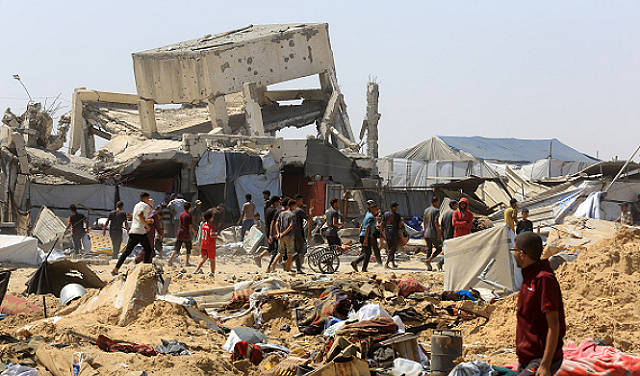
UNRWA: The humanitarian city in southern Gaza will serve as detention camps for Palestinians.

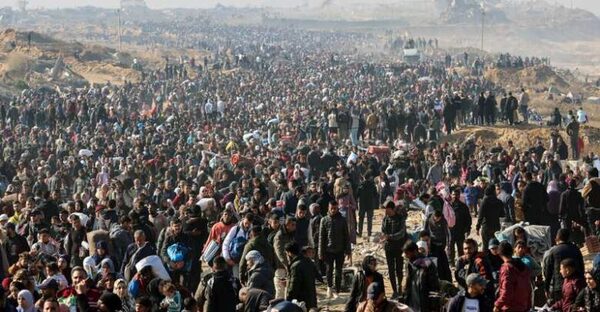
Adnan Abu Hasna, media advisor to the United Nations Relief and Works Agency for Palestine Refugees (UNRWA) in Gaza, warned of Israeli plans to establish what they call a "humanitarian city" in the southern Gaza Strip, asserting that it would serve as a mass detention camp for Palestinians.

Abu Hasna said in a press statement, "The occupation has been planning to implement this goal since establishing aid distribution points in southern Gaza, but this time, the Israeli efforts to forcibly displace the residents of the Strip to mass detention camps in Rafah were explicitly announced, as a prelude to the displacement of Palestinians from their land."

He explained that these efforts confirm that Israel is still committed to displacing the population of the Gaza Strip, expressing his deep regret over the enormous pressures exerted by the occupation authorities on the Palestinian people amid a lack of aid, the collapse of the health system, and the depletion of fuel, in an attempt to force the voluntary displacement of the population of the Gaza Strip.

Abu Hasna warned of the repercussions of implementing this plan, which would force Palestinians to relocate to this completely destroyed area, which is unable to accommodate 2 million Palestinians within 60 square kilometers of Gaza, with no life or future prospects for them.

ARAB AND WORLD

Tue 15 Jul 2025 3:19 pm - Jerusalem Time

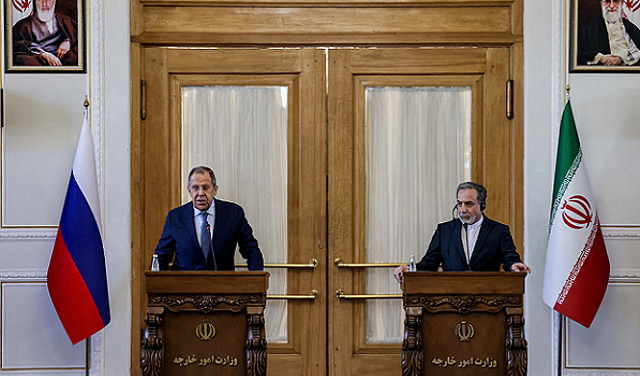
Lavrov and Araghchi discuss the Iranian nuclear program crisis

Russian Foreign Minister Sergey Lavrov discussed Tehran's nuclear program crisis with his Iranian counterpart, Abbas Araghchi, on Tuesday.

The Russian Foreign Ministry said in a statement that Lavrov met with Araghchi on the sidelines of the Shanghai Cooperation Organization foreign ministers' meeting in Tianjin, China.

She noted that Lavrov and Araghchi discussed regional and international issues during the meeting.

She stated that the two ministers consulted on the crisis related to Iran's nuclear program, stressing the need to resolve it through political and diplomatic means and within the parameters of international law.

The statement noted that the Russian and Iranian ministers agreed to continue talks at various levels.

It is noteworthy that Lavrov and Araghchi met last week on the sidelines of the 17th BRICS summit in Rio de Janeiro, Brazil.

On June 13, Israel launched a 12-day aggression against Iran, targeting military and nuclear sites, civilian facilities, military leaders, and nuclear scientists.

In support of Israel, Washington attacked Iran's Fordow, Natanz, and Isfahan nuclear facilities on June 22 with B-2 stealth bombers.

Estimates of the repercussions of this attack varied between completely destroying the nuclear program, delaying it for years, or perhaps only for months.

Israel has repeatedly threatened that it will not allow any attempt to revive Iran's nuclear program, indicating its readiness to launch a new aggression.

PALESTINE

Tue 15 Jul 2025 2:45 pm - Jerusalem Time

An Israeli plan to displace Palestinians threatens to derail the Gaza truce.

The New York Times reported that the Israeli Defense Ministry is promoting a plan to force a large portion of Gaza's population to move to a small, largely destroyed area in the southern part of the Strip, a proposal that threatens to derail recent efforts to reach a truce between Israel and Hamas.

In recent weeks, Israeli officials have briefed journalists and their foreign counterparts (including The New York Times) on a vague plan to force hundreds of thousands of Palestinian civilians to move to an Israeli military-controlled area near the Gaza-Egypt border. Legal experts have warned that the plan would violate international law because it would indefinitely prevent civilians from returning to their homes in other parts of Gaza, a restriction that would constitute a form of ethnic cleansing.

While the Israeli government has yet to officially announce or comment on the plan, the idea of establishing a new camp in southern Gaza was first proposed last week by Israeli Defense Minister Yisrael Katz. He discussed the matter in a briefing with Israeli correspondents specializing in military affairs, and The New York Times reviewed the briefing's readings written by those present. Many of the attendees also wrote articles that attracted widespread interest among both Israelis and Palestinians.

A spokesman for Mr. Katz declined to comment on the reports, as did the office of Benjamin Netanyahu, the Israeli prime minister, the newspaper reported.

Hamas has pointed to Katz's proposal as one of the latest obstacles to a new truce. Hamas insists that Israeli forces withdraw from much of the Gaza Strip during a ceasefire and that approximately 25 Israeli prisoners be released. The new Israeli plan makes this outcome far less likely, as it would ensure that Israeli forces remain in charge of a large area of the Strip.

Hossam Badran, a prominent Hamas member, described the establishment of the camp as a "deliberate obstructive demand" that would complicate the thorny negotiations.

"This will be an isolated, ghetto-like city," Badran said in a text message on Monday. "This is completely unacceptable, and no Palestinian would agree to it."

Hopes for an imminent truce rose last week after Israeli Prime Minister Benjamin Netanyahu visited Washington for meetings with US President Donald Trump. Many expected the deal to be accepted by Israel after Trump announced it ahead of his meeting with Netanyahu (Monday, July 25). Instead, Netanyahu, who had previously slowed the pace of negotiations for personal and political reasons, returned to Israel without making any progress.

Negotiations remain stalled over issues including the durability of any truce: Israel wants to be able to return to war, while Hamas wants guarantees that any ceasefire will develop into a full cessation of hostilities. Israel also wants Hamas to commit to disarmament, an idea rejected by all Palestinian factions. There are also disagreements over how aid will be delivered during the truce.

According to some readings of the press briefing (with Defense Minister Katz), the defense minister described the proposed new camp as a "humanitarian city" that would initially accommodate at least 600,000 Palestinians. Katz said it would later include all of Gaza's residents, approximately two million people, according to the readings and reports. Israeli critics have likened it to a modern-day "concentration camp," as its residents will not be allowed to leave the northern perimeter to return to their homes.

This could constitute "forced displacement," a crime under international law, according to a group of Israeli international law experts who wrote an open letter on the matter to Katz and IDF Chief of Staff Eyal Zamir.

The letter stated that if the plan is implemented, "it would constitute a series of war crimes and crimes against humanity, and under certain circumstances, may amount to genocide."

The Israeli military declined to comment on whether it had received orders to implement the plan. Because the plan has not yet been detailed or officially announced, some Israelis have speculated that it is primarily a negotiating tactic aimed either at persuading Hamas to make further concessions in truce talks or at persuading allies of Netanyahu's far-right coalition to support a ceasefire.

For his part, Israeli Chief of Staff Eyal Zamir expressed serious reservations about Defense Minister Yisrael Katz's controversial "humanitarian city" plan for Rafah in the southern Gaza Strip, according to a report in the Hebrew media on Monday, which cited quotes from a security discussion held on Sunday.

According to a report published by Channel 12, Zamir made it clear during the discussion that he strongly opposes the plan, which would allow Israel to build on the ruins of Rafah in a way that would eventually house all of Gaza's residents. The area would initially accommodate approximately 600,000 Gazans living in the coastal area of Al-Mawasi, and would then contain the entire Strip's population of more than two million.

"It's an unworkable plan," he said, according to the source. "There are too many loopholes." He went on to tell those present at the meeting, which reportedly included Katz, Netanyahu, and Finance Minister Bezalel Smotrich, that "they can make any decision, but what's the point?"

"There are countless problems with this plan," he said, adding that he was "not convinced it actually aligns with the war's objectives."

Zamir reportedly told the meeting that moving forward with the "humanitarian city" idea would reduce the likelihood of Hamas agreeing to a deal to free the remaining hostages, and while he said the IDF would implement the plan if the political echelon asked it to, he strongly recommended against it.

For his part, Itamar Ben-Gvir, a minister and far-right settler who supports the evacuation of Gaza and opposes the truce with Hamas, said in a statement that the evacuation plan is unlikely to be implemented and was simply being disseminated by his colleagues to facilitate his acceptance of the ceasefire agreement.

"The debate surrounding the establishment of a humanitarian city is essentially a debate aimed at concealing the deal being prepared," Ben-Gvir said, adding, "Turning the wheel is no substitute for absolute victory."

PALESTINE

Tue 15 Jul 2025 2:42 pm - Jerusalem Time

Israeli arms company Rafael exploits Gaza killings in marketing campaign

Israeli state-owned arms company Rafael has released a promotional video showing its Spike Firefly unmanned aerial vehicle (UAV) tracking and killing a person in Gaza. The video, posted on the company's social media platforms, shows a miniature kamikaze (suicide) drone hovering over a rubble-strewn neighborhood in the Palestinian enclave, identifying a person walking in the street and then targeting him.

The post is titled "Spike Firefly in Urban Warfare" and is accompanied by dramatic, military-themed music, according to the British website Middle East Eye.

According to the titles on the screen, the drone “identifies the target,” “tracks it,” and “neutralizes the threat.”

The video shows the Firefly hovering silently before swooping down on the person who spots the drone and runs for cover. An explosion then occurs, "neutralizing the threat."

It is unclear whether the targeted person was a Palestinian fighter or not, but they did not appear to be armed, but rather unarmed, walking alone on the road, and did not appear to pose a threat to anyone.

Open source analyst Anu Nimo located the video in Rafael's post in the Al-Tawam area in northern Gaza.

"Based on two Google Earth satellite images, the video appears to have been captured between June 4, 2024, and December 1, 2024," Ano Nimmo said, adding that potential changes in the area are evident in Sentinel satellite images from November 2024.

“We celebrate two years since the first operational deployment of the Spike Firefly system, heralding a new era of precision for tactical combat forces,” Rafael said in a post accompanying the video on its Twitter account. “Tested. Trusted. Tactical.”

“Firefly has proven itself in some of the most challenging environments, delivering precise strikes with minimal collateral damage, even in GPS jamming environments and adverse weather conditions,” the arms company said on Facebook.

The Rafael UAV is designed for use by ground forces in dense urban areas where situational awareness is limited, the enemy fights from behind cover, and the effectiveness of fire support elements is reduced by the proximity of civilians.

None of these conditions appear to apply to the video released by Rafael. The drone was designed to be controlled in real time by a single soldier.

Israel has sold defense equipment to at least 130 countries and is now the eighth largest arms exporter in the world.

Israeli companies marketed the technology and weapons used against Palestinian populations in the occupied West Bank and Gaza as "battle-tested," a tactic seen in Rafael's video.

Rafael was founded in 1948 by the State of Israel as the "Science Corps." The company is perhaps best known now for developing Iron Dome, Israel's integrated air defense system, and its guided missiles.

This arms company has a long history of exceptional marketing. In 2009, Rafael released a Bollywood-style music video to promote its weapons in India.

The video features a man wearing a leather jacket and sunglasses, representing Israel, and a woman wearing an embroidered sari, representing India.

The two characters sing to each other, while a group of Indian women dance around them. The Indian woman sings, "I need to feel safe and protected, safe and protected." She sings, "I believe in you," to which the man representing Israel replies, "You believe in me." Together they sing in chorus, "Together, forever, we will always be."

"Despite the controversy it stirred in Israel, the film was a huge success and contributed to several multi-billion dollar contracts," said Roni Dana, who filmed the ad and posted it on their YouTube page.

In 2024, Rafael achieved sales of $4.8 billion, a 27% increase over the previous year. The company explained that "nearly half" of these sales were directed to "international customers," including 20 NATO member states.

Rafael is the largest employer in northern Israel, with ten offices abroad, including in the UK, the US, the UAE, and India.

An Indian government advisor, who requested anonymity to comment on a sensitive matter, described the Firefly drone's targeting of the man in the Gaza video as a "war crime."

“Yes, it is a clear war crime: killing someone who appears to be unarmed, walking in the street and not engaged in military activity,” Nimer Sultani, a Palestinian public law student at SOAS University in London, told MEE.

Article 3 of the Fourth Geneva Convention states that: “Persons taking no active part in hostilities, including members of armed forces, shall in all circumstances be treated humanely, without any adverse distinction.”

The Rome Statute of the International Criminal Court defines “intentionally directing attacks against the civilian population as such or against individual civilians not taking a direct part in hostilities” as a war crime.

"In this case, these killings are considered part of genocide. So they are genocidal killings," Soltani told the website.

It is noteworthy that during Israel's war on Gaza, the Israeli military used Rafael's Spike guided missiles extensively to target people inside buildings from the air and on the ground. The Orbiter 4, a drone developed by Rafael's Aeronautics subsidiary, was used operationally for the first time in Gaza on November 8, 2023. In March, Rafael Systems Global System, a US subsidiary of the Israeli company, announced it had signed a cooperation agreement with the US military to closely develop the Spike missile family, including "future enhancements and USization" of the munitions.

PALESTINE

Tue 15 Jul 2025 2:30 pm - Jerusalem Time

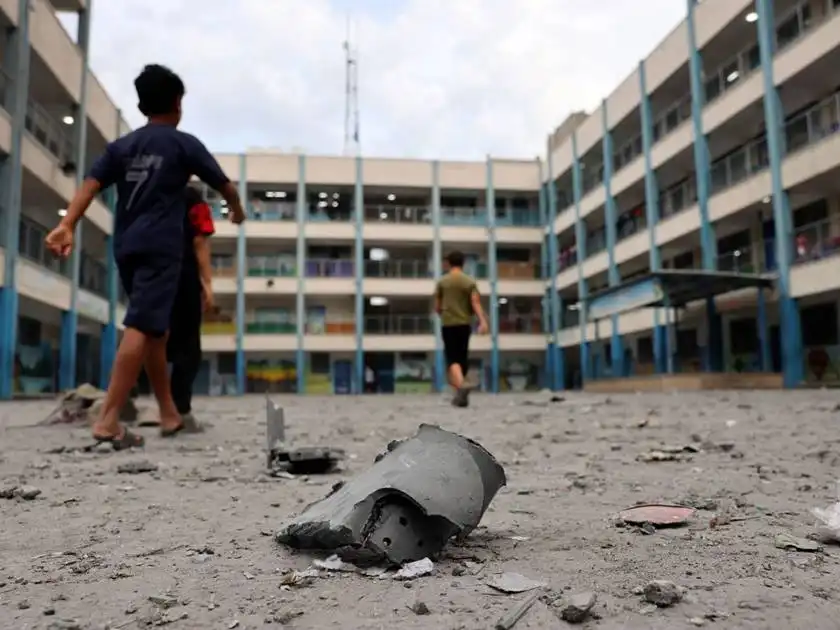
16,000 Palestinian schoolchildren have been martyred since October 7.

The Palestinian Central Bureau of Statistics announced that 52,142 students will sit for the General Secondary Education Certificate (GED) exam in the West Bank during the 2024/2025 academic year, while 1,969 students from the Gaza Strip will sit for the GED exam abroad.

Inside the Gaza Strip, according to a statement by the Palestinian Central Bureau of Statistics (PCBS) on Tuesday, a total of 24,500 students will take the exams electronically in phases. Meanwhile, approximately 41,000 students who were unable to register previously will be able to register for the high school exams, ensuring the continuity of education and in line with the complex emergency conditions the Strip has been experiencing since October 7, 2024.

About 16,000 martyrs were students enrolled in schools in Palestine, 99% of whom were from the Gaza Strip.

Regarding student casualties since the start of the aggression on the Gaza Strip on October 7, 2023, and up to today, the number of martyred students enrolled in Palestinian schools has reached a total of 16,242, including 16,137 martyrs from the Gaza Strip.

Due to the ongoing aggression on the Gaza Strip, the statistics indicated that it was not possible to collect data for the labor force survey in the Gaza Strip for the year 2024. Accordingly, the study areas and the relationship to the labor market for individuals (20-29 years old) in the West Bank only.

Business and Management has maintained its position as the most popular major among students over the past decade.

Among selected fields of study in 2024, Business and Management maintained its position as the most popular major among students (20-29 years old) with an associate's or bachelor's degree in the West Bank, a trend that has continued over the past ten years.

Future specializations

Global trends indicate a clear shift in the nature of specializations required in the labor market, with skills related to technology and innovation taking center stage. The demand for specializations such as computer science, artificial intelligence, data analytics, cybersecurity, and advanced engineering is growing as a result of rapid digital development. New fields related to climate change and sustainable energy have also emerged, such as environmental engineering and renewable energy technologies. At the same time, specializations that enhance humanistic and creative skills, such as design, entrepreneurship, and modern social sciences, continue to play an important role in building a resilient and inclusive future. These trends reflect the need for multidisciplinary competencies capable of adapting to a rapidly changing world.

High unemployment rates in all fields of study, and among females, more than double the unemployment rates among males.

The unemployment rate among individuals (20-29 years old) with an associate's degree or a bachelor's degree in the West Bank rose sharply, reaching approximately 41% in 2024, compared to approximately 32% in 2023. Among selected fields of study in 2024, the arts major recorded the highest unemployment rate among individuals (20-29 years old) with an associate's degree or a bachelor's degree in the West Bank, while the highest unemployment rate among males in the same category was recorded in the education major at 41%, while the highest unemployment rate among females in the same category was recorded in the arts major at 81%.

Graduates in the West Bank need 6 to 12 months to get their first job opportunity.

Data indicates that graduates in the West Bank need between 6 and 12 months to secure their first job opportunity after graduation, reflecting clear challenges in the labor market and a gap between educational outcomes and labor market needs.

PALESTINE

Tue 15 Jul 2025 2:18 pm - Jerusalem Time

Gaza under fire: 26 dead since dawn today, and dozens missing under the rubble.

The Israeli occupation army continues its war of extermination in the Gaza Strip, leaving dozens of martyrs and missing under the rubble of their homes, and many wounded, most of whom have suffered permanent disabilities.

In the latest developments on the ground: 26 martyrs since dawn today, 7 of whom were identified as martyrs in a bombing that targeted the Nassar family's home in the Shati refugee camp, west of Gaza City.

Meanwhile, three civilians were killed when an Israeli drone targeted civilians near a school in the Al-Tuffah neighborhood, east of Gaza City.

Two citizens were also killed in the bombing targeting Al-Shawa and Al-Hosari Towers on Al-Wahda Street in central Gaza City, while two others succumbed to their injuries.

Four civilians were killed in the bombing of a house in the Zarqa area of the Tuffah neighbourhood, east of Gaza City.

Gaza's Civil Defense announced that the occupation forces allowed its crews to enter the Zarqa area in the Tuffah neighborhood, northeast of the city, where the Arafat family home was targeted.

"Crews immediately began searching for survivors, but only found the body of a woman who had died after being injured for hours," he said.

Civil Defense stated that the bodies of the remaining missing persons are still under the rubble, in the absence of the necessary equipment to retrieve them.

In the same context, the death toll from the Israeli bombing that targeted the Azzam family's home in the Tel al-Hawa neighborhood in southern Gaza City yesterday, Monday, rose to 19.

The bombing resulted in widespread destruction to the house and neighboring homes, while violent raids continued on various neighborhoods in the city.

The Civil Defense in Gaza also announced the martyrdom of two women by Israeli occupation forces' fire near an aid distribution center north of Rafah, in the southern Gaza Strip.

The targeting came at a time when civilians are suffering from dire humanitarian conditions amid ongoing military operations in the region.


ARAB AND WORLD

Tue 15 Jul 2025 12:39 pm - Jerusalem Time

The European Union is considering measures against Israel over the Gaza war.

European Union foreign ministers are discussing a range of possible measures against Israel over human rights violations in the Gaza Strip on Tuesday, but none are expected to be adopted at this stage.

European Union High Representative for Foreign Affairs and Security Policy Kaya Kallas presented a list of ten proposed measures, including the complete suspension of the cooperation agreement with Israel, the reduction of trade relations, the imposition of sanctions on Israeli ministers, an arms embargo, and the suspension of visa-free travel to the European Union.

Kallas explained that these proposals came after it was confirmed that Israel had violated the cooperation agreement with the European Union in aspects related to human rights.

However, diplomats rule out any decision being reached at the meeting, given internal divisions among member states over how to deal with Israel.

Kallas indicated that the discussions will largely depend on Israel's implementation of its commitments to improve humanitarian access to the Gaza Strip, after she announced last week that she had reached an agreement with her Israeli counterpart, Gideon Sa'ar, to open more crossings and allow the entry of more food supplies.

However, Kallas stressed that these steps are not sufficient, despite some "good signs" of an increase in the number of trucks, stressing the need for additional efforts to implement the agreement on the ground.

At a meeting in Brussels on Monday, Jordanian Foreign Minister Ayman Safadi described the situation in Gaza as "catastrophic," while Israel's Foreign Minister appeared confident that EU countries would not impose any sanctions, saying there was "no justification for them whatsoever."

This unprecedented debate comes after the European Union agreed to review its cooperation agreement following Israel's resumption of its war on Gaza following the collapse of the truce last March. The bloc remained divided between countries that support Israel and those more inclined toward the Palestinians.

PALESTINE

Tue 15 Jul 2025 12:11 pm - Jerusalem Time

"Addameer": The decision to close the sea to fishermen and citizens deepens the humanitarian crisis in Gaza.

The Addameer Association for Human Rights in Gaza confirmed that the closure of the sea to fishermen and citizens comes within the framework of the comprehensive blockade and inhumane and illegal collective punishment policy imposed by the Israeli occupation forces on the Gaza Strip since October 2023. It constitutes an extension of the policy of genocide, starvation, and systematic destruction that affects various aspects of life in the Strip.

“In continuation of the genocidal crime, the Israeli occupation forces decided on Saturday morning, July 12, 2025, to impose strict security restrictions in the maritime area adjacent to the Gaza Strip, including a complete ban on entering the sea under flimsy security pretexts,” the statement added. “The spokesperson for the occupation army announced a renewed reminder of the imposed naval blockade, warning fishermen, swimmers, and divers against approaching the sea, and threatening to target anyone who violates these orders.”

According to field data monitored by Addameer, approximately 6,000 fishermen and fishing workers have been prevented from practicing their profession since the beginning of the occupation's genocidal war on the Gaza Strip on October 7, 2023. This war resulted in the martyrdom of 204 fishermen, including 51 fishermen killed while fishing. The occupation forces also destroyed approximately 2,000 fishing boats and inflicted severe damage to the fishing sector's infrastructure, including the destruction of 4,660 tons of the total fish production. They also damaged the Gaza port and fishing harbors, in addition to destroying fishing equipment storage rooms, exacerbating the suffering of thousands of families who depend on fishing as their sole source of livelihood.

She noted that as a result of the ongoing war and the destruction of infrastructure and sewage treatment plants in Gaza, wastewater is leaking into the sea. Solid waste and filth are also accumulating in the seawater as a result of the displacement of thousands of citizens and their residency in tents on the beachfront, creating serious marine pollution that threatens citizens' health.

Addameer Association asserted that the occupation's decision to prevent fishermen from entering the sea, and citizens from swimming or fishing, is an attempt to mislead public opinion. The occupation has issued similar decisions since the start of the aggression on Gaza 21 months ago, prohibiting fishermen and citizens from entering the sea and threatening them with death.

She explained that the policies pursued by the occupation forces against more than 2.3 million Palestinians in the Gaza Strip constitute a flagrant violation of international humanitarian law, particularly the Fourth Geneva Convention, the Universal Declaration of Human Rights, and the International Covenant on Economic, Social and Cultural Rights, which guarantees the right to work and the freedom to earn a living by legitimate means.

Addameer called on the international community, including the United Nations and the Human Rights Council, to intervene immediately and urgently to halt Israeli violations and lift the naval blockade imposed on the Gaza Strip for more than 17 years.

PALESTINE

Tue 15 Jul 2025 12:06 pm - Jerusalem Time

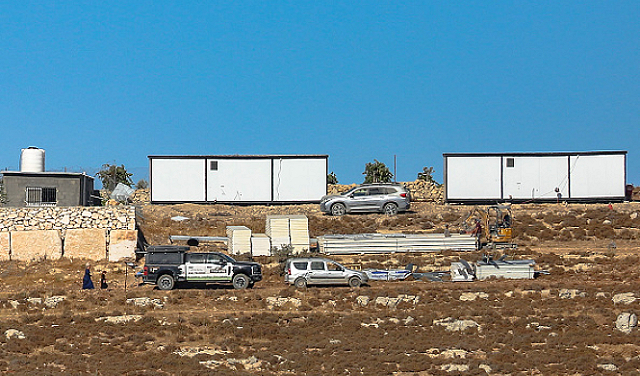
Settlers establish a new outpost in Nablus and 23 settlement outposts in the West Bank by 2025.

The Al-Baidar Organization for the Defense of Bedouin Rights said on Tuesday that a group of settlers had established a new settlement outpost on land belonging to the town of Salem, east of the city of Nablus, in the northern West Bank.

The organization explained in a statement that settlers had erected several caravans and mobile homes on private agricultural land, under the protection of Israeli occupation forces, and had begun bulldozing and preparing infrastructure with the aim of establishing a permanent settlement presence at the site.

She noted that the Wall and Settlement Resistance Commission recorded the establishment of 23 new settlement outposts across the West Bank during the first half of 2025.

Al-Baidar Organization emphasized that the establishment of these outposts constitutes a clear violation of international law and a direct assault on Palestinian rights and lands, warning of an escalation of these violations in the absence of accountability.

She added that this step is part of a systematic policy to expand settlements and impose a fait accompli on the ground.

The organization called on the international community to take urgent action to halt these practices, which threaten to further fuel tension and instability in the region.

She explained that most of these settlement outposts, particularly the pastoral ones, are spread across the governorates of Ramallah, Nablus, Hebron, Qalqilya, Tubas, and Jerusalem, in continuation of the settlers' policy of imposing facts on the ground with the full support of the occupation army.

OPINIONS

Tue 15 Jul 2025 11:45 am - Jerusalem Time

Rafah Ghetto: The Israeli Defense Minister's Dream of Displacing Palestinians

Mustafa Ibrahim

Mustafa Ibrahim

Opinion Writer

Amid indirect negotiations between the occupying state and Hamas to reach a truce and ceasefire, Israel continues its fierce war, imposing its control over approximately 70% of the Gaza Strip. This point constitutes a fundamental disagreement that hinders mediation efforts, particularly regarding maps and the redeployment or withdrawal of occupation forces from areas under its control.

The occupying state is planning to impose a plan during the 60-day ceasefire period, during which detention camps will be established in the ruins of Rafah. The plan aims to push Palestinians toward Rafah and imprison them there, paving the way for their emigration.

The Israeli plan presented in the negotiations leaves the entire city of Rafah under occupation, a ghost town, effectively paving the way for the implementation of a policy of forced displacement. It encroaches on nearly 40% of the Gaza Strip's area, with Israeli control extending to as far as three kilometers from the border in some areas. This prevents more than 700,000 Palestinians from returning to their homes, forcibly displacing them to displacement centers in Rafah, under the label of a "humanitarian city," which has nothing to do with humanity.

The maps Israel is presenting in the negotiations are nothing more than a joke, as the Morag axis has been transformed into the "new Philadelphi axis," dividing Gaza in two. Just as the generals' previous plan aimed to encircle the northern Gaza Strip and sever its connection to Israel, the occupation's center of gravity has now been shifted from the northern Gaza Strip to the Morag axis.

Any insistence on establishing a detention camp, or what is falsely called a "humanitarian camp," would mean leaving the Rafah crossing under Israeli control, allowing Israel to move through it and impose its security control. Netanyahu will not agree to a return to the previous ceasefire lines, as his government would immediately collapse if he did.

In this context, Israeli Defense Minister Yisrael Katz is essentially promoting the government's idea of establishing detention camps as a tool for implementing a policy of forced displacement, a clear crime under international law.

More than a year ago, Katz, then foreign minister, was invited to a conference of European Union foreign ministers to discuss the humanitarian situation in Gaza. He surprised the audience by showing a video he had produced nearly ten years earlier, presenting a fictional project he called "Gaza Island," an artificial island in the sea to which all of the Strip's residents would be relocated.

This project, which completely ignored the geographic and political reality, was nothing more than a thinly veiled cover for the idea of ethnic cleansing: isolating the population, denying them the right of return, and placing them under Israeli naval and air control. Katz ignored the project's catastrophic humanitarian consequences, presenting it as an "innovative solution."

With the "Gaza Island" impossible to implement, Katz revived the idea in a new form: the Rafah Ghetto.

The new idea calls for the establishment of a massive camp on the ruins of Rafah, where approximately one million Palestinians will be gathered within a closed, walled area, denied freedom of movement, under direct Israeli military control, and without any real Palestinian leadership or international oversight.

Although the project is presented under the banner of "humanitarian relief," its essence is control, isolation, and the deprivation of basic rights. Even international aid, supposedly neutral, will be entirely subject to Israeli oversight and timing.

The European Union, despite its initial objections, expressed its willingness to provide aid. However, the implementation of the "Rafah ghetto" will place it, along with other donors, before a direct moral and legal responsibility: Will they be contributing to the construction of a mass detention camp?

Katz, for his part, sees this idea as an electoral lever within the Likud party. He reportedly considers an arrest warrant from the International Criminal Court, if issued, a "badge of honor" that would bolster his standing in the primaries.

The danger in Katz's project lies not only in its brutality, or in its goals linked to reoccupying the Gaza Strip, but also in the world's silence in the face of it. The demonization and dehumanization of Gaza's residents is carried out in familiar language: "terrorists," "demographic threat," "human burden." This language clearly replicates the genocidal discourse that humanity has known before.

History doesn't repeat itself all at once, but rather starts with small steps, such as justifying "temporary camps."

Anyone who thinks that comparing the Rafah Ghetto to the Jewish ghettos of Nazi Europe is an exaggeration should ask themselves a simple question:

Is it acceptable to imprison a million people inside a wall, just because they are Palestinians?

Ultimately, Katz may disappear from the political scene, but his idea—which combines fantasy, control, collective punishment, ethnic cleansing, displacement, and expulsion—will remain a stain on all who remained silent, participated in, and legitimized it under the pretext of “Israel’s security.”

ARAB AND WORLD

Tue 15 Jul 2025 11:01 am - Jerusalem Time

Israeli raids on Bodai in the Bekaa Valley, eastern Lebanon, and the occupation announces attacks on sites belonging to Hezbollah's Radwan Unit.

The Israeli occupation army launched raids on Tuesday on the Bouday area in the Bekaa Valley, eastern Lebanon, amid ongoing Israeli violations of the ceasefire agreement with Hezbollah on a daily basis. The Israeli army acknowledged this, announcing the commencement of raids on targets belonging to Hezbollah's "Radwan Unit" in the Bekaa Valley.

This comes as Lebanon received American "ideas" as part of an exchange of positions on Washington's proposals, according to a report by Al-Araby Al-Jadeed newspaper on Monday evening.

The Lebanese National News Agency reported that "enemy aircraft launched two raids west of Baalbek, the first targeting the outskirts of the town of Shamstar, and the second targeting Wadi Umm Ali."

The Israeli military said in a statement, "A short while ago, under the direction of military intelligence and the Northern Command, air force aircraft launched raids on several Hezbollah targets in the Bekaa Valley in Lebanon."

He added, "As part of these raids, camps belonging to the 'Radwan Force' were attacked, where the locations of (fighters) and weapons depots belonging to Hezbollah were identified."

The Israeli army stated that "Hezbollah uses these camps to train and qualify (fighters) to plan and execute plots against Israeli army forces and the State of Israel. As part of the training and qualification, (the fighters) undergo shooting drills and exercises in the use of various types of weapons."

He said, "The unit's leaders were eliminated in September 2024 in Beirut and southern Lebanon... Since then, the unit has been working to restore its capabilities, and the unit has advanced toward the main ground threat built by Hezbollah. Israeli military forces have been operating against the unit for two years, preventing it from rehabilitating and rebuilding its strength."


Since the end of Israel's last US-backed war on Lebanon in November 2024, Washington has been pressuring Hezbollah to disarm, which it has maintained as long as the Israeli occupation continues.

Hezbollah Secretary-General Naim Qassem recently said that his party would not respond to calls to surrender its weapons before the Israeli aggression had ended in Lebanon.

On November 27, 2024, a ceasefire agreement between Hezbollah and Israel took effect, but Tel Aviv violated it more than 3,000 times, resulting in at least 237 deaths and 546 injuries, according to official data.

In violation of the agreement, the Israeli army continues to occupy five Lebanese hills in the south, which it seized during the last war, in addition to other areas it has occupied for decades.

On Sunday evening, the Israeli army announced a raid on "commando headquarters" formerly affiliated with the ousted regime of Bashar al-Assad in Mount Hermon, claiming to have found three tons of weapons, equipment, and bombs.

The Israeli army said in a statement, "During this week, reserve battalions... located a number of central commando headquarters of the former Syrian regime in Mount Hermon, which were believed to have been within the Syrian-Lebanese sector during the Assad regime's rule."

PALESTINE

Tue 15 Jul 2025 10:51 am - Jerusalem Time

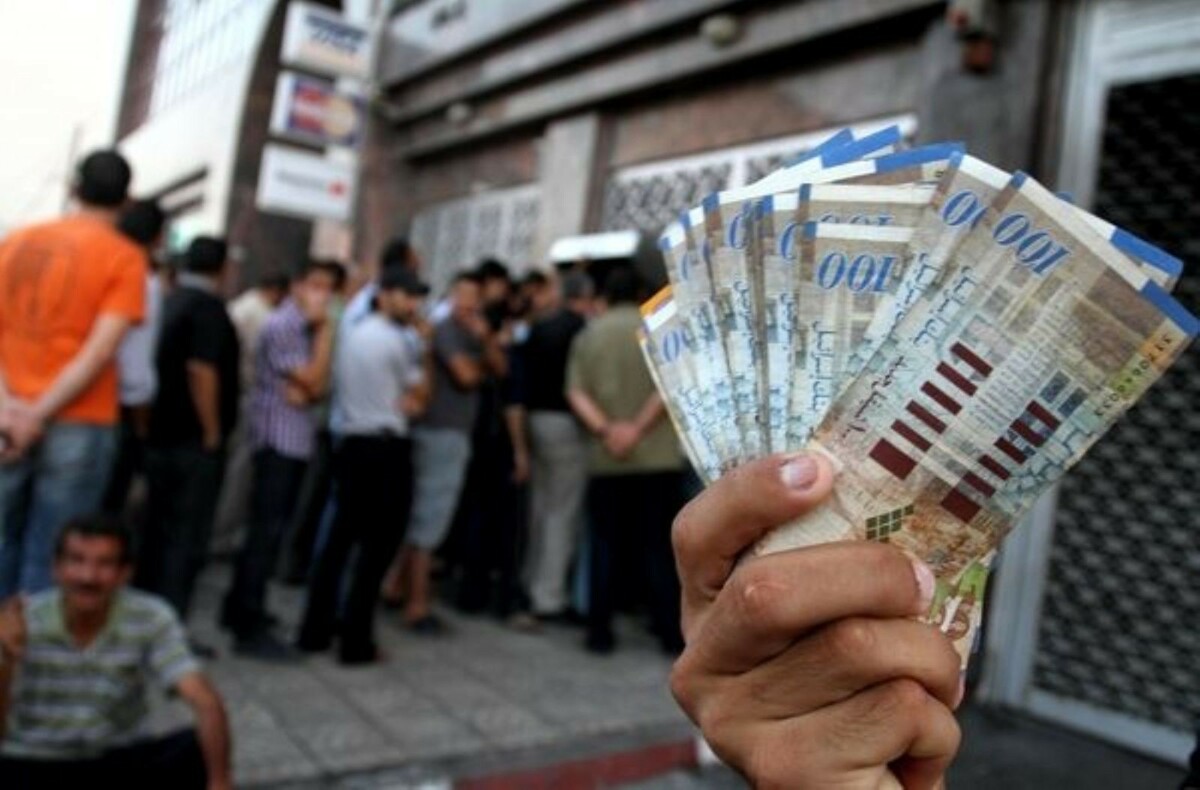
Israel will transfer NIS 870 million in clearance revenues for the past two months.

A responsible source revealed that there are advanced contacts and negotiations between the European Union and Israel aimed at transferring 870 million shekels to the Palestinian Authority from clearance revenues for the past two months, enabling it to pay approximately 70% of employees' salaries.

The source ruled out the possibility of Israel responding by paying the 8 billion shekel debt, sending humanitarian aid to the Gaza Strip through all its crossings, and releasing Palestinian tax funds withheld by Israel, estimated at approximately 8 billion shekels (about $2.3 billion).

The source explained that the negotiations also include easing restrictions on the movement of citizens in the West Bank and halting settler attacks, in exchange for some European Union countries backing away from the idea of imposing economic and trade sanctions on Israel.

The source indicated that aid could begin entering Gaza today if Israel agrees.

The source also confirmed that a new agreement will be reached regarding a mechanism for resuming the transfer of withheld Palestinian tax funds, with the participation of the European Union, unless the Israeli government suspends this agreement.

He stressed that the European Union's approach has the support of the US administration.

ARAB AND WORLD

Tue 15 Jul 2025 10:34 am - Jerusalem Time

Syria: Curfew imposed in Sweida until further notice

The commander of internal security in the southern Syrian province of Sweida, Ahmed al-Dalati, announced a curfew in the province, starting Tuesday morning, "until further notice."

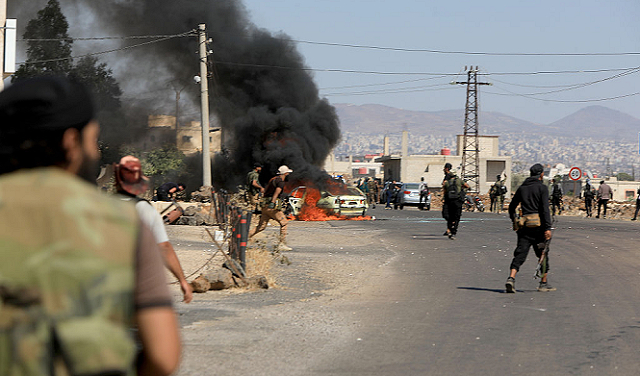
This came in statements reported by the Syrian Arab News Agency (SANA) following clashes between armed Druze and Bedouin groups in Sweida, which resulted in more than 90 deaths and dozens of injuries. This prompted the intervention of security forces and the army, who used force to enforce the law.

"We announce a curfew on the city's streets, starting at 8:00 a.m. until further notice, to ensure the safety of our people" in Sweida, Al-Dalati said.

He added that forces from the Ministries of Interior and Defense will begin entering the Sweida Center to protect civilians and restore security following the bloody events that took place in the city.

He continued, "We hold the religious authorities and the leaders of the armed factions responsible for their national and humanitarian efforts, and we call on them to fully cooperate with us to secure the city center and ensure the stability of the entire province."

In this context, SANA quoted the Defense Ministry's Media and Communications Department as saying that "army forces are continuing to pursue outlaw groups around Sweida."

The ministry urged residents of Sweida to stay indoors and "report any movements by outlaw groups that may resort to using civilian neighborhoods as a launching pad for their operations."

PALESTINE

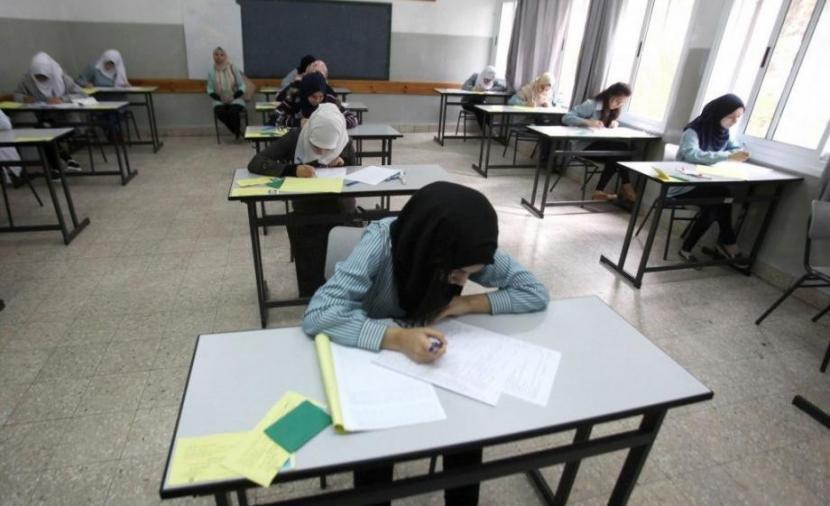
Tue 15 Jul 2025 10:29 am - Jerusalem Time

Ministry of Education: Completing preparations for Gaza high school exams next Saturday

The Ministry of Education and Higher Education announced today, Tuesday, the completion of preparations for the General Secondary Education Examination for Gaza students/third session - Tawjihi 2005, which will be held next Saturday, July 19, 2025.

The exam will be conducted electronically using a special software, after the relevant technical arrangements have been completed.

The Ministry indicated that the number of applicants is approximately (1,500) female/male students, noting that a trial exam will be held on Thursday, 7/17/2025.

The Ministry stated that the implementation of the exam for this session falls within the framework of a plan to implement the exam later for the 2005 and 2006 Tawjihis, as part of a plan to hold the exam in stages.

OPINIONS

Tue 15 Jul 2025 9:52 am - Jerusalem Time

Entrepreneurship by necessity in Palestine: Creating hope from the heart of distress

Lama Awad

Lama Awad

Opinion Writer

Against the backdrop of a complex economic and social reality, the Israeli occupation imposes restrictions on Palestinian movement, resources, and development. This is compounded by labor market imbalances, a lack of social protection, and a dearth of formal employment opportunities, particularly among youth and women. In the face of these challenges, establishing an economic enterprise is no longer a voluntary option to achieve wealth or ambition, but rather a means of survival and resilience. This phenomenon is more prevalent in areas suffering from historical marginalization, such as camps and remote villages, where formal support networks are lacking and residents rely on self-initiatives to meet their daily needs.

Entrepreneurship by necessity in Palestine is a practice of resistance, born of need and carrying within it meanings of economic dignity, social empowerment, and local dynamism. It is the story of the Palestinian people confronting marginalization with determination and deprivation with creativity.

Researchers distinguish between two types of entrepreneurship: entrepreneurship of opportunity, where individuals seek to exploit a gap in the market or achieve financial independence with strategic awareness, and entrepreneurship of necessity, where individuals are forced to launch their projects due to the lack of other options (unemployment, poverty, displacement, etc.).

In the Palestinian case, the leadership of necessity cannot be separated from the political context, as it becomes a tool for civil resistance and the provision of services that the state is unable to provide.

Palestinians, particularly in the West Bank and Gaza Strip, live under unfamiliar conditions. Blockades, checkpoints, scarce resources, and restrictions on movement limit regular employment opportunities. Given this reality, many young people, and women in particular, are turning to small home-based or community-based projects as a source of income. These projects do not arise from the luxury of initiative, but rather from compulsion: the compulsion of need, unemployment, and economic insecurity. Motives vary, and the solution is forced entrepreneurship.

Structural constraints, occupation, military checkpoints, Israeli control of border crossings, and land confiscation weaken economic activity and limit businesses' access to markets. This creates a pattern of isolated local entrepreneurship, relying on self-resources or narrow social networks.

Chronic Unemployment and Disguised Unemployment: According to the latest official statistics, unemployment rates in Palestine witnessed a significant increase in 2024, reaching a total rate of 51%, divided between 35% in the West Bank and 80% in the Gaza Strip. It should be noted that these figures reflect the general situation, while other data indicate that the unemployment rate among university graduates in Palestine reached 48%, with disparities between the West Bank and Gaza Strip. Unemployment rates vary by academic discipline, with specializations such as journalism and media, social sciences, physical sciences, and educational sciences recording high unemployment rates ranging from 50% to 78%. This indicates that the Palestinian labor market is not sufficiently absorbing graduates in these fields, forcing them to seek alternative employment opportunities or engage in small businesses or self-employment. Despite the existence of decentralized government programs, weak funding, coordination, and weak networking with the private sector have rendered many official initiatives insufficient, prompting individuals to develop their own solutions.

Gender and societal roles: Palestinian women play a pivotal role in essential entrepreneurship, particularly in rural areas and refugee camps, where many establish micro-enterprises in sewing, homemade food, and medicinal herbs, reshaping the relationship between the informal economy and women's empowerment.

Forced Innovation Amid Scarce Resources: In light of the difficult economic conditions and scarce resources in Palestine, many entrepreneurs are forced to adopt a forced innovation approach as a means of survival and progress. This type of innovation does not arise from a voluntary desire, but rather from an imperative to overcome surrounding challenges. These entrepreneurs are rethinking the use of limited resources in innovative ways, such as recycling, employing simple technologies, or developing products and services that meet local market needs using unconventional methods.

This reality has led to the emergence of unique business models based on flexibility and creativity, contributing to strengthening economic and social resilience despite the challenges.

Relying on social networks, the community becomes the primary incubator. Neighbors, family, the mosque, the local association... form a primary safety net that provides symbolic capital, social credit, and even early customers.

Relying on alternative digital tools. Given the weak infrastructure, tools such as WhatsApp and Facebook Marketplace are alternatives to physical stores and a means of reaching Palestinian markets within the country or in the diaspora. Leveraging technology, digital platforms have become central business tools, enabling access to customers in the absence of traditional marketing infrastructure and breaking down the geographical barriers imposed by the occupation.

Community connection and multiplier effect: Often, necessary projects arise to meet an immediate need: homeschooling for children, traditional bread that is unavailable, repairing appliances in areas with limited service coverage... What gives these projects community acceptance and support stimulates employment for others, rebuilding the fabric of trust in neighborhoods.

Solidarity rather than competition. In an environment plagued by scarce resources and limited opportunities, solidarity and cooperation among entrepreneurs become more of a necessity than an option. Many small business owners in Palestine rely on forming community support and collaboration networks, sharing knowledge, experiences, and resources to address common challenges. This collaborative approach enhances the chances of collective success and creates a more sustainable business environment, far removed from the competitiveness that can undermine individual efforts. Solidarity is clearly demonstrated in collaborative initiatives, such as cooperatives and joint ventures, which support each other, contribute to local economic development, and strengthen social bonds.

Survival before expansion: Unlike opportunity entrepreneurship, which plans for rapid growth, the entrepreneur necessarily focuses on stability and economic survival before thinking about expansion or significant profitability.

With the global technological acceleration, artificial intelligence (AI) has emerged as a highly influential tool in empowering Palestinian entrepreneurs who were forced to launch their projects out of necessity. Despite challenges associated with digital infrastructure, these entrepreneurs can now benefit from free AI tools such as logo design, copywriting, and market data analysis to compensate for the lack of expertise and resources. These tools allow them to improve the quality of their products and services and expand the scope of online marketing at low costs, enhancing their chances of success in a complex economic environment. Free AI tools, such as design generators and marketing content writing, have become a new enabler for entrepreneurs with limited resources, opening up unconventional growth prospects.

Examples from the Palestinian reality:

 From Taboon to Brand – The story of Lina in Rojeeb, who started her home-based bread and pastry business, then developed it into her own bakery after saving some money. Her project has become well-known in her city, highlighting the ability of Palestinian women to transform small businesses into successful ventures.

 Innovation under siege - Gaza Lighting Network (Hassan Saad), recycled damaged batteries to power electrical appliances during chronic power outages, and began marketing his product as an alternative energy source for families (Hassan Saad, a resident of the Shuja'iyya neighborhood, created the "National Unity Charitable Lighting Network" using damaged batteries to provide lighting for more than 50 homes and two streets in the neighborhood.

 From crisis to export - Women marketing their products locally and internationally. They began marketing their products outside the framework of their villages, cities, governorates, the local market, and outside the framework of the homeland.

Fifth: Structural challenges facing necessary leadership.

Necessity-driven entrepreneurship in Palestine faces a set of deep structural challenges that hinder its growth and sustainability. In addition to the economic and social difficulties entrepreneurs face, there are structural barriers that make it difficult for these small businesses to achieve success and expand.

- Poor access to finance and credit.

- Lack of administrative and digital skills.

Legal and bureaucratic obstacles, legal complexities, and unclear project registration procedures all negatively impact entrepreneurs' ability to manage their projects efficiently.

Many projects are exposed to unfair competition from Israeli or imported goods, which often receive greater support and funding, making it more difficult to compete.

Political and economic insecurity and ongoing tensions, including incursions and confiscations, make the continuation of these projects more fragile.

These structural challenges require systematic intervention and comprehensive support strategies to ensure the necessary entrepreneurship capacity to grow and contribute effectively to the Palestinian economy.

Necessity-driven entrepreneurship has a tangible positive impact on Palestinian communities, transcending its economic role to become a catalyst for social change and local empowerment.

• Economic empowerment of families: Women’s and home-based projects have played a prominent role in reducing families’ dependence on foreign aid, by providing stable sources of income that contribute to improving the standard of living and enhancing economic independence.

• Strengthening local solidarity: Cooperative and participatory initiatives have contributed to building strong bonds among community members, fostering a culture of cooperation and solidarity in the face of common challenges, especially in light of difficult economic and political conditions.

• Creating a flexible shadow economy: These projects created a type of alternative economy that was flexible enough to overcome the repeated interruptions and losses resulting from the occupation, which helped sustain economic activity and achieve a degree of stability in local communities.

• Transferring skills between generations: Home-based businesses have become centers of informal education, through which skills, crafts, and practical techniques are passed on between generations, ensuring the continuity of local knowledge and stimulating innovation within the community.

To address the challenges facing entrepreneurs who are driven by the need to survive and adapt, supportive policies and strategies must be adopted to enable this group to strengthen their projects and achieve a sustainable impact on the economy and society. The following are a set of policy proposals that can contribute to supporting necessity entrepreneurship:

1. Establish local microfinance funds without interest: Establish soft finance funds that provide small, interest-free loans, helping entrepreneurs start and expand their projects without significant financial burdens, with a focus on empowering marginalized groups.

2. Establishing digital platforms to market small businesses in the local and international markets: Developing electronic platforms that facilitate business owners' display of their products and services and open up new markets for them, both within Palestine and abroad, thus enhancing growth opportunities and increasing revenues.

3. Providing coworking spaces for marginalized groups (women, youth): Establishing cooperative work centers equipped with all technical and administrative requirements, providing a stimulating work environment and exchange of experiences between entrepreneurs from groups facing additional challenges.

4. Integrating entrepreneurship into school and university curricula as an alternative economic path: Develop educational programs that focus on entrepreneurship and innovation skills, to encourage young people to consider small businesses as a sustainable and effective career option.

5. Amending laws to facilitate micro-business licensing: Reviewing and simplifying the legal and administrative procedures related to establishing and licensing micro-enterprises, to reduce bureaucracy and facilitate entrepreneurs’ legal and orderly entry into the market.

6. Integrating artificial intelligence into Palestinian entrepreneurship projects, albeit gradually, represents an opportunity to overcome some structural constraints and add a competitive technical dimension to projects that were born on the margins but hold great potential.

7. Building free digital learning platforms for entrepreneurial skills, especially in project management and e-marketing.

Implementing these policies can positively transform the necessary entrepreneurial environment and enhance its ability to effectively contribute to economic and social development in Palestine.

At the heart of this scene remains the most important story: how Palestinians transform distress into hope, despair into productivity, and necessity into opportunity to shape a better tomorrow.

Transforming necessity into creativity, entrepreneurship by necessity in Palestine is not a story of quick profits, but rather of living a dignified existence, challenging harsh realities, and insisting on dignified survival. It is one manifestation of the "resistance economy," where oppression is transformed into capability, powerlessness into initiative, and scarcity into opportunity. Necessity becomes a driver of dignity. Entrepreneurship by necessity in Palestine is not an individual success story, but rather a testament to the ability of an entire society to adapt, endure, and create alternatives under pressure. It is both a political and economic act, redefining work, production, and dignity in an occupied and crisis-ridden context.

Entrepreneurship by force and necessity in Palestine is not a story of quick profits, but rather a story of living a dignified life... and supporting this type of entrepreneurship is a national necessity for building a resilient and humane economy.


OPINIONS

Tue 15 Jul 2025 9:50 am - Jerusalem Time

The Bitter Crossing: The Story of a Crossing in the Grip of the Occupation

Dr. Saeed Sabry, International Economic Advisor – Board Member of the International Digital Transformation Authority – Dubai

Dr. Saeed Sabry, International Economic Advisor – Board Member of the International Digital Transformation Authority – Dubai

Opinion Writer

In the heart of the West Bank, a Palestinian stands at the Karameh crossing, carrying his travel documents and yearning in his heart. He finds himself subjected to long hours of waiting, inspection, and security checks, amid procedures that are incompatible with either the peace agreements or human dignity. The crossing, officially known as the "King Hussein Bridge" on the Jordanian side and the "Karameh Bridge" on the Palestinian side, is the only land outlet for Palestinians from the West Bank and Jerusalem to the outside world, via Jordan. However, it is effectively under full Israeli security control, in flagrant violation of the promised Palestinian sovereignty.

The Oslo Accords stipulated that the Palestinian Authority would be responsible for managing the crossing on the Palestinian side, while Jordan would assume control on the opposite side. However, reality has revealed a fundamental flaw in implementation: Israel controls every stage of the crossing, from permit issuance to security checks, turning the "dignity" crossing into a daily point of humiliation.

A daily ordeal recurring. The Palestinian journey begins at the crossing days before travel, with requirements for permits or security coordination that may be denied without justification. Upon arrival, the waiting period begins on overcrowded buses, in lines that extend for hours, sometimes exceeding 10 hours, amidst chaotic procedures and the absence of any transparent oversight.

In the summer, the crisis is compounded, as thousands of Palestinians return from the diaspora—particularly from the Gulf, Europe, and the Americas—to visit their families and their land, a season that represents a significant economic boost. However, many are now reluctant to return, as the crossing has become a psychologically and physically exhausting experience.

A shocking number: half a day to cross 100 kilometers! Reports from Palestinian and international human rights organizations indicate that a Palestinian needs an average of 6 to 12 hours to cross the distance of no more than 100 kilometers from Ramallah to Amman, due to checkpoints and inspections, not to mention high crossing fees and procedures that are difficult for the elderly and sick.

Serious economic repercussions: The crossing also represents a commercial lung for the Palestinian economy, both for exports and imports. However, the private sector suffers from shipment delays, Israeli restrictions on the quality of goods, and security measures that impede the flow of products. This negatively impacts prices, the regularity of supply, and undermines investor confidence.

The crossing is also an economic lifeline during the summer, as the return of Palestinians from abroad injects millions of dollars into the market through tourism, family spending, and investment. With the escalating difficulties of crossing, many are reconsidering visiting their homeland, which means the loss of an important seasonal source of income.

Lost Financial Revenues: A Lost Opportunity for the Palestinian Economy. According to official data and Palestinian economic reports, the Karameh Crossing's revenues from fees and taxes could exceed 300 million shekels annually, including departure fees, customs, and shipping and logistics costs. However, the Palestinian Authority does not effectively control these revenues, as most of them go to the Israeli treasury, which manages the crossing both financially and security-wise. In contrast, the Palestinian government bears the operating expenses on the Palestinian side of the crossing without benefiting from balanced revenues. This deepens the fiscal deficit and deprives the Palestinian treasury of a sovereign source of income that could have contributed to financing infrastructure or improving services.

These revenues are part of the funds entering the treasury of the occupying state, and collecting them, like other clearance revenues, becomes a challenge. This negatively impacts the Palestinian Authority's ability to meet its monthly obligations, especially given Israel's continued imposition of successive deductions from clearance revenues under various pretexts.

Palestinian expatriates are reluctant to return. The number of Palestinians abroad is estimated at approximately 7 million, the majority of whom hold foreign nationalities, but some retain their Palestinian identity and are connected to their homeland through land, family, and belonging. They aspire to visit or even return to their homeland one day. However, scenes of queues, delays, and humiliation at the Karameh Bridge are driving many of them to refrain from temporarily returning, or even considering a permanent return. This weakens national ties and deprives the Palestinian economy of a significant portion of its human and financial resources.

These people represent a tremendous human and financial capital that could contribute to the development of the Palestinian economy, knowledge transfer, and investment. However, instead of attracting them, the current crossing system sends a clear message: "Stay where you are."


Towards practical solutions

● International pressure: Diplomatic and legal efforts must be activated to pressure Israel to respect the agreements and enable the Palestinian Authority to effectively manage the crossing.

● Partnership with Jordan: Enhancing bilateral cooperation to facilitate logistical procedures on the Jordanian side and expand the crossing’s capacity.

● Strengthening management on the Jordanian side: Despite the availability of an electronic passenger reservation system, the capacity on the Jordanian side, and the management of the flow of passengers arriving from the West Bank and Jerusalem, still require development and logistical and human support to keep pace with the seasonal increase in passenger numbers, especially in the summer.

● Extending the working hours at the crossing to enable visitors to enter or exit the only border crossing easily and smoothly.

● Updated infrastructure: Develop waiting facilities and services on both the Palestinian and Jordanian sides, including improved ventilation and air conditioning, increased restroom numbers, and expanded shaded areas. Humanitarian support services should also be provided for people with special needs and the elderly, through dedicated corridors and immediate support services to facilitate their dignified crossing from both the Palestinian and Jordanian sides.

Finally, a crossing or a barrier? The Karama Bridge, supposed to be a gateway to dignity, has become a symbol of restrictions. While official documents speak of sovereignty and partnership, the daily queues reveal a different reality. If we want to build a resilient economy and an open society, we must start with the citizen's right to dignified passage.

Crossings are not just transit points...they reflect the state's philosophy, the extent of its respect for human rights, and the extent of its sovereignty over its land and citizens.


OPINIONS

Tue 15 Jul 2025 9:48 am - Jerusalem Time

The first thing we have to agree on is to admit that we are different!

Amin Al-Hajj

Amin Al-Hajj

Opinion Writer

When we look at the Palestinian reality today, we find that we are facing a scene of multiple levels and concerns, far from homogeneous. This diversity is no longer a luxury or an external description, but has become the essence of the Palestinian experience itself, and a condition for understanding its historical and current dilemma. The years of division, displacement, and the ongoing violence of the occupation have produced diverse psychological and social geographies, to the point that each Palestinian community has its own time and concerns that almost separate it from others and reshape the meaning of belonging and the national project at every stage.

In Gaza, the siege and destruction have turned life into a daily battle for survival, where the fear of death and hunger has become stronger than any political or national obsession. Here, grand slogans recede into the margins, and obtaining food, water, and medicine has become the daily national project of every family. Amidst the continuous bombardment and the relentless massacre, the average individual no longer has the energy to think about the fate of the homeland or the future of the state. Instead, he lives his intense moment awaiting salvation, a moment in which, along with it, the differences between politics and livelihood fade away, and nationalism becomes a deferred dream in the face of the tumult of the present and the pressure of basic needs and priorities.

In the West Bank, the other Palestinian faces a complex reality that is no less difficult, as countless crises pile up on their shoulders: settler violence, land confiscation, the salary crisis, high prices, unemployment, corruption, favoritism, political and social loyalties, and the deterioration of services. These accumulations have led to Palestinians being preoccupied with managing the details of their daily lives and trying to achieve personal stability amidst the ambiguity of the political scene and the weakening of trust in the leadership. Major national issues no longer occupy the majority with the same intensity, but rather the problem of salary or personal and economic security has become more important in the consciousness of the people than any collective project. In this climate, feelings of alienation from the official leadership emerge and political participation declines, to be replaced by an individualistic tendency governed by despair or fear of the future.

In Jerusalem, the scene is different once again, where nationalism intermingles with daily life in a narrow space of history, geography, and politics. There, Palestinians are waging a silent, steadfast battle for survival in the heart of a city subjected to a fierce settlement assault and ongoing attempts to erase its identity and displace its people. There, the spirit cannot be separated from the stone, as every street and neighborhood carries the memory of an ongoing battle between existence and denial. For Palestinians, Jerusalem is not just a desired capital, but a permanent address for conflict over meaning, where the simplest details of life become an act of national resistance. As daily challenges escalate, Jerusalemites often feel isolated from the rest of the people, waging their battle alone, bearing the burden of defending the identity of the city, which, despite everything, remains a symbolic and spiritual center that unites Palestinians, regardless of their concerns and experiences.

Inside occupied Palestine, the crisis takes on a different character. Here, the battle with the occupation takes the form of a daily struggle for dignity, civil rights, and the preservation of what remains of identity in an environment that imposes forced integration and encourages forgetfulness. In the diaspora, however, daily concerns revolve around asserting oneself and finding one's place among new communities, along with a heavy burden of nostalgia and anxiety over identity and the future of one's children, and a fragmented memory between a foreign geography and a lost homeland.

All these profound differences have produced not only a diverse consciousness, but also divergent priorities. The idea of a unified nationalism has become almost a myth, while the truth is that Palestinians today are more like neighboring groups than a single entity. These gaps raise fundamental philosophical questions: Is there still meaning to a unified national project? Is it enough to share the initial wound for us to truly remain one people?

Acknowledging this difference is neither a defect nor a defeat. Rather, it is the first step toward rebuilding a new vision of Palestinian nationalism, one based on acceptance of diversity and dialogue, not denial and exclusion. Palestinians must learn from their experience that life does not stop at slogans, and that the identity of any people is strengthened the more it acknowledges its internal diversity and its ability to embrace contradictions, rather than conceal them.

Today we may not have the ability to formulate a unified project, but we have the courage to admit that we are different, and that our only possible unity begins with this difficult truth, and awaits a sincere historical moment in which the Palestinians rebuild their project on the basis of realism and inclusion, not on the illusion of conformity and the claim of unity.

OPINIONS

Tue 15 Jul 2025 9:46 am - Jerusalem Time

The Arab system and political Islam: roles, not positions

Dr. Iyad Al-Barghouthi

Dr. Iyad Al-Barghouthi

Opinion Writer

Let us begin by envisioning the dramatic transformation of Arab regimes' attitudes toward political Islam, from the middle of the last century to the present. In the beginning, "conservative" Arab regimes supported political Islam, while "progressive" regimes opposed it. This approach was "natural," or perhaps understandable, at least from a social perspective.

At that time, the Arab system was divided along social, intellectual, and political lines: conservative and progressive, moderate and revolutionary, and so on. Now, that system is no longer divided over anything; everyone is now "liberal" (economically and socially), and if there is a difference, it is in the degree of depth and "creativity" in that. Everyone has become "moderate" in terms of nationalism and nationalism, and the difference here, too, lies in the degree of moderation and "creativity" in that. There is no longer anything to divide the Arab system over, but it remains divided.

Completing the scene, this regime, which is no longer divided over anything but remains divided, has reversed its stance on political Islam, which it initially embraced, to the point where it now adamantly rejects it. (This may require a discussion about the uniqueness of the new Syrian regime in this context.) So what prompted the Arab regime to do this?

Some might interpret this "revolution" as the Arab regime shifting from a conservative to a liberal one, and thus it is only natural that it would shift its stance on political Islam and religion in general. However, this view remains weak, as political Islam has demonstrated a remarkable liberal flexibility, particularly in social life, and in some countries in the region, it has even led the liberal transition.

The current scene is of an Arab regime that is neither conservative, nor progressive, nor revolutionary (but divided), united and fiercely hostile to political Islam (with perhaps one exception). This "devotion" and "devotion" of the Arab regime to its fight against political Islam is not only surprising but also intriguing, with hopes of discovering the reason behind this "strange" reversal in its intensity and "perseverance."

For the Arab regime to demonize anything now, it is enough to link it to the Muslim Brotherhood. All of that regime's apparatuses, systems, laws, media, research centers, thinkers, and intellectuals are now mobilized and mobilized to fight its former "lover," the Muslim Brotherhood and political Islam in general.

Once again, and lest the point be lost, we do not aim here to evaluate or judge political Islam, neither to demonize it nor to "kingdomize" it (from "king"). What is being observed here is the Arab regime in its fluctuating movement toward political Islam. (I take the opportunity here—even though the situation is unbearable—to begin using the term "kingdomization" as opposed to "demonization." It is not "just" for Satan to be "disposable" while kingship is deprived of it. Maintaining demonization without "kingdomization" means placing it directly opposite the term "deification," which is also unjust. And since language existed before its rules, we have the right to take it outside the bounds of those rules.)

The question now is, why did the Arab regime "adopt" political Islam in the beginning, and why has it now abandoned it to the point of murder, and is it pursuing it across the globe?

The answer, in my view (and it is open to debate, of course), lies in the transition of the Zionist imperialist project in the region from its partial and localized tactical level, aiming to weaken the centers of power there, to its strategic level, aiming to destroy any "resurrection" of it, even in the conscience.

To be more clear, political Islam and Islam in general represent (emotionally) a nation’s project, but at the same time it is susceptible (at least in some of its basic cases) to being used against what it represents, so it practically goes (and has gone repeatedly) in the opposite direction of what it is supposed to represent in the conscience, against the nation and its project.

The Zionist imperialist project is fully aware that it can employ some elements of political Islam in its “movement” in the region against its project that is “absent” in the conscience (Palestine and the nation). When that (Zionist) project rose from its secondary tactical level that strikes specific hotspots, to its comprehensive strategic level of completely destroying Palestine, the nation and its ideology, and perhaps Islam itself as one of its most important links, here it was decided to “dispensing” with tactics and go for strategy, meaning getting rid of the user (political Islam) in order to get rid of the meanings it carries, which have now become the primary target.

The conclusion here is that the Arab regime has no position on political Islam today, nor has it had one in the past. It is merely a role it has been assigned, one it was required to adopt in the past when necessary, just as it is required to fight it now when necessary. The Arab regime has no positions, only roles.

This also adds a "burden" to the intellectual, namely the need to be careful when expressing his opinion in this area (or any other), to ensure that his position does not become a contribution (role) to a counter-project. In this context, the true compass is not the regime, the political party, or the ideology—it is Palestine.


ARAB AND WORLD

Tue 15 Jul 2025 9:39 am - Jerusalem Time

Trump supplies weapons to Ukraine and gives Russia 50 days to end the war.

US President Donald Trump gave Russia a 50-day deadline to end the war in Ukraine, threatening to impose severe economic sanctions, including 100% tariffs on Russian imports, if a peace agreement is not reached within the deadline.


At a joint press conference with new NATO Secretary General Mark Rutte, Trump announced a plan to supply Ukraine with large quantities of weapons through the alliance, including Patriot defense systems, in an agreement involving NATO countries, led by Germany.

The Washington Post reported that the value of the new US military aid amounts to $10 billion and may include long-range ATACMS missiles already in Ukraine.

This move comes after Trump suggested that Putin was seriously rejecting calls for a ceasefire. Meanwhile, the Wall Street Journal reported that Russia has increased its ballistic missile production in an attempt to counteract Western superiority, threatening a dangerous escalation.

The White House spokeswoman also revealed that Trump had a direct call with Ukrainian President Zelenskyy, during which they discussed ways to protect Ukraine. Zelenskyy praised Trump's willingness to support efforts to stop Russian attacks.

For his part, German Chancellor Friedrich Merz announced that his country would play a decisive role in the new defense agreement, offering to purchase two Patriot systems for deployment to Ukraine. He emphasized the importance of coordination with partners and increasing pressure on Moscow to avoid sliding into direct confrontation.

The NATO Secretary General emphasized the need for Europe to share the cost of supporting Ukraine, while Washington plans to sell weapons to its European allies to be transferred later to Kyiv through NATO mechanisms.

It is noteworthy that Russia launched the war in Ukraine in February 2022, and is demanding that Kyiv abandon its efforts to join NATO as a condition for halting military operations.

ARAB AND WORLD

Tue 15 Jul 2025 9:29 am - Jerusalem Time

Resignation of the UN Commission of Inquiry into Israeli Violations in Palestine

The three members of the UN Commission of Inquiry into human rights violations in Israel and the Occupied Palestinian Territories announced their resignation, saying it was time to renew its composition.

The committee's chair, South African Navi Pillay (83 years old), cited her advanced age as the main reason for her resignation, while Australian Chris Sidoti (74 years old) described the move as necessary for restructuring, and Indian Milon Kothari expressed his pride in his tenure.

The committee was established in 2021 and has been subjected to sharp Israeli criticism, with Israel describing it as biased.

The President of the Human Rights Council called on Member States to submit new candidates before 31 August, with the appointments to be made in November, following the submission of the final report.

Council spokesman Pascal Sim stated that the goal is to appoint the new experts in early November, after the three outgoing members submit their final report at the upcoming UN General Assembly meeting in New York.

The UN Independent Commission of Inquiry confirmed in mid-March that Israel had committed acts of genocide and violations against Palestinians in all occupied territories since October 7.

During public hearings in Geneva, the committee stated that the Israeli army had a map of health facilities and their functions, which had been deliberately destroyed. The committee confirmed that it had evidence of deliberate Israeli attacks on health institutions and facilities.

She pointed out that the international community is ignoring and denying the violations taking place against the Palestinians.

Palestinian prisoners are also subjected to physical and psychological abuse in a manner that degrades their dignity, and are prevented from raising their voices to demand accountability for the crimes committed against them and to ensure their non-recurrence.

The committee added in its previous report that any child born today in Gaza faces the risk of death, whether during infancy or adulthood, in addition to the health problems children suffer from as a result of water pollution, cold, and hunger.

The outgoing chair of the UN commission, Navi Pillay, said that the exonerating statements and actions of Israeli leaders, and the ineffectiveness of the military justice system in prosecuting cases and convicting perpetrators, send a clear message to members of the Israeli security forces that they can continue to commit such acts without fear of accountability.

Hamas and Palestinian armed factions have also been accused of committing war crimes and crimes against humanity against the hostages, while Israel rejects these accusations and describes the committee as biased and hostile.

PALESTINE

Tue 15 Jul 2025 9:22 am - Jerusalem Time

The National Rescue Document: A Message of Hope or a Repetition of the Repeated?

Dr. Tahseen Al-Asttal: The document presents a practical and applicable solution that requires a sincere commitment from all parties that places the supreme national interest above all other considerations.

Majed Hadib: The document will not achieve success because it was delayed too long and no longer meets the needs of the public, which no longer needs theorizing or lengthy texts.

Mohamed Gouda: Although the document came late, it could represent a serious opportunity to rebuild the political system amidst enormous challenges.

Dr. Jamal Harfoush: The proposed document has the potential to create a real impact if it is built upon politically, popularly, and media-wise.

Talal Okal: What distinguishes the current initiative is its timing, linked to the relative optimism surrounding the possibility of reaching an agreement to stop the war and manage the "day after."

Adnan Al-Sabah: The current Palestinian situation has become beyond the capacity of initiatives alone to resolve it. What is required is popular pressure on the parties to the division.

A group of national, political, academic, and trade union figures from the Gaza Strip are launching the Palestinian National Salvation Document today, Tuesday. The document aims to put an end to the 18-year-old division and unify Palestinian ranks in the face of the existential challenges threatening the national project, in light of the ongoing war of extermination the Palestinian people have been subjected to for nearly two years.

In an interview with "I," the initiative's initiators believe this document represents a comprehensive effort based on the Palestine Liberation Organization as the legitimate representative, calling for a sincere national commitment that places the supreme interest above all other considerations.

The document calls on the international community to shoulder its responsibilities to halt the war of extermination in Gaza, which poses an existential threat to the Palestinian people. It seeks to present a political and practical vision based on legitimate national rights and international law, while taking into account the reality of the suffering and the urgent need for rescue.

In separate interviews with "I," writers, political analysts, specialists, and university professors explained that the document emphasizes the necessity of national unity and ending the Palestinian division. However, it faces the challenges of chronic division, weak political will, and regional pressures. Despite its delay, it could represent an opportunity to build a unified political system if supported by popular mobilization and a strong will.

Meanwhile, some criticize the delay in issuing the National Salvation Document, which has been delayed for years due to division and a devastating war in Gaza, amid the silence of intellectual elites.

Unifying ranks to face fateful challenges

Dr. Tahseen Al-Astal, head of the media committee and spokesperson for the Palestinian National Salvation Document and deputy head of the Palestinian Journalists Syndicate, affirmed that an active group of national, political, academic, union, popular, and social figures from Palestinian civil society are launching a Palestinian National Salvation Document from the Gaza Strip today, Tuesday, in an attempt to end the Palestinian division and unify ranks in the face of the fateful challenges threatening the Palestinian national entity and existence.

Al-Astal explains that the document calls on the international community to assume its legal and moral responsibilities and exert immediate pressure to halt the genocidal war being waged against the Palestinian people in the Gaza Strip, which has become an existential threat to the Palestinian people and their just national project.

Al-Astal emphasized that the document represents a new political launch with a clear vision that meets the aspirations and sacrifices of the Palestinian people. It is based on legitimate national rights and legitimacy, as represented by the Palestine Liberation Organization (PLO), and is grounded in international law and agreements, while taking into account the reality of suffering and the urgent need for salvation and rescue.

Al-Astal points out that the document does not replace any national or political component, but rather represents a comprehensive effort aimed at achieving comprehensive Palestinian consensus, putting an end to the state of division that has persisted for more than 18 years, and working to unify Palestinian ranks in the battle for reconstruction and unify all national energies to confront current challenges.

A political and practical vision that takes into account the dimensions of the painful reality

Al-Astal asserts that the document's primary objective is to present a political and practical vision that takes into account all aspects of the painful reality experienced by the Palestinian people and the existential threats targeting their existence and national entity, represented by the Palestine Liberation Organization (PLO), as the sole legitimate representative of the Palestinian people.

Al-Astal points out that the document is the result of in-depth discussions and debates among a large number of national, trade union, and academic figures, who presented their visions and agreed on a formula that meets the minimum aspirations of all components of the Palestinian people.

Al-Astal explains that these figures are presenting the document in their personal and corporate capacities, but they wield broad influence at various levels. He emphasizes that the document is based on the Palestinian National Independence Document, the Palestinian National Charter, and the Palestinian Basic Law.

Regarding the timing of the document's release, Al-Astal explained that the continued international impotence and silence in the face of the ongoing massacres perpetrated by the Israeli occupation in the West Bank, Gaza Strip, and Jerusalem, which threaten the very existence of the Palestinian people on their land and target their entire national project, necessitated the release of the document to protect whatever can be salvaged from this just national project. He called for an end to the internal disputes that have drained the Palestinian people over the long years of division and served the occupation without compensation.

Putting the supreme national interest above all else

Al-Astal explained that the Israeli occupation and its extreme right-wing government are constantly working to entrench and perpetuate divisions, undermining the unity of the Palestinian people and tearing them apart. He emphasized that the document presents a practical and applicable solution that requires a sincere commitment from all Palestinian parties that places the supreme national interest above all other considerations.

Al-Astal affirms that the document considers the Palestine Liberation Organization to be the legitimate, unifying body for all Palestinians, and that it is the basis for any comprehensive national action.

Regarding the document's work program, Al-Astal indicated that it will be presented to the Palestinian media and community on Tuesday, and will be widely disseminated among the Palestinian people. It will also be sent to President Mahmoud Abbas and to all Palestinian factions without exception, in recognition of the role, sacrifices, and political programs of these factions, which are respected by those who drafted the document.

Al-Astal stresses the need for all programs to be based on the commitments of the Palestine Liberation Organization, international law, and international conventions and norms.

Al-Astal affirms that popular participation is a key element in the document's success, calling for the use of all forms of popular pressure to ensure the document's adoption at all official and popular levels. He recalls the popular movements witnessed in the Gaza Strip and other Palestinian territories on March 15, 2011, to demand an end to the division, which were circumvented and confiscated in favor of continuing the division.

An initiative from the midst of death, destruction and pain

Al-Astal asserts that the document emerged from Gaza, from the heart of destruction and pain, carrying a message of hope and strength to the entire nation, and that it places the people and the nation above all other considerations.

Al-Astal emphasized that the next steps are clear and include the implementation of a practical and organized action plan to ensure the document's dissemination and popular support, while continuing to pressure for its official adoption. He added that the document's success hinges on the Palestinian people's awareness and serious participation in protecting the national project and holding accountable anyone who ignores these crucial efforts.

Al-Astal points out that the document presents a clear plan to answer many questions and establishes practical foundations for implementation on the ground if the popular and official wills converge around it.

Al-Astal asserts that this historic moment calls for serious consensus and unity behind a clear political project that guarantees the Palestinian people their right to freedom, construction, and reconstruction. He adds that despite the pain, Gaza has proven its ability to offer a new vision, leadership, and hope.

The "National Rescue" initiative is too late.

For his part, writer and political analyst Majed Hadeeb asserts that the National Salvation Document initiative comes at a very late date, particularly after two years of devastating warfare against the Palestinian people in the Gaza Strip, which has resulted in the deaths and displacement of thousands. Furthermore, it comes after more than 18 years of political division that has left the Palestinian people in a state of confusion and disarray.

Hadib believes that the intellectual, cultural, media, and academic leaders behind this document could have put forward similar initiatives during the years of division, or even at the beginning of the ongoing war. However, they remained silent despite the Palestinian people's repeated calls for action and solutions to save what can be saved.

He stressed that the document currently being proposed will not achieve success because it was too late and no longer meets the needs of the Palestinian public, which no longer needs theorizing or lengthy texts, but rather urgent and decisive decisions.

We need real leaders from among intellectuals and academics.

Hadeeb explains that the current document calls for restoring national unity and forming a unity government, but these demands have been overtaken by accelerating events, and Palestinians no longer have the luxury of time to wait for them to be discussed or amended before launching them as an action plan. Hadeeb warns that maintaining the status quo will give the Israeli occupation, led by Netanyahu, an opportunity to implement its plans for displacement and genocide.

Hadib believes that the Palestinian people will not succeed in changing the status quo without genuine leaders, including intellectuals, academics, and prominent figures, who can serve as a beacon to guide young people and chart the path to restoring the Palestinian cause to its Arab and international stature and protecting what remains of the people's existence on their land.

The release of the document comes at a pivotal historical moment.

For his part, writer and political analyst Mohammed Joda asserts that the release of the "National Salvation Document" comes at a pivotal historical moment for the Palestinian cause, given the ongoing aggression, genocide, and unprecedented ethnic cleansing in the Gaza Strip, which pose a real existential threat to the Palestinian people and their national project as a whole.

Joudeh explains that the timing of the document's release is doubly important due to the deep political divisions among Palestinian factions, which hinder any unified national effort and weaken the Palestinians' ability to address the international community with a unified position that reflects their sacrifices and legitimate rights.

Joudeh asserts that the loss of trust between Palestinian citizens and their leadership institutions, coupled with the worsening political vacuum, has created an urgent need for unified national initiatives that adopt a comprehensive vision to reorganize the Palestinian internal affairs and give Palestinians hope that they can overcome the crises.

Joudeh points out that accelerating regional and international transformations may impose solutions on Palestinians that are inconsistent with their aspirations. This calls for a unified Palestinian position that protects national rights and rejects any external dictates that undermine fundamental principles.

He describes the document's quality as a "cry for national salvation," although it comes late. However, it could represent a serious opportunity to rebuild the Palestinian political system on the foundations of unity, partnership, and comprehensive national legitimacy, amidst formidable challenges.

Challenges that threaten the document's ability to achieve its objectives

On the other hand, Joudeh warns of a number of challenges that threaten the document's ability to achieve its goals, most notably the chronic division between Fatah and Hamas, which remains an obstacle to any comprehensive national project. He also notes the skepticism and misgivings among some political forces, who may view any new national initiative as an alternative or competitor to the existing leadership, weakening the chances of a successful outcome.

Joudeh asserts that regional and international pressures may seek to thwart any independent Palestinian project that does not align with their agendas. This is compounded by the weakness of civil society institutions, whose influence is declining, as well as the complex situation on the ground in the Gaza Strip, which makes it difficult to organize the popular and mass movement required to ensure the success of the document and end the division, given the ongoing bombing, siege, and destruction.

However, Joudeh believes the document has a real chance of making a tangible impact if it gains broad popular support, reflecting the Palestinians' urgent need for national unity and a unified political discourse. He emphasizes that its success depends on transforming it into a concrete program of action that goes beyond slogans and statements to offer practical solutions that can be implemented on the ground.

Joudeh explained that the required steps for the next phase include launching a comprehensive national dialogue involving all factions, forces, and social groups to discuss the document and develop its provisions, in addition to forming a national consensus body to monitor the implementation of the document's provisions, which includes representatives from the various components of the Palestinian people.

Joudeh stresses the need to link the document to a clear strategic vision for renewing the Palestinian national project and activating the PLO's role as an umbrella organization for all Palestinians. He also emphasizes the need to mobilize the necessary regional and international support for the document and present it as a unified position to the world. He also emphasizes the need to leverage it as a real pressure tool on the leadership and factions to engage seriously in ending the division and achieving comprehensive national unity.

Joudeh asserts that the document represents an important opportunity to attempt to break out of the current dire Palestinian reality. However, it requires, above all, a sincere national will, broad public participation, and a serious political commitment from all parties to transform it from a mere initiative into a tangible reality that transforms the entire Palestinian landscape.

The timing carries deep strategic and national connotations.

For his part, Professor Dr. Jamal Harfoush, Professor of Scientific Research Methods and Political Studies at the University of the Academic Research Center in Brazil, stresses that the release of the "National Rescue Document" at this particular time carries profound strategic and national implications. He believes that it comes at a critical moment for the Palestinian cause, amid a systematic genocidal war being perpetrated against the Palestinian people in the Gaza Strip, an unprecedented political deadlock, and an internal division that has weakened the national structure and undermined popular confidence in existing institutions.

Harfoush asserts that this document represents a collective cry of conscience in the face of the division, hesitation, and inaction that have plagued the Palestinian reality for years. He emphasizes that Palestinian unity is no longer a political option that can be negotiated, but rather has become an existential necessity that protects the Palestinian people and their national project from attempts at liquidation and marginalization.

Harfoush explains that the document's challenges are numerous and complex, foremost among them the resistance of forces benefiting from the ongoing division, who reject any comprehensive national project that might redirect the compass from maintaining an illusory authority to a genuine liberation project. He also notes the weak political will of some Palestinian elites and the absence of binding mechanisms that would transform the document from a mere declaration of intent into a practical, implementable plan.

Intersecting agendas at the expense of Palestinian rights

Harfoush asserts that the complexities of the regional and international situation are exacerbating the situation, as multiple agendas intersect at the expense of Palestinian national rights, and external pressures are being used to deepen the division and weaken any serious efforts to heal the national rift.

Despite this, Harfoush emphasizes his belief that the document has the potential to have a real impact if it is built upon politically, popularly, and media-wise. He asserts that its value lies in its being more than just a theoretical text, but rather a true embodiment of a popular will that transcends factions and narrow calculations, and stems from the depths of national suffering.

Harfoush points out that this impact will not be achieved automatically, but rather requires courageous practical steps, most notably the adoption of the document by unifying national authorities, foremost among them the Palestine Liberation Organization, subjecting it to a comprehensive public debate, and forming an independent follow-up committee comprised of national figures known for their integrity and competence, tasked with transforming the document's provisions into a workable, executive roadmap.

Harfoush calls for activating peaceful, civil popular pressure to enforce the document, particularly on the factions and political forces that have long hesitated to leave the divide. He also calls for presenting the document to the international community as a responsible Palestinian initiative that affirms the Palestinians' seriousness in rebuilding their unity and representative institutions.

Harfoush stresses the importance of launching a comprehensive media, educational, and awareness program that will deepen the document's presence in the collective Palestinian consciousness and transform it into a national covenant document that everyone can rally around. He asserts that the document is not the end of the road, but rather a new beginning for a true national salvation project that requires everyone to take a step forward toward the homeland, far removed from narrow factional and personal interests.

Initiatives that do not influence Palestinian decision-makers

Writer and political analyst Talal Okal asserts that launching national initiatives to achieve Palestinian reconciliation is nothing new, noting that this isn't the first time such initiatives have been announced. While they express responsibility and national sentiment, they unfortunately have had no real impact on Palestinian decision-makers.

Awkal believes the timing of releasing such a document is always appropriate, especially given the critical circumstances the Palestinian people are experiencing. However, what distinguishes the current initiative is its specific timing, linked to the relative optimism among some regarding the possibility of reaching an agreement to stop the war. This could later open the door to serious consideration of the question of the "day after," particularly the need to activate the Palestinian role in managing its own affairs and prevent gaps that could be exploited by other forces, including the Israeli occupation.

Awkal explains that such responsible national initiatives express the conscience of Palestinian public opinion and its aspirations to end the division and achieve internal reconciliation. However, in reality, they have failed over the past years to effect any real change at the level of Palestinian decision-makers. Otherwise, the internal Palestinian situation would be radically different from what it is today.

Awkal believes that despite the sincerity of intentions and the multitude of mechanisms tested over many years, tangible results will remain dependent on the unfolding developments on the ground in the Gaza Strip and the repercussions of this war, which will cast a shadow over the entire Palestinian cause and its future. He asserts that any internal efforts will be fruitless unless they are supported by genuine changes to the political equation and facts on the ground.

Initiatives and documents alone will not work.

For his part, writer and political analyst Adnan Al-Sabah asserts that the scale of the humanitarian and tragic catastrophe facing the Palestinian people everywhere has surpassed the limits of traditional solutions, emphasizing that initiatives and documents alone will be ineffective unless they are transformed into real action on the ground.

Al-Sabah explains that the most severe situation today is represented by the ongoing killing, destruction, and massacres that Palestinians in the Gaza Strip are experiencing. However, the tragic reality is not limited to Gaza alone, but extends to Palestinians abroad and in the diaspora, who are exposed to harsh conspiracies, especially in Syria and Lebanon. Palestinians in the territories occupied in 1948 also face a crisis of organized gangs and organized crime, while Palestinians in the West Bank live under the burden of the settlement onslaught, the policy of Judaization, and the seizure of land in its most heinous forms.

Al-Sabah points out that all these accumulated challenges render any documents, papers, or initiatives merely a repetitive attempt that will fail to achieve the desired results unless they are translated into practical steps. He recalls that the Palestinian people have historically suffered from numerous divisions, and that the current division, which has been ongoing for two decades, is being managed today, with no serious efforts being made to end it, despite the signing of numerous agreements in various parts of the world, without any actual consensus being achieved.

Real popular pressure is required.

Al-Sabah asserts that the current Palestinian situation has become beyond the capacity of initiatives alone to resolve, emphasizing that what is required today is genuine popular pressure and effective field action that will force all parties to the division to return to the common national square—the square of the people, the cause, and the homeland—and to the reality of the blood flowing like rivers in Gaza, and the hunger, the remains, and the destruction that has affected all aspects of life.

Al-Sabah stresses that these initiatives are necessary, but they will remain merely formal unless the masses take action to pressure the parties that created the division and are perpetuating it at the expense of the original cause and the rights of the Palestinian people. He calls on everyone to return to the people's side, away from the narrow factional considerations that have brought the Palestinians to this painful reality.


PALESTINE

Tue 15 Jul 2025 8:57 am - Jerusalem Time

The wicked city!

In contrast to the utopian city woven by the imagination of the Greek philosopher Plato, the "depraved city of Kats" comes with all its deadly burden and deceptive banners that are far removed from humanity and its noble meanings and values.

For several months, the Israeli Defense Minister has been promoting the establishment of a "tent city" on the ruins of the destroyed city of Rafah. Once the starving population enters, they are barred from leaving, a prelude to their deportation, starving them, and killing them if they refuse to carry out the orders of their jailers.

If Plato's imagination depicted a utopian city where its inhabitants live in peace and harmony, ignoring strife and revenge, then Katz's sick imagination depicted a city that threatens those who enter it with arrest, murder, displacement, and all kinds of crime.

The real estate developer of this wicked city, the owner of the murderous intellectual property, is the same one who issued a fatwa legitimizing the burning of the homes of villagers in the West Bank, the confiscation of their lands, the killing of their children, the seizure of their property and livestock, and the theft of their money and women's jewelry. The latest victim of this doctrine was the town of Al-Mazra'a al-Sharqiya, whose homes were burned and two of its young men were martyred.

The "Katz Republic" is shaped by the doctrine of erasure, burning, and displacement, and its tents are woven with threads of fire, destruction, and starvation. The Gazans continue to suffer from its blazing flames wherever they go, and wherever they go in the bottomless pit of hell.

The scenarios envisioned for forcibly displacing some two million citizens to this planned city, which will span an area no larger than 55 square kilometers, without allowing them to leave the area, are terrifying. They are then allowed to "voluntarily emigrate" out of the Strip, to build a "Riviera Katz" on its ruins.


PALESTINE

Tue 15 Jul 2025 8:45 am - Jerusalem Time

Dead and missing persons under the rubble in the Gaza Strip

Today, the Israeli occupation forces continued their bloody aggression on the Gaza Strip, targeting civilian homes and areas sheltering displaced persons, resulting in deaths and injuries, including children.

Details: Palestinian Legislative Council member Faraj al-Ghoul was killed early Tuesday morning in an Israeli airstrike on Gaza City.

Al-Ghoul was killed during an attack targeting various areas of the city, marking a new escalation in Israeli military operations in the Gaza Strip.


Faraj al-Ghoul is one of the members of the Palestinian Legislative Council who played an important role in political activity within the Gaza Strip.

Palestinian Red Crescent paramedics reported the deaths of five citizens, the injury of others, and the loss of several others under the rubble of a home belonging to the Nassar family near Martyrs' Square in the Shati refugee camp, west of Gaza City, after it was targeted by Israeli aircraft. The dead and wounded were transferred to Al-Shifa Hospital west of the city.

In another field development, the occupation warplanes bombed Al-Awda Tower (2), located near Al-Quds Hospital in the Tal Al-Hawa neighborhood, southwest of the city, after a prior threat, which led to a state of panic among patients, medical staff, and displaced persons in the surrounding area.
A number of civilians were killed and others, including children, were injured in an attack targeting tents for displaced people in the al-Rimal neighborhood in western Gaza, where dozens of families had sought refuge from the ongoing airstrikes.

Since October 7, 2023, the occupying forces have been waging an ongoing aggression against the Gaza Strip, resulting—to date—in the deaths of 58,386 citizens, the majority of whom are women and children, and the injury of 139,077 others, in a toll that remains incomplete. A number of victims remain under the rubble and on the streets, as ambulance and civil defense crews are unable to reach them due to the ongoing bombardment and destruction of infrastructure.