ARAB AND WORLD

Mon 27 Apr 2026 7:09 pm - Jerusalem Time

Putin pledges support for Iran's sovereignty, Araqchi reveals US offer for dialogue

Russian President Vladimir Putin, during his reception of Iranian Foreign Minister Abbas Araqchi in St. Petersburg, affirmed that Moscow is committed to doing everything necessary to serve Iran's interests and the stability of the region's countries. Putin praised what he described as the steadfastness of the Iranian people in their struggle for national sovereignty, expressing his hope that Tehran would overcome this sensitive phase to achieve comprehensive and lasting peace.

The Russian President revealed that he had received a special message from Iran's Supreme Leader, Mojtaba Khamenei, last week, emphasizing that Russia would leverage its diplomatic weight to end tensions in the Middle East. Putin also reiterated his country's determination to strengthen its strategic partnership with the Islamic Republic, considering coordination between the two countries a fundamental pillar of regional security in the current circumstances.

For his part, Iranian Foreign Minister Abbas Araqchi expressed his country's appreciation for Russia's continuous support, describing relations between Tehran and Moscow as a strategic partnership moving towards further deepening. Araqchi explained that the Iranian people have proven their ability to confront American pressures and aggressions, affirming that his country possesses sufficient will to overcome current hardships and preserve its sovereign gains.

In a notable development, media sources quoted Araqchi as confirming that Iran had received an offer from the United States for bilateral talks, indicating that the relevant authorities in Tehran are currently studying this proposal. This announcement comes at a time when the region is witnessing intensive diplomatic movements aimed at de-escalation and avoiding a widespread military confrontation.

Informed sources in the Russian capital reported that Putin's statements carry clear messages of support for Iran's right to self-defense, despite ruling out direct military intervention at present. The sources indicated that Moscow seeks to convey a message to the international community and Washington that current peace paths have reached a dead end, requiring the adoption of new and different approaches.

Araqchi had arrived in Russia as part of an extensive diplomatic tour that included Pakistan and Oman, with the aim of reviewing field and political developments and increasing the level of coordination with allies. These Iranian moves aim to mobilize international support for its position in the face of increasing security challenges, and to ensure political cover from major powers such as Russia.

In a related context, the Kremlin spokesman announced Russia's full readiness to play a mediating role in settling disputes related to Iran, stressing that the Russian goal is to establish guaranteed and sustainable peace. This Russian desire comes amid growing fears of the region sliding into a comprehensive conflict that could affect energy supplies and global security in general.

Political readings of the St. Petersburg meeting indicate that the alliance between Moscow and Tehran has become more cohesive in the face of Western policies, as both sides seek to exchange support on thorny issues. While Tehran is studying the American offer for negotiations, Russian guarantees remain an influential factor in determining the form of Iran's upcoming response and the foreign policy directions of the Islamic Republic.

The Iranian people are fighting bravely and heroically for their sovereignty, and Russia will do everything in its power to bring peace to the Middle East as soon as possible.
OPINIONS

Mon 27 Apr 2026 7:09 pm - Jerusalem Time

Washington Admits: War on Iran Came at Israeli "Request"

Washington – Said Arikat – 27/4/2026

In a striking development with serious political and legal implications, the US State Department, in an official statement issued last week, admitted that the United States is engaged in its military conflict with Iran "at the request" of Israel, a rare admission that directly reveals the extent of the Israeli role in pushing Washington towards the confrontation, which the administration has named "Operation Epic Wrath."

The statement was issued by the State Department's legal adviser, Reed D. Rubenstein, in an attempt to provide legal cover for the ongoing war. The American official said that the United States "is engaged in this conflict at the request of its Israeli ally and within the framework of collective defense, in addition to exercising its inherent right to self-defense."

This statement, despite its legal phrasing, seemed closer to a political acknowledgment that the decision to go to war was not stemming from a direct threat to American national security, but rather a response to considerations related to Israel's security and its regional calculations. This brings back to the forefront an old question in Washington: To what extent does Israel shape the priorities of the world's first superpower?

The use of the term "collective defense" indicates an attempt to rely on Article 51 of the United Nations Charter, which stipulates the right of states to individual or collective self-defense if subjected to armed attack. However, this justification faces fundamental flaws, as there is no binding mutual defense treaty between the United States and Israel, unlike Washington's agreements with NATO countries.

More complicated is that many observers point out that the United States and Israel initiated the attack on Iran, which weakens the logic of "self-defense." US Secretary of State Marco Rubio had previously stated that Washington acted because Israel was preparing to strike Iran, and that a potential Iranian response might include American bases in the region.

Thus, the administration's logic is based on a preemptive premise: attacking Iran because Iran might later respond to an Israeli attack. This is a logic that international legal experts see as a loose expansion of the concept of legitimate defense, allowing for preventive wars under open pretexts.

Rubenstein also reiterated the White House's traditional argument that the United States has been in a continuous conflict with Iran for decades, based on attacks carried out by Tehran-allied groups against American forces in the Middle East. However, this narrative ignores a long history of mutual confrontation, including Washington's support for Iraq under Saddam Hussein during the Iran-Iraq War in the 1980s, as well as continuous sanctions, covert operations, and economic pressures.

Domestically in the US, this admission may raise new questions within Congress regarding war powers and the legality of the administration's involvement in a broad conflict without clear legislative authorization. It also provides the administration's opponents with valuable political material to argue that American soldiers are being dragged into conflicts that serve the interests of another country before American national interest.

Regionally, the message received by Arab and Islamic capitals is that Washington is no longer an arbiter or a potential mediator, but a direct partner in a security project led by Israel. This understanding weakens what remains of the United States' image as a balancing power and strengthens trends towards seeking alternative alliances.

The statement reveals that the US-Israeli relationship has long since transcended the boundaries of a traditional alliance to the level of direct influence on decisions of war and peace. When Washington declares that it is fighting at Israel's request, it implicitly acknowledges that the ally's calculations have become part of the American decision-making mechanism. This shift not only weakens the independence of foreign policy but also sows doubts among other allies who may ask: Are American interests weighed by a national standard or solely by Israel's security and political priorities?

Reliance on the concept of "collective defense" in this case opens a wide door for reinterpreting international law according to power balances. If it becomes possible to wage war because an ally feels threatened or plans an attack, the lines between deterrence and aggression quickly blur. This approach may later be used by other powers to justify similar interventions, which means weakening the United Nations system itself, and transforming international legitimacy into a selective tool that major powers use when they wish and ignore when they want.

The essence of the danger is that the United States, when waging war in response to Israeli demands, shows a willingness to engage in a broad regional confrontation that extends beyond the direct conflict with Iran to the ignition of multiple arenas in the Middle East. Such a path not only threatens regional security but also exposes the global economy to severe disruptions in energy markets, trade, and supply chains, exacerbating existing crises. And when this happens to serve Israel's priorities, the cost of the decision transcends politics to affect global stability as a whole.

ISRAELI AFFAIRS

Mon 27 Apr 2026 7:08 pm - Jerusalem Time

Israeli Doubts About the Ability of the Bennett-Lapid Alliance to End the Netanyahu Era

The announcement by former occupation government head, Naftali Bennett, of the launch of his new political party has sparked a wave of questions within Israeli political circles. This move comes as part of Bennett's efforts to return to the political scene and lead a front primarily aimed at ousting Benjamin Netanyahu from power.

Observers believe that Bennett's recent moves may serve his personal ambitions in confronting his rivals within the opposition camp, specifically Gadi Eisenkot. However, there are fears that this strategy could weaken the overall opposition's ability to attract new voting blocs from outside its traditional bases.

In recent statements, Bennett emphasized his right-wing identity, considering that the coalition led by Netanyahu with Deri and Smotrich does not represent the true right. Bennett claims to lead what he described as the 'Zionist Right,' asserting that Netanyahu's defeat can only be achieved through a strong right-wing alternative.

Bennett's political thesis is based on the necessity of giving the center-left priority in overthrowing the ruling bloc, believing that change requires different thinking from prevailing patterns. However, this vision clashes with the reality of his close alliance with Yair Lapid, leader of the 'Yesh Atid' party, which raises suspicion among right-wing voters.

Reports indicate that the alliance between Bennett and Lapid could lead to counterproductive results, as some fear the alienation of moderate liberal right-wing voters. Right-wing supporters raise serious questions about the ability of this joint party to convince them to vote for it given the existing ideological contradictions.

Strategically, the opposition was supposed to work in parallel tracks to attract those dissatisfied with the current government. The perception leaned towards an alliance between Bennett and Liberman to attract the right, while Lapid and Eisenkot would strengthen the center base, and Yair Golan would gather left-wing votes.

However, Bennett's recent move may give him immediate gains by acquiring the 'Yesh Atid' voter base and its massive financial resources. Lapid's party currently holds 24 seats in the Knesset, representing a political weight that Bennett seeks to leverage in his favor in the upcoming election battle.

In contrast, Yair Lapid finds himself in a position where he needs to maintain his political entity amidst declining popularity in recent polls. This new alliance opens offensive fronts for Netanyahu, who will strive to portray Bennett as a tool in the hands of the left to alienate right-wing voters from him.

Concerns arise among some voters about the ambiguity of Bennett's future positions, with some wondering if he will rejoin Netanyahu after the elections. These doubts are reinforced by conflicting statements about Bennett's ability to withstand the temptations of returning to a traditional right-wing coalition under political pressure.

Bennett claims that the majority of the Israeli public has aligned with right-wing positions, especially in security and political aspects during the war. However, he faces criticism for not providing clear answers on issues of Jewish identity, economy, and judiciary, which are matters that concern the contemporary right-wing voter.

The real test of Bennett's credibility remains his relationship with his former partner, Ayelet Shaked, who has begun to distance herself from his new political path. Center-left voters view Shaked with great suspicion, while right-wingers see her as a figure who has lost her ability to influence after the 'government of change' experience.

In the last elections, Shaked garnered over 56,000 votes, a voting bloc that Bennett fears losing entirely. These voters represent a segment that refused to vote for Netanyahu and Smotrich but still cling to their right-wing roots, which may not find a place in the Bennett-Lapid alliance.

Analysts believe that the absence of genuine representation for figures like Shaked within the new party may close the door to the return of 'soft' right-wing voters. While Lapid enters the alliance through the front door, traditional right-wing leaders find themselves marginalized or outside Bennett's electoral calculations.

Political readings concluded that Bennett's failure to attract the minimum of Shaked's former base will inevitably mean his failure to represent the right. Despite his supporters' claims of having a solid base of former coalition voters, field movements indicate the difficulty of penetrating Netanyahu's camp at present.

Only the right can defeat Netanyahu, and the current coalition does not represent the true Zionist Right.

PALESTINE

Mon 27 Apr 2026 7:08 pm - Jerusalem Time

Occupation violations in southern Lebanon target Christian holy sites and belie the narrative of protecting minorities

Questions are escalating about Israeli credibility in light of the rapid field developments in southern Lebanon, where Tel Aviv promotes itself as a guarantor of stability and prosperity for Middle Eastern societies. However, documented reports and images from the field reveal the falsity of these claims, with severe damage recorded to Christian and Islamic religious and historical sites alike.

In the town of Shamaa, in the Tyre district, occupation army bulldozers demolished the historic 'Shimon HaTzadik' shrine on April 13. The occupation did not stop at the bulldozing operation but followed it with a subsequent airstrike that completely destroyed the site, despite its great historical symbolism for the Christian presence in the southern region.

Geographic investigations and satellite image matching conducted by media sources confirmed that the targeted shrine had undergone previous restoration operations after being partially damaged in earlier confrontations. This systematic targeting indicates a desire to obliterate the cultural and religious landmarks that characterize the social fabric in the Lebanese border villages.

In another incident that sparked widespread anger, activists and journalists circulated a photo documenting an Israeli soldier using an axe to smash a statue of Christ in one of the southern towns. This photo, published on April 19, reflects hostile behavior that goes beyond the declared military objectives of Israeli ground operations.

Visual analyses and spatial comparisons indicated that the incident of smashing the statue occurred inside a house in the Christian town of Debel, located about four kilometers from the border. Israeli forces have been present in this geographical area since early March, placing direct responsibility on the field military leadership.

International circles reacted to these violations, forcing the Israeli army to open a superficial internal investigation that ended with lenient disciplinary measures. Only two soldiers were suspended from work for one month without being discharged, which observers considered an attempt to absorb anger without real accountability for desecrating religious symbols.

Within the context of Israeli justifications, the occupation army claimed in late March that Hezbollah elements were using a church in the town of Khiam for military purposes. The occupation published a video claiming to document armed activities inside the church, in an attempt to legitimize targeting civilian and religious objects in the area.

However, scrutiny of the landmarks visible in the video and comparing them with the reality on the ground showed that the location is the Mar Elias Church in Khiam. The occupation authorities have repeated these accusations since the end of last year, having previously claimed the existence of tunnels and weapons in the vicinity of the church without providing conclusive and independent evidence to prove the validity of these claims.

These practices put Israel in direct confrontation with international humanitarian law, which emphasizes the need to protect civilian objects of a religious and cultural nature. Articles 52 and 53 of Additional Protocol I to the Geneva Conventions prohibit attacking places of worship or using them in the war effort, considering them a red line that must not be crossed.

Furthermore, the 1954 Hague Convention obliges conflicting parties to protect cultural property, while the Rome Statute of the International Criminal Court goes even further. The Statute classifies intentionally directing attacks against buildings dedicated to religious purposes as a war crime, unless those buildings have been converted into actual and proven military objectives.

International humanitarian law stipulates the protection of civilian objects of a religious and cultural nature, and prohibits targeting or damaging them unless they are used for legitimate military purposes.

ANALYSIS

Mon 27 Apr 2026 7:08 pm - Jerusalem Time

Plundering 'Third World' Resources: A Fleeting Trump Policy or an Entrenched American Strategy?

Recent statements by US President Donald Trump regarding the seizure of Iranian oil have sparked a wave of controversy, as he considered that these resources should generate huge sums of money for the American treasury. Trump threatened to destroy oil infrastructure if it could not be controlled, mimicking the scenario of pressure exerted on Venezuela. Tehran responded firmly, asserting that the Iranian people would stand against any attempts to plunder their national wealth.\n\nObservers believe that Trump's rhetoric is not a new invention, but rather a crude expression of a deeply rooted American policy that refuses to grant economic sovereignty to countries liberated from colonialism. Since the end of World War II, Washington and its European allies have sought to maintain colonial economic structures despite granting formal political independence. This was recognized early on by national liberation leaders such as Ghana's Kwame Nkrumah, who warned of the absence of true independence.\n\nThe Bandung Conference in 1955 represented the first major collective challenge from Asian and African countries against Western hegemony and the insistence on economic plunder. These countries demanded the inclusion of the right to economic self-determination in UN charters, which the United States fiercely opposed. Arab delegations from Syria, Iraq, and Saudi Arabia played a pivotal role in pushing for the entrenchment of this right as an integral part of human rights.\n\nHistorically, Washington has not hesitated to sponsor military coups to overthrow leaders who asserted sovereignty over their natural resources. Among the most prominent of these operations were the overthrow of Mohammad Mosaddegh in Iran in 1953 after he nationalized oil, and Jacobo Árbenz in Guatemala in 1954. Imperialist powers also targeted Gamal Abdel Nasser in Egypt after the nationalization of the Suez Canal through the Tripartite Aggression in 1956.\n\nIn Latin America, the coup against Salvador Allende in Chile in 1973 was a stark example of American intervention to protect commercial interests. Henry Kissinger justified this intervention with his famous statement in which he refused to let Washington stand idly by in the face of what he described as "reckless" choices by the people. These incidents reveal that the conflict has always revolved around who has the right to dispose of national wealth.\n\nBy 1962, Third World countries succeeded in extracting UN Resolution 1803, which affirms permanent sovereignty over natural resources. However, the United States continued to use its financial and military tools to undermine this principle on the ground. International institutions such as the IMF and the World Bank continued to act as tools to impose neoliberal policies that serve global capital.\n\nZimbabwe's experience is a unique model in confronting settler colonialism, where Robert Mugabe sought to reclaim lands seized by white settlers. His country faced harsh Western sanctions and media demonization campaigns as soon as the privileges of the white minority were touched. Despite the pressures, 80% of agricultural land was redistributed, leading to a rapid deterioration of relations with the United Kingdom.\n\nIn South Africa, the price of ending political apartheid was the retention of "economic apartheid." Imperialist powers ensured that the wealth of whites was not nationalized and redistributed to its rightful African owners. Thus, the African National Congress adopted neoliberal policies that preserved the interests of large corporations and international capital.\n\nComparing the Iranian and Venezuelan cases indicates a disparity in the ability to resist, as Tehran possesses military capabilities and a more cohesive systemic structure. While Washington succeeded in undermining the legitimacy of the Venezuelan government by supporting a loyal opposition, its similar attempts in Iran failed. Iran's military power plays a decisive role in deterring direct American and Israeli ambitions.\n\nAmerican policy towards Venezuela and Iran today reflects a historical continuity that is not linked to the identity of the president in the White House. Whether the administration is Democratic or Republican, protecting the interests of large corporations and controlling energy sources remains a top priority. What Trump is doing is merely removing the diplomatic mask from old and ongoing imperialist practices.\n\nWashington has used the "right of conquest" and international agreements to legitimize the plunder of peoples' resources from the 19th century to the present day. In many cases, international "aid" was linked to the extent to which developing countries committed to opening their markets and resources to foreign investments. Any attempt to deviate from this path was met with coups or suffocating economic sanctions.\n\nHistorical facts confirm that the "New International Economic Order" demanded by developing countries in the 1970s remained mere ink on paper. Western powers succeeded in thwarting proposals to promote economic equality and address historical injustices. Instead, the globalization system was strengthened, perpetuating the South's dependence on financial policies set by Washington and Brussels.\n\nIn conclusion, it appears that the plunder of Third World resources is the fundamental pillar upon which the contemporary American imperial system rests. Trump's "crude" statements are merely an echo of the policies of Kissinger and other architects of American hegemony over the past decades. The struggle for economic sovereignty remains the true essence of all political and military conflicts witnessed in the region and the world.\n\nThe US plunder of Third World resources is not a new development, but a continuation of imperialist policies since World War II.

PALESTINE

Mon 27 Apr 2026 7:07 pm - Jerusalem Time

Gaza Under the Weight of 'Sustainable War': Engineering Hunger and Expanding Military Control

The Palestinian bloodshed in the Gaza Strip has not ceased, despite more than half a year passing since the announcement of the supposed ceasefire. Field data confirms that the Israeli army continues to target the Strip with almost daily airstrikes and artillery shelling, coinciding with a continuous expansion of closed military zones.

Data from the Ministry of Health in the Strip indicates that 811 people have been killed and approximately 2278 others injured since the agreement came into effect on October 10, 2025. This reality proves that the war has not ended, but rather transformed into a new pattern aimed at exhausting the population and destroying the foundations of life.

On the humanitarian front, the occupation authorities are practicing what local officials describe as 'hunger engineering' by fully controlling the movement of goods. Israel deliberately reduces the number of trucks allowed to enter to less than half the number stipulated in the humanitarian protocols attached to the agreement.

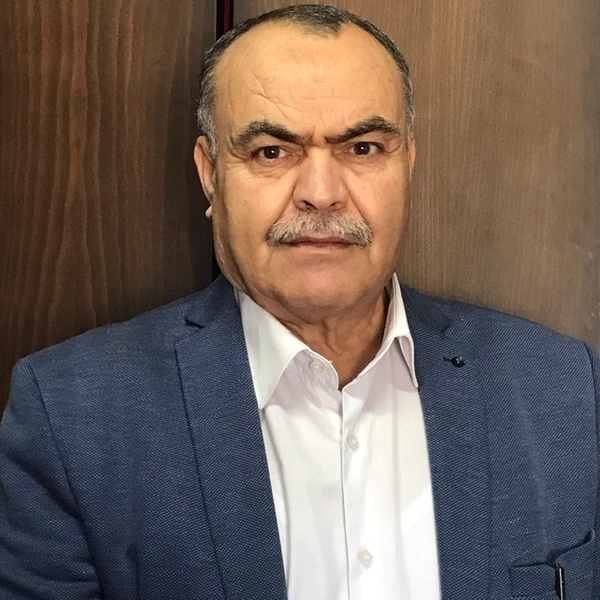
Hassan Abu Riyala, Undersecretary of the Ministry of Economy in Gaza, stated that the occupation is entrenching a monopoly policy by restricting supplies to a limited number of traders. This measure has led to exorbitant price increases and a severe shortage of basic commodity stocks, threatening the collapse of food security for the residents.

In the context of undermining internal stability, the Israeli army has intensified its direct targeting of Palestinian police officers tasked with protecting convoys and securing the internal front. The occupation recently admitted to assassinating six police officers under flimsy security pretexts without providing any evidence to support its claims.

Political analysts believe that targeting police personnel falls within an Israeli strategy aimed at pushing the Strip towards comprehensive chaos. Through these strikes, Israel seeks to make the living environment unsustainable, thereby pressuring the population towards forced displacement options.

Geographically, the occupation is accelerating the pace of land encroachment through what is known as the 'Yellow Line,' a military belt extending up to seven kilometers deep. Recent movements have led to an additional 37 kilometers being encroached upon, bringing 60% of Gaza's area under direct military control.

This geographical expansion has transformed the Strip into isolated enclaves, where the army has erected yellow concrete blocks to define its permanent deployment areas. Despite the agreement stipulating a full withdrawal in the second phase, field indicators confirm the occupation's intention to remain permanently east of this line.

Politically, the 'National Committee for Gaza Management' faces complete paralysis due to Israel's categorical refusal to allow its members into the Strip. This committee, composed of 12 technocrat members, was formed under an international vision for reconstruction, but it has remained isolated in Cairo.

Experts in Israeli affairs confirm that preventing the committee's entry aims to prevent the return of any form of Palestinian civil or political administration. Tel Aviv wishes to maintain a status quo characterized by direct military occupation without bearing any responsibilities towards civilians.

In a remarkable field development, the role of armed militias cooperating with the occupation and active in areas adjacent to the Yellow Line has emerged. These groups use five focal points as their headquarters under the protection of the Israeli army, where they are used to carry out assassinations and gather intelligence.

These groups are considered part of the indirect control pattern that the occupation is testing to manage the security domain remotely. This method aims to create a state of psychological and social instability among citizens, while providing fire cover for collaborators when needed.

On the other hand, Israel continues to procrastinate in implementing the requirements of the second phase of the agreement, linking them to the condition of 'disarming the resistance.' Researchers believe that this condition is unrealistic and is used as a pretext to evade commitments related to opening crossings and comprehensive reconstruction.

In contrast, Palestinian forces adhere to their position rejecting disarmament in light of the continued occupation and military incursions. It appears that Gaza has entered a phase of 'sustainable conflict' where livelihoods and medical needs are used as political pressure tools amidst a fragile truce that is violated daily.

Israel uses the siege as a tool to torture the residents of Gaza, and completely controls the details of life to create a distorted economic reality.

ISRAELI AFFAIRS

Mon 27 Apr 2026 7:07 pm - Jerusalem Time

'Bennett-Lapid' Alliance Redraws Israeli Opposition Map to Topple Netanyahu

The Israeli political arena witnessed a dramatic shift with the announcement by former prime ministers, Naftali Bennett and Yair Lapid, of the launch of a new electoral alliance under the name 'Together We Win'. This move comes at a sensitive time, aiming to reorder the opposition's cards and form a united front capable of ending Benjamin Netanyahu's dominance in power.

Observers described this alliance as a 'political marriage' necessitated by circumstances, as both parties seek to bridge gaps in their popularity and confront the continuous rise of other competitors within the same camp. Through this step, Bennett aims to present himself as a right-wing leader acceptable to the center and left, thereby facilitating the attraction of undecided voters.

In his first statements following the alliance, Naftali Bennett affirmed his commitment to his right-wing identity and his rejection of relying on Arab parties to form any future government. He also stressed that his top priority would be holding those responsible for security failures accountable, pledging to form an official investigation committee into the events of October 7 immediately upon taking office.

For his part, Yair Lapid considered standing with Bennett a necessary step to rectify what he described as the deviation in the path of the Hebrew state. Lapid indicated in closed-door discussions that toppling Netanyahu requires presenting a figure with a right-wing background, which explains his concession of leadership of the list to his former partner in the 'government of change'.

Despite the momentum generated by the announcement, initial opinion polls conducted by media sources showed that the new alliance might lose four seats compared to the strength of the two parties individually. The biggest beneficiary of this decline appears to be General Gadi Eisenkot, whom a segment of voters sees as a more stable alternative with a clearer political vision.

Analyses suggest that one of the unannounced goals of the alliance is to exert intense pressure on Eisenkot to force him to join the list and accept Bennett's leadership. However, Eisenkot remains silent about his final position, content with blessing the move without making any commitments to join this new bloc.

Bennett and Lapid also seek to dispel the fears of anti-Netanyahu voters who dread a repeat of the 'Gantz scenario', where some fear Bennett's return to an alliance with the Likud after the elections. Lapid's presence in the alliance, with his firm rejection of sitting with Netanyahu, serves as a safety valve for this concerned segment of the public.

On the ruling right-wing camp, this alliance raises questions about the reaction of the far-right parties led by Ben Gvir and Smotrich. It is probable that this rapprochement in the opposition will push the current coalition parties to strengthen their technical unity to prevent wasted votes and ensure their continued hold on power.

Within the Palestinian interior, the alliance sparked mixed reactions among political leaders in the 48 territories, with MP Ahmad Tibi considering the move expected. Tibi affirmed that this development necessitates accelerating the rebuilding of the Joint List to ensure strong and influential Arab representation in the next Knesset.

In turn, Sami Abu Shehadeh launched a scathing attack on Bennett's discourse, describing it as extremist and dangerous towards the Arab community and its rights. Abu Shehadeh believed that betting on change from within the Zionist camp is a losing bet, emphasizing that Arab unity is the only way to reclaim rights and confront marginalization policies.

Experts believe that the success of this alliance depends on its ability to present a convincing 'shadow government' to the Israeli public, which is looking for charisma and experience. Netanyahu, despite all crises, still maintains the image of a 'magician' and an experienced leader in the eyes of a wide segment of Israelis, which makes the task difficult for the duo Bennett and Lapid.

The results of the ongoing war on the Gaza and Lebanon fronts play a crucial role in determining the fate of these alliances and Netanyahu's political future. If the military bleeding continues without achieving clear objectives, popular pressure could topple the current government before the scheduled elections, giving the opposition a golden opportunity.

Questions also arise about Netanyahu's health and its impact on the scene, with some believing that the recent revelation of his illness may pave the way for a tactical withdrawal. Should Netanyahu decide to resign, the political map would witness an earthquake that could reshuffle the cards away from the current 'Bennett-Lapid' alliance calculations.

Ultimately, the 'Together We Win' alliance will remain under scrutiny in the coming months, awaiting the outcome of field and political developments. This bloc will have to prove its ability to overcome the ideological contradictions between liberal secularism and religious Zionist right-wing to convince voters of its leadership capabilities.

On my first day as prime minister, we will form an official investigation committee into the events of October 7.

ARAB AND WORLD

Mon 27 Apr 2026 7:06 pm - Jerusalem Time

Heavy Human Cost: Civilians Pay the Price of the US-Israeli War on Iran

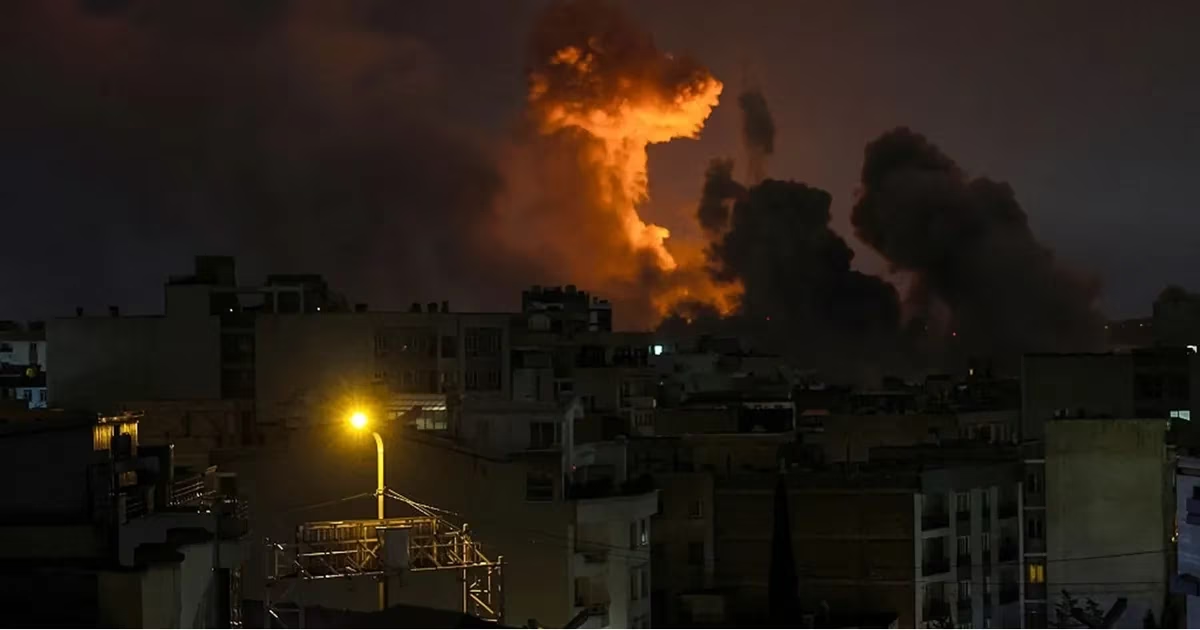
Recent human rights estimates and official statistics have revealed a tragic escalation in the human cost of the war waged by the United States and Israel on Iran, with the number of civilian casualties exceeding two thousand. International reports confirmed that this confrontation has resulted in one of the bloodiest disasters in the Middle East in recent years, with losses concentrated among the most vulnerable groups.

According to collected data, the majority of victims were not military personnel, but included children, women, paramedics, journalists, and civilian workers. These military operations began with a surprise attack on February 28, leading to significant confusion in counting and documentation due to continuous shelling and inaccessibility to some areas.

Figures released by health ministries and independent human rights organizations indicate that at least 2,100 civilians were killed directly as a result of the airstrikes. Sources explain that this number is likely to rise significantly as operations continue to retrieve victims from under the rubble of civilian buildings and service facilities targeted in several countries.

Inside Iran, human rights sources documented the killing of 1,701 civilians, representing a large portion of the total death toll, which has exceeded 3,400 people since the outbreak of the war. Local officials explained that about 45% of the total victims are ordinary civilians who were not involved in any military activity, reflecting the violence of the airstrikes.

In Lebanon, the Ministry of Health announced a heavy toll of 2,496 deaths due to continuous Israeli airstrikes since early March. The ministry indicated that approximately a quarter of these victims are women, children, and medical staff, highlighting the indiscriminate targeting of military objectives and densely populated civilian facilities.

The distribution of female victims included 503 deaths, among them 251 in Iran and 248 in Lebanon, in addition to four women in the occupied West Bank who died from missile shrapnel. These figures reflect the widening scope of the conflict to include a broad geographical area beyond the borders of countries directly involved in the armed conflict.

The childhood sector was the most affected, with 413 children killed in this war, 248 in Iran and 165 in Lebanon. Incidents of targeting schools and educational areas were repeated, leading to horrific massacres against students who were in their classrooms or engaged in sports activities in civilian facilities.

Journalistic and humanitarian work was not spared from targeting, as at least nine journalists were killed in raids targeting southern Lebanon and its major cities. Medical sources also recorded the killing of 91 workers from ambulance teams and the health sector, at a time when hospitals are suffering from complete exhaustion and a severe shortage of essential medical supplies.

On the other hand, Iranian missiles and drones caused civilian deaths in Israel and Gulf countries, with Israel recording 23 deaths. In the UAE, at least 10 people were killed, including migrant workers, in addition to reports of deaths and injuries in Saudi Arabia, Oman, and Bahrain due to missile interceptions.

Among the painful human stories, the incident of the killing of Lebanese paramedic Hassan Badawi stood out while he was performing his duty transporting an injured person in the town of Beit Yahoun. Badawi, a father of two, was one of dozens of paramedics who paid with their lives for their commitment to humanitarian work under intense shelling that did not differentiate between an ambulance and a military vehicle.

In Iran, the story of the child Raha Zirayi shook public opinion after she was killed in a raid targeting her elementary school in Hormozgan province. The raid, which resulted in the killing of 165 people, mostly children, occurred very shortly after the decision to close schools was issued, preventing parents from rescuing their children from under the rubble.

Migrant workers in the Gulf region also faced increased risks, as many were forced to continue working to earn a living despite security threats. Among them was Bangladeshi worker Saleh Ahmed, who was killed in Ajman by missile shrapnel while delivering water, leaving behind a family he had supported for a quarter of a century.

In the Lebanese city of Tyre, veteran journalist Ghada Al-Dayekh was killed under the rubble of her home after a distinguished career in radio work. Raids also targeted Al-Akhbar newspaper correspondent Amal Khalil and three other journalists near the town of Jezzine, despite clear signs indicating their journalistic identity and their vehicles designated for media work.

Field reports conclude by emphasizing that the effects of this war will not end with a ceasefire but will remain etched in the memory of the people through the stories of the victims. The transformation of civilians into fuel for this regional confrontation places the international community before its legal and moral responsibilities to protect civilian facilities, medical teams, and media personnel.

Civilians, including children, women, and paramedics, found themselves in the heart of a war that crossed borders to strike the stability of the entire region.

PALESTINE

Mon 27 Apr 2026 12:07 pm - Jerusalem Time

Shocking Testimonies from Occupation Soldiers: Confessions of Massacres, Looting, and the Spread of 'Moral Crises'

Leaked testimonies from soldiers in the Israeli occupation army have revealed horrific details concerning the commission of massacres and atrocities against Palestinian civilians during the ongoing genocide in the Gaza Strip. Press sources reported that these confessions included brutal practices such as premeditated killing and systematic looting, leading to psychological breakdowns and self-alienation among the forces participating in military operations.

Haaretz, the Hebrew newspaper, confirmed that a number of soldiers now feel shame and disgust at the actions they committed or witnessed in the field, which has led some of them to leave the country permanently or resign from military service. Reports clarified that these deep violations have left unhealing psychological scars, as these individuals suffer from a severe moral dilemma as a result of their participation in targeting innocent people and destroying infrastructure.

Mental health experts described this situation as a 'moral injury' that has begun to appear on a much wider scale than was recorded in previous wars, warning that it could turn into a real 'tsunami' threatening the military establishment. However, military censorship and Hebrew media continue to avoid publicly addressing this issue, fearing the collapse of the mental image promoted by the occupation for its army before the international community.

Sources quoted a reserve mental health officer questioning how these confessions could be reconciled with official claims that the army is 'the most moral in the world.' The officer indicated that acknowledging the extent of the crimes committed would necessarily lead to the collapse of the official narrative, which prompts the military leadership to deal with these crises in secret, away from the awareness of the Israeli public.

Testimonies included harsh incidents such as direct firing on unarmed civilians, humiliating mistreatment of Palestinian detainees, and widespread looting of citizens' property within the Strip. Reports confirmed that some soldiers involved in these massacres have already been admitted to psychiatric wards after their mental condition deteriorated, as they live in a conflict between their need for help and their fear of being branded as traitors.

Hebrew reports warned that ignoring these psychological crises could lead to a sharp increase in suicide rates among discharged soldiers, demanding that the Ministry of Defense and the army take responsibility for those they sent to the battlefields. The newspaper stressed the need to look directly at the true meanings of war and the failures and crimes it entails, which come at a high cost in lives and souls, holding the political leadership fully responsible for these orders.

In a related context, the occupation army continues its daily violations despite talks of ceasefire agreements, as it works to expand buffer zones and launch raids targeting areas it claims are safe. Military operations continue to destroy all vital sectors in Gaza, deepening the humanitarian crisis and confirming the occupation's insistence on completing plans for displacement and comprehensive destruction.

According to the latest statistics from the Ministry of Health, the number of Palestinian martyrs has risen to more than 72,587, while the number of injured has exceeded 172,587 since the start of the aggression. Data indicates that thousands of missing persons are still under the rubble, while the occupation continues to violate field understandings, leading to the fall of hundreds of additional martyrs even after the announced dates for calm.

If we publicly admit that a large number of soldiers suffer from moral injuries, how will that align with the image of an army that claims to be the most moral in the world?

ISRAELI AFFAIRS

Mon 27 Apr 2026 12:07 pm - Jerusalem Time

Empire of Loyalty: How Trump Reshaped the Joints of Governance in Washington?

From the very first moment of his inauguration on January 20, 2025, US President Donald Trump revealed the features of a new political era based on reshaping the landscape in Washington. Trump did not content himself with merely arranging the White House; instead, he moved towards building a network of influence that relies entirely on personal loyalty and proximity to the family circle, thereby bypassing the traditional decision-making centers he had often clashed with during his first term.

Trump's second administration is characterized by a notable presence of billionaires, media stars, and figures whose political rise is owed to their direct relationship with the President. This shift reflects Trump's desire to circumvent what he calls the 'deep state' and obstructive bureaucracy, by surrounding himself with individuals he trusts to implement his 'America First' vision without hesitation or complex institutional review.

Trump's family is no longer just moral support; it has become an integral part of the structure of influence and decision-making in Washington. Although some of them do not hold official positions, their influence passes through direct proximity to the President and the ability to manage sensitive files from behind the scenes, which sometimes gives them power exceeding the authority of official ministers.

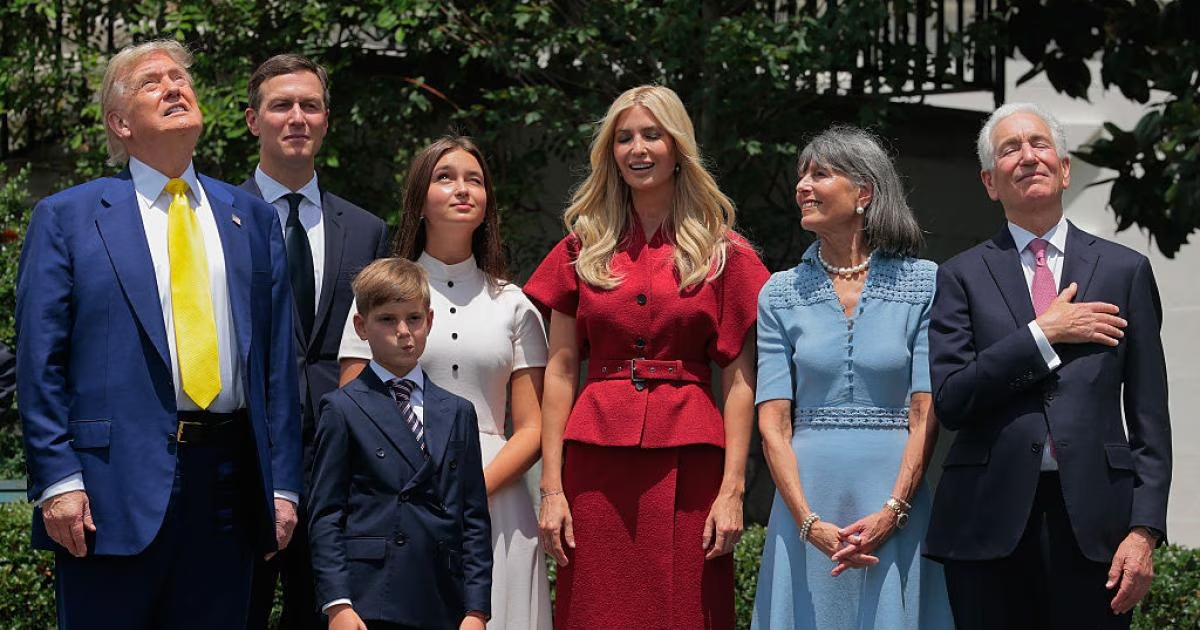
Jared Kushner, the President's son-in-law, stands out as one of the most influential figures in Middle East affairs despite his absence from the official government structure. Informed sources confirm that Kushner acts as a back-channel communicator and undeclared advisor, leveraging his previous experience in leading the 'Abraham Accords' path to arrange strategic contacts with regional leaders.

In a move that drew widespread criticism, Trump appointed Charles Kushner, Jared's father, as the US Ambassador to France. This appointment comes despite Charles's controversial legal record, reinforcing the impression that family loyalty has become a criterion that supersedes traditional diplomatic considerations in the distribution of high-ranking positions.

Massad Boulos, the Lebanese-American businessman, entered the spotlight with his appointment as a senior advisor for Arab and Middle Eastern affairs. Boulos, who is related by marriage to the Trump family, has become the main link with political and financial elites in the Middle East and North Africa, building on his previous activity during the election campaign.

On the economic front, Trump granted businessmen central executive positions, transforming the 'private sector mindset' into a governmental approach. Howard Lutnick, former CEO of 'Cantor Fitzgerald,' took over the Ministry of Commerce to lead strict tariff policies, especially in the open trade confrontation with China.

At the Treasury Department, Trump enlisted Scott Bessent, founder of 'Key Square Group,' to be the link between the administration and financial markets. These appointments aim to reshape the relationship between the state and the business sector, with a focus on tax policies that serve Trump's protectionist economic vision.

The inclusion of Elon Musk in the administration, through the 'Government Efficiency Management' project, marked the peak of the intertwining of money and power. Although Musk's experience ended with his departure from the position months later due to sharp disagreements, it left a deep impact on how Trump attempted to dismantle the federal administrative apparatus and reduce expenses using confrontational methods.

Conservative media was not absent from the appointments scene, as Trump chose Pete Hegseth, a former Fox News anchor, to take over the Ministry of Defense portfolio. This choice sparked considerable controversy in military circles due to Hegseth's limited administrative experience, but Trump defended him as a voice representing the conservative popular base.

In a related context, Karoline Leavitt emerged as the youngest White House Press Secretary in history, representing the new media face of the administration. Leavitt's mission is not limited to conveying news; she works within a communication apparatus that seeks to bypass traditional media and focus on alternative platforms and influencers close to the President's views.

Supporters of this approach believe that Trump is carrying out a necessary 'revolution' to cleanse Washington of the stagnation and bureaucracy that hinder change. For them, relying on trusted individuals is the only way to ensure the implementation of the electoral program that millions voted for, away from the 'conspiracies' of permanent state employees.

Conversely, critics warn that prioritizing loyalty over expertise weakens American institutions and transforms the state into a private 'fiefdom.' The intertwining of financial and family interests with political decisions raises fundamental questions about transparency and accountability, making it difficult to separate the public interest from the interests of the narrow circle surrounding the President.

Trump's second administration represents an unprecedented test for the American political system and its balance of power. Between the speed of decision-making and the constant clash with existing structures, Washington today seems governed by the rhythm of one man, relying on a closed circle of allies to manage the affairs of the world's superpower.

Trump returned to the White House even more inclined to surround himself with people he considers loyal to his vision and capable of moving institutions in the direction he desires.

ISRAELI AFFAIRS

Mon 27 Apr 2026 12:07 pm - Jerusalem Time

Occupation Army Investigations Acknowledge Failure in 'Holit': Soldiers Fled and Reinforcements Arrived After 7 Hours

The results of the operational investigations conducted by the occupation army revealed new details about the military failure to confront the Palestinian resistance attack on Kibbutz 'Holit' on October 7, 2023. The investigations acknowledged that the field forces completely failed to protect the settlers, leading to the death of 13 people, including soldiers and settlers, and the capture of 6 others as prisoners to the Gaza Strip.

The report, based on field testimonies and video clips, confirmed that about 60 Palestinian resistance fighters managed to storm the kibbutz at exactly 6:59 AM after blowing up the eastern security fence. Despite the initial movements being detected, the military response was completely absent, leaving the kibbutz residents to face the attack alone for long hours without any external intervention.

Official documents revealed an incident described as 'fleeing the field,' where patrol vehicles arrived in the vicinity of the kibbutz at 7:18 AM but left the area after only two minutes. The soldiers justified their withdrawal by receiving reports of their commander being injured at another location, leaving the area completely clear for Hamas fighters to move freely between houses.

The investigation, led by Colonel Elon Peretz, indicated that the occupation army was never prepared for a large-scale attack launched by thousands of resistance fighters on dozens of locations simultaneously. This confusion led to a paralysis in the command and control system, as units that arrived later failed to coordinate their efforts or prevent the resistance fighters from advancing within the settlement.

In controversial details, the investigation stated that the first organized ground forces did not arrive in 'Holit' until 1:53 PM, more than seven and a half hours after the start of the incursion. This significant time delay gave the resistance fighters complete control over the area, enabling them to carry out their tasks and engage with advancing forces from a comfortable position.

The failure was not limited to ground forces but extended to the air force, as an attack helicopter arrived late and hovered for half an hour without success. The report clarified that the helicopter crew fired random shells in an attempt to reveal the locations of the resistance fighters, but failed to identify any target or provide actual assistance to the besieged forces on the ground.

The investigation claimed that some forces that tried to enter early faced simple technical obstacles that prevented their intervention, such as the main gate of the kibbutz not opening. An armored vehicle on its way to the location also broke down, reflecting a state of technical and operational laxity that affected the units deployed in the Gaza envelope during the first hours of the battle.

The findings emphasized that Palestinian resistance fighters showed a high ability to maneuver and hide, as intermittent clashes continued inside and around the kibbutz for up to 30 hours. Even after reinforcements from the 'Golani' Brigade and other units arrived, the resistance fighters continued to pose a direct threat, leading to the injury of several Israeli soldiers with varying degrees of severity.

Informed sources explained that the publication of these results was delayed for about six months due to the need to complete investigations at 40 other engagement points that occurred on that day. The purpose of this delay was to try to formulate operational conclusions that the army could use to rebuild its collapsed defensive system in the southern region.

The investigations included an explicit admission that the 'kibbutz security coordinator' and members of the 'civil defense squad' were killed while trying to fill the void left by the army. The results confirmed that the lack of coordination reached the extent of 'Golani' Brigade forces entering the area without informing other units, which almost led to friendly fire incidents.

The report also noted that a tank crew composed entirely of women eventually had to breach the closed gate to allow the rest of the forces to enter at 2 PM. These details reflect the extent of the chaos that prevailed in the field, where there were no clear orders or activated emergency plans to deal with the breach of the border fence.

In a related context, the investigation indicated that the resistance fighters who stormed 'Holit' were fully aware of the area's terrain and house distribution, enabling them to move effectively. Cameras documented the resistance fighters allowing an Israeli woman and her two children to return, a move the investigation considered part of the field battle management by the attackers.

The committee, whose findings were approved by former Chief of Staff Herzi Halevi, concluded that the failure was comprehensive and not limited to a specific unit. It affirmed that the lessons learned require radical changes in how border settlements are protected, especially given the resistance's demonstrated ability to disrupt surveillance and rapid response systems.

It is worth noting that this investigation is part of a series of detailed investigations conducted by the occupation army into the events of October 7, in which about 1200 Israelis were killed. The army leadership faces significant public and political pressure due to these failures, which revealed unprecedented security and military vulnerabilities in the entity's history.

The Israeli army failed to defend Kibbutz Holit, primarily due to a lack of preparedness for a widespread and simultaneous attack.

ISRAELI AFFAIRS

Mon 27 Apr 2026 12:07 pm - Jerusalem Time

Because of the Palestinian flag.. Israeli police detain a writer and confiscate his 'kippah' in Modi'in

The city of Modi'in witnessed an incident that sparked widespread controversy after Israeli police detained British-Israeli writer Alex Sinclair, on the grounds of wearing a religious kippah bearing the symbols of both the Israeli and Palestinian flags. Sources reported that the incident began inside a cafe where the writer usually worked, where he was verbally attacked by an individual who claimed that the kippah violated the law, leading to the immediate summoning of security forces to the scene.

Upon the arrival of the security force, officers informed Sinclair that the symbol he was wearing was illegal, which the writer vehemently denied, asserting that there was no legislative text preventing the combination of flags on clothing or religious symbols. The discussion quickly escalated into a field detention, where the writer was transferred to the police station under threat of physical force, and all his personal belongings, including his mobile phone and laptop, were confiscated.

Sinclair, 53, described the conditions of his detention as shocking and confusing, as he was placed in solitary confinement and denied access to water or communication with his family to inform them of his whereabouts. He indicated that this arbitrary measure continued for several hours without any clear legal justification or formal charges being brought against him, reflecting an escalation in dealing with political symbols that call for coexistence.

The kippah, the subject of the dispute, holds significant moral value for the writer, as he explained that he has been wearing it for nearly twenty years as an expression of his complex identity that combines religious affiliation and a political stance advocating for the recognition of the other. Sinclair considered the security elements' act of cutting the Palestinian flag from the kippah a blatant assault on a religious and personal symbol, and an overstepping of the powers granted to the police in dealing with citizens.

After the investigations concluded, Sinclair was released without any charges, but he was surprised upon receiving his belongings that the kippah had been deliberately damaged by cutting off the part bearing the Palestinian flag. The writer confirmed that the police did not provide any official explanation or receipt proving the confiscation or modification of his property, but rather he was asked to leave the station immediately without completing the legal procedures followed in such cases.

For its part, the Israeli police issued a brief statement acknowledging the incident, indicating that the measures taken against Sinclair fell under the category of 'clarifying the situation' before his release. Police sources avoided commenting on the direct accusations related to the destruction of the kippah or the ill-treatment the writer was subjected to during his detention in solitary confinement.

In a legal response, Alex Sinclair announced that he would file a formal complaint against the police force, accusing them of illegal detention and deliberate destruction of private property. Observers believe that this incident goes beyond being an isolated event, highlighting the increasing tensions within Israeli society towards Palestinian symbols, and the erosion of spaces for freedom of expression and the recognition of different political identities.

Destroying the kippah represents an infringement on a religious symbol of deep value, and what happened reflects broad issues related to the limits of freedom of expression.

PALESTINE

Mon 27 Apr 2026 12:07 pm - Jerusalem Time

Human Heritage Under Fire: Israeli Raids Threaten Archaeological Sites in Lebanon

International and local concerns have escalated over the fate of human heritage in Lebanon, following a series of Israeli airstrikes that targeted the vicinity of archaeological landmarks in the city of Tyre. This city is one of the oldest continuously inhabited cities in the world, and it has been officially listed on UNESCO's World Heritage list since the 1980s.

Field sources reported that one of the violent strikes resulted in civilian casualties and the destruction of homes located within protected historical areas, causing direct and indirect damage to the archaeological infrastructure. These aggressions come at a time when these sites are supposed to enjoy strict international legal protection that prohibits their violation under any military circumstances.

UNESCO had previously announced the granting of 'Temporary Enhanced Protection' status to 39 cultural sites in Lebanon in response to urgent official requests. This list includes prominent landmarks in Baalbek and Tyre, in addition to the National Museum in Beirut and the archaeological site of Byblos, which dates back approximately 8,000 years.

In details of the aggressions, the 'Al-Bass' archaeological site in Tyre witnessed destruction affecting recently excavated artifacts due to the targeting of a neighboring house, and structures dating back to the Byzantine era were also damaged. The Lebanese Ministry of Culture condemned this behavior, describing it as a systematic aggression against cultural and civilizational heritage that represents the memory of peoples.

Tyre city hosts unique landmarks such as the Roman hippodrome, which is among the largest and best-preserved in the ancient Roman world. It also includes the famous 'Arch of Triumph' which represents a ceremonial entrance to the city dating back to the period of Emperor Hadrian, making its targeting an irreplaceable loss for human history.

For his part, Alwan Sharaf El-Din, Deputy Mayor of Tyre, confirmed that the city has been subjected to repeated aggressions since the 1982 occupation, noting that the occupation is not limited to destruction but also extends to theft. He explained that there is historical evidence of the transfer of stone sarcophagi and golden treasures from the region into the occupied territories during previous periods.

Sharaf El-Din pointed to Israeli attempts to obliterate Lebanese identity through false claims about the affiliation of some historical sites, such as Qalaat Shamaa (Shamaa Castle). This medieval castle was directly targeted, leading to extensive damage to large parts of it, as part of a policy of destroying defensive and historical landmarks.

These sites are subject to the 1954 Hague Convention, which obliges conflicting parties to protect cultural property and not use it for military purposes. However, field facts indicate a complete disregard for these laws, as shells and missiles fall very close to Roman columns and historical walls.

On the humanitarian front, the attacks caused a massive wave of displacement, as Tyre city received thousands of displaced people before it itself became a target for intense raids. In one of the recent massacres, the occupation targeted a residential neighborhood minutes before a ceasefire came into effect, leading to the martyrdom of 23 people under the rubble.

Search and rescue operations continue in the targeted areas amidst extreme difficulties, while Lebanese officials continue to issue distress calls to international organizations. Observers believe that international silence regarding the destruction of antiquities encourages the occupation to continue its 'scorched earth' policy that spares neither humans nor stones.

Archaeological sites in Tyre are not just tourist attractions, but rather civilizational symbols that have been successively inhabited by Phoenician, Hellenistic, Roman, and Islamic peoples. The destruction of these landmarks means erasing layers of human history that contributed to shaping the consciousness of the region and the world throughout the ages.

In Baalbek, the massive complex of Roman temples faces a similar danger, as the ground shakes under the weight of nearby explosions, threatening the collapse of sensitive stone structures. These temples are considered among the finest examples of Roman imperial architecture that have stood for thousands of years before this escalation.

Beirut's National Museum, which houses more than 100,000 artifacts, has also been placed under enhanced protection for fear of direct or indirect attack. The museum's collections document the region's history from the Stone Age to the Mamluk periods, making it a national and global treasure.

In conclusion, Lebanese heritage remains hostage to field developments, amidst continued Israeli violations of ceasefire agreements. Demands persist for effective international mechanisms to hold those responsible for the destruction of global cultural heritage accountable and to ensure that these civilizational crimes are not repeated.

Israel targets humans and stones, and seeks to destroy cultural and civilizational heritage and obliterate the historical identity of the region.

OPINIONS

Mon 27 Apr 2026 12:07 pm - Jerusalem Time

The Palestinian Woman Enters the Elections!

In the name of God, and with reliance on God, the Palestinian woman has decided to enter the municipal and local council elections with full vigor, activity, confidence, and capability; to stand side by side with men in serving the homeland and making decisions, supporting him and being supported by him, consulting him and being consulted by him, sharing opinions with him and having him share opinions with her, drawing strength from him and him drawing strength from her. It is true that Palestinian women had previously participated in elections in 1996, but this time we see them undertaking the experience with greater confidence, larger numbers, higher spirits, stronger determination, more mature experience, and more penetrating insight and vision for matters. With this electoral decision, she is trying to change the wrong societal concepts that have dominated it for long centuries, related to male dominance over administrative decisions, even in matters concerning women. Her candidacy in these elections is nothing but an attempt to restore society to its natural state, as God created it, a state in which male and female complement each other and are not superior to one another, cooperate and do not discriminate, complete each other and do not separate, to form a natural, integrated, and sound society as God intended since the beginning of creation, and as stated in the Book of God: "And that He created the two sexes, the male and the female." The Palestinian woman, with this electoral decision, is seen shattering the outdated myth that has lingered in the minds of the ignorant and backward, that women were created only for the home and children; to tell them with full confidence and reassurance that a woman is a mind before she is a body and a soul, and that she is a human being before she is a nurturer of children and generations. Like men, God has endowed her with intelligence, preparedness, capabilities, and competencies that qualify her to be alongside men in decision-making positions, to study and analyze, to decide and consult, and to defend the issues of her country and homeland as he defends, armed with her knowledge, certificates, struggle, and faith in herself and her cause. Today, by participating in municipal and local council elections, the Palestinian woman is telling Arab society in particular, and the world in general, that what governs the development and survival of society is knowledge and competencies, intellectual power and intelligence, not gender and physical strength; and that what works for the equality of male and female in rights and duties is the democratic system and respect for human beings, not the dictatorial system and dominance. After women throughout history have succeeded in being lawyers, doctors, researchers, scientists, poets, writers, physicists, chemists, and in other fields of science, especially in Palestine, she will undoubtedly succeed in being a mayor, a municipal council member, and a political decision-maker, as experience has shown that women everywhere are capable of sensing the issues of their society, capable of studying and analyzing them, and capable of articulating and defending them like their male counterparts; and for this reason, we have seen her reach the highest positions and ranks, from minister and director to researcher, scientist, doctor, lawyer, and professor, and so on. She is, without the slightest doubt, capable of being an active and influential member in any position she holds, adding to men and not detracting from them, supporting them and not diminishing their status, complementing them and not weakening them, and defending her country, society, cause, and homeland, and not standing by as a mere spectator or only suffering when she loses a brother, son, husband, father, relative, or friend. As sociologists say, two opinions are better than one, and this is what happens when the Palestinian woman takes her place in administrative centers alongside her brother, the man. The look of hope and optimism we saw in the pictures of the female candidates on the election list tells us that the Palestinian woman is determined to work, determined to succeed, and determined to occupy her leading role in society to no less extent than the man's determination; and that is with what she possesses of knowledge and competence, intelligence and shrewdness, experience and high confidence in God and in herself. So congratulations to the Palestinian woman for entering the elections, and congratulations to some for winning mayoralties, and congratulations to you for your self-confidence, and congratulations to you for your faith in your abilities, and congratulations to you for your insistence on proving yourself and serving your community, and blessed be your endeavor to reach the administrative pyramid and decision-making, supporting men in every position and place, and congratulations to Palestinian society for having you as a mother, sister, wife, struggler, mayor, and leader... and so on, from positions that were once exclusive to men, so that you may be a role model for all Arab and foreign girls. So go forth, and may God's eye watch over you, and forward, with our best wishes for you and all winners for all success and progress, and more prosperity in serving your country, people, society, and cause on the path to victory, liberation, and independence.

OPINIONS

Mon 27 Apr 2026 12:06 pm - Jerusalem Time

Israel After 78 Years: Transformations of Identity and Destiny

Seventy-eight years after its establishment, Israel, in the eyes of Palestinians, appears as an entity that has not yet settled on a definitive self-definition. It is not merely a state that has succeeded in establishing its existence, but a project that still fluctuates between contradictory forms, transforming from one stage to another without reaching a moment of balance. Therefore, looking at it today is inseparable from reading this profound transformation in its intellectual, political, and social structure.It can be said that Israel has transitioned, over these decades, from a socialist Zionism with a collective character to a biblical religious Zionism tending towards extremism and insularity. That initial Zionism, despite its hostility, cloaked itself in a modernist discourse and presented its project as part of the Western world and its values. Today, however, we are faced with a different discourse, more inward-looking, and more based on religious texts and historical interpretations that give the conflict an absolute character that does not accept compromises.This transformation was not merely superficial. Israel moved from a relatively open stance to a state of increasing insularity, and from accepting the idea of compromise – even if tactically – to adopting policies based on expansion and rejection. Compromise is no longer a central option; instead, it has been replaced by a vision based on imposing facts by force, and on redefining the conflict as an existential rather than merely political struggle.In the same context, Israel's image as the "exceptional victim" that cannot be touched has receded, gradually entering the sphere of criticism and accountability, and even prosecution in some international circles. The moral aura that surrounded it in its early days is no longer able to fully protect it, especially with the escalation of violence and expansion, and with the exposure of the contradiction between its discourse and its practices.As for the Jewish personality within this entity, there has been a remarkable transition from the inward-looking "Talmudic Jew," content with managing his private affairs, to the "Biblical Jew" who sees himself as an actor in history, tasked with control, expansion, and fighting. This shift reflects a transition from a state of defense to a state of offense, and from retreat to initiative, but at the same time, it opens the door to further clashes.Politically, Israel is no longer what it once was. Instead of institutions that set the general rhythm, we are now witnessing the rise of the individual and the leader, and a gradual decline in the weight of institutions. The democracy that has long been presented as a key feature is undergoing severe tests, with the growth of authoritarian tendencies and the rise of populist forces that tend towards decisive action rather than consensus.In terms of performance, sweeping military victories are no longer the dominant characteristic. Israel now engages in complex rounds, often ending in compromises or attempts to market a "victory narrative," rather than decisive victories on the battlefield. Moreover, the concept of absolute security control has eroded, replaced by a reality of multiple fronts and intertwined threats, making military superiority less capable of resolving the conflict.Socially, Israel has transitioned from a society aspiring to homogeneity to a multi-ethnic and multi-identity society suffering from increasing internal divisions. From the collectivism that characterized its beginnings to the individualism that dominates today, and from a solid national immunity to a state of internal fragmentation, reflecting the failure of the complete integration project.Most significantly, groups that were considered marginal or extremist are now at the heart of the scene; indeed, they are shaping policies and determining directions. This transformation is reshaping Israel from within, pushing it towards greater rigidity, and making "Third Israel" in the occupied West Bank an expression of this new path, where settlement is not just a policy, but an ideology.Despite all the successes Israel has achieved in economy, technology, and military power, it still suffers from a deep identity crisis. It has not yet been able to resolve the question: What does it want to be? A normal state in the region, or an exceptional project above it? This confusion is reflected in its policies, in its relationship with its neighbors, and in its dealings with Palestinians.At its core, it seems that its failure to reach a settlement with the Palestinians is not just a detail, but the knot that hinders its stability. Instead of leading to a review, this failure pushes it towards further extremism and violence, as if it is trying to escape forward.Thus, Israel today stands at a real crossroads. Its continuation on this path may lead to uncomfortable results, not only for Palestinians, but for itself as well. For states, no matter how powerful, cannot live long in a state of open conflict, nor can they establish their stability on the denial of the other.Therefore, the question is no longer just: How do Palestinians see it? But: Where is Israel itself heading, as it changes so rapidly, without finding a definitive point of reference?* Director of the Mediterranean Center for Regional Studies

OPINIONS

Mon 27 Apr 2026 7:48 am - Jerusalem Time

Trump Halts Islamabad Trip: Iran Negotiations Stumble Between Coercion and Limits of Power

Washington – Said Arikat – 27/4/2026

News Analysis

President Donald Trump's decision to cancel a trip that two of his senior aides were scheduled to make to Islamabad appeared to be a revealing moment for the faltering path between Washington and Tehran. The trip, prepared for a new round of talks on a potential agreement to end the war on Iran, was canceled hours before its departure, sending a political message that carried more than procedural significance, and confirming that negotiations are still far from any serious breakthrough so far.

Trump said he informed his team not to take "an eighteen-hour trip to sit and talk fruitlessly," adding that the United States "holds all the cards." This rhetoric summarizes the American president's philosophy in managing foreign crises, where negotiation is viewed as an extension of military and economic pressure, rather than an independent path for resolving complex disputes. In the Iranian case, this approach seems more complex and less effective than Washington imagines.

The American move also represented a second setback for Pakistani mediation in less than a week, after a visit expected from Vice President JD Vance to Islamabad was canceled. These developments reveal that the American administration has not given the Pakistani channel full political weight, despite Pakistan's open relations with Tehran and Washington, and its theoretical ability to facilitate communication between the two parties at a highly sensitive regional moment.

In contrast, Iranian Foreign Minister Abbas Araqchi returned to Islamabad hours after his departure, indicating that Tehran still sees Pakistani mediation as a viable avenue for investment, or at least a suitable arena for exchanging political messages before his move to Moscow. Iran usually keen to keep communication channels open, even at the peak of escalation, without showing signs of weakness or haste.

The most prominent obstacle to any negotiation is the continued American naval blockade on Iranian ports, a measure aimed at strangling the Iranian economy and pushing the leadership in Tehran to make concessions. However, Iran has repeatedly declared its refusal to negotiate under pressure, considering that any agreement extracted under coercion lacks political and sovereign legitimacy. Between the American desire to impose its conditions and the Iranian insistence on steadfastness, the path stumbles before it even begins.

This crisis is not separate from the escalating tension in the Strait of Hormuz, the vital passage for oil and gas exports from the Gulf. Both sides have continued to detain ships and accuse them of violating navigation restrictions, making the sea a parallel pressure arena to the negotiating table. Any limited incident in this region is capable of undermining months of communications and causing global energy prices to rise immediately.

The nuclear file remains the most complex issue. The dispute is not limited to the extent of enrichment or levels of control, but includes the principle of the right itself. Iran says the Nuclear Non-Proliferation Treaty guarantees its right to enrich uranium for peaceful purposes, while Washington insists on preventing any capability that puts Tehran a short distance from producing a nuclear weapon. Thus, the dispute transforms from technical to sovereign and strategic at the same time.

The irony is that Trump is now negotiating a crisis he himself contributed to complicating when he withdrew in 2018 from the nuclear agreement signed in 2015. It is true that the previous agreement was not perfect, but it imposed strict restrictions and extensive inspection mechanisms. The unilateral American withdrawal weakened the pragmatic current within Iran, strengthened the arguments of hardliners who say Washington does not abide by its commitments, and then pushed Tehran to accelerate enrichment and expand its nuclear stockpile.

This background reveals the limits of the chronic American belief that sanctions and military force are sufficient to change the behavior of targeted countries. Pressures may weaken the economy, but they do not automatically produce political surrender; rather, they often reinforce defensive tendencies and give the authorities additional pretexts for rigidity. In the Iranian case, the more the external threat escalates, the more the opportunities for pragmatic currents diminish and the influence of security institutions expands.

Moreover, the decision-making style within the American administration raises additional questions. When visits and appointments are canceled at the last minute, mediators' trust in Washington's seriousness erodes, and it becomes difficult to build on its commitments. Diplomacy requires a stable partner whose behavior can be predicted, not an administration that swings between escalation and retreat depending on daily calculations or political mood.

In contrast, Tehran is betting on what it calls "long patience." It realizes that the American administration needs a quick achievement that can be marketed domestically, while Iran, despite the high cost, can endure a longer stalemate. Hence one of Iran's most important strengths: time. The longer the crisis lasts without a full-blown explosion, the more pressure there is on Washington to show some result.

However, this does not mean that Iran holds the full initiative. It faces an economy burdened by sanctions, internal social challenges, and escalating security pressures. Nevertheless, the Iranian leadership seems convinced that making major concessions under siege would be more costly than the possibility of the crisis continuing, especially in the absence of reliable American guarantees after the experiences of past years.

If the current logic of coercion continues, negotiations may turn into mere cover for managing the conflict rather than ending it. But if Washington realizes that force alone is not enough, an opportunity may arise for a gradual settlement based on reciprocal steps and partial lifting of sanctions in exchange for verifiable restrictions. The real question is no longer who wins a round of statements, but who has a viable vision that saves face for both sides.

So far, it seems Trump wants a quick deal through which he can declare his superiority over his predecessor Barack Obama, while Iran wants a deal that guarantees its interests and prevents a future American withdrawal. Between Washington's haste and Tehran's patience, the canceled Islamabad trip remains a symbol of a wide gap yet to be bridged, and a conflict that goes beyond individuals to a deep contradiction in understanding the meaning and limits of power.

First Prediction: Limited Interim Settlement

Experts believe that the most realistic probability for the future is reaching an interim agreement that does not address all issues, but rather freezes escalation and gives both parties additional time. This could include a partial easing of sanctions in exchange for halting some enrichment activities and expanding international oversight. This scenario suits Trump because it provides a quick achievement, and suits Iran because it gives it economic breathing room without major strategic concessions. But it will remain fragile and prone to collapse at the first sudden political or security crisis between the two sides later on.

The second scenario is the continuation of the current situation: indirect contacts, spaced-out negotiation rounds, and controlled escalation that does not slide into an all-out war. Washington will continue economic and military pressures, while Tehran continues to maneuver and gradually expand its regional and nuclear cards. This pattern may continue for months or years, as it allows both parties to avoid full concession or major confrontation. But it slowly accumulates risks, and makes any maritime or security incident a cause for an uncalculated explosion at any later moment.

If Trump insists on extreme conditions, or if Iran decides to raise the level of enrichment and regional challenge, negotiations may collapse entirely and the region return to the brink of direct confrontation. At that point, Washington may resort to limited strikes or tightening an even harsher blockade, while Tehran responds via the Strait of Hormuz or through its allies in the region. This scenario does not guarantee victory for any party, but rather raises the economic and security costs for everyone, and makes a return to diplomacy more difficult later on.

PALESTINE

Mon 27 Apr 2026 7:48 am - Jerusalem Time

Occupation forces raid Qalandia camp, launch widespread arrest campaign north of Jerusalem

Large forces of the Israeli occupation army stormed Qalandia camp, located north of occupied Jerusalem, at dawn on Monday, where they began carrying out a widespread raid campaign that affected dozens of homes. Local sources reported that the raid was accompanied by a heavy deployment of infantry forces in the narrow alleys of the camp, amid intensive overflights by reconnaissance aircraft and the presence of military vehicles at the main entrances.

Video clips documented the occupation soldiers' assaults on citizens' property, showing soldiers violently kicking the doors of residential buildings and leading young men, with their hands tied, to unknown destinations. The sources stated that the arrest campaign targeted a number of citizens, among whom was the released prisoner Arafat Yaqoub, who was arrested after his home was raided and its contents were savagely ransacked.

In a remarkable field escalation, the occupation forces forcibly evacuated one of the residential homes in the camp, turning it into a military barracks and an observation point for their soldiers. This coincided with the army pushing additional military reinforcements from the Qalandia military checkpoint towards the depths of the camp, to secure the withdrawal of forces after completing the search and arrest operations that lasted for several hours.

These developments come just hours after a Palestinian youth was injured by live occupation fire near the separation wall north of occupied Jerusalem on Sunday evening. According to eyewitnesses, occupation soldiers fired directly at the youth, causing him injuries, in the context of targeting farmers and passersby near the border and separation areas.

Cities and camps in the West Bank and occupied Jerusalem have witnessed an unprecedented escalation in the pace of incursions and assaults since October 2023, with night raids becoming a daily practice aimed at persecuting Palestinians. These incursions are usually accompanied by violent field confrontations, during which the occupation seeks to impose a new security reality by intensifying military presence in densely populated areas.

According to the latest official Palestinian data, occupation and settler attacks in the West Bank have resulted in the martyrdom of 1,154 Palestinians and the injury of approximately 11,750 others since the beginning of the recent escalation. The number of arrests has also risen to nearly 22,000 cases, amid difficult detention conditions faced by prisoners inside occupation prisons.

Occupation forces converted a house in the camp into a military barracks after forcing its residents to leave it under threat of arms.

ARAB AND WORLD

Mon 27 Apr 2026 7:48 am - Jerusalem Time

New Iranian Proposal to Washington: Comprehensive Settlement for the Strait of Hormuz and Postponement of the Nuclear File

Informed sources revealed that Tehran has submitted a new diplomatic proposal to the American administration through Pakistani intermediaries, aiming to end the ongoing dispute and reopen the Strait of Hormuz to international navigation. This move comes at a sensitive time when the region is witnessing escalating military tensions and increasing economic pressures, with Iran seeking a comprehensive political solution to the current crisis.

The Iranian offer includes a fundamental clause to postpone discussions related to the nuclear program to a later stage, as part of a broader deal that ensures the stability of vital waterways. According to media reports, this step reflects Tehran's desire to separate outstanding issues and focus on halting military operations and lifting the naval blockade imposed on it as a top priority at present.

For his part, US President Donald Trump expressed conditional openness to the idea of negotiation, indicating that the door is open for the Iranian leadership to communicate if there is a genuine desire to end the war in which the United States and Israel have been involved. However, Trump reiterated his country's red lines, stressing that Tehran possessing nuclear weapons is not permissible under any circumstances.

In the context of intense diplomatic activity, Iranian Foreign Minister Abbas Araghchi held a series of discussions in the Pakistani capital, Islamabad, despite the absence of the American negotiating delegation that was supposed to participate in indirect rounds. These meetings focused on informing the Pakistani side, as a key mediator, of the details of the Iranian conditions necessary to reach a permanent ceasefire agreement.

The Iranian demands conveyed by Araghchi include the drafting of a new international legal system regulating movement in the Strait of Hormuz, ensuring the rights of all parties and preventing future military friction. Tehran also demanded financial compensation for the damages it has incurred, in addition to strict international guarantees to prevent the recurrence of any aggression by countries it describes as instigators of the conflict.

Despite the direct negotiation track faltering after the cancellation of a visit by prominent American envoys to the region, Araghchi continued his tour, which included the Sultanate of Oman, emphasizing the role of regional mediators in bridging viewpoints. Diplomatic sources confirm that Iranian moves aim to build a political safety net that ensures the lifting of the naval blockade and the unimpeded flow of goods and services without military obstacles.

In a significant development, the Iranian Foreign Minister traveled to Russia to meet President Vladimir Putin in St. Petersburg, to discuss the repercussions of the stalled negotiations with Washington. The Kremlin confirmed this meeting, which aims to coordinate positions between the two allies, as Moscow seeks to play a more active role in promoting de-escalation efforts and reducing tensions in the Middle East.

The Iranian Ambassador to Moscow, Kazem Jalali, described this visit as part of a 'diplomatic jihad' to protect Iranian national interests in the face of escalating external threats. Jalali indicated that cooperation between Tehran and Moscow represents a united front aimed at breaking unipolarity and Western hegemony, stressing that consultations will also address ways to achieve a comprehensive ceasefire that ends the humanitarian suffering resulting from the war.

Iran can communicate if it wishes to negotiate an end to the war, but it cannot possess nuclear weapons.

PALESTINE

Mon 27 Apr 2026 7:48 am - Jerusalem Time

Despite the hardships of travel and the reality of destruction... Dozens of wounded Palestinians return to the Gaza Strip

The Gaza Strip received a new batch of wounded Palestinians who completed their treatment journeys abroad, where feelings of joy at their arrival mingled with the bitterness of the complex humanitarian reality witnessed in the Strip. The returnees insisted on returning to their homes despite the massive destruction and the loss of basic necessities of life, in a clear message of steadfastness on their land.

Sources reported that the journey was fraught with hardships and challenges, especially at the border crossings, which are subject to strict security measures. One of the returnees described her experience as extremely exhausting, while also noting the medical and humanitarian care she received in Egyptian hospitals during her treatment period.

Upon their arrival in Khan Yunis, the returnees found themselves facing a painful reality, as many of them were forced to go directly to the tents of shelter centers. This forced step comes after the occupation forces completely destroyed their homes during military operations that targeted residential areas in the Strip.

A returning woman recounted painful details about the loss of her son during his treatment journey, as he suffered a deterioration in his health before his death far from his homeland. Despite this loss, the woman affirmed that Gaza remains beautiful in the eyes of its people despite all the destruction it has suffered, expressing her hope for the start of the reconstruction phase soon.

For their part, other returnees spoke about being subjected to abusive practices by occupation soldiers during their crossing, including humiliating searches and confiscation of personal belongings. One young man confirmed that these procedures, including restrictions and long waits, did not prevent him from insisting on returning to Gaza, which he sees as his only option.

In an emotional scene, families welcomed their wounded children with tears of joy after an absence that lasted for years in some cases, with one returnee mentioning that he had been away from the Strip for about two and a half years. The families considered the safety of their children and their return to the family's embrace to be the greatest gain in these harsh circumstances.

This batch's return comes amid limited operation of the Rafah land crossing, which faces operational difficulties after long periods of closure that negatively affected the movement of patients. Thousands of wounded in Gaza face immense challenges in accessing necessary medical care due to the collapse of the local health system.

Field sources indicated that the occupation continues to exert security pressure on returnees by subjecting them to lengthy interrogations and harsh waiting conditions. These practices are considered part of the ongoing policy of tightening restrictions aimed at complicating the lives of Palestinians even after the cessation of direct military operations.

It is worth noting that the Gaza Strip is trying to recover from the effects of a devastating war that lasted for two years, resulting in tens of thousands of martyrs and wounded and unprecedented destruction of infrastructure. This reality has made travel for treatment an inevitable necessity for many cases for which treatment is not available in the destroyed hospitals.

Despite the ceasefire agreement coming into effect on October 10, 2025, Israeli violations continue to cast a shadow over the lives of the residents. The testimonies of the returning wounded reflect a popular determination to stay and adapt to the most difficult living conditions, preferring to live in tents rather than remain in exile.

Gaza remains beautiful despite its bitterness, and staying in a tent inside the Strip is still better than living outside it.

PALESTINE

Mon 27 Apr 2026 7:47 am - Jerusalem Time

The Weapon of Starvation in Gaza: The Loaf of Bread Becomes a Tool of Political Blackmail and Human Suffering

Obtaining a loaf of bread in the Gaza Strip is no longer just a routine daily detail; it has become a battle for survival that reflects the depth of the humanitarian tragedy experienced by more than 2.2 million Palestinians. This transformation from abundance to deadly scarcity embodies a complete collapse of the system that once ensured the minimum level of food security for the besieged population.

Field data indicates a huge gap in supplies, as the sector daily needs about 450 tons of flour to meet basic needs, while only scarce quantities not exceeding 200 tons are actually available. These figures practically mean that thousands of Palestinian families go to bed without their share of bread, turning the shortage into a permanent reality.

Before the recent escalation, Gaza relied on a sophisticated network of commercial and automated bakeries with high production capacity. Today, this network has sharply shrunk, with international reports indicating that only 9 bakeries are still operating out of 30 that were receiving direct support to provide bread at affordable prices.

The operating percentage of bakeries that have been able to resume production ranges between 30% and 50% at best, and they depend entirely on what the World Food Program provides in terms of flour and yeast. This sharp decline reflects the fragility of the productive infrastructure that was directly or indirectly targeted during the ongoing military operations.

The role of international organizations such as the World Food Program and the World Central Kitchen stands out as a key player in attempting to contain the disaster by distributing hundreds of thousands of meals daily. However, this role remains limited to crisis management without providing radical solutions, in light of the occupation's policy that adopts 'rationed relief' as a tool for control.

The model of precisely calculated external flows keeps the weapon of starvation present as a strategic option that can be activated at any closure of crossings or shortage of fuel. As soon as flour or energy runs out, the entire relief system stops, paving the way for the specter of famine to appear in various areas of the Strip.

The fuel and energy crisis is a crucial factor in disrupting the remaining productive capacities, as diesel prices recorded a record increase of 438%. This unprecedented rise has made operating automated ovens extremely costly and impractical in the absence of sustainable energy alternatives and the scarcity of cooking gas.

In addition to the fuel shortage, the dilemma of the absence of spare parts and equipment necessary for the maintenance of ovens damaged by shelling emerges. These factors combined have led to a crazy jump in bread prices, reaching 400%, which has put this basic commodity out of reach for a wide segment of the poor and displaced.

The crisis was not limited to a shortage of supply but extended to include a structural imbalance in distribution mechanisms and the emergence of patterns of monopoly and the black market. Local bakeries found themselves facing an impossible equation between exorbitant operating costs and the risk of direct targeting of workers and facilities in the field.

Automated bakeries that previously produced about 100,000 loaves daily are now operating at less than half their capacity at best. The absence of technical rehabilitation capacity and the shortage of raw materials have caused production to decline to minimum levels that do not meet the minimum of the increasing demand in shelters.

The health repercussions of this crisis are evident in the increasing cases of acute malnutrition, especially among children and pregnant women. More than 55% of the population has also resorted to using primitive and dangerous cooking methods, such as burning plastic and wood, which adds respiratory health risks to the suffering of hunger.

Economically, the bread crisis has caused the collapse of already fragile purchasing power and the loss of thousands of jobs in the bakery sector and related services. UN reports confirm that about 41% of the population has lost their stable access to food, portending a long-term social catastrophe.

Legally, this artificial crisis raises fundamental questions about the effectiveness of international humanitarian law, which prohibits the use of starvation as a method of warfare. The continued obstruction of food supplies puts the international community before a moral and legal test to fulfill its obligations towards civilians in besieged areas.

In conclusion, the bread crisis in Gaza remains a testament to a systematic policy of collective punishment that goes beyond mere resource scarcity to target human dignity. Ensuring the right to food is not just a relief demand, but a test of the world's ability to uphold its values in the 21st century.

Bread in Gaza is not just food; it has become a stark indicator of the limits of international justice and a weapon used by the occupation to ration relief.

PALESTINE

Mon 27 Apr 2026 7:47 am - Jerusalem Time

Palestinian Local Elections: Moderate Participation and Security and Political Challenges Impose Acclamation in Major Cities

The Palestinian Central Elections Commission announced on Sunday evening the official results of the local elections held in the West Bank, Jerusalem, and the city of Deir al-Balah in the Gaza Strip. Official data showed that the final voter turnout reached 53.4%, with more than half a million Palestinians exercising their right to vote at polling stations distributed across various governorates.

The electoral process witnessed sharp disparities in participation rates between regions, with the rate in Jerusalem Governorate reaching 43.9% covering only five local bodies, while the city of Hebron recorded one of the lowest voting rates at 30% despite its large electoral bloc. In contrast, results in 197 local bodies were decided by acclamation, raising questions about the decline of pluralism in population centers.

In a remarkable scene, the 97-year-old Palestinian elder Nader Shaaban insisted on going to the polling station in the village of Al-Jalama, north of Jenin, to cast his vote. Shaaban affirmed that his motive was to fulfill his national duty and support whoever he deemed most suitable to serve the community, despite his skepticism about the elections' ability to bring about radical change given the current reality.

On the ground, the city of Deir al-Balah in the Gaza Strip witnessed an electoral precedent with voting taking place in 12 centers for the first time in over two decades, where the participation rate reached 22.7%. The Elections Commission was forced to extend the voting period in the city by an additional hour to enable citizens to reach the ballot boxes amidst the exceptional circumstances.

In the city of Nablus, a state of dissatisfaction prevailed after the announcement of the victory of the Anan Al-Atira list by acclamation, which deprived about 89,000 voters of exercising their right to choose. Independent candidates accused Palestinian security forces of exerting pressure that prevented the completion of their competing lists, leading to the disruption of the democratic process in the city.

Academic Mohammad Dweikat explained that he filed an official appeal with the Elections Commission after candidates on his list were detained by the Preventive Security and General Intelligence agencies. Dweikat indicated that these summonses prevented him from registering the list on time, considering what happened a forced absence of real electoral competition.

The condition of 'recognition of the PLO's commitments' emerged as a major obstacle to broad participation, with political and religious forces considering it an exclusionary condition that contradicts the foundations of pluralism. This clause led to the boycott of the elections by influential factions, either by refraining from running or by calling on supporters not to go to the polls, which clearly affected the electoral momentum.

For his part, political analyst Akram Al-Natsha believed that the decline in turnout compared to the 2022 elections is also due to citizens' preoccupation with daily concerns and the escalation of occupation attacks. Al-Natsha added that the difficult economic conditions and high unemployment rates have made the electoral event a secondary issue for large segments of the Palestinian street.

The electoral process was not immune to Israeli occupation violations, as local sources reported that 6 citizens were injured during an Israeli occupation forces raid on a polling station in the city of Hebron. Al-Arroub refugee camp also witnessed clashes after the ballot boxes were closed, while settlers cut off roads leading to some villages around Jerusalem to obstruct voters' access.

In the context of political analysis, activist Omar Assaf considered that the condition of adhering to the organization's program empties the electoral process of its democratic essence and turns it into a mere formality. Assaf warned that the continuation of these policies would lead to a permanent abstention of citizens from participating in any future national or legislative entitlements.

Conversely, political science professor Ayman Yousef indicated that these conditions might be the result of international pressure aimed at ensuring the stability of the Palestinian political path after the October events. Yousef explained that the results of these elections will be an important indicator for the future of renewing the legitimacy of Palestinian institutions amidst the stalled reconciliation file between Fatah and Hamas.

Data indicates that the absence of elections in major cities such as Ramallah and Qalqilya reflects a crisis in forming lists and the ability to compete amidst sharp polarization. While Ramallah went for acclamation, Qalqilya completely failed to present any candidate list, which places local bodies before legal and administrative challenges in the next phase.

Despite the challenges, official sources considered that holding the elections at this time represents a message about the ability of Palestinian institutions to manage internal affairs. The Elections Commission affirmed that it worked according to the law to ensure the integrity of the process, despite all political and legal objections that accompanied the registration and voting stages.

The biggest challenge facing the elected local councils remains providing tangible services to citizens away from the political polarization that dominated the scene. The Palestinian citizen, as expressed by those who participated in the voting, awaits service programs that improve the reality of villages and cities and address the escalating economic challenges.

Corruption began long ago at the core of this state, and it reflected on its institutions, but we hope that the righteous will succeed in serving the people away from family considerations.

PALESTINE

Mon 27 Apr 2026 7:47 am - Jerusalem Time

Exceeded 72,000.. A heavy toll of victims of the ongoing aggression on the Gaza Strip

Medical sources in the Gaza Strip revealed today, Wednesday, a new and tragic update on the toll of victims of the ongoing aggression, as the numbers recorded an unprecedented rise in the number of martyrs and wounded. These statistics document the escalating humanitarian suffering since the start of the military escalation on October 7, 2023, amid a complete international silence regarding the daily massacres.

The sources reported that hospitals operating in various areas of the Strip received 17 martyrs and 32 injuries of varying severity during the past twenty-four hours. Official data clarified that among these victims, 13 citizens were killed in the last 24 hours alone, which confirms the continued targeting of residential areas inhabited by civilians without prior warning.

In a statistic reflecting the extent of destruction since last October, medical authorities recorded a total increase in martyrs during that period to 809 martyrs, while the number of wounded exceeded 2,267 injured. Medical staff are working under extremely harsh conditions with a severe shortage of essential supplies and medicines needed to save the lives of the injured who are flowing into the remaining shelters and hospitals.

Regarding field operations, civil defense teams were able to recover 761 bodies that were stuck under the rubble of destroyed buildings in several neighborhoods in the Gaza Strip. These teams face enormous challenges due to the lack of heavy equipment and fuel needed to operate machinery, which often makes the process of searching for survivors or recovering martyrs almost impossible.
Health authorities warned that the officially announced numbers do not include all actual victims, as hundreds of citizens are still missing under the rubble of their homes or in rugged roads that are difficult to access. The sources confirmed that the continued violent shelling prevents ambulance crews from performing their duties in evacuating bodies, which portends an additional health and environmental catastrophe in the targeted areas.

Medical authorities stressed that the significant deficit in rescue capabilities prevents the relief of those trapped until now, at a time when the occupation continues to impose its strict siege and prevent the entry of humanitarian and medical aid. They appealed to international organizations for the urgent need to intervene immediately to provide safe corridors for medical teams and ensure the protection of civilians and health facilities that have become directly in the line of fire.

Hundreds are still missing under the rubble of destroyed homes and in rugged roads, and our teams face a significant inability to reach them.

ISRAELI AFFAIRS

Mon 27 Apr 2026 7:47 am - Jerusalem Time

Erosion of American Support for the Occupation: Israeli Fears of Democratic and Republican Shifts

The occupying state is facing a escalating diplomatic crisis in the United States, with reports indicating a tangible deterioration in its standing not only within the traditional Democratic camp but also among Republicans. Observers believe that the current far-right government's continued policies could lead to irreparable damage to the strategic relations between Washington and Tel Aviv.

Shlomo Shamir, an expert on American affairs, affirmed that discussing the unprecedented decline in American support has become an urgent necessity that cannot be overlooked. Shamir warned against complacency with the relationship with Donald Trump, pointing out that profound shifts in American public opinion transcend fleeting personal alliances.

Political analyses show a fundamental difference in the nature of support between the two parties; while Democrats historically considered sympathy for Israel part of their political identity, Republicans base their support on political calculations and changing interests. This distinction still exists and directly affects how decisions are made in Washington regarding Middle East issues.

Concern prevails in Israeli circles regarding prominent Democratic figures such as Senator Bernie Sanders, who is described in Israeli right-wing circles as hardline towards the occupation policies. Gavin Newsom, the Governor of California, also stands out as an ambitious presidential figure who holds sharply critical stances towards current Israeli practices.

On the Republican side, fears are escalating regarding the influence of figures like Steve Bannon and J.D. Vance, with the latter being viewed as a serious threat due to his stances described as hostile towards Israel. Vance has succeeded in removing figures who were considered bridges for communication with Tel Aviv, such as Jared Kushner, from decision-making circles.

Recent parliamentary statistics indicate a worrying shift, with 40 Democratic senators supporting a resolution to postpone the sale of heavy military equipment to the occupation. Additionally, 36 other members voted in favor of preventing the sale of bombs, reflecting a growing gap between the American administration and the legislative base of the Democratic Party.

Israeli sources accuse Benjamin Netanyahu's government of political blindness towards internal developments in the United States, where Trump is portrayed domestically in Israel as an absolute ally while facing sharp criticism from senior Republicans. This disparity in vision reflects a detachment from the diplomatic and moral reality currently experienced by Washington.

Analysts believe that the presence of ministers like Itamar Ben-Gvir and Bezalel Smotrich in decision-making positions distorts Israel's image unprecedentedly in Western capitals. These ministers represent, for the international community, an extremist face that is difficult to defend, weakening the position of Israel's defenders in international forums.

Ari Yoff, head of the Jewish Reform Movement, explained that American support has reached its lowest historical levels, considering Netanyahu a significant part of this dilemma. He pointed out that American public opinion now links Netanyahu personally with Israel as a single entity, which intensifies the criticism directed at the state as a whole.

Political circles criticize the lack of Israeli awareness of the negative impact the current government has on the international stage, especially in Washington, which is considered the most important ally. This failure is attributed to the ruling coalition's insistence on pursuing ideological agendas that clash with the democratic values claimed by the American administration.

There is a significant gap in Israeli diplomatic action, as opposition leaders are absent from the American scene and do not make sufficient effort to communicate with Jewish communities or community activists. This absence leaves the field open for a narrative that fully links Israel to the policies of the Likud and the far-right.

Reports confirm that the current American criticisms are not directed against Israel's existence per se, but against the policies of the current government and its pivotal figures. However, the continuation of this approach may gradually lead to a shift in criticism from the governmental level to the existential and legitimate level.

Experts believe that restoring traditional support in the United States requires a radical change in Israeli political leadership and its replacement with a more rational government. They believe that the upcoming elections may be the last chance to mitigate the damage caused by the current government's policies and rebuild bridges with both parties.

In conclusion, it appears that the imbalance in American support is no longer merely a fleeting phenomenon associated with a rebellious young generation, but has become an institutional trend permeating centers of power. Israel remaining hostage to internal political whims may cost it the loss of the most important international cover it has enjoyed for decades.

The decline in support for Israel is not limited to Democrats but is also increasing among Republicans, which carries dire political and moral consequences.

PALESTINE

Mon 27 Apr 2026 7:47 am - Jerusalem Time

Fragmentation Engineering: 34 New Settlements Turn the West Bank into Isolated Cantons

Field data and consistent reports have revealed that the Israeli Ministerial Committee secretly approved the establishment of 34 new settlements distributed across the occupied West Bank. This step comes within the framework of accelerating the pace of creeping annexation, with these new outposts concentrated in the Hebron and Jenin governorates and areas near the apartheid wall.

This strategic settlement leap aims to dissolve the June 4, 1967 borders and fragment what remains of the interconnected Palestinian geographical space. Through this expansion, the occupation authorities seek to impose a new demographic and geographical reality that makes the establishment of a contiguous Palestinian state practically impossible.

The tragedy of land dispossession is embodied in the story of citizen Fahd Al-Qawasmi from Hebron, whose land ownership documents have become mere worthless papers in the face of the occupation's mechanisms. Israeli bulldozers began razing his 500-dunum land, which he inherited from his ancestors, in preparation for establishing a new settlement named 'Karmei Yehuda'.

Al-Qawasmi confirms that the settlement encroachment now targets the identity and history of the land, noting that resorting to the occupation police to file complaints has become futile. Local residents believe there is a role reversal between the army and settlers, describing the situation as 'the police officer in uniform during the day is the same settler who attacks us at night'.

Geographically, preliminary maps of the distribution of the 34 new settlements indicate a clear desire to isolate major Palestinian cities from each other. The plan aims to connect large settlement blocs such as 'Gush Etzion' with the 'Karmei Tzur' bloc, which will inevitably separate Hebron from its eastern countryside and from the neighboring Bethlehem Governorate.

Specialized sources in resisting the wall and settlements reported that this expansion aims not only to reduce the areas available to Palestinians but also to create 'cantons' and suffocated human enclaves. This policy works to prevent any natural extension of Palestinian villages and cities, thereby erasing the contiguous geographical presence of the Palestinian people in their homeland.

In a statistical reading of this development, experts in settlement affairs believe that what is happening represents an unprecedented leap in the history of the occupation, as the number of settlements increased from 178 at the beginning of 2023 to about 297 currently. This means that in one year, the occupation approved the equivalent of half of what it built over decades since 1967.

This settlement boom coincides with fundamental changes in laws and the inauguration of a wide network of bypass roads that ensure the complete separation of settlers' movement from Palestinians. This system aims to create two separate entities within the West Bank, one for settlers controlling all resources, and the other for Palestinians scattered in geographical enclaves.

Reports indicate that the last three years, specifically since October 2023, have witnessed a phase of 'rushing towards annexation' through the privatization of settlement fieldwork. The construction of about 28,000 settlement units was approved for 2025 alone, which is the highest number recorded in many years in the records of Israeli expansion.

'Pastoral settlement' has also emerged as one of the most dangerous tools used to control land, where settlers set up tents and sheep pens under army protection to control thousands of dunums. More than 165 pastoral outposts have been observed since 2023, 89 of which were established in 2025, reflecting a frantic acceleration in land grabbing.

The occupation approved in one year the equivalent of 50% of what it built since 1967, completely redefining the geographical reality.

PALESTINE

Mon 27 Apr 2026 7:47 am - Jerusalem Time

14 Martyrs in Israeli Raids on Lebanon and Hezbollah Carries Out an FPV Drone Ambush in Taybeh

The Lebanese Ministry of Health announced the martyrdom of 14 people, including two children, and the injury of about 37 others as a result of a series of airstrikes launched by Israeli occupation forces on various areas in southern Lebanon. This bloody escalation comes amidst continuous violations of the truce agreement that began on April 17, threatening the collapse of fragile field understandings.

Official sources reported that the occupation army did not only carry out airstrikes but also systematically demolished and destroyed homes and infrastructure in the area between the towns of Yaroun and Bint Jbeil. These operations were accompanied by warnings issued by the Israeli army spokesperson to residents of seven southern towns to evacuate immediately, claiming the presence of Hezbollah military activities there.

In contrast, Hezbollah carried out a complex military operation in the border town of Taybeh, resulting in the death of one Israeli soldier and the injury of six others with varying degrees of wounds, four of whom were described as critical. According to field data, the operation began with a precise targeting of an Israeli force attempting to repair a 'Merkava' tank in the town square, about 3.5 kilometers from the border.

Field sources explained that Hezbollah used small, suicidal (FPV) drones in its attack, which are characterized by high precision and maneuverability to reach sensitive targets. Footage broadcast by Israeli media showed the moment one of these drones exploded near a gathering of soldiers, causing severe confusion among the force present at the scene.

The attack did not stop at the first strike but extended to include the rescue force of Unit '669', specialized in medical evacuation, which intervened to transport the injured by helicopters and ground vehicles. During the evacuation attempt, Hezbollah launched two additional drones; defense systems managed to intercept one of them, while the second exploded very close to the landing site, forcing the helicopter to take off immediately under threat.

Cameras mounted on Israeli soldiers' helmets documented moments of terror during the second targeting, with footage showing the drones' precision in tracking moving and stationary targets on the battlefield. These operations reflect an evolution in Hezbollah's tactics through the use of remote-control technologies that allow for extremely precise targeting of tank hatches and fortified positions.

Follow-up reports indicated that the past twenty-four hours witnessed intensive use of this type of aerial weapon, with Hezbollah launching more than seven suicidal drones. These attacks targeted gatherings of occupation soldiers within occupied Lebanese territories and at points close to the border strip, significantly hindering Israeli military movements.

In Haifa, Rambam Hospital received a number of wounded who were transported by military helicopters from the operation site in Taybeh. Israeli medical sources confirmed that the injuries resulted from direct shrapnel from the drone explosions, noting that some cases are still in intensive care due to the severity of their wounds.

For its part, civil defense and ambulance teams in southern Lebanon continue to retrieve victims from under the rubble of homes destroyed by recent Israeli raids. Medical teams face extreme difficulties in reaching some targeted areas due to the continuous intensive overflights of Israeli warplanes and reconnaissance aircraft that do not leave Lebanese airspace.

Observers believe that this mutual escalation puts the truce agreement at risk, especially with Israel expanding the scope of its targeting to directly include civilians and infrastructure. In contrast, Hezbollah demonstrates an ability to adapt to field conditions and use qualitative weapons to impose new equations in the ongoing ground confrontation at the front edge of the border.

Hezbollah targeted a Merkava tank in the Taybeh town square with two kamikaze drones, then pursued the rescue force during evacuation operations.

ARAB AND WORLD

Mon 27 Apr 2026 7:47 am - Jerusalem Time

Araghchi in Moscow to Meet Putin: Intensive Iranian Movement to Discuss Nuclear File and International Mediation

Iranian Foreign Minister, Abbas Araghchi, left the Pakistani capital Islamabad on Sunday, heading to the Russian capital Moscow in a new stop on his intensive diplomatic tour. This visit comes at a time when the region is witnessing rapid movement aimed at addressing outstanding issues, most notably the Iranian nuclear program and escalating tensions in the Middle East.

Araghchi is scheduled to hold an important meeting on Monday with Russian President Vladimir Putin, according to the Iranian Ambassador to Russia, Kazem Jalali. Discussions will focus on reviewing the latest developments in the indirect negotiations taking place with the United States, in addition to discussing efforts for a ceasefire in the region and common security files.

The Russian Foreign Ministry, for its part, confirmed that the Iranian minister's visit falls within the framework of official diplomatic consultations between the two countries. Although precise details of the agenda have not been disclosed, the timing indicates Tehran's desire to coordinate positions with its Russian ally before taking further steps in the negotiation process.

Araghchi had made a second visit to Pakistan over the weekend, a country that plays a pivotal role in mediation between Tehran and Washington. These moves coincided with reports of the cancellation of an anticipated visit by US envoys Steve Witkoff and Jared Kushner, reflecting a state of stagnation in achieving a tangible breakthrough.

Current data indicate the continued political stalemate regarding the nuclear agreement, despite the continuation of indirect communication channels through regional mediators. Through this tour, which also included the Sultanate of Oman, Tehran is trying to solidify its positions and ensure the support of influential international powers in the face of continuous US pressure.

Regarding the nature of communication with the American side, informed sources clarified that the messages currently exchanged do not reach the level of direct negotiations. These correspondences are limited to clarifying the Iranian vision on strategic issues and confirming adherence to the red lines drawn by the supreme leadership in Tehran.

All Iranian diplomatic moves are under the direct supervision of the Supreme National Security Council, which is responsible for formulating the country's major policies. This internal coordination aims to ensure the unity of the negotiating position, especially in light of the changes that have occurred in some technical delegations tasked with following up on the technical details of the nuclear file.

Sources reported that the Iranian approach to the nuclear file differs fundamentally from the American vision, as Tehran considers it an existential issue linked to its future and international standing. In contrast, Washington believes that the file is part of a broader political agenda related to regional security arrangements and limiting Iranian influence in the region.

Tehran emphasizes in all its diplomatic meetings its categorical rejection of any proposals that include transferring its enriched uranium stockpile outside its borders. However, Iranian officials show cautious flexibility towards the possibility of reaching limited understandings, provided that there is political will from other parties and respect for Iranian sovereignty.

Iran affirms its adherence to its uranium stockpile and its complete rejection of the idea of transferring it outside the country, while keeping the door open for limited understandings.

ARAB AND WORLD

Mon 27 Apr 2026 7:46 am - Jerusalem Time

Jeffrey Sachs: War on Iran 'Illusions' Created by Trump and Netanyahu, No Peace Without a Palestinian State

American intellectual and director of the United Nations Sustainable Development Solutions Network, Jeffrey Sachs, described American and Israeli military moves against Iran as a 'war of illusions' lacking realism. He explained in statements to media sources that this confrontation was built on erroneous intelligence and political assessments that deluded themselves into believing in the ability to subjugate Tehran by military force, pointing out that the absence of a clear path to achieving goals is the main reason behind the decline in international support for these approaches.

Sachs held only two individuals responsible for the current escalation: Benjamin Netanyahu and Donald Trump, emphasizing that this war is not based on popular support in the United States or the European continent. He called on international powers, especially the Gulf states, to take a firm stance demanding an immediate cessation of military operations, warning that persistence in this approach will only lead to more chaos and instability in the regional security structure.

Regarding political solutions, the American intellectual asserted that there can be no talk of sustainable peace in the Middle East without a just and comprehensive solution to the Palestinian issue in accordance with international law. He stressed that the core of conflicts in the region is linked to the absence of an independent Palestinian state, calling for its establishment on the lands of Gaza and the West Bank with Jerusalem as its capital, considering that the Israeli rejection of this entitlement is the real fuel for the cycle of ongoing conflicts.

Sachs also directed scathing criticism at American foreign policy, pointing to the profound impact of what he described as the 'Zionist lobby' in pushing Washington towards wars of attrition in Iraq, Syria, Yemen, and Libya. He believed that these interventions did not serve the interests of stability, but rather hindered real peace opportunities and led to the fragmentation of the political fabric of several Arab countries, which necessitates a comprehensive review of American alliances and sovereign decisions in the region.

Sachs refuted the claims of victory promoted by the White House regarding the war on Iran, emphasizing that the on-the-ground and economic reality indicates a deep crisis that has not yet been overcome. He cited the failure of this war by the continued global economic tensions, rising energy prices, and disruption of navigation in vital waterways, considering that these indicators reflect a strategic failure at all military and political levels.

Sachs concluded his vision by emphasizing that ending the conflict is possible immediately if the United States and Israel decide to withdraw and return to diplomatic paths, warning of the catastrophic cost of continuing the military option. He also touched on the internal American situation, considering that the assassination attempts against Trump are a reflection of a societal crisis linked to the spread of weapons and sharp division, despite ruling out their direct impact on the course of ongoing foreign wars.

The current war is a war of illusions created by Netanyahu and Trump, and it does not enjoy widespread popular support in the West.

OPINIONS

Mon 27 Apr 2026 7:38 am - Jerusalem Time

Why Betting on the United States and Israel Has Been a Losing Bet for Palestinians


By: Said Arikat

April 27, 2026

News Analysis


Washington, D.C- For seventy-eight years, Palestinians have repeatedly been told to trust the very powers that enabled their dispossession. They were urged to believe that the United States would act as an honest broker, that Israel would eventually choose justice over expansion, and that patience, moderation, and endless negotiations would somehow produce freedom. Instead, this wager has yielded one of the clearest records of betrayal in modern diplomacy.


From 1948 until today, betting on the United States and Israel has not simply failed—it has deepened Palestinian loss. Washington has offered rhetoric while shielding Israel from accountability, and Israel has offered negotiations while entrenching occupation. The result has been a relentless cycle of promises, delay, and irreversible facts on the ground.


The story begins in 1948, when the United States swiftly recognized the new State of Israel while more than 700,000 Palestinians were expelled or fled during the Nakba. Their towns were emptied, their properties confiscated, and their national life shattered. Yet while Israeli statehood was affirmed, Palestinian rights were pushed aside. Refugee return, restitution, and self-determination were postponed to an undefined future that never came. Palestinian dispossession was not remedied—it was normalized.


After the 1967 war, Israel occupied the West Bank, Gaza, and East Jerusalem. The world spoke of temporary occupation and land for peace. Nearly six decades later, the occupation remains, transformed into a permanent system of settlements, checkpoints, walls, raids, and unequal legal structures. The United States had enormous leverage to halt this trajectory. Instead, successive administrations largely financed, excused, or diplomatically managed it. Each year of inaction sent the same message: international law becomes flexible when Palestinians are the victims.


No phrase has damaged the Palestinian cause more than the so-called peace process. Presented as a path to statehood, it often functioned as political cover for colonization. While diplomats convened summits and issued optimistic statements, settlements multiplied and Palestinian land was carved into disconnected enclaves. Palestinians were expected to prove moderation, reform institutions, suppress resistance, and concede in advance. Israel, meanwhile, negotiated while changing realities on the ground. One side talked; the other built.


The clearest example was Oslo. Palestinians recognized Israel and accepted a state on only 22 percent of historic Palestine. In return, they were promised phased withdrawal and sovereignty. What emerged instead was limited autonomy under occupation. The Palestinian Authority received administrative burdens without real power, while Israel retained control over borders, movement, water, airspace, and security. Oslo did not end occupation—it subcontracted parts of its management. Settlements expanded dramatically during the very years supposedly devoted to peace.


The greatest fiction sustaining this process was the notion of the United States as neutral mediator. Washington arms Israel, funds Israel, shields Israel at the United Nations, and coordinates strategically with Israel—then presents itself as referee. No credible mediator bankrolls one side while lecturing the other about compromise. American diplomacy repeatedly pressured Palestinians to accept realities created by force, while asking Israel only to discuss whether it might someday restrain itself.


Nowhere has this failed bet been more brutally exposed than in Gaza. Since the blockade imposed in 2007, Gaza has endured repeated large-scale Israeli wars that destroyed any illusion that negotiations or American guarantees could protect civilians. In 2008–2009, Israel’s assault killed more than 1,300 Palestinians and devastated neighborhoods and infrastructure. In 2012, another war struck the enclave, again leaving death and ruin while the siege remained intact. In 2014, more than 2,200 Palestinians were killed, including hundreds of children, and vast residential areas were reduced to rubble. Again during the March of Return in 2018, then again in 2021. Each time, ceasefires were announced, reconstruction was promised, and the world moved on.


Then came the catastrophe after October 7, 2023. What followed has been described by many legal scholars and rights advocates as genocidal destruction. More than 72,000 Palestinian men, women, and children have been killed, with many thousands more believed buried beneath the rubble. Entire families were erased. Residential districts, refugee camps, hospitals, universities, roads, and water systems were shattered. Hunger, displacement, disease, and trauma became the defining conditions of life. Gaza was not merely attacked—it was systematically broken.


Throughout these wars, Washington voiced concern for civilians while continuing to arm, finance, and diplomatically protect Israel. Calls for restraint rarely became meaningful pressure. Temporary pauses came only after immense devastation had already been inflicted. Gaza became the ultimate lesson: American sympathy, when offered, does not equal protection.


Recognition of Jerusalem as Israel’s capital, tolerance of settlement expansion, and normalization deals that sidelined Palestinian rights merely stripped away the final illusions. What had long been disguised as mediation became open alignment. Palestinians were asked to accept shrinking horizons while being told this was realism. In truth, it was surrender repackaged as diplomacy.


Why has this bet failed so consistently? Because the structure itself is designed to fail Palestinians. Israel gains territory while talks continue. The United States offers process instead of justice. Delay benefits the occupier, not the occupied. Palestinian concessions become permanent, while Israeli promises remain optional. International outrage rises briefly, then fades without consequence.


The only viable path forward is one rooted not in illusion but in leverage: Palestinian political renewal, democratic legitimacy, national unity, grassroots resilience, legal accountability, and diversified alliances beyond Washington’s monopoly. Diplomacy matters—but diplomacy without pressure is pleading before power.


For generations, Palestinians were told to wait: wait for the next summit, the next envoy, the next election, the next president. While they waited, land disappeared, settlements spread, Jerusalem was transformed, Gaza was strangled, and occupation hardened.


The tragedy is not only that this bet failed. It is that it failed exactly as history warned it would.

OPINIONS

Sun 26 Apr 2026 7:12 pm - Jerusalem Time

Green Cards for Silence: Trump’s America Demands Loyalty to Israel Before Freedom


By Said Arikat


The United States has long sold itself to the world as a sanctuary for free thought, political dissent, and opportunity. But under Donald Trump, that promise is being hollowed out. According to a recent New York Times report, internal Department of Homeland Security training materials show the administration expanding ideological screening for green card applicants—particularly targeting criticism of Israel and expressions of support for Palestinian rights.


This is not routine immigration enforcement. It is a loyalty purge dressed up as border policy.


For generations, permanent residency decisions were meant to rest on objective criteria: criminal history, fraud, security risks, and legal eligibility. Now, the standard appears to be mutating into something darker. Social media posts, political opinions, and moral outrage over the destruction of Gaza may now be treated as evidence against an applicant.


The message is brutally clear: if you want to build a life in America, keep quiet about Palestine.


Among the examples reportedly flagged were posts saying “Stop Israeli terrorism in Palestine,” maps replacing Israel with Palestine, and expressions of sympathy for civilians trapped under siege and bombardment in Gaza. One may debate slogans or imagery, but these are political statements—not violent acts, not criminal conspiracies, not threats to national security.


Yet in Trump’s America, opposing war can become grounds for punishment.


That should alarm every defender of civil liberty. The First Amendment was designed precisely to protect controversial speech. American courts have upheld the right to express offensive, symbolic, and deeply unpopular political views. But Trump appears determined to create a two-tier system: constitutional freedoms for some, ideological vetting for everyone else.


Citizens may speak. Immigrants must obey.


What is unfolding is a corruption of immigration law into an instrument of political coercion. A green card applicant is not applying to become a soldier in Washington’s foreign policy machine. They are applying to live, work, and contribute to society. Yet the administration seems to be saying that fairness now depends on one’s willingness to stay aligned with official narratives—especially where Israel is concerned.


This is where the hypocrisy becomes impossible to ignore.


Trump officials defend these measures as part of a campaign against antisemitism and anti-American extremism. Real antisemitism exists, and it must be fought without hesitation. But deliberately conflating hatred of Jews with criticism of the Israeli state is a cynical abuse of language. It turns a serious moral struggle into a political shield for a foreign government.


Millions of people—including Jewish Americans, Israeli dissidents, scholars, journalists, and human rights organizations—criticize Israeli policies. Are they extremists? Are they enemies of America? Of course not. They are participating in democratic debate. But once criticism of Israel is recast as dangerous thought, repression becomes easier to justify.


This is precisely the point.


The administration is not merely protecting Israel diplomatically or militarily. It is attempting to protect Israel from criticism inside the United States by threatening the legal futures of vulnerable non-citizens. That crosses a profound line. It suggests that allegiance to Israeli sensitivities now carries more weight than America’s own free speech principles.


The numbers tell part of the story. Reports indicate a steep decline in green card approvals in recent months. Whether through direct denials or endless bureaucratic delay, the strategy appears consistent: make lawful immigration so punishing, expensive, and uncertain that people surrender before the government has to reject them outright.


Cruelty through paperwork is still cruelty.


Even the language of governance has changed. Immigration officers reportedly have been rebranded from public service employees into “defenders of the homeland.” That militarized rhetoric is revealing. It casts migrants as invaders, applicants as suspects, and bureaucrats as frontline combatants. A civilian agency once tasked with processing petitions now behaves like an ideological checkpoint.


America has seen this disease before.


During the McCarthy era, accusations of disloyalty were used to blacklist dissenters, narrow public discourse, and frighten institutions into compliance. Today the labels have changed, but the instinct is identical. Then it was communism. Now it is Palestinian solidarity. Then it was subversion. Now it is social media sympathy for bombed civilians.


Different era, same paranoia.


The tragedy is that this strategy may produce short-term political rewards. It flatters nativist instincts, energizes parts of Trump’s base, and reinforces the mythology that America is under siege from foreigners and dissenters alike. But the long-term cost will be severe.


The United States built much of its strength by attracting people who believed freedom here was more than propaganda. Scientists, students, entrepreneurs, refugees, artists, and workers came because America promised room to breathe. If that promise is replaced by surveillance, ideological tests, and compulsory silence, the country will lose something more valuable than any election cycle can measure.


It will lose credibility.


Abroad, many already suspect that Washington invokes democracy selectively—celebrating freedom when convenient, suppressing it when uncomfortable. Policies like these confirm the charge. They tell the world that human rights matter until Israel is criticized, and free speech matters until Palestine is mentioned.


That is not strength. It is insecurity masquerading as patriotism.


A serious democracy does not tremble at a protest slogan. It does not treat sympathy for civilians as extremism. It does not force immigrants to whisper their conscience in exchange for legal status. And it certainly does not subordinate constitutional values to the sensitivities of a foreign ally.


If America now grants green cards only to the politically obedient, then the issue is no longer immigration alone. It is whether the republic still believes in the freedoms it advertises.

PALESTINE

Sun 26 Apr 2026 4:26 pm - Jerusalem Time

The occupation pursues the livelihood of Gaza fishermen: sinking of boats and comprehensive destruction of the fishing sector

Israeli occupation forces continue their systematic violations against fishermen in the Gaza Strip, targeting small boats and beaches with heavy gunfire and shells. These attacks come amid repeated breaches of ceasefire understandings, exacerbating the humanitarian suffering of thousands of fishermen who rely on the sea as their sole source of livelihood.

Field sources reported that about 4,000 Palestinian fishermen have been directly affected by these continuous pursuits, which prevent them from reaching deep waters. The sources explained that hundreds of boats that were sunk by occupation gunboats are now nothing but scattered wreckage, a scene that embodies the extent of the destruction inflicted on this vital sector.

For his part, Zakaria Bakr, head of the Fishermen's Committees, confirmed that Israeli violations occur daily and vary between direct shooting and the sinking of equipment. Bakr pointed out that this policy aims to impose a comprehensive naval blockade, as the intensity of these attacks has escalated recently to include the complete destruction of fishing infrastructure.

Bakr revealed shocking differences between the reality of fishing before the war and the current situation. Previously, the sector included about a thousand motorized boats, 96 of which were large. Today, fishermen have been forced to use very primitive means of flotation, such as styrofoam boards and old refrigerator doors, in a desperate attempt to secure their daily sustenance.

In terms of production, the occupation's prevention of the entry and operation of boat engines for more than two and a half years has led to the collapse of the sector's productive capacity. The daily fishing rate has decreased from about 20 tons of fish to only about 10 tons per month, leading to a significant shortage in local markets and rising prices.

The losses were not limited to material aspects but also extended to direct targeting of facilities, as Gaza port was bombed with about 26 Israeli missiles. The destruction also affected equipment stores and fishing nets, making the restoration of normal activity in this sector extremely difficult without urgent international intervention.

Regarding human cost, official statistics indicate that the occupation has killed more than 232 fishermen since the escalation began, in addition to injuring and arresting hundreds. Dozens of fishermen are still languishing in Israeli prisons, while the injured suffer from disabilities that prevent them from returning to their arduous profession.

The occupation navy imposes strict restrictions on fishing areas, often preventing fishermen from exceeding a distance of only one kilometer from the shore. This narrow area is monitored by warships that do not hesitate to open heavy machine gun fire on any boat attempting to secure its livelihood.

Despite continuous communication with human rights organizations and international institutions, fishermen confirm that verbal solidarity has not translated into practical steps to protect them from the occupation's bullets. Fishermen emphasize their continued sailing despite the imminent dangers, asserting that steadfastness is their only option to confront the systematic starvation policy.

The Palestinian fisherman today is faced with a choice between a complete ban on practicing his profession or risking his life under Israeli shelling.