PALESTINE

Thu 07 May 2026 7:41 am - Jerusalem Time

Occupation warns of demolition of 50 structures in Al-Eizariya in preparation for implementing the 'E1' settlement plan

Israeli occupation authorities today, Wednesday, issued urgent notices to demolish about 50 commercial shops and Palestinian structures in the town of Al-Eizariya, located southeast of occupied Jerusalem. These measures come as part of accelerated steps to pave the way for the implementation of a large-scale settlement plan in the vital area connecting Jerusalem to its surroundings.

Official sources in Jerusalem Governorate reported that occupation teams verbally informed about 50 citizens of the need to evacuate their structures in the nursery area at the main entrance to the town. The authorities set next Sunday morning as the final deadline for evacuation, threatening to forcibly carry out demolition operations, including the contents and goods within the structures.

These new notices are based on previous demolition orders issued in August 2025, as the occupation seeks to impose a new reality before legal issues are decided. The Governorate clarified that the owners of the structures had submitted legal petitions to Israeli courts, and a decision on them is expected in mid-May.

For its part, Al-Eizariya Municipality warned that these targeting fall within the settlement plan known as 'E1', which is considered one of the most dangerous expansion projects in the region. This project aims to connect the 'Ma'ale Adumim' settlement with occupied Jerusalem, which will effectively isolate the northern West Bank from its south completely.

The plan includes the so-called 'Fabric of Life' project, a system of roads and infrastructure designed for racial segregation between the movement of Palestinians and settlers. Under this plan, tunnels and secondary roads will be allocated for Palestinians, while surface and main roads will be designated to serve settlers and facilitate their movement towards Jerusalem.

In a related context, human rights reports indicated that last April witnessed a significant escalation in demolition operations, with occupation forces carrying out 37 demolition operations in various areas of the West Bank. These operations affected 78 structures, including 37 inhabited homes, leading to the displacement of dozens of Palestinian families.

Settlement affairs experts confirm that the 'E1' project aims to confiscate thousands of dunams of Palestinian land and prevent any future urban expansion for Palestinians in the vicinity of Jerusalem. This project has faced widespread international rejection over the years, but the occupation authorities continue their attempts to implement it gradually through a policy of demolishing structures.

Local authorities in Jerusalem warned that the implementation of this project would lead to the complete isolation of Palestinian Bedouin communities, such as Jabal al-Baba and Wadi al-Jamal. These communities face the risk of forced displacement and removal to provide connected geographical areas for major Israeli settlements in the eastern part of the city.

Historical data indicate that the structural plan for this project bears the number 4/420 and was approved in 1999 over an area estimated at 12,000 dunams. Most of these lands were declared 'state lands' by the occupation to facilitate their subsequent transfer of ownership for the benefit of settlement expansion in the 'Ma'ale Adumim' settlement.

A state of tension and anxiety prevails among shop owners in Al-Eizariya as the deadline approaches, amidst calls for international intervention to stop the demolition operations. These structures are the sole source of livelihood for dozens of families, and their demolition represents a severe economic blow to the town, which already suffers from the siege of the wall and settlement.

This step comes despite the submission of petitions to an Israeli court against the demolition decisions, which are scheduled to be decided in mid-May.

PALESTINE

Thu 07 May 2026 7:41 am - Jerusalem Time

Drums of War Beat Again in Gaza: Is Netanyahu Fleeing Towards Military Escalation?

A state of extreme tension hangs over the political and military scene in the Gaza Strip, as questions increase about the resilience of the recently concluded ceasefire agreement. While the corridors of the 'Peace Council' promote positive results, field movements and statements issued by the Israeli Prime Minister's office indicate the possibility of the situation exploding at any moment.

Mohannad Mustafa, an expert in Israeli affairs, believes that the positive atmosphere that the Executive Director of the Peace Council, Nikolay Mladenov, is trying to market does not find a real echo with Benjamin Netanyahu. Mustafa explained that the absence of any official Israeli position confirming commitment to calm is an implicit rejection of demands to introduce aid and cease hostilities.

In contrast, the Islamic Resistance Movement (Hamas) insists on the necessity of completing all requirements of the first phase of the agreement before moving on to any subsequent understandings. The movement has called on the United Nations and international mediators to exert real pressure on Tel Aviv to prevent it from reneging on its security and humanitarian obligations towards the residents of the Strip.

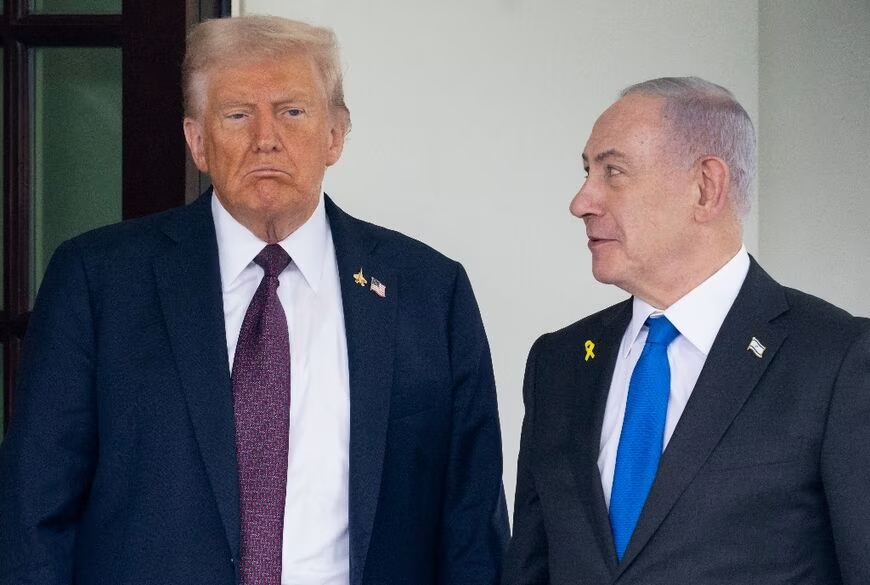
Analytical readings indicate that Netanyahu is effectively seeking to return to 'square one' and resume widespread military operations, exploiting the sensitive political timing. The Israeli Prime Minister aims to convince the administration of US President Donald Trump that diplomatic paths to disarm the resistance have reached a dead end.

On the ground, the behavior of the occupation army in the areas it controls, estimated at about 60% of the Strip's area, reflects long-term intentions for permanent presence. The construction of military bases and the systematic demolition of residential blocks confirm that the occupation adopts an ideological vision that rejects the idea of complete withdrawal in the foreseeable future.

For his part, political analyst Iyad Al-Qara affirmed that Palestinian factions have fulfilled their obligations regarding the prisoner file, while Israel has not taken any concrete steps in return. On the contrary, the occupation authorities have resorted to inventing what he described as 'orange lines' to continue systematic assassinations and killings under the guise of calm.

Al-Qara described the living reality inside Gaza as having reached a stage of 'nothingness,' as the limited aid entering the Strip has failed to meet the minimum needs of citizens. He pointed out that the resistance categorically rejects fragmenting the agreement or moving to the disarmament file before implementing all provisions of the first phase.

As for the American approach, it revolves around President Trump's desire to achieve a 'grand deal' that guarantees the disarmament of factions and the formation of a technocratic government to administer the Strip. Former White House officials believe that Washington understands the complexities of the reality, but it is betting on mutual pressure to prevent the complete collapse of the peace project.

Observers warned that the failure of mediators to compel Israel to fulfill the requirements of calm means remaining in a cycle of successive crises. The current bet remains on the ability of Cairo and international mediators to curb the escalatory tendencies of the extremist Israeli right, represented by Netanyahu and his ministers.

The option of resuming war remains a looming political tool used by Netanyahu to strengthen his position domestically in Israel, despite a potential American 'veto.' The field in Gaza is currently experiencing a continuous 'semi-war,' as Israeli violations continue to target civilians and infrastructure daily.

It is worth noting that this political deadlock comes after a genocidal war launched by Israel since October 2023, which resulted in hundreds of thousands of martyrs and injured. The war caused the destruction of 90% of vital facilities in Gaza, amid UN estimates that reconstruction requires a massive budget exceeding 70 billion dollars.

The behavior of the occupation army in the areas it controls, from building military bases to systematic demolition, reflects an ideological intention to remain, not to withdraw.

OPINIONS

Thu 07 May 2026 5:27 am - Jerusalem Time

The Collapse of America’s Israel Consensus


By Said Arikat


May 7, 2026


News Analysis


Washington, D.C- A political earthquake is quietly reshaping Washington, and few in the American establishment seem fully prepared for its consequences. According to a major report published by The Washington Post on Wednesday, May 6, 2026, the decades-old bipartisan consensus surrounding Israel is rapidly disintegrating across both the Democratic and Republican parties.


This is not a temporary disagreement over tactics or personalities. It is the gradual collapse of one of the most protected pillars of American foreign policy: the notion that unwavering support for Israel is politically untouchable, morally unquestionable, and strategically indispensable.


For generations, American politicians operated within carefully enforced boundaries when discussing Israel. Democrats and Republicans alike competed to demonstrate loyalty to the “special relationship,” while meaningful criticism of Israeli policy was treated almost as political heresy. Careers were threatened, donors mobilized, and accusations weaponized against those who dared challenge the status quo.


That era is ending.


The reason is painfully obvious. The genocide and destruction of Gaza, broadcast daily across phones and computer screens around the world, has shattered decades of carefully constructed political narratives. Americans — especially younger Americans — are no longer seeing Israel exclusively through the traditional lens of democracy, victimhood, and strategic partnership. They are witnessing overwhelming military force deployed against a trapped civilian population, entire neighborhoods reduced to rubble, mass displacement, starvation, and the killing of thousands of children.


Washington’s political class continues speaking the language of “security” and “self-defense,” but much of the American public increasingly sees something far darker: collective punishment carried out with American weapons and financed by American taxpayers., and protected by American political and diplomatic stature on the world stage.


The numbers cited by The Washington Post are extraordinary. Nearly half of Republicans and almost three-quarters of Democrats now say support for Israel has become a divisive issue inside their own parties. Almost half of Americans believe the United States is too supportive of Israel — more than double the figure recorded a decade ago.


That transformation is not merely statistical. It reflects a moral and political rebellion against a foreign policy establishment that has spent decades demanding silence, conformity, and unconditional loyalty whenever Israel is involved.


The Democratic Party, in particular, is experiencing an open revolt from its base. Progressive candidates are no longer cautiously distancing themselves from Israeli policy; many are openly accusing Israel of genocide and apartheid. Senate candidates, congressional hopefuls, and local activists are increasingly framing support for Palestinian rights not as a fringe issue, but as a test of political integrity.


Their argument is devastatingly simple: if politicians cannot speak honestly about the mass killing of civilians and the destruction of an entire society, then what moral credibility do they possess on any other issue?


This explains why younger Democratic voters increasingly see the Palestinian struggle as connected to broader questions of racial justice, colonialism, militarism, and state violence. For them, Gaza is not a distant geopolitical abstraction. It is a mirror reflecting the hypocrisy of a political system that speaks endlessly about human rights while financing devastation abroad.


What makes this moment even more remarkable is that discontent is also growing on the American right.


The Republican fracture over Israel is driven less by humanitarian outrage and more by exhaustion with foreign entanglements and endless wars. The “America First” wing increasingly views Israel through a transactional lens, asking why American taxpayers should subsidize a wealthy nuclear-armed state while domestic crises deepen at home.


The widening war with Iran has intensified those frustrations. Many conservative voters now openly suspect that the United States is repeatedly being dragged into Middle Eastern conflicts not because of core American interests, but because of pressure from pro-Israel lobbying networks and ideological alliances inside Washington.


Figures such as Tucker Carlson and Marjorie Taylor Greene have capitalized on that anger, openly challenging the once-sacred political taboos surrounding Israel. While some rhetoric emerging from the far right maybe suspect, the broader political reality remains undeniable: unquestioning support for Israel is no longer automatic even within conservative circles.


This represents a historic failure for the American political establishment and for organizations such as AIPAC that long operated as some of the most feared forces in Washington. For decades, pro-Israel lobbying groups maintained influence through campaign financing, political intimidation, and bipartisan discipline. Politicians understood the risks of crossing certain lines.


But even these organizations now appear increasingly defensive. As The Washington Post report notes, pro-Israel political groups are often avoiding direct discussion of Israel itself in campaign advertisements, choosing instead to attack opponents on unrelated domestic issues. That strategic retreat reveals a growing awareness that public opinion is shifting in ways they can no longer fully control.


The generational divide is especially significant. Older Americans, shaped by Cold War alliances, evangelical politics, and memories of the Holocaust, often continue viewing Israel through the traditional framework of moral obligation and strategic partnership. Younger Americans do not. They see a heavily armed regional power enforcing occupation, expanding settlements, and waging wars with devastating civilian consequences.


No amount of official messaging can fully erase the images that now circulate daily across social media platforms outside the control of traditional media gatekeepers.


The political implications are enormous. Future administrations — whether Democratic or Republican — may find it increasingly difficult to sustain the blank-check relationship that has defined U.S.-Israel ties for decades. Military aid, diplomatic protection, and unconditional political cover are no longer guaranteed to remain immune from public scrutiny.


This does not mean the alliance will suddenly disappear. The institutional ties between Washington and Israel remain deep, powerful, and entrenched. But the moral consensus that once protected those ties has been profoundly damaged.


And perhaps that is the most important development of all.


For the first time in modern American political history, criticizing Israel is no longer automatically politically fatal. In many constituencies, especially among younger voters, silence in the face of Gaza may now carry greater political risk than criticism itself.


The old order is cracking. Washington can continue pretending otherwise for a while longer. But the American political landscape surrounding Israel has already changed — and it may never return to what it once was.

ARAB AND WORLD

Wed 06 May 2026 4:19 pm - Jerusalem Time

Beijing Challenges Washington with 'Blocking Statute': Chinese Escalation in Iranian Oil File Ahead of Trump Summit

The economic confrontation between Beijing and Washington has entered a new phase of escalation, as Chinese authorities have publicly challenged US sanctions imposed on Iran's oil sector. This move comes at a highly sensitive time, preceding US President Donald Trump's scheduled visit to the Chinese capital next week, reflecting Beijing's desire to demonstrate resistance and unwillingness to succumb to economic pressures.

In a notable development, China's Ministry of Commerce issued explicit directives to local companies not to comply with US measures that have blacklisted a number of Chinese refineries. The ministry based its decision on the 'Blocking Statute' issued in 2021, a legal tool specifically designed by Beijing to counter foreign laws it deems to violate international norms or unlawfully restrict global trade.

Economic reports indicate that private Chinese refineries, known in oil circles as 'teapots,' have become almost the sole and primary buyer of every barrel of oil Iran exports abroad. Although Beijing previously exercised a degree of caution to avoid appearing to openly violate sanctions, the recent directives represent a radical shift towards open confrontation with the US administration.

For his part, Dylan Loh, a professor at Nanyang Technological University, believes that this move sends a broad political message that goes beyond the oil issue, implying that China has the ability and will to confront what it describes as unilateral sanctions. He explained that Beijing is no longer content with diplomatic protests but has begun to activate its legal arsenal to protect its commercial interests and national companies from external targeting.

Washington had intensified its pressure in recent weeks, imposing severe sanctions last April on a unit of 'Hengli Petrochemical,' one of China's largest industrial companies. The US administration accused the company of purchasing massive quantities of Iranian oil, estimated at billions of dollars, warning global financial institutions against facilitating any transactions related to these refineries.

The Chinese response is not limited to the energy sector but has extended to the technology sector and foreign investment, a clear indication of Beijing's use of policy tools to counter US 'economic weapons.' This was evident in Beijing's decision last week to cancel a massive acquisition deal by 'Meta Platforms' for a China-linked startup, citing national security requirements.

Damien Ma, director of the 'Carnegie China' research center, comments on these developments by saying that China has begun to reveal its own set of economic coercion tools, in response to the tools that the United States has long used. He added that the current scene shows a new balance of economic power, with each side seeking to possess effective leverage before sitting down at the negotiating table.

Political analysts believe that Beijing aims through this escalation to prevent Washington from 'manufacturing free negotiating chips' before the anticipated summit between leaders Xi Jinping and Donald Trump. Experts confirm that the current Chinese approach is based on the principle of reciprocity, seeking to impose a comprehensive reset of bilateral negotiations and ensure that no concessions are made under the weight of economic threats.

In conclusion, international circles are awaiting the results of Trump's anticipated visit to Beijing, amidst this atmosphere charged with trade and legal tensions. While Chinese refineries continue to receive Iranian oil under the protection of new local laws, the question remains about the extent to which the two parties can reach understandings that prevent the relationship from sliding into an all-out economic war.

China is ready and able to resist what it considers unilateral and unfair sanctions that harm its national interests.

PALESTINE

Wed 06 May 2026 4:19 pm - Jerusalem Time

From 'Yellow' to 'Orange'.. Israeli Field Movements Warn of Resumption of War on Gaza

Despite the ceasefire agreement signed last October, the Gaza Strip is witnessing a silent escalation in the form of daily violations and an unprecedented field expansion by Israeli occupation forces. Security assessments suggest that these movements may be a prelude to the resumption of the genocide war, as Tel Aviv seeks to impose a new geographical reality that changes the features of the Strip.

Recently, the term 'Yellow Line' emerged, which the agreement defined as a temporary separator between army deployment areas and areas where displaced persons are allowed to return. However, field reports confirmed that occupation mechanisms are carrying out extensive bulldozing and excavation operations to gradually move this line westward, reducing the areas available to Palestinians.

International journalistic sources revealed new maps issued by the occupation that confine thousands of displaced persons within a restricted area known as the 'Orange Line'. This newly created area devours about 11% of the lands from which the army was supposed to withdraw under recent understandings, deepening the humanitarian crisis for the displaced.

Hebrew media sources confirmed that the occupation army did not adhere to the agreed-upon lines, but rather systematically penetrated deep into the Strip. The sources explained that the field expansion operations led to Israel's effective control over about 60% of the total area of the Gaza Strip, which represents a blatant violation of the agreements.

The Israeli security establishment aims, through these field maneuvers, to create an 'operational reality' that facilitates the intervention of forces to confront what it calls renewed threats. Tel Aviv also seeks, by controlling these areas, to prevent resistance factions from repositioning themselves or restoring their organizational capabilities in areas from which the army previously withdrew.

In contrast, Palestinian and international parties warned that what is happening is a systematic attempt to redraw the entire geographical map of the Gaza Strip. These parties considered that the imposition of new field realities aims to undermine any opportunities for the return of the political and security arrangements that existed before the start of the genocide war.

For its part, the European Union expressed its strong condemnation of the occupation's attempts to illegally expand its control within the Strip. In a statement, the Union called for Tel Aviv to adhere to the terms of the truce and ensure the unhindered entry of humanitarian aid, emphasizing the importance of preserving the unity and integrity of the Palestinian territories.

On the political front, security sources quoted Israeli Channel 12 as saying that the US administration under Donald Trump may give the green light for the resumption of military operations soon. This leak comes at a sensitive time witnessing intensive consultations between Washington and Tel Aviv on the future of the security situation in Gaza.

Recent days witnessed a high-level meeting between Israeli Prime Minister Benjamin Netanyahu and the Executive Director of the Gaza Peace Council, Nikolay Mladenov. The discussion during the meeting focused on the next steps and potential scenarios for dealing with the Strip in light of the current stalemate in the political process.

Israel justifies the resumption of its aggression by Hamas's rejection of disarmament, which Tel Aviv considers a 'fundamental breach' of the ceasefire. Israeli sources indicated that the continuation of this stance may push towards a return to the military option in the very near future, if American support is obtained.

Despite these threats, some security circles in Tel Aviv rule out a widespread and immediate attack, given the army's engagement on other fronts in Lebanon and Iran. Nevertheless, plans to expand the 'Yellow Line' remain in place and ready for implementation once the final political decision is issued by the Israeli government.

In a related context, military analysts in Haaretz warned that the Israeli government may push for a new escalation to achieve internal political gains. Analyst Amos Harel indicated that the approaching general elections may be a motive for Netanyahu to launch a new attack that covers up accumulated political and security failures.

Washington informed Tel Aviv that Hamas rejected the issue of its disarmament, which Israel considered a breach of the ceasefire that could pave the way for the resumption of military operations.

ARAB AND WORLD

Wed 06 May 2026 4:19 pm - Jerusalem Time

Trump threatens 'unprecedented bombing' of Iran, conditions comprehensive agreement for opening Strait of Hormuz

US President Donald Trump issued a stern warning to the Iranian leadership, asserting that Tehran would face military strikes exceeding in intensity and scale anything it had witnessed in its previous confrontations with the United States and Israel. This threat came in the event of a failure to reach a final agreement that would put an end to the ongoing military tensions in the region.

Trump clarified via his 'Truth Social' platform that the conclusion of the military operation, dubbed 'Epic of Wrath,' is contingent upon Iran's full commitment to what will be agreed upon. He indicated that the effective blockade currently in place might be lifted to allow the Strait of Hormuz to open for international navigation, including Iranian vessels, should this commitment be met.

In a related context, press sources quoted Trump as saying that discussions about direct negotiations with Tehran are still premature at this time. These statements coincide with reports revealing that both parties are close to drafting a concise memorandum of understanding aimed at establishing a framework for ending the raging state of war.

For its part, the Iranian Revolutionary Guard Navy announced that ensuring safe passage through the Strait of Hormuz is directly linked to halting American threats and implementing new regulatory measures. Tehran expressed its appreciation for the crews of ships that adhered to Iranian regulations during the period of tension, in its first comment on Washington's suspension of assistance operations for stranded vessels.

Political observers believe that the current scene reflects a dual dynamic relying on both the negotiation track and military pressure simultaneously. While diplomatic channels continue to exchange proposals, field movements are being used as a tool to improve negotiation terms and compel the other party to make substantial concessions.

Leaked information indicates that Iran has presented a comprehensive 14-point offer, including a freeze on uranium enrichment for up to 15 years. The offer also included proposals to address the 60% enriched uranium stockpile, either by reducing enrichment levels or transferring it out of the country in exchange for lifting the economic blockade.

Despite Trump's rejection of some of these points via social media, the US administration has not yet issued an official rejection. This silence suggests that negotiation channels remain open, and discussions are ongoing behind the scenes regarding the complex contentious points preventing a final formula from being reached.

Washington recognizes that resolving the Strait of Hormuz issue militarily faces significant geographical and technical complexities due to Iranian tactics relying on mines and fast boats. Therefore, the American 'Freedom Project' appears to aim at exerting negotiating pressure to create safe passages rather than attempting to completely break Iranian control.

Recent hours have seen signs of a 'breakthrough' in some pending issues, leading to a temporary suspension of some military operations to allow diplomacy a chance. This development reflects a rearrangement of the tools used, where military pressure is balanced with international political moves led by mediating parties.

China emerges as a pivotal player in these mediations, especially after Iranian Foreign Minister Abbas Araghchi's recent visit to Beijing. It is believed that these diplomatic moves have contributed to narrowing viewpoints and carried reassuring messages that could lead to a breakthrough in the current stalemate between Washington and Tehran.

The United States holds onto the economic blockade as a primary pressure tool, given its profound impact on the Iranian economy, which suffers from severe inflation and currency collapse. Washington wants to start with an agreement on the nuclear file first, while Tehran insists on a gradual approach beginning with lifting the blockade and opening the strait.

Ultimately, both parties realize that the cost of a comprehensive military confrontation would be prohibitive and undesirable, making the negotiation option the only available path. However, this process remains vulnerable to collapse at any moment, especially since the governing principle of negotiations is 'agree on everything or nothing.'

If Iran does not agree, the bombing will begin, and it will be at a much higher level and intensity than before.

PALESTINE

Wed 06 May 2026 4:18 pm - Jerusalem Time

Gaza: 3 Martyrs and 16 Injured in New Occupation Violations, Genocide Toll Exceeds 72,000

The Ministry of Health in the Gaza Strip announced today, Wednesday, the martyrdom of three Palestinians and the recovery of a fourth body during the past twenty-four hours, due to ongoing Israeli aggressions. Medical sources clarified that hospitals also received 16 injured with varying degrees of wounds, amidst escalating daily violations of the fragile ceasefire agreement that came into effect in October of last year.

In field details, eyewitnesses confirmed that a Palestinian woman was injured by live bullets fired directly by occupation soldiers towards the displacement tents in the town of Beit Lahia, north of the Strip. This incident is part of a series of direct targeting of civilians in areas supposedly safe, raising the level of tension and anxiety among displaced families suffering from harsh humanitarian conditions.

Regarding military operations, the occupation army carried out widespread demolition operations of residential buildings located within what is known as the 'Yellow Line' in the eastern part of Gaza City. This line is an imaginary geographical strip imposed by the occupation to isolate areas it militarily controls from Palestinian communities, where this space consumes about 59% of the total area of the Strip.

In the central part of the Strip, Israeli artillery did not stop targeting residential neighborhoods, as local sources reported artillery shells falling in the eastern areas of Al-Bureij refugee camp. These attacks coincide with the movement of occupation vehicles along the border, hindering the access of ambulance and civil defense teams to some targeted areas to recover victims or provide assistance to the injured.

Official statistical data issued by the Ministry revealed that the total number of martyrs since the start of the genocide war in October 2023 has risen to 72,619 martyrs, while the number of injured has reached 172,484. The Ministry indicated that these figures include victims officially registered in hospitals, while thousands of bodies are still missing under the rubble.

Speaking of the repercussions of the violations since the October 10, 2025 agreement, medical sources recorded the martyrdom of 837 people and the injury of 2,381 others, in addition to the recovery of 769 bodies that were stuck under the rubble or in the streets. These figures reflect the extent of the ongoing violations of international agreements and the occupation's insistence on continuing military pressure despite widespread international condemnations.

On the humanitarian and structural level, UN reports indicate that the ongoing aggression has caused 90% of the civilian infrastructure in the Gaza Strip to be completely or partially destroyed. International bodies estimate the cost of reconstruction at about 70 billion dollars, amidst a tragic reality where residents lack the most basic necessities of life, such as water, electricity, and health services.

The toll of victims from Israeli violations of the agreement since its inception has risen to 837 martyrs and 2,381 injured, in addition to the recovery of hundreds of bodies from under the rubble.

ISRAELI AFFAIRS

Wed 06 May 2026 4:18 pm - Jerusalem Time

Israeli Disappointment with Washington's Restrictions on Military Operations in Lebanon

Hebrew media reports have revealed a growing state of frustration within Israeli security circles due to the continued restrictions imposed by the US administration on military operations in Lebanon. National security experts explained that the current policy hinders the army's ability to deliver decisive blows to Hezbollah's strongholds, placing field forces in a difficult defensive position.

Security expert Kobi Marom indicated that President Donald Trump decided to implement a ceasefire on the northern front in response to Iranian pressure as part of negotiations. Marom considered this American approach to have given Tehran and Hezbollah an opportunity to catch their breath, at a time when Israel was seeking to expand its aerial operations to cover all Lebanese territory.

According to Hebrew analyses, Washington has almost completely restricted the Israeli army's freedom of action in strategic areas such as Beirut and the Beqaa Valley, limiting interventions to 'surgical operations' to counter only imminent threats. This restriction has confined Israeli military activity to the area around the Litani River and to a limited depth within southern Lebanon.

The Israeli government faces a real dilemma due to its complete reliance on American support, forcing it to comply with Trump's vision aimed at achieving a temporary calm that serves negotiations with Iran. Observers believe that this calm may come at the expense of the military objectives announced by Tel Aviv at the beginning of the confrontation, especially regarding the dismantling of Hezbollah's infrastructure.

Marom criticized the absence of a clear memorandum of understanding regulating the current ceasefire, noting that previous agreements included explicit American guarantees for Israeli freedom of movement in the event of violations. The current situation, however, is characterized by ambiguity and a lack of coordination between the Lebanese government and field forces, which opens the door to continued military friction.

Sources reported that Hezbollah continues to carry out attacks against Israeli forces stationed in the security zone, considering the destruction of infrastructure in the south as a continuation of the war. These attacks put the Israeli army in an embarrassing position, as it finds itself forced to respond within very narrow limits that are not commensurate with the magnitude of the threats its soldiers face.

Israeli estimates indicate that Hezbollah uses drones to disrupt life in border settlements, a threat that current measures have not fully neutralized. Experts believe that the continued casualties among soldiers and settlers represent a heavy price that Israel cannot bear for long under the weight of political restrictions.

The roots of the American decision to limit strong attacks lie in the desire to preserve the legitimacy of the Lebanese government and push it towards direct negotiations with Israel. Washington fears that violent strikes in Beirut could undermine these diplomatic efforts, which are being coordinated with regional powers such as Saudi Arabia.

Given these facts, the risk of an internal conflict in Lebanon emerges, as Hezbollah views the ongoing negotiations as a threat to its existence and its military and political standing. This struggle for survival pushes Hezbollah to escalate its field operations to prove its ability to resist and prevent any agreement that might lead to its disarmament in the future.

Israeli forces deployed 8 to 10 kilometers inside Lebanese territory are engaged in destroying tunnels and military installations, a task that the Lebanese army was supposed to undertake. Marom believes there is a huge gap between political promises to eliminate Hezbollah and the reality on the ground, where Hezbollah appears capable of initiating attacks.

Experts describe the current situation as a 'strategic trap,' where Israel has become hostage to Trump's policies that seek a comprehensive regional settlement that may not ultimately guarantee the security of the northern border. They emphasize that the strategic reality today is more complex and difficult than it was when confrontations erupted last February.

Security circles criticized the Israeli government's hesitation to make courageous decisions that combine military action with complementary political engagement with the Lebanese state. Instead of cornering Hezbollah through a well-considered security settlement, Israel found itself forced to follow American dictates that may not meet its security aspirations.

The biggest challenge for the Israeli leadership remains how to balance maintaining the strategic relationship with Trump and the necessity of responding forcefully to Hezbollah's continuous attacks. Without dismantling Hezbollah's military capabilities, any agreement signed remains mere ink on paper that does not provide real security for the residents of the north.

The analysis concluded that the Israeli army needs to regain full freedom of action and strike Hezbollah's main strongholds to end the current attrition. However, the path towards this goal still seems blocked by international political considerations that prioritize negotiations with Tehran over direct military decisive action.

The attempt to separate the arenas has become an illusion and a scattering of sand in the eyes of the public, and Trump's move has given a boost to Iran's continued commitment to assisting Hezbollah.

ARAB AND WORLD

Wed 06 May 2026 4:18 pm - Jerusalem Time

Intelligence Report Links Trump Assassination Attempt to War on Iran

Recent US intelligence reports indicate that the ongoing military conflict between the United States and Israel on one side, and Iran on the other, may be the primary driver behind the assassination attempt on former President Donald Trump. According to an initial assessment issued by the Department of Homeland Security, the accused, Cole Allen, based his actions on a series of political stances opposing the military directions of the current and former US administrations.

The report, issued by the Office of Intelligence and Analysis on April 27th, was widely circulated to include local and federal law enforcement agencies. The assessment clarified that Allen harbored 'multiple social and political grievances,' which were clearly evident in his digital activity and posts that severely criticized American involvement in Middle Eastern conflicts.

Official documents indicate that the war on Iran was not merely a political backdrop, but a pressure factor that directly contributed to the decision to carry out the attack during the White House Correspondents' Dinner. This event, which was supposed to include an elite group of senior officials and media figures, turned into a scene of a complex security operation that ended with the thwarting of the plot on April 25th.

In a related context, the US Department of Justice expanded the indictment against Cole Allen to include a charge of assaulting a federal employee. This charge comes after it was proven that he fired at a Secret Service agent assigned to protect a security checkpoint, reflecting the accused's insistence on using armed violence to achieve his political goals.

The list of criminal charges also includes attempted assassination, use of a firearm during a crime of violence, in addition to illegally transporting weapons and ammunition across state lines. Despite the weight of these charges, the accused has not yet appeared to give his official statement before the court, amidst widespread legal and media anticipation for the results of the final investigations.

Informed sources confirmed that investigators found an email sent by Allen to his family members hours before the attack, in which he expressed deep resentment towards the political elite. In his message, he described one of the figures who was scheduled to give a speech at the dinner as a 'traitor,' which analysts considered an implicit and direct reference to Donald Trump.

The Federal Bureau of Investigation is currently analyzing the accused's digital footprint, especially his account on the 'Bluesky' platform, which saw intense activity in the weeks leading up to the incident. The posts included scathing criticisms of immigration policies, intervention in Ukraine, in addition to a personal attack on businessman Elon Musk and his economic and political orientations.

Among the most prominent findings by investigators was the accused's reposting of calls for Trump's impeachment and trial, especially after the latter's statements in early April threatening to 'wipe out Iranian civilization.' These statements appear to have been a turning point in Allen's thinking, who saw these threats as a departure from the ethical values that the US government should uphold.

The investigations also included posts dating back to last year, in which Allen used religious quotes to describe Trump in harsh terms, in response to social media posts by members of the former president's family. This overlap between the religious and political dimensions complicates the investigators' task in understanding the psychological makeup of the accused and the true motives that led him to the assassination attempt.

Finally, security officials are striving, by scrutinizing Allen's electronic activity, to preempt conspiracy theories that have begun to spread about the motives of the attack. This intelligence effort aims to provide a coherent narrative based on digital facts and field testimonies, to ensure the transparency of investigations in a case that directly affects US national security.

The war on Iran may have contributed to Cole Allen's decision to carry out the attack, based on multiple social and political grievances.

OPINIONS

Wed 06 May 2026 4:18 pm - Jerusalem Time

The Ongoing Nakba: A Reading of Zionist Plunder Legislation on Palestinian Land

Ramallah - “Alquds ” dot com

Ramallah - “Alquds ” dot com

Opinion Writer

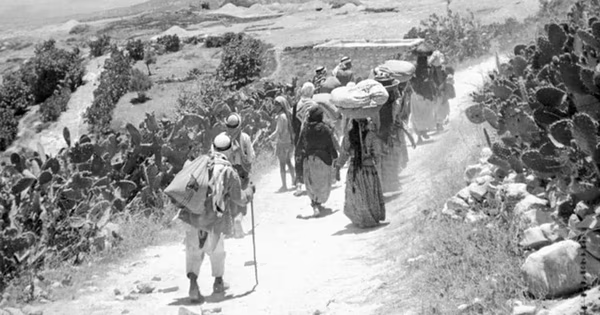
The memory of the Palestinian Nakba remains a witness to a crime whose chapters have not ceased since 1948, when David Ben-Gurion declared the establishment of his entity on the ruins of displaced cities and villages. This declaration came in a meeting in the occupied city of Jaffa, attended by representatives of the Zionist bodies that managed the armed robbery of Palestinian land and history.

The declaration of the alleged 'state' was based on what Ben-Gurion described as a natural and historical right, exploiting the UN partition resolution to legitimize the existence of a replacement entity. The discourse at the time outlined the mechanisms for the transfer of power from the 'People's Council' to a provisional government, a step that laid the foundations for the first Zionist institutions.

It is noteworthy that this entity has not issued an official constitution since its supposed date in October 1948 until today, which raises deep legal and political questions. Researchers believe that this absence is not a coincidence, but rather a strategic decision that serves the nature of the expansionist Zionist project.

Analysts attribute the lack of a constitution to the internal conflict between secular and religious forces, as the latter fear laws that might limit the extremist Jewish character. The absence of a constitution also gives the occupation flexibility to change its borders and laws to suit the pace of continuous settlement.

The entity's continued existence without a constitution means that the 'Zionist project' has not yet ended, and that it is in a constant state of movement to gather world Jewry and deny Palestinians. This situation allows Zionist institutions to operate outside the traditional civil state frameworks that might impose rights for non-Jews.

The dynamic relationship in Israel between politics and law is manifested as a conflict between the 'chaos of power' and the institutionalization of the state, where the ethnic current refuses to submit to a civil state. This refusal primarily aims to ensure that decision-making remains in the hands of Jewish national institutions that have excluded the original landowners.

In the context of legitimizing theft, the occupation authorities issued the 'Abandoned Areas' decree in June 1948 to gain absolute control over the properties of expelled Palestinians. The decree defined these areas as any place occupied by armed forces or whose inhabitants had fled under the pressure of military operations.

Zionist intelligence reports from that era revealed that the emptying of Palestinian villages was not voluntary, but resulted from direct hostile acts and systematic psychological warfare. These documents admitted that fear of retaliation and forced evacuation orders were the primary drivers of the first waves of refugees.

By the end of 1948, 'Emergency Regulations concerning Absentee Property' were imposed to tighten control over the properties of Palestinians who were prevented from returning. These regulations did not differentiate between those who left the country and those who were internally displaced, considering everyone 'absentee' with no right to reclaim their rights.

In 1950, the occupation moved to the 'codification' stage by issuing the Absentee Property Law, which replaced the previous emergency regulations. This law was designed to be a legal tool for the automatic transfer of Arab real estate and land to what is called the 'Custodian of Absentee Property'.

The law granted broad powers to the custodian to sell these properties to the 'Development Authority', a quasi-governmental body that acts as a front for property transfer. This complex legal process was essentially aimed at erasing the legal trace of Palestinian owners and establishing a new settlement reality.

This system was integrated with the issuance of the 'Development Authority Law' which allowed the sale of land to the Jewish National Fund (Keren Kayemeth). Thus, the conversion of Palestinian land into 'Jewish national property' was ensured, which cannot be disposed of or returned to its rightful owners under any circumstances.

Reading the course of the Nakba from the first Zionist Congress in 1897 until today reveals a continuous plan that enjoys international support and blatant complicity. The occupation's atrocities did not stop at physical displacement, but extended to include the falsification of laws to serve the colonial replacement project.

After eight decades of tragedy, the question remains about the utility of dealing with an entity that recognizes only the policy of fait accompli and military force. History proves that the Zionist system was designed to be in a state of permanent war with the Palestinian presence, which necessitates a language of confrontation befitting the magnitude of the sacrifices.

The project of establishing the Zionist state is an ongoing project, as the 'revolution' refuses to hand over its papers to the civil state to ensure the continued denial and marginalization of Palestinians.

OPINIONS

Wed 06 May 2026 4:18 pm - Jerusalem Time

The Decline of 'Soft Power': How Washington Replaced Soft Diplomacy with the Military Machine?

Ramallah - “Alquds ” dot com

Ramallah - “Alquds ” dot com

Opinion Writer

Concern is growing in academic and political circles within the United States due to a noticeable decline in global influence, as Washington has become overly reliant on its military arsenal and economic pressure. This shift comes at the expense of diplomatic and cultural tools that for decades represented the primary pillar of American influence on the international stage.

In this context, 'Foreign Policy' magazine published an extensive analysis by Stephen Walt, a lecturer at Harvard University, in which he affirmed that the erosion of soft power is no longer merely a theoretical discussion but has become an accelerating trend. Walt believes that the United States, despite its material superiority, is suffering from a real crisis in its ability to attract others and persuade them of its political and value model.

The analysis is based on the concept of 'soft power' coined by the late Joseph Nye, which is based on the idea of voluntary attraction rather than coercion. A state that possesses this type of power makes others want to emulate it and associate with its model, achieving more sustainable and profound results than direct military pressure.

Walt points out that this balance, which characterized American superiority after the Cold War, has begun to fade, especially with the emergence of the current administration's approach, which places hard power as a first and permanent option. This trend is evident in the imposition of unilateral tariffs and the use of economic threats as a means to force allies and partners to make concessions.

The article also drew attention to the expanded use of military force in unconventional arenas, such as operations targeting drug traffickers in the Caribbean and Pacific regions. These actions were often carried out without sufficient legal evidence, and with an implicit acknowledgment that they would not radically end the drug trade.

The analysis touched upon the aggressive language that has come to characterize American political discourse towards world leaders, including allies such as the Ukrainian president. International relations are dealt with in terms of direct deals, with a clear absence of the moral or legal justifications that Washington previously used to frame its actions.

The author believes that the current administration seems willing to display power nakedly and without equivocation, which represents a departure from the historical pattern that was keen on conferring international legitimacy. This behavior has undermined the mental image of the United States as a country that respects international laws and institutions that it itself helped build.

The decline was not limited to political discourse but extended to include the dismantling of institutions that represent the arms of soft power, foremost among them the United States Agency for International Development. Policies also included reducing the budgets of media and diplomatic institutions that formed cultural bridges with the peoples of the world.

The American withdrawal from international organizations and reduced participation in multilateral issues has led to a significant strategic vacuum. This vacuum has been exploited by rival powers, led by China, which has begun to improve its external image and present itself as a more stable alternative in the fields of cultural diplomacy.

Walt warns that dividing the world into 'winners' and 'losers' weakens Washington's ability to win the support of peoples in the long run. Focusing on immediate results and fleeting deals destroys the cumulative trust built over decades, and makes allies feel insecure about future American intentions.

The article cited successful historical examples such as the 'Marshall Plan' and the establishment of NATO, where military power was supported by a comprehensive political and economic vision. These successes would not have been achieved without the delicate balance between the ability to deter and the ability to inspire and attract culturally and in terms of values.

In contrast, the author links major failures in Vietnam, Iraq, and Afghanistan to an over-reliance on the military machine as the sole tool for decisive action. The absence of a soft power strategy in those conflicts made it impossible to achieve political stability or win the loyalty of local communities despite field superiority.

Viewing diplomatic settlements as a sign of weakness represents a fundamental problem in Washington's current political thought. History proves that America's greatest victories, including ending the Cold War, were the result of complex negotiations and a mix of pressures and incentives, not just a display of force.

Walt concluded his warning by emphasizing that the continuation of this approach will make it difficult in the future to separate 'America the model' from the actions of its volatile policies. If the United States loses its attractiveness as an idea, its military superiority alone will not be enough to maintain its position in an increasingly complex and competitive international system.

What distinguishes the current American approach is not only the nature of the goals but also the tools that are increasingly relied upon, foremost among them hard power.

PALESTINE

Wed 06 May 2026 4:17 pm - Jerusalem Time

Widespread European move to impose sanctions on the occupation due to the 'E1' settlement project

More than 440 former European officials and diplomats, including ministers, ambassadors, and prominent figures such as Josep Borrell, led a widespread diplomatic movement through an open letter addressed to the leaders of the European Union. The letter calls for immediate and deterrent steps to confront the accelerating settlement plans in the occupied West Bank, warning of the repercussions of continued international silence regarding Israeli expansion.

The European warnings focused on the seriousness of the (East 1 - E1) project, which received approval from the occupation authorities last August. This plan aims to construct about 3,400 settlement housing units on an area estimated at 12 square kilometers east of occupied Jerusalem, which will effectively isolate the northern West Bank from its south and undermine any possibility of a geographically contiguous Palestinian state.

The letter called on the European Union institutions, ahead of the Foreign Affairs Council meeting scheduled for May 11, to move beyond verbal condemnation and transition to actual sanctions. Proposals included imposing a ban on entry visas for those involved in settlement expansion, and preventing any commercial activities within EU countries for individuals and institutions promoting the (E1) project, coinciding with the occupation's intention to issue implementation tenders early next June.

These pressures come amid an unprecedented escalation in the pace of settlement, with reports indicating the approval of 54 new settlements last year, and the allocation of huge budgets exceeding one billion shekels for paving new settlement roads, at a time when the number of settlers in the West Bank and East Jerusalem has reached nearly 750,000 settlers.

The (E1) project aims to divide the West Bank into two isolated sections, completely eliminating any chance for geographical contiguity of a future Palestinian state.

ARAB AND WORLD

Wed 06 May 2026 4:17 pm - Jerusalem Time

Washington and Tehran approach 'memorandum of understanding' to end war and open Strait of Hormuz

Informed sources revealed intensive diplomatic moves led by the White House to reach an imminent agreement with Tehran that would end the current state of war. These understandings revolve around a one-page memorandum aimed at setting a timeframe for expanded negotiations addressing the nuclear file and regional security.

Media reports, quoting American officials, stated that the anticipated memorandum would officially announce a cessation of hostilities and the start of a month-long negotiation marathon. This dialogue will focus on mechanisms for reopening the Strait of Hormuz to international navigation and lifting economic sanctions imposed on Tehran.

The initial agreement's terms include a clear Iranian commitment to suspend all uranium enrichment activities as a gesture of goodwill. In return, the United States will lift financial restrictions and release billions of dollars of Iranian assets that were frozen in international banks.

In a related context, President Donald Trump announced the suspension of the military operation 'Project Freedom,' which aimed to escort commercial vessels through the Strait of Hormuz. Trump explained that this decision came in response to international mediations, most notably from Pakistan, to make way for diplomatic solutions.

The American president confirmed via his social media platform that tangible progress had been made towards drafting a final and comprehensive agreement with the Iranian leadership. However, he stressed that the naval blockade imposed on Iranian ports since mid-April would remain in effect until further notice.

Political circles in Washington are awaiting an official response from Tehran within the next forty-eight hours regarding key points in the draft agreement. This deadline is considered crucial for determining the fate of de-escalation and whether the region will move towards stability or renewed escalation.

For his part, Trump urged the Iranian side to make a 'smart' decision that would end the suffering resulting from the war, emphasizing his unwillingness to launch new military strikes. He indicated that the primary goal is to prevent bloodshed and reach a formula that guarantees the security of international waterways.

On the military front, Defense Secretary Pete Hegseth clarified that US forces are not seeking to open direct confrontation fronts in the Gulf region. However, he warned at the same time that any targeting of American interests would be met with a firm response and devastating firepower that exceeds expectations.

These developments come days after Washington launched military operations to secure the passage of ships, which increased tensions in the region. International mediators are now seeking to ensure both parties adhere to the terms of the initial memorandum to avoid the region sliding into a widespread regional conflict.

We have agreed that while the blockade will remain fully in effect, 'Project Freedom' will be briefly suspended to see if an agreement can be signed.

PALESTINE

Wed 06 May 2026 4:17 pm - Jerusalem Time

Israeli 'Sofa 53' project swallows 12,000 dunams of Syrian Quneitra lands

The intensity of Israeli violations in southern Syria has escalated, as the occupation forces were not content with airstrikes but moved to reinforce massive ground military projects. These movements included paving military roads and establishing defensive and offensive fortifications, causing heavy losses to residents and farmers who now face daily threats to their livelihoods and personal security.

Field reports indicate that the military 'Sofa Line' project, implemented by the occupation army in the Quneitra governorate countryside, has caused a near-complete paralysis of the agriculture and livestock sectors. This project, launched by Israel in 2022 under the name 'Sofa 53' or 'Great Storm,' aims, according to Israeli claims, to prevent attacks by armed groups, but its destructive effects have directly affected unarmed civilians.

Despite the significant political changes witnessed in Syria in December 2024 and the fall of the former regime, the pace of work on this project has not stopped but has accelerated significantly. The project's path extends from the vicinity of Hader town in the north, passing through the towns of Jubata al-Khashab, Hamidiya, and Quneitra, reaching the Syrian-Jordanian-Israeli triple border point in the south.

The construction work includes paving a military road up to 8 meters wide, reinforced with high earthen berms exceeding 5 meters at some points. The occupation army also established observation points and fortified military positions along the line that runs parallel to the ceasefire line in the occupied Golan Heights, completely changing the geographical features of the area.

Local sources reported that the occupation forces penetrated the ceasefire line by distances ranging between 300 and 1000 meters, exploiting the security vacuum and recent political transformations. This field expansion led to the isolation of thousands of dunams of fertile land, making them closed military zones that their owners are prevented from accessing or cultivating.

For his part, Mohammed Al-Saeed, the media official in Quneitra, confirmed that the directly affected areas in the northern and central countryside amounted to about 12,000 dunams. Al-Saeed explained that the heavy machinery of the occupation continues to dig deep trenches and build berms, destroying irrigation infrastructure and spoiling natural pastures that hundreds of families depend on.

Al-Saeed pointed out that local authorities tried to communicate with the United Nations Disengagement Observer Force (UNDOF) to inform them of these violations, but the response remained limited. He also noted strict restrictions preventing media access to the affected areas, which complicates the process of documenting environmental and agricultural crimes committed by the occupation forces.

Farmer Abu Saddam Hassan Ahmed from Jubata al-Khashab town recounts his personal tragedy, having lost 10 dunams of fruit trees that were his sole source of income. The suffering did not stop at the loss of land; his son has been detained by the occupation forces for months without knowing his fate, amidst the policy of arbitrary arrests carried out by invading Israeli patrols.

The farmer added that the occupation forces deliberately sprayed unknown chemical substances on agricultural crops in areas near the trenches, leading to the drying of trees and soil damage. These practices, according to residents, aim to create a buffer zone free of vegetation and inhabitants, to facilitate Israeli military surveillance operations and protect new fortifications.

In the same context, the mukhtar of Jubata al-Khashab town, Mohammed Mazen Marioud, warned that the depth of the trenches dug by the occupation caused a change in rainwater paths and soil erosion. Marioud explained that the town alone lost more than 7,000 dunams, noting that the Israeli project destroyed natural forests and reserves that were considered the region's lungs and an important environmental outlet.

The mukhtar affirmed that the negative impacts of the project extend to cover the entire Quneitra governorate, as raids and flying checkpoints have increased within Syrian territory. He appealed to the international community and human rights organizations to intervene immediately to stop this military encroachment that violates Syrian sovereignty and undermines the livelihoods of thousands of civilians in border villages.

These field developments come at a time when Israel officially announced the collapse of the 1974 Disengagement Agreement, citing changing field conditions on the ground. This announcement gave the occupation army a pretext to occupy the buffer zone and establish a new military reality that goes beyond previous international understandings that lasted for decades.

On the political level, Syrian President Ahmed Al-Sharaa indicated in previous statements that negotiations with the Israeli side face major obstacles and extreme difficulties. Al-Sharaa explained that Israel's insistence on military presence within Syrian territory and establishing its new points hinders any opportunities to reach understandings that ensure regional stability.

Quneitra farmers remain in direct confrontation with the occupation mechanisms that devour their lands day by day, in the absence of any effective international protection. With the continued excavation and fortification work, residents fear that these 'temporary' measures will turn into a permanent settlement and military reality that carves out new parts of Syrian geography.

The total affected areas in the northern and central countryside amounted to 12,000 dunams, and the occupation uses chemical materials to damage crops.

OPINIONS

Wed 06 May 2026 4:16 pm - Jerusalem Time

Gaza's Predicament Under Trump's Plan: Fragile Truce, Political Stalemate, and American Bias Entrenching the Status Quo

Washington – Said Arikat – 5/6/2026

News Analysis

The ongoing predicament in the Gaza Strip, under US President Donald Trump's plan, reveals a crisis deeper than a mere technical dispute over Hamas's disarmament. Since the twenty-point plan was introduced last September, it has been clear that the American approach is based on imposing unilateral security conditions, ignoring the political roots of the conflict, and granting Israel wide leeway to impose new realities on the ground under the guise of a faltering "peace process."

Months after the start of a truce described as fragile, signs of gradual failure are emerging; the political process has clashed with the condition of disarmament, which has become a systematic obstruction tool rather than an entry point for a solution. In the absence of any real American pressure on Israel, Israeli military control has expanded to include about two-thirds of the Strip, reflecting the use of negotiations as a cover to reshape the geographical and political reality in Gaza.

The American administration, which officially declares its commitment to the diplomatic path, is practically biased towards Israel's security vision, having reduced the settlement to the demand for "dismantling Hamas," without providing any integrated political framework that guarantees an end to the occupation or addresses the causes of the conflict. US Secretary of State Marco Rubio has repeatedly affirmed that the agreement "depends entirely" on disarmament, a proposition that reflects Washington's adoption of the Israeli narrative, ignoring the imbalance of power and the absence of any reciprocal commitments from the Israeli side.

In contrast, Hamas refuses to relinquish its weapons, not only as a military tool but as a negotiating leverage in the absence of trust. The movement has linked any discussion on this issue to a complete Israeli withdrawal from the Strip, a demand Israel categorically rejects, thus perpetuating a vicious cycle. However, portraying this rejection as the sole obstacle ignores the fact that Israel itself shows no willingness to end its occupation or cease its military operations; instead, it continues to expand its control, benefiting from American cover.

Notably, the American plan, which formally moved into its second phase last January, has not achieved any real progress. The proposed technocratic government has not seen the light of day, disarmament has not begun, and reconstruction remains postponed promises. This stagnation reflects not only the complexity of the issue but also reveals the absence of genuine political will, especially from the American side, to push the process towards tangible results.

In this context, Israel appears to be the biggest beneficiary of the stalemate, as it continues to manage the conflict according to its interests, without incurring any significant political or legal cost. As for Washington, it plays the role of a "biased mediator," content with issuing statements, without using the available pressure tools, which empties its role of any credibility.

At the same time, the humanitarian situation in the Strip is deteriorating, with Israeli raids continuing, and civilian lives remaining hostage to fragile military balances. Despite talk of a truce, the number of casualties confirms that violence has not actually stopped, but its pace and forms have changed.

With the American administration preoccupied with other regional issues, primarily Iran, the Gaza file recedes to the margins of priorities, opening the door to further deterioration. UN warnings of a potential collapse of the truce and a return to widespread confrontations reflect the fragility of the situation, in the absence of any real political horizon.

The American approach in Gaza reflects a structural flaw in understanding the nature of the conflict, as the crisis is reduced to a narrow security dimension, while the political and historical context of the occupation is ignored. This reduction serves the Israeli narrative, which seeks to portray the conflict as a matter of "counter-terrorism," not as a national liberation issue. Thus, Washington transforms from a supposed mediator into an actual party to the conflict, reproducing existing power imbalances, and contributing to prolonging the crisis instead of resolving it.

Israel employs the disarmament condition as a strategic tool to perpetuate its control over Gaza, not as a step towards a settlement. Insisting on this condition before any withdrawal empties the political process of its content and gives it a pretext to continue military expansion. In the absence of real international accountability, this policy becomes a model for managing the conflict by force, where security is used as a cover to reshape the demographic and geographical reality in the Strip.

The American bias is not limited to rhetoric but extends to the absence of any real pressure on Israel to adhere to balanced commitments. While Washington exerts political pressure on Palestinian factions, it contents itself with the role of an encouraging observer towards Israel, creating a grave imbalance in the negotiation process. This disparity weakens the trust of other parties in any American initiative and reinforces the conviction that Washington is unable—or unwilling—to play the role of an impartial mediator.

The ultimate result of this scenario is the entrenchment of a "no-solution" situation, where stalemate becomes a policy in itself. Instead of progressing towards a comprehensive settlement, a fragmented reality is established, where crises are managed without being resolved. Under this approach, Palestinian civilians pay the highest price, while Israel benefits from the absence of accountability, and the United States retains a superficial role that does not rise to the level of international responsibility.

ARAB AND WORLD

Wed 06 May 2026 4:16 pm - Jerusalem Time

From 'Earnest Will' to 'Operation Freedom': How is Trump Replicating Reagan's Strategy in the Strait of Hormuz?

The recent military maneuvers hinted at by US President Donald Trump in the Strait of Hormuz, under the name 'Operation Freedom,' are not a unique precedent in the history of US foreign policy. Those following the conflict's trajectory will find that Washington is repeating a familiar pattern of resorting to military force to ensure the flow of navigation in vital waterways, which brings to mind the strategies of the 1980s.

Analytical readings indicate a striking similarity between 'Operation Freedom' and 'Operation Earnest Will,' launched by former President Ronald Reagan nearly four decades ago. This historical repetition is not limited to the American side but extends to include Iranian behavior, which has maintained its traditional tools in managing naval confrontation through direct threats to oil tankers.

During what was known as the 'Tanker War' in the last century, commercial vessels became direct military targets, with about 200 tankers subjected to various attacks. Tehran at the time relied on tactics of naval mines and speedboats to disrupt oil exports, which are the same tools looming in the current tensions in the region.

In 1987, the American response peaked after Kuwait requested protection for its tankers, with Washington re-registering 11 tankers under its flag and deploying a fleet of 30 warships. This step aimed to impose a new military reality that would prevent the targeting of ships, but it ultimately led to a dangerous and direct field escalation.

Military escalation in that era did not pass without heavy losses, as the United States carried out 'Operation Praying Mantis' in response to one of its frigates being hit by an Iranian mine. That phase witnessed tragic incidents, most notably the downing of an Iranian civilian aircraft in 1988, which resulted in the death of 290 civilians, an incident that still casts a shadow over bilateral relations.

On the other hand, the US military paid human costs due to field errors, such as the accidental targeting of the frigate 'USS Stark' by an Iraqi aircraft, which led to the death of 37 sailors. These historical lessons place the current 'Operation Freedom' before major questions about the possibilities of sliding into an uncalculated comprehensive confrontation.

The current scene in the Strait of Hormuz brings to mind what happened during the Tanker War in the 1980s, when commercial vessels became direct targets.

PALESTINE

Wed 06 May 2026 10:16 am - Jerusalem Time

Hundreds of European Officials Demand Brussels Stop 'Illegal Annexation' of West Bank

A broad group of 448 former European ministers, ambassadors, and officials has issued an urgent appeal to the European Union leadership, demanding immediate intervention to halt Israeli annexation policies in the occupied West Bank. The open letter, released on Wednesday, emphasized the seriousness of the 'E1' settlement project, describing it as an illegal step that undermines peace prospects and destroys the geographical contiguity of Palestinian territories.

The list of signatories included prominent political figures, among them Josep Borrell, former Vice-President of the European Commission, and Guy Verhofstadt, former Belgian Prime Minister. These officials affirmed that Brussels and member states, in coordination with international partners, have a moral and legal responsibility to take concrete actions to prevent Israel from proceeding with its plans to gain full control over strategic areas deep within Palestinian territory.

The 'E1' project, approved in August 2025, is considered one of the most dangerous settlement schemes, aiming to build thousands of housing units over an area of 12 square kilometers east of Jerusalem. Diplomatic sources warned that the implementation of this project would effectively split the West Bank into two separate sections, making it impossible to establish a geographically contiguous Palestinian state in the future.

The signatories demanded action before June 1st, the scheduled date for the Israeli government to issue detailed tenders for the development of the targeted area. The letter called on the European Foreign Affairs Council, at its upcoming meeting in mid-May, to approve specific sanctions including a ban on issuing visas to individuals involved in settlement activities, and preventing any commercial dealings with entities supporting these projects within the European Union.

Field data indicates an unprecedented acceleration in the pace of settlement expansion since the current Israeli government took office, with 54 new settlements approved in 2025 alone. According to human rights reports, this figure represents a historical peak in settlement activity, with the total number of units approved since 2022 exceeding all rates recorded in the last decade.

In a related field development, media reports revealed that the Israeli government has allocated a massive budget exceeding one billion shekels, equivalent to 270 million dollars, to enhance settlement infrastructure. This budget, approved in early May 2026, aims to construct new bypass roads connecting settlement blocs, thereby solidifying the permanent Israeli presence in the heart of the occupied territories.

It is worth noting that the number of settlers in the West Bank and East Jerusalem has jumped to approximately 750,000 people, living in settlements considered illegal by the United Nations and the international community. This settlement boom comes amidst a systematic policy pursued by the current government to fragment Palestinian communities and impose a new demographic and geographical reality that will be difficult to reverse in any future negotiations.

The European Union and its member states are urged to take urgent steps to deter Israel from continuing the illegal annexation of Palestinian lands in the West Bank.

ANALYSIS

Wed 06 May 2026 10:15 am - Jerusalem Time

The Religious Idea and the Essence of Civilizational Revival in the Thought of Malek Bennabi

The genius of the thinker Malek Bennabi is evident in his ability to diagnose the relationship between the religious idea and civilizational reality, where he warned against religion transforming into a 'disappointed idea' when it becomes detached from the world of construction and formation. He believes that if an idea is abandoned by its adherents through surrender to laziness and rumination, it transforms into a 'vengeful idea' that robs society of the blessing of time and the sovereignty of the land.

The greatest manifestations of this civilizational vengeance appear when religious values are confined to dark corners, far from the fields of action, leading to what Bennabi described as 'existential oblivion.' In this state, society turns into a worthless scum in the balance of power, and the idea intended for construction becomes mere fuel for sectarian and doctrinal conflicts.

Bennabi started from his background as a mechanical engineer to study the laws of motion in the world of civilization, emphasizing that the religious idea is the only 'effective compound' capable of melting down the basic elements. Without this motivating spirit, the land remains inert clay, time passes in vain, and man remains a prisoner of his biological instincts without a caliphate horizon.

In this context, the religious idea is considered a unifying force that gives man the spiritual impetus necessary to dedicate his time and effort to the development of the earth. It ignites the spark that makes work an act of worship and time a trust, moving man from a state of 'living outside history' to a state of effectiveness and sovereignty.

The idea also plays a crucial role in controlling instincts and liberating man from dependence on whims and helplessness, directing his energy towards 'civilizational striving.' This moral discipline is what transforms the individual 'I' into a collective 'we,' forming what is known as the historical bloc capable of facing challenges.

The analysis emphasizes the necessity of transforming theoretical visions into tangible social action, for the religious idea disappoints its adherents if it remains a mere mental abstraction. True revival occurs when texts transform into a network of social ties, and the brick made by the individual becomes a real link between him, his society, and his Creator.

Bennabi warned against the state of 'mummification' that can afflict the religious idea, making it dormant and anesthetized instead of active and effective. Conscious vitality requires continuous striving that embodies the verse of vicegerency, and transforms piety into a criterion for field excellence in all areas of life.

The religious idea is the spirit that breathes into the dead body of society to rise up striving towards its great goals, and without it, society turns into a mere consumer of others' products. This perception protects religiosity from becoming a cold emotion, and keeps it an operational energy that drives the hand to work in the soil for construction.

To ensure that this spirit remains an active energy, it must be subjected to field educational engineering processes that recognize that touching the soil for an urban purpose is the essence of spirituality. Mastering the making of the brick is, in reality, 'technical glorification' and resistance to the state of 'thing-ness' that makes man merely a cog in a global consumption machine.

Society that loses this spirit turns into a 'society of things,' where value is measured by what we own, not by what we produce, while true value lies in civilizational striving. Striving in time and land is the impregnable dam that restores man's role as a creator of paths and a user of cosmic laws.

The religious idea also contributes to creating collective cohesion that transforms individuals from isolated islands into a 'solid structure' that supports one another. This solidity transforms scattered individual effort into a historical force capable of changing reality and building the edifices of a guided renaissance.

This fundamental transformation from a 'society of things' to a 'society of ideas and action' occurs by answering the great questions of existence: Why do we strive? And how do we strive? Through this method, we do not just create workers, but we create 'vicegerent strivers' whose eyes are on tomorrow and whose feet are firmly rooted in the soil of reality.

The 'first brick' in building civilization is not made of clay alone, but it is the religious idea that has been purified to be ready for construction. Actual empowerment is 'localizing the idea in matter,' and it does not happen through mere preaching but through a process of transforming the text into a material structure resistant to annihilation.

In conclusion, the article highlights that the most dangerous thing facing civilized man is the neglect of the laws of the religious idea that lay out the roadmap for empowerment. Restoring 'real wealth' through striving at the threshold of the land is the only way for the methodology to be a witness for us, not against us, in the journey of guided revival.

The religious idea according to Malek Bennabi is not just a metaphysical belief stored in the soul, but it is the effective civilizational compound capable of integrating man, land, and time to create the fabric of civilization.

ARAB AND WORLD

Wed 06 May 2026 10:15 am - Jerusalem Time

US-Bahraini Draft Resolution in Security Council to Impose Sanctions on Iran and Secure the Strait of Hormuz

Western diplomats revealed that members of the UN Security Council began intensive deliberations today, Tuesday, on a new draft resolution supported by the United States and the Kingdom of Bahrain. This diplomatic move aims to confront Iran's continuous threats to commercial navigation in the Strait of Hormuz, with the possibility of imposing strict economic sanctions on Tehran.

The draft resolution includes provisions that could pave the way for authorizing the use of military force if Iranian attacks targeting international waterways continue. These moves come amidst escalating field tensions that have re-highlighted the seriousness of the situation in the global energy artery, threatening the collapse of fragile understandings that have recently prevailed.

Last Monday witnessed a dangerous field escalation that reflected the extent of the conflict between Washington and Tehran for control over the vital waterway. Sources reported that US forces destroyed six small Iranian boats, while an oil port in the United Arab Emirates was subjected to Iranian missile shelling, causing damage.

The current diplomatic efforts in the corridors of the United Nations represent a shift in the American strategy, which in recent months relied on unilateral action outside the framework of the international organization. Washington had previously launched military strikes without UN authorization and pressured its allies to join independent naval patrols.

The previous American approach raised widespread reservations from some international partners who expressed concerns about sliding into an open conflict with unresolved outcomes. Legal concerns also emerged regarding the legitimacy of military operations outside the umbrella of the Security Council, prompting the US administration to return to the collective diplomatic path.

Concurrently with the move in the Security Council, Washington launched an operation called 'Operation Freedom' aimed at securing the passage of ships and tankers stranded in the region. This operation seeks to break the mutual naval blockade and ensure the flow of global energy supplies that have been directly affected by recent tensions.

The United States also distributed a new proposal to its international partners aimed at forming a multinational naval coalition under the name 'Maritime Freedom Coalition'. This proposed coalition aims to build a sustainable security framework for the post-conflict period in the Middle East and ensure the permanent opening of the strait.

Russia and China had previously obstructed an earlier Bahraini draft resolution supported by the US, claiming it legitimized direct military action against Iran. However, the new draft adopts more cautious and balanced language to avoid a veto, while maintaining the strictness of the proposed measures against Iranian violations.

The new draft resolution is based on Chapter VII of the United Nations Charter, which grants the Security Council the authority to impose coercive measures starting with sanctions and potentially extending to military intervention. The text condemns Iranian actions aimed at obstructing navigation or imposing illegal fees on the passage of ships in international waterways.

The resolution demands that Tehran immediately cease laying naval mines and disclose the locations of existing mines to facilitate their removal and secure the waterway. It also emphasizes the necessity of not interfering with the legitimate exercise of international navigation rights guaranteed by laws and treaties signed between states.

On the humanitarian side, the draft resolution calls on Iranian authorities to cooperate fully with UN efforts to establish a safe humanitarian corridor through the Strait of Hormuz. This demand comes after reports of disruptions in the access of fertilizer shipments, essential goods, and humanitarian aid due to escalating military tensions in the region.

The UN Secretary-General is scheduled to submit a detailed report within thirty days on Iran's compliance with the measures contained in the resolution if adopted. The Security Council will hold a subsequent meeting to consider additional steps and potential sanctions if Tehran is found not to comply with international demands.

Washington seeks to conclude negotiations on the final draft by May 8, in preparation for a formal vote early next week. Despite this American urgency, Russia and China are still considering a competing text that could prolong discussions within the Council's corridors.

These efforts coincide with moves led by France and Britain to establish a separate naval mission involving about thirty countries aimed at securing safe passage in coordination with Iran. Diplomatic documents confirm that these initiatives aim to integrate international efforts to build a strong and independent maritime security structure in the region.

The new draft resolution adopts a cautious approach by operating under Chapter VII, avoiding explicit language for the use of force while keeping all options open.

PALESTINE

Wed 06 May 2026 10:15 am - Jerusalem Time

Bloody Israeli Raids on Gaza and Warnings of a Rodent-Led Health Catastrophe

Israeli violations of the ceasefire agreement in the Gaza Strip continued, as three Palestinians, including a child, were martyred, and four others were injured today, Tuesday, as a result of a series of airstrikes that targeted various areas in the north and south of Gaza City. Field sources reported that one person was martyred and others were injured after occupation aircraft targeted the vicinity of the police station in the Sheikh Radwan area, leading to widespread destruction in the area.

In the Al-Nasr neighborhood, west of Gaza City, an Israeli airstrike targeting a gathering of civilians led to the martyrdom of a child and the injury of at least five others with varying degrees of injuries. These attacks come in the context of a continuous escalation affecting residential areas and public facilities, exacerbating the suffering of the besieged residents who face continuous security threats despite declared understandings.

An Israeli drone also targeted a motorcycle near the Kuwait roundabout on Salah al-Din Street, southeast of Gaza City, resulting in the martyrdom of one Palestinian and the injury of three others. In the early hours of dawn, a citizen was martyred and another was seriously injured in a similar raid that targeted a gathering of civilians at the Al-Oyoun intersection on Al-Jalaa Street, north of the city.

The Ministry of Health in the Gaza Strip revealed shocking statistics of victims of Israeli violations since the agreement came into effect, with the toll rising to 834 martyrs and 2,365 injured. The ministry clarified that these numbers reflect the extent of the continuous violations committed by the occupation forces against unarmed civilians in various governorates of the Strip.

Regarding the total toll of the Israeli war of extermination ongoing since October 2023, medical sources announced that the number of martyrs has risen to 72,615, while the number of injured has reached 172,468 people. The health system is suffering from immense pressure amid the continuous influx of injured and a severe shortage of essential medical supplies.

In the context of successive humanitarian crises, the United Nations Relief and Works Agency for Palestine Refugees (UNRWA) warned of a serious deterioration in health conditions within the Strip. The agency pointed to a frightening increase in cases of skin infections due to the spread of rats and mice, in addition to lice, fleas, and mites that have become rampant in displacement centers and camps.

UNRWA clarified in an official statement that its health teams are making strenuous efforts to deal with thousands of infected cases, but they can only cover 40% of them due to limited resources. The agency confirmed that these diseases, which can be treated with simple medicinal alternatives under normal circumstances, have become a major problem due to the occupation's prevention of the entry of medicines and aid.

The Gaza Strip is experiencing a severe and unprecedented shortage of medicines and therapeutic preparations, depriving thousands of patients, especially children, of receiving the necessary treatment to limit the spread of skin infections. The agency issued an urgent appeal to the international community to allow the widespread entry of humanitarian and medical aid to avoid a comprehensive health catastrophe that could spiral out of control.

For its part, the World Health Organization had previously documented more than 17,000 cases resulting from rodents and external parasites in Gaza since the beginning of this year. The organization described the living conditions in the Strip as "desperate and dangerous," confirming that the lack of public hygiene and the accumulation of waste directly contribute to the outbreak of these epidemics among displaced families.

Strict Israeli restrictions on crossings continue to hinder all health and environmental recovery efforts, as occupation authorities prevent the entry of fuel necessary for sanitation and sewage operations. Experts warn that the continuation of these conditions will lead to an uncontrollable epidemic outbreak, given the destruction of health infrastructure and the absence of basic necessities of life.

Palestinians in Gaza are increasingly suffering from skin infections caused by the spread of rats, mice, lice, fleas, and mites.

PALESTINE

Wed 06 May 2026 10:15 am - Jerusalem Time

Israeli Military Movements in Gaza: 6 Brigades and Preparations for Long-Term Stay

Hebrew media sources reported that the Israeli occupation army is currently deploying six military brigades to operate inside the Gaza Strip, a clear indication of its intention to stay for extended periods. The sources explained that the nature of the current troop rotation reflects a strategy aimed at solidifying an intensive military presence, far from the idea of an imminent withdrawal.

In the coming days, the paratrooper brigade is expected to enter the Strip to replace one of the reserve brigades that has completed its combat missions. These movements come as the occupation continues to rearrange its field operations to ensure the continuity of military operations and security control over key points in the Strip.

In a related context, the 205th Brigade recently concluded an intensive two-month combat tour, its sixth tour since the outbreak of the war in October 2023. Elements of this brigade moved between battlefronts in the southern Gaza Strip and southern Lebanon, reflecting the operational pressure on combat units.

Reports from military personnel involved in operations deep inside Gaza quoted them as saying that Hamas is making significant efforts to rebuild its military capabilities and reorganize its ranks. They indicated that the resistance is still trying to regain the initiative in areas from which the army withdraws or reduces its presence.

To reinforce this control, the occupation forces have begun converting their military positions from temporary defensive points to permanent and fortified strongholds. These points are concentrated in the buffer zone between the border and what is known as the 'Yellow Line,' a line defined by previous understandings for partial withdrawal.

The sources stated that dozens of permanent military points have been built in recent months, with the aim of establishing a stable and isolated security zone. These facilities provide a logistical and security environment for the stationed forces, facilitating rapid incursions when needed.

Despite talk of 'tactical achievements,' the political and military leadership in Tel Aviv realizes that Gaza is not an isolated arena. These leaders believe that the ability to decisively win the battle against Hamas is closely linked to rapid developments on other fronts.

The Lebanese front plays a pivotal role in determining the size of forces allocated to the Gaza Strip, especially with the continued fighting outside the Litani River area. Ongoing diplomatic negotiations between the United States and Iran also affect the distribution of Israeli military resources and the prioritization of its field objectives.

Military assessments indicate that the failure to resolve the situations on multiple fronts complicates the task of reaching a final and decisive outcome in Gaza. The occupation army finds itself forced to distribute its efforts between confronting Hezbollah in the north and pursuing resistance cells in the south.

Currently, most Israeli military efforts are focused on the northern front, where Hezbollah continues to target residential areas and military bases. This escalation comes in response to continuous Israeli violations of the ceasefire agreement announced earlier this year.

Military commanders express growing concern about the threat of explosive drones launched by Hezbollah, warning that this tactic could spread to the Gaza Strip. This concern explains the massive investments the occupation is pouring into monitoring the southern borders and preventing smuggling operations through tunnels or land corridors.

The occupation authorities sent a clear message that the army is prepared to return the Gaza Strip to intense fighting if diplomatic paths falter. Sources confirmed that plans are ready to recall forces transferred to Lebanon and return them immediately to the Gaza front if necessary.

It is worth noting that the genocidal war waged by the occupation with American support has left tens of thousands dead and wounded, most of them women and children. Despite a ceasefire agreement in effect since October 2025, Israeli violations have not ceased, leaving more victims and destruction.

Recent statistics indicate that more than 800 Palestinians have been killed since the presumed truce began, as a result of daily shelling and suffocating siege. The humanitarian suffering in the Strip continues amidst the destruction of infrastructure and the prevention of essential aid from reaching besieged populations in displacement centers.

The current troop rotations indicate Israeli preparations for a prolonged and intensive stay within the Gaza Strip, with military points being converted into permanent strongholds.

ISRAELI AFFAIRS

Wed 06 May 2026 10:15 am - Jerusalem Time

Hebrew Report: Trump Administration Paves Way for Military Action Against Iran, Tel Aviv Awaits Zero Hour

Hebrew media sources reported that the United States is moving towards a gradual and calculated field escalation with Iran, amidst widespread anticipation within the security establishment in Tel Aviv for a decisive decision from President Donald Trump. The report, issued by 'Israel Hayom' newspaper, indicates that the region stands on the brink of a new phase of confrontation that may go beyond the limits of traditional skirmishes to a direct military clash.

The sources stated that the current strategy of the Trump administration relies on the principle of slowly 'heating up the atmosphere,' a method that differs from previous rounds characterized by swift and sudden strikes. Through this tactic, Washington aims to test Iranian reactions and measure Tehran's ability to withstand increasing military pressure in vital waterways.

The recent tension began to escalate following statements by President Trump in which he openly questioned the Iranian regime's ability to impose a real blockade on the Strait of Hormuz. This skepticism prompted Tehran to respond quickly by publishing detailed maps showing the deployment points of its naval forces and missile platforms, warning against any American attempt to violate the maritime sovereignty it claims in the region.

In a move considered a clear field challenge, the US Central Command announced the passage of two warships through the strait without regard for Iranian warnings. This field movement put Tehran in a dilemma of response, as it sufficed with limited targeting of some ships and sites in the UAE, clearly avoiding direct confrontation with American bases or Israeli targets.

Analysts believe that current Iranian behavior reflects a deep desire to avoid sliding into a full-scale war that could have dire consequences for the internal system. Nevertheless, Tehran is trying to maintain a minimum level of deterrence to ensure that American forces do not overstep their operations, with full awareness of the exorbitant cost of any large-scale escalation at the present time.

Regarding the Israeli role, the report clarified that Tel Aviv is not currently playing the primary driver of these events, nor has it yet entered the direct targeting circle by pro-Iranian militias. However, the Israeli leadership remains on high alert, emphasizing that any conflagration in the Gulf region will have direct repercussions on the northern and internal fronts.

Estimates from informed sources indicate that the most likely scenario is a continued gradual and escalating exchange of blows between Washington and Tehran. The report confirms that Trump views confronting Iranian influence as a 'historic mission' from which he will not back down, making the option of using overwhelming military force a strong possibility on the table.

In the decision-making corridors in Tel Aviv, any upcoming American-Iranian confrontation is seen as a golden, irreplaceable opportunity to deliver devastating blows to the nuclear project and vital facilities inside Iran. Military circles also believe that Tehran's preoccupation with confronting Washington will weaken Hezbollah's capabilities in Lebanon, facilitating the Israeli army's mission to neutralize its missile threats.

The report concluded that the current phase is merely a prelude to a larger military operation that could radically change the political and military map in the Middle East. The US administration, according to these data, seeks to quickly resolve the conflict if it erupts, to ensure that it does not turn into a long-term war of attrition that drains resources and capabilities.

The American president will not back down easily, and resorting to greater military force against Tehran is now just a matter of time.

PALESTINE

Wed 06 May 2026 10:15 am - Jerusalem Time

Israeli Court Extends Detention of 'Freedom Flotilla' Activists Amid Torture Allegations

The Israeli occupation's Magistrate's Court in Ashkelon, on Tuesday, issued a decision to extend the detention of Brazilian activist Thiago de Avila and Spanish activist of Palestinian origin Saif Abu Kishk for an additional six days. This decision comes days after occupation forces intercepted the 'Global Freedom Flotilla' in international waters and took the activists to interrogation centers, where they are scheduled to remain in detention until May 10, under the pretext of completing investigative procedures.

For its part, the defense team from the 'Adalah' Legal Center affirmed that the arrest operation lacks any sound legal justification, noting that the court responded to the occupation authorities' request despite no formal charges being brought against the detainees. The lawyers stressed that the activists were intercepted in international waters off the coast of Crete, more than a thousand kilometers from the Gaza Strip, raising major questions about the jurisdiction of the Israeli judiciary to prosecute foreign nationals who were abducted outside its territorial jurisdiction.

Regarding the detention conditions, the 'Adalah' Center revealed that the activists were subjected to harsh and inhumane treatment inside the occupation's cells, including complete solitary confinement and exposure to strong, continuous lighting around the clock to prevent them from sleeping. Human rights reports also stated that the detainees are handcuffed and blindfolded during transfers and even during medical examinations, which constitutes a blatant violation of international conventions concerning prisoners' rights.

In protest of these arbitrary practices, de Avila and Abu Kishk have been on an open hunger strike since April 30, consuming only water to express their rejection of the illegal detention. In response, the occupation authorities attempted to justify their actions with claims about the activists' involvement in activities linked to hostile parties, allegations that the defense refuted entirely, describing them as an attempt to legitimize the piracy that occurred on the high seas.

On the international level, the incident sparked a wave of diplomatic condemnation, with the Spanish government describing the arrest of its citizens in international waters as an unacceptable and illegal act. In a related context, Italian authorities announced the opening of an official investigation into the circumstances of the incident, given that the interception and boarding operation targeted a boat flying the Italian flag, which gives the case international legal dimensions that may pursue the occupation in foreign judicial forums.

Adalah Center announced that it is in the process of appealing to the Central Court to challenge the decision to extend the detention, demanding the immediate and unconditional release of all activists who were detained during the humanitarian mission. Occupation forces carried out a large-scale piracy operation last week targeting 21 boats within the Freedom Flotilla, carrying approximately 175 activists of various nationalities seeking to break the naval blockade imposed on the Gaza Strip.

These developments come at a time when the Israeli blockade on the Gaza Strip is intensifying, having entered its seventeenth year, leaving unprecedented humanitarian disasters, especially in light of the ongoing war of extermination that has led to the displacement of millions. The movements of the Freedom Flotillas are considered a symbolic and practical attempt to highlight the suffering of the Strip's residents, but they always face violent military responses from the occupation authorities who seek to isolate Gaza from the outside world.

The continued detention of the activists falls under the pretext of completing the investigation without any legal basis or formal charges being brought against them to date.

OPINIONS

Wed 06 May 2026 10:12 am - Jerusalem Time

Settler Terrorism!

Dr. Ibrahim Melhem

Editor-in-Chief

While the world is preoccupied with the repercussions of the war on Iran, whose embers still glow beneath the ashes, settlers are busy accelerating the pace of their plans according to the "Decisive Plan," which they practice daily through acts of killing, intimidation, land confiscation, and burning of property. Through these actions, they aim to displace people from their land after turning it into uninhabitable areas.The international silence on these crimes fuels them and encourages the commission of more.The young martyr Nayef Samaro is not the first, and will not be the last, in the series of killings perpetrated by terrorists, confident in their ability to escape punishment.The savagery of the settlers calls for urgent international intervention that goes beyond crosswords and the rhetoric of expressing concern, which whets the appetite of the killers more than it deters them and curbs the ferocity of their savagery.

OPINIONS

Wed 06 May 2026 10:12 am - Jerusalem Time

The Fleet of Steadfastness... A Will in the Face of Annihilation

The recent Fleet of Steadfastness, composed of dozens of ships and hundreds of foreign solidarity activists, came as an expression of the will of free peoples in confronting the barbarism and genocide practiced by the occupation army against our people in the Gaza Strip after October 7, 2023. The International Court of Justice described the occupation's practices as genocide and also included the war of starvation within its scope. The International Criminal Court considered that the occupying state practices war crimes and crimes against humanity, and has issued two arrest warrants against both Netanyahu and Gallant, who have become wanted by international justice. The International Court of Justice, in its advisory opinion in June 2024, considered the occupation's practices from 1967 until the moment the decision was issued as illegal, and the occupation was described as military and settlement-based, practicing racial discrimination, and in October 2025, the crime of genocide was added. Many international human rights and humanitarian organizations have issued numerous statements and positions confirming the involvement of the occupying state in the crime of genocide. This was due to the role of human rights organizations and civil society, which exposed the occupation's practices and carried out distinguished professional work through documentation, filing cases, media activism, and using pressure and influence on members of parliaments and governments in many countries around the world. The role of human rights organizations has been strengthened through international popular solidarity forces composed of a wide spectrum of non-governmental, human rights, trade union, political, and media organizations. These components, including the student movement, especially in American universities, played a distinguished role in strengthening the Palestinian national narrative and dismantling the Zionist and racist narrative. The interception of many blockade-breaking ship campaigns through piracy by the occupation navy, and the arrest and abuse of some activists, did not deter other fighters from trying again and again with the aim of breaking the blockade and exposing the occupation's practices to public opinion as hostile to democracy and the right of the Palestinian people to self-determination, and imposing collective punishment on them. The recent Fleet of Steadfastness, which was intercepted by the occupation's naval warships near the Greek coasts, is distinguished by the fact that it came at a time when the media is preoccupied with the American and Israeli war on Iran and the Israeli war on Lebanon, in an attempt to exploit the media preoccupation to complete the liquidation of the Palestinian issue through the continued siege and aggression on Gaza, and the continuation of settlement accompanied by settler attacks in the West Bank. The violent reaction by the occupation's naval warships against the Fleet of Steadfastness by storming the ships, assaulting solidarity activists, arresting some of them, and interrogating them reflects the occupying state's concern about this qualitative and distinguished movement, which included activists, diplomats, journalists, members of parliament, trade unionists, and others. The occupying state has shown not only that it does not care about international law, but also that it does not care about the reactions of the countries from which these activists came, which are influential and weighty countries in international relations, which reflects the extent of the isolation experienced by the occupying state as a rogue state that systematically and organizedly bypasses the human rights system. The occupation's aggression against the Fleet of Steadfastness should push the countries of the world to impose measures of boycott, sanctions, and divestment on the occupying state, which has become a threat to the global human rights and humanitarian system, and not only to the Palestinian people. The hesitation to cancel the European partnership agreement with the occupying state and stop military and trade relations, in addition to the continued unlimited American support, encourage the occupying state to continue committing war crimes and crimes against humanity against the Palestinian people and the peoples of the region. It has become necessary to build on the achievement made by the activists of the Fleet of Steadfastness by continuing to expose the falsity of the Zionist narrative and contributing to its international isolation. The activity of international popular solidarity forces with the cause of our people is a crucial and pivotal factor towards stopping all attempts by the American administration aimed at undermining the role of international justice, by threatening judges and the High Commissioner for Human Rights because of their principled and moral positions condemning the occupation's crimes and championing the rights of our people by ensuring their right to self-determination in accordance with international law. The implementation of accountability mechanisms is one of the important axes in which human rights organizations succeeded in exposing the racism and fascism of the occupation, and in turn strengthened the justice of our people's cause. All greetings to the activists of the Fleet of Steadfastness who set an example in sacrifice and struggle for the values of freedom and dignity expressed by our people through their steadfastness, sacrifices, and continuous struggle.

OPINIONS

Wed 06 May 2026 10:12 am - Jerusalem Time

Gaza Technocrat Committee: Between Humanitarian Necessity and Political Reproduction

At a highly sensitive time, the announcement of the "National Committee for the Administration of the Gaza Strip" as a temporary professional framework reflects an attempt to reorder priorities in a pressing humanitarian reality, where relief and the restoration of services take precedence over other political and conflict issues. The statement issued by the committee sets clear determinants for its role; it is, according to its description, not a political or representative entity, but rather an executive tool of a technocratic nature. However, this proposal, despite its apparent validity, cannot be separated from the broader political context, nor from the moment it was imposed as an available option. The proposal of a "professional administration" model in the Palestinian case does not come from a vacuum, but is often a response to a dual pressure: internal, resulting from the inability of the divided political system, and external, directly related to donor calculations and post-war arrangements. From this perspective, the committee not only represents an attempt to improve administration but also reflects a search for an "internationally acceptable" formula for managing a transitional phase without clear political resolution. The repeated emphasis on "neutrality" and "non-factional representation" reveals as much as it reassures; for neutrality in an environment saturated with polarization is not a self-existent state, but a position that is challenged by all parties. Consequently, the committee will find itself, sooner or later, in the heart of contention, even if it tries to remain outside it. Furthermore, linking its success to the trust of citizens and the cooperation of national forces places it before a complex test; because these factors are not technical but eminently political. No trust is built without tangible results, and no cooperation is achieved without political cover or understanding, even if undeclared. More importantly, limiting the committee's role to relief and services, despite its necessity, may turn into a double-edged sword: it gives it an opportunity for rapid achievement, but at the same time, it may be used as an entry point to manage the existing reality instead of changing it, i.e., indirectly entrenching the division under the guise of "professional administration." In this context, the technocrat committee cannot be viewed as a completely neutral solution, but rather as a political option managed by non-political tools. It is an attempt to circumvent the impasse through administration, not to fundamentally dismantle it. Therefore, the closest assessment to reality is that the committee's success – if achieved – will be a limited functional success, alleviating the severity of the humanitarian crisis, but it will not address its political roots. As for its failure, it will not be merely an administrative setback, but will be additional evidence that managing division cannot be a substitute for ending it.

PALESTINE

Wed 06 May 2026 10:12 am - Jerusalem Time

Military Mobilizations on Gaza.. Fears of a Return to Genocide and Displacement Plans

Dr. Ahmed Rafiq Awad: The repetition of Israeli claims regarding Hamas's readiness for a new round of fighting is used as a pretext to push for field movements in search of a political "victory". Talal Awkal: What is happening reflects an Israeli insistence on military decisive action and disregard for political paths, which portends further escalation and deterioration in Gaza in the coming period. Hani Abu Al-Siba': Changes within the leadership of the Hamas movement, including the return of Meshaal, may reflect a tendency towards addressing the sector's crises through the political path. Dr. Aql Salah: These mobilizations do not mean the imminent outbreak of a comprehensive war, but rather their use as a deterrent and a means of pressure while maintaining military readiness for broader scenarios. Majed Hudaib: The method of announcing the mobilization and marketing it as part of a psychological war targeting the people of the sector and Hamas aims to create a state of confusion and internal division. Sari Sammour: The nature of American intervention will determine the form of escalation, whether it is a widespread war that may reach the level of genocide or merely tactical strikes and military maneuvers. Ramallah - Exclusive to "Al-Quds" - With the Israeli occupation moving to deploy six military divisions around the Gaza Strip, in a step that reflects unprecedented field preparations, fears are escalating about the possibility of the aggression expanding into a comprehensive war and the return of a comprehensive war of extermination on the Strip, and perhaps a return to displacement scenarios and the occupation of the Strip, which constitutes another suffering for the residents. According to writers, political analysts, specialists, and university professors, in separate interviews with "Al-Quds", this mobilization comes in parallel with a hardline political and media discourse that promotes the possibilities of confrontation, which reinforces the impression that the coming period may witness a shift in the nature of military operations since the ceasefire agreement came into effect in October 2025, which is already witnessing daily violations. These reinforcements, according to writers, analysts, specialists, and university professors, were accompanied by strict field measures, including expanding the scope of control over the land, tightening the siege, reducing the flow of humanitarian aid, in addition to disrupting any international arrangements for managing the sector, which indicates a trend towards imposing a new reality through military tools and multi-level pressures, beyond mere defensive preparations. On the other hand, they believe that these mobilizations may be linked to internal political calculations led by Israeli Prime Minister Benjamin Netanyahu, in an effort to achieve electoral, political, and security gains. They point out that between scenarios of gradual escalation or limited operations, Gaza remains open to possibilities that portend complex field developments in the coming period. A serious trend towards resuming military operations. Writer and political analyst Dr. Ahmed Rafiq Awad believes that the escalating Israeli mobilization around the Gaza Strip reflects a serious trend towards resuming military operations, in light of a widespread incitement campaign led by the Israeli government, army, and media, in addition to some leaders of Israeli parties, who promote a narrative that the Hamas movement has regained its strength, is recruiting new elements, controls daily life, confiscates aid, and refuses to hand over weapons. Awad explains that this incitement is accompanied by dangerous field steps, including the so-called demarcation of the "Orange Line", which expands the scope of Israeli control beyond the "Yellow Line", meaning the occupation of more than 60% of the Gaza Strip. Awad points out that Israel announced the prevention of the "Stability Force" and the National Committee for the Administration of Gaza from entering the Strip, in the context of dedicating full control over various aspects of life. Israel effectively controls Gaza. Awad clarifies that Israel effectively controls all humanitarian and living aspects in Gaza, starting from closing crossings and restricting the movement of individuals, to sharply reducing the entry of aid, as the number of trucks decreased from about 600 to less than 50 trucks, which reflects a systematic policy of tightening. Awad confirms that the repetition of Israeli claims regarding Hamas's readiness for a new round of fighting is used as a pretext to push the military establishment towards field movements, in search of a political "victory", especially in light of internal pressures on Israeli Prime Minister Benjamin Netanyahu, who faces criticism for not achieving a tangible achievement in Gaza, with Hamas remaining a key player in the administration of the Strip. Awad suggests that any upcoming escalation may not be like previous wars, but rather may take the form of "selective strikes" or rapid operations, considering that this mobilization involves great risks and open possibilities for widespread escalation. Attempts to achieve victory before the upcoming elections. Awad points out that Israeli goals go beyond the military dimension, to include the pursuit of a "victory" before the upcoming elections, and the consideration of re-establishing settlements in Gaza, in addition to economic and investment interests related to trade corridors and regional projects in which Gaza may be a pivotal part. Awad believes that Israel also seeks to separate Gaza from the West Bank, and prevent the internationalization of the issue, by keeping the Strip under its direct control and turning it into an internal matter, warning that these indicators may portend difficult days ahead, in light of plans that may include the displacement of residents and the re-imposition of full control over the Strip. The war that did not stop on Gaza. Writer and political analyst Talal Awkal confirms that Israel did not stop its war on the Gaza Strip, but rather continued its policies aimed at thwarting the so-called "Trump plan", and disrupting the implementation of the requirements of its first phase, despite Israeli Prime Minister Benjamin Netanyahu's earlier announcement of approval. Awkal explains that Netanyahu's approval of the plan was merely a tactical step, as it was clear that he was betting on its failure, and was working to undermine any path that might limit Israel's freedom of action within the Strip. Awkal points out that Netanyahu adheres to the policy of "permanent war" as a fixed approach, in an attempt to achieve a military victory that he has not been able to achieve on any of the fronts he has moved between in the past period. Awkal believes that in light of the relative calm on other fronts, Netanyahu seeks to escalate the situation in Gaza, by gradually increasing the pace of operations, starting from assassinations and tightening the siege, leading to a stage that may approach a "war of extermination". Awkal points out that the Israeli government announced that the mission of disarming Hamas and eliminating it will be entrusted to the Israeli army, confirming the trend towards military decisive action. Awkal clarifies that Israel refused to allow the entry of the National Committee concerned with the administration of Gaza, as well as representatives of the peacekeeping forces, in a step aimed at blocking any international or regional arrangements that might restrict its movements or impose obligations on it within the framework of the proposed plan. He points out that although some estimates believe that Netanyahu is exploiting the preoccupation of the United States and mediators with developments in the Gulf region, the matter goes beyond that to "American complicity", which allows Israel to move freely in the Strip without actual restrictions. Awkal confirms that this path indicates that escalation is imminent, and that the ultimate goal is to impose full control over the Gaza Strip, considering this the "only victory" that Netanyahu can market internally. He warns that achieving this goal would undermine any political horizon related to the establishment of a Palestinian state, pointing out that this trend constitutes a central goal for various segments of the Israeli political scene. Awkal believes that the continuation of these policies reflects an Israeli insistence on resolving the conflict militarily, while ignoring political paths, which portends further escalation and deterioration of the humanitarian and security situation in the Gaza Strip in the coming period. Activating "Order 8". Writer, political analyst, and specialist in Israeli affairs Hani Abu Al-Siba' believes that there are a number of field and political indicators that suggest the approaching return of fighting in the Gaza Strip, in light of escalating demands within the Israeli military establishment to resume operations, and several sessions held within the "Cabinet" to discuss this option. He explains that among the most prominent of these indicators is what Hebrew news websites reported about the re-activation of "Order 8" for calling up reserve forces, in addition to calls launched by the Israeli Minister of Settlement to begin establishing new settlements within the Strip, in a step that reflects a strategic trend that goes beyond mere military operations to reshaping the geographical and political reality in Gaza. Abu Al-Siba' points out that the Hebrew media recently returned to talking about the "growing strength of the resistance", claiming that it succeeded in recruiting thousands of elements and rebuilding part of the tunnel network, despite the Israeli army's control over about 59% of the Strip, and the continued tight siege imposed on it. Attempt to cut off "oxygen" from the resistance. Abu Al-Siba' points out that the resistance's recent response on May 2nd, in which it refused to hand over its weapons in exchange for reconstruction and postponing this file until the final solution, was considered by Israel a violation of the truce agreement and a justification for returning to fighting, especially in light of hardline positions within the government, where both Ben Gvir and Smotrich expressed their rejection of the truce, considering that it gives "oxygen" to the resistance. Abu Al-Siba' points out that there are estimates that the changes within the leadership of the Hamas movement, including the return of Khaled Meshaal, known for his political diplomacy, to the presidency of the movement, may reflect a tendency towards addressing the sector's crises through the political path, which is supported by the statements of the movement's spokesman Hazem Qassem, who confirmed that the resistance will not repeat the experience of 1982 in Lebanon, when weapons were handed over and the camps were later subjected to massacres. Abu Al-Siba' confirms that the possibilities of resuming the war remain, and even represent a desire for Israeli Prime Minister Benjamin Netanyahu, but regional developments, most notably the possibility of renewed confrontation with Iran, may lead to a postponement of this scenario. Attempts to erase the repercussions of October 7th. Abu Al-Siba' points out that the sector, after the cessation of rocket fire for more than half a year, and the continued siege from various sides, no longer poses a direct threat, but the Israeli right-wing government believes that the repercussions of October 7, 2023, cannot be erased except through a new escalation, which may take the form of widespread military operations that bring more destruction and losses. Mobilization as a psychological warfare tool. Writer, political researcher, and professor of comparative political systems Dr. Aql Salah emphasizes that the Israeli war on the Gaza Strip has not actually stopped, but has taken different forms and tools, pointing to the continued shelling, assassinations, and targeting of police stations and patrols, in addition to carrying out special operations, and the presence of "cooperating militias" that carry out field missions with the support and protection of Israeli aircraft. Salah explains that the escalating Israeli military mobilization around the Strip represents a psychological warfare tool, aimed at exerting military pressure to obtain political concessions from the Hamas movement, especially in the file of disarming the resistance, a goal that Israel failed to achieve during the war. Salah points out that these mobilizations seek to push the Hamas movement to accept American-Israeli conditions, with the threat that all options, including military escalation, remain open in case of rejection. Weakening the capabilities of the resistance. Salah points out that these mobilizations may be used to carry out a multi-pronged attack simultaneously, with the aim of weakening the capabilities of the resistance, in parallel with supporting cooperating militias to carry out assassinations within the areas controlled by Hamas, to avoid the risks of occupation forces being captured or directly targeted in areas of resistance influence. Salah explains that these mobilizations carry a dual message; the first is directed at Israeli society to show the army's readiness to wage a new war despite its involvement on other fronts, and the second is directed at the international community to prepare it for the possibility of the war continuing or escalating. Salah points out that these mobilizations do not necessarily mean the imminent outbreak of a comprehensive war, but can be used as a deterrent and a means of pressure while maintaining military readiness for broader scenarios. Salah links these mobilizations to internal Israeli political calculations, especially with the approaching elections, considering that Prime Minister Benjamin Netanyahu needs to achieve tangible achievements, in light of his declining popularity after failures on other fronts such as Lebanon and Iran. An attempt to boost political capital. Salah points out that the move towards Gaza, as the weakest front, may constitute an attempt to boost political capital, in addition to maintaining the cohesion of the right-wing coalition, including figures such as Bezalel Smotrich and Itamar Ben Gvir. Regarding the expected scenarios, Salah believes that the most likely scenario is Hamas's rejection of the demand for disarmament, due to its political and national dimensions, which will push Israel to carry out limited and calculated ground military operations, aimed at increasing pressure through temporary incursions, supported by intensive air and artillery strikes targeting a "target bank" that has been updated after the current truce period. Improving negotiation terms. Salah clarifies that this pattern of operations aims to improve negotiation terms and impose new security arrangements, considering that military mobilization constitutes a central "pressure card", and a real test of Hamas's ability to withstand politically and militarily. Salah confirms that the continuation of this approach means that the cycle of escalation remains open, considering that the only solution lies in ending the occupation and recognizing the rights of the Palestinian people, and reaching a long-term truce, otherwise the region will remain vulnerable to repeated waves of escalation, in light of Israel's reliance on the "big stick" and hardline political discourse to achieve its goals without sliding into a comprehensive war at the present stage. The possibility of preparing for a long-term war. Writer and political analyst Majed Hudaib believes that the recent Israeli military mobilization cannot be considered a routine measure, but rather represents a multi-dimensional strategic signal, involving military, political, and psychological messages. Hudaib explains that the military significance of this mobilization may reflect actual readiness to carry out a ground invasion of the Strip, or a shift in Israeli doctrine from managing the conflict with the Hamas movement to an attempt to resolve it and end its existence, in addition to the possibility of preparing for a long-term war that may extend beyond the electoral deadlines within Israel. Hudaib points out that this mobilization sends messages to three main parties; first, the Hamas movement, as part of pressuring it during the ongoing negotiations, second, the Israeli public, to show that the army still retains its deterrent capability and has not been affected by what is being raised about failures, and third, what is known as the axis of resistance, as a sign of Israel's readiness to engage in confrontations on several fronts, in an attempt to consolidate the image of the "invincible army". Psychological warfare targeting the people of Gaza and Hamas. Hudaib points out that the media and psychological dimension constitutes an important pillar in this mobilization, as the method of announcing and marketing it falls within the framework of psychological warfare targeting the people of the Gaza Strip and the Hamas movement alike, with the aim of creating a state of confusion and perhaps internal division, whether at the popular level or within the structure of the movement, especially in light of growing voices criticizing the continuation of the war and questioning its feasibility. Military readiness. Hudaib proposes three main paths regarding the possible scenarios, the first is the "pressure scenario", where Israel keeps its forces on standby while carrying out limited air strikes or qualitative operations, with the aim of achieving political or security gains without sliding into a comprehensive war, especially in light of its awareness of the complexities after any ground invasion of costly political implications, as well as international reservations, especially from the United States, in light of the continued proposal of the "Trump plan". The possibility of carrying out a limited military operation. As for the second scenario, according to Hudaib, it involves carrying out a limited military operation, including localized ground incursions in some areas, met by withdrawal from other areas, with continued air strikes, assassinations, and targeting of facilities that Israel considers a potential threat. This scenario, according to Hudaib, aims to restore deterrence, especially in light of Israel's belief that Hamas is trying to reorganize its ranks and strengthen its control over the vital aspects of life in the Strip. The possibility of a comprehensive war breaking out. Hudaib points to the third scenario, which is the most dangerous, and remains linked to the possibility of a comprehensive war leading to a complete occupation of the Gaza Strip, but Hudaib rules out this option at the current stage, suggesting that it will only materialize if negotiations completely collapse, the role of mediators declines, and the level of internal pressure in Israel rises, in addition to a significant field escalation. Hudaib points out that the current field indicators do not support the hypothesis of moving towards a comprehensive war, explaining that the absence of measures such as evacuating settlements in the Gaza envelope, or a widespread call-up of reserve forces, or operating field hospitals, indicates that matters are still within control, which reinforces the likelihood of the "pressure without war" scenario as the closest option at the current stage. The return of war depends on the American position. Writer and political analyst Sari Sammour believes that the continuous Israeli threats towards the Gaza Strip, led by Prime Minister Benjamin Netanyahu along with political and military leaders, come in the context of an attempt to impose what is called "disarmament", pointing out that what Israel failed to achieve on the ground it seeks to impose through negotiations, and with the failure of that, it returns to threatening to resume aggression, "which has not actually stopped". Sammour explains that the issue of launching a large-scale military campaign on Gaza remains dependent on the decision of the American administration, wondering whether it will give Israel the green light for a comprehensive invasion or be content with allowing limited operations. Sammour points out that the nature of American intervention will determine the form of escalation, whether it is a widespread war that may reach the level of genocide as happened previously, or merely tactical strikes and military maneuvers. Moving to the second phase without implementing the requirements of the first. Sammour points to several possible scenarios, including the possibility that the current threats are a pressure tool at the negotiating table to push the Palestinian side to accept Israeli conditions and move to the second phase without implementing the requirements of the first phase, and in line with what is known as the "Trump plan". Sammour points to the possibility of expanding Israeli military operations, based on statements by Israeli Chief of Staff Eyal Zamir about the expectation of a multi-front war breaking out in 2026, including Gaza, Lebanon, Iran, and Syria, in addition to the West Bank. Sammour also proposed a third scenario, which is that the United States controls the pace of escalation, by preventing a comprehensive war and contenting itself with intensifying assassinations and increasing their pace for a limited period, despite the devastating effects it may have on the population in the Gaza Strip. The field may hold surprises. Regarding the resistance's ability to confront, Sammour believes that the picture is still unclear, stressing that the field often holds surprises. Sammour emphasizes that Israel has consistently targeted civilians, especially displaced persons in harsh humanitarian conditions, with a severe shortage of water and food, which makes any new escalation have a high human cost. Sammour points out that the Israeli assessment is based on the world's preoccupation with other issues, especially with Iran, which may reduce international pressure on any new military operation in Gaza. Sammour rules out that the resistance will make fundamental concessions, due to the lack of real guarantees, especially since Israel "always looks for pretexts to continue aggression". Sammour believes that the escalation may remain limited if other fronts witness dramatic developments, such as the expansion of confrontation with Iran or Lebanon, which may push Israel to redistribute its forces and focus on other fronts, while keeping pressure on Gaza within certain limits.


OPINIONS

Wed 06 May 2026 10:11 am - Jerusalem Time

Lifeline for the National Project: Renewing the Social Contract Through Comprehensive National Dialogue

The destruction in Gaza, the economic war and violent barbaric attacks in the West Bank, and the broader shifts in the international system, including the ongoing regional war in the Middle East, have led to a profound regional reshaping that necessitates a serious review of the Palestinian national project. The ongoing war in the Middle East is likely to lead to further changes in the balance of power and alliances, and as a result, Palestine may no longer remain at the center of regional political attention as it once was, given the emergence of many competing priorities.The Palestinian leadership must recognize that a passive approach or gradual partial changes based on a fragile consensus are no longer viable. There is a real risk of the Palestinian national project being further marginalized, and perhaps even forgotten, during the upcoming wave of regional reshaping.This paper proposes a framework for repositioning the Palestinian issue at this difficult stage, and re-highlighting it through a process aimed at renewing the Palestinian governance system, thereby rebuilding trust in the leadership among citizens and regional and international partners alike. This framework aims to better serve the Palestinian people, restore credibility, and lay the groundwork for achieving genuine self-determination.The proposed framework is based on axes of political, financial, and administrative reform, and reform of governance and law that promotes decentralization and economic transformation. The proposal also calls for the reform of the Palestine Liberation Organization and the Palestinian National Council, the launch of a comprehensive national dialogue involving all components of Palestinian society, and a return to elections, leading to the establishment of a modern state system that represents the Palestinian people and effectively responds to their needs.IntroductionThe destruction in Gaza, the escalating international recognition of the State of Palestine, and shifts in regional policies have all necessitated a re-evaluation of long-established national assumptions. The international community is increasingly demanding a unified Palestinian leadership and a credible reform plan, and more importantly, Palestinians themselves are demanding change after long years of political stagnation, internal division, economic suffering, and a growing sense of isolation.Recent proposals from the United States, Europe, and key Arab countries point in one direction: the reunification of Gaza and the West Bank under a single legitimate Palestinian government, but only after serious and credible reforms are implemented. These proposals also speak of a path that could lead to the achievement of Palestinian self-determination after a series of reforms.This moment represents a rare opportunity for genuine renewal for Palestinians if it is handled with national awareness guided by unity, clarity, and a sense of urgent need for change. Waiting is no longer a viable option.Governance ContextThe Palestinian Authority was established in 1993 as a temporary arrangement that was supposed to last only three years, paving the way for the establishment of an independent Palestinian state. Three decades later, the state has not been realized, and Palestinians continue to live under Israeli occupation within limited self-rule.The Palestinian political and legal structure consists of three overlapping institutions: the Palestine Liberation Organization, the State of Palestine, and the Palestinian National Authority. These entities share leadership, budgets, and institutions with a lack of clarity in the boundaries between them, which has weakened governance, reduced accountability, created confusion in responsibilities and decision-making, and burdened the general budget.No general Palestinian elections have been held since 2006, and citizens' trust in the leadership and public institutions has significantly eroded. In addition, many senior government and security positions have been filled based on political loyalty rather than professional competence, leading to an inflated government apparatus and increased pressure on an already fragile economy.Salaries for essential workers such as teachers, doctors, nurses, and police officers have also been paid partially and irregularly for years, leading to a sharp deterioration in the quality and regularity of public services and a further loss of trust in institutions.Citizens increasingly feel that the political system no longer works for them, and that they are distant from the political leadership and unable to influence decisions that affect their lives, which necessarily means that the demand for change comes from the street, not just from outside.Why is Renewal Important? And Why Now?Renewal is necessary and urgent for two main reasons; the first is internal, as the Palestinian people have lost trust in their institutions, and a government that does not enjoy the trust of its people cannot lead a national project or effectively negotiate for its future. The second reason is practical, as any attempt to reunite Gaza and the West Bank requires a modern, transparent, and reliable Palestinian governance system capable of managing security, reconstruction, and providing essential services. This need has been emphasized in recent international discussions, including Security Council Resolution 2803 on Gaza.Renewal is not a luxury, but a condition for survival. Without it, the Palestinian national project will face a risk of further marginalization at a moment characterized by great suffering and profound regional transformations.Guiding Principles for the Renewal ProgramAny renewal program must be based on clear and practical principles that protect the public interest and promote national unity. Renewal should be Palestinian-led, focusing on national priorities, with broad popular support, and be inclusive and participatory, involving political parties, civil society, the private sector, women, and youth.Any renewal program must revive democratic life through free and fair elections, an independent and impartial judiciary, a free media, and respect for freedom of expression, while rebuilding trust in institutions through transparency and accountability.In addition, the renewal program must put the state on a path to financial stability, by paying salaries in full and on time, improving the quality of services, and expanding economic opportunities, especially for youth and women.Renewal FrameworkThe vision is to transition from a complex system influenced by political factions to a modern state system based on democracy, the rule of law, accountability, and professional competence.The Palestine Liberation Organization will remain the sole legitimate representative of the Palestinian people, but it will not be part of the state structure and will not be funded by the government budget, while public administration and governance will become the exclusive responsibility of state institutions.This is accompanied by the necessity of agreeing on the features of renewal through a comprehensive national dialogue, supported by the United Nations, and based on international best practices.Implementation Path: Comprehensive National DialogueThe comprehensive national dialogue includes all political parties, civil society, the private sector, women, youth, academics, and representatives of various segments of society. The United Nations can be utilized to support this process and ensure integrity and credibility. International expertise can also be drawn upon and benefited from through representatives of governments that have undergone similar experiences monitoring the process or providing prior technical training to those involved in the national dialogue.These dialogues typically last from three to six months, leading to a one-year implementation plan, starting with the drafting of a new constitution and ending with national elections.Reform Axes1. Political Reform and Governance System ReformThe Palestine Liberation Organization, as the sole legitimate representative of the Palestinian people, will, according to the proposal, undergo a reform process agreed upon within the framework of the national dialogue. Among the fundamental issues that should be discussed in this dialogue is the question of maintaining the presidential system or transitioning to a parliamentary system.Essentially, there must be a return to local, legislative, and presidential elections, and efforts must be made to hold them within one year of the completion of the dialogue and the adoption of a new constitution. Election dates must also be fixed in law and protected from political interference, and election day declared a national holiday to promote popular participation.Political parties wishing to participate will also have to commit to three basic principles: the existence of a single government with a unified security authority under the authority of the state; the rejection of all forms of violence; and respect for all previous agreements signed by the Palestine Liberation Organization.2. Reform of Relations Between Levels of GovernmentThe government must be brought closer to citizens by empowering local authorities to assume greater responsibilities in providing services, including education, civil police, social services, and traffic management.To achieve this, local authorities should be empowered to access sufficient financial resources, including local taxes and a specific share of national revenues such as value-added tax. The distribution of powers and revenues is determined through national dialogue, based on careful analysis and international experiences.3. Financial ReformThe current financial model is unsustainable, as salaries, allowances, and pensions consume the largest part of the budget. International comparisons indicate that the wage bill in the Palestinian case far exceeds what is expected for an economy of this size, requiring reform to focus on reducing excessive spending, especially in the security sector, where overlapping structures and inflated ranks have led to significant financial burdens. In addition, pension and wage reforms should continue in accordance with existing commitments, including the 2024 program with the European Commission.It is also important for financial reform to separate the budgets of the Palestine Liberation Organization and political parties from the government budget, which is funded by Palestinian taxpayers' money.In addition, the Paris Protocol, which regulates tax arrangements with Israel, requires a comprehensive review, as the existing system allows for repeated withholding of Palestinian revenues without a fair and clear mechanism for dispute resolution, creating a chronic state of financial instability.4. Administrative Reform and Public Sector ReformThe public sector must become more efficient, professional, and accountable. This requires a clear separation between political leadership and administrative functions, meaning that most institutions should operate within a unified and clear government structure.Civil service structures must also be streamlined, so that appointments and promotions are based on competence and performance, not on personal connections or party affiliations. The leadership of the General Personnel Council should be entrusted to a distinguished and non-political professional.5. Legal Reform and FreedomsReform must strengthen the independence of the judiciary and ensure full protection of public freedoms, including freedom of expression, the press, and peaceful assembly. In addition, digital media and civil society organizations must be protected and enabled to operate freely within a clear legal framework. Many of these reforms are already stipulated in agreements with international partners and must be completed within a specified timeframe.6. Economic TransformationA modern economy cannot develop without greater control over borders, the tax system, and access to land and resources, especially in Area (C) of the West Bank. Therefore, there must be a political path that leads the process of gaining full control over crossings and borders in parallel with the economic development process.The private sector must lead the economic growth process, while the government's role is limited to providing an enabling environment, including investment in infrastructure, energy, water, communications, and vocational training, as well as adopting policies attractive to local and international investment.7. Human DevelopmentThe education, health, and social protection sectors form essential pillars in state-building. Education reform should focus on promoting science, technology, and critical thinking, while preserving national identity and Palestinian history. Schools require improved infrastructure, and teachers need continuous professional development. Higher education can be strengthened by merging institutions into fewer, more powerful ones, with a greater focus on scientific research and national priorities.Health sector reform should aim to establish a unified national health insurance system covering all citizens through public and private sector service providers, with the possibility for private insurance companies and private health service providers to complement this system to enhance quality and expand options.Regarding social protection, it must be unified within a single national system characterized by transparency and fairness, based on clear eligibility criteria, so that support is directed to families according to their needs within a coherent national framework.Expected BenefitsThis proposal contributes to restoring the legitimacy of Palestinian institutions and strengthening trust between citizens and the government. It also enhances the credibility of the Palestinian Authority before international partners and will lead to increased political and financial support. It can also contribute to the reintegration of the Gaza Strip within the framework of Palestinian governance and improve economic and social conditions in the medium term.ConclusionNext month, the Fatah movement will hold its Eighth General Conference. As the largest political force in Palestine and the most prominent actor in the governance system, it is the only entity capable of bringing about real change and preserving the Palestinian national project. Despite the decline in trust among Palestinians in the Fatah movement and the lack of transparency, accountability, power transfer, and democracy that its governance has caused, Fatah, as a political and social movement, is capable of creating a situation that brings together all segments of the Palestinian people, due to its intellectual centrism and ability to be open.History will record whether Fatah, which led the national movement for decades, will rise again to steer the Palestinian ship to safety in one of the most turbulent and difficult periods in our history, or whether it will choose to isolate itself from reality and the people and fail, allowing history to write that Fatah was at the helm when the storm swept the ship and sank it.The responsibility today rests with the leadership of Fatah and all those participating in this conference to place the national interest above all else, and to demonstrate the courage and integrity demanded by this moment, which our great Palestinian people deserve.* Former Minister of Planning and International Cooperation

OPINIONS

Wed 06 May 2026 10:11 am - Jerusalem Time

Netanyahu: They did it once and they'll do it again

Every Wednesday, the election season in Israel always starts early and heatedly. There are still six months until the legislative elections for the Knesset, but the political arena is witnessing intense activity between alliances and defections left and right. Perhaps this is what distinguishes the Israeli political system, where instability reigns supreme. For example, throughout the short history of the Hebrew state, no party has been able to win an absolute majority (61 out of 120 seats) in the Knesset to form a stable government, as the structure of their electoral system allows for a wide scope for the formation of small parties and obtaining seats in the Knesset, which facilitates repeated divisions within a single party. Consequently, the issue of forming a government is almost impossible without forming coalitions with small parties, and at the same time, it makes the collapse of the government very likely when there is a disagreement over any small point. And because the obsession with overthrowing Benjamin Netanyahu has been the primary goal of opposition leaders in Israel for a decade until today, there are no clear ideological differences or even alternatives to political and security plans. The most prominent and powerful event on the scene is the alliance that occurred between the two poles of the opposition, Naftali Bennett, the former Israeli Prime Minister, and Yair Lapid, to form a single party called "Together." This is not new between the two men. It happened previously in 2022 when Bennett formed the Israeli government, which included a strange and contradictory mix of different political rivals in everything except one goal, which is the same reason for the current alliance: overthrowing Benjamin Netanyahu. This government carried the reasons for its failure from day one due to the fundamental ideological contradictions between its poles. The strange thing is that the most prominent reason for its fall was the withdrawal of members of Bennett's own party and their joining the opposition with Netanyahu. What is new this time is the increasing pragmatism of "Naftali Bennett," as it seems clear that the two years he spent away from politics, he thoroughly studied how to avoid falling again before his old boss and ally, Netanyahu. Bennett knows very well that it is not easy to defeat a fox like Netanyahu, who has managed to engrave his name among the most important Zionist leaders of all time. His political history is equivalent to a quarter of Israel's history since its ill-fated establishment. Netanyahu has created a political situation in Israeli society where more people reject him than accept him, but everyone finds no alternative to him. He is the elitist, populist leader obsessed with the media, who addresses the Jewish psyche among both left and right audiences, and knows how to manipulate the strings that touch the Jewish subconscious and the set of complexes it carries, based on the principle of elevating the risks to preserve the throne. Bennett is trying to close the gaps before the fox Netanyahu and woo voters from various directions. He announced four main pillars that he will implement immediately upon successfully forming the next government: First: The government is right-wing Zionist, and therefore will not include Arabs from within because they are not Zionists. Second: Restructuring the Israeli political system so that the term of office of the prime minister is limited to eight years or two terms at most, to win the votes of those who do not want Netanyahu, the longest-serving in the short history of the state. Third: Forming an investigation committee into the events of October 7. This is the weapon he relies on to end Netanyahu's political life, as there is a belief that the current government led by Netanyahu is trying to obscure the facts and avoid the cost of political questions about the security failures in the events of October 7, and that postponing the investigation means never investigating. Fourth: The issue of conscription: This is the complex issue that ignites the internal crisis and causes a division in Israeli society, revolving between the religious parties "Haredim" on one hand and the rest of the societal segments on the other. The former rejects conscription and military service on the basis of the necessity of dividing burdens, as those who study the Torah and pray for the Jews and for the victory of Israel - from their point of view - should not bear an additional burden and fight, while the rest believe that this is an evasion of military service that leads to exhausting reserve soldiers and doubling the pressure on them and exposing them to danger on the inflamed fronts. Bennett wants to get the votes of soldiers and their families. He announced the principle of "giving for taking," meaning that anyone who evades service is not entitled to any financial privileges or government support from the state budget. He reinforced his vision religiously and cited texts from the Old Testament where the Prophet Moses ordered Torah students to participate in fighting. It is noteworthy that Netanyahu responded sarcastically to the Bennett/Lapid alliance with a slogan he raised: They did it once and they'll do it again, and the truth is that his unspoken words are: They failed once and they will fail again. Netanyahu is playing his game again. He wants to confine the elections between two teams: a national right led by him and a treacherous left led by Bennett.
PALESTINE

Wed 06 May 2026 10:11 am - Jerusalem Time

Death of Brazilian activist Thiago Avila's mother during his detention by the occupation authorities

Prominent Brazilian activist Thiago Avila has lost his mother, while he remains missing behind the bars of Israeli occupation prisons, following his arrest as part of a campaign targeting solidarity activists in the Freedom Flotilla. The team managing Avila's social media accounts expressed their shock at this painful news, pointing to the extent of psychological suffering the activist will face when he learns of the news while in captivity. The team issued an urgent appeal to the international community to strengthen solidarity and demand the immediate release of Thiago and his colleague Saif Abu Kashk to enable them to bid farewell to their loved ones.

In the context of legal procedures, an occupation court decided on Tuesday to extend the detention of activists Avila and Abu Kashk until next Sunday, based on the request of the security services. The human rights center assigned to defend them stated that this extension comes within the framework of restricting international activists who tried to reach the Gaza Strip by sea. These measures face widespread criticism from human rights organizations that view the detention as targeting peaceful humanitarian work.

Occupation forces carried out a widespread arrest operation last Thursday, targeting about 175 activists of various nationalities, while they were on board the Freedom Flotilla ships. The flotilla, which consists of about 20 ships, aims to break the suffocating siege imposed on the Gaza Strip and deliver essential relief aid to the residents. These international popular movements come amid the continued strict restrictions imposed by the occupation authorities on the entry of basic and medical supplies into the besieged Strip.

It is worth noting that the operation to intercept the flotilla took place in international waters off the Greek island of Crete, hundreds of kilometers away from the occupied Palestinian coasts. This measure represents a significant escalation in the pursuit of international solidarity activists, as the arrests took place at a much further point compared to previous flotilla interception operations. Human rights demands continue for the need to protect activists and ensure their safety, while emphasizing their right to express their solidarity with the Palestinian cause and reject the illegal siege.

We can only imagine the extent of grief Thiago will feel when he learns of the death of his beloved mother; we rely on everyone's solidarity to strengthen the support network and demand his immediate release.