PALESTINE

Fri 08 May 2026 10:25 am - Jerusalem Time

Imminent Collapse of Medical Laboratories in Gaza: 86% of Test Materials Out of Service

Health authorities in the Gaza Strip have issued severe warnings regarding the accelerating collapse of the medical system, confirming that 86% of essential laboratory test materials are completely unavailable. This acute shortage has led to a near-complete halt of vital diagnostic services, putting the lives of thousands of injured and sick people at risk amid the ongoing strict Israeli siege and the cessation of medical supply flow through the crossings.

Medical sources explained that the shortage is no longer limited to luxuries, but has extended to routine and emergency tests such as comprehensive blood tests, and the detection of infectious and chronic diseases. The sources indicated that the absence of these tests means the doctor loses their treatment compass, as accurate medical decisions cannot be made without laboratory results clarifying the patient's condition and their response to available medications.

At Al-Shifa Medical Complex in Gaza City, medical analysis specialist Rania Al-Helou confirmed that the situation is worsening daily with no signs of an imminent breakthrough. She mentioned that laboratories suffer from a complete deficit in providing blood gas and electrolyte tests and cardiac enzymes, which are elements that intensive care or heart patients cannot survive without regular and accurate monitoring.

This catastrophic crisis's impact extends to the most vulnerable groups, primarily kidney dialysis and cancer patients who require close monitoring. According to medical staff, many cases have begun to deteriorate rapidly due to the inability to perform tests that determine chemotherapy protocols or necessary dialysis doses.

For their part, patients in Gaza expressed their despair at the bitter health reality, with one cancer patient stating that she has not been able to undergo any laboratory test for three consecutive months. This tragedy is repeated with hundreds of patients who visit hospitals only to find that potassium, phosphorus, and blood test materials are completely missing, rendering their doctor visits effectively futile.

Field reports indicate that the chances of survival for patients in the Strip are diminishing with every passing hour without the entry of medical supplies, as hospitals have turned into shelters rather than treatment centers. This health crisis is part of the repercussions of the ongoing comprehensive war since October 7th, which has directly and systematically targeted the health sector's infrastructure.

In light of this reality, the Ministry of Health continues to appeal to international and humanitarian organizations for immediate intervention to save what remains of the laboratory system. Specialists warn that the continued loss of test materials will lead to a sharp increase in mortality rates among chronic disease patients, who now face death not only due to illness but due to the absence of simple diagnostic tools.

We are losing patients' lives due to our complete inability to monitor their clinical conditions because of the depletion of the simplest laboratory test materials.

ARAB AND WORLD

Fri 08 May 2026 10:25 am - Jerusalem Time

US Intelligence Reports: Iran Can Withstand Months Despite Hormuz Blockade and Contradictions in Trump's Estimates

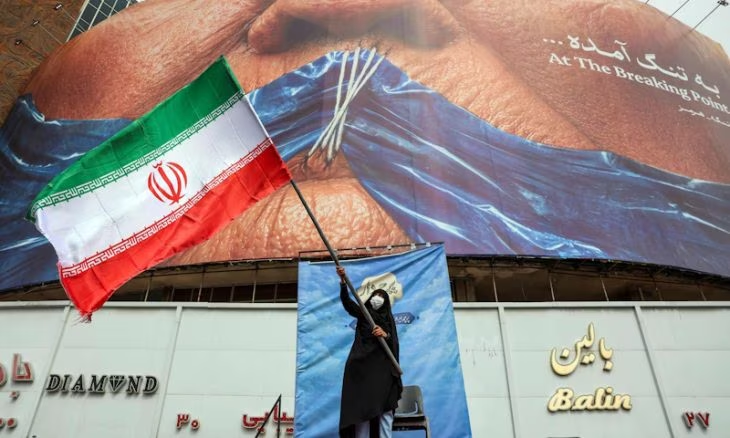
Confidential US intelligence reports indicate that Iran possesses the ability to withstand economically and militarily for several months to come, despite the strict naval blockade imposed by the United States on the Strait of Hormuz. This assessment raises major questions about the effectiveness of the maximum pressure strategy pursued by US President Donald Trump against the regime in Tehran.

Informed sources, citing intelligence documents presented to US administration officials this week, reported that Tehran is capable of absorbing the repercussions of the blockade for a period ranging from three to four months. The reports clarified that the severe economic crisis that Washington is banking on may not materialize immediately as expected in political circles.

The field data contained in the assessment indicates a clear gap between military reality and the optimistic statements from the White House. While President Trump asserts the erosion of Iranian capabilities, intelligence agencies believe that Tehran still retains military strengths that have not been decisively affected by recent airstrikes.

According to responsible sources, Iran still controls about 75% of its mobile missile launch platforms, which are military assets difficult to target with high precision. Estimates also indicate that Iran's missile inventory still retains 70% of its strength compared to before the outbreak of direct military confrontations.

The reports revealed intensive activity by Iranian technical units that succeeded in reopening most of the fortified underground weapons depots. These units are working to repair partially damaged missiles, in addition to assembling new systems that were in the final stages of manufacturing before the start of military operations.

In contrast, President Donald Trump adopts a completely different narrative, having recently stated that Iran's missile capabilities have undergone a comprehensive destruction process. Trump claimed that what remains with Tehran does not exceed 19% of its previous arsenal, considering that Iran's deterrent power has reached its lowest historical levels.

This discrepancy in estimates reflects an internal disagreement within the US administration regarding the effectiveness of the military option and the naval blockade. While the political wing believes that pressure is yielding results quickly, technical reports warn that the Iranian regime has shown unexpected resilience in dealing with harsh conditions.

On the other hand, a senior intelligence official confirmed that the blockade has already begun to reduce the Iranian state's financial revenues and accelerate the pace of economic collapse in some sectors. He pointed out that the Iranian naval forces suffered heavy losses in lives and equipment, which led military leaders to withdraw from public view.

Despite these losses, US officials believe that the leadership in Tehran is showing increasing intransigence and confidence in its ability to overcome this critical phase. These officials believe that the regime is willing to sacrifice the living stability of civilians in order to preserve the military and political power structure of the state.

These developments come amid unprecedented regional tension that began since the joint US and Israeli strikes last February. Tehran responded then by targeting the interests of Washington's allies in the Gulf region, leading to its strategic decision to close the Strait of Hormuz to international navigation.

On the diplomatic front, Pakistani mediation in Islamabad failed to reach a sustainable agreement to end the state of blockade. Despite the announcement of a temporary truce last April, the stubbornness of positions prevented its transformation into a permanent peace agreement guaranteeing freedom of navigation in the vital waterway.

It is worth noting that the United States has imposed a full naval blockade on the Strait of Hormuz since mid-April, under the pretext of 'restoring freedom of navigation.' President Trump recently announced the continuation of this blockade at full strength, with the suspension of some political projects related to the region until further notice.

Iran can withstand the consequences of the blockade for at least three to four months before entering a severe crisis.

OPINIONS

Fri 08 May 2026 10:22 am - Jerusalem Time

Sacred Space, Stolen Land: The Moral Collapse Behind Settlement Real Estate Expos


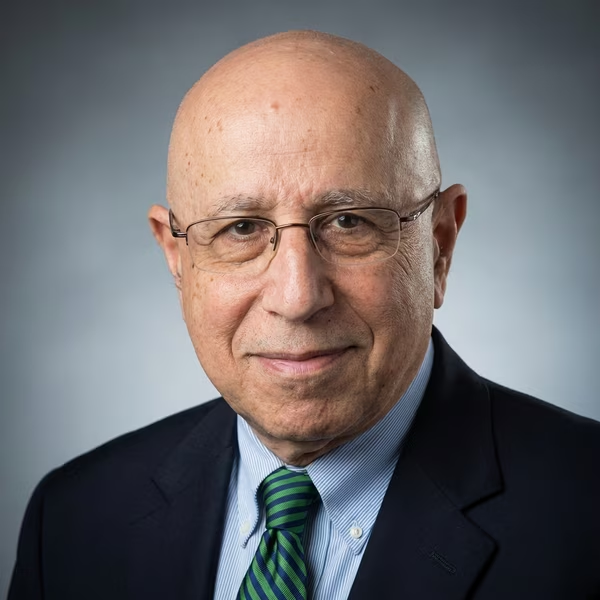
By: Said Arikat


May 8, 2026


News analysis


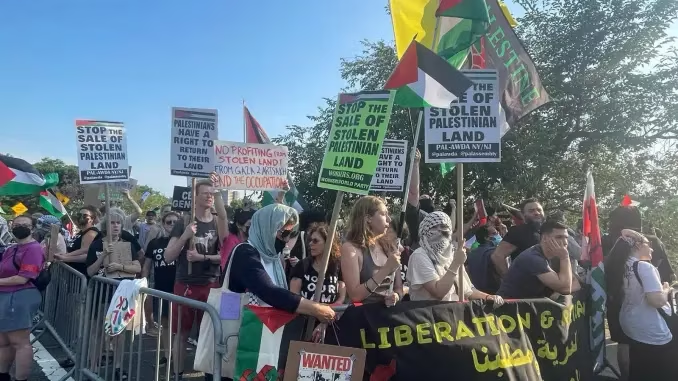
Washington, D.C- The decision by Park East Synagogue to host the so-called “Great Israeli Real Estate Event” on May 5, 2026, was not a neutral act of community engagement or cultural outreach. It was a political act — one that placed a respected religious institution in direct alignment with the expansion of illegal Israeli settlements built on occupied Palestinian land. No amount of public relations language about “real estate opportunities” or “relocation assistance” can conceal the ugly reality beneath the polished brochures and luxury advertisements: this was an event connected to the commercialization of occupation and the normalization of dispossession.


At a moment when the occupied West Bank is witnessing some of the worst settler violence in decades, the spectacle of property companies marketing homes in settlements to wealthy buyers in Manhattan should shock the conscience. Palestinian communities across the West Bank face escalating attacks from extremist settlers who burn homes, uproot olive groves, terrorize villages, and assault civilians under the protection — or deliberate indifference — of Israeli military forces. Entire families live under constant threat while their land is steadily carved apart by settlements that much of the world considers illegal under international law.


Against this backdrop, hosting a settlement-linked property expo inside a synagogue is not merely controversial. It is morally grotesque.


New York Mayor Zohran Mamdani was entirely justified in condemning the event. His criticism reflected a basic moral truth too many American politicians are afraid to voice clearly: settlement expansion is not an unfortunate side issue in the Israeli-Palestinian conflict. It is one of the central engines driving Palestinian displacement, apartheid-like segregation, and endless violence. Every new housing unit marketed in settlements deepens the architecture of occupation while making any viable Palestinian future increasingly impossible.


The companies showcased at the event were not simply selling apartments. They were selling participation in a project of territorial conquest.


The presence of promotional material for settlements such as Karnei Shomron and Kfar Eldad exposes the deeper ideological nature of these gatherings. These are not random suburban developments. They exist on occupied land seized through military domination and maintained through a legal system that grants rights and privileges to Jewish settlers while subjecting Palestinians to military rule, checkpoints, land confiscation, and systematic restrictions on movement and political life.


To market such properties in New York City — and to do so from within a religious institution — reveals the extraordinary level of impunity surrounding Israeli settlement expansion in the United States.


A synagogue is supposed to represent moral reflection, spiritual responsibility, and human dignity. But when a house of worship opens its doors to companies profiting from occupation, it risks transforming itself into something far darker: a political instrument laundering injustice through religious legitimacy. The issue is not Judaism. Many Jewish organizations and Jewish human rights advocates have fiercely opposed settlements for decades. The issue is the corruption of religious space into a venue for legitimizing dispossession.


No religious institution should be shielded from criticism when it becomes complicit in oppression.


Indeed, if any church, mosque, or temple hosted a commercial fair promoting property sales on land occupied in violation of international law elsewhere in the world, public condemnation would be immediate and ferocious. American media and politicians would denounce it as extremist and morally indefensible. Yet when Palestinians are the victims, a stunning double standard emerges. Occupation becomes “disputed territory.” Ethnic displacement becomes “development.” Illegal settlements become “neighborhoods.”


Language itself is manipulated to obscure brutality.


The defenders of these expos frequently invoke religious freedom and free speech as though either principle grants immunity from accountability. It does not. Freedom of worship does not include the right to facilitate or normalize internationally condemned land seizures without public criticism. A synagogue is not above scrutiny simply because it is a religious institution. Once it enters the arena of overt political activity — especially activity tied to occupation and discrimination — it becomes fully subject to moral and civic judgment.


And judgment is precisely what is required.


The violence of extremist settlers in the West Bank is no longer fringe behavior ignored by Israeli authorities. Increasingly, it operates as an unofficial arm of state policy. Armed settler militias attack Palestinian towns while political leaders in Israel openly advocate annexation and permanent domination over Palestinian land. Human rights organizations, including Israeli groups, have documented patterns of collective punishment, racial segregation, forced displacement, and systemic impunity. Settlement expansion is not separate from this violence; it is its geographic expression.


Events like the Park East expo help sustain that machinery from abroad. They provide financial lifelines, ideological reinforcement, and international normalization for a project rooted in inequality and coercion.


That is why protests outside the synagogue were not acts of intolerance. They were acts of moral resistance.


Attempts by some politicians and pro-settlement activists to portray demonstrators as threats to religious liberty are deeply cynical. Criticizing a synagogue for hosting settlement-linked events is not antisemitic. Opposing occupation is not hatred of Jews. Conflating the two cheapens the fight against real antisemitism while silencing legitimate dissent against Israeli government policies.


In fact, one of the gravest dangers to Jewish ethical tradition comes not from protesters, but from institutions willing to align themselves with permanent occupation and ethno-national supremacy while claiming moral exemption from criticism.


Religious institutions should comfort the oppressed, not profit from their dispossession.


Park East Synagogue insists it acted within its legal rights in hosting the event. That may well be true. But legality has never been the final measure of justice. Throughout history, institutions have invoked the protection of the law while enabling systems of dispossession, exclusion, and human suffering. The real issue is not whether the event was technically permissible, but whether a place that claims moral and spiritual authority should transform itself into a platform for marketing settlements built on confiscated land, entrenched segregation, and the daily violence inflicted on Palestinian civilians.


The answer must be unequivocal: no. No religious institution should cloak occupation and colonization in the language of faith, philanthropy, or community development. The moment a sacred space becomes a commercial venue for the expansion of illegal settlements, it ceases to stand above politics and instead becomes complicit in the machinery of oppression it seeks to sanitize.


ISRAELI AFFAIRS

Thu 07 May 2026 6:44 pm - Jerusalem Time

Historic Shift in Washington: Support for Occupation Divides Both Parties and Swings Voter Balance

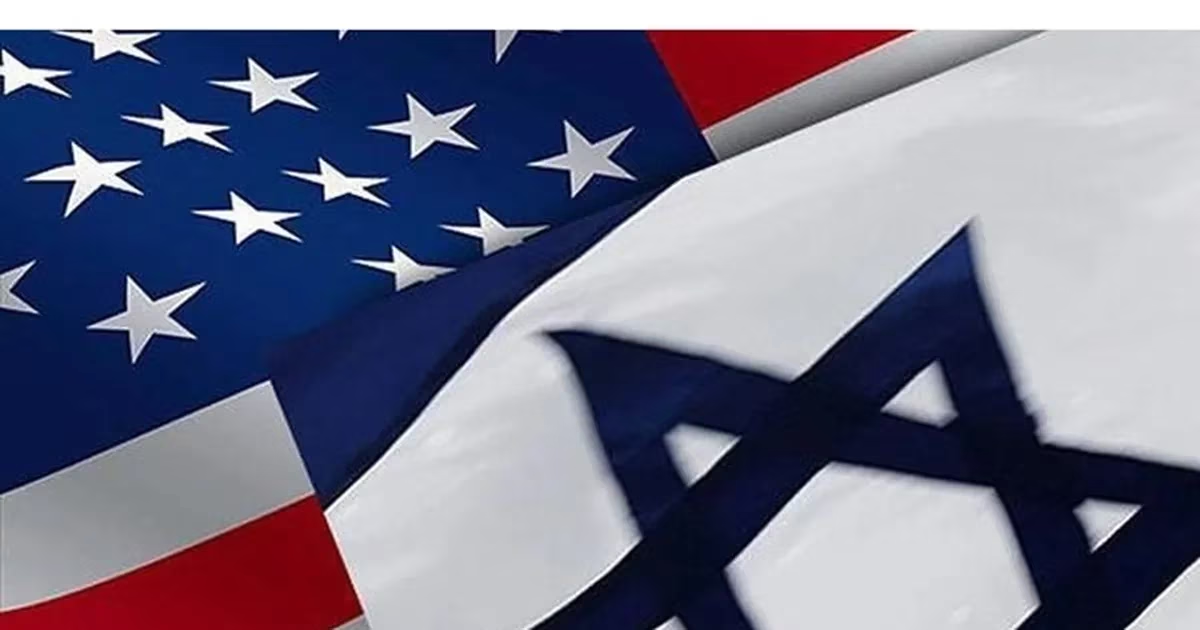
The American political scene is witnessing a fundamental shift in the nature of its stance on the strategic alliance with the Israeli occupation state, as the issue has moved from being a bipartisan consensus to a subject of intense debate. Press sources reported that electoral pressures and changing public opinion trends, especially among young people, have prompted many candidates to reconsider their positions on absolute military and political support.

Reports from the 'Washington Post' indicated that the alliance with the occupation has become a political burden in election campaigns, with unusual questions beginning to emerge about the necessity of stopping arms sales. Sources pointed out that recent opinion polls reflect a growing gap within party bases, threatening the traditional unity on foreign policy in the Middle East.

Recent survey data showed that about 72% of Democrats and 47% of Republicans now view support for the occupation as an issue causing internal crises within their parties. This shift comes at a time when candidates from both sides are running their election campaigns based on promises to reduce or end foreign aid directed to the Israeli occupation.

In the Senate, this division was clearly manifested after 40 Democratic members voted in favor of a resolution introduced by Senator Bernie Sanders aimed at preventing arms sales to the occupation. This number represents a significant jump compared to only 27 members who supported a similar measure last July, indicating a growing trend rejecting current policies.

Pro-occupation groups, such as 'AIPAC,' face increasing challenges after their money and support became a political burden for some candidates in crucial states like Michigan. Observers believe that American voters have become more sensitive to foreign interventions and funding associated with pro-Israel lobbying groups.

Sources quoted military surgeon Adam Hamawy, who is running in the Democratic Party primary, as saying that party leaders had not been listening to the true desires of Americans for a long time. Hamawy affirmed that candidates seeking to win in upcoming cycles will be forced to take more critical stances on the occupation in line with the aspirations of their popular bases.

On the Republican side, former President Donald Trump faces pressure from the 'America First' movement, which believes that involvement in Middle East conflicts contradicts national interests. Prominent right-wing voices have begun to express their dissatisfaction with the Israeli lobby's influence on war and peace decisions in the United States, disrupting the party's traditional calculations.

Statistics indicate that negative views towards the occupation have sharply risen among independents to 51%, while jumping among Democrats to 66%. These figures reflect a deep shift in American collective consciousness, where 47% of citizens now believe that Washington exaggerates its support for the occupation beyond reason.

Generational division stands out as one of the most important features of this stage, with young people under the age of fifty holding more radical positions on Israeli policies compared to older generations. In the Republican Party, 57% of young people hold a negative view of the occupation, a percentage that is more than double that of older members in the same party.

Political consultants believe that the traditional pro-Israel base, represented by Republicans over fifty, is no longer a sustainable political alliance in the long term. Experts explained that Democrats have begun to feel greater political security when taking courageous stances condemning Israeli violations in the occupied Palestinian territories.

In Michigan, the intensity of political discourse escalated, with candidates describing what is happening in Gaza as 'genocide,' considering that silence on these crimes makes a politician lose credibility with the public. These candidates affirmed that voters are looking for leaders who have the courage to stand up against injustice and stop illegal wars.

On the other hand, pro-occupation lobbying groups are trying to regain their influence by spending millions of dollars in primary elections to attack candidates opposed to unconditional aid. These groups often resort to using economic or local issues in their advertisements to avoid controversy over their increasingly unpopular stance on Israel.

Even traditional hawks in the Senate, such as Lindsey Graham, have begun to show openness to reviewing the timelines for US military aid. This change in rhetoric reflects a growing realization that the 'blank check' Israel used to receive is no longer acceptable to American taxpayers who demand domestic priorities.

Sources concluded by saying that the old approach based on the principle of 'Israel is always right' has effectively ended in the corridors of American politics. The special relationship is now subject to international law and political accountability, which represents a historic shift that may reshape Washington's role in the region in the coming years.

The special relationship in which questions could not be asked, laws could not be applied, or blank checks to the occupation could not be stopped, has completely ended.

PALESTINE

Thu 07 May 2026 6:44 pm - Jerusalem Time

3 Martyrs in Israeli Raid West of Gaza and Warnings of Health System Collapse

The Ministry of Interior in the Gaza Strip announced today, Thursday, the martyrdom of three of its officers and personnel and the serious injury of a fourth, as a result of an airstrike carried out by Israeli occupation aircraft. The raid directly targeted a guard post belonging to a security headquarters located in the Ansar area west of Gaza City, causing widespread destruction in the area.

The ministry clarified in an official statement that the bombing's victims were not limited to security personnel, but also resulted in the injury of several citizens passing through the area. This military operation comes in the context of a series of attacks targeting security and civilian infrastructure in the besieged Strip.

Medical sources at Al-Shifa Medical Complex confirmed the arrival of the bodies of the three martyrs to the hospital, in addition to a number of wounded suffering from injuries of varying severity. Medical teams in the emergency department are providing necessary first aid to the injured despite severe pressure and lack of resources.

Field reports indicate that this escalation represents a new violation of the ceasefire agreement that came into effect on October 10, 2025. Despite the declared calm, Israeli military operations have not completely ceased, threatening the collapse of existing fragile understandings.

According to statistics issued by the Ministry of Health, the toll of victims of Israeli violations since the start of the agreement has reached approximately 846 martyrs and more than 2,400 injured. These figures show the scale of the challenges faced by the population amidst continued direct targeting and artillery and aerial bombardment.

In a related context, Dr. Muhammad Abu Salmiya, Director-General of Al-Shifa Medical Complex, issued a strong warning about the deteriorating humanitarian and health situation within the Strip. Abu Salmiya described the current conditions as moving from bad to worse, emphasizing that hospitals are no longer able to accommodate the magnitude of the tragedy.

The director of the medical complex revealed that the past twenty-four hours alone witnessed the registration of six martyrs and about 40 injuries, which puts immense pressure on operating rooms and intensive care. He pointed out that the severe shortage of medical supplies now threatens the lives of hundreds of patients and injured daily.

The central pharmacy in Gaza suffers from a deficit exceeding 50% of essential and life-saving medicines, including chemotherapy treatments for cancer patients and dialysis supplies. This severe shortage deprives thousands of patients of their right to treatment and leaves them facing an unknown fate amidst the ongoing siege.

Regarding logistical services, medical sources confirmed the breakdown of the main oxygen station that supplies hospitals in the northern Strip, forcing medical administrations to rely on inadequate alternatives. This breakdown directly threatens the lives of infants in nurseries and patients who depend on artificial respirators.

In addition, the energy crisis stands out as a major obstacle, as power generators have been under continuous work pressure for years without regular maintenance or availability of spare parts. Officials warn of an imminent humanitarian catastrophe if these generators stop due to a lack of fuel and oils necessary for their operation.

Regarding the epidemiological situation, reports noted a widespread انتشار of skin and intestinal diseases among displaced persons in overcrowded camps and shelters. The percentage of skin infections exceeds 80% among the population due to lack of personal hygiene and scarcity of potable water for drinking and human use.

Finally, specialists warned of the emergence of new epidemics such as typhoid and salmonella due to the accumulation of waste and the increasing numbers of rodents and insects in residential areas. The health system in Gaza continues to struggle for survival, amidst international demands for immediate intervention to open crossings and allow urgent medical aid.

The health situation in Gaza is close to complete collapse, and medical teams are working with very limited resources amidst increasing deaths resulting from lack of treatment.

ISRAELI AFFAIRS

Thu 07 May 2026 3:14 pm - Jerusalem Time

Severe diplomatic crisis between Beijing and Tel Aviv following Knesset delegation's visit to Taiwan

Diplomatic relations between Beijing and Tel Aviv have witnessed escalating tension following an official visit by a delegation of Israeli Knesset members to Taiwan. The delegation included former Knesset Speaker Mickey Levy, along with members from both the coalition and opposition, which sparked widespread anger in Chinese circles that reject any official representation with the island.

Sources reported that the diplomatic clash erupted immediately after the Israeli delegation met with Taiwanese President Lai Ching-te and high-ranking officials in the Taiwanese government. Discussions during the visit focused on enhancing joint cooperation in advanced technology and innovation, which Beijing considered a direct challenge to its sovereignty.

The Chinese Embassy in Tel Aviv issued a strongly worded statement, severely condemning the actions of the Knesset members, describing them as undermining the political foundations upon which joint relations were built. The statement affirmed that this step represents a departure from the international understandings concluded between the two sides regarding the Taiwan issue.

Sources indicated that the Israeli delegation included Boaz Toporovsky, Ron Katz, and Jonathan Mishariki, who conducted field tours and official meetings. The Taiwanese President expressed his happiness with this visit, emphasizing the importance of deepening relations in the fields of artificial intelligence, industrial development, and social cohesion.

For his part, Taiwanese Deputy Foreign Minister Wu Chih-chung affirmed that the arrival of the Israeli delegation amidst the tense security situation in the Middle East reflects significant support for his country. He explained that Taiwan and Israel face similar security and political challenges, which opens broad horizons for deepening strategic cooperation between them.

China's reaction was not limited to verbal condemnation; the Chinese Embassy specifically attacked Knesset member Toporovsky for his repeated statements. Beijing considered that the repetition of these visits constitutes a serious violation of the 'One China' principle, which the Israeli government officially recognizes in its diplomatic charters.

The Chinese Embassy stressed in its statement that there is only one China in the world, and that Taiwan is an inalienable part of its sovereign territory. It added that the government of the People's Republic of China is the sole legitimate representative, and that any attempt to circumvent this reality will be met with firm responses.

Beijing accused the Knesset members of cooperating with what it described as 'separatist forces' demanding Taiwan's independence, and inciting conflict across the strait. The statement described these actions as 'despicable acts' aimed at destabilizing regional stability and interfering in China's internal affairs in an unacceptable manner.

The Chinese statement reminded the Israeli government of the joint communiqué on the establishment of diplomatic relations, which explicitly states Tel Aviv's recognition of China's sovereignty over Taiwan. The embassy considered that the actions of the Knesset members blatantly contradict the official declared position of the Israeli government towards Beijing.

China issued a strong warning to the Knesset members to immediately cease what it described as wrong actions, and not to underestimate China's firm resolve. It affirmed that defending territorial integrity and national sovereignty is a top priority for both the Chinese government and people.

The statement warned against the belief that 'red lines' in the Taiwan issue can be crossed without paying a heavy price on the diplomatic and economic fronts. This threat comes at a time when international relations are witnessing sharp polarization, which puts the Israeli government in an embarrassing position vis-à-vis a huge trading partner like China.

Observers believe that this crisis reflects a state of confusion in Israeli foreign policy, where the actions of parliament members contradict the state's official commitments. Political circles in Tel Aviv fear that this visit could lead to a long-term deterioration in relations with the Asian superpower.

The visit, which focused on technological cooperation and artificial intelligence, has now become a focal point of a political conflict that transcends the boundaries of technology to reach the core of national sovereignty. Taiwan thanked the Knesset for what it described as support in promoting development, a thank you that further angered the authorities in Beijing.

Diplomatic circles are awaiting the official reaction of the Israeli government to the harsh Chinese statement, and whether it will take measures to appease Chinese anger. The Taiwan issue remains the most sensitive test in Tel Aviv's relationship with Beijing, as the latter accepts no leniency on this matter.

These are despicable acts, and we call on Knesset members to immediately cease their wrong words and actions and not to underestimate the resolve of the Chinese people.

PALESTINE

Thu 07 May 2026 3:13 pm - Jerusalem Time

The Future of the Great Confrontation: A Reading of the Roots and Scenarios of the Israeli-Iranian War

The book 'The Iranian-Israeli War: When Will It End?' by Clouds Michael, highlights the dramatic transformations in the Middle East, tracing the roots of hostility since the storming of the Israeli diplomatic mission in Tehran in 1979. The author believes that this date marked the end of the 'Periphery Strategy' adopted by Tel Aviv to build alliances with non-Arab countries, ushering in a phase of building the 'Axis of Resistance' which changed regional power balances.

The hostile relationship evolved into an existential threat with the rise of Hezbollah in Lebanon, which the book described as 'Iran's most powerful weapon,' possessing by 2023 a massive arsenal exceeding 150,000 missiles. This Iranian investment, costing tens of billions, enabled Tehran to create a regional deterrence network capable of depleting Israeli military capabilities at a relatively low cost compared to traditional armies.

The Iranian nuclear file represents the primary driver of the current escalation, especially after the IAEA report in June 2025 revealed that Tehran possessed enough enriched uranium to produce nine nuclear warheads. Strategic sources considered Iran's reaching the 84% enrichment threshold to have put the region on the brink of a comprehensive explosion, as covert sabotage tools were no longer able to curb Iranian nuclear ambitions.

The events of October 2023 marked the breaking point for fragile stability, as the Gaza War activated multiple fronts including Lebanon, Yemen, Iraq, and Syria. Despite attempts by the parties to maintain rules of engagement, the targeting of the Iranian consulate in Damascus and the assassination of prominent leaders such as Ismail Haniyeh and Hassan Nasrallah pushed the confrontation into a phase of direct clash between Tehran and Tel Aviv.

In February 2026, the region entered a phase of open warfare whose repercussions affected the Gulf states and the global financial system, amidst international inability to contain the conflict. This confrontation led to a severe energy crisis due to the closure of the Strait of Hormuz, putting the global economy to an unprecedented stress test that threatened food security in vast areas of the world.

US President Donald Trump's administration faces increasing internal pressure with his popularity dropping to a third due to rising fuel prices, prompting Washington to seek a diplomatic solution. Sources confirm that intensive communications are currently underway to reach a framework agreement that would end what US officials described as the 'epic rage war' that achieved its initial military objectives.

Tehran demands in any upcoming negotiations a complete lifting of sanctions imposed since 2018, compensation for damages to its infrastructure, and binding security guarantees. In contrast, Tel Aviv insists on the permanent dismantling of Iranian missile and nuclear capabilities, creating a wide gap in the terms of negotiation between the two parties.

The 'long-term war of attrition' scenario is considered the most likely, with a probability of up to 45%, where each party bets on its economic and military resilience against the erosion of the opponent's capabilities. Iran's strategy in this context relies on prolonged resistance, exploiting global economic pressure and political unrest within the United States and Israel.

Analysts warned of a 'nuclear escalation' scenario that could push other regional countries such as Saudi Arabia and Turkey to seek nuclear weapons, which would completely change the global nuclear order. This shift would transform the Middle East from a region with one undeclared nuclear power into an arena for an overt nuclear arms race, ending traditional deterrence concepts.

Russian and Chinese roles emerged as crucial factors in sustaining Iran's ability to confront, by providing Tehran with advanced air defense systems and electronic warfare technology. Beijing also acts as an economic lifeline by purchasing energy and transferring technology, allowing Iran to continue its attrition strategy without collapsing under the weight of Western sanctions.

The Strait of Hormuz remains Tehran's strongest card, as its continued closure for more than ninety days could push the global economy into a comprehensive recession that major powers cannot afford. Expectations lean towards a 'de facto partial opening' of the strait, through practical arrangements that ensure the passage of commercial vessels without reaching a formal and comprehensive political agreement.

Strategic analysis confirms that any solution that ignores the Palestinian issue will remain temporary, as it is the deepest structural cause that fuels popular and political support for the Axis of Resistance. The continuous displacement and deprivation of Palestinians of their rights provide fertile ground for the growth of resistance movements, making their use as a strategic tool always available to regional powers.

Israel suffers from increasing diplomatic isolation despite its military achievements, as former security leaders believe that the absence of a political horizon threatens the security of the Hebrew state in the long run. The destruction inflicted on the Gaza Strip deepened regional hatred, making it difficult to translate field victories into sustainable political stability in the region.

In conclusion, the conflict of 2025 and 2026 appears to resemble historical wars such as the Korean War in its structural features, where military operations continue due to the absence of a mechanism to translate the field reality into a settlement. The gamble remains on the ability of international institutions and alliances established after World War II to withstand this harsh test.

Any settlement that ignores the Palestinian dimension will not last; military elimination of organizations does not resolve the political conditions that make the emergence of their successors inevitable.

PALESTINE

Thu 07 May 2026 12:19 pm - Jerusalem Time

Gaza Under the Weight of Violations: Continuous Raids and a Complete Collapse of the Health and Humanitarian System

Israeli occupation forces continue to launch raids on various areas in the Gaza Strip, resulting in the death of nine martyrs over the past twenty-four hours, in a field escalation that exceeds the average daily casualties since the ceasefire began. Field sources reported that these targeting operations are heavily concentrated in areas near the border and what is known as the 'Yellow Line,' where the army imposes strict security restrictions preventing the access of relief teams.

The attacks extend to the heart of the Strip and residential neighborhoods, as happened in the Zeitoun neighborhood south of Gaza City, where three members of one family were martyred while trying to set up their tent. These incidents confirm that the supposed calm has not provided safety for the residents, who face the risk of direct targeting whether during their movement or even inside temporary displacement centers.

On the ground, reports indicate that the Israeli army has not adhered to border understandings, but rather has expanded its military control to include additional areas estimated at about 10% of the Strip's area. This expansion has tightened the noose on residents and deprived them of access to their lands and homes, amid serious fears of a return to comprehensive military operations in light of stalled political negotiations.

Regarding the aid file, the occupation authorities continue to ration the entry of relief trucks, with the daily average not exceeding 200 trucks, a figure far below the 600 trucks agreed upon in the first phase. This severe shortage has caused markets to dry up of basic goods, and the fuel and cooking gas crisis continues to plague hundreds of thousands of displaced families.

Statistics indicate that seven out of ten families do not have cooking gas, forcing residents to use alternative and dangerous methods such as burning waste and cardboard to prepare food. This crisis coincides with the occupation's classification of many basic materials, such as wood and solar energy equipment, as 'dual-use items' prohibited from entering the Strip.

The hunger crisis continues to hit hard in various areas of Gaza, with one out of five families unable to secure more than one meal a day. 'Tekkiyat' (charitable kitchens) and charity kitchens have become the only refuge for thousands of Palestinians who have lost their sources of income and their ability to buy scarce and expensive food items.

The suffering of displaced people inside the camps is increasing with rising temperatures and the spread of epidemics and rodents among piles of rubble and accumulated waste. Shocking medical cases have been recorded, including a child suffering from paralysis due to a rodent bite inside his tent, raising alarm bells about the deteriorating health environment in which children and the elderly live.

In addition, the water crisis represents a daily challenge for Palestinians, as the Strip suffers from a severe shortage of potable water and the collapse of sewage networks. Families are forced to travel long distances to obtain limited quantities of water, which is often contaminated, exacerbating the spread of skin and intestinal diseases among the displaced.

Regarding the file of the wounded and sick, Israeli obstacles continue to prevent thousands from traveling abroad for treatment, despite the partial reopening of the Rafah crossing. Sources confirm that the number of daily departures does not exceed 60 people, which is less than half the agreed number, putting the lives of thousands of injured people at real risk.

Estimates indicate that about 20,000 patients and wounded are in urgent need of medical referrals, while only 12% of the target groups have actually been able to travel. This deliberate delay has led to the deaths of a number of cancer and chronic disease patients who waited long and in vain to receive their right to treatment.

For its part, the Ministry of Health in Gaza issued a final warning of a complete collapse in laboratory and pharmaceutical services within the remaining hospitals. The ministry announced the depletion of about 47% of the essential medicines list, in addition to a severe shortage of medical consumables necessary for dialysis, eye surgeries, and cardiac catheterization.

The health statement also clarified that 87% of laboratory testing materials have zero stock, meaning that laboratories have stopped conducting basic tests such as complete blood counts. This shortage directly threatens the ability of doctors to diagnose critical cases and monitor patients in intensive care units and emergency rooms.

Cancer and blood disease treatment sectors and primary care are among the most affected categories, where patients face an unknown fate in the absence of alternative treatments. Medical staff appeal to the international community to intervene immediately to break the medical blockade and bring in necessary supplies before the remaining health facilities cease to operate.

The bitter reality in the Gaza Strip proves that the ceasefire did not end the catastrophe, but rather revealed the depth of the collapse that has affected all aspects of life. While intermittent raids continue, hunger, disease, and siege remain tools that plague the population who await radical solutions to end their ongoing humanitarian suffering for years.

Continuous Israeli targeting significantly exacerbates the humanitarian and living conditions in the Strip, and Palestinians continue to live with the specter of war.

PALESTINE

Thu 07 May 2026 12:19 pm - Jerusalem Time

Gaza's Children Face Death with Spoiled 'Insulin' and Empty Stomachs

Thousands of families in the Gaza Strip are experiencing a complex humanitarian tragedy, as parents are forced to inject their children with expired insulin doses to save their lives from diabetes. Mothers anxiously monitor the expiration dates printed on the packages, which expired many months ago, amidst bitter questions about whether spoiled medicine is less harmful than death without it.

In Gaza, the battle is no longer limited to displacement and bombing; it has extended to include a silent struggle with chronic diseases that are ravaging the bodies of the young. The case of Amir, a child not yet ten years old, embodies the reality of hundreds of children suffering from deteriorating health due to the absence of effective treatment and a dilapidated living environment.

Local sources confirm that the crisis is not limited to expiration dates but also extends to the efficacy of stored medicine. With continuous power outages, insulin loses its therapeutic ability due to storage at high temperatures, turning it into a liquid with little vital value.

Medical statistics indicate that there are approximately 2,500 children in the Strip suffering from 'Type 1' diabetes, who rely entirely on daily injections to survive. These children face existential challenges that go beyond the disease, including the scarcity of healthy food necessary to control blood sugar levels.

In displacement centers and dilapidated tents, mothers recount painful stories of their inability to provide healthy food to support their exhausted children. Children whose blood sugar levels soar to terrifying levels find only canned goods, which families describe as 'packaged poisons' that further worsen their health.

Nour Al-Safadi, a mother of a child with diabetes, speaks about her daily suffering in the Al-Sahat area in central Gaza City, where her child Majed lacks the most basic necessities of life. In addition to spoiled medicine, the child lacks clean water and vegetables essential for his diet, leaving him confined to the tent, suffering from constant lethargy.

Sources add that the absence of blood sugar monitoring devices and test strips further complicates the situation, as parents are forced to deal with the disease by intuition without accurate knowledge of sugar levels. This reality puts children's lives at stake and makes every dose of medicine an unsafe gamble with unknown consequences.

According to reports issued by the Ministry of Health, between 70,000 and 80,000 diabetic patients in Gaza face a real danger due to the complete collapse of medical follow-up. The report warns that the severe shortage of vital insulin will lead to health catastrophes that cannot be remedied in the near future.

For his part, endocrinology and diabetes consultant Adli Al-Ghouti revealed alarming figures regarding the condition of affected children, confirming that they face a fatal danger. He explained that medicine alone is not enough in the absence of proper nutrition, which is the primary pillar for avoiding acute complications of the disease.

The Palestinian doctor warned that relying on insulin with current malnutrition rates turns children's bodies into a battleground for serious complications. Severe hypoglycemia attacks and sudden death become a lurking danger for every child who cannot find a meal to protect them from the effect of insulin on their empty stomachs.

Al-Ghouti also warned of a technical and fatal dilemma: when insulin loses its coolness or exceeds its expiration date, it completely loses its vital efficacy. This means that the repeated injection pricks that children endure become mere pain without medical benefit, exacerbating their physical and psychological suffering.

Experts point out that using ineffective insulin gives parents a false sense of security, while blood sugar levels remain high. This continuous elevation accelerates the occurrence of 'diabetic ketoacidosis,' an emergency condition that rapidly ravages the body in the absence of qualified hospitals.

International organizations such as the World Health Organization and Human Rights Watch had previously warned in reports that the lack of insulin poses a direct threat to life. These organizations confirmed that the absence of treatment and follow-up exposes patients to fatal complications such as coma, kidney failure, and nerve damage.

Cries are rising from within the Gaza Strip demanding urgent international intervention to bring in medical supplies and vital medicines to save thousands of children. Hope remains dependent on opening crossings and providing safe corridors for medical aid before the 'silent enemy' destroys what remains of these young bodies.

Using expired insulin gives parents a false sense of security, while high sugar levels ravage children's bodies amid the collapse of the medical system.

PALESTINE

Thu 07 May 2026 10:40 am - Jerusalem Time

Silent Annexation: How Administrative Tools of Occupation Strip Palestinians of Sovereignty in the West Bank

The city of Hebron, the largest city in the occupied West Bank, is facing a new phase of administrative tightening following the election of Yousef Al-Ja'bari as its mayor, where he found himself stripped of basic powers related to planning and construction. These restrictions are concentrated around the Ibrahimi Mosque, the most sensitive area, after the occupation authorities decided to withdraw these tasks from the Palestinian side and transfer them to Israeli officials unilaterally.

This step comes within the context of a broader policy pursued by Benjamin Netanyahu's government, aimed at strengthening the influence of the settler minority within the heart of Palestinian cities. Observers believe that this shift represents a dramatic acceleration in the gradual annexation operations that have continued for decades, but have now moved from de facto annexation through settlement outposts to legal and official annexation through changes in administrative laws.

Sources reported that the recent changes led by the far-right Finance Minister Bezalel Smotrich aim to transfer authority from military rule to Israeli civilian administration. This shift practically means eliminating the need for military approval for land purchases, and granting the Ministry of Justice in the occupation state full control over land registries in most parts of the occupied West Bank.

These legal amendments allow Israeli officials to take direct executive measures, including demolishing properties and intervening in water issues and environmental risks in areas historically managed by the Palestinian Authority. These measures are considered a direct undermining of what remains of the foundations of the Oslo Accords, as they remove the legal barriers that prevented the full annexation of lands.

Data from human rights organizations indicate that the current occupation government has approved the establishment of 102 new settlements in less than four years, which is almost double the number of settlements that existed before it took power. One of the most dangerous of these projects is the 'E1' settlement, which threatens to separate the north of the West Bank from its south, thereby eliminating any chance for the establishment of a contiguous Palestinian state.

In parallel with settlement expansion, the occupation authorities have intensified their economic pressures on the Palestinian Authority, leading Palestinian officials to warn of an imminent financial collapse. Palestinian Finance Minister, Estephan Salameh, stated that the goal of this financial blockade is to create a political and administrative vacuum that facilitates the final annexation of the West Bank amidst a lack of real international pressure.

On the ground, the pace of settler violence has escalated unprecedentedly, with the United Nations documenting over 1800 attacks in the past year alone. These assaults occur in a climate of impunity, leading to the martyrdom of 13 Palestinians since the beginning of this year, including children who were killed by direct settler fire in West Bank villages.

This systematic violence has led to the forced displacement of 36 Palestinian communities entirely over the past three years, in addition to the partial displacement of dozens of other communities. Analysts confirm that the goal of these attacks is to force Palestinians to voluntarily leave their lands to facilitate state control over them and later allocate them for settlement projects.

New administrative changes include funding for re-launching the land registration process in Area 'C', a process that has been halted since 1967. Activists warn that demanding Palestinians to prove ownership of their lands under impossible conditions will automatically lead to the conversion of vast areas of private property into 'state lands' belonging to the occupation.

According to legal experts, the burden of proof in the new laws has shifted to the Palestinian citizen, so any land whose owner cannot prove private ownership immediately goes to the occupation. This new legal system aims to 'normalize' the lives of settlers and make them citizens enjoying all Israeli civil rights over the occupied territories.

Former officials in the occupation's security apparatus expressed their shock at the extent of violence against Palestinian villages, with a former head of Mossad describing what he saw in those villages as reminding him of tragic historical events. Nevertheless, the government continues to provide political and legal cover for these practices aimed at radically changing the demography of the region.

Deep concern prevails in the Palestinian street that these measures are a prelude to mass displacement operations, especially with statements from ministers in the occupation government openly calling for encouraging Palestinian emigration. Activists in Hebron say that the fear of a 'second Nakba' now accompanies residents amidst the absence of international protection and the encroachment of settlers.

Control over land registries and making them public, along with lifting the ban on selling them to non-Arabs, opens the door for settlement companies to acquire strategic areas. These silent administrative steps are considered more dangerous than direct military operations, because they create a legal reality that is difficult to reverse in the future.

Ultimately, the occupation's strategy appears clear in transforming the West Bank into isolated cantons managed by Palestinian municipalities stripped of powers, while the Israeli civilian administration controls resources and land. This system entrenches an administrative 'apartheid' reality that seeks to eliminate any Palestinian national aspirations for independence and sovereignty.

They are creating a municipality within a municipality, stripping us of our powers, and not respecting the agreements they signed.

ISRAELI AFFAIRS

Thu 07 May 2026 10:40 am - Jerusalem Time

Anxiety in Tel Aviv over an American 'lifeline' to Tehran: Fears of a deal that ends the war and preserves nuclear capabilities

Political and security circles in Tel Aviv are experiencing a state of anticipation mixed with intense anxiety, following news from Washington about tangible progress in negotiations with Tehran. These fears come amid the American administration's move towards concluding a deal that ends the state of war, which Israel views as a retreat from the maximum pressure goals it had hoped would continue until the collapse of the Iranian regime.

Despite attempts by Israeli Prime Minister Benjamin Netanyahu to reassure the Israeli public by emphasizing continuous coordination with President Donald Trump, leaks indicate a deep gap between the declared war objectives and the expected outcomes. Israeli officials believe that any agreement that does not guarantee a complete dismantling of nuclear and missile capabilities would be a strategic defeat for Tel Aviv.

Sources reported that a number of ministers in the occupation government expressed their dissatisfaction with the circulated draft agreement, considering it not fundamentally different from the 2015 agreement. The core objection lies in the fact that the proposed agreement limits uranium enrichment for a specific period of only 15 years, leaving the door open for Tehran to return to its nuclear ambitions in the future.

For his part, Knesset member Moshe Saada, close to Netanyahu, tried to alleviate these concerns by indicating that Israel would not be bound by any agreement that ties its hands. He explained in radio statements that the current political maneuvers aim to avoid appearing as an obstacle to American efforts, while military operations continue on the ground to impose a new reality.

In a related context, media reports quoted security officials describing the agreement as a 'lifeline' for the Iranian regime, which was suffering from a suffocating siege and increasing internal pressures. These officials believe that lifting sanctions and unfreezing billions will enable Tehran to rearm its proxies in the region, primarily Hezbollah in Lebanon and the Houthis in Yemen.

Intelligence estimates indicate that Iran currently possesses a huge stockpile of enriched uranium, amounting to 11 tons, which poses a significant challenge to any control agreement. Israel fears that parts of this stockpile may have been moved to secret underground facilities untouched by recent airstrikes, making their destruction extremely complex.

On the military front, there is a belief in Tel Aviv that the agreement will inevitably restrict the freedom of action of the Israeli army on the northern front. Former military leaders warn that Washington may pressure for a comprehensive ceasefire that prevents Israel from completing its operations aimed at destroying Hezbollah's infrastructure in southern Lebanon.

In Washington, internal economic and political motives seem to play a decisive role in accelerating the pace of negotiations, especially with Trump's declining popularity and voters' complaints about rising fuel prices. News of the negotiations immediately reflected on global markets, with oil prices falling by more than 10%, giving the American administration an additional incentive to move forward.

The White House also faces legislative pressure, as US law requires the administration to obtain parliamentary approval to continue any military conflict after 60 days of troop involvement. This time constraint pushes Washington to seek a diplomatic solution that ends the 'epic rage war' as some American officials described it, considering that it has achieved its initial objectives.

In return, Tehran stipulates for accepting the agreement a complete lifting of economic sanctions and the lifting of the naval blockade, in addition to restoring access to its frozen funds abroad. These conditions are a red line for the Israeli security establishment, which sees them as a means to strengthen Iran's regional influence and finance new military operations against Israeli interests.

'Sources' reports indicate that Iran still retains thousands of ballistic missiles ready for launch from fortified underground facilities, despite the strikes it has suffered. This reality reinforces Israeli doubts about the effectiveness of any agreement that does not include an explicit clause for the destruction of these missile systems that directly threaten Israeli depth.

Regarding regional proxies, Tel Aviv believes that Hezbollah and the Houthis still possess deadly offensive capabilities, including advanced drones. Israel fears that the agreement will legitimize the presence of these forces as part of new regional arrangements, instead of weakening and undermining their capabilities as planned at the beginning of the confrontation.

Military analyst Giora Eiland believes that any agreement at the present time is a 'bad option' for Israel, which was betting on the collapse of the Iranian regime from within under the weight of the siege. Eiland stressed that the American retreat from the option of military decisive action gives Tehran a golden opportunity to rearrange its political, economic, and military cards away from the pressures of war.

In conclusion, the relationship between Washington and Tel Aviv remains facing a real test in light of the clear divergence of interests regarding the Iranian file. While Washington seeks to calm fronts and secure oil flow, Israel insists that sustainable security can only be achieved by definitively and comprehensively ending the existential threat posed by the Iranian nuclear project.

This agreement is catastrophic for Israel; it entrenches the rule of the clerics in Iran and grants them a lifeline while they were approaching collapse.

ARAB AND WORLD

Thu 07 May 2026 10:40 am - Jerusalem Time

Behind the Scenes of the Saudi Stance That Forced Trump to Suspend 'Operation Freedom' in Hormuz

American press reports, citing officials in Washington, revealed that the Kingdom of Saudi Arabia played a crucial role in thwarting a mission launched by President Donald Trump to open the Strait of Hormuz to ships stranded in the Gulf. Sources explained that tensions began when Trump surprised his regional allies by announcing 'Operation Freedom' via social media platforms, without sufficient prior coordination with the Saudi leadership.

This sudden announcement caused widespread displeasure in Riyadh, which quickly informed the American administration of a firm decision not to allow the US military to launch aircraft from Prince Sultan Air Base. The Saudi decision also included prohibiting flights through the Kingdom's sovereign airspace to support this military operation, which put the American plan in a major logistical predicament.

President Trump attempted to remedy the situation by making a phone call to Saudi Crown Prince Mohammed bin Salman, but the talks did not resolve the existing crisis. Based on this intransigence, Trump was forced to announce the temporary suspension of 'Operation Freedom' in an attempt to restore understandings that would ensure the US military's access to vital airspace in the region.

Saudi Arabia was not the only one surprised by the American move, as sources indicate that other Gulf allies, including Qatar, were only contacted after the operation had actually begun. This coordination disarray raised questions about the decision-making mechanism in the White House and the disregard for the political and security sensitivities of allied countries in the Arabian Gulf region.

For his part, a Saudi source confirmed that communication between Trump and the Crown Prince was regular, but noted that matters were evolving very quickly in real-time. The source explained that the Kingdom is currently putting its weight behind diplomatic efforts led by Pakistan, with the aim of reaching a comprehensive agreement between Tehran and Washington that would end the state of war and tension.

In contrast, the White House tried to downplay reports of allies being surprised, with a US official stating that regional partners had been informed in advance of the efforts. However, a Middle Eastern diplomat confirmed that coordination with countries like Oman only occurred after President Trump's official announcement, despite those countries not expressing public anger.

On the ground, the US military was preparing to deploy more naval vessels to Gulf waters to secure passage through the strait before the suspension order was issued. Indeed, US Central Command had earlier announced the successful passage of two US-flagged vessels through the Strait of Hormuz under the umbrella of 'Operation Freedom' before its suspension.

Trump justified the project's suspension in his subsequent posts as an opportunity to complete political negotiations and sign an agreement to end the armed conflict. Prince Sultan Air Base in Saudi Arabia is considered a strategic center, housing US fighter jets, refueling aircraft, and advanced air defense systems that were designated to support operations against Iran.

US military strategy in the region relies entirely on what is known as 'Access, Basing, and Overflight' (ABO) permissions. Without the consent of host nations, US aircraft find themselves unable to provide the necessary defensive umbrella to protect commercial vessels transiting vital waterways such as the Strait of Hormuz.

Geography plays a crucial role in this conflict, as military officials believe there are no effective alternative routes if Saudi Arabia and Jordan refuse to allow aircraft basing. Kuwait is also an essential country for air transit operations, while Oman's importance stands out in providing maritime logistical services and overflight in areas near the Arabian Sea.

Currently, two US aircraft carrier groups are in the region, with significant reinforcements in logistical capabilities and military stockpiles made by the Department of Defense. 'Operation Freedom' aimed to provide intensive military surveillance and direct firepower, including placing security personnel on board ships to deter ongoing Iranian threats.

Pentagon officials clarified that 'Operation Freedom' differed in nature and objectives from the air bombing campaign launched on February 28 under the name 'Epic Fury'. While the latter focused on striking military targets, the suspended project primarily focused on securing international commercial navigation.

These developments indicate a gap in visions between Washington and Riyadh on how to deal with the Iranian issue at this critical stage. While Trump tends to impose a new military reality through swift operations, Saudi Arabia prefers diplomatic channels that ensure long-term stability away from direct military escalation.

The future of navigation in the Strait of Hormuz remains dependent on the US administration's ability to mend its relations with Gulf allies and convince them of the utility of joint military operations. Amid ongoing threats, the region remains open to all possibilities, whether a return to the negotiating table or a resumption of military operations if regional mediations fail.

Due to geography, the United States needs the cooperation of regional partners to use their airspace along their borders, and in some cases, there is no alternative route.

PALESTINE

Thu 07 May 2026 10:39 am - Jerusalem Time

Washington Resumes Deportation Proceedings for Palestinian Student from Columbia University

US authorities have reactivated the deportation process for Palestinian student Mohsen Al-Mahdawi, who is considered a prominent figure in the student movement supporting Palestine within American universities. This step comes within the context of a strict campaign led by President Donald Trump's administration against activists and defenders of Palestinian rights in the United States.

Recent judicial documents revealed that the Board of Immigration Appeals decided to resume legal proceedings against Al-Mahdawi, a student at the prestigious Columbia University. This decision represents a dramatic turn in the case, which has witnessed intense legal and political tug-of-war in recent months.

Immigration Judge Nina Fros had issued a ruling last February rejecting the US administration's attempts to deport the Palestinian student. Her decision at the time came after Al-Mahdawi's arrest last year following his involvement in demonstrations condemning the Israeli war on the Gaza Strip on campus.

However, recent developments saw Judge Fros removed from her position last month, paving the way for the Board of Immigration Appeals to overturn her previous ruling. This board is affiliated with the Executive Office for Immigration Review within the Department of Justice, which gave the green light to continue prosecuting Al-Mahdawi legally.

The Trump administration justifies these harsh measures by describing activists like Al-Mahdawi as 'anti-Semitic' and promoters of 'extremism.' Official circles in Washington consider these protest movements a direct threat to American interests and foreign policy in the Middle East.

In contrast, human rights organizations, including progressive Jewish groups, reject this governmental description and consider it a deliberate conflation. These entities believe that the authorities are seeking to criminalize criticism of Israeli policies and the occupation of Palestinian territories by labeling it as anti-Semitism to intimidate sympathizers.

Mohsen Al-Mahdawi, who was born and raised in a refugee camp in the West Bank, expressed his condemnation of these measures in an official statement. Al-Mahdawi affirmed that the American government is using immigration laws as a political tool to suppress freedom of expression and silence any voice that opposes its pro-occupation stances.

The roots of the crisis date back to April 2025, when Al-Mahdawi was arrested while on his way to a routine interview related to his application for US citizenship. Despite his subsequent release by court order and without criminal charges, his prosecution through immigration laws has continued.

The American Civil Liberties Union is undertaking the legal defense of the Palestinian student, asserting that the deportation process cannot currently be carried out. The Union bases its defense on pending legal challenges before federal courts concerning the legality and legitimacy of the original arrest.

Al-Mahdawi's case falls within a broader strategy pursued by the current administration to undermine student movements supporting Palestine. This strategy includes threatening to cut federal funding to universities that allow protests, as well as imposing strict censorship on the digital activities of immigrants and foreign students.

It is worth noting that American universities have witnessed an unprecedented student uprising since late 2023 in rejection of the war of extermination in Gaza. Despite the decline in the momentum of these protests on the ground, their legal and political repercussions continue to pursue activists, amid international concerns about a decline in academic freedoms in the United States.

The government continues to use immigration laws as a weapon to silence dissenting voices.

PALESTINE

Thu 07 May 2026 10:39 am - Jerusalem Time

Crucial Meeting in Turkey Between Hamas and Mediators to Save Phase Two Negotiations

Attention is focused on the Turkish capital, which is hosting a fateful meeting bringing together representatives of the Hamas leadership council with mediators from the Arab Republic of Egypt and the State of Qatar. This intensive diplomatic meeting aims to propose new formulas for implementing the second phase of the ceasefire agreement in the Gaza Strip, amidst a phase described by observers as the most complex since the start of negotiations due to fundamental differences over the mechanisms for transitioning to sustainable security and political arrangements.

Sources reported that Cairo has presented initiatives aimed at rebuilding trust between the parties, including the necessity of committing to the daily entry of 600 humanitarian aid trucks into all areas of the Strip, along with a comprehensive cessation of military operations and assassinations. The sources clarified that the terms of the second phase are based on the complete withdrawal of occupation forces from Gaza, but Tel Aviv's condition of 'disarmament' before implementation has hindered efforts, especially after the occupation rejected three previous proposals submitted to facilitate the transition between the phases of the agreement.

A high-level delegation from the Hamas leadership council, including Mohammed Darwish, Khalil al-Hayya, Zaher Jabarin, Khaled Meshaal, and Hussam Awadallah, is participating in the Turkey consultations. Mediators link the possibility of achieving a real breakthrough in the crisis to the extent of progress in understandings between Washington and Tehran, as the US administration is expected to give a strong boost to the negotiations if outstanding regional issues are resolved, which could put decisive pressure on the occupation government to adhere to the terms of the first phase and effectively transition to the second phase to prevent the region from sliding into an all-out war.

The second phase stipulates the complete withdrawal of the occupation army from the Strip and the development of a plan to deal with security issues, but the occupation's intransigence is impeding implementation.

OPINIONS

Thu 07 May 2026 10:32 am - Jerusalem Time

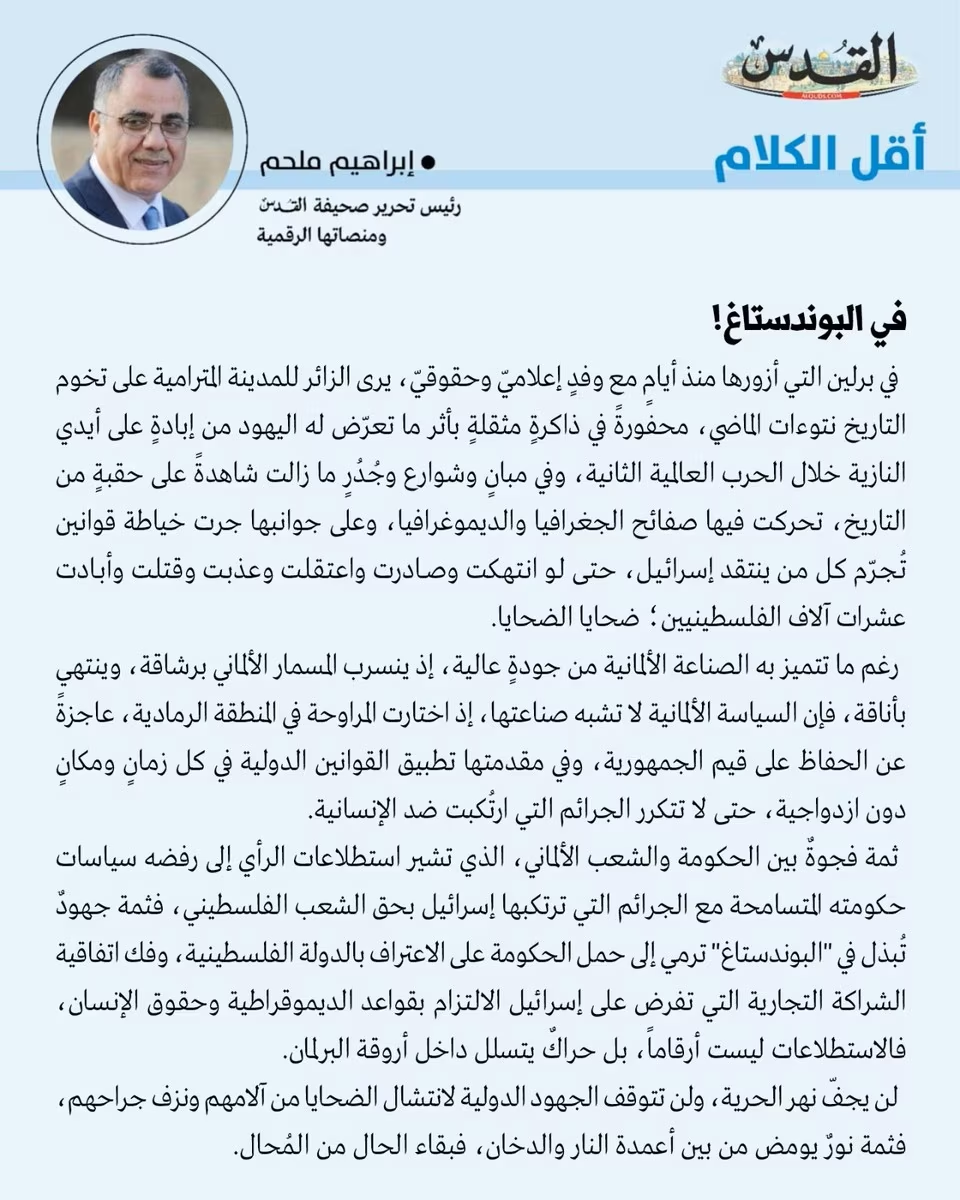
In the Bundestag!

Dr. Ibrahim Melhem

Editor-in-Chief

In Berlin, which I have been visiting for several days with a media and human rights delegation, the visitor to this sprawling city on the fringes of history sees the remnants of the past, etched in a memory burdened by the genocide perpetrated against the Jews by the Nazis during World War II. Buildings, streets, and walls still bear witness to an era of history, an era in which the plates of geography and demography shifted, and on its fringes, laws were sewn to criminalize anyone who criticizes Israel, even as it violates, confiscates, arrests, tortures, kills, and exterminates tens of thousands of Palestinians—victims of victims.


Despite the high quality of German manufacturing—where the German nail emerges with grace and ends with elegance—German politics bears no resemblance to its industry. It has chosen to remain in the gray area, incapable of upholding the values of the Republic, foremost among them the application of international law at all times and in all places without double standards, so as not to allow the recurrence of crimes against humanity.


There is a gap between the German government and the German people, whose opinion polls indicate their rejection of the government's policies that tolerate Israel's crimes against the Palestinian people. Efforts are underway in the Bundestag to pressure the government to recognize the State of Palestine and to terminate the trade partnership agreement that obligates Israel to adhere to democratic principles and human rights. These polls are not mere numbers; they reflect a movement stirring within the halls of parliament.


The river of freedom will not run dry, and international efforts to alleviate the suffering and wounds of the victims will not cease. A glimmer of light shines through the fire and smoke, for the status quo is unsustainable. 


OPINIONS

Thu 07 May 2026 10:16 am - Jerusalem Time

In the Bundestag!

Dr. Ibrahim Melhem

Editor-in-Chief

In Berlin, which I have been visiting for days with a media and human rights delegation, the visitor to the sprawling city on the edge of history sees the protrusions of the past, etched into a memory burdened by the impact of the extermination of Jews by Nazism during World War II, and in buildings, streets, and walls that still bear witness to an era of history, where the plates of geography and demography shifted, and on its sides, laws were sewn to criminalize anyone who criticizes Israel, even if it violated, confiscated, arrested, tortured, killed, and exterminated tens of thousands of Palestinians; victims of victims. 

Despite the high quality of German industry, as the German screw slips gracefully and ends elegantly, German politics does not resemble its industry, as it chose to remain in the gray area, unable to uphold the values of the Republic, foremost among them the application of international laws at all times and in all places without double standards, so that the crimes committed against humanity are not repeated.

There is a gap between the German government and its people, as opinion polls indicate their rejection of their government's policies that tolerate the crimes committed by Israel against the Palestinian people. 

There are efforts being made in the "Bundestag" aimed at compelling the government to recognize the Palestinian state and to dissolve the trade partnership agreement that obliges Israel to adhere to the rules of democracy and human rights. Polls are not just numbers, but a movement that infiltrates the corridors of parliament.The river of freedom will not dry up, and international efforts to rescue victims from their pain and bleeding wounds will not cease, for there is a light flickering from among the pillars of fire and smoke, for the status quo is impossible.

ARAB AND WORLD

Thu 07 May 2026 7:45 am - Jerusalem Time

A Shift in Washington's Strategy: Are the Drums of War in the Gulf Falling Silent?

The international arena witnessed a dramatic shift following US President Donald Trump's announcement to freeze 'Operation Freedom,' which aimed to forcibly break Iran's blockade of the Strait of Hormuz. This decision was made via the 'Truth Social' platform, where Trump indicated his desire to give diplomatic solutions a chance, reflecting a clear retreat from the threatening rhetoric that prevailed in recent weeks.

Informed sources reported extensive behind-the-scenes contacts between American and Iranian officials to reach a comprehensive 'agreement of principles.' This proposed agreement aims to address the causes and consequences of the conflict, ensuring an end to hostilities and the restoration of stability in vital international shipping lanes.

Global markets reacted immediately to this news, with oil prices recording a sharp drop exceeding 10% within a few hours. Observers considered this decline to reflect market optimism about the disappearance of the specter of a full-scale military confrontation that threatened global energy supplies.

For its part, the Iranian Revolutionary Guard announced that safe and stable passage through the Strait of Hormuz would become possible under the new measures and the disappearance of threats from external powers. These statements confirm the existence of a climate of mutual de-escalation that paves the way for negotiation away from the language of warships.

The official tone in Washington has changed significantly, with Secretary of State Marco Rubio stating that what he described as a war of 'epic rage' has ended after achieving its strategic objectives. Rubio affirmed that US forces in the Gulf region have now shifted to a 'defensive posture,' which represents a departure from the pre-emptive strike strategy.

For his part, President Trump softened his rhetoric, avoiding the use of terms like 'total war' and replacing them with expressions such as 'small war' or 'limited conflict.' Trump expressed unprecedented optimism about the possibility of reaching a historic settlement with the Iranian leadership that would end the nuclear crisis and ensure freedom of navigation.

In a related context, Secretary of Defense Pete Hegseth affirmed that the US administration is not seeking to fight at present, emphasizing that the military phase has exhausted its purposes. These statements reflect a consensus within the administration on the need to find a political solution that preserves the prestige of the United States.

Analyses show that internal pressures in the United States played a crucial role in this shift, especially with the approaching congressional midterm elections. The Republican Party faces significant challenges amid declining presidential popularity and voter discontent over rising living costs and fuel prices resulting from military tensions.

Opinion polls indicate that the majority of the American public, including a wide segment of Republicans, oppose being drawn into long-term wars of attrition. Trump fears that continued fighting could lead to an 'electoral suicide' that would cost his party control of both the Senate and the House of Representatives next November.

Legal complexities also emerged regarding the necessity of obtaining parliamentary approval to continue military operations that have exceeded 60 days. This legal constraint raises concerns in White House circles, pushing for a diplomatic resolution of the issue to avoid a confrontation with Congress.

On the ground, experience has shown that US military power, despite its immense destructive capability, has not succeeded in imposing political change in Tehran. Analysts believe that economic sanctions and financial incentives may be more effective than aerial bombardment in extracting genuine concessions from the Iranian side.

The leaked 'agreement of principles' document includes fundamental clauses, including Iran's commitment not to seek nuclear weapons in exchange for a full lifting of economic sanctions. The agreement also includes the unfreezing of Iranian assets in international banks, a key demand for Tehran to accept de-escalation.

In contrast, Tel Aviv is monitoring these developments with great concern, as Israeli military circles prefer the continuation of military pressure to further weaken Iran. A clear divergence of interests is apparent, as Washington seeks an exit from the war while Israel sees its continuation as a strategic opportunity.

In conclusion, it appears that the final decision rests with the White House, which seeks to turn the page on confrontation before Trump's anticipated visit to Beijing. Israel finds itself compelled to follow the new American path, despite its desire to escalate operations, confirming that Washington holds the initiative at this stage.

The equation has changed from war until submission, to negotiations until an agreement is reached that saves face for both parties.

OPINIONS

Thu 07 May 2026 7:44 am - Jerusalem Time

Rutgers University bows to pressure from pro-Israel lobbies, withdraws invitation to speaker who criticized the war on Gaza

Washington Message

Washington – Said Arikat - 7/5/2026

In a scene reflecting the accelerating decline of freedom of expression within American universities, "Rutgers University" in New Jersey succumbed to pressure from pro-Israel groups and decided to withdraw its invitation to Palestinian-American businessman Rami Ghandour to deliver the commencement speech at the College of Engineering, despite the widespread support he enjoys within the campus.

Ghandour, the CEO of the biotechnology company Arcellx and one of the university's most prominent alumni, was invited to deliver the commencement address on May 15, before the dean of the college, Alberto Coetinho, suddenly withdrew the invitation, under the pretext of a very limited number of students objecting to Ghandour's critical stances on Israel.

According to information circulating within the university, the number of objectors did not exceed four students, in contrast to widespread support from thousands of students and alumni who saw Ghandour's selection as an inspiring model for a successful graduate who combined professional excellence with involvement in human justice issues. However, the university administration chose, as its critics say, to respond to the voice of the politically and media-backed influential minority, ignoring the general mood within the campus.

A university spokesperson confirmed that the decision came after concerns about some students boycotting the ceremony due to Ghandour's posts related to Israel. But the university avoided disclosing the nature of those posts, which mostly included photos and reports about the war in Gaza, along with comments accusing Israel of committing war crimes and implementing an apartheid system against Palestinians.

Ghandour is known for his public human rights activism, and the university itself had previously celebrated his role as executive producer of the documentary "The Voice of Hind Rajab," which documents the story of the Palestinian child Hind Rajab, who was killed during Israeli military operations in Gaza. However, this celebration quickly faded when his political stance became subject to attack by pro-Israel pressure groups.

In an angry response, Ghandour described the university's decision as "painful and shameful," considering that the academic institution, which had previously used his human rights activism to improve its public image, abandoned its principles at the first real political test. He said: “They celebrated my social justice when it was convenient for them, then they backed down when it became costly.”

This development comes at a time when American universities are witnessing an unprecedented campaign of pressure targeting voices supportive of Palestinians, whether students, professors, or guest speakers. Since the outbreak of the war on Gaza, universities have become an open political arena, where administrations face repeated threats from Republican politicians and influential donors demanding the suppression of any discourse critical of Israel.

In a similar incident, the University of Michigan this week was forced to disavow a speech given by history professor Derek Peterson during a commencement ceremony, after he praised students in solidarity with Palestine. The speech sparked threats to cut funding to the university, which prompted the administration to publicly apologize, a move that angered academic freedom advocacy groups.

Observers believe that what happened at Rutgers clearly reveals the limits of "freedom of expression" within American academic institutions when it comes to Israel. While universities boast slogans of diversity and intellectual openness, they often back down in the face of any political or financial pressure related to pro-Israel lobbies, even if the objection comes from a very small number of individuals.

The case of Rami Ghandour reveals the moral decline that has afflicted a number of major American universities, which have come to treat freedom of expression as a selective privilege rather than a fixed academic right. Rutgers University did not cancel the invitation because of hate speech or incitement, but because of political criticism of Israel based on documented facts and international human rights reports. More dangerously, the university succumbed to pressure from only four students, ignoring thousands of students who supported Ghandour's participation. This reflects the extent of the influence that pro-Israel pressure groups now exert within American educational institutions, even at the expense of universities' independence and academic credibility.

What happened at Rutgers raises a fundamental question about the nature of American democracy and its actual limits. When universities, which are supposed to be spaces for free discussion, become unable to host a speaker who criticizes a war that has killed tens of thousands of civilians in Gaza, then talk of "intellectual pluralism" becomes an empty slogan. The war on Gaza has shown that there is a strict political ceiling within the United States that prevents real criticism of Israel without facing punishment or exclusion. Thus, academic institutions are gradually turning into tools subject to political intimidation and financial blackmail rather than independent arenas for thought and knowledge.

The striking paradox is that the increasing repression campaigns against voices in solidarity with Palestinians have begun to produce a counter-effect within American society, especially among youth and students. The more the pro-Palestine discourse is suppressed, the more widespread the conviction that there is an organized attempt to silence a humanitarian narrative related to rights and justice. Moreover, the repeated bowing of universities to pressure from pro-Israel lobbies harms the image of these institutions more than it protects them, as it reveals the fragility of their claim to independence. For many American students, universities today seem less willing to defend the principles they have long boasted about to the world.

OPINIONS

Thu 07 May 2026 7:44 am - Jerusalem Time

Tlaib pressures Trump administration to hold Israel accountable after 'Fleet of Steadfastness' interception

Washington Message

Washington – Said Arikat – 7/5/2026

US House Representative Rashida Tlaib led a pressing political movement within Congress, through an official letter addressed to Secretary of State Marco Rubio on Wednesday, in which she called for urgent action in response to the Israeli forces' interception of the "Global Steadfastness" fleet in international waters, and the detention of dozens of activists and journalists.

According to the letter, Israeli forces intercepted nearly twenty civilian ships that were headed to the Gaza Strip, and detained at least 175 people, including American citizens, during a humanitarian mission aimed at breaking the siege imposed on the Strip and delivering food and medical aid. Tlaib described this action as a “blatant violation of international law,” demanding that the US administration intervene to protect its citizens and ensure the flow of humanitarian aid.

Tlaib strongly criticized the US State Department's stance, considering that its condemnation of the fleet participants instead of defending them represents a "dereliction of duty," and described the official discourse as a "distortion of facts," where – according to her – delivering food to those in need is portrayed as a hostile act, while the policies of siege and starvation are ignored.

Despite the release of most of the detainees, the representative expressed her concern about reports of some of them being subjected to ill-treatment during detention, and a number of American citizens being injured and transferred to hospitals after their release. She also pointed out the continued detention of two individuals, demanding immediate pressure for their release and ensuring their safety.

Tlaib also called on the US administration to retract any threats directed against the fleet participants or the countries that allow it to dock in their ports, and urged addressing the "roots of the crisis," represented by the Israeli siege imposed on Gaza, which she considered a direct cause of the worsening humanitarian crisis.

The letter affirmed that the continued restriction of aid entry contradicts the decisions of the International Court of Justice, and also relied on reports from the Independent International Commission of Inquiry on the Palestinian Territories, which concluded that Israeli policies in Gaza may amount to grave crimes, including creating living conditions that threaten the survival of the population.

In conclusion of her letter, Tlaib stressed the need for the United States to use its political influence to end the siege and ensure the arrival of aid, warning that the continuation of the current situation undermines Washington's legal and moral obligations, at a time when other ships of the fleet continue their mission despite the risks.

Tlaib's message reflects the escalating tension within the American political establishment regarding policy towards Israel, where unconditional support is no longer a consensus as it once was. The presence of voices within Congress openly criticizing the behavior of a strategic ally indicates a gradual shift in political discourse, driven by public opinion pressure and growing human rights reports. However, these voices remain limited in influence given traditional balances, which makes their actions closer to an attempt to break the prevailing narrative than being able to bring about immediate policy changes.

The incident also highlights a complex legal issue related to freedom of navigation in international waters and the limits of the use of force. The interception of civilian ships hundreds of miles from the coast raises questions about the extent of Israel's adherence to international maritime law, and places the United States in a critical position between protecting its citizens and maintaining its close alliance. This contradiction reveals a gap between the declared principles of American policy—such as protecting civilians—and actual practices on the ground.

This incident also reveals the humanitarian dimension of the crisis in Gaza, where official efforts are no longer sufficient to address the catastrophe, which drives international civil initiatives to try to break the siege. However, targeting these initiatives sends a strong deterrent message, meaning that any action outside traditional political channels may be met with force. In contrast, the continuation of these initiatives despite the risks reflects a growing global solidarity, but it raises a fundamental question about the effectiveness of symbolic actions in the absence of a genuine international will to impose actual change.

PALESTINE

Thu 07 May 2026 7:44 am - Jerusalem Time

Diaries of the Occupation Ambassador in London Expose Network of 'Lobbies' Supporting Genocide in Gaza

A recent investigative report by the British magazine "Declassified" revealed intriguing details from the diaries of the former Israeli Ambassador to London, Tzipi Hotovely, showing a complex network of relationships with British security officials and pro-occupation pressure groups. The investigation clarified that the Israeli Embassy transformed into an operations center for coordinating with prominent businessmen and donors to the British Labour Party, coinciding with the ongoing war of genocide in the Gaza Strip.

The leaked documents indicate that Hotovely, known for her inflammatory statements against Palestinians, exploited her position to entrench the occupation's narrative within UK decision-making circles. The ambassador had publicly suggested considering civilian facilities in Gaza, including schools and mosques, as legitimate military targets, which observers deemed direct incitement to commit war crimes.

The diaries showed a close and continuous working relationship between Israeli pressure groups in Britain and the embassy in London, despite claims by groups such as "Friends of Israel" in both the Conservative and Labour parties of not receiving direct funding from Tel Aviv. Records revealed at least four meetings with Stuart Polak, the honorary director of the Conservative Friends of Israel group, who describes himself as a fierce defender of Israeli interests in the House of Lords.

The meetings were not limited to British figures but also included high-ranking Israeli diplomats such as Yossi Amrani, head of the diplomatic division at the Ministry of Foreign Affairs, and Merav Eilon Shahar, deputy director of strategic affairs. These meetings, which took place in the second half of 2024, reflect a high level of diplomatic coordination to ensure continued British support for Israeli policies in the region.

In a related context, the names of John Pearce, head of Labour Friends of Israel, and Lord Jonathan Mendelson emerged as regular visitors to the ambassador's residence. The organization justified these meetings as aiming to discuss humanitarian issues and the release of detainees, but the timing and nature of these meetings raised questions about the extent of the embassy's influence on the positions of the ruling Labour Party leaders.

The diaries also included meetings with Luke Akehurst, Labour MP and former director of the "We Believe in Israel" lobbying group. These meetings took place on the sidelines of major party conferences, indicating the penetration of the pro-occupation lobby into the organizational structures of major British parties and its ability to directly access decision-makers.

The investigation raised serious concerns about the proximity of Labour Party funders to the Israeli government, as Hotovely met with Stuart Roden, who donated over half a million pounds to the party before the 2024 elections. Roden, who heads an Israeli venture capital firm, is a prominent defender of Israeli military operations, describing them as part of a "clash of civilizations."

According to press sources, Roden conducts informal dialogues with the Labour Party leadership to express his views on issues concerning the occupation. His appearance in the ambassador's diaries coincided with the Kier Starmer government taking power, reinforcing assumptions about the existence of back channels to influence British foreign policy towards the Palestinian issue.

The ambassador's activities extended to the business and real estate sectors, where she met with Jonathan Goldstein, a businessman who supported election campaigns for Labour Party leaders. Goldstein, who previously chaired the Jewish Leadership Council, participated in pro-occupation rallies and coordinated directly with Israeli ministers to enhance joint cooperation at the height of the aggression on Gaza.

In a sensitive economic aspect, the investigation revealed a secret meeting between Hotovely and Michael Denison, head of international consulting at the giant British oil company BP. This meeting took place in November 2023, coinciding with the Israeli Ministry of Energy's announcement of new licenses for gas exploration in the Mediterranean Sea, one of which was won by a consortium including BP.

UN Special Rapporteur Francesca Albanese criticized the involvement of private companies like BP in what she described as the "genocide economy." Albanese pointed out that the company's expansion into exploring Palestinian maritime areas illegally exploited by the occupation represents a contribution to entrenching the occupation and ongoing violations against the Palestinian people.

Military industries were not absent from the ambassador's agenda, as she met with representatives of the state-owned Israeli company "Rafael," responsible for manufacturing missiles used to destroy residential areas in Gaza. This coordination aims to ensure the flow of military supplies and maintain technical partnerships with the British defense sector.

The list of visitors included prominent members of the House of Lords, such as Lord Browne, former CEO of BP, and Lord Feldman, former chairman of the Conservative Party. These meetings, which included working breakfasts and lunches, show the intimacy of the relationship between the British political elite and the diplomatic representation of the occupation.

The investigation concluded that these coordinated moves aim to build a political and economic protective wall for Israel in Britain to counter increasing international pressure. The documents confirm that the Israeli lobby is working diligently behind the scenes to ensure no fundamental shift in the British stance towards the genocidal crimes committed in the Gaza Strip.

Every school, every mosque, and every second home in Gaza has access to underground tunnels, and is therefore a legitimate target for Israel.

PALESTINE

Thu 07 May 2026 7:43 am - Jerusalem Time

The occupation abuses a Jerusalemite child with Down syndrome and uses him as a human shield

The special health condition of the child Mahdi Abu Talib, who suffers from Down syndrome, did not prevent the occupation soldiers from practicing their sadism during their recent raid on Shuafat refugee camp, northeast of occupied Jerusalem. Local sources reported that the soldiers exploited the child's health condition and used him as a human shield during their military movements inside the camp's alleys, in a blatant violation of all international and humanitarian conventions.

Mohammed Abu Talib, the child's brother, recounts the harsh moments, noting that the assault left a deep psychological impact on Mahdi, who now fears leaving home or going to school. The family added that the child is currently suffering from severe sleep disturbances and involuntary urination, catastrophic symptoms that were not present before he was subjected to abuse by the invading force.

The incident began when Mohammed went out to meet his brother returning from school, only to be surprised by a military raid during which the soldiers chased the child Mahdi despite his brother's repeated shouts that he was a 'special case'. The soldiers completely ignored these calls, and one of them even hit Mohammed with the butt of his weapon on his head, causing a deep cut and severe bleeding, before kidnapping the child Mahdi again and dragging him on the ground.

Videos circulated documented the moment Mohammed hugged his brother in an attempt to protect him, but the occupation soldiers forcibly snatched the child and placed him inside a military vehicle for several minutes. The soldiers did not release Mahdi until the responsible officer claimed he was unaware of his mental condition, a justification rejected by the family, who confirmed that the child's features and movements were sufficient to realize his special situation.

Mahdi today lives in a state of insecurity, as he misses the hours he used to spend wandering with his brother, who always accompanied him to protect him from the dangers of the road. Mohammed says that the echo of his brother's screams calling 'Come... Come' to save him still wrenches his heart, especially since he was unable to move due to being surrounded by seven heavily armed soldiers pointing their rifles at him.

Shuafat refugee camp, where this crime occurred, is under continuous siege, separated by the apartheid wall and military checkpoint from the heart of Jerusalem, despite its residents holding Jerusalemite identity cards. Approximately 130,000 people live in the camp and its five neighborhoods, suffering from daily restrictions and sudden raids aimed at breaking the will of the residents and turning their lives into a continuous hell under the weight of security measures.

The area surrounding the camp and the neighboring town of Anata witnesses frequent closures, the latest of which was the installation of an iron gate in June of last year to control the movement of citizens. Movement in these areas is subject to the whims of the occupation soldiers stationed at checkpoints, which increases the suffering of thousands of Palestinians who are forced to cross these military points daily to reach their workplaces and educational centers.

Mahdi was calling out to me, 'Come... Come,' but I was surrounded by seven soldiers pointing their weapons at me, and I was bleeding from my head.

PALESTINE

Thu 07 May 2026 7:43 am - Jerusalem Time

Silwan Under the Guillotine of Displacement: Stories of Palestinians Forced to Demolish Their Homes with Their Own Hands in Jerusalem

The town of Silwan in occupied Jerusalem is facing one of the harshest systematic displacement campaigns, with demolition orders threatening about 150 Palestinian homes in the area. These measures come in the context of a frantic settlement expansion policy that enjoys direct government support, aiming to change the demographic character of the town, which is home to about 60,000 people.\n\nThe occupation authorities seek through these operations to clear the land for archaeological and settlement projects, foremost among them the expansion of what is called 'City of David'. Residents daily watch the occupation bulldozers devouring homes they spent decades building, only for the Israeli flag to be raised over their ruins, announcing the replacement of the original landowners with settlers.\n\nThese transformations are based on a legal system drafted by the occupation to facilitate control over properties, where Jews are allowed to claim properties they allege ownership of before 1948. In contrast, Palestinians find themselves unable to obtain legal building permits, making their homes 'illegal' in the eyes of Israeli law.\n\nAmin Jalajel, a 62-year-old Palestinian elder, embodies the tragedy of the town, having received an order to demolish the home where he was born and raised. Jalajel bitterly questions the logic of the occupation, which claims he lacks a building permit, while his presence in this house predates the laws that prosecute him today.\n\nThe Jalajel family, which once owned six homes in the neighborhood, now has only one roof left, sheltering 96 individuals from different generations. This suffocating overcrowding is a direct result of repeated demolition operations that affected the family's other properties, leaving them living in constant anticipation of what remains of their shelter.\n\nThe occupation places residents before two bitter choices: either self-demolition with their own hands, or waiting for army bulldozers and paying exorbitant demolition costs. These costs sometimes reach 100,000 shekels, an amount most residents cannot afford, forcing them to carry out the demolition themselves in a tragic human scene.\n\nAhmed, one of the Jalajel family's sons, recounts how the occupation financially drained him through exorbitant fines for alleged unlicensed construction before his home was eventually demolished. He asserts that the pressures do not stop at demolition but include continuous threats and attempts at financial inducement by settlement organizations to buy what remains of the land.\n\nIn another corner of Silwan, young Wassim Siyam (37 years old) was forced to turn his home into a pile of rubble with his own hands in compliance with an official order. Wassim lived in that house with his wife, five children, and his mother, who suffers from difficult health conditions, only to suddenly find themselves homeless.\n\nSiyam says that the occupation authorities do not adhere to any humanitarian standards, as they do not consider the need of children or the sick for housing. He believes that the sole purpose of these policies is to provide comfort and luxury for settlers at the expense of the hell of Palestinian families who are forcibly expelled from their homes.\n\nField reports indicate that the pace of these violations has significantly accelerated since 2022 with the far-right government taking power. The number of settlers in the West Bank and Jerusalem has risen to about half a million, amid official blessing for building more settlement units despite international condemnation.\n\nThe suffering is not limited to the loss of walls but extends to include control over natural resources and historical sites in the town, such as water springs that have become exclusive to settlers. Residents describe what is happening as a 'silent erasure' of Palestinian identity, where legal, economic, and psychological pressures are used to push them towards voluntary departure.\n\n"Either we demolish our house ourselves, or we pay 100,000 shekels for the army to demolish it"; a choice that encapsulates the extent of the coercion we live under.

PALESTINE

Thu 07 May 2026 7:43 am - Jerusalem Time

Between the fangs of dogs and the whips of humiliation.. Details of the 'slow execution' journey of Dr. Hussam Abu Safiya

Released prisoners revealed shocking and horrific details regarding the detention conditions of Dr. Hussam Abu Safiya, director of Kamal Adwan Hospital, who is facing a journey of 'slow execution' inside the occupation prisons. Sources from inside the prisons reported that the pale appearance of the prominent doctor reflects the extent of the severe violations he has been subjected to since his arrest on December 27, 2024.

Released prisoner Ahmed Qaddas recounts that Dr. Abu Safiya's features have changed dramatically, as he transformed from a leading figure with a strong presence to an exhausted person spending his hours in silence and bewilderment. Qaddas affirmed that the systematic torture not only broke the doctor's body but also targeted his identity and human dignity in an attempt to break his steadfast will for which he was known.

Testimonies indicate that the occupation cells were filled with the doctor's screams under severe beatings, while other prisoners were prevented from offering him any help. Prisoners stated that the prison administration used gas bombs and collective punitive measures to intimidate anyone who tried to approach Abu Safiya's cell or inquire about his deteriorating health.

For his part, released prisoner Hamza Abu Amira confirmed that the doctor received special retaliatory treatment that included an 'overdose' of humiliation and verbal and physical torture by specialized suppression teams. He explained that the jailers forced the doctor, under severe pain, to repeat phrases that demeaned him, in a sadistic act aimed at destroying the morale of a Palestinian medical symbol.

Dr. Abu Safiya endured harsh periods of continuous restraint, remaining handcuffed from behind and shackled for seven consecutive days without interruption. This abuse coincided with a sharp deterioration in his digestive system, as he constantly vomited due to being given contaminated and unfit-for-human-consumption food, amid a complete deprivation of any specialized medical care.

In another painful testimony, Rami Abu Amira conveyed his observations of Dr. Hussam's return from interrogation rounds, bleeding and almost unconscious. He explained that interrogators stripped the doctor completely naked and unleashed police dogs on him to tear at his emaciated body, resulting in deep injuries and wounds all over his body.

The forms of torture were not limited to the physical aspect but also extended to nightly psychological intimidation through raiding cells and throwing sound bombs and tear gas near the doctor's head. These practices, according to observers, aim to prevent the prisoner from sleeping and keep him in a state of constant panic and nervous disorder to extract confessions or break his steadfastness.

Dr. Hussam Abu Safiya is currently classified as an 'unlawful combatant,' a designation used by the occupation authorities to extend the detention of Palestinian medical personnel without fair trials. This arrest comes despite him being a medical figure protected under international laws, and despite the personal tragedy that befell him with the martyrdom of his son Ibrahim by occupation bullets prior to his arrest.

Abu Safiya joins a long list of about 737 Palestinian medical personnel who have been disappeared by occupation prisons since the start of the widespread aggression on the Gaza Strip. These personnel face inhumane detention conditions, where the prison administration deliberately targets doctors and paramedics specifically as part of a plan to destroy the Palestinian health system.

Human rights and international appeals are escalating for urgent intervention to save the life of 'the father of the sick,' as his comrades call him, before it is too late, amid news of his health reaching a critical stage. The doctor's admirers in Gaza hope that international pressure will succeed in snatching him from the clutches of death, so he can return to his humanitarian role in healing the wounds of his afflicted people.

The doctor, known worldwide for his overwhelming presence, has become a shadow of a human being whose body was broken by torture and whose voice was silenced in the occupation cells.

ARAB AND WORLD

Thu 07 May 2026 7:43 am - Jerusalem Time

Shifts in US Strategy: Retreat from 'Operation Freedom' in the Strait of Hormuz and Signs of an Approaching End to the Conflict

US foreign policy has witnessed a remarkable shift regarding the security of waterways, as informed sources reported Washington's retreat from proceeding with what is known as 'Operation Freedom,' which was scheduled to be implemented in the Strait of Hormuz region. This decision comes at a sensitive time when the region is undergoing a rearrangement of political and military cards, raising questions about the nature of new understandings.

Reports indicated that this retreat is not merely a technical change, but rather a reflection of broader trends aimed at ending the state of armed conflict. Observers believe that reducing direct military commitments in maritime contact points may be a prelude to announcing comprehensive de-escalation agreements, especially with increasing talk in diplomatic circles about the imminent end of the war that has exhausted regional and international powers.

In the same context, sources clarified that the US administration has begun to adopt an approach based on preventive diplomacy instead of direct military buildups. This step is believed to aim at removing pretexts from rival parties and reducing opportunities for military friction in the Strait of Hormuz, which reinforces the hypothesis of a serious negotiation path whose results may be announced soon to permanently end combat operations.

The retreat from military plans in vital waterways reflects a desire to reduce regional escalation.

ARAB AND WORLD

Thu 07 May 2026 7:42 am - Jerusalem Time

'One-Page' Memo: Details of the American Proposal to End Escalation with Iran

Diplomatic efforts are accelerating between Washington and Tehran to reach final understandings based on a concise one-page memo, primarily aimed at ending the escalating military and political tensions between the two sides. These moves come amidst a round of negotiations described as complex, through which the American administration seeks to draw a clear framework for future negotiations related to the Iranian nuclear file.

Informed sources reported that the proposed memo by the American side focuses on freezing uranium enrichment activities in Iran for a specified period, in exchange for economic incentives including the gradual lifting of sanctions imposed on Tehran. The proposal also includes the release of billions of dollars of frozen Iranian assets abroad, representing a gesture of goodwill to enhance the chances of success for the diplomatic path.

Securing navigation in the Strait of Hormuz stands out as one of the fundamental pillars in the draft agreement, given the strategic importance of this waterway through which about 20% of global oil supplies flow. Washington demands an end to all Iranian threats to commercial vessels, especially after reports indicated that Iranian forces recently planted naval mines in the international passage.

In the context of field pressures, American military reports revealed the monitoring of naval mine-laying operations by the Iranian navy last April, which Washington considered a breach of initial understandings. These tensions have led to severe disruptions in global energy markets, with fuel prices in the United States reaching record levels not seen since 2022.

For his part, US President Donald Trump announced the suspension of a military operation aimed at securing ports, a move known as 'Operation Freedom'. Trump clarified that this decision came in response to international mediations, including from Pakistan, and to give a real opportunity for negotiators to reach a final formula that prevents the region from sliding into a comprehensive confrontation.

Leaks indicate that the current dispute centers on the duration of the uranium enrichment freeze, with Washington proposing a period ranging from 12 to 15 years to ensure Tehran's inability to develop a nuclear weapon. In return, Tehran is considering these timeframes in exchange for guarantees that would allow it to resume low-level enrichment for civilian purposes after the agreed period ends.

International reports indicate that Iran currently possesses a stockpile of uranium enriched to up to 60%, a percentage very close to the military manufacturing levels that require 90%. The new agreement aims to significantly reduce these percentages and return Iran's nuclear program to within 3.67%, which is the internationally recognized percentage for peaceful and research purposes.

In a press conference from the White House, US Secretary of State Marco Rubio affirmed that his country does not oppose Iran having a purely civilian nuclear program, but it will under no circumstances accept its transformation into a military path. Rubio stressed that recent Iranian actions are concerning and require a clear diplomatic solution that defines the concessions required from Tehran from the outset.

The memo also includes strict American conditions regarding international inspections, requiring Iran to agree to unconditional access for UN inspectors to its nuclear facilities. Washington considers close monitoring to be the only guarantee to ensure Tehran's adherence to the terms of the agreement and to prevent any secret activities that could undermine regional stability.

Despite the negotiating atmosphere, the American stance was not devoid of threatening language, as President Trump warned officials in Tehran of the consequences of rejecting the current proposals. Trump clearly indicated that the failure of the diplomatic path would mean a return to the option of military force with an intensity exceeding previous operations, putting the Iranian leadership before difficult choices.

The American negotiating team is led by prominent figures including envoy Steve Witkoff and Jared Kushner, who are working on drafting the precise technical details of the agreement. This team seeks to build international consensus supporting the memo, especially with allied countries directly affected by the security of navigation in the Arabian Gulf and the stability of energy prices.

Diplomatic sources indicate that the next few days will be crucial in determining the fate of this paper, as the American side awaits an official response from Tehran regarding the proposed timelines. This memo is considered a 'test of intentions' for both parties, either moving towards a comprehensive agreement or returning to the square of direct military escalation.

Should these understandings succeed, the region is expected to witness a significant economic breakthrough, especially with the lifting of restrictions on Iranian oil exports and the flow of frozen funds into the local economy. Observers believe that this agreement could pave the way for broader settlements involving other regional issues related to Iranian influence in the Middle East.

In conclusion, the biggest challenge remains the extent to which both parties can overcome the accumulated distrust over decades of conflict. While Washington insists on strict security guarantees, Tehran demands a complete and comprehensive lifting of sanctions, making the 'one-page paper' an ambitious attempt to condense a highly complex international crisis into specific and direct terms.

Iran can have a civilian nuclear program if it wishes, but its pursuit of a military program is unacceptable.

PALESTINE

Thu 07 May 2026 7:42 am - Jerusalem Time

Israeli Escalation Breaks Beirut's Calm: Raid on Haret Hreik and Massacre in Seksakiyeh

The Lebanese arena witnessed a dangerous military escalation on Wednesday evening, as the Lebanese Ministry of Health announced an increase in the death toll from the Israeli aggression on the town of Seksakiyeh in the south of the country. Medical sources confirmed the martyrdom of 4 citizens and the injury of 33 others with varying degrees of wounds, noting that among the injured were 6 children and 4 women, a toll that reflects the extent of targeting of populated areas.

In a remarkable field development, occupation aircraft carried out an airstrike targeting the Haret Hreik area in Beirut's southern suburb, the first time the capital has been targeted since the ceasefire agreement came into effect last month. Field sources reported that the missiles hit the upper floors of a seven-story residential building, causing widespread destruction that affected neighboring buildings and the entire street.

For his part, Israeli Prime Minister Benjamin Netanyahu, in a joint statement with his defense minister Yoav Gallant, announced that the army targeted the commander of the 'Radwan Force', Hezbollah's elite unit, during the raid on Beirut. Despite this announcement, a state of ambiguity prevailed regarding the fate of the target, as Israeli army radio stated that the deputy commander was not at the site and was unharmed.

In the same context, Hebrew media quoted security sources as saying that the success of the assassination attempt targeting Malik Balout, whom Israel describes as the commander of the Radwan Force, has not yet been confirmed. Hezbollah has not issued any official statement confirming or denying the martyrdom of the targeted leader, content with the silence it usually adopts in such complex operations until the field facts become clear.

On the ground, Hezbollah responded with a series of military operations targeting the movements of the occupation army at the southern border, where the party announced targeting a gathering of soldiers in the town of Ayta al-Shaab. The party clarified in a statement that the attack was carried out by an attack drone that accurately hit its target, confirming direct casualties among the forces stationed there.

Hezbollah's operations also included targeting heavy military vehicles, where a 'Namer' type vehicle belonging to the occupation army was destroyed at Khallat al-Raj in the town of Deir Sirian using an attack drone. These operations come within the framework of confronting continuous Israeli infiltration attempts and movements in the border villages, which are witnessing escalating tensions despite fragile truce agreements.

In the town of Houla, the party announced targeting a 'D9' military bulldozer that was carrying out construction and sabotage work, where it was directly hit by an attack drone. The targeting also affected another bulldozer belonging to the occupation army in the vicinity of Khiam detention center in southern Lebanon, reflecting the continuation of direct confrontations at vital contact points.

Sources in Beirut reported that the raid on Haret Hreik targeted a very densely populated area, which includes sites frequented by Hezbollah officials according to Israeli claims. The sources confirmed the fall of a number of martyrs and wounded among civilians as a result of the collapse of parts of the targeted building, while ambulance and civil defense teams continue search operations under the rubble.

This raid raises serious questions about the future of the understandings that began on April 17, which were supposed to last for a full month. Observers believe that targeting the southern suburb represents a major violation of the rules of engagement that prevailed in recent weeks, which may push the region towards a new round of widespread escalation.

Israel continues its daily violations of the truce through artillery and aerial bombardment targeting southern villages and the Beqaa, in addition to systematic house demolitions in border villages. These developments come at a time when Lebanese hoped for an extension of the period of calm, but the recent raid on Beirut has brought the specter of an all-out war back to the forefront.

Finally, anticipation remains the master of the situation in Lebanese circles, awaiting Hezbollah's reaction to the targeting of the southern suburb, and whether the response will be limited to border operations or will extend deep into the occupation. Data confirms that the continuation of Israeli violations puts the ceasefire agreement at stake, amid international silence regarding the massacres committed against civilians in the south.

We have not yet been able to confirm the success of the assassination attempt on the commander of the Radwan Force in Beirut.

PALESTINE

Thu 07 May 2026 7:42 am - Jerusalem Time

Javier Bardem: My support for Palestine stems from rejecting injustice, and I don't fear the 'blacklist'

The global Spanish actor Javier Bardem reiterated that his supportive stance on the Palestinian cause stems from a deeply rooted moral principle aimed at confronting injustice wherever it exists. Bardem explained in a recent interview with 'Variety' magazine, which specializes in cinema affairs, that expressing an opinion on humanitarian issues is an inherent right that cannot be relinquished under any pressure.

The Spanish star recalled the moment he chanted 'No to war, and Free Palestine' while on stage at the last Academy Awards ceremony. He noted that this cry was a spontaneous and sincere expression of his rejection of the ongoing massacres, emphasizing that he always feels the responsibility of his words before the microphones that follow him in international forums.

Regarding reports of his inclusion on a 'blacklist' within the American film industry, Bardem confirmed that he had received information indicating the possibility of his exclusion from some major projects. However, the Oscar-winning actor expressed indifference to these threats, pointing out that his career is not limited to Hollywood studios alone.

Bardem stressed that he prefers to live and work in his home country, Spain, considering that there are broad alternatives for artistic work away from the political pressures that some major production companies might exert. He added that humanitarian principles must take precedence over material interests or narrow professional ambitions in the entertainment world.

The Spanish artist noted a gradual shift in the cinematic landscape, where some producers have begun to communicate with actors who have openly declared their solidarity with the Palestinian people. Bardem believes that this trend reflects the desire of a segment of filmmakers to present content that aligns with human realities, away from traditional censorship.

Returning to the backstage of the Oscar ceremony in Los Angeles, Bardem explained that his words were met with remarkable interaction and warm applause from the audience, reflecting a hidden solidarity within the artistic community. Bardem had gone on stage to present an international award but chose to use the platform to highlight the human suffering in Gaza and the occupied territories.

The global actor linked the current events to what happened in 2003 during the invasion of Iraq, describing both wars as illegal and based on falsifying facts. He noted that he wears a protest symbol he used two decades ago to emphasize that history repeats itself through policies that lead to more extremism and destruction.

Bardem concluded his remarks by sharply criticizing political leaders who fuel conflicts, accusing Benjamin Netanyahu and Donald Trump of promoting lies aimed at justifying wars. He affirmed that these horrific actions do not achieve security but rather contribute to the radicalization of regimes and deepen the human tragedy of affected peoples.

It is my right to condemn what I see as wrong, and my support for Palestine stems from my drive to speak out against injustice.

PALESTINE

Thu 07 May 2026 7:42 am - Jerusalem Time

Israeli bullet assassinates 'Ghazawi bride's' dream days before her wedding

In a quiet house located on the eastern side of the Al-Maghazi camp in the central Gaza Strip, the clock hands were racing against time towards the awaited moment of joy. Young Hala Salem Darwish, a twenty-one-year-old, was only a few days away from wearing her white wedding dress and starting a new life with her partner, amidst an atmosphere of joy that filled her family.

But a treacherous Israeli bullet pierced through the walls of the house and its tranquility, shattering in an instant all those dreams and small arrangements that Hala had diligently prepared. The young woman was not in a confrontation zone or a clash area; rather, she was living her normal life inside her safe room after finishing preparing a meal for her family.

Her father, Salem Darwish, recounts the details of that harsh moment with a voice filled with heartbreak, explaining that the house is about 200 meters from the separation line. While Hala was carrying a tray of food and sitting next to him, a bullet penetrated the window and lodged directly in her head, causing her to fall drenched in the blood of her dreams before her stunned father's eyes.

The house, which was preparing to receive well-wishers and ululations, turned into a scene of anxiety and gloom, as Hala was rushed to the hospital. The injury, described as severe, resulted in a skull fracture and significant damage to brain tissue, leading doctors to place her under close observation in the intensive care unit.

Her fiancé, Mohammed Al-Sharihi, who was counting the remaining days until May 1st, found himself standing helplessly at the doors of the intensive care unit instead of standing beside his bride. Mohammed bitterly says that Hala was full of life and preparing every detail of their marital home, but the occupation's bullets were faster than the wedding date.

Medical sources following her case, including Dr. Hala Jihad Darwish, confirm that Hala's health condition is extremely critical and deteriorating over time. The sources explained that the medical capabilities available within the besieged Gaza Strip are insufficient to deal with such complex head and skull injuries.

In light of this tragic situation, the Darwish family and her fiancé launched an urgent appeal to the World Health Organization and international human rights organizations. The family demands immediate coordination to transfer their daughter abroad for treatment, emphasizing that every minute of delay brings her closer to the risk of death.

While Hala lies today between life and death, her wedding dress hanging in her closet remains a silent witness to the crime of assassinating Palestinian joy. It is a story that summarizes a bitter reality experienced by the residents of the Strip, where a single bullet can end an entire future and change the course of life from celebration to open mourning.

We call on the World Health Organization and international bodies to intervene quickly to save her life, so that we can complete our dream that the occupation has broken.

PALESTINE

Thu 07 May 2026 7:42 am - Jerusalem Time

Insult to Virgin Mary statue in southern Lebanon sparks widespread anger

An Israeli occupation army soldier insulted a statue of the Virgin Mary in the town of Debel in southern Lebanon by placing a cigarette in the statue's mouth and posting the image on social media platforms. This act sparked a massive wave of anger and indignation among residents and religious circles, who considered it a blatant provocation of religious sentiments in the region.

This incident is the second of its kind in Debel in less than a month, as another Israeli soldier previously destroyed a statue of Jesus Christ with a pickaxe on April 19. The Christian-majority town is located in the Bint Jbeil district and is characterized by its close proximity to the border, where about 1,700 of its residents insist on staying in their homes despite escalating attacks.

For its part, media sources reported that the Israeli army began examining the documentation that was circulated during the past twenty-four hours, suggesting that the photos were taken by soldiers and deliberately published. These investigations come amid international pressure and widespread criticism of the field behavior of Israeli soldiers in Lebanese villages and towns that have recently witnessed incursions.

Hebrew reports indicated that this series of violations included the demolition of infrastructure and civilian buildings in Christian villages without clear military justifications. As a result of increasing global criticism, the Israeli authorities decided to appoint a special ambassador to the Christian world in an attempt to restore its diplomatic image, which has been damaged by these repeated practices.

In a related context, the incident of destroying the statue of Christ in April prompted the army to take disciplinary measures against two soldiers, including removal from combat duties and detention for 30 days. However, observers believe that keeping these soldiers in military service reflects leniency that encourages the repetition of such attacks against religious symbols.

The damage was not limited to statues and symbols, but military operations also affected a number of historical churches in southern Lebanon, leading to severe material losses. Church circles were also shocked by the killing of the priest of Mar Georges Church, Father Pierre Al-Rahi, who fell victim to the continuous Israeli attacks on border villages.

These developments come at a time when Christian holy sites in occupied Jerusalem are suffering from similar harassment, as Israeli police prevented the Latin Patriarch of Jerusalem from reaching the Church of the Holy Sepulchre. These restrictions coincided with Christian holidays in April, which deprived thousands of worshipers from performing their religious rituals freely and safely.

Human rights sources also documented an increase in incidents of spitting on Christian clerics by extremist settlers in the Old City of Jerusalem. These violations coincide with international reports of systematic destruction of a number of churches and their facilities in the Gaza Strip since the outbreak of the war in October 2023.

Analysts believe that targeting Christian symbols in Lebanon and Palestine reflects an extremist approach that goes beyond the declared military objectives of Israeli operations. Religious and political bodies in Lebanon demand the necessity of providing international protection for holy sites and putting an end to provocative actions that threaten civil peace and religious coexistence in the region.

The Israeli army is examining documentation showing a soldier smoking a cigarette and placing another in a statue of the Virgin Mary in the town of Debel.

ARAB AND WORLD

Thu 07 May 2026 7:41 am - Jerusalem Time

Trump talks about 'very good talks' with Iran, puts Tehran between choice of deal or bombing

US President Donald Trump expressed remarkable optimism about the possibility of reaching an imminent agreement with Iran that would end the conflict in the Middle East. Trump confirmed in statements from the Oval Office that the past hours witnessed very positive discussions, indicating that the opportunity to end the confrontation has become very possible after a series of intensive contacts.

Despite the optimistic tone, the US President's speech was not devoid of explicit threats, as he gave the Iranian leadership the choice between accepting the proposed agreement or facing an unprecedented military escalation. Trump stressed that rejecting the current draft would mean the start of bombing operations that would be much more intense and powerful than what the region witnessed in previous periods.

In a post on the 'Truth Social' platform, Trump explained that the diplomatic process would reach its end if Tehran agreed to the agreed-upon terms, which he described as a big assumption. He warned that if the political path faltered, US forces would launch relentless attacks, confirming that the military option is ready for immediate implementation.

For its part, the Iranian tone seemed more cautious and skeptical, as Iranian Parliament Speaker Mohammad Bagher Ghalibaf stated that the United States is exerting maximum pressure to force his country to surrender. Ghalibaf indicated that the naval blockade, economic pressures, and media manipulation are tools within an American plan to undermine internal cohesion in Iran.

On the diplomatic front, the Iranian Foreign Ministry confirmed that the American proposal is still under careful review by the competent authorities in Tehran. Ministry spokesman Ismail Baqaei explained that the final position will be communicated to Pakistan, which plays the main mediating role in this crisis, once the final Iranian vision is crystallized.

In a move considered a gesture of goodwill, Trump announced the suspension of 'Operation Freedom Project,' which aimed to escort ships through the Strait of Hormuz, indicating significant progress towards a final agreement. This decision came in response to a request from the Pakistani government, which is leading mediation efforts to bridge the gap between Washington and Tehran.

International press reports revealed the features of a brief one-page 'memorandum of understanding' aimed at setting a timeline for ending the war and starting comprehensive nuclear negotiations. Political circles in Washington expect the Iranian response to this memorandum to arrive within the next 48 hours, amidst international hopes of defusing the explosion.

The terms of the American proposal include a complete freeze on uranium enrichment operations by Iran, in exchange for a gradual lifting of suffocating economic sanctions. The agreement also includes the release of huge sums of frozen Iranian funds abroad, in addition to easing restrictions on navigation in the strategic Strait of Hormuz.

In the context of international reactions, China, through its Foreign Minister Wang Yi, called for a complete and immediate ceasefire in the region. The Chinese minister stressed during his meeting with his Iranian counterpart the need to reopen the Strait of Hormuz to global trade as soon as possible to avoid a global economic catastrophe.

On the ground, tension remains high, as the US military announced the disabling of an Iranian oil tanker that attempted to break the naval blockade imposed on ports. The Central Command explained that an 'F/A-18' fighter jet fired at the ship's rudder after it ignored repeated warnings, causing it to stop moving.

This naval blockade, imposed by the United States since mid-April, serves as a key pressure tool to push Tehran to the negotiating table. World capitals are closely monitoring the outcomes of this round of talks, which could represent a historical turning point in the strained relations between the two countries for decades.

Observers believe that the coming hours will be crucial in determining the fate of the region, either moving towards a comprehensive political settlement that ends the state of war, or sliding towards a direct military confrontation. The anticipated Iranian response remains the key that will determine whether the Middle East will breathe a sigh of relief or face a new wave of destruction.

We had very good talks over the past twenty-four hours, and it is very possible that we will reach an agreement that ends this war.