







Hebrew media reports have revealed a growing state of frustration within Israeli security circles due to the continued restrictions imposed by the US administration on military operations in Lebanon. National security experts explained that the current policy hinders the army's ability to deliver decisive blows to Hezbollah's strongholds, placing field forces in a difficult defensive position.
Security expert Kobi Marom indicated that President Donald Trump decided to implement a ceasefire on the northern front in response to Iranian pressure as part of negotiations. Marom considered this American approach to have given Tehran and Hezbollah an opportunity to catch their breath, at a time when Israel was seeking to expand its aerial operations to cover all Lebanese territory.
According to Hebrew analyses, Washington has almost completely restricted the Israeli army's freedom of action in strategic areas such as Beirut and the Beqaa Valley, limiting interventions to 'surgical operations' to counter only imminent threats. This restriction has confined Israeli military activity to the area around the Litani River and to a limited depth within southern Lebanon.
The Israeli government faces a real dilemma due to its complete reliance on American support, forcing it to comply with Trump's vision aimed at achieving a temporary calm that serves negotiations with Iran. Observers believe that this calm may come at the expense of the military objectives announced by Tel Aviv at the beginning of the confrontation, especially regarding the dismantling of Hezbollah's infrastructure.
Marom criticized the absence of a clear memorandum of understanding regulating the current ceasefire, noting that previous agreements included explicit American guarantees for Israeli freedom of movement in the event of violations. The current situation, however, is characterized by ambiguity and a lack of coordination between the Lebanese government and field forces, which opens the door to continued military friction.
Sources reported that Hezbollah continues to carry out attacks against Israeli forces stationed in the security zone, considering the destruction of infrastructure in the south as a continuation of the war. These attacks put the Israeli army in an embarrassing position, as it finds itself forced to respond within very narrow limits that are not commensurate with the magnitude of the threats its soldiers face.
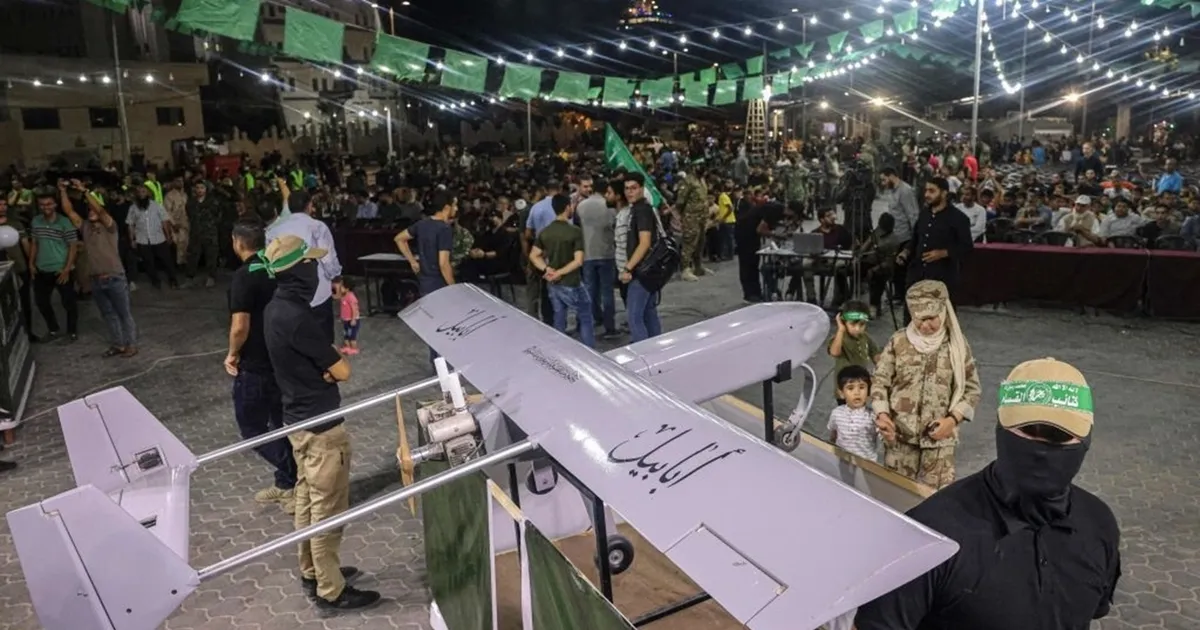
Israeli estimates indicate that Hezbollah uses drones to disrupt life in border settlements, a threat that current measures have not fully neutralized. Experts believe that the continued casualties among soldiers and settlers represent a heavy price that Israel cannot bear for long under the weight of political restrictions.
The roots of the American decision to limit strong attacks lie in the desire to preserve the legitimacy of the Lebanese government and push it towards direct negotiations with Israel. Washington fears that violent strikes in Beirut could undermine these diplomatic efforts, which are being coordinated with regional powers such as Saudi Arabia.
Given these facts, the risk of an internal conflict in Lebanon emerges, as Hezbollah views the ongoing negotiations as a threat to its existence and its military and political standing. This struggle for survival pushes Hezbollah to escalate its field operations to prove its ability to resist and prevent any agreement that might lead to its disarmament in the future.
Israeli forces deployed 8 to 10 kilometers inside Lebanese territory are engaged in destroying tunnels and military installations, a task that the Lebanese army was supposed to undertake. Marom believes there is a huge gap between political promises to eliminate Hezbollah and the reality on the ground, where Hezbollah appears capable of initiating attacks.
Experts describe the current situation as a 'strategic trap,' where Israel has become hostage to Trump's policies that seek a comprehensive regional settlement that may not ultimately guarantee the security of the northern border. They emphasize that the strategic reality today is more complex and difficult than it was when confrontations erupted last February.
Security circles criticized the Israeli government's hesitation to make courageous decisions that combine military action with complementary political engagement with the Lebanese state. Instead of cornering Hezbollah through a well-considered security settlement, Israel found itself forced to follow American dictates that may not meet its security aspirations.
The biggest challenge for the Israeli leadership remains how to balance maintaining the strategic relationship with Trump and the necessity of responding forcefully to Hezbollah's continuous attacks. Without dismantling Hezbollah's military capabilities, any agreement signed remains mere ink on paper that does not provide real security for the residents of the north.
The analysis concluded that the Israeli army needs to regain full freedom of action and strike Hezbollah's main strongholds to end the current attrition. However, the path towards this goal still seems blocked by international political considerations that prioritize negotiations with Tehran over direct military decisive action.
The attempt to separate the arenas has become an illusion and a scattering of sand in the eyes of the public, and Trump's move has given a boost to Iran's continued commitment to assisting Hezbollah.



Share your opinion
Israeli Disappointment with Washington's Restrictions on Military Operations in Lebanon