






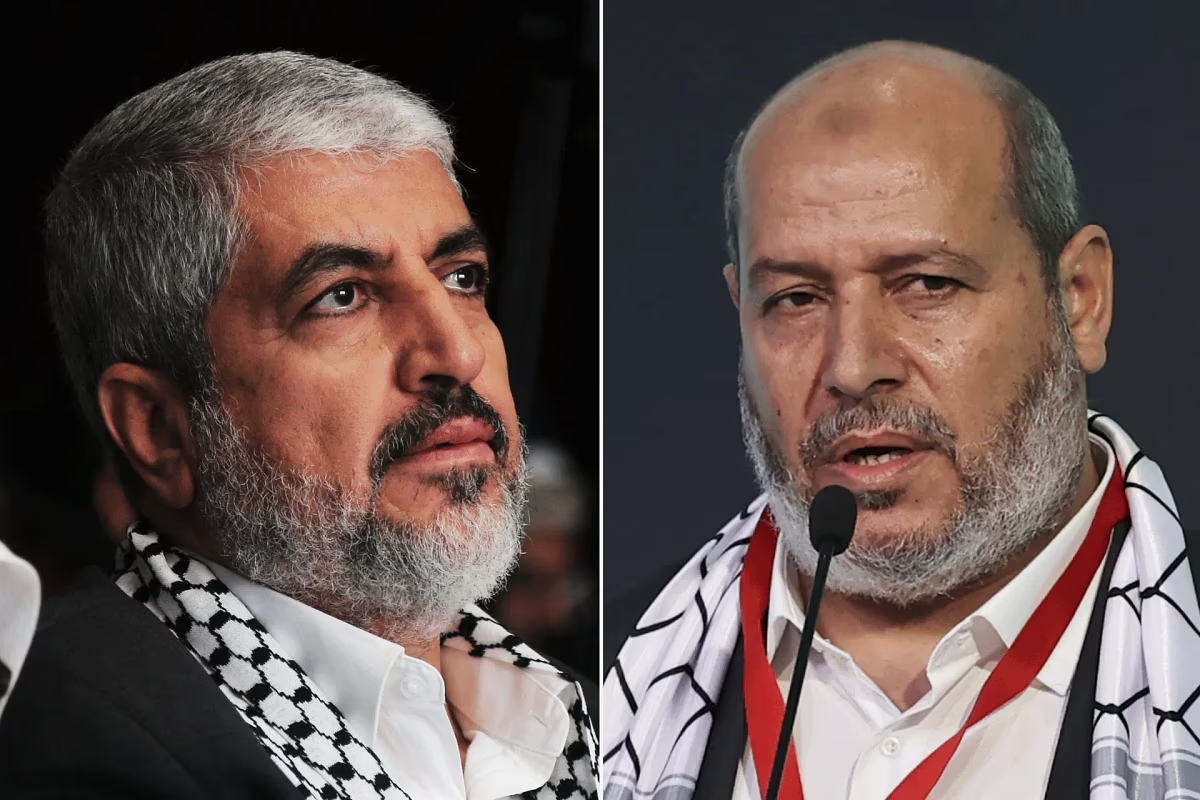
The corridors of the Hamas movement witnessed intense democratic activity in which the ballot boxes decided the identity of the new leader of the political bureau, succeeding the martyr Yahya Sinwar. The results reflected a state of intense competition and organizational integrity, as the results were not known until the last vote was counted in the movement's Shura Council.
By a single vote, Khalil al-Hayya (Abu Osama) managed to win the electoral race in his favor, receiving 35 votes compared to 34 votes for his prominent rival, Khaled Meshaal. 69 members representing all sectors of the movement in the Gaza Strip, the West Bank, prisons, and the diaspora participated in this election.
This step ends a transitional phase during which the movement was led by a five-member presidential council since October 2024. Through this procedure, Hamas affirms its ability to renew its leadership through Shura institutions, away from the concepts of inheritance or automatic extension that prevail in other factions.
Khalil al-Hayya, born in 1960, is not a new face to leadership, having spent nearly two decades in the political bureau. He has progressed through organizational and parliamentary work, heading the Change and Reform bloc in the Legislative Council after the 2006 elections.
Al-Hayya is known as one of the leaders forged in the field; he survived two Israeli assassination attempts, one in Gaza in 2007 and the other in Doha in 2025. His family also made great sacrifices, with four of his sons and a large number of his grandchildren and relatives martyred.
Observers believe that al-Hayya's election strengthens the influence of the Gaza school in the movement's leadership, given his long years of work alongside Yahya Sinwar. However, his involvement in external diplomatic missions in recent years has given him flexibility in dealing with complex international issues.
Throughout two years of war, al-Hayya handled the difficult negotiation file with mediators in Cairo and Doha, and built a wide network of political relations. This role gave him experience in managing political deals and diplomatic maneuvering under the pressures of the field and international politics.
Al-Hayya's presidency raises questions about the future of Hamas's regional alliances, especially with his strong relations with the axis of resistance in Tehran and Beirut. However, his rapprochement with mediating Arab capitals indicates continuity in the balanced political approach imposed by the necessities of the current stage.
The first and most urgent task facing the new leadership is to stop the war of extermination and starvation to which the Palestinian people in the Gaza Strip are subjected. Al-Hayya will have to balance military pressures with the requirements of reaching a just prisoner exchange deal that ends the suffering of thousands.
On the West Bank and Jerusalem fronts, al-Hayya faces the challenge of land depletion and unprecedented settlement expansion. The popular bases look forward to a comprehensive national strategy that revitalizes popular and political resistance to confront plans to liquidate the Palestinian cause.
Al-Hayya is expected to work on strengthening the 'historical bloc' that includes factions and national figures to restore the role of the Palestine Liberation Organization. This approach aims to redefine the Palestinian national project away from the bets that have proven to be failures in recent years.
The challenge of regional balance remains, as al-Hayya assumes his duties amidst sharp polarization and tension engulfing the entire region. He will have to maintain the independence of Palestinian decision-making while ensuring continued necessary support for the steadfastness of the people and the resistance.
Internally, al-Hayya faces the task of restoring organizational structures that have been damaged by direct Israeli targeting of cadres and leaders. Activating the role of young generations in middle leadership positions will be a real test of the movement's ability to continue and grow.
This term will extend for only one year until the comprehensive regular elections in late 2025. This is a sufficient period to conduct comprehensive reviews and evaluate the course of 'Al-Aqsa Flood' and the subsequent strategic shifts in the conflict with the occupation.
Al-Hayya ascends the leadership pyramid from atop a mountain of immense sacrifices; he is the survivor of assassination attempts and the father of four martyrs.
شارك برأيك
Khalil al-Hayya as Head of Hamas: Implications of the Rise of the 'Voice of Decisiveness' and the Challenges of the Stage