






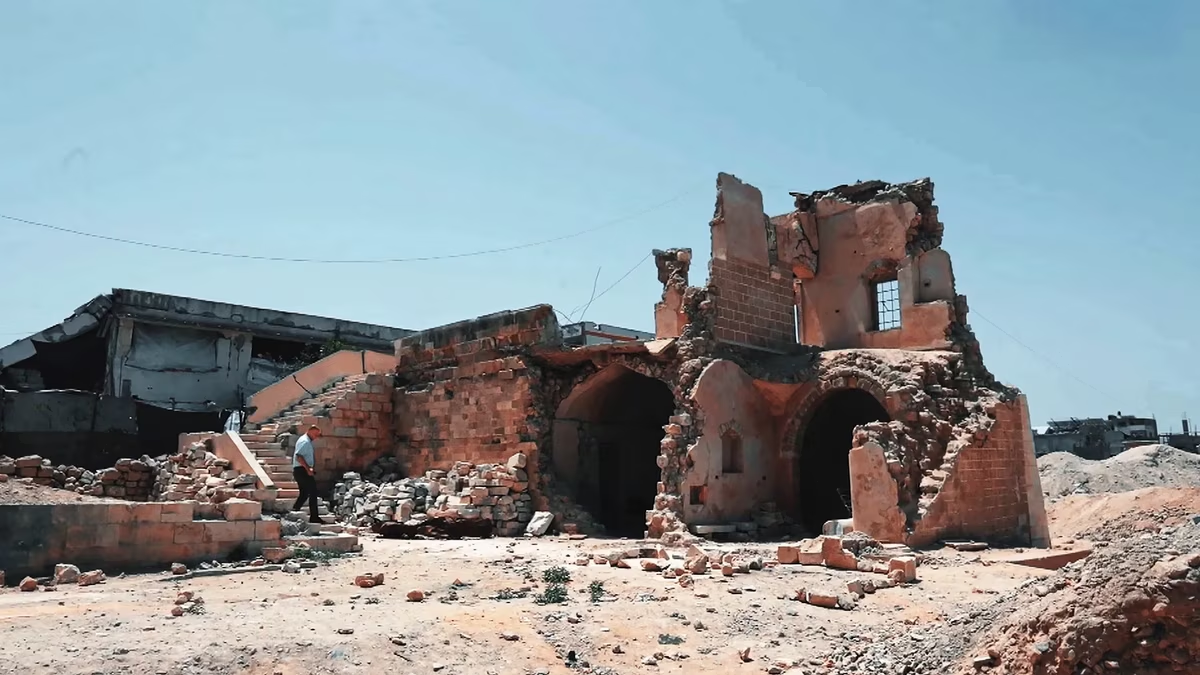
The cultural and historical legacy in the Gaza Strip faces unprecedented existential challenges, three years after military operations turned cultural landmarks into piles of rubble. Field sources reported that archaeological artifacts dating back thousands of years are either lost or damaged as a result of direct shelling, threatening the loss of an irreplaceable visual and historical memory for future generations.
Al-Qarara Museum is one of the most prominent testimonies to this tragedy, with estimates indicating that more than 3,500 rare artifacts are still buried under the rubble of the destroyed building. The damage was not limited to private museums but extended to the historic 'Pasha's Palace,' dating back to the Mamluk era, which lost about 70% of its contents that formed the core of the National Museum since its official opening in 2010.
For his part, Dr. Hamouda Al-Dehdar, Director of the Department of Sites and Excavation at the Ministry of Tourism and Antiquities, explained that the occupation deliberately targeted tangible and intangible cultural heritage systematically from the first days of the war. Al-Dehdar pointed out that the shelling affected ancient historical neighborhoods such as Shujaiya and Tuffah, in addition to specialized museums like Al-Aqqad Museum, causing the loss of priceless archaeological finds belonging to the Byzantine and Roman eras.
Official statistics indicate that the Pasha's Palace Museum was a major tourist and educational destination, receiving approximately 70,000 visitors annually before the outbreak of confrontations. Experts in antiquities believe that the speed of targeting these sites a few days after the start of the war reflects a clear desire to obliterate Palestinian identity and erase the material evidence that proves the historical rootedness of the Palestinian people in their land.
Despite the harsh conditions and forced displacement of specialized cadres, Palestinian academic initiatives have begun to move to save what can be saved from under the rubble. These teams work in complex security conditions to document the damage and archive the remaining pieces, considering this mission to transcend professional work to become a national battle to protect Palestinian existence from attempts at cultural annihilation.
At the conclusion of these efforts, those in charge of the restoration operations affirm that rebuilding the destroyed museums is a promise they have made to themselves despite the horror of the destruction that befell the old city. Digital archiving and field documentation remain the last line of defense, proving that Palestinian identity, deeply rooted in history, is stronger than to perish under the weight of shelling or be erased from human memory.
Targeting museums is an attempt to break Palestinian dignity by erasing its historical evidence, but preserving them is an integral part of our struggle for survival.
شارك برأيك
War of Identity: Palestinian Efforts to Save Thousands of Artifacts from Under the Rubble of Gaza's Museums