






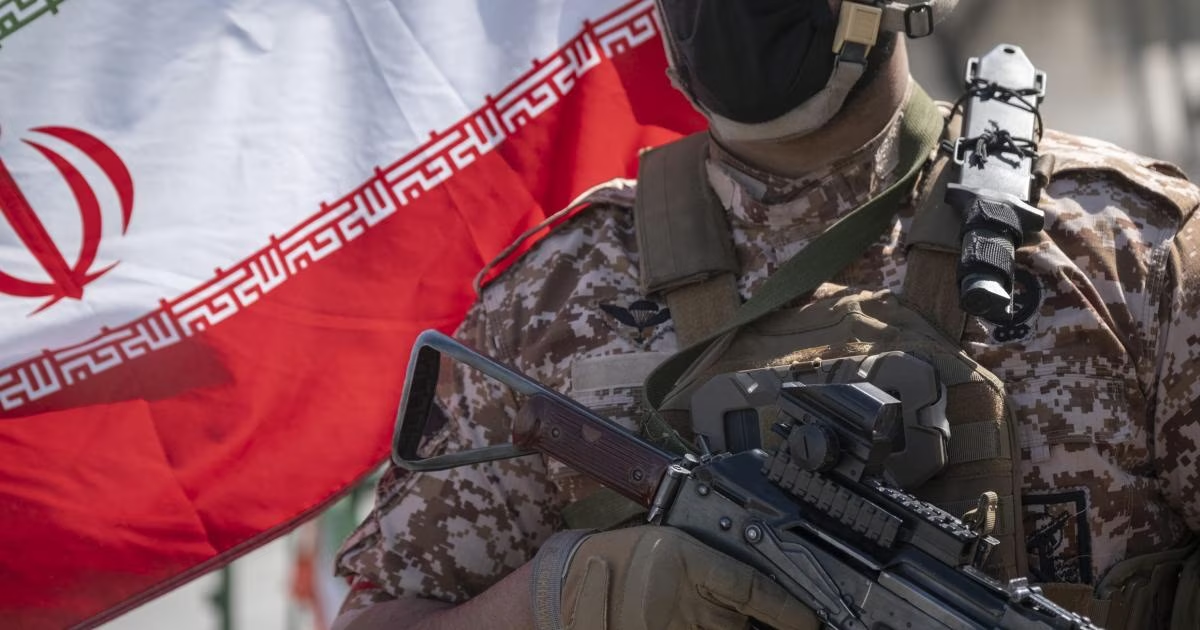
The Gulf region witnessed a dangerous military escalation between the United States and the Islamic Republic of Iran, following Washington's announcement of a series of airstrikes against targets inside Iranian territory. This military move came in response to the downing of a US 'Apache' attack helicopter during a patrol mission over the strategic waters of the Strait of Hormuz.
In the first official reaction from Tehran, Iranian Foreign Minister Abbas Araqchi affirmed that his country would not stand idly by in the face of any aggression targeting its sovereignty or national security. Araqchi stressed that the Iranian armed forces are fully prepared to respond to any threat, indicating that the time for silence on attacks has passed.
Through a post, the head of Iranian diplomacy considered Washington's recourse to military option as a reflection of its failure to achieve its political agenda through other means. He sent a firm message to foreign forces present in the region, calling on them to leave immediately to ensure their safety, recalling what he described as the tragic fate of invaders in the region's history.
For his part, US President Donald Trump defended the bombing decision, describing the American response as 'very strong' and commensurate with the scale of the targeting that the American helicopter was subjected to. Trump explained in media statements that the United States was forced to act to protect its military prestige and ensure that such incidents do not recur.
Trump had previously revealed that the US military had briefed him on the details of the advanced helicopter's downing, confirming the survival of the two pilots on board despite the complete destruction of the aircraft. The US President indicated that silence on the downing of the 'Apache' was not an option for the US administration under the current circumstances.
In the field context, the US Central Command 'CENTCOM' announced that military operations effectively began on Tuesday evening, Eastern US time. The military statement described these strikes as falling under the category of 'self-defense,' aiming to undermine Iranian capabilities that threaten navigation and international forces.
US military sources claimed that this operation represents a measured and appropriate response to what they described as 'unprovoked Iranian aggression' in international waters. CENTCOM did not disclose the precise list of targets hit by the bombing, merely stating that they targeted facilities linked to the recent attack.
Coinciding with these statements, media sources reported hearing violent explosions shaking wide areas in southern Iran, specifically in regions near the Strait of Hormuz. News focused on explosions occurring on Qeshm Island and in Sirik city, which caused a state of alert among Iranian civil defense forces.
Local news agencies confirmed that the echoes of the explosions reached the strategic city of Bandar Abbas, which includes vital facilities and important naval bases. A state of anxiety prevailed among local residents with the continued intensive air traffic in the skies of the maritime border region during night hours.
Cautious calm returned to the targeted areas hours after the bombing, as Iranian state television announced the end of the attacks and the return of life to normal in Qeshm and Jask. Despite this, authorities in Tehran have not yet issued any detailed statements regarding the extent of material losses or casualties resulting from the American strikes.
These field developments come at a very sensitive time, as Washington and Tehran are engaged in complex negotiations to end the state of war that erupted last February. These talks have been ongoing since the truce came into effect in April, amidst international hopes of reaching a formula that ends the armed conflict in the region.
Despite the recent military escalation, President Trump showed a degree of political optimism, indicating the possibility of reaching a comprehensive agreement with the Iranian side within a few days. Observers believe that military strikes may be a means of pressure and improving negotiation terms before the final sitting at the table.
These rapid events reflect the complexity of the Iranian-American file, where bullets intertwine with diplomacy in a hazy scene. While the front lines are ablaze with explosions, political channels remain open to try to contain the situation and prevent it from sliding into a comprehensive regional war.
Anticipation remains the master of the situation in the coming hours, awaiting the outcome of the counter-Iranian moves that Araqchi vowed. The international community is cautiously monitoring the extent of both parties' ability to exercise restraint and return to the negotiation path that Trump referred to in his recent statements.
Our mighty armed forces will not leave any attack or threat unanswered, and foreign forces must leave our region if they want safety.
شارك برأيك
Military Escalation in the Gulf: Washington Bombs Iranian Targets, Tehran Vows Decisive Response