







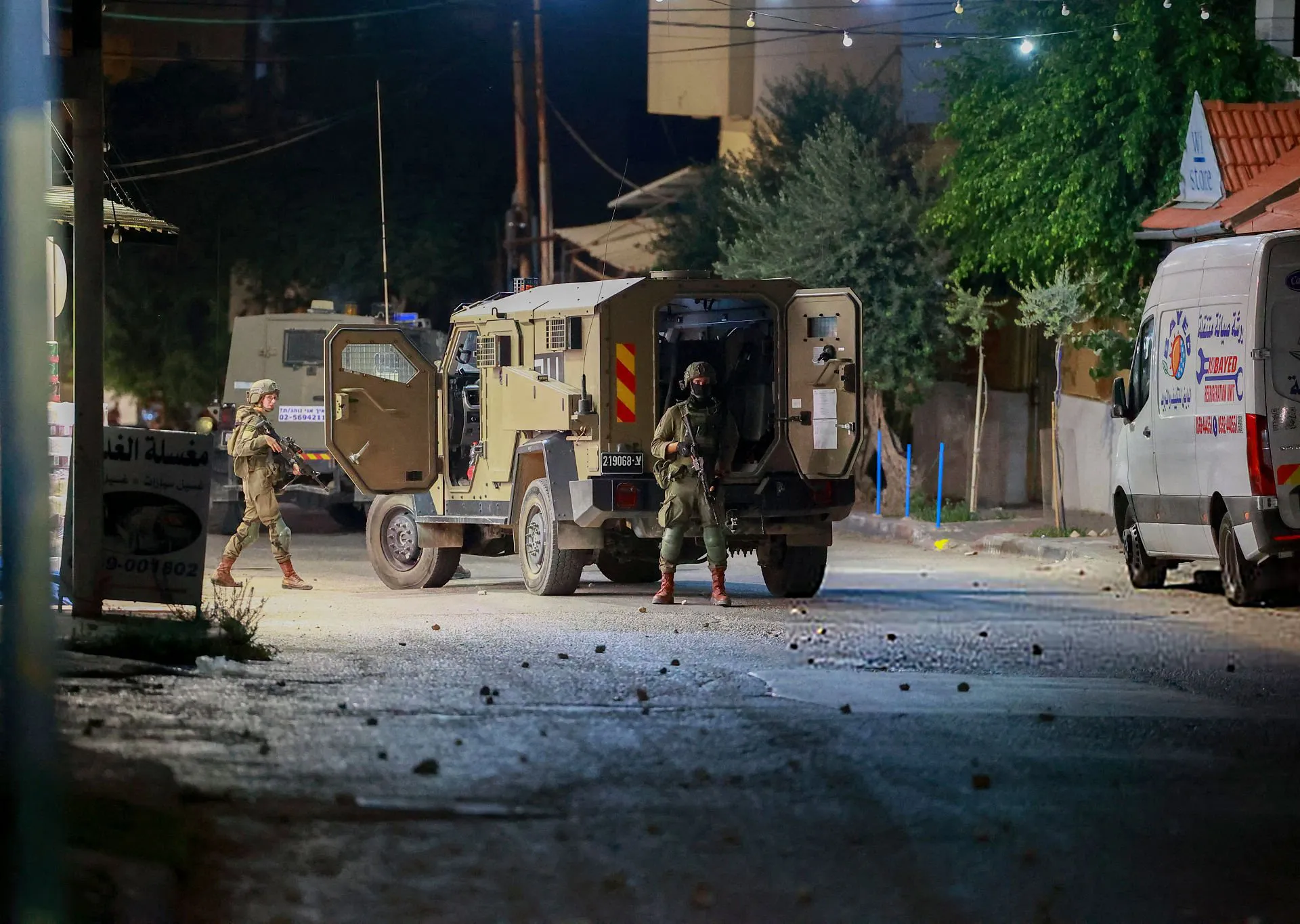
The occupied West Bank is witnessing dramatic transformations in its demographic and geographical structure, as the journey between the cities of Ramallah and Nablus has become arduous and fraught with dangers. Israeli military checkpoints are no longer the only obstacle; armed settler attacks on main roads and Palestinian villages have become a daily reality aimed at tightening the noose on the indigenous population.
Along Highway 60, Israeli flags and images of extremist rabbis stand out as clear signs of control that were not present a year ago. These symbols reflect a settlement ideology that views the land as exclusive property, pushing armed groups to position themselves at crossroads to monitor and intimidate Palestinian travelers under army protection.
In villages like Turmus Ayya and Beita, settlers practice a scorched-earth policy by systematically destroying crops, burning cars, and homes. These attacks are not just random incidents; they are part of a broader strategy aimed at forcing Palestinians to leave their lands, especially in areas near extremist settlements like 'Shilo' and 'Yitzhar'.
Human rights reports confirm that all settlements in the West Bank are illegal under international law, yet the reality on the ground shows an acceleration in the legitimization of pastoral outposts. These outposts usually begin with mobile homes and small armed groups, then expand to become permanent settlements that devour vast areas of Palestinian agricultural land.
Beita village has become a symbol of popular resistance, where its youth organize weekly marches to protect their lands from settler encroachment at the 'Evyatar' site. Despite the inherently peaceful nature of these protests, the Israeli response is often bloody, with dozens of martyrs and wounded falling to sniper fire, including international solidarity activists.
In the town of Huwara and its surroundings, occupation authorities impose a complete isolation through iron gates that cut off villages and prevent Palestinian geographical communication. In contrast, settlers enjoy complete freedom of movement, even scrawling racist slogans like 'Expel or Kill' on the walls of Palestinian homes in blatant defiance of all human norms.
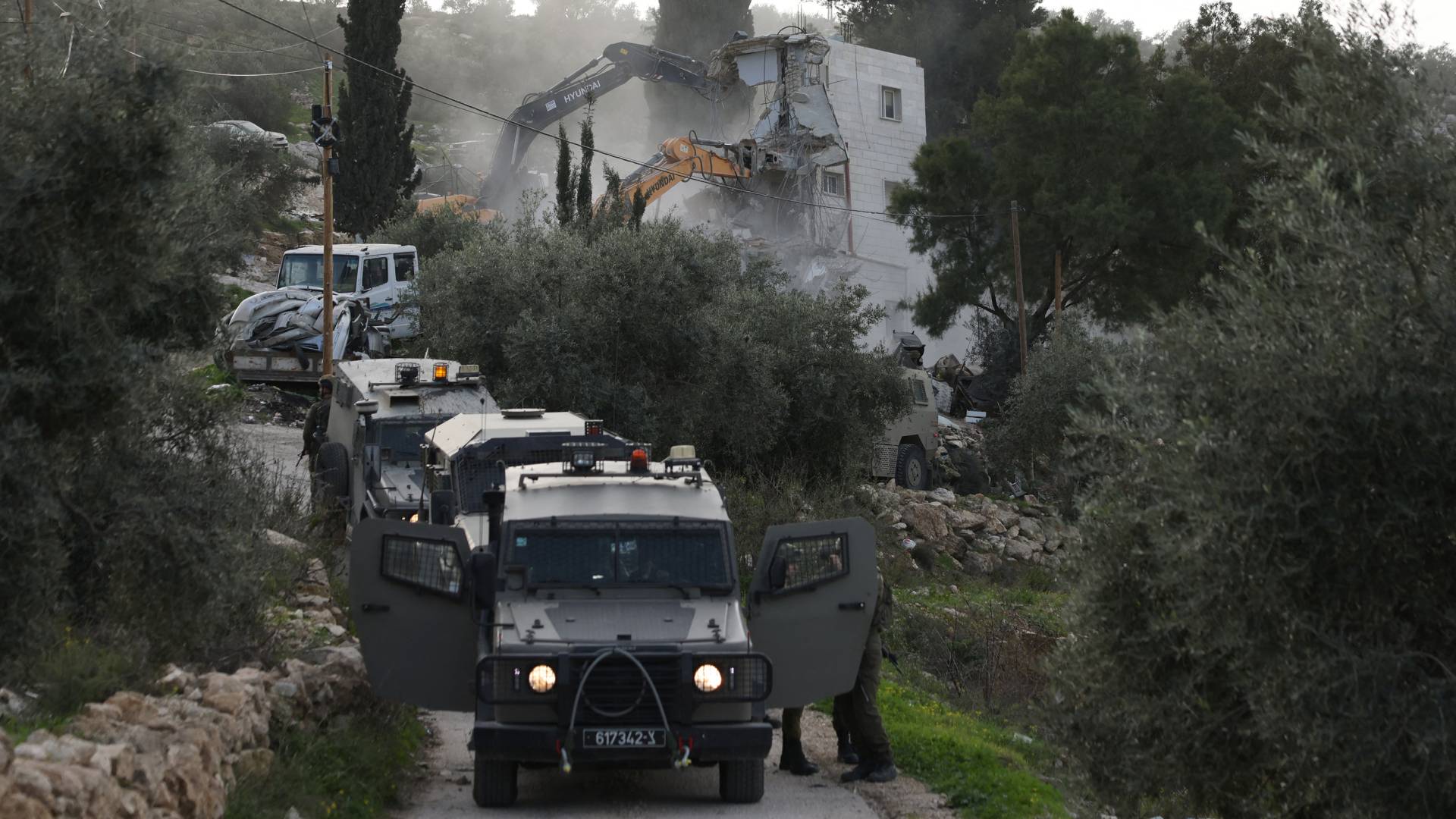
B'Tselem data indicates that Israel has succeeded in displacing approximately 59 Palestinian communities since October 2023, leading to the displacement of over 4,000 people. This silent ethnic cleansing is accompanied by deliberate destruction of infrastructure in refugee camps, raising the number of displaced from their homes to record levels.
The radical shift in settlement policy is due to the political agreement between Benjamin Netanyahu and far-right figures like Bezalel Smotrich and Itamar Ben-Gvir. Netanyahu granted Smotrich extensive civilian powers in the West Bank, allowing him to establish a 'Settlement Administration' that works exclusively to serve settlers and expand their influence.
Financially, Smotrich has injected billions of shekels to strengthen settlement infrastructure, with settler roads accounting for about 30% of Israel's national road budget. These massive investments aim to attract more settlers and solidify their presence at the expense of Palestinian-owned lands that are confiscated under flimsy legal pretexts.
In parallel with funding, Itamar Ben-Gvir is leading a campaign to arm settlers with thousands of rifles and pistols, turning them into organized militias working alongside the army. This arming has led to a sharp increase in the rate of daily attacks, with the United Nations recording thousands of incidents targeting Palestinian farmers and civilians.
The attacks were not limited to Palestinians; they also targeted Israeli peace activists and international journalistic teams attempting to document the violations. This atmosphere of organized chaos reflects the absence of any rule of law, where anyone who opposes the settlement project is treated as a legitimate target for armed militias.
The Palestinian Authority, despite having thousands of security personnel, appears unable to provide protection for its citizens given its security commitments with the Israeli side. This defensive vacuum leaves Palestinian villages alone to face settler attacks, forcing residents to rely on simple popular guard committees.
In Burqa village, Palestinian steadfastness is evident in its finest form, as residents refuse to succumb to the threats of 'Homesh' settlers who are trying to return to the land evacuated in 2005. Villagers face repeated settler attacks with their bare chests and sticks, affirming their historical and eternal connection to their land.
The 'Martyrs' Wall' in Palestinian villages remains a testament to generations of resistance that began in the 1930s against the British Mandate and continues to the current occupation. Despite occupation attempts to remove national symbols like the 'Handala' statue, the roots of steadfastness remain embedded in the land, refusing to break in the face of the machine of displacement and ethnic cleansing.
Settlers now effectively control the West Bank, and the army carries out their dictates under complete immunity from accountability.
شارك برأيك
Under the sway of the 'new settlers'.. How do Palestinians confront ethnic cleansing schemes in the West Bank?