






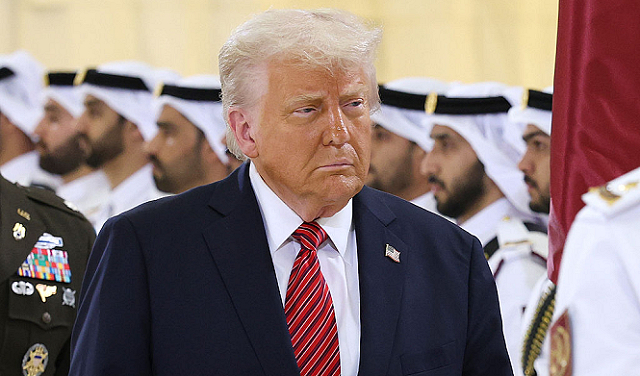
An American official reported on Thursday that the administration of President Donald Trump is sticking to the plan presented by the president in his joint press conference with Israeli Prime Minister Benjamin Netanyahu last Monday, and it is almost certain that it will reject any conditions or amendments proposed by Hamas.
The official, who requested anonymity in response to a question from a Jerusalem correspondent, said: "There is a conviction among the president (Trump) that the plan he presented to the world from the White House (on 29/9/2025) is a fair plan that meets Israel's security needs, returns the hostages, both the living and the deceased, to their families, brings a clear end to the suffering of Palestinians in Gaza, and allows for the necessary humanitarian aid to enter in abundance."
Despite the radical amendments imposed by Netanyahu and the American-born Israeli Minister for Strategic Affairs, Ron Dermer, on Trump's original plan (which was presented to Arab leaders on 23/9 during the UN General Assembly), Washington emphasizes its adherence to the plan as announced, describing it as a "realistic and fair opportunity" to stop the bloodshed and pave the way for a long-term political settlement. A White House official stated that "any rejection of this plan, especially by Hamas, will be considered a rejection of a historic opportunity to end the suffering in Gaza," adding that Washington will fully support Israel if the peace efforts falter due to the obstinacy of any party.
Trump indicated in the press conference that his plan "does not aim to reward one party or punish another, but to protect lives, end suffering, and build a prosperous future for both Palestinians and Israelis." He also emphasized that implementation should begin with the handover of living and deceased hostages within 72 hours of a ceasefire, followed by a series of sequential steps carried out under neutral international supervision.
The plan announced by Trump, which consists of twenty points (instead of the 21 presented by the American president to Arab leaders), aims to achieve a comprehensive ceasefire in Gaza, followed by a series of humanitarian and political steps, the most prominent of which are the mutual release of hostages and detainees, the disarmament of Hamas, and the introduction of an international body for reconstruction and oversight of the transitional phase. The plan also stipulates the resumption of direct negotiations between Israel and the Palestinian Authority after implementing political and security reforms within the Authority's institutions.
In clear terms, the plan commits to not imposing forced displacement on the residents of the Gaza Strip, not annexing the strip to Israel, ensuring freedom of movement for civilians, and reconstructing infrastructure with international funding and oversight, while at the same time allowing Israel to maintain absolute security control over the Gaza Strip.
Netanyahu announced his initial support for the plan, but his partners in the far-right coalition he leads expressed their opposition to any plan, demanding the elimination of Gaza. Despite some reservations from his coalition partners, official Israeli statements appeared open to negotiation within the framework outlined by the plan.
Hamas has not yet issued any official position of approval or rejection, while sources close to it have clearly expressed opposition to some points, especially those related to disarmament and recognition of Israeli security conditions. However, international reports suggested that the movement might show a willingness to negotiate if international guarantees were provided and some points of the plan were amended to preserve "Palestinian national rights."
Despite the media and diplomatic momentum accompanying the announcement of the plan, questions remain about its feasibility on the ground, given the Israeli maneuvering, the Palestinian political division, the security complexities in Gaza, and the trust challenges between the parties. Several Arab and international parties have also expressed reservations about some points of the plan, demanding amendments that preserve the minimum aspirations of Palestinians, foremost among them the establishment of a viable independent state.
While Washington sees the plan as "the last chance for peace," observers believe that its success depends on the United States' ability to convince all parties, especially through clear international guarantees and mutual concessions.
It was rumored in Washington on Thursday that Hamas would respond "positively" to the American president's proposal to end the war in Gaza, with a series of amendments, hinting that the response could come within hours.
Israeli sources claimed that Arab mediators from Egypt, Qatar, and Turkey are conducting fruitful talks with Hamas leaders in Doha regarding Trump's plan, and that Hamas aims to alleviate some of the conditions of the proposal added by Netanyahu at the last moment regarding the Israeli withdrawal from Gaza and the disarmament of Hamas.

شارك برأيك
Washington insists on Trump's peace plan as presented at the White House and rejects potential amendments.