ARAB AND WORLD

Fri 24 Nov 2023 4:55 pm - Jerusalem Time

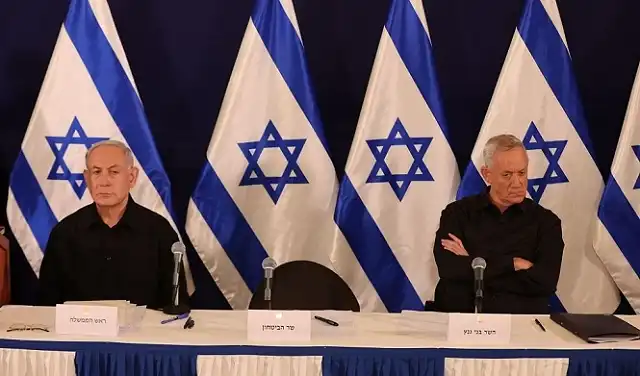
Israeli public opinion poll: Gantz's popularity increases and the fall of "religious Zionism"

An Israeli public opinion poll showed that the popularity of the “National Camp” , headed by Benny Gantz, has increased, and it is significantly superior to the “Likud” party, headed by current Prime Minister Benjamin Netanyahu.


The poll published by the Israeli newspaper "Maariv" on Friday showed that the "Religious Zionism" party, headed by extremist Finance Minister Bezalel Smotrich, fell below the electoral threshold.

If elections were held for the Knesset now, the opposition parties, including the “National Camp,” along with the Arab parties, would obtain 79 seats, compared to 41 seats for the current coalition parties.


According to the results of the poll, the “National Camp” will get 43 seats, an increase of one seat from the results of last week’s poll, while “Likud” will get 18 seats, and the “There is a Future (Yesh Atid)” party, headed by opposition leader Yair Lapid, will get 13 seats.


The representation of the "Shas" party increased from 8 to 9 seats, while the "Israel Our Home" party settled at 8 seats, as well as the "United Torah Judaism" bloc, which obtained 7 seats. The representation of the "Jewish Power (Otzma Yehudit)" party, headed by extremist Itamar Ben Ghafir gained from 6 to 7 seats, the representation of the Meretz Party increased from 4 to 5 seats, the coalition of the Democratic Front for Peace and Equality and the Arab Movement for Change obtained 5 seats, and the Unified List obtained 5 seats.


On the other hand, the "Religious Zionism", "Labor" and "National Democratic Rally" parties did not exceed the electoral threshold by obtaining less than 3.25% of the votes, noting that the poll sample does not include the Palestinian community within the 1948 territories.


Gantz outperformed Netanyahu in terms of suitability to assume the position of prime minister, and 52% said that Gantz was more suitable, compared to 21% who considered Netanyahu to be more suitable.


The poll also indicated a decline in Netanyahu's popularity among his voters, in light of the war on Gaza, as 52% of them said that he is most suitable to head the government, while 26% of Likud voters said that Gantz is most suitable to assume the position.

ARAB AND WORLD

Fri 24 Nov 2023 3:09 pm - Jerusalem Time

American officials: Israel will most likely not be able to fulfill its promise in the hostage deal to increase aid to Gaza

Officials in the administration of US President Joe Biden told the Times of Israel on Friday that the administration does not believe that Israel is able to fulfill its commitment to allow 200 aid trucks to enter Gaza daily during the pause that is part of the hostage deal with Hamas.


According to the newspaper, officials said that Israel refuses to open the Kerem Shalom crossing with Gaza during the four-day pause or at any time after it. With only the Egyptian Rafah crossing available, it is unlikely that 200 aid trucks will be able to enter daily.


In the first weeks after last October 7, Israel refused to allow any aid to enter Gaza, and after agreeing to allow some to enter, Israel requested that the aid trucks be inspected first in Egypt, then inspected at one of the Israeli crossings before sending them to Rafah to enter Gaza, which led to slow down the limited aid entering Gaza, as relief groups were rarely able to bring their shipments into the Strip, which is subjected to unprecedented bombardment.


The administration of US President Biden spoke several times about an agreement requiring the delivery of 100 trucks daily, but this only happened a few times.


According to the website, American officials said that there is no indication that Israel will open the Kerem Shalom crossing during the truce, which would jeopardize the hostage deal.


Biden administration officials said Israel's position "is really problematic because the level of aid going to Gaza now is completely unsustainable." They said that Israel's justifications for not opening the crossing are "entirely political" because there are no security concerns about aid entering Gaza.


The website reported that Israeli officials have repeatedly pointed to the limited aid they have allowed into Gaza to justify their ongoing offensive, which the UN relief official described as the worst humanitarian crisis they have ever seen, even worse than the killing fields in Cambodia.


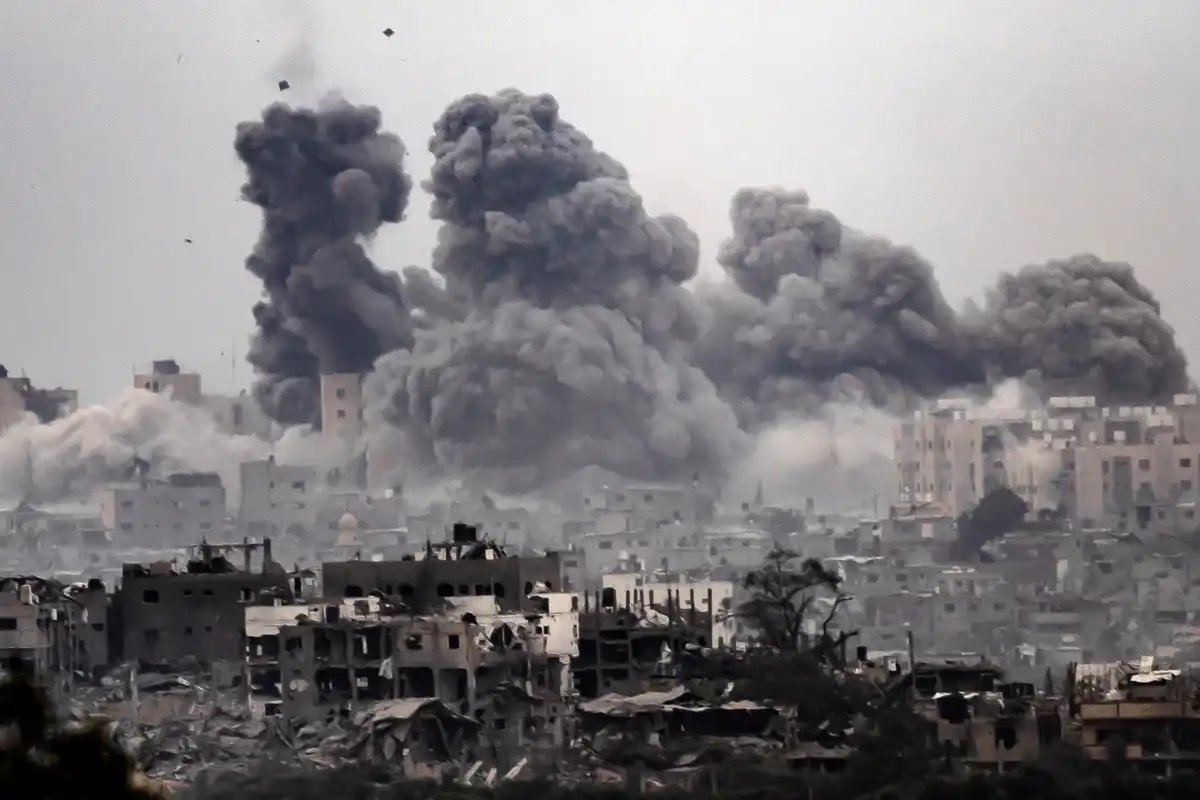
On Friday morning, a 4-day truce began between Israel and Hamas in the Gaza Strip, followed by the release of a first batch of 13 civilian hostages on Friday afternoon, in the first truce since the start of the war in which 15,000 Palestinians were killed as a result of the unprecedented Israeli bombing.

PALESTINE

Fri 24 Nov 2023 2:12 pm - Jerusalem Time

Palestinian President receives the British Foreign Minister

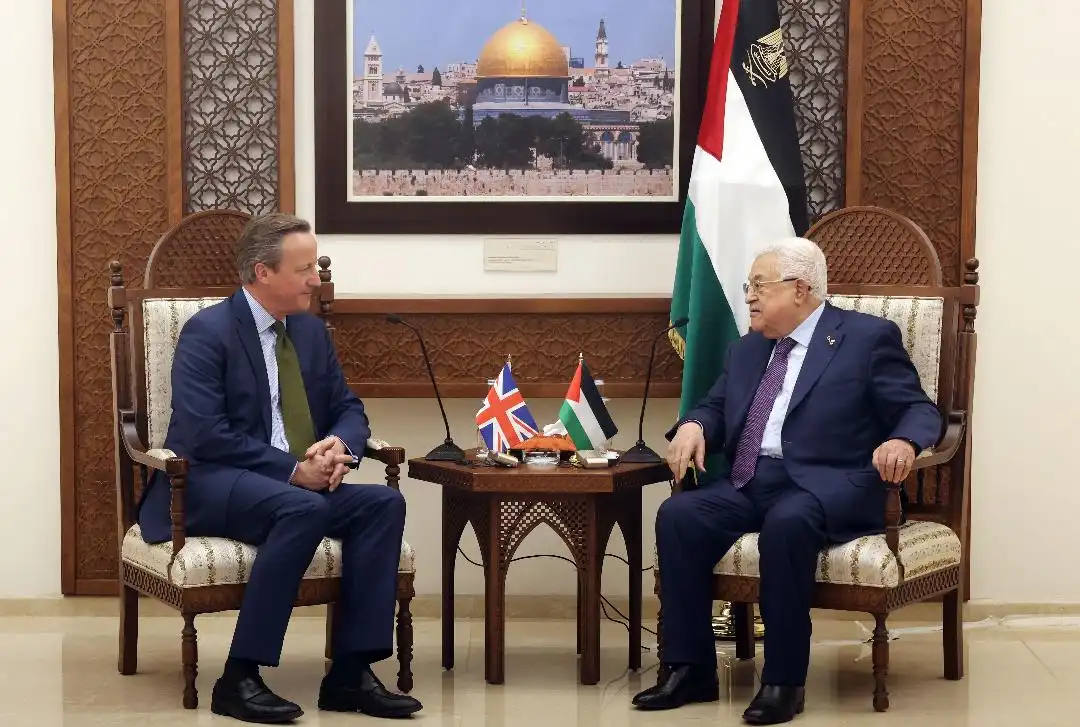
President Mahmoud Abbas received, today, Friday, at the presidential headquarters in the city of Ramallah, British Foreign Secretary David Cameron.


The President briefed the British Foreign Secretary on the latest developments in the occupied Palestinian territory, especially in the Gaza Strip, and stressed the necessity of immediately stopping the occupation’s comprehensive aggression against our people in Gaza and the West Bank, and the crimes of genocide, and accelerating the introduction of humanitarian aid into the Gaza Strip, as well as stopping the attacks of the occupation forces and settlers in the West Bank, stressing the need to release Palestinian funds held by the occupation government.


The President renewed the State of Palestine’s categorical rejection of displacing Palestinians from the Gaza Strip or the West Bank, including Jerusalem, stressing that there is no security or military solution for the Gaza Strip, and that Gaza is an integral part of the Palestinian state, and it is not possible to accept or deal with the plans of the occupation authorities in Separating the Gaza Strip from the West Bank, including Jerusalem, reoccupying it, or cutting off any part of it.


The President stressed that the Israeli occupation authorities must stop their oppressive practices, ethnic cleansing, undermining the two-state solution, the crimes of terrorist settlers, and the attacks of the occupation forces.


The President stressed that security and peace are achieved by moving toward a political solution in accordance with the two-state solution, based on international legitimacy and the Arab Peace Initiative to end the Israeli occupation of the land of the State of Palestine, with East Jerusalem as its capital.


The President called on his guest, the British Foreign Minister, to recognize the State of Palestine and support its endeavor to obtain full membership in the United Nations.


ARAB AND WORLD

Fri 24 Nov 2023 10:56 am - Jerusalem Time

Financial Times: Israel is far from achieving its goals

The American Financial Times newspaper reported yesterday that Israeli Prime Minister Benjamin Netanyahu is still far from achieving his goals, despite the agreement to release some prisoners.

It said that Netanyahu pledged to achieve two goals when he launched the ground invasion of Gaza “to destroy Hamas” and “liberate the 240 prisoners.”

It pointed out that "even as Israel began to move slowly towards one of these goals this week, by reaching an agreement with Hamas to release 50 prisoners, in exchange for a four-day truce and 150 Palestinian prisoners detained in Israel, Netanyahu insisted that the fight has a Much longer time ahead of it."  “Let me be clear: We are at war, and we will continue the war,” he said before a meeting to approve the prisoner deal.

The newspaper pointed out that "Netanyahu's position aims in part to calm the hardliners who strongly oppose any concessions to the Hamas movement," adding that "he also stressed that even after six weeks of fighting in which it occupied northern Gaza and caused unprecedented destruction there, Israel is still far from achieving its military objectives.

OPINIONS

Fri 24 Nov 2023 10:50 am - Jerusalem Time

Technology and Palestinian rights

Kamal Belhadi

Kamal Belhadi

Opinion Writer

If there is any credit for the war that Israel has been waging on the Gaza Strip for about fifty days; it is the ability of technology to support the truth and reveal it, despite all the obstacles and Western media attacks that were unable to withstand the power of the truth supported by technology.

The war on Gaza began with a set of lies, which were picked up and promoted by the Western media machine, with the aim of influencing Western and Israeli public opinion in order to support the war. Here we recall the words of former US Secretary of Defense Donald Rumsfeld when his government was preparing to launch the war to occupy Iraq, and when he admitted that he had prepared an entire administration for the “lie industry” and propaganda against Iraq.

We recall the famous Security Council session in which Colin Powell held up a picture of a small bottle, which he said at the time, was evidence of the presence of weapons of mass destruction in Iraq. He later admitted that he had been exposed to a fallacy, and America was unable to find the weapons with which it justified occupying a country, destroying it, and committing war crimes against humanity. But at that time there was not an information and technological revolution; rather, it was limited to Western satellite channels. As for the case of the aggression against Gaza, the Israeli and Western narrative about what happened from the beginning quickly collapsed. The sight of the image of beheaded children that was promoted in the first days was quickly disavowed by everyone, including President Biden and his administration. On the other hand, the images of Palestinian children who were killed prevailed. They were murdered, and their images invaded all homes in the world, and the Israelis were unable to hide the extent of these atrocities, so truth triumphed over all attempts to obscure and manage the Western-directed media machine that works on behalf of Israel.

Technology was able to triumph for the Palestinian right and change the opinions of peoples who discovered the extent of the injustice imposed on this people not since October 7th. Rather, it has been a full 75 years, and here it is necessary to confirm the emergence of strong voices in various parts of the world, demanding a re-reading of the Palestinian cause from its beginning in order to produce a new, fair and just reading, and to confirm the right of the Palestinian to a safe, stable and prosperous life like the rest of the peoples of the world.

What is important about what is happening now is this great ability of technology to influence public opinion. The international popular reactions are nothing but a case of a massive human uprising against all the red lines and fences within which the image of the traditional media wanted to imprison it. We can say that the Palestinian people yearning for freedom are in fact the ones who liberated the peoples of the world from media deception, from the traps of intelligence rooms, and from the slackness of international political discourse. The United Nations, and regional and international organizations, have failed to be effective in the Palestinian issue.

Truth has emerged and falsehood has vanished, this is what our Arab-Islamic culture tells us, and this is how truth appears bright despite the darkness of the bloody scene in Gaza and the West Bank. It is enough for us to see the voices of politicians, scholars, and senior leaders from all over the world uniting around the right of the Palestinian people to a fully sovereign state on their land, and standing against the propaganda of the owners of the Temple.

In agreement with the "AlKhaleej "

ARAB AND WORLD

Fri 24 Nov 2023 8:40 am - Jerusalem Time

Will Biden draw a red line for Israel after the hostage deal... and when?

By Victor Chalhoub

Initial American responses to the hostage exchange deal between the Islamic Resistance Movement Hamas and Israel ranged from describing it as a “breakthrough,” in the words of Ben Rhodes, the former deputy national security advisor under former President Barack Obama. 

In their view, it is nothing more than a stop in a war that is likely to “get worse before it gets worse.” But overall, it was treated as a hole in the wall of the crisis, whether promising or fleeting. Its fate in the end depends to a large extent on how the American administration deals with the war from now on.


Today, hours before the announcement of the deal, in which the Qatari role was praised, the White House issued a signal indicating a desire for an amendment, even if it was late and not essential, in this approach.


National Security Council media coordinator John Kirby said that the US administration “will not support the expansion of Israeli military operations in the southern Gaza Strip unless Israel presents a plan to ensure the safety of civilians.” What is strange is that his administration over the past weeks has not followed through on such a required guarantee as a condition. It contented itself with dealing with the civilian catastrophe with a mixture of expressions of “sorrow” and a reminder that it did not stop drawing Israel to its duty to “protect civilians,” while giving the latter mitigating reasons by calling for understanding of the difficulties faced by military operations in a densely populated city.


Suddenly, the administration now discovers the idea of the plan that it ignored at the beginning of the invasion, before the Israeli death machine claimed more than 13,000 innocent Palestinians in the Gaza Strip. Of course, its discovery of this is not an awakening as much as it is a necessity with some correction. 

The administration, with its open support for Israel, is losing the public relations battle, as the numbers indicate. 70% of those between the ages of 18 and 34 are against the US administration’s policies in the Gaza war. The division in the Democratic Party over this issue is expanding at the level of its electoral base as well as in its ranks in Congress. There are increasing criticisms of President Biden for his laxity in the issue of civilians and the violation of hospitals, in addition to the slowdown caused by Israel in passing humanitarian aid.


It would have been better for the president to “pick up the phone and tell Netanyahu that enough is enough,” according to Aaron David Miller, a former diplomat and expert on the Palestinian-Israeli conflict. Among the objections that are echoed even in Jewish and democratic circles is that Biden left the reins to Netanyahu, who is “in no hurry” regarding the time limit for military operations in Gaza, and that his, that is, Biden’s, Israeli policies are overshadowed by his “personal” inclinations towards Israel, which he once expressed by saying that "A Zionist, even if he is not a Jew."


Even Jews like Aaron Miller criticized Biden for this exaggeration, which makes him more royal than the king, and which may lead to involvement in a broader and longer conflict that does not serve the White House in an election year. This atmosphere and pressure may have contributed to the shift, even if it was minor, in John Kirby’s words today, unless his motive was to mitigate the criticism that had begun to affect or threatened to affect the electoral calculations.


In any case, the test lies in what the next few days will bring after the completion of the exchange process. In this regard, more than one possible scenario was mentioned, such as extending the truce or temporary ceasefire into intermittent “truces” for the purpose of completing other exchanges or continuing negotiations, with promising hints that Netanyahu may not be able to ignore in light of the pressure from the public and families of the October 7 hostages.


But all of this is hypothetical and depends on the administration’s determination to make a shift in the extent of its embrace of Israel’s war in Gaza. Precedents do not encourage betting on a red line that Biden draws for Israel, especially since he is still adhering to the rejection of a ceasefire and that Republicans are watching him.

Source: Alaraby Aljadeed

PALESTINE

Fri 24 Nov 2023 8:35 am - Jerusalem Time

This is how the residents of the Gaza Strip received the truce... with joy and calls to return home to the north

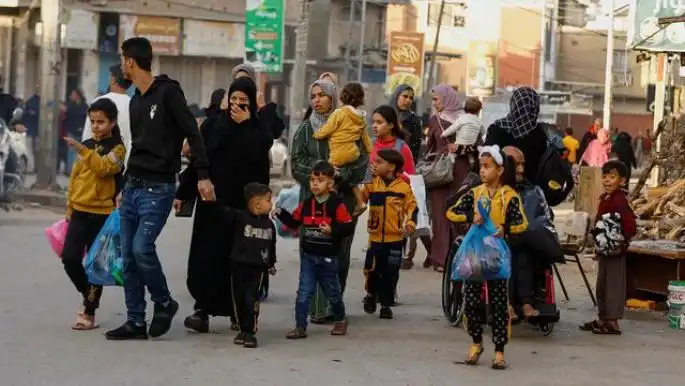
Despite the loss and destruction, overwhelming joy prevails among Palestinians in various regions of the Gaza Strip, as the temporary truce between the Palestinian resistance and the Israeli occupation enters into force at seven o'clock this morning, Friday.


With the start of the truce, thousands of displaced people from shelter schools in the Gaza and northern governorates returned to their homes to inspect them.


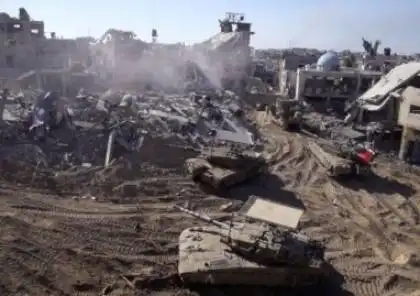
Also, a large number of displaced people from Beit Lahia and the Beit Lahia project (north of the Gaza Strip) returned to find their homes completely destroyed, despite their displacement only a week ago, which means that Israel has deliberately in recent days increased and accelerated the pace of destruction of homes in the North Governorate, in addition to a similar act in Gaza City and its northern neighborhoods.


Collective Palestinian calls were issued to the displaced people from Gaza City and the North Governorate in the southern Gaza Strip to return after one o’clock in the afternoon to their homes, despite the Israeli announcement prohibiting this approach, allowing only displacement from north to south via Salah al-Din Street, and threatening to use tools of suppression against the demonstrators in dealing with the situation. 


On Friday morning, the occupation army warned the residents of the Gaza Strip against heading north, saying that it is only allowed to move towards the south, and that the war is not over.


Residents of the Gaza Strip fear that the Israeli occupation will violate the temporary ceasefire, as it did in the 2014 war, while sounds of gunfire and the firing of 3 artillery shells were heard minutes after the truce entered into force.


On the ground, clashes between resistance members and the occupation forces penetrating the areas of Beit Lahia, western Jabalia, and Gaza City did not stop during the last 8 hours before the ceasefire.


Al-Araby Al-Jadeed's correspondent stated that the recent clashes in northern Beit Lahia and western Jabalia are the most violent since the start of the ground aggression, and have not stopped for a single moment during the last eight hours.

Al-Araby Al-Jadeed


ARAB AND WORLD

Fri 24 Nov 2023 8:17 am - Jerusalem Time

Jordanian “advice” for Americans and Europeans: Undermining Hamas is “unrealistic”

Intensive contacts and consultations behind the scenes recently included specific Jordanian suggestions and advice to the American administration, which insists on putting forward a slogan that speaks about the future of the Gaza Strip without the Hamas movement.

It seems that the Jordanian side is advising that reaching conclusions on the issue of the future of the Hamas movement and the possibility of undermining it through military clashes means.

  First: prolonging the current confrontation and military conflict.

  Secondly, it means, or may mean, the expansion of the conflict at the regional level, contrary to the fact that Jordan stated that undermining the Hamas movement by military action cannot end with positive results.

The observation that was recorded in the corridors of American and Western diplomacy from Jordan’s side recently indicates that the insistence on presenting an American approach that talks about the future of the Gaza Strip without the Hamas movement and without clarity of vision and a resolution of the balance of the military conflict is not characterized by realism, other than that it embarrasses the countries neighboring occupied Palestine and the Palestinian Authority.

It also helps in solidifying and strengthening the Hamas movement and its influence at the level of the Arab and Islamic street.


Jordan proposes to diplomats to formulate more precise statements that are not characterized by ignorance of the issues of the region and its people, and that represent reality and are of the type on which specific, detailed conclusions can be built when talking about the Hamas movement.


Jordan is firmly convinced that undermining the Hamas movement and its armed structure through military efforts will not be an easy task, despite the fact that it is unrealistic.


Foreign Minister Ayman Al-Safadi spoke publicly at least twice with Western media about Jordan's idea in particular after he said that the Hamas movement was an idea.

He later pointed out that there are more than 20,000 members and employees and bureaucrats from the Hamas movement managing civil and municipal institutions.

Later, Minister Safadi said that Hamas was created by the ongoing conflict and was not the one who created the conflict.


Therefore, Jordan insists at least on contrasting itself with the Egyptian and Emirati vision on the issue of removing Hamas from the equation.

A prominent Jordanian official was quoted as saying that removing the Hamas movement from the Palestinian equation is a difficult, complex, and almost impossible task, let alone removing it from the Gaza Strip, which it rules and it is considered influential in it and manages all its affairs after everyone abandoned it for 17 years.


Most people estimate that the American ear is not good at listening to the Jordanian experience in this context, even though relations are completely severed between Jordan and the leaders and institutions of the Hamas movement.


What Jordan specifically alludes to in terms of advice and proposals is in the form of working on a complete political project linking the Gaza Strip to the West Bank.


On the basis of integrating the Hamas movement into this project in any formula proposed by the Palestinian institutions, considering that this is the only realistic step that could later lead to reducing the influence of the Hamas movement in the Palestinian equation.


Otherwise, insisting, in Jordan's opinion, on the exclusively military option is what could serve Hamas and lead to its political recharging.


OPINIONS

Fri 24 Nov 2023 7:40 am - Jerusalem Time

The War That Remade the Middle East. How Washington Can Stabilize a Transformed Region

Ramallah - “Al-Quds” dot com

Ramallah - “Al-Quds” dot com

Opinion Writer

By Maria Fantappie and Vali Nasr

Before October 7, 2023, it seemed as if the United States’ vision for the Middle East was finally coming to fruition. Washington had arrived at an implicit understanding with Tehran about its nuclear program, in which the Islamic Republic of Iran effectively paused further development in exchange for limited financial relief. The United States was working on a defense pact with Saudi Arabia, which would in turn lead the kingdom to normalize its relations with Israel. And Washington had announced plans for an ambitious trade corridor connecting India to Europe through the Middle East to offset China’s rising influence in the region.

There were obstacles, of course. Tensions between Tehran and Washington, although lower than in the past, remained high. Israel’s avowedly right-wing government was busy expanding settlements in the West Bank, prompting anger from Palestinians. But U.S. officials did not see Iran as a spoiler; it had, after all, recently restored ties with various Arab governments. And Arab states had already normalized relations with Israel, even though Israel was not making meaningful concessions to the Palestinians. 


Then Hamas attacked Israel, throwing the region into turmoil and upending the United States’ vision. The militant group’s expansive assault from the Gaza Strip—in which its fighters broke through a high-tech border wall, rampaged across southern Israeli towns, killed roughly 1,200 people, and took more than 240 hostages—made it clear that the Middle East is still a deeply explosive region. The attack prompted a ferocious military response by Israel that created a humanitarian catastrophe in Gaza, with large numbers of dead and displaced Palestinians, and raised the risk of a wider regional war. The plight of the Palestinians is again front and center, and an Israeli-Saudi deal is infeasible. Given that Iranian support accounts for Hamas’s resilience and military abilities, Iran’s own regional military capabilities now seem quite powerful. Tehran also seems newly assertive. Although not keen on a broader conflict, Iran has still basked in Hamas’s show of force and, since then, upped the ante as Israel exchanged fire with the Lebanese militia Hezbollah and as other Iranian-backed groups lobbed rockets at U.S. troops.


The influence of the United States still looms large over the Middle East. But its support for Israel’s war has decidedly compromised its credibility in the region. (That support has also damaged Washington’s standing in the global South more broadly, especially as Israel’s claim of self-defense turned into collective punishment of Palestinian civilians.) This means the United States will have to craft a new strategy for the Middle East, one that contends with the realities it has long ignored. Washington, for example, can no longer neglect the Palestinian issue. In fact, it will have to make resolving that conflict the centerpiece of its endeavors. It will simply be impossible for the United States to tackle other questions in the region, including the future of Arab-Israeli ties, until there is a credible path to a viable future Palestinian state.


Washington must also address Tehran’s rising power, which has rattled the Middle East. If the United States wants to bring peace to the region, it must find new ways to constrain Iran and its proxies. Just as important, the United States must reduce their desire to challenge the regional order. It will especially need a new deal that halts Iran’s march to achieve the capability to make nuclear weapons.

To achieve these aims, the United States does not have to discard all that it has worked for. In fact, it can—and should—build on elements of the order it previously envisioned. In particular, Washington must anchor its new plan for the region in its partnership with Saudi Arabia, which has working relations with Iran, Israel, and the entire Arab world. Riyadh can use its expansive influence to help revive Israeli-Palestinian negotiations and help the United States strike a nuclear agreement with Iran. And together, Riyadh and Washington can create the Middle Eastern economic corridor the United States needs to balance against China.

This new grand bargain will not be as straightforward as the deal the United States was negotiating before October 7. It will not begin with Israeli-Saudi normalization, and it will not end with an Arab-Israeli alliance against Iran. But unlike past agreements, this new framework is achievable. And if done right, it will lower regional tensions and establish lasting peace.


WISHFUL THINKING

It is easy to see why the United States believed it could step back from the Middle East. The Arab-Israeli conflict appeared to be ending, even if the Israeli-Palestinian conflict dragged on. Iran had struck an effective bargain with the United States to limit the advancement of its nuclear program and had normalized ties with Saudi Arabia and other Gulf countries. The region seemed to be taking care of itself, freeing Washington to focus on Asia and Europe. But Washington had overestimated the stability of that situation, and it had underestimated the forces arrayed against it. U.S. President Joe Biden, for example, appears to have given little thought to how he would earn Senate approval for a defense treaty with Saudi Arabia, even though the treaty could entail providing the kingdom with advanced weaponry and civilian nuclear infrastructure. The United States also wrongly assumed that other Middle Eastern countries would not protest as it boosted Riyadh’s quest for regional hegemony. Washington figured that Tehran, for example, was too eager to normalize ties with Arab states and too busy with domestic unrest to interfere with U.S. plans. In reality, of course, Iran was continuing to strengthen and nurture its armed proxies.

But Washington’s biggest miscalculation was thinking it could ignore the Palestinian issue.

Its tentative agreement with the Saudis, for example, was premised on the assumption that Riyadh could normalize ties with Israel and not prompt widespread backlash, even though it was unlikely that any deal would involve major concessions to the Palestinians. The United States did know that, despite the promise of de-escalation, the shadow war between Iran and Israel continued to simmer. But it did not foresee that war converging with the Palestinian issue, and to devastating effect.


As October 7 showed, Washington’s beliefs about the Middle East were completely incorrect. And yet so far, the United States has not updated its thinking. Instead of pushing for a limited military campaign that might salvage Israel’s reputation, Washington’s overarching response to the war in Gaza has been nearly unequivocal support for a brutal military assault. The result has been both anti-Israeli and anti-American outrage across the Middle East. Jordanian King Abdullah II and his wife, Queen Rania Al Abdullah, for example, have publicly condemned the Israeli military campaign, criticized American support for it, and made it clear that in this war, Jordan does not stand with the West. Both Jordan and Bahrain have recalled their ambassadors to Israel and frozen diplomatic ties. When U.S. Secretary of State Antony Blinken and Arab leaders held a meeting in Amman in November, they could not even produce a perfunctory joint communiqué.


Washington’s beliefs about the Middle East were completely incorrect

The United States has tried to compensate for its pro-Israel position by supporting pauses in the fighting to get humanitarian aid into Gaza. It has also cooperated with the government of Qatar, which has close ties to Hamas, to secure the release of hostages. And Washington has lobbied to have the Palestinian Authority govern Gaza at the end of the war, instead of subjecting it to a prolonged Israeli occupation.

But these modest steps are unlikely to stabilize the region. In fact, they are doing the opposite: creating a vacuum that the Arab world’s other actors will use to advance their own interests. Israel has made destroying Hamas its immediate goal, but without U.S. pressure, it will also look to convince its citizens and the region of its invincibility by dealing incalculable damage to Gaza to deter potential adversaries. Egypt, Jordan, and the Palestinian Authority will want to minimize internal and external threats to their power, so they will try to make sure any postwar diplomacy suits their economic interests and bolsters their regional standing. Gulf countries, too, will use the conflict to vie for influence. Qatar is already leveraging its relationship with Hamas to make itself into an indispensable regional player—one with more influence than both Saudi Arabia and the United Arab Emirates (UAE). Turkey, meanwhile, wants to find a role in resolving the conflict so it can get Washington to sell it F-16 fighter jets and back away from supporting the Kurds in Syria.

But the state that has already gained the most from the war is Iran. The resurrection of the Palestinian issue has focused regional attention once again on the Levant. The “axis of resistance” that Iran leads, which in addition to Hamas and Hezbollah includes the Assad regime, Shiite militias in both Iraq and Syria, and the Houthis in Yemen, has shown it can change the direction of Middle East politics, escalating and de-escalating regional conflicts at will. 


By offering unwavering support for Hamas, Iran has also bolstered its image as the defender of the Palestinians, increasing its popularity across the Middle East. And Tehran is balancing its support for Hamas with its burgeoning relations with the Arab world to fully embed itself in regional politics. Shortly after the Hamas attacks, Iranian President Ebrahim Raisi spoke on the phone with Saudi Crown Prince Mohammad Bin Salman for the first time since the states renewed their ties in March 2023. Raisi then traveled to Riyadh in November at the prince’s invitation to attend what participants named the Joint Arab-Islamic Extraordinary Summit. Tehran has taken the idea of an Arab-Israeli axis to contain Iran and turned it on its head.

Together, these trends are driving the region toward a wider conflict. The deepening distrust of the United States, the country’s inability to lead the region to stability, and the lack of any common vision to rally around are driving different states to pursue their own short-term interests, increasingly guided by pressure from the streets and fears of a wider war. These divergent interests are prolonging the region’s crisis and increasing the chance of unintended escalation. To avoid the worst, Washington will have to revisit its core assumptions, renew its commitment to the Middle East, and lay out a fresh vision for the region.


DEAL OR NO DEAL

Washington’s most urgent task is ending the war in Gaza. As long as Israel is attacking the territory and killing civilians there and the United States is doing little to rein in its ally, governments and people in Arab countries will be too furious to follow the United States’ lead. As a result, U.S. officials must press Israel to cease waging a war on Hamas that collectively punishes civilians—as of November 16, fighting in Gaza had killed over 11,000 Palestinians and denied the territory access to food, water, and medicine. Washington must make Israel stop using unrestrained violence in Gaza and pressure it to instead pursue a peaceful, political solution to the decades-long Palestinian issue.


Once the fighting ends, Washington can begin looking forward. As it does so, it will need to take a sober view. But it does not need to throw away everything it had worked toward before October 7. The United States should still base its strategy on striking a grand bargain with Saudi Arabia. Although Riyadh may not normalize ties with Israel any time soon, it is still one of the few governments in the region that remains on good terms with every country in the Middle East and North Africa. It even has cordial, if informal, relations with Israel. It is a key broker in the region.


If anything, the war in Gaza could boost Saudi Arabia’s primacy by giving it a chance to stabilize the Israeli-Palestinian conflict. The Joint Arab-Islamic Extraordinary Summit, which included leaders from across the Arab world, in addition to Iran and Turkey, was a first step in this direction. Unlike Egypt, Jordan, or the other states that usually mediate between Israel and its adversaries, Saudi Arabia has the credibility and regional relations needed to help strike a real peace deal. To do so, Saudi Arabia would work with Iran and Turkey, the main powerbrokers in the Arab world, as well as with Israel via the United States, to arrive at a broad framework for an Israeli-Palestinian peace process with the aim of creating a Palestinian state. Then, Saudi Arabia and its partners would work to build an overarching framework for regional security that must include rules and redlines broadly agreed to by all sides. Only an agreement like this would ensure lasting peace on Israel’s borders, close the door to radical forces among Palestinians, contain the shadow war between Iran and Israel, and rein in Tehran’s axis of resistance.


The Saudis will be reluctant to own the Palestinian issue. But Saudi Arabia’s interests rest in regional peace and security. Its grand economic vision cannot unfold if there is lasting crisis in the region. Riyadh also continues to covet regional leadership and recognition as a great power on the world stage, something that requires American support and could therefore prompt Riyadh to heed U.S. calls to broker a peace agreement.

To help Saudi Arabia, the United States would have to offer Riyadh diplomatic support to pursue broad-based diplomacy, including giving the government permission to seek Iranian acquiescence on a deal to resolve the Palestinian issue. Washington will have to corral its other Arab allies to support Riyadh, as well. And the United States must pursue the defense pact that was on the table with Riyadh before October 7. But it can no longer demand immediate recognition of Israel as a precondition. Instead, the United States should ask that Saudi Arabia lead the Israeli-Palestinian peace process. Normalized ties with Israel could then be the outcome of the process.


As it puts forward a peace proposal for Israel and the Palestinian territories, Saudi Arabia will have to prove it can consult with Gulf neighbors and better take into account their ambitions, as well as their security concerns—which it did not do before October 7. Doing so could require that Riyadh use diplomatic energy it might be reluctant to spend. But if it succeeds at helping ease the path to an Israeli-Palestinian agreement and achieving greater regional security, Saudi Arabia would acquire the diplomatic gravitas it craves. A defense pact with the United States, meanwhile, would provide the kingdom with the military capabilities it needs to solidify its status as the Middle East’s premier economic and political actor.


CONSTRAIN, DON’T CONTAIN

Solving the Palestinian issue is essential to creating a stable Middle East. But it is not the only challenge facing the region. As part of any grand bargain, Washington will need to lower tensions with Iran and use its deal with Riyadh to constrain the country’s ambitions. And by itself, a deal with Riyadh risks doing the exact opposite. There are many reasons Iran might respond poorly to a U.S.-Saudi agreement. The scale and quality of weapons that would begin to flow from the United States to Saudi Arabia, for example, will alarm Tehran. It will also see a Saudi civilian nuclear program as inherently aggressive, no matter how many restrictions Washington puts on it. Iran would also worry that a U.S.-Saudi defense treaty would lead to an expanded American military presence in the Middle East. 

Tehran might therefore respond to a U.S.-Saudi deal by escalating its own weapons manufacturing, launching more proxy attacks, and advancing its nuclear program. (Egypt, Turkey, and the UAE might start to seek nuclear capabilities, as well.)If Israel and Saudi Arabia eventually normalize relations, Israel might even establish a direct military and intelligence presence in the Gulf, one that could be protected by the U.S.-Saudi defense treaty. For Iran, such an outcome would be a nightmare. Tehran would no longer be able to deter Saudi military cooperation with Israel by having its proxies attack Saudi troops or oil refineries, since doing so would provoke a direct confrontation with Washington.


Washington’s biggest miscalculation was thinking it could ignore the Palestinian issue.

Fortunately for Iran, Riyadh does not want to end its détente with Tehran, which has been a boon for the country. Since Saudi Arabia restarted ties with Iran, the Iranian-backed Houthis in Yemen have stopped attacking Saudi territory. Together, Riyadh and Tehran have established a stable cease-fire in Yemen after years of brutal warfare. Now, Yemen’s parties are making progress toward a permanent agreement. This newfound security has made it easier for Saudi Arabia to pursue its lofty economic goals by removing the threat of Houthi missile attacks on Saudi refineries and other infrastructure. As a result, Riyadh no longer seems to share Israel’s vision for a joint military and intelligence axis to roll back Iran’s regional influence. In fact, since March, Iran and Saudi Arabia have worked to fully normalize relations by opening embassies, easing travel between their countries, and establishing cultural exchanges. Iran had already established full relations with Kuwait and the UAE in 2022. It is in talks with Egypt and Jordan to restore ties with those countries, as well.


A U.S.-Saudi defense pact will still be a concern for Tehran. But it is less likely to react adversely to one that does not affect its diplomatic and economic relations with Riyadh and the rest of the Gulf, and that does not set up a regional security arrangement aimed at degrading its power. By engaging Iran in bilateral and regional issues as it pursues a grand bargain with the United States, Saudi Arabia can minimize Iranian resistance to a U.S. deal and even find ways to secure Tehran’s consent for a new regional order.


Washington may not approve of Riyadh’s efforts to keep Tehran on board by using diplomatic concessions and economic benefits. Iran is one of the United States’ principal adversaries, and it is Israel’s main enemy. But the United States cannot stop the normalization of ties between Iran and its Arab neighbors. As Iran’s axis of resistance has grown stronger, Saudi Arabia, Turkey, and the UAE have all decided that Tehran must be integrated into the region to keep themselves safe. They have decided that they can better protect their security if they engage Iran and if Tehran has a vested interest in bilateral ties with them. Nor should the United States try to stop normalization. If the Arab world’s approach is successful, it will serve American interests by de-escalating regional tensions, freeing the United States to focus on Asia and Europe. 

The United States should therefore use the Middle East’s new order to cage Iran’s ambitions, instead of trying in vain to create an anti-Tehran alliance. To do so, Washington should encourage Saudi Arabia and other Gulf states to deepen their diplomatic and economic engagement with Iran in order to secure Tehran’s acquiescence to a permanent settlement for the Palestinian issue and de-escalation in the Levant. 


A solution for the Palestinians will be difficult to arrive at without at least tacit Iranian agreement—and any deal will be far more resilient with it. Such a solution would also deny Iran the ability to exploit the issue, cost radical Palestinian voices their influence, and provide political space to the Arab world to establish better ties with Israel.


BACK FROM THE BRINK

There is one issue that Israel, the United States, and most Arab countries still agree on: Iran’s nuclear program. They all believe that the program’s continued expansion is one of the most destabilizing developments in the Middle East. As Tehran gets closer to producing nuclear weapons, Israel might step up its covert attacks on Iran. If Tehran appears to be on the cusp of nuclearization, Israel could attack the country outright—an act that could quickly draw the United States into a direct conflict. Should Riyadh and Washington sign a defense treaty, Saudi Arabia might also become a party to any war. That war would then unfold in the Levant, as well as the Gulf, with devastating consequences for both regions and for the global economy.


Iran and the United States have tried, and failed, to strike a new nuclear accord since Biden took office at the beginning of 2021. And at first, the October 7 attacks might seem to make a new agreement virtually impossible to reach. But Tehran and Washington had worked carefully to de-escalate before October 7, and their quiet agreement has largely held steady. The informal nuclear deal, for example, appears to remain in effect. Iran’s proxies launched rockets at American bases, but there is little indication that either side wants to fight the other—those attacks are more designed to show support for Gaza and to warn the United States against scuttling the informal deal than to do real damage. Washington’s own sporadic strikes are similarly about posturing, carried out to appease domestic audiences agitating for a response to the Iranian attacks. 

For Washington, escalation with Iran would divert military and diplomatic resources away from its competition with Beijing and Moscow. Iran’s leaders, meanwhile, do not want to risk a conflict that could devastate their economy—and possibly bring down their regime.


This relative calm will likely hold at least until the U.S. presidential elections in November 2024. But the possible return to office of former U.S. President Donald Trump means Tehran and Washington do not have much time to strike a new agreement. Even if Biden is reelected, the two states must resolve their nuclear standoff before October 2025, when the ability of any signatory to reinstate UN-approved sanctions under the 2015 nuclear deal (which Trump withdrew from) expires. If the United States and its European allies do not reinstate the UN sanctions before then, they may never be able to implement them again; China and Russia will likely veto any future restrictions, which must pass through the UN Security Council. But if the West does opt to reimpose these restrictions, Iran has warned that it will leave the Nuclear Nonproliferation Treaty—a very public precursor to building a weapon—precipitating a major international crisis. Washington and its allies, then, want a new agreement before they make up their minds.


To create a new deal, Iran and the United States should pick up where they left off in Vienna in August 2022: the last time the two countries held nuclear talks. Despite the fighting in Gaza, their objectives remain the same. The United States wants to limit the amount and purity of uranium Iran can enrich—thereby extending the time Tehran needs to produce enough fissile material to make a nuclear weapon—and to ensure that Iran’s nuclear program is subject to rigorous international monitoring. Iran, for its part, still needs relief from crippling economic sanctions.


But unlike in 2022, the United States should closely coordinate its nuclear talks with Saudi Arabia’s own efforts to reduce tensions with Iran. The two are, after all, linked. Success in nuclear talks that reduce tensions between Iran and the United States will help Saudi talks achieve the same with Iran; success in talks between Riyadh and Tehran, meanwhile, will give Iran more reason to trust a nuclear deal with the United States, particularly if such talks are encouraged by Washington. And the United States will have to ensure that any nuclear deal it makes with Saudi Arabia contains limits and restrictions that resemble the agreement it strikes with Iran. Otherwise, the two states could enter an escalatory spiral, as whichever state is granted inferior nuclear capabilities will work hard to catch up.


CATCHING UP

In the near term, Washington’s Middle East strategy must focus on ending the war in Gaza and finding a path to regional stability. But in the long term, the United States needs to look beyond just Iran and the Palestinians. Its Middle East policies must also contend with Beijing: Washington’s chief international competitor.

China’s economic presence in the Middle East has grown markedly over the past decade. The country relies heavily on the Gulf for its energy supplies, and it has used the Gulf as a gateway for its expanding trade and investment networks in Africa. China has, in turn, offered Saudi Arabia and the UAE access to knowledge—for example, about the technologies underlying green energy—that they cannot procure in the West, helping spearhead development in the Gulf. China has also made substantial direct financial investments in the Gulf, especially within Saudi Arabia. Under Chinese President Xi Jinping, this commercial relationship has been folded into China’s Belt and Road Initiative. Xi has made fostering these ties part of his response to Washington’s efforts to constrain Beijing.

The United States has taken note of China’s expanding relationship with Middle Eastern states. It paid especially close attention when Xi helped mediate the rapprochement between Iran and Saudi Arabia. Washington believes that China wants to use its economic influence in the Middle East to become a political and security power in the region. The U.S.-Saudi defense treaty is a response: a way of arresting Riyadh’s drift into China’s orbit. Washington’s plans for a trade corridor through the Middle East are also designed to undermine Beijing’s scheme. Such a corridor would benefit the region economically, but its primary purpose is to counter the Belt and Road Initiative by anchoring the region’s economic future to India and Europe. The corridor would also bind the UAE and Saudi Arabia to Israel and integrate Israel’s economy into that of the Middle East.


The Biden administration’s most urgent task is ending the war in Gaza.

Beijing has responded warily to Washington’s proposals. When the United States talked about creating an Indian–Middle Eastern–European economic corridor, China reacted by saying it would welcome the corridor provided it did not become a “geopolitical tool,” which is, of course, exactly what the United States intends it to be. It would divide the Middle East between those that are part of the economic corridor and those that are not: an exclusionary system that runs counter to China’s regional vision. And Beijing knows the Biden administration’s push for Israeli-Saudi normalization is an attempt to match China’s own success with the Iranians and the Saudis. China is not yet in a position to foil the United States’ plans, but there are no signs it will slow its economic engagement with the region. In the current geopolitical vacuum, that engagement will continue to expand and deepen.

Saudi Arabia does not want to choose between China and the United States. But just like Israel and the Palestinian territories, Riyadh may still agree to Washington’s plans because they would bolster Riyadh’s great-power ambitions by strengthening its regional position and expanding its economic influence. These plans would improve the economies of other regional states, as well. As a result, Arab countries that might otherwise be hostile to a Saudi-centered Middle East could go along with the United States’ proposals. If they do, the result would be greater stability both within Middle Eastern countries and between them.

But to increase the likelihood that every state will buy into its proposed order, the United States may have to do more than make sure its system delivers widespread prosperity. The United States must also subscribe to a vision for Middle East security that does not divide the region into camps but makes room for all actors. That requires the United States to let the countries in its envisioned economic corridor join other economic arrangements, as well. It also requires a grand bargain to promote the security of Israel, other Arab states, and even Iran. Such security can be, in part, offered through a new nuclear deal and a regional accord between Iran and Saudi Arabia. But the United States should consider making regional pacts beyond the one it concludes with Saudi Arabia. These pacts could extend U.S. security guarantees to other states, but they must also come with restraints and redlines. Washington cannot simply continue supplying weapons to regional allies, as it did before October 7. Instead of promoting stability, this policy encouraged a regional arms race and war.


MAKING PEACE

No matter what Washington does, there will be resistance to its Middle East vision. Iran will remain hostile to Israel and the United States. Saudi Arabia’s Gulf neighbors will never be pleased about the kingdom’s dominance. Israel and Turkey will also calculate what it means for Saudi Arabia to amass so much power and what the United States’ commitment to the Saudis means for their interests. They will react accordingly, and likely in ways Washington cannot expect.

But although all these countries will want more power, what they want most of all is to preserve the stability of their regimes. They want to subscribe to a vision that ends local conflicts, fosters economic growth, and otherwise reduces domestic pressure. If a U.S.-Saudi pact delivers, they will ultimately accept it.

Yet to make this bargain work, the United States will need to persuade Israel to stop engaging in what many see as the collective punishment of Palestinian civilians. Washington must tackle the plight of the Palestinians more broadly, instead of ignoring their cause, by helping create a credible pathway to a future Palestinian state. Washington’s bargain must contend with the challenge that Iran presents by freezing its nuclear program and constraining its network of regional clients, both through deterrence and by taking steps to reduce tensions. And the United States must create a trade corridor that helps cultivate the Middle East’s economies. Only then will the region be stable—and only then will Washington be free of its present responsibilities.

Source: Foreign affairs

ARAB AND WORLD

Fri 24 Nov 2023 7:32 am - Jerusalem Time

Britain pledges to provide additional aid to Gaza

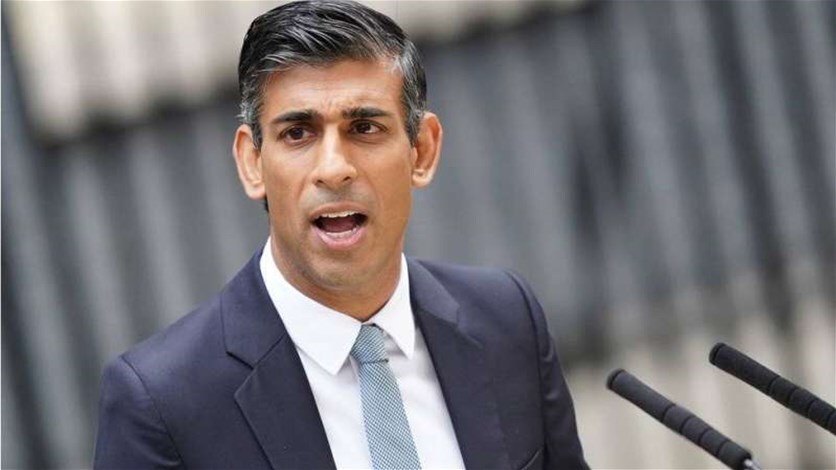
British Prime Minister Rishi Sunak said the humanitarian truce was “crucial to ending the plight of the hostages and getting aid to Gaza.”


Sunak thanked Qatar, Egypt and others “for the intense diplomacy that brought us to this stage.”


For his part, British Foreign Secretary David Cameron said - today, Friday - that his country will provide another 30 million pounds ($37.38 million) in humanitarian aid to the Gaza Strip, during his trip to the occupied Palestinian territories on the second day of his visit to the region.


Cameron will meet Palestinian leaders and relief agencies, and yesterday, Thursday, he met with Israeli Prime Minister Benjamin Netanyahu.


Cameron said in a statement, "We hope that today will witness the release of hostages, and I urge all parties to continue working towards the release of all hostages. The temporary pause in fighting will also allow necessary aid to reach the residents of the Gaza Strip."


PALESTINE

Fri 24 Nov 2023 7:32 am - Jerusalem Time

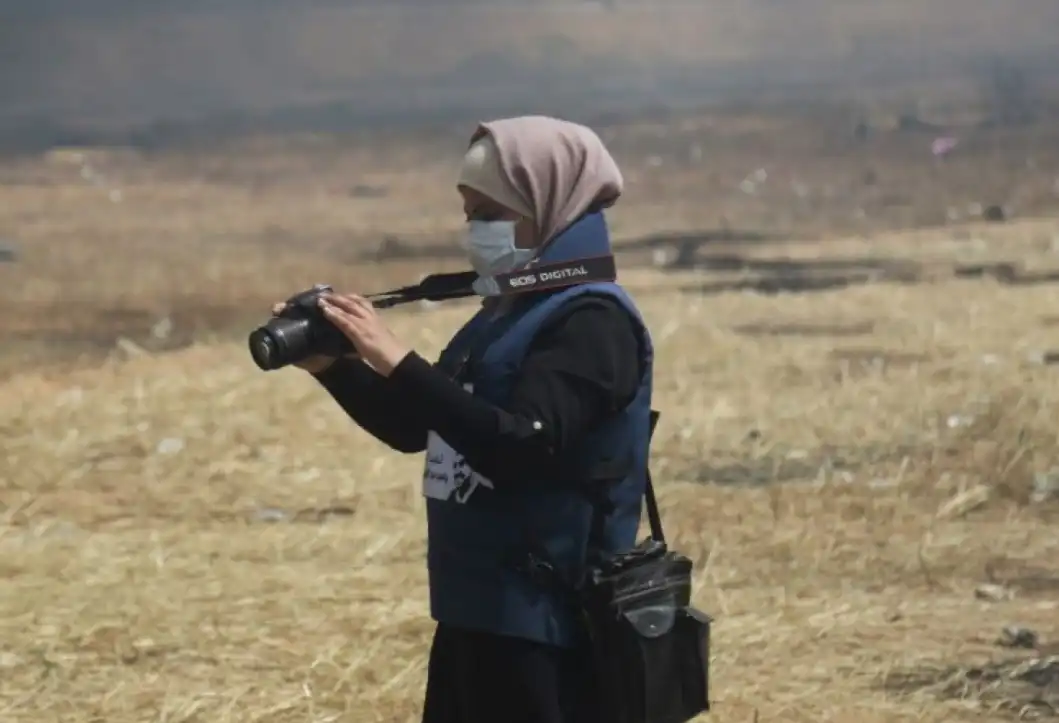
Palestinian Journalist Amal Zuhd and her family were killed in a bombing in Gaza

Journalist Amal Zuhd was dead, along with her family, in a bombing that targeted her home in Gaza City.


With the death of journalist Zuhd, at dawn today, Friday, the number of killed journalists in the Gaza Strip since the beginning of the ongoing Israeli aggression on the Strip reaches 64.


Yesterday, the photojournalist, Muhammad Ayyash, and a number of his family members were killed, following a raid carried out by the Israeli occupation that targeted his house in the Nuseirat camp in the central Gaza Strip.


Prior to that, the occupation aircraft targeted two journalists from Al-Mayadeen Channel in southern Lebanon, namely correspondent Farah Omar and photographer Rabih Maamari.


The Palestinian Journalists Syndicate announced the death of 63 male and female journalists since the beginning of the Israeli occupation’s aggression against the Gaza Strip on October 7 of last month, while the arrest campaign targeted a total of 31 male and female journalists since October 7, including 29 in the West Bank and 2 in the Gaza Strip. Gaza, and the impact of journalists Nidal Al-Wahidi and Hatheem Abdel-Wahed remains unknown since the aggression on Gaza.


PALESTINE

Fri 24 Nov 2023 7:09 am - Jerusalem Time

The truce takes effect in Gaza

A humanitarian truce began in Gaza on Friday morning, followed by the release of a first batch of civilian prisoners held by the Hamas movement in the afternoon, while Hamas confirmed the exchange of Israeli prisoners for Palestinian prisoners.


About the deal

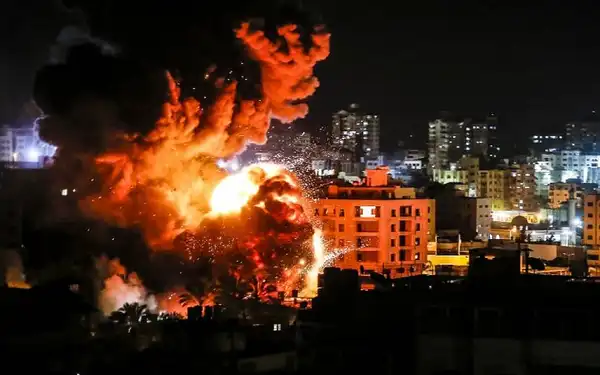
Before entering into the truce, Israeli bombing targeted various areas in the Gaza Strip, causing dozens of casualties, most of them women and children. Palestinian media reported on Friday that “violent Israeli artillery shelling targeted southern and eastern Gaza.”


The Israeli army stated that sirens sounded in the Nir Oz area near Gaza minutes before the truce took effect.


In the details of the agreement, Qatari Foreign Ministry spokesman Majed Al-Ansari said, “A first batch of civilian hostages will be delivered from the Gaza Strip at 4 p.m. (14:00 GMT) on Friday.” He pointed out that the number of those released will be 13, women and children.


Al-Ansari added, "It is clear that each day will include a number of released civilians, as was agreed upon, bringing the total to 50 over four days."


He continued, "In these four days, information will be collected about the rest of the hostages to consider the possibility of there being a larger number of hostages to be released and thus extending this truce."


Among those detained in Gaza are at least 13 mothers and their 22 children under the age of 18, according to a tally prepared by Agence France-Presse. At least 19 other people aged 18 or younger are being detained alone, with their parents or other family members.


For its part, the “Izz al-Din al-Qassam Brigades” confirmed that “the truce will enter into force at 7 a.m.,” noting that it “will apply for 4 days, starting on Friday morning, accompanied by a cessation of all military actions” on both sides.


During this period, “50 Israeli prisoners, women and children under the age of 19, will be released,” and for each one of them, “3 Palestinian prisoners, women and children,” will be released.


Basem Naim, a leader in Hamas, said: “We stipulated the release of Palestinian female prisoners and children from occupation prisons according to seniority.”


In Israel, Prime Minister Benjamin Netanyahu's office announced in a statement, "Receiving a preliminary list of names of the kidnapped," adding, "The competent authorities are examining the details of the list and are communicating in the meantime with all the families of the kidnapped."


In response to a question about whether he expected the kidnapped American child, Abigail Moore Aidan, to be among the first batch of hostages to be released, US President Joe Biden replied, “I hope so.”


For its part, the Israeli army announced that “the area north of the Gaza Strip is a dangerous war zone and it is forbidden to move around it, and the residents of Gaza must remain in the humanitarian zone south of the Strip.”


An Egyptian delegation in Jerusalem and Ramallah

At dawn on Friday, an Egyptian security source explained to Agence France-Presse that “an Egyptian security delegation arrives today in Jerusalem and Ramallah, with the aim of receiving the liberated Palestinian prisoners and monitoring compliance with the list of names that the Israeli government presented to the mediators and approved by Hamas.”


He added, "A number of Israeli security officials will be present in the Egyptian terminal at the Rafah crossing, accompanied by Egyptian security officials and representatives of the Egyptian Red Crescent and the Red Cross, to receive the Israeli prisoners released from Gaza. They will then be transported through Al-Arish International Airport, on a private plane, to Israel." ".


Hamas and other Palestinian factions have been holding about 240 prisoners in the Gaza Strip since the attack.


In this context, Egypt announced that 130,000 liters of diesel and four gas trucks will be delivered daily to Gaza when the truce begins.

The head of Egypt's State Information Service, Diaa Rashwan, said in a statement early Friday that 200 aid trucks would enter Gaza daily.

 The truce agreement was announced on the forty-seventh day of the war launched by Israel in response to the Hamas attack.


Also, Israel began extensive ground operations inside the Strip since October 27. It imposes a "total siege" on the Gaza Strip, which has no supplies of fuel, food, or water.


The residents of Gaza, nearly 1.7 million of whom were displaced out of 2.4 million due to the war, are looking forward to the truce in light of the difficulty of securing food, water, and clothing for the winter.


Many non-governmental organizations considered that four days were not enough to bring in the required assistance, calling for a ceasefire.


Storming the Indonesian hospital

Before the truce took effect, the Palestinian News Agency “Wafa” reported that “the Israeli occupation army stormed, on Friday morning, the Indonesian hospital in the town of Beit Lahia in the northern Gaza Strip, amid intense gunfire, and cold-bloodedly and brutally killed a wounded woman and wounded and arrested 6 others,” and this was confirmed. Director General of the Ministry of Health in Gaza, Munir Al-Bersh, told Agence France-Presse.


Health sources pointed out that “what the occupation is carrying out in the Indonesian hospital is a war crime that is more horrific and more severe than what it did in the Al-Shifa Medical Complex,” according to what Wafa reported.


On Thursday evening, the spokesman for the Ministry of Health in Gaza, Ashraf Al-Qudra, announced that “the Indonesian hospital is subjected to violent bombardment, affecting electrical generators and large parts of buildings,” adding, “We fear for the lives of 200 wounded and medical staff.”


PALESTINE

Fri 24 Nov 2023 6:32 am - Jerusalem Time

Israeli occupation soldiers murder a 12-year-old boy in Beita

A 12-year-old Palestinian boy identified as Mohammad Ibrahim Edeli was shot dead by Israeli occupation forces tonight during confrontations in the town of Beita, located south of Nablus in the occupied West Bank, according to local sources.


The sources reported that the Israeli occupation forces fired live ammunition towards local residents during the confrontations in the town, resulting in the murder of the young child. Ahmed Jibril, the director of the Emergency and Ambulance Center at the Red Crescent in Nablus, confirmed that the child sustained a gunshot wound to the chest and was promptly transported to a nearby hospital, where he was announced dead of his wounds.

PALESTINE

Fri 24 Nov 2023 6:27 am - Jerusalem Time

Israeli army storms Indonesian hospital Gaza and kills the wounded: dozens of martyrs and injured in continuous raids on Gaza

The Israeli forces, which were bombing and besieging the Indonesian Hospital, in the town of Beit Lahia, north of the Gaza Strip, stormed it amid intense gunfire, and brutally killed a wounded woman, wounded 3 others, and arrested at least three others.


Health sources said, in particular: What the occupation is carrying out in the Indonesian hospital is a war crime that is more horrific and more severe than what it did in the Shifa Medical Complex.


The Israeli forces had directly targeted the hospital with bombing, which led to the death of two workers, the injured, and displaced persons there, and the wounding of others, and the disruption of many of its important facilities, including the operating rooms and the oxygen station inside it.


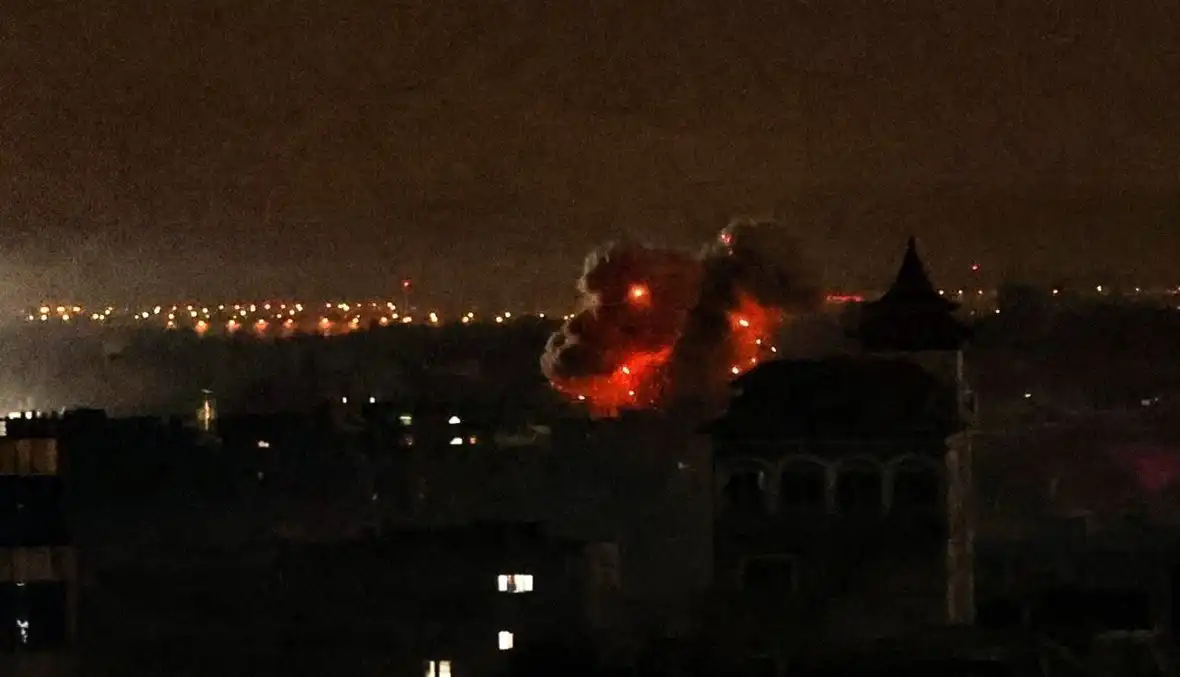
Meanwhile, at dawn, Israeli occupation aircraft targeted an inhabited residential building opposite the Hajj bakery in Nuseirat “Camp 2” in the middle of the Gaza Strip, which led to a fire igniting in the place, killing a number of martyrs and wounding others, including children and women.


In addition, civil defense crews recovered 10 citizens from under the rubble as a result of the occupation aircraft’s bombing of a house for the Khader family in the city of Jabalia in the northern Gaza Strip.


Israeli occupation aircraft also continued to target various areas in the Gaza Strip, resulting in the death and injury of dozens of citizens.

PALESTINE

Fri 24 Nov 2023 5:57 am - Jerusalem Time

Dozens of Palestinians killed in Israeli air strike on a UN school ahead of Gaza truce

The official Palestinian News Agency reported that 27 people were killed and at least 93 others were injured in an Israeli bombing of the Abu Hussein School affiliated with UNRWA (the United Nations Relief and Works Agency for Palestine Refugees), which houses hundreds of displaced people in the Jabalia camp.


Meanwhile, Al Jazeera’s correspondent reported that Israeli aircraft were launching raids on the Jabalia camp and its surroundings in the northern Gaza Strip, hours before the start of a humanitarian truce in the Strip on Friday morning, which is scheduled to last 4 days according to an agreement between Israel and Hamas brokered by Qatar in coordination with Egypt and the United States. United.


The Israeli army is waging a devastating war on Gaza that has left 14,854 martyrs, including 6,150 children and more than 4,000 women, in addition to more than 36,000 injured, more than 75% of whom are children and women, according to the government media office in Gaza.


The number of missing people as a result of the occupation raids is estimated at about 7,000, more than 4,700 of whom are children and women, according to the same source.


Source: Al Jazeera + Anadolu Agency

ARAB AND WORLD

Fri 24 Nov 2023 5:53 am - Jerusalem Time

Spanish Prime Minister to Netanyahu: We reject the blind killing of Palestinians

Spanish Prime Minister Pedro Sanchez assured his Israeli counterpart, Benjamin Netanyahu, on Thursday, that Israel's work for peace requires the establishment of a viable Palestinian state, rejecting the blind killing of Palestinians in the Gaza Strip and the West Bank, as he put it.


This came during his meeting with Netanyahu during a visit to the Middle East with his Belgian counterpart, Alexander De Croo, to discuss the situation in the Gaza Strip, which has been subjected to Israeli aggression for 48 days, resulting in the death of about 15,000 Palestinians.


Sanchez also met with Palestinian President Mahmoud Abbas, and tomorrow, Friday, he will head to Egypt with his Belgian counterpart.


Sanchez pledged last week that his new government would work in Europe in general and Spain in particular to recognize the Palestinian state, amid Spain's efforts to push for European positions that suit Palestinian aspirations.


"Impact on Europe"

For his part, Isaias Parrenada, a professor at the Complutense University of Madrid, believes that the Spanish Prime Minister hopes that his position will have a double impact on European countries that are being criticized by Arab countries as a result of their positions in support of Israel without conditions.


He continued that in light of the differences within the European Union regarding the position on Israel, it will be difficult for Spain to redirect the European position, adding that it can contribute by showing the different sensitivities within the Union on this issue.


A small diplomatic crisis broke out between Madrid and the Israeli embassy after statements by a Spanish minister in which she spoke about a planned genocide in Gaza.


It is noteworthy that in 2014, the Spanish Parliament almost unanimously adopted a non-binding resolution calling for the recognition of a Palestinian state.


European countries such as Sweden, Malta, Romania, and Hungary also recognized the Palestinian state, but the major countries in the European Union did not take this step.


Source: Agencies

PALESTINE

Thu 23 Nov 2023 10:28 pm - Jerusalem Time

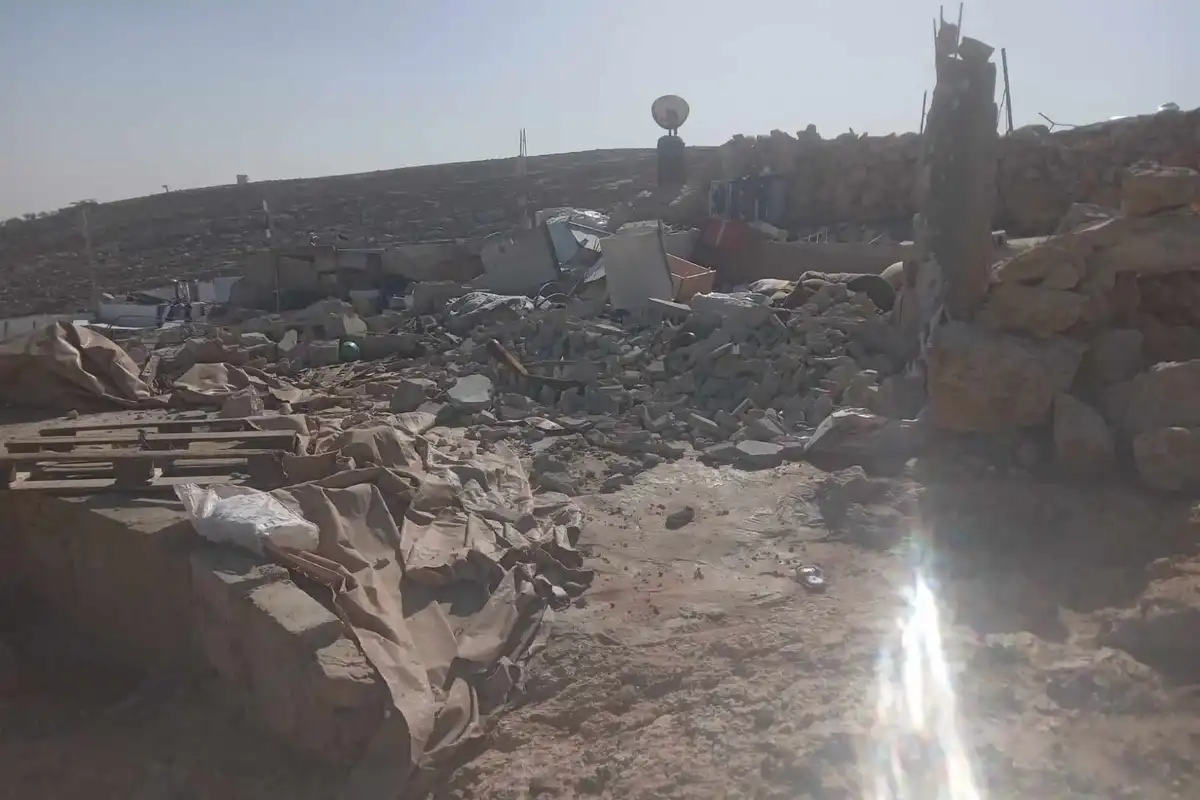
Israeli settlers demolish a Bedouin community east of Hebron

Settlers demolished citizens’ homes in the “Al-Qanub” community, east of the town of Sa’ir, east of Hebron.


According to local sources, they did not know about the demolition that took place earlier this month, until a citizen was able to reach the “Al-Qanub” area to inspect their homes, which they had forcibly moved from at the beginning of this month, to find that the colonists had completely demolished those homes, regardless of what was in them of furniture and clothes.


Al-Shalalda explained: “When we were forced to leave, we were not allowed to take any of our property or needs.”


He added that the settlers demolished five homes, and seized tents that housed a number of families, in addition to stealing all of the people’s needs and possessions, including the solar energy cells they were using. The settlers also set up tents for themselves in the vicinity of the homes they demolished, and attacked everyone who tries to reach them.


At the beginning of this month, five families residing in the Al-Qanoub community, numbering more than 27 individuals, were forced to leave their homes and forcibly move away from them, due to attacks by armed settler gangs, which affected their property and included the destruction of their homes, the theft of large numbers of their sheep, and the targeting of their lives and the lives of... Their children and women, threatening them with either death or departure.


It is worth noting that a group of settlers had set fire, about two days ago, to the mixed basic school of the village of Zanuta, south of Hebron, less than a month after the forcible deportation of more than 250 citizens of the village, due to attacks by armed colonial gangs on them.

ARAB AND WORLD

Thu 23 Nov 2023 10:22 pm - Jerusalem Time

Israeli Minister: The war will continue for at least two months after the truce

Israeli Defense Minister Yoav Galant confirmed on Thursday that the Israeli military operation against Hamas will continue after the short truce, and that the fighting is expected to continue for another two months.


He added: "This will be a short pause for organization, preparation, investigations, and arming. When it ends, the fighting will continue intensely, and will create pressure that will allow more hostages to return."


Hamas and Israel have reached an agreement on a temporary truce that begins on Friday and lasts for 4 days and includes a process of exchanging prisoners and detainees.


PALESTINE

Thu 23 Nov 2023 8:16 pm - Jerusalem Time

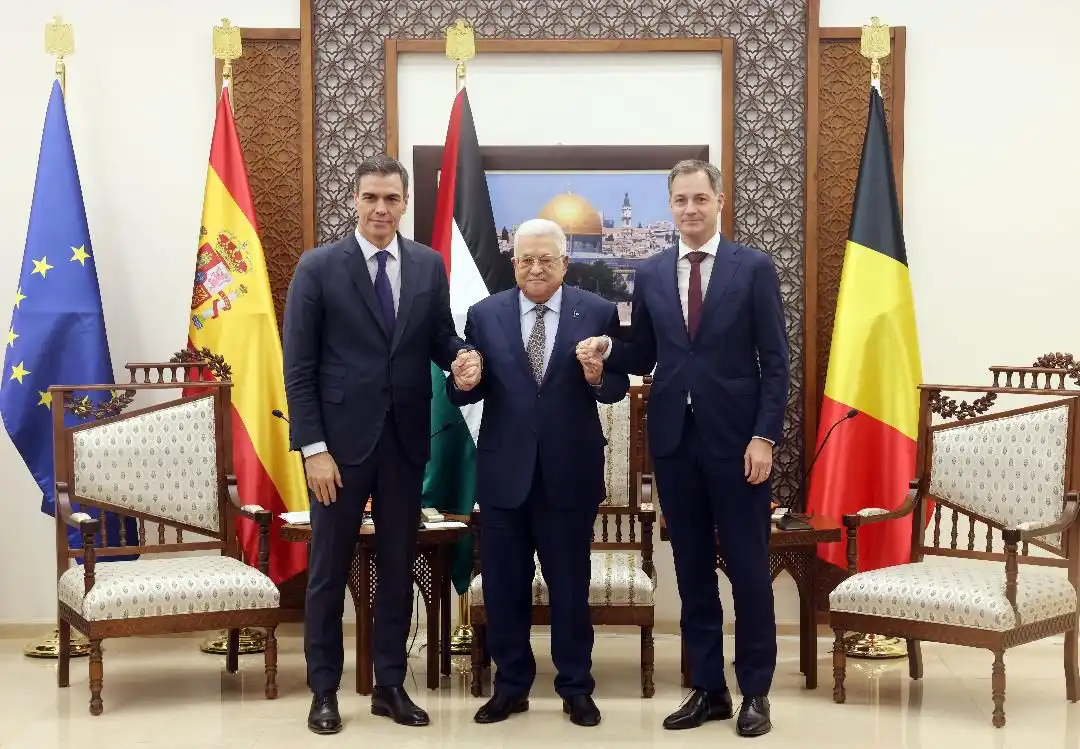
Palestinian President receives the Prime Ministers of Spain and Belgium

President Mahmoud Abbas received, this evening, Thursday, at the presidential headquarters in the city of Ramallah, both Spanish Prime Minister Pedro Sanchez, whose country holds the presidency of the European Union, and Belgian Prime Minister Alexander De Croo, whose country will assume the presidency of the European Union as of January 2024. .


The President briefed the Spanish and Belgian Prime Ministers on the latest developments in the occupied Palestinian territory, especially in the Gaza Strip, stressing the necessity of immediately stopping the occupation’s comprehensive aggression against our people in Gaza and the West Bank, and the crimes of genocide, and accelerating the entry of humanitarian aid into the Gaza Strip, as well as stopping the attacks of the forces of genocide of the Israeli and terrorist colonists in the West Bank, stressing the need to release Palestinian funds held by the occupation government.


The President renewed the State of Palestine’s categorical rejection of displacing Palestinians from the Gaza Strip or the West Bank, including Jerusalem, stressing that there is no security or military solution for the Gaza Strip, and that Gaza is an integral part of the Palestinian state, and it is not possible to accept or deal with the plans of the occupation authorities in Separating the Gaza Strip from the West Bank and Jerusalem, reoccupying it, or cutting off any part of it.


The President stressed that security and peace are achieved by moving toward a political solution in accordance with the two-state solution based on international legitimacy and the Arab Peace Initiative to end the Israeli occupation of the land of the State of Palestine, with East Jerusalem as its capital.


President Abbas thanked the two friendly countries, Spain and Belgium, and the European Union, for their political positions in support of the two-state solution based on international legitimacy, and for the call announced by the Spanish Prime Minister to commit to working towards recognition of the Palestinian state, and the statements of the Belgian Prime Minister and members of his government calling for an end to the war and stop the killing of civilians, adhere to international law, support the work of the International Criminal Court in investigating war crimes committed during the war on the Gaza Strip, and study recognition of the Palestinian state within the framework of the internationally recognized two-state solution.


PALESTINE

Thu 23 Nov 2023 7:52 pm - Jerusalem Time

“Human Rights Watch”: Settlers’ violence ignites the West Bank in parallel with Gaza

Human Rights Watch confirmed the escalation of violations by the Israeli occupation forces and settlers against Palestinians in the occupied West Bank, in parallel with the brutal aggression and devastating war being waged by the occupation against the Gaza Strip.


The organization explained that Israeli violence and oppression against Palestinians in West Bank cities had already reached its peak before the “Al-Aqsa Flood” battle on October 7, but it has become much worse since then.


It quoted United Nations data that more than 201 Palestinians, including 52 children, were killed in the West Bank as a result of Israeli attacks and settler violence since the beginning of the aggression on Gaza, while UN figures indicated that more than 192 Palestinians, including 40 children, died during the first ten months of the current year, which is This number is considered the highest since 2005.


The organization pointed out that Israel killed more people in just six weeks than in the past ten months or in any other year since 2005.


Settlers killed 15 Palestinians as of November 17, according to the organization, which indicated that during the first eight months of 2023, settler violence rose to its highest levels since the United Nations began recording this data in 2006. Reaching an average of three incidents per day, an increase from two incidents in 2022 and one in 2021, which has multiplied many-fold since last October 7.


The organization stated that Israel was holding 1,264 Palestinians in administrative detention without trial or charge, the highest number in more than 30 years. However, the number jumped to 2,070 by November 1, due to the continued aggression against the Gaza Strip.


Human Rights Watch stressed that these violations are part of the Israeli occupation’s crimes against humanity represented by apartheid and persecution, noting that the roots of Israeli violence are multiple and deep. Ending it requires dismantling the systems of oppression that fuel it, especially in the West Bank.


On a related level, the Palestinian Prisoners’ Club has documented the arrest of more than 3,130 Palestinians throughout the occupied West Bank since the start of the aggression on the Gaza Strip on the seventh of last October.


The Palestinian Club explained that the ongoing arrest campaigns against Palestinians are part of the aggression and systematic collective revenge operations against the Palestinian people.


PALESTINE

Thu 23 Nov 2023 7:06 pm - Jerusalem Time

Hamas spokesman: We have targeted 335 Israeli vehicles since the start of aggression on Gaza

The spokesman for the Al-Qassam Brigades, the military wing of the Hamas movement, announced that 335 Israeli vehicles had been targeted since the start of the aggression on the Gaza Strip, and 33 (Israeli) vehicles had been targeted in the last 72 hours.”


Abu Ubaida said in a video recording, broadcast on Al Jazeera satellite channel, this evening, Thursday, that “one of the Qassam mujahideen attacked 8 soldiers east of Al-Rantisi Hospital in the Sheikh Radwan neighborhood, killing and wounding them.”


He pointed out that “during the last three days, the Mujahideen (Al-Qassam) carried out several specific operations that caused deaths among Israeli occupation forces, and they targeted a group of infantry soldiers in Beit Hanoun with an anti-personnel device.”


He stressed that on the 48th day of the “Al-Aqsa Flood” battle, “the Mujahideen (Al-Qassam) continue to confront the Israeli aggression, and are taking hold of their positions and combat positions, while the enemy is still concealing its military losses.”


PALESTINE

Thu 23 Nov 2023 7:01 pm - Jerusalem Time

Oxfam: More premature babies are being born in Gaza

The British charity Oxfam said on Thursday that the number of premature births rose by about a third over the past month in the Gaza Strip, which is besieged by Israel, with mothers suffering from increasing pressure and trauma.


Dozens of premature babies made headlines this week when they were rescued from a hospital in northern Gaza and transported to Egypt after the site was bombed.


The densely populated northern part of the Strip has borne the brunt of the six-week-long Israeli aggression on the Gaza Strip, and none of its hospitals are operating normally.


Jazor, an Oxfam partner organization that supports hundreds of pregnant women in Gaza, said that the number of premature births rose by 25-30% in the past month, and attributed this increase to the difficulties faced by mothers who were forced to flee their homes due to bombing and are suffering from stress and trauma.


Premature babies are more vulnerable to disease, and Jazour said that at least one newborn died in each of its 13 shelters for displaced people in northern Gaza over the past month.


Even before the current conflict, infant mortality was high in Gaza, with newborn deaths accounting for 68% of the total, according to the World Health Organization.


Sally Abi Khalil, Oxfam's Middle East regional director, said some displaced mothers had to give birth in crowded classrooms, without medical support or basic hygiene.


“I don’t think there is anyone anywhere in the world who disagrees with this inhumane thing,” she said.


PALESTINE

Thu 23 Nov 2023 6:54 pm - Jerusalem Time

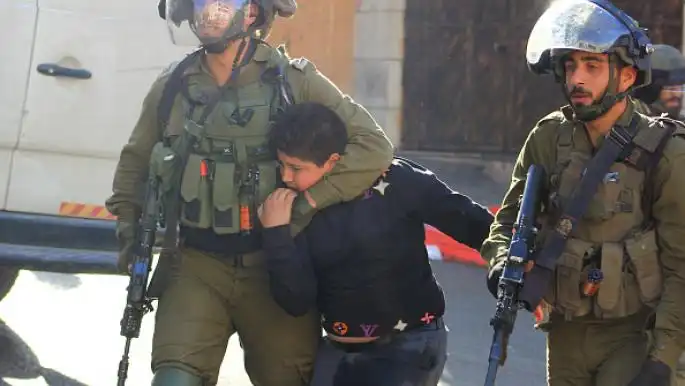
100 captive Palestinian minors are expected to be released as part of the exchange deal

The Israeli authorities are scheduled to release a number of minor prisoners in their prisons in the coming hours as part of a prisoner exchange deal between Hamas and Israel, mediated by Qatar and Egypt, which will take place during the truce scheduled to begin at exactly seven o’clock on Friday morning.


The number of children who will be released is estimated at approximately 100 out of 350 children under the age of 18, as the head of the Prisoners and Ex-Prisoners’ Affairs Authority, Qaddoura Fares, told Al-Araby Al-Jadeed.


Fares pointed out that among the minor prisoners are those who have been sentenced to high sentences, such as the wounded Palestinian girl Aseel Shehadeh (17 years old) from the Qalandia camp, north of Jerusalem, who was shot by Israeli soldiers in front of the Qalandia checkpoint on the 7th of this month, and today she remains in (Ramla) prison under harsh conditions.

Source: Al-Araby Al-Jadeed.

PALESTINE

Thu 23 Nov 2023 6:37 pm - Jerusalem Time

American officer: Hamas wins the battle of Gaza and Israel is defeated in a humiliating manner

Former US military intelligence officer, Scott Ritter, described the ceasefire between Hamas and Israel as a blessing for Palestinians and Israelis alike.

Pointing out that this truce will allow the exchange of prisoners, the entry of humanitarian aid, and the calm of the conflict.


He added: “The ceasefire, which was negotiated between Israel and Hamas and mediated by Qatar, was mutually agreed upon between the two parties, and no one should be deceived into thinking that this was anything less than a mere victory for Hamas. Israel has taken a very aggressive stance and, given its stated goal of destroying Hamas as an organization, it will not agree to a ceasefire under any circumstances.


Ritter continued, saying: “On the other hand, Hamas has made one of its primary goals the start of the current round of fighting with Israel, by releasing Palestinian prisoners, especially women and children, held by Israel. In light of this, the ceasefire represents an important victory for Hamas, and a humiliating defeat for Israel.”


He added: “Israel’s signing of the ceasefire constitutes the surest indication so far that things are not well with regard to its attack on Hamas.”


Ritter pointed out, “This result should not be a surprise to anyone. When Hamas launched its attack on Israel, on October 7, it began implementing a plan that had been in preparation for years. The meticulous attention to detail, which was evident in the Hamas operation, underscored the fact that the movement was studying the Israeli intelligence and military forces arrayed against it, and revealing weaknesses that were later exploited.”

Source: Sama News

ARAB AND WORLD

Thu 23 Nov 2023 6:31 pm - Jerusalem Time

Saudi Arabia signs 4 agreements to support the Gaza Strip worth 150 million riyals

Today (Thursday), the King Salman Humanitarian Aid and Relief Center signed four cooperation agreements with a number of international organizations, to support the humanitarian response and alleviate the suffering of Palestinians in the Gaza Strip.


The signing ceremony of the agreements took place at the headquarters of the Embassy of the Kingdom of Saudi Arabia in Cairo, and the total value of the agreements amounted to 150 million Saudi riyals (one US dollar equals 3.75 Saudi riyals).


The agreements included an agreement to finance the activities of the United Nations Relief and Works Agency for Palestine Refugees (UNRWA) to provide food, water, and environmental restoration in the Gaza Strip, at a value of 56 million and 250 thousand Saudi riyals, and an agreement to support the efforts of the World Health Organization in the field of health and treatment of malnutrition in the Gaza Strip, at a value of 37 million. And 500 thousand Saudi riyals.


The agreements also included an agreement to urgently respond to the humanitarian appeal of the International Committee of the Red Cross and support its efforts to provide relief to the Palestinians in the Gaza Strip, with a value of 37 million and 500 thousand Saudi riyals, and an emergency response agreement to support the efforts of the World Food Program in providing food to the Palestinians in the Gaza Strip, with a value of 18 million and 750 thousand Saudi riyals.


Abdullah Al-Rabiah, supervisor of the King Salman Humanitarian Aid and Relief Center, confirmed that the main goal of signing these agreements is to alleviate the catastrophic human suffering that the Palestinians are experiencing in the Gaza Strip, indicating that everyone knows the humanitarian challenges that the Palestinians are going through, the extent of the great humanitarian need, and the shortage of food, medicine, and water, as well as About displacement operations within the sector.


Al-Rabiah said, in his speech during the signing of the agreements, “Yesterday I visited the Rafah border crossing and witnessed for myself the humanitarian interaction and the great Egyptian efforts at the Rafah crossing to bring in aid, but Israeli obstinacy remains the biggest obstacle to getting that aid in,” calling on the international community and UN organizations to put pressure on Israel with all its means available to unconditionally allow the entry of humanitarian aid into the Gaza Strip.


Al-Rabiah confirmed, in a statement to Xinhua News Agency, that the total aid provided by the Center to the Gaza Strip so far amounted to more than 45 million dollars, which included an air bridge that included 15 planes carrying about 330 tons of relief aid, and a ship carrying 43 large containers carrying Humanitarian aid, in addition to 10 ambulances and about 326 relief aid trucks.


For his part, the Commissioner-General of the United Nations Relief and Works Agency for Palestine Refugees (UNRWA), Philippe Lazzarini, stressed the seriousness of the situation that the Gaza Strip is currently going through, stressing that the time is very crucial and extremely critical, and he continued, saying, “The more we wait, the more deaths increase, not because of the bombing, but because of the lack of Food, water, medicine, etc.


Lazzarini added that there are hundreds of thousands of displaced Palestinians who left their homes more than 40 days ago and do not have the most basic humanitarian needs and do not have a mattress, blanket or clothes.


He pointed out that the severe fuel shortage that the Strip is suffering from means the cessation of life and the shortage of everything, there is no bread, no water, no cars, and no food, warning against the continuation of this catastrophic situation.

OPINIONS

Thu 23 Nov 2023 5:53 pm - Jerusalem Time

Defeating Hamas, Staying President and Leading the World

Gershon Baskin

Gershon Baskin

Opinion Writer

Hamas can be defeated militarily. Israel’s war effort has set the goal to dismantle Hamas’ ability to continue to govern Gaza and to threaten Israel. Israel has the military might to destroy Hamas’ infrastructure, capture their stockpile of weapons and rockets, destroy their ability to manufacture more weapons, and to eliminate the network of command centers and tunnels beneath the Gaza Strip. 

We are witnessing every day the ability of Israel’s bombs to flatten into rubble entire neighborhoods of Gaza. Israel is determined to kill the political and military leaders of Hamas and permanently break their chain of command. 

I cannot see a scenario where at the end of this war, Hamas continues to be able to rule Gaza and to threaten Israel. But Israel’s powerful army cannot destroy the idea of Hamas and its ideology. An entirely different toolbox is needed to confront the idea and the ideology of Hamas. 


Ideas and ideologies are defeated by providing better ideas and ideologies. 

The victory for Israel in this war is not solely the dismantlement of Hamas’ ability to rule Gaza and threaten Israel, it must also be the return of the hostages and a political victory. If Israel reoccupies Gaza and remains there for an extended period of time, victory will quickly turn into insurgency. When Israel entered south Lebanon in 1982 the Shiite villagers first threw candy and rice at the victorious Israeli soldiers and not long after that were placing road side bombs to kill them. That must be the lesson learned regarding a reoccupation of Gaza. The most important condition for achieving defeat of Hamas must be the transformation of Gaza into a place of hope by providing a genuine reason for Palestinians to have a better future. Specifically, Palestinians must be able to understand that they can live for Palestine and they do not have to die for Palestine. 


While Hamas will definitely lose this war that they launched against Israel, they have defeated Netanyahu’s 14-year strategy of removing the Palestinian issue from the Israeli and global agenda. Suddenly after years of being considered non-viable, the two-states solution back on the agenda. Even Israelis and Palestinians who before October 7 were “one-staters” are suddenly talking about the two-states solution. It is the materialization of the two-states agenda into reality that is precisely the idea and ideology that can replace Hamas’ ideology of sanctifying death and the destruction of Israel. 


No Palestinian in the world has the patience and the willingness to hear more empty words about the two-states solution. The open-ended Oslo peace process with no definitive end-game is dead and has been for years. There is no room anymore (not that there ever was) for Kissingerian “constructive ambiguity”. 

Now is the time for decisiveness and determination. Any renewed peace process must begin from the end-game: two states for two people. The foundation stone must be engraved with the words “every person living between the Jordan River and the Mediterranean Sea must enjoy the same right to the same rights”. Israelis and Palestinians alike must recognize that the 7 million Israeli Jews and the 7 million Palestinian Arabs living on this common homeland will all remain here and all have the right to be here. 

To make this real, President Biden must pave a new path for the United States and all OECD nations to declare that when the war is over, they will immediately recognize the State of Palestine and that the State of Palestine will be welcomed as a full member state of the United Nations. That is not only the first concrete step towards replacing the idea of Hamas with an idea of hope for a better future for the people of Palestine, it is also the way for President Biden to regain the support of the young generation and progressives in the Democratic Party that he has lost because of his absolute support for Israel even while thousands of Palestinians in Gaza are being killed. 


The international community which must recognize the State of Palestine to make the two-states solution real again, must also insist that the Palestinian Authority, or the Government of Palestine, engage in very deep reforms and to conduct elections that would create a Palestinian government that has legitimacy in the eyes of the Palestinian people. 

The right to participate in elections can be guarded by the Palestinians in their own election law eliminating those parties that support an armed struggle. The newly elected Government of the State of Palestine would govern over the West Bank and Gaza and eventually East Jerusalem as well. The international community, led by President Biden must make it one hundred percent clear to Israel that the occupation must come to an end and that a Palestinian state will be established on the basis of the June 4, 1967 borders with agreed on territorial swaps of 4-5% of the West Bank allowing about 75-80% of the settlers to remain where they are. 


Negotiations between the State of Israel and the State of Palestine will take place on the basis of state-to-state negotiations supported by regional agreements with Egypt, Jordan, UAE, Bahrain, Saudi Arabia, Morocco and others.  We need to see a new regional architecture of security, stability, economic development, energy, water and more to which Israel and Palestine are central partners. The bi-lateral negotiation format of Oslo is not good enough anymore to ensure success in making the two-states solution real.


Furthermore, there must be an immediate international response and commitment for the reconstruction of Gaza and the boosting of the economy of Palestine. The best way to do this would be with a two-headed joint administration of the international effort led by the United States and China together. No country knows how to build infrastructure faster, more efficiently and more affordably than China and US-Chinese cooperation on this would be good for the entire global economy. 


Is all of this the narrative of a dreamer? Perhaps – but it is much more than that. This is a realistic approach that can help to defeat Hamas as an idea. There will be a need for robust security mechanisms because the enemies of possible peace are all too many. There will need to be international monitors and verifiers of obligations undertaken in agreements because of the complete lack of trust between the parties and because of their failure in implementing every agreement they ever signed.  

Agreements need to be based on the complete absence of trust in order to construct agreements with much better chances of being implemented. Trust must be earned by implementing commitments within agreements, which are benchmarked and measured and then authorized by the third party (probably US-led) monitors and verifiers. We have no room for naïve and hopeful agreements.  We have all paid too heavy a price for the failed peace process. 


Lastly, for all of this to happen, the leaders of today and yesterday in Israel and Palestine have to pay the price for their failures. We, the people in Israel and Palestine need to make sure that the leaders we have today are not the leaders of tomorrow.   It is time for a new generation of people in Israel and Palestine to stand up and present their vision, hopes, dreams and plans to create the future where we will stop killing each other over this land and instead help us all to learn to live together in peace in this land. There is no peace now. This will take many years.  We will never forget what the other side did to us nor should we forget it. But we all must move on from the victimization mentality and the competition of suffering that we do too often so that we can begin to look forward and not only backwards. History and historic collective memory are important, but the future which we must create together is much more important. 


PALESTINE

Thu 23 Nov 2023 5:38 pm - Jerusalem Time

Israeli army arrests the director of Al-Shifa Hospital in Gaza

The official Israeli Broadcasting Corporation announced on Thursday that the Israeli occupation army had arrested the director of Al-Shifa Hospital in Gaza City.


The Broadcasting Authority quoted an unnamed Israeli source as saying that the Israeli army “arrested the director of Al-Shifa Hospital.”


The same source added: “The director of the Central and Important Hospital in the Gaza Strip was transferred for investigation by Unit 504 of Military Intelligence and the General Security Service (Shin Bet).”


The broadcasting authority did not clarify the charges that the army was bringing against the hospital director.


Earlier, the Israeli army said in a statement: “The director of Al-Shifa Hospital was arrested and transferred to investigation by the Shin Bet General Security Service after numerous testimonies were revealed about the use of the hospital he runs as a Hamas command headquarters.”


It claimed that Hamas “exploited significant resources in the hospital, including electricity, to strengthen the tunnel network, in addition to storing numerous combat means inside and around it.”

ARAB AND WORLD

Thu 23 Nov 2023 5:00 pm - Jerusalem Time

Qatari Foreign Ministry: The humanitarian truce in Gaza begins at 7 a.m. Friday

The Qatari Foreign Ministry spokesman announced that the humanitarian truce in the Gaza Strip will begin at seven in the morning tomorrow, Friday, local time.


The Qatari spokesman confirmed in a press conference from Doha that he had received lists of civilians who would be released from the Israeli occupation and the Palestinians.


He pointed out that the first batch of 13 prisoners in Gaza will be handed over tomorrow, Friday, at 4 p.m.


He stated that there will be a ceasefire during these days on the ground and in the air, and there will be a period during which aviation operations will be suspended in order to release the detainees.


He confirmed that 50 detainees in Gaza will be released, divided into 4 days, as the truce continues during these days and is subject to extension.


He said: We hope that this humanitarian truce will lead to achieving a permanent truce and lasting peace.


ARAB AND WORLD

Thu 23 Nov 2023 4:07 pm - Jerusalem Time

Qatari-American talks on steps to implement the truce between Hamas and Israel

On Thursday, Qatar and the United States held discussions on steps to begin implementing the imminent truce agreement between Hamas and Israel, at a time when the Israeli army has been waging a devastating war on the Gaza Strip for 48 days.


These discussions took place during a phone call received by Qatari Foreign Minister Sheikh Mohammed bin Abdulrahman Al Thani from his American counterpart, Anthony Blinken, according to the official Qatar News Agency.


The agency said that during the call, steps were discussed to start implementing the truce agreement reached by Israel and Hamas, mediated by Qatar and with the support of Egypt and the United States, proceeding with the procedures for releasing civilians, and the importance of increasing the flow of humanitarian aid to the Gaza Strip.


On Thursday morning, the Qatari Ministry of Foreign Affairs said that it would be announced “in the coming hours” that a truce between Hamas and Israel would take effect, lasting for several days and subject to extension, and including an exchange of prisoners and the entry of humanitarian aid into Gaza.

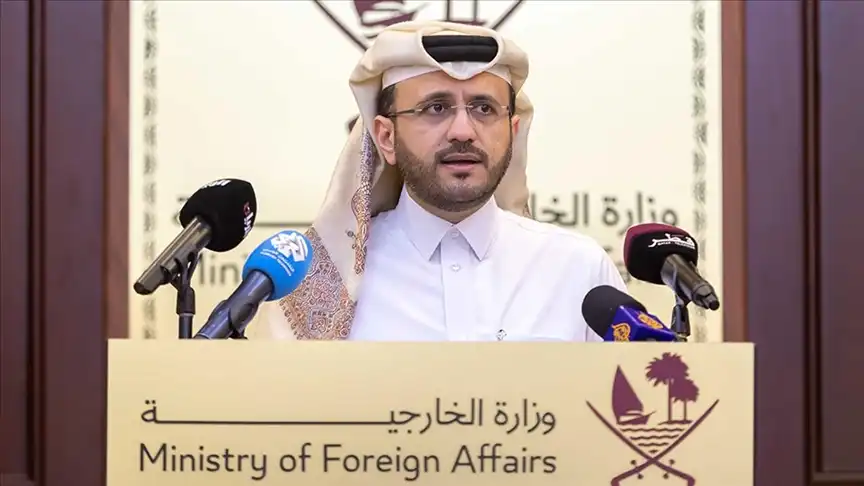

During the call, Al Thani stressed "the necessity of continuing efforts to stop the war in Gaza," and that "the only guarantee for achieving sustainable peace in the Middle East region is reaching a just and comprehensive solution to the Palestinian issue."
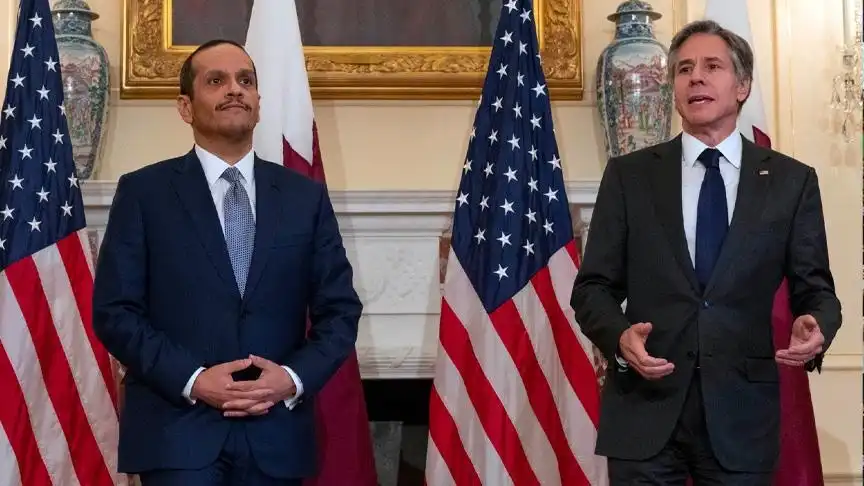

He stressed that this solution should be "in accordance with the Arab Initiative and the two-state solution, which guarantees the establishment of an independent, viable State of Palestine on the 1967 borders with East Jerusalem as its capital, and the Palestinian people’s enjoyment of their inalienable rights."


Meanwhile, Blinken expressed “his country’s thanks to the State of Qatar for its decisive role in the mediation that led to the truce, stressing that his country remains committed to the two-state solution,” according to the agency.


OPINIONS

Thu 23 Nov 2023 3:35 pm - Jerusalem Time

Israeli writer| Brutality has become a prevalent pattern in Israel

Haaretz

Haaretz

Opinion Writer

Gideon Levy

Giora Eiland is considered one of the "thinking officers" who emerged from the ranks of the Israeli army. He is a man of mild manners and eloquent speech, which is an intense expression of moderation and sound mind. He has an impressive military career. He headed the Operations Department and the Planning Department, along with the Israeli National Security Council. He is always interviewed, and he is a son of the labor movement. He is neither lazy nor ignorant, as is the case of Lieutenant Colonel Amir Afifi, nor is he thirsty for blood like Ben Gvir. He is a centrist, belonging to the moderate right. Eiland, who is known to suffer from many diseases and wrote a book about his suffering, has an idea: the spread of epidemics in the Gaza Strip is in Israel's interest. The man says, “The dangerous epidemics in the southern Gaza Strip will bring us closer to victory, and will reduce the damage among Israeli army soldiers,” this strategic thinker wrote this week in the Yedioth Ahronoth newspaper. All we have to do now is for the daughters of the leaders of the Hamas movement to become infected with the epidemic, and this will ensure our victory.

Eiland did not detail which epidemics he preferred. Did he mean boils, cholera, or perhaps a cocktail of black smallpox and AIDS? Perhaps also starving two million people. This is a guarantee of achieving victory for Israel at the lowest price. The man emphasized in his next article: “No, we do not practice cruelty for the sake of cruelty.” He inserted this phrase, as if someone had dared to put forward this idea in the first place. Naturally! This man exudes a rare kindness and humanity, which will only result in saving human lives. Here is Eiland in the person of Mother Teresa, he is an officer, he is a gentleman, and he comes from the most moral army in the world.

Eiland made a Nazi proposal, but without doing so a storm erupted. Because whoever accuses Israel of committing genocide is nothing but an anti-Semite. We only have to imagine a European general proposing to starve a people, or kill them through epidemics. Let us imagine that he is saying that about the Jews, for example. Spreading the epidemic would save the war effort. As is usual in war, proposing anything is now acceptable. Everything you dreamed of, but did not dare to propose in the past, is now legitimate. 

Political correctness has been reversed. Anyone can now turn into Meir Kahane, and it is no longer permissible for a person to remain human. It has become permissible for a person to suggest carrying out a genocide, but it is forbidden to feel compassion towards the children of the Gaza Strip. It has become acceptable to suggest that ethnic cleansing be carried out, but one must not be too shocked by the punishment of the Gaza Strip.

It is no longer limited to the right, but rather represents the opinion of the mainstream. Ram Ben Barak has become a supporter of voluntary mass deportation, and moderate Minister Gila Gamliel also supports it. The Foreign Ministry said that Gamliel does not represent the government in this position. But we have to admit that the minister’s position largely represents the government and others. Brutality has become a normal norm, and Satanism has become a middle trend, and its reach has reached the left of center as well. Let us have another war, or two, and everyone will become a priest.

We have barely woken up from the “brutality of the Hamas movement” so that more of these blessings will fall into our laps. Not only from the extreme right and the settlers, but from the heart of the Israeli center. It turns out that there is horrific brutality, and that there is acceptable and standard brutality. Hamas members are "human animals", but on the other hand, the proposal to spread an epidemic among people is legitimate. One of the most dangerous phenomena to emerge from this war is developing before our eyes: it is the phenomenon of turning evil into a norm, and also normalizing it.

This evil grows from the soil of unreasonable ignorance and pathological Israeli indifference to what is happening now in the Gaza Strip. Foreign journalists who come here can hardly believe their eyes: the suffering of the Gaza Strip does not exist in the first place. Israel does not kill thousands of children, nor does it expel a million people from their homes. There is no victim named Gaza at all, and it is absent, not only from Israeli public discourse, but also from the general newscast. Israeli television newscasts are the only ones in the world that do not know that we killed children. The Israeli media is the only one in the world that does not know that the Israeli army committed one small war crime in this war.

A society that ignores such a reality, and does not care about the suffering of those afflicted by the fire of war, produces moral mutations, like Mr. Eiland. One can be convinced that Eiland believes that his proposal is not tainted by any of the accusations mentioned above, as all the man did was present a logical proposal that serves the Israeli interest. Is there really anything in this world other than the Israeli interest? International law is for the weak, ethics is for the philosophizing, and humanity is for the proud and noble. And let's really ask: What's so bad about transmitting epidemics to the Gaza Strip? There is only one bad thing: the infection will spread to Israel as well. Let's admit it: they've been infecting us for a long time.