PALESTINE

Wed 31 Jan 2024 11:55 am - Jerusalem Time

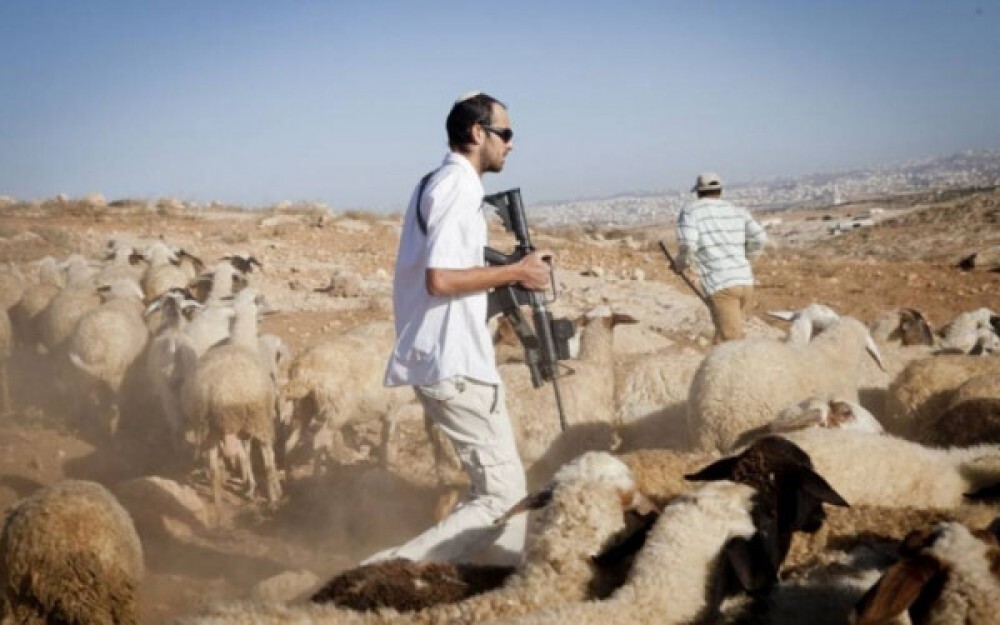
West Bank: Israeli settler tramples a flock of sheep and kills a number of them in Jericho

Today, Wednesday, a settler trampled a citizen’s flock of sheep in the Al-Ma’rajat area, west of Jericho.


According to local sources, the settler deliberately trampled on a herd of sheep belonging to Suleiman Malihat, causing the death of a number of them and stealing a number of others.

PALESTINE

Wed 31 Jan 2024 10:52 am - Jerusalem Time

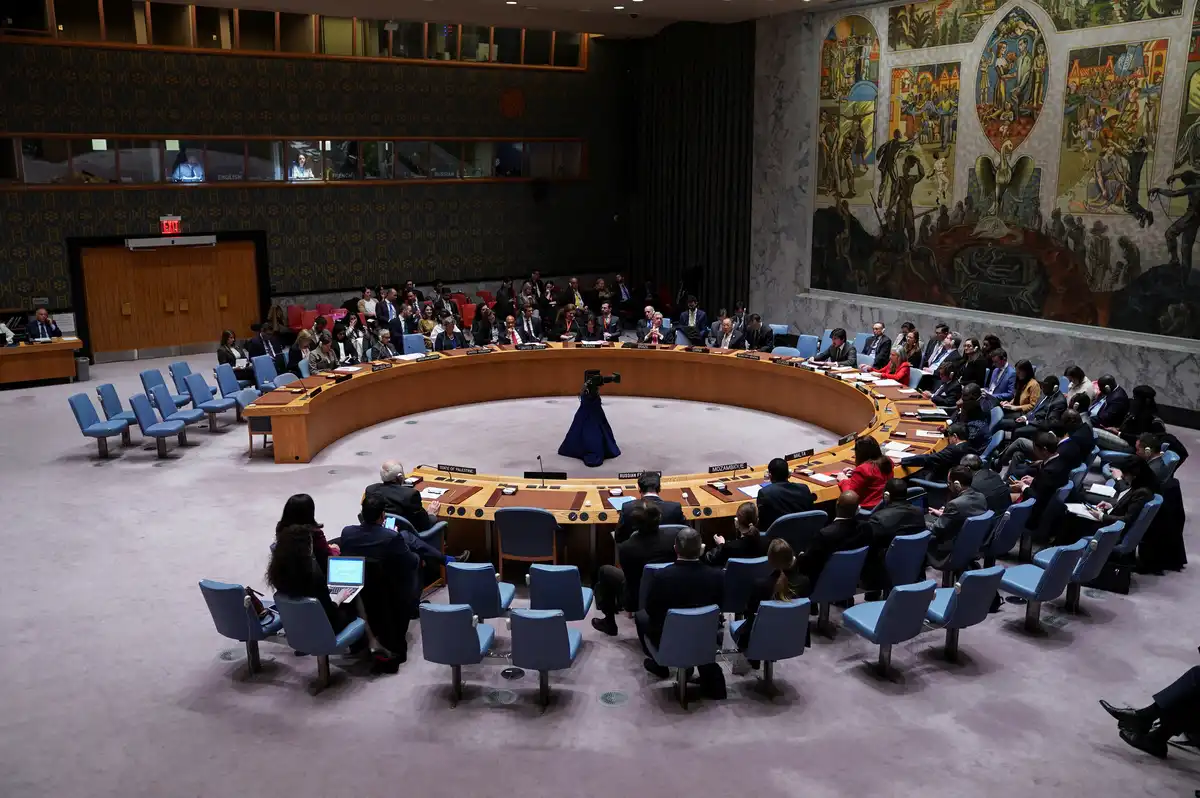
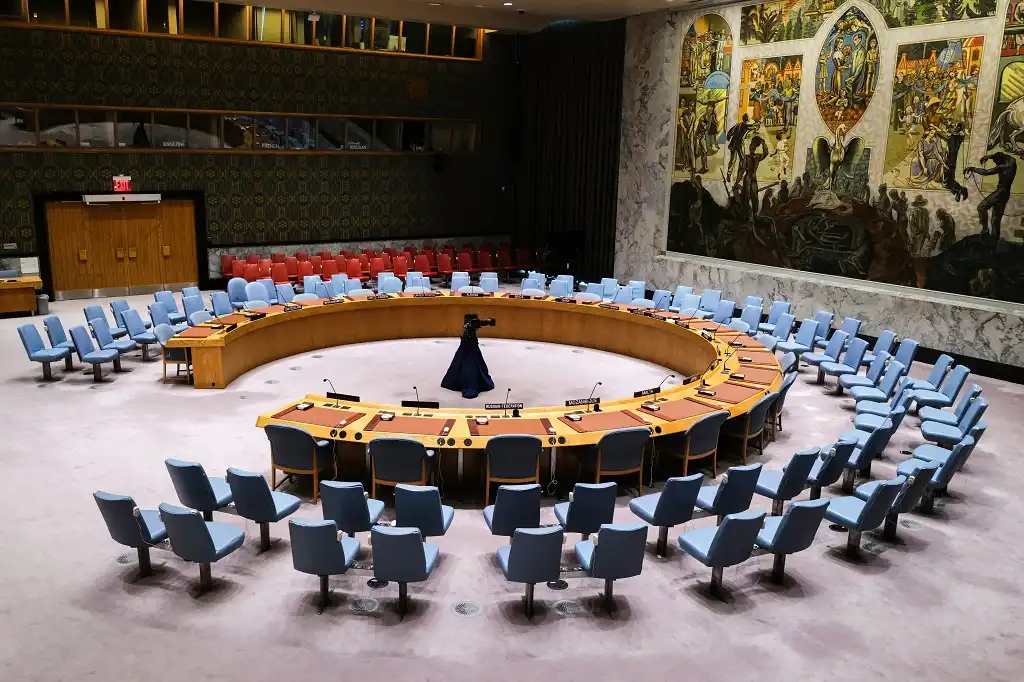
UN Security Council holds a session to discuss the “measures” of International Court of Justice

The Security Council is scheduled to hold a session this evening, Wednesday, to discuss the decision issued by the International Court of Justice to Israel, in order to prevent “genocide” in the Gaza Strip, at the request of Algeria.


The session aims to give binding force to the ruling of the International Court of Justice, regarding the temporary measures imposed on the Israeli occupation.


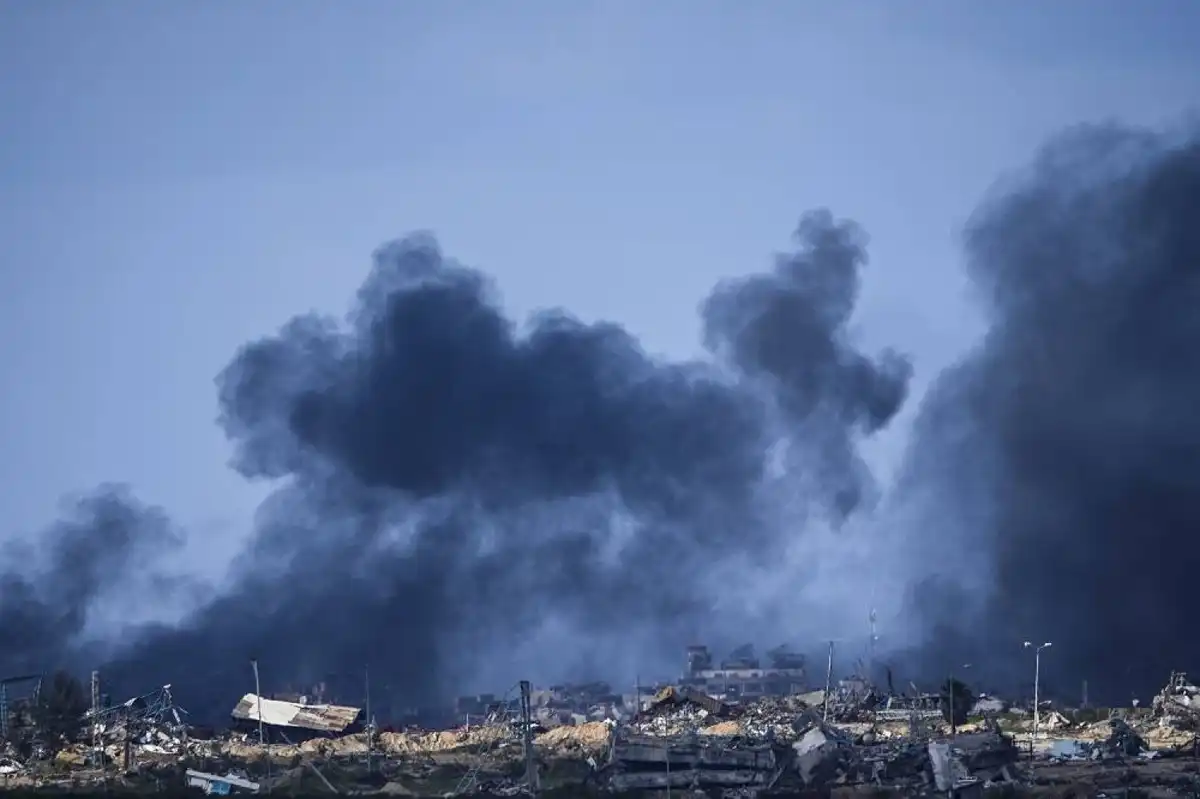
The Israeli occupation forces have continued their aggression against the Gaza Strip, by land, sea and air, since the seventh of last October, resulting in the death of 26,751 citizens, the majority of whom were women and children, and the injury of about 65,636 others, while more than 8,000 citizens are still missing under the rubble and on the roads.

PALESTINE

Wed 31 Jan 2024 10:48 am - Jerusalem Time

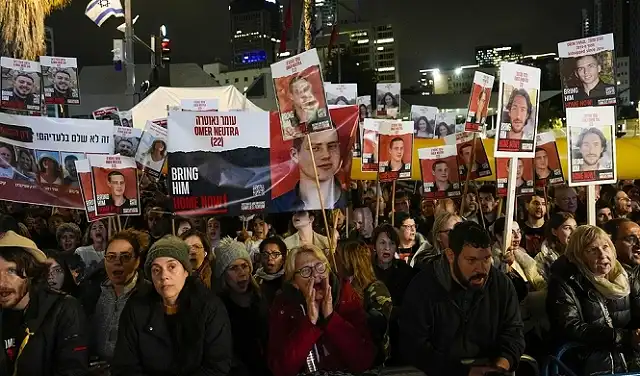
Israeli official: The chances of an exchange deal are high

An Israeli official said, “The possibilities of a prisoner exchange deal between Israel and Hamas are still high, because the US President, Joe Biden, wants to end the war on Gaza, and realizes that the only way to do so is a deal that leads to a long truce, and with the hope that it will become permanent” What Yedioth Ahronoth newspaper reported on Wednesday.


US Secretary of State, Anthony Blinken, will visit Israel, where he will arrive next Saturday evening, to discuss the details of the prisoner exchange deal and the truce, in addition to the issue of the “next day” after the war and the normalization of relations between Israel and Saudi Arabia.


The newspaper also quoted ministers in the political-security cabinet as saying that Israeli Prime Minister Benjamin Netanyahu is “seeking a deal,” but he is “very afraid” that the deal will lead to the withdrawal of the parties of extremist ministers Itamar Ben Gvir and Bezalel Smotrich. They added that Netanyahu does not want a government with the opposition leader, Yair Lapid.


After Ben Gvir threatened that he would topple the government if Israel agreed to the deal that was formulated during a meeting in Paris, last Sunday, which brought together the heads of the Mossad, the CIA, Egyptian intelligence, and the Prime Minister of Qatar, Netanyahu announced, “We will not liberate thousands of terrorists, and we will not withdraw the Israeli army from the sector.”


Ben Gvir wrote on the “X” platform that “a defeatist deal = dismantling the government.” According to the newspaper, although Ben Gvir has threatened to withdraw from the government more than once since the beginning of the war on Gaza, he is serious now, and told those close to him, “I mean every word. There is nothing I can do in a government that implements a defeatist deal. In my opinion, the government does not have a mandate to implement a defeatist deal with Hamas.


Those close to Ben Gvir said that he would withdraw from the government even if the deal included the liberation of a quarter or a third of the number of Palestinian prisoners who would be released, and that they believe that Netanyahu is paving the way for the possibility of liberating half the number of prisoners that are being talked about, and that he will consider this an achievement, according to what the newspaper quoted them as saying.


Meanwhile, the parties to the negotiations on the deal are awaiting Hamas’s response to it, after the head of its political bureau, Ismail Haniyeh, announced yesterday that the deal is being studied. The Hamas delegation visiting Cairo today may present the movement’s response to the proposed deal.


The deal stipulates Israel's release of thousands of prisoners and a truce in the war for a month and a half, in exchange for Hamas releasing a first batch of 35 Israeli hostages. According to the Haaretz newspaper, Netanyahu refuses to pledge to abide by this deal because of the opposition within his government.


The newspaper added that Israel agreed during the negotiators' meeting in Paris that the mediators would transfer their proposal to Hamas. “Israel thus linked itself to a large extent to the mediators’ proposal, even if it did not officially ratify the entire deal.”


The newspaper added that there is “concern” among the extreme right about a long-term ceasefire that will signify the end of the war on Gaza and the continuation of Hamas in power, “at least in the south of the Gaza Strip.” Also, "Netanyahu realizes that the return of a portion of the kidnapped, in exchange for thousands of prisoners, will be interpreted by large parts of the Israeli public as an admission of failure."


The newspaper indicated that Netanyahu is approaching a point where he will have to decide between the position of the extreme right, represented by Ben Gvir and Smotrich, who reject any deal, and accepting the deal. If Netanyahu agrees to the mediators’ proposal, “there is no hope for the government to survive in its current composition.”

OPINIONS

Wed 31 Jan 2024 8:28 am - Jerusalem Time

The Man Who Could Unseat Netanyahu

Anshel Pfeffer

Anshel Pfeffer

Opinion Writer

Just over 100 days ago, Benny Gantz was the leader of a small Israeli opposition party. Now, in a shared office inside a nondescript building within the Defense Ministry compound in Tel Aviv, “Mr.” Gantz is helping lead Israel’s war against Hamas in Gaza as a member of the war cabinet formed by Prime Minister Benjamin Netanyahu. Gantz spends his days poring over operational plans, not just of the ongoing campaign in Gaza but also of contingencies for a war that may erupt with Hezbollah, the Iranian-backed Lebanese Shiite organization, on Israel’s northern border. But the most complex challenge facing Gantz sits with him at the war cabinet table: Netanyahu. He has accused the prime minister numerous times in the past of dividing Israeli society. And since the war began, Gantz’s opinion of Netanyahu — and his estimation of the damage he is causing Israel — has sunk even lower, according to Gantz aides and political allies interviewed for this piece. Several security officials and foreign diplomats were also interviewed about Gantz. Gantz, 64, is in a unique and contradictory position. He is now, essentially, the grown-up in the room of the Israeli government. Many, if not most, Israelis, as well as Israel’s allies, look to him to prevent the radical moves being urged by the government’s far-right members. At the same time, according to polls, he is also the man most likely to replace Netanyahu and his disastrous government. To manage that transition and set the stage for a potential successful premiership will require political deftness, ruthlessness and, above all, an acute sense of timing. In his political career so far, he has yet to prove he has those qualities to the necessary degree. Practically from the moment he entered politics in 2018, Gantz found himself the target of a smear campaign orchestrated by a network of Netanyahu’s supporters. 

Despite this, he agreed to join an emergency government with Netanyahu to help Israel fight the Covid-19 pandemic in 2020. That decision split his party (at the time it was called Blue and White) and cost him a large chunk of voters, and the government fell apart within a few months. Three years later, Gantz is back with Netanyahu once more. 


By all appearances, the war left him no alternative. On Oct. 7, as the scale of Hamas’s devastating surprise attack became evident, Gantz told Netanyahu he was willing to join an emergency government. If he had any concern, it was apparently about the presence of far-right party leaders in the coalition. Judging by the polls, it was the right political move for Gantz. Netanyahu’s popularity has plummeted. If elections were held now, Gantz’s National Unity party would receive the most votes by far. He could form a ruling coalition with ease. Gantz has often told the story of a phone call with his mother, Malka, a survivor of the Bergen-Belsen concentration camp, after rockets from Gaza hit the yard of his childhood home during a previous war with Hamas. 

As he has recounted, she said, “‘If it doesn’t hurt you, then everything’s fine. If it hurts, then you don’t feel it anyway. I’m just asking you one thing: Don’t stop fighting, but also don’t stop providing them food.’ That has become my moral legacy.” It’s a story that positions him perfectly in the Israeli political center: a tough general with morals inherited from his Holocaust survivor parents. Nahum Gantz, Gantz’s father, was an active member of the Labor Party and at one point a possible Knesset candidate. But Gantz himself has tried hard not to be pinned down on either side of the spectrum. Indeed, if Gantz held any political views during his more than 37 years in uniform, he rarely showed them. The first half of his military career was spent largely in the celebrated Paratroopers Brigade, where he rose through the ranks to become brigade commander. Most of his combat experience was in fighting Palestinian militant organizations, and then Hezbollah in Lebanon. Soldiers under his command describe him as brave under fire but deliberate in his decision-making off the battlefield, favoring consensus. 

He even acquired the nickname Benihuta, a play on his name and an Aramaic-Hebrew word for “laid back.” To his superiors, he was the epitome of a paratrooper: respectful of authority, commanding through example without raising his voice. He was fast-tracked through a series of command postings. At 42, he was promoted to major general, and a year later, in 2002, put in charge of the Israeli army’s Northern Command. But after that his career appeared to falter, with two dead-end postings. He seemed to lack the burning ambition and political acumen needed to reach the very top of the greasy pole. He made it there anyway. A dispute in 2009 between Defense Minister Ehud Barak and the Israeli army chief of staff Gabi Ashkenazi over who should become the army’s deputy chief of staff resulted in a compromise candidate: Gantz. 

It was supposed to be his last posting, and he retired in November 2010. But a series of scandals tainted the leading candidates for the top job, and he was called back to serve as chief of staff. Once again, and not for the last time, it was Gantz’s even temperament that got him the job. Though many of the men who preceded him as commander of the armed forces ran for office after stepping away from the military, Gantz’s future in politics when his four-year term in that role ended was far from certain. Many thought he didn’t have the mettle. Though he apparently had reservations regarding Netanyahu and Barak’s plans for attacking Iran’s nuclear installations, as a cabinet minister has confirmed to me, his professional disagreements with his political masters remained hidden from the public. As the 2019 election neared, the absence of a candidate on the center-left capable of challenging Netanyahu led a group of political operatives to strongly encourage Gantz to run. As the former army chief of staff, he was already widely respected by the Israeli mainstream. 

He was such a textbook center-left candidate that, as the leader of the Resilience Party, he effectively forced the other centrist party, Yair Lapid’s Yesh Atid, to merge with his party, and formed Blue and White. The new party nearly drove the other Zionist-left parties, Labor and Meretz, into electoral extinction. Still, Gantz’s first years in politics hardly inspired confidence. He failed to instill a sense of unity in the camp opposing Netanyahu. Constant infighting among the senior factions of his new party and his own team of outside strategists made damning headlines.


The New York Times


ARAB AND WORLD

Wed 31 Jan 2024 8:24 am - Jerusalem Time

Netanyahu Rejects 2 Key Hamas Demands for Any Ceasefire

Israeli Prime Minister Benjamin Netanyahu has rejected two key demands Hamas has made during indirect ceasefire talks, saying Israel will not withdraw from the Gaza Strip or release thousands of jailed militants.

During an event Tuesday in the occupied West Bank, Netanyahu again vowed that the war would not end without Israel’s “absolute victory” over Hamas.

Meanwhile, Israeli forces working undercover killed three Palestinian militants in a raid on a hospital in the West Bank, where violence has surged since the outbreak of the war in Gaza.

The Israeli military said forces entered the Ibn Sina hospital in the northern city of Jenin early Tuesday and shot the three men, whom Hamas claimed as members. The military said the men were using the hospital as a hideout and that at least one was planning an attack.

The Palestinian Health Ministry said the Israeli forces opened fire inside the hospital’s wards and called on the international community to stop Israeli operations in hospitals.

Israel’s war against Hamas in Gaza has killed more than 26,000 Palestinians, most of them women and minors, according to the Health Ministry in the Hamas-ruled territory. The ministry does not differentiate between civilian and combatant deaths.

The Oct. 7 attack in southern Israel that sparked the war killed 1,200 people, mostly civilians, and about 250 people were taken hostage, according to Israeli authorities.


OPINIONS

Wed 31 Jan 2024 7:10 am - Jerusalem Time

The War in Gaza Postponed the Emerging US–Israel Crisis, but Intensified It

The Institute of National Security Studies

The Institute of National Security Studies

Opinion Writer

By Chuck Freilich

While the events of October 7 led to a pause in the tensions between Jerusalem and Washington over the “judicial overhaul,” they did not entirely disappear. Now the gaps between the US government and Israel are again widening, mainly over the fighting in Gaza and especially the “day after”


For the past several years—and even more so since the start of the “judicial overhaul”—we have been warning about an impending crisis in relations between the United States and Israel. The war postponed these tensions, which had grown in the months before October 7, but now, following a period of unprecedented strategic cooperation, the gaps are widening around Israel’s handling of the war and “the day after.” The Biden administration is increasingly skeptical that the Israel Defense Forces (IDF) can achieve its military goals and is working to scale back the fighting and move onto the diplomatic stage—the centerpiece of which is an effort to advance the establishment of a Palestinian state as the key to reshaping a new regional order. Decades of frustration and pent-up anger over Israel’s ongoing rejection of fundamental US positions on the Palestinian issue are now erupting, along with a growing sense that Israel does not show gratitude for American support and that Prime Minister Benjamin Netanyahu is positioning himself in opposition to American policy for political gain. Congress is even intensifying efforts to condition military aid to Israel on a shift in Jerusalem’s policies toward the Palestinians. The war may have sidelined the crisis, but its scope and scale are likely to grow—especially after the November presidential election in the United States.


For the past several years—and even more so since the current Israeli government attempted to promote its “judicial overhaul”—the Institute for National Security Studies has been warning about an impending crisis in relations between Israel and the United States. Two primary processes form the backdrop for this assessment: changes in the demography of the United States in general, and its Jewish population in particular, of which are entirely unrelated to Israel; and the ever-increasing gap between the two countries on certain core issues, primarily their policies toward the Palestinians and Iran. The war between Israel and Hamas in the Gaza Strip sidelined the palpable tensions that had built up in the period leading up to the outbreak of the war—tensions that were expressed, inter alia, in harsh criticism by the US administration, which, for the first time, even expressed concern over Israel’s democratic future, not just reservations about some specific Israeli policy. Moreover, there was a prolonged period in which President Biden refrained from speaking with Prime Minister Netanyahu. Now, after three months of unprecedented strategic cooperation, the gaps are widening once again over Israel’s handling of the war and especially its lack of a strategy for “the day after.”


  • The war’s goals and achievements thus far: American intelligence estimates that the IDF has killed only between 20 and 30 percent of Hamas’s fighters, demonstrating the organization’s resilience and casting doubt on Israel’s ability to achieve the military goals it set out for the war. As a result, the United States has reportedly downgraded its expectations of the war, from toppling Hamas, to minimizing the military threat that it poses. Thus, US Secretary of State Anthony Blinken stated that the war’s goal is to “ensure that October 7 never happens again” and that “there is no military solution” to the Hamas problem.
  • The “day after”: Blinken stressed that the region is at an “inflection point . . . that opens up an entirely different future.” Arab countries, he said, including Saudi Arabia, are currently willing to change their policies toward Israel and to grant it “the kind of security assurances and commitments and guarantees that they never would have given in the past” in exchange for the establishment of a Palestinian state. During Blinken’s visit to Israel, unnamed administration officials expressed deep disappointment over Netanyahu’s rejection of US positions (apart from opposition to a possible military strike in Lebanon), including the need for a revitalized Palestinian Authority to take control over both the Gaza Strip and West Bank; the establishment of a Palestinian state; increased humanitarian aid for Gaza; minimal civilian causalities in Gaza; and scaling back the intensity of the fighting there. They also expressed especially harsh criticism over his rejection of Saudi Arabia’s promised willingness to normalize ties with Israel, as well as (according to some reports) the agreement of Saudi Arabia and four additional Arab states, to contribute to the reconstruction of Gaza, as part of a revitalized Palestinian Authority—in exchange for a “path” to Palestinian statehood.
  • A Palestinian state: Spokespersons for the Biden administration reiterated the importance that the United States attaches to the establishment of a Palestinian state, which it sees as the key to forging a new regional reality. In order to downplay disagreements with Israel, the president said that “there are a number of two-state solutions . . . There’s a number of countries that are members of the UN that are still—don’t have their own militaries. Number of states that have limitations.” Biden further rejected the claim that a two-state solution is not possible as long as the prime minister is in his position, adding that he believes an agreement is possible. National Security Adviser Jake Sullivan argued that regional normalization and the establishment of a Palestinian state are achievable in the not-too-distant future.
  • The Iranian context: Blinken stressed that regional normalization, including provision of security assurances by Arab states to Israel, in exchange for the establishment of a Palestinian state, “would create an entirely new region.” In so doing, Iran would be isolated and this would constitute a very strong response to the problems that the Islamic Republic poses for both Israel and the United States.
  • Growing frustration within the administration toward the prime minister and Israeli policy:
    • President Biden was reportedly angry with the Israeli prime minister for rejecting an American request to transfer tax revenue to the Palestinian Authority and consequently refrained from speaking to him for over a month, until January 20. Until then, their war time phone calls took place on average more than once a week.
    • Senior administration officials believe that US plans to reshape the region, which are predicated on the establishment of a Palestinian state, will have to wait for a new government to be elected in Israel. Nevertheless, they stressed that Netanyahu will not be in power forever and that they have even started preparing for “the day after Netanyahu.” Indeed, during his visits to Israel, Blinken met separately with members of the prime minister’s war cabinet, including Minister Benny Gantz, Head of the Opposition Yair Lapid, and figures from civil society.
    • In particularly pointed comments, Blinken said that a reversal had taken place in the attitudes of regional leaders. Whereas, in the past, whenever progress had taken place in the Israeli–Palestinian peace process, it was “Arab leaders, Palestinian leaders, [who] had not done enough to prepare their own people for this profound change. I think a challenge now, a question now: Is Israeli society is prepared to engage on these questions?”
  • Growing criticism in Congress: A proposal by Senator Bernie Sanders to condition US military aid to Israel on the administration’s assurances that that the IDF is not violating human rights or carrying out disproportionate attacks in Gaza, and that Israel is not preventing basic humanitarian aid from entering Gaza, was voted down by a sweeping majority of 72 senators versus 11 Democrats. Following the vote, 18 senators have already joined a new initiative that would condition US military aid to Israel on its adherence to international law, and more senators are expected to sign on. Another initiative, which would prevent the administration from bypassing Congress and approving aid to Israel on its own recognizance, is also underway. These initiatives are unlikely to garner a majority but the very fact that they have been raised at all, in a forum that was heretofore considered staunchly pro-Israel, indicates the deterioration in Israel’s standing. Senator Chris Van Hollen went so far as to say that the Israeli prime minister is more attentive to the extremist ministers in his coalition than to the president of the United States and that he has even “given Biden the finger.” Moreover, 15 Jewish members of Congress expressed joint support for the two-state solution.
  • The upside: Despite the increased criticism, senior American officials have emphasized that the president will not cease his efforts to persuade the prime minister by means of quiet diplomacy, without significant public confrontations. Officials also noted that Israel was paying heed to the administration’s positions regarding the war’s prosecution and had allowed shipments of flour into the Gaza Strip. The administration is continuing its efforts, in coordination with France and other countries, to prevent escalation on the northern border.

Assessment

At the end of three and half months of fighting, the level of discomfiture within the Biden administration over both Israel’s military accomplishments thus far and its diplomatic positions is clearly rising. The administration still remains committed, in principle, to the goal of eliminating Hamas, but is increasingly skeptical about the IDF’s ability to do so. In the absence of expectations for a decisive Israeli military victory, the administration has started to lower its expectations with regard to the war’s outcome and is trying to bring about a faster end to the combat, along with a transition to both focused military operations and the diplomatic stage.

The administration has focused its efforts on an attempt to bring about what has become its primary goal, the establishment of a Palestinian state. The administration is well aware of the difficulties it will undoubtedly face and knows that it will take long and arduous negotiations, but establishment of a Palestinian state has become a virtual panacea for the problem posed by Hamas, achievement of a broader agreement, the means of ensuring Israeli security, a platform for regional normalization, and establishment of a pro-American axis to counter the Iranian threat. Against this backdrop, the administration’s disappointment over the Israeli prime minister’s rejection of American proposals for resuming the peace process is especially pronounced.

Normalization between Israel and Saudi Arabia, and subsequently with other Muslim nations, as part of a comprehensive move to reshape the Middle East around a pro-American, anti-Iranian axis, is the main incentive that the administration is dangling before Israel, in an effort to move it toward an agreement. The administration, drawing on the experience gained from previous spats with Netanyahu, is keen to stave off a public crisis at least for the time being. Biden’s profound emotional commitment to Israel, along with political considerations ahead of the election in November, further contribute to this. Having said that, deliberate administration leaks about “the day after” are an expression of both the White House’s desire to pressure Netanyahu into making progress and an assessment that political change in Israel, which will greatly ease American efforts, may be on the horizon.

The war sidelined the tensions and growing collision course that have characterized US–Israel relations in recent years, primarily over the Palestinian issue and, more recently, over the “judicial overhaul.” After October 7, the administration rallied to Israel’s side admirably—both on the diplomatic and military fronts, in what may have been the most striking demonstration of the American commitment to Israel’s security ever.

Israel, which initially enjoyed sweeping American support in the aftermath of October 7, is increasingly seen in the United States as the party responsible for events in the Gaza Strip. Decades of frustration and pent-up anger at Israel’s ongoing rejection of fundamental American policy, first and foremost the need to advance the two-state solution, are now reaching new heights, especially within the progressive flank of the Democratic Party, but not just there. There is also a growing sense within the administration that Israel does not show gratitude for the exceptional support that the United States has given it, and not only continues to reject American positions, but the prime minister even makes use of his opposition to the US policy for his own political advantage.

Fundamental changes are underway in American demography that are unrelated to Israel, but have a negative impact on the US relations with it—chiefly the rapid growth of population groups that have little affiliation with Israel. The Jewish population too, the vast majority of which is liberal, is moving away from Israel and is disagreeing with many of its policies—especially its young people. The Muslim population in the United States is also growing in size and is becoming increasingly organized politically, including in lobbying groups, and their supporters are increasingly found in positions of influence in the government and the media.

A real crisis in relations is unlikely before the US presidential election, but tensions remains high and the crisis could erupt any time during a second Biden term, or if Donald Trump, who bears a grudge toward Netanyahu and Israel in general, returns to the White House. The danger of American military aid to Israel being conditioned on a change in Israeli policy toward the Palestinians—a position that, until recently, was espoused only among the most radical fringes of American politics—is becoming a real and present threat. The IDF’s long-term force planning is predicated on the continuation of the current 10-year American aid package, which ends in 2028, and a further and even larger one thereafter. These basic assumptions can no longer be taken for granted, and the Israeli government would be well advised to treat this with the utmost seriousness it warrants and to alter its policies accordingly.


Chuck Freilich

Professor Chuck Freilich, a senior researcher at INSS, served for over 20 years in Israel’s national security establishment, as a senior analyst and finally as a deputy national security adviser. After leaving government, he was a long-time senior fellow at Harvard's Belfer Center and taught political science at Harvard College. He continues to teach political science at Tel Aviv University, Columbia and NYU and is the senior editor of the Israel Journal for Foreign Affairs. Freilich specializes in Israel’s national security strategy and policymaking processes, US Middle East policy and US-Israeli relations.


ARAB AND WORLD

Wed 31 Jan 2024 7:07 am - Jerusalem Time

Axios: Netanyahu's advisor in Washington... The day after the war includes normalization with Saudi Arabia

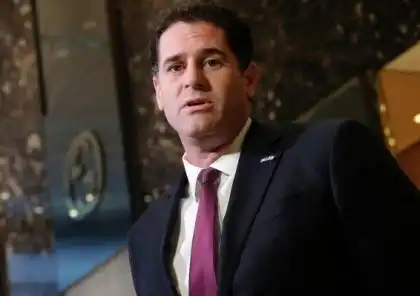
Israeli Minister of Strategic Affairs, Ron Dermer, intends to visit Washington, tomorrow, Wednesday, and meet with White House National Security Advisor Jake Sullivan and other senior officials in the Biden administration.


The American website "Axios" reported, citing two informed sources, that Dermer's visit aims to hold talks about the "war" on Gaza, and "Israel's" plans for the next day after the end of the fighting.

But the site also revealed that “the Biden administration’s post-war strategy is likely to be part of Dermer’s discussions in the White House,” noting that “the Biden administration hopes to use a potential historic peace agreement between Israel and Saudi Arabia as a means of pressure to convince Israel of its plan for Gaza after the war.”


Under the American strategy, “Netanyahu will ultimately have to decide what kind of political blow he will receive domestically, in order to obtain a historic normalization agreement,” according to the American website.


"Axios" stated that "Dermer is the closest and most trusted confidant of Israeli Prime Minister Benjamin Netanyahu, and that he has a key insight into Netanyahu's thinking, including the post-war US strategy to link possible normalization between Israel and Saudi Arabia to establishing a path to establishing a Palestinian state." ".


He stated, "Before the October 7 attack, Dermer was responsible for Israel's role in the talks that the Biden administration tried to reach with Riyadh with the aim of normalizing relations."


This comes in conjunction with US Secretary of State, Anthony Blinken, intending to visit the occupied Palestinian territories next Saturday, his sixth visit since October 7, “in order to discuss the situation in Gaza and the day following the war.”

ARAB AND WORLD

Wed 31 Jan 2024 6:58 am - Jerusalem Time

“Waiting for Hamas’ response.” A plan for a ceasefire in Gaza

Reuters quoted "informed sources" as saying that the Hamas movement is studying a three-stage plan for a ceasefire in the Gaza Strip that will secure the release of most Israeli prisoners, but it does not obligate Israel to end its war with Hamas.


The success of the plan depends on whether or not Hamas will agree to the first phase without agreeing to end the war permanently, which has been a core demand of Hamas so far. The plan was prepared by the heads of the intelligence services in the United States, Israel, and Egypt, as well as the Qatari Prime Minister, according to Reuters.


Sheikh Mohammed bin Abdul Rahman Al Thani, Prime Minister of Qatar, said on Monday that they do not know Hamas' response and cannot predict it.

Hamas told Reuters in a statement on Tuesday that the proposal would include three stages, including the release of prisoners held by the movement and of Palestinian prisoners in Israel. The statement confirmed some details of a framework presented to Reuters by two sources familiar with the proposal.

The statement stated that women, children, the elderly and the injured would be released in the first phase and that the plan was sent to Gaza to obtain the opinion of Hamas leaders there. The statement added: "Then the Hamas leadership will meet to discuss the paper and express its final opinion on it."

More than 100 Israeli prisoners are still being held, after a similar number were released in a previous truce in November that included the release of dozens of Palestinians.


Versions of the ceasefire framework consisting of several stages have been under discussion since late December, but Israel did not sign the initial version until the meeting of David Barnea, director of the Israeli intelligence agency Mossad, with his American and Egyptian counterparts and the Prime Minister of Qatar in Paris on Sunday.


Egyptian sources said that Qatar, Egypt and Jordan will ensure that Hamas adheres to any agreement, while the United States and France will do the same with the Israeli side.


This comes as Ismail Haniyeh, head of Hamas' political bureau, announced on Tuesday that he will visit Cairo to discuss the plan. Haniyeh says that Hamas is open to all ideas that will lead to an end to Israel's attack on Gaza.


Women, children and the elderly

A source familiar with the Paris talks and another source with deep knowledge of the talks and their results said that the first phase of the plan will include temporarily stopping the fighting and releasing prisoners of old, civilians, and children. The two sources stated that sending large shipments of food and medicine to the Gaza Strip, which is facing a severe humanitarian crisis, will resume.


The two sources disagreed on the duration of the first phase of the ceasefire, but they said that it would be set for at least a month.


The two sources said that the second phase will witness the release of Israeli female soldiers and a further increase in the delivery of aid and the restoration of services and facilities to Gaza, and that the third phase will witness the release of the bodies of dead Israeli soldiers in exchange for the liberation of Palestinian prisoners.


The Hamas statement stated that the second phase would also include the release of Israeli recruits.


The statement stated: “Military operations on both sides will stop during the three stages.” The statement added: "The number of people required to be released from the Palestinian side has not been determined, and the matter is left to the negotiation process at every stage, with the Israeli side preparing to release those with high convictions."


The two sources said that although Israel has not committed to a permanent ceasefire, the desired goal of the phased approach is the fourth phase in which the war will end and Hamas will release all detained male Israeli army soldiers in exchange for Israel releasing more Palestinian prisoners.


An official familiar with the negotiations said: “There is agreement on the principle of the framework, but the precise details of each stage still need to be determined.”


The official added that if Hamas agrees to the framework proposal, it may take days or weeks to agree on the logistical details of the ceasefire and the release of prisoners and detainees.


A source familiar with the talks that preceded the truce in November said that during those talks, the chain of indirect communications between Hamas leaders in the Gaza tunnels and Israeli officials was interrupted several times due to a power outage amid the fierce fighting.


The current behind-the-scenes talks are taking place side by side with a public dispute in which both sides of the conflict appear to want to pressure the other by issuing statements that rule out many possible settlements.


Israeli Prime Minister Benjamin Netanyahu said on Tuesday that Israel will not leave Gaza or liberate thousands of Palestinian prisoners, while the Islamic Jihad movement stated that it will not participate in any understanding regarding the prisoners except by ensuring a comprehensive ceasefire and the withdrawal of Israeli forces from Gaza.


Itamar Ben Gvir, the far-right partner in Netanyahu's coalition, threatened on Tuesday to withdraw from the government if there was any attempt to enter into an "uncalculated" agreement with Hamas regarding the prisoners.


"What really matters"

It is not clear whether the declared positions reflect developments taking place behind closed doors.


The Prime Minister of Qatar said on Monday in a symposium organized by the Atlantic Council in Washington via the Internet that the framework agreed upon by the Paris parties depends on the terms of the first proposal presented by Israel and the corresponding proposal by Hamas.


He explained: "We tried to combine the proposals to reach a platform that all parties agree on."


For his part, the source with deep knowledge of the proposal noted that it could still be amended. He told Reuters: “The number of days or prisoners can be changed, but the current approach to negotiation allows achieving gains for all parties according to what interests them.”


The source with in-depth knowledge added that the discussions in Paris were “fruitful,” but an agreement could only be achieved if Hamas and Israel received strong guarantees from the mediators.

The source said that keeping the male captive Israeli soldiers until the end may give Hamas a feeling that it has some influence over the Israeli army.


Reuters

ARAB AND WORLD

Wed 31 Jan 2024 6:55 am - Jerusalem Time

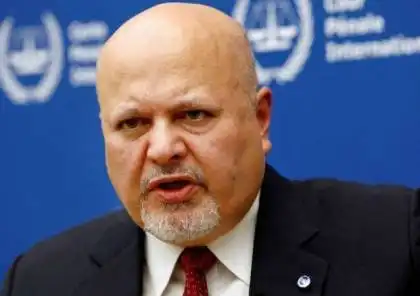
Because of his refusal to open an investigation into the genocide in Gaza, Tunisian associations are suing Karim Khan

Representatives of Tunisian civil society organizations and figures announced the filing of a judicial complaint with the Tunisian courts against the Prosecutor of the International Criminal Court, Karim Ahmed Khan, due to his “refraining” from opening an investigation into the crime of genocide committed by the Israeli occupation forces in the Gaza Strip.


During a press conference on Tuesday in the capital, Tunisian national figures denounced “the refusal of the Prosecutor of the International Criminal Court to address, with the powers he possesses, the crime of genocide taking place before his eyes against the Palestinian people, the facts of which were documented by organizations, coordination and countries in files presented to him.”

Lawyer Adnan Al-Imam confirmed to Radio Mosaique that “this criminal lawsuit submitted is based on the fact that Karim Ahmed Khan has the authority to open an investigative investigation into the events of the crime of genocide, which he was fully aware was being committed against the Palestinian people in Gaza, and that Chapter 15 of the Rome Statute enables him to open “Investigation of purpose.”

He added, “Ahmed Khan was an eyewitness to this, given that he moved to Rafah and witnessed the denial of medicine, water, food, electricity, and all basic life facilities to the Palestinian people. He contented himself with general statements, while it was clear from the statements of senior Zionist officials that they intended to commit the crime of genocide against the people.” This was confirmed by the events that led to the killing of tens of thousands of civilians, most of them children and women, in addition to the destruction of more than 320,000 homes.”

The International Court of Justice ordered Israel to take measures to prevent genocide against Palestinians and improve the humanitarian situation in the Gaza Strip, but it did not call for a ceasefire in Gaza.

ARAB AND WORLD

Wed 31 Jan 2024 6:51 am - Jerusalem Time

The Intercept: American forces in Iraq were prepared to participate in the war on Gaza

Military documents revealed that the US military was prepared for the possibility of American forces stationed in Iraq participating in the Israeli ground war on Gaza despite President Joe Biden’s repeated promises not to send troops to the region, according to the “Intercept” website.


A memo issued by US Air Force personnel last January, obtained by The Intercept, describes military orders to remain “ready for forward deployment to support forces in the event that the United States becomes involved on the ground in the Gaza war.”


According to a separate personnel document, the reserve order relates to individuals who were deployed last year to Iraq.


While the documents do not indicate that US ground military intervention in the war is imminent, the January memo is the latest indication of the Pentagon’s preparations to support Israel in the wake of Operation Al-Aqsa Flood. Days after the attacks, the US military reportedly placed 2,000 soldiers on readiness orders for deployment to elicit possible support for Israel, albeit from neighboring countries – orders that were confirmed by a procurement document obtained by the site.


The Department of Defense did not respond to a request for comment on the staff memo on readiness for ground engagement, but the White House has stressed in the past that its support for Israel in the Gaza war will not include the deployment of ground forces.


White House national security spokesman John Kirby said: “There are no plans or intentions to deploy US troops on the ground in combat in Israel.” “But as we also said, we have significant national security interests in the region.”


Two days after Kirby's comments, the White House inadvertently shared a photo of President Joe Biden in Israel standing alongside members of secret US special operations units, before quickly deleting it.


The New York Times reported in late October that US special operations personnel were in Israel to assist in hostage rescue efforts.


The documents obtained provide a stark reminder of the pervasive US military presence in the Middle East, with personnel deployed to areas where many Americans believe the mission is long over - and how quickly such orders can be repurposed in new conflicts.


The records include, for example, individuals deployed to Iraq in support of Operation Inherent Resolve, the name the US military gives to the war against the Islamic State. Although ISIS was expelled from its last strongholds years ago, the war continues, providing the legal basis for the continued US military presence in Iraq and Syria.


Former President Donald Trump wrote on Twitter in December 2018, saying: “We defeated ISIS in Syria, which is the only reason we were there during the Trump presidency.”


Shortly thereafter, Trump announced that US forces in the country "will all be back," and Trump later announced that all US forces in Iraq would be withdrawn as well.


Despite these announcements, US forces remained in Syria as well as in Iraq, where they remain to this day. The White House said the deployments are “part of a comprehensive strategy to defeat ISIS.” “To reduce the potential resurgence of these groups and mitigate threats to the United States homeland.”

ARAB AND WORLD

Wed 31 Jan 2024 6:42 am - Jerusalem Time

What does the latest opinion poll in "Israel" say?

An Israeli public opinion poll, the results of which were published this evening, Tuesday, showed that a majority of Israelis support completely preventing aid from Gaza, until the return of the Israeli hostages held in the Strip.


The Israeli Channel 12 poll also showed the continued lead of the “National Camp” led by the minister in the war cabinet, Benny Gantz, and its lead by a large margin over the Likud led by Israeli Prime Minister Benjamin Netanyahu. It also indicated that the first, in addition to the member of the Israeli “war cabinet,” Gadi Eisenkot; they are ahead of Netanyahu in which of them is “best suited” to assume the position of prime minister.


The survey participants were asked about the extent of their approval of a prisoner exchange deal, which includes the release of 35 Israeli hostages held in Gaza, in exchange for the release of thousands of prisoners from occupation prisons, and a 45-day truce. 50% said they opposed this, while 35% said they supported it. 12% answered, “I don’t know.”


When survey participants were asked whether humanitarian aid to Gaza should be halted until the hostages held in the Strip are recovered; 72% of the survey participants confirmed their support for stopping it, while only 21% of the respondents said that it should not be stopped, while 7% answered, “I do not know.”


61% of the survey participants believed that an investigation committee should be formed into the Israeli failure, following the surprise attack launched by Hamas on the 7th of last October, during the war, while 32% said that it should be formed immediately, while 3% of the respondents believed there is no need to form such a committee. 4% said: “I don’t know.”


Gantz is getting stronger... Netanyahu is suffering

According to the results of the Channel 12 poll, the National Camp leads in the results of today’s elections, obtaining 37 seats out of 120, while Likud comes in second, obtaining 18 seats.


The poll showed that the "Yesh Aited" party, headed by the leader of the Israeli opposition, Yair Lapid, received 14 seats, and the ultra-Orthodox "Shas" party obtained 10 seats.


The poll also showed that the Yisrael Beytenu party, headed by Avigdor Lieberman, obtained 8 seats.


The "Otzma Yehudit" party, headed by extremist Itamar Ben Gvir, also gets 8 parliamentary seats, while the Haredi "United Torah Judaism" list gets 7 seats.


According to the results of the poll, the Front/Arab List for Change gets 5 seats, and the “Unified Arab List” gets the same number.


According to the poll, “Religious Zionism” gets 4 seats, and the “Meretz” movement also gets 4 seats.


The National Democratic Rally Party received 2.3% in the poll, after it had obtained 2% in a previous poll that the channel had conducted on the 11th of this month. The Labor Party obtained 1.6%.


Which of them is best suited to head the government?

Regarding which Israeli officials are more suitable for the position of prime minister, 41% of respondents said that Gantz is more suitable for the position than Netanyahu, while the current prime minister receives a comparison with him, with a rating of 23% of respondents.


In a comparison between Eisenkot and Netanyahu, the former leads and receives 36% of the votes of the survey participants, while Netanyahu receives 24% of the people who believe that he is most suitable for the position.


In a comparison between Netanyahu and Lapid, the former has a slight lead, as he receives 29% of the votes of the poll participants, while Lapid receives 27% of the people who believe that he is most suitable for the position.

PALESTINE

Tue 30 Jan 2024 10:46 pm - Jerusalem Time

The most prominent developments on the 116th day of the Israeli war on Gaza

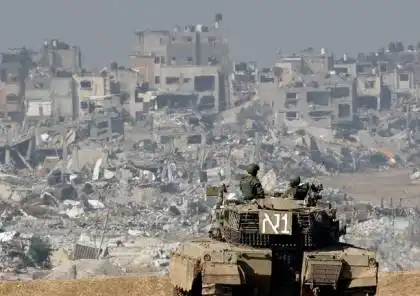
On the 116th day of the ongoing Israeli aggression on the Gaza Strip, the occupation committed 13 new massacres, claiming the lives of more than 114 citizens, amid violent clashes between the resistance and the occupation forces near the Shifa Medical Complex.


Fighting in Gaza

The Israeli army said it used a mechanism to flood tunnels with water to destroy the tunnel network of the Islamic Resistance Movement (Hamas) in Gaza.


The army announced that 26 soldiers were injured during the past 24 hours, including 7 who were injured in the battles in the Gaza Strip. It also confirmed that the number of its wounded had risen to 2,797 since the beginning of the war, including 1,283 who had been injured since the start of the ground attack on October 27 last year.


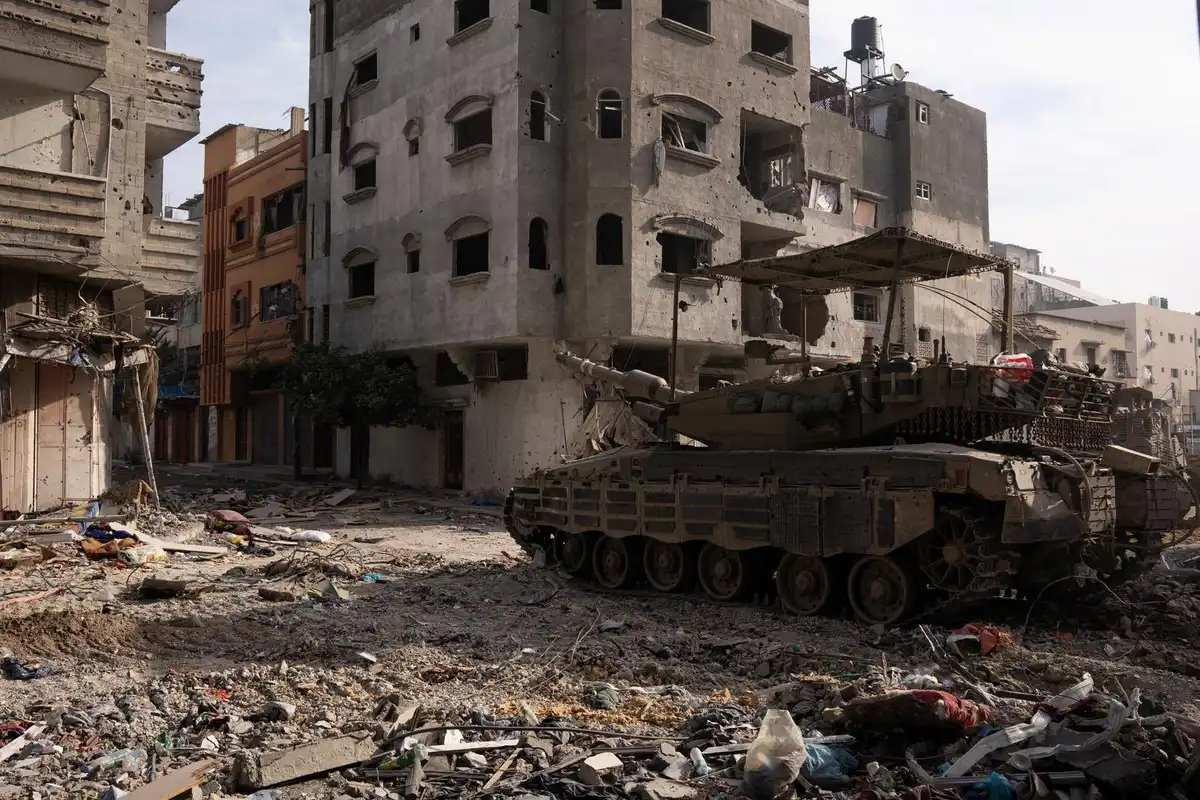
For its part, the Civil Defense in Gaza confirmed that the occupation army blew up entire residential squares in the Tal al-Hawa neighborhood and areas west of Gaza City, and added that the occupation also bombed Jabalia, north of the Strip.


The Palestinian Red Crescent said that the Israeli occupation army stormed the association’s building and Al-Amal Hospital in Khan Yunis, and demanded their evacuation at gunpoint and the disruption of communications.


The Ministry of Health in Gaza reported that the number of victims of the Israeli war on the Gaza Strip had risen to 26,751 dead and 65,636 wounded.


Resistance

The Izz al-Din al-Qassam Brigades said that “its mujahideen targeted an Israeli Merkava tank with an Al-Yassin 105 shell, and clashed with soldiers who were around it, leaving them dead and wounded in the axis west of Gaza City.”


Al-Qassam added - in an independent statement - that it targeted an Israeli tank with an “Al-Yassin 105” shell in the axis northwest of Gaza City.


For its part, the Al-Quds Brigades - the military wing of the Islamic Jihad Movement - said that it "targeted 4 Zionist tanks with RPG shells in the Al-Arayshiyah and Jourat Al-Aqqad areas, west of the city of Khan Yunis, south of the Gaza Strip."


West Bank

The Palestinian Prisoners' Club reported that the occupation forces arrested 18 Palestinians since Monday evening in the occupied West Bank, bringing the number of detainees to 6,390 since last October 7. They also carried out a number of raids into areas and towns in the West Bank.


An Israeli special force from the undercover "Musta'ribin" unit assassinated 3 young Palestinians inside Ibn Sina Hospital in the city of Jenin. It explained that Israeli forces stormed the hospital located in the western area of the city in light of violent clashes.


Lebanon Front

Lebanese Hezbollah said that it targeted Israeli spy equipment opposite the southern village of Wazzani, and announced that it had targeted with missiles a gathering of Israeli army soldiers in the vicinity of the Hadab Yarin site.


Occupation Army Radio reported that Israeli artillery bombed sites in southern Lebanon, from which 3 shells were fired at Western Galilee, two of which fell near the Arab Aramsha area, while the last fell in an open area.


Israeli statements regarding the end of the war

Army Radio quoted the Israeli Minister of Immigration and Integration, Avir Sofer, as saying that the war on Gaza may continue until after 2024, and perhaps until 2025 and 2026.


Israeli Defense Minister Yoav Galant said that Israel would retain military control over the Gaza Strip after the war.


Exchange deal

Reuters quoted the head of the political bureau of the Islamic Resistance Movement (Hamas), Ismail Haniyeh, as saying that the movement had received a proposal from Paris for a ceasefire, and would study it to respond to it.


For his part, John Kirby, spokesman for the National Security Council at the White House, announced that progress had been made towards reaching a long truce and releasing the “hostages.”


He said that National Security Advisor Jake Sullivan met with Qatari officials today to discuss the issue of "hostages" held by Hamas.


In turn, US Secretary of State Anthony Blinken said that the talks regarding the detainees are important and give rise to hope, and that the proposed proposal regarding the detainees is strong and convincing, and there is great agreement among the countries concerned about its strength.


Israeli opposition leader Yair Lapid pledged to provide Benjamin Netanyahu's government with a safety net for any deal that would return Israeli prisoners held by the resistance in Gaza.


Gallant added, "After the end of the war, I think it is completely clear that Hamas will not control Gaza, and Israel will impose its control militarily, not civilianly," without details.


UNRWA

21 international non-governmental organizations expressed their "dissatisfaction" with the announcement by 12 countries of suspending their funding to the United Nations Relief and Works Agency for Palestine Refugees (UNRWA) at a time when Gaza is witnessing a "humanitarian catastrophe."


Response to the Al-Tanf attack: US President Joe Biden said that he decided how to respond to the attack that targeted American forces at the Al-Tanf military base in Jordan.


At the same time, Biden stated that he does not want a broader war in the Middle East. Three American soldiers were killed in a drone attack on an American base in Jordan two days ago.


On the other hand, Iranian sources told Al Jazeera that America sent more than one message to Tehran during the past two days via third parties, and that Washington’s messages confirmed that it did not want an open war, and warned that expanding the war would be met with American action. Those Iranian sources said that Tehran rejected Washington’s threats, and considered targeting its territory is a red line that will be met with an appropriate response.


Source: Al Jazeera

PALESTINE

Tue 30 Jan 2024 8:23 pm - Jerusalem Time

War on Gaza: 11 killed and several injuries in an Israeli bombing that targeted a house in Deir al-Balah

At least 11 citizens were killed and others were injured, Tuesday evening, after the Israeli occupation bombed a house in Deir al-Balah in the central Gaza Strip.


Israeli army also bombed a house in the Bureij camp in the middle of the Gaza Strip, resulting in a number of wounded, who were transferred to Al-Aqsa Martyrs Hospital. Three citizens were injured when Israeli forces targeted a group of citizens east of Al-Bureij camp.


The occupation warplanes also launched raids on the Nuseirat camp in the middle of the Gaza Strip, on the northern area of the town of Beit Lahia in the north of the Gaza Strip, and on the eastern area of Khan Yunis in the south of the Gaza Strip.

Israeli forces fired shells randomly at citizens' homes in the Al-Sina'a area, west of Gaza City.


Local sources reported that the bodies of dozens of killed were scattered in the streets west and southwest of Gaza City as a result of the continuous bombing and shooting from the occupation tanks and drones.

A child was killed by Israeli bullets near Al-Shifa Hospital, west of Gaza City.


Earlier this evening, Israeli vehicles stormed the courtyard of Al-Amal Hospital in Khan Yunis.


The Israeli army also bombed a house near the Nasser Medical Complex in Khan Yunis, resulting in a number of killed and wounded.


A female citizen was killed and others were injured in an Israeli raid that targeted a house in the vicinity of Sheikh Jaber School in Khan Yunis camp.


The Israeli forces have continued their aggression against the Gaza Strip, by land, sea and air, since the seventh of last October, resulting in the death of 26,751 citizens, the majority of whom were women and children, and the injury of about 65,636 others, while more than 8,000 citizens are still missing under the rubble and on the roads.

ARAB AND WORLD

Tue 30 Jan 2024 6:41 pm - Jerusalem Time

Hebrew News Paper: Who really decides Biden's policy toward Israel and Gaza?

The participation of senior American officials was initially aimed at providing expertise and direct experience, as well as what was often described as “asking difficult questions,” in the context of the “bear hug” strategy pursued by US President Joe Biden, using public support to take advantage of public pressure. But as the war continued unabated and the American point of view was ignored, these officials were tasked with managing relations as tensions rose.


With this introduction, Haaretz newspaper opened an article by Ben Samuels in which he tried to shed light on the narrow team that is managing the reality of Biden’s policy towards Israel and Gaza, whether it is related to negotiations to recover Israeli detainees in Gaza, or preventing the Gaza war from spreading to Lebanon and across the Middle East, or ensuring that it does not escalate. The humanitarian crisis in Gaza, or by maintaining Israel's diplomatic standing regionally and globally, or by trying to revitalize the Palestinian Authority on the path towards a two-state solution after the war, or perhaps by a growing list of concerns.


Narrow circle

It includes five officials, starting with Secretary of State Antony Blinken, who effectively serves as a barometer for the administration's response, and whose speeches during his many shuttle trips in the months following the attack provide the United States' view of the facts on the ground, and what they reflect of the steadily growing concern about the humanitarian crisis in Gaza. Israel failed to limit civilian casualties.


The “five nos” in his speech in Tokyo on November 8, 2023, summarized the American principles regarding the Gaza war and the future of the Israeli-Palestinian conflict, which are: “No forced displacement of Palestinians from Gaza now or after the war, no to using Gaza as a platform, no reoccupation.” Gaza after the end of the war, neither to siege or close Gaza, nor to reduce the area of Gaza, but it must also ensure that there are no terrorist threats from the West Bank.”


US National Security Advisor Jake Sullivan, especially through his top deputy John Viner and senior Middle East advisor Brett McGurk, is considered the closest voice to Biden's ear on all foreign policy matters.


They were among the strongest advocates for re-prioritizing Israeli regional integration before October 7, until the attack by the Islamic Resistance Movement (Hamas) turned this approach upside down.


Since then, they have intensified their efforts publicly and privately to stimulate Israeli-Saudi normalization as a path toward a two-state solution.


National Security Council spokesman John Kirby was the most prominent official to speak out on the war, and he won the praise of the pro-Israel American Jewish establishment for his steadfast defense of Israel's right to self-defense and rejection of accusations of genocide.


Senior officials

The newspaper pointed out that Kamala Harris, US Vice President, was deliberately exploited in foreign policy, and her speech at the 28th Climate Summit, in which she urged Israel to make more efforts to protect civilians, led many observers to believe that she was exposed to playing the “dirty” role, but Her Jewish husband, Doug Emhoff, served as the face of the administration to combat growing domestic anti-Semitism caused by the war.

As for the US Ambassador to the United Nations, Linda Thomas-Greenfield, she was increasingly isolated on the global stage, as the majority of countries in the world demanded that Israel change its course in Gaza to better protect civilians and significantly increase humanitarian aid, while the United States was using its veto power against the resolution. He calls for a ceasefire almost alone.


US Ambassador to Israel Jack Lew, who was urgently appointed within weeks after October 7, has served as a key interlocutor on the ground between the US and Israeli governments, particularly regarding the distribution of humanitarian aid in Gaza, as well as efforts to halt firing, keeping the Palestinian Authority solvent amid settler violence inside the West Bank, and the Israeli government continuing to withhold Palestinian tax revenues.


Detainee negotiations

Although McGurk is involved in every aspect of the conflict, his interest is increasingly focused on efforts to negotiate over detainees as a key to ending the war and the transition to normalization and efforts for a two-state solution, but it is CIA Director Bill Burns who is leading the negotiations over detainees.


Burns' efforts are supported by Roger Carstens, who works in the State Department as a special US presidential envoy for detainee affairs, and his deputy, Stephen Gillen, who traveled to Israel alongside Blinken immediately after October 7 and remained there to work with the families of the detainees.


US Secretary of Defense Lloyd Austin remained in constant contact with his Israeli counterparts, Defense Minister Yoav Gallant and IDF Chief of Staff Herzi Halevy, where he received tactical updates about Israeli military operations, presented his own experiences and lessons about urban warfare, and worked to strengthen the American military position as a potential deterrent to Iran and its proxies. Regionalists.

As the war developed and tensions increased on the Lebanese border and with the Houthis in the Red Sea, he was tasked with conveying US dissatisfaction with Israeli tactics due to the regional implications.

Biden's senior envoy to Lebanon, Amos Hockstein, has been tasked with finding a diplomatic solution to a potential agreement to create a de facto buffer zone, moving toward an eventual long-term border agreement.


Humanitarian crisis

Although Biden did not appoint a special envoy to supervise the Israeli war on Gaza, he appointed David Satterfield as a special envoy for the humanitarian crisis in Gaza days after the war.


Satterfield has worked with the Israeli government to expand humanitarian aid entering Gaza as the risks of famine and disease grow, and he has defended the freedom of movement of Palestinians in Gaza and the need for new mechanisms to prevent clashes, Haaretz says.


For her part, USAID Director Samantha Power played an important role in coordinating American efforts to provide humanitarian assistance to the Palestinians, as she traveled to Egypt and supervised the delivery of 500,000 pounds of food aid and tens of millions of dollars in supplementary aid, with the establishment of a field hospital and the expansion of aid to include goods. Commercial.


Despite the progress that has been made in transporting flour through the port of Ashdod, simplifying the process of delivering aid through the Kerem Shalom crossing, and allowing the United Nations mission to visit northern Gaza to assess the possibility of the return of displaced Palestinians, senior American officials realize that their efforts face major obstacles, the newspaper says.


Palestinians

Sullivan directly discussed the need for reforms within the Palestinian Authority during his meeting with Palestinian President Mahmoud Abbas, including steps to revitalize leadership, and the need for PA security forces to help maintain order in the West Bank and play a potential role in post-war Gaza.


At the same time, senior State Department officials are working to maintain relations with the Palestinian Authority, whose current and future role as a governing body for the Palestinians has become a point of contention between the United States and Israel.


Indeed, Hadi Amr, the US Special Representative for Palestinian Affairs, visited Ramallah to meet with Prime Minister Muhammad Shtayyeh, who stressed the need for an immediate ceasefire as well as the ongoing financial pressures facing the Palestinian Authority due to withheld tax revenues.

Other senior State Department officials, such as Principal Deputy Assistant Secretary Henry Wooster, Senior Middle East Diplomat Barbara Liff, Advisor Derek Chollet, US Security Coordinator Lt. Gen. Michael Fenzel, and Deputy Assistant Secretary of State for Israeli-Palestinian Affairs Andrew Miller, have played roles in Communicating with Israeli, Palestinian, and Jordanian officials, they spoke about the need for internal reform in the Palestinian Authority, as well as the dangers of settler violence.


Liv seeks to communicate with Arab allies regarding reconstruction plans, post-war administration, and normalization between Israel and Saudi Arabia, and is assisted in this by two of Harris’ senior advisors, Phil Gordon and Ilan Goldenberg.


Source: Haaretz

ARAB AND WORLD

Tue 30 Jan 2024 6:40 pm - Jerusalem Time

The Washington Post: The United States is pressuring Israel and Hamas to reach a truce

The Washington Post reported that the United States has increased its pressure on Israel and Hamas for fear of a further escalation of the conflict, and is trying to urge the two sides to reach a truce.


The newspaper, quoting unnamed American officials, said that the American administration has become increasingly concerned in recent weeks about the escalation of the situation in the Middle East. Washington began exerting diplomatic pressure on Israel and Hamas after the attacks launched by the Houthis in the Red Sea and the retaliatory strikes by the United States and its allies.


It indicated that the American authorities intend to reduce the intensity of hostilities in the region and focus again on diplomatic efforts to normalize relations between Israel and Saudi Arabia.


A source familiar with the negotiations held in Paris over the weekend told NBC that negotiators from Israel, the United States, Egypt and Qatar reached a new agreement for the gradual release of the hostages, which will be accompanied by periods of cessation of hostilities.


The head of the Hamas Political Bureau, Ismail Haniyeh, affirmed, “The movement is open to discussing any serious and practical initiatives or ideas, provided that they lead to a comprehensive cessation of aggression and securing the shelter process for our people and people.”


Israeli Prime Minister Benjamin Netanyahu stated that Israel "will not end this war without achieving all its goals," and "this means eliminating Hamas, returning all the hostages, and ensuring that Gaza no longer poses a threat to Israel."

ARAB AND WORLD

Tue 30 Jan 2024 6:36 pm - Jerusalem Time

Netanyahu: “We will not liberate thousands of terrorists, and we will not withdraw the Israeli army from the Gaza Strip.”

Israeli Prime Minister Benjamin Netanyahu announced that “we will not liberate thousands of terrorists and we will not withdraw the Israeli army from the Gaza Strip.” Netanyahu's statements come after National Security Minister Itamar Ben Gvir threatened to topple the government if a prisoner exchange deal with Hamas was approved.


Netanyahu said during a speech in the “Eli” settlement, a stronghold of extremist settlers in the West Bank, “I hear talk about types of deals, so I would like to make clear: We will not end this war with less than achieving all the goals. This means eliminating Hamas, returning our kidnappers, and ensuring “Does Gaza no longer pose a threat to Israel?”


Netanyahu added, "We will not withdraw the Israeli army from the Gaza Strip, and we will not liberate thousands of terrorists. All of this will not happen. What will happen? An absolute victory."


He continued, "This is not 'another round of combat,' and there will no longer be an exchange of blows, nor any more military operations. An absolute victory. And nothing less than this. I am committed to this, our soldiers are committed to this, and the overwhelming majority of the people are committed to this. We will not compromise." "No less than an absolute victory."


Before that, the head of the Israeli opposition, Yair Lapid, said that the Yesh Atid party he heads would support the government if it decided to ratify a prisoner exchange deal with Hamas. And later,

A statement issued by Lapid said, "We will give the government a safety net for any deal that returns the kidnapped people to their homes and families. This is our commitment to the kidnapped people and their families, and this is our duty."


Lapid added, “The first clause in the contract between the state and its citizens says that the state is responsible for their lives. This contract was violated on October 7. We cannot bring our dead back to life, but we must return the kidnapped people to their homes, otherwise something very essential will be destroyed.” “In our connection to others, in the relationship between a people and their land, and certainly in the basic trust between the citizen and the government. This must not happen.”


Lapid's statement comes in the wake of Ben Gvir's threat to topple the government if it agrees to a prisoner exchange deal, which was negotiated in Paris the day before yesterday. He wrote on the "X" platform that "a defeatist deal = dismantling the government."


Officials from Israel, Qatar, and the United States participated in a meeting held in Paris, including the head of the Mossad, the head of the CIA, the head of Egyptian intelligence, and the Prime Minister of Qatar.


The head of the Hamas political bureau, Ismail Haniyeh, announced that the movement is studying the deal.


The Ynet website quoted officials in Yesh Atid as saying that Lapid is ready to join the government in order to help pass a prisoner exchange deal, and to remain in the government for a limited period. They stressed that Lapid would not grant Netanyahu unlimited credit, but rather a temporary membership in the government in order to overcome Ben Gvir's threats.

OPINIONS

Tue 30 Jan 2024 6:28 pm - Jerusalem Time

The Biden-Netanyahu Clash

Gershon Baskin

Gershon Baskin

Opinion Writer

President Biden and Israeli Prime Minister Netanyahu are on a collision course, and that is a good development. President Biden has finally come to the understanding that Israel will never have security if the Palestinians do not have freedom and dignity. It seems that he has also come to the conclusion and has conveyed to the Palestinian leaders that they will never have freedom and dignity if the Israel does not have security. Security for Israel is not just having an unlimited supply of US bombs and other weapons, and a veto in the Security Council, it is also having the Palestinian people’s recognition of Israel’s right to exist. While perhaps no other country in the world demands its recognition of its right to exist and Israel did not request this from Egypt, Jordan, the UAE, Bahrain nor from Morocco, the Palestinian recognition of this is demanded by Israel. It has to do with the reality that none of the Arab states at peace with Israel have ever demanded to replace Israel. “From the River to the Sea Palestine will be Free” is a very clear announcement of intentions and with the Jewish peoples 2000-year history of persecution, this less than normal demand should be understandable. Personally, I would not demand it, but I am not representative of the Jewish people in Israel. 


The United States votes alone in the Security Council on Resolutions concerning Israel. There are very few countries that are standing with Israel as it wipes out the Gaza Strip turning 85% of his population into homeless and killing tens of thousands of non-combatants. The United States is seen complicit in what many in the world believe to be Israel committing war crimes with US supplied bombs flattening entire neighborhoods and towns in Gaza, burying thousands of women and children under the rubble.  It seems that President Biden has lost a significant amount of support from the young people within his own political party.  The US election time clock is ticking and it does not look good for President Biden. While most of those who reject Biden’s unwavering support of Israel’s war against Hamas will not vote for Donald Trump, they may simply not vote at all and that does not forbode well for the Biden campaign. 


Hillary Clinton as Secretary of State used to say quite often regarding the US led Israeli-Palestinian peace process “the parties themselves have to want it more than us”. That is no longer true. The Israeli-Palestinian conflict is stretching out beyond the Jordan River and the Mediterranean Sea. Attacks against American assets in Iraq, bombings in Syria, the Israel-Lebanon border under flame, and the Houthi attacks from Yemen against international shipping endangers the stability of the world. Iran’s proxies, supported by China and Russia provide the launching pad for a much wider global conflict putting US, NATO and other allies’ interests and assets at risk. The US must demonstrate a much firmer commitment and determination to bring the Israelis and the Palestinians back to the two-states solution, but this time for real! 


The Oslo Peace process started initially by the US with the Madrid Peace Conference in 1991 that was intended by the convenors and its supporters to conclude with the establishment of an independent Palestinian state next to Israel based on the June 4, 1967 borders. In 1988 the Palestinian national movement had agreed to accept a Palestinian state in the territories conquered by Israel in the six-days war of June 1967. This was perceived by the Palestinians themselves as an historic compromise to establish their state on 22% of the land of Palestine that they believed all of it belonged to them. They recognized Israel on 78% of the land with the signing of the Declaration of Principles, the first of six agreements in the Oslo Peace process on the White House law in September 1993. They never expected that 30 years later the State of Palestine would not exist and would not be recognized by the United States and most of the other OECD nations. For 30 years the underlying assumption of the Israeli-Palestinian peace process by all of its supporters was the two-states solution. Surprisingly, none of the six-agreement signed by the Government of the State of Israel and the Palestine Liberation Organization in the Oslo Peace Process ever stated explicitly that this was the solution. There is no mention of the establishment of the State of Palestine in any of the agreements. For thirty long years many of the countries of the world which support the two-states solution still only recognize one of the States – Israel. 


There will be no two-states solution under the Israeli leadership of Benjamin Netanyahu. He has spent his entire political career ensuring that the Palestinians will never be free from Israel’s occupation. Netanyahu has to go and that is the obligationof Israelis to get rid of the person who bears more responsibility in Israel than anyone else for the brutal Hamas atrocities of October 7. For most of the past 30 years the United States has been complicit in providing Israel with impunity over the occupation including limiting its own clear opposition to Israel’s settlement building policies by simply labeling it as “an obstacle to peace”.  In the waning days of the Obama Administration, the US abstained and did not veto Security Council Resolution (UNSCR 2234 December 2016) which stated: “Reaffirms that the establishment by Israel of settlements in the Palestinian territory occupied since 1967, including East Jerusalem, has no legal validity and constitutes a flagrant violation under international law and a major obstacle to the achievement of the two-State solution and a just, lasting and comprehensive peace.” The Trump Administration backtracked on this and now it is time for President Biden to reaffirm the commitment of the United States to international law and the illegality of Israeli settlements and the entire Israeli occupation over what should be the State of Palestine. 


On 29 November 2012 the State of Palestine was granted non-member observer State status in the UN and as of January 2024, 139 countries have recognized it. The United States is not one of them and in fact the US notified the Palestinians that it would use its veto power in the Security Council to prevent the admission of the State of Palestine as a member state of the United Nations. But now, as part of the US led post-Gaza war strategy, being developed now with Saudi Arabia and others, the State of Palestine must be fully recognized and admitted as a member state of the United Nations making it state number 194 of that international body of the community of nations. Israel’s victory over Hamas can never succeed if the idea of Hamas is not challenged by showing the people of Palestine that they will have freedom and dignity. This step will not resolve the conflict but it will shift the nature of future negotiations. The right of veto on Palestine statehood which has been held by Israel must be removed from the negotiations table and made into a fait accompli. Israel will become a United Nations member state occupying another United Nations member state. Future negotiations will continue to be on borders, border management, security arrangements, Jerusalem, refugees, economic relations, etc. The very asymmetric negotiating table will be slightly leveled and if the table is expanded to include the neighboring states Egypt, Jordan, the UAE, Bahrain, Morocco, and Saudi Arabia (which is essential) supported by the EU and the United States there will be a much better chance of success. There should no longer be a bilateral Israeli-Palestinian process. The stakes are too high and the Israelis and Palestinians alone should not be entrusted with the fate of the region or the world. The entire region needs more stability, security and a chance for economic prosperity. The United States can want it more than the Israelis and the Palestinians and now is the time to act.


PALESTINE

Tue 30 Jan 2024 5:22 pm - Jerusalem Time

War on Gaza: Bombings, raids, and the death toll rises to 26,751

Today, Tuesday, with the beginning of the 116th day of the war on Gaza, Israeli aviation continued its raids on various areas in the Gaza Strip, while Israeli artillery renewed its bombardment of residential squares in the central areas and Khan Yunis governorate.


The Israeli bombing targeted residential squares and shelter centers in Khan Yunis Governorate, and the vicinity of Al-Amal Hospital, which was besieged by Israeli forces, which also tightened their siege on Nasser Hospital and prevented the movement of ambulances to rescue the wounded.


This comes as the areas of incursion into the Khan Yunis area are witnessing intense battles, at a time when Palestinian resistance factions are engaged in fierce clashes with Israeli army forces in several areas in Khan Yunis and Gaza City.


During the past 24 hours, the Israeli army committed 13 massacres against families in the Gaza Strip, leaving 114 dead and 249 injured, while the total number of war victims reached 26,751 dead and 65,636 injured, since the seventh of last October, according to the latest statistics of the Ministry of Health in Gaza.

PALESTINE

Tue 30 Jan 2024 2:35 pm - Jerusalem Time

"Prisoner's Club": More than 1,000 citizens were arrested from Jenin and its camp

The Prisoners' Club said that the total number of arrests in the city of Jenin and its camp has reached more than 1,000 detainees since the seventh of last October.


The Prisoner's Club explained in a press statement on Tuesday that this tally includes those who were kept in detention by the occupation and those who were later released, including women and children.


The Prisoners' Club indicated that the occupation arrested 120 citizens during this month, including children, school teachers, lawyers, former detainees, and the wounded, in addition to a child who was re-arrested by the occupation and is among the children who were released during the exchange deals that took place in November 2023.


The club confirmed that the level of crimes that accompany raids and arrest campaigns in the governorates is on the rise, according to dozens of testimonies followed by the relevant institutions, as the number of detainees arrested by the occupation after October 7 in the West Bank reached more than (6,390).

OPINIONS

Tue 30 Jan 2024 1:08 pm - Jerusalem Time

In waging war on the UN refugee agency, the West is openly siding with Israeli genocide

Jonathan Cook

Jonathan Cook

Opinion Writer

Israel has long plotted the downfall of UNRWA, aware that it is one of the biggest obstacles to eradicating the Palestinians as a people

There is an important background to the decision by the United States and other leading western states, the UK among them, to freeze funding to the United Nations’ Relief and Works Agency (UNRWA), the main channel by which the UN disseminates food and welfare services to the most desperate and destitute Palestinians.

The funding cut – which has been also adopted by Germany, France, Japan, Switzerland, Canada, Netherlands, Italy, Australia and Finland – was imposed even though the International Court of Justice (ICJ) ruled on Friday that Israel may be committing genocide in Gaza. The World Court judges quoted at length UN officials who warned that Israel’s actions had left almost all of the enclave’s 2.3 million inhabitants on the brink of a humanitarian catastrophe, including famine.

The West’s flimsy pretext for what amounts to a war on UNRWA is that Israel claims 12 local UN staff – out of 13,000 – are implicated in Hamas’ break-out from the open-air prison of Gaza on October 7. The sole evidence appears to be coerced confessions, likely extracted through torture, from Palestinian fighters captured by Israel that day.

The UN immediately sacked all the accused staff, seemingly without due process. We can assume that was because the refugee agency was afraid its already threadbare lifeline to the people of Gaza, as well as millions of other Palestinian refugees across the region – in the West Bank, Lebanon, Jordan and Syria – would be further threatened. It need not have worried. Western donor states cut their funding anyway, plunging Gaza deeper into calamity.

They did so without regard to the fact their decision amounts to collective punishment: some 2.3 million Palestinians in Gaza face starvation and the spread of lethal disease, while another 4 million Palestinian refugees across the region are at imminent risk of losing food, health care and schooling.

According to law professor Francis Boyle, who filed a genocide case for Bosnia at the World Court some two decades ago, that shifts most of these western states from their existing complicity with Israel’s genocide (by selling arms and providing aid and diplomatic cover) into direct and active participation in the genocide, by violating the 1948 Genocide Convention’s prohibition on “deliberately inflicting on the group [in this case, Palestinians] conditions of life calculated to bring about its physical destruction in whole or in part.”

The World Court is investigating Israel for genocide. But it could easily widen its investigation to include western states. The threat to UNRWA needs to be seen in that light.  Not only is Israel thumbing its nose at the World Court and international law, but states like the US and UK are doing so too, by cutting their funding to the refugee agency. They are slapping the court in the face, and indicating that they are four-square behind Israel’s crimes, even if they are shown to be genocidal in nature.

Israel’s creature

The following is the proper context for understanding what is really going on with this latest attack on UNRWA:

1. The agency was created in 1949 – decades before Israel’s current military slaughter in Gaza – to provide for the basic needs of Palestinian refugees, including essential food provision, health care and education. It has an outsize role in Gaza because most of the Palestinians living there lost, or are descended from families that lost, everything in 1948. That was when they were ethnically cleansed by the fledgling Israeli military from most of Palestine, in an event known to Palestinians as the Nakba, or Catastrophe. Their lands were turned into what Israel’s leaders described as an exclusively “Jewish state”. The Israeli army set about destroying the Palestinians’ towns and villages inside this new state so that they could never return.

2. UNRWA is separate from the UN’s main refugee agency, the UNHCR, and deals only with Palestinian refugees. Although Israel does not want you to know it, the reason for there being two UN refugee agencies is because Israel and its western backers insisted on the division back in 1948. Why? Because Israel was afraid of the Palestinians falling under the responsibility of the UNHCR’s forerunner, the International Refugee Organisation. The IRO was established in the immediate wake of the Second World War in large part to cope with the millions of European Jews fleeing Nazi atrocities.

Israel did not want the two cases treated as comparable, because it was pushing hard for Jewish refugees to be settled on lands from which it had just expelled Palestinians. Part of the IRO’s mission was to seek the repatriation of European Jews. Israel was worried that very principle might be used both to deny it the Jews it wanted to colonise Palestinian land and to force it to allow the Palestinian refugees to return to their former homes. So in a real sense, UNRWA is Israel’s creature: it was set up to keep the Palestinians a case apart, an anomaly.

Prison camp

3. Nonetheless, things did not go exactly to plan for Israel. Given its refusal to allow the refugees to return, and the reluctance of neighbouring Arab states to be complict in Israel’s original act of ethnic cleansing, the Palestinian population in UNRWA’s refugee camps ballooned. They became an especial problem in Gaza, where about two-thirds of the population are refugees or descended from refugees. The tiny coastal enclave did not have the land or resources to cope with the rapidly expanding numbers there. The fear in Israel was that, as the plight of the Palestinians of Gaza became more desperate, the international community would pressure Israel into a peace agreement, allowing for the refugees’ return to their former homes.

That had to be stopped at all costs. In the early 1990s, as the supposed Oslo “peace process” was being unveiled, Israel began penning the Palestinians of Gaza inside a steel cage, surrounded by gun towers. Some 17 years ago, Israel added a blockade that prevented the population’s movement in and out of Gaza, including via the strip’s coastal waters and its skies. The Palestinians became prisoners in a giant concentration camp, denied the most basic links to the outside world. Israel alone decided what was allowed in and out. An Israeli court later learnt that from 2008 onwards the Israeli military put Gaza on what amounted to a starvation diet by restricting food supplies.

There was a strategy here that involved making Gaza uninhabitable, something the UN started warning about in 2015. Israel’s game plan appears to have gone something like this:

By making Palestinians in Gaza ever more desperate, it was certain that militant groups like Hamas willing to fight to liberate the enclave would gain in popularity. In turn, that would provide Israel with the excuse both to further tighten restrictions on Gaza to deal with a “terrorism threat”, and to intermittently wreck Gaza in “retaliation” for those attacks – or what Israeli military commanders variously called “mowing the grass” and “returning Gaza to the Stone Age”. The assumption was that Gaza’s militant groups would exhaust their energies managing the constant “humanitarian crises” Israel had engineered.

At the same time, Israel could promote twin narratives. It could say publicly that it was impossible for it to take responsibility for the people of Gaza, given that they were so clearly invested both in Jew hatred and terrorism. Meanwhile, it would privately tell the international community that, given how uninhabitable Gaza was becoming, they urgently needed to find a solution that did not involve Israel. The hope was that Washington would be able to arm-twist or bribe neighbouring Egypt into taking most of Gaza’s destitute population.

Mask ripped off

4. On October 7, Hamas and other militant groups achieved what Israel had assumed was impossible. They broke out of their concentration camp. The Israeli leadership’s shock is not just over the bloody nature of the break-out. It is that on that day Hamas smashed Israel’s entire security concept – one designed to keep the Palestinians crushed, and Arab states and the region’s other resistance groups hopeless. Last week, in a knockout blow, the World Court agreed to put Israel on trial for genocide in Gaza, collapsing the moral case for an exclusive Jewish state built on the ruins of the Palestinians’ homeland.

The judges’ near-unanimous conclusion that South Africa has made a plausible case for Israel committing genocide should force a reassessment of everything that went before. Genocides don’t just emerge out of thin air. They happen after long periods in which the oppressor group dehumanises another group, incites against it and abuses it. The World Court has implicitly conceded that the Palestinians were right when they insisted that the Nakba – Israel’s mass dispossession and ethnic cleansing operation of 1948 – never ended. It just took on different forms. Israel became better at concealing those crimes, until the mask was ripped off after the October 7 break-out.

5. Israel’s efforts to get rid of UNRWA are not new. They date back many years. For a number of reasons, the UN refugee agency is a thorn in Israel’s side – and all the more so in Gaza. Not least, it has provided a lifeline to Palestinians there, keeping them fed and cared for, and providing jobs to many thousands of local people in a place where unemployment rates are among the highest in the world. It has invested in infrastructure like hospitals and schools that make life in Gaza more bearable, when Israel’s goal has long been to make the enclave uninhabitable. UNRWA’s well-run schools, staffed by local Palestinians, teach the children their own history, about where their grandparents once lived, and of Israel’s campaign of dispossession and ethnic cleansing against them. That runs directly counter to the infamous Zionist slogan about the Palestinians’ identity-less future: “The old will die and the young forget.”

Divide and rule

But UNRWA’s role is bigger than that. Uniquely, it is the sole agency unifying Palestinians wherever they live, even when they are separated by national borders and Israel’s fragmentation of the territory it controls. UNRWA brings Palestinians together even when their own political leaders have been manipulated into endless factionalism by Israel’s divide and rule policies: Hamas is nominally in charge in Gaza, while Mahmoud Abbas’ Fatah pretends to run the West Bank.

In addition, UNRWA keeps alive the moral case for a Palestinian right of return – a principle recognised in international law but long ago abandoned by western states.

Even before October 7, UNRWA had become an obstable that needed removing if Israel was ever to ethnically cleanse Gaza. That is why Israel has repeatedly lobbied to stop the biggest donors, especially the US, funding UNRWA. Back in 2018, for example, the refugee agency was plunged into an existential crisis when President Donald Trump acquiesced to Israeli pressure and cut all its funding. Even after the decision was reversed, the agency has been limping along financially.

6. Now Israel is in full attack mode against the World Court, and has even more to gain from destroying UNRWA than it did before. The freeze in funding, and the further weakening of the refugee agency, will undermine the support structures for Palestinians generally. But in Gaza’s case, the move will specifically accelerate famine and disease, making the enclave uninhabitable faster.

But it will do more. It will also serve as a stick with which to beat the World Court as Israel tries to fight off the genocide investigation. Israel’s barely veiled claim is that 15 of the International Court of Justice’s 17 judges fell for South Africa’s supposedly antisemitic argument that Israel is committing genocide. The court quoted extensively from UN officials, including the head of UNRWA, that Israel was actively engineering an unprecedented humanitarian crisis in Gaza. Now, as former UK ambassador Craig Murray notes, the coerced confessions against 12 UNRWA staff serve to “provide a propaganda counter-narrative to the ICJ judgment, and to reduce the credibility of UNRWA’s evidence before the court”. 


Extraordinarily, the western media have done Israel’s PR work for it, happily focusing more attention on Israel’s claims about a handful of UNRWA staff than it has on the World Court’s decision to put Israel on trial for genocide.

Equally a boon to Israel is the fact that leading western states have so quickly pinned their colours to the mast. The funding freeze cements their fates to Israel’s. It sends a message that they will stand with Israel against the World Court, whatever it decides. Their war on UNRWA is intended as an act of collective intimidation directed towards the court. It is a sign that the West refuses to accept that international law applies to it, or its client state. It is a reminder that western states refuse any restraint on their freedom of action – and that it is Israel and its sponsors who are the true rogue states.


 

PALESTINE

Tue 30 Jan 2024 12:39 pm - Jerusalem Time

Hamas Political Chief: We are studying the Paris meeting proposal, and our priority is to stop the war

The head of the Hamas political bureau, Ismail Haniyeh, confirmed that they received the proposal that was circulated at the Paris meeting, indicating that they are studying it to provide a response to it.
Haniyeh said in a statement on Tuesday, “Our response to the proposal will be based on the priority being stopping the aggression against Gaza and withdrawing the occupation forces from the Strip.”

He added: "Hamas is open to discussing any serious ideas, provided that they lead to a comprehensive cessation of aggression and providing shelter for our displaced people."

He also explained that they are open to discussing any initiatives that require reconstruction and the completion of a serious prisoner exchange process that guarantees the freedom of our prisoners.

Haniyeh appreciated the role of the brothers in Egypt and Qatar in reaching a sustainable ceasefire agreement in Gaza on the path to ending the aggression.


Haniyeh indicated that they received an invitation to visit Cairo to discuss the framework agreement issued by the Paris meeting and the requirements for its implementation in a way that achieves the interests of our people.

ARAB AND WORLD

Tue 30 Jan 2024 12:32 pm - Jerusalem Time

An American representative criticizes countries' suspension of funding for UNRWA

Since Friday, 12 countries have “temporarily” suspended funding for the UN agency, following Israeli allegations that 12 UNRWA employees participated in the Hamas attack on October 7...


US Representative Alexandria Ocasio-Cortez criticized some countries' suspension of funding from the United Nations Relief and Works Agency for Palestine Refugees (UNRWA).


She confirmed in her blog post on the “X” platform on Monday that suspending UNRWA’s funding is “unacceptable.”


She added that it is unreasonable to expose millions to the risk of hunger due to “serious allegations” against 12 employees of a United Nations institution that has 13,000 employees.


She called for the United States to resume its funding to UNRWA that it had suspended. On Friday, UNRWA said that it had opened an investigation into allegations of the involvement of a number (without specifying) of its employees in the October 7 attacks.


The Israeli accusations against the agency are “not the first of their kind.” Since the beginning of the war on Gaza, Israel has accused UNRWA employees of working for Hamas, in what was considered a “previous justification” for attacking the organization’s schools and facilities in the Gaza Strip, which shelters tens of thousands of displaced people, most of whom are children and women. According to observers.


Since Friday, 12 countries have “temporarily” suspended funding for the UN agency, following Israeli allegations that 12 UNRWA employees participated in the Hamas attack on October 7.


These countries are the United States, Canada, Australia, Italy, Britain, Finland, Germany, the Netherlands, France, Switzerland, Japan and Austria.


UNRWA was established by a decision of the United Nations General Assembly in 1949, and was authorized to provide assistance and protection to refugees in its five areas of operations, Jordan, Syria, Lebanon, the West Bank, and the Gaza Strip, until a just solution to their problem is reached.

ARAB AND WORLD

Tue 30 Jan 2024 12:28 pm - Jerusalem Time

UK Foreign Minister: We will consider with our allies the issue of recognizing the Palestinian state

The British Foreign Secretary suggests that Britain could grant formal diplomatic recognition of Palestinian statehood not as part of a final peace agreement, but during the negotiations themselves, arguing that this would help make the process irreversible and give the Palestinians a “political horizon.”


British Foreign Secretary David Cameron said that “Britain will consider with its allies the issue of recognizing a Palestinian state as part of diplomatic initiatives aimed at achieving irreversible progress towards a two-state solution,” according to what the British Broadcasting Corporation (BBC) reported on Tuesday.


Cameron said, "We will consider with our allies the issue of recognizing the Palestinian state, including at the United Nations," stressing the need for the Palestinian people to be shown "irreversible progress" toward a two-state solution. He added that "the Palestinians must be given a political horizon to encourage peace in the Middle East." 


He considered that the United Kingdom “bears responsibility for determining what the Palestinian state will look like,” and said that it must show the Palestinian people “irreversible progress” toward a two-state solution, and continued, “At the time that happens, we will consider, with our allies, the issue of recognizing the Palestinian state including the United Nations."


"This may be one of the things that may help make this process irreversible," he added.


The British Foreign Secretary also urged Israel to allow more humanitarian aid into the Gaza Strip, and said it was “ridiculous” to return British and other vital aid to the border.


He added, "The past thirty years have been a story of failure for Israel because it failed to provide security for its citizens," stressing that "peace and progress will only be achieved by acknowledging this failure."


Cameron said, "There must be a new Palestinian authority that 'rises quickly' with 'good technocratic leaders' capable of governing Gaza," according to the BBC.


"Besides, and most important of all, it is to give the Palestinian people a political horizon so that they can see that there will be irreversible progress towards a two-state solution and the establishment of a Palestinian state," he added.


He continued, "We have a responsibility there because we must begin to define what a Palestinian state will look like, what it will consist of, how it will function, and crucially, when looking at the issue, when that happens, we and our allies will look at the issue of recognizing the Palestinian state, including in United nations".


The British Foreign Office announced today, Tuesday, that Minister David Cameron will travel to the Sultanate of Oman, later today, where he will discuss with his Omani counterpart, Badr al-Busaidi, ways to restore stability and reduce tension in the Middle East, in his fourth visit to the region since. He was appointed Minister of Foreign Affairs last November.


The British Foreign Office said, in a statement, that the Houthi attacks in the Red Sea will be one of the main topics of its discussions. She added that Cameron will confirm Britain's commitment to delivering aid to Yemen, and will determine the measures Britain is taking to deter the Houthis from targeting ships in the Red Sea.


During a previous diplomatic tour in the region, Cameron met with Israeli Prime Minister Benjamin Netanyahu and Palestinian officials in the occupied West Bank. He also visited Qatar to discuss the situation in the Gaza Strip, which has been witnessing a devastating Israeli war for 116 days that resulted in the death of 26,637 civilians.


Cameron said during his meetings in Israel that he stressed the need to stop the fighting to ensure the release of Israeli prisoners detained in the besieged Gaza Strip since October 7.

ARAB AND WORLD

Tue 30 Jan 2024 11:34 am - Jerusalem Time

The head of Israeli intelligence visited Cairo last night to discuss sensitive files

Shin Bet head Ronen Bar visited Cairo last night (Monday) and met with Egyptian intelligence chief Abbas Kamel against the backdrop of tensions between Israel and Egypt regarding the war in Gaza and the possibility of the Israeli army moving to Rafah. Near the Egyptian border - according to a report by the Walla website correspondent.


Two Israeli sources said that Bar, who participated on Sunday with the head of Egyptian intelligence in a summit in Paris on the issue of the kidnapped people, went to Cairo yesterday to discuss issues not related to negotiations for their release, but rather issues related to the situation in Gaza and relations between the two countries.


Among the topics that Barr discussed in Egypt was the situation in the Philadelphia axis - on the Palestinian side of the border between Gaza and Egypt - and how the two countries can cooperate to prevent weapons smuggling into Gaza.


Other topics that the Shin Bet chief discussed with the head of Egyptian intelligence were Egyptian ideas about the “day after” the war in the Gaza Strip, and the Walla website published yesterday about the secret meeting in Riyadh during which the Egyptians discussed with the Palestinians, the Jordanians and the Saudis ways to restore the “Renewable Palestinian Authority" to Gaza.

ARAB AND WORLD

Tue 30 Jan 2024 11:29 am - Jerusalem Time

A "terrible" thing is happening to the Israelis in Gaza!

Israel's recent announcement that friendly fire was the cause of the deaths of nearly a fifth of all its soldiers in the war in Gaza was described as a high percentage even for fighting in crowded civilian areas.


The NBC News website stated that since they began their war on Gaza, the Israelis have killed 36 out of a total of 210 soldiers due to friendly fire and accidents, and it quoted experts as saying that this percentage is the highest in modern military history.

The Israeli army had published a list of the names of 557 soldiers and officers, including reserve soldiers, many of whom were said to be local security officers, who were killed during the ongoing war waged by the Israeli army on Gaza since October 7.


Of this number of deaths, it was reported that most of them occurred on the border with the Gaza Strip, in addition to the killing of 220 soldiers during the ground attack inside Gaza.


The American news network reported that the “friendly fire” that killed the Israeli soldiers consisted of “air strikes and fragments of Israeli explosives. Some of them were run over by armored vehicles or were mistakenly identified, and they were hit by tank fire, shelling, and artillery.” This is according to a report issued by the Israeli army earlier. This month, there were also casualties, as Israel fought its most complex war, with 2 million Palestinian civilians and tens of thousands of soldiers crammed into the small coastal enclave of Gaza.


Retired American General Sean McFarland found justification for the Israelis by saying that there are no procedural steps that would reduce this type of casualties, adding that fighting in cities actually deprives any force of many of the technological advantages it possesses, adding that “fighting inside buildings is very difficult.” .


As for James Stavridis, a retired admiral in the US Navy, he made excuses to the Israeli army for the death of such a large number of its soldiers by “friendly fire” in this ongoing war on Gaza since October 7, 2023, which has so far caused the death of 26,637 Palestinians, including more than 10,400 children. And more than 7,100 women, according to the Palestinian Ministry of Health in the Gaza Strip.


Stavridis saw that Israel did not have time to prepare and train the invading force that was to be sent to Gaza, noting at the same time that "the key to avoiding friendly fire is to ensure communication between the various units - infantry, tanks, aircraft and artillery - operating within the narrow borders of Gaza."


The retired American admiral alluded to the behavior of the Israeli soldiers during the ongoing fighting in Gaza, and their random shooting, by advising senior Israeli officers on the ground that they must “constantly remind the forces not to rush during the fighting.”


An Israeli army spokesman, in answering a question about friendly fire killing rates in the ongoing war in Gaza, described the phenomenon as “a terrible thing.”

PALESTINE

Tue 30 Jan 2024 11:15 am - Jerusalem Time

Dozens of Israeli settlers prevent aid from reaching the Gaza Strip

For the seventh day in a row, dozens of settlers continue to prevent aid trucks from reaching the Gaza Strip through the Kerem Shalom crossing.


It connects Gaza to Israel through the Beit Hanoun crossing, which is designated for the passage of individuals, and the Karam Abu Salem crossing for the passage of goods.


Last December, the Israeli government voted to reopen the crossing to the entry of aid that comes from abroad and is transported through Israel, after closing all crossings with the Gaza Strip on October 7.


The United Nations Relief and Works Agency for Palestine Refugees in the Near East (UNRWA) warned earlier this month that time is accelerating towards a comprehensive famine in the Gaza Strip as the Israeli war continues since the seventh of last October.


The Agency's Commissioner-General, Philippe Lazzarini, said in a blog post published on the "X" platform that the residents of the Gaza Strip are being subjected to "collective punishment" in light of the scarcity of humanitarian aid.


He continued: "Gaza, there has been a brutal war that has been going on for three months, mass displacement, human losses, injuries, and destruction. The unbearable suffering has been exacerbated by the continued dehumanization and unlimited promotion of hate speech."


The Palestinian Ministry of Foreign Affairs and Expatriates warned in a statement that the occupation’s allowing demonstrators to prevent aid from reaching the Kerem Shalom crossing deepens the humanitarian catastrophe in the Gaza Strip.


The Ministry stressed that every individual in the Gaza Strip is in dire need of aid of all kinds, starting with food, water, medicine, electricity, fuel, and safe shelter, especially in light of winter, heavy rain, and extreme cold. This is in addition to hundreds of daily demands and appeals issued by all countries, leaders, and officials, which Demanding the provision of basic humanitarian needs for our people in the Gaza Strip.


It pointed out that preventing the entry of aid is further evidence of the intentions of the occupying state and its insistence on implementing the threats of its officials and leaders to deprive all residents of the Gaza Strip of basic humanitarian needs, after the precautionary measures taken by the International Court of Justice, in official Israeli disregard for its decision.


The United Nations had previously warned that 2.3 million people in the Gaza Strip were at risk of famine.


About 1.7 million people were displaced in the Gaza Strip, including one million in or around UNRWA shelter centers registered with it.


UNRWA warned of the deterioration of health and environmental conditions, and the spread of skin diseases, meningitis, and hepatitis, especially in the winter.

PALESTINE

Tue 30 Jan 2024 10:47 am - Jerusalem Time

War on Gaza: The fate of the paramedics who went to rescue the girl trapped in a vehicle is unknown

The Palestinian Red Crescent Society said on Tuesday that the fate of the paramedics who went yesterday to rescue the 6-year-old girl Hind, who was trapped inside a vehicle in Gaza City, is still unknown.


The association explained in a press statement that it had lost contact with the paramedics, and that it did not know if they had succeeded in their mission.


Yesterday, the Israeli occupation forces surrounded the child, Hind, inside a vehicle in the Fares Gas Station area in Gaza City, after targeting her family.


The Red Crescent Society indicated that the child Hind was with the family of her mother’s uncle, Bashar Hamada, when the occupation forces opened fire on the vehicle in which they were traveling, resulting in the martyrdom of everyone in it (6 individuals), and the rest of them were trapped inside.

OPINIONS

Tue 30 Jan 2024 10:38 am - Jerusalem Time

The settlement conference in Jerusalem...reinforcing the dominance of colonial ideology

op-ed Al Quds dot com

op-ed Al Quds dot com

Opinion Writer

The extremist settlers held a conference in the nation’s buildings in Jerusalem to encourage settlement in the Gaza Strip and the northern West Bank, to the sound of hostile and extremist headlines, foremost of which was the displacement of the Palestinian people, and under the slogan “Death to the Arabs and settlement across the length and breadth of the country.”


Thousands of settlers and their leaders participated in this conference, and at the forefront of attendance were 12 extremist ministers from the Likud and Jewish Zionist parties, and more than 15 members of the Knesset, which reinforces the scene of extremism within Benjamin Netanyahu’s government, especially since the talk of the officials and participants in this conference focused on what they described ( “With the shame of disengagement, deportation, and displacement of settlements,” referring to the step of former Israeli Prime Minister Ariel Sharon, who ordered a unilateral withdrawal from the settlements in the Gaza Strip and four settlements in the northern West Bank in 2005.

While the participants raised a banner reading, “Only transfer (the displacement of Palestinians) will bring peace,” the participating ministers and members of the Knesset signed a “petition” titled “The Treaty of Victory and Renewal of Settlement in the Gaza Strip and North Samaria,” as a response to the October 7 attack, considering that this is what will bring “security” to the occupying state.

During the conference, a plan was reviewed to establish more than one settlement nucleus in Beit Hanoun, the southern coast, Khan Yunis, and finally Rafah, and to build more settlements in the north of the West Bank. All of this coincides with the recent political developments in the region in light of talk of the imminent reaching of an exchange deal that will end the fighting and aggression against Gaza Strip, but the participants in the conference are a broad and large movement that has its weight and influence on Netanyahu, based on the colonial ideology that was absorbed in their minds and brought by their fathers who were founders of the major settlement movements and organizations to apply to Palestine. They occupied its land and controlled it and established the first settlement building in “Gush Etzion” and "Maale Adumim", bringing the number of settlements today to more than 167 settlements.


In the interventions delivered by the head of the so-called “Samaria” settlements, National Security Minister Itamar Ben Gvir, Finance Minister Bezalel Smotrich, and others, they demanded what they described as a return to their homes, referring to the revival of the “Gush Katif” settlements in exchange for encouraging the displacement of Palestinians. In this racist call, there is systematic Israeli insistence. It is programmed to reinforce, encourage and continue the aggression against Gaza and the West Bank because the settlements are colonial outposts whose goal is to control the lands of others, and this is what Israel has been doing since the beginning of its occupation.


Are the American statements that were launched yesterday criticizing these steps useful? The answer: It is a diplomatic and tactical means to promote positions before world opinion because the United States is considered one of the most important, largest, and most dangerous designers of the life scene for the Israelis at the expense of usurping the freedom of the people who own the land and sovereignty.


Israeli Defense Minister Yoav Galant promised the Americans a week ago that there would be no new settlements in the Gaza Strip. Will he keep his promise or will he bow to the extremist storm of settlers?

PALESTINE

Tue 30 Jan 2024 10:09 am - Jerusalem Time

Security Council consultation session on Gaza today

Today, Tuesday, the UN Security Council will hold a closed consultation session on the situation in Gaza, within the item entitled The situation in the Middle East.


The Chief Humanitarian and Reconstruction Coordinator in Gaza, Sigrid Kaag, will brief members of the Security Council on the humanitarian situation in the Strip.


Tomorrow, Wednesday, the Council will hold a session to discuss the order issued by the International Court of Justice to Israel to prevent “genocide” in the Gaza Strip, at the request of Algeria.


The Israeli occupation forces have continued their aggression against the Gaza Strip, by land, sea and air, since the seventh of last October, which resulted in the martyrdom of 26,637 civilians, the majority of whom were women and children, and the injury of about 65,387 others, while more than 8,000 citizens are still missing under the attack. Rubble and on the roads, an infinite toll.

ARAB AND WORLD

Tue 30 Jan 2024 9:37 am - Jerusalem Time

The “Return of Settlement to Gaza” conference...the far-right’s card to blackmail Netanyahu

The conference “Return to Settlement in the Gaza Strip and Voluntary Displacement of Palestinians,” which was organized by settlement associations and far-right parties in occupied Jerusalem, carried many messages that unanimously agreed that Prime Minister Benjamin Netanyahu had become a hostage of the policies and ideology of this right.


The conference, which was held on Sunday, came after the decision of the International Court of Justice in The Hague and its demand that the occupation government take measures to prevent genocide and avoid targeting Palestinian civilians in the war on Gaza, reflecting the differences and differences in Israeli positions regarding the day after the war, as well as the state of confusion that the Israeli political map is witnessing in The fighting continued.


The conference calls for settlement in all of historic Palestine for Biblical religious motives, and analysts say that it deepened the rift and conflict in Israeli society over the identity of the “Jewish state,” and reversed the state of polarization between the religious and secular currents, the intensity of which eased slightly with the outbreak of the “Al-Aqsa Flood” battle.


Green light

It was estimated that this conference came with a green light from Netanyahu, who delegated some ministers and members of the Knesset from the Likud Party to participate in the conference alongside the alliance of “New Religious Zionism,” “Messianic Nationalism,” and the Settlements Council in the West Bank.


Israeli analyzes suggested that Netanyahu's hidden support for this conference reflects the polarization of the political and partisan scene in Tel Aviv, as well as his submission to the blackmails of religious movements and the extreme right to prevent the disintegration of his government coalition, and the fear of ending his political career and ousting him from the prime minister's chair.


Under the title “The Poisoned Tea Party,” political analyst Amir Bar Shalom wrote an article on the Zaman Yisrael website in which he criticized the conference and the timing of its holding. He said, "The Kahanism celebrated the greatest victory in its history in a frenzied carnival of speeches, songs and dances that the word shame cannot describe."


He added, "The far-right conference comes at a time when tens of thousands of soldiers are risking their lives in the Gaza Strip, while the fate of those who were kidnapped and are being held in Hamas tunnels remains ambiguous, while entire areas of the country have been abandoned by their residents who have become internally displaced, and the economy is in danger."

The political analyst explained that the conference, in which ministers and members of the Knesset from the right and Likud participated, comes after the decision of the Hague Court, as Israel's international standing has become more ambiguous than ever before.


He continued, "At least 26 ministers and representatives of the Knesset spoke, sang, and danced ecstatically at the "Victory Conference," which calls for the renewal of Jewish settlement in the Gaza Strip, after the deportation of the Palestinians in what has become known to the extreme right as voluntary immigration."


Bar Shalom believes that if the people who danced around the “Golden Calf” in the “Nation Buildings” in Jerusalem are not curbed and pushed to the margins of Israeli society, “they will plunge Israel into an abyss much deeper than the one into which we all fell on October 7.” The first is 2023.”


Madness

In turn, Rabbi Danny Danieli confirmed, in an article on the Walla news website, that the so-called “Conference for Victory and Return to Settlement in Gaza reflects the Messianic tendency that has taken control of power in Israel, and that it amounts to madness and does not express the presence of Jewish associations and organizations only, but rather a coalition.” "Netanyahu's failed and dangerous government."


Daniele, a member of the Executive Committee of the "Rabbis for Human Rights" organization, explained that this conference indicates that the "Jewish people" have not learned lessons from the experiences and what happened to them in the past. He said, "It is as if we have learned nothing from the atrocities that the people of Israel have experienced."


He added that this conference was preceded, in recent weeks, by many statements by numerous Israeli figures who spoke and wrote explicitly about the occupation of the Gaza Strip, the annexation of large parts of its north, the “voluntary” transfer of Palestinians, and the establishment of Jewish settlements in the lands to be occupied and annexed.


He stressed that "all of this is accompanied by extreme vindictive language by the Israelis towards all residents of Gaza without discrimination, and demands from the government not to allow the entry of food and humanitarian aid, and not to end the war without achieving its originally unclear goals."


The holding of this conference at the present time, Rabbi Daniele says, “reflects and expresses well the image and essence of extremist Messianic Israeli Judaism, which has given it a tight grip on the systems and levers of government in Israel, which gives preference to racial Jewish superiority.”


A state of embarrassment

On the political side, Moran Azoulay, political affairs analyst at Yedioth Ahronoth newspaper, says that holding the conference amid the fighting in Khan Yunis and other areas in the Gaza Strip caused embarrassment to some Likud leaders and even Netanyahu, the hidden supporter of this trend.


Azoulay pointed out that the state of embarrassment was reflected in the slogans, texts, and statements heard at the conference, which were once the property of right-wing extremists and people marginalized in the Israeli political scene.


“Most of the ruling party ministers who did not attend the right-wing conference felt uncomfortable,” Azoulay says. “But why are they afraid to stand against the conference openly? And why do many Likud members refuse to present their extremist point of view?”


It is likely that the silence in Likud and the timid reservation by Netanyahu regarding the conference and the timing of its holding, and even its contents and slogans, reflects the state of damage caused by the conference, which increases internal discord in Israel, and thus engages in a more divisive policy, and could also result in complex international challenges. .


The political affairs analyst believes that Netanyahu is besieged, and has become a hostage of the Religious Zionist Alliance headed by Finance Minister Bezalel Smotrich, and the “Jewish Greatness” party headed by Minister Itamar Ben Gvir. It is likely that Netanyahu's biggest challenge has yet to come, and that it will be in exchange for an exchange deal and stopping the war, which threatens his government coalition.


Source: Al Jazeera