ARAB AND WORLD

Thu 01 Feb 2024 7:06 am - Jerusalem Time

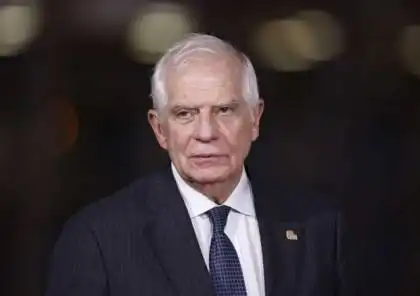
Borrell: What is happening in Gaza is a scar on the public conscience

European Union Foreign and Security Policy Commissioner Josep Borrell considered that the ongoing crisis in the Gaza Strip constitutes a scar on the public conscience.


Borrell wrote on the “X” platform (formerly Twitter): “What is happening in Gaza is a scar on our common conscience.”

He pointed out that UNRWA's work, against the backdrop of the investigation into the involvement of its employees in the October 7 attack, continues to be "humanitarian assistance in the Gaza Strip."


Washington and European countries announced the immediate suspension of funding for the United Nations Relief and Works Agency for Palestinian Refugees, UNRWA, following Israeli allegations of the participation of Gaza employees of the agency in the October 7 attack.


The European Union revealed a similar measure, which portends an additional humanitarian catastrophe that may exacerbate the crises of the Gazans


The Palestinian Ministry of Foreign Affairs criticized what it described as an Israeli campaign against UNRWA, and Hamas denounced the termination of employee contracts “based on information derived from Tel Aviv.”


UNRWA, which was established to help refugees since the 1948 war, provides educational, health services and assistance to Palestinians in Gaza, the West Bank, Jordan, Syria and Lebanon.


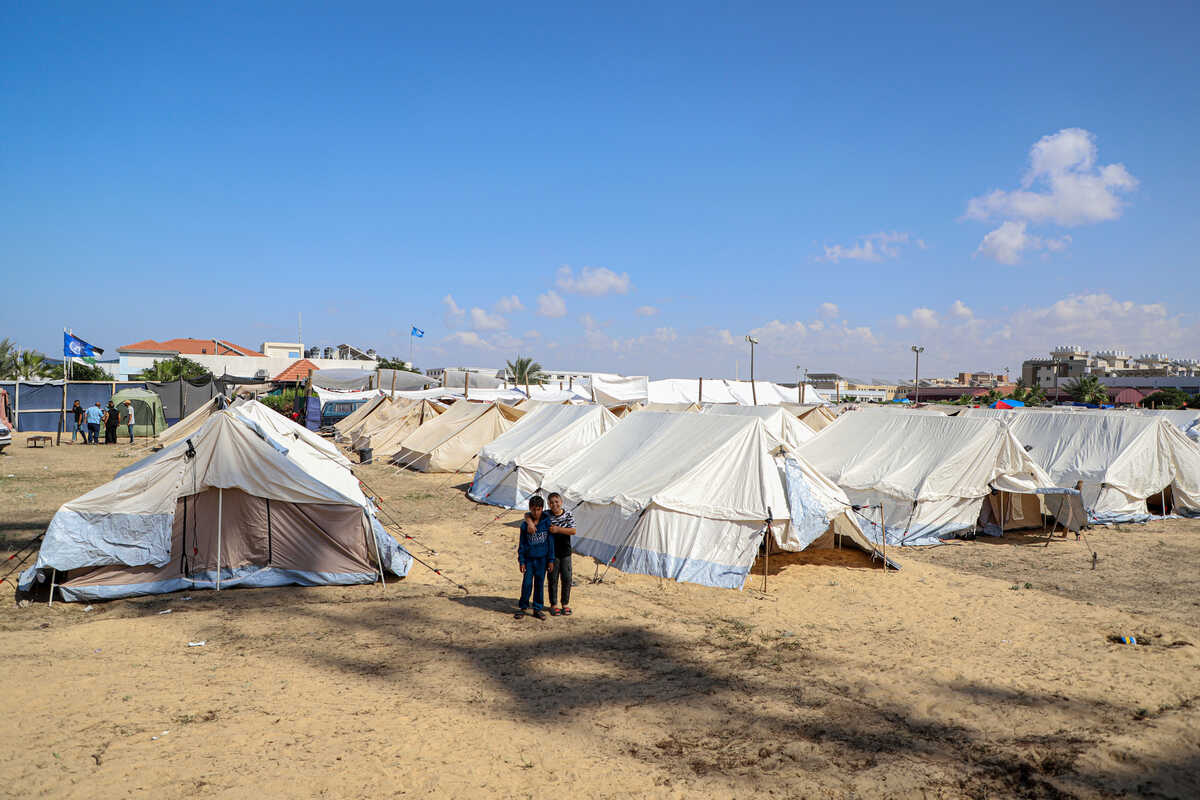
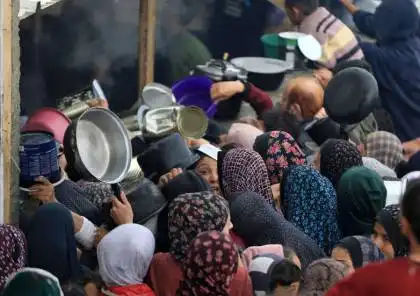
The agency also helps about two-thirds of the Gaza Strip's population of 2.3 million people and has a pivotal role in providing aid during the ongoing war.


ARAB AND WORLD

Thu 01 Feb 2024 7:00 am - Jerusalem Time

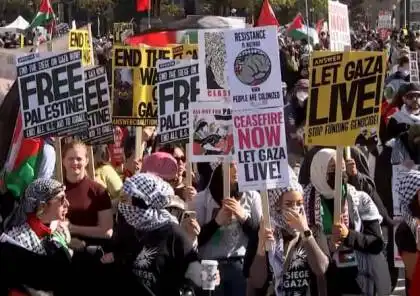
The Chicago City Council issues a resolution calling for a ceasefire in Gaza

The Chicago City Council approved a resolution calling for an unconditional ceasefire in the Israeli war on Gaza.


After hours of debate, the measure was reduced to one vote — Mayor Brandon Johnson's — with the council vote ending at 23 yes and 23 no. Johnson's tie-breaking vote brought the measure to 24 yeas and 23 nays.


The council was initially expected to vote on the resolution last week, but the vote was postponed because the council instead supported a resolution supporting an international day for Holocaust awareness.


The resolution, sponsored by Councilwoman Danielle Laspata, calls on Congress and President Joe Biden to “facilitate lasting peace in Gaza, starting with a permanent ceasefire.”


“Now we move forward to use this victory as inspiration to continue demanding that Joe Biden stop supporting genocide against our people,” Hatem Abu Dayyeh, national president of the American Palestinian Community Network (USPCN), said in a statement.


As is usual, Jewish groups described the decision as “dangerous.”


The resolution was passed in Chicago by the City Council's Health and Human Relations Committee last month.


After postponing the decision last week, Johnson said he supported a ceasefire in the war-torn region.


He added: “At this stage now, I think we are looking at 25,000 Palestinians killed during this war, and the killing must stop.”

OPINIONS

Thu 01 Feb 2024 6:09 am - Jerusalem Time

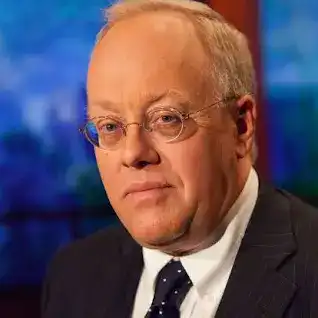
The Silence of the Damned

 Chris Hedges

Chris Hedges

Opinion Writer

Our leading humanitarian and civic institutions, including major medical institutions, refuse to denounce Israel’s genocide in Gaza. This exposes their hypocrisy and complicity.


There is no effective health care system left in Gaza. Infants are dying. Children are having their limbs amputated without anesthesia. Thousands of cancer patients and those in need of dialysis lack treatment. The last cancer hospital in Gaza has ceased functioning. An estimated 50,000 pregnant women have no safe place to give birth. They undergo cesarean sections without anesthesia. Miscarriage rates are up 300 percent since the Israeli assault began. The wounded bleed to death. There is no sanitation or clean water. Hospitals have been bombed and shelled. Nasser Hospital, one of the last functioning hospitals in Gaza, is “near collapse.” Clinics, along with ambulances – 79 in Gaza and over 212 in the West Bank – have been destroyed. Some 400 doctors, nurses, medics and healthcare workers have been killed — more than the total of all healthcare workers killed in conflicts around the world combined since 2016. Over 100 more have been detained, interrogated, beaten and tortured, or disappeared by Israeli soldiers. 

Israeli soldiers routinely enter hospitals to carry out forced evacuations – on Wednesday troops entered al-Amal Hospital in Khan Younis and demanded doctors and displaced Palestinians leave – as well as round up detainees, including the wounded, sick and medical staff. On Tuesday, disguised as hospital workers and civilians, Israeli soldiers entered Jenin’s Ibn Sina Hospital in the West Bank and assassinated three Palestinians as they slept. 

The cuts to funding for the United Nations Relief and Works Agency for Palestine Refugees in the Near East (UNRWA) — collective punishment for the alleged involvement in the Oct. 7 attack of 12 its 13,000 UNRWA workers  —  will accelerate the horror, turning the attacks, starvation, lack of health care and spread of infectious diseases in Gaza into a tidal wave of death. The evidence-free charges, which include the accusation that 10 percent of all of UNRWA’s Gaza staff have ties to Islamist militant groups, appeared in the Wall Street Journal. The reporter, Carrie-Keller Lynn, served in the Israel Defense Forces (IDF). Given the numerous lies Israel has employed to justify its genocide, including “beheaded babies” and “mass rape,” it is reasonable to assume this may be another fabrication. 

The allegations, of which details remain scant, are apparently based on confessions by Palestinian detainees — most certainly after being beaten or tortured. These allegations were enough to see 18 countries including the U.S., Canada, U.K., Germany, France, Australia and Japan cut or delay funding to the vital U.N. agency. UNRWA is all that stands between the Palestinians in Gaza and famine. A handful of countries, including Ireland, Norway and Turkey, maintain their funding. 

Eight of the UNRWA employees accused of participating in the Oct. 7 attack in southern Israel, where 1,139 people were killed and 240 abducted, were fired. Two have been suspended. UNRWA has promised an investigation. They account for 0.04 percent of UNRWA’s staff. 

Israel is seeking to destroy not only Gaza’s health care system and infrastructure, but UNRWA which provides food and aid to 2 million Palestinians. The object is to make Gaza uninhabitable and ethnically cleanse the 2.3 million Palestinians in Gaza. Hundreds of thousands are already starving. Over 70 percent of the housing has been destroyed. More than 26,700 people have been killed and over 65,600 have been injured. Thousands are missing. Some 90 percent of Gaza’s pre-war population has been displaced, with many living in the open. Palestinians have been reduced to eating grass and drinking contaminated water.

Noga Arbell, a former Israeli foreign ministry official, during a discussion in the Israeli parliament on Jan. 4, stated: “It will be impossible to win the war if we do not destroy UNRWA, and this destruction must begin immediately.”

“UNRWA is an organization that perpetuates the problem of the Palestinian Refugees,” Prime Minister Benjamin Netanyahu said in 2018. “It also perpetuates the narrative of the so-called ‘right of return’ with the aim of eliminating the State of Israel, and therefore UNRWA must disappear.”

An unnamed senior Israeli official praised the suspension of funding to UNRWA, but insisted on Wednesday gggthe government was not calling for its closure. 

More than 152 of UNRWA’s employees in Gaza — including school principals, teachers, health workers, a gynecologist, engineers, support staff and a psychologist — have been killed since the Israeli attacks began. Over 141 UNRWA facilities have been bombed into rubble. The death toll is the largest loss of staff during a conflict in the U.N.’s history.

The destruction of healthcare facilities and targeting of doctors, nurses, medics and staff is especially repugnant. It means the most vulnerable, the sick, infants, the wounded and elderly, and those who care for them, are often condemned to death.

Palestinian doctors are pleading with doctors and medical organizations from around the world to decry the assault on the healthcare system and mobilize their institutions to protest. 

“The world must condemn the acts against medical professionals happening in Gaza,” writes the director of Al-Shifa hospital, Muhamad Abu Salmiya, who was arrested along with other medical personnel by the Israelis in November 2023 while evacuating with a World Health Organization (WHO) convoy, and who remains in custody. “This Correspondence is a call for every human being, all medical communities, and all health-care professionals around the world to call for these anti-hospital activities inside and around the hospitals to stop, which is a civilian obligation according to international law, the UN, and WHO.”

But these institutions — with a few notable exceptions such as The American Public Health Association that has called for a ceasefire — have either remained silent or, as with Dr. Matthew K. Wynia, the director of the Center for Bioethics and Humanities at the University of Colorado, attempted to justify Israeli war crimes. These doctors — who somehow find it acceptable that in Gaza a child is killed every 10 minutes on average — are accomplices to genocide and stand in violation of the Geneva Convention. They embrace death as a solution, not life. 

Upgrade to paid

Robert Jay Lifton in his book “The Nazi Doctors: Medical Killing and the Psychology of Genocide” writes that “genocidal projects require the active participation of educated professionals — physicians, scientists, engineers, military leaders, lawyers, clergy, university professors and other teachers — who combine to create not only the technology of genocide but much of its ideological rationale, moral climate, and organizational process.” 

A group of 100 Israeli doctors in November 2023 defended the bombing of hospitals in Gaza, claiming they were used as Hamas command centers, a charge Israel has been unable to verify. 

The deans of U.S. medical schools and leading medical organizations, especially the American Medical Association (AMA) have joined the ranks of universities, law schools, churches and the media to turn their backs on the Palestinians. The AMA shut down a debate on a ceasefire resolution among its members and has called for “medical neutrality,” although it abandoned “medical neutrality” to denounce Russia’s invasion of Ukraine.

There is a cost to denouncing this genocide, a cost they do not intend to pay. They fear being attacked. They fear destroying their careers. They fear losing funding. They fear a loss of status. They fear persecution. They fear social isolation. This fear makes them complicit. 

And what of those who do speak out? They are branded as antisemites and supporters of terrorism. George Washington University clinical psychology professor Lara Sheehi was pushed out of her job. The former head of Human Rights Watch, Kenneth Roth, was denied a fellowship at Harvard’s Carr Center for Human Rights Policy because of his alleged “anti-Israel bias.” San Francisco professor Rabab Abdulhadi was sued for supporting Palestinian rights. Shahd Abusalama was suspended from Sheffield Hallam University in the U.K after a vicious smear campaign, although the institution later settled her discrimination claim against it. Professor Jasbir Puar at Rutgers University is an ongoing target for the Israel lobby and endures constant harassment. Medical students and faculty in Canada face suspension or expulsion if they publicly criticize Israel. 

The danger is not only that the Israeli crimes are denounced. The danger, more importantly, is that the moral bankruptcy and cowardice of the institutions and their leaders are exposed.

This brings me to Dr. Rupa Marya, a professor of medicine at the University of California, San Francisco (UCSF), whose call to halt bombing hospitals and to examine the impact of Zionism as a racist ideology unleashed a torrent of vitriolic attacks against her, attacks tacitly endorsed by the medical school where she works. 

She has been slandered as an antisemite and targeted by the Canary Mission, a Zionist organization that seeks to defame and destroy the careers of students and faculty that criticize Israel and defend Palestinian rights. She has had speaking engagements rescinded and received death threats and messages such as: “kill yourself you retarded grifting n*gger,” “Jew baiting c*nt,” and “White people are the greatest people on Earth. You know this.” 

You can see her statement on the campaign against her here.

There is a striking contrast between the treatment of Dr. Marya and the physicians who cheer on the genocide. UCSF physician Matt Cooperberg, who is the Helen Diller Family Chair in Urology, ‘liked’ social media posts such as “REMOVE Palestinians FORM [sic] MAP” and a quote by former Israeli prime minister Golda Meir: “We are able to forgive the the [sic] arabs for killing our children. We are unable to forgive the arabs for forcing us to kill their children.”

“Cooperberg’s endowed chair comes from the Helen Diller Family Foundation, UCSF’s largest donor, which to date has gifted some $1.15 billion dollars to the health campus,” Marya writes. “In 2018, due to a mistake on a tax form, the Helen Diller Family Foundation was exposed as a funder of the Canary Mission. The Foundation attempted to erase its connection after this exposure.”

She goes on:

As a faculty member at UCSF, disgraced dermatologist Howard Maibach exposed and injected over 2,600 imprisoned Black and brown people with chemicals in experiments that echoed the experiments put on trial at the Doctors’ Trial just a few years before he went to medical school in Pennsylvania,” she goes on. “There he studied under Albert Kligman, who taught him how to exploit Black people for medical experimentation, documented extensively in the horror nonfiction book, Acres of Skin.  Maibach also advanced notions of racial differences in skin, furthering racist ideas from the pseudoscience of eugenics. Race is a social construct that enshrines supremacism. It is not a biological reality.

Most of Maibach’s experiments were conducted without informed consent, and while UCSF issued an apology, Maibach is still employed by the University of California. His family supports the Friends of the IDF, and he is represented by Alan Dershowitz, who also argued for the bombing of hospitals in Gaza. Dershowitz attempted to prevent me from speaking at the AMA’s first National Health Equity Grand Rounds, where scholar Harriet Washington, who studies medical experimentation on Black people, highlighted Maibach’s racist practices. In the wake of George Floyd’s murder, UCSF faculty, trainees and students of color brought Maibach’s story to light, and many have expressed their horror that they have to continue to sit in the same room as this man during Dermatology Grand Rounds. But the problem is not just one man. It is a system that allows someone with these values and actions to continue to be present in our learning and practicing community.

The dehumanization of Palestinians is lifted from the playbook of all settler colonial projects, including our own. This racism, where people of color are branded as “human animals,” is coded within the DNA of our institutions. It infects those chosen to lead these institutions. It lies at the core of our national identity. It is why the two ruling parties and the institutions that sustain them side with Israel. It feeds the perverted logic of funneling weapons and billions of dollars in support to Israel to sustain its occupation and genocide. 

History will not judge us kindly.  But it will revere those who, under siege, found the courage to say no. 

ARAB AND WORLD

Thu 01 Feb 2024 6:04 am - Jerusalem Time

An American judge supports “international justice” despite rejecting a lawsuit to stop support for Israel

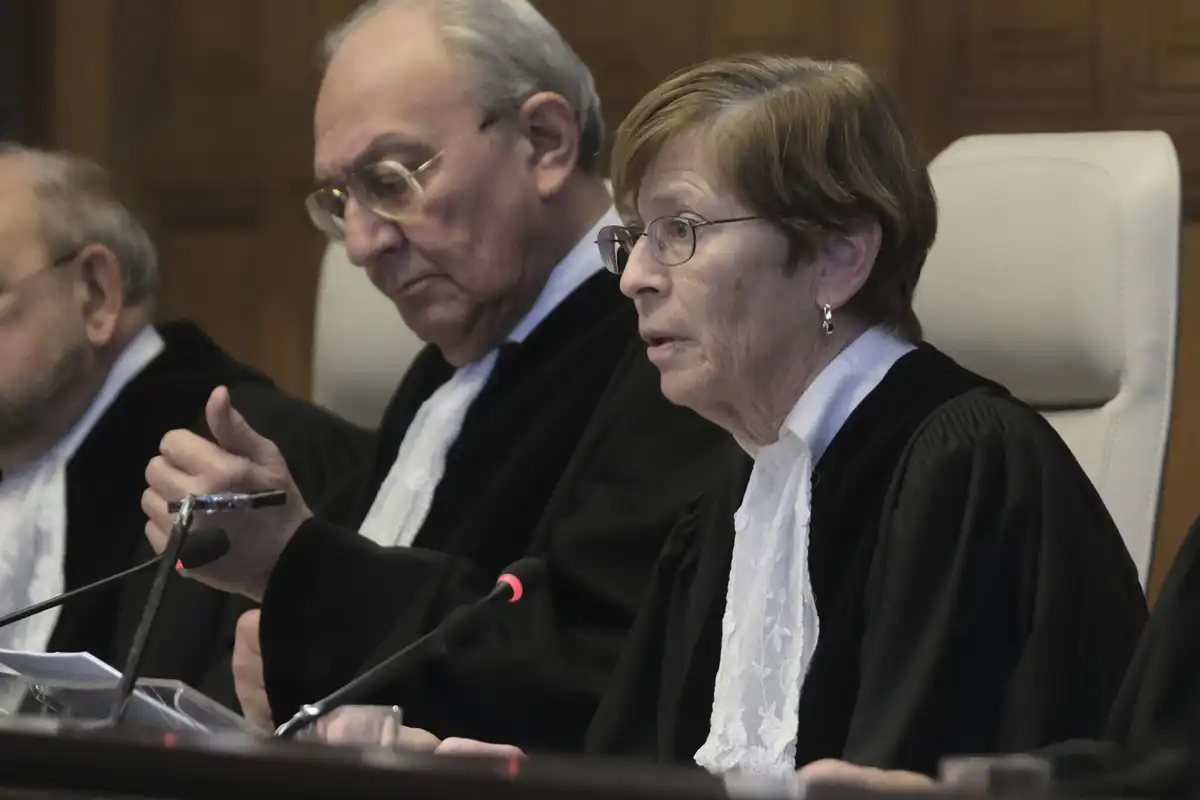
A US federal judge in Oakland, California, rejected a lawsuit to stop US support for Israel based on a judicial precedent, but stressed that “the conclusive evidence before this court is consistent with the conclusions of the International Court of Justice.”


He added that evidence indicates that the Israeli army's treatment of Palestinians in Gaza may constitute genocide.


The judge believed that "it is the duty of every individual to confront the siege of Gaza, but the court must remain within the scope of its jurisdiction."


He added that the court calls on the defendants to "study the consequences of their steadfast support for the siege of the Palestinians in Gaza."

PALESTINE

Thu 01 Feb 2024 5:54 am - Jerusalem Time

War on Gaza: Dozens of Palestinians found dead at elementary school in zip-tied body bags

Bodies of Palestinians were discovered at the Khalifa Bin Zayed school in Beit Lahia which at one point sheltered thousands of displaced people

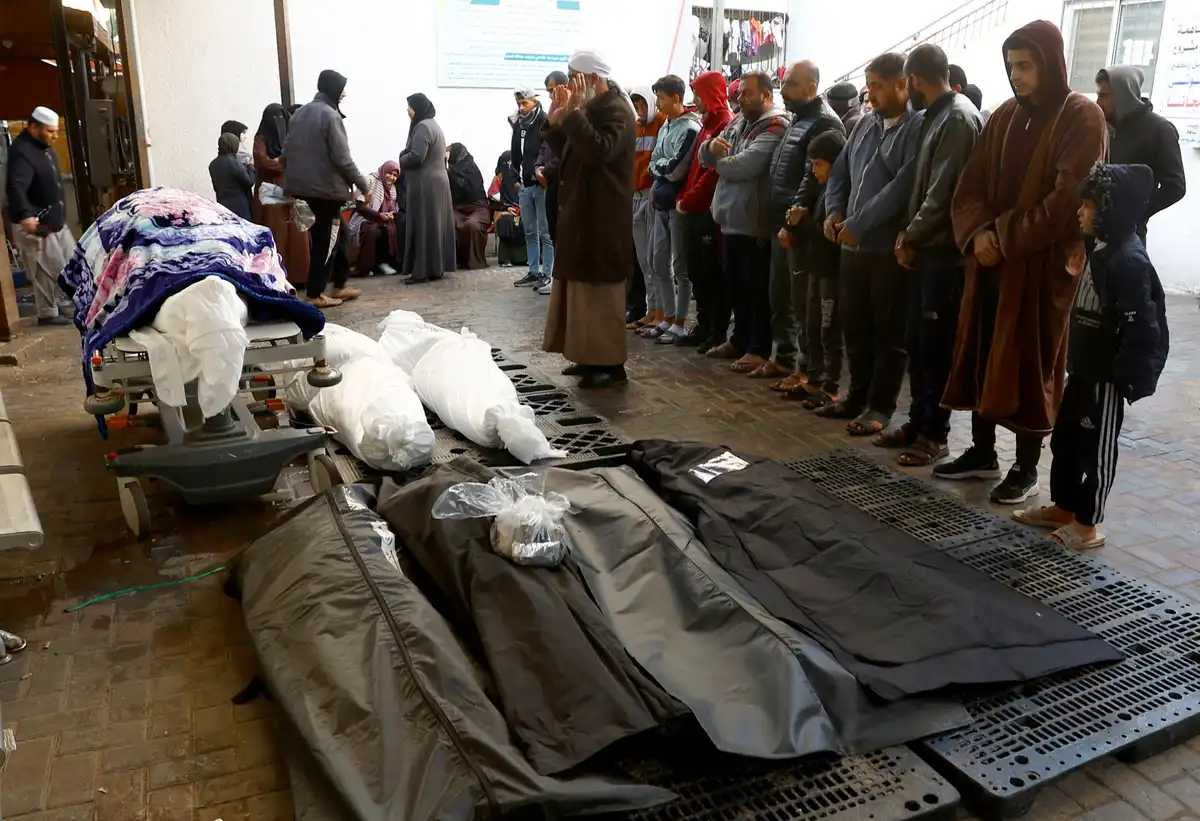
Dozens of Palestinians were found dead at a school in the northern Gaza Strip in black body bags tied with plastic cables bearing Hebrew writing.

The bodies of 50 Palestinians were discovered at the grounds of the Khalifa bin Zayed elementary school in Beit Lahia on Tuesday after Israeli forces withdrew from the area, local residents told Middle East Eye.

The bodies were discovered under a mound of rubble at the school with videos uploaded on social media sites showing several of the body bags tied with white plastic zip ties, normally used for tying cables together.

According to eyewitnesses assisting in identifying the deceased, Israeli forces reportedly executed the Palestinians nearly two months ago on a road near the school.

The school had served as a shelter for thousands of displaced Palestinians before it was bombed and besieged by Israeli forces in early December. The school had been supported by United Nations Relief and Works Agency, also known as Unrwa, since 2010.


Hossam Shabana, a photojournalist working in northern Gaza, said that some of the victims included families, such as Abu Srour Abu Salah, 52, and his wife. The remains of an unidentified child were also discovered at the site.

"The bodies were removed from graves created by citizens in the shelter center [school], and they were abused and searched [by Israeli forces]," Shabana said. "These bodies were reported to have been handcuffed and blindfolded.

"After the occupation exhumed the graves and subjected the bodies to abuse and searches, the Israeli army proceeded to cover the bodies with nylon [sheets of plastic and the body bags] and discard them into what appeared to be a mass grave.

"Following the army's withdrawal from the area, a municipal member used heavy machinery to clear the debris left by Israeli bombings. It was then that the residents noticed the presence of the bodies," Shabana added.

MEE reached out the Israeli army for comment but did not receive a response by time of publication.

The grizzly discovery comes a day after more than 100 Palestinian bodies that were exhumed and taken by Israeli forces from various areas in the Gaza Strip were returned for a mass burial in the southern city of Rafah. 

Some of the bodies were unidentified when they were reburied while others had heavily decomposed, the Palestinian news agency Wafa reported. 

Later on Tuesday, the head of Hamas's political bureau, Ismail Haniyeh, said his group was studying a proposal that would offer Palestinians in Gaza six weeks of respite from fighting in exchange for the release of Israelis held captive in Gaza as well as the release of Palestinian prisoners held in Israel.

Haniyeh, who is based in Qatar, said Hamas was open to any "serious" initiatives provided they led to a "comprehensive cessation" of hostilities and the complete withdrawal of Israeli forces from Gaza.

His comments came after officials from Qatar, Egypt and the US met Israeli intelligence chiefs in Paris this weekend to discuss the release of some 136 Israelis held captive in Gaza.

The New York Times reported on Sunday that Hamas would release elderly captives, along with women and children, in exchange for Palestinian prisoners during an initial period of six weeks.

If that was successful, there could be another two phases of swaps, with male Israeli soldiers eventually included.

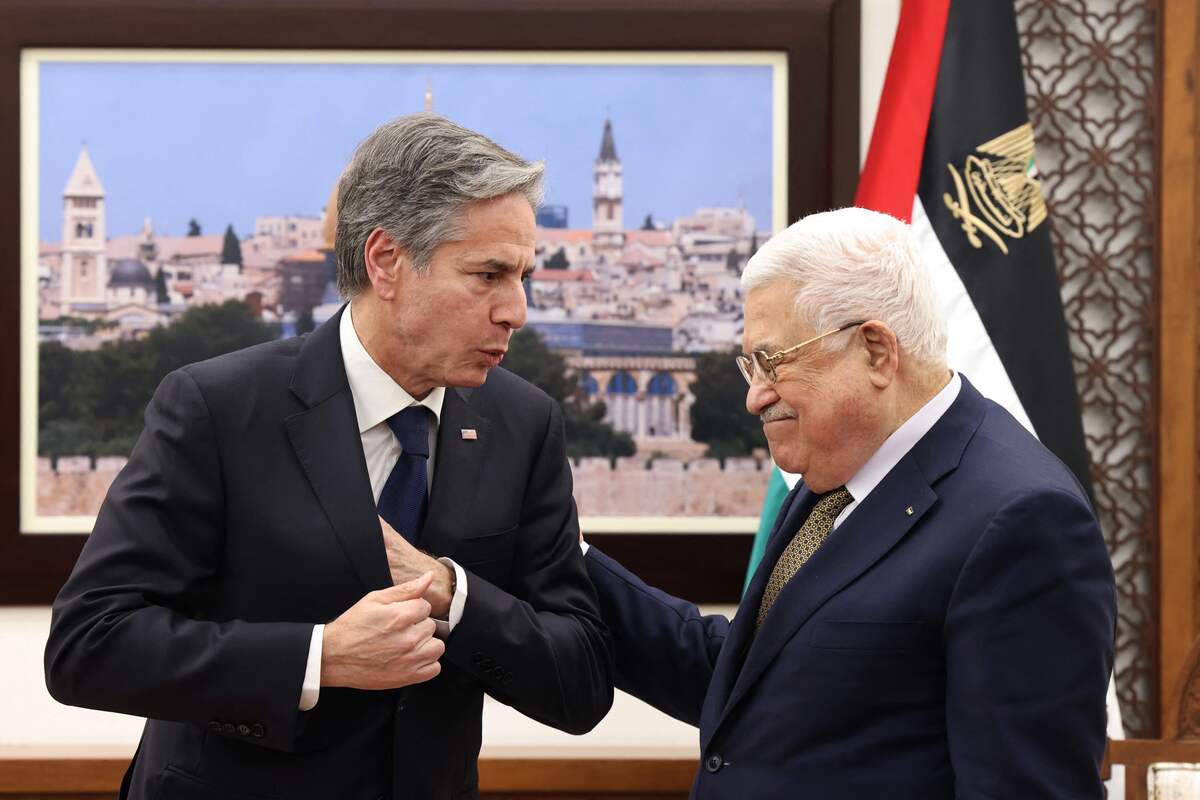
US Secretary of State Antony Blinken said on Monday that he could not confirm the details of the proposal, but referred to it as "a strong one and a compelling one".

Ben Gvir lashes out at proposal

The Israeli prime minister's office called the talks "constructive", but noted that there were "significant gaps which the parties will continue to discuss".

For weeks, Prime Minister Benjamin Netanyahu and his far-right government have vowed to remain in Gaza until Hamas is eliminated.

Speaking from an illegal Israeli settlement in the occupied West Bank on Friday, Netanyahu said: "We will not compromise on anything less than total victory.

"That means eliminating Hamas, returning all of our hostages and ensuring that Gaza will no longer pose a threat to Israel," he added.

However, Hamas political bureau member Mohammad Nazzal told Al Jazeera on Tuesday that an agreement to release the Israeli captives could only be possible with a full Israeli withdrawal from Gaza.

"We told the mediators a permanent ceasefire is our goal, but we can do it in the second or third stages of an agreement. Without an Israeli withdrawal from Gaza, we can't accept this new proposal," Nazzal said.

Israel's far-right National Security Minister Itamar Ben Gvir threatened on Tuesday to bring down the government if a "reckless" deal was reached with Hamas.

"A reckless deal = the dismantlement of the government," the far-right minister said on X, formerly known as Twitter.

Israel's relentless military offensive on the besieged Gaza Strip, which was launched after the 7 October attacks, has killed at least 26,637 Palestinians, most of them women and children.

ARAB AND WORLD

Thu 01 Feb 2024 5:50 am - Jerusalem Time

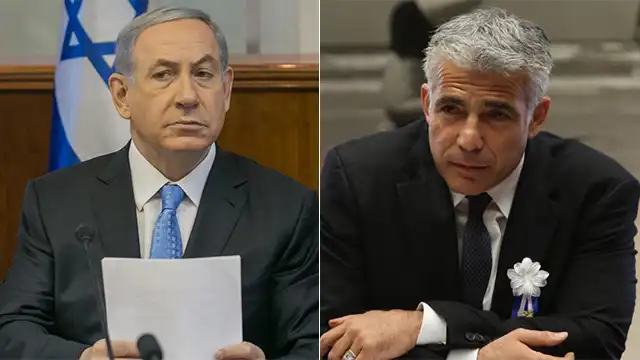
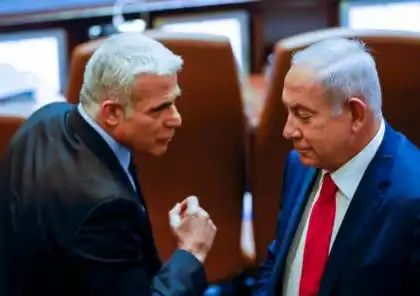
Netanyahu to Lapid: Join Israeli war government, receive Justice Ministry

According to the report, Yesh Atid's joining the government would not entail removing other parties from the government but would entail a redistribution of the government ministries.

  •  
  •  
  •  

The Likud offered the opposition party Yesh Atid to place one of its members as justice minister instead of current Justice Minister Yariv Levin in exchange for it joining the government, Kan journalist Ze'ev Kam reported a "senior Likud minister" as saying on Wednesday.

According to the report, Yesh Atid's joining the government would not entail removing other parties from the government but would entail a redistribution of the government ministries in order to "broaden it even more during the period of the war and afterward." This would include removing additional ministries from the current coalition members and giving them to Yesh Atid.

A similar offer was made to National Unity if it will commit to staying in the government for a longer period, the report added. National Unity joined the government a few days after the Hamas massacre on October 7. It entered five ministers into the government, but all are currently ministers-without-portfolio. National Unity has said that it plans to leave the government when the security situation stabilizes.

OPINIONS

Thu 01 Feb 2024 5:41 am - Jerusalem Time

The solitude of the genocide

LA PRESSE NOUVELLE MAGAZINE

LA PRESSE NOUVELLE MAGAZINE

Opinion Writer

By Dominique Vidal

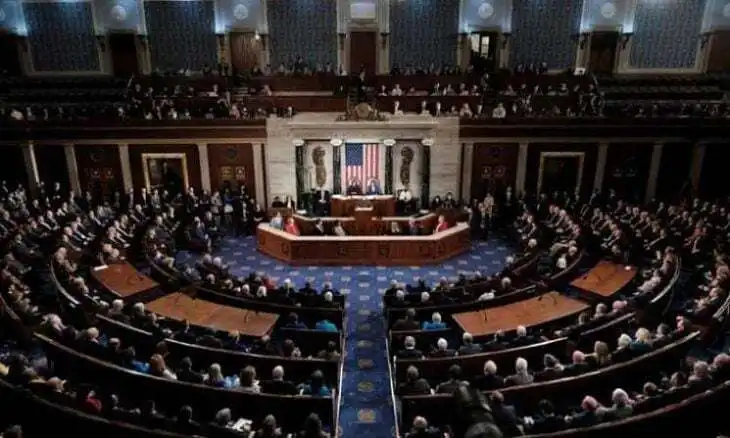
Sometimes a photograph speaks louder than long speeches. This is the case: it represents Benjamin Netanyahu addressing the United Nations General Assembly last fall – in this case facing an overwhelming majority of empty seats. There is no better way to symbolize the loneliness of the Israeli Prime Minister in the midst of the Gaza War, which he hoped would save him.This is not an optical effect: within the UN enclosure, Israel has never been so isolated. Certainly, the United States has, on several occasions, used its right of veto to spare its “strategic ally” condemnation from the Security Council, or even sanctions.

UN Secretary-General Antonio Guterres invoked Article 99 of the UN Charter – one of the most powerful tools at his disposal – to urge the Security Council to help end the carnage in the Palestinian enclave ravaged by war.

Faced with the blocking of the Security Council by the United States, an emergency meeting of the General Assembly was therefore convened on December 12. Before the vote, General Assembly President Dennis Francis said the world was witnessing an "unprecedented collapse" of a humanitarian system "in real time" and said it was high time to establish an immediate humanitarian ceasefire. “We have one priority – just one –: saving lives,” he stressed. “We must stop this violence now ([1])”. The Assembly therefore adopted – by 153 votes for, 10 against and 23 abstentions, more than the required two-thirds majority – a resolution which, in addition to a cease and desist -immediate humanitarian fire, demanded the unconditional release of all hostages and the guarantee of humanitarian access. It also reiterated the demand that all parties respect their obligations under international law, including international humanitarian law, “particularly with regard to the protection of civilians”

A few days later, Israel suffered another diplomatic defeat. On December 19, 2023, the General Assembly adopted, as every year, a resolution supporting “the right of the Palestinian people to self-determination and to a state” by 172 votes in favor, 10 abstentions and only 4 against: Israel, the United States , Micronesia and Nauru[2]…

Without forgetting the first response of the International Court of Justice to the complaint for “genocide” filed by South Africa and supported by around sixty States by calling on Israel, on January 26, to take “all measures in its power to prevent and punish direct and public incitement to commit genocide[3]”

This quasi-UN consensus reflects the accelerated evolution of public opinions vis-à-vis Israel. The latter declined massively for the first time in 1982, after the invasion of Lebanon and the massacre of the Palestinian camps of Sabra and Chatila, south of Beirut. Anger grew further with the repression of the First Intifada (from December 1987) then the Second (from September 2000). Without forgetting the incessant Israeli offensives against the Gaza Strip: 20o8-2009, 20112, 2014, 2021. This time, tens, even hundreds of thousands of demonstrators flooded into the streets of the capitals of all continents : from Washington to London, from Berlin to Montreal, from Dublin to Cairo, from Saana, and Tunis to Rabat, from Beirut to Amman That the most massive crowds marched in the major Arab cities will only surprise those who believed in the cause Palestinian buried under the Abraham Accords.

But never has the gap between leaders and ruled seemed as deep in the Maghreb as in Machrek. Thus the latest survey by the Arab Center for Research and Policy Studies (CAREP) carried out among 8,000 respondents in January 2024 and published under the title “Arab Punic opinion and Israel's war against Gaza[4]” confirms -the massive refusal (89%) of any normalization with Israel at the expense of the Palestinian people: only 8% of respondents in sixteen Arab countries “would support diplomatic recognition of Israel by their state”, 84% would “oppose” it ". And for good reason: 92% believe that “the Palestinian cause concerns all Arabs and not just the Palestinian people”. Concerning the current war in Gaza, 69% of respondents said they support “the population of Gaza and Hamas”, 90% of whom believe that it is “different from the Islamic State”.

This survey also reveals a hardening of Arab opinion regarding United States policy in the region: 76% present it as “more negative than before the war”; In particular, 68% of respondents consider their commitment to the establishment of a Palestinian state “not at all serious”. In the same spirit, 79%, 78% and 75% of respondents evaluate the positions of France, the United Kingdom and Germany negatively. As for the debate over the legitimacy of the Hamas attack; 67% believe that it is a “legitimate resistance operation”, while 19% assess it as a “legitimate resistance operation tainted with some errors” and only 5% consider it an “illegitimate operation” .

This reduces the room for maneuver of Arab regimes wishing to join the process launched in 2020 by Donald Trump. This was undoubtedly one of the main objectives of the terrorist operation of October 7: to prevent the conclusion of the Israeli-Saudi negotiations then underway.

Without doubt it is in his own country that Netanyahu is most alone. Unlike all previous wars, a large majority of public opinion supports the army's action while demanding the resignation of the Prime Minister. It is true that the attack of October 7 occurred against the backdrop of nine months of gigantic demonstrations against the "coup d'état" represented by the justice reform project: hence the massive rejection of his inspiration. From the beginning of October, 86% of Israelis – and even 79% of voters in the current coalition judged the leader of Likud to be responsible for the catastrophe([5]). And since then, Likud has never fallen so low: in the latest polls in the event of an early election, it would lose 17 of the 32 seats obtained on November 1, 2023. Its allies of the supremacist far right would only obtain 7 deputies instead of 14. And even the ultra-orthodox Party Sephardic Shas would only have 9 of its 11 seats left. So much so that the current coalition lost the majority with 44 seats instead of 64 today[6].

The most worrying thing is elsewhere: 28% of Israelis would consider leaving their country if the justice reform was implemented[7]. This is a clear acceleration of a phenomenon which has already seen hundreds of thousands of Israeli Jews settle permanently abroad.

[1]  https://news.un.org/fr/story/2023/12/1141572

[2]  https://digitallibrary.un.org/record/4030703?ln=fr

[3] https://www.icj-cij.org/.../192-20240126-ord-01-00-fr.pdf

[4] https://www.carep-paris.org/.../Enquete_opinion_arabe...

([5]) Haaretz, 17 octobre 2023. 

[6] Site de Radio J ,12 janvier 2024 .

[7] Site du Times of Israel, 26 juillet 2023.

ARAB AND WORLD

Thu 01 Feb 2024 5:34 am - Jerusalem Time

Lapid: We are ready to join the government instead of Ben Gvir and Smotrich in order to rescue the prisoners

Israeli opposition leader Yair Lapid said, in a surprising statement, on Wednesday, that he is ready to join the government of Prime Minister Benjamin Netanyahu, instead of the extremist Ministers of National Security, Itamar Ben Gvir, and Finance Minister, Bezalel Smotrich, in order to “rescue” the prisoners in the Gaza Strip.


This came in an interview with the private Channel 12, a day after he said that he would provide a “safety net” for the government for any deal that would return the prisoners to their homes.


Lapid said during the interview: “We are ready to join the government instead of Ben Gvir and Smotrich, in order to rescue the kidnapped people.”


For its part, the Likud Party, led by Netanyahu, responded to Lapid’s statement, in a brief statement, in which he said: “Lapid is pushing for an immediate end to the war without achieving complete victory, and we will not agree to that.”


On Tuesday, Lapid pledged, in a blog post on the “X” platform, to provide Netanyahu’s government with a “safety net” for any deal that would return Israeli prisoners from Gaza, in light of Ben Gvir and Smotrich’s rejection of a prisoner exchange deal that includes stopping the war, even for weeks.


Earlier Wednesday, Ben Gvir, leader of the far-right Jewish Power party, said in a speech in the Knesset, “It is not permissible for Israel to extend a helping hand to an illegal deal, and our soldiers did not fall in vain, and it is forbidden to reach a deal that exposes its security to danger and stops the war.” 


He added: "Hamas must not be allowed to win, and we will not agree to the release of thousands of killers from prisons," as he put it.

On Tuesday, Ben Gvir threatened to dissolve the government if a new deal was reached, expressing his rejection of what he called “American pressure to conclude a deal” to exchange prisoners.


On Sunday, a meeting was held in Paris, with the participation of Israel, the United States, Egypt and Qatar, to discuss a prisoner exchange deal and stop the war in Gaza, which will take place in three stages, according to Palestinian and American sources.


The United States, Egypt and Qatar are in contact with Israel, while Egypt and Qatar are in contact with Hamas, to reach a second agreement to release Israeli prisoners from Gaza, in exchange for the release of Palestinian detainees from Israeli prisons and a ceasefire in Gaza.


Tel Aviv estimates that there are about 136 Israeli prisoners in Gaza, while it holds at least 8,800 Palestinians in its prisons, according to official sources from both parties.


#Yair Lapid

PALESTINE

Wed 31 Jan 2024 10:48 pm - Jerusalem Time

Hamas: The Paris meeting proposal includes the withdrawal of the occupation forces and enabling the return of the displaced

Sources close to Hamas, Egypt and Qatar confirmed on Wednesday that the movement is studying an official proposal to reach a “truce” to be implemented in three stages with the Israeli occupation, noting that the first stage includes “the withdrawal of Israeli forces and enabling the return of the displaced to Gaza and the northern Gaza Strip.”


Hamas had said earlier that it was studying the proposals drawn up by the mediators in Paris in preparation for declaring a second truce in the war that has been going on for four months.


In November, Israel and Hamas reached a truce that lasted for a week, but sources indicate that the expected truce will last for six weeks.

According to a source close to Hamas and the mediators Egypt and Qatar, the first phase of the truce will include Hamas releasing between 35-40 Israeli detainees, including women, children, and sick men over 60 years old.


In return, Israel releases between 200-300 Palestinian prisoners, without this number including prisoners with high sentences. Israel also allows aid to flow into the Gaza Strip at a rate of 200-300 trucks per day.


The second phase will see Hamas release reserve soldiers in exchange for a number of Palestinian prisoners to be negotiated.


The second phase also includes the release of soldiers and officers imprisoned by Hamas and other factions in exchange for Israel releasing a number of Palestinian prisoners who will be negotiated in a round of indirect negotiations that will take place between 4-6 weeks after the implementation of the agreement begins.


The third stage of the truce includes, according to the sources, the release of the bodies of the dead prisoners from both sides and an agreement on the crossings and the reconstruction of the Gaza Strip.

The sources indicated that Egypt and Qatar will follow up on the implementation of the agreement in coordination with the United States.

On Wednesday, Israeli Prime Minister Benjamin Netanyahu ruled out withdrawing his forces from the Gaza Strip.


Israel awaits Hamas' response

According to the Hebrew newspaper Yedioth Ahronoth, the Israeli occupation state made a great effort to reduce the number of Palestinian prisoners and their “quality” that the Palestinian Islamic Resistance Movement (Hamas) could request, in exchange for concluding a new deal through mediators.


This proactive Israeli step comes despite Hamas having not yet announced its demands publicly regarding the number of prisoners it can demand for each Israeli detainee.


The move also joins statements by Israeli Prime Minister Benjamin Netanyahu, yesterday, Tuesday, that Israel will not release thousands of prisoners, and will not withdraw its army from the Gaza Strip before achieving Israeli goals.


However, a number of Israeli political and military analysts believe that completing the deal will require Israel to make major concessions, which will be reflected in the government, in light of a number of ministers threatening to reject it, and Netanyahu will also have to decide in order to conclude the deal or reject it.


Source: (AFP, Al-Arabi Al-Jadeed)

ARAB AND WORLD

Wed 31 Jan 2024 9:44 pm - Jerusalem Time

Netanyahu to ambassadors to the United Nations: It is time to end UNRWA's mission

Israeli Prime Minister Benjamin Netanyahu said today, Wednesday, that “the time has come for the international community and the United Nations itself to understand that UNRWA’s mission must end,” in a meeting he gathered with a delegation that includes ambassadors of foreign countries to the United Nations, considering that “there are agencies Other United Nations and other state organizations must replace UNRWA.”


This comes within the framework of the Israeli campaign that has been ongoing for years and has escalated in light of the ongoing war on the Gaza Strip, which has been besieged for 117 days, against the United Nations Relief and Works Agency for Palestine Refugees (UNRWA), in an attempt to liquidate the Palestinian refugee file, by fighting the agency that was established in Decembe 1949, to provide aid to refugees.


Netanyahu's statements came during his meeting with the ambassadors of Western countries supporting Israel at the United Nations and international forums, which include the countries: Malta, Bulgaria, the Czech Republic, Hungary, Romania, Ukraine, Slovenia and Sierra Leone, in the Prime Minister's Office in Jerusalem, in the presence of Israel's ambassador to the United Nations, Gilad Erdan.


As part of his continued attack on the United Nations, Netanyahu said, “The United Nations is not a distinguished organization when it comes to dealing with Israel, as it is often incredibly biased. It has a Human Rights Council, so to speak, that devotes a large portion of its decisions against Israel.” He did not issue a single decision against Iran, Yemen, or other places where there is cruelty and aggression.”


He continued, "I do not mean that what is required of them is to condemn these countries and us, because Israel is waging a war of civilization against barbarism, and because it is responding to brutal attacks carried out without provocation on our part, and because it is doing so with the greatest effort ever devoted by any army to reduce the harm to civilians as much as possible" while we fight against an enemy committing a double war crime."


Netanyahu repeated the Israeli allegations that the occupation authorities did not provide any evidence that occurred during the attack of last October 7, including “slaughtering and raping women and men, beheading them after raping them, burning children while they were still alive, and many other atrocities, which we only saw such things practiced against the Jews in the Holocaust."


In evidence that the escalating Israeli campaign against UNRWA came in the wake of the decision of the International Court of Justice in The Hague, Netanyahu said, “South Africa had the audacity to raise this matter to the International Court of Justice and accuse us of committing the crime of genocide. What is more horrific than that are the many false accusations that are not “The unfounded allegations that we were accused of in The Hague were presented by UNRWA employees, and in the past few weeks we discovered that UNRWA employees participated in the massacre,” he said.


He added, "It is time for the international community and the United Nations to understand that UNRWA's mission must end. The agency is working to perpetuate itself. It seeks to preserve the Palestinian refugee issue. We must replace it with other UN agencies and other relief organizations, if we want to solve the Gaza problem as we plan to do." 


He continued, "There are other agencies affiliated with the United Nations, there are other agencies in the world that must replace UNRWA." He claimed that "Hamas infiltrated UNRWA. The organization works in the service of Hamas, in its schools and in other places. I say this with great sadness, because we wanted an objective and useful body to provide assistance. We need such a body today in Gaza. UNRWA is not this body. It must be "It is replaced by an organization or organizations that takes over the task."


Guterres: UNRWA is the "backbone" of humanitarian efforts in Gaza

For his part, the Secretary-General of the United Nations, António Guterres, affirmed today that UNRWA is “the backbone of all humanitarian efforts in Gaza,” and appealed to all countries “to ensure the continuity of UNRWA’s life-saving work,” after several countries suspended funding for the agency following Israel’s accusation 12 One of its employees was implicated in the attacks of last October 7.


Guterres told a United Nations committee concerned with Palestinian rights, “Yesterday I met with donors to listen to their concerns and determine the steps we are taking to deal with them... UNRWA is the backbone of the humanitarian response in the entire Gaza,” while UN agencies confirmed that suspending funding for UNRWA “is a dangerous matter and may lead to the collapse of the humanitarian system in Gaza.


Guterres stressed that "the humanitarian system in Gaza is collapsing." He added, "I am deeply concerned about the inhumane conditions experienced by 2.2 million people in Gaza as they struggle to survive without any basic necessities."


Following the Israeli allegations, 18 countries and the European Union decided to suspend funding for UNRWA. These countries include: the United States, Canada, Australia, Japan, Italy, Britain, Finland, Germany, the Netherlands, France, Switzerland, Austria, Sweden, New Zealand, Iceland, Romania, Estonia, Sweden, in addition to the European Union.

ARAB AND WORLD

Wed 31 Jan 2024 7:43 pm - Jerusalem Time

Jewish members of the US House of Representatives discuss alternatives to UNRWA with an Israeli official

On Wednesday, Axios published a report saying that a group of Jewish Democratic representatives in the US House of Representatives discussed on Tuesday (1/30/2024) potential alternatives to the United Nations Relief and Works Agency for Palestine Refugees (UNRWA) to deliver aid to Gaza, in a meeting. With the Israeli military liaison official with Palestinian civilians.


The meeting comes after the United States and eight other countries stopped funding the Palestinian refugee agency after Israel accused a number of UNRWA employees of involvement in Hamas’ surprise attack on Israel last October 7.


UNRWA has been the main channel for humanitarian aid in Gaza since 1949.

According to the website, “Approximately eight to ten Jewish Democrats met with Colonel Elad Goren, a senior official in the IDF’s Coordinator of Government Activities in the Territories unit, according to four members who were present at the meeting.”


Goren offered about six potential alternatives to UNRWA, including UNICEF and the United Nations World Food Programme, according to the lawmakers.


One member, who spoke on condition of anonymity, said: “The point he was trying to make is that we want there to be humanitarian aid, but UNRWA represents a problem. There must be alternatives. There are alternatives already, and these are the alternatives that we should "Use it."


The website attributes to Representative Dan Goldman (Democrat from New York State), who was present at the meeting, saying that he "hopes that we will take a look at those other international non-governmental organizations that may be able to help manage the humanitarian crisis and provide assistance to alleviate it.”


In turn, the Commissioner-General of UNRWA, Philippe Lazzarini, said in a statement on Saturday that it was “shocking” to see nine countries withdrawing their funding due to allegations against “a small group of employees.”


Lazzarini said the decision was particularly surprising given that the agency had taken "immediate action" by expelling the accused and opening an investigation.


“It would be highly irresponsible to impose sanctions on an agency and the entire community it serves over allegations of criminal acts against certain individuals, especially in a time of war, displacement and political crises in the region,” he said.


Linda Thomas-Greenfield, the US ambassador to the United Nations, said on Tuesday that “fundamental changes” must be made before funding resumes, but “we should not let that overshadow the great work that UNRWA is doing.”


According to the site, Goren claimed that Israel had done its best to facilitate the flow of aid to Gaza and repeated his public denial of the occurrence of mass starvation in the region.


One representative said: "He questioned the level of hunger and the availability of food, that there are still open markets operating, and that the Israelis are willing to send more aid."


Two lawmakers also cited stifling inspection restrictions as the main reason for not sending more aid to Gaza.


Goren said that Israel "is making great efforts to make sure that it does everything it can to find out who is involved with Hamas and who is truly a civilian," according to Goldman.


In turn, the official spokesman for the US State Department, Matthew Miller, said on Tuesday: “What I would like to say is, first and foremost, we have made clear our position in the statement we issued; you heard Secretary (Anthony Blinken) talking about this yesterday. We strongly support the work "What UNRWA is doing. We believe it is extremely important. There is no other humanitarian player in Gaza who can provide food, water and medicine to the scale that UNRWA does."


The spokesman added in his response to the Al-Quds correspondent’s question, “We want to see this work continue, and for this reason it is very important for the United Nations to take this issue seriously, investigate it, and for there to be accountability for anyone proven to be involved in committing violations, and to take further actions and appropriate measures to ensure this kind of thing does not happen again."

ARAB AND WORLD

Wed 31 Jan 2024 7:31 pm - Jerusalem Time

The US State Department is considering recognizing the Palestinian state

US Secretary of State, Anthony Blinken, issued instructions to officials in his ministry to work on studying the possibility of American and international recognition of the State of Palestine within the framework of the American vision for the future of the Palestinian issue on the “day after” the ongoing Israeli war on the Gaza Strip, which has been besieged for 117 days.


This came according to what the correspondent of the Israeli “Walla” website and the American “Axios” website reported, today, Wednesday, from two high-ranking officials in the American administration, following statements issued by the British Foreign Secretary, David Cameron, in this regard, pointing to “diplomatic initiatives aimed at achieving irreversible progress towards a two-state solution.”

ARAB AND WORLD

Wed 31 Jan 2024 7:23 pm - Jerusalem Time

Washington: Postponing United Nations mission to assess the situation in Gaza

The US State Department announced that the formation of a United Nations mission to study the situation in Gaza, and the mission’s visit to the Gaza Strip, has been postponed, due to renewed battles in the northern Gaza Strip.


This came in a statement by US State Department spokesman Matthew Miller during his daily press conference.


In response to a journalist’s question: “The Minister (Anthony Blinken) announced the formation of a UN assessment mission during his recent visit to Israel. Is there any updated information on this subject?” Miller replied: “This mission was postponed due to the outbreak of the conflict in the north (Gaza)” once again".


Miller pointed out that field conditions are not suitable for carrying out a humanitarian mission and conducting a proper assessment in the sector.


He said: "We are in contact with the United Nations and the Israeli government regarding this issue. We want this mission to be established as soon as possible."


Miller added that they closely monitored the field conditions to establish the mission and make its first visit to the region.

ARAB AND WORLD

Wed 31 Jan 2024 5:37 pm - Jerusalem Time

Hebrew Press analysis: Israel's emergency government close to collapse as Gaza war continues

By YANIR COZIN

The question is no longer whether an election will take place in 2024, but rather when in 2024.

‘The Americans have realized that Prime Minister Benjamin Netanyahu is incapacitated because of the political situation he is in,” a senior official from one of Israel’s opposition parties informed me last week.

“In fear of voters’ reaction, moreover, Netanyahu has even gone as far as to conceal his transition to Stage 3 of the war not only from his own war cabinet, but also from the general public.”

Netanyahu’s political predicament is already straining the Biden administration’s patience, with a growing sense that they are providing considerable support without receiving anything from him in return.

While the Americans are compelled to take Netanyahu’s political affairs under consideration, he, in turn, is unwilling to extend the same goodwill gesture toward the Democratic candidate currently residing in the White House, who is facing a challenging and tumultuous reelection campaign.

There is a reason why John Kirby, the US’s National Security Council spokesperson, stated this week that Israel has already shifted to a low-intensity conflict in the North and is expected to undergo a similar transformation in regard to the South.

This completely contradicts Netanyahu’s assertion the previous day, in which he claimed that warfare has intensified in the southern region of the Gaza Strip. The Americans are exposing Netanyahu’s bluff, despite his attempts to keep the Israeli public in partial darkness concerning the way this war is being conducted.

The butterfly effect of the intensifying voices of unease emanating from Washington is creating ripples that are impacting Jerusalem’s political landscape. Even at this stage of the war, marked by slow progress and by military achievements that are not apparent to an untrained eye, there is room for freedom of thought in terms of the political possibilities that could follow.

Gantz's influence over the war is diminishing

Gantz knew what he was getting into. He was called naïve at first, but this is a man who was already stung once before by the political scorpion that is Benjamin Netanyahu, when Gantz joined the Covid unity government. He came into this current government with eyes wide open, hopeful that after October 7, something might have changed in Israel’s most seasoned politician.

It had, but that did not last long. Presently, many in the political sphere believe that Gantz is devising his exit strategy. When will he leave? To answer that question, we must understand the power dynamics within the government, specifically within the war cabinet. Gantz and Gadi Eisenkot, a minister without a portfolio, joined the emergency government to embody the well-worn political slogan of ‘pulling their weight,’ contributing their share, and actively participating in the war effort. Both entered the military arena, securing two of the five seats in the national emergency unity government’s war cabinet, and have emerged as two of the most pivotal players in the war’s management. However, now that we have marked the 100th day since they joined, it seems that their influence on the war’s management is diminishing. 

There are several examples of this, the most prominent of which revolves around the hostages’ release. It has been more than 50 days since the last hostage was set free, and it seems like Israel is limping along, with little sparks of hope for the 136 hostages who are still being held captive in Gaza in tunnels and secret locations, rising, then falling. Every few weeks, Hamas releases additional sadistic videos which often disclose the tragic news that a few more hostages have been murdered. Eisenkot believes that it is time to stop and consider where the war machine needs to be led next, and whether the victories Israel has achieved so far have reached a point that justifies considering a ceasefire in exchange for the release of the hostages. He has argued that at the very least, this option should be explored. “We need to stop lying to ourselves,” Eisenkot states. “We must be courageous and aim for an acceptable deal that will bring all of the hostages’ home. 

Time is running out, and each passing day is putting their lives in further jeopardy. We cannot stick blindly to the same strategy while the hostages are still in captivity. Now is the critical stage in which bold decisions must be made. Otherwise, we may as well throw in the towel.” Up until now, Eisenkot has been perceived as a somewhat unremarkable politician, not drawing much attention due to his perceived neutrality and lack of charisma. In recent weeks, however, he has been gaining prominence, as he articulates opinions that resonate with public sentiment. In my opinion, if a popularity poll were to be conducted now, Eisenkot, who recently buried his son who was killed in Gaza, would garner high approval ratings. 

Returning to discussing the war cabinet, Eisenkot and Gantz are up against Defense Minister Yoav Gallant and Netanyahu, who believe that exerting military force is the key to overcoming Hamas and securing the release of our hostages, echoing the strategy that preceded the previous hostage release. Yet, 50 days have passed without significant progress. This issue could turn into an Archimedean point that could force Gantz and Eisenkot to withdraw from the government. Meanwhile, both feel that they still hold sway over decisions, and as long as IDF soldiers are still fighting in Gaza, the war must go on. 

Furthermore, stepping down at this juncture carries significant political risks, since such a decision could be interpreted as Gantz and Eisenkot escaping responsibility, which could critically damage the number of seats the currently popular National Unity party could secure in the future. Netanyahu, of course, is acutely aware of these considerations, and has been actively working to exert control. As we have depicted in the past, Netanyahu is the type of politician who never stops planning for the day after. 

That is, their day after. To achieve this, he has been focusing on strengthening his coalition, as what is acceptable during normal times, is not so during wartime, since the prime minister has found little room to make a move in the cabinet. While war cabinet meetings have been scheduled to address what the day after the war will look like for Israel, a comprehensive discussion on this matter has yet to take place. In fact, senior IDF officials have remarked that if the government does not take a stance soon, the IDF will be forced to return to areas that it had already conquered, then relinquished.

Netanyahu is postponing discussion on the day after 

Why is Netanyahu postponing this discussion?

He gives a different excuse each time. Once it was because of ministers Miri Regev’s and David Amselem’s dispute with the IDF’s chief of staff. Another time, he claimed that meeting would interfere with another, the more important issue of Israel defending its case at The Hague. Netanyahu feared that ministers Bezalel Smotrich and Itamar Ben-Gvir would advocate for the resettlement of the Gaza Strip and exiling all of the Palestinians there, which could undermine Netanyahu’s official policy, which states that Israel has no intention of forcing Palestinians to leave Gaza. I am analyzing this issue from a political standpoint, as Gantz for weeks now has been advocating holding the discussion on the war in Gaza and its implications for Israel, the country’s economy, and the education of our children. Each time, this request has been denied. 

The prime minister’s favorite verb is ‘postpone.’ Why do today what can be postponed until tomorrow, or the next day, or some other unspecified date in the future? Therefore, despite Gantz being in the war cabinet, Netanyahu is not relying on him and his people to vote in favor of far-reaching proposals, and instead is clinging to his right-wing base. The day Gantz resigns from the government, Netanyahu will still need these individuals in his camp. This past Wednesday, perhaps in an attempt to cool Gantz down, two items were published in the media almost simultaneously. It was reported that a senior Likud official had proposed to Yair Lapid and also to Avigdor Lieberman to join the government in exchange for prestigious portfolios, even suggesting they could have Ben-Gvir’s role. Both turned down the offer, each for his own reasons: Lapid because he is unwilling to sit in a government led by Netanyahu; Liberman since the Likud refused to let him join the war cabinet. The fact that both news items were published almost simultaneously raises the possibility that there are individuals within the Likud who initiated this move as a signal to Gantz that there are alternatives to replace him should he decide to abandon ship. Nevertheless, very quickly, like many other recent maneuvers orchestrated by Netanyahu, the swift rejections from Lapid and Liberman underscored the likelihood that this was yet another spin. The bottom line is: Will this emergency government last much longer? The prevailing understanding is that it will not, and with the diminishing prospects of a new hostage deal, the likelihood of the emergency government breaking up increases. Recent rumors about serious contacts between the US and Qatar are one of the reasons Gantz and Eisenkot are choosing to remain in the government, as without them, they believe there would not be much chance for a new deal to release the hostages. 

Moreover, and this seems to be true, the two of them are asking themselves, what difference would it make if they resigned. Would that lead to a new election? Would it bring down the government? Even if Gantz and Eisenkot step down, Gideon Sa’ar, the leader of the New Hope party, which is part of the National Unity bloc, would most likely remain. Returning to Gantz and Eisenkot, they are well aware that no tangible opportunities await them in the private sector, and their current popularity in the polls could wane and eventually dissipate. Meanwhile, Likud MKs are grumbling about their party’s leadership, and yet the war, their seat and position prevent them from shifting their support away from Netanyahu. 

The current political landscape indicates that if the emergency government with the National Unity bloc were to collapse, Netanyahu’s 64-member bloc would still be able to return to power. Only a robust internal opposition from within Likud could potentially break apart the narrow right-wing government, and lead to elections or the formation of an alternative government with a different leader from within Likud, who could garner support from both within the Likud, as well as from opposition parties. At present, the latter scenario seems unlikely, and almost everyone is talking about elections. The question is no longer whether an election will take place in 2024, but rather when in 2024. Most coalition members have no desire to hold an election anytime soon, since they already have their budget for the year, have nailed down good positions, and are in no hurry to let the people have their say, even though so many Israelis are hurting now. Everyone, except perhaps for Ben-Gvir, who despite his colossal failure to curb crime in Israel is continuing to climb in the polls. It seems that the ongoing war and the distribution of weapons to emergency standby squads are working in his favor. In the end, a new hostage release plan has the potential to profoundly alter the political landscape, keeping Gantz and Eisenkot in the government, and prompting a strategic shift in the war’s management and in new objectives. 

This would, however, necessitate that the prime minister engage in what he dislikes most: Making decisive and difficult decisions. Netanyahu prefers to hold long-winded discussions, take lots of time to think through all scenarios and refrain from taking conclusive action.

While this works well in politics, it is much less effective when people's lives hang in the balance. In other words, a new hostage deal could lead to the unintended side effect of strengthening the emergency government, but this would just be a side effect, and the primary goal is to bring all the hostages home safely, alive, and well.


PALESTINE

Wed 31 Jan 2024 5:27 pm - Jerusalem Time

West Bank: Israeli armed settlers assaulted an elderly Palestinian and threatened to kill him

Today, Wednesday, armed settlers assaulted an elderly Palestinian citizen in Masafer Yatta, south of Hebron.


Local sources said that a group of settlers wearing the uniform of the Israeli occupation forces assaulted, with rifle butts, the citizen Gabriel Musa Noman in the “Aqawawis” area of Masafer Yatta, which led to him sustaining bruises. They also forced him at gunpoint to stay in the house and not go out with his sheep to the pastures which he owns, and threatened to kill him unless he complied with that.


In the same context, a group of settlers, under the protection of the Israeli occupation forces, chased the shepherds in the “Shaab al-Batm” area and prevented them from reaching pastures, while those forces allowed the colonists to enter their flocks of sheep into the citizens’ fields and destroy them.

OPINIONS

Wed 31 Jan 2024 5:27 pm - Jerusalem Time

Gaza, the world and us

Translation for " Al-Quds" dot com /Media Part

Translation for " Al-Quds" dot com /Media Part

Opinion Writer

By Ziad Majed

Franco-Lebanese politician, university professor


Since the start of this war in Gaza, the gap between continents and geographic areas, tensions and fractures within several countries have widened like never before. There is unfortunately and serious concern that we live in a world which is witnessing a clear decline in universal values and legal conventions common to humanity.


Since October 8, 2023, we have been experiencing the deadliest and most brutal war ever documented and transmitted live. In 15 weeks, more than 30,000 Palestinians were killed by the Israeli army (60% of children and women), and more than 80% of the population of 2.2 million Gazans besieged in 360 km2, already victims of 4 wars and a long blockade (since 2007) is displaced and crowded in the southern part of the devastated sector[1].


The figures, stories, videos and testimonies published and updated regularly by the various UN agencies, humanitarian and human rights organizations as well as by the brave Palestinian journalists and photographers on site, show us the suffering, the famine, the destruction. homes and infrastructure, water, fuel and electricity cuts, inhumane sanitary conditions and the ordeal of the sick, injured, amputees, treated with makeshift means and operated on without anesthesia.


Meanwhile, in the West, governments and a majority of television channels have decreed that this tragedy was collateral damage of a war of “self-defense” that Israel is waging following the deadly Hamas attacks on October 7. .


To this form of contempt for the Palestinians and for international humanitarian law have been added the contributions on most television sets, from non-specialist speakers who spout nonsense and question, in all ignorance and arrogance, the extent Palestinian human losses and the reality on the ground.


Moreover, a media platform was regularly granted to the spokespersons of the Israeli army to allow them to justify their “operations”. For the latter case, these soldiers have in fact very rarely been put in a position to have to account for the documented and filmed crimes perpetrated by their army.


The silence of universities and professional bodies

It is not improbable that this state of affairs has led segments of Western public opinion (which have little access to serious and credible newspapers and information sites) to be surprised by the speech denouncing war crimes, crimes against humanity and the horrors taking place in Gaza, carried by officials of international organizations, as well as by real specialists, journalists and researchers.


It is therefore not surprising to note that South Africa's prosecution of Israel before the International Court of Justice for genocide is for many Westerners incomprehensible, at a time when it has aroused such significant echoes in Africa, Asia and South America, where tens of millions of people followed the proceedings of the historic hearing at the Hague tribunal on January 11 and 12, 2024 and that of the court's announcement of interim measures on January 26 of the same month.


What, however, arouses astonishment is to see categories capable of discernment and politicized, particularly among those responsible for university, research and hospital institutions and press unions, plunging into a sort of lethargy and exonerating themselves. of their moral and civic responsibility with regard to the tragedy in Gaza.


How can we explain why entire professional bodies can remain silent or timidly discuss in an informal setting massacres targeting their Palestinian colleagues?

More than 300 caregivers (doctors, nurses, assistants and paramedics) were killed in Gaza, 24 hospitals and 62 clinics were totally or partially destroyed, more than 100 ambulances were targeted and put out of service.


Israeli fire killed 115 journalists and photographers, most of whom were directly targeted.


According to careful documentation, the Israeli army killed 94 university professors, 231 teachers and more than 4,300 students, in addition to destroying or wantonly bombing 4 universities and 346 schools (including 65 managed by UNRWA). )[2]. To these are added dozens of artists, poets and writers massacred in what seems to be a war of extermination of education and culture, not only of the present and past of Gazans ( dozens of places of religious worship, buildings and archaeological and tourist installations were totally or partially destroyed), but above all their future.


What more is needed for initiatives or at least press releases to denounce these horrors and demonstrate solidarity with the Palestinian counterparts?


Why is it unthinkable for Western hospitals or medical orders to issue statements or organize symbolic demonstrations in solidarity with targeted Palestinian healthcare workers?


If some are misled by the effect of the media, why don't they take the trouble to check and inquire about what is happening with their colleagues from Médecins du Monde, Médecins sans frontières, the Organization World Health Organization and the International Committee of the Red Cross?


What about the almost daily killing of Palestinian journalists to prevent them from covering an area forbidden by Israel to foreign journalists if they are not escorted and controlled in their work by its soldiers? Do they not deserve mobilization in favor of the opening of international investigations into their assassination and especially the boycott of the Israeli army (and its spokespersons) who assassinated them?


The most significant and probably the most challenging remains the silence of the majority of major university and cultural institutions in the face of the crimes which systematically affect academics, researchers and writers, in addition to the voluntary destruction, sometimes filmed and celebrated by the soldiers themselves. , Palestinian establishments.


What then are the pedagogical function and the objectives of teaching if they are cut off from reality? How can we legitimately teach the human sciences, international law, journalism without having a legal or at least moral position on the daily killings of our fellow human beings, which is in agreement with the messages and values that we transmit?


How can we interpret the passive and silent attitude, under the pretext of “scientific neutrality”, of certain European and American research centers specializing in the “Middle East” or international relations while Palestinian research institutes are annihilated?


What knowledge is there in question if it is blind to what is happening a few hours' flight from us, and if it deserts the classrooms of our scientific establishments?


In reality, not only did silence and non-indignation reign, but in several cases also universities, schools and sports clubs exerted pressure and threatened to take coercive measures against any initiative of “support for the Palestinians”. .

Additionally, book fairs, arts and sporting events have seen programs and guests banned due to their critical stance on Israel's crimes. This atmosphere has resulted in the spread of a culture of self-censorship contrary to the very principle of freedom of thought and expression.


We are entitled to wonder whether a tragedy of this magnitude with these appalling data would have produced a similar effect if the geography of the conflict, its demographics and the skin color of its victims had been different.


Gaza and the future of democracies

There is unfortunately and serious concern that we live in a world which is witnessing a clear decline in universal values and legal conventions common to humanity. Since the start of this war in Gaza, the gap between continents and geographic areas, tensions and fractures within several countries have widened like never before.


In addition, Western democracies, in crisis today and some societies of which are affected by increasingly racist and populist political options, are losing credibility and tarnishing the attractiveness of their political model. This is dangerous not only for them but for the rest of the world.


Because despite their economic policies, their imperialism and the brutality of their colonial history, the freedoms existing in their systems, the philosophy of their institutions and universities, their constitutions, the richness of their cultures, their arts and the systems of human rights that They were instituted after World War II and have for decades attracted and inspired democrats and progressives in various parts of the globe. Particularly those living in the shadow of tyranny, oppression, corruption and rejecting the so-called “alternative” models of Russian and Chinese imperialism (and dictatorships).


The shameful position of the vast majority of governments of these Western democracies on the destruction of Gaza and its people in 2023 and 2024 is an open wound difficult to heal for hundreds of millions of citizens of this world.


It will be imperative, after the war machine stops, for all those dismayed by the extent of the double standards, the variable geometry indignations and the dehumanization of the Palestinians, to gather their forces wherever possible. possible, in order to overcome the installed divide.


New citizen and political movements, networks and coalitions must emerge and come together to bring a new universalist discourse and fight against “the impunity of the powerful” and the hierarchy of victims of wars and massacres according to their affiliations, and according to the places where their aspirations and hopes are murdered…

OPINIONS

Wed 31 Jan 2024 5:17 pm - Jerusalem Time

Palestine Will Survive, Deeply Wounded — Israel’s Future Hangs In the Balance

IDN- In Depth News

IDN- In Depth News

Opinion Writer

By Jeffrey D. Sachs*

It is easy to be cynical about the international rule of law. No sooner had the International Court of Justice (ICJ) found that Israel is plausibly committing genocide against the Palestinian people than the U.S. State Department declared, “We continue to believe that allegations of genocide are unfounded and note the court did not make a finding about genocide or call for a ceasefire in its ruling…” Israeli leaders declared the case to be “outrageous” and “antisemitic.” Yet the risks for Israel of the ICJ ruling, and its follow-up in the next year or two, are profound. If Israel spurns the Genocide Convention, it imperils its place within the community of nations.

True, the ICJ provisional ruling by itself will not end Israel’s war in Gaza or perhaps the mass killing of the Palestinian people, already at 26,000 and rising (with 70 percent women and children). The ruling by itself will not end America’s complicity in Israel’s slaughter of Palestinians. Israel could not fight the war in Gaza one more day without the U.S. providing the munitions and other military support.

Yet the ruling has started the clock on Israel’s future. If Israel continues to act with impunity and finds itself declared as genocidaire in the ICJ’s final ruling, Israel will become a pariah state. Young Americans in particular will pull the plug on U.S. backing for Israel. Israel will stand utterly alone, condemned by the world.

Most of the 193 governments in the United Nations already disdain Israel’s behavior. Most see a country that has occupied the neighboring territories of Palestine for 57 years (since the 1967 war), that has scorned and failed to act on dozens of votes by the UN Security Council and the UN General Assembly, and illegally and blatantly settled more than 700,000 Israelis in the occupied territories.

Most UN member states hear clearly the expressions of visceral hatred by many Israeli leaders toward the people of Palestine. For example, the statement by Israeli President Herzog blaming all of the people of Gaza, as cited by the ICJ; and they understand clearly the intention of today’s Israeli government to occupy Palestine and rule over the 7 million Palestinian Muslims and Christians living in Israel and Palestine today. South Africa brought the ICJ case against Israel in part because it knows murderous apartheid rule when it sees it, and it sees apartheid rule in Israel’s ongoing domination over the Palestinian people.

Israelis should understand that the U.S. cannot—and will not—save Israel in the long run.

Israel has so far not been deterred by global opinion because of its nuclear weapons, its messianic zeal, and most importantly, the military, financial, and public backing of the United States, including its votes in the UN Security Council and General Assembly. Moreover, the U.S. and Israel have acted on the belief that the offer of American money and weapons systems to the Arab nations would induce them to turn their backs on Palestinian people. Israel and the U.S. act with supreme arrogance, believing that military might makes right and that money talks. Yes, Israel also acts out of fear of the Palestinians, but that is the overbearing and grossly unjustified fear of the underdog, the conquered, and the displaced. By recognizing and making peace with an independent state of Palestine, Israel would remove the hate and humiliation that fuels support for Hamas, and thereby diminish the threats that lead to Israel’s own fears.


Israelis should understand that the U.S. cannot—and will not—save Israel in the long run.


It will not do so any more than America has “saved” South Vietnam; Iran after the U.S.-U.K. coup in 1953; Afghanistan after 2001; Iraq after the U.S. overthrow of Saddam Hussein in 2003; Syria after the U.S. attempted overthrow of Bashar al-Assad in 2011; Libya after the NATO overthrow of Moammar Qaddafi in 2011; or Ukraine since the U.S.-led coup in 2014. American military force is useless or worse in sustaining regimes that lack broad international support and legitimacy. America tires of each misguided military adventure and moves on, and will eventually do so vis-à-vis Israel if Israel becomes a pariah and outlaw state.

Nor will U.S. money and weapons systems carry the day with the Arab neighbors. The U.S. is at the end of its financial largesse. The U.S. public debt is already 122.9 percent of GDP and rising rapidly. There is no consensus in Washington, D.C. on how to stabilize the U.S. budget, but one point is clear: large support for foreign countries will not be part of the bargain. The cutoff of U.S. financing for Ukraine, despite the intense lobbying by the politically powerful military-industrial complex, is a vivid case in point. Even access to advanced U.S. weapons systems will not persuade Arab nations to abandon the cause of a Palestinian state. In any event, Russian, Iranian, North Korean, Chinese, and other advanced weapons systems will be on highly competitive offer in future years, and with better financing terms.


At the moment, the Israeli public ardently backs Israel’s brutality and slaughter in Gaza.


The public is gripped by a combination of overwhelming fear, religious zealotry, and state propaganda. Israelis widely believe that the Arab nations are implacably out to destroy Israel. They do not travel in the Arab countries and do not know or understand the attitudes and policies of those neighboring societies. They do not attend to the statements of Arab and Islamic leaders calling for peace based on the two-state solution because Israeli mainstream media, like U.S. mainstream media, is in the grips of relentless state propaganda, brain-deadening patriotism, and relentless war-mongering.

Israeli society is immeasurably traumatized by the Nazi Holocaust, which remains the central fact of modernity and memory of every Jewish family of European roots in any part of the world. An eventual finding by the world’s highest court that Israel itself has now become a perpetrator of genocide will therefore shake Israeli society to the roots and will rupture Israel’s social contract with world Jewry. At that very painful and very dire stage, Israeli public opinion may begin to reconsider its current assumptions.

Yes, despite the ICJ ruling Israel’s killing goes on, but under greatly heightened legal and political scrutiny. Every Israeli murder in cold blood, every bombing of a hospital, every destruction of a Palestinian school or university, every Israeli denial of food and water for Gazans, will be meticulously recorded by South Africa’s superb legal team, and by highly respected legal institutes around the world, including the Center for Constitutional Rights and Law for Palestine. All will be duly conveyed to the ICJ.

Palestine will survive the current horrific ordeal, deeply wounded but with strong worldwide backing. Israel’s future, by contrast, hangs in the balance, as it could soon find itself banished by the community of nations as a stark violator of international law. Israel urgently requires leaders who embrace international law over military force, humility over arrogance, and peacemaking over brutality. And Israel—no less than the United States—must come to understand the self-destructive futility of deploying military force to deny justice and political rights for the Palestinian people.


Dr. Jeffrey D. Sachs

*Dr. Jeffrey D. Sachs is Professor at Columbia University is Director of the Center for Sustainable Development at Columbia University and President of the UN Sustainable Development Solutions Network. He has served as an adviser to three UN Secretaries-General, and currently serves as an SDG Advocate under Secretary-General António Guterres.


PALESTINE

Wed 31 Jan 2024 4:47 pm - Jerusalem Time

War on Gaza: 9 Palestinian citizens killed, including a child, in Israeli bombing of the Gaza Strip

9 citizens, including a child, were killed, and others were injured, as a result of Israeli warplanes and artillery bombardment on citizens’ homes in the Gaza Strip.


Israeli warplanes launched raids on a house in the Al-Mughrabi area, southeast of Gaza, killing two citizens and wounding others.


Three citizens were killed, and dozens were injured, as a result of continued artillery shelling on the city of Beit Hanoun, north of the Gaza Strip. They were transferred to Kamal Adwan Hospital.


The occupation forces also bombed a vehicle north of the city of Rafah, killing 4 citizens, including a child, and wounding others.


Dozens of citizens were injured as a result of the Israeli occupation forces’ bombing of Yarmouk Stadium in Gaza City. They were transferred to the Baptist Hospital.

OPINIONS

Wed 31 Jan 2024 4:44 pm - Jerusalem Time

How Israeli settler terrorism set the stage for genocide in Gaza

Middle East Eye

Middle East Eye

Opinion Writer

By Eitay Mack

Attorney general Gali Baharav-Miara's failures started during the Huwwara pogrom in occupied Palestine with her silence and failure to enforce the law or any accountability

On Friday, the International Court of Justice (ICJ) issued a provisional measure order requiring that "the State of Israel shall take all measures within its power to prevent and punish the direct and public incitement to commit genocide in relation to members of the Palestinian group in the Gaza Strip". Even Israeli judge Aharon Barak, who issued a dissenting opinion in the ICJ Gaza genocide case, supported this measure.


After South Africa filed its petition to the ICJ, in which statements by Israeli officials were used to prove intent to commit genocide in Gaza, there was criticism within Israel of the attorney general, Gali Baharav-Miara, for her silence.


 Her failures, however, did not start in Gaza but in the West Bank village of Huwwara. On 26 February 2023, about 400 far-right Jewish extremists participated in the Huwwara pogrom, where they spent hours setting on fire dozens of houses, apartments, chicken coops, shops, and hundreds of cars.

Several Israeli politicians encouraged the perpetrators of the pogrom both during and after its occurrence. Many of us demanded that the attorney general open a criminal investigation into all those who incited genocide. And though there were clear cases in which the connection between the incitement and the acts of violence was visible, we were largely dismissed by Baharav-Miara and met with a terse response to contact the police directly.

Violent incitement

Among the many responsible for last year's violent incitement was David Ben Zion, the deputy head of the settlers' Samaria Regional Council, who tweeted: "The village of Huwwara should be wiped out today…There is no room for mercy."

The attorney general only initiated a criminal investigation against one politician who has not been charged after nearly a year

A few days later, Finance Minister Bezalel Smotrich, who had "liked" Ben Zion's tweet, reiterated his directive at a forum hosted by the Marker business newspaper.

Smotrich said: "I think the village of Huwwara should be wiped out." Another far-right politician and member of the Knesset, Limor Son Har-Melech, tweeted about two hours after the start of the pogrom that she had arrived in Huwwara "to support the righteous cry of the hundreds of Samaria residents who went out to protest."

During the pogrom, Daniella Weiss, who heads the Nachala Settlement Movement, said in an interview with the Public Broadcasting Corporation: "I should appeal to people to leave Huwwara? I must call on them to stop? Stop what? We are protecting Jewish lives." The next day, in an interview with the Israeli Ynet radio, Weiss defined the pogrom as a "legitimate protest action".

The day after the pogrom, Knesset member Zvika Fogel also encouraged the violence in an interview with the radio station, Waves of Israel. "Huwwara closed and burned, that's what I want to see...I want to restore security to the residents of the State of Israel. How do you do that? Stop with the word 'proportionality'. Stop with the reluctance to collective punishment because it is not suitable for all kinds of courts. I take off my gloves," he said

 Given the brazen incitement of violence against the roughly 7,000 Palestinians who live there, it is no wonder that the pogrom in Huwwara lasted for several hours and that it led to a series of pogroms in the West Bank villages Orif, Lubban ash-Sharqiya and Turmus Ayya.

Despite the complicity of several Israeli leaders in these terroristic acts, the attorney general only initiated a criminal investigation against Fogel, who has not been charged after nearly a year.

Total impunity

In Israel, the law and the procedural rules confer to the attorney general the exclusive authority to initiate criminal proceedings against individuals. This is primarily due to the sensitivity to freedom of expression and the fact that potential suspects might be elected politicians.

The far-right national security minister, Itamar Ben Gvir, was convicted of terrorist offences himself, and some of those who incited the attack on Huwwara are Israeli parliament members from his far-right, Otzma Yehudit party, and others related to it. Following his election, Ben Gvir took control of the police after the passage of the Ben Gvir law.

Not only did the attorney general not initiate a serious criminal investigation into the incitement against Huwwara, but she would not speak on the matter altogether. She only issued a warning on 9 January, just before the ICJ hearing. She claimed that law enforcement officials were examining statements and calls for intentional harm against civilians and warned that they might constitute criminal offences, including incitement.  In contrast to the attorney general, Yad Vashem, Israel's official memorial to the victims of the Holocaust, provided a more serious response to our letter. While it held that the rampage in Huwwara did not constitute incitement to genocide, the centre conceded that "any expression of violence, physical or verbal, is unacceptable, especially when it is directed in a sweeping and irrelevant way towards a certain group or community - as unfortunately happened in Huwwara".  It is also important to note that even if there were any legal obstacles to the attorney general initiating criminal charges on acts of incitement to genocide, her justification for not having done so, including in cases of violence and terrorism, is not clear.

To establish that incitement to violence and terrorism occurred, it is necessary to prove that a statement was made that either directly called for violence or, to a lesser extent, expressed praise, sympathy or encouragement for a violent act. The last requirement would be to prove that the statement led to the commission of an act of violence.

From incitement to genocide

In view of the attorney general's failure to enforce the law or any accountability in the Huwwara case, it is no surprise that Israeli officials and politicians took advantage of the climate, following the Hamas attack, in order to incite deadly harm against the entire civilian population in Gaza.

Not only did the attorney general not initiate a serious criminal investigation into the incitement against Huwwara, but she would not speak on the matter at all.  An example of this is the conduct of Knesset member Nissim Vaturi from the far-back benches of the Likud Party. Most Israelis likely have no idea what he has been doing in parliament since he was first elected in December 2020, except when he became a joke last summer after it was revealed that he invited Likud activists to join him on a cruise ship to the Greek islands at a discounted rate.

Not only did the attorney general not initiate a serious criminal investigation into the incitement against Huwwara, but she would not speak on the matter at all

Since November 2023, he has made headlines in Israel after calling for the burning of all of Gaza in interviews and posts on X, the social media platform formerly known as Twitter. With no fear of criminal prosecution, on the day after the attorney general issued her warning that she would take action against violent instigators, Vaturi said again in an interview with the Kol Barama radio channel that Gaza should be burned, adding that "whoever remains there should be eliminated period. I have no doubt at all."  What is the reason for the inaction by the attorney general? On 26 March, one month after the pogrom in Huwwara, Baharav-Miara submitted her response to petitions filed at the Israeli Supreme Court to invalidate the appointment of Ben Gvir as the minister of national security due to his racist statements and criminal convictions for terrorism.

The attorney general declared her belief that there was no legal impropriety in his appointment and that the court should dismiss the petitions. She even strangely wrote that "in recent years, the minister stated that he changed his ways and explained to his constituents on various occasions that racist ideas are not acceptable to him."  Given that senior members of Prime Minister Benjamin Netanyahu's government and those in the parliament have explicitly supported violence, terrorism and genocide against the Palestinians, any criminal proceedings initiated against them would be seen across the political spectrum in Israel as an attempt to overthrow a democratically elected government.  It seems therefore that the attorney general preferred politics to fulfilling her professional role. Only time will tell if the ICJ's order will change her priorities.


Eitay Mack

Eitay Mack is an Israeli lawyer and human rights activist located between Jerusalem and Oslo. He represents Palestinians who were harmed by Israel's security forces in the occupied West Bank, and led legal proceedings that failed to stop the training in Israel of Indian police officers serving in Kashmir and to reveal information about Israeli snipers' shooting of protesters in the Gaza Strip.


OPINIONS

Wed 31 Jan 2024 4:36 pm - Jerusalem Time

Bending Biden Towards a Cease-Fire in Gaza

Common Dreams

Common Dreams

Opinion Writer


By James Zogby

The push for an end to Israel's assault on the people of the Gaza Strip is coming from the grassroots of the president's own party and though Biden continues to resist, the needle is moving.

Despite the Biden administration’s refusal to back a cease-fire that would help end Israel’s genocidal assault on Gaza, momentum is growing across the US calling on the administration to reverse course. What is significant is that the opposition to the White House’s position is coming from within the president’s own party.

The administration’s stubborn aversion to even the use of the term cease-fire remains inexplicable. It may be recalled that just a few days after the Israeli bombings that followed the October 7th attacks, the State Department issued a statement calling for a cease-fire that was quickly taken down and followed by a guidance memo to diplomats saying the term was not to be used. As the number of civilian casualties continued to grow, administration officials repeatedly fell back on the line that Israel had the right to defend itself, that Hamas had to be eliminated, and that a cease-fire would only allow Hamas to rebuild its capacity. The administration attempted to absolve itself by coupling this rejection of a cease-fire with appeals to Israel to avoid civilian casualties and with support for humanitarian aid.

Those arguments have failed the test of time. The carpet bombing of residential areas of Gaza, the clear intent to demolish housing and infrastructure, the forced evacuation of millions, and more have led to Israel being charged with genocide. And leading analysts in the U.S. and Israel have noted that the “elimination of Hamas” is at best “a fool’s errand.”

As the dimensions of the human tragedy unfolding in Gaza became clearer, the U.S. has found itself virtually isolated in the world community in its rejection of a UAE-sponsored Security Council resolution calling for a ceasefire that would allow unimpeded humanitarian aid. Countering this proposal, the U.S. supported increased aid to Gaza but would not consider the reality that without an end to the bombing aid could not be delivered or reach those most in need.

Slowly but surely U.S. public opinion has changed with substantial majorities now wanting a cease-fire and voters indicating by a two-to-one margin that they are more inclined to support candidates who call for a cease-fire, with the margin of support for a cease-fire greater among Democrats and key Democratic constituencies (young voters and non-white voters). Still the administration resists.

This past week, a leading Democratic Senator, Chris Van Hollen, joined the chorus of legislators calling for a cease-fire, making him the 68th member of the Senate or House of Representatives to do so. This represents more than one-quarter of the Democrats in Congress and can be expected to grow.

More significant, and somewhat unexpected, are the numbers of City Councils who have taken up the call for a cease-fire. Led by grassroots mobilizations of Palestinian Americans, progressive Jewish groups, and Black activists, major cities like Atlanta, San Francisco, Minneapolis, Detroit, Seattle, St Louis, and three dozen other municipalities have passed strong cease-fire resolutions. And while a vote on a similar resolution has been delayed for a few days in Chicago, the nation's third largest city and home of this year’s Democratic National Convention, that city’s Mayor, Brandon Johnson, this week issued a strong call in support of a cease-fire.

Because the language used by Mayor Johnson was so evocative it warrants consideration. Echoing the sentiments of his voters, he not only expressed his horror at the loss of life, but also tied the liberation of Blacks with the justifiable need for Palestinian liberation. He said, “I’m not mayor of the city of Chicago if people weren’t pushing the government to recognize the value of liberation—what it means for people, groups, and nations. And, in this instance, people should be liberated.”

Just two weeks ago, an Emergency Summit on Gaza was convened in Chicago under the auspices of Rev. Jesse Jackson’s Rainbow Push Coalition. During those sessions, prominent Black clergymen similarly connected their struggle for justice with that of the Palestinians living under occupation. They were joined by progressive Jewish rabbis, Protestant church leaders, Arab Americans, and American Muslims—all united in the call for a cease-fire and committed to advancing this effort nationwide. The effort is advancing.

I am reminded of a debate I had two decades ago with a PLO representative. We were addressing the convention of a Palestinian American organization on strategies to advance the Palestinian cause. The representative spoke about their successes in securing overwhelming victories in the UN General Assembly and then lamenting their losses in the Security Council because of the U.S. veto. His solution was that they were going to bring yet another resolution before the Security Council the next fall.

In my response, I said that since that new resolution would also be vetoed by the U.S., the only vote that mattered was the U.S. vote and that could not be changed or swayed in the court of world opinion. It had to be changed in the U.S. and the only way to do it was to advance that change through grassroots political activism from the bottom up. Two decades later, that effort is underway.

Rev. Martin Luther King Jr. often said, “The arc of the moral universe is long, but it bends toward justice.” What King didn’t say, but understood, was that it didn’t bend by itself. It required the hands of many to push the arc in the right direction. That is what’s happening now. And it is to be celebrated.


ARAB AND WORLD

Wed 31 Jan 2024 4:26 pm - Jerusalem Time

CIA Director: Gaza War reminded Washington of the complexities of its options in the Middle East

CIA Director William Burns said on Tuesday that the operation carried out by the Hamas movement on October 7, and the war that followed, was a “painful” reminder to the United States of the complexities of the options that the Middle East continues to present. on her.


In a long article published in Foreign Affairs magazine, issued by the American Council on Foreign Affairs, Burns reviewed the challenges facing the United States at the present time, and the history of dealing with them security-wise and diplomatically.


Speaking about the Israeli war on the Gaza Strip, the CIA director explained that during his work in the Middle East for four decades, he had never witnessed a complex and intertwined situation similar to what is happening now, adding that “Israel will end its ground operation in Gaza and meet the needs of Palestinian civilians.” "Those who are suffering, preventing the conflict from expanding to other fronts in the region, freeing Israeli detainees from the Gaza Strip, and discussions about the next day of the war, represent very difficult problems."


Burns stressed that reviving hope for a lasting peace that guarantees “the security of Israel and the establishment of a Palestinian state,” and benefiting from historical opportunities for normalization with Saudi Arabia and other Arab countries, are all issues that are difficult to imagine amid this complex situation.


In an attempt to develop a preliminary vision about ways to deal with this “complex crisis,” the director of the US Intelligence Agency stressed that “the key to the solution” is through dealing with Iran and searching for mechanisms to deal with its nuclear weapons.

Burns: The United States is no longer the only superpower in the world

In his article, Burns devoted a large section to talking about Russia and China, believing that the United States no longer represents the only superpower in the world, as before, saying that this represents “a horrific geopolitical challenge in a world of intense strategic competition,” adding that this currently places Washington in a situation similar to what was happening in the Cold War, or after the events of September 11.


In an attempt to explain this crisis facing the United States, Burns explained that the countries of the Global South no longer depend on unilateral relations with the United States or China, and see in this pattern “little benefit and many risks,” and that is why they are working to “adopt open geopolitical relations with everyone.” 


Regarding the work of his agency, the CIA director stressed that in a world in which China and Russia focus on working “within small circles of advisors,” insight into leaders’ intentions has become more important and more difficult than ever before.


He expressed his belief that "this year is likely to be the most difficult on the battlefield in Ukraine, and a test of its and its allies' endurance."


In a complex situation like this, Burns says there are “major challenges facing the CIA and the entire intelligence profession, especially with major technological shifts as well.”

Source: Alaraby Aljadeed

OPINIONS

Wed 31 Jan 2024 4:16 pm - Jerusalem Time

Israeli Writer| The internal arm of the Israeli power arm

Antoine Shalhat

Antoine Shalhat

Opinion Writer

This observation applies to the performance of the Israeli media in the current war, which marginalizes many implications loaded by the facts of the war, and is echoed by some analysts, including the indication of not underestimating the capabilities and abilities possessed by the Palestinian resistance.


Since October 7, Israel, as in all the wars it wages, appears to be immersed in the intoxication of power fueled by two arms: external, represented by the military war machine, and internal, represented by the propaganda and media machine. According to what a critical Israeli media expert confirms, the latter seeks to achieve two main goals: to mislead Israeli public opinion regarding everything related to what is happening in the Gaza Strip, including a comprehensive war of destruction and genocidal crimes against civilians.


Immediately framing any report regarding the killing of innocents in the Gaza Strip as an incident for which Hamas is solely responsible, by repeating the crisis of the movement’s use of the civilian population as human shields. This expert cited various quotes from media figures in which they clearly acknowledge that their role during wars is not to convey the truth, but rather to raise morale.


This behavior is not only a product of the current war, but it was the behavior of most Israeli media in previous wars, especially during the war on Lebanon in 2006, and the series of wars on Gaza that have not stopped since 2008.


I had attended a symposium at Tel Aviv University in late July 2007 entitled “The Second Lebanon War... The Media’s Self-Accounting,” on the sidelines of the launch of a special report entitled “The Israeli Media in the Second Lebanon War,” prepared by the Keshif Center for the Protection of Democracy in Israel” and was issued a year after the end of that war in 2006 (the most prominent findings of the report are that most of the Israeli media were among those who “fought the war until the last minute”).


In the context of the symposium, journalist Anat Saragusti, from the second Israeli television channel (currently Channel 12), who previously worked as an editor at the same channel, said that most Israeli journalists, during that war, chose to remain in areas flooded with light, and not to search for the hidden secrets that existed. In the dark. In its reading, the Israeli media were closed to one discourse, which is the war discourse, and were not prepared to hear other voices that contradicted this discourse, especially from women’s voices.


The performance of these media outlets was also characterized by the absence of the civilian side of the war, and in particular, the civilian side related to the other side, the Lebanese, as the stories of suffering among the Lebanese civilian population did not even find a foothold on the small screen, as well as within the reports of the written and broadcast press.


During the symposium, an internal document was revealed sent to the employees of Maariv newspaper, calling for support for the army, a stubborn stand by the state, and restraining criticism as long as the war continues.


The document acknowledges that this is, in a certain sense, tantamount to betraying the missions of journalism, but, at the same time, it stresses the necessity of doing so, because “we must take into account the national consideration, and because we have decided that in the event of this war we will be part of the state, and it is our duty to postpone disagreement and criticism, and we do not need to be ashamed or apologize for being supportive of the army and the government and providing them with cover.”


It was found, based on the report, that the Israeli media correspondents included in the research brought, throughout the days of that war, news and media material related to all aspects of the battles that were subjected to severe criticism, after the war had ended, as was reflected in the report of the official Israeli investigation committee. The facts of which were investigated by the Winograd Committee, but these materials were marginalized from the editorial office.


This observation applies to the performance of the Israeli media in the current war, which marginalizes many meanings loaded with the facts of the war, and is echoed by some analysts, including the significance of not underestimating the capabilities and capabilities possessed by the Palestinian resistance, the significance of changing the course of the Israeli-Palestinian conflict, and others that must be returned to due to their extreme importance.

ARAB AND WORLD

Wed 31 Jan 2024 4:02 pm - Jerusalem Time

Israeli Maariv reveals a secret plan formulated by those close to Netanyahu for the next day of war

Maariv indicated that the multi-stage plan formulated by a group of businessmen for the future of the Gaza Strip is a trial balloon for Prime Minister Benjamin Netanyahu.


Netanyahu had refrained from discussing plans for the “day after” the war, claiming that what was required of Israel was to focus on the war itself.


The newspaper said that the first phase requires the establishment of a full Israeli military administration in Gaza, which will manage the transfer of humanitarian aid and assume responsibility for caring for the civilian population in Gaza during the transitional phase.

It explained that in the second phase, which will occur at the same time, an international coalition of Arab countries will be established in which Saudi Arabia, Egypt, Morocco, the United Arab Emirates, Bahrain and other countries will participate.


While there was no immediate comment from the aforementioned Arab countries on what was reported by the Israeli newspaper.


Maariv pointed out that this alliance will be part of the regional normalization agreement that will be signed later, and will stand behind the establishment of a new body called the new Palestinian Authority.


It stated that the new Palestinian Authority will include officials who are not associated with the Islamic Resistance Movement (Hamas), nor directly associated with (Palestinian President Mahmoud Abbas) Abu Mazen, and they will take over responsibility for Gaza from Israel, and thus the military government will also be abolished.


The newspaper continued: “Israel will reserve the right to act at the security level in Gaza, in the same way it does in the West Bank, whenever needs arise to thwart operations.”


Regarding the third stage, the newspaper explained that it will not occur until the stability of the Gaza Strip and the success of the new body, that is, the new Palestinian Authority. A comprehensive reform will also be implemented in the work of the Palestinian Authority in the West Bank, including the curriculum of the Palestinian education system.


It added: If this stage also goes well, and within a timetable that will be determined in advance, from two to four years, Israel will agree to recognize a demilitarized Palestinian state in the territories of the Palestinian Authority, and will even discuss the possibility of transferring additional areas that do not require the evacuation of settlements to that country.


According to the newspaper, this plan was secretly formulated in Israel by a body in Israel that includes a group of businessmen, and it was also presented to official American officials.


It said that among these businessmen are some close to Netanyahu, one of whom is a real close friend.

The newspaper considered that this is Netanyahu's trial balloon that is compatible with the American initiative for a comprehensive settlement of the Middle East.


It added: Netanyahu does not make these contacts directly, but only through his close friend (Minister of Strategic Affairs) Ron Dermer, but he promotes ideas and manipulates them in a way that he can always deny a direct connection to them.


The newspaper pointed out that in addition to this plan, they are working in Israel at the same time on several other programs for the “day after” the war on Gaza.


It said: There is a work headquarters for the coordinator of Israeli army operations in the territories (the Palestinian territories), Colonel Ghassan Alian, and the Israeli army is working on its own plan, and the General Security Agency (Shin Bet) is preparing recommendations for a detailed plan for the next day.


Maariv added: “The businessmen’s plan is the real plan that Netanyahu is thinking about.”


The authorities in Tel Aviv did not issue an immediate official comment on what was reported in Maariv.


In recent weeks, the United States has repeatedly announced its rejection of Israel's reoccupation of the Gaza Strip, establishing settlements there, or displacing its residents.


Source: Israeli press + Anadolu Agency

ARAB AND WORLD

Wed 31 Jan 2024 3:58 pm - Jerusalem Time

Norwegian FM extends an invitation to countries that export weapons to Israel

On Wednesday, Norwegian Foreign Minister Espen Barth Edda invited countries that export weapons to Israel to conduct an evaluation of this step.


The minister said that "countries that export weapons to Israel must evaluate whether they are contributing to potential genocide."

The minister's statement comes days after he announced that his country decided to continue funding UNRWA, saying that it "represents a lifeline for millions of people suffering from tragic conditions in Gaza and in the entire region."


In a file prepared by the Mossad, Israel accused some employees of the United Nations Relief and Works Agency for Palestine Refugees (UNRWA) of participating in kidnapping and killing operations during the October 7 attack that sparked the war in Gaza.


The 6-page file claims that about 190 UNRWA employees, including teachers, belong to the Hamas or Islamic Jihad movement, and the file includes names and pictures of eleven of them.


The Palestinians accuse Israel of falsifying information to distort UNRWA, which says it has dismissed some of its employees on the basis of these accusations and is investigating them.

ARAB AND WORLD

Wed 31 Jan 2024 3:48 pm - Jerusalem Time

Israel does not support the immediate closure of UNRWA.. Netanyahu’s government fears a disaster in Gaza

An official in Tel Aviv said that the Netanyahu government does not support the immediate closure of the United Nations Relief and Works Agency for Palestinian Refugees (UNRWA), “for fear of disasters that would force it to stop the war,” as it described it.


This came at a time when Israel intensified its raids, targeting defenseless civilians and medical and relief teams in several areas in the Gaza Strip, creating an unprecedented humanitarian catastrophe.


For its part, the Hebrew Broadcasting Authority reported that a military delegation from Israeli side pressured to replace UNRWA, during meetings in Washington.


UN agencies confirmed, in a joint statement on Wednesday, that stopping funding for the United Nations Relief and Works Agency for Palestine Refugees (UNRWA) leads to far-reaching humanitarian and human rights consequences in the occupied Palestinian territories and throughout the region.


The UN agencies added that countries' disavowal of funding UNRWA is dangerous and may lead to the collapse of the humanitarian system in Gaza, describing the consequences as catastrophic.


UNRWA, which provides vital aid to Palestinians in Gaza, faces additional challenges as a result of accusations against 12 of its employees of involvement in a Hamas attack on settlements surrounding the Gaza Strip last October.

ARAB AND WORLD

Wed 31 Jan 2024 3:43 pm - Jerusalem Time

Zayed confirms to the UNRWA Commissioner the UAE’s support for the agency

During a phone call with Philippe Lazzarini, Commissioner-General of the United Nations Relief and Works Agency for Palestine Refugees in the Near East (UNRWA), UAE Foreign Minister Sheikh Abdullah bin Zayed Al Nahyan discussed current developments in the Middle East region and ways to support the agency in performing its tasks.


The Emirates News Agency said that the two sides discussed during the call "the necessity of ensuring that humanitarian, relief and medical aid reaches the brotherly Palestinian people in the Gaza Strip urgently, intensively, safely and without any obstacles, preventing further loss of life, and avoiding inflaming the situation in the occupied Palestinian territory."


Sheikh Abdullah bin Zayed stressed "the UAE's firm support for UNRWA and the importance of the role played by the agency in delivering humanitarian aid and supporting Palestinian refugees."


He stressed that "the role of UNRWA is vital in light of the current circumstances that the brotherly Palestinian people are going through, especially in the Gaza Strip, and that there are two million people in dire need of the assistance provided by UNRWA and other United Nations agencies."


He praised UNRWA's urgent move to investigate the allegations made against a number of individuals, pointing out the importance of this matter not having negative repercussions and effects on the course of the agency's humanitarian efforts and the vital and urgent services it provides to Palestinian refugees, especially since the agency has taken upon itself the responsibility of expediting the investigation.


Sheikh Abdullah bin Zayed called on donor countries that suspended their funding to the United Nations Relief and Works Agency for Palestine Refugees to urgently reconsider this decision and to continue providing support to the agency to perform its humanitarian tasks.

ARAB AND WORLD

Wed 31 Jan 2024 3:13 pm - Jerusalem Time

Netanyahu opposes the exchange deal, and the army cannot reject it

Israeli analysts' opinions varied - in their daily discussions - regarding the possibility of the Council of Ministers approving a new prisoner exchange deal with the Palestinian resistance, and the extent to which its position affects the fate of Benjamin Netanyahu's government.


Israeli media relied on reports that Israel had agreed to the mediators’ proposal for a deal that would include, in its first phase, the release of women, the elderly, and the sick, in exchange for the release of thousands of Palestinians, stressing that everyone was waiting for the Islamic Resistance Movement’s response.


The head of Hamas's political bureau, Ismail Haniyeh, said that the movement had received the Paris meeting's proposal for a ceasefire in the Gaza Strip, and would study it to respond to it, stressing that "the movement's priority is to end the Israeli military attack and the complete withdrawal of the occupation forces from Gaza."


Suleiman Maswad, a correspondent for the Israeli channel "Kan 11", said that the prisons in Israel will be almost emptied of Palestinian prisoners, but he revealed that senior officials have confirmed that the numbers regarding those released may change.


For his part, Avi Kalo (Head of the Prisoners and Missing Persons Department in Military Intelligence) spoke to Channel 12 about the complications that still exist regarding the deal.


Regarding the possibility of the Israeli government approving the deal, Channel 13 political analyst Raviv Drukor believed that “the prime minister offers, at the political level, a very long rope to the negotiators, and with his approval he will risk his political future,” especially in light of the opposing positions of the Ministers of Finance, Bezalel Smotrich, and Security Minister Itamar Ben Gvir.


The political analyst suggested that Smotrich and Ben Gvir would withdraw from the government coalition, but without causing early elections.


He adds that Netanyahu is betting on the other party's rejection of the deal (Hamas), and then he will go to the families of the prisoners and detainees and tell them that he did what he could, and that he must continue the war on Gaza to defeat his enemy, as the Israeli analyst explained.


Another political analyst working for Channel 14 (Yaakov Bardugo) rules out that the majority of the members of the War Council will pass the deal because, according to him, it is not acceptable to the majority.


As for Or Heller, a military affairs correspondent on Channel 13, it is likely that the Israeli army will accept the deal, and he said that the latter does not have the ability to reject it after the miserable failure on the seventh of last October.


ARAB AND WORLD

Wed 31 Jan 2024 1:39 pm - Jerusalem Time

Israeli right wing Minister called for starting a “pilot project” to encourage migration from Gaza

Hebrew media revealed that Israeli National Security Minister Itamar Ben Gvir called in recent days to start a "pilot project" to encourage the migration of hundreds of thousands of residents of the Gaza Strip.


Channel 13 said on Tuesday evening that Ben Gvir’s call came during a discussion of the Mini-Ministerial Council for Security and Political Affairs after the International Court of Justice’s decision last Friday regarding a “genocide” lawsuit filed by South Africa against Israel on December 29.


While the channel did not specify the day of the meeting, it quoted Ben Gvir as saying: “We need to promote a pilot project to encourage the migration of hundreds of thousands of Gazans.”


Ben Gvir claimed that "there are Gazans who will sell a kidney to get out of Gaza, and this matter must be used," he said.

The International Court of Justice, the highest judicial body in the United Nations, criticized the statements of senior Israeli officials regarding the war on the Gaza Strip.


On January 26, the International Court of Justice announced its rejection of Israel's demands to drop South Africa's lawsuit, and ordered it to take measures to "prevent acts of genocide against Palestinians" and improve the humanitarian conditions in Gaza, but it did not order a ceasefire.


Ministers from parties in the Israeli government coalition participated, on the evening of January 28, in a conference in West Jerusalem called by the extreme right-wing “Jewish Power” party, promoting the restoration of control over the Gaza Strip, settlement there, and encouraging its residents to immigrate, in light of controversy and opposition in Israeli political circles.


In recent weeks, the United States of America has repeatedly announced its rejection of Israel's reoccupation of the Gaza Strip, establishing settlements there, or displacing its residents.


In the June 1967 war, Israel occupied the Gaza Strip, then withdrew from it and dismantled its settlements there in 2005.

The United Nations considers settlement activity in the occupied territories “illegal,” and calls on Israel to stop it to no avail, warning that it undermines the chances of resolving the conflict in accordance with the principle of a Palestinian-Israeli two-state solution.

PALESTINE

Wed 31 Jan 2024 12:43 pm - Jerusalem Time

War on Gaza: Israeli army committed a field execution against 30 detainees in Beit Lahia

The Prisoners' Club confirmed the escalation of field executions and enforced disappearances against detainees, in light of the continuation of genocide in the Gaza Strip for the 117th day in a row.


It added, in a statement today, Wednesday, that in light of the crime that was revealed yesterday, Tuesday, in Beit Lahia, north of the Gaza Strip, which was the discovery of the bodies of 30 dead inside one of the schools that was besieged by Israeli forces, and it became clear through the observations of those who were present at the place that the killed were handcuffed and blindfolded, that is, they were under arrest, which is a clear indication that the Israel carried out a field execution against them.


It pointed to the increase in testimonies of detainees who were released over the past period about torture, abuse and humiliation, including testimonies from women and children.


It stressed that the Israeli insistence on keeping Gaza detainees under enforced disappearance has only one explanation, which is that there is a decision to single them out, with the aim of carrying out more crimes against them in secret, as Israel refuses to provide human rights institutions, including international and competent Palestinian ones, with any information regarding their fate and places of detention until today, including the dead detainees from Gaza.

PALESTINE

Wed 31 Jan 2024 11:57 am - Jerusalem Time

War on Gaza: Israel army committed 16 massacres in the Gaza Strip, killing 150 citizens

The Israeli forces committed 16 massacres against families in the Gaza Strip, claiming 150 killed and 313 wounded, during the past 24 hours.


According to the Ministry of Health in the Gaza Strip, the number of killed by Israeli aggression has risen to 26,900 citizens and 65,949 injured since the seventh of last October.


The Ministry explained that a number of victims are still under rubble and on the roads, as Israeli army prevents ambulance and civil defense crews from reaching them.