ARAB AND WORLD

Fri 17 Apr 2026 3:47 pm - Jerusalem Time

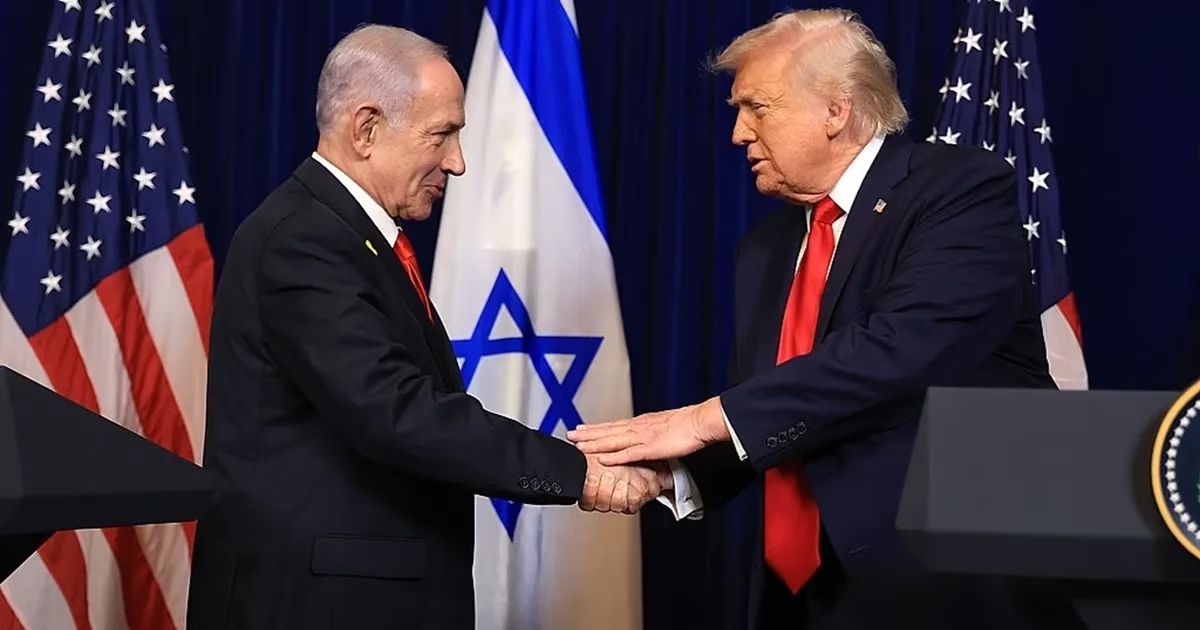
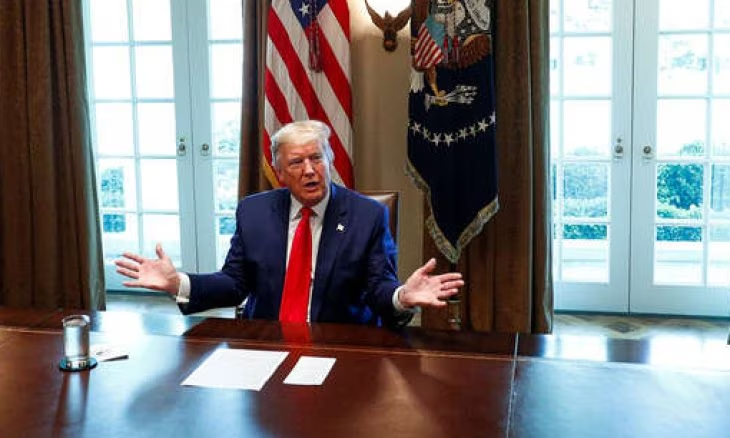
US Pressure on Tel Aviv to End Lebanon File: Divergent Views Between Trump and Netanyahu

Media sources reported a state of muted tension between the American administration and the Israeli government regarding the negotiation process related to the Lebanese front. US President Donald Trump seeks to impose a state of relative stability in the region to enable him to manage broader international issues, while Israeli Prime Minister Benjamin Netanyahu adheres strictly to maintaining freedom of military action and rejecting any formula that might be interpreted as a retreat or surrender.

The sources indicated that this divergence in views has not yet reached the stage of public confrontation, but the gaps remain deep between the two sides. The last direct meeting held in Washington between representatives of the Israeli and Lebanese sides failed to achieve any tangible breakthrough, as clear agreements and specific timelines to end the ongoing conflict were absent.

For his part, US Secretary of State, Marco Rubio, was quick to describe those talks as merely the beginning of a long-term political process. Political circles in Washington believe that merely having the conflicting parties sit at one table is the only possible achievement to point to at present, given the complexities of the field and political landscape.

The divergence in views became clear after the meeting, as each party presented a vision that served its own agenda before its public. While Tel Aviv focused on praising the positive atmosphere and opening a direct negotiation channel, Beirut adhered to its basic and sole demand for an immediate and comprehensive cessation of the war on Lebanese territory.

The picture becomes more complicated in the absence of Hezbollah, described as the most central player in the arena, from the official negotiation table. This absence raises fundamental questions about the utility of any papers that may be signed, and the extent of the Lebanese government's ability to impose commitments and pledges on the ground given the party's military and political influence.

US mediation in this file is part of a broader strategy aimed at calming regional tensions associated with the crisis with Iran and the disturbances in the Strait of Hormuz. Washington considers pressuring Israel to accept a ceasefire as a fundamental pillar to prevent the region from sliding into a comprehensive explosion that could harm international economic and security interests.

In contrast, Tehran remains strongly present in the background of the negotiation scene despite its unofficial participation, as it considers Hezbollah a strategic pillar that cannot be relinquished. Observers confirm that any attempt to reach a final agreement in Lebanon without considering the influence of Tehran and its allies will encounter major field obstacles that make lasting stability a distant prospect.

The question is not just what will be written on paper, but whether the Lebanese government is capable of enforcing anything on the ground?

ARAB AND WORLD

Fri 17 Apr 2026 3:47 pm - Jerusalem Time

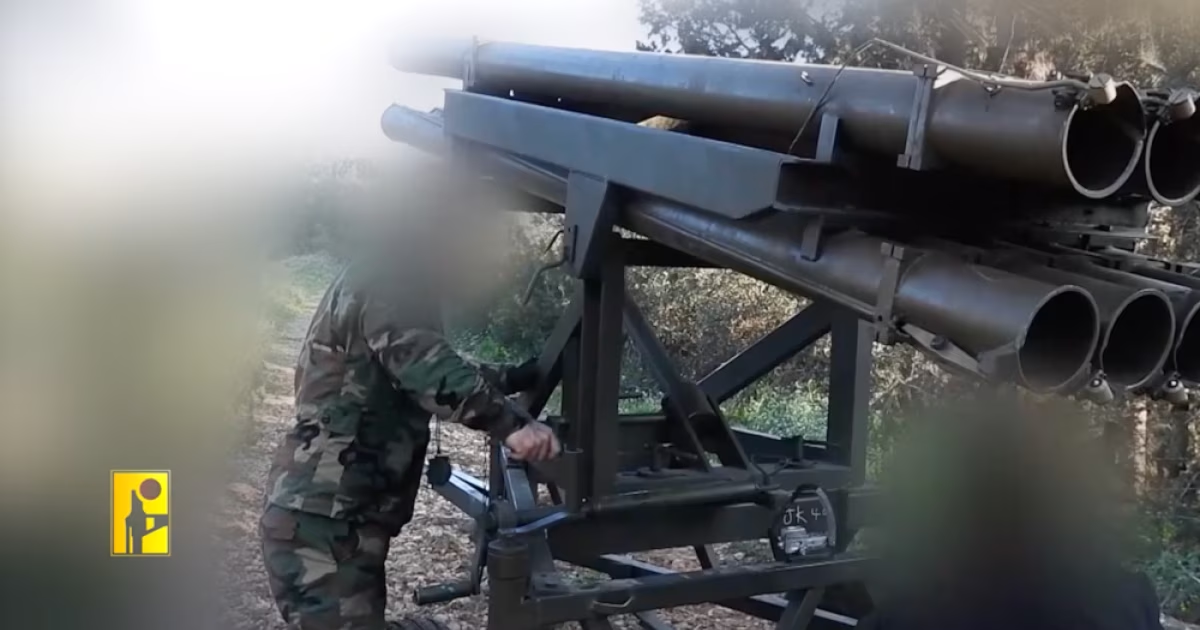
Hezbollah announces 45-day confrontation toll: 2184 military operations targeted deep inside Israel

Lebanese Hezbollah issued a final statement on its military operations over the past 45 days, announcing the execution of 2184 operations targeting Israeli occupation positions and movements. The party clarified that these operations were a direct response to the targeting of civilians and the destruction of Lebanese infrastructure, emphasizing that its military capabilities remained effective throughout the confrontation period.

This announcement coincided with the temporary truce agreement, announced by US President Donald Trump for ten days, coming into effect. This agreement aims to halt combat operations in Lebanon starting from midnight Thursday, amidst cautious field anticipation from both sides regarding adherence to the truce terms on the northern front.

In its statement, the party described the recent battle as 'The Eaten Chaff,' indicating that it witnessed heroic epics in confronting the encroaching occupation forces. The statement mentioned that the resistance issued 1828 military communiqués between early March and late April of this year, documenting its strikes that did not cease despite the intensity of Israeli raids.

The targeting map included military sites, barracks, and strategic bases within the occupied Palestinian territories, reaching a depth of 160 kilometers. The resistance used kamikaze drones and advanced missiles in its attacks, targeting settlements and major cities, including the Tel Aviv area, at a daily average of 49 military operations.

On the humanitarian front, official data revealed the extent of the catastrophe left by the recent Israeli aggression, with over 2196 martyrs and thousands injured. The military escalation also caused a widespread displacement wave, affecting more than one million Lebanese who were forced to leave their homes due to intense shelling and the destruction of residential areas.

Reports indicate that Israel had expanded its ground and air aggression on March 2nd, attempting to impose a new geographical reality in southern Lebanon. Despite the Israeli occupation of new border areas, field sources confirmed that the resistance maintained its rate of fire and its ability to reach sensitive targets deep inside Israel.

Hezbollah concluded its statement by affirming the full readiness of its fighters despite the ongoing truce, stressing that 'hands will remain on the trigger' to confront any potential violations. This stance comes in light of a long history of Israeli violations of previous ceasefire agreements, making the current truce a real test for international diplomatic efforts.

The hands of the mujahideen will remain on the trigger in anticipation of any treachery, and we will remain steadfast until our last breath.

ARAB AND WORLD

Fri 17 Apr 2026 3:47 pm - Jerusalem Time

Rare $240 Million US Drone Crashes Over Strait of Hormuz

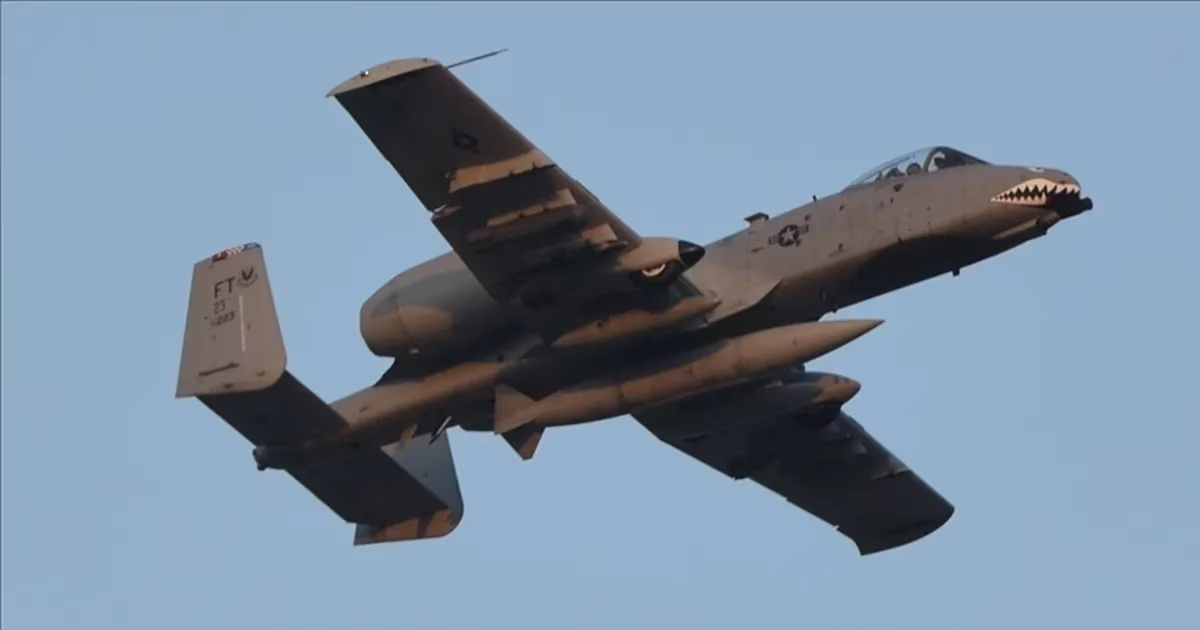
The US military suffered a significant military loss after one of its most expensive and rarest drones crashed over the waters of the Strait of Hormuz. Media sources reported that an MQ-4C Triton aircraft belonging to the Navy crashed and lost communication while performing operational missions last week, with the exact reasons behind the incident still shrouded in mystery.

This aircraft is classified as one of the rarest and most advanced aerial assets in the US Navy's fleet, with the cost of a single unit reaching approximately $240 million. This enormous figure is more than double the cost of building a modern stealth fighter, reflecting the high technological and military value of this type of drone, which is dedicated to long-range surveillance operations.

The 'Triton' aircraft boasts superior capabilities in maritime intelligence, reconnaissance, and targeting, and is designed to operate in complex strategic environments. The loss of this aircraft in the vital Strait of Hormuz region represents a blow to US monitoring and reconnaissance efforts in the area, at a time when no detailed official comment has been issued clarifying whether the crash resulted from a technical malfunction or external targeting.

The aircraft is a pioneer in maritime intelligence, surveillance, reconnaissance, and targeting, and its price is more than double that of a stealth fighter.

ISRAELI AFFAIRS

Fri 17 Apr 2026 3:46 pm - Jerusalem Time

Historic collapse of the dollar against the shekel confuses economic calculations in Israel

Economic circles in Israel are facing a state of severe confusion following the decline in the dollar's exchange rate against the shekel to unprecedented levels in 30 years, touching 3.01 shekels per dollar. Financial estimates indicate that the continued appreciation of the shekel may push the exchange rate to break the 3 shekel barrier downwards before the end of this month, placing immense pressure on the export and industrial sectors.

Economic sources reported that this dramatic shift is due to a combination of factors, most notably military de-escalation and a ceasefire with Iran, which led to a tangible decrease in the risk premium associated with the Israeli market. The activity of financial institutions, which sold nearly $13.5 billion in exchange for purchasing local currency during the last quarter of last year, also contributed to the excessive strengthening of the shekel.

Despite the high purchasing power of the local currency, Israeli markets have not witnessed a parallel decrease in the prices of basic or imported goods, such as fuel, cars, and electronic devices. Observers attribute this imbalance to importers citing high operating and insurance costs, as well as the disposal of inventories previously purchased at high dollar prices, which kept the cost of living at record levels.

In a related context, experts warned that the government's neglect to support the industrial sector at this critical stage represents a fatal blow to the local industry's ability to compete in international markets. Specialists demanded that the Minister of Finance and the Governor of the Central Bank awaken from their state of inertia, emphasizing that supporting factories should be viewed as a strategic investment and not merely a burden on the state's general budget.

Attention is currently focused on the Bank of Israel, as calls are escalating for urgent measures, including lowering interest rates to align with global trends and alleviating the burden of financing on producers. Demands also included activating mechanisms to absorb financial hedging surpluses, providing tax incentives that allow taxes to be paid in dollars, and accelerating the pace of capital asset consumption to enhance competitiveness.

On the other hand, markets are awaiting the release of the Consumer Price Index for March, amid expectations of an increase of up to 0.5%, driven by rising housing costs, airfare, and clothing. Despite a slight decrease in food prices associated with the holiday season, inflation still represents a major challenge for monetary policymakers in light of the current political and security conditions.

In conclusion, analysts believe that the exorbitant costs of military operations, which raised the army's budget by more than 35 billion shekels, prevented bold decisions to cut interest rates earlier. The Governor of the Central Bank is expected to maintain current interest rate levels unchanged in the near term, with the possibility of postponing any significant reduction until the second quarter of 2027, instead of previous expectations that pointed to the end of 2026.

The war proved that industrial production is the true backbone of the economy, but decision-makers decided to abandon this stronghold at the most critical moments.

PALESTINE

Fri 17 Apr 2026 3:46 pm - Jerusalem Time

Two brothers killed, a third injured by occupation forces' bullets in Shuja'iyya neighborhood, Gaza

Two Palestinian brothers were martyred and a third sustained varying injuries this Friday morning, as a result of Israeli occupation army forces opening fire on them in the Shuja'iyya neighborhood, located east of Gaza City. This crime comes within a series of daily violations committed by Israeli forces against civilians, despite the ongoing ceasefire agreement that came into effect on October 10, 2025.

Medical sources reported that the bodies of the two martyrs, Muhammad and Eid Abu Warda, arrived at the hospital, in addition to their brother who is suffering from moderately severe injuries. The sources clarified that the direct targeting occurred on the vital Mansoura Street within the neighborhood, where the area was experiencing normal movements of citizens before they were subjected to sudden gunfire from occupation vehicles stationed in the area.

Local sources and eyewitnesses reported that occupation soldiers directly targeted a civilian car designated for distributing and filling potable water, which immediately led to the casualties. This targeting represents part of the policy of restricting essential services and water sources that residents rely on amidst the widespread destruction left by ongoing military operations in the Strip.

In a related context, the early hours of dawn witnessed a field escalation represented by intense Israeli artillery shelling that targeted various areas northwest of Rafah city and east of Khan Yunis city in the southern Strip. The shelling also extended to include the eastern neighborhoods of Gaza City and the outskirts of Jabalia town in the north, causing a state of panic among displaced people attempting to return to their residential areas.

For its part, the government media office in Gaza revealed shocking statistics regarding the extent of the occupation's adherence to the truce, confirming the monitoring of more than 2400 violations of the ceasefire agreement since its signing. These violations varied between direct killings, arbitrary arrests, tightening the siege, and using starvation as a weapon against the besieged population in various governorates of Gaza.

Ministry of Health data indicates that these continuous violations have resulted in the martyrdom of 765 people and the injury of approximately 2140 others since the agreement came into effect. These developments come after a genocidal war launched by Israel since October 2023, which left enormous destruction affecting 90% of the Strip's infrastructure, and led to the martyrdom and injury of hundreds of thousands of Palestinians.

The occupation committed approximately 2400 violations of the ceasefire agreement, including killings, arrests, siege, and systematic starvation.

ARAB AND WORLD

Fri 17 Apr 2026 3:46 pm - Jerusalem Time

Lebanon on the First Days of the Truce: Israeli Violations, Victims Under Rubble, and War Remnants Haunting Returnees

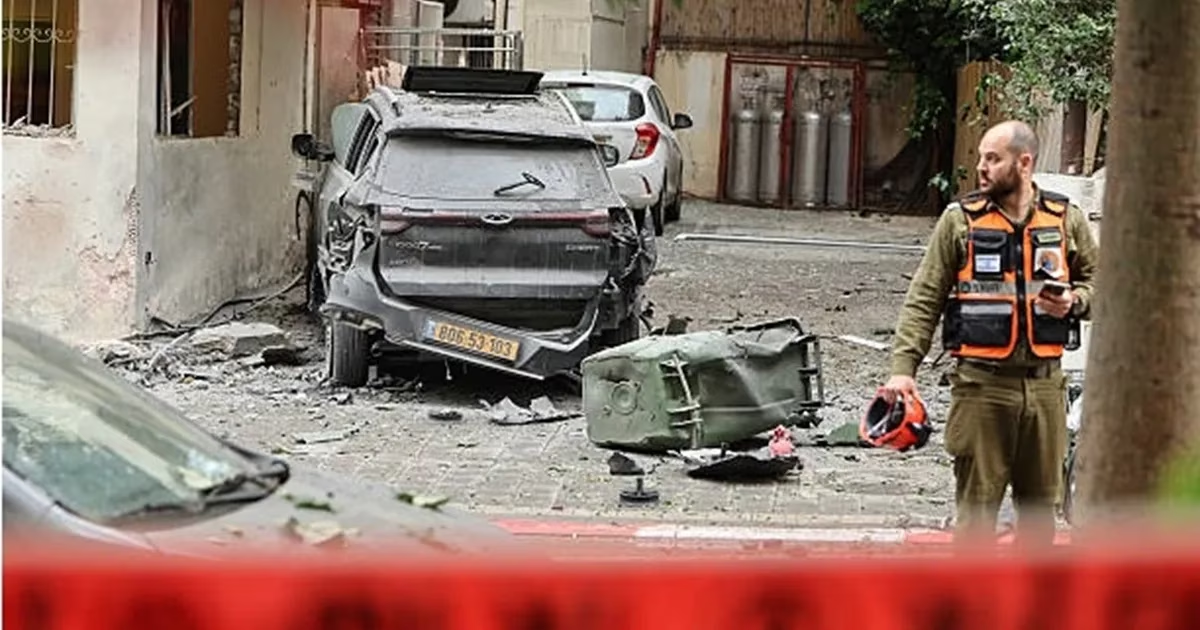
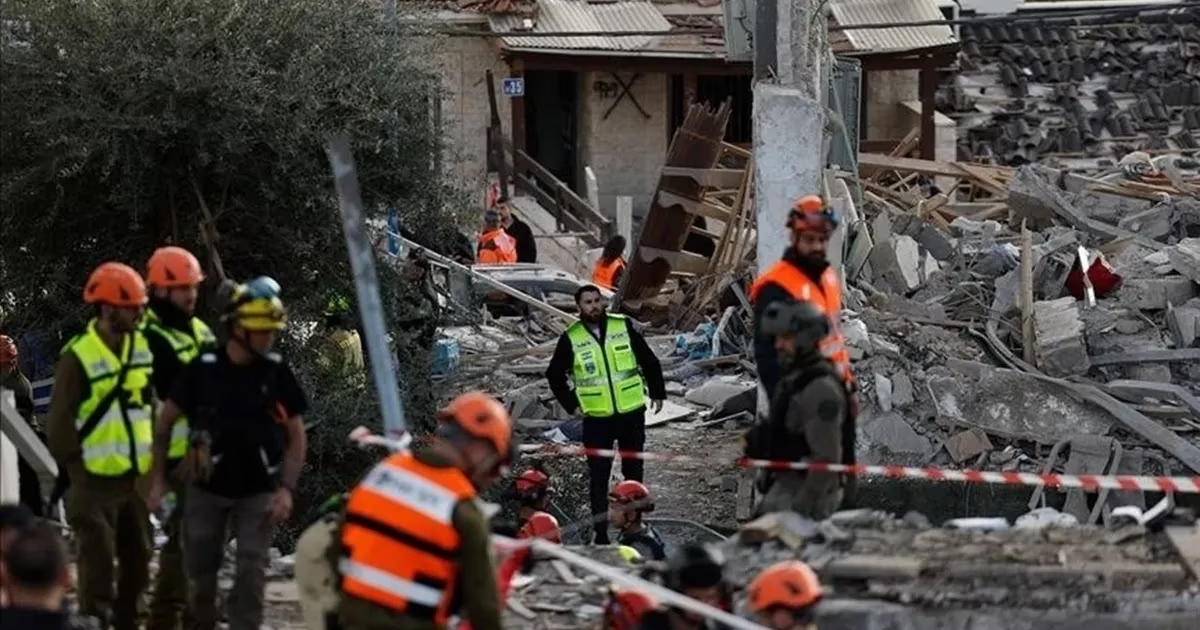
The first hours of the ceasefire agreement coming into effect in Lebanon witnessed escalating field tensions. Official sources reported the martyrdom of a boy and the injury of another due to the explosion of remnants from the Israeli army in the town of Majdal Zoun, in the Marjayoun district. This incident highlights the grave dangers facing displaced people returning to their villages amidst the spread of mines and unexploded ordnance.

In a clear violation of the ten-day truce announced by US President Donald Trump, Israeli occupation artillery and machine guns targeted an ambulance team belonging to the Islamic Health Authority in the town of Konin, in the Tyre district. This assault resulted in varying injuries among the paramedics, hindering humanitarian efforts aimed at providing urgent medical assistance in the affected areas.

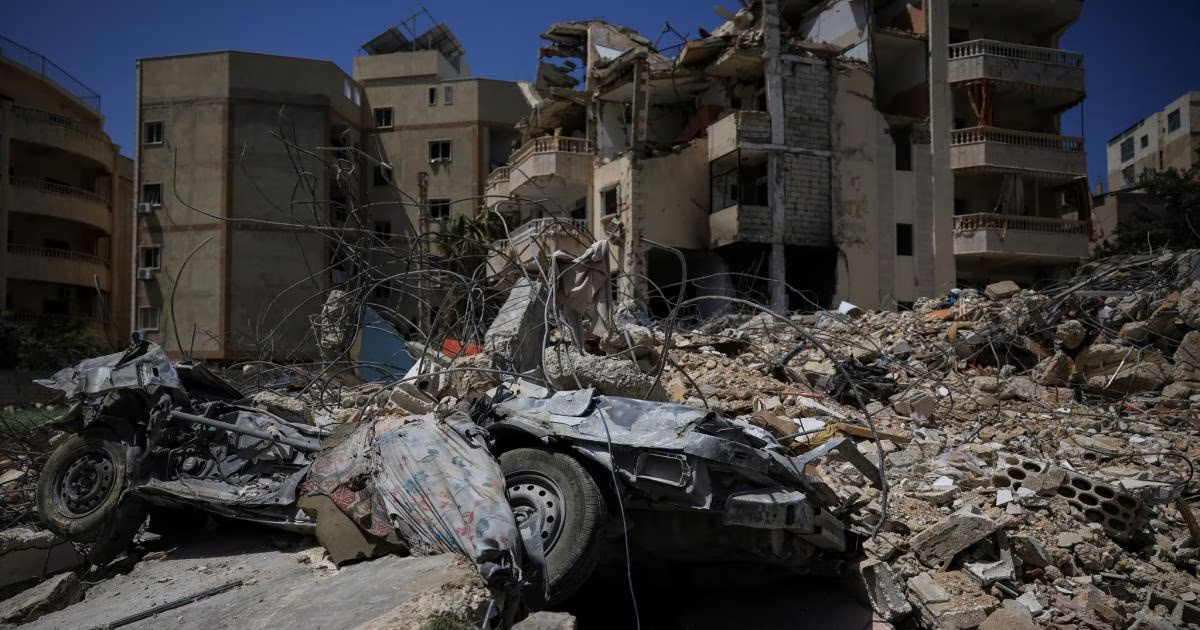
For its part, the Lebanese Army officially announced monitoring a series of Israeli violations that affected several towns and villages in South Lebanon since midnight Thursday/Friday. A military statement clarified that Israeli forces carried out intermittent shelling operations, in addition to engineering activities that included booby-trapping and demolishing residential buildings in the border town of Khiam.

The Lebanese Army command reiterated its warnings to citizens about the necessity of exercising caution when returning to villages and towns located on the front lines, emphasizing that the area is still not entirely safe. Military units deployed in the south urged residents to fully adhere to their directives and avoid approaching sites that witnessed intense military operations to preserve their lives.

In the town of Khiam, local sources reported that the Israeli army carried out extensive booby-trapping and demolition operations of buildings, in a move aimed at changing the field landscape before a full withdrawal. The town of Deirmimas also came under artillery shelling before the truce came into effect, causing widespread fires in homes and properties before civil defense teams brought them under control.

On the humanitarian front, the head of the Lebanese Red Cross, Antoine Zoghbi, affirmed that relief teams prioritize extracting victims from under the rubble at this stage. Zoghbi indicated that assessing the total extent of the damage requires extensive coordination between various official and international bodies to ensure an effective response to the increasing needs.

Zoghbi pointed out that the Red Cross is currently working to identify the victims who have been transferred to morgues, in preparation for handing them over to their families. He warned that the humanitarian aid currently reaching Lebanon covers only 30% of the actual needs of the affected and displaced populations, portending a severe living and health crisis.

In the city of Tyre, civil defense revealed the presence of more than 12 martyrs still under the rubble of destroyed buildings in the surrounding villages, where rescue teams face logistical difficulties in reaching them. Field sources confirmed that work is ongoing without interruption to extract the bodies, despite continuous security threats and violations that hinder the movement of heavy machinery.

These field developments come amidst international anticipation of the parties' commitment to the ceasefire agreement, which aims to end an aggression that has left thousands of martyrs and wounded since October 2023. Observers believe that the repeated Israeli violations in the first hours put the agreement to a real test, especially with the continued systematic demolition and destruction operations in border villages.

Displaced Lebanese are living in a state of anticipation and anxiety between the desire to quickly return to their homes and military warnings of mines and shelling. Diplomatic efforts continue to strengthen the stability of the temporary truce and transform it into a permanent cessation of hostilities, while medical and relief teams race against time to extract victims and treat the wounded in complex field conditions.

The current priority is to extract victims from under the rubble, and work is underway to identify those in morgues.

ARAB AND WORLD

Fri 17 Apr 2026 8:17 am - Jerusalem Time

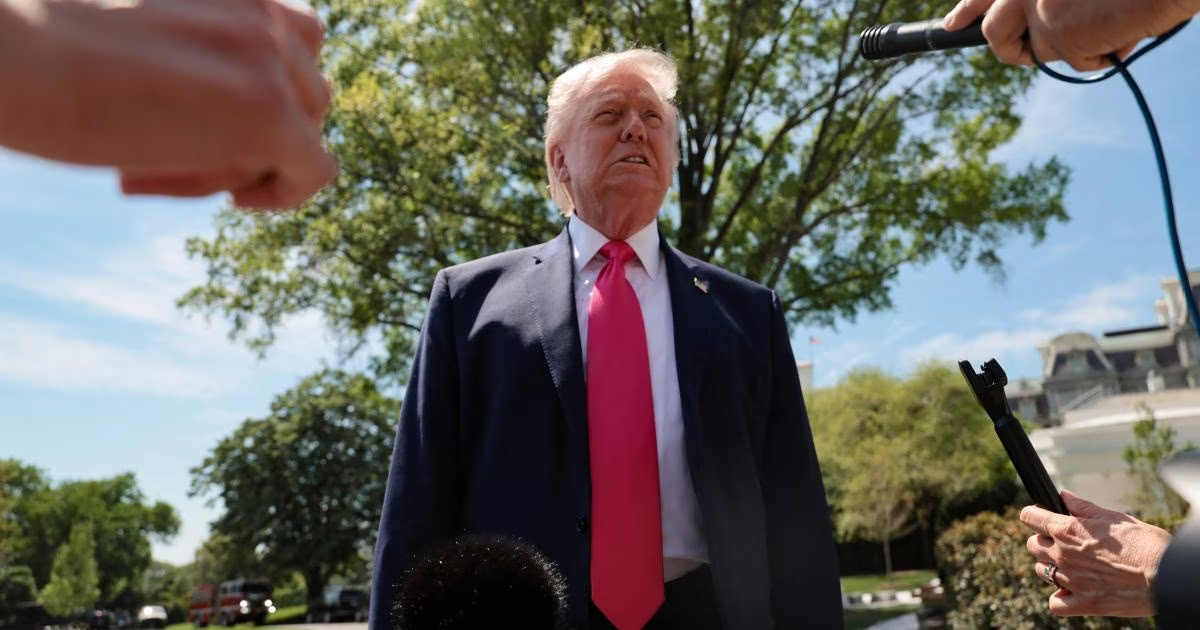
Trump discusses reports of missing nuclear scientists, describes matter as 'very serious'

US President Donald Trump revealed official movements within the US administration to ascertain the truth of reports about the mysterious disappearance of a number of scientists specializing in nuclear and defense sectors. Trump confirmed in press statements he made in Washington that he had just concluded a meeting dedicated to discussing this issue, which he described as serious, noting that authorities are paying great attention to these reports despite not being definitively confirmed yet.

The US President explained that the coming few days will be crucial in determining the nature of these incidents, as he expected the investigation results to emerge within a week or two. Trump added that some of the individuals named in the reports held very important positions and responsibilities in the state, expressing his hope that these cases are merely random events not linked by an organizational connection or systematic targeting.

These presidential moves come amid escalating questions within scientific and security circles in the United States about the fate of experts in space and energy fields. Media reports have observed an increase in sudden deaths or disappearances of specialists working on sensitive defense projects, which has raised a wave of concern about the safety of high-level scientific personnel in the country.

Among the cases that sparked controversy is what journalistic sources reported about the death of veteran scientist Michael David Hicks, who worked at the Jet Propulsion Laboratory of the US space agency 'NASA'. Hicks's death was recorded in 2023 without the real reasons behind his demise being disclosed, which opened the door to widespread speculation in the absence of official clarifications from the relevant authorities.

Available data indicates that Hicks's case may be part of a longer list including about nine American experts who have gone missing or died under mysterious circumstances recently. The specializations of these experts are distributed among space sciences, defense system development, and nuclear files, which are sectors that represent a fundamental pillar of US national security and are usually subject to strict security control.

In a related context, White House spokeswoman Caroline Leavitt confirmed that the US administration is seriously considering opening a comprehensive investigation into these allegations to ascertain the facts. Leavitt said that she is in the process of communicating with the relevant intelligence and security agencies to gather sufficient information, stressing that if these reports are proven true, the government will take strict measures to deal with the situation.

Observers believe that Trump's direct interest in this file reflects the extent of concern about the possibility of external targeting or security breaches affecting American scientific minds. While the American public awaits the promised investigation results, speculation remains about whether these incidents are merely temporal coincidences or reflect a new security threat facing the United States in its most vital sectors.

I have just come out of a meeting on this subject, and it seems very serious, and I hope these cases are just random coincidences.

PALESTINE

Fri 17 Apr 2026 8:17 am - Jerusalem Time

Palestinian Authority hands over retired Colonel Hisham Harb to France over 1982 Paris attack

The Palestinian Authority, today, Thursday, handed over citizen Mahmoud Al-Adra, known by his nom de guerre Hisham Harb, to the French authorities. This step comes against the backdrop of French accusations against Harb of involvement in an armed attack targeting a restaurant in the Jewish quarter of Paris in 1982, which at the time resulted in the death of six people and the injury of dozens.

Harb's family confirmed that they had received an official notification from the Palestinian Authority stating that the extradition process had been completed and that he had been transferred to Jordan as an intermediary before his arrival in France. Harb had been detained three days ago in a prison in the city of Yatta, south of Hebron, before being unexpectedly transferred to implement the international extradition order issued against him years ago.

Bilal Al-Adra, Hisham Harb's son, recounted the details of a final phone call he received from his father this morning, where he was speaking from a private number and was in a state of extreme distress. The son explained that his father informed him of his imminent extradition to the French authorities, asking his family to remain steadfast and take care of themselves in these difficult circumstances he is facing.

Local sources reported that the Palestinian police in Ramallah summoned Harb's son this afternoon to officially inform him of the completion of the extradition procedures. This measure came at a time when lawyers were awaiting a court session to consider the legality of his extradition, but the field movements preceded the stalled legal process.

Yesterday, Wednesday, the Palestinian Administrative Court rejected an urgent request submitted by the defense team to prevent Harb's extradition to France without giving clear reasons for the rejection. The defense indicated that this rejection paved the way for the executive authority to proceed with the extradition procedures, which human rights activists describe as illegal.

Harb's family is in a state of extreme concern about his health and legal fate in France, especially since he is 72 years old and suffers from chronic diseases. The family confirms that their father suffers from cancer and neurological diseases, which makes his trial abroad a real danger to his life in the absence of guarantees of a fair trial.

For his part, lawyer Ammar Dweik of the Independent Commission for Human Rights described the extradition process as a dangerous precedent and a clear violation of the provisions of the Palestinian Basic Law. Dweik explained that local laws prohibit the extradition of citizens to foreign entities, considering what happened to undermine the sovereignty of the Palestinian judiciary and citizenship rights.

Thirteen Palestinian human rights and civil organizations had previously issued a joint statement warning against taking this step. The organizations considered that the extradition of any Palestinian citizen to an external entity represents a flagrant violation of constitutional rights and opens the door to other international prosecutions that may affect other Palestinians.

The extradition decision is linked to previous political understandings, as Palestinian President Mahmoud Abbas expressed his readiness to respond to the French request last November. The Palestinian presidency at the time considered that France's recognition of the State of Palestine provided an appropriate framework for judicial and security cooperation between the two countries in such complex issues.

Hisham Harb is a retired colonel in the Palestinian General Intelligence Service, and he joined official security work after returning to the Palestinian territories in the 1990s. Harb had returned with the late President Yasser Arafat in 1994 as part of the arrangements of the Oslo Accords, which included settling the status of hundreds of Palestinian military cadres.

The roots of the case go back to Harb's previous affiliation with the Fatah-Revolutionary Council organization, a movement that split from Fatah and was active in the 1970s and 1980s. France accuses members of this organization of carrying out a series of operations in Europe, including the attack on the 'Jo Goldenberg' restaurant, for which Harb is currently being prosecuted.

According to Harb's biography, he rose through military ranks within the splinter organization, working as a weapons instructor in Syria before taking on logistical responsibilities in Europe and Asia. However, he later decided to abandon armed struggle and commit to the political path of the Palestinian Authority since its establishment, settling in the West Bank.

The Palestinian Authority had arrested Harb last September, coinciding with French diplomatic moves to support the recognition of the Palestinian state at the United Nations. French President Emmanuel Macron at the time praised what he described as 'excellent cooperation' with Ramallah, confirming close coordination for the extradition of suspects in old cases.

France is also demanding the extradition of three other Palestinians it accuses of involvement in the same attack: Nizar Tawfiq Hamada, Amjad Atta, and Nabil Othman. Harb's extradition raises questions about the fate of the remaining wanted persons, and the extent of the Palestinian Authority's ability to balance its international obligations with the protection of its citizens' rights under local law.

The extradition represents a serious violation of the Palestinian Basic Law and a dangerous precedent in dealing with citizens.

ARAB AND WORLD

Fri 17 Apr 2026 8:17 am - Jerusalem Time

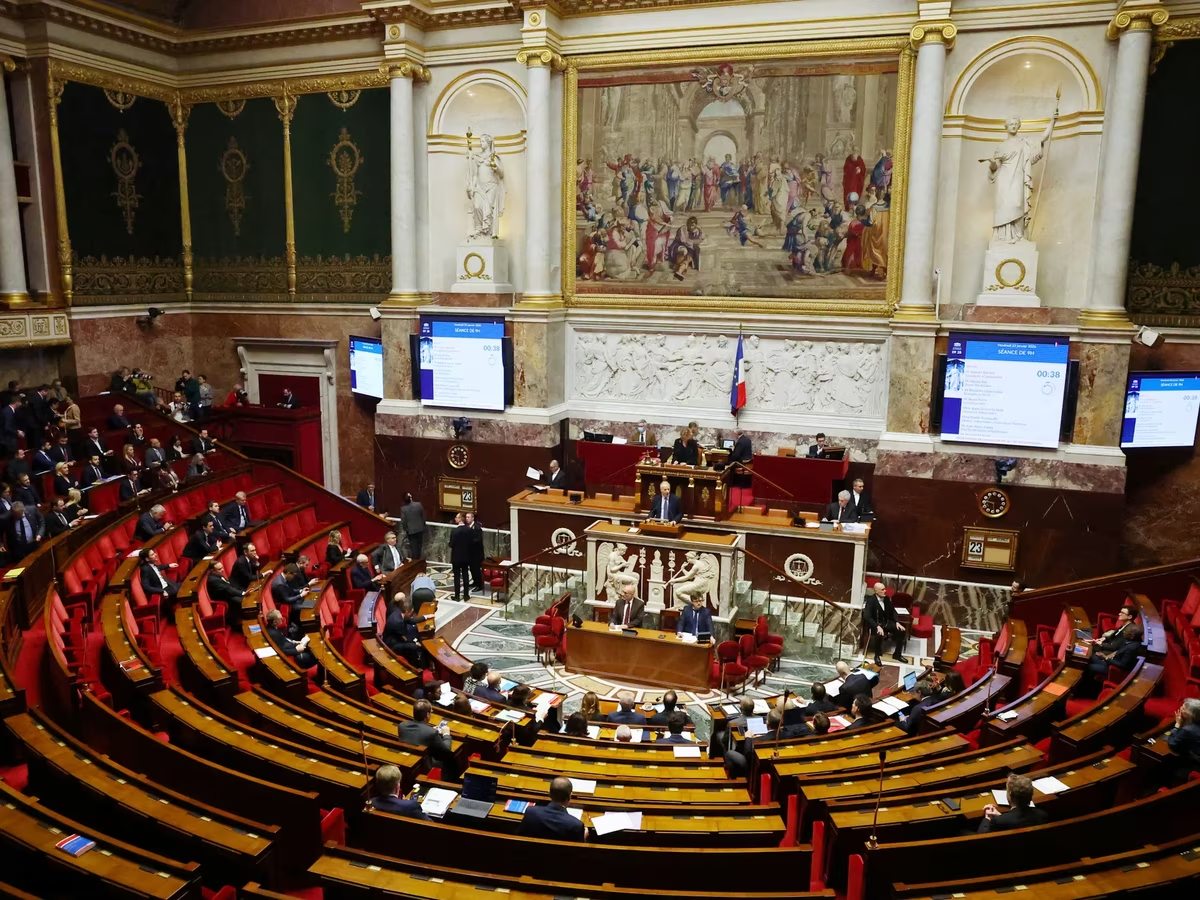
'Yadan' Bill in French Parliament: Attempt at New Definition of Antisemitism Raises Fears of Suppressing Criticism of Israel

The French Parliament is preparing to discuss the 'Yadan' bill during its sessions on April 16 and 17, which aims to criminalize what are described as new forms of antisemitism. This move comes amidst sharp political and human rights divisions, as critics see it as a tool to stifle voices opposing Israeli policies under legal cover.

The bill, introduced by MP Caroline Yadan, a member of the 'Together for the Republic' party, was first proposed in late 2024. Despite the time since its submission, controversy surrounding it has recently escalated with its arrival on the actual parliamentary discussion platform, driven by support from French center and right-wing blocs.

The legal justifications for the bill are based on a significant increase in incidents classified as antisemitic since 2023. However, sources indicate that this increase directly coincided with the escalation of Israeli aggression on the Gaza Strip, which the bill's drafters ignore in their official preamble.

The new law seeks to redefine 'contemporary antisemitism' to fill what it describes as gaps in previous legislation, specifically the 'Gayssot Law' issued in 1990. This amendment aims to establish a binding framework for the French judiciary that imposes severe penalties for certain speeches previously classified as freedom of opinion.

One of the most alarming points in the bill is the introduction of the crime of 'indirect incitement' or implicit incitement against Israel. The proposed penalties for this crime reach five years in prison and a fine of 75,000 euros, which human rights activists see as a dangerous expansion of legal interpretation.

The proposal also includes a penalty of one year in prison and a fine of 45,000 euros for anyone convicted of 'downplaying' attacks targeting Israel. This particular clause raises concerns among academics and journalists about its potential use to suppress any critical analysis of Israeli military or political operations.

In contrast, the French scene witnessed widespread popular action in the form of an online petition that collected more than 700,000 signatures demanding the withdrawal of the bill. The petition argues that the law deliberately conflates hatred of Jews with criticism of Zionism and the policies of the Israeli government, threatening the essence of French democracy.

The organizers of the popular petition affirmed that the 'Yadan' bill contradicts the principles of international law, as it indirectly entrenches the Israeli occupation of Palestinian territories. They also warned that equating Jews with Benjamin Netanyahu's policies harms efforts to combat real racism instead of serving them.

Warnings were not limited to the popular side but extended to the country's highest administrative judicial body, as the French Council of State issued an advisory opinion warning against violating freedom of expression. The Council affirmed that existing laws are fully sufficient to prosecute any actual hostile acts targeting Jewish citizens or their property.

Despite these legal and popular warnings, the balance of power within the National Assembly seems to favor the adoption of the law. Seven parliamentary blocs, comprising more than 450 deputies, announced their intention to vote in favor of the bill, ensuring it a comfortable majority against the opposing bloc.

The opposition front to the law within Parliament consists of a left-wing alliance including the 'La France Insoumise' party and the Green Party, in addition to a wing of the Socialist Party. The number of opposing deputies is about 120, and they emphasize the need to protect scientific research and political debate on the Palestinian issue from criminalization.

Anticipation remains the order of the day awaiting the results of parliamentary deliberations, as observers believe that the adoption of the 'Yadan' law will constitute a legal precedent in Europe. This shift would change the form of solidarity with Palestine in France and impose unprecedented restrictions on political and human rights activities related to the Middle East.

The bill involves a deliberate conflation of antisemitism and criticism of Israeli policies, posing a real threat to public freedoms.

ANALYSIS

Fri 17 Apr 2026 8:17 am - Jerusalem Time

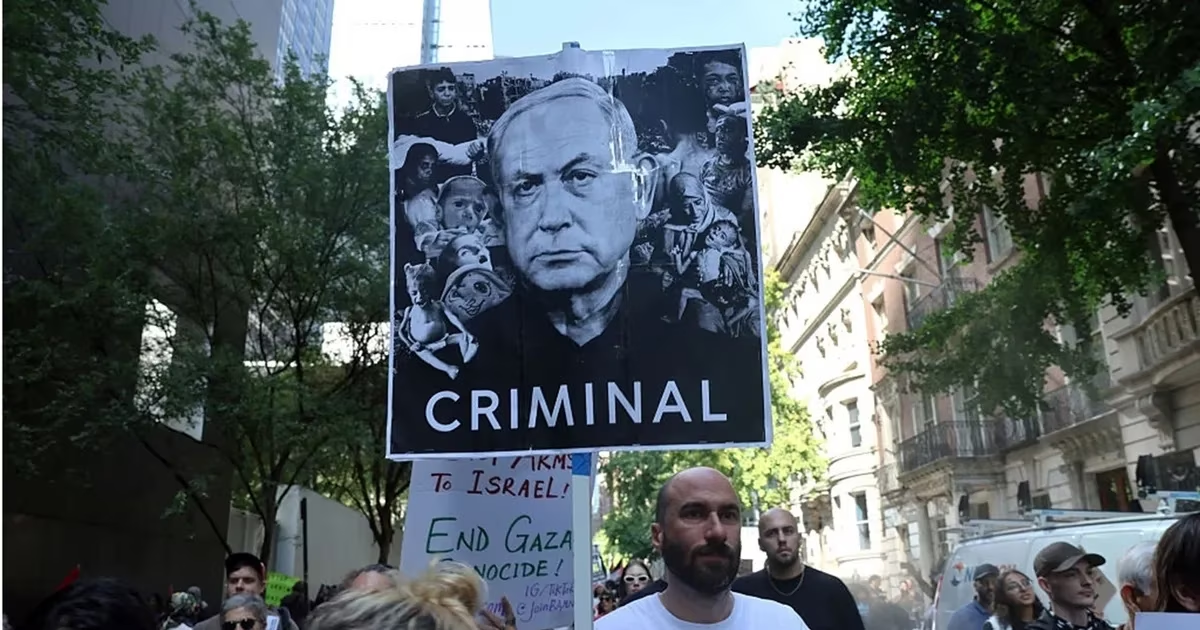
Analysis: Why did Netanyahu's strategy fail to impose a 'new order' after October 7?

Political science and international affairs professor Marc Lynch affirmed that the Israeli leadership made a grave strategic error by shifting from a policy of conflict management to an attempt to resolve it by absolute force. Lynch explained in an article published by 'Foreign Policy' magazine that this approach, adopted by Benjamin Netanyahu after the October 7 attacks, led to completely counterproductive results, as the occupation army became mired in a spiral of military and political attrition with no prospect of victory.

The analysis indicated that the new security doctrine formulated by Netanyahu was based on the illusion of being able to completely eliminate regional threats instead of dealing with them. Despite Netanyahu's claims of achieving 'historic accomplishments' in propaganda videos, the reality on the ground, especially after the events of 'Bloody Wednesday' in Beirut, revealed strategic confusion that threatens fragile international understandings.

Lynch believes that the state of frustration within Israeli society extends beyond Netanyahu himself to encompass the failure of an ambitious government vision that sought to achieve regional transformation through unrestricted military intervention. The war's objectives expanded to include the complete destruction of Hamas, the disarmament of Hezbollah, and regime change in Tehran—goals that have proven over time to exceed the capabilities of military force, no matter how brutal.

Decisive victory eluded the occupation state on every front it opened, despite the use of unprecedented violence and flagrant violations of international norms and law. Lynch adds that the return to talking about weakening capabilities instead of crushing them is an implicit admission of defeat, and a forced return to the 'mowing the grass' strategy that Netanyahu had hoped to abandon permanently.

Before October 7, Tel Aviv relied on short, intense military campaigns aimed at enhancing deterrence while avoiding comprehensive escalation, a policy that ensured relative stability. However, the breach of the border fence by Hamas fighters shattered this strategic consensus, pushing Israeli leaders towards a major gamble aimed at imposing a 'Hebrew peace' based solely on the occupation's terms.

This extremist vision sought to permanently remove the Palestinian issue from the international agenda by expanding the 'Abraham Accords' and building a regional security structure that excluded Palestinians. Unconditional American support, from both the Biden and Trump administrations, encouraged Israeli leaders to believe they possessed complete immunity from punishment, no matter the atrocity of the crimes committed in Gaza.

However, technological successes such as the Iron Dome and the assassination of Hezbollah leaders in September 2024 gave the occupation a false sense of being able to decisively resolve matters. This feeling of impunity was reinforced after airstrikes in Syria and Iran, leading Tel Aviv to believe it could reshape the region with minimal costs and military risks.

But these ambitions collided with the harsh reality in Lebanon, where the occupation army failed to impose its will as Hezbollah reasserted its field capabilities and the costs of a ground invasion increased. The comprehensive air war against Iran also failed to achieve its primary goal of regime change, instead leading to a severe depletion of Israeli interceptor missile stockpiles.

On the diplomatic front, the horrors of the war in Gaza led to a radical shift in global public opinion, with people in Europe and the United States beginning to view the occupation as a rogue state. In the Arab region, reckless interventions convinced many countries that Israel represents a direct security threat, not a potential partner in any future alliance.

The Israeli strike targeting a meeting in Doha in 2025 marked a negative turning point in the occupation's relations with Gulf states, revealing Tel Aviv's disregard for its allies' sovereignty. This incident, along with the aggression against Lebanon and Iran, reinforced fears that Israeli policies aim to spread chaos and state collapse, threatening the stability of the entire region.

Israeli actions in the West Bank also embarrassed Arab leaders and made it difficult to justify any security cooperation with the occupation to their populations. Cracks appeared in regional alliances, such as the Saudi-Emirati dispute at the end of 2025, as a direct result of apprehension about the expansion of Israeli influence and its negative impact on Arab national interests.

Recent military developments proved that American bases in the region have become targets rather than protective shields, revealing the limits of security guarantees offered by Washington. Gulf states found themselves facing existential threats to their oil infrastructure, at a time when the United States appeared unwilling or unable to secure navigation in the Strait of Hormuz.

Ultimately, Lynch concludes that the occupation's strategy after October 7 fundamentally failed to achieve its major objectives despite the immense destruction. Tel Aviv did not succeed in eliminating Hamas, nor in securing its northern borders, but instead lost a huge amount of international support that was a fundamental pillar of its survival and stability.

Critics within Israeli society who accuse Netanyahu of dragging them into endless, futile wars are touching upon the bitter truth that the far-right refuses to acknowledge. The international isolation and regional quagmire in which Israel has become entangled are the direct result of Netanyahu's forward-flight policy to protect his political career at the expense of regional security.

Netanyahu's claims of success based on weakening adversaries' capabilities are, in fact, an admission of defeat and a return to the very doctrine he had hoped to abandon.

ARAB AND WORLD

Fri 17 Apr 2026 8:17 am - Jerusalem Time

Trump hints at resuming military operations against Iran and confirms a deal involving Hezbollah in Lebanon is close

US President Donald Trump revealed dramatic developments in the Iranian file, indicating the possibility of a high-level meeting with the Iranian side early next week. Trump explained in press statements from the White House that current indications suggest a comprehensive agreement with Tehran is close, describing the progress made in the negotiations as significant and unprecedented.

Despite the optimistic tone, the US President set a firm condition for the continuation of the truce, stressing that US forces would immediately resume combat operations if efforts to reach a final agreement faltered. Trump expressed hesitation about extending the current ceasefire, which began on April 8, emphasizing that the military option remains on the table to ensure the achievement of American objectives.

Regarding Iran's nuclear capabilities, Trump affirmed that Tehran showed surprising flexibility, agreeing to completely abandon its ambitions to possess nuclear weapons. He added that the Iranian side also agreed to hand over its existing nuclear materials to the United States, considering that the Iranian leadership is now prepared to accept conditions it had previously categorically rejected.

On the ground, the US President stressed that the blockade imposed by the United States on the Strait of Hormuz remains in place and is operating with high efficiency. He also sent a message to the Vatican, indicating the necessity for Pope Leo to realize the seriousness of the threats Iran posed to global stability before the current path of settlement began.

Trump then turned to the Lebanese file, expressing confidence in reaching an imminent peace agreement that would end the escalation in the region. He clarified that any future agreement would directly involve Hezbollah, as the Lebanese government would coordinate and work with the party to ensure the sustainability of de-escalation and the implementation of the proposed agreement's terms under international auspices.

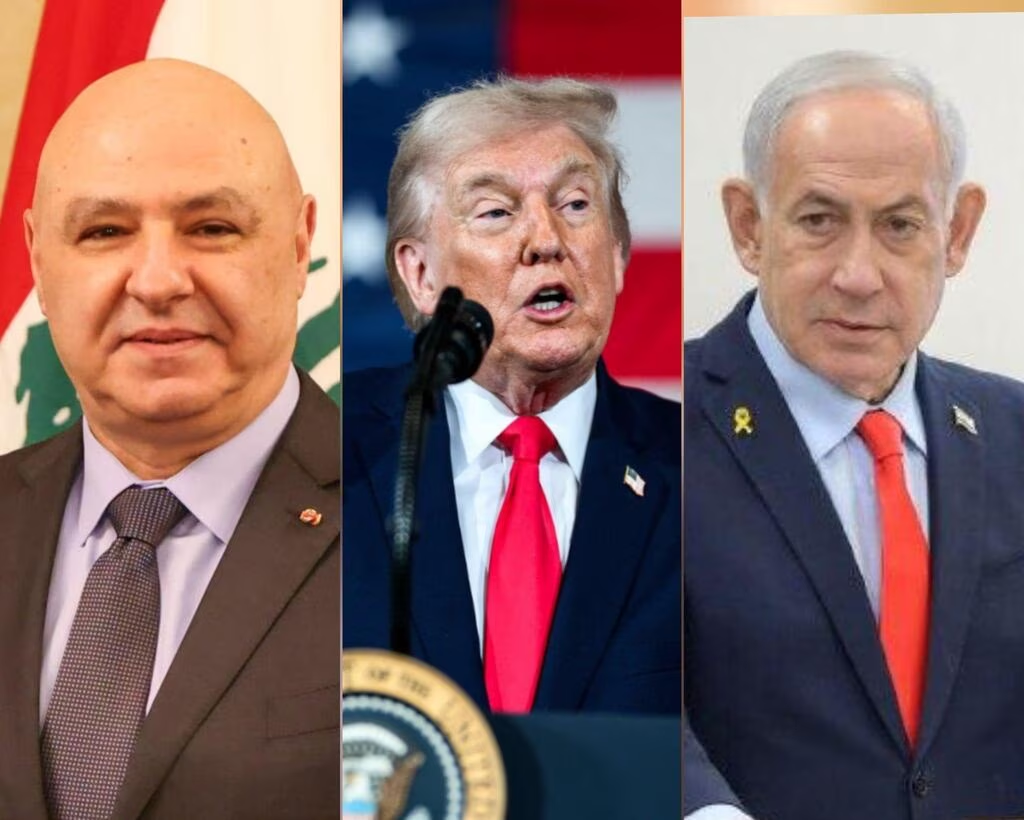
In a diplomatic surprise, Trump revealed potential arrangements for Lebanese President Joseph Aoun's visit to Washington within the next two weeks. He indicated the possibility of a summit meeting between Aoun and Israeli Prime Minister Benjamin Netanyahu at the White House, a step aimed at breaking the stalemate and achieving lasting peace in the border region.

The US President affirmed his intention to visit Lebanon at the appropriate time to support peace efforts, noting that the US administration is working intensively to see tangible results on the ground. These statements come just hours after he officially announced a ten-day ceasefire in Lebanon, effective from midnight Thursday Beirut time.

These rapid developments come amidst broad regional complexities, as the White House attempts to close conflict files in the Middle East through a mix of economic pressure and the threat of military force. Anticipation remains high for the outcomes of next week's meetings and the extent of commitment of the various parties to the terms of the announced truce in Lebanon and the negotiation path with Iran.

Iran is now ready to do things it refused yesterday, and has agreed that it will not possess nuclear weapons and to return nuclear materials to us.

OPINIONS

Fri 17 Apr 2026 8:14 am - Jerusalem Time

US State Department follows up on the arrest of journalist Ahmed Shihab-Eldin and studies the circumstances of his arrest

Washington – Said Arikat – 17/4/2026

The US State Department stated that it is aware of reports of the arrest of American-Kuwaiti journalist Ahmed Shihab-Eldin in Kuwait early last March, confirming that it is following the case and working to investigate its circumstances.

This statement came in response to an inquiry from Al-Quds newspaper's correspondent in Washington regarding the US administration's position on Shihab-Eldin's detention. A ministry official said in an email that “the safety and security of American citizens abroad is a top priority,” adding that the ministry “is dealing with reports regarding the detention of an American citizen in Kuwait.”

The official explained that the ministry provides consular assistance to American citizens detained abroad “in accordance with the powers defined by American and international law,” noting that privacy considerations prevent providing additional details at this time.

In contrast, the “Committee to Protect Journalists” announced, in a statement issued early this week, that Shihab-Eldin was detained over comments related to videos and photos addressing the war in Iran. Kuwaiti authorities have not officially confirmed the arrest to date.

According to the committee, the charges against the journalist include “spreading false information, harming national security, and misusing communication methods,” charges it described as “vague and frequently used to restrict the work of independent journalists.” It also indicated that Shihab-Eldin has not appeared publicly since early March, and that his social media accounts have disappeared.

The committee noted that among Shihab-Eldin's last posts was a location-specific video, verified by CNN, showing the crash of an American fighter jet near an air base in Kuwait, which may explain the sensitivity of the issue in the context of regional tensions.

The committee called on the Kuwaiti authorities to immediately and unconditionally release the journalist, stressing that his detention falls within a broader pattern of restricting freedom of expression in the region.

This comes in the context of a noticeable tightening of media censorship in a number of Gulf countries, where governments seek to limit the circulation of information related to the repercussions of the war in Iran, especially those that may affect internal stability or the economic and tourism image. Reports indicate that countries such as the UAE and Qatar have arrested hundreds of people since the outbreak of the war, on the grounds of publishing or sharing content related to the attacks.

Kuwait ranked 128th out of 180 countries in the World Press Freedom Index issued by Reporters Without Borders last year, at a time when concerns are growing about the use of national security legislation to restrict journalistic work and control the media narrative.

The declared American position reveals a chronic paradox in foreign policy, as Washington affirms its commitment to protecting its citizens and press freedom, but in practice it contents itself with cautious statements and limited consular measures when it comes to strategic allies. This pattern reflects the prioritization of security and economic interests over declared values, and weakens the credibility of American discourse globally. Moreover, the deliberate ambiguity in statements leaves the impression that actual diplomatic pressure is limited, which may encourage Washington's partners to continue with media restriction policies without fear of serious consequences.

The Shihab-Eldin case falls within a broader regional context witnessing an escalation in the use of national security laws to control the media space, especially in times of crisis. However, what is striking is the intersection of this approach with relative international silence, including from the United States, which adopts a discourse supporting freedom of expression. This contradiction reflects a shift in the priorities of the international system, where issues of freedoms recede before considerations of stability and alliances. In light of this reality, independent journalists become the weakest link, vulnerable to targeting in opaque legal and political environments.

OPINIONS

Fri 17 Apr 2026 8:14 am - Jerusalem Time

US-Hamas Meeting in Cairo: Conditional Diplomacy or Crisis Management?

Washington – Said Arikat – 17/4/2026

News Analysis

In a scene reflecting the complexities of US policy in the Middle East, reports revealed a rare meeting between American officials and Hamas leaders in Cairo, in an attempt to advance the stalled negotiations regarding the second phase of the ceasefire agreement in the Gaza Strip. However, this meeting, instead of reflecting a real diplomatic breakthrough, highlights a recurring pattern in the American approach: managing the crisis instead of solving it, and imposing conditions instead of building understandings.

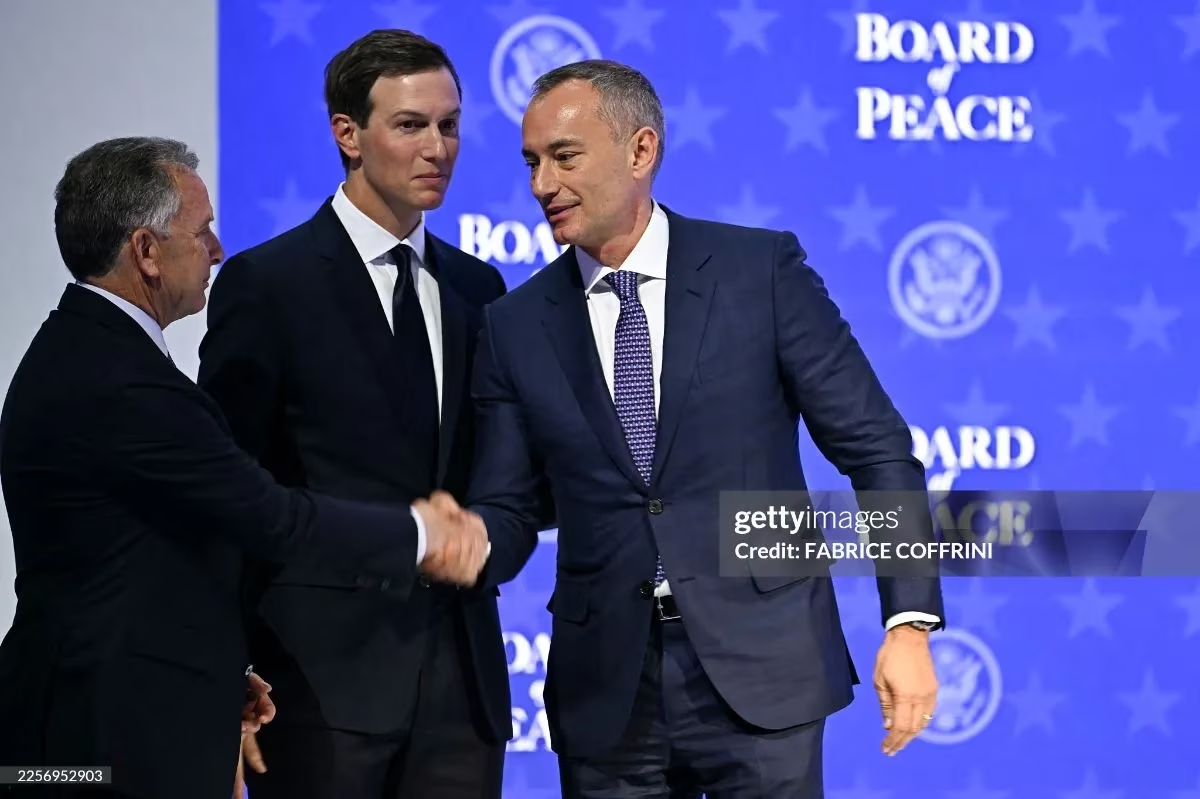
The meeting, which included Hamas's chief negotiator Khalil al-Hayya, and US advisor Ari Lightstone, along with Nikolay Mladenov (dubbed the enemy of Palestine), came in the context of efforts by what is known as the "Peace Council" supported by Washington, which is responsible for shaping the post-war phase in Gaza. Although this negotiating channel appears on the surface to be a positive step, it fundamentally reflects a clear imbalance in the nature of American mediation, which does not hide its structural bias towards the Israeli vision.

The American proposal is based on an equation that, at first glance, seems logical: the reconstruction of Gaza in exchange for the disarmament of Hamas. But this equation, when deconstructed, reveals a deep flaw in the prioritization, as a complex political process is reduced to a single security condition, while fundamental issues such as lifting the siege, ensuring the flow of aid, and stopping field violations are postponed or marginalized.

Hamas, for its part, did not reject the proposal solely on ideological grounds, but rather based on field data indicating the continuation of Israeli strikes within the Strip, the decline in humanitarian aid, and the expansion of Israeli control areas. These realities, which Washington has been unable to curb despite its influence, weaken any claim of a mediator role, and turn negotiations into a process of negotiation under pressure.

More significantly, the United States, which succeeded in October 2025 in brokering an agreement that relatively stopped the war, has been unable to translate this success into a sustainable path. Instead of building on the first phase, it reproduced the same logic: security first, and everything else later. This approach not only reflects a lack of understanding, but perhaps also reflects the absence of a real political will to impose a balance of commitments.

In the field, Israel continues to carry out near-daily strikes, announcing the targeting of Hamas elements and leaders, which exacerbates tension and undermines trust. Although Washington exerted some formal pressure to increase aid, it did not link this to any binding mechanism or accountability, making these steps closer to cosmetic improvements than to fundamental change.

Within this context, a fundamental paradox emerges: the United States seeks to impose a model for governing Gaza in the post-war phase, including a multinational force and a technocratic administration, but at the same time ignores the political conditions that would make this model viable. The absence of local consensus and the continuation of the occupation in its various forms make any imposed arrangements vulnerable to collapse.

Ultimately, this negotiating path cannot be separated from the broader framework of American policy in the region, which suffers from a deepening credibility crisis. Washington, which presents itself as a mediator, in reality plays a dual role: supporting a military and political party, while at the same time trying to manage the repercussions of this support through limited-impact diplomatic channels.

This contradiction is clearly reflected in the current negotiation process, where Hamas is asked to make major strategic concessions, while no real guarantees are offered for fundamental Palestinian rights. Instead of American mediation being a tool for achieving balance, it becomes a mechanism for reproducing an existing imbalance, which explains the ongoing stalemate.

America's insistence on linking reconstruction to disarmament, without addressing the political and humanitarian roots of the conflict, not only reflects a flawed reading of reality, but also perpetuates an unsustainable negotiating model. Past experiences have proven that stability is not imposed through unilateral security conditions, but is built through comprehensive settlements that address causes, not consequences.

Furthermore, the continuation of Israeli military operations, under American silence or justification, weakens any trust in the neutrality of mediation, and reinforces the impression that Washington uses diplomacy as a cover for managing the conflict, not for ending it. This approach, while achieving short-term tactical gains, exacerbates crises in the long run.

Given these facts, it seems that the future of Gaza will remain hostage to this American contradiction: between rhetoric that promotes solutions and practices that perpetuate the crisis. Unless Washington reconsiders its approach and moves from a logic of conditions to a logic of balance, any agreement will remain fragile, any truce temporary, and any peace postponed.

OPINIONS

Fri 17 Apr 2026 8:13 am - Jerusalem Time

Trump announces temporary truce between Lebanon and Israel

Washington – Said Arikat – 16/4/2026

In a remarkable development in the regional escalation, US President Donald Trump announced on Thursday that Lebanese President Joseph Aoun and Israeli Prime Minister Benjamin Netanyahu had reached a ten-day ceasefire agreement, at a time when clashes between Israel and "Hezbollah" were still at their peak, driven by complex regional interventions.

Trump's announcement came via his "Truth Social" platform, where he clarified that the ceasefire would take effect at 5:00 PM Eastern Time, a step he described as a prelude to achieving "lasting peace." He revealed that he had instructed his Vice President, Jez De Fance, and his Secretary of State, Marco Rubio, to work with both parties to advance the political process, extending an official invitation to both Aoun and Netanyahu to participate in upcoming peace talks at the White House.
In Beirut, the announcement was met with cautious welcome. Lebanese Prime Minister Nawaf Salam considered the ceasefire a central goal for Lebanon in the negotiations that took place in recent days. However, the Israeli position appeared more rigid; Netanyahu confirmed agreement to a temporary truce, but stressed that his country would not withdraw from southern Lebanon, announcing Israel's intention to maintain an "expanded security zone," and reiterating the demand for the dismantling of "Hezbollah" as a fundamental condition for any settlement.
On the ground, the picture remained blurry. The mechanisms for implementing the ceasefire, and the fate of hundreds of thousands of displaced people in southern Lebanon, whom the Lebanese army warned against returning to combat zones or approaching Israeli troop deployment sites, were not yet clear. Moreover, "Hezbollah"—a key player militarily and politically—was not a direct party to the negotiations, raising questions about the extent of its commitment to any agreement it did not help draft.

In this context, media reports quoted a party official as saying that any commitment to a cessation of hostilities is contingent on a comprehensive Israeli commitment, reflecting the continued trust gap between the two parties. The scene becomes more complex with the strong entry of the Iranian factor, as Tehran stressed the need to stop strikes on Lebanon as part of any broader agreement, while Iran's chief negotiator, Mohammad Bagher Ghalibaf, stated that de-escalation in Lebanon is "no less important" than a ceasefire in Iran.

This development comes amid continued Israeli aggression against Lebanon, despite a separate truce in the confrontation with Iran. While Washington and Tel Aviv denied that the recent agreement included Lebanon, Tehran hinted otherwise, based on statements from regional mediators, reflecting conflicting narratives that increase the fragility of any understanding.

The spark for the escalation ignited last month, coinciding with the US-Israeli war on Iran, with Israel responding with a series of widespread strikes and a ground invasion in the south, announcing its intention to establish a buffer zone on the border.

According to official Lebanese sources, the clashes resulted in the deaths of more than 2,100 people and the displacement of over a million civilians, while 21 people were killed in Israel as a result of retaliatory strikes from Iran and "Hezbollah." These figures reflect a heavy human cost that pushes towards any de-escalation path, even if temporary.

The announced truce reflects a delicate balance between the necessities of de-escalation and the pressures on the ground, but it lacks the elements of sustainability. The absence of "Hezbollah" from the negotiating table practically weakens the legitimacy of the agreement, making it closer to an understanding between two states that do not have full control over the theater of operations. Moreover, Israel's insistence on remaining in southern Lebanon creates a fundamental contradiction with the idea of a ceasefire. In this context, the truce appears to be merely a tactical pause, not a strategic shift, unless it is complemented by a more comprehensive negotiating framework that includes all key actors.

The American role in this agreement reveals an attempt to regain diplomatic initiative in a region where crises are intertwined. However, the multiplicity of messages and statements, especially from Donald Trump, creates confusion within the US and weakens the clarity of foreign strategy. This discrepancy is reflected in the regional parties' confidence in Washington's ability to ensure the implementation of any long-term agreement. Therefore, the success of the American initiative depends on its ability to unify its political discourse and provide tangible guarantees that go beyond media announcements.

This agreement cannot be separated from the broader regional context, where Iran seeks to link conflict arenas to strengthen its negotiating position. This linkage gives Tehran additional leverage, but in turn increases the complexity of any partial settlement. Achieving de-escalation in Lebanon without addressing the roots of tension with Iran seems difficult. Therefore, any real peace path requires a comprehensive approach that addresses the overlap between issues, rather than settling for localized agreements that are prone to collapse at the first field test.

PALESTINE

Fri 17 Apr 2026 8:13 am - Jerusalem Time

Angry Protests Follow US Vice President: 'You Are Killing Children in Gaza and Iran'

The US state of Georgia witnessed significant tension during an event organized by the right-wing organization 'Turning Point USA', where US Vice President J.D. Vance was subjected to repeated interruptions and angry chants. These protests came against the backdrop of the foreign policies of the Donald Trump administration, specifically the absolute military support for Israel in its war on the Gaza Strip, in addition to the recent US military escalation against Iran.

Sources reported that one of the attendees interrupted Vance's speech in the hall near the University of Georgia in Athens, shouting that 'Christ does not support genocide'. This stance reflects a growing dissatisfaction even within parts of the right-wing 'MAGA' base, which has begun to feel that the promises of a 'peace presidency' made by Trump during his election campaign have not materialized.

In an attempt to absorb the anger, Vance responded to the protester by saying that he agreed with the idea that Christ does not support genocide, describing it as 'very clear'. However, his response was met with widespread disapproval from the audience, especially when the protester shouted again at the Vice President, saying: 'You are killing children', referring to the civilian casualties in Gaza and Iranian cities.

Field reports indicate hundreds of child casualties as a result of the recent US-Israeli bombing of Iran, with one of the most prominent incidents being the killing of 168 female students and staff in a girls' school in Minab. This missile strike, which occurred on February 28th, sparked a wave of widespread international and human rights condemnation against direct military intervention.

In a related context, the numbers coming from the Gaza Strip continue to reflect the scale of the humanitarian catastrophe, with more than 20,000 Palestinian children killed as a result of the ongoing war and Israeli siege. International organizations and local officials confirm that these numbers are likely to rise given the continuation of military operations and the absence of a real prospect for a ceasefire.

Vance tried to defend his administration's position by blaming the previous administration, claiming that the humanitarian situation in Gaza was catastrophic when Trump took office. The Vice President claimed that his administration 'solved the problem', asking why protesters do not direct their complaints to Joe Biden instead of the current administration, which claims to be seeking a solution.

Official statistics reveal that the death toll in Gaza reached 47,035 by the last day of Biden's term in January. Since Trump's return to the White House, more than 25,000 additional Palestinians have been martyred, placing the new administration's promises to end conflicts under the scrutiny of popular and political criticism.

Observers believe that the use of biblical texts by Israeli leaders, such as the story of 'Amalek', to justify military operations in Gaza has contributed to fueling religious and humanitarian sentiments against the war. South Africa relied on these statements in its case before the International Court of Justice as legal evidence of the 'genocidal intent' of the Israeli occupation.

Despite the financial and military support provided by Washington to Israel, which included tens of billions of dollars, discontent has begun to clearly emerge within American right-wing circles. This discontent does not necessarily stem only from humanitarian motives, but from voters' feeling that promises to lower fuel prices and end foreign wars have not translated into tangible actions.

In contrast, youth and progressive movements are emerging within the United States aimed at mobilizing 'Generation Z' against extremist right-wing trends. Initiatives such as 'More Perfect University' seek to focus on economic issues and international justice to counter the political shifts witnessed in the 2024 elections, amidst sharp societal division over America's role in Middle East wars.

Christ does not support genocide.. You are killing children!

PALESTINE

Fri 17 Apr 2026 8:13 am - Jerusalem Time

Lebanese Army warns against immediate return to the South amid Israeli violations of truce agreement

The ceasefire agreement between Lebanon and the Israeli occupation officially came into effect, amidst cautious anticipation that prevailed in the border areas and the southern suburbs of Beirut. The first hours of the truce witnessed a large influx of displaced people's cars heading from various refuge areas towards villages and towns in South Lebanon and the Beqaa.

The Lebanese Army Command issued an urgent statement calling on citizens to delay their return to their homes, emphasizing the need to await instructions from the deployed military units. The statement clarified that this warning comes as a result of monitoring military movements and Israeli violations that could pose a direct threat to the lives of returning civilians.

Field sources reported that occupation forces carried out artillery shelling targeting the outskirts of the towns of Khiam and Debbine in the eastern sector, shortly after the agreement came into effect. Intensive flights of unmanned reconnaissance aircraft were also recorded over the Rashaya area and the western slopes of Mount Hermon, raising fears of renewed targeting.

Despite these official warnings, the roads leading to the South were crowded with hundreds of vehicles loaded with luggage and families who insisted on an immediate return. The city of Sidon, considered the main gateway to the South, witnessed severe traffic jams due to the massive human influx towards the border villages that suffered extensive destruction.

Many returning citizens expressed their determination to stay in their villages even if their homes had been razed to the ground by air raids. Displaced families affirmed that they prefer to live in tents over the rubble of their homes rather than continue in shelters that lacked the minimum elements of privacy and stability during the period of aggression.

For his part, the Speaker of the Lebanese Parliament, Nabih Berri, appealed to the Lebanese people, asking them to be patient and to wait until the features of the next phase become clear according to the terms of the agreement. Berri pointed out that preserving lives is the supreme duty at these historical moments, praising the steadfastness of the residents and their sacrifices that led to this stage.

In the same context, Hezbollah issued a statement calling on its supporters not to immediately head to the areas that were the scene of military operations in the South, Beqaa, and the southern suburbs. The party warned against the treachery of the occupation, which is accustomed to violating covenants, emphasizing the need to ensure the actual and full implementation of the ceasefire before moving.

_The Islamic Health Committee also joined the warning campaign, appealing to residents not to use the roads leading to the villages during night hours. The committee explained that moving in the dark could expose citizens to the dangers of mines or direct targeting by Israeli forces that are still present at some border points.

Journalistic sources monitored moving scenes of families carrying their children and elderly in buses and private cars, heading towards their towns which they had left under the weight of shelling. This spontaneous return comes as a popular message affirming attachment to the land despite the massive destruction left by the Israeli military machine in infrastructure and homes.

The ceasefire agreement includes security arrangements aimed at ending hostilities and ensuring a gradual return of civilians under the supervision of the Lebanese Army. However, the initial violations recorded in the first hours put the agreement to a real test and the extent of the parties' commitment to the international guarantees provided.

Engineering units of the Lebanese Army are working to assess the situation on the main roads to ensure they are free of suspicious objects or unexploded ordnance. Local authorities warned against approaching dilapidated buildings in the southern suburbs and border villages that were subjected to intense and concentrated shelling in recent weeks.

In the city of Tyre and its villages, some local activities began organizing reception operations for returnees, while warning of the need to be cautious of suspicious Israeli movements. A state of joy mixed with caution prevails among residents who hope that this agreement will be the end of their long suffering with displacement and forced migration.

Political circles in Beirut are closely monitoring the resilience of the truce, amidst intensive international contacts to ensure that the situation does not slide back into escalation. The Lebanese government considers the deployment of the army in the South to be the main pillar for stabilizing security and protecting national sovereignty in the upcoming transitional phase.

In conclusion, the field situation in South Lebanon remains subject to developments over the next 48 hours, during which the ability of international committees and the Lebanese Army to control violations will become clear. The influx of displaced people continues in a scene that embodies the will to survive, despite all security warnings and the imminent dangers facing the border region.

We call on citizens to delay their return and adhere to the directives of military units to ensure their safety in light of recorded hostile violations.

OPINIONS

Fri 17 Apr 2026 8:13 am - Jerusalem Time

Lessons of Confrontation: Has the End of the Myth of the Invincible Entity Approached?

Ramallah - “Alquds ” dot com

Ramallah - “Alquds ” dot com

Opinion Writer

Today, the world enters a state of fragile truce, the resilience of which cannot be predicted against the aggressors' desire to break it. In this context, the Iranian negotiator emerges as a player with a strength no less than that of a warrior in the field, seeking to achieve diplomatic gains that may transcend what the language of weapons dictates, raising major questions in the region about the desired form of peace.

Postponing talk of victory and defeat gives us an opportunity to reflect on the historical and political lessons this war has cast upon the roadside. This confrontation is not just a fleeting event; rather, it is rich material for analysis, offering a thousand lessons for those who wish to understand the complexities of the existential conflict in the heart of the Middle East.

The first axiom that the Arab mind agrees upon is that there is no stability, no development, and no hope for a bright future with the Zionist entity embedded in the body of the region. However, this agreement in analysis has not yet translated into a unified political or military stance, reflecting a deep gap between the aspirations of the peoples and the decisions of the regimes.

Events have revealed that the entity did not launch its current war by chance; rather, it is the product of planning that lasted for more than forty years. Despite the popular Arab and Islamic consensus, Gaza found itself fighting alone, followed by other fronts in Lebanon and Iran, in the absence of a common defensive strategy to confront this aggressive expansion.

One of the most prominent lessons of this stage is the shattering of the entity's prestige and the exposure of its weakness in the face of the resistance's strikes, which opens the door to questioning the lost Arab position. If Arabs and Muslims had sincerely supported the resistance forces, the historical scene would have completely changed, and the prophecies of salvation would have been realized faster.

Confrontations have proven that the Zionist-American power is capable of defeat and retreat, just as happened in previous historical experiences. The aggressor, who possesses the latest military arsenals, showed clear cowardice in direct confrontations, and its traditional allies began to re-evaluate their positions after finding themselves without real support.

The international scene is witnessing a new formation, as international powers are beginning to emerge that are not afraid to criticize American policies but rather seek cooperation against its hegemony. This shift provides those seeking new alliances with avenues for power and weapons, away from the absolute dependence imposed by past decades.

The American interior itself is no longer as it was, as taxpayers have begun to realize that their interests are not necessarily linked to the survival of the Zionist entity. Voices rising within the United States reject dying for a corrupt political class, which weakens the fundamental pillar on which the occupation relies for its continuation.

The argument of regimes that justified their inaction by showing compassion for their peoples from the ravages of war has fallen, as peoples have proven their readiness to pay heavy prices with their lives for freedom. The popular and field exposure confirmed that the will for liberation is stronger than the daily bread calculations that the authorities tried to hide behind.

The conviction that was solidified in the 'Al-Aqsa Flood' is that this entity is capable with others and helpless on its own, as its army lacks courage in direct confrontation wars. This reality makes continuous threats towards countries like Syria, Egypt, and Turkey merely attempts to export internal crises and escape the reality of military weakness.

The West Bank is currently undergoing a silent occupation process through the daily encroachment on lands, a danger that extends to Jordan, which may find itself in the targeting circle soon. The entity by its nature cannot live in peace with its neighbors, because its origin is based on continuous aggression and the colonial function for which it was planted.

The normalization paths taken by some neighbors have only resulted in the humiliation of national dignity and economic and political dependence without real compensation. Peace with an entity whose function is war is an illusion from which the normalizers have reaped nothing but disappointment and the erosion of internal sovereignty in the face of their peoples who reject these paths.

What pains the Arab citizen is that these facts are as clear as day, yet official positions remain stagnant. The pain intensifies when we see that every war reminds us of the axioms of the conflict, but it does not produce a common defensive stance that protects the region from continuous Zionist aggression.

In conclusion, we do not need a thousand lessons to understand the nature of the stage; one lesson is enough: this entity is capable of defeat and complete erasure. Whoever understands this truth and acts accordingly will secure their place in the annals of glory, while the hesitant will remain on the sidelines of history, awaiting an inevitable future war.

The Zionist entity is capable with others and helpless on its own, and the Al-Aqsa Flood war has proven that its weapons are less than its aggression and its army is more cowardly than a man-to-man confrontation.

PALESTINE

Fri 17 Apr 2026 8:12 am - Jerusalem Time

President Abbas Holds Occupation Responsible for Barghouti's and Prisoners' Lives, Warns of Systematic Plan

The President of the State of Palestine, Mahmoud Abbas, expressed his strong condemnation of the brutal campaigns of repression and abuse that prisoners are subjected to inside occupation prisons, which cross all red lines. The President clarified in statements on Wednesday evening that these practices come within the context of a systematic escalation aimed at undermining the will of the prisoner movement and the dignity of the steadfast Palestinian people.

The President particularly highlighted the grave assaults suffered by the member of the Fatah Central Committee, the captive leader Marwan Barghouti, describing them as inhumane practices. He affirmed that what Barghouti is subjected to represents a blatant violation of international conventions that guarantee the protection of political prisoners and prevent harm to their physical safety or personal dignity.

Abbas stressed that these repeated assaults are not isolated incidents, but rather conclusive evidence of a 'systematic plan' followed by the occupation authorities to torture detainees. He pointed out that these utterly rejected actions constitute a flagrant breach of the Fourth Geneva Conventions and international humanitarian law, holding the Israeli government fully responsible for the lives of Barghouti and all his fellow captives.

In a related context, the Palestinian President issued an urgent appeal to all international human rights and legal institutions to assume their moral and legal responsibilities regarding what is happening behind bars. He called for immediate action and serious pressure on the occupation authorities to stop all forms of physical and psychological torture practiced against Palestinian detainees without deterrence.

The President concluded by affirming that the Palestinian leadership will not stand idly by in the face of these crimes, but will continue its actions at all diplomatic and legal levels in international forums. He stressed that the issue of prisoners will remain at the top of national priorities until their suffering ends, their full freedom is achieved, and they return to their families.

These repeated assaults prove the existence of a systematic plan by the occupation authorities to undermine the dignity of Palestinians and violate international law.

ARAB AND WORLD

Fri 17 Apr 2026 8:12 am - Jerusalem Time

US House of Representatives Renews 'Green Light' for Trump in Confrontation with Iran

Democrats in the US House of Representatives received another political blow after their efforts to curtail President Donald Trump's powers in managing the military conflict with Iran failed. This rejection came during a voting session held on Thursday, strengthening the White House's grip on military decisions in the turbulent Middle East region.

This vote reflects a repeated failure by Democratic lawmakers to restore Congress's oversight role over war decisions and major military movements. Observers have expressed concern that this failure could lead to the continuation of hostilities without a clear timeline or strategic objectives from the current administration.

The rejected proposal aimed to activate the War Powers Act of 1973, which imposes strict limits on the president's ability to engage in long-term hostilities. Under this measure, Trump would have had to obtain direct authorization from lawmakers to continue any military operations targeting Tehran.

The voting process was characterized by the usual partisan polarization, with most Republicans aligning behind President Trump to ensure his continued freedom of military action. Despite limited defections from the party line on both sides, the final result favored the aggressive approaches of the US administration regarding the Iranian issue.

The Democratic wing believes that the outbreak of the conflict in late February was coordinated with Israel without consulting the legislative body, which they consider a violation of the Constitution. Opposing lawmakers emphasize that the Constitution grants Congress alone the original right to declare official wars and determine their courses.

Gregory Meeks, the senior Democrat on the Foreign Affairs Committee, warned of the catastrophic consequences of delaying the curbing of executive power, describing the current situation as standing on the brink of an abyss. Meeks indicated that the absence of parliamentary oversight is pushing the United States towards an open conflict from which it may not find an easy exit in the near future.

Despite the legislative defeat, analysts noted that the vote margin narrowed compared to previous attempts in March. This rapprochement indicates growing concern within the halls of 'Capitol Hill' about the increasing costs of the war, even if it has not yet translated into a binding decision to stop the fighting.

In a related context, the Trump administration has so far refused to disclose the true costs of ongoing military operations, which has angered budget committees. White House budget director, Russ Vought, refrained from providing accurate figures on the amounts being deducted from taxpayers' money to fund the war effort against Iran.

Unofficial estimates provided by Senator Jeff Merkley indicate that the cost of the war exceeded $50 billion in just a few weeks. These figures coincide with sharp criticism from Minority Whip Katherine Clark, who affirmed that daily spending on the conflict consumes about $2 billion from the state budget.

In conclusion, Democratic leaders in both the House and Senate pledged to continue political pressure and reintroduce the issue in upcoming sessions. They emphasize that recording official positions through voting holds lawmakers accountable to the American people, who bear the cost of war in the lives of their children and their economic resources.

We stand on the brink of an abyss, and Congress must act before this president pushes us over the edge. Every day we delay, we get closer to a conflict from which there is no exit.

PALESTINE

Fri 17 Apr 2026 8:12 am - Jerusalem Time

Escalation in Gaza: 4 Martyrs Including a Child and Warnings of an Imminent Environmental Catastrophe

The Gaza Strip witnessed a new field escalation on Thursday, resulting in the martyrdom of four Palestinian citizens, including a child, due to a series of raids and shootings by Israeli occupation forces. These attacks come in the context of continuous violations of the ceasefire agreement that came into effect on October 10, 2025, after a devastating war that lasted for two years.

Medical sources confirmed the arrival of the bodies of the two martyred brothers, Abdul Malik and Abdul Sattar Al-Attar, to Al-Shifa Hospital in Gaza City, after they were targeted by a missile from an Israeli drone in the town of Beit Lahia in the northern Strip. Eyewitnesses stated that the raid occurred in an area outside the Israeli military control zone specified by recent understandings.

For its part, the occupation army claimed in an official statement that its forces had spotted two individuals it described as armed as they crossed what is known as the 'Yellow Line' and approached troop concentration points. The statement claimed that the air force intervened immediately to eliminate them, on the pretext that they posed a direct threat, a pretext that has been repeated in similar incidents recently.

The 'Yellow Line' is considered an imaginary boundary to which Israeli forces withdrew within the Strip's territories, where they impose full control over about 53% of the total area to the east. Since the establishment of this line, dozens of Palestinians have been killed by occupation forces on the pretext of attempting to cross this dividing area between controlled areas and Palestinian areas.

In another crime, the child Saleh Badawi, only nine years old, was martyred after being directly shot by occupation forces in the Al-Zaytoun neighborhood east of Gaza City. A number of citizens in the same area were also injured to varying degrees, and were subsequently transferred for treatment to nearby medical centers suffering from a severe shortage of resources.

In the southern Strip, medical sources announced the martyrdom of citizen Mohsen Al-Dabari (38 years old) as a result of being targeted by occupation bullets in the Al-Limoun land area in Khan Yunis city. This coincided with intense shooting targeting the homes of citizens and displaced persons east of Al-Maghazi camp in the central Strip, which led to the injury of three people, including a teenager.

On the humanitarian and environmental front, the Joint Services Council for Solid Waste Management issued a warning cry about an imminent environmental and health catastrophe threatening the lives of hundreds of thousands. The council indicated that the accumulation of waste in streets and residential areas has reached unprecedented levels due to the continued siege and the closure of main landfills to municipal crews.

During a press conference held in Deir al-Balah city, the head of the council, Ahmed Al-Soufi, stated that the current reality has exceeded the limits of a traditional humanitarian crisis to become an existential threat to public health. Al-Soufi warned that the spread of random dumps near displaced persons' tents paves the way for the emergence of new diseases and epidemics that the Strip has not experienced before.

Al-Soufi stressed that the lack of proper waste treatment has led to a widespread proliferation of rodents and disease-carrying insects, placing municipalities before challenges beyond their available capabilities. He explained that the environmental system in the central and southern Strip has become completely paralyzed due to the inability to access essential treatment facilities.

The council called on the international community to intervene urgently to pressure the occupation authorities to open the roads leading to the 'Al-Fukhari' sanitary landfill and allow its daily and regular use. It also called for the necessity of introducing sufficient quantities of fuel and heavy equipment needed for collection and transfer operations, in addition to pest control materials and poisons.

Al-Fukhari landfill is a strategic facility established with international support to be an integrated system for environmental protection in the Gaza Strip, but its continuous closure for a long time has caused the disruption of the environmental cycle. Local sources confirmed that the continued prevention of access to this landfill exacerbates the crisis and threatens permanent pollution of groundwater and soil.

These developments come at a time when the residents of the Strip are still suffering from the effects of the genocide war that began in October 2023, which left a heavy toll of victims and destruction. Despite the ceasefire agreement, restrictions imposed on the movement of individuals, goods, and medical and environmental equipment still hinder the restoration of a minimum level of normal life.

In light of this complex scene, civilians in Gaza remain between the hammer of direct military attacks and the anvil of health and environmental disasters resulting from the imposed siege. Palestinian appeals to human rights and international organizations continue, emphasizing the need to provide protection for civilians and ensure the flow of aid and basic services to prevent the collapse of what remains of the means of life.

The Strip is going through a critical moment that is no longer limited to a humanitarian crisis, but has extended to a direct threat to the environment and public health as a result of waste accumulation.

PALESTINE

Fri 17 Apr 2026 8:12 am - Jerusalem Time

Joy stolen by bullets.. two brothers martyred in Gaza while preparing for their daughters' weddings

In a scene that embodies the ongoing tragedy of loss in the Gaza Strip, tears of farewell mingled with the wailing of relatives in the Shifa Hospital courtyard, as crowds bid farewell to the bodies of brothers Abdul Malik and Abdul Sattar Al-Attar. The two brothers, aged 48 and 45, were killed in a treacherous Israeli raid that targeted them while they were going about their daily lives, burdened by the war.

The brothers' last journey was not for any military activity, but an attempt to restore lost signs of joy amidst the rubble. They had gone to their home in the northern part of the Strip to bring supplies for their daughters' weddings, in an effort to complete preparations for the joy that had been repeatedly postponed due to continuous shelling and displacement.

The family's dreams ended with the sound of a missile launched by an Israeli drone, targeting civilian gatherings in the city of Beit Lahia, north of the Strip. This direct targeting turned the journey to find wedding supplies into a final journey to the cemetery, to be buried together as they had lived together.

Inside the hospital corridors, the child Abdullah Al-Attar stood stunned before his father Abdul Malik's body, bidding him farewell with broken words choked by tears. The child bitterly questioned the reason for his father's sudden departure, confirming that they had been planning to celebrate his sister's wedding, which was scheduled soon.

Child Abdullah recounted the details of the last moments, indicating that his father and uncle were trying to provide for the wedding needs to bring joy to the family's hearts. He added with a broken heart: 'Why did my father leave me? I only wish to see him laugh at me again as he always did.'

The shock was not limited to the children, but extended to the entire family who had been eagerly awaiting the wedding date. Instead of hanging wedding decorations, the family raised mourning banners, and preparations for the celebration turned into ceremonies to receive condolences for the two brothers.

For his part, Rami Warsh Agha, the martyrs' maternal uncle, confirmed that Abdul Malik and Abdul Sattar were simple civilians working in agriculture to earn their daily living. He stressed that they had no connection to any armed activity, and that their targeting occurred in an area that was classified as relatively safe.

Warsh Agha explained that one of the daughters was supposed to be married off in just one week, while the other's wedding was scheduled for two months later. He pointed out that the occupation deliberately kills any sign of life or stability for Palestinians in Gaza, even in their most intricate social details.

Warsh Agha criticized international claims about a ceasefire, affirming that the reality on the ground proves the exact opposite. He said that the shelling has not stopped for a single moment, and that the Israeli killing machine does not differentiate between civilian and military, as everyone remains within the direct targeting circle.

During the funeral procession, shouts of 'Allahu Akbar' and prayers rose from the mourners who demanded the necessity of international intervention to stop the ongoing crimes. Participants expressed their anger at the continued targeting of unarmed civilians who are only trying to survive and practice their social rituals.

In a related context, official sources in Gaza reported that the occupation has committed more than 2,400 violations of the ceasefire agreement since its announcement. These violations included direct killings and arbitrary arrests, in addition to the continued policy of siege and systematic starvation against the population.

According to Ministry of Health data, these continuous violations have led to the martyrdom of 765 Palestinians and the injury of more than 2,140 others with varying degrees of wounds. These numbers add to a long record of victims who have fallen since the start of the genocide war in October 2023.

It is worth noting that the ongoing Israeli aggression on the Gaza Strip has so far left more than 72,000 martyrs and over 172,000 injured. The shelling has also caused widespread destruction affecting about 90 percent of the infrastructure and homes, making daily life a continuous struggle for survival.

We were going to bring wedding items and necessities, we had an appointment for my sister's wedding, but the Israeli air force killed them.

ARAB AND WORLD

Fri 17 Apr 2026 8:12 am - Jerusalem Time

Text of the Ceasefire Agreement in Lebanon: Truce Provisions and Sovereignty Guarantees

The US State Department revealed on Thursday evening the full details of the ceasefire agreement between Lebanon and Israel, which officially came into effect at midnight Thursday/Friday. This agreement comes at the initiative of US President Donald Trump, and extends for an initial period of ten days aimed at building trust and opening a path for permanent negotiations.

Article one of the document stipulates a comprehensive cessation of hostilities as a goodwill gesture from both sides, to allow for negotiations aimed at reaching a permanent security and peace agreement. Sources clarified that this period is extendable if tangible progress is made in the talks, and provided that the Lebanese state demonstrates its ability to impose full sovereignty over its territories.

The document included a clause granting Israel what it described as 'the right to take necessary measures for self-defense' against any imminent or ongoing attacks, emphasizing that this right would not be restricted by the cessation of hostilities. In return, Israel pledged not to launch any offensive military operations against civilian, military, or governmental targets within Lebanese territory by air, land, or sea.

Regarding the Lebanese side, the agreement obligated the government to take concrete steps to prevent Hezbollah and any non-governmental armed factions from carrying out hostile activities against Israeli targets. The text stressed that the official Lebanese security forces are the sole authority responsible for protecting national sovereignty, rejecting the presence of any other party claiming the role of guarantor of sovereignty.

The signatory parties requested the United States to facilitate direct negotiations aimed at resolving outstanding issues, foremost among them the demarcation of the international land borders between the two countries. This diplomatic path aims to end the ongoing conflict and achieve comprehensive stability that guarantees the security of border areas on both sides of the Blue Line.

On the ground, sources reported that the Israeli army issued instructions to its forces to prepare for the truce to come into effect, despite the continuation of some military operations until the last minutes. The hours preceding the announcement witnessed intensive raids targeting areas in Tyre and Mount Lebanon, in addition to demolition operations of homes in the border town of Bint Jbeil.

Inside Israel, President Trump's surprising announcement via social media platforms sparked a wave of controversy and political confusion. Prime Minister Benjamin Netanyahu was forced to hold an emergency meeting with cabinet ministers by phone to brief them on the details of the proposal drafted by US envoy Steve Witkoff.

Israeli political and media circles criticized the absence of an official announcement from the government before Washington, with some considering that the announcement of 'H-Hour' from abroad reinforces Israel's image as a state under guardianship. Avigdor Lieberman described the agreement as a 'betrayal' of the residents of the north, while others considered it a surrender to international pressure without achieving full military objectives.

For his part, the US President held a phone call with Lebanese President Joseph Aoun, during which the latter affirmed Lebanon's commitment to the diplomatic path to end the aggression. These developments follow a direct meeting held last Tuesday between officials from both sides, described as the first of its kind in decades, to pave the way for this temporary truce.

Official Lebanese statistics indicate that the ongoing Israeli aggression since early March has resulted in heavy human losses, with the number of martyrs exceeding 2,100 people. Military operations have also caused the displacement of more than one million Lebanese from their villages and cities, amidst widespread destruction of infrastructure and residential areas in the South, Bekaa, and the Southern Suburb.

The biggest challenge for this agreement remains its endurance during the first ten days, and the ability of the parties to transition from a temporary ceasefire to a permanent settlement. International circles are cautiously monitoring the extent of commitment of all factions on the ground to the provisions of the American document, given the complexities of the field and political landscape in the region.

These two leaders agreed that in order to achieve peace between their two countries, they would officially begin a 10-day ceasefire.

PALESTINE

Fri 17 Apr 2026 8:12 am - Jerusalem Time

Jerusalem International Foundation mobilizes 14 countries to confront the 'encroachment' of the occupation in Al-Aqsa Mosque

The Jerusalem International Foundation issued strong warnings about the serious repercussions of the comprehensive closure imposed by the Israeli occupation on the blessed Al-Aqsa Mosque, which lasted for 40 days and ended on April 8th. In a statement, the Foundation considered these arbitrary measures to have directly undermined the historical and legal status quo in the Mosque, necessitating immediate and decisive intervention from Arab and Islamic powers.

The Foundation sent urgent messages to the foreign ministers of 14 Arab and Islamic countries, including Saudi Arabia, Qatar, Egypt, Turkey, and Malaysia, in which it affirmed that the occupation authorities succeeded in marginalizing the role of the Islamic Endowments, which have the exclusive right to manage the Mosque. The messages clarified that the occupation imposed its police as a de facto administration, encroaching on the administrative and reconstruction functions historically carried out by the Jordanian Endowments.

The report issued by the Foundation, signed by its Chairman of the Board of Directors, Hamid bin Abdullah Al-Ahmar, described this closure as the longest in eight centuries, as the occupation exploited the tense regional circumstances to impose strict restrictions. These restrictions included preventing worshippers from performing Taraweeh prayers and I'tikaf during twenty days of the blessed month of Ramadan, in addition to a historical precedent of preventing Eid prayers and five consecutive Friday prayers.

The Foundation stressed that these systematic steps aim to seize the decision to open and close the Mosque from the hands of the Islamic Endowments administration, and to transform its role from a sovereign body to merely an organizer of Islamic presence under Israeli security supervision. It pointed out that this escalating path began in 2002 with the withdrawal of powers to admit tourists, leading to the imposition of public religious rituals for settlers in 2022.

The messages reviewed recent field developments that witnessed the transformation of Al-Aqsa Mosque courtyards into open spaces for settler activities in early 2025, in a step that reflects the occupation's desire to completely change the identity of the place. The Foundation affirmed that the protection of Al-Aqsa is no longer the sole responsibility of Jordan, but rather a collective responsibility that requires the formation of a strong Arab and Islamic protection network that re-establishes Islamic sovereignty over the Mosque.

The occupation authorities had used the declared state of emergency during the recent military confrontation as a pretext to close Al-Aqsa Mosque and the Old City since February 28th, which the Foundation considered a political exploitation of security events to pass Judaization plans. The Mosque was not reopened until after the announcement of a ceasefire, which proves the occupation's use of closure as a tool of collective punishment and political pressure.

In conclusion of its calls, the Jerusalem International Foundation demanded that the addressed countries take action in international forums and exert diplomatic pressure to re-establish the existing historical status quo. It affirmed that silence on these measures will lead to further erosion of the Endowments' powers, leading to the complete temporal and spatial division that the occupation seeks to achieve by all available means.

The protection of Al-Aqsa Mosque's identity has now exceeded Jordan's capabilities alone, imposing a national, religious, and moral responsibility on Arab and Islamic countries.

ARAB AND WORLD

Fri 17 Apr 2026 8:12 am - Jerusalem Time

Redrawing the Security Map: An Israeli Plan to Impose a Buffer Zone in Southern Lebanon

The Lebanese-Israeli front is witnessing rapid field transformations indicating the occupation's endeavor to impose a different security reality in southern Lebanon. This strategy relies on shifting confrontation lines from the direct border edge to deep within Lebanese territory, in an attempt to redefine the rules of engagement that have been stable for many years.

Field data indicates that current military movements aim to establish a security belt that goes beyond temporary operations, as the occupation plans for an initial depth of up to eight kilometers. This project is characterized by its gradual expandability to reach the banks of the Litani River, granting the Israeli army extensive security and military control.

The new Israeli vision is based on three layers of field control, starting with a buffer border strip representing the first line of defense. The second layer extends to include the area south of the Litani as a permanent operational theater aimed at disarming Hezbollah, leading to a third layer that exerts military and political pressure on the entire Lebanese state.

Regarding ground movements, sources reported that occupation forces are currently working to encircle the strategic city of Bint Jbeil from three main directions. This military cordon includes the areas of Maroun al-Ras to the east, Ainata to the north, in addition to the towns of Ayta ash-Shab and Debel from the western side.

In parallel with the siege of Bint Jbeil, Israeli vehicles are advancing from the axis of the town of Khiam towards the Litani River via the rugged Wadi al-Hujeir route. These movements reflect a desire to establish military strongholds that ensure the occupation freedom of movement and the ability to carry out swift strikes deep within Lebanese territory when necessary.

This scene recalls the memory of previous invasions, starting from reaching Beirut in 1982, through the era of the border strip that lasted until 2000. Historically, these policies led to the evacuation and displacement of approximately 160 Lebanese towns and villages from their original inhabitants due to continuous shelling and military operations.

The proposed buffer zone today does not represent merely a geographical strip devoid of armed manifestations, but rather a multi-level integrated security system. Through it, the occupation seeks to transform southern Litani into an open operational area, ensuring permanent field superiority away from the constraints of previous international understandings.

The current Israeli project is not limited to geographical depth but also includes seizing complete military freedom of action south of the Litani River and transforming the area into an open operational space.

PALESTINE

Fri 17 Apr 2026 8:11 am - Jerusalem Time

Thousands Missing in Gaza: A Bleeding Wound and Legal Crises Haunting Families

Official data in the Gaza Strip points to a deep humanitarian tragedy, with approximately 4,000 citizens still missing, their fate unknown more than two and a half years after the outbreak of the Israeli war. These numbers are distributed among those who perished under the rubble of destroyed homes, those subjected to enforced disappearance in occupation prisons, or those whose traces were lost during forced displacement journeys between the north and south of the Strip.

The largest category of these missing persons are those trapped under the rubble of residential blocks that were razed to the ground by intense airstrikes. Local sources confirm that the lack of heavy equipment and the continued prevention of advanced machinery entry have hindered the retrieval of thousands of bodies, turning their homes into unofficial mass graves that their families refuse to accept without a proper farewell.

In a parallel track, the issue of those forcibly disappeared in occupation camps and prisons stands out. These are individuals who were arrested during ground operations without any information being provided about them. The occupation authorities refuse to disclose the locations of their detention or their health status, leaving their families in a state of bitter anticipation and constant anxiety over the fate of their loved ones behind bars.

The third category consists of missing persons whose news was cut off at military checkpoints during displacement attempts, with hundreds of cases recorded of individuals who completely disappeared in those areas. These families live in a harsh psychological state that surpasses the bitterness of announced death, as many mothers and wives refuse to hold mourning ceremonies, awaiting conclusive evidence to end the deadly state of doubt.

On the legal front, the wives of missing persons face complex challenges that place them in a gray area, as they are not officially widows before courts or relief organizations. This situation deprives them of financial allocations for orphans and widows, and also hinders their ability to dispose of property or complete identification documents for their children who are growing up in the absence of their fathers.

The story of 24-year-old Ghada embodies the peak of this human suffering, as she awaits the fate of her husband who disappeared before seeing his infant child. Ghada expresses her helplessness in the face of her child's future questions about his father, and whether he should wait for him as a captive or mourn him as a martyr, amid a complete international silence on this thorny humanitarian issue.

I don't know what I will answer my infant child when he grows up and asks about his father's fate, and whether he is a martyr or a captive?

PALESTINE

Fri 17 Apr 2026 8:11 am - Jerusalem Time

Gaza Refutes Vance's Claims: Aid Does Not Exceed 37% of Actual Need

The Government Media Office in the Gaza Strip refuted the claims made by US Vice President J.D. Vance regarding the volume of humanitarian aid entering the Strip. The office described these statements as misleading and inaccurate, emphasizing that they starkly contradict documented field data that monitors border crossings and the basic needs of the population.

Vance had claimed during a speech at the University of Georgia that the pace of aid entering Gaza is currently the highest in five years. These statements sparked widespread condemnation in Palestinian circles, with the Media Office considering them an attempt to sugarcoat the bitter reality experienced by over 2.4 million people under the weight of the ongoing siege and restrictions.

Official data released by Gaza indicated that the average daily entry of trucks does not exceed 227 trucks, a number far from the actual need estimated at 600 trucks per day according to the agreed-upon humanitarian protocol. These figures reveal that what reaches the Strip represents only 37% of the minimum required for life to continue and to meet the basic needs of citizens.

In a precise monitoring on April 9th, sources recorded the entry of only 207 trucks, among which 79 trucks were designated for humanitarian aid. This documented example confirms that the volume of supplies shows no tangible improvement, but rather perpetuates the policy of gradual supply followed by the occupation to control the Strip's food and medical resources.

The statement stressed that ignoring these facts constitutes dangerous deception aimed at covering up the policy of starvation and strangling vital supplies. It pointed out that the occupation still prevents the entry of essential shelter materials, heavy equipment needed to remove rubble, in addition to a severe shortage of fuel, with quantities reaching only 14% of the actual need.

On the ground, the Media Office revealed that more than 2,400 violations of the ceasefire agreement have been recorded since its entry into force on October 10th. These continuous violations have led to the martyrdom of 765 people and the injury of 2,140 others, with statistics indicating that 99% of the victims are unarmed civilians.

In the context of these aggressions, medical sources reported the martyrdom of brothers Abdul Malik and Abdul Sattar Al-Attar following a raid carried out by an Israeli drone targeting the Beit Lahia area in the northern Strip. Three Palestinians, including a boy, were also injured by the bullets of occupation forces stationed east of the Al-Maghazi refugee camp, reflecting the fragility and instability of the security situation despite the announced agreements.

The Media Office accused the US administration of contributing to prolonging humanitarian suffering by adopting inaccurate narratives that provide cover for Israeli violations. It called on the US Vice President to be accurate and rely on reports from international and field organizations instead of making statements that distort reality and beautify the existing humanitarian catastrophe.

It also called on the international community to exert real pressure to compel the occupation to fulfill its obligations under the humanitarian protocol without any derogation. It emphasized the necessity of ensuring the immediate, adequate, and safe flow of aid and fuel, and the full opening of crossings for the movement of goods and individuals, especially the Rafah crossing, which continues to experience deliberate obstruction.

The statement indicated that the occupation systematically reneges on the terms of the ceasefire agreement, especially regarding the re-operation of vital infrastructure and the entry of urgent medical supplies. It warned that the continuation of this policy will exacerbate health and environmental crises amid the accumulation of rubble and the loss of thousands of families' homes and livelihoods.

The Media Office concluded its statement by demanding that international institutions provide immediate protection for civilians in the Gaza Strip and stop the systematic restriction policy. It affirmed that distorting facts will not exempt any party from its legal and moral responsibilities towards the catastrophe created by the occupation, stressing that field figures remain the sole witness to the extent of the tragedy.

Vance's statements are misleading to international public opinion and have no connection to reality, reflecting a clear lack of awareness of the catastrophic conditions in the Gaza Strip.

PALESTINE

Fri 17 Apr 2026 8:11 am - Jerusalem Time

Report: Trump seizes $17 billion in Gaza reconstruction funds for Israel

Media sources have revealed a controversial American move, where President Donald Trump redirected approximately $17 billion that had been allocated for the Gaza Strip, transferring it entirely to the Israeli side. This step comes in the context of the ongoing escalation against Iran, which began in late February, raising deep questions about the future of international funding designated for the reconstruction of the Strip, which has been exhausted by successive crises.

In shocking details, Nikolay Mladenov, who serves as the High Representative of the so-called 'Peace Council' affiliated with the American administration, confirmed that the financial resources allocated to Gaza have been completely depleted. Mladenov explained to the administrative committee overseeing the sector that the fund has become empty as a result of transferring these massive sums to support Israeli needs, which jeopardizes humanitarian and development projects.

Earlier, the administrative committee, headed by Ali Shaath, had received international pledges during the Davos conference to provide extensive financial aid covering approximately 350,000 Palestinian families. These commitments included disbursing cash to local dignitaries and providing 20,000 ready-made housing units to shelter those affected, but none of these commitments have been implemented, under the pretext of a lack of resources and the absence of a comprehensive political vision.

On the political front, sources revealed the behind-the-scenes pressures faced by Palestinian officials, where former British Prime Minister Tony Blair advised the necessity of limiting activity to humanitarian aspects only. However, this advice clashed with more stringent directives from Mladenov, who demanded a halt to all executive activities and humanitarian stances, leading to a state of complete paralysis within the institutions overseeing Gaza's affairs.

In light of this deteriorating reality, Palestinian factions demanded the return of officials to the Gaza Strip to confront the current challenges, but the decision remained contingent on the approval of the supreme leadership of the American Peace Council. This scene reflects the extent of direct hegemony over Palestinian decision-making, where powers are restricted and a political and financial siege is imposed, aiming to strip officials of their ability to take effective action to serve the population.

Nikolay Mladenov informed the administrative committee overseeing the Gaza Strip that the allocated fund had become completely empty after the money was transferred to Israel.

OPINIONS

Fri 17 Apr 2026 8:00 am - Jerusalem Time

The Waning Grip: Israel, AIPAC, and America’s Breaking Consensus


By: Said Arikat


April 17, 2026


News Analysis


Washington, D.C- On April 15, 2026, a political threshold gave way. Forty of the Senate’s forty-seven Democrats voted to halt the transfer of offensive weapons to Israel—joined by seven of ten Jewish senators. This was not a symbolic protest but a structural rupture. What once seemed politically untouchable is now plainly contested: the erosion of automatic American support for Israel is no longer gradual—it is accelerating in full view.


At the center of the old order stands AIPAC, long one of Washington’s most disciplined and effective lobbying machines. For decades, its influence helped enforce a narrow policy consensus in which support for Israel was treated less as a matter of debate than as a political requirement. That consensus depended on a feedback loop between lobbying power, elite alignment, and a public narrative that framed Israel as a democratic outpost under siege. Today, that loop is breaking. AIPAC still commands money, access, and institutional loyalty, but its ability to define the terms of debate is weakening as public skepticism—especially among younger Americans—sharpens into open dissent.


This shift cannot be explained by recent events alone. The war in Gaza has acted less as a cause than as an accelerant. The deeper erosion began years earlier, driven by the steady expansion of settlements, the entrenchment of occupation, and increasingly explicit rhetoric from Israeli leaders that signaled indifference—if not hostility—toward Palestinian political rights. Over time, these realities hollowed out the moral framework that pro-Israel advocates relied on. What the current war has done is make that contradiction unavoidable, confronting Americans with the human consequences of policies long shielded from sustained scrutiny.


In this context, pro-Israel lobbying has become more exposed—and more controversial. Its traditional strategy of insulating Israel from accountability by locking in bipartisan elite support now appears less like effective advocacy and more like democratic distortion. When overwhelming segments of one party’s electorate—and now a decisive majority of its senators—move in one direction, while policy remains tethered to long-standing lobbying pressure, the gap becomes difficult to justify. The issue is no longer simply influence; it is the perception that influence has overridden public sentiment and delayed political accountability.


The repeated efforts in Congress to curtail arms transfers, even when unsuccessful, reflect a system under strain. What was once politically prohibitive is now increasingly routine. Lawmakers are beginning to test the limits of a once rigid orthodoxy, not because lobbying pressure has disappeared, but because defying it is no longer politically fatal. The balance of risk is shifting—from challenging the status quo to defending it.


Looking ahead, the trajectory points toward further confrontation. Public opinion is being shaped in real time by images of civilian devastation, humanitarian restrictions, and rhetoric that many Americans interpret as endorsing collective punishment or permanent displacement. These are not episodic shocks; they are cumulative forces. Each new escalation reinforces a narrative in which U.S. support appears less like alliance management and more like complicity.


This raises a deeper question about the sustainability of the entire framework underpinning U.S.-Israel relations. A model built on lobbying strength, elite consensus, and largely unconditional support is increasingly at odds with a political culture that is more skeptical of foreign entanglements and more attuned to human rights violations. Under these conditions, maintaining the status quo requires not just persuasion, but continual insulation from public accountability—a strategy that grows harder to sustain over time.


None of this implies an imminent collapse of the bilateral relationship. Strategic and military ties remain deeply entrenched. But their political legitimacy is eroding. As the disconnect between policy and public opinion widens, pressure will build for a recalibration—toward conditionality, oversight, and a redefinition of what support for Israel actually entails. The question is no longer whether change will come, but how disruptive it will be when it does.


For AIPAC and allied organizations, the challenge is existential. Continuing to defend Israeli government actions without distinction risks accelerating their loss of credibility in a political environment that is no longer willing to separate alliance from accountability. Adapting would require a break from decades of reflexive advocacy—a shift toward acknowledging that unconditional support has political and moral limits. Whether such a transformation is possible within existing institutional frameworks remains doubtful.


What is clear, however, is the direction of travel. As long as Israeli policies toward Palestinians are widely perceived as coercive, expansionist, and indifferent to civilian harm, the divergence between American public opinion and the positions enforced by pro-Israel lobbying will continue to widen. And as that gap expands, so too will the political space for challenging both.


The implication is stark: the future of U.S. policy toward Israel will be shaped less by the enduring reach of its traditional lobby and more by the persistence of public dissent—and by a growing unwillingness to accept the costs of policies increasingly seen as unjust. This is not a temporary rupture in perception; it is the early stage of a deeper political realignment, one that is likely to intensify rather than recede in the years ahead.

OPINIONS

Thu 16 Apr 2026 3:17 pm - Jerusalem Time

Israel's Siege of Choices: Escalating Power… and Draining Conflict

Every time tensions escalate in the Middle East, questions of identity and migration resurface—not as theoretical discussions, but as a daily reality affecting individuals and reflecting deeper political shifts. At the heart of this scene stands Israel, a state founded on the idea of gathering the diaspora, but which today finds itself facing an increasing paradox: it is not the inevitable destination for all Jews worldwide, nor is it immune to the transformations redefining the very meaning of belonging.

In recent years, governments led by Benjamin Netanyahu have promoted a narrative that positions Israel as the “last resort” for Jews. This argument is based on real facts, including the rise of antisemitic incidents in some Western countries, especially in the wake of major crises such as the 2023 Gaza War. However, the problem lies not in the existence of these phenomena, but in how they are utilized: when the outside world is presented as an increasingly dangerous environment, immigration to Israel becomes an option that seems more urgent, not necessarily as a result of free conviction, but under the pressure of a reframed context.

Nevertheless, this narrative does not reflect the full picture. In cities like New York, Paris, and London, millions of Jews live who see their homelands as firmly stable, and many refuse to reduce their identity to a single national project. For them, Judaism is not confined to a state, nor is it necessarily understood through the policies of the Israeli government. This disparity reflects a broader shift: identity is no longer singular or tied to one center, but has become multiple and distributed across different experiences and contexts.

In contrast, a more complex paradox emerges: the more military operations or hardline policies escalate, the more international criticism increases, and sometimes—and disturbingly—incidents of hostility towards Jews also increase. Thus, Jews abroad find themselves in a problematic position, affected by policies they do not participate in making, and exposed to reactions they cannot control. There is no conclusive evidence that this correlation is intentional, but its results, when they occur, become part of a self-perpetuating political discourse.

In this context, the “siege of choices” within Israel itself becomes apparent. After decades where discussion revolved around a final settlement, a different approach is now advancing, based on “managing the conflict.” The goal is no longer a comprehensive solution as much as it is continuous containment: reducing risks, controlling the pace, and avoiding major decisions that might impose radical transformations.

The 2023 Gaza War provides a clear example of this shift. Repeated military rounds did not open a new political horizon, but rather reproduced a familiar pattern: widespread escalation, followed by intervention to stabilize the situation, then a return to a state of indecision. With each cycle, the distance between the existing reality and the possibility of reaching a final solution widens.

This pattern is no longer confined to Gaza. It has extended to the regional framework, especially with indirect and direct confrontations with Iran, where force is used without imposing a clear political end. This expansion deepens the feeling that the conflict is no longer a transitional phase towards a solution, but has become a self-contained structure.

In the West Bank, this transformation takes a quiet but profound cumulative form. Settlement expansion and the reshaping of geography and administrative reality impose new facts without an official announcement of a political alternative. Over time, these changes make any future settlement more complex and less applicable according to previously proposed models.

Diplomatically, the two-state solution remains present in international discourse, but it lacks actual momentum. Instead of decisive negotiations, a pattern of postponement and crisis management prevails, where issues are dealt with partially without reaching a comprehensive framework.

Under this equation, “Israel's siege of choices” is clearly embodied. It strengthens its presence on the ground and possesses military superiority, but at the same time, it engages in a long-term conflict pattern that imposes cumulative costs. While Palestinians bear the greatest and most direct burden—humanly and materially—a different kind of attrition is forming on the Israeli side: political and diplomatic, with increasing international criticism; reputational, with the erosion of its image in global public opinion; and strategic, with the absence of a decisive horizon that ends the threat instead of managing it.

In this sense, the conflict does not appear to be merely a draining of one party, but an unequal equation: one party is severely drained in the present, and the other is slowly drained in the long term. This equation, despite its imbalance, deepens the dilemma instead of resolving it.

After this dramatic ascent of Israel—militarily and regionally—it seems to be entering a different phase: not necessarily a sharp “descent,” but a transition to a situation where the cost of this ascent itself increases. The superiority reinforced through rounds like the 2023 Gaza War has not translated into political decisiveness, but has been accompanied by escalating pressure—internationally and domestically—making the maintenance of this level of power more complex. In this sense, the ascent is not receding as much as it is facing its limits, where power, instead of opening a horizon for a solution, begins to produce new constraints that reshape choices and push for a review of the path.

This disparity between who holds power and who holds the narrative deepens the dilemma. Settlement has not succeeded, force has not been decisive, and conflict management has not ended it. Over time, these paths turn into a state of mutual attrition, losing the ability to produce a clear way out.

Between the path of the Oslo Accords, which sought a final solution, and the current path based on open conflict management, reality does not return to the starting point, but is reshaped. In this sense, a return to any previous formula does not seem possible as it once was.

Although a return to the path of settlements may not seem like a preferred option at the current moment, it may, over time, become the most realistic option within this siege. Not because all alternatives have been completely exhausted, but because the cost of continuation may exceed the cost of change. Then, settlement may not come as an ideal or voluntary option, but as a response to accumulated pressure that reorders priorities and forces a reconsideration of the existing path.

Thus, the conflict is not heading towards a decisive end, but continues as a long process of adaptation and reshaping. In the absence of a final solution, the most likely scenario is the continuation of this pattern: a conflict that is managed more than it is resolved, until accumulated transformations impose new conditions that redefine what seems possible.

PALESTINE

Thu 16 Apr 2026 3:17 pm - Jerusalem Time

Meyad Abu Al-Rub talks about the story of the photo that swept Western media and angered Tel Aviv

- The controversy surrounding the photo's publication is considered a "qualitative shift" in how Western media addresses the Palestinian issue. - The photo's spread was a milestone that revealed the power of a single image to move global public opinion. - It is not enough for the story to be told; it must be supported by evidence, as law is not based on narrative but on what can be proven. - The photo succeeded in conveying the reality of Palestinians who own nothing in the face of the arrogance of settlers and the occupation army. Ramallah - Exclusive to "Al-Quds" - The young lawyer Meyad Jamal Abu Al-Rub from the town of Qabatiya, south of Jenin, while working with the Wall and Settlement Resistance Commission to support residents during a field activity in the Soba area of Idhna town, west of Hebron, did not know that her photo, taken by Italian photojournalist Pietro Mastrozo about six months ago during an olive picking event, was merely documentation of a local event. Instead, it turned into global media material, gracing the cover of the Italian magazine L'Espresso, later opening a wide discussion that extended from Europe to the United States about the Palestinian narrative and what is happening on the ground, and re-shedding light on the scene of the conflict in Palestine from both a humanitarian and political angle.

Fieldwork that went global On the morning of October 12, 2025, lawyer Meyad Abu Al-Rub participated in an olive picking event as part of "support and steadfastness" activities organized by the Wall and Settlement Resistance Commission in lands threatened with confiscation in the Soba area of Idhna town. The event was not exceptional in the context of her work, but rather part of a recurring activity aimed at enabling Palestinian farmers to access their lands amidst continuous restrictions and field difficulties imposed by the Israeli occupation army and settlers.

Abu Al-Rub states in an interview with "Al-Quds," "These activities are organized in more than one governorate, and include accompanying farmers to their lands and assisting in olive picking in areas where the commission's teams often face harassment or friction with the Israeli army or settlers."

However, what was unexpected, according to her account, was that a simple field moment would later turn into a photo that would reach European media, specifically the cover of the Italian newspaper L'Espresso, published on the twelfth of this month, becoming the focus of a wide political and media debate.

Provocative moment Abu Al-Rub explains that the photo was taken while she was on land supporting residents in picking olives in Idhna town, without being directly aware of the camera or the shooting angle, noting that the photographer who took it was most likely a foreign journalist, and it was later revealed that he was Italian.

Abu Al-Rub says: "The moments were difficult, as the scene was full of challenges, with the presence of armed settlers, some of whom were wearing Israeli occupation army uniforms, and they were provoking and mocking us, and the photo showed part of what happened."

Abu Al-Rub points out that the activity in Idhna town, despite its peaceful nature, faced field escalation at certain moments, as she spoke of the presence of armed settlers in military uniform, and of attempts at provocation, verbal and physical assaults. Abu Al-Rub indicates that an elderly participant was pushed, and she tried to assist him in the field.

Unexpected reactions After the photo spread, as Meyad recounts, reactions escalated unexpectedly. In a short time, it became material circulated by various European media outlets, described as reflecting a humanitarian scene of the conflict in the Palestinian territories.

However, this spread, according to Abu Al-Rub, did not pass without counter-reactions, as she indicated that the Israeli ambassador in Rome considered the photo "misleading" and accused it of being part of a media propaganda that does not reflect reality, even going so far in some statements as to question its authenticity and consider it "fabricated or AI-supported."

This controversy, according to her account, prompted the journalist who took the photo to publish a field video documenting the same moment, in an attempt to confirm that the scene was real and not fabricated, which contributed to reigniting the media debate about the incident.

Wide spread But what Abu Al-Rub considers most important was not the technical debate about the photo or video, but the extent of the international interaction that followed.

Abu Al-Rub says: "The photo moved from one newspaper to another, gracing pages in Italy, Germany, France, and Britain, and later reached American media, becoming a subject of discussion about the nature of what is happening in the West Bank, especially in areas classified as (C) in the West Bank."

Abu Al-Rub indicates that the Palestinian Ambassador to Italy, Mona Abu Amara, personally contacted her and informed her that the photo had sparked wide interaction and sympathy in European media circles, and that it contributed to opening a new discussion about the Palestinian narrative in Western media.

Abu Al-Rub points out that the controversy surrounding the photo's publication prompted some parties to consider it a "qualitative shift" in how Western media addresses the Palestinian issue, where the issue is no longer discussed only from a traditional political angle, but through field photos that reflect the details of daily life in areas of friction.

Abu Al-Rub emphasizes that this media spread highlights the suffering of Palestinians, considering that any photo or media material that helps convey this reality to international public opinion is an important step in the context of human rights and legal work.

Abu Al-Rub believes that the spread of the photo was not just a fleeting media event, but a milestone that revealed the power of a single image to move global public opinion and re-present the Palestinian issue in Western media from a more human perspective.

According to Abu Al-Rub, what happened may be the beginning of a broader shift in international attention, but at the same time, it does not negate the extent of the daily suffering experienced by Palestinians on the ground, which remains much greater than what any photo can convey.

A wide door to field violations Meyad Abu Al-Rub confirms that this coverage was not just visual interest but opened a wide door for discussing the field violations that Palestinians are subjected to during their attempts to access their lands, noting that what happened in that event was not isolated from a broader context of daily friction, provocations, and assaults carried out by the Israeli occupation army and settlers.

Abu Al-Rub confirms that she personally has been subjected to harassment and assaults long before that, recalling another scene from her field experience, when she was seven months pregnant about two years ago and the activity she participated in was subjected to tear gas bombs, which led to her being taken to the hospital for several hours, considering that this reflects the nature of the risks faced by teams working in this field.

Abu Al-Rub insists that the activities remain completely peaceful, and their primary goal is to support Palestinian farmers and enable them to access their lands, amidst the policies of the occupation and settlers that sometimes prevent them from reaching their fields, or subject olive trees to vandalism and cutting.

Abu Al-Rub says: "The photo that spread globally was only a very small part of a broader and more complex reality," emphasizing that what is published in the media does not always reflect the extent of the daily suffering experienced by residents in those areas, but this photo came to reinforce the nature of the violations taking place.

The photo is important in the legal battle Meyad cites her photo taken by an Italian photographer, confirming that Israel tried to discredit it, but the journalist came with a video reinforcing the narrative.

Abu Al-Rub stresses that documentation, through photos and videos, has become a crucial tool in confronting attempts to cast doubt, and for her, the integration of evidence is what gives truth its power, making its denial more difficult.

But what goes beyond the debate about photos is the broader goal she seeks, as Meyad emphasizes that what matters to her is not her person, but the ability of any documented material to move the international community, whether through media, courts, or legal platforms, saying: "We need to shed light on the suffering of our people," noting that every story or massacre needs documentation, so that it can be conveyed to the world in a language it understands.

She recalls in her speech the importance of the photo in international forums, where it was on more than one occasion sufficient to convey the suffering of an entire people.

As for the photo taken by an Italian photographer of her in Idhna town, in her opinion, it may have this impact, if it succeeds in conveying the reality of Palestinians who own nothing in the face of the arrogance of settlers and the Israeli occupation army.

Abu Al-Rub says in a firm tone: "Our activities were peaceful, we did not carry weapons, but we were always the party that was attacked, and then they try to condemn us, so the battle of law, image, and documentation is the important path we have towards revealing the truth."

Daily events turn into legal files In her office in Ramallah, in the legal department of the Wall and Settlement Resistance Commission, lawyer Meyad Abu Al-Rub sits, following the daily stories of citizens and transforming their stories of settler attacks into legal files, documenting the suffering in papers and evidence.

For Meyad, it is not enough for the story to be told; it must be supported by evidence, for the law, as she says, is not based on narrative but on what can be proven.

Abu Al-Rub explains that her work is not limited to presenting the narrative of assaulted citizens, but to building a complete file of evidence.

Escalation of attacks In her office in the legal department, lawyer Meyad Abu Al-Rub continues her work amidst a daily escalation in the volume of cases, saying: "The pace of work increases with each passing day, as a result of the increasing attacks and settlement expansion, which directly reflects on the number of files reaching the commission."

Lawyer Meyad Abu Al-Rub describes a very large reality of escalating violations, noting that settler attacks occur under the protection of the occupation army and with the constant presence of weapons with those settlers. These attacks extend from stealing sheep to burning homes, barracks, and tents.

Abu Al-Rub explains that the extent of suffering appears daily through the influx of citizens to the commission, carrying their stories and what they are subjected to in communities, and in the face of this, the commission relies on the documentation department to monitor these violations and convert them into evidence that preserves the victims' narrative and supports the legal follow-up process.

Continuous follow-up She explains that the nature of their work begins with receiving landowners threatened with confiscation, or those who have received demolition notices for their homes or facilities. Then the legal team takes over the file, prepares the papers, and checks for deficiencies, in preparation for converting it into a clear legal path.

Within this path, according to Abu Al-Rub, the commission relies on a network of lawyers with Israeli licenses, to whom files are transferred for follow-up before the relevant Israeli authorities. Abu Al-Rub emphasizes that the work does not stop at transferring the file, but includes continuous follow-up with lawyers to ensure the progress of procedures, in an attempt to protect what can be protected for citizens and their property.

The Commission... The first interface for citizens Lawyer Meyad Abu Al-Rub confirms that the Wall and Settlement Resistance Commission is the first interface for citizens who are subjected to various forms of aggression from settlers, as its door remains open to receive them and provide support.

Meyad Abu Al-Rub explains that the commission's role is not limited to legal follow-up only, but extends to organizing support campaigns, most notably during olive picking seasons.

Meyad indicates that the support includes in-kind and material assistance aimed at strengthening the steadfastness of citizens in their lands, by providing mobile housing units and basic facilities, in addition to compensation for tents and property that are burned, and even providing sheep and trees, in an attempt to keep them on their land despite the violations.

The steadfast lawyer Meyad Abu Al-Rub talks about an early stage in her life, when she finished high school and faced two choices that for her represented the path to the future: journalism or law. These were not just academic specializations, but rather means to try to understand the Palestinian reality and convey it to the world.

Abu Al-Rub says: "This decision was linked to an awareness that formed within her from a young age, amidst influential events that remained present in her memory, such as the story of Mohammed Al-Durra and other scenes that accompanied her generation in its early years, which made her feel a constant need to convey the truth as it is."

Since her childhood, Meyad noticed the extent of violations against Palestinians, as well as the experience her father lived as a prisoner in Israeli occupation prisons and then his release and becoming a member of the Legislative Council, which generated in her a strong desire to be part of the process of documenting this reality and conveying it to others, as if she was looking for a means to "reveal what is happening to the world," considering that law gave her an opportunity to defend this goal from both a legal and humanitarian perspective.

The loving mother of her homeland and family The context of what happened with the young Meyad Abu Al-Rub was not separate from a reality she lived and lives in the details of her life, as Abu Al-Rub confirms that her work in the legal department of the Wall and Settlement Resistance Commission, in addition to the documentation and support and steadfastness departments, puts her in direct contact with these facts, as the commission works to document violations and support the steadfastness of residents in areas threatened with confiscation.

Lawyer Meyad Jamal Abu Al-Rub is married and a mother of four children (Rizq, 7 years old; Jad, 6 years old; and twins Qais and Sama, 1.5 years old). Her origins are from the town of Qabatiya, south of Jenin, and she works and lives in Ramallah. Her father, the released prisoner and Fatah leader, Jamal Abu Al-Rub from Qabatiya, south of Jenin, spent approximately 24 years in occupation prisons intermittently, which Meyad considers part of what she lived in a personal and family context that reflects on her awareness and involvement in this work.

Great challenges eased by persistence Meyad's work is not limited to the commission's headquarters; she also continues her work from home. Between work calls and the noise of interviews, lawyer Meyad Abu Al-Rub tries to catch her breath, while the cries of her twin children rise around her. She smiles and says that the most frequent question in her day was: How do you balance your work and motherhood of four children? A question that seems simple, but it summarizes daily life crowded with challenges, between following up with her twin children, teaching her other children, household demands, and work pressure, the equation seems complex, but for her, it is possible.

Abu Al-Rub admits that the secret lies not only in time management but in the inner drive that gives her strength, saying: "My children are the motivation," recalling her upbringing which was linked to the land as an existential value, as well as a firm conviction that losing the land means losing meaning and existence.

Meyad tries to convey this awareness to her children, who initially feared for her when she went to activities, especially since she sometimes goes out on days not part of her official working hours. They would anxiously ask her about the presence of the occupation army and settlers, and about the dangers she might face, but today she notices a clear shift in their attitude; they have replaced fear with a desire to participate, saying they want to accompany her and defend their homeland. They are even happy when they see her photos and videos showing her work with the commission's teams, and this was not just a fleeting moment, but a moment when Meyad felt she was growing in their eyes.

She concludes her speech in a calm tone: "This feeling gives me an additional motivation to continue, not only as a mother, but as a human being who sees her work as a mission, especially when dealing daily with painful stories that make me more committed to what I do."