PALESTINE

Sat 18 Apr 2026 7:07 pm - Jerusalem Time

Following the Gaza model.. the occupation imposes a security 'yellow line' in southern Lebanon

The Israeli occupation army revealed today, Saturday, the creation of what it described as the 'Yellow Line', a dividing line deep within southern Lebanese territories. This is the first time this term has been officially used in Israeli military statements concerning the northern front, indicating a move to impose a new reality on the ground that goes beyond internationally recognized borders.

Field sources explained that this line represents imaginary borders drawn by the occupation south of the Litani River, to serve as a buffer zone separating its encroaching forces from Lebanese civilian areas. This measure mimics the model applied by the Israeli army in the Gaza Strip, where the 'Yellow Line' was used to define areas of military control that covered more than half of the Strip's area.

Media reports observed a striking discrepancy in the Israeli discourse directed at both domestic and international audiences; the Hebrew-language statement clearly used the term 'Yellow Line', while the Arabic version replaced it with the term 'Blue Line'. Observers believe that this contradiction aims to mislead international public opinion while assuring the Israeli community of the establishment of security spheres of influence within Lebanon.

Regarding the field movements, the occupation army announced the implementation of a series of airstrikes and artillery shelling over the past twenty-four hours to support its ground forces. The occupation claimed that these operations targeted individuals who attempted to approach the new 'Yellow Line', considering this a violation of the recently announced ceasefire understandings.

An official statement from the occupation army stated that forces operating south of the Yellow Line detected movements described as 'terrorist' from the north, posing a direct threat to soldiers. The statement added that the army is authorized to take military action against any potential threats, emphasizing that 'defense and neutralization of risks' operations are not subject to time or geographical restrictions during the calm period.

For his part, Israeli Security Minister Yisrael Katz stressed that Tel Aviv does not intend to withdraw from the areas it occupied in southern Lebanon during the recent aggression. Katz affirmed in press statements that security control will continue to ensure that threats do not return to the northern border, which explains the announcement of the new security lines.

These developments come at a time when a ceasefire agreement, sponsored by the United States, has come into effect, with President Donald Trump announcing a ten-day truce. Trump had stated via his 'Truth Social' platform that the United States would not allow further shelling of Lebanon, emphasizing that it was time to end military confrontations.

On the Lebanese side, President Joseph Aoun expressed the state's readiness to do everything necessary to secure the withdrawal of the occupation army and free the country from the effects of the aggression. Aoun affirmed in a video address that the ongoing negotiations aim to restore national sovereignty, stressing that dialogue does not mean weakness but is a means to protect civilians.

Despite the announcement of the calm, official Lebanese sources documented several Israeli violations on the first day of the agreement, including shelling and bombing operations in border villages. These aggressions resulted in the martyrdom of one person and the injury of a number of citizens and paramedics, putting the fragile agreement to real tests in light of the continuous Israeli escalation.

The 'Yellow Line' brings to mind the 'buffer zone' strategy that Israel has imposed in Gaza since last October, where large areas of land are isolated under the pretext of security. The Lebanese side fears that this virtual line will turn into a permanent reality that hinders the return of displaced persons to their villages and towns in the south.

According to official statistics issued by health authorities in Lebanon, the Israeli aggression since early March has resulted in more than 2,294 martyrs and thousands of injured. Intensive shelling and ground operations have also caused the displacement of more than one million people, most of whom live in difficult humanitarian conditions awaiting the stabilization of the field situation.

In conclusion, analysts believe that Israel's insistence on using specific military terms such as the 'Yellow Line' reflects its desire to redefine security rules on the borders. With continued field violations, the question remains about the ability of international guarantees to curb Israeli movements and prevent the transformation of southern Lebanon into a permanent attrition zone.

Our forces detected terrorists who violated the ceasefire agreement and approached forces north of the Yellow Line, and we attacked them to eliminate the threat.

PALESTINE

Sat 18 Apr 2026 7:06 pm - Jerusalem Time

Cracks in the US-Israeli Relationship: Is the Era of the Blank Check Over?

Signs of an undeclared settlement between Washington and Tehran began to emerge after the Islamic Republic announced the full opening of the Strait of Hormuz to international shipping. This Iranian move came as a signal linked to the ceasefire in Lebanon, which US President Donald Trump responded to by directly thanking Tehran, despite his subsequent confirmation of continued individual maritime sanctions against it.

International shipping data tracked three Iranian oil tankers, previously under sanctions, moving from Kharg Island, carrying about five million barrels of oil through the strait. This field development reflects a surprising flexibility in the American handling of Iranian oil exports, indicating the existence of behind-the-scenes understandings aimed at de-escalating the inflamed regional fronts.

In contrast, a growing gap is emerging between the White House and Benjamin Netanyahu's government, with the latter quickly asserting that the military mission in Lebanon is not yet over. Defense Minister Yoav Gallant joined this stance, emphasizing that ground operations will continue to eliminate militants in southern Lebanon, in a clear challenge to the declared American desire to end the escalation.

President Trump issued statements described as the sharpest towards the Israeli ally, confirming that the United States would take unilateral measures to ensure Lebanon's stability. Trump went so far as to announce a US ban on bombing Lebanon again, using expressions that suggest American impatience with Israeli military policies that disregard international interests.

The Israeli field response to these statements was not delayed, as drones launched a raid in southern Lebanon, resulting in a casualty just minutes after Trump's words. It seems that this raid was a direct test of the seriousness of American threats, and a message from Tel Aviv that its military decision remains independent of Washington's political will.

On the diplomatic front, US Special Envoy to Syria Thomas Barrack sharply criticized Netanyahu's approach, considering that he disregards all border lines and international agreements. Barrack pointed out at the Antalya Diplomatic Forum that current Israeli policy is out of sync with the regional consensus and does not align with general trends aimed at de-escalation in the region.

Domestically in the United States, popular and political bases are witnessing unprecedented shifts, as discontent has begun to creep into Trump's pro-Israel right-wing circles due to absolute subservience to Israel. Trump recently attacked influential media figures who criticized his administration, in an attempt to control the growing division within his election camp over unconditional support for Tel Aviv.

In a remarkable parliamentary move, the vast majority of the Democratic bloc in the Senate voted in favor of resolutions preventing the sale of offensive weapons and military bulldozers to Israel. This vote, which included 40 members, reflects a fundamental change in the position of the Democratic Party, which historically competed with Republicans to show absolute loyalty and support for the Israeli side.

These political shifts coincide with the continuation of Israeli attacks on Syrian territories, where field sources monitored the arrival of reinforcements and bulldozers to the Quneitra Governorate. The intertwining of these issues indicates that Israeli arrogance may lead to an exacerbation of Tel Aviv's international isolation, even within the decision-making circles in Washington, which has begun to grow weary of the continuous transgressions.

Israel will not bomb Lebanon again; it is forbidden from doing so by America... Enough is enough.

PALESTINE

Sat 18 Apr 2026 7:06 pm - Jerusalem Time

Turkish Foreign Minister: Israel uses 'security' as a pretext to annex lands and expand its occupation

Turkish Foreign Minister Hakan Fidan affirmed that current Israeli policies are not aimed at achieving security, as promoted by the occupation government, but rather primarily seek to seize more Palestinian and Arab lands. Fidan explained during his participation in the fifth edition of the Antalya Diplomacy Forum that Israeli Prime Minister Benjamin Netanyahu uses security concerns as a legitimate cover to implement long-term settlement and expansion plans.

The head of Turkish diplomacy pointed out that this expansionist policy is not limited to the Gaza Strip, the West Bank, and East Jerusalem, but also extends to include ambitions for lands within Lebanon and Syria. He stressed that the continuation of this occupation approach represents a major obstacle to regional stability, calling for its immediate cessation to ensure a lasting peace based on respect for national sovereignty of states and recognition of their official borders.

Fidan considered that Israel's continuous attempts to seize lands pose a direct threat to Turkish national security and a major regional problem that requires international solidarity. He noted that the unlimited support Tel Aviv receives from the United States and some European countries contributes to complicating the political and field landscape, and encourages the occupation authorities to persist in violating international laws without fear of accountability.

In a related context, the Turkish minister criticized the European Union's inability to formulate a unified and firm institutional stance towards Israeli practices, indicating that European power has not been effectively used to curb these activities. However, Fidan believed that there are signs of awakening within the old continent, as some countries have begun to distance themselves from erroneous Israeli policies, especially after the repercussions of the genocide war in the Gaza Strip.

On the regional level, Fidan stated that the countries of the region are going through a new phase of awakening, as they have become more clearly aware that Israel represents a strategic threat to collective security in the Middle East. He affirmed that this increasing awareness requires deeper coordination to confront the challenges posed by the occupation, and to work to protect the legitimate rights of the Palestinian people in their land and independent state.

The Turkish Foreign Minister accused the occupying state of reneging on its international obligations, stressing that it has not fulfilled the requirements of the first phase of the proposed peace plan, especially in aspects related to the humanitarian file. He explained that deliberate Israeli obstruction prevented the arrival of necessary supplies to the besieged population, which exacerbated the humanitarian catastrophe experienced by civilians in the occupied territories.

Fidan concluded his remarks by calling for real international pressure to allow the urgent entry of larger quantities of medical and relief aid into the Gaza Strip. He also stressed the importance of enabling the Palestinian Technical Committee to begin its tasks within the Strip to oversee humanitarian operations, considering that breaking the siege and relieving the Palestinian people are top priorities that cannot be postponed under the current circumstances.

Benjamin Netanyahu uses the issue of security as a pretext to try to seize more land, and the only way to peace is to respect the borders and territorial integrity of states.

PALESTINE

Sat 18 Apr 2026 7:06 pm - Jerusalem Time

Political division in Lebanon over 'direct negotiations' and Qamati attacks presidential directives

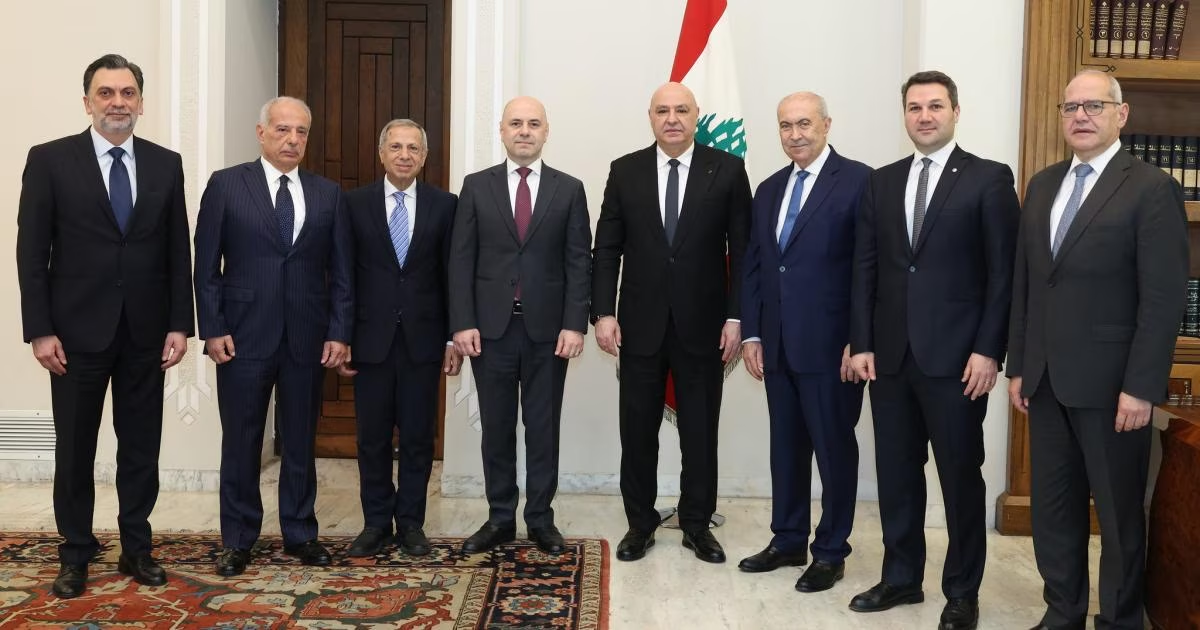
Lebanese President Joseph Aoun held a meeting with Prime Minister Nawaf Salam on Saturday to discuss field and political developments in the country. The meeting focused on evaluating the post-ceasefire phase and the necessary steps to stabilize affected areas.

Official sources reported that the meeting primarily addressed 'Lebanese readiness for anticipated negotiations' with the Israeli occupation. These moves come as the Lebanese state seeks to arrange its diplomatic papers to face the challenges of the next phase.

Prime Minister Nawaf Salam expressed his hope that displaced persons would be able to return safely to their homes as soon as possible. He affirmed that government agencies are working diligently to facilitate this return by repairing vital bridges and opening roads destroyed by shelling.

Salam stressed that the current priority is to secure basic necessities in areas where return has become possible. He clarified that the state is dedicating all its capabilities to restore life to normalcy in the South and the southern suburbs of Beirut.

This official move comes after a speech by President Aoun, in which he indicated that Lebanon stands on the threshold of a new phase aimed at reaching permanent agreements. Aoun considered that direct negotiation does not represent weakness or concession, but rather a path to protect national sovereignty.

In contrast, Hezbollah's reaction to these official directives was sharp, expressing its categorical rejection of the principle of direct negotiation with the occupation. Party leaders considered these steps to contradict the constants of the resistance and the field equations imposed by the war.

Mahmoud Qamati, Vice President of Hezbollah's Political Council, described the negotiations sought by the state as 'failed and submissive'. He affirmed in a press conference from the southern suburbs that the party is not concerned with these paths, which he described as weak.

Qamati accused the Lebanese state of 'cowardice', stressing that the resistance is what dictates decisions and equations on the ground. He added that any coordination with the state must preserve national sovereignty, away from the logic of surrender promoted by some.

Qamati criticized President Aoun's recent speech, describing its content as 'shocking' to the resistance and its audience. He also reproached the Lebanese presidency for ignoring Iran's role in reaching the current understandings that led to the ceasefire.

On the ground, a cautious calm prevails in various Lebanese regions as the truce announced by US President Donald Trump enters its second day. Despite the halt in raids, many displaced persons remain concerned about the durability of this agreement.

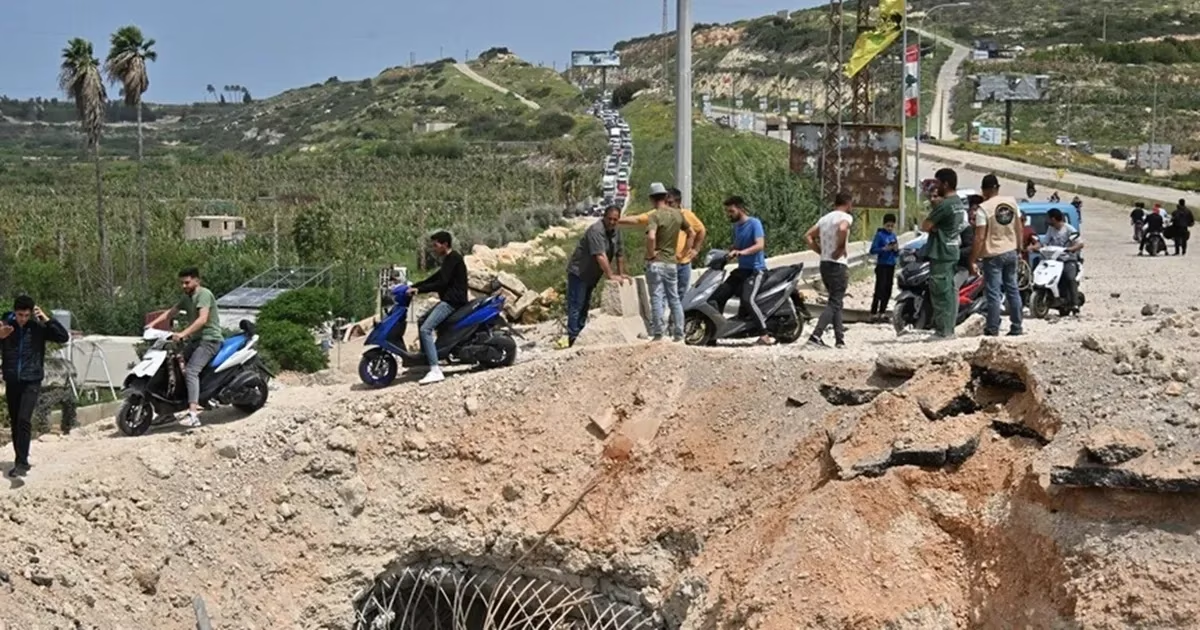
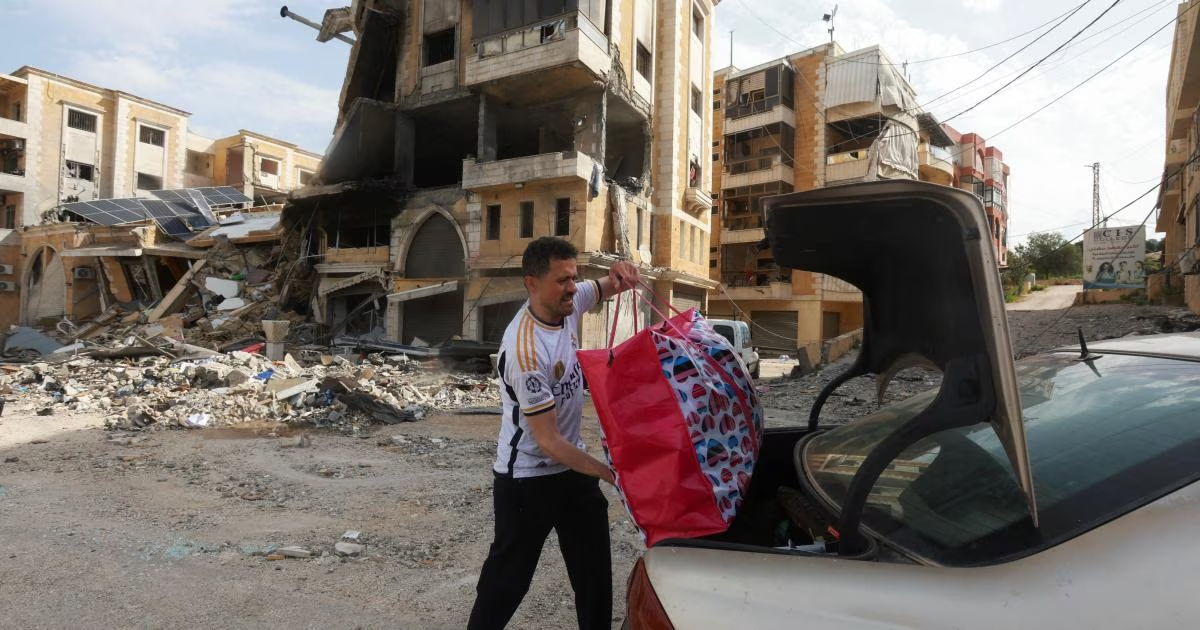
Roads leading to southern Lebanon witnessed severe congestion as thousands of families attempted to return to inspect their properties. Lebanese army teams are working to remove rubble and open closed routes to facilitate heavy traffic.

In Beirut's southern suburbs, some families have begun to gradually return to retrieve what remains of their belongings from under the rubble. However, entire neighborhoods remain almost deserted due to the massive destruction and residents' fear of renewed hostilities.

Field sources quoted displaced persons as saying that they prefer to wait before a final return, pending the permanent establishment of the ceasefire. These fears reflect the state of uncertainty that grips the Lebanese street despite the halt in shelling.

It is worth noting that the Israeli aggression, which began early last March, has caused severe human and material losses. Statistics indicate that about 2,300 people were killed and more than a million Lebanese were displaced from their villages and cities.

We are not concerned with the negotiations conducted by the state; they are failed, weak, defeated, frustrating, and submissive negotiations.

ISRAELI AFFAIRS

Sat 18 Apr 2026 7:06 pm - Jerusalem Time

Israeli Pessimism Regarding Peace Agreements with Lebanon: A Revival of the 1983 Experience and Conditions for Army Reform

A state of cautious anticipation is escalating in Israeli political and security circles with increasing American reports about imminent direct negotiations between Lebanon and the occupying state. In this context, Israeli analysts recall the bitter experience of 1983, when a peace agreement was signed but never truly materialized, raising fundamental questions about the maturity of current conditions for concluding a sustainable settlement.

The orientalist and Middle East affairs expert, Haim Golovnitzky, considered the launch of direct negotiations in Washington, which led to a limited ceasefire, a historical event in itself. He noted in an analysis published by the occupation press that this shift is a direct result of the radical changes that have swept the region and Lebanon since the events of October 2023.

The Israeli analyst recalled the collapse of the Lebanese state in the aftermath of the 1975 civil war, and how that conflict led to the rise of Shiite forces and the subsequent establishment of Hezbollah. He explained that this era witnessed Syrian infiltration and intensive activity by the Palestine Liberation Organization, making Lebanon an open arena for regional and international military and political interventions.

The analysis touched upon the May 1983 agreement, signed during Amine Gemayel's presidency and with the support of the occupation, emphasizing that it remained ink on paper until it was officially canceled. Experts believe that the historical failure to implement that agreement was due to the absence of internal Lebanese consensus and the dominance of armed forces that rejected any rapprochement with the Israeli side.

The war of October 7, 2023, brought about a dramatic shift on the northern front, with Hezbollah engaging in a prolonged war of attrition that resulted in heavy losses among its leadership. Observers believe that the assassination of the party's Secretary-General and the destruction of large parts of its military infrastructure placed the party in an unprecedented strategic predicament before its public and within Lebanon.

Israeli analysis indicates that the Taif Agreement of 1989, which ended the civil war, contained a major loophole by allowing Hezbollah to retain its weapons under the guise of resistance. This exception enabled the party to later impose its political will, as happened in May 2008 when it militarily controlled Beirut in response to attempts to reduce its influence at the airport and in the communications network.

Golovnitzky believes that the slogan 'army, people, and resistance' is now facing a fateful challenge in light of the massive destruction inflicted on southern Lebanon and the southern suburbs. Lebanese public opinion, even within the Shiite community, has begun to question the feasibility of continuing an open confrontation that has led to the displacement of hundreds of thousands and the destruction of basic livelihoods.

The occupation authorities are currently pursuing a strategy aimed at expanding the buffer zone in southern Lebanon through systematic destruction of infrastructure in border villages. This policy aims to prevent the return of displaced persons in the short term and to impose a new reality on the ground that pressures the Lebanese government to accept stricter security conditions in any future agreement.

Israeli analysts affirm that the demographic and political reality in Lebanon has changed since the 1980s, with a decline in Syrian influence and a shift in Christian power balances. However, the biggest obstacle to any stability remains the weakness of Lebanese state institutions and their inability to fully assert their sovereignty over all territories, especially in border areas.

Israeli circles believe that the Lebanese army, despite being an institution with popular support, its field performance remains modest and unable to confront Hezbollah's influence. These circles cite the army's failure to implement previous international resolutions, especially Resolution 1701, which failed to prevent the party from strengthening its military arsenal south of the Litani.

Israeli analysis suggests the necessity of a radical and comprehensive reform of the Lebanese army as a fundamental condition for the success of any peace agreement or long-term calm. This proposal includes transferring the responsibility for rebuilding and training the army to the United States and Saudi Arabia, to ensure its independence from partisan and regional influences loyal to Iran.

The Israeli vision emphasizes the necessity of 'purging' the ranks of the Lebanese army of elements loyal to Hezbollah at all leadership and service levels. Without this step, Israeli sources believe that any weapons or support provided to the army could end up as a tool in the hands of the party, thereby emptying any security agreement of its true meaning.

Hezbollah is currently suffering from severe financial and moral crises as a result of the financial blockade and successive military strikes that targeted its supply lines. Despite these setbacks, the party still relies on its ability to recover and adhere to its political positions, based on its remaining missile arsenal and continuous support from Tehran.

In conclusion, the Israeli reading concludes that signing a new agreement with Lebanon without strict implementation guarantees would be a repetition of historical failure. The issue is not about legal texts, but about the ability to change the reality on the ground, which requires firm international and regional will to reshape the balances within the Lebanese state away from the dominance of illegal weapons.

Without a radical change in the structure of the Lebanese army and its purification, any new agreement will remain ink on paper, similar to the 1983 agreement.

ARAB AND WORLD

Sat 18 Apr 2026 7:06 pm - Jerusalem Time

Iran Recloses Strait of Hormuz and Declares 'Strict Control' in Response to US Blockade

Iranian authorities announced today, Saturday, the full and strict military re-control of the Strait of Hormuz, the most important waterway for global energy trade. This decision came as a reversal of a previous step to open the passage, in response to what Tehran described as the continued naval blockade imposed by the United States of America on its ports.

The 'Khatam al-Anbiya' headquarters, which represents the central operations room of the Iranian armed forces, clarified that Tehran had shown good faith by allowing a limited number of tankers to pass. However, the statement affirmed that the American side continued to practice what it described as 'piracy and looting' under the guise of the blockade, which necessitated the re-imposition of strict restrictions on navigation.

In his first statement since taking office, Iranian Supreme Leader Mojtaba Khamenei warned that his country's naval forces are on high alert to confront any hostile movement. Khamenei affirmed via social media platforms that Iranian fighters are ready to inflict new defeats on enemies, stressing that the navy will not compromise in protecting Iranian sovereignty.

On the ground, sources in the maritime security sector reported that at least two commercial vessels were subjected to gunfire while attempting to cross the strategic strait. Reports indicated that the attacks occurred at a time when tensions were at their peak following the Iranian announcement of closing the waterway to unauthorized international navigation.

For its part, the UK Maritime Trade Operations (UKMTO) reported receiving a report of an oil tanker being directly fired upon by two armed boats believed to belong to the Revolutionary Guard. The authority clarified that the incident occurred 20 nautical miles northeast of the Sultanate of Oman, where the armed men opened fire without any prior radio warning.

On the other hand, US President Donald Trump affirmed that the naval blockade imposed on Iran would remain fully in effect and would not be lifted except through a comprehensive agreement. Trump linked the lifting of restrictions to Tehran reaching a new agreement addressing its nuclear program and regional behavior, hinting at the option of aerial bombardment if there was no compliance.

Regarding the temporary truce, Trump indicated the possibility of not extending the ceasefire that was scheduled to facilitate negotiations between the two parties. The US President considered that Iran is still under an effective blockade, and that US forces are ready to take military action again if diplomatic efforts fail to achieve Washington's objectives.

For its part, the Iranian Foreign Ministry described the US blockade as a blatant violation of the two-week ceasefire agreement. Ministry spokesman Ismail Baqaei said that Tehran would respond appropriately to any interception of ships coming from its ports, considering US actions as undermining peace opportunities.

US Central Command data indicates that naval forces have ordered 21 commercial vessels to return and not complete their journey since the start of the blockade. These figures reflect the extent of economic and military pressure exerted by Washington to pressure the Iranian regime on thorny issues, foremost among them the nuclear issue.

In a separate development, the Iranian Civil Aviation Organization announced the reopening of parts of the country's airspace to international and domestic flights. The statement clarified that the eastern part is now available for international air navigation, while work is underway to gradually resume domestic flights after completing the necessary security arrangements.

Iran had completely closed its airspace in late February following widespread military confrontations launched by the United States and Israel. The partial opening of the airspace comes as an attempt to alleviate internal pressure and facilitate some logistical operations in light of the suffocating naval blockade imposed on the country.

On the diplomatic front, all eyes are on the Pakistani capital, Islamabad, where the first round of negotiations aimed at ending the war stalled. International parties are seeking to bring Washington and Tehran back to the negotiating table before the expiration of the temporary truce that began on April 8th.

The region has been experiencing extremely complex security conditions since the start of military operations on February 28, as the confrontations have caused a partial paralysis of trade movement. The Strait of Hormuz is a vital artery through which about a fifth of the world's crude oil and liquefied natural gas production passes, making its closure a direct threat to the global economy.

Observers believe that the recent escalation in the Strait of Hormuz puts the international community to a real test to prevent the region from sliding into a comprehensive war. While Washington adheres to a policy of maximum pressure, Tehran shows a willingness to risk closing the most important waterways to respond to what it describes as economic and military aggression.

The Islamic Republic had in good faith agreed to the passage of ships, but with the continuation of American piracy, control of the strait returned to its previous state under strict supervision.

PALESTINE

Sat 18 Apr 2026 7:06 pm - Jerusalem Time

Human Rights Organization Pursues American-Israeli Soldier in Sri Lanka on Gaza War Crimes Charges

The international human rights organization Hind Rajab Foundation announced the filing of a formal criminal complaint with judicial authorities in Sri Lanka against an Israeli soldier holding American citizenship, who is currently present on its territory. The complaint accuses the soldier of participating in the commission of genocide and grave violations of international law during his military service in the Gaza Strip, placing Sri Lankan authorities before an international legal responsibility.

Sources reported that the targeted soldier is named 'Jake' and had volunteered to serve in the Israeli army immediately after the outbreak of the war on October 8, 2023. The soldier served in 'D' Company of the 603rd Combat Engineering Battalion, part of the Seventh Brigade, which carried out extensive military operations in various areas of the besieged Strip.

The complaint is based on a set of evidence and documents proving the involvement of the battalion in which the soldier served in systematic destruction operations of civilian areas. These operations included the demolition of residential buildings, mosques, and industrial facilities, in addition to the bulldozing of vast agricultural lands, actions that go beyond traditional military engineering tasks to the extent of war crimes.

The human rights organization confirmed that it documented the soldier's direct involvement in at least one demolition incident in Khan Yunis city in the southern Gaza Strip during October and November 2025. The organization also monitored posts and photos shared by the soldier through his personal social media accounts, clearly showing him inside operational areas in Khan Yunis and Rafah.

The complaint emphasized that the facilities targeted for demolition did not constitute military objectives at the time of their destruction, but rather were part of a policy aimed at imposing control and facilitating forced displacement of the population. This legal pursuit is considered a qualitative development, as it is the first time the organization has pursued an American citizen on war crimes charges outside the United States.

It is worth noting that the Hind Rajab Foundation, headquartered in Brussels, the Belgian capital, has intensified its legal efforts over the past two years to prosecute perpetrators of crimes in Gaza. The organization has so far filed dozens of complaints in about 17 different countries, targeting leaders and soldiers in the Israeli occupation army based on the principle of universal jurisdiction.

This is not the first time the organization has pursued Israeli soldiers in Sri Lanka, as 2024 saw a similar complaint filed against an Israeli tourist who had served in Gaza. In that incident, the tourist quickly left the country after receiving warnings from Israeli officials to avoid arrest or legal accountability by local authorities.

The organization bears the name of the Palestinian child Hind Rajab, who was martyred in a tragic incident with her family by occupation bullets in Gaza City in early 2024. This human rights organization was founded to be a voice for victims and a tool to pursue perpetrators and ensure they do not escape punishment in international legal forums around the world.

This step is the first complaint of its kind filed by the organization against a citizen holding American nationality outside the borders of the United States.

PALESTINE

Sat 18 Apr 2026 7:06 pm - Jerusalem Time

Gaza's Bread Crisis Worsens: Long Queues and Severe Flour Shortage Threaten Imminent Famine

Thousands of Palestinians in the Gaza Strip are lining up for extended hours in long queues in front of the few remaining bakeries, searching for limited quantities of bread, which has become the only lifeline for families exhausted by repeated displacement. This escalating crisis is a result of the severe shortage of flour quantities that the occupation authorities allow to enter through the crossings, in addition to the significant scarcity of fuel needed to operate the bakeries.

Local sources reported that the crisis deepened significantly after the 'World Central Kitchen' decided to halt its flour support, as it used to provide the Strip with 20 to 30 tons daily. The World Food Programme also reduced its supplied portions from 300 tons to 200 tons daily, creating a large gap between supply and demand, given that the vast majority of the population relies on subsidized bread.

Since the start of the genocidal war, most Palestinians have relied on bread provided by international relief organizations, where a 2.5 kg bundle is sold for only about 3 shekels. In contrast, the price of the same quantity of unsubsidized bread in the markets reaches between 8 and 10 shekels, an amount that exceeds the purchasing power of thousands of families who have lost their sources of income.

OCHA, the UN Office for the Coordination of Humanitarian Affairs, described the living conditions in the Strip as 'dire,' noting that most families have become entirely dependent on scarce aid. UN reports confirmed a sudden increase in the prices of basic commodities since early March, with the price of a 25 kg bag of flour jumping from 30 shekels to about 75 shekels due to the scarcity of supplies.

For his part, Ismail Al-Thawabta, the Director-General of the Government Media Office, explained that the deterioration of food security is a direct result of the strict Israeli restrictions on commercial and humanitarian crossings. He pointed out that the occupation deliberately rations the entry of essential materials to increase living pressure on the population, which has led to bakeries being unable to meet the minimum daily needs of citizens.

Statistics from the World Food Programme indicate that about 1.6 million people in Gaza, equivalent to 77% of the population, face dangerous levels of acute food insecurity. This affected group includes more than 100,000 children and 37,000 pregnant and lactating women, warning of a long-term health catastrophe if the situation is not addressed and necessary food is not provided.

In a field testimony, displaced person Ibrahim Qandil says he has to travel long distances daily from his tent in the Rimal area to get one bundle of bread, which is not enough for his nine family members. Qandil confirmed that obtaining bread now requires patience and suffering beyond human endurance, especially with the lack of cash liquidity that prevents people from buying their basic needs.

Qandil warned that the continuation of this situation portends a real famine that will decimate the displaced, describing hunger as 'more severe than bombing and war.' These words reflect the state of despair that dominates the Palestinian street in Gaza, where securing a loaf of bread has become the main concern for fathers and mothers amidst the absence of other food alternatives.

According to official data, the Gaza Strip needs about 450 tons of flour daily to meet the needs of the population, while currently only quantities not exceeding 200 tons are available. This large deficit has led to the closure of a large number of bakeries, and production is limited to a very small number that covers only a small part of the increasing demand.

Currently, only about 30 bakeries are operating throughout the Strip, producing approximately 133,000 bundles of bread daily, some of which are distributed for free and the rest are sold through subsidized sales points. The Government Media Office warned of the possibility of the collapse of what remains of this fragile system if the entry of fuel and the supply of flour from international organizations continue to be prevented.

Al-Thawabta stressed the necessity of urgent international action to ensure the flow of food aid commensurate with the scale of the humanitarian catastrophe in the Strip. He demanded that the occupation be obligated to humanitarian understandings that stipulate the unimpeded entry of trucks, warning that the systematic starvation policy will lead to more casualties away from the military war machine.

Despite previous agreements that stipulated the entry of 600 trucks daily, sources confirm that Israel has not adhered to these understandings at all. The amount of aid allowed to enter since last October did not exceed 38% of what was entering the Strip before the aggression began, exacerbating the deficit in all vital sectors.

This crisis comes amidst the ongoing genocidal war that has caused massive destruction, affecting 90% of the civilian infrastructure in the Gaza Strip. The continuous military operations and the strict blockade have led to a complete paralysis of economic life, making the population entirely dependent on what limited international relief convoys provide.

In conclusion, the loaf of bread in Gaza remains a symbol of steadfastness and suffering simultaneously, as Palestinians struggle to survive under inhumane conditions. Local and international appeals continue to fully open the crossings and end the blockade, to save millions of lives from the threat of famine that now knocks on the doors of every tent and home in the Strip.

Hunger is harder than bombing and war; what we are experiencing today is a catastrophe in every sense of the word.

ARAB AND WORLD

Sat 18 Apr 2026 10:06 am - Jerusalem Time

'New Iran' Negotiations: Washington Seeks Deal Amidst Assassinations and Hormuz Blockade

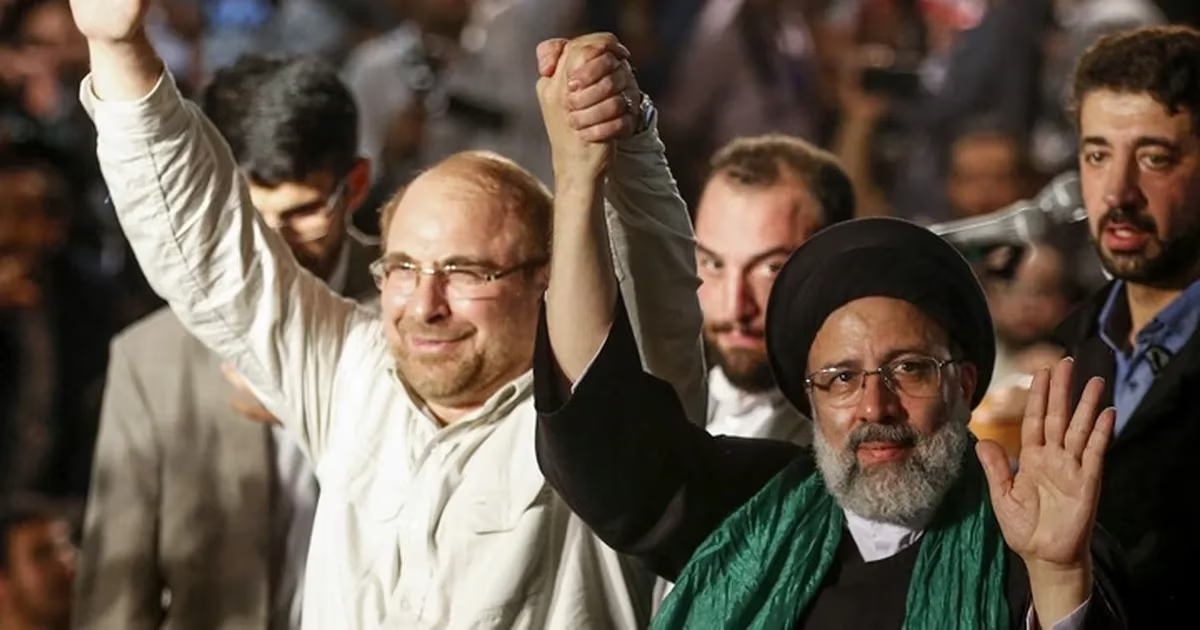
International press reports have revealed the behind-the-scenes details of marathon negotiations taking place in Pakistan between a high-level Iranian delegation and American officials, a move considered the highest-level representation in decades. The Iranian side is led by Parliament Speaker Mohammad Bagher Ghalibaf, who emerged as a pivotal figure in the political scene following a series of airstrikes targeting regime leaders, including the assassination of Supreme Leader Ali Khamenei by Israeli occupation forces.

Media sources stated that Ghalibaf, 64, managed to capture the attention of the American team as a skilled negotiator and a potential leader for the next phase, despite the stalemate in some issues. These developments come at a time when US President Donald Trump is seeking to replicate the 'Venezuelan scenario' in dealing with Tehran, by exerting maximum military and economic pressure to force the regime to make fundamental concessions.

The American approach relies on the experience of overthrowing Venezuelan President Nicolas Maduro, with Trump believing that a naval blockade and control over oil resources are key to subjugating the Iranian leadership. Trump has stated on several occasions that controlling Iranian oil is a strong option, praising the tactics that led to choking off energy revenues in Venezuela, which he is now trying to apply by tightening the blockade in the Gulf region.

In contrast, the new Iranian leadership, despite its involvement in negotiations, has shown a more militaristic and hardline tendency than its predecessors, with Revolutionary Guard commanders such as Ahmad Vahidi and Mohammad Bagher Zolghadr taking center stage. These leaders, whose names have been associated with internal repression and the development of weapons programs, view control over the Strait of Hormuz as a strategic pressure card that cannot be relinquished without a heavy price that ensures the regime's survival.

Leaked information indicates that Washington has offered a three-page plan to end the tension, which includes the release of approximately $20 billion in frozen Iranian funds abroad. The American proposal stipulates that in exchange for these funds, Tehran must completely abandon its enriched uranium stockpile and transfer it to a third country or under strict international supervision to ensure it is not used for military purposes.

However, a wide gap remains between the two sides regarding the duration of the halt to enrichment activities, with the United States demanding a period of no less than 20 years, while Iranian negotiators propose a period not exceeding 5 years. Tehran also demands raising the ceiling of released funds to $27 billion, while Washington insists on allocating specific amounts for humanitarian purposes only under international supervision.

Experts on Iranian affairs believe that Tehran's decentralized power structure makes it difficult to apply the 'Delcy Rodriguez' Venezuelan model, as power is distributed among the Revolutionary Guard, the judiciary, and national security councils. Analysts explained that the new leaders derive their legitimacy from the theocratic system itself, making the idea of an internal coup or smooth change according to the American vision a risky endeavor.

On the ground, the blockade of the Strait of Hormuz has caused major global economic repercussions, as Iran uses it as a tool to deter any comprehensive military attack targeting what remains of its leadership structure. The Iranian regime's losses due to this tension are estimated at $435 million per day, which puts immense pressure on Iranian negotiators to try to reach an agreement that alleviates the burden of the living crisis.

Amidst this complex scene, the name of Mojtaba Khamenei, the son of the late leader, emerges as a hidden force that still influences decision-making despite his absence from public view since the beginning of the war and reports of his injury. Mojtaba is known for his more radical tendencies, which could pose an obstacle to any agreement that hardliners in the Revolutionary Guard view as an 'humiliation' for the Iranian state before the 'Great Satan'.

Sources reported that the Iranians feel a kind of 'victory euphoria' for their ability to withstand despite the assassination of first-tier leaders, which makes them refuse to show flexibility unless they receive comprehensive security guarantees. Suzanne Maloney, a researcher at the Brookings Institution, confirms that the current leadership will not accept any deal that leads to the erosion of its regional influence or strips it of its nuclear deterrent capabilities.

Concerns are growing that Iran will become a more repressive state internally with the rise of the military current represented by Vahidi and Zolghadr, who wield wide influence in security circles. These leaders, who participated in suppressing previous protests, believe that any retreat in the face of external pressures will necessarily lead to the collapse of the internal front, and therefore they prefer the option of calculated confrontation.

For his part, President Trump described the current Iranian leadership as 'more rational' than its predecessor, in an attempt to market the negotiations to his domestic audience as a success of his strength-based strategy. Trump believes that 'the old regime has been destroyed,' and that dealing with new faces like Ghalibaf could open the door to a historic agreement that ends the hostility that has persisted since 1979.

Ambiguity remains regarding whether the proposed memorandum includes the ballistic missile program or the support Tehran provides to its allies in the region, issues that Washington considers a red line. The US administration insists that any nuclear agreement must be followed by an Iranian commitment to change its regional behavior, which Tehran has completely rejected so far, considering its external influence as part of its national security.

The success or failure of the Pakistan talks will largely depend on the ability of both sides to make painful concessions on issues of sovereignty and energy, under close scrutiny from regional powers and the occupying state. With the continued naval blockade and mutual threats, the region remains on a hot plate, awaiting the outcome of these unprecedented negotiations in the coming days.

You have crossed our red line, and you will pay the price, we will deliver devastating blows to you.

ARAB AND WORLD

Sat 18 Apr 2026 10:06 am - Jerusalem Time

The Mystery of Missing Scientists in America: Federal Investigations and Warnings of Security Breach

Concern has escalated within political and scientific circles in the United States following reports revealing a series of mysterious disappearances and deaths affecting a number of prominent American scientists and researchers in recent years. These developments have led to widespread calls for a comprehensive federal investigation to uncover the circumstances surrounding these incidents, especially with increasing indications linking the victims to highly sensitive security files.

Congressman Eric Burlison, a member of the House Oversight Committee, confirmed that his office has been following these cases for over a year, emphasizing that the loss of 11 scientists cannot be dismissed as mere coincidence. Burlison noted that this issue has become a pressing national priority, given the nature of the specializations these researchers held in vital sectors.

According to available data, most of the scientists involved in these cases were working on advanced defense projects and space-related research, including the study of what are known as unidentified aerial phenomena. These specializations raise concerns that their targeting may be linked to attempts to access technological secrets or information related to US national security.

US officials have not ruled out the possibility of hostile foreign powers being involved in these operations, with initial accusations pointing towards entities linked to China, Russia, and Iran. Observers believe that these scientists' access to advanced levels of sensitive information may have made them potential targets for international intelligence operations aimed at undermining American scientific superiority.

Among the most prominent cases that sparked widespread controversy is the disappearance of Major General William Neil McCasland, a former US Air Force official, who vanished from his home in New Mexico. McCasland's name had previously been associated with UFO leaks, adding an element of mystery to the circumstances of his disappearance, which was preceded by reports of him suffering from sudden mental confusion.

In a related context, the case of researcher Amy Escuraj, who died in 2022 in Alabama from a gunshot wound, stands out. The incident was classified as suicide at the time. However, new doubts surfaced after statements from former security officials hinted at the possibility of her being attacked with directed energy weapons, especially since she had founded an institute for exotic sciences and spoke of receiving threats.

The list of missing and deceased includes prominent names such as Melissa Cacias and Anthony Chavez, both of whom worked at the famous Los Alamos National Laboratory, known for its nuclear experiments. The disappearance of personnel from this particular laboratory raises profound questions about the level of security and protection provided to scientists who hold high-level security clearances allowing them access to state secrets.

Also recorded was the death of Jason Thomas, who led the chemical biology team at Novartis, and Frank Maywald, an engineer at NASA's Jet Propulsion Laboratory. These cases are distributed between sudden deaths and unexplained disappearances, reinforcing the hypothesis of an organized pattern targeting scientific competencies in precise and critical specializations.

In another shocking incident, renowned physicist Nuno Loureiro from MIT was assassinated by shooting last December, followed by the killing of planetary researcher Carl Greilmeier. These successive incidents prompted security agencies to re-evaluate the risks surrounding scientists and researchers in major universities and research centers.

The list of cases extended to include Stephen Garcia, a specialist in securing non-nuclear components of nuclear weapons, who disappeared in August of last year. Space engineer Monica Jacinto Reza also went missing, indicating that the targeting circle includes a wide range of specializations related to advanced military and aerospace industries.

For his part, President Donald Trump announced that his administration is paying great attention to this file, promising to provide clear answers to the public in the coming days. The White House confirmed that intensive coordination is currently underway between various federal agencies, led by the FBI, to review all cases and search for any common denominators that may link them.

Despite the spread of varying theories about the fate of these researchers, official authorities remain cautious in issuing final judgments before the investigations are complete. White House spokeswoman Karoline Leavitt pledged to spare no effort in uncovering the truth, noting that the government will continue to provide regular updates on the progress of investigations into this issue that has shaken the American scientific community.

The disappearance or death of 11 prominent scientists and researchers cannot be considered a mere coincidence, and the issue represents a pressing national priority.

LATEST NEWS

Sat 18 Apr 2026 10:05 am - Jerusalem Time

Economic Pressure Forces Trump's Retreat in Confrontation with Iran

Seven weeks of direct military confrontation with Iran have shown that economic pressure is the most prominent weakness in US President Donald Trump's strategy. Despite overwhelming military power, Washington failed to overthrow the Iranian regime or force it to fully submit to American demands, revealing the limits of the current administration's ability to withstand domestic economic pain.

With Tehran's recent announcement of reopening the Strait of Hormuz to international shipping, the outlines of the crisis Trump faced due to rising fuel prices and escalating inflation began to become clear. These economic factors led to a significant decline in the president's popularity, pushing him to race against time to find a diplomatic formula that would alleviate the burden of living costs on the American voter.

Trump had engaged in a joint military campaign with Israel since late February, based on intelligence reports about imminent nuclear threats. However, the Iranian response, which targeted energy infrastructure in the region and controlled strategic waterways, caused a global energy shock that was not anticipated by White House planners.

Political analysts believe that Iran, despite suffering painful military strikes, has proven its ability to impose exorbitant economic costs on the global economy. This new reality forced Trump's team to re-evaluate the situation, especially with warnings from the International Monetary Fund about the specter of a looming global economic recession due to oil supply disruptions.

Domestically in the US, political pressure is mounting on the Republican Party, which seeks to maintain its majority in Congress during the upcoming midterm elections. Party leaders fear that continued war and its impact on basic commodity prices could lead to a harsh electoral loss next November, making an end to the conflict an urgent political necessity.

For its part, the Iranian leadership cleverly exploited the Strait of Hormuz card to draw Washington back to the negotiating table, which observers considered a lesson that other international powers such as Russia and China might benefit from. The US's adversaries realized that Trump, despite his inclination to use force, quickly retreats when economic indicators and financial markets begin to collapse.

Sources reported that Trump has already begun to change his tone towards Tehran, shifting from threatening airstrikes to talking about an imminent agreement to end the crisis. This shift comes under direct pressure from financial markets, which Trump considers the true measure of his administration's success, in addition to the damage to the American agricultural sector due to the disruption of fertilizer supplies.

Despite Trump's announcement that the Strait of Hormuz is now safe, ongoing negotiations still face significant technical and political obstacles. Informed sources confirm that there are wide gaps between what Washington demands and what Tehran accepts, especially regarding the fate of highly enriched nuclear materials that the United States claims must be transferred to its territory.

In a related context, Tehran categorically denied its agreement to ship any uranium stockpiles abroad, which puts Trump in an awkward position with his audience. The US president had stated that the anticipated agreement would include technical cooperation to recover nuclear materials damaged during previous airstrikes in June.

Economic experts warned that the damage to global supply chains and the energy sector could take years to recover from, even if a quick agreement is reached. The shock to the markets created a state of uncertainty, leading to increased shipping and marine insurance costs in one of the world's most important trading regions.

US allies in Europe and Asia expressed their dissatisfaction with the way Trump handled the crisis, as war decisions were made without prior coordination with them. These allies believe that irregular American actions caused major geopolitical risks that threatened their national security and economies, which are heavily dependent on Gulf oil.

Observers compare Trump's approach to that of the previous administration, where President Biden was more cautious in dealing with the Russian energy sector to avoid raising gas prices. Trump, who promised his voters cheap gasoline, found himself facing direct accusations that his aggressive policies were the cause of the high cost of living suffered by the American citizen.

In the Gulf region, there is a state of anxious anticipation regarding any agreement Trump might conclude without comprehensive regional security guarantees. Arab diplomatic sources stated that ending the conflict should not lead to a state of permanent instability, but rather must ensure the protection of the vital infrastructure of energy-exporting countries.

The most important question remains about Trump's ability to achieve his strategic goals through diplomacy after the military option failed to yield quick results. The current negotiations represent a real test of the American administration's credibility and its ability to balance its foreign policy ambitions with the troubled domestic economic reality.

Trump feels the economic distress, a clear weakness in this war whose global costs he underestimated.

ARAB AND WORLD

Sat 18 Apr 2026 10:05 am - Jerusalem Time

Tehran denies approving transfer of its nuclear stockpile, Trump speaks of imminent deal

Tehran officially announced on Friday evening its categorical rejection of any proposals to transfer its enriched uranium stockpile out of the country. This denial came in response to statements from the American administration hinting at understandings regarding the fate of the Iranian nuclear program amidst ongoing negotiations.

Iranian Foreign Ministry spokesman, Ismail Baqaei, confirmed in statements reported by official media that enriched uranium represents a major sovereign issue that is not open to compromise. Baqaei stressed that this stockpile will not leave Iranian territory, likening its importance to the sanctity of national soil for the Islamic Republic.

In contrast, US President Donald Trump revealed a completely different vision, stating to press sources that Washington intends to work with Tehran to extract the buried enriched uranium. Trump explained that operations would involve using massive machines to transfer what he described as 'nuclear dust' remaining after previous attacks to the United States.

Trump indicated in a phone interview that these steps would be taken at a calm pace and in coordination with the Iranian side very soon. The US President believes that obtaining these nuclear materials is a security necessity to prevent Tehran from developing a nuclear weapon, which he considers one of the main objectives of his current actions.

On the diplomatic front, Trump expressed optimism about holding a direct meeting with Iranian officials in the next few hours. This anticipated meeting aims to finalize an agreement that would end the ongoing conflict in the region, amidst reports of tangible progress in drafting the text.

Informed sources reported that negotiations are close to crystallizing a brief, three-page agreement to address outstanding issues. The items proposed for discussion include the US releasing approximately $20 billion in frozen Iranian assets in exchange for specific nuclear concessions from Tehran.

American proposals include a voluntary freeze on uranium enrichment operations for a period still under negotiation between the two parties. The draft understanding also raises the possibility of Iran retaining research reactors for producing medical isotopes, provided that all facilities are above ground with a ban on the use of fortified underground sites.

Technical estimates indicate that Iran currently possesses a stockpile exceeding 900 pounds of enriched uranium with a purity level of up to 60%. This percentage is very close to the levels required for producing nuclear weapons, making it the most complex point on the international negotiation agenda.

For his part, a high-ranking Iranian official warned that gaps remain wide between Washington and Tehran despite the positive atmosphere promoted by the White House. The official clarified that reaching a final agreement requires serious and in-depth negotiations that go beyond broad headlines to reach precise technical details.

Tehran linked the continued flow of navigation in the Strait of Hormuz to the extent of the United States' commitment to the terms of a comprehensive ceasefire. Iranian sources confirmed that any narrative speaking of reaching a final agreement on nuclear issues at present is a distortion of the reality on the ground.

Pakistan emerges as a pivotal player in this crisis through its mediation efforts to bridge the views between the adversaries. The concerned parties hope to reach a preliminary agreement that paves the way for lifting economic sanctions on Iran and obtaining compensation for the damages caused by the war.

Iran's enriched uranium will not be transferred anywhere, just as Iranian soil is sacred to us, this issue holds great importance in our view.

PALESTINE

Sat 18 Apr 2026 10:05 am - Jerusalem Time

On Prisoner's Day: Occupation Prisons Turn into 'Laboratories of Savagery' and Escalation of Systematic Execution Policies

The commemoration of Palestinian Prisoner's Day on April 17th this year highlights a reality that is the bloodiest and harshest in decades. The prisoner movement within Israeli occupation prisons faces an unprecedented retaliatory campaign, which has sharply intensified since the start of the widespread aggression in October 2023.

Human rights sources reported a massive surge in the number of detainees, rising from 5,000 prisoners to approximately 9,500 currently. This 83% increase places immense pressure on the prison infrastructure, which has transformed into centers of systematic abuse and torture, far from international oversight.

The head of the Palestinian Prisoner's Club, Abdullah Zghari, warned against strenuous Israeli efforts to legislate a law for the execution of Palestinian prisoners. Zghari described this trend as a war crime and a crime against humanity, considering it a natural extension of the genocide waged by the occupation authorities against the Palestinian people wherever they are.

For his part, expert in Israeli affairs Adel Shadid pointed out that the absence of international accountability has led to an escalation of abuse. Shadid criticized international double standards in dealing with human rights issues, where the martyrdom of nearly 80 prisoners inside prisons since last October is ignored, while international uproar is raised over less severe issues in other regions.

In a related context, international law professor Michael Link confirmed that the pace of brutal treatment has significantly escalated since the government of Benjamin Netanyahu and the extremist minister Itamar Ben-Gvir took office. Link explained that prisons now lack the most basic humanitarian necessities, as prisoners are deliberately deprived of food, sleep, and medical treatment.

Human rights reports were based on what was reported by UN Special Rapporteur Francesca Albanese, who described the prison system as a 'laboratory of calculated savagery.' The reports confirmed that the occupation violates international humanitarian law by transferring prisoners from the occupied territories into Israel, a practice documented by the International Committee of the Red Cross.

Documented testimonies included appalling torture methods, including the use of electric shocks and forced stripping. Sources also revealed the use of police dogs to tear at the bodies of naked prisoners, in an attempt to break their human dignity and undermine their steadfastness inside the cells.

Crimes of rape and sexual assault are among the most serious documented recently against Palestinian detainees. Prisoner institutions confirmed that these practices are not individual acts by jailers, but rather a systematic strategic policy aimed at humiliating Palestinians and absolutely violating their dignity.

The leaders of the prisoner movement were not spared from these attacks, as leader Marwan Barghouti and his comrades were subjected to direct beatings and continuous abuse. This policy aims to isolate leaders from the rest of the prisoners and break the will of organization within prisons, which are in a state of constant turmoil as a result of these violations.

As part of the policies of humiliation, detainees are forced to imitate animal sounds and allow soldiers to ride on their backs in scenes reminiscent of the worst global prison scandals. This suffering continues amidst absolute international silence, while Palestinians continue their activities in the West Bank and Gaza to affirm that the issue of prisoners remains at the top of national priorities.

The Israeli prison system, since the beginning of the genocide in October 2023, has transformed into a laboratory of calculated savagery.

PALESTINE

Sat 18 Apr 2026 10:05 am - Jerusalem Time

Catastrophic Reality: 350 Palestinian Children and 86 Women Face Harsh Conditions in Occupation Prisons

Palestinian childhood faces a tragic reality inside the occupation's detention centers, where documented figures indicate the detention of approximately 350 children distributed among 'Ofer,' 'Megiddo,' and 'Damon' prisons. The major shock lies in the fact that 180 of these children are held under 'administrative detention,' which means they are deprived of their basic rights and their school seats without formal charges or fair trials, in a blatant violation of international conventions.

In a related context, the situation of Palestinian female prisoners is no less tragic, as 86 women are held in detention conditions that lack the most basic human and health necessities. Reports confirm that among these female prisoners, 25 are administratively detained, indicating the use of this type of detention as a punitive and retaliatory tool aimed at breaking the will of Palestinian women, who represent the cornerstone of family and societal resilience.

Testimonies leaked from inside the prisons indicate that female detainees are subjected to systematic abuse, physical and psychological assaults aimed at undermining their dignity. These practices are part of a broader psychological war waged by the occupation against male and female prisoners, where they are isolated from the outside world and deprived of communication with their families, amid a complete absence of legal or international human rights oversight over these violations.

Regarding the targeting of younger generations, human rights sources have identified three main paths for the occupation's policy, most notably 'forced ignorance' through keeping children out of school for many years. This path aims to create a generation burdened by the effects of imprisonment and psychological trauma, which hinders their ability to integrate into society in the future, and turns their childhood years into a series of suffering inside dark cells.

Administrative detention of minors also stands out as one of the most dangerous tools through which the occupation transforms children into a 'supposed security threat' to justify their arbitrary detention. This policy continues amidst international silence, despite humanitarian laws explicitly prohibiting the deprivation of children's liberty except as a last resort and for the shortest possible period, which completely contradicts the practices of the prison service that extends their detention for months and years.

The occupation deprives 180 children of their childhood and school seats through administrative detention without charge or trial.

PALESTINE

Sat 18 Apr 2026 10:05 am - Jerusalem Time

The 10-Day Truce in Lebanon: A Path Towards De-escalation or a Cover for Long-Term Occupation?

The temporary ceasefire agreement between Lebanon and the Israeli occupation state came into effect at midnight Thursday-Friday, following US President Donald Trump's announcement of a ten-day truce. This development came after a series of direct and rare talks hosted in Washington between the ambassadors of the two countries, in an attempt to break the intensity of the ongoing military escalation.

The concerned parties are scheduled to resume a second round of discussions at the White House in the coming two weeks, with the aim of drafting a framework for a comprehensive agreement to end the conflict. Despite the optimism expressed by the US administration, describing the talks as fruitful, press reports warned that this truce might be merely a cover for managing the crisis rather than resolving it.

Analytical readings indicate that the current ceasefire may pave the way for a long-term occupation in South Lebanon, similar to what is happening in the Gaza Strip. These fears are based on statements by security officials who confirmed that the occupation army does not intend to withdraw from the areas it penetrated during the announced truce period.

In a related context, Israeli Defense Minister Yisrael Katz affirmed that Tel Aviv intends to maintain its field control up to the Litani River. Katz explained that military plans include destroying villages near the border to ensure that threats do not return, which reinforces the hypothesis of seeking to impose a new geographical reality.

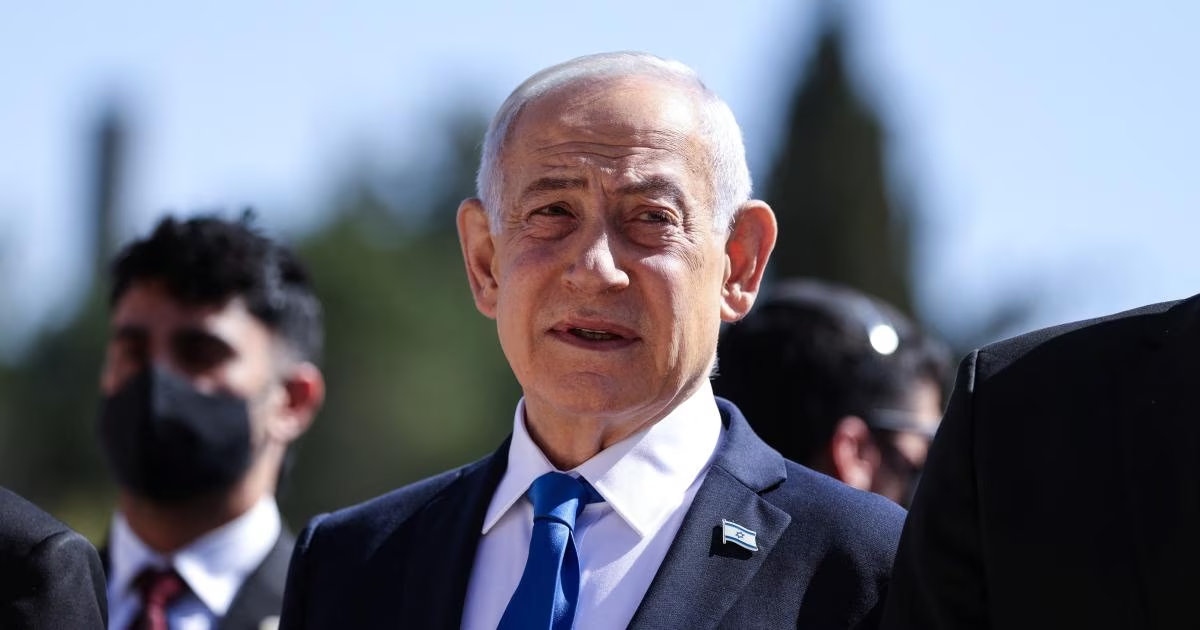
For his part, Israeli Prime Minister Benjamin Netanyahu clearly announced his country's intention to maintain a 'buffer zone' extending six miles into Lebanese territory. This approach reflects a long-term strategy aimed at securing the northern borders through direct control, away from traditional diplomatic understandings.

Observers believe that what is happening in South Lebanon goes beyond a confrontation with Hezbollah, reaching a 'scorched earth' policy that targets infrastructure and civilians. Field investigations conducted by journalistic sources revealed widespread destruction in border villages, making the return of displaced persons almost impossible at present.

Historically, the scene of the Israeli invasion of Lebanon has been repeated seven times over the past five decades, including an 18-year occupation that ended in 2000. Political circles fear that history may repeat itself under new security pretexts that legitimize a permanent military presence deep inside Lebanon.

On the Lebanese side, the government faces a complex equation amid international and local pressures aimed at dismantling Hezbollah's military capabilities. Beirut has taken unprecedented steps, including banning the party's armed activities in certain areas and reducing Iranian diplomatic influence.

Despite these official moves, the Lebanese reality remains fragile due to the weak capabilities of the national army and fears of the country sliding into civil war. The government lacks the necessary executive tools to impose its full sovereignty, which puts any future agreement to the real test.

In contrast, the occupation government views the current moment as a strategic opportunity to reshape the balance of power in the region after weakening its adversaries. Opinion polls within Israeli society show widespread support for the continuation of military operations, which reduces the scope for sustainable political solutions.

Researchers residing in Beirut warned that the current course of negotiations could lead to increased internal tensions rather than de-escalation. They pointed out that the conditions imposed on the Lebanese state could put it in direct confrontation with active political and military forces, threatening national stability.

Former security experts in Tel Aviv believe that the options available to Lebanon are limited to two bitter paths; either accepting Israeli military operations or facing the risk of internal conflict. This escalatory vision highlights the absence of a genuine will to reach a settlement that respects Lebanese sovereignty.

Meanwhile, civilians in South Lebanon continue to pay the highest price for the conflict, facing an unknown future amidst the destruction of their properties. The scenes coming from the border villages resemble those witnessed in Gaza, where de-escalation becomes merely a time interval between rounds of fighting.

The fate of the South remains suspended between American diplomatic promises and the military reality imposed on the ground. If the upcoming talks at the White House fail to set a clear timetable for withdrawal, the current truce may be nothing more than a prelude to a broader and more complex confrontation.

Israel has no plans to withdraw its army from South Lebanon during the announced 10-day ceasefire.

PALESTINE

Sat 18 Apr 2026 10:05 am - Jerusalem Time

Large Jerusalem Delegation Visits Lutheran Church in Jerusalem to Congratulate Christians on Glorious Easter

Jerusalem - "Al-Quds" dot com - By Ahmed Jalajel - A large Jerusalem delegation, including Jerusalemite bodies, institutions, and personalities, visited the Lutheran Church in the Old City of Jerusalem to congratulate Christian brethren on Glorious Easter and to offer congratulations to Bishop Emad Haddad on his appointment as Bishop of the Anglican Church. The delegation was received by their Excellencies Bishops Walid Shoumali, Attallah Hanna, Munib Younan, and Emad Haddad.

After the delegation offered congratulations to the Christian brethren on Glorious Easter and felicitations to Bishop Emad Haddad on his appointment as Bishop of the Anglican Church.

Attendees from both sides unanimously emphasized in their speeches the necessity of communication and meetings between the people of Jerusalem, meetings that embody the unity of our people and strengthen cohesion and unity among its members at the popular and public levels. Speakers stressed the condemnation of arbitrary and oppressive Israeli measures and practices that contradict international law by restricting freedom of worship and movement for all people of different religions. They saw that the closure of Al-Aqsa Mosque and the Church of the Holy Sepulchre does not fall within the framework of the arguments and pretexts promoted by the occupation government and its security apparatus to provide security and protection for worshippers from Iranian missiles. They viewed this as part of a political and ideological path aimed at changing the legal and religious status of the Church of the Holy Sepulchre and the religious, historical, and legal status of Al-Aqsa Mosque. This closure was intended to reshape religious and symbolic sovereignty over Al-Aqsa and the Holy Sepulchre, and to gradually shift from managing the conflict to resolving it with legal and security tools to change the entire scene in the city of Jerusalem.

Speakers condemned the prevention of Christians from observing Palm Sunday rituals in the Holy Sepulchre, and the repression and abuse suffered by those celebrating Holy Saturday, with many of them being prevented from reaching the Holy Sepulchre, and the assault on scout troops and the attempt to remove the Palestinian flag from their clothes. In contrast, the militarization of Al-Aqsa Mosque and the prevention of Muslims from praying there during the holy month of Ramadan, and the failure to observe Laylat al-Qadr and Eid al-Fitr, and the repression, abuse, and arrests suffered by worshippers during their prayers near Al-Aqsa Mosque were condemned.

Speakers also stressed the condemnation of the inappropriate statements and words by President Trump against Pope Leo XIV, who said that he was weak in the face of crimes and strong in foreign policy, and threatened that he would work to dismiss him and tailor a church and a pope to his measure. Pope Leo, who carries a message of love, peace, and support for the oppressed and against wars and killing, responded to Trump by saying that his wars are only for himself and for money, oil, and wealth, and his wars against Iran, Venezuela, Palestine, and Lebanon are unjust wars.

In conclusion, speakers emphasized the necessity of steadfastness and resilience in the city, despite all the oppressive circumstances from the occupation, which aims to liquidate the Islamic and Christian presence in the Holy City, especially its Old City. They praised the activities and events taking place in various countries around the world to expose and denounce the occupying state, which seeks to expel and displace the Palestinian people.

ANALYSIS

Sat 18 Apr 2026 10:03 am - Jerusalem Time

Strategic Assessment: How Beijing Manages the Balance of the US-Israeli Conflict with Iran?

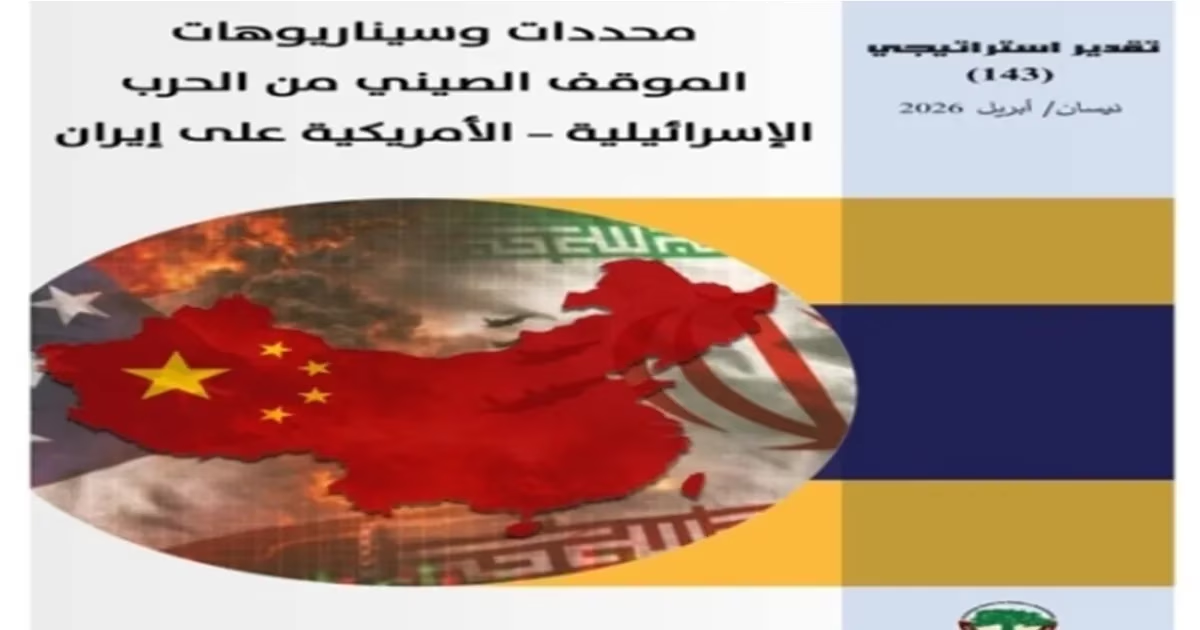
Al-Zaytouna Centre for Studies and Consultations issued a new strategic assessment, number (143), prepared by researcher Mohammed Makram Balawi, to shed light on China's complex stance regarding the ongoing confrontation between the US-Israeli axis and Iran. The report proceeds from the view that Beijing does not merely observe the crisis as a fleeting regional event, but rather deals with it as a real test of its international standing and vital interests.

China's actions in this matter are driven by three fundamental determinants: ensuring the flow of energy supplies, protecting its major geopolitical projects, and managing the escalating power struggle with Washington. Iran emerges in this equation as an indispensable strategic ally, not only because it is a major oil supplier, but also because of its position as a vital node in the Belt and Road Initiative.

By strengthening its relationship with Tehran, Beijing seeks to create alternative land corridors that reduce its historical reliance on maritime routes dominated by Western influence, specifically the Strait of Malacca. Consequently, any attempt to destabilize the Iranian state is considered a direct threat to China's national security and its vision for redrawing global trade maps.

Despite this strategic alignment, China pursues a very delicate balancing policy aimed at maintaining its extensive economic relations with Arab Gulf states and channels of cooperation with Israel. This balance compels decision-makers in Beijing to work to prevent Iran's collapse without engaging in a direct and open military confrontation with the United States.

The strategic assessment clarifies that Chinese support for Iran takes an indirect character, as Beijing continues to purchase Iranian oil despite severe international sanctions. It has also activated innovative financial tools such as the Chinese payment system (CIPS) to serve as an alternative to the global 'SWIFT' system, giving Tehran an economic lifeline away from dollar dominance.

Diplomatically, China leads active efforts within the corridors of the UN Security Council to block any resolutions that legitimize preemptive strikes or aim to change regimes by force. Beijing fears that such moves could turn into international legal precedents that might be used against it in the future in sensitive issues such as Taiwan or South China Sea disputes.

Beijing is also working to internationalize the Iranian crisis through alternative international platforms such as the 'BRICS' group and the Shanghai Cooperation Organization, with the aim of mobilizing a unified international stance against unilateral sanctions. This approach reinforces the 'Global South' narrative adopted by China to counter what it describes as the unipolar hegemony exercised by Washington and its allies.

On the operational and technical level, the assessment reveals that China provides advanced intelligence and technological support to the Iranian side, including sensitive cybersecurity areas. Beijing also allows Tehran to use the 'Beidou' satellite navigation system, which enhances Iran's defensive capabilities without the need for direct Chinese military involvement on the ground.

The report believes that China finds in the continuation of the current state of tension an opportunity to drain American resources and distract Washington's attention from the East Asia and Pacific region. This draining serves China's long-term ambition to accelerate the pace of transition towards a multipolar international system that ends American unipolarity in global decision-making.

Regarding future scenarios, the assessment suggests that China will continue its 'cautious ascent' approach, as long as the military confrontation remains within current controllable limits. Under this scenario, Beijing will continue to provide economic and diplomatic cover for Tehran while monitoring field developments with extreme precision to avoid any strategic surprises.

The assessment indicates the existence of clear Chinese 'red lines', the most important of which is preventing the collapse of the Iranian regime or the comprehensive destruction of its oil infrastructure, which could cut off energy supplies. Should Israeli or American attacks cross these lines, Beijing may be forced to raise its level of technical and intelligence intervention to unprecedented levels to protect its interests.

Broader strategic involvement, including a Chinese naval presence in the Strait of Hormuz or the protection of energy lines by force, remains an option in the event of an existential threat to Chinese interests. However, this option remains linked to the extent of American escalation and Tehran's ability to withstand increasing military and economic pressures.

Al-Zaytouna Centre concludes in its assessment that China's position represents a central factor in determining the outcomes of the conflict in the Middle East and Iran's ability to maneuver. China's policy, which blends caution with strategic maneuvering, may ultimately lead to a reshaping of the balance of power not only in the region but in the entire international system.

In conclusion, the report affirms that Beijing fully understands that the battle for Iran is part of a larger struggle over the shape of the coming world, and therefore it will not allow a strategic defeat for Tehran. This Chinese commitment, though wrapped in diplomacy and economics, represents a real bulwark against American and Israeli ambitions to reshape the region by force.

China views the war as a strategic opportunity to drain the United States and divert its focus away from East Asia, serving its ambition to transition towards a multipolar system.

OPINIONS

Sat 18 Apr 2026 10:03 am - Jerusalem Time

Lebanon Between the Hammer of Regional Settlements and the Anvil of National Identity

Ramallah - “Alquds ” dot com

Ramallah - “Alquds ” dot com

Opinion Writer

Lebanon today stands on the edge of a historical precipice, bringing back memories of major divisions, where geographical and political complexities intertwine with the legacy of the civil war that still casts its shadow over the general scene. These developments come amidst a turbulent regional climate, where the fires of open wars intersect with efforts to reach political settlements whose features have not yet been fully defined.

Recently, significant political signals emerged in the speech of Lebanese President Joseph Aoun, which focused on the mechanisms for managing the phase following the recent war. Speculation is growing about international arrangements that may include meetings with active parties, including the US administration led by Donald Trump, to discuss ways to close the military front that has drained the country.

Recent military operations have left a heavy toll of blood and destruction, with hundreds of martyrs and wounded, and hundreds of thousands of Lebanese forced to flee their homes. This tragic reality places the state before humanitarian and social challenges that exceed its current capabilities, and deepens the wounds of a national memory burdened by displacement.

At the heart of this scene, the issue of weapons not subject to state authority stands out as one of the most complex and sensitive files within Lebanon. Hezbollah's weapons are seen not only as a military tool but as a political equation that touches the core of the balances that have stabilized the Lebanese system since the Taif Agreement.

Lebanese are divided in their vision of this file; while one group believes that the state's monopoly on weapons is the essential condition for building true sovereignty, another group fears that disarmament may upset the balance of deterrence against external threats. This division transforms the file from a regulatory security measure into an existential knot linked to identity and destiny.

Historically and socially, the Shiite component represents an integral part of the Lebanese fabric, with its presence in Jabal Amel, Beqaa, and the South extending for many centuries. The links between Lebanese Shiites and the regional environment cannot be reduced to transient political dimensions; rather, they are an extension of a deep-rooted intellectual and doctrinal interaction.

Intellectual readings indicate that the scholars of Jabal Amel played a pioneering role in formulating and developing Shiite thought in previous historical stages, reflecting the depth of Lebanese influence in the region. However, this historical dimension is sometimes used in current political debates to deepen the gaps between different sectarian components.

Concerns are escalating in political circles about Lebanon sliding towards a 'state of diminished sovereignty' model, which some liken to the experience of the Palestinian National Authority. This model reduces the state's role to managing daily crises and providing services, while major sovereign and security decisions remain hostage to external agreements and pressures.

The arrangements related to ceasefire agreements and regional settlements may reshape the function of the Lebanese state instead of strengthening it. Observers fear that these grey formulas will lead to a fragile stability that temporarily manages contradictions without offering radical solutions to the structural crises afflicting the country.

Lebanon today faces a fateful test that goes beyond the limits of material reconstruction of destroyed areas, reaching the necessity of redefining national identity. The fundamental question remains about the ability of Lebanese institutions to monopolize decision-making and weapons, or whether the country will remain an arena for the tug-of-war of international and regional wills.

Despite the bleak political scene, Lebanon's cultural and artistic memory remains a safety valve that preserves identity from disintegration, as committed art played a prominent role in documenting resistance. The voices of Fairouz, Marcel Khalife, and Ahmed Kaabour were not mere luxuries, but living documents that preserved the names of the absent and rephrased pain as an act of steadfastness.

Lebanon, which withstood the siege of Beirut and the massacres of Sabra and Shatila, proves each time that it is resistant to breaking or forgetting. When the memory of blood turns into collective consciousness, it becomes the true identity that transcends narrow political calculations and transient settlements that try to abbreviate the homeland.

The Lebanese wound is organically linked to the Palestinian cause, as southern Lebanon represents a natural and geographical extension of occupied northern Palestine. This overlap transcends artificial borders, manifesting in the unity of pain and destiny between Gaza and Beirut, and in the stories of mothers awaiting the return of the absent.

Ultimately, the Lebanese scene remains open to all possibilities, between stability imposed by settlements or an explosion brought back by anxieties. But the only constant is that what was written in blood in the history of this country cannot be erased by days, and that national memory will remain the compass in the face of the abyss.

Lebanon today faces not only the test of reconstruction after a devastating war, but the test of redefining itself as a sovereign state.

PALESTINE

Sat 18 Apr 2026 10:03 am - Jerusalem Time

Kosovo and Bosnia Join International 'Stabilization Force' in Gaza Strip

The authorities of Kosovo and Bosnia and Herzegovina have officially announced their intention to send military and security units to the Gaza Strip, to join an international force aimed at establishing stability in the region. This step comes under the umbrella of the 'Peace Council' established by the US administration led by Donald Trump, as part of Washington's efforts to arrange security conditions in the Palestinian Strip after the war.

In the capital Pristina, the Kosovo parliament unanimously approved a legal act that gives the green light for security personnel to participate in this international mission, which will be led by the United States. Although the law did not specify a numerical ceiling for the forces, media sources confirmed that the government plans to send about 22 personnel in the first phase of the anticipated deployment.

For his part, the Minister of Defense of Bosnia and Herzegovina, Zukan Helez, revealed details of the discussions he held in Washington with officials from the US State Department regarding the nature of his country's military participation. Helez affirmed that technical and logistical preparations have reached advanced stages, noting that the Bosnian contribution will exceed 60 soldiers from the national armed forces.

The authorities in Bosnia had approved the principle of participating in this international force since the beginning of this year, considering that this step enhances the country's role in maintaining international peace and security. This move comes concurrently with intensive meetings held by the 'Peace Council' to coordinate international efforts aimed at rebuilding Gaza and providing the necessary security cover for humanitarian operations.

Reports indicate that the proposed international force may include about 20,000 soldiers of different nationalities, with countries such as Indonesia, Morocco, Kazakhstan, and Albania expressing their readiness to participate. Indonesia tops the list of contributing countries with its pledge to send about 8,000 soldiers, making it the backbone of this ambitious international mission.

Despite these diplomatic and military moves, the implementation of the American peace plan still faces severe field challenges amid continued Israeli violations of the ceasefire agreement. The agreement came into effect in October last year, but the reality on the ground indicates the fragility of adherence to its terms by the Israeli side.

These developments come after a devastating war launched by Israel on the Gaza Strip since October 2023, which resulted in an unprecedented humanitarian catastrophe and the fall of tens of thousands of martyrs and wounded. The military operations left massive destruction affecting about 90% of the infrastructure and vital facilities in the Strip, making the need for a stabilization and reconstruction force urgent.

In a related context, official sources in Gaza reported that the Israeli occupation committed thousands of violations since the signing of the ceasefire agreement, including direct killings, arrests, and a continuous blockade. Reports indicated that these violations resulted in the death of hundreds of new martyrs, which weakens the chances of success of any international initiative that does not guarantee a comprehensive and final cessation of hostilities.

The 'stabilization force' file remains subject to major political agreements and the ability of the international community to compel parties to signed agreements, at a time when Palestinian circles are awaiting the effectiveness of these forces. Questions are increasing about the nature of the tasks that will be assigned to these foreign units, and whether they will succeed in providing actual protection for civilians amid the existing tensions.

Preparations for this mission have reached an advanced stage, and we expect more than 60 members of the armed forces in Bosnia and Herzegovina to participate, which is a significant contribution to international peace and security.

OPINIONS

Sat 18 Apr 2026 10:03 am - Jerusalem Time

Gaza Bleeds in Women's Silence: UN Women Confirms 38,000 Women and Girls Killed by Israel During Genocide War

Washington – Said Arikat – 4/18/2026

In a scene that encapsulates the brutality of war and the depth of human tragedy, UN Women announced on Friday that more than 38,000 women and girls had been killed in the Gaza Strip by the end of 2025, due to Israeli shelling and ground military operations. This toll places women and girls at the heart of the catastrophe that has swept through the Strip for more than two years.

Speaking at a press briefing in Geneva, the agency's spokesperson, Sofia Kaltorp, stated that the period from October 2023 to January 2025 saw the deaths of more than 22,000 women and 16,000 girls, at a rate of at least 47 women and girls killed daily. These numbers may seem dry on the surface, but they carry within them images of mothers torn from their children, girls whose dreams were suffocated under the rubble, and families whose human pillars collapsed in moments.

The agency clarified that these figures may not represent the full truth, as many bodies remain buried under the rubble, while documentation and reporting systems face harsh conditions due to infrastructure collapse and the ongoing siege. Between the official figures and what the rubble conceals, the chasm of loss widens further and further.

Kaltorp emphasized that the proportion of women and girls among the casualties in this war far exceeded what was recorded in previous wars on Gaza, reaching 15% during the 2008-2009 war and 22% in the 2014 war, while in this round, it has crossed unprecedented boundaries, reflecting the expanded scope of targeting and the collapse of humanitarian protection rules.

But death was not the only face of the tragedy. The agency noted that approximately 11,000 women and girls suffered severe injuries leading to permanent disabilities, turning survival itself into another form of suffering. Women emerged from under the rubble with exhausted bodies, carrying scars that will accompany them for life, in an environment lacking medical care, rehabilitation, and psychological support.

Concurrently, the war redrew the social fabric of Palestinian society within the Strip. Tens of thousands of families are now headed by women who lost husbands and breadwinners, forced to bear the burdens of the family in conditions where providing a minimum standard of living is impossible. No income, no services, no clear horizon, while the mother becomes the last support for a family besieged by hunger and fear.

Approximately one million women and girls also experienced repeated displacement, while about 790,000 females faced critical or catastrophic levels of food insecurity. Between a torn tent and aid waiting lines, the daily journey of searching for water, bread, medicine, and survival is repeated.

The agency indicated that the regional war that escalated after the US-Israeli attack on Iran in February 2025 further complicated the situation in Gaza, due to the closure of crossings and tightened restrictions on aid entry. Despite a fragile ceasefire announced in October 2025, the Ministry of Health in Gaza reported the killing of at least 766 Palestinians since its implementation, while the killing of women and girls continued in recent months, according to the UN agency, making it a war not only measured by the number of dead, but by the number of mothers who are gone, the children who never grew up, and the homes that lost their voice and warmth.

These figures reveal that women in Gaza are no longer mere collateral victims of the conflict, but have become central to the bloody equation of war. When women are killed on this scale, society is targeted in its ability to continue and rebuild. In afflicted societies, women are not isolated individuals, but the core of the family, care, and social cohesion. Therefore, the attrition of women means weakening the entire social structure, transforming the effects of war from temporary destruction into long-term scars that extend across future generations.

The international community's silence in the face of this toll raises deep ethical and political questions. When figures are issued by UN institutions, and then pass as fleeting news in the global scene, the imbalance becomes more than just diplomatic impotence; it is a crisis in the value of humanity itself. If these numbers occurred anywhere else, capitals would shake and platforms would be filled with condemnation. But in Gaza, it seems that the tragedy is consumed as news and then folded away, as if the lives of the victims weigh less in the balance of international politics.

Perhaps more dangerous than direct death is what follows: a society of widows, orphans, permanently disabled individuals, and girls who grew up amidst fear, hunger, and homelessness. These are not immediate losses, but a harsh foundation for a future burdened with psychological, social, and economic trauma. Rebuilding stones is possible, but restoring humans requires many years, political will, and absent justice. Without real accountability, Gaza will remain an open laboratory for reproducing tragedy generation after generation.

PALESTINE

Sat 18 Apr 2026 10:02 am - Jerusalem Time

Testimonies from the Crime Scene.. Gaza Civil Defense Men Recount the Horrors of Recovering Victims

The streets of the Gaza Strip, in the memory of civil defense crews, transform into an open record of pain and blood. Here, places are not just geographical coordinates, but rather scenes of massacres that have left indelible scars on their souls. Abdullah Al-Majdalawi, a rescue worker, recounts how their field missions turned into direct confrontations with death, as they rush towards the rubble with primitive tools to retrieve what remains of life or to preserve the dignity of scattered bodies.

On a dark night in September, the crews faced a harsh test when the home of the Masoud family in the Al-Daraj neighborhood was targeted. The voice of the girl, Malak Masoud, remained trapped under the rubble for long hours. Despite desperate rescue attempts and descending five meters under concrete blocks, the girl passed away, drowned in her own blood, leaving the crews with a heartbreaking decision: the necessity of amputating her leg to retrieve her body after two days of entrapment.

Tragedies in the Al-Daraj neighborhood did not stop there, but extended to include stories whose horror words fail to describe. Al-Majdalawi described the moments of operating the cutting machine and the scattering of bone fragments on his face. These pivotal moments reflected the extent of the cruelty imposed by the occupation on civilians, and turned rescuers into witnesses to atrocities that exceed the limits of human endurance.

In the Al-Zaytoun neighborhood, 12 days after the military incursion, the crews succeeded in reaching the child Ahmed Naim, who was trapped under the rubble amidst intense artillery shelling. The child was extracted with a frail, skeletal body due to hunger and thirst, in a frantic race against time to save him before he was hit by occupation shells that were directly targeting the vicinity of the area.

As for Jabalia camp, Abdul Salam Al-Assi recalls the horrors of the 'Al-Trans massacre' that occurred in November 2023, where the smell of gunpowder mixed with the remains of victims in the streets. Al-Assi describes his shock when a grief-stricken man shouted at him, pushing him away from the body of his wife, whom the rescuer had unintentionally stepped on amidst the dense smoke and widespread chaos left by the airstrikes.

Scenes in Jabalia were not limited to rubble, but extended to include bodies burning inside targeted vehicles, where the skin of the martyrs would stick to the rescuers' hands when trying to retrieve them. Al-Assi says that the sensation of boiling flesh, like fire, remains etched in his tactile memory, images that embody the most horrific types of burning killings that Palestinians have been subjected to during the ongoing war of extermination.

In Beit Lahia project, the tragedy of the Dawawsa family was repeated, whose building was leveled to the ground over the heads of its residents, from under the rubble emerged the groans of a young man pleading not to be left alone. The young man's cries, 'I don't want to die, I am the only one alive from my family,' summarized the tragedy of genocide that erases entire families from the civil registry, leaving survivors to face endless psychological traumas.

The spokesperson for the Civil Defense, Mahmoud Bassal, was not immune to these tragedies, as he received the greatest shock with the martyrdom of his mother in a bombing that targeted their home in the Al-Zaytoun neighborhood. Bassal recounts how he was on duty at Al-Ma'madani Hospital serving the wounded, only to be surprised by his mother's body arriving with a severed leg, leading him to bury her with his own hands in a moment where personal loss converged with a national duty heavy with tears.

The stories are numerous and similar in their cruelty, such as the story of the family found by Fadi Al-Salibi in Sheikh Zayed City, where he found a father, mother, and their four children in a final embrace under the rubble. The bodies had begun to decompose while still clinging together, forcing rescuers to separate them with difficulty, in a scene that documents the family's attempt to shelter each other from the terror of Israeli shelling and sniping.

In the Faluja neighborhood, ambulances and civil defense vehicles faced intense fire that prevented them from reaching the injured for three consecutive days, leading to the decomposition of bodies in the streets. When the crews were finally able to enter, body parts covered the entrances of homes, a clear indication of a policy of deliberate killing and preventing medical teams from performing their internationally guaranteed humanitarian duties.

These testimonies confirm that civil defense crews in Gaza operate under impossible conditions, lacking the most basic work requirements and heavy machinery needed to remove rubble. Nevertheless, these men continue to perform their duty, turning their bodies into bridges to save what can be saved, and documenting in their memory the details of crimes that will remain a testament to an era of brutal persecution against civilians.

The stories recounted by Al-Majdalawi, Al-Assi, Bassal, and Al-Salibi are not just fleeting memories, but living documents that condemn international silence regarding what is happening in the Gaza Strip. Every paragraph of these narratives carries a humanitarian cry demanding justice for the victims who perished under the rubble, and for the rescuers whose lives have become a series of funerals and impossible missions.

The memory of the Civil Defense in Gaza remains burdened with images of charred children and women who passed away while waiting for a glimmer of hope from above the rubble. These field narratives highlight the extent of the sacrifices made by the Palestinian cadre who face the war machine with bare chests and manual tools, trying to preserve what remains of human dignity in the midst of a comprehensive war of extermination.

Finally, these stories do not end with the cessation of shelling, but new chapters of pain begin with every body recovered and with every cry for help that goes unanswered due to the siege. These are stories written for history with ink of blood and pain, to remain a testament to the steadfastness of a people and to men who chose to remain in the field despite death surrounding them from all sides.

Flesh and bone fragments scattered on my face and hair, and in every moment I felt that the war was pushing me to an inhuman edge.

OPINIONS

Sat 18 Apr 2026 10:02 am - Jerusalem Time

Why is Israel Targeting Turkey After Iran?

Ramallah - “Alquds ” dot com

Ramallah - “Alquds ” dot com

Opinion Writer

Talk of Israel and the United States targeting the Turkish state is no longer mere fleeting analysis; it has moved into the open, voiced by senior Turkish officials. Foreign Minister Hakan Fidan stated that Israel, by its nature, which feeds on the existence of an external enemy, will direct its animosity towards Ankara as soon as it concludes its current confrontation with Tehran. This proposition raises fundamental questions about whether Western circles and Tel Aviv view Turkey and Iran as a single civilizational bloc that cannot be separated despite current political differences.

Historically, the overlap between Turkish and Iranian identities reveals astonishing depth; Iran was ruled by dynasties of Turkish origin for nearly ten continuous centuries, starting with the Ghaznavid state in 962 AD and extending to the Qajars in 1925 AD. During these centuries, the features of the Iranian state were shaped by Turkish leaders such as Tughril Beg and Malik-Shah I, and even the Safavid state, which solidified the Shiite doctrine, had its military and political core from Azerbaijani Turkish tribes, making the two civilizations merge into a shared cultural and linguistic mold that is difficult to separate.

This fusion did not end with the fall of Turkish dynasties and the rise of the Pahlavi dynasty; it remains present at the core of the contemporary Iranian state, where Turkish ethnic groups constitute about a quarter of the country's population. This fact is clearly evident when looking at the top of the political hierarchy in Tehran, as Supreme Leader Ali Khamenei and current President Masoud Pezeshkian are of Azerbaijani Turkish origin. This demographic and political presence reinforces the hypothesis of a deeply rooted civilizational partnership that transcends the boundaries of immediate political interests and drawn geographical borders.

In light of these facts, the statements of American and Israeli leaders take on more serious dimensions, especially with former President Donald Trump's hints about targeting Persian civilization. It appears that Washington and Tel Aviv have begun to re-evaluate the region based on this shared heritage, which explains the expansion of the circle of threats to include Turkey. The upcoming conflict may not be merely political, but rather a confrontation with a civilizational bloc that regional and international powers see as an obstacle to their ambitions to redraw the map of the Middle East.

Israel cannot live without an artificial external enemy, and therefore it will antagonize Turkey after concluding its confrontation with Iran.

ARAB AND WORLD

Sat 18 Apr 2026 10:02 am - Jerusalem Time

Nabatieh Tragedy.. Israeli Raid Precedes Truce by Hours, Destroys Lebanese Family's Life

Lebanese citizen Khader Sahmarani stood stunned amidst the rubble of his home in the city of Nabatieh in southern Lebanon, watching what remained of his family's memories, crushed by a treacherous Israeli raid. The white bandage on his forehead was a testament to his miraculous survival, while his brother, nephew, and neighbors were not so lucky, martyred under the debris.\n\nThe violent raid occurred on Thursday afternoon, leading to the complete collapse of the residential building, turning it into a massive pile of rubble and iron. Sahmarani, 57, recounts the moments of terror, saying he suddenly found himself under the rubble, screaming for his loved ones without receiving any response.\n\nSearch and rescue operations continued for long hours at the targeted site, where paramedics managed to pull Sahmarani out alive from the wreckage. Medical and field sources confirmed that rescue teams recovered one body on Thursday evening, before completing the recovery of three more bodies the following morning.\n\nToday, the city of Nabatieh is considered a disaster-stricken area in every sense of the word, after being subjected to intensive and systematic Israeli shelling for more than forty days. The destruction affected the historic city center and its residential neighborhoods, making it look like a ghost town despite the ceasefire agreement coming into effect.\n\nThe truce agreement came into force at midnight on Thursday-Friday, after US President Donald Trump announced an understanding to end the current round of violence. Despite the cessation of shelling, the bitterness of loss continued to dominate the scene in southern Lebanon, which paid heavy prices in the blood of its people.\n\nStatistics from the Lebanese Ministry of Health indicate that continuous Israeli raids have led to the martyrdom of approximately 2,300 people since the outbreak of confrontations. These figures reflect the scale of the humanitarian catastrophe caused by the aggression in various Lebanese regions, especially in the South, Bekaa, and the southern suburbs.\n\nThe streets of Nabatieh, which used to be bustling with life, remained almost deserted on the first day of the truce, with signs of devastation evident in every corner. Partially or completely destroyed buildings became the dominant feature of the city that withstood the Israeli war machine throughout the past weeks.\n\nOn the outskirts of the city, convoys of cars flying yellow flags were seen, with returnees expressing their support for the resistance despite the extent of the sacrifices. These displaced people, who gradually began to return, faced a bitter reality of losing their homes and livelihoods in the border villages and towns.\n\nSahmarani expresses his deep pain that the fatal blow came in the last hours before the truce, considering that its timing magnified the tragedy. With suppressed tears, he wondered about his fate and the fate of his remaining family after losing everything he owned in one moment.\n\nFor his part, Fadl Zuhairi, one of Sahmarani's neighbors, affirmed that the deceased were lifelong companions, noting that among them were elderly men who had no military role. Zuhairi stressed his categorical rejection of any form of normalization with the occupation, emphasizing that dignity is more precious than homes and possessions.\n\nAmidst talks of upcoming political negotiations, the street in Nabatieh appears divided between the desire for stability and adherence to national principles. Sahmarani concludes his speech by affirming that he will remain on the rubble of his home, bitterly wondering who will undertake the reconstruction of what the war destroyed and compensate them for their human and material losses.\n\n"I was upstairs, then I found myself downstairs, and I started screaming: Where are you? And no one answered."

ARAB AND WORLD

Sat 18 Apr 2026 10:02 am - Jerusalem Time

War of Negotiations: Can Coercive Diplomacy Succeed Where the Military Machine Failed?

The international arena is witnessing intense diplomatic activity that transcends the boundaries of traditional dialogue, with negotiations hosted in the Pakistani capital Islamabad, and direct talks between Lebanon and Israel in Washington, emerging as new tools in the power struggle. These moves are under direct American patronage, stemming from the principle that negotiations are merely another face of war, aiming to achieve political gains that military and economic options failed to secure on the ground.

The marathon negotiation rounds led by US Vice President JD Vance in Islamabad, which lasted for about 21 hours, revealed an overwhelming American desire to resolve outstanding issues. It appears that the current US administration will not accept returning without tangible results, as the talks were very close to announcing initial understandings that would pave the way for a final and comprehensive agreement ending the current state of tension with the Iranian side.

In contrast, these negotiations showed the cards of strength that Tehran still holds, foremost among them the threat of closing the Strait of Hormuz and controlling the Lebanese trajectory through its allies. Iran clearly linked reaching an agreement with it to stopping military operations against Hezbollah in Lebanon, reflecting the 'unity of fronts' strategy that Washington is trying to dismantle through separate negotiation tracks.

US President Donald Trump, for his part, adopted a rigid stance during the negotiations, stating his desire to get 'everything' and instructing his negotiating team not to concede on any American demands. This approach temporarily pushed the negotiation process into a stalemate, as Vance's round ended with the announcement of failure and a return to Washington instead of signing the anticipated agreement.

Following this, the US administration moved to strip Iran of its pressure cards, imposing a naval blockade on Iranian ports to ensure the Strait of Hormuz remains open to international navigation. On the Lebanese track, Washington sought to pull the 'Lebanese card' from Tehran's hand by sponsoring direct negotiations between Beirut and Tel Aviv, with high-level diplomatic participation including the ambassadors of both parties and the US Secretary of State.

Despite American pressure, the Lebanese side showed resilience in certain positions, with Lebanese President Joseph Aoun rejecting attempts to arrange direct contact with Israeli Prime Minister Benjamin Netanyahu. The Lebanese presidency stipulated a complete cessation of Israeli aggressions before engaging in any direct communication, reflecting the complexity of the scene and the intertwining of security and political issues.

In a related context, the pressure exerted by Trump on Netanyahu led to a relative calm and a ceasefire in southern Lebanon, coinciding with Israel's pursuit of long-term political goals. Tel Aviv hopes through these negotiations to transform the issue of Hezbollah's weapons into an internal Lebanese matter, while maintaining a 10-kilometer deep buffer zone within Lebanese territory as a fait accompli.

As for the Iranian side, estimates indicate that the new regime may show unprecedented flexibility on the nuclear file in exchange for saving the deteriorating economic situation. Reconstruction, improving living standards, and providing essentials for citizens have become priorities that supersede nuclear ambitions, which may open the door for handing over nuclear stockpiles in exchange for the release of billions held in international banks.

The current truce has given all regional and international powers an opportunity to recalculate, from the warring parties to countries affected by the disruption of energy supplies such as China, Japan, and the European Union. These powers collectively pressure the US administration to succeed in the political track, fearing the repercussions of a negotiation collapse on the global economy, already exhausted by the consequences of ongoing wars.

In conclusion, we are facing a difficult birth of what is called 'peace by force,' as the region awaits crucial dates in April 2026 with the expiration of the current truce deadlines. Scenarios oscillate between signing historic agreements that end the conflict, extending deadlines to give diplomacy an additional chance, or returning to the square of comprehensive fighting that this time may be devastating for everyone without exception.

What could not be achieved by military or economic war, the parties seek to achieve through political war and direct negotiations, which are a continuation of the battlefield.

ISRAELI AFFAIRS

Sat 18 Apr 2026 10:02 am - Jerusalem Time

Shock in Tel Aviv: Trump Imposes Ban on Bombing Lebanon, Nears Deal with Iran

Informed sources reported that a state of bewilderment and extreme concern prevailed in the office of Israeli Prime Minister Benjamin Netanyahu, following the surprising statements made by US President Donald Trump regarding military operations in Lebanon. The sources clarified that Netanyahu and his aides did not expect the firm tone Trump used in his recent warnings, especially as they came at a time when Israeli military operations were still ongoing.

The US President had posted on his 'Truth Social' platform, clearly stating that the United States was preventing Israel from launching any additional raids on Lebanese territory, using the phrase 'enough is enough.' This firm stance caused significant confusion in political and security circles within Tel Aviv, which had been counting on a wider margin of maneuver in carrying out its airstrikes.

Immediately, Israeli diplomacy moved to clarify the new American position, with the Israeli ambassador in Washington, Yehiel Leiter, making urgent calls to the White House to request explanations about the nature of this ban. These moves come after the Israeli government learned of Trump's intentions through the media, reflecting a gap in direct coordination between the allies at this critical moment.

For his part, an American official tried to ease the tension by clarifying the terms of the ceasefire agreement sponsored by Trump, indicating that the agreement explicitly stipulates Israel's abstention from launching offensive operations. However, the official stressed that Israel still retains what he described as the 'right to self-defense' in the event of facing imminent or ongoing attacks from within Lebanese territory.

Inside Israel, press reports quoted official sources as saying that current assessments indicate a radical shift in the course of the confrontation, making a return to fighting in Lebanon unlikely. The sources added that Trump's message was clear and decisive, putting an end to Israeli hopes of resuming military operations after the expiration of the ten-day truce period.

American surprises were not limited to the Lebanese file but extended to relations with Tehran, as Trump revealed his expectations of holding a high-level meeting with the Iranian side within two days. This rapid diplomatic move aims to finalize a comprehensive agreement that ends the raging war in the region, representing a major turning point in US foreign policy.

Leaked information indicates that Washington and Tehran have made significant progress in drafting a three-page agreement addressing the thorny issues between the two parties. According to media sources, the draft includes Iranian commitments to stop supporting armed factions in the region, especially Hezbollah and Hamas, in exchange for broad security and political understandings.

The US President also claimed that Tehran had given preliminary approval to cooperate with the United States on its nuclear file, specifically regarding the removal of its enriched uranium stockpile. These developments, if true, would represent a fundamental change in regional power balances and impose a new reality that the Israeli government must deal with very cautiously.

In the context of ongoing US pressure, Hebrew reports revealed that the Trump administration is strongly pressing Tel Aviv to resume the negotiation process with Syria as well. It appears that the current American vision aims to zero out crises in the region through a series of simultaneous agreements involving Lebanon, Iran, and Syria, to ensure long-term stability.

Observers in Tel Aviv believe that the possibility of reaching a comprehensive agreement with Iran now outweighs the possibility of returning to direct military confrontation. This growing sentiment reflects a conviction among the Israeli political elite that Washington has decided to impose coercive political solutions that go beyond traditional Israeli reservations regarding northern border security and the Iranian threat.

In conclusion, the Israeli and Lebanese streets alike await what the coming hours will bring from pivotal meetings in Washington or other capitals. While the fragile truce in Lebanon continues, the question remains about Netanyahu's ability to align his policies with Trump's diplomatic 'storm,' which seems unlikely to stop at media statements.

Israel will not bomb Lebanon anymore, and the United States is preventing it from doing so... enough is enough!

OPINIONS

Sat 18 Apr 2026 9:57 am - Jerusalem Time

Nickolay Mladenov Returns: A New Title, the Same Machinery of Control Sustaining Occupation

By Said Arikat


April 18, 2026


News Analysis


Washington, D.C. — Palestinians know this script by heart. New envoys arrive with fresh mandates, new institutions are unveiled with polished names, and familiar slogans about peace, reform, and stability are repeated with practiced confidence. Yet the political outcome rarely changes. The faces rotate, the titles evolve, but the structure of domination remains intact.


The latest figure to re-emerge in this cycle is Nickolay Mladenov, introduced in early 2026 as Director-General and High Representative for Gaza under the U.S.-backed “Board of Peace.” The title is sleek, the rhetoric humanitarian, the branding contemporary. But for many Palestinians, the substance is unmistakably old: another foreign administrator appointed not to end occupation, but to manage it more efficiently and render it more acceptable abroad.


Mladenov’s defenders present him as an experienced diplomat, a former United Nations envoy deeply familiar with the region’s complexities. But for many Palestinians, that résumé is not an asset—it is the indictment. Those who observed his years in office do not recall an honest broker or principled mediator. They remember a political operator whose consistent function was to preserve Israeli supremacy while containing Palestinian demands for freedom, sovereignty, and self-determination.


To many critics, Mladenov did not fail despite the system. He served it.


His broader record only reinforces that perception. During his tenure as UN Special Representative in Iraq, observers frequently described an official more invested in bureaucratic process, profile, and institutional maintenance than in transformative leadership or moral clarity. The pattern was familiar: prestigious office, polished diplomacy, limited courage.


That same pattern now appears poised to repeat itself in Gaza.


Throughout his years as UN envoy, Mladenov repeatedly elevated “security” as the organizing principle of diplomacy. In theory, security should apply equally to all peoples. In practice, under his stewardship, it overwhelmingly meant Israeli security first and Palestinian life second.


Palestinian rocket fire was condemned swiftly, publicly, and without hesitation. Yet Israeli bombardment, settlement expansion, siege, land confiscation, home demolitions, and the daily violence of military occupation were too often treated as regrettable complications rather than the central injustice driving the conflict.


Even in interpreting the October 7 Hamas attack, Mladenov emphasized incitement and hateful indoctrination while minimizing the political context of decades of occupation, blockade, dispossession, and systematic brutality. Such framing did not merely omit history—it distorted it.


This was not a matter of careless language. It reflected a broader Western doctrine: Palestinian resistance is treated as the problem, while Israeli occupation is treated as the backdrop. Symptoms are denounced. Causes are managed. Mladenov became one of the more polished executors of that formula.


Nowhere was this clearer than in Gaza.


Rather than advocate genuine liberation, he repeatedly promoted a model of economic relief in exchange for political silence. Cash transfers, temporary truces, donor conferences, infrastructure promises, and emergency understandings were marketed as progress. Rights were replaced with projects. Sovereignty was substituted with aid packages.


Gaza was to be stabilized, not freed. Pacified, not empowered.


That same logic now appears fully institutionalized in the so-called “Board of Peace,” a proposal to place post-war Gaza under externally supervised technocratic administration. In Washington policy circles, this may be sold as pragmatic governance. To Palestinians, it resembles colonial rule updated for the twenty-first century.


What is a government Palestinians cannot elect?


What is reconstruction without sovereignty?


What is administrative efficiency under military domination?


If Palestinians cannot choose their leadership, control their borders, manage their resources, or define their national priorities, then no boardroom structure—however elegantly branded—can disguise the absence of self-rule.


Technocracy is often invoked when democracy becomes inconvenient. Experts, appointees, and foreign overseers are presented as more “responsible” than the people themselves. In Gaza, the message is blunt: Palestinians may rebuild roads, hospitals, and ministries—but they may not determine their own political future unless Israel and foreign capitals consent.


Mladenov further deepened Palestinian distrust through his enthusiastic support for the Abraham Accords. Those agreements were celebrated in Washington as historic peace breakthroughs, yet they normalized relations between Israel and Arab states while leaving occupation untouched and Palestinians further marginalized.


Israel was rewarded diplomatically without meaningful concessions on settlements, borders, refugees, Jerusalem, or statehood.


That was not peace-making, It was political laundering.


For a man claiming concern for regional stability, Mladenov appeared remarkably comfortable with a framework in which Palestinians were instructed to wait indefinitely while others advanced their strategic and commercial interests.


Equally revealing was his repeated insistence on disarming Palestinian factions as a precondition for progress. Weapons in conflict zones are serious matters, and no society benefits from endless militarization. But demanding Palestinian disarmament while ignoring one of the most heavily armed states on earth exposes the selective morality at work.


Occupied people are routinely lectured about violence by those who enable, finance, or excuse the far greater violence of occupation itself. In such a framework, calls for Palestinian disarmament absent liberation are not a formula for peace, but a demand for surrender. Yet the deeper problem extends well beyond Mladenov as an individual. He has come to symbolize an international class of envoys who arrive promising to “de-escalate,” “coordinate,” and “stabilize,” while carefully refusing to confront the real source of instability: permanent occupation and the systematic denial of Palestinian national rights. They manage the consequences while protecting the causes. This helps explain why many Israeli officials viewed him favorably, and why many describe him as enemy of the Palestinians. He understood the limits they did not want crossed, and he mastered the language of humanitarian concern while operating safely within political boundaries set elsewhere. That may be considered successful diplomacy in elite circles; for those living under siege, it appears instead as a carefully managed betrayal.


They treat consequences while protecting causes.


This helps explain why many Israeli officials viewed him favorably. He understood the limits they did not wish crossed. He could speak the language of humanitarian concern while operating safely within political boundaries drawn elsewhere. That may qualify as successful diplomacy in elite circles.


For those living under siege, it looks more like managed betrayal.


If Gaza is to have a future worthy of its people, it will not emerge from Washington committees, foreign trusteeships, or recycled administrators such as Mladenov. It must come from Palestinian legitimacy, Palestinian consent, and Palestinian leadership.


The world keeps offering Palestinians managers when they are demanding freedom.


Nickolay Mladenov may carry a new title in 2026, but to many Palestinians he remains what he has long represented: the polished international face of a failed order—one that mistakes domination for stability, obedience for peace, and occupation for governance.

ARAB AND WORLD

Fri 17 Apr 2026 3:47 pm - Jerusalem Time

Aoun emphasizes the centrality of the ceasefire in the negotiation process, and Katz threatens the residents of the South with renewed displacement

Lebanese President Joseph Aoun affirmed that the current direct negotiations have reached a delicate and pivotal stage in the country's history, stressing the need to unify national responsibility to face the challenges of the next phase. He clarified during his reception of a delegation of Beirut MPs that the state is committed to establishing a ceasefire as a top priority that precedes any other steps.

Aoun indicated that the basic pillars of the Lebanese position are to ensure a complete withdrawal of Israeli forces from the occupied territories in the South, and to work seriously on the file of prisoner recovery. He also pointed out the importance of addressing outstanding border disputes to ensure long-term stability that ends the ongoing conflict.

The Lebanese President revealed details of the phone call he had with US President Donald Trump, where the latter affirmed Washington's full support for Lebanon's sovereignty, independence, and territorial integrity. According to Aoun, the US administration expressed its commitment to stand by the Lebanese people to end their suffering and support the path of economic recovery.

The US President had announced that a ceasefire would come into effect for ten days, starting from midnight Thursday/Friday Beirut time. This announcement comes within the framework of international efforts to calm the Lebanese front and give a chance for diplomatic solutions after a bloody military escalation.

Regarding the field arrangements, Aoun affirmed that the Lebanese army would play a pivotal role after the Israeli withdrawal, as immediate deployment would begin up to the international borders. This step aims to end all armed manifestations and confine weapons to the legitimate security forces, thereby ensuring the reassurance of returning residents.

In contrast, escalating statements emerged from the Israeli side, where Security Minister Israel Katz said that military operations against Hezbollah had not ended definitively. Katz warned residents of South Lebanon that they might face new waves of displacement if the Israeli army was forced to resume fighting.

Katz added in a televised statement that ground maneuvers and air strikes had achieved significant goals and gains, but the military mission had not yet been completed according to security assessments. He indicated that any resumption of operations would include the evacuation of residents from areas he described as the 'security zone' to ensure freedom of movement for forces.

On the ground, thousands of Lebanese families began their journey back to their villages in the South immediately after the truce came into effect, amidst an atmosphere of caution and anticipation. For its part, the Lebanese army command called on citizens to be patient in their movements, noting that Israeli violations of the agreement had been observed since the early hours of its implementation.

The ceasefire constitutes the essential entry point for proceeding with the negotiation process, a choice that enjoys broad internal and external support.

PALESTINE

Fri 17 Apr 2026 3:47 pm - Jerusalem Time

Widespread escalation in the West Bank: Settler attacks and incursions target Jerusalem, Nablus, and Hebron

Israeli settlers escalated their systematic attacks against Palestinian citizens and their properties in several areas of the occupied West Bank today, Friday. These assaults coincided with incursions and raids carried out by occupation forces, resulting in the destruction of private property and the arrest of several citizens amidst a tense atmosphere.

In details of the field aggression, a group of armed settlers from the 'Otniel' settlement infiltrated the 'Majd al-Ba'a' area west of Yatta town. The attackers set fire to two vehicles belonging to brothers Khaled and Yasser Abu Ali, completely burning them and terrifying the residents of the area.

Attacks were not limited to Hebron but extended to Bethlehem, where dozens of settlers stormed the Khalayel al-Louz area and stationed themselves at the water well in a provocative move aimed at restricting farmers. These actions come in the context of attempts to impose control over water resources and agricultural lands surrounding the city.

In the Jordan Valley, human rights sources reported that settlers attacked the 'Arab al-Malihat' community north of Jericho city, chasing sheep herders and raiding citizens' homes. It is worth noting that these families had been forcibly displaced in July 2025 before returning to settle in the area amidst continuous threats.

Also in the field, occupation forces blew up the doors of commercial shops in Yatta town and tampered with their contents, while raiding a house in Beit Awwa town and deliberately destroying its furniture. These practices fall within the policy of collective punishment adopted by the Israeli authorities against Palestinian towns and villages in the West Bank.

In Nablus city, occupation vehicles stormed the Al-Ma'ajin, Al-Dahia, and Schools Street neighborhoods, launching a widespread search campaign of residential homes. The operation resulted in the arrest of citizens Muhammad Amin Al-Qawqa and Raed Al-Qawqa, who were taken to an unknown destination after a thorough search of their homes and destruction of their belongings.

As for occupied Jerusalem, Al-Ram town witnessed a widespread arrest campaign at dawn today, which included the detention of a number of young men and their abuse in the field. Local sources confirmed that occupation soldiers deliberately destroyed the contents of the homes that were raided, causing significant material losses to the residents.

Official statistics indicate that the West Bank has been in a state of turmoil since October 2023, with more than 1148 martyrs and thousands injured. The number of arrests has also reached record figures, exceeding 22,000 cases, under harsh detention conditions that lack the minimum humanitarian standards.

Regarding the issue of prisoners, the number of detainees inside Israeli prisons has risen to about 9600 prisoners, a massive increase of 83% since the beginning of the war. Among these prisoners are 350 children, who face 'slow death' policies through deprivation of treatment, food, and documented physical assaults.

In a related context, the Wall and Settlement Resistance Commission documented about 497 attacks carried out by settlers during last March alone. Reports confirmed that these attacks have become more deadly and coordinated with army forces, leading to the martyrdom of 9 citizens and the destruction of hundreds of agricultural dunams and facilities.

These repeated attacks systematically target Bedouin communities to undermine the security and stability of the residents and push them towards forced displacement.

PALESTINE

Fri 17 Apr 2026 3:47 pm - Jerusalem Time

Horrific Testimony from a Released Prisoner: Sexual Assaults by Dogs and Electric Shocks in Occupation Prisons

Human rights sources reported a harsh testimony from a released Palestinian prisoner from the Gaza Strip, in which he detailed the types of torture and severe violations faced by detainees inside Israeli detention centers. The prisoner, who held an administrative position in the education directorate in Gaza, explained that his journey of suffering began the moment he was arrested in March 2024 from Hamad Residential City in front of his family and children.

The first station of abuse began in the notorious 'Sde Teiman' prison, where his detention lasted for about twenty months, during which he faced a policy of complete stripping of clothes and electric shocks. He stated that prisoners were forced to remain in painful positions, blindfolded and their limbs tied, for periods exceeding 24 continuous hours without interruption.

The released prisoner indicated in his testimony that the prison administration imposed immediate and severe penalties for any slight movement made by the detainee, even if it was an attempt to pray or move fingers to relieve pain. Collective torture methods included throwing stun grenades and gas inside the narrow cells, causing cases of nervous spasms and temporary paralysis for many detainees.

The prisoner described a tragic scene of police dog attacks unleashed by soldiers on prisoners lying on the ground, unable to move due to iron restraints. He confirmed that these dogs urinated and defecated on the bodies of the detainees with the encouragement of the guards, in a deliberate attempt to humiliate them and break their human dignity amidst the laughter of the soldiers.

In more horrific details, the prisoner recounted an incident that occurred on the first day of Eid al-Fitr in 2024, when occupation forces isolated eight prisoners and completely stripped them of their clothes. These prisoners were subjected to brutal sexual assaults using trained dogs, based on direct military orders issued by the officers present at the site.

The prisoner recalled the cries for help that filled the place without finding any response; instead, the response came with more severe beatings using military boots and thick sticks. After this crime, the prisoners were forced to wear their clothes despite their severe injuries and continuous bleeding, without being presented to any medical staff or receiving first aid.

This testimony comes at a time when human rights reports indicate an escalation in violations against Palestinian prisoners since the start of the recent aggression, with prisons turning into arenas for systematic revenge. Institutions concerned with prisoner affairs confirm that what is happening in secret and public detention centers exceeds all international conventions and humanitarian laws related to the treatment of prisoners of war.

According to the latest statistics issued in April 2026, the number of those held in occupation prisons exceeded 9,600 prisoners, living in detention conditions lacking the most basic necessities of life. Among these detainees are 86 Palestinian women, who face similar conditions of abuse, in addition to about 350 children distributed among Ofer, Megiddo, and Damon prisons.

These figures highlight the scale of the humanitarian catastrophe inside prisons, where among the female prisoners, 25 are detained under 'administrative detention' without any formal charges or trial. Human rights organizations demand an urgent international investigation into the testimonies of torture and sexual assaults that are increasingly reported by released prisoners.

We were stripped of our clothes and sexually assaulted by dogs under direct orders from the officers, and we remained bleeding without any medical care.

PALESTINE

Fri 17 Apr 2026 3:47 pm - Jerusalem Time

Occupation prevents Al-Aqsa preacher Sheikh Ekrima Sabri from entering the mosque to perform Friday prayer

Elements of the Israeli police today, Friday, prevented the preacher of the blessed Al-Aqsa Mosque and head of the Supreme Islamic Council, Sheikh Ekrima Sabri, from entering the courtyards of the mosque. This arbitrary measure came shortly before the Friday prayer, as forces intercepted his path and prevented him from crossing the security barriers set up around the Old City.

Sources from Sheikh Sabri's office stated that the prevention occurred specifically at the Lions' Gate area, where the Sheikh tried to reach the mosque as usual to lead worshippers or participate in prayer. Despite repeated attempts and protests against this measure, Israeli forces insisted on their stance without providing any clear justifications or presenting judicial orders that legitimize this restriction.

For his part, the legal team accompanying Sheikh Sabri clarified that the interception and prevention occurred spontaneously and on the ground, confirming that no official legal decision had been issued preventing the preacher from exercising his natural right to worship. The defense considered this step to be part of the ongoing political and religious persecution that the Sheikh has been subjected to for many years, with the aim of marginalizing him from the Jerusalem scene.

In an angry reaction, the Supreme Islamic Council in occupied Jerusalem condemned this act, describing it as 'police thuggery' that lacks any legal or moral cover. The Council stressed in a press statement that sovereignty in Al-Aqsa Mosque is an exclusive right of Muslims and the Islamic Endowments Department, considering the occupation's interventions null and void and without any legitimate effects.

The Council indicated that the city of Jerusalem has turned, due to Israeli practices, into something resembling a military barracks, where strict restrictions are imposed on the movement of worshippers and the entrances leading to holy sites are militarized. It affirmed that Sheikh Ekrima Sabri represents a significant religious authority in Palestine, and that attempts to curtail his role through unjust laws will not succeed in deterring him from fulfilling his national and religious mission.

This incident comes after a series of harassments targeting Sheikh Sabri over the past two years, including administrative decisions to ban him from travel and repeated raids on his home in the Al-Sawana neighborhood. This systematic policy aims to restrict influential figures in Jerusalem and impose a new reality that reduces the Palestinian presence within the blessed Al-Aqsa Mosque.

It is worth noting that Sheikh Ekrima Sabri had been arrested and interrogated several times in the past on charges related to incitement, charges he always denies, asserting that his role is limited to defending the Islamic character of Al-Aqsa Mosque. These developments coincide with escalating tensions in the holy city due to continued settler incursions and the tightening of restrictions on Palestinian worshippers.

The Israeli police have no sovereignty over Al-Aqsa Mosque, and this prevention was carried out without any legitimacy and by military rule.