PALESTINE

Wed 12 Feb 2025 5:31 pm - Jerusalem Time

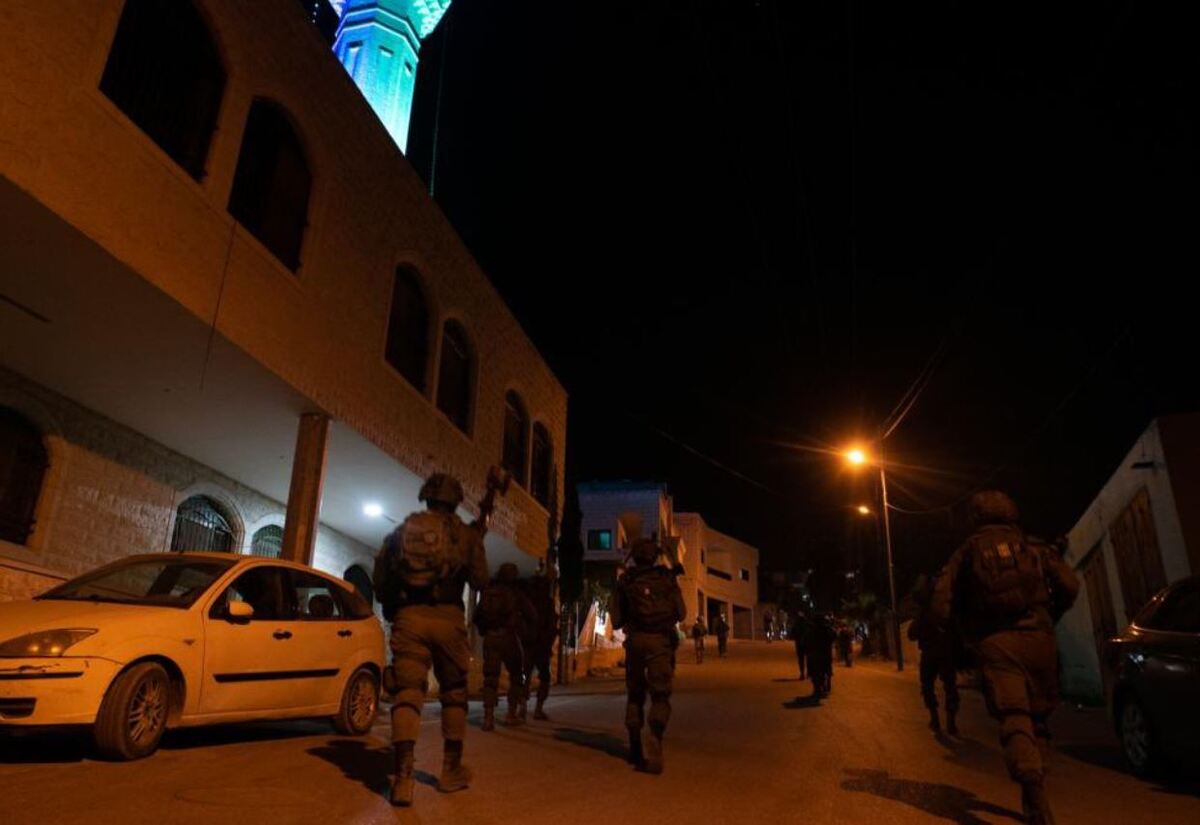
A young man was injured by the occupation forces’ bullets in Al-Fawar camp, south of Hebron

A young man was injured by Israeli occupation forces' bullets, today, Wednesday, during their storming of Al-Fawar camp, south of Hebron.


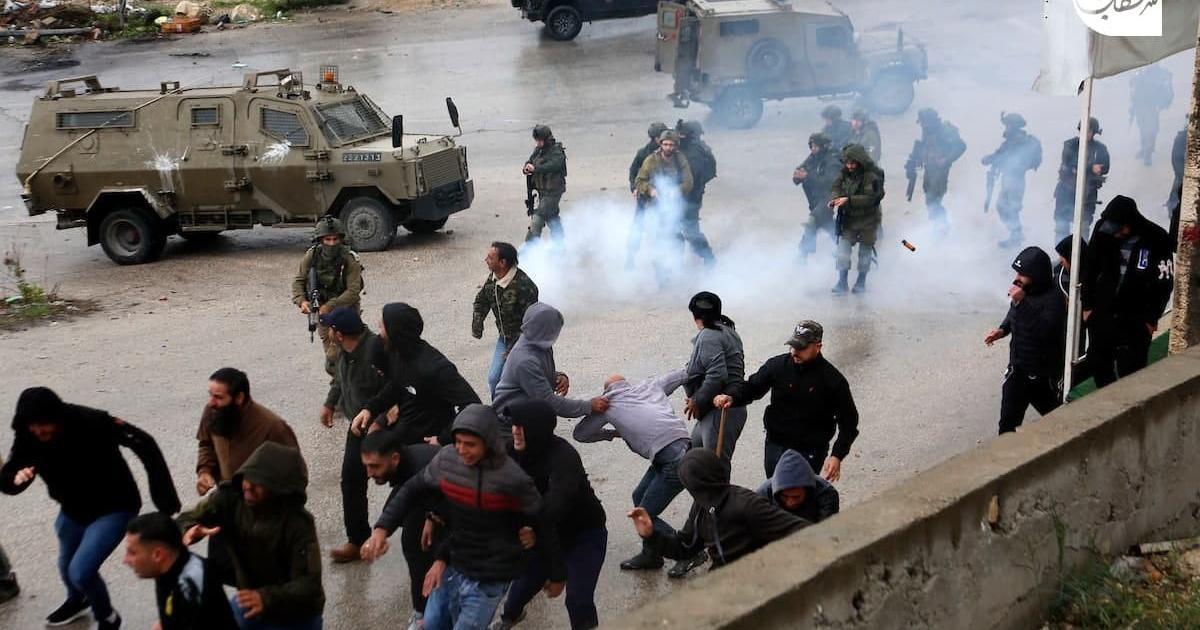
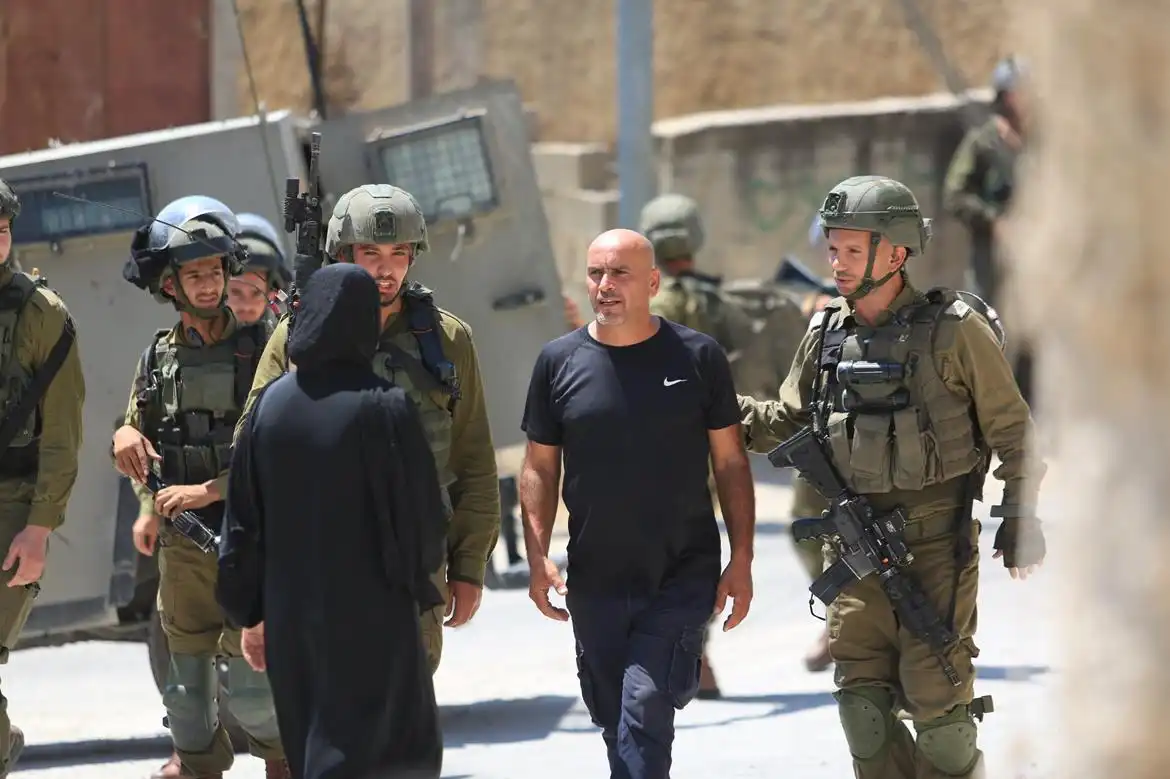
According to local sources, the occupation forces stormed the camp, amid heavy live fire, and deployed on the main roads and around citizens' homes, raiding a number of them and deploying snipers on their roofs.


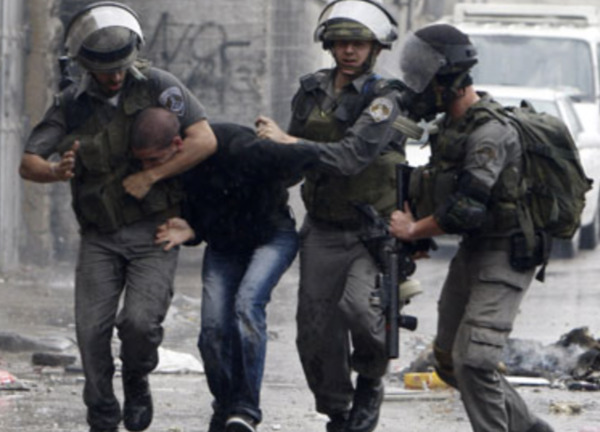
Clashes erupted with young men, during which the occupation soldiers fired live bullets and tear gas canisters, which led to a young man (23 years old) being injured by live bullets in the foot. He was transferred by ambulance crews to a nearby hospital.

PALESTINE

Wed 12 Feb 2025 4:35 pm - Jerusalem Time

Hamas: A delegation from the movement arrived in Cairo to follow up on the implementation of the ceasefire agreement

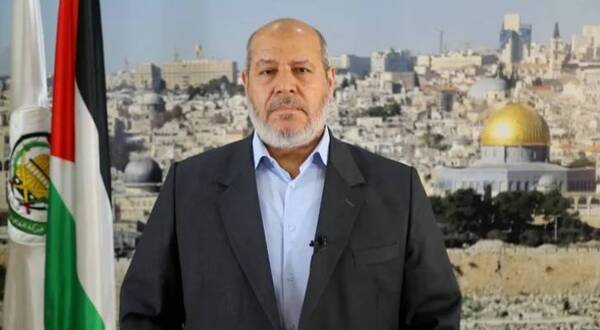
Hamas reported that a delegation from the movement headed by Khalil al-Hayya, head of Hamas in the Gaza Strip, arrived in Cairo and began meetings with Egyptian officials.


The movement indicated in its statement that Al-Hayya began following up on the implementation of the ceasefire agreement and prisoner exchange through technical committees and mediators.


The Israeli Broadcasting Corporation revealed that Qatar is exerting pressure on both Tel Aviv and Hamas in light of the current crisis, in an attempt to mediate and achieve progress in negotiations regarding the detainees and the general situation in the region.


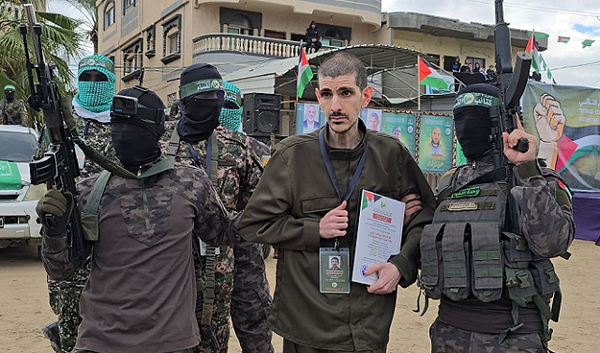
On the other hand, Axios quoted officials in Tel Aviv as saying that Israeli Prime Minister Benjamin Netanyahu is not demanding the release of all 76 detainees by next Saturday, and instead insists on continuing to implement the first phase of the agreement, which aims to release a limited number of detainees at the present time.

PALESTINE

Wed 12 Feb 2025 4:05 pm - Jerusalem Time

Israeli officials: Hamas claims of Israeli ceasefire violations accurate


Israeli officials acknowledged to The New York Times that Hamas's allegations that Israel violated the cease-fire in Gaza are accurate.


The report, which cited three Israeli officials and officials from mediating countries who spoke on condition of anonymity, said Israel had agreed to allow hundreds of thousands of tents into the enclave as part of a ceasefire agreement, which did not happen.


It is noteworthy that a few days before Hamas announced the postponement of the next release of hostages scheduled for February 15, an official from the media office in Gaza said that only 10% of the tents requested had arrived. Israel also did not allow mobile homes and heavy equipment to clear rubble in Gaza.


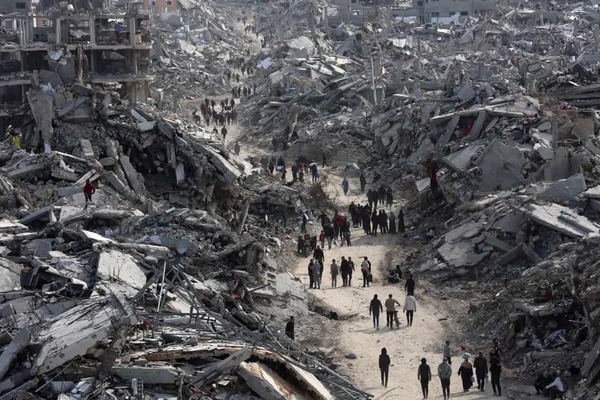
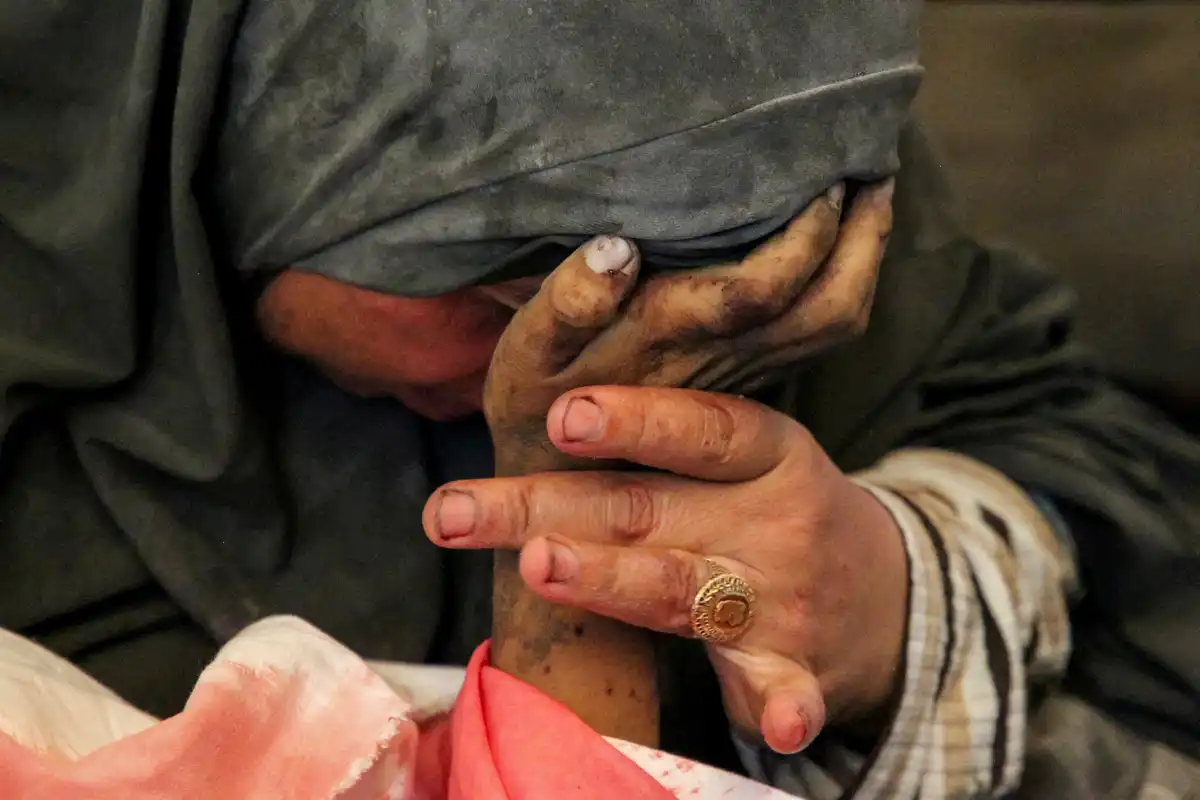
In addition to withholding promised aid, Israeli forces have continued to kill Palestinians in Gaza. The Health Ministry said Tuesday that since the ceasefire went into effect on January 19, Israeli forces have killed 92 Palestinians in Gaza and wounded 822 others.


Dr. Munir al-Barash, director of the Health Ministry, told The New York Times that since Jan. 19, 24 Palestinians have died from previous wounds, bringing the total number of Palestinians killed in Gaza by Israeli aggression to at least 118. In the same period, he said, 641 bodies have been pulled from the rubble, with 197 still unidentified.


Hamas has remained relatively quiet about Israeli ceasefire violations even after repeated calls from US President Trump to remove all Palestinians from Gaza, which numbers more than 2 million people.


In response to Hamas’s announcement to postpone the release of the upcoming hostages, Trump said that if all Israelis held in Gaza were not released by Saturday, the ceasefire should be “cancelled,” indicating that he was prepared to support Israel if the genocidal war resumed. Haaretz reported on Sunday that Netanyahu intended to sabotage the truce and not enter the second stage.

PALESTINE

Wed 12 Feb 2025 2:12 pm - Jerusalem Time

Cabinet ministers demand halt to prisoner exchange negotiations

Israeli Prime Minister Benjamin Netanyahu said during consultations with the heads of the security services and in a meeting of the political-security cabinet yesterday that "Israel will receive full American support in order to eliminate Hamas and do whatever it wants in Gaza," according to what the Walla website reported today, Wednesday, quoting a senior Israeli source.


The source added that Netanyahu seemed much less enthusiastic about everything related to the prisoners held in Gaza, and that he spoke during the cabinet meeting about "the need to separate personal grief over the situation of the kidnapped soldiers from his national responsibility as prime minister."


The source said that "the approach among many cabinet ministers was that Israel should fully adopt Trump's ultimatum (to Hamas to release all Israeli prisoners next Saturday, or end the ceasefire) as a new Israeli policy, and abandon the current framework of the kidnapped deal," which is being conducted through negotiations and mediators.


“There was an atmosphere of euphoria at the cabinet meeting, as if all our problems in Gaza had now been solved, because Trump said something,” he added, adding that “Trump’s ultimatum and his plan for Gaza convinced many in the Israeli government that there was no need to negotiate the second stage of the agreement or discuss ending the war or withdrawing from Gaza until further notice,” and that “the atmosphere among the ministers during the meeting was that the Israeli government could not be less determined than Trump on this issue.”


Two senior Israeli sources said that the heads of the Israeli negotiating team, including Shin Bet chief Ronen Bar, "begged the ministers not to escalate the situation and to give the Qatari and Egyptian mediators a chance to reach a solution that would guarantee the release of the three kidnapped soldiers next Saturday," according to Walla.


They added that during the consultations and the cabinet meeting, Netanyahu spoke of a "huge and unprecedented opportunity" for Israel now with Trump in the White House for the next four years.


According to Walla, "Netanyahu told Trump during their meeting at the White House last week that he wanted to hold serious negotiations on the second stage of the kidnapped soldiers deal. But after Trump saw the difficult physical condition of the three kidnapped soldiers who were released last Saturday, he began to lose patience with the phased structure of the deal."


Walla added that Netanyahu decided to take a middle path regarding Trump's ultimatum, which is to not adopt the ultimatum in its entirety and to maintain a maximum level of blackout. The quotes attributed to a "political official" that were issued following the cabinet meeting yesterday only caused confusion regarding the latest Israeli position on the ceasefire and prisoner exchange agreement.


Netanyahu said in a video after the cabinet meeting that if "Hamas does not release our kidnapped soldiers" by Saturday, the IDF would resume the war, but Walla noted that Netanyahu did not explicitly demand the release of "all of the kidnapped soldiers" on Saturday. But then another brief statement was issued, saying that "the prime minister and the cabinet are sticking to President Trump's statement about the kidnapped soldiers. That is, they must all be released."


According to Walla, "Israeli officials still hope that Netanyahu's ultimatum will keep the door open to reach a solution that will allow the release of the kidnapped soldiers next Saturday as originally planned," meaning the release of three Israeli prisoners.


A senior Israeli source was quoted as saying that Israel informed Egypt and Qatar that "they must ensure that Hamas does not violate the agreement next Saturday. The possibility of releasing the kidnapped soldiers on Saturday has decreased significantly. This is very worrying. We hope that the mediators understand the situation and save the deal."

PALESTINE

Wed 12 Feb 2025 2:11 pm - Jerusalem Time

New testimonies from Gaza detainees about the atrocities they were subjected to

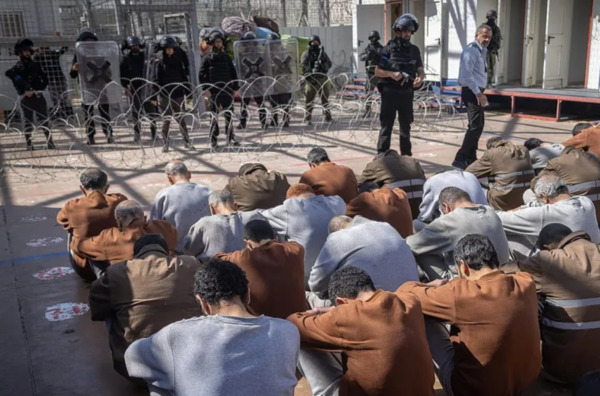
Gaza detainees gave testimonies revealing more details about the atrocities committed against them by the occupation army, specifically during their arrest, and later after their transfer to Israeli occupation camps and prisons.

This comes more than a year after the war of extermination on the Gaza Strip and its continuing disastrous effects, one of the aspects of which is the crimes that were and are still being committed against detainees.


The Prisoners' Affairs Authority and the Prisoners' Club said in a statement on Wednesday that these testimonies are part of dozens of testimonies and statements that the institutions obtained through visits to many Gaza detainees over the past period. Recently, 18 Gaza detainees were visited in the Negev Prison and the (Sde Teiman) camp, one of whom confirmed that his hands were broken and he was abused while he was tied up.


The statement reiterated that the level of crimes and violations reflected in the testimonies has not changed, but rather remains at the same level, which doubles the level of danger to the fate of thousands of detainees, especially with the passage of more time as they face the same level of crimes and detention conditions. Moreover, many of the detainees in Gaza still do not know anything about the fate of their families, after a year or more has passed since their arrest.


He explained that torture crimes still dominate the testimonies of detainees, as well as crimes of starvation and humiliation in all its forms, in addition to the harsh detention conditions that are based on policies of theft and deprivation.

PALESTINE

Wed 12 Feb 2025 1:25 pm - Jerusalem Time

Suffocation injuries among students during the occupation's storming of the town of Al-Khader

A number of students suffered from suffocation, on Wednesday afternoon, after the occupation forces stormed the town of Al-Khader, south of Bethlehem.


Local sources reported that the occupation forces stormed Al-Khader, and positioned themselves in the "Tall" area in the Old City, and fired tear gas and sound bombs at the students, which led to a number of them suffocating.


She added that the occupation forces continued to pursue the students in the areas of the Great Mosque and the Gate, which led to a number of others suffering from suffocation, noting that the occupation soldiers deliberately fired gas bombs towards shops and homes.

OPINIONS

Wed 12 Feb 2025 1:01 pm - Jerusalem Time

Will Trump let hell break out in Gaza?

Middle East Monitor

Middle East Monitor

Opinion Writer

by Adnan Hmidan


Since his return to the White House, Donald Trump has adopted a strategy of “shock and awe”— not just in foreign policy but in the smallest details of daily life. A flurry of decisions, provocative statements and threats stretching from Gaza to Canada, Panama and Greenland, alongside a return to populist symbols like plastic cups, suggest that he is determined to reshape the world according to a logic that suits him. However, what has sparked the most controversy is his explicit threat to “let hell break out” on Gaza, a move that could reignite the war on the enclave in its most brutal form and push the region into an abyss of uncertainty and bloodshed.

Trump seems well aware that creating a state of deliberate chaos is a fundamental part of his dominance over the political scene. He understands that unleashing a barrage of shocking decisions and escalating threats makes it difficult for his political opponents and the international media to respond effectively to all of them at once, granting him the opportunity to execute his agenda with minimal resistance. While grappling with a legacy tainted by trials and accusations that have shaken his image over the years, he is now striving with all his might to reintroduce himself as a leader who never backs down, even if the price is a military escalation that could ignite new global crises.


But this is not just about showcasing strength. For Trump, satisfying his hardline electoral base remains a top priority. This base thrives on rhetoric of power and dominance, feeding off slogans like “America First”, which have become even more aggressive than during his first term. As much as he seeks to present himself as the president who is “making America great again”, he simultaneously employs these political and military adventures as a tool to divert attention from deepening economic and social crises within the United States — a tactic leaders have historically resorted to when facing mounting domestic pressure.

What does this mean for Gaza?

Trump’s threat to open the gates of hell is not just empty populist rhetoric; it carries serious implications. When the U. president explicitly supports the ongoing genocide and ethnic cleansing in Gaza, he effectively gives Israeli leaders a green light to continue waging an unrestrained war, free from international pressure or political calculations. Even if this support does not translate into direct military intervention, it is enough to embolden Netanyahu and his government to persist in their campaign of bombing, destruction and outright rejection of any diplomatic solutions – making discussions of a truce or ceasefire nearly impossible.

While regional and international mediators, from Egypt to Qatar and the United Nations, work tirelessly to find a way out of this crisis, Trump’s statements serve to undermine these diplomatic efforts. How can any party be expected to engage in negotiations under the threat of annihilation and forced displacement? History has taught us that such threats do not lead to Palestinian surrender; rather, they reinforce their commitment to resistance — especially since what is happening is no longer just a “military operation” but a clear and deliberate attempt to uproot them from their land.

The outrage provoked by these policies will not be confined to Palestine alone. It could spill over into the broader Arab and Islamic world, where anger and frustration grow with each passing day as the tragedy in Gaza unfolds. If public protests escalate, Arab regimes may find themselves facing internal challenges that make it increasingly difficult to maintain their normalisation efforts or even remain silent in the face of renewed massacres. Additionally, these policies could deepen divisions within the Western bloc, as countries like France and Germany struggle to balance their traditional loyalty to Washington with mounting public pressure in support of Palestinians.

A defining moment for the world

All indications suggest that Trump’s latest remarks could be the final nail in the coffin of any de-escalation efforts. Instead, they may trigger an unprecedented escalation that thrusts Gaza back into the heart of the storm. But this raises a crucial question: Is the real problem Trump himself, or is it a world that allows him to act with impunity?

History has been a witness to this trial, where nations had to make a defining choice; either surrender to the logic of brute force or rise in defence of their principles. Today, Gaza is not just a battlefield; it is a moral and humanitarian test for the entire world. Will nations and peoples remain passive spectators to a recurring atrocity, or will there be those brave enough to stand against these aggressive policies?

History is not neutral, and it does not forgive hesitation. The world must choose; either to be complicit in a crime unfolding in broad daylight or to prove that justice and dignity are not just empty words. This test extends beyond Gaza; it challenges everyone who believes in justice and refuses to let the world be ruled by the law of the jungle.

ARAB AND WORLD

Wed 12 Feb 2025 12:48 pm - Jerusalem Time

French President: Rebuilding Gaza must not come at the expense of disrespecting Palestinians

French President Emmanuel Macron stressed that any solution to rebuild Gaza "must not come at the expense of disrespecting the rights of the Palestinians and territorial sovereignty."


He explained that "the Palestinians of the Gaza Strip do not want to be resettled abroad, and the countries of the region reject this as well."


Macron added: "You cannot tell two million people, do not move to your cities in Gaza because the issue is political and not a real estate transaction."

PALESTINE

Wed 12 Feb 2025 12:45 pm - Jerusalem Time

The death toll in the Gaza Strip has risen to 48,222 since the beginning of the aggression

The Ministry of Health in Gaza announced today, Wednesday, that the death toll in the Gaza Strip has risen to 48,222, the majority of whom are children and women, since the start of the Israeli occupation aggression on October 7, 2023.


It added that the number of injuries has risen to 111,674 since the beginning of the aggression, while a number of victims are still under the rubble, and ambulance and civil defense crews cannot reach them.


It pointed out that 3 martyrs (including two martyrs whose bodies were recovered, and a new martyr) and 9 injuries arrived at Gaza Strip hospitals during the past 24 hours.

PALESTINE

Wed 12 Feb 2025 11:59 am - Jerusalem Time

President Abbas appreciates the positions of His Majesty King Abdullah II rejecting the displacement of our people

President of the State of Palestine Mahmoud Abbas highly appreciates the courageous fraternal positions of His Majesty King Abdullah II, King of the sisterly Hashemite Kingdom of Jordan.


He considered these positions an extension of the firm positions of the Jordanian leadership in support of the just and legitimate national rights of our people, and in adherence to peace based on international legitimacy resolutions, the Arab Peace Initiative, the principle of the two-state solution, the embodiment of the State of Palestine with East Jerusalem as its capital, and the preservation of the historical and legal status of the Islamic and Christian holy sites in Jerusalem within the framework of the Hashemite guardianship.


The President praised His Majesty the King's announcement to host sick and wounded children from the Gaza Strip for treatment. This is in addition to what the Kingdom is doing in providing humanitarian aid and operating Jordanian field hospitals in Gaza and the West Bank.


President Abbas reiterated the importance of coordinating Arab efforts and positions to adopt the Arab peace vision at the upcoming emergency Arab summit, appreciating the importance of the efforts made by the global coalition to implement the two-state solution and obtain more international recognition for the State of Palestine, and holding the international peace conference in the middle of this year, co-chaired by the Kingdom of Saudi Arabia and France.


In this context, the President, once again, appreciated the courageous fraternal stances of the Arab Republic of Egypt, the Kingdom of Saudi Arabia, the Hashemite Kingdom of Jordan, and all sisterly and friendly countries, which rejected projects to displace our people and annex their lands, and stressed that there is no peace or stability except by embodying the Palestinian state, insisting on a complete cessation of war, and immediately starting relief for our people, and the State of Palestine assuming its responsibility in the Gaza Strip, and rebuilding what the occupation destroyed, according to a Palestinian-Egyptian-Arab plan with international support, aiming to rebuild while our people are still on their land.


The President reiterated our people's commitment to remaining on their land in Gaza, the West Bank and Jerusalem, and that Palestine is not for sale.

PALESTINE

Wed 12 Feb 2025 11:42 am - Jerusalem Time

Israeli attacks on Palestinian citizens and their property in the West Bank

The Israeli occupation forces and its settlers continue their attacks against citizens and their property in the West Bank.


In Nablus, the Israeli occupation forces attacked three students from the town of Hawara, south of the city, today, Wednesday.


Local sources reported that the occupation forces are present daily on a side road leading to Hawara Secondary School.


She added that this morning they assaulted three students while they were on their way to school, causing them to suffer bruises.


In Jericho, a number of armed settlers released their cows on the citizens’ agricultural lands near the homes in Fasayil, in a move to seize the pastoral lands and then colonize them, at a time when the residents are suffering from continuous attacks.


In the same context, settlers stormed the Ein Al-Auja waterfall complex north of Jericho this morning, Wednesday, accompanied by their sheep, and spread out among the Bedouin dwellings.


Local sources explained that these settlers grazed their sheep and emptied the Bedouins’ water tanks randomly onto the ground, which threatens the water resources on which the Bedouins depend mainly from the Auja Spring.


It is noteworthy that settlers today proceeded to graze their cows on the lands surrounding the homes of citizens in the village of Fasayel, north of the city of Jericho.

PALESTINE

Wed 12 Feb 2025 11:40 am - Jerusalem Time

The Ministry of Health demands the immediate release of Dr. Hussam Abu Safia

The Palestinian Ministry of Health called for the immediate release of the prisoner, Dr. Hussam Abu Safiyeh, and all prisoners from the medical staff detained in the occupation prisons.


She renewed her appeal to all international health and humanitarian organizations and human rights institutions to urgently intervene for their immediate release.


The ministry stressed, in a statement issued on Wednesday, that Dr. Abu Safia and his fellow medical staff are being subjected to repressive and brutal practices inside the occupation prisons, according to the testimony of the lawyer of the Al Mezan Center for Human Rights, who was able to visit him yesterday evening, Tuesday, in Ofer prison.


The ministry added in its statement: “According to Dr. Abu Safiya’s statement to the center’s lawyer, he lost about 15 kilograms of his weight, and suffers from an enlarged heart muscle. He was not presented to a specialist doctor or provided with treatment, despite his repeated requests to the prison administration to do so.”


At the beginning of Dr. Abu Safiya’s arrest and during his transfer from the Gaza Strip, he was forced to take off his clothes, his hands were tied, and he sat on sharp stones for about 5 hours. He was subjected to electric shocks and chest beatings. He also stayed in the occupation’s cells for 25 days in Ofer Prison, 10 of which were during which he was subjected to almost continuous interrogation. He fainted in the cell due to a feeling of suffocation. He was also accused of charges that he immediately denied, stressing that he was a doctor who only provided treatment to patients and the wounded, in addition to holding the position of managing Kamal Adwan Hospital.


In its statement, the Ministry condemned the repeated attacks on medical personnel, which constitute a serious violation of the provisions of international law and the rules of protection stipulated for medical personnel and included in the Second Protocol attached to the Fourth Geneva Convention, calling on the international community to quickly intervene to release the Palestinian medical personnel immediately.


The Ministry of Health indicated that the occupation authorities had arrested Dr. Abu Safia on 12/27/2024, from Kamal Adoun Hospital in the North Gaza Governorate, along with many workers, doctors and citizens, as the prisoners suffer from extremely difficult detention conditions as a result of the occupation’s practices inside the prisons, and this is added to the series of daily violations by the occupation of all international and humanitarian laws, regulations and norms.

PALESTINE

Wed 12 Feb 2025 11:38 am - Jerusalem Time

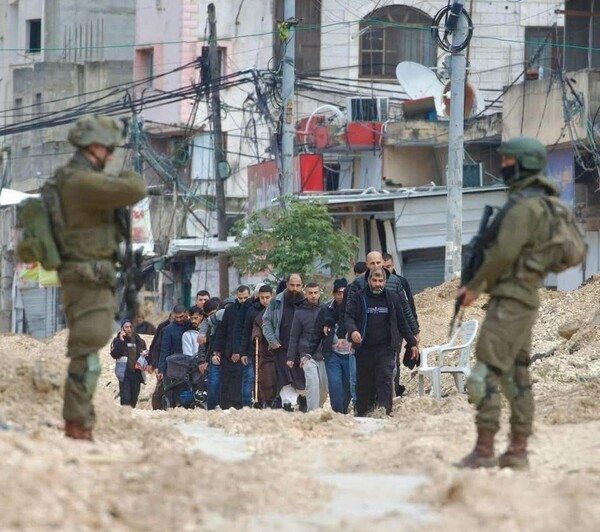
Israeli occupation forces demand that residents of Nour Shams camp evacuate amidst escalation in the field

Today, Wednesday, the Israeli occupation forces demanded that the residents of Nour Shams camp evacuate immediately, through the camp mosque’s loudspeakers, amidst a field escalation.


Eyewitnesses reported that the occupation forces stormed the Al-Ayada neighborhood mosque in the camp, and called on residents via loudspeakers to leave the camp, which has been under attack for four days.


The occupation forces deployed their vehicles and infantry patrols at the entrances and alleys of the camp, firing live bullets and sound bombs intensively to spread fear and panic among the residents.


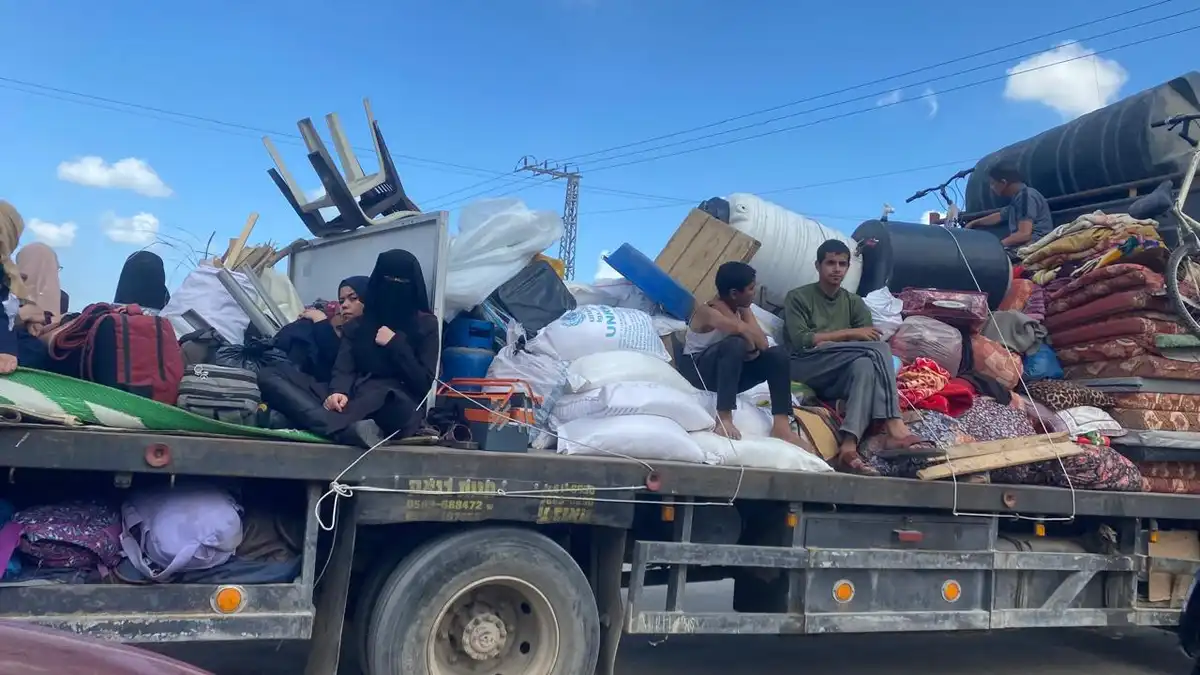
Since the first day of the occupation's aggression, the camp has witnessed a wave of forced mass displacement under the pressure of random gunfire, coinciding with the sounds of explosions heard every now and then.


Displaced people described the camp’s conditions as very difficult and miserable. There are demolished houses and shops, bulldozed streets, and occupation soldiers raiding houses in a barbaric manner, breaking their contents from the inside, assaulting young men, and expelling the elderly without allowing them to take their basic needs, especially clothes, and seizing their mobile phones.


The media office of the Nour Shams Camp Services Committee indicated that the number of displaced persons exceeded thousands of women, children, the elderly and the sick.


It is noteworthy that the occupation's aggression on the city of Tulkarm and its two camps, Tulkarm and Nour Shams, for the 17th consecutive day, left 8 martyrs, including three from Nour Shams camp, amid a military escalation accompanied by widespread destruction of infrastructure and property, arrests, and forced displacement that affected thousands of residents of the two camps.


The United Nations Relief and Works Agency for Palestine Refugees (UNRWA) explained that the Israeli operations in the occupied West Bank resulted in the forced displacement of 40,000 refugees from the Jenin, Tulkarm, Nur Shams, and Fara'a camps.

PALESTINE

Wed 12 Feb 2025 10:29 am - Jerusalem Time

Israeli occupation demolishes a house, injures a citizen, and arrests others in Hebron

Today, Wednesday, the Israeli occupation forces demolished a house in Al-Arroub camp, north of Hebron, in the southern West Bank.


Local sources confirmed that the occupation forces demolished a house at the entrance to the camp, owned by citizen Adi Jamil Salem Jawabreh, where he lives with his family members who have become homeless. The house’s area exceeds 150 square meters.


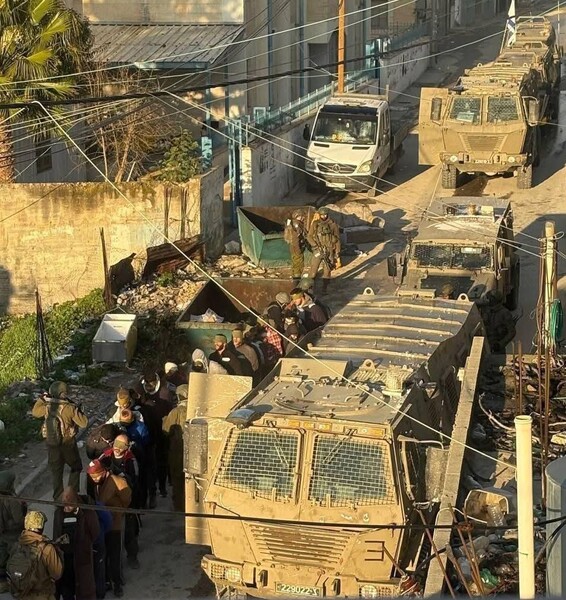
The sources also reported that the occupation forces raided dozens of homes in the camp, detained dozens of citizens, destroyed the contents of their homes, and severely beat their children and families. They also stormed the agency’s clinic, broke down its doors and contents, and turned it into a field investigation center. They also arrested Islam Majed Katkat, Saif Salim Rushdi, Mu’ayyad Jaber Abu Sal, and Samed Jihad Jahara. They took them to an unknown location after searching their homes and tampering with their contents, and severely beat them.


The occupation forces raided the town of Adh Dhahiriya, stormed a number of homes, detained a number of citizens, and interrogated them in the field. They fired bullets, sound bombs, and toxic gas, which resulted in a young man (25 years old) being injured by live bullets in the foot. He was subsequently transferred to the hospital in the city of Hebron.

PALESTINE

Wed 12 Feb 2025 10:20 am - Jerusalem Time

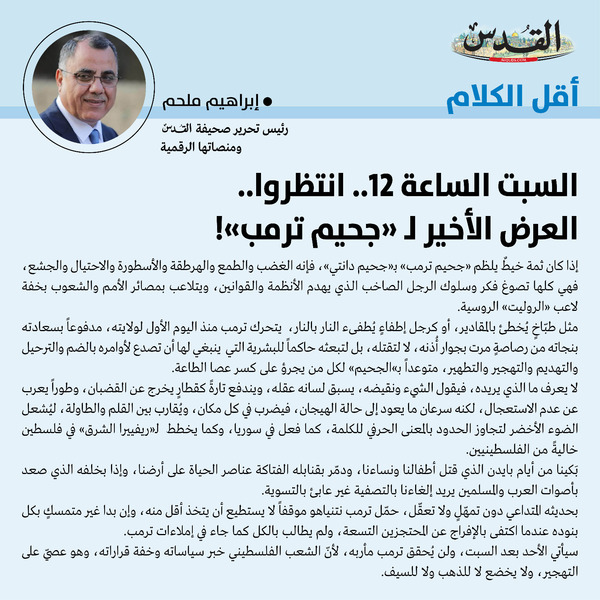
Saturday at 12:00... Wait... the final show of "Trump's Hell"!

If there is a thread that connects Trump’s Hell with Dante’s Hell, it is anger, greed, heresy, myth, fraud and avarice. They all shape the thinking and behaviour of the boisterous man who destroys systems and laws, and plays with the destinies of nations and peoples with the agility of a Russian roulette player.


Like a cook who makes a mistake with the ingredients, or a firefighter who puts out fire with fire, Trump has been moving since the first day of his term, driven by his happiness at surviving a bullet that passed near his ear, not to kill him, but to send him as a ruler of humanity, which must obey his orders of annexation, deportation, demolition, displacement, and purification, threatening “hell” for anyone who dares to break the stick of obedience.


He doesn’t know what he wants, so he says one thing and its opposite, his tongue outstrips his mind, and sometimes he rushes like a train going off the rails, and sometimes he expresses no urgency, but he quickly returns to a state of frenzy, striking everywhere, and bringing the pen close to the table, to light the green light to cross the borders in the literal sense of the word, as he did in Syria, and as he plans for an “Eastern Riviera” in Palestine free of Palestinians.


We cried during the days of Biden, who killed our children and women, and destroyed the elements of life on our land with his deadly bombs, and now his successor, who rose with the votes of Arabs and Muslims, wants to eliminate us through liquidation, not caring about the settlement.


With his rambling, thoughtless and unreasonable speech, Trump placed a burden on Netanyahu that he could not take less than, even though he did not seem to adhere to all of its provisions when he was satisfied with releasing the nine detainees, and did not demand everything as stated in Trump’s dictates.


Sunday will come after Saturday, and Trump will not achieve his goal, because the Palestinian people are familiar with his policies and the lightness of his decisions. He is resistant to displacement, and does not submit to either gold or the sword.

OPINIONS

Wed 12 Feb 2025 9:09 am - Jerusalem Time

Maneuvers amidst conspiracies

op-ed "AlQuds" dot com

op-ed "AlQuds" dot com

Opinion Writer

As the maneuvering related to the exchange deal continues, and the level of Israeli and American threats increases, in response to Hamas’s decision not to release the sixth batch of detainees, who are scheduled to be released next Saturday, the conspiracies being hatched against the Palestinian cause continue, in light of the plan of US President Donald Trump, who publicly threatened Hamas with the necessity of returning all Israeli detainees by noon next Saturday, otherwise the gates of hell will be opened on Gaza.


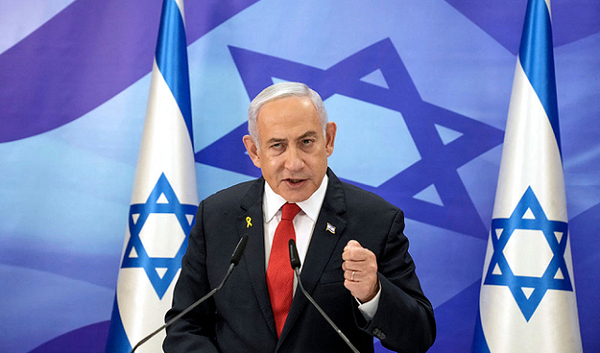
After Israel received details of the violations it committed from the mediators, and the demands raised by Hamas in order to oblige Israel to abide by the agreement and not circumvent it, Israel came out yesterday with new maneuvers. On the one hand, it ignored all of Hamas’s demands related to the violations of the relief protocol, specifically during yesterday’s meeting that lasted four hours. It also appeared in a threatening tone in which Netanyahu claimed that in light of Hamas’s violation of the agreement, Saturday would be the last date for returning the Israeli detainees, otherwise the ceasefire would end, and the Israeli army would return to violent fighting, until Hamas was finally defeated.


Netanyahu's threat, which was accompanied by a decision to redeploy reserve soldiers around the Gaza envelope, by the so-called Southern Command, is a test of Hamas's pulse and to see if it will back down from its demands. However, the window through which the Israeli Prime Minister appeared cannot be underestimated in its seriousness despite the above, because Netanyahu is surrounded by the ruling right-wing coalition parties, most of which are extremists, who do not want the deal to continue. Accordingly, this maneuver may turn into a real war in the coming days.


Amidst the great controversy over the exchange deal, the chapters of the great conspiracy carried out by the obsessed American president who believes he is the Pharaoh of his time continued, through reaffirming the displacement of the Palestinian people from Gaza, and threatening Egypt and Jordan with withholding aid to them if they refused to receive the Palestinians. He also set an imaginary date for the return of all Israeli detainees until noon next Saturday, which made the Israelis salivate, who welcomed this demand and Trump’s vision for the future of Gaza, especially the extremist minister Smotrich, who also set next Saturday as the date for blowing up the exchange deal.


With Hamas insisting that it is committed to the agreement, as long as the occupation is also committed to it, and that it was sponsored and guaranteed by the mediators (Egypt, Qatar and the United States), and that Israel is the one that did not abide by the pledges, and with the statement of categorical rejection of Trump’s statements about the displacement of the population and considering them racist and a call for ethnic cleansing and aiming to liquidate the Palestinian cause and deny the established national rights of the Palestinian people, the ball will move to the mediators’ courts in the coming few days before Saturday, in order to try to save the exchange deal, as Qatar is expected to make great efforts in this direction, as is expected the arrival of Trump’s envoy Steve Witkoff to the region. Will the mediators’ efforts succeed in healing the rift, or will the conspiracies be stronger than the window of negotiations?

OPINIONS

Wed 12 Feb 2025 9:02 am - Jerusalem Time

Iranian neighbor

Hamada Faraana

Hamada Faraana

Opinion Writer

We differ with Iran, a lot or a little, but we cannot get rid of it, and it cannot get rid of us. We are Arabs, and among us are nationalities by citizenship: Kurds, Circassians, Chechens, Amazighs, Africans, Muslims, Christians, Sunnis and Shiites. Iran also has multiple nationalities and diverse sects.


The challenge imposed on us, and on the Iranian state, is how to search for the common denominators that unite us, and there are many of them. If we examine them, take care of them, and implement them, we will find that our differences can be controlled, reduced, and coexisted with.


There is Iranian infiltration between our pores, and the reason is that we have internal diseases, which make it possible for any party to infiltrate, interfere, or benefit from them, to serve its interests. This is happening with Turkey, and this is happening with Ethiopia, three large, powerful countries surrounding the Arab world. We need to build equal, equal relations with them based on preserving the common interests that intersect between us, and what applies to Iran applies to the two neighboring countries: Turkey and Ethiopia.


Iran is a powerful country, exposed to conspiracies, intrigues and planning by the Israeli colony for two fundamental reasons:

The first is that it is a state that rejects the policies and approach of the colony, and believes in the right of the Palestinian people to liberate their land and homeland, and the return of refugees to the cities and villages from which they were expelled in 1948.


The second is that it provides support and backing to the Palestinian and Lebanese resistance factions, and all the Arab parties, factions and groups in Iraq, Yemen and Somalia that are hostile to the occupation and colonialism.


Therefore, we have an interest in being with Iran in one trench against the colony, without this being at the expense of our national security, or our national relations, or allowing it to interfere in the internal affairs of our Arab countries. We must look at the experience of Saudi Arabia with respect, how it was able to restore relations with Tehran through Chinese mediation and succeeded in doing so. There is no doubt that Saudi Arabia has a relatively new and advanced approach, and its position on the colony and normalization is nothing but a reflection of this advanced national position by linking relations with the colony, according to the decisions of the Beirut Arab Summit in 2002, which laid out the peace initiative as a roadmap, through which it confirmed the appropriate formula that there are no relations with the colony except by acknowledging and recognizing the right of the Palestinian people to their independent state, on the land of their homeland.


Netanyahu's statements about the Palestinian state on Saudi Arabian soil demonstrate his narrow-mindedness and failure, and confirm the credibility of the Saudi position regarding the relationship with the colony within the equation of the Arab Peace Initiative: that there is no relationship with the colony without the rights of the Palestinian people in their independent state.


Iran celebrates its national day, and as we look at it with interest, we, as observers and followers, hope that it deserves to be with it in one trench in confronting the Israeli colony, and in confronting its aggressive expansionist programs in Palestine, Lebanon, Syria, and other Arab countries, as it works with the help of the United States to have a position of superiority at the expense of the Arabs. From here, the importance of building Arab relations with various international parties such as China, Russia, and Europe emerges, as well as with the neighboring Arab countries of Turkey, Ethiopia, and the vast expanse in the Islamic world, and the countries of Africa, Asia, and Latin America.

PALESTINE

Wed 12 Feb 2025 8:53 am - Jerusalem Time

Netanyahu's accusations against the PA and Hamas...an attempt to demonize the people to seize the land

Professor Manuel Hassassian: Israel is the one practicing state terrorism against the Palestinian people and seeking to force the Palestinians to emigrate

Sawsan Sarour: Netanyahu, who failed to achieve any of his declared and hidden goals from the war, is being achieved for him by Uncle Sam

Hani Al-Jamal: Netanyahu's accusations against the PA and Hamas are an attempt to obscure Israel to cover up his great failure in the war on Gaza

Sharhabil Al-Gharib: The group controlling the Israeli decision adopts an extremist mentality that works to kill the Palestinians’ hope of achieving their dream of freedom

Johnny Mansour: Netanyahu's accusations fall within the framework of the war on the Palestinian people, and it is necessary to intensify Palestinian diplomatic movements

Dr. Munther Hawarat: The repeated Israeli allegations about the role of the Authority in supporting terrorism are part of a systematic plan to demonize the Palestinian cause


Insisting on continuing his stream of lies, Israeli Prime Minister Benjamin Netanyahu, in his speech before the Knesset on Monday evening, accused the Palestinian Authority, Hamas, and all Palestinians of wanting to end Israel, through what he described as “military terrorism” carried out by Hamas, or “diplomatic terrorism” practiced by the Authority, believing that the free world would be fooled by his accusations and evasions to evade any international obligation or pressure to end his army’s aggression in the Palestinian territories, and to abandon his racist plans for annexation, Judaization, and displacement.


Politicians, observers and analysts who spoke to “Y” considered Netanyahu’s accusations against the Authority and Hamas “totally unacceptable”, and that Israel is the one practicing state terrorism against the Palestinian people, and seeking to force the Palestinians to emigrate to Egypt and Jordan, pointing out that the small oxygen tube that Trump gave to the helpless Netanyahu not only revived him but also returned him with an overdose of arrogant, pathological narcissism.


They expected that the next stage would witness more severe pressure from Israel and the United States, whether on the Palestinian Authority, or through a possible military escalation in the West Bank, with the possibility of declaring full Israeli control over the West Bank, which could pave the way for officially declaring the West Bank as part of Israel.


They considered that what is more dangerous than that is the possibility of the United States recognizing this step, especially since Trump, during his first term, moved the American embassy to Jerusalem and recognized it as the capital of Israel, which means that it may be easy for him to take a similar step regarding the West Bank.


In the face of this Israeli arrogance, politicians and analysts called for confronting these challenges by unifying the Palestinian ranks, strengthening popular resistance, and unifying political and military decisions under the umbrella of the PLO. It is also necessary for the Arab world to intensify political and financial support for the Palestinians, and to work on effective diplomatic moves to confront the Israeli narrative, and to emphasize that the Palestinian people are struggling for their legitimate rights in accordance with international laws.


An absurd and improvised proposal that astonished the world


Professor Manuel Hassassian, the Palestinian Ambassador to the Kingdom of Denmark, said that the statements of Israeli Prime Minister Benjamin Netanyahu regarding the Palestinian Authority and Hamas are “completely unacceptable,” stressing that Israel is the one practicing state terrorism against the Palestinian people, and seeking to force the Palestinians to emigrate to Egypt and Jordan.


Hassassian explained that "Netanyahu is using these allegations to give US President Donald Trump the opportunity to move forward with his proposal to displace the residents of Gaza and create what is called the "Eastern Riviera" for the Gazans as an alternative economic solution," noting that this proposal is "absurd and improvised, and has astonished the world."


He added that "there is a clear international position that rejects displacement as a violation of international law, as the two-state solution is the only internationally acceptable option to resolve the Palestinian issue in accordance with international legitimacy." The United Nations also warned against any attempt to deport the residents of Gaza, considering it "a violation of international norms and laws, and of the resolutions of the United Nations that affirm the right of return, ending the occupation, and establishing an independent Palestinian state."


Hassassian pointed out that the Arab countries, most notably Egypt, Jordan and Saudi Arabia, categorically rejected the displacement plans, as Saudi Arabia confirmed that "there will be no normalization or relations with Israel without the establishment of an independent Palestinian state."


Regarding the prisoner exchange deal between Israel and Hamas, Hassassian stressed the need to complete its second phase, warning that "any obstruction of this file may give the green light for a new holocaust in Gaza, and pave the way for an Israeli military invasion of the Strip," noting that this scenario will have "negative regional and international repercussions."


He concluded his statement by saying: "The question remains: Will Trump and Netanyahu go ahead with this plan, or will it be reconsidered in search of other solutions to the crisis in Gaza?"


Dramatic transformations in the Israeli political arena


Journalist Sawsan Sarour, an observer and critic of the political scene in Israel, said that the last few hours have witnessed many dramatic transformations in the political arena in Israel. What was considered a basic dilemma a few days ago in completing the deal until reaching an end to the war and liquidating the Palestinian resistance in Gaza, according to Israeli specifications, while maintaining the composition of the government coalition in Israel, received “relief” from US President Donald Trump, as he will be the title of the next day of the war!


She added: Netanyahu, who failed to achieve any of his declared and hidden goals from the war, is now Uncle Sam achieving them for him: returning the detainees and eliminating Hamas' military and civilian capabilities, with the gift of preserving his government.


Sarour pointed out that the small oxygen tube that Trump gave to the helpless Netanyahu not only revived him but also brought him back with an overdose of the arrogant pathological narcissism that was evident in his speech before the Knesset General Assembly on Monday evening, in which he stressed that the Oslo Accords had failed and that the Palestinian Authority had no control over Gaza, so “no Hamastan and no Fatahstan,” as he used to say yesterday, as if his inner voice was saying today only “Trumpistan.”


She stressed that Trump has proven once again that he is a failed real estate dealer, and that he has always lost in his previous real estate deals. Gaza is not a property that can be bought and sold, and it is an integral part of the occupied Palestinian territory.


Journalist Surour pointed out that Trump revealed his idea regarding Gaza, but he did not reveal his secrets regarding the West Bank, promising that this would happen within 4 weeks (there are three weeks left since the announcement), so what could that be?!


She wondered: Will he recognize the annexation of the settlements to the State of Israel? Note that the law to annex the settlements must be approved by the government and the Knesset, in order for recognition to take place, which has not happened yet!


She also wondered: How will the Israeli army continue to storm the Palestinian territories, divide them into cantons, and make life more difficult for Palestinians? Will it target cities after the camps?


Surur pointed out that the scenes of destruction, killing and displacement in recent days in the West Bank, and Netanyahu's explicit declaration of the end of the Oslo Accords, amidst complete impotence on the part of the Palestinian Authority, all point to the question: What next?


Sarour continued: From here comes the comprehensive Palestinian and Arab role, and how to confront these looming dangers. Let us start with the emergency Arab summit that Egypt called for to discuss the "new and dangerous" developments of the Palestinian issue, which is scheduled to be held in Cairo on the twenty-seventh of this month.


Trump's policy towards raising the ceilings and threats


Sarour believes that Trump's policy is to raise the ceiling and threaten, and we are faced with creating an illusion and turning it into reality and negotiating it. Trump has raised the ceiling of humiliation for moderate countries. Either you are slaves or you are against us. Especially after the threats and warnings that Trump recently issued to both Jordan and Egypt to accept the displacement of the Gazans or else he will stop financial aid.


She stressed that the Arab summit must be commensurate with the serious risks, and not be like the rest of the empty, condemning summits.


She continued, saying: The summits of slogans, condemnation, and appeasing the Americans and Europe have ended, and it is time for the Arab summit to stand by the Palestinian people with clarity, transparency, and real support.


Urgent Arab rescue plan


Journalist Surour called on Arab countries to officially announce and actually begin an urgent rescue plan, not only to emphasize the rejection of displacement and the rejection of the liquidation of the Palestinian cause, but also to work to establish the Palestinians on their land.


The Arab Republic of Egypt also called for opening the gates of the Rafah crossing and for the entry of all necessary items with all force, not only aid, medicines, tents, mobile homes and other humanitarian supplies, but also heavy machinery for the reconstruction of Gaza, without paying attention to the American and Israeli rejectionist position.


rearrange the interior


In Palestine, journalist Surour believes that the Palestinian Authority must rearrange its papers and rebuild the Palestine Liberation Organization, so that it includes everyone and negotiates according to the Beijing Conference, for the future of the Palestinian people and to establish their independent Palestinian state with Jerusalem as its capital.


Surour concluded her speech by saying: Who knows, this “Awakening Summit” might be the beginning of the new Middle East, but with Arab planning and implementation, for the first time?


big strategic mistake


Egyptian political analyst Hani Al-Gamal considered Netanyahu's statements to be a major strategic mistake in dealing with the Palestinian issue.


He stressed that accusing the Palestinian Authority or Hamas of trying to obliterate the Israeli state is a complete mistake, and is rather a kind of cover-up for the great failure that Netanyahu fell into during the war after October 7.


He said that these military operations, which lasted for more than fifteen months, did not achieve any progress in liberating the hostages held by the Palestinian resistance.


He added: As for the great diplomatic efforts led by President Mahmoud Abbas (Abu Mazen) at the regional and international levels, and through international organizations, which resulted in Palestine obtaining non-full membership in the United Nations as an observer, they confirm that this diplomatic path achieved many gains for the Palestinian cause, and even gave it momentum and a new area of international consensus, whether at the European, Asian, African, or even Latin American levels, which showed greater understanding of this cause.


The idea of displacement has become a point of sharp contention among the free world.


Al-Jamal added: The idea of forced displacement that Israel is trying to implement, with the support of the United States, has become a point of sharp disagreement between the free world and American policies. These policies also reflect the racism that Israel has practiced against the Palestinian and Arab people for decades.


He pointed out that the statements made by Netanyahu during his interview with the American Fox News network were nothing but support for the statements made by Trump regarding evacuating the Gaza Strip and turning it into a tourist area in the Middle East, with the imposition of American control over it.


Al-Jamal stressed that the idea of evacuating the Gaza Strip of its original inhabitants is completely rejected, whether inside Palestine or by various Israeli political and military movements. It is also rejected by the Arab world, which has moved forcefully against these American plans that contradict the constants in the Arab-Israeli conflict.


He pointed out that the United States, which has been a guarantor of the peace process since Camp David, has become a negatively biased party in this process. Therefore, Netanyahu's statements came as a kind of courtship of the extreme right inside Israel, especially after the failure of his policies and his withdrawal from the Netzarim axis, and the return of the indigenous people to their homes.


The next stage may witness more severe pressures.


Al-Jamal expected that the next stage would witness more severe pressure from Israel and the United States, whether on the Palestinian Authority or through a possible military escalation in the West Bank, with the possibility of announcing full Israeli control over the West Bank, which could pave the way for officially declaring the West Bank as part of Israel.


He considered that what is more dangerous than that is the possibility of the United States recognizing this step, especially since Trump, during his first term, moved the American embassy to Jerusalem and recognized it as the capital of Israel, which means that it may be easy for him to take a similar step regarding the West Bank. This may return the Palestinian issue and the Arab-Israeli conflict to square one.


The Egyptian analyst, Al-Jamal, stressed that the current Arab movement to prevent the displacement of Palestinians and reject American and Israeli proposals, whether in relation to deporting Palestinians to Saudi Arabia or threatening regional security, may lead to an escalation of resistance.


He said: This escalation will not be limited to armed factions, such as Hamas and other factions, but may also include movements by some Arab armies, such as the Egyptian and Jordanian armies, in rejection of these geopolitical changes that threaten Arab national security, and may create a demographic and political imbalance in the Middle East region.


The falsehood of the illusions of those who call for coexistence or normalization with Israel


The writer and political analyst Sharhabil Al-Gharib described the statements of the Israeli Prime Minister Benjamin Netanyahu regarding the Palestinian Authority and the Hamas movement, in which he accused them of seeking to “annihilate Israel” Hamas through “military terrorism” and the Authority through “diplomatic terrorism,” as revealing the mentality of the extreme Israeli right and those who rule Israel towards the Palestinian people with all their components, especially the Hamas and Fatah movements that represent the Palestinian Authority.


He pointed out that it also reveals the falsehood of the illusions of those calling for peace, coexistence or normalisation with Israel, and said that the group that controls Israeli decision-making adopts an extremist mentality that works to kill the Palestinians’ hope of achieving their dream of establishing their independent state and achieving their freedom.


Implementing the decisive plan and undermining the authority


The strange writer confirmed that the expected scenario is represented by a practical implementation of the plan to resolve the conflict by force with the Palestinian people, whereby the authority in the West Bank, which is awaiting actual annexation to satisfy the projects of Smotrich, Ben Gvir and Netanyahu, will be undermined.


He stressed that what is required from the Palestinian side is to form a national consensus government capable of facing challenges, and to agree on a comprehensive national strategy that includes all segments of the Palestinian people, in addition to developing a plan to resist Israel's plans and ambitions towards everything Palestinian.


As for what is required from the Arab side, the writer Al-Gharib said, it is to support and strengthen the Palestinian position politically, and to come out with firm Arab positions that put an end to Israel’s bullying in the region, specifically against the Palestinian people, and to take more daring and courageous Arab decisions, and to move from the square of condemnation and denunciation to the square of practical decisions, in a way that guarantees curbing Israeli policy towards the Palestinians.


War on the Palestinian people


“We know that Netanyahu, since the first phase reached its end point and negotiations began regarding the second phase, began to evade and maneuver, and a number of Israeli leaders, especially from the extreme right, both inside and outside his government, began to pressure him to continue the war. They even called, if the second phase ended and all the Israeli hostages were returned, for the Israeli army to resume the war to eliminate the resistance movement once and for all,” said historian and Middle East researcher Johnny Mansour.


He added: "I believe that all these accusations fall within the framework of the process of demonizing the Palestinians, whether they are resistance fighters or ordinary citizens. The war on Gaza, and now the war in the West Bank, is a war on the Palestinian person, who according to the occupation's discourse is 'a wild animal', in an expression that reflects the inhumanity of this approach."


Mansour stressed that "the Palestinians must now intensify diplomatic activities, as the Palestinian cause has achieved great gains during the past year and a half, and this diplomatic movement must continue to enhance international support for the Palestinian people and their just cause."


Combined Arab action and Palestinian efforts


Regarding the Arab moves, Mansour said: “I believe that the Arab move following the statements of former US President Donald Trump regarding the future of Gaza must be combined with Palestinian efforts, in order to impose a fait accompli that leads to a final end to the war, the return of Palestinians to all their residential areas in the Gaza Strip, and the immediate start of reconstruction, without responding to American or Israeli pressure.”


Mansour concluded by saying: “There is a golden opportunity for the Palestinians to benefit from the supportive Egyptian, Jordanian and Saudi positions, in addition to the support of other countries for the Palestinian cause at this stage. This support must be exploited to pressure for the completion of the exchange deal in all its details, and to examine the mechanisms for managing the Gaza Strip within a future vision that prevents Israel from returning to war or trying to impose new facts on the ground, such as renewing settlement activity.”


He added: "I believe that this is an important opportunity to complete these files in a way that serves the Palestinian national project."


Seeking to put the Palestinian Authority on the defensive


Jordanian writer and political analyst, Dr. Munther Hawarat, said: The repeated Israeli allegations about the role of the Palestinian Authority in supporting terrorism come within the framework of a systematic plan to demonize the Palestinian cause, whether by the parties that confronted the occupation militarily, such as Hamas, or even the Palestinian National Authority, which adopts a diplomatic approach.


Hawarat added that Israel is trying to market a narrative that “Hamas seeks to annihilate Israel immediately, while the Authority is planning to do so in stages,” considering that this proposal reflects Israel’s thinking about the future, as it is expected that these allegations will be used to justify a military escalation in Gaza, aiming to further weaken Hamas and push Palestinians to emigrate, in light of attempts to create an environment that repels the population.


He pointed out that this Israeli campaign is not limited to Gaza only, but also seeks to put the Palestinian National Authority in a defensive position, which hinders its ability to move diplomatically in favor of the Palestinian cause.


He added that accusing the Authority of "diplomatic terrorism," as promoted by Israeli Prime Minister Benjamin Netanyahu, may negatively affect international support for it, as some countries fear that this will lead to a reduction in their financial aid to the Palestinians.


Unifying ranks and strengthening popular resistance


Hawarat stressed that confronting these challenges requires unifying the Palestinian ranks, returning to peaceful struggle, and strengthening popular resistance, stressing that "Palestinian unity must be the cornerstone of any future move, because the continuation of division only serves Israel."


He called for unifying the Palestinian political and military decision under the umbrella of the Palestine Liberation Organization.


The importance of intensifying political and financial support for the Palestinians


On the Arab level, the writer stressed the importance of intensifying political and financial support for the Palestinians, working on effective diplomatic moves to confront the Israeli narrative, and sending a clear message that the Palestinian people are struggling for their legitimate rights in accordance with international laws.


Regarding the international position, Hawarat believed that the international community had proven its failure to confront the Israeli measures, attributing this to the absolute American support for Tel Aviv, which obstructs any effective action against the Israeli violations against the Palestinians.


The writer concluded his conversations by emphasizing the necessity of strengthening the steadfastness of the Palestinian people, by supporting the people of Gaza with humanitarian aid, assisting the Palestinian National Authority in securing the salaries of its employees, and supporting the Palestinian economy to ensure that the Palestinians remain in their homeland, in the face of Israeli plans aimed at emptying the land of its inhabitants.

PALESTINE

Wed 12 Feb 2025 8:49 am - Jerusalem Time

One Palestinian dead and another injured in Israeli bombing of eastern Rafah

A citizen was killed and another was seriously injured today, Wednesday, by Israeli occupation forces’ bullets east of Rafah city.


Medical sources reported that a martyr and a serious injury arrived at the European Gaza Hospital east of Khan Yunis (south), as a result of the occupation bombing a gathering of citizens east of Rafah, while they were inspecting their homes in the "Abu Halawa" area east of Rafah.


Medical sources announced that 92 citizens were killed and 822 others were injured as a result of the direct targeting of the occupation since the ceasefire agreement went into effect on January 19.


Almost daily, the Israeli army fires directly at Palestinians, or targets them with bullets and missiles from its drones in different areas of the Gaza Strip.

PALESTINE

Wed 12 Feb 2025 8:41 am - Jerusalem Time

Trump's Insistence on Displacement... "Savage Capitalism" Strikes in All Directions

Dr. Hussein Al-Deek: Trump is using these statements as a tool to raise the ceiling of demands in any future negotiations with Arab countries within the framework of normalization

Nizar Nazzal: Trump's insistence on owning Gaza and displacing its residents comes within the framework of his attempts to save Netanyahu from the escalating internal crisis he is facing

Majed Hadeeb: Trump's statements about displacing the people of Gaza to accelerate the implementation of the "Deal of the Century" and the declaration of the so-called "New Middle East"

Dr. Amr Hussein: All eyes are on the Arab Summit at the end of this month, which is expected to witness a unified Arab stance against displacement plans

Firas Yaghi: Trump's insistence on implementing the plan to displace the residents of the Gaza Strip comes within the framework of the policy of "savage capitalism"

Areeb Al-Rantawi: Trump maneuvers up and down according to reactions, but when he faces fierce rejection and resistance, he finds himself forced to retreat.


US President Donald Trump continues to insist on displacing the residents of the Gaza Strip, despite a wave of international criticism and rejection of this proposal, amid questions about Trump's real goals behind this insistence.


In separate interviews with “I”, writers, political analysts and specialists believe that Trump is dealing with the Palestinian issue from a purely investment perspective, ignoring the historical rights of the Palestinians, as he promotes the idea of turning Gaza into an economic project subject to commercial and political calculations.


Writers, analysts and specialists believe that this proposal by Trump comes within a broader context of attempts to liquidate the Palestinian cause, by re-presenting the “Deal of the Century” in new forms, and as part of a strategy to pressure Arab countries and the Palestinians.


They believe that Trump is using these statements as a tool to raise the ceiling of demands in any future negotiations, whether with Arab countries. Trump is also seeking to achieve political gains through these maneuvers, whether by supporting Benjamin Netanyahu’s faltering government, or by attracting the Zionist lobby in the United States, especially in light of his preparations to run in the upcoming presidential race.


Writers, analysts and specialists confirm that implementing Trump’s statements on the ground remains difficult, in light of the categorical Palestinian rejection and the decisive Arab positions, especially from Egypt and Jordan. The international community also rejects any attempts to impose coercive solutions that contradict international law. However, fears remain that these proposals may be a prelude to more dangerous projects aimed at imposing demographic and political changes in the region, which may lead to a new escalation in the Palestinian-Israeli conflict.


A controversial personality characterized by narcissism and a commercial mindset.


The writer and political analyst specializing in Israeli affairs, Dr. Hussein Al-Deek, confirms that the insistence of US President Donald Trump on talking about displacing the residents of the Gaza Strip and preventing their return reveals his controversial personality characterized by narcissism and a commercial mentality, as he deals with Gaza as if it were an investment project or a real estate deal that he can control as he pleases.


Al-Deek explains that Trump is trying, through these statements, to immortalize his name in history by implementing what no American president or world leader has been able to achieve regarding the Palestinian issue and the Arab-Israeli conflict.


Al-Deek points out that Trump is not only seeking to stir up controversy, but is also using these statements as a tool to raise the ceiling of demands in any future negotiations with Arab countries within the framework of normalization with Israel.


Al-Deek believes that Trump's main goal behind these statements is to use them in future negotiations, as he may give up the demand to displace the residents of Gaza and take control of it in exchange for imposing other conditions, such as disarming the resistance or the exit of Hamas leaders from the Strip, which was addressed by American and Israeli media reports.


Al-Deek points out that there is another aspect to these statements, which is their attempt to cover up the forced displacement operations currently taking place in the West Bank, especially in the camps and towns in the northern West Bank, where reports indicate that about 35,000 Palestinians have been displaced from these areas.


Al-Deek points out that Trump and Netanyahu's vision of making forced displacement a matter for discussion could open the door to imposing it as a possible solution in the West Bank and Gaza Strip, even if immediate implementation is not possible.


Al-Deek explains that Trump, with his commercial and real estate mentality, sees the Gaza Strip as a property that can be bought and sold, completely ignoring the rights of the Palestinian people, their history, culture, and their civilization rooted in this holy land.


Al-Deek asserts that this view, divorced from reality, reflects Trump’s narcissistic personality, which lives in the illusion of absolute power, pointing out that the Palestinian people, who have endured a genocidal war that lasted for more than 15 months, will not submit to any political plans or statements that do not recognize their legitimate national rights, foremost among which is the right to self-determination.


Al-Deek asserts that Trump's insistence on re-presenting this speech, even after his statement that he is "in no hurry," reflects a state of confusion and blurred vision, in addition to using it as a tool for political maneuvering with Arab countries and the Palestinians.


Al-Deek believes that these statements also represent support for Netanyahu's government, as they give it more time to remain in power and strengthen its position before the Israeli public, especially after the meeting between Trump and Netanyahu in the White House.


Al-Deek believes that Trump seeks through these statements to send multiple messages, the first to the international community that he is capable of achieving unprecedented political “miracles”, the second to the Palestinians that he holds the keys to their political future, and the third to the Arab and Islamic countries that he will not back down from his plans, which puts them under additional pressure to accept his conditions.


Al-Deek asserts that the Gaza Strip is not a real estate project or a commodity that Trump can negotiate, but rather it is an integral part of Palestinian geography and constitutes the other lung of the future Palestinian state.


Al-Deek stresses that the Palestinian people are rooted in Gaza, and have a history, culture and civilization there, and no American president or any external force can force them to give up their land.


Al-Deek points out that Palestinian land is not for sale or bargaining, stressing that if Trump wants to make trade deals, he should do so within the fifty US states and not at the expense of the Palestinian people and their established rights.


Fortifying Netanyahu's government threatened with collapse


Nizar Nazzal, a researcher specializing in Israeli affairs and conflict issues, believes that US President Donald Trump’s statements regarding the possession of Gaza and the displacement of its residents come within the framework of his attempts to save Israeli Prime Minister Benjamin Netanyahu from the escalating internal crisis he is facing.


Nazzal explains that these statements by Trump, in which he insists on displacing the people of Gaza, aim to fortify Netanyahu's government, which is threatened with collapse, especially in light of the pressures exerted by the extreme right inside Israel, which threatens to withdraw from the government, which could lead to its downfall.


Nazzal points out that Israel waged a bloody war that lasted 15 months on the Gaza Strip, but failed to achieve any of the goals declared by Netanyahu, which made him search for radical solutions to the Gaza dilemma, in the absence of any clear political horizon.


Nazzal explains that Trump, as usual, tends to propose extreme and unachievable solutions, without realistic studies or well-thought-out executive procedures, which reflects the lack of seriousness of these projects.


Nazzal points out that American administrations and Israeli governments have tried many solutions over many decades, but they have all failed to achieve any permanent settlement. Therefore, Trump’s recent statements come within the framework of political exaggerations, and are nothing more than attempts to test the Arab and international pulse regarding the possibility of implementing a plan to displace the residents of Gaza and transform it into an investment and real estate project.


Nazzal explains that Trump is directing his messages primarily to the Israeli interior, not to the Palestinians or the Arab countries, as he seeks to support Netanyahu’s government and present himself as a defender of Israeli interests, with the aim of gaining the support of the Zionist lobby in the United States.


He points out that the repeated statements about displacing the people of Gaza reflect an American-Israeli strategy aimed at liquidating the Palestinian cause once and for all, by transferring the population to other places and turning the Strip into a purely investment center, which is inconsistent with the political and geographical reality in the region.


Nazzal warns that these plans could lead to serious demographic changes in the region, something that Arab countries have begun to clearly realize, especially Egypt and Jordan, which could be directly affected by such projects.


Nazzal points out that Trump's statements are merely a continuation of previous policies, such as the "Deal of the Century," which was not destined to succeed, as it relies on imposing solutions by force without taking into account the facts on the ground.


Nazzal points out that the position of the Arab countries, especially Egypt, Jordan and the Kingdom of Saudi Arabia, will be decisive in thwarting these plans, as the Arab capitals have shown strong reactions to these statements.


Nazzal believes that the upcoming Arab summit, scheduled to be held on the 27th of this month, will witness more severe statements against these proposals, given the direct threat they represent to Arab national security.


Nazzal asserts that the recent Israeli statements, which spoke about the possibility of establishing a Palestinian state in Saudi Arabia, are one of the most dangerous proposals that threaten the Arab-Israeli normalization process, and lead to more tension in the region, instead of achieving Israeli integration into it.


Nazzal points out that Jordan warned that these plans could lead to the outbreak of war, while Egypt confirmed that any attempts to impose unfair solutions would lead to a potential military clash.


Nazzal points out that these statements by Trump may gradually recede in the coming period, especially with Washington’s realization that implementing such projects is practically impossible, and that continuing pressure in this direction will negatively affect American relations with major Arab countries, such as Saudi Arabia, Egypt, and Jordan.


Nazzal asserts that the United States, despite Trump's policies, is still subject to the calculations of the deep state, which seeks to maintain its strategic relations with Arab allies, which may push it to reconsider such extremist proposals in the coming period.


Messages of encouragement and intimidation directed to Arab countries


Writer and political analyst Majed Hadeeb asserts that US President Donald Trump’s statements about displacing the residents of the Gaza Strip are nothing but messages of enticement and intimidation directed at Arab countries, especially Jordan, Egypt and Saudi Arabia, with the aim of accelerating the implementation of the “Deal of the Century” and declaring the so-called “New Middle East.”


Hadib explains that these statements come within Trump's provocative strategy, which aims to impose normalization of relations between Arab countries and Israel, in line with the vision of Israeli Prime Minister Benjamin Netanyahu.


Hadib points out that Trump's statements regarding the displacement of Palestinians from Gaza carry clear threats, but they do not carry within them the seriousness of implementation, explaining that any plan or project that a head of state or government intends to propose must be followed by an official announcement that includes details, reasons for necessity, implementation mechanisms, and a time frame.


Hadib confirms that Trump's statements regarding Gaza did not witness any official announcement by American officials or the White House about how this plan would be implemented, and many of them even described them as Trump's personal and imaginary ideas.


Despite the warnings contained in Trump's statements, Hadeeb believes that Arab countries will eventually succumb to Trump's pressures, especially those that link their economic existence to American aid.


Hadib explains that there are attempts to push many countries, such as Saudi Arabia, to move towards normalizing relations with Israel without the condition of establishing a Palestinian state, which leads to a significant weakening of the Palestinian position.


Hadeeb believes that Trump's statements come within the framework of raising the ceiling of demands in order to force Israel's neighboring countries to make concessions, in line with Netanyahu's vision that is based on "economic peace" that precedes the discussion of Palestinian rights.


Hadib points out that Trump's threats to cut aid to Jordan and Egypt if they do not implement what is required of them regarding the reconstruction of Gaza and the reception of Palestinian refugees reveal Trump's plans to impose normalization as a priority.


He points out the clear contradictions in Trump's statements, which range from economic and developmental justifications to others related to preserving human rights, while ignoring the negative effects of these ideas on Palestinian rights and international laws.


Hadeeb believes that Trump's provocative statements are nothing more than an attempt to pave the way for the implementation of Netanyahu's vision, which aims to achieve Israeli security through normalization first, and then search for political solutions related to the Palestinian issue.


Hadeeb confirms that Trump's recent statements about displacement come within a strategic context aimed at achieving Netanyahu's vision of economic peace, which is to normalize relations first and then discuss Palestinian rights, which was confirmed by Netanyahu's statements in which he described Trump's plan as achieving security for Israel for generations to come.


Trump continues to push his plan


The Egyptian writer and political analyst specializing in international and strategic relations, Dr. Amr Hussein, confirms that there is a clear insistence from US President Donald Trump to implement the plan to displace the residents of the Gaza Strip, despite the widespread international rejection of this project, which contradicts international laws and standards.


Hussein explains that all regional and international powers, including Egypt, Jordan, Saudi Arabia, the European Union, Russia, China, and Brazil, have declared their rejection of this plan, considering it illogical and unworkable, but Trump continues to push for it as a means to liquidate the Palestinian cause and grant Israel what he considers “permanent security.”


Hussein points out that this insistence coincides with the Israeli expansionist ambitions, which are supported by the extreme right-wing current in the occupation government, as Trump has stated on more than one occasion that "Israel is a small state and needs to expand," which means that these expansions will take place at the expense of the rights of the Palestinian people and other Arab peoples.


Hussein stresses that such plans increase tension and conflict in the region, and may push the Middle East into a new phase of unrest whose consequences are difficult to predict.


Hussein stresses that the Arab position in this context is clear and firm, especially from Egypt and Jordan, as the two countries confirm their categorical rejection of the displacement plan, and their adherence to the two-state solution as the best and most realistic solution to end the Palestinian-Israeli conflict.


Hussein explains that any alternative solutions, such as imposing displacement or undermining the rights of Palestinians, will only lead to further escalation, and may lead to new waves of violence and instability, not only in Palestine, but in the entire region.


Hussein points out that Israel, led by its far-right government, is pushing the region towards the abyss through its settlement policies and displacement plans, and that its insistence on implementing these projects despite international and regional opposition will lead to an unprecedented escalation, the consequences of which may not be limited to Palestine alone, but will extend to the entire regional environment.


Hussein points out that attention is directed towards the upcoming Arab summit, scheduled to be held at the end of this month, which is expected to witness a unified Arab position against displacement plans, with Arab countries stressing the need to adhere to the two-state solution and guarantee the rights of the Palestinian people.


Hussein stresses that this summit may constitute a decisive stage in formulating an Arab strategy to confront international pressures, especially those coming from the Trump administration and its allies, who seek to impose solutions that serve Israeli interests at the expense of legitimate Palestinian rights.


Trump seeks to turn Gaza into a huge commercial project


Writer and political analyst Firas Yaghi confirms that US President Donald Trump's insistence on implementing the plan to displace the residents of the Gaza Strip comes within the framework of the policy of "wild capitalism", which aims to achieve huge profits without any humanitarian or legal considerations.


Yaghi explains that Trump, who is known for his economic greed, seeks to turn Gaza into a huge commercial project, based on the vision of his son-in-law Jared Kushner, which revolves around reducing the population of Gaza to a minimum, and keeping only certain categories of workers, such as those working in the service and agricultural sectors, while turning the sector into what Trump called the “Riviera of the Middle East.”


Yaghi points out that this plan is based on dividing Gaza into multiple investment areas, including tourism, agriculture, and the technological industry, with new residential areas allocated not to the original residents of Gaza, but to new arrivals, as part of an ethnic cleansing process aimed at emptying the Strip of its entire Palestinian population.


Yaghi explains that this plan has an unprecedented commercial character, as it seeks to exploit the natural resources found off the coast of Gaza, such as gas and oil, by introducing huge investments by multinational companies, which need a closed and safe investment environment away from any disturbances or the presence of local residents who could oppose these projects.


Yaghi points out that one of the most prominent goals of this plan is to transform Gaza into “the largest casino in the world,” so that the areas designated for tourism investments include huge hotels, entertainment resorts, and international casinos, in addition to agricultural projects and industrial areas that work to exploit solar energy, given that Gaza enjoys a moderate climate that helps the success of such projects.


However, Yaghi stresses that implementing this plan requires evacuating the Gaza Strip of its residents, which makes it a crime of ethnic cleansing according to international law, especially since Trump himself spoke of “buying Gaza,” in an unprecedented move aimed at owning the land and removing its people from it, even though the Palestinians have never thought of selling their land or leaving it.


Yaghi explains that the frequent return to talk about this plan reflects its connection to a broader economic project, which includes the “India-Europe” route and the plan to open the two-Sea Canal, which is supposed to pass through the northern Gaza Strip, as a possible alternative to the Suez Canal, which highlights the strategic importance of the region from an economic and commercial standpoint.


Yaghi confirms that this project also carries dangerous political dimensions, as it is linked to the liquidation of the Palestinian cause through the displacement of the people of Gaza and the imposition of American control over it, as a preliminary step to granting it to Israel in the future, in parallel with the imposition of Israeli sovereignty over the West Bank.


He points out that what Trump seeks is not only to eliminate the Palestinian presence in Gaza, but also to impose a "peace project" by force in the Middle East region, based on normalizing relations between Israel and the Kingdom of Saudi Arabia without making any concessions to the Palestinians or recognizing the two-state solution.


Yaghi points out that this project includes the displacement of Palestinians, whether in Gaza or later in the West Bank, especially refugees, within the framework of an Israeli expansionist vision supported by the Trump administration, which sees Israel as a small state in need of further geographical expansion.


But Yaghi stresses that the implementation of this plan is not guaranteed, as its success or failure depends on the Arab and Palestinian position.


He explains that if there is a unified Arab position rejecting this project, along with an official and popular Palestinian position rejecting it, then Trump's chances of succeeding in imposing it will be almost non-existent.


Yaghi stresses that this requires achieving comprehensive Palestinian national unity, far from internal disputes or American orientations towards some factions, such as the Hamas movement, because the current American project does not target a specific faction, but rather targets the entire Palestinian people.


An arrogant personality obsessed with power and greatness


Director of the Jerusalem Center for Political Studies, Oraib al-Rantawi, believes that the recent statements of US President Donald Trump regarding the displacement of the residents of Gaza and preventing their return reflect an arrogant personality obsessed with power and greatness, as he presents himself as an unstoppable leader, benefiting from a rare electoral sweep that made him believe that he is able to impose his vision without opposition.


Rantawi points out that Trump and the fascist right in Israel belong to the same extremist school of thought, as they exchange interests and support each other. As we saw in his first term, Trump returns in his second term to adopt the extremist Israeli right-wing narrative, and provides it with services it had never dreamed of.


Rantawi believes that there are multiple motives behind these positions, some of which are related to the greed of Trump, the son of a real estate family, who may see Gaza as a trillion-dollar investment project that will double his personal wealth, and some of which are related to larger strategic projects that serve American and Israeli interests.


Al-Rantawi draws attention to the connection between these statements by Trump and major regional projects, including the “Indian Corridor” that the Biden administration worked on to compete with China, and the Ben Gurion Canal, which was proposed as an alternative to the Suez Canal, as previous proposals indicated that it would pass either through northern Gaza or alongside it. Therefore, Trump’s statements cannot be treated as passing madness, but rather must be read in the context of long-term strategic targets that may change the equations of the region if they are implemented.


Al-Rantawi asserts that Trump’s project is not an irreversible fate, but rather can be thwarted, based on several main factors, the first of which is the categorical Palestinian rejection of this project, as the Palestinians realized, the hard way, that the real catastrophe was not only in the loss of land, but in the forced displacement of the population, and this explains their attachment to their land today more than ever before, as we saw in the influx of about half a million Palestinians returning to northern Gaza, instead of seeking to leave for Sinai.


The second factor, according to Rantawi, is that the displacement project proposed by Trump directly affects the security of Jordan and Egypt, and threatens their stability, identity, and national entity. Therefore, these two countries cannot accept a plan that might turn against them and threaten the stability of their political systems.


Al-Rantawi points out that Saudi Arabia has also become a target of the “localization” project, as it finds itself in a battle of self-defense, which has made the Arab movement more vital than ever during the past sixteen months of war.


Rantawi believes that Trump is maneuvering up and down according to reactions, but when he faces fierce rejection and resistance, he finds himself forced to retreat, as he lacks real tools to impose his project by force, especially in light of the international isolation surrounding his ideas, as there is not a single country in the world that supports this plan.


Al-Rantawi points out that the success or failure of Trump’s displacement project depends on the strength of the Palestinian and Arab rejection of it, and the growing international support for Palestinian rights. If this rejection continues with the same strength, Trump’s project will be aborted before it sees the light, and will remain a mere passing whim in the history of American policies towards the Palestinian issue.


PALESTINE

Wed 12 Feb 2025 8:35 am - Jerusalem Time

Trump again claims US has authority to 'take over' Gaza

US President Donald Trump insisted on Tuesday that the United States has the authority to "take" Gaza and that other countries in the region will absorb the Palestinians currently living there, speaking as he sat next to Jordan's King Abdullah II in his Oval Office.


"We're going to take Gaza. It's a war-torn area. We're going to take it. We're going to keep it. We're going to cherish it," Trump said in an offhanded, unrealistic way.


The remarks — made in an impromptu, unscheduled meeting with reporters at the start of a bilateral meeting between the two leaders — were a new form of pressure on King Abdullah II. The Jordanian king sought to hail Trump as a force for peace in the region while avoiding comment on an unfinished proposal that the US president has repeatedly floated in the past week.


Their meeting, attended by Jordan's Crown Prince Hussein, came a week after Trump announced, in the presence of Israeli Prime Minister Benjamin Netanyahu, that he wanted the United States to take control of Gaza and wanted Jordan and Egypt to resettle nearly two million Palestinians who would be displaced.


Both Jordan and Egypt rejected the idea when Trump raised it last week at a news conference with Netanyahu. But on Tuesday, his guest, King Abdullah, largely objected to Trump’s ideas when reporters asked him about the possibility of forcibly removing Gazans to allow the United States to take over the territory.


Rather than respond to Mr. Trump’s proposal, King Abdullah said the two countries should consult with other Arab countries, including Egypt.


"I think the point is how do we make this work in a way that works for everyone," King Abdullah said. "Clearly we have to look at the best interests of the United States, the people of the region, and particularly my people in Jordan."


The meeting with King Abdullah was a pivotal moment not only for one of America’s most important allies in the Middle East, but more broadly for the future of Gaza and the nearly two million Palestinians who call it home. The talks coincided with the possibility of a collapse of the ceasefire, after Trump said that starting at noon Saturday, “the gates of hell will open in Gaza if Hamas does not release the hostages.” Netanyahu warned Hamas (also on Tuesday) that if the hostages were not released by noon Saturday, the Israeli military would resume “heavy fighting.”


Hamas, in turn, accused Israel of breaking its promise to send hundreds of thousands of tents to Gaza, a claim that three Israeli officials and two mediators said was true. However, the Israeli military unit overseeing the aid delivery said Hamas’s allegations were “completely false.”


In recent days, Trump has stuck to his unlikely proposal to permanently resettle most of the Palestinians in Jordan and Egypt, while the United States would hand over control of the area to Israel and then redevelop it as a jobs and tourism hub. Trump has been privately talking about the idea of U.S. control of Gaza for several weeks, according to leaks from U.S. officials to the American press.


Officials in both Jordan and Egypt have rejected the forced displacement of Gazans, which experts say would amount to a violation of international law and ethnic cleansing. However, Trump ratcheted up pressure on Egypt and Jordan on the eve of King Abdullah’s visit when he said he might cut off aid to Jordan unless it accepted the Palestinians.


U.S. aid to Jordan, including military aid, is currently frozen as part of Trump’s freeze on foreign aid around the world. However, King Abdullah now faces the difficult task of trying to protect the more than $1.5 billion in foreign aid Jordan receives from the United States while also trying to persuade Trump to back off his demands for the mass expulsion of Palestinians.


The American media frequently repeats that more than half of Jordan’s 12 million people are of Palestinian origin. Jordan is already home to about 700,000 refugees, most of them Syrians who fled that country’s civil war. Analysts say the monarchy is concerned that accepting another two million refugees could inflame tensions between citizens of Palestinian origin and those who are not.


Last week, the Jordanian parliament introduced a bill that would ban the resettlement of Palestinians in the country.


According to what Al-Quds learned from a reliable source on Tuesday, King Abdullah warned Trump that his idea of resettlement would destabilize the Middle East, endanger peace between Jordan and Israel, and even threaten the stability of the kingdom.

PALESTINE

Wed 12 Feb 2025 8:31 am - Jerusalem Time

Arrests and raids in the West Bank

The Israeli occupation forces launched a campaign of arrests and raids in the West Bank at dawn on Wednesday.


In Bethlehem, the occupation forces stormed the town of Beit Fajjar and took up positions in several neighborhoods. They raided the home of Shaher Saber Deiriyah and arrested his son Bilal (25 years old).


In Nablus, the occupation forces stormed the eastern area of Nablus, raided several homes in the suburb area and arrested the young man Muhammad Jamil Akoub from his home.


The occupation forces also stormed the town of Beita, south of Nablus, and arrested the two brothers, Muhammad and Musa Riyad al-Jabali, while they raided several homes during their storming of the town of Urif, south of the city.


In Tulkarm, the occupation forces arrested citizen Sireen Saidi, after raiding her house in the town of Beit Lid and vandalizing its contents.


In Ramallah, the occupation forces raided the town of Abwein with great force and arrested four young men: Hisham Riyad Sahweil (23 years old), Muhammad and Muwaffaq Sahweil (20 years old), Qusay Subhi Sahweil (22 years old), and Muhammad Shihab Zahra (22 years old).


The occupation forces also arrested Birzeit University student, Rabi' Raafat Abu Rabi', after storming his home in Al-Mazra'a Al-Gharbiya, while they arrested the young man, Abdul Rahman Barakat, during the storming of his home in Burqa.


PALESTINE

Wed 12 Feb 2025 8:26 am - Jerusalem Time

Occupation forces withdraw from Far'a camp after 10 days of aggression

The Israeli occupation forces withdrew today, Wednesday, from Al-Far'a camp, south of Tubas, after a ten-day aggression.


During this aggression, the occupation caused the displacement of dozens of families from their homes in the camp towards the city of Tubas and the towns of Tamoun and Aqaba.


Over the past ten days, the camp has been suffering from a difficult humanitarian situation, after the occupation besieged the camp and closed all its main and secondary entrances, leaving hundreds of families without water or food supplies, in addition to a shortage of medicine, especially for those with chronic diseases.


This aggression, in which hundreds of soldiers, dozens of patrols, and a number of heavy bulldozers participated, resulted in great destruction of the infrastructure and citizens’ property, the bombing and removal of doors from a number of homes, and the demolition of parts of the Popular Committee building.


Local sources said that the occupation raided dozens of homes in the camp, conducted field investigations with their residents, and turned some of them into military barracks after forcing the residents to leave them. The number of families forced to leave the camp ranged between 200-250.


During this aggression, the occupation arrested about thirty young men from the camp, 22 of whom were later released.


The occupation forces had obstructed the work of the medical teams throughout the days of the aggression, and prevented them on more than one occasion from transporting patients from the camp, and raided their medical point in the Far’a camp.


Since this morning, citizens have begun to return to their homes in the camp and inspect them after the occupation withdrew from them.

ARAB AND WORLD

Wed 12 Feb 2025 7:20 am - Jerusalem Time

King: Jordan remains committed to regional peace, security

King Abdullah II met with US President Donald Trump at the White House on Tuesday, holding what he described as a "constructive meeting" focused on strengthening the longstanding partnership between Jordan and the US. The discussions centered on regional stability, peace efforts, and Jordan’s unwavering stance on the Palestinian issue.
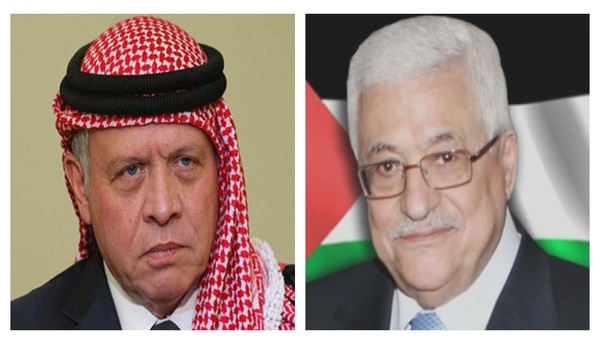
Jordan’s Commitment to Stability and Peace

During the meeting, King Abdullah reaffirmed his foremost commitment to Jordan, emphasizing its stability and the well-being of its people. He expressed appreciation for President Trump’s warm welcome and highlighted the continued importance of the US-Jordan partnership in promoting security and peace in the region.
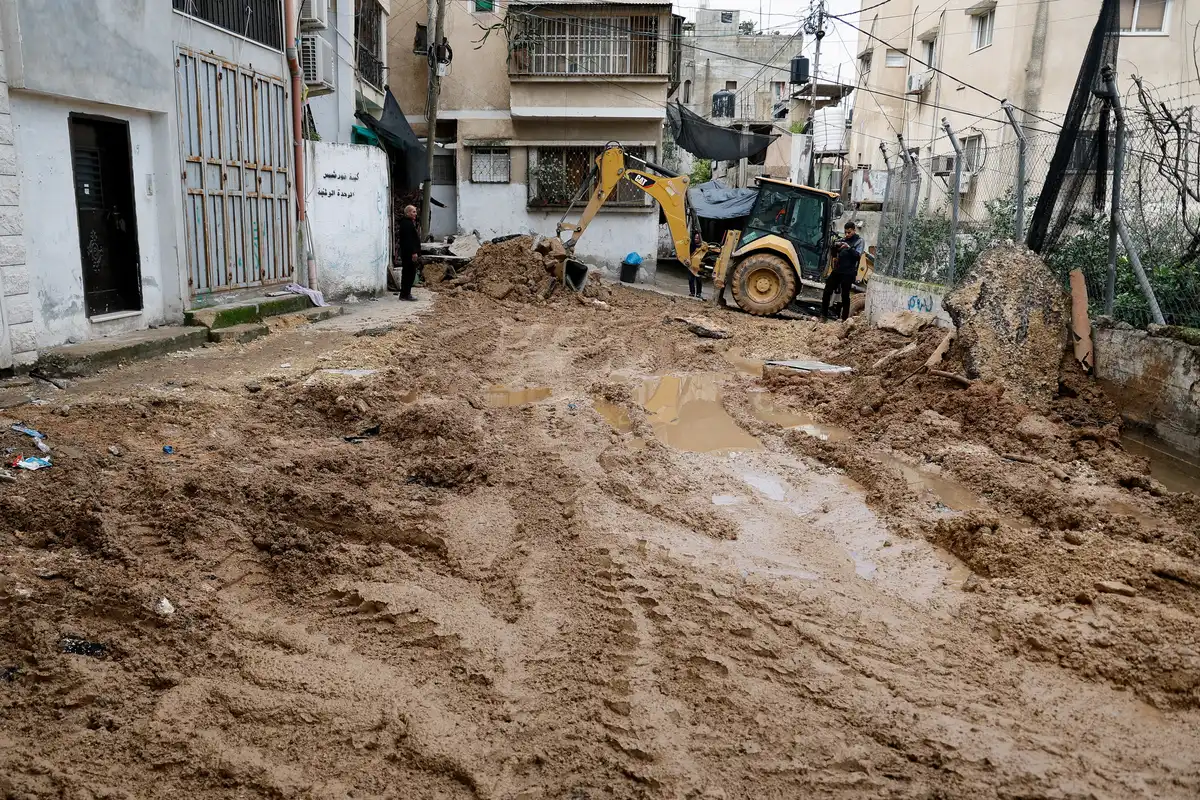
Firm Stance Against Palestinian Displacement

A key focus of the discussions was the situation in Gaza and the West Bank. King Abdullah reiterated Jordan’s steadfast opposition to the displacement of Palestinians, calling it a "unified Arab position." He stressed that any reconstruction efforts in Gaza must prioritize addressing the dire humanitarian crisis while ensuring that Palestinians remain in their homeland.

Call for a Two-State Solution and U.S. Leadership

The King reaffirmed his belief that achieving a just and lasting peace based on the two-state solution is the only viable path to regional stability.

He urged strong US leadership in this regard, recognizing Trump’s role in securing the recent Gaza ceasefire. "President Trump is a man of peace," he stated, adding that it is now essential for the US and international stakeholders to ensure that the ceasefire holds.

Preventing Escalation in the West Bank

King Abdullah also underscored the urgency of preventing further escalation in the West Bank, warning of potential far-reaching consequences for the region. He stressed the need for immediate efforts to de-escalate tensions and avoid further deterioration of the situation.

Jordan’s Role in Pursuing Comprehensive Peace

Concluding his statement, King Abdullah affirmed Jordan’s ongoing commitment to working with international partners to achieve a just and comprehensive peace for all in the region. He emphasized that Jordan will continue to play an active role in diplomatic efforts aimed at securing long-term stability.

The meeting between King Abdullah II and President Trump highlights the continued importance of US-Jordan relations and the critical role of international cooperation in addressing the challenges facing the Middle East.

PALESTINE

Tue 11 Feb 2025 10:10 pm - Jerusalem Time

Hamas: We are committed to the ceasefire agreement and Israel has not fulfilled its pledges

Hamas confirmed on Tuesday its commitment to the ceasefire agreement in the Gaza Strip and the prisoner exchange with Israel, noting that Tel Aviv is the one that did not fulfill its pledges and "bears responsibility for any complications or delays."


This came in a statement published by the movement on Telegram, in which it reiterated its "rejection of US President Donald Trump's statements regarding the displacement of our people from the Gaza Strip under the pretext of reconstruction."


The movement described Trump's statements as "racist and a call for ethnic cleansing, with the aim of liquidating the Palestinian cause and denying our people's established national rights."


Since January 25, Trump has been promoting a plan to displace Palestinians from Gaza to neighboring countries such as Egypt and Jordan, which was rejected by both countries, and was joined by other Arab countries and regional and international organizations.


Hamas added in its statement that "the plan to deport our people from Gaza will not succeed, and will be met with a unified Palestinian, Arab and Islamic position that rejects all displacement plans."


She added: "Our great people in Gaza have stood firm in the face of the bombing and aggression, and will remain steadfast on their land, and will thwart all plans for forced displacement and deportation."


She stressed that "what the occupation failed to achieve through aggression and massacres, it will not succeed in achieving through liquidation and displacement plans."


The movement pointed out that it is "committed to the ceasefire agreement that the occupation committed to, which was sponsored and guaranteed by the mediators Egypt, Qatar and the United States, and witnessed by the international community."


She stressed that "the occupation is the party that did not abide by its commitments, and it bears responsibility for any complications or delays."


On Monday, Trump threatened to open what he called the "gates of hell" and cancel the ceasefire agreement if all Israeli prisoners in Gaza were not released by 12:00 noon (10:00 GMT) next Saturday.


Meanwhile, Israeli Prime Minister Benjamin Netanyahu sent warning signals to Hamas, saying in a televised speech on Tuesday after a four-hour cabinet meeting that he had instructed the army on Monday evening to mobilize forces inside and around the Gaza Strip.


He pointed out that "this move is ongoing at this time, and will be completed as soon as possible."


Netanyahu vowed that "if Hamas does not return our kidnapped soldiers by Saturday afternoon, the ceasefire will be ended, and the Israeli army will resume fighting at full force."


While Netanyahu did not specify the number of prisoners he was demanding Hamas release on Saturday, Israeli Army Radio quoted unnamed Israeli officials earlier on Tuesday evening as saying, "If Hamas releases 3 kidnapped persons on Saturday, the first phase of the agreement will continue."


On Monday, Abu Obeida, spokesman for the Qassam Brigades, the military wing of Hamas, announced the postponement of the handover of the Israeli prisoners scheduled to be released next Saturday until further notice, due to Tel Aviv’s violations of the ceasefire agreement in the Gaza Strip.

PALESTINE

Tue 11 Feb 2025 9:30 pm - Jerusalem Time

UN: Rebuilding Gaza requires more than $53 billion

Reconstructing the Gaza Strip, which was devastated by the Israeli occupation's aggression on the Strip, requires more than $53 billion, including more than $20 billion in the first three years, a United Nations report released on Tuesday said.


UN Secretary-General António Guterres stated in the report, which was prepared at the request of the UN General Assembly on January 30, 2025, that “the amounts needed for recovery and reconstruction in the short, medium and long term are estimated at approximately $53.142 billion, of which $20.568 billion is needed in the first three years.”


The General Assembly had issued a resolution in December 2024 calling for an immediate and unconditional ceasefire in Gaza, and asked Guterres to provide an assessment of the needs of the Palestinian sector within two months.


The report explained that although it is not possible to conduct a full needs assessment, the rapid assessment provides an indication of the extent of needs in the context of recovery and reconstruction.


The report indicated that more than 60% of the housing in Gaza has been destroyed since October 2023, which makes the housing sector at the forefront of reconstruction needs at $15.2 billion, or about 30% of the total amount.


Other areas requiring financing include trade and industry ($6.9 billion), health ($6.9 billion), agriculture ($4.2 billion), social protection ($4.2 billion), transport ($2.9 billion), water and sanitation ($2.7 billion), and education ($2.6 billion).


The report indicated that the environmental sector will face high costs, estimated at about $1.9 billion, due to the large amount of rubble containing unexploded ordnance and other hazardous materials.


The United Nations estimates that the conflict has left more than 50 million tons of rubble, including human remains and hazardous materials such as asbestos.


Guterres also stressed that any reconstruction effort must be part of a broader political and security framework to be viable, stressing that Gaza must be an integral part of an independent, democratic, viable and sovereign Palestinian state.


He stressed the importance of the role of the Palestinian Authority in planning and implementing the recovery and reconstruction process.


The report comes as US President Donald Trump prepares to announce plans to take control of Gaza and redevelop it, sparking a backlash from Palestinians.

PALESTINE

Tue 11 Feb 2025 9:28 pm - Jerusalem Time

6 injured in an attack by Israeli occupation forces in the city of Jenin

Six citizens were injured, Tuesday evening, when the Israeli occupation forces assaulted them in the city of Jenin.


The Palestinian Red Crescent reported that its crews received six injured people from the Jalameh military checkpoint east of the city, as a result of the occupation soldiers beating them, and they were transferred to the hospital.

ARAB AND WORLD

Tue 11 Feb 2025 9:10 pm - Jerusalem Time

Saudi Arabia: We reject extremist Israeli statements regarding the displacement of Palestinians

Saudi Arabia affirmed, on Tuesday, its "categorical rejection of extremist Israeli statements" regarding the displacement of the Palestinian people from their land, and indicated that permanent peace (in the region) will not be achieved except by accepting the principle of peaceful coexistence through the two-state solution.


This came during a cabinet meeting chaired by Crown Prince and Prime Minister Prince Mohammed bin Salman, according to the official Saudi Press Agency.


According to the agency, the Saudi Council of Ministers discussed "current developments on the regional and international arenas."


He expressed "categorical rejection of the extremist Israeli statements regarding the displacement of the brotherly Palestinian people from their land", and stressed "the centrality of the Palestinian cause to Saudi Arabia".


He stressed that "lasting peace will not be achieved except by accepting the principle of peaceful coexistence through the two-state solution."


On Friday, Israeli Prime Minister Benjamin Netanyahu said, “Saudi Arabia has vast areas and can establish a Palestinian state on them.”


This came in response to a question from the Israeli Channel 14 broadcaster regarding Riyadh’s insistence on establishing a Palestinian state in order to normalize relations with Tel Aviv, days after US President Donald Trump spoke about his country’s intention to seize the Gaza Strip and displace Palestinians from it, and that Saudi Arabia no longer stipulates the establishment of a Palestinian state for normalization with Israel.


Since January 25, Trump has been promoting a plan to displace the Palestinians of Gaza to neighboring countries such as Egypt and Jordan, which was rejected by both countries, and was joined by other Arab countries and regional and international organizations.


Saudi Arabia responded in two strongly worded statements from the Foreign Ministry rejecting the displacement. The first affirmed that “the Kingdom’s position on the establishment of a Palestinian state is a firm, steadfast and unwavering position, and this firm position is not subject to negotiation or outbidding,” and that “the Kingdom will not establish diplomatic relations with Israel without that.”


The second statement rejected Netanyahu's statements and considered them "extremist and occupying, and does not understand what the Palestinian land means to the Palestinian people."

PALESTINE

Tue 11 Feb 2025 8:56 pm - Jerusalem Time

Three citizens injured as a result of the occupation forces’ attack on them in Al-Arroub camp

Three citizens were injured, Tuesday evening, when the Israeli occupation forces attacked them, after storming Al-Arroub camp, north of Hebron.


Local sources said that the occupation forces raided the camp more than once this evening, and severely beat three citizens, causing them to suffer bruises and fractures in the face and limbs, after which they were transferred to a medical center.


It is noteworthy that the occupation forces have recently intensified their attacks on citizens in the camp, and forced shop owners to close their shops.

PALESTINE

Tue 11 Feb 2025 8:43 pm - Jerusalem Time

Israeli occupation continues its aggression on Tulkarm and its two camps: 3 houses were blown up and another was burned amid forced displacement

Today, Tuesday, the Israeli occupation forces blew up three houses in Nour Shams camp, and burned another in Tulkarm camp, as their aggression against Tulkarm city and its two camps continues, amidst a field escalation that includes raiding homes and forcing their residents to leave them.


The occupation forces prevented ambulance crews from entering Nour Shams camp to respond to citizens’ appeals for help to leave, especially the elderly, the sick and the disabled, and forced them to stay at a distance.


On the third day of the aggression, Nour Shams camp witnessed a new wave of mass displacement of dozens of families by force, under threat and intimidation from the occupation, amidst the firing of live ammunition and the sound of explosions heard from time to time.


The displaced people from the camp were distributed to different places, according to what the occupation imposed on them, as families headed east towards the towns of Anabta and Kafr al-Labad, and others towards the suburbs of Dhnaba, Iktaba and the city, and the same to the quarry area adjacent to the camp, while the occupation forces arrested the citizen Mamoun Abdul Asmar after raiding his home in the camp.


The occupation bulldozers continued to bulldoze and destroy the infrastructure and properties in the various neighborhoods of the camp, starting from Jabal al-Nasr, al-Salihin, al-Manshiya, and al-Maslakh, reaching the internal neighborhoods, in addition to bulldozing Nablus Street along the entire length of the camp entrances and completely destroying it.


In Tulkarm camp, the occupation forces intensified their military presence and deployed infantry squads inside the camp’s alleys and empty houses, turning them into military barracks, amid heavy live fire. They also burned down a house belonging to the Al-Awfi family in the Hanoun Square neighborhood.


The occupation forces continued to seize additional homes and residential buildings around the camp, specifically in the northern and eastern neighborhoods, and turned them into military barracks and sniper positions. They also pursued citizens who tried to reach their homes in the Shuhada neighborhood, and shot them.


In the same context, the occupation forces were deployed throughout the day in the streets of Tulkarm city, specifically in the street of the Martyr Thabet Thabet Governmental Hospital, the Abu Safiya intersection in the eastern neighborhood and the vegetable market, and obstructed the movement of citizens and vehicles, stopped them, searched them, checked their ID cards, and severely beat a young man.


The occupation soldiers also raided shops and commercial complexes on Hospital Street, and investigated their owners on the ground.