PALESTINE

Mon 24 Feb 2025 9:01 am - Jerusalem Time

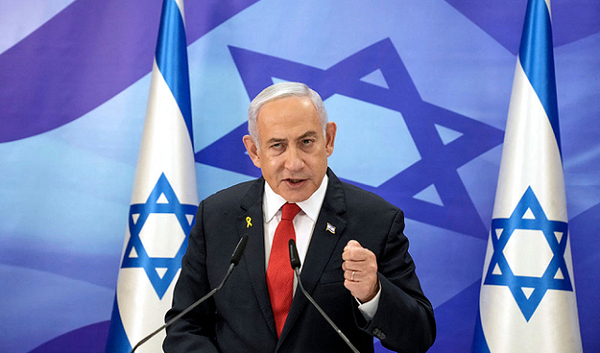
Trump supports Netanyahu's decision to postpone the release of Palestinian prisoners

The White House announced on Sunday, on behalf of US President Donald Trump, the president's support for Israel's decision to postpone the release of more than 600 Palestinian prisoners.

The White House claimed that this came in response to the "brutal treatment" of Israeli hostages held by Hamas.

"The postponement of the release of prisoners is an appropriate response to Hamas' actions," National Security Council spokesman Brian Hughes said in a statement.

He also said that "US President Donald Trump is ready to support Israel in any path it chooses regarding the armed Palestinian movement."

For his part, Hamas leader Mahmoud Mardawi said on Sunday that the movement will not hold any talks with Israel through mediators (Egypt and Qatar) regarding any step before the release of the Palestinian prisoners who were agreed to be released yesterday, Saturday.

Mardawi added, in a statement published on the Telegram platform, stressing that "there will be no talk with the enemy through mediators in any step before the release of the prisoners agreed upon to be released in exchange for the 6 Israeli prisoners (released on Saturday and 4 bodies on Thursday)."

He added: "The mediators must oblige the enemy to implement the agreement."

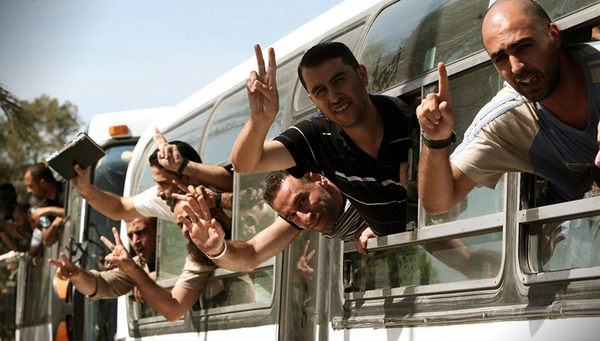
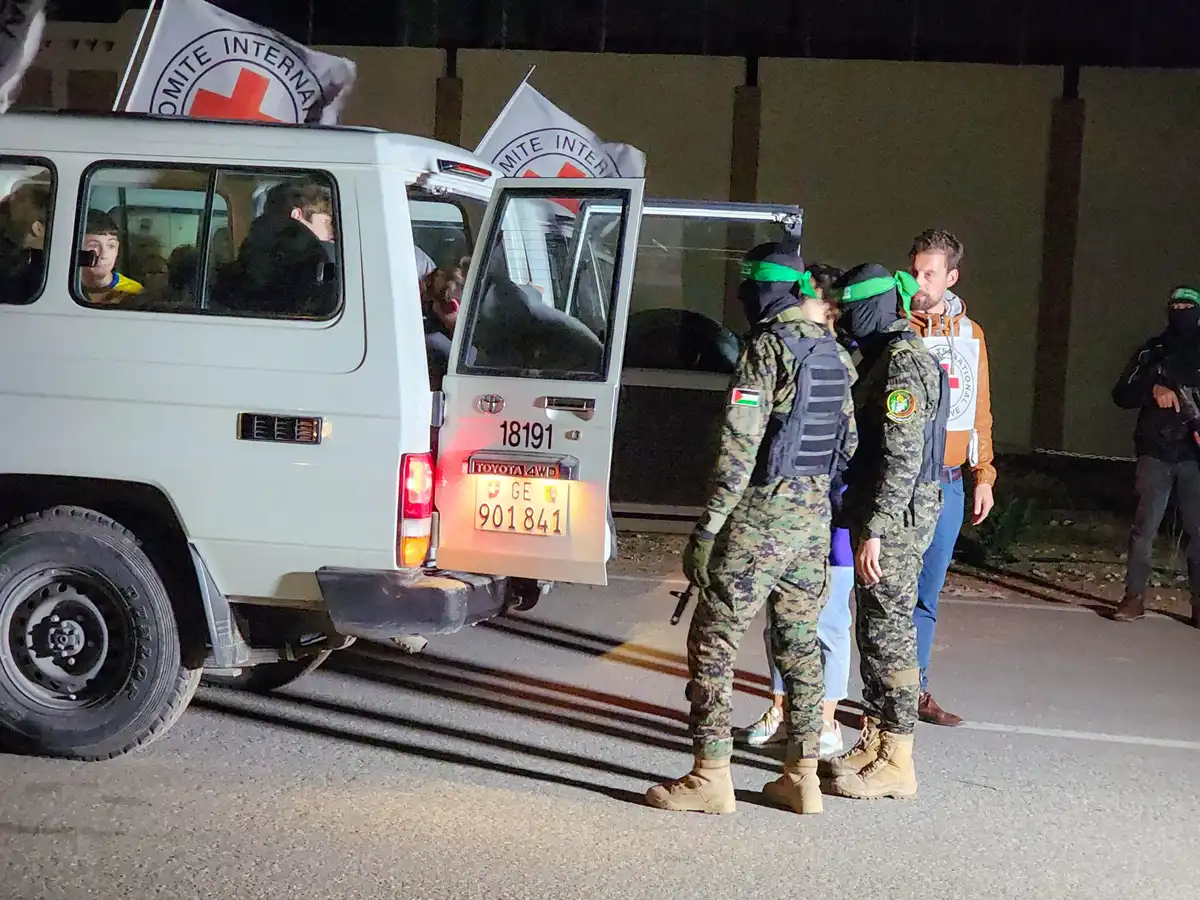
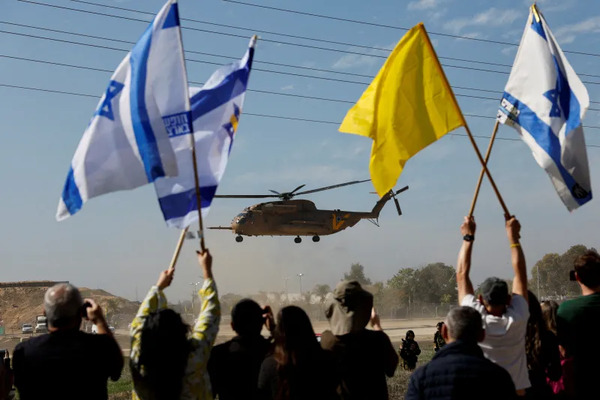
During Thursday, Friday and Saturday, the Al-Qassam Brigades, the military wing of Hamas, handed over 10 Israeli prisoners, including 6 living ones, to the International Committee of the Red Cross to be delivered to Tel Aviv as part of an agreement stipulating that Israel release 620 Palestinian prisoners from its prisons.

Despite Hamas fulfilling its pledge under the agreement, Israel did not release the Palestinian prisoners.

On Sunday morning, the office of Israeli Prime Minister Benjamin Netanyahu claimed in a statement that the decision to postpone the release of Palestinian prisoners would continue until the next batch was released, without what it described as “humiliating decrees.”

Netanyahu's office claimed that "Hamas deliberately insults the dignity of the prisoners and exploits them to promote political goals."

US President Donald Trump's Middle East envoy Steve Witkoff said on Sunday he would travel to the region in the coming days to try to negotiate an extension of the first phase of a ceasefire and hostage release agreement between Israel and Hamas, which is due to expire at the end of the week.

“We have to get an extension to Phase One, so I’ll be going to the region this week, probably Wednesday, to negotiate that,” Witkoff told CNN, later telling CBS that his trip would include stops in Qatar, Egypt, Israel, the United Arab Emirates and Saudi Arabia.

This was the first time the Trump administration had publicly stated its goal of extending the first phase, amid growing speculation that this was Israel’s preference, given Prime Minister Benjamin Netanyahu’s government’s aversion to even negotiating the terms of the second phase, let alone implementing it.

For his part, Witkoff has spoken of his desire to implement the second phase of the agreement, but he and other US officials have increasingly defended Israel's right to resume the war against Hamas, as disgust in Washington with the terrorist group has reached a fever pitch.


“We hope to have the appropriate time … to start phase two, to finish it and release more hostages,” Trump’s top aide said Sunday. “We will get to phase two … I think that will happen.”

PALESTINE

Mon 24 Feb 2025 8:46 am - Jerusalem Time

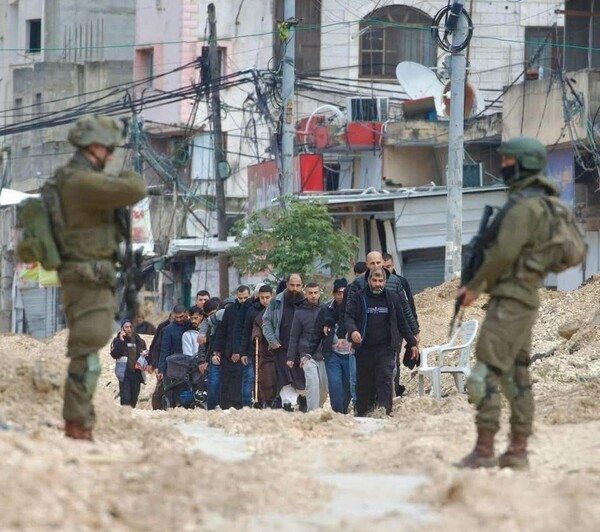
Occupation forces arrest a number of citizens in the West Bank

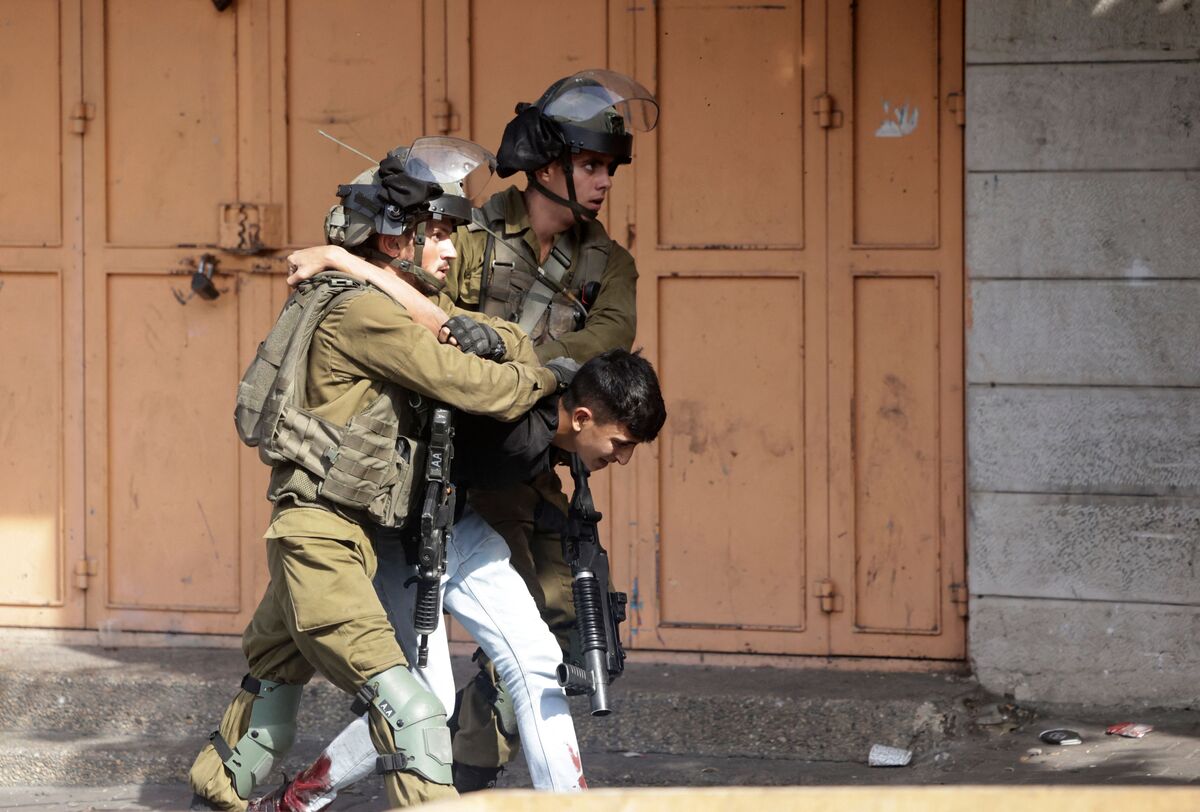
  1. The Israeli occupation forces arrested, at dawn today, Monday, a number of citizens in the West Bank governorates.


Local sources reported that the occupation forces arrested the young man, Muhammad Nasser Yousef Hamed (19), after storming his home in the town of Silwad, northeast of Ramallah, while they arrested the citizen Bilal Hosni Dar Yousef (48), after storming his home in the town of Kobar, northwest of the governorate.


The sources added that the occupation army raided several homes during its storming of the towns of Deir Dibwan, east of Ramallah, and Beit Rima, northwest of the city.


In Nablus, occupation vehicles and machinery stormed several areas in the city twice in a row at dawn today and in the morning hours, including Rafidia, Al-Maajin, Imam Ali, Baker, and Abu Obeida streets. They raided a number of homes, searched them, and tampered with their contents. They also arrested two citizens whose identities are not yet known.


In Hebron, the occupation forces arrested the citizen Jihad Omar Jaradat in the town of Sa’ir, who is a former prisoner, and severely beat his son, seized his vehicle, and wreaked havoc on the contents of his home.

PALESTINE

Mon 24 Feb 2025 8:40 am - Jerusalem Time

Israeli occupation continues its aggression on Jenin and Tulkarm amidst the destruction of infrastructure

The Israeli occupation forces continue their aggression on the cities of Tulkarm and Jenin.


**Tulkarm**

The occupation forces continue their aggression on the city and its camp for the 29th consecutive day, and on Nour Shams camp for the 16th day, amid military reinforcements, and the continuation of house raids and targeting of infrastructure.


Local sources reported that the occupation forces sent additional military reinforcements to the city of Tulkarm and its two camps, Tulkarm and Nour Shams, and deployed infantry squads in the streets and neighborhoods, while continuing to raid and search citizens' homes, vandalize and destroy their contents, and even empty homes, turning them into military barracks.


The occupation forces are still imposing a strict siege on the Tulkarm and Nour Shams camps, preventing entry into or exit from them, and obstructing the work of relief crews while they are trying to deliver food and essential supplies to the residents who remained in their homes in some of the camps’ neighborhoods, amid daily appeals to secure the arrival of their basic needs of food, water, medicine and baby milk.


Eyewitnesses said that after searching and investigating the families who are still in their homes inside Tulkarm camp, it was found that they are distributed in the neighborhoods of Al-Hadaida, Al-Hamam, Qaqun, Abu Al-Foul, and Al-Rabaia, and one family in the Al-Madaris neighborhood, and another in the Daba Umm Jawhar area, and the majority of them are women, the elderly, and children, as they suffer from harsh and difficult living conditions amidst the siege and destruction, and the interruption of electricity, water, and communications services, and the prevention of their exit and movement, which deepens the extent of their suffering and exposes them to danger.


In Nour Shams camp, the occupation forces are still deployed in a number of its neighborhoods that are surrounded by destruction and vandalism, especially in Al-Manshiyya, Al-Shuhada, Al-Jami’ and Al-Joura. They raid homes, destroy their contents, abuse their residents and subject them to interrogation amid threats and intimidation.


The occupation forces also increased their military presence, including heavy machinery and bulldozers, along the Nablus Road that connects the Tulkarm and Nour Shams camps, especially around the residential buildings that they seize and turn into military barracks, obstructing the movement of vehicles, subjecting them to inspection and interrogation of their passengers, and in many cases abusing them.


In the context, the occupation forces deployed in the city streets, obstructing the movement of citizens and vehicles, which they deliberately damaged, while raiding shops in the southern neighborhood, abusing their owners and detaining them for hours before releasing them.


The occupation forces also stormed the Dhnaba suburb east of the city and toured its neighborhoods, searching and combing several intersections, without any arrests being reported.


The occupation forces continue to close the gate of the Jabara checkpoint at the southern entrance to the city of Tulkarm for the 17th consecutive day, isolating the city from the villages and towns of Al-Kafriyat and the rest of the West Bank governorates.


**fetal**

The Israeli occupation army continues its aggression on the city of Jenin and its camp for the thirty-fifth consecutive day, leaving 27 martyrs and dozens of injuries.


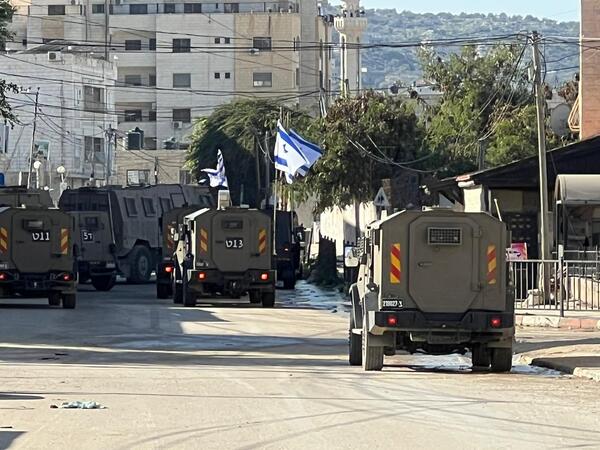
In an escalation of the aggression, the occupation army expanded its aggression on the governorate and stormed a number of its towns, amidst deliberate sabotage and destruction of the infrastructure and streets. In a dangerous development, the occupation sent a unit of tanks to the city of Jenin yesterday, Sunday, where it stormed the city from its western entrance, and reached the vicinity of Jenin camp and the Jabriyat area in the city.


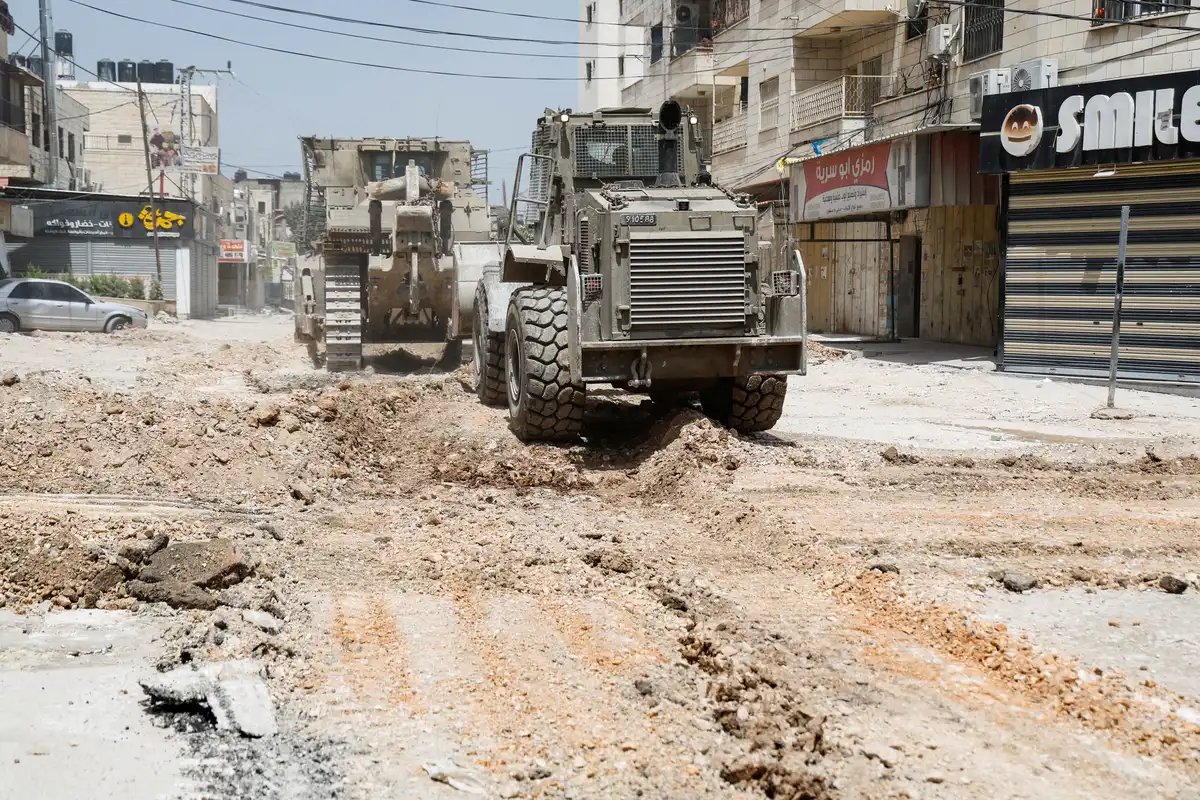
The occupation army continued its storming of the town of Qabatiya, south of the city, for the second consecutive day, where the occupation stormed the town and imposed a curfew for 48 hours, while its bulldozers destroyed the infrastructure, water and electricity lines, and swept away streets and citizens’ properties. It also seized citizens’ homes and turned them into military barracks, and the occupation arrested a number of citizens, the identities of some of whom are unknown in light of the ongoing aggression.


The occupation forces sent military reinforcements accompanied by bulldozers to the town of Qabatiya, continuing their storming of it.


In the town of Al-Yamoun, west of Jenin, the occupation forces bulldozed the streets, deployed snipers and infantry squads in the town, raided citizens’ homes and interrogated them. The occupation forces also stormed the town of Al-Silah Al-Harithiya and forced citizens to close their shops.


This morning, the occupation forces stormed the town of Burqin, west of the city of Jenin, and its bulldozers carried out widespread destruction and sabotage in the streets and infrastructure, especially around the Al-Abarah roundabout.


On Saturday, the Israeli occupation isolated the homes of citizens west of Jenin camp with barbed wire after forcing them to evacuate them.


The extensive and massive destruction left by the occupation bulldozers inside the camp’s neighborhoods is revealed, as it destroyed citizens’ homes and properties, and greatly changed the camp’s landmarks and geography, and opened roads and streets in some neighborhoods, while expanding streets in other neighborhoods.


Infantry squads of occupation soldiers were deployed in several areas of Jenin camp, near Shireen Abu Akleh roundabout, Talat al-Ghabz, and the new camp.


For the 35th consecutive day, the occupation continues to seize a number of citizens’ homes and turn them into military barracks, especially in buildings close to and overlooking Jenin camp, while residents of the homes and buildings close to them face difficulties in entering, exiting and moving due to the constant presence of snipers, which puts their lives at risk. According to sources in the Jenin Municipality and the Jenin Camp Services Center, the occupation has completely demolished about 120 homes, in addition to partially demolishing dozens of homes and properties inside the camp.

It is estimated that the number of detainees in Jenin has reached approximately 160 citizens, as the occupation continues to carry out widespread arrests from the city and the rest of the towns and villages in the governorate on an almost daily basis.


PALESTINE

Mon 24 Feb 2025 8:38 am - Jerusalem Time

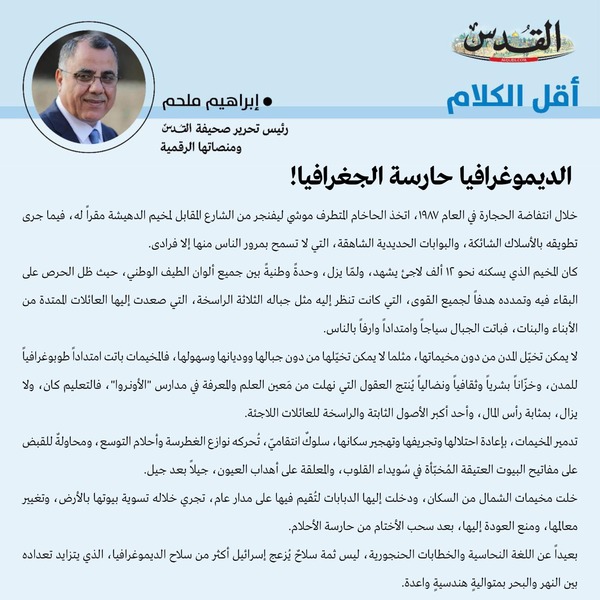
Demography is the guardian of geography!


During the 1987 Intifada, extremist Rabbi Moshe Levinger took up residence on the street opposite Deheishe camp, which was surrounded by barbed wire and towering iron gates that only allowed people to pass through individually.


The camp, which is inhabited by about 12,000 refugees, was and still is witnessing national unity among all colors of the national spectrum, as the desire to remain in it and expand it remained a goal for all forces, which viewed it like its three solid mountains, which the extended families of sons and daughters climbed, so the mountains became a fence and an extension rich with people.


Cities cannot be imagined without their camps, just as they cannot be imagined without their mountains, valleys, and plains. The camps have become a topographical extension of the cities, and a human, cultural, and militant reservoir that produces minds that have drawn from the wellspring of knowledge and science in UNRWA schools. Education was, and still is, a capital, and one of the largest fixed and solid assets for refugee families.


Destroying the camps, by reoccupying them, bulldozing them, and displacing their inhabitants, is a vengeful behavior, driven by impulses of arrogance and dreams of expansion, and an attempt to seize the keys to the ancient houses hidden in the depths of hearts, and hanging on the eyelashes of eyes, generation after generation.


The northern camps were emptied of residents, and tanks entered them to reside in them for a year, during which their homes were leveled to the ground, their features changed, and return to them was prevented, after the seals were removed from the guardian of dreams.


Away from the brassy language and throaty speeches, there is no weapon that disturbs Israel more than the weapon of demographics, whose numbers are increasing between the river and the sea in a promising geometric progression.

PALESTINE

Mon 24 Feb 2025 8:30 am - Jerusalem Time

Netanyahu faces fateful choices.. He tries to start the engines of returning to genocide

Dr. Ghassan Al-Khatib: Israel will return to its aggression on the Gaza Strip, whether before or after the second stage, because it did not achieve a sufficient victory

Dr. Abdul Wahab Al-Qassab: The outcomes of Trump’s visit to Riyadh may be a decisive factor in determining his position on the crisis in the Gaza Strip

Mansour Abu Karim: Hamas's actions are a provocation to the occupation, both its military and political institutions, and increase the chances of escalation

Dr. Saeed Shaheen: I rule out that the resistance will take any action that could give the occupation any pretext to violate the ceasefire agreement.

Abdul Marouf: The ceasefire agreement reached under American and Arab sponsorship has taken a path that is not easy to reverse

Wadih Awawdeh: The war option that the far-right government is threatening is not easy because its army is suffering from great exhaustion and bleeding

Anyone who follows the statements of Israeli officials, most notably Benjamin Netanyahu, and the threats and intimidation they issue, the latest of which was after the mistake of handing over a replacement body for the body of the Israeli Sheri Bibas, and after his theatrical storming of the city of Tulkarm, believes that a return to war is just around the corner, and that what is happening is nothing more than a “warrior’s rest” to recover the largest number of Israeli detainees before returning to the language of cannons, planes, bombing, killing, destruction, and perhaps forced displacement.


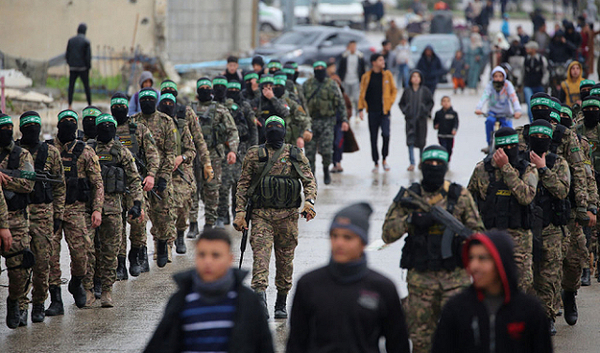
What increases these fears are the weekly “shows of force” carried out by the resistance, led by the Al-Qassam Brigades, during the operations to hand over Israeli prisoners, and the massive deployment of fighters with weapons they captured from the Israeli army and the unprecedented organization and arrangement that accompanies this, which provokes the ire of the occupying state at all its political and military levels, and at the same time provokes the anger of the Israeli street towards Netanyahu and his right-wing coalition, which has always boasted that it has inflicted heavy losses on the resistance, only to find out that all it has done is kill and wound nearly two hundred thousand Palestinians, the majority of whom are civilians, and cause massive destruction to all the buildings and infrastructure in the Strip.


Writers and analysts who spoke to "I" did not rule out that the occupying state would return to its aggression, considering that Hamas's measures constitute a provocation to the Israeli military and political establishments, and increase the chances of escalation again. However, they considered that the outcomes of Trump's visit to Riyadh could be a decisive factor in determining his position on the crisis in the Gaza Strip.

Resumption of the war on Gaza is a very high possibility

Political analyst Dr. Ghassan Al-Khatib believes that the resumption of the war on Gaza is a very high possibility, and unfortunately almost inevitable, pointing out that this may happen before or after the second stage.


Al-Khatib said, "It is not clear whether the negotiations will allow for a transition to the second phase, or will lead to a bridge between the two phases, or perhaps lead to a confrontation between them."


“Whether before or after the second phase ends, Israel will inevitably resume its aggression against the Gaza Strip,” he added, explaining that the reason for this is the internal political situation in Israel, which reflects a general feeling, both among the public and the political elite, that things are not going in Israel’s favor. The current balance also indicates that Hamas still controls the Gaza Strip, which Israel considers a defeat, or at least a failure to achieve a sufficient victory, which will push the Israeli leadership to modify its image, especially in light of the preparations for the upcoming elections, and to attempt to renew the fighting to adjust the balance in its favor.


Al-Khatib pointed out that the current ceasefire ended in an unfavorable way for Israel, according to the estimates of most political circles there, which was negatively reflected in the results of public opinion polls in favor of Netanyahu and those he represents.

Trump has in principle opened the door to the displacement of the residents of the Strip

Al-Khatib stressed that US President Donald Trump had opened the door, in principle, to the issue of displacing the residents of Gaza, which is very tempting for Israel, but not necessarily in the same literal way that Trump spoke of, such as transferring two million Palestinians from Gaza to Sinai or Jordan.


He explained that Israel realizes that it has experience and knowledge that exceed this direct proposal, but it is concerned with the same principle, meaning that Trump approved the principle of displacement, but how to achieve it is a matter that Israel is planning in different ways.

According to Al-Khatib, what is currently happening in Israel requires two basic things: putting more pressure on the society in Gaza, to push it to accept the idea of leaving, and controlling all border crossings, whether land or sea, with the Gaza Strip, to arrange the immigration operations that Israel seeks.

A decisive and important visit to Riyadh

For his part, Dr. Abdul Wahab Al-Qassab, a member of the World Institute for Arab Renewal and a visiting senior fellow at the Arab Center - Washington, said that the outcomes of former US President Donald Trump’s visit to Riyadh could be a decisive factor in determining his position on the crisis in the Gaza Strip, especially since he will meet with Russian President Vladimir Putin and a number of Arab leaders, under the auspices of the Saudi Crown Prince.


Regarding whether a return to war is possible given the risks of displacement through killing and opening safe passages for Gazans to exit via Israel, and whether this scenario is possible, Al-Qassab added: “What we expect to happen depends on the outcome of Trump’s visit to Riyadh, where he will meet with Russian President Putin, and perhaps other Arab leaders under the auspices of the Saudi Crown Prince, who will use his position as host and the capabilities of his country to change Trump’s position. This is possible, given that Trump is a deal-maker who looks at everything from the perspective of profit and loss, and hence cooperation with Saudi Arabia and adopting the Arab point of view may be a gain for him, not a loss.”

Trump faces pressure over support for war criminal

Al-Qassab explained that “Trump faces multiple pressures that he must take into account when making his decisions, especially since he supports a war criminal (Netanyahu) convicted by a court recognized and funded by the United States. Israel itself is stigmatized as an occupying entity under the decisions of the International Court of Justice in The Hague, an institution recognized by the United States and in which it has a representative when it ruled on the invalidity of the Zionist occupation of Palestine.


Therefore, these two factors constitute great pressure on the current American administration, despite the Zionist penetration into American decision-making circles.


He pointed out that there is clear discontent within the Republican Party, as some of its leaders have expressed dissatisfaction with Trump's clear bias in supporting a convicted war criminal, to the point that the latter has been forced to avoid flying over European countries that abide by the decisions of the International Criminal Court, for fear of executing arrest warrants against him.


Al-Qassab stressed that Trump has placed himself in obligations that are difficult for him to fulfill, especially with the escalation of internal challenges he faces in the United States, in addition to the dissatisfaction of Europe and Canada, two of Washington's most important allies, with his positions.


Al-Qassab concluded his statement to Al-Quds by saying: “As I mentioned previously, the Riyadh summit will be decisive in resolving this crisis, if the Arabs, led by Saudi Arabia, make good use of the opportunity provided to them by their presidency of this summit. Let us wait and see.”

Israeli and American threats to return to war in a more severe way

In turn, writer and researcher Mansour Abu Karim said that stopping the deal at the first stage is an expected scenario, especially in light of the Israeli and American threats to return to war more intensely, as a result of Israel not achieving its goals so far. In addition, the military parades in Gaza are a source of concern for the political and popular levels in Israel, and are fueling internal anger towards the Gaza Strip and Hamas.


Abu Karim added: The return of war and the end of the deal at the first stage is one of the options on the table due to the political changes within the Israeli government, and the continued Israeli popular anger towards Hamas’s practices, especially with regard to the prisoners’ file and the handover of the remains of Israelis.


He pointed out that Hamas's actions are considered a provocation to the Israeli military and political establishment, which increases the chances of a renewed military escalation.


He stressed that this scenario may help Israel implement Trump's plan to displace the residents of the Gaza Strip abroad, a plan that serves Israel demographically and strategically, because it reduces the population density on its southern borders, which has been a constant pressure factor throughout the conflict.

Focus on the West Bank after finishing Gaza

Abu Karim explained that removing the Palestinians from Gaza would enable Israel to focus on the West Bank and repeat the same scenario there, in light of Smotrich and Ben Gvir’s efforts to achieve what is known as the “conflict resolution plan,” which pushes for the forcible expulsion of the Palestinians from the West Bank for religious, political, and security reasons.


Abu Karim concluded his statement to Al-Quds by saying: The possibility of the deal stopping at the first stage and not moving to the second stage is expected, given the calculations within the Israeli government, Netanyahu’s efforts to maintain his government coalition, in addition to exploiting Trump’s presence in the White House as a contributing factor to achieving the war’s goals.


He added: This scenario may also contribute to the implementation of the forced displacement plan, which represents a major shift in the political, security and demographic landscape of the conflict.

The Palestinian resistance showed great flexibility.

For his part, Dr. Saeed Shaheen, Professor of Political Media at Hebron University, said that the Palestinian resistance showed great flexibility and made concessions in exchange for stopping the war of extermination that turned Gaza into an uninhabitable area.


He ruled out that the Palestinian resistance would take any action that would give the Israeli occupier any pretext to violate the agreement and start a new round of aggression against Gaza.


Shaheen added: "However, the option of resuming the war remains as long as Netanyahu responds to the blackmail of religious fascism and the extremists of the ruling right, who are looking to eliminate Hamas after the rounds of prisoner exchanges and the messages sent by the resistance to Israel and its allies that it still holds the reins of affairs and has not weakened as Israel and its supporters imagined.

Trump's threats embolden Netanyahu and his gang

He continued: What makes Netanyahu's extremist government more intransigent towards resuming the aggression is Trump's repetition of his provocative statement regarding turning Gaza into hell if the Palestinian resistance violates the agreement, which encouraged Netanyahu and his gang to try to evade the agreement by not adhering to its terms, especially the entry of relief supplies, the removal of rubble, and the evacuation of the wounded.


He believes that this matter is pushing Hamas to show great concern about implementing the terms of the agreement, for fear that Netanyahu, who is facing unprecedented pressure from the extreme right, will evade it, and that they will miss the opportunity to prevent the implementation of their threats and plans aimed at displacing the residents of Gaza.


Shaheen confirmed at the end of his statement to Al-Quds that the resistance still has the ability to enter into any future confrontation.

The Israeli aggression on the Gaza Strip and the West Bank will continue in various forms

Writer and political analyst Abdul Marouf said that the immediate goal of the Israeli war of extermination in the Gaza Strip after October 7, 2023 is to release the Israeli prisoners and crush and destroy the Hamas movement and the Palestinian resistance factions in the Strip.


He pointed out that the strategic Israeli goal is to spread despair and frustration among the Palestinian people and achieve an advanced step towards liquidating the Palestinian national cause.


Marouf explained that the Israeli aggression against the Palestinian people will continue in the Gaza Strip and the West Bank in various forms, in light of the Israeli bet on its strength and coercion, and in light of the weakness and decline of the Palestinian political and military structure compared to what it was during the past years, or at least compared to the Palestinian capabilities before Operation Flood of Al-Aqsa.


He believes that Tel Aviv is betting on the continuation of its aggression on the state of Palestinian division and the inability of the factions to unify their position on fateful issues and political options.


He said: The Israeli occupation still believes that it is the strongest and in a victorious position, and is betting on its strength and coercion and on the state of Palestinian disintegration and division.

Military control over the Strip and opening safe corridors for migration

Marouf stressed that the conflict will continue in different forms in the Gaza Strip, but not in the form it was in last year, noting that the ceasefire agreement under American and Arab sponsorship took a path that is not easy to reverse, and there will be no chance for a large-scale war in the Gaza Strip, as there was during a year and a half.


He explained that the Israeli government will continue the aggression to achieve its goals through:


- Military control over the Gaza Strip by land, sea and air, and directing military strikes, air raids and ground incursions from time to time.


- Opening safe corridors in all directions to facilitate the voluntary exit and migration of Gazans from the Gaza Strip after life in the Strip turns into hell.


- Continued Israeli, American and Arab pressure on the Palestinian side to make more concessions that guarantee security and stability for the Hebrew state.


Marouf stated that in light of the current military and political scene in the Gaza Strip today and its extensions to the West Bank and the region, it is not expected that the second phase of the ceasefire agreement will be disrupted. He attributed this to the fact that both parties to the conflict have an interest in stopping the comprehensive war and continuing to implement the agreement, especially the exchange of prisoners between Tel Aviv and Hamas. He explained that the Israeli government is still under pressure from the families of prisoners held by the Palestinian factions, and Hamas and the factions are under pressure from the internal Palestinian political situation and the humanitarian conditions facing the Strip.


He added: "It is possible that Netanyahu's government will resort to procrastination, delay, and gain time and postponement, and Hamas and the factions in Gaza will continue to work to show off their strength, adhere to their principles and slogans, and reject the Israeli blackmail policy, but that will not prevent the implementation of the second phase of the agreement."

Escalation to pressure Hamas and the Arabs to make concessions

For his part, the expert on Israeli affairs, Wadih Awawdeh, confirmed that the war option that Israel is threatening is not easy from a practical standpoint, pointing out that the Israeli army is suffering from exhaustion and heavy bleeding, in light of the American administration’s rush to reach a broader political deal.


Awawdeh explained that the military escalation is part of the pressure on Hamas and the Arabs, with the aim of pushing them to make concessions, whether with regard to Hamas’s authority in Gaza or the weapons file.


He believed that the current priority is to exert pressure and move towards a settlement, but that is conditional on Israeli Prime Minister Benjamin Netanyahu maintaining his government coalition, especially in light of the great internal pressures.


He pointed out that Netanyahu seeks to extend the first phase of the war and not move directly to the second phase, as stipulated in the original framework agreement, because the next phase includes decisive political dimensions, such as ending the war and a complete withdrawal from the Gaza Strip, which could lead to the disintegration of the Israeli government.

Israel is heading towards a settlement scenario!


Awawdeh added: Netanyahu is waiting to achieve several goals before taking any decisive step, most notably consolidating his internal coalition, obtaining more support and aid from Washington, in addition to intensifying American and Israeli pressure on Arab countries to find a solution to the Hamas issue, as the movement is being pushed to choose between remaining in power or the future of the entire Gaza Strip.


Awawdeh concluded his interview with Al-Quds by stressing that his reading, based on various Israeli data, leads him to believe that Israel is heading towards a settlement scenario, but it is still linked to complex internal and regional factors.

ARAB AND WORLD

Sun 23 Feb 2025 10:34 pm - Jerusalem Time

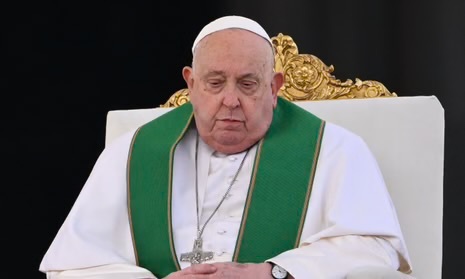
Vatican: Pope Francis still in very critical condition

The Vatican announced on Sunday that Pope Francis, 88, remains in critical condition due to early kidney failure, based on the results of recent blood tests.

However, the statement confirmed that the Pope is awake and aware, and his condition is stable.

Pope Francis is suffering from pneumonia and a complicated lung infection, and the Vatican said he has not had any new respiratory crises since Saturday night, but he still needs to receive large amounts of supplemental oxygen.


Tests also showed a decrease in the number of platelets, which are necessary for blood clotting, but this decrease remained stable.

Doctors explained that the Pope's health condition is complex, which requires caution in forecasting the development of his health condition, with the need to monitor the effect of the drug treatments provided to him.

Pope Francis was transferred to the Gemelli Hospital in Rome on February 14, after suffering from breathing difficulties for several days, and was diagnosed with double pneumonia.

Due to his health condition, the Vatican announced that the Pope will not appear in public on Sunday to lead the usual weekly Mass, for the second week in a row.

It is worth noting that Pope Francis suffered from pleurisy in his youth, which led to the removal of part of one of his lungs, which makes him more susceptible to respiratory complications.

Under these circumstances, the Vatican continues to closely monitor the health of Pope Francis, expressing hope that his health will improve in the coming days.

ARAB AND WORLD

Sun 23 Feb 2025 9:51 pm - Jerusalem Time

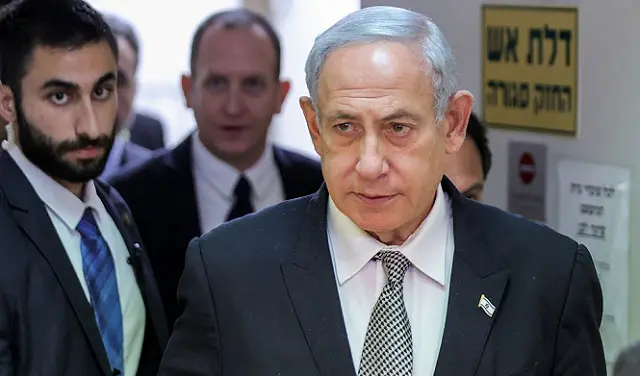
Netanyahu calls for southern Syria to be 'demilitarized'

Israeli Prime Minister Benjamin Netanyahu called on Sunday for "southern Syria to be completely demilitarized," saying that Tel Aviv would not allow the new administration's forces to deploy south of the capital, Damascus.

"We will not allow the forces of Hay'at Tahrir al-Sham or the new Syrian army to enter the area south of Damascus," Netanyahu said in a speech to a new batch of officers in Holon, south of Tel Aviv.

"We demand complete disarmament in southern Syria," he continued.

"demilitarized zone"

With the fall of Bashar al-Assad on December 8, Israel sent forces to the demilitarized buffer zone in the Golan Heights in southwestern Syria on the borders of the plateau that Israel occupied in 1967 and annexed in 1981.

Netanyahu said that Israeli forces "will remain in the Mount Hermon area and its surroundings for an indefinite period of time to protect our towns and confront any threat."


He added that Israel will maintain its positions there as a defensive measure and as necessary.


Since the fall of Bashar al-Assad, Israel has launched hundreds of strikes on military sites of the former regime in Syria, stressing that it wants to prevent the arsenal from falling into the hands of the new administration's forces.

During the Syrian war that broke out in 2011, Israel launched hundreds of strikes targeting the positions of the Syrian army and its allies, especially the Lebanese Hezbollah and Iran.

Syria is demanding that Israel withdraw its forces from the country. The United Nations says that Israel's incursion into Syrian territory is a violation of international agreements and has called for the withdrawal of forces.


PALESTINE

Sun 23 Feb 2025 9:49 pm - Jerusalem Time

Witkov to the Middle East.. Hamas: No talks before the release of prisoners

US President Donald Trump's Middle East envoy Steve Witkoff said on Sunday that the United States expects the second phase of the ceasefire between Israel and Hamas to go ahead, revealing that he will visit the Middle East this week.

Witkoff made the remarks in an interview with CNN when asked about Israel's decision to delay the release of Palestinian prisoners and his expectations for how developments in the region would affect the ceasefire.

"The first phase must be extended... I will go to the region this week, maybe Wednesday, to negotiate that," he said.

Israeli Prime Minister Benjamin Netanyahu's office had said that Tel Aviv would not hand over the seventh batch of 620 Palestinian prisoners and detainees "until the release of the next hostages is guaranteed, and without a humiliating ceremony." Hamas handed over six detainees from Gaza on Saturday.

Today, Netanyahu said at a graduation ceremony for officers in the Holon area, "We are prepared to resume intensive fighting at any moment. Our operational plans are ready."


"In Gaza, we have eliminated most of the organized Hamas forces, but there is no doubt that we will achieve the goals of the war in full, whether through negotiations or by other means," he continued.

Hamas: No talks before prisoners' release

Some Israeli detainees and Palestinian prisoners were released as part of a three-phase ceasefire in Gaza that went into effect before Donald Trump took office on January 20.


In contrast, Hamas leader Mahmoud Mardawi said on Sunday that the movement will not hold any talks with Israel through mediators (Egypt and Qatar) regarding any step before the release of the Palestinian prisoners whose release was agreed upon yesterday, Saturday.

Mardawi added, in a statement published on the Telegram platform: "There will be no talk with the enemy through mediators in any step before the release of the prisoners agreed upon to be released in exchange for the 6 Israeli prisoners (released on Saturday and 4 bodies)."


PALESTINE

Sun 23 Feb 2025 7:11 pm - Jerusalem Time

Suffocation injuries during the occupation's storming of the town of Qusra, south of Nablus

A number of citizens suffered from suffocation, Sunday evening, during the Israeli occupation forces' storming of the town of Qusra, south of Nablus.

Anti-settlement activist Fouad Hassan reported that the occupation forces stormed Qusra, firing gunfire and tear gas canisters at homes, which led to a number of citizens suffering from suffocation.

It is noteworthy that the town of Qasra is exposed to repeated daily raids by the occupation forces, which include confrontations and suffocation injuries.

PALESTINE

Sun 23 Feb 2025 5:44 pm - Jerusalem Time

The most important Palestinian government development and development interventions last week

Today, Sunday, the Government Communication Center issued its weekly report on the most important government developmental and advancement interventions during the past week, which included various sectors in the West Bank and the Gaza Strip, most notably:

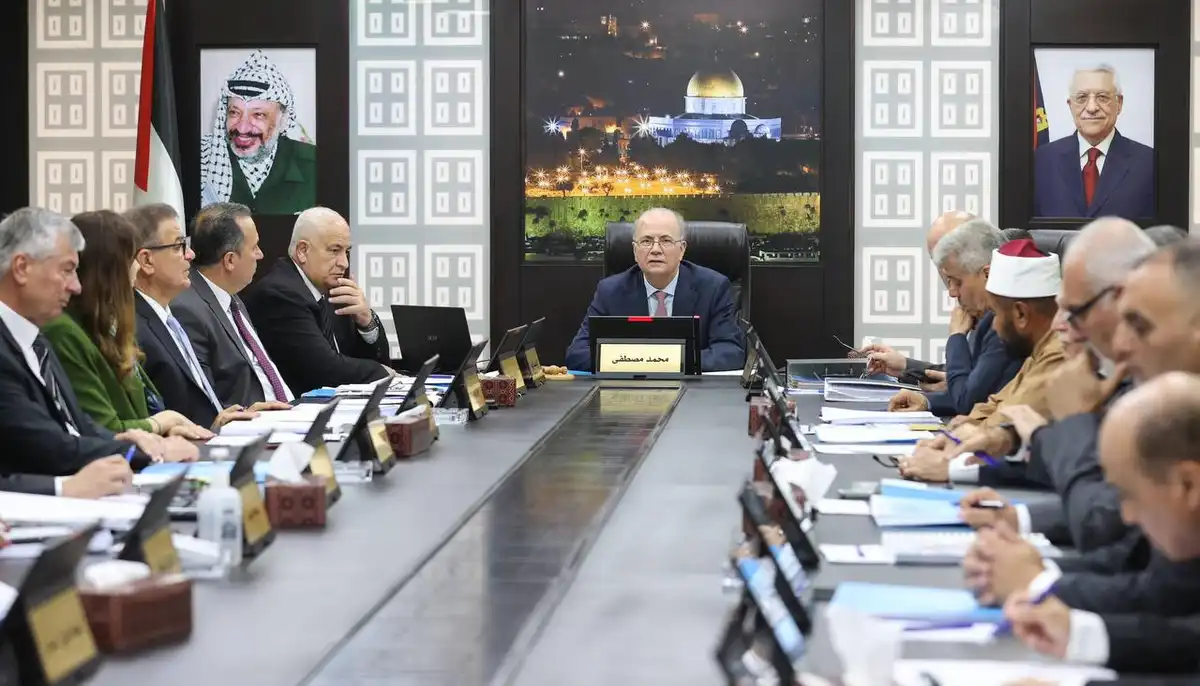
Prime Minister Mohammad Mustafa directed the provision of shelters and the needs of the displaced in the northern West Bank, with a focus on the Jenin, Tulkarm and Nour Shams camps, stressing the need to prepare plans and resources to rebuild what was destroyed by the occupation and strengthen the steadfastness of the citizens.

This came during a meeting with the concerned ministers to discuss emergency government interventions, stressing the role of UNRWA in supporting Palestinian refugees.

The meeting reviewed the recent government interventions in northern Safa, where dozens of relief trucks were dispatched and a budget was allocated to secure shelters, in addition to interventions during the last three months exceeding 28 million shekels.

The Prime Minister briefed a delegation from the European Parliament on the developments in Palestine and the government's efforts to implement the relief and early recovery plan for the needs of our people in Gaza and the West Bank. He stressed the importance of strengthening the Palestinian-European dialogue and partnership, emphasizing that the priority in Gaza is to provide temporary shelter, restore basic services and prepare the infrastructure. He also reviewed the developments in the West Bank, pointing to the continued aggression of the occupation on the north, where more than 40,000 Palestinians have been displaced and homes and infrastructure have been demolished.

The Ministry of Social Development continues to implement its emergency plan to support displaced and affected families in the northern West Bank governorates, where thousands of food and health parcels have been prepared in the warehouses of the Development Directorate in Jenin, which are being distributed extensively to displaced families. Financial aid worth 2,381,864 shekels has also been provided by several donor institutions since the beginning of the aggression on the northern West Bank. The ministry has dispatched 17 trucks loaded with health, food and shelter parcels. Within the framework of the international partnership, the ministry signed an agreement with the Chinese government to provide humanitarian aid to Gaza worth 20 million yuan. Activities were also organized for the elderly in Nablus and training for abused women in Bethlehem within the "My Work, My Hope" project, in addition to implementing the "Warm Winter" campaign in Yatta to support needy families.

The Ministry of Education and Higher Education has opened several projects in Salfit Governorate, including Haris Boys Secondary School with European and French funding amounting to 800 thousand Euros, in addition to educational facilities at Deir Istiya School with local support. It also launched the "Our Blood is One" campaign to donate blood to our people in Gaza in cooperation with the Ministry of Health, and held a meeting with the Ministry of Jerusalem Affairs to discuss the challenges of education in the governorate.

A delegation from the ministry concluded training courses in Jordan on school theatre and participated in a meeting in Brussels on electronic twinning. The minister discussed with the presidents of the universities in the Gaza Strip ways to relieve education in the sector and return to face-to-face education.

The Ministry, in cooperation with the General Personnel Council, organized a training workshop on the performance evaluation system in education, due to its role in advancing Palestinian society. The Minister of Education signed a cooperation agreement with the Director of GIZ Programs, to complete the "More Job Opportunities for Palestinian Youth" program with support from the German government. Regarding the education of prisoners, the Minister met with the released prisoner Zakaria Zubeidi, who briefed him on the educational conditions in the occupation prisons.

The Ministry of Public Works and Housing continued to identify shelter sites in the Gaza Strip, where 186 sites were visited out of 245 proposed sites for temporary shelters, while ensuring basic criteria such as location, area, availability of basic services, and safety. The establishment of the first shelter center in Beit Lahia, with an area of 13 dunums and 215 tents, was also followed up, in partnership with the Arab International Reconstruction Authority and UNDP. The Ministry is in the process of developing a guide for managing temporary shelter sites in consultation with partners, in partnership with the Arab Reconstruction Authority, roads were opened and 40,000 tons of rubble were removed in Gaza City and Beit Lahia-Jabalia, and roads were opened and 26,000 tons of rubble were managed in partnership with UNDP, where 290 tons were used to prepare the roads.

The Minister of Agriculture inaugurated a number of solar energy units to operate agricultural wells in Marouj Jios and the village of Flamia in Qalqilya Governorate, with funding from the governments of Finland and Austria, supervision of the ministry and implementation by the United Nations Development Program.

The Ministry also completed the rehabilitation of three agricultural water collection tanks in Tamoun, with a capacity of 500 cups per tank, to serve more than 300 farmers, with funding from the German government. The Ministry and Agricultural Relief distributed agricultural production inputs (irrigation networks, nets, spray motors, water pumps, fertilizers, tanks) for the benefit of 28 farmers in Beit Ummar/Hebron with funding from the World Food Program, and distributed irrigation networks, water tanks and organic fertilizer to 15 farmers in Yatta in cooperation with the Palestinian Center for Economic and Social Development.

2,400 olive seedlings were distributed to farmers in Bethlehem in cooperation with the YMCA. The Ministry signed agreements with ARIJ to support farmers in Area C in Tubas and the northern Jordan Valley, in addition to rehabilitating 14 dunums of greenhouses and 8 agricultural ponds. The Ministry also held several training courses and workshops on agricultural insurance, beekeeping, and water management in home gardens. In the Gaza Strip, the Ministry completed the distribution of concentrated feed to 2,500 sheep and goat breeders, in addition to distributing production supplies to 180 farmers in the central and Khan Younis. The Ministry conducted 77 inspection tours, 80 advisory tours, and 29 damage documentation tours, and formed agricultural emergency committees in all governorates to deal with the repercussions of the expected weather conditions.

The Ministry of Transport and Communications continues to implement a set of important initiatives in light of the current situation, as it has identified the housing conditions of the ministry’s employees in the southern governorates and prepared the necessary reports.

It also participated in preparing the procedures manual for temporary displacement centers within the Displacement Centers Management Committee. The Ministry contributes effectively to the specialized committees emanating from the government operations room, especially in rubble management and damage assessment. The Ministry’s staff is working to establish and operate shelter centers in the Gaza Strip, in addition to replacing and renewing 58 driving licenses for citizens from the Strip.

Four engineering plans for new roads and 10 for existing roads were studied and approved, and 2,000 vehicles were inspected on the roads. The ministry also granted 236 import permits for vehicles and 162 permits for hybrid and electric vehicles, and began renewing the licenses of vehicles leased for financing.

The Minister of Local Government participated in organizing relief convoys to the camps of Nour Shams, Tulkarm, Jenin and Al-Far’a as part of the “Brotherhood, Steadfastness, Loyalty” campaign. The Ministry of Local Government discussed developing financial management mechanisms for local authorities through a service cost calculation model to ensure their financial sustainability and quality of services.

A memorandum of cooperation was also signed between the Ministry and the Land and Water Settlement Authority to enhance institutional coordination in settlement projects. With regard to financial settlements, the Ministries of Local Government and Finance completed settlement procedures in three local authorities. The Ministries of Local Government and Communications discussed regulating the relationship between local authorities and telecommunications companies.

The Ministry of Culture participated in the Conference of Ministers of Culture of the Islamic World in Saudi Arabia, where it discussed supporting the reconstruction of Gaza, protecting heritage in Jerusalem and Hebron, and enhancing cultural cooperation for Palestine. It also organized a course to teach the municipal salon in Jifna to empower women, and opened the "Jerusalem Fingerprints" exhibition to support visual artists.

The “Key of Return” workshop was held in Qalqilya to enhance children’s national awareness, an artistic meeting entitled “The Language of Music” was held in Salfit to introduce students to committed Palestinian art, a symposium on “The Destruction of Cultural Heritage in Gaza” was held in Jericho in cooperation with Al-Istiqlal University, and a drawing and short story telling event was held in Bethlehem for students of the Frere School.

Minister of Planning and International Cooperation Wael Zaqout and Japanese Ambassador to Palestine Araki Katsuhiko signed two recovery support agreements worth $13.3 million to support the emergency recovery program in Gaza and the West Bank, and $1.6 million for the Infectious Waste Management Improvement Project, bringing the total budget for this project to $9.1 million.

The Water Authority continued to provide safe drinking water to citizens and displaced persons in the Gaza Strip, where the areas of Deir al-Balah, al-Nuseirat, al-Zawayda, Khan Yunis and Rafah were supplied with 3,180 cubic meters of fresh water via tankers, in addition to delivering 74,000 cups of Mekorot water via the Bani Suhaila water connection to the eastern villages.

Emergency needs in new shelters in southern Gaza were also assessed, including provision of potable water, sewage disposal, distribution of hygiene kits, rehabilitation of a well adjacent to the shelter and provision of a hybrid solar and generator system.

On the other hand, the Water Authority launched the design of two sewage treatment plants in Tulkarm and northwest Ramallah as part of a strategic plan to develop the sector, funded by the World Bank, with the aim of treating and benefiting from wastewater and reducing Israeli financial deductions.

The Ministry of Jerusalem Affairs followed up on the preparations for the 2025 high school exams in the city, where it organized a workshop with the participation of the Ministers of Jerusalem Affairs and Education and Higher Education and representatives of the education sector, to discuss mechanisms to ensure the success of the exams and provide a safe educational environment. The workshop concluded with important recommendations.

The Ministry also continued to support Jerusalemite institutions, as Minister Ashraf Al-Awar met with representatives of the Welfare Association to discuss the challenges of restoring homes in the Old City and ways of joint cooperation.

The General Authority of Civil Affairs continued its efforts to support Palestinians in the West Bank despite the ongoing challenges. In the Hebron Governorate, it succeeded in reopening shops in the Qaizoun area after a two-year closure. It also followed up on the occupation’s prevention of teachers and students from entering their schools through the Abu al-Rish checkpoint, and worked to bring maintenance staff into the Ibrahimi Mosque. In addition, it coordinated the entry of the Reconstruction Committee to restore the Ibrahimi School, which was threatened with collapse. The work is expected to continue for a month. In Tulkarm, it coordinated the entry of maintenance teams to repair the infrastructure and facilitate the movement of the Red Crescent without the need for prior coordination. In Jenin, it supported maintenance work on water and communications networks, and contributed to transporting an elderly woman from a demolished house to the hospital.

In Nablus, it also intervened to evacuate a student who fainted after the occupation forces stormed it. In Qalqilya, it coordinated a government delegation’s visit to the solar energy project, while in Salfit, it was able to recover detained agricultural equipment without paying fines. The Commission confirms its continued follow-up on humanitarian issues and its intervention around the clock to support the Palestinian people.

The Ministry of Foreign Affairs and Expatriates continues its efforts to mobilize international support for relief in the Gaza Strip and the West Bank, as Prime Minister and Minister of Foreign Affairs Mohamed Mustafa held meetings with international officials on the sidelines of the Munich Security Conference, focusing on emergency response, providing shelter and basic services, and rehabilitating infrastructure.

Minister of State Fareseen Shaheen also participated in the fourth meeting of the International Coalition for the Implementation of the Two-State Solution in Cairo, stressing the need to support UNRWA and confront attempts to dismantle it, in addition to enhancing international support for the government’s emergency plan.

It held bilateral meetings to discuss coordinating joint positions and supporting the rights of the Palestinian people, while continuing its daily contacts with ambassadors, consuls and officials of international organizations to mobilize aid. Palestinian embassies also continue their efforts to mobilize humanitarian support, through communication with governments and officials and participation in international conferences, to ensure strengthening international solidarity with the Palestinian cause and providing consular services to those in need.

Interior Minister Major General Ziad Hab Al-Rih participated in the 42nd session of the Council of Arab Interior Ministers in Tunisia, where he met with a number of interior ministers in bilateral meetings to discuss security and regional developments, including the situation in the Gaza Strip and the northern West Bank. He also chaired a meeting of the Supreme Council for Civil Defense to follow up on preparations and plans to deal with emergency situations, in the presence of a number of officials, where potential challenges and coordination between the concerned parties were reviewed to ensure effective handling of emergency situations and developments.

The Wall and Settlement Resistance Commission delivered 6 tents to the Al-Minya community in Bethlehem, 20 solar energy spotlights and a hand-held spotlight to Tubas, in addition to 50 zinc panels and 60 wooden panels to two citizens in Hizma after the occupation demolished their livestock barracks.

During the period from 13-20 February 2024, the Ministry of Labor conducted field visits to shelter sites in northern Gaza and Khan Younis to identify new locations for the displaced. In northern Gaza, the visits included sites in areas such as Al-Karamah, Abu Obeida, Jabalia and Tel Al-Zaatar. In Khan Younis, 9 new sites were identified in the municipalities of Al-Fakhari, Abasan Al-Jadida and Khan Younis. The sending of life check requests for work-related injuries through the National Insurance Institute was also completed, and the “Emergency Employment for Early Recovery” project was implemented, funded by the International Labor Organization, to provide temporary job opportunities for graduates and technicians. The Ministry also chaired a meeting of the Youth Advisory Council for Youth Participation in the Labor Market, and signed an agreement with Oxfam to provide zero-interest loans to marginalized communities worth $1.5 million.

The Ministry of Justice organized a qualitative training on digital security in cooperation with the Arab Center for the Development of Social Media "Hamla" and in partnership with the Belgian Development for the Ministry's employees. It also held an introductory workshop on the "Legislation Platform" in partnership with the European Union and the Organization for Economic Co-operation and Development (OECD) for civil society institutions in cooperation with the European Police Mission. The Ministry organized a dialogue workshop to enhance its role in policy-making and building the judicial observatory. The Ministry and the "Shams" Center, in cooperation with the Sawasya 3 Program, launched the Code of Conduct and Ethics for Arbitrators.

Minister of Justice, Counselor Sharhabil Al-Zaim, participated in the “Equality” conference on reforming and unifying the Palestinian justice system.

Under the patronage of the Minister of Industry, the Industrial Estates Authority announced the results of the second edition of the Palestine Creative Packaging Competition, which was implemented in the Jericho Agro-Industrial City in partnership with the Union of Paper and Packaging Industries and the United Nations Development Program, with funding from the Japanese government. The competition aims to raise awareness of modern packaging methods, encourage creative, environmentally friendly designs, improve food safety, and increase the competitiveness of Palestinian products.

On another level, the Ministry of Industry discussed cooperation with the German Institute for Standardization to launch the new phase of the project to enhance the quality infrastructure in Palestine, with funding worth 1.5 million euros. It issued 4 licenses to establish new industrial facilities, renewed 13 industrial licenses, and carried out 32 inspection tours of the facilities, in addition to issuing a license to renew a quarry and 12 certificates for a national product.

The Ministry of Endowments and Religious Affairs implemented several activities in various governorates. The Endowments of Ramallah and Al-Bireh, in cooperation with the Birzeit Education Department, organized a competition for memorizing the Holy Quran, while the General Administration for Women’s Work held a symposium in Nablus on domestic violence and its effects.

The Ministry also distributed eyeglasses to orphans as part of the “Eye Care” initiative, and the Women’s Work Department in Hebron organized a lecture on home economics. Interventions included an initiative to revive archaeological sites in Dura, the distribution of 5,650 food baskets through the Zakat Fund, and an entertainment event for children in Tulkarm camps. The Ministry also organized the “Women in the Hospitality of Abraham” event at the Ibrahimi Mosque, and contributed to rescuing rare manuscripts from the library of the Great Omari Mosque.

The State Property Department of the Land Authority in Jericho Governorate handed over a plot of land designated for public benefit to the Ministry of Interior, with the aim of using it to build the Central Armament Directorate. State Property crews determined the boundaries of the land and surveyed it in the field before handing it over to ensure the accuracy of the allocation and the integrity of the procedures.

The Minister of Tourism and Antiquities inaugurated the historic Al-Maskoubia building in Beit Jala after its restoration with support from the Arab Fund for Social and Economic Development, to become the headquarters of the Anad Center for Theater and Arts.

The Ministry also held a meeting of the Board of Directors to review the achievements of 2024, approve the work plan for 2025, and discuss the development of ongoing projects. In the context of protecting the cultural heritage in Gaza, the Ministry, through the Center for Popular Architecture - Riwaq, began implementing projects funded by international entities, including the rehabilitation of the Qaysariyya Market, the restoration of several historical buildings, and securing heritage sites with a fence to preserve them.

The Environment Quality Authority discussed with ministries, government institutions and partners the preparation of its cross-sectoral strategy 2025-2027 to enhance environmental strategic planning and integrate environmental policies with other development sectors.

It also carried out 55 inspection and control tours of facilities in various governorates, followed up on 8 environmental complaints, and granted 22 permits to import chemical materials since the beginning of January, in addition to organizing environmental awareness events for different age groups. In another context, the Environment Quality Authority discussed with its partners the launch of the design of the wastewater treatment plant project northeast of Ramallah.

The head of the authority, Nisreen Al-Tamimi, also discussed with the director of the Tourism and Antiquities Police the mechanisms for enhancing work in controlling environmental crimes and activating the coordination committee between the two parties.

The Palestinian Consumer Protection Council adopted a plan to control the market during Ramadan to ensure the availability of goods at fair prices. Meetings were also held with counterparts from Jordan, Libya, and Iraq to develop economic relations, in addition to a Palestinian-Swiss meeting.

The Ministry of Economy destroyed 36 tons of expired materials and dealt with 19 complaints through 74 inspection tours. 71 companies were registered, 434 services were provided in the field of companies, 120 import licenses were issued, and 116 commercial transactions with Türkiye were conducted.

A meeting was held between the Energy and Natural Resources Authority, the Palestinian Electricity Transmission Company, the Hebron Electricity Company, and the municipalities of Tarqumiya, Beit Ola, and Hebron, to discuss accelerating the implementation of the project to connect the city of Hebron to the Beit Ola station via a new power line. The project aims to meet the growing demand for electricity in the city, and contributes to bridging the shortage in electrical capacity and enhancing the stability of the current.

The Minister of Women's Affairs assumed the presidency of the Women's Committee at the League of Arab States, where she chaired the 44th session of the committee in Cairo, stressing the need to support Palestinian women in the relief and recovery phase from the repercussions of the aggression.

"Jerusalem, the Capital of Arab Women 2025-2026" was also announced, and the visual identity of the event was launched. In a meeting with the head of the Egyptian National Council for Women, discussions were held about launching an initiative to empower Palestinian women and support their rights. An agreement was also discussed with the Regional Director of UN Women aimed at increasing women's participation in the labor market from 17% to 22% through innovative projects to support women's economic empowerment.

ــــ

PALESTINE

Sun 23 Feb 2025 5:32 pm - Jerusalem Time

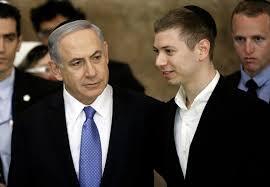
Israeli MK: Yair Netanyahu beat his father Benjamin and was exiled to America

Israeli Knesset member and Labor Party MK Naama Lazimi revealed that Yair Netanyahu, the son of the Prime Minister of the occupation, Benjamin Netanyahu, was "exiled abroad after his father beat the Prime Minister, thus assaulting a symbol of power." While Netanyahu's office did not comment on what Lazimi said, the Likud Party accused her in a statement of "a despicable lie." It is worth noting that Netanyahu Jr. left Israel during the height of the protests against the "judicial coup" in the spring of 2023, and has since returned once, in November of the same year.

Lazmi's revelations came during her participation in a session held by the Knesset Finance Committee on Sunday, as part of the ongoing sessions to prepare the general budget proposal for a vote in the second and third readings. During that, she touched on the stay of Netanyahu's wife, Sara, for more than two months in Miami, USA, demanding to know who is funding her stay there, how much it costs, and from which budget exactly this funding is being deducted.


According to the Hebrew website Ynet, Lazmi returned to a report published about a year ago in which it was revealed that the annual funding for Yair Netanyahu’s security amounted to two and a half million shekels, and asked: “Is this amount still being paid to finance his security, and is there an intention to continue funding his stay abroad after he was exiled following his beating of his father, thereby insulting the symbol of power?” Lazmi’s statements were met with much shock by her colleagues in the Knesset, and while they tried to clarify further, the MK responded by saying: “Absolutely. He is exiled abroad and cannot return.”

In response to Lazimi's statements, the Likud party claimed in a statement that "this is an absolute and vile lie, and the lowest point of the left's sewer. Naama Lazimi must remove her immunity and pay the price, and like anyone who repeats this lie, she will be sued and she will pay the price as well."

PALESTINE

Sun 23 Feb 2025 5:28 pm - Jerusalem Time

Israeli tanks in Jenin for the first time since 2002

The Israeli occupation army announced today, Sunday, that it had transferred a tank unit to Jenin, in the northern West Bank, to participate in what it called the "offensive effort," while the Israeli Broadcasting Corporation said that this is the first time that the occupation has deployed its tanks in the West Bank since Operation "Defensive Shield", which the occupation army carried out in 2002. The ongoing occupation aggression on the northern West Bank expanded to the town of Qabatiya, which its forces stormed at dawn today.

The occupation army said on Sunday in a statement on the X platform: "Forces from the Nahal Brigade and the Duvdevan Unit have begun operating in additional towns in the Jenin area, and at the same time a tank platoon will operate in Jenin as part of the offensive effort." He added, according to the Anadolu Agency: "IDF forces, the General Security Service (Shabak) and the Border Guard continue their operations to thwart terrorism in northern Samaria (the West Bank), and our forces are expanding their offensive activities in the area," noting the continuation of operations in Tulkarm: "The forces continue their work in the Jenin and Tulkarm areas."

Israeli Defense Minister Yisrael Katz said, "I have ordered the army to prepare for a long stay in the refugee camps in the West Bank," adding that the occupation army "is expanding its activity in northern Samaria (the West Bank) and is also operating in Qabatiya since tonight, and is reinforcing its forces with an armored unit and additional troops." Agence France-Presse quoted the occupation army as saying that its forces will remain in some of the camps in the occupied West Bank "throughout the current year."

Expanding aggression to Qabatiya

On Sunday, Israeli occupation forces stormed the town of Qabatiya, south of Jenin, with a large number of vehicles and soldiers, causing widespread and unprecedented destruction to the town’s infrastructure. This comes in the context of the ongoing aggression on the northern West Bank. Qabatiya Mayor Ahmed Zakarneh told Al-Araby Al-Jadeed, “The occupation forces stormed Qabatiya in an unprecedented military operation that began at around 3:30 a.m. on Sunday, as Israeli military vehicles and bulldozers were deployed heavily throughout the town.”

According to Zakarneh, the occupation bulldozers razed the streets, infrastructure and public squares, causing widespread destruction and cutting off water networks, without the ability of specialized crews to reach them due to the intense Israeli military tightening. Zakarneh explained that the occupation forces deployed their snipers in a number of homes, while infantry soldiers were deployed in the streets and the occupation forces carried out raids and searches of homes in several neighborhoods, during which field investigations were conducted with the residents.

Zakarneh pointed out that this raid is the largest of its kind in Qabatiya, given the extent of the destruction caused by the occupation forces to the infrastructure, main and side streets, and due to the heavy military presence and raids, while public life in the town has been disrupted, stressing that the town has not witnessed any clashes or injuries so far, and no arrests have been reported. Zakarneh appealed to international institutions to intervene urgently to stop what he described as the "systematic sabotage" that the town is being subjected to, warning of the repercussions of the continued occupation operations that could lead to total destruction in Qabatiya.

PALESTINE

Sun 23 Feb 2025 2:53 pm - Jerusalem Time

Since the start of the military operation: 40 thousand Palestinians evacuated from the West Bank camps

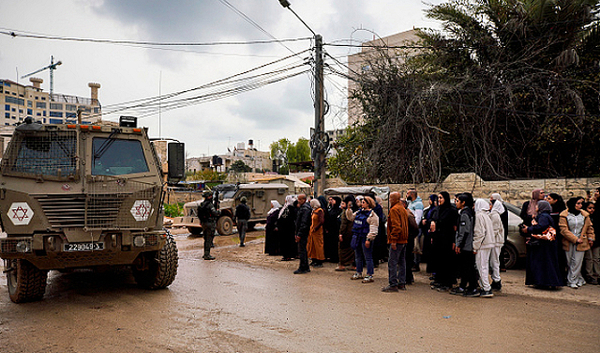
The forced displacement of Palestinian population centers and refugee camps, especially in the Jenin and Tulkarm governorates in the northern occupied West Bank, has escalated at an alarming rate, as the Israeli occupation forces forced the displacement of 40,000 Palestinians from the refugee camps at gunpoint, and the occupation is looking to remain in the camps and not allow the Palestinian residents to return to them.


“Since the start of the military operation ‘Iron Wall’ by the Israeli occupation forces on January 21, many refugee camps have been almost emptied of their residents. This operation, which has been ongoing for more than 4 weeks, is now the longest in the West Bank since the second intifada, according to the UNRWA agency.


The military operation began in Jenin camp, expanded to include Tulkarm, Nur Shams and Al-Far'a camps, and led to the displacement of 40,000 Palestinian refugees. The occupation forces had begun carrying out large-scale operations in the West Bank in mid-2023.


Since then, thousands of families have been forcibly displaced. Repeated and destructive operations have rendered refugee camps in the north uninhabitable, trapping residents in periodic displacement.


In 2024, more than 60% of displacements were the result of occupation forces’ operations, in the absence of any judicial orders.


This forced displacement comes amid deteriorating humanitarian conditions in the West Bank, where Israeli military operations have led to widespread destruction of infrastructure and homes, and a severe shortage of basic materials and medical services, exacerbating the suffering of residents who were forced to leave their homes.


Israeli Security Minister Yisrael Katz announced the displacement of 40,000 Palestinians from the Jenin, Tulkarm and Nur Shams camps, due to the intensive Israeli military operations in the northern West Bank.


Katz confirmed that the occupation army expanded its operations in the northern West Bank, especially in Qabatiya, noting that the Israeli forces were reinforced with additional armored units.


He also announced the suspension of the activities of the United Nations Relief and Works Agency for Palestine Refugees (UNRWA) in the camps, in a move that further exacerbates the humanitarian crisis facing thousands of displaced persons. Katz explained that he had issued orders to the occupation army not to allow residents to return to the camps, stressing that the occupation forces would remain for a long time inside these areas, in what he described as "preventing the return of terrorism," in reference to the continued military repression and mass displacement of Palestinians.


UNRWA warned that the "Iron Wall" operation carried out by the occupation forces has led to the emptying of many refugee camps in the northern West Bank, adding that the forced displacement of Palestinian communities "is escalating at an alarming rate."


“Forced displacement in the occupied West Bank is the result of an increasingly dangerous and coercive environment,” UNRWA said. “The use of airstrikes, armored bulldozers, controlled explosions and advanced weaponry by Israeli forces has become commonplace – an extension of the war in Gaza. Such military tactics are inconsistent with the law enforcement context in the occupied West Bank, where at least 38 airstrikes were carried out in 2025 alone.”


UNRWA stressed the need to protect civilians and civilian infrastructure at all times, and that “collective punishment” is completely unacceptable. “Jenin camp is now empty of residents, evoking memories of the second intifada. This scene is set to be repeated in other camps,” it said.

PALESTINE

Sun 23 Feb 2025 2:33 pm - Jerusalem Time

The death toll in the Gaza Strip rises to 48,339

The Ministry of Health in Gaza announced, on Sunday evening, that the death toll in the Gaza Strip has risen to 48,339 dead, since the start of the Israeli aggression on October 7, 2023.


It added that the number of injuries has risen to 111,753 since the beginning of the aggression, while a number of victims are still under the rubble and on the roads, and ambulance and rescue crews cannot reach them.

PALESTINE

Sun 23 Feb 2025 2:14 pm - Jerusalem Time

Israeli forces storm Yamoun town and launch arrest campaign

Today, Sunday, the Israeli occupation forces stormed the town of Yamoun, west of Jenin, and launched an arrest campaign.


Local sources said that the occupation forces stormed the town and deployed in its streets, raided a number of houses, and arrested a number of young men whose identities could not be known until this news was prepared, while students were unable to return from their schools due to the heavy deployment of soldiers, which prompted school principals to ask parents to go to the schools to transport their children for their safety.

PALESTINE

Sun 23 Feb 2025 1:22 pm - Jerusalem Time

Divergent visions on Gaza: Egypt seeks alternative administration, Abbas insists on full control

Visions differ on the future of Gaza administration and reconstruction, as Egypt and donor countries insist on independent management of funds under international supervision, while Abbas insists on full control of the authority. In contrast, Cairo seeks alternative arrangements that include a major role for it and pressure on Hamas to make concessions.


Egypt's vision on the administration of the Gaza Strip and its reconstruction differs radically from that of Palestinian President Mahmoud Abbas, as Cairo and donor countries refuse to grant the Palestinian Authority direct control over the funds allocated for reconstruction, which Abbas insists on considering it part of imposing the authority's sovereignty over the Strip.


The newspaper "Al-Araby Al-Jadeed" indicated, in a report published today, Sunday, that international donors are showing clear reservations about the Palestinian Authority's proposal, fearing the misuse of funds or turning them into a tool to enhance division and political polarization, especially in light of previous accusations of weak transparency and financial oversight within the Palestinian Authority.


In addition to financial issues, Cairo believes that the Palestinian Authority does not have the administrative capacity and human resources sufficient to manage Gaza, especially after its absence from the Strip since 2007, with Hamas controlling the joints of government there. In light of this reality, Egypt believes that returning authority to Gaza requires an effective administrative apparatus capable of dealing with the field conditions, which the Authority currently lacks, prompting Cairo to search for more realistic options than those proposed by Abbas.


The Egyptian vision: International administration under Egyptian supervision


Meanwhile, Egypt is working on developing a different vision for managing Gaza based on its primary role in supervision, with the participation of international donor agencies to ensure transparency in the management of reconstruction funds. According to this vision, infrastructure and reconstruction projects will be implemented through a technical committee under Egyptian supervision, with international oversight to ensure their implementation according to specific development plans.


The vision also includes selecting local cadres to manage the various sectors in Gaza, after subjecting them to a careful security review that includes coordination with Israel to ensure that individuals who are not wanted for security reasons are not included in the new administrative structure.


In addition, according to the report, Cairo seeks to convince the United States that the optimal solution for managing Gaza cannot be simply to restore the Palestinian Authority in its traditional form, but rather requires new arrangements that take into account the political and field realities within the Strip.


Egyptian pressure on Hamas and new security arrangements


Egypt is working to exert pressure on Hamas to accept concessions, especially with regard to its weapons, in addition to arranging to hand over the land crossings to a neutral party under international supervision, in order to ensure that previous stumbling scenarios in attempts to arrange the situation within the Strip are not repeated.


However, the main obstacle facing these arrangements lies in Abbas’s rejection of any vision that does not give the Authority full control over Gaza, in addition to the opposition of the Palestinian factions, especially Hamas, to any plan that does not give it political or military influence within the Strip.


Abbas’s vision: Restoring Gaza under the Authority’s control


For his part, Abbas seeks to restore the Palestinian Authority’s control over Gaza according to the model in effect in the West Bank, in confirmation of the unity of the Palestinian land under a unified political and legal jurisdiction. His plan includes the necessity of a complete Israeli withdrawal from the Strip, and the Palestinian Authority handing over all crossings, including the Kerem Shalom and Rafah crossings, to be operated in cooperation with Egypt and the European Union according to previous agreements.


The Palestinian government has also prepared a reconstruction plan that ensures the residents remain in the Strip, in coordination with Cairo and international bodies, such as the World Bank, the United Nations, and the European Union. This plan is scheduled to be presented to the extraordinary Arab Summit in Cairo on March 4 for official approval.


Palestinian efforts to organize an international reconstruction conference


In parallel, the Palestinian Authority is working with Egypt and the United Nations to organize an international conference to rebuild Gaza, with the participation of donor countries, within the framework of an international trust fund in cooperation with the World Bank. The Authority also stresses the need to support UNRWA, as the primary body providing humanitarian services in the Strip.


Hamas's position and obstacles facing Egyptian proposals


In light of these differences, the Vice President of the Arab Center for Political and Strategic Studies, Mukhtar Al-Ghabashi, wonders whether Hamas will accept giving up its control over Gaza, noting that "the scene of the prisoner exchange between the movement and Israel highlights the extent of Hamas's strength in imposing its presence inside the Strip, supported by broad popular support."


Al-Ghabashi believes that these facts strengthen Hamas' position in the ongoing negotiations, but at the same time they pose problems for the Egyptian plan that aims to reshape the administration of Gaza according to a new vision.

Source: Arab48

OPINIONS

Sun 23 Feb 2025 12:44 pm - Jerusalem Time

Bartering Interests: Trump and the Political Realism

Dr. Ali Al-Jarbawi

Dr. Ali Al-Jarbawi

Opinion Writer

Although the vision of the "new realism" theory of the structure of the international system and the nature of international relations has been subjected to a continuous wave of criticism since the international system turned unipolar, which includes accusing it of bias towards the great and major powers and reducing the role of the rest of the countries, the course of events since Trump's return to the US presidency reinforces this vision and proves the importance of the foundations on which it is based.

"New realism" is based on five basic foundations. First, the world of international politics suffers from chaos resulting from the absence of an organizing body; a central global government, tasked and qualified to control the pace of international relations and impose world peace. Second, because of this absence, the struggle over limited resources controls international relations, which are driven by the interests of the conflicting parties, and moral considerations are absent from them, since achieving the interest is a goal that surpasses any consideration. Third, states form the basis of the international system and its most important actors, but dominance over it is centered in the great and major states, whose interactions, competitive and consensual, control the nature of emerging international relations. Fourth, a state can only be protected in a chaotic world by relying on itself, and it has no higher goal than being constantly preoccupied with maximizing its power, since its permanent mission in a world of conflicting interests and haunted by suspicion and doubt about the intentions of others, is not only to prepare for war, but to do everything it can to enhance its ability to win it when it occurs. Fifth, the best that can be obtained in this case of permanent turmoil in the world’s situation is a fragile international system in which world peace is achieved through a balance of power equation that guarantees mutual interests between the parties of the great and major states. But this equation is not absolute or fixed, but rather changes due to the changes that occur in the power of these countries, leading to an imbalance, which results in the opening of the latent conflict, which then ends, and the system settles on a new position, after reaching a new understanding. The international system is currently formed from a pyramid at the top of which sits one superpower, America, which enjoys an excess of economic and military power that no one has yet matched, and two major countries, China, the world's second-largest economy, but with limited military capabilities that are growing rapidly, on the one hand, and Russia, the military giant due to its nuclear arsenal, but an economic dwarf compared to America and China. This trio is followed by a limited group of powerful countries, some of which are based on their accumulated status from the past, such as the countries of Western Europe, and some of which are emerging in their regions and seeking to establish their new status, such as India and Brazil. The base layer of the pyramid is filled with the rest of the countries with limited influence on the international level, crushed and preoccupied with searching for a role that will help them repel foreign interventions and preserve themselves.

Since the overthrow of international bipolarity in the early nineties, Russia has been trying hard to restore as much of its lost international status as possible with the collapse of the Soviet Union. However, America, which has monopolized the international system, was not very concerned about the Russian attempts, as it considered them to have a limited impact on its status, due to the weakness of Russia's economic capacity, when compared to the real threat posed to it by China, due to its great economic power. Therefore, American interest has focused since the beginning of the millennium on containing China, its main competitor, and the one with the real potential to undermine its status, and share the top of the international system with it, if not completely displace it. Within the framework of this triangle of unequal conflict, the contexts of current international relations can be understood, and what is happening in different regions of the world in terms of American repositioning. After accusing the Biden administration of undermining America's international standing and causing a decline in its ability to resolve the tripartite conflict in its favor, Trump returned to the presidency armed, with a realistic approach par excellence, with the vision of "America First", and determined to restore his country's unique position. Although since assuming office, he has been taking measures and steps that appear to be inconsistent or inconsistent with each other, within the framework of a chaotic policy with no specific goal, in reality they all flow into one track, which is to fortify America internally to confront the rise of China, and to enhance its external capabilities to limit the continued expansion of China around the world. To achieve this goal, and based on his absolute belief that conflict, not cooperation with others, is the basis of international relations, and that reliance on force is the basis that determines position on the international level, Trump is carrying out an intensive campaign to rearrange the internal situation of the American state, including combating illegal immigration, "cleansing" the bureaucracy, and reducing its expenses "to be in line with his vision of America restoring its own strength. Externally, he is following several paths. The first is imposing customs tariffs on parties trading with his country, regardless of the traditional relationship with allies and traditional trading partners, some of whom are accused of leaking Chinese products to the American market. The second is improving his country's defense position by demanding control over the Panama Canal, Greenland, and Canada, which has so far achieved Panama's withdrawal from China's project called the "Belt and Road Initiative", and the readiness of the Greenland and Denmark autonomous authority to open negotiations to expand the American base on the island. The third is resolving the conflict in the Middle East in favor of Israel, reducing the status and role of Iran, an ally of China, ensuring American interests in the region, and achieving its stability and dependence by expanding the normalization of Arab-Israeli relations. The fourth is shaking the Russian-Chinese alliance by ending the Russian-Ukrainian war in Russia's favor, and enticing Russia to turn westward, by re-normalizing relations with it, and later lifting sanctions on it. Because the international system, according to the "new realism", is currently determined based on the relationship between the big three, Trump did not care about China's position, which he knew would remain confined to the circle of traditional condemnation, or the position of the Arab parties, which he does not give much importance or attention to, when he announced his intention to expel the Palestinians from the Gaza Strip and resettle them in Egypt and Jordan. Rather, he placed the burden on them to present an alternative plan for him, after appointing himself the reference to accept or reject it. As for Russia, which has an old interest in the region, its crossing to warm waters, after losing Assad's presence in Syria, and is still groaning under the weight of its ongoing war in Ukraine, he opened a dialogue with it that began in Riyadh, exploiting its weakening position, to conclude a direct deal with it that would be profitable for both parties, without the slightest interest in involving America's most committed and important allies, and the stakeholders from the Ukrainians and Europeans, but rather excluding them and jumping over their interests. America's interest is above all considerations, and as long as it is the most powerful country, it can impose its will on the followers, who will have no choice but to follow the path of appeasement.


The meeting between the US and Russian foreign ministers in Riyadh is interesting, as it represents a turning point that heralds the end of a period of tension between two international poles, and the beginning of paving the way for a new phase. When this happens between the “big boys,” others with less power and status in the international system should be concerned because they will be the ones to pay the price of the “barter deal” that will redraw the parameters of the exchange of interests between the two parties. If Russia wants to keep the land it occupied in the war in Ukraine, and Trump is prepared to give it the right to do so in order to dismantle its alliance with China, how can Russia reject what Trump intends to do in terms of recognizing Israel’s annexation of Palestinian lands, specifically in the West Bank?! It was striking that the official US envoy to Ukraine was absent from the Riyadh meeting, while the US envoy to the Middle East attended. What was even more interesting was the Kremlin spokesman’s response to an inquiry about the official position on Trump’s “project” for the Gaza Strip, by asking for a pause until aspects of it are still unclear! The "Riyadh meeting" and the arrangements that will follow and result from it remind us of the Yalta Conference that was held in 1945, which included America, Britain and the Soviet Union, and ultimately led to the division of Europe into spheres of influence between the parties. The difference between what happened then and what is happening now is that China, the third pole in the current international system, is currently the target of what will happen between America and Russia in terms of appeasement.

The lesson to be drawn from all of this is that wars are not the important thing in demarcating or re-demarcating international or even regional relations, no matter how many tragedies and horrors they entail. Rather, what is important is the settlements that result from the balance of power that they establish.

So do not rush to make judgments and dispute with each other about them, because soon the features of the settlement will become clear, the cover will be removed, and the door will be closed on continued speculation.

This is the solid truth of "new realism": power is the basis, and the interests of the "big ones" always undermine the rights of the "little ones."

PALESTINE

Sun 23 Feb 2025 12:39 pm - Jerusalem Time

Prisoners' Authority: Prisoner Fadi Abu Attia was subjected to brutal torture during his arrest

The lawyer of the Commission of Prisoners' Affairs and Freed Prisoners reported after his last visit to the Al-Maskoubiya interrogation center that prisoner Fadi Zuhair Abu Attia (43 years old) from Al-Am'ari camp/Ramallah, was severely beaten when he was arrested at a military checkpoint, while returning from seeing a doctor in the city of Bethlehem on 02/11/2025. He was then transferred to a nearby camp, and was hung in the cold for more than 32 hours, then transferred to the Al-Maskoubiya interrogation center, and was brutally assaulted.


It is noteworthy that Abu Attia is a former prisoner who spent 13 years in the occupation prisons, and was released in 2018, for the occupation forces to re-arrest him in 2022, and sentence him to two years of administrative imprisonment, where he was released on 12/26/2024, i.e. 40 days before his current arrest.


The prisoner Abu Attia went on a hunger strike for 41 days in 2017, which caused him to fall into a coma that led to brain reactions. As a result, he began receiving certain medications and needed continuous follow-up and health care, while the prison administration deliberately deprived him of treatment, which negatively and significantly affected his health.

PALESTINE

Sun 23 Feb 2025 11:58 am - Jerusalem Time

Israeli occupation threatens to demolish a house west of Salfit

Today, Sunday, the Israeli occupation forces notified the demolition of a house in the town of Kafr ad-Dik, west of Salfit.


Local sources reported that the occupation forces stormed the town and raided the home of citizen Mahmoud Nabil and notified him to evacuate the house permanently in preparation for its demolition at any moment.


It is noteworthy that this is the second time that the occupation has notified the home of citizen Mahmoud Nabil to evacuate the house within 10 days.


The occupation forces carried out the demolition of the house of citizen Hammam Tawfiq Ali Ahmed from the town of Kafr al-Dik last Tuesday.

PALESTINE

Sun 23 Feb 2025 11:48 am - Jerusalem Time

Katz announces preventing the return of residents of camps in the northern West Bank "for at least a year"

Israeli Security Minister Yisrael Katz announced today, Sunday, the expansion of Israeli military operations in the northern West Bank, where the occupation army began carrying out operations in the town of Qabatiya, in conjunction with the reinforcement of Israeli forces with armored units and additional forces.


Katz confirmed that 40,000 Palestinians were forced to leave the Jenin, Tulkarm and Nur Shams refugee camps, which are now "completely empty of residents," as he put it. He also pointed to the disruption of the work of the United Nations Relief and Works Agency for Palestine Refugees (UNRWA) inside these camps.


The Israeli Minister of Security added that the army will remain in these areas for at least a year to prevent the return of the residents, stressing that the occupation forces "will not allow the return of the residents and the return of terrorism to grow," referring to the infrastructure of the Palestinian resistance.


Katz stressed that military operations will continue to include other Palestinian camps and centers, as part of a strategy aimed at dismantling the resistance battalions and destroying their military infrastructure, noting that these measures come within what he described as the "war on extremist Islamic terrorism."


Katz stressed that Israel will continue what he described as "cleansing" the refugee camps and what he described as "other centers of terrorism," with the aim of "dismantling the battalions and terrorist infrastructure of radical Islam that were built, armed, financed and trained by the evil Iranian axis."


He claimed that this comes "in an attempt to establish an eastern terrorist front against the settlements in Samaria (the biblical name for the northern occupied West Bank), the seam line and the major population centers in Israel."


Katz concluded his statement by stressing that the occupation "will not return to the status quo ante," and that military operations will continue until "terrorism is completely eliminated," in reference to the continuation of the policy of displacement and the consolidation of the Israeli military presence in the northern West Bank.


In a statement issued earlier today, the Israeli army announced the expansion of its military operations in the northern West Bank, where forces from the Nahal Brigade, the Duvdevan Unit and a tank platoon began operating in additional villages around Jenin.


The occupation army said that a tank platoon is operating inside Jenin as part of the offensive operation, as part of the ongoing military escalation. Israeli forces, with the participation of units from the Shin Bet and the "Border Guard", continue to carry out operations in Jenin and Tulkarm.

OPINIONS

Sun 23 Feb 2025 11:35 am - Jerusalem Time

Thomas Friedman: This is the most terrifying thing about Trump's Gaza rant

Translation for "Alquds" dot com

Translation for "Alquds" dot com

Opinion Writer

Prominent American writer Thomas Friedman warned that President Donald Trump's plan to displace Palestinians from the Gaza Strip is the most foolish and dangerous in history, and considered it a recipe for chaos inside and outside the United States.

Trump's plan to seize Gaza, expel two million Palestinians and turn the coastal desert strip into a resort town proves one thing only: how short the distance is between "thinking outside the box and thinking outside the mind," Friedman wrote in his weekly column in The New York Times.

He went further, saying, "I can state with confidence that Trump's proposal is the most dangerous and foolish 'peace' initiative ever proposed by an American president."


But he seemed uncertain when he spoke about what scared him most about the US president’s proposal for Gaza: the fact that it seemed to change day by day, or the speed with which his aides and cabinet members agreed to the idea? “Almost none of them were briefed on the plan in advance,” he said, describing them as “a bunch of puppets that kept nodding their heads.”

He said the plan was not just about the Middle East, but a microcosm of what the United States now faces as a country. Trump was surrounded in his first term by aides, cabinet ministers and generals who often deflected and reined in his worst impulses, he added.

Trump was surrounded in his first term by aides, cabinet ministers and generals who often countered and curbed his worst impulses.

Now, according to Friedman’s article, the president is surrounded by aides, cabinet members, and senators and representatives who tremble in fear of his wrath or of being attacked by the “mob” on the Internet that his billionaire ally Elon Musk unleashes if they stray from the path and act inappropriately.


The writer considered this combination of Trump and Musk giving free rein to the world, and many government agencies and business circles living in fear, a recipe for chaos at home and abroad.

Trump has been described as more of a godfather than a president, as evidenced by his demands to annex the Danish island of Greenland and the Panama Canal, and to seize the Gaza Strip and displace its population to Egypt and Jordan.

Trump is more like a godfather than a president, as evidenced by his demands to annex the Danish island of Greenland and the Panama Canal, and to seize the Gaza Strip and displace its population to Egypt and Jordan.

He mocked Trump's recent ideas, saying that while they may work in the movies, his administration's attempt - in practice - to force Jordan, Egypt or any other Arab country to accept Palestinians living in Gaza and have the Israeli army arrest them and hand them over to those countries, will upset the demographic balance in Jordan between the East Bankers and the Palestinians, and undermine the stability of both Egypt and Israel.

Friedman expected that Trump's plan would provoke violent responses against US embassies and interests in the Arab and Islamic world, warning that Muslims in Europe, the Middle East and Asia would take to the streets to resist the displacement of Palestinians from their land, as Trump vowed to take over the Gaza Strip and that the Palestinians would not have the right to return to it.

He noted that this would be the “greatest gift” Trump could give Iran to return to the Middle East by embarrassing all the Sunni regimes loyal to America, and American companies - such as McDonald's and Starbucks - that have already faced a boycott as a result of America arming Israel in the war on the Gaza Strip would be dealt a major blow.

But Friedman, an American Jewish writer, believes that Trump is right in considering the Islamic Resistance Movement (Hamas) a “sick and deviant” organization, and that Gaza has now become hell as a result of its actions.

However, he believes that resuming any kind of peace process will not be easy, but to say that ethnic cleansing is the only option left, after trying all alternatives, is a misconception.

One of the biggest problems with the Trump team is that it views the Middle East through the lens of the Israeli far right and evangelical Christians.

One of the biggest problems with the Trump team, he believes, is that it views the Middle East through the lens of the Israeli far right and evangelical Christians, and that all it knows about the Arab world is through the Gulf Arab investor community. Perhaps for this reason, Friedman says, they are “absolutely in love” with Israeli Prime Minister Benjamin Netanyahu.


The author goes on to say that if Trump really wants to make a radical shift and take advantage of some of the fear he is instilling in people, it will not be through this “childish” proposal in Gaza, but by calling on all parties publicly to challenge each other to actually do, in good faith, the hard things required to get out of this hell.

Friedman offered an alternative proposal: reform the Palestinian Authority, appoint a new, uncorrupt leader and prime minister—such as Salam Fayyad—form a technocratic government that would invite an Arab peacekeeping force to take over the Gaza Strip from Israel, complete the “eviction” of the Hamas leadership, and seek the international assistance needed to rebuild Gaza.3:12

He added that the Arab force would have to commit to training Palestinian Authority security personnel, and divide the Gaza Strip into areas A and B, with the Palestinian Authority and the Arab peacekeeping force controlling all population centers in the first area, while the Israeli army could remain in the entire perimeter of the second area.

After that, Friedman continues to explain his proposal, the Palestinians would engage in organizing elections in the West Bank and Gaza Strip, and negotiating a two-state solution with Israel in both areas. As for the plan to transfer the people of Gaza, it would destabilize Egypt, Jordan, and Israel, in his opinion.


Source: New York Times


OPINIONS

Sun 23 Feb 2025 11:31 am - Jerusalem Time

America Has a Historic Opportunity in the Middle East. Trump Has Leverage, but He Must Use It Wisely

Foreign Affairs

Foreign Affairs

Opinion Writer

Philip H. Gordon

For decades, the Middle East has been the region where diplomatic aspirations go to die. At least since U.S. President George H. W. Bush left office on the heels of the Gulf War, successive U.S. presidents have, often after fleeting periods of hope, ended up leaving the region in a more perilous state than they found it.

Bill Clinton had high hopes for a historic Israeli-Palestinian peace agreement; he got the parties close at Camp David in 2000, only to see his presidency end with the collapse of talks and the beginning of the deadly second intifada. After the 9/11 attacks on the United States, George W. Bush successfully toppled Saddam Hussein’s regime in Iraq in the name of “transforming” the region, only to see that project become a quagmire that killed thousands of Americans and empowered Iran. Barack Obama sought to seize the opportunity of the Arab Spring, in 2011; although he negotiated a nuclear deal with Iran, his aspirations for democratization and regional cooperation were undermined by a bloody coup in Egypt, the rise of the Islamic State in Iraq, and the outbreak of a devastating civil war in Syria. In his first term, Donald Trump hoped that pulling out of Obama’s nuclear deal and killing Iran’s terrorist leader Qasem Soleimani would reduce the Iranian threat, but when he left office, in 2017, Iran was expanding its nuclear program and using proxies to attack U.S. troops, as well as its own neighbors. And most recently, Joe Biden, with past failures in mind, eschewed grand aspirations and focused on delivering stability to the region, only to see his final year in office consumed with the aftermath of the October 7, 2023, terrorist attacks on Israel and the horrors of the war in Gaza that followed.

With such a history, it might seem foolish to imagine that the Middle East today could prove to be anything other than a source of trouble for a new U.S. president. If anything, the past 30 years have proved that the Middle East is impossible to ignore, never fails to surprise, and that however bad the situation seems, it can always get worse. Yet for all the region’s real troubles and risks, Trump is in fact inheriting a series of opportunities. And in some ways, he may be well situated to take advantage of them—something I acknowledge even as a harsh Trump critic and former national security adviser to U.S. Vice President Kamala Harris. Along with the new strategic landscape he inherited, Trump’s unpredictable nature could give him leverage with Iran, Israel, and the Gulf states, among others. And he could potentially sell policies to Congress—such as a nuclear deal with Iran—that a Democratic president never could.

Trump is, of course, also uniquely capable of exacerbating the region’s problems, and he has already done so by deciding to cut vital U.S. assistance to the region and by calling for the United States to depopulate and take over Gaza. The fate of the Middle East over the next four years will depend in large part on whether Trump manages to take advantage of these strategic opportunities or instead squanders them with his reckless impulses.

A NEW DEAL

The first opportunity Trump has inherited is with Iran, which has for decades been at the heart of the Middle East’s problems. Today, Tehran is weaker, and likely more susceptible to leverage, than it has been since the Iranian Revolution, in 1979. Two of the country’s main terrorist proxies—Hezbollah in Lebanon and Hamas in Gaza—have been decimated militarily. Its ballistic missile fleet, long a second line of deterrence alongside those proxies, has proved ineffective against Israeli air defenses that are backed by U.S. and other regional forces. Syria, Iran’s main regional partner, is now run not by Iranian ally Bashar al-Assad but by an anti-Iranian coalition that has deprived Tehran of its land bridge to Lebanon. Iran’s own air defenses proved so inefficient against Israeli airstrikes in the fall of 2024 that Iran felt too vulnerable to even try to respond. And the Iranian economy, wrecked by years of mismanagement, U.S. and international sanctions, and a period of low oil prices, is under tremendous strain—hardly the basis for addressing new gaps in its deterrence and defense capabilities.

Under these new circumstances, it is not surprising that Iranian leaders have begun to signal openness to a new nuclear deal, because the alternatives to such a deal for Iran are worse than ever. President Masoud Pezeshkian was elected in 2024 on a platform of improving the economy, and the only conceivable way of achieving that objective is striking a diplomatic deal with the United States and gaining sanctions relief. Although Supreme Leader Ali Khamenei, a hard-liner and longtime skeptic of talks, remains the final decision-maker, even he knows that Iran’s ability to deter military strikes on its nuclear program or energy infrastructure—which relies on proxies, ballistic missile strikes against Israel, and domestic air defense—has been dramatically reduced. The leaders also know that the willingness of the United States and Israel to undertake offensive strikes has increased under an emboldened Israeli Prime Minister Benjamin Netanyahu and an unpredictable Trump.

Trump has signaled his own interest in a deal, and the new strategic landscape could lead Iran to put far more on the table than previously imagined. Concessions that were never realistic in the past but might be today include strict caps on levels of nuclear enrichment, conditions without expiration dates, limits on ballistic missiles, and even limits on Iranian regional interference (since Iran’s proxies have been so weakened anyway). A new deal could even prevent a domestic Iranian uranium-enrichment program by allowing Iran to access an international fuel bank; such a setup would allow Tehran to claim to have preserved its right to benefit from civil nuclear-energy production and also permit Trump and the Israeli government to say that they denied Iran control over enrichment.

Even amid the new strategic circumstances, there will be limits on Iran’s concessions, and Trump could easily overreach—or even pursue regime change in Tehran. But the attraction of a deal that verifiably prevents Iran from developing a nuclear weapon and limits its regional influence should be obvious, and the combination of Iran’s vulnerability and the United States’ increasingly credible threat of the use of force makes it more realistic than ever before. If Trump managed to negotiate such an agreement, he could gloat about getting a “better deal” than Obama and sell that deal to Congress.

WAR AND PEACE

Trump’s second opportunity in the region is to end the war in Gaza—the greatest setback to peace and stability in the region since the Iraq war—and to start the long process of stabilizing the “day after.” Since Hamas’s horrific attack on Israel on October 7, 2023, and Israel’s subsequent response, the situation in Gaza has been an unfathomable tragedy. But the cease-fire and hostage deal reached between Hamas and Israel on January 15, after many months of failed efforts and with assistance from the incoming Trump team, provides a potential path to finally end the war. After 15 months of unprecedented devastation and suffering, Israel suspended major military operations, Hamas began to release hostages, and Gazans began to return to their neighborhoods.

The first phase of the cease-fire is limited in time and scope, and it is far from guaranteed that it will last. Getting to a second phase will require even more difficult decisions on hostage releases (including Israeli soldiers), Israeli prisoner releases (including more terrorists), and ultimately on the fate of Hamas. At the same time, the images of the emaciated Israeli hostages released on February 8 were a stark reminder to Israel of the urgency of an agreement on the second phase, before more hostages die. Hamas must likewise realize that the end of the agreement would not end well for the organization. Trump has threatened Hamas with “hell” if it rejects a deal, and the group knows that its “cavalry,” Hezbollah and Iran, will not arrive—a main reason it agreed to the cease-fire and hostage deal in the first place.

If Trump can help extend the deal between Hamas and Israel, or even prevent renewed fighting, he will have an opportunity to begin putting in place the building blocks for at least a modicum of stability in Gaza and the West Bank and, in the long run, for his long-coveted “normalization” agreement between Israel and Saudi Arabia, the extension of the Abraham Accords that he negotiated in his first term. That historic vision would require not just an end to the war in Gaza but also an Israeli commitment to a pathway to a Palestinian state. Such a commitment is certainly hard to imagine under the current Israeli government, but it is perhaps not inconceivable under pressure from Trump, who would be uniquely well placed to influence Israel, especially if he saw doing so as a path to a Nobel Peace Prize.

There are also more realistic, limited goals that Trump should be well placed to advance if he is willing: demanding genuine reform of the Palestinian Authority as the 89-year-old President Mahmoud Abbas leaves the scene; persuading Israel to accept a role for the PA in Gaza’s postwar governance, which the remnants of Hamas might tolerate as an alternative to further decimation; and persuading Arab Gulf states, which are keen to stay on good terms with the administration, to provide political support, reconstruction funds, and potentially security forces to support a peace agreement. The problems and challenges would remain enormous even with such progress, but they would pale in comparison with the destruction, divisions, and suffering that preceded the cease-fire deal. And Trump would get, and deserve, credit.

LOOKING TO LEBANON

Trump has also inherited opportunities in Lebanon, whose prospects seemed grim even before the Israel-Hamas war but got manifestly worse when Israel turned its forces on Hezbollah, leading to thousands of casualties and tens of thousands of displaced civilians. Lebanon has for decades suffered under the grip of Hezbollah and, since 2011, has been flooded with over a million refugees from the war in Syria. But with Hezbollah’s weakening, the country finally has a chance to free itself from Iran’s grip and to establish a more functional and sovereign state.

That chance stems from the tremendous losses Hezbollah has suffered since it made the mistake of going to war with Israel following the October 7 attacks. Although some in Israel advocated launching a major military operation against Hezbollah from the start, Netanyahu initially held off, in part because of pressure from the Biden administration to avoid regional escalation. But as continued Hezbollah attacks in northern Israel prevented tens of thousands of Israeli evacuees from returning to their homes, Israel lost patience. In the last months of 2024, escalating Israeli military strikes on Hezbollah—including pager attacks that disabled thousands of fighters; assassinations of Hezbollah’s officials, including its top leader, Hassan Nasrallah; and relentless airstrikes against Hezbollah military infrastructure—gradually decimated the organization politically and militarily. By November 2024, fearing further losses and seeing that Iran was in no position to come to its defense, Hezbollah agreed to a cease-fire with Israel that omitted its previous precondition to end the war in Gaza, required the group to withdraw its forces to north of the Litani River, and allowed thousands of Lebanese armed forces to deploy to a buffer zone in the south. The deal also paved the way for a breakthrough in Lebanese politics, with the selection of a new president, the former army commander Joseph Aoun, and prime minister, the respected jurist Nawaf Salam, both of whom are committed to improving governance and ensuring the independence of the Lebanese state.

Hezbollah will still exert significant influence over Lebanese politics, but its influence has been greatly reduced. The Lebanese people are fed up with the results of Hezbollah’s leadership. Iran’s ability to resupply Hezbollah has been severely set back by its loss of Syria, and the new Lebanese government could win the international political, economic, and military support it needs to succeed—including from the United States. If Trump can overcome his instincts against foreign assistance, he has an opportunity to help provide the Lebanese government and military with the means and confidence to further sideline Hezbollah and reduce the influence of Iran.

A NEW SYRIA

Finally, and most stunningly, comes an opportunity in Syria, which has been perhaps the most destabilized and destabilizing region of the Middle East for the past 15 years. After years of trying to isolate and even oust Syrian dictator Bashar al-Assad, by 2020 the United States and many of its Arab and European allies had mostly moved on, accepting the grim reality of Assad’s enduring rule. But with the world’s attention rightly focused on the situation in Gaza, and with Iran and Russia weakened by their respective conflicts with Israel and Ukraine, Assad’s opposition, led by the rebel group Hayat Tahrir al-Sham, seized the opportunity to act. It was not a coincidence that HTS and its allies launched their military offensive immediately after Hezbollah’s cease-fire agreement with Israel, which ensured the Lebanese group would not come to Assad’s rescue as it did in 2011, when he had last been on the ropes.

Perhaps equally surprisingly, HTS, which is still designated as a terrorist organization by the United States, professed and even began to act on a commitment to ensure human rights and respect for minorities and to distance itself from its terrorist past. Suddenly, the Syrian regime that had been Iran’s main ally in the Middle East, a conduit for arms to Hezbollah, the host to Russian military forces and naval bases, a major exporter of narcotics, and a supporter of Islamist terrorism was gone, and an opportunity to shape new Syria took its place. The new president, Ahmed al-Shara, will still have to prove his commitment to that better Syria, but as recently as three months ago, the idea that Trump would inherit the opportunity to support such a Syria would have sounded like nothing but a dream.

U.S. policy will not be the main variable that determines success or failure in Syria, but Washington can make a difference. Trump could, for example, lift U.S. terrorist designations in exchange for good governance and cooperation on counterterrorism objectives, including a negotiated U.S. military presence in the northeast to help prevent an Islamic State resurgence. He could also lift broader sanctions and provide economic assistance if Syria agreed to deny Russian access to naval bases, and he could help the country find supplies of grain and oil to replace lost Russian and Iranian sources. Trump could also use U.S. leverage with Turkey and with Washington’s Syrian-Kurdish partners to ultimately broker a political agreement among them and the new regime in Damascus. These are opportunities that the United States has not had in decades, and Trump should seize them.

SEIZING THE MOMENT

No one should underestimate the challenges and risks that continue to loom throughout the Middle East. Weak and ineffective governments; deep religious, ethnic, and interstate rivalries; and a multiplicity of bad actors—on top of the consequences of a terrible war in Gaza that may well not be over yet—will continue to conspire against progress toward peace and stability. At the same time, it would be a tragic mistake to ignore the historic opportunities the new strategic landscape presents, all of which would have seemed far-fetched only a year or even a few months ago.

Trump would no doubt like nothing more than to succeed where so many of his predecessors have failed. Anyone who cares about the region should hope that he does.

OPINIONS

Sun 23 Feb 2025 11:26 am - Jerusalem Time

Netanyahu's Ambiguity on the Gaza Deal Serves Israel and Hamas – but the Hostages Don't Have Time

Haaretz

Haaretz

Opinion Writer

By Ravit Hecht


Under U.S. pressure to continue the cease-fire, Israel is conditioning the end of the war on exiling senior Hamas leaders from Gaza. And while Hamas has agreed to transfer Gaza's civilian administration to the PA, this demand is unlikely to be met


With the accelerated conclusion of the first stage of the hostage release deal – a stage that, had it not been for the opposition of the Religious Zionism party, which opposed it, would never have really been in danger – next comes the main course, along with bones that will be difficult to handle. That's the second stage, which includes the rescue of the remaining hostages, including most importantly 24 live hostages, some in serious medical condition, as the recent returning hostages have reported.

In the face of focused and determined American pressure to continue to the second stage and to conclude the hostage saga as quickly as possible, at this time, Israel is making a demand that conditions the end of the war and the withdrawal of the Israeli army from Gaza on the exiling of those among the senior Hamas leadership that remain in the Strip. 

At this stage at least, the prospects that such a demand will be addressed aren't high. Granted that Hamas has agreed to transfer civilian control of the Strip to other entities such as the Palestinian Authority, but it's refusing to give up its military control or to reduce it. That's a demand that Netanyahu would find very difficult to accept and get approval for – and not only for political reasons. (Another demand, which is a kind of deal-breaker for Israel, is the release of Hamas' Nukhba terrorists who committed the crimes of October 7).

The challenge for Netanyahu, who like President Trump isn't interested in renewing the war in Gaza, is to maneuver through these binary constraints, which don't allow the two sides' demands or conditions to be bridged. Netanyahu is trying as best he can to extend the twilight zone between the first and second stages and in the process to attempt to free several more living hostages, possibly in exchange for various humanitarian benefits, such as providing work tools and mechanical equipment, thanks to which the release of hostages in the coming days was expedited.


"The effort at the moment will be to find a vague formula that Hamas can also live with and that would permit a cease-fire that is not of set duration without declaring an end to the war," one cabinet source said. "This, while promising [Finance Minister Bezalel] Smotrich a return to the fighting at some time, until a solution is found to remove Hamas from power."

It's hard to see how this circle can be squared, but the efforts aren't ceasing. According to the source, in light of this, the heavyweight Gaza population transfer demand that Trump interjected, should apparently also be seen as a pressure tactic on Egypt and Jordan in connection with the Gaza issue only to be later be abandoned for their benefit or for the Saudis.

Such vague wording sounds like a meaningless idea, but in practice, it might serve the interests of both sides. Netanyahu wouldn't pay with his government for a temporary cease-fire and might even manage to bring about the release of more hostages. Hamas would remain around the table as a relevant party. This certainly isn't a fundamental, long-term solution, but it buys both sides time and that, apparently, is the most necessary ingredient in the region. The only ones who don't have time are the hostages and their families, who are being relegated in the coming weeks to uncertainty and major anguish.

And when it comes the "day after" that everyone has been wracking their brains over, a much more realistic possibility than an American occupation of Gaza or turning the Strip into a real estate gem – or other suggestions that have been thrown around without consideration in recent days – is an Arab coalition of the kind that is being put together at this time aimed at purportedly responding to Trump's population transfer idea but that is actually aimed at a pro-Arab and pro-Palestinian proposal as a solution to the distress in Gaza.

It would be reasonable for the Palestinian Authority to have a senior role in such a coalition. And Hamas would also take part in it through the back door. (Burying the identity of the problematic members in it would enable both sides to get the coalition down their throats.) That's the only possible escape hatch that would avoid a resumption of the war, a step that none of the major players are interested in.


OPINIONS

Sun 23 Feb 2025 11:21 am - Jerusalem Time

Three-quarters of U.S. Jews Fear for Their Safety Because of Israel-Hamas War, Poll Shows

Haaretz

Haaretz

Opinion Writer

Judy Maltz

In a poll conducted for the Jewish Federations of North America, two-thirds of Jewish Americans describe the climate in their communities as either tense, uncomfortable or scary

An overwhelming majority of Jewish Americans are concerned about their personal safety and believe antisemitism is on the rise, according to a poll published Thursday by the Jewish Federations of North America.

The poll, the first in-depth look at the effects of Israel's war in Gaza on Jewish Americans, shows that nearly a third of Jewish Americans (29 percent) are aware of physical acts of violence committed against members of their respective communities since the start of the war on October 7.

The poll shows that Americans in general believe Jews are facing growing hostility in the United States, but not to the same extent that Jews themselves do.

Among the Jewish respondents, 86 percent said they believed there was more antisemitism in the United States today than there was five years ago. Among the general population, nearly two-thirds of the respondents were of that opinion.


Jews who wore “distinctive Jewish” items such as kippas, according to the poll, were twice as likely as other Jews to report being concerned for their safety “all the time,” according to the poll.

The poll was carried out by Benenson Strategy Group between October 29 and November 1 through text messaging. It included a random sample of 3,777 respondents, including 2,199 respondents who identified as Jewish.

Nearly three out of four Jewish respondents said they believed there was “a lot” of antisemitism in the United States today, while more than 20 percent said there was “some.” Only 2 percent said there was “not much” antisemitism, and not one Jewish respondent said there was “none at all.”

Among the general population, more than three-quarters of the respondents said there was “a lot” or “some” antisemitism in the United States today.

Looking back at the past few weeks, nearly three out of four (72 percent) of Jewish respondents said antisemitism in their local communities was increasing, and a clear majority (58 percent) anticipated that this trend would continue.

Three out of four Jewish respondents said they were either “very concerned” or “somewhat concerned” that the war between Israel and Hamas would cause safety and security issues in their local communities.


When asked how they would describe the climate in their respective communities since the outbreak of the war, nearly one in three of the Jewish respondents said “tense”; one in five said “uncomfortable”; and one in 10 said “scary.”

More than 40 percent of the Jewish respondents said that in the past month they were worried “very much” or “all the time” about their personal safety because of their religious identity.

Among the Jewish respondents, 82 percent said they were following the war in Gaza “very closely,” compared with just over half the respondents in the general population group. Nearly 70 percent of the Jewish respondents said they approved of the way U.S. President Joe Biden was handling the situation – as opposed to less than half (44 percent) of the respondents in the general population group.

Among the Jewish respondents, an overwhelming 87 percent believed it was important for the U.S. government to provide military aid to Israel.

The poll was timed for publication before next week’s big march on Washington in solidarity with Israel. JFNA is one of the march’s main sponsors.

“This polling demonstrates precisely why our community feels it is so important to mobilize and come to Washington, so that we can tell our nation’s leaders directly about the need to both stand up against the rampant antisemitism in our country and remain steadfast in their incredible support for Israel,” said Eric Fingerhut, JFNA president and CEO.

“We know that large majorities of Americans support Israel in its fight against terror, and it’s important not to let a vocal minority color that view,” he added.


PALESTINE

Sun 23 Feb 2025 11:15 am - Jerusalem Time

Israeli occupation arrests citizens from the West Bank in Beit Hanina, Jerusalem

Last night, the Israeli occupation forces arrested two citizens from the West Bank, in the town of Beit Hanina, north of occupied Jerusalem.


Local sources reported that the occupation forces arrested two citizens - whose identities are not yet known - while they were in the town of Beit Hanina.

OPINIONS

Sun 23 Feb 2025 11:04 am - Jerusalem Time

Between Gaza Syndrome and Tel Aviv Syndrome

Bahaa Rahal

Bahaa Rahal

Opinion Writer

"Stockholm syndrome is a psychological phenomenon that occurs when a hostage sympathizes with, or cooperates with, his enemy, or someone who has wronged him in some way, or shows some signs of loyalty to him, such as when the kidnapped person sympathizes with the kidnapper. It is also called the bond of captivity or kidnapping, and it became famous in 1973, where the hostage shows sympathy, harmony, and positive feelings towards the kidnapper or captor, to the point of defending him and showing solidarity with him" (from Wikipedia).


Yesterday, live on air, the Israeli prisoner's kiss on the handover platform to one of the resistance members came in the spontaneous manner that we saw, and he was not forced to do it, which further clarifies and explains the Stockholm Syndrome in showing positive feelings towards the kidnapper. At the same time, it shows the extent of the relationship that existed throughout the period of captivity, and the nature of the care and attention between the captor and the prisoner.


Another syndrome that appeared in contrast to the Gaza syndrome is the Tel Aviv syndrome, where we saw prisoners being forced to wear clothes with slogans written on them threatening and threatening the released Palestinians with revenge, killing and eliminating them, in addition to what we saw of abuse, severe beatings, solitary confinement, and the spread of diseases without treatment or respect for international and humanitarian law, with unprecedented brutality. This is the syndrome of hatred, animosity and savagery that the occupation soldiers send, making the Tel Aviv syndrome the opposite of the Gaza syndrome.


What the camera documented this Saturday, and every Saturday, makes the extremist government wish the deal had been done all at once and not in stages and weeks, so it releases a picture every Saturday to make Netanyahu and his government depressed.


Between two contradictory syndromes, one calling for brutality and killing, and the other calling for life and coexistence, and with a kiss between the prisoner and his captor, the curtain falls on the first stage of the deal, and a stage of the truce ends, so that the discussion returns again about the second stage of the deal, and opinions circulate between supporters and opponents, and between those who want to return to war and those who want to continue stopping it according to the vision of reconstruction and building and rehabilitating everything that the war machine destroyed.

PALESTINE

Sun 23 Feb 2025 10:07 am - Jerusalem Time

Two injured by Israeli occupation bullets in southern Gaza Strip

Two citizens were injured, Sunday morning, by Israeli occupation bullets in the city of Rafah, south of the Gaza Strip.

The Civil Defense in Gaza reported that its crews rescued two citizens from the Tal al-Sultan area, west of Rafah.

OPINIONS

Sun 23 Feb 2025 9:23 am - Jerusalem Time

A kiss on the forehead of the resistance under the shade of the flag

op-ed "AlQuds" dot com

op-ed "AlQuds" dot com

Opinion Writer

The seventh batch of prisoner exchange in the first phase reflected the Palestinian resistance’s ability to present more surprises to the Israeli side, through the organization and skillful management of the release of Israeli detainees, amid great confidence that astonished everyone. Despite Israel’s delay in the release of Palestinian prisoners in light of Netanyahu’s policies and his extremist ministers to embitter the families of prisoners and tighten the noose on them, this negative practice by Israel, which has been repeated more than once, reflects one fact, which is that Hamas humiliated Israel, and after inflicting a military defeat on it and proving its ability to control Gaza on the ground, it forced it to sign a swap deal to release thousands of prisoners, including hundreds of those sentenced to life imprisonment, which aroused the anger, resentment and resentment of ministers such as Smotrich, the resigned Ben Gvir and others.


Yesterday, the resistance in the Gaza Strip scored many goals against the Israeli goal, starting with the good treatment of the Israeli prisoners, and dealing with them based on the instructions of the true Islamic religion. There is no doubt that the message that the resistance succeeded in conveying to the entire world came from Israel itself when the Israeli prisoner Omer Shem-Tov kissed the heads of two members of the Qassam Brigades, imprinting a kiss on the forehead of the resistance, to ignite social media networks and all international channels, through his return of the favor to those who captured him and treated him with kindness and respect, while the Israeli prison administration excels in oppressing and torturing our prisoners and spoiling their joy of freedom until the last moments of their release.


The scenes of raising the Palestinian flag on a specially prepared flagpole, and the playing of the national anthem with its patriotic expressions that exude pride and loftiness, by virtue of the oath and under the shade of the flag, warmed the hearts of everyone in a scene that inspires pride, which reached its peak with an expressive and unifying message when the resistance decided to release the Bedouin prisoner Hisham al-Sayyed, away from the ceremonies and television broadcasts out of respect for the feelings of the Arab Palestinians of the interior, so the Palestinian interior received it with pride and honor as an expression of the unity of destiny.


The solid Palestinian will was evident and the failure of the occupation to achieve its goals and break the steadfastness of our people was entrenched, through the message of the resistance that came in all the exchange batches, from Rafah, the Middle, Khan Yunis and Gaza, to confirm that it is stronger and more determined to continue on its path of struggle, in addition to the characteristic of the ability to accomplish a complete secret operation, which Israel, with all its security systems that rely on the latest monitoring devices, weapons and radars, did not succeed in uncovering or spoiling, and this point in particular is attributed to the cunning and intelligence of the resistance, militarily and administratively, in addition to the dazzling and successful media aspect.


It is natural in light of these scenes that Netanyahu appears trying to evade the agreement, and threatening to resume the war, but he knows very well that the only way to return his living and dead prisoners is to negotiate and adhere to the terms of what was agreed upon, while stressing the readiness and preparedness of the resistance to begin negotiations on the second stage, despite Israel’s deliberate delay, as it has not started until this moment, due to pressure from the United States, which also realizes and knows very well that the plans of its president Trump will not pass by the citizens in Gaza in particular, and the Palestinian people in general, who will defeat them forever.

OPINIONS

Sun 23 Feb 2025 9:22 am - Jerusalem Time

Riyadh Summit and the Fate of the Palestinian Cause

Dalal Saeb Erekat

Dalal Saeb Erekat

Opinion Writer

The Riyadh Summit is a pivotal moment in testing the seriousness of the Arab position on the Palestinian issue, and the extent of its ability to translate its rejection of displacement into actual and binding steps. However, the absence of Palestinian representation from the meeting raises fundamental questions about how decisions are made regarding the future of the Palestinian issue, in light of the absence of its owners from the discussion table. This absence does not only reflect political marginalization, but also raises the possibility of arrangements being formulated outside the traditional Palestinian framework.


Since the 1970s and the Arab League's recognition of the Palestine Liberation Organization as the legitimate representative of the Palestinian people, the Arab brothers have never met to discuss the fate of the Palestinian issue without the representation of the PLO.


It seems that the Arab countries are trying, through this summit, to find a formula that balances their position of rejecting displacement, and their efforts to avoid a direct clash with the US administration. With the increasing pressures, whether from Israel or Donald Trump, the Arab countries find themselves facing a difficult equation between maintaining their rhetoric in support of the Palestinians, and adapting to the political reality imposed by Washington. The absence of the Palestinians from the summit indicates the possibility that there are arrangements being discussed regarding the “day after” phase in Gaza, without the participation of the Palestinian Authority or the active forces on the ground, which could lead to reshaping the Palestinian situation according to external agendas.


Among the issues likely to be discussed in this context is the issue of not integrating Hamas into any future framework for governing Gaza, and whether a community support committee from Gaza will be formed to assume alternative administrative tasks. There is also the question of who will finance these arrangements, and what guarantees can be provided, especially in light of previous experiences in Gaza and the repeated Israeli attacks that have thwarted many initiatives. In addition to discussing the security file and the possibility of a European-Emirati entity maintaining security in coordination with the Palestinian Authority. These sensitive issues require clarity of vision and a real commitment to ensure that unsustainable solutions are not imposed.


Saudi Arabia is leading efforts to bring Arab positions closer together, to dispel fears that these developments will lead to the adoption of solutions that bypass the Palestinians, whether by imposing new security arrangements that include Arab or international forces, or by presenting proposals based on an American-Israeli vision aimed at restructuring the administration in Gaza and the West Bank, which may amount to separating Gaza administratively in the form of the State of Gaza. In this context, the question remains as to whether the Arab countries are prepared to take an independent and firm position towards the Trump administration, which has long employed “coercive diplomacy” to pressure the Palestinians and Arabs, with the aim of pushing them towards making political concessions in preparation for ending the Palestinian issue according to an Israeli perspective based on procrastination and buying time to complete the colonial project.


Arab positions have succeeded in reducing the risk of forced displacement against Palestinians, but gradual displacement operations are still ongoing, which requires taking practical and sustainable measures to confront them, especially in what is happening in the West Bank, and trying to impose a new reality, represented by expanding Israeli settlements, destroying infrastructure, and creating harsh living conditions that push Palestinians to undeclared forced migration. This requires moving from positions rejecting displacement to practical and binding policies that go beyond political statements to clear executive steps that prevent the reproduction of displacement scenarios.


Arab countries are trying to present an alternative vision to the US administration, which includes a comprehensive plan for the "day after" phase in Gaza, which ensures avoiding the risks of displacement and annexation, and thwarting the "Greater Israel" project, which threatens the Palestinians' right to self-determination. Therefore, the Palestinians must cooperate and coordinate with Arab countries to respond to Trump's statements, by proposing a comprehensive initiative that ensures the completion of the prisoner exchange and the sustainability of the ceasefire deal, by adopting a clear political framework that includes the establishment of an independent Palestinian state and the Palestinians' right to self-determination. The absence of such an alternative will impose a fait accompli of occupation and apartheid, which the Netanyahu government is translating on the ground.


The responsibility of the Palestinian leadership at this stage requires a re-evaluation of the strength of its representation and its effectiveness in moving the Palestinians from the stage of occupation to independence. This requires a frank national dialogue that presents a practical and tangible proposal that reflects a comprehensive political vision, based on the current situation represented by the separation of Gaza on the one hand and by settlement, annexation and the redeployment of the occupation army in areas (C), (B) and (A).

OPINIONS

Sun 23 Feb 2025 9:21 am - Jerusalem Time

The controversy of victory and defeat

Nabhan Khreisha

Nabhan Khreisha

Opinion Writer

As soon as the ceasefire agreement was announced in Gaza on January 15, 2025, the pages of the Palestinians on social media sites were ablaze with the debate of victory and defeat, between those who believe that Hamas had triumphed over Israel by its steadfastness and thwarting its plans by not enabling it to achieve its goals, and those who believe that Hamas had been defeated, and the criterion for its defeat is the large human losses among Palestinian civilians, and the massive destruction inflicted by the occupation army’s bombing of homes, educational and health facilities, and infrastructure in the Gaza Strip, which made it an area unfit for living.


During the wars between Hamas and Israel in the Gaza Strip from 2008 to 2025, the question that was always present among Palestinians was "Did Hamas achieve victory or not?" It is true that Hamas achieved some demands in previous wars with Israel, but the matter in the recent "Israeli revenge" war is different, as Israel turned the Strip into piles of rubble, and killed and wounded tens of thousands of civilians in a way that had not happened in all the Arab-Israeli wars since 1948, which prompted Hamas to try to overcome this, as its fighters came out of the tunnels and into the streets in military parades after the ceasefire was declared, and organized shows during the operations to hand over the Israeli hostages to the Red Cross, carrying and carrying a message confirming its presence, and the inability to bypass it in any arrangements after the end of the war. But the truth is that Hamas did not achieve a decisive victory, nor was it completely defeated, but rather maintained its survival... but it is a survival that is very expensive.


During the prisoner exchanges in the first phase of the ceasefire agreement, Hamas sent many messages to the Palestinians, the Israelis, and the world in general, indicating that Israel was unable to eliminate it, that it was capable of restoring its military capabilities, and perhaps most importantly, that it still ruled Gaza. On every Saturday of the prisoner exchanges, Hamas broadcast scenes of the Israeli hostages waving their hands on platforms set up in various locations in the Gaza Strip, with Hamas fighters standing next to them, some wearing Israeli military uniforms, and others carrying Israeli weapons captured in the October 7 attack, in addition to the banners hung at the exchange sites bearing phrases affirming its victory.


The scenes of hundreds of thousands of displaced people returning from the south of the Gaza Strip to its north also carried messages that the occupation army had failed, after more than 100 days of destructive military operations, to force the Palestinians to evacuate the north of the Gaza Strip, to implement the generals’ plan to create a buffer zone between the Gaza Strip and Israel, and that they were returning to their areas despite knowing that their homes, farms, schools, mosques and public facilities had been completely destroyed. The scenes of the large numbers of Palestinian prisoners who had been released from Israeli prisons, waving the victory sign, and the celebrations welcoming them in Ramallah and other cities in the West Bank, also served the image of Hamas’ victory.


Just as there is a debate about victory and defeat among the Palestinians, the Israeli arena is witnessing a similar debate. The Israeli government, through its statements and the declarations of its officials, has stated and continues to state that it has achieved victory over Hamas by being able to eliminate its military capabilities, liquidate the first rank of its military and political leaders, paralyze its ability to continue ruling the Gaza Strip, and prevent its smuggling of weapons by controlling the Salah al-Din (Philadelphi) axis and the Rafah crossing with Egypt. In addition, it has worked and is working to release the Israeli detainees. However, Israeli analysts and media outlets see the opposite. For example, Haaretz newspaper said, “The sight of hundreds of thousands of Gazans returning to their areas in the northern Gaza Strip, and the sight of prisoner exchanges organized by Hamas, shatters the illusions of complete victory promoted by Benjamin Netanyahu.” Or, in the words of Amos Harel, the most prominent military analyst, in an article in the same newspaper, “With the return of Palestinian residents to northern Gaza and the rise of military and political challenges, it seems that Netanyahu’s victory is nothing more than an illusion, while the region approaches a new phase that may be more complicated than ever before.”


Because war is a violent form of politics, the issue of victory or defeat is related to the goals achieved during it. For example, imposing conditions is considered a victory, and failure to do so is considered a defeat, especially if the failure entails strategic and existential risks for the party waging the war. This is what happened to Israel, because its government failed to achieve its declared "military" goals, and because Benjamin Netanyahu refused to define a clear, achievable strategy for the post-war period, to achieve a victory that Israel did not achieve, but which he seeks to achieve to "ensure his survival" in power!! .. But if Israel's standard for victory is wallowing in the blood of innocent Palestinian civilians, and destroying the material and moral foundations of their lives, then it has indeed won.


Because many wars in the world did not achieve a decisive victory, it was replaced by the term "relative or partial victory", which the two warring parties claim, to convince local and foreign public opinion that achieving some goals is a victory in itself, despite the material, human and moral costs paid for those partial goals achieved. But when delving into the debate of who is the victor, the question must be answered: How is victory achieved and what are its criteria and implications? There are a set of explicit criteria and implications that indicate the achievement of victory, such as one party's admission of defeat, or signing an agreement or peace treaty that approves the results of the war in favor of one of the parties, or declaring surrender. In order for the result to be decisive, the achieved victory must be permanent and not temporary. Otherwise, the concept of victory becomes an assessment or opinion, and the outcome of the war remains open to interpretations.