OPINIONS

Mon 14 Apr 2025 9:19 am - Jerusalem Time

Gaza: Between Truth and Hypocrisy: The Expected Deal and Media Complicity

Jawad Al-Aqqad

Jawad Al-Aqqad

Opinion Writer

In recent days, Arab and Israeli media have been pumping out repeated doses of "hope," talking about the nearing of a deal that would open the door to a humanitarian truce in the Gaza Strip, and perhaps even an agreement that would end the war, guarantee an Israeli withdrawal, and reconstitute the Strip's administration. This news is being relayed amid leaks from "senior sources" and "informed circles," as if the language of deliberate ambiguity has become a substitute for truth. This style of rhetoric does not reflect credibility as much as it indicates attempts to test the waters or create a public opinion receptive to outcomes that have not yet been conceived, and may never be. Nevertheless, there is no denying the presence of movements on the ground, especially after Netanyahu's meeting with former US President Donald Trump in Washington, where the Gaza issue was raised as part of a broader package of regional issues, most notably US-Saudi relations and the nuclear talks with Iran.


Ending the war in Gaza is no longer a field matter; it has become a purely international issue, one that brings together maps of interests, centers of influence, and equations of deterrence and profit. In the eyes of international players, Gaza is merely one clause in a grand bargain, one in which the blood of children matters less than the balance of power and hegemony.


Amid this complex landscape, Egypt continues to play its pivotal role as a steadfast mediator. Despite the fall of Witkoff's proposal, Cairo has re-submitted a new, urgent proposal in an attempt to save the negotiating process from stalling. Egypt's insistence on keeping the line open does not stem from excessive optimism, but rather from a deep understanding that delay means more bloodshed and a deepening collapse in the exhausted Gaza Strip.


However, the fact that the Israeli delegation has not yet entered into substantive negotiations cannot be ignored. Instead, it is merely observing from afar, while Egypt, through its contacts and efforts, attempts to reset the negotiating landscape and establish an appropriate framework for the post-war phase. The formation of a civilian support committee to administer Gaza is being strongly proposed, given the absence of any internal Palestinian consensus on a shared vision.


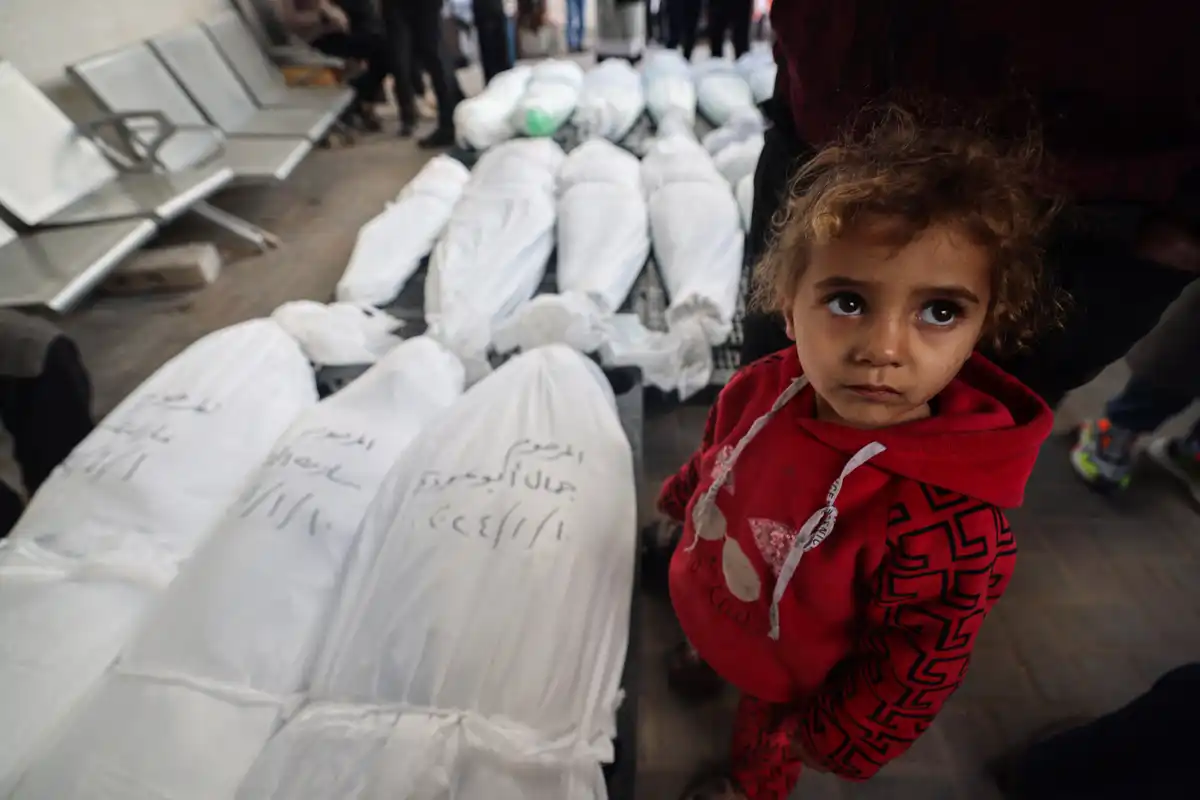
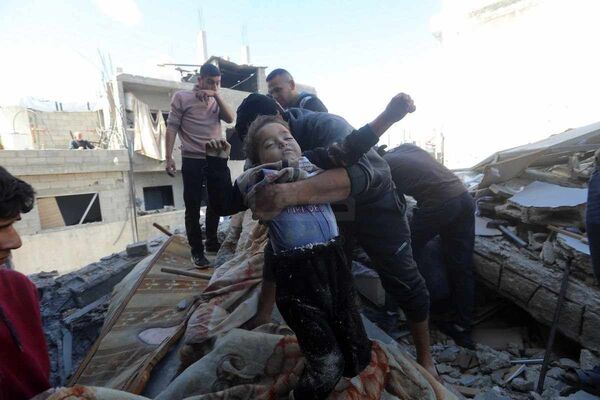
But at the heart of these movements, and amid the crowded tables and mediations, the reality on the ground in Gaza remains a witness to a tragedy being engineered in full view of the world, and sometimes even with its blessing. The evacuation zones expand day after day, and systematic displacement is repeatedly stated by the occupation's leaders as a legitimate goal, while civilians are used as a public bargaining chip.


Even more dangerous is the role that some Arab media outlets have shamelessly adopted: a discourse that equates the executioner with the victim, emptying the Palestinian suffering of its human and political significance. The media coverage of some channels and platforms is no longer simply a conveyor of the news; it has become part of the crime itself. Coverage exaggerates the details, marginalizes the catastrophe, and presents Gaza as a passing humanitarian crisis, rather than an ongoing crime deserving of outrage and justice.


Today, amid the wait for a truce and the bloodshed of reality, the scene requires moral clarity before any deal. Gaza needs a genuine Arab position, not hotel-style dialogue and soothing tweets. We need a media that isn't afraid of the truth, but rather raises its voice against mass murder, not polishes its platforms of lies over the skulls of children. This is not the time to bet on intentions unless there is a sincere international will to put an end to the aggression, hold Israel fully accountable, and return Gaza to a comprehensive Palestinian national project.


In contrast, Hamas is called upon to raise its national awareness to the level of this historic moment, and to realize that Gaza's fate cannot be monopolized, and that the future of the Palestinians cannot be managed by slogans alone. It is time for Hamas to move beyond the logic of factions and embrace a comprehensive national partnership, placing the supreme national interest above any organizational or ideological considerations. Gaza is not a card in anyone's hand, but rather the soul of this people and the heart of their cause.

OPINIONS

Mon 14 Apr 2025 9:17 am - Jerusalem Time

Trump and his coups... all this chaos!

Abdullah Al-Sanawi

Abdullah Al-Sanawi

Opinion Writer

It is the chaos that is striking the structure of political decision-making in the most powerful country in the world.


Like any underdeveloped country, it issues fateful decisions completely randomly, without prior consideration of their potential repercussions. The tariff decisions constituted a complete reversal of the rules and foundations of global trade.


For an entire week, US President Donald Trump, with or without occasion, has affirmed his commitment to the global trade war, which he declared in a euphoric tone from the White House lawn under the title "Liberation Day." His decisions have confounded the entire world, and concerns have transcended the financial and economic to the political and strategic.


The Middle East, with its escalating crises, appears to be at the heart of the economic hurricane, reflecting interactions and fears.

He exhausted his capacity for stubbornness faster than anyone expected. He couldn't bear the political pain for more than a week, CNN reported. The US economy was on the verge of catastrophe as the sell-off in the Treasury market accelerated.


He was forced to back down from his quasi-divine decisions to impose unprecedented customs duties on friends and foes alike! He announced the suspension of his chaotic decisions for (90) days, with the exception of China, the second economic power, raising customs duties on it to (145%).


China responded by imposing 84% tariffs on American goods.

In reference to Trump's "Make America Great Again" slogan, his hat was made in China! The United States will find it difficult to win its trade war with China without the support of its traditional allies in Europe and Asia, whose trust it has lost in the tariff crisis. One way or another, US-Chinese negotiations will take place to reach a deal, but Washington will enter them from a position of weakness.


Trump's retreat appeared to be a forced counter-coup to the coup he called "Liberation Day."

In the period between the two coups, new changes occurred in his political discourse. After the first coup, he tended toward a de-escalation on the Gaza and Iran issues, without retreating from his core objectives. What could change after his counter-coup?

First, he announced the start of direct negotiations with Iran from within the White House, in the presence of Israeli Prime Minister Benjamin Netanyahu, who appeared completely shocked. In a counter-coup, he attempted to combine intimidation and enticement, the carrot and the stick, to soften Iranian hardline stance and achieve his goals through the language of deals, without the need for a war that would harm American financial interests in the Gulf region or his project to inject trillions of dollars into the investment pipeline inside the United States.


He chose his special envoy, Steve Witkoff, to head the US negotiating delegation, not the Secretary of State or the National Security Advisor. Ironically, the Iranians chose Foreign Minister Abbas Araghchi to head their negotiating delegation. Witkoff has no connection to the entire nuclear file, while Araghchi has full and long-standing knowledge of its most minute details.


The world's foremost superpower seemed like any other third-world country, with institutions absent and presidencies sacred. Ironically, the White House described Trump's retreat from the tariff crisis as "genius leadership."


The mutual rhetorical escalation appeared to be a form of negotiation. A deal is possible if it is limited to the Iranian nuclear project, but its nature, limits, and the extent of its impact on regional dynamics are another matter.


Trump's threat to launch military action against Iran seemed striking, suggesting it would be carried out in partnership with Israel. This gesture was a reversal of the "humiliating" way in which Netanyahu was treated in the White House. He may have been seeking to restore Netanyahu's reputation without altering his primary approach to striking a deal with Iran.


It is also confirmed that another deal is being prepared to end the war in Gaza, based on what was dictated to Netanyahu in Washington via Witkoff during a meeting that included them.


Why is Trump now imposing a ceasefire on the Israelis? Certainly not for humanitarian reasons, nor out of embarrassment at the scenes of killing and starvation, unparalleled in modern human history. He is seeking a temporary calm before his visit to the Gulf, fearing it will hinder his economic and strategic goals, which seek to normalize Saudi relations with Israel.


Despite all this, he did not abandon his project to "purify Gaza," or his strategic investment in Israeli brutality to push Palestinians to seek voluntary emigration. He contacted a number of unnamed countries to accept Palestinian refugees so that all of historic Palestine would be Israeli!


Paradoxically, despite all his approaches, he now calls for a comprehensive strategy for the aftermath of the Gaza war. What strategy? There is no clear, specific plan for the day after.


OPINIONS

Mon 14 Apr 2025 9:16 am - Jerusalem Time

Trump, Khamenei, and the Return to Muscat

Abdul Rahman Al-Rashed

Abdul Rahman Al-Rashed

Opinion Writer

Twelve years ago, former US President Barack Obama's team and Iran began secret negotiations for two years, achieving what became known as the "Comprehensive Nuclear Agreement," which was implemented for three years. President Donald Trump, in his first term, tore it up with an unprecedented force, despite its ratification by the United Nations. His successor, President Joe Biden, decided not to resume it, and it became history. The agreement, which bore the title of "peace," led to more crises and conflicts than had existed before its signing.


Today, the Americans and Iranians are returning to negotiations under critical circumstances. How will the new Muscat negotiations differ from the 2013 negotiations?


President Trump stated that his first option is a negotiated solution, and if that fails, his second option is war. In my opinion, both sides desire a political solution, despite the rhetoric.


But what solution are they talking about? A "negotiated solution" is a broad concept. Obama was indeed able to achieve an agreement that obligated Iran to give up its enriched uranium, which was sent to Russia. However, the nuclear deal was merely a bargaining chip in Iran's hands, which it successfully used to maintain its regional and international military activities. Obama deliberately excluded the relevant parties from the negotiations, specifically the Gulf states and Israel, and, to top it all off, ignored the concerns of the countries in the region. Iran viewed the agreement as a license to expand and dominate Iraq, Syria, Lebanon, Yemen, and Gaza, threatening the rest. Tehran spent more than $100 billion frozen in funds that Washington had allowed Iran to use, which went to finance its military activities that destabilized much of the region.


There are new faces in the negotiations in the Omani capital, but the core issues remain the same as those raised in March 2013: Iran halting its military-grade nuclear program, ending its support and funding of militias in the region, and refraining from interfering in the affairs of other countries. Obama limited himself to agreeing on one issue: the nuclear issue.

Can we bet on Trump?


So far, his approach has been clearer and more assertive than Obama's, who was complacent toward Iran's Supreme Leader and backed down from his famous threat to the Assad regime, which used chemical weapons in the Syrian war.


Trump set the political stage in advance of the Muscat negotiations. He dispatched more troops to the region, began destroying Houthi capabilities in Yemen, assigned his envoy, Steve Witkoff, to communicate with Tehran, sent a direct message to the Supreme Leader, imposed new sanctions on Iran's oil exports, hosted Israeli Prime Minister Benjamin Netanyahu at the White House, and discussed the military option.


A series of steps to strengthen his position in the negotiations.

The Iranians are not in a good position, but they have responded with steps. The Supreme Leader has taken a hard line, leaving it to the government to approve. Tehran announced its position in response to Trump in an op-ed by the Secretary of State in the Washington Post. On the ground, Hezbollah no longer appears to be cooperating in implementing its agreement with Israel, and the Houthis have rejected Washington's call to halt attacks on maritime shipping, despite having been shelling them for about a month, perhaps to strengthen Tehran's negotiating position.


The most important aspect of Trump's leaked letter to Khamenei was that he affirmed his desire to negotiate, but stipulated only two months for reaching an agreement, a period he would likely extend if the start of the negotiations was encouraging. He then threatened Iran with targeting its nuclear facilities if no agreement was reached. "Israel will do the job," he declared while sitting with Netanyahu.


This scene is completely different from the atmosphere of Obama's negotiations and his conciliatory image. Trump has a terrible reputation for not being afraid to confront half the world. His team arrives to negotiate with Iran in the worst possible position after Israel destroyed its foreign arms—Hezbollah and Hamas—and the Assad regime fell.


Trump's chances of securing an unprecedented "good" agreement with Iran will be great if he continues to insist on his demands, and his team is able to contain Tehran's cunning tactics. The balance of power has tilted in Israel's favor after it destroyed Iran's external forces, which strips it of the "proxy" card it used to threaten the world and use in negotiations in Muscat negotiations. In addition, Trump has begun implementing his promise to deprive Tehran of selling most of its oil, and it will be in a difficult financial situation unless it reaches an agreement with Trump.


Therefore, we see that Iran's options are now limited, which presents us with the real possibility of finally achieving peace in the region, beginning with Muscat and later completed through regional peace agreements.

OPINIONS

Mon 14 Apr 2025 9:14 am - Jerusalem Time

Next is fairer

Samir Atallah

Samir Atallah

Opinion Writer

The central point in the debate over machine intelligence, or artificial intelligence, was its devoid of human emotions. It neither rejoices nor grieves, neither loves nor hates. And when it develops the capacity to control us completely, who knows what decisions it might make? A machine unaffected by the chirping of a canary, by tears of joy or sorrow, nor by the plight of orphans. What will this world be like?


As far as the ink is concerned, we will live in a world of objectivity and justice. No revenge or retaliation. In such a world, a man like Stalin cannot cause the starvation of 10 million Ukrainians. No economic war between America and China can impoverish millions of people without pity or mercy. No artificial mind can accept that the only thing done by the North Korean leader, Kim III, is to display his latest missiles with commemorative photos of them. The missile and the leader. The artificial mind sets red and yellow lines for itself, and includes a special section for boredom, tedium, and monotony. Whereas the human constitution does not get bored, is not satisfied, and does not even notice that this universe is overflowing with nuclear, ballistic, comprehensive, and complete weapons, which are not yet complete.


Artificial intelligence doesn't know how to fake, deceive, or pretend, contrary to what it actually believes. British Prime Minister Neville Chamberlain went to Munich twice in two weeks and held lengthy meetings with Hitler. He returned to London completely convinced that the Führer did not want war. His Foreign Secretary, Lord Halifax, then went back with the same impression: Hitler did not want war. Shortly after, Hitler started World War II.


Do you know who Chamberlain's closest advisor was during those turbulent moments in the history of the blue planet? His sister. He would write to her, recounting what he heard and what he said, praising the German chancellor's intentions. And who was his other advisor? His other sister, according to his memoirs.


Chamberlain's simplicity became one of the most important lessons in the history of warfare. "The soul is prone to evil," and human nature is insecure. Here the difference between the objectivity of manufacture and the weakness, or dominance, of temperament becomes clear. In the artificial world we have entered, there will be no Hulagu, no Genghis Khan, no Tamerlane, no Hitler, and no Pol Pot. And in case you forget who that is, it's the Cambodian who put up an exhibition of skulls in his capital, Phnom Penh. Millions of them. He's also the one who turned his country into the most prosthetic limbs. And he was always smiling. Artificial intelligence is too noble to smile.


PALESTINE

Mon 14 Apr 2025 9:08 am - Jerusalem Time

EU intends to increase financial support to the Palestinian Authority with a value of €1.6 billion.

The European Union intends to increase financial support to the Palestinian Authority with a package of about 1.6 billion euros ($1.8 billion) over three years, the European Commissioner for Middle East Affairs told Reuters in an interview.


Dubravka Suica, the EU's commissioner for the Mediterranean, said that financial support would go hand in hand with reforms by the Palestinian Authority, which faces accusations of corruption and mismanagement from its critics.

ARAB AND WORLD

Mon 14 Apr 2025 8:58 am - Jerusalem Time

Washington and Riyadh sign a nuclear cooperation agreement without any reference to normalizing relations with Israel.

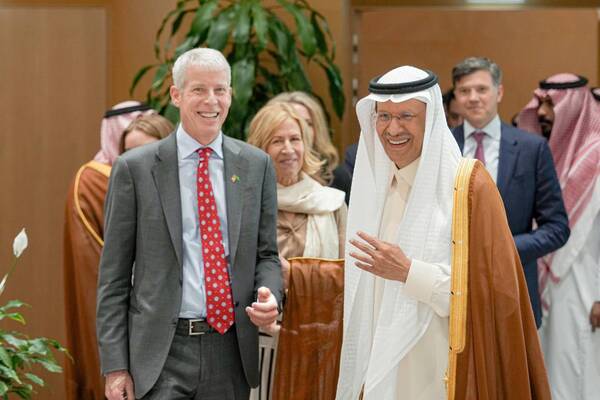
US Energy Secretary Chris Wright told reporters in the Saudi capital, Riyadh, on Sunday that the United States and Saudi Arabia will sign a preliminary agreement for cooperation regarding the kingdom's ambitions to develop a civilian nuclear industry.


Wright, who had met with Saudi Energy Minister Prince Abdulaziz bin Salman earlier on Sunday, added that Riyadh and Washington are on a "track" toward reaching an agreement to work together to develop a Saudi civilian nuclear program.


Wright, on his first official visit to the Kingdom as part of a tour of energy-producing Gulf states, added that further details of a memorandum of understanding detailing energy cooperation between Riyadh and Washington will be announced later this year.


“As for the American partnership and participation in the nuclear field, there will certainly be a 123 agreement... [There are] many ways to structure a deal that achieves both Saudi and American goals,” he said.


It's worth noting that the so-called 123 Agreement with Riyadh refers to Section 123 of the U.S. Atomic Energy Act of 1954. Compliance with Section 123 is required to allow the U.S. government and U.S. companies to cooperate with entities in the Kingdom developing civil nuclear capabilities.


However, Wright said that Saudi authorities have not agreed to the requirements set forth in Article 123. This provision sets out nine nonproliferation standards that a state must meet to prevent it from using the technology to develop nuclear weapons or transferring sensitive materials to others.


Progress in the discussions has been difficult in the past because Saudi Arabia has been unwilling to sign an agreement that excludes the possibility of uranium enrichment or spent fuel reprocessing, both of which are potential pathways to making a bomb.


Saudi Crown Prince Mohammed bin Salman has long stated that if Iran develops a nuclear weapon, Saudi Arabia will follow suit. This stance has raised deep concern among states seeking nuclear weapons. According to the International Atomic Energy Agency, the Islamic Republic is moving toward military nuclear capabilities. The Trump administration and Iran began negotiations on Saturday regarding Iran's nuclear program, although it remains unclear whether significant progress has been made.


It is worth noting that Wright only mentioned discussions about a civil nuclear agreement with the Saudis. The previous administration of US President Joe Biden had sought to include a civil nuclear agreement as part of a larger deal that included US security guarantees for Saudi Arabia and the normalization of relations between Saudi Arabia and Jerusalem.


It's worth noting that with the prospect of a normalization agreement receding under the hardline government of Israeli Prime Minister Benjamin Netanyahu, which is waging a war of genocide against Palestinians in Gaza and rejects the possibility of a Palestinian state, Saudi officials have spoken in recent months about securing smaller bilateral deals with the United States, ostensibly like the one Wright announced on Saturday.


Saudi Arabia, the world's largest oil exporter, is seeking to generate significant renewable energy and reduce emissions under the Crown Prince's Vision 2030 reform plan.

PALESTINE

Mon 14 Apr 2025 8:37 am - Jerusalem Time

Israeli newspaper: Hamas agrees to expand prisoner swap deal, potential breakthrough in negotiations

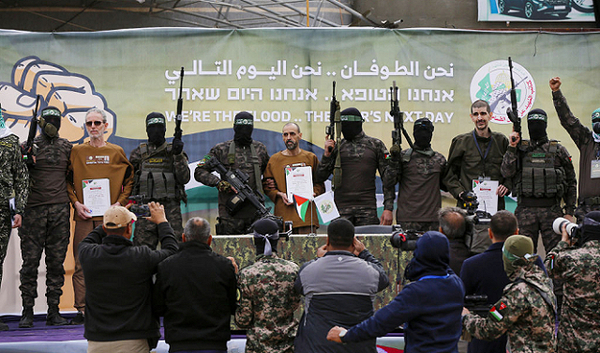
Yedioth Ahronoth newspaper revealed on Monday estimates indicating progress in Hamas's position regarding the prisoners' file, indicating the movement's willingness to release between 9 and 10 live hostages.


According to the newspaper, the US administration informed Hamas that if it agreed to release more than eight prisoners, Israel would express its willingness to enter into negotiations regarding the second phase of the ceasefire agreement in the Gaza Strip.


These developments came after Hamas released a video showing captive Israeli soldier Idan Alexander screaming in captivity, demanding his release.


The video sparked widespread interest in Israel, which viewed it as an indication of a significant shift in the movement's position on negotiations.


In this context, a Hamas delegation led by prominent leader Khalil al-Hayya arrived in the Egyptian capital, Cairo, where it is expected to present the movement's response to the Israeli proposal to Egyptian mediators.


The proposal calls for the release of 9 to 10 live hostages, a number close to the original plan formulated by US mediator Steve Witkoff, which focused on the release of 11 hostages, including Aidan Alexander, who also holds US citizenship.


In addition, Israel is demanding the return of approximately 10 bodies of abductees who died while in Hamas custody as a result of Israeli bombing.


In return, the US administration promised Hamas that if it agreed to release more than eight hostages, it would guarantee Israel's commitment to enter into serious negotiations regarding the second phase of the ceasefire, which essentially aims to end the war.


Israel believes that the military pressure it is exerting is beginning to bear fruit, especially after it announced the completion of its control of the Morag axis and the encirclement of the city of Rafah in the southern Gaza Strip. This strengthens its negotiating position, according to the newspaper.

PALESTINE

Mon 14 Apr 2025 8:34 am - Jerusalem Time

5 dead and wounded in the occupation's bombing of a house east of Khan Yunis

A number of citizens were killed and others injured on Monday when Israeli aircraft bombed a house in Khan Yunis, south of the Gaza Strip.


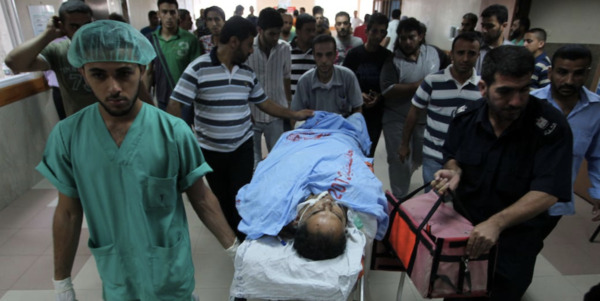
Medical sources reported that five martyrs and a number of wounded were taken to the Gaza European Hospital after the occupation forces bombed a house in the town of Khuza'a, east of Khan Yunis. The occupation forces also shelled the southern areas of Khan Yunis, with heavy gunfire in the southern Gaza Strip.


A fisherman was injured by Israeli gunfire after he opened fire on fishing boats off the coast of Rafah. The Israeli army also blew up residential homes in the northern areas of Rafah, south of the Gaza Strip.


The occupation artillery targeted the eastern part of the Al-Zeitoun neighborhood, south of Gaza City, and the occupation air force bombed the Al-Sha'af area, east of the city.


Since October 7, 2023, the Israeli occupation forces have launched an aggression against the Gaza Strip, resulting in the deaths of 50,944 citizens, the majority of whom were children and women, and the injury of 116,156 others. This is a preliminary toll, with a number of victims still under the rubble and on the streets, unable to be reached by ambulances and rescue teams.

PALESTINE

Sun 13 Apr 2025 10:25 pm - Jerusalem Time

WHO: Patients and health workers must be protected, and the blockade on aid to Gaza must be lifted.

World Health Organization Director-General Tedros Adhanom Ghebreyesus stressed that patients and health workers must be protected and the blockade on aid to the Gaza Strip must be lifted.


Ghebreyesus added in a press statement on Sunday evening that the Al-Ahli Baptist Hospital in the Gaza Strip had ceased operations following the Israeli attack on it at dawn today.


"The director of Al-Ahli Hospital in Gaza informed us of the death of a child due to the interruption of care," he said, stressing that hospitals are protected under international law and that attacks on healthcare facilities must stop.


This morning, Israeli occupation aircraft bombed the reception building at the Arab Baptist Hospital in Gaza City with two missiles, destroying it, causing extensive damage, and setting fire to the reception and emergency departments, laboratory, and pharmacy.

ARAB AND WORLD

Sun 13 Apr 2025 10:12 pm - Jerusalem Time

Lebanon: Israeli occupation forces demolish a statue of a Christian saint on Palm Sunday.


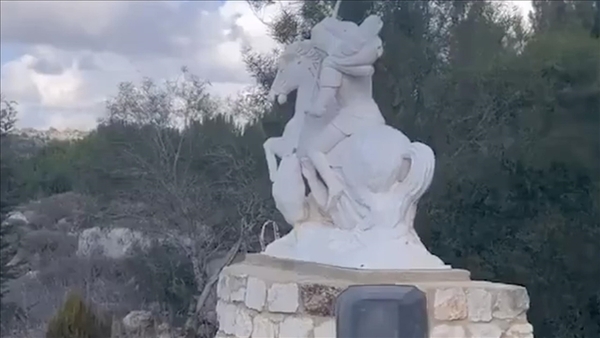
The Israeli occupation army demolished a statue of Saint George in the town of Yaroun in the Nabatieh Governorate in southern Lebanon, as Christians celebrated Palm Sunday, according to Lebanese media.


The Lebanese National News Agency (official) reported on Sunday: "The Israeli occupation forces demolished the statue of Saint George in the town of Yaroun in the Bint Jbeil district, in a new violation of the ceasefire agreement."


She continued: "A video showed an Israeli military bulldozer demolishing the statue."


Former Lebanese Labor Minister Mustafa Bayram posted a video documenting the moment the enemy demolished a statue of Saint George, according to the agency, without specifying the platform on which he posted it or the date of the statue's demolition.


Bayram attached the video with the comment: "The Zionist enemy demolishes a statue with sacred religious symbolism (Saint George) in southern Lebanon (Yaroun)."


He added that the Israeli army "proudly documents this by repeatedly affirming its hostility to everything but itself, and that it is a foreign, occupying entity with no place among the peoples and inhabitants of this region."


As of 17:10 GMT, there has been no Israeli comment.


This Israeli attack comes as Christians commemorate Palm Sunday, the seventh Sunday of Lent and the last Sunday before Good Friday, which is followed by the commemoration of the Resurrection of Christ.


This day commemorates the entry of Jesus Christ into the city of Jerusalem, where he was welcomed by the people with palm and olive branches, who paved the way for him and greeted him as a king, according to Christian beliefs.


On October 8, 2023, Israel launched an aggression against Lebanon, which escalated into a full-scale war on September 23, 2024, resulting in more than 4,000 deaths and approximately 17,000 injuries, in addition to the displacement of approximately 1.4 million people.


Since the ceasefire agreement came into effect on November 27, 2024, Israel has committed more than 1,440 violations, leaving approximately 125 dead and at least 371 wounded, according to an Anadolu Agency tally based on official Lebanese data.


Israel has reneged on its commitment to complete its withdrawal from southern Lebanon by February 18, contrary to an agreement. Instead, it has implemented a partial withdrawal and continues to occupy five key hills within the areas it occupied in the last war.


For decades, Israel has occupied territories in Lebanon, Palestine, and Syria, and refuses to withdraw from them and establish an independent Palestinian state with East Jerusalem as its capital, along the pre-1967 borders.

ARAB AND WORLD

Sun 13 Apr 2025 10:00 pm - Jerusalem Time

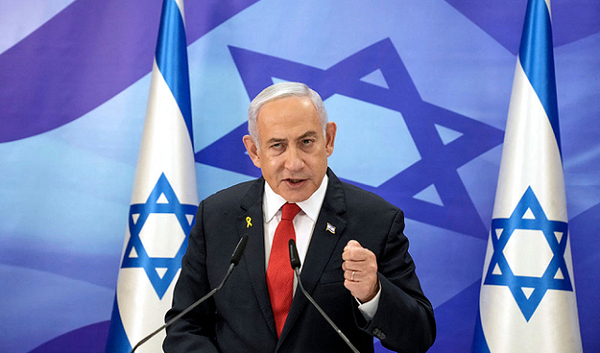
Netanyahu: Macron is making a grave mistake by promoting the idea of a Palestinian state.

Israeli Prime Minister Benjamin Netanyahu, in a post on Twitter on Sunday, said that French President Emmanuel Macron was making a "grave mistake" by promoting the idea of a Palestinian state.


Netanyahu asserted, "Macron is making a grave mistake by continuing to promote the idea of a Palestinian state in the heart of our land, a state that only aspires to destroy the State of Israel."


Macron announced that recognition of a Palestinian state could take place in June during a conference co-chaired by France and Saudi Arabia at the United Nations headquarters in New York, placing this within the framework of a reciprocal move toward recognition of Israel by Arab countries.

ARAB AND WORLD

Sun 13 Apr 2025 9:35 pm - Jerusalem Time

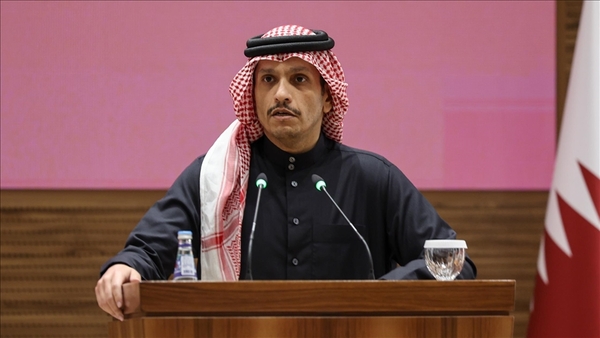
Qatari and Iranian foreign ministers discuss developments in Gaza


Qatari Foreign Minister Mohammed bin Abdulrahman Al Thani discussed with his Iranian counterpart, Abbas Araghchi, cooperation between the two countries and developments in the Gaza Strip and the occupied Palestinian territories.


In a phone call the Qatari minister received from his Iranian counterpart, they reviewed cooperation relations between the two countries and ways to support and strengthen them, according to a statement published by the Qatari Foreign Ministry on the X platform.


According to the statement, the two ministers discussed "developments in the Gaza Strip and the occupied Palestinian territories, in addition to a number of issues of common interest."


The negotiations between them come amid heightened tensions in the region, due to the ongoing Israeli war of extermination against the Gaza Strip and its repercussions across the region, from the West Bank, Lebanon, and Syria to Yemen and the Red Sea region.


Since October 7, 2023, Israel, with full American support, has been committing genocidal crimes in Gaza, leaving more than 167,000 Palestinians dead and wounded, most of them children and women, and more than 11,000 missing.


Bin Abdul Rahman, who also serves as Prime Minister, reiterated Qatar's "welcome to the negotiations taking place between Iran and the United States in the Sultanate of Oman," according to the statement.


During the call, he also stressed "Qatar's continued efforts with regional and international partners to de-escalate and promote stability and peace in the region."


On Saturday, the first round of indirect negotiations between the United States and Iran, mediated by the Sultanate of Oman, was held in the capital, Muscat, to reach a deal on Tehran's nuclear program. A second round was agreed upon next week.


The US delegation was headed by Special Presidential Envoy for the Middle East Steve Witkoff, while Araghchi led the Iranian delegation.


The two countries said in a statement and official statements that the talks on the nuclear issue and the lifting of sanctions "took place in a positive and constructive atmosphere."


On the eve of the start of negotiations, the White House warned of "expensive American options" if a new agreement on Iran's nuclear program failed, stressing that President Trump prefers to resolve the issue through direct talks with Tehran.


The United States, along with Israel and other countries, accuses Iran of seeking to develop nuclear weapons, while Tehran insists that its nuclear program is for peaceful purposes, including electricity generation.


Trump's announcement of these negotiations came as a surprise to Tel Aviv, which had long urged the US administration to support military action against Iranian nuclear facilities, according to Hebrew media.

PALESTINE

Sun 13 Apr 2025 9:32 pm - Jerusalem Time

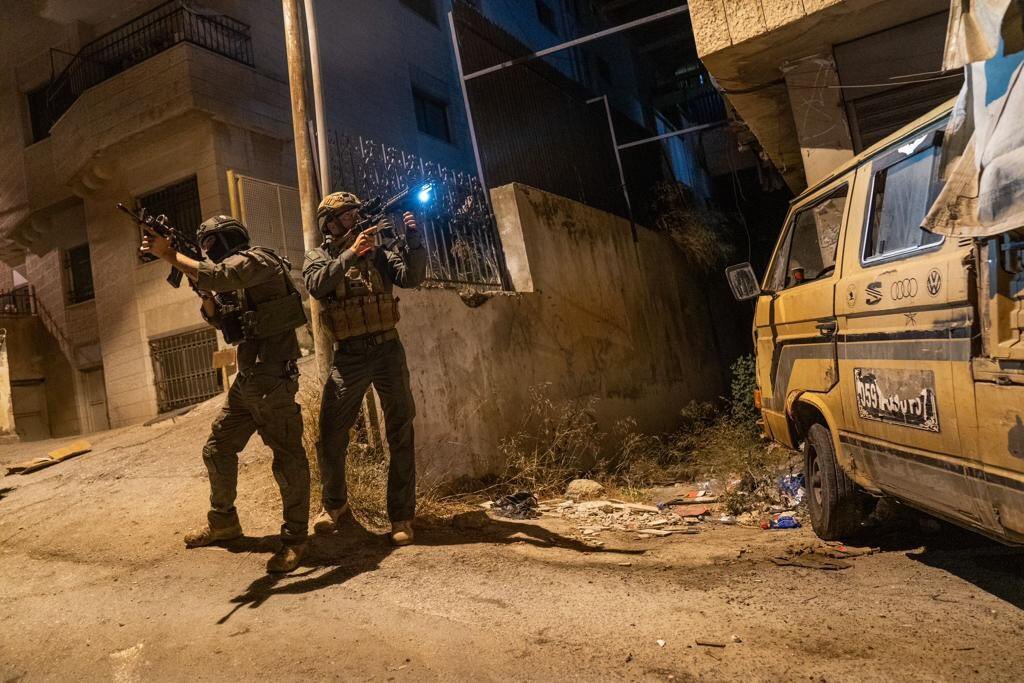
Israeli occupation forces stormed the towns of Abwein and Beit Liqya.

Israeli occupation forces stormed the towns of Abwein and Beit Liqya in the Ramallah and Al-Bireh Governorate on Sunday evening.


According to local sources, occupation forces raided Abwein and Beit Liqya, without any arrests or raids being reported.

PALESTINE

Sun 13 Apr 2025 8:28 pm - Jerusalem Time

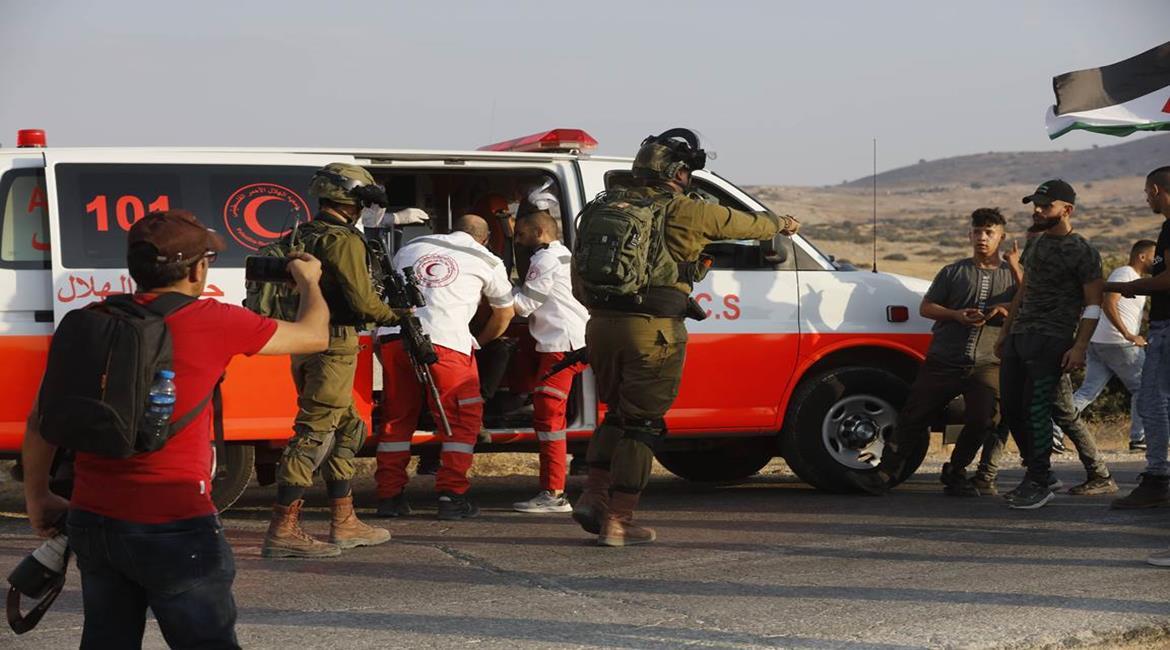
Suffocation injuries during Israeli occupation's raid on Qaryut, south of Nablus.

A number of citizens suffered suffocation on Sunday evening, during an Israeli occupation forces raid on the village of Qaryut, south of Nablus.


According to local sources, occupation forces stormed Qaryut, firing live ammunition and tear gas, sparking clashes that left several residents suffering from suffocation.

ARAB AND WORLD

Sun 13 Apr 2025 8:25 pm - Jerusalem Time

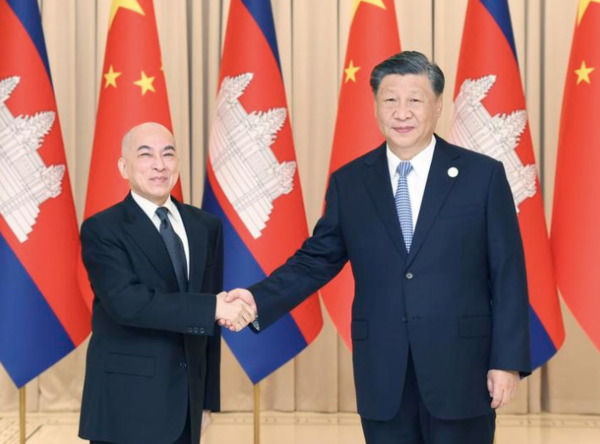
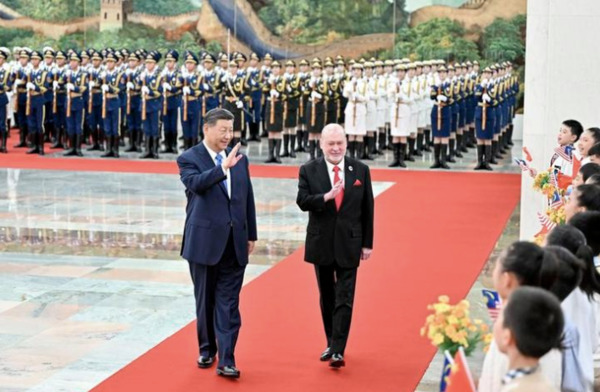
Xi Jinping and his "ironclad friends" from Cambodia

In February 2023, Chinese President Xi Jinping hosted then Cambodian Prime Minister Samdech Techo Hun Sen at the Diaoyutai State Guest House in Beijing, an appointment between the two old friends.


Back in early 2020, Hun Sen visited Beijing as China was battling the COVID-19 epidemic. He visited to show Cambodia's staunch support for the Chinese people at a critical moment. Three years later, Hun Sen visited China again as promised.


At their 2023 meeting, Xi recalled the prime minister's trip to China during a heavy snowfall, saying he was happy to fulfill this "three-year appointment" with the visiting leader.


The warm and sturdy friendship between Xi and Hun Sen serves as a faithful reflection of the close bond between China and Cambodia, carefully nurtured by generations of leaders of both sides over the decades. And this relationship, described by Xi as "ironclad," will surely be renewed as the Chinese leader is set to embark on his second state visit to the Southeast Asian country.


Chinese President Xi Jinping meets with Hun Sen, then prime minister of the Kingdom of Cambodia, at the Diaoyutai State Guesthouse in Beijing, capital of China, Feb. 10, 2023. (Xinhua/Huang Jingwen)

A CHAIR OF UNIQUE FRIENDSHIP


On the very day Xi arrived in the Cambodian capital of Phnom Penh in 2016 for a state visit, he made a special visit to the royal palace to see Queen Mother Norodom Monineath Sihanouk. The queen mother invited Xi to sit in a chair that was frequently used by her late husband, King Father Norodom Sihanouk.


This chair had been meticulously preserved by the Cambodian royal family since the king father's passing -- covered and untouched, until Xi's visit.


"This is a privilege reserved only for the most esteemed and dearest friends," explained Princess Norodom Arunrasmy, who was present.


With a warm smile, Xi spoke fondly of King Father Sihanouk, describing him as "a revered friend of the Chinese people and a symbol of China-Cambodia friendship." The king father's deep personal ties with Chinese leaders since the 1950s have played a pivotal role in fostering the ever-refreshing friendship between the two countries.


More than once, Xi has quoted an old Chinese saying to underscore how the China-Cambodia friendship has withstood challenges and global transformations: "A long journey tests a horse's strength, and a long span of time reveals a person's heart."


In Xi's signed article published by Cambodian media prior to his 2016 visit to the country, he noted that China will never forget Cambodia's role as one of the first nations to recognize the People's Republic of China and a champion of China's rightful seat at the United Nations.


Chinese President Xi Jinping (R) holds a ceremony to award Cambodian Queen Mother Norodom Monineath Sihanouk the Friendship Medal of the People's Republic of China at the Great Hall of the People in Beijing, capital of China, Nov. 6, 2020. (Xinhua/Zhang Ling)

The friendship between the two close neighbors has always been mutual. China has been a steadfast partner of Cambodia, supporting its national independence and economic development, including the construction of Cambodia's first cement plant and thermal power station.


To honor the friendship, Xi awarded a Friendship Medal to the queen mother at the Great Hall of the People in Beijing in November 2020. "This weighty 'Friendship Medal' represents the deep respect of the Chinese people for Queen Mother Monineath and the profound friendship between China and Cambodia," he said.


Xi has also shown particular care for Cambodia's royal family. "Beijing is your home. You're more than welcome to return whenever you like," he said while meeting King Sihamoni and Queen Mother Monineath at Beijing's Diaoyutai State Guesthouse in 2014. He has also made thoughtful arrangements for their medical check-ups in China. Over the past decade and more, King Sihamoni and Queen Mother Monineath regularly come to China, almost twice every year.


Over the years, Xi has also maintained frequent exchanges with Hun Sen. With Hun Manet taking over as Cambodia's prime minister, the friendship has been passed on to the next generation.


In September 2023, Hun Manet chose China as his first official overseas destination after assuming office, a gesture reflecting Cambodia's diplomatic priority. During his meeting with Xi, Hun Manet pledged to further carry forward the ironclad friendship between Cambodia and China.


Chinese President Xi Jinping meets with Cambodian Prime Minister Hun Manet at the Great Hall of the People in Beijing, capital of China, Sept. 15, 2023. (Xinhua/Huang Jingwen)

Ek Sam Ol, president of the Cambodia-China Friendship Association, said the relationship between China and Cambodia has not only set an example for big and small countries to get along with mutual respect, equality and win-win cooperation, but also contributed to regional peace and stability, which has brought great benefits to the people of the two countries.


A ROAD TO HOPE


A Cambodian proverb says, "Where there is a road, there is hope." In May 2024, a road in Phnom Penh was named "Xi Jinping Boulevard" by the Royal Government of Cambodia to honor the Chinese leader's historic contributions to the country's development. In 1965, the late King Father Sihanouk similarly named a road after Chairman Mao Zedong.


At the naming ceremony, Hun Manet highlighted that, under the leadership and joint efforts of Xi and Cambodian leaders, bilateral ties have entered their best period in history.


Since 2013, the China-Cambodia comprehensive strategic cooperative partnership has continued to strengthen thanks to flourishing practical cooperation across various fields. The Belt and Road Initiative (BRI), proposed by Xi, has played a significant role in fostering common development and shared benefits for both sides.


Situated along the ancient Maritime Silk Road, Cambodia was among the first countries to join Belt and Road cooperation. Its leaders have attended in China all three editions of Belt and Road Forum for International Cooperation in recent years.


Over the years, key BRI projects in Cambodia have reaped fruitful results: the Sihanoukville Special Economy Zone (SSEZ) has attracted over 200 international enterprises and institutions, generating 32,000 jobs; Cambodia's first expressway, the Phnom Penh-Sihanoukville Expressway, has reduced travel time between the two cities from over five hours to less than two; the Siem Reap Angkor International Airport has helped Cambodia's tourism to take off, operating 17 routes by the end of last year.


An aerial drone photo taken on Sept. 25, 2024, shows a section of the Phnom Penh-Sihanoukville Expressway in Kampong Speu province, Cambodia.(Handout via Xinhua)

"The SSEZ, along with other flagship BRI projects, has played a crucial role in helping Cambodia achieve its ambitious targets of becoming an upper-middle-income country by 2030 and a high-income nation by 2050," said Neak Chandarith, director of the Cambodia 21st Century Maritime Silk Road Research Center.


Bilateral trade and commerce have also thrived. China has been Cambodia's largest foreign investor and trading partner for several consecutive years. Over the past decade, bilateral trade has nearly quadrupled, official data show. The Cambodia-China Free Trade Agreement and the Regional Comprehensive Economic Partnership have facilitated exports of Cambodian products like rice, bananas, longans and Basa fish to Chinese markets.


Xi advocates for a comprehensive approach to China-Cambodia cooperation. This is why he has repeatedly emphasized the importance of the bilateral "Diamond Hexagon" cooperation framework, which covers six major areas: politics, production capacity, agriculture, energy, security and people-to-people exchanges.


These efforts have provided new impetus for building a high-quality, high-level and high-standard Cambodia-China community with a shared future in the new era, a vision pledged by both nations' leaders, noted Thong Mengdavid, a lecturer at the Institute for International Studies and Public Policy at the Royal University of Phnom Penh.


A BOOK SHARING VALUABLE INSIGHTS


In April 2017, the Khmer edition of the first volume of Xi Jinping: The Governance of China was released in Cambodia, with Hun Sen attending the launching ceremony.


First published in 2014, this 18-chapter book compiles 79 speeches, talks, addresses, interviews, instructions and congratulatory messages by Xi from November 2012 to June 2014. The book series, which now has four volumes, serves as a key venue for readers worldwide to understand Xi's philosophies in running a major country like China.


Speaking before an audience of more than 700 attendees, Hun Sen expressed hope that Cambodian officials, scholars and students could gain valuable insights from the book and apply them to Cambodia's unique conditions, thereby contributing to more effective governance.


Chea Munyrith, president of the Cambodian Chinese Evolution Researcher Association, led the translation team. In his view, Cambodia's recent development is closely linked to learning from China's experience and ideas, many of which are reflected in Xi's book.


One article in the book focuses on poverty alleviation and wealth creation in impoverished areas. Under Xi's leadership, China eliminated absolute poverty in 2020. This achievement enabled China to meet the poverty eradication target in the United Nations 2030 Agenda for Sustainable Development 10 years ahead of schedule.


"Cambodian officials particularly focus on poverty alleviation and closely follow China's governance experience in this area," said Munyrith.


In recent years, poverty reduction cooperation between the two countries has been taking concrete steps, with the establishment of poverty alleviation demonstration villages as a highlight. The Chinese side has shared with its Cambodian counterparts useful experiences in integrating modern agriculture, vocational training and rural development.


This photo taken on May 12, 2024, shows the Cambodia-China Friendship Multipurpose Building in Tanorn village, Bati district of Takeo province, Cambodia. Once a poor, isolated and quiet village in Cambodia's remote area, Tanorn village has now become a modern one with well-established basic physical infrastructure under a China-aided poverty alleviation project. (Photo by Van Pov/Xinhua)

Thanks to those efforts, concrete roads, canals, solar-powered lamps and clean water facilities have been built in villages. According to the UNDP Country Programme Document 2024-2028 released last year, Cambodia has lifted 2.8 million people, or 50 percent of the country's total poor, out of poverty in the past seven and half years.


Xi has supported Cambodia in searching for a development path suited to its unique national conditions. This principle has been central to China's accomplishment of twin miracles: rapid economic growth and enduring social stability.


With his repeated proposal, China and Cambodia are deepening cooperation in aligning the BRI with Cambodia's "Pentagonal Strategy" for national development.


In Hun Sen's eyes, Xi is a great leader and a remarkable person capable of guiding China's development.


"Every initiative he has proposed, such as the Belt and Road Initiative, which bridges past and present, and the Global Development Initiative and Global Security Initiative, reflects his far-reaching vision," said Hun Sen. "Tell me, which other leader possesses such foresight?" Enditem


(Xinhua reporters Wu Changwei, Sovan Nguon in Phnom Penh and Zhang Yuan in Beijing also contributed to the story.)


ARAB AND WORLD

Sun 13 Apr 2025 8:05 pm - Jerusalem Time

"Flowing water cannot be severed" -- How Xi Jinping promotes China-Malaysia friendship

BEIJING, April 11 (Xinhua) -- Over three decades ago, when Xi Jinping, then the top official of China's southeastern city of Fuzhou, visited Malaysia on an investment promotion trip, he found himself deeply impressed by two symbolic sites.


One is the Poh San Teng Temple, a long-standing homage to renowned Chinese navigator Zheng He (1371-1433) of the Ming Dynasty. The other is the city of Sibu, which became known as "New Fuzhou" after Wong Nai Siong, a Fuzhou native, migrated to Malaysia with over 1,000 Chinese people more than a century ago.


Both places testify to the millennium-old China-Malaysia friendship, a bond Xi has repeatedly pledged to inherit and cement as China's head of state. During a 2013 visit to Malaysia, he quoted a local proverb to illustrate the commitment: "Flowing water cannot be severed."


It was also during that Southeast Asia tour to Indonesia and Malaysia that Xi invoked again the legacy of Zheng He and put forward the 21st Century Maritime Silk Road, an essential component of the Belt and Road Initiative (BRI).


Now as Xi travels to Malaysia for a new state visit, the two nations are poised to further build on their time-honored friendship and fruitful cooperation, and steer bilateral relations toward a more promising shared future in the new era.


COOPERATION ON FAST TRACK


On a hillside overlooking the East Coast Rail Link (ECRL) project in Malaysia's eastern state of Pahang, a string of bold Chinese and Malay characters stand out against the landscape: "Extensive consultation, joint contribution, shared benefits -- building a better future."


The phrase, concise and resonant, is the main tenet of the BRI, which has now become a leading global infrastructure and development framework and fostered a host of flourishing partnerships across continents.


As a vital node along the ancient Maritime Silk Road, Malaysia is among the first to participate in Belt and Road cooperation. Thanks to joint efforts and Xi's steadfast push, bilateral collaboration within the BRI framework has borne rich fruit.


This photo shows the launching site of the East Coast Rail Link project in Kuantan, Malaysia, on Dec. 11, 2023. (Photo by Xu Xinyu/Xinhua)

A notable example is the ECRL, a 665-km railway whose construction is in full swing. In a sign of the importance Xi attaches to the flagship project, he dispatched a special envoy to its launch in 2017. During his meeting with Malaysia's King Sultan Ibrahim Sultan Iskandar in Beijing last September, Xi once again called for concerted efforts to ensure its success.


The railway, once completed, will bridge Malaysia's less-developed east coast with its economic powerhouse on the west coast, enhancing connectivity and fostering balanced growth. It will also potentially link up with the China-Laos and China-Thailand rail networks, all part of the New International Land-Sea Trade Corridor, a vital international trade route.


"If that were to materialize, the ECRL would be able to tap into Thailand's entire rail network and link with Kunming in southwestern China, via Laos, achieving greater free flow of goods and passengers within the region," said Malaysian Transport Minister Anthony Loke Siew Fook.


Beyond the rail project, China-Malaysia collaboration is expanding across the horizon. China has remained Malaysia's largest trading partner for 16 consecutive years, with the volume hitting an all-time high of 212.04 billion U.S. dollars in 2024. In recent years, Malaysia's tropical fruits such as durian, mangosteen and jackfruit have become increasingly popular among Chinese consumers.


In his meeting with Malaysian Prime Minister Anwar Ibrahim last year in Beijing, Xi encouraged Malaysia to bring more Malaysian quality and specialty products to the Chinese market, and urged closer cooperation in such new areas as digital economy, artificial intelligence and new energy.


"The flourishing economic ties between Malaysia and China demonstrate the resilience and mutual benefits of our bilateral relationship," said Samirul Ariff Othman, an economist at Malaysia's Universiti Teknologi PETRONAS. "The continued expansion of investments in high-value sectors such as technology, green energy and manufacturing will further deepen our cooperation."


A staff member shows a durian from Malaysia at the Food and Agricultural Products exhibition area during the second China International Import Expo in Shanghai, east China, Nov. 9, 2019. (Xinhua/Cai Yang)

FRIENDS IN NEED


In 2012, Yong June Kong, a Malaysian young man who had studied medicine in China, donated his hematopoietic stem cells to a Chinese boy suffering from leukemia, successfully saving the 7-year-old child and making himself the first foreign stem cell donor in China.


During Xi's 2013 visit to Malaysia, the president referenced this moving episode to highlight the deep friendship between the Chinese and Malaysian people. "We will also not forget" the story, Xi said with deep emotion.


"I never imagined that such a simple act would receive such high-level recognition," Yong, now a doctor at Renji Hospital in Shanghai, told Xinhua. "I couldn't sleep the whole night after learning that the Chinese president had spoken of me," he recalled.


Xi's recognition was not only a personal honor but also a tribute to the spirit of mutual support between the nations, Yong added.


"This encouragement has strengthened my resolve to stay in China, to continue my medical career in saving lives, to do more blood donations and other charitable activities, and to become a bridge of friendship between China and Malaysia," he said.


As a Malay proverb once quoted by Xi goes: "A friend who understands your tears is much more valuable than a lot of friends who only know your smile." In his eyes, the two countries are good friends who can get along well, and trust and rely on each other.


Back in 1974, with strategic vision, China and Malaysia broke the ice of the Cold War and established diplomatic ties, with the latter being the first ASEAN member to do so. Later on, Malaysia also became the first to invite China to conduct dialogue with ASEAN and the first to host the China-ASEAN summit.


During his 2013 Malaysia trip, Xi recalled the joint fight of the two countries against the 1997 Asian financial crisis and the 2008 global economic tsunami, as well as the assistance extended by Malaysia to China in the aftermath of the devastating 8.0-magnitude Wenchuan earthquake in 2008. It was also during this visit that bilateral ties were elevated to a comprehensive strategic partnership.


A decade later, Xi and Anwar reached a consensus in Beijing on jointly building a China-Malaysia community with a shared future, opening a new chapter in bilateral relations.


Chinese President Xi Jinping meets with Malaysia's Prime Minister Anwar Ibrahim at the Great Hall of the People in Beijing, capital of China, March 31, 2023. (Xinhua/Rao Aimin)

At a broader level, Xi highly regards Malaysia's pivotal role in regional cooperation as a founding member of ASEAN and a key driver of East Asia cooperation. The Chinese president has reiterated China's support for Malaysia's ASEAN 2025 chairmanship and its commitment to ASEAN centrality and strategic independence.


"Malaysia-China relations have grown from strength to strength in recent decades," said Othman. "Today, this partnership is more dynamic than ever, underpinned by deep economic collaboration and strong people-to-people exchanges."


COMMUNICATION BETWEEN CULTURES


As China and Malaysia celebrated the 50th anniversary of diplomatic ties last year, Tan Lak Hon, along with 86 other Malaysian students at Tianjin University in China, wrote a letter to Xi, expressing their commitment to serving as messengers and promoters of Chinese-Malaysian friendship, and aspiration to help build the China-Malaysia community with a shared future.


In a message sent later that year to King Sultan Ibrahim marking the historical occasion, Xi expressed his delight in hearing from those students. "I am gratified that the cause of friendship between the two countries will be carried forward," Xi said.


Greatly encouraged, Tan plans to create a social media account to share his study and travel experiences in China with friends back in Malaysia. "I will actively serve as an advocate for our friendship, and help foster meaningful communication between students from our two countries," he said.


Xi himself has been a staunch champion of stronger cultural and people-to-people exchanges between the two nations. He has repeatedly stressed that amity between the people holds the key to sound state-to-state relations.


Artists perform at the Canton Rhythms for Silk Road concert at Xiamen University Malaysia (XMUM) in Selangor state, Malaysia, Nov. 24, 2023. (Xinhua/Cheng Yiheng)

During his 2013 visit to Malaysia, Xi witnessed the signing of an agreement on establishing a Malaysian branch of Xiamen University, the first overseas campus of a Chinese higher education institute. Xiamen, like Fuzhou, is a major city in China's Fujian province.


The university has a special relationship both with Malaysia and with Xi. It was founded in 1921 by Tan Kah Kee, a patriotic overseas Chinese businessman and philanthropist, who was born in Xiamen and achieved great business success in Malaysia and Singapore. When Xi worked in Xiamen, he developed a profound bond with the university.


Today, the Malaysian branch of Xiamen University has 10 faculties and over 9,100 students from dozens of countries and regions. So far, more than 6,300 students have graduated from that campus, making it a shining example of China-Malaysia education cooperation and a key platform to boost mutual understanding between different civilizations.


Many of those graduates share Tan's determination to promote intercultural communication and people-to-people friendship, a theme that features prominently in Xi's approach to international relations.


"You name it. Which other leader articulates the vision for the future while trying to understand civilization, values and culture," Anwar once noted. "That is why I feel certainly comfortable in exchanges with the president for his foresight and vision."

ARAB AND WORLD

Sun 13 Apr 2025 7:22 pm - Jerusalem Time

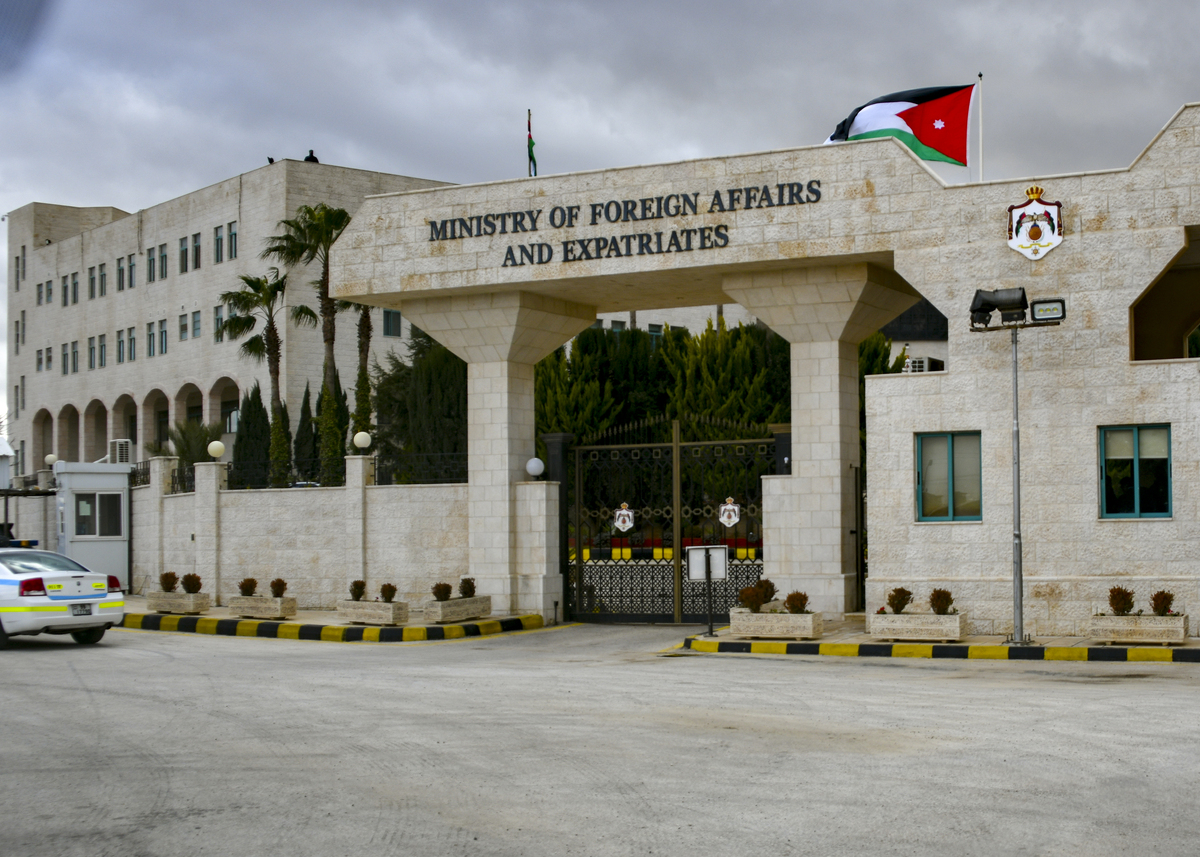
Jordan condemns Israeli occupation's bombing of the Baptist Hospital in Gaza.

The Jordanian Ministry of Foreign Affairs and Expatriates condemned in the strongest terms the Israeli occupation's bombing of the Baptist Hospital in Gaza City, completely putting it out of service. The Ministry considered it a flagrant violation of international law and international humanitarian law, and a clear violation of the 1949 Geneva Convention relative to the Protection of Civilian Persons in Time of War.


In a statement issued on Sunday, the Ministry's official spokesman, Ambassador Sufyan Al-Qudah, affirmed the Kingdom's absolute rejection and condemnation of the continued Israeli aggression on Gaza, the continued systematic targeting of civilians and civilian objects in Gaza, the destruction of vital facilities that provide basic services to the Gazans, and Israel's use of hunger and siege as weapons to push Palestinians towards forced displacement. He warned of the consequences of Israeli violations and their repercussions on the security and stability of the region.


The judges called on the international community to assume its legal and moral responsibilities and compel Israel to immediately halt its aggression against Gaza, open the crossings designated for the delivery of humanitarian aid to the Strip, fulfill the legitimate rights of the Palestinian people to establish their independent, sovereign state on the June 4, 1967 lines, with East Jerusalem as its capital, halt the crimes committed against them, and hold those responsible accountable.

PALESTINE

Sun 13 Apr 2025 6:00 pm - Jerusalem Time

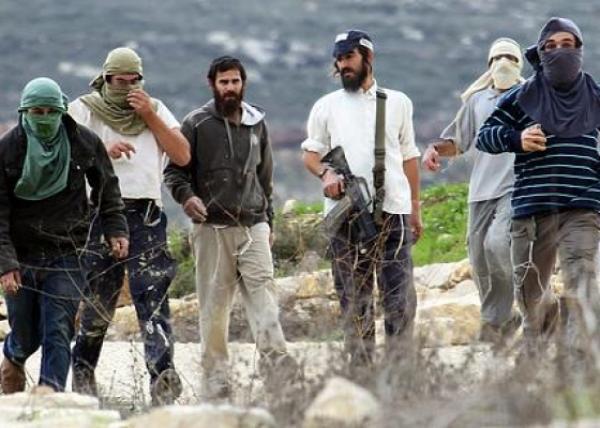
Settlers attack citizens' homes west of Jericho

Today, Sunday, settlers attacked the homes of citizens in the Arab al-Malihat community, northwest of Jericho, and threw stones at them.


According to local sources, a number of settlers stormed Arab al-Malihat and terrorized residents before attacking homes with stones.

PALESTINE

Sun 13 Apr 2025 5:29 pm - Jerusalem Time

Two Palestinians dead in Al-Mawasi and five injured in Gaza City, and the occupation forces thousands of citizens to flee in Khan Yunis.

Two citizens were killed and others injured Sunday evening in an Israeli airstrike targeting a resort in the Al-Mawasi area, west of Khan Yunis, in the southern Gaza Strip.


According to local sources, five citizens were injured in an Israeli airstrike on a workshop in the Asqaula area, southeast of Gaza City.


In the same context, the Israeli occupation authorities forced residents of several neighborhoods in Khan Yunis, south of the Gaza Strip, to evacuate on Sunday evening under the threat of bombing.


The occupation authorities demanded that thousands of citizens in the neighborhoods of Qizan al-Najjar, Qizan Abu Rashwan, al-Salam, al-Manara, al-Qurain, Ma'an, al-Baten al-Sameen, Jouret al-Lut, al-Fakhari, and the southern neighborhoods of Bani Suhaila leave immediately, in preparation for their bombardment, and immediately move west to the known shelters in the al-Mawasi area.

ARAB AND WORLD

Sun 13 Apr 2025 4:55 pm - Jerusalem Time

Türkiye confirms continued talks with Israel to avoid conflict in Syria

Türkiye confirmed that it will continue its technical talks with Israel to reach a de-escalation mechanism, establish rules of engagement, and prevent incidents or clashes on Syrian territory.


The Turkish Foreign Minister said that his country seeks to achieve stability in Syria, avoid any provocations, and is working to avoid entering into any conflict with any country within Syria.


Turkish and Israeli delegations held talks in Baku, the capital of Azerbaijan, last Wednesday to avoid incidents or clashes in Syria. Tensions have escalated over the past two weeks due to Israeli targeting of sites in Homs and Hama, and reports that Turkey is planning to establish air bases there.


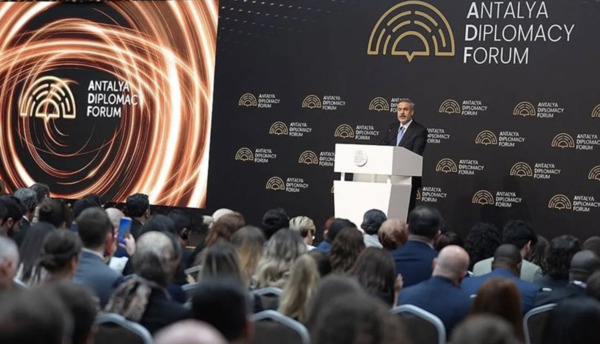
In response to a question about the Turkish-Israeli meeting in Azerbaijan during a press conference held at the conclusion of the 4th Antalya Diplomatic Forum on Sunday, Fidan said that technical talks on the de-escalation mechanism with Israel will continue when necessary.


Israeli sources said the talks would continue after the Passover holiday, which runs until April 19. Turkish Defense Ministry sources confirmed Thursday that the technical talks, held in Azerbaijan, aimed to open a communication channel to avoid potential misunderstandings regarding military operations in the region and prevent any unwanted incidents, and that these talks would continue.


An Israeli official told The Times of Israel on Friday that Tel Aviv is "very optimistic" about de-escalation talks with Turkey and is "even open to Turkey maintaining a limited military base in Syria."


He added that the Baku talks were held "in good faith" and that there would be further discussions.


A Turkish official delivered a similarly positive message to the Israeli newspaper, stressing that "Turkey's concern has always been the cross-border terrorist threat from Syria into Turkey," referring to the threats posed by ISIS and the Kurdistan Workers' Party (PKK)-Kurdish People's Protection Units (YPG). Beyond that, Turkey does not seek any conflict with any other country in Syria.


Since the fall of Bashar al-Assad's regime last December, Israeli officials have warned of "extensive" Turkish support for armed groups operating in the Turkish-Syrian border areas.


Sources have reported that Turkey is seeking to establish three air bases in Syria to prevent Israel from controlling its airspace and to use these bases to combat ISIS. However, a responsible source in the Turkish Ministry of Defense has twice reiterated that Turkey is considering a request from the Damascus government to establish a military training base in Syria.


Israel launched airstrikes on Syrian military sites in Homs, Hama, and Damascus, and reports indicated that Turkey was planning to deploy forces to the T4 (Tiyas) air base and the Palmyra military airport in eastern Homs, heightening tensions between Ankara and Tel Aviv.


Israeli concerns

Turkish Foreign Minister Hakan Fidan warned that repeated Israeli strikes on military installations weaken the new Syrian government's ability to deter threats, including those from ISIS.


During a meeting between US President Donald Trump and Israeli Prime Minister Benjamin Netanyahu on Monday, Trump advised Netanyahu to act rationally with Turkey, praising his relationship with Turkish President Recep Tayyip Erdoğan. Trump told Netanyahu, "If you have a problem with Turkey, I think we can work it out, and you have to deal with it rationally."


Turkey's actions following the fall of Bashar al-Assad's regime highlighted its desire to fill the military vacuum by establishing land, sea, and air bases in central Syria and along its coasts. Turkey also played a major role in the Syrian economy and reconstruction process, intervening in all sectors, from health to education and beyond.


This trend has raised concerns in Israel, which fears that Turkey will replace the Iranian presence in Syria with its Turkish presence. It also fears that Turkey is attempting to impose a new fait accompli in Syria, where it will act as a political and security guarantor, relying on its relations with armed factions with anti-Israeli tendencies.


Erdogan's visit to Syria

On the other hand, Fidan responded to a question about a possible visit by Turkish President Recep Tayyip Erdogan to Syria, saying, "Mr. President has such an intention and intends to visit Syria," noting that work is underway to determine a suitable date for such a visit.


Syrian transitional president Ahmed al-Sharaa visited Turkey for the second time on Friday to participate in the Antalya Diplomatic Forum and meet with Erdogan.


Erdogan and Shara discussed developments in Syria and bilateral relations in various economic, trade, and energy sectors, in the presence of the two countries' foreign ministers, Hakan Fidan and Asaad al-Shaybani, and the Turkish Minister of Energy and Natural Resources, Alparslan Bayraktar.


Erdogan expressed his happiness at thwarting attempts to re-instill chaos in Syria through the events on the Syrian coast. He emphasized the importance of strengthening economic and trade cooperation with Syria, and the possibility of expanding this cooperation to include other areas. He also emphasized that his country would continue its support to restore Syria's stability, as it has done in the past.

ARAB AND WORLD

Sun 13 Apr 2025 4:34 pm - Jerusalem Time

Egyptian contacts with Tehran, Washington, and Muscat hope for calm in the region and Gaza.

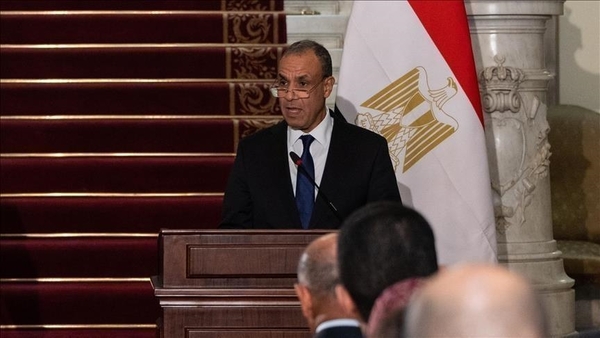
Egyptian Foreign Minister Badr Abdel Aty discussed developments in the Muscat negotiations with his Omani counterpart Badr al-Busaidi, Iranian counterpart Abbas Araghchi, and US Middle East envoy Steve Witkoff. He expressed hope that they would lead to calm in the region, including a swift and sustainable ceasefire in the Gaza Strip.


This came in a statement issued by the Egyptian Foreign Ministry on Sunday, the day after the Sultanate of Oman hosted the first round of negotiations between Iran and the United States.


The Egyptian Foreign Ministry reported that Abdel Aati discussed, during a phone call, "the negotiations that took place between the United States and Iran in Muscat."


According to the Egyptian statement, "Abdel-Ati was briefed on the latest developments regarding the progress of the negotiations, and in this context, he appreciated the constructive and vital role played by the Sultanate of Oman in the mediation process."


The Egyptian Foreign Minister reiterated his country's full support for all efforts "aimed at reaching political solutions through dialogue and negotiation and enhancing security and stability in the region."


In his communications, Abdel-Ati also expressed "Egypt's appreciation for the cooperative approach demonstrated by both the US and Iran to reach a political settlement through promoting dialogue and negotiation, thus paving the way for solutions that contribute to reducing tensions in the region."


The Egyptian minister expressed his hope that "these negotiations will usher in a new phase that will contribute to achieving calm and reducing tensions in the region, and he looks forward to quickly reaching a sustainable ceasefire in the Gaza Strip."


With full American support, Israel has continued its genocide in Gaza since October 7, 2023, resulting in approximately 167,000 Palestinian deaths and injuries, most of them women and children, in addition to more than 11,000 missing persons.


On Saturday evening, the United States and Iran concluded the first round of indirect talks held in Oman, with an agreement to hold a second round next week.


The two countries said, in official statements and declarations, that Saturday's talks on the nuclear issue and lifting sanctions "took place in a positive and constructive atmosphere."


The United States, along with Israel and other countries, accuses Iran of seeking to develop nuclear weapons, while Tehran insists that its nuclear program is for peaceful purposes, including electricity generation.

PALESTINE

Sun 13 Apr 2025 3:21 pm - Jerusalem Time

14 dead and others wounded as a result of the occupation's bombing of areas in Jabalia and Khan Yunis.

Fourteen civilians were killed and others injured Sunday evening after Israeli airstrikes targeted areas in Jabalia and Khan Yunis in the Gaza Strip.


Local sources, citing medical sources, reported that five citizens were killed and others were injured after Israeli warplanes bombed the home of the Manoun family in the Al-Jurn area of Jabalia al-Balad, north of the Gaza Strip.


Three civilians, including a woman, were killed when Israeli warplanes bombed a tent in the Al-Mawasi area of Khan Yunis in the southern Gaza Strip. Three others were killed and several others were injured when an Israeli drone bombed a group of citizens in the Al-Manara area, southeast of Khan Yunis.


Three citizens were killed and several others were injured when agricultural land was targeted in the town of Abasan, east of Khan Yunis.


The occupation army carried out bombing operations in the eastern areas of the Shuja'iyya neighborhood, east of Gaza.


Since October 7, 2023, the Israeli occupation forces have launched an aggression against the Gaza Strip, resulting in the deaths of 50,944 citizens, the majority of whom were children and women, and the injury of 116,156 others. This is a preliminary toll, with a number of victims still under the rubble and on the streets, unable to be reached by ambulances and rescue teams.

OPINIONS

Sun 13 Apr 2025 2:42 pm - Jerusalem Time

Analysis of the anti-Hamas protests in Gaza

James Zogby

James Zogby

Opinion Writer

Over the past week, reports emerged of Palestinians in Gaza participating in public protests against Hamas. These protests took place in at least three major areas, with hundreds and possibly thousands of Palestinians participating. What was striking about these protests were the slogans and banners held by the demonstrators, which clearly expressed their anti-Hamas intent, such as "Hamas must go" and "We want to live."

Although the scale of these rallies does not compare to the mass gatherings in Serbia, Turkey, or even Israel, what makes them remarkable and courageous is the circumstances in which they took place: Israel's attacks against Palestinians in Gaza, and Hamas's intolerance of any dissent.

This interesting development has led to multiple and contradictory interpretations, similar to the movie "Rashomon," by different parties in the ongoing conflict. (Rashomon is a Japanese film—the Rashomon effect describes how parties describe an event differently and contradictorily, reflecting their subjective interpretation and self-interest, rather than the objective truth.)
Some Israeli reactions have been harsh and bizarre. The prevailing Israeli justification for the genocide of Palestinians in Gaza is based on the claim that “they are all Hamas.” Rather than viewing the demonstrations as proof that their assessment of the Palestinians is wrong, hardliners in the Israeli government have reached the opposite conclusion. The Israeli military’s commander-in-chief stated that these protests demonstrate that renewed bombing and denying aid to Gaza is working and should be escalated until Hamas is defeated and the Palestinians agree to leave Gaza once and for all. Some Israeli commentators who celebrated these demonstrations failed to realize that these protests, while anti-Hamas, are not pro-Israel, nor do they indicate a Palestinian willingness to surrender their national rights.

Some Palestinians also failed to explain these protests. Some considered them the result of "hidden hands," orchestrated by rival factions such as Fatah or unnamed "Arab capitals," while others accused them of treason, believing they weakened the "resistance."

Some American and Israeli voices, attempting to appear supportive and understanding, viewed these demonstrations as a positive sign and called on their governments to embrace and/or publicly support the demonstrators, as if their governments had any credibility in this regard, or as if the departure of Hamas alone would resolve all the problems of the conflict between Israel and the Palestinians.

While these different interpretations are predictable given the variance of perspectives, they all lack a true understanding. To begin with, hatred of Hamas has long been deeply ingrained among Gazans. The Israelis concocted their justification for the massive bombardment of Gaza with the false and fabricated claim that "Palestinians overwhelmingly voted for Hamas in 2006." In reality, Hamas did not win a majority; rather, it was the result of Fatah's failure to unify its ranks and its entry into the elections with competing lists.

The United States also played a role in Hamas's victory in 2006 through its last-minute financial support for Fatah, giving Hamas the opportunity to use the slogan "The Americans want Fatah, and the people want Hamas." Due to the deep anger toward American policies, this support was the "kiss of death" for Fatah.

Our polls in Gaza over the past decade have shown a steady decline in Hamas's popularity. In early 2023, less than a quarter of the population gave the movement a favorable rating. By the end of the same year, that percentage had fallen to less than one in ten. The number of Gazans who support Fatah has consistently outnumbered those who support Hamas.

Our poll in Gaza also shows a clear rejection of the behavior attributed to Hamas on October 7. When asked who bears responsibility for the ensuing war, eight in ten blamed Hamas, with roughly the same percentage blaming Israel and the United States.

In short, anti-Hamas and pro-Fatah sentiments are nothing new in Gaza. Therefore, even if Fatah elements participated in organizing these protests, this does not diminish their credibility as an expression of opposition.

It is also necessary to correct the Israeli and other American responses to the protests. The month-long blockade on food and medicine and the renewed bombing may have prompted people to take to the streets, but for Israeli hardliners to view this as an indication of the "success" of their criminal policies is a sadistic and politically unfounded view. As for those who claim to be "moderation," who view these demonstrations as the beginning of the overthrow of Hamas, they are living in delusions. Neither the Americans nor the Israelis are capable of playing a positive role in this regard.

It is important to note that the Netanyahu government needs this war to save its authority. He has clearly expressed his rejection of the Arab peace plan, not because of Hamas, but because he opposes Palestinian sovereignty in the West Bank and Gaza. He sees the existence of Hamas as a convenient excuse to continue the war. He has also declared from the outset that his goal is genocide and the reoccupation of Gaza. In this endeavor, he has enjoyed—and continues to enjoy—American support.

However, there are some points that must be emphasized: Yes, Hamas must step down. From its inception, its tactics have been irresponsible and reprehensible, aimed at undermining all peace efforts. This is why Netanyahu supported it for years, while punishing the Palestinian Authority and undermining its legitimacy, because he did not want to negotiate with it or see any movement toward establishing a Palestinian state in the occupied territories.

It is also true that the Palestinian Authority needs radical reform, and efforts must be made to establish a new, unified, and credible Palestinian leadership.

If the United States, Arab states, and the international community truly desire to end this conflict, they must demand an end to Israeli attacks and the Netanyahu government's annexation policies. They must also demand an end to the occupation and accept and support the implementation of the Arab Peace Plan.

As for Hamas, its fate must be left to the Palestinians, in cooperation with Egypt and other Arab states. If the international community succeeds in pressuring an end to the war on Gaza, begins reconstruction, and halts Israeli attacks on the West Bank and Jerusalem, then hope for peace can be revived. Bringing the fruits of peace to the Palestinian people, who have been oppressed for decades, is the true way to weaken Hamas. This is the path, not the ongoing war in the Strip.


*President of the Arab American Institute - Washington


............


Instead of viewing the demonstrations as evidence that their assessment of the Palestinians was wrong, hardliners in the Israeli government reached the opposite conclusion, with the Israeli military commander stating that these protests show that renewed bombing and denying Gaza aid is working.

ARAB AND WORLD

Sun 13 Apr 2025 2:30 pm - Jerusalem Time

Trump: Nuclear talks with Iran are going well

US President Donald Trump said that talks with Iran regarding its nuclear program are going well.


"I think it's going well. Nothing matters until they're over, so I don't like to talk about it. But it's going well. I think things with Iran are going very well," he told reporters aboard Air Force One.


Iran said earlier that the United States wants a nuclear agreement "as soon as possible," after rare talks in Oman on Saturday, while Trump threatened military action if efforts to reach a new deal fail.

The Iranian side was led by Foreign Minister Abbas Araqchi, a seasoned diplomat and one of the architects of the 2015 Iran nuclear deal, while US President Donald Trump's envoy, real estate mogul Steve Witkoff, led the US delegation. The two men met briefly face-to-face.

Araghchi told Iranian state television that the US side indicated it wanted to reach an agreement "as soon as possible, but that it would not be easy and would require preparation from both sides."


"In today's meeting, I believe we have come very close to establishing the foundations for negotiations... Neither we nor the other party want fruitless negotiations, discussions for the sake of discussions, a waste of time, or endless negotiations," he continued, adding that a new meeting will be held "next Saturday" with the aim of reaching an agreement "as quickly as possible."

"Today's direct engagement with Special Envoy (Steve) Witkoff was a step forward in achieving a mutually beneficial outcome," the US presidency said in a statement, adding that the two sides agreed to "meet again next Saturday."
Iran reported that Omani Foreign Minister Badr al-Busaidi mediated the high-level talks in Muscat.

"Our position today," Witkoff told the Wall Street Journal, "is to demand that Iran completely dismantle its nuclear program, a position held by Trump's hardliners but one that few expect Iran to accept."

He added, "This does not mean that, on the sidelines, we will not find other ways to reach a settlement between the two countries," stressing that "the red line for us is not militarizing Iran's nuclear capability."


PALESTINE

Sun 13 Apr 2025 1:40 pm - Jerusalem Time

As the war of extermination continues, Gaza's Christians celebrate Palm Sunday.

Christians in Gaza City celebrated Palm Sunday, the preceding Easter, at the Porphyrius Orthodox Church on Sunday, just hours after the Israeli occupation forces bombed the reception and emergency room at the nearby Baptist Hospital.


The joyful expressions on the faces of the celebrants were absent, despite it being a joyous occasion that Christians look forward to year after year, especially children, as parents dress their children in festive attire and hold tall candles amidst an atmosphere of joy.


The Church of Saint Porphyrius is an Eastern Orthodox church in the Zeitoun neighborhood of Gaza City and is the oldest in the city. It is named after Saint Porphyrius, who was buried there. His tomb is located in its northeastern corner.


The Baptist Hospital is affiliated with the Anglican Episcopal Church in Jerusalem, which runs it. There is a church next to it that was severely damaged by Israeli bombing.


The Baptist Hospital is located in a residential area in the Zeitoun neighborhood of the Gaza Strip. To the west of the hospital is the Church of St. Philip the Evangelist. Umm al-Limon Street, which connects Palestine Square to the north and Asqalan Square to the south, separates the two hospitals. It connects Palestine Square to the north and Asqalan Square to the south, and ends at Omar al-Mukhtar Street. The Greek Orthodox Church of Porphyrius, built in the fifth century AD, is located approximately 230 meters south of the hospital.


The hospital is located in the Candle District, which includes the Latin Monastery Church and a private temple for Christian nuns, called the "Rosary Sisters" and "Dar Al Salam."


This morning, Israeli warplanes bombed the Baptist Hospital in central Gaza City, destroying one of its buildings and damaging and setting fire to several of its departments, putting it out of service.


This comes amid the ongoing tragedy in the Gaza Strip, as the occupation continues to commit genocide against our people in the Strip for 18 months.


Palm Sunday is the seventh Sunday of Lent, and the last Sunday before Good Friday, which is followed by the commemoration of the Resurrection of Christ.

PALESTINE

Sun 13 Apr 2025 12:57 pm - Jerusalem Time

Palestinian Center: Dangerous escalation in the policy of home demolitions in the West Bank

The Palestinian Center for Human Rights stated that the occupation has escalated the pace of home demolitions, displacement of residents, and destruction of Palestinian facilities in the occupied West Bank, including East Jerusalem, as part of a systematic policy of ethnic cleansing. This comes at a time when Israeli settlement activity and efforts to annex the West Bank and impose Israeli sovereignty over it are accelerating.


The center explained in a statement that, according to data collected by its field team, the occupation forces have carried out 15 demolition operations in the West Bank, including occupied East Jerusalem, since the beginning of this month (April 2025), affecting 24 homes and 58 facilities and tents.


He pointed out that these demolitions have displaced hundreds of citizens, including women and children, leaving them homeless. He explained that the demolitions were mainly concentrated in Salfit, Bethlehem, Nablus, and occupied Jerusalem, while the crimes of demolishing homes and civilian facilities in Jenin camp and in Tulkarm and its two camps, in the northern West Bank, which has been witnessing a widespread and ongoing military offensive for several weeks, during which these forces have destroyed hundreds of homes and forcibly displaced nearly 40,000 citizens.

The center noted that in Hebron, on Wednesday, April 9, 2025, the occupation forces demolished two houses south of the town of As-Samu, south of Hebron. The first house, owned by Ahmed Ismail Abu Al-Qi'an, was a two-story building with an area of 100 square meters. It was intended to be inhabited by his family of five. The other house, owned by Fathi Ismail Abu Al-Qi'an, was a one-story building with an area of 120 square meters. It was intended to be inhabited by his family of ten, including eight children. Citizen Ahmed Abu Al-Qi'an told the Center's researcher: "My brother and I built two houses in the Twal Muhammad area in the As-Samu' area, south of Hebron, in 2019. The cost of building the two houses amounted to more than one million shekels. We were served notices by the occupation authorities in 2023, and I hired an Israeli lawyer to object to the case. I was surprised by the arrival of the machinery and the commencement of the demolition without us being informed that the case had been rejected."

On the same day, in East Jerusalem, the occupation authorities forced Alaa Abdel-Alian to demolish part of his home and the foundations of an adjacent building under construction, in implementation of a decision by the Israeli municipality on the grounds that he was building without a permit.

Citizen Alaa Alian said that in 2010, he began building a 100-square-meter extension to his old house, which had been standing for decades. The original area was 70 square meters. Alian explained that he was forced to build an extension to expand so he could live in it with his wife and six children. He added that the occupation municipality pursued him after 2020, imposing a fine of 70,000 shekels on him. He subsequently tried to obtain a license for the house, but to no avail. Last month, the occupation municipality notified him that he had to vacate the extension added to the house, in addition to the foundations of the adjacent building, and carry out the demolition himself, otherwise he would be fined huge sums of money, which forced him to carry out the demolition himself.

The Palestinian Center for Human Rights (PCHR) reported that in Salfit, at dawn on Tuesday, April 8, 2025, the occupation forces demolished two homes inhabited by citizens Muhammad Khaled Sabra and Alaa Mahmoud, in the town of Bruqin, west of Salfit Governorate, under the pretext of building in Area C. It is noteworthy that the occupation authorities have delivered dozens of citizens in the town notices to demolish their homes during the past period, as part of an ongoing policy targeting the Palestinian presence in Area C.

Citizen Mohammed Raja Khaled Sabra told the center's researcher: "The occupation forces stormed the house at dawn and informed us that they were going to demolish it. I quickly evacuated my family members from the house and distributed them to my brothers' homes. I was unable to remove any of the contents of the house. My house consists of two floors, two apartments, and a farm with about 50 sheep that are now scattered in the wilderness."

In Ramallah, the occupation forces demolished, on the same morning, a building used as a wedding hall (Al-Na'mah Wedding Hall), with an area of approximately 500 square meters, in the western area of the village of Beit Liqya, west of the Ramallah governorate. During their withdrawal, the occupation forces fired sound and tear gas bombs from the town, amidst the outbreak of clashes with young men and boys, resulting in one of them being injured. The bulldozers also penetrated the village of Beit Nuba, adjacent to the town of Shuqba, and proceeded to demolish a 60-square-meter agricultural room belonging to the citizen Rabhi Mustafa Asi. The two demolitions came under the pretext of the buildings' proximity to the annexation wall in Area C.

In Nablus, occupation forces demolished the home of Nasser Ezz El-Din Reda Masrouja, inhabited by a family of five, in the Upper Taawon area south of Nablus, on the pretext of illegal construction in Area C. In the same area, they also demolished the home of Ali Salah Mihrab, inhabited by a family of seven, including three children.

In the northern Jordan Valley, on Sunday, April 6, 2025, the occupation forces demolished 45 residential tents and sheep pens, demolished and confiscated five sheep pens, and destroyed numerous properties owned by five families from the Abu Aram clan in the Ras al-Ahmar community.

In Bethlehem, on the same day, the occupation forces demolished two inhabited residential houses in the village of Wadi Fukin, southwest of Bethlehem, belonging to citizens Asem Basem Mufreh Manasra and Muhammad Nasser Mufreh Manasra, under the pretext of building without a license on confiscated land. This resulted in the displacement of 7 individuals, including 2 women and 3 children. Citizen Asem Basem Manasra told a PCHR researcher that he started building the house in 2021 in the Sarbala area, west of Wadi Fukin village. The house has an area of 150 square meters and he lives in it with his wife and child. Manasra explained that the occupation authorities delivered him several demolition notices without appealing, under the pretext of building on Israeli land. He was notified of the demolition of the house 6 months ago, but in the morning he was surprised by forces and bulldozers surrounding his house and proceeding to demolish it without allowing him to remove its contents.

The Palestinian Center for Human Rights (PCHR) noted that since the beginning of the year, the occupying forces have demolished hundreds of homes and facilities in the West Bank, including occupied East Jerusalem, displacing thousands of citizens. Demolitions are occurring at an accelerating pace, particularly as the genocidal war in the Gaza Strip continues, whether during military operations deep within areas under the jurisdiction of the Palestinian Authority, in Area C, which is under Israeli control, and in occupied East Jerusalem, or through demolitions as a punitive measure.

In its statement, the Center condemned the occupying state's policy of demolishing Palestinian homes and facilities in the occupied West Bank, displacing Palestinian residents, and confiscating land. It noted that the occupying state has intensified its aggression throughout the West Bank, following the ceasefire in the Gaza Strip, to impose a new fait accompli in the West Bank, including East Jerusalem.

He stressed that the policy of home demolitions and forced displacement amounts to war crimes under the Fourth Geneva Convention, which prohibits collective punishment and the unlawful destruction of property of the occupied population. He recalled the July 2024 ruling by the International Court of Justice that the Israeli occupation of the Gaza Strip and the West Bank, including East Jerusalem, is illegal, and that Israel is obligated to end this illegal presence as soon as possible, immediately cease its settlement activities, and evacuate all settlers from the occupied Palestinian territory.


PALESTINE

Sun 13 Apr 2025 12:14 pm - Jerusalem Time

50,944 dead since the start of the war on Gaza, and widespread condemnation of the "Baptist" crime.

The Ministry of Health in Gaza announced on Sunday that hospitals in the Strip received 11dead and 111 wounded over the past 24 hours as a result of the ongoing Israeli aggression on the Gaza Strip.


The ministry stated in its statement that the death toll from the aggression since October 7, 2023, has risen to 5 dead and 116,156 wounded, amid deteriorating health and humanitarian conditions in hospitals and medical centers.


Since the Israeli army reneged on the ceasefire agreement on March 18, 2025, the death toll has reached 1,574, while the number of wounded has reached 4,115, amid escalating Israeli attacks on various areas of the Gaza Strip.


In this context, Palestinian factions and forces condemned the occupation's crime of bombing the Arab Baptist Hospital in Gaza City on Sunday, considering it a war crime and holding the US administration responsible.


Hamas considered the bombing of the hospital, the destruction of the reception and emergency room by Israeli aircraft, and the displacement of patients and wounded within the hospital a new war crime committed by the fascist occupation army, as part of its series of brutal crimes in the Gaza Strip.


For its part, the Ministry of Foreign Affairs and Expatriates stated, "The occupation's brutal bombing of the Baptist Hospital in Gaza City, its destruction and complete decommissioning, along with the displacement of patients and the wounded and their throwing them into the streets, would not have happened without the international community's complicity and failure to assume its responsibilities."


The ministry added in a statement, "Especially since the occupation has previously deliberately destroyed 34 hospitals in the Gaza Strip, putting them out of service, in conjunction with its ongoing policy of starving, depriving citizens of their basic needs and medicine."


The targeting of hospitals, health centers, and medical personnel is considered one of the most heinous forms of genocide, a blatant disregard for the international community and humanitarian principles and laws. It is part of a systematic Israeli policy to completely destroy all aspects of life in the Gaza Strip and transform it into a land unfit for human habitation, as a prelude to forcing citizens to emigrate by military force.


The ministry affirmed that the UN Security Council bears full responsibility for its failure to protect civilians, impose an immediate halt to the genocide, open crossings, allow sustained aid delivery, and begin implementing all forms of relief and reconstruction.


For its part, the Islamic Jihad Movement said that the heinous crime committed by the occupation army last night at dawn against the Baptist Hospital is a new escalation towards the pinnacle of criminality.


The Palestinian Resistance Committees considered the targeting of the Baptist Hospital in Gaza and the Abdullah Al-Dahyan School, which shelters thousands of displaced women and children, to be Israeli insistence and persistence in its war of genocide and disregard for all humanitarian laws and norms.

PALESTINE

Sun 13 Apr 2025 11:42 am - Jerusalem Time

The occupation prevents thousands of Christians from reaching Jerusalem on Palm Sunday.

  1. The Israeli occupation prevented Christian citizens from the West Bank from reaching occupied Jerusalem on Sunday to participate in Palm Sunday celebrations.


Today, the Eastern and Western Christian churches celebrate Palm Sunday, the last Sunday before Easter, and the commemoration of the entry of Jesus Christ into the city of Jerusalem.


The Greek Orthodox Patriarch of Jerusalem and All Palestine and Jordan, Theophilos III, the Latin Patriarch of Jerusalem, Cardinal Pierbattista Pizzaballa, and other patriarchs and heads of churches presided over Palm Sunday masses and prayers at the Church of the Holy Sepulchre in the Old City. The mass was attended by a group of bishops, priests, monks and nuns, and a limited number of worshippers, most of whom were from Jerusalem and the 1948 territories, after the Israeli occupation prevented thousands of Christians from the West Bank governorates from reaching the Holy City.


The Israeli occupation forces imposed strict military measures at the checkpoints surrounding Jerusalem and the Old City.


The occupation authorities require Palestinians, both Muslims and Christians, to obtain special permits to cross the military checkpoints surrounding the Holy City and access places of worship, particularly Al-Aqsa Mosque and the Church of the Holy Sepulchre.


It also imposes restrictions on the issuance of permits, requiring citizens to possess a "card" issued by the occupation authorities after conducting what it calls a "security check" of the applicant. Citizens are then forced to download a special application onto their mobile devices and submit a permit application, which is often rejected.


The Deputy Superior General of the Custody of the Holy Land, Father Ibrahim Faltas, said that the occupation has issued only 6,000 permits to Palestinian Christians from the West Bank governorates, even though the number of Christians in those governorates is estimated at 50,000.


He added that for the second year in a row, a small number of pilgrims are participating in the Holy Week and Easter prayers in Jerusalem due to the repercussions of the war, noting that the churches will offer their prayers for peace, justice, and freedom for all the people of the Holy Land.


The traditional Palm Sunday procession of the Catholic Church will depart this afternoon from the Church of Bethphage to the Church of St. Anne in Salahieh, within the walls of the Old City. A special prayer service will then be held, led by Patriarch Pizzaballa.


Churches have canceled all festive events during the holidays in light of the ongoing Israeli aggression on the Gaza Strip since October 7. Holidays are limited to masses, prayers, and religious rituals.


Palm Sunday prayers were also held in all Christian churches in the governorates of Bethlehem, Jericho, Ramallah, Nablus, and Jenin, while churches in the governorates of Ramallah, Nablus, and Jenin celebrated Palm Sunday.


In Gaza City, Palm Sunday masses and prayers were held at the Holy Family Church for Latins and the St. Porphyrius Church for Greek Orthodox, despite the difficult circumstances imposed by the ongoing Israeli aggression on the Strip.


It is worth noting that Easter, or "Resurrection Sunday," coincides this year according to both the Eastern and Western calendars.

PALESTINE

Sun 13 Apr 2025 11:18 am - Jerusalem Time

The aggression on Jenin: bulldozing and burning homes, and converting others into military barracks.

The Israeli occupation's aggression on the city of Jenin and its camp has entered its 83rd day, with continued bulldozing and burning of homes, and the conversion of others into military barracks.


Yesterday, occupation forces detained a Palestine TV crew in Jenin for five hours, assaulted and interrogated them, prevented them from covering the events, and warned them against returning to coverage in the vicinity of Jenin refugee camp.


Local sources reported that the occupation forces are continuing to destroy and demolish homes in the camp. A few days ago, they demolished a number of homes in the Al-Damj neighborhood, and their bulldozers have been paving a road in the Jouret al-Dhahab area for nearly a week.


She added that families in the Al-Hadaf neighborhood received notices from the occupation army yesterday evening requiring them to evacuate their homes for inspection and to convert them into military barracks.


She said the number of displaced persons has reached 21,000, distributed throughout the governorate. There are 6,000 in the city, 32,000 in the Arab American University dormitories, and 4,181 in Burqin.


She confirmed that meetings are ongoing with the Palestinian government and relevant ministries to provide mobile homes for displaced persons in Jenin. A plan has been approved to bring in 200 mobile homes in the first phase to accommodate the displaced.


Meanwhile, the occupation forces continue to send military reinforcements and armored vehicles into the city and camp, from the Jalameh military checkpoint to the camp's perimeter, deploying infantry forces in the Ghabz area surrounding the camp and in the Wadi Burqin area, paving and expanding roads, changing the camp's landmarks, and demolishing citizens' homes.


The Israeli occupation army continues its military training around the Jalameh military checkpoint, north of Jenin, where it occasionally fires live ammunition into the empty Jenin refugee camp.


It is estimated that 600 homes were destroyed in the camp, while nearly 3,000 housing units were rendered uninhabitable.


According to the data, the economic situation of the 21,000 displaced persons represents a new reality and challenge on the humanitarian level in Jenin, increasing the poverty rate in the Jenin community, especially with the displaced persons losing their jobs and businesses.


The death toll in the governorate has risen to 36, while the occupation continues to launch widespread raids and arrests in the governorate's villages and towns on an almost daily basis.

ARAB AND WORLD

Sun 13 Apr 2025 10:48 am - Jerusalem Time

"Go to hell"... Yair Netanyahu attacks French President Emmanuel Macron

The son of Israeli Prime Minister Benjamin Netanyahu launched a sharp attack on French President Emmanuel Macron after the latter announced that Paris might recognize a Palestinian state "without Hamas."


On Saturday night, Yair Netanyahu retweeted Macron's tweet on the X platform, commenting: "Damn you. Yes to the independence of New Caledonia. Yes to the independence of French Polynesia. Yes to the independence of Corsica. Yes to the independence of the Basque Country. Yes to the independence of French Guinea. Stop the new French imperialism in West Africa."


Macron said in his post, "This is France's position, and it is clear: Yes to peace. Yes to Israel's security. Yes to a Palestinian state without Hamas."

The French president wrote: "This requires the release of all hostages, a permanent ceasefire (in the Gaza Strip), an immediate resumption of humanitarian aid, and the pursuit of a two-state solution."


Macron considered that "the only possible path is the political path."


He continued: "I support the legitimate right of the Palestinians to a state and to peace, just as I support the right of Israelis to live in peace and security, both of which are recognized by their neighbors."


He added, "The upcoming conference on the two-state solution in June must be a turning point. I am doing everything I can with our partners to achieve this goal of peace. We desperately need it."


Macron's post came after he announced on Wednesday that Paris' recognition of a Palestinian state could take place in June, during a conference co-chaired by France and Saudi Arabia at the United Nations headquarters in New York.


Calls for a two-state solution have increased since the outbreak of the Gaza War in October 2023, despite Israel's categorical rejection of the move.


Approximately 150 countries recognize the Palestinian state. In May 2024, Ireland, Norway, and Spain took this step, followed by Slovenia in June.