PALESTINE

Sun 13 Apr 2025 10:41 am - Jerusalem Time

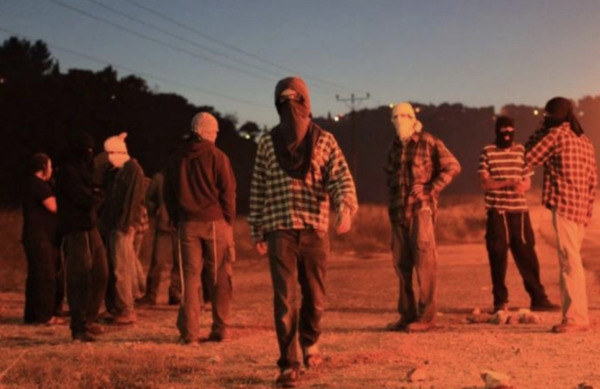
Dozens of settlers storm Al-Aqsa

Settlers stormed the Al-Aqsa Mosque compound on Sunday morning, under heavy protection from the Israeli occupation police, under the pretext of Jewish holidays.


Local sources reported that 189 settlers stormed Al-Aqsa Mosque in groups from the Mughrabi Gate, carrying out provocative tours of its courtyards amidst strict Israeli measures in occupied Jerusalem.

PALESTINE

Sun 13 Apr 2025 9:59 am - Jerusalem Time

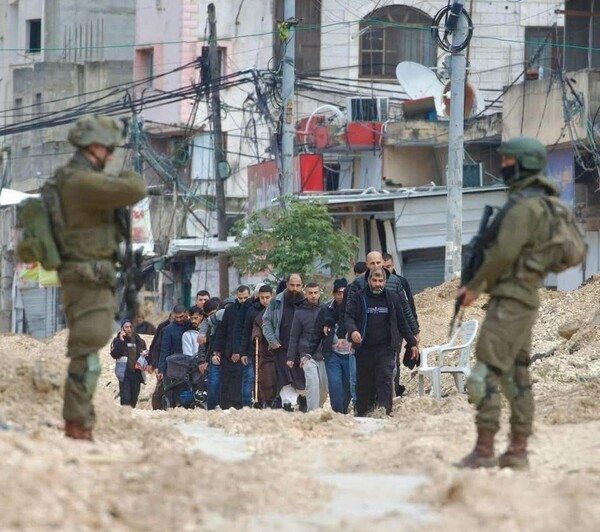
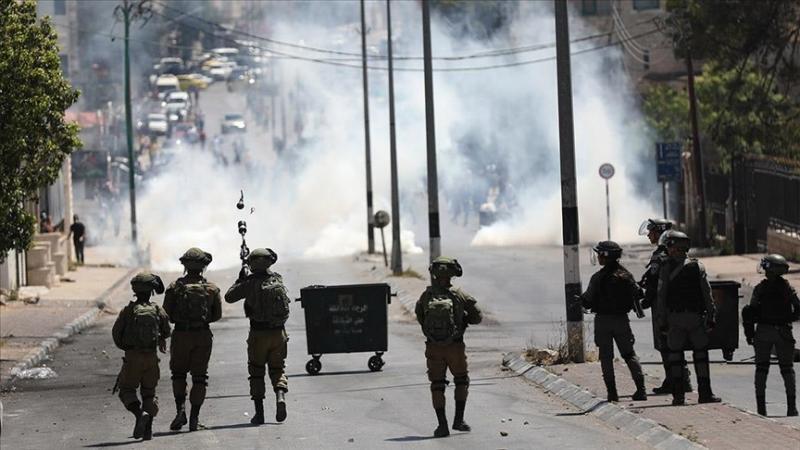
The occupation continues its aggression on the city of Tulkarm and its two camps for the 77th day.

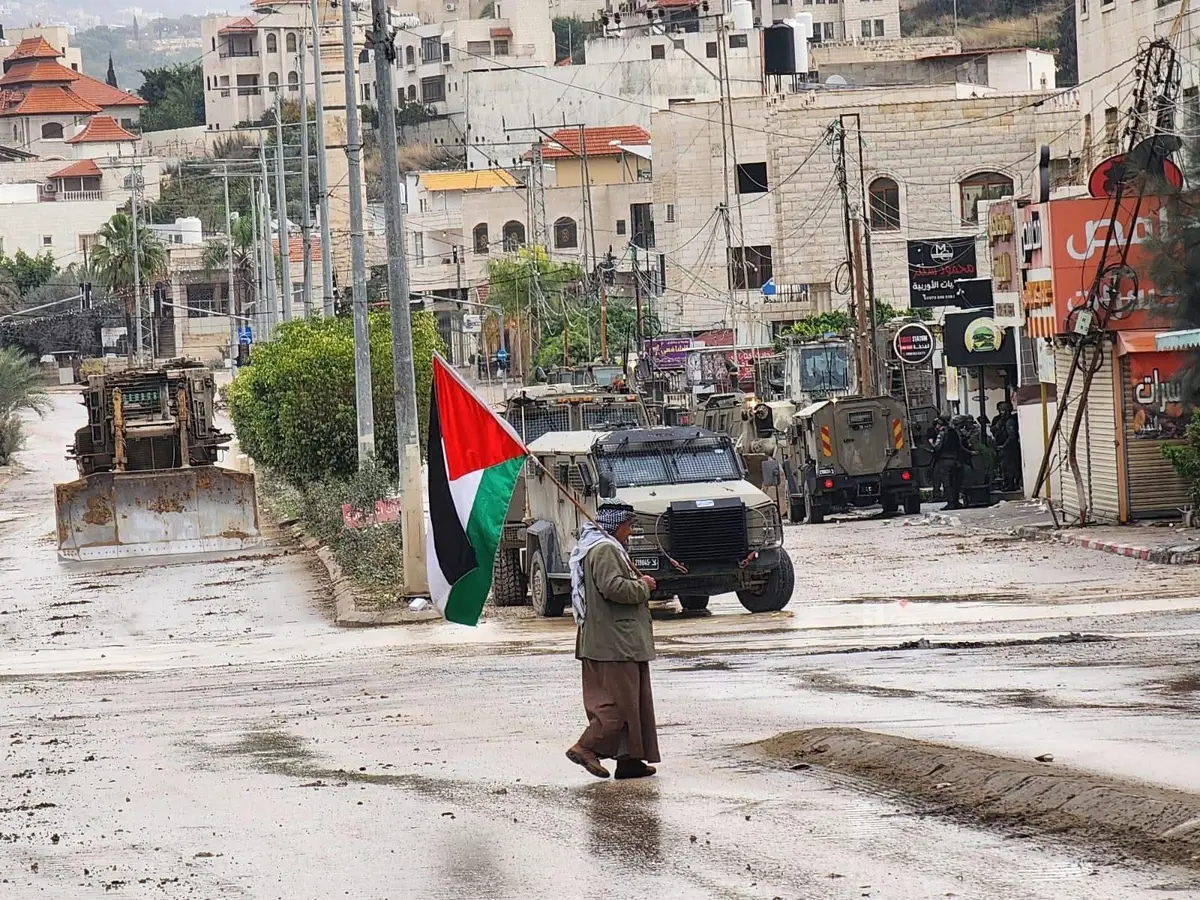
The Israeli occupation forces continue their escalating aggression against the city of Tulkarm and its camp for the 77th consecutive day, and for the 64th day against the Nur Shams camp, amid ongoing field escalation, accompanied by heavy gunfire, forced displacement, and the widespread deployment of military vehicles and infantry units.


This morning, Nour Shams camp witnessed heavy live fire, accompanied by explosions and a widespread deployment of occupation soldiers in the Jabal al-Nasr area. The camp is under a strict siege, preventing anyone from entering or leaving.


Local sources reported that occupation forces forced residents at dawn today to evacuate their homes located between the Dhnaba suburb and Jabal al-Nasr in Nour Shams camp, setting a 7:00 a.m. deadline for departure, amid heavy gunfire aimed at terrorizing the residents.


This comes as part of the ongoing forced evictions carried out by the occupation forces against the camp's residents. Yesterday, several Jabal al-Nasr residents were given a deadline to evacuate their homes, while others were forced to purchase water tanks for the occupation forces as a condition for remaining in their homes.


Since the early morning hours, infantry units have been deployed extensively at the entrance to the Dhanaba suburb, near Al-Firdaws Mosque. They set up a flying checkpoint there, preventing vehicles from passing and forcing them to turn back.


Last night, the Dhnaba suburb witnessed a heavy presence of occupation forces, particularly near the Attar platforms. Vehicles were stopped and thoroughly searched, the identities of their passengers were checked, and in many cases, vehicles were forced to turn back and prevented from passing.


In the same context, the occupation forces dispatched additional military reinforcements, including infantry units and vehicles, to Tulkarm camp, amid search and combing operations in its neighborhoods, which have been emptied of residents after they were forcibly displaced from their homes. The camp is completely devoid of any sign of life, following the complete destruction of the infrastructure, and the sabotage, demolition, and burning of homes and facilities.


Since last night, Israeli occupation forces have continued to evacuate residents from their homes on Nablus Street, specifically those near Tulkarm refugee camp. They forced residents of the Qaddoumi building in the area to leave, while simultaneously seizing homes and residential buildings on Nablus Street and the city's northern neighborhood, converting them into military barracks and positioning their vehicles around them.


Meanwhile, Nablus Road, which connects the Tulkarm and Nur Shams refugee camps, has witnessed a heavy deployment of occupation forces, restricting movement and harassing citizens. Sections of the road have been closed off with earth mounds in both directions.


The ongoing Israeli aggression and escalation against the city of Tulkarm and its two camps resulted in the deaths of 13 civilians, including a child and two women, one of whom was eight months pregnant. Dozens more were injured and arrested.


It also resulted in the forced displacement of more than 4,000 families from the Tulkarm and Nur Shams camps, along with dozens of families from the city's northern neighborhood after their homes were seized and a number of them converted into military barracks.


The aggression caused widespread destruction to the infrastructure, including homes, shops, and vehicles, which were completely and partially demolished, burned, vandalized, looted, and stolen. 396 homes were completely destroyed and 2,573 partially destroyed in the Tulkarm and Nur Shams camps, in addition to the closure of their entrances and alleys with earth mounds.

OPINIONS

Sun 13 Apr 2025 9:16 am - Jerusalem Time

Can artificial intelligence be an artist?

Abdul Rahman Al-Khatib

Abdul Rahman Al-Khatib

Opinion Writer

At a time when the impossible has become closer to the possible, we stand in awe and amazement at the capabilities of machines. Complex, controversial questions come to mind. One of these questions, which has begun to touch the doors of artistic discussions: Can artificial intelligence be an artist?


For decades, art has been viewed as the highest and most sublime expression of humanity and its values. It is the language of feeling and a true translation of what is deep within the soul. It is a reflection of life's conscience, a mirror of contemplation, memory, and nostalgia. So how can a machine, without a heart, childhood, nostalgia, sadness, or joy, delve into these worlds, contradictions, and emotions? How can it "feel" to create art?


Yet reality presents us with astonishing scenes that confound this certainty and belief. Artificial intelligence algorithms produce artistic paintings that appear to have been created by the greatest artists and visual artists. Applications compose music capable of stirring emotion, and applications write poems and short stories with a truly literary and cultural character. Some have even begun using artificial intelligence to create films, design fashion, or even write dramatic scripts.


Here, we face an intriguing paradox: How can a machine that doesn't understand the meaning of beauty create it? How can a computer application, based on data analysis rather than emotion, create?


In fact, what AI produces does not stem from an inner experience or philosophical vision, but rather from its ability to process vast amounts of data, analyze patterns, and combine different elements to arrive at a seemingly “creative” result. It imitates, composes, and rearranges what it has learned from human art, but it does not invent from nothing, as an artist does when he creates a world from within himself that did not exist before.


However, it cannot be ignored that these tools have become truly influential in the art scene. Many artists around the world have begun using AI as an aid in the process of creating and producing art. It is used to generate initial ideas, suggest color palettes, formulate complex geometric shapes, or generate new rhythms in music. In this context, it is not viewed as a competitor, but rather as a tool that expands the artist's horizons and pushes them to explore areas they would not have ventured into on their own. Indeed, some artists have found AI to be a kind of "reflective mirror," showing them a new angle of themselves or encouraging them to break out of the traditional molds they have long been accustomed to.


But the question remains: Can the tool used to produce art be considered an art in itself?


To understand the answer, we must consider the meaning of "artist." An artist is someone who produces a vibrant work from the heart of their experience, from an emotional moment, an existential stance, or a deeply held feeling. He transforms pain into tone, loss into color, and memory into a visual scene, who sees the unseen and feels the unspeakable, then translates it into a language that others can understand without words.


Artificial intelligence does not live, so it does not grieve, love, or yearn. It is a device that generates based on what it has learned, and does not invent feelings. Perhaps for this reason, some believe that no matter how clever artificial intelligence becomes, it remains a “simulated artist,” not a “real artist.”


However, some, particularly technologists and technologists like me, have a different perspective. We ask: What if, in the future, we could program artificial intelligence to feel? What if we trained it to experience the meanings of love, loss, and nostalgia? What if we created an artificial memory for it and introduced it to scenes of childhood, loss, and heartbreak? Would it then be closer to a true artist?


This approach opens the door to a broad horizon that transcends art to pose an existential question: Can artificial intelligence replace humans in their most private domains? When will it become "semi-human"? Can artificial emotions emerge that are convincing to the point of deception? I truly have no immediate answer, but the rapid and accelerating development of artificial intelligence research and applications that the world is witnessing may provide us with indications and insights into the humanization of machines and their interactions.


But even if we do that, there remains a gap that cannot be easily bridged, because art is not limited to feelings alone, but rather to the human context in which it is produced, the environment, the contradictions, the suffering, the companionship, the daily details that are not taught but lived. It is a complex composition that algorithms do not easily capture, no matter how advanced they are.


Perhaps with time, and perhaps after years of "feeding" artificial intelligence with everything the human spirit has produced, it will succeed in convincing us that it "feels," but the question that will remain unanswered is: Are these feelings real or artificial? Can an artist be born from equations and algorithms? Or does art, at its core, remain the preserve of those who possess heart before talent?

PALESTINE

Sun 13 Apr 2025 9:02 am - Jerusalem Time

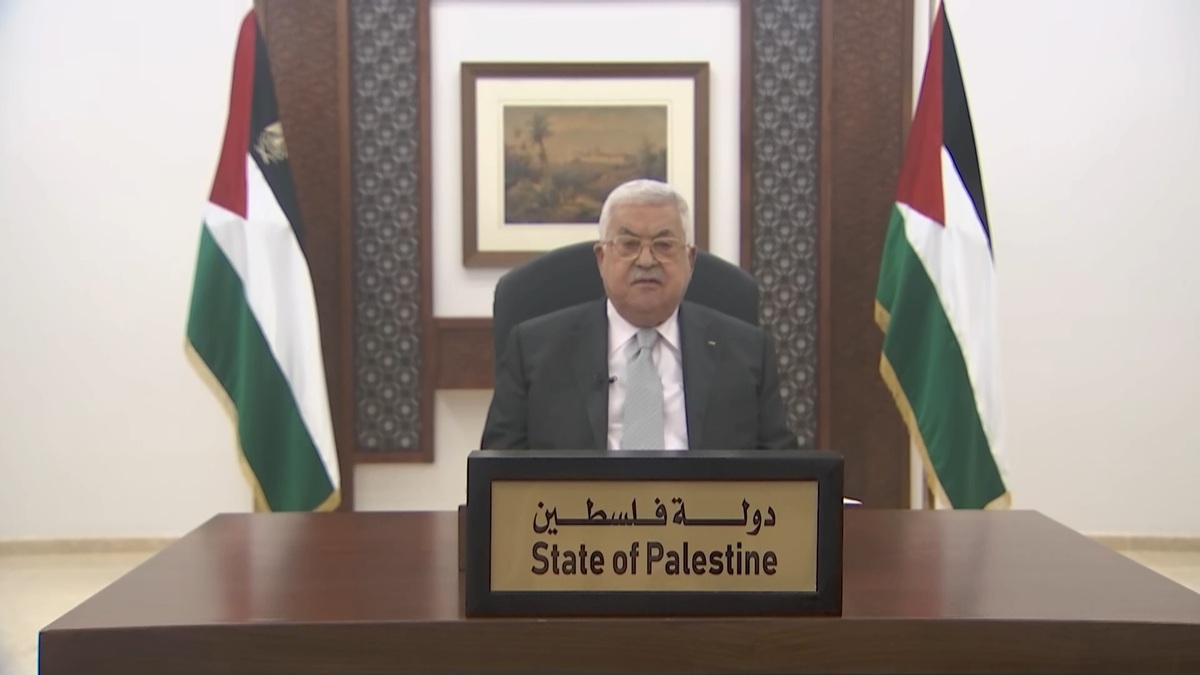
The Palestinian Central Council will meet to select a vice president on the 23rd and 24th of this month.

The Palestine Liberation Organization (PLO) Central Council has invited its approximately 180 members to meet in Ramallah on April 23 and 24 to create and appoint a vice president to Mahmoud Abbas on the PLO Executive Committee.


During the emergency Arab Summit in Cairo on March 4, President Abbas announced his decision to create and appoint the position of Vice President of the PLO and the State of Palestine by making the required amendment to the PLO's bylaws.


In 2018, the Palestinian National Council (the Palestinian people's parliament) decided to delegate its powers to the PLO Central Council in special political circumstances, making it the official body authorized to amend the organization's bylaws.

ARAB AND WORLD

Sun 13 Apr 2025 9:00 am - Jerusalem Time

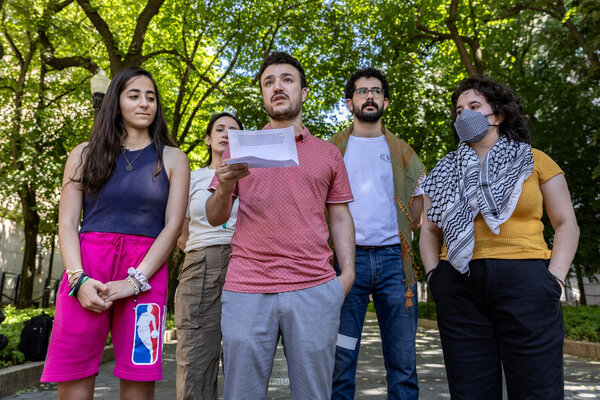
Visas of more than 600 international students in the US have been revoked due to their pro-Palestine stances.

US media reports revealed that more than 100 universities and colleges in the United States reported cases of international student visa revocations by the US State Department, which changed the legal status of more than 600 international students and recent graduates, according to Inside Higher Ed.

The American Civil Liberties Union (ACLU) said the escalation "represents an unacceptable ideological test," adding, "No president has the right to determine who stays or is deported based on their political views."

According to the affected universities, a number of students were surprised to find their visas revoked without prior notice. Some discovered the revocation through a federal database, or through unexpected text messages or emails. The students' attorneys also noted that most were not given any opportunity to respond or appeal, and the universities were not officially notified of the reasons.

Human rights organizations linked these measures to pro-Palestinian positions, noting that the previous Trump administration, which continues some of its policies under the current administration, selectively addresses freedom of expression when it relates to the Palestinian issue.

"What is happening is a replacement of free debate with fear, and silencing voices appears to be the real goal," said FIRE, a free speech advocacy organization.

Recently, the Department of Homeland Security announced that it would monitor immigrants' social media accounts for what it described as "anti-Semitic content."

"We will not allow anyone to hide behind the First Amendment to spread hatred or promote violence. You are not welcome here," said State Department official Tricia McLoughlin.

In controversial statements, Secretary of State Marco Rubio stated that more than 300 visas had been revoked, claiming that those targeted had engaged in activities "contrary to national interests," such as publishing opinion pieces criticizing Israeli crimes in Gaza or joining student protests calling for a boycott of Israel.

"Whenever I discover one of these extremists, I immediately revoke their visa," Rubio said, adding that the student visa is only for education, not for political activities.

Authorities have encouraged students to leave the country voluntarily rather than face deportation through immigration courts, a process that could lead to detention. Homeland Security Secretary Kristi Noem issued a direct threat last March, saying, "If they don't leave, we will find them, deport them, and never allow them to return."

The ministry also intends to impose a daily fine of $998 on those who ignore deportation orders, adding significant financial burdens to students.

A US immigration court in Louisiana ruled on Friday that Columbia University activist Mahmoud Khalil could be deported due to his peaceful political activities and beliefs. The judge gave Khalil's lawyer until April 23 to file a motion to halt his deportation.

The government submitted a memorandum signed by Secretary of State Marco Rubio stating that Khalil could be deported from the United States due to his activities. Trump administration officials have not charged Khalil with any criminal conduct, and he is a lawful permanent resident.

At the end of the session, Khalil asked to make an official statement, so he stood up and headed directly to the court.

"I would like to reiterate what I said last time, that nothing is more important to this court than due process rights and basic fairness. Clearly, what we witnessed today did not meet either of those principles, whether in this hearing or throughout this process," he said.

He added, "This is exactly why the Trump administration sent me to this court, a thousand miles away from my family. All I hope is that the same wheel you thought should be mine will be given to 'others' who have spent months here without their cases being heard."

In a statement, CAIR Executive Director Nihad Awad said, “The dangerous and unconstitutional ruling by a Louisiana immigration judge allowing the deportation of a lawful permanent resident because the current administration wants to punish him for exercising his First Amendment right to criticize the Israeli government’s genocide of Palestinians in Gaza must not be implemented.”

He continued: "Although the ruling is just the first step in a long legal process, it should be disturbing to all Americans who cherish their Bill of Rights rights and fundamental freedoms such as freedom of expression."

He added, "We are confident that the federal courts will find the Trump administration's unlawful attack on free speech, and that the movement against the Israeli government's genocide will continue to expand in our country, despite these attempts to suppress free speech."

In light of these developments, the American Council on Education (ACE), along with 15 other academic organizations, issued an urgent request for a meeting with the Departments of State and Homeland Security to discuss the implications of these decisions for international students.

"These measures have created uncertainty and anxiety, and have negatively impacted our institutions' ability to provide the necessary support to students," said Council President Ted Mitchell.

For their part, observers believe that these policies are being used as a tool to suppress voices critical of Israeli policies, particularly within American universities.


OPINIONS

Sun 13 Apr 2025 8:57 am - Jerusalem Time

A tragic reality in the shadow of the war of extermination

Baha Rahal

Baha Rahal

Opinion Writer

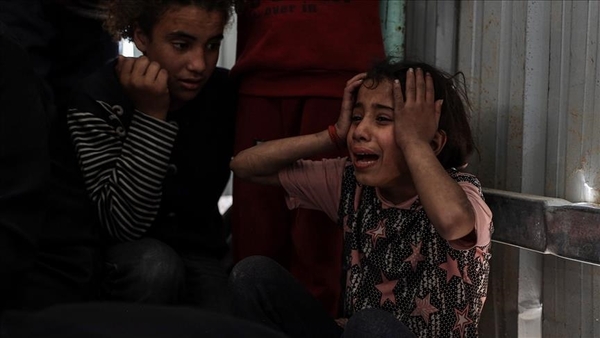
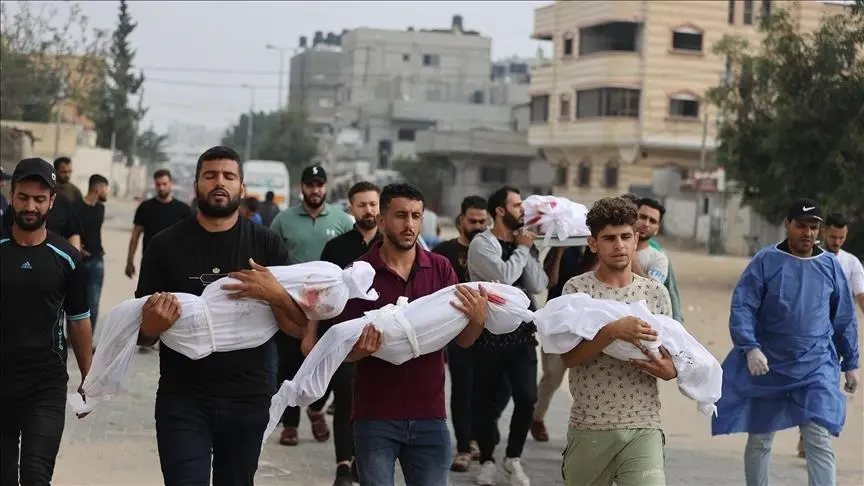
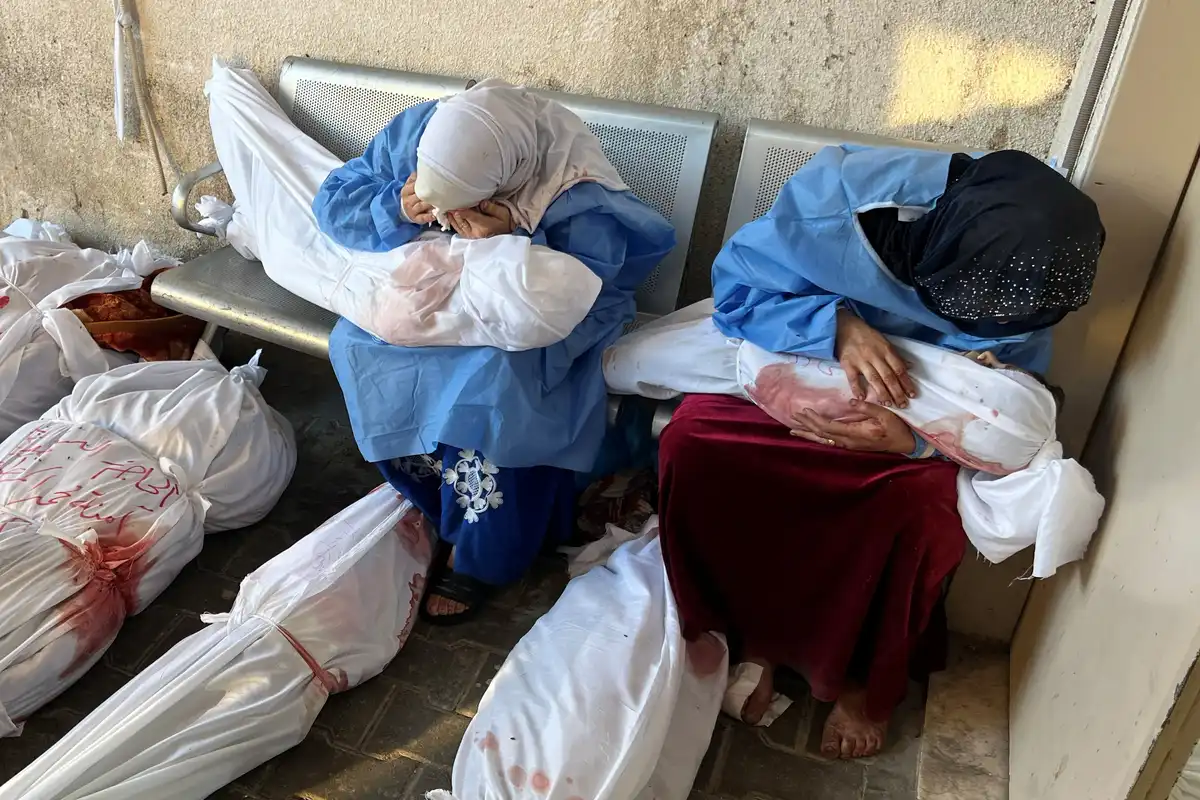
In the midst of the war of extermination in Gaza, civilians are facing unprecedented suffering, represented by mass killings, siege, hunger, and thirst. This war does not differentiate between the old and the young; no one is spared from this harsh reality that befalls the people there. As the number of martyrs and wounded mounts alarmingly, the hearts of those who are grieving increase, and the images of hope for a better tomorrow are fading. But what is most heartbreaking and haunting to humanity is that this war is leaving indelible marks on future generations, especially children, who are considered the most affected segment of society.

The horrific images continue, becoming more horrific by the day. Childhood, which should live in safety and peace, is being crushed under the rubble of a blind war. A tragic scene of a two-month-old baby girl who has lost all her limbs—no hands or feet—and her entire life seems like a nightmare. This reality doesn't just affect children who are killed or injured, but also those who lose their loved ones, as happened to the little girl who lost her parents and siblings all at once, leaving her to face life alone, without hope, shelter, or a hug to call her to.

The trauma doesn't stop there. Children who seek to rebuild their lives after these tragedies become victims of psychological and physical disabilities. Some lose their hearing, others their sight, and every child suffers lifelong psychological trauma. Severe psychological injuries cause neurological disorders that paralyze these children's movements and leave them with wounds that never heal.

This bleak picture presented by reality reflects the tragedy of war and the destruction of life. War not only kills bodies, but also childhood as a whole. Children who once filled the earth with laughter and joy today find themselves under the rubble, shackled by pain and destruction.

The psychological devastation suffered by Gaza's children under such circumstances is not limited to physical effects, but extends to mental and social deterioration. These children lose confidence in the world around them and live in an environment characterized by violence and chaos. The loss of a father, mother, or sibling makes it difficult for a child to regain any hope in life or to understand why they are being punished for no fault of their own.

The war continues to destroy everything beautiful in these children's lives, and instead of having hope for the future, everything is reduced to rubble.


..............

The psychological devastation suffered by Gaza's children under such conditions is not limited to physical effects, but extends to mental and social deterioration. These children lose confidence in the world around them and live in an environment characterized by violence and chaos.


OPINIONS

Sun 13 Apr 2025 8:56 am - Jerusalem Time

Between a temporary truce and the perpetuation of the occupation... A reading of the Egyptian initiative

Marwan Emil Toubasi

Marwan Emil Toubasi

Opinion Writer

While Trump's decisions put China and the United States on the brink of war, sparking new flashpoints and potentially escalating wars, particularly with Iran if negotiations over the nuclear issue fail amidst the changing international landscape, this is not to mention the ongoing situation in Palestine, which is saturated with fire, blood, tragedy, and the depth of suffering.

Initiatives to cease fire in the Gaza Strip are being re-proposed, most notably the new Egyptian initiative. This initiative is being hastily formulated amidst international and regional political pressures and the reality on the ground, through which the occupation is attempting to impose terms of surrender, not just a truce or a ceasefire for a specific period, despite the crisis Netanyahu is facing within Israeli society across its various political and security sectors.

Although the Egyptian initiative is based essentially on national concern, it bears the hallmarks of a "conditional truce" rather than a political solution or a genuine withdrawal of occupation forces, even from Gaza. Despite talk of three phases beginning with a ceasefire and withdrawal from residential areas in the Strip, a careful examination of the reality and our past experiences as Palestinians reveals that we are facing a new attempt to manage the crisis, not resolve it. The difference here is fundamental.

A ceasefire is an urgent humanitarian necessity, and there is no dispute about its urgent priority. However, the fundamental question is: Under what conditions? And at what political cost? Is a ceasefire possible while the occupation remains inside Gaza or at its gates, while the blockade continues, and while a civilian committee is conditionally mandated to administer the Strip under the watchful eye of the occupation and with non-Palestinian guarantees?

What is being proposed under the title of a "Community Support Committee" for the administration of Gaza cannot be separated from the outcomes of this initiative, nor from attempts to define the future shape of Gaza according to Israeli security standards. Will the committee, if established, be a step toward unifying national ranks and establishing a truly representative field authority, or will it serve as a gateway to the creation of a temporary, functional administration that serves non-national goals and perpetuates division under the guise of humanitarian need?

I believe that any attempt to create a new administrative reality in Gaza that is not based on comprehensive national consensus, and does not emerge from a unified vision within the framework of the Palestine Liberation Organization as the sole legitimate representative of our people and the holder of political and legal jurisdiction, despite its urgent need to develop and expand its performance and base as a broad national front, is liable to be transformed into a tool of political subjugation, regardless of the intentions of those responsible for it.

Today, Israel is trying to escape its predicament through an equation of no military victory, but political and security gains. In doing so, it is betting on a face-saving truce and internal reorganization of Gaza to ensure the weakening of the resistance and the continuation of indirect control.

By supporting the initiative, the United States is not seeking justice for the Palestinian people, but rather to protect Israel's security and the "stability of the region," under the umbrella of American strategic interests within the framework of the "New Middle East" vision. The renewed talk here of a "new deal," whether formulated by Trump or another, is nothing more than an attempt to reproduce the failure with a new face and to sidestep the root of the problem, which is essentially the continued occupation of all Palestinian territories by settlers.

What we need is not just an initiative to heal the bleeding, despite the importance of stopping it, of course, but rather a national vision that redefines the battle against the occupation's ambitions and policies of uprooting and displacement, and that links Gaza, the West Bank, Jerusalem, and the diaspora in a single national liberation project, based on a political will that possesses independent national decision-making, a clear vision and program, political and field unity, and a genuine popular will that stands behind this project.

I believe that any truce that does not include a complete withdrawal from Gaza, a lifting of the blockade, and a guarantee of the Palestinian people's freedom to self-determination is a fragile truce that could turn into a political trap. Any committee not formed by unanimous Palestinian national will will be an administration without sovereignty, a tool for freezing the status quo, not a tool for changing the situation.

Today, we Palestinians are called upon to take a clear, realistic, rational, and national liberation stance: There will be no truce that legitimizes the occupation, no administration without legitimate national representation, and no national project built under the bayonets of the usurping occupier.

If the Egyptian initiative is not subject to Palestinian national consensus, and is not linked to a complete withdrawal, the dismantling of settlements and the apartheid regime, and the achievement of justice for the victims and our steadfast people, in accordance with a clear vision and timetable, in cooperation with the parties to the international initiative to achieve the establishment of an independent, sovereign Palestinian state, it will be a temporary solution to the occupation crisis, not to our freedom.


............

Although the Egyptian initiative is based on nationalist concerns at its core, it bears the features of a "conditional truce" more than it represents a political solution or a real withdrawal of the occupation forces, even from Gaza.

OPINIONS

Sun 13 Apr 2025 8:56 am - Jerusalem Time

59,000 Palestinians dead and 59 Israeli prisoners: When the homeland groans and the state cries out

Amin Al-Hajj / Arab American University

Amin Al-Hajj / Arab American University

Opinion Writer

In a paradox that almost sums up the Palestinian tragedy at every level, we witness how 59 captured soldiers from the occupation army "succeed" in mobilizing the political and media community, both domestically and internationally, while the martyrdom of more than 59,000 Palestinians is met with silence and inaction, both locally and in the "greater" Arab world in general.

Why does a country shake over a single prisoner, while a nation does not explode over an endless "chain" of horrific massacres and a ceaseless torrent of blood? The answer lies not only in the world's double "moral" standards, but also in the gap between two cultures. One of them crafts the individual into a "cause," carrying it to the world, even if it is shoddy, but finds buyers or is forced to buy it. The other internalizes the pain and is content with passive patience, which is synonymous with impotence, or silent mourning devoid of anger, without transforming this pain into public action, or even political or media pressure.

Is it a conflict between symbolic value and numerical accumulation? There, every prisoner is a "state issue," presented as a "national symbol," around which pressure campaigns are built, demonstrations are organized, institutions—media, military, academic, and others—are mobilized, and families and "opposition" parties rally around his cause. He is presented as a son to every household, a symbol whose image must be restored, and above all, his image must be restored, no matter the "price," even if it costs tens of thousands of women and children. They have turned every prisoner into a target for a pressure campaign, and every soldier, dead or imprisoned, into a tool to reshape "public opinion," as if he were the state itself, or at least its memory and future.

In contrast, the martyr is often reduced to a "number" in a statement, his identity gradually "erased" after a few days, as if we have lost the ability to grant martyrs their symbolic weight and their vibrant presence in our collective consciousness. Images of martyrs and scenes of genocide and killing no longer produce the same jolt, as if we have grown accustomed to death, a death that some of us experience, but which we all live.

We have begun to count our martyrs en masse, a thousand, then two thousand, then ten, then fifty, and the martyr counter does not stop. The martyrs are buried - if possible - and then the masses pass on in silence, and with much helplessness, without the blood being transformed into a pressing political action, or into a unifying position, at least among the political "elite", some of whose members live and enjoy themselves as if they are from another planet. The sight of death has not changed their daily routine at all. They still wake up as they are accustomed to, from the warmth of their comfortable beds, to their warm bath, as warm as the blood of the martyrs when it first flowed. They do not give up their morning coffee, but they could give up all of us, of us the homeland, some or most of it.

We have lost the ability to transform martyrdom into a cause, and martyrs into symbols - with rare exceptions - or at least into demands for the establishment of truth and justice. Blood no longer inflames emotions or moves the squares, not because we no longer grieve - grief has become our daily sustenance - but because confidence in the narrative, as well as in leadership, as well as the ability to influence, has dangerously eroded. We now have a crisis of mobilization, not of feelings. The difference is no longer in the amount of grief, but in the mechanisms for expressing it. Their funerals are suppressed, their history is erased, and their images are distorted, until we suffer from a dangerous fragmentation in the national narrative, and a longitudinal and transverse division that has turned some of us into a graveyard for the voices of others.

Since when were the great sacrifices in Palestine merely numbers? Since when did martyrs turn into statistics? Who dares strip a martyr of his meaning? Who turned our sacrifices into mere words passing by on a blood-red news ticker? We no longer demand what is ours, nor do we insist on it. Rather, we retreat to mourn what we have lost. Yes, we mourn, but we do not pressure. Yes, we wail, but we do not advance. The culture of truth has receded in the face of the culture of loss. It is as if we are a nation content with eulogies, eulogies without a strategy. There, every individual has a state that cries out for him, and here, the homeland groans, but its voice is barely heard.


.........


Since when were the great sacrifices in Palestine merely numbers? Since when did martyrs become statistics? Who dares strip a martyr of his meaning? Who turned our sacrifices into mere words flashing by on a blood-red news ticker?


PALESTINE

Sun 13 Apr 2025 8:51 am - Jerusalem Time

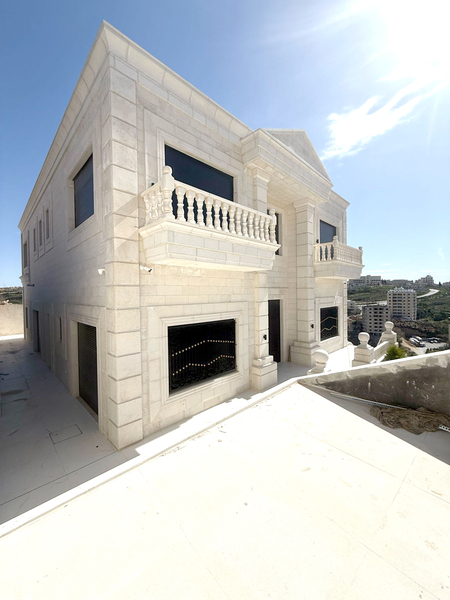
Targeting Area A: Home demolition and land seizure notices extend to Al-Bireh

In a dangerous move that confirms that the Israeli occupation authorities are proceeding with their plans to undermine the Palestinian presence and destroy what remains of the Oslo Accords, the city of Al-Bireh recently received occupation notices ordering the cessation of work on six buildings located within the city's approved structural boundaries since 1979, some of which are located in areas classified as "A."


Acting Mayor of Al-Bireh, Engineer Robin Al-Khatib, told Al-Quds that the buildings notified for demolition are located within the city limits of Al-Bireh, some of which are inhabited while others are under construction.


Al-Khatib added that the occupation's warnings extended, for the first time, to areas classified as "A" in the city of Al-Bireh, in a dangerous and unprecedented escalation through which the occupation aims to impose new facts on the ground.


For his part, one of the residents affected by the stop-work orders, who preferred to remain anonymous for fear of prosecution by the occupation, told Al-Quds that the construction work was carried out on land located within the structural boundaries of the city of Al-Bireh, and that they had obtained all necessary building permits from the municipality and paid all required fees.


He added that he was surprised when the occupation authorities notified them to halt construction on two residential buildings, one of which consists of six floors and the other of which is a separate villa, both built on 10 dunams. They were given until April 23 to object.


He continued: "There are multi-story residential buildings that have been notified of demolition. Their residents are preparing to move into them after purchasing them from their owners. Now, they won't be able to move in after these notices, despite the large sums of money they spent and years of effort to purchase these apartments."


"right of disposal"


The fierce Israeli attack on the city of Al-Bireh did not stop at demolition notices, but also extended to lands in the city and neighboring villages. Under the activation of what the occupation calls the "right to dispose of," the occupation authorities notified the seizure of approximately 137 dunams of lands in Al-Bireh and surrounding villages east of Ramallah, and the town of Mikhmas, northeast of Jerusalem, for the expansion of the settlement "Route 60."


Al-Khatib confirmed that the municipality, in coordination with legal and official authorities, has begun taking legal action to halt the demolition and seizure notices, and has hired a lawyer at its own expense to communicate with the relevant Israeli authorities to halt these attacks on citizens' property and lands in the city of Al-Bireh.


Amir Daoud, Director of Publications and Documentation at the Wall and Settlement Resistance Commission, said in turn that the occupation forces resort to many names to seize citizens' lands and dispossess them of their ownership, including what is called the "right to dispose of," which is a late implementation of a settlement project that was previously announced.


Dawoud explained to Al-Quds that the Israeli expropriation order, under the name "right of disposal," regarding the seizure of lands in the city of Al-Bireh and its surroundings, was previously issued in the 1980s and 1990s, but the occupation authorities did not implement it at the time. Only recently, they issued a decision to implement it.


The Oslo Accords divided the West Bank into three areas, classified as follows: "A" is under full Palestinian control; "B" is under Israeli security control and Palestinian civil and administrative control; and "C" is under Israeli civil, administrative and security control.


By targeting Area A, the occupation has confirmed that nothing significant remains of the Oslo Accords, and that it is proceeding with its plans to displace citizens from their homeland.

PALESTINE

Sun 13 Apr 2025 8:49 am - Jerusalem Time

Al-Bitar: Palestine is economically dying and is facing a systematic and powerful financial war waged by Israel.

The Palestinian financial situation is going through its most difficult phase since the establishment of the Authority, and this requires rationalizing expenditures to a minimum.


Approximately two billion dollars are withheld by the occupation, while compensation continues to be deducted illegally.


The success of reconstruction depends on enabling the Authority to manage the sector, but the occupation is placing many obstacles.


Official and popular Kuwaiti support has had a significant impact in strengthening the steadfastness of the Palestinians in the face of the occupation.


Palestine's participation in joint meetings of financial bodies aims to strengthen economic relations with Arab brothers.


Arab countries are experiencing a stifling economic crisis resembling a "trade war," which is compounding the suffering of the Palestinian people.


Palestinian Finance Minister Dr. Omar Bitar said that Palestine is economically dying, stressing the need to shed light on the difficult financial and economic conditions the country is experiencing amid the ongoing war and sensitive regional circumstances.

In an interview with Kuwait's Al-Rai newspaper, which Al-Quds is publishing simultaneously today, Al-Bitar highlighted the importance of holding the joint annual meetings of financial institutions and the 16th regular session of the Council of Arab Finance Ministers, hosted by Kuwait. He emphasized the importance of this meeting, particularly given the difficult circumstances facing Arab countries, including a stifling economic crisis resembling a "trade war," which is compounding the suffering of the Palestinian people.

He added that Palestine's participation in the meetings aims to strengthen economic relations with its Arab brothers, regardless of political considerations, reassure them about the current situation in Palestine, and expand the horizons of economic cooperation to support the steadfastness of the Palestinian people.

Al-Bitar noted that the Palestinian financial situation, under pressure from the occupation, is facing, in addition to the military aggression against Gaza and the West Bank, a systematic and vigorous financial war waged by Israel against it, imposing increasing financial restrictions through which it steals Palestinian tax and customs funds, whether by delaying them, withholding them, or imposing illegal deductions.

Al-Bitar stated that approximately $2 billion is being withheld by the Israeli occupation under various pretexts, with compensation being illegally deducted due to a law recently passed by the Israeli Knesset that allows any Israeli citizen who suffered injury or damage after October 7 to sue the Palestinian Authority, regardless of where the incident occurred.

He pointed out that this law provides substantial compensation of up to $3 million to the family of each person killed, and $1.5 million to each person injured.

He explained that the volume of lawsuits filed against the Palestinian Authority could result in compensation payments of up to $5 billion, a massive financial burden that could bankrupt the Authority before any political or economic progress is achieved.


The occupation is exploiting the "clearance" as a financial pressure tool.


Al-Bitar asserted that the Israeli occupation is exploiting clearance revenues (tax revenues collected by Israel on behalf of the Palestinian Authority) as a tool for financial pressure, noting that Israel is not content with deducting electricity bills and debts, but is also adding unjustified deductions, which further burdens the Palestinian treasury.

Al-Baytar explained that some deductions are carried out in an incorrect manner, such as deducting electricity costs directly from clearance funds without settling the amounts with the electricity companies, placing the Authority under increasing financial pressure.


rationalization of expenses


Al-Baytar explained that Palestine currently relies on Israel for 90% of its electricity needs, 100% of its petroleum needs, and approximately 70% of its consumer needs.

He emphasized the existence of a clear plan to reduce this dependence, despite significant challenges, such as the need to build fuel storage facilities and energy infrastructure.

He pointed out that the Palestinian financial situation is going through its most difficult phase since the establishment of the Palestinian Authority, which requires rationalizing expenditures to a minimum and focusing on essentials.


Confronting corruption


In response to a question about the presence of administrative corruption in some sectors, Al-Bitar explained that the ongoing reforms aim to build a strong financial collection system without directly addressing corruption, but rather to address the weaknesses of the previous system.

He pointed out that the ministry has changed administrative staff, particularly in the tax and finance departments, as part of a comprehensive reform plan.


Decision independence


Al-Bitar emphasized that the current government relies on technical competencies (technocrats) far removed from politics, and makes its decisions based purely on professional considerations.

He explained that the reform process is strongly supported by President Mahmoud Abbas and the Prime Minister, enabling the implementation of reform plans free from political pressure.


Salary reform


Al-Bitar reviewed plans related to reforming the government payroll sector, identifying problems and developing practical solutions. He also noted that net lending reform has begun, particularly with regard to the accumulated debts of electricity and water companies, through settling accounts with municipalities and local authorities.


health reforms


Al-Baytar pointed out that there is a robust plan to reform the health sector, which was suffering from significant financial drain. The sector has been restructured and new financial departments have been activated to ensure financial sustainability and improve the quality of services.

He praised the ongoing Arab support for Palestine, particularly from Saudi Arabia and Kuwait, as Arab countries provide contributions through various support funds.

He noted that Arab support funds have existed for years, allocated to support various sectors, thus contributing to alleviating the Palestinian financial deficit.


Gaza reconstruction


Al-Bitar addressed efforts to rebuild the Gaza Strip after the recent aggression, with coordination underway with the World Bank to develop a comprehensive plan. He noted that these efforts will begin with relief and early recovery projects and extend over several years, according to international estimates.

He stressed that the success of reconstruction depends on enabling the Palestinian Authority to administer the Gaza Strip, noting that preliminary agreements exist with Hamas to facilitate the work, but that the Israeli occupation is placing numerous obstacles in the way.

He pointed out that the internal displacement crisis in the West Bank is worsening, with more than 50,000 internally displaced persons (IDPs) from the northern West Bank (Tulkarm and Jenin), placing an additional burden on the government.

Al-Bitar emphasized that the best way to break away from the occupation is to enhance Palestinian capabilities by localizing services, strengthening vital sectors such as health and energy, and reducing reliance on Israeli resources.


Kuwaiti supportive role


Al-Baytar extended his greetings to the Kuwaiti government and people, noting that official and popular Kuwaiti support, particularly in Jerusalem and Hebron, has had a significant impact in strengthening the steadfastness of Palestinians in the face of occupation and settlement activity.

PALESTINE

Sat 12 Apr 2025 10:11 pm - Jerusalem Time

UNRWA: All essential supplies are running out in Gaza

The United Nations Relief and Works Agency for Palestine Refugees (UNRWA) said that all basic supplies are running out in Gaza, "which means that babies will go to bed hungry."


In a statement published on Saturday, UNRWA Communications Director Juliette Touma called for immediate action to prevent the worsening humanitarian crisis in the Gaza Strip.


She stressed that after six weeks of an Israeli-imposed blockade on the Strip, which prevents the entry of aid and commercial supplies, "food stocks are nearly gone, bakeries are closed, and hunger is spreading."


Since October 7, 2023, the Israeli occupation forces have launched an aggression against the Gaza Strip, resulting in the deaths of 50,933 citizens, the majority of whom were children and women, and the injury of 116,450 others. This is a preliminary toll, with a number of victims still under the rubble and on the streets, unable to be reached by ambulances and rescue teams.

PALESTINE

Sat 12 Apr 2025 9:59 pm - Jerusalem Time

Hamas: A negotiating delegation headed by Khalil al-Hayya heads to Cairo.

Hamas announced that the movement's negotiating delegation, headed by Hamas leader in Gaza, Khalil al-Hayya, headed to the Egyptian capital, Cairo, on Saturday.


The statement added that meetings and follow-up will be held with mediators from Qatar and Egypt, as part of ongoing efforts aimed at reaching an agreement and halting the occupation's aggression.


Hamas affirmed its willingness to engage positively with any proposals that guarantee a permanent ceasefire, a complete withdrawal of Israeli forces from the Gaza Strip, an end to the suffering of the Palestinian people, and the conclusion of a serious prisoner exchange deal.


ARAB AND WORLD

Sat 12 Apr 2025 9:25 pm - Jerusalem Time

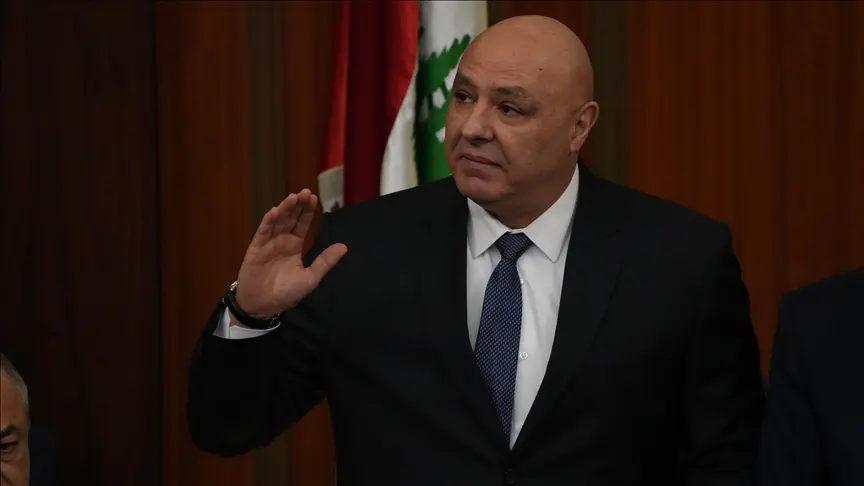
The Lebanese President stresses the need for dialogue and avoiding violence to solve the country's problems.

Lebanese President Joseph Aoun stressed on Saturday the necessity of dialogue to resolve all internal problems in the country, warning that resorting to "violence" will not resolve any issues.


In a speech marking the 50th anniversary of the civil war, Aoun said, "We must have learned from these 50 years... and the first lesson we learned is that violence and hatred will not solve any problem in Lebanon."


Aoun added that the unidentified missiles launched from southern Lebanon are "a malicious plot against our country that targets Lebanon's stability and the security of the Lebanese," considering them to provide "an additional pretext" for attacks on Lebanon.


The Lebanese president stressed that everyone in the country "unanimously agrees that any weapons outside the state or outside the state's authority could jeopardize Lebanon's interests."


Aoun said: "It is time for us all to say that Lebanon will only be protected by its state, its army, and the official security forces... It is time for us all to adhere to the requirements of this position so that Lebanon survives and so that we have learned from fifty years of our insane wars."


I continue: "Our unity is our weapon and our weapon is our army."

ARAB AND WORLD

Sat 12 Apr 2025 8:21 pm - Jerusalem Time

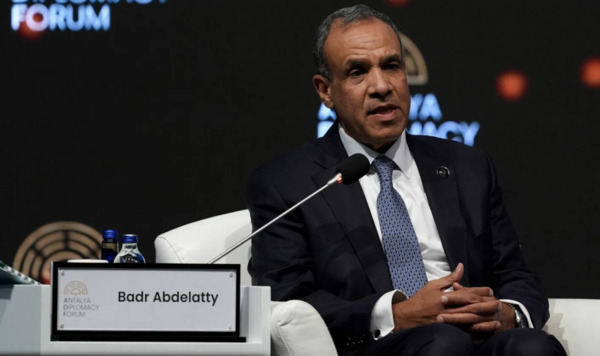
The Egyptian Foreign Minister discusses the catastrophic situation in Gaza with the UN coordinator.

The Egyptian Ministry of Foreign Affairs said on Saturday that Foreign Minister Badr Abdel Aty discussed the catastrophic humanitarian situation in the Gaza Strip by phone with the United Nations Special Coordinator for Humanitarian Affairs and Reconstruction in the Gaza Strip, Sigrid Kaag.


The Egyptian Foreign Ministry added in a statement that the two sides discussed ensuring safe and sustainable access to humanitarian aid needed to alleviate the suffering of Palestinian civilians in the Gaza Strip, and the importance of halting ongoing hostilities and returning to the ceasefire agreement.


The statement quoted Abdel-Ati as saying, during the call, that Israel continues to target humanitarian workers and UN and relief organizations, pointing to Tel Aviv's recent decision to close six UNRWA schools.


The Egyptian minister stressed that the decision is a "flagrant violation" of international law, pointing to the "vital role" played by the UN agency in providing essential services to Palestinian refugees.


Abdel-Ati also reviewed the Arab reconstruction plan and the ongoing preparations for the Early Recovery and Reconstruction Conference, which Egypt is scheduled to host in cooperation with the United Nations and the Palestinian government. The Foreign Minister emphasized the need for the international community to provide all forms of support to help restore basic services in the Gaza Strip, according to the statement.

PALESTINE

Sat 12 Apr 2025 7:08 pm - Jerusalem Time

Two injured and several vehicles damaged in a settler attack west of Salfit

Two citizens were injured and vehicles were damaged Saturday evening in an attack by terrorist settlers near the town of Kafr ad-Dik, west of Salfit.


Local sources reported that settlers from the "Brokhin" settlement, built on privately owned land, attacked farmers' vehicles as they passed through an agricultural road in the Susiya area, north of Kafr ad-Dik. This resulted in the injury of citizens Khaled Jabri Ali Ahmed and Youssef Naji, who suffered bruises, and damage to a number of passing vehicles.


It is noteworthy that farmers in the area are frequently subjected to attacks by settlers, who aim to prevent them from accessing their lands.

PALESTINE

Sat 12 Apr 2025 6:45 pm - Jerusalem Time

The Israeli occupation army has expanded its ground military activities to include the Daraj and Tuffah areas in the northern Gaza Strip.

The Israeli occupation army announced the expansion of its ground operations to include the Daraj and Tuffah areas in the northern Gaza Strip, as part of what it described as "deepening operational control" and expanding the defensive zone under its control.


The army said in a statement on Saturday that its forces began operations last night in the two areas, eliminating a number of militants, destroying reconnaissance points, military infrastructure, and the path of an underground tunnel.


The Israeli army's statement claimed that it "allowed civilians to evacuate combat areas before and during the operation, through coordinated routes."


PALESTINE

Sat 12 Apr 2025 6:10 pm - Jerusalem Time

Clashes with the occupation forces east of Ramallah

Clashes erupted with Israeli occupation forces on Saturday evening, following their raid on the town of Turmus Ayya, northeast of Ramallah.


According to local sources, occupation forces stormed the town, firing tear gas canisters and attacking passing vehicles, sparking clashes. No injuries were reported.

PALESTINE

Sat 12 Apr 2025 5:28 pm - Jerusalem Time

The occupation forces detain a Palestine TV crew in Jenin.

Israeli occupation forces detained a Palestine TV crew in Jenin on Saturday evening.


According to local sources, occupation forces assaulted a Palestine TV crew while they were covering the aggression near Jenin camp. They detained reporter Amna Bilalo and photojournalist Tariq Abu Zeid, prevented them from continuing their coverage, and confiscated their journalistic and personal equipment.


A video clip showed Israeli occupation soldiers assaulting journalists Bilalo and Abu Zeid while they were performing their journalistic duties and broadcasting a live message from the vicinity of Jenin refugee camp, which has been under continuous attack for 82 days.


The Palestinian Journalists Syndicate strongly condemned the Israeli occupation forces' attack on the Palestine TV crew, detaining journalists Bilalo and Abu Zeid for hours, shooting at them, and seizing their journalistic and personal equipment.


The occupation prevents journalists from entering the camp and covering the aggression and demolition operations taking place within it. It is estimated that the occupation has destroyed 600 homes in the camp, rendering approximately 3,000 housing units uninhabitable.


The ongoing aggression has resulted in the martyrdom of 36 citizens in the Jenin Governorate as a whole, dozens of injuries, widespread arrests, detentions, and abuse, in addition to the forced displacement of approximately 21,000 citizens.

ARAB AND WORLD

Sat 12 Apr 2025 4:51 pm - Jerusalem Time

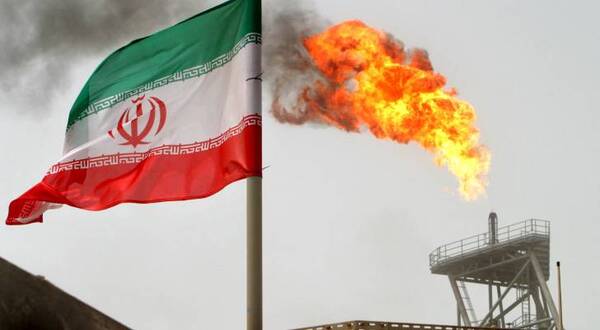
Iran: We do not expect long negotiations with Washington on the nuclear issue.

Iranian Foreign Ministry spokesman Esmail Baghaei said that the ongoing nuclear talks between Iran and the United States, which began Saturday in the Omani capital, Muscat, are not expected to take long.


In a statement to Iranian state television, Baghaei indicated that these negotiations represent a "beginning."


He stressed that the two sides are exchanging their initial views through an Omani mediator, without entering into in-depth discussions at this stage.


Trump comments

US President Donald Trump commented on Tehran's possession of nuclear weapons, ahead of talks on the Iranian nuclear program.


"It cannot have a nuclear weapon," Trump said, according to his remarks aboard Air Force One.


Trump told reporters, "I want Iran to be a wonderful, great, happy country. But they can't have a nuclear weapon."


This comes hours before his envoy, Steve Witkoff, is scheduled to meet with Iranian Foreign Minister Abbas Araqchi in Oman.

PALESTINE

Sat 12 Apr 2025 4:04 pm - Jerusalem Time

Dead and wounded as a result of the occupation targeting citizens in Gaza City and Deir al-Balah.

A number of citizens were killed and others injured on Saturday evening when Israeli warplanes targeted areas in Gaza City and Deir al-Balah.


According to local sources, a citizen was killed and several others were injured when Israeli warplanes targeted a group of citizens near the Electricity Distribution Company headquarters in the Al-Thalathini area of Gaza City.


A citizen was also killed and several others were injured when Israeli warplanes targeted a group of citizens in the Al-Bassa area of Deir al-Balah in the central Gaza Strip.


The occupation artillery bombed the eastern areas of Beit Hanoun, north of the Gaza Strip.


The occupation army blew up residential buildings in the Al-Mawasi area, west of Rafah, in the southern Gaza Strip.


The death toll in the Gaza Strip since the start of the aggression on October 7, 2023, has risen to 50,933, and the number of injuries to 116,450.

ARAB AND WORLD

Sat 12 Apr 2025 2:49 pm - Jerusalem Time

The Iranian nuclear file... Trump pours cold water on Netanyahu's hot head


Dr. Sinan Shaqdih: The launch of the dialogue, whether directly or indirectly, is a positive indication that Trump is seeking a diplomatic solution with Iran.

Mustafa Ibrahim: The nuclear issue represents a source of strength for Tehran, which is what worries Israel, even if an agreement is reached, whatever its form.

Dr. Thaer Abu Ras: The likelihood of a confrontation between the US and Iran has declined in the short term, but all scenarios remain possible in the strategic term.

Dr. Ali Al-Awar: Tehran, after the decline of its influence in Syria and Hezbollah's political discourse, has come to see an understanding with Washington as the best option.

Abdul Rahim Abu Jamous: Trump dealt Netanyahu a crushing political blow by suddenly announcing direct negotiations with Iran.


US President Donald Trump's announcement of his intention to begin negotiations with Iran has opened the door to a peaceful settlement of the dispute with Iran over its nuclear program. This comes after the drums of war had become so loud in the recent period that many observers and politicians believed that an American and Israeli attack on Iran was imminent. This was the option that Israeli Prime Minister Benjamin Netanyahu had hoped for and wanted, and he expected that his last visit, or more precisely his summons, to the White House and his meeting with the US president would be to develop operational plans and set the zero hour for the launch of the attack.

Although the nature of the negotiations scheduled to begin today, Saturday, in the Omani capital, Muscat, between Washington and Tehran remains unclear—whether direct or indirect—they represent a glimmer of hope for a reduction in the risk of military escalation, at least in the short term. It remains unclear whether these negotiations will lead to a new nuclear agreement similar to the previous one reached under former President Barack Obama.

Political writers and analysts who spoke to Al-Quds considered the launch of the dialogue, whether direct or indirect, a positive indication that Trump is seeking a diplomatic solution with Iran. They asserted that Trump dealt Netanyahu a crushing political blow by suddenly announcing direct negotiations with Iran.

A dialogue about starting negotiations, not actual negotiations.

Dr. Sinan Shaqdih, an analyst specializing in American affairs, said there is a clear lack of clarity regarding the nature of the upcoming US-Iranian talks in the Omani capital, Muscat.

While US President Donald Trump described the dialogue as direct, Iranian Deputy Foreign Minister Abbas Araghchi said the talks would be "indirect and at a high level," and that the meeting represented an opportunity as much as a test. State Department spokeswoman Tammy Bruce said on Tuesday, "It's at the starting point," adding, "It's not a negotiation, it's a meeting, and that's the commitment."

Shaqdih emphasized that this discrepancy in statements between the two sides, and even within the US administration itself, reveals Washington's lack of a unified vision regarding what it hopes to achieve from this dialogue, whether direct or indirect. However, it appears that the Muscat dialogue is currently focused on the possibility of initiating negotiations, rather than actual negotiations as of yet.

He added, "Despite this, the mere initiation of dialogue, whether direct or indirect, is a positive indication that Trump is seeking a diplomatic solution with Iran, away from an approach of escalation and exaggerated demands, an approach that appears to be based on his business background and the philosophy of his book, The Art of the Deal."

Shaqdih pointed out that this approach contradicts the desires of Israeli Prime Minister Benjamin Netanyahu, who is pushing for a military solution, highlighting signs of a conflict in the US-Israeli agendas since Trump came to power.

Iran does not want nuclear weapons for religious reasons.

He predicted that these talks, if they continue, would lead to a political breakthrough that could lead to the signing of a new agreement, especially since the Iranian leadership has repeatedly declared that it does not seek to manufacture nuclear weapons, citing religious fatwas prohibiting the production of nuclear bombs.

Shaqdih did not rule out the possibility that Iran might agree to sign a pledge not to develop nuclear weapons, in exchange for a US commitment not to participate in any aggression against it and to lift the economic sanctions imposed on it.

He said: "What reinforces this possibility is the leaked news about the content of Trump's message to the Iranian leadership, which arrived via the UAE. The information indicates that Trump did not demand the dismantling of the Iranian nuclear program in the Libyan style, but rather his focus was on the redistribution of economic gains, demanding that American companies replace their European counterparts, which are believed to have obtained approximately 90% of the economic privileges in Iran after the signing of the first nuclear agreement, from which he later withdrew.

Shaqdih emphasized that the mere launch of the dialogue indicates a de-escalation in the Middle East, while reaching an agreement represents a shared goal for both sides: Iran, which seeks to lift economic sanctions, and the United States, which wants to devote itself to confronting China and addressing its domestic issues. This is what Trump's populist electoral base, which embraces the slogan "America First" and opposes waging or financing new wars, is demanding.

Netanyahu and the Iranian nuclear file

For his part, writer and political analyst Mustafa Ibrahim asserted that the meeting between Israeli Prime Minister Benjamin Netanyahu and US President Donald Trump at the White House reflected Netanyahu's insistence on keeping the Iranian issue at the top of his agenda.

He pointed out that this issue has been one of his most prominent political goals since his election victory in 2009, and in his view, the primary justification for his long tenure in power, under the slogan of "confronting Iran."

Ibrahim added: "The past few years have witnessed what resembles a covert war between Israel and Iran, marked by Israeli strikes inside Iranian territory and the assassination of a number of scientists associated with the Iranian nuclear program."

He continued: Trump's rise to power in 2016 marked a shift in Washington's policy toward Iran, as he revoked the nuclear agreement reached in 2015 under the Barack Obama administration in 2018.

Ibrahim noted that Trump, at the beginning of his current term, issued several threats to halt Iran's nuclear program through military strikes, but his political behavior has always been characterized by a "merchant" attitude, approaching international crises through the logic of deals and financial interests.

Back away from the option of military confrontation

Ibrahim explained that the surprise Netanyahu and Israel received was Trump's announcement of his readiness to begin direct or indirect negotiations with Iran in the Omani capital, Muscat, which was seen as a retreat from the option of military confrontation.

Ibrahim emphasized that the likelihood of military escalation between Washington and Tehran has significantly diminished, especially if a new agreement similar to the one signed in 2015 is reached. He explained that the current US administration's slogan is to reduce wars and seek political solutions, which makes it likely that negotiations will continue with the goal of reaching a mutually satisfactory settlement.

He believed that this American approach was not in Netanyahu's or Israel's interest, as Netanyahu had long desired that Washington work to dismantle all Iranian nuclear and military capabilities.

Ibrahim considered the nuclear issue a source of strength for Tehran, a concern for Israel even if an agreement is reached, whatever its form, because it conflicts with the Israeli vision, which Netanyahu has considered the core of his political strategy for years.

Resolving the Iranian nuclear issue through peaceful means

Dr. Thaer Abu Ras, a lecturer in the Department of Political Science at the University of Maryland, Washington, said that the likelihood of a confrontation between the United States and Iran has declined in the short term, but all scenarios remain possible in the strategic term.

He explained that the United States appears interested in entering into negotiations, as part of US President Donald Trump's campaign pledge to seek a peaceful resolution to the Iranian nuclear issue.

Abu Ras added: "Trump has repeatedly stated, both during and before his election campaign, that if he returns to the White House, he will seek to sign a new nuclear agreement with Iran that is better than the one concluded under former President Barack Obama.

He pointed out that the US entry into negotiations with Iran is not surprising, explaining that there are three possible scenarios for dealing with the Iranian nuclear issue.

Keeping things as they are while waiting for a new opportunity

The first scenario is that the negotiations succeed and a new agreement is reached that is not limited to the nuclear aspects, but may include a comprehensive deal that allows Iran to integrate into the global economy.

The second scenario is the failure of the negotiations, which could lead to an escalation in rhetoric and possibly a subsequent military escalation, a possibility that remains.

Abu Ras stated that the third scenario is the most realistic, and involves conducting negotiations that fail to materially succeed, but without officially declaring their failure or leading to a military confrontation. This leaves things as they are, awaiting a new opportunity for dialogue at a later date.

Abu Ras concluded his remarks by emphasizing that these three possibilities represent the most realistic scenarios under the current circumstances.

Iran threatens to deploy its missile arsenal

For his part, Dr. Ali Al-Awar, a specialist in regional and international conflict resolution, said that the recent statements made by the Iranian Chief of Staff, in which he indicated Iran's readiness to launch 1,000 missiles at Israel and US bases in the Middle East, come amid ongoing negotiations between Washington and Tehran to reach a settlement regarding the Iranian nuclear issue.

Al-Awar explained that US President Donald Trump informed Israeli Prime Minister Benjamin Netanyahu, during their recent meeting, that direct negotiations between the United States and Iran will be held next Saturday, in a move aimed at formulating a new nuclear agreement.

He added that matters are moving toward a possible political settlement on the nuclear issue, but that this does not necessarily mean the disappearance of the specter of military confrontation. He noted that Israel, through its Hebrew media, continues to harbor the military option and considers striking Iranian nuclear facilities a strategic priority.

Al-Awar explained that Israel's unwavering position stems from a complete rejection of Iran possessing any nuclear capability. This position is shared by the United States, but it does not necessarily translate into military action, especially since Israel cannot launch a strike on Iran without prior coordination with Washington, and even with direct American participation in the operation.

An agreement between Tehran and Washington is the most likely scenario.

Al-Awar questioned whether Israel was still determined to launch a military strike against Iran, noting that Tel Aviv still views Iran as its primary enemy and leader of the so-called "axis of evil." He also believes that launching a powerful strike against Tehran, particularly against its nuclear facilities, is a strategic necessity.

However, with the launch of negotiations between Washington and Tehran, Al-Awar believes the situation is moving toward a settlement, suggesting a likely scenario of a new political agreement between the two countries on the nuclear issue.

He stressed that Iran realizes that entering into a war with the United States would be devastating and could threaten the stability of the regime in Tehran, so it will work to avoid any military escalation.

He pointed out that Iran is currently leaning toward maintaining its internal stability and continuing its development projects, especially in light of increasing US pressure. He explained that Tehran, following the decline of its influence in Syria and Hezbollah's political rhetoric in Lebanon, now believes that reaching an understanding with Washington is the best option.

Al-Awar concluded his statement to Al-Quds by stating that Tehran's strategic, security, and military calculations are now leaning toward a political settlement that guarantees its interests and avoids risks. He noted that a new agreement between Tehran and Washington is the most likely scenario, despite attempts by Netanyahu and the Israeli media to inflame tensions.

A "gray page" in the history of Israeli-American relations

For his part, writer and political analyst Abdul Rahim Abu Jamous said that Israeli Prime Minister Benjamin Netanyahu's visit to Washington last Monday represents a "grey page" in the history of Israeli-American relations. He noted that it was fraught with great political disappointment for Netanyahu, despite the lavish protocol reception he received.

Abu Jamous explained that Netanyahu, who arrived in Washington buoyed by his touted victories over Hamas in Gaza and Hezbollah in Lebanon, had hoped to secure American support for a potential attack on Iran, along with economic relief related to the customs duties that had burdened the Israeli economy, but he received nothing of the above.

He pointed out that US President Donald Trump dealt Netanyahu a crushing political blow when he announced, without prior warning, that he would hold direct negotiations with Iran in the Omani capital, Muscat, on Saturday, April 12, a move that was an unexpected political shock to the Israeli prime minister.

No war now, no more concessions

He added that this announcement coincided with Netanyahu's meetings at the White House, particularly with Trump's Middle East envoy, which was seen as a clear American message: no war now, no further concessions.

Abu Jamous emphasized that the Trump administration, through this move, revealed its adoption of negotiations with Iran as the only solution, despite escalation in several arenas, such as Gaza, Lebanon, Yemen, and Iraq. He explained that all these tensions remained under control and did not cross the red lines, thanks to ongoing diplomatic efforts to avoid direct military confrontation.

He pointed out that there had been previous exchanges of diplomatic messages between the United States and Iran, and between Iran and Israel, but that these messages were controlled and understood by both parties, indicating a lack of desire to reach a comprehensive confrontation.

He also considered the Iranian-Saudi rapprochement, which was concluded on March 9, 2023, under Chinese auspices in Beijing, to be an important breakthrough toward de-escalation in the region, and sent a message that the Iranian crisis can be resolved through negotiations, especially given both sides' commitment to the principles of respect for sovereignty and non-interference in internal affairs.

Gulf sensitivity to Iranian expansion

He added that the United States and Israel had been exploiting Gulf sensitivity toward Iranian expansion to impose American hegemony and justify the establishment of Israeli-Arab alliances to confront the Iranian threat, but the Iran-Saudi agreement has changed this context.

Abu Jamous pointed out that Trump's announcement of the launch of direct negotiations with Iran on April 12 in Muscat represents a strategic development aimed at removing the specter of war from the region. He emphasized that neither Iran nor the United States seeks war, and that the Trump administration seeks to defuse tensions, based on the belief that wars are destructive and costly for everyone.

He emphasized that the conflict with Iran is not an existential one, whether with Israel, the United States, or even with Arab states. This opens the door to a comprehensive political solution that serves the interests of all parties, emphasizing that negotiations are the path the region must take.

Concluding his statement to Al-Quds, Abu Jamous emphasized that these developments represent a major diplomatic defeat for the Israeli government, led by Netanyahu, which had been betting on inflaming the situation to impose its agenda on the region through the Iranian threat.


PALESTINE

Sat 12 Apr 2025 2:44 pm - Jerusalem Time

The death toll from the aggression on the Gaza Strip has risen to 50,933 since the beginning of the aggression.

The death toll from the Israeli aggression on the Gaza Strip has risen to 50,933, and the number of injuries to 116,450 since October 7, 2023.

Medical sources reported that the death toll includes 1,563 martyrs and 4,004 wounded since March 18.


It said that 21 martyrs and 64 injuries arrived at hospitals in the Gaza Strip during the past 24 hours.


It explained that a number of martyrs are still under the rubble of destroyed homes and facilities, and on the roads, and that ambulance crews and specialized crews are unable to reach them, due to the lack of resources.

PALESTINE

Sat 12 Apr 2025 2:41 pm - Jerusalem Time

UN official: 60,000 children under the age of five in Gaza suffer from malnutrition

The United Nations Special Coordinator for the Middle East Peace Process and Humanitarian Coordinator for Gaza, Sigrid Kaag, said that more than 60,000 children under the age of five in the Gaza Strip suffer from malnutrition.

Speaking to Anadolu Agency on the sidelines of her participation in the fourth edition of the Antalya Diplomatic Forum held in southern Turkey, Kag added that the humanitarian aid sent by the United Nations to Gaza during the ceasefire agreement period reached its beneficiaries without any problems. However, "the flow of aid continued within the framework of the ceasefire agreement, but since the second half of March, aid has not been allowed to enter."

Kaag noted that humanitarian workers are facing a shortage of the equipment needed to carry out their operations, and that the fuel needed to operate hospitals has run out, disrupting the distribution of humanitarian aid.

She added, "We know that more than 60,000 children in Gaza under the age of five suffer from malnutrition. Every number in these statistics represents a human being, a life, and a struggle for survival."

She emphasized that international law requires Israel to allow humanitarian aid into Gaza, stressing the urgent need for this aid to be delivered. She said that Israeli attacks on Gaza not only target civilians but are also "terrifying" for humanitarian aid workers, the majority of whom are Palestinian civilians.

PALESTINE

Sat 12 Apr 2025 12:40 pm - Jerusalem Time

Israeli occupation continues its aggression on the city of Tulkarm and its two camps for the 76th consecutive day.

The Israeli occupation forces continue their escalating aggression against the city of Tulkarm and its camp for the 76th consecutive day, and for the 63rd day against the Nur Shams camp, amid military reinforcements and ongoing field escalation.

Local sources reported that late last night, Israeli occupation forces dispatched military reinforcements, including vehicles and Eitan armored vehicles, to the city. They were stationed around the Peace Roundabout in the eastern neighborhood, obstructing traffic. Israeli soldiers conducted thorough searches of vehicles and citizens' IDs.

In the same context, the occupation forces dispatched additional military reinforcements, including infantry units and vehicles, to the Tulkarm and Nur Shams refugee camps, while live ammunition was fired and explosions were heard from time to time.

In Tulkarm refugee camp, occupation forces deployed in the Abu al-Foul neighborhood, conducting search and combing operations. They also fired flares into the skies above the camp, as part of the ongoing escalation that has affected all of its neighborhoods. The camp has been emptied of its residents after they were forcibly displaced from their homes, and is completely devoid of any signs of life, following the complete destruction of its infrastructure, the sabotage, demolition, and burning of homes and facilities.

Israeli occupation forces continue their tight siege of Nour Shams refugee camp, with explosions heard last night. They also continue raiding and searching homes in the al-Mahjar neighborhood, detaining young men and subjecting them to field investigations.
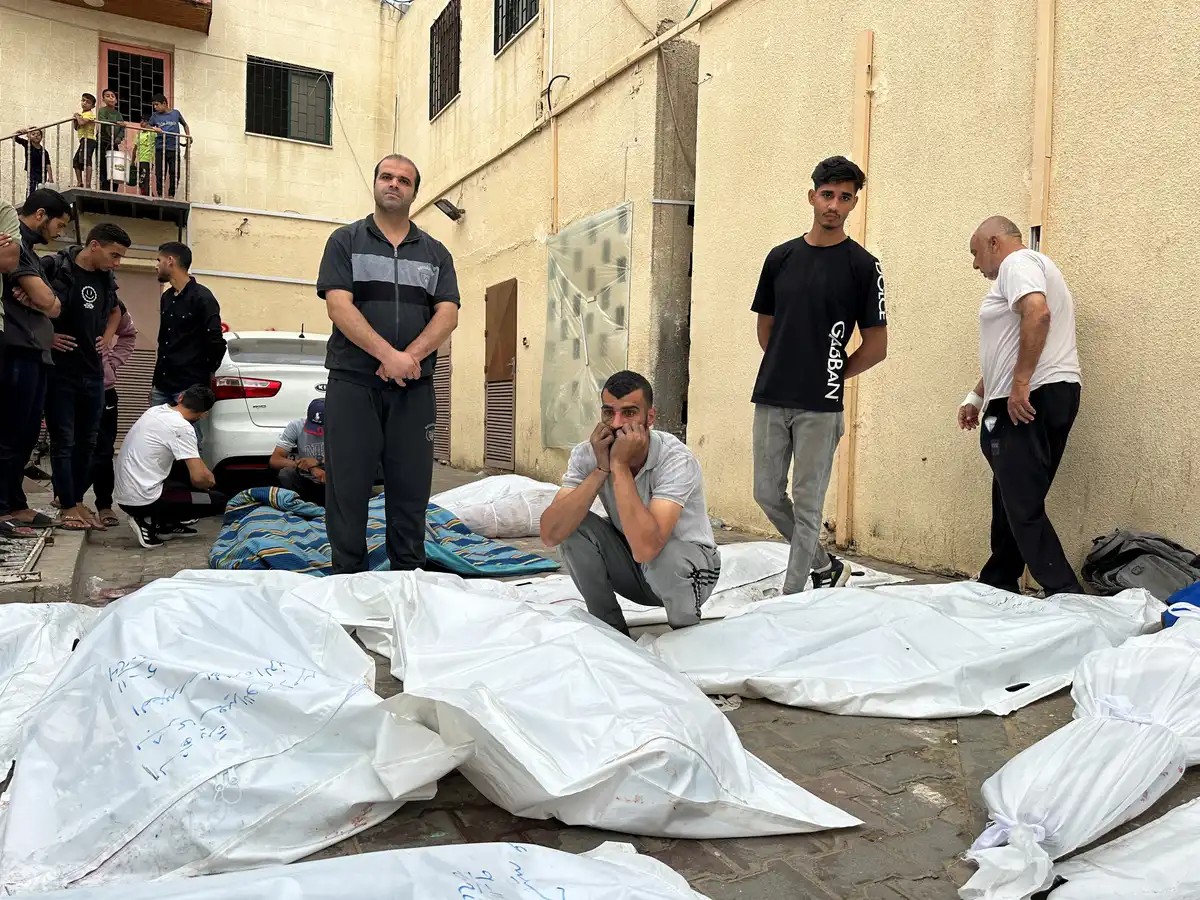
Israeli occupation forces continue to seize homes and residential buildings on Nablus Street and the city's northern neighborhood, converting them into military barracks with their vehicles stationed around them. The pace of these seizures has intensified after they seized five additional buildings yesterday, containing dozens of apartments housing dozens of families, including displaced persons from the Tulkarm and Nur Shams camps.

Among these buildings are others that had been previously seized by the occupation forces: Khrioush 3, Al-Rabi', Al-Firdous, Al-Amer, and Khrioush 6, located within two residential blocks in the northern neighborhood and Nablus Street opposite Tulkarm camp and the Dhnaba suburb.

Meanwhile, Nablus Road, which connects the Tulkarm and Nur Shams refugee camps, has witnessed a heavy deployment of occupation forces, restricting movement and harassing citizens. Sections of the road have been closed off with earth mounds in both directions.

The ongoing Israeli aggression and escalation against the city of Tulkarm and its two refugee camps resulted in the deaths of 13 civilians, including a child and two women, one of whom was eight months pregnant. Dozens more were injured and arrested.

It also resulted in the forced displacement of more than 4,000 families from the Tulkarm and Nur Shams camps, along with dozens of families from the city's northern neighborhood after their homes were seized and a number of them converted into military barracks.

The aggression caused widespread destruction to the infrastructure, including homes, shops, and vehicles, which were completely and partially demolished, burned, vandalized, looted, and stolen. 396 homes were completely destroyed and 2,573 partially destroyed in the Tulkarm and Nur Shams refugee camps, in addition to the closure of their entrances and alleys with earth mounds.

PALESTINE

Sat 12 Apr 2025 12:36 pm - Jerusalem Time

Red Cross chief: The situation in Gaza is "hell on earth" and supplies are running out

The President of the International Committee of the Red Cross, Mirjana Spoljaric Egger, described the humanitarian situation in the Gaza Strip as "hell on earth," warning that supplies at the organization's field hospital will run out within two weeks.

"We now find ourselves in a situation I would have to describe as hell on earth," Spoljaric told Reuters from the committee's Geneva headquarters. "People in many areas have no access to water, electricity, or food."

She added that supplies were dangerously low, "For six weeks nothing has come in, so within two weeks we will run out of the supplies we need to keep the hospital running."

The World Health Organization said supplies of antibiotics and blood bags were running out rapidly. Richard Peeperkorn, the WHO representative in the Palestinian territories, told reporters in Geneva via video link from Jerusalem that 22 of the Strip's 36 hospitals were operating at minimal capacity.

The head of the Red Cross also expressed concern about the safety of humanitarian operations.

"Population movement is very dangerous, but it is especially dangerous for our work," Spoljaric said.

ARAB AND WORLD

Sat 12 Apr 2025 9:50 am - Jerusalem Time

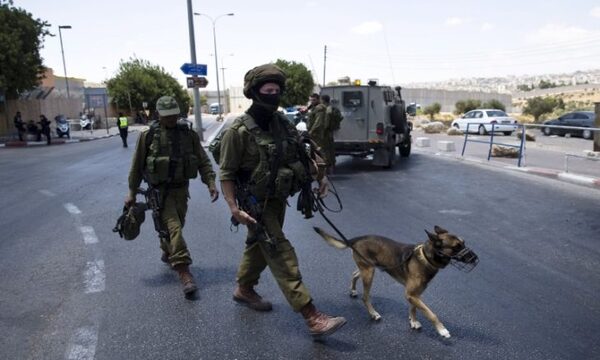
The Netherlands exports military dogs used to torture Palestinians.

The Euro-Mediterranean Human Rights Monitor held the Dutch government directly legally responsible for its "complicity in the crimes" committed by Israel in the occupied Palestinian territory, particularly in the Gaza Strip, due to its continued direct and indirect support for the Israeli war machine.

The Observatory said in a press release that the Netherlands continues to export "military dogs" to the Israeli occupation army and other Israeli security agencies, despite their use as a tool for systematic torture and intimidation of Palestinians, as part of the Israeli system based on imposing comprehensive domination over them, stripping them of their human dignity, and completely destroying their existence.

The Observatory stated that it followed with great concern the information revealed by the Center for Research on Multinational Enterprises (SOMO) regarding Dutch companies obtaining veterinary certificates to export 110 dogs to Israel during the period between October 2023 and February 2025. One hundred of these certificates were allocated to Four Winds K9, a dog training center located in the Dutch village of Geven, which, according to the research center, has a long record of exporting dogs to Israel.

The Euro-Mediterranean Human Rights Monitor emphasized that the close coordination between Israeli state institutions, Dutch legal entities, and the company Four Winds K9 reveals a transnational network of deliberate complicity that actively feeds Israel's killing and repression machine and ensures the company's continued vital role in supplying units directly implicated in serious violations of international law.

The Euro-Mediterranean Human Rights Monitor confirmed that its field team documented numerous crimes in which the occupation forces used dogs to directly attack Palestinian civilians, including children, the elderly, and the sick. They also documented the desecration of corpses, terrorizing families, and torturing Palestinian detainees, including horrific rapes using dogs. The report noted that Israeli forces systematically use large military dogs during their military attacks in the Gaza Strip, particularly during raids on homes, hospitals, and shelters, as well as during incursions into the West Bank.

He pointed out that his field team had documented the Israeli forces' use of dogs to attack and terrorize children and women inside homes and shelters, particularly during ground military attacks in Gaza City, the north, and Khan Yunis, as part of a systematic policy aimed at spreading terror and intimidation among the civilian population.

He explained, based on what his field team documented, that the most horrific forms of the use of military dogs appeared in targeting Palestinian prisoners and detainees without any restrictions or deterrent, as the horrific nature of these violations reached the point of using these dogs to carry out brutal rape crimes against prisoners and detainees, in front of other detainees and jailers, as part of a systematic and deliberate pattern of sexual violence, which also included forced nudity, sexual harassment, threats of rape, and the use of sharp objects and inserting them into sensitive areas of the bodies of prisoners and detainees, with the intent of humiliating and physically and psychologically abusing them.

He recalled the incident of the attack on the elderly woman, Dawlat al-Tanani (60 years old), who was mauled by an Israeli military dog in her home on May 14, 2024, in Jabalia camp, north of the Gaza Strip. The Euro-Mediterranean Human Rights Monitor stated that it had received testimonies about the Israeli army’s use of military dogs to raid hospitals. The Observatory quoted a woman who requested anonymity as saying: “Israeli forces stormed our home, and as soon as we opened the door, the soldiers released a dog into the apartment. It attacked my elderly husband, biting him in the chest, stomach, and leg, causing him to bleed profusely, without the soldiers taking any action.” In this regard, he referred to the testimony of Dr. Islam Sawali, last February, who confirmed that the Israeli occupation forces used dogs to storm Nasser Hospital in Khan Yunis at the time, to terrorize medical staff and displaced persons and force them to evacuate.

The Euro-Mediterranean Human Rights Monitor condemned the role of companies supplying Israel with weapons and military equipment, including Dutch companies, stressing that international law, including the Statute of the International Criminal Court and customary international law, particularly the principle of "aiding and abetting," as well as the UN Guiding Principles on Business and Human Rights, legally oblige companies to cease any cooperation or support that might facilitate or enable the commission of any violations of international law.

ARAB AND WORLD

Sat 12 Apr 2025 9:13 am - Jerusalem Time

Qatar condemns Israel's closure of six UNRWA schools in East Jerusalem.

On Friday evening, the State of Qatar condemned Israel's decision to close six schools run by the United Nations Relief and Works Agency for Palestine Refugees (UNRWA) in East Jerusalem.

She stressed the need for the international community to take urgent action to hold Israel accountable and compel it to comply with international law.

The Qatari Ministry of Foreign Affairs said in a statement that its country condemns "the decision of the Israeli occupation authorities to close six schools affiliated with the United Nations Relief and Works Agency for Palestine Refugees (UNRWA) in East Jerusalem."

Depriving children of education is "a new crime in the ongoing series of Israeli crimes in the occupied Palestinian territories."

The ministry reiterated its categorical rejection of "the politicization of education and Israeli moves aimed at ending or reducing the role of UNRWA."

She stressed "the need for the international community to act urgently to hold Israel accountable and compel it to comply with international law."

She also stressed that "the right to education is a fundamental right guaranteed by international human rights laws and charters."

PALESTINE

Sat 12 Apr 2025 9:11 am - Jerusalem Time

A Louisiana immigration court judge has ruled that Palestinian student Mahmoud Khalil can be deported.


A Louisiana immigration judge on Friday declared Mahmoud Khalil, a Columbia University graduate and legal permanent resident of the United States (with a permanent green card), deportable.


Judge Jamie Comans' decision comes after the federal government filed a memorandum Wednesday from Secretary of State Marco Rubio alleging that Khalil could be deported because of his "beliefs, statements, or associations" that could harm U.S. foreign policy interests.


An immigration court's "deportability determination" means that a judge has determined that a person is subject to removal from the United States due to an immigration law violation or lack of legal immigration status. Khalil's attorneys are expected to appeal the ruling.


The judge's decision (in this case) does not mean that Khalil will face deportation any time soon, as he has an ongoing case in New Jersey. A federal judge in New Jersey ordered Khalil's lawyers and the U.S. Department of Justice to hold a conference call immediately after his immigration hearing in Louisiana. Khalil's legal team argued that the Louisiana judge's decision violates the graduate's constitutional rights and sets a harmful precedent.


Immigration judges, like Judge Jamie Cummins, are not Article III judges. Rather, they are attorneys at the U.S. Department of Justice, appointed for that purpose. They merely rule that the federal government has the authority to determine a person is deportable based on—as in this case—U.S. foreign policy grounds, but the ruling does not constitute enforcement.


"Although the government failed to prove that Mahmoud violated any law, the court has determined that lawful permanent residents can have their residency revoked for their advocacy for Palestine," Khalil's legal team said in a press conference following the hearing. "This is a blatant violation of the First Amendment and sets a dangerous precedent for anyone who believes in freedom of speech and political expression."


Khalil was arrested on March 8 by federal agents outside his apartment on the Columbia University campus, following a deportation order issued by the Trump administration. Khalil, who is married to an American citizen, is a prominent Palestinian activist and played a pivotal role in protests against Israel's war of genocide in Gaza on the prestigious Columbia University campus.


At the end of the hearing, Khalil informed the court that he was not afforded "due process rights and basic fairness," according to a press release from the American Civil Liberties Union. "None of these principles were present today or in this entire process," Khalil said. "This is precisely why the Trump administration sent me to this court, a thousand miles from my family."


Khalil's wife, Nour Abdullah, said her husband was imprisoned for his support of Palestine.


"My husband is a political prisoner who is being denied his rights because he believes Palestinians deserve equal dignity and freedom," she said in a statement read during a briefing on Friday. "Nothing the government can say about my husband can hide this truth."


Assistant Chief Immigration Judge Jamie Comans ordered the federal government to turn over evidence supporting its order to deport Khalil, a lawful permanent resident, from the United States by Wednesday evening, or she will move to end the case, according to Khalil's lawyer.


In response to the request, the federal government filed Rubio's memorandum on Wednesday, which did not include any allegations of criminal activity. Khalil's lawyers challenged the charges against him in federal and immigration court, arguing that he was targeted for his pro-Palestinian activism in violation of his constitutional right to free speech.


“Today we saw our worst fears come to fruition: Mahmoud was subjected to a travesty of due process, a blatant violation of his right to a fair trial, and the exploitation of immigration law to suppress dissent,” Khalil’s immigration lawyer, Mark van der Hout, said in a statement Friday.


Gloria J. Brown Marshall, a professor of constitutional law at the John Jay College of Criminal Justice, told CNN in an interview on Friday that Friday's ruling could have a chilling effect on free speech on colleges and universities in the United States.


“It is chilling for all expression rights when the federal government’s memo does not outline any criminal charges against Mahmoud but seems to say that one person can influence US foreign policy through student protests,” she said.


As a graduate student at Columbia University, Khalil served as a key negotiator for student protesters in talks with the Ivy League university administration regarding a controversial campus encampment last spring to protest Israel's war on Gaza.


Khalil's case has been the subject of controversy since his arrest on March 8, 2025, outside his college dorm, where he lived with his wife, a US citizen who was nine months pregnant. He was transferred to a detention center in Louisiana, where his immigration proceedings will be processed. A separate federal lawsuit is currently underway in New Jersey, in which Khalil is suing the federal government over his arrest.


In the New Jersey case, Khalil's team will continue to seek bail and a preliminary injunction to release him from custody pending the conclusion of his immigration case, according to the ACLU press release. The administration ordered Khalil's deportation "based on information provided by DHS/ICE/HSI regarding [the freedman's] and Khalil's participation and roles in anti-Semitic protests and activities, creating a hostile environment for Jewish students in the United States," Rubio stated in the memo filed Wednesday.


The memo continues that Khalil's actions and continued presence in the United States "undermine U.S. policy to combat anti-Semitism globally and in the United States, as well as efforts to protect Jewish students from harassment and violence in the United States."


Khalil's lawyers previously stated that they would challenge the evidence at the hearing and request an opportunity for Rubio to testify.


Van der Hout said the government presented evidence proving Khalil's involvement in protest negotiations at Columbia University, but did not provide evidence to support the foreign policy allegation.


"Rubio's letter is the only evidence against the main charge in this case. There is no other evidence," Van Der Hout said Thursday.


Van der Hoot also challenged the government's characterization of anti-Semitism, saying, "What is anti-Semitism? It's criticizing Israel and the United States for the massacres being committed in Gaza, in Palestine. That's the essence of this issue."


While ICE insists its detention of individuals is "non-punitive," some immigration attorneys say the agency strategically isolates unwanted immigrants from their attorneys, families, and support systems.


In a statement released after Friday's hearing, Abdullah said she would continue to advocate for her husband's return home, even though he may miss the birth of their first child in less than a month.


Khalil is among the first students or faculty members at American universities—whether residing in the United States as permanent residents or on work or student visas—to be detained by federal agents as part of the administration's immigration crackdown. More than 400 students, faculty members, and researchers have had their visas revoked this year. The Trump administration, which has accused Khalil of supporting Hamas, said it is acting under a provision of U.S. immigration law that grants broad authority to revoke a person's immigration status if the Secretary of State determines that "their activities in the United States could have serious foreign policy consequences."


In cases where the basis for this determination is the foreign person's past, present, or anticipated beliefs, statements, or associations that are lawful, the Secretary of State must personally determine that the foreign person's presence or activities would harm a compelling U.S. foreign policy interest, according to Rubio's newly released memo.


Adam Cox, a New York University law professor, told CNN that the provision the Trump administration is trying to use against Khalil—and other activists—is too vague. Cox recently joined a group of 150 immigration lawyers and legal scholars in filing a friend-of-the-court brief in Khalil's federal case.


The summary stated that in the years following its enactment in 1990, this provision was used in only 15 out of 11.7 million deportation cases. Of these 15 cases, only five involved detention for the duration of the case, while only four resulted in deportation, according to experts.


With this provision being used against other students included in Trump's immigration crackdown, Cox says the decision in Khalil's case on Friday could be significant for future cases.

PALESTINE

Sat 12 Apr 2025 9:10 am - Jerusalem Time

Three dead in Israeli occupation's bombing of the cities of Khan Yunis and Gaza

Three civilians were killed and others injured early Saturday morning when the occupation forces bombed a house east of Gaza City and a tent housing displaced people in Khan Yunis.

Local sources reported that an Israeli drone bombed a home belonging to the Kahil family on Nakhil Street, east of the Tuffah neighborhood in eastern Gaza City, killing two civilians.It  added that a citizen was killed and others were injured when the occupation forces bombed a tent sheltering displaced people on Abu Kaware' Street in the Mawasi area of Khan Yunis in the southern Gaza Strip.

The occupation artillery bombed the Qizan Rashwan area, south of Khan Yunis.

The death toll in the Gaza Strip since the start of the aggression on October 7, 2023, has risen to 50,912, and the number of injuries has risen to 115,981.

PALESTINE

Fri 11 Apr 2025 10:40 pm - Jerusalem Time

UNRWA: Gaza is approaching "extremely severe" hunger due to the Israeli blockade.

The United Nations Relief and Works Agency for Palestine Refugees (UNRWA) announced on Friday that Gaza is approaching "extreme hunger," as essential supplies in the Strip are running out due to the ongoing Israeli closure of the crossings since March 2.

"With the Israeli blockade on Gaza continuing for more than six weeks, all essential supplies are running out," UNRWA Director of Media and Communications Juliette Touma said in a statement.

Touma explained that the depletion of basic supplies is accompanied by a "significant increase in the prices" of goods available in Gaza over the past month, since Israel imposed its blockade on the Strip.

"This means that babies and children go to bed hungry," she continued.

Touma stressed that without these basic supplies, the Gaza Strip is approaching extreme hunger every day.

It called for an immediate resumption of the ceasefire in Gaza, lifting the blockade, and allowing unimpeded entry of humanitarian and commercial supplies, according to the statement.