PALESTINE

Fri 18 Apr 2025 2:05 pm - Jerusalem Time

Hamas welcomes the US envoy's position to end the war and prisoners' issues together.

Khalil al-Hayya, head of the negotiating delegation and head of Hamas in the Gaza Strip, welcomed the position of Adam Boehler, US President Trump's special envoy, on Friday, to end the prisoner and war issues together.


Al-Hayya indicated in a statement that the position intersects with the movement's position of readiness to reach a comprehensive agreement on a single prisoner exchange package, in exchange for a cessation of war, the occupation's withdrawal from the Gaza Strip, and reconstruction.

PALESTINE

Fri 18 Apr 2025 2:02 pm - Jerusalem Time

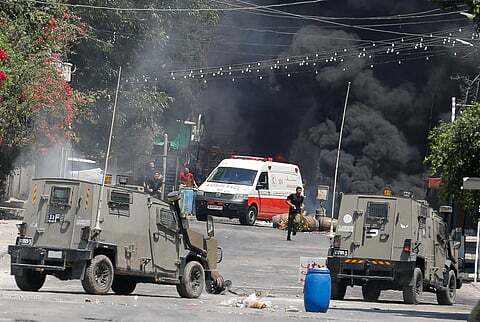
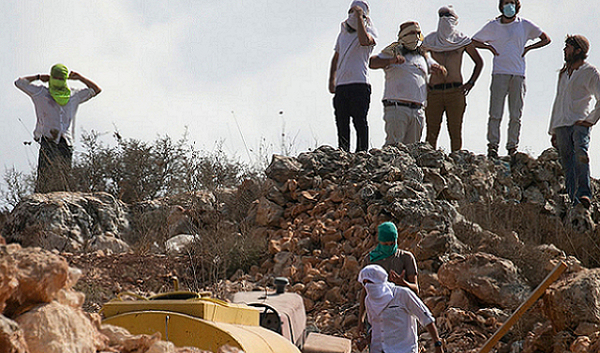
Israeli occupation forces suppressed a protest against settlements and arrested three citizens in Hebron.

Israeli occupation forces on Friday suppressed a protest against settlement activity and land seizures, arresting three citizens in the town of Adh Dhahiriya, south of Hebron.


Citizen Rakad Al-Hawarin, one of the owners of lands seized by settlers, said that the occupation forces suppressed a protest organized by the owners of lands bulldozed by the occupation to pave roads and build a colonial outpost in the Anab Al-Kabira area in the town of Adh Dhahiriya.


He pointed out that the occupation forces arrested three citizens: Ahmed Mohammed Al-Hawarin, Shadi Atta Al-Hawarin, and Amin Rateb Al-Hawarin, and forced the citizens to evacuate the area by force and at gunpoint.

PALESTINE

Fri 18 Apr 2025 2:00 pm - Jerusalem Time

Injuries following a settler attack in Salfit

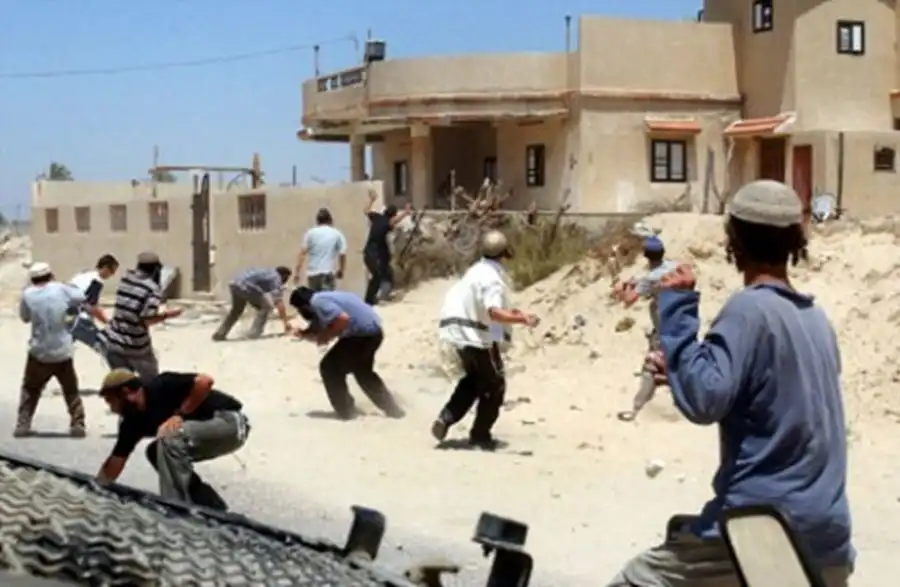
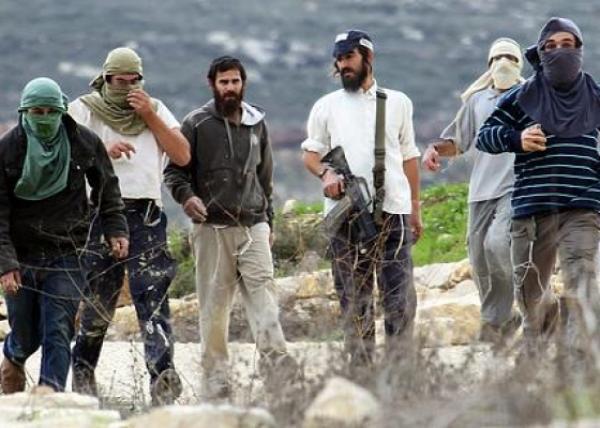
Citizens were injured on Friday when settlers attacked them in the village of Farkha and the town of Bidya in the Salfit Governorate.


Local sources reported that settlers attacked a group of citizens while they were in the "Al-Yanbou" area in the village of Farkha, southwest of Salfit, under the protection of occupation forces, who detained the citizens for several hours.


She added that three other citizens were injured and bruised in an attack carried out by settlers in the Khallet Hassan area, north of the town of Bidya.


Eyewitnesses reported that the settlers assaulted Ahmed Sarsour from the village of Sarta, and the brothers Saqr and Abdul Rahim Al-Aqraa from the town of Bidya. Sarsour was transferred to Salfit Governmental Hospital for treatment, while the occupation forces detained the Al-Aqraa brothers and transferred them to the "Yakir" settlement camp, which is built on citizens' lands.


It's worth noting that the Khallet Hassan area has been witnessing repeated attempts by settlers to seize citizens' land by installing caravans and grazing sheep, in an attempt to impose a new reality on the ground.

PALESTINE

Fri 18 Apr 2025 12:58 pm - Jerusalem Time

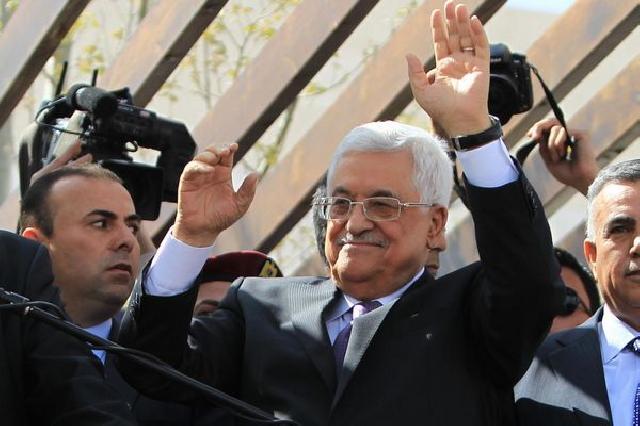
Netanyahu rejects Abbas' request to have Jordanian helicopters land in Ramallah to transport him to Damascus.

Israeli Prime Minister Benjamin Netanyahu rejected a Palestinian request to allow Jordanian helicopters to land in Ramallah to transport Palestinian President Mahmoud Abbas directly from Ramallah to Syria, Israeli Army Radio reported Friday.


The radio station reported that Abbas had requested that Israel allow Jordanian helicopters to land in Ramallah and transport him to Damascus for a meeting with the head of the new Syrian administration, Ahmad al-Sharaa.


After Netanyahu rejected this request, Abbas was forced to travel by car from Ramallah to the Allenby Bridge crossing and enter Jordanian territory, from where he was flown by Jordanian helicopter to Damascus.


The radio indicated that Netanyahu's office did not comment on this report.

PALESTINE

Fri 18 Apr 2025 12:56 pm - Jerusalem Time

Settlers uproot hundreds of trees and bulldoze about 2,000 dunams of land in Ramallah.

Settlers uprooted hundreds of olive trees and bulldozed about 2,000 dunams of Palestinian land in the village of Umm Safa, northwest of Ramallah.


Local sources reported that the settlers uprooted at least 500 olive trees, most of which were perennial, and paved a dirt road in the southern part of the village, linking the settlements of "Halamish" to the west and "Ateret" to the east.


She noted that settler bulldozers, under the protection of the occupation army, have been operating in the area for four days, while the occupation forces forcibly prevent citizens from reaching or approaching their lands.


She pointed out that the settlers had seized hundreds of dunams in the southern region, with the aim of transforming it into a pastoral colonial outpost.


She said there is a plan to displace the village's residents and establish a large colonial settlement complex on the lands and homes of the citizens, linking it to the two neighboring settlements, especially since it is the only village whose entrances have remained closed since the war of extermination, and have not been opened for a single minute.


Umm Safa's area is estimated at 4,000 dunams, of which only 300 dunams remain due to the occupation's measures, land encroachment, and the seizure of vast areas of it. This is the same area on which the citizens' homes are located.

PALESTINE

Fri 18 Apr 2025 12:53 pm - Jerusalem Time

Gaza Civil Defense warns that their vehicles may stop working due to fuel shortages.

The Civil Defense in Gaza warned on Friday that some of its vehicles in the Gaza Strip's governorates are at risk of stopping operation due to a lack of fuel.


Civil Defense confirmed in a statement that its crews will be unable to respond to humanitarian interventions within a few days if fuel supplies to the Gaza Strip continue to be blocked, amid escalating Israeli aggression.


He called for pressure on the Israeli occupation authorities to allow the entry of sufficient quantities of fuel to international relief organizations, which in turn supply humanitarian services with the fuel they need.


ARAB AND WORLD

Fri 18 Apr 2025 12:21 pm - Jerusalem Time

Israel is wary of reaching an interim US-Iranian nuclear agreement within a month.

Strategically, Israel hopes that dismantling the Iranian nuclear program, through a large-scale military attack or negotiations, will deal a severe blow to the regime, leading to its downfall, "similar to what happened to the Gaddafi regime in Libya. Only then, according to the conviction in Israel, will the nuclear threat to us be removed, and as long as the regime exists, Iran will be able to restore the nuclear program," according to a report by security analyst Ron Ben-Yishai in the Yedioth Ahronoth newspaper on Friday.


There is a prevailing belief within the Israeli security establishment that if Israel does not act within a few months to destroy the Iranian nuclear program, it will miss a “historic opportunity.” According to the report, “the assessments of all Israeli security officials, as well as many officials in the Pentagon and American intelligence agencies, are that the achievements of the Iron Swords War (which Israel has been waging on several fronts since October 7), especially the recent attack in Iran, along with the economic and social nadir it is facing, open a window of opportunity to attack and completely destroy the nuclear facilities.”


The report added that "the window of opportunity will be open for a short period, perhaps only months. Once it closes, the attack will be much less effective, and the attacker will pay a heavy price. Another important consideration is that the term of US Central Command Commander Michael Kurilla, who supports attacking nuclear facilities, will end in several months, and it is not possible to know the position of his successor in the position and the extent to which he can be relied upon to support Israel on this issue."


The report indicated that Israeli Prime Minister Benjamin Netanyahu wanted to launch the attack as soon as possible, and that the Israeli security establishment had begun developing "an alternative plan for a large-scale air attack that would require American assistance, not only to defend Israel from an Iranian response, but also on the offensive side."


According to the report, there is no anger in Israel over the New York Times report yesterday that US President Donald Trump, during his meeting with Netanyahu last week, prevented Israel from attacking Iran now. Israel understands that leaking Trump's position to the American newspaper was intended to "put pressure on Iran and highlight the existence of a serious and specific military threat."


On the other hand, Israelis fear that Trump, despite his threats against Iran and the buildup of American military forces in the region, will not resort to military action against Iran later, lest he pose a threat to American forces in the region. Therefore, they believe that "Trump will prefer to compromise on a bad nuclear agreement, simply so he can boast of a diplomatic achievement."


According to Israeli estimates, one of two scenarios will materialize. The first, and preferred by Israel, is that negotiations between the United States and Iran reach a dead end, leading to a US-Israeli military operation against Iran. Iran will then be "more flexible and open to accepting US-Israeli demands regarding its nuclear and missile disarmament, and negotiations will then resume in a manner that allows for results acceptable to Israel."


The second possibility, which Israel is most concerned about, according to the report, is that Trump will move toward an interim agreement with Iran before his visit to the region next month. "Such an agreement would prevent a military operation and would not achieve the goal Israel seeks. The attack plan covered in the New York Times report yesterday aims to bring about the downfall of the regime, not just to set back the race to the bomb by a year or two. To achieve this, all components of Iran's power must be destroyed—nuclear facilities, its missile-making system, and Revolutionary Guard bases. For this reason, Israel needs American operational assistance."


The report stated that CIA Director John Ratcliffe, during his visit to Israel last week, suggested that if a large-scale attack against Iran is not launched, it is possible to carry out large-scale cyber sabotage operations against the Iranian nuclear program, similar to the US-Israeli operation carried out in 2006.


The report added that Israeli political officials are publicly stating that they are not sure where Trump is going, "or whether the US president and his envoy (Steve Witkoff) know what they want. Although Israel will have an independent and effective offensive capability against Iranian nuclear facilities within a relatively short period, it is not at all certain that Trump, who has so far blocked a joint plan, will give the green light. It is very possible that the only opportunity will be wasted and the window of opportunity for regime change in Iran will close."

PALESTINE

Fri 18 Apr 2025 10:32 am - Jerusalem Time

Settlers pave a road and others storm Mount Al-Arma, south of Nablus.

Dozens of settlers stormed the summit of Mount Al-Arma in the town of Beita, south of Nablus, on Friday.


Local sources said that dozens of settlers, under the protection of the occupation army, stormed the summit of Mount Al-Arma, engaging in acts of violence and provocation against the local residents.


In a related context, the head of the Iraq Burin Village Council, Jibran Qadous, said that settler bulldozers continue to pave a colonial road on citizens' land.


He added that the lands where the bulldozing is taking place are located in the vicinity of the "Bracha" settlement, which was built on citizens' land, and that the continuation of the bulldozing means the seizure of more village land.

PALESTINE

Fri 18 Apr 2025 10:30 am - Jerusalem Time

The NGO Network warns of an unprecedented humanitarian disaster in the Gaza Strip.

The Palestinian Non-Governmental Organizations Network warned of the dire humanitarian situation in the Gaza Strip, as a month and a half has passed since the complete closure of crossings and the complete ban on the entry of humanitarian aid.


In a statement issued yesterday, the network denounced the occupation's attempts to impose plans related to controlling humanitarian aid and its distribution mechanisms, including the militarization of aid, in flagrant violation of international conventions, treaties, and humanitarian principles.


The network welcomed the UN Secretary-General's statements and his rejection of any aid distribution mechanisms by the occupation army that violate the principles of humanitarian action.


The network expressed its deep concern over the continued international silence regarding the genocidal crimes perpetrated by the occupation against Palestinian civilians, including killing, destruction, and an unprecedented siege.


The network confirmed the spread of famine in the Gaza Strip, with malnutrition rates rising, particularly among children and women, amid the lack of most food items and essential supplements for children and the sick.


She pointed to the severe deterioration of the health system as a result of direct targeting by the occupation, and the depletion of medicines and medical supplies, including those for chronic diseases, threatening the lives of thousands of wounded and sick people.


She also noted the worsening health crisis caused by the lack of clean water for drinking and daily use, the spread of sewage, and the accumulation of more than 600,000 tons of waste throughout the Gaza Strip, in addition to the lack of cleaning materials and basic hygiene supplies.


The network noted the continued forced displacement of more than 90% of the Gaza Strip's population, with two-thirds of the territory evacuated amid complex and extremely difficult humanitarian conditions, with basic shelter supplies such as tents, blankets, clothing, and other essential needs, particularly for children and women.


She explained that the Gaza Strip is being subjected to the most horrific forms of aggression, including continuous bombardment, targeting of civilians, systematic destruction of infrastructure, and the erasure of entire families from the civil registry.


The network called for immediate and urgent international intervention to halt the Israeli aggression, lift the blockade, and ensure the unrestricted entry of humanitarian aid into the Gaza Strip. It also called for holding the occupation accountable for its crimes and halting all arms supplies to the occupation.


It also called on all international parties to reject the occupation's plans to control the process of distributing humanitarian aid, which includes a grave danger to the humanitarian situation in the Gaza Strip, and not to deal with it, and to work diligently and intensively to pressure the occupation to open the crossings and bring in humanitarian aid in all its forms to those who deserve it through Palestinian and international institutions.


The network emphasized that Gaza's children are the most targeted by the occupation, comprising the largest number of victims and suffering greatly from the repercussions of the worsening humanitarian crisis at all levels.

OPINIONS

Fri 18 Apr 2025 10:26 am - Jerusalem Time

Challenges of the Jordanian economy

Jawad Al-Anani

Jawad Al-Anani

Opinion Writer

Due to unforeseen circumstances over the past month, I was unable to respond to requests from my brothers and sisters on Arab television stations or newspaper correspondents to answer questions related to the situation in the region. Nor, as a veteran of the Jordanian and Gulf economic experience, was I able to answer questions from many of my Jordanian brothers concerned about the policies of US President Donald Trump and their profound impact on the economies of the region and the Jordanian economy in particular.


We know that the Jordanian people, in all their components, are concerned about their economy, whose nominal annual GDP is valued at $54 billion, or the purchasing power parity equivalent of $141.2 billion. Jordan ranks 91st globally, according to 2024 figures.

The nominal per capita income (NPCI) is approximately $4,705, or approximately $12,400 per year in purchasing power parity. These figures demonstrate that Jordan is a middle-income country, commensurate with its potential and natural resources.


During the period of successive crises since 2008 until now, starting with the collapse of the global real estate and financial markets in that year, then the devastating Arab Spring that shattered the dreams of the Arab nation and its countries, which extended until this writing (Sudan, Libya, Syria, and Iraq), through the COVID-19 pandemic, and ending with the war in Gaza, the West Bank, southern Syria, and southern Lebanon. Throughout all these crises, Jordan, along with the six sister countries in the Gulf and Egypt, has been the most steadfast. If we measure the consequences borne by Jordan in comparison to its limited resources and available capabilities, we would see it as the most capable Arab country in responding with high flexibility and effectiveness to the emergencies it faced.


Since the Hani Mulki government, in which I served as Deputy Prime Minister and head of the ministerial economic team for a short period of just over six months, and the subsequent governments of Omar Razzaz, Bisher Al-Khasawneh, and Jafar Hassan, the Jordanian economy has achieved growth rates ranging between 2.2% and 2.5% per year, within an inflation rate of approximately 4% per year. Unemployment rates fluctuate seasonally between 18% and 22%, and poverty rates are no less than 14%, with emerging cases of extreme poverty.


However, there are positive indicators that have supported Jordan, including increased Jordanian economic exchange with major countries outside the Arab world, such as the United States, China, and India. Its largest Arab trading partners are Saudi Arabia, Kuwait, the United Arab Emirates, Qatar, and Egypt. However, it is clear that Jordan, which exports approximately $16 billion annually, sends $3 billion of that to the United States, most of which is clothing, under the free trade agreement between the two countries. Furthermore, $1.5 billion or more will be coming to Jordan by the end of 2024 from the United States in the form of aid, of which approximately $850 million is allocated to support the budget.


In the absence of Arab support, these two figures (exports to the United States and aid from it) would amount to approximately $4.5 billion annually. However, any serious dispute with the United States would impact Jordan far more significantly. The Caesar Act limits trade and services with neighboring Syria and prevents the supply of electricity to Lebanon. The only outlet through which Jordan has begun exporting its surplus electricity is the one leading to western Iraq, in Anbar Governorate, on the Jordanian-Iraqi border. Therefore, the continuation of the war on Gaza with blatant American support, along with the Jewish state's violation of all international norms, systems, and rules in the occupied West Bank, its threat to annex the territory, and its depopulation of Gaza in agreement with Trump, will impose new challenges on Jordan.


Faced with this reality and these challenges, the hearts of Jordanians—even though made of steel—cannot remain still and unshakable in the face of these fluctuations. It is noticeable that these fears of the past, present, and future have left many Jordanians in a state of shock, and some seem drunk when they are not, walking on a hot tin roof, as depicted in the American writer Tennessee Williams' play "Cat on a Hot Tin Roof."


We've recently noticed a rise in drug use and smuggling. Our brothers in Saudi Arabia periodically bring us news of Jordanians being executed for drug smuggling, most of which originates via Syria. We've begun to see a language we thought had died out, speaking of disagreements between Jordan's various communities. The language of bravado and bravado has once again resurfaced.


The reason is not only the government's failure to support and expand social protection programs, starting with King Abdullah II, Crown Prince Hussein bin Abdullah II, Queen Rania Al Abdullah, the Hashemite Charity Organization, the Ministry of Social Development, and the Royal Hashemite Court, but also the work of charitable associations and civil society organizations, including professional and labor unions, and active women's movements, of which one is proud. All of this exists, but the "pile" of concerns is growing and growing every day. The number of bounced checks in Jordan increased by 10% in 2024 compared to the previous year. Furthermore, many Jordanians are resorting to borrowing or liquidating fixed assets such as real estate to cover the liquidity shortage resulting from Jordanians spending more than their income.


All of these are attempts by Jordanian families to make ends meet in light of rising prices, with many of what were once considered luxury goods now considered essential goods. The irregular transportation system, despite efforts to regulate it, forces families to purchase one or more cars. Furthermore, the number of mobile phones in Jordan, according to the latest available statistics, exceeds the number of its population. Jordan ranks 62nd among countries in this indicator.


The reality that places even greater pressure on Jordan is the decline in trade with its neighbors, especially Syria, Iraq, and the occupied West Bank, whose entrances are controlled by the occupying power.


But there are other issues. Jordanians are among the world's largest cigarette consumers, accounting for 43% of the population. The smoking ban is one of the most frequently violated laws in Jordan, even by members of parliament (now it's becoming more stringent).


Here the dilemma becomes apparent, as Jordan, on the one hand, collects from various taxes and fees on cars, fuel, cigarettes, and beverages in general, especially soft drinks, amounts that may approach four billion dinars, or approximately 40% of all taxes (especially sales), which makes the government in solidarity with smokers and consumers of fossil fuels and their derivatives, cars, and soft drinks.


On the other hand, studies on the amount the public treasury incurs annually due to spending on treating patients (cancer, diabetes, heart disease, and kidney failure) due to this consumption indicate that it is insufficient.

Most economic questions in Jordan currently focus not on these social, familial, and humanitarian issues that must be addressed, but rather on the questions of high-income earners or expatriate workers who want to preserve their hard-earned savings: What will happen to the dinar? Should we buy dollars? Should we buy gold? Should we buy other currencies? Or should we invest in another safe haven, such as real estate?


I believe the Central Bank of Jordan and the government's economic team should explain directly and transparently to the public the question: Why did the Central Bank sell three tons of gold, as reported in reliable international financial publications?

In my opinion, this is not of major significance to the dinar's status, as the process involved exchanging one balance for another. The fundamental fact is that the Central Bank has more than $20 billion in foreign currency reserves, sufficient by all standards to protect the dinar's exchange rate and maintain its stability.


Others fear for the dinar, which is pegged to the dollar, from a decline in the value of the US currency, which has clearly declined since Trump declared his trade war through tariffs on the world on March 4 of this year. This has led to a decline in the dollar's exchange rate against the euro, the British pound, the Japanese yen, and the Swiss franc over the past week. Many Jordanians have asked: What should we do? The answer I have is one: the vast majority of our income is in dollars, and most of our foreign bills are paid in dollars. Currencies will remain susceptible to fluctuations around their original exchange rate. We have no interest in taking the risk of using the dollar exchange rate as a tool for monetary policy. The easiest way is to increase our dollar holdings, because despite all the talk about the beginning of the decline of the SWIFT payment system and the use of the dollar as an international exchange currency, this will not happen now in a significant way, but rather in the not-so-distant future.


Jordan's economic officials must strive to increase national production, develop human capital, and explore avenues for reducing Jordan's imports of goods and services and maximizing exportable goods. Positive steps are being taken in this direction by ministries such as agriculture, the digital economy, and youth and women's empowerment. The Ministry of Labor, in particular, and the government in general, are also making informed efforts to expand employment opportunities for Jordanian workers.


OPINIONS

Fri 18 Apr 2025 10:25 am - Jerusalem Time

Scenarios for Appointing a Palestinian Vice President: Between External Pressures and the National Interest

Bassam Zakarneh

Bassam Zakarneh

Opinion Writer

Amid developments in the Palestinian landscape and growing talk in political and media circles about post-President Mahmoud Abbas arrangements, the idea of appointing a vice president has resurfaced as a step described as "preliminary" to the political transition. This move, however, is not based on an explicit provision in the Palestinian Basic Law. Rather, it is being promoted as a way to pass it through the PLO Central Council through a temporary amendment to the law that would allow the president to appoint a vice president.

Despite the absence of any official announcement on this matter, the momentum of press leaks and regional and international diplomatic activity makes this hypothesis worthy of further study and analysis, particularly given the critical timing facing the Palestinian cause following the aggression on Gaza and the international community's preoccupation with the "post-war" agenda.

First: Backgrounds of the movement

Multiple data indicate that the US administration, with the active participation of some regional parties, is pushing for transitional arrangements within the Palestinian political system, beginning with the appointment of a vice president and later complemented by broader changes within a vision presented under the title of "institutional reform" and the reinstatement of those dismissed from the Fatah movement.

The apparent and confirmed goal is to prepare for the post-Abbas era, but the real essence revolves around reshaping the Palestinian leadership to align with international agendas that seek to subjugate Palestinian decision-making and link it to the so-called "regional solution arrangements."

External pressures have shown clear ill intentions through unacceptable political conditions, including:

• Demand to stop the salaries of prisoners and martyrs’ families.

• Amending Palestinian curricula under the pretext of “incitement.”

• Recognizing Israel as a “Jewish” state.

• Refraining from taking legal action against the occupation in international forums.

Despite all these demands, no political or national price has been offered to the Palestinians in return. There is no talk of an independent Palestinian state, nor even tangible economic support. Rather, everything being proposed falls under the rubric of "political domestication," dismantling the elements of Palestinian national strength and identity, ultimately leading to the liquidation of the Palestinian cause, not its resolution.

Second: Appointment scenarios

1. Imposing a deputy through external consensus and internal pressure

In this scenario, the articles of the Basic Law would be amended by the Central Council, granting the president the authority to appoint a deputy. A candidate would then be chosen who enjoys external support, particularly from the United States, and who meets Israeli conditions, even if he or she does not enjoy popular or Fatah support.

This scenario is the most dangerous because it overrides the will of the people, Fatah institutions, and the PLO, opens the door to further division and loss of confidence in the leadership, and transforms the presidency into a tool for implementing external choices that do not reflect the national interest.

2. Fatah National Consensus Scenario

In this option, the idea is presented to Fatah's Central Committee and Revolutionary Council institutions, in parallel with dialogue with the Palestine Liberation Organization (PLO) factions. A national mechanism is agreed upon to select a representative who represents a minimum level of consensus and enjoys popular and organizational acceptance.

This scenario is the best for Palestinians because it keeps decision-making within the national fold, strengthens legitimacy, prevents falling into the trap of external dictates, and protects the national movement from division or questioning at a sensitive stage.

3. Symbolic or formal appointment

In this scenario, a deputy is appointed with limited powers but no real role, and real power remains with the president. The goal may be simply to appease external influence, with no real intention of preparing for an orderly transition.

But this scenario does not offer a real solution. Rather, it exacerbates the ambiguity and postpones the crisis to a more dangerous moment, perhaps the moment of the president's sudden absence, which would herald political and constitutional chaos that would be difficult to contain later.

4. Succession scenario under presidential decree

According to the presidential decree issued on November 27, 2024, the Speaker of the National Council shall assume the duties of the presidency temporarily if the position becomes vacant, pending elections. This amendment abolishes the previous legal provision granting this task to the Speaker of the Legislative Council in the event of a Palestinian Legislative Council being inactive. This is a good and acceptable scenario, harmless and popular.

Third: Is there an intention to remove the president?

Despite the Fatah movement and other factions' support for President Mahmoud Abbas's insistence on holding his position and his declared rejection of any attempt to remove him except through the ballot box, the acceleration of external movements and attempts to impose a new reality raise legitimate questions about whether the expected appointment of a vice president is a prelude to the president's removal, whether through direct pressure or through internal preparations leading to his removal under the guise of "health conditions" or a "smooth transition."

Even if this scenario is immoral from a political and national perspective, it is not unlikely within the context drawn up by some international parties that want to re-engineer the Palestinian regime to serve their own projects and not the interests of the Palestinian people. We may find Palestinian figures cooperating in this, but our people will bring it down and the reactions will be unpredictable.

Recommendations

In light of the above, the recommendations that can be made to President Mahmoud Abbas, who has always adhered to principles and rejected humiliating pressures, are:

1. Not submitting to external blackmail, regardless of its form or size, and refusing to turn national demands into a bargaining chip in the hands of parties that do not respect Palestinian rights.

2. The decision to appoint a vice president shall not be taken except through internal Fatah and factional consensus, passed through the movement's institutions and the Palestine Liberation Organization, and accepted by the Palestinian street.

3. Protecting the national project from domestication and liquidation projects that hide behind slogans of “reform,” while their true goal is to dismantle the national identity and liquidate established rights.

4. Calling on Fatah and PLO institutions to convene immediately to discuss mechanisms for strengthening internal unity and outlining the next phase within a purely Palestinian vision.

5. The President must scrutinize all names and ensure that these figures are not part of a regional American conspiracy. The President bears primary and full responsibility if this happens.


A position that makes history

President Mahmoud Abbas said it clearly: "I will not end my life as a traitor."

The challenge today is at its highest. What is required is a national stance that will be inscribed in the Palestinian honor roll, in which the president upholds legitimacy, rejects the imposition of a vice president without the consensus of the Fatah movement and the PLO factions, and blocks attempts to tame and reengineer Palestinian decision-making under pressure and blackmail.

The president who has withstood occupation and pressure for decades can only be expected today to continue on the same path and close the door to any external infiltration or compromise on the principles.

Time is decisive and every passing moment will be recorded... either as an honorable moment or an unforgivable blunder.

OPINIONS

Fri 18 Apr 2025 10:23 am - Jerusalem Time

In Gaza, people are not looking for "liberation," but for a "survival ticket."

Mohamed Gouda

Mohamed Gouda

Opinion Writer

In the long history of Palestine, "liberation" was the dream, the camp a mere waiting station, and death "glory" if it came for the sake of the land. But in Gaza, after eighteen months of war of extermination, the equation has changed. The terms have been reversed. The priorities have shifted.


People no longer talk about liberating Jerusalem, or returning to Haifa and Jaffa. They no longer even ask about the future of the state or the national project. The question today is simpler and more cruel: "Will we survive until tomorrow?"

In the streets of displacement camps, in the dilapidated alleys, and among the tents crowded along the border, you hear no talk of politics, geography, or negotiation maps. You only hear: "Did a flour truck come in?" "Where is the water?" "Is there any medicine left for my son?" and "Who died this morning?"


People not only lost their homes, their bodies, and their children, but they also lost the language that had always given meaning to death.

Even hope was eroded, they became afraid of the night, of hunger, of the darkness, of the bombing, of time itself.


The worst thing about a disaster is that when a person is exhausted from persevering, he begins to accept anything that will keep him alive, even if it is a humiliating truce, an incomplete settlement, or promises without guarantees.


In Gaza today, people are not seeking liberation, not because they have abandoned their cause, but because they are struggling for survival. Liberation has become an intellectual luxury postponed in the face of famine, blood, darkness, and slow death.


When the will to survive is broken

This is the real danger: that the people will be broken from within, that the new generation will be raised on fear, not dignity, on silence, not struggle. This is more dangerous than bombs, and harsher than a siege.


The occupation knows this, and therefore does not mind prolonging the war. It is not only seeking a military victory, but also a complete psychological defeat, one that will turn "liberation" into a distant memory and resistance into a strange phrase on everyone's lips.


The people of Gaza now want a "survival ticket," whatever its form and whatever its cost. They just want to live, to eat, to escape the curse of this defeated Arab era.


But it is dangerous to build a national project on the ruins of fear, or on the ashes of pain.

Therefore, the big question must be asked:

When will the killing stop, so that we can regain the ability to dream again?!

OPINIONS

Fri 18 Apr 2025 10:14 am - Jerusalem Time

The Iranian-American negotiations are complex and characterized by mistrust.

Rasim Obeidat

Rasim Obeidat

Opinion Writer

It is clear that the second round of negotiations, whose location was decided in Rome, with Omani mediation next Saturday, will be a difficult round of negotiations, open to many hypotheses, especially since Washington will insist on achieving gains beyond what was included in the 2015 agreement to justify President Donald Trump’s withdrawal from that agreement and to claim that he achieved a better agreement than the one achieved by the duo Barack Obama and Joe Biden. Meanwhile, Tehran, which says that President Trump’s withdrawal from the agreement is a precedent that requires caution against the possibility of repeating it with him or another president, will not accept a second withdrawal. It has destroyed nuclear facilities, damaged advanced centrifuges, and disposed of a stockpile of enriched uranium.


From this perspective, officials in Washington and Tehran continue to prepare their documents for the second round of negotiations. Statements issued by senior leaders in both countries coincide with their affirmation of their willingness to deal with the facts that will emerge during the negotiations, avoiding optimistic or pessimistic expectations, and remaining open to all possibilities, including the possibility of the negotiations failing. This, despite the apparent agreement to limit the negotiations to the nuclear issue from a specific angle: guarantees that Iran will not possess a nuclear weapon. Some who followed the negotiations for the first agreement in 2015 say that the guarantees to be negotiated cover all aspects of Iran's nuclear and military programs.


The negotiations will continue indirectly, before moving to direct dialogue, if the broad differences between the two parties are overcome and resolved. Tehran is comfortable with what Trump said, that the negotiation process is limited to its possession of nuclear weapons, and that the matter is easy and will be accomplished. However, he did not abandon the language of threats, as he said that the failure of the negotiations means the military bombing of Iranian nuclear facilities.


Before negotiations move from indirect to direct, there are issues that may require ten rounds of negotiations, or more, to be resolved. These include the level of uranium enrichment, the storage and quantity of enriched uranium, highly enriched centrifuges, heavy water reactors, inspections of Iranian nuclear and military facilities, and perhaps inspections of Iranian missiles capable of carrying nuclear warheads. These are major contentious issues between the two sides, and America insists on taking tough positions on them, while Tehran rejects some of them completely and rejects others partially, accepting modified formulas around them.


Trump therefore wants to avoid regional tensions so that he can defuse an Iranian-American confrontation that would destroy his projects and plans for war against Beijing. He believes that there should be a ceasefire in the Gaza Strip, which would directly lead to the cessation of the Yemeni support front, which is costly to America and depletes its strategic stockpile of American B-52 bombers, which he would use against China if it took over Taiwan. It realizes that a war on Iran means closing global trade routes, raising oil prices, halting energy supply chains, and having widespread repercussions on the global economy and global stock markets, not to mention the American military presence and military bases in the region that would be targeted by the Iranian army.


There are those in Israel who still hope that Trump will later use his devastating war on Yemen as a model for what he could do to Iran, more forcefully and more broadly, if it refuses to comply with his many stringent demands. How? By shifting from the defensive response strategy pursued by former President Joe Biden's administration to an offensive deterrence strategy. Isn't this the implication of what Trump and his aides threatened Iran with on the eve of the start of negotiations in Oman? Furthermore, there is another question: What do Washington and Tehran want in the negotiations? Trump wants to prevent Iran from possessing a nuclear weapon. Tehran wants the negotiations to be limited to discussing the nuclear issue alone, but it is clear from the statements of the US president and his aides that Washington seeks to expand the scope of the negotiations to include, in addition to the nuclear issue, Iran's policy in the region, particularly its support for the Houthis in Yemen and its program to build and develop long-range ballistic missiles.

The thorn in the negotiations is Iran's program to build and develop ballistic missiles, which are more dangerous to Israel (and perhaps to the United States as well) than its nuclear program. Tehran's (presumed) success in manufacturing a nuclear bomb would not prompt it to use them in war for three significant reasons:


First, because Supreme Leader Imam Ali Khamenei has issued a fatwa prohibiting their manufacture or use, since the severe lethality and indiscriminate destruction they would cause are morally and religiously prohibited. Arabs, both Muslims and Christians, who inhabit the Zionist entity that has existed since 1948, as well as the rest of the occupied Palestinian territories, would certainly suffer enormous human and urban damage if nuclear weapons were used.


Second, because the use of nuclear weapons causes serious harm and damage to both warring parties that use them, which greatly limits its legitimacy and effectiveness.


Third, because the United States is far more powerful than Iran in nuclear weapons, which inflicts immeasurable damage on Iran compared to the United States, what need or purpose remains for using this deadly weapon?


In short, the Iranian-American negotiations have not yet settled their chances of success or failure. However, it is clear that the dreams of Netanyahu and some of the collapsed and normalizing Arabs have not been fulfilled by destroying the Iranian nuclear program in the Libyan manner, destruction under American supervision. This is despite the fact that Trump has not dropped the military option in the event of failure, responding to the hardline and pro-Zionist current in his administration, that there will be no leniency or laxity in the negotiations with Tehran.


However, indicators suggest that the second round of negotiations will be fraught with complications and will face failure. The US is filling Israel's weapons stores via air and sea bridges with heat-seeking missiles that protect aircraft from being hit by shoulder-fired missiles, as well as the THAAD system, which protects the skies from ballistic and hypersonic missiles. Israel has also been supplied with guided bombs and bunker-busting bombs weighing one ton and a half, as well as large quantities of artillery and tank ammunition. This means that war with Iran is approaching. The statements of the US envoy and negotiator, Witkoff, in which he said that Iran must completely stop uranium enrichment, and not enrichment at low levels, indicate that the date of the major confrontation is approaching. Tehran responded to Witkoff's statements by saying that it will not stop the nuclear industry or uranium enrichment.

OPINIONS

Fri 18 Apr 2025 10:08 am - Jerusalem Time

The situation in Gaza cannot continue like this. "Neither Netanyahu nor German politicians are above the law."

Berlin - A group of former German ambassadors to several Arab countries (Amman, Beirut, Damascus, Cairo, Nouakchott, and Ramallah—Brigitte Siefker, Christian Moch, Hans-Jörg Haber, and Christian Clages—wrote a joint article on their views of events in Gaza and their government's policy toward Israel.

The article published by the Frankfurter Allgemeine Zeitung, one of the largest and most widely circulated German newspapers, on April 17, 2025, was titled:


The situation in Gaza cannot continue like this. "Neither Netanyahu nor German politicians are above the law."


Looking at what is happening in Gaza is disturbing. The Hamas massacre on October 7, 2023, which left approximately 1,200 dead and 250 hostages kidnapped, shocked Israel to this day and shook us all. The Israeli response brought about the deaths of tens of thousands of people, infected entire generations with hatred, and caused grave damage to Israel's security interests. This situation and Germany's official position on it worry not only us, the authors of the article, but also, as we know from numerous conversations, many officials in the German government.

We Germans, because of the burden of the Holocaust, bear a moral responsibility, both to Israel in particular and to humanity as a whole. Our ambition should therefore be to simultaneously defend and oppose any harm to both. This applies to Hamas, but also to the current Israeli government, whose unconditional support is a misunderstood friendship that ignores important segments of Israeli society.

Our commitment must be directed toward resolving the conflict, which is essential to Israel's long-term existence, as well as to the Palestinians who desire peace, and who already exist. Too often, prejudice prevents us from recognizing Palestinians as a diverse people, just like Israelis. The recent anti-Hamas protests in Gaza are a testament to this.

Given the lack of interest in many media outlets and the reluctance of our political elites to address the events in Gaza, extremist forces seized on the issue and filled it with anti-Semitic incitement. This would not have happened had the political public sphere enjoyed a clear discourse guided by international law—a discourse whose guiding framework was the Geneva Conventions and the Statute of the International Criminal Court.

Hamas has violated international humanitarian law and the laws of war by carrying out terrorist attacks, taking hostages, and bombing civilian targets in Israel. At the same time, Israel must accept the question of proportionality. Current figures indicate: more than 50,000 documented deaths, including 18,000 children; tens of thousands injured and permanently disabled; 20 hospitals and maternity clinics destroyed; food and medicine supplies blocked; children amputated and cesarean sections performed without anesthesia; more than 1,000 rescue workers and more than 200 journalists killed; churches, mosques, museums, and 90% of schools and universities destroyed; and the resulting devastating impact on Gaza's cultural identity.

The International Criminal Court considers the blocking of vital goods and medical supplies, as well as the wilful killings, sufficient grounds to classify them as war crimes and crimes against humanity. Accordingly, after careful examination, the ICC issued arrest warrants for Hamas leaders, as well as for Prime Minister Netanyahu and then-Defense Minister Galant. Seventy-seven international legal scholars from German-speaking countries expressed their support for this order. Neither Netanyahu nor German politicians are above the law. Thinking aloud about ways to circumvent the arrest warrant is unbecoming of a country such as Germany, a leader in international criminal law.

The conflict in the Middle East did not begin on October 7. For decades, we have watched Palestinians being oppressed, dispossessed, and killed by the Israeli military and settlers, and Israel occupying more and more land in violation of international law. We see all of this in stark contrast to our defense, in other instances, of international law and a principles-based global order.

In the International Court of Justice case brought by Gambia against Myanmar, the German government defended a broad interpretation of the crime of genocide; in the case brought by South Africa, it appears to be advocating the opposite, in favor of Israel.

While the German government has been vocal in condemning, for example, alleged crimes against humanity, occupation, and annexation in the context of the Russia-Ukraine conflict, it has been cautious when it comes to Israel. It is therefore not surprising that this exposes us to accusations of double standards.

The resumption of the war in Gaza in March, the military operation in the West Bank, Israel's actions in Lebanon and Syria, and Trump's plan for a Gaza Riviera all mean that this approach can no longer be continued, not even by Germany. We cannot continue to remain silent about the fact that life for Palestinians in Gaza has become unbearable.

We must support Israeli civil society while encouraging the formation of an effective Palestinian national unity government that enjoys domestic and international legitimacy and emerges from free elections.

The Oslo process and the two-state solution remain valid for this purpose. However, if Israel's refusal to end the occupation and dismantle settlements in the West Bank prevents this from being achieved, the only remaining option is a one-state solution, which requires Arabs and Jews to live together on an equal footing, if such a state is to be democratic.

It is perhaps counterproductive to reiterate our repetitive support for the two-state solution while at the same time giving an Israeli government carte blanche to undermine that solution.

PALESTINE

Fri 18 Apr 2025 9:31 am - Jerusalem Time

For more than eighty days, the occupation continues its aggression on Tulkarm.

The Israeli occupation forces continue their aggression on the city of Tulkarm and its camp for the 82nd consecutive day, and on the Nour Shams camp for the 69th day, amid an ongoing escalation on the ground, including raids, arrests, and abuse of citizens.


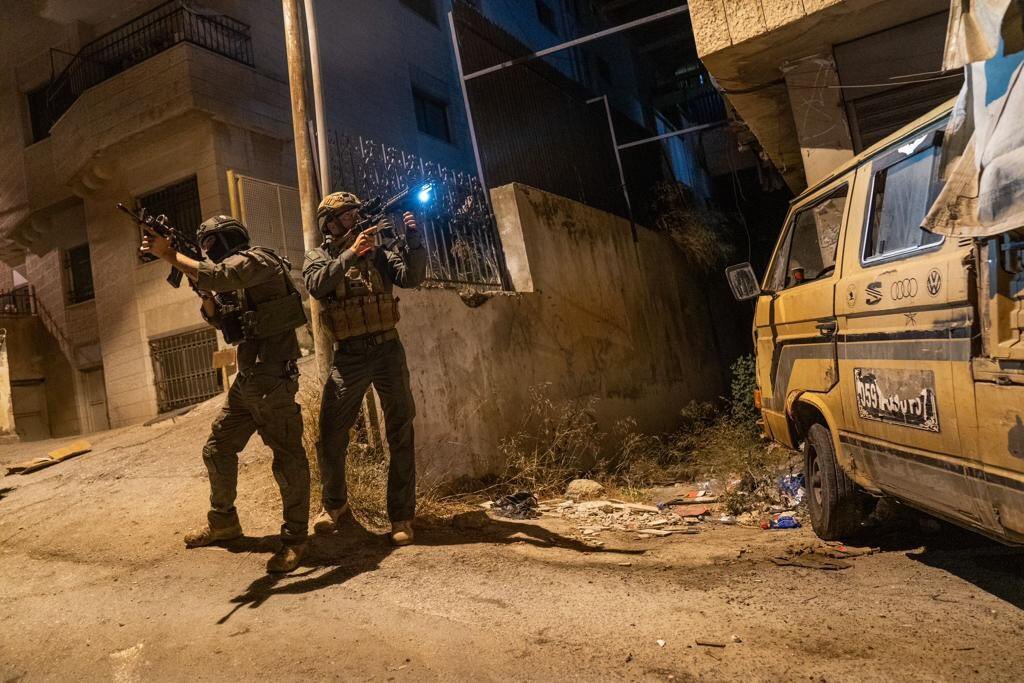
Local sources reported that occupation forces escalated their attacks last night and this morning on citizens and their homes in the city, its camps, and its suburbs, carrying out a series of raids and attacks in several areas, amid heavy gunfire and sound bombs.


In the center of Tulkarm city, occupation forces fired sound bombs at citizens in the areas of Martyr Thabet Thabet Square, Gamal Abdel Nasser Square, the vegetable market, the old Nablus garages, and the western neighborhood.


Israeli occupation forces forced shop owners to close their doors after raiding them, and detained two young men, Tariq Nasser Babaa and Khaled Jamal Al-Masry, in a shop in the western neighborhood, assaulting them.


Occupation armored vehicles also stormed the southern neighborhood of the city, coming from the direction of the Avnei Hefetz settlement, and headed towards Far'oun Street and Al-Salam Roundabout, heading towards the Artah suburb to the south.


In another development, occupation forces arrested Shaddai Hussein Ali Odeh "Al-Salman" after raiding his home in the southern neighborhood and assaulting him. He is a former detainee.


Infantry forces stormed the Dhenaba suburb, east of the city, and took up positions near the Attar platforms. They conducted extensive combing and search operations, while another infantry force deployed to the employee housing area in the Aktaba suburb, near the Nour Shams camp, where they proceeded to destroy surveillance cameras in citizens' homes.


Yesterday, the Iskan neighborhood witnessed raids on homes by occupation soldiers, who searched them, subjected residents to field investigations, and detained a number of young men for long hours, assaulting them with beatings.


Local sources reported that occupation soldiers stole sums of money and personal belongings from the home of Samir Khreiush in the Iskan neighborhood, including 35,000 shekels and 6,000 Jordanian dinars, in addition to cell phone chargers and perfume bottles. They also severely beat his son, Hani, and his nephew, Rashad Omar Khreiush.


In Nour Shams camp, occupation forces opened heavy fire on civilian homes in the Jabal al-Nasr area, destroying several surveillance cameras in the area. Meanwhile, the camp is witnessing a daily forced displacement campaign targeting residents of the Jabal al-Salihin and Jabal al-Nasr neighborhoods after raiding their homes.


Tulkarm camp is witnessing a heavy presence of occupation soldiers who have wreaked havoc and destroyed homes and their contents after raiding them, including those emptied of their residents after they were forcibly displaced. This coincided with the heavy firing of live ammunition and sound bombs, and bulldozing in the schools' neighborhood. They also arrested the young man, Ahmed Abdel Dayem, from inside the camp.


The occupation forces also continue to seize homes and residential buildings on Nablus Street and the adjacent northern neighborhood, forcing residents to evacuate them, while stationing their military vehicles and bulldozers in the vicinity.


The occupation's ongoing aggression and escalation against the city of Tulkarm and its two refugee camps resulted in the deaths of 13 citizens, including a child and two women, one of whom was eight months pregnant. Dozens more were injured and arrested.


It also resulted in the forced displacement of more than 4,000 families from the Tulkarm and Nur Shams camps, along with hundreds of citizens from the city's northern neighborhood after their homes were seized and a number of them converted into military barracks.


The aggression caused widespread destruction to infrastructure, including homes, shops, and vehicles, which were completely and partially demolished, burned, vandalized, looted, and stolen. 396 homes were completely destroyed and 2,573 partially destroyed in the Tulkarm and Nur Shams refugee camps, in addition to closing their entrances and alleys with earth mounds.

PALESTINE

Fri 18 Apr 2025 9:26 am - Jerusalem Time

Netanyahu threatens Iran with the aim of escalating against Gaza

Although Israeli public opinion polls show a decline in Prime Minister Benjamin Netanyahu's popularity since the beginning of 2023, and a rise in the popularity of the Zionist opposition parties, Netanyahu's government is currently very stable. Protests against the government's "judicial reform" plan to weaken the judiciary have subsided, as have protests against the government's policy of refusing to reach a prisoner exchange agreement and a ceasefire in Gaza.


It is noteworthy that the decline in the coalition bloc of parties in the polls is due to a decline in the popularity of Netanyahu's Likud party, which has lost between 8 and 12 seats in the Knesset, while the popularity of the remaining coalition parties remains relatively stable. If it becomes clear on the eve of the next election that the Religious Zionism party, headed by Bezalel Smotrich, will not pass the electoral threshold, it is expected that it will run on a single list with the relatively popular Otzma Yehudit party, headed by Itamar Ben-Gvir, and that they will separate after the election, as happened after the last election.


There is broad consensus within Netanyahu's government on almost all issues, particularly those related to the "judicial reform" plan and the dismissal of "threshold guardians," such as the attorney general and the head of the Shin Bet. However, there is a deep disagreement between Smotrich's and Ben-Gvir's parties and the ultra-Orthodox parties over whether to enact a law exempting or requiring ultra-Orthodox men from military conscription.


In general, disagreements between the coalition and the opposition are primarily over domestic issues, such as "judicial reform" and the conscription of ultra-Orthodox Jews. There is little disagreement between the two sides over foreign issues, especially if they relate to the war on Gaza, a major attack on Iran, or the occupation of Arab lands, as is the case in Syria and Lebanon.


While opposition party leaders, such as Yair Lapid, may have called for a continued prisoner exchange between Israel and Hamas, they do not call for an end to the war of extermination in Gaza in any form. Last Tuesday, Yisrael Beiteinu party leader Avigdor Lieberman opposed the entry of humanitarian aid into the Gaza Strip, claiming, "While our kidnapped soldiers are being starved in the tunnels and residents of the south are running to shelters on Passover, the Israeli government is once again surrendering and intending to transfer more humanitarian aid to Gaza. This must not be allowed to happen."


Regarding Netanyahu's continued threats to attack Iran, National Camp party leader Benny Gantz stated in a post on the X platform yesterday that "the Iranian regime is an expert at stalling. Israel must and can attack Iran. We must enlist the United States and change the face of the Middle East."


Opposition leader Lapid said yesterday, "I proposed attacking Iranian oil fields in October.

Destroying Iran's oil industry would destroy its economy and ultimately bring down the regime. Netanyahu got scared and stopped it."


This means that in Israel, in general, there is a "trance of power" toward the outside world through the threat of continuous wars, and in the Netanyahu government, in particular, there is a "trance of power" toward the inside world through the continuation of its policies, without the opposition having any ability to obstruct them or obstruct any part of them.


Criticism of Zamir from within the security services

Israel's internal political disputes have seeped into the Israeli military over the past week, with petitions signed by thousands of reserve officers and soldiers demanding a prisoner exchange "even if it means stopping the war." Netanyahu and IDF Chief of Staff Eyal Zamir considered these petitions to be a practical call to refuse military service, but the signatories emphasized that the petitions do not call for refusal from service. It is noteworthy that a large number of reserve personnel, particularly in the air force, had previously declared their refusal to serve in protest against the "judicial reform" plan.


The reservists' petitions were a protest against Israel's resumption of the war on Gaza without the return of its prisoners held in the Gaza Strip. In other words, they were a protest against government policy. However, Zamir decided to dismiss the petitioners from military service and declared that he would not allow the "politicization" of the army. In the Israeli military sense, reservists are citizens who volunteer for military service.


Israel resumed the war on Gaza two weeks after Zamir took office. He drew up the war plans and declared that the goal was to eliminate Hamas and return the Israeli prisoners—two goals Israel failed to achieve in the year and a half before the ceasefire on January 19. Zamir believed that the resumption of the war did not pose a threat to the Israeli prisoners. However, he informed the political-security cabinet that there was a severe shortage of soldiers and that the recruitment rate for combat units was low.
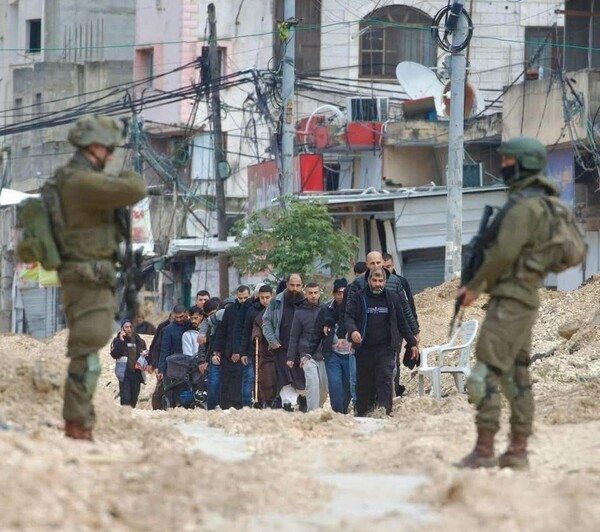

Israeli security officers and officials have been highly critical of Zamir, accusing him of "supporting the government in a way that goes against purely military considerations," saying "it's not clear to us where this war is heading," and that "not everyone in the security establishment and the army supports this military operation," according to what Yedioth Ahronoth reported on Wednesday.


In response to Zamir's accusations, officers in the Israeli Southern Command, in a briefing to military correspondents, described the resumption of the war as "military pressure" aimed at forcing Hamas to agree to a prisoner exchange deal—that is, to give up its negotiating positions, particularly the refusal to condition the exchange on guarantees for a ceasefire. In Israel, too, Hamas is not expected to give up this condition.


To counter the accusation that Zamir supports the government, the officers said that discussions are underway with the political echelon regarding the introduction of humanitarian aid into the Gaza Strip, despite widespread opposition to this within the government, which has the final say on the matter.


Trump prevents an Israeli attack on Iran?


Israel rejects any country in the region possessing nuclear weapons. This rejection is openly known as the "Begin Doctrine," named after former Prime Minister Menachem Begin, who decided to attack and destroy Iraq's nuclear reactor in 1981. Under this doctrine, Israel destroyed a nuclear reactor under construction in Syria in 2007, following a decision by then-Prime Minister Ehud Olmert.


It is no secret that the Israeli military has conducted and continues to conduct training to attack the Iranian nuclear program, a program far larger and more extensive than those of Iraq and Syria. Its facilities are spread across numerous sites in Iran, some of them underground. At the beginning of the last decade, Netanyahu, with the support of then-Defense Minister Ehud Barak, issued an order to attack the Iranian program. However, the leaders of the Israeli security services—Chief of Staff Gabi Ashkenazi, Mossad Director Meir Dagan, and Shin Bet Director Yuval Diskin—prevented the attack after they called on Israeli President Shimon Peres to intervene and persuade Netanyahu and Barak to reverse their decision.


Yesterday, the New York Times published a report, citing informed sources, stating that US President Donald Trump urgently asked Netanyahu to come to the White House early last week to inform him that he was prohibiting Israel from implementing a ready-made plan to attack Iran's nuclear facilities, which could be implemented next month. This came after officials in Netanyahu's government informed the Trump administration of this plan, which calls for an airstrike and a ground incursion by special forces. Israeli reports and comments suggest that Netanyahu, through his aides, was the one who leaked the information to the American newspaper.


If this is true, Netanyahu has an interest in this leak. He wants to claim that he sought to attack Iran but was prevented by the US president, because Trump announced during a meeting with him last week that he would enter into direct negotiations with Iran on a new nuclear agreement. Furthermore, there are reports circulating about Trump's desire to avoid igniting new wars in which the United States would be involved. An Israeli attack on Iran would require US intervention to repel a subsequent Iranian missile attack, which Israel alone cannot repel, as was demonstrated during such an Iranian attack at the end of last April, when the US and British militaries intercepted Iranian missiles heading towards Israel.


Perhaps the most important aspect of this issue, and its public exposure, is what Netanyahu received from Trump in exchange for preventing an attack on Iran and Netanyahu's acquiescence. It is likely that Trump pledged to Netanyahu that he would not exert serious pressure on him to stop the war on Gaza. Continuing the war is in Netanyahu's personal interest, as it ensures that his government is not destabilized, and stopping the war would permanently remove him from power.


The same security officials, speaking to Yedioth Ahronoth on Wednesday, indicated that "Trump's thwarting of Israeli plans to attack Iran could lead Netanyahu to order a deeper military operation in Gaza."

PALESTINE

Fri 18 Apr 2025 9:23 am - Jerusalem Time

Hamas: We are ready to negotiate immediately on a comprehensive package.

Khalil al-Hayya, Hamas's leader in Gaza and head of the movement's negotiating delegation, said that Israeli Prime Minister Benjamin Netanyahu responded to the mediators' proposal with a proposal that contained impossible conditions and would not lead to a ceasefire or a withdrawal from the Gaza Strip. He indicated a readiness to immediately enter negotiations on the "comprehensive package."


He began his remarks by saying, "The leadership of the Hamas movement and the resistance factions were keen to stop the barbaric aggression and war of extermination against the Gaza Strip. We worked for more than a year and a half of arduous negotiations to achieve this goal until we reached the January 17th agreement with its three stages."


He added, "The Palestinian movement and factions fulfilled all their obligations under this agreement, but Netanyahu and his government reneged on the agreement before the first phase was completed, and resumed committing the most heinous crimes and forms of genocide through killing, destruction, and starvation."


Al-Hayya said, "The mediators have returned to contact us to find a way out of the crisis created by Netanyahu and his government. We agreed to their proposal at the end of Ramadan, despite our conviction that Netanyahu is insisting on continuing the war and aggression to protect his political future. This was confirmed after Netanyahu rejected the mediators' proposal, which we had agreed to."


He explained, "In light of this clear position on the occupation, we affirm the movement's readiness to immediately begin negotiations on a comprehensive package, whereby all prisoners held by the resistance and an agreed-upon number of Palestinian prisoners in occupation prisons are released, in exchange for a complete cessation of the war against our people, a full withdrawal from the Gaza Strip, the start of reconstruction, and an end to the blockade."


He pointed out that "the partial agreements are being used by Netanyahu and his government as a cover for his political agenda based on continuing the war of extermination and starvation, even if it means sacrificing all of his prisoners. We will not be part of implementing this policy."


Al-Hayya stated that "resistance and its weapons are linked to the existence of the occupation, and are a natural right of our people and all peoples under occupation." He added, "We welcome the position of Adam Boehler, the special envoy of US President Trump, to end the issue of prisoners and the war together, which intersects with the war position in the willingness to reach a comprehensive agreement on a prisoner exchange as a single package, in exchange for a cessation of the war, the occupation's withdrawal from the Gaza Strip, and reconstruction."


He concluded by saying, "Finally, and regardless of the course and outcome of the negotiations, the international community is called upon to intervene immediately and exert the necessary pressure to end the unjust siege on our people in the Gaza Strip, where more than two million people are being subjected to genocide by starvation, and all the necessities of human life are considered a legitimate right guaranteed under international law and international humanitarian law, without any restrictions or conditions."

PALESTINE

Fri 18 Apr 2025 9:17 am - Jerusalem Time

Updated: Dozens killed and wounded in ongoing Israeli raids on the Gaza Strip.

Dozens of civilians, including children and women, were killed and injured in ongoing Israeli airstrikes targeting sites in the central and northern Gaza Strip on Friday.


The Israeli army killed 10 members of one family, including five children, when it bombed a house in Jabalia, north of the Gaza Strip. Two people were also killed and six others were injured when an Israeli bombardment targeted their tent in the Al-Tawam area, also north of the Strip.


Gaza's Civil Defense announced on Friday that 15 people, including 10 members of one family, were killed in two Israeli airstrikes overnight. The Civil Defense reported that its crews "found the bodies of 10 martyrs, in addition to several wounded, in the Baraka family home and surrounding houses targeted by Israeli occupation forces in Bani Suhaila, east of Khan Yunis."


He said that civil defense teams found the bodies of "five dead including two children and a woman, and 18 wounded, as a result of an Israeli bombardment of a house in the Tel al-Zaatar neighborhood in Jabalia camp." He added that "five other missing persons are still under the rubble, and we are unable to reach them due to the lack of equipment and devices available to our crews."


This brings the total death toll from the ongoing Israeli aggression since October 7, 2023, to 51,065 dead and 116,505 wounded, amid escalating aerial and ground bombardment and continued targeting of residential neighborhoods and shelters.
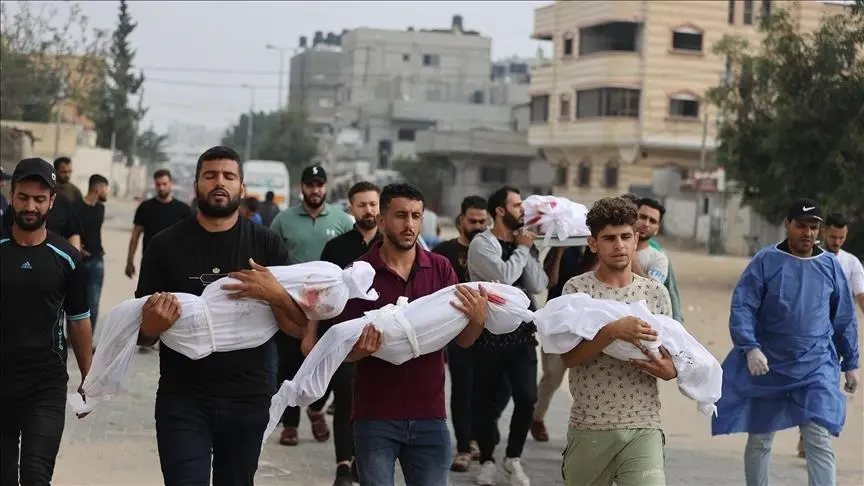

Since the resumption of the large-scale offensive on March 18, 2025, the Ministry of Health has recorded 1,691 deaths and 4,464 injuries, the majority of whom are women and children, amid deteriorating humanitarian conditions and a severe shortage of medical services.
PALESTINE

Thu 17 Apr 2025 10:44 pm - Jerusalem Time

The International Red Cross announces that an Israeli tank bombed one of its headquarters in Gaza.

The International Committee of the Red Cross announced on Thursday that one of its headquarters in the Gaza Strip was directly hit by an Israeli tank shell, for the second time in three weeks.


"The ICRC is deeply outraged that one of its headquarters in Gaza was hit by an explosive device on Wednesday, April 16, causing damage," it said in a statement posted on Facebook.


The committee noted that "this incident is the second of its kind within three weeks, as another headquarters in the area was hit by a tank shell on March 24."


She stressed that "the two incidents occurred despite the presence of clear distinguishing marks on the buildings and the regular notification of them to all parties."


She warned that the recurrence of such incidents contributes to the shrinking space for humanitarian action and impacts its ability to provide protection and assistance to thousands of people who need help to survive.

PALESTINE

Thu 17 Apr 2025 10:37 pm - Jerusalem Time

A young Palestinian was injured by Israeli occupation forces' bullets south of Nablus.

A young man was shot with live ammunition Thursday evening during an Israeli occupation forces raid on the town of Osarin, south of Nablus.


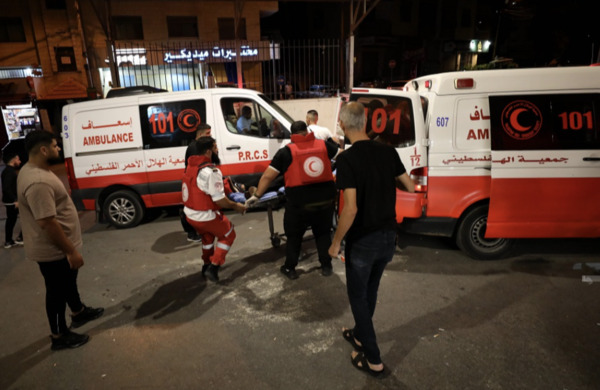
The director of the Red Crescent's emergency and ambulance center in Nablus, Amid Ahmed, reported that ambulance crews dealt with a 20-year-old man who was shot in the knee by the occupation forces.


The occupation forces stormed Osarin amid heavy live ammunition, and clashes erupted in the area.

ARAB AND WORLD

Thu 17 Apr 2025 10:17 pm - Jerusalem Time

Israeli Broadcasting Authority: 9 US aircraft carrying bunker-busting bombs land in Israel

The Israeli Broadcasting Corporation reported on Thursday that nine American transport planes loaded with bunker-busting bombs landed at the Nevatim Air Base near Tel Aviv in central Israel over the past 24 hours.


The official authority said that "nine American transport planes loaded with bunker-busting bombs and other defensive weapons landed at the Nevatim Air Base near Tel Aviv."


She added, "This came in anticipation of a potential US-Israeli strike, should the nuclear negotiations between Washington and Tehran fail."


There was no immediate comment from the US side regarding what was reported by the Israeli Broadcasting Authority until 18:50 GMT.


According to the agency, these bombs are used to enable Israel and the United States to target Iranian nuclear program facilities if negotiations with Tehran fail.


The authority described the landing of the nine planes in Israel as an unprecedented airlift between Washington and Tel Aviv.


She noted that Washington continues to transfer ammunition to Israel from US bases in the United States, Europe, and the Middle East, despite its veto of an Israeli attack on Iran last May.


On Sunday, the Israeli Broadcasting Corporation reported that dozens of American cargo planes had landed in Israel in recent days, carrying heavy MK84 bombs and interceptor missiles for the American THAAD air defense system deployed in Israel late last year.


Meanwhile, Washington has recently begun strengthening its forces and naval fleet in the Middle East amid escalating tensions with the Houthis. Last week, it dispatched a second aircraft carrier.


Media reports indicate that the White House has already begun reviewing potential targets for an attack on Iran, including nuclear facilities and ballistic missile and drone production centers.


This military alert comes as Washington and Tehran are holding talks regarding Iran's nuclear program. Both the United States and Israel are seeking to completely dismantle it following the strikes Iran has suffered in the region. Iran, however, rejects this and maintains that its program is for peaceful purposes.


On April 12, the Sultanate of Oman hosted the first round of Iranian-American talks, and it was agreed to hold a second round next Saturday in the Italian capital, Rome.


The first round was a "test of intent" and a "test of the waters" due to the state of mistrust between the two sides caused by President Donald Trump's unilateral withdrawal from the nuclear agreement signed between Iran and major powers, as well as Trump's recent threats, according to observers.


On the eve of the first round of negotiations, the White House warned of "expensive American options" if a new agreement on Iran's nuclear program failed, stressing that President Trump prefers to resolve the issue through direct talks with Tehran.


Trump's announcement of these negotiations came as a surprise to Tel Aviv, which had long urged the US administration to support military action against Iranian nuclear facilities, according to Hebrew media.

PALESTINE

Thu 17 Apr 2025 9:54 pm - Jerusalem Time

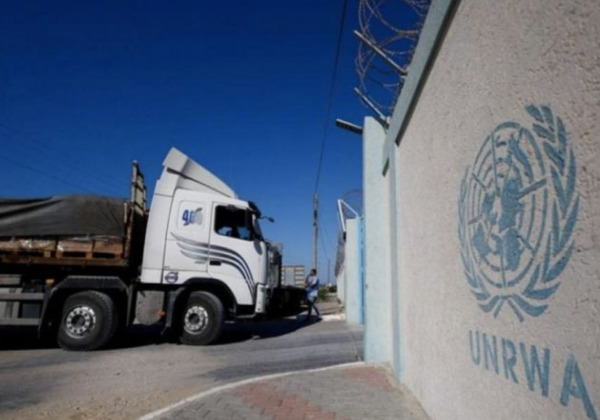
UNRWA: No aid has entered the Gaza Strip since March 2.

The United Nations Relief and Works Agency for Palestine Refugees (UNRWA) said Thursday evening that no aid has entered the Gaza Strip since March 2.


UNRWA indicated, in tweets on the "X" platform, that this period is three times longer than the one imposed at the beginning of the aggression.


She noted that approximately 69% of the Gaza Strip is subject to displacement orders following the issuance of at least 20 such orders by the Israeli occupation army. She explained that UN estimates indicate that approximately 420,000 citizens have been displaced again since the resumption of the aggression on Gaza.


She stressed that the resumption of bombing and the lack of access to humanitarian supplies are impacting the ability of humanitarian agencies to meet the needs of Gaza's citizens, including food, water, sanitation, shelter, and other needs.


Earlier this month, the United Nations Relief and Works Agency for Palestine Refugees (UNRWA) reported that 1.9 million people had been forcibly displaced amidst bombing, fear, and loss in the Gaza Strip.

PALESTINE

Thu 17 Apr 2025 8:13 pm - Jerusalem Time

Hebrew media reveals what happened at a security meeting in Tel Aviv amid Hamas's approaching response to the ceasefire proposal.

The Israeli Channel 10 reported that a security meeting held Thursday to discuss allowing humanitarian aid into the Gaza Strip via civil society organizations was held without the participation of the head of the Shin Bet security service.


The channel noted that security assessments indicate that Hamas will respond negatively to the new Israeli proposal, with expectations that the movement will submit substantial amendments to it.


In a related development, Agence France-Presse quoted two informed Palestinian sources—one of whom is from Hamas—as saying that the movement's consultations on the ceasefire proposal presented by the Israeli occupation are "nearing completion," amid anticipation of the announcement of a final response.


The two sources confirmed that the response will be sent to the mediators immediately after the consultations conclude, possibly as soon as later on Thursday, opening the door to a crucial phase in the ceasefire negotiations.

PALESTINE

Thu 17 Apr 2025 7:55 pm - Jerusalem Time

A Palestinian was injured by settler gunfire south of Hebron.

A citizen was shot by a settler this evening, Thursday, in Masafer Yatta, south of Hebron.


According to local sources, a settler wearing an Israeli army uniform fired live bullets at Hajj Saeed Muhammad Rabaa Al-Amur (60 years old) while he was on his land in the Al-Rakeez area in Masafer Yatta, injuring him in the foot.


Local sources added that Hajj Al-Amour survived several attempts to kill him by settlers, who repeatedly threatened to kill him if he did not leave his land.

ARAB AND WORLD

Thu 17 Apr 2025 7:47 pm - Jerusalem Time

Dismissed Microsoft employee: The company played a role in the Israeli genocide in Gaza

Vania Agrawal, the Microsoft employee fired for protesting the company's support for Israeli crimes in Palestine, said that Microsoft has played a role in the genocide committed by Israel in the Gaza Strip since October 7, 2023.


"Over the past year and a half, we have begun to learn more clearly how these relationships are formed and how Microsoft services enable and accelerate the genocide in Gaza," Agrawal told Anadolu Agency.


With full American support, Israel has been committing genocide in Gaza since October 7, 2023, leaving more than 167,000 Palestinians dead and wounded, most of them children and women, and more than 11,000 missing.


The employee explained that internal warnings about Microsoft's cooperation with Israel were "systematically" suppressed.


She added, "They refused to comment on the questions, evaded questions raised internally, and deleted employee comments requesting clarification."


She noted that despite the company's attempts to silence them, many employees at Microsoft offices around the world showed "quiet solidarity."


She explained that some joined the protest for Gaza, while others expressed their reactions by changing their status messages.


"We were condemned to silence, silenced, persecuted, and pressured every time," she stressed.


During the first week of this month, employees boycotted a speech by Microsoft AI CEO Mustafa Suleyman at the company's 50th anniversary celebration in protest of Microsoft's dealings with Israel.


At the same event, while Microsoft co-founder Bill Gates, former CEO Steve Ballmer, and CEO Satya Nadella were on stage, Vania Agrawal shouted, "Shame on you all. You are all hypocrites. Shame on you all for celebrating over their blood. Cut ties with Israel."


ARAB AND WORLD

Thu 17 Apr 2025 7:33 pm - Jerusalem Time

Netanyahu: My government will not allow Iran to possess nuclear weapons.

Israeli Prime Minister Benjamin Netanyahu reiterated on Thursday that his government will not allow Iran to possess nuclear weapons, amid diplomatic efforts led by Washington to revive negotiations on Tehran's nuclear program.


"As the prime minister has repeatedly stated, Israel will not allow Iran to possess a nuclear weapon," Netanyahu's office said in an official statement, noting that Netanyahu has led a series of operations, some overt and some covert, over the past years aimed at disrupting Iran's nuclear program.


Read also: Tehran: Uranium enrichment is "non-negotiable," and Iran is committed to its nuclear rights.


The statement added, "These operations contributed to delaying Iran's nuclear project for nearly a decade, and without them, Iran would have a nuclear arsenal today."


Netanyahu's remarks coincide with US-led diplomatic efforts. US Special Envoy Steve Witkoff is scheduled to meet with Iranian Foreign Minister Abbas Araghchi in Rome on Saturday as part of a new round of nuclear negotiations. This comes a week after talks described as the highest-level between the two sides since the collapse of the 2015 nuclear agreement.

PALESTINE

Thu 17 Apr 2025 5:40 pm - Jerusalem Time

Israeli occupation continues its raid on Tulkarm: arrests, house raids, and property destruction.

Israeli occupation forces arrested two young men from the Employees' Housing neighborhood in the Aktaba suburb east of Tulkarm on Thursday, following extensive house raids in the neighborhood.


According to local sources, a military infantry force stormed the neighborhood and deployed heavily throughout the area. They raided several homes, conducted thorough searches, vandalized property, and checked citizens' identities, subjecting them to field investigations.


The sources added that during this campaign, the occupation forces arrested the two young men, Hani Samir Ahmed Khrioush (18 years old) and Rashad Omar Ahmed Khrioush (28 years old), and they were handcuffed and taken towards Nour Shams camp.


In recent days, the employee housing district has witnessed repeated raids by infantry forces, particularly in areas opposite Nour Shams Camp. These forces have been subjected to extensive combing and search operations inside homes and buildings, amid heavy firing of live ammunition and sound bombs at civilians.


In a related development, the occupation forces deployed new military reinforcements, including vehicles and bulldozers, toward the Tulkarm and Nur Shams refugee camps, passing through the Dhnaba suburb, as the aggression against the city and its refugee camps continues for the 81st consecutive day.


Infantry units were also deployed in the alleys and lanes of the two camps, and continued raiding homes and forcing residents to evacuate, particularly in the Jabal al-Nasr and Jabal al-Salihin areas of Nour Shams camp.

PALESTINE

Thu 17 Apr 2025 5:08 pm - Jerusalem Time

Israeli occupation claims to have assassinated two senior Hamas and Islamic Jihad officials.

The Israeli occupation army and the General Security Service (Shin Bet) announced in a joint statement on Thursday that they had carried out a series of airstrikes in various areas of the Gaza Strip, which they claimed resulted in the assassination of two prominent leaders of the Hamas and Islamic Jihad movements, during attacks targeting the city of Khan Yunis in the southern Gaza Strip.


The statement explained that Israeli warplanes targeted Yahya Fathi Abdel Qader Abu Shaar last Tuesday, describing him as responsible for Hamas's arms smuggling infrastructure. The statement claimed that he played a pivotal role in recent years in smuggling weapons and military equipment used in the October 7 operation.

It added that the army and Shin Bet security service carried out a raid last week targeting Mazen Ibrahim Mahfouz Farra, allegedly a prominent Islamic Jihad operative, on the grounds that he had directed attacks against targets inside the occupied territories, particularly over the past two years.


The statement claimed that the occupation took "measures to reduce harm to civilians," through the use of precision munitions, aerial surveillance, and intelligence information.


The statement also indicated that the Israeli Air Force had bombed approximately 110 targets across the Gaza Strip over the past two days, including military sites, armed cells, and infrastructure, it claimed.


He added that the bombing targeted a military building belonging to Hamas's naval forces in the Nuseirat refugee camp, claiming that it was being used to plan naval operations.


In a separate statement, the Israeli military announced that it had carried out another raid, in cooperation with the Shin Bet security service, targeting a person it described as a "terrorist" inside a Hamas command and control complex in the Jabalia area in the northern Gaza Strip. The military claimed the individual was involved in carrying out attacks against Israeli forces and settlers.

PALESTINE

Thu 17 Apr 2025 4:44 pm - Jerusalem Time

6 Palestinians dead as a result of the occupation's bombing of several areas in the Gaza Strip

Six civilians were killed and others injured when Israeli warplanes and drones bombed various areas of the Gaza Strip, with the focus being on the southern city of Khan Yunis.


According to local sources, a citizen was killed and others, including a child, were injured after an Israeli drone fired bullets into the Al-Masalaba area of the Al-Zeitoun neighborhood in Gaza City, in the central Gaza Strip.


Two citizens were also killed after being targeted by the Israeli occupation forces in the Al-Manara neighborhood, south of Khan Yunis, and were transferred to the European Hospital.


The occupation aircraft bombed a farm in the aforementioned neighborhood, resulting in the martyrdom of three farmers: Adham Jamal Muhammad al-Najjar, Muhammad Abdullah Muhammad Qwaider, and Muhammad Khader Ashour.


Medical sources reported that 27 citizens were killed in Israeli raids on the Gaza Strip since dawn today, including 21 in Gaza City and the northern Gaza Strip.

ARAB AND WORLD

Thu 17 Apr 2025 4:23 pm - Jerusalem Time

Israel's Supreme Court rejects government request to overturn decision to freeze Bar's dismissal

Israel's Supreme Court on Thursday rejected Prime Minister Benjamin Netanyahu's government's request to overturn the decision to freeze the dismissal of Shin Bet chief Ronen Bar.


The official Israeli Broadcasting Authority said that the Supreme Court rejected the government's request to overturn the decision to freeze Bar's dismissal.


According to the Supreme Court's ruling, "Ronen Bar will continue to perform his duties without prejudice to his powers, and no action will be taken to terminate his term."


The commission noted on Wednesday that the government had filed a petition with the Supreme Court requesting that the temporary freeze order be overturned, arguing that the court ruling "poses a threat to the principle of separation of powers."


The petition stated that "the ultimate authority to manage state security affairs rests with the government," warning that "Supreme Court decisions that strip it of this authority create a dangerous situation."


The government also considered that "imposing the continued tenure of a failed and untrustworthy security chief solely on the basis of a temporary court order constitutes a serious institutional flaw."


The authority indicated that the court "rejected the government's petition today, Thursday."


"The Supreme Court rejected the government's request to lift the temporary injunction currently preventing the dismissal of Shin Bet chief Ronen Bar," she said.


The court judges were quoted as saying in their ruling: "There is no basis for the allegation of a violation of the government's powers in the security sector," noting that the government "is responsible for making political and security decisions."


They added that "the existence of a judicial review of the appointment, regardless of the rank, does not detract from this in the slightest, as was made clear during the session," which examined petitions opposing the dismissal decision.


Relations between the Supreme Court and the Israeli government have been highly tense following the government's attempts to limit the powers of the Israeli judiciary, particularly following the court's decision to freeze Bar's dismissal.


On March 20, the government unanimously approved Netanyahu's proposal to dismiss Bar, the first such decision in Israel's history, despite thousands of protests.


Hours after the government's decision, the Supreme Court froze Barr's dismissal pending appeals from opposition parties, and government officials indicated they planned not to respect the court's ruling.


Later, on April 8, the Israeli Supreme Court decided to prevent the government from implementing the decision to dismiss Shin Bet Director Ronen Bar, which was scheduled to take effect on April 10, or announcing a replacement for him, pending the conclusion of the case.


Netanyahu justified his decision to dismiss Bar as a "failure," but Bar attributed the decisions to disagreements with Netanyahu and the Shin Bet investigation into officials in the Israeli president's office on charges of contact with a foreign government.