PALESTINE

Wed 30 Apr 2025 6:43 am - Jerusalem Time

Investigation: Nikolai Ashurov... the officer who executed the paramedics in Rafah appears as a mercenary in the Congo three days after his discharge.

Written by: Younis Al-Tirawi - Jerusalem

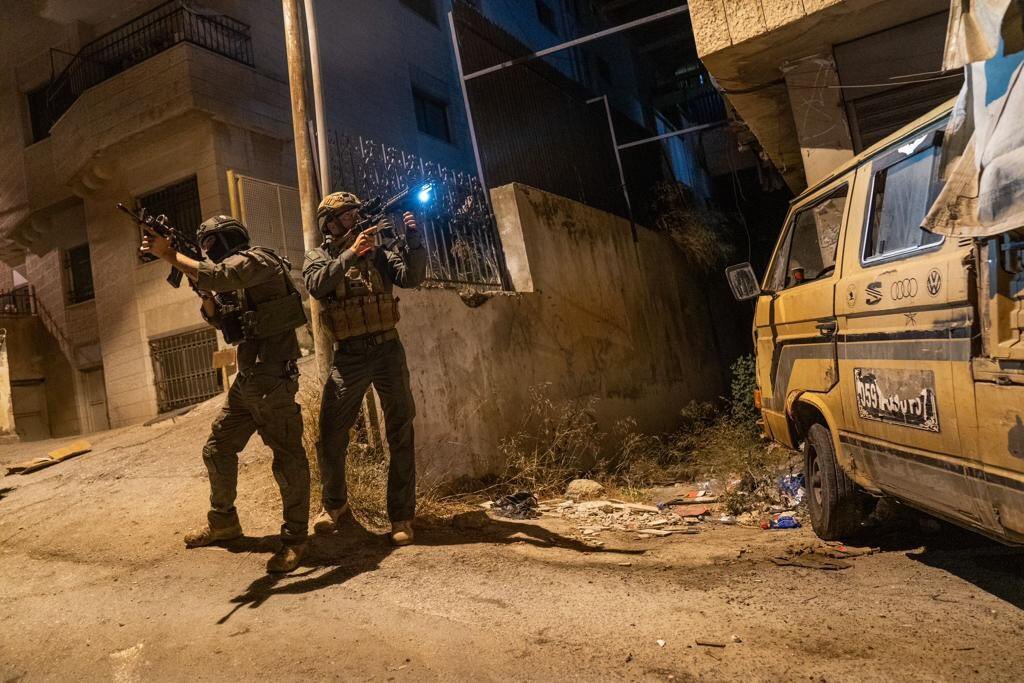
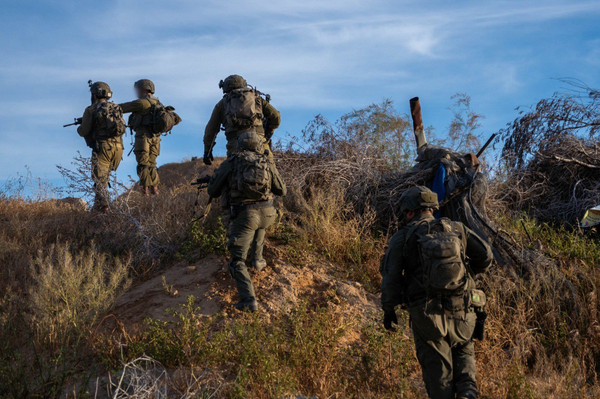
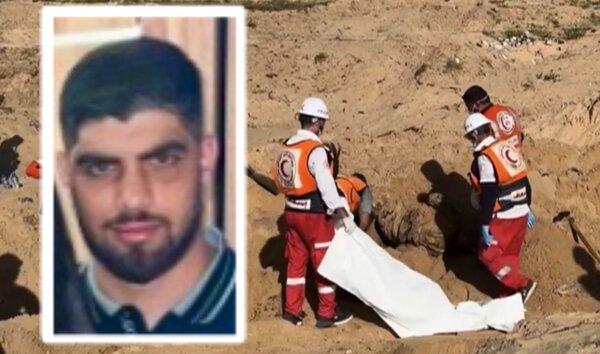
Just one month ago, in one of the bloodiest crimes against humanitarian action in decades, an Israeli military commander perpetrated a horrific massacre in the Gaza Strip, killing fifteen humanitarian aid workers. This commander, identified by Pal Commission, is Major Nikolai (Niko) Ashurov, a Russian national who served as deputy commander of the Golani Brigade's reconnaissance battalion. In a tragic irony, just three days after his discharge from the army, Ashurov left for the Congo to work as a mercenary for a private security company.

The details of the crime date back to the early hours of March 23, 2025, when a Palestinian Red Crescent ambulance was on its way to rescue victims of a previous Israeli bombardment of the Hashashin neighborhood of Rafah. As it passed through the Barakasat area west of the city, soldiers from the Golani Reconnaissance Unit set up a deadly ambush, opening heavy fire on the ambulances, killing two paramedics and arresting a third. Later, a convoy of ambulances and civil defense vehicles headed to the same location met the same fate. Eight Red Crescent personnel and five civil defense personnel were killed, while one civil defense member was arrested and his whereabouts remain unknown. A short time later, a UN employee who arrived at the scene after hearing gunfire while attempting to provide assistance was executed.

The massacre was not impromptu. A legal draft reviewed by Al-Quds, prepared by legal experts from the New York-based Pal Commission, established that the attack was carried out under the direct orders of Nikolai Ashurov, who commanded the force on the ground. The evidence compiled by the draft included military records, social media activity, and multiple interactions with acquaintances and soldiers connected to the officer, all of which prove that Ashurov ordered his soldiers to open fire indiscriminately.

Statements by Israeli military leaders in the days preceding the massacre revealed the mentality that led to this crime. In a video recording, the battalion commander, Lt. Col. David Cohen, is seen giving orders to his soldiers before they entered Rafah, saying: "Everyone we encounter is an enemy. If you see anyone, kill him immediately. Don't hesitate." This doctrine of mass killing was also confirmed by Colonel Tal Elkobi, commander of the 14th Brigade, under which the battalion operated, when he told the Hebrew press that they "rain down heavy fire on the area before each attack, so that only those who survive are killed."

Commenting on these statements, Professor Luigi Danieli, a professor of the law of armed conflict at the University of Nottingham in Britain, described what is happening to Al-Quds newspaper as "a complete collapse of the principle of distinction between civilians and combatants," asserting that "every Palestinian in Gaza has become a legitimate target for killing by decision of a field commander."

Israeli sources revealed that one day after the Pal Commission revealed the officer's identity, Lt. Col. Cohen sent an internal message to his troops, stressing that the operation "was not a moral failure, quite the opposite." Cohen stated that "Niko," i.e., Nikolai Ashurov, was the battalion's deputy commander during the operation, praising him as an "outstanding and principled officer," and emphasizing that "the unit's leadership strongly supports the actions of every fighter who participated in the mission."

Professor Danieli believes that the Israeli battalion commander's statements are not an isolated incident, but rather a clear reflection of "systematic criminality" and "complete dehumanization." In his explanation, he noted that this dehumanization is not limited to combat behavior, but also extends to the way these commanders reinterpret the laws of war to justify their crimes. "These fighters are convinced that killing Palestinian civilians—including children—is not only a legitimate and moral act, but is seen as an act of heroism," Danieli said. He added that the commander's statement, "There is no moral failure, quite the opposite," clearly sums up this approach.

Danieli continues: “Israeli officers feel entitled to ignore any legal constraints, believing that some superior morality or special privilege justifies their actions. This is the fundamental truth: a delusion of genocide. A delusion made possible by years of whitewashing in Western discourse, in which concepts like ‘human shields’ and ‘collateral damage’ have been endlessly manipulated to obscure the clear and routine reality of mass killing, carried out indiscriminately and openly—even when the intent is not direct extermination, the near-absolute certainty of the outcome legally amounts to criminal intent to commit genocide, according to the jurisprudence of the International Criminal Court.”

According to an internal IDF investigation reviewed by Haaretz, the commander responsible for planning the attack was the deputy battalion commander, a position held by Ashurov at the time. Although the IDF's own investigation found no suspicious activity in the area, Ashurov ordered the ambulances to be fired upon as soon as they passed.

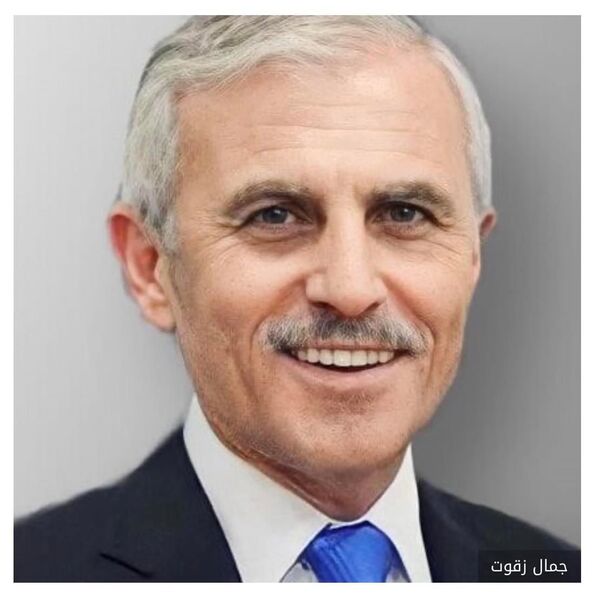
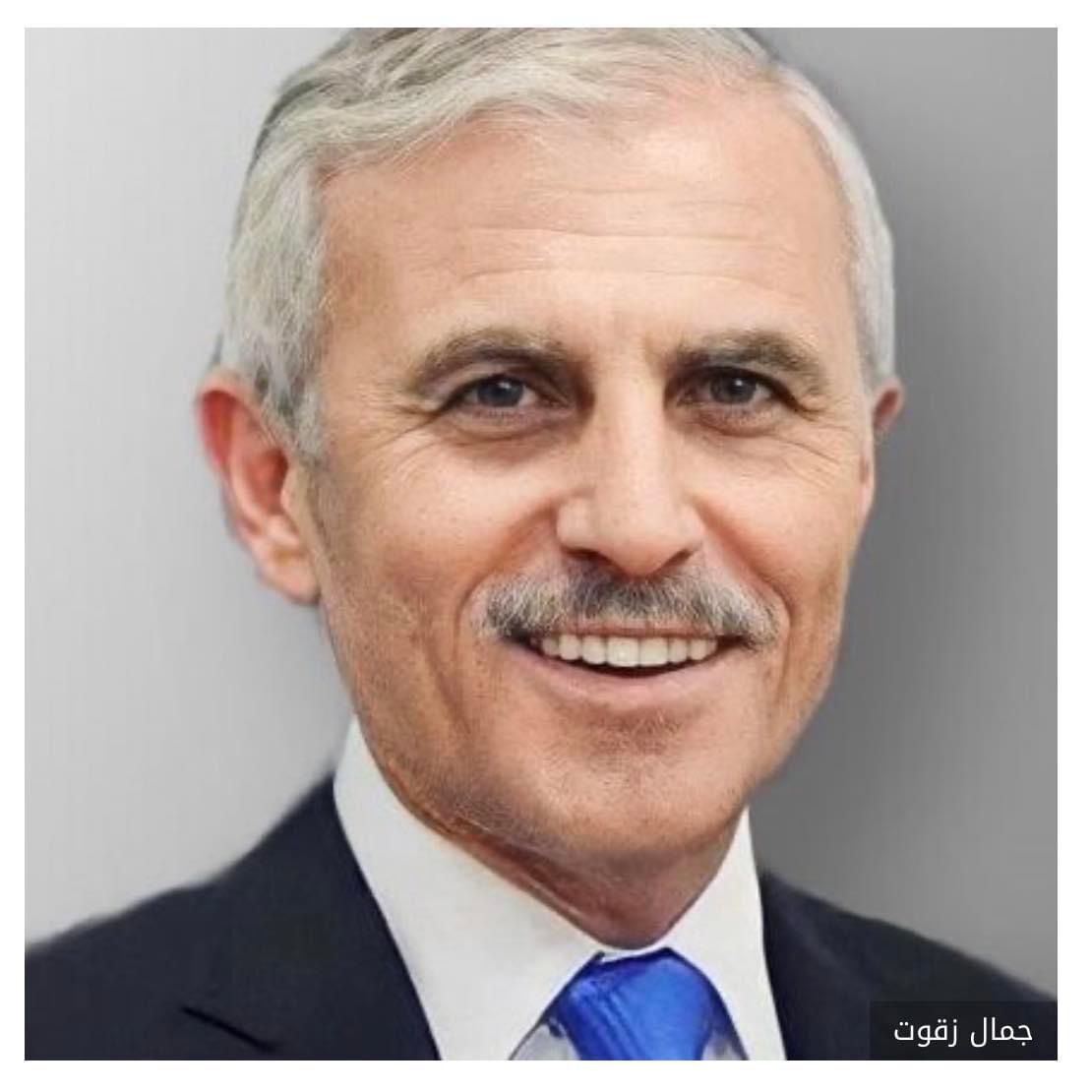
In the first attack, a Palestinian ambulance was targeted, killing two paramedics and capturing one survivor. In the second attack, as the relief convoy approached, Ashurov ordered his forces to unleash a new barrage of bullets, killing 12 more, some of whom were executed at close range, according to investigations. This was confirmed by eyewitness Dr. Saeed al-Bardawil, who was detained with the force and witnessed the crime firsthand. Ashurov himself opened fire on a UN vehicle, killing Kamal Shahtout, the UN field security officer in Rafah.

Nikolai Ashurov is not just an ordinary soldier. He was born in Russia and immigrated to Israel as a child, settling with his family in the city of Sderot. During his military service, he held several command positions in the Golani Brigade, commanding platoons and companies in the special reconnaissance unit. Shortly before his discharge, he participated in a military mission to Morocco as part of the "African Lion" exercise organized by the US Africa Command.

In an attempt to confirm Nikolai Ashurov's identity, we focused on a striking detail highlighted by Hallel Biton-Rozin, the military correspondent for Israel's Channel 14. In her report, she spoke about "N." She described him as "one of Israel's heroes," saying that after being discharged from military service, he moved into business in Africa. However, the injury of the battalion's deputy commander necessitated his urgent return to the army, where he "didn't hesitate for a moment; he left everything and returned," she said.

But talk of "business in Africa" wasn't as innocent as the reports suggested. From the start, we were suspicious: Information indicated that several Israeli soldiers—mutual friends of officer Nikolai Ashurov—operated as mercenaries in the Democratic Republic of the Congo during 2023. This raised questions about Ashurov's possible involvement in these activities. Initially, we had no direct evidence linking Ashurov to any operations in Africa, other than his social connections. However, the turning point came just three days after he completed his military service: One of his closest friends, Moshe Hasid—himself the target of our investigation—posted an explicit recruitment advertisement on his personal Facebook page for "combat soldiers to train African armies," promising high salaries. This is when the story began to unravel.

Moshe Hasid isn't just a casual friend of Nikolai Ashurov; they have a longstanding relationship dating back to 2021, with Hasid having previously publicly expressed support for him, adding a personal and professional dimension to their collaboration. We reached out to Hasid posing as a recruiter interested in the job. The response was swift: "Hello, brother, talk to him," along with a phone number and a picture of his WhatsApp profile—which, to our surprise, was that of Nikolai Ashurov himself, the perpetrator of the Rafah massacre.

In a WhatsApp exchange, Ashurov confirmed that he was working on a security project in the Democratic Republic of the Congo, and that they were preparing to launch in early July. The project is being run under the name Fortress, an Israeli company specializing in security and military training. “The company doesn’t have a website,” Ashurov explained in his messages, adding, “That’s not how a company works in this world.” He wasn’t prepared to reveal too much in writing and asked to have a voice call with me to explain the details.

Call with the butcher

And that's what we did. I made the phone call, and Ashurov spoke freely about the nature of his work. He revealed that he is one of three managers of Fortress, a company that oversees the training of special forces and regular battalions in the Congo. He indicated that the company's commander is Nir Yatom, a former officer in the Yatom special forces unit and the son of former Mossad chief and general, Danny Yatom.

The company offered me a monthly salary of 27,000 Israeli shekels, and Ashurov confirmed that he would be in the Congo with me to directly supervise operations. The projects include the so-called "Commando Project" and the "Panzer Project," which are part of a program to train Congolese forces to counter the M-23 insurgency.

F

During the investigation, we sought to get Nikolai Ashurov to confess his responsibility for the massacre that occurred while he was commanding the force in Rafah. During the conversation, we succeeded in extracting this confession. When he realized we had information about his role, he asked in surprise, "How did you know it was me?"

After we presented him with a convincing excuse, he made a decisive confession:

"It's all over and done with. Everything is for the best. Brother, the army isn't my career—I only came back because they asked me to. I work in security in Africa here and there. Everything will be fine." These words weren't just a personal justification; they opened a window into a broader network of Israeli security activities in Africa.

According to a report in Israel Hayom, Fortress – International Missions Ltd., where Ashurov is confirmed to be a director, is one of the most prominent Israeli security companies currently active on the continent. The former Mossad chief commented to the newspaper: “In my opinion, Nir will not want to talk to you, because this type of activity prefers to remain out of the spotlight.” The presence of Israeli military expertise in Africa is not new, but its scope and intensity have increased to unprecedented levels in recent years. According to the Africa Report platform, Israeli companies have played a key role in training Congolese army forces to confront the M-23 armed rebellion. President Felix Tshisekedi, who took office in 2019, has deepened this trend, using private Israeli companies not only to secure senior figures but also to train the Republican Guard—consistent with Ashurov’s description of the “commando” project he spoke about during the conversation.

This increased use of Israeli mercenaries and military experts has come at a steep financial cost, with reports indicating that hundreds of millions of dollars have been drained from the state treasury to finance these secret contracts. The concern has not gone unnoticed; it prompted Congolese financial authorities, represented by the Financial Investigation Unit (CENAREF), to open an official investigation last year into the scale and impact of these activities on the national economy.

Nikolai Ashurov was only one exposed link in an integrated system where Israeli war crimes in Gaza intersect with mercenary projects and security hegemony in the heart of Africa. From the devastated streets of Rafah to the tropical forests of the Congo, killers move with impunity, carrying with them a culture of impunity, cloaked behind private corporate fronts and supported by transnational political and military structures. While the world continues to turn a blind eye to the massacres committed against Palestinian civilians, the seeds of the coming catastrophe are being sown elsewhere in the forgotten world, where the same patterns of violence, corruption, and abuse are being repeated. Nikolai Ashurov's case is not an exception—it is the rule. Unless this shameful international silence is broken, the "Rafah massacre" will continue to recur, under different names and titles, but with the same impunity.
PALESTINE

Tue 29 Apr 2025 10:41 pm - Jerusalem Time

Gaza Health: The Strip is crying out for help as the occupation continues its siege of hospitals and children.

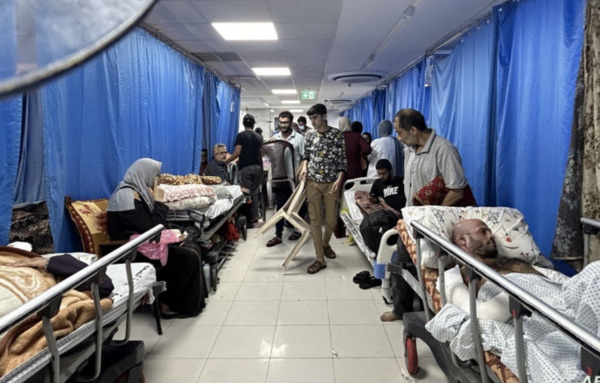
The Ministry of Health in the Gaza Strip issued a new appeal for help, warning of a catastrophic deterioration in the health and humanitarian situation resulting from the continued closure of crossings and the prevention of the entry of vital aid.


The ministry confirmed that this closure has exacerbated the situation to an unprecedented degree, particularly in hospitals, of which only 20 out of 38 are operating partially.


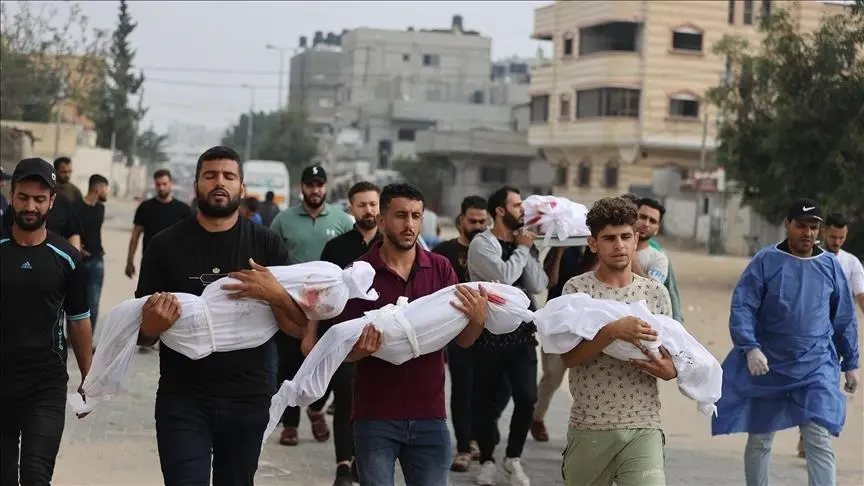
The ministry's director general noted in press statements that more than 100 children died while waiting for the crossings to reopen for treatment, while approximately 40,000 children were orphaned as a result of the aggression. He emphasized that "those we have lost as a result of the indirect consequences of the war are more numerous than those killed by the occupation's fire."


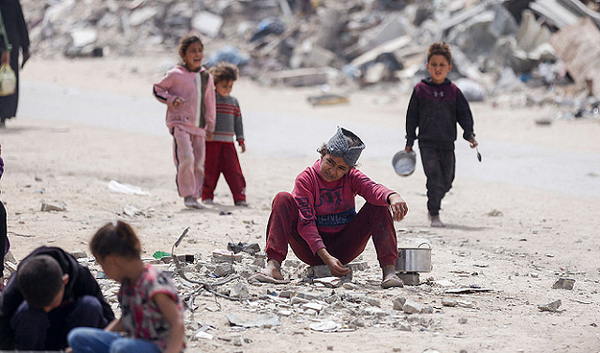
He added that nearly one million children are deprived of life-saving aid, while infants and pregnant women are suffering from a dire crisis due to lack of food and care.


He also confirmed that there are 3,000 trucks carrying humanitarian aid stuck, awaiting permission to enter the Gaza Strip.


The ministry accused the Israeli occupation of "exterminating the Palestinian race" and denying children and civilians access to water and food, noting that more than 360 health workers have been arrested by occupation forces since the start of the war.


The Gaza Health Ministry called on the international community and its institutions to fulfill their duty and save whatever can be saved from the catastrophic situation that threatens the lives of civilians, especially children.

PALESTINE

Tue 29 Apr 2025 9:45 pm - Jerusalem Time

Guterres warns: Hope for a two-state solution is in danger of fading

UN Secretary-General António Guterres warned on Tuesday that the promise of a two-state solution to the Palestinian-Israeli conflict is "at risk of fading." He said that political commitment to this long-term goal is "further away than ever."


This came in a speech delivered during a UN Security Council meeting on the situation in the Middle East, including the Palestinian issue, chaired by the French Foreign Minister, whose country holds the rotating presidency of the Council this month.


Guterres said the two-state solution is approaching the "point of no return," stressing that the international community bears a responsibility to prevent the prolongation of occupation and violence.


The Secretary-General called on UN member states to "take irreversible steps to achieve a two-state solution and not allow extremists on either side to undermine what remains of the peace process."


Guterres also noted that the Middle East is undergoing fundamental transformations, marked by violence and turmoil, but also by opportunities and potential. He said that people across the region are seeking a better future, not endless conflict and suffering.


For his part, Riyad Mansour, the Palestinian representative to the United Nations, accused Israel of using "starvation" as a weapon of war against civilians subjected to relentless bombardment in the Gaza Strip.


He added in his speech: "The immediate ceasefire must be resumed, and all its objectives must be achieved," noting that there are solutions under which Hamas will not rule the Gaza Strip, a key Israeli demand.


Mansour expressed hope that the United States, Egypt, and Qatar, with the support of the international community, would be able to ensure a return to the ceasefire agreement.

PALESTINE

Tue 29 Apr 2025 8:50 pm - Jerusalem Time

Israeli occupation forces stormed Beit Dajan and Beit Beit and arrested a young man west of Nablus.

Israeli occupation forces stormed the town of Beita and the village of Beit Dajan in Nablus Governorate on Tuesday evening, sparking clashes.


According to local sources, occupation forces stormed Beit Dajan and Beit Tafilah, firing live ammunition, sound bombs, and tear gas, sparking clashes. No injuries were reported.


In the same context, local sources reported that occupation forces arrested a young man at the Deir Sharaf military checkpoint west of Nablus, but his identity is not yet known.

PALESTINE

Tue 29 Apr 2025 7:40 pm - Jerusalem Time

Five dead, including two children, were killed in an Israeli airstrike that targeted the Al-Mawasi area west of Khan Yunis.

Five civilians, including two children, were killed and others injured Tuesday evening in an Israeli airstrike on the Al-Mawasi area west of Khan Yunis, in the southern Gaza Strip.


According to local sources, the occupation aircraft targeted the tents of displaced people in Al-Istable Street in the Al-Mawasi area west of Khan Yunis, which led to the martyrdom of five citizens: Youssef Abdel Quddous Suleiman Al-Mudallal (9 years old), Maysara Abdel Quddous Suleiman Al-Mudallal (8 years old), Mansour Muhammad Mansour Abu Muammar (75 years old), Sobhi Ismail Jarghoun, and Abdul Rahman Muhammad Al-Maghari.


Since October 7, 2023, the Israeli occupation forces have launched an aggression against the Gaza Strip, resulting in the deaths of 52,365 citizens, the majority of whom were children and women, and the injury of 117,905 others. This is a preliminary toll, with a number of victims still under the rubble and on the streets, unable to be reached by ambulances and rescue teams.

PALESTINE

Tue 29 Apr 2025 7:06 pm - Jerusalem Time

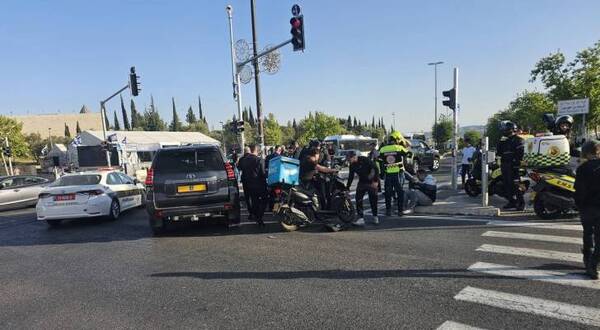
Hebrew Broadcast: Netanyahu's motorcade involved in an accident in Jerusalem

Prime Minister Benjamin Netanyahu's convoy was involved in a traffic accident in occupied Jerusalem on Tuesday.


The Israeli Broadcasting Authority confirmed that Netanyahu was not injured in the incident.


The Hebrew newspaper "Israel Hayom" reported that one of the convoy's vehicles collided with a motorcycle near Netanyahu's office in Jerusalem.


Hebrew sources did not disclose additional details regarding the causes of the accident or the resulting damage.

PALESTINE

Tue 29 Apr 2025 6:10 pm - Jerusalem Time

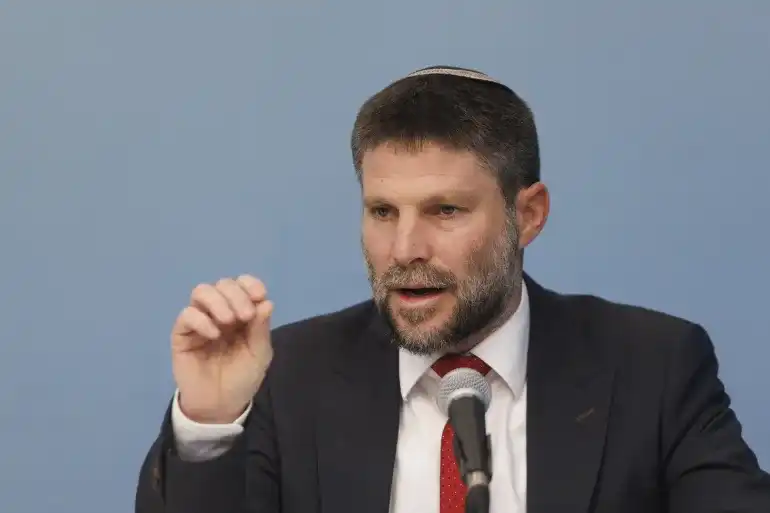
Smotrich: We will not stop the war until hundreds of thousands are displaced from Gaza.

Far-right Israeli Finance Minister Bezalel Smotrich said Tuesday that Tel Aviv will not stop the war until "hundreds of thousands" of Palestinians are displaced from the Gaza Strip, Syria is divided, and Iran is disarmed of its nuclear weapons.


This came in a speech he delivered in the Eli settlement in the central West Bank, which he posted on his X account.


He added: "We will end this campaign when Syria is dismantled, Hezbollah (Lebanon) is defeated, Iran is stripped of its nuclear threat, Gaza is cleansed of Hamas, hundreds of thousands of its residents leave for other countries, our hostages return, some to their homes and some to the graves of Israel, and the State of Israel becomes stronger and more prosperous."


He claimed that these were the goals agreed upon by all Israelis, not just the government, adding: "This is the final form of the campaign imposed on us. This is the order of the day in the face of a brutal enemy. This is the will of hundreds and thousands of our fighters."


Addressing Netanyahu, he said: "Mr. Prime Minister, this is the time to change the history of the State of Israel and the people of Israel. The entire government and the people will be with you and support you in your decision to do everything in our power to strengthen Israel's security. We, and you, have no right to miss this opportunity."


With American support, Israel has been committing genocidal crimes in Gaza since October 7, 2023, leaving more than 170,000 Palestinians dead or wounded, most of them children and women, and more than 11,000 missing.


Tel Aviv estimates that there are 59 Israeli prisoners in the Gaza Strip, 24 of whom are alive.


On October 8, 2023, Israel launched an aggression against Lebanon, which escalated into a full-scale war on September 23, 2024, resulting in more than 4,000 deaths and approximately 17,000 injuries, in addition to the displacement of approximately 1.4 million people.


Although the new Syrian administration, headed by Ahmad al-Sharaa, has not threatened Israel in any way, Tel Aviv has been launching airstrikes on Syria on an almost daily basis for months, killing civilians and destroying Syrian military sites, vehicles, and ammunition.


Since 1967, Israel has occupied most of the Syrian Golan Heights. Taking advantage of the new situation in the country following the overthrow of Bashar al-Assad's regime, it occupied the Syrian buffer zone and declared the collapse of the 1974 disengagement agreement between the two sides.

PALESTINE

Tue 29 Apr 2025 5:54 pm - Jerusalem Time

The Security Council holds a meeting on the Palestinian issue.

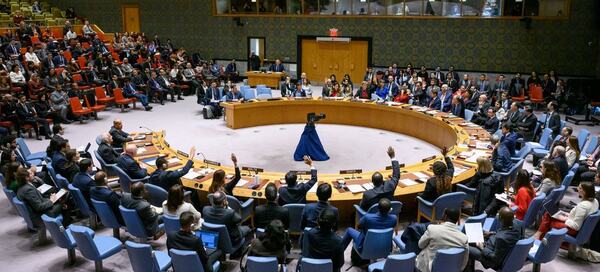
The UN Security Council held a ministerial meeting on Tuesday evening regarding the situation in the Middle East, including the Palestinian issue.


The meeting will be chaired by the French Foreign Minister, whose country holds the rotating presidency of the Council this month, and will be attended by the UN Secretary-General.


UN Secretary-General António Guterres said the promise of the two-state solution is in danger of fading into oblivion, warning that it is approaching the point of no return.


He stressed that the international community bears the responsibility to prevent the prolongation of occupation and violence, calling on UN member states to take irreversible steps to achieve a two-state solution and not allow extremists on either side to undermine what remains of the peace process.


Guterres added that the Middle East is witnessing fundamental transformations, characterized by violence and volatility, but also by opportunities and potential.


He stated that people across the region demand and deserve a better future, rather than endless conflict and suffering, stressing the need to work collectively to ensure that this turbulent and transitional period meets these aspirations and results in justice, dignity, rights, security, and lasting peace.

PALESTINE

Tue 29 Apr 2025 3:47 pm - Jerusalem Time

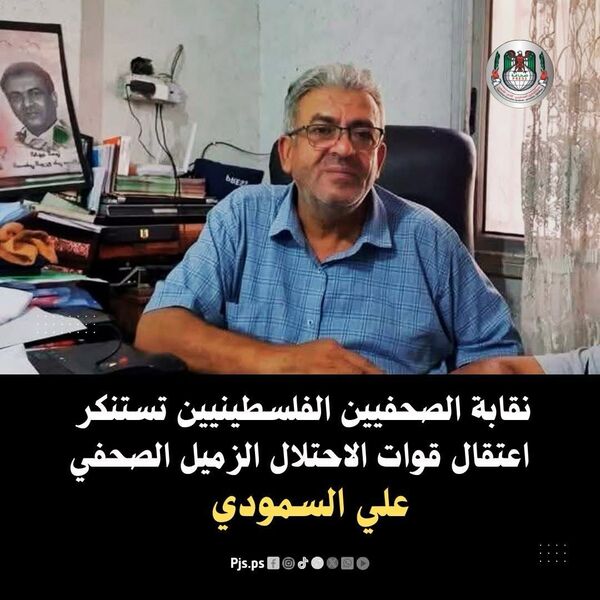
The Journalists Syndicate condemns the occupation's arrest of fellow journalist Ali Al-Samoudi.

The Palestinian Journalists Syndicate condemned, on Tuesday, the occupation forces' arrest of journalist Ali Al-Samoudi.


It is noteworthy that the occupation forces arrested Al-Quds newspaper correspondent Ali Al-Samoudi this morning, Tuesday, after raiding his home and destroying its contents in the Al-Zahraa neighborhood in Jenin.

PALESTINE

Tue 29 Apr 2025 2:47 pm - Jerusalem Time

Prisoners' Club: 49 journalists have been detained in occupation prisons since the start of the aggression.

The number of journalists detained in Israeli occupation prisons has risen to 49, since the start of the aggression on October 7, 2023, following the arrest of journalist Ali Al-Samoudi from Jenin this morning.


The Prisoners Club explained in a statement that the 49 detained journalists are among (177) journalists who have been arrested and detained since the beginning of the genocide, based on documentation and monitoring operations conducted by the institutions.


He said that the occupation authorities continue to escalate their targeting of Palestinian journalists through systematic arrests, in addition to daily targeting of journalists while they are performing their work. This is in addition to the ongoing assassinations of journalists in Gaza, which is currently the bloodiest period for journalists, in an ongoing attempt to target the truth and the Palestinian narrative.


The Prisoners Club confirmed that the occupation authorities in the West Bank target journalists through administrative detention, i.e. under the pretext of having a "secret file." Their number among the total number of detained journalists is (19). The last two journalists to receive administrative detention orders were Samer Khuwaira and Ibrahim Abu Safiyya.


In addition to administrative detention, the occupation targets journalists through arrests on the grounds of what it calls "incitement," meaning they are detained on the grounds of freedom of opinion and expression. Social media platforms have become a tool for suppressing journalists and imposing further control and censorship over their work.


The Prisoners' Club noted that journalists are subjected to all the systematic crimes faced by detainees, including starvation, medical crimes, torture, and numerous forms of abuse.


It is noteworthy that dozens of Gaza journalists continue to be detained by the occupation under the "Unlawful Combatant" law, and some of them remain subject to enforced disappearance.


The Prisoners' Club reiterated its call for the international human rights community to restore its true and necessary role and end the systematic inaction that has cast a shadow over the humanitarian system since the beginning of the genocide, one of the most significant manifestations of which are the crimes committed against detainees in Israeli occupation prisons and camps. It also called for ensuring the protection of journalists and their work, which has been the most prominent tool in uncovering the extent of the genocide.


He noted that the arrests included those who were arrested and kept in detention by the occupation, as well as those who were later released.

PALESTINE

Tue 29 Apr 2025 2:18 pm - Jerusalem Time

Palestinian Ministry of Education: 14,784 students have been killed and 111 schools have been destroyed since the beginning of the aggression.

The Ministry of Education and Higher Education said that 14,784 students have been killed and 24,766 injured since the start of the Israeli aggression on the Gaza Strip and the West Bank on October 7, 2023.


The Ministry of Education stated in a statement on Tuesday that the number of students killed in the Gaza Strip since the beginning of the aggression has reached more than 14,649, and those injured has reached 23,936. Meanwhile, in the West Bank, 135 students were killed, 830 others were injured, and 724 were arrested.


It noted that 880 teachers and administrators were killed and 4,247 were injured in the Gaza Strip and the West Bank, and more than 193 were arrested in the West Bank.


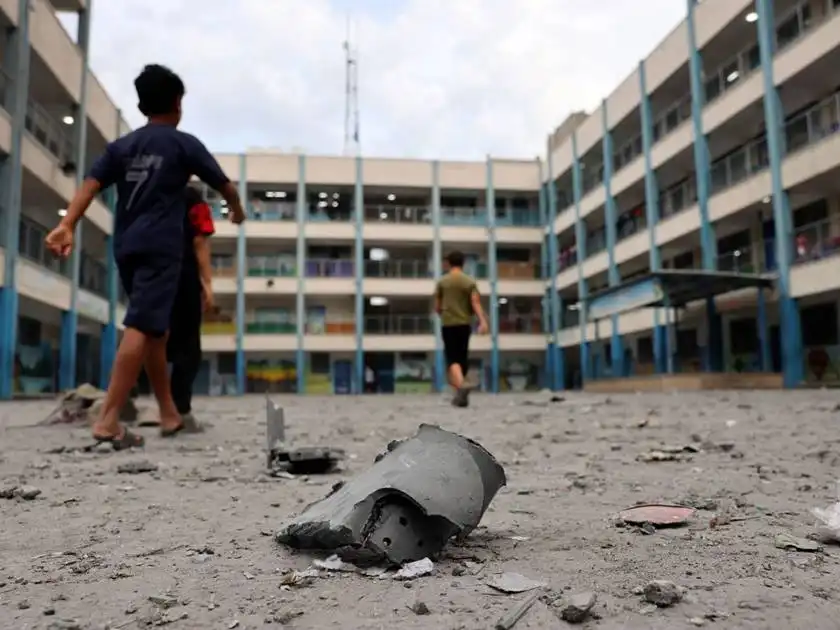
It pointed out that 352 public schools were severely damaged as a result of the occupation's aggression, including the complete destruction of 111 schools, while 91 public schools and 89 schools affiliated with the United Nations Relief and Works Agency for Palestine Refugees (UNRWA) were bombed and vandalized. In addition, 20 higher education institutions were severely damaged, as 60 university buildings were completely destroyed. 146 schools and 8 universities in the West Bank were stormed and vandalized, in addition to the destruction of the walls of a number of schools in Jenin, Tulkarm and Tubas.


The Ministry of Education also noted that the occupation authorities have notified UNRWA schools in Jerusalem of their closure on the 8th of next month.


The Ministry of Education confirmed that 788,000 students in the Gaza Strip have been denied access to schools and universities since the start of the aggression, with most students suffering from psychological trauma and facing difficult health conditions.

ARAB AND WORLD

Tue 29 Apr 2025 1:34 pm - Jerusalem Time

Ben-Gvir meets with Republican representatives at the Capitol building.


Washington - Saeed Erekat - April 29, 2029


Israeli National Security Minister Itamar Ben-Gvir, leader of the far-right Jewish Power party, held meetings with four Republican members of Congress on Monday during a visit to the Capitol. (U.S. Capitol)


Ben-Gvir, an outspoken supporter of ethnic cleansing in Gaza, said that among the lawmakers he met was Rep. Brian Mast (R-FL), chairman of the House Foreign Affairs Committee, who previously volunteered in the Israeli military and wore an IDF uniform at the Capitol.


Mast is a strong supporter of Israeli settlements and recently directed his staff to refer to the Israeli-occupied West Bank as "Judea and Samaria," a biblical name used by the State of Israel to refer to the Palestinian territories.


It is noteworthy that Ben-Gvir is a settler in the West Bank, and is working with his supporters in the United States and Israel to annex the West Bank.


Ben-Gvir also met with Reps. Jim Jordan (R-Ohio), Claudia Tenney (R-NY), and Mike Lawler (R-NY). The Israeli minister said he did not come to discuss a specific issue, but rather wanted the American lawmakers to get to know him.


"I didn't ask them afterward if they would vote for Ben-Gvir, but they wanted to get to know me, and I think they really liked what they heard from me," he said.


Ben-Gvir added that the lawmakers expressed their full support for Israel and did not pressure him to change his policies. These meetings come as Israel kills dozens of Palestinians in Gaza daily and has imposed a comprehensive blockade on the territory since March 2, with children starving.


Ben-Gvir had called on Israel to bomb food and aid warehouses inside Gaza, claiming he received support for the idea from senior Republican officials he met at US President Donald Trump's Mar-a-Lago resort in Florida last week. The Israeli minister faced protests during his travels in the United States and was confronted by anti-war activists while at the Capitol.


"Israeli war criminal Itamar Ben-Gvir is powerless to confront the protesters at the US Capitol," Code Pink co-founder Medea Benjamin said in a post on X, which included a video of the confrontation with Ben-Gvir. Benjamin added, "As Minister of National Security, Ben-Gvir openly supported ethnic cleansing in Gaza and deliberately bombed civilians, aid, and civilian infrastructure."

PALESTINE

Tue 29 Apr 2025 12:35 pm - Jerusalem Time

Statistics: Only 700 Gazan workers received their dues from Israeli employers.

Data and statistics published by the Arab Workers Union in Nazareth on Monday evening indicate that only 700 workers from the Gaza Strip, out of a total of 18,000, received their wages and compensation from their Israeli employers.


The union published the results of a study containing disturbing data on the suffering of thousands of Gazan workers who worked in Israel during the October 7, 2023, attack and war on Gaza.


The research reveals interesting data on the number of missing workers, those killed in the war, and those who had rights and benefits in Israel for the duration of their employment but did not receive them.


The workers' union released this data on the occasion of International Workers' Day, which falls on May 1st. Trade unions across Europe and the world will not be marking this year due to the genocide being perpetrated against workers in Gaza.

PALESTINE

Tue 29 Apr 2025 12:28 pm - Jerusalem Time

The war on the Gaza Strip: 11 dead since dawn today, and the humanitarian crisis is worsening.

The Israeli military continued its escalation of air, land, and sea attacks on the Gaza Strip on Tuesday, targeting populated areas, including displaced persons' tents and shelters, amid widespread destruction of residential buildings and ongoing shelling across the Strip.


On the 43rd day of the resumption of Israeli aggression, Israeli forces committed new massacres against civilians, concentrated in Gaza City and the northern Gaza Strip, and extending to areas in Khan Yunis as well.


Residential neighborhoods in Gaza City witnessed the most intense airstrikes, resulting in dozens of deaths and injuries. Meanwhile, the Israeli army continued targeting tents for displaced people in the Mawasi area of Khan Yunis and destroying residential buildings in Rafah.


According to the Civil Defense, three people were killed when an Israeli drone bombed a group of displaced people in the Qizan al-Najjar area, south of Khan Yunis, in the southern Gaza Strip.


The two brothers, Khaled and Abdul Karim Adel Helles, were also killed in an Israeli bombardment on the Shuja'iyya neighborhood east of Gaza City.


Two civilians were killed and two others were injured in an Israeli attack on Shuja'iyya, east of Gaza City.


According to local sources, 11 civilians were killed as a result of the ongoing Israeli bombardment since dawn on Tuesday.


This coincides with a catastrophic deterioration in the humanitarian situation, as Gaza faces a severe hunger crisis with food running out and water scarcity.


Dr. Ismail Al-Thawabta, Director General of the Government Media Office in the Gaza Strip, confirmed that the humanitarian and living conditions have reached unprecedented levels.


He pointed out that basic food supplies have almost run out in markets and warehouses, especially in the southern governorates where most of the displaced have taken refuge.

PALESTINE

Tue 29 Apr 2025 12:20 pm - Jerusalem Time

The Israeli army is burning agricultural fields in the Gaza Strip, claiming to do so..!

The Israeli army is setting fire to agricultural land in the northern Gaza Strip, claiming it is exposing tunnel exits, mines, and the presence of Palestinian fighters near the border fence.


The area being burned by the Israeli military in recent days spans thousands of dunams, and is being surveyed using small drones, Channel 12 reported Tuesday.


The Israeli military claims that in this way it uncovered the exits of several tunnels, and that it found various weapons and "intelligence material" in one of them.


The channel quoted an Israeli officer as saying that one of the goals of burning the fields was to "ensure the security of the residents of the Gaza envelope. Clearing this area allows us to see terrorists and enemy weapons much better, using small drones and other sophisticated means."


The Israeli army began burning agricultural fields following armed clashes between its forces and Palestinian fighters in recent days, during which two Israeli soldiers were killed in Shuja'iyya.

PALESTINE

Tue 29 Apr 2025 12:13 pm - Jerusalem Time

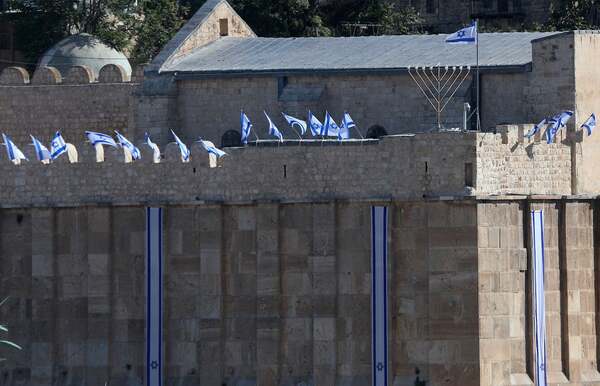
Awqaf condemns raising Israeli flags over the Ibrahimi Mosque

The Ministry of Endowments and Religious Affairs condemned the Israeli occupation forces and a group of settlers for raising Israeli flags over the roof and walls of the Ibrahimi Mosque, under the pretext of celebrating the establishment of the occupying state.


The ministry affirmed in a statement on Tuesday that this step represents a blatant violation of the sanctity of the Ibrahimi Mosque, a provocation of Muslim sentiments, and a new aggression that adds to the ongoing series of violations against Islamic holy sites.


She explained that the Ibrahimi Mosque has recently been subjected to systematic attacks, including the prohibition of the call to prayer, the prevention of its workers from performing their duties, and the harassment of worshippers through barriers and electronic gates, in addition to Judaization projects aimed at obliterating its Islamic character and altering its historical and religious features.


The ministry stressed that the Ibrahimi Mosque is a purely Islamic endowment, and that no one has the right to tamper with it or alter its features. It affirmed that it will continue its efforts to protect it and preserve its religious and historical character.


She called on the international community, human rights organizations, and institutions concerned with protecting religious and cultural heritage to intervene immediately to halt these ongoing Israeli violations and work to protect Islamic and Christian holy sites in the occupied Palestinian territories.

PALESTINE

Tue 29 Apr 2025 12:09 pm - Jerusalem Time

Israeli occupation forces seize health units and detain a vehicle in the northern Jordan Valley.

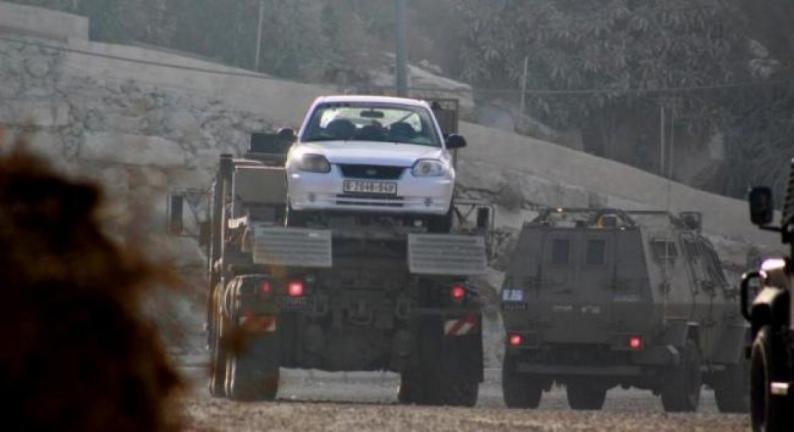
Israeli occupation forces seized medical facilities and a private vehicle belonging to a citizen in Ein al-Hilweh in the northern Jordan Valley on Tuesday.


Mahdi Daraghmeh, head of the village council in Al-Maleh, reported that the occupation forces seized health facilities belonging to several families and seized a vehicle belonging to Jamal Turki Saleh Fuqaha in Ein al-Hilweh in the Jordan Valley.


In recent months, Ain al-Hilweh has witnessed an increase in the type and scale of attacks carried out by settlers, under the protection of the occupation army, against citizens and their property.

ARAB AND WORLD

Tue 29 Apr 2025 11:02 am - Jerusalem Time

Netanyahu revealed "top secret" information about Hezbollah pager bombings.

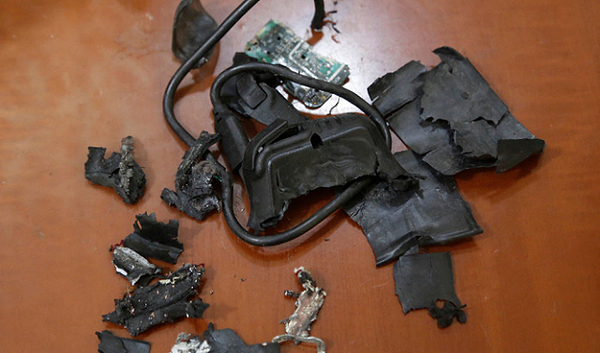
Israeli security officials were surprised when Prime Minister Benjamin Netanyahu revealed "secret information" during a speech he gave the day before yesterday regarding an operation carried out by Israeli intelligence before the detonation of pagers carried by Hezbollah members in Lebanon, Channel 12 reported Tuesday.


Netanyahu told the Jewish News Syndicate (JNS) conference in Jerusalem, "In the third week of September, we learned that Hezbollah had sent three pagers to Iran for technical inspection. Before that, we blew up a similar pager they were about to bring in, and we eliminated the young man who was operating it."


The channel quoted security sources familiar with the details of the intelligence operation as confirming that Netanyahu revealed information deemed "top secret" and that only a few people were aware of it. Netanyahu also revealed that Israel "not only knew about the pagers being sent to Iran for testing, but also that it had managed to thwart the transfer of an explosives detection device and eliminate its operator."


The channel reported that the Israeli military censorship had refused to publish such information several times in the past, justifying this by stating that revealing it would harm state security and expose sources of information and intelligence methods.


A security source said, "This secret is not Netanyahu's personal property. Although the prime minister has the authority to publish it, revealing sensitive information must be done in consultation with the intelligence services."

OPINIONS

Tue 29 Apr 2025 10:23 am - Jerusalem Time

Why Hamas will not surrender | David Hearst

Middle East Eye

Middle East Eye

Opinion Writer


PALESTINE

Tue 29 Apr 2025 10:22 am - Jerusalem Time

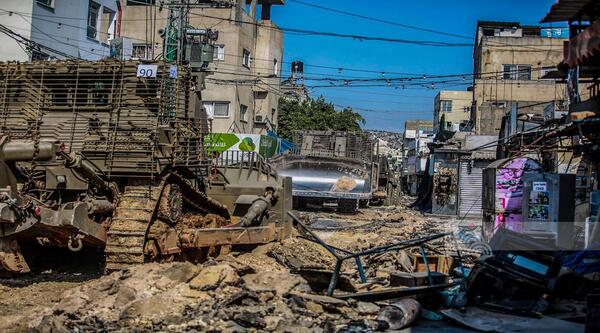
The aggression on Jenin and Tulkarm: ongoing escalation and destruction of infrastructure.

The Israeli occupation forces continue their aggression on the city of Jenin and its camp for the 99th consecutive day.


Jenin Mayor Muhammad Jarrar told local sources that Israeli occupation forces began bulldozing areas in the eastern neighborhood of Jenin in the morning hours, and the operation is still ongoing.


He stressed that the city has suffered significant losses to infrastructure and property since the beginning of the aggression, with the estimated value of losses amounting to $300 million.


He noted that 800 housing units in the city were partially damaged, in addition to 15 buildings that have been demolished since the beginning of the aggression. Most of the damage to buildings and residences was concentrated in the eastern and Al-Hadaf neighborhoods.


Regarding the extent of the damage to the camp, Jarar confirmed that all citizens' homes and property inside the camp were completely or partially damaged, while the entire infrastructure was destroyed.


The occupation forces continue their destruction and bulldozing operations inside the camp, while continuing to prevent entry or access to it. Concerns have grown since the occupation forces installed iron gates at the camp's entrances a few days ago.


Since the beginning of the aggression, these forces have forced 790 families to flee the city, according to Jarar. In the city alone, 380 buildings have been evacuated of their residents, while families from the camp continue to be displaced and are prevented from returning. Estimates indicate that the number of displaced persons from the city and camp has exceeded 22,000.


Jarar also addressed the city's economic situation amid the ongoing aggression, as it is suffering significant economic losses, with some areas experiencing complete economic paralysis, particularly in the western neighborhoods.


**Tulkarm**

The Israeli occupation forces continue their aggression on the city of Tulkarm and its camp for the 93rd consecutive day, while the Nour Shams camp has entered its 80th day, amid ongoing field escalation and a relentless campaign of restrictions and sabotage targeting infrastructure and citizens' property.


Local sources reported that an Israeli bulldozer removed a landline telephone exchange near the Al-Saif Diwan in the Dhnaba suburb east of the city this morning, Tuesday, and bulldozed the main street in the area.


She added that the occupation forces raided a number of citizens' homes in the eastern neighborhood and around Faroun's garage in the southern neighborhood of the city at dawn today, and ransacked and destroyed their contents extensively, in a scene that has become a recurring feature of the raids and searches that target residents without justification.


Late last night, the Jabal Iskan Al-Muwatneen area in the Aktaba suburb, opposite Nour Shams camp, witnessed a heavy deployment of infantry units, accompanied by heavy firing of sound bombs.


The occupation forces continue to send military reinforcements, including vehicles and infantry units, into the city, its two camps, and its suburbs. This is accompanied by heavy firing of live ammunition and sound bombs, raids and searches of homes and shops, the destruction of their contents, and the interrogation and arrest of those present.


The city is witnessing daily active movements of occupation vehicles, patrolling the main and side streets, and setting up flying checkpoints, obstructing the movement of citizens and their vehicles, particularly on Nablus Street, Shuweika Roundabout in the northern district, Al-Haddadeen Street, the streets leading to the Thabet Thabet Governmental Hospital, Gamal Abdel Nasser Square, and the center of the vegetable market.


In an unprecedented development, occupation forces yesterday forced Palestinian Red Crescent Society crews to use their ambulances as military checkpoints on the road to Thabet Thabet Governmental Hospital. When the crews refused to comply, occupation soldiers threatened them with weapons.


Tulkarm and Nur Shams refugee camps and their surroundings are witnessing a heavy deployment of occupation forces, firing live ammunition and sound bombs, with explosions being heard from time to time. This comes amidst a tight siege imposed on these camps, the closure of their entrances with earth mounds, and the accompanying raids and vandalism of homes, forcing the remaining residents to evacuate their homes at gunpoint.


The occupation forces also continue to seize homes and residential buildings on Nablus Street and the adjacent northern neighborhood, converting them into military barracks after forcibly evacuating their residents. They also station their vehicles and bulldozers in the vicinity.


The occupation's ongoing aggression and escalation against the city of Tulkarm and its two camps resulted in the deaths of 13 citizens, including a child and two women, one of whom was eight months pregnant, in addition to the injury and arrest of dozens.


It also resulted in the forced displacement of more than 4,200 families from the Tulkarm and Nur Shams camps, comprising more than 25,000 residents, along with hundreds of residents from the northern and eastern neighborhoods of the city after their homes were seized and a number of them converted into military barracks.


The aggression caused widespread destruction to the infrastructure, including homes, shops, and vehicles, which were completely and partially demolished, burned, vandalized, looted, and stolen. 396 homes were completely destroyed and 2,573 partially destroyed in the Tulkarm and Nur Shams camps, in addition to the closure of their entrances and alleys with earth mounds.

PALESTINE

Tue 29 Apr 2025 10:21 am - Jerusalem Time

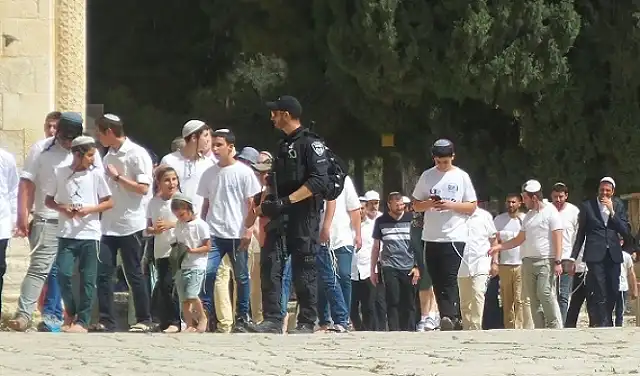
Settlers storm Al-Aqsa and perform Talmudic rituals in front of the Dome of the Rock

Today, Tuesday, settlers stormed the courtyards of the blessed Al-Aqsa Mosque in occupied Jerusalem, under the protection of the Israeli occupation police.


Eyewitnesses reported that settlers stormed Al-Aqsa Mosque in groups, conducted provocative tours of its courtyards, and performed Talmudic rituals under the protection of occupation forces.


Sources indicated that the settlers performed the Talmudic "Priest's Blessing" prayer in front of the Dome of the Rock during their storming of Al-Aqsa Mosque.


The occupation police tightened their military measures at the gates of the Old City and Al-Aqsa Mosque, imposing restrictions on the entry of Palestinian worshippers.

OPINIONS

Tue 29 Apr 2025 10:15 am - Jerusalem Time

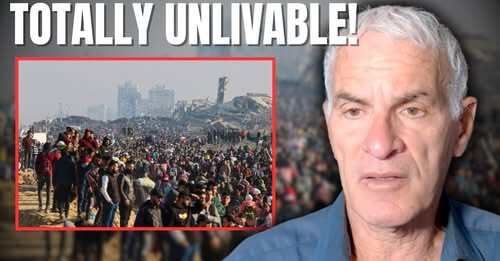
Israel's Solution to the GAZA QUESTION (w/ Norman Finkelstein)

The Chris Hedges YouTube Channel

The Chris Hedges YouTube Channel

Opinion Writer


OPINIONS

Tue 29 Apr 2025 10:08 am - Jerusalem Time

Long live the president, holding all the keys to power.

Hani Al-Masry

Hani Al-Masry

Opinion Writer

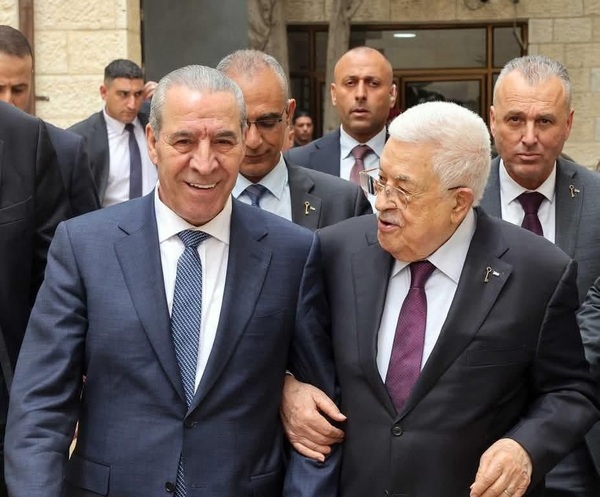
The Central Council meeting adjourned, and at first glance, it seemed as though it had been expected and required: the creation of the position of Vice President. However, a closer examination of the amendment to the organization's bylaws—despite its illegality, given that the body authorized to amend the organization's bylaws is the National Council, which itself terminated its authority when it illegally delegated all its powers to the Central Council in 2018—reveals that the amendment empowers the President to appoint—upon his nomination—a Vice President of the Executive Committee and with the approval of its members. He may also assign him duties, relieve him of his position, and accept his resignation. This does not achieve the objective intended by those pressuring the creation of the position: the appointment of a Vice President with full powers who would act as the President of the Authority during his lifetime (I repeat, during his lifetime) and succeed him after his death. Even the text of the amendment does not guarantee that Hussein al-Sheikh would assume the presidency of the Executive Committee in the event of a vacancy in the position of President of the Organization. The Executive Committee is authorized to elect its President, but not its Vice President! One thing reminds us of another. The previous decree, issued by the president in November 2024, stipulated that the speaker of the National Council would succeed him as president of the Authority, with presidential elections to be held within ninety days, renewable only once. This is a clear violation of the PA's Basic Law, which stipulates that the speaker of the Legislative Council replaces the president in the event of a vacancy in his position, with elections to be held within sixty days, as was the case after the assassination of President Yasser Arafat. If elections are not held due to compelling circumstances, such as those currently underway, or if—and this is the real motivation behind the decree—there is a fear that the candidate selected by the Fatah Central Committee will not win, especially if imprisoned Fatah leader Marwan Barghouti runs against the movement's official candidate, the same pretext that canceled the 2021 elections will be used: the refusal to allow elections to take place in Jerusalem. The above makes clear that the creation of the position of Vice President of the Executive Committee does not come in the context of real reform, which is achieved through comprehensive change that includes the vision, path, strategies, and the activation of virtually frozen institutions, replacing the individuals who are mostly outdated, flabby, and corrupt, injecting new and young blood, and forming a new National Council in which representatives from the various Palestinian groups, as well as women, participate through real and effective representation, and not through a formal response to external pressures. This angered the Palestinians and most of the factions, because it did not achieve what they wanted in terms of reform, unity, and participation in determining their fate. It will not satisfy the United States of America and the regional parties, which have been demanding for some time the creation of a new Palestinian authority and leadership that is more pliable to American and Israeli conditions. They tried to achieve this by appointing a person to head the government from outside those close to and aides to the president with full powers and by transferring the president to an honorary position, as they tried with his predecessor. President Abbas circumvented them and, after long evasions, appointed Muhammad Mustafa, a close associate of his, to form the government. During the previous months, he strengthened his authority by replacing most of the new leaders of the security services and appointing officers in their place. From the presidential guard who are completely loyal to him; meaning that the president is focusing on strengthening his influence and has not delegated his powers to anyone other than himself, and has not decided on his successor because he realizes that the countdown to his term begins with knowing who his successor will be. Therefore, he is now neither with my lady nor with my master. The Central Council, formed to the required standard, achieved what the president wanted, which was to consolidate his presidency and control over the Palestinian political system with its various components. Hussein al-Sheikh, the vice president of the Executive Committee, is the president of the State of Palestine, who was previously elected by the Central Council, not the Executive Committee, and not the vice president of the Authority, who had previously decided by constitutional decree that the president of the National Council would assume the presidency of the Authority for a transitional period. Of course, the president is keen not to decide on a successor and to maintain the competition, but with slow, gradual submission, as he knows that he is indispensable. From here, we chant, "Long live the president who insists on keeping the keys to all power until God decrees a matter that has already been decided without addressing anything, as the strategy of survival and waiting is the undisputed standard.

I don't need anyone to tell me that everything that is happening is illegal and illegitimate. I know that, but it is necessary to expose the legal, not just political, massacre. This is because it cannot be achieved by appealing to the people through elections. All institutions have not been elected for a long time. It is not based on national consensus, nor on the PLO's bylaws, which require the formation of a new National Council long ago. It is not based on the Basic Law, which was completely destroyed when the elected Legislative Council was dissolved before a new one was elected. As for the existing institutions, they are far from conferring legitimacy on anyone, especially after the harvest of continuous failure. The occupation has not been defeated and independence has not been achieved, neither through negotiations and concessions, nor through resistance. This necessitates review, evaluation, and change. "Sons of Dogs" Are Not the Worst Thing That Happened

The most important, dangerous, and worst thing was not the words the president used in his Central Council opening speech. Rather, the most dangerous thing was that he equated Hamas with the occupation in responsibility for the genocide (contrary to the Central Council statement), which held the occupation fully responsible for the genocide and the new Nakba, if not the president holding Hamas more responsible. He demanded that Hamas relinquish power, disarm, hand over its prisoners, and form a political party. In other words, he demanded that Hamas agree to Israel's conditions without achieving anything and without guarantees that anything would be achieved in return. Instead, he presented credentials in the hope that the PA would remain in the West Bank and return to the Gaza Strip. He also demanded that Hamas agree to the commitments to which the PLO is committed.

After all of this, in a strange and surprising paradox, he called for a national dialogue to achieve national reconciliation. A dialogue about what, and the call was not taken seriously by any party! After the speech, which maintained the old principles, continued to deteriorate, and did not open a window of hope, all that remained was the explicit call for Hamas to raise the white flag. If Hamas was responsible for the genocide, before or alongside the occupation, it must be tried, held accountable, and punished, not negotiated for the sake of unity.

You may or may not agree with the Al-Aqsa Intifada, but there is no doubt that the occupation bears full responsibility for its occurrence. It needs no excuses, even though it is ready to exploit any opportunity, as it did. This should not be overlooked, however, as it is necessary to comprehensively and responsibly assess the Al-Aqsa Intifada and hold Hamas accountable (just as all parties must be held accountable for what they did and what they brought the people and the cause to), and for the errors in calculations and assessments it demonstrates, which led to disastrous results.

Generalizing the PA model and transferring it to Gaza is neither an achievement nor a guarantee.

Even if we assume, for the sake of argument, that Hamas has met the president's conditions, can he relinquish his weapons, given that his authority no longer exists in the Gaza Strip, and the occupying power refuses to return them to it? It considers President Mahmoud Abbas, despite all his concessions, to be practicing diplomatic terrorism, and Netanyahu, as he has repeatedly stated, does not differentiate between Hamas, Fatah, and Abbas. In addition to the above, is what is happening in the West Bank a model worthy of generalization to the Gaza Strip? Does the PA in the West Bank have authority, or is the occupation systematically and gradually undermining sovereignty and full security control, leading, as can be deduced from the Israeli government's program and practices, to either disbanding it and establishing local administrations in its place, or completely emptying it of its political, national, and representative content? After the Central Council affirmed, in its last meeting, its decisions taken since its 2015 session, while suspending their implementation, as indicated in the paragraph that discusses the Executive Committee's development of mechanisms to ensure their implementation, the occupation will continue to undermine the PA with greater vigor. This is because the current Israeli government does not want any unified political framework that embodies national identity, reflects the unity of the West Bank and Gaza Strip, keeps the door open to establishing a Palestinian state, even if it cooperates with it, and unilaterally embodies the political, security, and economic obligations arising from the Oslo Accords.

If the decisions taken by the Central Council were serious, particularly regarding reconsidering the relationship with the occupation, Hamas would not have been demonized. Rather, the locks impeding the establishment of national unity would have been quickly opened, based on a single program, a single leadership, a single authority, and a single weapon under the umbrella of a unified PLO. This could be achieved by beginning to implement the decisions of the Beijing Declaration. It's worth noting that dozens of decisions have been taken in the past without being implemented. Even if there were the intention to implement them, this would require a comprehensive national mobilization of all components of the political system, including factions, unions, federations, and various institutions. A state of emergency should also be declared in preparation for the occupying state's response, rather than simply declaring it and maintaining everything as it is. This would be a deliberate attempt to throw dust in the eyes and preserve the old status quo.

To prevent changes at the expense of the Palestinians, there are changes in the region and the world that have occurred and are on their way. We must prepare for them in all their possibilities, including the possibility of reaching an Iranian-American agreement, ending the Ukrainian war, determining the fate of the trade war and the fate of Syria, the continuation or cessation of the genocide, and major deals between the Gulf states and the US administration, which could be accompanied or followed by new Abraham Accords with a large number of Arab and Islamic countries. There is also an international conference in New York next June to push for the establishment of a Palestinian state, in addition to the escalating struggle to shape a new world in which the United States is no longer the sole superpower dominating the world. All these variables require Palestinians to be prepared to interact with them so as not to be the losers, or to minimize losses and maximize available opportunities.

Enemies agree to confront a common enemy.

Palestinian readiness can either be achieved through unity based on national, democratic foundations and genuine partnership. This is impossible in light of the current power map, the official leadership's orientations, and the results of the Central Council, which deepen division and reinforce hegemony, exclusivity, and the lack of clarity in Hamas's vision and priorities. Alternatively, Palestinian readiness can be achieved through agreement on a joint plan to confront genocide, annexation, displacement, and the plan to liquidate the Palestinian cause in all its dimensions. This plan should prioritize reconstruction, implement the Arab plan, and form a unified Palestinian delegation to negotiate under the banner of the PLO. This is difficult, but not impossible, because both ancient and modern history indicate that even enemies have united in the face of a common enemy and an imminent danger that threatens everyone. Will a joint plan be quickly agreed upon to thwart the common danger, or will the spiral of self-destruction remain dominant?

OPINIONS

Tue 29 Apr 2025 10:01 am - Jerusalem Time

On the occasion of the 20,000th issue of Al-Quds newspaper, the largest Palestinian newspaper... Palestinian journalism under occupation 1968-1993

Al-Mutawakkil Taha

Al-Mutawakkil Taha

Opinion Writer

From 1871 AD until 1987, Palestine witnessed an active and developed press movement. As recorded in the Palestinian Encyclopedia/Part Two, 214 press publications were published in Palestine between 1871 and 1968. Perhaps the first publication that met the journalistic requirements was the newspaper “Al-Quds Al-Sharif,” which was published in 1876 and edited by Sheikh Ali Al-Rimawi and Abdul Salam Kamal (see Balsam Magazine, Issue 142, pp. 109-110).


At the beginning of the twentieth century, the press flourished in Palestine with the publication of many newspapers. Most newspapers and magazines were published in the coastal cities of Jaffa and Haifa, while some were published in Jerusalem and cities that later became part of Israel. Among these newspapers were: Filastin, Al-Karmel, Sawt Al-Shaab, Al-Ittihad, Al-Sirat Al-Mustaqim, Al-Jadeed, Al-Difaa, and many others. After the Nakba, some of these newspapers disappeared, while others, such as Al-Ittihad and Al-Jadeed, remained in Haifa. Some moved to Jerusalem, and some migrated to East Jordan, to Amman.

From 1948 to 1967, the West Bank witnessed several newspapers and magazines, including Al-Manar, Al-Jihad, Filastin, Al-Difaa, Al-Ufuq Al-Jadid, and the Jerusalem Star in English, among others.


A few months before the June 1967 war, the Jordanian government issued a decision to nationalize newspapers. Al-Jihad and Al-Difaa merged into a single newspaper called Al-Quds. After the June 1967 war, all newspapers ceased publication. In 1968, Al-Quds resumed publication, followed four years later by Al-Shaab and Al-Fajr. Magazines, press offices, and newspapers proliferated.


Following the occupation of the West Bank, Gaza Strip, and Jerusalem in 1967, the Israeli ruling circles resorted to describing the press in the occupied territories in various ways. On the one hand, for propaganda purposes, these circles speak of what they call “freedom of the press,” and market this as evidence of the alleged improvement in living conditions in the West Bank and Gaza Strip. On the other hand, when matters intensify and the clouds gather, other descriptions emerge that are more in line with the official Israeli viewpoint. The national press in the occupied territories is considered a “tool of incitement” and a “hotbed of anti-Israel propaganda.” This description is often used to justify measures taken against newspapers and journalists.


In both cases, whether by considering the Arab press as an “improvement tool” (to serve Israeli propaganda purposes) or an “incitement tool” (with the aim of taking action against it), the Israeli authorities are, in one way or another, admitting the failure of their policy, which aimed to create a subservient press under the occupation.


This policy began in the early 1970s, when the Israeli authorities facilitated the issuance of newspaper permits with the aim of normalizing the status quo and attempting to portray the occupation as "liberal." This policy also aimed to attract some intellectual circles and create a social base that cooperated with the occupation. Therefore, administrative restrictions were not imposed on the distribution of newspapers in the occupied territories, and censorship was relatively lighter. However, subsequent developments proved the official Israeli assessments wrong. The rise of the mass movement against the occupation and the interaction of the Palestinian national press with this movement led to the emergence of a new situation that did not align with the desires of the Israeli authorities. The most prominent example of this was the success of the campaign against the Camp David Accords and the self-rule, and the recognition of the Palestine Liberation Organization as the sole legitimate representative of the Palestinian people.


As a result, the press in the occupied territories, like the entire Palestinian national movement, entered a new phase in confronting what the military government authorities called (and are still known as) the "iron fist" policy.

In an attempt to provide a clearer picture of the Israeli authorities' position on the Palestinian national press in the occupied territories, we quote below some important paragraphs from an article by Dr. Eli Rekhes that appeared in the Israeli Defense Ministry magazine and was republished by the Jerusalem Post on April 22, 1987.


Dr. Reichs discusses the Palestinian national press and its political role in the occupied territories, independent of all the restrictions, procedures, and military censorship laws imposed on it. Rather, he attempts to defend these restrictions and procedures by claiming that "this press is a mobilizing press loyal to the PLO," and "this has increased the tension in its relations with the Israeli authorities," he says.


In response to the question of to what extent the press in the occupied territories reflects and represents the political positions of the population, he says: “The presence of a large number of publications that support the PLO gives the impression that there is a national consensus that supports the positions of the organization.”


It is worth noting here that when Dr. Eli Rekhes speaks of the PLO's control over the national press, he also points to the increasing importance of the press in the occupied territories and to the fact that this press has become more expressive of its Palestinian identity. At the same time, he acknowledges the failure of Israeli attempts to create a press subordinate to or loyal to the occupation.


We said that the occupation authorities, after they took control of the remaining Palestinian territories on the eve of June 5, 1967, allowed the Palestinians to publish newspapers and magazines. Was this so that Israel would appear as a "democratic" state? This may have been a marketing gimmick to throw sand in the eyes! However, the main reason is that the occupying state does not want the Palestinian people to engage in secret ways of expressing their point of view. Therefore, the occupation opened a margin for the Palestinians to allow them to express their opinions, orientations, and dreams, under its eyes, on its table, and under its microscope. Thus, the occupation knows what the Palestinians are thinking. Then, the occupation will impose its fierce censorship on this press and work to empty it of its struggle and political content. It will expose the true orientations and positions of journalists, and consequently, it will work to pursue them by arrest, deportation, killing, or mutilation. It has its own pretexts for doing so, as it relies, in these actions, on a "law," the Emergency Law. Section 39 of this law states: "(a) - In a state of emergency, the government may issue emergency regulations and orders for the purpose of protecting the state, protecting public security, and ensuring the provision of essential services and goods. (b) - If the Prime Minister deems it impossible to convene the government and there is an urgent and pressing need to issue emergency orders, he may issue them or authorize a minister to issue them. (c) - Pursuant to emergency regulations, any law may be amended, temporarily revoked, or conditions may be imposed, as well as new taxes may be imposed or existing taxes increased, unless another law stipulates otherwise." Based on this legal text, the State of Israel has been in a continuous "state of emergency" since its establishment, 77 years ago, and continues to this day (at least!), as the Knesset has made it a habit to automatically extend (re-declare) the state of emergency every year for an additional year, so that the government has not found it necessary to exercise its legal authority to declare a state of emergency itself, even once.


Why "emergency"?

As the text of the law clearly states, declaring a "state of emergency" grants government authorities very broad powers under the guise of "protecting state and public security and ensuring the provision of vital services and goods." However, the reality is that maintaining the "state of emergency" does not stem from an objective need for it, as the objective circumstances that necessitated its declaration in 1948 (from the Israeli perspective) no longer exist. Accordingly, declaring this state of emergency aims to achieve two basic practical goals: the first is the authority to issue emergency regulations and orders, and the second is ensuring the validity of many laws enacted on the basis of an "emergency," which are therefore conditional upon the existence of a "state of emergency." This means that canceling the "state of emergency" (not declaring it) means canceling these laws and their expiration.


These laws include those directly related to security issues, including: the Prevention of Terrorism Law, the Emergency Regulations Extension Order (which prohibits citizens—mostly Arabs—from leaving the country), the Emergency Land Seizure Law (establishing state institutions in Jerusalem), the Emergency Arrest Powers Law (which authorizes the issuance of administrative detention orders), the Prevention of Infiltration Law, the Vehicle Registration and Recruitment Law for the Military (which allows the seizure of private vehicles and their use in military service), the Emergency Inspection Powers Law, and others. These laws also include others that are not directly related to security issues, including: the Hours of Work and Rest Law (which mandates that workers in various sectors work overtime), the Goods and Services Supervision Law (which mandates the issuance of mandatory work orders for workers who declare a strike), and others.


Emergency laws are British Mandate laws that have been in place since 1945. Britain, the occupying power, not the Mandate, sadistically applied them to the Palestinian people. Indeed, it invented them as restrictions, whips, and mechanisms to confine Palestinians to a permanent hell. The occupying power then revived these obsolete laws, revitalized them, developed them, adopted them, and reproduced them against our people without mercy or regard for their inconsistency with international laws and human rights standards.


Military censorship of the press creates a "censor" within the mind of the Palestinian journalist. He or she will begin to censor themselves and avoid writing anything that might anger the Israeli military censor, who is, in effect, a security officer. Over time, the journalist becomes domesticated and tamed, conforming to the margins allowed by the censor. This is not fate, but an inevitable reality.


Censorship meant that journalists and writers would inevitably resort to symbolism and metaphor, rendering their "text" obscure or ambiguous. Or the Palestinian writer would resort to writing under a pseudonym. It was clear that everything was forbidden and everything had to be monitored, from writing to colors, graphics, page layout (editing), and headlines. In other words, the newspaper had to submit all forthcoming publications in their final form to the censor. It was "normal" and expected that the censor would cross out an image or drawing or cross out parts of lines, which would render the writing meaningless and futile. The Palestinian journalist would then be forced to rewrite it to make it more plausible and readable, and then resend it to the censor, who would often repeat the crossing outs and tamper with the written text. And so on, until the publication of the publication was delayed, depending on the censor's whims and his miraculous, surreal requirements.


Writers, editors, editor-in-chief, or editorial secretary are often summoned for interrogation, terrorized, threatened with the loss of their livelihoods, and prosecuted. This has had a negative impact on the content of Palestinian journalism, which explains the absence of many topics, the lightness and superficiality of the publication, or its treatment from a naive or incomplete perspective.

Perhaps anyone who looks at the considerable number of newspapers, offices and magazines that were published at that time would think that the press was free from its own affairs, and that there were no obstacles to the establishment or publication of any office, newspaper or magazine by the Israeli authorities. However, the Israeli occupation, since the first days of its occupation of the West Bank and Gaza Strip, has sought to promote media programs that would cause the Palestinian citizen to lose confidence in the Arab world and in himself, distort facts and standards, turn things upside down, and feed him with what it sees as appropriate from the culture of the occupation through its media, with great emphasis, relying on the law of repetition.


The occupation also sought to tie the Palestinians to the Israeli economic establishment and to demolish the Palestinian infrastructure in order to control them economically, as a prelude to controlling them culturally and media-wise, and dragging them into the sources of the occupation and its philosophy. Furthermore, the occupation changed the names of geographical locations and gave them new names that are at odds with reality and history. It imposed on national newspapers, magazines, and press releases the new names to consolidate the policy of the fait accompli and to entrench these names in the minds of the new generation, causing them to forget their homeland, their cause, and the witness to their historical right.


It is well known that the Palestinian press under occupation in the West Bank and Gaza Strip encountered problems and obstacles that could have destroyed the press and nullified its national and humanitarian role. Perhaps the most important of these obstacles is military censorship derived from the defunct British Emergency Laws of 1945, which impose the following on newspaper, magazine and press office owners:

A - To submit to censorship, before publication, any material related to “state security,” “public safety,” and “public order” in Israel or in the West Bank and Gaza Strip.

B - The obligation to submit material for prior censorship as mentioned applies to any written material, including advertisements, as well as to maps, plans, pictures, caricatures, and any other writings.

C - Explanations, titles, or notes should be provided for photographs, maps, writings, caricatures, or diagrams.

D - Any material previously approved, including images previously approved on previous occasions that bore the censor's seal, must be submitted to censorship as mentioned above.

E - It is not permissible to publish different news items in the newspaper next to each other if collecting them in this manner might lead to the disclosure of something that is not permissible to publish without permission, and might lead to harming public safety and public order in Israel or in the West Bank and Gaza Strip.

And - the source of the news is not something that would be permissible from a censorship standpoint, and material transmitted from official or security sources, if it relates to state security, public safety, and public order in Israel or in the West Bank and Gaza Strip, requires prior censorship.

Z - News presented as quotations from foreign sources, international agencies, or newspapers is viewed by censors as a true and accurate quotation in its content. If the aforementioned news is permitted to be published and it later becomes clear that the quotation was inaccurate, the responsibility for any damage to security, harm to public safety, or harm to public order falls on the responsible editor.

H - It is not permissible to leave white spots or other spaces that indicate work that has been deleted from the censorship.

It seems that the Israeli occupation was not satisfied with imposing strict censorship laws that lead to delays in the publication of printed materials and to the stagnation of news, or preventing its publication or distorting it, through arbitrary deletion from them or delaying approval for publication. It took several measures and carried out a series of practices aimed at eliminating the spirit of the national press and Palestinian national journalists, such as preventing distribution, and repeated harassment and attacks.

Other military orders prohibiting distribution and publication include Military Order No. 101 of 1967, which prohibits any incitement or hostile propaganda; Military Order No. 379 of 1970, which authorizes any responsible (Israeli) person to confiscate any publication distributed in the West Bank without permission from the military government; and Military Order No. 862 of 1980, which clarifies Military Order 379, stating that any publication or book not included in the list of prohibited items may not be distributed in the area unless permission is obtained. Military Order 938 of 1982, which expands the powers of Military Order No. 50, defines a prohibited publication as including printing, selling, purchasing, distributing, etc., and prohibits the distribution of any publication of "political importance." Article 94 of the Mandatory Emergency Laws prohibits the issuance or printing of any publication without a license.

Article 100 of the Emergency Laws gives the military censor the power to ban or suspend the publication of any newspaper for any period of time.

During the years 1968-1993, the Israeli authorities took a wide range of measures against newspapers in the occupied territories, some of which can be reviewed as follows:

In the summer of 1985, the military governor of the West Bank issued a new order requiring Arab newspapers to publish advertisements from the Israeli Civil Administration, without compensation, or they would be banned from distribution in the West Bank and Gaza Strip. This military order became known as Order 1140.

Military orders issued against newspapers are final and cannot be revoked, especially orders to close newspapers.

The persecution of journalists began to take on new dimensions. A number of journalists were summoned for investigation under the Tamir Law, on the grounds that their published articles contained expressions supporting the PLO. Among the forms of direct targeting of Palestinian and foreign journalists are:

Shooting at them. Confiscating press cards from journalists and media professionals and preventing them from entering some villages and areas, under the pretext that they are closed military zones. Assaulting media and journalistic institutions, as always happens, with rocket shelling, smashing equipment, and confiscating content. Temporary and permanent closures of media institutions, banning the distribution of newspapers, deporting journalists outside the country, and the disappearance and killing of a number of journalists in mysterious circumstances. The occupation authorities did nothing to search for them or explain the circumstances of their killing, which indicates their involvement. There are also administrative detentions that have affected dozens of journalists.

As for detentions for various periods, fines, and suspended sentences, there is no journalist who has not been arrested, investigated, or had fines and sentences imposed on him.

As for house arrests, the occupation authorities have imposed house arrest orders on a large number of journalists in their cities, villages, or camps, requiring them to report to the police station in the area where they reside daily. They are also prohibited from leaving their homes after 6:00 PM. Furthermore, the Israeli authorities arrest many journalists for several hours, interrogate them, destroy their cameras, seize their notes and film, and prevent them from filming. The Israeli authorities prevent most journalists from traveling and leaving the occupied territories, especially across bridges. Many are also prevented from attending events, festivals, and meetings by prior orders from the military rulers. We should not forget the frenzied campaigns waged by Jewish extremists against media institutions, the attacks they have subjected some of these institutions to, the destruction of their contents, the sending of threatening letters to newspaper and magazine editors, and the brutal, destructive raids and searches of their headquarters—a practice that contradicts the declared concepts and appearance of democracy.

It remains to be said that the Israeli police can prosecute any journalist or writer for their writing, even if the military censorship has permitted its publication. Furthermore, the Israeli police interpret what national newspapers and magazines publish as they see fit, giving the published material unimaginable dimensions and interpretations, and ones the published material does not support. This means that all journalists are subject to the courts, inspection, imprisonment, and investigation. They are prisoners and deportees with suspended sentences.

Journalistic institutions and offices are also closed and raided, with a stay of execution. (See Al-Awda magazine, issue 93, pp. 19-20; the annual report issued by the Arab Journalists Association, a one-time issue "May 1984 - December 1986"; The Palestinian Journalist / one-time issue "June 1982"; The Journalist / first issue "July 1985"; and our book "Jerusalem in the Press").

OPINIONS

Tue 29 Apr 2025 9:56 am - Jerusalem Time

Palestinian No and Israeli No in the Face of America

 Amin Al-Hajj

Amin Al-Hajj

Opinion Writer

In international politics, words may sound similar, but their impact and meaning differ radically, depending on who utters them and who possesses the tools to implement them. The Palestinian "no" and the Israeli "no" in the face of American pressure present two contrasting models for how to use the word "no." The first is governed by the logic of falsehood and translates into "power" and political gains. The other, which is governed by the logic of clear truth, translates into isolation and the erosion of one's position.


Since its inception, Israel has not hesitated to say "no" to its closest allies when it comes to what it considers "strategic interests" and "national security." During the 2000 Camp David summit, Barak refused to cede "full sovereignty" over Jerusalem despite American "pressure." Later, Sharon proceeded with the "unilateral disengagement plan" from Gaza without coordination with the Palestinians or full American "approval," insisting on imposing a fait accompli. At the height of the aggression on Gaza, Netanyahu explicitly rejected—according to his claim—the Biden administration's pressure to halt the aggression or accept the establishment of a Palestinian state, claiming that his country is subservient to no one and that Washington will not dictate its terms to it, even if the price is diplomatic tension.


These positions did not stem from an emotional challenge, but rather from careful calculations of power. He realizes that he is protected by a system based on strategic alliances, and that he is capable of overcoming disagreements with America without incurring real losses. In many cases, he has used these disagreements to bolster his internal discourse and increase the cohesion of his fragmented political front.

On the other side, the Palestinian "no" was no less stubborn or clear, but it always came with a "heavy" price. Since the Camp David Summit, the late Abu Ammar refused to accept settlements that diminished Palestinian rights. He was confronted with isolation, both internally and externally, and accusations of sabotaging the "peace process." This situation continued with President Abu Mazen, who said "no" more than once in the face of American and Israeli pressure, refusing to give up Jerusalem or accept the "deal of the century." Each time, he declared Palestinian constants, even if they were not the subject of Palestinian consensus, as some of them represented the minimum or less. However, the results were completely different. The Palestinian "no" was often met with a halt to aid and more pressure, and was considered "obstinacy," without anyone seeing it as a legitimate position.


The difference between the Israeli "no" and the Palestinian "no" lies not in the pronunciation of the letters or their intonation, but in the balance of power between those who possess a "strong" army, a "solid" economy, and effective lobbies within decision-making centers, not only in America, but around the world, and perhaps in the Arab world, while the Palestinians fight their battle alone, with limited tools, besieged by internal division, a crumbling Arab world, and an obsolete international system.


Perhaps a broader comparison requires a look at history, and a brief revisit to the history of the Arabs. After the 1967 setback, the Arabs held the famous Khartoum Summit and issued their three "Nos." This was a reflection, on the surface, of a collective will insisting that the Palestinian issue was not just a Palestinian affair, but a fateful Arab issue. It was also an explicit declaration that defeat does not mean surrender, but rather calls for greater adherence to principles and sovereignty.


However, the Arab scene today presents the opposite of that spirit, will, determination, and unity of destiny, and an absolute surrender to helplessness and defeat, and an acknowledgment that the Palestinian issue is the concern of the Palestinians. We wanted it, and they found what they were looking for in it. You see Arab capitals racing towards normalization, sometimes voluntarily, or under American pressure at other times, without any real compensation - for the Palestinians at least - many Arab countries are becoming tools for implementing American and Israeli policies, instead of being centers of support for the Palestinian position. Today's "no's" are no longer "no's" of sovereignty, but rather conditional, restrictive "no's" subject to a will, but not the will of the Arabs. The concept of Arab consensus on the Palestinian issue has declined to mere protocol statements, while actual positions reflect a surrender to the status quo and a gradual surrender of historical rights.


The Palestinian "no" today appears more muted than ever, given the regional landscape in which Arab consensus has eroded and many regimes have become agents of the policies of the old and new colonialism. Nevertheless, this "no" retains symbolic and historical value, representing the last line of defense for the idea that rights are not built solely on a balance of power, but also on steadfastness in the face of dictates, no matter how harsh.


Reading the trajectory of the Palestinian and Israeli "no"s clearly reveals that the word "no" is not sufficient in and of itself. Its true value is measured by the ability to translate it into effective political positions and to build alliances and strategies that protect against the isolation of rejection. Otherwise, the word becomes a mere slogan issued by the weak, while the strong impose their reality without the need to raise their voices. Palestinians and Arabs are at a crossroads: either they reclaim the spirit of their old "nos," or they continue their slide toward a reality in which the word "no" becomes a mere wish, with no weight in the equations of international politics.

OPINIONS

Tue 29 Apr 2025 9:43 am - Jerusalem Time

What leadership do our people need at this stage?

Jamal Zaqout

Jamal Zaqout

Opinion Writer

Before his death, the late great Dr. Haidar Abdel Shafi often repeated to his interlocutors that the core of the Palestinian crisis lies in the politicians' lack of adherence to moral principles. This noble Palestinian leader believed that honesty and transparency are the foundation of trust between a leader and his people, and that the loss of morality inevitably leads to the loss of the cause. He also emphasized that "we cannot establish a free homeland without building a morally free human being," meaning that liberating the land is inseparable from building a human being with values.


In his famous speech during the 1991 Madrid negotiations, Haidar emphasized that justice and a commitment to truth must be the primary reference for any negotiation or agreement, emphasizing, "We do not seek peace because we are weak, but because we believe in justice, truth, and human dignity. True peace can only be built on honesty and mutual respect."


Abu Khaled was a model leader who embodied the national conscience, a unique type of leader who was open and honest in his dealings with the people. In his political practice, he emphasized his saying, "I cannot imagine a national leadership that is not based on honesty with the people. Deception, even if it brings immediate gains, destroys the cause in the long run." In a lecture he gave in Gaza in 1996 on building a state, he said, "It is not enough to liberate the land; we must liberate ourselves from lies, corruption, and tyranny. Morality is the foundation of freedom." In a speech he delivered during a youth symposium in Gaza in 1997, he addressed them, saying, "You are our true hope. Do not allow politics to become a school of deception or opportunism. Make morality the foundation of struggle and public action. Whoever loses his conscience has lost his homeland, no matter how many fleeting interests he gains." In a short letter he wrote on the occasion of the founding of the Palestinian Independent Commission for Citizens' Rights in 1994, he said, "There is no democracy without morals, and no rights without justice. Let us place the law above people, not people above the law."


The appropriate occasion to return to these statements and recall the moral values and principles of national action embodied by Haidar Abdel Shafi in his political practice is the current state of the Palestinian cause, the behavior of those dominating the public scene, and the dangers that actually threaten the liquidation of the cause and the loss of rights. Abdel Shafi resigned from the leadership of the Madrid/Washington negotiations delegation, not only because the influential leadership negotiated and reached the Oslo Accords behind his back, but also because the agreement bypassed the central element of the Washington negotiations, represented by the stipulation to halt settlement activity. This was not only because it is the most hideous manifestation of the occupation, but also because it reveals the Palestinian historical narrative of the identity of the land, which Israel has always refused to recognize, clinging to its false narrative that refuses to recognize us as a people and our natural right to self-determination in our homeland.


However, Haidar did not hesitate to appeal to the people at the ballot box, winning by a wide margin his seat on the Legislative Council for the Gaza City district in the 1996 elections. He also did not hesitate to resign from it after concluding that the nature of the Council's composition did not allow for the necessary oversight, accountability, and accountability of the executive authority represented by President Arafat and his largely monolithic government.


Today, despite the war of extermination and the policy of ethnic cleansing aimed at breaking the will of the Palestinian people, subjugating them to the Zionist project, and implementing annexation and liquidation plans, those dominating the political scene continue to ignore the demands of unity to confront these plans aimed at eradicating the Palestinian narrative and existence from the land of our forefathers. This calls for restoring the role and status of inclusive national institutions. This applies not only to Hamas and Islamic Jihad, but also to the partner and founding forces of the Palestine Liberation Organization (PLO), and the leadership of the glorious uprisings that have always revived the cause and served as a protective shield for the leadership itself.


Any step in the Palestinian political system, including the creation of the position of Vice President of the Executive Committee and the State of Palestine, must be subject to the extent to which it serves the highest national priorities, primarily represented by stopping the war of extermination against our people in Gaza. The obvious question is: Does absolving Israel of responsibility for the crimes of genocide and holding the resistance responsible for their continuation serve this priority, or does it encourage Israel to continue its crimes? Can this creation, without regard for national consensus, and even removing the Beijing Document for National Consensus from the work of the Central Council, strengthen the internal situation, including the formulation of rational national solutions to escape the bottleneck that is suffocating us all? Or is it a continuation of the tightening of the grip on governance and national decision-making in the narrowest circle, persisting with the policies of isolation, exclusivity, and exclusion with all their disastrous repercussions, which isolates this leadership from the popular will and makes it easier for the enemy to isolate it and attempt to subjugate it? Many pivotal questions arise, most notably: Why is the option of unity, steadfastness, and at least consensus being turned away, and why is an option that has proven its failure being pursued since the back was turned away from what Haidar Abdel Shafi's approach represented in terms of reliance on conscience and respect for the will of the people. Although positions differed regarding the Oslo process at the time, the path of annexation, settlement, and trampling on the terms of reference of the settlement, and the attempt to reduce it to the terms of reference of the brutal occupation force and what Israel wants or does not want, which preceded October 7, is supposed to have resolved this divergence, including through decisions previously issued by the National and Central Councils, which were stuffed into dark drawers, while the urgent decision to establish the ambiguous Central Council was implemented within 24 hours.


Today, the prevailing reality cannot be changed by continuing to weep over the past and the status quo. Only through loyalty to the values and legacy of the national struggle and its rich lessons can all those who sense the imminent danger to the national destiny come together to build a broad national front to save this destiny from liquidation. From this front, a unified national leadership will emerge to restore the PLO's position as a united national front to lead the national liberation struggle, inspired by the noble leadership qualities of Haidar Abdul Shafi.


OPINIONS

Tue 29 Apr 2025 9:39 am - Jerusalem Time

Economic strangulation

Baha Rahal

Baha Rahal

Opinion Writer

People in the West Bank governorates are suffering from impossible economic conditions, in light of the ongoing direct aggression, the tight siege, the decline in production, the increasing number of unemployed, closures, the deliberate destruction of all forms of life, the destruction of the economic infrastructure, the attacks of settlers, the iron gates and the checkpoints that have multiplied, according to a systematic plan followed by the occupation government, which continues its war of extermination in Gaza, through killing, siege and starvation. The citizen has tried to stand firm in the face of these difficult conditions, and has exerted all his effort, and defied compelling and impossible circumstances, but the long months that have passed have exhausted him, until he reached a point where he is no longer able to be patient, in light of a clear occupation policy, the goal of which is to strangle and collapse the Palestinian economy and impoverish the citizen, so that life becomes a mere absurdity, hopes become more narrow, and the situation leads to despair.

Yesterday, I listened to the voices of the people who gathered in the Tulkarm Chamber of Commerce, who called for a commercial strike to protest the deteriorating situation. Their complaint was justified; it was a cry from the depths of the harsh reality that the situation had reached, and a call for the necessity of finding solutions before falling into the abyss. The merchants' voices were filled with rage, and their complaint was justified. The circles of livelihood have become narrow, all means of patience have been exhausted, and it seems that the key to relief has been lost.

People's complaint about officials' failure to uphold their responsibilities is legitimate. We have previously stated that officials are required to find and innovate solutions, not to go out to the people and complain about the poor conditions, describing the problems as if they were far removed from their position. The people are the ones who complain, and the official is the one who is responsible for innovating solutions. Otherwise, what is the point of having them head a ministry or agency that does not offer solutions or devise the means to save people, their lives, and their businesses from the quagmire of poverty that has driven some to oblivion?

It is true that the occupation is doing this deliberately, and in fact, it is planning to go further and more dangerously, through a systematic policy established by Smotrich and approved by the Netanyahu government years ago, especially regarding the clearance revenues that the occupation is stealing in numbers and cash. These figures have reached staggering levels that have complicated the financial situation of the Authority, leaving it with this deficit that has weakened it and brought it to this state it has become, borrowing from local banks to cover part of its obligations, waiting for the European Union’s aid, and agreeing to conditions here and there, while America stopped its support years ago, and the Arabs have not implemented the safety net that they spoke about in a number of previous Arab summits.

The complaints of merchants and people in Tulkarm are similar to those of the rest of the country's governorates. The situation is no better in Bethlehem, Jenin, Nablus, or Hebron. If we look, for example, at the reality of tourism and the owners of tourist facilities in Bethlehem, we will find them with the same complaints. This sector has been affected since the Covid-19 pandemic until today. It is dying in light of the continued complete halt of tourists and pilgrims, and the disruption of tourist delegations. All tourist facilities are closed, emptiness is howling, and the workforce is idle.

The economic strangulation caused by the occupation has been confronted for years with great Palestinian patience, and a voice has exploded with screams saying: It is time for this situation to change, and for every official to assume his responsibilities towards the people, their daily bread, their security, and their safety.

OPINIONS

Tue 29 Apr 2025 9:36 am - Jerusalem Time

The justice of the cause

Hamada Faraana

Hamada Faraana

Opinion Writer

In the Paris protest demonstration against the harm Muslims are subjected to, and in solidarity with the Palestinian people against the crimes of the Israeli colony and its shameful actions against civilians, one of the participants appeared wearing a Jewish kippah on his head, indicating his Jewishness, just as he wore a Palestinian keffiyeh on his shoulder, wrapping himself in it, indicating his support, solidarity, and bias for the cause of the Palestinian people, against the behavior and atrocities of the colony.


The bias of some European and American Jews toward Palestine, its expanding size, and their serious reaction to the suffering of the tormented people due to the occupation, its continuation, settlements, and extremism, is no longer just a passing event, especially in the United States with the organization "Jews for Peace." Rather, it is a new reality whose role is growing and whose expressions are becoming public. As the Palestinian activist in the United States, Sinan Shaqdih, says: "Jews have become prominent partners with us in the American civil struggle that supports the Palestinians, rejects the Israelis, and opposes the policies of their government in Washington that support the Israeli colony. This has caused concern in Zionist circles and supporters of the colony, and their concern is especially from the activity of university youth, because American support—military, political, diplomatic, financial, and economic—is the lifeline for the continuation of the Israeli occupation, its superiority, and its influence. Losing this lifeline will hasten the defeat of the colony and the demise of the occupation."


The American soldier, who was an intelligence officer, shouted before the US House of Representatives: "Israel is burning children alive in Gaza. Shame on you for the support and backing you provide to Israel. Shame on you for remaining silent." These are striking, scattered, but cumulative positive manifestations in favor of Palestine.


Two important factors that moved the popular scene in America and Europe are:

First, the killing, destruction, criminality, fascism and racism perpetrated by the Israeli colony, which is unprecedented in its blatant brutality.


Second, the Palestinian sacrifices and the killings to which the people of Gaza—children, women, elderly, and youth—are subjected, and their right to life is denied, through bombing, deliberate starvation, rampant disease, immune deficiency, and the lack of resources to confront the burdens of hunger, disease, and their repercussions.


The world has begun to understand the suffering of the Palestinians and the legitimacy of their aspirations, just as it has exposed the shame, lies, and deceptions of the colony as an expansionist, occupying, and subjugating colonial project on the land of Palestine.


The Jews had to understand the meaning of injustice, killing, and harm due to the injustice they were subjected to at the hands of Nazism, Fascism, and European Tsarism. They learned from their harsh experiences the meaning of pain, but they transferred their suffering to impose it on the Palestinians through pain, killing, destruction, displacement, expulsion, and homelessness, as if they were taking revenge on the Palestinians in response to what they faced in Europe. Some European peoples had previously sympathized with the suffering of the Jews and supported the establishment of a housing project for them in Palestine. They did not realize that the Israeli Jewish Zionist project was based on injustice, oppression, and hatred of the other, their hatred of the true original owners of the land, the Palestinian people, and their persecution of them.


Large segments of the European and American people, including Jewish citizens of Europe and America, have realized the reality of the Israeli colony project. They are moving toward fairness, understanding, and solidarity with the Palestinians, however modest or slow this may seem. However, these are positive, cumulative steps toward Palestine's victory and the defeat of the colony.

OPINIONS

Tue 29 Apr 2025 9:26 am - Jerusalem Time

Abbas between the dilemma of division and the complexities of the settlement

Nabil Amr

Nabil Amr

Opinion Writer

During Yasser Arafat's prolonged demise, and even before his illness, Mahmoud Abbas was the automatic candidate to succeed him. This was not only because he was one of the surviving founding figures of the movement, nor because of the reluctance of his senior figure in the Fatah hierarchy, Farouk Kaddoumi. Rather, this was for a more valid and practical reason: he was the one who initiated the Oslo process, and no one else—according to the godfathers' assessments—could complete it, or at least protect it from final collapse.


Abbas secured a model consensus to succeed Arafat. This consensus was embodied by Palestinian fear of the vacuum that would result from the departure of the leader who had dominated the Palestinian situation, both during its wartime and peaceful phases. It was also driven by the limited opportunities available to those who would compete, having long been accustomed to Fatah, which wielded unparalleled influence in Palestinian national life. This consensus was reinforced by a regional and international consensus that viewed Abbas as the most capable man to steer the Oslo Accords, which, under Arafat, were on the verge of collapse.


Since 2004, Abbas's era began with him occupying all of Arafat's positions in Fatah, the PLO, and the Palestinian Authority, and continued until the last meeting held a few days ago in Ramallah.


During this long period, Abbas's presidency has not faced significant opposition, neither from within Fatah, which is governed by a natural loyalty to its leader, nor from the PLO factions, which are best aware of their limited ability to disagree with Fatah, especially after returning home during the Oslo era and the advantages they enjoyed in the "power cake."


Despite the emergence of differences between some Fatah leaders and President Abbas, the results of these differences were decisive in his favor. He removed those who disagreed with him, not only from their positions but also from the homeland. As for the rest of the PLO factions, they were content to record positions that appeared to be oppositional, such as their position on security coordination. However, this did not go so far as to undermine his leadership of the PLO, as much as it undermined the position of the factions that appeared to be "helpless" in the opposition and less able to influence their leader's decisions.


But what had a broader and deeper impact than his leadership was the tsunami triggered by Hamas's victory in the general elections, founded and overseen by Fatah, followed by the coup that separated Gaza from the West Bank. Since that dangerous development, Abbas's leadership has not been in danger; rather, the entire nation has. This represented the second or third Nakba in the history of Palestinian catastrophes, which began in 1948, was followed by the Nakba of 1967, the Nakba of 2007, and the Nakba of 2023, which continues to this day.


In practice, Abbas continued his duties as the recognized president, but not as he had been before the Hamas coup. The man found himself caught between two millstones: Israel, which was encroaching on his authority and his people, and Hamas, which was persisting in its divisions and rebellion against him. To make matters worse, this catastrophic development occurred, worsened, and continued at a time when the prospects for a political solution, of which Abbas was a founding member, had closed. When fate decreed that he lead the Palestinians as Arafat's successor, the rug of solutions had been pulled out from under his feet. The general Palestinian situation, which had been built primarily on the potential settlement that began with Oslo, had deteriorated, and with it the entire Palestinian political system.


The intensity displayed by President Abbas in his speech before the 32nd session of the Central Council, which was more intense than all previous ones, stems from his sense of betrayal and the American sponsor's abandonment of the peace project he had sponsored in the early stages, and his disregard for the Israeli abuse of it midway through and up until now. He also feels betrayed by the policies of Hamas, which he had no role in, neither in their causes, nor in their paths and outcomes.


Abbas, who is approaching the age of ninety, knows better than anyone that rescuing the Oslo Accords and returning them to their old path, which he played a key role in establishing, is not only faltering but also impossible, due to the new developments that have altered the course of the settlement.


Items that had not previously been on the agenda have entered the agenda, such as the Gaza war and addressing its repercussions, which are equal to or even greater than the effects of the Palestinian catastrophes combined. There is also concern about reviving the "Deal of the Century," which has evolved for the worse through the rhetoric of its founder, Trump, and has gone beyond it to something even worse, namely the displacement of the people of Gaza and the appeasement of the Israeli right in its agendas, which are far worse than the agenda of the "Deal of the Century."


Abbas easily passed off some of what he saw and what was demanded of him as reform of the political system. However, what is much more difficult is for his steps in this area to lead to resolving the Palestinian situation from its recurring dilemmas and placing it on a political path that brings the Palestinians closer to their dream of statehood.

PALESTINE

Tue 29 Apr 2025 9:21 am - Jerusalem Time

Israeli occupation forces demolish two homes in Hebron and Ramallah.

Israeli bulldozers demolished two homes in Ramallah and Hebron this morning, Tuesday.


In Ramallah, local sources reported that Israeli bulldozers demolished the home of Faraj Ibrahim Ghaithan after Israeli soldiers stormed the house in the town of Qibya and forced its owners to evacuate.


The occupation forces also stormed the home of citizen Rajih Al-Taher and handed him a demolition notice.


In Hebron, Israeli occupation forces, backed by bulldozers and armored personnel carriers, demolished a two-story house, each measuring 170 square meters, owned by Hashem Ibrahim Al-Atmin in the village of Al-Zweidin in the Masafer Yatta area, south of Hebron. The house was home to 13 people.


According to the Wall and Settlement Resistance Commission, the occupation authorities carried out 58 demolition operations last March, targeting 87 facilities, including 39 inhabited homes, 6 uninhabited ones, 26 agricultural facilities, and others. The demolition operations were concentrated in the Nablus governorate, with 15 facilities demolished, followed by the Tulkarm governorate with 13 facilities, Jerusalem with 19 facilities, and Salfit with 15 facilities.


The occupation also notified 46 facilities of demolition, with the notices concentrated in Tulkarm Governorate with 20 notices, followed by Jenin Governorate with 8 notices, Bethlehem with 6, and Hebron with 6 other notices.