PALESTINE

Thu 01 May 2025 2:15 pm - Jerusalem Time

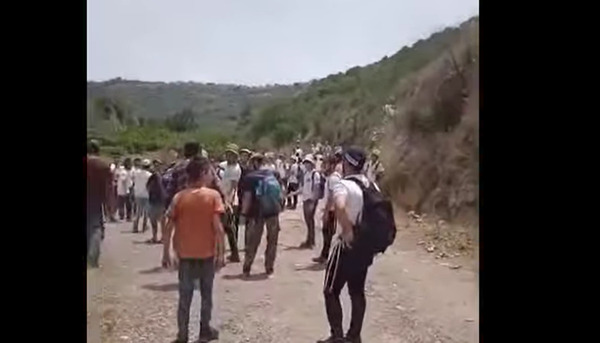
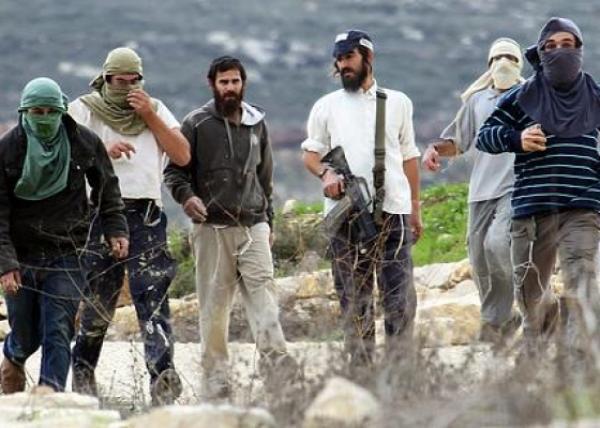
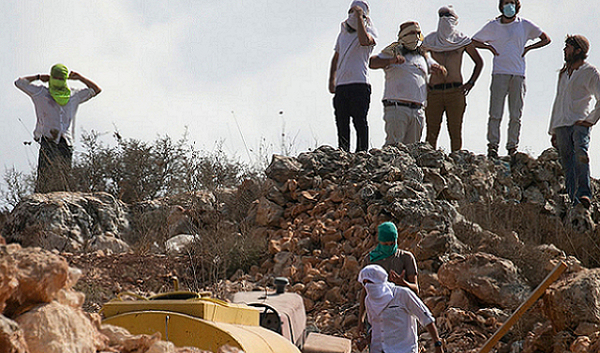
Ramallah: Dozens of Israeli settlers storm Wadi al-Limon in the village of Aboud and Turmus Ayya plain.

Dozens of settlers stormed the Wadi al-Limon area in the village of Aboud, northwest of Ramallah, on Thursday.


Local sources reported that around 100 settlers stormed the Wadi al-Limon area of the village, from the direction of the Beit Aryeh settlement, which is built on private land. They attempted to destroy a water tank, which serves as a water collection point for a number of villages and towns north of Ramallah, when water is cut off, especially in the summer.


Eyewitnesses said that the settlers attempted to attack a citizen in the area with sharp tools, but he managed to escape.


In the town of Turmus Ayya, north of Ramallah, dozens of settlers stormed the plain, placed the flags of the occupying state on buildings under construction, and set up several tents.


These violations by settlers coincide with calls to intensify their raids on Palestinian villages and towns.

PALESTINE

Thu 01 May 2025 11:11 am - Jerusalem Time

Hamas: Switzerland's ban on the movement is an unjustified bias against Palestine

Hamas expressed its strong rejection and condemnation on Thursday of the Swiss authorities' decision to ban the movement's activities, describing the decision as "a dangerous bias toward the Israeli occupation and a denial of the legal and humanitarian obligations" that neutral countries are supposed to adhere to.


In a statement, the movement expressed its regret over the issuance of this decision by a country like Switzerland, historically known for its neutral stance and defense of the principles of international humanitarian law.


Hamas considered this move to represent an unjustified bias against the Palestinian people and their just cause, and a challenge to the legitimacy of their legitimate resistance against the occupation, especially in light of the ongoing "war of genocide" waged by the Israeli occupation against the Gaza Strip.


The Swiss government announced on Wednesday its decision to ban Hamas and all groups associated with it. The new law will take effect on May 15.


The decision includes a ban on all movement activities within Swiss territory, as well as a ban on any form of support for it, whether financial or logistical. The law also grants authorities the power to impose entry bans on individuals associated with the movement and deport them from the country.


This decision comes as part of what Swiss officials described as efforts to block the use of Swiss territory as a financial or logistical center for Hamas activities.


They explained that the ban aims to enhance internal security and prevent support for those classified by Switzerland as terrorist groups.


Switzerland joins a growing list of European countries that have taken similar decisions, including Germany, which banned Hamas in November 2023, less than a month after the movement's "Operation Breaking Dawn" on October 7 of the same year.


The United States, the European Union, Canada, and the United Kingdom have all previously designated Hamas as a "terrorist" organization and imposed a comprehensive ban on its activities.

PALESTINE

Thu 01 May 2025 11:07 am - Jerusalem Time

A citizen was arrested. Israeli Settlers attacked citizens' property in Hebron.

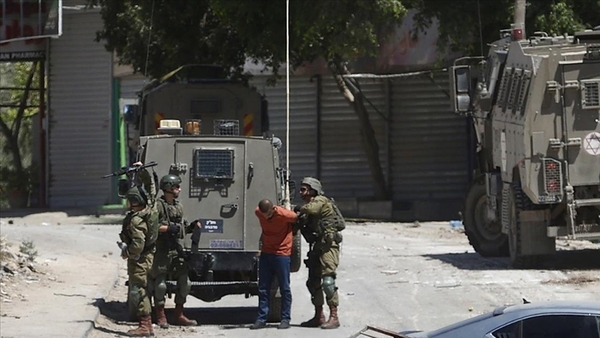
Israeli occupation forces arrested a Palestinian citizen on Thursday, and settlers attacked Palestinian property in the Masafer Yatta area, south of Hebron.


Media activist Osama Makhamreh said that the occupation forces arrested Ibrahim Ismail al-Nawaj'a from the Wadi Ajheesh community in the Masafer Yatta area, after he was chased by settlers who prevented him from entering the pastures.


He added that settlers vandalized a fence surrounding the land of Hassan Ali Nawaja'a in the village of Susya in the Masafer Yatta area.


He pointed out that the settlers and the occupation army are constantly persecuting shepherds and assaulting citizens and their property with the aim of displacing them from their lands for the benefit of colonial expansion.

PALESTINE

Thu 01 May 2025 10:12 am - Jerusalem Time

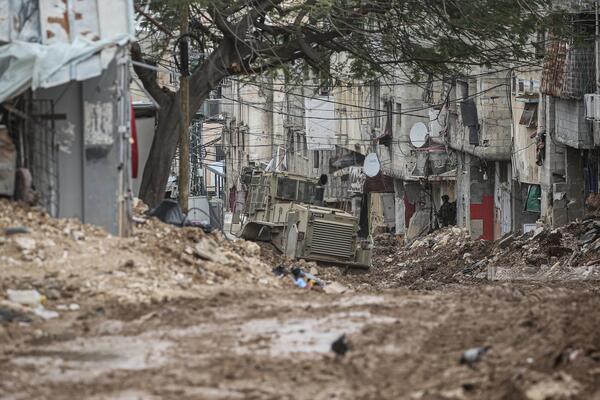
Israeli occupation continues its aggression on Jenin and its camp for the 101st consecutive day.

The Israeli occupation forces continue their aggression on the city of Jenin and its camp for the 101st consecutive day.


During the ongoing aggression, the occupation forces continue to send additional military reinforcements towards the camp and its surroundings.


During this time, the city is witnessing the deployment of infantry units in several of its neighborhoods, while most of the governorate's villages are witnessing daily military movements and the constant presence of occupation patrols and vehicles.


Since the beginning of the aggression on the city and camp on January 21, 40 people have been killed, in addition to dozens of injuries and arrests.


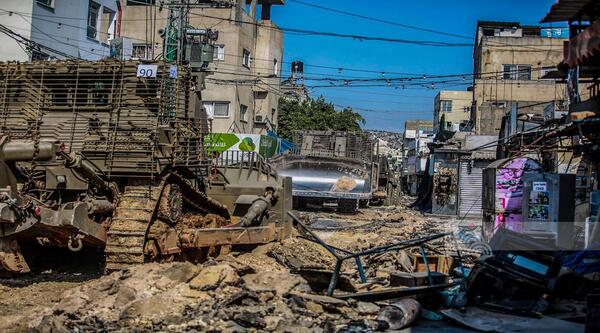
The occupation forces continue to carry out extensive bulldozing and destruction operations inside the camp, aiming to alter its features and structure, while continuing to prevent entry or access to it. Concerns have increased with the occupation forces' recent installation of iron gates at the camp's entrances. Official estimates indicate that all homes and facilities in the camp have been completely or partially damaged as a result of the ongoing aggression and ongoing destruction and bulldozing operations.


In addition to the extensive damage to the camp, Jenin Municipality estimates that 800 housing units in the city have sustained partial damage, in addition to 15 buildings that have been demolished in the city since the beginning of the aggression, with the majority of the damage concentrated in the eastern neighborhood and the Al-Hadaf neighborhood.


Camp families, along with hundreds of families from the city and surrounding areas, remain forcibly displaced to this day. Official estimates from the Jenin Municipality indicate that the number of displaced persons from the camp and city has exceeded 22,000.


The economic situation in Jenin continues to deteriorate, with massive commercial losses recorded as a result of the aggression, which has led to numerous commercial closures and the halting of shopping traffic to and from the city. Furthermore, bulldozing and destruction of infrastructure on the streets have resulted in the damage to a large number of shops. Meanwhile, some areas of the city are experiencing complete economic paralysis, especially in the western neighborhoods.

PALESTINE

Thu 01 May 2025 8:57 am - Jerusalem Time

Intensive raids on Al-Aqsa on Israel's Independence Day

Al-Aqsa Mosque witnessed a new incursion on Thursday morning by a group of settlers, under heavy protection from the Israeli occupation police. The incident occurred as part of the celebration of what is known as "Independence Day" according to the Hebrew calendar, which coincides with the anniversary of the declaration of the establishment of Israel on Palestinian land.


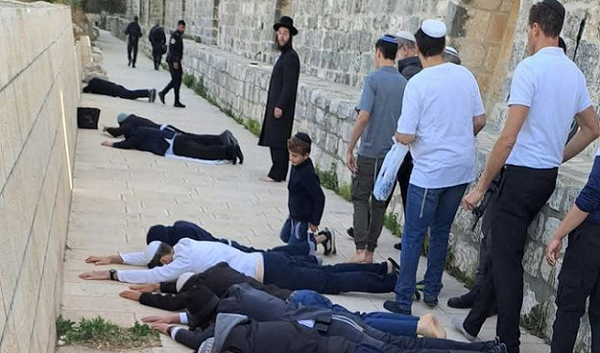
According to the Islamic Waqf Department in Jerusalem, settlers stormed the Al-Aqsa Mosque compound from the Mughrabi Gate, chanting Talmudic hymns and performing what is known as the "epic prostration," in an attempt to demonstrate their religious rituals inside the Noble Sanctuary.


They also distributed occupation flags and festive clothing in an attempt to establish a symbolic presence inside Al-Aqsa and give the place a Jewish character.


These raids were accompanied by heightened military measures in the Old City of Jerusalem, where occupation forces obstructed worshippers' entry to the mosque and confiscated many worshippers' ID cards at the gates, in a clear effort to limit Palestinian presence and prevent any response to these violations.


These developments come amid a marked escalation in settler incursions into Al-Aqsa Mosque, particularly during Jewish holidays and religious occasions. The so-called "Temple" groups are seeking to impose a new reality within the mosque by intensifying incursions, performing public Talmudic rituals, and promoting the construction of a "Temple" in place of Al-Aqsa Mosque.


Jerusalemites and Islamic religious bodies warn of the danger of these attempts to alter the historical and religious status quo at the mosque, stressing that these measures represent a blatant violation of the sanctity of Al-Aqsa Mosque and the rights of Muslims there, and open the door to further escalation.


Meanwhile, popular and official Palestinian calls continue to mobilize and defend Al-Aqsa Mosque and confront these repeated incursions, which represent part of a broad Judaization plan targeting the Noble Sanctuary as part of the occupation's policies to impose Israeli sovereignty over it and divide it temporally and spatially.

PALESTINE

Thu 01 May 2025 8:54 am - Jerusalem Time

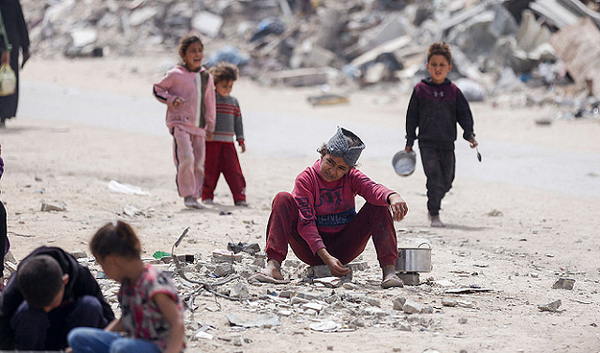
UN and international warnings of deaths due to famine and malnutrition in Gaza

The World Food Programme has expressed grave concern, warning of the potential for deaths from severe malnutrition among civilians, particularly as the humanitarian situation deteriorates and aid access is obstructed.


The UN Special Rapporteur on the Right to Food, Michael Fakhri, accused Israel of committing serious crimes in the Gaza Strip, noting that what is happening there amounts to genocide and war crimes, with the systematic use of starvation as a weapon against civilians.


"Israel is using the lives of Palestinian children as bargaining chips," Fakhri said, emphasizing that the United Nations has used all available legal and humanitarian terms to describe the scale of the atrocities being committed in the Gaza Strip.


The UN official added that Israel "systematically uses food as a weapon," referring to the severe restrictions on the entry of humanitarian aid and the disastrous effects this has had on the population, especially children.


In the same context, the United Nations Office for the Coordination of Humanitarian Affairs in the occupied Palestinian territories (OCHA) stated that the number of children receiving treatment for malnutrition in Gaza due to the ongoing Israeli blockade and the closure of crossings has increased by 80% compared to last March.


The UN office noted in a statement that 92% of infants between the ages of 6 months and 2 years do not receive their minimum basic nutritional needs from their mothers, exposing them to serious health risks that will remain with them for the rest of their lives. It also noted that 65% of the population of the Gaza Strip lacks access to clean drinking water.


These statements come at a time of growing international concern over the humanitarian situation in Gaza, amid warnings of a looming famine and assertions from human rights organizations that Israeli restrictions are causing unprecedented suffering for civilians.

PALESTINE

Thu 01 May 2025 8:50 am - Jerusalem Time

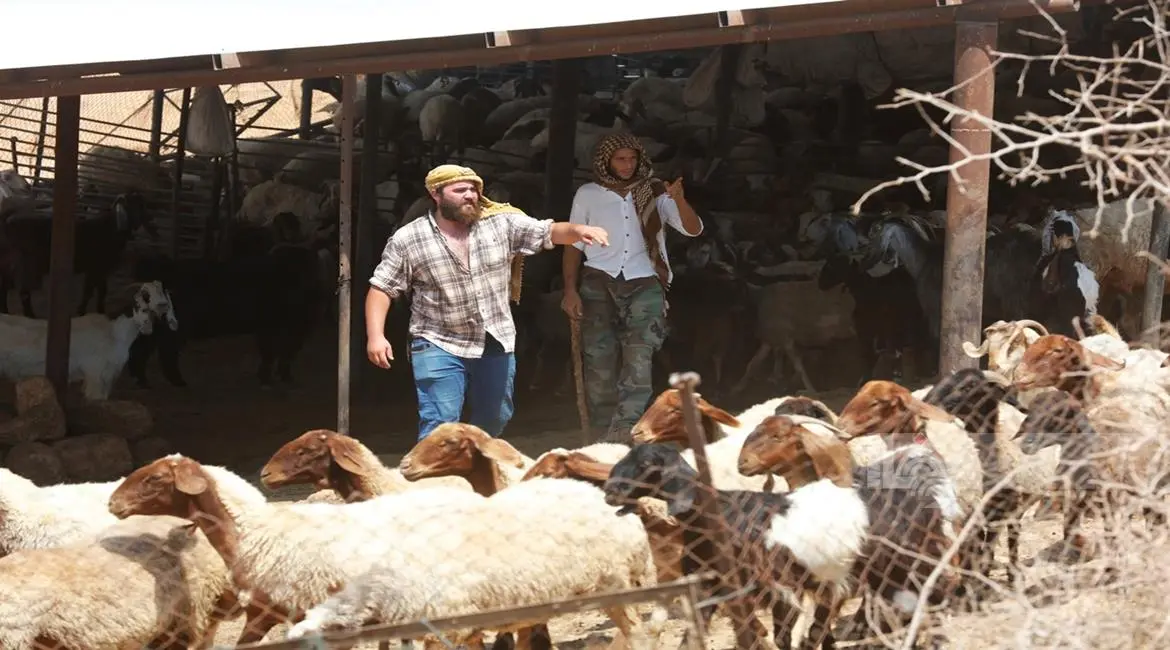
Jordan Valley: Israeli Settlers steal dozens of heads of livestock and attack property

Last night, settlers attacked a family's property near the Hamra military checkpoint in the northern Jordan Valley, stealing dozens of heads of livestock belonging to the same family.


Local sources reported that a number of settlers vandalized solar panels used for lighting, tore up some tents, damaged water tanker tires, and stole dozens of heads of livestock belonging to the same family.


In recent weeks, settlers have intensified their attacks on citizens' property and attempted to steal their sheep, in a clear plan to empty the Jordan Valley of its inhabitants.

PALESTINE

Thu 01 May 2025 8:43 am - Jerusalem Time

Gaza under fire... Dead, injuries, and the occupation launches fire belts east of the city.

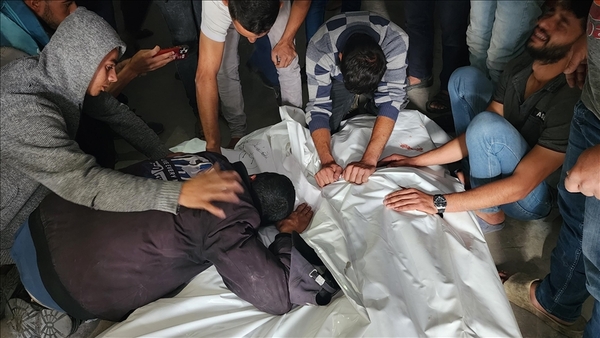
The Israeli military continued its intensive air and ground attacks on various areas of the Gaza Strip on Thursday, amid mounting accusations of war crimes and massacres against civilians and displaced persons, and the continued starvation policy that human rights groups describe as amounting to genocide.


In the latest developments: Israeli warplanes launched a series of violent raids this Thursday morning targeting areas east of the al-Tuffah neighborhood in eastern Gaza City, coinciding with similar airstrikes targeting the northern Gaza Strip.


Two civilians were killed and another injured in an Israeli drone strike on the Al-Mawasi area, northwest of Rafah.


Meanwhile, three citizens were killed and others injured in an Israeli bombardment on the town of Beit Lahia, north of the Gaza Strip.


It also launched airstrikes and artillery shelling targeting groups of displaced people in Khan Yunis, south of the Gaza Strip.


Israeli warplanes launched airstrikes on the town of Beit Hanoun in the northern Gaza Strip, while sound bombs fell on Al-Salib Street in the center of Khan Yunis.


The Israeli bombing also targeted a group of displaced people in the Qizan Abu Rashwan area, south of Khan Yunis, in the southern Gaza Strip.


Areas northeast and north of the Bureij refugee camp in the central Gaza Strip were subjected to heavy artillery shelling, along with the al-Zeitoun neighborhood and the vicinity of al-Maslakh Street east of Gaza City. Israeli drones also participated in targeting residential homes in densely populated neighborhoods.


This escalation comes at a time when Israeli military reports indicate the army is preparing to expand its ground operations in several areas of the Gaza Strip, with the aim of tightening its control over new territories. Meanwhile, Israeli sources say the goal of this escalation is to "pressure Hamas and push it to return to the negotiating table."

PALESTINE

Thu 01 May 2025 8:34 am - Jerusalem Time

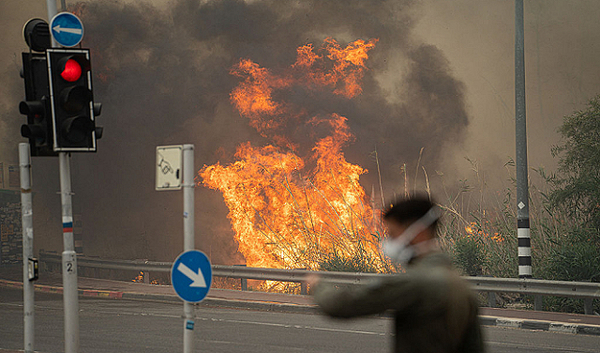
Jerusalem Mountains Fires: Extinguishing efforts continue as flames devour 24,000 dunams.

Firefighting efforts continue today, Thursday, to control the large-scale fires that broke out yesterday afternoon, Wednesday, in southwest Jerusalem. 119 firefighting crews are working in several active hotspots. Eight firefighting aircraft from Cyprus and Italy are scheduled to join the operations today.


Seventeen firefighters were injured while fighting the blaze, two of whom were taken to the hospital for treatment. Meanwhile, police reopened all roads that had been closed due to the spread of the fires this morning, according to a statement issued by the police.


According to estimates by the Israel National Fund (KKL), the fire consumed approximately 24,000 dunams, making it one of the largest in the country's history.


It was estimated that most of the Canada Forest was completely burned, while the Ishtaul Forest sustained significant damage.


In a related development, a situation assessment session was held last night as part of the emergency plan, during which it was decided to impose a ban on entry to a number of forests, nature reserves, and picnic areas, including Canada Park, Eshtaol Forest, and others in the mountains west of Jerusalem.


Police deployed security patrols in previously evacuated communities to prevent looting. Residents of the Neve Shalom and Nachshon settlements were also allowed to return to their homes late yesterday evening, after residents of Eshtaol were allowed to return earlier.


Several European countries, including Romania, France, Spain, Croatia, Italy, and Ukraine, have announced they will send firefighting aircraft to support the firefighting efforts. However, a fire service source indicated that international assistance may not be widely effective, given estimates that the fire will be brought under control before such aid arrives.

ARAB AND WORLD

Thu 01 May 2025 7:12 am - Jerusalem Time

Palestinian Columbia University student Mohsen Mahdawi released on bail


A federal court released Palestinian Columbia University student Mohsen Mahdawi on bail after a judge ordered his release from federal custody on Wednesday, weeks after he was detained by armed Department of Homeland Security agents in Vermont during his U.S. citizenship interview at the Immigration and Naturalization Service.


Mahdawi, a 34-year-old permanent resident of the United States who was born and raised in the Far'a Palestinian refugee camp in the occupied West Bank, was arrested on April 14 and was being held at an Immigration and Customs Enforcement facility, the Northwest Correctional Facility, in St. Albans, Vermont.


“I say it loud and clear to President Trump and his administration: I am not afraid of you,” Mahdavi said Wednesday in a Vermont courtroom after his release.


He added, "What we are witnessing now and what we understand is exactly what Dr. Martin Luther King once said: Injustice anywhere is a threat to justice everywhere." From the bench, Judge Jeffrey W. Crawford ordered Mahdawi released from jail on bail pending a ruling on his habeas corpus petition.


The government asked Judge Crawford to suspend Mahdawi's release from prison for seven days by issuing a stay of execution order, but the judge refused.


Following Wednesday's hearing, Assistant Secretary of Homeland Security Tricia McLaughlin issued a statement saying the judge would not prevent the Trump administration from "restoring the rule of law to our immigration system."


“It is an honor to be granted a visa or green card to live and study in the United States,” she said. “When you advocate violence, glorify, and support terrorists who take pleasure in killing Americans and harassing Jews, that privilege should be revoked, and you should not be in this country.”


The Department of Justice did not immediately respond to a request for comment. US Secretary of State Marco Rubio justified Mahdawi's detention, stating that "his presence and activities in the United States would have serious foreign policy consequences and would jeopardize US foreign policy interests," according to a Department of Homeland Security notice regarding Mahdawi's appearance.


Mahdawi, a green card holder, was a prominent organizer of pro-Palestinian protests at Columbia University last year.


Ahead of the hearing Wednesday morning in Vermont, the government and Mahdawi's lawyers filed several court documents regarding his release, many of which were secretly recorded but which NBC News said it had reviewed.


In opposing Mahdawi's release, the government said law enforcement records indicate Mahdawi admitted to "engaging in and supporting anti-Semitic violence" and "possessing firearms for that purpose," according to court documents reviewed by NBC News.


The government attached two classified documents to its dossier. One piece of evidence, reviewed by NBC News, is a 2015 report from the Windsor, Vermont, Police Department, in which a gun shop owner told officers that Mahdawi "apparently told him" he was building machine guns "to kill Jews while in Palestine." But the shop owner's claim appears weak and fabricated.


In his statement, Mahdawi said he recalled visiting a gun store in Windsor, Vermont, but he was "absolutely certain that I never said the words falsely attributed to me in the report, either in that conversation or ever."


"I am a peaceful person and would never express a desire to harm or kill anyone," he wrote. "I am deeply saddened that these horrific words, which completely contradict my philosophy of life and spiritual beliefs, have been attributed to me."


Speaking to reporters outside the courtroom, Mahdawi's lawyers declared victory over what they described as "government retaliation" against Mahdawi's right to freedom of expression.


"Their claims and actions are baseless, unsubstantiated, and a disgrace to the Constitution of the United States," said Lona Drooby, a partner at Beldock Levine & Hoffman LLP. "We will continue to fight until Mohsen is finally released."


Mahdawi grew up in the Far'a Palestinian refugee camp in the West Bank, where most of his family lives, according to a court filing. When he was 15, he was shot in the leg by an Israeli soldier, according to the filing. He came to the United States more than a decade ago before enrolling at Columbia University in 2021, according to the filing.


The Trump administration has used a similar justification to detain other foreign students, mostly from Middle Eastern countries, who participated in pro-Palestinian protests on college campuses last year or criticized Israel. On March 8, immigration authorities detained Mahmoud Khalil, a Palestinian graduate student at Columbia University who helped lead student protests against the Gaza war on campus last year, at his New York City apartment. On April 11, a judge ruled that the Trump administration could deport Khalil, but Khalil was allowed to appeal the ruling while in US custody.


Similarly, Department of Homeland Security agents arrested Tufts University student Rumeysa Ozturk, who previously co-authored an article on Israel and the war in Gaza, on a suburban Boston street in March.


The two students, Halil Ozturk, remain in custody in Louisiana, where the federal court is complying with the Trump administration's orders.


Outside the courthouse on Wednesday, Mahdawi demanded their release. "Remember, yes, you may think I'm free, but my freedom is tied to the freedom of many other students, including Rumeisa Ozturk and Mahmoud Khalil." Mahdawi also called for an end to the war in Gaza and an end to US aid to Israel.


"We must defend humanity because the rest of the world, not just Palestine, is watching us," Mahdawi said. "And what happens in America will affect the rest of the world.

PALESTINE

Wed 30 Apr 2025 9:28 pm - Jerusalem Time

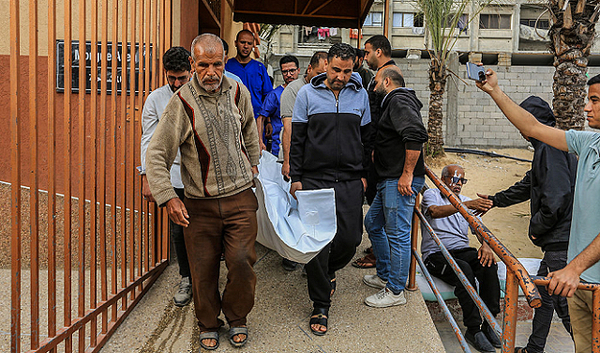
Dead and wounded as a result of the occupation's bombing of Beit Hanoun, north of the Gaza Strip.

A number of citizens were killed and others were injured as a result of the Israeli occupation's bombing of Beit Hanoun, north of the Gaza Strip.


Medical sources announced Wednesday evening that citizen Kholoud Al-Najjar died of her wounds sustained when the occupation forces bombed her home in Qizan Al-Najjar, south of Khan Yunis, in the southern Gaza Strip, a few days ago.


Another woman succumbed to her wounds after an Israeli drone targeted a group of civilians inside the Zaytouna Café in Deir al-Balah a few days ago.


Medical sources confirmed that the death toll in the Gaza Strip, as a result of the ongoing Israeli airstrikes since dawn today, has risen to 29.


In the same context, the occupation's artillery targeted areas east of Deir al-Balah in the central Gaza Strip, near the eastern Mirage junction north of Rafah, and the eastern areas of the Shuja'iyya and al-Tuffah neighborhoods east of Gaza City, while Israeli warplanes launched a raid on the al-Manara neighborhood southeast of Khan Yunis.

PALESTINE

Wed 30 Apr 2025 8:02 pm - Jerusalem Time

Settlers stab a citizen and burn agricultural land south of Nablus.

A 27-year-old citizen was injured after being stabbed by settlers, this evening, Wednesday, south of Nablus.


According to local sources, a number of settlers attacked residents of the village of Duma, assaulting one of them and stabbing him in the back. He was then taken to the village's medical center for treatment.


The sources added that the settlers set fire to agricultural lands and burned olive trees in the western part of the village.

PALESTINE

Wed 30 Apr 2025 6:40 pm - Jerusalem Time

Clashes erupt with the occupation forces in the town of Beita, south of Nablus.

Clashes erupted Wednesday evening between citizens and Israeli occupation forces during their raid on the town of Beita, south of Nablus.


Local sources in the town said that occupation forces stormed the town, and clashes erupted, during which live and rubber-coated metal bullets, tear gas canisters, and sound bombs were fired.

PALESTINE

Wed 30 Apr 2025 6:13 pm - Jerusalem Time

Israeli occupation forces stormed Qalqilya

Israeli occupation forces stormed the city of Qalqilya today, Wednesday.


According to local sources, occupation forces stormed the city from its southern entrance and deployed around Khallet al-Ra'i, without any arrests being reported.

PALESTINE

Wed 30 Apr 2025 3:34 pm - Jerusalem Time

A Palestinian child was injured by Israeli occupation forces' bullets west of Jenin.

A child was injured by Israeli occupation forces' bullets on Wednesday during a raid on the town of Yamoun, west of Jenin.


Red Crescent sources reported that a 13-year-old child was injured by live bullets in the hand and foot.


Local sources reported that occupation forces stormed the town, entered its southern neighborhoods, and detained a number of young men in the area.

PALESTINE

Wed 30 Apr 2025 2:52 pm - Jerusalem Time

"Peace Now" is a dangerous settlement arm...silently stealing thousands of dunams from Palestinians.

The role of the "settlement department" in seizing Palestinian lands

"Peace Now" is a dangerous settlement arm that has silently seized thousands of dunams of Palestinian land, far from UN oversight.


A report published by the Peace Now movement revealed that "the settlement circle is involved in serious crimes, including the transfer of ownership and disposal of private Palestinian lands, dedicating them to Jewish settlement and religious ideology, and contributing to the displacement of Palestinians from their pastures and farms, with the support of the military and political echelons, and with generous financial support from successive Israeli governments."

"In recent years, it has become clear that the Settlement Division is deeply involved in illegal activities," Peace Now said in a detailed report. "Among the revelations is its allocation of private Palestinian land to settlers without the owners' consent, its management of the land without any oversight or financial compensation for leasing it, and its failure to collect debts arising from loans granted to settlers. This information is confirmed and has been repeatedly confirmed by the State Comptroller on several official occasions."

According to the 2005 Sasson Report, the department is extensively involved in establishing illegal settlement outposts on private Palestinian land.

The State Comptroller's Office stated that in February 2015, the Deputy Attorney General issued an advisory opinion in which he asserted that the powers and duties performed by the Settlement Division, a non-governmental body, fall within the core powers of government, and therefore the government may not delegate them to a non-governmental entity.

The opinion also prohibited the allocation of direct budgets to the department within the budget law or through direct financial transfers. This is because these funds are not granted to the department as the implementing body for a specific project pursuant to a tender or official contract. Rather, they are transferred to the department for the purpose of setting policies, prioritizing, and making decisions—tasks that should remain the exclusive domain of government agencies.

Subsequently, instead of dissolving the Settlement Division and transferring its powers to a government body, the Knesset passed an amendment in 2015 to the Law on the Status of the World Zionist Organization and the Jewish Agency for the Land of Israel. This amendment aimed to enable the government to continue its activities in the West Bank through the Settlement Division. Among other things, the law mandated transparency in the division's financial management, but it ignored the core issue of its activities: the management of lands entrusted to it by the state.

MK Bezalel Smotrich, who initiated the law, said: "The management of state lands is a sensitive issue from a political and international perspective, and I don't want them to inform the European Union of every inch of land on which a settlement is built."

With the passage of this law, the situation was officially established that allows the Settlement Department to freely dispose of the lands transferred to it by the state, without any obligation to report or be transparent.

It is noteworthy that the "Settlement Department," which was established in 1971 as an independent unit within the World Jewish Organization, seized thousands of dunams of occupied Palestinian land and converted it into settlements. This is despite the fact that a large portion of it was private Palestinian land, seized and held in the name of the state, then for the benefit of extremist and "Haredim" settlers. The goal was to support the efforts of the Israeli government to establish settlements in the West Bank. The idea of its establishment was based on the idea of it being a non-governmental entity that ostensibly represents the "Jewish people," which allows it to carry out dubious tasks without the state having to directly carry them out. For years, the department operated away from the public eye, with full government funding, but without any public oversight or oversight.

The "settlement circle" continues to play a pivotal role in the ethnic cleansing of Palestinians, a matter of widespread concern to the international community. The lack of effective oversight of its activities increases the importance of implementing settlement projects, which are both effective and pose a significant threat to the region.

PALESTINE

Wed 30 Apr 2025 2:10 pm - Jerusalem Time

Amnesty International: Israel is committing "live genocide" in Gaza

Amnesty International said in its annual human rights report that Israel is committing "live genocide" in front of the world's eyes.


“Since October 7, 2023 – when Hamas committed horrific crimes against Israeli civilians and others, and held more than 250 hostages – the world has witnessed a livestreamed genocide” from Gaza, said Agnes Callamard, Secretary General of Amnesty International, in the report’s introduction.


"States watched helplessly as Israel killed thousands upon thousands of Palestinians, wiped out entire families, and destroyed homes, livelihoods, hospitals, and schools," Callamard added.


The report stated that Israel committed the crime of genocide by killing Palestinian civilians, causing them serious bodily or psychological harm, and deliberately inciting living conditions intended to physically destroy Palestinians by causing forced mass displacement, obstructing or denying life-saving aid, and damaging or destroying infrastructure essential to life.


Amnesty International concluded in a report published in December 2024 that Israel was committing genocide in Gaza. The United States rejected this conclusion and opposed the genocide lawsuit filed against Israel at the International Court of Justice, given the involvement of US officials due to US military aid and other forms of support to Israel.


Amnesty International's new report criticized some aspects of the domestic situation in the United States and the US government's support for Israel. Amnesty International stated, "The continued supply of munitions to Israel violates US laws and policies related to arms transfers and sales, which aim to prevent arms transfers that may contribute to civilian harm and violations of human rights or international humanitarian law."


Amnesty International said it had identified US-made bombs used in "unlawful, deadly airstrikes by the Israeli military on residential homes and a makeshift camp for displaced people in the occupied Gaza Strip."


It's worth noting that the administration of US President Donald Trump has declared its absolute support for the Israeli war of extermination in Gaza. President Trump even threatened Palestinian civilians in Gaza with death, saying "the fires of hell will open upon them," and that it would be better for them to leave Gaza so he can build his "Middle Eastern Riviera there."


Several reports indicated that Trump gave Netanyahu the green light to halt the flow of humanitarian aid to Gaza since March 2 and to resume his war on Gaza on March 18. The Trump administration also maintained the Biden administration's massive and unconditional support for Israel's devastating war on Gaza, continuing to enable it to launch devastating attacks on Hezbollah and incursions into Syria and Lebanon. Washington is unlikely to pressure Israel over these measures, as evidenced by the recent massive Israeli strike on Beirut.

PALESTINE

Wed 30 Apr 2025 2:08 pm - Jerusalem Time

Israeli occupation forces seized an agricultural tractor and a trailer east of Jenin.

Israeli occupation forces seized a tractor and a trailer in the village of Jalboun, east of Jenin, on Wednesday.


Local sources reported that occupation forces seized an agricultural tractor and a trailer while transporting construction materials to a solar energy project affiliated with the village council and funded by the General Union of Local Authorities.


It explained that the solar power plant being built was connected to the village's water well, located on the southern side of the village, and had been licensed by the Water Authority.

PALESTINE

Wed 30 Apr 2025 1:20 pm - Jerusalem Time

Israel8 Settlers assault a citizen and his son east of Tubas

Today, Wednesday, settlers attacked a citizen and his son while they were grazing their livestock in Khirbet Yarza, east of Tubas.


Local sources reported that a number of settlers attacked Faisal Muhammad Daraghmeh and his son Kamel, and attempted to steal their livestock while they were grazing them in the pastures near their tents in Khirbet Yarza, east of Tubas.

PALESTINE

Wed 30 Apr 2025 12:37 pm - Jerusalem Time

"Statistics": Unemployment rates in Gaza are 68% and in the West Bank 31%.

The Palestinian Central Bureau of Statistics said that the results of the labor force survey in the Gaza Strip for the fourth quarter of 2024 showed that unemployment rates rose to approximately 68%, compared to approximately 45% in the third quarter of 2023.


The results of this survey also indicated a decline in the labor force participation rate, reaching approximately 30% compared to 40% in the third quarter of 2023, i.e. before October 7, 2023. The results also showed that the youth category (15-29 years) was greatly affected, as approximately three-quarters of young people (74%) are no longer in education, training, and the labor market.


The Central Bureau of Statistics added in a statement issued on Wednesday, on the occasion of Labor Day, that this impact was not limited to the Gaza Strip, but was also reflected in the West Bank, albeit to a lesser extent. There was a significant impact of the Israeli occupation’s aggression on the Gaza Strip, and the repercussions that followed in the West Bank, represented by tightening the noose on the governorates of the West Bank, cutting off communication between them, and preventing workers from reaching work within the 1948 territories. All of these reasons and others led to the paralysis of economic activity, which had a direct impact on the characteristics of the labor force in the West Bank.


He pointed out that the number of unemployed people in the West Bank rose to 313,000 in 2024, compared to about 183,000 in 2023. Unemployment rates among individuals participating in the labor force in the West Bank also rose in 2024 to about 31% compared to about 18% in 2023. At the gender level, the unemployment rate for males in the West Bank reached 31.7% compared to 30.1% for females in 2024.


The number of workers from the West Bank will decrease by about 132,000 between 2023 and 2024.

The statistics agency said that the number of workers (not including workers abroad) decreased from approximately 815,000 workers in 2023 to approximately 681,000 workers in 2024, a decrease of 20%.


The number of workers from the West Bank within the 1948 territories also declined significantly between 2023 and 2024, by approximately 85,000 workers, as a result of the strict closures imposed by the occupation following the aggression on the Gaza Strip. The total number of workers reached approximately 21,000 workers in 2024, compared to approximately 107,000 workers in 2023. The number of workers in the settlements also declined from approximately 16,000 workers in 2023 to 15,000 workers in 2024.


The number of workers in the local market in the West Bank will decrease between 2023 and 2024.

The number of workers in the local market in the West Bank decreased from 685,000 workers in 2023 to approximately 650,000 workers in 2024, representing a 5% decrease.


The results showed that the decline in the number of workers in the local market in the West Bank was due to a decline in the number of workers in the construction sector, followed by other services, then trade, restaurants and hotels, and finally mining and manufacturing.


The private sector is the largest employer.

The number of workers from the West Bank reached approximately 681 thousand workers, with 650 thousand workers in the West Bank and 31 thousand workers working inside the 1948 territories and the settlements, of whom approximately 447 thousand were paid employees (416 thousand employees working in the West Bank, 16 thousand working inside the 1948 territories, and 15 thousand working in the settlements).


Approximately 65% of all wage earners in the West Bank work in the private sector, compared to approximately 28% working in the government sector, and approximately 7% working in Israel and the settlements in 2024.


More than a quarter of private sector wage earners in the West Bank work as technicians and specialists.

The percentage of paid employees working as technicians and specialists in the private sector reached approximately 28% of the total paid employees in the private sector, with 17% for males and 69% for females.


More than half of the workers in the West Bank are in informal employment.

The percentage of informal employment reached approximately 61% in the West Bank in 2024, compared to 62% in 2023 (i.e., workers in the informal sector, in addition to wage employees, who do not receive any of the rights in the labor market, whether end-of-service/retirement gratuity, paid annual leave, or paid sick leave); 67% for males, compared to 38% for females. The percentage of workers in the informal sector in the West Bank reached approximately 46%; 52% for males and 25% for females, compared to 47% in 2023.


low real wage rates

The average real daily wage for wage earners in the private sector in 2024 (base year = 2018) was approximately 122 shekels in the West Bank, compared to 121 shekels in 2023 (excluding workers within the 1948 territories and settlements).


The transportation, storage, and communications sector recorded the highest real daily wage rates in the private sector, at 166 shekels in the West Bank, followed by the construction sector at 141 shekels, while the agriculture sector recorded the lowest real daily wage rate at 79 shekels.


In a related context, the average weekly working hours for paid employees reached approximately 42 working hours; 41.6 working hours for paid employees in the public sector, and 42.1 working hours in the private sector.


16% of private sector wage earners receive a monthly wage less than the minimum wage (1,880 shekels) in the West Bank.

The percentage of private sector wage earners who receive a monthly wage less than the minimum wage (NIS 1,880) in the West Bank reached approximately 16%, with a number of approximately 40,000, compared to approximately 15% (44,000) in 2023. It is worth noting that, based on the Cabinet decision, the minimum wage (NIS 1,880) was considered effective at the beginning of 2022.


The average monthly wage for those earning less than the minimum wage in the West Bank was NIS 1,424 in 2024, compared to NIS 1,381 in 2023.


Less than half of private sector wage earners in the West Bank receive their rights.

The statistics indicated that about 43% of private sector wage earners receive their rights (retirement funding, end-of-service benefits, paid annual leave, and paid sick leave). The number of private sector wage earners who have a permanent employment contract (written for an indefinite period) reached about 67,000 wage earners, and about 128,000 private sector workers have a temporary employment contract (written for a limited period, verbal agreement), compared to about 101,000 workers who do not have an employment contract. Meanwhile, 51% of female wage earners receive paid maternity leave in 2024.

PALESTINE

Wed 30 Apr 2025 12:31 pm - Jerusalem Time

52,400 dead since the start of the Israeli aggression on the Gaza Strip

The Ministry of Health in Gaza reported on Wednesday that the death toll from the Israeli aggression has risen to 52,400 dead and 118,014 injuries since October 7, 2023.


In a brief statement, the ministry confirmed that 35 dead and 109 injuries had arrived at Gaza Strip hospitals over the past 24 hours.


It pointed out that the death toll and injuries since March 18, 2025, has reached 2,308 dead and 5,973 injuries.

PALESTINE

Wed 30 Apr 2025 11:42 am - Jerusalem Time

Guterres: Aid access to Gaza is non-negotiable

UN Secretary-General António Guterres affirmed on Wednesday that aid provided to Palestinians in the Gaza Strip is a "non-negotiable" issue.


"For nearly two months, Israel has blocked food, fuel, medicine, and commercial supplies from entering Gaza, depriving more than two million people of life-saving relief," he said in a post on the X platform.


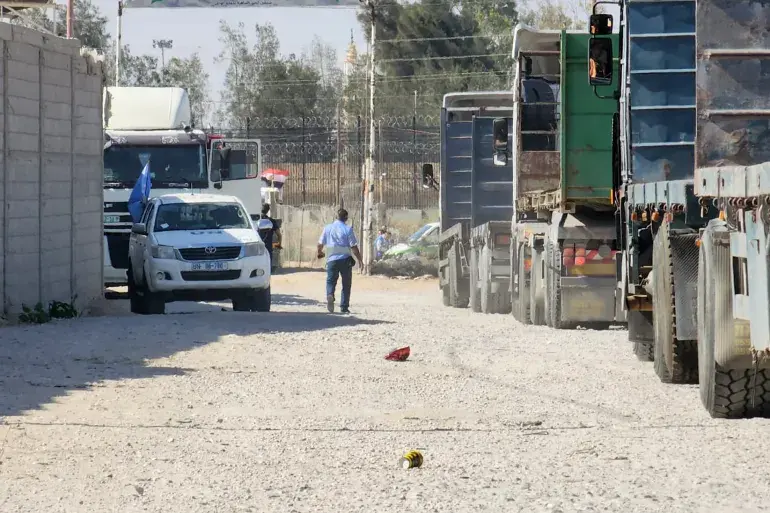
The Gaza Strip, with a population of approximately 2.4 million, is almost entirely dependent on humanitarian aid, which has been completely halted since March 2, when Israel closed the crossings. This has caused a significant deterioration in the humanitarian situation for Palestinians, according to government, human rights, and international reports.


The UN Secretary-General stressed that "aid is non-negotiable."


He stressed that "Israel must protect Palestinian civilians in Gaza and approve and facilitate relief programs."

PALESTINE

Wed 30 Apr 2025 10:46 am - Jerusalem Time

The aggression on Tulkarm and Jenin: Demolitions, displacement, and destruction of infrastructure continue.

The Israeli occupation forces continue their aggression on the city of Jenin and its camp for the 100th consecutive day, amid ongoing house demolitions, road construction, and forcing residents to flee their homes.


Local sources reported that the occupation forces are continuing to send additional military reinforcements towards the camp and its surroundings on a continuous basis, in addition to deploying infantry units in several neighborhoods of the city.


Most of the villages in Jenin Governorate are witnessing daily military movements and the daily presence of occupation patrols and vehicles.

The occupation forces are continuing their destruction and bulldozing operations inside the camp, while continuing to prevent entry or access to it. Concerns have increased with the installation of iron g8ates at the camp's entrances a few days ago.


Official estimates indicate that all of the camp's homes and facilities have been completely or partially damaged as a result of the ongoing aggression and ongoing destruction and bulldozing operations aimed at altering the camp's structural makeup and features.


In addition, 800 housing units in the city were partially damaged, and 15 buildings have been demolished since the beginning of the aggression. Most of the damage to buildings and residences occurred in the eastern and al-Hadaf neighborhoods, according to data from the Jenin Municipality.


Camp families, along with hundreds of families from the city and surrounding areas, remain forcibly displaced to this day. Official estimates from the Jenin Municipality indicate that the number of displaced persons from the camp and city has exceeded 22,000.


The economic situation in Jenin, a city that relies primarily on trade, continues to deteriorate. Huge commercial losses are being recorded as a result of the ongoing aggression, which has led to numerous commercial closures and the halting of shopping traffic to and from the city. Furthermore, bulldozing and destruction of infrastructure on the streets have resulted in the damage to a large number of shops. Meanwhile, some areas of the city are facing complete economic paralysis, especially in the western neighborhoods.


Since the beginning of the ongoing aggression on Jenin and its camp, 39 citizens have been killed, dozens more injured, and arrests of citizens from various areas of the Jenin governorate have escalated.


**Tulkarm**

The Israeli occupation forces continue their aggression on the city of Tulkarm and its camp for the 94th consecutive day, and on the Nour Shams camp for the 81st day, amid ongoing field escalation and a continuous campaign of raids and arrests.


Local sources reported that the city witnessed active movements of occupation vehicles and infantry units last night, patrolling the main and side streets, obstructing the movement of citizens and their vehicles, particularly on Paris Street, the vicinity of the Martyr Thabet Thabet Roundabout, Gamal Abdel Nasser Square, and the center of the vegetable market. A number of young men were detained and interrogated on the spot.


Late at night, Israeli occupation forces on foot raided the Dhnaba suburb east of the city, and intensified their deployment around the areas of the Attar platforms, the Sharia school, and the Halima Khreisha school. They stopped vehicles, searched them, and checked the identities of their passengers.


Eyewitnesses reported that occupation forces raided a café in the suburb, searched it, and subjected young men to field interrogation. They also raided homes in the area and arrested three young men after assaulting them: Amir Assaf, Ayham Mu'ayyad Shaaban, and Shadi Shaaban.


In a related development, Israeli occupation forces deployed heavily in Jabal al-Nasr in the Nur Shams refugee camp, firing flares in the area, accompanied by the sound of live ammunition and sound bombs.


Tulkarm and Nur Shams refugee camps and their surroundings are witnessing a heavy deployment of occupation forces, firing live ammunition and sound bombs, with explosions being heard from time to time. This comes amidst a tight siege imposed on these camps, the closure of their entrances with earth mounds, and the accompanying raids and vandalism of homes, forcing the remaining residents to evacuate their homes at gunpoint.


The occupation forces continue, around the clock, to send military reinforcements, including vehicles and infantry units, into the city, its two camps, and its suburbs. This includes firing live ammunition and sound bombs, raiding and searching homes and shops, vandalizing their contents, and subjecting those present to interrogation, abuse, and arrest.


The occupation forces also continue to seize homes and residential buildings on Nablus Street and the adjacent northern neighborhood, converting them into military barracks after forcibly evacuating their residents. They also station their vehicles and bulldozers in the vicinity.


The ongoing Israeli aggression and escalation against the city of Tulkarm and its two refugee camps resulted in the deaths of 13 civilians, including a child and two women, one of whom was eight months pregnant. Dozens more were injured and arrested.


It also resulted in the forced displacement of more than 4,200 families from the Tulkarm and Nur Shams camps, comprising more than 25,000 residents, along with hundreds of residents from the northern and eastern neighborhoods of the city after their homes were seized and a number of them converted into military barracks.


The aggression caused widespread destruction to the infrastructure, including homes, shops, and vehicles, which were completely and partially demolished, burned, vandalized, looted, and stolen. 396 homes were completely destroyed and 2,573 partially destroyed in the Tulkarm and Nur Shams camps, in addition to the closure of their entrances and alleys with earth mounds.


PALESTINE

Wed 30 Apr 2025 10:37 am - Jerusalem Time

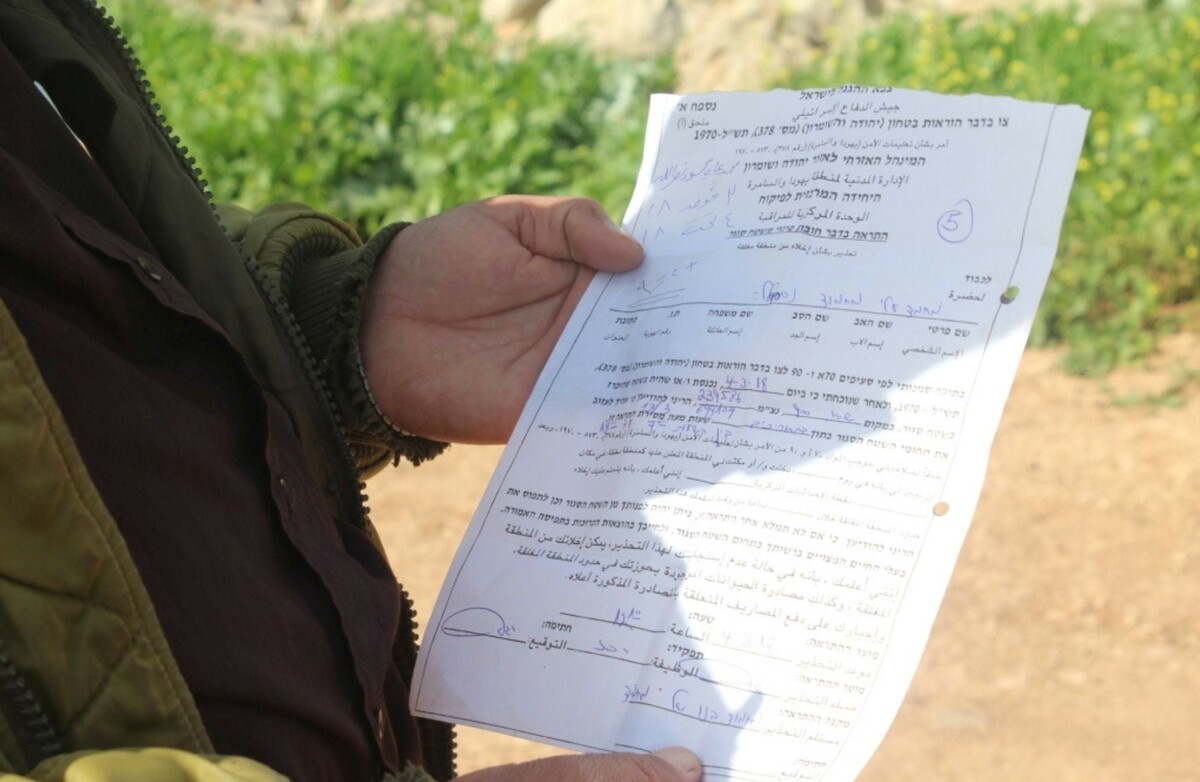
The occupation forces notify the cessation of work at Burqa Park, northwest of Nablus.

Today, Wednesday, the Israeli occupation forces delivered a cease-fire notice to the Burqa Park, which is being built in the Al-Masoudiya archaeological area northwest of Nablus.


Local sources reported that the occupation forces stormed the site and delivered a notice to stop work on the park, claiming that it is located in Area C.


She noted that the park is funded by the Palestinian Union of Local Authorities at a cost of 130,000 shekels, and that work on equipping it began ten days ago with the goal of providing recreation for the area's residents and providing a recreational outlet for families, amidst the ongoing siege and settler attacks.

OPINIONS

Wed 30 Apr 2025 10:21 am - Jerusalem Time

On International Workers' Day: The brutal war is pushing Palestinian workers towards hunger, poverty, and unemployment.


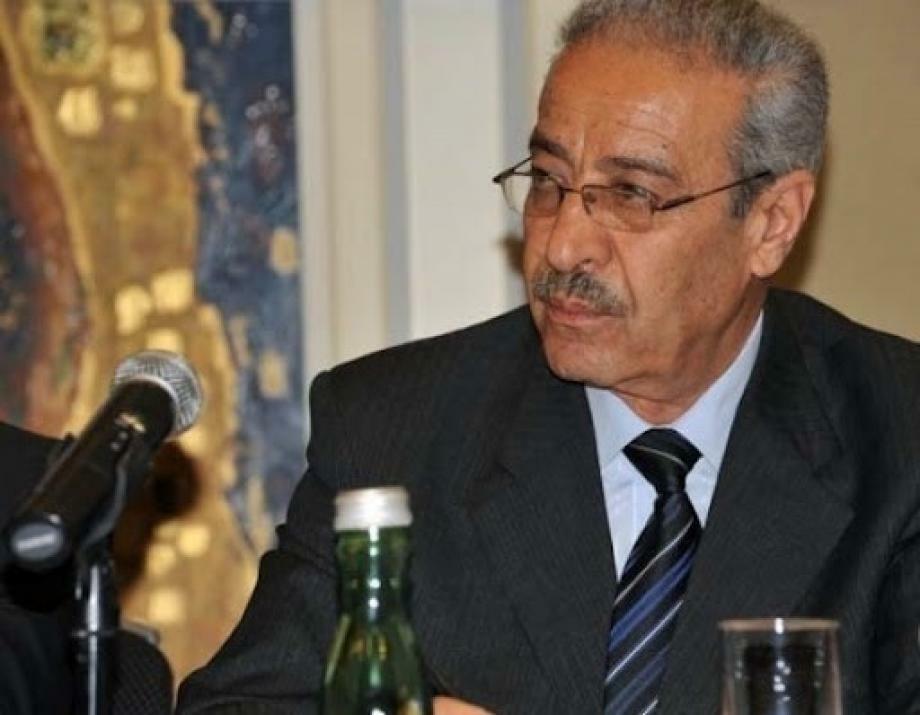
Taisir Khaled


This year, International Workers' Day falls under exceptional circumstances, the most difficult in the history of the Palestinian labor and trade union movement and the history of the national struggle. The brutal war waged by Israel on the Gaza Strip, as well as the West Bank, including Jerusalem, has entered its twentieth month with no signs of an end in sight, despite the numerous efforts of Arab and international mediators. The war continues, claiming the lives of tens of thousands of Palestinian citizens, destroying their infrastructure and economic facilities, and pushing Palestinian workers toward hunger, poverty, and unemployment.

The labor market, as Shaher Saad, Secretary-General of the Palestinian General Federation of Trade Unions, confirms, is currently experiencing an unprecedented crisis in light of this war, with hundreds of thousands of Palestinian workers losing their jobs, both in Israeli projects and in Palestinian projects in the West Bank and Gaza Strip. Before this war, the number of Palestinian workers employed in Israeli projects was approximately 248,000, of whom 200,000 held official work permits and approximately 48,000 worked illegally without permits. According to Saad, these workers constituted a vital backbone of the Palestinian economy, and their monthly salaries, according to estimates by the Israeli Central Bank, reached 1.35 billion shekels. All of this has come to a standstill in light of this war, which has also cast a shadow over the Palestinian labor market after the occupation authorities prevented these workers from going to their jobs in Israeli projects, whether inside Israel or in the settlements established by the occupying state throughout the West Bank.

Beyond that, this war has cast a shadow over broad economic sectors within the West Bank and Gaza Strip, after the occupation authorities divided the country into isolated enclaves surrounded by iron gates, military checkpoints, and earth mounds. According to data from United Nations agencies, these enclaves number approximately 900 gates, checkpoints, and earth mounds. This has paralyzed the Palestinian economy's ability to adapt even to wartime conditions, exacerbating unemployment problems. According to estimates by the Palestinian General Federation of Trade Unions, the number of unemployed has reached approximately 507,000 workers, including 248,000 who lost their jobs in the 1948 territories, and approximately 100,000 workers in the West Bank, while the remaining numbers are distributed across the Gaza Strip. With tens of thousands of Palestinian workers losing their jobs after October 7, 2023, these workers, according to several Palestinian trade union leaders, have entered a severe livelihood crisis due to the lack of income and the absence of a national social protection system. Living conditions have further deteriorated in light of the sharp rise in the prices of basic consumer goods and commodities, exacerbating the economic and social suffering of these workers.

Naturally, the situation of Palestinian workers was better before this war. The number of Palestinian workers in the West Bank and Gaza Strip reached approximately 1.16 million, including 868,000 from the West Bank and approximately 292,000 from the Gaza Strip. Data from the Palestinian Central Bureau of Statistics indicated that the number of Palestinian workers from the West Bank and Gaza Strip working in Israeli projects, both inside Israel and in settlements, increased from approximately 51,000 in 2013 to more than 178,000 in the third quarter of 2023, the eve of the war on the Gaza Strip. This number included 153,000 workers from the West Bank and 25,000 workers from the Gaza Strip, most of whom worked in the construction, services, and agriculture sectors, constituting approximately 20% of the total Palestinian labor force. Various data also indicated the suffering of the Palestinian labor force due to high unemployment rates, especially in the Gaza Strip, on the eve of the war. The unemployment rate in the West Bank and Gaza Strip among those participating in the labor force reached approximately 24%. The disparity in unemployment rates between the West Bank and Gaza Strip was significant, reaching 45% in the Gaza Strip and around 13% in the West Bank. These unemployment rates posed the greatest challenge, especially for Palestinian youth, reaching 32% among males and 59% among females. These rates were higher in the Gaza Strip than in the West Bank, reaching 75% and 30%, respectively. The highest rates were among young people aged 18-29, especially among graduates with an intermediate diploma or higher, reaching 48%. There was a clear difference between young males and females: 34% for males and 61% for females.

The picture was not rosy before the war, but it changed for the worse during this war. From the first day, Israel targeted all economic and civilian service facilities throughout the Gaza Strip, leading, according to the International Labor Organization, to a work stoppage and the disruption of all aspects of economic and social life. At the same time, the Israeli authorities revoked all work permits granted to Palestinian workers employed by them from the Gaza Strip and the West Bank. These workers, who provided the Palestinian economy with an income of approximately $3 billion annually, or approximately 15% of the gross national income, were affected. Large segments of the West Bank population were subjected to repressive measures and movement restrictions imposed by the occupation authorities, negatively impacting all aspects of economic and social life. These restrictions on the movement of Palestinians in the West Bank, imposed since October 7, 2023, have become a threat to their security and a real obstacle to the movement of more than 67,000 Palestinian workers who have jobs in governorates other than their place of residence. Consequently, they are forced to pass through dozens of military checkpoints erected by the Israeli authorities on the main roads connecting the West Bank governorates and the surrounding cities and villages. However, the groups most affected by these Israeli measures remain youth and women, particularly university graduates. It is noteworthy that unemployment rates in the Palestinian territories are already higher among young university graduates, both male and female, reaching approximately 74% in the Gaza Strip and approximately 29% in the West Bank. Unemployment rates are also higher among women, with the unemployment rate reaching 66.2% in the Gaza Strip, compared to 29% in the West Bank.

This is a picture of the deteriorating conditions that our national economy and the Palestinian working class are experiencing. The war on the Gaza Strip, as well as the West Bank, including Jerusalem, has exacerbated the deterioration. This does not mean that this situation would have heralded a recovery for our national economy had it not been for the war. For years, our national economy has been in an intensive care unit due to the restrictions imposed by the agreements signed with Israel, especially the Paris Economic Protocol. We found ourselves facing a difficult equation: either free ourselves from our dependence on the Israeli economy and embark on broader horizons that open up opportunities for development for the national economy, or continue to spiral into further dependence, deterioration, and stagnation. In the difficult economic and national circumstances we are experiencing, I find no shame in defending the Palestinian working class, Palestinian industrialists, and Palestinian industry simultaneously. What we have achieved in this regard compels me, from both a national and a class position, to reconcile the defense of the rights and interests of workers with the defense of national capitalism and national industry, whose conditions have deteriorated alarmingly, not only due to the occupation policy but also the misguided policies pursued by successive governments in the Palestinian National Authority.

Everyone knows that our national industry is a simple industry, and in its basic structure, it is a processing industry, some of which made its way with great difficulty under the enormous restrictions and pressures imposed by the Israeli occupation policy and the constraints imposed by the Paris Economic Agreement. A single economic market and a single customs envelope between a simple economy and a developed one led by the revolution in science, technology, and communications. These restrictions and pressures imposed cannot be ignored, with negative repercussions on the performance of the Palestinian economy and the development of Palestinian industry, which tended toward subcontracting with the Israeli economy and market. In light of this, the production structure was transforming and developing, albeit slowly. The same was true of the labor structure and the inputs to the gross national product (GNP). Foreign income, primarily from work in Israeli projects and from remittances from expatriates, constituted a significant portion of its components, reaching an average of 30-35% of the GNP, even in cases of stability and the opening of the Israeli labor market to Palestinian workers. This is a certainly high percentage, indicating a major imbalance. At certain points, its value and rates exceeded the combined share of the industrial, agricultural, and construction sectors.

In light of this, Palestinian workers in the Palestinian territories occupied since June 1967 greet May 1st every year with bitterness, frustration, and anger in light of the harsh living conditions they face. On the one hand, they have faced, and continue to face, daily repression and humiliation by the occupation forces at roadblocks and crossing gates, whether into Palestine or even at work centers in the settlements. They also face horrific exploitation of their workers in Israeli projects, including those established by settlers on Palestinian land in the settlements. If this is the case with our workers under the occupation, its policies, and practices, then what is the situation of these workers in the Palestinian labor market and in national projects? From an objective perspective, no one can underestimate the difficulty and danger of the conditions facing the national economy and the Palestinian private sector. The national economy is captive to the Paris Economic Agreement and to the policy of blockade, closure, and economic strangulation. For years, Palestinian governments have not extended a helping hand to the private sector as they should. Citizens wonder what percentage of the Palestinian Authority's available financial resources over the years—whether from various tax revenues or funds from countries and donors—has been allocated to development investment to improve the private sector. The answer is truly shocking: this percentage has not exceeded 5 percent over the years. Beyond that, Palestinian governments have pursued policies that have contributed to the most serious damage to the industrial, agricultural, and service sectors of the Palestinian national economy. They have opened national markets to all imports at the expense of encouraging domestic products and providing an acceptable or minimum level of protection requirements. This has exacerbated the national economic crisis and has undoubtedly contributed to the growth of unemployment, increased poverty rates, a deterioration in the standard of living, and low wages in the private sector due to fierce competition in the labor market.

The private sector has a role to play in development, and in our circumstances, it is vital, not marginal. The requirements for it to fulfill its responsibilities and role in this regard must be met. At the same time, we recognize that injustice must be redressed against workers in this sector by respecting the provisions of the Palestinian Labor Law, despite its shortcomings and shortcomings. The government must intervene in two main directions: First, raise the minimum wage in the private sector so that it approaches the wage rate of public sector workers, oblige the private sector to do so, and link wages to the cost of living index. This step should be reinforced by providing subsidies for basic commodities that mitigate the impact of this exorbitant price increase on the conditions of vulnerable social segments. Second, achieve national consensus on the Social Security Law and the formation of the Social Security Council and Fund, with all the resulting obligations fulfilled by the government, as well as by employers and employees in the private sector. This has a significant impact on providing job security and the most basic requirements for a dignified life for these employees, especially workers, at the peak of their careers and in the twilight of their lives.

On this occasion, it is necessary to emphasize the importance of reviving the role of the Palestinian labor and trade union movement and restoring its pioneering role in the seventies and eighties of the last century in order to defend the rights of the working class and its fair and well-known trade union and social demands, and to distribute the burdens of steadfastness in the face of aggression in a fair manner between workers and employers. It is also important to revive its role in the struggle against the occupation, strengthen its steadfastness, and develop its struggle in the face of the widening scope of unemployment, poverty, destitution, and deterioration of living standards, especially in the circumstances of the brutal, comprehensive war and the war of genocide and starvation waged by the occupying state against the Palestinian people in all the Palestinian territories occupied by the 1967 aggression, including occupied Jerusalem.

On this occasion, I cannot miss emphasizing the importance of activating and developing the role of the Palestinian labor and trade union movement on the international scene and building partnerships with labor unions in various countries of the world to launch a broad solidarity movement with Palestinian workers, whose living standards have deteriorated to terrifying levels, and to launch a protest movement in many countries against the brutal war waged by the occupying state against the Palestinian people. At the same time, I call on international labor unions to stand in solidarity with the workers and people of Palestine and to pressure the governments of the concerned countries to stop providing military aid to Israel and supplying it with lethal weapons and death bombs and shells, which do not spare anyone, including women, children, and workers, and do not even spare hospitals, health centers, universities, schools, and local and international humanitarian relief workers, in addition to factories, plants, and many productive, commercial, and agricultural institutions that provided job opportunities for the Palestinian working class.


OPINIONS

Wed 30 Apr 2025 10:20 am - Jerusalem Time

What's next?


Baha Rahal


The harsh reality experienced by the Palestinian citizen has exceeded the limits of what is possible and reasonable. Life has become strangely unbearable, and time is eating away at everything possible. The space for relief is shrinking in the face of the darkness of restrictions, gates, checkpoints, and winding, dirt and rocky roads. While the war of extermination continues in Gaza, the persecution of people in the West Bank continues, and the process of annexation and gnawing for the sake of building settlements continues. The acts of oppression and humiliation continue at the military checkpoints spread between each city and the next, and the iron gates that cut off road connections as a form of collective punishment, terrorizing people's lives with continuous daily raids, ceaseless arrests, and tightening the economic and social stranglehold in ways that Satan is unable to devise.

Looking at the reality in the cities, villages, and camps of the West Bank, the picture is the same from north to south. People's voices are filled with complaints about the reality that is spiraling downward, and the absence of hope in most dialogues and meetings. They know that their patience has failed them, and that, in light of this reality, they have no solutions that will lead to better times. The war in Gaza continues, and so do numerous forms of aggression in the West Bank. No one in this world is imposing a halt to the genocide or halting the arrogance of the extremist occupation government. There is no glimmer of hope for a political horizon in the near future. This is what drives people to a state of misery, given what they hear, see, and experience. The complaints of politicians, media figures, journalists, and intellectuals have become a constant feature of every day, prompting the average citizen to sense the coming dangers, amid the lack of a clear picture and the gloom of the future.

The war of extermination in Gaza has destroyed everything, and the Strip has become a wasteland, its inhabitants living in shabby tents and uninhabitable shelters, amidst a complete lack of all the necessities of life. As in the West Bank, the situation is no better. Rather, with each passing day, life becomes more difficult, and the scope of attacks, land confiscation, and terrorizing of people's lives expands. This is what Netanyahu and his government wanted. This is a policy declared with utmost racism and extremism in confronting the world, its laws, charters, laws, and institutions. The occupation continues its war and attacks, as it continues its extremist policies seeking ethnic cleansing and the expulsion and displacement of the indigenous people of the land by various means and methods.

The internal Palestinian reality, which suffers from fragmentation, division, and the disputes that surface, are the main reason for weakening positions and visions and overcoming the faltering present. Moreover, the hateful division obstructs any possibility of rising from this depths. Between the fragmentation of positions, the wasting of time, and the absence of democracy and elections, the compass of the people, who witness everything that has happened and is happening, is lost, and the national project is lost in the labyrinths of internal fighting. The more the threat of occupation and liquidation projects intensifies, the more the rift increases and the disputes deepen, as if the division is our inevitable fate, unavoidable in light of the narrow partisanship and factionalism that has extended all these years, bringing us losses and more weakness and confusion. In light of this division, the voice of impotence and weakness is the only voice, the voice of disappointments is louder, the level of action is diminished, and the citizen remains hostage to a wretched reality, with its difficult political and economic circumstances.

What next? The question of people exhausted by chapters of war, genocide, and suffering, with no answer in light of this reality engulfed by death, displacement, ethnic cleansing, and occupation policies, amid international silence, global neutrality, and a hateful Palestinian division.


PALESTINE

Wed 30 Apr 2025 9:21 am - Jerusalem Time

Washington plans to abolish the position of security coordinator between the Palestinian Authority and Israel.

The American website Axios quoted an informed source as saying that the US State Department is planning to eliminate the office of the US Security Coordinator in Jerusalem, which helps strengthen security coordination between the Palestinian Authority and Israel.


The sources added that this cancellation is part of a broader reorganization of the State Department led by Secretary of State Marco Rubio, which will see the closure of dozens of offices around the world.


A congressional aide and a source familiar with the matter said that the current US security coordinator in Jerusalem, Lt. Gen. Michael Finzel, was informed last week that his position would be eliminated, and an announcement is expected in the next few weeks.


A US official explained that the decision is not final until it is announced, but acknowledged that Wenzel's position is among those to be eliminated. The official added that this move is a cost-cutting measure and not for political reasons.


General Wenzel was first informed of the plan earlier this year, but was later told that the decision had been reversed after holding meetings in Washington in which he stressed the importance of preserving the position, according to a source familiar with the matter. However, this reversal appears to have been short-lived, and the US Security Coordinator's office in Jerusalem is no longer included on the updated list of offices that will continue to operate following the soon-to-be-announced reorganization of the State Department.


The last time the "security coordinator" position gained attention in the US media was in the summer of 2022, when the Pentagon moved to demote the security official stationed there from a three-star general to a colonel in order to cut costs.


Ultimately, however, the Biden administration backed down from this effort following bipartisan pressure led by Senators Lindsey Graham and Jon Ossoff. Current National Security Advisor Mike Waltz helped deliver a similar letter in the House of Representatives advocating for keeping a senior general in the office of the US Security Coordinator for the Palestinian Authority and Israel. Washington was influenced by Israel's position, which warned of the destabilizing nature of such a move regarding the security situation in the occupied West Bank.


According to Hebrew media, Israel did not comment on the matter, and the Israeli Ministry of Defense strongly opposed any steps that would support the Palestinian Authority.


A Palestinian official told The Times of Israel that an ammunition shipment intended for Palestinian Authority security forces has been stagnant in Jordan for months because Katz refuses to sign it.


The US Security Coordinator's office in Jerusalem was established in 2005 as part of the "Roadmap" for Peace developed by the administration of then-US President George W. Bush. The international team includes representatives from the United Kingdom, Canada, the Netherlands, Italy, Turkey, Poland, and Bulgaria, but it is chaired by the United States, whose representative is also the highest-ranking official in the group. Wenzel has held this position since 2021.


The coordinator's mission focuses on reforming and strengthening the Palestinian Authority's security forces and enhancing coordination with Israel, which the Israeli military has promoted as crucial to regional stability.


Supporters of retaining the position say it allows the three-star rank of US representative to reach high-ranking officials in Tel Aviv and Ramallah, who would not take the position seriously if it were held by a lower-ranking officer.


The Security Coordinator has proven critical during times of crisis in Israeli-Palestinian relations. When the Palestinian Authority announced it was severing security coordination with Israel amid the 2017 tensions surrounding the Temple Mount, the US Security Coordinator became the only channel through which the two sides could communicate to prevent further deterioration in relations.


The US Security Coordination Office also facilitates the transfer of much-needed weapons to Palestinian security forces, serving as a reassuring presence for skeptical observers in Israel whose tacit approval such deliveries require.


The US State Department, under former President Biden, repeatedly stated that it planned for the US Security Coordination Office to play a critical role in preparing Palestinian security forces to eventually secure the Gaza Strip in place of Hamas after the war.


General Finzel was also closely involved in efforts to encourage Israel and the Palestinian Authority to cooperate in the investigation into the 2022 killing of Palestinian-American journalist Shireen Abu Akleh.


“The US security coordinator in Jerusalem plays a critical role in protecting American interests and promoting stability in Israel and the Palestinian territories amidst an escalating conflict and crisis,” Senator Ossoff (D-GA) told Israeli media (The Times of Israel) on Tuesday. “Eliminating this position would be unwise and counterproductive, and I urge Secretary Rubio to reject any such proposal.”

PALESTINE

Wed 30 Apr 2025 9:18 am - Jerusalem Time

Gaza under fire: 19 dead since dawn today, warnings of famine growing

For the 44th consecutive day since resuming its aggression on March 18, the Israeli army continues its devastating war on the Gaza Strip, leaving dozens dead and wounded daily amid a stifling blockade that has created an unprecedented humanitarian crisis in the Strip's history.


Airstrikes and artillery shelling continue on residential neighborhoods and displaced persons' tents, resulting in daily tragedies for civilians.


Civil Defense also reported that the death toll from the ongoing Israeli bombing and airstrikes on the Gaza Strip since dawn on Wednesday has risen to 19, noting that 14 of them were killed in the central Gaza Strip.


The Director General of the Ministry of Health in Gaza said, "What is happening is a genocide against the Palestinian race," noting that the aggression has left more than 40,000 children orphaned so far.


For its part, Amnesty International described what is happening in Gaza as "genocide carried out live," condemning the ongoing mass killings and the denial of basic humanitarian aid to Palestinians.


UN Secretary-General António Guterres also expressed "grave concern" over the worsening humanitarian situation in the Gaza Strip, condemning the ongoing blockade on aid deliveries and stressing that more than two million people are living in a humanitarian emergency "beyond imagination," as he put it.


While Palestinians continue to resist the aggression under extremely harsh conditions, calls from international organizations for a ceasefire and the entry of aid continue to be ignored, deepening the tragedy of the besieged population.


PALESTINE

Wed 30 Apr 2025 9:11 am - Jerusalem Time

Occupation forces arrest citizens in Hebron and Tulkarm

This morning, Wednesday, Israeli occupation forces arrested citizens in various areas of the West Bank.


In Tulkarm, occupation forces arrested four citizens from Anabta, east of the governorate, after raiding their homes. They are: Hussam Abdel Salam Bilbeisi, Muhammad Islam Abu Riya, Sand Al-Masry, and Osama Numan Majli. They also arrested Yasser Abu Amra from his home in the town of Far'un, south of Tulkarm.


In Hebron, occupation forces arrested Yousef Abu Atwan, Qassem Atrash, Muhammad Abu Atwan, and Mahmoud Abu Atwan, after raiding and searching their homes in the village of Tabqa.


The occupation also detained dozens of citizens and subjected them to field investigations before later releasing them.


The occupation forces also closed the military checkpoint on Shuhada Street in the center of Hebron and prevented residents from entering or leaving.


OPINIONS

Wed 30 Apr 2025 6:49 am - Jerusalem Time

In the land of freedom... a story of hope and suffering!!


Written by: Mufaaz Ahmed Youssef

Researcher at Georgetown University-Washington.


"The function of freedom is to set someone else free," said the African-American literary pioneer Toni Morrison, after facing the harshness of discrimination and fighting to break the political and social restrictions that had shackled her movement. Her voice would not have reached its full potential had it not been for the raging human rights movement in the United States and the spaces it opened up at the legal and political levels.

Morrison learned the meaning of freedom from her pain, and dedicated herself to ensuring that others could have it, just as she had once dreamed of it for herself.

In a scene of pain, suffering, and injustice, this narrative exile began, and I found myself in the depths of its becoming.

I am Palestinian, and my national identity is synonymous with oppression and suffering. Not a day goes by without bringing new wounds and scars to my people; physical, psychological, and emotional wounds.

During the genocidal war on the Gaza Strip, I lost the dearest person to my heart: my friend Salma, whose life was snatched away by Israeli occupation missiles, along with twenty members of her family, on October 24, 2023.

My husband, Badr Khan Suri, of Indian descent, came to the United States as a postdoctoral researcher, specializing in peacebuilding and conflict resolution studies.

When Dr. Badr Khan arrived in America, he was impressed by the political freedom and intellectual openness that characterized the country when he enrolled at Georgetown University. He resolved to devote his efforts to research and giving for the sake of peace, while I remained in the Indian capital, Delhi, to pursue my work and family affairs.

But it is a time burdened with the sight of injustice, and there is no place for peace and stability!!

The world today is witnessing the annihilation of Gaza in a horrific, spine-chilling silence. As the scale of the catastrophe and the aggression against the Gaza Strip escalated, I was overcome by a strange sense of shock and bewilderment, and my country's pain became beyond my patience and endurance.

My husband, Dr. Badr Khan, would call me and comfort me, and for a time I found his kind words to help me be patient and endure. His support during that catastrophic war provided some balance to the sad news I heard daily about the loss of a friend or relative.

Dr. Badr Khan was my everything; a caring husband and a loyal friend; he gave me the strength and courage to persevere despite the distance between us. And when I was drowning in my grief, consumed by the pain of what I was hearing and seeing on television, he insisted that I not stay away from him. He invited me to come to the United States to be with him and our three children, which was what we had both hoped and hoped for.

Accordingly, I left my job at the Qatari Embassy in Delhi and joined my husband, a researcher and lecturer at Georgetown University in the US capital.

Despite all the goodness that fate has in store for us, which we cannot deny and therefore thank God Almighty, the ongoing war of genocide in the Gaza Strip, where my family, relatives, and childhood playground and youth schoolmates live, continues to stir my pain and sorrow. I still live in a state of constant anxiety and turmoil, and suffer from deep depression. I am haunted by obsessions and nightmares whenever I receive news from Gaza. The holocaust, with its scenes of killing, starvation, and siege, brings nothing but heartbreak and tremors.

As a result, Dr. Badr Khan put aside his own academic ambitions to support me in my weakness and shower me with his support and compassion, not only for me, but also for our children, who had long been absent from the warmth and care of his hands.

Badr Khan patiently endured the harsh conditions I was going through, fearing for my family from the almost daily crimes committed by the occupation army, and he worked hard to restore some balance and reassurance to my being.

It's worth noting that I hold a master's degree in peace and conflict resolution from the Nelson Mandela Center in India, one of the most prestigious centers for South Asian studies. In a context of widespread anxiety and worry, my husband encouraged me to apply for another master's degree at Georgetown University and offered his full support, saying, "This is my gift to you... you deserve happiness in your heart."

A new window onto campus opened for our children; they played under the cherry trees, laughed with the students, and began to feel that Georgetown, the neighboring residential neighborhood, was a "second home" for them.

Despite all the relief my children felt in adjusting to their exile, Gaza and the pain of its people never left my heart for a single moment.

During my husband's years of study and work, I considered returning to Gaza to be with my family and relatives until he could complete his academic duties and postdoctoral fellowship. However, the outbreak of war in October 2023 cut off any hope of achieving this.

We started building a new life in the United States. Badr Khan had preceded me in coming to America and joining Georgetown University as a researcher and lecturer.

At a pivotal moment in my life, I packed my bags and joined him after more than a year and a half. I began my master's degree in Arabic studies. Our children started school, made friends, and gradually adapted to American life. For the first time in years, we felt like we had a safe haven, as stability found its way into our lives.

The peace of mind did not last long, as Gaza began to bleed once again. The Israeli bombardment became insane, forcing my family to flee and live in tents, enduring the summer heat and winter cold, and suffering from the fear of forced displacement and targeting from which no one was spared.

So, I live in fear, waiting for a call that might bring me another obituary for one of my loved ones.

One day I asked my mother how she was, and she replied, "I am still alive, and if I die, don't cry. Death tomorrow is easier for us than what we are going through now."

The nights have become sleepless, and the events around me are heavier than anyone can ignore.

The January ceasefire offered a glimmer of hope, but it quickly faded when it was broken on March 17. The most difficult chapter of this war began with a horrific massacre, in which the people of Gaza lost more than 400 people, most of them women and children, in a single day, according to Amnesty International.

Then, I called my family in a panic. No one answered! My heart was pounding until it almost stopped. When I finally heard my mother's voice, her wailing was heartbreaking: "They're killing us, mom... bombs are everywhere... pray for us... love..." And the line went dead.

Actually, that wasn't my hardest time.

Hours later, the phone rang. It was Dr. Badr Khan, his voice trembling. “Mafaz, come quickly... they’re arresting me.” “Who?” I asked in panic. “Come immediately.” I ran to look for him, only to find three masked men surrounding him, searching his belongings.

His face reflected an uncharacteristic panic. They handcuffed him and led him to a police car. I spoke to them, trying to understand: "Who are you? And why are you taking him?" The answer was: "Homeland Security. The government has revoked his visa."

Before he left, Badr Khan said to me, “Bring my official papers and passport.” I rushed home and my nine-year-old asked, “Where is my father? Why are you carrying his things?” I made an effort to smile and replied, “He left and will be back soon.” But my son was suspicious. “You’re crying… Is my father okay?” I told him, “Yes, my love. The war has started again in Gaza.” He was surprised, “Again?”

He is my child, the closest to his father, sleeping in his lap and always saying to him, "You are my little teddy bear." That night, he hugged his teddy and remained silent, no doubt trying to find meaning in the new emptiness.

The next day, I watched the news to understand what was going on around me. Reports said he was accused of "connections with Hamas." I almost laughed at the absurdity of this, given what I had known about him for eleven years: an insatiable passion for knowledge and reading books. He always reminded me of James Baldwin when he said, "I sometimes think, what would I do if there were no books?"

Dr. Badr Khan is known not to be an extremist, but rather a scholar, researcher, loving professor, devoted father, and loyal husband. He does not deserve to be deprived of the warmth of his family, the company of his students, and his books.

The specter of his joy when he was accepted into Georgetown University is still etched in my memory. Tears filled his eyes with joy at that time, and he had no idea that his days would suddenly change, in a land where he dreamed of freedom and justice.

His absence, which has now lasted for months, tears our children's hearts apart every moment. They constantly ask about him: "Why didn't he call? Did something happen to him? Call him!" I hid the truth from them, until my eldest son heard my conversation with the lawyer. He came over to hug me and said: "He will be back soon, Mom. Please don't cry..." At that point, my tongue was at a loss for words, and all that remained for me was a tear that flowed from my eye socket and a hug filled with tenderness.

Every night, my children send voice messages to their father's phone, saying: "Dad... where are you? We missed you... did you sleep? We love you... we want to hug you."

On Eid, the pain doubled. Last year, we prayed together at the university mosque, bought the boys new clothes, and smiled for the camera under the cherry trees surrounding campus. This year, there was no Eid, no prayer, and no laughter.

Badr Khan called us from his detention center asking, "Is it still Ramadan? Or is Eid coming? I'm fasting." My heart ached and I answered, "Today is Eid." He said, "I wish I were here with you. I'm alone, a stranger. No one knows me here."

In this atmosphere that surrounded me and left me alone with my sorrows, I was unable to attend my classes, as I bore responsibility for the children alone. When they fell ill a few days ago, I took them to the emergency room myself for the first time. I realized then how much Badr Khan was their refuge when they were sick. One of them said, the pain evident on his face, "My father was our doctor." I knew that day how much they missed him, and in their eyes were many messages and sorrow.

More than a month has passed since Badr Khan was kidnapped from us, and as I write these lines, my body has not stopped trembling, it is burdened with pain and sorrow.

Dr. Badr Khan is a sensitive human being, and it is ridiculous to accuse him of anything related to terrorism. He is a researcher who has dedicated his knowledge to conflict resolution.

My husband is not a criminal, but an academic and an advocate for freedom and peace.

I am not affiliated with any political party or group, but rather a wife, mother, and researcher in humanitarian affairs.

I am Palestinian, my heart aches for Gaza, and I am American by birth and believe in freedom of opinion and expression.

We came here dreaming of knowledge, work, opportunities and the liberation of energies.

We did not come to torture or detain. We believe in peace and justice. That is why what we demand and chant for is:

Freedom for Badr Khan!!

And freedom for Palestine!!

1