ARAB AND WORLD

Fri 23 May 2025 9:29 pm - Jerusalem Time

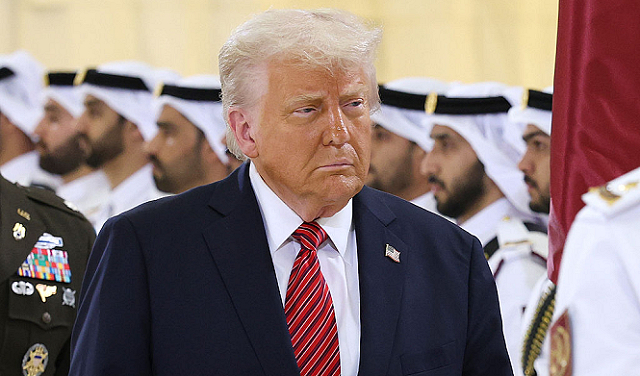
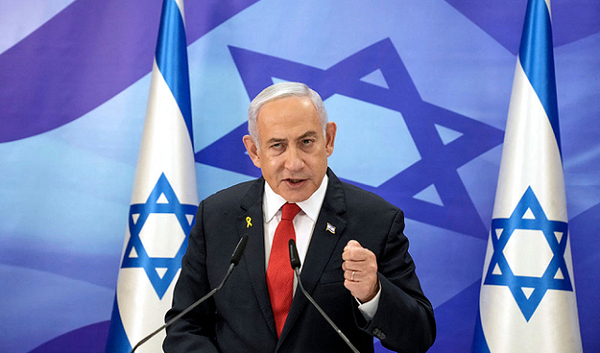
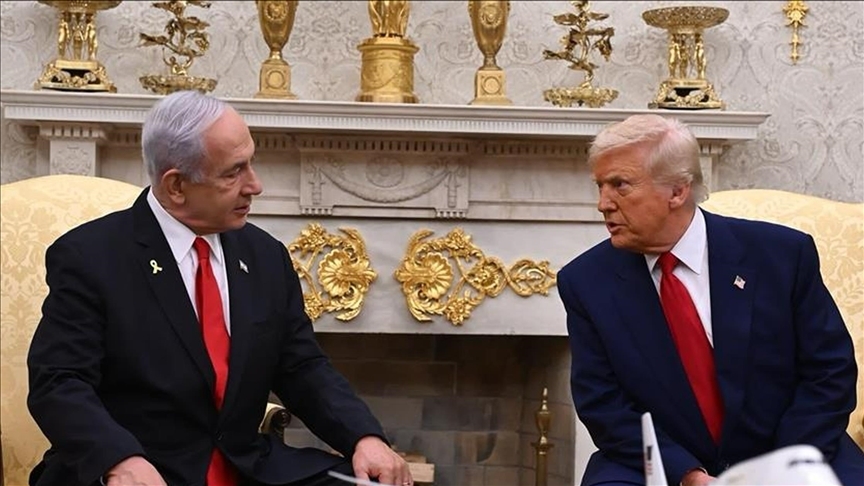
Trump boosts support for Israel, but not Netanyahu who's frustrated by him

Politico reported that US President Donald Trump was quick to condemn the killing of two Israeli embassy employees in Washington, describing himself as the most pro-Israel president in US history, "but behind the scenes, there is a growing rift between him and Prime Minister Benjamin Netanyahu."

According to what five current and former US officials told the newspaper, the relationship between Trump and Netanyahu has been strained in recent weeks, due to their differences over how to handle multiple Middle East crises, and the horrific killing of Israeli embassy staff in Washington is unlikely to change this situation.


While US and Israeli officials say it would be an exaggeration to describe the current situation as a rupture, a growing number of people in the Trump administration are frustrated with Israel and its approach to Washington and the Middle East, according to the officials.


"There is a cadre in the administration that doesn't particularly care about Israel, and they don't have any particular connection to it," said a former Trump administration official. "They view it as a partner, but not as one we should go out of our way to serve."


What makes matters worse, according to Politico, is Netanyahu's approach to the relationship with the United States, which lacks the respect, pomp, and formality that Trump and his team have valued in dealing with other partners in the Middle East.


A source close to the White House said that many in the administration feel that "Bibi (Netanyahu) is the most difficult person to deal with on all these issues."


This is a disagreement that Wednesday's deadly shooting of two Israeli embassy employees by a pro-Palestinian activist is unlikely to change. Trump appears to view these killings as an indication of the need to further crack down on anti-Semitism in the United States. An administration official said Trump's views on Israel and anti-Semitism are "different things."


Israeli officials take the opposite approach, describing Wednesday's attack as the opening of a new front in the wider Middle East war, including from Hamas in Gaza and Iran and its proxies elsewhere on its borders.


Netanyahu's office announced that he spoke with Trump on Thursday, and that the president "expressed his deep sorrow over the horrific murder in Washington of two Israeli embassy employees." They also discussed Iran and the war in Gaza, according to Israel's account of the call.


But the prevailing sentiment inside the White House is that the Israelis are constantly demanding more from the United States, even as the relationship between the two sides has not yielded the quick diplomatic gains sought by Trump and his team.


"Netanyahu is one of those who constantly pushes, and that might anger Trump," the former administration official said.


The Trump administration pressured Netanyahu and his government to allow more aid into the devastated Gaza Strip. Trump distanced himself from the Israeli government, brokering a ceasefire with the Houthis in Yemen that excluded Israel, and defying Netanyahu's opposition in his attempt to reach an agreement with Iran over its nuclear program. Many also viewed Trump's decision not to visit Israel on his recent trip to the Middle East as a public snub.


If the attack outside the Jewish Museum in Washington, D.C., prompts the Trump administration to take further action, it will likely be domestic.


Trump has prioritized curbing anti-Semitism on college campuses, measures popular with pro-Israel and Jewish supporters. A Harvard University task force and other independent assessments agree that there are issues that need to be addressed, but many critics consider the administration's approach to be heavy-handed and misplaced.


The administration and its supporters say that measures—even extreme ones such as deportation measures—are necessary to root out anti-Semitic sentiments that have taken root in schools and universities. These sentiments have been exacerbated since Hamas's attack on Israel on October 7, 2023. Wednesday's attack is sure to add further justification to the administration's efforts.


The White House's focus on anti-Semitism may allow Trump to respond to the deadly attack while separating it from broader questions looming about his bilateral relationship with Israel.


It's worth noting that Trump came to power hoping to achieve quick gains on the Israeli issue, including the long-awaited normalization between Israel and Saudi Arabia. He dispatched his special envoy, Steve Witkoff, to help broker a ceasefire between Israel and Hamas even before his inauguration, in what appeared to be an early victory.


But the success was short-lived, as Netanyahu violated the ceasefire by resuming the war on March 18, after tightening a crippling blockade on Gaza, preventing any humanitarian aid from entering the Strip since March 2. Riyadh also made clear that normalization would not occur without a permanent end to the fighting and significant steps toward establishing a Palestinian state—concessions Netanyahu would never accept.


The newspaper says: "With Hamas weakened and Iran in retreat, many in the Trump administration see an opportunity to end the fighting in Gaza and reach an agreement with Tehran over its nuclear program. Meanwhile, Netanyahu wants to continue the war and opposes US attempts to broker a deal with Iran."


According to a Politico report, Trump has increasingly received conflicting advice on how to deal with Israel, according to a current and former administration official. Secretary of State Marco Rubio, Deputy Chief of Staff Stephen Miller, and CIA Director John Ratcliffe share pro-Israel views, while Director of National Intelligence Tulsi Gabbard has advocated for a more measured approach to the American ally. As a result of this division, Trump has remained silent on Israel in recent weeks, according to the current administration official.


Besides Trump's strained personal relationship with Netanyahu, other factors explain his shifting loyalties in the Middle East, which were clearly evident during the president's first major foreign trip, which included visits to Arab allies in the Gulf, but not to Israel.


According to the newspaper, a person close to the president's national security team said, "He's more committed right now to the Saudis and the Emiratis than he is to Israel, which is kind of surprising, but true." This person noted that Arab allies are "playing his game—writing big checks—and supporting the nuclear talks with Iran." While Trump initially supported Netanyahu's decision to escalate his offensive on Gaza, he has grown increasingly frustrated with the conflict.


This is because, the person close to Trump's national security team said, he sees the war as an obstacle to his vision for rebuilding Gaza and expanding the Abraham Accords, under which several Arab countries normalized relations with Israel. However, the Saudis refused to take this step while Israel was at war with Hamas. "There's a lot to explain this shift" toward Arab allies and away from Israel, the person added. "He can always reassess his position with Bibi, but this has been evolving for some time."

ARAB AND WORLD

Fri 23 May 2025 8:57 pm - Jerusalem Time

The United Kingdom condemns settler attacks on Bruqin, west of Salfit.

The United Kingdom strongly condemned the recent attacks by settlers on the town of Bruqin, west of Salfit, describing them as "heinous."

The United Kingdom affirmed that "Israel has a duty to protect the Palestinian civilian population in the West Bank," according to a post on the British Consulate in Jerusalem's Facebook page, emphasizing the need to hold accountable those involved in extremist violence by settlers.

The United Kingdom has announced additional sanctions against a number of individual settlers, as well as illegal settlement outposts and organizations involved in supporting violence against Palestinian communities.

She stressed that she would continue to take action against those who commit "heinous violations" of human rights.

PALESTINE

Fri 23 May 2025 8:55 pm - Jerusalem Time

9 Palestinians killed as a result of the occupation's bombing of citizens' homes and tents in various areas of the Gaza Strip.

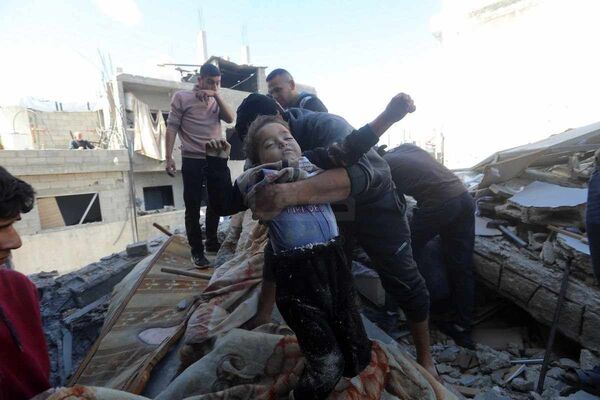
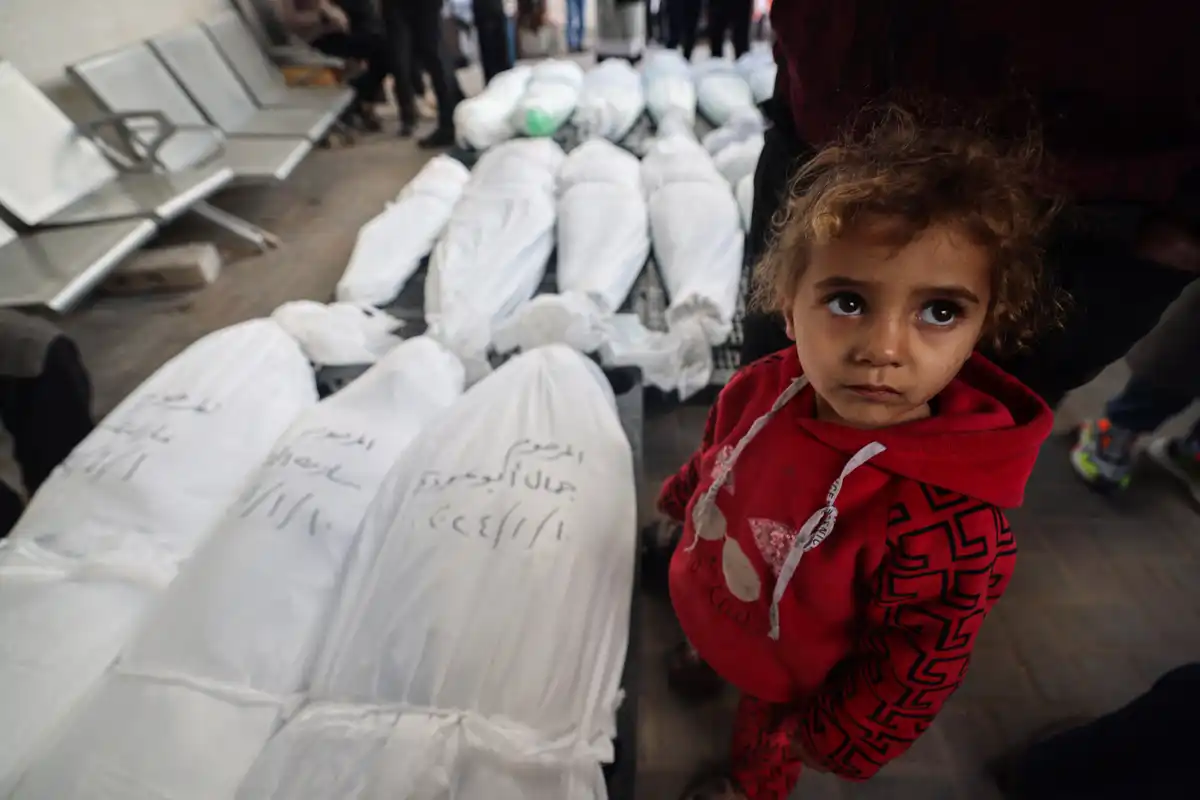
Nine civilians were killed and dozens more, including women and children, were injured, most of them seriously, as a result of the Israeli occupation forces' shelling of homes and tents in various areas of the Gaza Strip. This brings the death toll since dawn on Friday to 70.

WAFA reported that three citizens were killed and others were injured in an Israeli airstrike that targeted a house in the center of Khan Yunis, south of the Gaza Strip.

WAFA also confirmed the martyrdom of three others and the injury of dozens, after the occupation forces bombed the Shriteh family home on Al-Maghribi Street in Al-Sabra neighborhood in Gaza City.

In the Nuseirat refugee camp, a citizen was killed and several others were injured when a group of citizens were targeted in the camp, located in the central Gaza Strip.

An Israeli drone bombed a group of civilians west of Deir al-Balah in the central Gaza Strip, killing Yaqeen Hammad. Journalist Bilal al-Hatoum was also killed in the bombing of the Saftawi area.

A number of citizens were injured and suffered burns when the occupation forces bombed a tent housing displaced persons in Abu Salim land, east of the Al-Hakr area in Deir al-Balah, in the central Gaza Strip.

-

PALESTINE

Fri 23 May 2025 5:08 pm - Jerusalem Time

Microsoft monitors and deletes employee emails containing the word "Palestine."

Following multiple employee protests led by Microsoft employees against the company's business and technology contracts with the Israeli occupation army, employees discovered that any emails they sent containing the word "Palestine" were inexplicably disappearing. According to internal correspondence reviewed by The Intercept, which revealed the issue, employees began noticing on Wednesday (May 21, 2025) that emails sent from their company accounts, which contained certain keywords related to Palestine and Israel's ongoing war in Gaza, were not being sent as expected. In some cases, employees reported that the messages arrived hours later. Others never reached the intended recipient's inbox at all.


According to employee test emails reviewed by the site, keywords affected by the outage include "Palestine," "Gaza," "apartheid," and "genocide." The word "Palestinian" does not appear to have been affected, nor do emails containing intentional misspellings of "Palestine." Emails mentioning Israel appear to have been processed immediately.


In an email to The Intercept, Microsoft spokesperson Frank Shaw confirmed and defended the ban. He added, "Sending emails to large numbers of employees about any topic that isn't work-related is inappropriate. We have a dedicated forum for employees who have chosen to participate in political issues. Over the past two days, politically motivated emails have been sent to tens of thousands of employees across the company, and we have taken steps to try to reduce these messages to those who have not chosen to participate."


However, this strict approach does not limit itself to deterring messages sent to large numbers of recipients, but also includes blocking all emails that mention Palestine.


Following a protest held on April 7 during an event celebrating Microsoft's 50th anniversary, two employees "sent separate emails to thousands of their colleagues, demanding that Microsoft cancel its contracts with the Israeli government," according to The Verge.


The email outage follows multiple protests during Microsoft's four-day developer conference this week. The protests were organized by current and former Microsoft employees in collaboration with No Azure Apartheid, an advocacy group demanding the company suspend its work with the Israeli government.


Last February, the Associated Press reported that the Israeli military's use of Microsoft's Azure cloud computing services "spiked" with the start of its ongoing bombardment of Gaza, which has so far killed more than 53,000 Palestinians. Earlier this month, the company cleared itself of any wrongdoing in Gaza after an unspecified internal and external review. While Microsoft claimed it "found no evidence that Azure and Microsoft AI technologies, or any of our other software, were used to harm people," the company also noted that "it is important to recognize that Microsoft does not have clear visibility into how customers use our software on their servers or other devices."

ARAB AND WORLD

Fri 23 May 2025 4:57 pm - Jerusalem Time

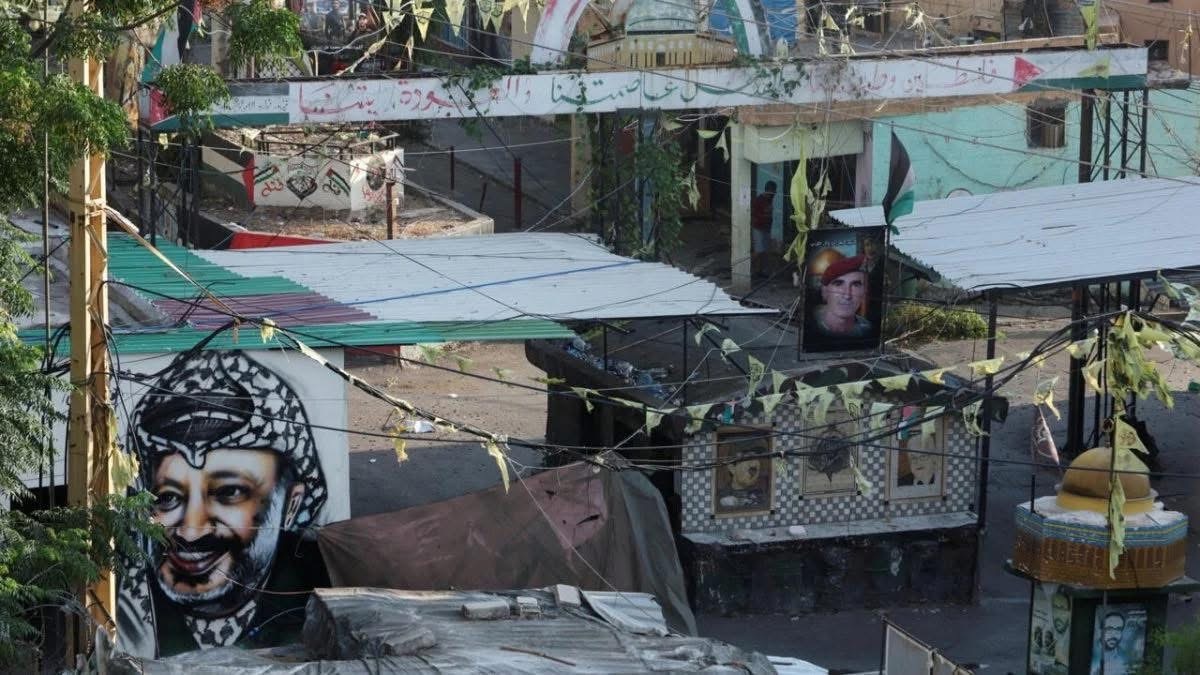
Agreement to disarm Palestinians in Lebanon's camps

The Lebanese and Palestinian sides agreed on Friday to begin withdrawing weapons from Palestinian refugee camps in mid-June.

This came in accordance with an agreement with Palestinian President Mahmoud Abbas, who is on an official visit to Lebanon, a Lebanese government source told Agence France-Presse.

The source, who requested anonymity, said that "an agreement was reached to begin an executive plan to withdraw weapons from the camps, beginning in mid-June in the Beirut camps, followed by the other camps," during a meeting of a joint committee the two sides announced their formation on Wednesday.


PALESTINE

Fri 23 May 2025 3:40 pm - Jerusalem Time

Israeli occupation forces arrested a young man during their raids on towns and villages in Jenin Governorate.

Israeli occupation forces arrested a young man on Friday evening during a raid on several towns in the Jenin Governorate.

Local sources reported that Israeli occupation forces arrested a young man after raiding his home in the town of Jaba', south of Jenin. The raid occurred during a raid on the town with several military vehicles and deployment in the streets, amidst clashes with residents.

The sources added that occupation forces also raided the villages of Faqqu'a and Jalbun, east of Jenin, without any reported raids or arrests. They also raided the town of Burqin, to the west, and deployed forces in its streets.

ARAB AND WORLD

Fri 23 May 2025 3:38 pm - Jerusalem Time

Trump recommends raising tariffs on the European Union to 50%

US President Donald Trump threatened the European Union on Friday with a 50% tariff on European products imported into the United States starting June 1, saying ongoing negotiations were "at a standstill."

Trump said in a post on his social media platform, Truth Social, that "the European Union is very difficult to deal with, and was created primarily to exploit the United States commercially... Our discussions are at a standstill."

He added, "Under these circumstances, I recommend imposing a 50% customs duty on the European Union, effective June 1."

In a related development, Trump today threatened Apple with a 25% tariff unless it manufactures iPhones in the United States.

PALESTINE

Fri 23 May 2025 3:03 pm - Jerusalem Time

The death toll from the genocidal war in Gaza rises to 53,822 deaths.

The death toll from the genocidal war and aggression waged by the Israeli occupation forces on the Gaza Strip has risen to 53,822 dead and 122,382 wounded since October 7, 2023.

Medical sources reported that the death toll includes 3,673 dead and 10,341 injuries since March 18, when the occupation resumed its aggression on the Gaza Strip following the ceasefire agreement.

Over the past 24 hours, 60 dead and 185 wounded have arrived at Gaza Strip hospitals as a result of the ongoing Israeli massacres and attacks. This statistic does not include the northern Gaza Strip due to the difficulty of reaching the victims, as a large number of them are still under the rubble and debris, and on the roads, and ambulance and civil defense crews are unable to reach them.

ARAB AND WORLD

Fri 23 May 2025 1:59 pm - Jerusalem Time

Representative Randy Fein calls for nuclear bombing of Gaza, as was done to Japan after the shooting in Washington.

Rep. Randy Fein (R-FL) suggested that Gaza should be nuked like Japan during World War II, in response to the shooting in Washington, D.C., that killed two Israeli embassy employees.

In an interview on Fox News, the congressman was asked whether the shooting would change the course of the Israeli offensive on Gaza. Fine replied, "Well, I think it underscores the importance of the only end to the conflict being the complete and total surrender of those who support Islamic terrorism."

Fine added, "In World War II, we didn't negotiate surrender with the Nazis, and we didn't negotiate surrender with the Japanese. We nuclearized the Japanese twice to obtain unconditional surrender, and it should be the same here."

Representative Fine, who recently won a special election for Mike Waltz's seat in the House of Representatives, is a Jewish American who strongly supports Israel and has a history of calling for mass violence against Palestinians. He celebrated the Israeli military's killing of Aysnur Izi Ece, a 26-year-old Turkish-American citizen, who was shot dead in the West Bank, calling her a "Muslim terrorist" even though she was unarmed.

Fine also said in the interview on Thursday that "Palestinianism is violence" and that "Palestinianism" is evil.

Wednesday night's shooting killed a young couple, Yaron Leshinsky, an Israeli citizen, and Sarah Milgrim, an American woman, as they left a Young Diplomats event at the Jewish Museum in Washington, D.C. The suspect is not Palestinian and has been identified as Elias Rodriguez, 31, of Chicago. A purported manifesto he wrote cites Gaza as his motivation for the attack, and Rodriguez was seen chanting "Free Palestine" during his arrest. The Leshinsky and Milgrim murders were not the first Gaza-related killings in the United States. In October 2023, just weeks after a Hamas attack on southern Israel, six-year-old Palestinian-American boy Wadie Al-Fayoumi was stabbed in Illinois by his landlord, 73-year-old Joseph Czuba, who was recently sentenced to 53 years in prison.

ARAB AND WORLD

Fri 23 May 2025 1:56 pm - Jerusalem Time

The Suspect in shooting of Israeli embassy staff charged with premeditated murder

The U.S. Justice Department on Thursday charged the sole suspect in a brazen attack that killed two young Israeli embassy employees outside the Jewish Museum in downtown Washington, D.C., with murdering foreign officials and other crimes.

Elias Rodriguez, 31, of Chicago, has been charged with the Wednesday night killings that rocked the US capital and were condemned by world leaders as "horrific" and "anti-Semitic." According to the file, the suspect told police after his arrest, "I did it for Palestine. I did it for Gaza."

At a press conference Thursday afternoon, Jeanine Pirro, the interim U.S. attorney in Washington, described the list of charges against the defendant—which also includes two counts of first-degree murder, causing death with a firearm, and discharge of a firearm during the commission of a crime of violence—as a "preliminary" list of offenses. She added that the murder is also being investigated as a "hate crime and a crime of terrorism." She said, "We will add additional charges as evidence warrants."

Rodriguez made his initial court appearance Thursday afternoon, hours after federal agents in tactical gear arrived at his Chicago apartment. According to a post on the FBI's Washington office's X website, the Chicago FBI agents were "conducting court-authorized law enforcement activity" that was said to be "related to yesterday's tragic shooting in Washington, D.C."

FBI Director Kash Patel described the killing as an "act of terrorism" and "targeted anti-Semitic violence." U.S. Attorney General Pam Bondi said, "We are doing everything we can to protect our entire community, especially our Jewish community, at this time."

At Rodriguez's arraignment in federal court on Thursday, Magistrate Judge Matthew Sharbaugh told the defendant he faced the potential death penalty if convicted of the crimes he was charged with. Pirro said it was "too early" to say whether prosecutors would seek the death penalty, but added that it was "a death penalty-eligible case."

At the White House, White House spokeswoman Caroline Levitt said Donald Trump was "saddened and outraged" by the deadly act, vowing that the US Department of Justice would "prosecute the perpetrator to the fullest extent of the law." She said Trump spoke with Benjamin Netanyahu on Thursday.

The killings occurred shortly after 9 p.m. Wednesday outside the Capital Jewish Museum, where, according to officials, a gunman approached a group leaving an event hosted by the American Jewish Committee and opened fire at close range.

The two victims, identified as Yaron Leshinsky, who grew up in Germany and Israel, and Sarah Milgrim, a US citizen from Kansas, were identified as Yaron Leshinsky, who worked as a research assistant in the political section of the Israeli embassy in Washington. According to Israeli Ambassador to Germany Ron Prosor, who wrote on the X website, Leshinsky, 30, who worked as a research assistant in the political section of the Israeli embassy in Washington, was born in Nuremberg. “He was a Christian, a lover of Israel, served in the IDF, and chose to dedicate his life to the State of Israel and the Zionist cause,” he said.

Metropolitan Police Chief Constable Pamela Smith stated that the suspect was seen walking outside the museum before the shooting. She added that after the shooting, he entered the museum, was detained by security personnel, and began chanting "Free Palestine."

Officials confirmed that the suspect was not on any security watch lists, and that there were no heightened security threats prior to the shooting. Officials said the firearm believed to have been used in the killings has been recovered. The New York Times reported that the weapon was legally purchased in Illinois and legally transported to Washington, D.C.

When asked at a press conference on Thursday whether the suspect was targeting the event or individuals, Steve Jensen, assistant director in charge of the FBI's Washington office, replied, "We can't say for sure at this time." He said law enforcement officials are still investigating the circumstances of the suspect's travel to Washington, D.C., which they believe was work-related, as well as how the alleged gunman learned of the location of the event at the museum on Wednesday evening, which was private and not publicized.

FBI Deputy Director Dan Bongino stated that authorities interviewed the suspect within hours of his arrest. He wrote in a post on the X website that officials were aware of "certain writings" possibly written by the suspect that had circulated online, adding, "We hope to have updates on their authenticity very soon."

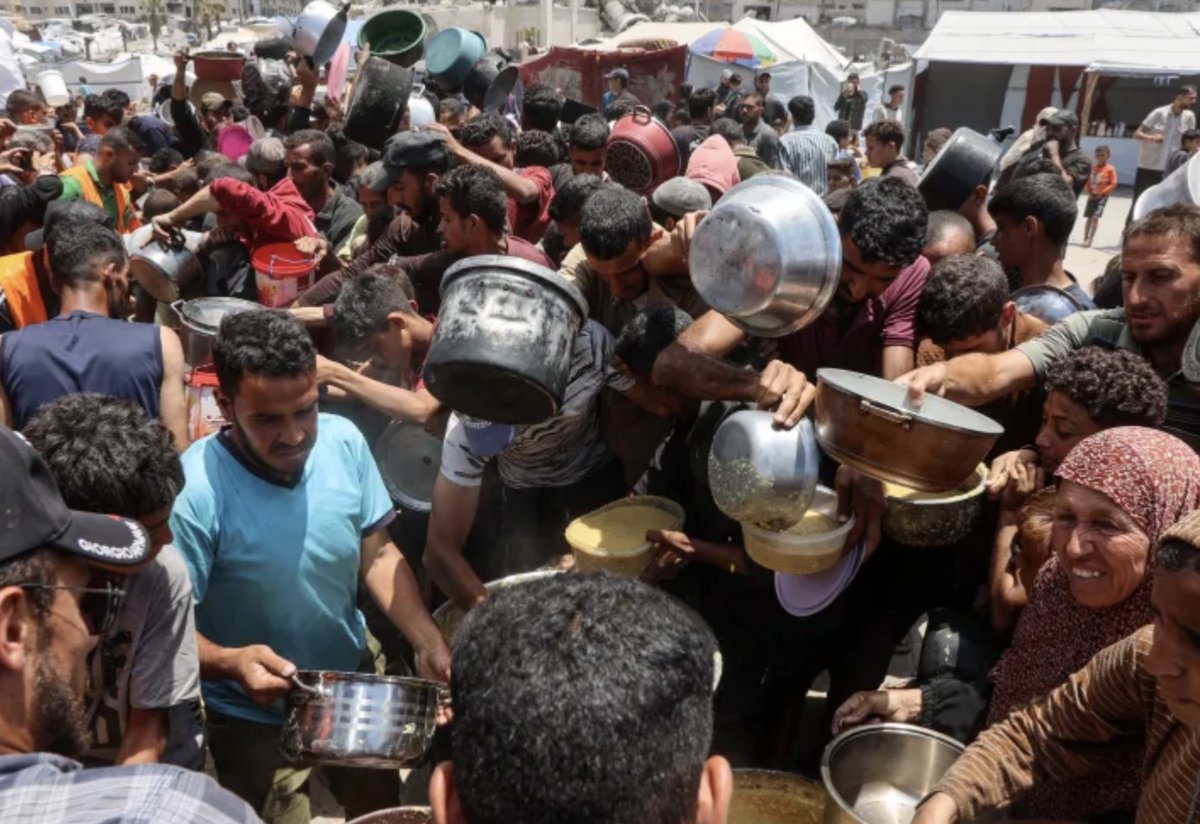
The attack comes as Israel expands its ground offensive on Gaza and faces increasing international pressure, including from the United States, to end its nearly three-month blockade of food, medicine, and other supplies, which humanitarian organizations say has pushed the territory to the brink of famine.

PALESTINE

Fri 23 May 2025 1:52 pm - Jerusalem Time

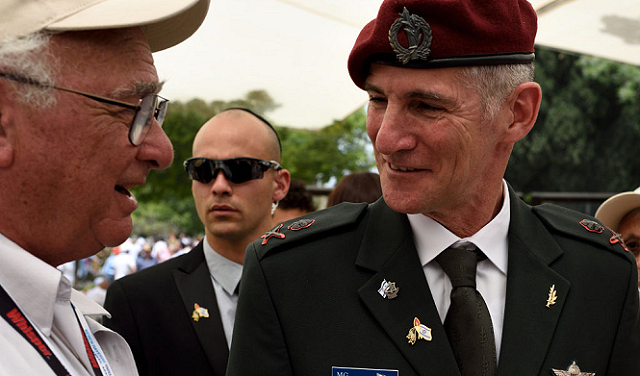
Katz instructs the army not to call up Golan for reserve duty and to prevent him from wearing military uniform.

Israeli Defense Minister Yisrael Katz announced on Friday that he had instructed the military not to call up reserve general Yair Golan again for duty, to ban him from wearing the army uniform or entering its bases, and to strip him of his military rank through new Knesset legislation.

Katz said in his statement: "In light of Yair Golan's actions and his fabrication of a bloody slander against IDF soldiers, with his reckless and false accusation that they kill Palestinian children as a 'hobby,' I have decided to instruct the IDF not to call him up again for reserve duty, and to prevent him from wearing the IDF uniform or entering its bases."

He added, "His dangerous statements will be exploited by Israel's enemies to pursue our soldiers around the world and take them to international courts to deprive them of their freedom. As the Minister of Defense responsible for the safety of IDF soldiers, I cannot overlook this."

Katz continued, "I support the legislation currently in the Knesset, which gives the defense minister the authority to strip reserve officers of their ranks due to similar statements or behavior." He concluded, "There is no place for people like Golan in public life, and I expect everyone to condemn him and disavow his behavior."

In response, Democratic Party leader Lieutenant General (res.) Yair Golan responded to Katz's decision, saying, "Minister of Evasion, the last time I wore the army uniform was on October 7, when I headed south to rescue civilians after your government's terrible security failure."

"I promise you that I will continue to do everything in my power for Israel and its security, and I am confident that you will continue to be hypocritical towards Netanyahu and his poison machine," Golan (a reserve major general who served as deputy chief of staff of the Israeli army between 2014 and 2017) added.

Last Tuesday, the leader of the Democratic Party (a Labor-Meretz alliance) sparked widespread controversy in Israel after he said, "A rational state does not wage war against civilians, does not kill children as a hobby, and does not pursue a policy of population displacement."

Defending his remarks, which were met with harsh criticism within Israel, Golan stressed at a press conference Tuesday evening that "when ministers in Netanyahu's government celebrate the death and starvation of children in Gaza, the truth must be told and spoken about."

Golan considered that "the war in Gaza began as a strong and correct response to the attack launched by Hamas. It was a justified and necessary war to protect Israel's security." He continued, "What began as a just battle has today, at the hands of this failed government, been transformed into a war without any purpose and without a security or national objective."

Golan emphasized that "what we are seeing today in Gaza is not a hostage release operation; they could have all been freed long ago through a comprehensive deal." He emphasized that he was referring to "Netanyahu's failed government, not the army."


PALESTINE

Fri 23 May 2025 1:13 pm - Jerusalem Time

WHO warns of the imminent collapse of the health system in Gaza.

The World Health Organization has warned of "the imminent collapse of the health system in the Gaza Strip" as the Israeli military aggression continues.

"The intensive Israeli military operations continue to threaten an already exhausted health system that is on the verge of collapse, while the crisis of mass displacement and severe shortages of food, water, medical supplies, fuel, and shelter worsens," the organization said in a statement on Friday.

She added that "four major hospitals in Gaza - Kamal Adwan Hospital, the Indonesian Hospital, Hamad Hospital for Rehabilitation and Prosthetics, and the European Gaza Hospital - were forced to suspend their medical services over the past week" due to their proximity to the evacuation areas and exposure to (Israeli) attacks.

The organization added that it had recorded 28 attacks on health care in Gaza recently, bringing the total number of attacks since October 2023 to 697.

She explained that "of the 36 hospitals in the Gaza Strip, only 19 remain operational, including one that provides basic care to patients who remain inside. Even these hospitals are suffering from a severe shortage of supplies, a shortage of health workers, prolonged insecurity, and a rapidly rising number of infections. Meanwhile, medical teams are working tirelessly under impossible conditions."

She noted that of the 19 hospitals mentioned, only one provides a range of health services, while the rest are limited to providing only basic emergency services. It is estimated that at least 94% of all hospitals in the Gaza Strip have been damaged or destroyed.

The World Health Organization said, "The escalation of hostilities and the issuance of new evacuation orders in northern and southern Gaza over the past two days threatens to put more health facilities out of service. This includes one hospital, 11 primary care centers, and 13 health points located within the evacuation areas, in addition to five hospitals, one field hospital, nine primary care centers, and 23 health points located within 1,000 meters of these areas."

She added: "Northern Gaza has been stripped of almost all healthcare services. Al-Awda Hospital is only minimally functioning, currently serving as an emergency point for severely injured patients. Even this hospital is at imminent risk of closure due to continued insecurity and restricted access."

Reports indicated that the third floor of the hospital was bombed by Israeli warplanes last Wednesday, injuring a medical staff member. The Israeli aggression in the area also caused damage to the water tank and pipeline.

The hospital also came under renewed Israeli attack on Thursday. Reportedly, the third and fourth floors were damaged in the attack, injuring two health workers. Triage tents, including one provided by the World Health Organization (WHO), caught fire, burning all medical supplies stored in the warehouse and destroying vehicles in the basement. Furthermore, the occupation obstructed a WHO mission attempting to reach the hospital.

The Indonesian hospital has also been out of service due to the ongoing Israeli occupation of the area since May 18, making it inaccessible. A WHO mission was forced to cancel its visit to the hospital last Wednesday due to the security situation, after waiting nearly four hours for permission to proceed. The WHO team had planned to deliver food and water to patients, assess their health conditions, and identify vital medical equipment that could be transported. The organization attempted to access the hospital again on Thursday, but the Israeli occupation authorities again obstructed the mission.

Kamal Adwan Hospital, which was the only center for the treatment of severe acute malnutrition in northern Gaza, was put out of service on May 20 after Israeli aggression intensified in the vicinity, forcing patients to evacuate or leave the hospital before completing their treatment.

In southern Gaza, Nasser Medical Complex, Al-Amal Hospital, and Al-Aqsa Martyrs Hospital are under tremendous pressure due to the increasing number of wounded, a situation exacerbated by a new wave of displacement to Deir al-Balah and Khan Yunis. The Gaza European Hospital has remained out of service since being bombed by Israeli aircraft on May 13, disrupting vital services such as neurosurgery, cardiology care, and cancer treatment—all services unavailable elsewhere in Gaza.

The World Health Organization said: “Currently, there are only 2,000 hospital beds available across the Gaza Strip, despite a population of over two million. This leaves a stark shortage of beds compared to current needs. Even with this limited number of beds, at least 40 beds are at risk of being lost to hospitals within the recently declared evacuation zones, and an additional 850 beds could be lost if conditions in health facilities near those areas deteriorate.”

She added: "The ongoing hostilities and (Israeli) military presence are hindering patients' access to care, preventing health workers from providing services, and hampering the organization's and its partners' efforts to resupply hospitals with necessary supplies."

She emphasized that "every forced hospital closure deprives patients of access to healthcare and undermines the efforts of the organization and its partners to support and maintain the health system in Gaza. But this destruction is systematic; as soon as hospitals are rehabilitated and replenished with supplies and equipment, they are again subjected to hostilities or attacks. This destructive cycle must be stopped."

She continued: "Despite ongoing fear and insecurity, health workers—particularly members of national and international emergency medical teams—continue to provide urgent care in Gaza. WHO commends their courage and commitment. The organization calls for effective protection of health-care facilities and personnel. The organization emphasizes that hospitals must not be militarized or targeted under any circumstances."

The organization also called for "allowing aid to enter Gaza on a large scale through all possible means, and ensuring unhindered access for humanitarian assistance to the population wherever they are. In line with what the UN Relief Coordinator emphasized, the organization reiterates that the United Nations and its partners have a clear, principled, and effective plan for delivering aid, and that this plan includes safeguards to prevent it from deviating from its humanitarian path. It is a plan that has proven effective and must be enabled to continue."

The World Health Organization called for an "immediate and permanent ceasefire."

OPINIONS

Fri 23 May 2025 1:07 pm - Jerusalem Time

In Gaza, people await their fate

Mustafa Ibrahim

Mustafa Ibrahim

Opinion Writer

In Gaza, people are awaiting their fate. News circulating about the theft of 17 out of 119 humanitarian aid trucks by bandits, and the bombing of a group of frustrated protection teams by the occupation. Thirty of these trucks were allocated to the Gaza and North governorates.


It's unbelievable what's happening, with talk about the world being weak and unable to pressure the occupying state, which continues its genocidal campaign. The Israeli army is threatening to turn Khan Yunis into another version of Rafah, while the people of Gaza are preoccupied with their imminent death, awaiting death by bombing or starvation.


The claim that the world is incapable of stopping the genocide, the Arabs and America's disregard for the deaths of people, even though they alone can stop the war, Netanyahu's arrogance and belligerent statements about eliminating Hamas in the Gaza Strip, and the fact that Operation Gideon's Wagons has become a fait accompli and will continue for several months.


To say that Netanyahu wants to rehabilitate his image after October 7 is a complete lie, slander, and untrue. The Gideon vehicles were launched a week ago, and the Israeli army began carrying out killings, destruction, and devastation that have not ceased.


Netanyahu, based on the IDF's plan, said that one of the war's objectives, as defined in the operation plan, is renewable and focuses on "concentrating and transferring populations" to the south. This is the key point of Operation Gideon. Concentrating and transferring populations is defined as an objective of the operation, not a means to achieve other objectives.

The truth is that the Israeli army began forcing people to flee from the east of Gaza City, and evacuated the remaining people in the north of the Gaza Strip. These people were displaced and forced to reside in the heart of Gaza City and its west.


The occupying state claims that this is not a forced transfer of civilians to another area, but rather a temporary one until the fighting ends. This is a goal that must be achieved. If the operation succeeds in achieving its objectives, two million Palestinians will be gathered in the area south of the Morag axis, meaning in destroyed Rafah, less than a quarter of the Gaza Strip.


Forced displacement under deadly artillery bombardment and airstrikes, in preparation for the entry of ground forces, is simply a term for forced transfer. This widespread, planned displacement in the Gaza Strip constitutes not only a war crime, but a crime against humanity.


This has been a repetition of what's been happening for a year and a half. What will be done with the millions of Gazans who will be crowded into Rafah, between the Philadelphi and Morag roads? Netanyahu and his government openly say this is an attempt to "encourage migration," implementing Trump's idea of displacing Palestinians.


The statements and declarations issued by a number of European countries expressing their disapproval of the deportation and starvation of people in the Gaza Strip are reminiscent of the statements issued by them and by former US President Joe Biden that Rafah is a red line and that they will not allow its occupation. And where is Rafah now? Rafah has been reduced to ruins, and Israel intends to turn Khan Yunis, as well as the rest of the cities in the Strip, into another ruin.


After a year and a half, the world seems to have failed to hear that mass deportation, which constitutes a crime against humanity, cannot be carried out simply by loading people into trucks at gunpoint. International law is very clear: even applying pressure that would make people want to flee constitutes forced displacement.


Israel has extensive experience in displacing Palestinians and attempting to erase and destroy their history and memory, as happened during the first Nakba, when it forcibly expelled our grandfathers and fathers from their homes and confiscated their lands. It continues to perpetrate the same crimes in the West Bank, and its crimes and practices are evident in the entrenchment of a second Nakba that continues to unfold in the Gaza Strip.


Starvation, the destruction of homes by bombing and shelling, the destruction of infrastructure and the elimination of what remains of health, education, agriculture and sanitation facilities, food scarcity, and the elimination of everything that makes human life possible.


The world is agitating and demanding the entry of humanitarian aid. Israel is engaging in a massive deception campaign, promoting a plan to feed the people through specific points that degrade human dignity. The world has not taken any effective measures to impose sanctions on Israel. The reality is that the political, economic, social, and cultural pressures exerted by Europe on Russia during its occupation of Ukraine cannot be compared to the political, economic, social, and cultural pressures exerted by Europe on Russia during its occupation of Ukraine. For this reason, Europe has not acted to stop the killing and destruction being inflicted on Palestinians in the Gaza Strip.


In Gaza, people await their fate. They no longer have plans for survival or displacement. They can't even think about preserving what remains of their lives. They await death and deepening hunger. What awaits the Arabs who cheered and danced to meet Trump, giving him precious gifts and trillions of dollars? The truth is that words elude us to describe our situation, the situation of the Arab regimes, our harsh experience with them, and their long-term betrayal.

PALESTINE

Fri 23 May 2025 12:28 pm - Jerusalem Time

Israeli Settlers demolish 6 tents and huts south of Hebron

Today, Friday, settlers demolished six tents and huts in the Al-Buwaib area, east of the town of Yatta, south of Hebron.

Local sources said that settlers from the Bani Haif settlement demolished three tents and three huts belonging to the Othman Al-Mahaniya family in the Al-Buwaib area, located northeast of Yatta.

It added that the tents were built last week after the residents of the area obtained a ruling from the occupation court.

PALESTINE

Fri 23 May 2025 12:09 pm - Jerusalem Time

Israeli Analysis: Netanyahu Appoints Zinni as Shin Bet Chief to Serve His Political Calculations

Israeli Prime Minister Benjamin Netanyahu's appointment of David Zinni as the new head of the Shin Bet security service on Thursday sparked widespread controversy in Israeli political and security circles, particularly within the military leadership, which was not previously informed of the move.

IDF Chief of Staff Eyal Zamir was surprised by the announcement of the appointment, which was made without coordination with him. He was notified only three minutes before an official statement from Netanyahu's office was issued, a move that military officials considered an unprecedented violation of norms.

Following this, Zamir held a private meeting with Zinni this morning, which Israeli media described as a "clarification meeting," amid reports that direct communication channels had been opened between Netanyahu and Zinni in recent days without the knowledge of the Chief of Staff.

Military sources stressed that the appointment of a currently serving officer to head the Shin Bet required the approval of the Chief of Staff. According to a military source, the decision was "made behind the back of the Chief of Staff," which was interpreted as a deliberate overreach by Netanyahu.

Following the explanatory meeting, the army issued a statement stating that Zamir met with Zini, and during the meeting, they agreed to end the latter's military service in the coming days. The statement emphasized that "the Chief of Staff clarifies that any communication between army officers and the political leadership requires prior approval from the Chief of Staff."

Political and electoral calculations

In this context, Amos Harel, a military analyst for Haaretz, believed that the surprise announcement of Zinni's appointment was intended to achieve two political goals for Netanyahu: escalating his campaign against the Supreme Court and the attorney general, on the one hand, and appeasing his right-wing base, on the other. He described the move as an attempt to score "two points at once."

Harel noted that the appointment came one day after the Supreme Court ruled that the dismissal of current Shin Bet chief Ronen Bar was unlawful and tainted by a potential conflict of interest, and also after the Attorney General announced that Netanyahu was not authorized to appoint a successor.

According to Harel, Zinni, who had never held senior intelligence or administrative positions, expressed hardline positions during internal army leadership meetings during the war, preferring "defeating Hamas" to concluding a prisoner exchange deal. He added, "Zinni is known as a brave field officer, but he lacks the professional qualifications required to head the Shin Bet. He is viewed as a tough-minded figure who does not tolerate complexity."

Harel believed that the appointment could serve the Israeli right's agenda in the upcoming elections, given attempts by those close to Netanyahu to influence the integrity of the electoral process, particularly through potential plans to exclude Arab parties or discourage Palestinian citizens of Israel from voting. He emphasized that "the head of the Shin Bet lacks a firm institutional commitment that would prevent him from intervening or turn a blind eye to these practices, especially given his presumed loyalty to Netanyahu."

Harel noted that Zinni, a settler in the occupied Golan Heights, holds clear ideological leanings linked to the religious-nationalist movement, raising questions about his suitability to lead a sensitive security agency like the Shin Bet. He said Zinni is a "black and white man," adopting strict positions and living by religious edicts issued by his rabbis, without showing flexibility or doubt.

Harel cast doubt on Zinni's ability to extricate the Shin Bet from its "deep crisis," noting that "the agency has witnessed massive upheavals recently, most notably the October 7 fiasco." He considered that "it is unlikely that Zinni's appointment, under these circumstances, will contribute to the restoration of the Shin Bet." He added that "it is doubtful that he is the person capable of preserving what remains of Israeli democracy at a time when Netanyahu and his entourage are waging an open war on its institutions."

Absolute loyalty to Netanyahu

Yoav Limor, a military analyst for the Israeli newspaper Israel Hayom, considered the appointment to reflect a bias toward Netanyahu's personal and political interests at the expense of the state's, writing: "Zinni lacks any experience in managing complex agencies or expertise in the world of intelligence. There is only one thing that qualifies him to head the Shin Bet: his absolute loyalty to Netanyahu."

Limor added that Netanyahu's entourage had previously attempted to push Zinni to become Chief of Staff, and when that failed, they sought to move him to head the Shin Bet as a "safe and secure" option in light of the sensitive issues surrounding Netanyahu, such as the prisoner exchange deal and investigations into Netanyahu's associates.

Limor considered this appointment to indicate a dangerous shift in the Shin Bet's role from an independent security agency to a tool in the hands of the prime minister. He noted that Zinni, during the presentation of the war plans to army commanders, opposed prioritizing the return of prisoners, preferring to focus on "crushing Hamas," which, according to Limor, portends serious repercussions for the fate of prisoners held in Gaza.

He concluded by saying, "This is an unreasonable appointment by all standards. It was made despite a Supreme Court ruling and in clear violation of the Attorney General's instructions. The result is a further erosion of state institutions," amid warnings that the appointment could drag Israel into a new and worsening constitutional crisis.

ongoing governance crisis

Yedioth Ahronoth political analyst Nahum Barnea viewed the appointment from the perspective of Israel's ongoing governance crisis, writing that Netanyahu is acting in the style of Donald Trump and wishes he had similar powers to fire and appoint officials without oversight.

Barnea said that Netanyahu's decision to appoint Zinni, despite the court's ruling, represents a blatant disregard for the law and inflames a constitutional crisis that the court had begun to calm.

He pointed out that the Shin Bet is engaged in investigations targeting people close to Netanyahu, and that the court deemed this sufficient reason to prevent him from appointing a new head of the agency. He said, "Everyone is in a conflict of interest now, and what is required is the appointment of a professional and impartial figure as soon as possible."

Barnea concluded by warning that continuing on this path could deepen the rift within the security and judicial institutions and erode public confidence in them.

Netanyahu defends Zinni's appointment: "It's a top security need."

Following Zamir's meeting with Zinni this morning, the Prime Minister's Office issued a statement emphasizing that "the prime minister is responsible for the nation's security, especially during a multi-front war," and stating that "it is inappropriate to simply appoint an acting head of the Shin Bet in the midst of a war."

The statement read, "This is a top-tier security need, and any delay threatens the security of the state and the safety of our soldiers." It added that the current Shin Bet chief, Bar, "will end his duties on June 15, and an orderly handover must be completed before that date."

The statement added, "Zini's appointment will be made in accordance with the law, in two stages: First, the appointment will be presented to the Grunis High-Level Appointments Committee for integrity review, and second, it will be submitted for government approval after the committee's approval."

Regarding the investigations into Netanyahu's associates, the statement noted that they are "being conducted by the Shin Bet and the Israel Police, and are subject to the supervision and oversight of the Attorney General," stressing that "the appointed head of the Shin Bet has no influence over these investigations."

The statement added: "However, to prevent any confusion regarding these investigations, the Prime Minister clarifies that the appointed head of the Shin Bet will not participate in them in any way." The statement concluded by noting that the appointment "is being made for the sake of state security, and in accordance with Section 3(a) of the Shin Bet Law, which stipulates that the head of the agency is appointed by the government upon the proposal of its head."


PALESTINE

Fri 23 May 2025 12:03 pm - Jerusalem Time

WHO adopts two resolutions in favor of Palestine.

The World Health Organization (WHO) General Assembly adopted two resolutions in favor of the State of Palestine: the first regarding Palestine's accession to the International Health Regulations, and the second regarding the deteriorating health conditions in the occupied Palestinian territory, including East Jerusalem. The resolutions were attended by Minister of Health Majed Abu Ramadan and the Permanent Representative of the State of Palestine to the United Nations in Geneva, Ambassador Ibrahim Khraishi.

The resolution on the State of Palestine's accession to the International Health Regulations, submitted by the State of Palestine, was voted in favor by 112 countries, while two countries (Hungary and Israel) opposed it, and 19 abstained.

The resolution endorsed the State of Palestine's full accession to the International Health Regulations, a system of laws and procedures that govern the relationship between national health ministries and the World Health Organization, particularly in the areas of emergencies and response to epidemics and pandemics. This step represents a qualitative shift in enabling Palestine to benefit from international support in health emergencies and from international cooperation and coordination mechanisms to provide appropriate healthcare to the Palestinian population.

The regulations were approved in 2005 and entered into force in 2007. The State of Palestine had had an official point of contact with the organization since 2010, but now, with this decision, it is treated like any other member state, which gives it full authority to benefit from all the technical and technological support provided by the regulations.

Resolution on the health situation in the occupied Palestinian territory

The General Assembly also adopted a second resolution entitled "Health conditions in the occupied Palestinian territory, including East Jerusalem." 114 countries voted in favor of the resolution, two countries opposed it (Hungary and Israel), and 15 abstained. The resolution was attended by Health Minister Majed Abu Ramadan and Director-General of the World Health Organization, Tedros Adhanom Ghebreyesus.

The resolution highlights the serious deterioration in health conditions, particularly in the Gaza Strip, and calls for the lifting of the Israeli occupation's blockade and the unhindered delivery of humanitarian and medical aid. The resolution emphasizes the need to respect international humanitarian law, protect health facilities and personnel, and halt repeated attacks on them.

The report submitted to the association revealed that 94% of Gaza's health facilities have been destroyed, with no hospital fully operational, and 19 of 36 hospitals operating only partially. It also indicated that 43 types of essential medicines are in short supply, while the occupation has continued to prevent the entry of medical aid for more than 80 days, with only two trucks allowed in.

Ambassador Khraishi emphasized that the use of starvation as a weapon constitutes a flagrant violation of international conventions, noting that thousands of patients, including cancer patients, have been denied treatment amid the collapse of the health system and the threat of infectious diseases due to mass displacement.

He stressed that access to food and water is a fundamental human right, calling on the international community to shoulder its responsibilities to guarantee the right to health, end the blockade, and enable the Palestinian people to live in dignity and peace.

In turn, WHO Director-General Tedros Adhanom Ghebreyesus said, "I feel what the people of Gaza feel. I hear their voices. People are starving, without medicine or shelter. Food and medicine must not be used as weapons. This tragedy must be stopped and peace must be achieved."

He added that more than 80% of the Gaza Strip's population is under forced displacement orders, and major hospitals such as Kamal Adwan, Indonesian, Hamad, and European are no longer able to provide services. There is an urgent need to evacuate 7,000 patients.

The adoption of these two resolutions reflects broad international support for the Palestinian right to health and strengthens Palestine's presence in the global health system, amid deteriorating humanitarian and health conditions that require urgent action.

PALESTINE

Fri 23 May 2025 11:54 am - Jerusalem Time

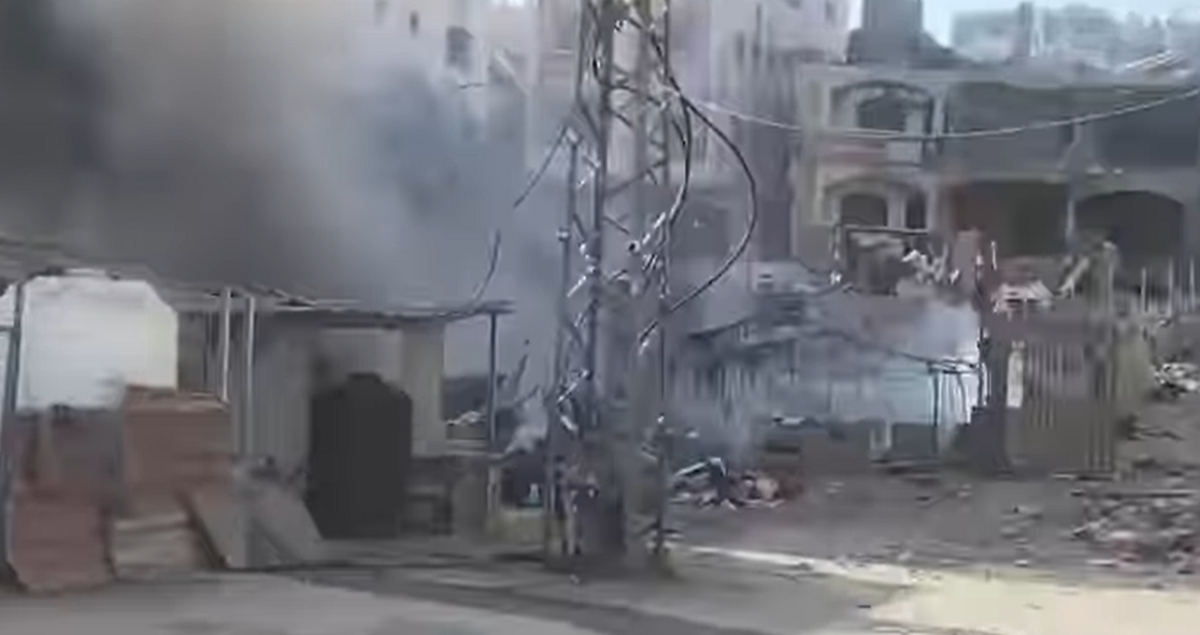
Al-Awda Hospital in Gaza appeals for intervention to extinguish a fire that broke out in the medicine warehouse.

The administration of Al-Awda Hospital in northern Gaza appealed to UN agencies on Friday to intervene to extinguish a fire that has been raging in the medicine warehouse since Thursday, as a result of Israeli shelling.

The administration called on the International Committee of the Red Cross, the World Health Organization, and relevant UN institutions to intervene immediately.

She also called for urgent coordination with the Civil Defense in Gaza to re-direct the wounded to Al-Awda Hospital in the Tal al-Zaatar area of Jabalia camp.

She confirmed that the fire "is still burning in the hospital's drug warehouse," warning that its continuation "threatens the health disaster and threatens the lives of patients and medical staff."

On Thursday, the Al-Awda Hospital administration announced that the Israeli occupation forces had targeted the hospital's medicine warehouse, sparking a fire at the site. As part of the deliberate targeting of the hospital, the occupation forces detonated a booby-trapped robot in its vicinity, causing extensive damage.

Al-Awda Hospital is a private medical facility operating in the Gaza Strip. It has two branches, one in the central Gaza Strip and the other in Jabalia camp. Despite its limited resources due to the blockade and genocide, it continues to provide limited care to patients and the injured.

Since launching its war of extermination on the Gaza Strip on October 7, 2023, the occupation has deliberately targeted Gaza's hospitals and healthcare system, putting most of them out of service, endangering the lives of patients and the wounded.

The Gaza Strip has been suffering from a catastrophic humanitarian and relief crisis since the occupation authorities closed the crossings on March 2, preventing the entry of food, medicine, aid, and fuel.

Since October 7, 2023, the Israeli occupation has been committing genocidal crimes in the Gaza Strip, leaving more than 175,000 dead and wounded, most of them children and women, and more than 11,000 missing, in addition to hundreds of thousands displaced.

PALESTINE

Fri 23 May 2025 9:38 am - Jerusalem Time

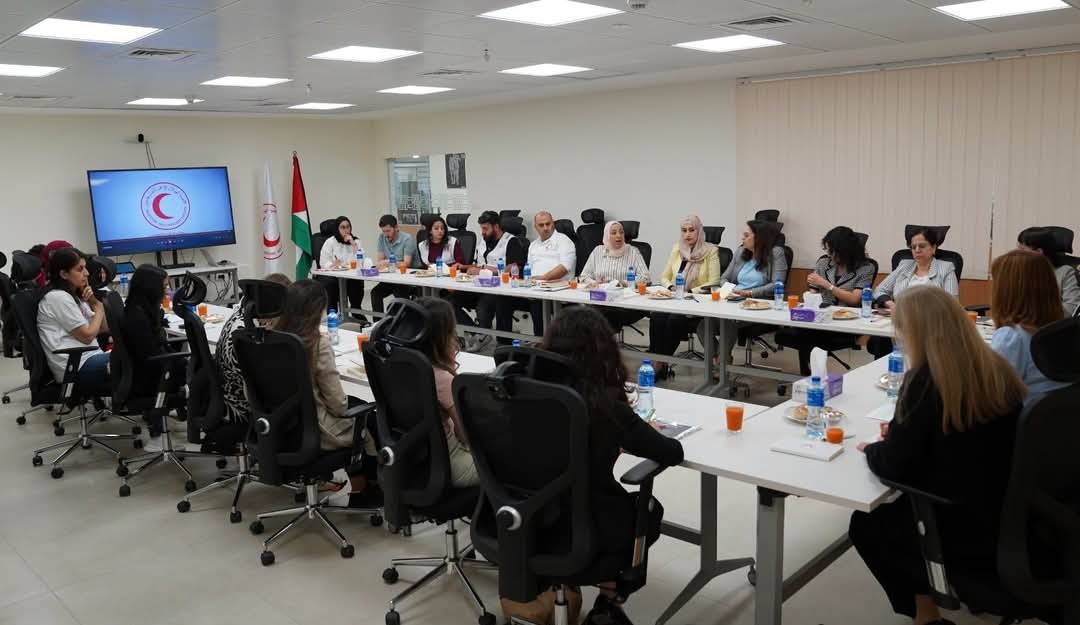
A British government delegation visits the Palestinian Red Crescent Society to review its humanitarian efforts in the West Bank and Gaza Strip.

The Palestinian Red Crescent Society (PRCS) received a delegation from the British government at its headquarters in Al-Bireh on Wednesday. The visit aimed to review the society's humanitarian response in the West Bank and Gaza Strip.

The delegation was headed by British Development Minister Baroness Jenny Chapman, accompanied by her assistant and British Consul General in Jerusalem, Helen Winterton.

The delegation was received by the Director-General of the Palestinian Red Crescent Society, Mr. Khaled Abu Ghosh, the Executive Director, Ms. Randa Bani Odeh, and the Director of the British Red Cross Office in Palestine, Ms. Jennifer Higgins, who gave a comprehensive presentation on the Society's programs, humanitarian interventions, and the operational challenges it faces on the ground.

Mr. Abu Ghosh emphasized the urgent need to ensure the unimpeded flow of humanitarian aid into the Gaza Strip, noting that a limited number of trucks had entered the Strip just three days ago, while humanitarian needs continue to worsen amid the ongoing blockade. He also expressed the Society's concern about the proposed new aid distribution mechanism and the ongoing violations against medical personnel.

For her part, Ms. Bani Odeh addressed the increasing humanitarian challenges in the West Bank, including restrictions on movement and the risks faced by medical personnel in carrying out their duties.

The visit included a field tour of the association's facilities, including the central operations room, Emergency Center 101, and the main warehouse. An advanced field medical point was also displayed at the main entrance, along with a four-wheel-drive ambulance, to demonstrate the Red Crescent's readiness and preparedness to respond to emergencies.

During the visit, Minister Chapman announced additional UK humanitarian aid to the Gaza Strip, reaffirming her country's commitment to supporting relief efforts on the ground.

UK Development Minister Jenny Chapman said: “Vulnerable people in Gaza must receive aid immediately and without delay. Today I heard from humanitarian workers about the horrific impact of the blockade on real families. The UK has provided new support to Gaza, but the harsh reality is that much of this aid remains stuck without access.”


The visit highlighted the importance of continued international cooperation to address urgent humanitarian needs in both the West Bank and Gaza Strip.

OPINIONS

Fri 23 May 2025 9:22 am - Jerusalem Time

Gaza and the genocide by starvation

Dr. Gabriel Al-Abidi

Dr. Gabriel Al-Abidi

Opinion Writer

Perhaps what is happening to the people living in the Gaza Strip is nothing but genocide and racial cleansing led by an internationally recognized prime minister who addresses the United Nations, Benjamin Netanyahu, who has given the green light to the starvation and killing of thousands of people living in Gaza, the largest human prison in history, without receiving even the faintest bit of criticism for the horrific nature of his actions. Meanwhile, the Security Council and the European Union have remained silent, contenting themselves with expressing concern without condemning it, even though these, too, do nothing to quell hunger, quell thirst, or protect those being killed.

That's why the world's timid demand for Israel to take emergency measures to prevent genocide, and to prevent any acts that could be considered genocidal, is a fantasy. It's impossible for Netanyahu and his war government, which constantly incites genocide in Gaza and takes every measure to ensure its continuation, to respond.


Dr. Gabriel Al-Abidi


Perhaps what is happening to the people living in the Gaza Strip is nothing but genocide and racial cleansing led by an internationally recognized prime minister who addresses the United Nations, Benjamin Netanyahu, who has given the green light to the starvation and killing of thousands of people living in Gaza, the largest human prison in history, without receiving even the faintest bit of criticism for the horrific nature of his actions. Meanwhile, the Security Council and the European Union have remained silent, contenting themselves with expressing concern without condemning it, even though these, too, do nothing to quell hunger, quell thirst, or protect those being killed.

That's why the world's timid demand for Israel to take emergency measures to prevent genocide, and to prevent any acts that could be considered genocidal, is a fantasy. It's impossible for Netanyahu and his war government, which constantly incites genocide in Gaza and takes every measure to ensure its continuation, to respond.


OPINIONS

Fri 23 May 2025 9:20 am - Jerusalem Time

Jerusalem Under the Microscope: A Battle of Consciousness Without a Reference "Between Oslo and the October 2023 Aggression"... Policies Shape the Confrontation of Culture and Identity

Malik Zablah

Malik Zablah

Opinion Writer

Since the Oslo Accords of 1993, Jerusalem has been at the forefront of the most complex confrontation in the Palestinian-Israeli context. Israel seeks to impose unilateral sovereignty over the city through an integrated system of cultural, educational, and security policies, while Palestinians confront this project through popular and community initiatives that lack any formal framework.

A comparison of the two sides' policies reveals a clear structural gap. Israel is pursuing a long-term strategy, while the Palestinian approach remains hostage to fragmented reactions. Yet, Jerusalem continues to produce living cultural resistance tools that keep the confrontation open.

This article offers a comparative analytical reading of the course of this confrontation, tracing Israeli policies and manifestations of Palestinian cultural resistance from Oslo to the ongoing Israeli aggression on Gaza (October 2023), to understand how culture has become a central tool in the battle for sovereignty over the city, and how policies are being used to reshape reality and impose or resist narratives.

- Israeli Hegemony: How is Israel Reshaping Jerusalem?

Since the signing of the Oslo Accords, Israel has been keen to impose its full sovereignty over both East and West Jerusalem, taking advantage of the postponement of resolving the city's issue until what became known as the "final status" negotiations. Since then, it has worked to establish a new reality on the ground through a systematic plan to reshape the city demographically, culturally, and symbolically, relying on interconnected political, security, and educational tools. The most prominent of these tools are:

* Israelization of education: by gradually imposing the Israeli curriculum in East Jerusalem schools, in an attempt to reshape the consciousness of Palestinian generations in line with the Zionist narrative, and to obscure the national memory and narrative of the Nakba.

* Intensive settlement: encircling Palestinian neighborhoods with settlements and security infrastructure, to impose demographic facts that disrupt the population balance.

* Confiscation of public space: by transforming names, landmarks, and events into Israeli symbols that obliterate the city’s Arab, Islamic, and Christian identity.

* Closing down symbolic institutions: as in the case of Orient House in 2001, to undermine any symbolic Palestinian representation within the city.

* Controlling international funding: through strict regulatory laws that restrict support for Palestinian cultural institutions and undermine their sustainability.

These policies culminated in what is known as the Israeli Five-Year Plan, with its two phases (2018–2023) and (2024–2028), which was marketed as a development initiative to improve the lives of Palestinians in Jerusalem, while in reality it aims to forcibly integrate them into the Israeli administrative and cultural system, through conditional funding and bureaucratic controls that hinder the independence of local initiatives.

In this way, development becomes a tool of soft hegemony, reproducing control not only through repression, but also through the "soft manipulation" of societal structures. This approach aligns neatly with the concept of cultural hegemony as formulated by Antonio Gramsci, where culture is used to establish control rather than express oneself.

- The Jerusalemite Resistance: Cultural Initiatives Confronting the Occupation

In contrast to the organized Israeli project, the Palestinian approach in Jerusalem stands out as a community effort fragmented by challenges and united by will, but lacking central planning and sustained institutional support. Following the exclusion of the PLO and the Palestinian Authority from Jerusalem's landscape under the terms of the Oslo Accords and escalating Israeli restrictions, civil and popular initiatives have become the first line of defense, even if they remain outside an organized institutional framework.

Despite limited resources and the ferocity of the Israeli attack, Jerusalem succeeded in producing a series of cultural and community initiatives that formed the nucleus of ongoing resistance, the most prominent of which are:

* Civil cultural institutions that have activated the public space as a platform for the Palestinian narrative.

* Alternative educational programs, which aimed to strengthen the awareness of generations outside the controlled Israeli curriculum.

* Digital documentation projects, such as Every Paper Has a Story, have chronicled collective memory and narrated history from a Jerusalemite perspective.

* Symbolic events, such as declaring Jerusalem the Capital of Arab Culture (2009) and the Capital of Islamic Culture (2019), despite repeated attempts at suppression and prevention.

* Field cultural initiatives such as the longest reading series around the Jerusalem Wall (2014), the Street Museum, and the Rooftop Initiative that transformed silent rooftops into vibrant canvases of resistance.

However, these efforts, despite their high symbolism, have encountered structural obstacles, most notably the lack of coordination, the multiplicity of authorities, and the weakness of the popular and official incubator, which has diminished their ability to form a unified cultural front in the face of the occupation's policies. Nevertheless, the Jerusalemite community has proven itself a vital actor in the cultural resistance scene, through its continued production of symbolic and cognitive tools that renew identity and confront attempts at erasure. However, this energy is in dire need of a political and institutional framework that transforms it from a spontaneous act into a strategic cultural project capable of sustainability and impact.

- Defining Moments: When the Street Leads the Confrontation

Over the past decade, Jerusalem has been a true testing ground for the effectiveness of Israeli policies and Palestinian resistance. The Jerusalemite street has emerged as a key player, contrasted with the near-total absence of official political leadership. A series of major events have demonstrated how popular initiative can assert itself despite the imbalance of power. In 2014, the burning of the child Mohammed Abu Khdeir sparked a spontaneous popular uprising across the city, without effective political cover. The 2017 electronic gate uprising represented a successful model of organized peaceful resistance, as the mass sit-in forced the occupation authorities to reverse their measures at Al-Aqsa Mosque. During the Sheikh Jarrah events of 2021, Jerusalem became the center of Palestinian action, and the popular movement succeeded in attracting broad international solidarity, despite the slow official response. The Israeli aggression on Gaza in October 2023 was accompanied by an unprecedented escalation of repression in Jerusalem, targeting youth organizations and cultural initiatives under the pretext of "incitement," as part of a systematic attempt to dry up the sources of resistance awareness.

These events demonstrate that the Jerusalemite community has become the most important actor in the confrontation equation, through flexible, creative forms of peaceful resistance, connected to the daily context. However, this resistance remains threatened with erosion unless it receives an official framework and support that enhances its continuity and gives it a strategic dimension that transcends the moment of explosion.

What to do? From reactions to a clear cultural plan

The experience of cultural confrontation in Jerusalem reveals a dysfunctional equation: an organized Israeli project proceeding according to a long-term plan, contrasted by a Palestinian effort dominated by spontaneous reactions and weak institutional coordination. In light of mounting challenges, continuing this pattern appears politically and culturally costly.

The reality in Jerusalem today requires a radical shift in thinking and action, based on moving beyond improvisation and isolated initiatives, toward building a unified Palestinian vision that establishes a sovereign cultural project capable of confronting the project of Israeli hegemony. This begins with unifying references, activating institutions, and restoring Jerusalem's prestige as a center of national struggle, rather than a marginalized area.

Digital space has also become a central arena for confrontation, where the battle for narrative is no less important than the battle for land. Investing in influential and targeted Palestinian digital cultural content constitutes one of the most important tools for influencing global public opinion. In the same context, international cultural partnerships can be employed with political awareness, without falling into the trap of normalization or gray rhetoric. International institutions, once contained within a national vision, may transform into a soft ally that enhances the Palestinian cultural presence and exposes the policies of erasure. Therefore, reviving symbolic collective events should not be viewed as mere occasions, but rather as tools for injecting national awareness, renewing the collective meaning of peaceful cultural resistance, and consolidating the presence of Jerusalem as a cause that does not die, but rather is renewed in memory and on the street.

- Jerusalem Today: An Endless Battle of Narrative and Identity

The confrontation in Jerusalem is not limited to geography or the balance of power, but is deeply rooted in identity and consciousness. Experience has proven that the occupation is not content with controlling the land, but rather seeks to reshape memory and harness culture to serve its narrative. Despite the institutional absence and political fragmentation, the Jerusalemite community has continued to produce its own narrative through cultural initiatives, digital memory, and artistic expressions that keep the city present in consciousness and on the street.

This reality today imposes the need for something beyond symbolic steadfastness; for a frameworked national cultural project that transforms scattered efforts into a cohesive strategic force, capable of confronting soft Judaization and redefining the relationship with the city as a center of sovereignty, not merely an arena for confrontation. Jerusalem is not just a postponed political issue, but an identity whose battle is being fought in every image, every story, and every wall that refuses silence. It is a city that is writing its narrative anew, day after day, and confirms that the battle for consciousness is still open... and will not be easily resolved.


PALESTINE

Fri 23 May 2025 9:12 am - Jerusalem Time

Finland summons Israeli ambassador over shooting of diplomatic delegation in Jenin

Finland summoned the Israeli ambassador to Helsinki to the Ministry of Foreign Affairs following the Israeli occupation forces' shooting of 35 international diplomats in Jenin on Wednesday.

In a press statement, Finnish Foreign Minister Elina Valtonen described the Israeli army's shooting of diplomats in Jenin as a "serious incident that deserves condemnation."

Valtonen explained that her country had requested clarification from Tel Aviv regarding the incident and had summoned the Israeli ambassador in Helsinki to the Ministry of Foreign Affairs.

The Finnish Foreign Ministry stated in a statement that it expressed its concern over the humanitarian situation in the Gaza Strip during its meeting with the Israeli ambassador.

PALESTINE

Fri 23 May 2025 9:02 am - Jerusalem Time

Golan's Confessions: Acknowledgment of Genocide and Conclusive Evidence Before the International Court of Justice

Dr. Raed Abu Badawiya: These statements and UN and international reports documenting genocide and forced displacement constitute strong evidence before the International Court of Justice.

Yasser Manna: Golan's statements contribute to dismantling the official Israeli discourse from within and increase pressure to reevaluate what is happening.

Dr. Aqel Salah: These statements limit the achievement of the war's objectives and portray Israel as a criminal state, which increases international pressure to hold it accountable.

Antoine Shalhat: These statements reflect the expansion of the phenomenon of demands to stop the war and extend to Israeli public opinion.

Dr. Saad Nimr: Golan's statements were a great shock to Israeli society because they revealed the naked truth about the nature of the war.

Naaman Abed: These developments require comprehensive Palestinian coordination to capitalize on Golan's statements and others to isolate Israel internationally and force it to halt its war of extermination.

Israel is witnessing significant shifts in public opinion and political discourse regarding the war on the Gaza Strip. Voices from former military and political leaders have begun to strongly criticize the grave violations of international humanitarian law. The most recent statement by the head of the Israeli Democratic Party, Yair Golan, exposes the genocidal nature of the war and lays bare Israel and its narrative regarding the Gaza Strip.

In separate interviews with Al-Quds, writers, political analysts, experts, and university professors say that these statements reflect a crack in the official Israeli narrative regarding the war of extermination.

They point out that these statements coincide with demonstrations in Tel Aviv and other Israeli cities demanding an end to the war, with images of Gaza's children being held up. Meanwhile, the Israeli government continues to exploit the conflict to advance its political interests, ignoring domestic and international pressure.

They assert that these policies, which cater to the extreme right, exacerbate the moral and political crisis and reinforce accusations of genocide documented in UN and international reports. This bolsters legal cases against Israel in international courts, amid mounting pressure as Western countries reassess their positions to pressure Israel to halt the war.


Noticeable changes in the Israeli street and the international community


Dr. Raed Abu Badawi, professor of international law and international relations at the Arab American University, says there have been notable shifts in Israeli public opinion and the international community's response to the war on the Gaza Strip. He points out that these changes are not limited to military leaders, but extend to former political and security voices who have begun to criticize the gross violations of international humanitarian law and human rights in Gaza.

Abu Badawiya points to statements by former Israeli Prime Minister Ehud Olmert, who spoke explicitly about Israel's actions in Gaza, describing them as bordering on "war crimes," reflecting an internal rift in the official Israeli narrative.

Abu Badawiya explains that this shift is clearly evident on the Israeli street, where a recent poll showed that 67% of Israelis support an end to the war, alongside demonstrations in Tel Aviv and other Israeli cities where pictures of Gaza's children are being held up to demand an end to the conflict.

Abu Badawiya points out that these moves reflect a growing awareness in Israeli society of the strategic cost of war. However, the Israeli government, led by Benjamin Netanyahu, continues to use war as a political tool to advance its personal interests and maintain the ruling coalition, reflecting a priority to remain in power over humanitarian considerations.


Satisfying the right by continuing to commit war crimes


Abu Badawiya asserts that Netanyahu's continued pursuit of this approach ignores domestic and international pressure, as he insists on appeasing the extreme right by continuing to commit war crimes in full view of the international community.

Abu Badawiya points out that statements by former Israeli officials, along with UN and international reports documenting genocide and forced displacement, constitute strong evidence supporting the case filed by South Africa against Israel before the International Court of Justice.

Abu Badawiya asserts that this evidence, reinforced by human rights reports and satellite imagery, increases the chances of legal accountability, but the most pressing question remains: to what extent will this pressure contribute to stopping the crimes?

Abu Badawiya explains that the recent period has witnessed significant changes in the international stance, as Western countries, which historically provided a protective umbrella for Israel, have begun to reevaluate their positions.

Abu Badawiya points to the European Union's moves to discuss suspending trade agreements with Israel, European countries' talk of imposing sanctions due to human rights violations, and political statements supporting recognition of a Palestinian state.

Abu Badawiya believes that these moves reflect a growing realization that traditional legal means have been insufficient to halt the aggression, prompting the international community to resort to non-legal tools such as political and economic pressure.


Signs of a divergence between American and Israeli interests


Regarding the American position, Abu Badawiya points to a partial shift in American policy toward the Middle East, particularly under the Trump administration, as signs of a divergence between American and Israeli interests emerge.

Abu Badawi explains that Netanyahu's continued disregard for proposals for a comprehensive deal or an end to the aggression could prompt the United States to reduce its support in international institutions, such as the Security Council, as a means of pressuring him.

Abu Badawiya asserts that these changes could escalate if Netanyahu persists with his current approach, potentially leading to broader Western sanctions encompassing political, diplomatic, and trade tools.

Abu Badawiya points out that the ability of these pressures to stop the war depends largely on the American position, which remains the most influential factor.

Abu Badawiya expresses cautious optimism that continued international and domestic activity may prompt Israel to reevaluate its policies, especially if economic and diplomatic pressures escalate. However, he cautions that achieving a genuine cessation of the crimes requires more concerted and coordinated pressure at the international and regional levels.


Golan's statements are a strong blow to the official narrative.


For his part, writer and expert on Israeli affairs, Yasser Manna, asserts that the statement by former Israeli officer and Deputy Chief of Staff Yair Golan, in which he said that "a rational state does not kill children as a hobby," represents a powerful blow to the official narrative justifying Israeli military operations in the Gaza Strip under the pretext of "security necessities."

Manna points out that this statement is not just a passing remark, but rather carries profound implications that may contribute to reshaping the public debate within Israel about the feasibility of continuing the war and its strategic cost.

Manaa points out that Golan's statement is facing fierce attacks from Israeli government ministers, led by Itamar Ben-Gvir and Bezalel Smotrich, who promote extremist rhetoric that amounts to calls for genocide.

Despite the limited scope of this phenomenon currently, Manna believes that the recurrence of such statements from within the security establishment could create a moral rift within the Israeli military, particularly given the war's failure to achieve "victory" or "deterrence." On the contrary, it has deepened the crisis facing Israel both domestically and internationally.

Manaa asserts that Golan's statement could represent a relative turning point, opening the door for former political and military figures to question the continuation of mass killings, which do not serve Israel's strategic interests but rather undermine them.


Implicit acknowledgment that Israel is practicing genocide


Manaa believes that the success of this phenomenon in bringing about real change depends on the accumulation of critical voices from within the security establishment, along with the ability of civil society and the opposition to exploit them to form an effective moral and strategic pressure group.

In the context of international accountability, Manaa explains that confessions like Golan's take on added significance because they come from figures who were part of the military decision-making process.

Manaa points out that Golan's statement carries an implicit admission that Israel is practicing genocide in Gaza and has lost its mind, transforming into an entity that thrives on feelings of hatred.

According to Manaa, these statements could be used as legal documents in genocide documentation cases before bodies such as the International Criminal Court in The Hague, especially if supported by human rights reports, satellite imagery, and field testimonies proving that children are repeatedly targeted in their shelters or during displacement.

Manaa asserts that the credibility of these confessions stems from the fact that they come from figures like Golan, who cannot be accused of ideological hostility toward Israel but were part of the decision-making process.

Manna points out that such statements contribute to the internal dismantling of official Israeli discourse, which increases international and domestic pressure to reevaluate Israel's policies and practices in the conflict.


Golan's statements came as a shock to Netanyahu's government.


In turn, writer and political researcher Dr. Aqel Salah says that the statements made by the leader of the Israeli Democratic Party, Yair Golan, accusing the occupation army of killing children out of revenge during the Gaza war, came as a shock to the far-right government led by Benjamin Netanyahu, sparking widespread anger among senior Israeli officials.

Salah points out that Golan's statement is not the first of its kind, as it was preceded by a statement by former Defense Minister Moshe Ya'alon, who described Israel's actions in Gaza as "massacres and war crimes."

Salah asserts that these statements, issued by prominent Israeli leaders, constitute official admissions of the commission of horrific crimes, which further expand the circle of protest and opposition within Israel and undermine the credibility of the official narrative that justifies the war on security grounds.

Salah explains that these statements undermine the stated objectives of the war and portray Israel as a criminal state violating international law, which increases international pressure to hold it accountable.

Salah points out that Golan's statements and others are encouraging the West and international organizations to condemn Israel, with countries such as Britain, France, and Canada beginning to demand an end to the war and the entry of humanitarian aid.

Salah points out that some European countries are considering imposing sanctions on Israel, including restrictions on arms exports, as Spain has done with its arms export ban, in addition to the European Union's review of its economic partnership with Israel.


"Red card" for Israel


Salah believes that these moves are a "red card" for Israel, as they expose the ugly nature of its practices and hinder the continuation of the war if these positions are built upon in international forums.

Salah asserts that Israeli statements, whether opposing the war or supporting the massacres, such as those issued by Ben-Gvir and Smotrich, constitute official condemnations that demonstrate genocidal intent, making them powerful legal documents for holding Israel accountable before courts such as the International Criminal Court.

Salah explains that the Golan phenomenon has a powerful impact on Israel domestically, regionally, and internationally, embarrassing its supporters, particularly the United States, and putting pressure on the Trump administration, which has expressed a desire to stop the war and allow aid into the country.

Salah asserts that these statements, with their frankness, constitute legally admissible testimony that can be used to prosecute Israeli leaders, especially since they come from "within the Israeli household."

Salah calls for leveraging these voices to expand the circle of demands to halt the war of extermination and to pressure Netanyahu and his government through Palestinian and Arab coordination with international bodies to isolate and hold Israel accountable. He points out that the violent reactions from a number of Israeli officials underscore the importance of these statements as a document for international condemnation.


The phenomenon of demands to stop the war in Israel is expanding.


For his part, writer and political analyst specializing in Israeli affairs, Antoine Shalhat, asserts that the statements of former Israeli officer and head of the Israeli Democratic Party, Yair Golan, in which he described the killing of children in Gaza as driven by a "lust of revenge that knows no bounds," represent a new and important turning point in Israeli domestic discourse.

Shalhat explains that these statements reflect the expanding phenomenon of calls to end the war, which is no longer limited to military or political elites but extends to the Israeli public, where these voices are expressing growing concern about the moral and humanitarian cost of the conflict to the world.

Shalhat points out that what distinguishes Golan's statement is his explicit admission that Israel is committing war crimes, describing the war in Gaza as potentially "a war of extermination par excellence."

Shalhat believes this acknowledgment carries new implications, as previous calls to halt the war in Israel often focused on concerns about endangering the lives of Israeli prisoners in Gaza, rather than concern for the lives of Palestinian civilians.


Of particular importance in the context of international accounting


Shalhat asserts that this phenomenon is witnessing a significant expansion, as reserve soldiers and officers, along with military analysts, former commanders, and politicians, have begun to express their rejection of the continuation of the war, which has not achieved its strategic objectives but has instead deepened Israel's moral and political crisis.

Shalhat emphasizes that statements like those made by Golan are particularly important in the context of international accountability, as they can be used as conclusive evidence and testimony to document the genocide.

Shalhat explains that confessions issued by prominent Israeli figures, who were part of the military or political establishment, acquire double value because they come from "inside the house," enhancing their credibility before international judicial bodies.

Shalhat points out that these testimonies carry great weight because they come from people with direct knowledge of the war's aims and context.

Shalhat believes that these confessions, if they continue to emerge and expand, could lead to further developments within Israel, especially if public awareness of the nature of the war, as Golan described it, grows.


Signs of a crack in Israeli public opinion


Shalhat points out that Israeli public opinion is beginning to show signs of cracking, with a growing number of voices arguing that the war is nothing more than a process of mass destruction aimed at annihilation, without clear strategic or security justification.

Shalhat emphasizes that these statements should be used internationally to strengthen legal documentation files, especially in cases brought before courts such as the International Criminal Court.

Shalhat points out that what is new in Golan's speech lies in the fact that it places Israel before a moral mirror, presenting war as it really is: a killing for the sake of killing, driven by a desire for revenge rather than legitimate military objectives.

Shalhat expresses cautious optimism that the continuation of these critical voices within Israel may contribute to reshaping the public debate, which could pressure decision-makers to reassess the continuation of the war.

However, Shalhat emphasizes that the success of this phenomenon depends on its ability to expand and influence broader Israeli circles, including civil society and the opposition, to form an effective pressure front.


premeditated intent to commit genocide


Dr. Saad Nimr, a professor of political science at Birzeit University, says that the statements of former Israeli military officer Yair Golan, the leader of the Israeli Democratic Party, describing Israel's actions in Gaza as motivated by a murderous intent rather than achieving military objectives such as liberating prisoners or eliminating Hamas, were a major shock to Israeli society because they revealed the naked truth about the nature of the war.

Nimr explains that these statements are not the first of their kind. Several Israeli voices, including former leaders and Knesset members, have begun describing the war as "absurd" and lacking clear objectives, with increasing criticism of the way the military operations are being carried out, which they consider a war of extermination.

Nimer points out that Golan's statements, which sparked strong reactions within Israel, caused considerable confusion because they revealed a premeditated intent for genocide, in line with the statements of extremist ministers such as Itamar Ben-Gvir and Bezalel Smotrich, who affirm a clear intent to eliminate and displace Palestinians.

Nimr asserts that these confessions by Golan and others constitute strong legal documents that can be used as evidence before the International Court of Justice to prove the crime of genocide, because international law requires a clear intent to commit such crimes, a fact confirmed by the statements of Golan and other officials.


A crack in the official Israeli narrative


Nimr explains that these critical voices within Israel, despite their belated arrival, reveal a crack in the official narrative promoted by the Israeli government, which claims that its army is "the most moral in the world," as Chief of Staff Zamir stated.

Nimr considers this claim a fallacy, as the world, including Europe and the United States, has come to realize that Israel violates international law, humanitarian law, and the Geneva Conventions, especially in light of the clear violations that have sparked escalating international reactions in recent days.

Nimr asserts that the impact of Golan's statements and others has begun to translate into tangible reactions in Europe and beyond, as international pressure to hold Israel accountable for its violations has increased.

Nimr points out that these statements bolster the legal cases filed against Israel, especially in light of the existence of international and UN reports supporting the accusations of genocide and forced displacement.

Nimr asserts that continued documentation of these confessions will remain a powerful weapon in international legal forums.

Nimr believes that the violent Israeli reactions to Golan, whether from officials or other parties, reveal a desperate attempt to cover up Israel's true face in the war.

Nimr points out that Golan's statements, along with those of other voices within Israel, indicate the beginning of a shift in internal consciousness, but they face fierce resistance from the government, which continues to justify its crimes.


A storm of criticism within Israel


For his part, writer and political analyst specializing in international relations, Noman Abed, asserts that the statements made by Israeli Democratic Party leader Yair Golan, in which he accused the Israeli occupation army of killing children "as a hobby" during the Gaza war, were a major shock because they directly revealed the intent of genocide.

Abed explains that these statements, which sparked a storm of criticism within Israel, are not the first. They were preceded by statements by opposition leaders, former ministers, and former prime ministers who criticized the Israeli government's actions. However, Golan's statement is the most daring, as it accuses the army, considered a sacred symbol in Israel, of committing war crimes.

Abed points out that the actions of the Israeli army, documented by its own soldiers through videotaped targeting of children, civilians, and displaced persons' tents, and the cold-blooded destruction of homes, confirm the validity of Golan's accusations.

Abed asserts that these actions, which are documented and attributed to specific individuals, constitute internationally prohibited violations and reflect the Israeli government's impotence and the dominance of feelings of revenge in its decisions.

Abed explains that Golan's statements, which described the government as threatening Israel's very existence, drew sharp criticism from ministers such as Itamar Ben-Gvir and some opposition figures, who demanded Golan apologize, recognizing the seriousness of these statements to Israel's and its army's international image.


Using genocide as a method to kill an entire people


Abed asserts that Golan's statements, along with those of ministers such as the leader of the Zehut party, who described every child in Gaza as an "enemy" and called for the occupation and settlement of the Strip to wipe out its population, prove the existence of a premeditated intent to commit genocide, a fundamental element in establishing this crime under international law.

Abed explains that the systematic starvation policies, such as the closure of crossings and the ban on food imports, publicly acknowledged by Israeli ministers, confirm this intention. They have repeatedly stated that they are preventing the entry of "corn of wheat" into Gaza, which constitutes conclusive evidence of the use of genocide as a method to kill an entire people because of their Palestinian affiliation.

Abed points out that these statements have caused confusion within Israel, especially since they are consistent with growing international accusations that Israel is committing genocide.

Abed points to the escalating European stance against Netanyahu's government, such as the Spanish parliament's decision to ban arms exports to Israel, the British Foreign Secretary's criticism in parliament of the policies of genocide and starvation, and the European Union's review of its economic partnership with Israel.

Abed addresses the insistence of countries such as France, Britain, and Canada on supporting the two-state solution and recognizing the Palestinian state, reflecting a shift in the international position in favor of the Palestinian cause.

Abed points out that these developments require comprehensive Palestinian coordination between the official leadership, factions, civil society, and human rights committees to leverage Golan's statements and others to isolate Israel internationally, continue pressure to prosecute Netanyahu and his government, and compel it to halt its war of extermination.

Abed asserts that Netanyahu's continued obstruction of any ceasefire agreement, driven by extremist ideologies and personal interests, further isolates Israel, especially as Europe attempts to regain influence in the Middle East by supporting the Palestinian cause, amidst divergence from US policy.



PALESTINE

Fri 23 May 2025 8:48 am - Jerusalem Time

Raids and arrests in the West Bank

This morning, Friday, the Israeli occupation forces launched a campaign of raids and arrests in the West Bank.

In Bethlehem, occupation forces arrested Muhammad Jihad Taqatqa (26 years old) after raiding and searching his father's house in Beit Fajjar.

In Jenin, occupation forces stormed the town of Burqin, raided the home of freed prisoner Sultan Khalouf, and arrested his father and two of his brothers.

They also arrested Khaled Asi and Anan Darwish Asi after raiding their homes, while occupation forces raided and searched a number of homes in the town.

The occupation forces have been raiding the Khalouf family home and office in Burqin for more than two months, searching for him and arresting members of his family to pressure him to surrender.

In Nablus, the occupation forces stormed the neighborhoods of Asira, Tal, At-Tur, Al-Makhfiyya, and Rafidia, raiding a number of homes, searching them, and vandalizing their contents.

Occupation forces removed the gate of an agricultural equipment store in the eastern complex before raiding and searching it.

In Hebron, occupation forces stormed several neighborhoods in the city and raided the homes of detainees Omar Obaid, Maher Obaid, and Daoud Abu Za'nouna. They also searched warehouses and land adjacent to citizens' homes in the Asa area, west of the city.

The occupation forces also stormed the town of Deir Samet, southwest of Hebron, and searched several homes and ransacked their contents.

Meanwhile, a group of armed settlers stole a flock of more than 30 sheep belonging to Ashraf Al-Amur from Khirbet Al-Rakeez in Masafer Yatta.

The settlers sneaked into the sheep pen and carried out the theft in the late hours of the night. They were discovered by surveillance cameras in the area.


PALESTINE

Thu 22 May 2025 10:49 pm - Jerusalem Time

Hamas: The occupation is imposing "starvation engineering," and we warn of plans for detention camps in Gaza.

The Islamic Resistance Movement (Hamas) said that the Israeli occupation continues to commit the crime of "systematic starvation" against more than two million Palestinians in the Gaza Strip, by rationing the entry of humanitarian aid and subjecting it to political and security equations, within the framework of what the movement described as "starvation engineering" and "ghetto aid."

The movement indicated in a statement that the aid delivered after 81 days of a complete closure of the Strip "represents only a drop in the ocean of normal need," noting that Gaza needed approximately 500 trucks per day before the war to meet its minimum needs, while today less than a tenth of that number is arriving, amid a worsening displacement crisis, the collapse of the health system, and the spread of hunger and malnutrition, especially among children.

Hamas also warned against the occupation's attempts to implement a "colonial plan" by establishing what resembles "concentration camps" in the southern Gaza Strip under the guise of aid, stressing that this plan "will not succeed" and will be confronted by the will of the people of Gaza, who reject humiliation and adhere to their right to freedom and dignity.

The movement reiterated its call for the international community and humanitarian organizations to take urgent action to completely lift the blockade, reject what it described as "engineering hunger and humiliation," and work to open a permanent humanitarian corridor that ensures the free and dignified flow of aid, free from control or extortion.

PALESTINE

Thu 22 May 2025 10:03 pm - Jerusalem Time

WFP warns: We are racing against time to stop famine in Gaza

The World Food Programme warned Thursday that it is in a race against time to avert a full-scale famine in Gaza and that safe and unrestricted access is needed. The Palestinian Red Crescent Society described Israel's permission for a small number of aid trucks to enter the Gaza Strip this week as an "invitation to murder."

The World Food Programme said in a statement that the humanitarian aid that has reached Gaza is just a drop in the ocean.

The program's director in the Palestinian territories said in a statement to reporters that a small number of bakeries in southern and central Gaza supported by the program resumed bread production after trucks were finally able to bring in

Supplies from Kerem Shalom crossing.

For his part, the UN Special Rapporteur on the Right to Food said that Israel is using hunger as a weapon against civilians, and called on the UN General Assembly to break the siege and stop the starvation of 2.3 million Palestinians.

Call to kill

The Palestinian Red Crescent considered the Israeli occupation's permission for a small number of aid trucks to enter the Gaza Strip this week an "invitation to murder" due to the possibility of them being looted.

Red Crescent Society Chairman Younis al-Khatib told reporters he could prove that no one received aid. He added that it did not reach civilians, and that most of the trucks remain at the Kerem Shalom border crossing, where they are being inspected, but have not entered Gaza.

Earlier, Palestinian officials said some food aid would reach some of Gaza's most needy residents on Thursday after Israel allowed some trucks into the territory, but they stressed that the amount was not enough to make up for the shortage caused by the 11-week blockade.

Dozens of deaths

For his part, Palestinian Health Minister Majed Abu Ramadan said that 29 children and elderly people have died from hunger-related causes in Gaza over the past two days, and that thousands more are at risk of dying from the same causes.

Food aid is expected to begin reaching Gaza residents on Thursday after Israel allowed the first trucks to enter after an 11-week blockade, but Palestinian officials and aid organizations say this will only meet a fraction of the needs.

Abu Ramadan initially told reporters that 29 children had died in the past two days, indicating that they had died from starvation. He later clarified that this number included the elderly and children.

alarming number

Asked about previous press statements by a UN official about the possibility of 14,000 infant deaths without aid, the minister said, "The figure of 14,000 is very realistic, and may be an underestimate."

Abu Ramadan said that only 7 or 8 of Gaza's 36 hospitals are partially functioning, and that more than 90% of medical supplies have been depleted due to the blockade.

He added that the information available to him indicated that between 90 and 100 trucks loaded with aid had entered southern and central Gaza. When asked whether any medical supplies were among them, he said his information indicated that only flour had arrived for bakeries.

The Gaza Strip needs 500 trucks of urgent relief, medical, and food aid daily, and at least 50 trucks of life-saving fuel, according to a statement issued by the government media office last Monday.

With American support, Israel has been committing genocidal crimes in Gaza since October 7, 2023, leaving more than 175,000 Palestinians dead or wounded—mostly children and women—and more than 11,000 missing, in addition to hundreds of thousands displaced.

ARAB AND WORLD

Thu 22 May 2025 9:42 pm - Jerusalem Time

Netanyahu and Trump discuss the war on Gaza by phone

Israeli Prime Minister Benjamin Netanyahu discussed the ongoing war of extermination in the Gaza Strip with US President Donald Trump on Thursday.

Netanyahu's office said in a statement that "the Israeli Prime Minister spoke by phone with President Trump and discussed the war in the Gaza Strip."

The statement claimed that during the call, the US president affirmed his support for achieving Netanyahu's goals in the Gaza Strip, which include eliminating Hamas, freeing prisoners, and advancing the Trump plan.

Netanyahu's statement about Trump's plan for the Gaza Strip refers to the latter's proposal last January, which called for the displacement of Palestinians from the Gaza Strip to neighboring countries such as Egypt and Jordan. Both countries rejected the plan, which was joined by other Arab countries and regional and international organizations.

This is the first contact since Hebrew media reported a cooling of relations between Netanyahu and Trump, with the latter reportedly cutting off contact with the Israeli prime minister over suspicions that he was being manipulated.

ARAB AND WORLD

Thu 22 May 2025 8:43 pm - Jerusalem Time

Trump told the Europeans that Putin does not want to end the war because he considers himself a "victor."

US President Donald Trump has acknowledged that Russian President Vladimir Putin does not want to stop the war in Ukraine because he believes he is winning. This was revealed by the Republican-affiliated Wall Street Journal, which added in a report that Trump conveyed this to the European leaders he contacted after his phone call with Putin on Monday. However, he did not impose additional sanctions on Moscow, and instead proposed holding lower-level talks in the Vatican between Russia and Ukraine.

This admission has long been what European leaders have believed about Putin, but this is the first time they've heard it from Trump. It also contradicts what Trump has repeatedly said publicly: that he believes Putin genuinely wants peace. The White House declined to comment, pointing to Trump's social media post on Monday about his conversation with Putin. "The tone and spirit of the conversation were excellent," he said. "If it weren't, I would have said so now."

The Kremlin denies

However, Kremlin spokesman Dmitry Peskov denied the newspaper's report, saying, "Russia knows what Trump said to Putin, but not what he said to European leaders. The Wall Street Journal report contradicts Trump's official statements and what we also know."

Trump had previously held a phone call with European leaders on Sunday, the day before his two-hour conversation with Putin. He indicated then that he might impose sanctions if Putin refused a ceasefire, according to people familiar with the conversation. However, on Monday, he shifted his position again, not being prepared to impose sanctions and instead saying he wanted to move quickly forward with talks between Russia and Ukraine at the Vatican.

"This is not my war. We got into something we shouldn't have gotten into," Trump told reporters on Monday after his call with Putin. In a phone call with European leaders on Sunday, including French President Emmanuel Macron, German Chancellor Friedrich Merz, Italian Prime Minister Giorgia Meloni, and British Prime Minister Keir Starmer, he indicated that he would send Secretary of State Marco Rubio and special envoy Keith Kellogg to the talks expected to take place at the Vatican.

He indicated that the United States may join Europe in imposing sanctions on Russian energy exports and banking transactions. Republican Senator Lindsey Graham, a close Trump ally, announced on Wednesday that he had gathered 81 senators willing to participate in drafting a bill that would significantly tighten energy and other sanctions on Moscow.

No Russian arrangements for Vatican meeting

Commenting on the proposed negotiations in the Vatican, which were also mentioned by Finnish President Alexander Stubb, who said that "there are more mediators" and that not only Washington but also Europe is involved, Kremlin spokesman Peskov denied this, saying: "No, there are no agreements yet, there are no specific arrangements for the upcoming meetings, and we have not yet reached an agreement. Work is underway to implement the agreements reached in Istanbul."

Peskov added that Russia and Ukraine have not set a date for further direct talks to end the war that has been raging between them for more than three years, and "there is no concrete agreement on future meetings. They have not yet been agreed upon."

The Wall Street Journal reports that for the Europeans, their diplomatic efforts, which began about 10 days ago to pressure Trump to pressure Putin, have helped confirm that supporting Ukraine is now largely their responsibility. The Journal said the Europeans do not believe the Trump administration will halt US arms exports as long as Europe or Ukraine is paying the price.

For his part, Ukrainian President Volodymyr Zelensky said on Thursday that preparations were underway for a potential prisoner swap, which he described as "perhaps the only real outcome" of the talks in Turkey. Peskov said the prisoner swap is "a very difficult process" and "requires some time." However, he added, "work is proceeding at a rapid pace, and everyone is interested in completing it quickly."

Rubio does not call Putin a war criminal.

On Wednesday, US Secretary of State Marco Rubio refrained from describing Russian President Putin as a "war criminal," asserting that the priority was negotiating an end to the war in Ukraine. During a tense House hearing, Democratic Representative Bill Keating reminded him of the scathing criticism he had directed at Putin when he was a senator, before becoming Secretary of State, and asked if he still considered Putin a "war criminal."

Rubio responded by saying, “Crimes have been committed in the war in Ukraine and they will be held accountable, but our goal right now is to end this war,” clearly echoing Trump’s positions. He added, “Let me tell you, every day the war continues, more people are killed, more people are injured, and frankly, more war crimes are committed.” Keating called Rubio’s statements “incoherent” and “confusing.” In response to another question from a Republican representative, Rubio said, “If it weren’t for the contacts that took place between the United States and Russia in 1961, the world would have ended during the Cuban Missile Crisis!”

On the ground, the drone war continues, with fighting raging in some key areas on the front line between the two sides. Russia said Thursday that its air defenses had shot down 105 Ukrainian drones over Russian territory, 35 of which were heading toward Moscow. Moscow Mayor Sergei Sobyanin stated that several drones heading toward the city were shot down.

Russia said Thursday it had fired an Iskander-M missile at part of the city of Pokrov in Ukraine's Dnipropetrovsk region, destroying two Patriot missile systems and a radar.

The Ukrainian Air Force reported damage in the Dnipropetrovsk region after an attack, but did not specify the type of weapon used. The Defense Ministry said Russian forces were advancing at key points on the front, and pro-Russian war bloggers reported that troops had broken through Ukrainian lines between Pokrovsk and Kostyantynivka in the Donetsk region of eastern Ukraine. Ukrainian President Volodymyr Zelenskyy said in his nightly video address that the heaviest fighting on the front lines was taking place around Pokrovsk, and made no mention of any Russian advance.

Meretz warns of 'tense' situation

Meanwhile, German Chancellor Friedrich Merz said Thursday that reinforcing NATO's eastern flank with German troops in Lithuania would help defend the military alliance against "any aggression." During a visit to Vilnius to officially inaugurate a new German armored brigade, Merz said that Russian actions threaten not only the security of Ukraine, but also the security of Europe and the Euro-Atlantic region.

"The security situation here in the Baltic states remains extremely tense," Merz added, flanked by Lithuanian President Gitanas Nauseda. "We will send this brigade to protect NATO's entire eastern flank. It will defend the alliance's territory against any aggression."

Nauseda described Merz's visit as a "strong signal." The German military is achieving a new milestone with the permanent stationing of a military unit abroad. Previous deployments were temporary. This move comes in response to Russia's full-scale invasion of Ukraine in February 2022.

PALESTINE

Thu 22 May 2025 7:45 pm - Jerusalem Time

Palestinian Red Crescent: We lost 29 children in a matter of days due to hunger in Gaza.

Palestinian Red Crescent Society President Younis al-Khatib said Thursday that approximately 29 children have died of hunger-related causes in Gaza in the past few days.

This came in a press statement at the headquarters of the International Federation of Red Cross and Red Crescent Societies in Geneva.

Al-Khatib explained that humanitarian aid did not reach Gaza due to Israeli obstacles.

He said that in his 40 years of humanitarian work, he had never witnessed such restrictions on humanitarian aid as are currently occurring in Gaza.

Al-Khatib emphasized the importance of Britain, Canada, and other countries rejecting Israel's plan to change the aid distribution system in Gaza and place it under Israeli military control.

He called for the need to provide a safe passage for humanitarian aid without any obstacles.

Al-Khatib pointed out that approximately 29 children have died of hunger in Gaza in recent days.

Since March 2, Israel has pursued a policy of systematic starvation against approximately 2.4 million Palestinians in Gaza by closing the crossings to aid supplies piling up at the border, plunging the Strip into famine and claiming many lives.

With full American support, Israel has been committing genocidal crimes in Gaza since October 7, 2023, leaving more than 175,000 Palestinians dead or wounded, most of them children and women, and more than 11,000 missing, in addition to hundreds of thousands displaced.

PALESTINE

Thu 22 May 2025 6:35 pm - Jerusalem Time

3 Palestinians killed in an Israeli bombing of a house in Deir al-Balah

Three civilians were killed and others injured when Israeli warplanes bombed the Abu Sabt family home in the Al-Barakah area of Deir al-Balah, central Gaza Strip.

According to medical sources, 54 civilians have been killed as a result of ongoing Israeli airstrikes and artillery shelling of the Gaza Strip since dawn on Thursday.

PALESTINE

Thu 22 May 2025 5:17 pm - Jerusalem Time

Israel's allies are making strong rhetoric on Gaza, but action so far has been limited.

News report

The Associated Press reported Thursday that three of Israel's allies this week used words like "repugnant" and "brutal" to describe Israel's actions in Gaza.

The leaders of Britain, France, and Canada—staunch defenders of Israel's right to respond to Hamas after its October 2023 attack—are now expressing their dismay at the rising civilian death toll in Gaza and the months-long blockade of supplies that has led to warnings of impending famine.

According to experts, although their rhetoric is remarkably strong, it does not mean taking strict measures.

British Prime Minister Keir Starmer, French President Emmanuel Macron, and Canadian Prime Minister Mark Carney described the renewed Israeli assault on Gaza after a two-month ceasefire as "totally disproportionate." They threatened to take "concrete action" if Prime Minister Benjamin Netanyahu's government did not halt the offensive and lift restrictions on humanitarian aid.

They also condemned some of the language used by members of the Israeli government, which suggested that destroying Gaza would force Palestinians to leave, describing it as "repugnant."

Starmer said he was "horrified" by Israel's escalation of the conflict, which has left more than 53,000 dead in Gaza, more than half of them women and children, according to local health officials, whose tally does not differentiate between combatants and civilians.

British Foreign Secretary David Lammy described Israel's actions in obstructing aid to Gaza and renewing its military offensive as "barbaric," while another British minister, Jenny Chapman, called the move "repugnant." French Foreign Minister Jean-Noël Barrot said Israel's "blind violence" had turned the Palestinian territories into "a place of death."

Longtime US allies have increasingly united since President Donald Trump shook up the global order by imposing sweeping tariffs, disparaging the European Union—of which France is a key member—and expressing his desire to make Canada the 51st US state, experts say.

Bronwyn Maddox, director of the London-based Chatham House think tank, said anger over the war in Gaza was growing - including from some officials in the United States, Israel's strongest backer.

The statement by Britain, Canada, and France may have been "politically accelerated by a perception that the United States is changing slightly, and that Donald Trump himself has become more stringent toward Israel, particularly in demanding that it allow in more aid," according to the agency.
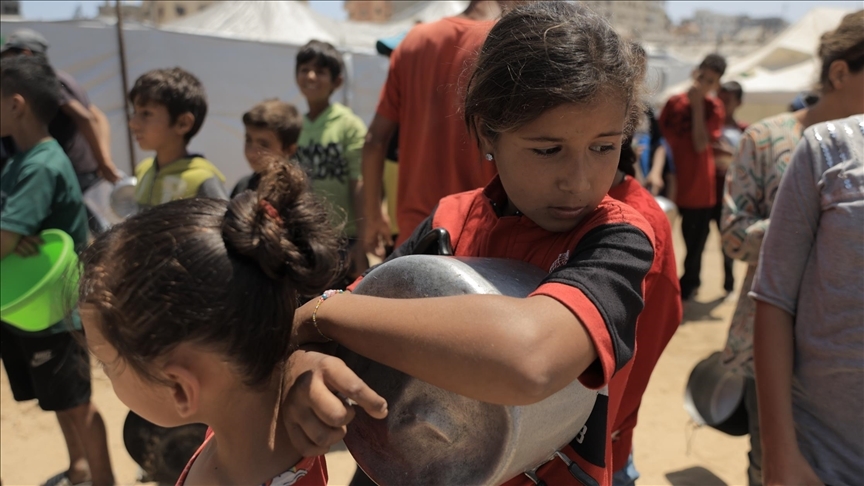
There are doubts that these countries will follow up their words with concrete actions.
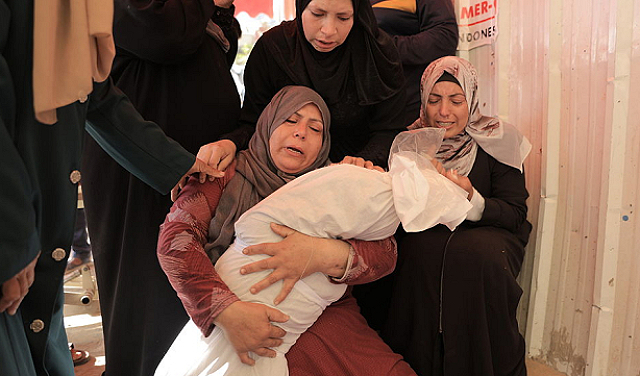
Britain has suspended trade agreement talks with Israel and recalled its ambassador to the UK, Tzipi Hotovely, in an attempt to intensify pressure on the Netanyahu government. The UK has also imposed sanctions on three settlers in the West Bank, two illegal outposts, and two organizations that "support violence against the Palestinian community."

Maddox said the limited sanctions announced by the UK would have little impact and were "at the bottom of the scale of possible steps."

Canada and France have not announced any specific new measures.

Carney's office, which visited Trump at the White House, said the government is "evaluating its options in consultation with its partners." Last year, Ottawa imposed sanctions on extremist settlers in the West Bank and suspended arms exports to Israel.

Leaders had to carefully balance their words and actions in the face of competing pressures. No one described Israel's actions as genocide, despite strong pressure from Palestinian supporters to do so.

The agency says, "Macron must balance the feelings and anger that the war has aroused in France's Jewish and Muslim communities, both of which are the largest in Western Europe." David Rigolet-Rose, a researcher at the French Institute for Strategic Analysis, said that France is trying to maintain a balance between the two communities, but is sometimes in a precarious equilibrium.

He said that since October 7, "this oscillation between the two parties has been interpreted as a search for a balance point that is difficult to find."

France also sees itself as a defender of international law, and it has become difficult for the government to ignore accusations of Israel's conduct in Gaza, especially given its pressure on Russia to respect international law in Ukraine, according to experts.

Starmer, a former human rights lawyer, claims to place great importance on respect for international law.

Starmer's Labour Party has faced pressure from Muslim voters, who have long supported the party in large numbers. Labour lost several seats in last year's national elections to pro-Palestinian independent candidates, after Starmer initially refused to call for an immediate ceasefire in Gaza.

The Financial Times reported that the United Kingdom is considering imposing a travel ban and asset freeze on two far-right members of Netanyahu's government: Finance Minister Bezalel Smotrich and National Security Minister Itamar Ben-Gvir.

Starmer's spokesman, Dave Paris, did not comment on the report, but said: "We always review our sanctions regime," according to the newspaper.

The targeted sanctions imposed by Britain, such as its suspension of trade talks with Israel, are largely symbolic. The larger European Union is also reviewing its long-standing trade agreement with Israel.

"This will not change Netanyahu's policy, but the entire European Union is signaling some form of challenge to the Israeli government," French analyst Rigolet Rose told the newspaper.

But the 27-member European Union is far from united. Germany, a staunch ally of Israel, has not joined its neighbors in escalating criticism. It has stuck to the line of recognizing Israel's right to self-defense, criticizing its behavior in Gaza, and pressing for humanitarian aid. But it has avoided harsh rhetoric.

Former French Prime Minister Dominique de Villepin said the three countries' statement, with its strong language and few actions, demonstrates international impotence in the face of Israel's actions. He called for the suspension of European trade agreements with Israel, the imposition of an arms embargo, and the filing of charges against Israeli political and military leaders at the International Criminal Court.

"What will it take for European and Western leaders to take practical action? There are war crimes, crimes against humanity, and there is a risk of genocide. We cannot wait," he told France Info radio.