PALESTINE

Thu 22 May 2025 4:36 pm - Jerusalem Time

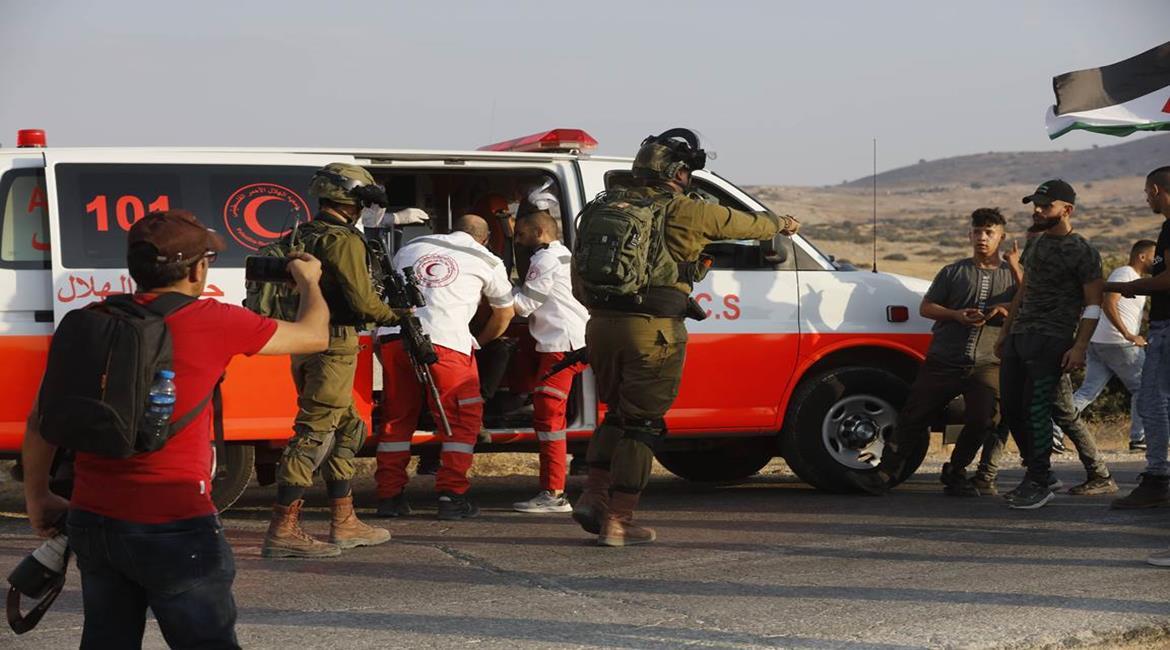
A young man was injured by Israeli occupation forces' bullets in Qabatiya.

A young man was injured Thursday evening by Israeli occupation forces' bullets in the town of Qabatiya, south of Jenin.

According to local sources, a young man was shot in the hand by Israeli occupation forces and was transferred to a Qabatiya ambulance center during the raid.

She added that the occupation forces detained a group of young men on the town's coffee shop street, and abused other young men during their detention.

Israeli occupation forces raided a café in Qabatiya, forcing its owners to leave and destroying its contents. They also destroyed the doors of shops in the town center, while soldiers fired live ammunition at civilians in the parking area, amid drones hovering overhead.

Israeli occupation forces stormed Qabatiya on Wednesday, destroying infrastructure and water and electricity networks in the town center and in the Abu al-Rab neighborhood, and launching a widespread arrest campaign there.

The occupation has intensified its raids on towns and villages in Jenin Governorate since the start of its aggression on the city and refugee camp 122 days ago, launching arrest campaigns, raiding homes, searching, detaining, and interrogating citizens.

ARAB AND WORLD

Thu 22 May 2025 4:21 pm - Jerusalem Time

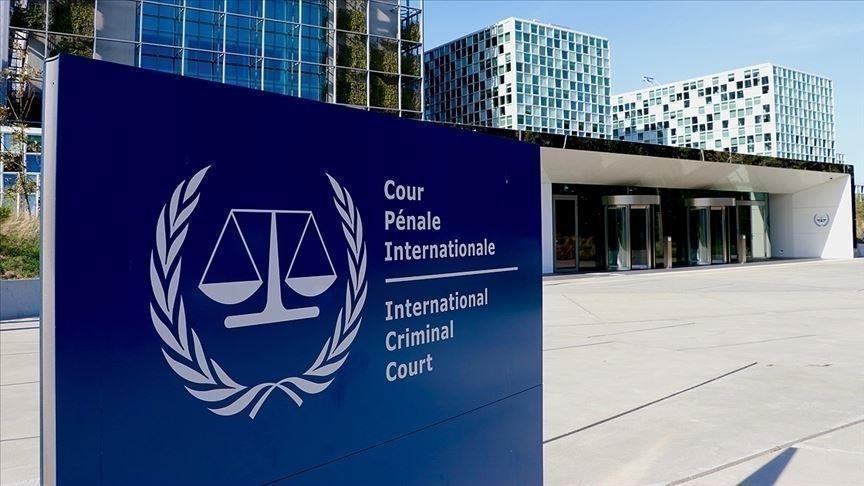
ICC: Prosecutor requests rejection of Israel's request to cancel arrest warrants

Prosecutors at the International Criminal Court have asked the court's judges to reject Israel's request to revoke arrest warrants for Israeli Prime Minister Benjamin Netanyahu and former Defense Minister Yoav Gallant.

They also requested, in a 10-page memorandum published on the court's website late Wednesday, that Tel Aviv's request to suspend the investigation into the situation in the occupied Palestinian territories be rejected.

On November 21, 2024, the International Criminal Court issued arrest warrants for Netanyahu and Galant on charges of committing war crimes and crimes against humanity against Palestinians in Gaza.

In the memorandum, which Anadolu Agency reviewed, the prosecutors referred to Israel's request, submitted on May 9, 2025, for the court's Pre-Trial Chamber I to withdraw or cancel the arrest warrants issued against Netanyahu and Galant.

They also noted her request to suspend the prosecution's investigation into the situation in Palestine until the Court's Pre-Trial Chamber I decides on the Israeli judicial appeal.

The prosecutors concluded that Israel's request "has no legal basis."

They added: "In light of the above, the Prosecution requests Pre-Trial Chamber I of the International Criminal Court to reject Israel's request to withdraw/cancel the arrest warrants; and to reject Israel's request to suspend the investigation into the situation in Palestine."

ARAB AND WORLD

Thu 22 May 2025 4:03 pm - Jerusalem Time

Israeli ministers hold European leaders responsible for Washington attack

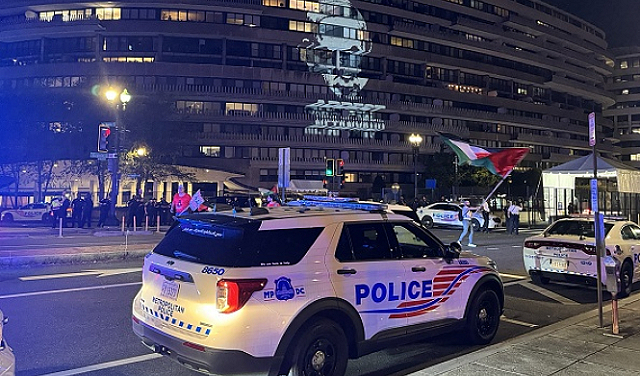
The Israeli foreign and diaspora ministers held Europe and some of its leaders responsible for the shooting in the US capital, which claimed the lives of two Israeli embassy employees in Washington.

For his part, Israeli Foreign Minister Gideon Sa'ar said that the shooting that killed two Israeli embassy employees in Washington was a direct result of "poisonous anti-Semitic incitement against Israel and Jews around the world."

He stated that "a number of European leaders use deadly terms such as genocide, and this use threatens Israel's security," considering that these European leaders' use of the term genocide is a submission to what he described as "Palestinian propaganda."

Sa'ar called on "world leaders to stop incitement against Israel," as he claimed, expressing his "growing concern over the repeated incidents" at Israeli embassies around the world, particularly in Europe.

He also said that Israeli representatives around the world have become "targets of terrorism," and that "anti-Semitism deprives Israelis of a sense of security."

Holding European leaders accountable

For his part, Israeli Diaspora Minister Amichai Chikli on Thursday held the leaders of France, Britain, Canada, and all those opposed to his country's war on the Gaza Strip responsible for the shooting in the US capital.

Shakili said, via the X platform, that Western leaders, such as French President Emmanuel Macron, British Prime Minister Keir Starmer, and Canadian Prime Minister Mark Carney, must be held accountable for the shooting in Washington.

"We must also hold accountable the irresponsible leaders in the West who support this hatred," he continued.

He added that the French president, the British prime minister, and the Canadian prime minister "encouraged the forces of terrorism by failing to draw moral red lines," as he put it.

He claimed that "Freedom for Palestine is not a cry for freedom, but a cry for the killing and demonization of the Jewish state."

Israeli opposition leader Yair Lapid joined him in claiming that the killing of the two Israeli employees was a result of the pro-Palestinian movement around the world.

"The horrific murder in Washington was an act of anti-Semitic terrorism, a direct result of the incitement we've seen in protests around the world. This is what they meant by 'globalizing the uprising,'" Lapid wrote on his X platform.

In a joint statement, the leaders of France, Britain, and Canada called for an end to Israel's war on Gaza, the delivery of humanitarian aid to the Palestinians, and the establishment of a diplomatic path leading to a Palestinian state.

Since October 7, 2023, Israel, with full American support, has been waging a war of genocide in Gaza, including killing, starvation, destruction, and forced displacement, ignoring all international appeals and orders from the International Court of Justice to halt it.

The genocide left more than 175,000 Palestinians dead and wounded, most of them children and women, and more than 11,000 missing. Hundreds of thousands were displaced, and famine killed many, including children.

PALESTINE

Thu 22 May 2025 2:16 pm - Jerusalem Time

Israel plans to control 75% of the Gaza Strip to create a "mini-Gaza"

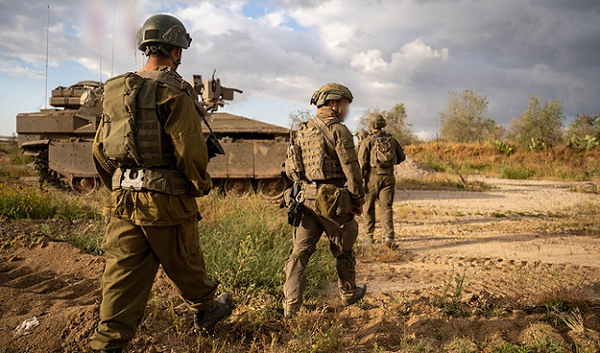
The Israeli occupation army is seeking to control between 70 and 75 percent of the Gaza Strip as part of Operation Gideon, with the aim of imposing a new reality and creating a "Little Gaza," according to what Channel 12 reported on Thursday, citing an Israeli security official.

The senior official said, "The goal is to shrink Gaza, force Hamas to lose large areas, and force it out of its comfort zone." He noted that the plan includes isolating Hamas from the population and establishing checkpoints and control centers to screen the movement's members.

This came as the Israeli occupation army issued a new warning this afternoon to residents of large neighborhoods and areas in the northern Gaza Strip, demanding immediate evacuation to the south as part of its ongoing displacement policy. It also threatened to expand its military operations in the aforementioned areas.

He said the targeted areas include: Ghaban, Al-Shimaa, Fadous, Al-Manshiya, Sheikh Zayed, Al-Sultans, Al-Karama, Beit Lahia Project, Al-Zahour, Tel Al-Zaatar, Al-Nour, Abdul Rahman, Al-Nahda, and Jabalia Camp, describing them as "dangerous combat zones."

He added, in a statement addressing the residents of these areas, that he would "significantly expand his military activity in the areas where you are present."

ARAB AND WORLD

Thu 22 May 2025 2:13 pm - Jerusalem Time

In protest against the Gaza war, the Catalan government closes its trade office in Tel Aviv.

The Catalan government announced the closure of its foreign affairs office in Tel Aviv.

The move comes amid widespread European discontent over Israel's war of extermination in the Gaza Strip, amid growing calls to pressure Tel Aviv to end the war and allow humanitarian aid to reach the Strip's residents.

PALESTINE

Thu 22 May 2025 1:06 pm - Jerusalem Time

A Palestinian prisoner from Gaza died inside the "Sde Teiman" prison.

Today, Thursday, the Prisoners' Institutions received a response from the occupation army stating that the prisoner Amr Hatem Odeh (33 years old), from Gaza, died on 12/13/2023 in the (Sde Teiman) camp.

The Prisoners' Institutions said in a statement, "The detainee Awda was arrested, along with his family members, from their home at the beginning of the ground invasion of Gaza, on 12/7/2023. It is worth noting that the martyr Amr Awda was married and the father of three children."

She added that with the martyrdom of the detainee Amr Odeh, the number of martyrs who have been killed after the genocide has risen to at least (70) martyrs, including (44) detainees from Gaza, whose identities are the only ones known, while the number of martyrs of the prisoner movement since 1967 documented by the institutions has risen to (307) whose identities are also known, so that this stage constitutes the bloodiest in the history of the prisoner movement.

She explained that the responses received by the institutions from the occupation army remain limited to the army's narrative and the notifications received by the institutions, given the continued detention of the martyrs' bodies and the failure to disclose the circumstances of their deaths. It is worth noting that the army has repeatedly attempted to manipulate these responses by providing institutions with differing responses, and some institutions have even gone to court to obtain a response that would resolve the fate of the detainee.

The prisoners' institutions continued, saying that the martyrdom of detainee Amr Odeh from Gaza adds to the record of crimes committed by the brutal Israeli regime, which operates around the clock through a series of organized crimes to kill prisoners and detainees. These crimes constitute another aspect of the ongoing genocide and an extension of it. In this context, we note that the testimonies of Gaza detainees documented by the institutions to date constitute the most severe and harshest testimonies in terms of the level of crimes they reflect.

She stressed that the rate of increasing numbers of martyrs among prisoners and detainees will take a more dangerous turn as more time passes for the detention of thousands of prisoners and detainees in the occupation’s prisons, and their continued exposure to systematic crimes, most notably torture, starvation, assaults of all kinds, medical crimes, sexual assaults, and the deliberate imposition of conditions that lead to their infection with serious and contagious diseases, most notably scabies, in addition to the unprecedented level of policies of deprivation and deprivation.

The institutions held the occupation fully responsible for their martyrdom, and renewed their demand for the international human rights system to open an impartial international investigation into the martyrdom of dozens of prisoners and detainees since the beginning of the genocide, and to move forward with taking effective decisions to hold the occupation leaders accountable for the war crimes they continue to commit against our people, and to impose sanctions on the occupation that would place it in a state of clear international isolation, and restore the human rights system to its fundamental role for which it was created, and put an end to the terrifying state of impotence that it has been afflicted with during the war of genocide, and to end the state of exceptional immunity that the world has granted to the occupying state as it is above accountability, accountability and punishment.

It is noteworthy that the number of prisoners in the occupation prisons reached, until the beginning of May, more than ten thousand and 100, including (39) female prisoners, more than (400) children, (3577) administrative detainees, and (1846) detainees from Gaza who were classified as (illegal combatants), noting that this data does not include all detainees from Gaza, specifically those who are under detention in camps affiliated with the occupation army.

PALESTINE

Thu 22 May 2025 12:54 pm - Jerusalem Time

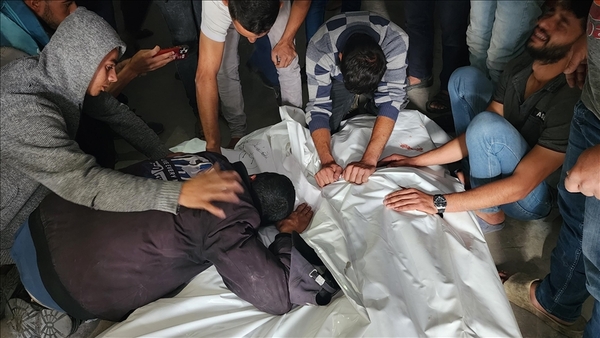
The death toll from the Israeli aggression on the Gaza Strip rises to 53,762 deaths.

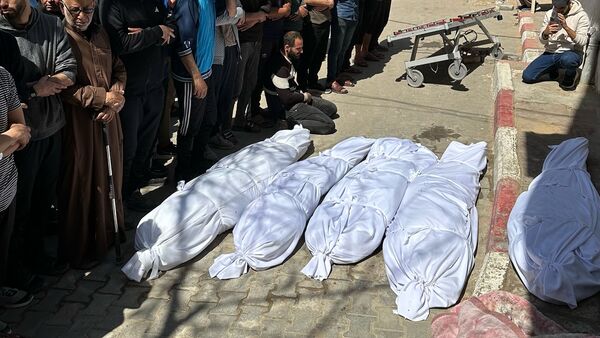
The Ministry of Health in Gaza reported on Thursday that the death toll from the Israeli aggression has risen to 53,762 martyrs and 122,197 wounded since October 7, 2023.

The ministry said in a brief statement, "107 martyrs (three of whom were recovered) and 247 injuries arrived at Gaza Strip hospitals in the past 24 hours."

She pointed out that a number of victims are still under the rubble and on the streets, and that ambulance and civil defense crews are unable to reach them.

She confirmed that the death toll and injuries since March 18, 2025 amounted to (3,613 martyrs, 10,156 injuries).

Meanwhile, medical sources announced that 54 citizens have been killed in Israeli raids on the Gaza Strip since dawn today, 25 of them in Gaza City and the northern Gaza Strip. This is a non-final death toll due to the ongoing war of extermination.

The Ministry of Health in Gaza reported that 343 children were born and martyred during the genocidal war on Gaza.

In the latest field developments in the sector:

In Khan Yunis, Fatima Hassan Yassin Al-Najjar (38 years old) was killed in a bombing in the Al-Mawasi area, while Yahya Mustafa Al-Abadla was killed by Israeli drone fire near the family mall in the Al-Qarara area.

In Gaza City, two citizens were killed in an Israeli airstrike on Nakhal Street in the Tuffah neighborhood east of the city, while another was killed and others were injured when Israeli aircraft bombed an apartment in the Al-Siddiq building near Al-Taj Restaurant on Yarmouk Street in the city center.

Meanwhile, five citizens were killed and others injured when the occupation forces bombed the Bakhit family home in the Saftawi area, northwest of Gaza.

In the northern Gaza Strip, two citizens were killed when Israeli aircraft targeted a group of citizens near the Zamou junction, north of Gaza.

The bodies of 13 martyrs were also recovered after an Israeli bombardment of two homes in the Zarqa area of Jabalia al-Balad.

In the central Gaza Strip, the Civil Defense reported that 10 people were killed and several others wounded as a result of an Israeli airstrike early Thursday morning on a barracks housing displaced people near a water reservoir in the Al-Baraka area of Deir al-Balah.

PALESTINE

Thu 22 May 2025 12:44 pm - Jerusalem Time

7 injured during the occupation's storming of Jalazone camp, north of Ramallah.

Seven citizens were injured on Thursday after Israeli occupation forces stormed the Jalazone refugee camp, north of Ramallah.

The Palestinian Red Crescent Society reported that its crews treated two people injured by rubber bullets, one in the chest and the other in a child's waist, and they were transferred to the hospital.

She added that five other citizens, including an elderly man, suffered from suffocation from the toxic gas fired by the occupation forces and were treated in the field.

The occupation forces stormed the camp this morning and destroyed several vehicles parked on the side of the road.

PALESTINE

Thu 22 May 2025 12:04 pm - Jerusalem Time

A settler attacks the shrine of Sheikh Dajani in Jerusalem.

A settler attacked the shrine of Sheikh Ahmed Ali Alaa El-Din Al-Dajani, in the Ma'man Allah Cemetery in occupied Jerusalem.

The governorate said in a statement on Thursday that the settler broke the original lock of the shrine and replaced it, installed an electric and water clock, and brought his own furniture into the shrine, which dates back nearly five centuries. He also removed the tomb inside, along with the identification sign indicating the shrine's identity and history.

She noted that a member of the Dajani family, who maintains the shrine, discovered the attack during a regular visit to the site. This prompted the family to file an official complaint with the Jerusalem municipality, which evacuated the settler from the shrine on Wednesday and has so far refused to hand over the key to the new lock installed after the evacuation, a further violation of the family's rights to supervise and access the shrine.

The Jerusalem Governorate held the occupation authorities fully responsible for this blatant attack on historic Islamic property, describing it as a fully fledged crime aimed at obliterating the historical and Islamic landmarks of the Holy City, as part of an ongoing colonial project aimed at altering the Arab, Islamic, and Christian identity of Jerusalem.

She called on the international community, particularly UNESCO, the Organization of Islamic Cooperation, and the United Nations Human Rights Council, to assume their moral and legal responsibilities in protecting Islamic and Christian holy sites in Jerusalem and to work to halt the repeated attacks on endowments, shrines, cemeteries, and historical monuments, which are an integral part of the world's human heritage.

The shrine of Sheikh Ahmed al-Dajani has previously been subjected to several attempts to storm and assault it by settlers, as part of a systematic Israeli policy to control Islamic endowments and shrines in Jerusalem and obliterate their religious and historical identity.

PALESTINE

Thu 22 May 2025 11:18 am - Jerusalem Time

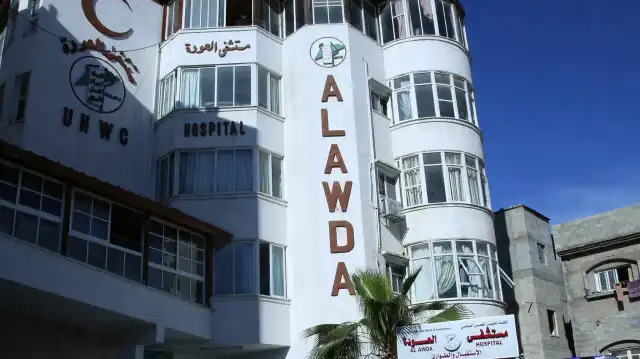
Al-Awda Hospital: Our crews are fighting to extinguish the fire at the hospital after the occupation forces bombed it.

The Al-Awda Health and Community Association said that crews at Al-Awda Hospital in Tel al-Zaatar, north of the Gaza Strip, are working hard to extinguish the fires that broke out in the hospital's facilities after it was targeted by the Israeli occupation.

She noted that hospital crews are trying to extinguish the fires in the hospital's warehouses and storage areas and prevent them from spreading to other facilities and threatening the lives of patients and staff.

She noted that the fires were still spreading within the hospital's facilities, and that crews were unable to deal with the blazes due to a lack of necessary resources, with Israeli tanks once again besieging the hospital.

The association confirmed that it is communicating with all parties, including the World Health Organization, the health sector, the International Red Cross, the Humanitarian Fund for the Occupied Palestinian Territory, the Palestinian NGO Network, and all relevant parties.

She called for pressure on the occupation forces to enable hospital crews to continue their efforts to extinguish the fires and not put their lives in danger. She also called for allowing civil defense crews access and facilitating their movement to the hospital to try to extinguish the fires, and to prevent the spread of the fire.

It also called on the International Red Cross to immediately head to Al-Awda Hospital in Tel al-Zaatar to provide protection for patients and staff there, and to enable crews to continue their efforts to extinguish the fire.

ARAB AND WORLD

Thu 22 May 2025 10:54 am - Jerusalem Time

The Syrian presidency denies statements made by a former US ambassador about Sharaa.

A Syrian presidential source denied on Tuesday the veracity of information provided by former US Ambassador to Syria Robert Ford, who spoke of meetings he held with President Ahmed al-Sharaa in Idlib in March 2023 "to rehabilitate him politically."

The source told Al Jazeera that the meetings Ford referred to were part of a series of meetings with hundreds of visiting delegations, dedicated to presenting and explaining the Idlib experience.

The Syrian presidency also noted that Ambassador Robert Ford was part of a delegation from a British research and studies organization, and that the sessions were limited to general questions related to the Idlib situation and did not address what Ford had stated in his statements.

During a session at the Council on Foreign Relations in Baltimore in early May, Ford said that a British organization specializing in conflict resolution had invited him to participate in an initiative aimed at removing Sharia from the realm of terrorism and bringing it into politics, he said.

He stated that he met with Sharaa three times: twice in 2023, and a third time after he assumed power in Damascus last January, following the lightning offensive launched by Syrian opposition factions that resulted in the fall of Bashar al-Assad's regime in December 2024.

Ford said he had a "civilized conversation" during his first meeting with Sharaa in 2023 in Idlib, recalling the details of the meeting, "I sat next to him with his long beard and military clothes, and I said to him in Arabic, 'I never imagined I'd be sitting next to you,' and Sharaa calmly replied, 'Not me.'"


The former ambassador noted that Sharaa did not apologize for the attacks attributed to him in Iraq and Syria, but spoke realistically about the need for transformation and concessions.

Ford served as US ambassador to Syria from 2011 to 2014, during one of the most tense periods in the history of relations between the two countries, as his tenure coincided with the outbreak of the Syrian revolution.

He was the first Western diplomat to visit Syrian cities like Hama during the early days of the revolution, a move that angered the Syrian regime at the time and later prompted Washington to withdraw him for security reasons. After retiring from the diplomatic corps, Ford remained one of the most prominent voices active on the Syrian issue in American circles, and currently works as a researcher at several think tanks and policy centers.

OPINIONS

Thu 22 May 2025 10:45 am - Jerusalem Time

Between ballot boxes and circles of fire: The mistake of bringing Hamas into the Palestinian political system

Dr. Ibrahim Nairat

Dr. Ibrahim Nairat

Opinion Writer

In January 2006, Hamas entered the legislative elections for the first time and achieved a landslide victory, transforming the Palestinian political landscape and subsequently leading to one of the most complex and costly divisions in contemporary national history. What happened was not merely an ordinary democratic event, but rather the result of a flawed strategic decision that the Palestinian leadership had never made before, specifically during the era of the late President Yasser Arafat, who refused to allow ideological forces that rejected the foundations of the political system into the elections without consensus or guarantees.

Under international and regional pressure, the Palestinian Authority at the time agreed to allow Hamas to participate in the elections, believing that integrating it into political and governmental life would make it more realistic and pragmatic. However, this idealistic vision of an ideological organization based on a program of comprehensive resistance and a refusal to recognize Israel quickly proved to be politically short-sighted, costing the Palestinians their unity and their national project.

Despite numerous attempts at rapprochement, the late leader Yasser Arafat did not open the doors of the regime to Hamas without national consensus and clear conditions. He understood that introducing an armed organization that did not believe in the legitimacy of the Oslo Accords and its outcomes into a political structure based on them would mean blowing up the regime from within.

After Hamas's election victory, a period of internal conflict began, one that no one was able to contain effectively. In 2007, the conflict culminated in the movement's violent takeover of the Gaza Strip and the Palestinian Authority's split between the West Bank and Gaza. Since then, the national project has entered a dark tunnel, with representative institutions paralyzed, legitimacy eroded, and the conflict with the occupation transformed into an internal dispute exploited by Israel to justify the stalemate in negotiations and the dismantling of the Palestinian cause.

Most questionable is that Israel, which has long classified Hamas as a terrorist organization, did not object to, but rather implicitly encouraged, the movement's participation in the elections. It did not demand any conditions, guarantees, or commitments, but rather treated the event as a tool to destabilize the Palestinian arena from within and thwart the Palestinian Authority's project in the eyes of the international community.

Numerous documents and testimonies later confirmed that some Israeli security and political circles viewed Hamas's victory as a means to disrupt the two-state solution from within, portray the Palestinians as a disunited party, consolidate the division between Gaza and the West Bank, and justify the ongoing blockade, war, and control.

From 2007 to 2023, Gaza fought four devastating wars, killing thousands, collapsing the economy, and deepening poverty. On October 7, Hamas launched an unprecedented, uncoordinated attack on Israel, triggering a catastrophic military response in the Strip and plunging the Palestinian cause once again into a tunnel of uncertainty and destruction.

What happened in 2006 was not a democratic opening, but rather a hasty strategic decision made without any awareness of the consequences. The review here does not mean antagonizing or excluding any faction, but rather requires a deep understanding of the nature of political forces, the extent of the contradiction between programs, and the importance of national consensus as the basis for any political partnership.

Those who do not learn from harsh experiences will have them reimposed, but at a greater cost. Is it time to admit that bringing Hamas into the system without national consensus and controls was a mistake as big as the entire issue?

PALESTINE

Thu 22 May 2025 9:53 am - Jerusalem Time

Residents of the Maghar al-Deir community are forcibly displaced under the pressure of settler attacks.

Palestinian families in the Maghayer al-Deir community, located between the towns of Deir Dibwan and Mikhmas, east of Ramallah, were forced to dismantle their homes and forcibly leave the community, under the pressure of settler attacks in the area, carried out under the protection and cover of Israeli occupation forces.

The Al-Baidar Organization for the Defense of Bedouin Rights said in a statement on Thursday that residents of the Maghayer al-Deir area, east of Ramallah, began dismantling their homes this morning in order to leave the community. This comes after settlers escalated their attacks on the area, closing pastures, storming homes and violating their sanctity, assaulting women and children, seizing agricultural vehicles and tractors, stealing livestock, and establishing a pastoral colonial outpost among the homes within the community.

She added that all Palestinian families in the community have begun evacuating the area and will leave their homes and move to a safer location due to the escalating settler violations against them. She explained that the forced migration of families from the community began months ago.

Several days ago, settlers seized a sheep pen belonging to a family from the Arab al-Malihat tribe in the Maghayer al-Deir area. They then set up a tent and metal fence around the pen, and brought a group of livestock into the pen.

The Wall and Settlement Resistance Commission monitored attempts by settlers to establish 10 new outposts during the month of April, predominantly agricultural and pastoral. These outposts were distributed as follows: three outposts were attempted on lands in the Ramallah Governorate, two outposts in the Salfit Governorate, and others in Jericho, Hebron, Tubas, and Nablus.


OPINIONS

Thu 22 May 2025 9:38 am - Jerusalem Time

This is the difference between us and them

Hamada Faraana

Abu Bakr Al-Siddiq advised his soldiers before the conquest of the Levant, saying:
“Do not betray, do not cheat, do not deceive, do not mutilate, do not kill a young child, an old man, or a woman, do not uproot a palm tree, do not burn it, do not cut down a fruitful tree, do not slaughter a sheep, a cow, or a camel except for food.”
These are the commandments we learned in our schools and mosques, values that have been ingrained over time in our souls, consciences, the behavior of our fighters, and the instructions of their leaders. That is why the leaders of the Palestinian Arab community boasted that Palestine, before the occupation, the Nakba, and the displacement of half of the Palestinian people outside their homeland in 1948, after a series of massacres, slaughters, killings, dragging, and the destruction of villages, as a result of the Israeli Zionist Hebrew Jewish expansionist colonial project, the Palestinian people were represented by religious pluralism of Muslims, Christians, Jews, and Druze, and national pluralism of Arabs and non-Arabs from the few national minorities of Kurds, Circassians, Chechens, and Armenians.
In contrast, let us examine the history of the Jewish invaders to Palestine. Joshua bin Nun led them, after the departure of Moses, peace be upon him, from the east of the Jordan, in Madaba, towards Jericho. So what did their leader, Joshua bin Nun, advise his soldiers who invaded Jericho, as Joshua ordered them to burn everything in the city, men, women, children, and old people, even the cows and sheep?
And they forbade everyone in the city, men and women, children and old people, even the cows, sheep and donkeys, by the edge of the sword. And they burned the city with fire and everything in it.
This is the intellectual, political, and cultural heritage of the two sides of the Palestinian-Israeli conflict.
Recently, Hamas, in its document announced on May 1, 2017, affirms in Article 16 the following:
"The conflict with the Zionist project is not a conflict with the Jews because of their religion. Hamas is not waging a conflict against the Jews because they are Jews, but rather is waging a conflict against the occupying, aggressive Zionists, while the leaders of the occupation are the ones who use the slogans of the Jews and Judaism in the conflict."
And in Article 17 of the same document, the following was announced:
Hamas rejects the persecution of any human being or the infringement of their rights on the basis of nationality, religion, or sect. It believes that the Jewish problem, anti-Semitism, and the persecution of Jews are phenomena fundamentally linked to European history, not to the history or heritage of Arabs and Muslims.
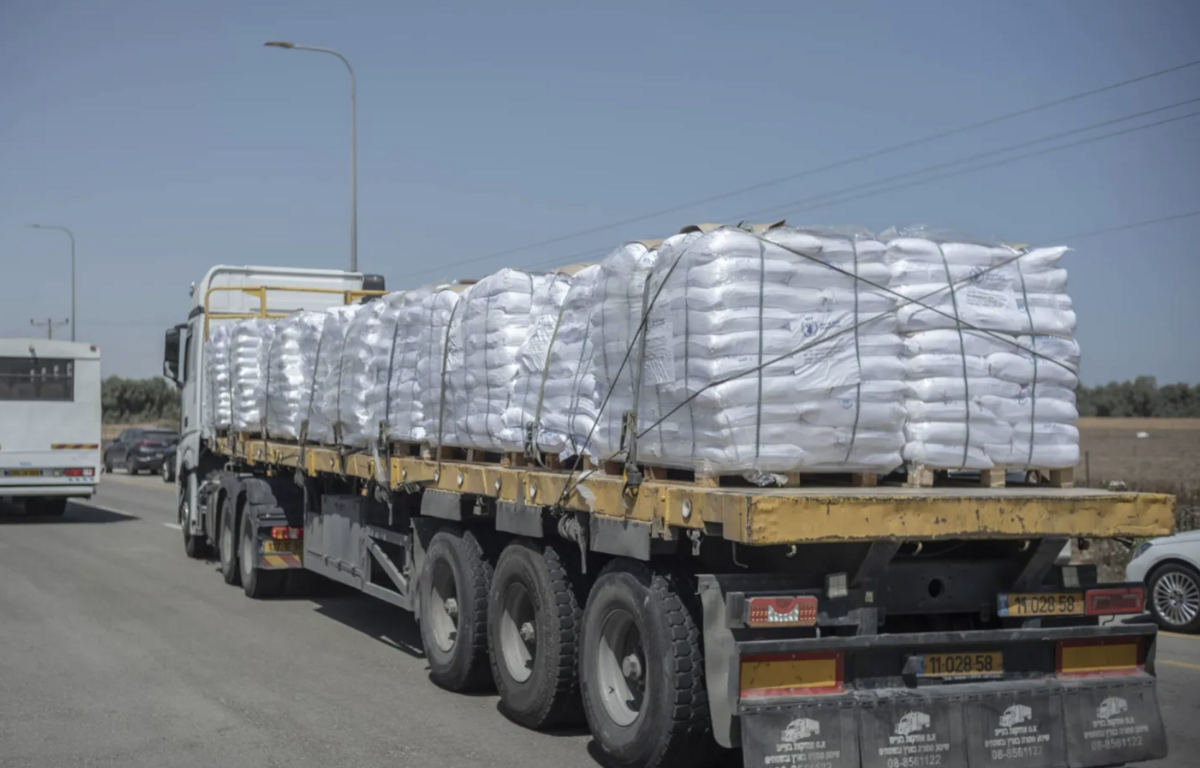
Smotrich is from the government coalition with Netanyahu and Ben-Gvir, and Lieberman is one of the leaders of the opposition to Netanyahu's government with Benny Gantz and Yair Lapid. Both Minister Smotrich and the opposition Lieberman reject and incite against Netanyahu's decision to allow some food supplies into the Gaza Strip. This was done under American pressure, after scrutiny and scandals of the colony's practices against the Palestinian people, who are leaving and disappearing from life because of:
1- Killing, destruction, bombing, and direct, deliberate burning by the occupation forces, based on a political decision by the Netanyahu government.
2- Hunger due to the decision to prevent the entry of basic food supplies necessary for human survival.
3- The disease that is sweeping the people of the Gaza Strip due to weak immunity, widespread filth, lack of medicines and treatments, and the deliberate destruction of hospitals and health centers. The goal is to end the lives of Palestinians and kill the largest number of them, whether they are men or women, children or elderly. It makes no difference to the colony, its decisions and its apparatuses. What is important is to reduce the number of Palestinians on the land of their homeland, which is their only homeland: Palestine, through: 1- Killing, 2- Displacement and deportation, as happened in 1948, and here are the facts, evidence and actions being repeated with the Palestinians at the hands of the Israelis.

.............
Killing, destruction, bombing, and direct, deliberate burning by the occupation forces, based on a political decision by the Netanyahu government, and starvation, based on a decision to prevent the entry of basic food supplies necessary for human survival.

OPINIONS

Thu 22 May 2025 9:37 am - Jerusalem Time

From pampered country to outcasted

Amin Al-Hajj

This phrase was never directed at the occupying state, but it seems that times are changing, masks are falling, and today it is competing with regimes of oppression and genocide for the back seats of the international system. With the expansion of condemnations, the suspension of agreements, and the threat of sanctions, the description of a pariah is no longer an exaggeration. Rather, it is a political and moral description of a reality that has begun to forcefully impose itself. It is no longer a partner, but a burden on what remains of the world's conscience.
As condemnations pour in from Western leaders, UN organizations issue warnings of mass starvation, and European streets are filled with banners describing the occupying state as a perpetrator of genocide, we are not witnessing a passing diplomatic crisis, but rather a historic shift in its position on the map of "international legitimacy." Israel, which has long enjoyed political and media immunity and "enjoyed" the killing of Palestinian children, finds itself today on the brink of moral and legal isolation. It is no exaggeration to say that it has effectively entered the stage of "pariah state."
Since October 7, the occupying state has launched a war of genocide against the Gaza Strip, which has so far left tens of thousands dead and wounded, most of them children and women, according to local and international reports. It has targeted schools, hospitals and shelters, displaced hundreds of thousands, and prevented the entry of food, water and medicine for long periods in the past, and recently for more than two months, causing a humanitarian catastrophe unprecedented in the twenty-first century. Every time it announces the "entry of aid", it is only a few drops, which do not extinguish the fires of hunger, nor do they help the dying.
But what's new this time isn't just the scale of the crime, its scope, or its brutality, but the extent of the international rejection. Leaders of Western countries such as Britain, France, and Canada have warned of "concrete measures" if Israel does not halt its operations in Gaza. In an unprecedented stance from historic and founding allies, Britain has announced the suspension of free trade talks, and the European Union has begun reviewing its partnership agreement. Other member states have demanded sanctions be imposed on ministers in Netanyahu's right-wing government. In a joint statement, 22 Western countries demanded immediate and full access to aid for Gaza. These statements are no longer accompanied by equivocal positions; rather, these actions are described as morally unjustifiable, counterproductive, and blatant violations of international law.
Even the US administration, despite its commitment to political and military support, has begun to experience cracks in its internal discourse. Voices warning of the consequences of unconditional support for a state that openly violates international humanitarian law, whether in plain sight or in plain sight, have become increasingly vocal. The positions of the occupation government have begun to be met with rejection and ridicule, as happened when the Israeli Foreign Ministry accused the Europeans of a "complete misunderstanding," even considering their demands to stop the war to be support for Hamas.
What is happening today is not just "international pressure," but a global declaration that the occupying state is no longer above the law. Systematic killing, deliberate starvation, brazen settlement expansion, ethnic cleansing, and mass displacement have become a global disgrace that cannot be covered up. With every child whose remains are pulled from the rubble, and every mother who loses her children at once, Israel's "moral credibility" is eroded in the eyes of its supporters. This credibility was founded on the illusion that it is the "only democracy" in the Middle East.
Thus, the world is expressing not only anger, but also a desire to disengage from a state that no longer respects any principle of international law and insists on continuing its crimes in the name of the “right to self-defense.” This transformation does not happen in a vacuum, but rather as a result of the accumulation of decades of complicity and silence, which have been shattered today by the lenses of truth and the corpses of children and women. Today, through its crimes, it has not only robbed Palestinians of their lives, but also robbed itself of its position in an international system that has always provided it with cover. In other words, it has now become a pariah state, morally and politically, and the next step is not condemnation, but accountability.

.............

Today, Israel—through its crimes—has not only robbed Palestinians of their lives, but has also robbed itself of its place in an international system that has always provided it with cover. In other words, it has now become a pariah state, morally and politically, and the next step is not condemnation, but accountability.

OPINIONS

Thu 22 May 2025 9:34 am - Jerusalem Time

Weapon of demonstrations in support of Palestine

Majdi Al-Shomali

The siege on Gaza these days is unprecedented, and the number of martyrs has reached approximately 100 per day. However, this is not the reason that made the governments of Britain, France, and Canada reconsider their position on the war on Gaza. The killing, siege, and destruction began from day one. As a reminder, the Baptist Hospital massacre occurred on October 17, ten days after the start of the aggression, and 500 martyrs fell in a single minute and in a single location. The target was a hospital, not a military barracks. And which hospital? The Baptist, which belongs to the Anglican Church, which bears the name of England and is headquartered in England. Yet, neither Britain, Canada, nor France took any action.
The demonstrations that began on the second day of the war chanted slogans in support of Palestine and called for an end to the war and the blockade. They also called for a boycott of Israel and an end to the arming of Israel. We saw demonstrators storming arms factories in Britain and other countries, and we also saw campaigns to boycott Israeli goods. Human rights, international law, and democracy became a source of ridicule and a target for mockery of Western governments. Millions participated in the demonstrations, led by journalists, politicians, parliamentarians, doctors, lawyers, artists, and academics. Thus, the demonstrations and their demands gained credibility.
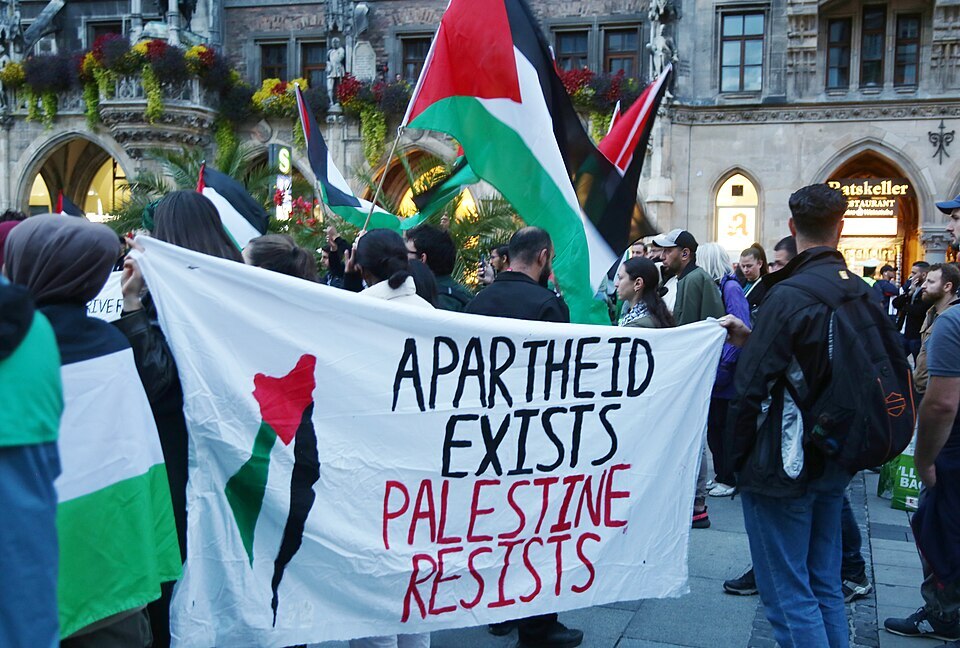
Throughout the 19 months of the war on Gaza, it was clearly a war of extermination, unrelated to the liberation of prisoners. During this period, Western governments were not serious about calling for an end to the war of extermination. However, the use of starvation as a weapon in the war, the indiscriminate bombing of civilian tents, and images of the remains of martyrs gave strong momentum to demonstrations, positions, and statements by a number of figures, especially in Europe and America. The demonstrations that began on Nakba Day had a significant impact on Western government positions. The most significant of these demonstrations was in London, where the number of participants exceeded half a million demonstrators, and the "Red Demonstration" in the Netherlands, where more than 200,000 people dressed in red participated to tell their governments that this is a red line. In addition, there were more than 100 demonstrations in European cities such as Madrid, Manchester, Berlin, Thessaloniki, Rome, Paris, Marseille, Stockholm, Oslo (especially the University of Oslo), Copenhagen, Florence, Geneva, Belfast, Malmö, Mannheim, Hamburg, Dublin, and others. In addition to demonstrations in America, Canada, Australia, Korea, Japan, some Islamic countries in Asia, and South Africa.
Recently, universities have regained their footing and begun to demonstrate, as we have seen in Oslo, Washington, New York, Los Angeles, Canada, Italy, the Netherlands, Britain, and Switzerland. It has also become commonplace to chant slogans against the war of genocide and the slogan "Free Palestine" during awards receptions and graduation ceremonies. It has also become commonplace for government lecturers to be boycotted and accused of complicity in the war of genocide. It has also been noted that Israel has been unable to organize a pro-Israel demonstration or find a prominent journalist who would dare repeat the lie of beheading children and raping women. It has also failed to find an influential academic who would boldly praise and justify the policy of genocide. The Israeli entity has been described by many, including Jews, Israelis, and even government officials, as "a pariah entity." In other words, the Palestinian narrative has triumphed, and the Israeli narrative has been retroactively exposed.
Amidst this climate, with the intensification of genocide, starvation, and killings; the expansion of settlements in the West Bank; the illegal practices of settlers; the delay in achieving a decisive military outcome; and the emergence of signs of disagreement between Trump and Netanyahu, Western governments have found it in their best interest to move forward and adopt practical positions that will satisfy their constituencies and deflect accusations of complicity in a war of extermination.
Therefore, continuing demonstrations and boycotts in all the creative forms we have witnessed over the past 19 months remains the most powerful weapon available to the people, ensuring that governments do not back down from their decisions, which are essentially the achievements of the people.


...........

The demonstrations commemorating the Nakba had a significant impact on Western government positions. The most significant of these demonstrations was in London, where over half a million people participated, and the Netherlands' "Red March," which saw over 200,000 people wearing red clothing, signal to governments that this was a red line.

OPINIONS

Thu 22 May 2025 9:33 am - Jerusalem Time

International positions and promising statements

Baha Rahal

What happened yesterday in the British House of Commons was not a passing event. The serious questioning of the occupation ambassador represents a significant and necessary act, and a scene with many implications. It was not merely a muted reaction, but rather a serious and sharp diplomatic stance at the highest level. I followed the speeches delivered by the members and the interventions, which were delivered in strong, unusual language, especially the speech of the British Foreign Secretary, who presented a plea rejecting all forms of genocide taking place in Gaza, all attempts to displace and expel the population, the continuation of the blockade, and the prevention of the entry of food and medicine.
In parallel with the questioning of the occupation's ambassador to Britain, and the decisions to impose sanctions on the settlement entities, the Spanish Parliament approved a ban on arms trade with the occupation, and the exclusion of the entity from all cultural events. Concurrent calls were issued by France and the Netherlands for the European Union to impose sanctions on the entity, in addition to other moves to recognize the Palestinian state, and statements by the French Prime Minister calling on EU countries to take positions to pressure the occupation to stop the war. These are important positions that must be properly invested in a path that serves the justice of the Palestinian cause, stops the war of genocide, starvation, and the expansion of killing and destruction, in addition to prosecuting and holding accountable the perpetrators of massacres and massacres in international courts.
This is a significant shift and significant European moves to stop the genocide our people are being subjected to. This angers the entity and exposes the cover it has been hiding behind and betting on over the past months. The world has witnessed the torrent of atrocities that has flowed from October 2023 until today, and witnessed the crimes committed against innocent civilians. How humane it would have been if these positions had been taken from the first day the massacres began. They would have saved tens of thousands from death, and the devastation would not have reached the level it has reached today. How long the people of Gaza have awaited such positions, which have been a source of hope for them, to lift the injustice from them and stop this hideous war.
European positions urgently need to be translated into concrete action, to erase some of the shame inflicted on them due to their prolonged silence and neutrality over the past months, while people in Gaza are unjustly killed, murdered, and starved. There is no time to wait. Every minute, a family is killed by bombing, every hour, dozens are killed and wounded, and thousands of children are threatened by hunger, who lack food, milk, or medicine.

..........

European positions urgently need to be translated into concrete action, in order to erase some of the shame inflicted on them due to their prolonged silence and neutrality over the past months.

PALESTINE

Thu 22 May 2025 9:31 am - Jerusalem Time

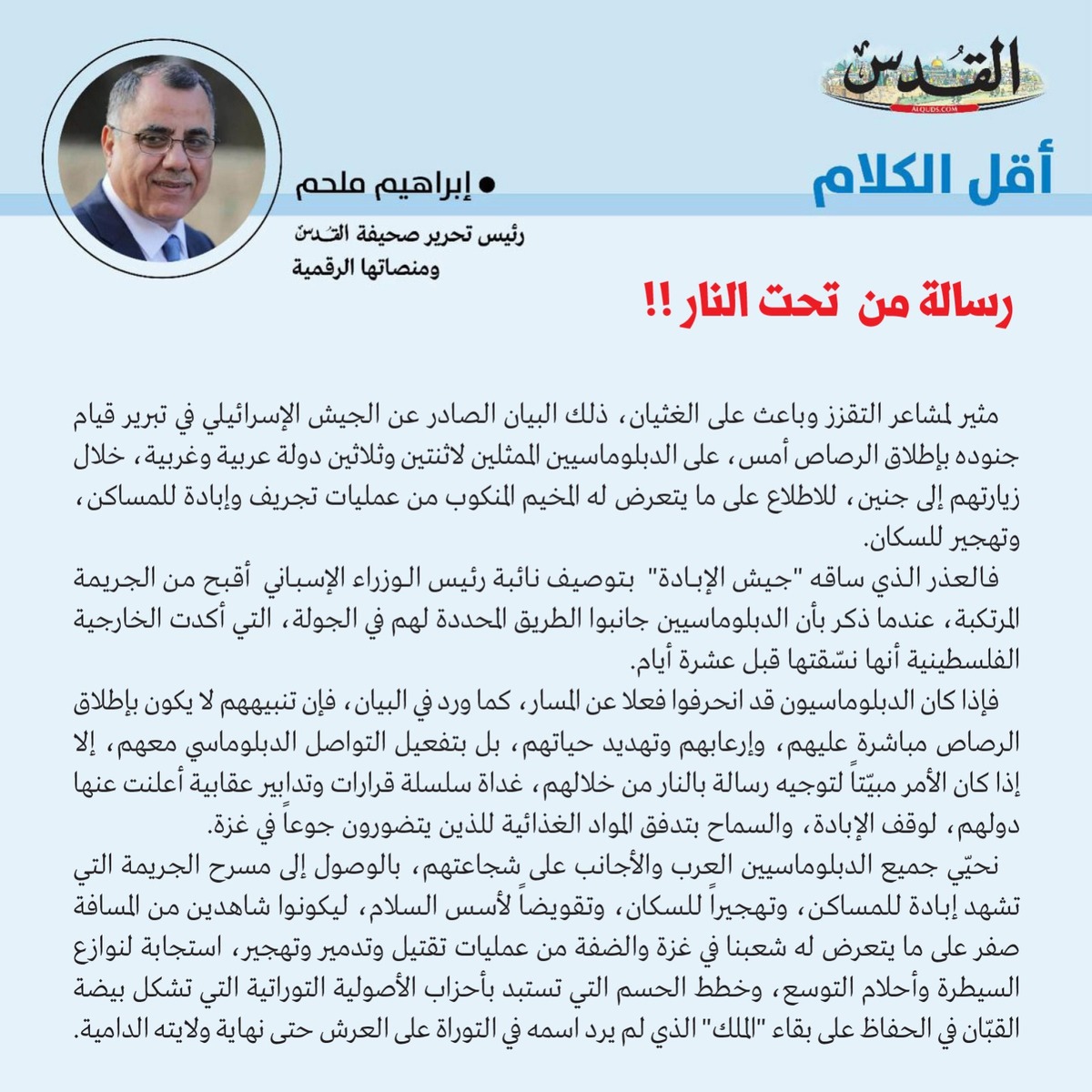
A message from under fire!!

The Israeli military's statement justifying its soldiers' shooting yesterday at diplomats representing 32 Arab and Western countries during their visit to Jenin to witness the demolition and destruction of homes and the displacement of residents in the stricken camp is disgusting and nauseating.

The excuse offered by the "Army of Extermination" for describing the Spanish Deputy Prime Minister is even more hideous than the crime committed, when it stated that the diplomats deviated from their designated route during the tour, which the Palestinian Foreign Ministry confirmed it had coordinated ten days prior.

If the diplomats have indeed deviated from the path, as stated in the statement, then warning them would not be done by directly shooting them, terrorizing them, and threatening their lives, but rather by engaging in diplomatic engagement with them, unless the matter was premeditated to send a message through them with fire, following a series of punitive decisions and measures announced by their countries to stop the genocide and allow the flow of food to those starving in Gaza.

We salute all Arab and foreign diplomats for their courage in arriving at the crime scene, which is witnessing the destruction of homes, the displacement of residents, and the undermining of the foundations of peace. They were witnesses from zero distance to the killing, destruction, and displacement that our people in Gaza and the West Bank are being subjected to, in response to the desires for control, the dreams of expansion, and the decisive plans of the fundamentalist Torah parties, which constitute the decisive factor in preserving the survival of the “king” whose name is not mentioned in the Torah on the throne until the end of his bloody reign.

OPINIONS

Thu 22 May 2025 9:31 am - Jerusalem Time

Legal opinion on the recent Cabinet decision to prevent land settlement in Area C and cancel the settlement procedures carried out by the Authority

Lawyer Medhat Diba
Legal Advisor - Jerusalem Governorate

The Security Cabinet recently issued a dramatic decision regarding Area C, stating that the Palestinian Authority is not authorized to carry out land settlements in these areas. The resolutions previously implemented by the Palestinian Authority are deemed to be without authority and have no legal effect.
This decision contradicts the approach of the occupation authorities in Area C, which they have been accustomed to for years.
This decision was made in full agreement between the Israeli Minister of Defense and the Minister of Finance in order to extend control over vast areas of land classified as Area C.
According to the aforementioned decision, the only party that has the final say over Area C is the occupying state.
Area C has had a stable status since its occupation in 1967. Although the occupying authorities are sovereign and control over it, the laws that remain applicable to its lands are Ottoman law and Jordanian law. Upon the entry of the Authority, its laws were also incorporated into the applicable laws, and the Authority began, approximately 15 years ago, the process of dividing the lands and determining their regulatory status. This is despite the fact that, under the agreements between the two parties, the lands classified as Area C remained the responsibility of the occupying power.
Accordingly, until then, the occupying state treated Area C as "no-go areas except for what could be entered." This means that any area declared to be state land automatically belongs to the occupying state, and the remainder is considered Palestinian land. Accordingly, the Authority, in cooperation with the European Union, was able to build schools and facilities in some Area C areas, considering them to be private Palestinian land.
Now, with this dangerous decision, the occupying state has come to view Area C as "permitted areas except for what is prohibited." This means that these areas are no longer available for construction as they were previously, as they were Palestinian areas, but rather require a planning process. Accordingly, Palestinians cannot build from now on except through a building permit.
Under this decision, all settlement activities carried out by the Authority were deemed illegal and of no effect, including maps, documents, registrations, and approvals, which became legally ineffective in any legal proceeding by the occupying power.
Under this decision, the army and security forces will be required to work to prevent the completion of Palestinian settlement operations, including preventing relevant professionals such as engineers and surveyors from entering Area C, preventing the flow of foreign aid allocated for the settlement process, and directly requesting the Palestinian Authority to revoke all measures it has taken in this regard.
Under this resolution, the Minister of Defense will issue instructions to renew the settlement process in these areas through state institutions by amending existing laws and military orders to adapt them to the new resolution, as well as establishing official jurisdictions to complete the necessary preparations for this project, including legal and professional preparations, and the necessary funding for the settlement process within 60 days.
This decision coincided with the approval of several related "minor" laws aimed at eliminating the idea of establishing a Palestinian state on the one hand, and expanding settlement outposts at the expense of "private Palestinian lands" after they were restructured and classified as state lands based on this decision on the other.
This decision is considered a significant step in a series of measures implemented in the West Bank over the past three years, which have led to the withdrawal of almost all of the Civil Administration's powers and their transfer to the Settlement Department within the Ministry of Defense, which is overseen by the current Finance Minister. After issuing instructions to issue building permits in settlements on a weekly basis, expanding settlement farms, and declaring several areas as state land, the Finance Minister continues to issue instructions to re-survey lands in the West Bank through his "group," canceling the survey and classification of those areas that the Authority had conducted years ago.
One of the most significant problems facing settlers, preventing them from expanding settlements until this decision is issued, is the existence of "private Palestinian land," which is land whose owners have proven their ownership and that it has belonged to them since the Jordanian era. Accordingly, and based on the Security Cabinet's decision, much of the West Bank will be reviewed and re-surveyed by Smotrich's gangs, who work in the Civil Administration or the Settlement Coordination Office in the Ministry of Defense. In the event that land privately owned by Palestinians is encountered, it will be declared state land. Through this process, many lands owned by Palestinians will be declared state land, and settlements will expand with ease, without the obstacle of "private Palestinian ownership," which Israeli courts recognize as protecting Palestinians.
Among the most important objectives of this decision, which constitutes a coup against all international agreements and norms, were stated by Defense Minister Katz, including: ending the dream of establishing a Palestinian state; expanding the settlements, which the war has proven to be a protective shield for the Israeli project, and therefore this shield must be supported and strengthened; settling the lands through government institutions, which establishes legal clarity and prepares the ground for the development of settlements, while at the same time preventing the Authority's attempts to seize control of the lands and destroy the dream of a state.
Security related new legislation aimed at undermining the government, preventing the two-state solution, and controlling the West Bank: The proposal of extremist Knesset member Simcha Rothman, head of the Knesset Constitution, Law, and Justice Committee, to officially change the name "West Bank" to "Judea and Samaria" in all Israeli laws, which would expand settlements beyond the Green Line. The Antiquities and Excavation Authority bill stipulates the transfer of authority over antiquities, excavations, and prospecting from the "military" authority in the West Bank to the Israeli Civil Antiquities Authority. The bill also freezes the authority's "clearance" funds and deducts funds used to support terrorist activities. It also calls for the passage of a new law to allow settlers to purchase land in the West Bank, which Jordanian law currently prohibits them from privately owning.
On 12-19-2024, we published our first article about the annexation plan and Smotrich's project to control the West Bank lands https://www.alquds.com/ar/posts/145547  .
On January 3, 2025, we published our second article on the settlement process the occupation intends to initiate in East Jerusalem, with the aim of extending control over most of the lands whose owners are considered "absentees." A copy of the article is attached as it relates to the government decision at issue.
We, like international law experts, believe this decision constitutes a form of unofficial annexation of the West Bank, making it part of the occupying state. This project is Smotrich's "lifelong dream," aiming to force the official state to refrain from entering into any solution that would lead to a two-state solution through land swaps, because that is not currently possible.
This decision, like other related decisions, will undoubtedly have consequences, both in the short and long term. There is no doubt that such judicial legislation, which is contrary to international norms and law, will show “Israel” as a state that does not desire any settlement and does not want peace. There is no possibility of saying that the right wing, with its current government, desires a “shared” life, and that Israel is behaving as if it is not part of the Middle East, and that it must act as a partner in the Middle East and that it must integrate into the region.
Accordingly, this decision of the Security Cabinet and the other legislation that falls under it violate international law and international norms as follows:
A. The settlement process in Area C, as well as the settlement process in East Jerusalem, violates Article 147 of the Fourth Geneva Convention of 1949, which stipulates:

"The widespread seizure of property belonging to protected civilians constitutes a grave breach of the Fourth Geneva Convention."
B. Article 8 (2) of the Rome Statute of the International Criminal Court, which states: “Large-scale confiscation of real estate not for imperative military purposes shall be considered a war crime.”
T. This is in addition to the fact that the confiscation of private property according to Articles 43 and 46 of the Hague Regulations annexed to the Hague Convention is considered an assault on property, while the occupying state is required to respect the property rights of individuals and explicitly stipulates that the occupier is prohibited from confiscating private property and that applicable laws (Jordanian and Ottoman) must be respected.
C. All of this comes in addition to the fact that the settlement process will be implemented under Israeli law, which has recently undergone numerous judicial amendments that conflict with the interests of the Palestinian population, which already suffers from the lack of a clear legal or political status. This will make it difficult for them to prove their ownership of the land, and the occupying state's land acquisition activities will expand according to this law. For example, the laws that have been amended and are likely to harm the interests of the Palestinians:
Q1. Amendments made to the law extending the statute of limitations.
Q2. Preventing the possibility of purchasing rights in real estate on the basis of continuous possession, not for agricultural purposes.
Q3. Amending the system of proof required to prove ownership and other matters (see in this regard the book: The Age of the Majority and the Age of the Minority: Land, Nationalism, and the Law of Statute of Limitations in Israel, third edition, 1998, pages 665 and 746, author Sandy Kedar).
It is also well known that the process of settling rights in the occupied territories serves the occupation politically first and foremost. To be precise, we can say that the process of land settlement serves the illegal settlements under international law. There are many cases in which the public trustee intervenes in property disputes, some of which were carried out without the knowledge of the rights holders of the lands subject to the settlement, who found themselves facing eviction orders in favor of the settlers, as happened with the Erekat families since August 18, 2024, and the Qunbar families since March 2023 in the Abu Dis area - adjacent to Al-Quds University - and what is happening in Silwan and Sheikh Jarrah.
The settlement process also requires citizens to provide documentation to prove their rights from other countries, such as Jordan and/or Turkey. This is a financially and practically challenging process, two issues that Palestinian citizens already struggle with. What makes the proof process even more difficult is the fact that more than 58 years have passed since the occupation began. This gives the occupying state a higher priority and preference in the proof process, at the expense of the population's own weakness.
What is required to be done:
At the international level:
1. The necessity of submitting a request to obtain precautionary measures from the International Court of Justice to freeze the settlement procedures, as they are not urgent or necessary at the present time. Such requests may be submitted by South Africa or by separate requests from several countries.
2. Review the Oslo Accords and its annexes, and what was agreed upon regarding Area C. Do the occupation authorities have the right to declare unilateral control over these areas?
3. Does the Oslo Accords grant Israel permanent control over Area C, or is its control temporary until a final agreement is reached? If the agreement does not grant Israel absolute and permanent sovereignty, then the settlement procedures are invalid because they would affect the final status.
4. Cancelling the settlement procedures implemented by the Palestinian Authority means keeping citizens' property in the "unknown" zone. This will lead to widespread fraud and illegal sales, while calls are being made for a new law to allow settlers to purchase land in the West Bank.
On the internal level:
1. National awareness - legal advice. Study each case individually and assess the situation, as many settlement files began and ended without Palestinian involvement or any objection, as occurred in the case of "Kobaniyeh Umm Haroun" in Sheikh Jarrah, Jerusalem, where most, if not all, of the neighborhood was registered in the names of individual Jews.
2. The necessity of continuing to demonstrate presence and attendance on the lands, and to place fences and wire fences and guard them by forming guard committees from each area to prevent settlers from seizing the land and creating a fait accompli that is difficult to change.

.............
This decision, like other related decisions, will undoubtedly have consequences, both in the short and long term. There is no doubt that such judicial legislation, which contravenes international norms and law, will portray "Israel" as a state that does not desire any settlement and does not want peace.

ARAB AND WORLD

Thu 22 May 2025 9:29 am - Jerusalem Time

Trump attacks South African president with video and false allegations of racism against whites

US President Donald Trump attacked South African President Cyril Ramaphosa by showing a video that he falsely claimed proved genocide against whites under "the opposite of apartheid."

This provocative ploy on Wednesday sparked the most tense Oval Office meeting since Trump bullied Volodymyr Zelensky in February. But Ramaphosa—who had previously stated that he came to Washington to "reset" the relationship between the two countries—refused to fall into the trap, suggesting that they "talk it out very calmly."

Trump has long asserted that Afrikaners, a minority largely descended from the Dutch colonialists who ruled South Africa during decades of apartheid, are being persecuted. South Africa denies this claim. Murder rates are high in the country, and the vast majority of victims are black. What began as a friendly meeting at the White House, punctuated by lighthearted jokes about golf, took a surprising turn when Ramaphosa told Trump that there was no genocide against Afrikaners.

"We have thousands of stories about this," Trump said, then ordered his staff to "turn off the lights and just turn this on."

Ramaphosa sat next to Trump in front of the fireplace, forced a smile, and turned to look at a large television screen, as Trump's ally, South African-born billionaire Elon Musk, JD Vance, Defense Minister Pete Hegseth, and diplomats and journalists from both countries watched.

The video included footage of former South African President Jacob Zuma and hardline opposition politician Julius Malema singing an apartheid-era struggle song called "Kill the Boer," which means farmer or Afrikaner, while supporters danced.

Ramaphosa responded calmly and firmly, stating that the views expressed in the video did not represent government policy.

There was also a video that Trump claimed showed the graves of more than 1,000 white farmers, marked with white crosses. Ramaphosa, who sat for most of the time expressionless, occasionally craning his neck to look, said he had never seen it before and wanted to know its location.

Trump then showed a collection of newspaper articles he said were from the past few days, covering the killings in South Africa. He read some of the headlines and commented: "Death, death, death, horrible death."

Ramaphosa acknowledged the existence of crimes in South Africa, saying that the majority of victims were black. Trump interrupted him, saying, "Farmers are not black."

The white genocide conspiracy theory has long been a staple of the racist far right, and has been amplified in recent years by Musk and right-wing media personality Tucker Carlson.

Trump continued to return to the topic during Wednesday's televised rally. "Now I will say, segregation: terrible," he said. "That was the biggest threat. It was reported all along. It's kind of reverse segregation."

"What's happening now is never reported. Nobody knows about it. All we know is that we're being flooded with people, with white farmers from South Africa, and that's a big problem."

“They are white farmers, and they are fleeing South Africa, and it is very sad to see. But I hope we can get an explanation for that, because I know you don’t want that,” he added. But Ramaphosa maintained a measured tone, saying, “Nelson Mandela taught us that whenever there are problems, people should sit down together and talk about them. And that is exactly what we would like to talk about as well.” The meeting came days after about 50 Afrikaners arrived in the United States to accept Trump’s offer of asylum. Trump made the offer despite the fact that the United States has suspended the arrival of asylum seekers from most of the world as part of his immigration crackdown.

Relations between the two countries have reached their lowest point since the end of apartheid in 1994. The United States condemned South Africa's case accusing Israel of genocide in Gaza before the International Court of Justice, cut aid, announced a 31% tariff, and expelled the South African ambassador for criticizing Trump's "Make America Great Again" movement.

But the biggest point of contention was South Africa's Land Expropriation Act, signed into law last January and intended to address the historical inequalities that accompanied white minority rule. Ramaphosa denied that the law was being used to arbitrarily confiscate white-owned land and insisted that all South Africans were protected by the constitution.

But Trump falsely claimed: “You let them take over the land — and when they take over the land, they kill the white farmer, and when they kill the white farmer, nothing happens to them… You take people’s land, and those people, in many cases, are lynched. They’re lynched while they’re white.”

It's worth noting that the campaign was not only driven by domestic considerations, but was also used as leverage against South Africa in international matters, including the lawsuit filed by the Ramaphosa government against Israel at the International Court of Justice.

ARAB AND WORLD

Thu 22 May 2025 9:27 am - Jerusalem Time

Italy, Spain, France, and Portugal summon Israeli ambassadors, and the European Union calls for accountability.

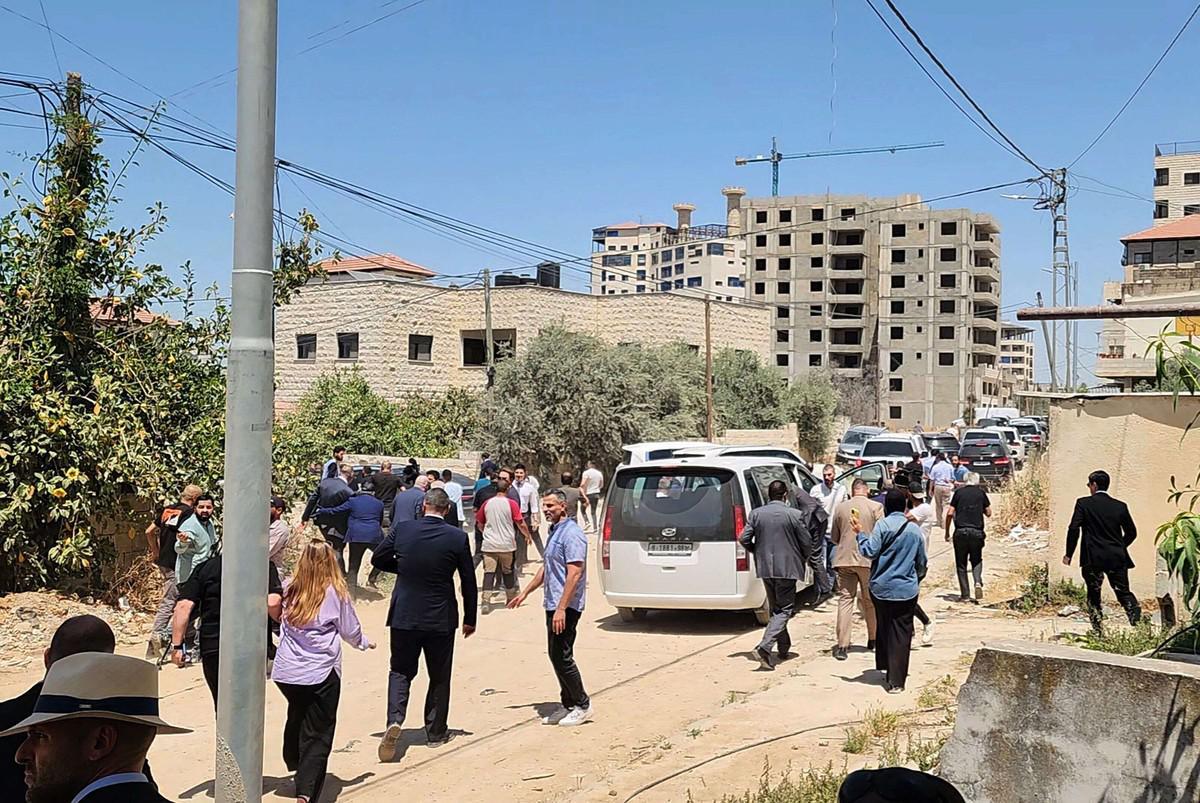
In a dangerous and unprecedented escalation, occupation forces fired live ammunition at a diplomatic delegation at the entrance to Jenin camp on Wednesday.
Press sources reported that occupation soldiers stationed in Jenin camp fired live ammunition directly and intensively at the diplomatic delegation while it was in the vicinity of Jenin camp to review the camp's conditions and the siege imposed on it.
She noted that while the delegation was near the iron gate the occupation forces had installed at the eastern entrance to the camp, occupation soldiers opened heavy fire at the delegation and a group of journalists covering the visit.
The delegation included the ambassadors of Egypt, Jordan, Morocco, the European Union, Portugal, China, Austria, Brazil, Bulgaria, Turkey, Spain, Lithuania, Poland, Russia, Turkey, Japan, Romania, Mexico, Sri Lanka, Canada, India, Chile, France, Britain, and a number of representatives of other countries.
The diplomatic delegation visited the Jenin Governorate headquarters and was briefed on the situation in the city and camp. The governor gave a detailed account of the city's economic situation, the impact of the aggression on basic amenities, commercial losses, and the destruction of infrastructure, as well as the conditions of the 22,000 displaced persons forced by the occupation to leave their homes in the camp.
The occupation forces continue their aggression against the city of Jenin and its camp for the 121st consecutive day, expanding their bulldozing and destruction operations inside the camp with the aim of changing its features and structure.
European and Arab condemnation
In response, Italian Foreign Minister Antonio Tajani announced that he had summoned the Israeli ambassador in Rome to obtain official clarifications regarding the events in Jenin.
The Italian Foreign Ministry called on the Israeli government to clarify what happened, stressing that threatening diplomats is unacceptable.
France also described the incident as unacceptable and decided to recall the Israeli ambassador, noting that French citizens were among the members of the delegation that visited the Jenin camp.
In a similar move, Spanish Foreign Minister José Albares announced the recall of the Israeli ambassador to Madrid following the Israeli army's shooting during a diplomatic visit to Jenin.
The Spanish Foreign Ministry said the attack on the diplomatic delegation violated Israel's obligations as an occupying power, while the Netherlands said it was considering taking action in response to the incident.
Portugal announced yesterday evening that it had summoned the Israeli ambassador to protest the shooting of a diplomatic delegation in Jenin.
In a statement, the Portuguese Foreign Ministry expressed its solidarity with its ambassador, who was part of the delegation, and confirmed that it would take "appropriate diplomatic measures" in response to the shooting.
The German Foreign Ministry also condemned the attack, stating that the delegation included a German diplomat and a driver from the representative office in Ramallah.
She added, "The delegation is officially registered and is conducting diplomatic activities in coordination with both the Palestinian Authority and the Israeli army."
The statement read, "The Israeli government must immediately clarify the circumstances of the incident and respect the sanctity of diplomats."
For his part, Maxime Prévost, Belgian Foreign Minister and Deputy Prime Minister, told Al Jazeera he was shocked by Israel's shooting of diplomats.
Brivo added that the diplomats' visit to Jenin was coordinated with the Israeli military and that they traveled in a convoy of 20 identifiable vehicles.
Irish Foreign Minister Simon Harris also expressed his shock at the targeting of diplomats, including two Irish nationals.
In the same context, Finnish Foreign Minister Elina Valtonen condemned the shooting in the Jenin camp, describing it as dangerous and stressing that it deserves condemnation.
Norwegian Deputy Foreign Minister Andreas Kravik also said that diplomats must be protected, adding that his country expects Israel to respect their international immunity.
In the same context, EU High Representative for Foreign Affairs and Security Policy Kaya Kallas called on Israel to investigate the firing of live ammunition at the diplomatic delegation.
Callas called on Israel to hold those responsible for this attack accountable, adding that "any threat to the lives of diplomats is unacceptable. Therefore, as Israel is a party to the Vienna Convention, it has the right, and indeed the duty, to ensure the security of all foreign diplomats."
Meanwhile, the Turkish Foreign Ministry called for an immediate investigation and accountability for those responsible.
"This attack, which endangered the lives of diplomats, is further evidence of Israel's systematic disregard for international law and human rights," the ministry said in a statement, adding that a diplomat from its consulate in Jerusalem was among the group.
She continued, "Targeting diplomats poses a serious threat not only to the safety of individuals, but also to the mutual respect and trust that form the foundation of relations between states."
On the Arab level, the Jordanian Ministry of Foreign Affairs and Expatriates condemned the Israeli occupation forces' firing at a diplomatic delegation comprising more than 25 Arab and European ambassadors, including the Jordanian ambassador to Ramallah, along with a number of Arab and foreign journalists, while they were conducting a field tour in the Jenin Governorate.
In a statement, the ministry, through its official spokesperson, Ambassador Sufian Al-Qudah, considered this a clear violation of international law, international humanitarian law, and a crime that contravenes all diplomatic norms.
He expressed the Kingdom's absolute rejection and condemnation of this targeting, which constitutes a violation of diplomatic agreements and norms, particularly the 1961 Vienna Convention on Diplomatic Relations, which defines the procedures and controls for diplomatic work and grants immunities to diplomatic missions.
The judges called on the international community to assume its legal and moral responsibilities and compel Israel to immediately halt its aggression against Gaza and its dangerous escalation in the occupied West Bank. They also called on Israel to fulfill the legitimate rights of the Palestinian people to establish an independent, sovereign state on the June 4, 1967 lines, with East Jerusalem as its capital. They also called on the international community to halt the crimes committed against them and hold those responsible accountable.
Meanwhile, Egypt condemned the Israeli occupation army's firing of live ammunition at several heads of diplomatic missions from various countries during their visit to the Jenin refugee camp, including the Egyptian ambassador to the State of Palestine.
In a statement issued by its Ministry of Foreign Affairs, Egypt stressed its absolute rejection of the attack, which violates all diplomatic norms, and called on "the Israeli side to provide the necessary clarifications regarding the circumstances of this incident."
Palestinian demand to curb the brutal chaos
In turn, Vice President Hussein al-Sheikh strongly condemned the Israeli occupation forces' shooting of Arab and foreign diplomatic envoys, who were on an inspection visit to Jenin Governorate.
In a statement, the Sheikh called on the international community to curb the brutality of the occupation forces in the Palestinian territories.
For its part, the Ministry of Foreign Affairs condemned the targeting of the diplomatic delegation, stressing in a statement that "this aggressive act constitutes a flagrant and serious violation of international law and the most basic rules of diplomatic relations stipulated in the 1961 Vienna Convention, which guarantees protection and immunity for diplomatic missions and delegations."
She noted that targeting representatives of member states accredited to the State of Palestine "represents a dangerous escalation in the occupation's behavior and reflects a systematic disregard for international law, the sovereignty of the State of Palestine, and the sanctity of state representatives on its territory."
The ministry held the occupation government "fully and directly responsible for this cowardly attack, stressing that it will not pass without accountability." It also called on the international community, particularly the countries to which the members of the targeted delegation belong, to take clear positions and deterrent measures against the occupation authorities and put an end to their continued perpetration of crimes, including attacks on accredited diplomatic representatives.
The ministry stressed that the visit was announced 10 days ago, and was attended by ambassadors, consuls and representatives of 32 countries and international organizations, in their diplomatic vehicles. They met with the governor of Jenin and its officials for more than two hours, and traveled in a diplomatic convoy in cars bearing well-known and distinctive diplomatic license plates, to visit a gate placed by the occupation army at one of the entrances to the camp, where the delegation stayed for more than 15 minutes and listened to an explanation from the governor of Jenin about what the camp was being subjected to in the presence of a large number of journalists, before the occupation army began shooting at the delegation.
Palestinian National Council Speaker Rawhi Fattouh also condemned the shooting of a diplomatic delegation accredited to Palestine. He affirmed in a statement that targeting diplomats constitutes a terrorist act, a violation of international law, and a disregard for international law. Fattouh also emphasized the Israeli occupation army's culture of disrespecting international laws and diplomatic norms.
He said that this attack reveals the true face of the occupying army, which does not hesitate to commit crimes against unarmed civilians. It has killed tens of thousands of children and women and destroyed hospitals and medical facilities in flagrant violation of all international and humanitarian conventions.
The Speaker of the National Council held the occupation responsible for this attack, calling on the international community to impose economic and political sanctions, isolate the racist Israeli occupation, and assume its responsibilities regarding these repeated violations. He also called on the international community to work urgently to provide international protection for our people and put an end to the policy of impunity.
Azzam al-Ahmad, Secretary of the PLO Executive Committee and member of the Fatah Central Committee, also affirmed that the brutal targeting of diplomatic envoys is a crime added to its bloody record, confirming to the entire world that the occupation army continues its crimes against our people and against all those who stand in solidarity with it, without any deterrent.
He stressed the need for intervention to halt the ongoing crimes of the occupation and its settlers against our people in the Gaza Strip and the West Bank, noting that the targeting of international envoys is a clear message of the arrogance of the occupation, which sees itself above the international community and international legitimacy resolutions.
The Israeli army justifies
The Israeli army admitted to shooting at the diplomatic envoys during their visit to Jenin camp.
"Earlier yesterday, a diplomatic delegation entered Jenin in a tightly coordinated manner. During the coordination process, the delegation members were given an approved route, given their presence in an active combat zone," he said in a statement.
"According to the initial investigation, the delegation deviated from its route and entered a no-go area. An army force operating at that point opened evasive fire. The incident resulted in no damage or injuries," he claimed.
He continued: "The commander of the West Bank Division, Yaki Dolev, will conduct an immediate investigation into the incident. The commander of the Civil Administration also ordered the unit's officers to immediately contact the countries' representatives, and he will soon hold personal talks with the diplomats to inform them of the results of the initial investigation conducted into the matter."
The statement concluded: "The Israeli army expresses its regret for the inconvenience this caused."
On January 21, the Israeli occupation army launched a military offensive in the northern West Bank, starting with the city of Jenin, its refugee camp, and surrounding towns. It then expanded its offensive to the city of Tulkarm on the 27th of the same month.
In parallel with the genocidal war in the Gaza Strip, the occupation army and settlers escalated their attacks in the West Bank, including East Jerusalem, resulting in the deaths of at least 969 citizens, the injury of approximately 7,000, and the arrest of more than 17,000.


PALESTINE

Thu 22 May 2025 9:01 am - Jerusalem Time

Europe Escalates Its Rhetoric Against Israel: Popular Pressure or Regional Interests?

Dr. Ahmed Rafiq Awad: The new official tone toward Israel reflects a marked shift in the political and popular mood within Europe.

Major General Wasef Erekat: Palestinians are looking beyond humanitarian aid to recognition of their political rights.

Dr. Abdul Majeed Suwailem: The biggest challenge is to exploit this shift to advance international justice and impose real pressure on Israel to halt its genocide.

Muhammad Hawash: The shift in the American position has encouraged European countries to adopt more assertive stances toward Israel.

Issam Abu Bakr: European calls may be merely a "political ploy" to respond to the growing US role in mediating between Russia and Ukraine.

Dr. Mohamed El-Tamawy: It's merely a political showdown, as long as it's not accompanied by practical steps, such as suspending military cooperation or supporting international legal proceedings against Israel.

European attitudes toward Israeli policies are undergoing a significant shift, reflecting a shift in the political and popular mood within the continent, driven by growing discontent with Israeli violations in the Gaza Strip.

Recent official statements from the United Kingdom, France, and Canada, which threatened to take "concrete measures," including sanctions, against Israel if it continued its military offensive and withheld humanitarian aid during its war on the Gaza Strip, reveal a shift in tone described as "different."

In separate interviews with Al-Quds, writers, analysts, and experts assert that this shift, which reflects popular pressure on their governments, opens the door to translating these statements into practical steps, such as suspending trade partnerships or imposing economic and cultural boycotts, amid mounting condemnation of Israel's "genocide" in the Gaza Strip.

They believe this shift is due to multiple factors, most notably the growing popular movement in Europe, where opinion polls and the positions of intellectual elites and parliaments show growing rejection of Israel's "shocking" and "reckless" policies that violate international and humanitarian laws.

However, some have expressed reservations about the effectiveness of these positions, with some statements viewed as potentially "political ploys" aimed at countering growing US influence on international issues such as the war in Ukraine, rather than expressing a genuine commitment to ending the war in Gaza.


The new European dialect sounds "honest and different."


Writer and political analyst Dr. Ahmed Rafiq Awad says that the new official European tone toward Israel reflects a marked shift in the political and popular mood within the European continent. He notes that this tone appears "sincere and different" and may translate into concrete plans or measures against Israel.

Awad asserts that this shift reflects a genuine shift in the European public, supported by opinion polls and the positions of intellectual, artistic, and journalistic elites, as well as parliaments, in addition to statements by heads of government, the European Union itself, and countries such as Ireland and Spain, which have demonstrated more progressive positions on the Palestinian cause.

Awad explains that this change, whether rapid or slow, reflects growing discontent with Israel's "shocking" and "reckless" policies, which he believes violate international and humanitarian law and even conflict with the interests Europe seeks for Israel.

Awad points out that Israel has become an "isolated" state practicing "genocide," prompting Europe to take a more assertive stance that reflects these changes and condemns Israeli practices.


The European position is ahead of the American position.


Awad believes this European position clearly advances over the US position, which has traditionally supported Israel, especially in light of the disagreements between the European Union and the United States over issues such as taxes and the war in Ukraine.

Awad asserts that Europe seeks to protect its interests in the Arab world, realizing that any unrest in the Arab region would negatively impact its security and stability.

Awad cites the experience of the Arab Spring since 2011, which led to waves of migration, terrorism, and violence in Europe, noting that the stability of the Arab region represents a guarantee for the stability of the European continent.

Awad believes that the new European position reflects the mood of the European public, condemning Israeli policies while seeking to preserve European interests by supporting regional stability and establishing a Palestinian state as a key factor in achieving this.

Regarding Europe's ability to besiege or punish Israel, Awad points out that Israel sees itself as part of the European cultural and political space, as a "European creation," which gives Europe multiple levers of pressure.


The European Union's decision to boycott settlement products


Awad explains that the European Union treats Israel as a preferred partner in trade and arms, and has close cultural, security, and political ties with it.

Awad recalls the European Union's symbolic decision to label settlement products to prevent their sale in European markets, arguing that this move, despite its symbolic nature, demonstrates Europe's ability to take more comprehensive measures, such as commercial, security, and cultural boycotts.

Awad believes that current Israeli policies, led by its hardline government, put it on a collision course with the entire world, including Europe, the United States, international organizations, and the Arab region.

Awad believes that these policies are pushing the world to impose sanctions on Israel to bring it back to its senses.

Although he does not expect these measures to be swift, Awad asserts that the European position is moving toward delegitimizing the Israeli occupation, in an effort to achieve regional stability and protect European interests.


Important implications and indicators for the positions of Britain, France, and Canada


For his part, retired military and security expert Major General Wassef Erekat asserts that the threat by the leaders of the United Kingdom, France, and Canada to take "concrete measures," including specific sanctions, against Israel if it does not halt its renewed military offensive on the Gaza Strip and continues to block the entry of humanitarian aid, carries significant implications.

Erekat points out that this position, despite its primarily humanitarian nature, opens the way for Palestinians, Arabs, and advocates of international justice and human rights to benefit from and develop it in the context of confronting the comprehensive war waged by Israel against the Palestinian people.

Erekat explains that these statements constitute confirmation of Israel's crimes and contribute to exposing the claims it makes to justify its "war of genocide and systematic destruction" in Palestine in general and the Gaza Strip in particular.

Erekat believes that this stance by some European countries supports demands to prosecute Israeli leaders as war criminals and strengthens the position of the International Court of Justice and the International Criminal Court.


"Red" demonstration in The Hague


Erekat points out that these statements come as an indirect response to the statements of extremist Israeli Knesset member Tzipi Scott, who said, "The world has grown accustomed to Israel killing 100 Gazans a day without concern," revealing Israel's disregard for international law.

Erekat asserts that these statements by these countries came in response to popular pressure on their governments, citing the "Red Line" demonstration in The Hague, the Netherlands, the largest of its kind in two decades. Demonstrators demanded an end to the genocide and crimes of the occupation, and called for an end to political and military support for Israel.

Erekat points out that some newspapers described the demonstration as an "intifada against Israel," reflecting the growing international awareness that Israel fears, particularly in the "genocide versus anti-Semitism" battle, which aims to distort the facts.

Erekat points out that these statements reinforce influential international public opinion, which Israel cannot ignore and could negatively impact its relations with its allies, especially the United States.

Erekat explains that European leaders have announced that they will reconsider their partnership with Israel based on its commitment to international law.


The occupiers practice "killing children as a hobby."


Erekat points to the growing voices within Israel itself, with Democratic Party leader Yair Golan accusing his country of "killing children as a hobby," describing the war in Gaza as targeting civilians with the aim of displacing them, and asserting that Israel is heading toward Nazism, which is increasing its international isolation.

Erekat believes that this new international stance gives Palestinian and Arab communities and UN institutions greater scope to mobilize and mobilize to expose the occupation's crimes.

Erekat notes that EU foreign ministers are discussing the possibility of suspending the association agreement with Israel, a decision that could impact overall EU-Israel relations and encourage other countries to take tougher positions.

Commenting on Israeli Prime Minister Benjamin Netanyahu's statements, which he described as a "grand prize for Hamas," Erekat wondered whether they would mark the beginning of a new escalation.

Erekat stresses that the Palestinians are looking beyond humanitarian aid to recognition of their political rights.

Erekat believes that the shift in international positions represents a historic opportunity that must be exploited to pressure for these positions to be translated into practical measures on the ground, emphasizing that the battlefield is the decisive factor in resolving this battle.


Reservations on some implicit aspects of the declaration


For his part, writer and political analyst Dr. Abdul Majeed Sweilem asserts that the declaration by the leaders of the United Kingdom, France, and Canada calling for an end to the Israeli war on the Gaza Strip represents a positive step with significant implications, despite his personal reservations about some of the implicit aspects of the declaration.

Suwailem points out that the tone and spirit of the statements reflect a relatively advanced state compared to previous international positions during the period of Israel's genocide in Gaza, which continues unabated.

Suwailem explains that this stance represents a significant advance in international awareness, especially when compared to the silence or cover-up these countries previously provided regarding Israeli massacres.

Suwailem asserts that this announcement reflects a positive mood, as it represents increasing pressure on the occupation government, which continues its crimes.

However, Suwailem expressed his reservations and displeasure at the implicit link in the statements between Israel halting its attacks and the potential recognition of a Palestinian state.

Suwailem believes this link has a negative connotation, as it suggests that recognition of a Palestinian state is conditional upon Israel ceasing its attacks, even if this cessation is temporary or deceptive.


Recognizing the Palestinian state is a matter of principle.


"Recognizing a Palestinian state is a matter of principle that cannot be linked to Israeli practices, whether these massacres stop or continue," Suwailem says. "This link represents a completely unsuccessful media and political misstep."

Suwailem points out that this position, despite his reservations, remains positive overall and represents a step in the right direction, especially as it comes in the context of mounting popular pressure in these countries.

Suwailem explains that popular movements in Britain, France, and Canada played a major role in prompting the leaders of these countries to escalate their protests against Israeli practices.

Suwailem points out that this movement has begun to shift the Palestinian issue from a humanitarian framework to a political one, which could pave the way for more daring positions, such as recognition of the Palestinian state, albeit partial.

Suwailem asserts that the extent of these countries' "breaking" with Israel will remain limited, given their long history of supporting the occupation or covering up its crimes, both from a humanitarian and political perspective.

Suwailem explains that these countries, as part of the Western camp, did not take any real, decisive positions throughout the genocide, but rather contributed, in one way or another, to covering up these crimes.

However, Suwailem points out that the tragic situation in the Gaza Strip, the horrific images broadcast by the media, and the escalating popular protests in these countries have begun to push their leaders to change their tone, albeit gradually and slowly.


An opportunity that must be seized to increase international pressure.


Suwailem believes that the extent of this confrontation depends on two main factors: the continuing tragic situation in Gaza and the impact of media images conveying the horror of Israeli crimes; and the escalating popular movement and protests in these countries, which in turn shape the political positions of their leaders.

Suwailem believes that these countries, despite their declarations, are seeking a way out that would spare them the need to radically escalate their positions against Israel, given their affiliation with the Western camp, which has historically supported the occupation.

Suwailem stresses the importance of monitoring these international positions to determine whether they will rise to the level of real pressure on Israel's "fascist" coalition government.

Suwailem points out that these statements, despite their limitations, represent an opportunity that must be exploited to increase international pressure, particularly through popular and civil mobilization, which could push for more decisive positions.

Suwailem emphasizes that this gradual shift in international positions does not diminish its significance as a positive step. However, Suwailem calls for not limiting ourselves to theoretical discussions, but rather working to translate these positions into practical measures.

Suwailem believes the greatest challenge lies in how to exploit this shift in international positions to advance international justice and impose real pressure on Israel to halt its genocide and achieve Palestinian political rights.


A qualitative shift in European attitudes towards the conflict


For his part, writer and political analyst Mohammed Hawash says that the joint statement issued by the leaders of Britain, France, and Canada, calling on Israel to halt its war on the Gaza Strip and lift restrictions on humanitarian aid, represents a qualitative shift in European positions on the Palestinian-Israeli conflict.

Hawash points out that this statement, which threatened to take concrete action against Israel, reflects a clearer and more assertive tone compared to previous positions characterized by absolute support for Israel or silence regarding its violations.

Hawash explains that this shift comes amid growing popular pressure in Western countries. Public opinion in Britain, France, and Canada is increasingly rejecting what it describes as Israel's war of extermination in Gaza, in which food is used as a weapon to pressure civilians, a move that contradicts the principles these countries claim to uphold in their human rights declarations.

Hawash asserts that the massacres shown on television have become a stain on the brow of countries that claim to be committed to human rights, prompting widespread public protests against the ongoing war and the policies of European and American governments that previously supported it.


A state of division within Israeli society


Hawash points to statements by the leader of the Democratic Party in Israel, Yair Golan, in which he asserted that the war in Gaza no longer had clear military objectives since June 2024, noting that its continuation only serves the political survival of Israeli Prime Minister Benjamin Netanyahu's government.

Hawash asserts that this view reflects the state of division within Israeli society itself, as internal voices have begun to express their rejection of the continuation of the conflict without clear strategic objectives.

Hawash points to a strategic gap between the position of the United States, led by President Donald Trump, and that of Netanyahu, explaining that the new US administration believes its interests could be harmed if it continues to unconditionally support Netanyahu's government.

Hawash explains that Trump expressed his displeasure with the continuation of the war, considering it to be inconsistent with broader American interests in the region, particularly the relationships he has built with Arab countries.

Hawash asserts that this shift in the US position has encouraged European countries to adopt more assertive stances toward Israel, after their previous calls for a ceasefire and the entry of aid were met with disregard due to the US's unwavering support for Israel.


Threatening to impose economic and trade sanctions on Israel


Hawash believes that European pressure, which includes threats of economic and trade sanctions against Israel, is not a political dispute, but rather reflects the interests of Western countries in the Arab region. These interests go beyond ensuring Israel's security, but rather reflect their own interests.

Hawash explains that the Israeli economy is already suffering from the repercussions of the war, and that any economic sanctions, such as suspending trade agreements with the European Union, could cause significant damage.

Hawash believes that these pressures may push the Israeli government to respond to international demands to halt the war and end the targeting of civilians.

Hawash points out that France's previous call for recognition of a Palestinian state formed the basis for this shift, which aims to change the course toward a political solution that addresses the roots of the conflict.

Hawash asserts that continued absolute Western support for Israel at the expense of Palestinian rights leads to profound problems that threaten the stability of the region and the interests of Western countries.

Hawash points out that these countries, with their political and economic power, are capable of influencing the American and Israeli positions, enhancing the chances of reaching a political solution that ends the war and guarantees the rights of civilians in Gaza.


Calls with limited political impact


For his part, Egyptian writer and analyst of Israeli and international affairs, Essam Abu Bakr, cautiously welcomes any call or statement aimed at halting the war of extermination waged by the occupying state of Israel against the Gaza Strip, describing it as "a war without parallel in history."

However, Abu Bakr stresses that these calls, despite their humanitarian importance, remain limited in their political impact due to the lack of implementation mechanisms and the weakness of international pressure on Israel to compel it to comply.

Abu Bakr points out that Israel's continued destructive war on Gaza is due to "international inaction," primarily "Arab inaction," which has left the international arena devoid of any significant Arab influence.

This vacuum, according to Abu Bakr, allowed other countries to step in to fill it, while unlimited American support for Israel—politically, militarily, and financially—reinforced Israel's sense that it was a "state above the law."

Abu Bakr explains that Israel does not recognize international law and pays no attention to the international community's calls, citing Israeli Prime Minister Benjamin Netanyahu's response to the recent statement, which he described as a "grand prize" being awarded to Hamas, indicating Israel's clear rejection of these calls.


The timing of the statement raises questions about the reasons for its delay.


Abu Bakr asserts that recent calls for a ceasefire, issued by some European countries, may be merely a "political ploy" aimed at responding to the growing US role in mediating between Russia and Ukraine.

Abu Bakr points out that the timing of this statement—more than a year and a half after the massacres, war of extermination, and starvation in Gaza—raises questions about the reasons for its delay.

"Where have these countries been all this time?" Abu Bakr asks, noting that the statement coincided with Russian President Vladimir Putin's announcement of a lengthy phone call with US President Donald Trump about ending the war in Ukraine, a call Putin described as "good."

Abu Bakr points to statements by US Vice President James David Vance, who confirmed that talks between Russia and Ukraine are going well.


An attempt to regain some political influence


Abu Bakr believes that these calls may reflect European countries' sense of marginalization by the United States, which controls decisions to end the war in Ukraine without regard for the interests of the European Union.

Abu Bakr explains that these countries feel "betrayed" by their removal despite their participation in supporting Ukraine, prompting them to issue such statements as an attempt to regain some political influence.

However, Abu Bakr downplays the effectiveness of these calls, noting that the signatory states do not have the ability or desire to force Israel to stop the war or even allow humanitarian aid into Gaza.

Abu Bakr asserts that Israel, with its unlimited American support, treats these calls with contempt, considering them to have no binding power.

Abu Bakr believes that such calls, while welcome from a humanitarian perspective, remain far from being implemented on the ground due to the lack of sufficient international pressure and mechanisms to compel Israel to comply.


Sharp language that goes beyond traditional diplomatic frameworks


For his part, political economy and international relations researcher Dr. Mohamed El-Tamawy believes that the joint statement issued by Britain, France, and Canada, calling for an end to the war, the entry of humanitarian aid, and urgent action to avoid standing idly by, represents a significant shift in the tone of Western political discourse toward Israel.

Al-Tamawi explains that this statement, characterized by harsh language that goes beyond traditional diplomatic frameworks, reflects a growing sense of frustration among these countries regarding Israel's handling of the conflict, particularly in light of the worsening humanitarian crisis and the declining justification for military operations in the eyes of international public opinion.

Al-Tamawi asserts that these Western capitals have gradually begun to abandon their equivocal positions and general statements, preferring instead to use cautionary language that expresses a growing awareness of the political and moral cost of remaining silent regarding the bloody spectacle.

Al-Tamawi believes that this shift reflects the mounting internal and external pressures facing the governments of these countries, as the deteriorating humanitarian situation has become a burden on their credibility with their people and the international community.

However, Al-Tamawi asserts that this verbal escalation remains within the limits of calculated political confrontation, as these statements were not accompanied by practical steps such as suspending military cooperation or supporting international legal proceedings against Israel.


complex strategic calculations


Al-Tamawi explains that this reservation stems from complex strategic calculations, as these countries fear entering into a direct confrontation with the United States, Israel's main ally, or incurring the strategic costs that might result from severing ties or imposing sanctions.

Al-Tamawi points out that Britain, France, and Canada, despite hints of reassessing their positions, continue to adopt a "middle-ground" policy, maintaining a delicate balance to prevent a radical escalation that could jeopardize their interests.

Al-Tamawi asserts that this shift in Western rhetoric indicates a partial crack in the wall of absolute support for Israel, but it has not yet reached the stage of actual challenge or tangible political consequences.

Al-Tamawi believes that the primary goal of these statements remains to alleviate popular and human rights pressure on Western governments, while avoiding any radical rupture with Israel, reflecting a pragmatic approach that preserves long-term strategic interests.



PALESTINE

Thu 22 May 2025 8:59 am - Jerusalem Time

Two Israeli embassy employees killed in Washington shooting

Two people, including an employee at the Israeli embassy in Washington, were killed early Thursday in a shooting near the Jewish Heritage Museum in the US capital, ABC News reported, citing security sources.

Sources confirmed that the two victims were affiliated with a foreign embassy, and at least one of them is believed to have been an employee of the Israeli embassy. The US Secretary of Homeland Security announced on Thursday that two Israeli embassy employees were killed in the incident.

Washington, D.C., police identified the suspect in the shooting near the Jewish Museum as Elias Rodriguez, 30.

Washington Police Chief Pamela Smith explained that Rodriguez was seen wandering outside the museum prior to the attack, before being later arrested by security personnel.

The commander noted that the suspect shouted "Freedom for Palestine" during his arrest, in what appeared to be a political statement accompanying the attack.

US media outlets earlier reported, citing security sources, that two people were killed in a shooting near the Jewish Museum, before the identity of the second victim was revealed. Initial information indicates that the two victims were a man and a woman.

NBC quoted officials as saying that the suspected shooter shouted "Freedom for Palestine" as he was arrested.

Trump classifies the incident as anti-Semitic

US President Donald Trump offered his condolences to the families of the two victims, saying on Truth Social, "The shooting was motivated by anti-Semitism. The horrific murders in Washington, D.C., which were undoubtedly motivated by anti-Semitism, must end immediately. Hate and extremism have no place in the United States, and it's sad that such things happen."

Israeli President Isaac Herzog said the incident "shows hatred and anti-Semitism that claimed the lives of Israeli embassy employees."

Sa'ar: Israel's representatives are "always in danger"

US Secretary of State Marco Rubio described the incident as a "brazen act of cowardly, anti-Semitic violence" and pledged to pursue those responsible and bring them to justice.

For his part, Israeli Foreign Minister Gideon Sa'ar said that Israel's representatives "are always in danger, and especially at this time, they are in increased danger."

In a quick comment on the incident, Israel's ambassador to the United Nations, Danny Danon, described the harm done to diplomats and the Jewish community as "crossing a red line."

He added that the deadly shooting outside the Jewish Museum in Washington was an "anti-Semitic act of terrorism," as he put it.

Danon confirmed that among the injured were Israeli embassy employees, expressing his confidence that the authorities would take strict action against those responsible for this criminal act.

The Israeli embassy in the United States confirmed that a number of its employees were injured in a shooting incident that occurred near the Jewish Museum in Washington.

The embassy explained that the incident resulted in injuries among its employees, noting that US authorities are taking the incident seriously and taking the necessary measures, according to Israeli media reports.
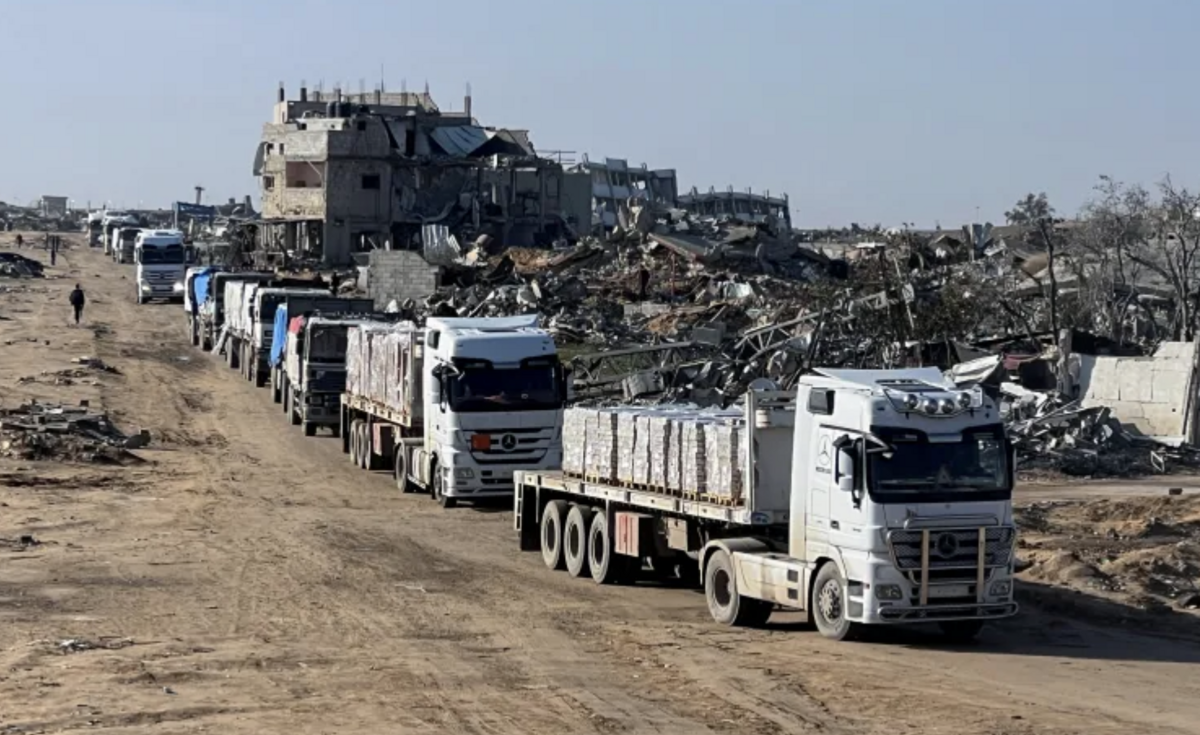
An Israeli Army Radio correspondent reported that the perpetrator of the killing of Israeli embassy employees in Washington was wearing a keffiyeh during the incident and shouted "Freedom for Palestine" while carrying out the attack.

PALESTINE

Thu 22 May 2025 8:52 am - Jerusalem Time

The West Bank is under fire: houses bombed, vehicles burned, and arrests made.

The occupation army and its settlers continue their attacks, bombing homes, burning citizens' vehicles, and arresting others during raids on various areas in the West Bank.

In Salfit, occupation forces raided the home of the family of martyr Nael Samara in the town of Bruqin tonight. Samara was killed by Israeli forces during the ongoing incursion into the town. The home was measured in preparation for demolition.

For eight days now, Israeli occupation forces have been conducting raids and searches in the towns of Kafr ad-Dik and Burqin. These raids have included arrests, extensive field investigations, and the destruction of home contents. They have also confiscated surveillance camera footage from shops and homes, imposed curfews within the towns, and set up military checkpoints at the entrances.
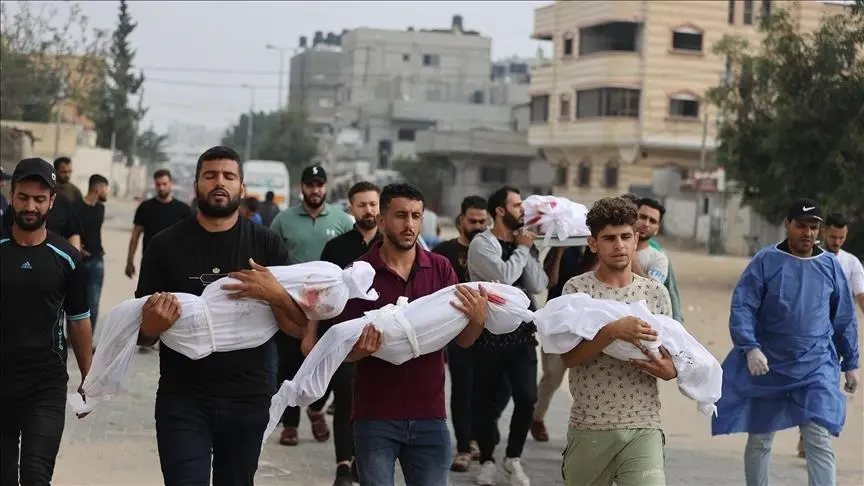
In Qalqilya, occupation forces blew up a 120-square-meter home belonging to the Abdul Ghani family in the village of Baqa al-Hatab.

The occupation army forced dozens of families to evacuate their homes prior to the bombing, as a massive explosion was heard in the central and northern West Bank.

The occupation forces also stormed the city of Qalqilya from its southern entrance and arrested 12 citizens from the city.

In this context, the occupation forces arrested a number of citizens, including released prisoners: Mahdi Akas, Saeed Diab, Ibrahim Attia, Saed Al-Fayed, Hamza Hardan, and Samah Hijjawi. The arrests also included citizen Nadia Al-Sahrawi, in addition to the young men: Amr Diab, Islam Nazzal, Adham Al-Hajj Hassan, Muhammad Daoud, and Hamza Al-Jamal.

In Jericho, occupation forces arrested Ramadan Matar after raiding his home in Aqabat Jaber camp, south of the city. They also arrested Nasr Khaled Safi from Ein Sultan camp, north of Jericho.

In Nablus, a group of settlers attacked the outskirts of the towns of Osarin and Aqraba at dawn today, setting fire to a vehicle, completely destroying it. They also attempted to set fire to the Abu Bakr al-Siddiq Mosque, writing racist slogans on its walls.


PALESTINE

Thu 22 May 2025 8:44 am - Jerusalem Time

Massacre in Deir al-Balah: Deaths and wounded in Israeli raids on the Gaza Strip

Fourteen civilians have been killed since dawn on Thursday in Israeli airstrikes on Gaza City and the central Gaza Strip.

The Civil Defense in the Gaza Strip reported that 10 people were killed and several others wounded as a result of an Israeli airstrike early Thursday morning on a barracks housing displaced people near a water reservoir in the Al-Baraka area of Deir al-Balah, in the central Gaza Strip.

The Israeli army also carried out bombing operations against a number of residential buildings east of the town of Al-Qarara, located northeast of Khan Yunis in the southern Gaza Strip.

In another development, Israeli aircraft targeted two homes in the Zarqa area in the northern Gaza Strip, one belonging to the Maqat family and the other to the Qanou family, killing all those inside.

Israeli aircraft also launched an airstrike on a house in the Tel al-Zaatar area of Jabalia camp, north of Gaza, causing extensive damage.

In the same context, civil defense crews, through strenuous efforts, were able to extinguish a massive fire that broke out in the Al-Ragheb Tower, located in the Al-Karama area, northwest of Gaza, after it was directly targeted by the occupation forces.

PALESTINE

Wed 21 May 2025 10:38 pm - Jerusalem Time

Israeli occupation: 100 UN aid trucks entered Gaza.

The Israeli occupation announced on Wednesday that 100 trucks carrying UN humanitarian aid had entered the Gaza Strip. This followed 93 trucks on Tuesday and around 10 trucks on Monday, after more than two and a half months of a stifling blockade of the war-ravaged territory.

"Today (Wednesday), 100 trucks from the United Nations and the international community carrying humanitarian aid - including flour, baby food, and medical supplies - entered the Gaza Strip via the Kerem Shalom crossing," the Israeli Defense Ministry's COGAT agency said in a statement.

The Israeli cabinet approved on Sunday the resumption of aid deliveries to Gaza, following US pressure. Israel had halted aid deliveries to Gaza since early March.

Palestinians in Gaza were still waiting for food to arrive on Wednesday, with the enclave's residents on the brink of starvation after an 11-week blockade, Reuters reported.

According to Israeli military statistics, fewer than 100 aid trucks have entered the Gaza Strip since the day before yesterday, when Prime Minister Benjamin Netanyahu's government agreed to lift the blockade on the Strip's residents.

PALESTINE

Wed 21 May 2025 10:08 pm - Jerusalem Time

The Israeli occupation army says it intercepted a rocket fired from Gaza.

The Israeli occupation army announced, on Wednesday evening, that it had intercepted a rocket fired from the northern Gaza Strip towards the town of Ashkelon in the south.

In a statement on Twitter, he said that "after the alarms were activated in the Lachish area (near Ashkelon), the Israeli Air Force intercepted a single launch that penetrated from the northern Gaza Strip towards Israeli territory, without causing any casualties."

Shortly before that, the Israeli Home Front Command announced the activation of air raid sirens in Ashkelon.

The Al-Quds Brigades, the military wing of the Islamic Jihad movement, said in a statement on its Telegram channel that it "bombarded Ashdod and Ashkelon with a barrage of rockets in response to the Zionist massacres against our Palestinian people," without providing further details.

Since October 7, 2023, the Israeli occupation, with American support, has been committing genocidal crimes in Gaza, leaving more than 175,000 Palestinians dead or wounded, most of them children and women, and more than 11,000 missing, in addition to hundreds of thousands displaced.

The Israeli occupation has been besieging Gaza for 18 years. Approximately 1.5 million Palestinians, out of a population of approximately 2.4 million, have been rendered homeless after their homes were destroyed in the war of extermination. The Strip is suffering from famine due to Tel Aviv's closure of the crossings to humanitarian aid.

ARAB AND WORLD

Wed 21 May 2025 9:44 pm - Jerusalem Time

Rubio: Additional Arab countries may normalize relations with Israel this year

US Secretary of State Marco Rubio hinted on Wednesday that additional Arab countries could normalize relations with Israel this year.


Late in his first term, US President Donald Trump sponsored the Abraham Accords, under which the UAE, Bahrain, and Morocco normalized their relations with the Jewish state.

"We may hear good news, certainly before the end of the year, about more countries intending to join this alliance," Rubio told the House Foreign Affairs Committee, according to Agence France-Presse.

PALESTINE

Wed 21 May 2025 8:28 pm - Jerusalem Time

Hamas: Israel is misleading the world by claiming to bring aid into Gaza.

The Islamic Resistance Movement (Hamas) said that the Israeli occupation is misleading the world by claiming to bring aid into the Gaza Strip, while it is committing the most heinous crimes of starvation and genocide in modern times. Meanwhile, the United Nations warned of the death of 14,000 infants in Gaza if aid is not delivered within 48 hours.

Hamas added, in a statement, that Benjamin Netanyahu's government continues to use starvation as a weapon in its war of extermination against the Palestinian people in the Gaza Strip.

The movement called on the international community to intensify its pressure campaign to halt these flagrant violations of international law, considering that silence on the crimes of starvation and mass killing in Gaza amounts to actual complicity in the crime.

In turn, the Government Media Office in Gaza said, "For the third consecutive day, the occupation continues to prevent trucks carrying humanitarian and relief aid from entering Gaza, in flagrant violation of its previously announced commitments and pledges."

The office added in a statement that "the occupation has halted the entry of aid, which it claimed it would allow, since last Monday, without any legal or humanitarian justification, at a time when the Gaza Strip is experiencing a severe shortage of food, medicine, and fuel, and a severe deterioration in health and living conditions."

The statement accused the occupation of continuing its policy of siege and starvation against more than two million civilians living in catastrophic conditions.

State media pointed out that "the failure to allow aid into Gaza confirms the occupation's deliberate use of food and medicine as a weapon of war against civilians. It has closed all crossings for 81 days, in flagrant violation of international humanitarian law and all humanitarian norms and conventions. This makes it fully responsible for the repercussions of this aggressive policy."

Targeting children

In a related development, UN Under-Secretary-General for Humanitarian Affairs and Emergency Relief Coordinator Tom Fletcher warned that approximately 14,000 children could die in Gaza within the next 48 hours if they do not receive relief aid.

Fletcher described the figure of 14,000 children as "extremely terrifying," noting that it is based on evidence from strong teams on the ground.

In an interview with the BBC, he said that there are thousands of trucks loaded with aid, specifically milk and baby food, ready to enter the Strip.

On Tuesday, Israel allowed an additional 100 trucks to enter, but Fletcher expressed concerns about the potential looting of these trucks amid the growing chaos and despair in the Strip.

Since March 2, Israel has continued its policy of systematically starving approximately 2.4 million Palestinians in Gaza by closing the crossings to aid supplies piling up at the border, pushing the Strip into a state of famine and claiming many lives.

With full American support, Israel has been committing genocidal crimes in Gaza since October 7, 2023, leaving more than 175,000 Palestinians dead or wounded, most of them children and women, and more than 11,000 missing, in addition to hundreds of thousands displaced.

PALESTINE

Wed 21 May 2025 7:18 pm - Jerusalem Time

6 Palestinians killed after the occupation bombed two houses in the southern and northern Gaza Strip.

Six civilians were killed on Wednesday when Israeli warplanes bombed two homes in the southern and northern Gaza Strip.

According to local sources, three citizens were killed in an Israeli airstrike on the Abu Shamala family home in the Al-Amal neighborhood west of Khan Yunis in the southern Gaza Strip.

Israeli occupation aircraft also bombed the Al-Nader family's home in Jabalia, north of the Gaza Strip, killing three citizens and wounding others.