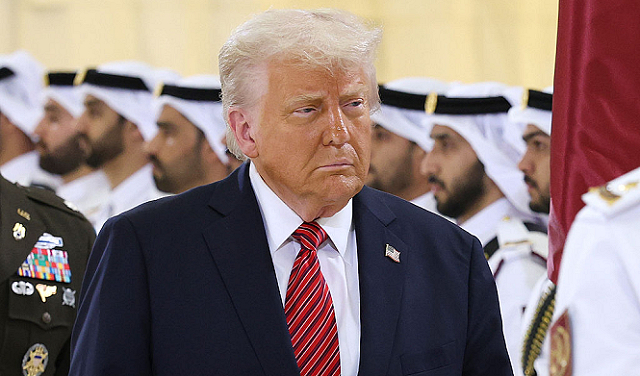







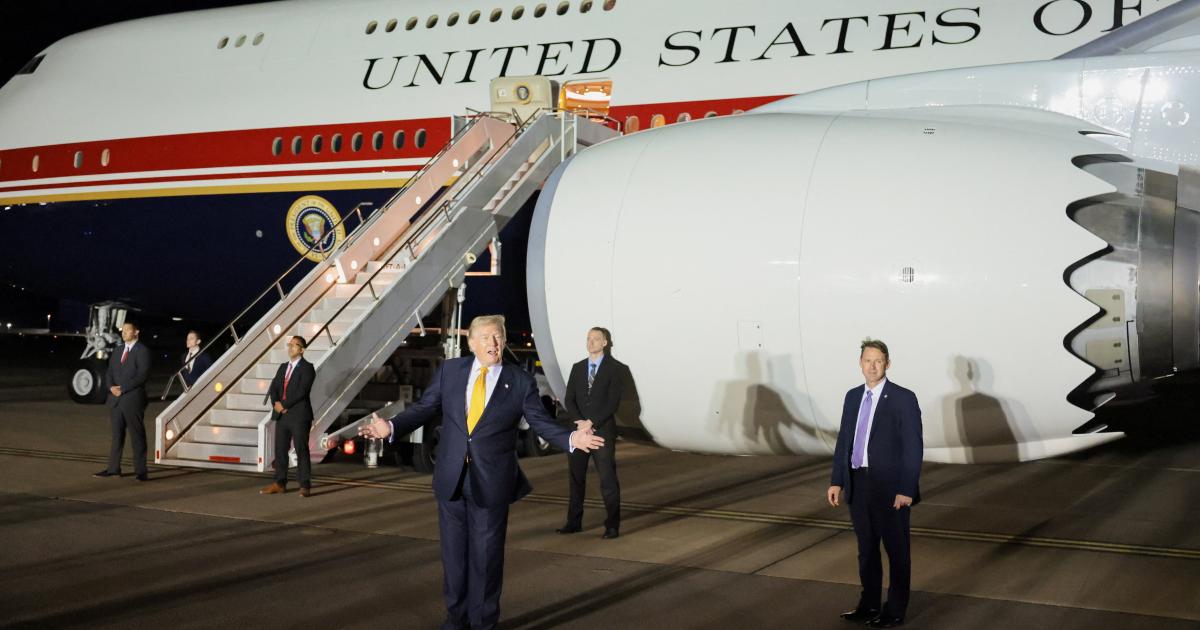
US President Donald Trump has acknowledged that Russian President Vladimir Putin does not want to stop the war in Ukraine because he believes he is winning. This was revealed by the Republican-affiliated Wall Street Journal, which added in a report that Trump conveyed this to the European leaders he contacted after his phone call with Putin on Monday. However, he did not impose additional sanctions on Moscow, and instead proposed holding lower-level talks in the Vatican between Russia and Ukraine.
This admission has long been what European leaders have believed about Putin, but this is the first time they've heard it from Trump. It also contradicts what Trump has repeatedly said publicly: that he believes Putin genuinely wants peace. The White House declined to comment, pointing to Trump's social media post on Monday about his conversation with Putin. "The tone and spirit of the conversation were excellent," he said. "If it weren't, I would have said so now."
The Kremlin denies
However, Kremlin spokesman Dmitry Peskov denied the newspaper's report, saying, "Russia knows what Trump said to Putin, but not what he said to European leaders. The Wall Street Journal report contradicts Trump's official statements and what we also know."
Trump had previously held a phone call with European leaders on Sunday, the day before his two-hour conversation with Putin. He indicated then that he might impose sanctions if Putin refused a ceasefire, according to people familiar with the conversation. However, on Monday, he shifted his position again, not being prepared to impose sanctions and instead saying he wanted to move quickly forward with talks between Russia and Ukraine at the Vatican.
"This is not my war. We got into something we shouldn't have gotten into," Trump told reporters on Monday after his call with Putin. In a phone call with European leaders on Sunday, including French President Emmanuel Macron, German Chancellor Friedrich Merz, Italian Prime Minister Giorgia Meloni, and British Prime Minister Keir Starmer, he indicated that he would send Secretary of State Marco Rubio and special envoy Keith Kellogg to the talks expected to take place at the Vatican.
He indicated that the United States may join Europe in imposing sanctions on Russian energy exports and banking transactions. Republican Senator Lindsey Graham, a close Trump ally, announced on Wednesday that he had gathered 81 senators willing to participate in drafting a bill that would significantly tighten energy and other sanctions on Moscow.
No Russian arrangements for Vatican meeting
Commenting on the proposed negotiations in the Vatican, which were also mentioned by Finnish President Alexander Stubb, who said that "there are more mediators" and that not only Washington but also Europe is involved, Kremlin spokesman Peskov denied this, saying: "No, there are no agreements yet, there are no specific arrangements for the upcoming meetings, and we have not yet reached an agreement. Work is underway to implement the agreements reached in Istanbul."
Peskov added that Russia and Ukraine have not set a date for further direct talks to end the war that has been raging between them for more than three years, and "there is no concrete agreement on future meetings. They have not yet been agreed upon."
The Wall Street Journal reports that for the Europeans, their diplomatic efforts, which began about 10 days ago to pressure Trump to pressure Putin, have helped confirm that supporting Ukraine is now largely their responsibility. The Journal said the Europeans do not believe the Trump administration will halt US arms exports as long as Europe or Ukraine is paying the price.
For his part, Ukrainian President Volodymyr Zelensky said on Thursday that preparations were underway for a potential prisoner swap, which he described as "perhaps the only real outcome" of the talks in Turkey. Peskov said the prisoner swap is "a very difficult process" and "requires some time." However, he added, "work is proceeding at a rapid pace, and everyone is interested in completing it quickly."
Rubio does not call Putin a war criminal.
On Wednesday, US Secretary of State Marco Rubio refrained from describing Russian President Putin as a "war criminal," asserting that the priority was negotiating an end to the war in Ukraine. During a tense House hearing, Democratic Representative Bill Keating reminded him of the scathing criticism he had directed at Putin when he was a senator, before becoming Secretary of State, and asked if he still considered Putin a "war criminal."
Rubio responded by saying, “Crimes have been committed in the war in Ukraine and they will be held accountable, but our goal right now is to end this war,” clearly echoing Trump’s positions. He added, “Let me tell you, every day the war continues, more people are killed, more people are injured, and frankly, more war crimes are committed.” Keating called Rubio’s statements “incoherent” and “confusing.” In response to another question from a Republican representative, Rubio said, “If it weren’t for the contacts that took place between the United States and Russia in 1961, the world would have ended during the Cuban Missile Crisis!”
On the ground, the drone war continues, with fighting raging in some key areas on the front line between the two sides. Russia said Thursday that its air defenses had shot down 105 Ukrainian drones over Russian territory, 35 of which were heading toward Moscow. Moscow Mayor Sergei Sobyanin stated that several drones heading toward the city were shot down.
Russia said Thursday it had fired an Iskander-M missile at part of the city of Pokrov in Ukraine's Dnipropetrovsk region, destroying two Patriot missile systems and a radar.
The Ukrainian Air Force reported damage in the Dnipropetrovsk region after an attack, but did not specify the type of weapon used. The Defense Ministry said Russian forces were advancing at key points on the front, and pro-Russian war bloggers reported that troops had broken through Ukrainian lines between Pokrovsk and Kostyantynivka in the Donetsk region of eastern Ukraine. Ukrainian President Volodymyr Zelenskyy said in his nightly video address that the heaviest fighting on the front lines was taking place around Pokrovsk, and made no mention of any Russian advance.
Meretz warns of 'tense' situation
Meanwhile, German Chancellor Friedrich Merz said Thursday that reinforcing NATO's eastern flank with German troops in Lithuania would help defend the military alliance against "any aggression." During a visit to Vilnius to officially inaugurate a new German armored brigade, Merz said that Russian actions threaten not only the security of Ukraine, but also the security of Europe and the Euro-Atlantic region.
"The security situation here in the Baltic states remains extremely tense," Merz added, flanked by Lithuanian President Gitanas Nauseda. "We will send this brigade to protect NATO's entire eastern flank. It will defend the alliance's territory against any aggression."
Nauseda described Merz's visit as a "strong signal." The German military is achieving a new milestone with the permanent stationing of a military unit abroad. Previous deployments were temporary. This move comes in response to Russia's full-scale invasion of Ukraine in February 2022.
Share your opinion
Trump told the Europeans that Putin does not want to end the war because he considers himself a "victor."