ARAB AND WORLD

Mon 30 Jun 2025 6:13 pm - Jerusalem Time

The Security Council extends the mandate of the UN force in the Golan Heights for six months.

The UN Security Council unanimously decided on Monday to renew the mandate of the UN Disengagement Observer Force in the occupied Golan Heights for six months, until December 31, 2025.

In its resolution No. 2782, the Council called on the parties concerned to implement its resolution 338 (1973) immediately.

ARAB AND WORLD

Mon 30 Jun 2025 5:48 pm - Jerusalem Time

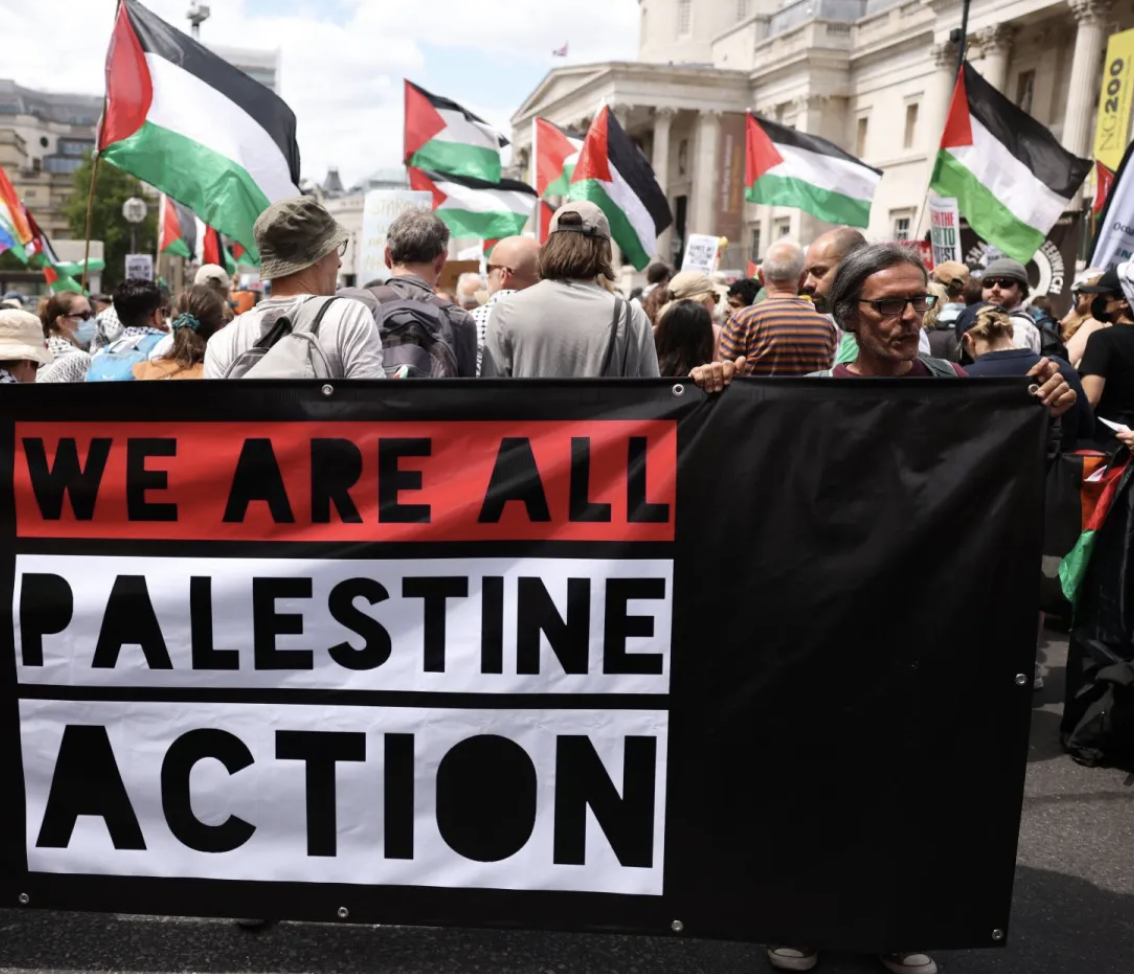
A British pro-Palestinian group intends to appeal a possible ban.

The Action Group for Palestine announced on Monday that it has initiated legal proceedings to challenge a potential decision by the British government to ban it under anti-terrorism laws.

The ban, expected to be introduced in parliament on Monday, would make membership in the group a criminal offense. The announcement came days after activists from the group damaged two British military aircraft in protest against London's support for Israel, according to Reuters.

The group had earlier condemned the government's move, describing it as an "irrational reaction," and said that London's High Court had scheduled an urgent hearing for Friday to consider permission to challenge the ban.

The group is seeking a court order to prevent the government from banning it while its case is being heard.

The request includes written statements from Amnesty International human rights experts and others who expressed concern about "the unlawful misuse of counter-terrorism measures to criminalize dissent."

“The court’s decision to schedule an urgent hearing this week demonstrates the vital importance of what is at stake in this case, including the far-reaching implications that banning the Palestine Action Group could have on freedom of opinion, expression, and assembly in Britain,” said Huda Ammuri, co-founder of the group.

Under British law, the Home Office can ban a group if it is believed to be committing, encouraging, or "involved in terrorism." Banning would place the group in a similar classification to the Palestinian Islamic Resistance Movement (Hamas), Al-Qaeda, or ISIS.

The Ministry of Interior declined to comment on the group's planned legal appeal.

Home Secretary Yvette Cooper had previously said the group had a "long history of unacceptable criminal damage" and that the government would not tolerate those who endangered national security.

Since the start of the Gaza conflict in 2023, the Action Group for Palestine has regularly targeted British sites linked to the Israeli defense industry company Elbit Systems, as well as other companies in Britain with ties to Israel.

PALESTINE

Mon 30 Jun 2025 4:59 pm - Jerusalem Time

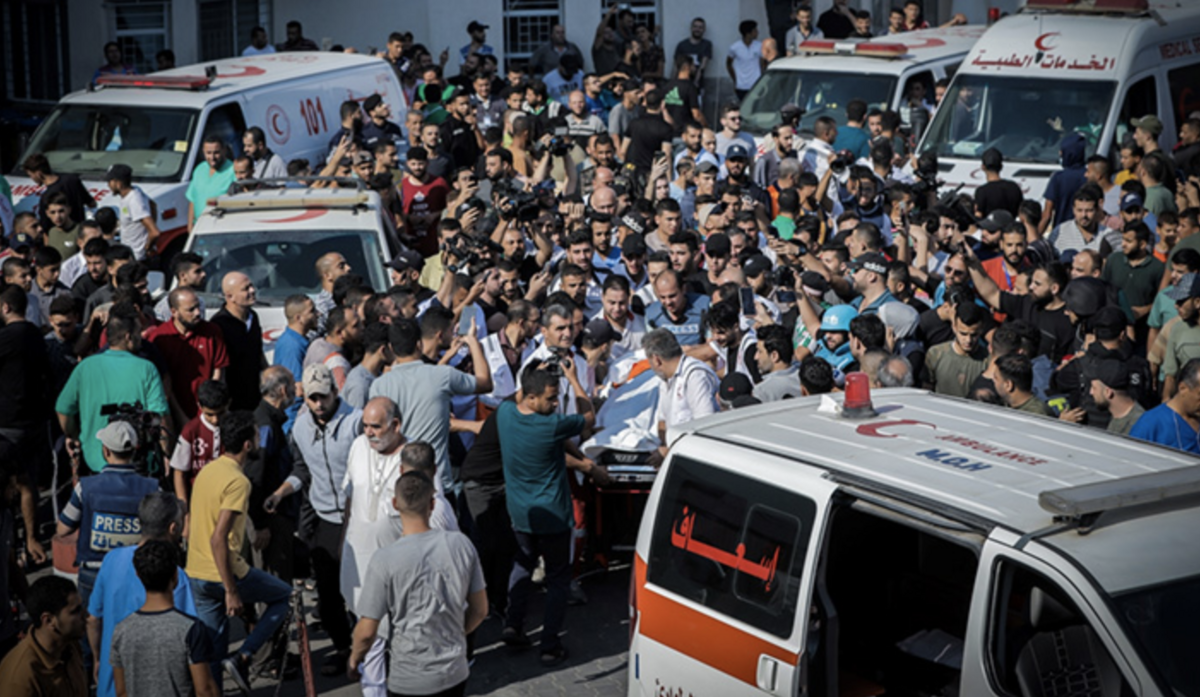
Director of Al-Shifa Medical Complex: The health situation in Gaza is catastrophic and the system is collapsing.

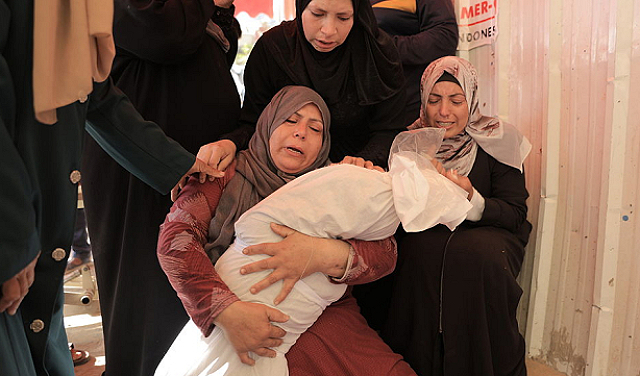
The director of Al-Shifa Medical Complex in Gaza confirmed that the health situation in the Strip has reached a catastrophic level as a result of the ongoing massacres carried out by the Israeli occupation army, noting that the health system is no longer able to accommodate the large number of victims.

The director of the medical complex said in a press statement that the health situation has completely spiraled out of control, with medical teams forced to choose between the wounded based on the severity of their injuries, given the scarcity of resources.

He pointed out that the majority of those injured in the Israeli bombing of a café in Gaza are in critical condition.

He pointed out that medical supplies have completely run out, while fuel is about to run out tonight, threatening the continued operation of vital equipment.

He also stressed that medical teams are working under extremely difficult conditions and are suffering from severe exhaustion.

He noted that the military escalation over the past few days has exacerbated pressure on the collapsing health sector, threatening to exacerbate the humanitarian catastrophe in the besieged enclave.

ARAB AND WORLD

Mon 30 Jun 2025 4:56 pm - Jerusalem Time

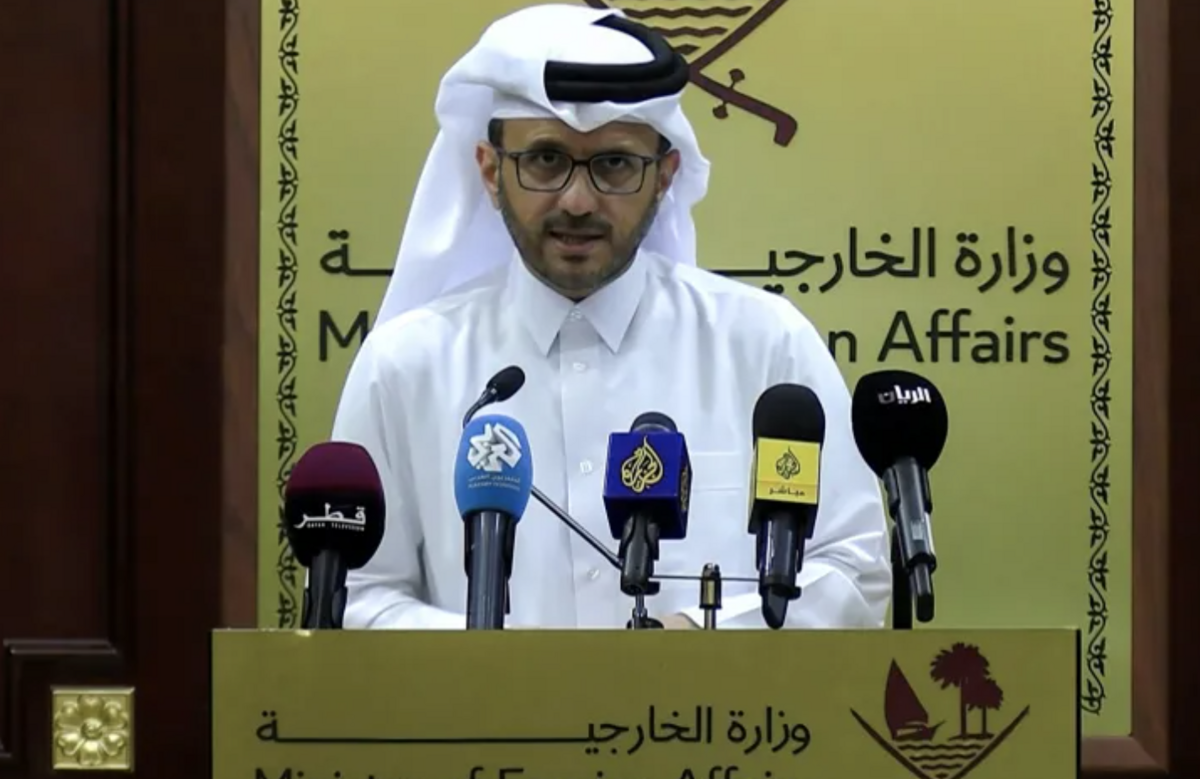
Qatar: No talks on Gaza, US intentions to push for negotiations

Qatari Foreign Ministry spokesman Majed Al-Ansari confirmed on Monday that there are currently no talks regarding the Gaza Strip, noting that contacts are continuing to reach a formula to return to negotiations.

At a press conference, Al-Ansari stated that Qatar continues to pressure, through its partners, to separate the negotiations from the entry of aid into Gaza.

He indicated that there are serious American intentions to push for a resumption of negotiations on Gaza, but there are complications, which he did not elaborate on. He noted that there is positive language from Washington regarding reaching an agreement on Gaza.

He added that Israeli intransigence is preventing the entry of aid into the Gaza Strip, stressing that the continued link between the humanitarian and military aspects in Gaza is unacceptable.

"It has become difficult to accept the continued human losses in the Gaza Strip," he said.

Involvement in the Iranian file

Regarding the Iranian issue, Al-Ansari said that Qatar is participating in efforts to reach an agreement on the nuclear issue, stressing that efforts are continuing to reach a broader agreement.

In this context, Israeli Minister of Strategic Affairs Ron Dermer is expected to arrive at the White House today for talks on a ceasefire in Gaza, Iran, and potential broader diplomatic deals in the region, amid President Donald Trump's call to end the Gaza war.

In Israel, the security cabinet is expected to meet tonight to discuss the next steps in Gaza, following a meeting yesterday, Sunday, in which no understandings or decisions were reached regarding the war.

Reuters reported, citing Palestinian and Egyptian sources familiar with the latest ceasefire efforts, that Qatar and Egypt, which are mediating, have intensified their contacts with both sides of the war, but no date has yet been set for a new round of talks.

PALESTINE

Mon 30 Jun 2025 4:15 pm - Jerusalem Time

Administrative detainee Louay Faisal Nasrallah from Jenin died in Soroka Hospital in Israel.

The Civil Affairs Authority, the Prisoners' Affairs Authority, and the Palestinian Prisoners' Club reported the death of administrative detainee Louay Faisal Muhammad Nasrallah (22 years old) from Jenin, in the Israeli Soroka Hospital this morning, Monday, after being transferred from the Negev Prison, without providing any further details about the circumstances of his death.

The Commission and the Prisoners' Club explained that the martyr Nasrallah had been administratively detained since March 26, 2024, adding him to the list of martyrs of the prisoner movement, who have ascended as a result of the organized crimes practiced by the Israeli occupation prison system in an unprecedented manner since the beginning of the ongoing genocide, most notably torture, medical crimes, and starvation.

They added that the Negev prison, where Nasrallah was held, was and remains one of the most prominent prisons where horrific crimes were recorded, especially with the continued spread of scabies, which the occupation prison administration has turned into a clear tool to kill more prisoners. Nasrallah, according to his family, did not suffer from any health problems before his arrest.

They pointed out that, with the martyrdom of the prisoner Nasrallah, the number of martyrs among the prisoners and detainees since the genocide has risen to (73), and they are the only ones whose identities are known in light of the continuing crime of enforced disappearance, so that this stage in the history of the prisoner movement and our people is the bloodiest, and thus the number of martyrs of the prisoner movement whose identities are known since 1967 has reached (310) to date.

The Commission and the Club stressed that the rate of increasing numbers of martyrs among prisoners and detainees is taking a more dangerous turn with the passage of more time on the detention of thousands of prisoners and detainees in the occupation’s prisons, and their continued exposure on an instant basis to systematic crimes, most notably torture, intimidation, assaults of all kinds, medical crimes, sexual assaults, and the deliberate imposition of conditions that lead to their infection with serious and contagious diseases, most notably scabies, in addition to the policies of theft and deprivation - unprecedented in their level.

They added that the martyrdom of detainee Nasrallah constitutes a new crime in the record of the brutal Israeli regime, which has perpetrated all forms of crimes aimed at killing prisoners. These crimes constitute yet another aspect of the ongoing genocide.

The Commission and the Club held the occupation fully responsible for the martyrdom of detainee Nasrallah, and renewed their demand for the international human rights system to move forward in taking effective decisions to hold the occupation leaders accountable for the war crimes they continue to commit against our people, and to impose sanctions on the occupation that would place it in a state of clear international isolation, and restore to the human rights system its fundamental role for which it was created, and put an end to the terrifying state of impotence that it has been afflicted with during the war of extermination, and end the state of exceptional immunity that the world has granted to the occupying state as it is above accountability, accountability and punishment.

PALESTINE

Mon 30 Jun 2025 1:37 pm - Jerusalem Time

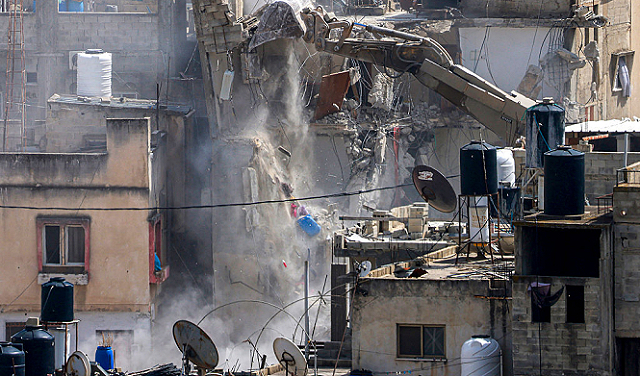
The occupation authorities notify the demolition of 104 homes in Tulkarm camp.

Today, Monday, the Israeli occupation forces notified the demolition of 104 homes and buildings in Tulkarm camp.

The occupation army attached to the notification maps showing the targeted homes in the camp in red, and gave them a 72-hour deadline to object, allowing their owners to evacuate.

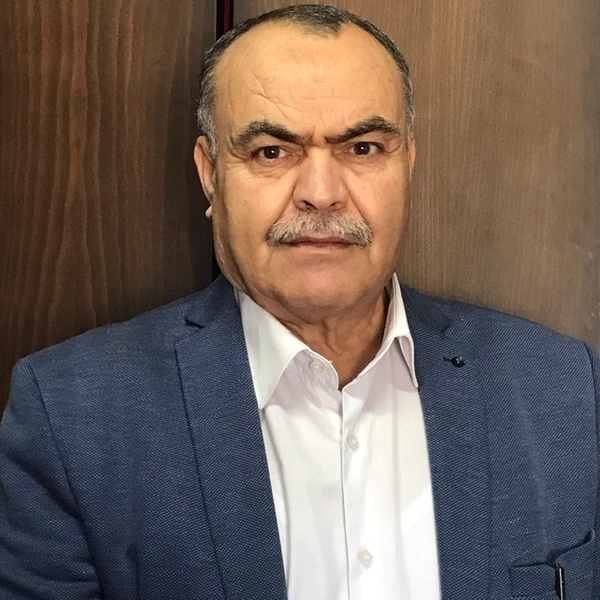
The Governor of Tulkarm, Abdullah Kamil, called on the international community, human rights institutions, and international organizations to intervene urgently to prevent the occupation forces from implementing the plan to demolish (104) new buildings in Tulkarm camp, in light of the presence of a trend to complete the demolition crime against the camp, as part of the continued aggression against the city and its two camps, and the rest of the towns and villages of the governorate.

In a press statement, Kamil stressed the need to halt this aggression and the crime of demolitions, destruction, and vandalism, which have caused widespread forced displacement of residents of the two camps and exacerbated the daily suffering of the citizens. He added that the occupation forces are imposing sieges, closures, raids, and arrests, in flagrant violation of international humanitarian law, human rights laws, and international conventions and norms.

He said: "The occupation forces continue their aggression against Tulkarm camp for the 155th consecutive day, and for the 142nd day against Nour Shams camp, amid a systematic escalation of destruction and sabotage operations, and the forced displacement of citizens, resulting in severe suffering in all aspects of life."

Kamil stressed that the international community's silence on the situation encourages the occupation to continue its crimes, calling for effective and tangible steps to halt this aggression.

Over the past few weeks, the occupation forces have carried out extensive demolitions of buildings and facilities in several neighborhoods in the Tulkarm and Nur Shams refugee camps. This is part of a plan announced in early May to demolish 106 buildings in the two camps, under the pretext of opening roads and changing geographical features.

PALESTINE

Mon 30 Jun 2025 1:28 pm - Jerusalem Time

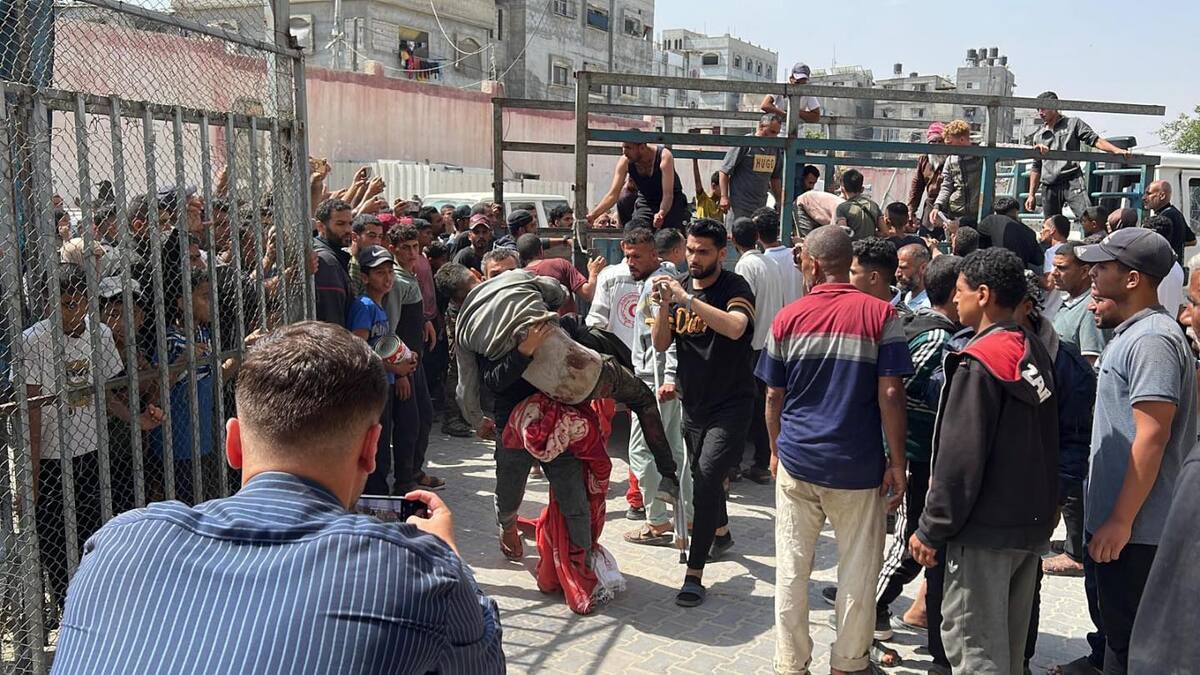
Dozens of dead and wounded as a result of the occupation targeting those waiting for aid in Khan Yunis.

Several civilians were killed and others injured on Monday when the occupation forces targeted people waiting for aid in Khan Yunis, south of the Gaza Strip.

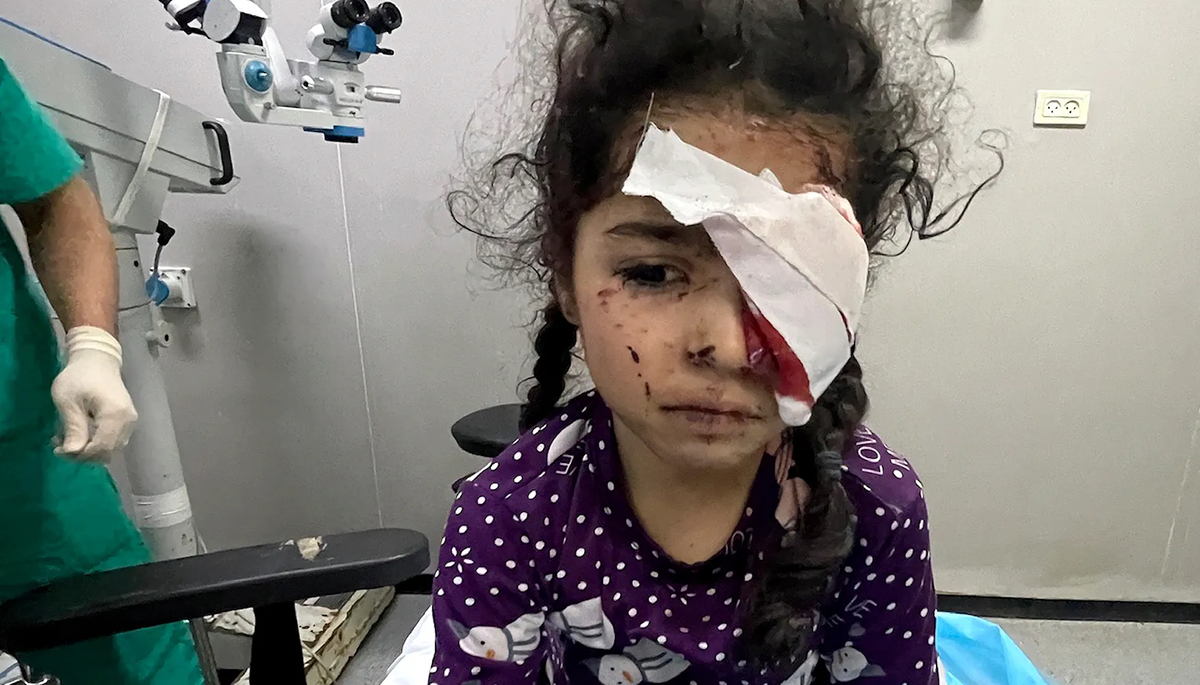
Medical sources at Nasser Medical Complex in Khan Yunis reported that at least 13 civilians were killed and dozens wounded, some seriously, after the Israeli army targeted people waiting for aid south of Khan Yunis, in the southern Gaza Strip.

Ten citizens were killed this morning when Israeli warplanes bombed an aid distribution warehouse in the Zeitoun neighborhood, south of Gaza City.

According to UN reports, more than 550 civilians were killed while attempting to obtain food at Israeli-American aid distribution points, which are internationally rejected. Since their establishment late last month, these points have transformed into mass killing traps, deliberately degrading the dignity of civilians and forcing them to flee amid catastrophic humanitarian conditions.

The ongoing 21-month war of extermination on the Gaza Strip has left approximately 189,000 Palestinians dead or wounded, most of them children and women, and more than 11,000 missing. Hundreds of thousands have been displaced, and dozens have been ravaged by famine.

PALESTINE

Mon 30 Jun 2025 1:25 pm - Jerusalem Time

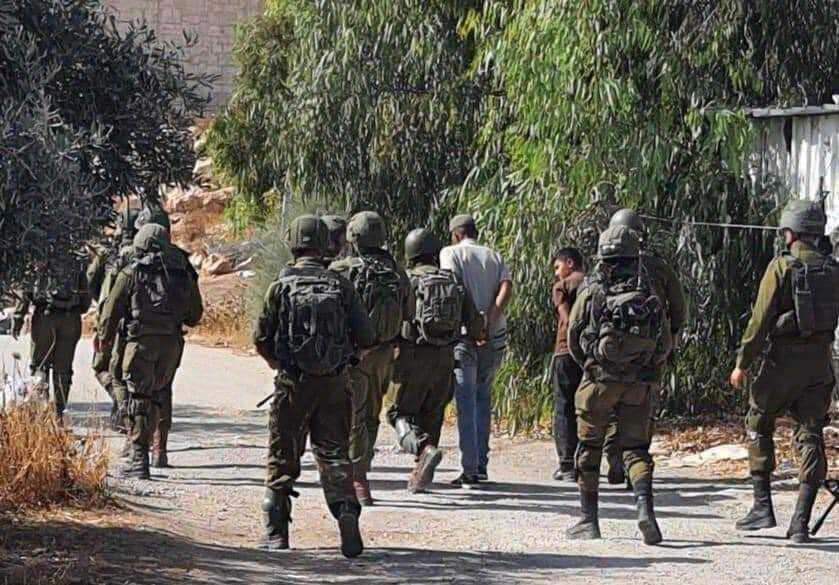
The occupation forces arrest activists north of Jericho.

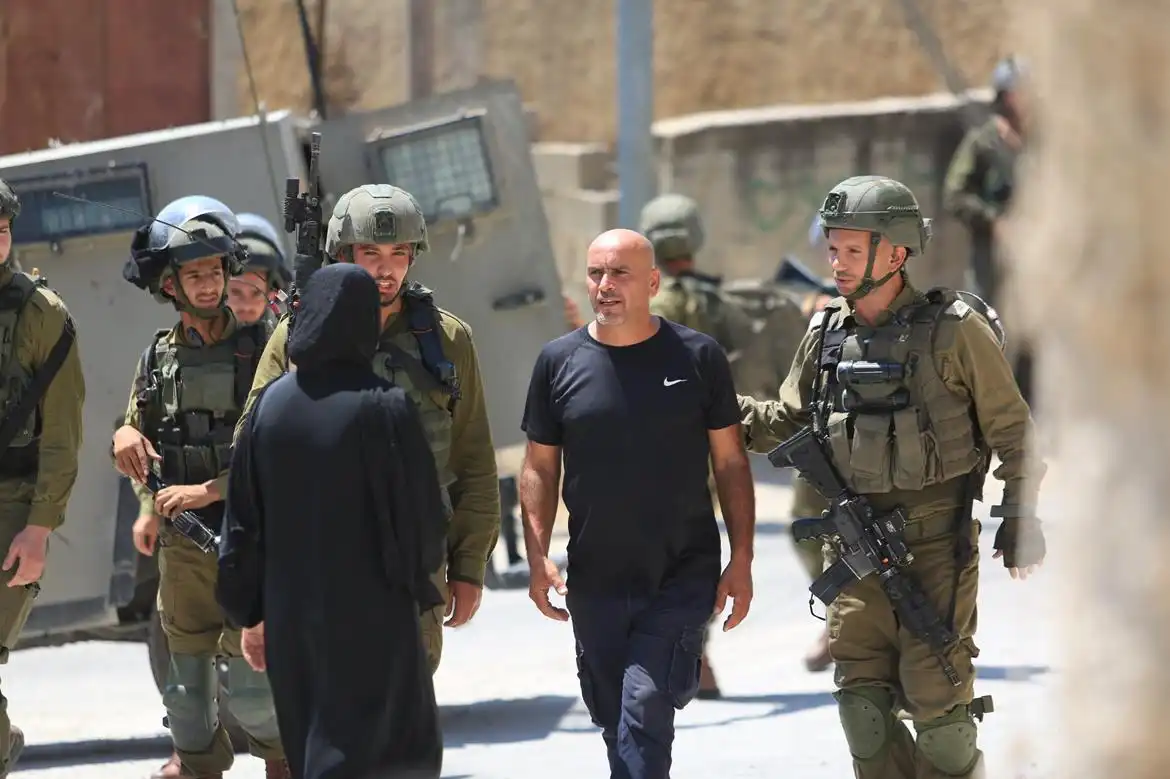
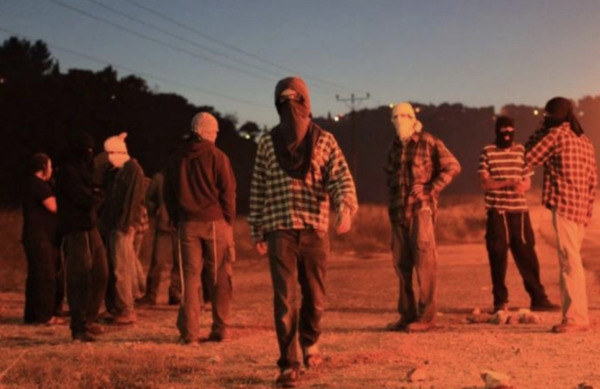
Israeli occupation forces arrested, on Monday, activists in the Bedouin village of Shallalat al-Auja, north of Jericho.

Local sources reported that the occupation forces arrested activists who expressed solidarity with the residents of the Al-Auja waterfall, who are facing ongoing violations by the occupation and settlers. Among those arrested was activist Ben Benson.

Hassan Malihat, general supervisor of the Al-Baidar organization for the defense of Bedouin rights, explained that this is a dangerous escalation in an ongoing campaign targeting Bedouin communities in the Jordan Valley, with the aim of pressuring their residents and forcing them to leave. He considered what is happening to be a "clear violation of international law and humanitarian conventions."

PALESTINE

Mon 30 Jun 2025 12:33 pm - Jerusalem Time

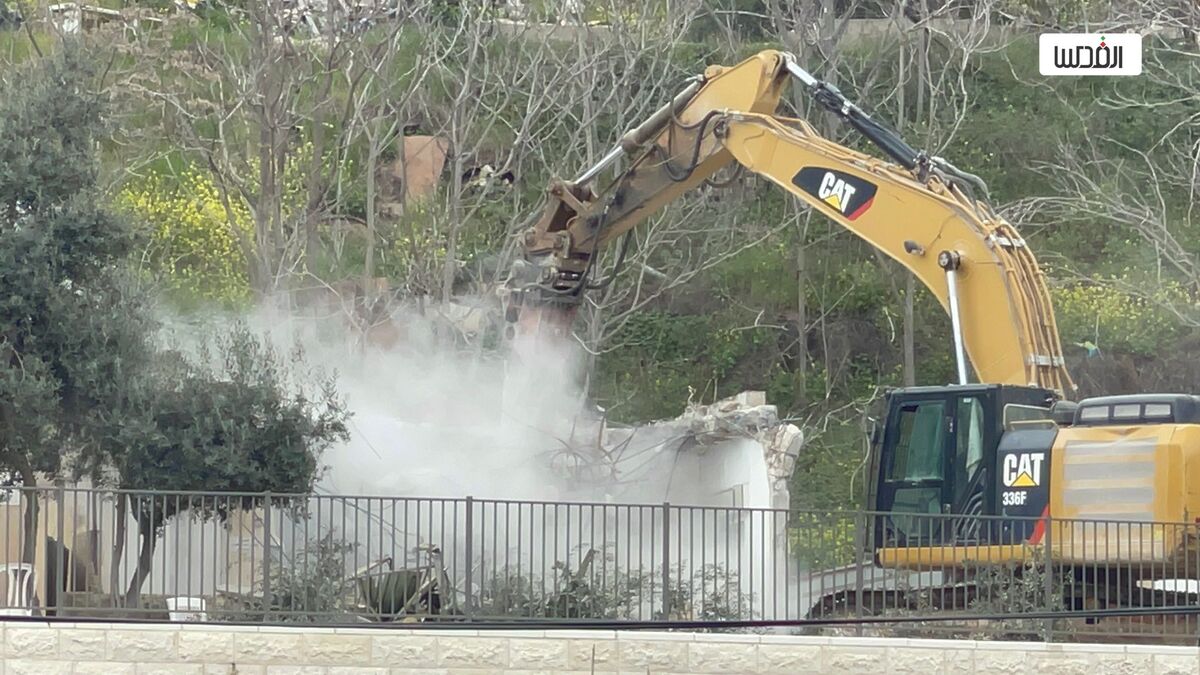
The occupation forces demolished a 1,500-square-meter commercial facility in the town of Adh Dhahiriya, south of Hebron.

Israeli occupation forces demolished a 1,500-square-meter commercial facility in the town of Adh Dhahiriya, south of Hebron, in the southern West Bank, on Monday.

The owner of the facility, Sufyan al-Jabarin, reported that the occupation forces stormed the main road in the village of Anab, leading to the town of al-Ramadin, southwest of the town of al-Dhahiriya, accompanied by their heavy machinery. They demolished his facility, which consisted of four shops with an area of 750 square meters, and a second floor under construction with an area of 750 square meters, and bulldozed the surrounding walls.

He pointed out that the occupation forces closed the road leading to the shops that were demolished and prevented citizens from being in their vicinity.

ARAB AND WORLD

Mon 30 Jun 2025 11:21 am - Jerusalem Time

The Norwegian Pension Fund excludes two companies that supply weapons to the Israeli occupation army.

The Norwegian Government Pension Fund, one of the world's largest sovereign wealth funds, announced on Monday that it has blacklisted several companies that supply the Israeli military with weapons used in the ongoing 21-month-long war of extermination in the Gaza Strip.

The fund confirmed, in a statement reported by Bloomberg, that it had excluded the American company Oshkosh and the German company ThyssenKrupp from its investment portfolio due to their involvement in supplying the Israeli occupation with equipment and weapons that could be used in serious human rights violations in Gaza.

The decision was based on a UN report warning that supplying weapons to Israel could expose these companies to the risk of complicity in war crimes and systematic violations of international humanitarian law.

The fund explained that its ethical guidelines prohibit investment in companies involved in arms sales to countries committing systematic violations, noting that it urges international companies to review their business dealings and policies to avoid complicity in these crimes.

This move comes amid mounting international pressure on institutions and companies to hold accountable those involved in supporting the Israeli attacks on Gaza, which have left thousands of victims and drawn widespread condemnation from human rights organizations around the world.

Amnesty International, numerous human rights organizations, and UN bodies have also provided evidence of the genocide that Israel continues to commit in the occupied Gaza Strip.

Reports confirm that every company operating illegally in the occupied Palestinian territories contributes to the entrenchment of one of the world's longest and most deadly military occupations, and supports its normalization and continuation.

The Norwegian Government Pension Fund is the world's largest government investment fund, valued at $1.8 trillion, and is a global leader in environmental, social, and governance (ESG) investing.

As a state-owned financial institution that oversees the management of the fund, the Norwegian Central Bank is responsible for respecting human rights in accordance with the UN Guiding Principles on Business and Human Rights.

Norway's sovereign wealth fund, the world's largest, has excluded several companies in the past due to their links to Israeli settlements.

The Office of the United Nations High Commissioner for Human Rights has also emphasized that the activities of investors, including minority shareholders such as the Norwegian Central Bank, are directly linked to the involvement of investee companies in human rights violations, imposing a responsibility on them to avoid such involvement.

PALESTINE

Mon 30 Jun 2025 10:22 am - Jerusalem Time

Updated: The occupation forces begin demolishing homes and facilities and issue demolition orders for a house in Jerusalem and the West Bank.

Israeli occupation forces began demolishing homes and agricultural structures on Monday and issued demolition notices for a home in Jerusalem and the West Bank.

In occupied Jerusalem, the occupation municipality handed the family of Jerusalemite prisoner Aziz Abu Ramouz a demolition order to demolish their home in the Silwan neighborhood of occupied Jerusalem, on the pretext of "building without a permit."

It's worth noting that the house has been standing for years and houses a family suffering from the absence of their imprisoned father, Aziz Abu Ramouz, who has been detained since early 2025, and the loss of their martyred son, Wadih Abu Ramouz, who was martyred in January 2023.

In Ramallah, occupation bulldozers demolished several retaining wells and filled in a water well west of Silwad, owned by Abdul Karim Abdul Latif Shahada Ayyad, as part of the ongoing crackdown on the town's residents and preventing them from reclaiming their agricultural lands.

In Nablus, Israeli bulldozers began demolishing homes in Khirbet al-Tawil, located in the Aqraba lands, south of Nablus.

Aqraba Mayor Salah Jaber reported that occupation forces stormed Khirbet al-Tawil, accompanied by two bulldozers, and began demolishing homes and agricultural facilities.

PALESTINE

Mon 30 Jun 2025 10:18 am - Jerusalem Time

An Israeli settler runs over a young man from Kafr ad-Dik, west of Salfit.

This Monday morning, Rajai Natour Al-Deek, a young man from the town of Kafr Al-Deek, west of Salfit, was injured after being run over by a settler near the "Barkan" settlement, which was built on citizens' lands in the Salfit Governorate.

Local sources reported that the settler ran over the young man, Al-Deek, while he was walking on the street. He was transferred to the Yasser Arafat Hospital in Salfit, where the hospital director, Dr. Muhammad Al-Ramahi, stated that his condition was described as stable after he received the necessary first aid.

PALESTINE

Mon 30 Jun 2025 10:04 am - Jerusalem Time

Israel destroys Gaza's telecommunications sector, causing losses exceeding $700 million.

Huda Al-Wahidi, Undersecretary of the Palestinian Ministry of Telecommunications and Digital Economy, said that the Israeli aggression on the Gaza Strip caused widespread devastation to the telecommunications sector, destroying approximately 74% of its assets.

In a speech delivered at the International Telecommunication Union (ITU) Board of Directors meeting in Geneva, Al-Wahidi explained that the direct losses incurred by the sector amount to approximately $164 million, due to the destruction of 580 cell towers and major fiber networks.

The Ministry of Communications added in a statement that expected economic losses over the next five years could reach $736 million, given the massive destruction and the need to rebuild infrastructure.

Al-Wahidi warned of the continued deterioration of Gaza's digital infrastructure, stressing that the Strip is experiencing an "unprecedented crisis" that has caused widespread disruption to communications services.

She criticized the absence of any practical steps to implement UN Resolution 1424 of 2024, which concerns the reconstruction of the Palestinian telecommunications sector.

She called on the Federation Council to develop an urgent implementation plan to implement the decision, calling for the protection of the digital infrastructure from Israeli targeting, which has almost completely destroyed the infrastructure in the Gaza Strip.

In the West Bank, Al-Wahidi indicated that Israeli military incursions and closures caused losses estimated at $215.4 million.

She added, "In addition to the illegal expansion of Israeli networks, which has disrupted Palestinian development and expansion projects."

The ITU Board of Directors approved Palestinian proposals, including the preparation of an implementation plan within one month and the submission of a progress report every six months.

The Union decided to hold an international donors' conference and establish a special financial support fund for Palestine, classifying the telecommunications sector as an essential humanitarian service.

He also recommended enabling Palestine to access the radio spectrum and provide 4G and 5G technologies, as well as ensuring the supply of fuel and equipment to communications and power stations, and protecting technical crews after the martyrdom of more than 150 technicians during the aggression.

Since October 7, 2023, Palestinian telecommunications companies have repeatedly announced widespread service outages within the Gaza Strip due to bombing and fuel shortages.

ARAB AND WORLD

Mon 30 Jun 2025 9:43 am - Jerusalem Time

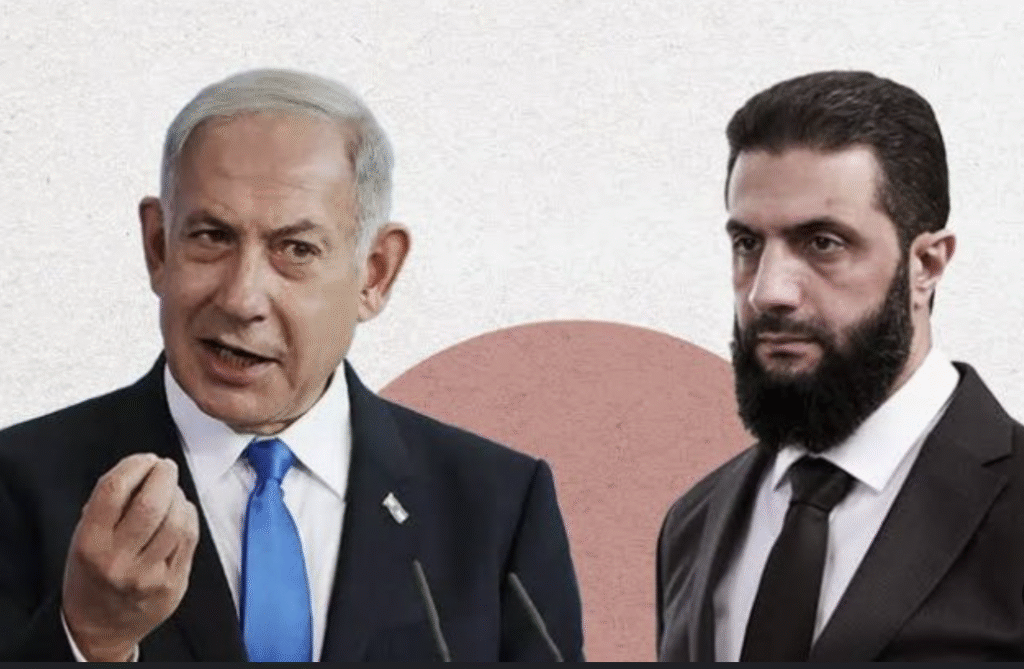
The White House expects Syria to normalize relations with Israel amid "quiet talks."

US President Donald Trump expects Syria to be the next country to join the Abraham Accords normalization agreements with Israel, according to statements made by White House Press Secretary Carolyn Levitt on June 27.

Speaking to reporters, Levitt said, "The president is certainly optimistic that more countries in the region will sign the Abraham Accords," noting that Trump raised the issue directly with the new Syrian president, Ahmed al-Sharaa.

"When President Trump met with President Assad, one of his main requests was for Syria to join the Abraham Accords," Levitt said. "We want to see long-term peace in the Middle East, and that's the way forward."

While Levitt did not specify a specific timeline, she emphasized that expanding the Abraham Accords remains a priority for the administration. Echoing this sentiment, Trump's envoy to the region, Steve Witkoff, told CNBC on Wednesday that "major announcements" were coming, hinting that new countries previously considered unlikely were preparing to normalize relations with Israel.

Syria's potential accession to the Abraham Accords would represent a major geopolitical shift.

Sharaa has previously indicated his openness to normalization. In April, he told US Representative Cory Mills that Syria was willing to join the agreements under the "right conditions."

Strategic calculations appear to be influencing Damascus's position. Israeli airstrikes on Iranian targets, reportedly launched from Syrian airspace during the 12-day Israeli-Iranian conflict, were met with no resistance from Syria.

Analysts, including Israeli Professor Amatzia Baram of the University of Haifa, suggest that Syria's neutrality stems from strategic self-interest. He told the Israeli newspaper Maariv: "If I were Sharaa, I would have no interest in disrupting Israeli operations against Iran... Every blow to Iran benefits the new regime in Damascus, which sees Tehran as a major strategic competitor."

US Special Envoy to Syria Thomas Barak confirmed that Syria and Israel are holding "quiet talks" on a range of diplomatic and security issues, Syria TV reported on Friday.

Barak urged observers to give the Syrian government "a chance to demonstrate its new approach."

Syria TV added that Hebrew media outlets quoted unidentified Syrian officials as saying they "do not rule out peace with Israel before the end of Trump's term," and that "direct daily dialogue" is underway.

Al-Sharaa, who was known as Abu Muhammad al-Julani, took power in Damascus on December 9, 2024, after the overthrow of the government of former Syrian President Bashar al-Assad. In 2011, the United States, Israel, and their regional allies waged a covert war to overthrow Assad using extremist fighters affiliated with al-Qaeda. The CIA and MI6 operation to support these extremists, known as "Timber Sycamore," culminated in militants from Hayat Tahrir al-Sham seizing power and forming a new government after Assad's fall—which is precisely what happened.

OPINIONS

Mon 30 Jun 2025 9:27 am - Jerusalem Time

Why does Trump insist on acquitting Netanyahu?

Ahmed Rafiq Awad

Ahmed Rafiq Awad

Opinion Writer

Expanding the Abraham Accords assumes two essential issues: the first is a ceasefire and the release of Israeli prisoners, and the second is the vague “talk” about a Palestinian state without “talk” about ending the occupation. Therefore, you find the American president intervening in a strange way, which does not occur in relations between countries, in order to exonerate Netanyahu and remove the stigma from him, to qualify him once again to run in new elections and obtain a new mandate from the Israeli public. We do not know Abraham. We know the Prophet Abraham, who exposed the falsehood of an entire city and destroyed its idols while he was still a young man with tender skin. They sentenced him to be burned alive, but God Almighty saved him, and he became a story that time will not erase. However, the experiences of the great prophet did not end with him shaking the foundations of an entire pagan city. Rather, he searched for the meaning of God with his mind, and revelation came to him in a story that reflected man’s constant anxiety and his search for the Creator of creation as the One who must exist. The biography of the Prophet Abraham and his unparalleled spiritual journey did not stop, as the revelation commanded him in a dream to slaughter his son as proof of his faith, patience, and submission. No sooner had he done so than the newborn Prophet was redeemed by a great sacrifice from heaven, a unique human experience that presented to the entire human race the essence of the relationship between man and his Creator. Abraham, in his inspiring spiritual journey that presents the complete model of the searching, thinking and contemplating human being, ended up asking about the manner of creation. The final divine answer was given: the soul returns to its Creator with love, choice, submission and obedience. For this, Abraham was given scrolls as a reward for his research, faith and patience. This is the Prophet Abraham that we know: a prophet, a human being, a fighter, and one who sacrificed his body first and then the body of his son for the sake of God’s pleasure and nothing else. Certainly, a prophet like this will not accept injustice, oppression, the denial of rights or the loss of homelands. He who destroyed the idols of the city one day will not accept to erect new idols.

Expanding the Abraham Accords aims to integrate Israel into the region, accept it, deal with it, and cooperate with it without regard for the rights of an entire people who are being ignored, oppressed, besieged, and stripped of all human rights, even the bare minimum. We are not here to offer lessons or advice to anyone, but we warn that a poor arrangement leads to poor results. It is clear that there are international and regional movements for a solution with a broad framework in which regional countries also participate, in order to reshape the Arab and Islamic region through what is now called peace through force. That is, after 21 months of a fierce war waged by Israel on eight fronts, not seven, Israel, supported by the United States of America, wants to reap this politically, by expanding the circle of normalization with Arabs and Muslims. To achieve this, the Palestinian-Israeli conflict must be settled with false promises, tough security arrangements, and international and regional participation that guarantees supervision, oversight, and participation in a process of massive change in the social and political structure, awareness, and trends. This means that the so-called expansion of the Abraham Accords presupposes a qualitative change in Palestinian society, including the restoration of political options and calm. Security, control of funding sources, and re-prioritization through a different programming of awareness. Detailing this statement would mean overturning everything that has been achieved so far: no state, no end to the occupation, and no geographical contiguity. This is accompanied by regional interference, annexation, expulsion, and a new demographic and geographic engineering, through new settlements and a road network that serves colonial goals.

The expansion of the Abraham Accords assumes that Netanyahu will remain in power until 2028, that he will eliminate the extreme right and the ultra-Orthodox right, that he will first be exonerated and then bring security and peace together, and that he will then become the first Israeli prime minister to do what even Ben-Gurion himself failed to do.

Why is Trump intervening on behalf of Netanyahu in such a modern and stubborn manner, even to the point of threatening funding or military support?! What drives the president of a superpower to such a strange position?! Is it personal ambition to be a global peacemaker? Or is it pressure from Jewish and Zionist lobbies? Or are they religious motives behind which Trump sees himself as a pivotal biblical figure in the history of a "holy people," as he claims? Or are they purely economic motives through which he wants to make our region a tranquil zone to quietly exploit and drain its resources, and transform it into a global communications hub that changes global trade routes? Or are the motives all of the above?

I personally believe that a partial settlement in the Gaza Strip is ripening, and all parties want it. Trump wants it to complete his diplomatic successes in India, Pakistan, Iran, Congo, and Rwanda. The Israeli public and opposition want it, and even members of Netanyahu's government want it. It seems that the military level is also paving the way for a settlement by saying that the goals of the Gideon Wagons operation have been achieved by occupying three-quarters of the Strip, and that continuing this campaign will harm the prisoners, as if they have discovered this by now. Is the attempt to exonerate Netanyahu a prize offered to him in order to accept this very bitter settlement?

Whatever the reasons, we, the Palestinian people, will not be the losers in any regional deal reached. We may be wronged, we may be excluded, and our rights may be denied, but we certainly believe in the Prophet Abraham, who said to the stubborn, infidel king, “God brings the sun from the east, so bring it from the west.” Just like today, my people are oppressed and subjugated, but they will survive.

PALESTINE

Mon 30 Jun 2025 8:57 am - Jerusalem Time

The occupation forces arrest citizens in the West Bank.

Israeli occupation forces arrested two citizens in the West Bank at dawn on Monday morning.

In Hebron, the occupation forces raided the neighborhoods of Al-Dhaher, Al-Qurna, and Al-Tarbiqa, stormed a number of citizens’ homes, searched them, and ransacked their contents. They arrested Muhammad Saadi Bahar (40 years old), Bilal Harbi Abu Ayyash (27 years old), and Wadih Muhammad Awad (21 years old). The occupation soldiers also seized three vehicles during the raid, belonging to the detainees.

The occupation forces also set up several military checkpoints at the entrances to Hebron, its towns, villages, and camps, and closed a number of main and secondary roads with iron gates, cement blocks, and earth mounds.

In Qalqilya, an Israeli occupation force stormed the village of Baqa al-Hatab from its main entrance, raided a number of homes, and arrested citizens Sami Batta and Saed al-Hakam after raiding and searching their homes.

The occupation forces also stormed the village of Hajja, east of Qalqilya, and roamed its streets without making any arrests.

In a related development, Israeli occupation forces continue to close the entrance to the village of Kafr Laqif, east of Qalqilya, for the eighteenth consecutive day with an iron gate, obstructing the movement of residents and forcing them to use rough dirt roads to reach their homes or workplaces.

In Nablus, Israeli occupation forces stormed Balata refugee camp and raided several homes of prisoners released in the recent exchange deal. They arrested prisoner Fahed Sawalhi, who was released several months ago after spending 23 years in Israeli prisons. They also raided the homes of released prisoners Hamida Marshood and Atallah Issa.

PALESTINE

Mon 30 Jun 2025 8:38 am - Jerusalem Time

Israel considers restoring permanent Jewish presence at Joseph's Tomb in Nablus

For the first time since the Second Intifada, the Israeli occupation army is considering reestablishing a permanent Jewish presence at Joseph's Tomb, located in the heart of the city of Nablus in the occupied West Bank, 25 years after its evacuation, Yedioth Ahronoth reported on Monday.

According to the newspaper, the Israeli military's Central Command is preparing an official plan on the practical feasibility of this move, which is expected to be presented in the coming weeks.

This issue had been frozen due to the recent war with Iran, but it has recently returned to the forefront.

In this context, an expanded conference will be held in the Knesset on Tuesday, with the participation of ministers, MKs, public figures, and bereaved families, with the aim of exerting additional pressure at the political and military levels to advance the plan to return to the site.

Two weeks ago, the Knesset Foreign Affairs and Defense Committee's Subcommittee on West Bank Affairs held its first meeting to discuss the security situation at Joseph's Tomb. The meeting was attended by Settlement Council Chairman Yossi Dagan, MK Zvi Sukkot, who chairs the committee, and Civil Administration Deputy Head Lt. Col. Lahat Shemesh, along with representatives of the security establishment. During the meeting, a representative from the Central Command pledged to provide a detailed assessment within six weeks.

It's worth noting that the restoration of a permanent Jewish presence at Joseph's Tomb is a step with significant security and political implications, as it would alter the status quo that has existed for more than two decades. It remains unclear how the Palestinian Authority and the Palestinian public, as well as the United States and European countries, would react to such a move.

Settler leaders stress the need to expedite the plan's implementation, fearing the possibility of the Knesset being dissolved and new elections being held, which could derail their project. They, however, describe regaining control of the tomb as a sovereign and security responsibility.

MK Zvi Sukkot said: "The State of Israel cannot violate its agreements and neglect a site of such importance. Joseph's Tomb must return to permanent Israeli control as part of our responsibility in Judea and Samaria."

For his part, Settlement Council Chairman Yossi Dagan stressed, "After October 7, it became clear that escaping terrorism meant being pursued by it. We must regain control of Joseph's Tomb to achieve security in Nablus and throughout Israel."

In the same context, Rabbi Dudu Ben Natan, head of a religious seminary in Rehelim, who lost his son in the recent war in southern Lebanon, called for a full return to the site, considering it a step toward correcting a "historical injustice," as he put it.

PALESTINE

Mon 30 Jun 2025 8:33 am - Jerusalem Time

Gaza under fire: ongoing massacres and widespread destruction in the north and center.

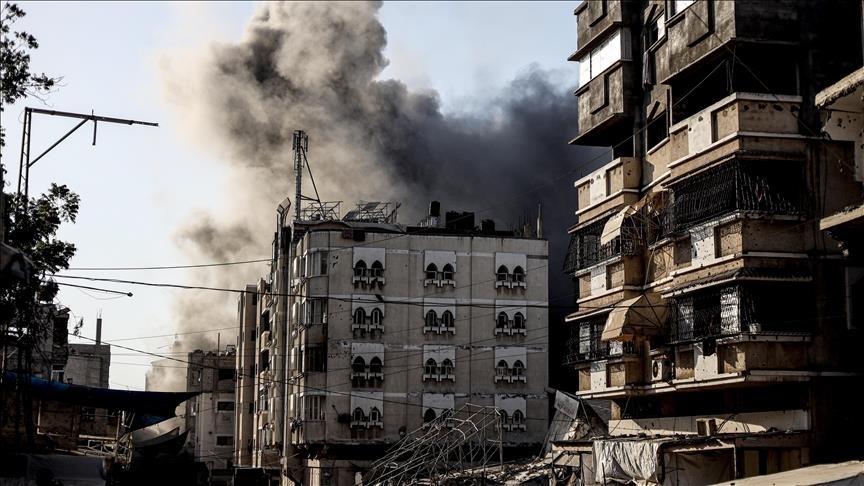
The Israeli war on the Gaza Strip entered its 633rd day on Monday, amid what the world describes as a genocide targeting civilians, displaced persons, and the starving, amidst new massacres.

Israeli airstrikes early Monday morning killed and injured a number of Palestinians after targeting two schools housing displaced persons in Gaza City and Jabalia al-Balad, north of the Gaza Strip.

Israeli forces also blew up several residential homes east of Gaza City.

The Government Media Office in Gaza reported that the Israeli army destroyed more than 19 homes with their residents inside in the Tuffah neighborhood and the Jabalia al-Balad and al-Nazla areas in the northern Gaza Strip.

On the 105th day of the resumption of Israel's war of extermination, the death toll has risen to 86 in the past 24 hours, according to medical sources in Gaza hospitals.

In the latest developments: Civil Defense reported the death of a citizen and the injury of several others this morning, Monday, as a result of an Israeli bombardment that targeted a tent housing displaced persons in the Al-Attar area in the Mawasi area of Khan Yunis, south of the Gaza Strip.

The Civil Defense in the Gaza Strip reported that a number of Palestinians were killed as a result of an Israeli bombardment this morning, Monday, targeting a medical point next to the Halawa (Zainab al-Wazir) School in Jabalia al-Balad, north of the Strip.

He explained that the martyrs are: Magdy Hamouda Abu Al-Fath, Osama Al-Najjar, and Fouad Eid.

The Palestinian Red Crescent reported that journalist Hatem Salmi was injured when the Israeli army targeted a house in the Tuffah neighborhood east of Gaza City this morning, Monday.

Civil Defense also reported that Israeli army vehicles fired gunfire east of the Al-Bureij refugee camp in the central Gaza Strip early Monday morning, coinciding with Israeli artillery shelling targeting areas east of Jabalia in the northern Gaza Strip.

PALESTINE

Mon 30 Jun 2025 8:29 am - Jerusalem Time

Testimonies of occupation soldiers... sniping at the hungry.

Dr. Raed Abu Badawi: The United Nations and other international institutions possess sufficient evidence to hold Israel accountable, but they lack genuine political will.

Nour Odeh: Despite its importance, the report does not represent a major turning point in the ongoing war on the Gaza Strip due to the absence of effective international punitive measures.

Talal Okal: These testimonies represent vital evidence supporting the process of accountability before international justice institutions.

Dr. Tamara Haddad: The Haaretz report is a powerful document, but what's more important is implementing international law rather than exploiting time to achieve Israel's goals.

Majed Hadeeb: Israel took over the distribution of humanitarian aid in order to turn distribution centers into "execution squares."

Nizar Nazzal: A policy that goes beyond starvation to include mass and systematic killing, confirming that Israel has reached a dead end in managing the humanitarian situation in Gaza.

Testimonies from Israeli soldiers reveal a grave admission that aid lines in Gaza have been turned into sniper targets, revealing a systematic policy of starving and killing civilians in cold blood. This presents the international community with a real test of its ability to halt these ongoing crimes and the systematic killing of Palestinians by Israel.

In a new investigation published by a prominent Israeli newspaper, shocking testimonies from Israeli soldiers and officers have emerged, in which they admitted receiving direct orders to target Palestinian civilians, including humanitarian aid recipients in the Gaza Strip.

In separate interviews with "I," writers, political analysts, specialists, and university professors say that these testimonies, which were leaked to the Israeli media, add to a long list of evidence confirming the systematic violations of international humanitarian law and expose Israel's official narrative, which has long justified the killing of civilians as "unintentional mistakes."

They believe these testimonies highlight the Israeli military's moral and military failure in managing its ongoing aggression against the besieged Gaza Strip. The investigation reveals a lack of real military targets, turning civilians and aid distribution centers into open execution grounds.

While analysts and writers view this evidence as a vital asset to support the process of accountability before the International Criminal Court and the International Court of Justice, they emphasize that the international community remains unable to translate this documentation into concrete punitive measures.

Military and moral bankruptcy of the Israeli army

Dr. Raed Abu Badawi, professor of international law and international relations at the Arab American University, says that a report published by the Israeli newspaper Haaretz, which included testimonies from Israeli soldiers who spoke of receiving military orders to target Palestinian civilians, including humanitarian aid recipients in the Gaza Strip, reveals the military and moral bankruptcy of the Israeli army.

Abu Badawiya points out that these statements reflect the absence of clear military objectives and confirm that the military campaign in Gaza serves political purposes linked to the survival of the ruling coalition led by Prime Minister Benjamin Netanyahu.

Abu Badawiya points out that the soldiers' statements, which included sensitive information leaked to the Israeli media, reveal a lack of conviction within the Israeli army regarding the effectiveness of the military campaign.

Abu Badawiya explains that these statements reflect a segment of soldiers' awareness of the lack of real military objectives in the Gaza Strip, as well as the absence of clear security objectives that support the continuation of the aggression.

Abu Badawiya says, "The Israeli army is suffering from a bankrupt military target bank, which is driving the command to target civilians, a behavior that contradicts military ethics and reflects the collapse of values within the army."

Abu Badawiya asserts that these leaks carry multiple implications, including an attempt to send a message to the Israeli public that the war in Gaza is not achieving security objectives, which could increase societal pressure on Netanyahu's government to end the aggression.

Another piece of evidence added to the "basket of evidence" condemning Israel.

Abu Badawiya points out that previous leaks from Israeli generals and officers emphasized the futility of the military operation, which reinforces this internal trend against the continuation of the war.

Abu Badawiya believes that these statements could influence Israeli public opinion, particularly regarding the distribution of humanitarian aid, which has drawn widespread international criticism.

On the international level, Abu Badawiya explains that the Haaretz report adds to the "basket of evidence" that accuses Israel of committing war crimes and crimes against humanity in Gaza.

Abu Badawiya points out that the United Nations and other international institutions, such as the International Criminal Court and the International Court of Justice, possess sufficient evidence to hold Israel accountable, but they lack genuine political will.

Abu Badawiya criticizes the international community, particularly the United States and the European Union, for their failure to take serious steps to halt the aggression. He points out that the EU, which was expected to suspend the trade agreement with Israel due to human rights violations, has instead issued "timid" statements without taking concrete action.

The inability of Arab and Islamic countries

Abu Badawiya asserts that Western positions are influenced by the "Trumpian umbrella" the US administration provides Israel, making European countries hesitant to take firm positions for fear of angering Washington.

Abu Badawiya also criticizes the inability of Arab and Islamic countries to use effective pressure tools, which places them in a state of tacit complicity by not severing trade ties or imposing sanctions on Israel.

Abu Badawiya asserts that the international community, including key players such as the United States and the European Union, bears responsibility for the ongoing "genocide" in Gaza. He calls for urgent action to halt the crimes and ensure the safe delivery of humanitarian aid, warning that people's expectations of the international community may be exaggerated in light of this clear failure.

The issue is not a lack of information about crimes.

For her part, Nour Odeh, a writer and political analyst specializing in diplomatic affairs and international relations, downplays the political implications of a recent report published by the Israeli newspaper Haaretz, which included shocking testimonies from Israeli soldiers and officers about receiving orders to shoot Palestinian civilians near aid distribution centers in the Gaza Strip.

Awda believes that this report, while important as additional evidence of the crimes committed, does not represent a significant turning point in the context of the war that has been ongoing for more than 20 months. She points out that the genocide perpetrated by Israel in Gaza continues due to the absence of effective international punitive measures, not a lack of information about the crimes.

Awda explains that Haaretz has previously exposed other violations during this war, without this leading to any fundamental changes in international positions or a halt to the aggression.

Awda asserts that the newspaper's motives may be subjective, linked to some Israelis' attempts to portray their society as morally "superior." However, this does not negate the presence of a relatively humane tendency in its reporting compared to other Israeli media outlets.

However, Odeh emphasizes that these reports are not the primary motivation for international investigations or criticism. Videos published by the soldiers themselves, along with Palestinian and international testimonies, provide ample evidence to support the charges brought against Israel before the International Criminal Court and the International Court of Justice for genocide.

International positions are not based solely on press reports.

Awda points out that international positions are not based solely on press reports, but rather reflect the imbalance of international power, especially in light of US threats against countries attempting to impose sanctions on Israel or its officials, such as ministers Bezalel Smotrich and Itamar Ben-Gvir. Awda criticizes the system Israel established with US support to arm humanitarian aid, considering it a crime under international law.

Awda asserts that the United Nations and humanitarian organizations, through the American establishment, have been condemning this regime from the outset, but the absence of economic sanctions or a political blockade of Israel reflects "international indifference" to the tragedy.

Awda points out that the internal Israeli context plays a role in reports such as those published by Haaretz, as a segment of Israeli public opinion seeks to end the war for domestic reasons, including opposition to and loss of confidence in Prime Minister Benjamin Netanyahu.

But Odeh emphasizes the importance of distinguishing between Haaretz's reporting and the investigations of progressive platforms like +972 magazine, which brings together Israeli and Palestinian journalists and documents crimes against Palestinians since the beginning of the war.

In a related context, Awda pointed to what Yedioth Ahronoth revealed, that the United States and Israel are working together to thwart a UN and European initiative aimed at passing a resolution in the Security Council to suspend the activities of the Gaza Humanitarian Aid Fund (GHF). According to Awda, this reflects ongoing attempts to politicize aid and normalize crimes through potential normalization agreements, which she described as "disastrous" because they would legitimize genocide and displacement.

Vital evidence supports the process of accountability and responsibility

In turn, writer and political analyst Talal Okal says that the investigation published by the Israeli newspaper Haaretz, which included testimonies from Israeli soldiers and officers about war crimes and genocide in Gaza, is not the only piece of material revealing these violations from within Israeli society.

Awkal explains that these testimonies represent vital evidence supporting the process of accountability before international justice institutions, such as the International Criminal Court and the International Court of Justice, in light of accusations against Israel of committing systematic war crimes.

Okal points out that these testimonies, coming from Israelis who, despite being a minority, demonstrate a commitment to the values of their society and state, hold great significance in the context of the trial of Israeli officials.

Okal asserts that the policies pursued by the far-right Israeli government, led by figures like Benjamin Netanyahu, are beyond the most criminal imaginings, but that the entire Israeli society cannot be held accountable for these policies.

An important step towards achieving justice

However, according to Okal, investigations such as those published by Haaretz highlight the extent of the violations that are denied by Israeli political and military circles.

Okal asserts that Palestinian, Arab, and international organizations are working to document these testimonies and follow up on them with international justice institutions, despite the challenges they face due to US pressure and sanctions aimed at preventing legal action against Israel or its officials.

Awkal explains that this slowdown in the work of international institutions does not negate the importance of testimonies as tools to strengthen accusations against Israel, emphasizing the need for continued efforts to ensure accountability.

Awkal emphasizes that these testimonies represent an important step toward achieving justice, despite the obstacles that American and Israeli policies place in the way of international accountability.

Extremely dangerous implications at all levels

For her part, writer and political researcher Dr. Tamara Haddad asserts that the report by the Israeli newspaper Haaretz, which revealed statements by Israeli soldiers stating that they received high-level orders to target Palestinian civilians, including those seeking humanitarian aid in the Gaza Strip, carries extremely dangerous implications on the political, humanitarian, moral, and legal levels.

Haddad explains that these orders, issued by the extremist Israeli coalition government, aim to exert maximum military and humanitarian pressure on civilians, with the goal of forcing Hamas to release the hostages without conditions such as a ceasefire, an Israeli military withdrawal from Gaza, or guarantees to protect the movement's leaders and assets abroad.

Haddad points out that these testimonies refute the Israeli narrative that describes these actions as "unintended mistakes," asserting that targeting civilians reflects a deliberate policy and not individual transgressions by officers or soldiers.

Haddad explains that the primary goal is to pressure Hamas to sit at the negotiating table without discussing the terms of a ceasefire or troop withdrawal, which reveals the targeting of civilians, including children, women, and the elderly, amid the siege and starvation the Gaza Strip is suffering from.

Legally, Haddad asserts that deliberately targeting civilians is classified as a war crime and a crime against humanity under the Rome Statute of the International Criminal Court.

Additional evidence supporting the files submitted to the International Criminal Court

Haddad explains that the Haaretz report constitutes additional evidence supporting the files submitted to the court, whose prosecutor, Karim Khan, has announced the continuation of investigations into crimes committed in the Palestinian territories.

Haddad stresses the importance of documenting these crimes by credible international organizations to strengthen the evidence against Israeli officials.

Haddad criticizes the international and regional apathy and indifference to these crimes, pointing to the double standards of major powers that protect Israel from condemnation in the Security Council and other international forums.

Haddad explains that Israel is exploiting its narrative of the October 7 events to justify its aggression, which garners it strong Western support that grants it political and military immunity.

Haddad points to the absence of a unified Arab and Islamic position to pressure Israel, which has led to a moral normalization of atrocities, with daily casualties and injuries becoming a routine occurrence that does not warrant strong responses.

Haddad asserts that the Haaretz report is a powerful document, but what's more important is the implementation of international law rather than wasting time to achieve Israel's security and political goals in Gaza and the West Bank.

Haddad explains that the continued international silence, supported by the United States, strengthens Israel's ability to commit violations in the region, including in Syria, Lebanon, and Iran, without facing real condemnation, revealing a moral and legal crisis in the international system.

Israel invents new methods of killing

Writer and political analyst Majed Hadeeb says that a report published by the Israeli newspaper Haaretz, which included confessions from Israeli soldiers that they received orders to target Palestinian civilians, including humanitarian aid recipients in the Gaza Strip, constitutes conclusive evidence of a systematic Israeli policy aimed at eliminating the Palestinian people as if they were "insects or human monsters," in line with the statements of Israel's political, security, and religious leaders.

Hadeeb points out that Israel has never hesitated to invent new methods of killing and achieving its goals, employing sophisticated weapons to carry out these crimes, ranging from aerial bombardment of civilian-inhabited homes, to starvation as a weapon of pressure on the population, to attempts at forced displacement.

Hadib believes that these policies have, since October 7, 2023, led to the martyrdom and injury of approximately 200,000 Palestinians, in addition to the disappearance of approximately 11,000 others, with starvation continuing to be used as a primary weapon alongside air, tank, and artillery bombardment.

Hadib asserts that Israel has ordered the distribution of humanitarian aid, unilaterally removing it from UN agencies, in order to transform aid distribution centers into "execution grounds." The targeting of aid recipients has resulted in the deaths of approximately 6,000 people and the injury of more than 6,000 others, according to reports from Hamas's media office in Gaza.

War crimes documented with audio and video

Hadib believes that these crimes constitute a flagrant violation of international law and international humanitarian law, which considers the protection of civilians, particularly when receiving aid, a fundamental principle.

Hadeeb points out that the confessions included in the Haaretz report confirm that these acts were carried out under direct orders from military commanders, making them war crimes documented in audio and video, and supported by statements from officials in international human rights and UN organizations.

Hadeeb explains that this evidence is sufficient to present it to the International Criminal Court, which has already issued arrest warrants for Netanyahu and Galant. However, Israel is ignoring these institutions with the support of the United States, which has opposed the court, and some countries, such as Hungary, which has publicly hosted Netanyahu.

Hadib criticizes the international, Arab, and Islamic silence regarding these crimes, describing it as "insensitivity." He also points out that Arab and Islamic peoples, as well as their regimes, have also become insensitized by their refusal to continue their activism to demand an end to the war or to urge their regimes to deliver humanitarian aid.

What is happening in Gaza reveals Israel's secret goals.

Hadib asserts that the absolute American support for Israel, whether diplomatically through its protection in the Security Council, or militarily through the provision of lethal weapons, in addition to preventing any attack against it and deterring anyone who attempts such a move, as is the case with its protection from attacks by groups in solidarity with the Palestinians, such as the Houthis in Yemen, where the United States bombed Yemeni sites in response to their attacks against Israel, is what has encouraged Israel to persist in its crimes.

Hadib explains that what is happening now in Gaza, with the starvation of Palestinians and the killing of anyone attempting to obtain aid, reveals Israel's secret goals, such as forced displacement and the destruction of the necessities of life, using starvation as a weapon to force Palestinians to emigrate voluntarily or by force.

Hadib emphasizes that these crimes reflect a profound moral crisis plaguing Western, Arab, and Islamic countries, coupled with the failure of the international system to protect civilians.

Hadib warns that the absence of popular and official Arab and Islamic pressure strengthens Israel's ability to continue its crimes, calling for urgent action to halt the "war of extermination" and provide protection for the Palestinian people.

Israel uses starvation as a political pressure tool.

For his part, Nizar Nazzal, a researcher specializing in Israeli affairs and conflict issues, asserts that the testimonies provided by Israeli soldiers, published by Haaretz, regarding their receiving orders to target Palestinian civilians, including humanitarian aid recipients in the Gaza Strip, carry dangerous implications that reveal a systematic Israeli policy.

Nazzal explains that these testimonies reflect Israel's use of starvation as a political pressure tool, not only through the blockade and depriving the population of food and medicine, but also by suppressing attempts to receive humanitarian aid, with the aim of deterring civilians, spreading fear, and breaking their resilience.

Nazzal points out that this policy goes beyond starvation to encompass mass, systematic killing, emphasizing that the targeting of civilians, including children, women, and the elderly, is not an individual act but rather part of a clear Israeli strategy.

Nazzal asserts that Israel seeks, through these actions, to send a message to the international community that its army will do whatever it pleases without regard for international law.

Additional evidence to support the claims before the International Criminal Court

Nazzal believes this policy confirms Israel's impasse in managing the humanitarian situation in Gaza, with its only remaining tools of control remaining, namely violence and destruction.

Nazzal points out that these leaks constitute additional evidence supporting the cases filed before the International Criminal Court, which has issued arrest warrants for Israeli Prime Minister Benjamin Netanyahu and former Defense Minister Yoav Gallant on charges of war crimes.

Nazzal points out that the killing of more than 56,000 Palestinians in Gaza, documented in photos and videos, reinforces this evidence. Yet Israel is ignoring international institutions, supported by the United States, which has opposed the International Criminal Court, and countries like Hungary, which openly hosted Netanyahu despite the warrant.

Nazzal asserts that Israel successfully exploited the events of October 7 to portray its aggression on Gaza as an existential conflict, leading to fluctuating international positions.

Nazzal points out that the trade partnership between the European Union and Israel has not been suspended despite the violations, and that the absolute US support for Israel influences global attitudes.

Nazzal points out that China and Russia are preoccupied with their own issues, while the United States controls the dynamics of the conflict, believing that Israel is implementing an American project in the region.

Nazzal explains that the international community's inability to stop the "massacres" in Gaza reflects a moral and political failure, as international tools remain ineffective in the face of Western support for Israel.


PALESTINE

Mon 30 Jun 2025 8:27 am - Jerusalem Time

Trump's Normalization Plan: A Flashback to the First Chapter of the Story

Muhammad Abu Allan: The Saudi position, based on peace with the Palestinians first, is what is hindering the implementation of Trump's plan, as he attempted to expand the circle of normalization during his first term.

Dr. Ahmed Younis: The Trump plan is part of a larger regional equation: normalization in exchange for nothing, appeasement in exchange for perpetuating control, and promises of investment in exchange for Arab silence.

Dr. Tariq Ziad Wahbi: The option of a Palestinian state is no longer viable, and the only possible solution is the establishment of a single state for two peoples within a legal framework that respects both parties.

Dr. Ilham Shamali: The situation in Israel is ripe for a deal and an end to the war, and the field indicates that the Israeli army no longer has anything to do in Gaza.

Attorney Moein Odeh: The Israeli Bar Association and politicians considered Netanyahu's request to Trump to publish a "pardon tweet"—if proven—a criminal offense.


Contrary to the facts on the ground, which show continued Israeli escalation and crimes in the Gaza Strip, the West Bank, and even on the Lebanese front, a secret plan developed by US President Donald Trump and Israeli Prime Minister Benjamin Netanyahu was recently revealed. This plan aims to expand the circle of normalization with a number of Arab countries, including arrangements for Gaza and Syria.

The Israeli newspaper Israel Hayom, which is close to Netanyahu, reported that the parties involved have agreed on a set of principles to end the war in the Gaza Strip. These principles include ending the Israeli aggression within two weeks, with the administration of the Strip being transferred to four Arab countries, including Egypt and the UAE, instead of Hamas.

The vision includes exposing the remnants of Hamas' leadership in other countries and releasing Israeli detainees in the Strip. The plan also stipulates that several countries would receive large numbers of Gaza residents wishing to emigrate.

The Hebrew newspaper claimed that, as part of the expansion of the so-called "Abraham Accords," Syria, Saudi Arabia, and other Arab and Islamic countries are expected to recognize Israel and establish formal relations with it.

She added: Tel Aviv is expected to express its willingness to reach a solution to the "Palestinian-Israeli conflict" based on the two-state solution, in exchange for reforms within the Palestinian Authority, while Washington recognizes the application of a portion of Israeli sovereignty in the West Bank.

Israel Hayom newspaper quoted two political sources as saying that there is intense US pressure on Israeli Prime Minister Netanyahu to end the military campaign in the Gaza Strip.

Writers, academics, and experts who spoke to "I" said that the Trump plan is part of a larger regional equation: normalization in exchange for nothing, appeasement in exchange for perpetuating control, and promises of investment in exchange for Arab silence. They emphasized that the option of a Palestinian state is no longer a viable option, and that the only possible solution is the establishment of a single state for two peoples within a legal framework that respects both parties.

They explained that the Saudi position, based on prioritizing peace with the Palestinians, is what is hindering the implementation of Trump's plan, as Trump attempted to expand the scope of normalization during his first term.

American policy to throw dust in the eyes

Israeli affairs expert Mohammed Abu Allan said, "The establishment of an independent Palestinian state is an American policy that can be described as 'throwing dust in the eyes.' The United States has always talked about a two-state solution without implementing anything tangible on the ground. On the contrary, US President Donald Trump, in his first term, proposed the 'Deal of the Century,' which effectively destroyed the two-state solution at its roots."

He explained that "American policy, through successive administrations, has never been serious about establishing a real Palestinian state, but rather treats this issue as a political card to be used when necessary."

Abu Allan pointed out that everyone, including the US administration, realizes that Israeli settlement activity has destroyed any possibility of establishing an independent Palestinian state. Currently, the US administration is talking more about allowing the occupying state to annex the West Bank or parts of it than about the two-state solution, rendering any discussion of this solution meaningless.

Regarding Trump's statements about halting the war on Gaza, Abu Allan viewed them as merely a "political maneuver." While Trump is talking about the possibility of reaching a ceasefire within the next week, the Israeli army continues to expand its military operations and issues orders aimed at encircling Palestinians in Gaza in the smallest possible area.

Trump gives Netanyahu another chance to continue his war

He considered these developments to constitute an additional opportunity provided by Trump to Netanyahu and the occupation army to continue their war of genocide against the Gaza Strip, despite some indications of intentions to cease fire.

He said: "So far, there is no clear position from Netanyahu indicating his acceptance of a ceasefire, and he remains adamant about rejecting any settlement that could lead to calm.

Abu Allan added, "My personal belief is that the decision to stop the war is in Trump's hands. He can say within minutes, 'We want an immediate end to the war,' and it will happen." However, it's clear that Trump is giving Netanyahu more time to complete his goals, especially after the Israeli army's chief of staff announced that his forces now control approximately 75% of the Gaza Strip and that they are close to achieving the goals of the Gideon Armoured Vehicles.

He stressed that Israel, in its view, is still far from achieving its goals, whether in terms of recovering prisoners or defeating Hamas, and that this could serve as a pretext for continuing the war for an additional period.

Regarding the expansion of the normalization agreements known as the "Abraham Accords," Abu Allan said that Saudi Arabia represents the "key" in this matter. If Riyadh continues its position of rejecting normalization without the establishment of an independent Palestinian state on the June 4 borders with East Jerusalem as its capital, most Arab countries will not move forward with these agreements.

He stressed that the Saudi position, based on prioritizing peace with the Palestinians, is what is hindering the implementation of Trump's plan. Trump attempted to expand the scope of normalization during his first term but failed, primarily due to the unwavering Saudi stance.

Trump demands pardon for Netanyahu to avoid prosecution

Regarding Trump's demand to pardon Benjamin Netanyahu, Abu Allan considered this to be part of a "joint game" between Trump and Netanyahu aimed at enabling the latter to escape the trials he has faced for years. He noted that Netanyahu had previously attempted to circumvent these trials through a judicial coup within Israel, but the outbreak of war disrupted this process. Today, he is exploiting the current circumstances to attempt to revive this project with Trump's support.

He added, "Trump is trying to trade the fate of the Israeli prisoners in Gaza for a pardon for Netanyahu, as if he is offering the Israelis a choice: 'If you want to end the war and return the prisoners, you must support a pardon for Netanyahu so he can complete his achievements and return the Israeli prisoners.'"

Abu Allan considered this to be blatant and unprecedented interference by Trump in Israel's internal affairs. Nevertheless, he welcomed it from Netanyahu and his supporters, stressing that the success of this initiative is not guaranteed, given the legal and political complexities within Israel.
An unprecedented strategic shift

For his part, academic researcher and political analyst Dr. Ahmed Younis said that recent developments in the region point to an unprecedented strategic shift, one in which politics intersects with security, and economics with ideology.

He added: "After the ceasefire between Iran and Israel, under US-Qatari sponsorship and with broad international support, it became clear that the Trump administration, seeking to return forcefully to the international stage, is not content with merely extinguishing the flames of war, but rather wants to draw a new map that combines the idea of so-called economic peace with establishing Israel as a natural regional player, even at the expense of pending sovereign issues, foremost among them the Palestinian issue."

Younis pointed out that within this context, the Trump administration has proposed a multi-dimensional plan that, on the surface, includes a de-escalation and an end to the conflict, but in essence, it is based on the logic of political bargaining: a comprehensive ceasefire, a prisoner exchange, and the reconstruction of Gaza through massive international projects involving American and Gulf companies, in exchange for public normalization steps with key Arab countries such as Saudi Arabia, Lebanon, and Syria, leading to the internal containment of the Netanyahu trial file, under the pretext of preserving Israeli stability and preventing the collapse of the government.

A historic opportunity to create a new Middle East!

He pointed out that Trump is presenting this plan not just as a deal, but as a historic opportunity to create a new Middle East. In a statement, he described Gaza as "a promising tourism project similar to the Mediterranean Riviera," a reference to American intentions to transform Gaza into a gateway to economic peace under Israeli-Arab security protection.

Younis emphasized that this proposal raises fundamental questions about the feasibility of transforming a devastated and besieged area for decades into a successful economic model without addressing the root causes of the political problem: occupation, displacement, and the right of return.

He said: While international and regional parties have agreed to support the plan in theory, most notably Qatar and Egypt, the Palestinian position has appeared cautious, particularly from Hamas and Islamic Jihad, which consider any plan that does not include a full withdrawal and the right to self-determination to be merely a decoration and entrenchment of the occupation.

On the domestic Israeli front, the Lebanese analyst explained that signs of a split have begun to emerge between those who view the Trump plan as a golden opportunity to consolidate military gains in Gaza and Lebanon, and those who object to the blatant American interference in the Israeli judiciary. This is particularly true after media outlets revealed that pressure was exerted on the court to postpone or cancel Netanyahu's corruption trial, a move his opponents considered a coup against judicial independence and an attempt to undermine democracy.

The success of such a plan depends on several interconnected elements.

Younis believes that the success of such a plan in ending the conflict and imposing a permanent settlement is very complex, as it depends on several interconnected factors, most notably: the extent to which the Arab parties are willing to make concessions without a real guarantee of the establishment of an independent, sovereign Palestinian state; the position of the Palestinian factions on any potential normalization; and the cohesion of the Israeli domestic front in light of the judicial crisis and partisan divisions. Regarding the Arab countries, he noted that Saudi Arabia remains committed to the Arab Peace Plan, which links any normalization to the establishment of a full Palestinian state, and it does not appear prepared to make this political concession for free.

He added: As for Lebanon, which is governed by the refugee issue, the occupation of the Shebaa Farms and the Kfar Shuba Hills, and the Israeli violations that emerged after the end of the Israeli war through the deployment of Israeli occupation forces at five points inside Lebanon on the Lebanese border, and the security breaches that it is committing in the southern regions and the Beirut suburbs, and the sharp internal Lebanese division, which prevents Lebanon from engaging in a normalization plan.

He continued: "As for Syria, mired in the complexities of its internal conflict, it is not ready for any normalization process. It can barely reach an understanding with Israel regarding border control between the two countries."

Putting Palestinians in the position of recipients, not partners

In light of these facts, Younis considered the US plan an attempt to redefine the regional balance of power, impose a declared normalization that places the Palestinians in the position of recipients rather than partners, and offers economic incentives as a substitute for national rights.

He said, "If the Trump administration believes the time is right to implement this plan, given the exhaustion of the Iranian axis and the depletion of the resistance in Gaza and Lebanon, the reality indicates that any settlement based on breaking the national will, without justice, will only generate new tensions or postpone the explosion to a later stage."

Younis concluded his statement by stressing that "Trump's plan is not just a political initiative, but rather part of a larger regional equation: normalization in exchange for nothing, appeasement in exchange for perpetuating control, and promises of investment in exchange for Arab silence. But it is also a risky venture, because it ignores that the core of the conflict in the Middle East is not economic or even security-related, but rather political and identity-related. Unless the roots of Palestinian grievances are addressed, any plan, no matter how embellished, will be nothing more than a break between two wars."

Trump's plans are nothing but games.

For his part, international relations researcher Dr. Tariq Ziad Wahbi said that Trump's plans are nothing more than games that cannot be classified as political, as long as they are built on purely commercial foundations, where the fates of peoples are bought and sold.

He emphasized that President Trump has a big ego and strongly believes that everything he says is made of gold and diamonds, but the truth is much more complex. All players in the Middle East calculate profit and loss, and this is the foundation of construction.

Wahbi pointed out that normalization is a definite complement, and perhaps the most profitable project for Trump, because it binds everyone, pushing them to make him the first and last influencer, striving to be the one making the right decisions, even if the peoples upon whom normalization is imposed are far removed from understanding what might happen next!

Regarding a Palestinian state, Wahbi believes it has become an elusive dream in light of Israeli extremism and Palestinian intransigence. He explains that the issue is no longer one of a "two-state solution," because Israeli governments, backed by popular extremism, have destroyed this idea through continued settlement expansion in Palestinian territories, as well as the ongoing return to biblical rhetoric that rejects any concession of occupied land.

He added, "The option of a Palestinian state is no longer viable, and the only possible solution is the establishment of a single state for two peoples, within a legal framework that respects both parties. Such a solution could constitute a form of mutual and shared protection for Jews and Arabs."

Netanyahu has become a hero to the majority of Israelis.

As for Netanyahu, Wehbe believes he has become a hero, in every sense of the word, to the majority of Israelis, who see him as nothing more than a fierce defender of Israel. Therefore, despite the criticism, it is the political extremism within the Israeli political "mosaic" that has so far prevented any prosecution of him, under the slogan that he is "the decision-maker who protects Jews before Israelis."
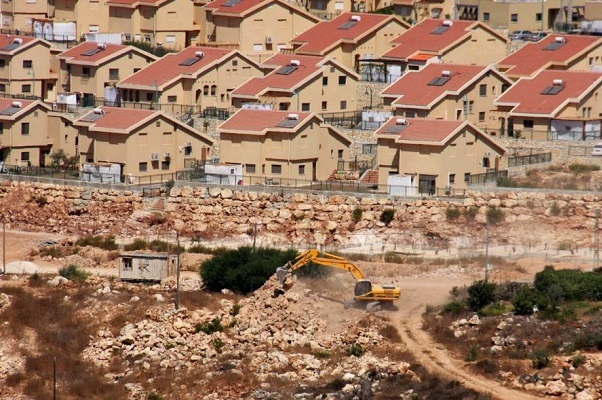
He said, "Since the beginning of his project to tamper with Israeli law, particularly by curtailing the powers of the judicial authorities, Netanyahu has been able to evade all prosecutions, under the guise of 'savior' or 'hero.' But all these theories could collapse if the political forces supporting him decide to abandon him in exchange for other privileges. This is where Trump and his 'agents' come in, fulfilling the dream of some circles within Israel."

Wahbi asserted that the case had become a kind of bargain: either trial or acceptance of all the extremists' demands.

He wondered whether the Gaza war would end even after the last prisoner and body held by Hamas and Islamic Jihad were handed over. "Definitely not," he said, because building peace on a zero-sum basis might be realistic, but it would perpetuate the cycle of violence and resentment among all parties.

Wahbi concluded by saying, "Trump, who dreams of a Nobel Prize, will continue to try with all parties that dream of nothing but fighting and destruction, because what unites them is the land on which life is worth living."

America rewards Netanyahu with the normalization file

For her part, Dr. Ilham Shamali, a writer on the Arab-Israeli conflict, asserted that conditions within Israel are now ripe for a deal and an end to the war, particularly at the government level.

She said: If there is an objection to the truce, the fact that it coincides with the Knesset's annual recess means that the agreement does not require a broad parliamentary vote.

Shamali added that the normalization process at this stage is being led by the United States, not from an investment perspective as it was previously, but rather as a "reward" for Israeli Prime Minister Benjamin Netanyahu for his achievements in the region. This is evident in the frequent praise directed at him by US President Donald Trump, who sees himself as the "king" of these issues.

Shamali explained that the reality on the ground indicates that the Israeli army no longer has much to do in Gaza, having taken control of more than 80% of the territory. It has also deployed armed groups in the southern Gaza Strip, specifically in Rafah, and is working to form new cells in the center and north, with the goal of destabilizing the Palestinian internal front and creating further chaos. It has also allowed humanitarian aid to enter and prevented any Palestinian entity from organizing or securing it.

The decline of the role of the "resistance" axis

She explained that Saudi Arabia has been pushing for normalization with Syria since Ahmed al-Sharaa's visit to the kingdom, in the presence of Trump, who in turn lifted sanctions on Syria as part of strengthening his regional standing. Israel later recovered the belongings of Israeli spy Eli Cohen, under direct US sponsorship.

She also noted that the Israeli strikes on Iran were carried out from Syrian airspace, without any condemnation or objection from the Syrian side, reflecting the declining role of the so-called "axis of resistance," which Netanyahu has been dismantling, country by country. This has helped pave the way for a new normalization equation after the Gaza Strip was effectively separated from the "unity of arenas" strategy promoted by Palestinian factions, but which has not been practically achieved during the two years of war.

Shamali emphasized that the primary supporters of Hamas and Islamic Jihad have been subjected to severe military strikes and violent internal upheavals, weakening their regional presence.

She believed that separating Gaza, Lebanon, Syria, and Iran would contribute to ending the war and shaping a new Middle East, as envisioned by both Trump and Netanyahu, based on a regional Arab alliance with a clear security front and a strategic goal in which Israel would prevail.

Netanyahu's indictment won't be dropped with a tweet from Trump

Regarding the issue of dropping the charges against Netanyahu at Trump's request, Shamali explained that this cannot be done via a tweet, but rather requires an official request from the President of the State of Israel, who alone has this right. She added that Israel, despite being an occupying state, is a state with judicial, legislative, and executive institutions, which makes implementing such a request difficult, especially in light of the existence of several cases against Netanyahu before the Israeli judiciary, which he is trying to stall while waiting for a political event that will allow him to move beyond these files.

Shamali concluded by saying, "All of Netanyahu's justifications for continuing the killing and genocide in Gaza, and expanding the war beyond the borders of Palestine under the banner of the 'October 7th attack,' are aimed at keeping the war raging, as its end would mean halting the flow of military and political aid to Israel. Consequently, the continuation of the war has become closely linked to Netanyahu's personal calculations that ensure the continuation of his government and his continued leadership of his party."

Pardoning Netanyahu is very difficult at this stage.

For his part, lawyer Moein Odeh, an expert on Israeli affairs, said that discussing a potential pardon for Israeli Prime Minister Benjamin Netanyahu is extremely difficult at this stage, noting that linking the normalization process with Arab countries to the establishment of a Palestinian state is more closely related than linking it to Netanyahu's trial.
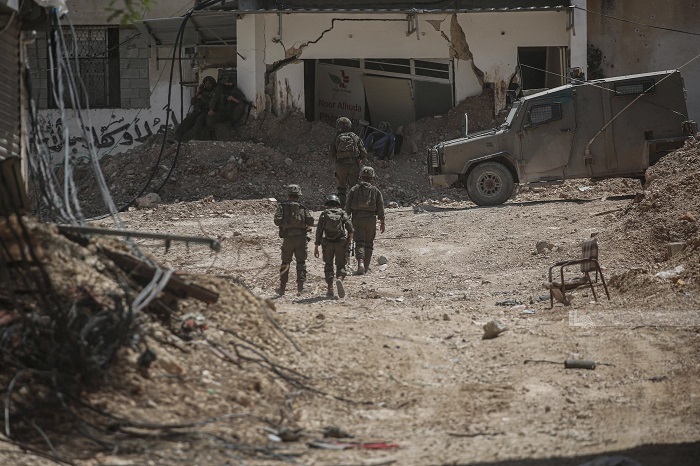
Odeh explained that pardoning Netanyahu would require either a conviction by the court, which is a long-term process, or Netanyahu's admission of guilt and filing a pardon request, which he described as "almost impossible."

He stressed that the Israeli Public Prosecution does not file an indictment against a prime minister unless it is fully confident in its ability to prove the charges.

He added that US President Donald Trump's interference in the Israeli judicial system through a tweet about pardoning Netanyahu sparked a wave of criticism within Israel, noting that some politicians and the Bar Association considered that "Netanyahu's request for Trump to publish that tweet, if true, constitutes in and of itself a criminal offense."

He pointed out that discussions within the Israeli Public Prosecution and judiciary expressed strong opposition to this foreign interference, considering it an unacceptable precedent, which reinforces the impossibility of dismissing the indictment at this time.

Trump's project is not new

Regarding normalization with Arab countries, Odeh said that Trump's project in this context is not new, as he had previously presented it as part of the so-called "Deal of the Century," in which he linked normalization to the establishment of a Palestinian state. However, he asked, "Who has the right to accept or reject such an offer on behalf of the Palestinians?" He pointed to the absence of an elected Palestinian leadership, the internal division, and the ongoing war in the Gaza Strip.

Odeh doubted the Palestinians would accept any new offer, questioning the nature of the proposed Palestinian state: Would it be a truly sovereign state or a collection of disjointed cantons? Would it have an airport, borders, and an army? He argued that these questions open the door to profound disagreement.

He believed that the future of normalization hinges on two factors: the first is the existence of a serious path toward establishing a Palestinian state or returning to the negotiating table, and the second is the outcome of the recent war between Israel and Iran, with each side claiming a major victory over the other.

Attorney Awda concluded by saying, "Assessing the veracity of these allegations will take months, and the results will determine Arab states' positions on moving forward with normalization, or backing away from it, should the strength of Iran's response and its ability to impose a new balance in the region prove."


PALESTINE

Sun 29 Jun 2025 10:56 pm - Jerusalem Time

Gaza government: Israel destroyed 19 homes over the heads of their residents on Sunday.

The Government Media Office in Gaza revealed that the Israeli occupation army has, since dawn on Sunday, destroyed more than 19 homes, with their residents inside, in the Tuffah neighborhood and the Jabalia al-Balad and al-Nazla areas in the northern Gaza Strip, as part of Tel Aviv's war of genocide in the Strip.

"The Israeli occupation committed a complete crime by launching barbaric raids that directly targeted civilian homes in those areas, destroying 19 homes with their residents inside, in a continuation of the genocidal war it has been waging against our people for more than 21 months," said Ismail al-Thawabta, the office's director.

He added, "This criminal escalation confirms the occupation's deliberate targeting of densely populated residential neighborhoods with the aim of mass murder, terrorizing, genocide, and forced displacement, in complete disregard of international humanitarian law and all conventions that guarantee the protection of civilians in times of war."

Since Sunday dawn, 43 Palestinians, including starving and displaced people, including children and women, have been killed and several others injured in sporadic Israeli attacks, including shelling and gunfire, on the Gaza Strip.

Al-Thawabta said, "This barbaric aggression coincides with a worsening humanitarian disaster, as the occupation has almost completely destroyed the health system in the Gaza Strip."

He explained that "the occupation has put 38 hospitals and dozens of medical centers out of service, and killed hundreds of medical personnel and paramedics," adding that "these crimes reflect the occupation's insistence on targeting the foundations of life in Gaza and depriving civilians of their most basic rights to treatment and healthcare."

Al-Thawabat held Israel fully responsible for these crimes, calling on the international community to "break its shameful silence." He also called on the United Nations and its agencies to "take urgent action to stop war crimes and hold their perpetrators accountable."

He called for the formation of independent international investigation committees to prosecute Israeli leaders and bring them to international justice.

Since October 7, 2023, Israel, with American support, has been committing genocide in Gaza, including killing, starvation, destruction, and displacement, ignoring international calls and orders from the International Court of Justice to halt it.

Since October 7, 2023, Israel, with US support, has been committing genocide in the Gaza Strip, leaving approximately 190,000 Palestinians dead or wounded, most of them children and women, more than 11,000 missing, and hundreds of thousands displaced.

ARAB AND WORLD

Sun 29 Jun 2025 10:44 pm - Jerusalem Time

Turkish intelligence discusses a truce in Gaza with Hamas

Turkish intelligence chief Ibrahim Kalin met with Hamas leaders on Sunday to discuss the humanitarian situation in the Gaza Strip and efforts to reach a ceasefire in the war with Israel, according to Turkey's Anadolu Agency.

The agency reported, citing security sources, that Kalin held talks with a Hamas delegation headed by the head of the movement's leadership council, Mohammed Darwish, at an undisclosed location.

She added that the meeting discussed the humanitarian situation in Gaza, as well as Türkiye's efforts to end the war and "ensure immediate access for aid" to the devastated enclave, whose residents are suffering from hunger after more than 20 months of war.

Kalin also discussed with Hamas leaders "the need to reach consensus among Palestinian factions at this critical stage... and the measures that must be taken to achieve a permanent ceasefire in Gaza," the agency reported.

US President Donald Trump expressed optimism on Friday about the possibility of reaching a new ceasefire in Gaza, indicating that this could happen as early as "next week."

In early March, Israel imposed a strict blockade on the Gaza Strip, preventing the entry of humanitarian aid, leading to a severe shortage of food, medicine, and other essential goods.

The Hebrew state slightly eased its blockade in late May when the Israeli- and US-backed Gaza Humanitarian Foundation began distributing aid.

However, there are almost daily reports of Israeli military fire on Palestinians waiting for food supplies, resulting in the deaths of 583 Palestinians since then near these centers.

PALESTINE

Sun 29 Jun 2025 10:14 pm - Jerusalem Time

Palestinian Ministry of Foreign Affairs calls on the international community to assume its responsibilities to stop the seizure of lands in Masafer Yatta.

The Ministry of Foreign Affairs and Expatriates called on the international community to shoulder its responsibilities to stop the occupation's seizure of lands in Masafer Yatta, south of Hebron.

The Ministry of Foreign Affairs confirmed in a statement, Sunday evening, that it views with great concern the Israeli occupation authorities’ action to deliver notices to seize hundreds of dunams and vital roads for the benefit of colonial expansion in Masafer Yatta. It considered this an insistence on targeting the area to deepen colonialism and empty it of its original owners, in a manner that coincides with the continuation of the crimes of the gradual annexation of large parts of the occupied West Bank, especially since the seizure notices sever the connections of Masafer and isolate Palestinian villages from each other, and deprive Palestinian citizens of access to the largest area of their agricultural lands and pastures, while these notices allow for the connection of settlements and colonial outposts to each other.

The ministry stressed that this constitutes a flagrant violation of international law, international legitimacy resolutions, and the Geneva Conventions, in an attempt to alter the historical, political, and legal reality in the occupied West Bank.

It stated that it is following up on these violations with other countries and components of the international community, warning of their grave repercussions for the entire region, and called for genuine international intervention to halt their implementation and all illegal unilateral measures taken by the occupation.

PALESTINE

Sun 29 Jun 2025 8:53 pm - Jerusalem Time

Netanyahu: The last war opened several opportunities to rescue detainees and conclude regional agreements.

Israeli Prime Minister Benjamin Netanyahu said that Israel now has several opportunities to rescue the detainees in the Gaza Strip and conclude broader regional agreements, following the war it launched against Iran over the past few days.

Israeli media quoted Netanyahu as saying on Sunday during a visit to the headquarters of the Shin Bet security service in southern Israel: "We have removed two imminent threats to our existence," apparently referring to Iran and the Lebanese Hezbollah group.

He added, "I would like to inform you that there are a number of opportunities, now, as a result of this victory, and first and foremost, to rescue the hostages."

The Israeli Prime Minister continued, saying, "Of course, we will also need to resolve the Gaza issue and resolve the battle against Hamas, but I believe we will be able to accomplish both tasks."

PALESTINE

Sun 29 Jun 2025 8:23 pm - Jerusalem Time

The occupation threatens to seize hundreds of dunams and vital roads south of Hebron.

Today, Sunday, the Israeli occupation authorities notified the Masafer Yatta village council, south of Hebron, of the seizure of hundreds of dunams of citizens' land and a number of vital roads, to expand settlements and connect them to the settlement road network.

Nidal Abu Aram, head of the Masafer Yatta village council, told WAFA that the occupation forces had delivered a series of notices to the council ordering them to seize agricultural lands and prevent citizens from using or accessing them, particularly the roads linking the village communities in the area.

According to these notifications, the road connecting the villages of Janba and Bir al-Ad has been seized, depriving residents and farmers of access to hundreds of dunams of land. The purpose is to connect the Metzair settlement to Bypass Road 317, paving the way for the settlement's expansion at the expense of Palestinian land.

The occupation's decision also included seizing the road between Wadi Ma'in and Umm al-Shaqhan, in addition to seizing approximately three dunams of land belonging to the al-Jabarin family under the pretext of "military use," which will prevent landowners from accessing approximately 700 dunams planted with olive trees.

In the same context, the occupation authorities issued a new order to seize large areas of land for the purpose of paving a new settlement road around the "Jara'at Hanan" settlement, which was illegally established about four years ago on land belonging to the Hawshiya family.

The notices also included the seizure of an agricultural road in the Tha'la area to connect the "Havat Ma'on" settlement to Bypass Road 317, and the seizure of areas of land belonging to the Al-Arini family.

Abu Aram pointed out that the pace of land seizures in Masafer Yatta has escalated significantly since the start of the Israeli aggression on the Gaza Strip, as the occupation authorities seek to impose a new fait accompli that consolidates settlement expansion and severs Palestinian villages and communities in the area.

ARAB AND WORLD

Sun 29 Jun 2025 8:16 pm - Jerusalem Time

Trump: We can lift sanctions on Iran if it commits to peace

US President Donald Trump announced that he is prepared to lift sanctions imposed on Iran if it commits to "peace" and stops "harming others."

This came in statements made by Trump to the American Fox News channel, while discussing the latest developments on the Iranian and American fronts.

Trump noted that both Iran and Israel were "extremely exhausted" by the recent military escalation, asserting that the US airstrikes against Iran were "successful."

The US president denied reports that Iran had moved enriched uranium to another location prior to the US attacks, saying, "They didn't move anything except themselves in order to survive. They didn't expect us to be able to do what we did."

Trump clarified that sanctions on Iran remain in place, responding to reports that China was allowed to import Iranian oil following the ceasefire agreement.

He said in this regard: "No, I didn't say that. The sanctions are still in place. But if they do what they have to do, if they are peaceful and cooperate with us and do no more harm, I will lift the sanctions on them."

Asked whether there were any countries willing to join the Abraham Accords following the ceasefire between Iran and Israel, Trump said, "Yes, there are actually some great countries that would like to join, and I think we'll start by including them because the main problem was Iran."

He noted that he had previously believed that Iran would also join these agreements, but added that he did not know Syria's current position on the matter.

Trump again criticizes New York mayoral candidate

In domestic US affairs, Trump once again attacked Democratic politician Zahran Mamdani, who won the New York City mayoral primary.

Asked about his opinion on Mamdani's victory, Trump said, "He's a communist. I think it would be very bad for New York."

Trump added that he was "very surprised" by the vote results, stressing, "Whoever becomes mayor of New York City must exercise restraint. Otherwise, the federal government will deal with them very harshly financially."

Mamdani, a member of the New York House of Representatives, won the Democratic primary on June 24, according to unofficial results, becoming the party's nominee for the November 4 election.

Mamdani, 33, of Indian descent and born in Uganda, is known for his progressive leftist stance and democratic socialist leanings, outperforming his main rival, former New York Governor Andrew Cuomo.


In a previous post on his Truth Social platform, Trump described Mamdani's win as "crossing a red line," adding, "Mamdani is a 100 percent communist lunatic."

PALESTINE

Sun 29 Jun 2025 7:42 pm - Jerusalem Time

14 dead in the occupation's bombing of Jabalia and Khan Yunis

Fourteen civilians were killed and others injured Sunday evening in Israeli occupation forces' shelling of Jabalia and Khan Yunis in the Gaza Strip.

Our correspondent reported that 11 citizens were killed and others were injured in an Israeli airstrike targeting the Al-Sadiq family home in Jabalia, north of the Gaza Strip. Two citizens were also killed in an airstrike targeting Old Gaza Street in Jabalia.

He added that a citizen was killed as a result of the occupation's bombing of the Sheikh Nasser area east of Khan Yunis, in the southern Gaza Strip.

Since October 7, 2023, the Israeli occupation forces have launched an aggression against the Gaza Strip, resulting in the deaths of 56,500 citizens, the majority of whom were children and women, and the injury of 133,419 others. This is a preliminary toll, with a number of victims still under the rubble and on the streets, unable to be reached by ambulances and rescue teams.

PALESTINE

Sun 29 Jun 2025 7:38 pm - Jerusalem Time

Three citizens were injured by settler gunfire, and an agricultural hut was set on fire northeast of Jerusalem.

Three citizens were shot and wounded Sunday evening in a settler attack in the eastern part of the town of Hizma, northeast of occupied Jerusalem.

Eyewitnesses said that settlers shot two young men and a boy with live bullets during a raid on the eastern part of the town, under the protection of the occupation army, which was stationed on the main street near the town.

According to local sources, the injured are: Awda Ahmed Awda Askar, Ghazi Badr Daoud Dar Amer, and the young man Ahmed Mustafa.

According to eyewitnesses, the settlers burned a hut belonging to Afif Ahmed Suleiman Rizq Askar.

It is noteworthy that the occupation forces had previously bulldozed and destroyed the land targeted by the settlers' attack.

PALESTINE

Sun 29 Jun 2025 6:56 pm - Jerusalem Time

Hebrew media: The cabinet is discussing a prisoner exchange deal and a temporary ceasefire in Gaza under American pressure.

Hebrew media reported that the Israeli government's security cabinet will hold an emergency meeting on Sunday to discuss a prisoner exchange deal with the Gaza Strip that includes a temporary ceasefire.

According to the Hebrew newspaper Israel Hayom, the cabinet will discuss reaching a "partial deal" that includes a temporary truce in the fighting, amid concerns that this temporary ceasefire could become permanent due to increasing political pressure from the US administration.

In the same context, Israeli Minister of Strategic Affairs Ron Dermer is preparing to travel to Washington, D.C., to hold talks with White House officials regarding the future of the war on Gaza and the possibility of concluding a ceasefire agreement.

For its part, the Hebrew newspaper Haaretz reported that Israeli Prime Minister Benjamin Netanyahu would find it difficult to refuse a direct request from US President Donald Trump to reach a settlement to end the war, especially after Trump publicly announced his support for Netanyahu in his legal battle.

The newspaper added that since the end of the military escalation with Iran, Trump has publicly indicated his intention to use his full political weight to end the war in Gaza, amid increasing pressure from Washington and mediating countries on both the occupation and Hamas to show flexibility and reach an agreement.

Haaretz noted that this week witnessed sensitive political developments, after Netanyahu's lawyers asked the court to postpone his testimony to allow him to devote "full time and effort" to addressing national and security issues, most notably the management of the fighting in Gaza and the prisoners' file.

PALESTINE

Sun 29 Jun 2025 5:51 pm - Jerusalem Time

The occupation continues its aggression on the city of Tulkarm and its two camps for the 154th day.

The Israeli occupation forces continued their aggression on the city of Tulkarm and its camp for the 154th consecutive day, and on the Nour Shams camp for the 141st day, amid military reinforcements and ongoing escalation.

According to local sources, the city and its suburbs witnessed intensive movements by occupation forces and infantry units on Sunday, who were stationed on the main street of the Aktaba suburb east of Tulkarm. They set up a flying checkpoint, stopped and searched vehicles, checked the identities of their passengers, and detained a number of vehicles.

The occupation forces also raided the Dhnaba suburb east of the city, amid extensive searches, and detained a number of young men after raiding their homes, for long hours and taking them with them, before releasing them later. Among them were identified: Amr Abbas, the brothers Yazan, Muhammad, and Zein Al-Qassem, and Mahmoud Nabhan Odeh.

Meanwhile, the occupation forces continue to impose a tight siege on the Tulkarm and Nur Shams refugee camps and their surroundings, with infantry units and military vehicles deployed in alleys and entrances, preventing residents from reaching their homes or checking on their property, amid direct gunfire targeting anyone approaching the area.

Over the past week, Nour Shams camp witnessed the widespread demolition of dozens of buildings and residential units, completely destroying them. The neighborhoods of Al-Manshiya, Al-Maslakh, Al-Iyada, and Al-Masjid were also affected.

Over the course of two consecutive weeks, more than 50 buildings were demolished in Tulkarm camp, affecting the neighborhoods of Balawneh, Akasha, Al-Nadi, Al-Sawalmeh, Al-Hammam, Al-Madaris, and their surroundings.

This ongoing escalation comes as part of a plan announced by the occupation authorities last May to demolish 106 buildings in both camps, including 58 buildings in Tulkarm camp alone, comprising more than 250 housing units and dozens of commercial establishments, in addition to 48 buildings in Nour Shams camp, under the pretext of opening roads and changing geographical features.

The escalation has led to the forced displacement of more than 5,000 families from the two camps, representing over 25,000 citizens. It has also led to the complete destruction of more than 500 homes and the partial damage of 2,573 others. Meanwhile, the entrances to the two camps remain blocked with barriers, transforming them into almost lifeless areas.

In this context, the occupation forces continue their crippling measures at the city's entrances, especially the Anab military checkpoint east of Tulkarm, which they close almost constantly, preventing vehicles from passing. They also periodically set up a flying checkpoint at the Jabara Bridge near the city's southern entrance, exacerbating the residents' suffering.

Meanwhile, the occupation forces continue to transform Nablus Street into a military barracks, continuing their seizure of a number of residential buildings there, as well as parts of the city's northern neighborhood, specifically the one opposite Tulkarm refugee camp, after forcibly evacuating its residents. Some of these neighborhoods have been under occupation control for more than four months, accompanied by the deployment of heavy machinery and bulldozers in the surrounding areas.

This street, which serves as a link between the Tulkarm and Nur Shams refugee camps, has also suffered significant damage due to earth mounds placed by the occupation forces several months ago. The occupation forces also maintain a heavy presence, erecting flying and surprise checkpoints, which impede vehicle movement and exacerbate the suffering of civilians.

The ongoing aggression has so far resulted in the deaths of 13 civilians, including a child and two women, one of whom was eight months pregnant. Dozens of people have been injured and arrested, and widespread destruction has affected infrastructure, homes, shops, and vehicles.