ARAB AND WORLD

Tue 01 Jul 2025 3:13 pm - Jerusalem Time

130 NGOs call for an end to the "deadly" US-Israel aid distribution program.

More than 130 NGOs have called for immediate action to end the "deadly" US- and Israeli-backed aid program, known as the Gaza Humanitarian Foundation (GHF), and return to UN-led aid coordination mechanisms.

The Gaza Humanitarian Foundation began its work in late May, following a three-month Israeli blockade of the Gaza Strip. Since then, more than 500 Palestinians have been killed and approximately 4,000 others injured by Israeli occupation forces while trying to obtain food and aid.

"Palestinians in Gaza today face an impossible choice: either starve to death or risk being shot as they desperately try to access food to feed their families," the NGOs said in a joint statement on Tuesday.

Signatories to the statement include Oxfam, Save the Children, Amnesty International, Doctors Without Borders, and ActionAid.

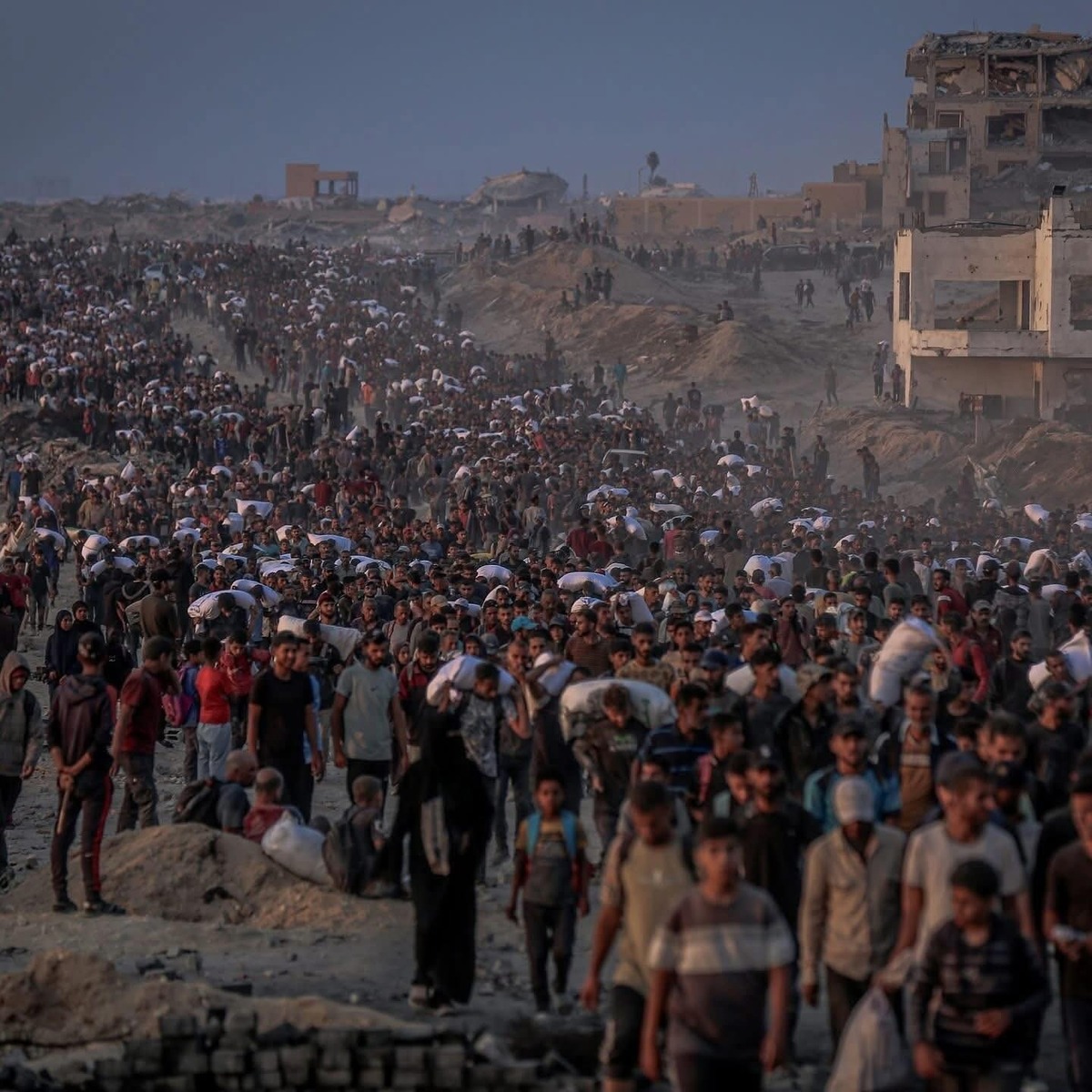
It should be noted that there were 400 aid distribution points operating during the ceasefire in the Gaza Strip between December 19 and March 18, 2025. These have now been replaced by four military distribution sites, forcing more than two million people to flee to overcrowded areas where they face Israeli military fire.

"The humanitarian system is being deliberately and systematically dismantled due to the blockade and restrictions imposed by the Israeli government," the organizations wrote.

"The blockade is now being used to justify halting virtually all other relief operations, in favor of a deadly military-controlled alternative that neither protects civilians nor meets their basic needs," she added.

Under the World Food Programme (WFP), "hungry and vulnerable" civilians are forced to walk for hours through "dangerous areas and active conflict zones," the organizations said.

Last week, the Middle East Eye published an interview with Yousef al-Ajouri, a 40-year-old Palestinian from Gaza City, in which he described his deadly journey to obtain food from the Global Relief Fund. He likened his experience to a tragic TV series called "Squid Game," describing how he feared for his life amid Israeli sniper fire, saw numerous corpses, and had to forcefully push other hungry Palestinians to obtain food parcels.

Israeli military officials admitted to shooting at Palestinian civilians queuing for aid in Gaza even though they posed no threat, according to a report published by Haaretz on Monday.

This admission comes after a report published by the newspaper on Friday, in which Israeli soldiers admitted receiving orders to shoot hungry civilians at humanitarian aid distribution points in Gaza.

Officials in the Southern Command unit said they were "ordered to fire on unarmed crowds near food distribution sites in Gaza, even in the absence of any threat," adding that "civilians were killed by 'inaccurate and uncalculated' artillery fire."

Israeli Prime Minister Benjamin Netanyahu rejected the Haaretz report, calling it "malicious lies."

In the most serious incident, between 30 and 40 people were targeted by Israeli soldiers, the organizations said. "Amid severe hunger and famine-like conditions, many families tell us they are now too weak to compete for food rations," the NGOs said. "Those who manage to obtain food often return with very few basic items—which are almost impossible to prepare without clean water or cooking fuel."

She added that the Sphere Association, which sets minimum standards for humanitarian aid, warned that the Gaza Humanitarian Foundation (GHF) does not adhere to basic humanitarian standards and principles.

The groups called on donors not to fund military-type aid programs that violate international law and "risk complicity in atrocities," and to take concrete steps to end the crippling blockade of Gaza.

Other countries urged the re-establishment of a unified coordination mechanism led by the United Nations "based on international humanitarian law and including UNRWA, Palestinian civil society, and the broader humanitarian community."

Last week, 15 human rights and legal organizations said that the Gaza Humanitarian Foundation (GHF) may be complicit in international crimes.

PALESTINE

Tue 01 Jul 2025 1:55 pm - Jerusalem Time

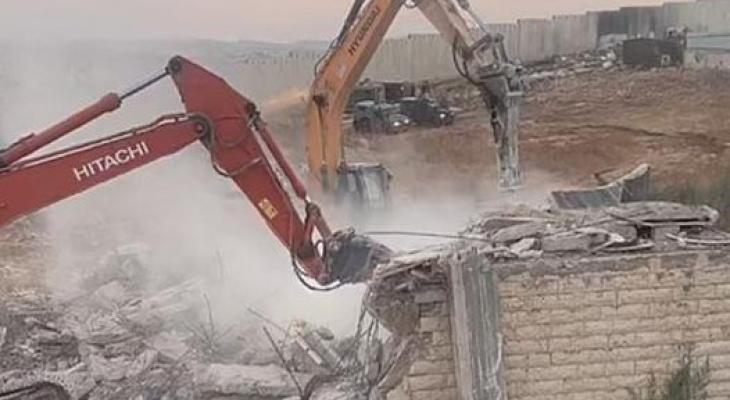
The occupation forces a Jerusalemite family to demolish their home.

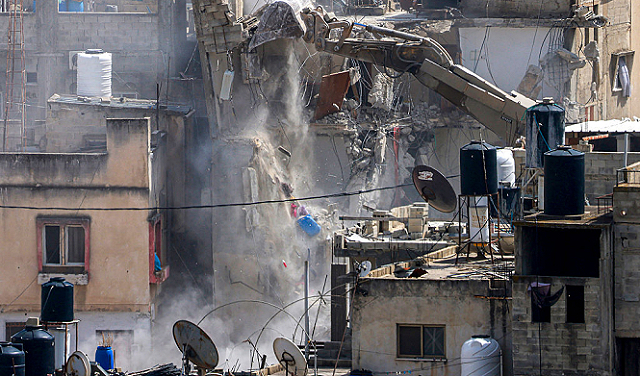
Today, Tuesday, the Israeli occupation authorities forced a Jerusalemite family to demolish their home in the town of Silwan, south of Al-Aqsa Mosque.

The Jerusalem Governorate reported that the occupation municipality in Jerusalem forced Mahmoud Burqan to demolish his family's home in the Wadi Yasul neighborhood in the town of Silwan.

The house has an area of 100 square meters, is inhabited by 7 people, and has been built for 5 years.

PALESTINE

Tue 01 Jul 2025 10:38 am - Jerusalem Time

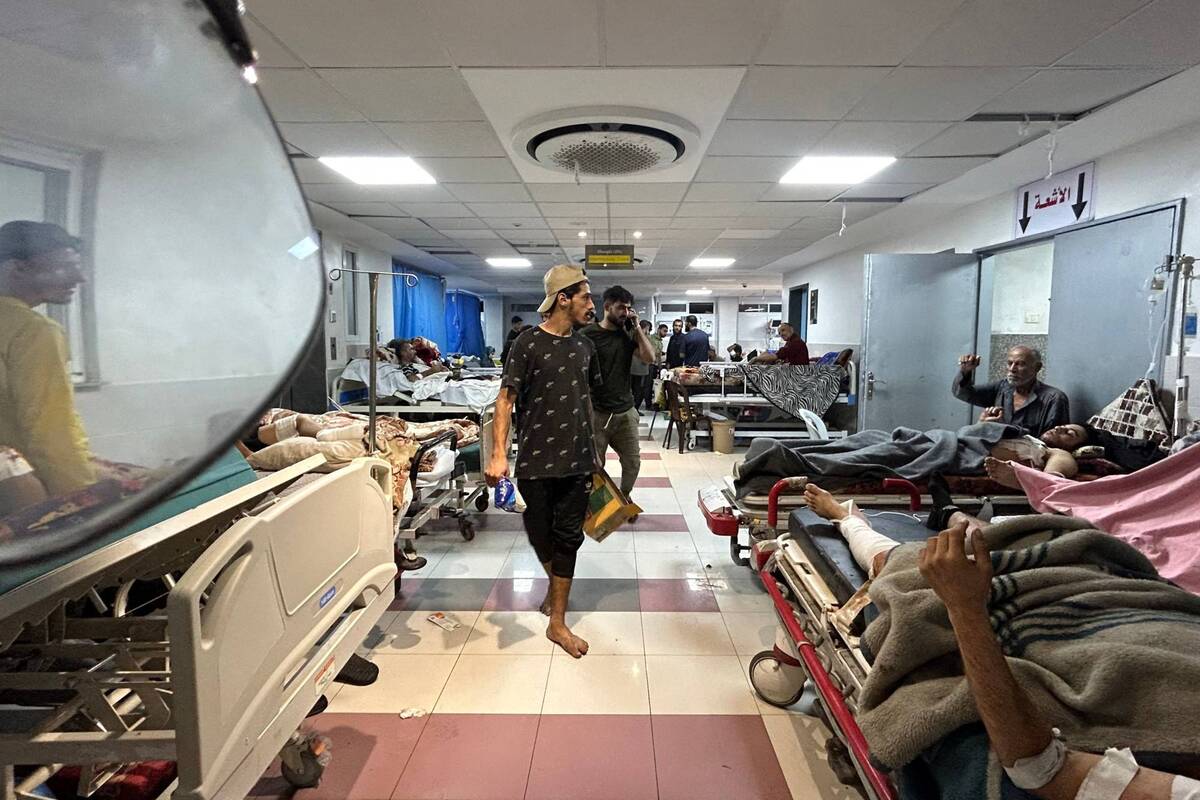
Due to fuel shortages, kidney dialysis services at Al-Shifa Medical Complex have been suspended, threatening the lives of 350 patients.

Medical sources at Al-Shifa Medical Complex in Gaza City announced the suspension of kidney dialysis services due to fuel shortages, threatening the lives of 350 patients who rely on the service for their survival.

The sources added that patients in intensive care units face immediate death due to the lack of fuel needed to operate vital medical equipment, as services will only last for a few hours.

She explained that the hospital's generators will stop working completely at 12 noon, meaning hundreds, and perhaps thousands, of patients will face a real, life-threatening threat.

The sources confirmed that international organizations informed the hospital administration that the occupation is preventing the entry of fuel into the Gaza Strip, and that there are no options available to address this crisis other than a complete halt to medical services.

ARAB AND WORLD

Tue 01 Jul 2025 10:06 am - Jerusalem Time

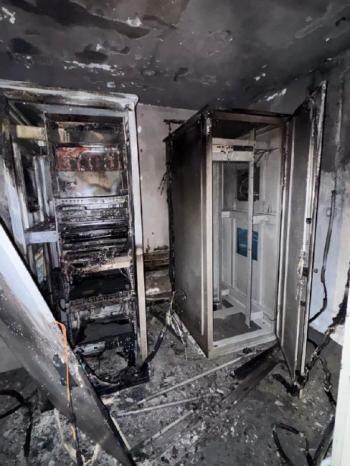
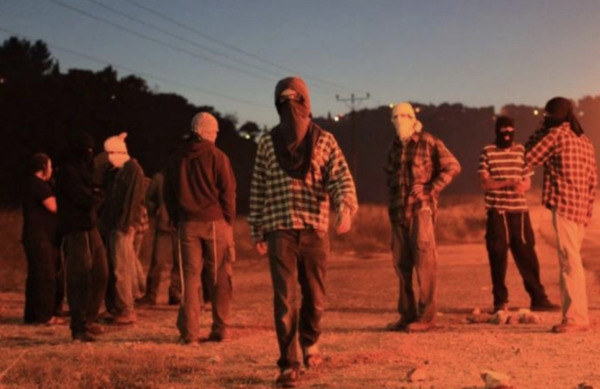
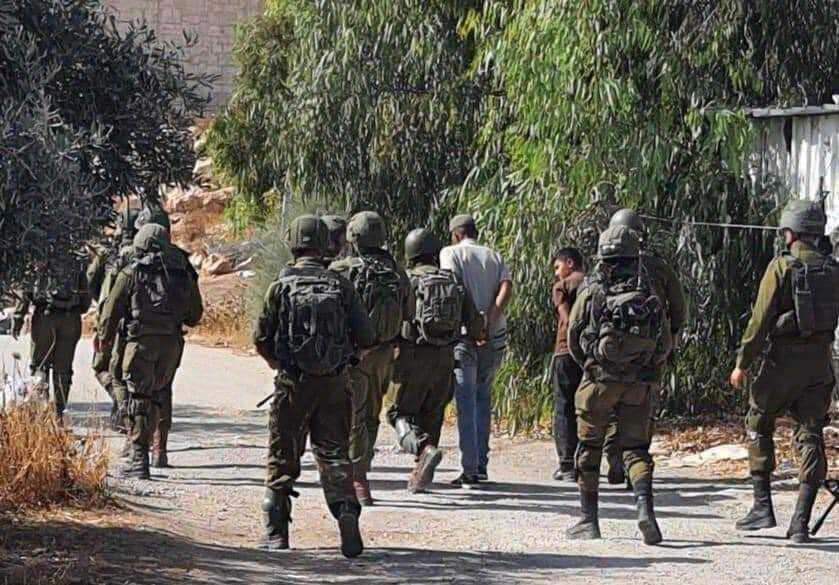
West Bank: Settlers burn down Israeli army post

The Israeli occupation army said on Monday that Israeli settlers set fire to an Israeli security post in the occupied West Bank, following a campaign of arrests against a number of them.

Settler attacks against the Israeli military in the West Bank have recently escalated, following the army's arrest of a number of settlers following their Wednesday attack on the town of Kafr Malik in the central West Bank, which resulted in the deaths of three Palestinians and the injury of seven. Meanwhile, settlers are carrying out other attacks against Palestinians under army protection.

"Overnight, Israelis set fire to a security post containing systems that help thwart attacks and maintain security in the Binyamin Brigade area (central West Bank)," the army said in a statement, adding that "damage to the post poses a threat to the safety of residents."

Settlers attack Israeli soldiers

Ignoring his own and settlers' violence against Palestinian civilians, the Israeli army condemned "any manifestation of violence against security forces."

For its part, the official Israeli Broadcasting Authority stated that "extremist settlers set fire to a vital security facility in the West Bank last night." It added, "They also wrote slogans on the facility's walls, and the security establishment is investigating whether the site's performance was affected by the fire."

She explained that "the incident came amid recent escalating tensions in the West Bank, where dozens of Israelis gathered at the entrance to the Binyamin Brigade headquarters, some of whom spat at soldiers, sprayed pepper gas at police officers, and vandalized three military vehicles."

She added that "others attempted to force their way into the base, raising banners accusing the brigade commander of treason and demanding his imprisonment." She noted that "police and border guard forces dispersed the crowd using unspecified means of dispersing demonstrations."

On Saturday, settlers attacked an officer and reserve soldiers near the village of al-Mughayyir, north of Ramallah in the central West Bank, causing minor injuries. Six suspects, including two minors, were arrested, according to the commission.

She added, "The same night also witnessed deliberate attempts to run over soldiers, and stones were thrown by approximately 30 settlers at a military force. The soldiers responded by firing warning shots into the air, but there were no injuries."

Five settler vehicles also deliberately collided with a military vehicle in an attempt to block the road, causing damage, according to the authority.

OPINIONS

Tue 01 Jul 2025 9:28 am - Jerusalem Time

The Palestinian economy from financial collapse to political exposure

Marwan Emil Toubasi

The Palestinian economy is no longer on the brink of collapse, as we once believed. Rather, it has actually crossed the line, falling into the abyss of a profound structural collapse, as confirmed by a World Bank report issued a few days ago, in late June 2025. The report, which went beyond the usual technical description, offered a sharp and direct diagnosis of the political and economic vulnerability plaguing the Palestinian National Authority, warning of the collapse of an entire system, not just a passing crisis in the management of public funds.
The public debt ratio rose to 86% of GDP by the end of 2024, with expectations of exceeding 96% within two years. However, what is more alarming than this figure itself is that more than half of this debt is cumulative arrears, including unpaid salaries for Palestinian Authority employees, dues to hospitals, pharmaceutical companies, and others, and unpaid obligations to the pension fund and the private sector, which amounted to approximately $6 billion in total, according to the aforementioned World Bank report. This exposure does not only indicate a liquidity imbalance; it also reflects a structural failure in a political-economic model based on crisis management through transfer and borrowing, rather than on planning and national sovereignty, which is unavailable due to the ongoing occupation and its refusal to honor all agreements.
The Palestinian National Authority, which emerged under a flawed political equation and under the occupation's policy of undermining its standing and role, has become a depleted entity, borrowing from local banks to pay salaries and accumulating debts at the expense of citizens and the future, threatening the stability of the entire banking system. In contrast, the Palestinian National Authority lacks real tools for action, neither at the level of economic policies nor at the level of political decision-making, in light of the occupation and the escalation of its crimes, policies and measures, the division, dependency, and the absence of popular electoral legitimacy after its implementation has been stalled for several reasons for two decades.

It is important to note here that the World Bank report itself, which, despite its significant figures, was not a coincidence at this juncture, is not without a political dimension. The World Bank, as is well known, is not entirely neutral; rather, it represents a tool in the global economic and political system led by hegemony by the United States. In this sense, it sometimes reflects the US administration's priorities of continuing to subjugate peoples, rather than being an impartial voice for their suffering. Here, the timing of the report's publication and its shocking content cannot be separated from an ongoing US effort to pressure the Palestinian Authority to regenerate itself in line with the requirements of a "renewed authority" subject to the conditions of the current era and aligned with Washington's political and security priorities in the region, rather than with its national liberation agenda.
Moreover, economic pressures are not limited to the blockade and the piracy of clearance funds. They are also deepened by ongoing Israeli measures against the Palestinian financial system. As a result of Palestinian banks' dependence on the Israeli banking system, and specifically due to the extremist policies of Israeli Finance Minister Bezalel Smotrich, the Palestinian banking system is experiencing a serious crisis. This is manifested in the accumulation of Israeli shekels in Palestinian banks, and Israel's refusal to allow their transfer or exchange according to previous mechanisms. This leads to a liquidity crunch, paralyzing financial activity, and threatening the stability of the banking system and the Palestinian economy as a whole.
Instead of confronting these challenges with a unified, inclusive, and resilient political and societal discourse, the Palestinian government is moving toward decisions that perpetuate its disconnection from social and economic reality and increase the burden on the population. This was recently demonstrated by its decisions to reduce cash transactions and impose payment through bank credit cards, despite a dramatic and, in some ways, unjustified price increase. Although such moves may be justified within the framework of monetary policies overseen by the Palestine Monetary Authority, in our current Palestinian context, they reveal a profound structural flaw. Millions of Palestinians, particularly in marginalized and impoverished areas, lack credit cards, bank accounts, or even a real ability to integrate into an already fragile formal financial system. This makes these policies the exclusive domain of specific classes and isolates large segments of the population from even the most basic forms of economic participation.
Here, one manifestation of the crisis of the Palestinian political system itself is evident, as fateful decisions are made in isolation from the needs and concerns of the people, sometimes unhelpful to the slogans of steadfastness and survival. Technocratic tools are imposed in a context that lacks even the most basic elements of national sovereignty on the ground, as described by the President earlier, making it an authority without authority. The financial deterioration is merely one of the consequences of the long-standing absence of a broader political process, in the absence of an effective international role to end the occupation and implement the two-state solution, as supposedly entails the establishment of an independent, sovereign Palestinian state, which the occupation is sending and the US administration does not actually want. This has been further entrenched in the absence of accountability, transparency, and the separation of powers, as well as the continued division caused by the coup and its repercussions over the past years, and the replacement of the national project with a network of interests governed by security and financial considerations and internal loyalties, or as a result of the emergence of centers of influence and the existence of plans to separate the West Bank and Gaza, separating our people from the vision of national liberation and its requirements.
The recent Israeli war of extermination, ethnic cleansing, Judaization, and settlement expansion and annexation policies, fully supported by the United States, amid international silence on the genocide in Gaza and the ethnic cleansing in the West Bank and Jerusalem, were not the beginning of the collapse. Rather, they were the deafening explosion of a cumulative crisis caused by the Zionist colonial mentality. The economy in Gaza shrank by 83%, and by 17% in the West Bank, with unemployment reaching 80% and 33%, and a comprehensive decline in production, consumption, and investment indicators. Nevertheless, official discourse continues to speak in the language of crisis management rather than confrontation, as if we were experiencing a temporary crisis capable of being repaired, rather than a comprehensive structural collapse requiring a comprehensive and integrated political and economic vision.
The World Bank's "reform" recommendations appear technical on the surface, but they ignore the political environment created by the continued settlement occupation and its schemes, which renders these recommendations unworkable or even unconsidered. How can we reform an economy without sovereignty? How can we balance a budget under occupation and its escalating measures? How can we implement radical reforms amidst political divisions and today, amid escalating war crimes that have rendered Gaza uninhabitable and even threatening displacement, as well as most West Bank camps? In light of the increasing settler terrorism targeting villages, the Palestinian Authority's lack of control over crossings and borders by Israeli decision, in addition to the state of institutional paralysis and the absence of genuine popular confidence?
The truth is that what we need today goes beyond financial solutions. We are facing a paradigm crisis, a failed project, and a structural deficiency that requires a rethinking of the relationship between the Palestinian National Authority (PNA), which was supposed to transform into a state but never did, and the people and the economy. We also need to redefine the role of the PNA within the framework of its relationship with the PLO as its frame of reference, which itself needs to enhance its role and reform its institutions with democratic mechanisms. It is no longer possible for the PNA to continue playing the role of the "employer" who pays salaries as a rentier model that also relies on international aid, which, according to the report, has either disappeared or declined from 27% of GDP in 2008 to just 2% in 2024. This aid, meanwhile, is incapable of protecting even the most basic rights, stimulating development, or protecting our people. We need national policies that rehabilitate the concept of political resistance to the state under occupation, not as a local administration, but as a liberation tool with a resistance economic project.
This cannot be achieved without a fundamental shift in national priorities. The general budget must be redirected toward health, education, infrastructure, and industry, rather than toward specific privileges or encouraging consumerism without production. A fair tax system must be established that holds high-income earners and those with privileges accountable and redistributes wealth fairly. Flooding the market with indiscriminate imports from the occupation must stop, and a genuine disengagement strategy from the Israeli economy must be initiated, regardless of its temporary cost. Alternatively, imports of goods with a national alternative or those that merely contribute to the expansion of the consumer market at the expense of production must be reduced.
All of this must be accompanied by stimulating local production, as I mentioned, encouraging small projects, empowering women and youth, and developing the sectors of agriculture, industry, renewable energy, technology, and advanced manufacturing. Economic liberation is not a slogan, but a policy. The economy cannot be merely a means of remaining in power. Rather, it must be a tool for struggle, a space for strengthening steadfastness and democratic national liberation, and a platform for building a different future by first ending the occupation.
Ultimately, no reform can succeed without a new socio-economic contract, one founded on trust, justice, and transparency. The contract we need is not with donors or international institutions, but with our own people. We want an economy that restores dignity to the Palestinian people and makes development a national project, not merely the management of a protracted crisis.
Today we face a moment of truth: either we continue the slow collapse, or we muster the courage to rebuild a new model that reconnects the economy to national liberation, not submission, by redefining our national unity project based on independent decision-making.

PALESTINE

Tue 01 Jul 2025 9:26 am - Jerusalem Time

Flour massacres in Gaza... Why is Israel killing civilians in aid lines?

In one of the most brutal scenes in the history of war and siege, lines of Palestinian civilians in the Gaza Strip are being targeted as they wait for a bag of flour or a food basket. The shooting isn't directed at fighters, it's at the hungry. From Rashid Street to the Netzarim Junction, the massacres are repeated without restraint. This report analyzes the political, military, and ideological backgrounds behind this systematic targeting, revealing how aid has transformed from a lifeline into a mass killing ground, amid international silence and open complicity.
In besieged Gaza, war is no longer fought solely with artillery and missiles. It is also waged through starvation, which is now evolving into a deadly weapon in its own right, with dozens of Palestinians killed daily while waiting for bags of flour or aid boxes.

Massacres at aid centers
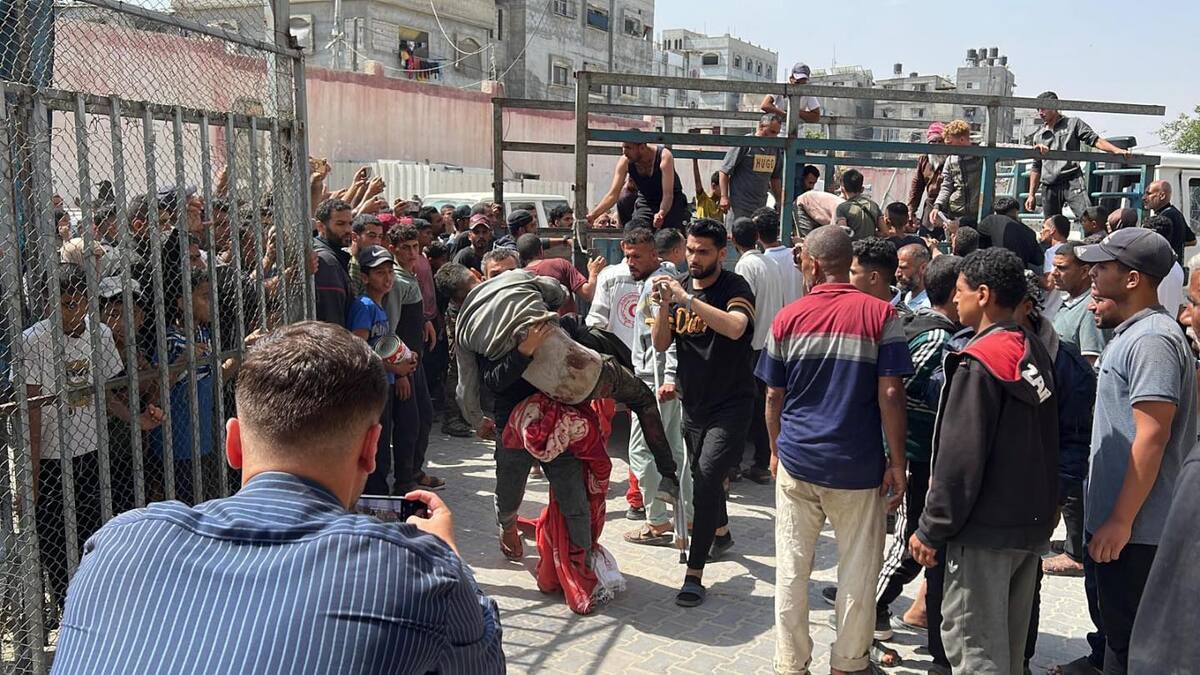
According to government media in Gaza, more than 516 civilians have been killed while waiting for aid or during aid distribution gatherings since the so-called "US-Israeli aid" mechanism began on May 27, 2025. More than 3,700 others have been injured, with horrific scenes recurring: bodies piled up in front of hospitals, and survivors screaming, "We only came out for food."
Since October 2023, the Gaza Strip has been subjected to one of the harshest sieges and mass starvation campaigns in modern times, according to Amnesty International. The organization issued a statement on March 12, 2024, stating: "Israel is systematically using starvation as a weapon of war, a serious violation of international humanitarian law and a documented war crime."
For his part, the High Commissioner for Human Rights, Volker Türk, stated in his address to the Human Rights Council: "What we are witnessing in Gaza is the systematic destruction of the most basic necessities of life and the forced starvation of civilians. Shooting at starving people is horrific and unjustifiable under any circumstances."

Fire-controlled distribution points
Since late May 2025, the so-called "US-Israeli aid mechanism" has been in operation. It relies on specific land distribution points within the Gaza Strip, rather than airdrops as in the first weeks of the war.
These points, such as the Rashid Street intersection, the Netzarim area, and western Rafah, are designated in coordination with the Israeli military and promoted as "humanitarian corridors," but they are completely subject to the occupation forces' fire control.
In many cases, as soon as aid seekers gather near these sites, they turn into exposed ambushes, with dozens killed or wounded by direct gunfire or surprise bombing, thus undermining the claim that these sites offer humanitarian protection.

Why does Israel target aid recipients?
Observers believe that targeting aid convoys serves Israel's military and psychological purposes, most notably: terrorizing the population, preventing gatherings, humiliating people, making their survival conditional on accepting the occupation's terms, dismantling internal solidarity, and turning food into a tool of control.
"When people are killed while running after a flour truck, this is not a case of chaos, but rather a systematic policy that seeks to humiliate the Palestinian people and erase their dignity," international law scholar Michael Lynk, the former UN Special Rapporteur on Palestine, said in an interview with Al Jazeera English.
In summary, it can be said that Israel is targeting aid-seekers in Gaza with such brutality for several intertwined reasons, related to military policy, the way the war is being conducted, and the goal of pressuring Palestinian society. These reasons can be summarized as follows:

1- Starvation as a weapon of war
Israel is using a policy of siege and starvation to subjugate the population of Gaza. It is using the targeting of aid distribution centers as a means of controlling and taming Palestinian society through economic and psychological pressure, in an attempt to force the population to submit or flee.

2- Security justifications and claims of a threat
The Israeli military sometimes justifies shooting civilians at aid centers by claiming a "security threat" or the presence of "militants" among the crowds. However, field testimonies and human rights reports confirm that most of the victims are unarmed civilians, and that militants are not present in such gatherings.
In some cases, the military declared roads leading to aid centers "combat zones," warning civilians to stay away from them, even though it knew most of those there were food seekers.

3- The policy of collective punishment and impunity
The continuation of these crimes reflects a policy of collective punishment against the population of Gaza, benefiting from international immunity and political and military support from the United States and other Western countries, which gives it a sense of impunity.
Human rights organizations assert that the heavy, deliberate firing on civilians attempting to obtain aid is unjustified under both law and humanitarian law and constitutes a documented war crime.

4- Broader political goals
Some believe that targeting aid recipients also aims to undermine international relief efforts, force residents to flee, or alter the demographic landscape in the Gaza Strip, in addition to exerting political and military pressure on the Palestinian resistance.
The brutal targeting of aid workers in Gaza reflects a deliberate strategy to subjugate the population through starvation and murder. Israel justifies this with flimsy security claims, while facts and testimonies confirm that the goal is collective pressure and control, in the absence of any effective international deterrent.
The Hebrew newspaper Haaretz published an extensive investigation on June 10, noting that instructions issued by the army command allow "opening fire in the vicinity of assembly points if unruly elements or potential threats are suspected." Military experts described this as a green light for indiscriminate fire.
Israel accuses Hamas of using civilians as human shields, claiming the movement seeks to create bloody humanitarian scenes to embarrass Israel before international public opinion. However, the fundamental problem with these justifications is that they do not hold up against the systematic repetition of the same incident in different areas, under international supervision, and in front of camera lenses.

Documented testimonies: "There was no clash."
For its part, Human Rights Watch stated in its report issued on June 5: "Many of the killings at aid distribution sites did not involve any armed clashes. Civilians were shot as they ran toward food trucks or gathered in the squares, some while trying to return with their food."
In a documented testimony provided by Dr. Thaer Ahmed, an American emergency physician volunteering with MedGlobal who worked at Nasser Hospital in Khan Yunis during January and February 2024, he confirmed that the nature of the injuries arriving at the hospital indicated a systematic pattern of targeting.
In an interview with British media, he said, "Many of the injuries were caused by precision shots to the head and chest, and others by drones that even targeted medical personnel." He added that these wounds were not the result of indiscriminate shelling or clashes, but rather "more like deliberate sniper attacks on civilian bodies at deadly weak points."
Although he did not specifically refer to aid queues, his testimony reveals a calculated policy of firing at civilians, consistent with the pattern seen at food distribution sites in Gaza today.

starvation ideology
There may not be an explicit religious edict in the Jewish faith justifying the killing of the starving, but in the ideological structure of the Hebrew state, the Palestinian—even in moments of hunger—is constituted as a dangerous element or an existential surplus that must be neutralized. In biblical literature, much of which is recycled in ultra-nationalist discourse, models of starving "enemy" peoples appear as a means of divine purification, and are sometimes reinterpreted by extremist rabbis to justify collective punishment.
Rabbi Dov Lior said explicitly: “In war, there is no difference between a civilian and a combatant, because they all constitute a hostile environment.”
This vision intersects with the Israeli military doctrine known as the "Dahiya Doctrine," which treats the entire community as a battlefield, making food lines legitimate targets in the rigid security mindset.
In political discourse, derogatory descriptions of Palestinians, such as "rats" or "human animals," have become common. This deepens their dehumanization and provides the killer with a convenient psychological justification. Thus, in the Israeli security imagination, the hungry Palestinian is transformed into a demographic bomb waiting to be extinguished, rather than a human being to be saved.
Analysts believe that Israel's deeper goal in killing the starving is to fracture society and dismantle the civil fabric. Moreover, the killing of civilians in aid lines is not only a physical massacre, but also a moral and psychological assassination of Palestinian society, stripping it of its dignity and survival, and pushing it toward complete collapse, as a prelude to changing the demographic, geographic, and political reality in Gaza.
These analysts assert that Israel is killing these people because it wants to impose its will by force on a besieged society. It understands that food, like a weapon, can be used to dismantle or humiliate an opponent. It is a war against the very idea of the Palestinian human being and against their very survival.

The duality of the Western narrative
Although some Western leaders have expressed concern about the "humanitarian toll," many governments continue to support the aid distribution mechanism coordinated with Israel, raising a moral question: Is the West complicit—through silence or support—in the crime of starving and killing civilians?
"Food provided under the conditions of occupation has become a symbol of the collapse of the global moral order, and Israel is exploiting this collapse to impose conditions of collective surrender," says Elisabeth Brosset, a researcher at the Geneva Institute of International Studies.


international legal
Under international humanitarian law, deliberate attacks on civilians, particularly those seeking essential humanitarian assistance, constitute war crimes. The protection of civilians is a fundamental principle of international law, and parties to a conflict have clear obligations to avoid targeting them and facilitate the delivery of aid. The use of starvation as a weapon of war, as many international organizations have pointed out regarding the situation in Gaza, is a serious violation of numerous international treaties and agreements, including the Rome Statute of the International Criminal Court.
Targeting civilian gatherings in aid queues, regardless of security pretexts, is a flagrant violation of the principles of distinction, proportionality, and precaution, pillars of international law aimed at protecting innocent lives in times of conflict.
In conclusion, Gaza today is living in a state where a bag of flour has become a life-threatening threat. Palestinian civilians in the Strip today are not dying merely from bombing or siege, but for a piece of bread. The question facing the world's conscience is: Will we continue counting bodies, or will we stop the killing?

Source: Al Jazeera


OPINIONS

Tue 01 Jul 2025 9:25 am - Jerusalem Time

The Palestinian Debt Catastrophe: From Government Debt to Employee Debt, with Citizens as the Victims

Dr. Saeed Sabry / International Economic Advisor - Member of the Board of Directors of the International Digital Transformation Authority - Dubai

"The Palestinian economy is facing a financial catastrophe and mounting debts that threaten structural collapse." With this stark warning, the World Bank has once again sounded the alarm, revealing an unprecedented financial fragility in the Palestinian system. However, behind the rhetoric of the reports lies a crisis more immediate to the Palestinian public: the debt crisis of public sector employees, who find themselves trapped in a vicious cycle of truncated salaries and accumulating loans, in the absence of a coherent economic vision.
First: More than 135,000 employees are on the brink of collapse.
The number of public sector employees in Palestine is between 135,000 and 140,000, divided between civilians in ministries and official institutions and military personnel in the security services. These employees constitute a vital social segment, representing not only the government workforce but also the primary driver of local demand in the Palestinian market.
For more than two years, these employees have been receiving partial and irregular salaries, ranging from 50% to 80% of their original salary. This ongoing crisis has forced thousands of them to resort to banks to cover their daily expenses, transforming their salaries from a means of subsistence into a mere monthly debt service installment.
Second: From state debt to employee debt
It is estimated that between 70% and 80% of public sector employees have direct financial obligations to banks, including personal and housing loans, credit cards, and overdrafts. Of the approximately 135,000 employees, more than 100,000 are estimated to have active loans whose monthly payments are deducted from their salaries, often amounting to less than half of the salary due.
Total employee debts to banks are estimated at more than $1.8 billion (equivalent to approximately NIS 6.5 billion).
In contrast, the Ministry of Finance is estimated to owe these employees more than NIS 7.5 to 8 billion in unpaid salaries over the past three years, as a result of the partial salary payment policy since 2021.
In this context, it's worth noting that the Palestinian government itself has borrowed approximately 9 billion shekels from local banks over the past few years to cover current expenses and the chronic fiscal deficit. This leaves the banking sector today caught between a double debt: debt owed by the government and debt owed by its employees.
Third: Extended effects on the economy and society
The effects of this crisis do not stop at the individual employee, but extend to the overall economy and Palestinian society as a whole:
● The decline in purchasing power led to a recession in the local market and a decline in sales in the commercial and service sectors, which forced many small businesses to close.
● The private sector is suffering a sharp slowdown due to the erosion of domestic demand, which is causing job losses and freezing investment.
● The informal economy is expanding with increasing borrowing from outside the banking system and the absence of oversight, which weakens the government's ability to manage financial resources.
● Increased social and psychological tension among employees due to financial pressures, which impacts family relationships and the level of trust in public institutions.
Fourth: What is required is to rescue, not postpone the crisis.
The continuation of the crisis without radical solutions will lead to gradual economic and social disintegration. What we need today is a comprehensive national rescue plan that goes beyond injecting funds, but also includes profound structural reforms:
● Rescheduling employee debts in coordination with banks, freezing interest for a transitional period, and ensuring that salary deductions do not exceed a reasonable percentage that allows for a decent living.
● Re-disbursing salaries in full through a transparent and stable mechanism that ensures regular financial flows and prevents the accumulation of arrears.
● Review the structure of public spending, reduce unnecessary expenditures, and direct resources towards basic and productive services.
● Political pressure to stop Israeli deductions from clearance funds, which drain a large portion of public revenues without legal justification.
● Adopting an "import substitution" policy as a tool to boost local production, by supporting national industries, encouraging local agriculture and food, and directing government purchases toward Palestinian products, thus enhancing self-sufficiency and reducing dependence on foreign currencies.
● Expanding job opportunities in the digital and entrepreneurial economy, and enabling youth to create sustainable self-employment opportunities outside of traditional government employment.
In this context, it must be emphasized that the foreign aid the Palestinian government receives from the European Union and some Arab countries, while important in providing temporary liquidity, is no longer sufficient and incapable of addressing the root causes of the crisis. It barely covers some short-term obligations, but it does not change the fact that the problem is internally structural and requires profound reform in the management of public funds and economic policies.
Conclusion: The citizen should not be the scapegoat.
Continuing to burden citizens—especially public sector employees—with the consequences of a financial crisis they had no hand in creating is unjust and unsustainable. What is required is a more equitable redistribution of burdens, and a recognition that economic reform begins with protecting those who stand at its forefront every day.

PALESTINE

Tue 01 Jul 2025 9:24 am - Jerusalem Time

The Ministry of Education is preparing to launch Gaza's electronic tests in three phases.

Tawjihi on the fifth day: Questions range from “easy and clear” to “precise or long”

The Ministry of Education is preparing to launch Gaza's electronic tests in three phases.


High school exams continued yesterday, Monday, in the West Bank, Jerusalem, and for Palestinians abroad, while they remain suspended in the Gaza Strip for the second consecutive year due to the ongoing war of extermination waged by the Israeli occupation army against the Strip since October 2023.
The Ministry of Education announced that exams in Gaza will be held electronically in three phases. The first phase, beginning in mid-July, will include a trial exam and an official exam for students in the third round of 2023.
In this context, students in the Arts stream took the second session of the English language exam, while students in the Science stream took the Biology exam, and students in the Entrepreneurship and Business stream took the Small Business exam.
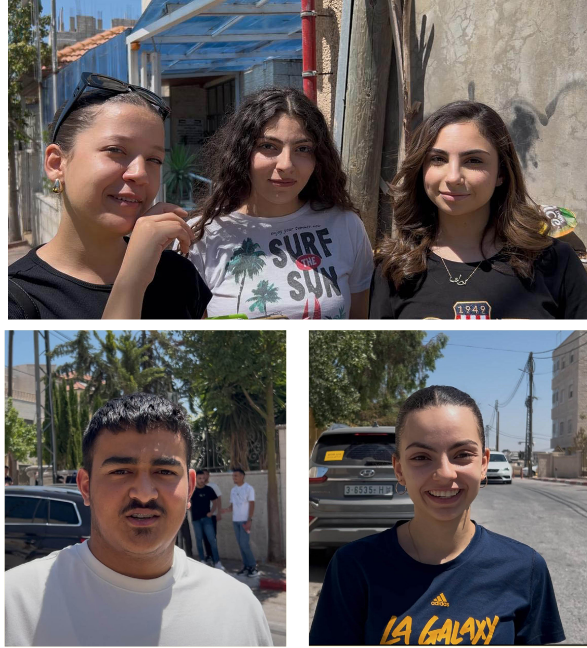
In exclusive interviews with students in front of a number of halls in the Ramallah and Al-Bireh Governorate, the newspaper observed a clear discrepancy in their assessment of the level of the exams, with some finding them easy and clear, and others complaining about the precise, lengthy, or indirect questions.

Literary Branch: Between the Clarity of Paragraphs and the Difficulty of "Romeo and Juliet"

A number of literature students agreed that the second English session was easier than the first, while others criticized the difficulty of the literature section, particularly the section on "Romeo and Juliet," which required in-depth understanding and connections between events.
Nay: "Today's exam was better than the last session, but the true/false question was very precise... and the external section was easy."
Tulin: “It was normal, not very difficult, but the (circle) question was strange and required thinking, and the writing question was big.”
Fares: "The two sessions of the English exam were easy, thank God."
Zina: "They answered a question about the most difficult sentence in the paragraph. See you in the math exam."
Sidra: "The whole Romeo and Juliet segment was comprehension, nothing verbatim."
Siri: "The exam is easy, and takes into account individual differences."
Nour: "There are tricks in the stories, and focus on the last event, not the expected one."

Science students: Biology between "clarity" and "scribbles"

Science students' opinions varied between those who found the exam easy and straightforward, and those who felt that some of the questions were unusual or confusing and required a great deal of concentration.
Christine: "There are easy questions, but there are also difficult and scribbled questions, and there was one question that was not clear."
Zeina: “The exam was relatively easy… Glory to our martyrs and prisoners.”
Carla: "It's hard, there are a lot of questions, and each question has four branches."
Laith: “From average to difficult, some questions are not from the book, but are solved for the understanding student.”
Darren: "Hard."

Entrepreneurship and Business Students: The "Projects" Exam is Easier Than Accounting

Most students expressed satisfaction with the small business exam, stating that it was straightforward and uncomplicated, unlike the previous accounting exam.
Ryan: "The exam was good and straightforward, the questions were easy."
Abdul Raouf: "The projects exam today was easy, but they beat us in the accounting exam."
Angel: "It was very easy and straightforward."
Mohammed: "The exam was average to difficult, but those who studied well will succeed."
Qusai: "It was easy and difficult at the same time."

The Ministry of Education confirms students' satisfaction and prepares for Gaza exams.

In a statement to "E", Ministry of Education spokesman Sadiq Al-Khudour explained that the reactions so far indicate "general satisfaction among students," noting that the ministry has actually begun preparations to hold the high school exams for students in the Gaza Strip electronically, in three consecutive stages.
Al-Khudour indicated that the first phase will begin on July 17 with a trial exam, followed by the official exam on the 19th of the same month for students of the 2023 class, born in 2005. The second phase will follow for students of the 2024 academic year (born in 2006), and then the third phase for students of the 2025 academic year (born in 2007).
Students will be provided with advance training through a mock exam, and explanations and instructions will be posted on the Ministry's website and Palestine Educational Channel.


OPINIONS

Tue 01 Jul 2025 9:22 am - Jerusalem Time

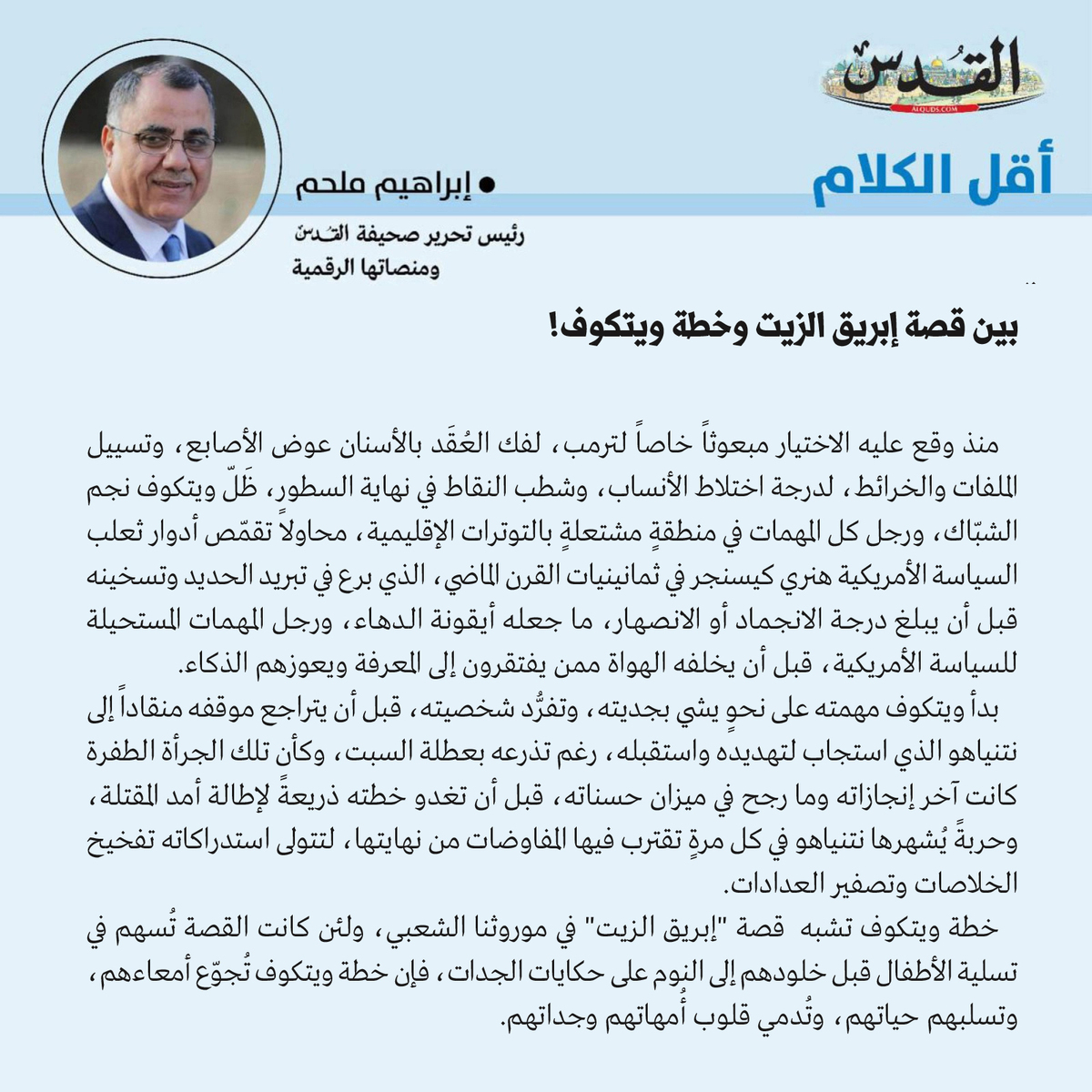
Between the story of the oil jug and Witkoff's plan!

Ibrahim Melhem

Ibrahim Melhem

Opinion Writer

Since Trump chose him as his special envoy, to untie knots with teeth instead of fingers, and to liquefy hard files, to the point of mixing lineages and crossing out dots at the end of lines, Witkoff has remained the star of the window, the man for all tasks in a region ablaze with regional tensions, trying to impersonate the fox of American politics, Henry Kissinger in the 1980s, who excelled at cooling and heating iron before it reached the point of freezing or melting, which made him an icon of cunning, and the man of impossible missions for American politics, before he was succeeded by amateurs who lacked knowledge and intelligence.
Witkov began his mission in a manner that reflected his seriousness and unique personality, before he backed down, yielding to Netanyahu, who responded to his threat and welcomed him, despite his excuse that it was a Saturday holiday. It was as if this sudden boldness was the last thing on his scale of good deeds, before his plan became a pretext for prolonging the massacre, and a spear that Netanyahu brandished every time the negotiations drew to a close, with his rebuttals rigging the conclusions and resetting the clocks.
Witkoff's plan is similar to the story of "The Oil Pot" in our folklore. While the story helps entertain children before they go to sleep with grandmothers' tales, Witkoff's plan starves their stomachs, robs them of their lives, and bleeds the hearts of their mothers and grandmothers.

PALESTINE

Tue 01 Jul 2025 9:21 am - Jerusalem Time

7 dead among those waiting for aid on the Nastarim axis

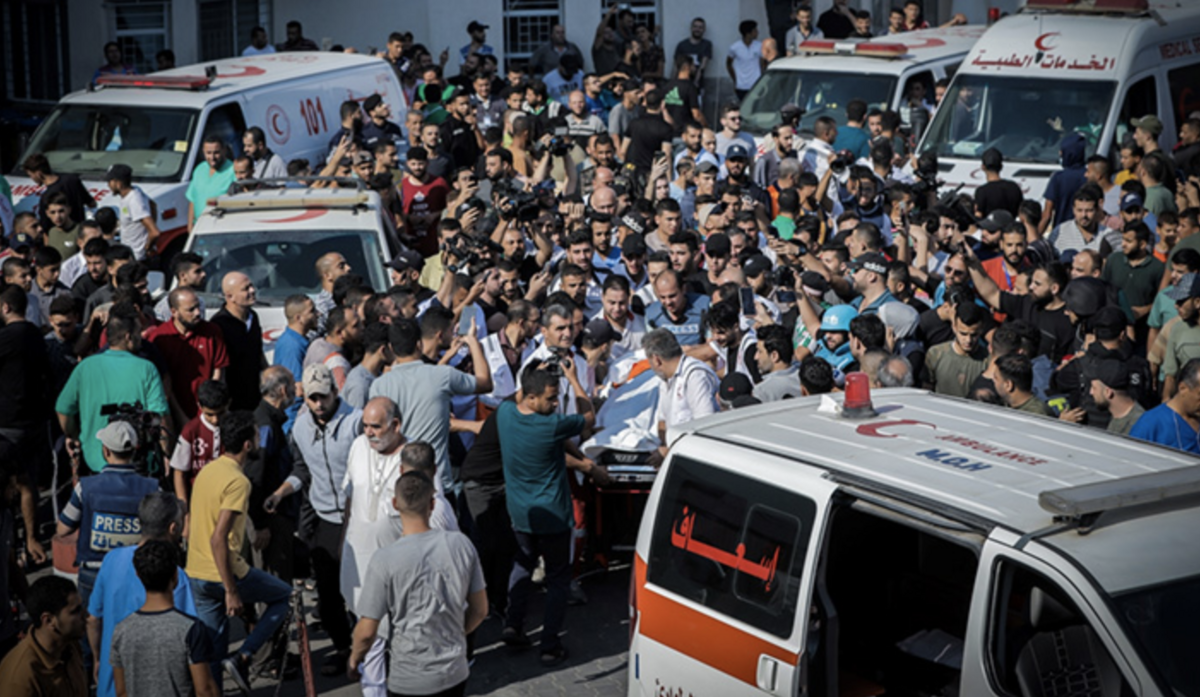
A source at Al-Shifa Hospital reported that seven Palestinians were killed and several others injured while waiting for aid, due to Israeli forces' fire on the Netzarim axis.

Far from the oversight of the United Nations and international organizations, Tel Aviv and Washington have been implementing a plan since May 27 to distribute limited aid. The Israeli army has been opening fire on Palestinians queuing for aid, forcing them to choose between starvation or being shot.

30 martyrs, including a journalist, and 50 wounded in the bombing of a Gaza beach resort.
 13 martyrs in bombing of aid distribution warehouse in Al-Zeitoun neighborhood
 13 martyrs in the bombing of aid workers in Khan Yunis


More than 30 civilians were killed and dozens more injured on Monday in a massacre perpetrated by the occupation forces targeting a café on the western coast of Gaza City. Meanwhile, 100 civilians were killed in airstrikes on various areas of the Gaza Strip since dawn yesterday, including schools housing displaced persons, aid distribution centers, and shelter tents, including 62 in Gaza City and the northern Gaza Strip.
In the details, medical sources revealed that 30 citizens were martyred and others were injured, some of them critically, when Israeli aircraft bombed the "Al-Baqa" beach resort.
She noted that journalist Ismail Abu Hatab was among the martyrs, while journalist Bayan Abu Sultan was injured.
With the martyrdom of Abu Hatab, the death toll of the journalistic family since the beginning of the genocidal war on the Gaza Strip 21 months ago has risen to (227) male and female journalists.
The director of Al-Shifa Medical Complex said the hospital received 39 martyrs and more than 100 wounded in just one hour, as a result of the escalating shelling of Gaza City and the northern Gaza Strip.
Six citizens were also killed in two drone strikes on Al-Wahda Street in Gaza City.
Yesterday evening, five civilians were killed when the occupation forces bombed the Kassab family home in the Shuja'iyya neighborhood.
A medical source at Nasser Hospital in Khan Yunis reported that 13 civilians were killed and dozens injured in an Israeli airstrike targeting aid workers southwest of Khan Yunis, in the southern Gaza Strip.
For his part, a source at the Baptist Hospital said that 13 citizens were killed and others were injured in an airstrike targeting an aid distribution warehouse in the Zeitoun neighborhood in southern Gaza City. The airstrike caused significant damage to the warehouse.
Four civilians were also killed in an Israeli airstrike targeting a group of civilians near the Halawa roundabout in Jabalia al-Balad, north of the Gaza Strip. Red Crescent crews recovered the bodies and evacuated the wounded to Al-Shifa Hospital.
Mass displacement
Areas in the northern Gaza Strip are witnessing displacement due to the intense bombardment targeting shelters, homes, and civilian gatherings.
The Israeli military issued an evacuation warning for 18 neighborhoods in the northern Gaza Strip, including eastern Zeitoun, Jabalia, and the neighborhoods of al-Tuffah, al-Daraj, and al-Sabra, claiming it would continue escalating its military operations in those areas.
The occupation army called on residents to head to the Mawasi area via Rashid Road. However, shelling continued even in these areas designated as "safe," exacerbating the dire humanitarian situation.
Targeting shelters
Israeli aircraft launched raids on five schools housing displaced persons, three of which were adjacent (in the Zeitoun neighborhood).
Warplanes destroyed the Yaffa School in the Tuffah neighborhood (east of Gaza City), despite it being classified as a "safe" shelter.
Israeli forces also targeted classrooms at Fahd al-Sabah School in the al-Tuffah neighborhood, resulting in injuries among displaced people. Al-Hurriya School and al-Falah School (in the al-Zeitoun neighborhood) were similarly hit, resulting in additional injuries.
In the same context, a number of civilians were injured when a tent housing displaced persons was bombed inside Al-Aqsa Martyrs Hospital in Deir al-Balah, central Gaza Stri

The death toll
The death toll from the genocidal war and aggression waged by the occupation forces on the Gaza Strip has risen to 56,531 dead and 133,642 wounded since October 7, 2023.
The Ministry of Health in Gaza announced yesterday that the death toll includes 6,203 dead and 21,601 wounded since March 18, when the occupation resumed its aggression against the Gaza Strip following the ceasefire agreement.
Within 24 hours, 28 martyrs (including 3 martyrs whose bodies were recovered) and 223 injuries arrived at Gaza Strip hospitals.
It said that ambulance and civil defense crews are finding it difficult to reach the victims, as a large number of them are still under the rubble and in the streets.


PALESTINE

Tue 01 Jul 2025 9:19 am - Jerusalem Time

A Palestinian boy was killed by Israeli occupation forces in central Ramallah.

A boy was shot dead by Israeli occupation forces in central Ramallah at dawn on Tuesday.

Local sources reported that the boy, Amjad Nassar Awad Hawshiya (16 years old), who is from the town of Yatta, south of Hebron, and lives in Kafr Aqab, north of Jerusalem, died of his wounds from the occupation forces’ bullets at Al-Manara roundabout, in the center of the city.

In the same context, occupation forces raided a number of citizens' homes on Rukab Street in the city center, and in the Ain Misbah neighborhood, vandalizing their contents, and conducting field investigations with a number of young men.

ARAB AND WORLD

Mon 30 Jun 2025 10:53 pm - Jerusalem Time

Washington revokes entry visas for the band "Bob Vaillant" for its support for Palestine.

The US State Department announced the revocation of visas for members of the British band Bob Vylan after they chanted "Free Palestine" and "Death to the Israeli army" at a concert last Saturday.

In a post on his X account on Monday, US Deputy Secretary of State Christopher Landau criticized the band for their chants during their performance at the Glastonbury Festival in Britain.

"Foreigners who incite violence and hatred are not welcome in our country," Landau said, noting that the State Department had revoked the band members' visas.

Bob Vaillant's band was scheduled to perform concerts in approximately 20 US cities, including Washington, D.C., as part of its US tour.

Britain's famous Glastonbury Festival witnessed anti-Israel chants during a Bob Vaillant concert.

During the performance, which took place on Saturday, the band members chanted slogans such as "Freedom for Palestine" and "Death to the Israeli army," and the audience joined in.

During the performance of the band, one of Britain's most prominent punk rap bands, pro-Palestine chants echoed throughout the festival, which is considered one of the largest music events in the world.

Irish rap group Knickap, who also participated in the festival, expressed their support for Palestine during their performance.

Band member Liam Ohana paid tribute from the stage to the pro-Palestine group Palestine Action, which the British government is seeking to ban.

Ohana took the stage wearing a Palestinian keffiyeh, while several Palestinian flags were waved in the audience.

Ohana will appear in court in August after being investigated under the Terrorism Act for raising the Hezbollah flag at a concert in London last year.

Since October 7, 2023, Israel, with American support, has been committing genocide in Gaza, including killing, starvation, destruction, and displacement, ignoring international calls and orders from the International Court of Justice to halt it.

The genocide left more than 190,000 Palestinians dead or wounded, most of them children and women, and more than 11,000 missing. Hundreds of thousands were displaced, and famine claimed the lives of many, including children.

Israel has also been besieging Gaza for 18 years, leaving approximately 1.5 million Palestinians out of a population of approximately 2.4 million in the Strip homeless after their homes were destroyed in the war of extermination.

PALESTINE

Mon 30 Jun 2025 10:02 pm - Jerusalem Time

Maariv: Smotrich is trying to appear more hardline than Ben-Gvir at the expense of the prisoners.

In an article published in the Hebrew newspaper Maariv, Israeli writer Sophie Ron Moriya accused Finance Minister Bezalel Smotrich of prolonging the war in Gaza and obstructing a prisoner exchange deal.

The author believes that Smotrich's positions do not stem from a deeply held ideology or political wisdom, but rather reflect an internal political struggle and a desire among hardliners to prevail in the "extremist" competition at the expense of the lives of soldiers and prisoners.

Government contradiction

The writer said that Israel woke up the day after the ceasefire with Iran was announced to the sad news that seven soldiers had been killed, in addition to four others who had been killed during the days of confrontation with Tehran.

She added that these heavy human losses stem from a confrontation with a "small organization" like the Islamic Resistance Movement (Hamas), while Israel has not paid such a price in its confrontations with major regional powers like Iran or Hezbollah. She therefore questions the true cause of this depletion, pointing the finger directly at Smotrich.

The author considers the Israeli government's behavior to be contradictory, as understandings and a ceasefire have been reached with Iran and Hezbollah, while any similar step in Gaza is rejected, despite significant progress in negotiations regarding a prisoner exchange deal.

The extremists' lie

Moria believes this refusal comes at the behest of far-right leaders, led by Smotrich and Ben-Gvir, who have promoted the "lie of contradiction" between the prisoner exchange deal and the soldiers' sacrifices since the beginning of the war.

The author explains this "lie," claiming that releasing prisoners wastes the sacrifices of soldiers. She believes this is a dangerous lie used to justify the continuation of the war, while the truth is that the continued senseless fighting in Gaza puts more soldiers at risk without achieving a decisive military victory.

She stressed that the continuation of the fighting is plunging the army into a bloody guerrilla war, for which the responsibility lies primarily with the ministers of the extreme religious right.

The author adds that the pretext of "destroying Hamas" is nothing more than a flimsy cover to prolong the war, noting that Israel has neither destroyed Hezbollah nor the Iranian regime, yet continued fighting with them has not been presented as an "existential necessity."

She explained that Smotrich and Ben-Gvir did not threaten to withdraw when the ceasefire agreement was signed in Lebanon last November, revealing their selective positions and their use of the Gaza war to achieve domestic political gains.

In her view, the undeclared goal of the ongoing war is to obstruct a prisoner swap deal, as the prisoners can only be released through an agreement. This is something extremist parties oppose for fear of granting Hamas a "symbolic victory."

The most extreme

The author continues by saying that she disagrees with the popular narrative that Smotrich is striving to implement his colonial project in Gaza, as he is not naive and fully understands the impossibility of occupying Gaza.

The reason for his insistence on obstructing any agreement to release prisoners and his attempt to appear as harsh and strict as possible, just like Settlement Minister Orit Struck, is the rivalry between the far-right parties.

Here, she says, the puzzle can be solved, as this rivalry leads to a hardening of positions to the point of absurdity. This is what Smotrich has been doing since December 2023, when his popularity plummeted in the polls due to his support for the first prisoner exchange agreement, which Ben-Gvir opposed. Since then, he has been doing his utmost to prove that he is more extreme and uncompromising than the defense minister.

The writer argued that this battle is a losing one, but Smotrich is determined to continue it, defying all political logic, not to mention religious values and "Israeli traditions of commitment to covenants and agreements."

She concluded that even after the new agreement is signed at the request of US President Donald Trump, Smotrich will strive to divide it into several phases in the hope of returning soldiers to the ruins of Gaza.


PALESTINE

Mon 30 Jun 2025 9:28 pm - Jerusalem Time

Settlers attack citizens' vehicles south of Nablus, damaging one vehicle.

Settlers attacked a number of citizens' vehicles south of Nablus on Monday evening, damaging one of them.

According to local sources, a group of settlers threw stones at vehicles near the Yitzhar settlement, built on private Palestinian land south of Nablus, shattering the windows of a vehicle belonging to Ayman Atallah Soufan.

It is noteworthy that settlers have repeatedly attacked citizens' vehicles in the same area recently, causing damage to several vehicles.

ARAB AND WORLD

Mon 30 Jun 2025 9:22 pm - Jerusalem Time

Young Republicans Turn Away from Israel

In a report published Monday about declining support for Israel among younger segments of the Republican Party, which previously supported everything Israel did, the newspaper noted that in the months following October 7, 2023, Republican debate nights on the issue at the University of Miami College became increasingly violent and hostile.

The disagreement, according to the newspaper, was expected and encouraged among the 120 members of the Ohio College's conservative group. But this time, a small, albeit powerful, faction refused to support the position held by many members that the United States should financially and militarily support Israel's war on Gaza, recalled Andrew Belcher, a freshman at the University of Miami at the time.

Two students left the group in anger and never returned, said Belcher, who now heads the College Republican Club.

Nearly two years later, many club members, along with a broader cross-section of younger Republicans, are increasingly frustrated with the Israeli government's hostilities in Gaza, Lebanon, and, more recently, Iran.

“The fallout from October 7 (2023) broke this deep emotional connection to Israel,” said Belcher, a 20-year-old junior.

Unwavering support for Israel has been a cornerstone of Republican Party policy in recent decades. In 2015, Israeli Prime Minister Benjamin Netanyahu addressed Congress at the invitation of Republican leaders, sharply criticizing the Obama administration's negotiations with Iran. At a press conference last February, Netanyahu told President Donald Trump, from whom the United States withdrew the 2015 nuclear deal, that he was "the greatest friend Israel has ever had in the White House."

However, according to the newspaper, right-wing views are shifting. Last March, the Pew Research Center found that Republicans and Republican-leaning independents were more negative toward Israel than in 2022. Most of this shift came from Republicans under the age of 50. In 2022, 63% of Republicans under 50 had a favorable view of Israel; now, they are roughly split, with 48% positive and 50% negative.

By comparison, the generational divide on the left regarding Israel is narrowing. The percentage of older Democrats and Democratic-leaning respondents who view Israel unfavorably has increased by 23 percentage points since 2022.

The division within the Republican Party became apparent in the wake of the US strike on Iranian nuclear facilities this month. A Quinnipiac University poll conducted last week showed that while 7% of Republicans over the age of 50 believe the United States is overly supportive of Israel, 31% of Republicans between the ages of 18 and 49 agree.

"These generations view Israel differently—less heroic or righteous, and more controversial," the newspaper quotes Amnon Kavari, an associate professor at the Lauder School of Government, Diplomacy, and Strategy at Reichman University in Israel. "What used to be occasional news stories portraying Israel's strength in the face of threats have become a constant stream of reports questioning Israel's actions and America's role in enabling them. As a result, support for Israel is declining."

Online polls conducted in 2024 showed Trump winning 43% of voters aged 18 to 29, a seven-percentage-point increase over 2020. This support indicates growing support for his "America First" platform, which promotes a nationalist framework that prioritizes domestic interests over foreign policy. Despite the close relationship between Israel and the United States, young Republicans who spoke to The Washington Post believe it is time for the United States to separate its priorities from those of Israel.

“For America to be first, the Stars and Stripes (the American flag) should take precedence over the Star of David (the Israeli flag),” said Josiah Newman, 20, a junior at Xavier University.

Newman, a conservative who sits on the Republican Party leadership at his alma mater, grew up in a Christian family in Buffalo (according to the newspaper). A trip to Jerusalem a decade ago strengthened his belief that Israel is the land of “God’s chosen people.” But in the months since October 7, 2023, his frustration has grown that there is no end in sight to the war between Israel and Gaza. Seeing the rubble of Gaza on social media has left Newman wondering whether American taxpayer money is supporting Israel’s destructive campaign in Gaza. “We give Israel $3.8 billion a year,” he said. “Given our own problems, even in Buffalo, the crime we have here, the fentanyl epidemic, I don’t think it’s being addressed as well.”

Neumann said that most of his Republican friends on campus agreed that Israel's reliance on American weapons and aid was harmful to the region and did not serve American interests. Eventually, he began showing his parents, who are staunch supporters of Israel, pictures and videos of the situation in Gaza from social media. Even his parents became more receptive to seeing headlines from Gaza: famine, humanitarian aid cut off to the region, bombing, and even civilian areas reduced to rubble. Their hearts go out to those people, too, Neumann said.

On Newman's social media pages, images of dead Gazan children shattered his initial belief that the war was between the "good" Israelis and the "bad" Hamas and Gazans in general. He blamed Fox News and right-wing Christian media for "dehumanizing" Palestinians by downplaying the death toll.

“They don’t humanize the death toll, and even if they do see a number, it’s misleading,” he said. “The reality is, civilians are dying.” Belcher, a junior at the University of Miami, said he gets his news online primarily from personalities like Joe Rogan and Matt Walsh, and platforms like X. He is more hesitant to fully trust corporate media outlets like Fox News and CNN, believing they don’t tell the full story of Israel’s war on Gaza. “I get most of my information from podcasts, Twitter, and real-time updates as they happen,” he said. “I feel like older generations still typically rely on cable and newspaper news, and the information is either delayed or more of a manufactured narrative.”

Eric Flurry, associate professor of government and international relations at Connecticut College, says young Republicans prefer news from sources that present themselves as more credible and challenge authority. After the invasion of Iraq and the war in Afghanistan, young Americans' distrust of traditional media has increased.

Younger Republicans tend to dismiss Fox News and other broadcast media as part of a traditional media framework, regardless of their ideological orientation. They prefer more "credible" news without studio censorship.

Although he supports Israel's right to defend itself, Belcher has grown increasingly skeptical that the recent US strikes on Iranian nuclear sites were an attempt at further escalation that could necessitate prolonged US intervention. However, Trump's recent pursuit of a ceasefire between the two countries has made him confident that the president prioritizes US interests.

"There has to be a recognition that we have some control here, that we have a say in what Israel does. I have complete confidence in Trump," he said.

Young Republicans also expressed more nuanced views of the campus protests against Israel's war in Gaza than conservative leaders, who largely condemned the demonstrations for making Jewish students feel unsafe. According to a May University of Maryland poll, more Republicans aged 18 to 34 view the campus protests as a reflection of Israel's actions in Gaza rather than as motivated by anti-Semitic attitudes. Although no encampments have been set up on her campus at St. Mary's College in Notre Dame, Indiana, Alicia Morales, 20, has criticized the nationwide college protests calling for a boycott of Israel. However, the junior, who serves as vice president of the college Republican Club, was supportive of a flower vigil on her campus last spring to mourn the deaths of children killed in Gaza. Morales, 20, is a member of the National Committee of the Collegiate Republicans of America.

"It's not the children's fault. They never asked for this," said Morales, who is also a Republican National Committeeman representing Indiana. "Unfortunately, civilians are the ones who suffer because of the government. It's heartbreaking that a child has to pay the price for a war that was never their fault."

The young republic supports Israel's war against Hamas and the June attacks on Iran, but it has also acknowledged a shift in its policies toward an "America First" agenda.

She trusts Trump's ability to prolong the ceasefire between Israel and Iran, and hopes it will end the conflict in Gaza.

"I'm not entirely sure how this conflict will end. But any destruction of human life is bad." "Israel has the right to be upset, but there is also a time when we need to calm things down."


PALESTINE

Mon 30 Jun 2025 8:44 pm - Jerusalem Time

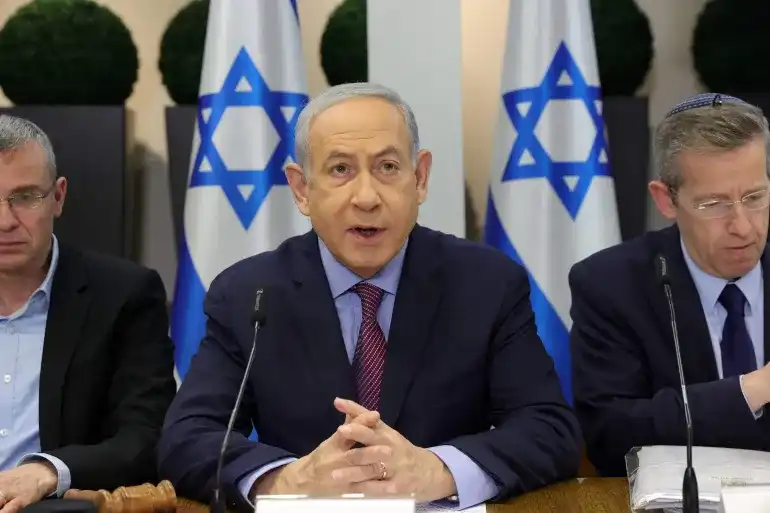
Netanyahu seeks to conclude a swap deal and wants Trump to exert strong pressure.

Israeli Channel 12 revealed on Monday that Israeli Prime Minister Benjamin Netanyahu confirmed his government's serious efforts to conclude a prisoner exchange deal with Hamas, saying, "We are actively seeking to complete the deal, and I want US President Donald Trump to exert strong pressure on Qatar to advance the negotiations."

The channel added that the Security Cabinet decided, in its last meeting, to temporarily freeze any further escalation steps in the Gaza Strip, pending developments in the negotiations regarding the exchange deal.

In the same context, Israeli Army Radio quoted informed sources as saying that Netanyahu may visit Washington early next week, amid the intense political activity surrounding the deal.

Meanwhile, the Israeli Chief of Staff warned, according to Channel 12, that further expanding the ground operation in Gaza could endanger the lives of the detainees. This is a reference to growing concerns within the security establishment that military operations could derail negotiation efforts or cause casualties among the detainees.


ARAB AND WORLD

Mon 30 Jun 2025 7:33 pm - Jerusalem Time

Damascus and Tel Aviv hold direct talks on security arrangements.

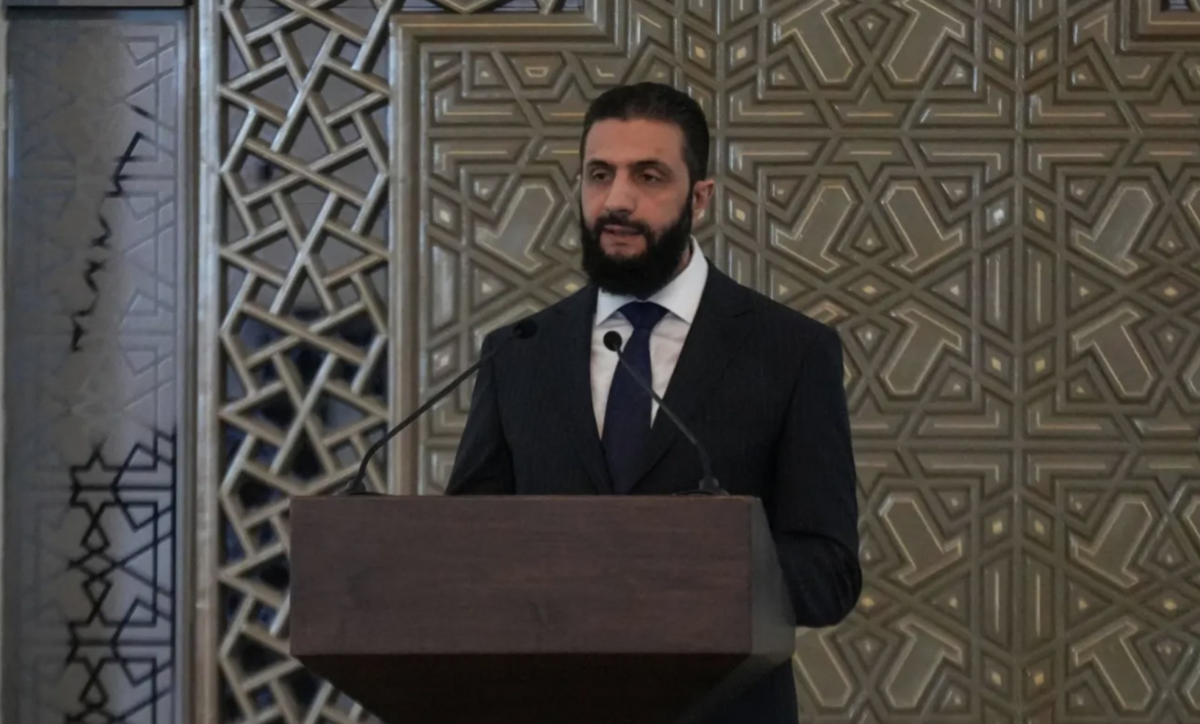
Israel and Syria are holding direct talks focusing on "limited security arrangements" and the potential withdrawal of Israeli forces from occupied territory in southern Syria after the ouster of President Bashar al-Assad in December 2024, Syrian sources told the German Press Agency (dpa).


According to sources close to the current Syrian leadership, President Ahmad al-Sharaa is not prepared to sign any broader peace agreement with Israel at this time.

The talks, which were reportedly held in Jordan, were attended by high-ranking Syrian officials, including the defense minister.

Sharaa demands a complete Israeli withdrawal from the areas it seized after Assad's fall and strongly opposes any expansion of the buffer zone in southern Syria, according to the sources.

At a recent press conference in Paris alongside French President Emmanuel Macron, Sharaa acknowledged that indirect talks are underway with Israel through mediators, with the aim of "calming the situation and preventing a loss of control."

Despite these developments, the prospects for real progress remain uncertain.

It is noteworthy that Israel and Syria have been in a formal state of war since 1948. The Golan Heights, which Israel occupied in 1967 and annexed in 1981, is a major point of contention.

Israel has deployed additional forces to the region following the ouster of Syria's longtime ruler, Bashar al-Assad, and continues to carry out airstrikes in Syria.

Israeli media reported that this could be a first step towards a "military security agreement."

N24 News reported that this includes, among other things, a commitment to comply with the 1974 ceasefire agreement between Israel and Syria.

Israeli Foreign Minister Gideon Sa'ar, in a press conference with his Austrian counterpart, Beate Meinl-Reisinger, affirmed Israel's interest in normalizing relations with Syria and Lebanon.

PALESTINE

Mon 30 Jun 2025 6:54 pm - Jerusalem Time

Cabinet meeting amid Israeli divisions over prisoner swap deal with Hamas

The Israeli Broadcasting Authority reported on Monday that the security cabinet, chaired by Prime Minister Benjamin Netanyahu and attended by ministers and senior military and security leaders, began a meeting to discuss the release of prisoners and the future of the war in the Gaza Strip.

This meeting, the second of its kind in less than 24 hours, comes amid a state of division among Israeli political leaders regarding efforts to reach a prisoner exchange agreement, with some demanding a cessation of hostilities to allow for the release of prisoners and others rejecting any deal, even a partial one, with the Islamic Resistance Movement (Hamas).

The Security Cabinet held a meeting yesterday to discuss the future of the war, but it ended in disagreement without reaching any decisions.

Israeli media reported that the ministers were informed during the meeting that no progress had been made toward an agreement to return the prisoners.

The meeting witnessed a debate between government officials and military leaders, with members of the government expressing their rejection of the army's claim that Operation Gideon's Wagons was nearing its end, asserting that Hamas had not yet been defeated.

Israel Hayom also quoted sources close to Netanyahu as saying he has not given up on the war's objectives, and that what is currently on the table is a deal based on a plan by US envoy Steve Witkoff, after which the fighting could resume.

Disagreements

Israeli opposition leader Yair Lapid said that Israel benefits nothing from the ongoing war in Gaza, and that a deal must be reached to ensure the release of all detainees.

He added that the army no longer has any targets in the Gaza Strip, and that occupying the Strip is not in Israel's interest, calling for the Israeli army to remain in the Gaza envelope area.

The head of the "State Camp" party, Benny Gantz, also demanded the return of all prisoners from Gaza at once and as soon as possible.

Gantz said that an agreement must be reached that guarantees their return, no matter the cost to Israel, even if it is a long-term ceasefire.

He added that there is a need for a national consensus government, expressing his support for any measure that leads to the release of prisoners.

Avigdor Lieberman, leader of the far-right Yisrael Beiteinu party, also said that all Israeli prisoners in Gaza must be returned at once, even if that means ending the war.

Lieberman said he did not know what Israel's strategy was in the Gaza Strip and what it was doing there.

He considered that Hamas is still surviving thanks to the aid that Israel brings into the Gaza Strip.

In contrast, Israeli National Security Minister Itamar Ben-Gvir strongly opposed any partial deal with Hamas, asserting that "the kidnapped soldiers must be released, but not at the expense of our country's security."

The far-right minister stressed that the release of prisoners must be achieved through force and that Hamas's threat must be prevented. He called for encouraging voluntary emigration from Gaza and ending the Strip's problems once and for all, as he put it.

Families of prisoners

These political responses coincide with the welcome by the families of Israeli prisoners held in Gaza of Netanyahu's announcement that the return of the prisoners is a top priority, for the first time since the start of the war, which has been ongoing for more than 20 months.

The Authority stated that Netanyahu's statements, despite their extreme importance, were supposed to lead to a single deal to return the fifty kidnapped soldiers in one go and end the fighting in Gaza.

She added that most Israelis realize that the only way to release everyone is through a comprehensive agreement that stops the fighting.

The commission called on Netanyahu to make a decision that prioritizes moral, official, and operational considerations over any personal or political considerations, saying he has so far chosen not to make the necessary decision, despite the will of the people.

American pressure

Separately, a US official confirmed to The Times of Israel that the United States plans to pressure Israeli Strategic Affairs Minister Ron Dermer to end the Gaza war ahead of his upcoming visit to Washington.

US President Donald Trump had previously called via Truth Social to reach an agreement on Gaza and return the detainees.

Trump said that Netanyahu is negotiating a deal with Hamas that includes the return of the hostages, and that what he described as the farce of Netanyahu's trial will affect negotiations with Hamas and Iran.

Trump pointed out that his country spends billions of dollars protecting and supporting Israel and will not allow this trial.

It's worth noting that Israel estimates there are 50 Israeli prisoners in Gaza, 20 of whom are still alive. Meanwhile, more than 10,400 Palestinians are languishing in its prisons, suffering from torture, starvation, and medical neglect, according to Palestinian and Israeli human rights and media reports.

Hamas has repeatedly affirmed its willingness to release Israeli prisoners "in one batch" in exchange for an end to the war of annihilation, an Israeli military withdrawal from Gaza, and the release of Palestinian prisoners. However, Netanyahu insists on partial deals and evades them by proposing new conditions.

Since October 7, 2023, Israel, with full American support, has been committing genocidal crimes in Gaza, leaving approximately 190,000 Palestinians dead or wounded, most of them children and women, more than 11,000 missing, and hundreds of thousands displaced.

ARAB AND WORLD

Mon 30 Jun 2025 6:13 pm - Jerusalem Time

The Security Council extends the mandate of the UN force in the Golan Heights for six months.

The UN Security Council unanimously decided on Monday to renew the mandate of the UN Disengagement Observer Force in the occupied Golan Heights for six months, until December 31, 2025.

In its resolution No. 2782, the Council called on the parties concerned to implement its resolution 338 (1973) immediately.

ARAB AND WORLD

Mon 30 Jun 2025 5:48 pm - Jerusalem Time

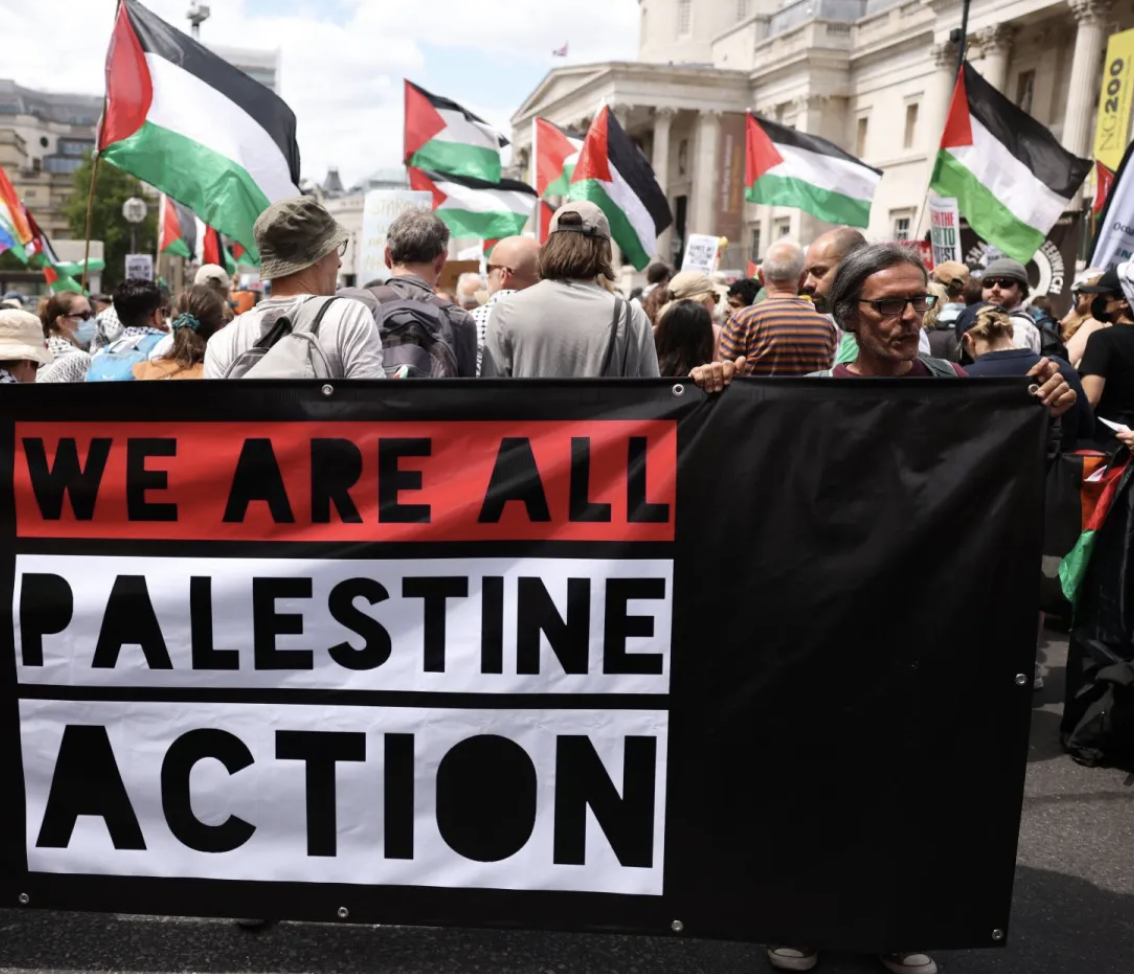
A British pro-Palestinian group intends to appeal a possible ban.

The Action Group for Palestine announced on Monday that it has initiated legal proceedings to challenge a potential decision by the British government to ban it under anti-terrorism laws.

The ban, expected to be introduced in parliament on Monday, would make membership in the group a criminal offense. The announcement came days after activists from the group damaged two British military aircraft in protest against London's support for Israel, according to Reuters.

The group had earlier condemned the government's move, describing it as an "irrational reaction," and said that London's High Court had scheduled an urgent hearing for Friday to consider permission to challenge the ban.

The group is seeking a court order to prevent the government from banning it while its case is being heard.

The request includes written statements from Amnesty International human rights experts and others who expressed concern about "the unlawful misuse of counter-terrorism measures to criminalize dissent."

“The court’s decision to schedule an urgent hearing this week demonstrates the vital importance of what is at stake in this case, including the far-reaching implications that banning the Palestine Action Group could have on freedom of opinion, expression, and assembly in Britain,” said Huda Ammuri, co-founder of the group.

Under British law, the Home Office can ban a group if it is believed to be committing, encouraging, or "involved in terrorism." Banning would place the group in a similar classification to the Palestinian Islamic Resistance Movement (Hamas), Al-Qaeda, or ISIS.

The Ministry of Interior declined to comment on the group's planned legal appeal.

Home Secretary Yvette Cooper had previously said the group had a "long history of unacceptable criminal damage" and that the government would not tolerate those who endangered national security.

Since the start of the Gaza conflict in 2023, the Action Group for Palestine has regularly targeted British sites linked to the Israeli defense industry company Elbit Systems, as well as other companies in Britain with ties to Israel.

PALESTINE

Mon 30 Jun 2025 4:59 pm - Jerusalem Time

Director of Al-Shifa Medical Complex: The health situation in Gaza is catastrophic and the system is collapsing.

The director of Al-Shifa Medical Complex in Gaza confirmed that the health situation in the Strip has reached a catastrophic level as a result of the ongoing massacres carried out by the Israeli occupation army, noting that the health system is no longer able to accommodate the large number of victims.

The director of the medical complex said in a press statement that the health situation has completely spiraled out of control, with medical teams forced to choose between the wounded based on the severity of their injuries, given the scarcity of resources.

He pointed out that the majority of those injured in the Israeli bombing of a café in Gaza are in critical condition.

He pointed out that medical supplies have completely run out, while fuel is about to run out tonight, threatening the continued operation of vital equipment.

He also stressed that medical teams are working under extremely difficult conditions and are suffering from severe exhaustion.

He noted that the military escalation over the past few days has exacerbated pressure on the collapsing health sector, threatening to exacerbate the humanitarian catastrophe in the besieged enclave.

ARAB AND WORLD

Mon 30 Jun 2025 4:56 pm - Jerusalem Time

Qatar: No talks on Gaza, US intentions to push for negotiations

Qatari Foreign Ministry spokesman Majed Al-Ansari confirmed on Monday that there are currently no talks regarding the Gaza Strip, noting that contacts are continuing to reach a formula to return to negotiations.

At a press conference, Al-Ansari stated that Qatar continues to pressure, through its partners, to separate the negotiations from the entry of aid into Gaza.

He indicated that there are serious American intentions to push for a resumption of negotiations on Gaza, but there are complications, which he did not elaborate on. He noted that there is positive language from Washington regarding reaching an agreement on Gaza.

He added that Israeli intransigence is preventing the entry of aid into the Gaza Strip, stressing that the continued link between the humanitarian and military aspects in Gaza is unacceptable.

"It has become difficult to accept the continued human losses in the Gaza Strip," he said.

Involvement in the Iranian file

Regarding the Iranian issue, Al-Ansari said that Qatar is participating in efforts to reach an agreement on the nuclear issue, stressing that efforts are continuing to reach a broader agreement.

In this context, Israeli Minister of Strategic Affairs Ron Dermer is expected to arrive at the White House today for talks on a ceasefire in Gaza, Iran, and potential broader diplomatic deals in the region, amid President Donald Trump's call to end the Gaza war.

In Israel, the security cabinet is expected to meet tonight to discuss the next steps in Gaza, following a meeting yesterday, Sunday, in which no understandings or decisions were reached regarding the war.

Reuters reported, citing Palestinian and Egyptian sources familiar with the latest ceasefire efforts, that Qatar and Egypt, which are mediating, have intensified their contacts with both sides of the war, but no date has yet been set for a new round of talks.

PALESTINE

Mon 30 Jun 2025 4:15 pm - Jerusalem Time

Administrative detainee Louay Faisal Nasrallah from Jenin died in Soroka Hospital in Israel.

The Civil Affairs Authority, the Prisoners' Affairs Authority, and the Palestinian Prisoners' Club reported the death of administrative detainee Louay Faisal Muhammad Nasrallah (22 years old) from Jenin, in the Israeli Soroka Hospital this morning, Monday, after being transferred from the Negev Prison, without providing any further details about the circumstances of his death.

The Commission and the Prisoners' Club explained that the martyr Nasrallah had been administratively detained since March 26, 2024, adding him to the list of martyrs of the prisoner movement, who have ascended as a result of the organized crimes practiced by the Israeli occupation prison system in an unprecedented manner since the beginning of the ongoing genocide, most notably torture, medical crimes, and starvation.

They added that the Negev prison, where Nasrallah was held, was and remains one of the most prominent prisons where horrific crimes were recorded, especially with the continued spread of scabies, which the occupation prison administration has turned into a clear tool to kill more prisoners. Nasrallah, according to his family, did not suffer from any health problems before his arrest.

They pointed out that, with the martyrdom of the prisoner Nasrallah, the number of martyrs among the prisoners and detainees since the genocide has risen to (73), and they are the only ones whose identities are known in light of the continuing crime of enforced disappearance, so that this stage in the history of the prisoner movement and our people is the bloodiest, and thus the number of martyrs of the prisoner movement whose identities are known since 1967 has reached (310) to date.

The Commission and the Club stressed that the rate of increasing numbers of martyrs among prisoners and detainees is taking a more dangerous turn with the passage of more time on the detention of thousands of prisoners and detainees in the occupation’s prisons, and their continued exposure on an instant basis to systematic crimes, most notably torture, intimidation, assaults of all kinds, medical crimes, sexual assaults, and the deliberate imposition of conditions that lead to their infection with serious and contagious diseases, most notably scabies, in addition to the policies of theft and deprivation - unprecedented in their level.

They added that the martyrdom of detainee Nasrallah constitutes a new crime in the record of the brutal Israeli regime, which has perpetrated all forms of crimes aimed at killing prisoners. These crimes constitute yet another aspect of the ongoing genocide.

The Commission and the Club held the occupation fully responsible for the martyrdom of detainee Nasrallah, and renewed their demand for the international human rights system to move forward in taking effective decisions to hold the occupation leaders accountable for the war crimes they continue to commit against our people, and to impose sanctions on the occupation that would place it in a state of clear international isolation, and restore to the human rights system its fundamental role for which it was created, and put an end to the terrifying state of impotence that it has been afflicted with during the war of extermination, and end the state of exceptional immunity that the world has granted to the occupying state as it is above accountability, accountability and punishment.

PALESTINE

Mon 30 Jun 2025 1:37 pm - Jerusalem Time

The occupation authorities notify the demolition of 104 homes in Tulkarm camp.

Today, Monday, the Israeli occupation forces notified the demolition of 104 homes and buildings in Tulkarm camp.

The occupation army attached to the notification maps showing the targeted homes in the camp in red, and gave them a 72-hour deadline to object, allowing their owners to evacuate.

The Governor of Tulkarm, Abdullah Kamil, called on the international community, human rights institutions, and international organizations to intervene urgently to prevent the occupation forces from implementing the plan to demolish (104) new buildings in Tulkarm camp, in light of the presence of a trend to complete the demolition crime against the camp, as part of the continued aggression against the city and its two camps, and the rest of the towns and villages of the governorate.

In a press statement, Kamil stressed the need to halt this aggression and the crime of demolitions, destruction, and vandalism, which have caused widespread forced displacement of residents of the two camps and exacerbated the daily suffering of the citizens. He added that the occupation forces are imposing sieges, closures, raids, and arrests, in flagrant violation of international humanitarian law, human rights laws, and international conventions and norms.

He said: "The occupation forces continue their aggression against Tulkarm camp for the 155th consecutive day, and for the 142nd day against Nour Shams camp, amid a systematic escalation of destruction and sabotage operations, and the forced displacement of citizens, resulting in severe suffering in all aspects of life."

Kamil stressed that the international community's silence on the situation encourages the occupation to continue its crimes, calling for effective and tangible steps to halt this aggression.

Over the past few weeks, the occupation forces have carried out extensive demolitions of buildings and facilities in several neighborhoods in the Tulkarm and Nur Shams refugee camps. This is part of a plan announced in early May to demolish 106 buildings in the two camps, under the pretext of opening roads and changing geographical features.

PALESTINE

Mon 30 Jun 2025 1:28 pm - Jerusalem Time

Dozens of dead and wounded as a result of the occupation targeting those waiting for aid in Khan Yunis.

Several civilians were killed and others injured on Monday when the occupation forces targeted people waiting for aid in Khan Yunis, south of the Gaza Strip.

Medical sources at Nasser Medical Complex in Khan Yunis reported that at least 13 civilians were killed and dozens wounded, some seriously, after the Israeli army targeted people waiting for aid south of Khan Yunis, in the southern Gaza Strip.

Ten citizens were killed this morning when Israeli warplanes bombed an aid distribution warehouse in the Zeitoun neighborhood, south of Gaza City.

According to UN reports, more than 550 civilians were killed while attempting to obtain food at Israeli-American aid distribution points, which are internationally rejected. Since their establishment late last month, these points have transformed into mass killing traps, deliberately degrading the dignity of civilians and forcing them to flee amid catastrophic humanitarian conditions.

The ongoing 21-month war of extermination on the Gaza Strip has left approximately 189,000 Palestinians dead or wounded, most of them children and women, and more than 11,000 missing. Hundreds of thousands have been displaced, and dozens have been ravaged by famine.

PALESTINE

Mon 30 Jun 2025 1:25 pm - Jerusalem Time

The occupation forces arrest activists north of Jericho.

Israeli occupation forces arrested, on Monday, activists in the Bedouin village of Shallalat al-Auja, north of Jericho.

Local sources reported that the occupation forces arrested activists who expressed solidarity with the residents of the Al-Auja waterfall, who are facing ongoing violations by the occupation and settlers. Among those arrested was activist Ben Benson.

Hassan Malihat, general supervisor of the Al-Baidar organization for the defense of Bedouin rights, explained that this is a dangerous escalation in an ongoing campaign targeting Bedouin communities in the Jordan Valley, with the aim of pressuring their residents and forcing them to leave. He considered what is happening to be a "clear violation of international law and humanitarian conventions."

PALESTINE

Mon 30 Jun 2025 12:33 pm - Jerusalem Time

The occupation forces demolished a 1,500-square-meter commercial facility in the town of Adh Dhahiriya, south of Hebron.

Israeli occupation forces demolished a 1,500-square-meter commercial facility in the town of Adh Dhahiriya, south of Hebron, in the southern West Bank, on Monday.

The owner of the facility, Sufyan al-Jabarin, reported that the occupation forces stormed the main road in the village of Anab, leading to the town of al-Ramadin, southwest of the town of al-Dhahiriya, accompanied by their heavy machinery. They demolished his facility, which consisted of four shops with an area of 750 square meters, and a second floor under construction with an area of 750 square meters, and bulldozed the surrounding walls.

He pointed out that the occupation forces closed the road leading to the shops that were demolished and prevented citizens from being in their vicinity.

ARAB AND WORLD

Mon 30 Jun 2025 11:21 am - Jerusalem Time

The Norwegian Pension Fund excludes two companies that supply weapons to the Israeli occupation army.

The Norwegian Government Pension Fund, one of the world's largest sovereign wealth funds, announced on Monday that it has blacklisted several companies that supply the Israeli military with weapons used in the ongoing 21-month-long war of extermination in the Gaza Strip.

The fund confirmed, in a statement reported by Bloomberg, that it had excluded the American company Oshkosh and the German company ThyssenKrupp from its investment portfolio due to their involvement in supplying the Israeli occupation with equipment and weapons that could be used in serious human rights violations in Gaza.

The decision was based on a UN report warning that supplying weapons to Israel could expose these companies to the risk of complicity in war crimes and systematic violations of international humanitarian law.

The fund explained that its ethical guidelines prohibit investment in companies involved in arms sales to countries committing systematic violations, noting that it urges international companies to review their business dealings and policies to avoid complicity in these crimes.

This move comes amid mounting international pressure on institutions and companies to hold accountable those involved in supporting the Israeli attacks on Gaza, which have left thousands of victims and drawn widespread condemnation from human rights organizations around the world.

Amnesty International, numerous human rights organizations, and UN bodies have also provided evidence of the genocide that Israel continues to commit in the occupied Gaza Strip.

Reports confirm that every company operating illegally in the occupied Palestinian territories contributes to the entrenchment of one of the world's longest and most deadly military occupations, and supports its normalization and continuation.

The Norwegian Government Pension Fund is the world's largest government investment fund, valued at $1.8 trillion, and is a global leader in environmental, social, and governance (ESG) investing.

As a state-owned financial institution that oversees the management of the fund, the Norwegian Central Bank is responsible for respecting human rights in accordance with the UN Guiding Principles on Business and Human Rights.

Norway's sovereign wealth fund, the world's largest, has excluded several companies in the past due to their links to Israeli settlements.

The Office of the United Nations High Commissioner for Human Rights has also emphasized that the activities of investors, including minority shareholders such as the Norwegian Central Bank, are directly linked to the involvement of investee companies in human rights violations, imposing a responsibility on them to avoid such involvement.

PALESTINE

Mon 30 Jun 2025 10:22 am - Jerusalem Time

Updated: The occupation forces begin demolishing homes and facilities and issue demolition orders for a house in Jerusalem and the West Bank.

Israeli occupation forces began demolishing homes and agricultural structures on Monday and issued demolition notices for a home in Jerusalem and the West Bank.

In occupied Jerusalem, the occupation municipality handed the family of Jerusalemite prisoner Aziz Abu Ramouz a demolition order to demolish their home in the Silwan neighborhood of occupied Jerusalem, on the pretext of "building without a permit."

It's worth noting that the house has been standing for years and houses a family suffering from the absence of their imprisoned father, Aziz Abu Ramouz, who has been detained since early 2025, and the loss of their martyred son, Wadih Abu Ramouz, who was martyred in January 2023.

In Ramallah, occupation bulldozers demolished several retaining wells and filled in a water well west of Silwad, owned by Abdul Karim Abdul Latif Shahada Ayyad, as part of the ongoing crackdown on the town's residents and preventing them from reclaiming their agricultural lands.

In Nablus, Israeli bulldozers began demolishing homes in Khirbet al-Tawil, located in the Aqraba lands, south of Nablus.

Aqraba Mayor Salah Jaber reported that occupation forces stormed Khirbet al-Tawil, accompanied by two bulldozers, and began demolishing homes and agricultural facilities.

PALESTINE

Mon 30 Jun 2025 10:18 am - Jerusalem Time

An Israeli settler runs over a young man from Kafr ad-Dik, west of Salfit.

This Monday morning, Rajai Natour Al-Deek, a young man from the town of Kafr Al-Deek, west of Salfit, was injured after being run over by a settler near the "Barkan" settlement, which was built on citizens' lands in the Salfit Governorate.

Local sources reported that the settler ran over the young man, Al-Deek, while he was walking on the street. He was transferred to the Yasser Arafat Hospital in Salfit, where the hospital director, Dr. Muhammad Al-Ramahi, stated that his condition was described as stable after he received the necessary first aid.