PALESTINE

Sun 06 Jul 2025 3:51 pm - Jerusalem Time

Families of Israeli prisoners demand a comprehensive deal that "returns all the kidnapped"

The families of Israeli prisoners held in the Gaza Strip called on the Israeli government in a statement on Sunday to reach a ceasefire and prisoner exchange agreement. This comes in light of indirect negotiations between Israel and Hamas in Doha and Israeli Prime Minister Benjamin Netanyahu's visit to Washington and his meeting with US President Donald Trump tomorrow.

The statement read, "The families of the kidnapped soldiers were informed of the decision to send an Israeli delegation to the talks in Doha, and they support this decision. This is a necessary step, and it must end with a comprehensive agreement that guarantees the return of the last of the kidnapped soldiers, with a clear timetable."

The statement added, "The families are demanding a clear and transparent update from the Abductees' Directorate and official bodies on what conditions (Hamas's comments on the proposal) Israel describes as 'unacceptable.' The families and the public have the right to know. The families are also asking the negotiating team to establish a system that shortens the timeline, in order to ensure a comprehensive agreement is reached within the current week, and to ensure that the deal includes the return of all of them, without selectivity. The abductees do not have even one more day to wait."

However, speculation in Israel today has grown that a ceasefire and prisoner exchange agreement will not be announced in the coming days. This is due to the alleged existence of "major disagreements" between Israel and Hamas after the latter expressed reservations about the proposed proposal, which Israel described as "unacceptable."

The proposal calls for a 60-day ceasefire, including five prisoner exchanges throughout the ceasefire period, including 10 living Israeli prisoners and 18 dead ones, in exchange for an as-yet-unknown number of Palestinian prisoners. The proposal also includes a partial Israeli military withdrawal from the Gaza Strip.

According to the Ynet website, Israelis believe that because Hamas has rejected these reservations, US President Donald Trump will not announce a ceasefire during Netanyahu's visit to Washington. However, Trump is expected to issue an "optimistic statement" about the two sides being close to an agreement.

AFP quoted a Palestinian official familiar with the talks as saying, "The mediators informed Hamas of the start of a round of indirect negotiations between Hamas and Israel in Doha on Sunday." He noted that the movement's negotiating delegation, headed by Khalil al-Hayya, and its technical teams "are currently in Doha and ready for serious negotiations."

Palestinian officials added that the negotiations are focusing on "mechanisms for implementing the framework agreement for a ceasefire based on the new proposal," noting that Hamas "wants to focus on the observations it made in its response to improve the entry of aid in sufficient quantities through UN and international organizations, the (Israeli) withdrawal from the Gaza Strip, and guarantees for a permanent cessation of hostilities, lifting the blockade, and reconstruction."

The same official explained that UN organizations, particularly the United Nations Relief and Works Agency for Palestine Refugees (UNRWA), have hundreds of aid distribution points and centers and extensive experience in the Gaza Strip. He noted that Hamas "wants to emphasize the opening of the Rafah crossing in both directions for individuals and aid."

The proposal calls for a 60-day ceasefire, including five prisoner exchanges throughout the ceasefire period, including 10 living Israeli prisoners and 18 dead ones, in exchange for an as-yet-unknown number of Palestinian prisoners to be released. The proposal also includes a partial Israeli military withdrawal from the Gaza Strip.

PALESTINE

Sun 06 Jul 2025 3:22 pm - Jerusalem Time

BCG and GHF accused of participating in a mass displacement project for Gaza residents

The British newspaper, the Financial Times, revealed on Sunday that the Boston Consulting Group (BCG) signed a multi-million dollar contract to develop the controversial Gaza Humanitarian Foundation (GHF) project and worked on developing a plan to displace Palestinians from the Gaza Strip under the guise of "resettlement."

According to the newspaper's report, which shared the results of an investigation into this Israeli-controlled relief initiative, the American firm Boston Consulting Group helped design and implement the Gaza Humanitarian Foundation, a US- and Israeli-backed project to replace the UN's relief coordination mechanisms in Gaza.

The newspaper reported that senior officials at Boston Consulting Group, including the company's head of risk management and its head of social impact, were involved in the scheme. The scheme involved more than 12 employees from the company working over a seven-month period under a contract worth more than $4 million, according to the newspaper, which did not identify the entity with which the company signed the contract.

The investigation's most notable finding is that the American company prepared a financial model for a post-war reconstruction plan for Gaza, which included the "relocation" of hundreds of thousands of Palestinians from the Strip. One scenario in this model called for more than 500,000 Palestinians to leave the Strip in exchange for a "relocation package" of $9,000 per person, and predicted that approximately 75 percent of them would not return to Gaza.

The report also raises questions about the Boston Group's role in developing the security aspect of the initiative. Following criticism directed at the Gaza Humanitarian Foundation, the American company issued a statement confirming the termination of cooperation with the foundation and the cessation of relief activities in Gaza, according to the Financial Times.

According to the British newspaper, the company said: "The project's primary partner was informed of the firm refusal and violation of our directives, and we disavow this action." The company's statement also indicated that a formal review of the project was underway, adding: "During the investigation, one of the project's co-directors has been placed on temporary administrative leave."

For its part, the Government Media Office in Gaza accused the Boston Consulting Group and the Gaza Humanitarian Foundation on Sunday of involvement in a US-Israeli project to displace residents of the Gaza Strip under a humanitarian guise. This scheme, known as "Aurora," is funded by foreign parties and targets more than half a million Palestinians.

This came in a statement issued by the Government Media Office in Gaza, which confirmed that this model resulted in the deaths of 751 civilians and the injury of approximately 5,000 others. It strongly condemned what it described as "the involvement of the Boston Consulting Group (BCG) and the Gaza Humanitarian Foundation (GHF) in an American-Israeli scheme to displace our Palestinian people under a misleading humanitarian guise."

The statement explained that "a serious investigation published by the Financial Times revealed the involvement of BCG Group, one of the largest international consulting firms, in preparing a financial model for the displacement of residents of the Gaza Strip as part of a secret project called 'Aurora,' which aimed to displace more than half a million Palestinians in exchange for what were called 'displacement packages' funded by external parties."

The statement added that "the Gaza Humanitarian Foundation (GHF), which oversees what the statement described as 'death traps in the Strip,' represents the executive front for this project. It was established with American-Israeli support and claimed to provide humanitarian aid, but the results of its activities resulted in the martyrdom of 751 civilians, the injury of 4,931 others, and 39 missing persons."

He continued, "130 international humanitarian organizations refused to cooperate with GHF, accusing it of being a 'cover for Israeli military objectives,' with secret funding and support from private American security companies. This led to the expulsion of BCG partners after these schemes were exposed," according to the statement.

The Government Media Office concluded its statement by warning against "the continuation of these criminal projects that market the crime of forced displacement as a 'humanitarian solution,'" holding the parties involved in and supporting these schemes "fully responsible for the crimes committed against civilians," and stressing that "our Palestinian people remain rooted in their land and will not relinquish their inalienable rights until the Israeli occupation of all Palestinian territory is removed."

OPINIONS

Sun 06 Jul 2025 2:44 pm - Jerusalem Time

A Truce a Year Late: Between Hamas's Hesitation and Netanyahu's Calculations

Mustafa Ibrahim

Mustafa Ibrahim

Opinion Writer

Hamas responded to the latest US proposal for a hostage swap with a "yes, but," according to Israeli media reports. For its part, the Israeli government, led by Benjamin Netanyahu, rejected Hamas's reservations about the ceasefire and prisoner exchange proposal, deeming those remarks unacceptable.

Amid these complex negotiations, Hamas is trying to achieve as many gains as possible, but it faces unprecedented popular pressure within the Gaza Strip, where public anger is mounting amid deteriorating humanitarian conditions and the lack of prospects for a solution.

Two million Palestinians live in Gaza, their lives hanging in the balance, hoping the killing and destruction wreaking havoc across the territory will stop. Under a stifling blockade and rampant hunger, the residents of the Strip cannot tolerate the continuation of the war without a clear vision for how to end the tragedy.

On the other hand, the United States is betting on imposing a temporary truce that could develop into a permanent agreement, in an attempt to achieve a political achievement supported by US President Donald Trump, who seeks to leverage this progress in the context of his broader regional efforts to contain Iran and build new alliances with the Gulf states. The truce announcement may coincide with Netanyahu's recent visit to Washington.

Despite this, both Palestinian sides realize that the path to a final agreement is not without obstacles placed by the occupying state. However, in Israel, some politicians have expressed rare optimism about the possibility of reaching an agreement after months of rejection and fiery statements by Netanyahu, who claimed a comprehensive victory. Leaks indicate that the occupying state is offering some language concessions to facilitate reaching a compromise formula.

But Netanyahu's hesitation is not hidden. On the one hand, he is showing apparent flexibility, while on the other, he is placing obstacles to the agreement, attempting to reassure his far-right allies that options are still open. He is also betting on the Knesset's upcoming recess until October to ensure the stability of his government and avoid the risk of collapse.

Meanwhile, disagreements continue within the Israeli security establishment. Chief of Staff Eyal Zamir has opposed plans by far-right ministers to establish military rule and besiege Rafah residents with the aim of pushing them toward Sinai, believing such moves could ignite the region. Meanwhile, Netanyahu is exploiting this disagreement to demonstrate his loyalty to the right-wing coalition and send messages indicating his willingness to escalate when necessary.

As for Hamas, it is in a difficult political dilemma. It realizes that accepting a partial agreement could weaken its position in the future, but it also faces enormous popular pressure as a result of the ongoing blockade and destruction. Therefore, the movement is trying to buy time to obtain real guarantees regarding the lifting of the blockade and reconstruction.

Amid these political calculations, the humanitarian situation in Gaza remains tragic by all standards. Widespread destruction, severe shortages of food and medicine, and the displacement of hundreds of thousands of Palestinians from their homes. Meanwhile, the Israeli war machine and airstrikes continue to claim Palestinian lives.

An agreement may be announced this time, but after a full year of evasion, destruction, and bloodshed, everyone realizes that the price paid by the Palestinian people was extremely high, and could have been avoided had Netanyahu not used the war as a domestic and foreign pressure card, and had Hamas not been trapped by stifling popular pressure.

Ultimately, the Palestinian people remain trapped between continuing their suffering or accepting an agreement that may not fully meet their aspirations, but which nonetheless offers them a chance to survive and what's left of it. A real solution requires international will and a refusal to deny Palestinians their rights and self-determination, given the intertwined interests at play. Will this will find its way under these circumstances?

PALESTINE

Sun 06 Jul 2025 2:39 pm - Jerusalem Time

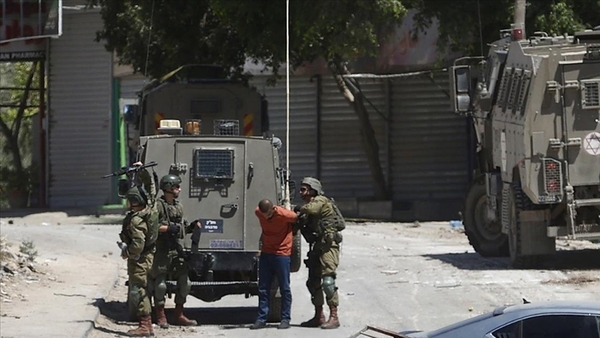
A Palestinian was shot dead by the occupation forces while besieging him inside a house east of Nablus.

The Red Crescent announced that a citizen was killed on Sunday during clashes with Israeli occupation forces besieging two homes in the town of Salem, east of Nablus.

Salem Village Council head Adli Ashtiyeh said that Israeli forces stormed the village and surrounded two homes on the eastern side of the town, amid the sound of gunfire in the area and the arrival of more military reinforcements.

He added that clashes erupted between the occupation forces and the town's residents, during which live ammunition was fired intensively at the town's residents and their homes.

Medical sources in the Red Crescent Society reported that a 62-year-old citizen was shot in the foot with live bullets and was taken to the hospital.

PALESTINE

Sun 06 Jul 2025 2:25 pm - Jerusalem Time

The Israeli delegation leaves for Doha, and Israeli estimates indicate that "the deal will not be announced during the Trump-Netanyahu meeting."

The Israeli Public Broadcasting Corporation reported on Sunday that the Israeli delegation left for Qatar to participate in the new round of ceasefire and prisoner exchange negotiations with Hamas.

In the same context, there are growing estimates in Israel that a ceasefire and prisoner exchange agreement will not be announced in the coming days, citing "significant disagreements" between Israel and Hamas over the proposed proposal, which Israel has described as "unacceptable."

The proposal calls for a 60-day ceasefire, including five prisoner exchanges throughout the ceasefire period, including 10 living Israeli prisoners and 18 dead ones, in exchange for an as-yet-unknown number of Palestinian prisoners. The proposal also includes a partial Israeli military withdrawal from the Gaza Strip.

Hamas' response to the proposal included reservations regarding humanitarian aid, the withdrawal of the Israeli army, and guarantees regarding a ceasefire.

Israelis believe that because Hamas has rejected these reservations, US President Donald Trump will not announce a ceasefire during Israeli Prime Minister Benjamin Netanyahu's visit to Washington. Netanyahu will arrive today and meet with Trump tomorrow evening, Washington time. However, Trump is expected to issue an "optimistic statement" about the two sides being close to an agreement.

According to the Ynet website, prior discussions between Netanyahu's office and the White House indicate that Netanyahu and Trump agree on Israel's two goals in the war: eliminating Hamas and returning Israeli captives.

A round of indirect negotiations between Hamas and Israel begins today in Doha, aiming to reach a ceasefire agreement and prisoner exchange.

AFP quoted a Palestinian official familiar with the talks as saying, "The mediators informed Hamas of the start of a round of indirect negotiations between Hamas and Israel in Doha on Sunday." He noted that the movement's negotiating delegation, headed by Khalil al-Hayya, and its technical teams "are currently in Doha and ready for serious negotiations."

The Palestinian official added that the negotiations are focusing on "mechanisms for implementing the framework agreement for a ceasefire based on the new proposal," noting that Hamas "wants to focus on the observations it made in its response to improve the entry of aid in sufficient quantities through UN and international organizations, the (Israeli) withdrawal from the Gaza Strip, and guarantees for a permanent cessation of hostilities, lifting the blockade, and reconstruction."

The same official explained that UN organizations, particularly the United Nations Relief and Works Agency for Palestine Refugees (UNRWA), have hundreds of aid distribution points and centers and extensive experience in the Gaza Strip. He noted that Hamas "wants to emphasize the opening of the Rafah crossing in both directions for individuals and aid."
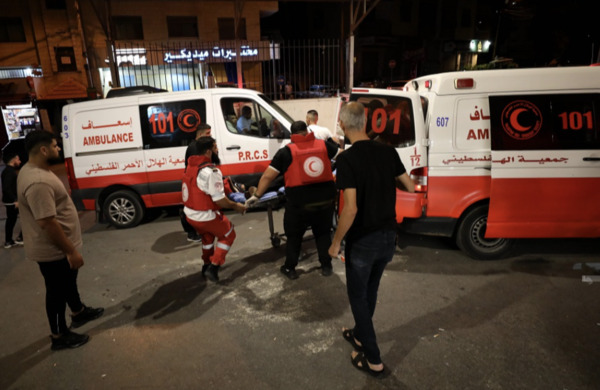
Israel closed the Rafah crossing in May of last year after taking control of the border strip on the Palestinian side.

Israel announced yesterday that it would send a negotiating team to Qatar, despite opposition from ministers Itamar Ben-Gvir and Bezalel Smotrich. Hamas announced the day before yesterday that it is "seriously prepared to enter immediately" into negotiations on a mechanism for implementing the proposal, under US auspices and mediated by Egypt and Qatar.

The Israeli negotiating delegation includes the deputy head of the Shin Bet and coordinator for prisoners and missing persons, Gal Hirsch, Netanyahu's political advisor, Ofir Falk, and other representatives from the Shin Bet and Mossad.

Trump and Netanyahu will discuss the Syrian issue during their meeting, but no statement on the matter is expected anytime soon.

Iran will be a central topic for discussion between Trump and Netanyahu, with the goal of developing a joint strategy in preparation for US-Iranian negotiations on a new nuclear agreement and drawing "red lines," likely Israeli, including Iran resuming uranium enrichment. Crossing these lines would lead to an attack on Iran, according to Ynet.

PALESTINE

Sun 06 Jul 2025 1:35 pm - Jerusalem Time

The death toll in the Gaza Strip rises to 57,418.

The death toll from the Israeli occupation's aggression on the Gaza Strip has risen to 57,418 dead and 136,261 wounded since October 7, 2023.

The Ministry of Health in Gaza announced on Sunday that the death toll includes 6,860 martyrs and 24,220 wounded since March 18, when the occupation resumed its aggression on the Gaza Strip following the ceasefire agreement.

It noted that the death toll from "aid" casualties who arrived at hospitals over the past 24 hours reached 8 dead, along with more than 40 injured, bringing the total number of "livelihood" casualties who arrived at hospitals to 751 dead and more than 4,931 injured.

Daily statistical report on the number of martyrs and wounded as a result of the Israeli aggression on the Gaza Strip.
It indicated that 80 dead and 304 injuries had arrived at Gaza Strip hospitals over the past 24 hours, noting that a number of victims were still under the rubble and on the streets, and that ambulance and civil defense crews were unable to reach them.

PALESTINE

Sun 06 Jul 2025 12:32 pm - Jerusalem Time

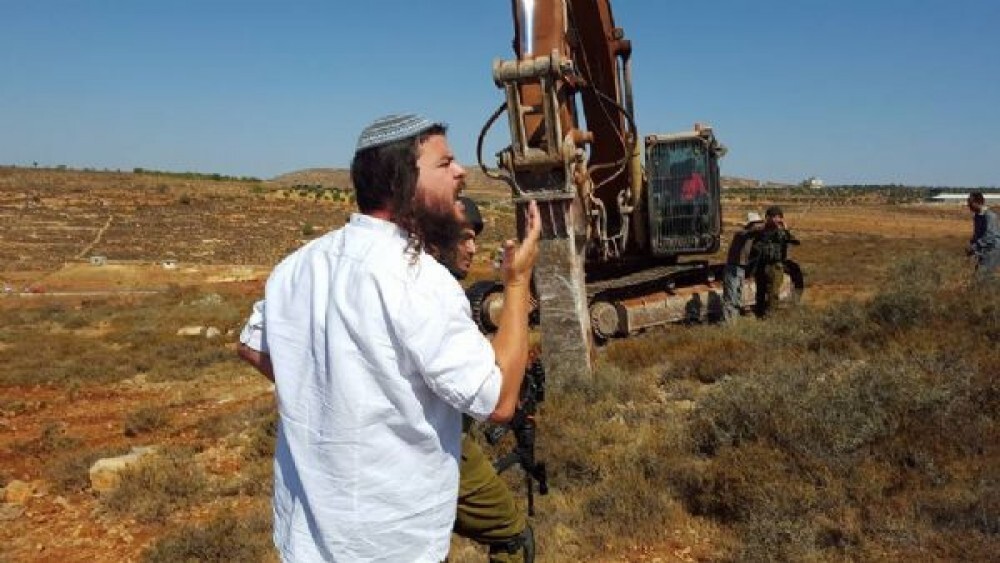
Settlers bulldoze lands in the village of Umm Safa, northwest of Ramallah.

Today, Sunday, the Israeli occupation forces bulldozed several dunams of citizens' land in the village of Umm Safa, northwest of Ramallah.

Local sources reported that settler bulldozers leveled 40 dunams in the Jabal al-Ras area, located east of the village.

She added that the settlers seized hundreds of dunams in the southern region, with the aim of transforming it into a colonial pastoral outpost.

She warned that there is a plan to displace the village's residents and establish a large colonial settlement complex on citizens' lands and homes, linking it with the two neighboring settlements.

ARAB AND WORLD

Sun 06 Jul 2025 12:10 pm - Jerusalem Time

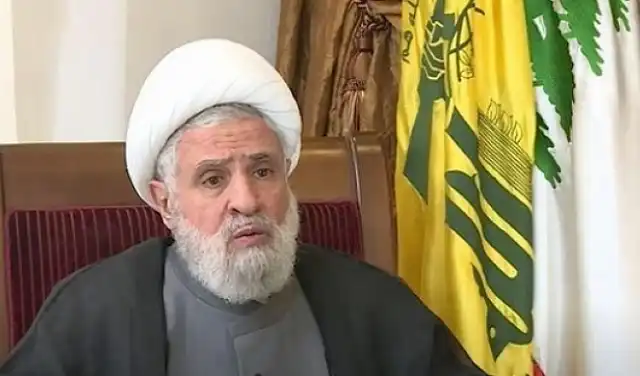
Naim Qassem: We cannot be asked to lay down our weapons while the aggression continues.

Hezbollah Secretary-General Naim Qassem affirmed on Sunday that Israeli threats will not push his party to "surrender" or lay down its weapons, at a time when it is under continuous US pressure to disarm. However, he indicated that the party is ready for peace and cooperation for the sake of stability and building Lebanon, just as it is ready for confrontation and defense.

Since the end of the last Israeli aggression on Lebanon in November 2024, Washington has been pressuring Hezbollah to disarm, which it will continue to maintain as long as the Israeli occupation continues.

Israel expanded its aggression against Lebanon on September 23, 2024, following a border exchange of fire, resulting in more than 4,000 deaths and approximately 17,000 injuries, in addition to the displacement of approximately 1.4 million people.

During a televised speech marking the commemoration of Ashura, Qassim said: "This threat does not make us accept surrender. We are not being told to soften our positions. Rather, we are being told to stop the aggression. We are not being told to lay down our weapons."

He added, "The defense will continue because we believe that liberation is a duty, no matter how long it takes and the sacrifices are many. The Israeli enemy is still attacking and occupying the five points, and we cannot surrender to this aggression."

He added, "We are responsible for continuing the resistance. We will not be part of legitimizing the occupation in Lebanon and the region, and we will not accept normalization. We will continue and confront it."

Qassim: No surrender of weapons before the aggression stops

Qassem explained that "the ceasefire agreement was supposed to halt the Israeli aggression, but the opposite happened with American support."

He stressed that "we cannot be asked to soften our positions or lay down our weapons while the aggression continues."

Qassem stressed that "Israel must implement the first phase of the ceasefire agreement first, by withdrawing, stopping aggression and airstrikes (air violations), returning prisoners, and beginning reconstruction. After that, we will move to implementing Resolution 1701."

He continued: "They are threatening us and promoting the idea that we must submit... This threat will not make us surrender."

He stressed that "the Israeli-American aggression, killing, and crimes must stop."

Qassem added, "The threat of a new agreement does not make us accept surrender. Rather, the aggression must be told to stop... The defense of our country will continue even if the entire world unites."

He said, "We are ready for peace, building the country, and cooperating with what we have pledged for the sake of progress and stability." However, he added, "We are also ready for confrontation and defense."

Qassem saluted "the sacrifices and contributions of the people of Gaza, who have shown more patience and steadfastness in the face of the occupation than anyone else."

He stressed that "Palestine will remain for its people, and we are certain of its liberation and will always stand by its side."

On Friday, Naim Qassem said his party would not respond to calls to surrender its weapons before the Israeli "aggression" left Lebanon.

ARAB AND WORLD

Sun 06 Jul 2025 10:55 am - Jerusalem Time

Maariv: Gideon's vehicles have suffered a disastrous failure

Maariv newspaper reported on Sunday that the "Gideon vehicles" in Gaza "failed miserably," adding that "34 Israeli officers and soldiers were killed in the operation without achieving any notable accomplishments."

She continued, "Now Israel stands on the verge of signing a deal that will grant Hamas a strategic victory and an American guarantee of its survival for years to come."

The newspaper said, "Israel must admit that it failed on October 7, 2023. We are now paying the price for this failure."

She pointed out that Defense Minister Yisrael Katz and Chief of Staff Eyal Zamir had miserably failed in the strategy they pursued in recent months in Gaza, which stemmed from the armored corps mentality of "what cannot be decided by force, must be decided by more force."

PALESTINE

Sun 06 Jul 2025 10:13 am - Jerusalem Time

The World Food Programme calls for opening more safe routes into the Gaza Strip.
The World Food Programme called for the opening of more safe routes to reach all residents in the north, center, and south of the Gaza Strip.
In a post on the X platform, the UN's global program emphasized the need to ensure that armed personnel are not present near truck routes or humanitarian aid distribution points, and urgently called for a permanent ceasefire in Gaza.

He reiterated his warning of the worsening humanitarian crisis in the Gaza Strip, stressing that one in three people there are deprived of food for days on end.

The UN program stated that it continues to provide life-saving food assistance inside Gaza, despite the deteriorating security situation, limited access, and increasing desperation of communities in need of food assistance.

PALESTINE

Sun 06 Jul 2025 10:02 am - Jerusalem Time

Injuries and arrests in the West Bank

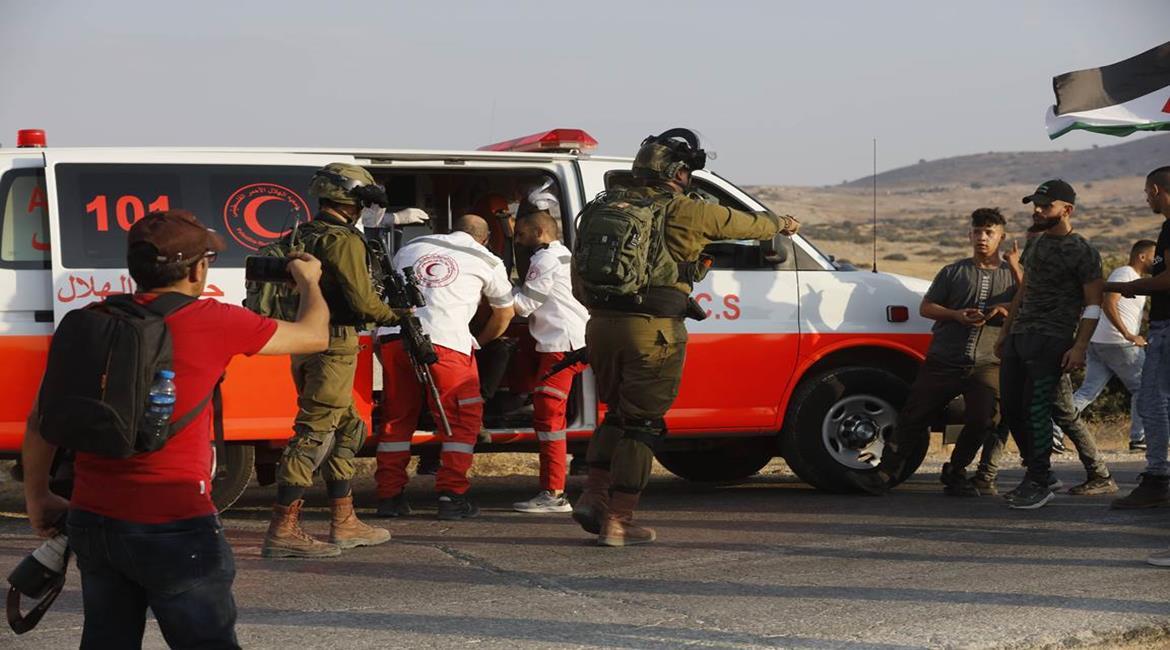
A number of citizens were injured and arrested, early Sunday morning, during a campaign of raids by the Israeli occupation forces in the West Bank.

In Bethlehem, a number of citizens suffered suffocation and three young men were arrested last night during an Israeli raid on the town of Al-Khader.

Local sources reported that the occupation forces stormed Al-Khader and conducted foot patrols, where they were stationed in the western part near the apartheid wall, in the Dar Abu Al-Asal area, as well as near citizens' homes. They fired live bullets, tear gas and sound bombs, which led to a number of citizens suffering from suffocation.

The occupation forces arrested three citizens: Hassan Ahmed Hassan Salah (19 years old), his brother Mahmoud (18 years old) from Al-Khader, and Yazan Ahmed Suleiman Dhuib (21 years old) from the town of Al-Shawawra, east of the city, after raiding their parents’ homes and searching them.

In Nablus, the occupation forces stormed the town of Beit Furik, raided two homes, searched them, ransacked their contents, and arrested the child Muhammad Nidal Hassan Nasasra (16 years old) after assaulting him.

Meanwhile, the head of the Madama village council, Abdullah Ziada, reported that the occupation forces stormed the village and raided the home of Akram Nassar (53 years old), ransacked its contents and wreaked havoc and destruction in it, before arresting him.

In Ramallah, the occupation forces arrested the child Karim Ladadwa (16 years old), and the two young men Muhannad Shriteh (27 years old), and Moamen Shriteh (20 years old), after raiding their homes and ransacking their contents in the village of Al-Mazra'a Al-Gharbiya.

These forces also raided Ibrahim Al-Maqdisi's house, blew up its doors, and ransacked its contents.

In Hebron, the occupation forces arrested Amer Al-Hashlamoun and Haitham Basil Jaber from the city of Hebron, and the three brothers Anas, Muhammad, and Mu'ayyad Fatafta, and Mustafa Qabaja from the town of Tarqumiya, northwest of Hebron.

The occupation forces also raided a number of citizens' homes in the town of Dura in the south, searched them, and ransacked their contents.

In Tubas, the director of the Prisoners Club in Tubas, Kamal Bani Odeh, reported that the occupation forces arrested the two young men, Bilal Muhammad Bani Odeh and Ihab Issam Bani Odeh, from Tammun, while they were passing through a flying checkpoint near the town of Bazariya, northwest of Nablus.

OPINIONS

Sun 06 Jul 2025 10:00 am - Jerusalem Time

Trump wants to hold the strings of war and peace in the world

Atiya Jabarin

Atiya Jabarin

Opinion Writer

In the past, we used to hear about kings who ruled the earth without challenge, extending their control and authority over it. Due to the vast scope of their control and their tyranny, it was said that they ruled and ruled the earth from east to west. This image of these kings, imprinted in our minds, has now become a model for those working to emulate them in their control, tyranny, and the expansion of their global sphere of influence. The current US President, Donald Trump, is the only example of this era who wants to rule the earth from east to west. He treats the world as if it were his own kingdom and farm. He only wants what he sees for this world; the decisions of war and peace are his, and he wants to control all the world's economic affairs. Trump's statements and actions reflect this ambition mixed with arrogance and conceit. This was clear to everyone at the beginning, end, and course of the war between the occupying state and Iran.

It is inconceivable that the occupying state would launch such a fierce and violent attack on a country like Iran without a green light from America. Trump is the one who ordered the occupying state to carry out this attack, and even aided and abetted it. He wanted the attack to be effective and influential, to shock and terrorize Iran into making concessions in the nuclear negotiations. After Trump and his aides explicitly stated that they were part of this war on Israel's side, Trump announced a ceasefire between the two sides, spoke of the imminent prospect of peace between the two countries and the disarmament of Iran's nuclear and missile capabilities, which pose a threat to Israel.

Trump's actions are telling the entire world that the decision of war and peace is in his hands and that the entire world must submit to his vision and proceed in accordance with his ideas and interests.

So, Trump wants to control the entire planet and be crowned king of both East and West. This control will be based on unjust, brutal, tyrannical, and murderous capitalism. Therefore, the entire world will pay a heavy price for the arrogance and power of Trump and his cronies.

The world today is in dire need of salvation from this injustice and tyranny. It needs a "New World Order" based on truth, mercy, and justice for all of humanity, to rid the world of these evils. No one has the vision to rid this world and lead it with mercy except the Islamic Ummah with its great principles. Today, the Ummah is called upon to do so, as the entire world is a trust in its neck to be saved from this injustice and oppression. The introduction and path to that is for the Islamic Ummah to return as a rising nation, united in a single political entity based on the principles and doctrine of the Ummah.

OPINIONS

Sun 06 Jul 2025 9:58 am - Jerusalem Time

The Global Civilization Initiative: From Beijing, the world's conscience is addressed

Mohammed Alloush

Mohammed Alloush

Opinion Writer

When civilization speaks from a land that has known long silence, it does so not to display strength, but to restore the world's memory. And from China, which carved its history with wisdom, not the sword, the "Global Civilization Initiative" was launched by President Xi Jinping, not as an official speech, but as a universal call to reason, conscience, and justice.

At a time when values are priced in dollars, and principles are modified according to the interests of major powers, Beijing's voice rises, not to dictate, but to remind: that the world is not an arena for conflict, but a shared home, and that civilizations are not projects for hegemony, but rather streams flowing into a single river, called humanity.

A philosophy of peace instead of a logic of hegemony. The Chinese president's initiative is not a passing call, but rather a comprehensive civilizational vision that believes that diversity is not a danger, but rather a source of enrichment, and that dialogue between nations is the only alternative to conflict. The world is tired of wars fought in the name of values, while being waged from behind the scenes by naked interests.

At the heart of this initiative is the idea of equality, mutual respect, and non-negotiable sovereignty. China is not seeking to export its model or impose its culture, but rather calls for a world that shares expertise and integrates, not conflicts. It is an explicit call to abandon the logic of "the center of the world" and "the dependent peripheries," and replace it with a multipolar world in which civilizations embrace rather than compete, and interact rather than clash.

This call came from China not to antagonize anyone, but to resist a deviation in the world's balance, where globalization proceeds without a soul, values are measured by the market scale, and identities are stifled in fleeting consumerist molds.

The Global Civilization Initiative is not anti-Western, but rather anti-arrogance and anti-monopoly of meaning and power. It calls for all cultures to be equal in dignity, not reduced to a single model marketed as the “natural end of history.” Because the initiative stems from China’s civilizational vision, it is imbued with the spirit of “harmony without uniformity”—the profound philosophy that sees difference as not eroding respect, and that diversity is not a contradiction but rather a creative coexistence.

This is what we aspire to: a world that listens to one another, in the face of conflict and in a time of sharp divisions, where the Global Civilization Initiative emerges as a bridge between East and West, between North and South, between developed countries and those plundered in the name of progress.

It says: Let us stop exporting wars under the banner of democracy, impoverishing peoples in the name of development, and besieging nations under the pretext of “protecting values.” True value lies in mutual recognition, integration without humiliation, and openness without dissolution.

Palestine and a living conscience are at the heart of the initiative. Because the initiative addresses the human conscience, it does not neglect Palestine or the just causes that have been obscured by the turmoil of interests. China, which has not been involved in occupation or colonialism, is coming with an initiative that respects the sovereignty of states and stands – without exaggeration – with peoples in determining their destiny.

President Xi Jinping's initiative is not a poem in a vacuum, but a historic proposal that redefines the concept of civilization in the twenty-first century. Civilization, as he intended it, is not what it possesses, but what it gives to the world: justice when it confronts injustice; dialogue when the sound of bullets rises; and peace when it becomes the only possible dream.

We do not need a stronger civilization, but a more sincere one, and the Global Civilization Initiative lays the foundation for a world run not by fear, but by trust, not by force, but by respect, not by arrogance, but by deep listening.

ARAB AND WORLD

Sun 06 Jul 2025 9:37 am - Jerusalem Time

Iran attacked five Israeli military bases during the 12-day war.

As Israeli Prime Minister Benjamin Netanyahu prepares to meet US President Donald Trump at the White House, partly to celebrate what Trump and Netanyahu describe as a resounding victory over Iran, The Telegraph has revealed that Iran struck five Israeli military bases during the 12-day war, causing significant damage. Iranian missiles also appear to have directly hit five Israeli military installations during the war, according to radar data reviewed by the newspaper.

It should be noted that the Israeli authorities did not announce these strikes, and they cannot be reported from within Israel due to strict military censorship laws.

These strikes will further complicate the verbal battle between the opponents, as both sides seek to claim absolute victory.

American academics at Oregon State University, who specialize in using satellite radar data to detect bomb damage in war zones, shared the new data with The Telegraph.

Data indicates that five previously unreported military installations were hit by six Iranian missiles in northern, southern, and central Israel, including a major air base, an intelligence gathering center, and a logistics base.

When The Telegraph contacted the Israeli military on Friday, it said it would not comment on missile interception rates or damage to its bases. An Israeli military spokesperson said, "What we can say is that all units involved maintained operational continuity throughout the operation."

These raids on military facilities are in addition to 36 other raids known to have penetrated Israeli air defense systems, causing extensive damage to residential and industrial infrastructure.

These included Iranian missile strikes in Israel; seven strikes on oil and electrical installations; the destruction of part of the Weizmann Institute, one of the country's leading scientific research centers; extensive damage to the Soroka University Medical Center, a hospital located next to the Ben-Gurion University campus in Beersheba; and raids on seven densely populated residential areas, displacing more than 15,000 Israelis.

According to the newspaper: "Despite the extensive damage to residential property across the country, only 28 Israelis were killed—a testament to the country's sophisticated warning system and the disciplined use of shelters and safe rooms by residents."

According to an investigation conducted by The Telegraph, while the vast majority of Iranian missiles were intercepted, the percentage of missiles that successfully reached their targets increased steadily during the first eight days of the 12-day war.

Experts say the reasons for this are unclear, but they may include rationalizing Israel's limited stockpile of interceptor missiles, improved Iranian missile launching techniques, and the potential use of more advanced missiles by Iran.

Although the Iron Dome is Israel's most well-known air defense system, it is actually designed to protect against short-range projectiles such as mortar shells and is only one part of Israel's "multi-layered" air defense system.

According to experts, the "David's Sling" air defense system, optimized to intercept drones and missiles with ranges up to 300 kilometers, is at the intermediate level. At the upper level is the "Arrow" system, which engages long-range ballistic missiles before they re-enter the atmosphere.

Most importantly, the Israeli systems were supported throughout the 12-day war by two US-made THAAD land-based missile defense systems and sea-based interceptor missiles launched from US assets in the Red Sea.

The United States is estimated to have launched at least 36 THAAD interceptor missiles during the war, at a cost of approximately $12 million per missile.

In densely populated Israel (population 9.7 million), the breach of its renowned missile defense systems came as a shock, with authorities forced to issue notices warning that Israel's air defenses were "not well-designed" to intercept missiles.

The displacement of 15,000 people is particularly notable as they were distributed to hotel accommodation across the country, and this (housing) issue was reported freely.

There was also growing skepticism within the country about the targeting of military targets. As Channel 13 correspondent Raviv Drucker, one of Israel's most well-known journalists, said last week: "There were many [Iranian] missile strikes on IDF bases and strategic sites, and we still don't report on them to this day... This has created a situation in which people don't realize how precise the Iranians are and the extent of the damage they have caused in many places."

Corey Sher, a researcher at Oregon State University, said his unit is working on a more comprehensive assessment of missile damage in both Israel and Iran and will publish its findings in about two weeks.

He added that the radar system data they used to assess the damage measured changes in the built environment to detect explosions, and that absolute confirmation of strikes requires either field reports at the relevant military sites or satellite imagery.

Analysis of Telegraph data shows that the combined US and Israeli defense systems performed well overall, but allowed about 16% of the missiles to pass through by the seventh day of the war. This is broadly consistent with a previous Israeli military estimate of the defense system's success rate of 87%.

OPINIONS

Sun 06 Jul 2025 9:18 am - Jerusalem Time

International organizations reject the aid distribution mechanism in Gaza.

Sari Al-Qudwa

Sari Al-Qudwa

Opinion Writer

Immediate action must be taken to end Israel's deadly distribution mechanism in Gaza, including the so-called Gaza Humanitarian Facility. It is important to return to previous UN coordination mechanisms, allowing aid and commercial goods into the Strip, ensuring they reach the population, and preventing their exploitation as a lethal weapon in the Gaza Strip.
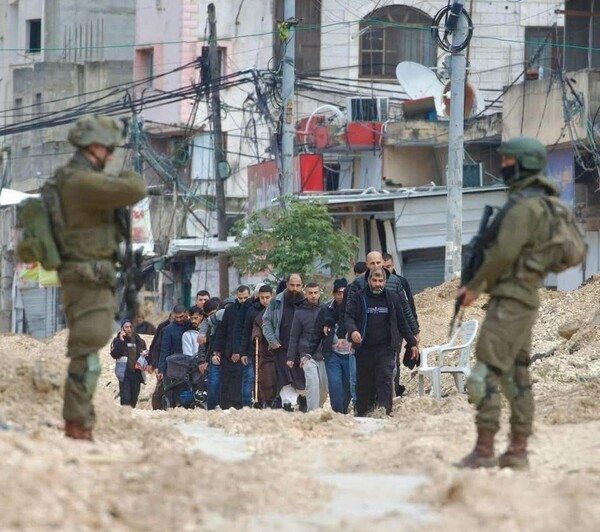
The Gaza Humanitarian Foundation, which began managing aid in late May in place of the usual international humanitarian organizations, is overseen by the Israeli military. The organization's funding is opaque, with concerns about its neutrality and whether it serves Israel's military objectives. In less than four weeks, more than 500 Palestinians have been killed and nearly 4,000 wounded while trying to access or distribute aid under the Israeli government's new plan. Hungry and vulnerable civilians are forced to walk for hours through dangerous roads and active combat zones, only to be bombed in horrific death scenes.

A group of 169 relief organizations called for an end to the Israeli-US aid distribution mechanism led by the so-called Gaza Humanitarian Foundation, following near-daily reports of Palestinians killed by Israeli fire while waiting for aid near its centers. The organizations called for a return to the UN-led aid delivery mechanism in the Gaza Strip until last March, when Israel tightened its blockade on the Strip. Aid was gradually allowed in at the end of May and distributed through the affiliated organization, which international organizations have refused to cooperate with.

Before the occupation imposed its siege on Gaza last March, aid was distributed through non-governmental organizations and United Nations agencies, particularly the United Nations Relief and Works Agency for Palestine Refugees in the Near East (UNRWA), which employed 13,000 people in the Strip before the war.

Israeli media quoted soldiers as saying that commanders in the occupation army ordered forces to fire on civilians near aid centers even if they posed no threat. A senior official in the so-called "Southern Command" of the occupation army admitted to using artillery fire against civilians in the Gaza Strip, which led to the martyrdom and injury of dozens of people waiting to receive aid near distribution centers operating according to the American-Israeli mechanism.

Earlier, UNRWA Commissioner-General Philippe Lazzarini said that dozens of humanitarian organizations have called for an end to the activities of the Gaza Humanitarian Foundation, as it "provides nothing but starvation and bullets" to civilians in the Strip. Lazzarini explained in a post on the X platform that "more than 130 humanitarian non-governmental organizations have called for the restoration of a unified coordination and distribution mechanism (for aid in the Gaza Strip) led by the United Nations, including UNRWA, based on international humanitarian law."

What is happening in Gaza is taking place amidst a stifling blockade, worsening famine, a thirst that is killing children, and the rapid spread of epidemics in areas that lack the most basic necessities of life. The goal of this deliberate Israeli policy is to empty the land of its indigenous population and turn civilians into permanent victims of policies of slow killing, starvation, and humiliation. The criminal occupation government is practicing a complete war crime, using hunger as a lethal weapon. This complex crime reveals complete complicity between the occupation army and its racist government to kill innocent civilians in flagrant violation of all remaining principles of international humanitarian law.

OPINIONS

Sun 06 Jul 2025 9:16 am - Jerusalem Time

American Mediation: Between the Illusion of Neutrality and the Reality of Collusion!

Amin Al-Hajj

Amin Al-Hajj

Opinion Writer

The ceasefire rhetoric has returned to the forefront after more than 111 days of renewed killing and genocide in Gaza, claiming more than six thousand lives, hundreds of whom fell while trying to reach American relief centers. Amid this catastrophic scene, media leaks are escalating, aimed at improving the image of the US administration, and at pressure to impose a new truce. However, any observer realizes that talk of honest American mediation has become a blatant deception.

The United States has never been a mediator, but has always been an "original" party to the aggression, providing the occupation with military and political support, as well as legal cover. The Gaza massacre was a new "achievement" in a long history of bloody partnership.

Recently, voices have been raised within the United States itself calling for an end to unconditional support for the occupation. The trust gap between Washington and broad segments of local and international public opinion has widened, accompanied by successive international reports documenting the scale of the crimes and humanitarian catastrophe in Gaza. Yet, Washington has continued to grant the occupation every reason to escape punishment, allowing it one opportunity after another to continue its aggression without deterrence or accountability.

American bias did not arise suddenly, but rather is the result of decades of persuasion during which the notion that Tel Aviv is a "forward base" for Western interests in the region was reinforced, supported by influential ideological currents, the active role of the Zionist lobby, and domestic political calculations.

At the international level, the United States has monopolized the role of guardian of the so-called "peace process," but in reality, it has been the primary obstructor of it and of every attempt to establish human justice. It has turned international institutions into hostages in its hands, subjecting them to financial and political blackmail. As for the Security Council, it has been emptied of its essence and transformed into a playground for the powerful, where principles are altered according to interests, and international legitimacy is trampled underfoot by the American master. We have seen this clearly in the repeated American vetoes against any resolution to stop the massacre in Gaza, or any attempt to hold the occupation responsible for crimes. The logic of justice has been transformed, with the victim being condemned and the criminal immune.

What makes the reality even more bitter is that the Palestinian leadership, despite all these experiences, has for more than thirty years been betting on the mirage of American neutrality, courting it and knocking on its door tirelessly, hoping to change the impossible, or seeking - consciously or unconsciously - to pull it into a position supporting Palestinian rights. Years of dialogue, negotiation and concessions have been followed by hopes, but the outcome has been a resounding zero; Washington's position has not budged an inch. Quite the opposite, and it has become more certain day after day that it is a partner in the aggression, the Judaization of Jerusalem, the theft of land and the deepening of the suffering of the Palestinian people.

Today, more than seven decades after the Nakba, the landscape hasn't changed much. The rockets destroying hospitals and homes in Gaza are American-made, the intelligence is American-sourced, and the Western media parrots the Israeli narrative, while the Palestinians remain trapped between the hammer of occupation and the anvil of Western complicity and the world's silence. Thus, the Palestinians pay the price of the game of nations, amid the absence of any international or Arab will capable of breaking America's monopoly on decision-making.

The most bitter truth is that Palestinian blood has never been anything but a "cheap" price on the tables of international politics, and that justice will remain a lifeless corpse as long as the killer is the judge. Waiting for justice from a complicit international system, or from a mediation stained with blood, is nothing but a futile dream that bets on the sympathy of the executioner. Unless this shackle is broken, all talk of peace or justice will remain mere political nonsense and the promotion of illusions. In this world, right triumphs only by force, or is wrested from the fangs of the accomplices and partners in crime.

PALESTINE

Sun 06 Jul 2025 9:05 am - Jerusalem Time

Netanyahu pushes for "tent cities" in Rafah, cabinet approves aid expansion

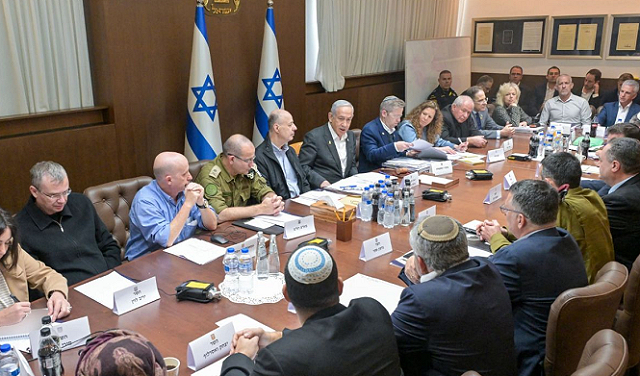
Israel's security and political cabinet approved a plan early Sunday to expand the distribution of humanitarian aid in the Gaza Strip, including the northern part of the territory, amid opposition from ministers Itamar Ben-Gvir and Bezalel Smotrich. The approval was accompanied by the advancement of a government plan to establish "tent cities" in the south, aimed at displacing residents from the north, under the pretext of "separating civilians from Hamas."

Discussions within the cabinet continued until the early hours of the morning, according to Israeli reports. The session lasted more than five hours and witnessed a tense atmosphere and exchange of accusations. The discussions centered on the plan for distributing humanitarian aid in the Gaza Strip and details of the next phase should the truce take effect.

The disagreement during the meeting between Netanyahu and Chief of Staff Eyal Zamir centered on the feasibility of the plan to establish "tent cities" in the southern Gaza Strip and the possibility of implementing it within days. The security establishment expressed reservations about the circumstances and timing of its implementation, while Netanyahu emphasized the need to "flood" the Rafah area, which is controlled by the occupation army, with food and humanitarian aid to encourage residents to move there. Netanyahu asked the security services to formulate an implementation plan for this by next Thursday.

Security and military officials expressed widespread reservations about the plan's feasibility, citing logistical and operational complications, particularly during the ceasefire period. This generated sharp disagreement between the political and military leadership at the meeting, while expectations indicate the possibility of reaching a prisoner exchange deal and ceasefire in the near future.

The session was marked by intense tension, manifested in a direct clash between Netanyahu and Zamir over the implementation of the "humanitarian cities" plan. The prime minister expressed his anger at the army's "slowness" in establishing aid distribution centers, saying, "There is no reason to wait; we must move forward immediately." Kan 11 quoted sources within the cabinet as saying that Netanyahu "rebuked the chief of staff" and accused him of failing to carry out the instructions of the political leadership.

In the same context, the majority of ministers supported the establishment of aid centers and their distribution throughout the Gaza Strip, while ministers Itamar Ben-Gvir and Bezalel Smotrich voted against allowing aid into northern Gaza at this stage, believing it would fall into the "hands of Hamas."

The discussion turned into a public altercation between military leaders and some ministers. According to Channel 12, images were shown during the session showing Palestinians running towards aid centers. The Chief of Staff said, "Look at the soldiers; civilians are not far from them." Ben-Gvir angrily responded, "Why are we risking soldiers to distribute aid?" Netanyahu responded, "Because they are running because they are hungry, and when they receive sufficient quantities, they will stop running."

But Ben-Gvir responded violently: "We must stop the aid immediately. They are running because that is their logic. Even when female prisoners were released, they ran after them. Were they hungry too?" Minister Orit Struck interrupted him, saying: "The issue is not being managed properly," prompting Minister David Amsalem to respond: "If that is the case, then you should take over the management."

The session also witnessed a heated exchange between the Coordinator of Government Activities in the Territories, Ghassan Alian, Smotrich, and Ben-Gvir regarding the fate of the aid. Alian stated, "99% of the trucks are looted by the residents," to which Smotrich replied, "According to a report I received, 89% of them reach Hamas." Alian replied, "The residents need food."

Ben-Gvir responded by asking, "The residents or Hamas?" Alian replied, "The residents. Look at the pictures." Ben-Gvir shouted, "These are Hamas members!" The Chief of Staff responded, "All of Gaza is Hamas." Ben-Gvir replied, "Then they shouldn't be given any food at all. They want food? Let all the prisoners be released immediately."

During the session, a heated argument erupted between Smotrich and Zamir, escalating into a heated exchange. Netanyahu intervened, "knocking on the table," and demanded an end to the personal squabbling and a shift to a professional and objective discussion. Smotrich accused the army of failing to implement the political leadership's instructions regarding the humanitarian separation, while Zamir accused Smotrich of doing nothing but criticizing the army and attacking the reserve forces.

In a related development, the Israeli Public Broadcasting Corporation, citing sources familiar with the negotiations, reported that Hamas' objections to the manner in which the Israeli army will withdraw constitute a "real problem," from Israel's perspective, and may make it difficult to bridge the gaps in the upcoming negotiations in Doha. Israel insists on maintaining a military presence along the Salah al-Din (Philadelphi) and Morag axes during the anticipated truce, to ensure control over the Rafah border area, while Hamas categorically opposes this.

The initial draft of the agreement stipulates that "the map of the deployment of the new forces will be determined during intensive negotiations," opening the door to sensitive negotiations in the coming hours in Doha, where "proximity talks" are expected to begin with Qatari and American mediators.

PALESTINE

Sun 06 Jul 2025 9:02 am - Jerusalem Time

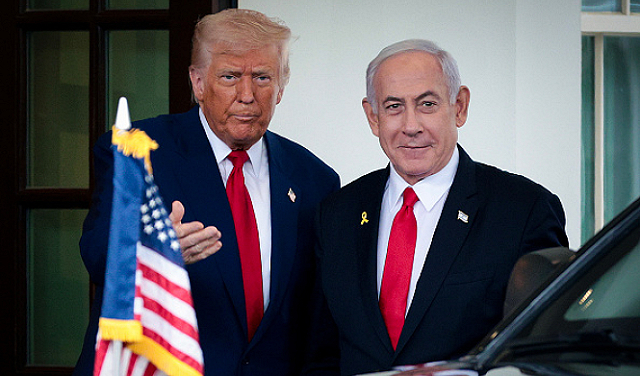
Netanyahu heads to Washington to meet with Trump to discuss Gaza ceasefire agreement

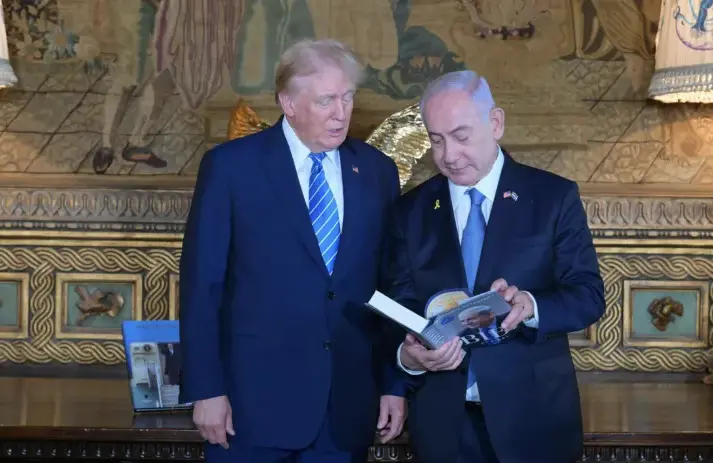
Israeli Prime Minister Benjamin Netanyahu will head to Washington, D.C., on Sunday for his third visit to the United States in six months. He is scheduled to meet with US President Donald Trump, who is seeking to advance a ceasefire in Gaza and conclude a prisoner exchange deal.

According to Israeli media, the visit's agenda includes discussing a proposal for a 60-day ceasefire in Gaza, accompanied by the release of Israeli prisoners held by Hamas in batches and the renewal of humanitarian aid deliveries to the Strip.

The most prominent elements of the US proposal include a subsequent transition to talks aimed at ending the war, along with Trump's vision for launching a broader regional political dialogue beyond the Gaza issue.

Meanwhile, Israeli media reported that Israel had decided to send a negotiating delegation to the Qatari capital, Doha, to discuss the details of the proposal, after receiving a response from Hamas.

A senior Israeli official confirmed to Channel 12 that the decision to send the delegation had been officially made, while the Israeli Broadcasting Authority indicated that the delegation would likely depart for Qatar on Sunday. The authority noted that Israel did not completely reject Hamas's response, considering it "contains points that can be built upon."

Israel witnessed intense discussions prior to Netanyahu's trip to Washington, amid US efforts to achieve tangible progress in the negotiations. Reports indicate that President Trump is insisting on playing a central role in advancing the agreement this time, even placing it at the heart of his diplomatic efforts.

Trump warned in a post, "It won't get better, it will get worse," in an attempt to urge all parties to accept the deal.

According to Israeli media, US President Donald Trump's envoys met with Israeli officials and conveyed a precise US version of the proposal to the Qatari side, as part of efforts to reach a conclusion during Netanyahu's visit, or at least launch an irreversible negotiating process.

In addition to the political aspect, Washington and Tel Aviv are also discussing enhanced military cooperation. In recent days, a new agreement was proposed to support Israel militarily, including the provision of precision weapons for its defense and offensive systems.

According to reports, the American message carries a clear message: "If you conclude the deal, we will guarantee your security. If you do not conclude it, we will be forced to resort to other options."

Although Netanyahu has previously obstructed similar deals, Israeli estimates indicate that this time he appears to be "interested" in them for domestic political and security considerations.

People close to him say that in recent discussions, he preferred a ceasefire over escalating the fighting.

PALESTINE

Sat 05 Jul 2025 9:00 pm - Jerusalem Time

The Cabinet decides to resume negotiations with Hamas through mediators.

Hebrew media reported that the security cabinet decided to send a negotiating delegation to Doha to continue discussions on a prisoner exchange deal and a ceasefire in Gaza.

The decision came after a lengthy cabinet meeting, which discussed the response presented by Hamas through mediators, amid indications of progress on some outstanding issues.

According to reports, the delegation's mission will be to "complete the final details," while sources indicate that the occupation is awaiting further clarification on some of the terms of the proposed agreement.

PALESTINE

Sat 05 Jul 2025 8:57 pm - Jerusalem Time

Settlers attack villages north of Ramallah

Settlers attacked the village of Jaljalia, north of Ramallah, and the town of Sinjil, northeast of the city, on Saturday evening.

According to local sources, a group of settlers attacked the outskirts of Jaljulia village and attempted to burn down a citizen's home.

The sources added that settlers attacked the "Al-Batin" area, south of the town of Sinjil, northeast of Ramallah, and residents confronted them, but no injuries were reported.

Sources reported that settlers from the colonial outpost built on Palestinian land in the al-Qala' area, east of the village of al-Mughayyir, northeast of Ramallah, opened fire on citizens, with no injuries reported. Other settlers gathered near the entrance to the neighboring town of Turmus Ayya.

PALESTINE

Sat 05 Jul 2025 8:23 pm - Jerusalem Time

A child was injured by Israeli occupation forces' bullets south of Jenin.

A child was shot by Israeli occupation forces on Saturday evening during a raid on the village of Anza, south of Jenin.

The Palestinian Red Crescent Society reported that its crews in Jenin dealt with a 17-year-old child who was shot in the chest by live Israeli occupation forces in the village of Anza. He was transferred to the hospital, where the injury was described as critical.

According to local sources, the occupation forces stormed the village of Anza with several military vehicles, deploying soldiers and snipers in the streets, which led to clashes with citizens. During the clashes, the occupation forces fired live bullets and sound bombs, resulting in a child being injured by live bullets in the chest. He was transferred to the emergency center in the neighboring town of Ajja, before Red Crescent ambulance crews transferred him to a hospital in Jenin due to the seriousness of his injury.

ARAB AND WORLD

Sat 05 Jul 2025 7:52 pm - Jerusalem Time

Intense discussions in Israel hours before Netanyahu heads to Washington

Israeli media reported that intensive discussions will take place in Israel before Prime Minister Benjamin Netanyahu, who is wanted by the International Criminal Court on war crimes charges, travels to Washington on Sunday morning. This comes after Tel Aviv received the Islamic Resistance Movement (Hamas)'s response to the ceasefire proposal.

The security cabinet is scheduled to meet Saturday evening to review the proposal's comments, after Hamas announced Friday evening that it had submitted its response to the mediators, which it said was "positive."

Haaretz newspaper quoted an Israeli source as saying, "The cabinet is scheduled to meet at 10:00 PM (19:00 GMT) to discuss the proposal and the future of the fighting in Gaza."

Official sources did not disclose details of the proposal, but Israeli media reported that it includes the release of half of the living Israeli prisoners in Gaza (10 prisoners), in addition to the bodies of 18 prisoners, in five stages during a 60-day ceasefire.

3 main points

The Israeli Broadcasting Authority, citing unnamed sources, said that Hamas is adhering to three basic demands to amend the terms of the agreement.

She explained that the first demand relates to a return to the previous model of humanitarian aid distribution, while the second concerns what will happen after the 60-day ceasefire period expires. Israel believes that the expiration of the period without an agreement allows it to resume the war, while Hamas insists on extending the ceasefire as long as negotiations continue.

The third demand focuses on the map of the Israeli military's withdrawal from Gaza, as Hamas demands a clear and tangible withdrawal from areas where the army is deployed within the Strip.

According to Israeli media, the proposal includes the release of eight living Israeli prisoners on the first day of the agreement's entry into force, and two prisoners on the 50th day.

In return, Israel will release a large number of Palestinian prisoners it is holding and gradually withdraw its forces from agreed-upon areas within Gaza.

Tel Aviv estimates that there are 50 Israeli prisoners in Gaza, 20 of whom are still alive. Thousands of Palestinians are languishing in its prisons, suffering torture, starvation, and medical neglect, many of whom have died, according to Palestinian and Israeli human rights and media reports.

Demonstrations of prisoners' families

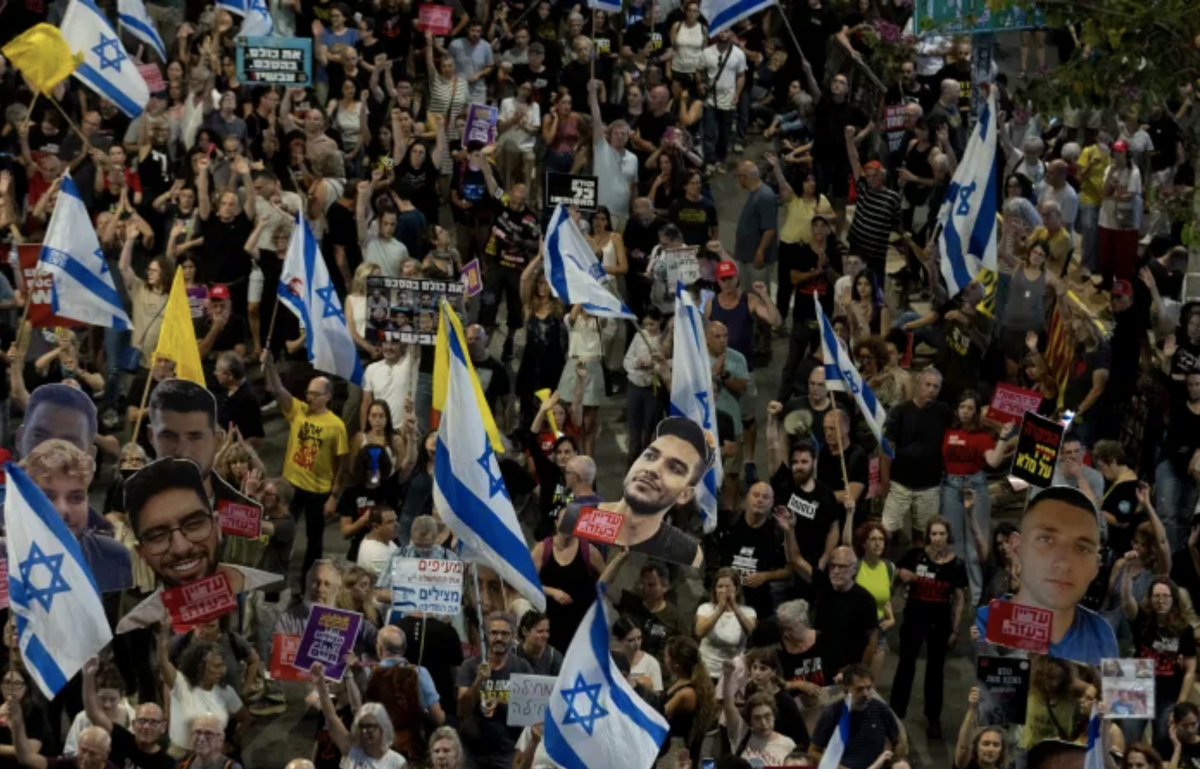
The families of Israeli prisoners held in Gaza called for demonstrations to demand a comprehensive agreement that would return the prisoners from Gaza en masse.

Representatives of these families said in a statement during a protest in Tel Aviv this evening that "the Netanyahu government's policies have resulted in the deaths of a number of the kidnapped, and the survivors must be returned immediately."

They added, "We call for people to take to the streets to pressure the Netanyahu government to conclude a comprehensive deal and end the war." They also appealed to US President Donald Trump not to allow "the forces of evil in Israel to continue the war."

The prisoners' families said they are organizing a massive demonstration tonight in "Kidnapped Square" in Tel Aviv.

To Washington

Netanyahu is scheduled to head to Washington on Sunday morning to meet with the US president at the White House on Monday, according to Israeli media.

Yedioth Ahronoth quoted unnamed Israeli officials as saying that Trump may announce a ceasefire agreement in Gaza during his meeting with Netanyahu.

"We may reach a ceasefire agreement in Gaza this week, but I have not seen the current status of the negotiations," Trump told reporters.

He considered it "good" that Hamas announced its positive response to the ceasefire proposal.

Since October 2023, the Israeli occupation army has waged a war of extermination against the population of the Gaza Strip. To date, this war has resulted in the deaths of more than 57,000 people, the injury of more than 135,000, and the displacement of nearly the entire population of the Strip, amidst destruction unprecedented since World War II, according to Palestinian and international reports.
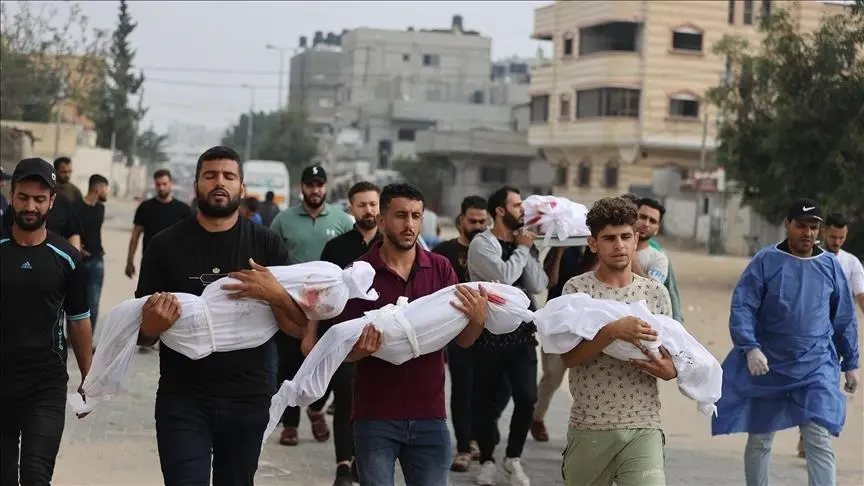


PALESTINE

Sat 05 Jul 2025 7:11 pm - Jerusalem Time

A young man was injured during clashes with settlers south of Nablus.

A young man was injured by rubber bullets this Saturday evening, as citizens confronted a settler attack on the town of Beita, south of Nablus.

The Palestinian Red Crescent reported that a 22-year-old man was injured by rubber-coated metal bullets in the head, as the townspeople confronted the settlers' attack.

Local sources reported that dozens of settlers attacked the Bir Qoza area, and local residents rushed to confront the attack.

ARAB AND WORLD

Sat 05 Jul 2025 6:29 pm - Jerusalem Time

Trump-Netanyahu meeting, prospects for a Gaza ceasefire, and the "grand bargain"

On the eve of Israeli Prime Minister Benjamin Netanyahu's visit to the White House to meet with US President Donald Trump for the third time since he took office on January 20, Trump hopes the visit will represent a "remarkable victory" for the US president's unique diplomacy, according to observers.

Both Trump and Netanyahu will capitalize on their appearances side by side at the White House, showcasing the ceasefire agreements with Iran and Gaza as evidence of their unique partnership and leadership skills.

However, the risks remain extremely high for both. For Netanyahu, his political future hinges largely on developments in the Gaza war in the coming days, both in terms of his dealings with Trump and his domestic Israeli audience. On Friday evening, Hamas announced that it had provided the mediators with a positive response to the ceasefire proposal.

Trump is actively trying to define his foreign policy legacy in real time (as events unfold) regarding the Middle East. After bombing Iranian nuclear sites two weeks ago, politicizing the intelligence surrounding their destruction, insisting that the US bombing completely destroyed them, and immediately brokering a ceasefire between Iran and Israel, a ceasefire in Gaza would represent another diplomatic achievement for Trump, according to experts.

Not only would this give him another victory to boast about over his Democratic rivals, but it would also pave the way for historic diplomatic achievements, such as a security agreement between Israel and Syria, new members joining the normalization agreements with Israel (the Abraham Accords), and reviving normalization talks with Saudi Arabia.

By all estimates, all these efforts will remain stalled until Israel's brutal war on the besieged Gaza Strip ends.

It's worth noting that by announcing via a post on the Truth Social website on Wednesday (July 2, 2025) that Israel had agreed to a 60-day ceasefire, Trump explicitly pressured Hamas by portraying Israel as willing to do what he wanted. The US president later told reporters that he would be "very firm" with Netanyahu during his upcoming visit to Washington.

Trump has followed in the footsteps of successive US presidents in granting Netanyahu and Israel carte blanche to deal with the Palestinians, with war, siege, and relentless collective punishment. Like former (Democratic) President Joe Biden, he has allowed Israel to continue its war on Gaza, providing it with an uninterrupted supply of weapons and unconditional support at the United Nations, despite the steadily worsening humanitarian crisis.

It is worth noting here that while Biden urged Israel to work with the United Nations and humanitarian relief agencies operating in Gaza, Trump explicitly supported Israel's starvation policy and the establishment of the "Gaza Humanitarian Foundation" (GHF) as a tool for killing and starvation. More than 600 Palestinians have been killed near distribution sites since aid distribution began in late May.

Insiders insist that Trump's pledge to pressure Netanyahu is not just empty rhetoric, and that his speech last week clearly shows that he is publicly pressuring Netanyahu to accept a ceasefire. While Trump has previously responded to calls to end the war by supporting Israel "to do what is necessary and appropriate to achieve its goals," he is explicitly calling for an end to the war unconditionally.

According to experts, a fundamental tension remains: While Trump seeks a quick end to the war, Israeli Prime Minister Netanyahu remains focused on "winning the war," even though Israel, with full American support, has used all its might over the past 21 months without achieving this goal according to its stated criteria. Netanyahu (and the United States) are focused on the condition that Hamas remain in power in Gaza, something Hamas has repeatedly declared its readiness to do, and on the movement's surrender and disarmament, a condition Hamas is unlikely to accept.

While Trump may be "more enthusiastic about a ceasefire," Netanyahu's calculations, experts say, may have changed. The recent war with Iran confirmed Israel's complete dependence on American support, altered Netanyahu's political and security calculations, and granted him more flexibility in dealing with extremists within his government.

Orion says a ceasefire could be an opportunity for practical planning for the “day after”: establishing alternative governance, disarmament, humanitarian relief, and reconstruction.

This pragmatic approach seeks to build stability in Gaza through concrete steps rather than loose peace agreements, which are often elusive.

Trump wants a "grand bargain that ends the conflict" between the Palestinians and Israel, State Department spokeswoman Tammy Bruce said in response to a question from a Jerusalem correspondent last Wednesday. A central component of the "grand bargain" being circulated in the media is the highly sensitive issue of sovereignty in the occupied West Bank. Trump's "deal of the century" plan, put forward during his first term, explicitly stipulated US recognition of Israeli sovereignty over parts of the West Bank, alongside a non-contiguous Palestinian state in other parts.

This could pose a major challenge for President Trump, as expanding the Abraham Accords normalization agreements could contradict his goal of annexing the occupied West Bank. This is especially true given that the biggest prize in the normalization process, Saudi Arabia, has insisted—until now—on the establishment of an independent Palestinian state in the occupied West Bank, with Jerusalem as its capital, as a prerequisite for normalization.

PALESTINE

Sat 05 Jul 2025 5:34 pm - Jerusalem Time

The occupation continues its aggression on Tulkarm and storms several towns in the governorate.

Israeli occupation forces stormed several towns in Tulkarm Governorate on Saturday, coinciding with the ongoing aggression on the city and its camp for the 160th consecutive day, and on the 147th day on Nour Shams camp.

According to local sources, occupation forces stormed the towns of Anabta and Bal'a, east of Tulkarm, patrolling the streets and neighborhoods and positioning themselves at several intersections, obstructing the movement of vehicles and civilians.

The sources added that another military force stormed the town of Sidon, north of the governorate, raided and searched several homes, and arrested freed prisoner Laith Wassef al-Ashqar while he was in a shop in the town center.

The raid extended to include the towns of Allar, Attil, and Deir al-Ghusun, where occupation forces deployed in the towns' main streets and neighborhoods amid a state of tension and alert.

Meanwhile, the city and its suburbs witnessed a deployment of occupation vehicles and infantry squads today, patrolling its main streets, specifically Nablus Street, the central market, the eastern neighborhood, and the Shuweika and Iktaba neighborhoods. They obstructed the movement of citizens and vehicles, honking their horns in a provocative manner and driving against traffic, endangering the lives of citizens.

Meanwhile, the occupation forces continue to impose a tight siege on the Tulkarm and Nur Shams refugee camps and their surroundings, with infantry units and military vehicles deployed in alleys and entrances, preventing residents from reaching their homes or checking on their property, amid direct gunfire targeting anyone approaching the area.

The occupation forces continue to transform Nablus Street into a military barracks, continuing their seizure of a number of residential buildings there, along with parts of the northern neighborhood of the city, specifically those facing Tulkarm refugee camp, and parts of the eastern neighborhood close to the camp. The occupation forces forcibly evacuated their residents, some of whom have been under occupation control for more than four months, and have deployed heavy machinery and bulldozers in their surroundings.

This street, which serves as a link between the Tulkarm and Nur Shams refugee camps, has also suffered significant damage due to earth mounds placed by the occupation forces several months ago. The occupation forces are also heavily present, setting up flying and surprise checkpoints, obstructing vehicle movement and exacerbating the suffering of civilians.

The ongoing aggression has so far resulted in the deaths of 14 civilians, including a child and two women, one of whom was eight months pregnant. Dozens of people have been injured and arrested, and widespread destruction has affected infrastructure, homes, shops, and vehicles.

The escalation has led to the forced displacement of more than 5,000 families from the two camps, representing over 25,000 citizens. It has also led to the complete destruction of more than 600 homes and the partial damage of 2,573 others. Meanwhile, the entrances to the two camps remain blocked with barriers, transforming them into almost lifeless areas.

PALESTINE

Sat 05 Jul 2025 4:41 pm - Jerusalem Time

Dead and wounded in the occupation's bombing of Gaza City and the Nuseirat camp

A number of civilians were killed and others injured on Saturday evening after the occupation forces bombed areas in Gaza City and the Nuseirat refugee camp in the central Gaza Strip.

Medical sources reported that at least two civilians were killed and several others were injured after an Israeli drone bombed a group of civilians in Camp 2 in Nuseirat, central Gaza.

A number of citizens were martyred and others were injured when occupation aircraft targeted a water desalination plant near the Bank of Palestine in the Unknown Soldier area in the Al-Rimal neighborhood, west of Gaza City.

The Israeli occupation army blew up residential buildings in the vicinity of the Al-Katiba and Al-Mahta areas, north of Khan Yunis, in the southern Gaza Strip.
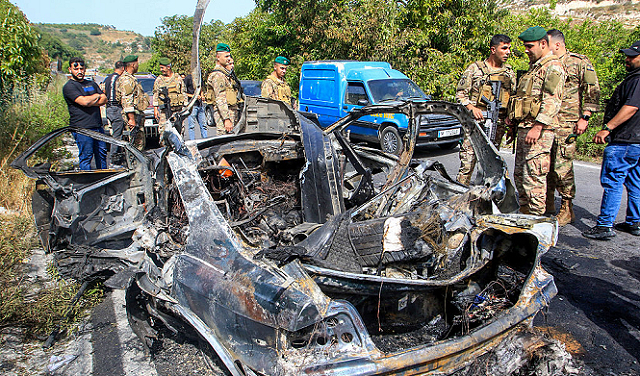
Medical sources announced the martyrdom of 56 citizens as a result of the occupation's ongoing aggression on the Gaza Strip since dawn today.

The death toll from the Israeli occupation's aggression on the Gaza Strip has risen to 57,338 martyrs and 135,957 wounded since October 7, 2023.

PALESTINE

Sat 05 Jul 2025 2:28 pm - Jerusalem Time

The death toll in the Gaza Strip rises to 57,338.

The death toll from the Israeli occupation's aggression on the Gaza Strip has risen to 57,338 dead and 135,957 wounded since October 7, 2023.

The Ministry of Health in Gaza announced on Saturday that the death toll includes 6,780 dead and 23,916 wounded since March 18, when the occupation resumed its aggression on the Gaza Strip following the ceasefire agreement.

It pointed out that the death toll of "aid" martyrs who arrived at hospitals during the past 24 hours reached 23 dead, and more than 54 injured, bringing the total number of "livelihood" dead who arrived at hospitals to 743 dead and more than 4,891 injured.

Daily statistical report on the number of dead and wounded as a result of the Israeli aggression on the Gaza Strip.
It indicated that 70 dead and 332 injuries had arrived at Gaza Strip hospitals over the past 24 hours, noting that a number of victims were still under the rubble and on the streets, and that ambulance and civil defense crews were unable to reach them.

ARAB AND WORLD

Sat 05 Jul 2025 11:18 am - Jerusalem Time

One dead and three injured in two Israeli raids on Bint Jbeil and Shebaa in southern Lebanon.

One person was killed and three others were injured, according to the initial toll from two Israeli drone strikes on two areas in southern Lebanon this morning, Saturday.

In an airstrike targeting a car in the Saff al-Hawa area of Bint Jbeil, the Ministry of Public Health's Public Health Emergency Operations Center announced one martyr and two wounded. Medical crews are working to transport the injured and provide the necessary first aid.

Earlier this morning, the same center reported that an Israeli drone strike injured a civilian in the town of Shebaa.

These raids come amid the occupation's repeated violations of the ceasefire agreement concluded seven months ago between Hezbollah, the Lebanese state, and Israel.

OPINIONS

Sat 05 Jul 2025 11:14 am - Jerusalem Time

How successful is the agreement between Israel and Hamas?

Mustafa Ibrahim

Mustafa Ibrahim

Opinion Writer

After more than 24 hours of deliberations, Hamas initially agreed to the mediators' ceasefire proposal, with some substantive reservations. The core of the reservations revolved around Israel's continued control of the aid distribution mechanism, a process that deepens the humanitarian crisis and prepares the ground for an alternative government through private security companies, rather than a legitimate Palestinian Authority.

On the military side, the agreement speaks only of a "cessation of offensive operations," while leaving the door open for Israel to carry out raids or shelling under the pretext of "defense." The withdrawal, on the other hand, is a "redeployment" conditional on new maps to be agreed upon later, thus establishing a reality on the ground that serves Israel.

Within 60 days, negotiations are supposed to take place on post-war arrangements, including disarmament and the exile of some leaders and fighters. These conditions alone are enough to thwart any negotiating process and pave the way for a return to war. The only guarantee is Trump's pledge to follow through if the parties comply; otherwise, a return to war is guaranteed.

In contrast, the Israeli press clearly reveals the occupation government's true position regarding Hamas's response. Channel 12 correspondent Yaron Avraham noted that Israel is unwilling to accept any amendments related to the withdrawal or the mechanism for the entry of aid, and that there are other sensitive issues related to the arrangement for the release of prisoners and abductees.

Political correspondent Gili Cohen (Kan Channel) described Hamas' response as a "challenge to Israel," and confirmed that a cabinet meeting would be held to discuss the future of the war and negotiations in light of this response.

According to a Yedioth Ahronoth report, despite US President Donald Trump's optimism, Israeli circles believe the negotiations will take longer than advertised, especially after Hamas demanded an end to the role of the US-based Gaza Humanitarian Foundation, which is accused of being a tool for controlling aid flows and an alternative to UN organizations. This demand will be rejected by both Washington and Israel.

Yedioth also reports that Israel will agree to the release of approximately 1,000 prisoners, including those serving long life sentences, but will refuse to release senior leaders from Hamas or other factions. It will also insist on establishing a buffer zone extending approximately 1.2 kilometers inside Gaza even after the redeployment.

These leaks from the Israeli media indicate that the proposed agreement is a temporary phase for the Israeli military's redeployment without a full withdrawal, while maintaining control over aid as a political and humanitarian pressure card.

Here, Netanyahu's goal intersects with Trump's plan, which sees the 60-day truce as necessary to pave the way for his plans to normalize relations with new Arab states and revitalize the Abraham Accords, which have been stalled by the ongoing war in Gaza.

The truce provides Trump with a "achievement" that he can use as a campaign slogan and that will be marketed internationally as a preliminary step toward a broader "regional peace" that includes the Gulf states, other Islamic countries, and perhaps later Syria and Lebanon, according to what his media promotes.

The current version of the agreement is an evolution of the Witkoff Agreement, which Hamas previously rejected due to the lack of genuine guarantees. Experience has shown that Israel violated its commitments last time. Trump himself is manipulating the issue to enhance his image as the godfather of normalization, while Gaza remains a bargaining chip and an open bargaining arena.

What's dangerous is that the so-called "Day After Agreement" includes arrangements for the reconstruction of the Gaza Strip through a funding mechanism subject to the participation of Gulf Arab states and the exclusion of the Palestinian Authority. Netanyahu sees this as an opportunity to weaken Hamas and turn reconstruction funds into a political tool in the hands of regional parties.

However, no one expects the core issues to be resolved within two months: from reconstruction to ending the siege and arranging an alternative civil administration.
The reality is that Gaza will remain trapped in a vicious cycle: a temporary truce for redeployment, negotiations on paper, and then renewed bombardment under the pretext of "resuming deterrence."

In the background, Netanyahu is exploiting this vortex to buy time and prevent any final settlement that might embarrass the Israeli right. Meanwhile, Trump is using the truce as a tool to rebrand himself as a historic dealmaker, even if Gaza remains on the brink of famine.

Thus, normalization becomes a regional dream hanging over the remains of Gaza, while the temporary truce fails to guarantee any radical solution. Rather, it may pave the way for a new round of escalation, using the same tools: the siege, the bombing, the empty negotiations, and the manipulation of the fate of the two million Palestinians in the Strip.

The question remains: Will this truce be enough to deceive the world that the war is over, when it's merely being used to buy time? Or will Gaza pay the price once again, as fuel for a war that no one truly wants to end?

ARAB AND WORLD

Sat 05 Jul 2025 10:13 am - Jerusalem Time

Saudi Arabia: We are consulting with France about setting a date for the conference to recognize Palestine.

Saudi Foreign Minister Faisal bin Farhan announced that his country is consulting with France to determine a suitable date for the conference on recognizing the Palestinian state.

During a press conference held with his Russian counterpart, Sergei Lavrov, in Moscow, the Saudi minister called for "an immediate, permanent, and sustainable ceasefire in the Gaza Strip as a prelude to the establishment of a Palestinian state."

He stressed that the current priority must be to achieve a ceasefire in Gaza and end the "horrible suffering" in the Gaza Strip.
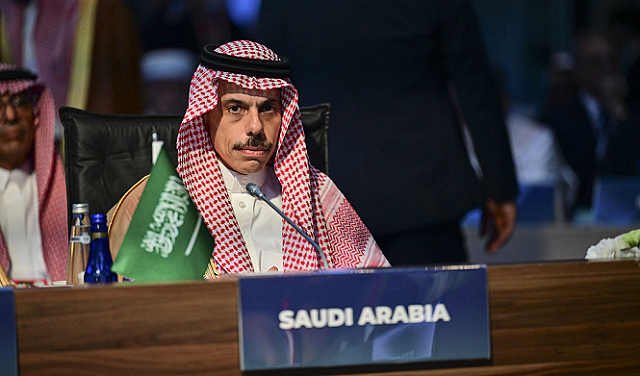
In his speech, Bin Farhan praised Russia's "principled stance on the Palestinian issue," adding, "We count on Russia's continued role in the Palestinian issue and Iran's nuclear program."

He also reiterated Riyadh's support for the establishment of a Palestinian state on the 1967 borders, stressing that peace is the "strategic option to end the Israeli occupation."

He said, "We rely on the leadership of the United States and US President (Donald) Trump, whom we see as a president capable of being exceptional and transformative in bringing the region to a final solution to the Palestinian-Israeli conflict through the establishment of a Palestinian state."

In response to a question about the two-state solution conference at the United Nations, and whether the climate is ripe for setting a date for it, he said, "True. We are currently consulting with France about setting an appropriate date. We expect the conference to not be delayed, and we hope to be ready to announce a date within the coming days, if not by the end of this week."

In mid-June, French President Emmanuel Macron announced the postponement of the international conference on the two-state solution, which had been scheduled to be held at the United Nations that same week, and confirmed that it would be held "as soon as possible."

Regarding Iran, the Saudi Foreign Minister said, "We reject military solutions regarding Iran's nuclear program and are pushing for negotiations," stressing that the use of force to resolve political differences is unacceptable.

For his part, Lavrov expressed hope that the ceasefire agreement between Iran and Israel would be sustainable.

"We hope the ceasefire agreement between Iran and Israel will be sustainable, and we count on the Gulf states and Iran to show wisdom in implementing all the positive measures reached recently," he said.

"We welcome the normalization of relations between Iran and the Gulf states, especially Saudi Arabia," the Russian minister said during the press conference, according to Russia Today.

Regarding Palestine, the Russian Foreign Minister stressed the need to de-escalate the situation and provide humanitarian aid to the Gaza Strip, which is under Israeli siege.

"We encourage negotiations between Israel and the Palestinians to advance towards the establishment of a Palestinian state," he said.