PALESTINE

Wed 09 Jul 2025 10:52 am - Jerusalem Time

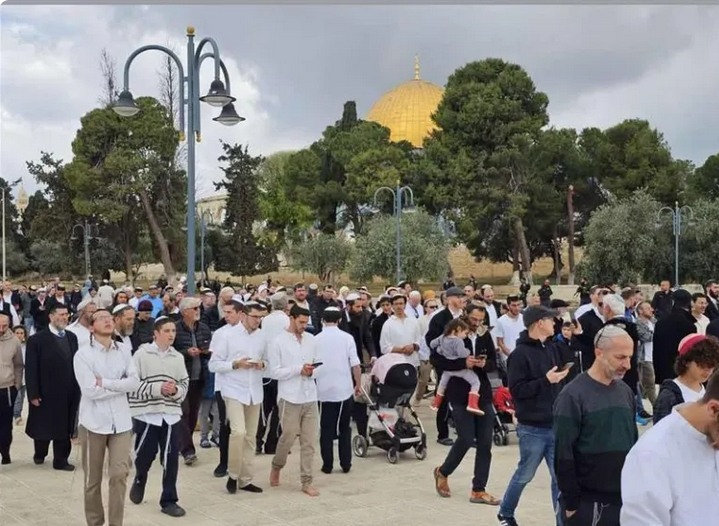
Settlers storm Al-Aqsa Mosque

Dozens of settlers stormed Al-Aqsa Mosque today, Wednesday, under the protection of Israeli occupation forces.

Local sources reported that dozens of settlers stormed Al-Aqsa Mosque, carried out provocative tours, and performed Talmudic rituals in its courtyards.

PALESTINE

Wed 09 Jul 2025 10:51 am - Jerusalem Time

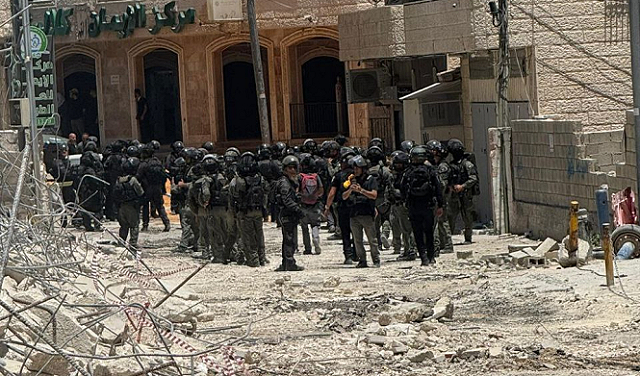
The occupation forces detained dozens of citizens and assaulted them in Sinjil, north of Ramallah.

Israeli occupation forces detained dozens of citizens and assaulted them at dawn on Wednesday during a raid on the town of Sinjil, north of Ramallah.

Sinjil Municipality reported that a large force of the occupation army stormed the town at dawn today, raided dozens of homes, and took dozens of residents to a field investigation center in front of the home of citizen Muhammad Zaid Tawafsha, where they were assaulted and abused. Among those detained was high school student Ayoub Jabr Khalil.

She added that the occupation forces tampered with the contents of dozens of homes, vandalized and destroyed citizens' property, and seized a motorcycle before withdrawing. They also released all detainees after hours of field investigation.

PALESTINE

Wed 09 Jul 2025 10:50 am - Jerusalem Time

Northern Jordan Valley: Settlers destroy internet network equipment in the Burj area.

Last night, settlers destroyed internet network equipment in the Al-Burj area in the northern Jordan Valley.

Local sources reported that a group of settlers attacked the Burj area at night, destroying an internet network complex used to provide internet services to the area.

The northern Jordan Valley region is witnessing daily attacks by settlers, including attacks on citizens' homes, intimidation, and destruction of their property. They are also pursued in pastures, prevented from entering them, and attacked and stolen from their livestock.

PALESTINE

Wed 09 Jul 2025 10:48 am - Jerusalem Time

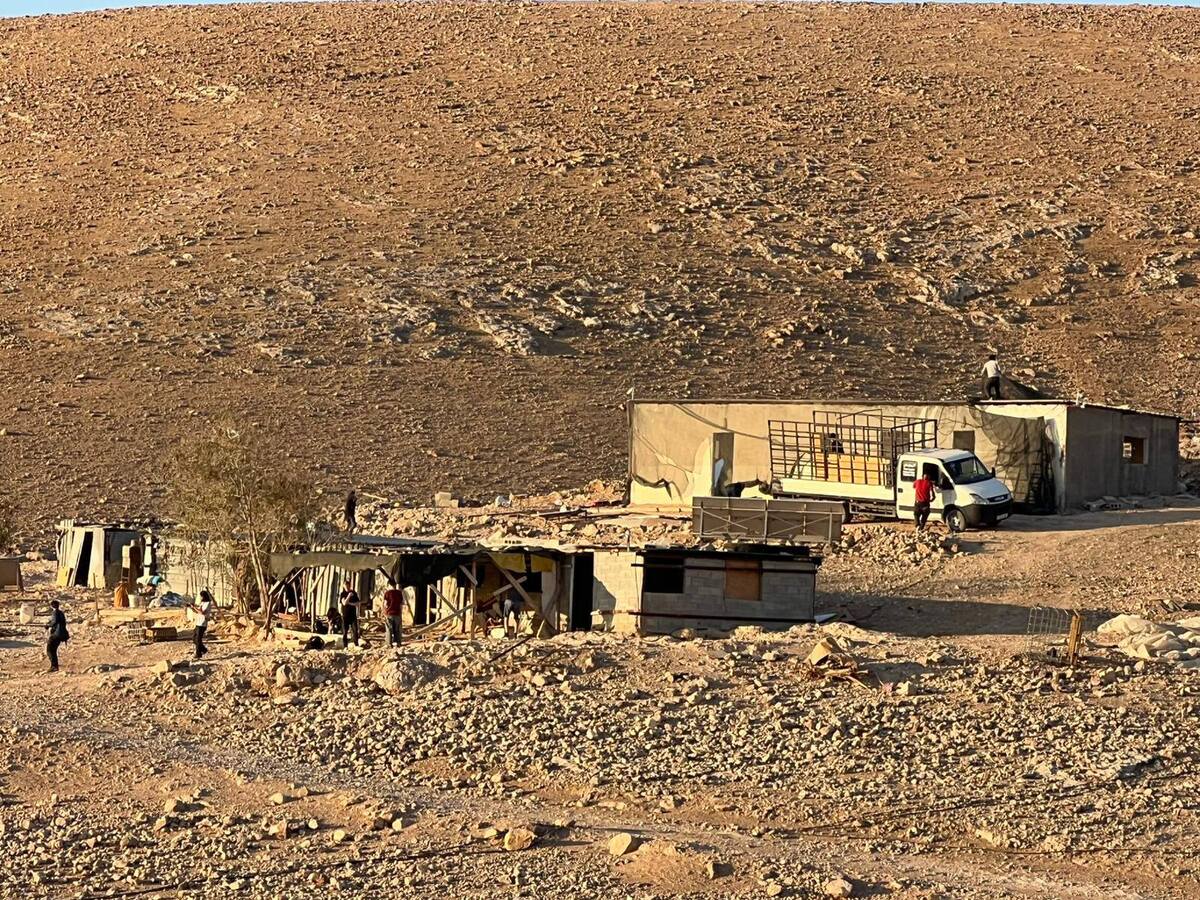
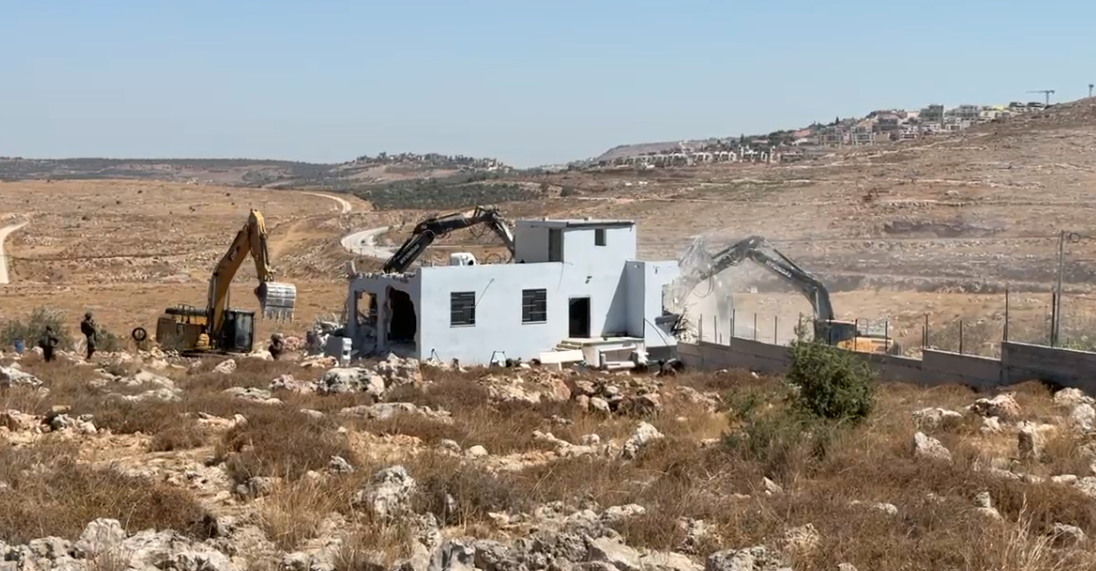
The occupation forces demolished four homes and two barracks in Shuqba, northwest of Ramallah.

Israeli bulldozers demolished four homes and two barracks in the town of Shuqba, northwest of Ramallah, on Wednesday.

Adnan Shalash, head of the Shuqba village council, told WAFA that the occupation forces stormed the eastern part of the village and demolished a 180-square-meter house belonging to Salama al-Masri, inhabited by three people. Fifty meters away, they demolished another two-story house belonging to his sons, Moataz and Hani al-Masri, with each floor measuring 150 square meters. They also demolished two agricultural barracks and walls around the houses.

He added that the occupation bulldozers also demolished the 200-square-meter home of Ziad Zayed Hassan, as well as a three-apartment house inhabited by six people.

Shalash pointed out that the occupation forces emptied the homes of their contents and destroyed them before carrying out the demolition operation.

It is noteworthy that the occupation forces demolished 588 facilities in the first half of this year, harming 843 citizens, including 411 children.

PALESTINE

Wed 09 Jul 2025 9:22 am - Jerusalem Time

WFP: Needs in Gaza are high and hunger is spreading

The Director of Operations at the United Nations World Food Programme, Carl Scaw, said that needs in the Gaza Strip are "greater than ever" and the humanitarian response is "more constrained" since the beginning of the genocide on October 7, 2023.

"I just returned from my fourth visit to Gaza since the conflict began. The situation is worse than it was," Skow said in a series of blog posts on the X platform.

"The needs in Gaza today are greater than ever, and our ability to respond has never been more constrained," he added.

"Hunger is spreading and people are dying simply searching for food," he continued.

Skau explained that UN World Food Programme teams in Gaza "are doing their best to deliver aid, often finding themselves caught in the crossfire as they escort food convoys through combat zones."

"We are running out of fuel, spare parts, and essential communications equipment. Our local staff are living through the crisis, facing the same dangers and hunger that all Gazans face," he added.

The UN official pointed out that the UN program has food available and is capable and ready to deliver aid.

He explained that "during the previous ceasefire in the Strip (January 19 - March 1, 2025), we brought 8,000 trucks into Gaza in 42 days, and we can do so again if a new agreement is reached."

Skaw stressed that delivering aid "requires security and the opening of all roads and entry points."

"The ceasefire must also be a step towards lasting peace," he said.

ECONOMY

Wed 09 Jul 2025 8:47 am - Jerusalem Time

(APIC) Issues New Corporate Bonds Through Three Tranches Denominated in US Dollars, Jordanian Dinars and Euros with a Total Nominal Value of USD 120 Million

With the participation of the International Finance Corporation (IFC)
Arab Palestinian Investment Company (APIC) Issues New Corporate Bonds Through Three Tranches Denominated in US Dollars, Jordanian Dinars and Euros with a Total Nominal Value of USD 120 Million


Arab Palestinian Investment Company (APIC) has successfully issued new five-year corporate bonds through three tranches denominated in the US dollars, Jordanian Dinars, and Euro currencies with a total nominal value of USD 120 million, of which USD 76.7 million, JD 22.64 million and €10 million through a private placement. Nine prominent banks and financial institutions participated in this issuance including Arab Bank, Cairo Amman Bank, Quds Bank, Bank of Palestine, Bank of Jordan, Jordan Ahli Bank, the Housing Bank for Trade and Finance, the Palestine Deposit Insurance Company and the International Finance Corporation (IFC). Earlier in May, APIC's General Assembly approved and ratified the issuance of new corporate bonds with a total nominal value of up to USD 110 million with an option to increase it to USD 120 million during its extraordinary meeting that took place in Ramallah.
In his statement, Tarek Aggad, Chairman of the Board and CEO of APIC, said that this marks a significant step in reinforcing APIC’s capital structure and supporting its continued growth and investment in vital sectors across Palestine and the region. He noted that the total subscriptions exceeded the initially offered nominal amount of USD 110 million, reaching USD 126.144 million.  Accordingly, the increase option to USD 120 million was exercised, and the necessary allocation was completed with the approval of the Palestine Capital Market Authority.
Aggad expressed his appreciation to all the institutions that participated in the APIC bonds subscription, emphasizing that their participation demonstrates their strong confidence in APIC group especially amidst the current challenges in Palestine and the region, most notably the severe and ongoing humanitarian and economic crisis in Palestine, and the deep recession which have significantly impacted the performance of the Palestinian Economy. He noted that several of the banks that had subscribed to the first, second and third bond issuances in 2012, 2017 and 2020 have since renewed their subscriptions for this fourth issuance, which demonstrates the great trust that the bondholders have placed in APIC over the years.
“IFC Signs USD 15 Million Subscription Agreement in APIC Bonds”
In this respect, and during a formal ceremony held at APIC offices in Amman, Jordan, the International Finance Corporation (IFC), a member of the World Bank Group and its investment arm, signed a bond subscription agreement with APIC valued at USD 15 million. The agreement was signed by Mr. Tarek Aggad, Chairman and CEO of APIC, and Mr. Ashruf Megahed, Regional Head for Manufacturing, Agribusiness & Services at IFC.
Welcoming the partnership, Aggad stated: "We are proud of IFC’s decision to subscribe to APIC bonds. This investment represents a strong vote of confidence in APIC’s vision, performance, governance, and resilience in facing challenges. This investment carries particular significance given the intensive and lengthy due diligence process for APIC Group on various levels including managerial, financial, environment, social and governance practices that preceded the signing of this agreement. This partnership reaffirms the strength of our operations, transparency, and unwavering commitment to adhering to the highest international standards and practices."
In his statement, Megahed noted: “This marks IFC's largest private sector transaction in West Bank and Gaza and is expected to help create jobs across different sectors and drive sustainable growth. It stands as a testament to our unwavering commitment to bolstering the private sector in some of the most challenging environments and during times of profound fragility."
About APIC
APIC is a public shareholding investment company listed on the Palestine Exchange (PEX: APIC). It holds diversified investments across the manufacturing, trade, distribution and service sectors in Palestine, Jordan, Saudi Arabia, the United Arab Emirates, Iraq and Turkey through its group of subsidiaries: Siniora Food Industries Company; Unipal General Trading Company; Palestine Automobile Company; Medical Supplies and Services Company; National Aluminum and Profiles Company (NAPCO); Reema Hygienic Paper Company; Sky Advertising and  Promotion Company; Arab Leasing Company and Arab Palestinian Storage and Cooling Company, employing over 3,400 staff through its group of subsidiaries. For more information, visit https://apic.ps/.


PALESTINE

Wed 09 Jul 2025 8:36 am - Jerusalem Time

The occupation forces arrested two citizens from Nablus and Balata in the east.

Israeli occupation forces arrested two citizens from Nablus and Balata refugee camp in the east at dawn on Wednesday.

Security and local sources reported that Israeli jeeps stormed several neighborhoods in the city, raided a building in the Al-Makhfiya area, searched homes there, and arrested citizen Izz al-Din al-Qadi.

The sources added that several Israeli military vehicles stormed Balata camp to the east, raided and searched homes, ransacked their contents, and arrested citizen Fathi Hani Abu Rizq.

The occupation forces stormed the town of Tal, southwest of Nablus, and raided and searched homes. No arrests were reported.

OPINIONS

Wed 09 Jul 2025 8:22 am - Jerusalem Time

After the ceasefire in Gaza... the consequences of the next phase

Hani Al-Masry

Hani Al-Masry

Opinion Writer

Barring a sudden development, a temporary ceasefire agreement in Gaza is expected to be reached in the next few days. President Trump may announce this agreement during Benjamin Netanyahu's visit to the United States yesterday (I wrote these lines prior to the visit). If this is announced, all eyes will be on the "day after" scenarios over the next 60 days and beyond, as the Israeli government, supported by the US administration, seeks political achievements that translate the results of the genocidal war and transform the Gaza Strip into a hostile, uninhabitable area. A political effort will be made to complete what daily massacres, starvation, deprivation of water, and collective punishment in all its forms have failed to achieve.

It is well known that negotiations either succeed, remain negotiations for the sake of negotiations, or fail, leaving things as they are. If they succeed, they usually reflect the facts on the ground and the balance of power. The outcomes of negotiations are not determined solely by the competence or weakness of the negotiator, despite the importance of this. A weak negotiator may lose more than necessary and not achieve what could be achieved. A competent negotiator may improve the negotiating conditions, but it is usually impossible to achieve (essentially) the opposite of what is on the ground. Based on this, the first step must be an accurate reading of reality to determine what is possible and what is impossible.

Since the Israeli occupation forces invaded Lebanon (1982), the “New Middle East” began to take shape.

A realistic reading of the current situation, 21 months after the Al-Aqsa Intifada, despite the legendary steadfastness and valiant resistance, indicates the weakness of the Palestinian negotiating position. This is evident in the scale of destruction and death, the occupation of two-thirds of the Gaza Strip, the persistence and deepening of the division, the absence of a clear Palestinian vision, the impasse of leadership, institutions, and programs without opening a new path, Arab impotence, which sometimes amounts to complicity, and international contradictions. On the one hand, the international community (despite its theoretical support for Palestinian rights) stands helpless in taking action, despite the massive and unprecedented popular solidarity with Palestine and the condemnation of Israel, even in international courts and institutions and from the West, including within the United States and Europe. This has prompted European countries to adopt unprecedented punitive stances and measures against Israel.

On the other hand, the parties of the axis of resistance, including Iran, suffered heavy blows despite their steadfastness in the war. However, they launched harsh missile strikes against vital targets throughout Israel, preventing Washington and Tel Aviv from achieving their goals: destroying the nuclear and missile programs, toppling the regime, forcing it to submit, or causing internal strife. This is evidenced by the widespread support for the regime. However, the cessation of the war was not accompanied by an agreement; rather, it was merely a ceasefire, and the issues that preceded it remain unresolved. This means that the war has not been resolved, and that each side has achieved points that allow it to claim victory. The region and the world have witnessed unresolved wars before, such as the Korean War in the 1950s, which has yet to yield a peace agreement, or the Iraq War, the first of which ended with the expulsion of Saddam Hussein's army from Kuwait in 1991, followed by the second, which ended with the overthrow of the regime in 2003.

The October War (1973) was not decided militarily, but rather politically, years after Anwar Sadat’s visit to Jerusalem in 1977, and the signing of the peace agreement after that (1979), with which Egypt regained Sinai within restrictions, and emerged from the conflict and war, which left the Arab parties (including the Palestinian party) exposed, so the occupation forces invaded Lebanon in 1982, and since that date the “New Middle East” began to take shape, which is a long-term historical process, advancing at times and retreating at other times.

Despite its achievements, strengths and superiority, and the fact that it is a functional entity serving a global colonial project led by the United States, Israel is confronted with the reality that its expansionist ambitions and its pursuit of regional hegemony are greater than its capabilities to achieve them. It is a small, sparsely populated country that suffers from many internal weaknesses and contradictions. It is a foreign body planted in the Arab region and cannot be absorbed unless its colonial-settler nature and functional role change. It is also confronted with the presence of more than seven million Palestinians in their homeland, Palestine, who are not prepared to leave or become slaves, and are determined to persevere and continue the struggle to achieve their goals.

Accordingly, the region is likely headed toward one of the following scenarios: either the continuation of the status quo without a settlement between Iran and Israel; or a settlement in which each side achieves some of its demands, or Iran is subjugated through soft means, over a period of years; or a new war erupts to achieve what was not achieved in the 12-day war; or the continuation of the policy of "battles between wars." However, what has become clear is that a kind of "balance of deterrence" has been achieved, halting the American-Israeli momentum, temporarily or permanently. This depends on the course of regional and international events in the coming years, whether toward redrawing the map of the Middle East, dominated by Israel, or establishing some kind of regional and international pluralism and balance.

The worst thing for Israel would be the return of the Palestinian Authority to Gaza, with internal Palestinian consensus and Arab and international support. Moreover, Arab states, particularly the Gulf states, must act as if they are in a better negotiating position than they were before the war. If Iran were defeated, Israel would be more aggressive toward everyone, even those who have normalized relations with it, and would be more capable of advancing toward the liquidation of the Palestinian cause in all its components.

As for Israel, after 21 months of war, Tel Aviv has not achieved its objectives despite its military achievements. Even in Syria, where the regime has completely changed and been replaced by a regime hostile to Iran, it is unlikely that the new regime will conclude a peace treaty with Israel, as it lacks the power or legitimacy to undertake such major steps. Rather, the most it could offer is a security truce agreement.

In Lebanon, there are no signs of normalization or disarmament for Hezbollah, but rather options are open, including a return to war. The relative decline in security threats may allow the Saudi leadership to maintain its position: no normalization without the establishment of a Palestinian state, something the current Israeli government is unlikely to agree to.

Likud's chances appear to be increasing in the upcoming elections, given an opposition not significantly different in its extremism, united by a shared goal: to oust Netanyahu without adopting an alternative vision. This makes a Netanyahu victory a plausible scenario.

In this context, it will not be possible to achieve major accomplishments on other tracks, so Israel will focus on achieving political gains on the Palestinian track. While it realizes (or will realize sooner or later) the difficulty of achieving maximum goals, such as the complete occupation of Gaza and the imposition of military rule, or displacement, annexation, and the liquidation of the Palestinian cause, while keeping the door open to these possibilities, it will descend from the tree and attempt to achieve minimum goals, such as the annexation of parts of the West Bank and maintaining security control in Gaza, particularly through control of the buffer zones and strategic axes, especially along the Egyptian-Palestinian border and those linking the occupying state to the Gaza Strip.

It will also seek to deal with Gaza as it does with the West Bank and Lebanon: continuing the siege, bombing, assassinations, and incursions, pushing the situation towards chaos and internal fighting, without entering into a direct occupation that would be costly to the occupation army's forces, and without endangering the lives of Israeli detainees. It should be noted that it has not achieved its goals, despite the Israeli army's exhaustion of what it could achieve, according to its leaders, who prefer an interim agreement that would pave the way for ending the war.

It is expected that we will witness (especially if the exchange agreement is concluded and does not fail) the implementation of intensive attempts to overthrow Hamas's rule, disarm it and the resistance, and expel its remaining leaders from the Strip. However, the main Israeli weakness, which limits (if not prevents) the achievement of its goals, is the absence of a political alternative to Hamas in Gaza. The far-right government is unwilling (or unable) to bear the cost of direct occupation and the imposition of military rule, and has failed to find local elements to assume governance. Yasser Abu Shabab's militia will collapse if the occupation forces redeploy their forces. Therefore, Netanyahu demanded the establishment of tent cities in Rafah, the displacement of residents from the north to the south, and the maintenance of Israeli control in several important areas, because the agent militias cannot operate or survive except under direct Israeli protection. Its bet on families and clans has also failed. Israel does not agree to the return of the Authority, and it still refuses to place Gaza under Arab or Arab-international guardianship, because the countries nominated to participate, or at least most of them, do not accept this, as it would provide cover for the continuation of the occupation or Israeli security control.

A kind of "balance of deterrence" would be achieved, and if Iran were defeated, Israel would be more aggressive toward everyone.

The Netanyahu government fears that it will ultimately find itself forced to accept Hamas remaining in the Gaza Strip, whether in power or outside it, but with the ability to influence and control. If it continues to reject the return of the authority or Arab guardianship, it may find itself facing this reality. Therefore, it must prepare for a scenario of renewed war after the 60-day period ends, or after its extension. This will be difficult due to the emergence of an internal Israeli-Palestinian, regional and international momentum, especially American, which will not help in resuming the war, at least in the form it was.

The worst-case scenario for Israel is the return of the Palestinian Authority to Gaza within the framework of internal Palestinian consensus and international Arab support, as this embodies Palestinian national identity in a single entity and keeps the door to a Palestinian state open.

This scenario must be acted upon by Palestinians, by every loyal, patriotic Palestinian who wants to protect the cause, the land, and the people, and by every Palestinian who does not want to surrender and become an agent of the occupation. The “renewed” authority, which the occupying state can agree to, is the one that accepts to be a cover for the Israeli solution, whether in the form of a decisive plan, or a plan derived from theories of conflict management and reduction, which could be adopted by a new Israeli government with a different coalition headed by Netanyahu or someone else. It does not differ from its predecessor except in that it is trying to achieve what can be achieved by Israel now, because achieving a complete resolution of the conflict is not possible, neither now nor in the future.

This threat is exacerbated by an international push, led by Saudi Arabia and France, to hold an international conference to establish a Palestinian state before the end of this year, as a condition for regional stability, cooperation, and peace.

While this move faces Israeli rejection, backed by Washington, if Netanyahu's extremist government falls and a government led by Naftali Bennett takes over, adopting an approach of "conflict management and mitigation" rather than "resolution," we could return to the stage of conflict management without a solution, or a narrow window could open for a "settlement" between the Palestinian, Arab, and international positions, and the Israeli-American position.


OPINIONS

Wed 09 Jul 2025 8:17 am - Jerusalem Time

The Massacre of the Word: The Arrest of Nasser Al-Lahham and the Dismemberment of the Body of Truth

Bassam Zakarneh

Bassam Zakarneh

Opinion Writer

At the moment Palestinian journalist Nasser Lahham was arrested from his home in Bethlehem, Israel was not implementing a security measure but rather a systematic policy: suppressing the Palestinian narrative, silencing witnesses, and slaughtering the word.

The arrest of Nasser, one of the most prominent Palestinian journalistic voices, is not an exception, but rather a new chapter in a long, bloody series that has plagued Palestinian journalism for decades.

Nasser Al-Lahham: The voice of truth that terrified the occupation

Dr. Nasser Al-Lahham, Al-Mayadeen TV's bureau chief in Palestine and editor-in-chief of Ma'an News Agency, is not just a journalist. He is a witness to the major transformations in the Palestinian cause, a storyteller, and a political analyst with a wide Arab following.

At dawn on July 7, 2025, occupation forces raided his home, arrested him without charge, and confiscated his journalistic equipment. His arrest was unlawful, but rather a punishment for not choosing to remain silent.

From Sherine to Nasser: Everyone who tells the truth is targeted

In May 2022, Palestinian journalist Shireen Abu Akleh was targeted by an Israeli sniper, even though she was wearing a press vest. She was killed on live television.

Now, three years later, another prominent media figure—Nasser Al-Lahham—is arrested simply because he insisted on reporting the full picture.

This is how the occupation deals with the press:

Bullet or prison cell...there is no third option.
Gaza: The Graveyard of Cameras and Sound

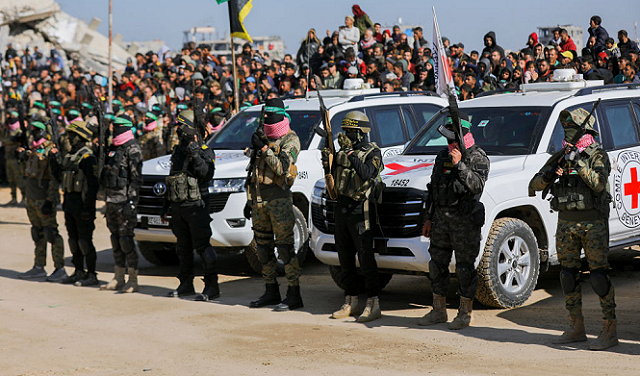
Since the start of the aggression on Gaza in October 2023, Gaza has become the most dangerous place in the world for journalists, according to the Committee to Protect Journalists (CPJ):

• 185 Palestinian journalists were martyred until mid-2025.

• More than 113 journalists were injured.

• 86 journalists were arrested, some of whom were forcibly disappeared.

The International Federation of Journalists (IFJ) described what is happening as:

Systematic elimination of Palestinian media voices

That is: a systematic extermination of Palestinian media voices.

Some journalists were killed while broadcasting live, others were targeted inside their homes with their families and children. Reporters were treated as a security risk, and cameras were treated as bombs and tools of war.

International press banned from Gaza: a blackout crime

Since October 2023, Israel has been preventing international journalists from entering Gaza in a blatant attempt to stifle the truth and cover up the genocidal war, the execution of children and women, the demolition of hospitals, schools and universities, the killing of international staff, the bombing of refugee camps and the killing of those seeking a bag of flour from the Gaza Agency.

Not only are Palestinian journalists targeted, but the entire world is prevented from seeing the truth, and major media institutions, including the International Federation of Journalists, remain silent.

This systematic ban has a clear goal: to control the global media narrative and keep crimes unwitnessed.

These are not random crimes... but rather a policy that has continued since the Nakba.

Since 1948, Israel has practiced repressive policies against the press:

• Palestinian newspapers were closed.

• Arbitrary arrests were carried out against journalists.

• It banned broadcasting, restricted coverage of events, and persecuted international correspondents.

Today, this repression has transformed into a comprehensive attack on the Palestinian media, especially in Gaza and the West Bank.

The message is clear: anyone who exposes the occupation's crimes... becomes a direct target.

To the International Federation of Journalists, the CPJ, and human rights organizations: We address you from the heart of the Palestinian wound, not only to condemn but also to demand immediate action:

We demand:

1. Open an independent international investigation into the occupation’s crimes against Palestinian journalists and classify them as crimes against journalism.

2. Immediately allow international press access to the Gaza Strip and end the media blockade.

3. Immediately release Dr. Nasser Al-Lahham and all arbitrarily detained journalists.

4. Launching an international campaign entitled “The Massacre of the Word” to document and expose these violations.

Because the word is not defeated

The arrest of Nasser Al-Lahham, the killing of Shireen Abu Akleh, and the martyrdom of hundreds of journalists in Gaza will not silence the Palestinian voice.

The pen may be broken, the camera may be trapped, and the truth may be assassinated...

But it always comes back stronger, truer, and purer....

The word is being slaughtered in Palestine

But we will not be silent...

We will not forgive....

We will never forget....

The article is addressed to the International Federation of Journalists, the United Nations, and all those who believe in freedom of expression and the right of people to have their stories told safely...Protect journalists.

OPINIONS

Wed 09 Jul 2025 8:15 am - Jerusalem Time

way station

Hamada Faraana

Hamada Faraana

Opinion Writer

The US president boasts that he saved the Israeli colony from collapse and defeat, and is working to save Netanyahu from trial and contempt. Has he succeeded? Will he be able to achieve this?

No one underestimates America's capabilities and global superiority, especially given that Russia is waging a war of attrition in Ukraine, and China's non-military options, not resorting to confrontation, but rather working diligently to enhance its economic superiority and development.

As long as the United States stands with colonization, with injustice, with occupation, and against the right of the Arab peoples to dignity, independence, and non-submission, and against the freedom and independence of Palestine, and the right of refugees to return to the cities and villages from which they were previously expelled, and to recover their property from, in, and on them, it will never win, and will not be in a position that enjoys respect, status, and appropriate humanity. Wealth and affluence, development, and superiority, if they are not linked to and supported by human values, and do not achieve justice for humanity, will not triumph. This is how Britain and France were, and they were defeated, along with all the colonial powers like them. This was the result of the United States' prolonged war on Vietnam.

In Palestine, despite the Israeli superiority, its barbaric bombing, its insane war, its deliberate killing of Palestinian civilians, and its targeted assassinations of resistance leaders, Palestine rises up, works, gathers its ranks, directs strikes at its enemy forces, and achieves successes. These successes may be individual or organized, but they reflect the rise of a people from their pain, burying their dead martyrs and continuing their choice. They have no choice but to resist and stand up to injustice, colonialism, occupation, and foreign invaders who have plundered their homeland and continue to do so. What they are doing in the villages of the Palestinian West Bank, Jerusalem, and even in the Palestinian Bedouin Negev is the model presented by the colony on how to deal with the owners of the land, the owners of the homeland, who have no choice but to stay and stand firm, and then resist.

The American president can provide all military, technological, intelligence and financial assistance to the colony, to continue its occupation, supremacy, killing and destruction of the lives of the Palestinian people, but America will not be able to provide the legitimacy of survival to the usurping occupier, and he will not be able to dictate submission and surrender to the Palestinian people, the Lebanese and Syrians, the Arabs, Muslims and Christians as long as they are right, with Palestine as it was the first of the two Qiblahs for Muslims, the second of the two mosques, and the third of the two holy sanctuaries, as it is for Christians the birth of Jesus Christ, his good tidings and his resurrection, it was, is and will remain.

Reaching a ceasefire agreement is not a gift from the Americans, nor is it a means of escape for the Israelis. Nor is it simply a Palestinian desire. Rather, it is the product of realities on the ground, where the colony failed to achieve its war goals, and where the Palestinians persevered despite the pain, suffering, killing, and destruction that befell them.

A political battle is a reflection of a military battle, and both will not stop. Rather, they are a cumulative station on the road, before which there are stations and after which there will be stations.

OPINIONS

Wed 09 Jul 2025 8:13 am - Jerusalem Time

What remains of the "two-state solution"?

Amin Al-Hajj

Amin Al-Hajj

Opinion Writer

The "two-state solution" was, in essence, not just a political proposal, but rather the embodiment of an international philosophy based on the idea of balancing a minimum of "justice" for the Palestinians, ensuring the security of the occupation and legitimizing its existence. It was thus a temporary attempt to create a fragile balance between a colonial reality on the one hand, and aspirations for national liberation on the other. All of this was cloaked by the international system in the guise of "realistic peace" to avoid deeper explosions. Now, it has become more like a phrase repeated by diplomats, while all the foundations of life on the ground are eroding.

When the “two-state solution” was accepted in the 1990s, it was based on the assumption that a certain “historical settlement” could end the “conflict,” which was in reality an occupation, by establishing two states on the land of historic Palestine, unequal in anything, recognizing each other, and living side by side. This solution was an attempt to reproduce the post-World War II maps, but with a Middle Eastern flavor, adding a lot of political “realism,” and narrowing the scope of justice to a minimum. Throughout the past decades, it remained a mined project, full of historical and political contradictions, which made its collapse a matter of time, not a sudden event.

Perhaps one of the reasons for this is that the roots of the problem lie much deeper than mere rejection or political acceptance. This is because the philosophy of the “solution” itself carries a complex contradiction. It is based, in the end, on recognizing the historical “defeat” of the Palestinians. That is, on the one hand, it demands that the Palestinians give up their land and history, or at least most of it, in exchange for the promise of a “state” on a small part of their historical land, with diminished sovereignty, geographically fragmented, militarily besieged, economically dependent, and performing a functional role that is completely contrary to the reasons for which the Palestinian liberation movements were established, conditional upon the approval of the international community and its changing interests. In return, it grants the other party, the occupation, international recognition and the “right” to retain all the tools of security hegemony and control over the land, resources, borders, and virtually everything else.

Today, more than three decades after the Oslo Accords, things have become clearer, at least on the occupation side. It has come to view the repetition of the term “Palestinian state” in official discourse as a source of threat, and that any Palestinian entity, whatever its form, must lack the elements of sovereignty, especially security. This trend was clearly evident in Netanyahu’s statements the day before yesterday. He does not see this position as a deviation from the philosophy of the “two-state solution,” but rather as a natural extension of it, as none of the previously agreed-upon documents clearly stipulated granting the Palestinians full sovereignty or an actual right to self-determination without Israeli tutelage.

On the international level, the momentum of initiatives seeking to revive the "peace process" has declined, leaving the matter in the hands of the United States. Trends have emerged to manage the Palestinian issue, not resolve it, with priority given to new regional alliances and the world being occupied with wars and other issues. The Palestinian issue is no longer a priority or the world's primary concern. Mere talk of a Palestinian state seems more like a common political expression than a viable project, a tool to legitimize the continuation of the occupation, blackmail Palestinians into accepting the status quo, or perhaps a means to beautify the image of the international system and demonstrate its interest. Consequently, we find the occupation moving towards a unilateral decision that completely bypasses the "two-state solution" through settlements, annexation, and the establishment of irreversible facts.

In Palestine, the "two-state solution" has drained the legitimacy of the national project itself, eroding the Palestinian dream and, with it, the structure of the political, economic, and social systems. It has also opened the door to the future to other scenarios, including a return to square one under an internationally recognized apartheid regime, or perhaps another explosion that imposes new or unprecedented equations.

In conclusion, it can be said that the "two-state solution" remains only as a political memory, reminding us of an era of fragile settlements and a geography that changes daily at the expense of the Palestinians. In practice, however, it has irrevocably ended under the weight of fait accompli policies and disappointments.

PALESTINE

Wed 09 Jul 2025 8:07 am - Jerusalem Time

Two citizens injured in a settler attack on Surif in Hebron

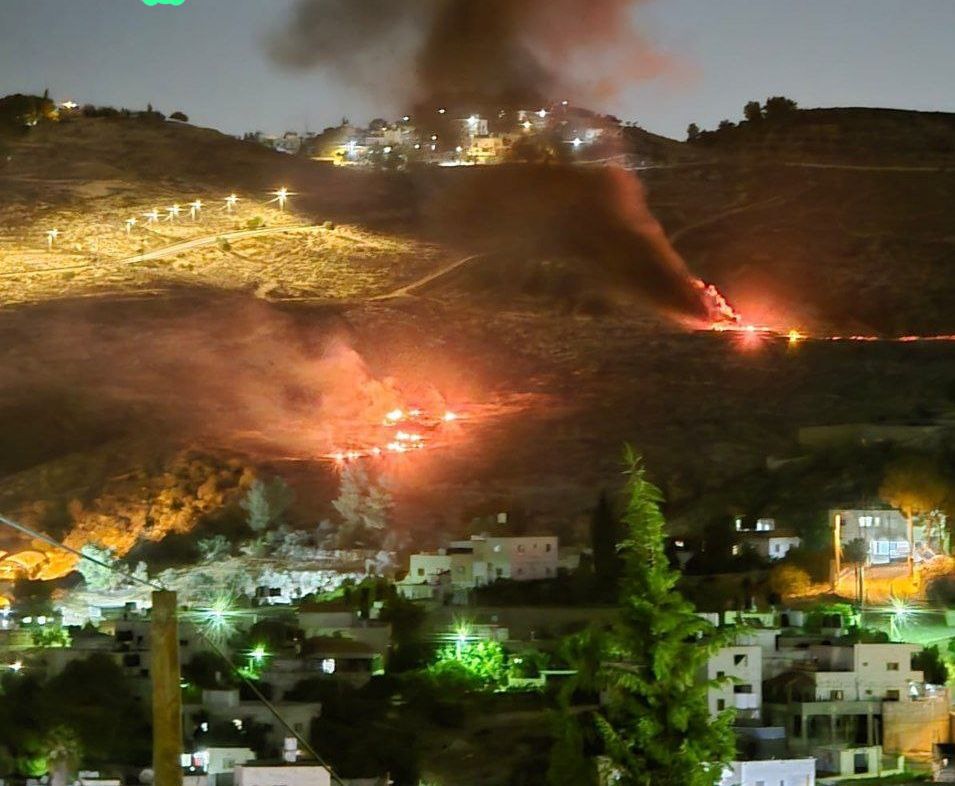
Settlers attacked the town of Surif, northwest of Hebron, tonight, assaulting residents and setting fire to agricultural land.

Security sources said that a number of settlers attacked residents in the Batwat area, near the Beit Ein settlement, which was built on Palestinian land.

The sources added that the settlers carried out a series of attacks against the residents and set fire to agricultural lands.

Later, the occupation forces stormed the town and chased the citizens who were trying to repel the settlers' attack, leaving two of them with bruises.

According to the Wall and Settlement Resistance Commission, settlers carried out more than 2,153 attacks in the first half of this year, resulting in the deaths of four citizens.

The settlers' attacks ranged from assaulting Palestinian villages and civilians, to burning homes and shooting at citizens, to establishing colonial outposts, seizing citizens' lands, and attacking their vehicles.

PALESTINE

Wed 09 Jul 2025 7:57 am - Jerusalem Time

In a non-final statistic, 16 dead have been reported in the Gaza Strip since dawn today.

Sixteen civilians have been killed since dawn on Wednesday as a result of ongoing Israeli airstrikes on the Gaza Strip.

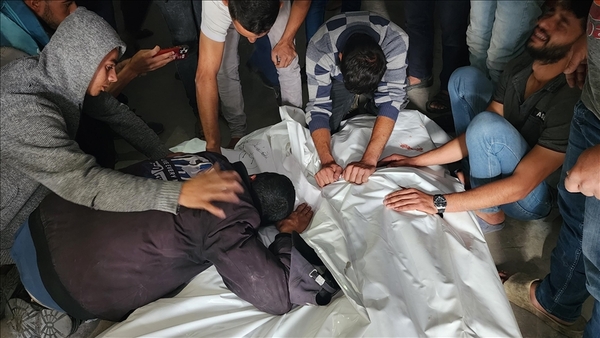
Local sources reported that eight civilians, including two children, were killed and more than 30 others were injured in an Israeli airstrike targeting a house in the Shati refugee camp.

In the central Gaza Strip, two people were killed in an Israeli bombardment of the Al-Kharoubi family's home in Al-Bureij refugee camp.

Meanwhile, citizen Salam Abu Sharkh and his son Mahmoud were martyred as a result of the bombing of their home in Deir al-Balah.

In the southern Gaza Strip, 10 civilians were killed when the occupation forces bombed a tent housing displaced persons in the Al-Attar area of Khan Yunis.

PALESTINE

Wed 09 Jul 2025 7:54 am - Jerusalem Time

A child succumbed to his wounds east of Nablus.

A child died tonight from critical wounds he sustained in Askar camp, east of Nablus.

The Ministry of Health announced in a press release the death of 12-year-old Iyad Abdul-Muati Iyad Shalakhti, who succumbed to critical wounds sustained by Israeli occupation forces last Sunday near the Askar al-Jadid camp hill, east of the city.

PALESTINE

Wed 09 Jul 2025 7:51 am - Jerusalem Time

Trump-Netanyahu meeting ends without statement; Witkov postpones visit to Qatar

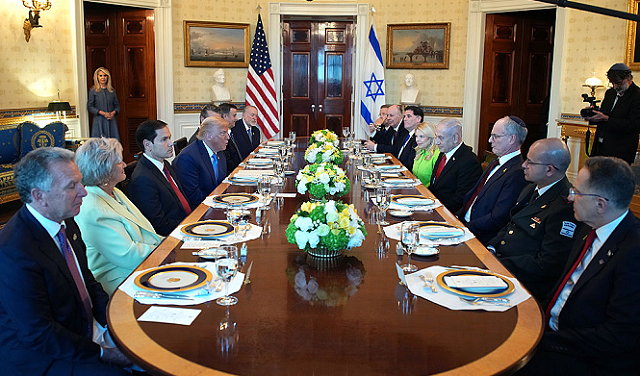
US President Donald Trump met with Israeli Prime Minister Benjamin Netanyahu for 90 minutes at the White House on Tuesday, the second meeting between the two during Netanyahu's visit to Washington.
The meeting concluded without any statements, declarations, or "reading of the meeting." Earlier that day, Trump's special envoy for the Middle East, Steve Witkoff, spoke about the ongoing rapprochement talks between Israel and Hamas in Qatar, saying, "We had four points, and now we have only one point left after two days." Witkoff added that he is "optimistic that by the end of this week, we will reach an agreement that will lead to a 60-day ceasefire."

Al-Quds learned that Witkoff postponed his trip to Qatar, which was scheduled to take place immediately after the meeting, perhaps by a day or two. Al-Quds also learned that a Qatari delegation arrived in Washington on Tuesday to meet with Witkoff ahead of Trump's meeting with Netanyahu.

Reports indicated that Witkov was heading to Qatar to announce a ceasefire before the end of the week, a 60-day ceasefire.

According to sources, Witkoff's visit to Qatar depends on the conclusion of indirect talks between Israel and Hamas, mediated by Qatar and Egypt. The special envoy is not expected to visit Qatar until all issues are agreed upon between the two sides. Rumors have circulated that the US envoy is optimistic about a "major event" expected to take place later this week.

Haaretz quoted a non-Israeli source as saying that the humanitarian aid issue has been resolved, as Israel and Hamas agreed to transfer it via international organizations. These organizations will not be affiliated with either Israel or Hamas.

For her part, the official spokesperson for the US State Department, Tammy Bruce, reiterated the US administration's confidence in the capabilities and professionalism of the so-called "Gaza Humanitarian Foundation (GHF)," which was created by Israel and the United States and is run by American mercenary groups. GHF delivers aid to Palestinians through four distribution centers (under the control of the Israeli occupation army). The Israeli army has killed more than 650 Palestinian citizens seeking aid, and American mercenary teams have also participated in the killing of Palestinian civilians, according to a report by the Associated Press.

The administration refused to respond to a question about whether any investigation would be opened into the American personnel who opened fire on unarmed Palestinians.

Spokesperson Tammy Bruce insists in her twice-weekly press conferences that distributing aid through the Gaza Humanitarian Foundation (GHF) is the only way to ensure that Hamas does not steal humanitarian aid and sell it on the black market.

Hamas is demanding guarantees from the United States that the war will not resume after the 60-day ceasefire. According to sources, the main dispute between the two sides is control of the Morag Corridor, which is close to the Philadelphi Corridor. Netanyahu insists on keeping the corridor under Israeli control, at the request of Finance Minister Bezalel Smotrich, and also to enable the plan to relocate Gaza's civilian population to a town built on the ruins of the Rafah area.

PALESTINE

Tue 08 Jul 2025 9:41 pm - Jerusalem Time

A young man succumbed to his wounds after being shot by the occupation forces in Hebron.

The Ministry of Health announced, this evening, Tuesday, the death of the young man, Ahmed Nafeth Jibril Al-Awiwi (19 years old), who succumbed to the critical injury he sustained from an Israeli bullet to the head in the city of Hebron about 6 months ago.
The ministry explained, in a brief statement, that the young man, Al-Awiwi, was admitted to the private hospital a week ago to complete treatment for brain surgery. However, his health deteriorated and his death was announced this evening.

ARAB AND WORLD

Tue 08 Jul 2025 9:30 pm - Jerusalem Time

Trump: I will meet with Netanyahu to discuss Gaza exclusively.

President Donald Trump said Tuesday afternoon that he will meet again with Israeli Prime Minister Benjamin Netanyahu late Tuesday for a second time at the White House to discuss efforts to secure a ceasefire in Gaza and a hostage release agreement.

"We'll be talking about... Gaza almost exclusively," Trump told reporters during a cabinet meeting.

"We have to solve this problem. Gaza is a tragedy. Netanyahu wants to solve it, I want to solve it, and I think the other side wants to solve it," he added, in an apparent reference to Hamas, before asking US Special Envoy to the Middle East Steve Witkoff for his opinion.

Witkov explained that three of the four remaining issues have been resolved since the start of the ongoing rapprochement talks in Doha on Sunday.

"We hope to reach an agreement by the end of this week that will lead to a 60-day ceasefire," Witkoff added.

He explained that the agreement would include the release of 10 living hostages, along with the bodies of nine dead hostages. Witkoff appears to have mistakenly halved the number of bodies to be released, as the proposal called for the release of 18 bodies. "We are meeting, at the president's direction, with all the families of the hostages to inform them, and we believe this will lead to lasting peace in Gaza," Witkoff said.

OPINIONS

Tue 08 Jul 2025 8:27 pm - Jerusalem Time

A Hostage Economy: Clearing Houses Between Israeli Control and the Lack of Palestinian Financial Sovereignty

Dr. Saeed Sabry

Dr. Saeed Sabry

Opinion Writer

In the absence of Palestinian control over borders and crossings, financial sovereignty becomes a mere illusion, and economic decision-making is dependent on the will of the occupation. One of the most prominent manifestations of this reality is the "clearance system," through which most of the Palestinian Authority's public revenues are collected via Israel. This system has transformed from a temporary administrative tool under the 1994 Paris Economic Agreement into a permanent constraint used for political pressure and financial starvation.

Clearance revenues constitute approximately 60 to 70% of the Palestinian Authority's general income. In fact, the Palestinian Ministry of Finance relies almost entirely on these revenues to fund salaries and basic services. However, these revenues remain entirely subject to Israeli control, in terms of timing and quantity, and even the authority to deduct them under various pretexts.

In 2024, the total announced clearance revenue amounted to approximately NIS 9.9 billion, while the Ministry of Finance projected it would reach NIS 10.2 billion in 2025. This is a slight increase that does not reflect actual growth but rather represents unproductive financial inflation. More alarming, however, is that Israel deducted approximately NIS 3 billion of these funds during 2024, equivalent to 38% of the total transferred revenues. This created an immediate financial deficit and forced the PA to cut salaries and services.

During the first half of 2025, deductions continued at a monthly rate of between 300 and 320 million shekels. In total, approximately 7 billion shekels were withheld or deducted from clearance revenues from 2019 to mid-2025, according to independent Palestinian economic reports. This reality left the PA with no choice but to conduct emergency monthly financial management, without a planning horizon or stability in salary payments or program funding.

Israel cites deductions from prisoners' and martyrs' salaries, as well as electricity, water, and utility bills, without any joint mechanism for verification or appeal. This effectively means that any Palestinian social or economic activity can become grounds for withholding funds, making the clearance revenue system a tool of collective punishment, not merely a temporary financial arrangement.

Most dangerously, this model is unlike any other globally recognized clearing model. While countries like the European Union and the Gulf States rely on clearing systems based on mutual sovereignty and transparency, the Palestinian situation is governed by one party, which occupies the land, controls the flow of money, and uses it as a means of political and economic pressure.

The consequences of this imbalanced equation are directly reflected on the Palestinian street: delayed salary payments, mounting personal debts for employees, a collapse in public confidence in the effectiveness of government work, and increased social and economic tensions. The private sector is also suffering from fluctuating liquidity and postponing investments due to the general lack of financial stability.

In the face of these realities, realistic alternatives must be sought, beginning with expanding the domestic tax base, activating fair local collection, and adopting an import substitution policy to support local production and reduce reliance on the Israeli market. A transparent oversight mechanism for clearance revenues must also be developed through international intermediaries or financial partners.

In addition, inspiration can be drawn from the experiences of countries that have suffered from the control of their financial resources by external parties, such as South Sudan after its secession or Kosovo in the post-war period. In these cases, partnerships with international financial institutions, the adoption of national currencies, and the establishment of independent central banks contributed to reducing dependency and enhancing financial independence. Despite the differences, the approach is adaptable to Palestine within a gradual vision.

Most importantly, a national emergency fund for sustainable financing should be established, enabling the government to cover minimum salaries and services in the event of a disruption to the clearing transfer. This fund may require support from international and Arab partners, but it represents a sovereign step toward reducing dependency.

The clearance crisis not only reflects an imbalance in the relationship with the occupation, but also exposes the fragility of Palestinian financial policies and their reliance on uncertain instruments. Therefore, any discussion of sovereignty is incomplete without addressing this deferred issue, not through rhetorical statements, but through proactive policies and institutions capable of implementing them.

Sovereignty is not granted, but constructed, and its first provision is the right to manage national funds without permission from the opponent or conditions from the occupier.

PALESTINE

Tue 08 Jul 2025 5:23 pm - Jerusalem Time

Golan criticizes Ben-Gvir and Smotrich: They are dancing on the blood of Israeli soldiers

On Tuesday, Israeli Democratic Party leader Yair Golan criticized ministers Itamar Ben-Gvir and Bezalel Smotrich for refusing to end the war in the Gaza Strip, saying they are "dancing on the blood of dead soldiers."

This came after the two ministers urged a halt to the entry of relief aid into Gaza, the "crushing" of Palestinians, starving them to death, displacing them, and halting prisoner exchange negotiations, the day after the Israeli army announced the deaths of five of its soldiers in an ambush in the northern Gaza Strip.

National Security Minister Ben-Gvir and Finance Minister Smotrich have repeatedly opposed reaching a ceasefire agreement with Hamas in Gaza, repeatedly calling for the occupation of the Strip, the displacement of Palestinians from it, and the establishment of Jewish settlements there.

In a post on the X platform, opposition politician Golan said: "Smotrich and Ben-Gvir heard about the killing of five soldiers, and immediately started dancing in the blood."

He added: "More and more death, more blood, more war to cling to power and messianic illusions."

Golan, a former deputy chief of staff, sharply criticized the two extremist ministers, saying, "They are neither Zionists nor Jews."

Ben-Gvir and Smotrich are threatening Prime Minister Benjamin Netanyahu with resignation from the government if he concludes a prisoner exchange agreement and ceasefire in Gaza.

Addressing the ministers of the government headed by Benjamin Netanyahu, Golan said: "Stop the war, return all the kidnapped soldiers, and save Israel."

Earlier on Tuesday, Qatari Foreign Ministry spokesman Majed Al-Ansari announced that the indirect negotiations hosted by Doha were discussing a "preliminary framework" for a ceasefire agreement in the Gaza Strip, amid "positive engagement" from the Hamas and Israeli delegations.

Earlier on Tuesday, an Israeli political source indicated that indirect negotiations with Hamas would likely take longer than expected, stressing that Tel Aviv would not accept the establishment of a Palestinian state.

The source acknowledged, according to what was reported by the official Israeli Broadcasting Corporation, that "Israel does not rule out the possibility of governing Gaza for a specific period of time," and said that US President Donald Trump "is still serious" about the "voluntary migration" plan for Gaza Palestinians.

Hamas repeatedly announced its acceptance of previous ceasefire proposals, but Netanyahu continued to stall, impose conditions, and insist on continuing the genocide. Meanwhile, the opposition and the families of the detainees saw him as seeking to remain in power to evade his corruption trial.

Tel Aviv estimates that there are 50 Israeli prisoners in Gaza, 20 of whom are still alive. Meanwhile, more than 10,400 Palestinians are languishing in its prisons, suffering torture, starvation, and medical neglect, many of whom have died, according to Palestinian and Israeli human rights and media reports.

Since October 7, 2023, Israel, with US support, has been committing genocide in Gaza, including killing, starvation, destruction, and forced displacement, ignoring international calls and orders from the International Court of Justice to halt it.

This war left more than 194,000 Palestinians dead or wounded, most of them children and women, and more than 10,000 missing, in addition to hundreds of thousands displaced.

PALESTINE

Tue 08 Jul 2025 4:42 pm - Jerusalem Time

The occupation forces arrested 16 Palestinians and demolished residential and commercial facilities in Jerusalem.

On Tuesday, Israeli occupation forces launched a large-scale campaign of raids and incursions in several areas of the occupied West Bank, resulting in the arrest of 16 Palestinian citizens. This comes as the occupation authorities continue their escalating policies against Palestinians in occupied Jerusalem.

In Jerusalem, occupation forces stormed the town of Anata, northeast of the city, and proceeded to demolish a building under construction in the Salam neighborhood. The building, which included 15 shops and eight apartments owned by Palestinian citizens, was built without a permit, according to the Palestinian Prisoners' Club.

The Jerusalem Governorate explained that the occupation had issued a decision more than a year ago prohibiting the completion of construction on the site, considering what happened to be part of the occupation's systematic policy aimed at restricting Palestinian urban expansion in the city.

According to a report issued by the governorate, the occupation authorities carried out 186 demolition and bulldozing operations during the first half of this year, including:

54 forced self-demolitions in which residents were forced to demolish their homes with their own hands.

108 direct demolitions by the occupation.

24 dredging operations.

The occupation authorities also issued 188 land seizure orders or forced eviction and demolition orders, in an ongoing escalation that threatens the Palestinian presence in the city.

OPINIONS

Tue 08 Jul 2025 4:04 pm - Jerusalem Time

Netanyahu nominates Trump for peace...while Gaza is drowning in genocide

Mustafa Ibrahim

Mustafa Ibrahim

Opinion Writer

We are witnessing a surreal political scene: a war criminal nominating another war criminal for peace, a scene that defies logic and morality. Benjamin Netanyahu recommends Donald Trump for the Nobel Peace Prize, while one of the most heinous crimes in modern history is being committed in Gaza: a genocide documented in audio and video, amidst shameful international silence.

Under relentless bombardment, systematic starvation, and direct targeting of civilians, the occupation's leaders are attempting to manipulate the global narrative and present themselves as peacemakers, even as Palestinian blood has yet to dry.

Days of genocide are not just moments of bloody horror, but moments of profound revelation. What has been happening in Gaza since October 7, 2023, is not just systematic mass murder, but a blatant declaration of the occupying state's detachment from human values. War has become a daily theater of moral debauchery.

With every escalation in the death toll and every neighborhood razed to the ground, Israeli officials come out to celebrate the "achievements" of the war. Prime Minister Benjamin Netanyahu himself declared that the war "reshaped the region."
But what change are we talking about? Is change measured by the number of martyrs, children, and destroyed homes?

In one of the most shocking moments, Netanyahu nominated Trump, who is also accused of fueling hate speech, for the Nobel Peace Prize, even as genocide is being committed in Gaza. Ironically, Trump himself has publicly supported the blockade policies and blessed the military operations in Gaza.

Reports by international human rights organizations document Israel's use of indiscriminate bombing and a suffocating siege in conditions that amount to "collective punishment" and a war crime under the Geneva Conventions. More than 55,000 people were killed and nearly 200,000 wounded, most of them women and children, in one of the bloodiest military operations since World War II.

Hospitals were bombed, water sources dried up, and aid was blocked, while Israeli officials made it clear: “There is no safe place in Gaza.”
This is not “collateral damage.” Rather, it is a carefully planned plan to deny life to Gaza.

In January 2024, South Africa filed a historic lawsuit against Israel at the International Court of Justice, accusing it of committing genocide.
The court ordered interim measures obligating Israel to halt any acts of genocide and facilitate the entry of aid. But on the ground, the bombing continued, the blockade was renewed, and Israel continued to use starvation as a weapon.

The UN Special Rapporteur on human rights in the Palestinian territories, Francesca Albanese, dared to speak the truth.
Describing what was happening as "potential genocide by a colonial state," she was subjected to a fierce diplomatic attack, accused of bias, and demanded that Israel halt its funding to the United Nations. Albanese said, "What we are witnessing in Gaza is not just a war crime, but an ongoing pattern of colonialism, apartheid, and political genocide."

But instead of responding to the content of her words, Israel and the United States chose to distort them, fearing to admit the truth.

The scandal does not stop at the actions of the Israeli army, but also includes the Israeli and Western media, and some academic circles.
Researchers in the occupying state have issued what they call a "scientific study" denying the occurrence of any crimes against humanity in Gaza. However, this is not a study, but rather an ideological legal argument designed to stifle the truth before it reaches global public opinion.

We live in a time when victims are asked to exercise "restraint" as they die, and are condemned if they cry out for life. But the truth doesn't need permission to be told. What is happening in Gaza is not a war, but a systematic policy of erasing the identity and existence of a people. Genocide is not just about the number of dead, but also about denying the right to exist, about the siege, about displacement, about the destruction of mosques and camps, about bombing children sleeping in tents.

Israeli society, as reflected in its actions, is sliding toward mass moral suicide in the name of “security” and “superiority.”
Israel may succeed in temporarily obliterating the crimes, but memory cannot be destroyed, and the human conscience is invincible.

The day will come when the killers will be tried, in the courts, in the memory of the people, in the stories of the survivors, and in the questions of the children of Gaza who decided not to forget.

ARAB AND WORLD

Tue 08 Jul 2025 3:59 pm - Jerusalem Time

The Israeli army announces the killing of two Hezbollah members in Lebanon, one of whom was a leader in the "Radwan" unit.

The Israeli army announced on Tuesday that it had killed two members of the Lebanese Hezbollah party, one of whom was a leader in the party's "Radwan" unit, in southern Lebanon on Monday.

The Israeli military said in a statement that it "attacked and killed Ali Abdul Hassan Haidar, the commander of the Radwan group affiliated with Hezbollah, in the Deir Kifa area of southern Lebanon, using an Israeli Air Force aircraft yesterday, Monday."

The statement claimed that Haidar "has advanced numerous terrorist plots against Israeli citizens and IDF forces, including the 'Galilee Invasion Plan,' and in recent months, Haidar has been involved in attempts to restore Hezbollah's infrastructure in southern Lebanon."

He added that "Haider's actions constituted a flagrant violation of the understandings between Israel and Lebanon," noting that "about two hours later, another Hezbollah member was killed in the Beit Lif area of southern Lebanon."

Two people were killed in an Israeli drone strike on Monday evening, targeting a vehicle in the town of Deir Kifa, and another strike targeting a motorcycle in Beit Lif, southern Lebanon. This comes as Israel continues its violations of the ceasefire agreement.

Yesterday's aggression against Lebanon came just hours after Lebanese Prime Minister Nawaf Salam announced that he had discussed ideas with US envoy Thomas Barrack regarding steps that would combine Israel's withdrawal from Lebanon with the disarmament of Hezbollah.

Two people were killed in an Israeli drone strike on Monday evening, targeting a vehicle in the town of Deir Kifa, and another strike targeting a motorcycle in Beit Lif, southern Lebanon. This comes as Israel continues its violations of the ceasefire agreement.

The aggression on Lebanon yesterday came a few hours after Lebanese Prime Minister Nawaf Salam announced that he had discussed ideas with US envoy Thomas Barrack regarding steps that would combine Israel's withdrawal from Lebanon and the disarmament of Hezbollah.

PALESTINE

Tue 08 Jul 2025 3:48 pm - Jerusalem Time

Jerusalem: Occupation forces demolish a building containing eight apartments and 15 shops in Anata.

Israeli authorities demolished a building comprising eight apartments and 15 shops in the town of Anata in occupied Jerusalem on Tuesday, claiming it was built without a permit.

The Jerusalem Governorate said in a statement that "an Israeli occupation army force, accompanied by several bulldozers, stormed the Salam neighborhood in the town of Anata and began demolishing a building under construction, which includes 15 shops and approximately 8 residential apartments."

The governorate stated that "the occupation authorities issued a decision more than a year ago to prevent the continuation of work on the building, which is owned by citizens Muhammad Hamza Ghaith and Yassin Ibrahim Abu Shamsiya."

Local sources in the governorate said that Israeli forces demolished three floors of the building, rendering the rest unusable.

The sources indicated that the occupation forces abused the residents during the raid, which lasted for several hours.

On June 26, the Jerusalem Governorate announced that the number of Palestinian homes and facilities demolished by Israel since October 7, 2023, had risen to 623.

She stated that the Israeli demolitions targeted "homes, some of which have been inhabited for decades, others under construction, as well as commercial and economic facilities that provide a source of livelihood for dozens of Jerusalemite families."

Since October 7, 2023, Israel has been committing genocide in Gaza, including killing, starvation, destruction, and forced displacement.

The war on Gaza left more than 194,000 Palestinians dead or wounded, most of them children and women, and over 11,000 missing. Hundreds of thousands were displaced and famine claimed the lives of many, including dozens of children. Meanwhile, the Israeli escalation in the West Bank and Jerusalem has led to the deaths of at least 991 Palestinians and the injury of nearly 7,000 others, according to Palestinian data.

PALESTINE

Tue 08 Jul 2025 3:42 pm - Jerusalem Time

Qatar: Doha talks focus on a "negotiating framework" for a Gaza agreement

The Qatari Foreign Ministry spokesman said on Tuesday that indirect negotiations between the Islamic Resistance Movement (Hamas) and Israel regarding a truce in Gaza are currently focused on a "negotiating framework" for the agreement.

Qatari Foreign Ministry spokesman Majed Al-Ansari said during a press conference in Doha, "What is currently happening is that the two delegations are not yet negotiating directly. Rather, we are holding separate discussions with each party regarding a negotiating framework for the talks. Therefore, the negotiations have not yet begun, but we are working with both sides to define that framework."

Al-Ansari said that the ongoing negotiations in Doha regarding a ceasefire in Gaza "will take time."

"I don't think I can give a timeframe at the moment, but I can say it will take time," he added, as the talks entered their third day.

Al-Ansari added, "We are presenting a framework and initial principles, and after agreement is reached on them, we hope to move to the stage of discussing the proposal."

He also reiterated that "what is being discussed is a general framework paper, and detailed talks have not yet begun."

Al-Ansari continued: "It is too early to discuss any details, but there is positive engagement from both sides. The process takes time, and it is not possible to provide a clear timetable for achieving results."

The Qatari official pointed out that "the mediators are seeking to bridge the gap in the negotiating framework and create a suitable environment."

He stressed that "the mediators' efforts are focused on reaching a stage that ends the war in Gaza," in response to a question about the existence of guarantees for a complete cessation of hostilities.

On Sunday, an Israeli delegation arrived in Doha to resume indirect talks with Hamas through mediators, with the aim of reaching a ceasefire in Gaza and a prisoner exchange.

On Saturday, the Israeli government announced its approval to send a delegation to the Qatari capital, Doha, to negotiate a prisoner exchange deal proposals with Palestinian factions, following a "positive" response from Hamas.

PALESTINE

Tue 08 Jul 2025 3:09 pm - Jerusalem Time

For the third day: Settlers attack shepherds in Bethlehem

For the third consecutive day, settlers continue to attack shepherds in the village of Al-Minya, southeast of Bethlehem.

Zaid Kawazba, head of the Minya village council, reported that settlers' attacks are continuing. Today, they attacked a number of shepherds in the eastern region, specifically in Khalayel al-Qasr, preventing them from staying and forcing them to leave at gunpoint.

He added that such attacks coincide with long-standing attacks in the Minya desert, including the demolition and burning of tents and the seizure of wheat and barley crops, which threaten to depopulate the area and create new colonial outposts.

PALESTINE

Tue 08 Jul 2025 3:06 pm - Jerusalem Time

The death toll in the Gaza Strip rises to 57,575.

The death toll from the Israeli occupation's aggression on the Gaza Strip has risen to 57,575 martyrs and 136,879 wounded, since October 7, 2023.

Medical sources reported on Tuesday that the death toll includes 7,013 martyrs and 24,838 wounded since March 18, when the occupation resumed its aggression on the Gaza Strip following the ceasefire agreement.

She noted that the death toll of "aid" martyrs who arrived at hospitals over the past 24 hours reached 8 martyrs, along with more than 74 injured, bringing the total number of "livelihood" martyrs who arrived at hospitals to 766 martyrs, and more than 5,044 injured.

She indicated that 52 martyrs (three of whom had their bodies recovered) and 262 injured had arrived at Gaza Strip hospitals over the past 24 hours, noting that a number of victims were still under the rubble and on the streets, and that ambulance and civil defense crews were unable to reach them.

PALESTINE

Tue 08 Jul 2025 2:33 pm - Jerusalem Time

The number of prisoners in occupation prisons has risen to approximately 10,800.

50 female prisoners, including two from Gaza, and 450 children

About 2,454 prisoners from Gaza and 3,629 administrative detainees

Prisoners' institutions announced on Tuesday that the number of prisoners in Israeli prisons had risen to approximately 10,800 by the beginning of July, excluding those held in Israeli camps.

The prisoners' institutions explained, in a statement, that this figure for the number of prisoners is considered the highest since the Second Intifada in 2000, based on documentary data available to the institutions.

She pointed out that the number of female prisoners to date has reached 50, including two prisoners from Gaza, while the number of children to date has reached more than 450.

The number of administrative detainees until the beginning of July reached 3,629, which is the highest percentage compared to the number of prisoners arrested, convicted, and classified as “illegal combatants.”

The number of prisoners classified as "unlawful combatants" has reached 2,454. This figure does not include all prisoners from Gaza held in Israeli military camps, and it is the highest number since the beginning of the genocidal war.

It is noteworthy that this classification also includes Arab detainees from Lebanon and Syria.


ARAB AND WORLD

Tue 08 Jul 2025 2:29 pm - Jerusalem Time

Iranian president says Washington pledged not to attack Israel during previous nuclear negotiations

Washington - Saeed Erekat


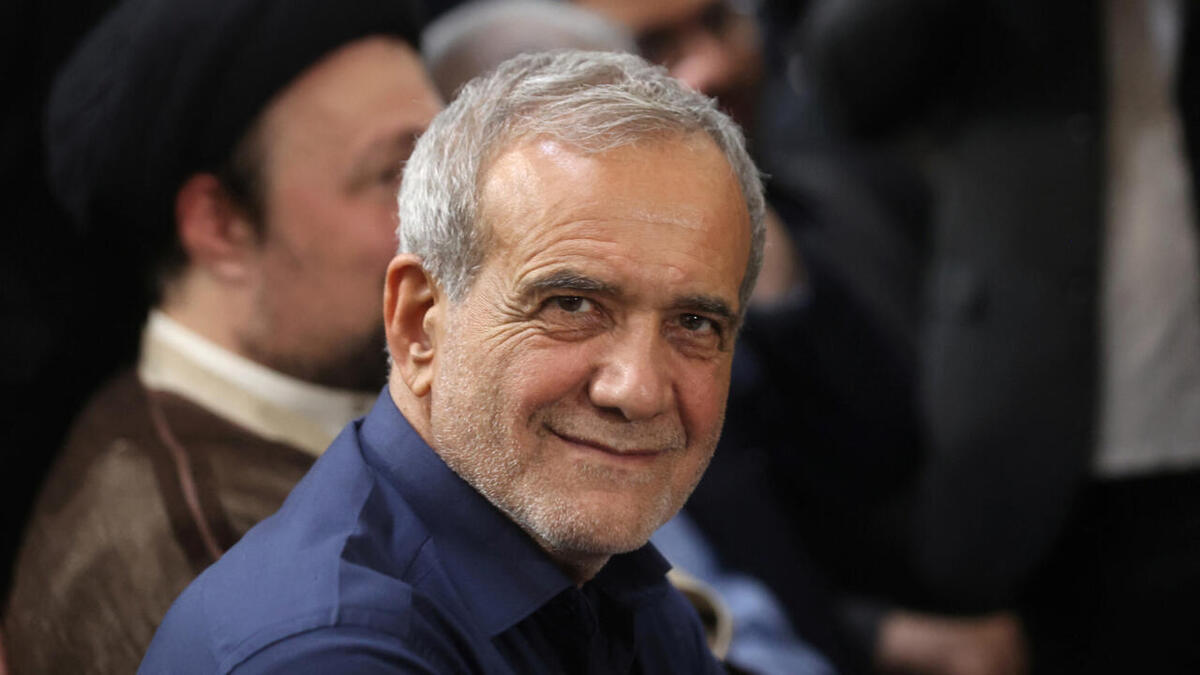
Iranian President Masoud Pezeshkian told prominent American media personality Tucker Carlson in an interview published Monday that the United States said it would not allow Israel to attack Iran during recent negotiations.


"During the negotiations and talks, we were told that as long as we didn't allow Israel, it wouldn't attack you, and we were going to hold the next round of talks very soon, but suddenly, in the middle of it, Israel blew up the negotiating table," Pezeshkian told Carlson through a translator.


Israel launched its war on Iran with airstrikes on June 13, two days before another round of negotiations between the United States and Iran was scheduled to take place. Pezeshkian's comments are consistent with recent reports that the United States and Israel engaged in a disinformation campaign ahead of the attack to keep Tehran on its guard. Just hours before the first Israeli strikes on Iran, President Trump claimed in a post on Truth Social that he remained committed to a diplomatic solution with Iran. According to a report from the Wall Street Journal, the first Israeli warplanes were in the air when Trump made the post.


The newspaper's report indicated that the secret to the deception lies in the idea "implanted in the minds of the Iranians that Israel will not strike without US permission and participation," and that "as long as the US does not mobilize its forces and engage in negotiations, Israel can threaten to attack, and even mobilize its forces, within sight of Iran without losing the element of surprise."


Pezeshkian said Iran is ready to resume negotiations with the United States, but needs guarantees that there will be no attack during the next round of talks. “I am certain that we can very easily resolve our differences and conflicts with the United States through dialogue and talks,” the Iranian leader said. “There is a condition for resuming talks: How will we ever trust the United States again?” Pezeshkian also claimed that Israel attempted to assassinate him during the Twelve-Day War. “I was in a meeting... but thanks to the intelligence obtained by the spies, they tried to bomb the area where we were holding that meeting,” he said.


The Iranian leader affirmed that Tehran remains committed to the fatwa issued by Iranian Supreme Leader Ayatollah Ali Khamenei against the development of nuclear weapons. He said that Israeli Prime Minister Benjamin Netanyahu had implied to US presidents that Tehran wanted to acquire a nuclear bomb.


"This is wrong and contradicts the religious fatwa issued by His Eminence the Supreme Leader of the Islamic Republic of Iran. Therefore, pursuing a nuclear bomb is religiously forbidden," Pezeshkian said.

ARAB AND WORLD

Tue 08 Jul 2025 10:03 am - Jerusalem Time

America sends more defensive weapons to Ukraine

US President Donald Trump announced on Monday that the United States will send "more defensive weapons" to Ukraine, a decision that comes days after the White House announced the suspension of some arms shipments to Kyiv.

"We're going to have to send more weapons, primarily defensive weapons," Trump told reporters at the White House, reiterating his "displeasure" with Russian President Vladimir Putin for his refusal to end the war.

Trump's remarks came during his meeting with Israeli Prime Minister Benjamin Netanyahu, where he noted that Ukrainians are "being hit very hard."

Since the beginning of the Russian invasion of Ukraine in early 2022, Putin has insisted on continuing military operations to achieve Moscow's full objectives, which include demanding that Kyiv relinquish four regions partially occupied by Russia, as well as Crimea, which Moscow annexed in 2014, and abandon the idea of joining NATO—demands that Ukraine categorically rejects.

Last week, the White House announced the suspension of some arms shipments to Kyiv, including Patriot air defense missiles.

The United States has been Ukraine's largest military supporter since the beginning of the war, pledging more than $65 billion in military aid under former President Joe Biden.

Despite these precedents, Trump, who returned to the White House in January, has not yet announced any new military aid package for Ukraine, amid his repeated skepticism about the effectiveness of US support for Kyiv.

PALESTINE

Tue 08 Jul 2025 10:00 am - Jerusalem Time

Netanyahu: Gaza evacuation a "great idea"; Trump: Excellent cooperation with neighboring countries

Statements issued following the meeting between Israeli Prime Minister Benjamin Netanyahu and US President Donald Trump at the White House early Tuesday morning revealed that the plan to displace Palestinians from the Gaza Strip, proposed by Trump last February and adopted by Netanyahu's government, remains a strong possibility.

Netanyahu said, "The idea of evacuating Gaza is a wonderful idea," adding, "Whoever wants to leave can leave, and whoever wants to stay can stay." He added, "We are working with the United States to find countries that will give the Palestinians a better future, and we are getting closer to reaching them."

Netanyahu's remarks came in response to a question directed primarily at Trump about the plan he proposed in February to displace Palestinians from Gaza, given Israel's efforts to confine the Strip's population to the Rafah area, where it intends to establish a "tent city" during a potential truce.

Earlier today, Netanyahu met with US Secretary of State Marco Rubio at Blair House in Washington, where the two sides discussed ways to "strengthen the alliance between Israel and the United States and address regional and international challenges."

Netanyahu also met with Special Presidential Envoy Steve Witkoff, with Witkoff saying, "We have a chance to finally reach a deal," referring to the ceasefire efforts in Gaza and a prisoner exchange between Israel and Hamas.

During the meeting with Trump, Netanyahu recommended, on behalf of Israel, that the US president be awarded the Nobel Peace Prize, saying, "Trump is making peace in one region after another." Trump responded by saying, "Thank you very much. It's a great honor to have Bibi and Sara with us, and I believe we have great success in the future."

Trump added, "We have set a date to negotiate with Iran, and the Iranians want to talk to us. We basically destroyed their nuclear facilities," and continued, "We will do everything we can to prevent Iran from becoming a nuclear country." Trump mocked Iran's response after the US attack and the firing toward Qatar, saying, "Everything was carefully coordinated, down to the timing and the destination."

When Trump was asked about the possibility of an additional strike against Iran, he replied: "I hope we don't have to do that. I don't think that will happen. They want to meet with us, and they're in a very different place than they were two weeks ago."

"Peace can be achieved throughout the Middle East, and we are working in accordance with President Trump's vision to achieve comprehensive peace in the region," Netanyahu said. "As Trump speaks now, he is exploiting opportunities to expand the Abraham Accords. I believe that under Trump's leadership, we will succeed in achieving peace with all our neighbors," Netanyahu added.

Regarding the two-state solution, Trump directed the question to Netanyahu, who replied, "The Palestinians should have the ability to govern themselves, but not the ability to threaten us." He added, "The Palestinians had a Hamas state before October 7, and look what they did to it."

"They carried out a horrific massacre, the likes of which we have not seen since the Nazis," he continued. Netanyahu added, "We can reach peace with the Palestinians, who do not want to destroy us, but security will always remain in our hands, and no one will give that up."

While Trump said he "doesn't believe" there are any obstacles to a ceasefire between Hamas and Israel and that "things are going well," referring to the Doha negotiations, he added that "Hamas wants to negotiate and reach a ceasefire in the Gaza Strip."

Regarding the sixth round of negotiations with Iran, the first since the Israeli war on Tehran, in which Washington participated by striking Iranian nuclear facilities, US presidential envoy Steve Witkoff said, "The meeting with Iran will likely take place next week."

Trump: We lifted sanctions on Syria at the request of Netanyahu and Arab countries.

Regarding the possibility of normalization between Syria and Israel, Trump said he decided to lift sanctions on Syria "at the request of many Middle Eastern countries, including Netanyahu." He added, "I met with the new leader of Syria, Ahmed al-Sharaa, and he left a strong impression on me. We lifted the sanctions because we wanted to give him a chance."

For his part, Netanyahu said that "there is an opportunity that must be explored" regarding normalization with Syria, adding that "the situation has changed," considering that "Iran's exit from the picture opens the way for stability, and perhaps ultimately peace."

Netanyahu added, "President Trump has opened a channel (of communication), and thus the Syrians have much to lose from the conflict and much to gain from peace."