PALESTINE

Thu 10 Jul 2025 8:06 am - Jerusalem Time

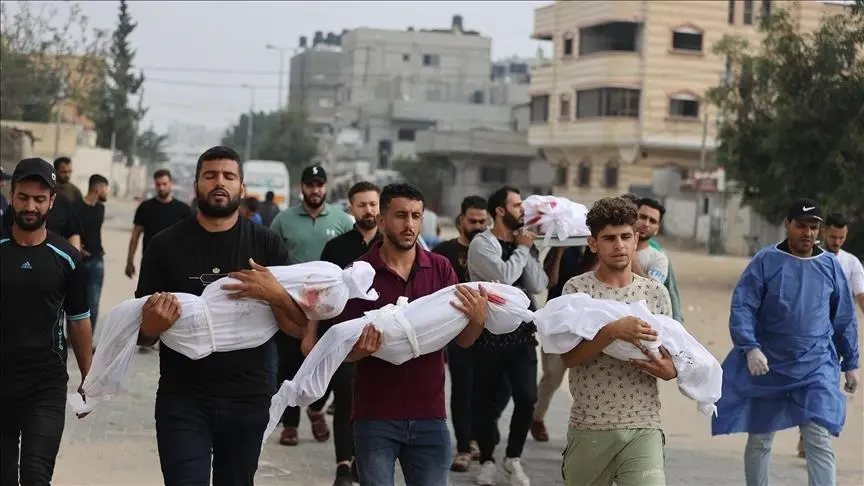
Dozens of dead and wounded in ongoing massacres in the Gaza Strip

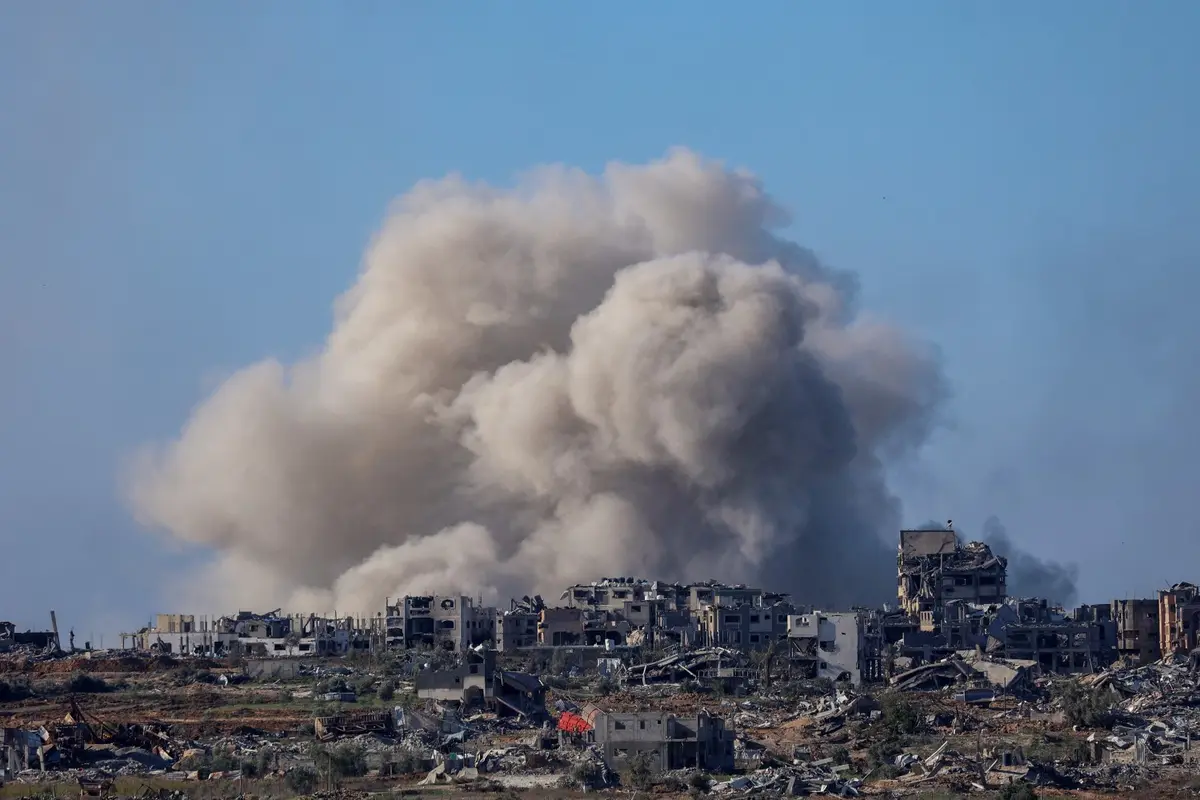
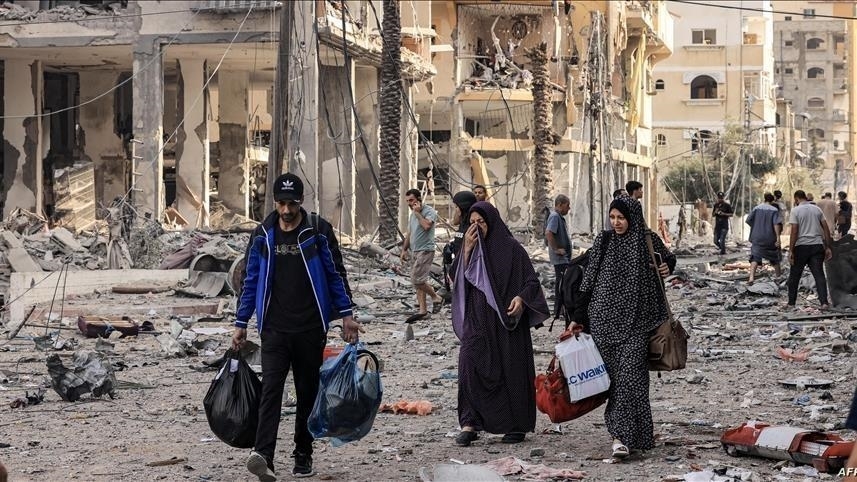
Dozens of civilians were killed and injured tonight and Thursday morning in ongoing Israeli massacres in the Gaza Strip.

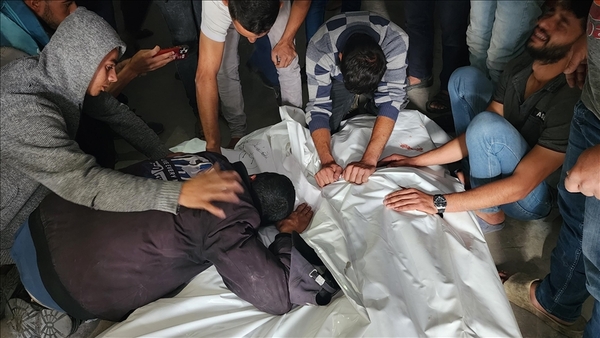
In the latest developments: 16 civilians, including 10 children, were killed and others wounded early Thursday morning in a massacre perpetrated by the occupation forces in the city of Deir al-Balah in the central Gaza Strip.

Civil Defense reported that dozens of Palestinians suffered from suffocation this Thursday morning, as a result of Israeli occupation forces firing a number of shells and tear gas canisters at camps and areas for displaced persons west of the Turkish slaughterhouse, southwest of Khan Yunis.

Local sources reported that Israeli aircraft bombed a queue distributing nutritional supplements to children in the Al-Tayyarah roundabout area in Deir al-Balah, in the central Gaza Strip.

Six civilians were killed and others injured in an Israeli airstrike on a group of civilians in Deir al-Balah, central Gaza Strip.


Meanwhile, five civilians were killed and others injured in an Israeli drone strike on displaced people's tents near Well 19 in the Al-Mawasi area, west of Khan Yunis, in the southern Gaza Strip.

Seven members of one family were also killed when the occupation forces bombed Al-Barsh School, which was sheltering displaced people near the Bani Suhaila roundabout, east of Khan Yunis.

Meanwhile, Al-Awda Hospital in Nuseirat reported that one person was killed and 10 others were injured as a result of the Israeli occupation targeting a gathering of citizens in the market area of the Nuseirat camp in the central Gaza Strip.

A citizen was also killed in an Israeli bombardment of the Thabet family's home in the Nuseirat refugee camp in the central Gaza Strip.

In Al-Bureij camp, four citizens were killed and others injured in the bombing of the Abu Jild family home in the central Gaza Strip.

PALESTINE

Thu 10 Jul 2025 8:02 am - Jerusalem Time

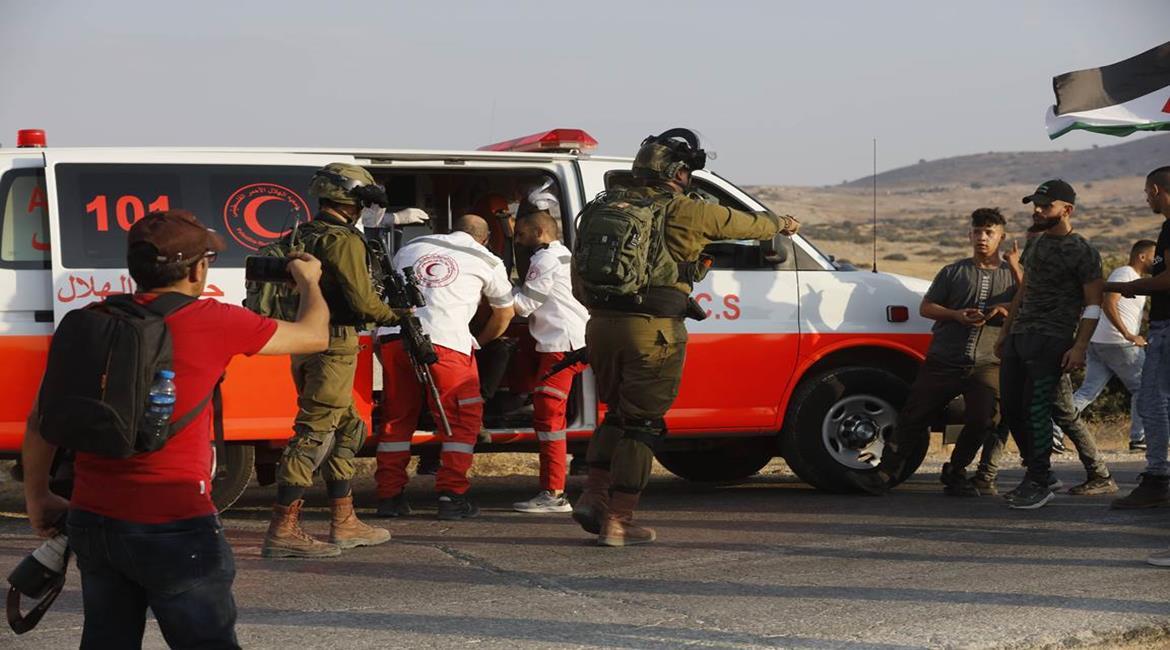
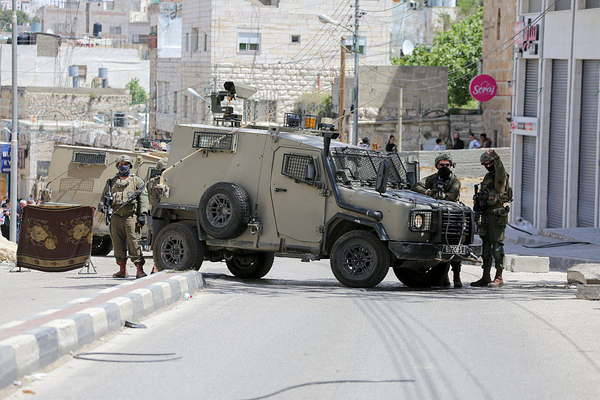
The occupation forces executed a citizen in Jenin Governorate.

This Thursday morning, a citizen from the town of Rummana, west of Jenin, was martyred by Israeli occupation forces.

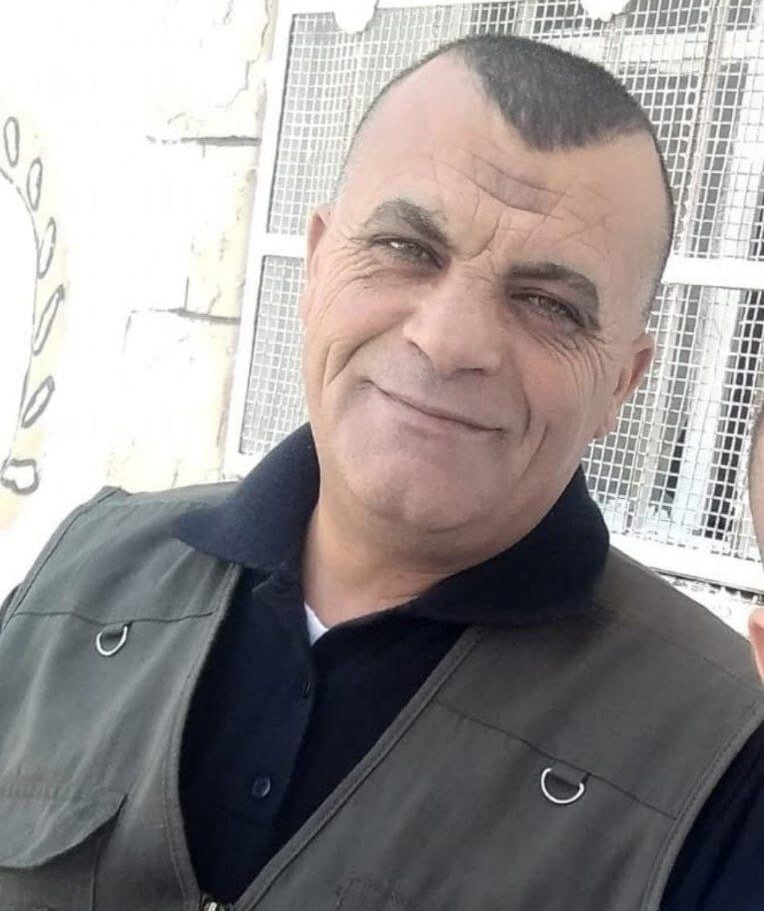
Local sources said that the occupation forces executed the citizen Ahmed Al-Amour (55 years old) after shooting him with live bullets and then running him over with an Israeli military vehicle. The occupation soldiers then seized his body. They added that the occupation forces arrested the martyr Al-Amour's sons.

The occupation forces stormed the town, raided a large number of homes, and destroyed their contents. They also deployed sniper teams in the town, amid a high level of alert among occupation soldiers, and launched a wide-scale arrest campaign in the town.

With Al-Amur's martyrdom, the number of martyrs in Jenin Governorate since the start of the aggression on January 21st has risen to 41.

The occupation has intensified its raids on towns and villages in Jenin Governorate since the start of its aggression on the city and refugee camp 171 days ago. It has raided citizens' homes, vandalized their contents, launched arrest and field interrogation campaigns against citizens, and arrested a number of them.

PALESTINE

Wed 09 Jul 2025 10:49 pm - Jerusalem Time

The death toll in the Gaza Strip has risen to 57,680.

The death toll from the Israeli occupation's aggression on the Gaza Strip has risen to 57,680dead and 137,409 wounded, since October 7, 2023.

Medical sources reported Wednesday evening that the death toll includes 7,118 martyrs and 25,368 wounded since March 18, when the occupation resumed its aggression on the Gaza Strip following the ceasefire agreement.

It noted that the death toll from "aid" casualties who arrived at hospitals over the past 24 hours reached 7 dead, along with more than 57 injured, bringing the total number of "livelihood" casualties who arrived at hospitals to 773, with more than 5,101 injured.

It indicated that 105 dead and 530 injured people arrived at Gaza Strip hospitals over the past 24 hours, noting that a number of victims remain under the rubble and on the streets, and that ambulance and rescue crews are unable to reach them.

ARAB AND WORLD

Wed 09 Jul 2025 10:19 pm - Jerusalem Time

Axios: Qatari, US, and Israeli talks at the White House regarding Gaza

Axios quoted two sources it described as "well-informed" that senior officials from the United States, Israel, and Qatar held secret talks at the White House regarding a ceasefire in the Gaza Strip, indicating that the negotiations are currently progressing positively despite some gaps.

The two sources reported that the talks focused on the remaining fundamental disagreements to reach a ceasefire agreement in Gaza, and addressing related issues.

According to Axios, US envoy Steve Witkoff met with a senior Qatari official, as well as Ron Dermer, senior advisor to Israeli Prime Minister Benjamin Netanyahu, with the meeting focusing on the redeployment of the Israeli army in Gaza.

According to the two sources quoted by Axios, both Witkoff and the Qatari official made it clear to Dermer that the map proposed by Israel was unacceptable.

In this context, the Qatari official stated that Hamas is likely to reject the map, and that the talks may collapse as a result. He requested that Doha not be held responsible if the negotiations fail.

For his part, Witkoff told Dermer that the IDF's redeployment map looked like Finance Minister Bezalel Smotrich's map, explaining that it was unacceptable to Washington.

gaps

In contrast, Dermer argued during the meeting that Netanyahu was under significant pressure from his coalition not to make significant concessions.

As a result, Axios reported that Israel later presented a new map that included a broader military withdrawal from the Gaza Strip, noting that the new map led to significant progress in the talks and significantly increased the chances of reaching an agreement.

However, the website quoted a source it described as "informed" as saying that gaps remain, but that negotiations are currently progressing positively.

US President Donald Trump said there was a "very good chance" of a ceasefire in Gaza this week or next, after meeting with Netanyahu on Tuesday for the second time in two days to discuss the situation.

The US-backed proposal for a 60-day ceasefire includes the gradual release of Israeli prisoners held in Gaza, the withdrawal of Israeli forces from parts of the Strip, and discussions to end the war completely.

Since October 7, 2023, Israel, with full American support, has been committing genocidal crimes in Gaza, leaving approximately 194,000 Palestinians dead and wounded—mostly children and women—and more than 11,000 missing, in addition to hundreds of thousands displaced.

PALESTINE

Wed 09 Jul 2025 10:08 pm - Jerusalem Time

Journalists Syndicate: 7 journalists were killed, 16 injured, and 3 were detained last June.

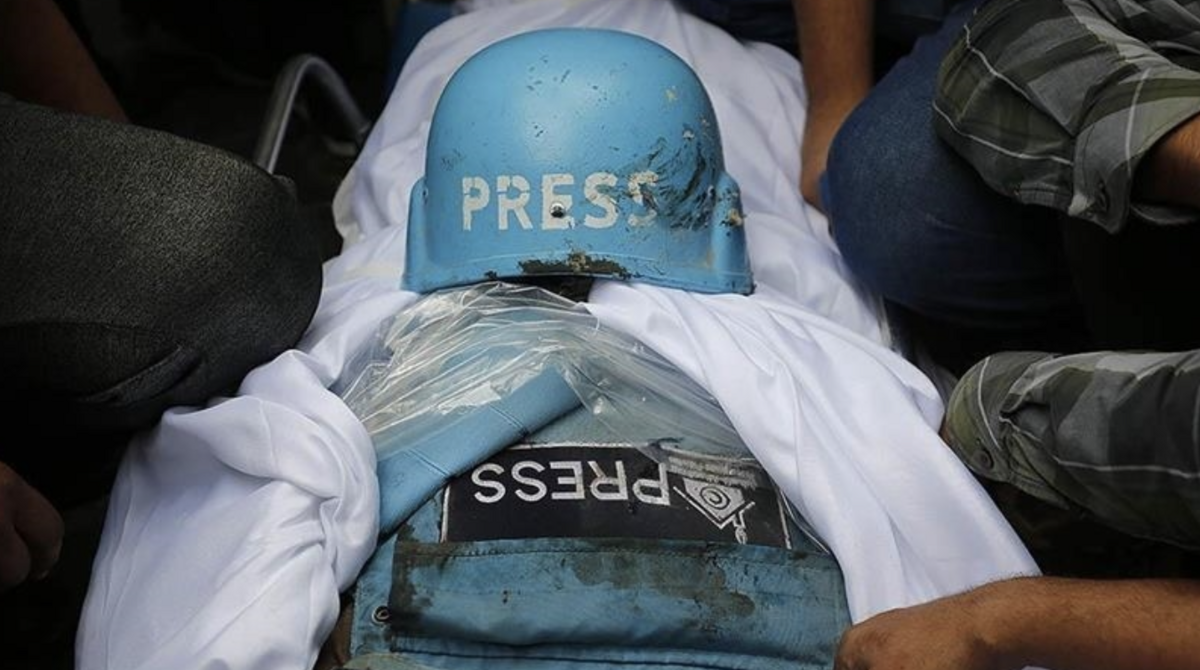
The Palestinian Journalists Syndicate confirmed that the Israeli occupation regime continues to target the Palestinian press in the Gaza Strip, the West Bank, and within the 1948 territories, through a series of crimes, the most prominent of which was the martyrdom of seven fellow journalists in the Gaza Strip during the month of June.

A documentary report issued by the Syndicate's Press Freedoms Committee revealed that the occupation army committed more than 100 crimes, assaults, and direct violations against journalists during the month, as part of a systematic escalation targeting press freedom.

According to the data, seven journalists were killed while covering the field, while 16 others sustained serious injuries from bullets or rocket shrapnel. The attacks also targeted journalists' families, with five relatives killed as a result of direct shelling.

The report stated that the occupation army documented the arrest of three journalists, while four others were brought before military courts.

Regarding the media infrastructure, six press institutions were demolished or forcibly closed, 10 journalists' homes were destroyed, and the occupation forces confiscated filming and broadcasting equipment in four documented incidents.

The report also documented 22 cases of detention or prevention from coverage, 8 attacks involving direct gunfire on journalists, 7 attacks using sound bombs and toxic tear gas, 3 cases of physical assault, and 3 cases of threats and public incitement against journalists.

The union also reported one case of travel ban and two cases of attacks by settlers on media crews.

The report also documented a series of violations perpetrated by the occupation, through security forces and settler personnel, against Arab and Western media crews covering the fall of Iranian missiles on areas within the 1948 territories.

The report indicated that these figures reflect the wide scope and seriousness of the violations, amid international silence and continued restrictions on journalistic work in the Palestinian territories. This coincides with the continued displacement of hundreds of journalists in search of safety, with some forced to flee their homes for the fifth or sixth time, a large portion of which has been destroyed.

The difficulty of reaching work and communicating with the outside world continued due to the disruption of telecommunications and internet networks, as a result of the occupation army targeting broadcast towers and covering them with shelling and destruction.

The report also noted a relative increase in the phenomenon of internal attacks against fellow journalists by official or family bodies, violations that are considered alarming and dangerous, given the genocidal aggression practiced by the Israeli occupation against our people in the Gaza Strip in particular, and against the Palestinian people in general.

PALESTINE

Wed 09 Jul 2025 9:34 pm - Jerusalem Time

8 European NGOs call for an immediate ceasefire in Gaza

Eight NGOs across Europe have called for an immediate ceasefire and an end to the genocide in the Gaza Strip.

This came in a statement read by representatives of non-governmental organizations, on Wednesday, during a press conference they held in the Belgian capital, Brussels.

The statement noted that civilian infrastructure in Gaza is being "systematically" destroyed, and stated that there is a major humanitarian crisis in Gaza, with a large number of people having lost their lives and thousands more missing due to Israeli attacks. It stressed the need to put an end to this "crime against humanity."

"People (in Gaza) are dying trying to find water or food. Hunger is being deliberately used as a weapon of war. Humanitarian aid is being restricted," the statement said.

The statement criticized the activities of the Gaza Humanitarian Foundation in the Strip, which are directed by the United States and Israel.

"An aid structure that actively supports the displacement of people is not a solution; it exacerbates the crisis," he said.

He pointed out that human rights organizations have documented violations of international law, including serious war crimes, in Gaza, and that footage circulating on social media platforms clearly reveals these violations.

The statement also highlighted developments in the occupied West Bank, noting that the situation is deteriorating due to forced displacement and expanding land seizures, stressing that European governments' responses to events in Gaza "remain largely symbolic."

The statement also stressed the need to continue the work of the International Criminal Court without pressure, to allow journalists unhindered access to the region, to recognize the State of Palestine, and to release prisoners.

PALESTINE

Wed 09 Jul 2025 9:32 pm - Jerusalem Time

Suffocation injuries following the occupation forces' raid south and east of Bethlehem

A number of citizens suffered suffocation when Israeli occupation forces stormed the towns of Al-Khader, south of Bethlehem, and Tuqu', southeast of the governorate, on Wednesday evening.

According to local sources, Israeli occupation forces stormed Tuqu', positioned themselves around the municipality building, and fired a barrage of tear gas and sound bombs, causing a number of residents to suffer from suffocation. The injuries were dealt with on the spot.

The sources added that the occupation forces raided several neighborhoods in the town of Al-Khader, and fired sound bombs and tear gas at the residents.

This raid is part of a series of ongoing raids carried out by the occupation forces in towns and villages in the Bethlehem Governorate, amid a marked escalation in the frequency of attacks and repressive practices against citizens.

ARAB AND WORLD

Wed 09 Jul 2025 8:14 pm - Jerusalem Time

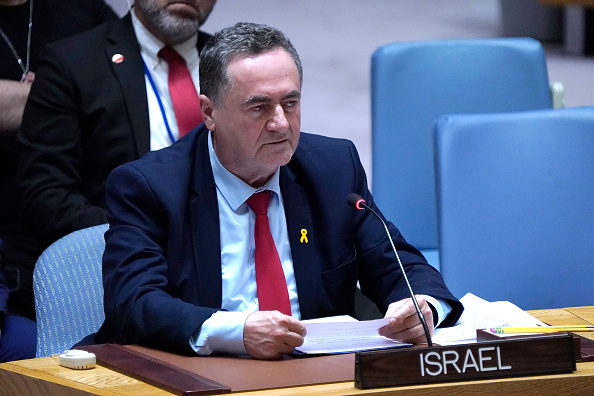
Katz: Our goal is to prevent Iran from threatening Israelis

Israeli Defense Minister Yisrael Katz said that the presence of Israeli forces on Mount Hermon constitutes a political asset for any potential future agreements, according to Cairo News Channel. Katz added, "The challenge before us is to prevent Iran from being able to threaten Israelis."

The Israeli Defense Minister also confirmed that Prime Minister Benjamin Netanyahu is currently leading intensive negotiations in Washington to release the detainees.

ARAB AND WORLD

Wed 09 Jul 2025 8:10 pm - Jerusalem Time

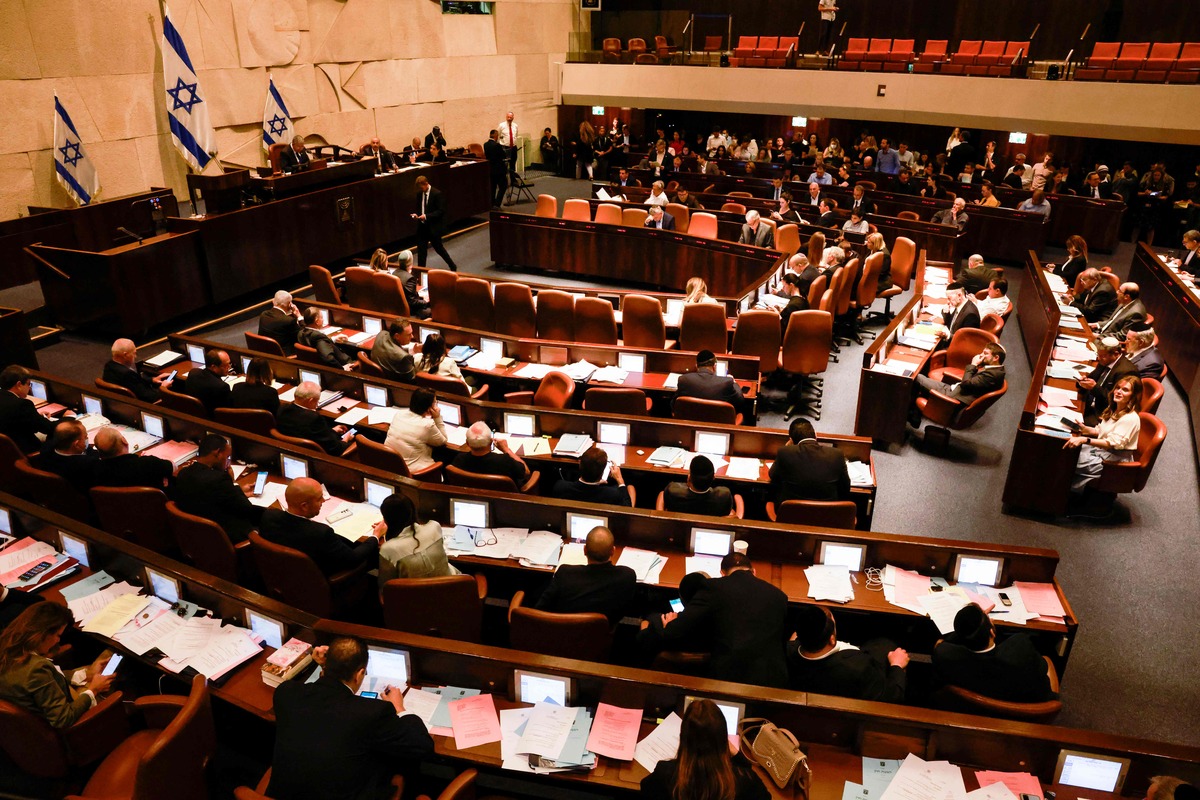
The Knesset expels a member of parliament for calling for the prosecution of "Israeli criminals."

An Israeli parliamentary committee decided on Wednesday to suspend Democratic Front for Peace (DFP) MK Ofer Cassif from Knesset sessions for two months after he called on the International Criminal Court to prosecute senior Israeli officials for war crimes.

The official Israeli Broadcasting Corporation said: "The Knesset Ethics Committee decided to suspend Hadash MK Ofer Cassif from Knesset sessions for two months and deprive him of his salary for two weeks."

She explained that the decision came "following several statements he made, including a call by the International Criminal Court to prosecute senior Israeli officials for allegedly committing war crimes."

She added, "The deportation order will take effect with the start of the Knesset's winter session, in about three months."

The Knesset will go on summer vacation from the end of July until next October.

On November 21, 2024, the International Criminal Court issued arrest warrants for Israeli Prime Minister Benjamin Netanyahu and former Defense Minister Yoav Gallant, on charges of war crimes and crimes against humanity against Palestinians in Gaza.

Commenting on his expulsion, Kassif said in a statement, "The Ethics Committee's decision to expel me again from the Knesset comes just days before the vote to remove my fellow MK Ayman Odeh."

He considered what was happening "part of the campaign of persecution and attempts to silence the voices revealing the truth about the war crimes in Gaza."

Since October 7, 2023, Israel has been waging a war of genocide in Gaza, including killing, starvation, destruction, and forced displacement, ignoring all international calls and orders from the International Court of Justice to halt it.

The US-backed genocide left more than 195,000 Palestinians dead or wounded, most of them children and women, and more than 10,000 missing. Hundreds of thousands were displaced, and a famine claimed the lives of many, including dozens of children.

Kassif added, "This is a dictatorship par excellence, aiming to prevent us from raising our voices for the democracy and healthy society we aspire to... a society that is liberated, pro-life, equal, and free from killing, destruction, and death."

He continued, "This fascist decision does not affect me personally, but rather affects our list's ability to work for the public, especially our voters and the values upon which we were elected."

He continued, "It also clearly demonstrates how the Ethics Committee has become a tool for political bickering in the service of the bloodthirsty government, which neglects the kidnapped, sacrifices soldiers, and kills Palestinians."

He emphasized that "fascism in Israel, genocide in Gaza, and occupation and ethnic cleansing in the occupied West Bank—all of these things are interconnected and together form a terrifying mosaic of a despicable terrorist regime."

In parallel with the war of extermination in Gaza, the Israeli army and settlers have escalated their attacks in the West Bank, including Jerusalem, resulting in the deaths of at least 993 Palestinians and the injury of approximately 7,000 others, according to official Palestinian data.

Kassif Zad: "We will never surrender and we will not be silent. We will continue to raise our voice, Jews and Arabs in true partnership, against all war criminals."

"Enough with the genocide and ethnic cleansing. Go for an agreement now," he added, for a prisoner exchange and a ceasefire in Gaza.

The same parliamentary committee had previously decided to suspend Kassif from the Knesset for six months in November 2024, and he returned to the Knesset in May 2025.

At the time, Kassif said the decision to suspend him from the Knesset was due to his "political statements against the occupation, ethnic cleansing, war crimes, and actual genocide being carried out by the Israeli government in Gaza."

Kassif was born on December 25, 1964, in Rishon LeZion (central Israel). He holds a PhD in political philosophy and is known for his opposition to the Israeli occupation. He was elected to the Knesset for the first time in 2019.

For decades, Israel has occupied Palestine and territories in Syria and Lebanon, and refuses to withdraw from these territories and establish an independent Palestinian state with East Jerusalem as its capital, along the pre-1967 borders.

PALESTINE

Wed 09 Jul 2025 7:42 pm - Jerusalem Time

Channel 12: The families of the detainees were invited by the White House to meet in Washington.

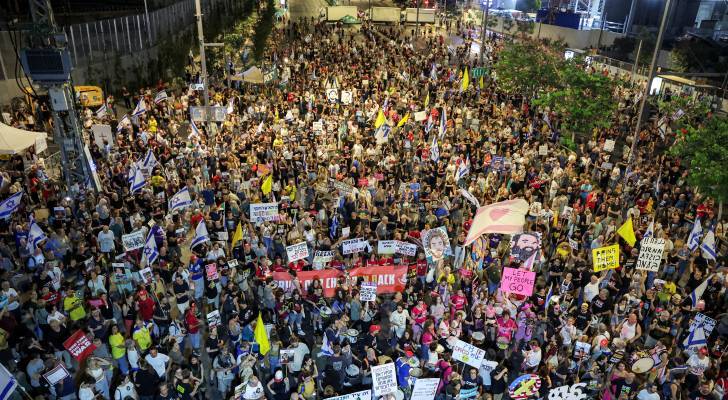
Channel 12 reported that the families of Israeli detainees in the Gaza Strip received an official invitation to attend an important meeting at the White House in Washington, D.C., on Wednesday evening.

The channel added that the families are scheduled to meet with Israeli Prime Minister Benjamin Netanyahu following their meeting at the White House.

This call comes at a critical time, with pressure mounting for a ceasefire deal. The United States is supporting a proposal for a 60-day truce during which prisoners in Gaza would be gradually released, in exchange for the withdrawal of Israeli forces from parts of the Strip and the entry into negotiations to fully end the war.

Despite opposition from some of Netanyahu's coalition partners to ending the fighting, the government is expected to eventually support a ceasefire, as settlers grow increasingly concerned about the 21-month-old war.

It is noteworthy that only about 20 of the remaining 50 detainees in Gaza are believed to be still alive.

ARAB AND WORLD

Wed 09 Jul 2025 7:27 pm - Jerusalem Time

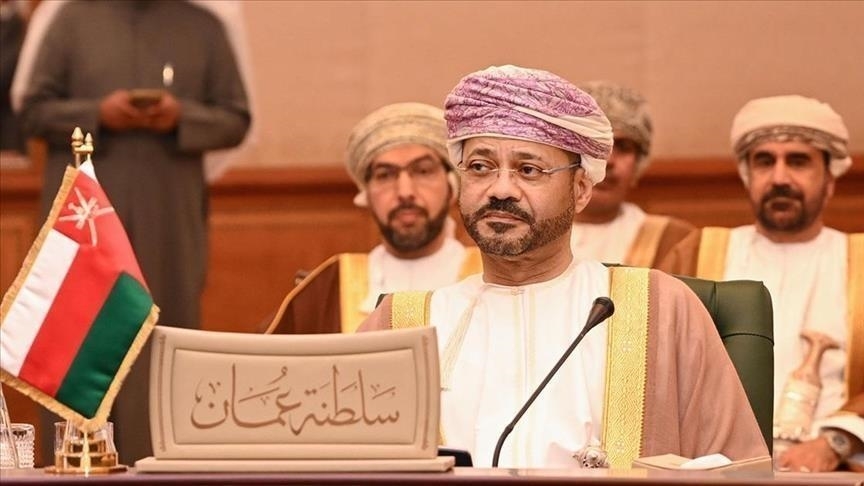
British-Omani talks on a ceasefire in Gaza

British Foreign Secretary David Lammy discussed the situation in the Gaza Strip and reaching a ceasefire with his Omani counterpart, Badr Al Busaidi.

This came in a phone call on Wednesday, according to a post on the British minister's X platform.

Lamy said they are making every diplomatic effort to help achieve a ceasefire in Gaza.

He stressed that the Sultanate of Oman remains a dear friend and a major player in the region.

Lamy pointed out the importance of the phone call with Al-Busaidi regarding Gaza.

Since October 7, 2023, Israel, with American support, has been committing genocide in Gaza, including killing, starvation, destruction, and forced displacement, ignoring all international appeals and orders from the International Court of Justice to halt it.

In early March, Israel reneged on a ceasefire and prisoner exchange agreement with Hamas, which began on January 19, and resumed its genocide. Since then, it has rejected all international and UN initiatives and calls for a ceasefire.

On Tuesday, US Special Envoy to the Middle East Steve Witkoff said, "We hope to reach an agreement by the end of the week that will achieve a 60-day ceasefire, the release of 10 (Israeli) prisoners, and the return of the bodies of nine prisoners." He considered that a potential ceasefire "will pave the way for a lasting peace" in Gaza.

ARAB AND WORLD

Wed 09 Jul 2025 7:24 pm - Jerusalem Time

Albanese criticizes countries that allowed Netanyahu to fly over their airspace on his way to the United States.

  1. JFrancesca Albanese, the UN Special Rapporteur on the situation of human rights in the occupied Palestinian territories, criticized countries that allowed Israeli Prime Minister Benjamin Netanyahu to fly over their airspace on his way to the United States, indicating that they may have violated their obligations under international law.

Albanese said on Wednesday that the governments of Italy, France, and Greece should explain why they provided "safe passage" to Netanyahu, whom they were theoretically obliged to "arrest" as an internationally wanted suspect when he flew over their territory on his way to meet US President Donald Trump on Sunday for talks.

It's worth noting that the three countries are signatories to the Rome Statute, the treaty that established the Hague-based International Criminal Court in 2002, which last year issued arrest warrants for Netanyahu and former Israeli Defense Minister Yoav Gallant on charges of war crimes and crimes against humanity during Israel's war on Gaza. Albanese wrote on X: "Italian, French, and Greek citizens deserve to know that every political action that violates the international legal order weakens and endangers them all. And it endangers us all."

Albanese was responding to a post by human rights lawyer Craig Mokhiber, who had said the previous day that these countries had "violated their legal obligations under the treaty [Rome Statute], shown contempt for victims of genocide, and demonstrated contempt for the rule of law."

It should be noted that Netanyahu's current visit to the United States, during which he discussed the forced displacement of Palestinians with Trump amid ongoing ceasefire negotiations between his country and Hamas, was not his first visit since the ICC issued his arrest warrant. On February 2, Netanyahu traveled to the United States, which is not a party to the Rome Statute, becoming the first foreign leader to meet with Trump (on February 4, 2025) after his inauguration on December 20, 2025. That flight took a longer route, flying over US bases and avoiding countries that might arrest the Israeli leader, according to Israeli Ambassador to the US Yehiel Leiter, quoted in The Times of Israel in an article published the following month.

In the first week of April 2025, Netanyahu visited Hungarian leader Viktor Orbán in Budapest. Orbán had extended his invitation just one day after the International Criminal Court issued an arrest warrant, leading to Hungary's withdrawal from the ICC before the Israeli leader's arrival.

From Hungary, Netanyahu then flew to the United States for a meeting with Trump (on April 7), flying 400 kilometers (248 miles) further than the usual route to avoid the airspace of Ireland, Iceland, and the Netherlands due to concerns that they might execute the arrest warrant, according to the Israeli newspaper Haaretz at the time.

Under the law, ICC member states must detain persons subject to arrest warrants if they are on their territory.

PALESTINE

Wed 09 Jul 2025 7:22 pm - Jerusalem Time

Trump-Netanyahu meeting ends without statement; Witkov postpones visit to Qatar

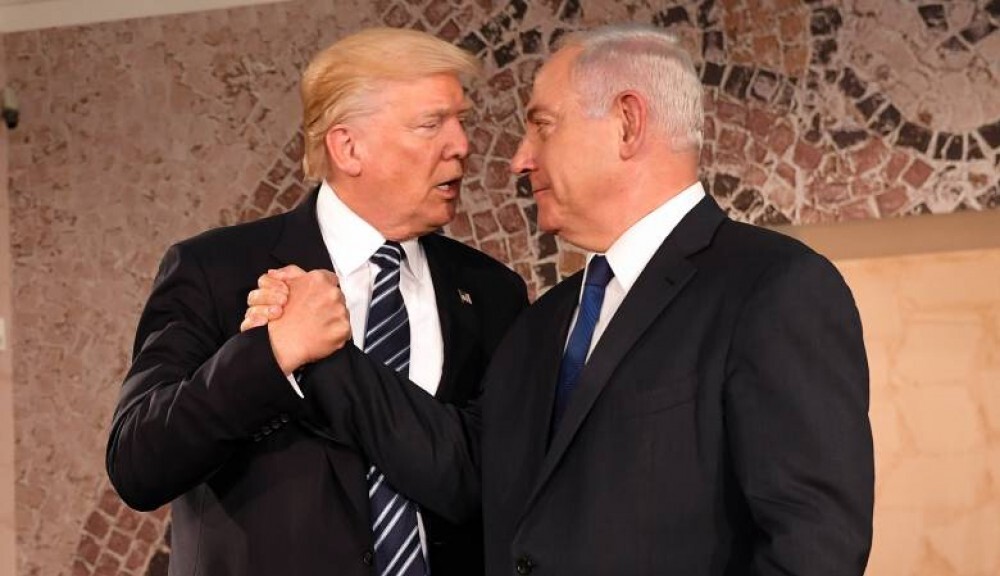
US President Donald Trump met with Israeli Prime Minister Benjamin Netanyahu for 90 minutes at the White House on Tuesday, the second meeting between the two during Netanyahu's visit to Washington.

The meeting concluded without any statements, declarations, or "reading of the meeting." Earlier that day, Trump's special envoy for the Middle East, Steve Witkoff, spoke about the ongoing rapprochement talks between Israel and Hamas in Qatar, saying, "We had four points, and now we have only one point left after two days." Witkoff added that he is "optimistic that by the end of this week, we will reach an agreement that will lead to a 60-day ceasefire."

Al-Quds.com learned that Witkoff postponed his trip to Qatar, which was scheduled to take place immediately after the meeting, perhaps by a day or two. Al-Quds also learned that a Qatari delegation arrived in Washington on Tuesday to meet with Witkoff ahead of Trump's meeting with Netanyahu.

Reports indicated that Witkov was heading to Qatar to announce a ceasefire before the end of the week, a 60-day ceasefire.

According to sources, Witkoff's visit to Qatar depends on the conclusion of indirect talks between Israel and Hamas, mediated by Qatar and Egypt. The special envoy is not expected to visit Qatar until all issues are agreed upon between the two sides. Rumors have circulated that the US envoy is optimistic about a "major event" expected to take place later this week.

Haaretz quoted a non-Israeli source as saying that the humanitarian aid issue has been resolved, as Israel and Hamas agreed to transfer it via international organizations. These organizations will not be affiliated with either Israel or Hamas.

For her part, the official spokesperson for the US State Department, Tammy Bruce, reiterated the US administration's confidence in the capabilities and professionalism of the so-called "Gaza Humanitarian Foundation (GHF)," which was created by Israel and the United States and is run by American mercenary groups. GHF delivers aid to Palestinians through four distribution centers (under the control of the Israeli occupation army). The Israeli army has killed more than 650 Palestinian citizens seeking aid, and American mercenary teams have also participated in the killing of Palestinian civilians, according to a report by the Associated Press.

The administration refused to respond to a question about whether any investigation would be opened into the American personnel who opened fire on unarmed Palestinians.

Spokesperson Tammy Bruce insists in her twice-weekly press conferences that distributing aid through the Gaza Humanitarian Foundation (GHF) is the only way to ensure that Hamas does not steal humanitarian aid and sell it on the black market.

Hamas is demanding guarantees from the United States that the war will not resume after the 60-day ceasefire. According to sources, the main dispute between the two sides is control of the Morag Corridor, which is close to the Philadelphi Corridor. Netanyahu insists on keeping the corridor under Israeli control, at the request of Finance Minister Bezalel Smotrich, and also to enable the plan to relocate Gaza's civilian population to a town built on the ruins of the Rafah area.

PALESTINE

Wed 09 Jul 2025 6:46 pm - Jerusalem Time

A citizen was injured by settler bullets south of Nablus.

A citizen was injured by settlers' bullets, Wednesday evening, during an attack on the town of Aqraba, south of Nablus.

Local sources in the town reported that a citizen was injured by live bullets in the foot following a settler attack on the village.

PALESTINE

Wed 09 Jul 2025 6:21 pm - Jerusalem Time

Saraya al-Quds announces the killing of an Israeli soldier in the Tuffah neighborhood.

Saraya al-Quds, the military wing of the Islamic Jihad movement, announced that its fighters had managed to snipe an Israeli soldier atop Mount al-Surani in the al-Tuffah neighborhood east of Gaza City.

In the same context, the Al-Quds Brigades published footage on Wednesday, purporting to show its fighters, in conjunction with Palestinian resistance factions, targeting gatherings of Israeli soldiers and vehicles with mortar shells in the areas of the incursion into Khan Yunis, south of the Gaza Strip.

Palestinian resistance factions continue to target Israeli occupation forces and their vehicles in Khan Yunis and other areas north and south of the Gaza Strip, causing casualties among their ranks, in addition to losses in equipment, machinery, and armored vehicles.

Haaretz newspaper confirmed that 62 Israeli soldiers have been killed in Gaza since the beginning of the year. Israeli news websites also reported the death of an Israeli worker collaborating with the army in the northern Gaza Strip.

About two days ago, the Israeli army was subjected to a complex ambush in Beit Hanoun, north of the Gaza Strip, carried out by the Al-Qassam Brigades, the military wing of the Islamic Resistance Movement (Hamas), which resulted in the death and injury of 19 soldiers.

Since the beginning of the Israeli war on Gaza, 883 Israeli soldiers have been killed and 6,060 wounded, most of them in Gaza, according to Israeli military data. The military has announced in recent weeks that several of its soldiers have been killed or wounded in Gaza.

PALESTINE

Wed 09 Jul 2025 5:33 pm - Jerusalem Time

Amnesty International warns countries against complicity in the crimes of deporting Palestinians.

Amnesty International called on all countries to refrain from providing any support to plans that could lead to the unlawful transfer or deportation of Palestinians, warning that such support could make them complicit in crimes committed by the Israeli occupation.

The human rights organization's warning coincided with Hebrew media reports on Tuesday revealing new Israeli plans to displace Palestinians under the guise of establishing what Tel Aviv calls a "humanitarian city" on the ruins of the destroyed city of Rafah in the southern Gaza Strip.

According to the official Israeli Broadcasting Authority, the Israeli occupation authorities are planning to establish this city in the area between the Philadelphi and Morag axes in the southern Gaza Strip.

Tel Aviv claims the goal of this plan is to separate civilians from members of Palestinian factions, a move observers see as a new chapter in the plan to forcibly displace Palestinians from their lands.

PALESTINE

Wed 09 Jul 2025 4:31 pm - Jerusalem Time

Three martyrs, including an infant, were killed in the Israeli bombing of a residential apartment in western Gaza City.

Three civilians, including an infant, were killed Wednesday afternoon when Israeli warplanes bombed an apartment building near Shuhada al-Shati School, west of Gaza City.

PALESTINE

Wed 09 Jul 2025 4:00 pm - Jerusalem Time

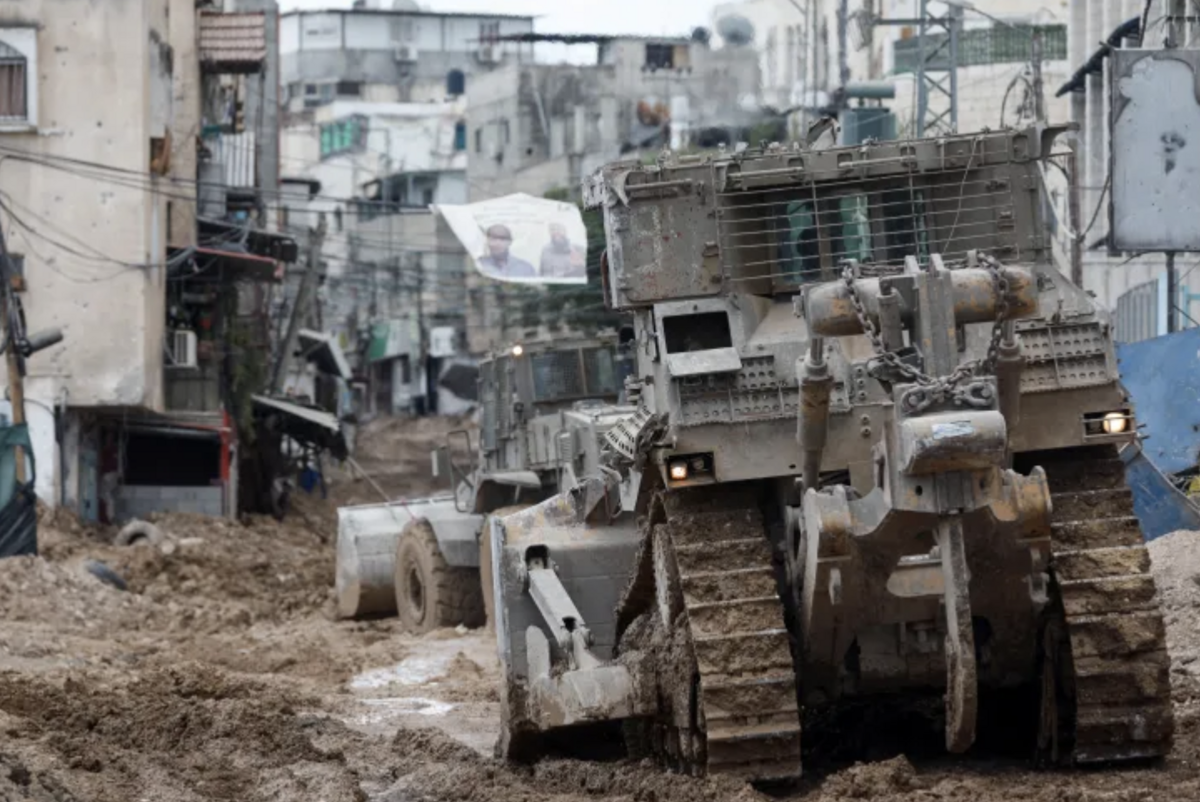
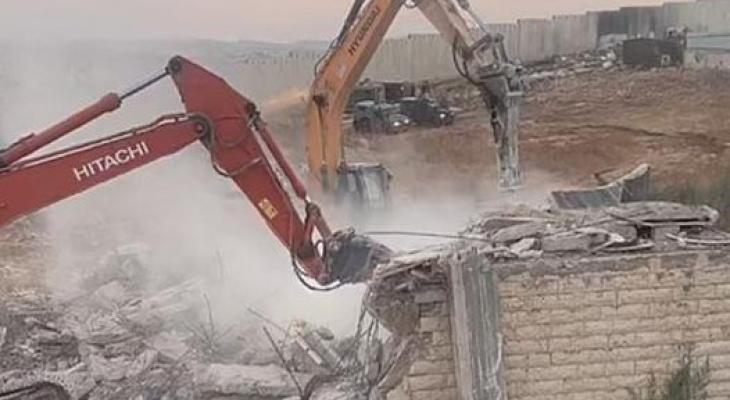
The occupation is changing the features of the camps in the northern West Bank by bulldozing land and demolishing homes.

The Israeli occupation army acknowledged that what it described as military operations in Jenin, Tulkarm, and Nur Shams in the northern West Bank were aimed at changing the character of the camps, in light of the ongoing aggression that has been ongoing for nearly six months.

An Israeli army spokesman explained that the goal of these operations is to reconfigure the camps and transform them into open, easily accessible areas under army control.

He pointed out that this would allow the army freedom of movement to thwart military operations.

It is estimated that Israeli bulldozers completely demolished more than 600 homes in Jenin camp alone, and opened 15 roads, according to the Palestinian News Agency (WAFA).

The occupation army also continues to demolish buildings in Tulkarm camp, despite an Israeli court order to freeze the operation.

Since January 21, the Israeli army has continued its military aggression in the Jenin, Tulkarm, and Nur Shams refugee camps.

The Israeli aggression has completely destroyed at least 400 homes in the Tulkarm and Nur Shams camps, and partially destroyed 2,573 others. The entrances to the camps remain closed, transforming them into lifeless areas, according to official data.

Palestinian estimates indicate that the occupation has displaced approximately 40,000 Palestinians from the three camps, and has not allowed residents of Jenin camp to return to reclaim some of their property.

US official in Nour Shams

Meanwhile, US Security Coordinator for the West Bank Michael R. Wenzel visited the Nur Shams camp on Tuesday to examine the effects of the ongoing Israeli aggression, which has lasted for nearly 150 days.

Tulkarm Governor Abdullah Kamil, who accompanied the US official on his tour, told reporters that the visit comes as part of the Palestinian side's outreach to various parties, including Europe and the United States, which possess the ability to pressure Israel to halt its aggression.

Kamil added that the Palestinian goal is to return people to their homes, remove the harm they are suffering from, and rebuild the camps.

He pointed out that the Americans suggested that reconstruction begin in the Nour Shams camp, adding, "We are not against that."

The governor noted that this was the first time he had entered the camp since the start of the aggression, describing the situation there as "tragic," noting that the US coordinator "expressed his displeasure at what he saw."

Kamil also stressed the need to rehabilitate the camp's infrastructure, including sewage, water, electricity, and roads, noting Israeli threats to "bomb any building rebuilt after demolition."

The demolitions are part of the latest plan announced by the occupation authorities last May, which calls for the demolition of 106 buildings, including 58 in Tulkarm camp, comprising more than 250 housing units and dozens of commercial establishments, and 48 buildings in Nour Shams camp.

Erasing Palestinian identity

For his part, Israeli affairs expert Imad Abu Awad said that the Israeli aggression against the camps in the West Bank has objectives that go beyond security and military considerations. He explained that the occupation is not only seeking to transform the camps into neighborhoods within cities to facilitate security control, but is also working to eliminate the notion of the camp as a symbol of the Palestinian right of return and asylum, which is at the core of the Palestinian narrative.

In an interview with Al Jazeera Net, Abu Awad explained that Israel is attempting to implement an overt, rather than covert, displacement project, noting that approximately 40,000 Palestinians have been displaced from the West Bank since October 7, 2023.

He pointed out that Israel is working to reduce the Palestinian presence, as proposed by Israeli Finance Minister Bezalel Smotrich, in preparation for a second phase of Palestinian displacement. This is clearly evident in the policies of displacement, imposition of sanctions, control of land, and dismantling of camps.

In parallel with the war of extermination in Gaza, the Israeli army and settlers have escalated their attacks in the West Bank, including Jerusalem, resulting in the deaths of at least 993 Palestinians and the injury of approximately 7,000 others, according to Palestinian data.

Since October 7, 2023, Israel, with American support, has been committing genocide in the Gaza Strip, leaving more than 194,000 Palestinians dead or wounded, most of them children and women, and more than 10,000 missing, in addition to hundreds of thousands displaced.


PALESTINE

Wed 09 Jul 2025 2:15 pm - Jerusalem Time

Settlers set up tents on Beit Amarin lands, northwest of Nablus.

Today, Wednesday, settlers set up tents on the lands of the village of Beit Imrin, northwest of Nablus.

Murad Ishtiwi, director of the Wall and Settlement Resistance Commission in the northern West Bank, said that settlers had erected approximately four tents on the lands between the villages of Burqa and Beit Imrin, which portends that they are the nucleus of a new colonial outpost in the area.

He added that the establishment of such a colonial outpost comes within the framework of expansion and linking large colonial blocs together in strategic and important locations, stressing that since the beginning of this year, 23 new settlement outposts have been established, most of which are classified as pastoral.

PALESTINE

Wed 09 Jul 2025 2:06 pm - Jerusalem Time

Netanyahu: I think there is a good chance for a 60-day ceasefire.

Israeli Prime Minister Benjamin Netanyahu told Fox Business that he "believes there is a good chance for a 60-day ceasefire in Gaza, which will bring us closer to our goals."

Netanyahu added, "We are talking about a 60-day ceasefire during which half of the hostages, living and deceased, will be returned."

PALESTINE

Wed 09 Jul 2025 1:49 pm - Jerusalem Time

Report: Israel repeats the combat tactics it used in Gaza in the northern West Bank.

Israeli forces continued to destroy homes and buildings in the Tulkarm and Nur Shams refugee camps this week, with bulldozers moving through the ruins of buildings and roads strewn with rubble and concrete blocks. Residents piled their belongings, including chairs, blankets, and cooking utensils, onto trucks, Reuters reported on Wednesday.

Tulkarm Governor Abdullah Kamil said that demolitions have increased in recent weeks, with 106 homes and 104 other buildings destroyed in the nearby Tulkarm and Nur Shams refugee camps. He stressed that "what is happening in Tulkarm is an ongoing crime driven by an Israeli political decision; the issue has nothing to do with security."

Kamil added, "The operation is ongoing. The destruction of infrastructure is ongoing. They have left nothing in the camp. It has become a ghost camp with only snipers in several locations."

The Israeli military operation in the northern occupied West Bank began in January. It is one of the largest operations carried out by Israel since the Second Intifada more than 20 years ago. Several army divisions are participating, supported by drones, helicopters, and, for the first time in decades, heavy combat tanks.

The Israeli human rights organization B'Tselem reported that Israeli military operations are forcing tens of thousands of Palestinians in the West Bank to leave their homes, and that approximately 40,000 residents of the Tulkarm, Nur Shams, and Jenin refugee camps have been displaced due to military operations this year.

Israel claims its military operations are aimed at countering Palestinian militant activity, including in the cities of Tulkarm and Jenin. An Israeli army spokesperson said in a statement yesterday that "this requires the demolition of buildings to allow forces to operate freely and move unhindered within the area."

The Israeli demolitions have sparked widespread international criticism and coincide with growing Palestinian fears of orchestrated efforts by Israel to formally annex the West Bank.

In parallel with attempts to reach a ceasefire in Gaza and a prisoner exchange in negotiations between Israel and Hamas in Doha, international officials and human rights groups have also expressed concern about the turbulent situation in the West Bank due to the Israeli aggression.

"Israel has begun to replicate in the northern West Bank the combat methods and doctrines it employed in its current offensive on Gaza," said Shai Barnes, B'Tselem's communications director. "This includes increased, deliberate, and widespread destruction of homes and civilian infrastructure, and the forced displacement of civilians from areas the military has defined as combat zones."

Governor Abdullah Kamil stated that the displacement is placing pressure on a community already struggling economically. Thousands have taken refuge in mosques, schools, and homes, where they are crowded with their families.

PALESTINE

Wed 09 Jul 2025 1:45 pm - Jerusalem Time

No actual fuel stock in Gaza hospitals, appeals for international aid

Ismail al-Thawabta, the director of government media in Gaza, announced on Tuesday that power had been cut off to all departments at the al-Shifa Medical Complex in Gaza City due to a severe fuel shortage. He warned of disastrous consequences for the lives of patients and the wounded.

Al-Thawabta told Anadolu Agency, "The power outage in the Al-Shifa Medical Complex departments, due to the severe fuel shortage, constitutes a humanitarian crime that threatens the lives of patients and the wounded."

He stressed that this "reveals the extent of the health catastrophe exacerbated by the blockade imposed by the Israeli occupation and the complete ban on medical supplies."

Al-Thawabat did not clarify the fate of patients inside the hospital, which is partially operating after being extensively destroyed by the Israeli occupation forces during two successive raids since October 7, 2023.

Al-Shifa Hospital is Gaza's largest hospital, and one of only five government hospitals still operating amid catastrophic conditions, according to Al-Thawabat.

He explained that five of the 16 government hospitals are operating partially amid catastrophic conditions, while Israel has put 38 other hospitals—government, private, and field—out of service through direct targeting, blocking supplies, or storming and bombing.

He warned of a complete collapse of the health system, "which has reached catastrophic levels of incapacity and dire need of hundreds of items of supplies, medicines, and treatments."

The director of government media in Gaza held Israel and the international community fully responsible for the "catastrophic consequences of this power outage."

Al-Thawabat called on all relevant international bodies to urgently intervene to rescue the health sector and prevent it from complete collapse.

He said, "The hospitals in the Gaza Strip currently have no actual fuel stocks, and all are consuming the last quantities supplied two days ago, which are sufficient for less than 48 hours."

He pointed out that Al-Aqsa Martyrs Hospital ceased operations yesterday after the main generator broke down and fuel ran out, warning that this threatens a comprehensive healthcare collapse and an imminent disaster that threatens the lives of thousands of wounded and sick people in the Gaza Strip.

The operating hospitals are: Nasser Medical Complex (south), Al-Aqsa Martyrs Hospital (central), Al-Rantisi Hospital (north), Al-Oyoun Hospital (north), and Al-Shifa Medical Complex (north), according to Al-Thawabat.

In early March, the Israeli occupation escalated its crimes by arbitrarily closing all crossings leading to the Gaza Strip, completely preventing the entry of humanitarian and relief aid, fuel trucks, and all supplies.

Since October 7, 2023, the Israeli occupation has been waging a genocidal war in Gaza, leaving more than 194,000 Palestinians dead or wounded, most of them children and women, and more than 10,000 missing. Hundreds of thousands have been displaced, and famine has claimed the lives of many, including children.

PALESTINE

Wed 09 Jul 2025 1:40 pm - Jerusalem Time

War on Gaza: 105 dead and 530 injuries in the last 24 hours

105 people were killed and 530 others injured in Israeli shelling of Gaza in the past 24 hours, bringing the death toll from the devastating war since October 7, 2023, to 57,680 dead and 137,409 injuries, according to the latest figures announced by the Ministry of Health in the Strip on Wednesday.

The Ministry of Health also reported the deaths of seven aid recipients and the injury of more than 57 others over the past 24 hours, bringing the total number of "livelihood" victims arriving at hospitals to 773, with more than 5,101 injured.

ARAB AND WORLD

Wed 09 Jul 2025 1:33 pm - Jerusalem Time

Syria: Government, SDF, and Kurdish Autonomous Administration Meet

Syrian media announced on Wednesday the start of a meeting between government officials and a delegation from the Syrian Democratic Forces (SDF) and the Kurdish Autonomous Administration in Damascus.


The meeting comes four months after the signing of a bilateral agreement whose provisions have yet to be implemented.
An agreement signed by Syrian President Ahmad al-Sharaa and Syrian Democratic Forces (SDF) Commander Mazloum Abdi on March 10, under US auspices, included several provisions, most notably the "integration of all civilian and military institutions in northeastern Syria into the Syrian state administration, including border crossings, the airport, and oil and gas fields."
However, the autonomous administration later criticized the authorities for the constitutional declaration and subsequent formation of a government that it said did not reflect diversity.
Last month, Kurdish forces called for a "decentralized, democratic state," to which Damascus responded by affirming its rejection of "attempts to impose a divisive reality" in the country.
A Kurdish source told AFP, speaking on condition of anonymity, that "a Kurdish delegation headed by the commander of the Syrian Democratic Forces traveled to Damascus on Wednesday, accompanied by representatives of the international coalition, to meet with Sharaa in the presence of US envoy Tom Barrack."
A source familiar with the meeting's agenda explained that the talks include "discussing four main issues, the first of which is the structure of the Syrian state and the nature of the relationship between the autonomous administration and the government in Damascus, in addition to the issues of the economy and military power."
The Kurds criticize the new government in Damascus's efforts to centralize decision-making and exclude key components from managing the transitional phase.
In a television interview at the end of last May, Abdi affirmed, "We are committed to what we agreed upon with Damascus, and we are currently working to implement this agreement through implementation committees." However, he emphasized his commitment to a "decentralized Syria in which all components live with full rights and no one is excluded."
Despite Shara'a's announcement of the dissolution of all armed factions shortly after his arrival in Damascus, the US-backed Kurds insist on maintaining their organized military force, which proved effective in fighting ISIS until its final stronghold was driven out in 2019.
The Kurdish autonomous administration controls vast areas in northern and eastern Syria, including major oil and gas fields whose resources Damascus needs. It also runs camps and detention centers housing ISIS fighters, including thousands of foreigners.
Syrian Foreign Minister Asaad al-Sheibani had previously warned that "delaying" the implementation of the terms of the agreement signed with the autonomous administration would "prolong the chaos" in the country.


PALESTINE

Wed 09 Jul 2025 12:29 pm - Jerusalem Time

Jerusalem: Occupation forces demolish a house and arrest a child in Silwan.

Israeli occupation forces demolished a house in the town of Silwan, south of Al-Aqsa Mosque, on Wednesday.

Local sources reported that occupation bulldozers stormed the town's Al-Thawri neighborhood and demolished the home of citizen Tariq Shuwaiki.

Meanwhile, the Jerusalem Governorate reported that occupation forces arrested a child in the town of Silwan, south of Al-Aqsa Mosque.

PALESTINE

Wed 09 Jul 2025 11:44 am - Jerusalem Time

Journalist Mujahid Bani Muflih transferred to administrative detention for four months.

The Palestinian Prisoners' Club stated that the Israeli occupation authorities continue to escalate their targeting of journalists through the crime of arbitrary administrative detention, under the pretext of a "secret file." The number of journalists under administrative detention has risen to 23, after journalist Mujahid Bani Mufleh from Nablus was transferred to administrative detention for a period of four months. They are among 54 journalists who continue to be detained by the occupation, including 50 journalists who have been arrested since the beginning of the war of extermination.

The Prisoners' Club added that, in addition to transferring journalist Bani Mufleh to administrative detention, the occupation also renewed the administrative detention of journalist Samer Khuwaira from Nablus for three months. This is the second order issued against him since his arrest on April 10, 2025.

The club noted that the number of journalists arrested and detained since the beginning of the genocide has reached 193, the most recent of whom was journalist Nasser Al-Lahham from Bethlehem. This figure refers to the number of arrests—those who were detained and kept in detention by the occupation, as well as those who were subsequently released.

The Prisoners' Club reiterated that the occupation, through its detention of journalists, seeks to silence their voices in the face of the horrific crimes it is committing, to target the Palestinian narrative, and to impose further censorship and control over their work. Here, we again highlight the case of journalist Nidal Abu Akar from Bethlehem, one of the longest-serving administrative detainees. The occupation has been holding him since August 1, 2022, noting that he had previously spent nearly 20 years in Israeli prisons, most of which were under administrative detention.

The Prisoners' Club emphasized that the occupation's policy of arresting journalists is not the only one pursued to silence them and deprive them of their right to freedom of opinion and expression. It also continues to target them through systematic assassinations as part of its war of extermination in Gaza. It also continues to detain many of them on the basis of what it claims is "incitement" via social media and the media, which in essence constitutes another form of administrative detention. The majority of those arrested on the basis of "incitement" were subsequently transferred to administrative detention after the occupation was unable to present an indictment against them.

Journalists detained in the occupation's prisons and camps face all the same violations as prisoners, including systematic torture, severe beatings, starvation, and medical neglect, in addition to ongoing humiliation and abuse. They are also subjected to policies of deprivation and theft, and are held in harsh and degrading detention conditions.

It's worth noting that the number of administrative detainees in Israeli prisons has reached its highest level in history, reaching 3,629 detainees by the beginning of July. This number exceeds the number of detainees and prisoners under arrest and those convicted, as well as those the occupation classifies as "illegal combatants."

PALESTINE

Wed 09 Jul 2025 11:06 am - Jerusalem Time

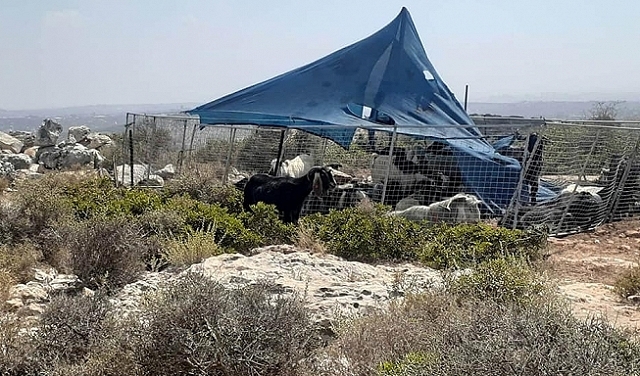
The occupation forces arrest a child and run over sheep in the northern Jordan Valley.

Israeli occupation forces arrested a child in Khallet Makhul in the northern Jordan Valley on Wednesday and deliberately ran over a number of sheep.

Local sources reported that the occupation forces arrested the child Muhammad Yusef Basharat in Khallet Makhoul, and also deliberately ran over a number of sheep owned by Basharat.

OPINIONS

Wed 09 Jul 2025 11:03 am - Jerusalem Time

Are Palestinians facing a new humanitarian disaster as a result of the forced displacement plan?

Mustafa Ibrahim

Mustafa Ibrahim

Opinion Writer

As the Israeli aggression on the Gaza Strip enters its twenty-first month, the outlines of a plan that goes beyond traditional military objectives are becoming clear, revealing an organized forced displacement project that threatens a humanitarian catastrophe and a full-fledged crime of ethnic cleansing. The situation on the ground is no longer simply a targeting of infrastructure or factions, but rather a comprehensive war of extermination accompanied by the deliberate destruction of everything that sustains life in the Strip.

In this context, Israeli Defense Minister Yisrael Katz announced a plan to establish so-called "humanitarian cities" in the southern Gaza Strip. These are, in effect, huge tent camps to which hundreds of thousands of forcibly displaced Palestinians will be forced to relocate after their homes and communities were destroyed. According to Israeli press reports, residents of these areas will not be allowed to leave, effectively turning them into closed detention camps run by the Israeli military, aimed at concentrating the population in a narrow space in preparation for their deportation from the Strip.

In promoting these plans, Israel employs a dualistic rhetoric, speaking of "humanitarian solutions" and "voluntary displacement," while the facts refute these claims. One cannot speak of voluntariness under bombardment, nor of humanitarian choices when the population is being driven to starvation, death, and destruction, and then their forced flight is portrayed as a free choice.

In a blatant statement, Israeli Prime Minister Benjamin Netanyahu said during a meeting of the Knesset's Foreign Affairs and Defense Committee: "We are demolishing more and more homes; they have nowhere to return to. The only desired result is that Gazans will want to emigrate." This statement leaves no room for ambiguity; emigration is not a byproduct of the war, but rather its direct political goal.

This statement was not isolated, but rather came as part of a series of indications of a systematic displacement plan. The Israeli economic newspaper Calcalist revealed a leaked official document prepared by the Minister of Intelligence and a member of the Israeli Knesset for the Likud Party in October 2023.
It includes a three-stage plan to relocate Gaza residents to North Sinai. The plan begins with setting up temporary tent camps in the southern part of the Strip, followed by the opening of a "humanitarian corridor" to facilitate their exit, and culminates in the construction of permanent settlements inside Egyptian territory, with a buffer zone preventing their return.

The document ironically describes this plan as a "humanitarian option" and claims that some Gaza residents have expressed a desire to leave, in an attempt to market forced displacement as a voluntary salvation. However, these claims do not stand up to reality, as those fleeing death do not do so of their own volition, but are forced into the unknown.

Ironically, this project is not a spur-of-the-moment idea. At the beginning of the genocide, Minister Gila Gamliel promoted the idea of deporting Palestinians to Sinai, a proposal that ignored Egyptian sovereignty and Palestinian rights and treated the population as a burden to be removed. Minister Katz, meanwhile, expressed his arrogance and sarcasm when he said, "God will send them manna and quails in the desert," in blatant disregard for the unfolding humanitarian catastrophe.

The deportation plans are not limited to false security or humanitarian rhetoric; they also include an extreme economic vision. The right-wing Misgav Institute, headed by former National Security Council chief Meir Ben-Shabbat, a right-wing extremist and one of Netanyahu's security advisors, has put forward a vision promoting the idea that absorbing Palestinians represents a lucrative economic opportunity for Egypt, ignoring human dignity and exploiting the tragedy of an entire people.

In a related context, US President Donald Trump's statements had discussed proposals to establish tourism and investment projects on the ruins of Gaza, a "Gaza Riviera," after emptying it of its residents. These visions offer no room for any talk of reconstruction, return, or justice, but rather the repurposing of land emptied of its people into profitable projects, within a fully integrated colonial landscape.

All this data confirms that we are not merely facing a war, but rather a systematic forced displacement project that violates international humanitarian law, the Fourth Geneva Convention, and the Genocide Convention. After killing tens of thousands, Israel is seeking to establish a new reality based on the expulsion of the remaining Palestinians, amid international complicity and silence that amounts to complicity in the crime.

Despite the gravity of the situation, the official Palestinian position remains limited, confined to statements of condemnation and appeals, without effective political action that would rise to the existential threat. It appears that the official establishment has not yet grasped that what is happening today may represent the most dangerous shift in the Palestinian cause since the 1948 Nakba.

International silence, particularly from Western countries, is no longer neutral; it is being read as a form of complicity. Failure to confront the crime of forced displacement and turning a blind eye to a clear ethnic cleansing project poses a crucial moral test: Will it uphold values and conventions, or will it continue to coexist with this crime as if it were a minor detail in the narrative of denying Palestinian rights?

History does not forgive. What is happening in Gaza today is not just a tragic chapter, but a revealing moment that questions the conscience of the world and holds everyone accountable. This moment, with all its bloodiness and injustice, will remain a witness to the collapse of norms, or perhaps the birth of a new resistance that will write another, more honest chapter in the Palestinian narrative.

PALESTINE

Wed 09 Jul 2025 10:59 am - Jerusalem Time

Netanyahu-Trump meeting outlines truce boundaries: temporary pledges and uncertain prospects

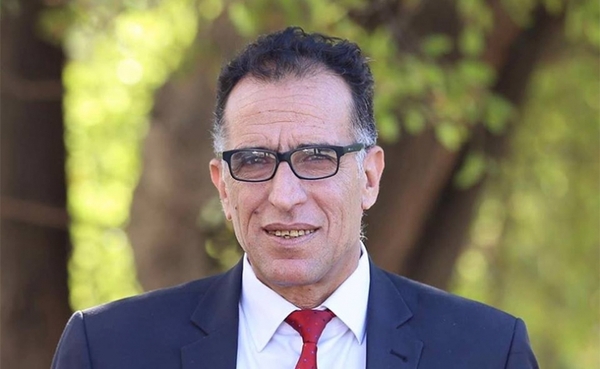
Dr. Hussein Al-Deek: The guarantees Hamas is demanding are still virtually absent, except for a personal pledge from Trump, which reinforces the trend toward a temporary truce rather than a permanent agreement.
Awni al-Mashni: This truce may be the best opportunity for Netanyahu to end the war and head toward early elections in which he can market his military and political "achievements."
Dr. Qusay Hamed: Hamas seeks to ensure the Israeli army's withdrawal from the Gaza Strip, but it is not yet confident that this goal will be achieved.
Firas Yaghi: Netanyahu does not want to truly end the war, but rather seeks to transform it from one form to another under the banner of "imposing peace by force," in accordance with Trump's vision.
Dr. Tamara Haddad: The recent meeting between Netanyahu and Trump confirms the "day after" scenario for Gaza, granting Israel freedom to strike based on the Lebanese model.
Hani Abu al-Sabaa: This time, the truce has a higher chance of survival than previous times, given the existence of US-Israeli understandings regarding the settlement of the Gaza crisis.


Amid the Israeli escalation in the Gaza Strip, the recent meeting between Israeli Prime Minister Benjamin Netanyahu and US President Donald Trump was seen as a key step toward formulating a truce that could last for sixty days. This comes amid fears that a temporary truce would reshuffle the pressure on Hamas and the Palestinian resistance in Gaza.
In separate interviews with "I", writers, political analysts, specialists, and university professors believe that this meeting, which reflected a consensus on the continued Israeli control of the Gaza Strip, has refocused attention on the American role in attempting to establish a temporary truce during which the parties will be given a chance to catch their breath and organize their political and field affairs.
The book indicates that Netanyahu is seeking to capitalize on this truce to strengthen his domestic standing ahead of a potential early election, while Trump is betting on re-presenting himself as a mediator for peace in the Middle East, despite the absence of any real guarantees that the basic Palestinian conditions will be met, most notably the complete withdrawal of the Israeli army and a guarantee that war will not resume after the truce expires.
While negotiations continue in Doha to overcome the final obstacles, writers, analysts, specialists, and university professors point out that many questions remain regarding the seriousness of transforming this truce into a permanent agreement. Scenarios suggest a reimposition of a security model similar to that occurring on the Lebanese border, while the landscape remains open to conflicting possibilities, ranging from a temporary thaw to a return to the language of war.

The current effort does not aim for a permanent ceasefire.

Writer, political analyst, and expert on American affairs and international relations, Dr. Hussein Al-Deek, asserts that all current indicators point toward a temporary truce in the Gaza Strip lasting for 60 days. This is in light of ongoing negotiation meetings in Doha, which focus on overcoming obstacles related to the Palestinian resistance's reservations to ensure this ceasefire is achieved.
Al-Deek explains that the resistance has set three main demands for the success of this agreement: the withdrawal of the Israeli army from the Gaza Strip, a mechanism for distributing humanitarian aid and ensuring its delivery, and real guarantees to prevent a renewed war after the sixty-day period has expired. Al-Deek notes that current discussions are focused on further clarifying these three points so that they are acceptable to all parties.
Al-Deek explained that the current effort does not aim for a permanent ceasefire, but rather a truce with a specific duration. The possibility of converting it to a permanent ceasefire will be explored within the same 60-day period if appropriate political and security conditions are met.
However, Al-Deek stresses that the guarantees Hamas is demanding are still virtually absent, existing only in the form of a personal pledge from US President Donald Trump, which reinforces the belief that the movement is moving toward a temporary truce rather than a permanent agreement.
Al-Deek explains that the lack of other alternatives makes the truce a mutually beneficial option for both sides. He explains that Israeli Prime Minister Benjamin Netanyahu sees this truce as an opportunity to improve his domestic popularity, particularly after the recent confrontation with Iran, in addition to his desire to advance in the polls through a prisoner and detainee exchange deal from Gaza.
Al-Deek points out that Netanyahu's initiative to nominate Trump for the Nobel Peace Prize confirms the two sides' complete agreement to advance matters toward a temporary truce.

The absence of any real political horizon after the ceasefire

Al-Deek explains that recent statements by Trump and Netanyahu have reinforced this assumption about a temporary truce only. Trump spoke clearly about granting Palestinians the freedom to leave or remain in the Gaza Strip, while Netanyahu emphasized that security control would remain in the hands of the Israeli military. When asked about the two-state solution, he offered no definitive answer, indicating the absence of any real political horizon beyond the truce.
Al-Deek points out that one scenario currently being circulated in the Hebrew press involves making the Morag axis the primary dividing line for Gaza, with Israeli forces withdrawing from the Philadelphi corridor and repositioning themselves at the Morag axis. This could lead to the concentration of more than half of Gaza's population in the buffer zone between the two axes, facilitating the movement of a portion of the population toward Egypt and removing the obstacle to movement between Palestinian Rafah and Egyptian Rafah.
Al-Deek asserts that the Lebanese model may be the strongest hypothesis to be applied in Gaza, meaning that Israel will continue its military operations while maintaining its security control.
However, Al-Deek points out at the same time that the possibility of reaching a permanent ceasefire after the end of the sixty-day period remains an uncertain possibility, and may or may not be achieved, depending on the facts on the ground.

The last hours of any war are usually the most violent.

Writer and political analyst Awni Al-Mashni believes that the current proposed truce between Israel and the resistance is no longer solely a Palestinian interest, but has become a clear Israeli interest as well. This is due to the continued depletion of the Israeli army on the Gaza fronts, and Prime Minister Benjamin Netanyahu's desire to maintain the "image of victory" he presented to Israeli society following the recent confrontation with Iran.
Al-Mashni believes this truce may be the best opportunity for Netanyahu to end the fighting in Gaza and head toward early elections, where he can promote his military and political "achievements," capitalizing on the convergence of interests among all parties, including the United States, which is now pushing for a ceasefire that would end the escalation.
However, Al-Mashni warns that the final hours of any war are often the most violent, as each side seeks to achieve additional gains and translate its military might into political leverage. This explains the current escalation in Gaza despite the approaching truce agreement.

The situation may turn into something resembling the "Lebanese scenario."

He explains that a potential ceasefire does not necessarily mean an end to the crisis, predicting that the situation will evolve into something resembling a "Lebanese scenario," with intermittent strikes and assassinations continuing to keep Gaza "unlivable."
Al-Mashni asserts that the idea of displacing Palestinians has not left the minds of Israeli decision-makers and will remain a fundamental driver of current and future Israeli policies.
He explains that the continued existence of the current "racist" Israeli government makes the chances of achieving a genuine ceasefire or lasting stability virtually nonexistent, emphasizing that the Israeli right considers the failure of displacement a failure of its programs.
Al-Mashni explains that Israel will continue its policies of escalation in Gaza and the West Bank to avoid the most important goal: resolving the Palestinian-Israeli conflict. He points out that displacement attempts may temporarily cease in Gaza, but will continue in the West Bank. He also notes that reopening the Lebanese front remains a possibility within the Israeli framework, supported by Netanyahu's recent visit to Washington.

Netanyahu will not agree to a full cessation of hostilities.

Dr. Qusay Hamed, a professor of political science at Al-Quds Open University, asserts that Israeli Prime Minister Benjamin Netanyahu will not agree to a full ceasefire, but rather seeks to establish a new geographic reality that emerged after October 7, 2023.
Hamed explains that this reality is based on keeping the occupation forces inside parts of the Gaza Strip, allowing Israel freedom to launch military operations whenever it wishes, similar to what happens in the West Bank.
Hamed points out that Netanyahu's most prominent strategic goal is to completely eradicate Hamas from the Gaza Strip, whether administratively, politically, or militarily. This poses a fundamental dilemma for Israel, as it has so far been unable to find an alternative leadership formula it trusts to manage the Strip after Hamas's demise.
He explains that Netanyahu seeks to establish a political and administrative leadership that will complete the implementation of his goals and continue to eliminate the military power and strategic capabilities of Hamas.

Netanyahu still lacks a "day after formula"

Hamed points out that Netanyahu still lacks a "day after formula" for Gaza, which makes him unlikely to pursue a long-term truce. Meanwhile, Hamed believes Netanyahu will likely resort to intermittent, temporary truces that will deplete Hamas's strengths, particularly the issue of living and dead prisoners, with the goal of weakening the movement in negotiations and imposing Israel's conditions in the coming stages.
Hamed believes Netanyahu aims to release the prisoners with minimal costs and losses, without compromising his strategic plans in the Gaza Strip.
He asserts that the gains Netanyahu is promoting at the regional level, such as neutralizing Hezbollah, reducing Iran's power, and weakening the Assad regime, will remain worthless if he does not complete his project in Gaza.
Hamed warns that Israel's long-term plan could lead to the gradual displacement of the Strip's population by making living conditions so difficult that they become uninhabitable, forcing people to leave.
Hamed believes that the Lebanese scenario, whereby Israel would be free to engage militarily at any time, remains a preferred target for Israel, which may retain partial control over areas of Gaza to establish military bases that it could use to carry out targeted strikes whenever necessary.

The current negotiations are no different from previous rounds.

Regarding the negotiations, Hamed believes they are no different from previous rounds of negotiations, with the Israeli side seeking to achieve its goal of uprooting Hamas and ensuring that Gaza does not become a future threat, while Hamas clings to its negotiating tools, most notably the prisoner issue.
Hamed believes that Hamas is seeking to at least ensure the Israeli army's withdrawal from the Gaza Strip through Arab and regional guarantees, but it is not yet confident that this goal will be achieved.
Hamed asserts that the situation is still far from a final ceasefire, noting that any potential truce would be a repetition of previous ceasefires, with short periods of time and guarantees for continued negotiations regarding the future of the Gaza Strip and humanitarian aid, while Israel continues its efforts to undermine Hamas's negotiating power and weaken internal pressure on it.

Complications stand in the way of any final agreement on the war.

Writer and political analyst Firas Yaghi explains that the meeting between US President Donald Trump and Israeli Prime Minister Benjamin Netanyahu in Washington reflected profound contradictions that reveal the extent of the complexities facing any final agreement regarding the war on the Gaza Strip. Yaghi notes that Trump spoke clearly about the existence of a "deal" and that he would exert strong pressure to end the war, while Netanyahu, in contrast, emphasized his categorical rejection of the establishment of a Palestinian state, indicating that the war would only end under full Israeli control.
Yaghi points out that Netanyahu's statements about the shape of the "day after" the war remain unclear and increase the political ambiguity in the scene. He explains that Netanyahu rejects the idea of establishing a "Hamasstan" or "Fatahstan" in Gaza, and appears to be seeking a formula described by Yaghi as "Youthstan" within the Strip, in reference to the actions of the so-called Yasser Abu Shabab, which the Palestinian people in both Gaza and the West Bank reject.

Speed up the formation of a strong national unity government

He emphasized that confronting this scheme requires the rapid formation of a strong Palestinian national unity government capable of consolidating the Palestinian position, with genuine Arab support and backing. He emphasized that this is the only way to put an end to attempts to fragment the Palestinian position and impose partial solutions under American and Israeli pressure.
Regarding the Doha negotiations, Yaghi explains that the US is still focused on achieving the "60-day deal." However, Yaghi expresses his lack of optimism regarding the end of the war or the resolution of major issues after this temporary period, emphasizing that the fate of the negotiations afterward is entirely tied to Netanyahu's goals and his domestic situation in Israel, especially given the possibility of him calling early elections.
He explained that Netanyahu is attempting to exploit this issue to achieve "any accomplishment" in the prisoners' case, to bolster his domestic standing after the "false victory narrative" against Iran. He noted that he plans to withdraw from parts of the Gaza Strip and redeploy to the Philadelphi Corridor and the buffer zones to the north and east to besiege Gaza and hold it "hostage" within the so-called comprehensive deal promoted by Trump for the Middle East.
Yaghi believes that Netanyahu does not actually want to end the war, but rather seeks to transform it from one form to another under the rubric of "imposing peace by force," in accordance with Trump's vision. He points to the moral paradox in their relationship, as Trump has described Netanyahu as a "great man," despite the fact that he is wanted by the International Criminal Court and convicted of war crimes and domestic corruption.
Yaghi believes that Netanyahu's nomination of Trump for the Nobel Peace Prize reveals an absurd paradox, describing it as a "disregard for the principles of justice and humanity" that transforms the award from a tribute to peace into a "Nobel Prize for genocide," as he put it.

The meeting... and revealing the features of the "next day"

Writer and political researcher Dr. Tamara Haddad believes that the recent meeting between Israeli Prime Minister Benjamin Netanyahu and US President Donald Trump is one of the most revealing encounters yet to reveal the "day after" for the Gaza Strip.
Haddad explains that the expected scenario for Gaza closely resembles the "Lebanese model," whereby Israel will continue to launch airstrikes under the pretext of fighting armed groups within the Strip, with freedom of military action when necessary.
Haddad points out that Trump's statements during the meeting clearly expressed his complete alignment with Israel's vision, particularly when he linked the Palestinian statehood issue to Netanyahu's position and clearly stated that establishing a Palestinian state was not on the table. Instead, the alternative was to implement the "day after" concept, which would begin immediately after Netanyahu's return from his meeting with Trump.
Haddad believes this scenario is based primarily on continuing security and military operations until Hamas is eliminated and undermined from its roots, including disarming it and exiling its leadership.
Haddad asserts that the negotiations in Doha are still ongoing, but they will take more time given Hamas's refusal to comply with key provisions such as disarmament, ending its rule, or exiling its leaders. These provisions are essential for consolidating the temporary truce agreement and transforming it into a sustainable ceasefire.
Haddad explained that Israel will not withdraw completely from Gaza, but will remain stationed in strategic axes such as the Morag axis in Rafah, the buffer zone, and the north. This means the war will continue in a new form based on an "offensive defense" strategy. If intelligence becomes available about any threat from Gaza, Israel will use aerial bombardment and humanitarian pressure according to the same model applied in the West Bank, or perhaps a model combined with the Lebanese model, allowing it to enter and exit and launch strikes whenever it wants.

Israeli security control and Palestinian self-rule

Haddad emphasizes that "the day after" effectively means reimposing Israeli security control and sovereignty over Gaza, while granting Palestinians self-administration on the condition that it be peaceful and free of any connection to Hamas or any form of armed resistance. In parallel, Israel will work to create conditions for the displacement of Palestinians by facilitating the exit from Gaza and opening the Rafah crossing, while establishing a humanitarian zone in Rafah to accommodate approximately 600,000 Palestinians who will be separated from Hamas, and giving those who wish to emigrate the opportunity to do so.
Haddad notes that Israel might allow members of the Palestinian Authority, with tribal support, to govern the Strip with the goal of ending Hamas rule completely. The core of the vision, however, remains Israeli security control and demilitarized Palestinian self-rule, with Israel retaining the right to launch military strikes if any threat to Israeli national security arises.

The substantive points of disagreement were reduced to minor amendments.

Writer, political analyst, and expert on Israeli affairs, Hani Abu Al-Sabaa, explains that the meeting between Israeli Prime Minister Benjamin Netanyahu and US President Donald Trump raises several key issues, most notably the Israeli demand to strengthen military reserves following the recent confrontation with Iran. The meeting also explores the possibility of concluding an agreement with the new Syrian regime and its accession to the Abraham Accords, which aim to expand the circle of normalization and end the state of hostility and conflict in the region.
Abu Al-Sabaa asserts that the most prominent issue at this meeting remains the truce agreement currently being finalized in the Qatari capital, Doha. He points out that the atmosphere indicates that an announcement is imminent, and that it may be officially announced next Thursday, based on leaked statements from the parties.
Abu Al-Sabaa explains that the fundamental points of disagreement between the parties have been reduced to minor modifications, which enhances the chances of reaching an interim agreement that could open the door to a comprehensive agreement and a complete cessation of military operations.
Abu al-Saba' asserts that this truce holds a higher chance of survival than previous attempts, noting that the absolute US support for Israel in its recent attacks on Iran and the bombing of nuclear reactors clearly indicates the existence of prior understandings regarding the resolution of the Gaza crisis at this stage.

Likud shares improve, Netanyahu may resort to early elections

He points out that recent opinion polls have shown an improvement in the Likud Party's standing, prompting Netanyahu to seriously consider running in early elections early next year, armed with what he touts as political and military achievements—a position that will be incomplete if the war in Gaza continues.
Abu al-Saba'a points out that recent Israeli security reports have confirmed the impossibility of achieving a complete military victory or recovering the prisoners by force. He adds that the continuation of the war means further losses among the army, with the death toll rising to 38 soldiers since the resumption of recent operations.
He points out that the rapid developments on the ground prove that the resistance in Gaza has been able to reorganize its ranks and intensify its operations despite the circumstances, reinforcing Israeli decision-makers' conviction of the need to calm the situation on the ground through a new truce.
Abu al-Sabaa explains that the internal situation in Israel is now pressing for an end to the war, especially after the Israeli opposition announced its willingness to provide a safety net for Netanyahu's government, giving him room to overcome pressure from his more extremist partners, such as Ben-Gvir and Smotrich.
Abu Al-Sabaa explains that Trump, in turn, seeks to portray himself as a "man of world peace" with Nobel Peace Prize ambitions, which makes him eager to quickly end the war in Gaza so he can devote himself to more complex international issues, most notably the economic conflict with China and monitoring the situation within the United States.


PALESTINE

Wed 09 Jul 2025 10:57 am - Jerusalem Time

Hamas: Netanyahu is living in illusions, and there will be no release of prisoners except on the resistance's conditions.
The Islamic Resistance Movement (Hamas) said on Tuesday that Israeli Prime Minister Benjamin Netanyahu's statements about releasing prisoners and Hamas's surrender reflect his "delusions," stressing that their release will only happen through a deal whose terms are imposed by the resistance.
Hamas leader Izzat al-Rishq said in a Telegram post, "Netanyahu's statement about releasing all prisoners and Hamas's surrender reflects a psychological defeat, not the facts on the ground."
He added that after the enemy leaders acknowledged their abject failure to recover their captives through military operations, it became clear that there was no way to release them except through a serious deal with the resistance.
He stressed that "Gaza will not surrender... and the resistance will impose the conditions, just as it imposed the equations."
The Israeli occupation army continues its war on Gaza, while indirect negotiations are underway in Qatar between Hamas and Israel, in an attempt to reach a prisoner exchange agreement and a ceasefire.
On Tuesday evening, ahead of his second meeting with US President Donald Trump at the White House, Israeli Prime Minister Benjamin Netanyahu reiterated his commitment to continuing the war on the Gaza Strip, despite ongoing negotiations to reach a prisoner exchange and ceasefire agreement.
In a televised address on his X platform account, Netanyahu outlined the war's objectives as "releasing all of our abductees (prisoners), eliminating Hamas's military and political capabilities, and ensuring that Gaza will no longer pose a threat to Israel, which means that Hamas will no longer exist."
Netanyahu added, "We are determined to complete our war goals in Gaza."
Netanyahu spoke about the operation carried out by the Qassam Brigades, Hamas's military wing, in Beit Hanoun, northern Gaza, which resulted in the deaths of five Israeli soldiers, describing it as "a difficult day for the people of Israel."
Tel Aviv estimates there are 50 Israeli prisoners in Gaza, 20 of whom are still alive. Meanwhile, more than 10,800 Palestinians are languishing in its prisons, suffering torture, starvation, and medical neglect, many of whom have died, according to Palestinian and Israeli human rights and media reports.
Since October 7, 2023, Israel, with American support, has waged a genocidal war in Gaza, leaving more than 194,000 Palestinians dead and wounded, most of them children and women, and more than 11,000 missing, in addition to hundreds of thousands of displaced persons and a famine that has claimed the lives of many, including dozens of children.
Source: Anadolu Agency