PALESTINE

Sun 13 Jul 2025 9:12 am - Jerusalem Time

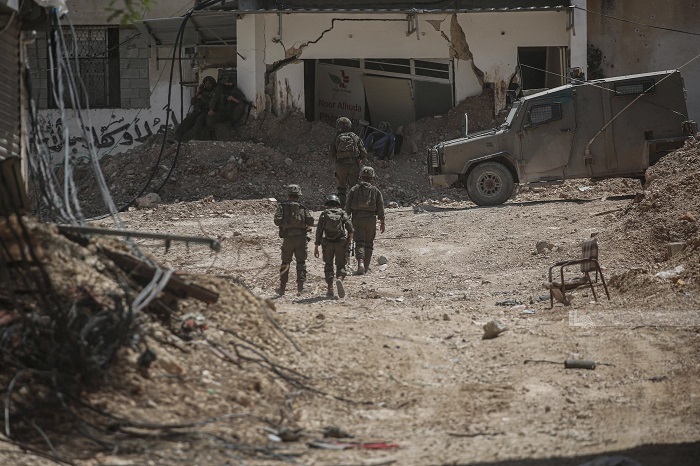
Occupation forces launch arrest campaign in the West Bank

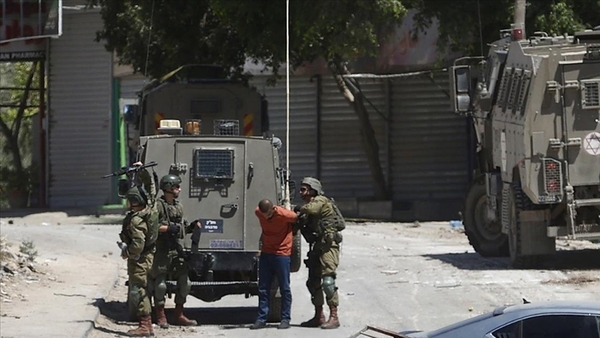
Israeli occupation forces launched an arrest campaign in the West Bank this Sunday morning.

In Nablus, occupation forces raided citizens' homes in the Masaken al-Sha'abi area east of Nablus, searched them, vandalized their contents, and arrested Nasser Ahmed Aydi and his son Yamen.

Meanwhile, the occupation forces also stormed Balata camp and arrested citizen Yazid Ezz Ahmed Al-Aidi after raiding and searching his home.

In Bethlehem, occupation forces arrested citizen Alaa Muhammad Salman Shanaytah (38 years old), after raiding and searching his family's home and destroying his property in the town of Al-Ubeidiya.

In Salfit, occupation forces raided a number of citizens' homes, ransacked their contents, and arrested the following young men: Osama Muhammad Tahir Suleiman, Ahmad Rasmi Samih Khafash, and Adel Hassan Shahada.

The occupation soldiers also assaulted a number of citizens during the raid.

In a related development, Israeli occupation forces continued to close the northern entrance to the city of Salfit with an iron gate, impeding the movement of citizens.

ARAB AND WORLD

Sun 13 Jul 2025 9:10 am - Jerusalem Time

How Netanyahu prolonged the war in Gaza to remain in power

In a lengthy research article published by the New York Times on Friday, July 11, 2025, the newspaper notes that six months after the start of the war on the Gaza Strip, Israeli Prime Minister Benjamin Netanyahu was preparing to call it off. Negotiations were underway for an extended ceasefire with Hamas, and he was ready to agree to a settlement. He sent an emissary to convey Israel's new position to Egyptian mediators. In a meeting at the Defense Ministry in Tel Aviv, he had to convince his cabinet to agree. He kept the plan off the written agenda of the meeting, as the idea was to reveal it suddenly and prevent ministers who opposed a ceasefire from coordinating their response.

The newspaper says: “This was in April 2024, long before Netanyahu returned to the political arena. The proposal would have halted the Gaza war for at least six weeks. It would have opened the way for negotiations with Hamas on a permanent truce. More than 30 hostages taken by Hamas at the start of the war could have been released within weeks. More could have been released if the truce had been extended. The devastation of Gaza, where some two million people were trying to survive daily attacks, could have been halted. Ending the war would have increased the chances of reaching a historic peace agreement with Saudi Arabia, the most powerful country in the Arab world. For months, the Saudi leadership had secretly expressed its willingness to accelerate peace talks with Israel, provided the war in Gaza stopped.”

But for Netanyahu, the truce carried a personal risk. As prime minister, he led a fragile coalition dependent on the support of far-right ministers who wanted to occupy Gaza, not withdraw from it. They sought a long war that would eventually enable Israel to rebuild Jewish settlements in Gaza. If a ceasefire came too soon, these ministers could decide to collapse the ruling coalition, leading to early elections that polls showed Netanyahu would lose. Out of office, Netanyahu was in a vulnerable position. Since 2020, he had been on trial for corruption; the charges, which he denied, largely related to granting favors to businessmen in exchange for gifts and positive media coverage. By losing power, Netanyahu would lose the ability to dismiss the attorney general who oversaw his trial—something his government would later attempt to do.

"While the cabinet was discussing other matters, one of his aides rushed into the meeting room carrying a document summarizing Israel's new negotiating position and quietly placed it in front of Netanyahu. He read it over one last time, underlining various points with his pen. The road to a truce was fraught with real dangers, but he seemed ready to move forward," the report said.

The newspaper reports: “Then his (Benjamin Netanyahu’s) finance minister, Bezalel Smotrich, interrupted the session. Smotrich, a young activist in 2005, had been detained for weeks—though never charged—on suspicion of planning to bomb vehicles on a major highway to slow the dismantling of Israeli settlements in Gaza. Along with Itamar Ben-Gvir, the far-right national security minister, Smotrich is now one of the strongest proponents in the cabinet of rebuilding those settlements. He had recently called on most of Gaza’s Palestinian residents to leave. At the cabinet meeting, Smotrich announced that he had heard rumors of a plan to reach an agreement. The details disturbed him. “I want you to know that if such a surrender agreement is presented, you will no longer have a government,” Smotrich said. The government has ended.” It was 5:44 p.m., according to the minutes of the meeting. At that moment, the prime minister was forced to choose between the chance of a truce and his political survival—and Netanyahu chose to stay. Smotrich promised that there was no plan for a ceasefire. “No, no, there is no such thing,” he said. As the cabinet discussion progressed, Netanyahu leaned quietly over to his security advisers and whispered what must have been obvious to them by then: “Don’t present the plan.”

The newspaper says that "the 12-day war with Iran last June was widely understood as a moment of glory for Netanyahu, a moment that represented the culmination of a difficult comeback from the lowest point of his long political career, when, in October 2023, he oversaw the most serious military failure in Israel's history."

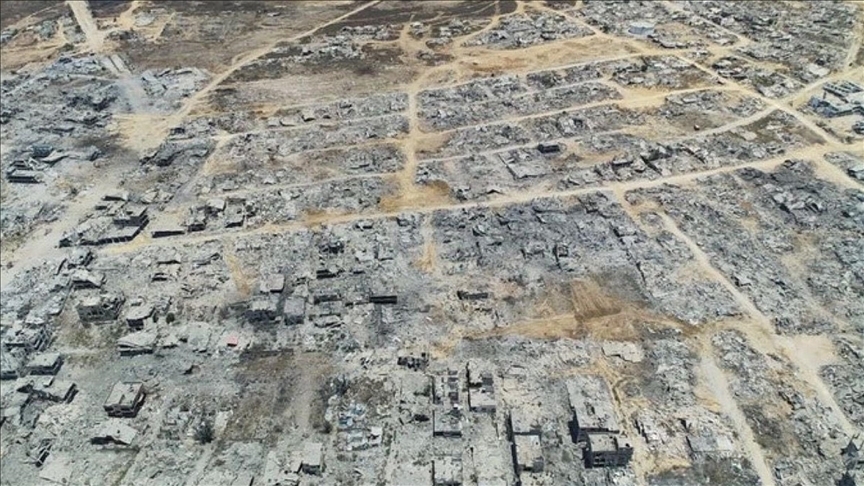
But in the wake of this apparent victory, a more fateful reckoning awaits Netanyahu regarding the Gaza war. The conflict has leveled much of the territory, killing at least 55,000 people, including Hamas fighters but also many civilians, including nearly 10,000 children under the age of 11. Even if negotiations finally succeed in halting Israeli strikes in the coming days, it is already the longest high-intensity war in Israel’s history—longer than the wars surrounding its founding in 1948, longer than the Yom Kippur War that defended its borders in 1973, and much longer, of course, than the 1967 Arab-Israeli Six-Day War that brought Gaza and the West Bank under its control. As the war drags on, the global sympathy Israel gained in the wake of the deadliest attack on Jews since the Holocaust has turned into growing international shame. The International Court of Justice is examining allegations that Israel committed genocide. And in America, President Joseph Biden’s failure to end the war has divided the Democratic Party and helped catalyze the unrest that brought President Trump to power. In Israel, the prolongation of the war has exacerbated bitter disagreements over the nation’s priorities, the nature of its democracy, and Netanyahu’s legitimacy as leader. Why, after nearly two years, has the war yet to reach a decisive end? Why has Israel repeatedly rejected opportunities for a de-escalation, instead expanding its military ambitions into Lebanon, Syria, and now Iran? Why has the war dragged on, even as Hamas’s leadership has been decapitated and more Israelis have called for a ceasefire? For many Israelis, the prolongation of the war is primarily the fault of Hamas, which has refused to surrender despite suffering heavy Palestinian losses. Most Israelis also see the war’s spread into Lebanon and Iran as an essential act of self-defense against Hamas’s allies, who also seek Israel’s destruction. But many increasingly believe Israel could have reached an earlier agreement to end the war, and they accuse Netanyahu—who has ultimate authority over Israeli military strategy—of preventing such an agreement. To understand the role Netanyahu’s calculations played in prolonging the war, we spoke with more than 110 officials in Israel, the United States, and the Arab world. All of these officials—supporters and critics—met, observed, or worked with the prime minister from the start of the war, sometimes long before it began. We also reviewed dozens of documents, including cabinet meeting records, communications between officials, negotiation records, war plans, intelligence assessments, secret Hamas protocols, and court documents.

The cost of the delay was high: with each passing week, it meant the deaths of hundreds of Palestinians and the terror of thousands more. It also meant the deaths of at least eight more hostages in captivity, deepening divisions in Israel between those who sought a hostage release deal above all else and those who believed the war should continue until Hamas was destroyed. It delayed the Saudi deal, tarnished Israel's image abroad, and prompted prosecutors at the International Criminal Court to demand Netanyahu's arrest.

But for Netanyahu, the immediate rewards were plentiful. He gained greater control over the Israeli state than at any time during his 18 years as prime minister. He successfully prevented a formal investigation into his responsibility, saying that the fallout would have to wait until the Gaza war ended, even with the dismissal or resignation of the defense minister, the army chief, the head of internal intelligence, and several other senior generals. While Netanyahu appears in court three times a week for his corruption trial, his government is now moving to dismiss the attorney general overseeing that trial. The continuation of the war has also strengthened his coalition, giving him time to plan and execute his attack on Iran. More importantly, even his staunchest supporters point out, it has kept him in office.

“Netanyahu has achieved a political renaissance that no one—not even his closest allies—thought possible,” Srulik Einhorn, a political strategist and member of Netanyahu’s inner circle, tells the newspaper. “His leadership during a protracted war with Hamas and a bold strike against Iran reshaped the political landscape. He is now in a strong position to win elections again.” This is the inside story, containing many previously unreported details, of Netanyahu’s role in the events leading up to the October 7 attacks and how his political calculations influenced the course of the war that followed. The report reveals how Netanyahu—in cabinet meetings, closed sessions with his top advisers, and phone calls with his international allies—made a series of decisions that prolonged a disastrous war, in part to preserve his power.

It's worth noting that Joel Swanson, a scholar of modern Jewish intellectual history at Sarah Lawrence College, expressed his disgust with Netanyahu. He wrote on the Blue Sky website: "Everything in this report is damning and damning of Benjamin Netanyahu, one of the worst and most cruel world leaders of our time."

For his part, Matt Duss, executive vice president of the Center for International Policy, argued that the Times report also painted a negative picture of former US President Joe Biden.

"Portraying Biden as reckless and irritable because of his constant deception by Netanyahu diminishes his guilt," Das wrote on the X website. "Netanyahu could not have perpetrated the Gaza massacre and revived his political career without Biden's full support, which Biden chose to provide."

PALESTINE

Sun 13 Jul 2025 9:09 am - Jerusalem Time

Deal Maneuvers: Trump Buys Time for Netanyahu

Dr. Suhail Diab: The current impasse is a direct result of Netanyahu's "fatal hesitation," as he finds himself facing a complex dilemma that forces him to choose between conflicting scenarios.
Akram Atallah: The apparent allegations of tension or rift between Trump and Netanyahu are part of a tactical maneuver and deception to buy time or send misleading messages to the world.
Dr. Dalal Erekat: What is being presented today as an "agreement" is merely a political cover for the occupation to continue displacement and settlement...and there are no real negotiations.
Muhammad Hawash: Netanyahu is using stalling tactics in negotiations to impose conditions that will enable him to claim "complete victory" over the Palestinians.
Dr. Aqel Salah: Trump is giving Netanyahu enough time to continue the war on the Gaza Strip by deluding the international community into believing there are serious negotiations.
Naaman Abed: The suggestion of serious negotiations contributed to mitigating the shift in the West's view of Israel as a state accused of genocide in international courts.


As negotiations for an agreement to end the war of annihilation in the Gaza Strip falter, questions are growing about the truth behind US President Donald Trump's promises that an agreement is imminent. Despite his repeated statements about an "imminent" agreement to end the war, the facts confirm that these promises may be little more than a media bargaining chip designed to manage regional tensions and buy time for Israel.
In separate interviews with "I," writers, political analysts, specialists, and university professors believe that the Trump administration has not exerted any real pressure on the Israeli government to accept an agreement to end the war on the Gaza Strip. Instead, it has granted it unprecedented political and military cover.
They explain that the Trump administration has exploited the notion of a "close agreement" to ease international pressure on Israel in the courts and human rights bodies, leveraging the media buzz to project a false commitment to ending tensions. However, behind closed doors, close coordination continues between Washington and Tel Aviv to establish red lines that prevent any settlement that does not guarantee continued Israeli control over the territory.

Hamas has offered more than it could offer.

Political science professor and Israeli affairs expert Dr. Suhail Diab says that the current negotiations are stalled not because of mutual conditions between the Netanyahu government and Hamas, but because the real stumbling block lies within Israel and in the relationship between Netanyahu and the US administration.
Diab points out that Hamas has offered more than it could on all issues, but the current impasse is a direct result of Netanyahu's "fatal hesitation," who finds himself, for the first time since 1996, facing a complex dilemma that forces him to choose between conflicting scenarios.
Diab points out that Netanyahu's ability to manipulate Israeli society, the military, his ruling coalition, the US administration, and even international public opinion and mediators has been completely exhausted. Everyone, including the United States, has come to realize that the only obstacle to reaching any deal is Netanyahu himself.
Diab cites a recent extensive report by the New York Times, documented with facts and evidence, detailing how Netanyahu has undermined every agreement since April 2024. He asserts that Netanyahu's return from his recent visit to Washington without any joint statement or press conference with US President Donald Trump confirms that things were not going well between them, neither regarding the Gaza issue nor the Iranian nuclear issue.
Diab asserts that Netanyahu's conditions, such as disarming Hamas or withdrawing the movement from Gaza, reveal the depth of his hesitation and his surrender to pressure from the Israeli far right, which threatens to bring down his government.

"What she took is hers and what remains is negotiable."

Diab explains that this mentality is not new to official Israeli thought, recalling how Israeli control over the land has evolved since the 1947 Partition Plan. Israel began with 45% of historic Palestine, then grew to 55%, then to 78% after the 1948 Nakba. After the 1967 war, it expanded to more than 83% of the land.
Diab emphasizes that Israel follows a political principle that states, "Whatever it takes is its own, and whatever remains can be negotiated," considering that talk of "compromises" in this context is nothing more than a cover for actual surrender.
Diab believes that while Netanyahu is desperate for a deal now, he cannot directly reject Trump's demands. Instead, he finds himself trapped between pressure from the US administration, which has not yet decided its position internally due to divisions between Congress, Trump, and the Zionist lobby within the Republican Party, and the constraints of the Israeli military, which understands better than most that military escalation no longer offers Israel any political gains.
Diab points out that the last month in particular, since the beginning of June, has clearly revealed this contradiction, as the increased military pressure on Gaza has had the opposite effect, resulting in a deterioration in Israel's political position and significant losses for the army, which have impacted the morale and level of preparedness of its soldiers.
Diab asserts that the current American position is unlike the American position at previous critical moments, such as when Trump asked Netanyahu to stop the war with Iran, and the fighting ceased in less than an hour.
Today, Diab believes that Netanyahu's hesitation and the lack of American decisiveness place Israel at a dangerous and fateful crossroads, where Netanyahu will have only two options: either move toward a genuine détente through a deal that forces him to make difficult internal concessions, or head toward a widespread explosion that will have unforeseen repercussions for Israel and the entire region.


Netanyahu seeks to impose a "humiliating" agreement on Hamas

For his part, writer and political analyst Akram Atallah asserts that the optimistic expectations promoted by US President Donald Trump regarding the imminent conclusion of an agreement between Israel and Hamas have not materialized. He explains that the main reason for this is that Israeli Prime Minister Benjamin Netanyahu seeks to impose a "humiliating" agreement on Hamas, one that would legitimize the continued presence of Israeli occupation forces in large areas of the Gaza Strip with the approval of the movement itself.
Atallah explains that Netanyahu is proposing a formula for an agreement that would entail the severing of the governorates of Rafah, Beit Hanoun, and Beit Lahia, in addition to a large portion of the Gaza Strip's eastern border. This raises real concerns that this severing could become permanent, formally and dangerously legitimizing the Israeli presence. He considers this the dilemma Netanyahu has posed as a "sawk" to any serious negotiations.
Atallah asserts that Netanyahu wants an agreement that is closer to surrender, and if he fails to obtain one, he is prepared to continue the war without hesitation to appease the extreme right-wing factions in his government, led by Bezalel Smotrich.
Atallah points out that Netanyahu sees no problem with continuing military operations as long as they serve his political and security goals, emphasizing that the overwhelming support he receives from Trump gives him broad latitude to act in this manner.

Anyone who thinks that Trump might pressure Netanyahu is delusional.

Regarding the relationship between Trump and Netanyahu, Atallah explains that it is a mistake to believe there are real differences between them or that Trump might pressure Netanyahu to make concessions.
Atallah considers the relationship between Netanyahu and Trump to be complementary, based on an exchange of roles, with each party complementing the other to achieve common goals. He asserts that Trump represents an "executive arm" of Netanyahu's policies on major issues, whether the Palestinian issue, Iran, or others.
Atallah emphasizes that the apparent claims or statements about tension or a rift between Trump and Netanyahu are merely part of a tactical maneuver and calculated political deception aimed at buying time or conveying misleading messages to the world.
Atallah explains that Netanyahu himself stated that the understanding between him and Trump extends beyond strategic issues, but also encompasses tactical details, making their relationship part of a "role-playing game" to achieve Israeli interests without retreat or real pressure.


Trump buys more time for Israel

For her part, Dr. Dalal Erekat, professor of diplomacy and conflict resolution at the Arab American University, believes the lack of real progress in the negotiations is primarily due to the fact that the Palestinians are not even a party to the proposals. She believes that the promises made by US President Donald Trump regarding the imminent conclusion of an agreement are nothing more than public relations tools used to deceive Palestinian and Arab public opinion and buy more time for Israel.
Erekat emphasizes that the Palestinian people are living in a state of forced anticipation, as if they are required to await the results of a political process in which they were not a party to the original plan. She points out that what is being presented cannot be described as a genuine agreement, but rather is a clear attempt to impose a fait accompli through a flawed settlement that is completely biased toward the Israeli occupation, under the misleading title of "agreement."
Erekat explains that the Trump administration, since taking office, has fully embraced the Israeli right-wing narrative, thereby disregarding international legitimacy and relevant UN resolutions, thus stripping the entire process of any political credibility.
Erekat explained that the policy of systematic displacement of Palestinians has never ceased. Indeed, Israeli settlement activity has expanded at an accelerating pace under American cover. The US administration has not exerted any real pressure on Israel, but has instead legitimized the occupation and opened the door for it to implement its expansionist plans without restraint.

An ideological and strategic alliance between Trump and Netanyahu

Erekat asserts that President Trump has not lost his ability to exert pressure, but rather did not seek to subjugate Netanyahu or push him toward a just settlement.
Erekat believes that what happened was nothing more than an ideological and strategic alliance between Trump and Netanyahu, based on an exchange of roles that served the agendas of both parties. On the one hand, Trump needed to capitalize on any foreign achievements to bolster his domestic campaigns, while on the other, Netanyahu benefited from unconditional American support to bolster his expansionist projects and legitimize further control over Palestinian territory.
Erekat believes that what is being presented today as an "agreement" is merely a political cover for continued displacement and settlement activity, emphasizing that calling things by their proper names is essential at this stage, as there are no real negotiations at hand, as much as there is a systematic attempt to impose a settlement that would end the Palestinian issue without ending the occupation itself.
Erekat asserts that the Palestinian people's rejection of this path and their steadfastness despite ongoing pressure is the primary factor thwarting these deals, not the absence of American will or the lack of leverage, as some claim.


The "compromise" is essentially a purely Israeli idea.

For his part, writer and political analyst Mohammed Hawash asserts that preliminary talks on a ceasefire agreement in Gaza are still ongoing and progressing at a rapid pace through multiple mediators, including the United States, Israel, Qatar, Egypt, and Hamas.
Hawash explains that American envoys are seeking to formulate an agreement that satisfies Israel and achieves its strategic interests, even though most of the formulas proposed since the beginning of the year have been based primarily on the positions of the Israeli extreme right.
Hawash explains that Netanyahu is discussing internally with his coalition partners, such as Smotrich and Ben-Gvir, about formulas that will satisfy them. He then hands the documents over to Israeli Minister of Strategic Affairs Ron Dermer, who then forwards them to US envoy Steve Witkoff, where they are reworked with some formal adjustments to make them more acceptable to the Palestinians before the US administration adopts them as a compromise.
However, according to Hawash, this "compromise" is essentially a purely Israeli idea aimed at entrenching the policies of Netanyahu's government and the orientations of his right-wing partners.

Protecting Israel's security is an absolute American commitment.

Hawash explains that US President Donald Trump aspires to an agreement that ends the fighting, limits Iran's influence, and strengthens relations with the Gulf states. These interests Washington considers far greater than simply protecting Israel, even though protecting Israel's security will remain an absolute US commitment, with the US covering up to 70% of Israel's national security funding.
Hawash stresses that Israel is entirely dependent on this American support, which enables it to continue its large-scale military operations.
Hawash explains that Netanyahu's claims about changing the equations in the Middle East would not have happened without absolute American cover.
Hawash asserts that when Trump recently visited the region, he listened to clear Arab demands for an end to the war and a reorientation of US policy in the Middle East toward de-escalating conflicts. However, Washington is not expected to fully respond to these demands, nor will it fully comply with Israel's extremist conditions.
Hawash points out that one of the most prominent current points of contention concerns Israel's desire to maintain its presence south of the Morag axis, under the pretext of creating what it claims is a "humanitarian zone" to confine Palestinians and separate them from the resistance under the guise of military control. This is an additional tool of pressure on Hamas to push it to make greater concessions, rather than an actual retreat on the part of Washington or Israel.

America is the one running the negotiating scene

Hawash explains that the United States is the one directing the entire negotiating landscape in Gaza, while Israel plays the role of executing the "dirty" security and political tasks on behalf of the West.
Hawash points out that Netanyahu is using stalling tactics in negotiations to impose conditions that will enable him to claim complete victory over the Palestinians. This allows him to perpetuate the denial of a Palestinian state and leave Gaza in a state of chaos under the control of the Israeli military, while removing both Hamas and the Palestinian Authority from its administration.
Hawash asserts that Hamas has shown remarkable flexibility in accepting a temporary truce of up to 60 days, allowing for a halt to the daily war of extermination and giving Palestinians a chance to regroup and restore life to Gaza through relief efforts and Arab and Islamic support.
Hawash explains that Netanyahu is maneuvering to achieve personal, party, and governmental gains, but he may face greater pressure than he can bear now, especially if Washington continues to pursue its greater interests in the region, regardless of his domestic agenda.

Preventing legal action against Israel

Writer and political researcher Dr. Aqel Salah asserts that US President Donald Trump is giving Israeli Prime Minister Benjamin Netanyahu sufficient time to continue the war in Gaza by deluding the international community into believing serious negotiations are underway. This is intended to cool the domestic American situation and ease international pressure, fearing legal action against Israel and its leadership.
Salah explains that Netanyahu is attempting, through these formal negotiations, to present to the world a false image—one that he is leading negotiations that are achieving progress. His real goal, he says, is to buy time and drag himself from one round to the next, avoiding any international legal or diplomatic action that might impose restrictions or sanctions on his government.
Salah points out that history is repeating itself today, as happened at the second Camp David summit in 2000, when US President Bill Clinton, Israeli Prime Minister Ehud Barak, and the late Palestinian President Yasser Arafat were present. The United States played the role of absolute supporter of Israel and exerted tremendous pressure on the Palestinians, leading to the dramatic failure of those negotiations and conspiring against the core Palestinian issues that had been postponed since the signing of the Oslo Accords.
Salah explains that the same scenario is currently being repeated through intense American pressure on mediators and Hamas to force it to make concessions. He emphasizes that Israel and Trump are seeking to obtain a surrender agreement from the resistance on full American-Israeli terms.

Trump's statements are false promises for foreign consumption.

Salah considers Trump's media statements to be nothing more than false promises for foreign consumption, while the real negotiations are taking place behind closed doors for Israel's benefit.
Salah points out that the agreement signed on January 19 of this year was sponsored by the previous US administration, led by President Joe Biden and Trump. However, Trump gave Netanyahu the green light to launch a coup against him last March, allowing the bombing of Gaza, the killing, genocide, and the war of starvation and thirst to continue, all with a clear American green light.
Salah notes that the United States and Israel are seeking to force the Palestinian resistance to raise the white flag and sign an agreement on the terms of Netanyahu and Trump. He argues that the Trump administration has stood politically, militarily, and diplomatically with Israel on numerous issues, from Lebanon and Syria to Iran, and is working to completely liquidate the Palestinian cause.
Salah emphasizes that talk of disagreements between Trump and Netanyahu is nothing more than a media ploy to mislead the world into believing there are differences, emphasizing that the relationship between the two sides is complementary, with a clear division of roles to serve Israeli goals.
Salah explains that this relationship became evident prior to the Iran-Israel war, when the media promoted alleged disagreements while there was complete harmony, resulting in an Israeli strike against Iran with American-Israeli support and planning, led by Trump and Netanyahu.
Salah asserts that an agreement with Israel under American and Israeli conditions remains out of reach, because these conditions would imply a complete surrender by the Palestinian resistance, something the resistance will never accept, no matter how intense the pressure.


Exploiting time to implement plans in the West Bank and Gaza Strip

For his part, writer, political researcher, and international relations expert Noman Abed believes that the rounds of negotiations held by Israel under Benjamin Netanyahu's leadership, both in the past and currently, have been nothing more than systematic attempts to exploit time and implement well-thought-out plans encompassing the West Bank and Gaza Strip, while also alleviating the international pressures that have escalated with the continuation of what he describes as genocide against the Palestinians.
Abed explains that the suggestion of serious negotiations has helped mitigate the international shift in the West's perception of Israel, which was previously presented as a "democratic oasis" before being transformed into a state accused of genocide in international courts and a perpetrator of the most heinous massacres and attacks both inside and outside Palestine.
Abed points out that the plan put forward by the Netanyahu government since its formation, as well as after October 7, 2023, is proceeding steadily on the ground with the full backing and support of US administrations, particularly the administration of US President Donald Trump.
Abed explains that Trump's victory and his administration's particular ideological orientation toward Israel, which preceded his election a few months ago, have altered many of America's foreign policy assumptions. A large portion of this administration has maintained ideological and doctrinal ties with the occupying state, a fact reflected in the statements of some of its officials, who have surpassed in their extremism even well-known Israeli figures such as Bezalel Smotrich and Itamar Ben-Gvir.

The Trump administration views Israel as a strategic proxy.

Abed explains that Netanyahu's repeated visits to Washington, the most recent of which came after the 12-day war with Iran, contributed to a shift in US strategy toward the Middle East. The principle of non-direct military intervention, which Trump had promoted during his election campaign, declined after the US administration directly intervened in the conflict with Iran. US promises regarding ending conflicts and achieving peace also shifted to a conviction that ending conflicts must first be achieved by achieving Israeli goals.
Abed asserts that the Trump administration now views Israel as a strategic agent implementing its policies in the Middle East, freeing up the administration to address other challenges in Asia and Europe, such as the escalation with China and the Russia-Ukraine war.
Abed explains that this identification between Trump and Netanyahu has led US President Trump to abandon his campaign promises regarding military non-intervention and human rights when it comes to Israel.
Abed asserts that what happened in Washington was nothing more than an agreement on how Israel would play its required role in the region, redrawing the map of the Middle East in accordance with the American-Israeli vision, even if this contradicted Trump's previous promises to end conflicts peacefully or address humanitarian concerns in Gaza.


OPINIONS

Sun 13 Jul 2025 9:08 am - Jerusalem Time

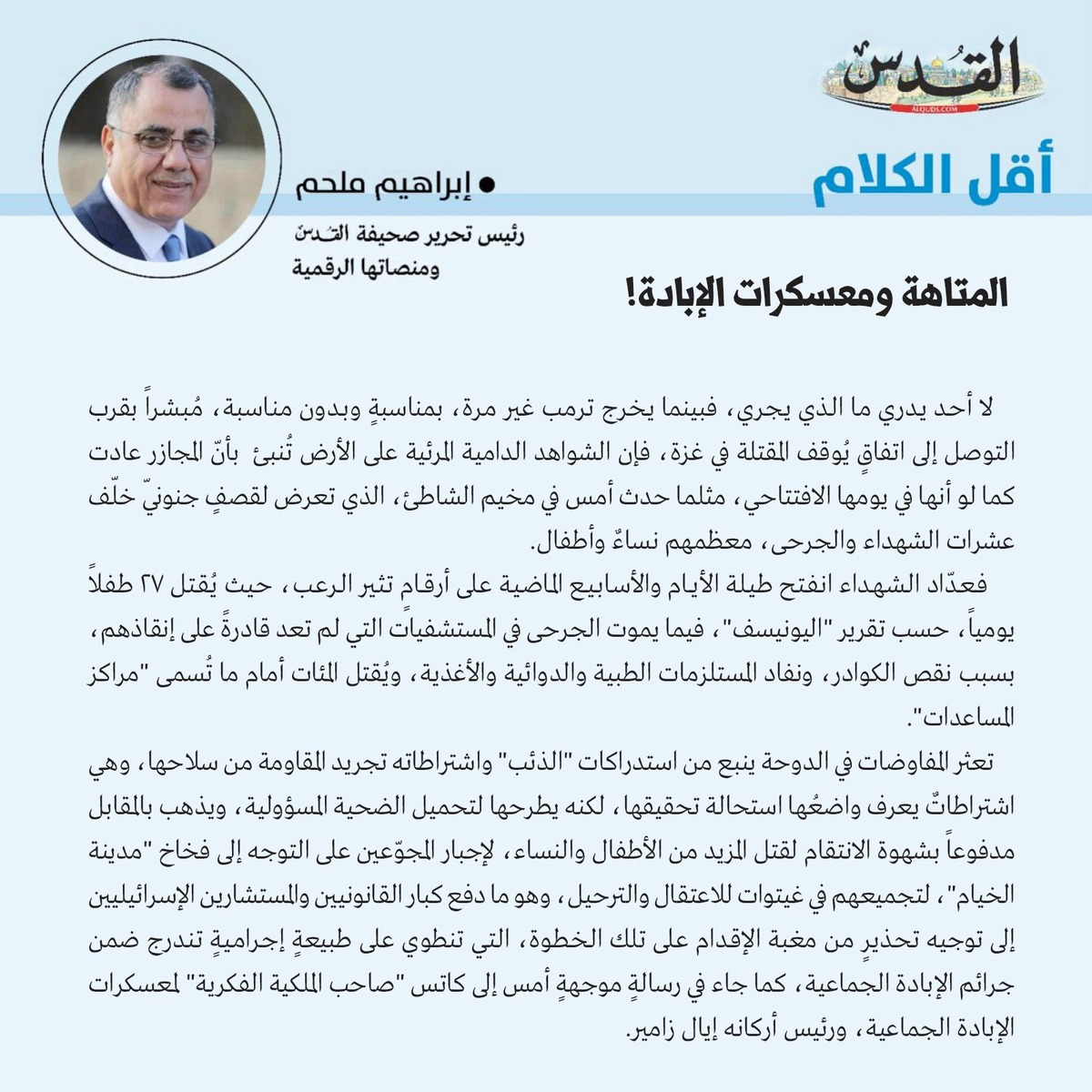
The Maze and the Extermination Camps!

Ibrahim Melhem

Ibrahim Melhem

Opinion Writer

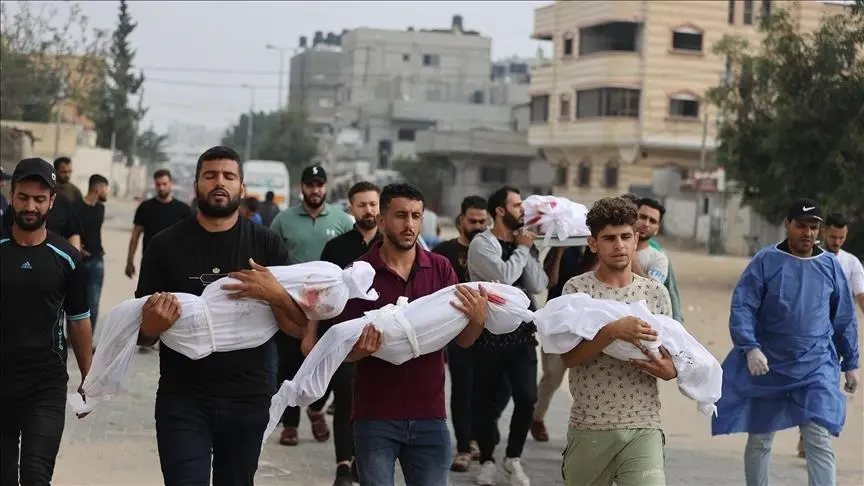
No one knows what's going on. While Trump repeatedly, on occasion and without occasion, promises that an agreement to halt the slaughter in Gaza is imminent, the bloody evidence visible on the ground suggests that the massacres are back, as if on their opening day. Just as happened yesterday in the Shati refugee camp, which was subjected to a frenzied bombardment that left dozens dead and wounded, most of them women and children.
Over the past few days and weeks, the death toll has been rising to alarming numbers. According to a UNICEF report, 27 children are being killed every day. Meanwhile, the wounded are dying in hospitals that are no longer able to save them due to staff shortages and the depletion of medical supplies, medicines, and food. Hundreds are being killed outside so-called "aid centers."
The stumbling of the negotiations in Doha stems from the "wolf's" clarifications and his conditions for disarming the resistance. These are conditions that the person who set them knows are impossible to achieve, but he raises them to hold the victim responsible. In return, he goes, driven by a lust for revenge, to kill more children and women, to force the starving people to head to the "tent city" traps, to be gathered into ghettos for detention and deportation. This prompted senior Israeli legal experts and advisors to issue a warning against the consequences of taking this step, which entails a criminal nature that falls within the crimes of genocide, as stated in a letter sent yesterday to Katz, the "intellectual property owner" of the mass extermination camps, and his Chief of Staff, Eyal Zamir.


PALESTINE

Sun 13 Jul 2025 9:06 am - Jerusalem Time

Qualitative attacks...the resistance negotiates with fire

Muhammad Abu Allan: The greatest influence on the course of negotiations at this stage comes from the US president more than the resistance operations themselves.
Shadi Al-Sharafa: The resistance is destroying the illusion of complete deterrence and dismantling the equations that the Israeli security establishment has sought to establish.
Dr. Jamal Al-Shalabi: The recent strikes confirm that the resistance still exists and has a say in any negotiations, and that the scenario of a long guerrilla war is now strongly on the table.
Dr. Thaer Abu Ras: The operations carried out by the resistance in the Gaza Strip significantly contribute to enhancing the chances of reaching a ceasefire agreement.
Dr. Rifaat Sayed Ahmed: Resistance operations improve the conditions for negotiating a ceasefire and may force Israel to accept it.

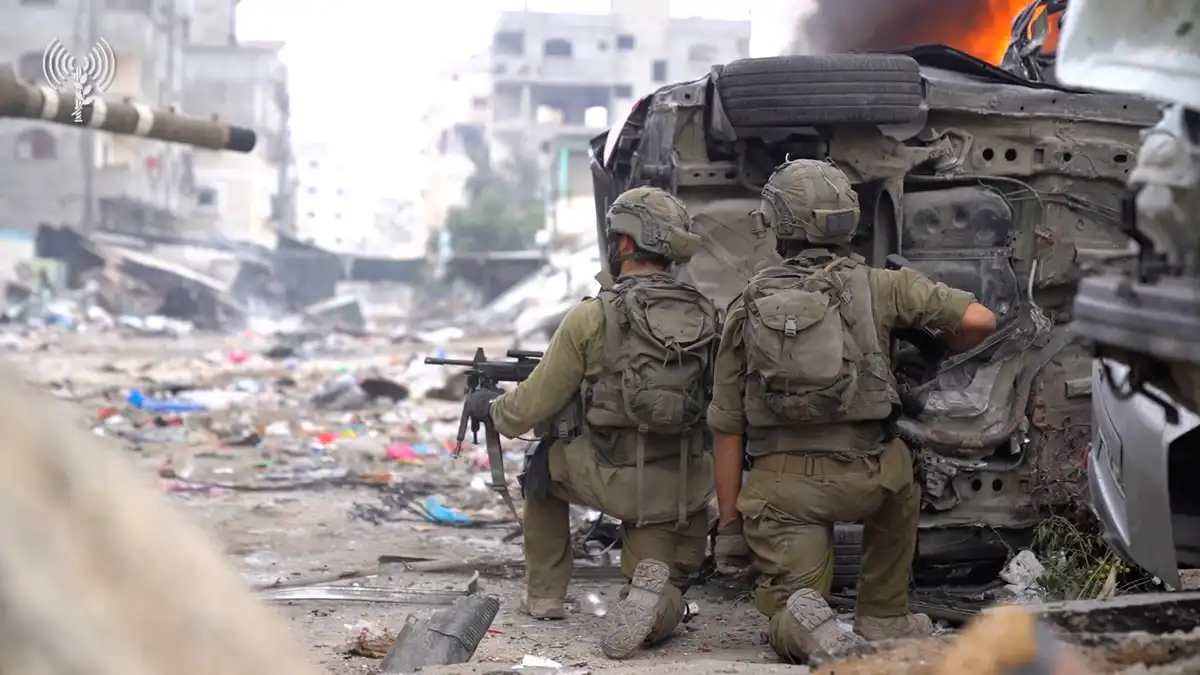
While attention is focused on the indirect negotiations between the occupying state and the Palestinian resistance, and the accompanying hope of reaching a ceasefire agreement/open massacre of innocents in the Gaza Strip, the Palestinian resistance has been scoring important points in the field confrontation with the occupying forces, despite the major shortages in equipment and supplies. The resistance has been able to deliver several painful blows to the occupying army, particularly in Khan Yunis, resulting in dozens of deaths and injuries among the ranks of the aggressor occupiers.
These heavy losses recently inflicted on the Israeli army in the Gaza Strip by resistance fighters armed with explosive devices and rifles were not the first of their kind during the war of extermination that has been ongoing for more than 21 months. However, their timing differs from previous periods, as they were carried out during the ongoing negotiations in Doha, as if the resistance was "negotiating with fire" on the ground. Furthermore, Israeli media coverage of these special operations is no longer subject to strict censorship as it was in the past, and news from the Gaza Strip is now being relayed to the Israeli public. This helps raise voices in Israel demanding the return of the detainees and an end to the war in the Strip, which is costing them more and more soldiers every day.
Writers, analysts, and experts who spoke to "I" said that the operations carried out by the resistance in the Gaza Strip are significantly contributing to enhancing the chances of reaching a ceasefire agreement. They pointed out that the recent strikes confirm that the resistance still exists and has a say in any negotiations, and that the scenario of a prolonged guerrilla war is now strongly on the table.
They emphasized that the resistance undermines the illusion of complete deterrence and dismantles the equations the Israeli security establishment has sought to establish. However, they noted that it lacks the leverage to change the equations and force Israel to halt the war. They noted that the greatest influence on the course of negotiations at this stage comes from the US president, more than the resistance operations themselves.


Growing impact inside Israel due to the killing of soldiers

Israeli affairs expert Mohammed Abu Allan said that the killing of Israeli soldiers in the Gaza Strip is having a growing impact within Israeli society, but it has not yet reached the level of decisive influence on political decisions or the course of the prisoner exchange negotiations underway in Doha and the ceasefire.
He added, "The most significant impact so far has been the growing voices within Israel calling for the return of the prisoners or an end to the war, amid a growing conviction among the Israeli public that the war has exhausted its objectives and is no longer yielding tangible gains on the ground."
Abu Allan considered the recovery of the remaining living prisoners a top priority for Israeli society.
He pointed out that Israeli Prime Minister Benjamin Netanyahu remains committed to his declared war goals, despite the difficulty of achieving them. He is imposing impossible conditions on Hamas in negotiations, such as the movement's withdrawal from the political scene, the surrender of its weapons, and the displacement of its leaders from Gaza.
He explained that the resistance operations, which have resulted in the deaths of 41 Israeli soldiers since the end of the last ceasefire, have not yet brought about a fundamental shift in the Israeli political position, nor have they led to an acceleration of negotiations or the conclusion of a prisoner exchange or ceasefire agreement.
Abu Allan added, "Perhaps the greatest influence on the course of the negotiations at this stage comes from US President Donald Trump more than the resistance operations themselves, which, while still ongoing, have declined in intensity and scope relative to what they were in the past."

The political level's priority is to achieve the war's objectives.

Abu Allan emphasized that the death of any Israeli soldier represents a great loss for Israeli society, but at the political leadership level, particularly among the extreme right, the priority remains achieving the war's objectives, even if it comes at the expense of soldiers' lives.
Abu Allan pointed out that the statements of ministers such as Bezalel Smotrich and Itamar Ben-Gvir are the most explicit. They are not content with simply demanding the achievement of the war's objectives, but are also seeking to occupy the Gaza Strip and resettle there, which means that the lives of soldiers are not a priority for them.
He emphasized that even the Israeli opposition, led by Yair Lapid, Benny Gantz, and Avigdor Lieberman, showed little concern over the deaths of the soldiers, having previously expressed the need to recover the captives first and then continue the war against Hamas.
Abu Allan concluded by saying, "The only factor that Israelis currently agree on is the return of the prisoners. Even if the war continues under the pretext of eliminating Hamas, the price, even if it is in soldiers' lives, does not seem to be an obstacle, especially after the October 7 attacks, which made Israelis willing to pay any price to fight Hamas because they feel it is an existential threat."


Political and strategic implications within Israel

For his part, Israeli affairs expert Shadi Al-Sharafa said that developments on the ground have had a significant impact, particularly as the Israeli army is expressing increasing fear of any form of military rule over the Gaza Strip.
He explained that the reason for this fear stems from the Israeli military establishment's awareness of the difficulty of controlling two million Palestinians, in addition to the losses incurred by the occupation army, a point highlighted by the Israeli Chief of Staff, Zamir, during a cabinet meeting.
Al-Shurafa pointed out that these developments have political and strategic implications within Israel. Continued resistance operations gradually weaken the legitimacy of the war, especially in the absence of tangible achievements or what is known as a decisive victory. This, he said, transforms the cost of the war into a domestic burden for Israel.
He added: "Strategically, the resistance is shattering the illusion of complete deterrence and dismantling the equations that the Israeli security establishment has sought to establish." He explained that the war that began with the goal of "annihilating Hamas" is now being translated on the ground into a mutual war of attrition, thanks to the resistance's steadfastness.

Israeli intransigence declines

In the same context, Al-Shurafa noted that the terms of the negotiations have been clearly affected, as Israel has shifted from a position of outright rejection of negotiations to indirect acceptance of them, and from rejecting the idea of a prisoner exchange deal to discussing interim settlements, and even recently accepting the idea of a gradual exchange deal, after having previously demanded the return of the prisoners without compensation.
He stressed that these transformations are the result of the resistance's steadfastness and the continuation of armed conflict.
However, Al-Shurafa called for not exaggerating the portrayal of what is happening as an absolute victory, nor for surrendering in the face of Israeli plans, emphasizing that the continuation of the fighting does not necessarily mean victory, but that the battle must also be employed politically, not simply as a battle of steadfastness.
Al-Shorfa emphasized that Palestinian losses are enormous, and that the situation in Gaza is catastrophic. This requires an independent and revolutionary Palestinian political will that rejects the logic of compromise and refuses to allow negotiations to become merely a technical humanitarian issue. Rather, they must be part of a comprehensive liberation project.


The failure of the Israeli political and military strategy and leadership

In turn, Professor Jamal Shalabi, a political science professor at Hashemite University in Amman, said that the strikes carried out by the Palestinian resistance, specifically Hamas, will have a significant impact on Israel and its ally, the United States, in one way or another.
He pointed out that the resistance's ability to reach Israeli soldiers, after more than 21 months of destruction, killing, and complete air and military control of the land and air, confirms the failure of the Israeli strategy and its political and military leadership to achieve its goals.
Dr. Shalabi added: "The emergence of the Palestinian fighter after all this time, announcing his presence in the heart of the battle, is the greatest evidence of Israel's impotence and failure."
He pointed out that this message is not only directed at Israel's political and military leaders, but also reaches the Israeli public, revealing that the achievements and information promoted by the leadership are neither accurate nor true.
He emphasized that a sense of doubt has begun to creep into the Israeli public and into Israel's close and distant allies, as Hamas is today loudly proving its ability to wage a long-term guerrilla war, which will be costly economically and financially, and more importantly, in terms of human and military resources.
Dr. Al-Shalabi explained that these operations constitute a bargaining chip in the hands of the resistance, which is now fiercely negotiating for survival.

The core of the problem is ensuring that Israel does not return to war.

He said that despite the passage of more than twenty months since the start of mediation efforts, the negotiations have not yielded any tangible results. Despite the US President's statements that a ceasefire would be achieved within two weeks, the facts on the ground have proven that matters are more complicated.
He continued: "The core of the problem is not the number of prisoners or abductees, but who can guarantee that Israel will not return to war? Israel violated the previous agreement at the beginning of this year, and it is unclear who has the capacity to provide genuine guarantees that this will not happen again."
Al-Shalabi asked: Is the US president capable of serving as a genuine guarantor before public opinion, the United Nations, and mediators, specifically Qatar and Egypt, if Israel receives the living prisoners and the bodies of the soldiers?
He emphasized that, despite this, the Palestinian resistance is proving today to be a difficult factor in the negotiating equation. He added that Hamas's presence cannot be ignored, even if negotiations are made to keep it out of the picture. Ultimately, it is an integral part of the Palestinian people and the fabric of the Gaza Strip.
Dr. Al-Shalabi believes that the recent strikes confirm that the group is still present and has a say in any future negotiations. He also believes that a long-term guerrilla war scenario is now firmly on the table, an option neither the United States nor Israel desires.
Al-Shalabi concluded by saying: "Hamas today clearly declares that it is renewing itself, that it is here to stay, and that it will not be excluded from post-war calculations. Moreover, attempts to displace Gaza and empty it of its population will remain impossible."


Growing internal pressure within Israeli society

For his part, international affairs expert Dr. Thaer Abu Ras emphasized that the operations carried out by the Palestinian resistance in the Gaza Strip significantly contribute to enhancing the chances of reaching a ceasefire agreement, pointing to several internal and external factors driving this trend.
He said there is a general feeling within Israeli society that the war in Gaza has not achieved its objectives, and that the Israeli government has failed to reach a genuine political solution for the Strip, giving the resistance greater scope to strengthen its capabilities and organize its ranks.
Abu Ras added: "There is increasing internal pressure from Israeli society, as most opinion polls show that the majority of Israelis support a ceasefire." He emphasized that resistance operations contribute to strengthening this trend, as Israelis do not like to see their soldiers killed, especially if they feel it is happening without clear justification.
Abu Ras emphasized that Israel is also under tremendous international pressure, particularly from the United States, which is seeking to end the war in Gaza and focus on other regional issues, most notably the Iranian issue.

The failure of the Israeli project in the Gaza Strip

He said: "From this standpoint, ending the conflict in Gaza has become a strategic priority for Washington, which increases pressure on Israel."
Abu Ras explained that the Israeli project in the Gaza Strip, as the Israelis and their allies feel, has failed.
He pointed out that Israel's plan was based on "ethnic cleansing" of the Gaza Strip, building settlements there, and even changing the names of some coastal sites to names associated with October 7.
He added that political and field realities forced Israel to accept a withdrawal to the previous ceasefire lines, even in the face of unprecedented American support.
Abu Ras emphasized that the rising number of Israeli soldiers killed is exacerbating internal anger and increasing calls for an end to the war, which strengthens the chances of reaching a final ceasefire agreement.

Resistance operations carry significant moral dimensions.

For his part, Egyptian strategic expert and nationalist thinker Dr. Rifaat Sayed Ahmed believes that the impact of the operations carried out by the Palestinian resistance has profound moral dimensions, clearly demonstrating that the resistance remains viable despite the blows it has suffered.
He stressed that the resistance operations send a powerful message to the Arab and Islamic world that the option of resistance has not ended, and that the Palestinian people have no other choice but this option after having lost everything.
Dr. Sayed Ahmed pointed out that the continued resistance, despite the passage of more than 600 days since the launch of Operation "Breaking Dawn," is a clear indication of the failure of attempts to eliminate it and sends renewed messages to Arab armies calling on them to support the resistance with advanced weapons.
He considered that the resistance had proven its ability to inflict pain on the enemy despite relying on its own capabilities.
The Egyptian expert pointed out that support and funding are available across various seas and through various channels, emphasizing that the resistance is not only defending Gaza or Palestine, but the entire Arab and Islamic nation, and is the first line of defense against the Israeli project.
He added, warning: "If the resistance is eliminated, the enemy will then turn to the Arab regimes and armies."
He emphasized that resistance operations improve the conditions for negotiating a ceasefire and could force Israel to accept it if it adopts realistic strategic thinking.
Dr. Sayed Ahmed concluded his remarks by emphasizing that negotiations are being conducted under fire, and that the resistance is capable of continuing, just as the occupation is.


PALESTINE

Sat 12 Jul 2025 10:58 pm - Jerusalem Time

"Resistance to the Wall": The occupation seizes 5 dunams of land from the towns of Sa'ir and Ash-Shuyukh.

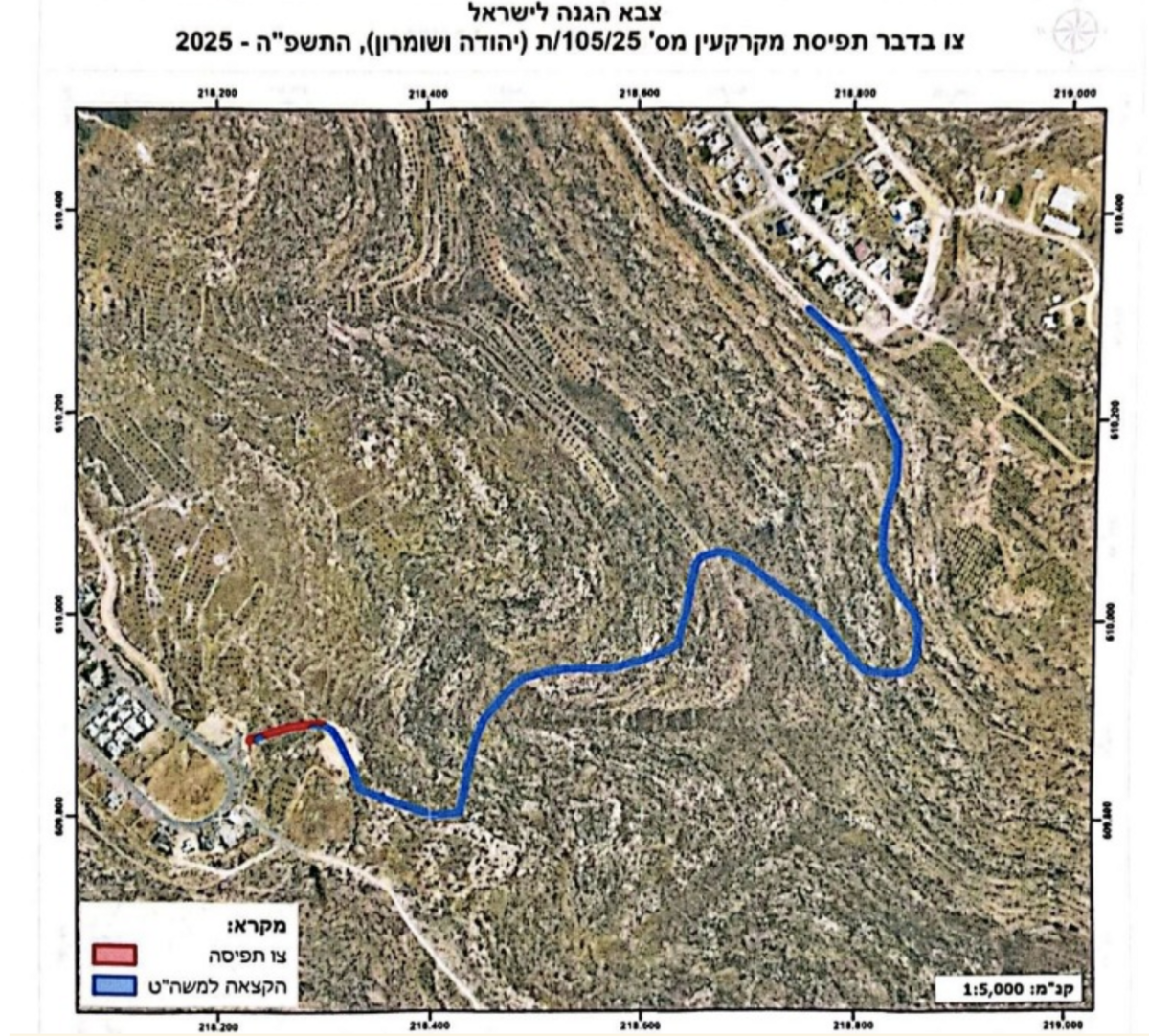
Today, Saturday, the Israeli occupation forces seized an area of 5 dunams and 163 square meters of land from the towns of Sa'ir and Ash-Shuyukh in the Hebron Governorate, through a seizure order for military and security purposes.

The Wall and Settlement Resistance Commission said in a statement that the military order aimed to seize the aforementioned area in order to pave a colonial road connecting the "Asfar" and "Bene Kedem" settlements, which are built on the lands of the towns of Ash-Shuyukh and Sa'ir.

The statement added that the analysis of the military order indicates that the occupying state allocated areas originally declared as state land in the area for military use, namely the construction of the settlement road, the area marked in blue, which is 4 dunams and 888 square meters, and added a total of 275 square meters for the same purposes, which is the area marked in red.

According to the database of the Wall and Settlement Resistance Commission, since the beginning of 2025, the occupation authorities have issued a total of 40 military orders to seize Palestinian land, 11 of which resulted in the establishment of buffer zones around settlements, aimed at preventing citizens from accessing vast swathes of land under the pretext of their proximity to settlements.

The occupying state has recently intensified its issuance of this type of order in an attempt to impose new realities on Palestinian lands, including the construction of military towers and roads designated for the army and settlers, in addition to the buffer zones around settlements. These military orders serve the settlers and settlements at the expense of citizens' lands and their ability to lead normal lives.

ARAB AND WORLD

Sat 12 Jul 2025 10:52 pm - Jerusalem Time

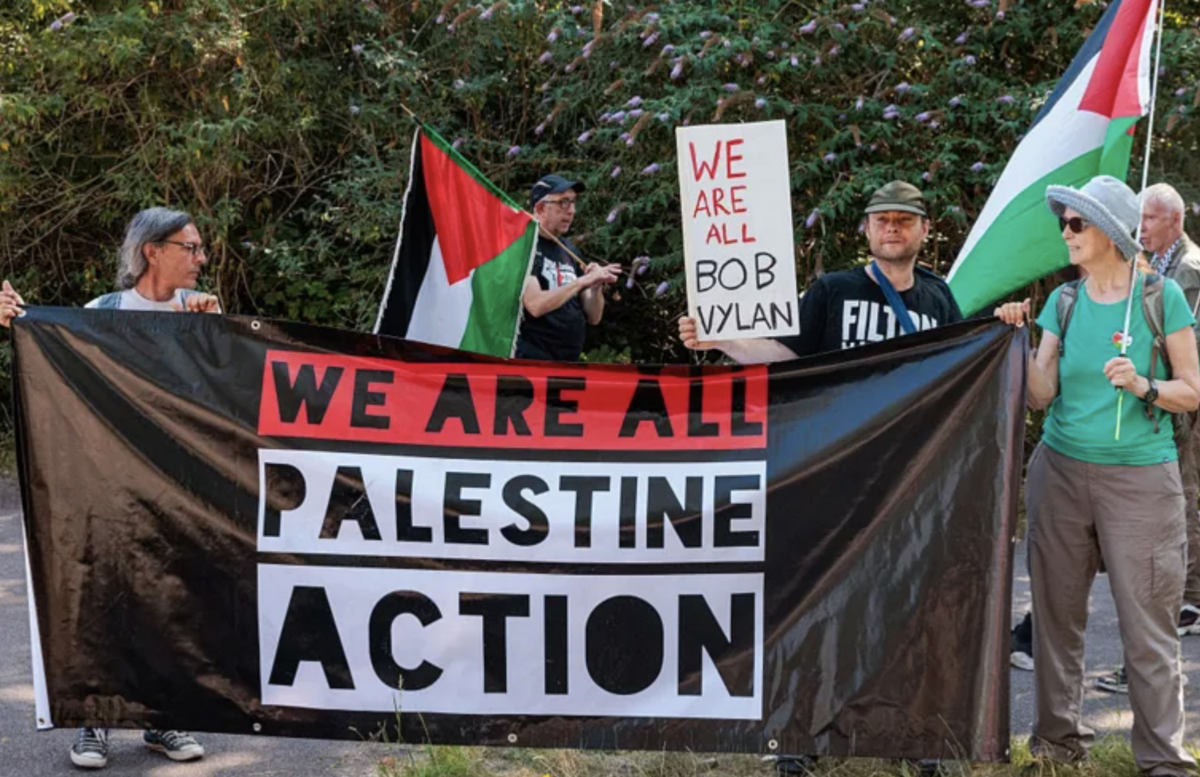
Britain arrests dozens of supporters of a pro-Palestinian movement.

London's Metropolitan Police arrested 41 people on Saturday who showed support for the Palestine Action movement at a demonstration outside Parliament.

In a statement on social media, London police said they had "arrested 41 people for showing support for a proscribed organization, and one person was arrested for assault."

Police arrested 29 people after a similar demonstration in London last week.

Police also made arrests at a demonstration in support of Palestine Action in Manchester. Other protests took place in Cardiff and Northern Ireland.

British lawmakers banned the movement under so-called anti-terrorism legislation earlier this month, after some of its members stormed a Royal Air Force base and damaged two aircraft in protest against Britain's support for Israel.

Prior to today's arrests in London, approximately 50 protesters gathered outside Parliament carrying signs reading "I am against genocide. I support Palestine Action" near a statue of the late South African president Nelson Mandela.

The International Court of Justice in The Hague is considering a case filed by South Africa accusing Israel of committing genocide against Palestinians in the war on Gaza.

The British government's decision to designate Palestine Action as a terrorist group places it in the same category as Hamas, al-Qaeda, and the Islamic State. Membership in the group is now punishable by up to 14 years in prison.

Opponents of the ban say the use of anti-terrorism laws is inappropriate against a group focused on civil disobedience.

Palestine Action has generally targeted Israeli and Israeli-linked companies in Britain, such as Israeli defense contractor Elbit Systems, often spraying red paint on facades, blocking entrances, or damaging equipment.


PALESTINE

Sat 12 Jul 2025 9:19 pm - Jerusalem Time

Families of Israeli prisoners in Gaza: Stop the deaths of our soldiers, and we can reach an agreement.

The Israeli Prisoners' Families Authority expressed concern on Saturday over reports of "stalled negotiations" regarding a prisoner exchange deal with Hamas, while Hebrew media outlets reported "ongoing talks" in Doha.

The organization issued a statement claiming that "the Israeli people want to end the war in the Gaza Strip," saying, "Enough with the deaths of our soldiers in Gaza."

"Every day the war continues is an achievement for Hamas and a real danger to our captives and fighters," she said.

The statement indicated that "the overwhelming majority of the Israeli people want an end to the fighting in Gaza and the return of all hostages and detainees to their families."

The Prisoners' Families Committee expressed concern over reports of "stalled negotiations," stressing that "losing the current momentum would be a disastrous failure. The detainees are facing a moment of truth, and it is possible to reach an agreement."

She said, "The stalled negotiations are due to false political motives that contradict the will of the people."

The families addressed Israeli Prime Minister Benjamin Netanyahu, saying, "History will remember your choice: hostages and fighters, or cheap political maneuvering."

Netanyahu's message added, "Will you be elected by the people of Israel, or by the Smotrich-Ben Gvir axis?" referring to the finance and national security ministers who oppose a deal with Hamas.

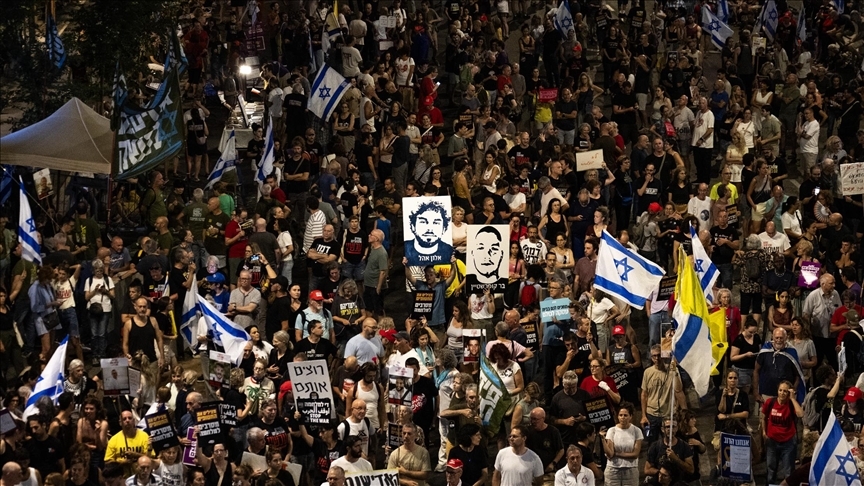
In the same context, Channel 12 reported that thousands of Israelis are currently gathering in central Tel Aviv to demand a prisoner exchange deal with Hamas.

Channel 12 quoted an unnamed political official as saying, "The negotiations have not collapsed, and the Israeli delegation is continuing the talks in Doha despite Hamas's obstacles."

On Wednesday, Hamas announced its agreement to release 10 living Israeli prisoners, as part of its "flexibility" toward reaching an agreement on Gaza, while Israel remains intransigent on "core" issues, including the withdrawal from Gaza.

In contrast, Israel still "insists on a buffer zone 2 to 3 kilometers wide in the Rafah area, and 1 to 2 kilometers wide in the rest of the border areas."

For days, the Qatari capital, Doha, has been witnessing a new round of indirect negotiations between Hamas and Israeli delegations, mediated by Qatar and Egypt, and with American participation, with the aim of reaching a ceasefire agreement and prisoner exchange.

For its part, Channel 13 quoted an unnamed political official as saying, "Negotiations in Doha are ongoing and took place today, Saturday, and the negotiating delegation is working with mediators from both Egypt and Qatar."

The political official explained that the Israeli negotiating delegation "maintains constant contact with Prime Minister Benjamin Netanyahu and Minister of Strategic Affairs Ron Dermer."

Days ago, Hamas said in a statement that there are "essential points that remain under negotiation, most notably: the flow of aid, the occupation's withdrawal from the Gaza Strip, and the provision of real guarantees for a permanent ceasefire."

She continued, "Despite the difficulty of negotiations on these issues so far due to the occupation's intransigence, we continue to work diligently and positively with mediators to overcome obstacles, end our people's suffering, and guarantee their aspirations for freedom, security, and a dignified life."

According to Yedioth Ahronoth, the proposal under discussion in the current negotiations includes a 60-day ceasefire, during which 10 living Israeli prisoners will be released in two phases (8 on the first day, and 2 on the 50th day), in addition to the return of the bodies of 18 others in three phases, in exchange for the release of Palestinian prisoners and increased humanitarian aid to the Gaza Strip.

The proposal also stipulates that Trump would be a guarantor of ending the war at a later stage, according to the newspaper.

Tel Aviv estimates there are 50 Israeli prisoners in Gaza, 20 of whom are still alive. Meanwhile, more than 10,800 Palestinians are languishing in its prisons, suffering torture, starvation, and medical neglect, many of whom have died, according to Palestinian and Israeli human rights and media reports.

Over the course of approximately 20 months, several rounds of indirect negotiations were held between Israel and Hamas regarding a ceasefire and prisoner exchange, mediated by Egypt, Qatar, and the United States.

During this period, two ceasefire agreements were reached, the first in November 2023 and the second in January 2025, which included partial prisoner exchange agreements.

Netanyahu, who is wanted by international justice, evaded completing the latest agreement by resuming the genocide in Gaza on March 18.

The Israeli opposition asserts that Netanyahu is only interested in partial deals that ensure the continuation of the war, to further his personal political interests, particularly his continued rule, in deference to the more extreme right-wing faction within his government.

Since October 7, 2023, Israel, with US support, has been committing genocide in the Gaza Strip, leaving approximately 196,000 Palestinians dead or wounded, most of them children and women, and more than 10,000 missing. Hundreds of thousands have been displaced, and famine has claimed the lives of many, including dozens of children.

PALESTINE

Sat 12 Jul 2025 8:39 pm - Jerusalem Time

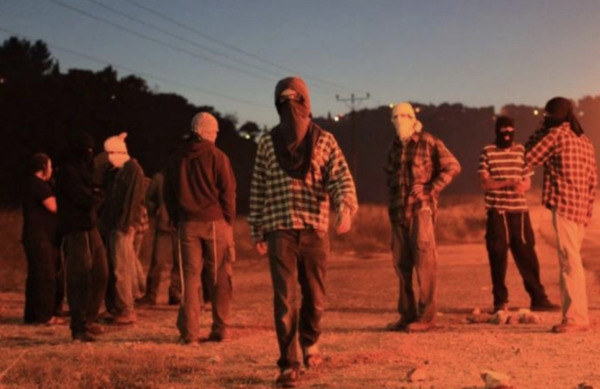
Settlers destroy agricultural lands south of Nablus

Settlers destroyed agricultural lands in the town of Aqraba, south of Nablus.

According to local sources, last night, settlers uprooted more than 100 olive trees and destroyed water tanks, iron gates, land fences, and an agricultural container south of the town.

Sources indicated that the settlers deliberately destroyed several plots of land, estimated at 40 dunams, on the road between the town of Aqraba and the village of Majdal Bani Fadel, owned by the people of Aqraba.

Jaber noted that the settlers had previously destroyed the water and communications network that supplies seven villages south of Aqraba.

PALESTINE

Sat 12 Jul 2025 8:37 pm - Jerusalem Time

An Israeli official accuses Hamas of undermining ceasefire negotiations in Gaza.
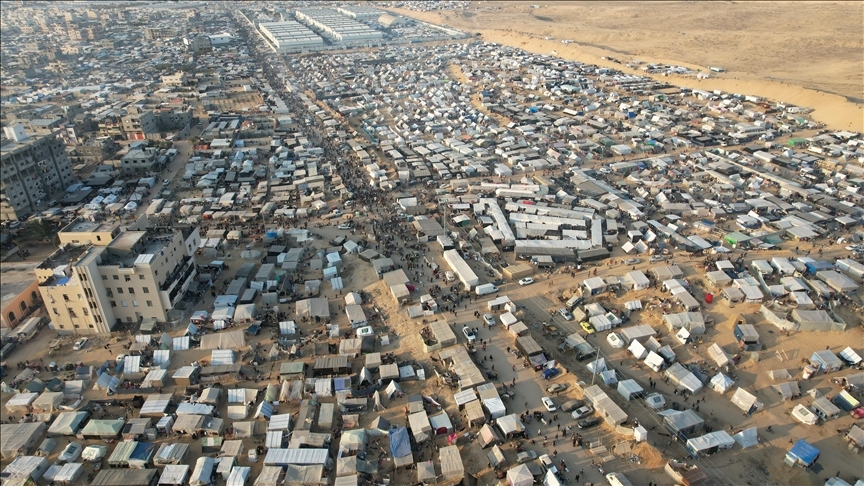
A senior Israeli political official accused the Palestinian Hamas movement on Saturday of obstructing attempts to reach a ceasefire in Gaza by rejecting a plan for a 60-day ceasefire.

The official said, "Hamas rejected the Qatari proposal, is placing obstacles, refusing to make concessions, and accompanying the talks with a psychological warfare campaign aimed at undermining the negotiations."

He added, according to Agence France-Presse, that Israel "has demonstrated its willingness to show flexibility in the negotiations."

While a new round of indirect negotiations between Israel and Hamas began in Doha on Sunday, mediated by Qatar, the United States, and Egypt, in an effort to reach a truce in the war, the Israeli military continued its offensive in the Gaza Strip, killing more than 20 Palestinians in new strikes, according to the Civil Defense.

A Palestinian source told Agence France-Presse that the Doha negotiations "are facing stumbling blocks and complex difficulties due to Israel's insistence on a map it presented on Friday, which calls for the redeployment and positioning of the Israeli army, not a withdrawal. The map includes keeping military forces on more than 40 percent of the Gaza Strip, a position Hamas rejects."

The source warned that the withdrawal map "aims to cram hundreds of thousands of displaced people into a part of the western Rafah area as a prelude to the displacement of citizens to Egypt or other countries, something Hamas rejects."

He stressed that the Hamas negotiating delegation "will not accept the Israeli maps presented because they represent a legitimacy for the reoccupation of nearly half of the Gaza Strip's area, turning the Gaza Strip into isolated areas without crossings or freedom of movement, like Nazi camps."

PALESTINE

Sat 12 Jul 2025 7:31 pm - Jerusalem Time

The occupation continues to demolish residential buildings and burn homes in Tulkarm and Nur Shams camps.

Israeli occupation forces continued their demolition of residential buildings in Tulkarm refugee camp on Saturday, as their ongoing aggression against the camp and the city continues for the 167th consecutive day.

According to local sources, heavy Israeli bulldozers have continued to demolish more residential buildings in the al-Ful and al-Murabba'a neighborhoods since the early morning hours. This is part of a new plan to demolish 104 buildings, comprising 400 homes. At the same time, this is a continuation of the demolition operations carried out in several neighborhoods in the camp over the past few days.

Last Sunday, the occupation authorities announced their intention to begin implementing large-scale demolition orders in the Tulkarm refugee camp, defying an earlier decision by the Israeli Supreme Court to freeze these orders.

Meanwhile, Nour Shams camp is witnessing a military escalation amidst the aggression and tight siege imposed by the occupation forces for the 154th consecutive day. Israeli soldiers are deliberately burning homes and setting fires inside them, particularly in Jabal al-Nasr, and preventing civil defense vehicles from reaching the camp to extinguish the fires.

At the same time, Israeli forces on foot stormed the al-Mahjar neighborhood in the camp, conducting extensive searches and combing operations in the area. They also seized civilian homes and converted them into military barracks after expelling their residents and seizing them. They fired live ammunition at anyone who attempted to approach the camp.

Over the past few days, Nur Shams camp has witnessed extensive demolition operations that have affected dozens of residential buildings, as part of an Israeli plan to demolish 106 buildings in Tulkarm and Nur Shams camps. 48 of these buildings were demolished in Nur Shams alone, causing widespread destruction, while wide streets were created and opened to separate neighborhoods.

The escalation has led to the forced displacement of more than 5,000 families from the Tulkarm and Nur Shams camps, representing over 25,000 citizens. The displacement has also resulted in the complete destruction of more than 600 homes and the partial damage of 2,573 others. The entrances to the camps remain blocked with barriers, transforming them into lifeless areas.

In a related development, Israeli occupation forces deployed their military vehicles and infantry units through the city's streets and neighborhoods today, concentrating on Faroun Street at its southern entrance. They set up flying checkpoints, stopped and searched vehicles, checked the identities of their passengers, and obstructed traffic.

PALESTINE

Sat 12 Jul 2025 7:17 pm - Jerusalem Time

Four people suffered suffocation during the occupation forces' raid on the city of Tubas.

Four citizens suffered suffocation on Saturday evening, during the Israeli occupation forces' raid on the city of Tubas.

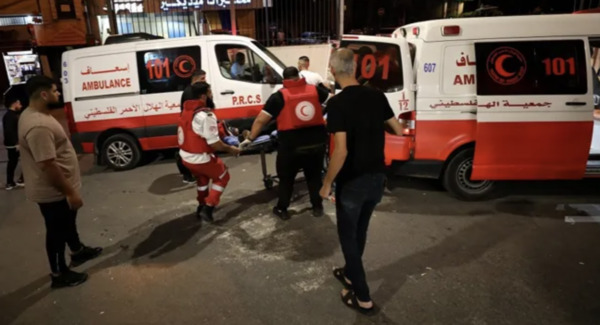
According to Red Crescent sources, its crews in Tubas treated four people suffering from gas suffocation, one of whom was transferred to the hospital, during the Israeli occupation forces' raid on the city.

The occupation forces stormed the city of Tubas, then headed to the town of Aqaba to the north and stormed it.

PALESTINE

Sat 12 Jul 2025 6:40 pm - Jerusalem Time

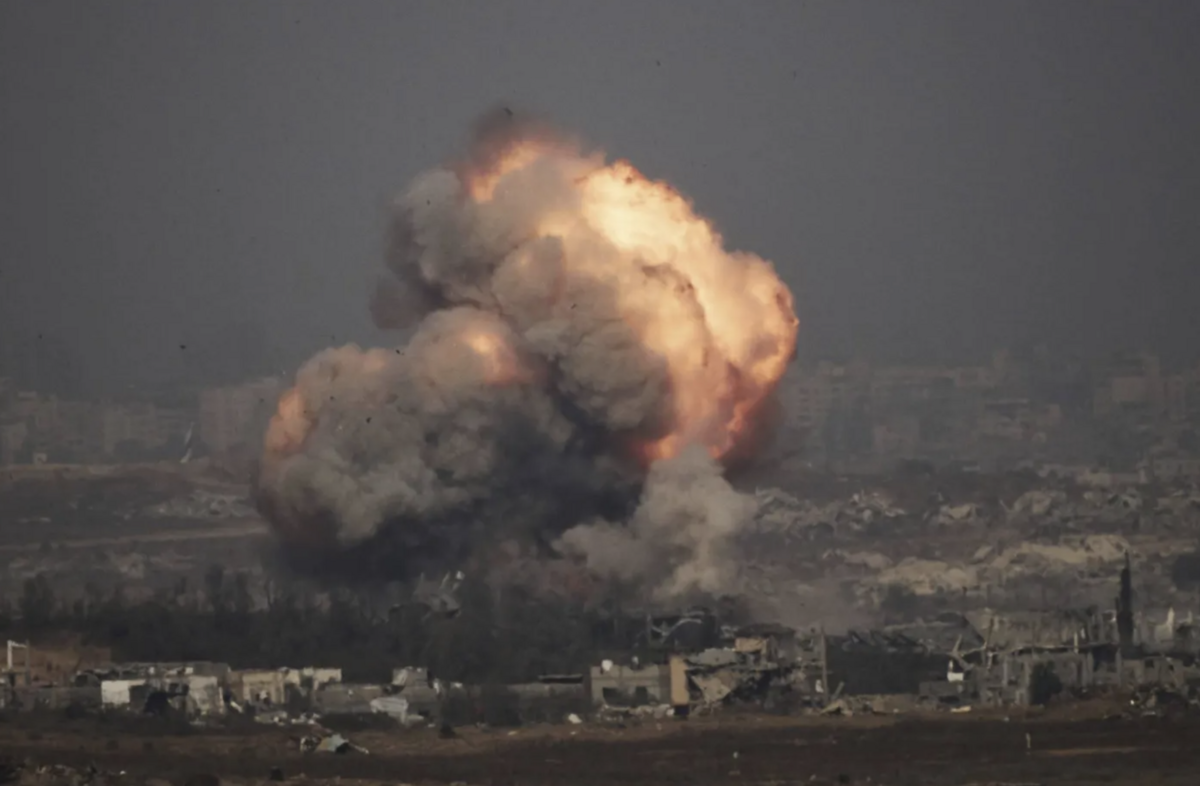
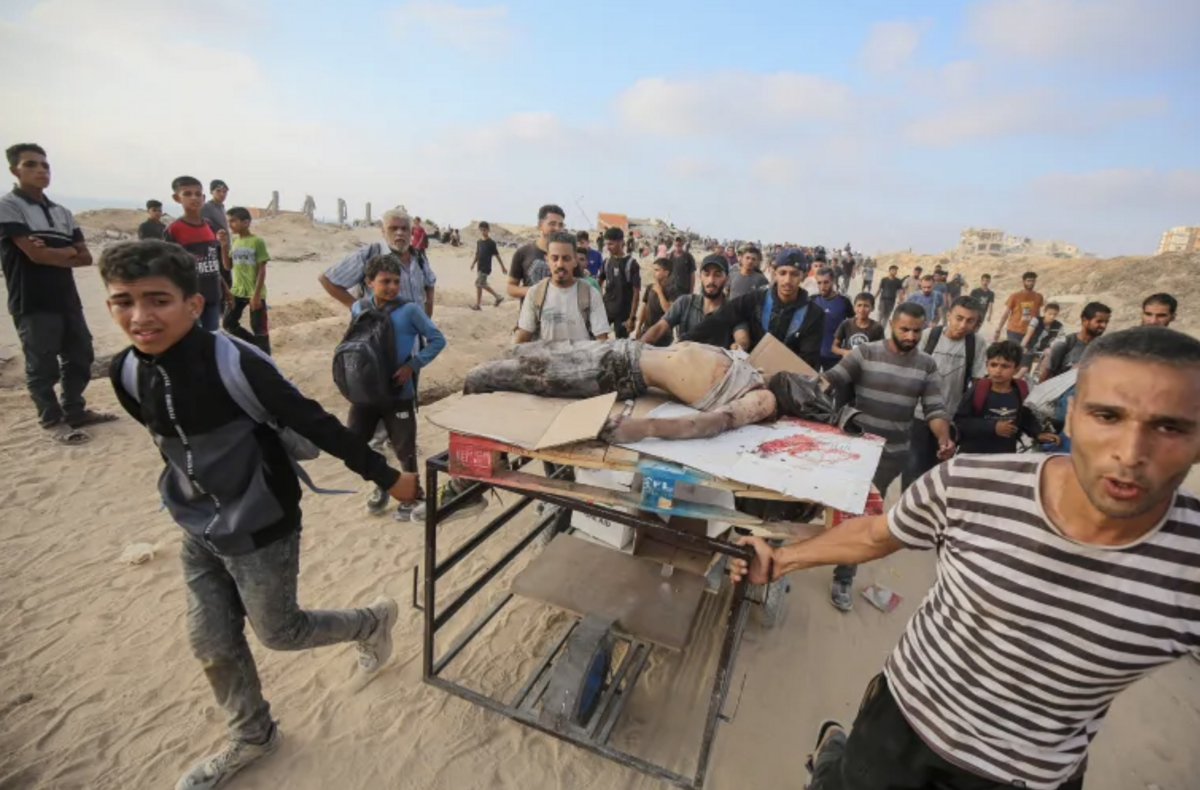
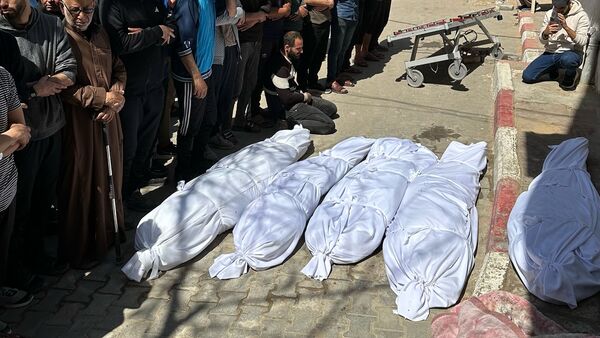
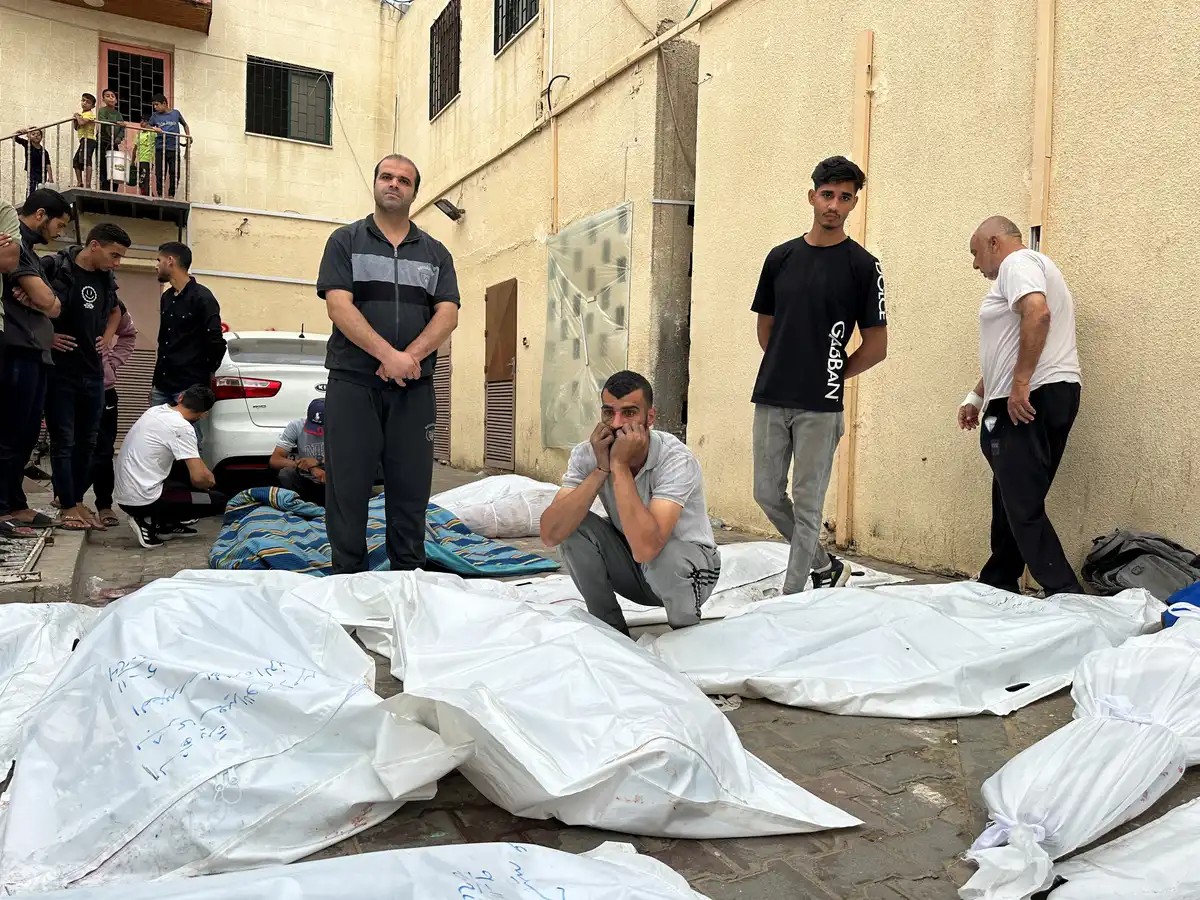
98 dead in the occupation's bombing of Gaza since dawn today, and the famine is worsening.

Sources in Gaza hospitals said that 98 Palestinians have been killed in Israeli airstrikes since dawn on Saturday. The Gaza Emergency and Ambulance Service documented the deaths of 34 aid recipients and the injury of 180 others by Israeli army fire near an aid distribution center north of Rafah, in the southern Gaza Strip.

A medical source at the Baptist Hospital in Gaza City reported that three Palestinians were killed and others were injured, one of whom was in critical condition, in an Israeli attack that targeted a house near Salah al-Din Mosque in the al-Zeitoun neighborhood in southern Gaza City.

An Al Jazeera correspondent reported that several Palestinians were injured by Israeli drone fire near the General Security junction west of Gaza City. The Israeli military announced that it had bombed more than 250 "targets" across the Gaza Strip over the past 48 hours.

The correspondent also reported that approximately 20 Palestinians were missing in an Israeli airstrike on two homes in Jabalia al-Nazla, north of the Gaza Strip.

According to the Ministry of Health, the death toll in the Gaza Strip since October 7, 2023, has risen to 57,882, with 138,095 injured. It noted that the death toll from aid operations has risen to 805 since May 27, with more than 5,252 injured.

The Israeli occupation army fires daily at starving people lined up near distribution centers, leaving them between starvation and being shot, according to the government media office in Gaza.
The risk of famine is growing

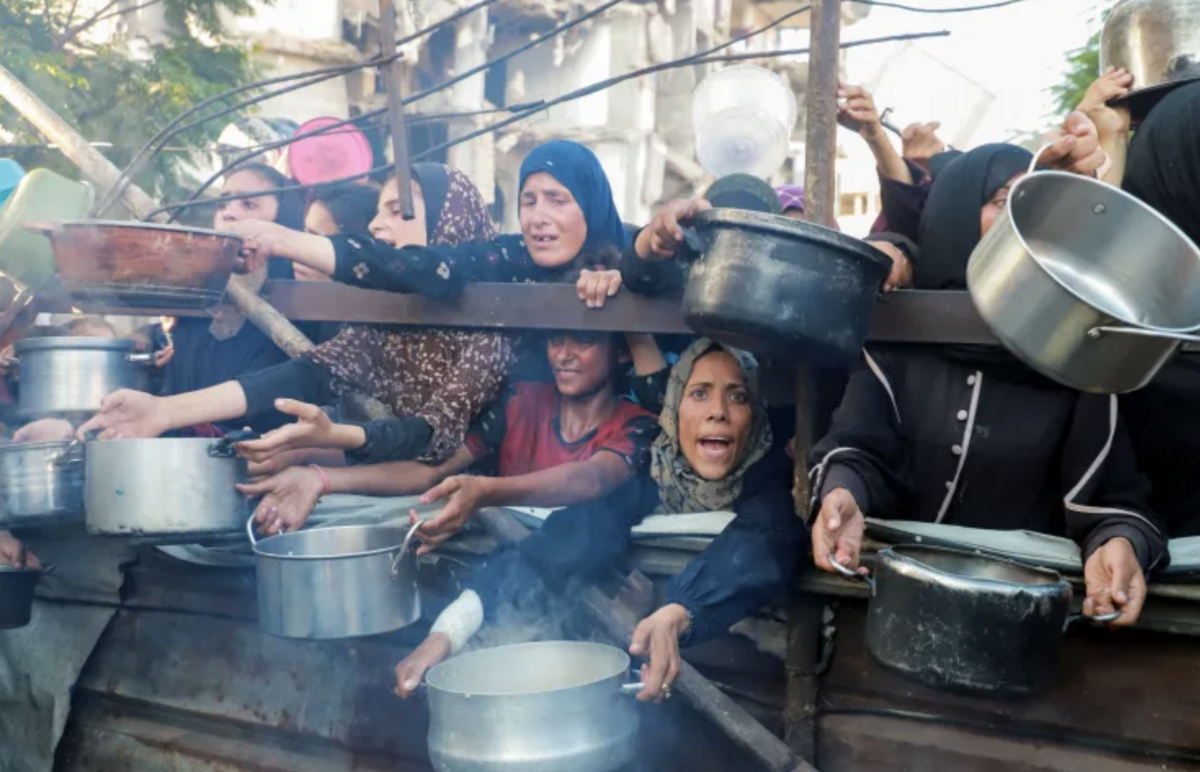
On the humanitarian front, the Government Information Office in Gaza stated that the humanitarian situation in the Strip has reached catastrophic levels after more than 100 days of a complete closure of the Strip's crossings.

The office revealed that the risk of famine is increasing and that hundreds of thousands of people, including 650,000 children, are at risk of death. It added that the number of children killed due to malnutrition has reached 67.

He explained that approximately 1.25 million people in Gaza are experiencing catastrophic hunger, and the office revealed that 96% of the Strip's population suffers from severe levels of food insecurity.

In the same context, United Nations organizations announced that the people of Gaza are facing widespread food insecurity and are on the brink of famine.

In a statement issued today, these organizations warned that "the fuel shortage in Gaza has reached critical levels," and that UN agencies may be forced to halt their operations in Gaza due to the fuel shortage.

Meanwhile, the United Nations Relief and Works Agency for Palestine Refugees (UNRWA) warned of the serious health consequences resulting from severe overcrowding in shelters, especially in light of the high temperatures during the summer.

UNRWA added that the ongoing blockade on the Gaza Strip deprives children of the most basic hygiene requirements, due to the lack of hygiene supplies and a scarcity of clean water. UNRWA also stressed the need to lift the blockade and allow the immediate resumption of humanitarian aid deliveries.

PALESTINE

Sat 12 Jul 2025 6:34 pm - Jerusalem Time

Is Gaza entering a new phase of escalation, or will the ceasefire succeed?

The region is witnessing significant and rapid changes following the strikes on Iran, Syria, and Lebanon, raising questions about whether Gaza will be the next target. As these regional players fall one after the other, pressure on Gaza appears to be increasing, especially after the decline in support from its traditional allies.

The Gaza Strip is in a state of apprehension and caution. Between the threat of escalation and the possibility of reaching a ceasefire agreement, Gaza stands at a crossroads. New negotiations began days ago and may lead to a temporary truce, but nothing is guaranteed, especially since Israel may exploit the circumstances to impose difficult conditions, given the lack of external support and the decline of Iranian influence in the Strip.

On the other hand, the factions in Gaza realize that their options are limited: either a confrontation without support or a settlement that entails concessions. The danger lies not only in a military strike, but also in Gaza becoming a regional and international bargaining chip used in broader deals.

The question remains open: Will Gaza enter a new phase of escalation, or will the ceasefire succeed? What is clear is that the situation in the region leaves no room for neutrality, and that Gaza may indeed be on the verge of entering a new, more dangerous and complex chapter.

PALESTINE

Sat 12 Jul 2025 5:40 pm - Jerusalem Time

Dead and wounded in the occupation's bombing of Al-Shati refugee camp

A number of citizens were killed and others injured on Saturday evening, after the occupation forces bombed a group of citizens in Gaza City.

Medical sources reported that three civilians were killed and others were injured, most of them seriously, after Israeli warplanes bombed a group of civilians in the Balakhiya area of the Shati refugee camp, west of Gaza City.

Since October 7, 2023, the Israeli occupation forces have launched an aggression against the Gaza Strip, resulting in the deaths of 57,882 citizens, the majority of whom were children and women, and the injury of 138,095 others. This is a preliminary toll, with a number of victims still under the rubble and on the streets, unable to be reached by ambulance and rescue crews.

PALESTINE

Sat 12 Jul 2025 4:40 pm - Jerusalem Time

Hunger is killing 1.25 million people and threatening 650,000 children in Gaza.

The Government Media Office in Gaza stated that as the Israeli blockade on the Strip enters its 133rd consecutive day, estimates indicate that more than 650,000 children are directly threatened by deteriorating living conditions.

This comes amid escalating warnings of an imminent humanitarian disaster threatening the lives of hundreds of thousands of Gazans. The media office confirmed that the Israeli occupation has continued to completely block the entry of food, medicine, and fuel for more than three months, exacerbating the threat of famine and increasing the death toll from hunger and a shortage of medical supplies.

He explained that the occupation's policy included preventing the entry of flour, baby formula, and medical supplies as part of what he described as a "systematic starvation" policy, at a time when approximately 1.25 million people are experiencing "catastrophic" levels of hunger, and 96% of the Gaza Strip's population suffers from food insecurity.

Crimes and Convictions

The Government Information Office condemned in the strongest terms these organized crimes committed by the Israeli occupation against more than 2.4 million people in the Gaza Strip, holding it fully responsible for the crimes of genocide and systematic starvation.

For its part, the Gaza Municipality warned of the serious environmental and health impacts of the continued pumping of sewage onto the beach after the pumping lines were damaged.

The Israeli occupation has destroyed drinking water and sewage networks in the Gaza Strip, exacerbating the water and sewage crisis.

The destruction included facilities, stations, pipeline networks, and solar panels, in addition to the destruction of the environment surrounding the stations.

Warning and demand

The United Nations Relief and Works Agency for Palestine Refugees (UNRWA) also warned of dire health consequences due to the lack of clean water.

"No soap, no clean water. Children in Gaza cannot bathe properly due to the ongoing blockade," UNRWA said in a post on its Facebook page.

"This, combined with overcrowding in shelters and the summer heat, could lead to serious health consequences," she added.

She continued, "The blockade must be lifted. UNRWA must be allowed to resume delivering humanitarian aid, including hygiene materials, to Gaza."

Since October 7, 2023, Israel has been waging a war of genocide in Gaza, including killing, starvation, destruction, and forced displacement, ignoring all international calls and orders from the International Court of Justice to halt it.

The genocide, backed by the United States, left more than 195,000 Palestinians dead or wounded, most of them children and women, and more than 10,000 missing. Hundreds of thousands were displaced, and a famine claimed the lives of many, including dozens of children.

PALESTINE

Sat 12 Jul 2025 4:31 pm - Jerusalem Time

The Attorney General participates in the Sixth Forum of Public Prosecutors and affirms: Justice and dignity must be applied without exception.

Attorney General Counselor Akram Al-Khatib participated in the 6th Forum of Public Prosecutors, organized by the European Agency for Cooperation in the Field of Criminal Justice (Eurojust) and held in The Hague, Netherlands. The forum was attended by a number of public prosecutors from the Southern Mediterranean countries and their counterparts from the European Union countries, within the framework of the Euro-Mediterranean Justice Project, which aims to enhance judicial cooperation in cross-border criminal cases. The Palestinian Public Prosecution delegation included the Chief Public Prosecutor, Mr. Nashat Ayyoush, and the Head of the Media and Public Relations Unit, Ms. Rasha Nabhan.

In his speech, the Attorney General emphasized that justice and dignity must be applied without exception, and that public prosecution offices bear a collective responsibility to protect human rights and achieve cross-border criminal justice. He also emphasized the State of Palestine's commitment, despite mounting challenges, to building a comprehensive legal system that keeps pace with international standards and the latest legislative and institutional developments in the field of combating crime.

During the forum, the public prosecutors adopted the Euro-Mediterranean Justice Project's 2025-2027 strategic plan, which represents a practical roadmap for enhancing judicial cooperation between the countries of the Southern Mediterranean and the European Union. The plan focuses on combating human trafficking and migrant smuggling, while the second focuses on recovering assets and criminal proceeds. This will be achieved by strengthening the work of the EMJNet Prosecution Offices' Contact Points Network and establishing joint investigations between countries. The strategy also includes supporting parallel financial investigations, developing methods for analyzing and proving digital evidence, and organizing several specialized training programs tailored to the needs of participating countries.

In this context, the Attorney General stressed the importance of empowering national focal points and strengthening the EMJNet network, which would contribute to developing mechanisms for practical cooperation and exchange of expertise between public prosecution offices.

Counselor Al-Khatib held a meeting with Eurojust President Michael Schmidt, where the two sides discussed ways to enhance technical and technological cooperation between the two institutions, particularly in the areas of training, exchange of expertise, and development of the institutional structure of public prosecution offices.

His Excellency also met with the Attorney General of the Republic of Malta, Dr. Victoria Buttigieg, where they agreed to activate the bilateral memorandum of understanding signed between the two sides in 2018, expand cooperation in the areas of judicial capacity building, and exchange experiences in managing cross-border cases.

The forum also featured a series of meetings with a number of public prosecutors from Arab and European countries, during which discussions focused on mechanisms for joint judicial action, strengthening partnerships, and facilitating technical and technological cooperation in combating crime.

As part of his official visit, the Attorney General visited the Embassy of the State of Palestine in The Hague, where he met with His Excellency Ambassador Ammar Hijazi and the embassy staff. The Attorney General commended the embassy's efforts in defending the legal and diplomatic rights of the State of Palestine and in supporting national action at various levels.

This high-level participation reflects the Palestinian Public Prosecution's commitment to actively engaging in international judicial systems and affirming its presence in multilateral legal forums, thus enhancing cross-border justice and consolidating the principles of dignity, fairness, and the rule of law at the regional and international levels.

PALESTINE

Sat 12 Jul 2025 4:03 pm - Jerusalem Time

Hebrew media announces that 4 Israeli soldiers were injured in battles in the Gaza Strip.

The Hebrew website Walla reported that three Israeli soldiers were wounded during violent clashes in the southern Gaza Strip, as part of the recent military escalation in the region.

Channel 12 added that the injuries resulted from the bombing of an Israeli army vehicle in the southern Gaza Strip, while another soldier was wounded by resistance fire in the northern Gaza Strip.

This brings the number of casualties in today's military operations to four, including Israeli soldiers injured in clashes with Palestinian resistance in the Gaza Strip.


ARAB AND WORLD

Sat 12 Jul 2025 8:40 am - Jerusalem Time

The European Union regrets the US sanctions against Francesca Albanese.

The European Union expressed its "deep regret" over the US decision to include the UN Special Rapporteur on Palestine, Francesca Albanese, on the sanctions list.


This was stated by European Commission spokesperson Anwar El Anoni, in response to a question about the US decision to impose sanctions on Albanese, during a press conference in Brussels.


Al-Anuni stressed that the European Union supports the United Nations human rights system.


He expressed his "deep regret" over the US decision to impose sanctions on Albanese.


Al-Anoni indicated that the European Union will continue to support efforts to conduct independent investigations into violations of human rights and international humanitarian law, including those that may constitute international crimes.


PALESTINE

Sat 12 Jul 2025 8:37 am - Jerusalem Time

Following Rafah, Israel's Defense Minister boasts of razing Beit Hanoun to the ground.

Israeli Defense Minister Yisrael Katz released an aerial photo on Friday showing the complete destruction of the city of Beit Hanoun in the northern Gaza Strip, boasting that it had been "razed to the ground."

On the X platform, Katz commented on the photo, saying, "After Rafah and Beit Hanoun, there is no refuge for terrorism."

The aerial image shows vast areas of rubble and devastation. Nothing remains of Beit Hanoun, which borders the southern border with Israel, except scattered ruins and the remains of completely destroyed buildings, a scene that reflects the scale of the disaster that befell the area.

Beit Hanoun was the first area the Israeli army entered, at the start of its ground invasion of Gaza on October 28, 2023, as part of an ongoing war of extermination that has left widespread destruction and more than 195,000 Palestinian dead and wounded.

Despite the passage of more than 21 months since the start of the war of extermination, which began on October 7, 2023, Palestinian factions continue to carry out sophisticated ambushes in the region, killing and wounding Israeli forces, indicating Tel Aviv's inability to fully achieve the war's objectives.

The Israeli army acknowledged the deaths of five soldiers from the Netzah Yehuda Battalion, part of the Kfir Brigade, and the wounding of 14 others, two of whom were seriously injured, in a battle that took place in Beit Hanoun last Monday.

An army investigation later revealed that Hamas fighters detonated three explosive devices at a battalion infantry unit in Beit Hanoun, then engaged them with machine guns.

Beit Hanoun is located on the northern border of the Gaza Strip and has been under Israeli fire control for months, using warplanes and artillery, while army units conducted limited patrols inside and around the town.

The town has been subjected to intense Israeli airstrikes for days amid ongoing escalation on the ground. The Israeli army announced Tuesday evening that it was besieging the town from all sides.

On June 2, 2024, the Municipal Emergency Committee in northern Gaza declared Beit Hanoun a "disaster area" due to ongoing Israeli airstrikes, the near-total destruction of vital infrastructure and services, and the collapse of the humanitarian situation.

According to previous figures from the Beit Hanoun Municipality, approximately 60,000 people lived in the town, which covers an area of approximately 17,000 dunams (one dunam equals 1,000 square meters), before the start of the recent war of extermination.

Katz's publication of the image showing Beit Hanoun being razed to the ground comes amid growing international criticism of Israel's policies in Gaza, amid accusations of "genocide" and a scorched-earth policy targeting civilians and their livelihoods, in flagrant violation of international humanitarian law.

PALESTINE

Sat 12 Jul 2025 8:33 am - Jerusalem Time

Informed sources: The Israeli delegation's map in the negotiations keeps Rafah under occupation.

Sources told Al Jazeera that the redeployment map presented by the Israeli delegation in the indirect negotiations underway in the Qatari capital, Doha, leaves the entire city of Rafah in the southern Gaza Strip under occupation. They noted that the map paves the way for the implementation of a displacement plan by making Rafah a concentration area for displaced persons, who will be relocated to Egypt or by sea.

The sources added to Al Jazeera that the map extends deep into the Gaza Strip along its border, extending in some areas to 3 kilometers, and includes large parts of the city of Beit Lahia, the village of Umm al-Nasr, most of Beit Hanoun, and all of Khuza'a.

The same sources indicated that the Israeli redeployment map is approaching Al-Sikka Street in the areas of Al-Tuffah, Al-Shuja'iyya, and Al-Zeitoun, and extending to Salah Al-Din Street in Deir Al-Balah and Al-Qarara.

The Israeli redeployment map also erodes 40% of the Gaza Strip's area, preventing 700,000 Palestinians from returning to their homes, forcing them to displacement centers in Rafah.

The main disagreement

For its part, Israel's Channel 12 reported a stalemate in the Doha talks, but that they would continue through Saturday. It quoted Israeli officials as saying there had been no progress in the talks over the past 24 hours due to the Israeli military withdrawal maps.

Channel 12 reported that the main disagreement in the Doha negotiations is the extent of Israel's withdrawal from the territories it controls in the Gaza Strip, claiming that Tel Aviv agreed to withdraw from the Morag axis, which separates Rafah from Khan Yunis in the southern Gaza Strip, in exchange for maintaining its control over Rafah.

The channel quoted two sources familiar with the details of the negotiations as confirming that the new map presented by Israel includes a withdrawal from the Morag Road, which is approximately 4-5 kilometers from the Gaza-Egypt border.

However, the channel noted that, according to the same map, Israel still insists on keeping its army forces approximately 2-3 kilometers north of the Philadelphi Road (the border between Gaza and Egypt).

She added: "There, the government wants to establish a refugee camp for hundreds of thousands of Palestinians, in preparation for their possible future displacement."

Last Monday, Israeli Defense Minister Yisrael Katz revealed the outlines of a new Israeli plan to establish what he called a "humanitarian city" of tents on the ruins of Rafah. The plan includes transferring 600,000 Palestinians to the city in an initial phase after undergoing strict security screening. They will not be allowed to leave later.


The Islamic Resistance Movement (Hamas) demanded that the Israeli army withdraw to the positions it held before resuming its war of extermination in the Gaza Strip on March 18.


According to Channel 12, Israel is also demanding the establishment of a buffer zone along the Gaza Strip border, ranging in width from several hundred meters to nearly two kilometers in some areas.


Sources indicated that negotiations on this issue are still ongoing in an attempt to bridge the gaps.


On Thursday, the Israeli Broadcasting Authority announced that Witkov would arrive in Doha within a few days to advance the talks between the two sides.


Over the course of approximately 20 months, several rounds of indirect negotiations were held between Israel and Hamas regarding a ceasefire and prisoner exchange, mediated by Egypt, Qatar, and the United States.


During this period, two ceasefire agreements were reached, the first in November 2023 and the second in January 2025, which included partial prisoner exchange agreements.


Israeli Prime Minister Benjamin Netanyahu, who is wanted by the International Criminal Court, evaded the completion of the latest agreement and resumed the genocide in Gaza on March 18.


The Israeli opposition asserts that Netanyahu is only interested in partial deals that ensure the continuation of the war, to further his personal political interests, particularly his continued rule, in deference to the more extreme right-wing faction within his government.


Tel Aviv estimates there are 50 Israeli prisoners in Gaza, 20 of whom are still alive. Meanwhile, more than 10,800 Palestinians are languishing in its prisons, suffering torture, starvation, and medical neglect, many of whom have died, according to Palestinian and Israeli human rights and media reports.


Since October 7, 2023, Israel, with US support, has been committing genocide in the Gaza Strip, leaving more than 195,000 Palestinians dead or wounded, most of them children and women, and more than 10,000 missing. Hundreds of thousands have been displaced, and famine has claimed the lives of many, including dozens of children.


Source: Al Jazeera


PALESTINE

Sat 12 Jul 2025 8:30 am - Jerusalem Time

Two Palestinians killed , one of them an American citizen, near Ramallah, and renewed raids in the West Bank

Palestinian sources confirmed that one of the two Palestinians killed by settlers near Ramallah held American citizenship, while Israeli raids in the West Bank resumed.

Yesterday, Friday, settlers severely beat the young man Saif Allah Kamel Musalat (23 years old) in the town of Sinjil, north of Ramallah, which led to his death.

The young man, Muhammad Al-Shalabi (23 years old), was also martyred in the same town after settlers shot him.

The Washington Post reported that Musalat was born in Port Charlotte, Florida, and traveled to the West Bank last June to visit his family in the village of Mazra'a al-Sharqiya, northeast of Ramallah.

The US State Department told Al Jazeera it was aware of reports of the death of an American citizen in the West Bank.

The ministry added that it had no additional information out of respect for the family's privacy during these difficult times, and stated that "there is no higher priority for us than the safety and security of American citizens abroad."

The Israeli occupation army had previously killed a number of Palestinians holding American citizenship in the West Bank, and investigations did not result in any American condemnation of the killing of these American citizens.

Attack on Sinjil

Armed settlers attacked Sinjil yesterday, prompting dozens of young men to confront them.

The Palestinian Ministry of Health said that in addition to the two martyrs, 40 Palestinians were injured during clashes with settlers in the lands between the towns of Sinjil and Al-Mazra'a Al-Sharqiya.

Palestinian sources reported that the new settler attack on the town of Sinjil took place under the protection of occupation forces.

The sources said that settler groups prevented medical crews from reaching young men trapped in the forests surrounding Sinjil.

For its part, the Palestinian Red Crescent Society announced that it had treated people injured in the head in the town as a result of settler attacks on citizens, and that the wounded were transferred to the hospital for treatment.

Martyr Mohammed Al-Shalabi was found dead after hours of searching. Palestinian sources said he had been shot in the chest.

The Islamic Resistance Movement (Hamas) condemned the settlers' attack on the town of Sinjil, and viewed it as confirmation of the occupation's approach and its plans to eradicate the Palestinians.

In the southern Hebron Governorate, the Palestinian Red Crescent announced that two Palestinians were injured in an attack launched by settlers yesterday on the village of Susya.

Sources told Al Jazeera that a group of settlers attacked Palestinian homes in the village, wounding two Palestinians who came out to confront them.

Settler attacks on Palestinian villages and towns have increased as part of the ongoing Israeli escalation since Operation Flood of Al-Aqsa on October 7, 2023.

New raids

Meanwhile, Israeli forces stormed the eastern neighborhood of Jenin, in the northern West Bank, last night and arrested a young man.


The occupation forces also stormed the outskirts of Al-Amari camp in Ramallah.


Palestinian sources said that Israeli forces also stormed towns in Hebron (southern West Bank), including Halhul and Samou.


The night raids also included the town of Tuqu', southeast of Bethlehem.


Since the start of the war on Gaza, Israeli attacks in the West Bank have resulted in the deaths of at least 996 Palestinians, the injury of 7,000 others, and the arrest of more than 18,000 others.


Source: Al Jazeera


PALESTINE

Sat 12 Jul 2025 8:29 am - Jerusalem Time

14 Dead in the occupation's bombing of displaced people's tents in Khan Yunis and Deir al-Balah

Fourteen civilians were killed tonight when Israeli warplanes bombed tents housing displaced people in the cities of Deir al-Balah and Khan Yunis in the central and southern Gaza Strip.

WAFA news agency reported that nine martyrs were killed when the occupation forces bombed a tent housing displaced people near the Kuwaiti Hospital in the Al-Mawasi area, west of Khan Yunis, in the southern Gaza Strip.

Five martyrs were also killed in an attack on a car and the Al-Baraka station, which was sheltering displaced people in the Al-Baraka area, south of Deir al-Balah, in the central Gaza Strip.

Our correspondents reported that the occupation forces targeted citizens as they were trying to retrieve the bodies of t he dead the bombing site in the Al-Baraka area.

WAFA correspondents added that the occupation forces continued tonight to demolish residential buildings in the town of Jabalia, north of the Gaza Strip.

This brings the death toll in the Gaza Strip since dawn on Friday to 48, including 10 aid recipients.

ARAB AND WORLD

Sat 12 Jul 2025 7:12 am - Jerusalem Time

The American Teachers Union votes to sever ties with the Anti-Defamation League over Israel.

Washington - Saeed Erekat

The largest teachers union in the United States has voted to end its partnership with the Anti-Defamation League (ADL), citing concerns about the group's pro-Israel stance and its approach to defining antisemitism.


The resolution was passed last Sunday at the National Education Association (NEA) Representative Assembly in Portland, Oregon, by a majority vote of its 7,000 delegates. The resolution states that the NEA "will not use, endorse, or disseminate ADL materials, such as its curriculum materials or statistics," and "will not participate in ADL programs or disseminate its professional development offerings."


Supporters of the NEA resolution argued that the association had used accusations of anti-Semitism to target critics of Israel and advocates for Palestinian rights. Delegates expressed concerns about what they described as the ADL's distortion of educational materials and political discourse, as well as its involvement in efforts to influence school and university policies.


This measure was introduced by the National Education Association's caucuses, which sought to include a broader perspective on the Middle East and North Africa in school curricula. In recent years, new caucuses have organized to include terms such as the Nakba and Palestinian history in the association's racial and social justice program.


The National Education Association described this action as a "boycott," requiring further procedural steps. However, because it is considered a "penalty clause," the action is automatically referred to the National Education Association's Executive Committee.


"The formal procedure for the proposal is being adopted and referred to the committee," a spokesperson for the association said. The association affirmed its commitment to addressing anti-Semitism, racism, and other forms of intolerance in schools.


The Anti-Defamation League (ADL) has worked in schools for decades, promoting anti-bias and Holocaust awareness through programs such as "No Room for Hate." According to its website, more than 1.7 million students and 190,000 teachers in more than 2,000 schools participated last year.


The Anti-Defamation League, effectively a front for the Zionist lobby in the United States, also co-administers Echoes and Reflections, a Holocaust education initiative, in collaboration with the USC Holocaust Foundation and Yad Vashem, and leads the World of Difference Institute, which trains students and teachers to confront prejudice and discrimination.


A spokesperson for the Anti-Defamation League described the decision as "deeply disturbing" and an attempt to "further isolate their Jewish colleagues and impose an extremist and anti-Semitic agenda on students." The spokesperson said the decision amounts to scapegoating, adding that the ADL "will not waver in its support for Israel" or deter its programs from reaching students.


The National Education Association affirmed in a statement that it will continue to "educate and organize against anti-Semitism, anti-Muslim bigotry, and all forms of hatred and discrimination." It added that the association "will not hesitate to address difficult or controversial issues" affecting members, students, or schools.


This is the latest rift between educators and the Anti-Defamation League over Israel's war of genocide in the Gaza Strip. In December 2024, the ADL condemned remarks at a national conference on diversity in private schools after speakers described Israel's actions in Gaza as genocide and described its establishment as a racist endeavor. The group joined other Jewish organizations in criticizing what it described as a "toxic atmosphere" that made some Jewish students feel unsafe.


The Anti-Defamation League has also come under fire for issuing "report cards" that grade universities based on their responses to Gaza solidarity protest camps, an effort critics say is aimed at pressuring schools to suppress pro-Palestine activism.


The Anti-Defamation League also played a significant role in demonizing students protesting Israel's war of genocide, calling for an immediate ceasefire in Gaza, and promoting the notion that slogans like "Free Palestine" are inherently anti-Semitic.


The resolution cited a case involving the Massachusetts Teachers Association, which faced accusations of anti-Semitism and anti-Israel sentiment after developing internal educational resources about Palestine. After the Anti-Defamation League (ADL) publicly criticized these materials, MTA leadership stated that it faced backlash, including defamation, threats, and legislative scrutiny.


The resolution also cited previous disputes between the ADL and the National Education Agency, including a 1982 dispute in which the ADL opposed an NEA-backed anti-white supremacist curriculum for being too critical of the U.S. government.

ARAB AND WORLD

Fri 11 Jul 2025 9:24 pm - Jerusalem Time

The US State Department renews its accusations against Albanese of anti-Semitism and targeting Israel.

Washington - Saeed Erekat

In response to a question from a Jerusalem correspondent, US State Department spokeswoman Tammy Bruce denied that the timing of the US sanctions on UN Special Rapporteur on Human Rights, Francesca Albanese, coincided with Israeli Prime Minister Benjamin Netanyahu's visit and Albanese's condemnation of Greece, France, and Italy for allowing Netanyahu, who is wanted by the International Criminal Court, to fly over their airspace. These countries are signatories to the Rome Statute.


Bruce said, "In recent weeks, Francesca Albanese has targeted American companies in an unacceptable campaign of political and economic warfare. The United States will take whatever action it deems necessary and appropriate to protect its sovereignty, Israel's, and any other U.S. ally's from the ICC's unlawful actions."


"This is not a one-off action. This has been a long-standing issue," spokeswoman Bruce said in response to a question from the Jerusalem correspondent. "What I will tell you today—and to elaborate—is that the United States is imposing sanctions on the UN Human Rights Council's Special Rapporteur, Francesca Albanese, for abusing that role to directly engage in the International Criminal Court's proceedings against Israeli officials."


“As the President’s Executive Order 14203 makes clear, the ICC’s actions set a dangerous precedent for lawfare that threatens our national security and foreign policy and violates U.S. sovereignty,” the spokeswoman added. “The President has declared a national emergency under the executive order, which, in his words, affirms that ‘the United States will impose tangible and significant consequences on those responsible for ICC abuses,’ which will include blocking property and imposing visa restrictions. The United States will take whatever actions we deem necessary and appropriate to protect our sovereignty, to protect Israel, and to protect any other U.S. ally—any other U.S. ally—from the ICC’s wrongful actions. That’s why this happened.”


US Secretary of State Marco Rubio announced on Wednesday that the United States has decided to impose sanctions on the UN Human Rights Council's Special Rapporteur, Francesca Albanese, for her "illegal and shameful efforts to push the International Criminal Court to take action against US and Israeli officials, companies, and executives."


"We will no longer tolerate Albanese's political and economic campaign against the United States and Israel," Rubio said. "We will always stand with our partners in their right to self-defense."


In 2024, Israel declared Albanese persona non grata and barred her from entering the country due to her denunciation of the war crimes and genocide perpetrated by the Israeli occupation army against civilians in the besieged and devastated Gaza Strip.


"The United States has repeatedly condemned and objected to Albanese's biased and malicious activities, which have long disqualified her from serving as Special Rapporteur," Rubio said. "Albanese has openly expressed anti-Semitism, supported terrorism, and publicly despised the United States, Israel, and the West."


Rubio's decision came hours after Albanese posted a tweet on Twitter denouncing three European countries—France, Italy, and Greece—that are signatories to the Rome Protocol, for failing to prevent Israeli Prime Minister Benjamin Netanyahu from using their airspace on his way to the United States, as required by their obligations as members of the protocol.


Francesca Albanese criticized the countries that allowed Israeli Prime Minister Benjamin Netanyahu to fly over their airspace on his way to the United States, suggesting that they may have violated their obligations under international law.


Albanese said on Wednesday that the governments of Italy, France, and Greece should explain why they provided "safe passage" to Netanyahu, whom they were theoretically obliged to "arrest" as an internationally wanted suspect when he flew over their territory on his way to meet US President Donald Trump on Sunday for talks.


It's worth noting that the three countries are signatories to the Rome Statute, the treaty that established the Hague-based International Criminal Court in 2002, which last year issued arrest warrants for Netanyahu and former Israeli Defense Minister Yoav Gallant on charges of war crimes and crimes against humanity during Israel's war on Gaza. Albanese wrote on X: "Italian, French, and Greek citizens deserve to know that every political action that violates the international legal order weakens and endangers them all. And it endangers us all."


The United Nations on Thursday rejected the "unacceptable" sanctions imposed by the administration of US President Donald Trump on an independent UN rapporteur for her criticism of Israel, and called for their repeal.


Stéphane Dujarric, spokesman for UN Secretary-General António Guterres in New York, told reporters that the measures taken against Francesca Albanese, a UN-appointed independent expert on the Palestinian territories, set a "dangerous precedent."


He explained that while member states had the right to disagree with the reports of independent experts, such disagreements should be addressed within the framework of the United Nations.


"The use of unilateral sanctions against special rapporteurs or any other UN expert or official is unacceptable," he told reporters at his regular press briefing.


He stressed that Italian human rights activist Albanese was appointed by the UN Human Rights Council in Geneva, explaining that Secretary-General Guterres has no authority over her work.

PALESTINE

Fri 11 Jul 2025 9:24 pm - Jerusalem Time

8 Dead in the occupation's bombing of several areas in the Gaza Strip

Eight civilians were killed Friday evening when Israeli warplanes bombed civilian gatherings in the north, center, and south of the Gaza Strip.

The official WAFA news agency reported that two citizens from the Barbakh and Al-Mazin families were killed in an Israeli airstrike on the Abu Hamid roundabout area in the center of Khan Yunis, south of the Gaza Strip.

Three citizens were also killed when the occupation forces bombed a group of citizens on Al-Zahour Street in the middle of Al-Nuseirat camp in the central Gaza Strip.

Three citizens were killed when the Israeli occupation bombed a house on Old Court Street in Jabalia, north of the Gaza Strip.

This brings the death toll in the Gaza Strip since dawn on Friday to 34, including 10 aid recipients.

ARAB AND WORLD

Fri 11 Jul 2025 7:41 pm - Jerusalem Time

Congresswoman Greene calls for canceling $500 million in military aid to "nuclear Israel."

Washington - Saeed Erekat

Rep. Marjorie Taylor Greene (D-GA) said she will introduce an amendment to remove $500 million in military aid to “nuclear Israel” from the 2026 National Defense Authorization Act, marking a rare admission by a member of Congress that Israel possesses nuclear weapons.


The United States pursues a policy of ambiguity regarding Israel's nuclear weapons program, neither acknowledging its existence nor pressuring Israel to sign the Nuclear Non-Proliferation Treaty. Israel is estimated to possess between 90 and 300 nuclear weapons.


"I'm going to introduce an amendment to allocate an additional $500 million to nuclear Israel. And it's important to say nuclear Israel because they already have nuclear weapons," Greene, a hardline conservative, said on conservative media personality Steve Bannon's "War Room" podcast. "And we already give them $3.4 billion a year from the State Department. $3.4 billion a year. They don't need another $500 million in our defense budget. This is for the defense of the American people."


The United States provides Israel with $3.8 billion in military aid annually under a memorandum of understanding signed between Israel and the Obama administration. Of this amount, $3.3 billion is provided through the State Department's Foreign Military Financing program, and $500 billion goes to missile defense through the Pentagon.


The United States also provided more than $22 billion in additional military aid after October 7, 2023. According to Israeli media, the United States has funded nearly 70% of Israel's war-related military spending since then.


Representative Greene emphasized the importance of recognizing Israel's possession of nuclear weapons. "I think it's very important to put it this way: A nuclear-armed Israel doesn't need an additional $500 million from the American people. Our government bombed Iran on their behalf and destroyed their nuclear program," she said.


The ambiguity surrounding Israel's nuclear weapons program allows the United States to provide military assistance without worrying about the Symington Amendment, a foreign assistance law that prohibits assistance to countries that trade nuclear enrichment equipment or technology outside the scope of IAEA safeguards.


Greene added that she would introduce amendments to cut military aid to both Taiwan and Jordan. "Another amendment, $500 million to Taiwan. I would introduce an amendment that would eliminate that. We give them $300 million a year at the State Department. They just got $2 billion, $2 billion in 2024, in supplemental foreign aid under the Biden administration," she said. "I would introduce an amendment to eliminate $500 million for Jordan. Jordan doesn't need it. They get $1.6 billion a year from the State Department. So I would introduce amendments to eliminate those amounts."

PALESTINE

Fri 11 Jul 2025 7:39 pm - Jerusalem Time

Updated | Two Palestinians killed and others injured in a settler attack on the town of Sinjil

Two young men were killed and others injured on Friday evening in a settler attack on the town of Sinjil, north of Ramallah.

The Ministry of Health said that the young man, Saif al-Din Kamil Abdul Karim Musalat (23 years old), from the town of al-Mazra'a al-Sharqiya, was martyred after being severely beaten by settlers in the town of Sinjil, north of Ramallah.

The Ministry of Health added that the young man, Muhammad Rizq Hussein Al-Shalabi (23 years old), was martyred as a result of the settlers' aggression on the town of Sinjil, north of Ramallah.


According to the medical report: He was martyred as a result of a live bullet wound to the chest that penetrated his back, and he was left to bleed for hours.

Ten citizens were injured and suffered fractures after settlers attacked them in Khirbet al-Tall in Jabal al-Batin, south of Sinjil in the Ramallah and al-Bireh Governorate.

Activist Ayed Ghafri reported that dozens of settlers attacked residents who were trying to reach Khirbet al-Tall in Jabal al-Batin, accompanied by foreign solidarity activists, to remove the colonial outpost there. This resulted in 10 citizens from the villages and towns of Sinjil, al-Mazra'a al-Sharqiya, Abwein, and Jaljalia, north of Ramallah, being injured and suffering fractures.

He confirmed that an activist was run over by a settler, and that two ambulances were attacked, resulting in their windows being shattered.

OPINIONS

Fri 11 Jul 2025 2:29 pm - Jerusalem Time

Gaza ceasefire: a glimmer of hope or a political trap?

Amin Al-Hajj


With the smoke of aggression rising over Gaza, talk of a ceasefire is becoming more like a repetition of a tragic scene the region has been experiencing for decades. It's a term frequently repeated in the media and in politicians' speeches, but it's gone beyond being a humanitarian demand to halt the ongoing massacre. It's become a complex political game aimed at deferring the crisis rather than resolving it. It's controlled by international and regional players, while leaving Palestinians trapped between the hammer of genocide and the anvil of negotiation. Gaza is meant to remain an open wound, a bargaining chip.

Since the renewed aggression last March, initiatives and mediations have poured in, and the ceasefire file has turned into an arena for bargaining and deals, in which regional and international interests clash at the expense of the Palestinians' suffering. It has become clear that the ceasefire has lost its moral and humanitarian significance and has become a tool for political blackmail between parties with conflicting interests. An occupation that wants to impose its "security" conditions and achieve the greatest possible amount of its military "goals" or establish new deterrence equations, rejects any formula that constitutes a victory for the Palestinians, and treats the issues of prisoners and aid as bargaining chips, not a humanitarian entitlement. In contrast, the Palestinian resistance uses its legendary steadfastness to strengthen its position and impose new equations, to which the region is not accustomed, driven by a firm belief that the enormous human and material costs paid must inevitably open the door wide to the unprecedented extortion of rights.

Regional mediators, meanwhile, are playing a dual role, balancing pressure from the peoples supporting Gaza with the delicate calculations of capitals. They push for calm, but they also play along with American and Israeli red lines, amid a deep fear of a regional explosion that could spiral out of control.

The international position, as usual on the Palestinian issue, has also remained selective. While media and popular pressure to stop the war has escalated, political and military support for the aggression has been the only "constant." International law and its applications are subject to interests and alliances, and the West, in general, is exerting superficial pressure that does not touch on the essence of the crisis, nor address its roots. It is content with managing global anger to preserve its strategic interests. This is evident in its double standards, while the Palestinians remain the perpetual victim of the absence of justice and the rule of the law of the jungle.

The current situation reveals the fragility of the ceasefire concept itself. It is either imposed with an iron fist or accompanied by flimsy pledges that quickly collapse under the first test. After each round, Palestinians often discover that the reality remains unchanged: a renewed siege, conditional reconstruction, an increasingly uncertain political future, while the threat of renewed aggression remains only a matter of time.

The ongoing negotiations are characterized by ambiguity, inertia, and even evasion and buying time. The terms of a ceasefire are no longer limited to stopping the massacre alone, but include new security arrangements and perhaps charting Gaza's political future, or a plan for the day after. This makes the humanitarian tragedy an additional card used to pressure the Palestinians, without a real commitment to saving lives, reconstruction, or lifting the siege. Gaza is thus turning into a laboratory for deals that go beyond Palestinian geography: restructuring the authority, introducing international forces to monitor, opening the door to scenarios of displacement and internationalization, and perhaps imposing security and economic arrangements that deepen the separation between the West Bank and Gaza, legitimizing the reality of a long-term occupation.

As for the future, it hinges on a series of fateful questions: Will the agreement lead to reconstruction and the lifting of the blockade? Or is it merely a fragile truce paving the way for a new round of destruction? To date, there are no real guarantees for the Palestinians, only temporary promises that evaporate with the first crisis, given the absence of a political solution that restores rights to their rightful owners. This is especially true now that the ceasefire in Gaza has lost its humanitarian meaning and become hostage to regional and international calculations.

On the horizon, the Palestinian cause will remain a fire under the ashes, reigniting whenever some think it has been extinguished. This is because the Gaza tragedy is not an inevitable fate, but rather a direct result of transforming human suffering into numbers in the calculations of the big players. As for hope, it depends on the Palestinians' ability to transform this steadfastness into a comprehensive national project that redefines the cause beyond the game of nations, and restores the Palestinian person to consideration as a value and a right, not a negotiable commodity at the tables of the mean, or in the market of cheap deals.

PALESTINE

Fri 11 Jul 2025 2:19 pm - Jerusalem Time

Lazzarini: Gaza has become a graveyard for children and the hungry.

The Commissioner-General of the United Nations Relief and Works Agency for Palestine Refugees (UNRWA), Philippe Lazzarini, said that Gaza has become a graveyard for children and the hungry before our eyes, and inaction will bring more chaos.

In a series of posts on its X platform account, UNRWA stressed that the blockade on Gaza, which Israel is preventing from delivering aid, must be lifted.

She pointed to the humanitarian catastrophe facing Palestinians in Gaza, saying, "Time is running out for people in Gaza. Food is running out for people in Gaza. Medicine is running out for people in Gaza. Safe places are running out for people in Gaza."