PALESTINE

Thu 24 Jul 2025 8:36 am - Jerusalem Time

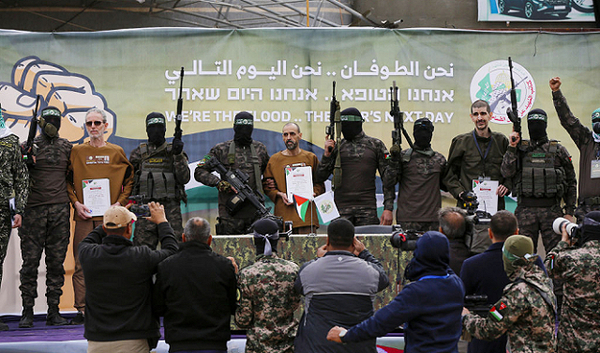
Hamas submits its response to the truce proposal to the mediators, and Israel is studying it.

Hamas announced early Thursday that it had submitted its official response to the ceasefire proposal in the Gaza Strip to mediators, without revealing any details.

In a brief statement via Telegram, the movement said, "Hamas has just submitted its response and the response of the Palestinian factions to the ceasefire proposal to the mediating brothers."

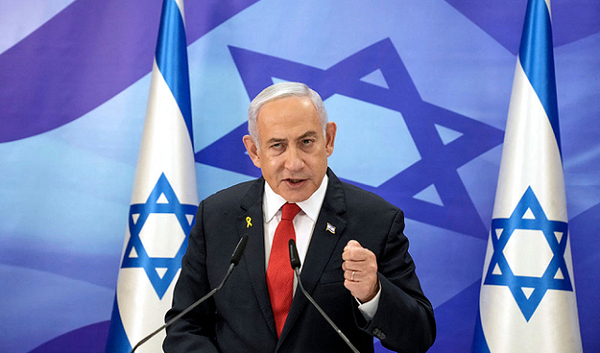
For its part, the Israeli Prime Minister's Office announced this morning that it had received Hamas's response, confirming that it was studying it.

In this context,

Two sources, one Egyptian and one familiar with the mediation efforts in the Doha negotiations, and the other from Hamas, revealed to Al-Araby Al-Jadeed that the movement has already submitted its official response to the Qatari and Egyptian mediators regarding the proposed 60-day truce in the Gaza Strip.

The response concerns amendments requested by Hamas to the maps for the redeployment of the Israeli army during the truce period and the mechanism for the entry and distribution of humanitarian aid.

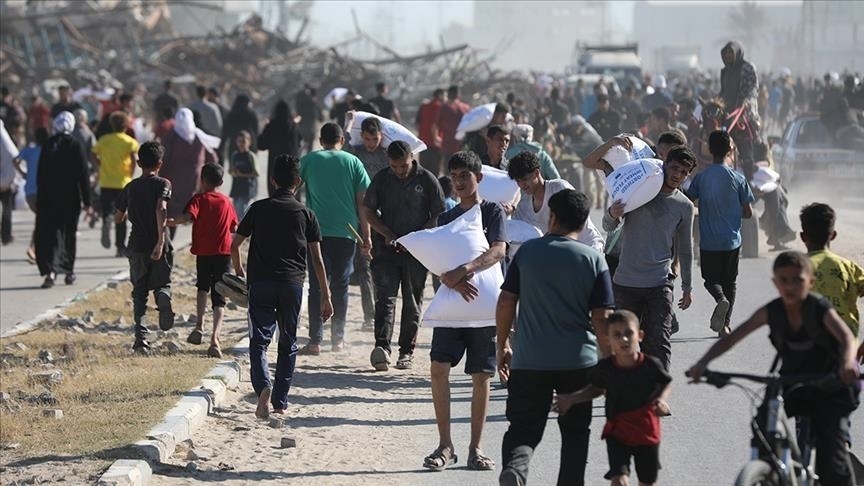
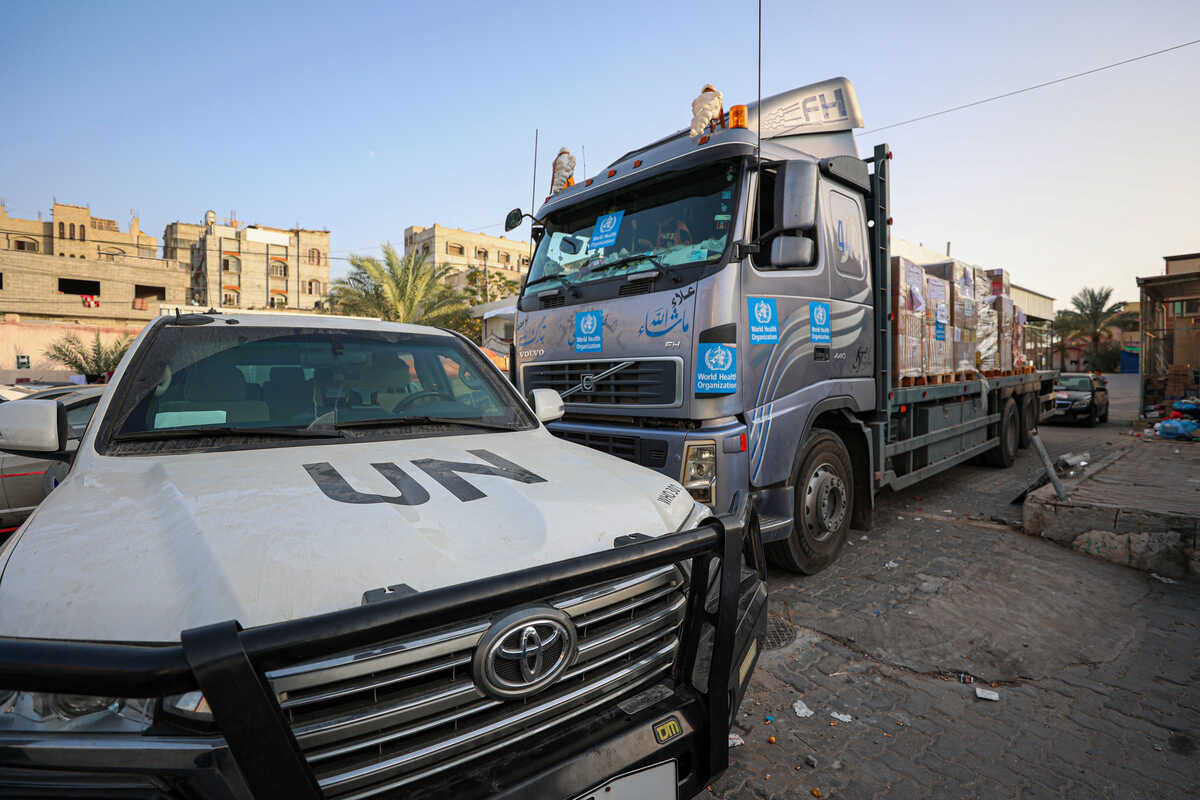
According to the source, the movement demanded that the Israeli occupation forces' deployments be adjusted for the proposed two months, so that they are far from civilian areas. It also stipulated that aid entry and distribution be restricted to UN agencies, excluding the so-called "Gaza Humanitarian Foundation" from this task.

In the same context, informed sources indicated that the movement's response also included a condition stipulating that the Rafah border crossing between Gaza and Egypt be opened in both directions immediately after the agreement's implementation begins.

The Egyptian source also revealed that the US side affirmed its commitment to ensuring the continuation of negotiations even after the expiration of the truce, if a permanent agreement is not reached during that period.

"Now the ball is in the Israeli court, as mediators await its response to the amendments proposed by Hamas regarding aid and deployment maps," the source said.

He added that Israel's approval of these terms would mean reaching a framework for a negotiated agreement, under which the truce could enter into immediate effect.

Meanwhile, the White House confirmed on Wednesday that the United States is seeking to reach a ceasefire agreement in Gaza that includes the release of detainees "as soon as possible."

He noted that US envoy Steve Witkoff will hold meetings with Middle Eastern officials in Europe, specifically in Italy, to further discuss the proposed agreement.

In a significant development, the Israeli Broadcasting Corporation quoted unnamed sources as saying that the Israeli negotiating team present in the Qatari capital, Doha, has received a new mandate from the political leadership to explore the possibility of ending the war.

The commission reported that Prime Minister Benjamin Netanyahu recently expressed openness to ending the war during the ceasefire period, a view confirmed by ministers who spoke with him recently.

Security reports indicated that one of the main reasons behind this trend is the erosion of the Israeli army's capabilities in Gaza. Chief of Staff Eyal Zamir also presented Netanyahu with a field assessment showing the difficulty of continuing military operations, a fact that cannot be ignored, according to the agency. The sources also confirmed that Netanyahu is aware of a growing desire within the Israeli public to end the war.

For its part, the Israeli newspaper "Israel Hayom" revealed some details of the Palestinian demands in the ongoing negotiations in Doha. Hamas has demanded that Israeli forces withdraw to a distance of no less than 800 meters from the Gaza Strip's security fence, in addition to demanding the release of a greater number of Palestinian prisoners for every Israeli soldier held captive.

It's worth noting that the war waged by the Israeli occupation army on the Gaza Strip since October 2023 has so far resulted in the martyrdom of more than 59,000 Palestinians, the injury of more than 143,000, and widespread destruction and the near-total displacement of the Strip's population. This is one of the bloodiest and most destructive wars in modern times, according to Palestinian and international reports.

Over the past few months, Israel and Hamas reached two partial ceasefire and prisoner exchange agreements, the first in November 2023 and the second in January 2025. However, Netanyahu evaded implementing the second phase of the latter agreement and resumed military operations on March 18.

PALESTINE

Wed 23 Jul 2025 10:52 pm - Jerusalem Time

The Foreign Ministry condemns the Knesset's vote on a statement supporting Israeli sovereignty over the West Bank and the Jordan Valley.

The Ministry of Foreign Affairs and Expatriates condemned in the strongest terms the Israeli Knesset's vote on a statement supporting Israeli sovereignty over the occupied West Bank and Jordan Valley, considering it a flagrant violation of international law and a clear undermining of the two-state solution and the right of the Palestinian people to establish their independent, sovereign state on the June 4, 1967 lines, with occupied Jerusalem as its capital. The Ministry stressed that Israel has no sovereignty over the occupied Palestinian territories.

The Ministry's official spokesperson, Ambassador Dr. Sufian Qudah, affirmed the Kingdom's absolute rejection and strong condemnation of any Israeli attempts to impose its control over the West Bank, in violation of international law and UN Security Council resolutions, particularly Resolution 2334, which condemns all Israeli measures aimed at changing the demographic composition, character, and status of the Palestinian territory occupied since 1967, including East Jerusalem. The advisory opinion of the International Court of Justice affirmed the illegality of the Israeli occupation and the invalidity of settlement construction and measures to annex West Bank lands.

Ambassador Qudah warned against the continuation of unilateral Israeli policies that violate international law and relevant UN resolutions, reiterating that all Israeli measures in the West Bank are illegitimate and illegal.

Ambassador Al-Qudah called on the international community to assume its legal and moral responsibilities, compel Israel to immediately halt its aggression against Gaza and the dangerous escalation in the occupied West Bank, provide the necessary protection for the Palestinian people, and fulfill their legitimate rights to establish an independent state on their national soil, as the only way to achieve a just and comprehensive peace that guarantees security and stability in the region.


PALESTINE

Wed 23 Jul 2025 10:04 pm - Jerusalem Time

The United Nations announces the death of 294 Palestinians at military points distributing aid in Gaza.

The United Nations announced the deaths of 294 people at "military points" distributing aid in the Gaza Strip since June 30.

This was stated by Khaled Khiari, Assistant Secretary-General for Middle East, Asia and the Pacific Affairs, during an open Security Council debate held on Wednesday on the situation in the Middle East, with a focus on the humanitarian crisis in Gaza.

Khiari noted that he briefed member states at a time when intensive negotiations were underway to reach a possible ceasefire agreement in Gaza and the release of prisoners.

He stressed the great importance of this path, which leads to a permanent end to the conflict and the release of all prisoners.

"It is long past time for the war to end, for the prisoners to return to their homes, for sufficient humanitarian aid to reach the Gaza Strip, and for the recovery and reconstruction process to begin. All of this must take place within the framework of a return to a political process leading to a two-state solution," Khiari said.

He pointed out that the dire situation in Gaza continues to deteriorate as ceasefire talks continue.

He added: "Israeli military operations and clashes are spreading throughout the Strip, and the human cost is increasing hour by hour. This historic nightmare must end immediately."

Khayari stated that at least 1,891 Palestinians in Gaza have been martyred since his last briefing to the UN Security Council on June 30.

He continued: "294 of them were killed while trying to collect aid, including in the vicinity of military aid distribution points."

Khiari pointed out that the Israeli army continues to issue "evacuation orders," repeatedly displacing Gaza residents.

He pointed out that food insecurity and the humanitarian situation in Gaza continue to deteriorate despite the entry of limited humanitarian aid.

He added, "I reiterate Secretary-General António Guterres' calls to end the repeated forced displacement in Gaza. Any forced displacement of residents from any part of the occupied Palestinian territory constitutes a violation of obligations under international law, and all parties must always adhere to international humanitarian law and protect civilians."

Khiari stressed that the situation in the occupied West Bank remains extremely worrying, with rising levels of violence resulting from ongoing Israeli military operations, resulting in numerous civilian casualties and extensive damage to homes and infrastructure.

He noted that the Palestinian Authority is also facing a deep financial crisis, and that Israel has not transferred $2.7 billion in tax revenues.

Khiari stressed that the Palestinian Authority's ability to fulfill its basic obligations and maintain public services has been seriously affected.

He added, "Unless the deteriorating financial and institutional situation of the Palestinian Authority is urgently addressed, it could have dire consequences, undermining the significant progress made over many years in building Palestinian institutions."

"It is imperative that the international community provide immediate support to the Palestinian Authority to address its financial challenges, strengthen its governance capacity, and prepare it to resume its responsibilities in Gaza," Khiari said.

He explained that the United Nations Relief and Works Agency for Palestine Refugees in the Near East (UNRWA) is facing serious operational, political, and financial pressures due to the obstruction of its activities in Gaza and the occupied West Bank.

Khiari announced that 330 UNRWA employees have been killed in Gaza since October 7, 2023.

Earlier on Wednesday, the Ministry of Health in Gaza said that hospitals in the Strip "recorded 10 new deaths due to famine and malnutrition in the past 24 hours."

The ministry added that with these victims, "the total number of deaths from famine and malnutrition has reached 111."

Israel has been besieging Gaza for 18 years, leaving approximately 1.5 million Palestinians out of a population of approximately 2.4 million in the Strip homeless after their homes were destroyed in the war of extermination.

Since October 7, 2023, Israel has waged a genocidal war in Gaza, leaving more than 202,000 Palestinians dead or wounded, most of them children and women, and more than 9,000 missing, in addition to hundreds of thousands of displaced persons and a famine that has claimed the lives of many.

Regarding the Syrian issue, Khiari explained that Syria is facing a new wave of violence that threatens a peaceful, credible, orderly, and comprehensive political transition.

He confirmed that hundreds of people, including Druze and Bedouin civilians, were killed in the clashes that erupted in Sweida Governorate.

"I reiterate the Secretary-General's unequivocal condemnation of all acts of violence against civilians, which fuel sectarian tensions and deny the Syrian people their chance for peace and reconciliation after 14 years of devastating conflict," Khiari said.

On July 13, armed clashes erupted between Bedouin tribes and Druze groups in Sweida. Government forces then moved into the area to restore security, but were attacked by outlawed Druze groups, resulting in the deaths of dozens of soldiers.

In an effort to contain the crisis, the Syrian government announced four ceasefire agreements in Sweida, the most recent of which was on Saturday.

The three previous agreements did not hold for long, as clashes resumed on Friday after a group affiliated with Hikmat al-Hijri displaced a number of Sunni Bedouin tribesmen and committed abuses against them.

The new Syrian administration has been making intensive efforts to maintain security in the country since the overthrow of Bashar al-Assad's regime on December 8, 2024, after 24 years in power.

PALESTINE

Wed 23 Jul 2025 9:45 pm - Jerusalem Time

Hebrew Broadcast: Netanyahu wants to end the war in Gaza during the ceasefire

The Israeli Broadcasting Corporation, citing sources, reported on Wednesday that Israeli Prime Minister Benjamin Netanyahu wants to end the war during a ceasefire, according to ministers he recently spoke with.

Sources indicated that Netanyahu assured Finance Minister Bezalel Smotrich and National Security Minister Itamar Ben-Gvir that he would return to fighting if the war's objectives were not achieved.

Security sources confirmed that the erosion of the Israeli occupation army's strength in Gaza is one of the reasons Netanyahu and Chief of Staff Eyal Zamir are keen to end the war.

The sources explained that the Chief of Staff briefed Netanyahu on the situation of the forces on the ground, a matter that cannot be ignored.

Earlier today, far-right Israeli National Security Minister Itamar Ben-Gvir said in a letter to Israeli Prime Minister Benjamin Netanyahu that "Hamas must not be negotiated with and must be destroyed without the delivery of humanitarian aid or the conclusion of surrender deals."

Ben-Gvir noted that negotiations have devolved into concessions, and that Hamas now feels comfortable continuing to blackmail Israel and push it toward further collapse. He emphasized that continuing on this path will not lead Israel to a decisive victory.

In turn, Israeli Finance Minister Bezalel Smotrich, in a letter to Netanyahu, demanded that the door be closed permanently to any partial deal and that the army be ordered to invade Gaza in light of Hamas's expected rejection.

PALESTINE

Wed 23 Jul 2025 7:48 pm - Jerusalem Time

A child was killed near the entrance to the town of Araba in Jenin Governorate.

A child was killed by Israeli occupation forces' bullets on Wednesday evening in the town of Araba, south of Jenin.

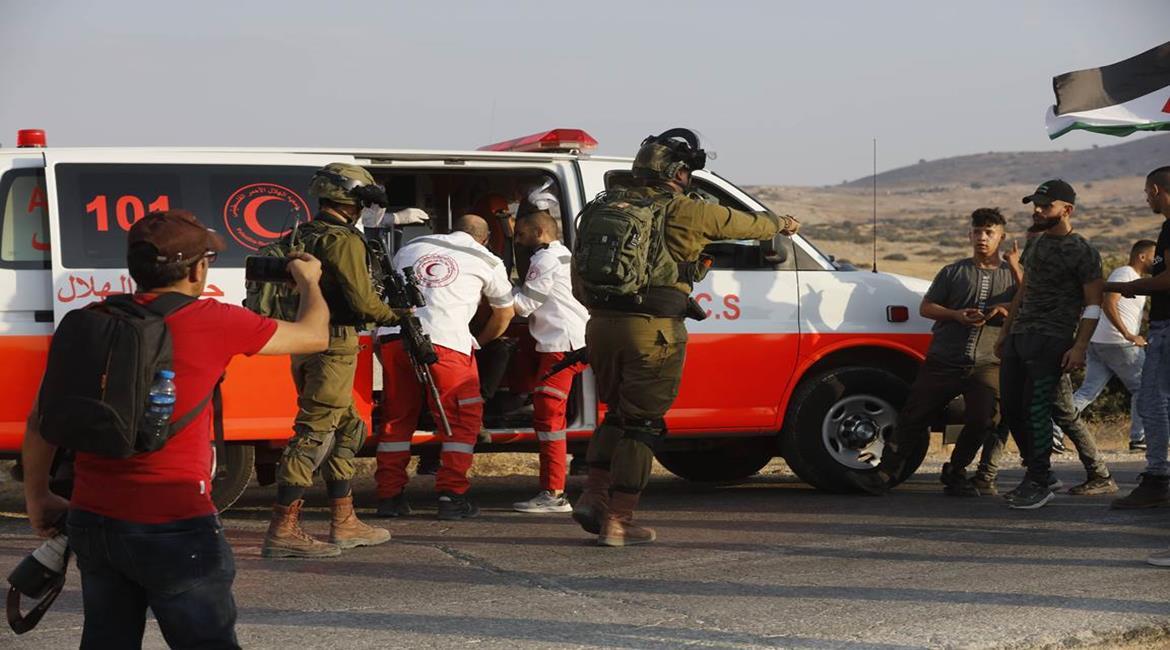
According to local sources, the occupation forces stationed at the western entrance to the town of Araba fired live bullets directly at the child Ibrahim Imad Ahmed Mahmoud Hamran (14 years old), which led to his martyrdom. The Red Crescent Society confirmed that its crews received the martyred child and transferred him to a hospital in Jenin.

Ibrahim Hamran is the second child killed by Israeli occupation forces in villages south of Jenin in the past 24 hours. Yesterday, Ibrahim Nasr was martyred after being shot in the chest by Israeli occupation forces in the town of Qabatiya, south of Jenin.

With the martyrdom of Hamran, the number of martyrs in Jenin Governorate since the beginning of the aggression on Jenin and its camp on January 21 has risen to 44.

PALESTINE

Wed 23 Jul 2025 6:01 pm - Jerusalem Time

Suffocation injuries as a result of the continued occupation aggression on Nablus

A number of citizens suffered from suffocation from tear gas on Wednesday evening, during the Israeli occupation forces' continued raid on the city of Nablus.

According to local sources, occupation forces stormed the areas of Martyrs' Roundabout, Faisal Street, and Rafidia, firing sound bombs and tear gas, causing a number of civilians to suffocate.

The Israeli occupation forces have continued their aggression on the city of Nablus since yesterday evening, Tuesday.

PALESTINE

Wed 23 Jul 2025 5:41 pm - Jerusalem Time

The Knesset votes on a statement calling for "imposing Israeli sovereignty" over the West Bank.

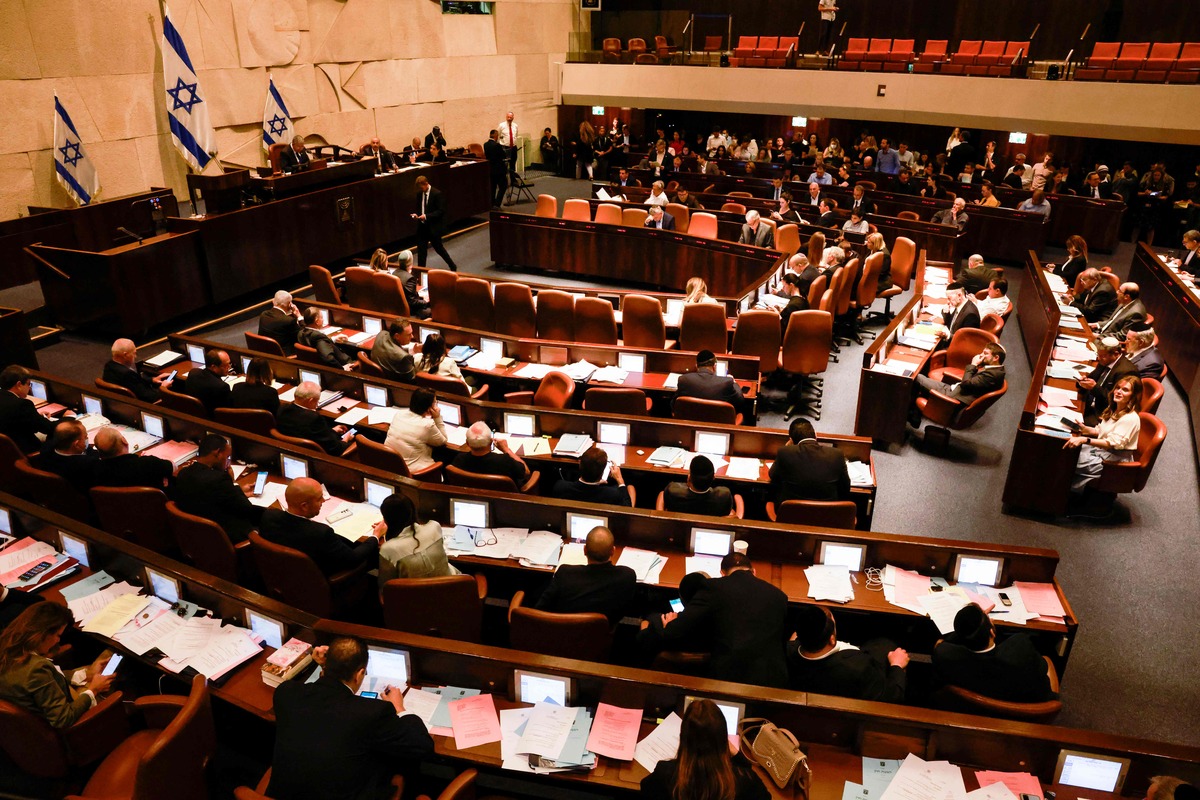
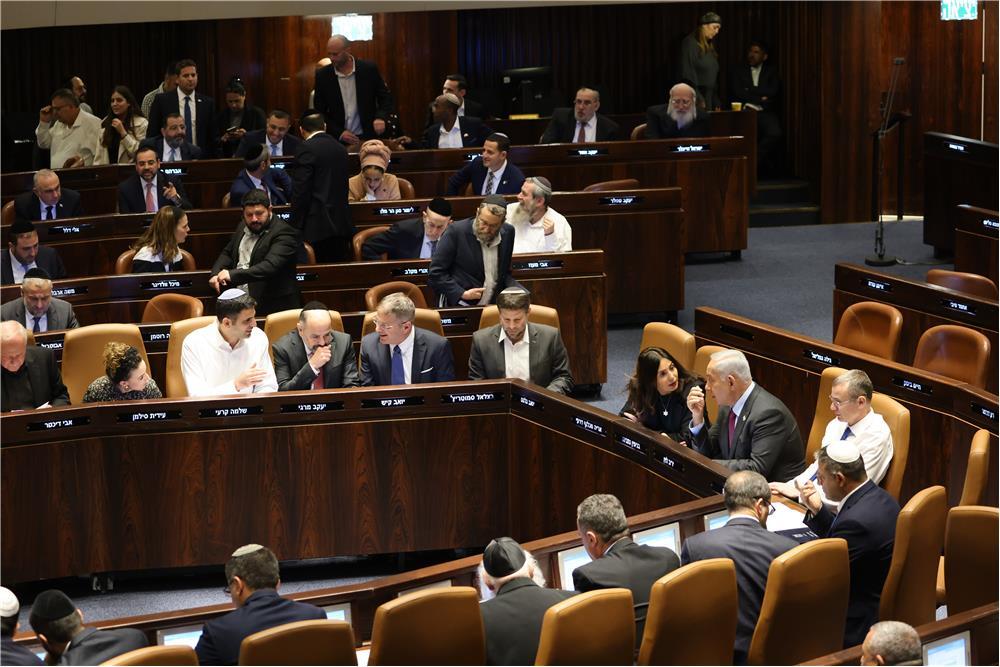
The Israeli Knesset voted on Wednesday on a statement expressing official support for imposing Israeli sovereignty over the occupied West Bank, concluding the agenda of the final session before the Knesset goes into summer recess.

The proposal was approved by a majority of 71 Knesset members, with only 13 voting against. Members of all coalition parties voted in favor of the proposal, including representatives from the Shas party, which recently withdrew from the government.

The decision comes as part of a "proposal on the agenda" initiated by Knesset members Simcha Rothman, Orit Struck, Dan Iluz, and Oded Forer, and was approved by the Knesset Presidium on Monday.

This move comes as part of the Israeli right's efforts to establish a fait accompli in the West Bank through legislative measures, following the current government's intensification of colonization projects and measures aimed at annexing large parts of the West Bank.

Observers stated, "Although the decision is symbolic and not legally binding, its initiators are calling on the government to take action to implement sovereignty in the West Bank, with support from Knesset members in both the coalition and the opposition."

On July 19, 2024, the International Court of Justice affirmed that the Israeli occupation of the Palestinian territories is illegal.

In its advisory opinion on the legal implications of Israeli practices and their impact on the occupied territories, the Court affirmed that Israel must cease its occupation and end its illegal presence in the occupied Palestinian territory as soon as possible.

The court's opinion stated that Israel must immediately cease any new settlement activity and remove all settlers from the occupied Palestinian territory.

On September 18, 2024, the United Nations General Assembly adopted, by majority vote, a draft resolution demanding that Israel, the occupying power, end its "illegal presence in the occupied Palestinian territory" within 12 months, based on the advisory opinion issued by the International Court of Justice.

On 23 December 2016, the Security Council adopted Resolution 2334, which states that Israeli settlements constitute a "flagrant violation of international law."

The resolution stipulated that all settlement activities in the occupied Palestinian territory, including East Jerusalem, "must cease immediately and completely."

PALESTINE

Wed 23 Jul 2025 4:57 pm - Jerusalem Time

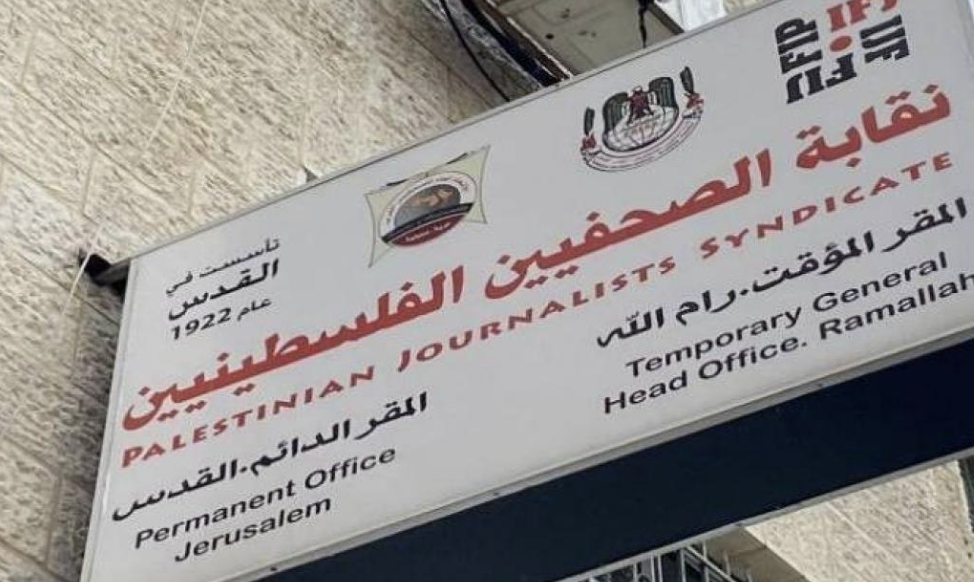
The Journalists Syndicate: The occupation committed a new crime by targeting journalist Al-Jaabari and her family.

The Palestinian Journalists Syndicate said that the Israeli occupation has recorded a new crime in its bloody record by assassinating fellow journalist Walaa al-Jabari, after its aircraft targeted her apartment in the Tel al-Hawa neighborhood, southwest of Gaza City. This resulted in her martyrdom, along with her husband and children, in a horrifying scene.

In a statement issued Wednesday, the Syndicate affirmed that it views this heinous crime as part of a systematic policy pursued by the Israeli occupation to intimidate journalists, break their pens, and silence their cameras by directly targeting them and their families inside their homes.

She said: "The occupation has crossed all red lines. It is no longer content with killing journalists in the field, but is now deliberately killing them inside their homes and among their children, in an attempt to extinguish the light of truth and subjugate the Palestinian media by force of fire and blood."

The Syndicate held the Israeli occupation fully responsible for the martyrdom of colleague Walaa al-Jabari and her family, stressing that these crimes will not intimidate our journalists, but rather will only strengthen their resolve to fulfill their professional and national mission.

She called for these crimes to be referred to the International Criminal Court, considering them full-fledged war crimes. She urged international press and media institutions to break their silence and stand up for the truth, instead of colluding with the killer.

The Journalists Syndicate concluded its statement by saying: "The blood of our colleague Walaa al-Ja'bari and her family will remain a living witness to the occupation's crimes, and proof that the battle was never just over land, but also over awareness, narrative, and truth."

PALESTINE

Wed 23 Jul 2025 1:43 pm - Jerusalem Time

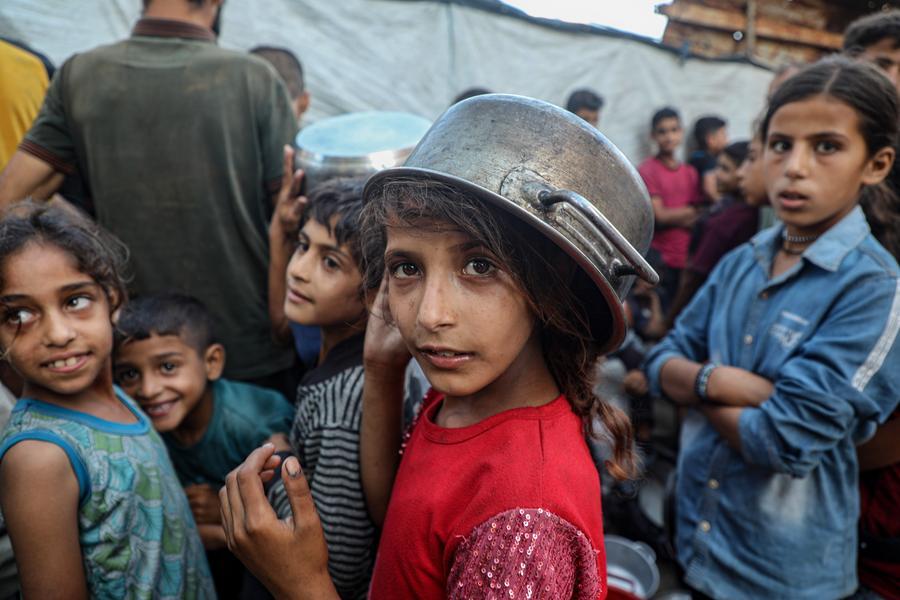
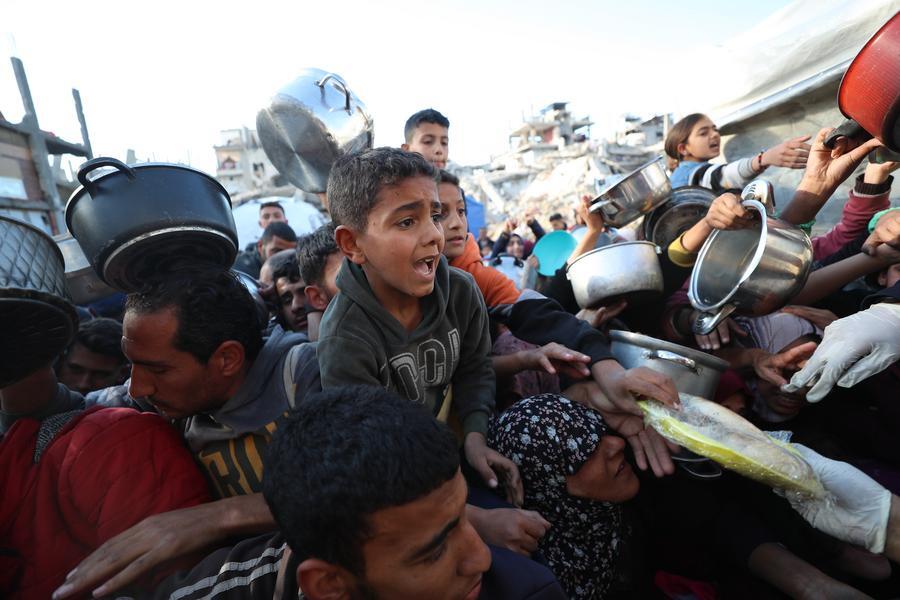
Within 24 hours: 10 people died of famine and malnutrition in the Gaza Strip.

Medical sources announced this Wednesday afternoon that 10 people had died due to famine and malnutrition in the Gaza Strip over the past 24 hours.

The same sources explained that 25 children died of malnutrition and famine over the past three days.

She noted that cases of malnutrition and famine are arriving at hospitals in Gaza at every moment, with 900,000 children in Gaza suffering from hunger, 70,000 of whom have entered the malnutrition stage.

She stressed that the lives of diabetic and kidney patients are threatened by malnutrition, and they are exposed to severe attacks as a result of the starvation practiced by the occupation against the people of the Gaza Strip.

The same sources indicated that 17,000 children are suffering from severe malnutrition, and that patients are being treated for stress and memory loss resulting from severe hunger. Hospitals lack sufficient beds and medications for the massive number of people suffering from severe malnutrition.

The United Nations Relief and Works Agency for Palestine Refugees (UNRWA) warned that malnutrition among children under the age of five doubled between March and June, as a result of the Israeli blockade of the Gaza Strip.

She explained that UNRWA health centers and medical points conducted approximately 74,000 malnutrition tests for children during this period, identifying approximately 5,500 cases of global acute malnutrition and more than 800 cases of severe acute malnutrition.

PALESTINE

Wed 23 Jul 2025 12:48 pm - Jerusalem Time

Hamas calls for a global popular movement to end the starvation crime in Gaza.

Hamas called for the largest popular movement in all capitals and cities around the world to end the starvation crime committed by Israel against Palestinians in the Gaza Strip.

"The crime of starvation and genocide committed by the Zionist occupation in the Gaza Strip is escalating, with people dying from hunger and malnutrition," it said in a statement.

She added, "Famine is making its deadly presence felt in the faces of children, mothers, and the elderly, amidst a disturbing global silence and the absence of any action that would rise to the level of the catastrophe."

She continued: "We call on the masses of our nation and all the free people of the world to engage in the broadest popular and mass movement in all the capitals and cities of the world on Friday, Saturday, Sunday, and all the coming days, until the siege is broken and the famine in Gaza ends."

Hamas added: "Let the coming days be a resounding cry in the face of the occupation and a disgrace to those who remain silent."

She added: "Let demonstrations, sit-ins, and angry marches take place in front of the occupation embassies and American embassies, in the squares, on the streets, in universities, and across every media platform. Let the whole world chant, 'Stop the crime of starvation.'"

She stressed that "what is happening in Gaza is a watershed moment in the human conscience to support Gaza and stop the war of extermination and starvation."

PALESTINE

Wed 23 Jul 2025 12:26 pm - Jerusalem Time

The Knesset will vote within hours on a resolution to impose Israeli sovereignty over the West Bank.

The Israeli Knesset is scheduled to vote on Wednesday on a draft resolution supporting the imposition of what it calls "Israeli sovereignty" over the West Bank, a move that effectively paves the way for its annexation to Israel. This represents a clear challenge to international law and international legitimacy resolutions.

According to Israel's Channel 12, the draft resolution was submitted by members of the ruling coalition before the Knesset's recess and enjoys explicit support from prominent ministers, including Energy Minister Eli Cohen, who said he would support the resolution, describing it as historic and timely.

It should be noted that the draft resolution is not considered an effective law, but rather a statement of position, and is not binding on the Israeli government, which is the body authorized to make such decisions.

These movements reflect a political escalation parallel to the ongoing field escalation, including raids, incursions, arrests, and military campaigns that have been ongoing since October 7, 2023.

A recent conference held at the Knesset building in West Jerusalem last Monday saw widespread participation from right-wing ministers and representatives, led by ministers from the ruling Likud party, and with the participation of former US Ambassador to Tel Aviv David Friedman.

Israeli Justice Minister Yariv Levin, speaking at the conference, said that Israel faces a "historic opportunity" that must not be missed to apply full sovereignty over "Judea and Samaria," the biblical name Israel uses to refer to the West Bank.

"We need swift action, and we must not give up. Sovereignty must extend to all settlements," Levin added.

In turn, Energy Minister Eli Cohen said, "There will only be one state between the Mediterranean Sea and the Jordan River, and that is the State of Israel. Sovereignty in the West Bank is a security necessity before it is a political option," he claimed.

Knesset Speaker Amir Ohana began the conference by saying, "The Knesset had previously approved, by a majority of 68 members, a statement opposing the establishment of a Palestinian state," considering the West Bank to constitute Israel's "defense line."

OPINIONS

Wed 23 Jul 2025 12:19 pm - Jerusalem Time

TIME FOR ACTION - NOT MORE LETTERS OF CONDEMNATION

Gershon Baskin

Jul 23, 2025

 A paper condemning Israel that is committing war crimes in Gaza, even if signed by 28 countries is still just a piece of paper. Into the trash bin of history is the way that the State of Israel treats it - along with the Israeli media -calling it antisemitic. It is not antisemitic, but it also has no impact. Yesterday's "incident" in which am Israeli cruise ship carrying more than 1000 Israelis being unable to dock on a Greek Island because of pro-Palestinian demonstrations, and the questioning by Belgium police of two young Israelis waving IDF flags at a music and dance festival is just the first taste of what we Israelis are going to be facing all around the world - and it is not antisemitism - it is against the State of Israel which is committing war crimes and crimes against humanity. You cannot starve a whole population, you cannot destroy a whole civilization, you cannot destroy the homes and institutions including schools, universities, public building, water and electricity infrastructure of more than two million people and get away with it. Israel's crimes have a price tag and we will begin to see that price tag being cashed in more and more.


To the 28 countries who signed the document - we don't need more documents - good as they may be - we need action. This war must end now - not one day longer should Israel be allowed to continue to kill and destroy in Gaza. It is not good enough to say that "the world is watching" and "all eyes on Gaza". The majority of Israelis know that what Israel is doing is wrong and criminal - but they are still in trauma and exhausted by this war - they are not yet able to take action - I hope that they will and that it will not take too long before they wake up and understand the depth of the crimes that the State of Israel is committing. Now, the world needs to take action - even if the United States continues to back Netanyahu and his criminal government. There is no excuse for the world to sit by and watch another genocide take place without taking action.


OPINIONS

Wed 23 Jul 2025 11:34 am - Jerusalem Time

They will not triumph for their religion, their nationality, or their humanity.


Written by: Rasim Obeidat

It seems that Imam Abdul-Malik al-Houthi came in a bad and wicked Arab era, as described by the late great Algerian novelist Tahar Wattar. He calls on Arab leaders to champion their religion, and if they are unable to, then to champion their nationalism, and if they are unable to, then to champion their humanity.
These rulers, the leaders of the official Arab regime, O Imam, have reached the stage of humiliation and loss of will and independent decision-making. They are in absolute subservience to America and complete surrender to Israel. Therefore, they are not victorious because of their religion, nationality, or humanity. They have become Arabs who have lost sight and insight. They have become Arabs outside of rational human history. They have become Arabs of humiliation and disgrace, Arabs of submission and obedience, Arabs who sold their homelands in order to protect their thrones.
During the time of slavery, the slaves revolted and were liberated from their slavery. The liberator of slaves, Spartacus, led the slaves towards freedom from slavery. However, in this nation, we witness tribal and clan panics in order to perpetuate slavery, ignorance and backwardness, in order to deepen the state of division and discord among the peoples of the nation, and to create internal sectarian and denominational strife among them, in order to create blood feuds and rivers of blood among the components of its peoples, which are difficult to heal, overcome or easily bypass.
Yes, what happened and is happening to our Arab nation and peoples is the result of long-term colonial projects and schemes and societal penetration operations that have struck at the consciousness of our societies and our nation, such that this consciousness has become distorted, reaching the point of restricting the minds. This process and brainwashing of the peoples and elites has been employed by trembling and servile regimes that have put their interests and positions above the interests of the nation and have employed their money, sheikhs, religious authorities, media outlets and elites to serve projects of spreading discord among the sons of the nation and giving priority to regionalism over nationalism, and inventing imaginary enemies instead of real enemies.
What we are witnessing is a continuation of the nation’s self-destruction projects. What we are witnessing of tribal and clan panics and Emirati projects is to serve those who want to control the nation and the region, plunder its resources and wealth, dismantle its geography and reconstruct it in a way that serves their interests, goals and malicious plans. They delude the peoples of the region that normalization and the Abrahamic peace are for the development, well-being and progress of the peoples. The reality of the countries that joined the normalization and what is known as the Abrahamic Peace Accords, and what is known as the peace agreements, indicates the extent of the state of humiliation and degradation that the peoples of those countries are living in, and the high rates of their hunger and poverty. They say to Lebanon and threaten it with disappearing from the map that you must seize the opportunity because the world around you is changing rapidly, and do not let the opportunity pass you by. They give it an example of what is happening in Syria, as an indication of development and change, as this change led to humiliation, degradation, devastation, destruction and selling out of the homeland, which Syria has not witnessed throughout its history. This is how they want Lebanon and the rest of the Arab countries to be, leaders Kings, princes, a flag, anthem, guards, and a piece of land from which Israel takes whatever it wants for its security, and its airspace is violated by it, and it has no right to build a strong army or possess advanced weapons, which are being manufactured. They want them to live without dignity and without real independence. They want them to remain dependents. Their only concern is their thrones, positions, clans, and tribes. They do not want them to have any form of unity, or control over their resources and wealth.
They want them to respond to Israel when it asks them to give up any title of sovereignty, in favor of any other title it requests, and likewise whenever it occupies a piece of land, it demands the occupation of more, under the pretext and excuse of protecting its security. This security requires the destruction of all the armies of the Arab countries, and preventing them from building a strong army or possessing and manufacturing strategic weapons. It is also required that these countries work in the service of Israel’s security, and prevent any form of resistance against it.
What we are seeing now is that an entire people in the Gaza Strip is facing starvation, without any Arab country raising its voice and saying, “We will not allow this people to die, and we will force the entry of humanitarian aid, food, medicine, and fuel to operate hospitals and electric generators.” But when it does not have its own decision or will, it is incapable of any action or practical step, except for statements of condemnation and denunciation, which have no basis in reality.
Imagine that those who go to receive humanitarian aid are exposed to death traps, by those who claim to be working to help these starving people, where they are shot, and more than 900 martyrs and 6,000 wounded are killed by the bullets of the occupation army and American contractors supervising the distribution of this aid.
I am certain that if the Arab regimes had the will and courage of the Yemenis, and the boldness, principles, and steadfastness of their leadership, they would have been able to change all the equations in the region. Yemen, which does not possess trillions of dollars or oil and gas wells, has created and established rules of engagement and deterrence equations, not only with Israel, but also with America, whose president has acknowledged the strength and courage of the Ansar Allah group. These people, wearing flip-flops and Zenobia, imposed their conditions on America in the Red Sea, and have become the decision-makers in the seas and waterways. It is sufficient for America to sign an agreement with them, which would prevent its ships, warships, and destroyers from being targeted in the Arabian Sea and the Red Sea by Yemeni missiles and drones, in exchange for continuing its support war against the Gaza Strip, through the continuation of the economic naval blockade, which includes all ships carrying goods to Israeli ports. This blockade has led to the bankruptcy and closure of the port of Eilat (Umm al-Rashrash).
Yemen continued to launch its ballistic and hypersonic missiles and its attack drones deep into the occupying state, targeting strategic and vital military, security and economic targets, imposing an air blockade on Lod Airport, and inflicting heavy economic losses on Israel.
The Arab countries of the official Arab regime not only refrained from providing any support or assistance to the Gaza Strip, including the entry of humanitarian aid, but a number of countries of this regime also compensated Israel for its economic losses resulting from the Yemeni blockade by transporting vegetables, fruits and other products to it via land lines.
Therefore, the official Arab regimes, some of which chose to conclude “peace” agreements with Israel, another part joined what is known as the Abrahamic Peace and normalization, and another group is waiting its turn to enter into the Abrahamic “peace” alliance and normalization, these regimes, with their various names, cannot triumph for their religion, nationalism, or Arabism. Rather, they do not want the Yemeni and Palestinian models – the resistance of the Gaza Strip, Hezbollah, and the Popular Mobilization Forces – to be generalized in the Arab region, as they see them as a threat to them, their thrones, interests, and privileges.


ARAB AND WORLD

Wed 23 Jul 2025 10:59 am - Jerusalem Time

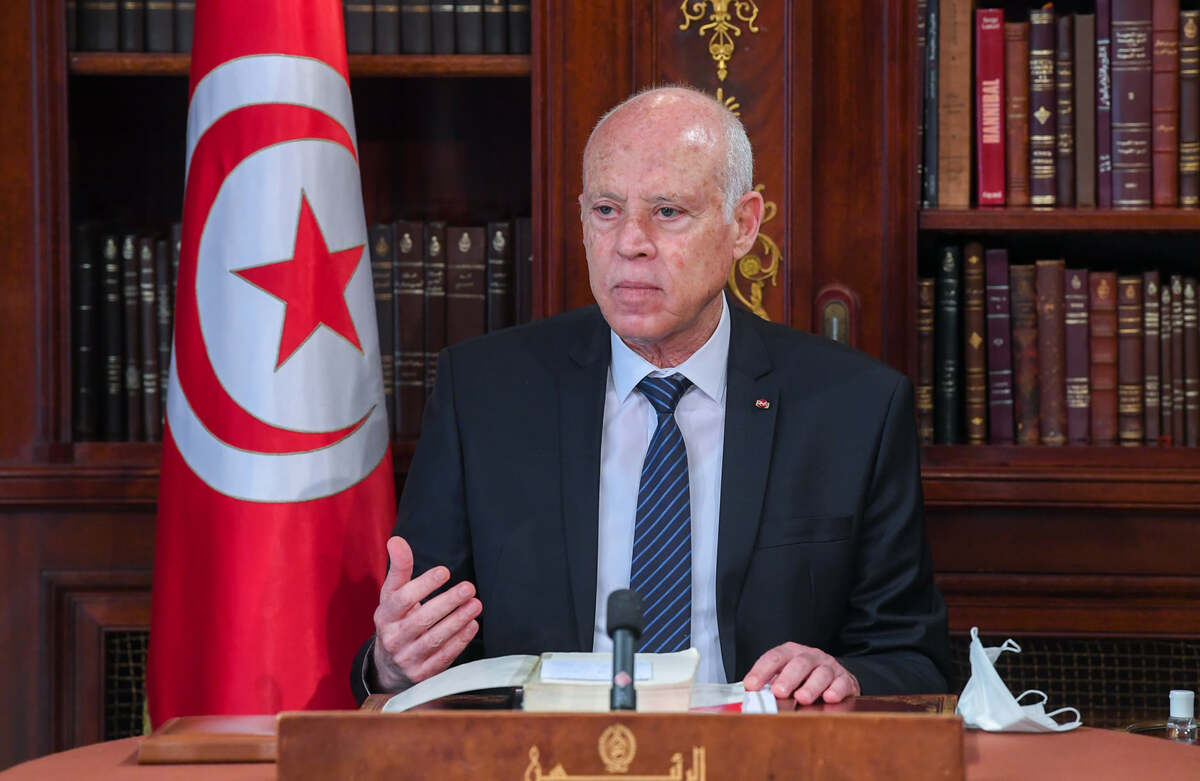
Tunisian President: International legitimacy is crumbling in light of the occupation's crimes against the Palestinian people.

Tunisian President Kais Saied said that international legitimacy is crumbling day by day, in light of the crimes committed by the Israeli occupation against the Palestinian people, especially in the Gaza Strip.

During his meeting with US President Donald Trump's advisor for Arab, Middle East, and African affairs, Massad Boulos, in the Tunisian capital, he stressed that what the occupation is committing is completely unacceptable and constitutes a crime against humanity. He also emphasized that international legitimacy no longer has any meaning given the tragedies endured by Palestinians in Gaza, in addition to the daily bombardment.

Saied showed the US advisor what he described as "shocking" images of infants and children, victims of the famine in Gaza, dying of thirst and hunger, saying, "These are images that express the brutality of the war being waged by the brutal occupation forces to exterminate the Palestinian people, a war whose goal is to make the Palestinians internalize defeat, but free peoples will never accept defeat."

He stressed our people's right to self-determination, calling for an end to the crimes committed in Palestine and for bold decisions to be made that would lead to the establishment of an independent Palestinian state with Jerusalem as its capital.

PALESTINE

Wed 23 Jul 2025 10:57 am - Jerusalem Time

9 dead as a result of the occupation's bombing of the Tal al-Hawa neighborhood, including a journalist and her family members.

Medical sources reported Wednesday morning that the death toll from Israeli warplanes' bombing of the Tel al-Hawa neighborhood, southwest of Gaza City, has risen to nine, including a female journalist and her family members.

The same sources reported that the death toll from the occupation's bombing of the Al-Shaer family home rose to nine, including pregnant journalist Walaa Al-Jaabari, her five children, and her husband. The fetus was forced out of her womb due to the intensity of the brutal bombing.

With the death of journalist Al-Jaabari, the number of journalists killed since the beginning of this year until the end of last June has risen to 34.

According to the semi-annual freedoms report issued by the Journalists Syndicate a few days ago, the first half of this year witnessed a significant escalation in the targeting of journalists, with 41 members of their families killed, 32 homes belonging to them demolished, and 66 injuries recorded among them, most of them from rocket shrapnel and live ammunition.

OPINIONS

Wed 23 Jul 2025 9:13 am - Jerusalem Time

The Palestinian entity in light of international disintegration and American bias

Rizq Atawneh

As the Israeli aggression on the Gaza Strip continues for nearly 22 months, more than two million Palestinians in the Gaza Strip are facing a real famine due to the blockade and the denial of access to food, water, and medicine. This is what UN reports and international relief organizations have described as "the worst humanitarian disaster of the 21st century." This coincides with systematic genocide and bombing targeting civilians and infrastructure, including schools, hospitals, and refugee camps.
Meanwhile, the West Bank is witnessing an unprecedented escalation in ethnic cleansing in the northern West Bank, the Jordan Valley, and Jerusalem, with repeated destruction of refugee camps and forced displacement operations carried out by the occupation army and armed settlers with the full support of the Israeli political and military establishment.
This reality is imposed under a complicit or silent international cover, and at its heart lies the American role as a fundamental pillar in the continuation of this Israeli impunity from any political or legal accountability.
The US-Israeli alliance is not a temporary relationship of convenience, but rather a deeply rooted structural bond, the beginnings of which date back to the founding of the United States itself. This relationship has transcended administrations and parties to become a political and strategic doctrine.
From this standpoint, Washington will not accept, under any circumstances, that Israel suffer a military or political defeat. Should such a threat arise, it will immediately intervene to change the situation, as it did in the October 1973 War when it prevented a complete Egyptian victory over the Israeli army.
Even within legal and diplomatic frameworks, the United States refuses to condemn or hold Israel accountable in the Security Council, using its veto power or obstructing entire international institutions. This behavior is no longer bias; it has become a tool for entrenching the Zionist colonial regime in Palestine.
The United States follows a recurring negotiation strategy in every crisis, based on the following elements: complete monopoly over the negotiation process, preventing any serious role for other international parties that might adopt balanced positions and present Washington as a mediator, while coordinating all items with Israel in advance; implanting impossible conditions in the proposals, leading to a pre-calculated Palestinian rejection, which Washington uses to justify the continuation of the war; buying time for Israel, and in every failed round of negotiations, it is used to improve Israel's position on the ground and weaken the opponent politically; repeating mutual rejection after Palestinian rejection; amending the proposals to give Israel a justification for its own rejection, and so on until a settlement is imposed that is tailored to Israel's needs.
This negotiating policy, which deceives some with slogans of "peace," ultimately leads to the depletion of Palestinian rights and the emptying of the national project of its liberation content. It gradually destroys the Palestinian political entity and transforms the Palestinian Authority into an administrative coordination tool, rather than a liberation project. While the noose tightens in Gaza and the camps in the northern West Bank are demolished, the fruitless negotiations continue under an American umbrella, in complete disregard for the magnitude of the crime being committed against a defenseless people who are being besieged, killed, and displaced before the eyes of the world.
Faced with this imbalanced equation, it becomes imperative for the Palestine Liberation Organization to exercise its role as the sole legitimate representative of the Palestinian people and to reposition itself politically and strategically through the following steps: Rejecting unilateral American sponsorship by declaring a clear political position that rejects any political or negotiation process mediated solely by the United States and mobilizing Arab and international support for this position; Adopting a policy of strategic weaning from the West through political disengagement from Washington, including reviewing diplomatic and financial relations in favor of building alternative international alliances (such as BRICS and the countries of the Global South); Rebuilding the national project by restoring the national liberation program as the basis for political action, transcending the illusion of a state under occupation and focusing on ending the occupation, not managing it; Reviving popular activism and international solidarity by activating the Boycott, Divestment and Sanctions (BDS) campaigns and expanding the prosecution of Israel in international courts; Unifying the energies of Palestinian communities abroad and calling for a comprehensive national conference by launching a comprehensive national dialogue to rebuild the Palestinian political system on democratic and participatory foundations, with the participation of all factions and societal forces.
At a historic moment when famine and genocide in Gaza intersect with ethnic cleansing in the West Bank, and mediation efforts fail, American policy appears to be more than just a tactic; it is a long-term colonial system of governance.
Faced with this reality, the PLO is today required to make major decisions, beginning with breaking its dependency and relaunching the national project as a liberation movement, not as an authority under occupation.

OPINIONS

Wed 23 Jul 2025 9:13 am - Jerusalem Time

Gaza's children are dying of hunger... and the world's silence is killing them twice.

Bin Muammar Al-Hajj Issa

In the heart of the Algerian capital, and under the flames of wounded emotions, the voice of the Palestinian ambassador, Dr. Fayez Abu Aita, resounded in a fiery press conference he held at the Palestinian embassy, exposing the world to a mirror of shame, declaring with a full mouth: "The children of Gaza are dying of hunger." This was neither a metaphor nor a figure of speech, but a stark reality that exposes the vileness of the siege, the bloody occupation, and the complicity of the international system in this crime of the century. In his speech, which seemed like a cry of conscience that was heard but not responded to, the ambassador revealed numbers that exceed the limits of human comprehension. The number of martyrs in the Gaza Strip since the beginning of the aggression has reached approximately 58,028, including more than 17,000 children and nearly 10,000 women. It is as if the occupation has decided to implement a systematic cleansing against childhood and femininity, against life itself.
Despite the horror of the massacres, it seems that the Zionist bloodlust has not been quenched. Instead, it has begun implementing a policy of mass starvation, as the ambassador described it, a silent massacre that is not properly conveyed on screens, but which is tearing apart the tender bodies of children and devouring what remains of the lives of the sick and wounded, numbering more than 138,000, writhing on beds of dirt, in the absence of food and medicine, and the deliberate destruction of the health infrastructure, as 13 hospitals have been completely destroyed, leaving only 36 partially functioning health centers amid a complete deficit and almost non-existent resources.
The ambassador's speech was not a cold digital narrative, but rather a profound human pain, interspersed with shocking testimonies of genocidal crimes and bodies still buried under the rubble, unable to be recovered, given the inability of rescue crews and the ongoing bombardment. He suggested that the number of missing persons exceeds or equals the number of documented martyrs. He added bitterly that 230 journalists were martyred under direct bombardment, in a clear attempt to silence the truth and silence speech, so that Gaza's voices cannot rise above the rubble of international double standards.
But the most painful moment came when the ambassador described scenes of what he called "death traps," points where aid was supposed to be delivered, but which had turned into bloody arenas where occupation soldiers shot the starving. A thousand people were martyred in these areas within days, while hundreds more died of starvation in camps, hospitals, and neighborhoods suffocating with hunger, fear, and darkness. Humanitarian aid, he said, has become a bargaining chip and blackmail tool, yet another weapon in the hands of the occupation. Its entry has been banned for more than 139 days, with the goal of forced displacement and emptying Gaza of its residents, as part of a comprehensive Zionist plan targeting the land, the people, and memory.
The ambassador did not ask for pity, nor did he beg for charity. Rather, he issued an angry appeal to the human conscience, to the world that has chosen to close its eyes to the massacres of the century, settling for muted condemnations and sterile statements of concern. Gaza today is not merely dying under the rubble of bombardment, but is dying a slow, daily death, with hunger chewing at the livers of its children, and dignity disintegrating before closed gates and aid piled up by a despicable political decision. The children of Gaza do not need words, but stances. They do not want slogans, but actions that will stop this mass slaughter and put an end to the disregard for the right to life.
In his voice, Palestine spoke, in his tears, Gaza screamed, in his numbers, the graves were counted, the massacres were documented, and the world was condemned for its silence. The ambassador said it clearly: "What is happening in Gaza is not just a war, it is a genocidal project." Shame will follow those who witnessed and did not act, those who knew and were not outraged, those who heard that children were dying of hunger... and continued to negotiate over crumbs of positions.

OPINIONS

Wed 23 Jul 2025 9:12 am - Jerusalem Time

Bullets failed to end life, but hunger ate away what remained of Arab dignity.

Sohaib Al-Mizriqi

The specter of famine is looming over the besieged Gaza Strip, claiming children one by one. Residents face critical days as bakeries close due to flour shortages, the World Food Programme depletes its food supplies, and drinking water becomes scarce.
In a scene that has become familiar on the streets of the Gaza Strip, Palestinians fall to the ground and lose consciousness, stricken with extreme hunger caused by the Israeli policy of starvation, siege, and the closure of crossings.
In a painful and tearful scene, recorded in front of the eyes of citizens, cameras, and the world, on one of the streets of Khan Yunis, south of the Gaza Strip, a number of passersby gathered around a woman in her fifties after she suddenly fell to the ground, a victim of "hunger" that had exhausted her body and the bodies of all age groups of citizens.
This unprecedented humanitarian situation is the product of a Zionist scheme with clear objectives, going beyond the generals' plan proposed by Giora Eiland, which calls for cutting off aid to northern Gaza and terrorizing and displacing civilians, leaving only the resistance fighters in northern Gaza, with no other means of escape left. Their only options are death by hunger and thirst, or death by Israeli missiles. Ultimately, the plan's goal is to eliminate the Palestinian resistance.
This necessarily falls within a Zionist plan aimed at eradicating the Palestinian presence through systematic genocide and starvation.
To this day, in the war of extermination against the people of northern Gaza, Palestinians remain steadfast on their land, despite Israeli loudspeakers calling on them to evacuate and despite the rockets and missiles falling over their heads.
The bitterness of the Palestinians' experience of displacement from the north of the Gaza Strip to its south, and the horrors they endured, are still vividly present, especially after they contacted their relatives and warned them of the horrors of displacement. Add to this the unsafe route of displacement, which remains a lifeline for the entire journey.
The Palestinian is faced with the choice between death by displacement or death by staying. Until this article is written, they choose to remain under the destroyed houses and in the residential areas that are being destroyed, as an inevitable choice, especially after those near and far have abandoned them, and the international community, with all its humanitarian organizations, has left them with their tragedies. Their comrades and friends have let them down, leaving them with nothing but themselves and their resistance.
Starvation in Palestine is used as a deadly psychological and colonial weapon, affecting the Palestinian will and mind beyond the physical. This violence is not limited to reducing or preventing access to food resources; it represents a pattern of organized violence that seeks to reshape Palestinian consciousness under conditions of oppression, powerlessness, and constant existential threat, with the aim of breaking individuals' resilience and survival. In this context, Foucault's concept of "biopower" is evident. The Zionist colonial power exercises strict control over the boundaries of life and death by controlling the flow of essential resources, especially food, through checkpoints and crossings, restricting imports, destroying agricultural land, targeting fishermen, and even obstructing the delivery of humanitarian aid. Thus, Palestinian lives are transformed into a "managed existence" dependent on the decisions of the occupying power. A pattern of existence based on fragility and dependency is imposed on them, weakening their psychological and cognitive capacity to resist or even envision an independent future.
In the context of the psychological warfare through starvation waged by Israel against Palestinians in the Gaza Strip, the starving body becomes an invisible battlefield, where starvation is used as a silent weapon to dismantle individual and collective will. Chronic hunger not only deteriorates health but also leads to the collapse of cognitive functions such as concentration, memory, and decision-making, weakening the motivation to resist and reshaping Palestinian consciousness under the harsh pressures of daily life.
Yet today, despite all the war methods based on physical liquidation through various and diverse means, including systematic military killing or physical starvation, the Palestinian people are writing a legendary heroic epic against the global conspiracy that seeks to uproot our Palestinian Arab people, obliterate their natural identity on their historical land, and replace them with a foreign body that has no connection to the land, history, or identity.

OPINIONS

Wed 23 Jul 2025 9:11 am - Jerusalem Time

When the world's conscience died, only death passes by every morning to check on those who remain.

Dr. Rabhi Doleh

The global conscience died before Palestinian children died of hunger or under the rubble of their families' homes that were destroyed on top of them, and before their mothers' eyes dried from crying for them.
Two years of killing, genocide, and destruction, of a stifling siege, of ethnic cleansing that is no longer hidden from anyone, not only in Gaza, but also in the West Bank, with all its cities, villages, and camps. In every corner of this besieged homeland, life is disappearing: no food, no medicine, no electricity, no safety. Only death passes by every morning to check on those who remain.
The world stands by, idly watching, not moving to save the victims of this bereaved people, but contenting itself with counting them, as if measuring the magnitude of pain and its impact without caring about the screams of the wounded! For months, they have been discussing the issue of bringing in "humanitarian aid," as if it were a logistical crisis rather than a humanitarian tragedy! But the truth is clear: they do not even belong to this humanity. Those who truly belong do not equate the executioner with the victim, and do not hesitate to save a child dying under siege.
They don't want us to hear our voices. Every time we get closer to communicating the truth, they create a new crisis that diverts attention. Sometimes in Iran, sometimes in Sweida, sometimes in the Russia-Ukraine conflict. Every week, they seek a new spectacle to cover up the ongoing massacres in Palestine.
The slaughter continues, silence is complicit, Palestinian blood is shed without a price, and Gaza remains a symbol of tragedy and betrayal. The West Bank is being left to the crimes of settlers and the rampage of the occupation army, without protection, without a position, without justice.
Reality proves that what is being perpetrated against us is not merely the result of the world's silence, but rather its complicity. Silence in the face of injustice is not neutrality, but rather complicity in the crime. Neutrality on issues of genocide cannot be considered a position, but rather a blatant betrayal.
What is happening in Palestine is not an internal affair, nor a balanced war, but an ongoing crime. The occupier is participating with weapons, the world is participating with indifference, and some of us are participating with silence or normalization.
Palestine bleeds alone, but it must not remain alone. Whoever wants to talk about values and humanity should start with Palestine, where humanity is being violated every moment. Whoever wants to prove the sincerity of their positions should stop manipulating the moral compass. This wound is not private, but rather a wound for us all, and the shame of silence will haunt everyone who witnessed and remained silent.

ARAB AND WORLD

Wed 23 Jul 2025 9:02 am - Jerusalem Time

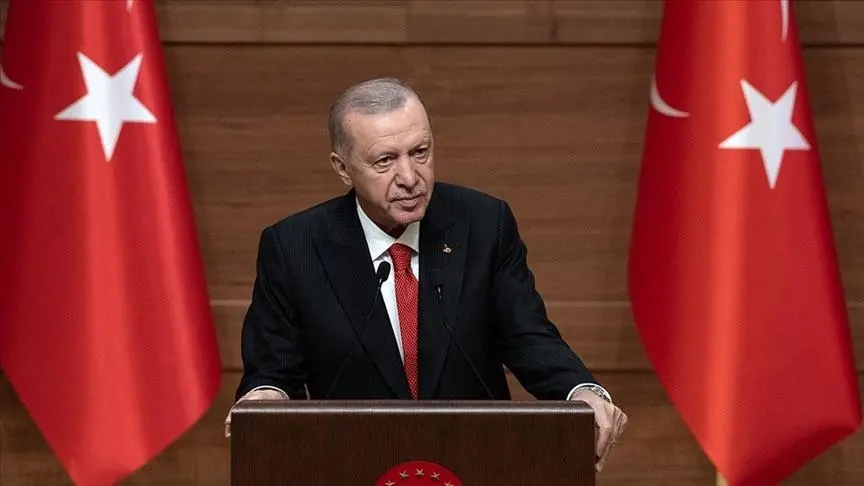
Erdogan: Israel's actions in Gaza have surpassed those of the Nazis, and those who remain silent are accomplices to the crime.

Turkish President Recep Tayyip Erdogan said on Tuesday that anyone who remains silent about what is happening in Gaza is complicit in Israel's crimes, stressing that his country seeks to stop the genocide and deliver aid to the besieged Strip.
In a speech yesterday, Erdogan said that remaining silent about these crimes would bring "shame" not only to Israeli Prime Minister Benjamin Netanyahu, but to all those who remained silent.
"Enough with what is happening in Gaza. Silence is no longer acceptable, and the human conscience must act now," he said in his statements.
The Turkish president called on the international community to take a clear humanitarian stance regarding what is happening in Gaza, stressing that "humanity is dying" there and that everyone must demonstrate a moral stance in this regard.
He explained that his country continues to work to urgently deliver humanitarian aid to Gaza, saying, "We will continue to talk about what Israel is doing, which has surpassed what the Nazis did."
He continued, "Gaza is witnessing one of the most shameful atrocities in modern times," holding the Netanyahu government primarily responsible for the genocide in Gaza.
Erdogan stressed the need for "those who support the Israeli aggression to realize unconditionally that they have become partners in the crimes committed."


PALESTINE

Wed 23 Jul 2025 8:59 am - Jerusalem Time

Al-Quds monitors the conditions of the starving and listens to their testimonies and the indescribable suffering they endure.

Gazans are falling to their deaths in the streets, a scene that has become a daily occurrence due to the famine that has swept the Gaza Strip for five months, resulting from the war of extermination waged by the Israeli occupation army since October 2023.


Despite distress calls issued by prestigious international organizations such as the United Nations, the United Nations Relief and Works Agency (UNRWA), the World Food Program, UNICEF, the World Health Organization, and Doctors Without Borders, the occupation continues its military escalation and siege of the Gaza Strip, on the one hand, and its distortion of reality and beautification of the genocide, on the other.


The Gaza Strip's Ministry of Health announced that 20 people had died of starvation in the past 48 hours alone, warning that what is happening in Gaza is a systematic Israeli starvation policy that has so far resulted in 86 deaths from starvation, including 76 children. These numbers are likely to rise given the lack of therapeutic nutrition and the ongoing blockade.


UNRWA Commissioner-General Philippe Lazzarini commented in a press statement, commenting on the worsening famine in Gaza, that no one in Gaza is safe; even caregivers need care. Doctors, nurses, journalists, and humanitarian workers are suffering from hunger.


"Many are now fainting from hunger and exhaustion while carrying out their duties, such as reporting atrocities or alleviating suffering," Lazzarini added. "At the same time, the search for food has become as deadly as the bombing, with more than 1,000 starving people reported killed since the end of May."


Gaza children eat from the garbage!


One of the heartbreaking scenes that spread across social media was a video of starving children in Gaza searching for food. What was even more shocking was the way they searched through piles of garbage. Another scene showed a man "eating" from garbage bags on a street.


Activist Mohammed Harzallah said that these scenes were among the most difficult of the genocidal war. No one could have imagined that our children were eating from the garbage in streets overflowing with sewage and waste, beneath piles of ash and the stench of gunpowder.


In an interview with Al-Quds, Harzallah pointed out that more than a billion Muslims, including 22 Arab countries, were afraid of one coward named Benjamin Netanyahu, and refused to feed two million hungry people in a small geographical area. He added, "This surrender and subservience that we see in the eyes of Arab leaders will one day backfire on them, and the tables are turning," he said.

The children's screams did not find "Ibn Al-Khattab"


Ms. Suham Al-Masry said that the story of Caliph Omar bin Al-Khattab, when he entered the tent of a Muslim mother with her children who were starving, and their mother was boiling stones in water, is repeated almost daily. However, the only difference is that the mother found the just Caliph carrying food and offering it to her. But in our case in Gaza, we found neither food, nor the Caliph, nor justice.


Al-Masry added in an interview with Al-Quds, "My children and I found ourselves in our tent hungry, destitute, thirsty, afraid, terrified, and helpless. But we are certain in God that we, like Omar ibn al-Khattab, will be sent by God to a man like him, who will feed our children with his own hand."


Fainting in the streets


Thirty-year-old Mahdi Arafat said he used to go to the markets to see the merchandise on display, even though he couldn't afford to buy it due to a lack of money. However, last week, he went to the market and fainted in the street, once in the Al-Wahda area and the other time in Al-Jalaa.


In an interview with Al-Quds, Arafat indicated that he does not suffer from any chronic illnesses, but the lack of food, particularly flour and sugar, has made it difficult for him to resist fainting. He is also extremely thin, having lost approximately 17 kilograms in the last two months alone.


He doesn't go to the bathroom anymore!


The story of citizen Adi Al-Najjar was strange to those outside Gaza, and common among Gazans. He complained about not being able to use the bathroom to relieve himself, noting that he usually used to use the bathroom two to three times a day. When he asked about the reason for this, several people told him that it was because his stomach had been without food for quite some time.


Al-Najjar explained in an interview with Al-Quds that some foods have begun to have harmful effects on the health of Gaza residents, particularly canned foods, which contain preservatives. This is especially true given the lack of alternatives throughout the 650-day war of extermination, in addition to the unavailability of meat. Even the water is contaminated and unfit for drinking or human consumption.


PALESTINE

Wed 23 Jul 2025 8:56 am - Jerusalem Time

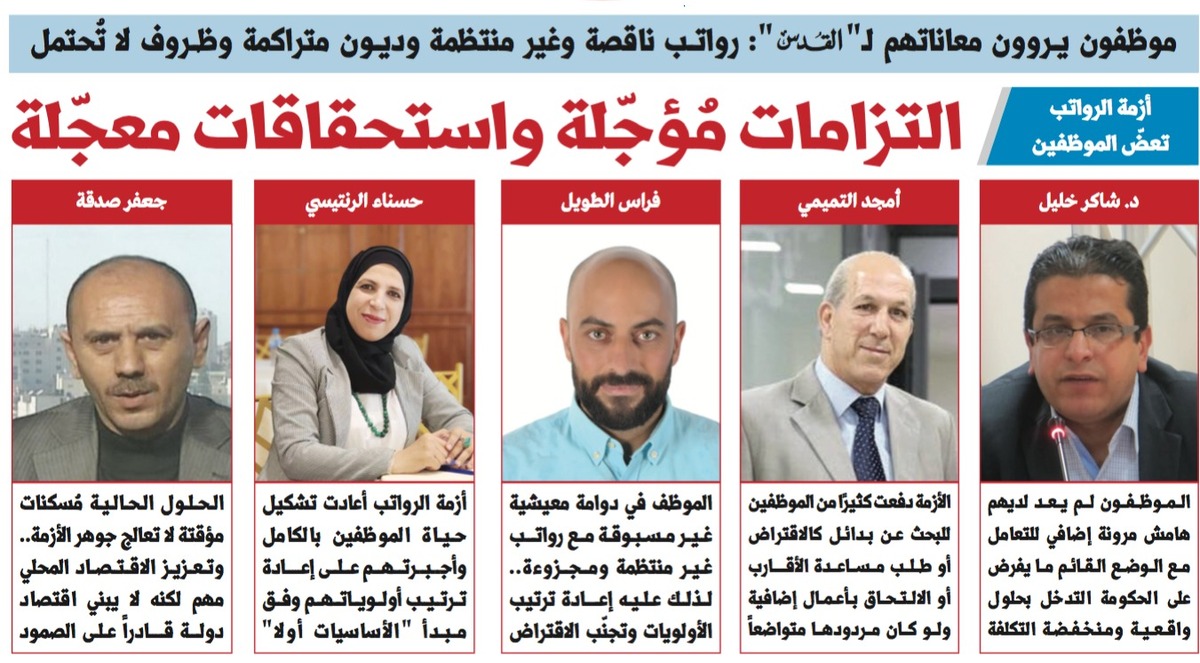
Palestinian Employees recount their suffering to Al-Quds: incomplete and irregular salaries, accumulating debts, and unbearable conditions.

The salary crisis is hurting employees: deferred obligations and accelerated entitlements.

Dr. Shaker Khalil: Employees no longer have any additional flexibility to deal with the current situation, which requires the government to intervene with realistic, low-cost solutions.
Amjad Al-Tamimi: The crisis has pushed many employees to seek alternatives, such as borrowing, asking for help from relatives, or taking on additional work, even if the pay is modest.
Firas Al-Tawil: Employees are facing an unprecedented financial crisis with irregular and fragmented salaries. Therefore, they must re-prioritize and avoid borrowing.
Hasnaa Al-Rantisi: The salary crisis has completely reshaped employees' lives and forced them to rearrange their priorities according to the principle of "essentials first."
Jaafar Sedka: Current solutions are temporary palliatives that do not address the core of the crisis. Strengthening the local economy is important, but it does not build a resilient national economy.


Amid a stifling economic crisis, public sector employees in the West Bank are experiencing one of the most difficult times. Salaries continue to be delayed and are being paid at significant rates due to Israel's continued piracy of clearance revenues, increasing debt and burdening families.
In interviews with "I," testimonies from employees from several governorates reveal the details of harsh daily life: deferred installments, postponed essential expenses, and limited options for survival amid a continuing wave of high prices and merciless financial demands. Radical solutions are absent, and the space for hope is shrinking.
In separate interviews with "I," economic experts asserted that the ongoing salary crisis without a radical solution is placing employees under significant pressure and deepening the crisis in the Palestinian economy, which relies heavily on employees. They emphasized the need for an urgent emergency plan and effective government intervention to ease the burden on employees.

Underpaid salaries and accumulated debts

Amid stifling economic conditions, public sector employees from various cities reveal the outlines of an intolerable crisis, with delayed and insufficient salaries now a threat to thousands of families living off the meager public spending.
Qusay Mahmoud, a government employee from Ramallah, sums up the situation of many, saying, "We still haven't received our May salary, and this is a huge burden on us. I have a daughter studying at university, and I pay between 5,000 and 6,000 shekels each semester, not to mention the school fees for my other children and the monthly electricity, water, and internet bills. Companies want their dues, and no one appreciates that you've been an employee without a salary for two months. What's worse is that we haven't received a full salary for four years, while the prices of goods continue to rise."
According to Mahmoud, the majority of employees in Ramallah are tied to high monthly apartment rents, which increases the pressure on their families.
Mahmoud says, "There are many family problems that occur because the employee is no longer able to fulfill his obligations, which he can barely cover a portion of."
Abdul Fattah Abu Maryam, an employee from Nablus, recounts another aspect of the suffering, saying, "Because of the crisis, I recently had to walk to work and back, because I sometimes don't have the money for transportation. I used to own a car and sold it to cover my expenses, while my colleagues from the villages are suffering more. Some of them borrow from drivers to get to work."
In Salfit, teacher Raghda Hassan and her husband—both government employees—are also struggling with debt. “We’re building a new house and renting at the same time,” she says. “With the reduced salaries, we’re forced to shift our obligations from one month to the next. This is very difficult in the long run.”

The crisis affects retirees

Ghassan Hajj Muhammad, a retired teacher from Ramallah, explained how the crisis has extended to retirees as well, saying, "I used to receive 5,000 shekels before retirement. Now my pension is only 3,000 shekels, and with the clearance crisis, it has become even less. I have monthly obligations and installments, and what helps me a little is that my children and wife work and help me. But sometimes I have to borrow and carry over the debts from one month to the next."
Meanwhile, Osama Rabie, a retired government employee, sums up the situation by saying, "The salary is not enough anyway, so what if it is delayed or reduced? Employees base their lives on their salary, and any shortfall upsets their balance. Some look for additional work to cover their obligations, but delays only accumulate debts and plunge them into a cycle of continuous borrowing. What's worse is that if an employee falls ill, they may not find appropriate treatment in government hospitals, in addition to their social obligations and events."

Extremely difficult situation and exhaustion of possible means of coping

Economist and academic Dr. Shaker Khalil asserts that public employees in Palestine are facing an extremely difficult situation as the wage crisis continues, entering its fourth consecutive year. He explains that the civil servants have "exhausted all possible means of coping" amid the lack of a clear solution due to Israel's continued intransigence regarding the transfer of clearance revenues.
According to Khalil, employees have suffered repeated salary cuts in recent years, sometimes at 60%, other times at 70%, and most recently at 35%. This has forced them to postpone their obligations and cut their expenses, leading many to live in "hardship," with remittances declining month after month, while there are no signs of relief on the horizon.
Khalil asserts that Israel's continued withholding of clearance funds, and its use as a political blackmail tool, has exacerbated the crisis. Previously, the occupation authorities had deducted more than 60% of the clearance funds and left 40%, but today they have not transferred anything for more than two months.
Khalil explains that employees no longer have the flexibility to deal with the current situation, which requires the Palestinian government to intervene immediately with realistic, low-cost solutions to ease the burden and ensure a degree of financial and social stability.

Practical suggestions that can be implemented in the immediate term

In this context, Khalil offers a series of practical proposals that can be implemented in the immediate term. However, these do not address the core issue, nor do they constitute an alternative to salaries. This requires the government to intervene effectively and work to resolve the crisis.
According to Khalil, these proposals begin with the formation of a government economic emergency plan, with the participation of various parties, and announce it publicly to address the current economic crisis.
He emphasizes the importance of regularly transferring funds to employees, disbursing partial cash payments periodically, even if small, rather than large, irregular payments, so that employees can plan and meet their minimum obligations.
Khalil stresses the importance of rescheduling existing loans with banks without imposing additional interest or late payment penalties, with the aim of preventing employees' financial collapse.
Khalil calls for deferring and paying basic government fees, such as electricity, water, municipal fees, and fees for public schools and universities, stressing that such a step would not require a direct financial cost and could be implemented through swift administrative decisions.
Khalil proposes issuing clear instructions allowing employees to work part-time or freelance outside of official working hours, as long as it does not conflict with their public service, in order to improve income and alleviate financial pressure.
Khalil stresses the need to enhance transparency and official media in explaining the dimensions of the crisis and the plans for addressing it, in addition to announcing a clear economic emergency plan that includes spending priorities, austerity measures, and sources of support, to instill confidence among employees and citizens.
Dr. Khalil urges the government to expand the domestic revenue base by combating tax evasion and improving collection from non-compliant large enterprises, without imposing any additional burdens on the poor. He emphasizes that continued political and diplomatic pressure locally, regionally, and internationally is necessary to compel Israel to transfer the clearance revenues and expose its blackmail policy before international institutions.
Khalil stresses the need for the Prime Minister to deliver a clear and direct message to the community and employees, informing them of the situation and procedures, with the aim of alleviating tension and enhancing confidence.
Khalil emphasizes that these solutions are urgent and temporary relief measures until the crisis resolves, emphasizing that the continuity of institutions and the resilience of society require clear political will and a genuine partnership between the government and all relevant parties.

Find alternatives such as borrowing or help from relatives.

Economic expert Amjad Al-Tamimi asserts that the salary crisis, which has been ongoing for nearly four years and reached its peak in recent months, has placed employees in an unprecedented position of being unable to meet their minimum living needs. He warns that a large segment of employees are no longer able to even reach the "subsistence" level they could barely survive on when the government paid them 70% of their salaries.
According to Al-Tamimi, the situation has worsened as the crisis enters its third month without any financial payments to employees. This comes amid the ongoing wave of price hikes and unavoidable life commitments. This has pushed many employees to seek unsustainable alternatives, such as borrowing from relatives or friends whose financial circumstances allow it, relying on remittances from relatives working abroad, or even seeking additional work, even if the returns are modest.
Al-Tamimi asserts that these temporary solutions will not guarantee a dignified and safe life for employees, warning of the growing voices of protest in the streets, both from employees and from the private sector, amidst the general state of discontent and the absence of any tangible prospect for a near-term resolution. This poses a serious threat to civil peace and societal stability.
He emphasizes that the primary and ultimate responsibility lies with the Palestinian government, which must move beyond the "broken record" of thanking employees for their steadfastness, asking, "What steadfastness are we talking about when employees have lost the ability to secure their basic living expenses?"
Al-Tamimi calls on the government to take real, practical steps, beginning with tangible spending cuts. He criticizes the continued luxury afforded to officials, such as government vehicles and fuel coupons, while employees suffer from the loss of their source of income.
Al-Tamimi called on the government to pressure banks to refrain from deducting any amounts from employees' truncated salaries or imposing late payment interest on existing loans, noting that delayed payments are not the responsibility of the employee but rather the fault of the government itself.
Al-Tamimi stresses the need for the government to move quickly to reach an understanding with service companies and higher education institutions to halt any severance or legal action against employees until the crisis resolves and salaries are restored to normal.

The majority live according to a "survival economy."

Firas Al-Tawil, editor-in-chief of the Palestinian website Al-Iqtisadi, explains that the stifling financial crisis afflicting public employees in the West Bank has pushed them into an unprecedented living crisis. He warns that the situation has reached the point of inability to provide the basic necessities of life, with the majority now living according to what could be called a "survival economy," based on postponing essentials and rolling over debt.
Al-Tawil, who has closely followed the economic situation through his journalistic work and daily interviews with public employees, in addition to his direct knowledge of the conditions of his relatives and friends working in the public sector, confirms that conditions were not comfortable even in the best of circumstances when salaries were paid in full and on time, as they barely covered basic necessities in light of the continuous waves of inflation, so what about now with irregular and fragmented salaries that are no longer enough to meet the needs of the hungry?
Al-Tawil points out that many employees today are mired in a cycle of bank debt, as most of them are committed to monthly loans that burden them, while the majority of their salary—after deductions—goes toward paying these obligations, leaving them with little money to cover their living expenses. Those who haven't borrowed from banks have resorted to borrowing from grocery stores, relatives, and neighbors, until the idea of borrowing and living off debt has become a bitter daily reality for employees.
Al-Tawil explains that the crisis has affected the daily lives of employees, as some are no longer able to pay for their children's university transportation or renew their internet subscriptions, which are essential for their children's education. Other families have been forced to postpone other essential obligations.
Al-Tawil believes that this crisis not only drains people's pockets, but also threatens employees' personal dignity and saps their nerves.

"Mitigation measures" are still ink on paper

Although the government has announced some measures to ease the burden, including contacting electricity, water, and telecommunications companies to facilitate payments and prevent late payment fines, Al-Tawil believes these measures remain ink on paper for most employees who have yet to see their actual results. Therefore, Al-Tawil stresses the need to transform these facilitation measures from mere media statements into a tangible reality, obligating companies to implement them flexibly and without complicated conditions.
Al-Tawil calls on the government to act more effectively, by coordinating with the Monetary Authority to reschedule bank loans and postpone their due dates without imposing any additional burdens on employees.
Al-Tawil is calling for the activation of a special emergency fund to support the most affected public employees, even if only for symbolic amounts to cover basic needs such as food, medicine, and transportation.
In contrast, Al-Tawil points to the significant role the private sector can play during this crisis, whether through solidarity initiatives from telecom companies, the retail sector, or banks. These initiatives include exceptional discounts for public employees, the availability of interest-free deferred payment, or the provision of essential goods at preferential prices.
As for the employee himself, Al-Tawil advises him to re-arrange his living priorities, temporarily forego luxuries as much as possible, and avoid borrowing or taking out new loans that could increase the burden later.
Al-Tawil stresses the importance of considering additional sources of income, no matter how limited, as well as encouraging community cooperation among families through group shopping, resource sharing, and shared transportation services to reduce daily expenses.
Al-Tawil warns that what employees are experiencing today is not merely a temporary salary crisis, but rather a complex crisis that threatens economic and social collapse unless everyone—government, private sector, and civil society—takes serious, practical steps to mitigate its effects before its burdens become too great for employees and their families to bear.

"Basics First"... Heavy Challenges

Economic journalist Hasnaa Al-Rantisi asserts that the ongoing salary crisis has completely reshaped employees' lives, forcing them to re-prioritize their living conditions based on the principle of "essentials first." This comes at a time when securing the minimum requirements for daily living has become a daunting challenge, especially given the high dependency ratio of approximately 29.2%, with employees often shouldering the responsibility of supporting their families, including their parents.
Al-Rantisi explains that entertainment has become almost nonexistent in families' lives. There are no tourist programs, no family meals at restaurants, and not even opportunities to enroll children in summer camps or recreational activities. This forces children to spend their vacations glued to screens and phones for long hours, leaving disturbing psychological and physical effects in the long term.
According to Al-Rantisi, with declining resources, social life has shrunk to a bare minimum. Families avoid social events that require additional spending, while paying electricity, water, and internet bills is given top priority to avoid power outages. Medicines are purchased on credit, or home treatment is resorted to as an economical alternative.
Al-Rantisi notes that some employees rely on remittances from relatives working abroad, while others are forced to seek additional work in cafes, gas stations, or grocery stores to fill income gaps.

Women played an important role in mitigating the effects of the crisis.

Al-Rantisi explains that women have played a significant role in mitigating the effects of the crisis through small home-based businesses or handicrafts. Some have been forced to sell their personal savings—even gold—to cover basic expenses such as school fees. Al-Rantisi notes that one of her colleagues sold her wedding ring to buy school supplies for her children.
Al-Rantisi points out that individual aspirations, such as university education, building a home, or marriage, are postponed indefinitely, while the employee is forced to adapt psychologically to this reality. Discontent is replaced by a general state of numbness and loss of passion, in the absence of any shock or surprise at the deteriorating situation, as if he were merely a silent observer of the collapse of his surroundings.
Al-Rantisi criticizes the government's lack of realistic solutions, asserting that the government's inability to pay its employees' salaries and meet their basic needs does not give it the right to prosecute them simply for attempting to find alternative income through additional work or small projects.
She stresses that reducing working hours is not a real solution, nor does it put food on the table or cover the electricity or medicine bills.

A government crisis, not an employee crisis

Rantisi believes that "the essence of the crisis lies in the fact that it is a government crisis, not an employee crisis." She argues that the average citizen cannot be expected to turn into an economist, following news of the clearance revenues or waiting for "Smotrich's approval" in search of a glimmer of hope. The government, however, bears the responsibility of finding solutions and ensuring a decent life for citizens, not leaving them alone to struggle under the pressure of stifling living conditions.
She points out that the Israeli occupation is a direct party to the strangulation of the Palestinian economy, but Palestinian citizens were not party to the Paris Economic Agreement, which defined the framework for financial relations. Therefore, they should not be left without protection or dignity.
"How can an employee be required to pay taxes, bills, and licensing fees while being denied the right to a full salary and health and education services?" Rantisi asked.
Al-Rantisi explains that employees today are wondering why fees and bills have not been postponed until salaries are paid regularly, and why they are forced to bear the cost of treatment at their own expense amid a shortage of medicines at government centers. Furthermore, they are forced to enroll their children in private schools due to repeated strikes and the declining quality of public education.
Al-Rantisi criticizes the lack of institutional and sectoral solidarity, as companies continue to cut off services to employees when payment is delayed, while there are no serious initiatives to protect them.
Al-Rantisi calls on banks and lending institutions to postpone interest-free loan installments, provide zero-interest emergency loans to support small businesses, and activate community responsibility programs.
She asserts that employees are not demanding miracles, but rather their basic rights as stipulated by law. She emphasizes that this phase requires genuine solidarity from everyone, and that leaving employees alone to face a complex crisis is an abdication of responsibility unbecoming of any country seeking to protect its citizens.

What is happening is not much different from what is happening in Gaza in terms of starvation.

Journalist and economist Jaafar Sedka asserts that the economic situation in the West Bank is now clearly evident. He explains that the ongoing starvation is not significantly different from the one taking place in Gaza, albeit to a lesser degree. However, the repercussions extend to all aspects of the Palestinian economy without exception.
Sadaka points out that the crisis' effects were not limited to public employees, but extended to include the private sector, markets, the commercial sector, and all economic activities.
Sadaka explains that the limited economic growth achieved in recent years was essentially based on government spending, primarily employee salaries, which pumped approximately one billion shekels into the market monthly, in addition to operating expenses and other payments that were the primary drivers of market activity.
Sadaka explains that reducing employee work hours is not new, as employees have been on incomplete shifts for over a year, and their attendance is limited to a few days to reduce transportation costs.
Sadaka points out that many employees have resorted to postponing their financial obligations, such as loan repayments, apartment rents, and electricity, water, and internet bills, in addition to seeking assistance from relatives working abroad.
According to Sadaka, what further complicates the crisis is that the affected employees join the approximately 200,000 workers who were employed in Israel and lost their jobs two years ago, exacerbating unemployment rates and the hardship of living.

The political dimension makes the scene even darker.

Sadaka describes the current situation as extremely dangerous from both the economic and livelihood perspectives, and believes that the political dimension further escalates the situation.
Sadaka asserts that withholding tax revenues is no longer merely a means of political blackmail to pressure the Palestinian Authority, as it was in the past. Rather, it has become part of a broader strategy led by Israeli government ministers such as Bezalel Smotrich and Itamar Ben-Gvir, with the support of Prime Minister Benjamin Netanyahu, aimed at displacing Palestinians from the West Bank as part of an annexation plan that precludes any prospect of a two-state solution.
Sadaka explains that the drying up of resources and the impoverishment of the people are aimed at driving them to despair of remaining on their land, leading to the mass and violent uprooting of citizens from the West Bank and the complete end of the Palestinian Authority's existence.
Sadaka explains that the situation can no longer tolerate this continuation, given the ongoing Israeli measures and the Palestinian Authority's inability to find real solutions.
He points out that all attempts to manage the crisis have been exhausted, whether through government borrowing from banks or through citizens' ability to manage their affairs for a longer period.
Sadaka asserts that relying on international pressure is no longer viable in the face of Israel's insistence on its policies. He believes the only solution requires a comprehensive confrontation using economic, commercial, and popular tools, because those who pursue a systematic policy of starvation and killing will not retreat through pressure alone.
Sadaka believes that current solutions are merely temporary palliatives that do not address the core of the crisis. He points out that strengthening the local economy at the village or city level is important and may alleviate some of the burdens of living and keep people alive, but it does not build a national economy capable of withstanding these policies.


OPINIONS

Wed 23 Jul 2025 8:49 am - Jerusalem Time

Annihilation!

Ibrahim Melhem

Ibrahim Melhem

Opinion Writer

There is no humiliation equal to the humiliation of standing helpless to feed your children, while they starve in front of you and before your eyes, their intestines screaming from the pain of intense hunger that devours their bodies and snatches their souls one by one.
In Gaza, people are dying morning and night, killed by airstrikes, treacherously by sniper fire in front of aid traps. Children are dying from the milk drying up in the breasts of starving mothers, and the last drops of life are running out of hospital incubators. Adults are fainting in the streets and tents, which have become open spaces and easy targets for testing the effectiveness of drones, which attack them by the dozens, turning the children and women inside them into pieces.


Gaza is dying, and what is happening there is the annihilation of an entire people, to starve them before subduing them, and round them up on the beach for forced deportation, to realize the dreams of Trump, who gave Netanyahu free rein after he had awarded him the tender to pave the way for the establishment of the "Riviera of the East" on the ruins of a destroyed Gaza strip, devoid of its inhabitants.


Save Gaza from mass death, before it's too late...!

PALESTINE

Wed 23 Jul 2025 8:47 am - Jerusalem Time

Food aid has become a sticking point in Gaza ceasefire talks.

The Wall Street Journal reported that Arab mediators in the negotiations stated that control of food aid has become a bone of contention between Israel and Hamas, as ceasefire negotiations have stalled over who will distribute humanitarian aid in the Gaza Strip once the agreement goes into effect.

The mediators emphasized that Hamas insists that the United Nations and the Palestinian Red Crescent control all aid arriving in Gaza. The US proposal stipulates that these organizations participate in distribution, but do not control it. The mediators added that Hamas, which the United States designates as a terrorist organization, is also demanding that the Gaza Humanitarian Foundation (GHF), an Israeli-American relief organization, be completely excluded from aid distribution.

US State Department spokeswoman Tammy Bruce said on Tuesday that White House Middle East envoy Steve Witkoff plans to travel to the Middle East this week to revive efforts to reach a ceasefire in Gaza and establish an aid corridor into Gaza. Bruce did not specify his destination.

It's worth noting that Israel refuses to allow the United Nations to control the aid because it is distributed through a vast network run by the United Nations Relief and Works Agency for Palestine Refugees (UNRWA), which is responsible for Palestinian refugees, according to Arab mediators. Israel claims that UNRWA has close ties to Hamas and said that some of its members participated in the Hamas-led attack on Israel on October 7, 2023. The agency fired nine of its employees over these allegations, and some countries have since restored funding they had previously withheld from the agency.

The Israeli-backed food distribution program descended into chaos and violence after soldiers opened fire on Gazans trying to reach fortified aid centers. More than 1,000 Gazans seeking aid were killed by the Israeli military and a group of American mercenaries contracted with the organization.

Aid has become a key tool for both sides in the war. Israel claims that Hamas uses aid to finance its war effort, although it has provided no evidence. Israel has supported the GHF to control aid distribution away from the UN and other humanitarian organizations, saying these organizations enable or turn a blind eye when Hamas steals, hoards, and sells aid, or gives it to young people as payment for fighting Israel.

For Hamas, resuming the previous aid distribution system, largely controlled by the UN, is essential to calming anger over the widespread destruction and suffering caused by the war. Some Palestinians have taken to the streets demanding an end to the war.

The newspaper quotes Nahed al-Fakhouri, the Hamas official responsible for managing prisoner affairs, as saying: "The primary source of pressure on Hamas is civilians due to the killing, starvation, and siege."

Since the beginning of the war on Gaza in October 2023, Israel has killed more than 58,000 civilians, most of them women and children, and wounded more than 130,000, also most of them women and children, and reduced much of the Strip to rubble.

Israeli and Hamas officials are currently in Doha, Qatar, negotiating an agreement brokered by Egypt, Qatar, and the United States that would lead to a 60-day ceasefire. As part of the agreement, Hamas will release 10 Israeli hostages and 18 bodies in exchange for Palestinian prisoners held in Israeli jails. Arab mediators said some disagreements, including the start date for negotiations to end the war, have largely been resolved in recent weeks. Other issues remaining unresolved, the mediators said, include the extent of the buffer zone Israel will retain in the so-called Philadelphi Corridor, a strip of land between the Gaza-Egypt border.

ARAB AND WORLD

Tue 22 Jul 2025 10:55 pm - Jerusalem Time

US media: Officials from Damascus and Tel Aviv meet to discuss security understandings related to southern Syria.

The United States plans to organize a meeting between senior officials from Damascus and Tel Aviv next Thursday in an attempt to avoid the outbreak of new crises, according to a report published by the American website Axios.

US Special Envoy to Syria Tom Barrack will lead the meeting, which will focus on discussing security understandings related to southern Syria. The meeting's location remains unknown.

The website indicated that the fundamental issues between the two countries will only be resolved through "comprehensive agreements."

In this context, US officials reported that President Donald Trump was surprised by the Israeli occupation's bombing of government sites in Syria on July 16.

A US official also confirmed Trump's discomfort with seeing bombs falling on a country seeking to rebuild itself, after the US had previously announced its support for reconstruction efforts in Syria.

This meeting comes at a sensitive time, as the Druze-majority province of Sweida has witnessed a military escalation since July 13, marked by violent clashes between local factions loyal to the Druze spiritual leader, Hikmat al-Hajri, and Syrian security forces.

Reuters quoted officials as saying that the Syrian government misinterpreted Israel's position after its forces deployed in southern Syria, believing it was done with the tacit permission of the United States and Israel.

Tel Aviv responded with heavy shelling targeting sites in the region, following accusations of killing dozens in Sweida.

PALESTINE

Tue 22 Jul 2025 10:00 pm - Jerusalem Time

Guterres: Hunger knocks on every door in the Gaza Strip

UN Secretary-General António Guterres warned on Tuesday of widening geopolitical divisions and conflicts, noting that the cost is high, measured in human lives, devastated societies, and lost futures.

This came in the Secretary-General's briefing to the high-level open debate of the UN Security Council on the theme "Strengthening international peace and security through multilateralism and the peaceful settlement of disputes."

“We need look no further than the scene of horror in Gaza – with a level of death and destruction unprecedented in recent times. Malnutrition is on the rise. Hunger is knocking on every door. And now we are witnessing the last gasp of a humanitarian system based on humanitarian principles. This system is being denied the conditions to operate. It is being denied the space to deliver assistance. It is being denied the safety to save lives. And with the intensification of Israeli military operations and the issuance of new displacement orders in Deir al-Balah, destruction is being piled upon destruction,” Guterres said.

The Secretary-General expressed his horror at the bombing of United Nations facilities in Gaza, including those of the United Nations Office for Project Services and the World Health Organization, including the WHO's main warehouse.

He said this bombing occurred despite all parties being informed of the locations of these UN facilities. He added, "These facilities are inviolable and must be protected under international humanitarian law, without exception."

Guterres noted that the theme of today's session highlights the clear link between international peace and multilateralism.

He said, "The United Nations was founded 80 years ago to protect humanity from the scourge of war. The drafters of the UN Charter recognized that the peaceful resolution of disputes is a lifeline in situations where geopolitical tensions escalate, conflicts intensify, and countries lose trust in each other."

He pointed out that the United Nations Charter provides for a number of important tools for achieving peace, stressing that the Security Council clearly articulates its special responsibility to ensure the peaceful resolution of disputes through negotiation, investigation, mediation, conciliation, arbitration, judicial settlement, recourse to regional organizations or arrangements, or other peaceful means chosen by the parties.
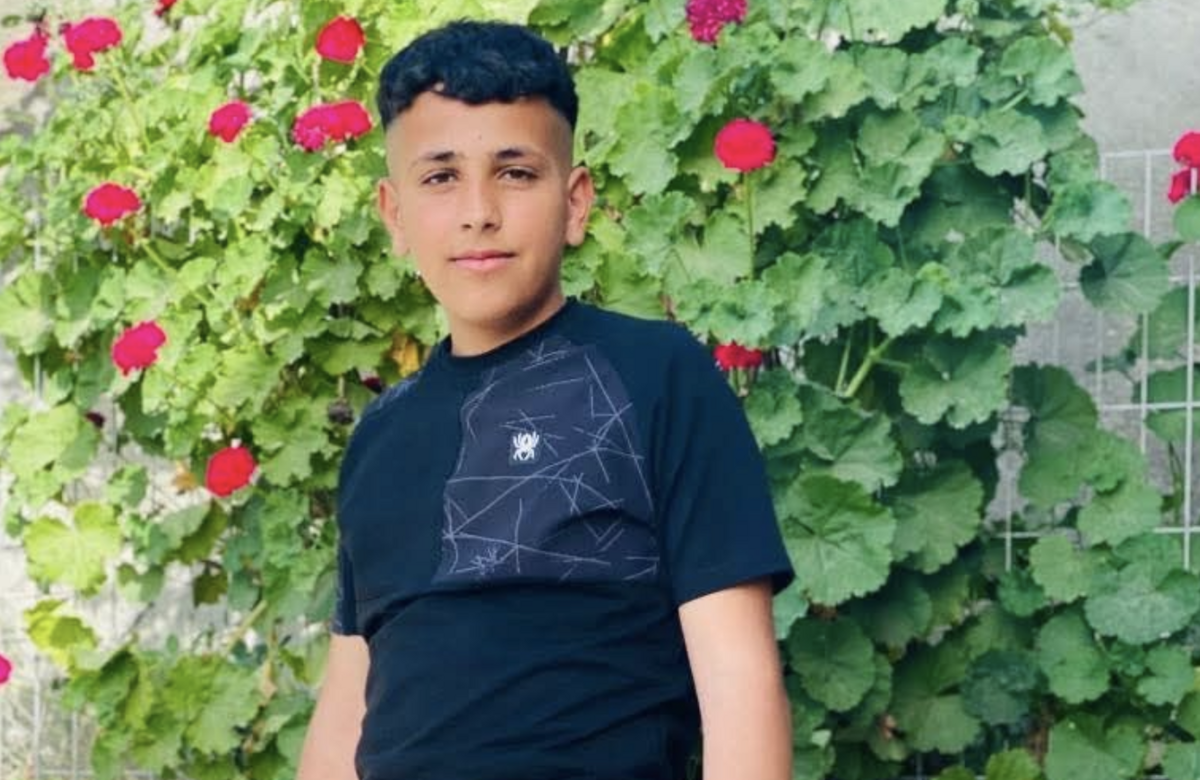
He said, "There are three areas in which we can fulfill the Charter for the Future's call to renew our commitment—and the world's confidence—to the multilateral problem-solving mechanism." These areas are: Security Council members, particularly its permanent members, must continue to work to overcome divisions. The Security Council must continue to strengthen cooperation with regional and subregional partners. Member States must fulfill their obligations under international law, including the UN Charter, international human rights law, and international humanitarian law.

PALESTINE

Tue 22 Jul 2025 9:37 pm - Jerusalem Time

Superman Movie: Palestinians Are Not Waiting for Western Heroes to Save Them

The new film "Superman," directed by American director James Gunn, which opened in US cinemas on July 11, has generated much enthusiasm and criticism since its release. The controversy revolves around the film's plot, which appears to turn the stereotypical image of superheroes on its head, condemning America rather than glorifying it.

According to many critics and journalists (including a Quds.com correspondent who watched the film on Sunday, July 20), Gunn offers a fresh take on the tired old notion that America is the best on earth, by explicitly pointing to America's involvement in the arms industry, its use of advanced technology, and its unbridled capitalism (though he is not the first to explore the dangers of unfettered military-technological capitalism).

Some viewers see Superman as an indirect attack on Israel, as the white European Boravia regime, fully allied with the United States and led by a figure similar to Israel's first Prime Minister, David Ben-Gurion, attacks its poor, non-white neighbor, Jarhanpur.

The symbolism of the key scenes, which depict a heavily armed army confronting unarmed protesters at a security fence, strongly references Israel's separation fence with Gaza and its repeated invasions of Palestinian territory. This has drawn the ire of right-wing commentators, such as Mark Levine, Fox News, and the evangelical media, who have deemed this an overreach and the film a departure from the norm.

It is noteworthy that Gunn stated that he began working on the film a year ago, "before the Hamas attack" on October 7, 2025, and that he did not mean Israel or the Palestinians, but rather that it is a fictional film, about fictional locations.

The film's main villain, Lex Luthor, is portrayed as a billionaire (possibly an Elon Musk type) who plans to divide Jarhanpur with Boraviya, supplying it with billions of dollars' worth of weapons.

In the film, Superman is presented as a naive person, obsessed with his dog, Krypto, but driven by a natural desire to fight the evil, greed, and criminality of the Financial Technology Alliance. This prompted his girlfriend, Lois Lane, a fellow reporter at the Daily Planet, to ask him in an interview why he was intervening to stop Boraviya's invasion of Jarhanpur. Citing the oppressive nature of the regime there, Superman immediately responded that the oppression of any regime is no excuse for invading the country.

In this dialogue, according to critics, the real contemporary political arguments against American intervention and the regime-change wars that the United States has waged since the 2003 invasion of Iraq are presented.

The scene following Boraviya's invasion of Jarhanpur was what most viewers focused on. It shows a young boy waving the national flag as tanks and heavily armed troops advance menacingly, while unarmed protesters flee under fire. This scene echoes the Great March of Return protests in Gaza along the Israeli separation wall in 2018 and 2019, when more than 200 Palestinians were killed and over 8,000 wounded by Israeli sniper fire.

It's worth noting that the character of "Superman" was created as a symbol of America's force of good against evil (Nazis and fascists in Europe) in the 1930s by Jewish artists and writers who, through their drawings, depicted the danger posed by these fascists and Nazis. While not all superheroes are symbols of American imperialism, the notion of "superpower" that enables the character to defeat his opponents through prolonged combat represents the essence of the American style. According to some critics, superheroes are F-35s in human form.

In the film, Superman faces a moral dilemma: how can he save the world when the rogue United States and its aggressive ally are enemies of world peace? His intervention to save a poor country in the Global South from invasion is considered unjustified against an American enemy.

The film also criticizes the military-industrial complex and its links to settler colonialism, as Lex Luthor arms Boravia to get his hands on a piece of land, much like Trump's dream of owning a "Middle Eastern Riviera" on the ruins of Gaza.

The film's heroes, along with Superman, are the Justice League trio of corporate-backed superheroes, who reluctantly join the fight against Boravya, the billionaire, and the fearless editorial team of the Daily Planet.

Here, for some, Hollywood reaches its limits with its grandiose geopolitical commentary. Instead of portraying the military-technological-financial complex as part of a larger US-controlled imperialist-political-media complex, the film depicts the sinister project of colonial land grabbing as the work of a few evil actors. Once their plot is exposed, the media and corporate heroes, who had been blind to Luther or remaining silent (the case of the US media regarding Israel's war of genocide in Gaza), act appropriately and move to end this vile plot, while the US government appears as a passive spectator, with Luther playing his part.

No wonder Israel and its supporters were so critical of the film, with Ben Shapiro, a leading advocate for Israel, simply writing: “The film is not good.”

The idea that a major newspaper like the New York Times and a major television channel would turn against the US-backed colonial regime's plans to invade and annex territory may seem unbelievable. Instead, these media figures in the film collude and attempt to obscure the truth by portraying the victims as terrorists and describing Boraviya as merely "defending herself."

Superman reaches the limits of Hollywood-style geopolitical criticism: the whole thing should be wrapped up brilliantly, with the villains defeated and the people saved at the end of the final act.

The idea of an American superhero team carelessly destroying a US-allied army in the Middle East to save the indigenous population from invasion is both preposterous and unlikely.

Palestinians are not waiting for Western superheroes to save them. The superheroes are the Palestinian medical and relief teams who are performing truly extraordinary, superhuman acts in their quest to save lives under conditions imposed by Israeli criminality, perhaps the most difficult circumstances in history. Their allies are the hundreds of millions around the world who stand in solidarity with them and demand an end to the genocidal war. They are the ones risking their lives in relief convoys, such as the Handala ship, currently heading to Gaza to break the blockade.

PALESTINE

Tue 22 Jul 2025 9:04 pm - Jerusalem Time

Updated: A child succumbed to his wounds after being shot by the occupation forces in Qabatiya.

A child died Tuesday evening from wounds he sustained when he was shot by Israeli occupation forces during their raid on the town of Qabatiya, south of Jenin.

The Ministry of Health reported that the child Ibrahim Majed Ali Nasr (16 years old) died of his wounds from the occupation forces' bullets in Qabatiya.

The Palestinian Red Crescent Society reported that child Nasser was shot in the chest by live Israeli occupation forces, and a young man was shot in the foot. Both were taken to the hospital.

Local sources told WAFA that Israeli occupation forces pursued the child, Nasr, and fired live bullets directly at him while he was on one of the town's streets, critically wounding him in the chest. He was then transferred to a hospital in Jenin, where doctors declared him dead from his injuries.

Israeli occupation forces stormed the town in several military vehicles from multiple entrances, positioned themselves near the town's roundabout, conducted foot patrols through its streets, launched a drone into the sky, and raided a home. No arrests were reported.

Local sources reported that clashes erupted between occupation soldiers and unarmed civilians, during which the soldiers fired live and rubber-coated metal bullets.

With the martyrdom of child Nasr, the number of martyrs in Jenin Governorate since the beginning of the aggression on the city and Jenin refugee camp on January 21st has risen to 43, with dozens more wounded and detained.

In parallel with the war of extermination being waged in the Gaza Strip, the Israeli occupation army and settlers have escalated their attacks in the West Bank, including Jerusalem, leading to the martyrdom of nearly 1,000 citizens since October 7, 2023, the injury of approximately 7,000, and the arrest of more than 17,000, according to official data.

ARAB AND WORLD

Tue 22 Jul 2025 8:44 pm - Jerusalem Time

UN Commissioner: Israel must allow aid into Gaza immediately and unconditionally.

UN High Commissioner for Human Rights Volker Türk called on Israel to immediately and unconditionally allow humanitarian aid into the Gaza Strip for all those in need, stressing that the displacement orders and Israeli attacks on the Deir al-Balah area in central Gaza have deepened the suffering of the starving.

"It seemed the nightmare in Gaza couldn't get any worse, but it is," Türk added. He called on Israel, as the occupying power, to ensure food and medical supplies for the population, reminding it that its displacement of people living under occupation is a war crime.

The UN official also criticized the Israeli military operation in Deir al-Balah, stressing that Israeli raids and operations will increase the number of civilian casualties and lead to greater destruction of infrastructure in Deir al-Balah. He noted that the targeted area includes humanitarian organizations, medical facilities, warehouses, and vital infrastructure.

He pointed out that "the permanent displacement of persons living under occupation constitutes an unlawful transfer and a war crime, and may, under certain circumstances, constitute a crime against humanity."

Worst ever

For his part, Jonathan Whittall, head of the United Nations Office for the Coordination of Humanitarian Affairs in the occupied Palestinian territory, said that the situation in the Gaza Strip is the worst it has ever been, with malnutrition cases continuing to rise.

The Israeli occupation army continues to target starving and displaced Palestinians in the Gaza Strip. The Islamic Resistance Movement (Hamas) said that the Palestinian people are dying of hunger and that it is time to break the restrictions, open the crossings, and provide relief to the starving people in Gaza.

In the same context, Jonathan Whittall, head of the United Nations Office for the Coordination of Humanitarian Affairs in the occupied Palestinian territories, said that the situation in the Gaza Strip is the worst it has ever been, with malnutrition cases continuing to rise.

He pointed out that more than two million people are crowded into a small area of no more than 12% of the Gaza Strip, without food or clean water.

He added that those who survived the bombing and gunfire now face the threat of starvation, noting that starving people are arriving at hospitals as if they were wounded, given the collapse of the health system and its lack of basic supplies.

Jonathan also stressed that the scale of the suffering in Gaza reflects a level of boundless brutality.

For its part, the United Nations Relief and Works Agency for Palestine Refugees (UNRWA) announced that one in every 10 children in the Gaza Strip examined in its clinics suffers from malnutrition, reflecting the extent of the worsening humanitarian crisis in the Strip.

OPINIONS

Tue 22 Jul 2025 12:56 pm - Jerusalem Time

When is it too much?

July 21, 2025

 When I first came to Israel for my Bar Mitzva in 1969 at my request to my parents, I remember telling my mother, while sitting on the veranda of my cousin’s apartment in Givatayim gazing out towards Tel Aviv, shortly before Shabbat began that “I feel at home”. Israel is my home. “Home” - that one very large word is the best description that I have for Israel since moving here 47 years ago. I have no other place in the world where I feel “home” and yet Israel of 2025 is a very different place than it was in 1969 or in 1978 when I made aliya. Now I find myself conflicted everyday with the question of when is the time that I can no longer live in the place that I call home. Israel is rapidly becoming a foreign land to me, where people who share the same values of my own are attacked by the police, silenced in the media, and pushed to seriously consider that Israel is no longer a place where I can live.  I know that the talk-backers from the poison machine of the current Israeli regime will write: good riddance - we don’t want you and your kind here in the country. If I wasn’t Jewish, they would call me an antisemite, but since I am Jewish, they will label me a self-hating Jew.


Israel is committing horrendous war crimes in Gaza. I physically experience pain as I write these words. Israel has systematically destroyed a civilization in Gaza where the death toll climbs every day of non-Hamas civilians – women, children, elderly, sick, boys and girls, men who spend their days searching for shelter, food and water. Yes, Hamas attacked Israel on October 7 and committed horrific crimes against humanity and they bear responsibility for what has become of Gaza. But for almost two years, Israel is responsible for unspeakable horrors that will be ascribed to the State of Israel for years to come. Now people in Gaza are also dying from hunger before our eyes. About 80% of Gaza’s buildings have been erased – entire neighborhoods and towns gone, bombed, bulldozed, destroyed. Now even private Israeli contractors are profiteering from the destruction of buildings and lives in Gaza.  There is no place safe in Gaza for more than two million people. Just last night I sent some money to a Gaza family living in a tent in Deir el Balah because it is no longer safe for them to stay there, where they had found some sort of refuge from Israeli bombs. Another young family in Gaza that I have known for years sends me messages on whatsapp “we are hungry and thirsty” - it breaks my heart. I see the human tragedy every day that Israel has created in Gaza in my social media – the reportage that the Israeli media self-censor. Even when an extraordinary journalist like Emmanuele Elbaz Phelps ties to speak out on Channel 13 about the death and starvation in Gaza, she is shut down by Berko and Moria for daring to defame Israel. This is the reality for almost all of Israel’s media – deafening silence and self-censorship.


Israelis don’t want to know. I think that many of them have no regrets and are happy to see the suffering of the more than two million Gazans. This war of revenge has deep support from all over Israeli society, it is not just the government of Israel. It is true that a large majority of Israelis want a deal to bring the hostages home and to end the war, but probably a majority of Israelis also believe that there are no innocent people in Gaza.


Hatred against Arabs in Israel has reached new peaks. An Arab Member of Knesset, Ayman Odeh, is violently attacked and almost lynched and the police stand by watching. Ayman Odeh is accused of being a traitor, a fifth column, but ironically, Ayman Odeh is one of only a handful of Members of Knesset today who today would agree to sign Israel’s Declaration of Independence. Most if not all of the Members of Knesset from today’s ruling coalition would refuse to sign the founding document of Israel because of its calling for peace and for the assertion that the state of Israel guarantees full equalaity for all Israelis, including the Palestinian citizens of Israel.  Some Members of Knesset from the right-wing parties might even label the Declaration of Independence of Israel as an antisemitic, or anti-Zionist document. Violence against Palestinians is all around us. Arab workers at a Jerusalem cinema are violently attacked on comera with cries “Death to the Arabs” and people casually watch as the walk by as if this is a normal and acceptable event. Arab bus drivers are beaten by Jewish passengers and then are arrested by Ben Gvir’s police for trying to defend themselves. Palestinians all over the West Bank are attacked by settlers with police and soldiers watching over the settlers. Palestinians are forced off their land and even killed by violent settlers and no one is arrested or convicted of crimes. In fact, these violent settlers are protected by the Israeli police and army which arrests and attacks the victims.


Israel is committing war crimes in Gaza. Israel is committing war crimes in the West Bank and in East Jerusalem. Israel’s media is complacent in these war crimes. The Israeli public is responsible and we cannot escape our responsibility. It is not just the army, the police and the government. These war crimes are being done in my name, in our name, in the name of the people of Israel. We cannot be silent. Calling it out for what it is makes me, in the eyes of probably a majority of Israelis a traitor (and we know what happens to traitors).


From the beginning of the war in Gaza, my youngest son (31 years old) every Friday night at our Shabbat dinner would insist that I say what needs to happen for me to say that I can no longer live in Israel.  After months since the beginning of the war, I agreed to put down two red-lines. The first was easy: If Ben Gvir becomes Prime Minister of Israel I could no longer live here. The second one is more problematic and has a higher chance of becoming a reality: If after October 7 and all that has happened since, Netanyahu wins another election, then, I said, Israel is beyond repair. I say this still with the deep sense that I have no other home in the world and no other place in the world where I feel that I have something to do and a reason for existing.


I have spent my entire adult life trying to make Israel the kind of place that reflects my values – those that I used to think are Jewish values. I have dedicated my life to building bridges of understandings between Jews and Arabs, Israelis and Palestinians. I continue to do that work every day and I convinced more than ever that the chances of peace, of two states, is a lot closer than what most people believes. But the chances of peace and two states is also maybe farther away than ever before. If serious new leadership does not come forward in Israel, the chances of reversing the damage that has been done and spring boarding off the trauma toward healing as a society may never happen. That is the fear that I live with every day.


I remember the dilemmas of South Africans who were opposed to Apartheid who struggled with the question of staying to fight for justice and equality or determining that they could no longer live in a society which was so unjust and ugly. For me, now, at this time I am experiencing the same struggle. There are so many amazing Israelis doing wonderful things. There are so many positive things about Israeli society, but I fear that our country is being overtaken by the ugly, the unjust, the criminal, and hate and the fear. Our society is violent – how can it not be when so many hundreds of thousands of us do what they do in Gaza and then come home living with post-trauma. Violent behavior, anger, frustration and guilt do not stop at the border when they come home. The dehumanization which is enlisted and enhanced in order to be able to commit the crimes that Israel is doing in Gaza and in the West Bank meet some kind of cognitive dissonance at home which finds justification for behaviors and actions that cannot ever be justified.


This is the reality of Israel in July 2025. Fifty Israeli hostages are still abandoned in Gaza. Thousands of Israelis remain abandoned by the government after being made homeless by the wars that Israel has been fighting for more than 650 days. The Israeli government and the Prime Minister are more concerned with their power and their jobs giving corruption than they are concerned with the welfare of the people. Israel is becoming increasingly messianic and fundamentalistic. Israel is becoming the most hated country in the world and Israelis will continue to feel less welcomed wherever they travel. That is Israel 2025.


Still, there is no other place in the world that I can call home.  There is no other country in the world where I have a life’s mission to complete. But we are rapidly moving to the reality of a place that I will not want to call home, a place that I cannot call home, a place where I am no longer made to feel welcomed, and place that I will no longer want to be associated with. That is Israel of 2025.